
1973 Volkswagen
Thing Type 181
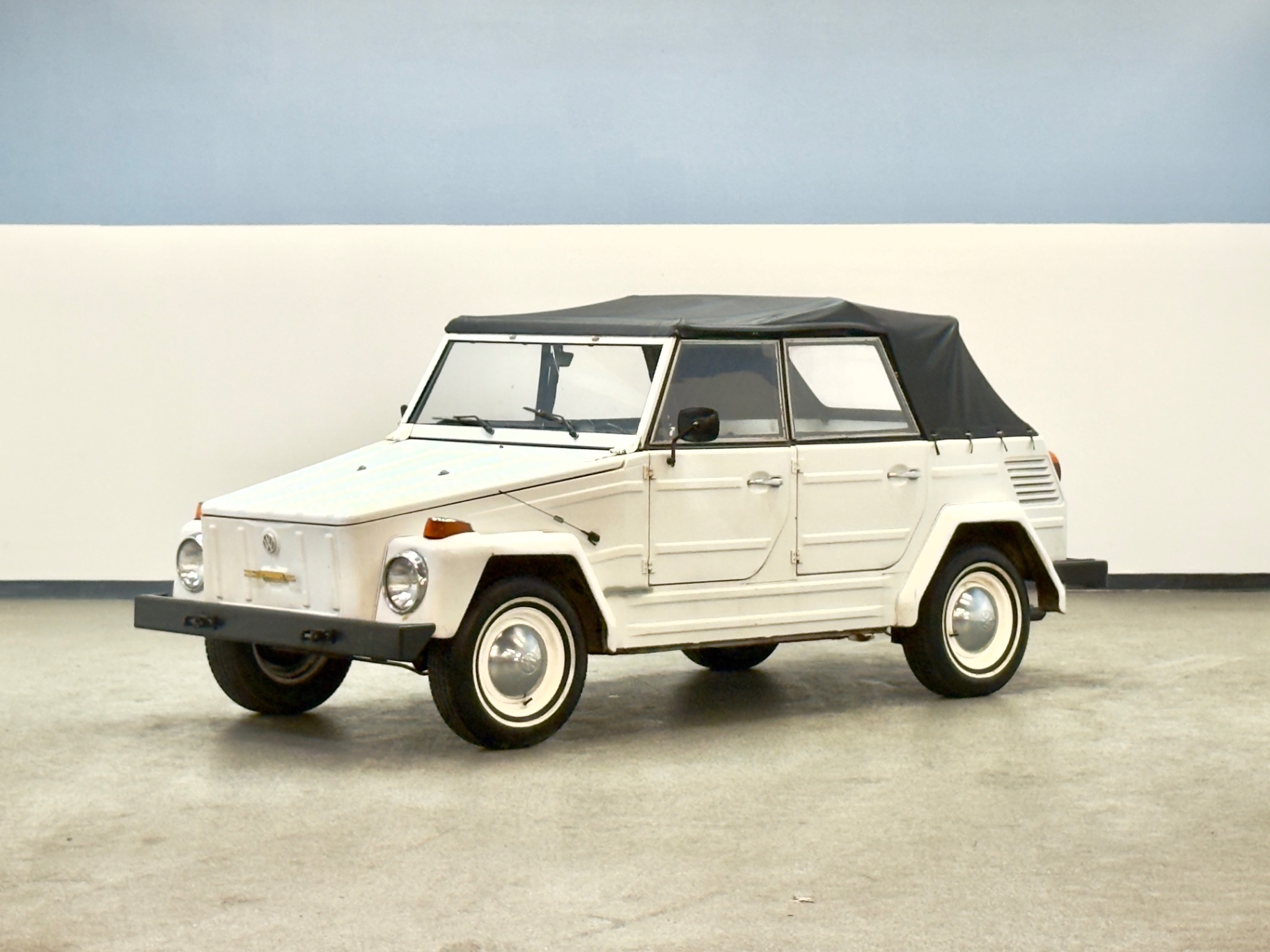
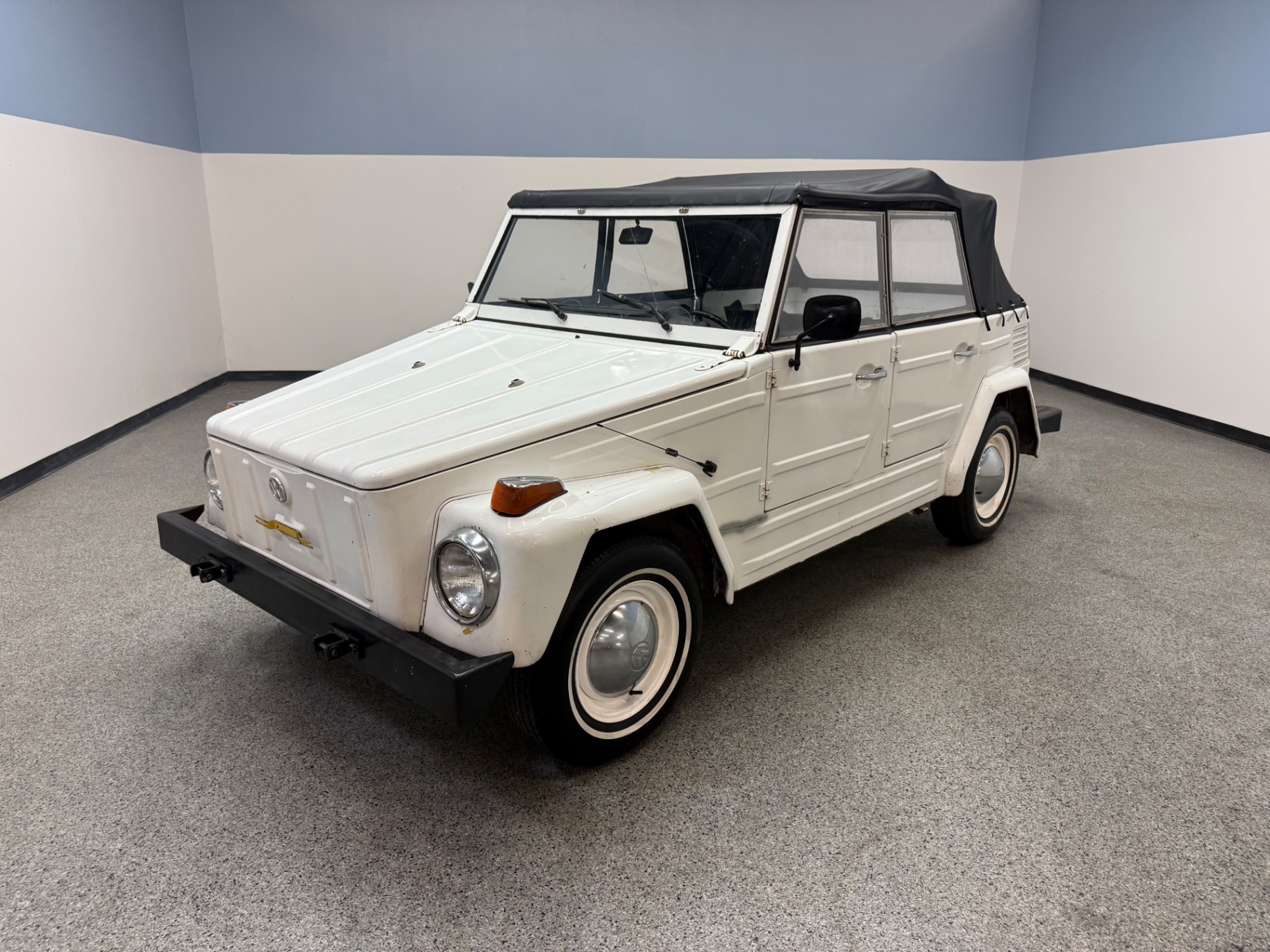
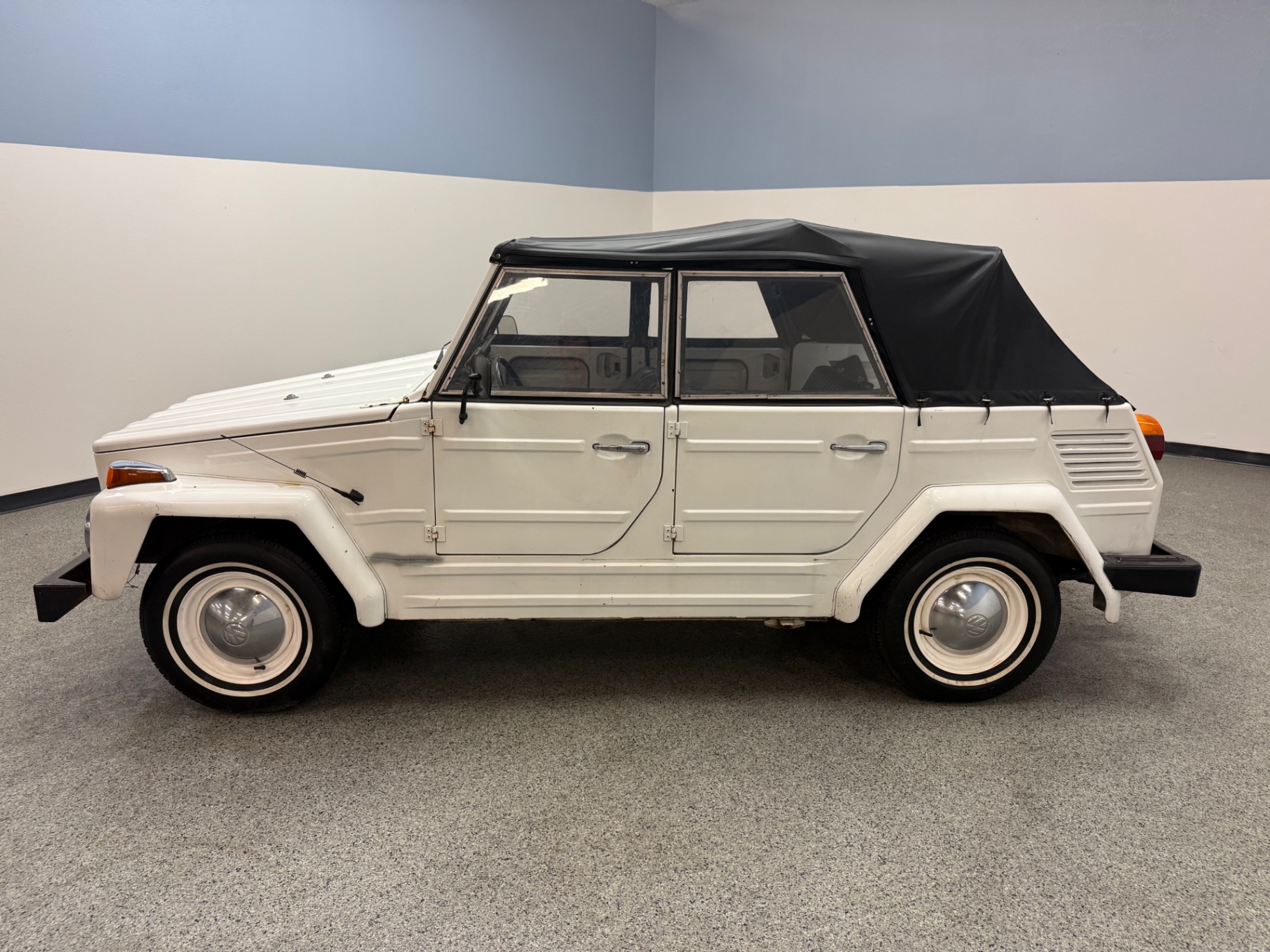
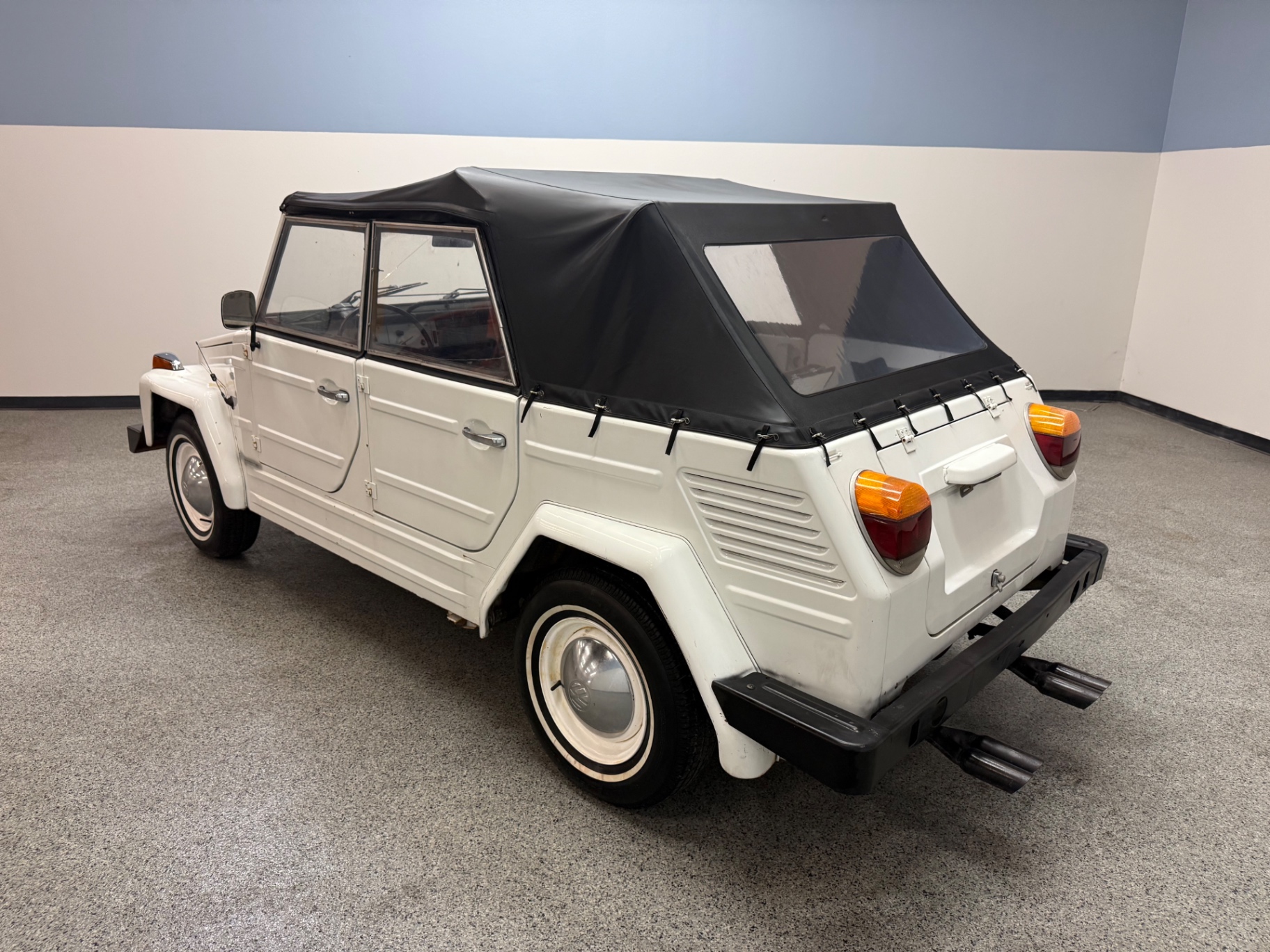
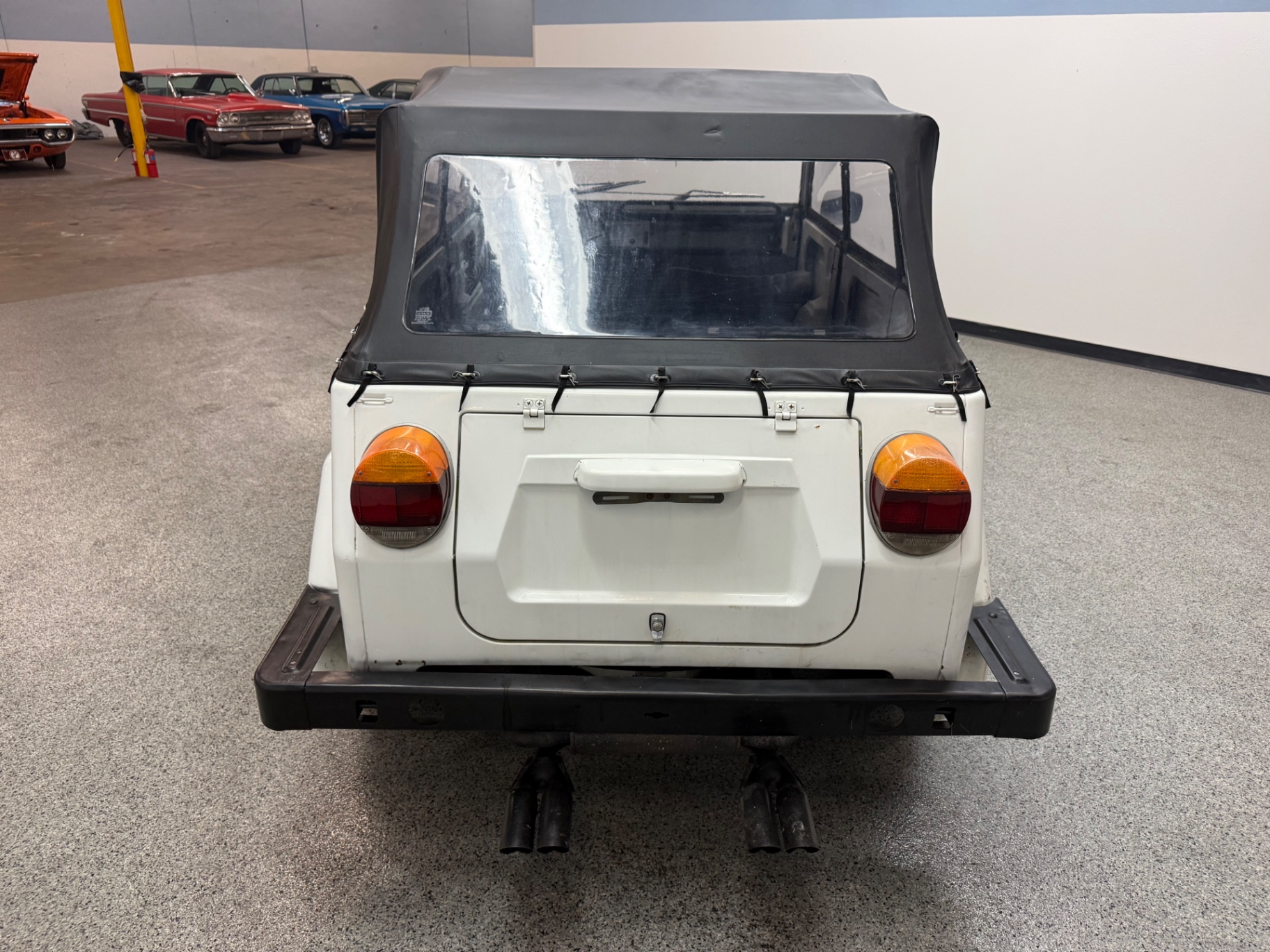
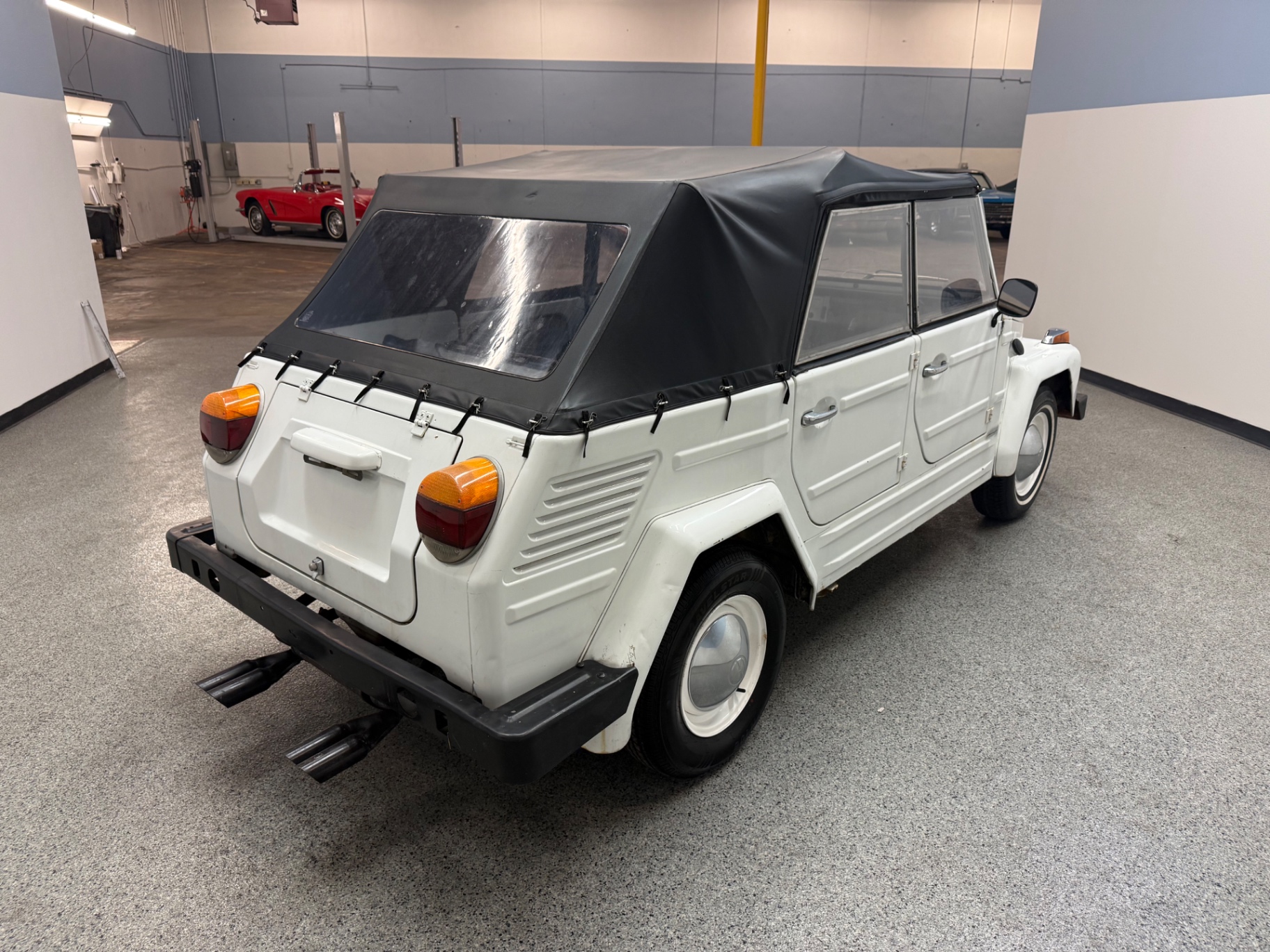
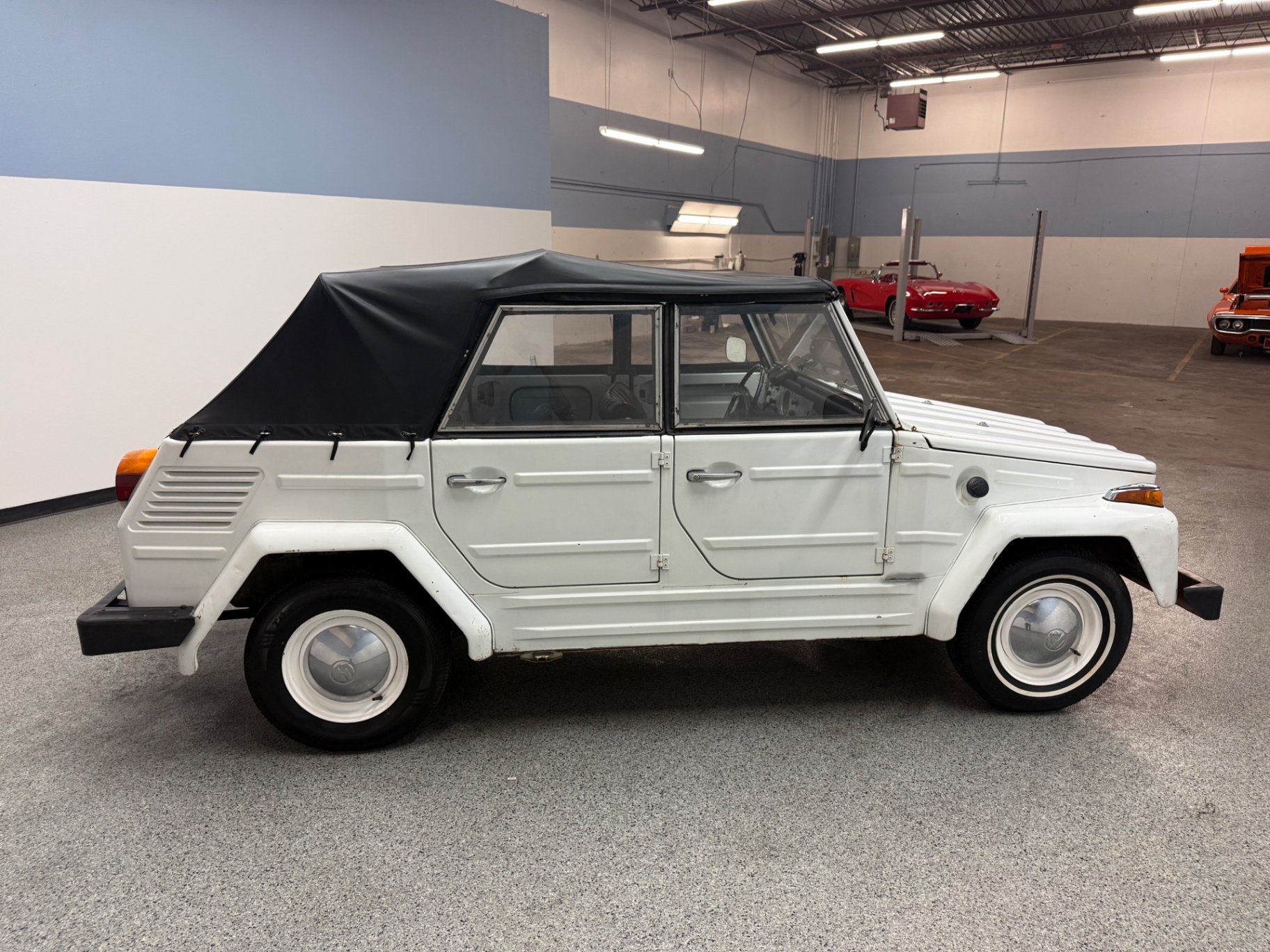
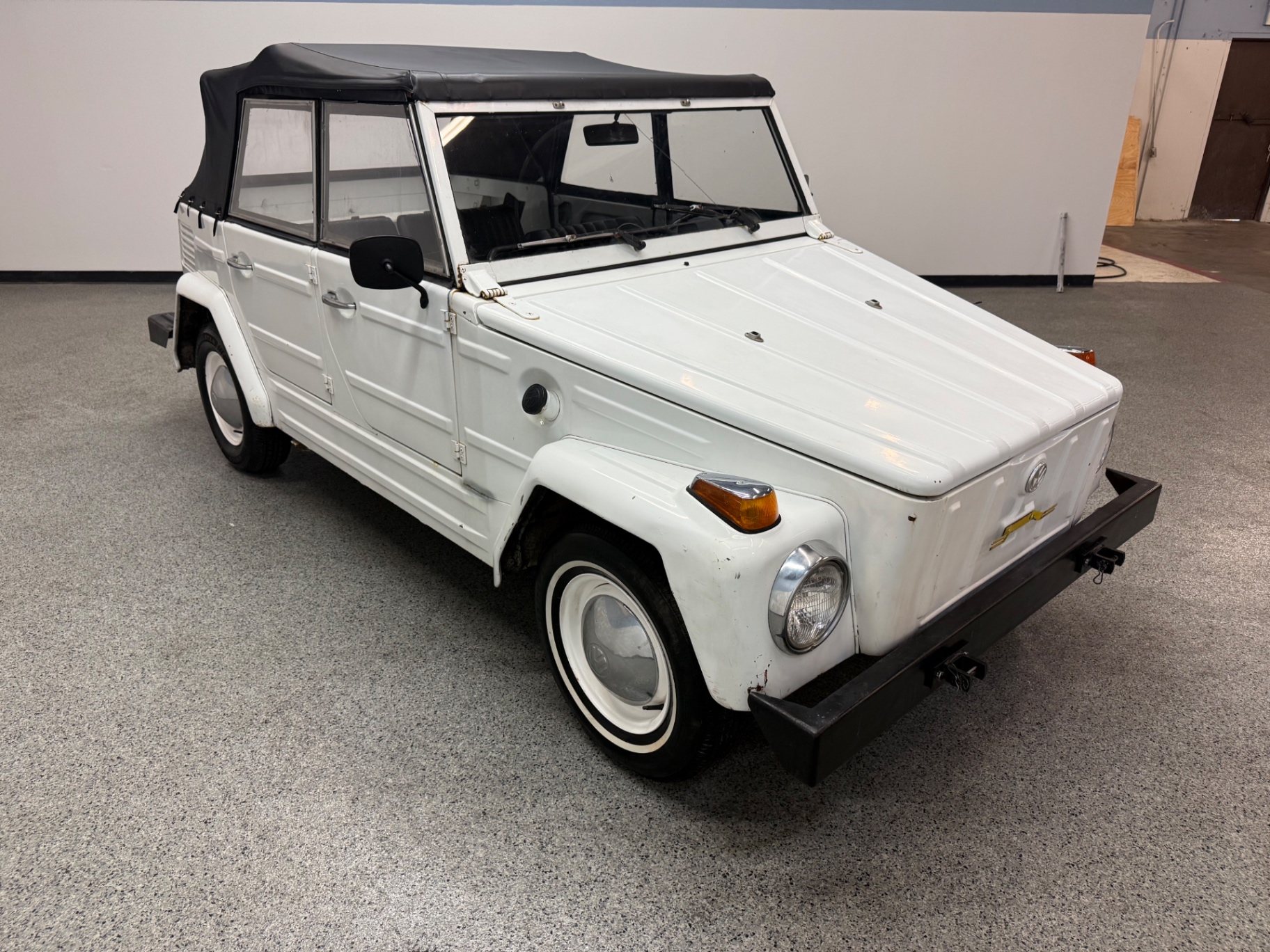
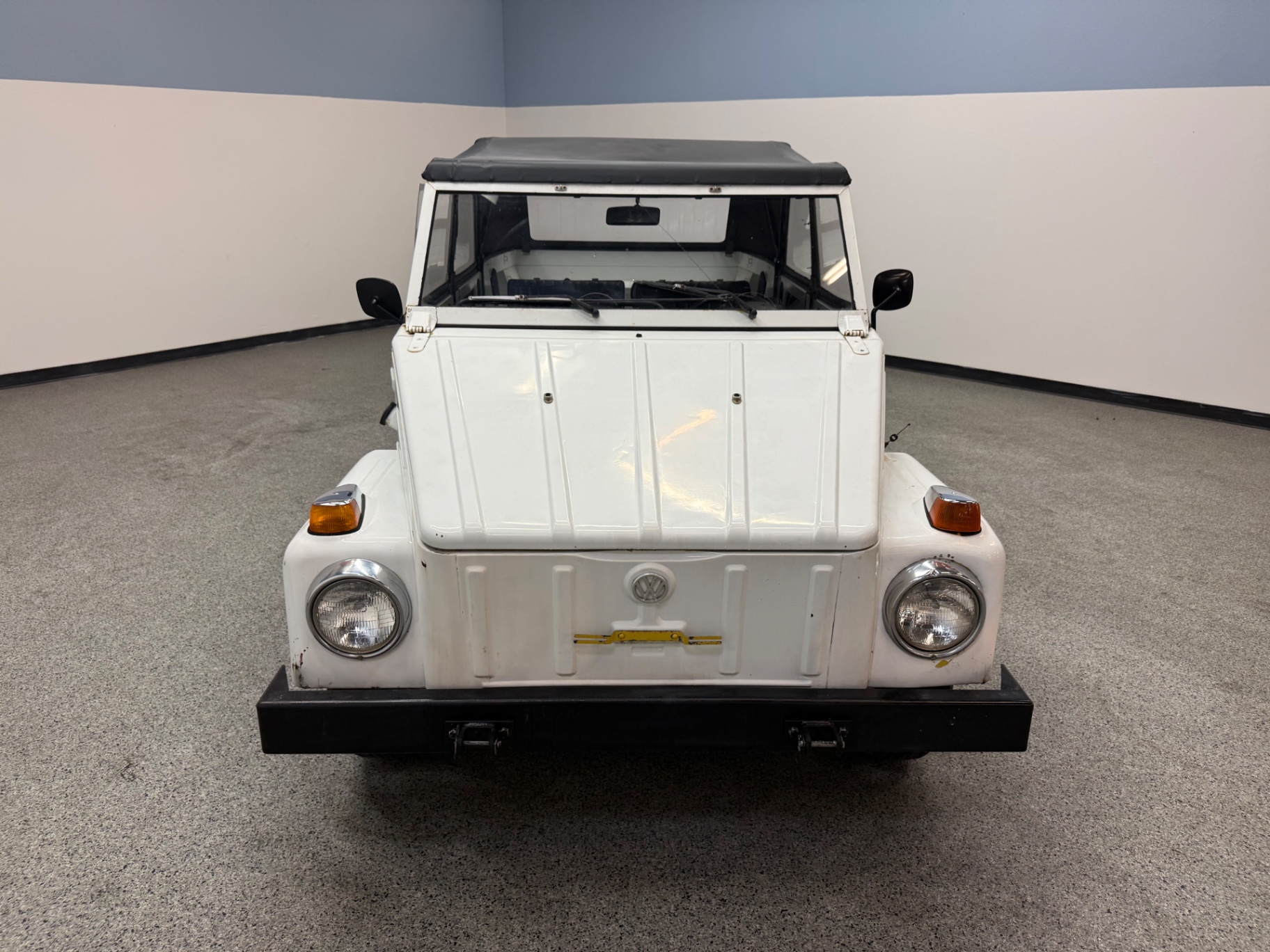
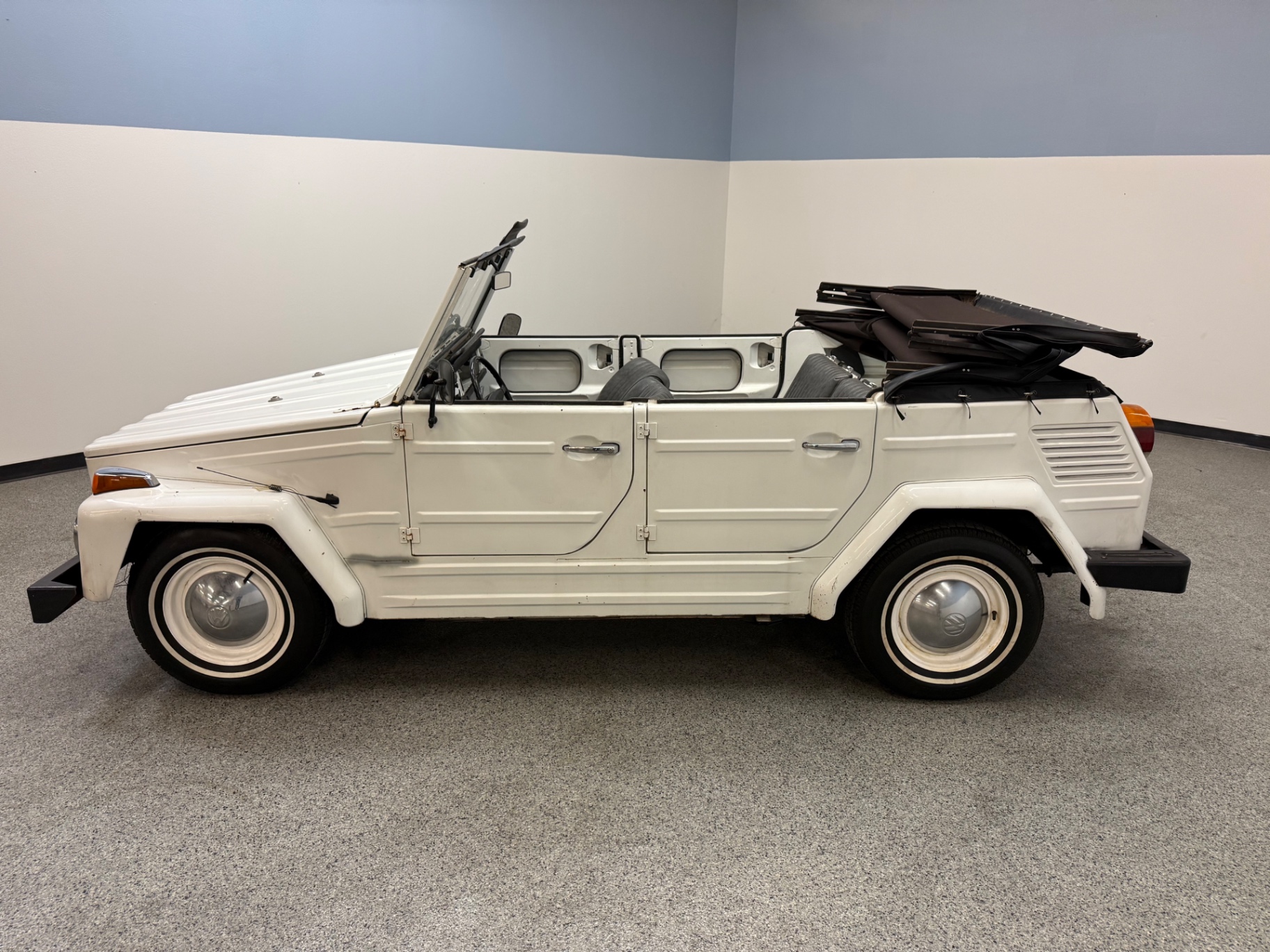
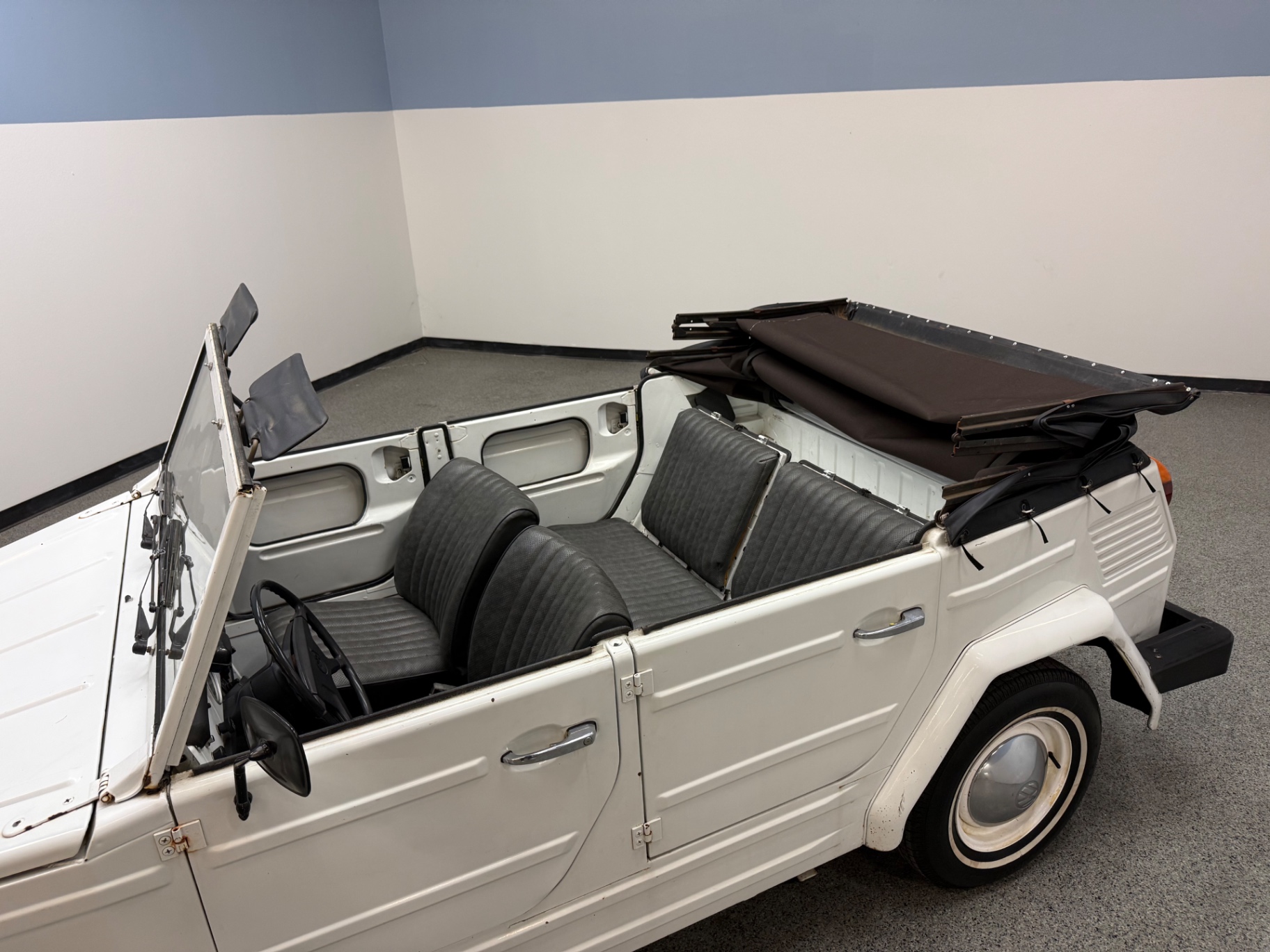
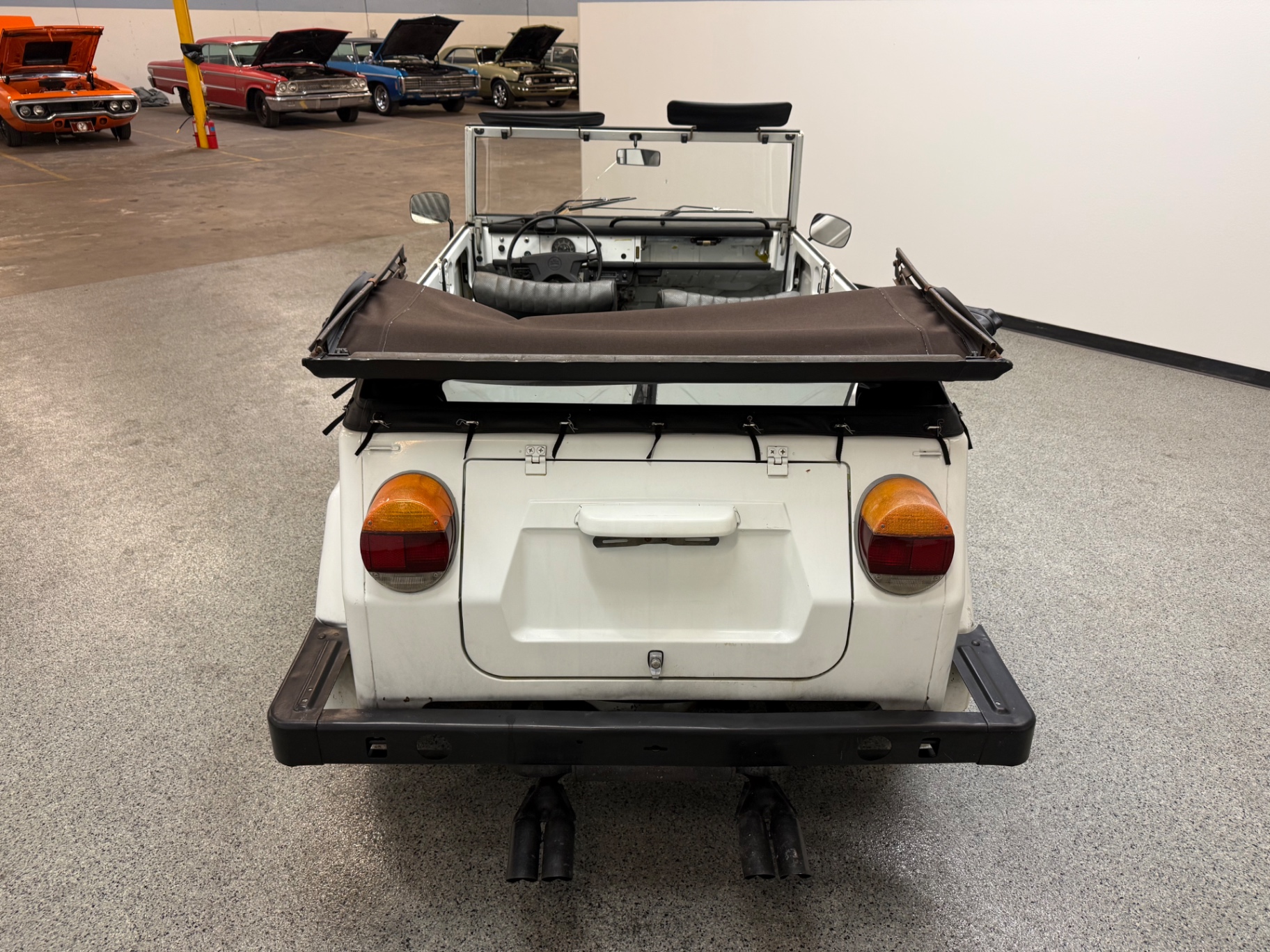
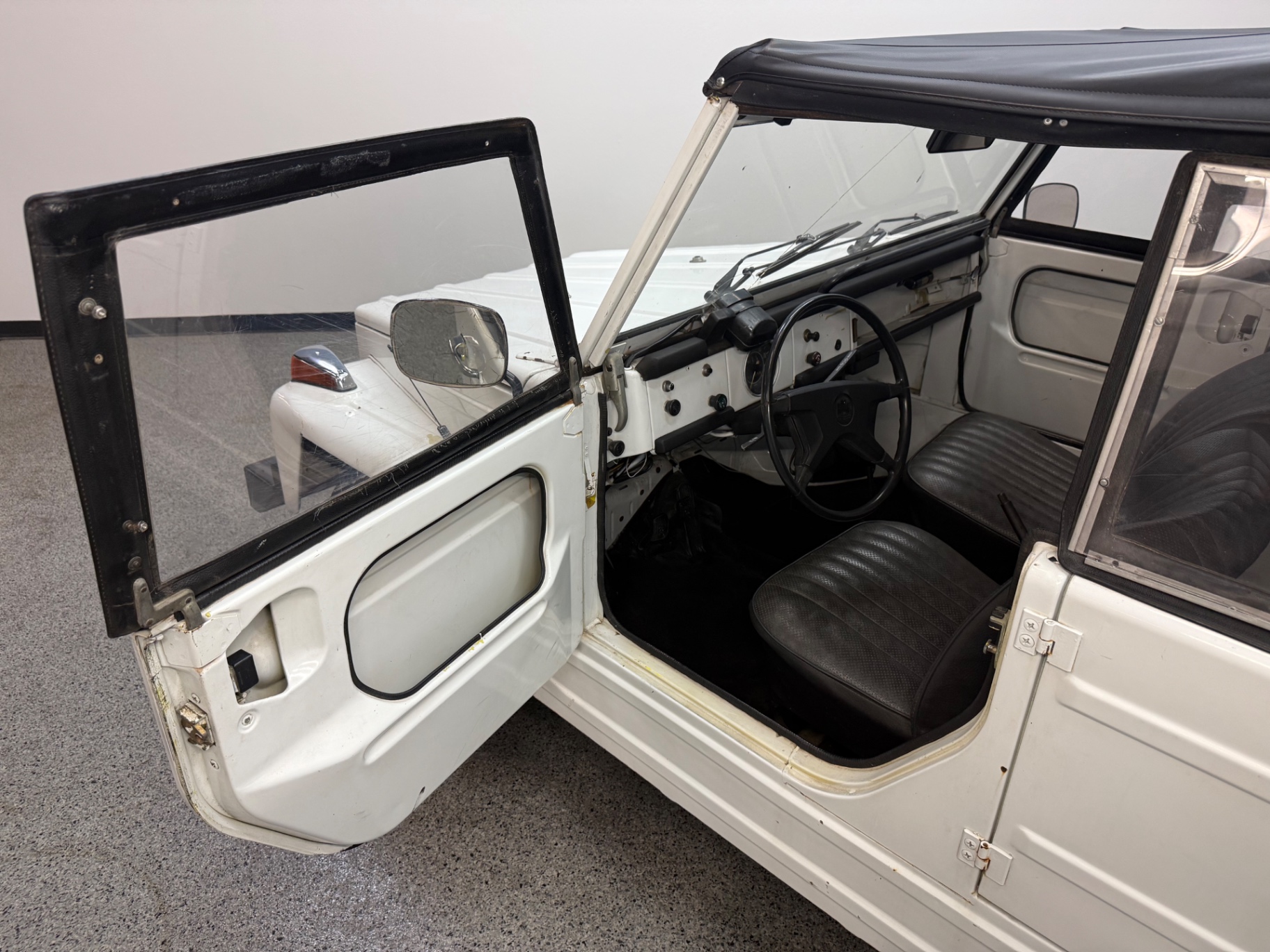
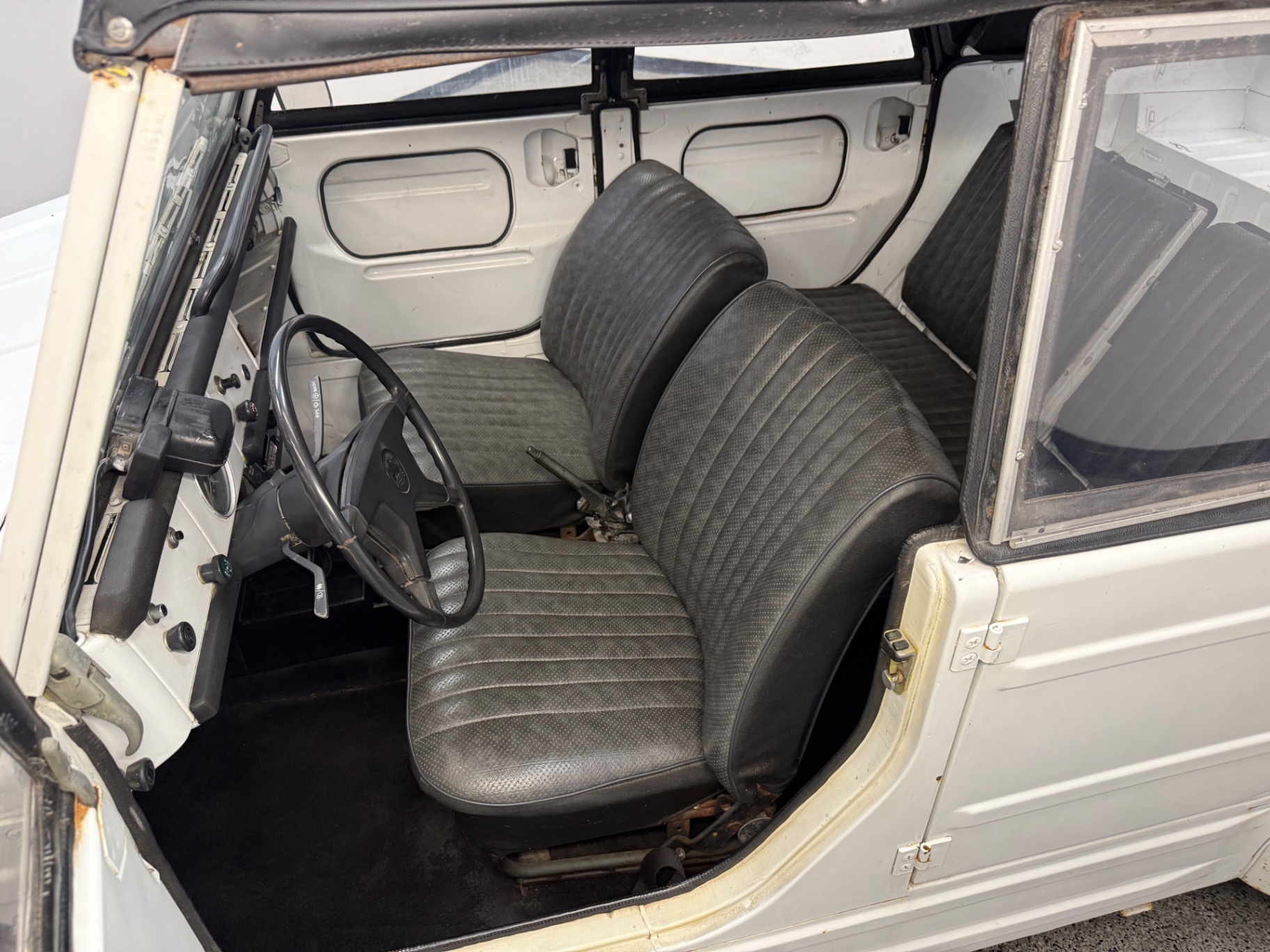
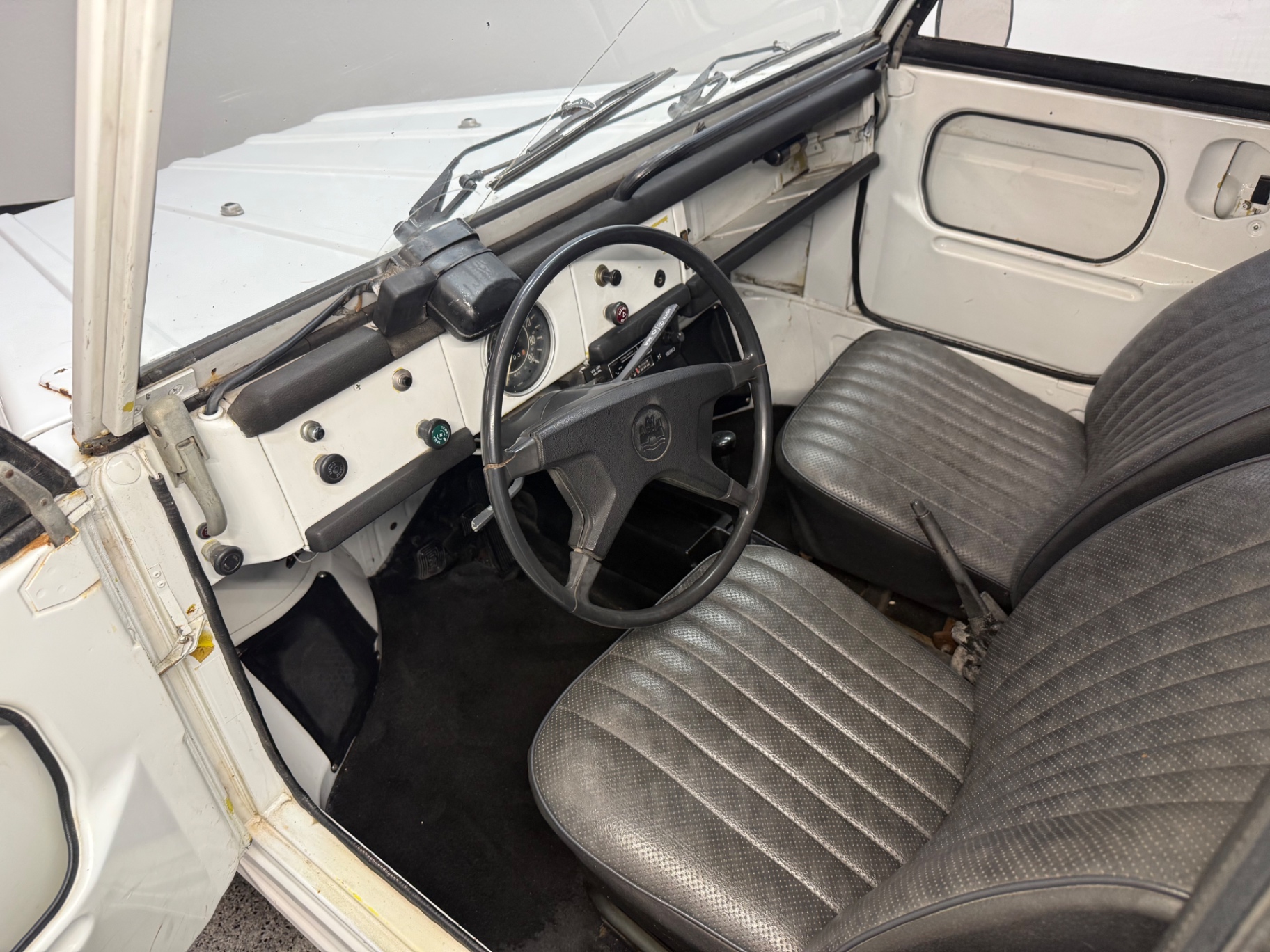
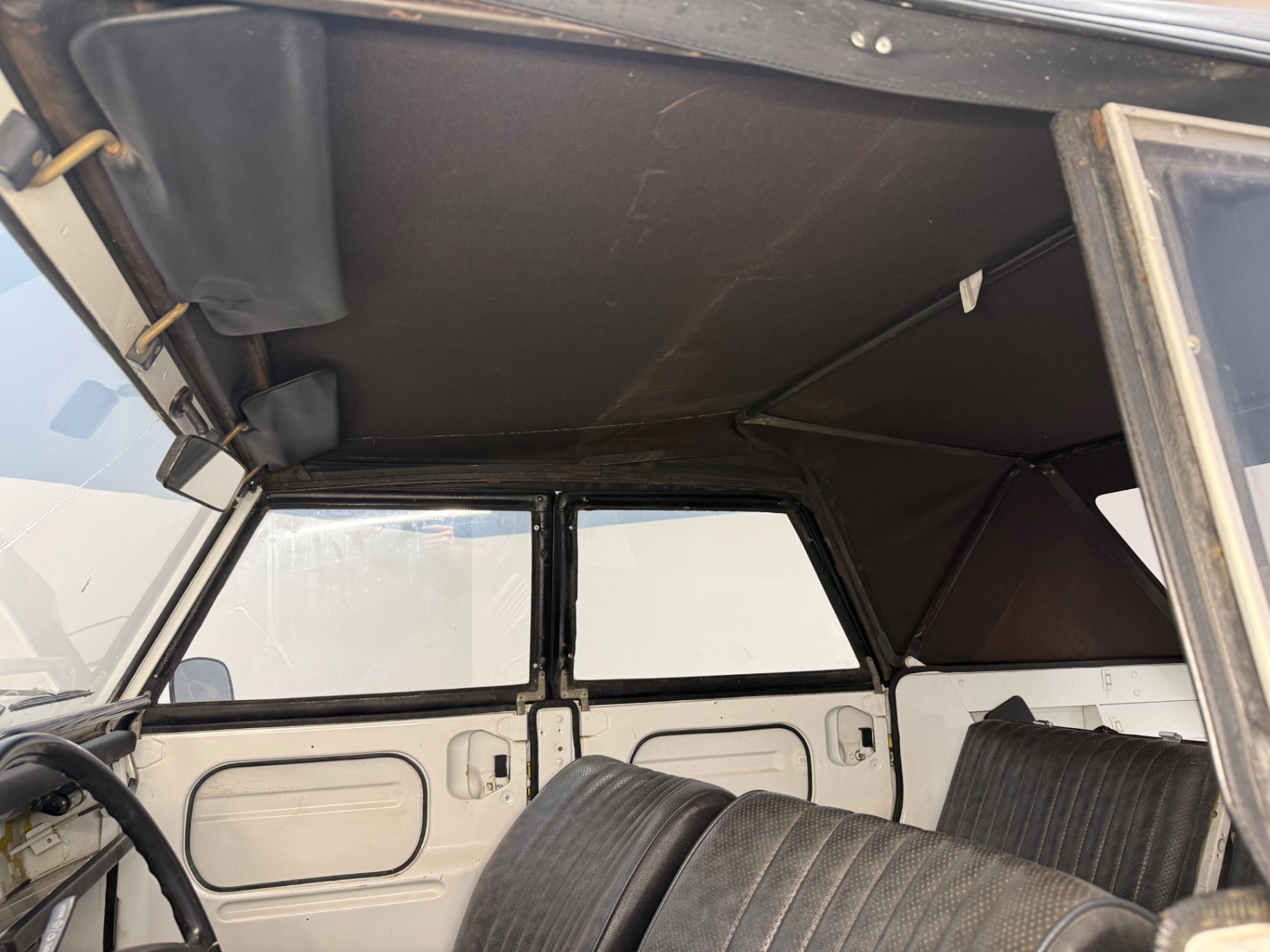
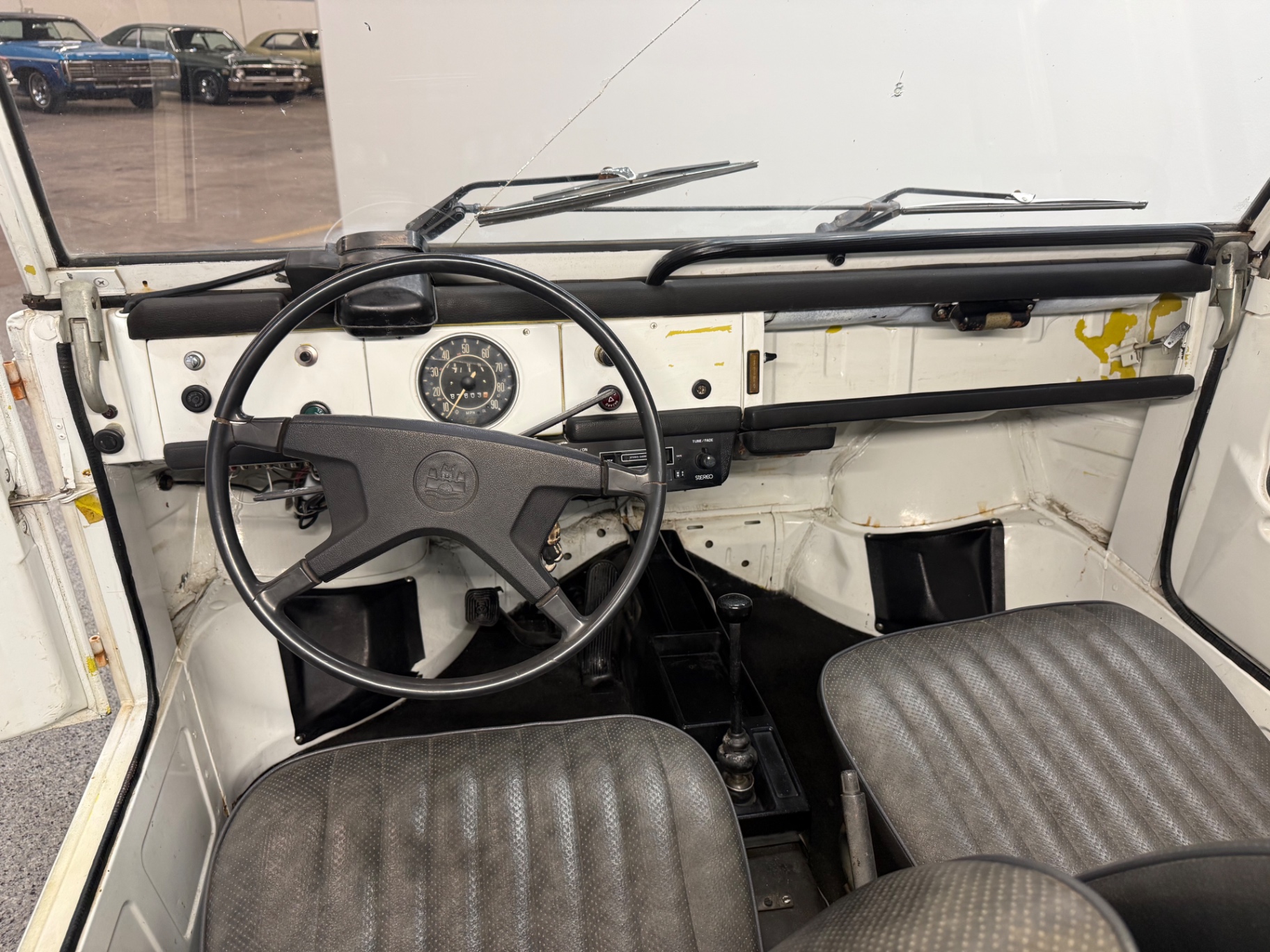
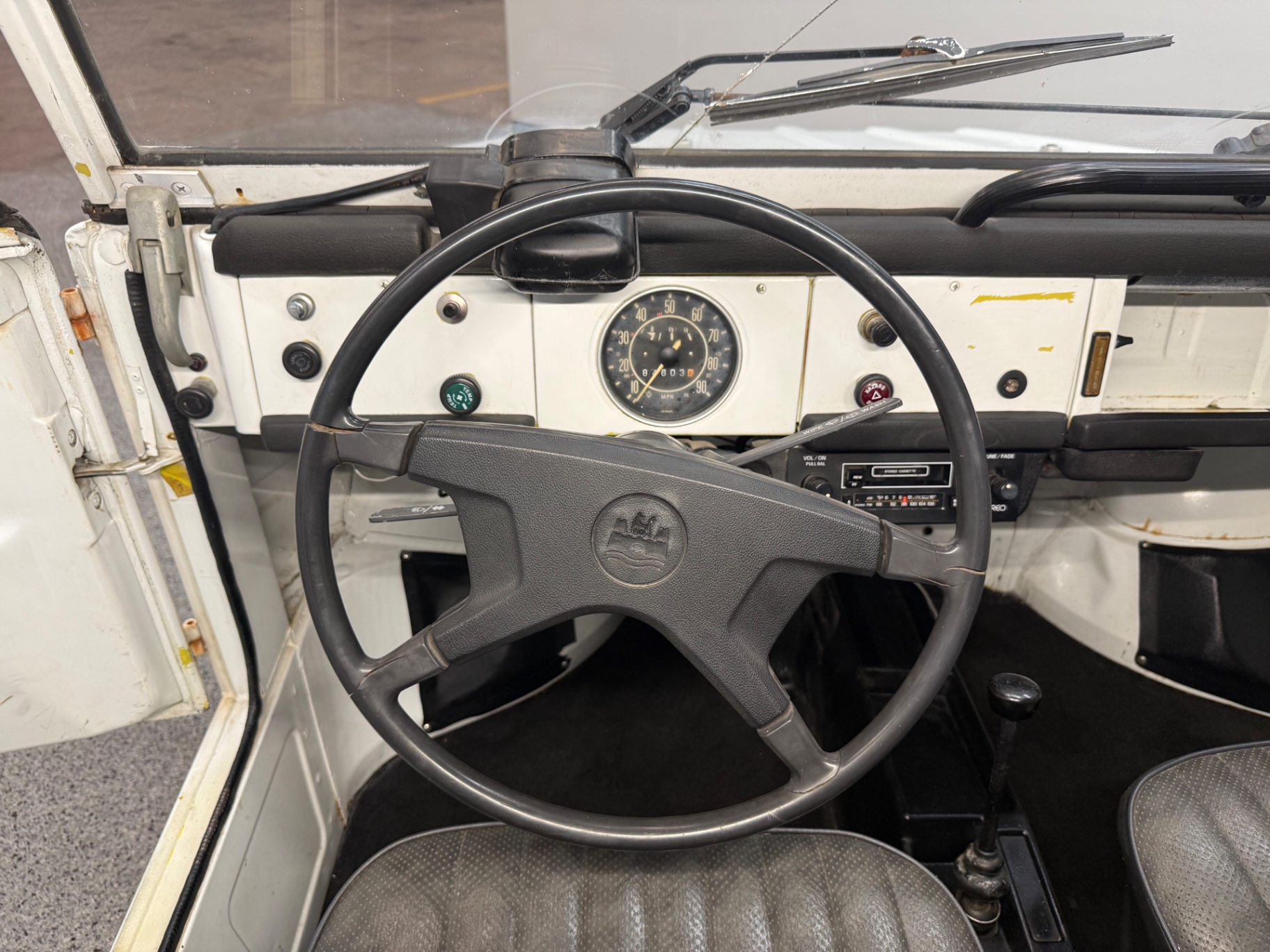
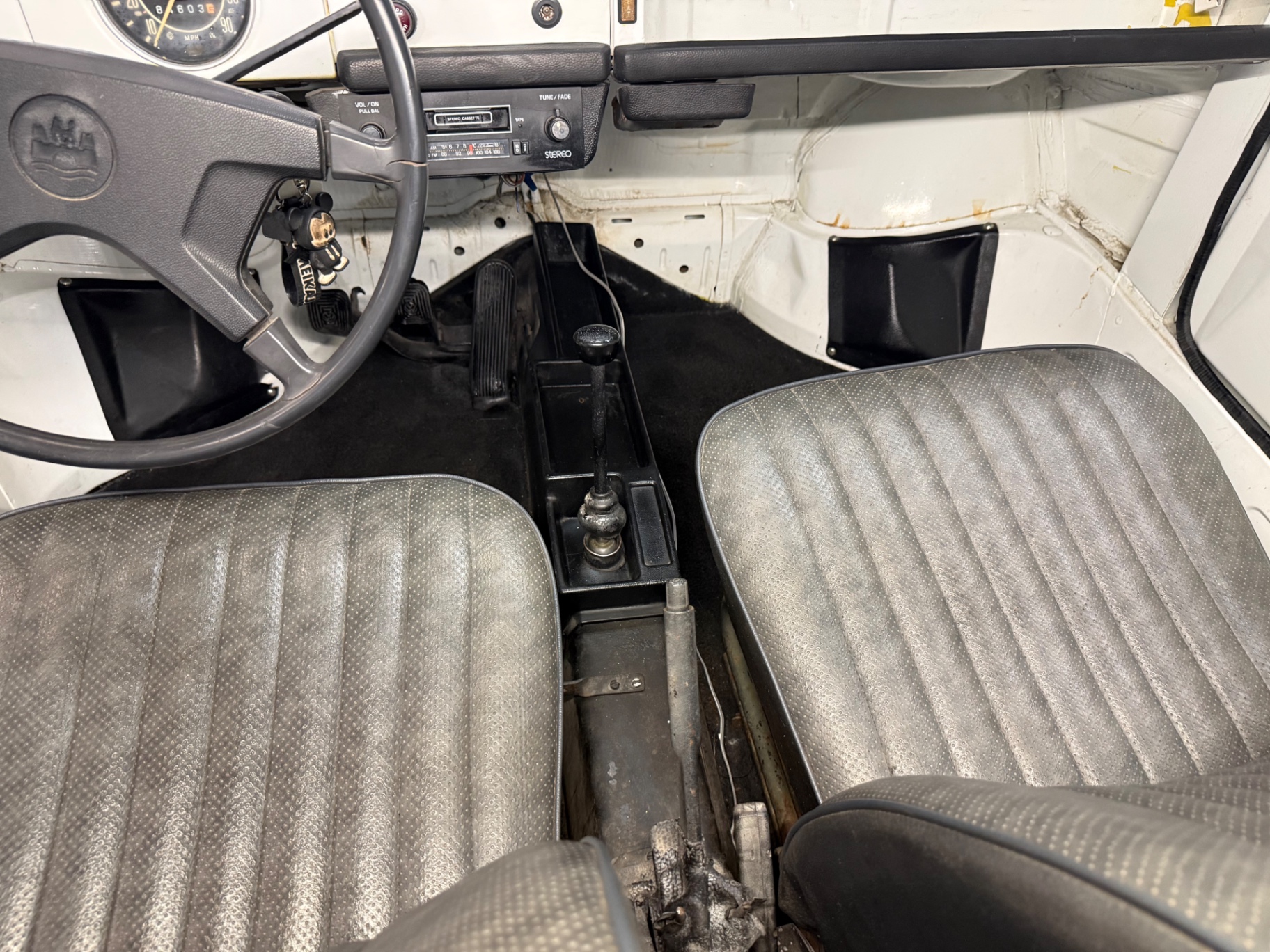
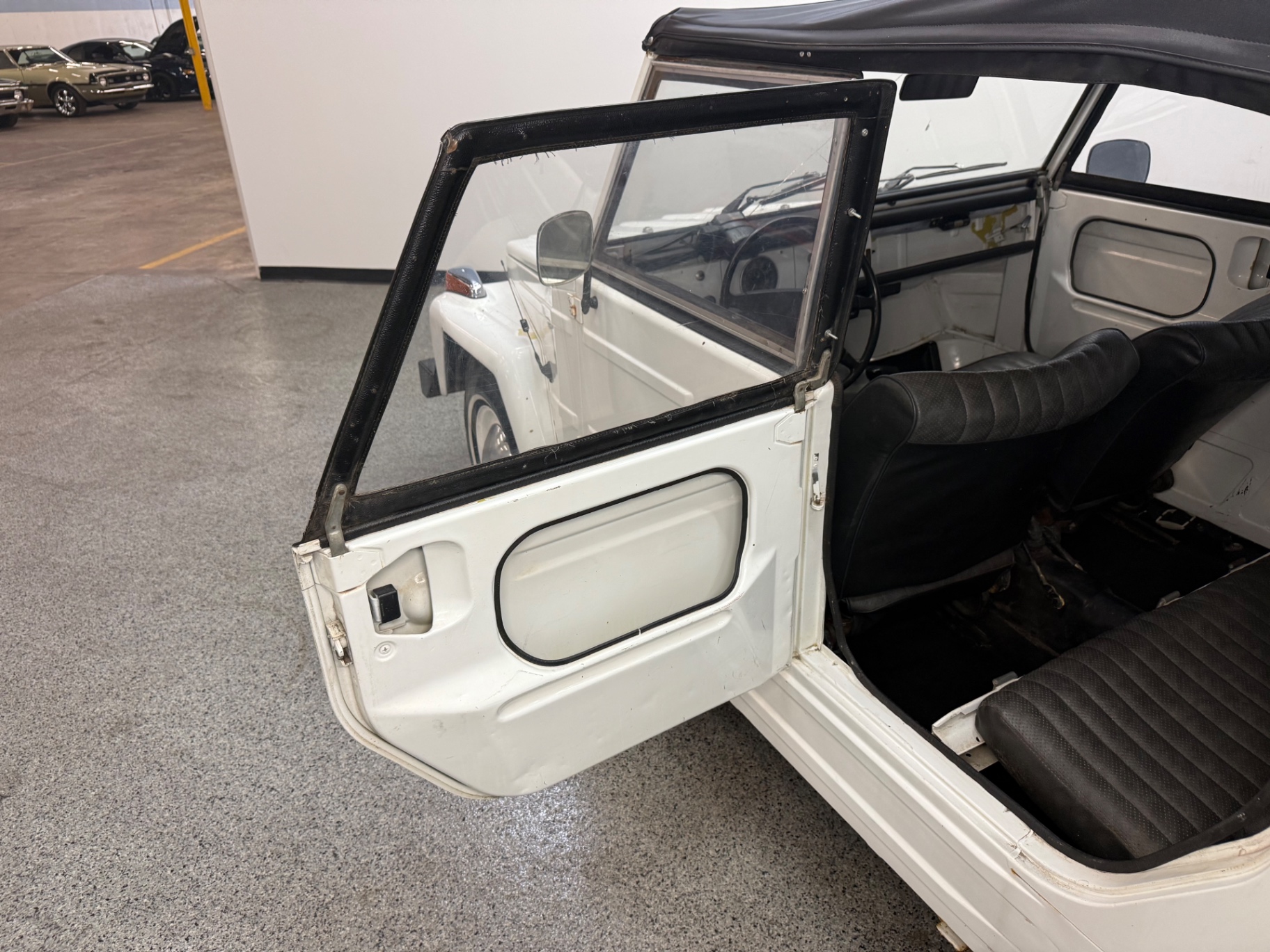
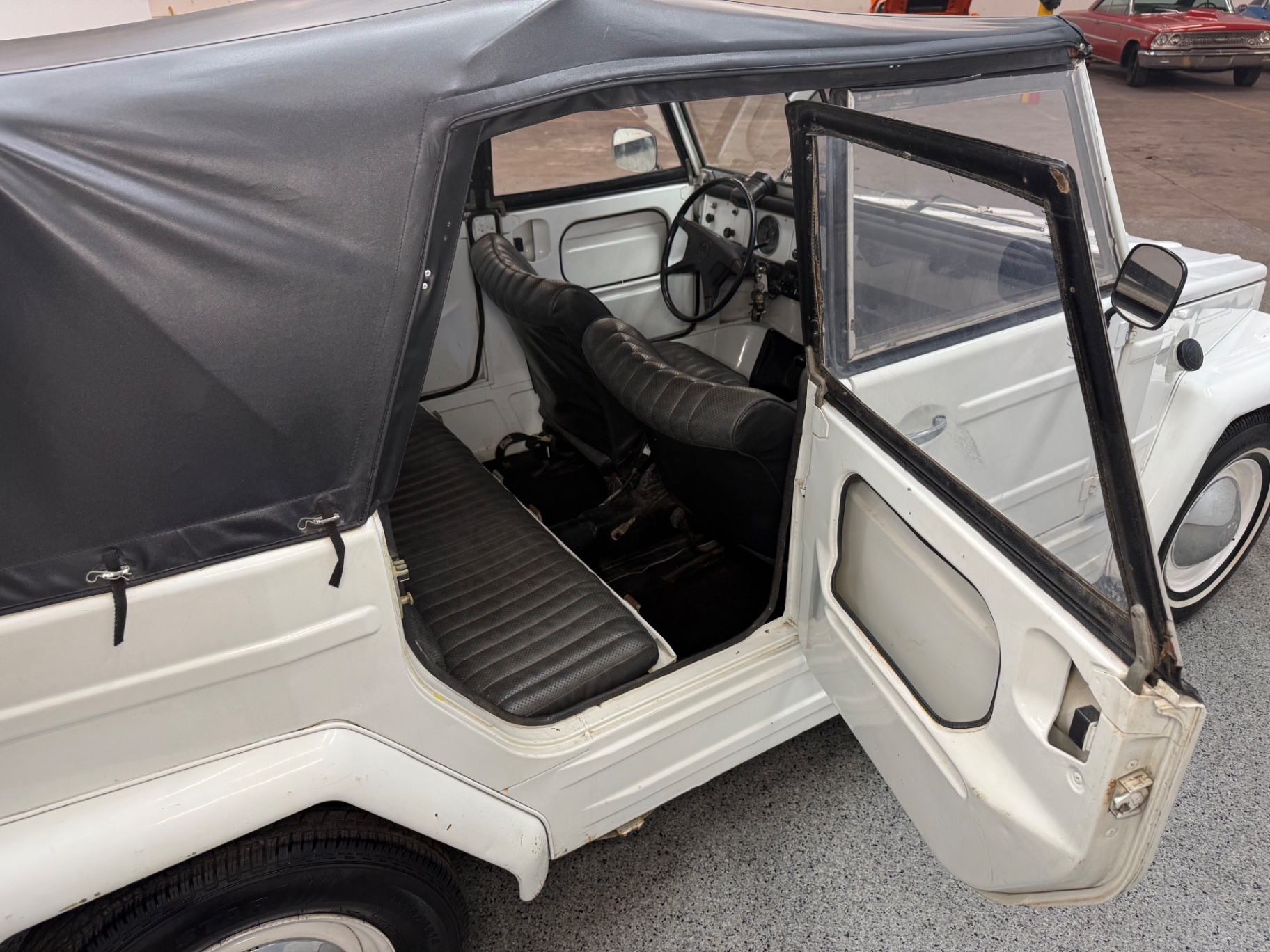
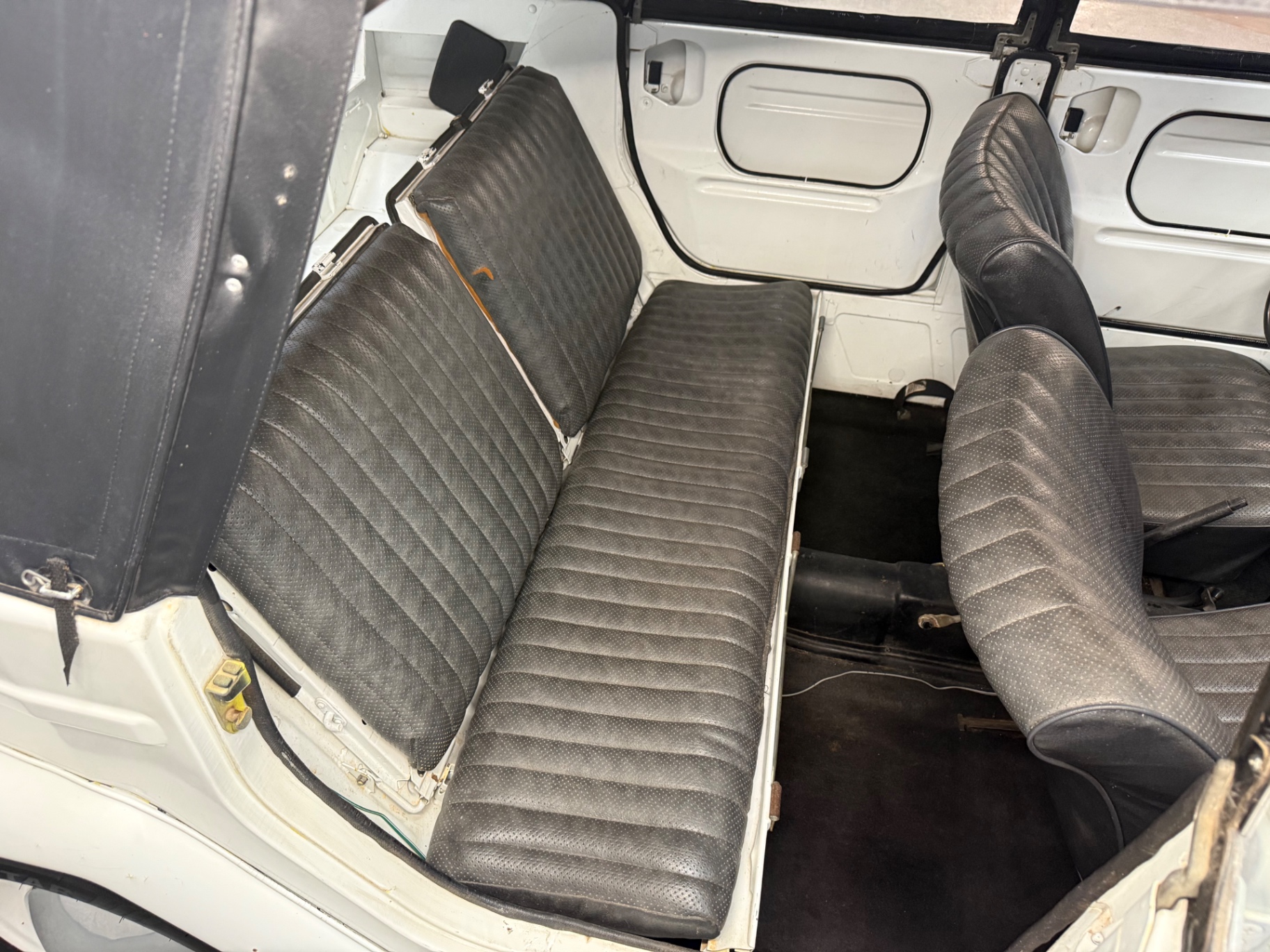
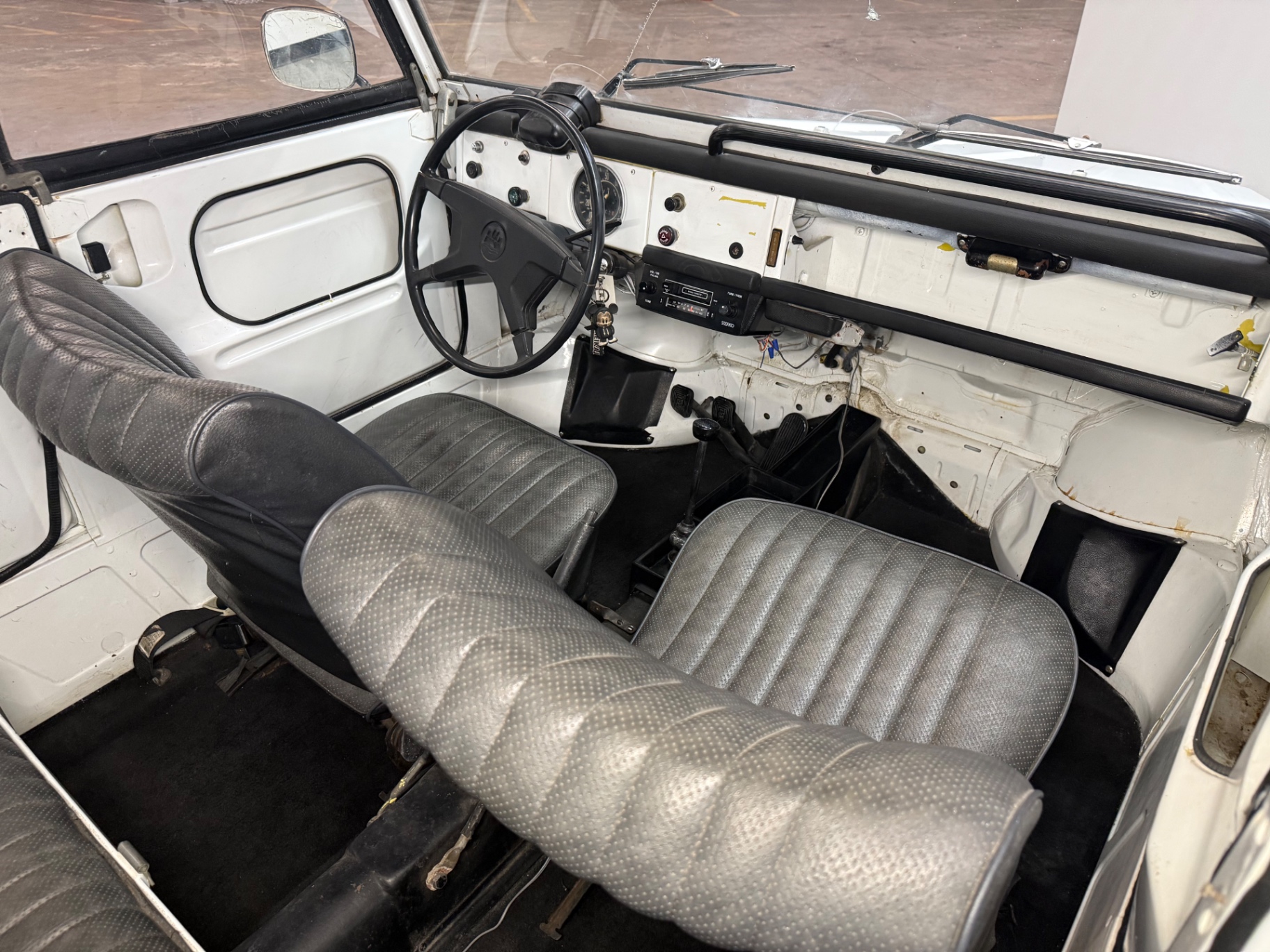
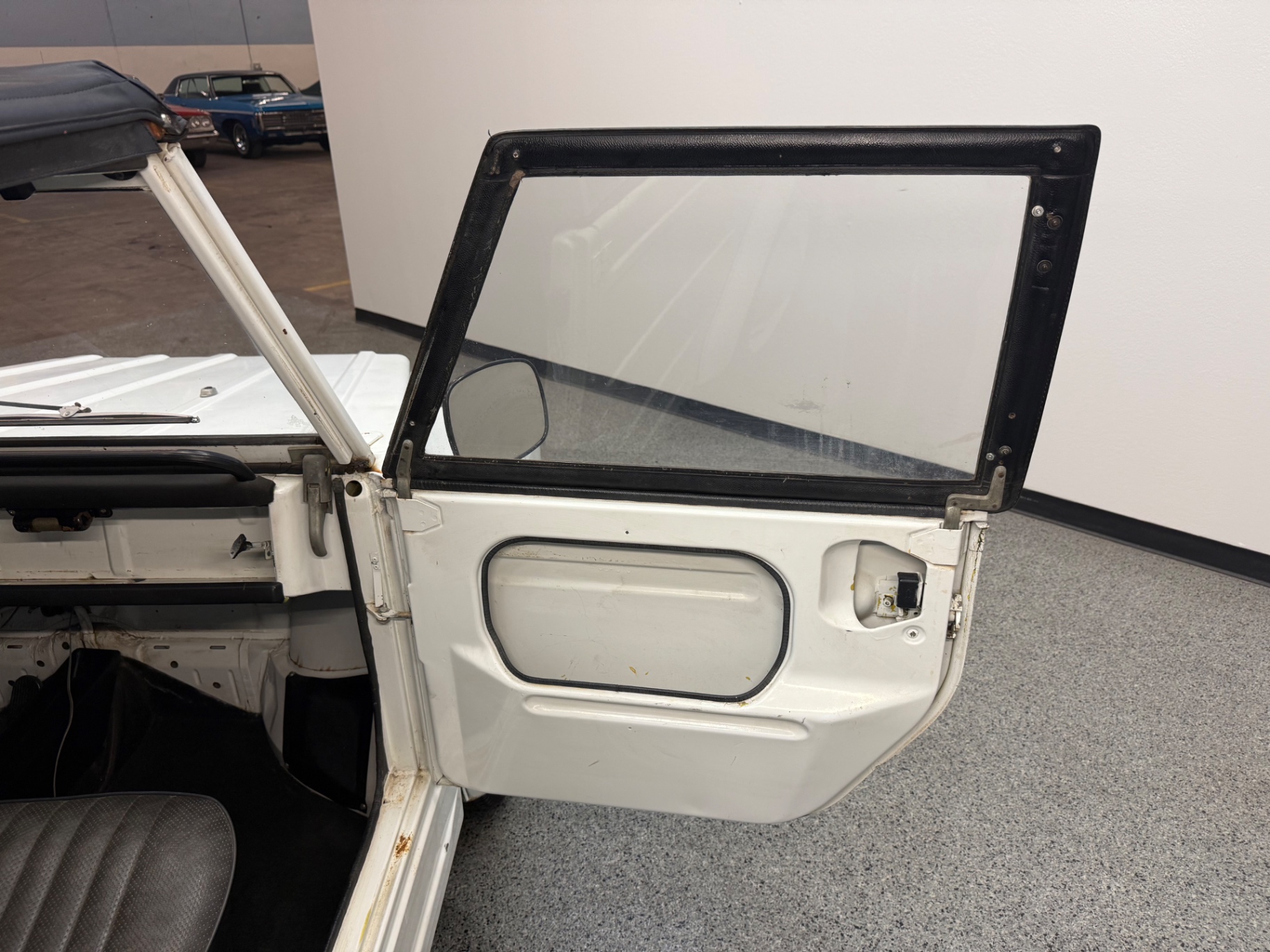
1973 Volkswagen Thing — White with Black Top, Removable Doors, Fold-Down Windshield
Why This Car Is Special
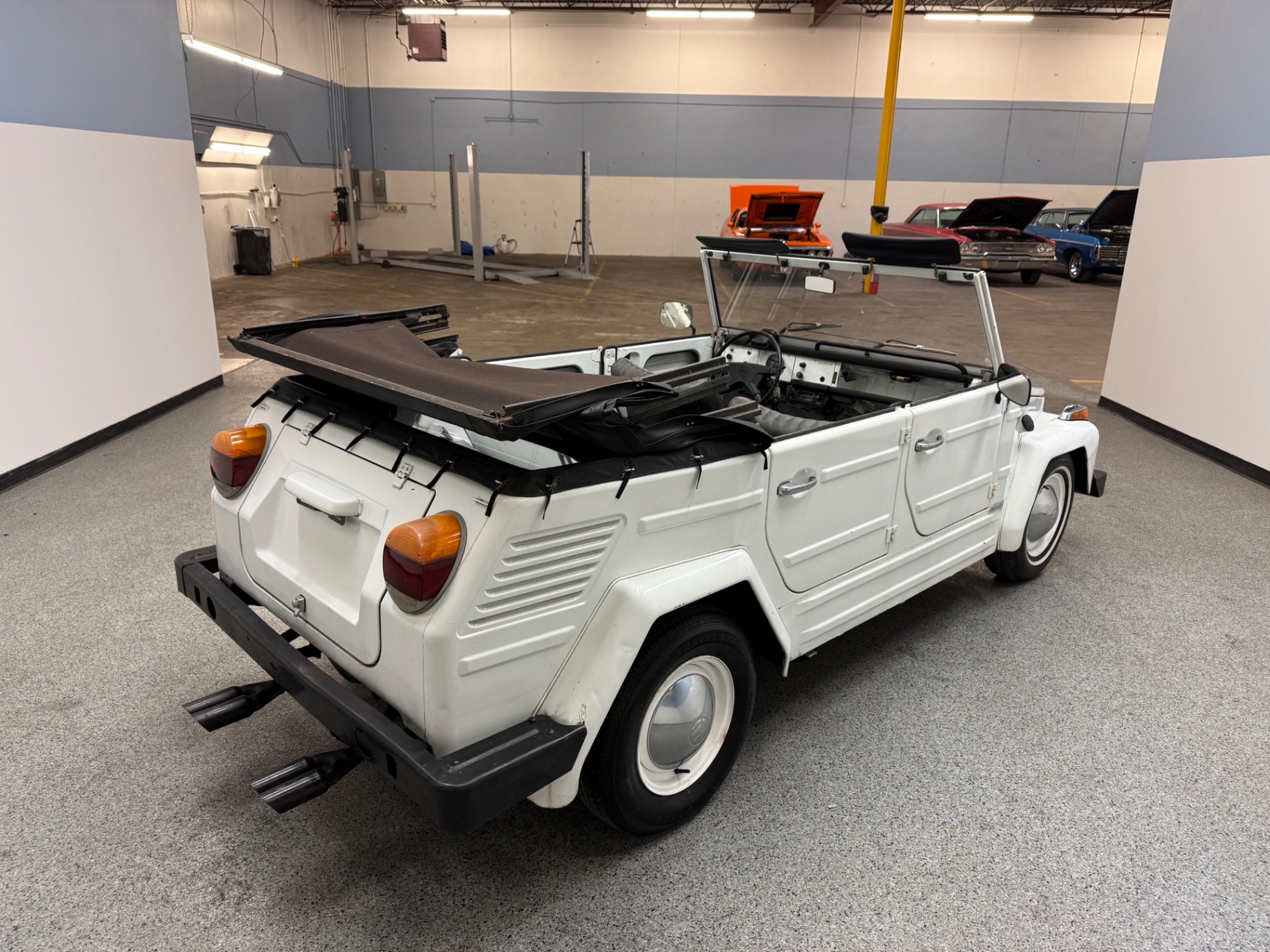
The 1973 Volkswagen Thing is one of the more honest vehicles ever sold to the American public. It does not pretend to be anything other than what it is: a simple, open-air, go-anywhere machine with military roots and absolutely zero pretense. VW sold the Type 181 — that is its official designation — in the United States for just three model years, from 1973 through 1975, and the car developed a devoted following almost immediately. This particular 1973 Volkswagen Thing presents in white with a black convertible top, black vinyl interior, and whitewall tires on steel wheels with hubcaps. It is a correct, characterful example of a vehicle that is genuinely scarce and getting harder to find in solid condition.
The Thing traces its lineage directly to a West German military vehicle called the Mehrzweckfahrzeug, or multi-purpose vehicle, which Volkswagen produced through the 1960s for the Bundeswehr. When VW decided to bring a civilian version to market in 1969, they used the same basic concept — flat body panels, removable components, air-cooled mechanicals — and sold it first in Mexico and Europe before finally bringing it stateside in 1973. U.S. regulations actually forced VW to add safety bumpers and side marker lights for American-market cars, which gives 1973–1975 Things their slightly beefier look compared to European examples. The name "Thing" was coined specifically for American buyers because Volkswagen's marketing team decided the car was simply too strange to describe otherwise. They were not wrong. Fewer than 25,000 Things were sold in the United States across the entire three-year run, making any well-preserved survivor worth paying attention to.
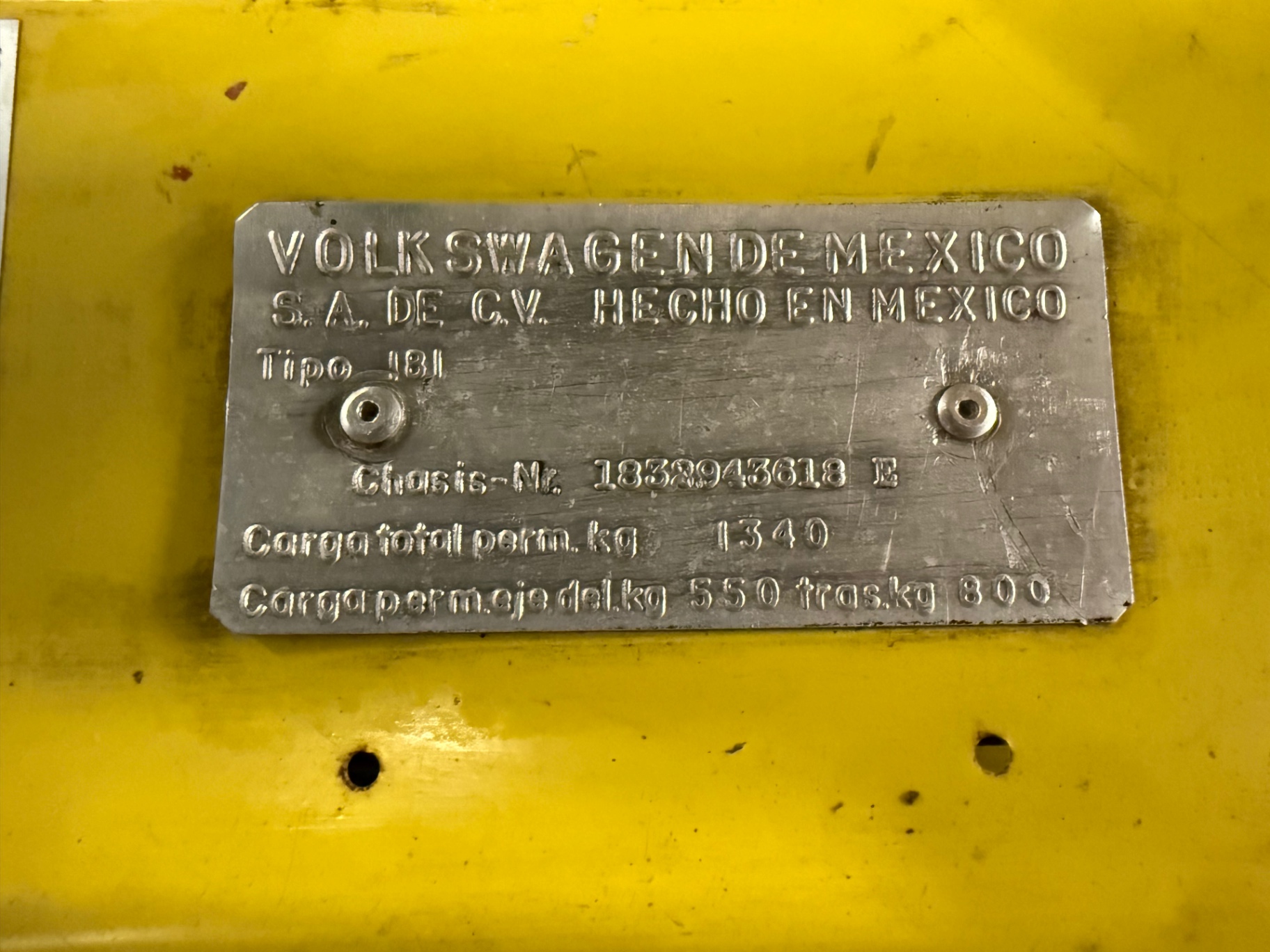
The VIN on this car confirms it is a 1973 model year U.S.-specification vehicle, built at VW's Emden, Germany plant. The "E" suffix in the VIN encodes the 1973 model year, consistent with German-market Type 181 production records.
Features List
- 1.6L Air-Cooled Flat-4 Engine - 4-Speed Manual Transmission - Rear-Mounted Engine - Removable Black Convertible Soft Top - Fold-Down Windshield - Removable Doors - Black Vinyl Interior - Whitewall Tires - Steel Wheels with Hubcaps - Undercoated Floorpan - Dual Exhaust Tips - White Exterior
Mechanical
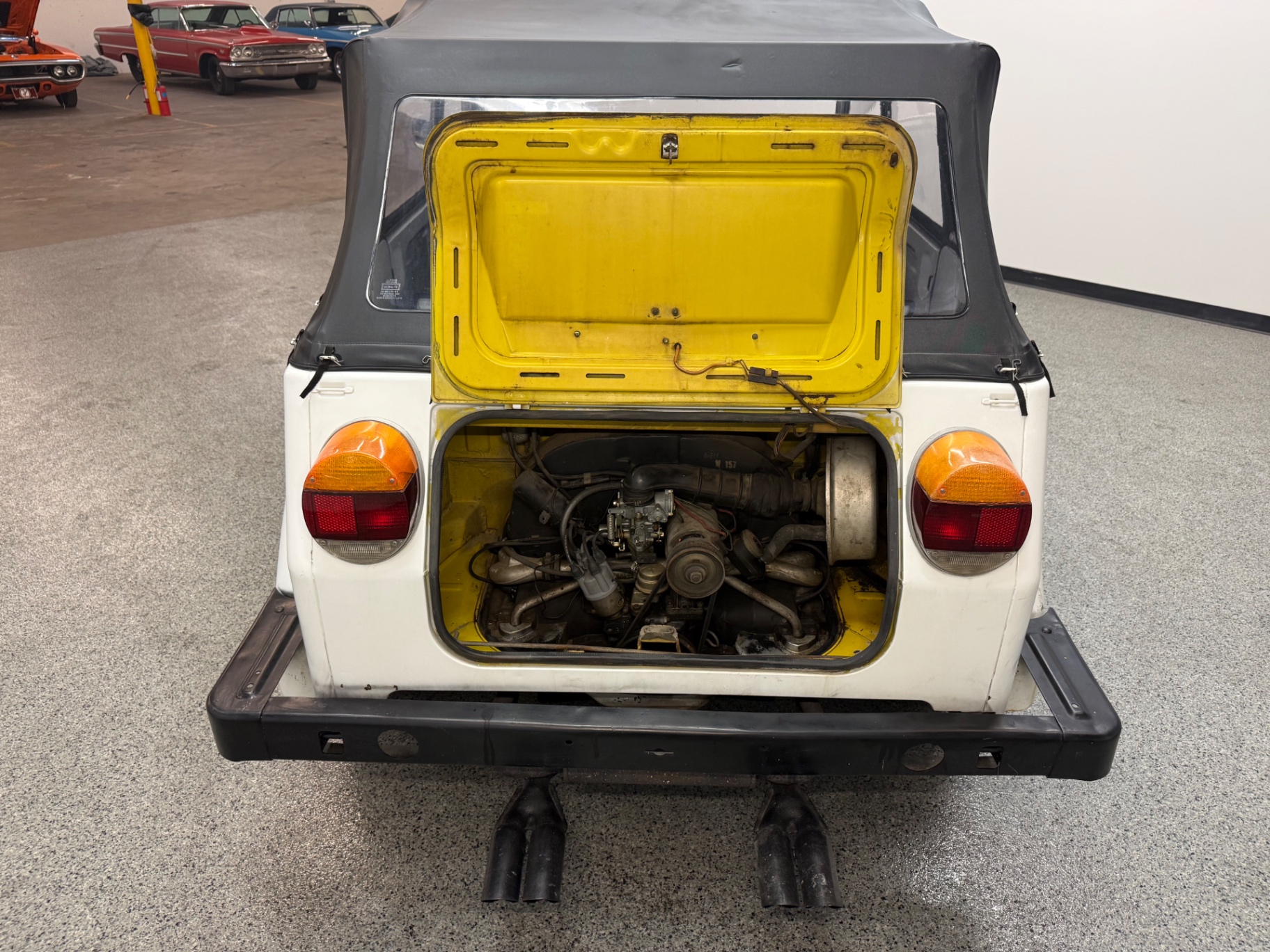
The 1973 Volkswagen Thing runs the same 1.6-liter air-cooled flat-four engine that powered generations of VW products, including the Beetle and the Bus. In U.S. trim for 1973, this engine produced approximately 46 horsepower, which is modest by any measure but entirely appropriate for a vehicle that weighs just over 1,800 pounds. The engine sits in the rear of the car, driving the rear wheels through a 4-speed manual gearbox — a layout VW used across its entire lineup during this era and one that the company had refined over decades of production.
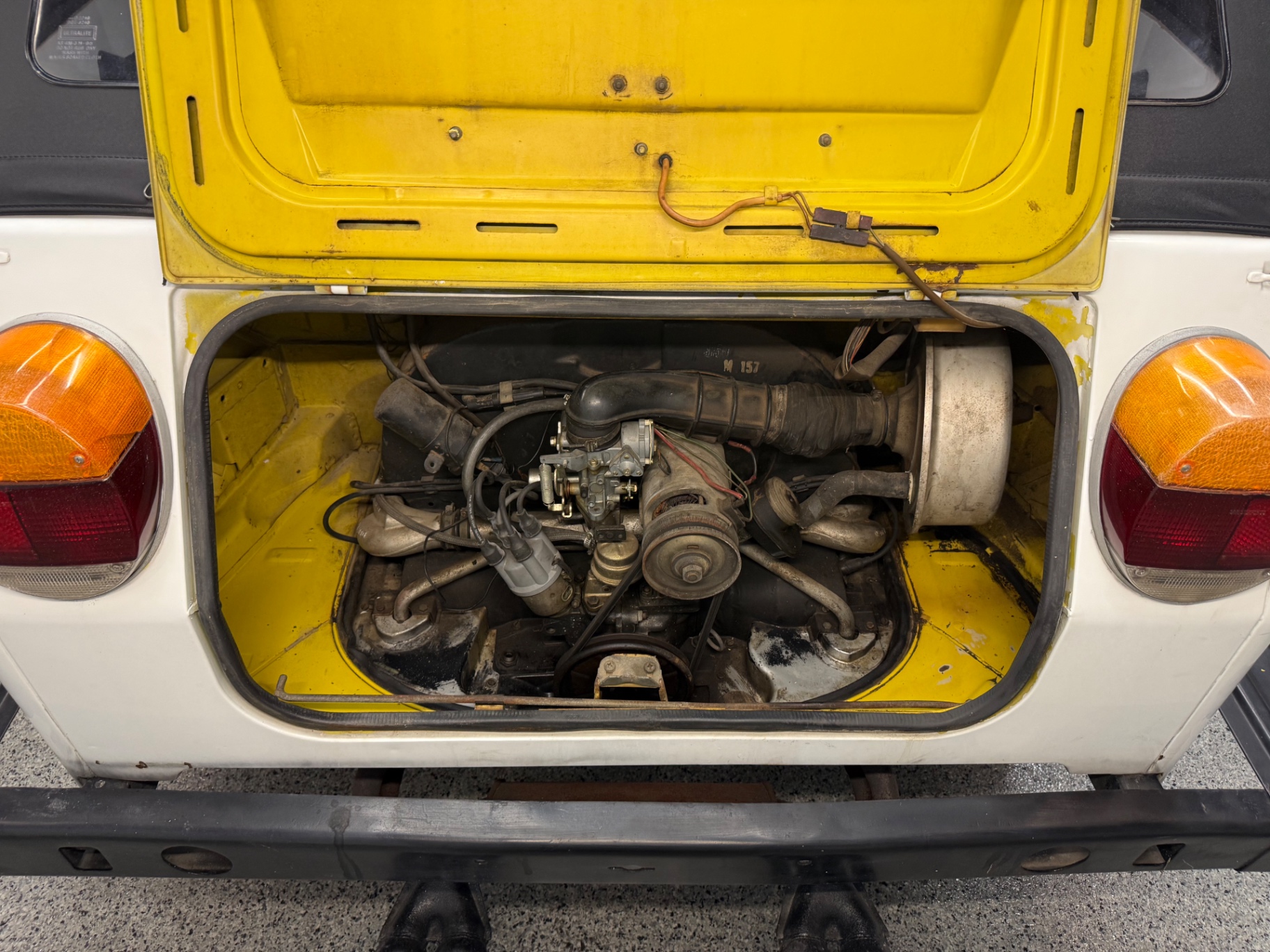
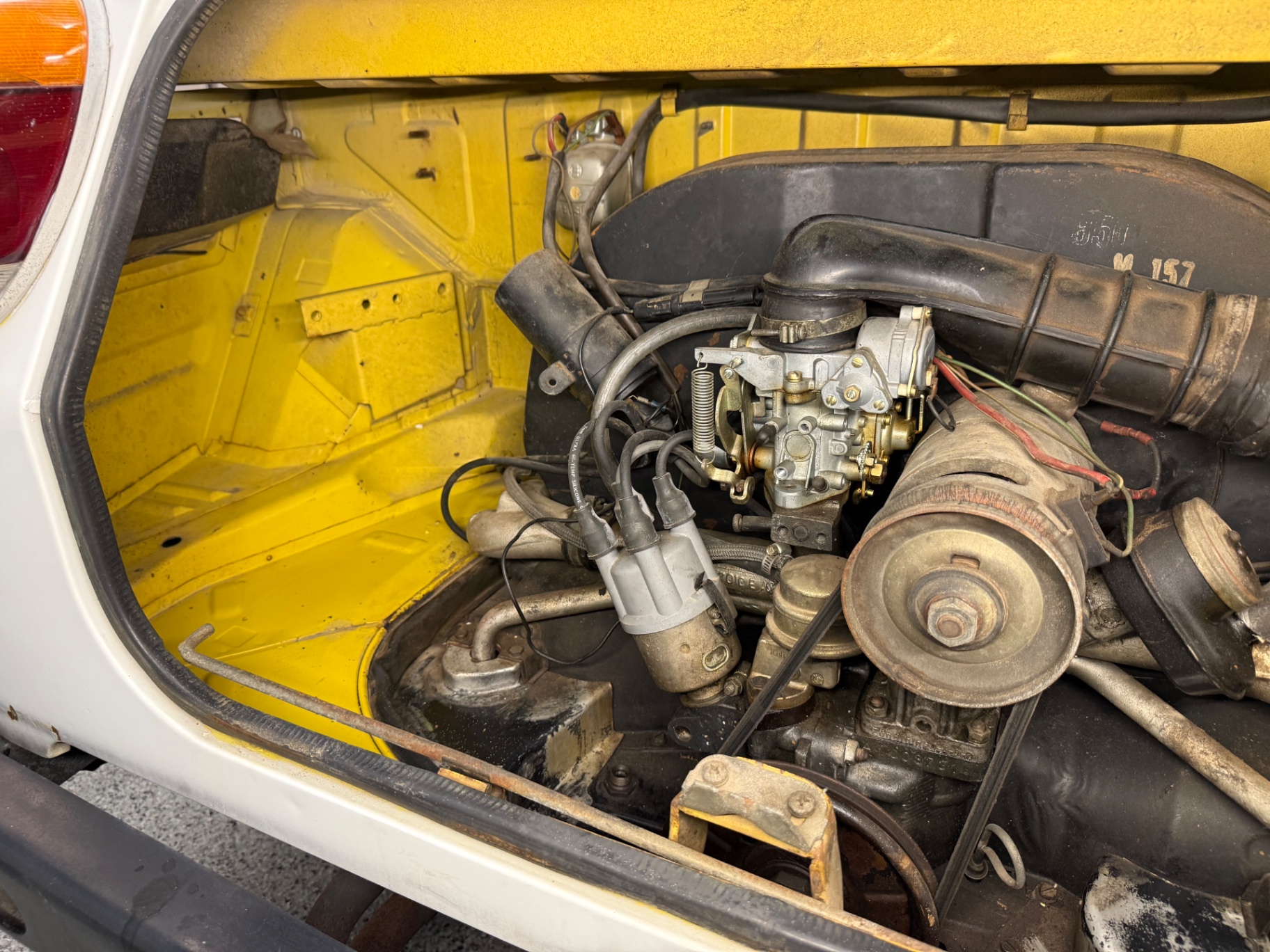
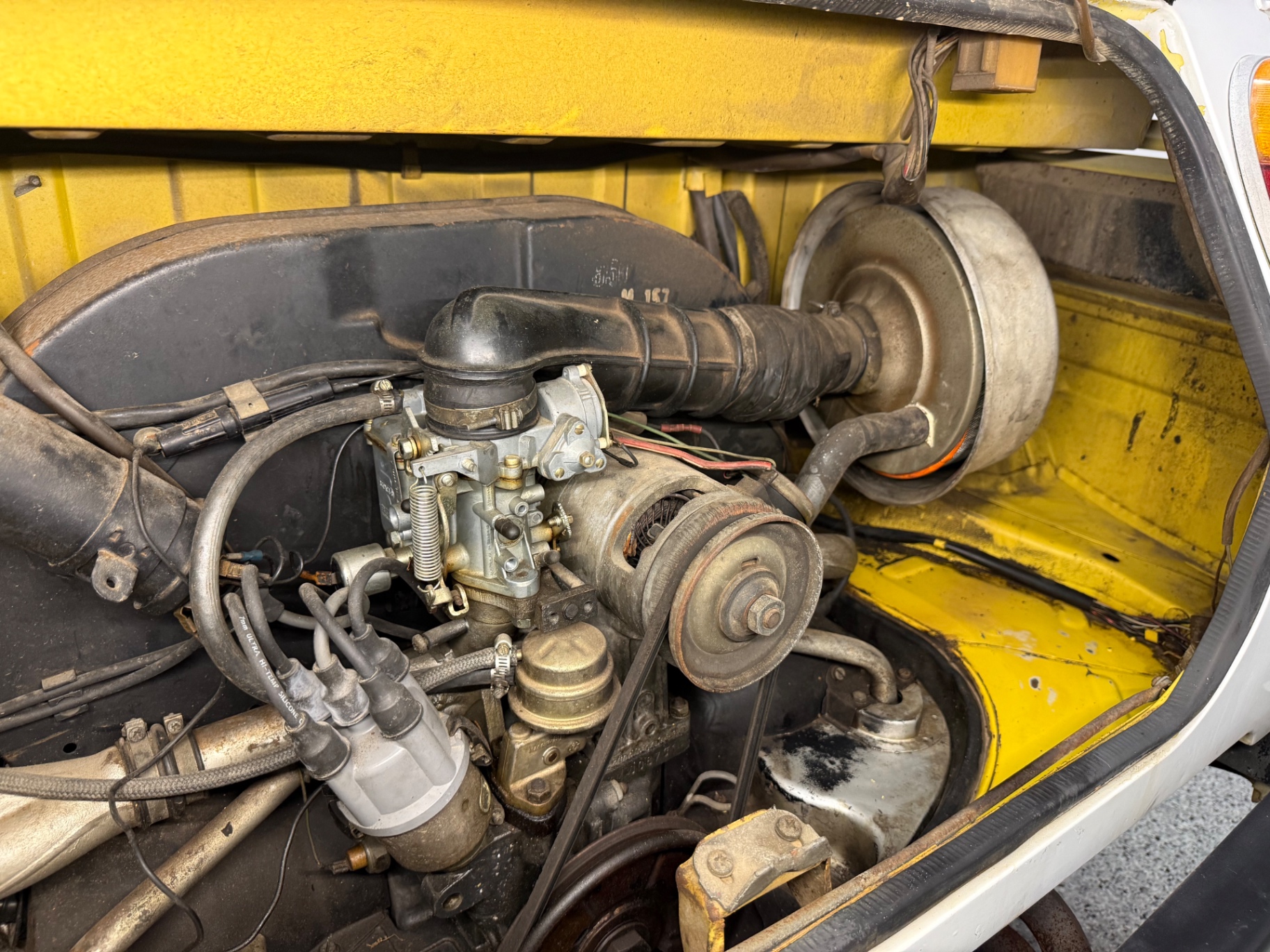
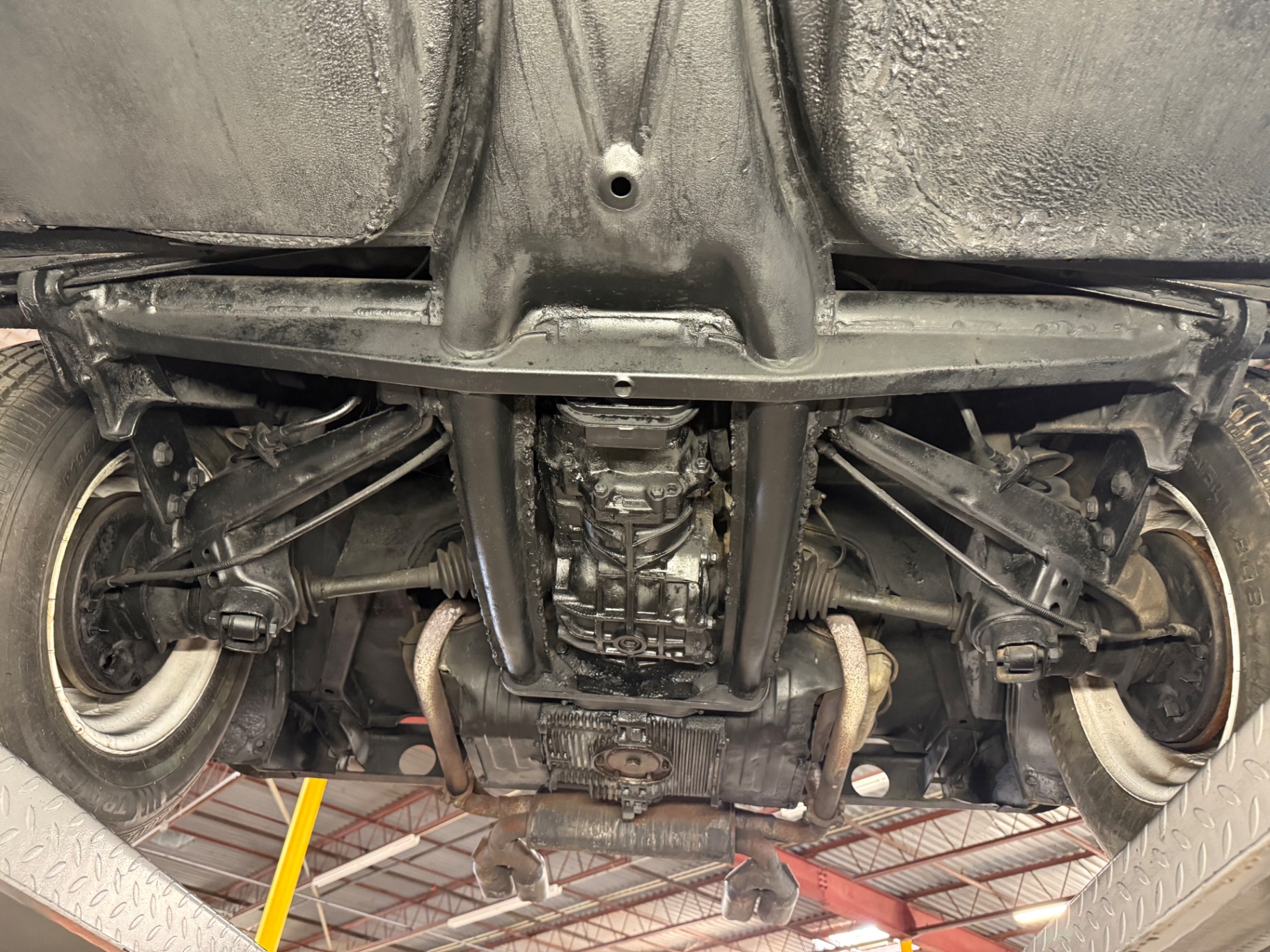
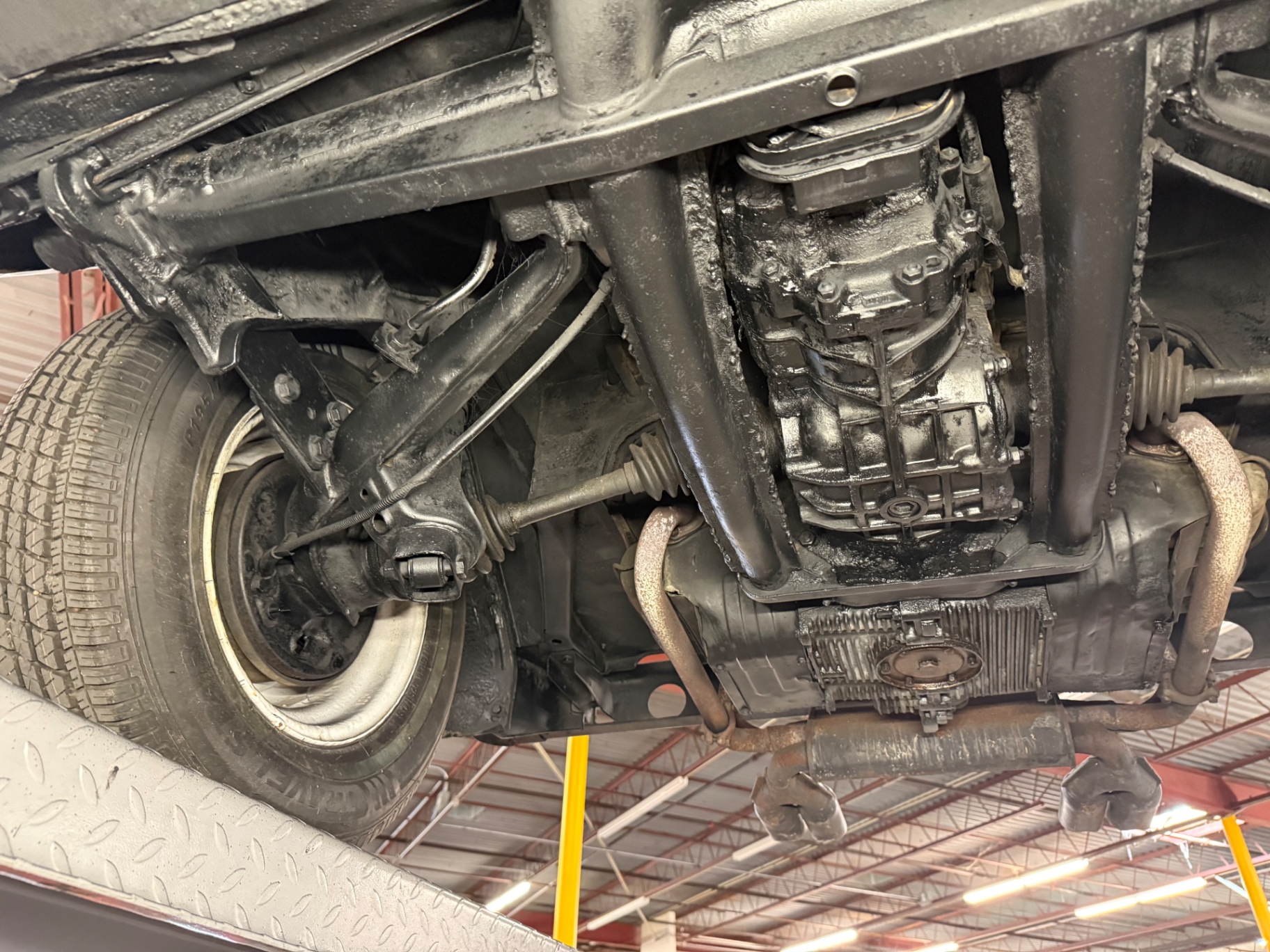
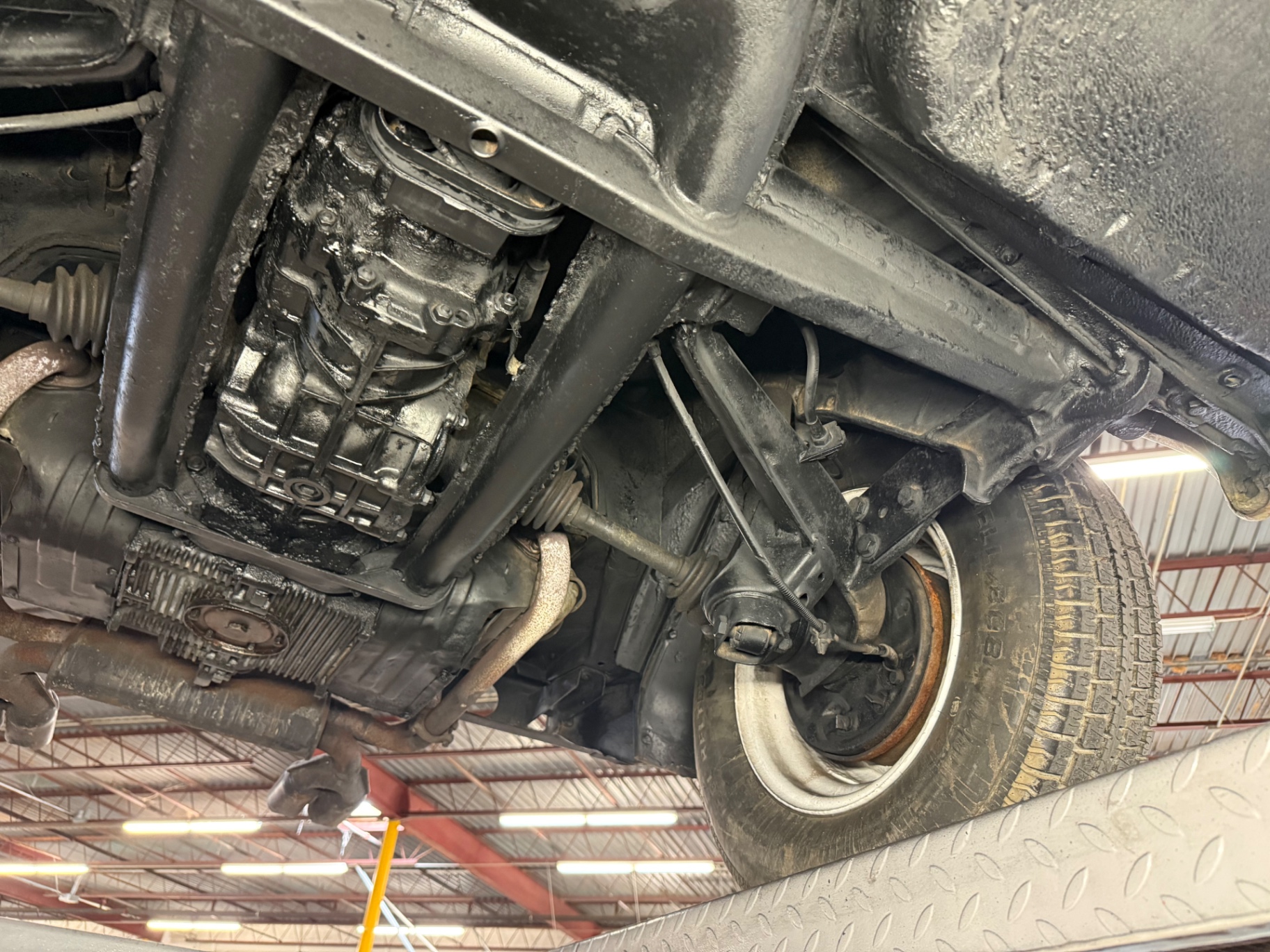
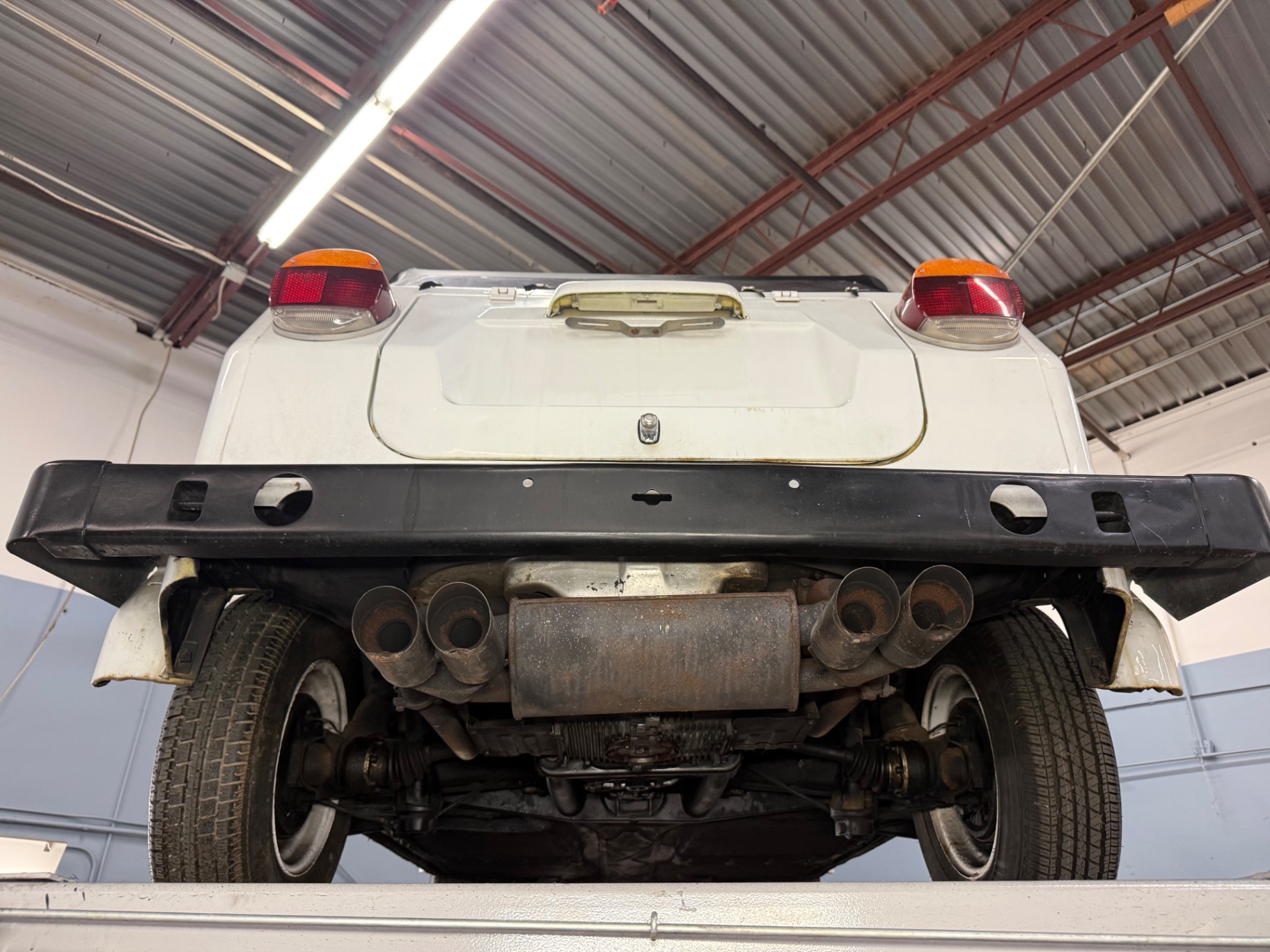
Because the engine is air-cooled, there is no radiator, no coolant, and no water pump to worry about. The simplicity of this drivetrain is a genuine advantage for ownership and maintenance. Parts remain widely available through the VW air-cooled community, and any mechanic familiar with vintage VW Beetles can work on a Thing without having to source exotic components. The rear engine lid opens to give full access to the motor, and the photos here show the characteristic yellow-painted engine bay that was standard on the Type 181. The dual exhaust tips exit below the rear bumper, a visual signature of the model.
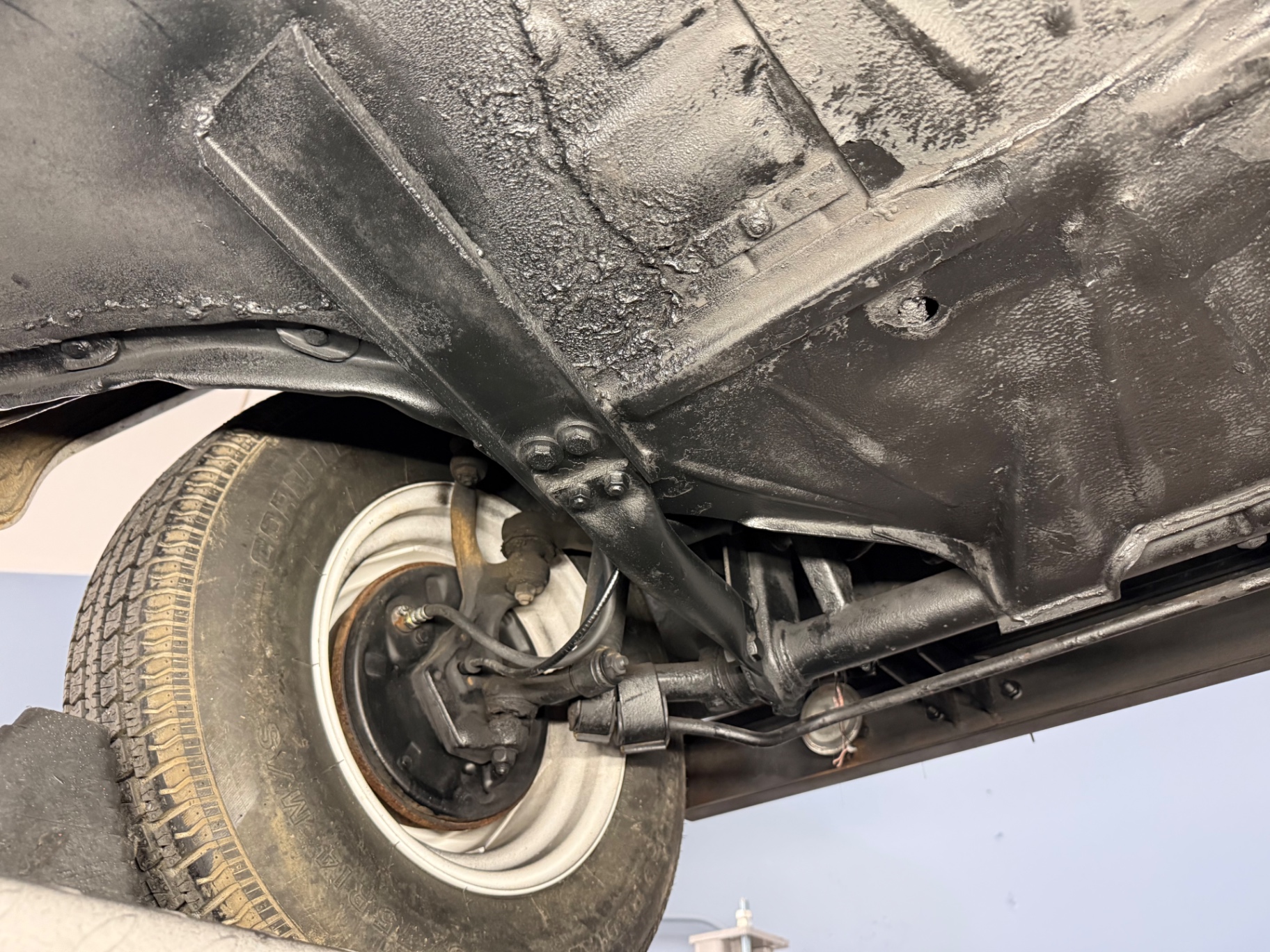
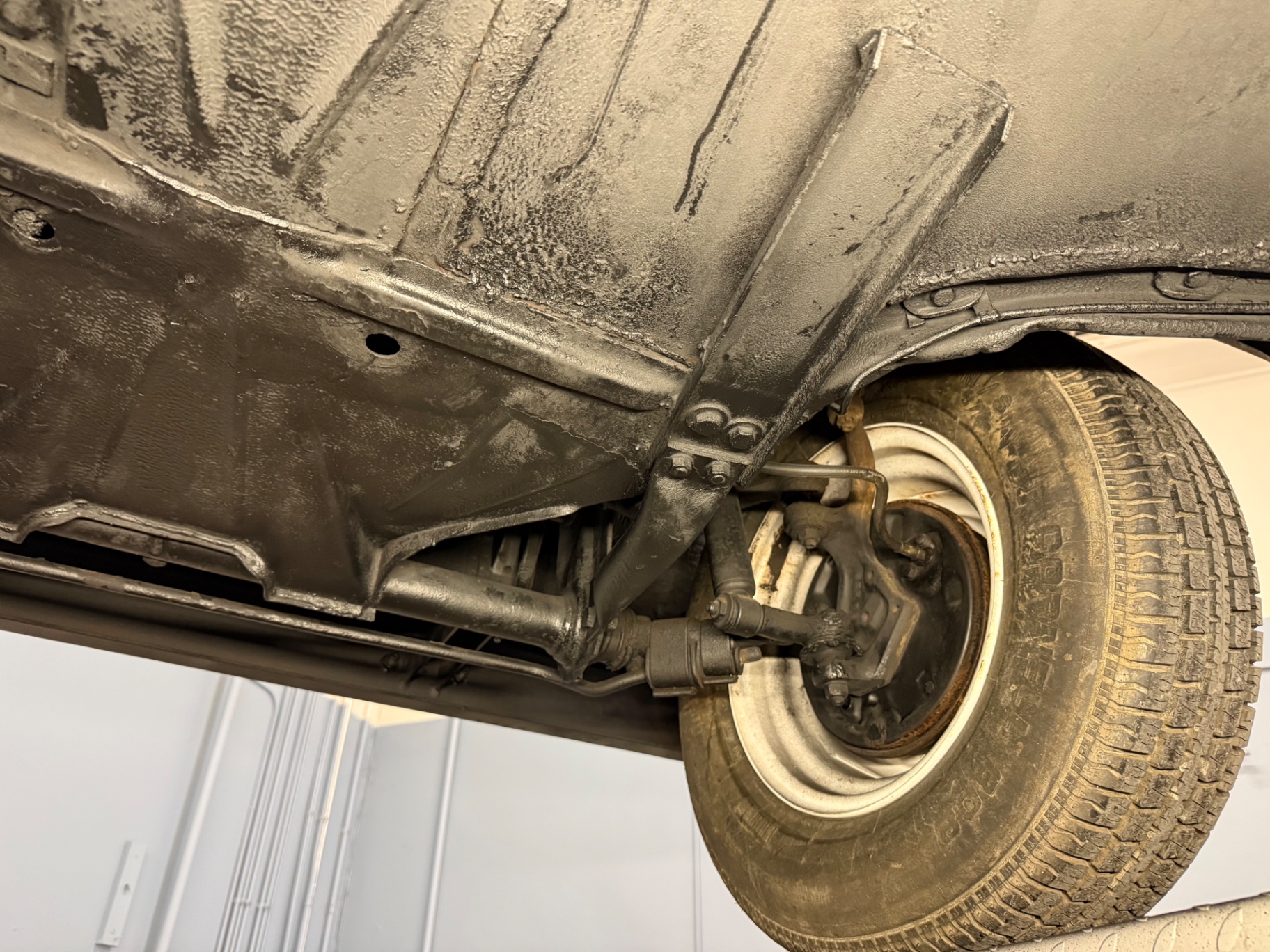
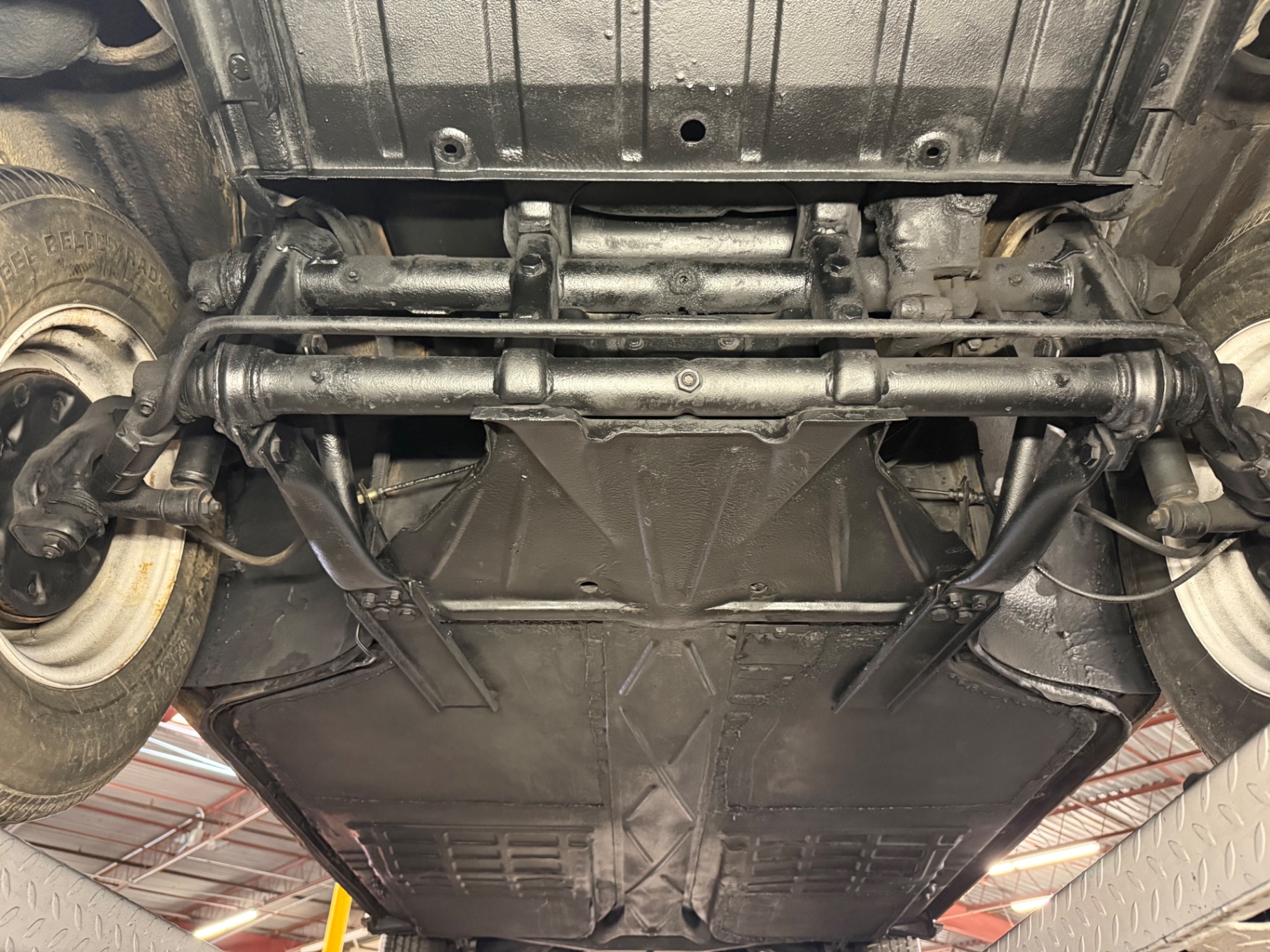
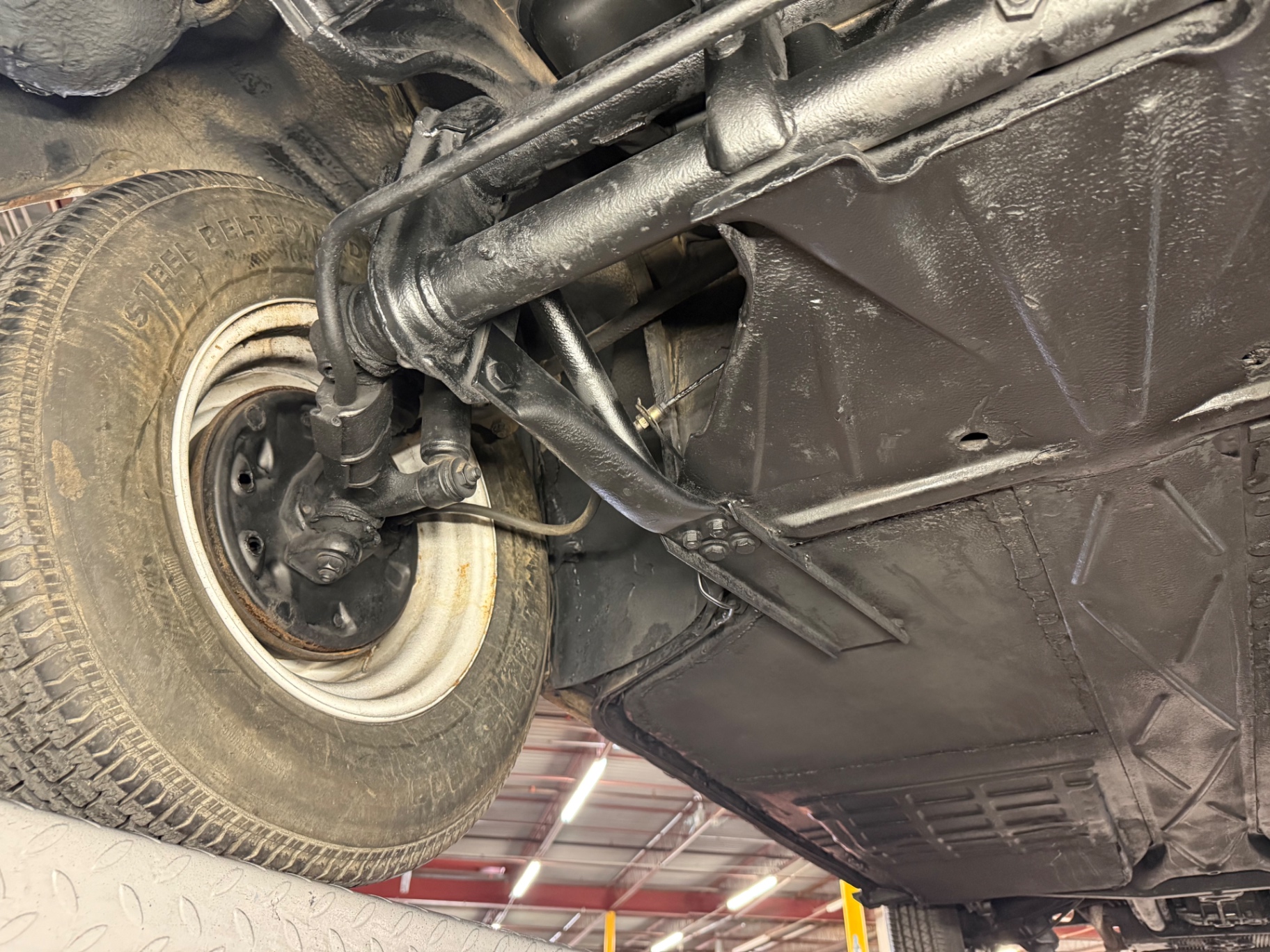
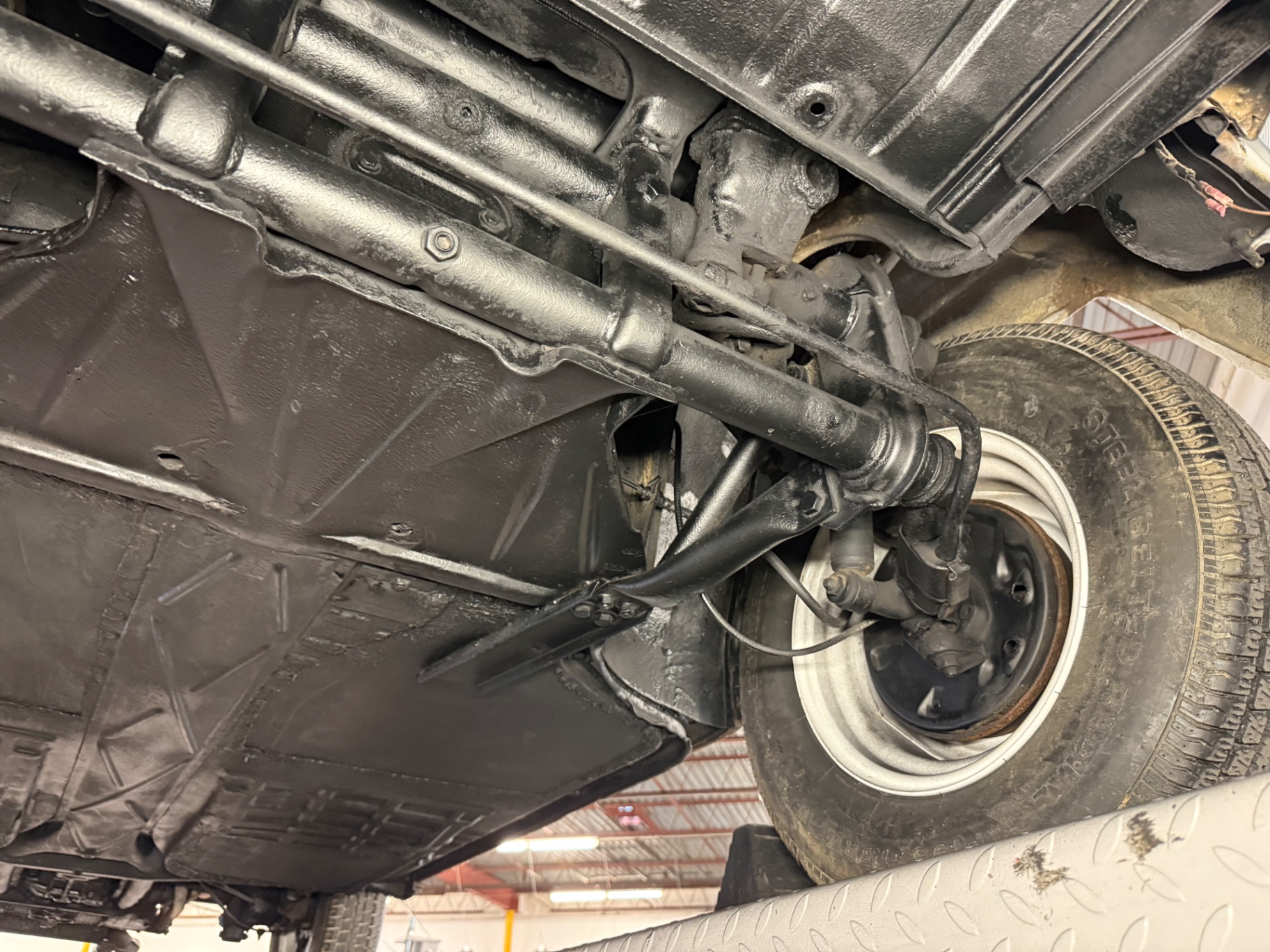
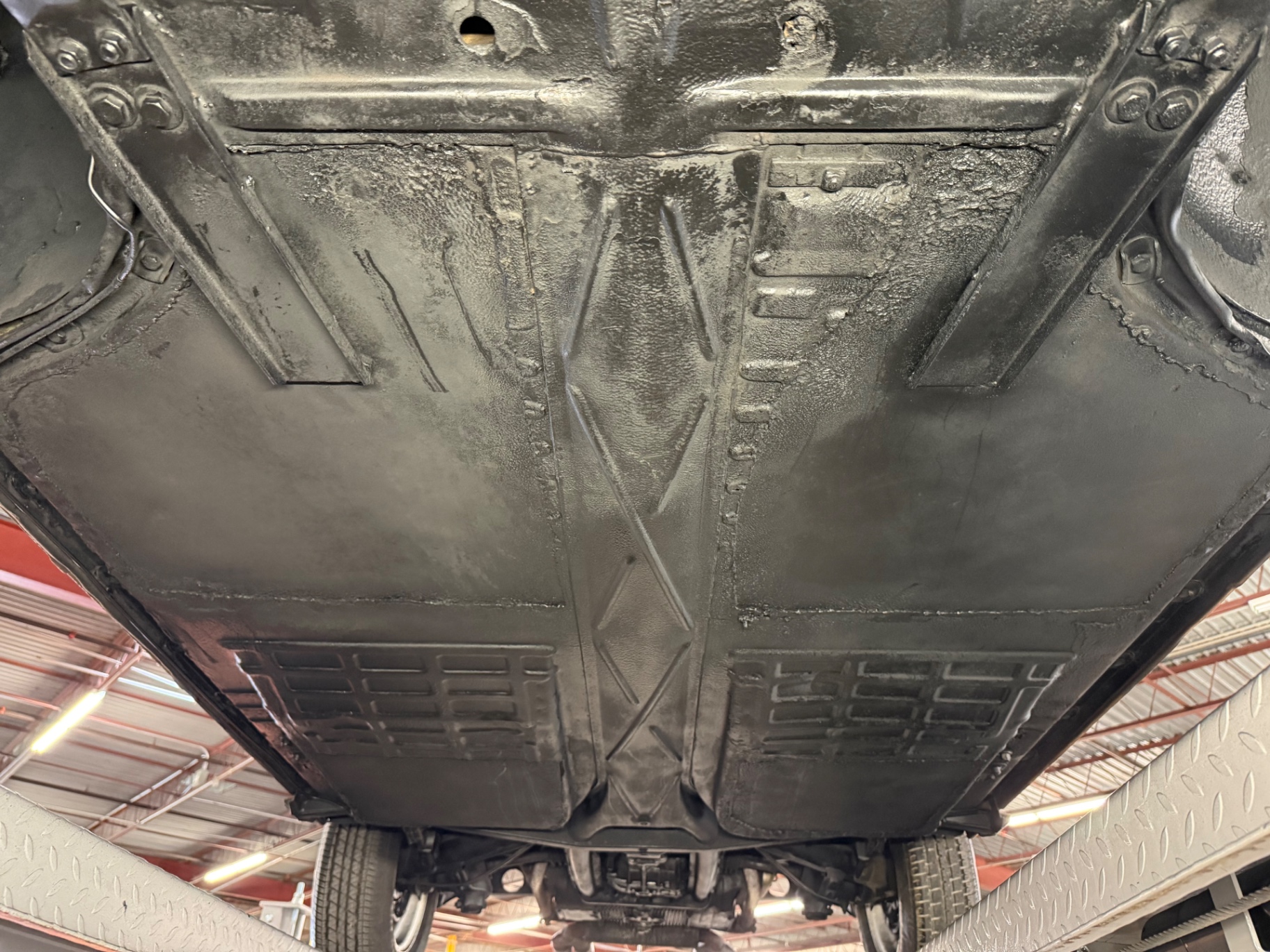
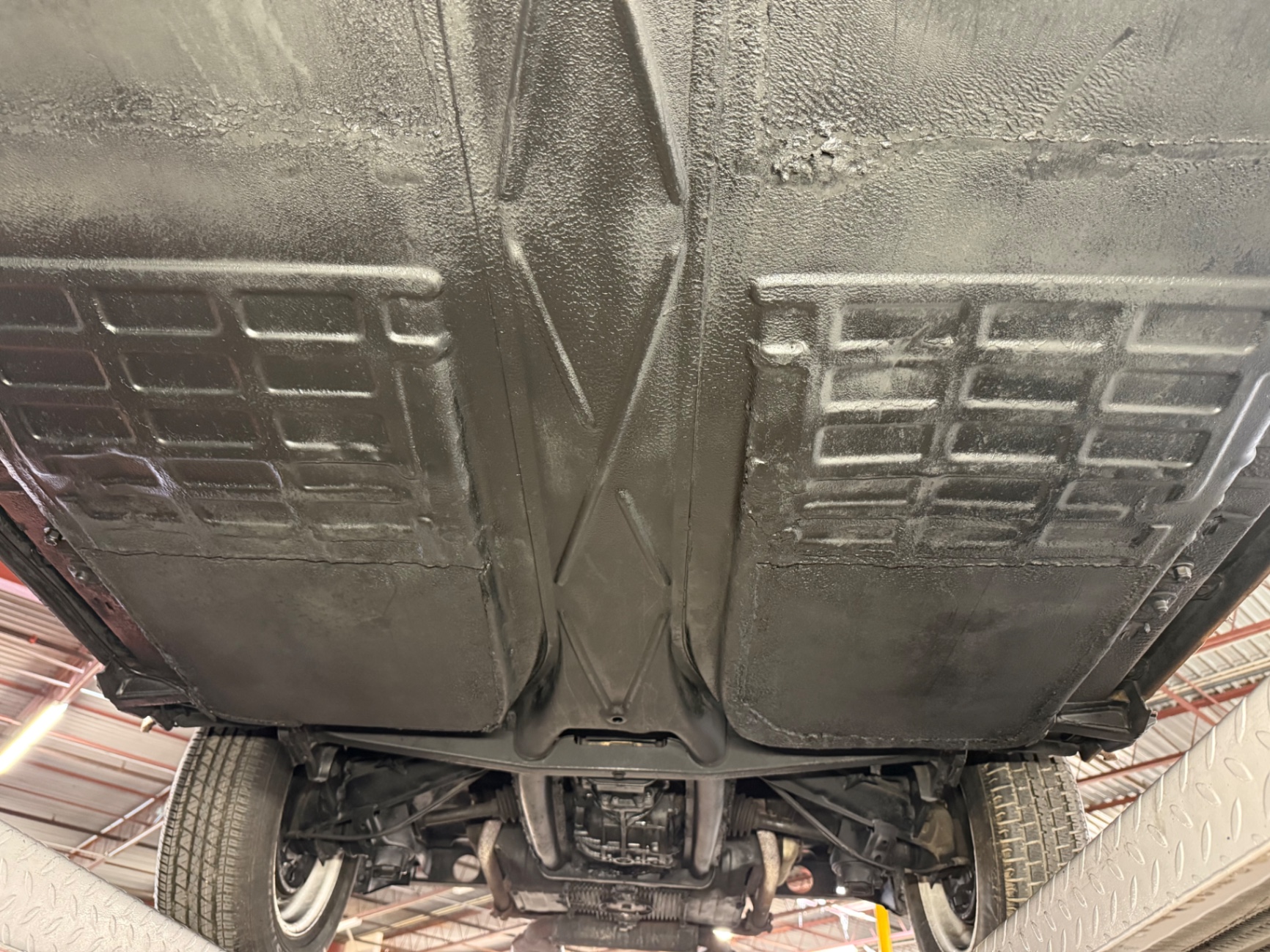
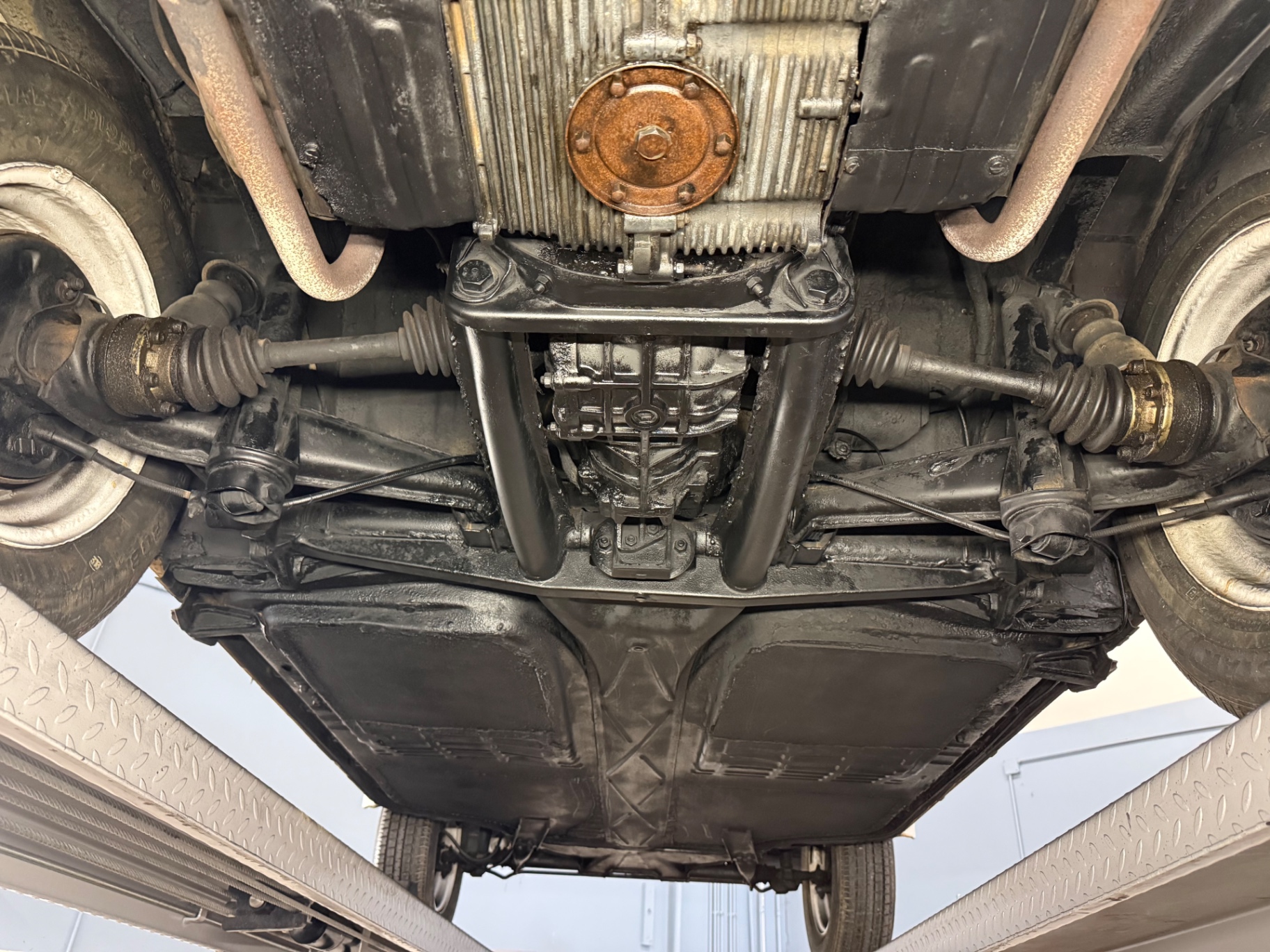
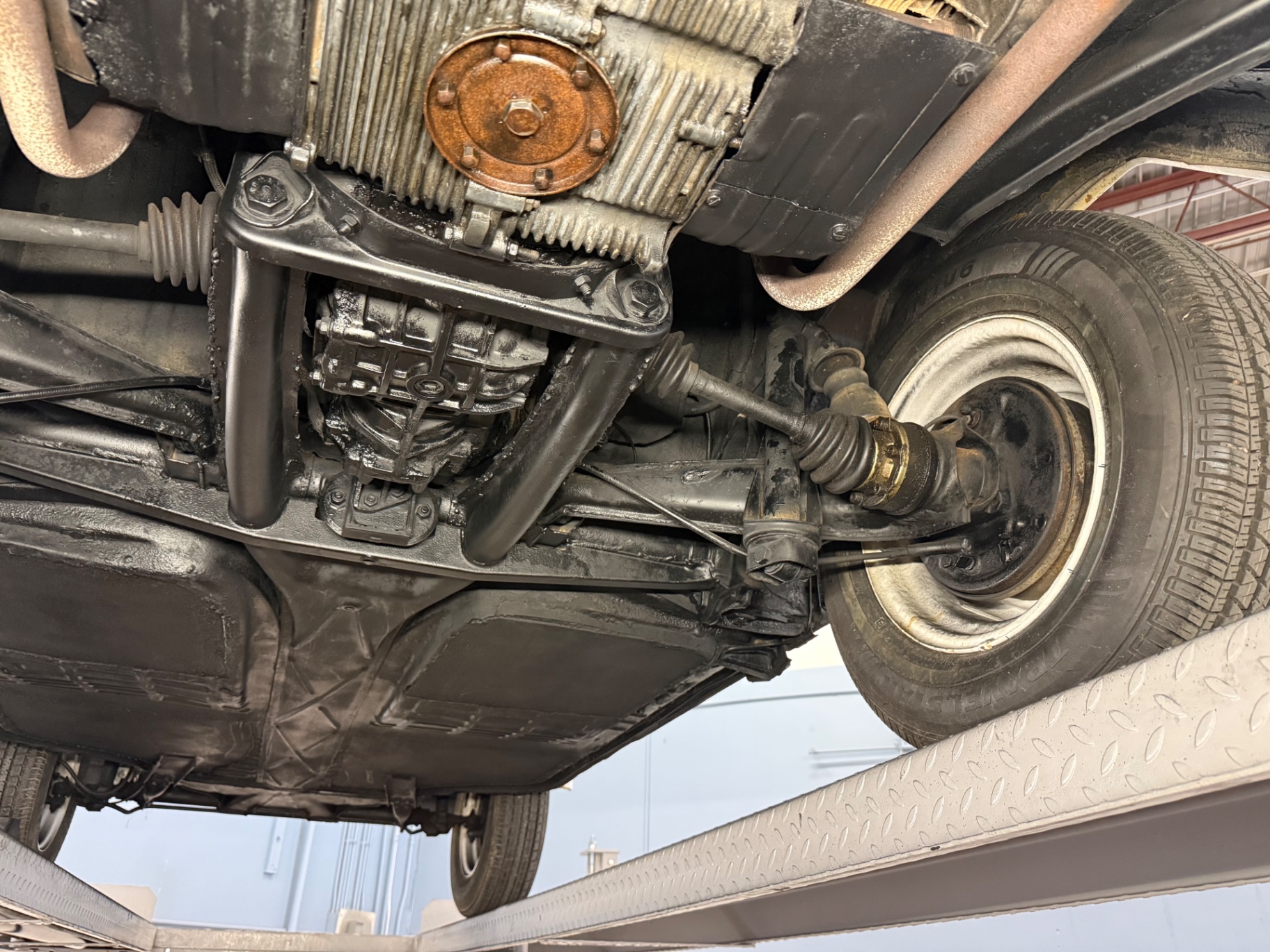
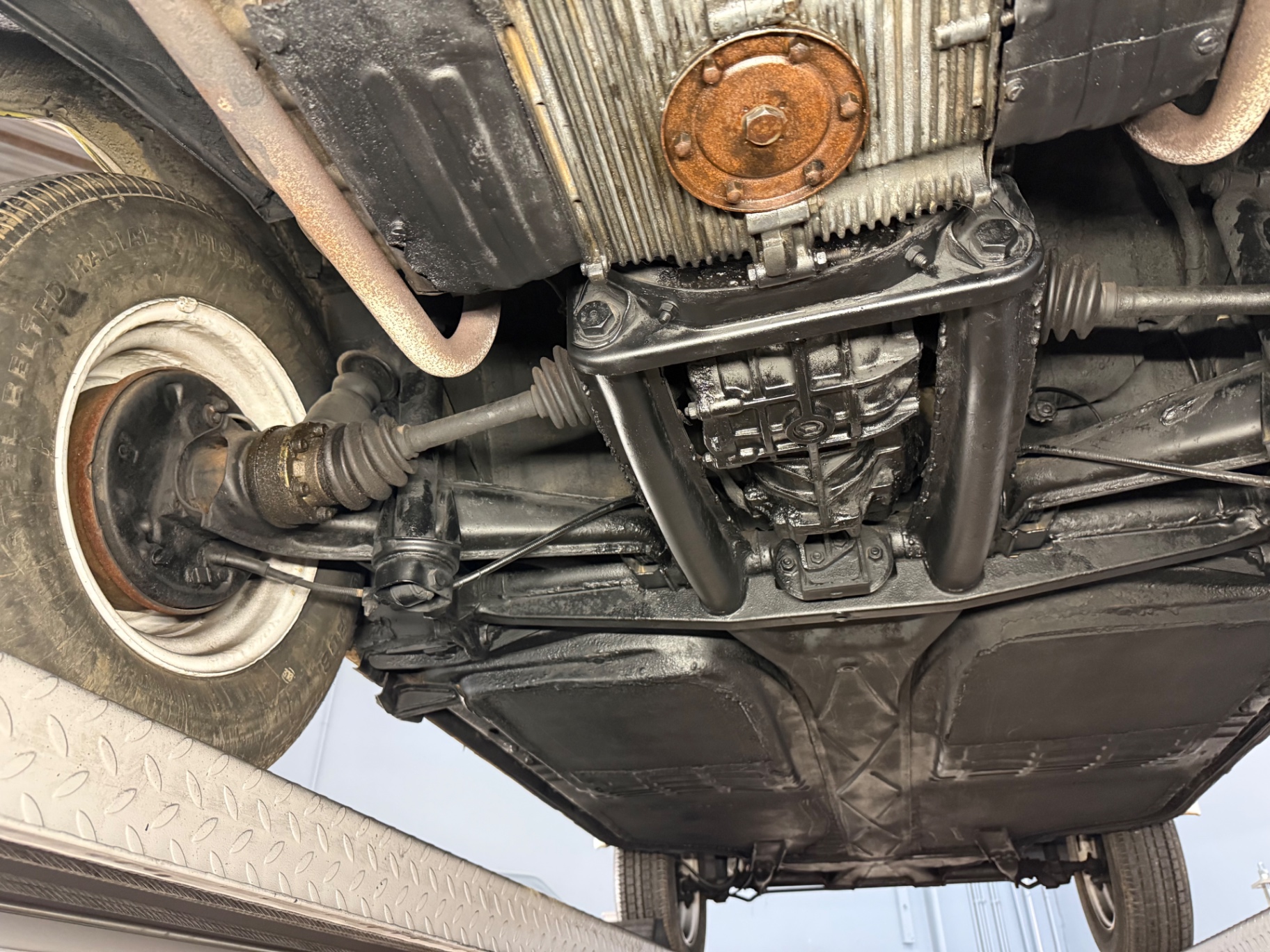
The floorpan on this car has been undercoated, which is an important detail on any vintage Thing. The flat, stamped-steel floor is the first place these vehicles typically show age, and a properly undercoated pan significantly extends the useful life of the chassis. The underside photos show solid, black-coated suspension components and floor sections, which is encouraging on a 50-year-old open-air vehicle.
Interior
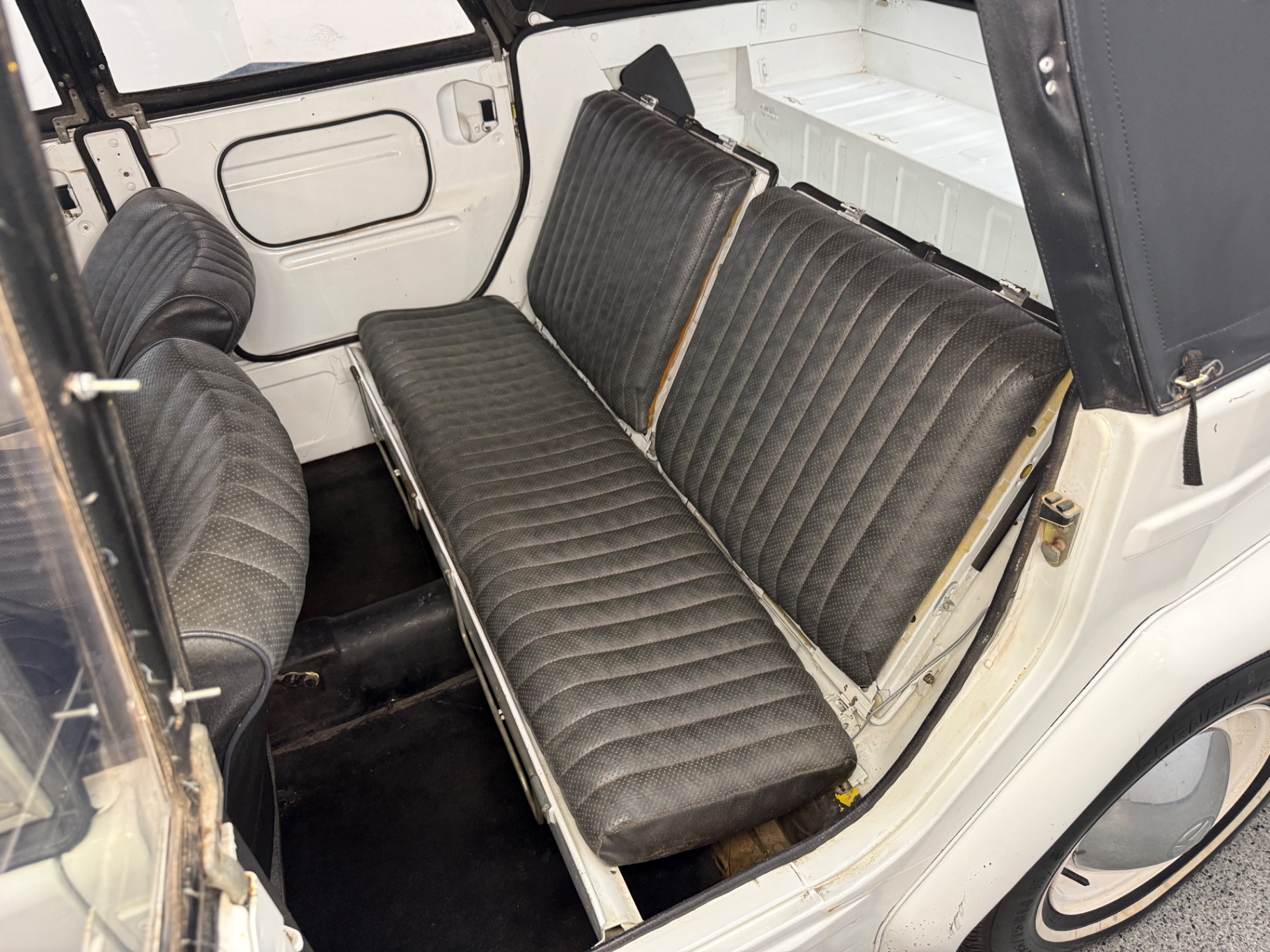
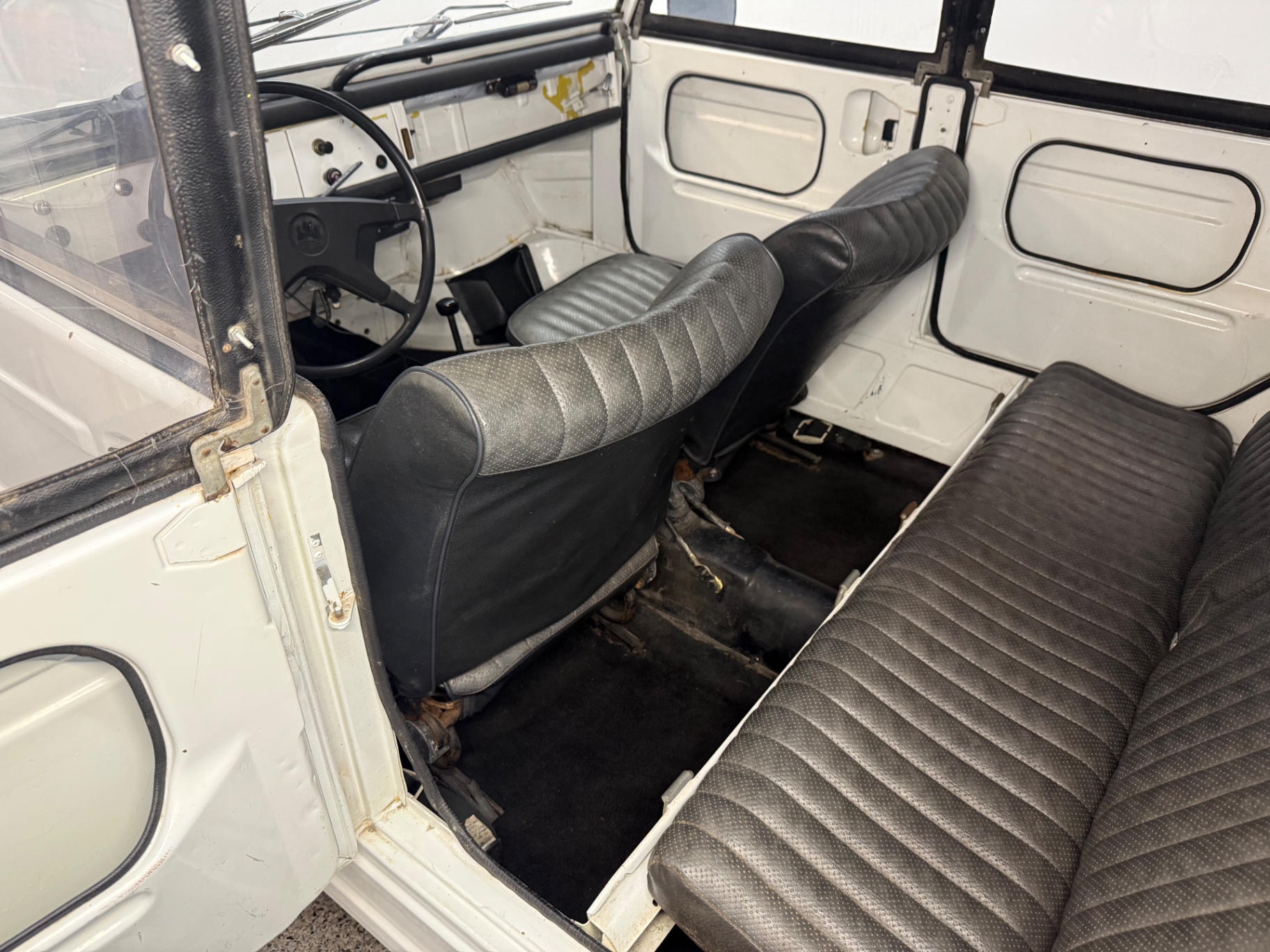
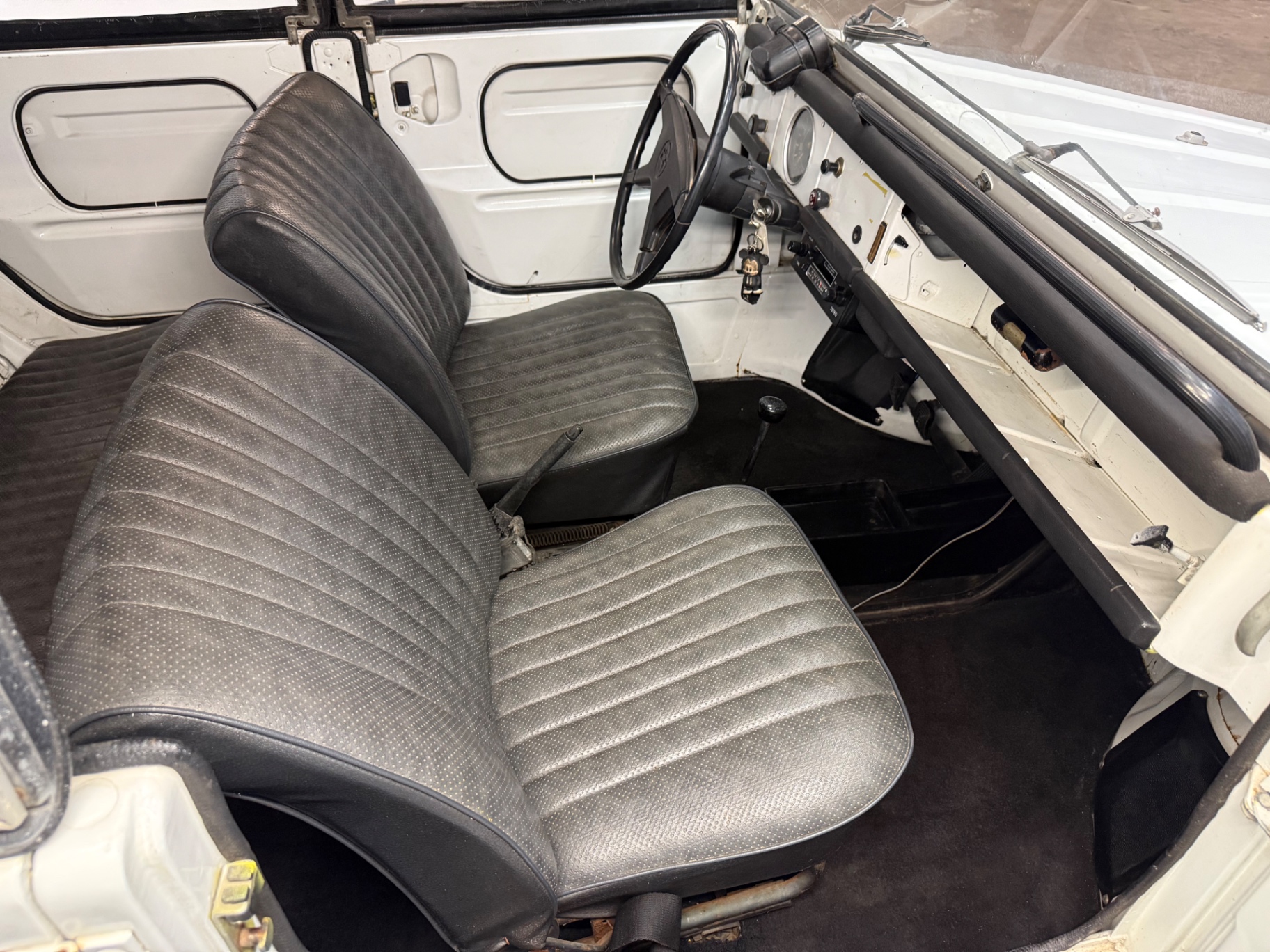
The interior of this 1973 Volkswagen Thing is finished in black vinyl throughout, which is correct and practical for a vehicle of this type. The Thing was designed to be hosed out if necessary — the floor drains were a deliberate feature, not an afterthought — so vinyl was the only sensible choice. The seating is basic bench-style, consistent with the utilitarian character of the car. There is no carpet, no wood trim, and no unnecessary complexity. What you have is a purposeful, functional cockpit that puts the driver in direct contact with the environment around them.
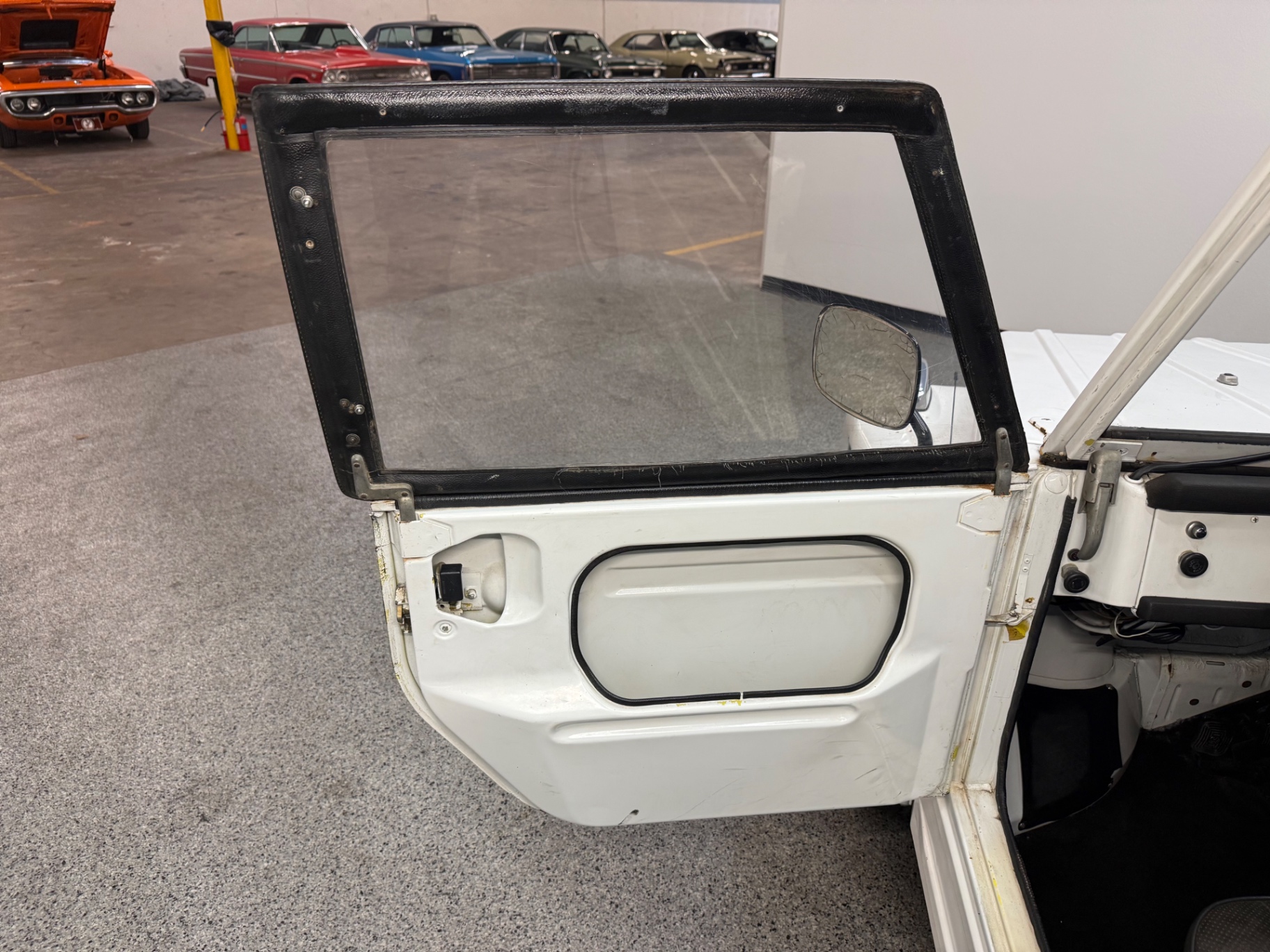
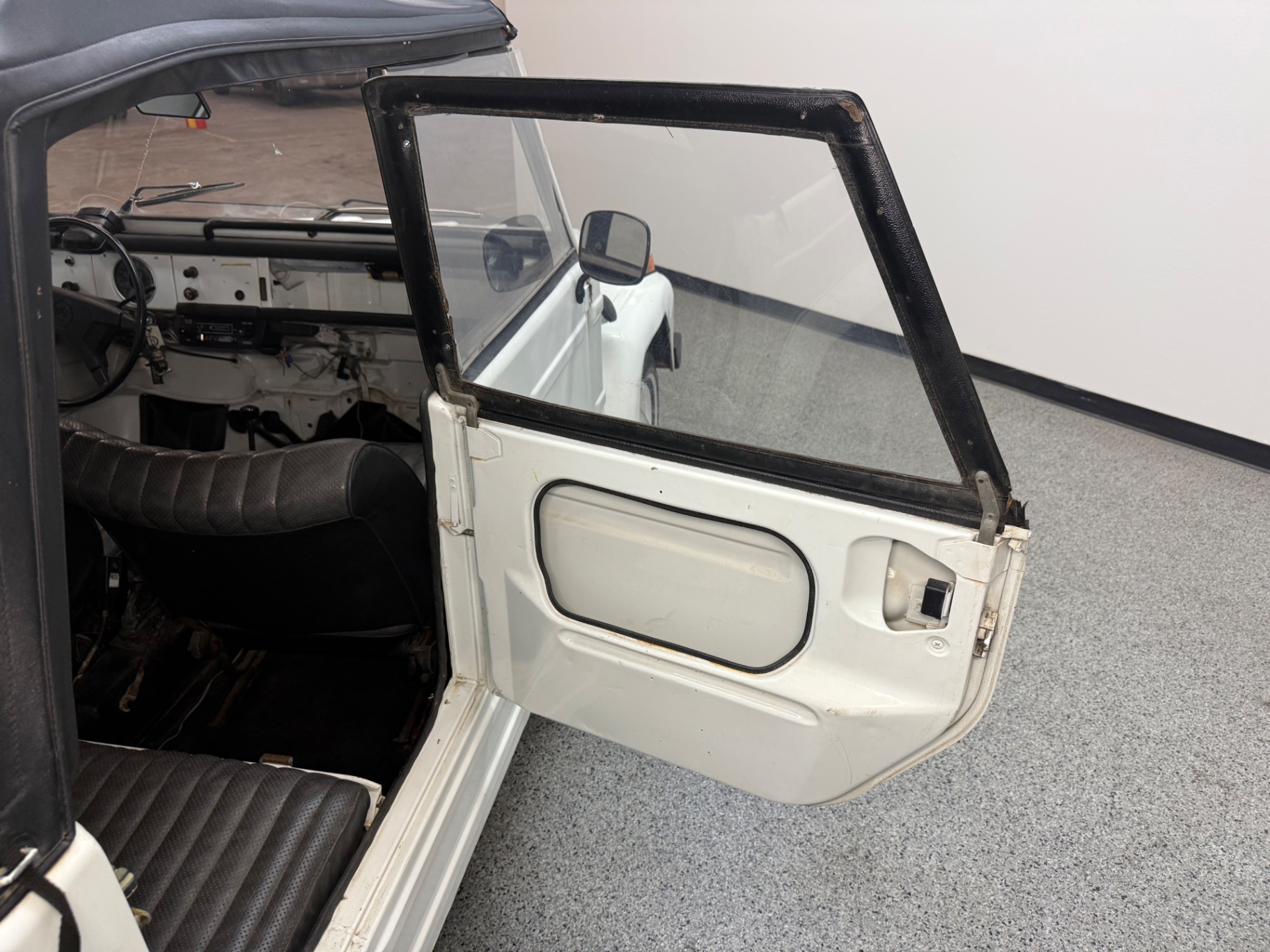
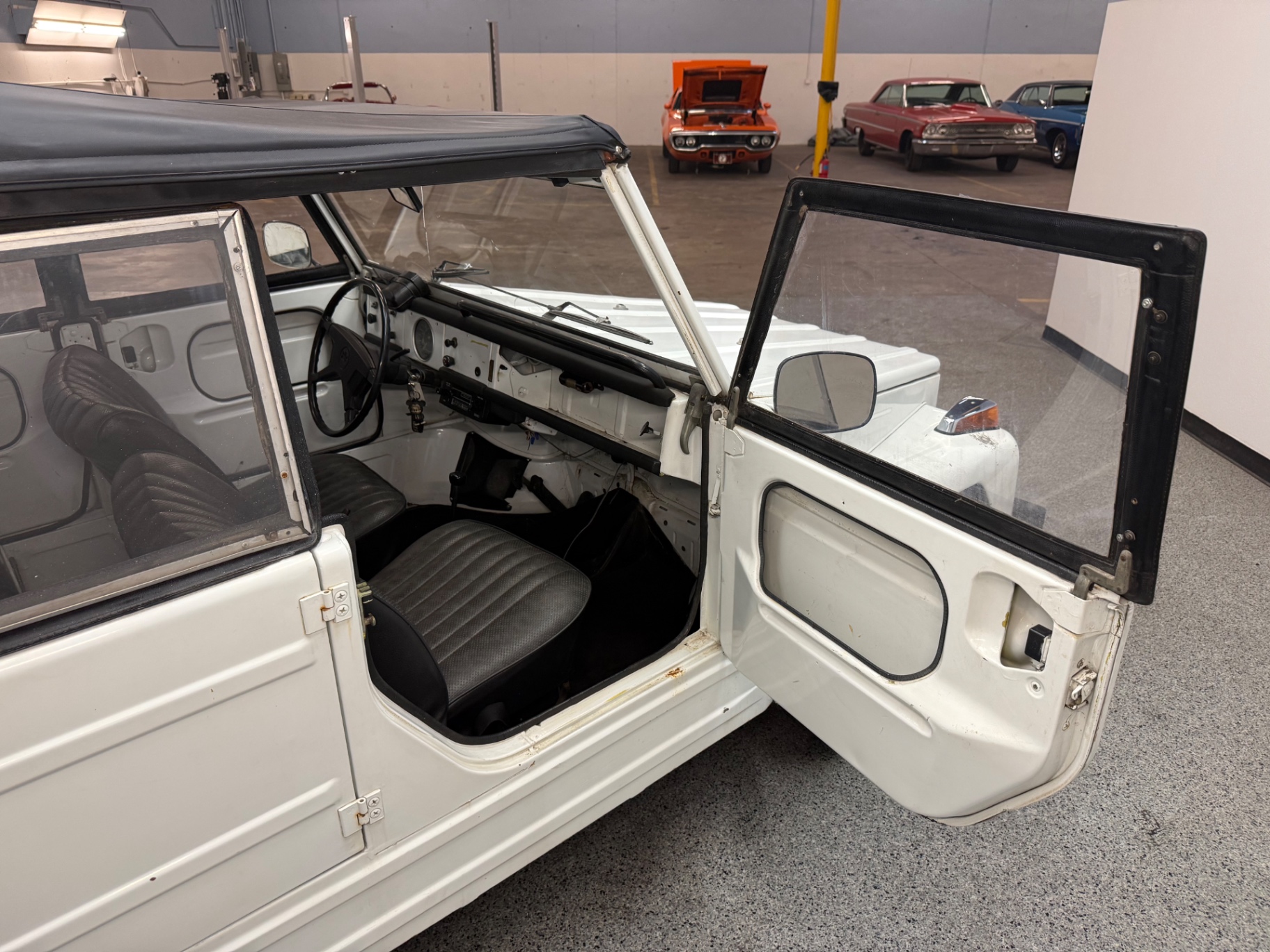
The fold-down windshield is one of the Thing's most distinctive features. It unlocks and lays flat onto the hood, giving the car a completely open profile. Combined with the removable doors — which lift off their hinges and can be stored or left behind entirely — the 1973 Volkswagen Thing can be stripped to a genuinely open vehicle in a matter of minutes. This is not a soft-top car that approximates open-air driving. It is an open vehicle that can be partially enclosed when needed.
Exterior
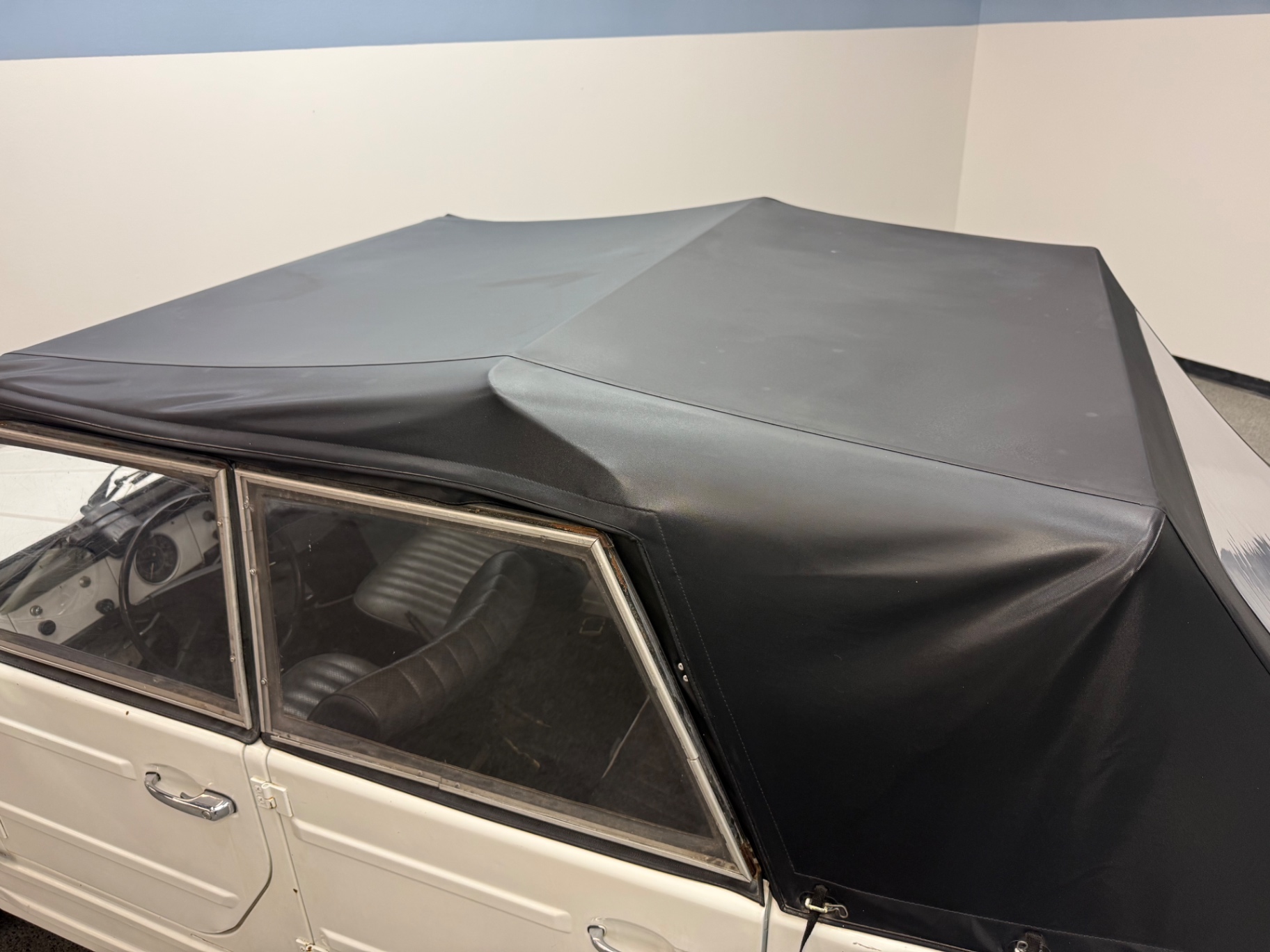
This 1973 Volkswagen Thing wears white paint over its flat, angular body panels. The boxy shape is not accidental — those flat panels were designed specifically to be straightforward to manufacture and easy to replace in the field. The body-colored front clip, the flat hood over the front storage area, and the slab-sided doors all reflect that original military utility brief. The black convertible soft top is in place and gives the car a clean, two-tone appearance when closed.
The whitewall tires on steel wheels with chrome hubcaps are a period-correct look that suits the car well. The whitewalls add visual weight to the wheel openings and contrast nicely against the white body. The bumpers are the reinforced U.S.-specification units required for the American market, finished in black. The dual exhaust tips visible below the rear bumper are a detail that stands out on the 1973 Volkswagen Thing and hints at the rear-engine layout to anyone who does not already know where to look.
Conclusion
The 1973 Volkswagen Thing occupies a unique position in the collector car market. It is not a performance car, a luxury car, or a sports car. It is something rarer than any of those — a genuinely unusual vehicle with a documented military lineage, an honest mechanical layout, and a short U.S. production window that keeps supply tight. This example brings the full package: removable doors, fold-down windshield, air-cooled reliability, an undercoated floor, and a correct white-over-black color combination. Things in solid, usable condition are not common, and Florida-based cars like this one tend to survive better than examples from northern climates where road salt accelerates the floor and chassis deterioration that Things are known for.
If the 1973 Volkswagen Thing interests you, call Skyway Classics at 941-254-6608. We are happy to answer questions, arrange an inspection, and help you understand what you are looking at before you make a decision.
Disclaimer Information found on the website is presented as given to us by the owner of the car, whether on consignment or from the owner we bought it from. Some Photos, materials for videos, descriptions and other information are provided by the consignor/seller and is deemed reliable, but Skyway Classics does not warranty or guarantee this information. Skyway Classics is not responsible for information that may incorrect or a publishing error. The decision to purchase should be based solely on the buyers personal inspection of the vehicle or by a professional inspection service prior to offer or purchase being made.
1973 Volkswagen Thing — White with Black Top, Removable Doors, Fold-Down Windshield
Why This Car Is Special
The 1973 Volkswagen Thing is one of the more honest vehicles ever sold to the American public. It does not pretend to be anything other than what it is: a simple, open-air, go-anywhere machine with military roots and absolutely zero pretense. VW sold the Type 181 — that is its official designation — in the United States for just three model years, from 1973 through 1975, and the car developed a devoted following almost immediately. This particular 1973 Volkswagen Thing presents in white with a black convertible top, black vinyl interior, and whitewall tires on steel wheels with hubcaps. It is a correct, characterful example of a vehicle that is genuinely scarce and getting harder to find in solid condition.
The Thing traces its lineage directly to a West German military vehicle called the Mehrzweckfahrzeug, or multi-purpose vehicle, which Volkswagen produced through the 1960s for the Bundeswehr. When VW decided to bring a civilian version to market in 1969, they used the same basic concept — flat body panels, removable components, air-cooled mechanicals — and sold it first in Mexico and Europe before finally bringing it stateside in 1973. U.S. regulations actually forced VW to add safety bumpers and side marker lights for American-market cars, which gives 1973–1975 Things their slightly beefier look compared to European examples. The name "Thing" was coined specifically for American buyers because Volkswagen's marketing team decided the car was simply too strange to describe otherwise. They were not wrong. Fewer than 25,000 Things were sold in the United States across the entire three-year run, making any well-preserved survivor worth paying attention to.
The VIN on this car confirms it is a 1973 model year U.S.-specification vehicle, built at VW's Emden, Germany plant. The "E" suffix in the VIN encodes the 1973 model year, consistent with German-market Type 181 production records.
Features List
- 1.6L Air-Cooled Flat-4 Engine - 4-Speed Manual Transmission - Rear-Mounted Engine - Removable Black Convertible Soft Top - Fold-Down Windshield - Removable Doors - Black Vinyl Interior - Whitewall Tires - Steel Wheels with Hubcaps - Undercoated Floorpan - Dual Exhaust Tips - White Exterior
Mechanical
The 1973 Volkswagen Thing runs the same 1.6-liter air-cooled flat-four engine that powered generations of VW products, including the Beetle and the Bus. In U.S. trim for 1973, this engine produced approximately 46 horsepower, which is modest by any measure but entirely appropriate for a vehicle that weighs just over 1,800 pounds. The engine sits in the rear of the car, driving the rear wheels through a 4-speed manual gearbox — a layout VW used across its entire lineup during this era and one that the company had refined over decades of production.
Because the engine is air-cooled, there is no radiator, no coolant, and no water pump to worry about. The simplicity of this drivetrain is a genuine advantage for ownership and maintenance. Parts remain widely available through the VW air-cooled community, and any mechanic familiar with vintage VW Beetles can work on a Thing without having to source exotic components. The rear engine lid opens to give full access to the motor, and the photos here show the characteristic yellow-painted engine bay that was standard on the Type 181. The dual exhaust tips exit below the rear bumper, a visual signature of the model.
The floorpan on this car has been undercoated, which is an important detail on any vintage Thing. The flat, stamped-steel floor is the first place these vehicles typically show age, and a properly undercoated pan significantly extends the useful life of the chassis. The underside photos show solid, black-coated suspension components and floor sections, which is encouraging on a 50-year-old open-air vehicle.
Interior
The interior of this 1973 Volkswagen Thing is finished in black vinyl throughout, which is correct and practical for a vehicle of this type. The Thing was designed to be hosed out if necessary — the floor drains were a deliberate feature, not an afterthought — so vinyl was the only sensible choice. The seating is basic bench-style, consistent with the utilitarian character of the car. There is no carpet, no wood trim, and no unnecessary complexity. What you have is a purposeful, functional cockpit that puts the driver in direct contact with the environment around them.
The fold-down windshield is one of the Thing's most distinctive features. It unlocks and lays flat onto the hood, giving the car a completely open profile. Combined with the removable doors — which lift off their hinges and can be stored or left behind entirely — the 1973 Volkswagen Thing can be stripped to a genuinely open vehicle in a matter of minutes. This is not a soft-top car that approximates open-air driving. It is an open vehicle that can be partially enclosed when needed.
Exterior
This 1973 Volkswagen Thing wears white paint over its flat, angular body panels. The boxy shape is not accidental — those flat panels were designed specifically to be straightforward to manufacture and easy to replace in the field. The body-colored front clip, the flat hood over the front storage area, and the slab-sided doors all reflect that original military utility brief. The black convertible soft top is in place and gives the car a clean, two-tone appearance when closed.
The whitewall tires on steel wheels with chrome hubcaps are a period-correct look that suits the car well. The whitewalls add visual weight to the wheel openings and contrast nicely against the white body. The bumpers are the reinforced U.S.-specification units required for the American market, finished in black. The dual exhaust tips visible below the rear bumper are a detail that stands out on the 1973 Volkswagen Thing and hints at the rear-engine layout to anyone who does not already know where to look.
Conclusion
The 1973 Volkswagen Thing occupies a unique position in the collector car market. It is not a performance car, a luxury car, or a sports car. It is something rarer than any of those — a genuinely unusual vehicle with a documented military lineage, an honest mechanical layout, and a short U.S. production window that keeps supply tight. This example brings the full package: removable doors, fold-down windshield, air-cooled reliability, an undercoated floor, and a correct white-over-black color combination. Things in solid, usable condition are not common, and Florida-based cars like this one tend to survive better than examples from northern climates where road salt accelerates the floor and chassis deterioration that Things are known for.
If the 1973 Volkswagen Thing interests you, call Skyway Classics at 941-254-6608. We are happy to answer questions, arrange an inspection, and help you understand what you are looking at before you make a decision.
Disclaimer Information found on the website is presented as given to us by the owner of the car, whether on consignment or from the owner we bought it from. Some Photos, materials for videos, descriptions and other information are provided by the consignor/seller and is deemed reliable, but Skyway Classics does not warranty or guarantee this information. Skyway Classics is not responsible for information that may incorrect or a publishing error. The decision to purchase should be based solely on the buyers personal inspection of the vehicle or by a professional inspection service prior to offer or purchase being made.
1973 Volkswagen
Thing Type 181
Why Choose Skyway Classics?
Explore our curated inventory of classic and collector cars—thoughtfully selected, ready to drive, and supported by experts who make ownership simple.
Expert Curation
Every vehicle is hand-selected by our experts for quality, authenticity, and investment potential.
Fast Transactions
Streamlined buying and selling process with quick financing and immediate delivery options.
Only National Dealer With Classic Service & Repair
We’re the only national dealership that services and repairs the classics we sell—before and after the sale.
Nationwide Network
Access to our extensive network of collectors, restorers, and classic car enthusiasts nationwide.
Concierge Ownership Support
From financing and insurance to paperwork, shipping, and titling—we handle the details so you can enjoy the drive.
Passion-Driven Service
We're classic car enthusiasts first, providing personalized service with genuine passion for the hobby.