
1970 Chevrolet
Chevelle SS
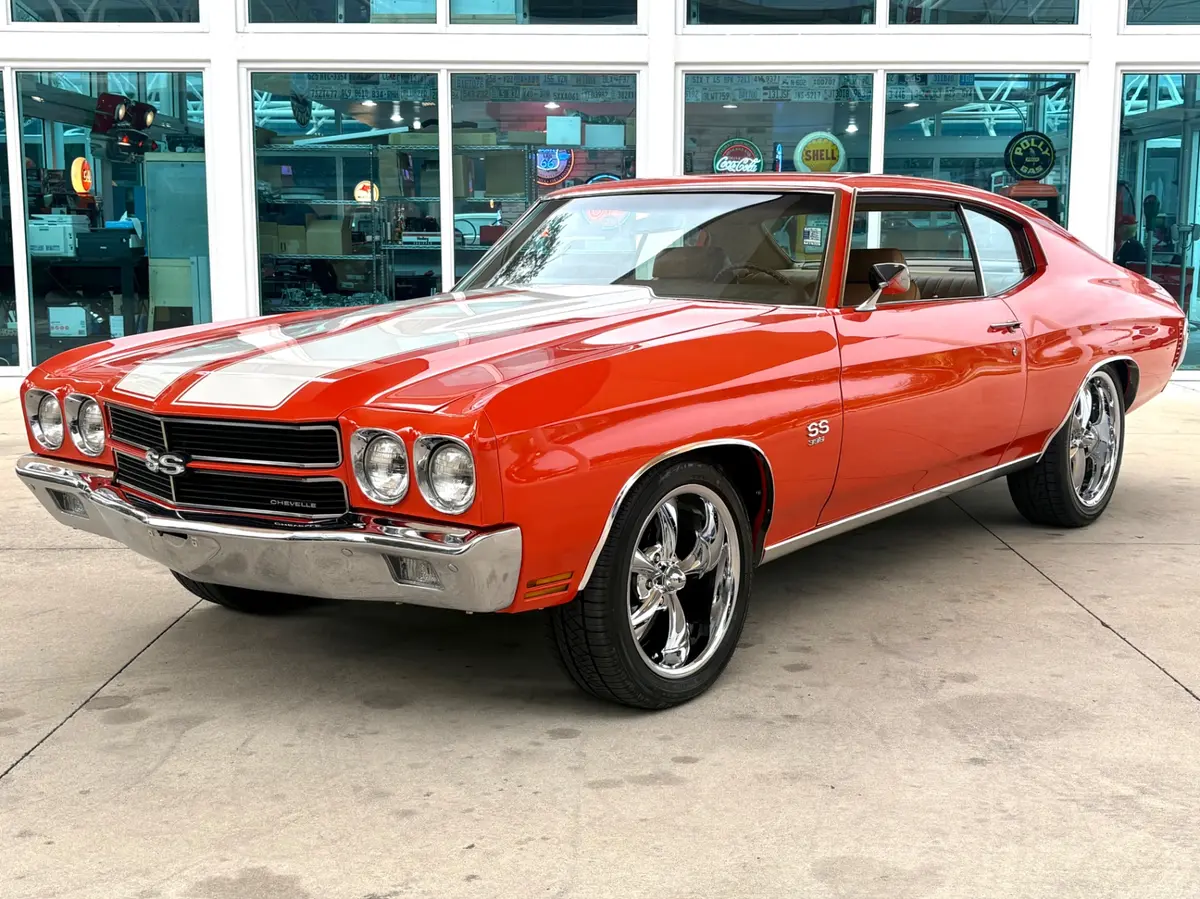
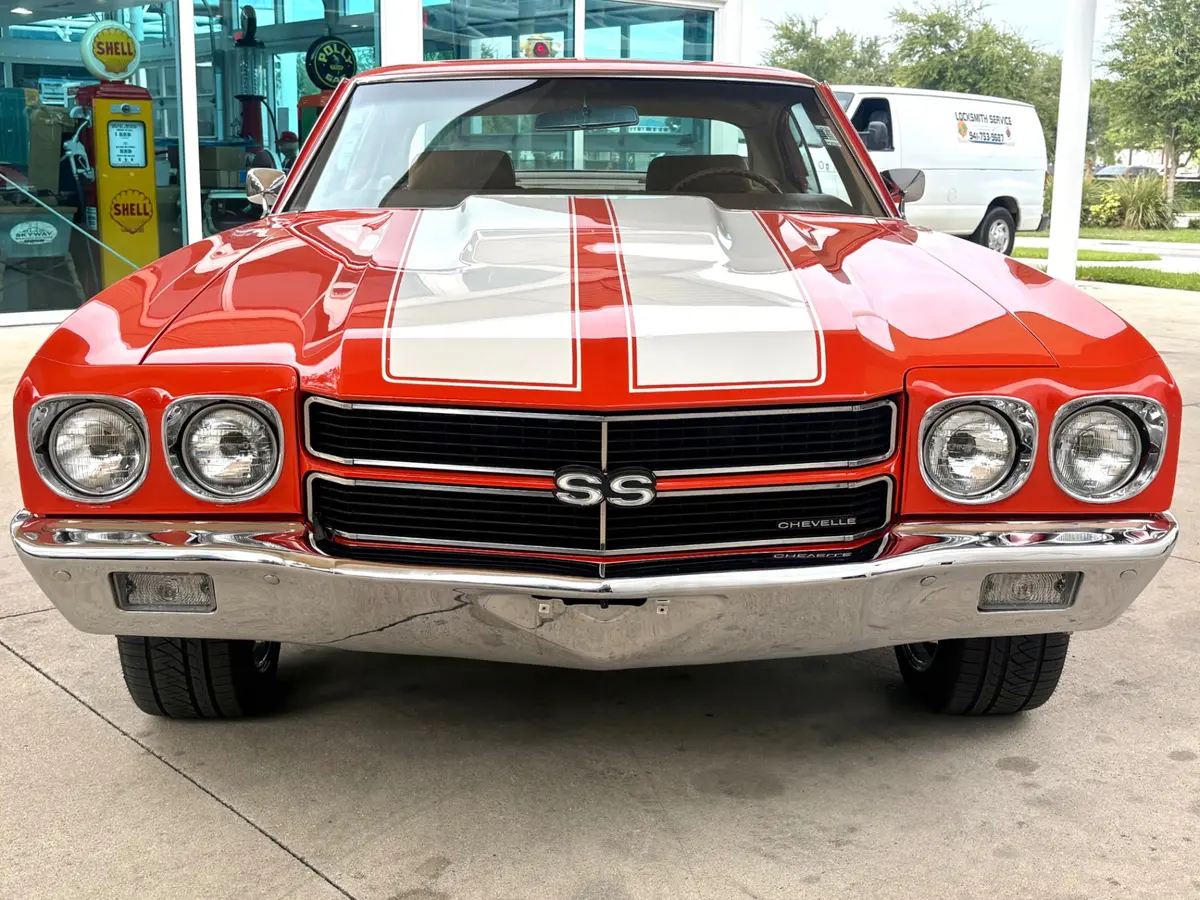
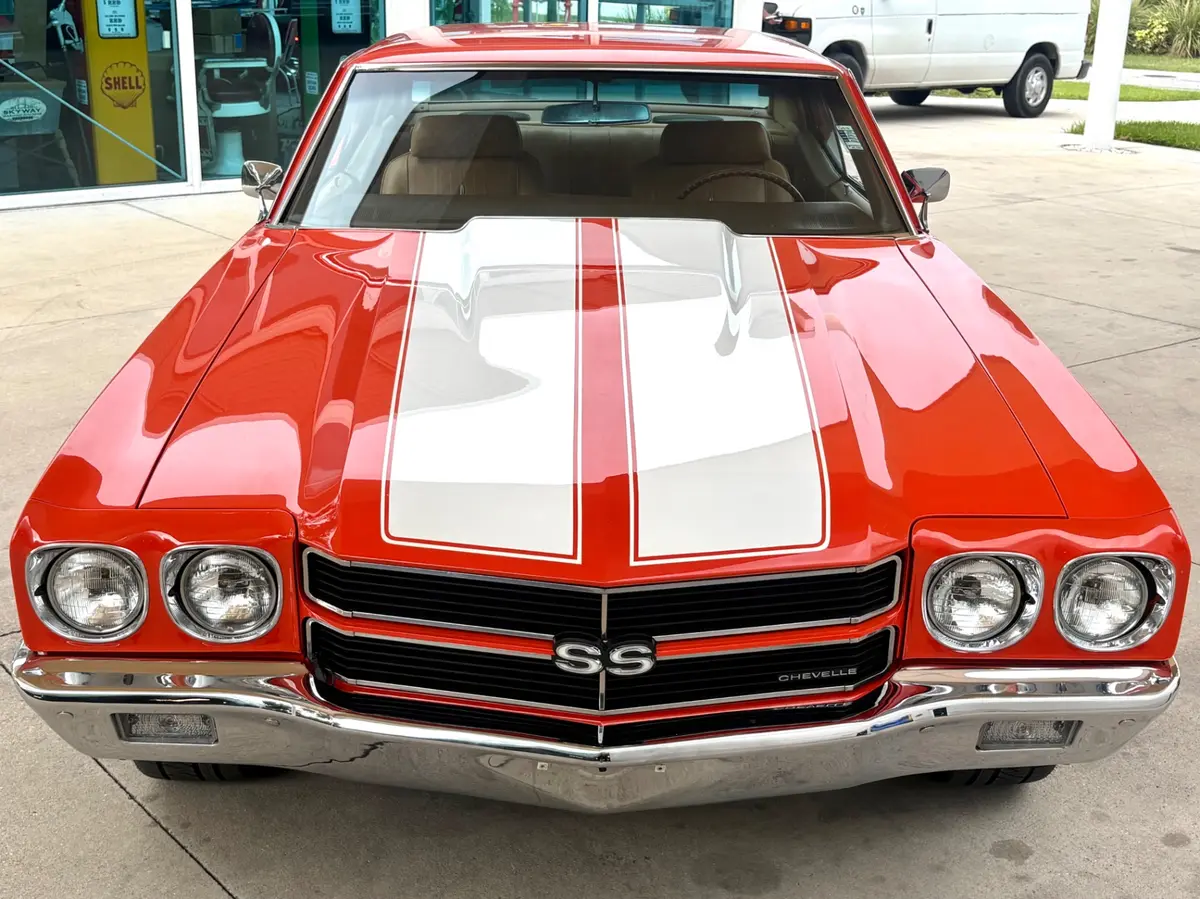
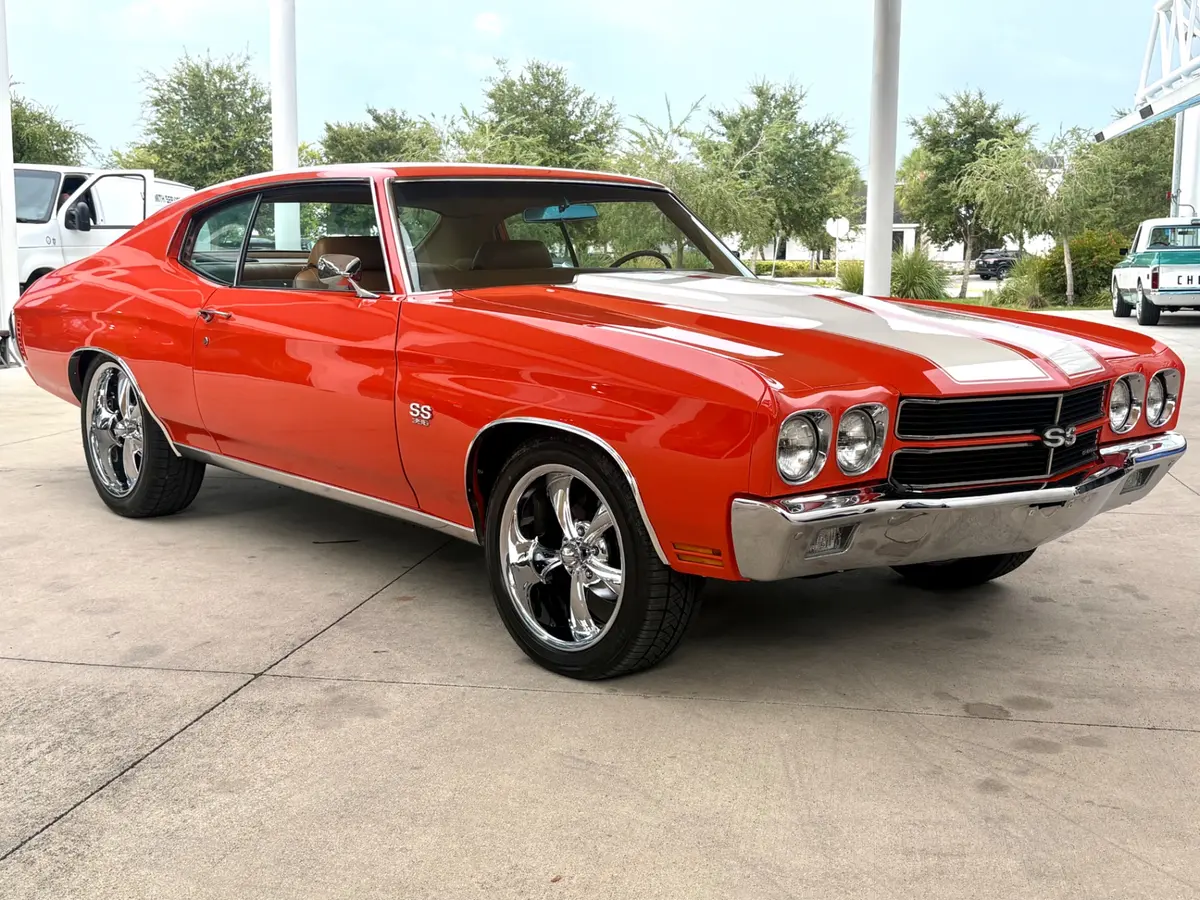
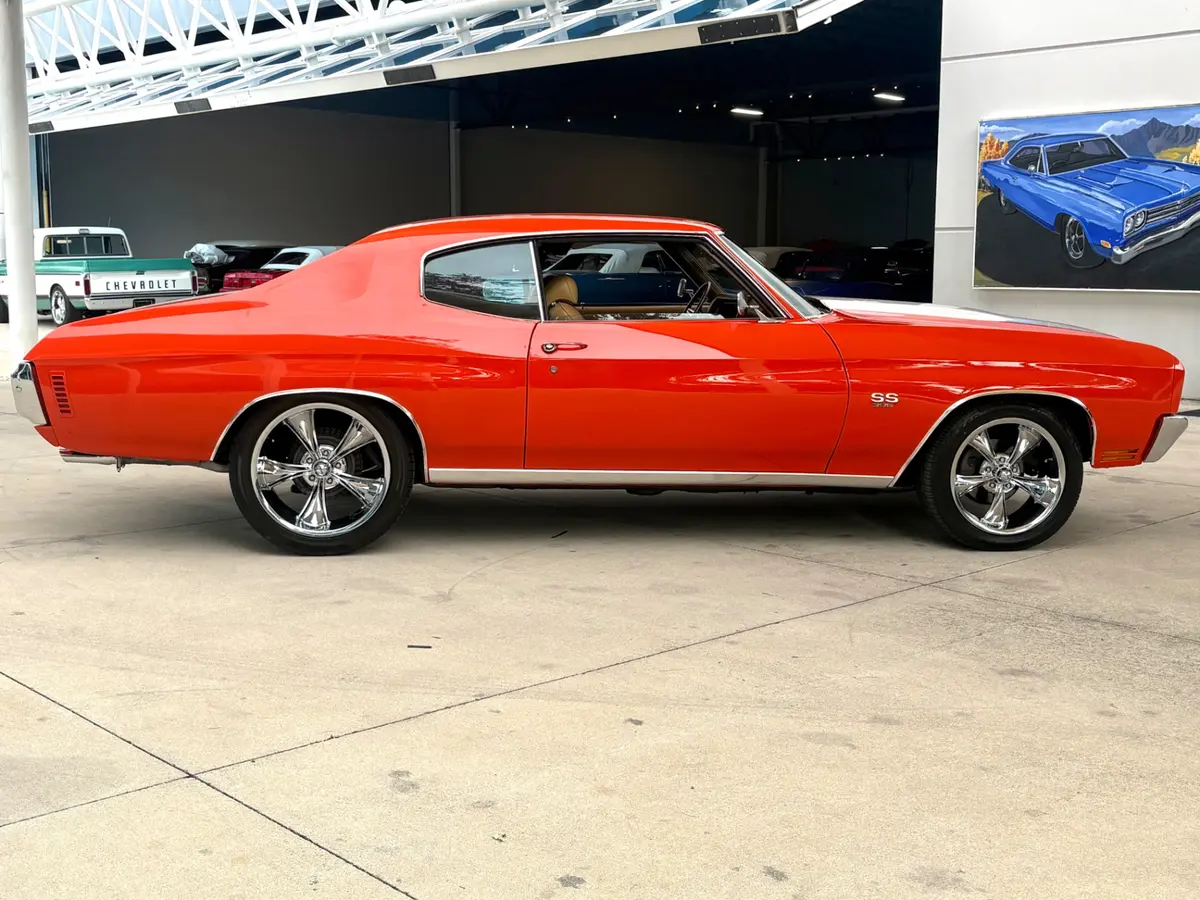
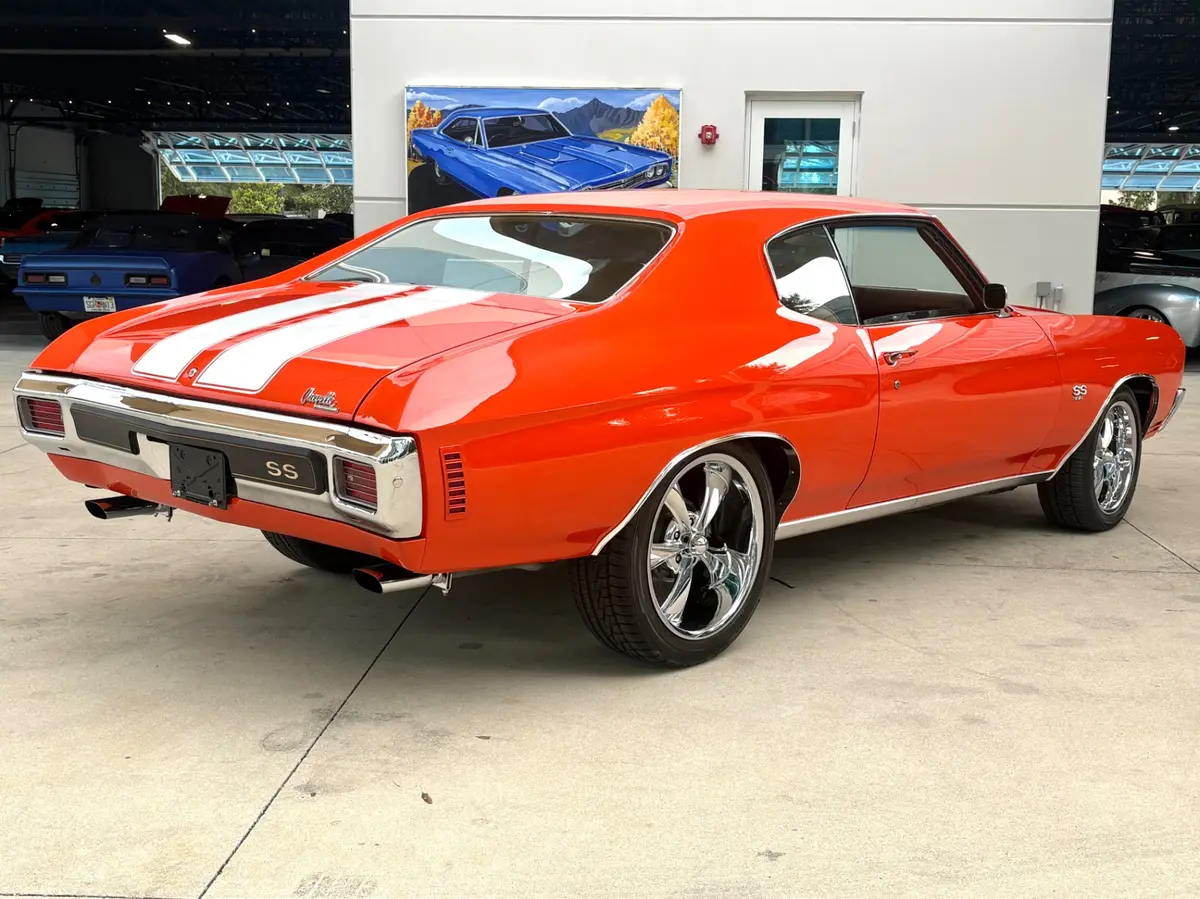
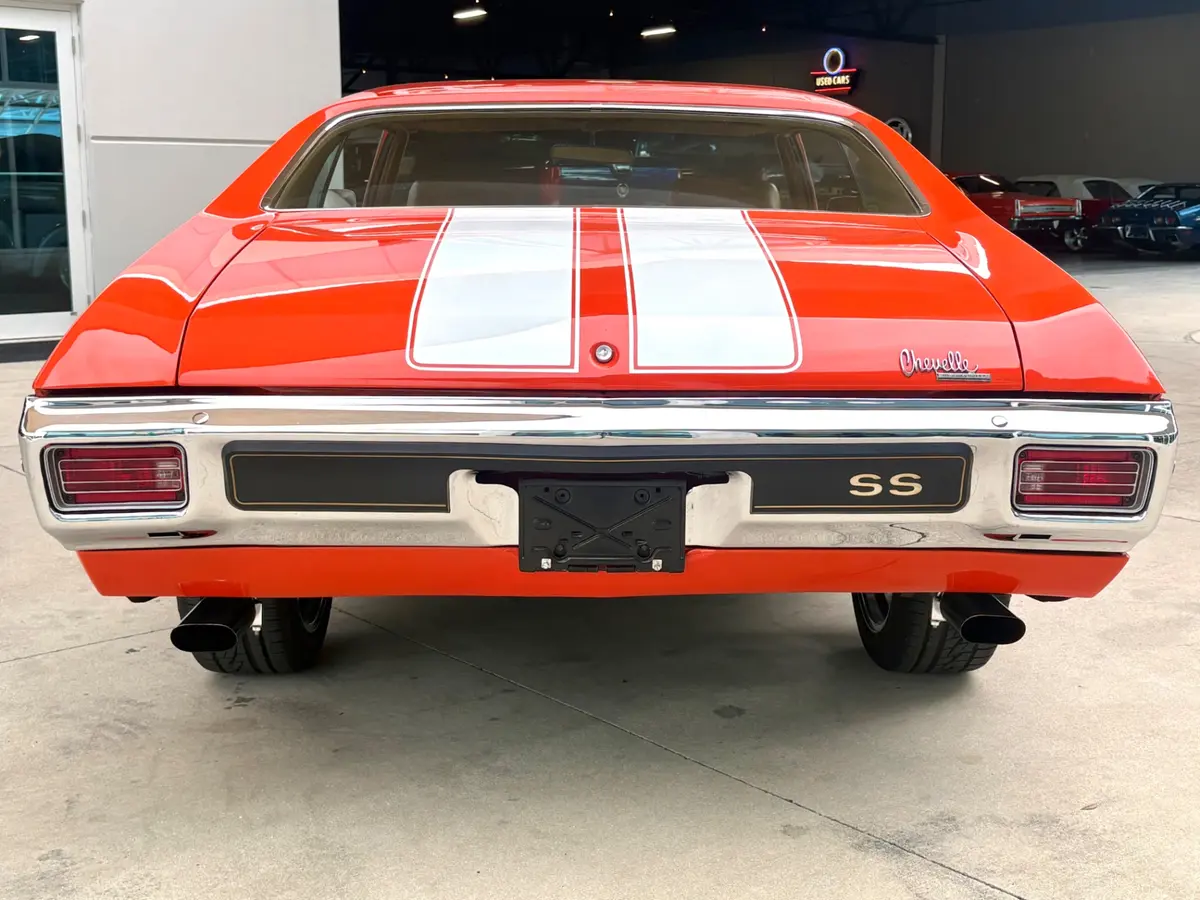
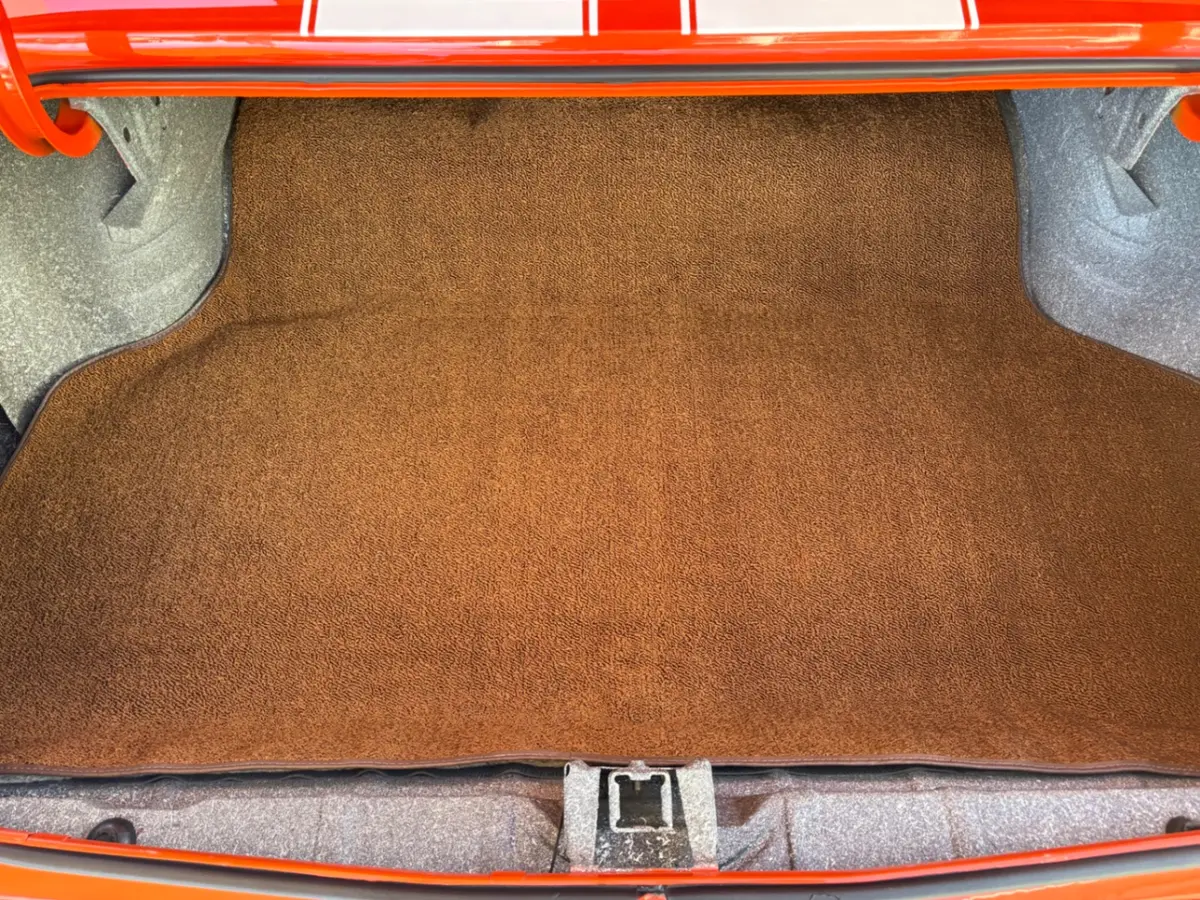
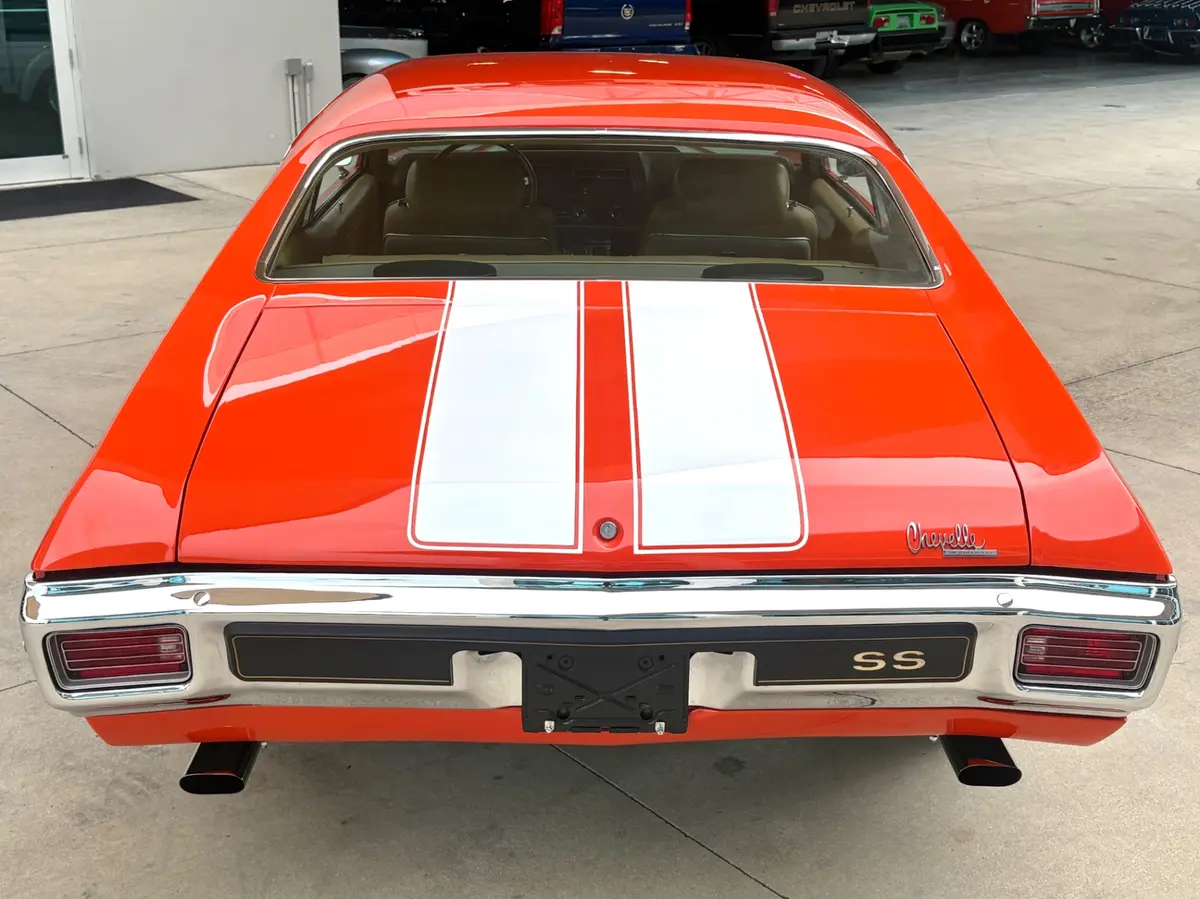
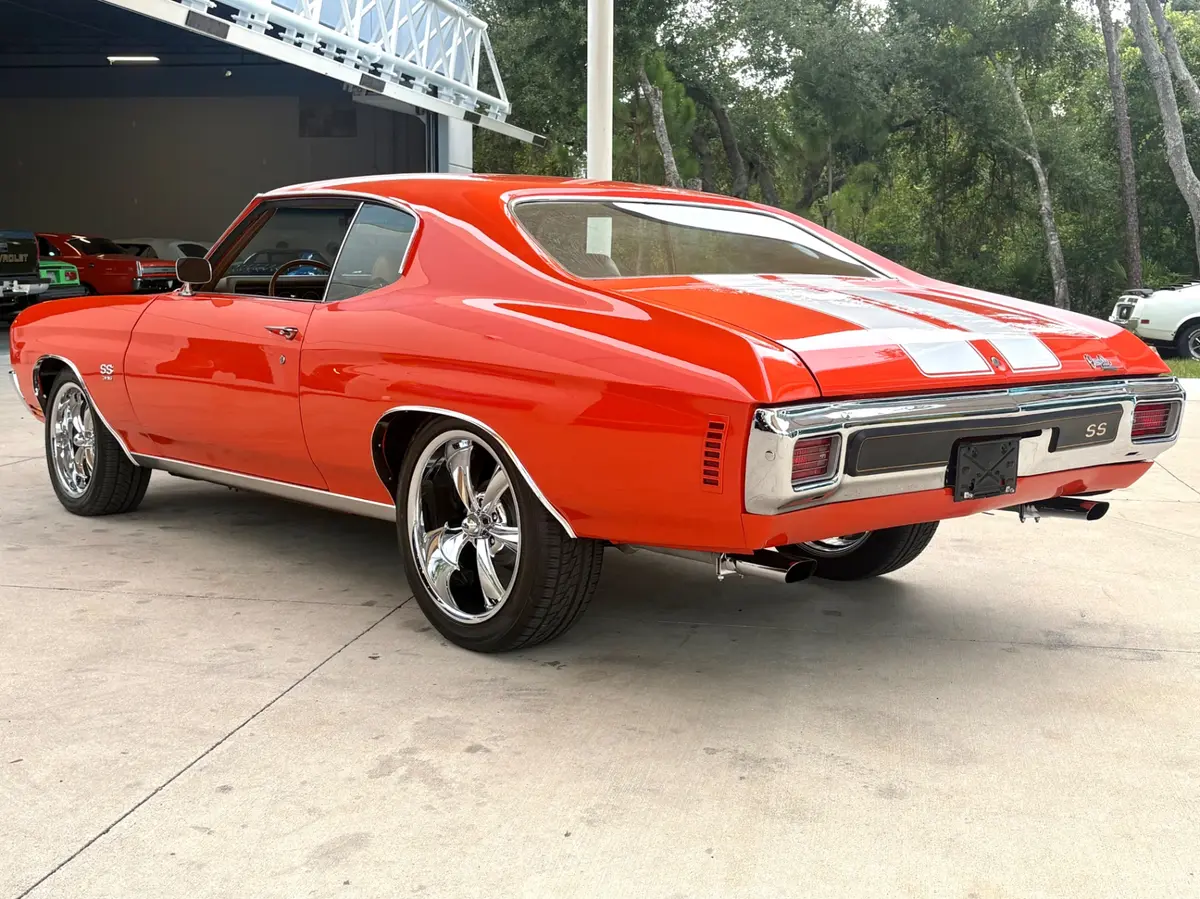
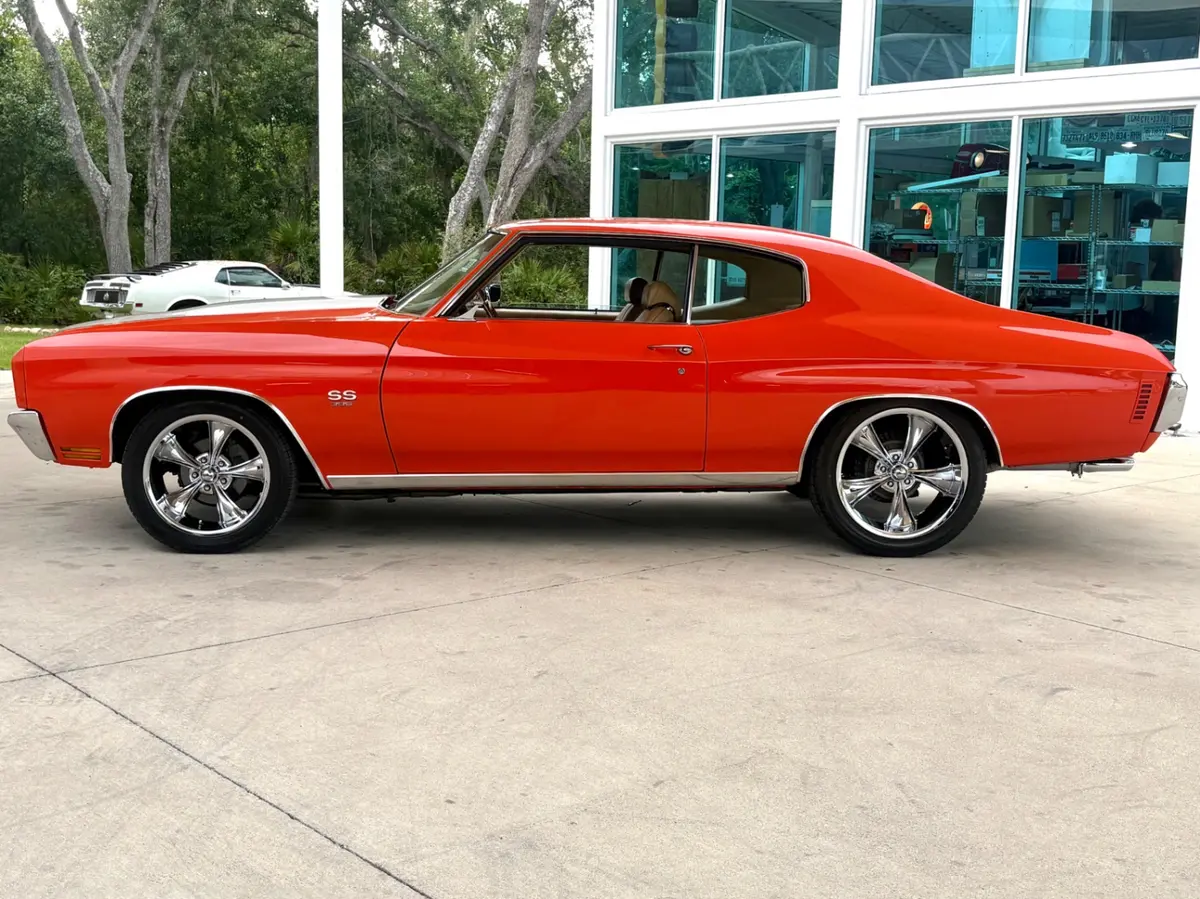
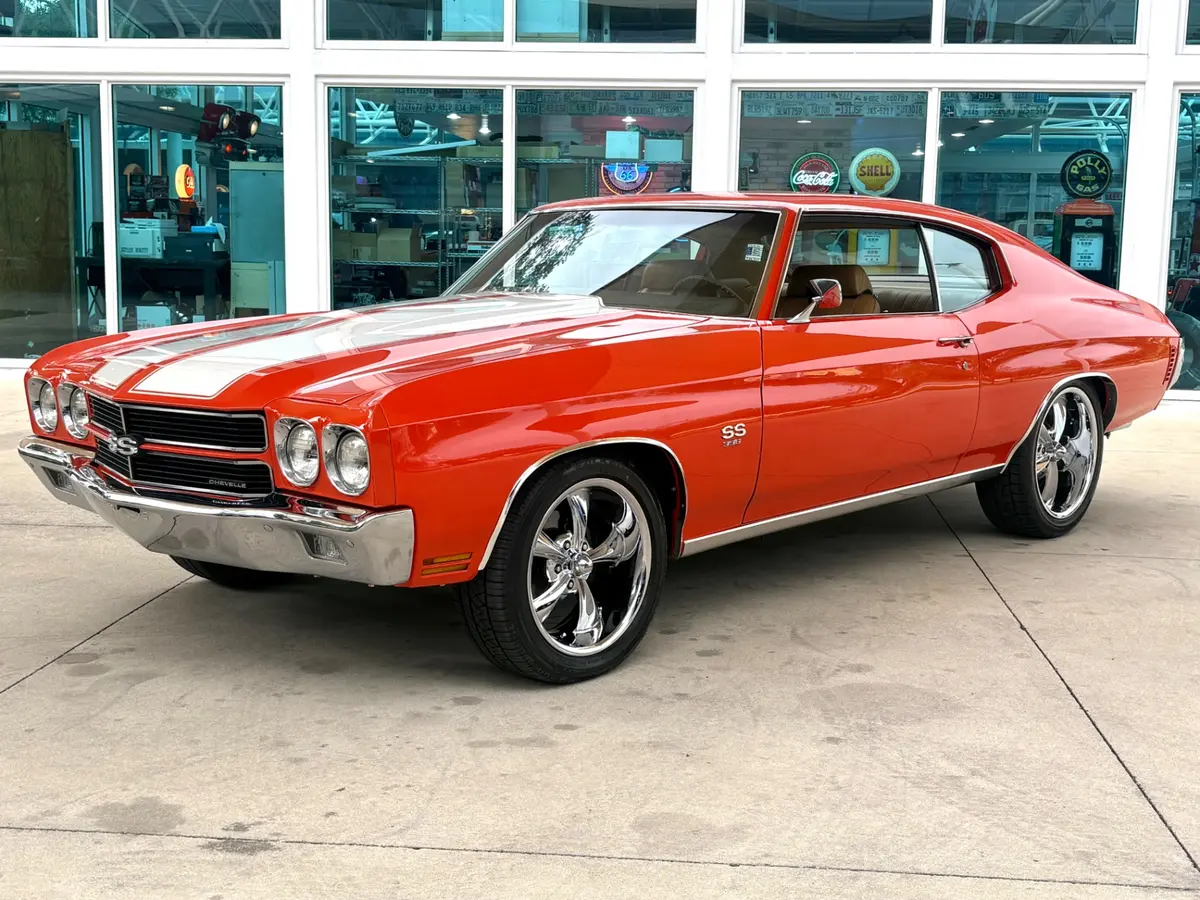
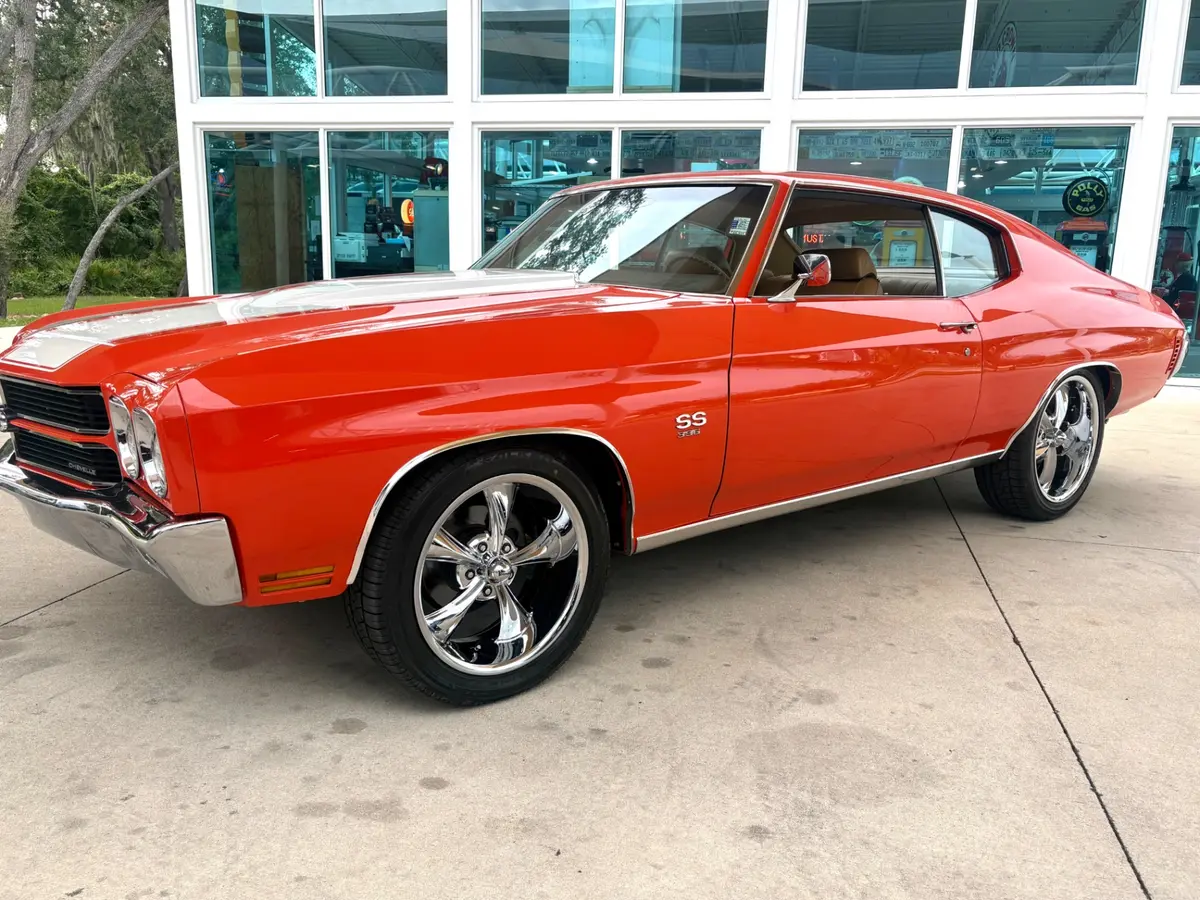
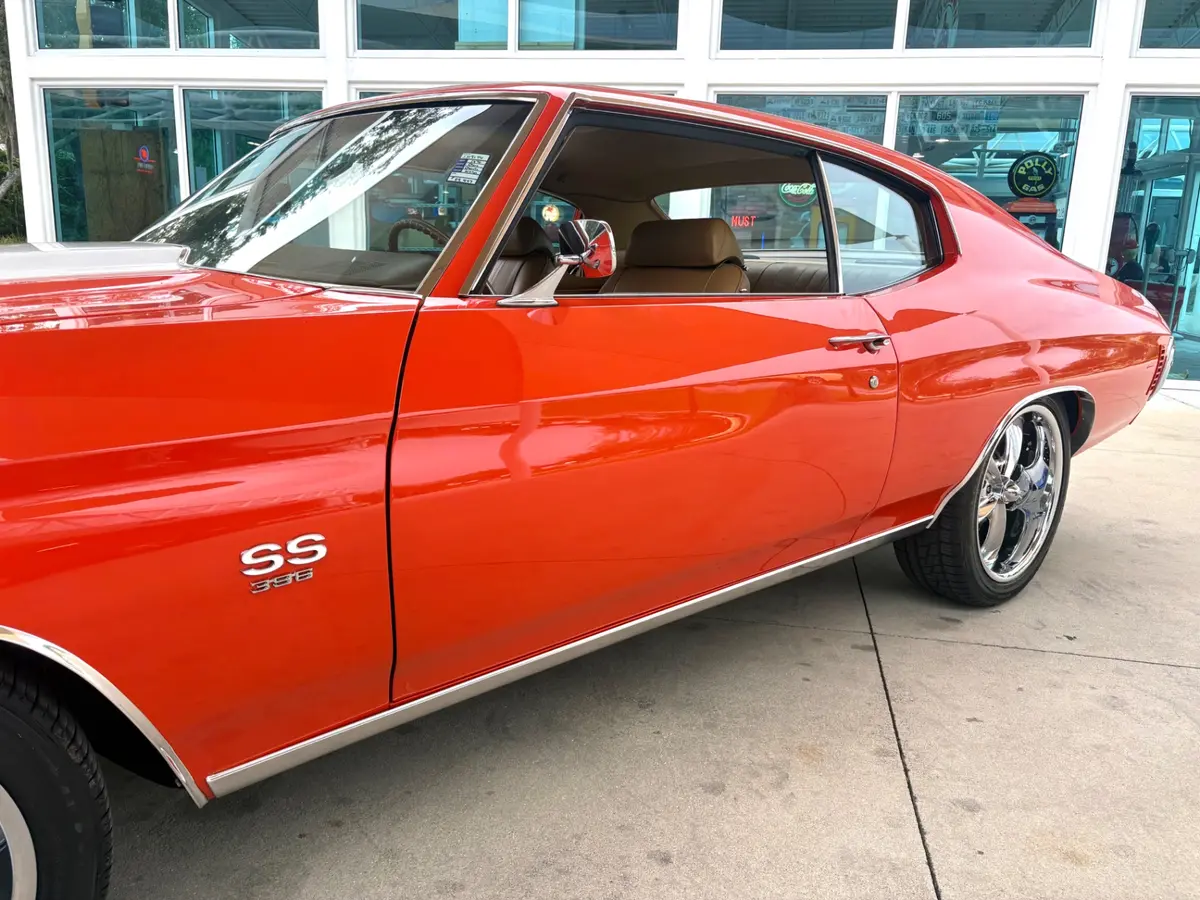
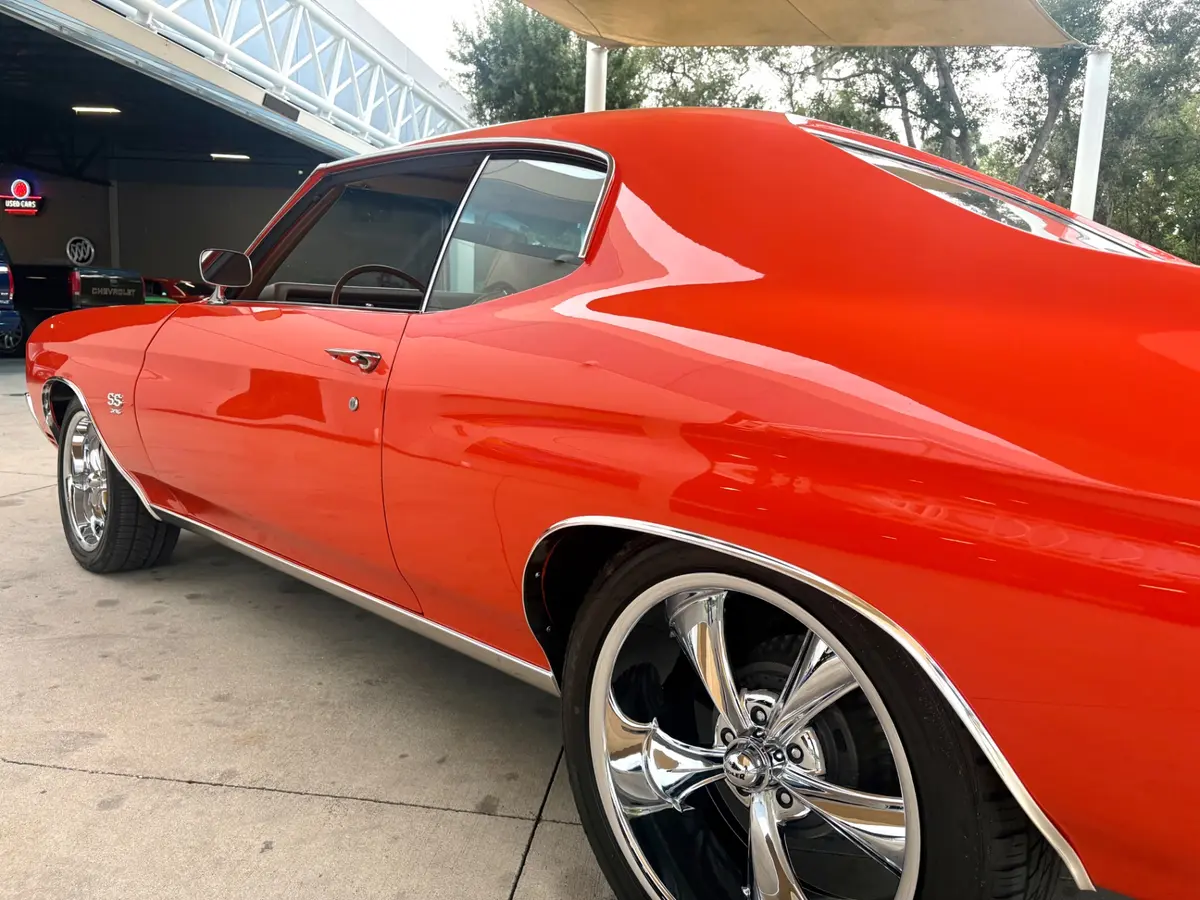
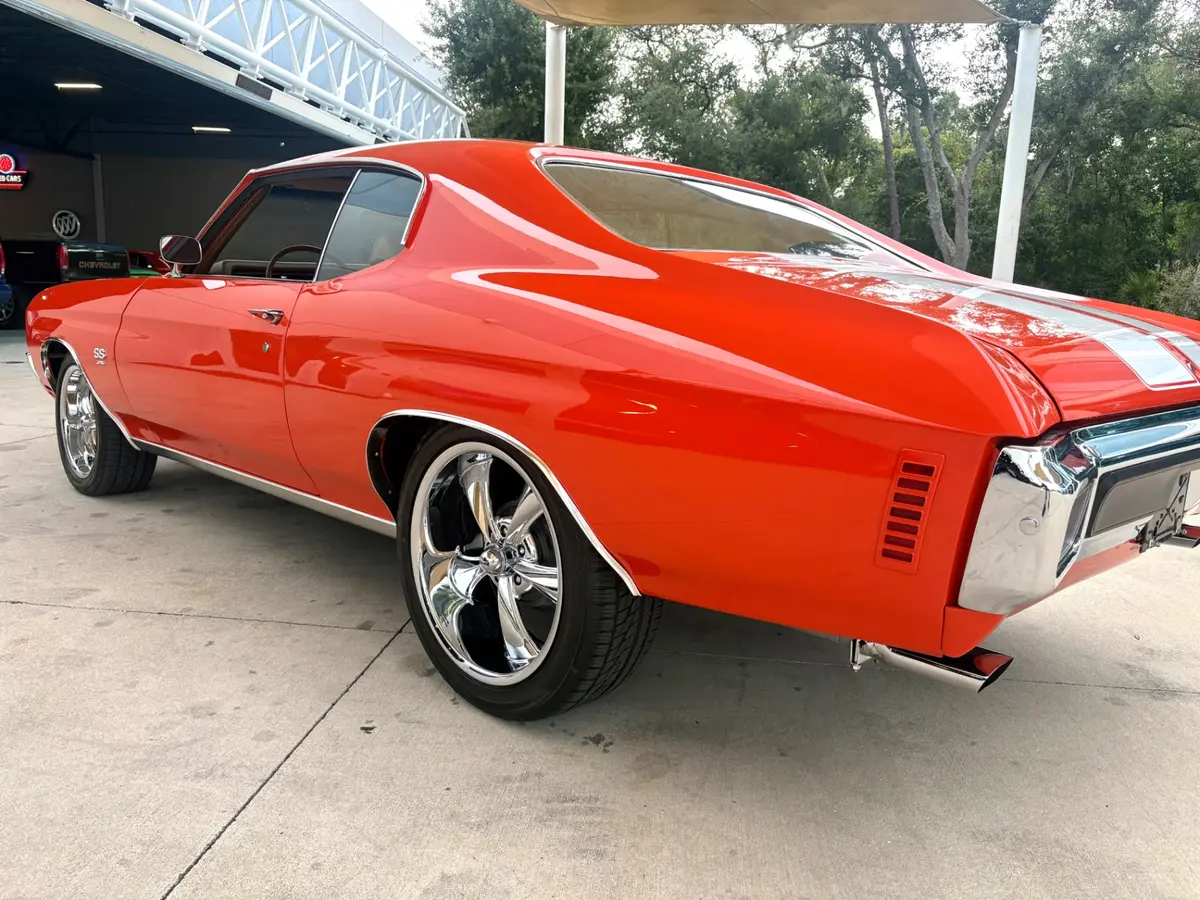
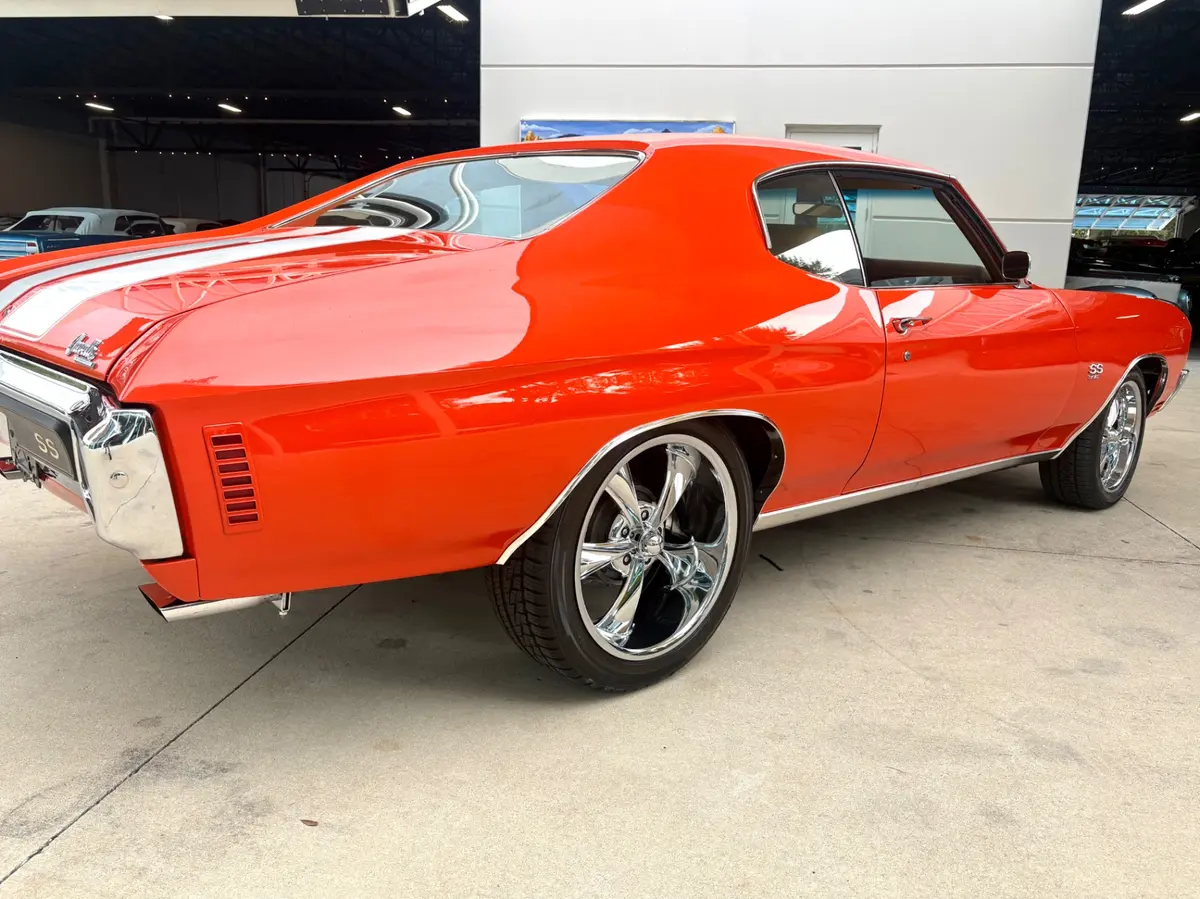
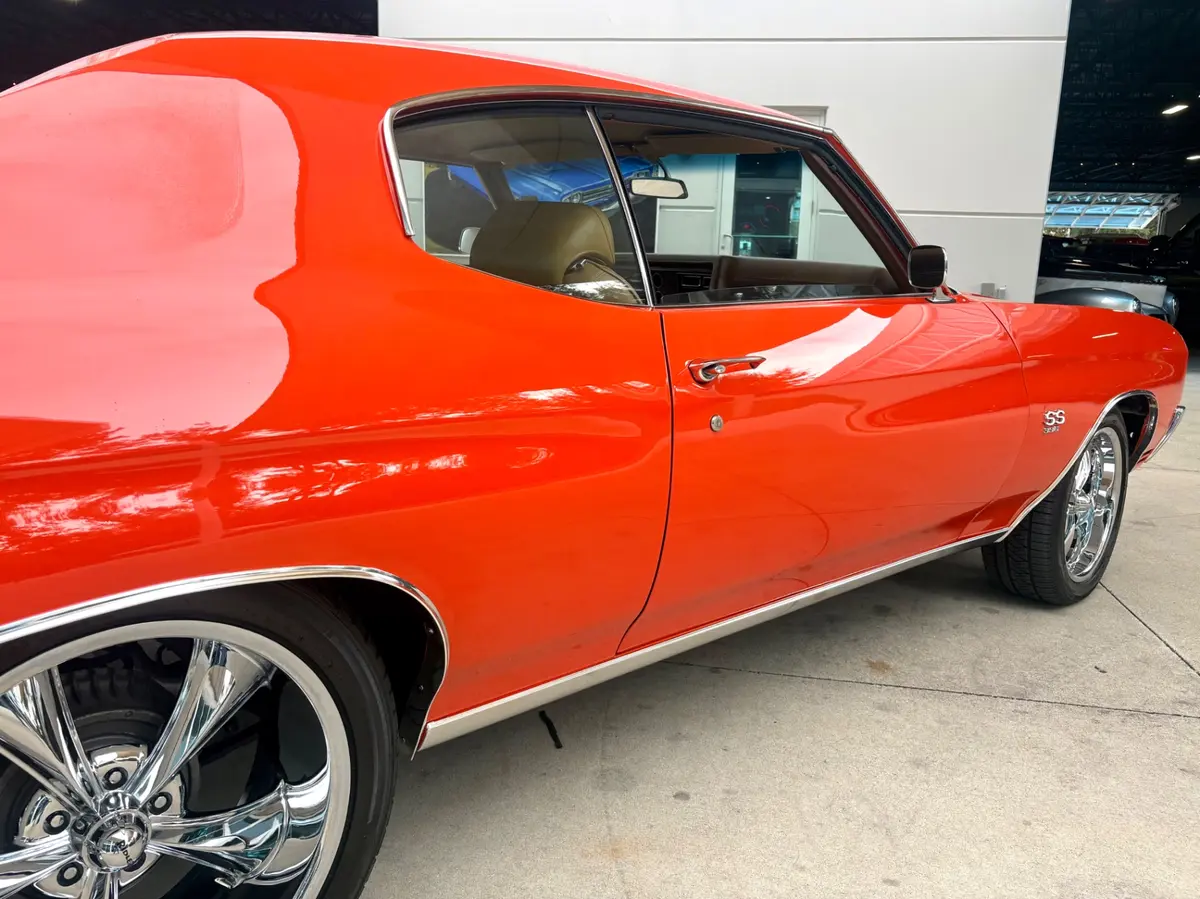
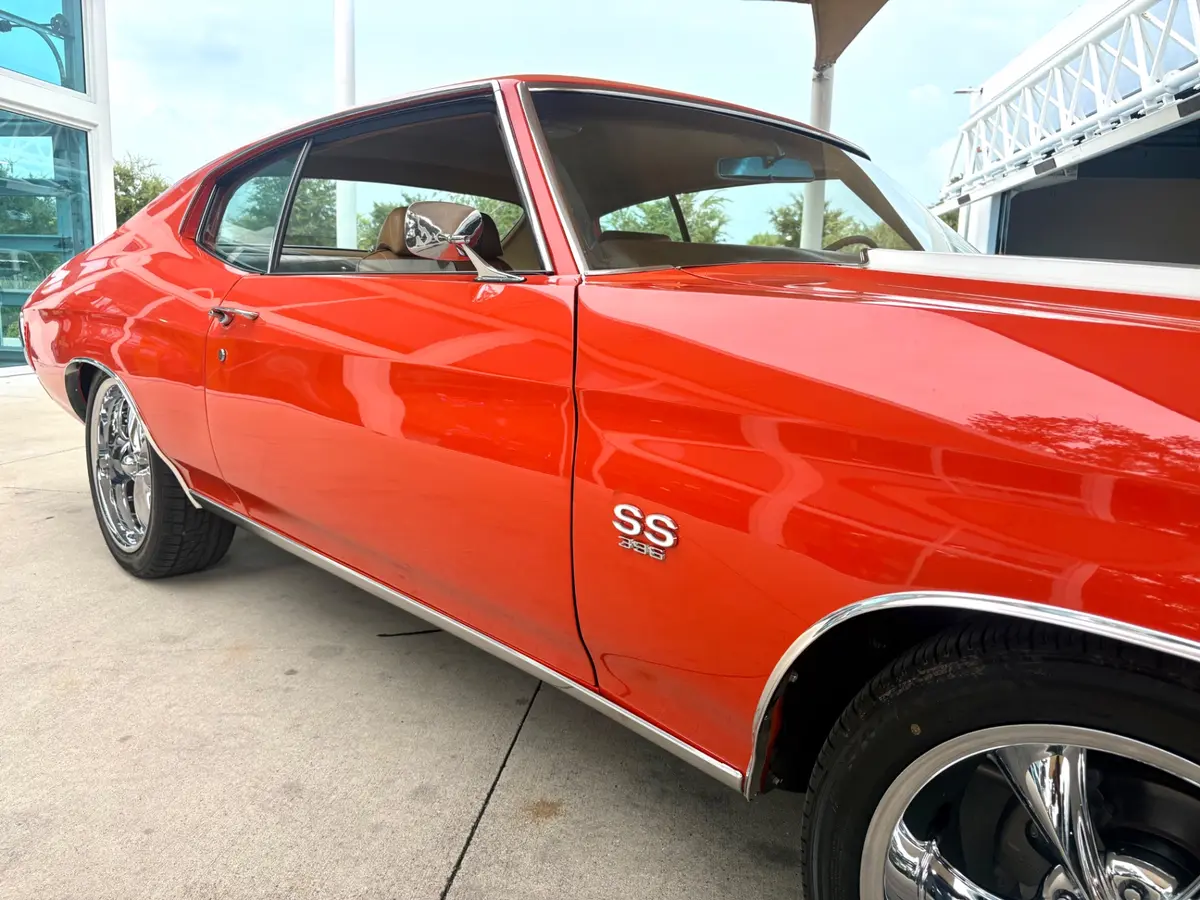
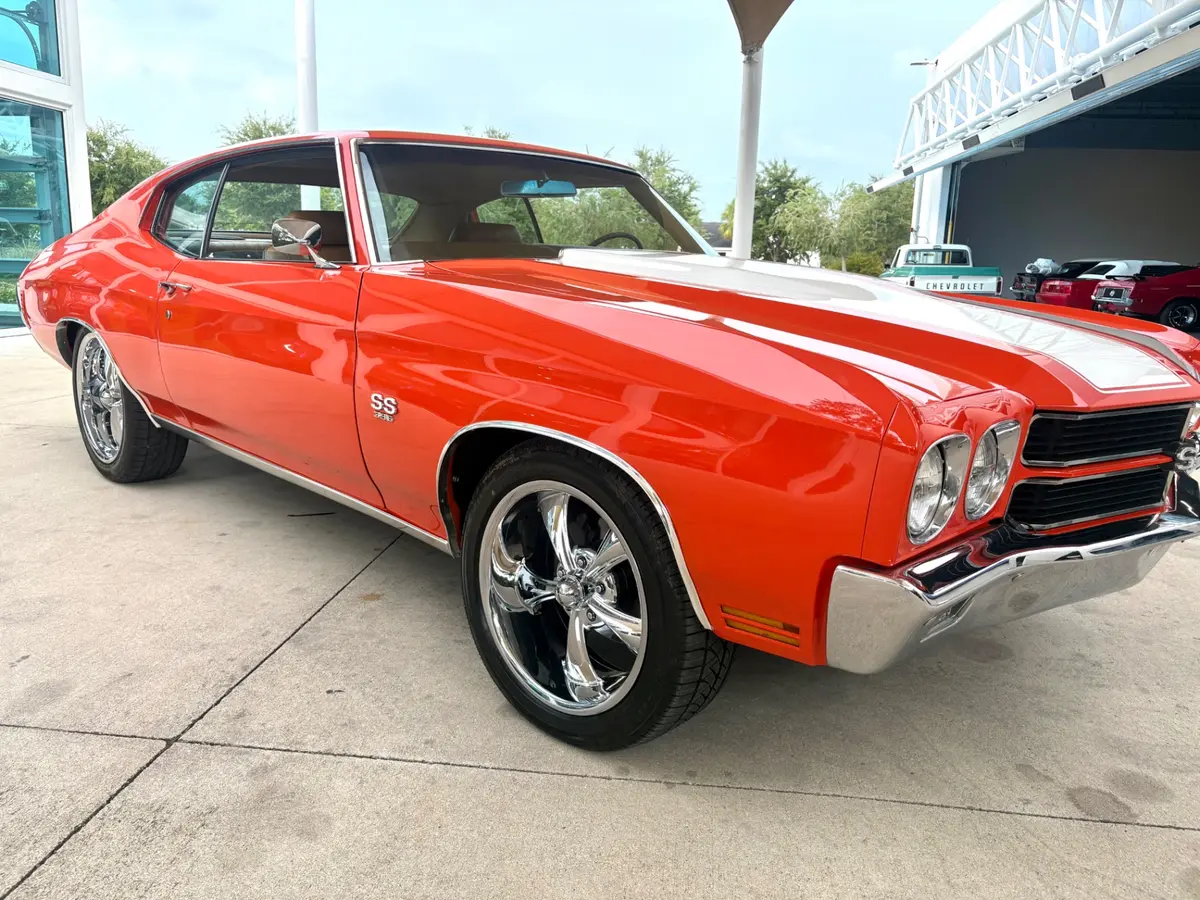
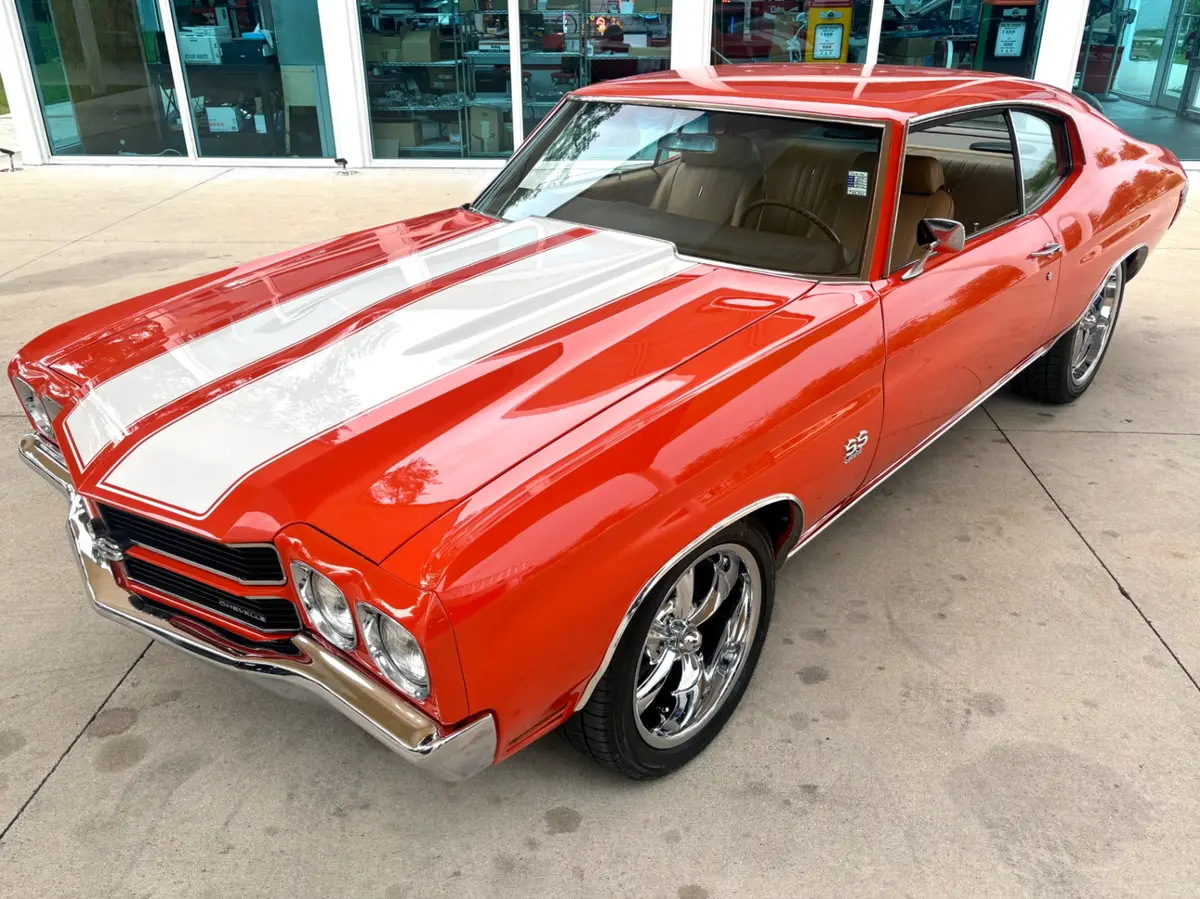
1970 Chevrolet Chevelle SS 396 — Hugger Orange, Date-Correct 325hp, Factory AC, 12-Bolt Rear
Why This Car Is Special
The 1970 Chevrolet Chevelle SS 396 sits at the center of what most collectors consider the peak year of the American muscle car era. Chevrolet redesigned the Chevelle's body for 1970, giving it a longer hood, a more aggressive front fascia, and a wider stance than the outgoing generation. The result was a car that looked purposeful from every angle — and when you backed it with a big-block engine, factory air conditioning, and a 12-bolt rear end, you had one of the most complete performance packages Chevy offered that year.
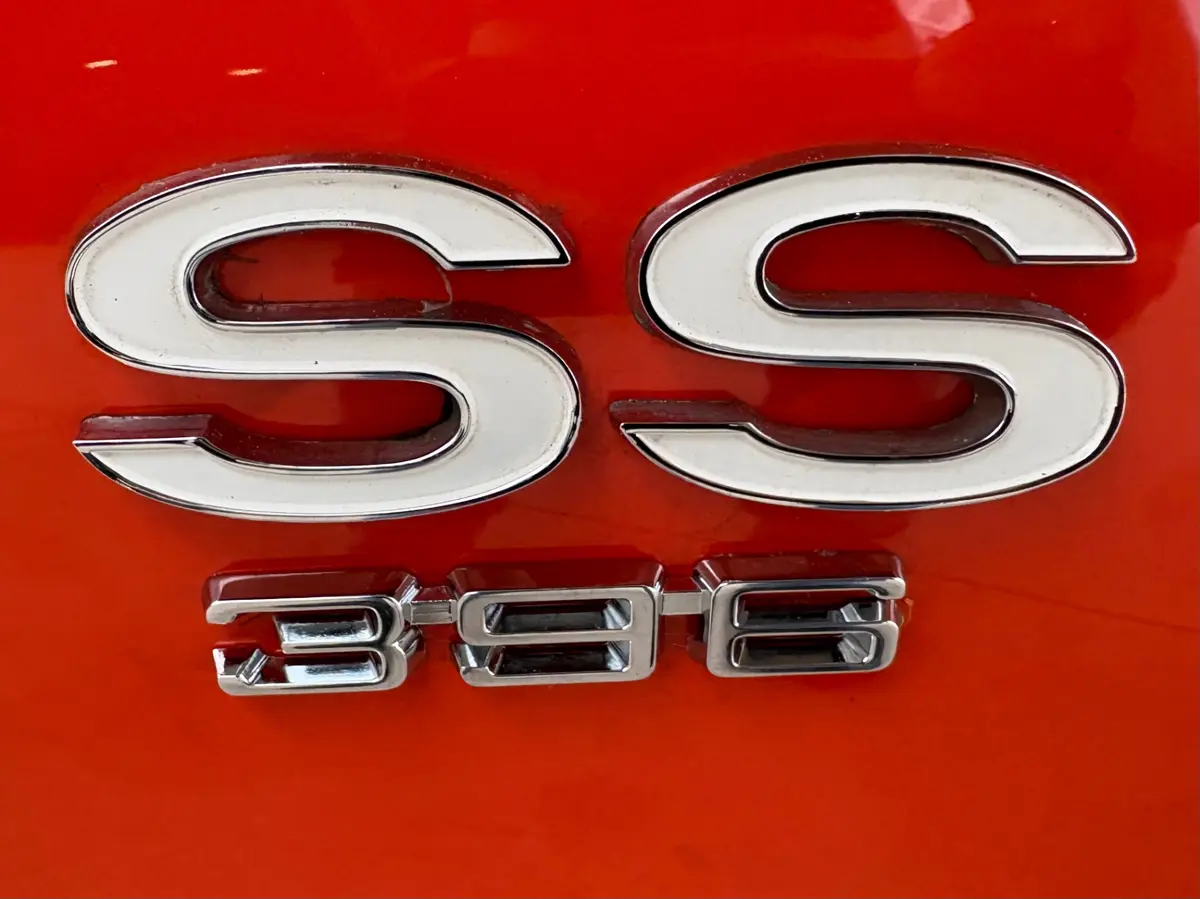
The SS 396 designation in 1970 is worth understanding clearly. While Chevrolet continued to market the package under the "396" name, the engine had actually been bored out to 402 cubic inches for that model year. Chevy kept the 396 badge on the fenders for marketing continuity, making these cars a small point of trivia that any knowledgeable buyer will appreciate. The 325-horsepower version of this engine — coded JK — was the hydraulic-lifter variant, a strong street motor that balances real performance with daily driveability. The fact that this car carries a date-correct JK-coded engine is a meaningful detail. It tells you the engine in this car was built for this car, not sourced later from a donor vehicle. That kind of documentation integrity is exactly what separates a solid driver from a well-documented collector piece.
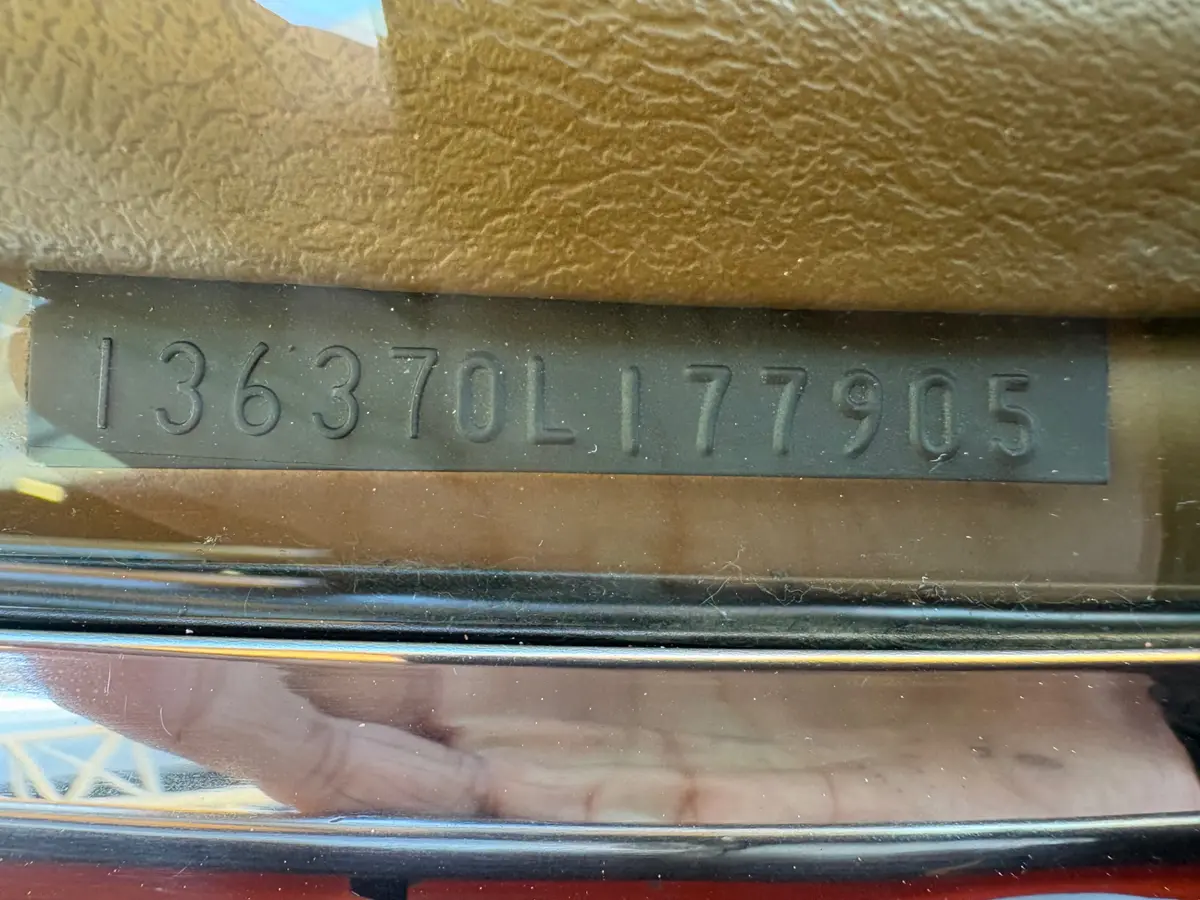
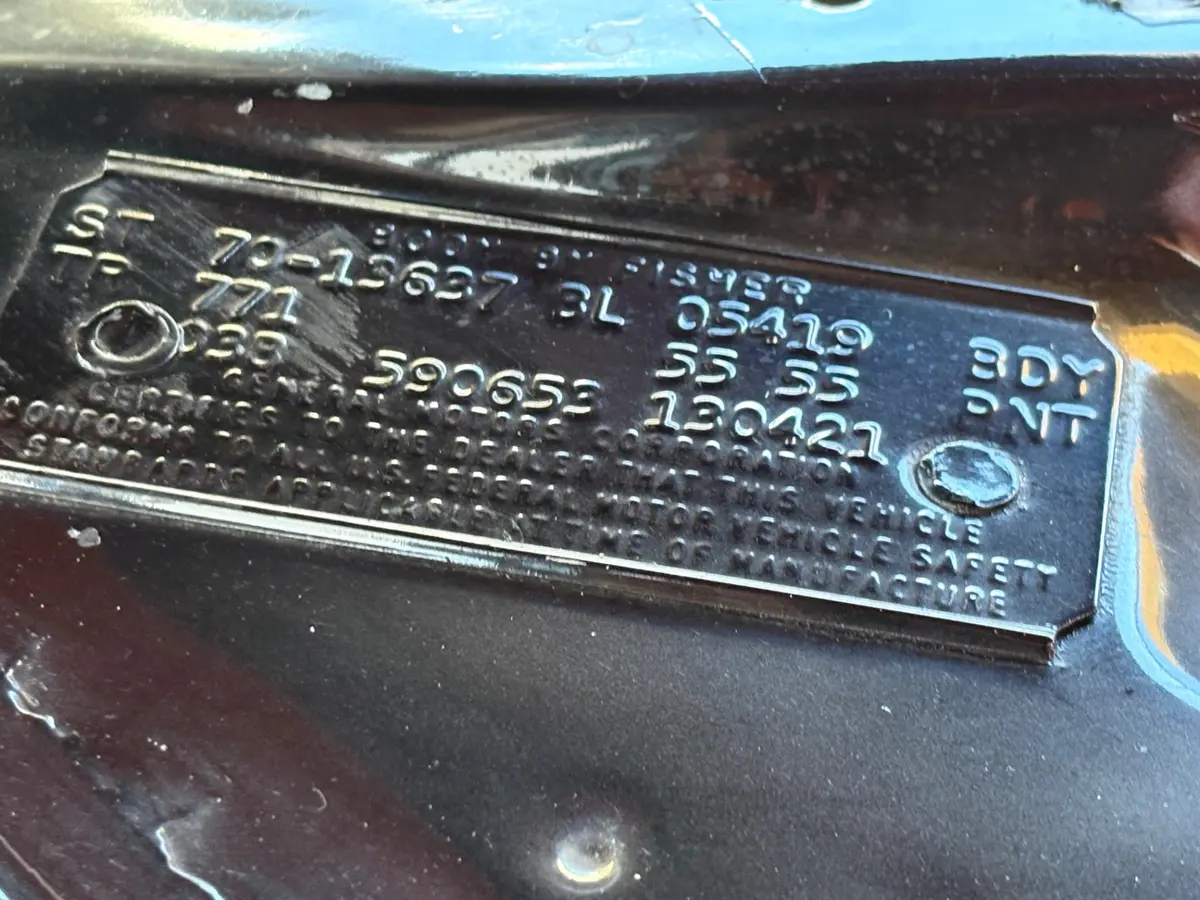
The VIN on this Chevelle decodes to a 1970 Chevrolet A-body built at the Norwood, Ohio assembly plant — one of two facilities that produced the Chevelle that year alongside the plant in Baltimore. Norwood-built SS cars are well-documented in the hobby, and the plant code in the VIN confirms the car's origins.
Factory air conditioning on a 1970 Chevelle SS 396 was a genuine option, not a given. A buyer who ticked that box in 1970 was paying extra for comfort alongside performance. The fact that this system has been retained and is described as blowing cold tells you someone took care of it rather than deleting it during modifications. Combined with power steering, power front disc brakes, and the 12-bolt rear end — all correct SS equipment — this is a car that was optioned the right way from the factory and has been maintained accordingly.
Features List
- 396ci / 325hp V8 engine (402ci actual displacement), date-correct JK engine code
- TH400 3-speed automatic transmission with horseshoe shifter and center console
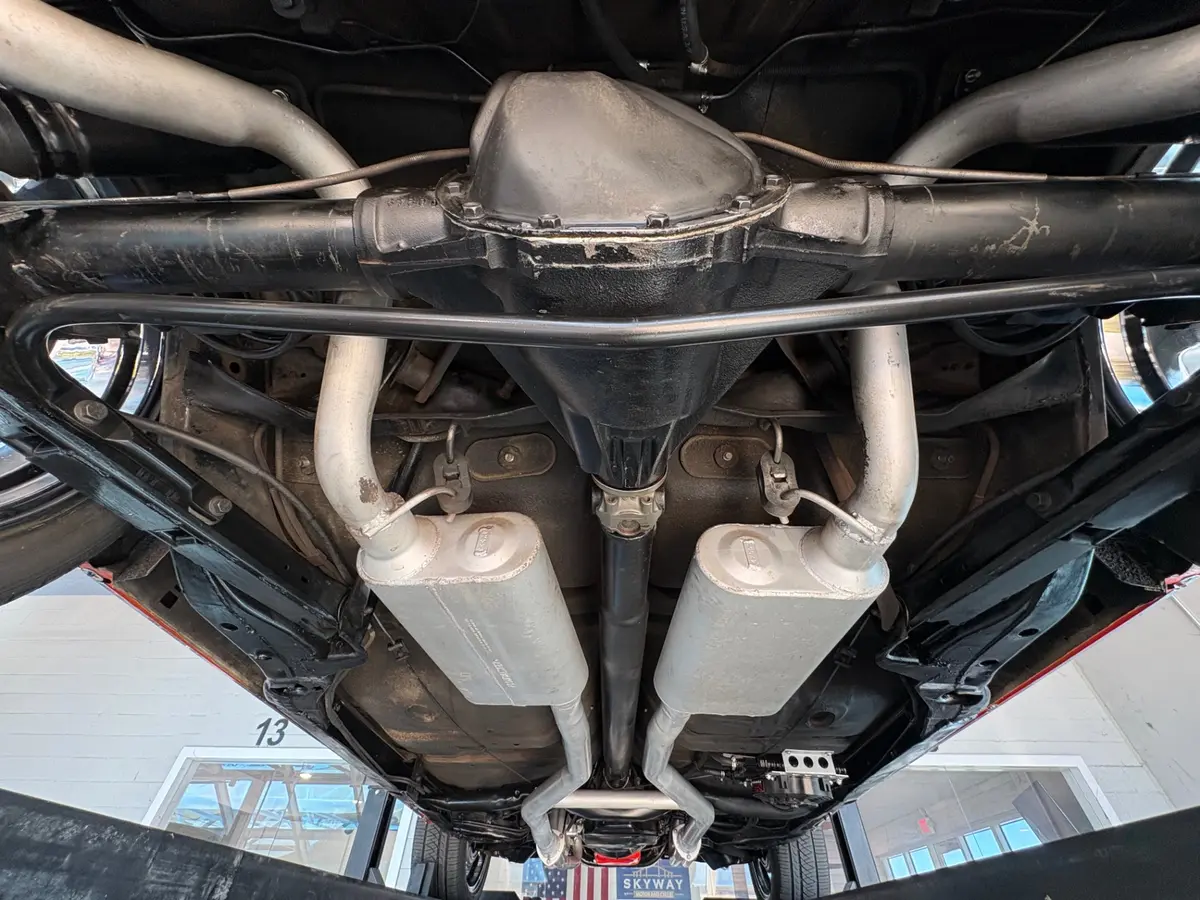
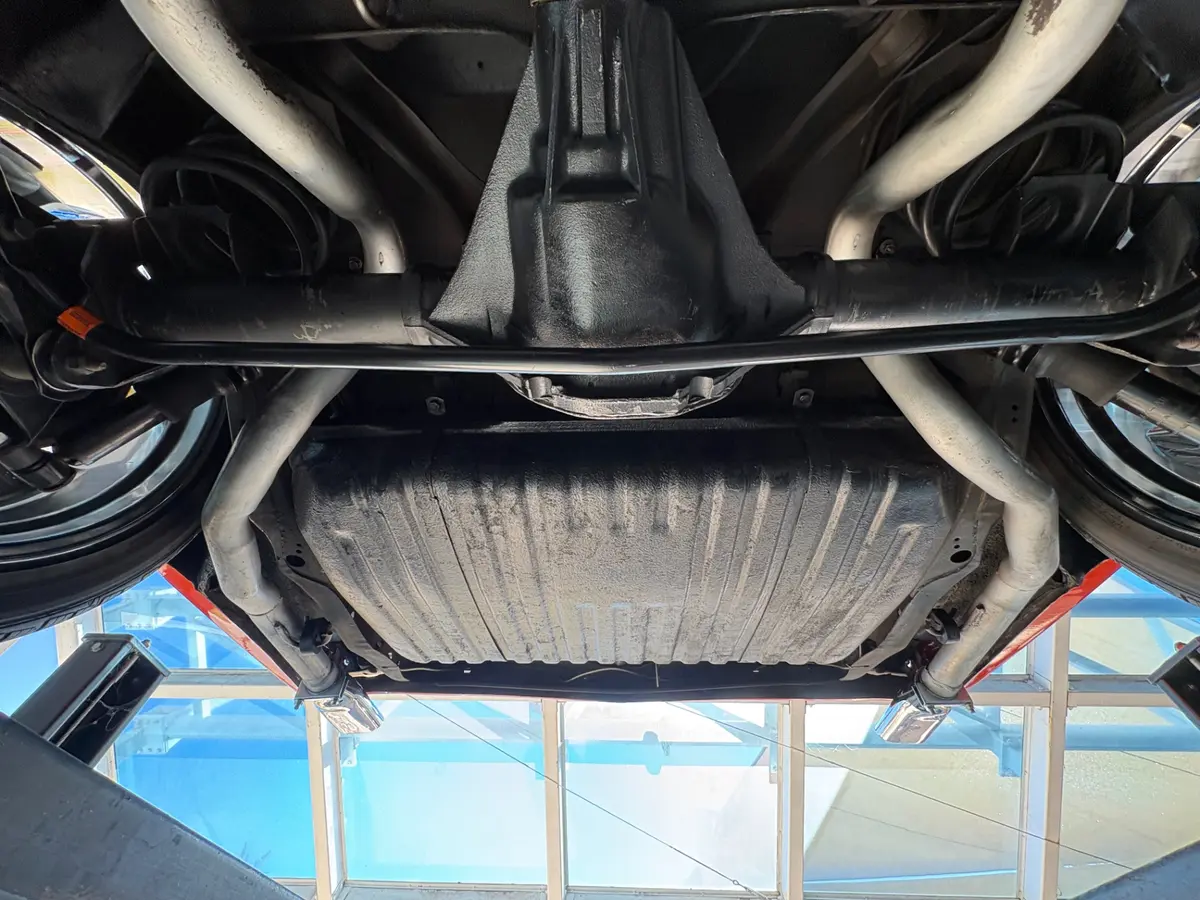
- GM 12-bolt rear end
- Power front disc brakes
- Power steering
- Factory air conditioning, currently functioning
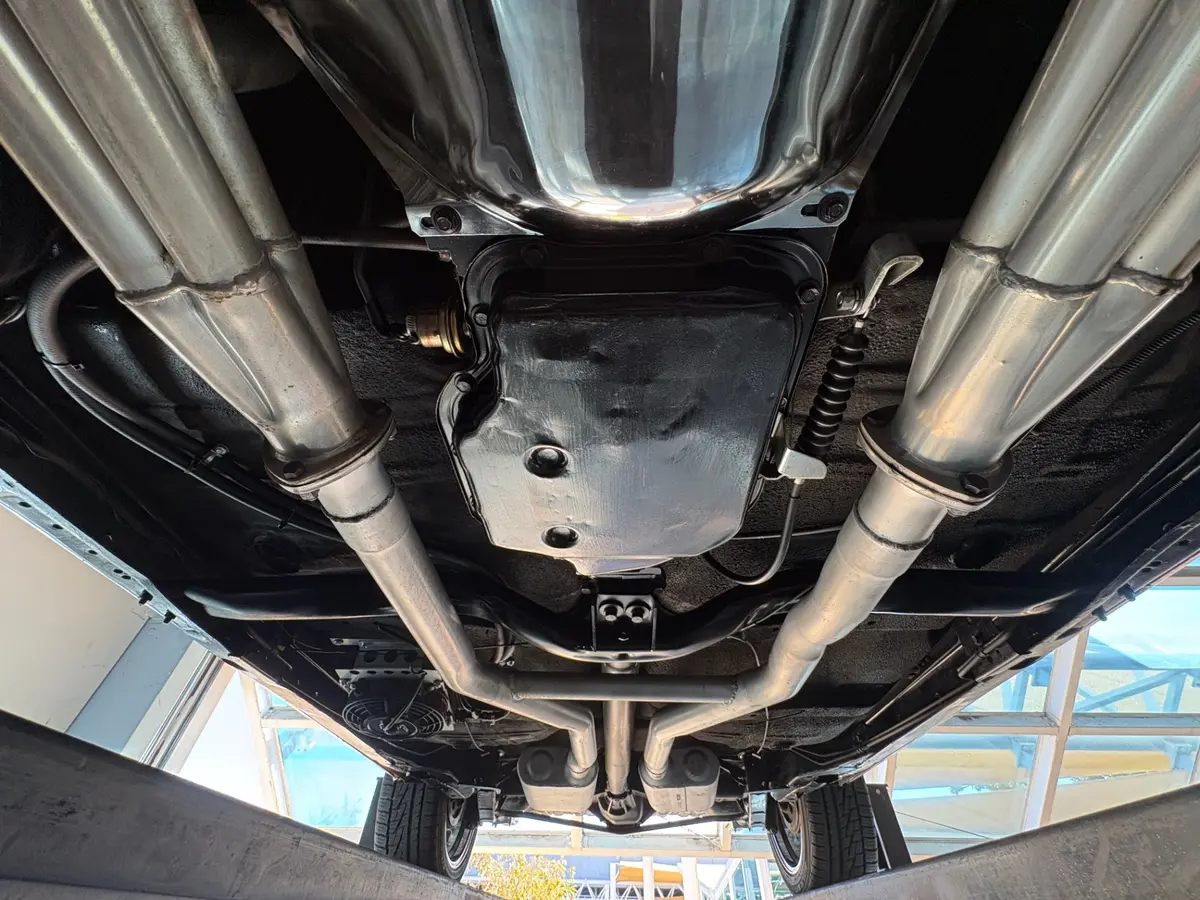
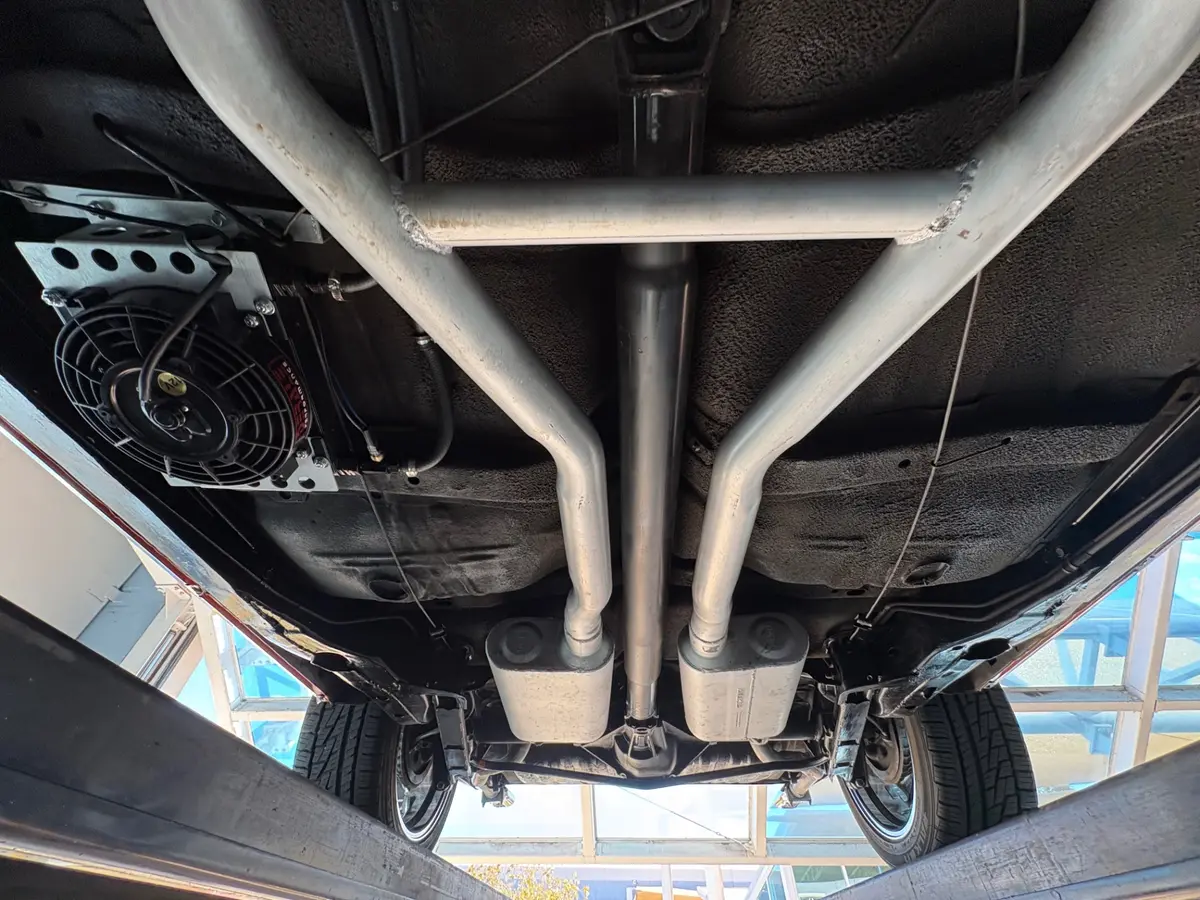
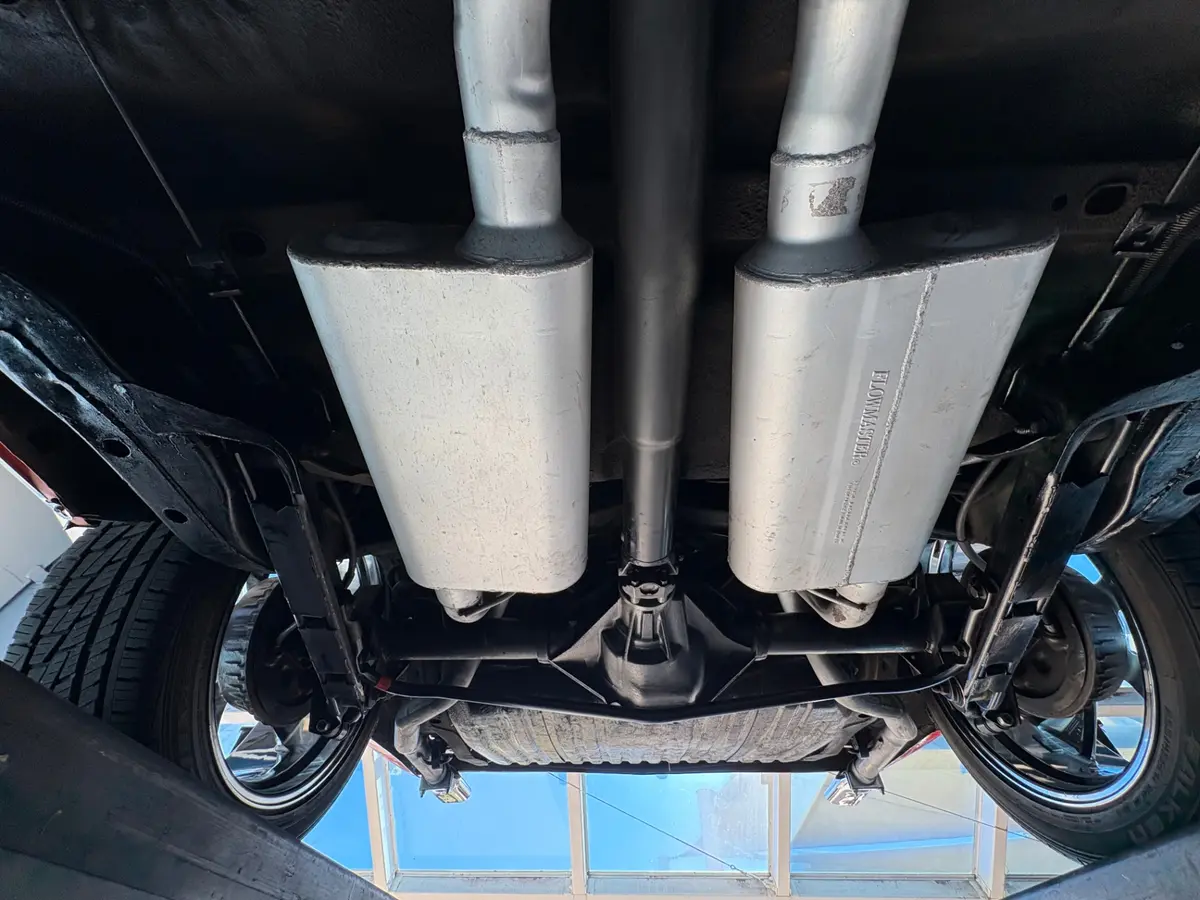
- Flowmaster dual exhaust with side-exit tips
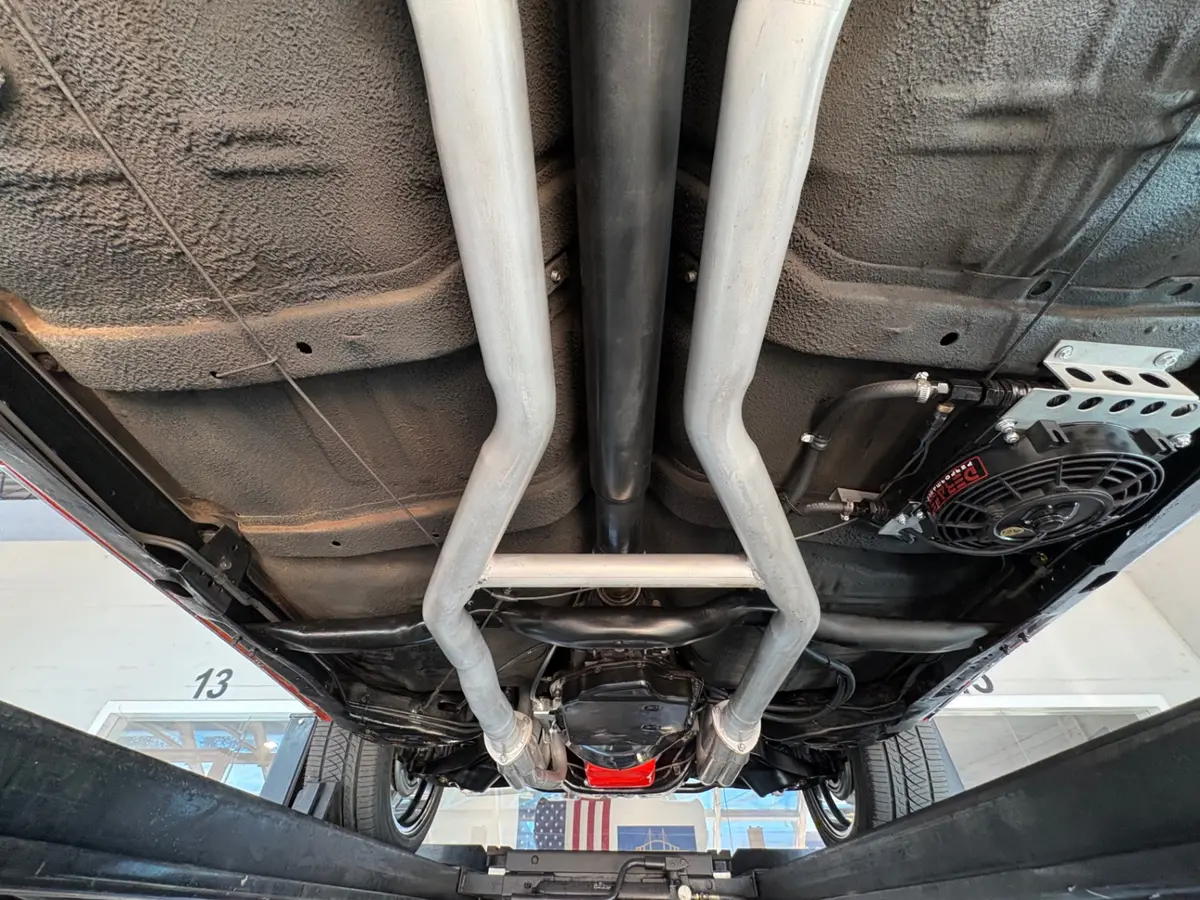
- Added transmission cooler with external fan
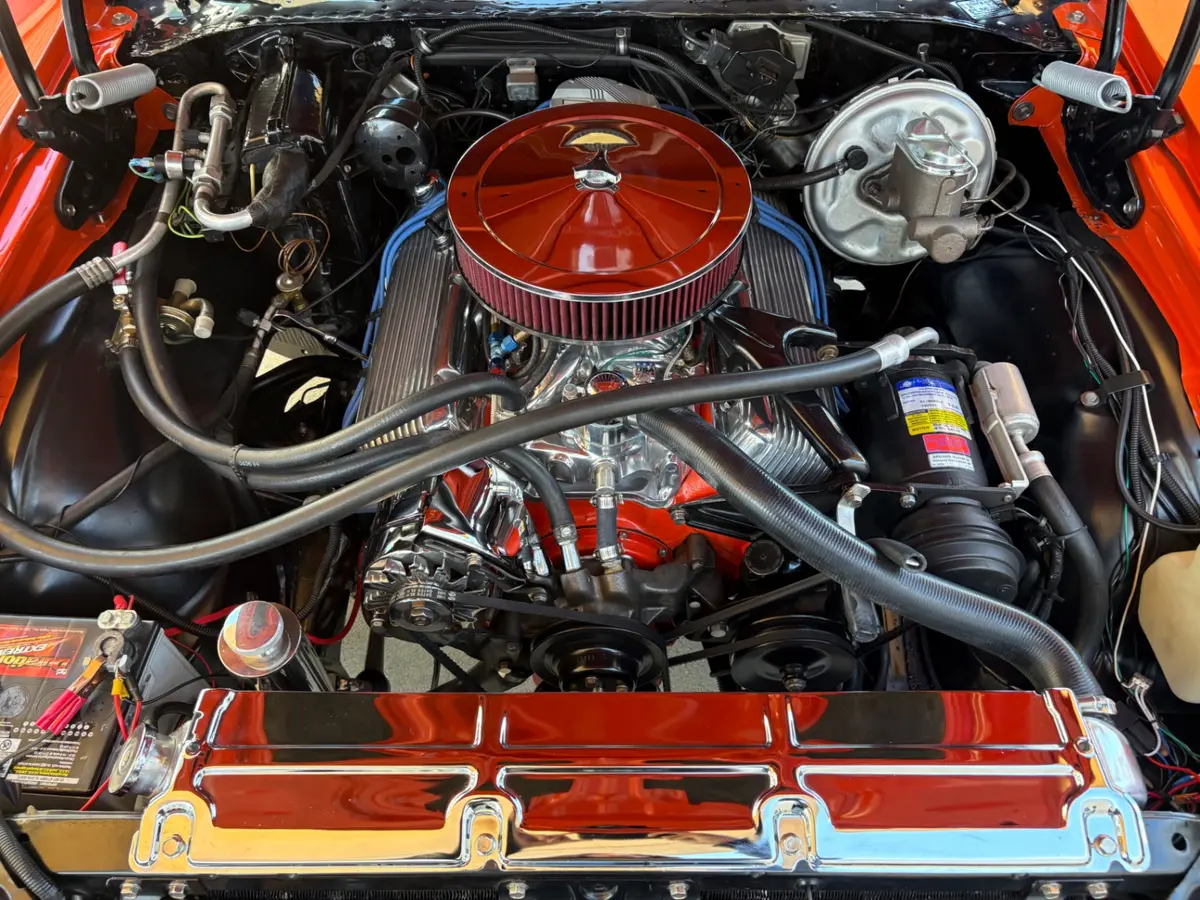
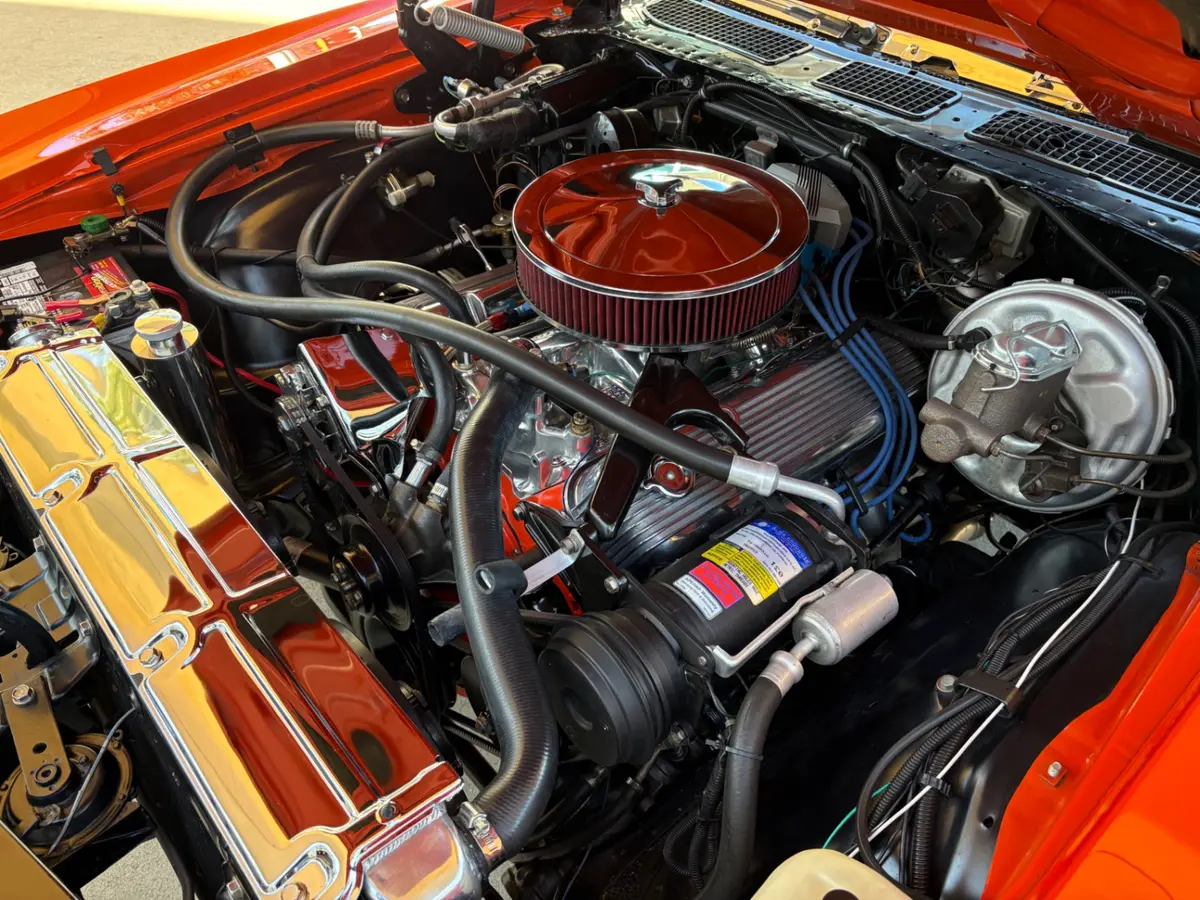
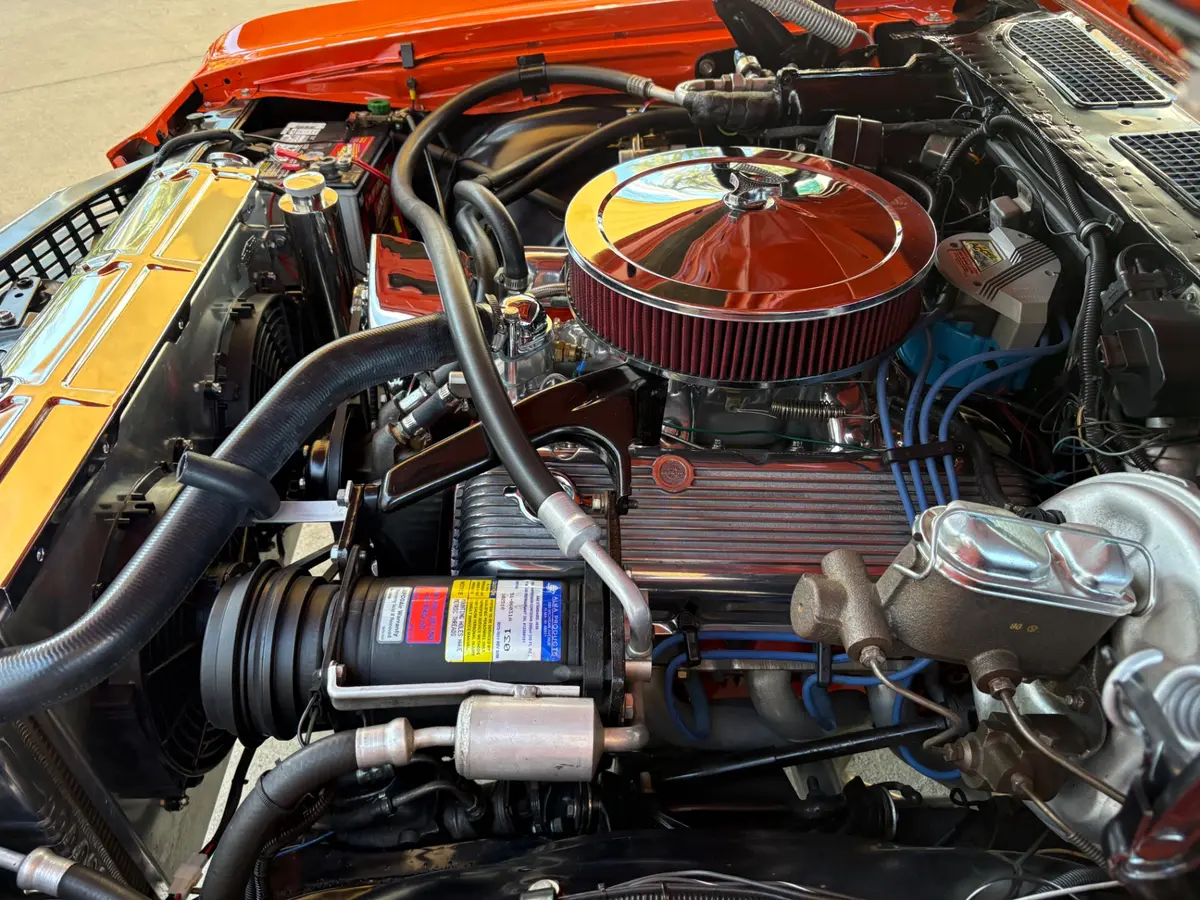
- Chrome-dressed engine bay with polished finned valve covers and finned intake manifold
- Aftermarket under-dash auxiliary gauge cluster
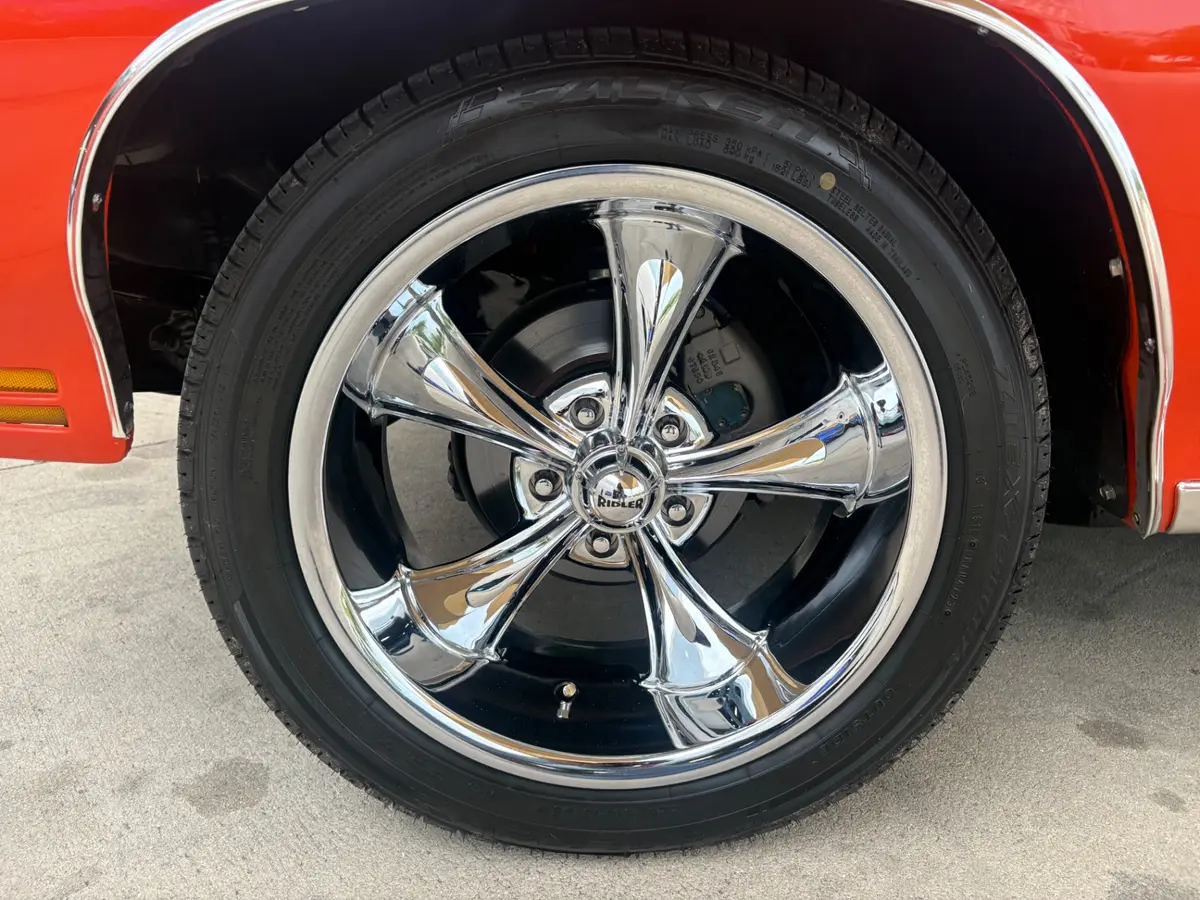
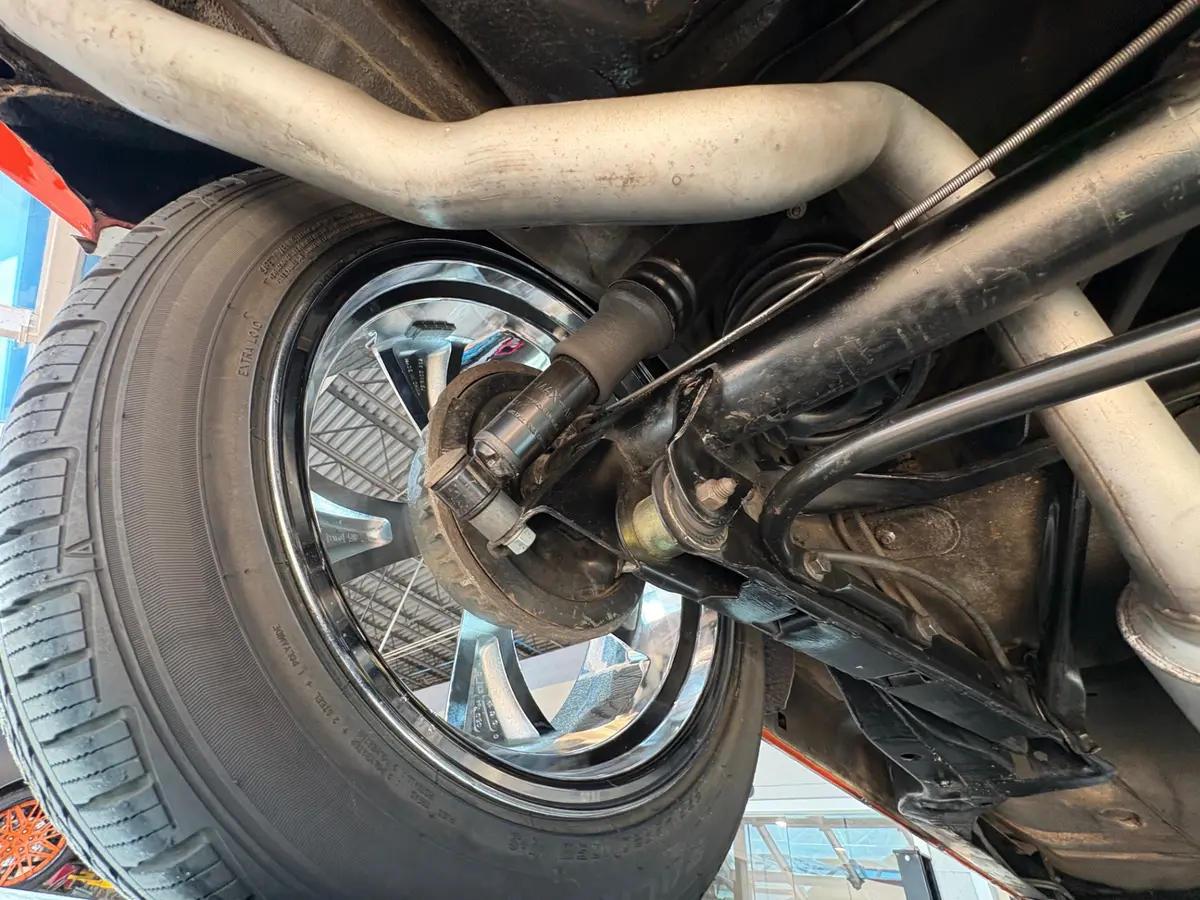
- Chrome Riddler 20-inch wheels
- Hugger Orange exterior with white racing stripes
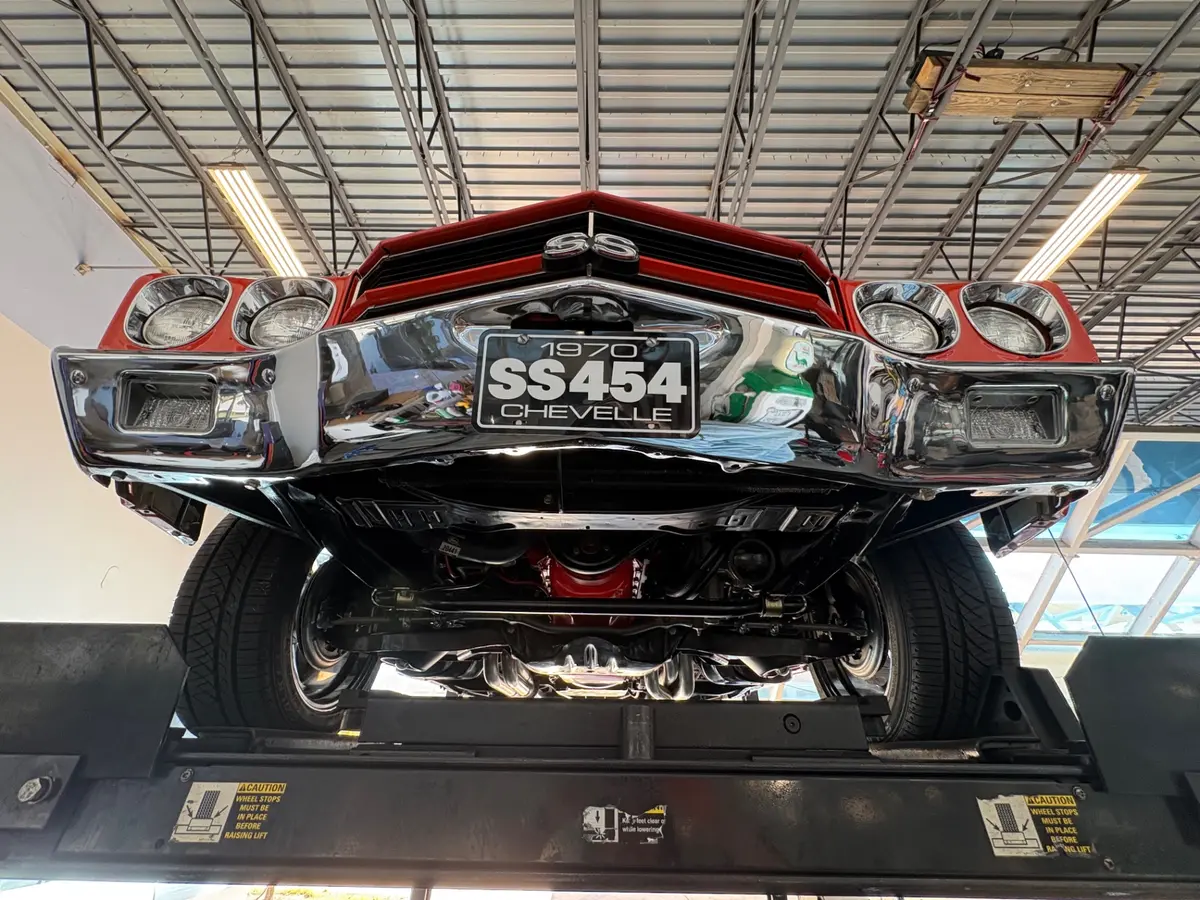
- Original SS 396 front fender badges
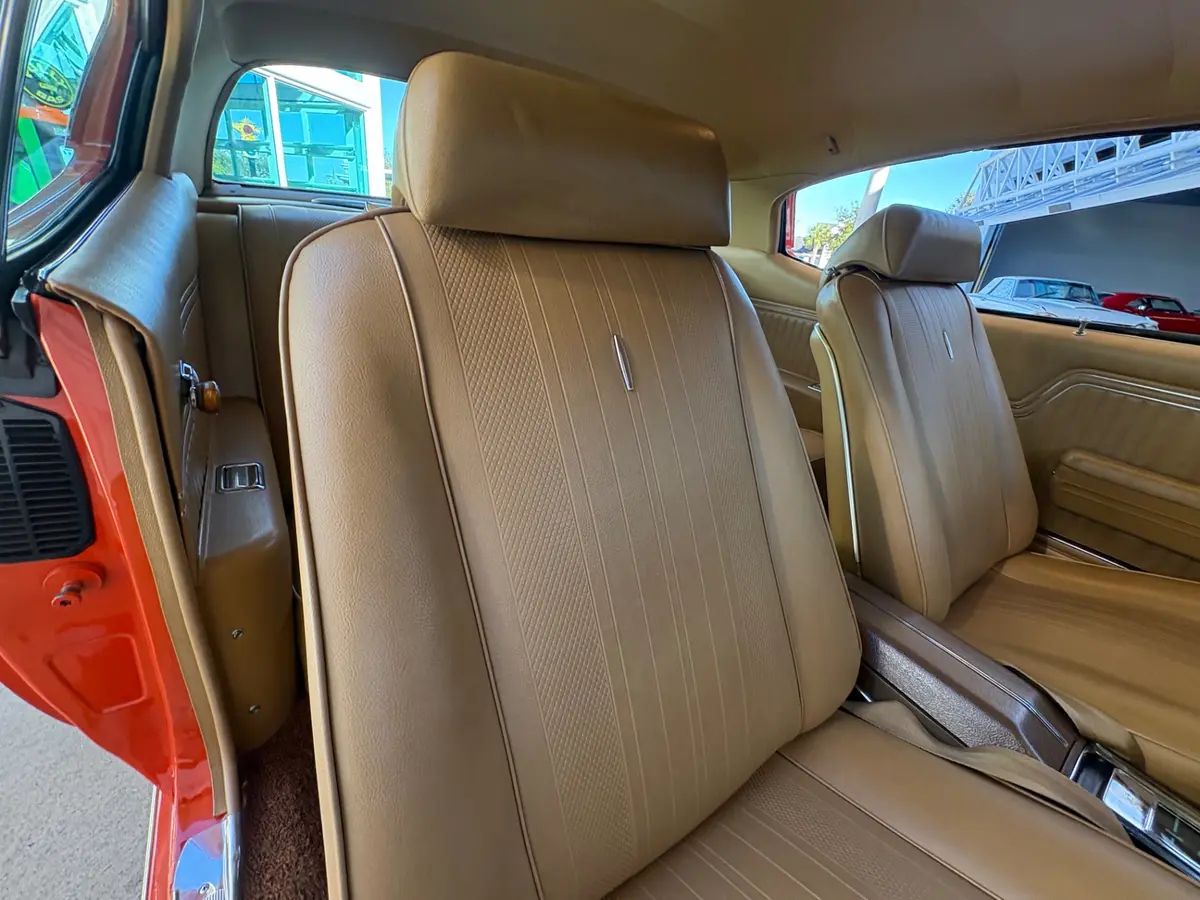
- Kalahari tan vinyl interior
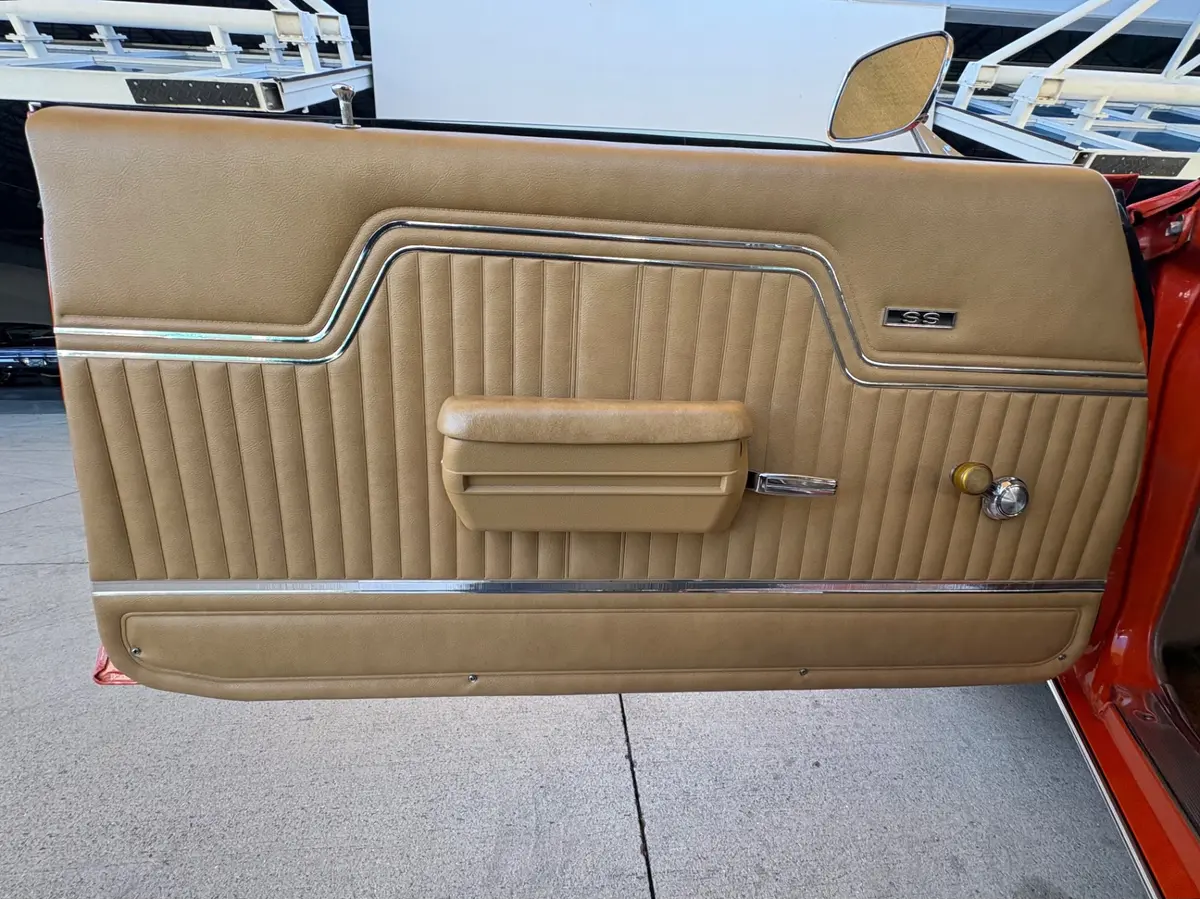
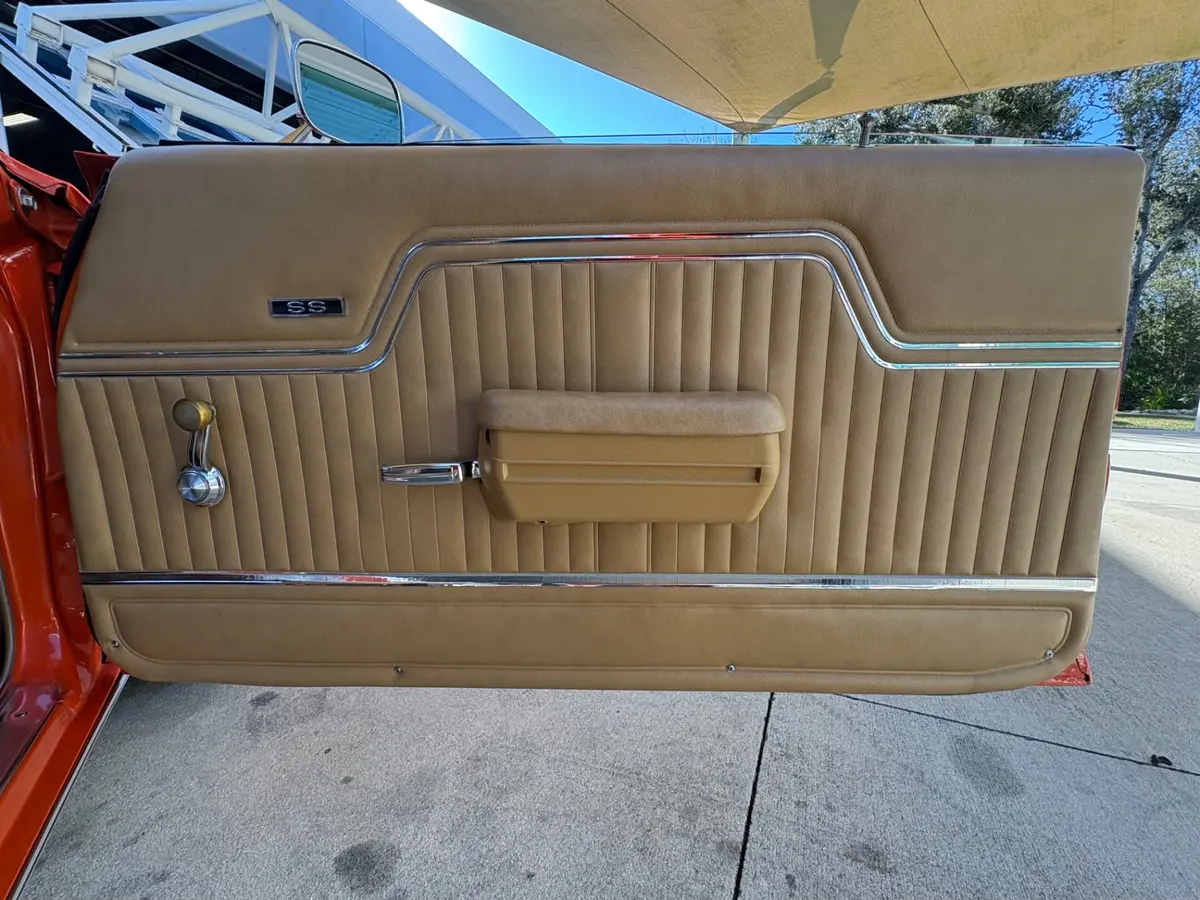
- SS-badged door panels with chrome trim accents
- Embroidered Chevelle script floor mats
- Tan headliner in like-new condition
- Rear seat in like-new condition
- Rear deck speakers installed
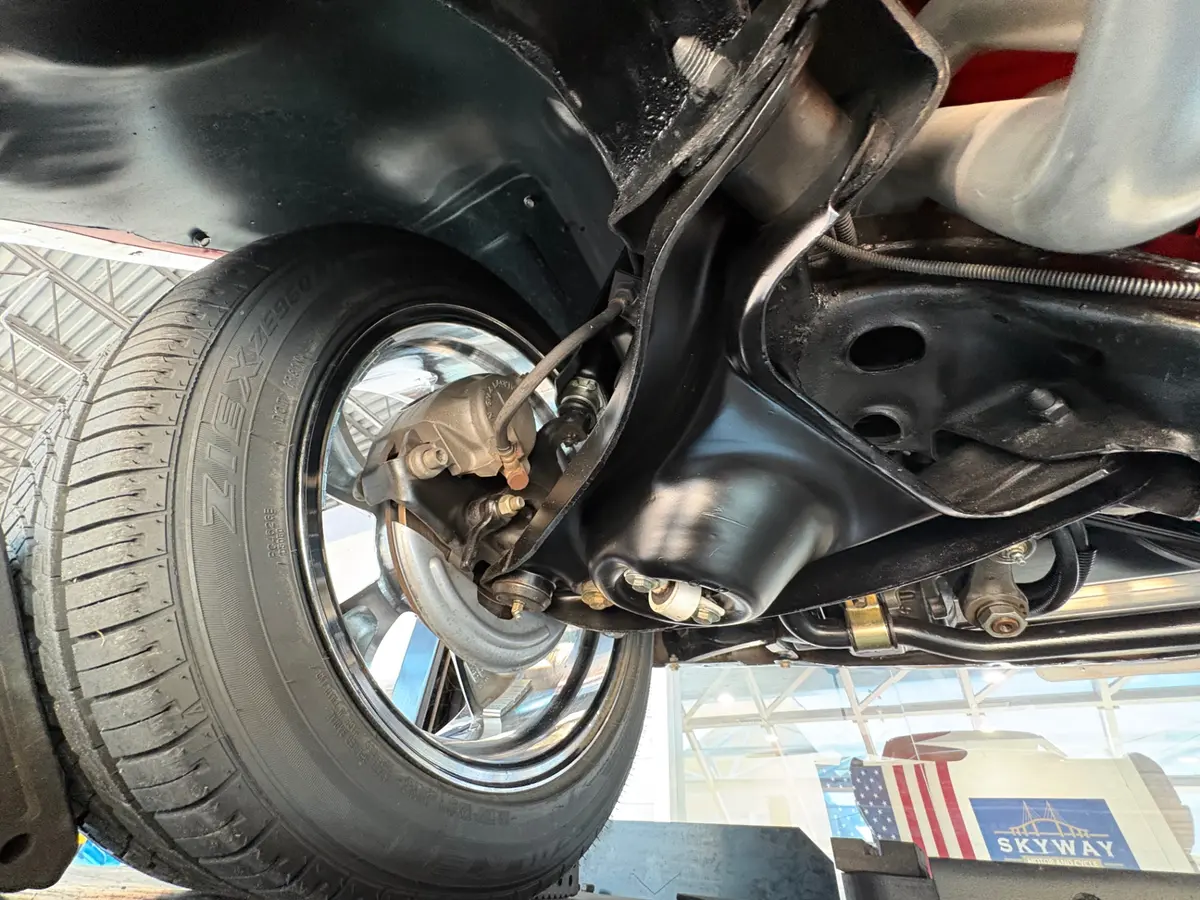
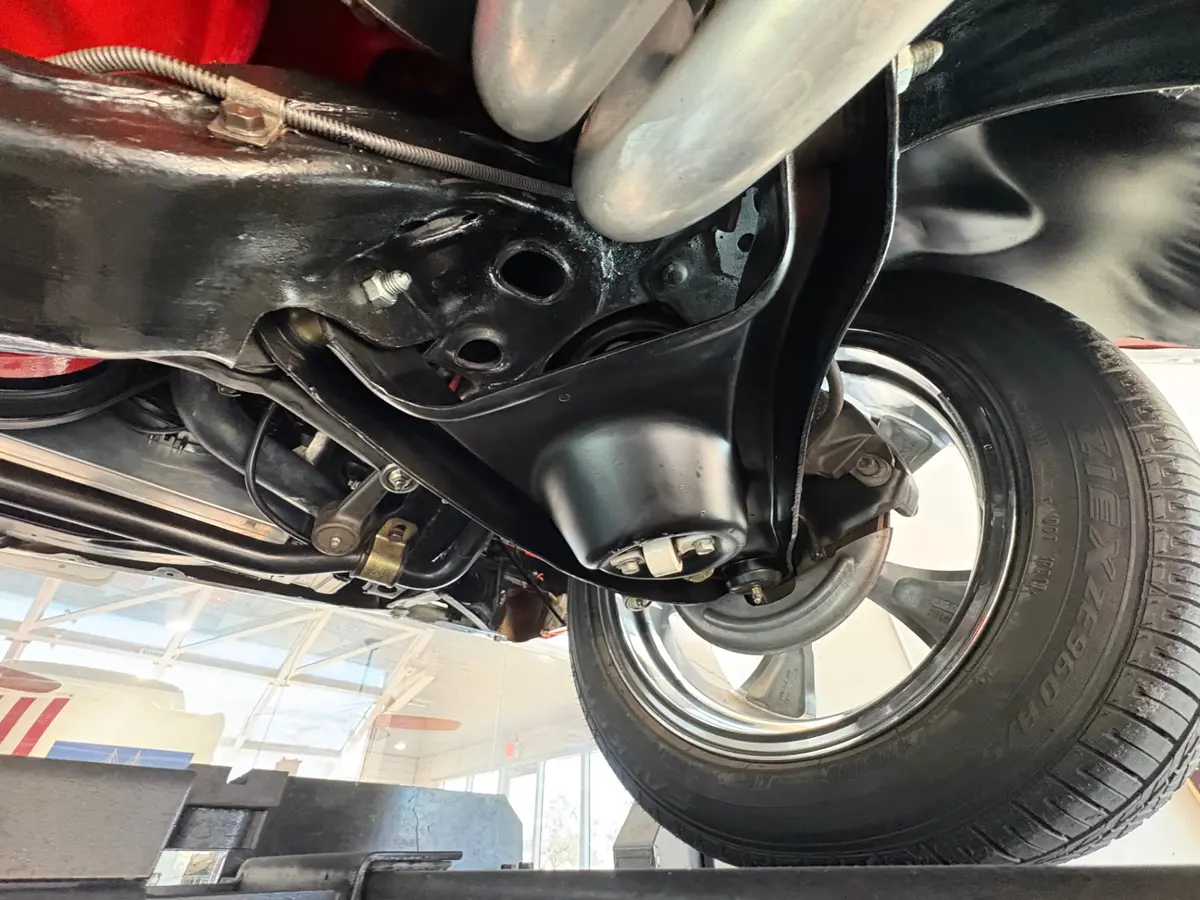
- Clean coated undercarriage — solid and rust-free underneath
- Rust-free body
Mechanical
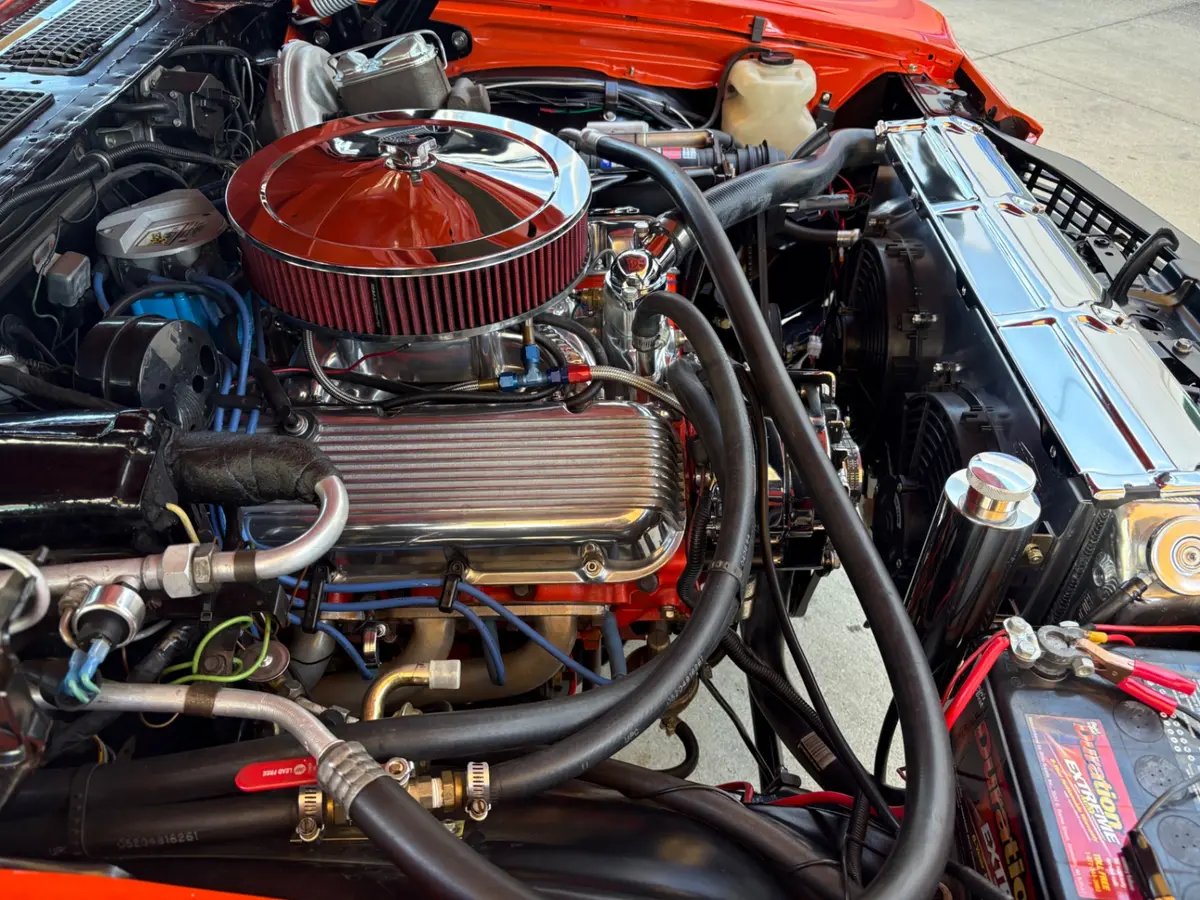
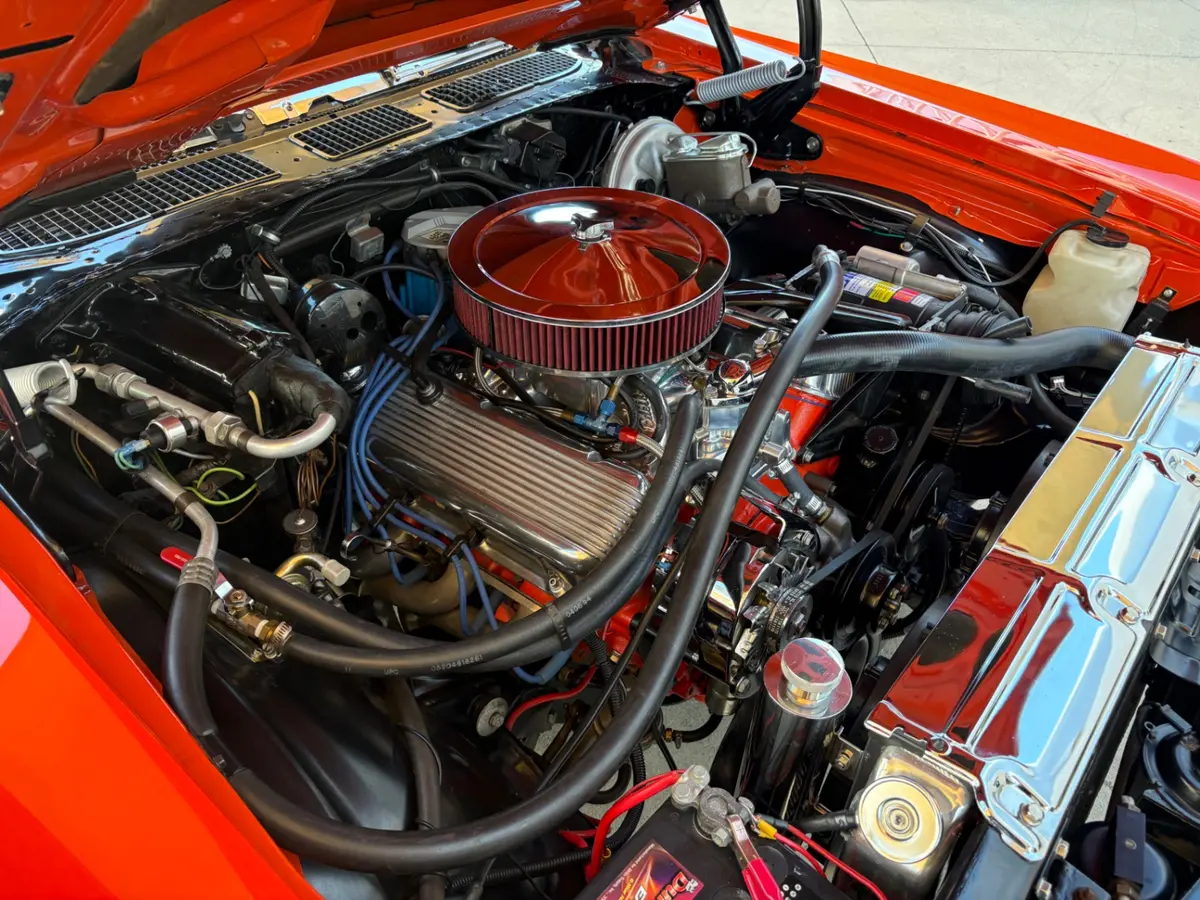
The 396 — or more accurately, the 402 — under the hood of this 1970 Chevelle SS is the JK-coded variant, rated at 325 horsepower from the factory. This is the hydraulic-lifter version of the big-block, which means it does not require the precise valve adjustments of a solid-lifter motor and is well-suited for regular street use. The engine code is date-correct, meaning the casting date of the block corresponds to the production timeline of this specific car. For collectors and serious buyers, this is a non-trivial detail. Replacement engines are common in 50-year-old cars; a date-correct engine that has stayed with the vehicle adds measurable value and credibility.
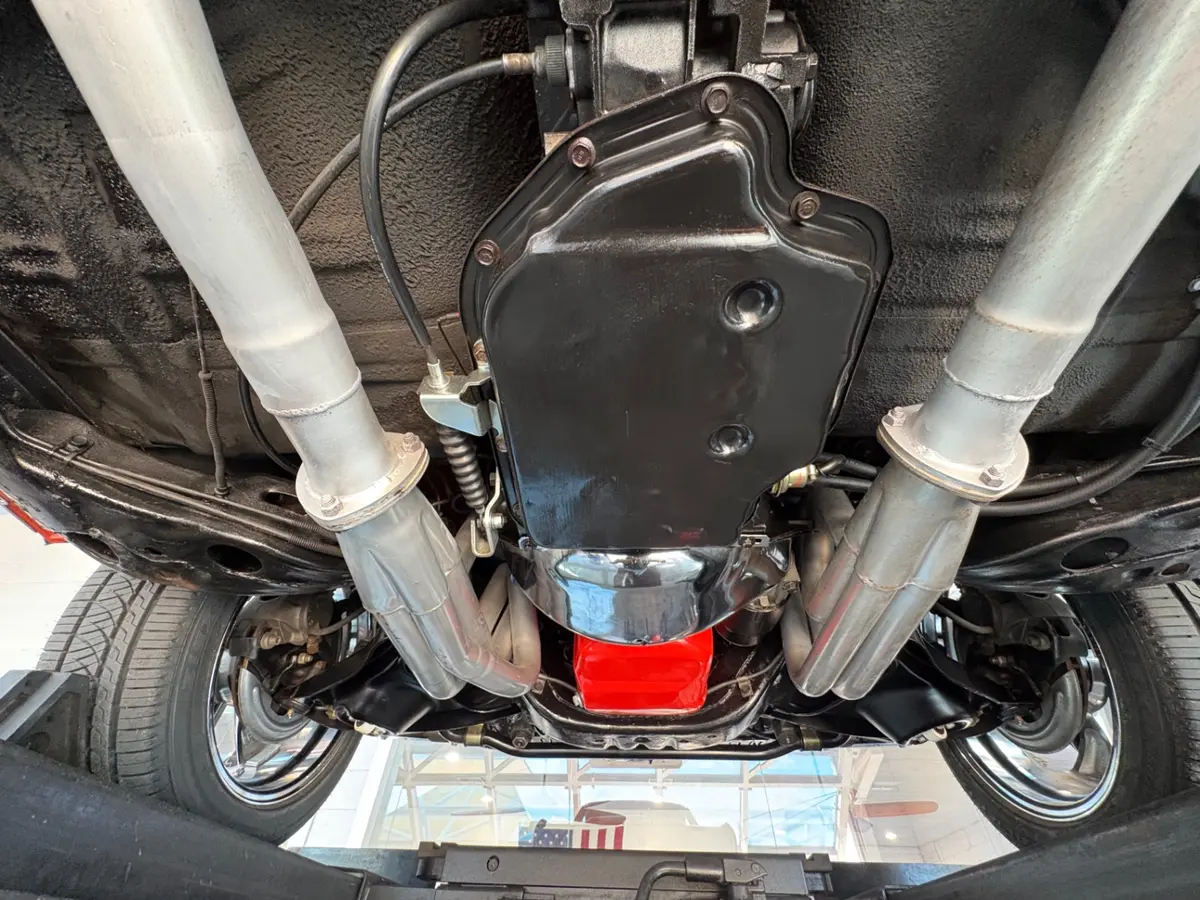
Backing the engine is a Turbo-Hydramatic 400 three-speed automatic, one of the strongest automatic transmissions GM ever produced. The TH400 was a preferred unit for high-torque applications and is well-supported for parts and service today. A transmission cooler with a dedicated electric fan has been added, which is a practical upgrade that extends transmission life under spirited driving conditions — particularly relevant in Florida's heat.
The 12-bolt rear end is the correct axle for a 1970 Chevelle SS and was the stronger of the two rear axle options available that year. It uses a larger ring gear than the 10-bolt unit and is capable of handling the torque output of the big-block without issue. Power front disc brakes provide confident stopping power up front, a meaningful improvement over four-wheel drum setups. Power steering rounds out the go-fast hardware with a setup that makes the car easy to manage at parking lot speeds and confident at highway pace.
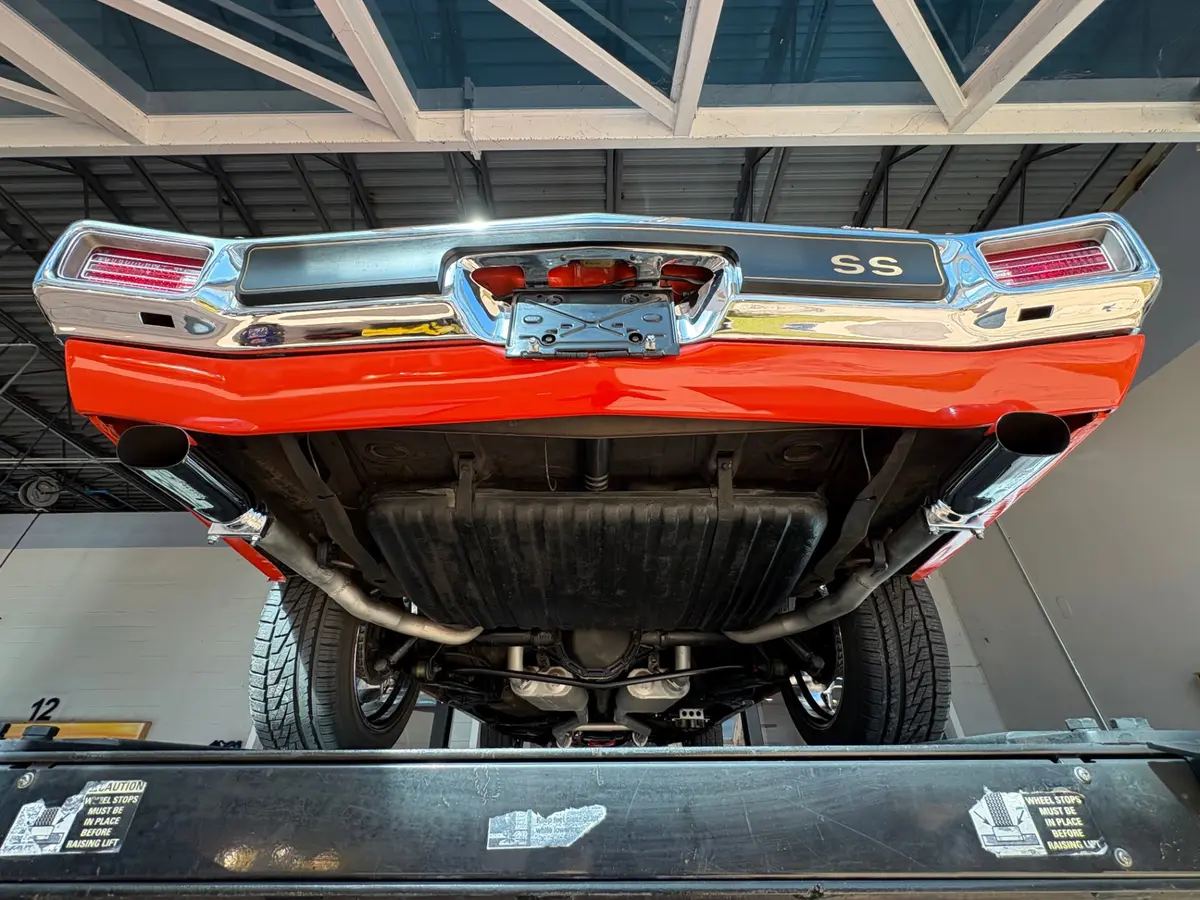
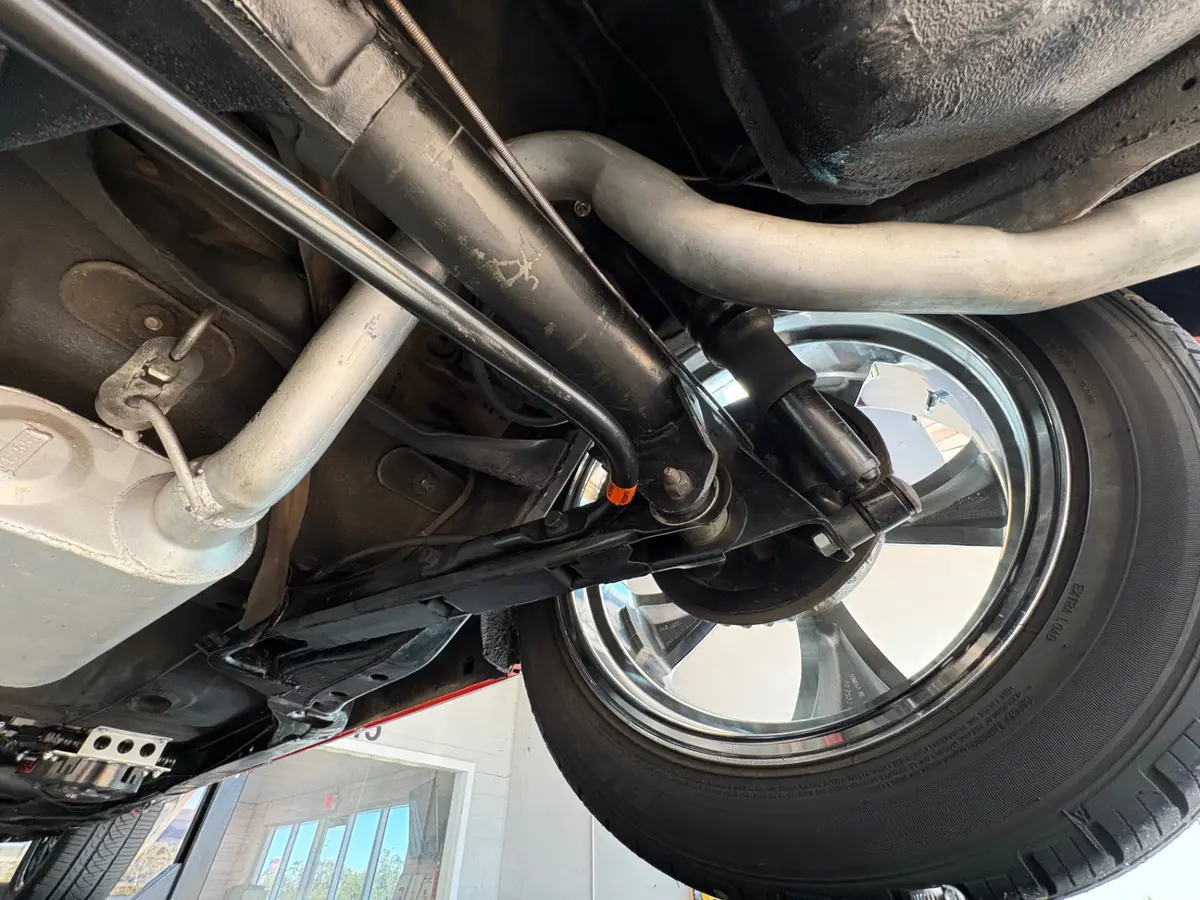
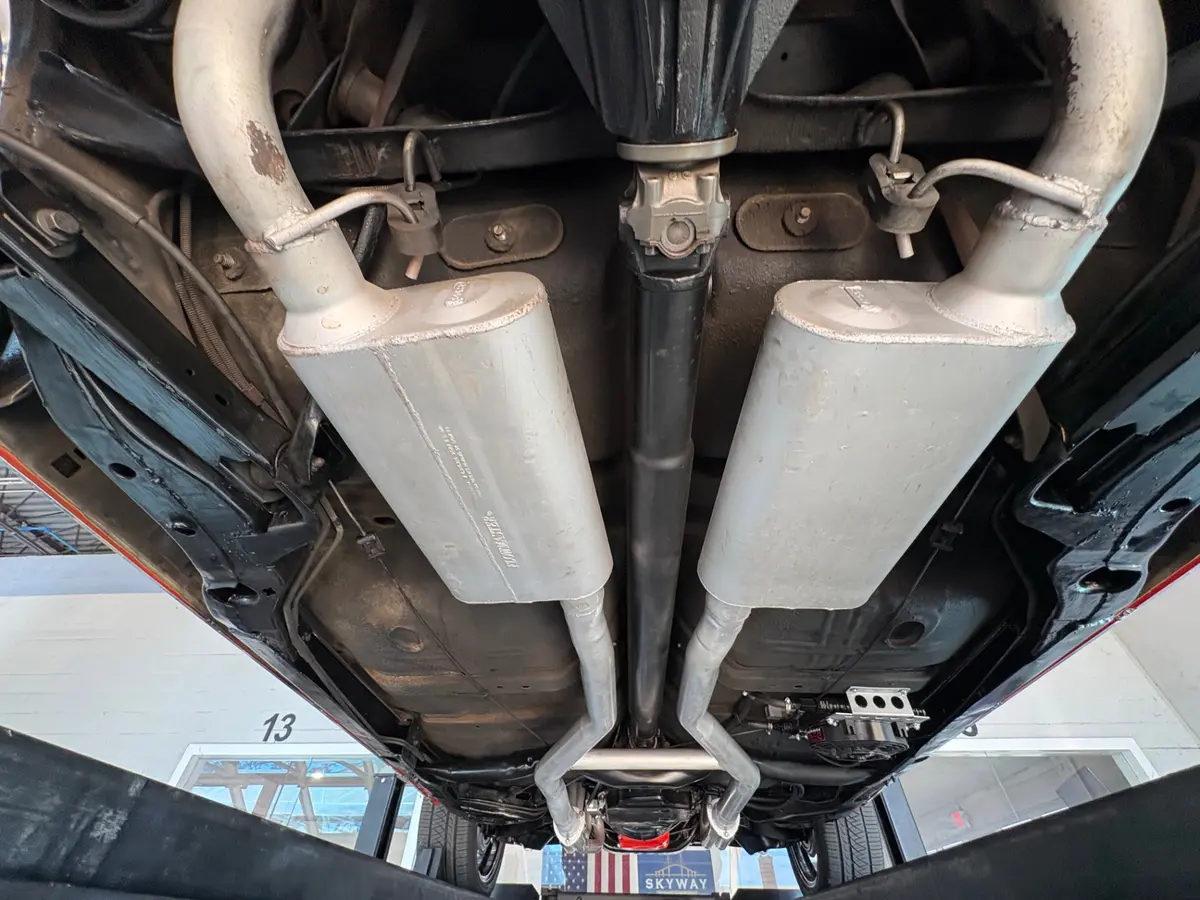
The exhaust system has been upgraded to a Flowmaster dual setup with tips exiting cleanly at the rear. Flowmaster's chambered muffler design produces the deep, low exhaust note that fits the character of this car without crossing into the excessive drone that plagues some aftermarket setups. The undercarriage has been cleaned and coated — the photos on the lift confirm a floor and frame that show no rust, no patches, and no structural concerns.
The engine bay has been dressed with polished finned valve covers and a finned intake manifold, both chrome-detailed to complement the visual package above. An aftermarket under-dash auxiliary gauge cluster has been added, giving the driver real-time access to additional data beyond the factory instrumentation — the kind of addition that tells you someone was driving this car with attention to what was happening mechanically.
Interior
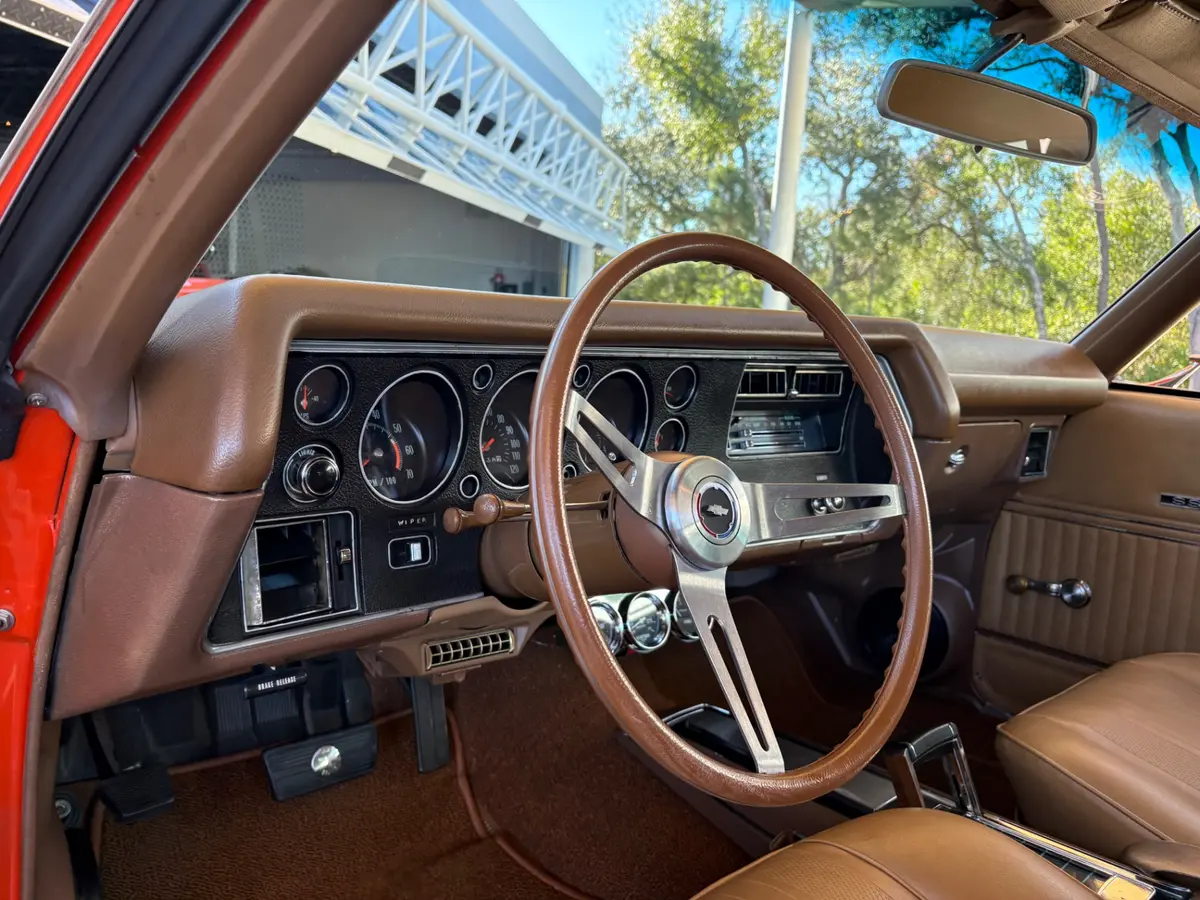
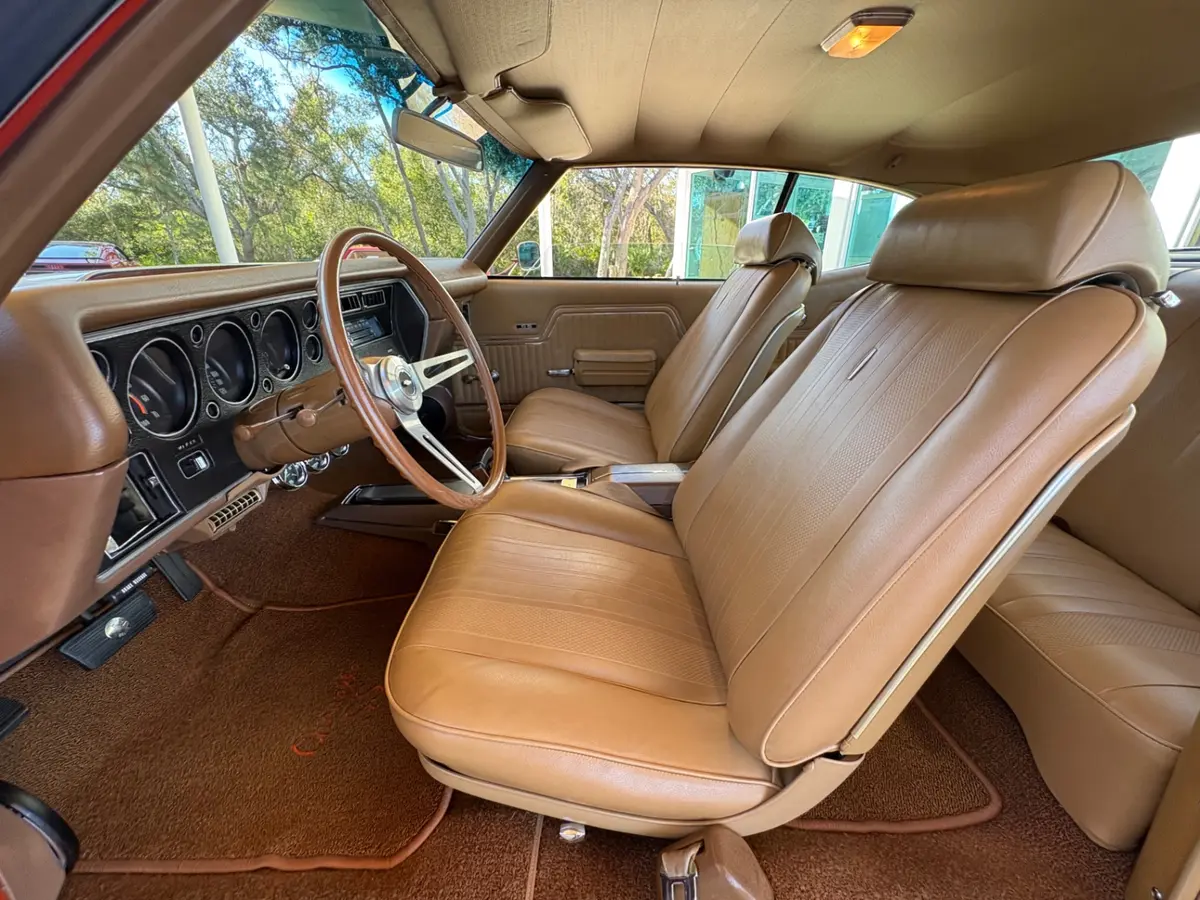
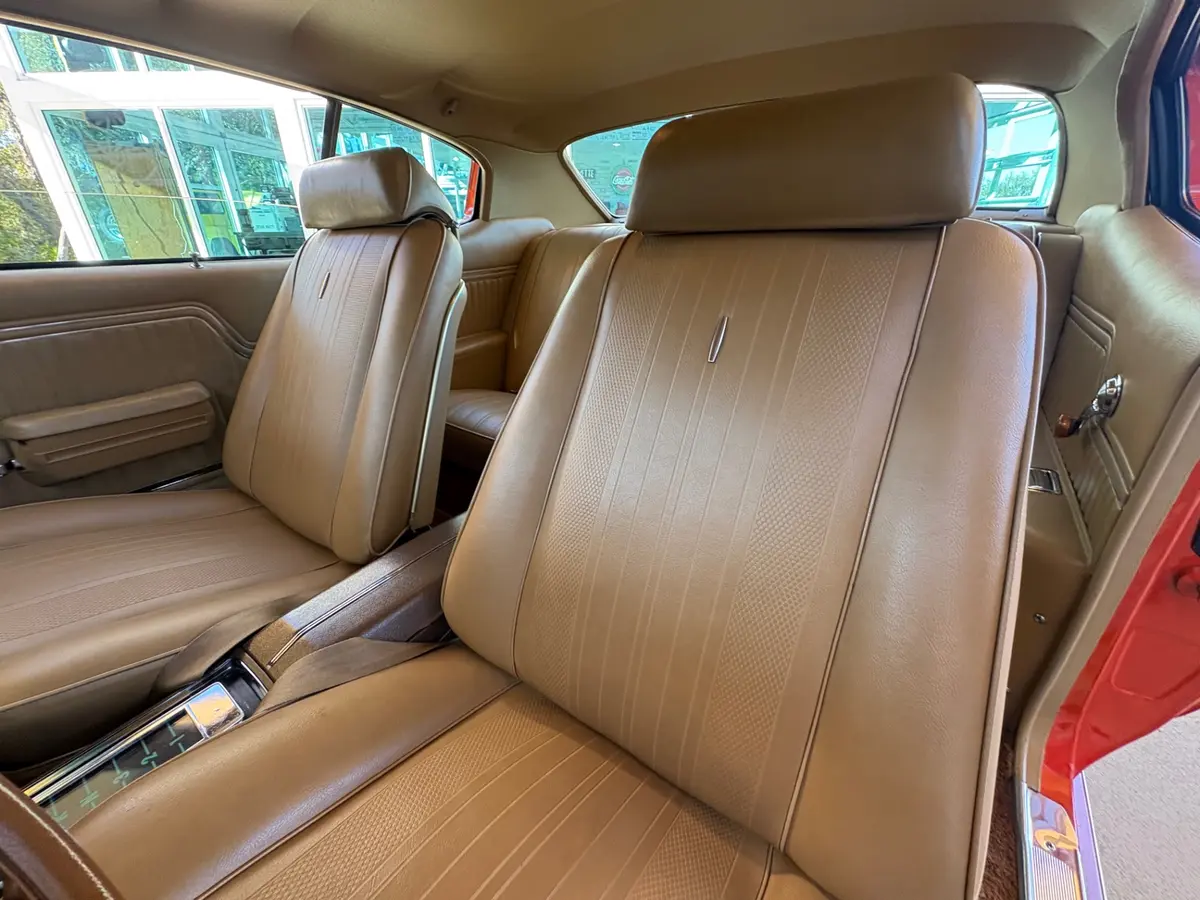
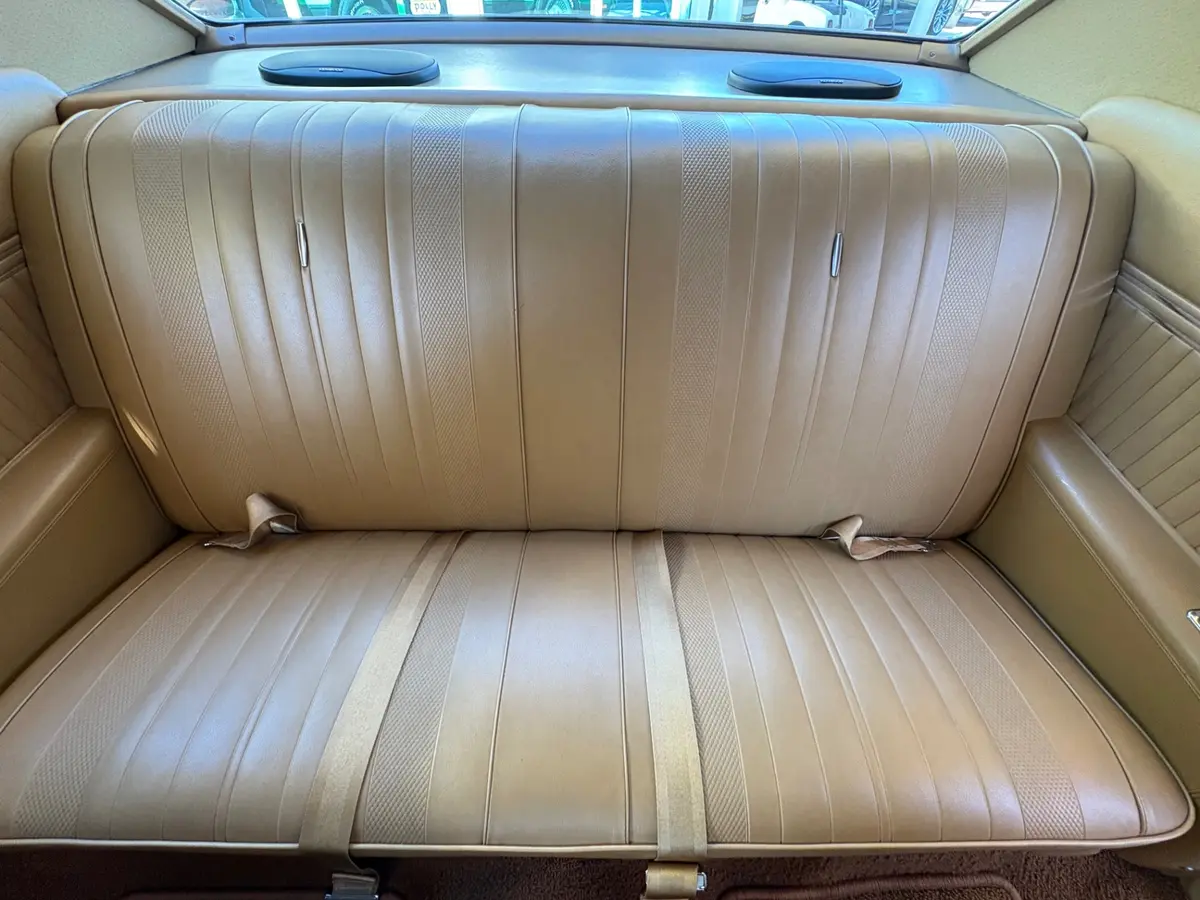
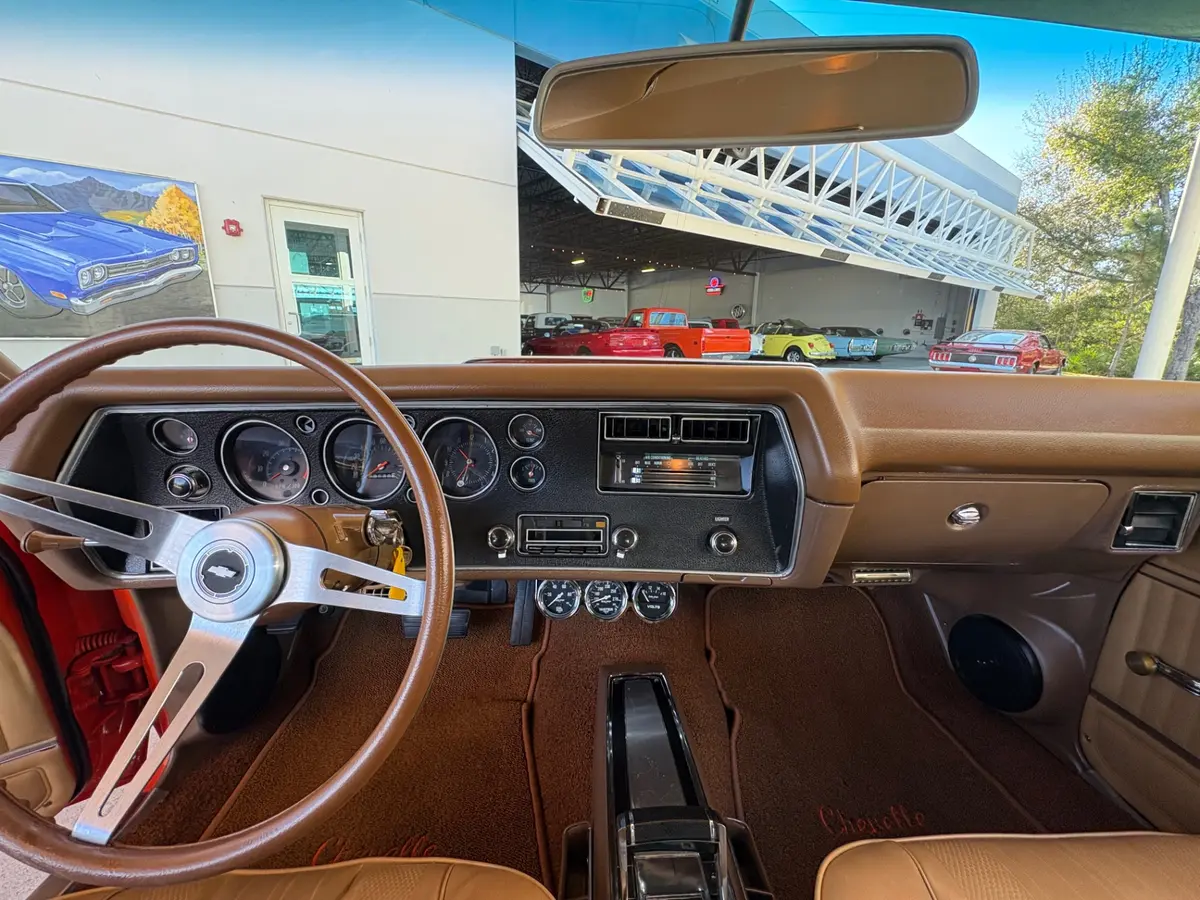
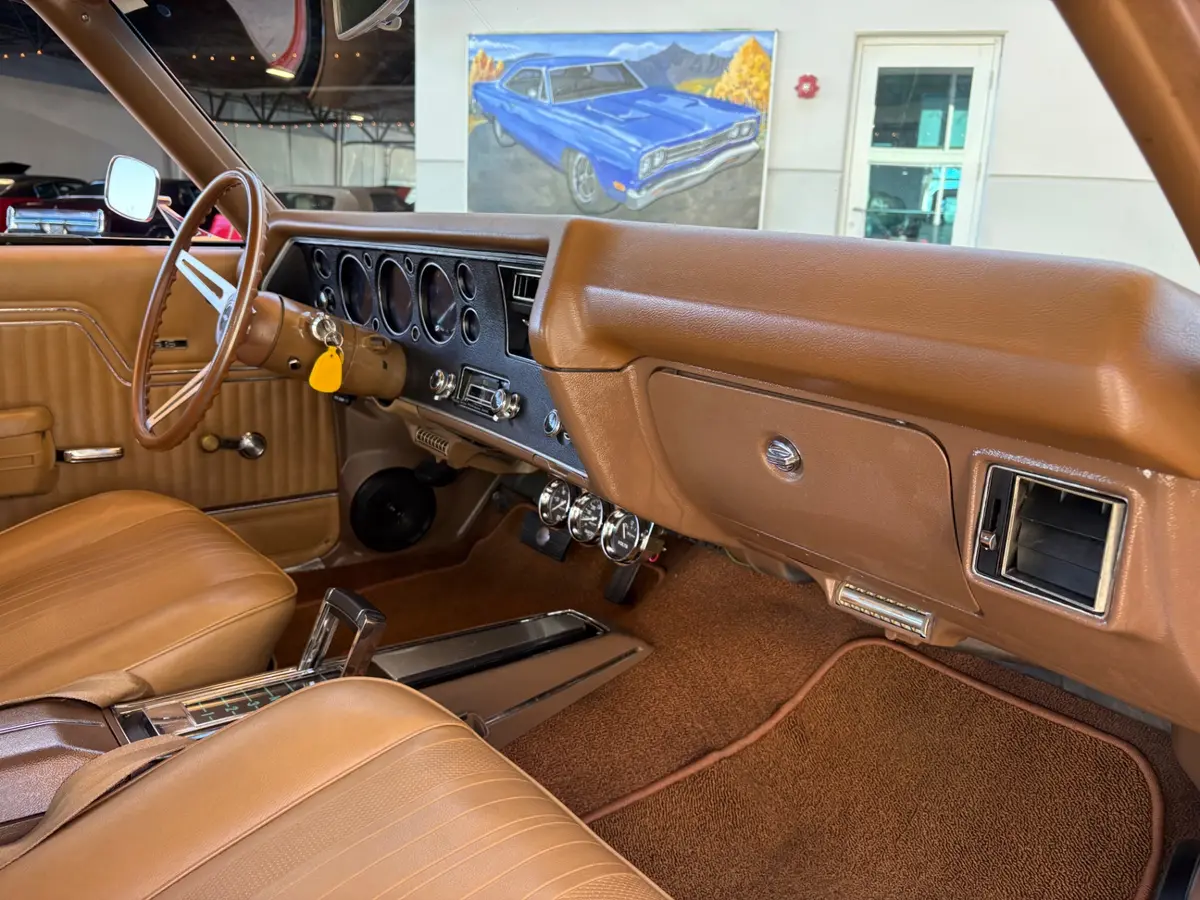
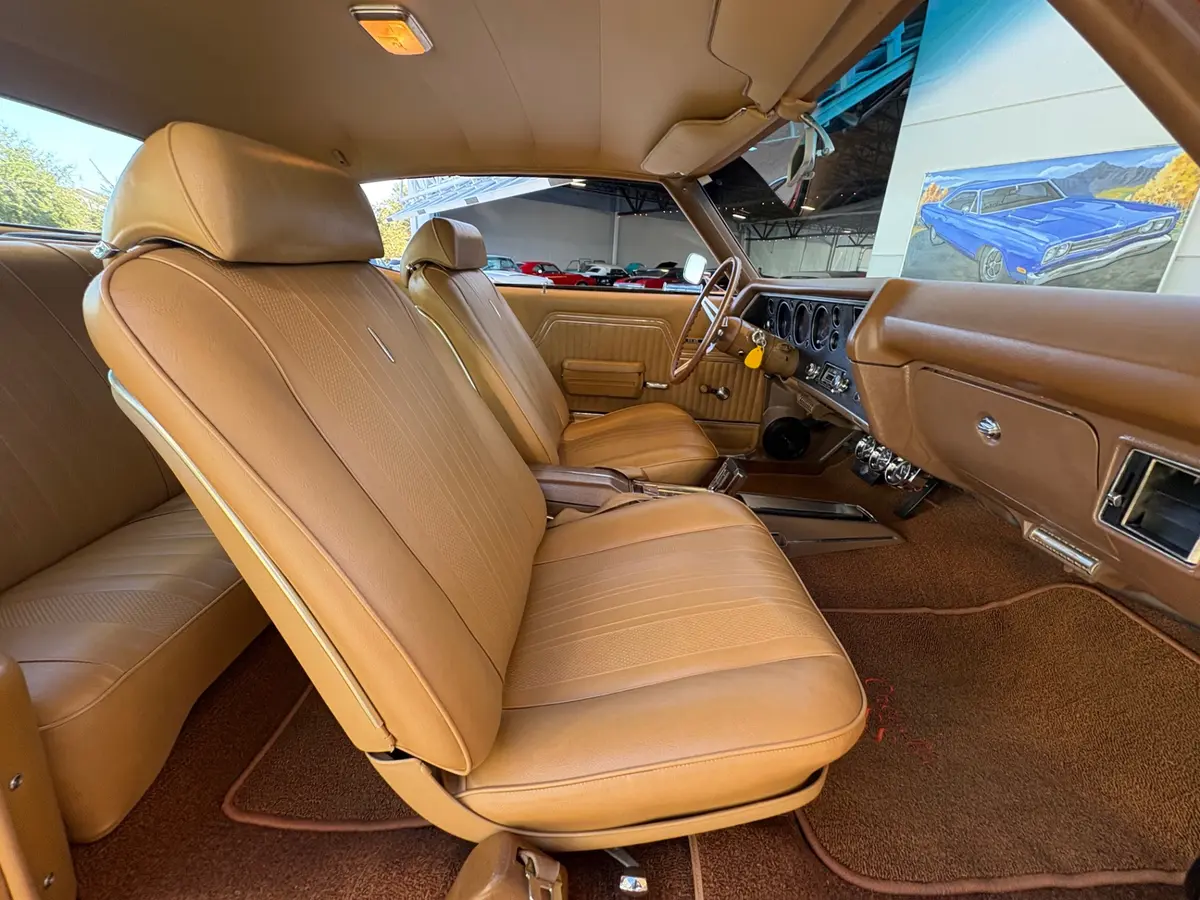
The Kalahari tan vinyl interior in this 1970 Chevelle SS 396 presents exceptionally well throughout. The front bucket seats show no significant wear to the bolsters or seams, the tan headliner is intact and free of the sagging that commonly affects these cars after five decades, and the rear seat looks like it has seen very little use. Tan vinyl interiors on Hugger Orange cars were a visually striking combination in 1970, and this one holds up that contrast effectively.
The SS-specific door panels are present and correct, wearing the SS badge in the upper insert along with chrome trim accents along the panel face. These details matter to buyers who know what a properly trimmed SS interior should look like. The horseshoe shifter with center console is in place, which is the correct presentation for an automatic-equipped SS with factory console. The console houses the shifter in the characteristic curved gate design that became synonymous with late-1960s and early-1970s GM muscle cars.
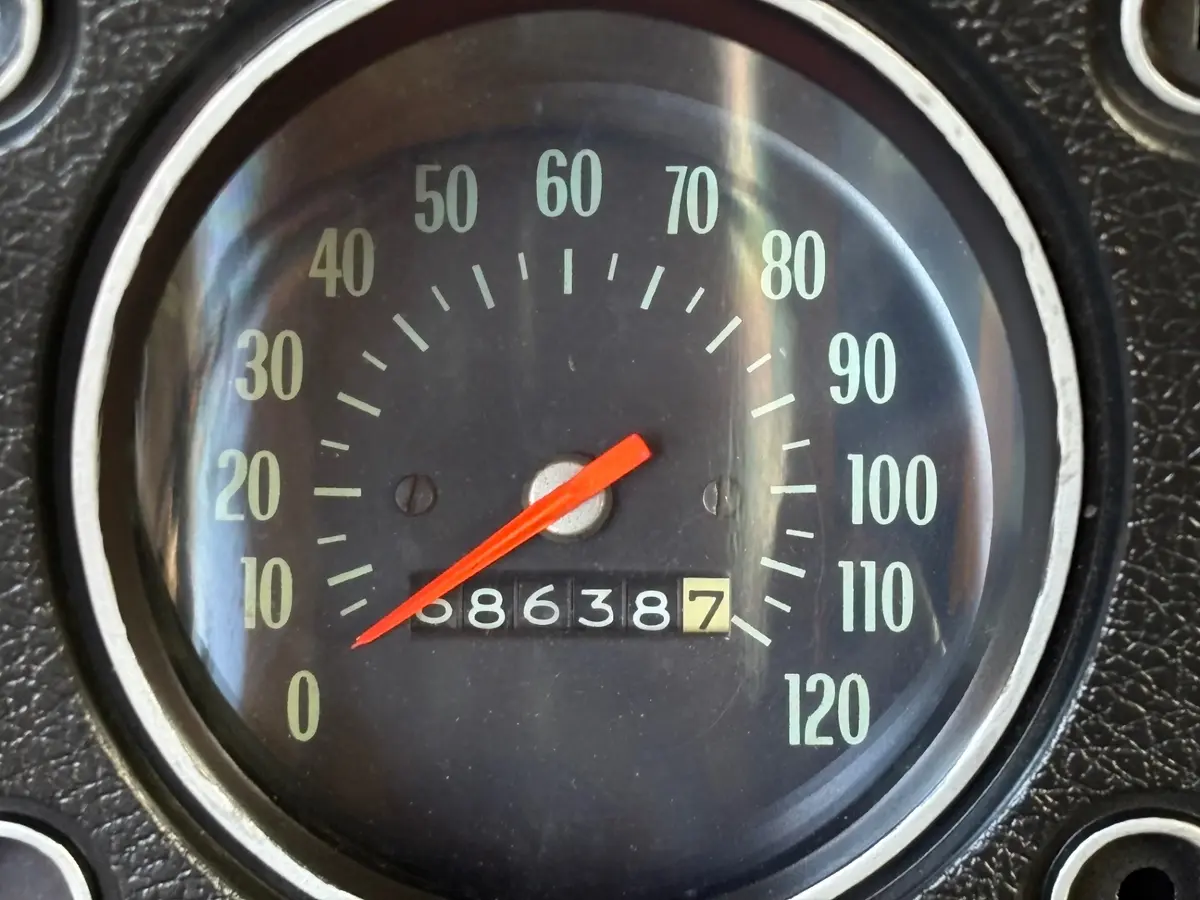
Embroidered Chevelle script floor mats add a finished look to the cabin without altering the character of the interior. Rear deck speakers have been installed, integrating audio into the back of the cabin in a location that does not disturb the original door panels or dashboard. The factory dashboard retains its original gauge layout, and the supplemental under-dash gauge cluster is mounted low and unobtrusively — functional without being intrusive. Factory air conditioning controls are present and the system operates as intended, which in the Florida climate is not a detail to overlook.
Exterior
Hugger Orange was one of the high-visibility colors Chevrolet offered across its performance lineup in 1970, shared with the Camaro and used to significant marketing effect. On the long hood and wide body of the 1970 Chevelle SS, the color reads with considerable presence. The white racing stripes run the length of the hood and deck, a combination that was period-correct and remains visually cohesive on this car. The paint presents well in the photos and in person, with consistent coverage and no visible body filler concerns based on the available documentation.
The original SS 396 front fender badges are present and in good condition — these are the correct call-outs for a 1970 SS equipped with the big-block. The SS front grille badging and the black rear valance panel with SS lettering are intact as well, giving the car its correct factory identity from front to rear. The chrome rear bumper shows well, and the SS tail panel treatment is correct for the year.
The wheels are chrome Riddler 20-inch units, a popular aftermarket choice that updates the stance of the car while maintaining a clean, period-appropriate aesthetic. The 20-inch diameter is a departure from factory sizing, which buyers should note — but the fitment is clean and the tires appear properly sized for the wheel well. The undercarriage photos taken on the lift show a coated floor and frame that confirms the rust-free claim made in the listing. The frame rails, floor pans, and torque boxes all show solid, uncompromised structure.
Conclusion
The 1970 Chevrolet Chevelle SS 396 has been one of the most consistently sought-after muscle cars for decades, and for good reason. The 1970 model year represents the last full expression of the second-generation Chevelle before compression ratios dropped, horsepower ratings fell, and emissions equipment changed the character of GM's performance lineup. This specific car — with its date-correct JK-coded engine, factory air conditioning, 12-bolt rear end, power front discs, and rust-free body — represents a well-documented example that has been driven, maintained, and thoughtfully upgraded rather than neglected or heavily modified. The mechanical additions are practical and reversible where relevant. The interior is intact and presentable. The exterior combination of Hugger Orange and white stripes is correct for the era and visually complete.
For a buyer who wants a 1970 Chevelle SS 396 that can be driven regularly without apology and shown with confidence, this car covers the most important boxes. It is not a trailer queen, and it does not pretend to be. It is a real car with a correct engine, solid bones, and 54 years of American muscle car heritage behind it.
To schedule a time to see this 1970 Chevrolet Chevelle SS 396 in person, call Skyway Classics in Sarasota, Florida at 941-254-6608. Our team is happy to answer detailed questions, walk you through the car on the lift, and assist with transport arrangements if you are purchasing from out of state.
Disclaimer
Information found on the website is presented as given to us by the owner of the car, whether on consignment or from the owner we bought it from. Some Photos, materials for videos, descriptions and other information are provided by the consignor/seller and is deemed reliable, but Skyway Classics does not warranty or guarantee this information. Skyway Classics is not responsible for information that may incorrect or a publishing error. The decision to purchase should be based solely on the buyers personal inspection of the vehicle or by a professional inspection service prior to offer or purchase being made.
1970 Chevrolet
Chevelle SS
Why Choose Skyway Classics?
Explore our curated inventory of classic and collector cars—thoughtfully selected, ready to drive, and supported by experts who make ownership simple.
Expert Curation
Every vehicle is hand-selected by our experts for quality, authenticity, and investment potential.
Fast Transactions
Streamlined buying and selling process with quick financing and immediate delivery options.
Only National Dealer With Classic Service & Repair
We’re the only national dealership that services and repairs the classics we sell—before and after the sale.
Nationwide Network
Access to our extensive network of collectors, restorers, and classic car enthusiasts nationwide.
Concierge Ownership Support
From financing and insurance to paperwork, shipping, and titling—we handle the details so you can enjoy the drive.
Passion-Driven Service
We're classic car enthusiasts first, providing personalized service with genuine passion for the hobby.