
1968 Chevrolet
Caprice Base
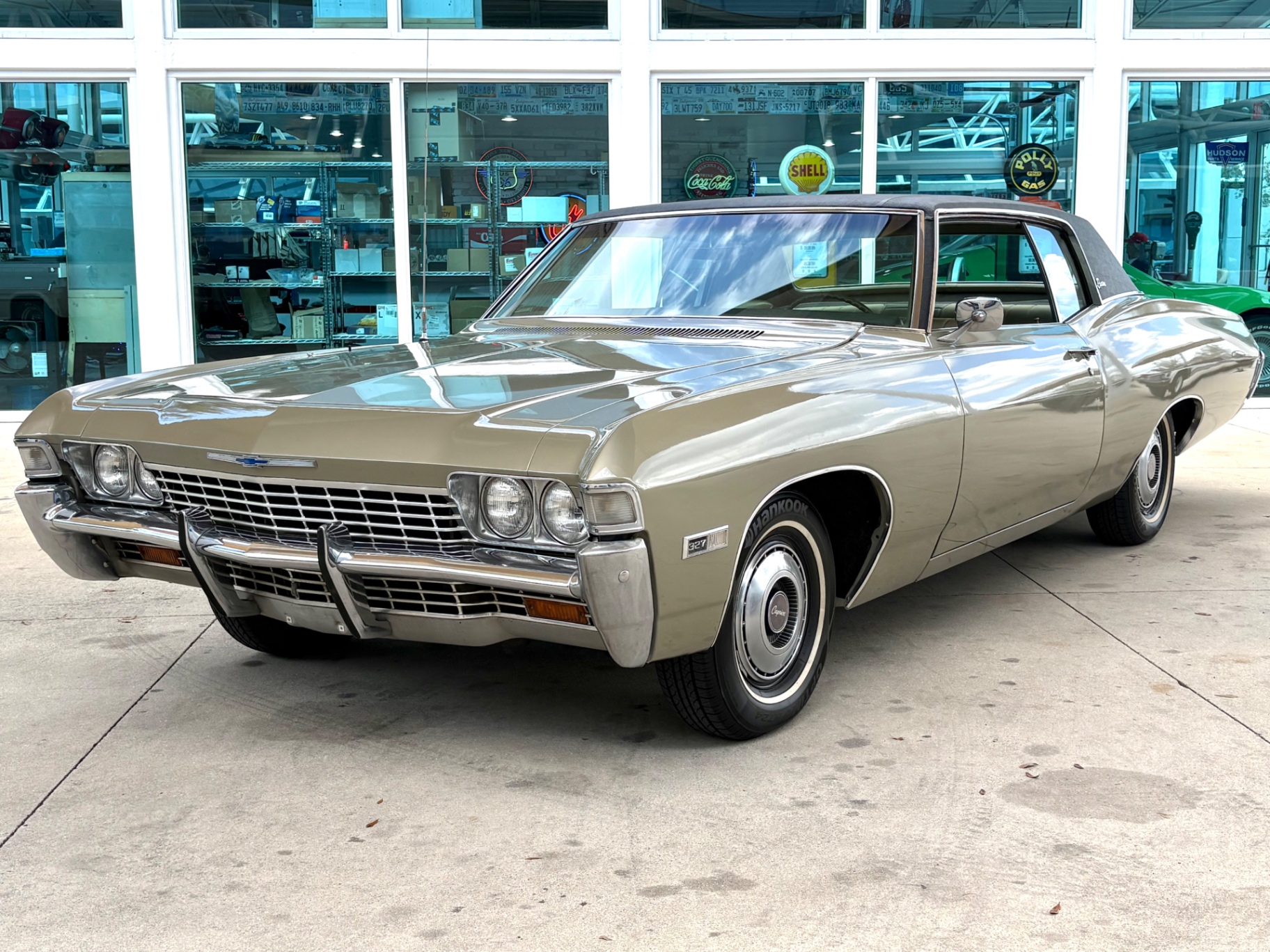
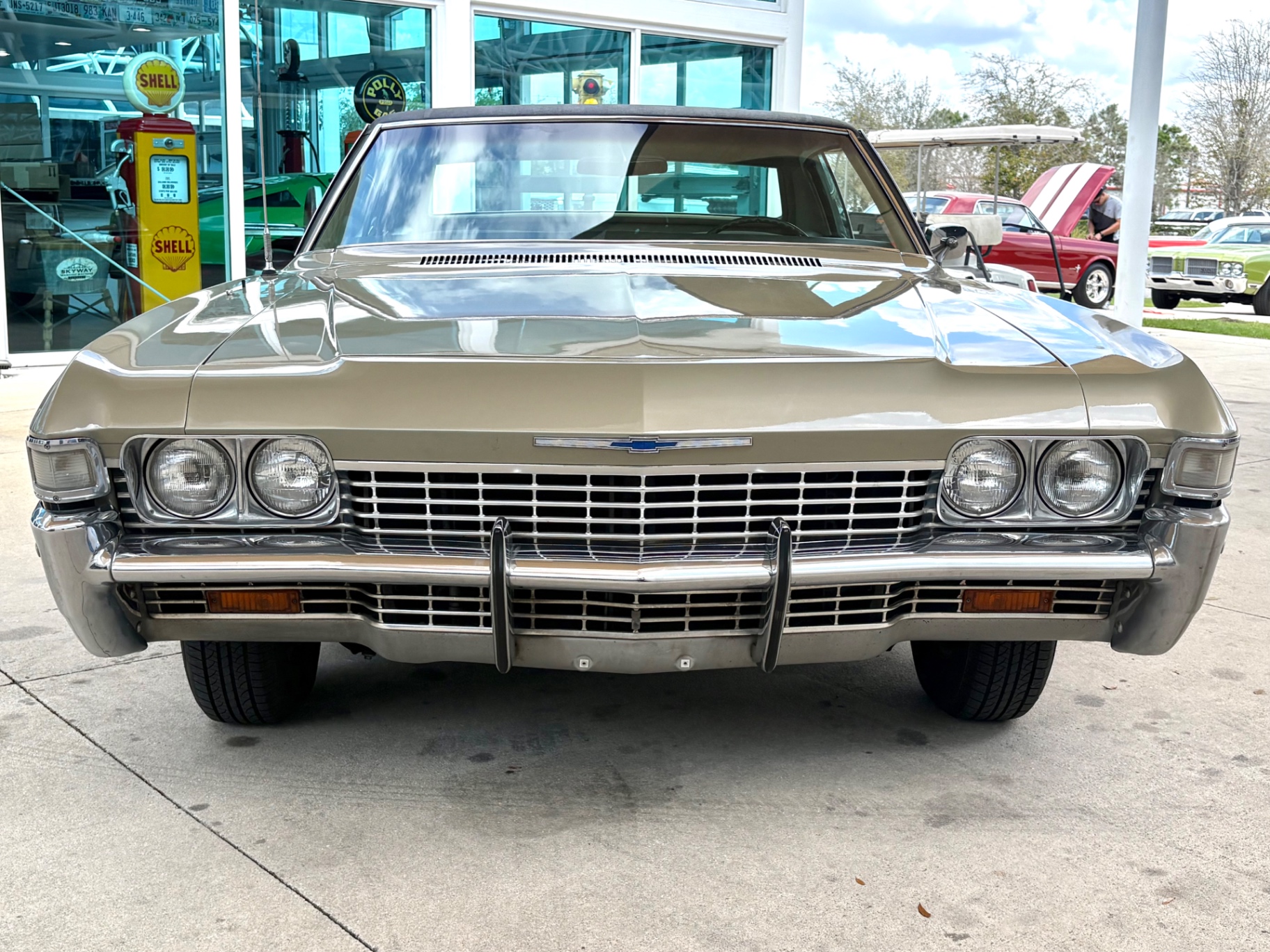
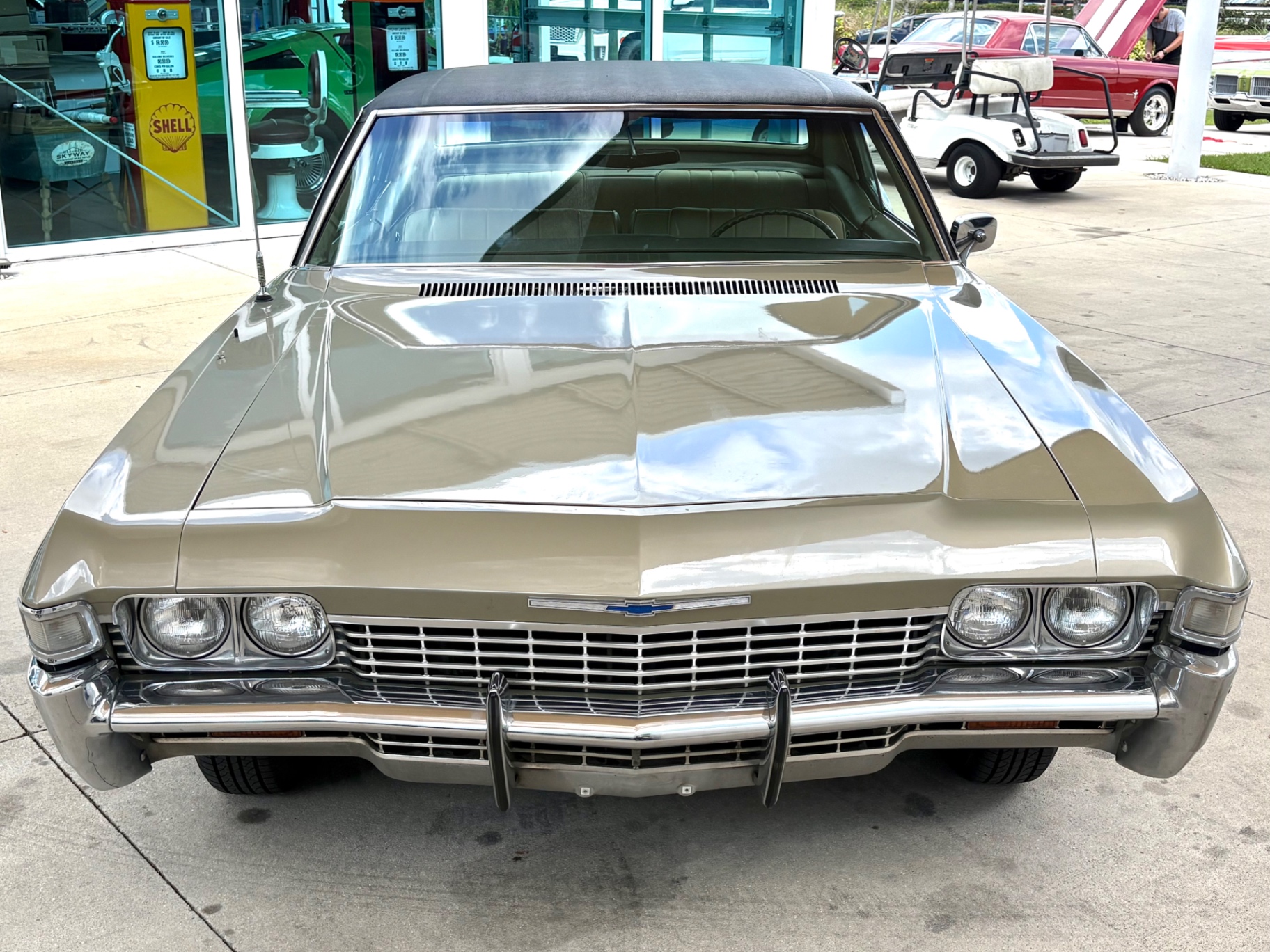
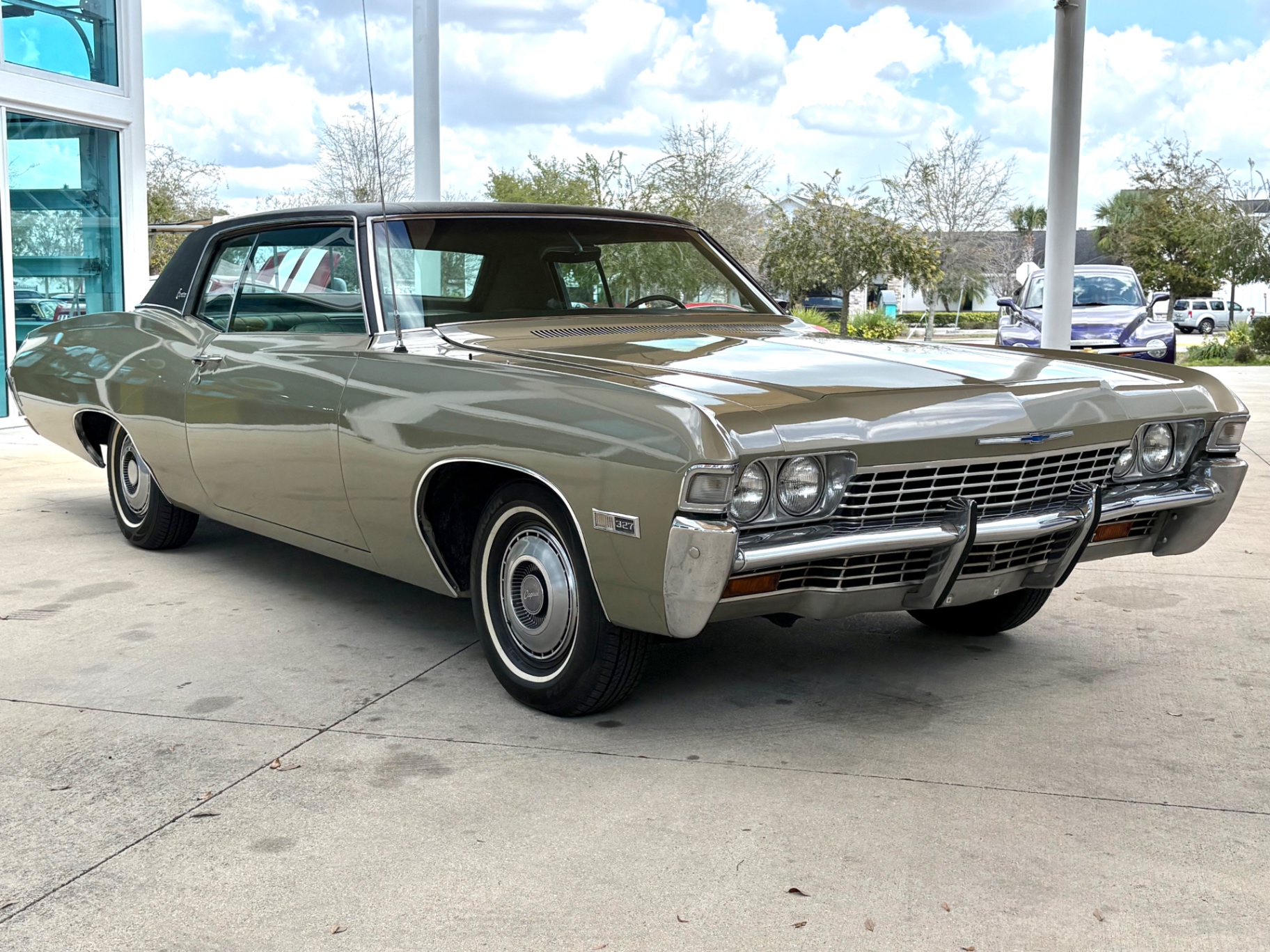
1968 Chevrolet Caprice - Numbers Matching, HH Code
Why This Car Is Special
The 1968 Chevrolet Caprice sits at an interesting crossroads in GM history. It was the first year the Caprice became its own fully independent model line rather than a trim package under the Impala umbrella, and Chevrolet made sure buyers noticed the difference. The 1968 Caprice wore unique front and rear styling compared to the Impala, including a more formal roofline on hardtop models, a distinctive hidden-wiper system, and interior appointments that pushed closer to Buick and Oldsmobile territory than anything Chevrolet had offered before in a full-size car. Chevrolet was deliberately targeting the Lincoln Continental and Cadillac DeVille buyer who thought a Chevy badge was beneath them. A lot of those buyers changed their minds in 1968.
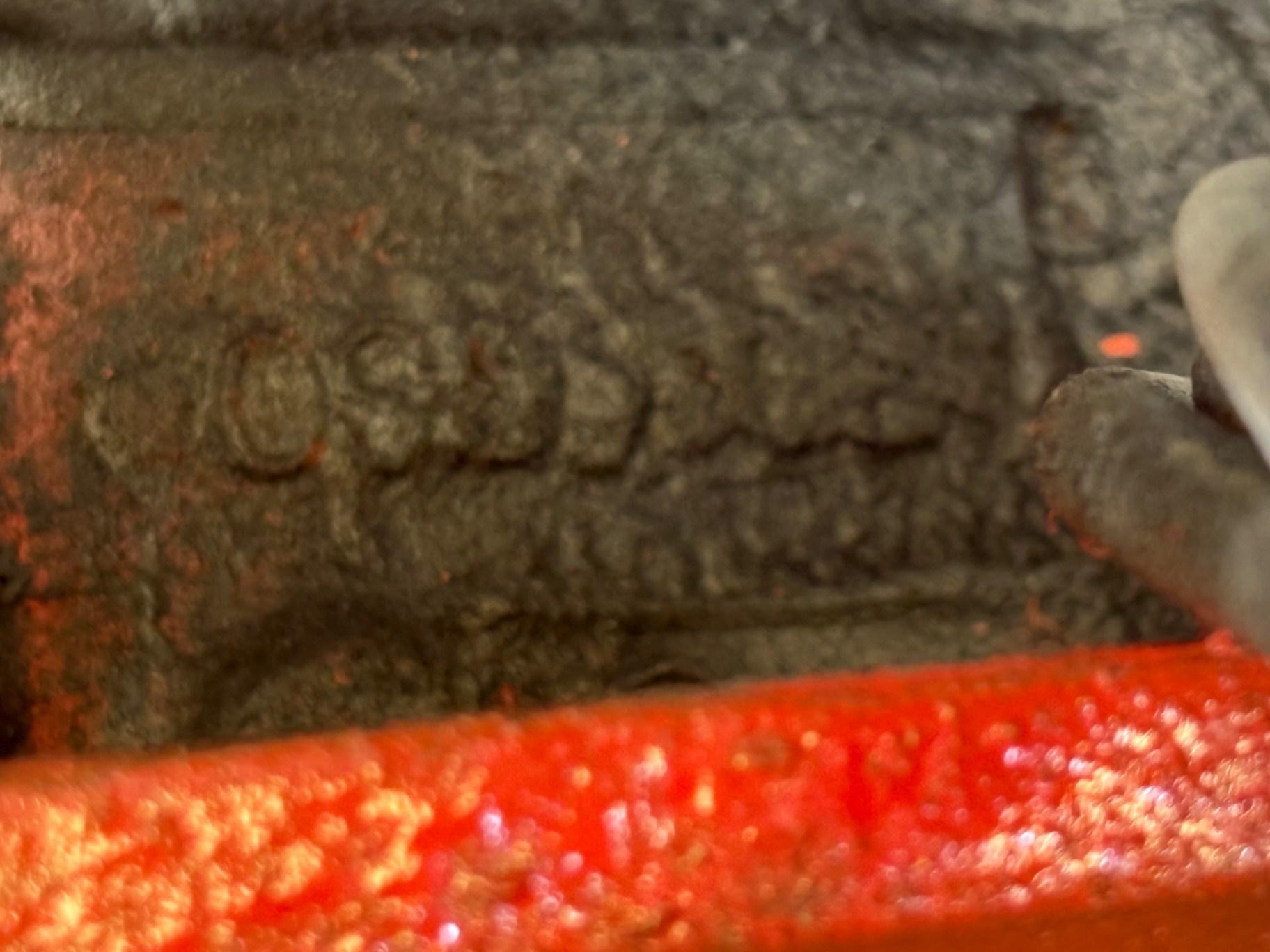
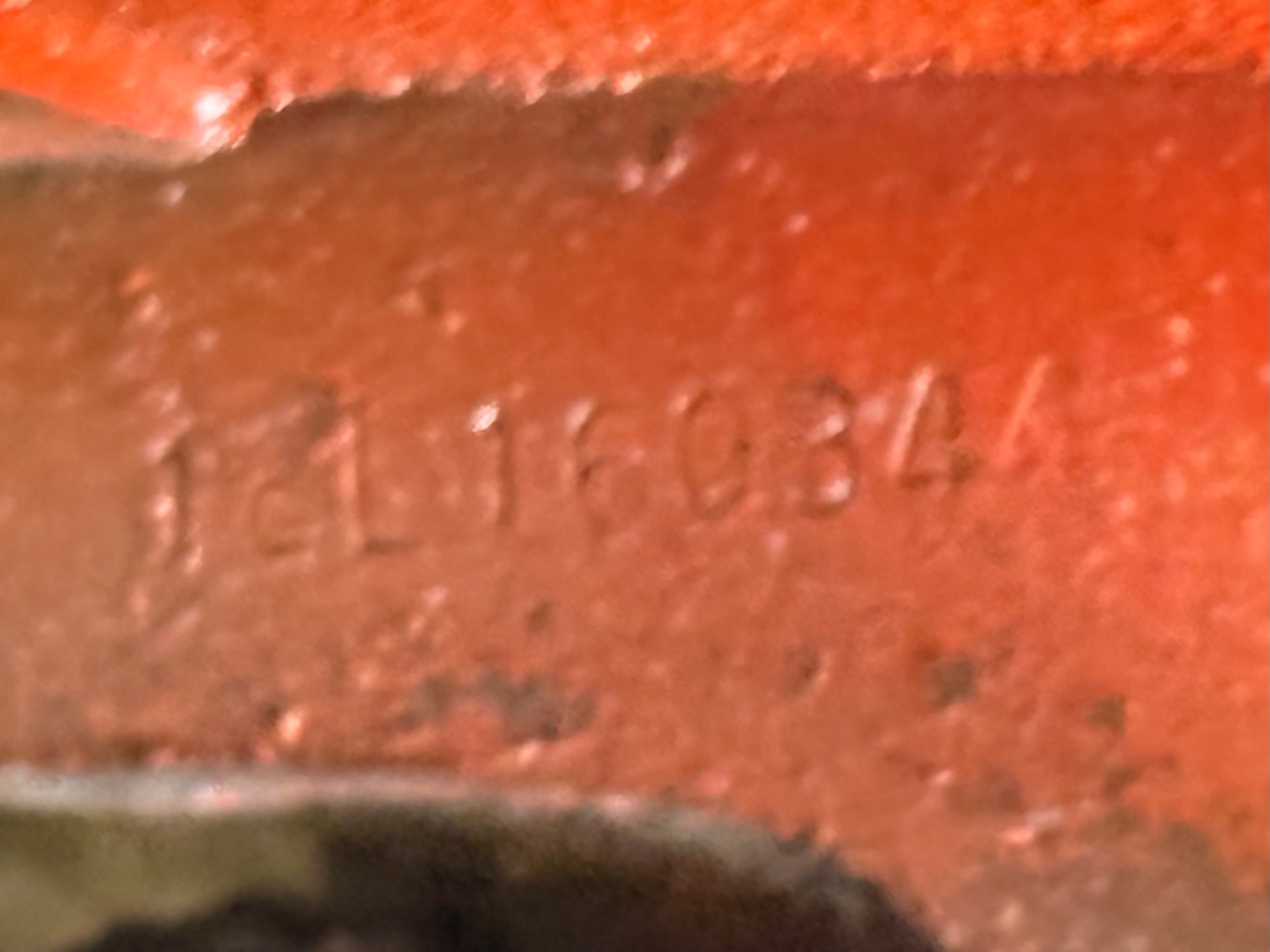
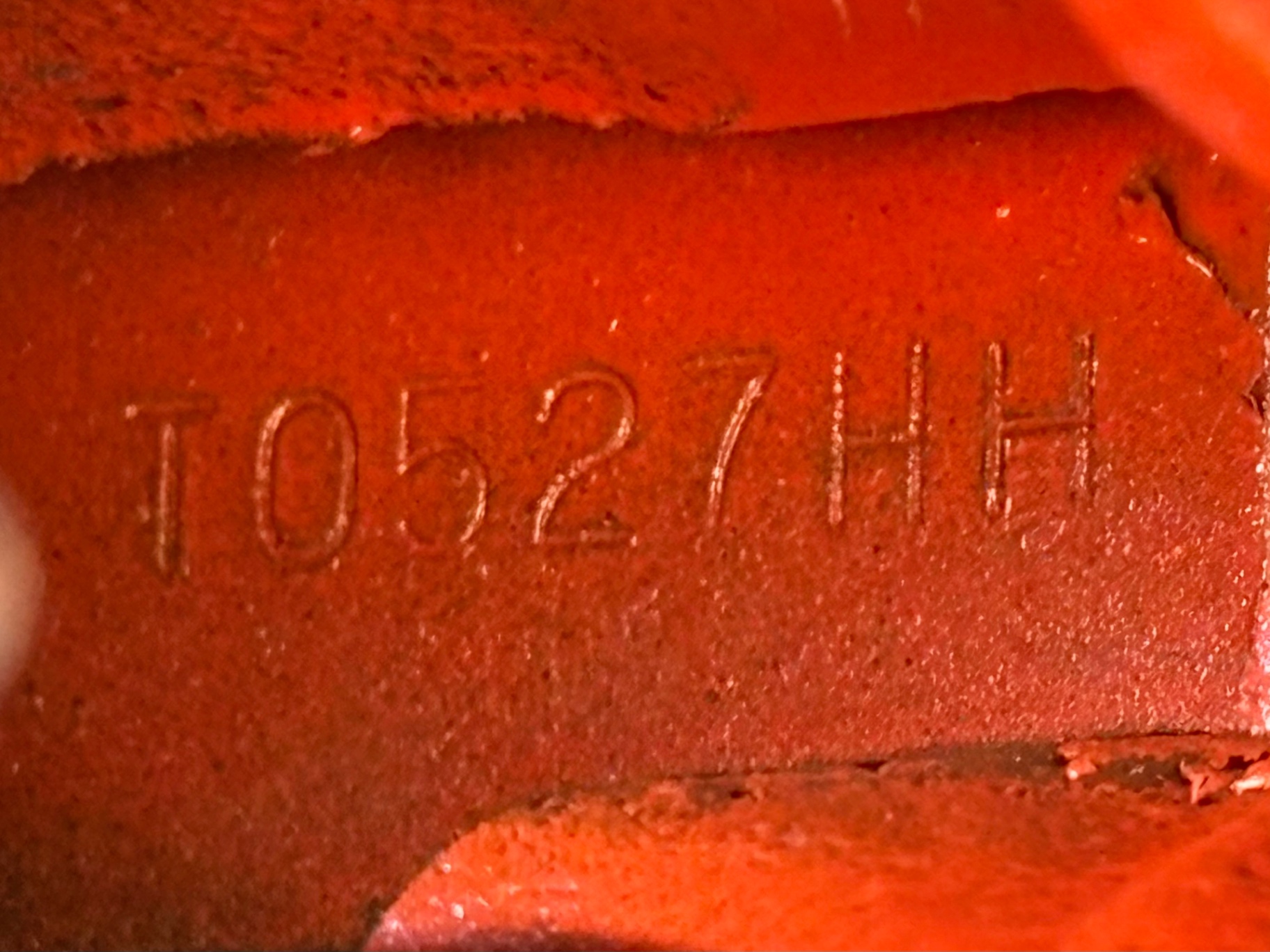
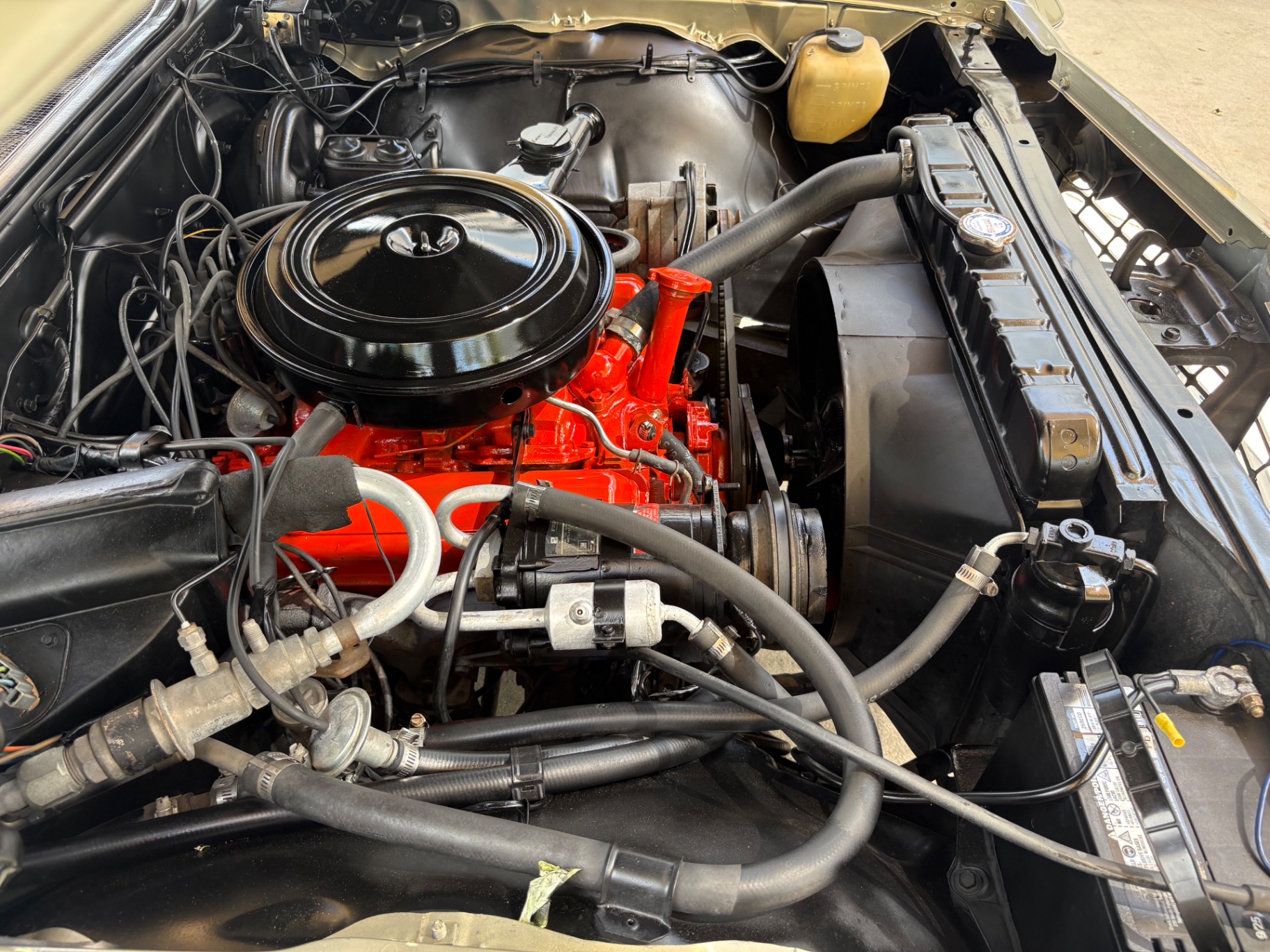
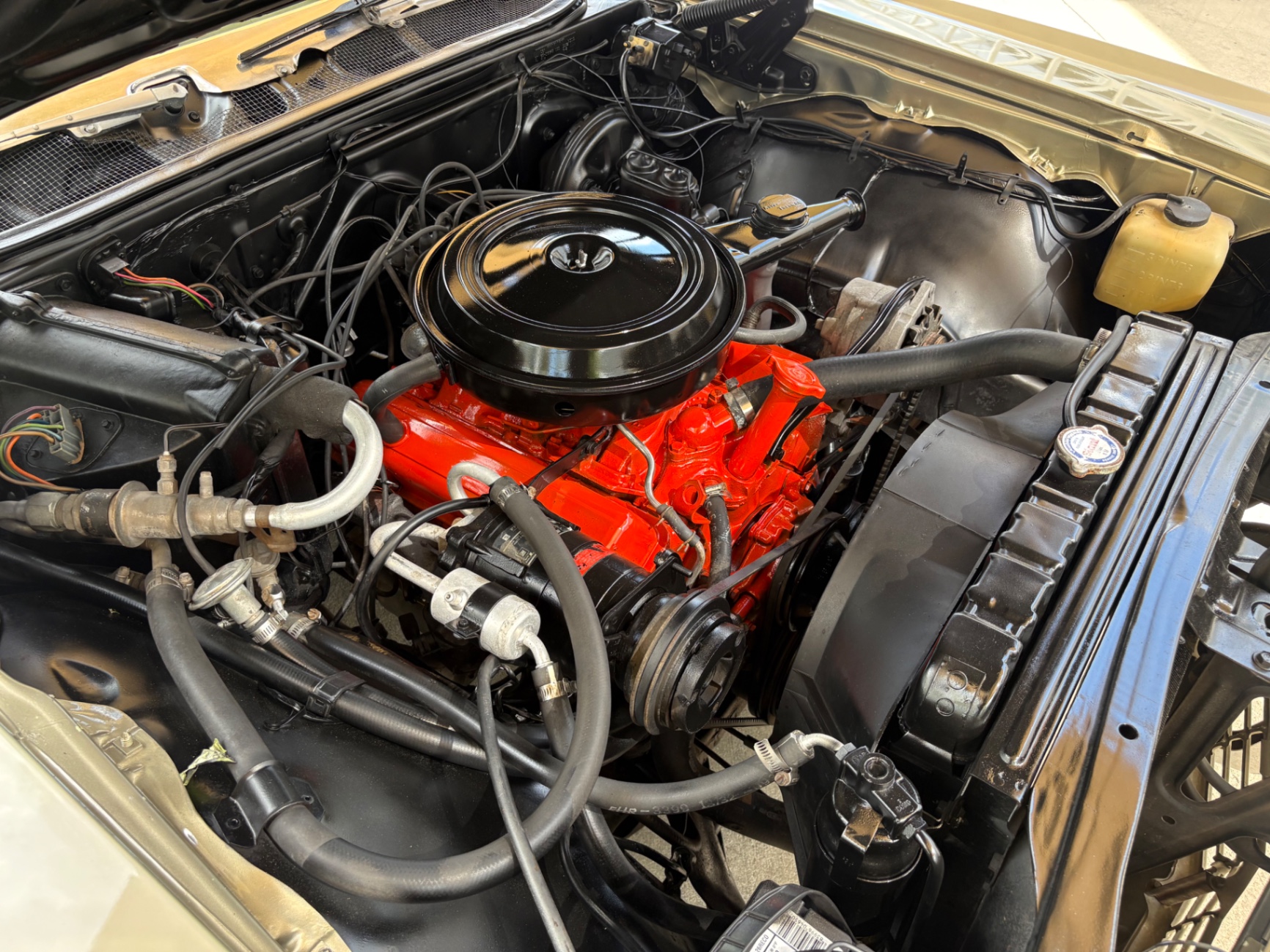
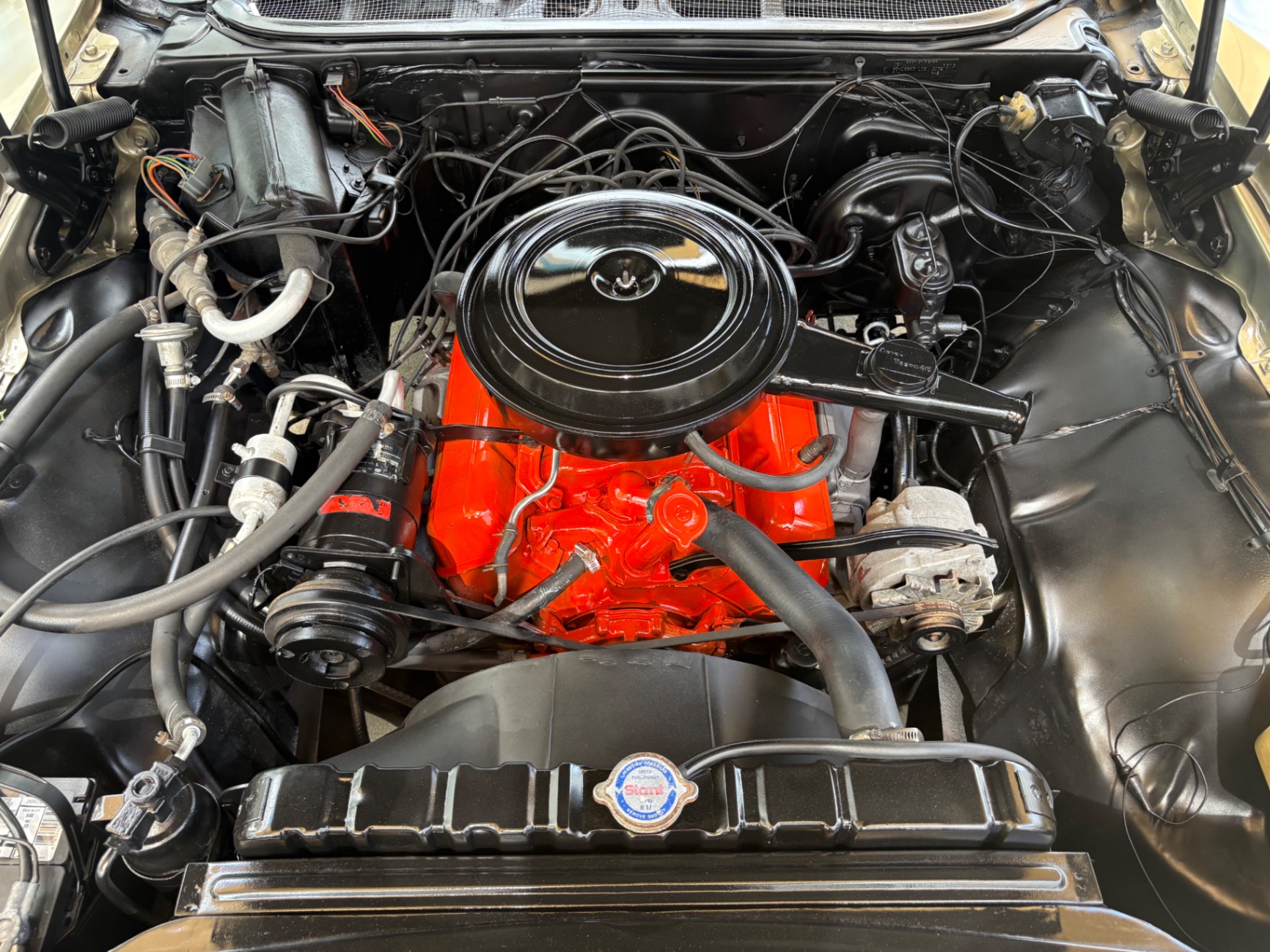
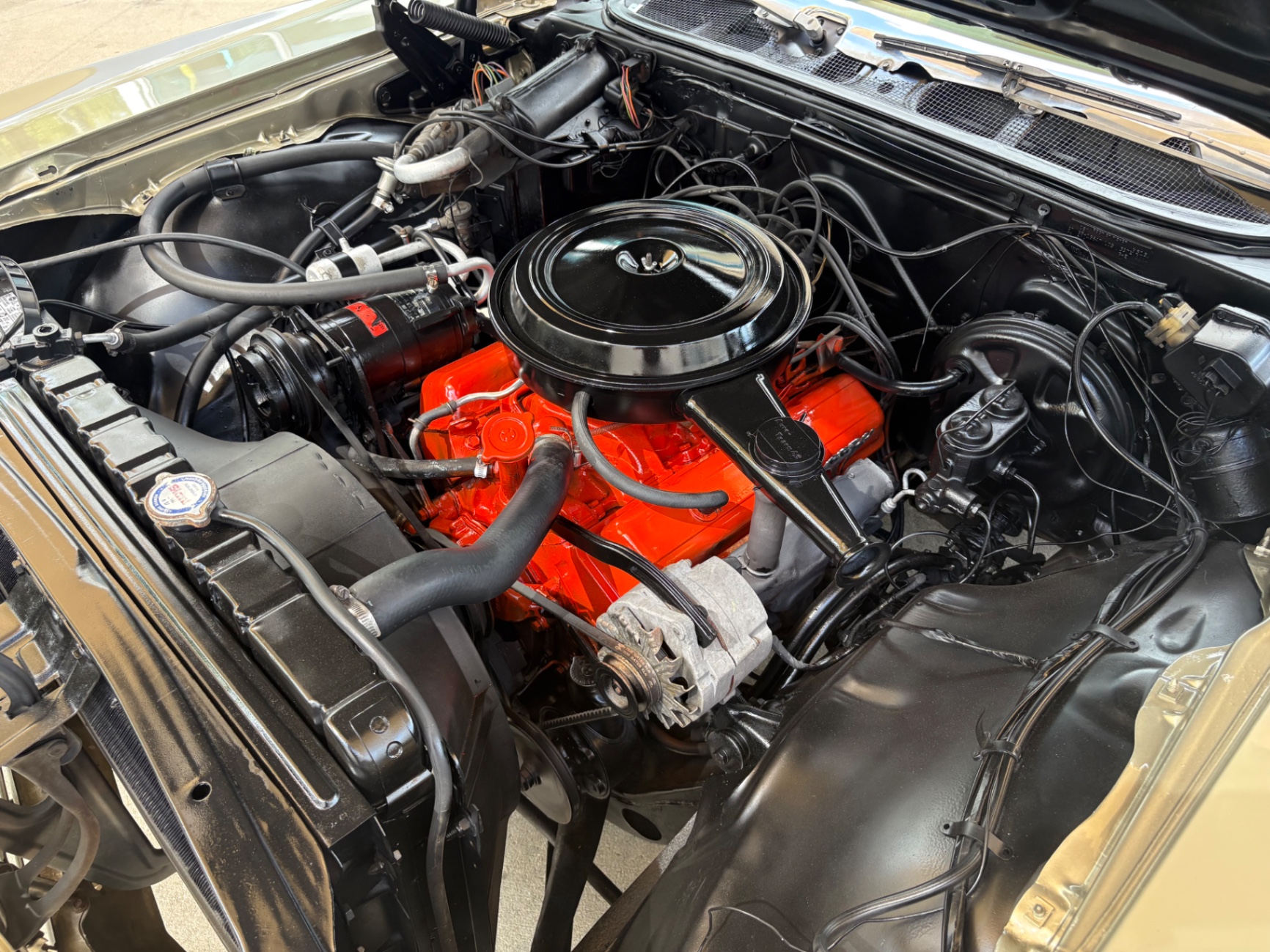
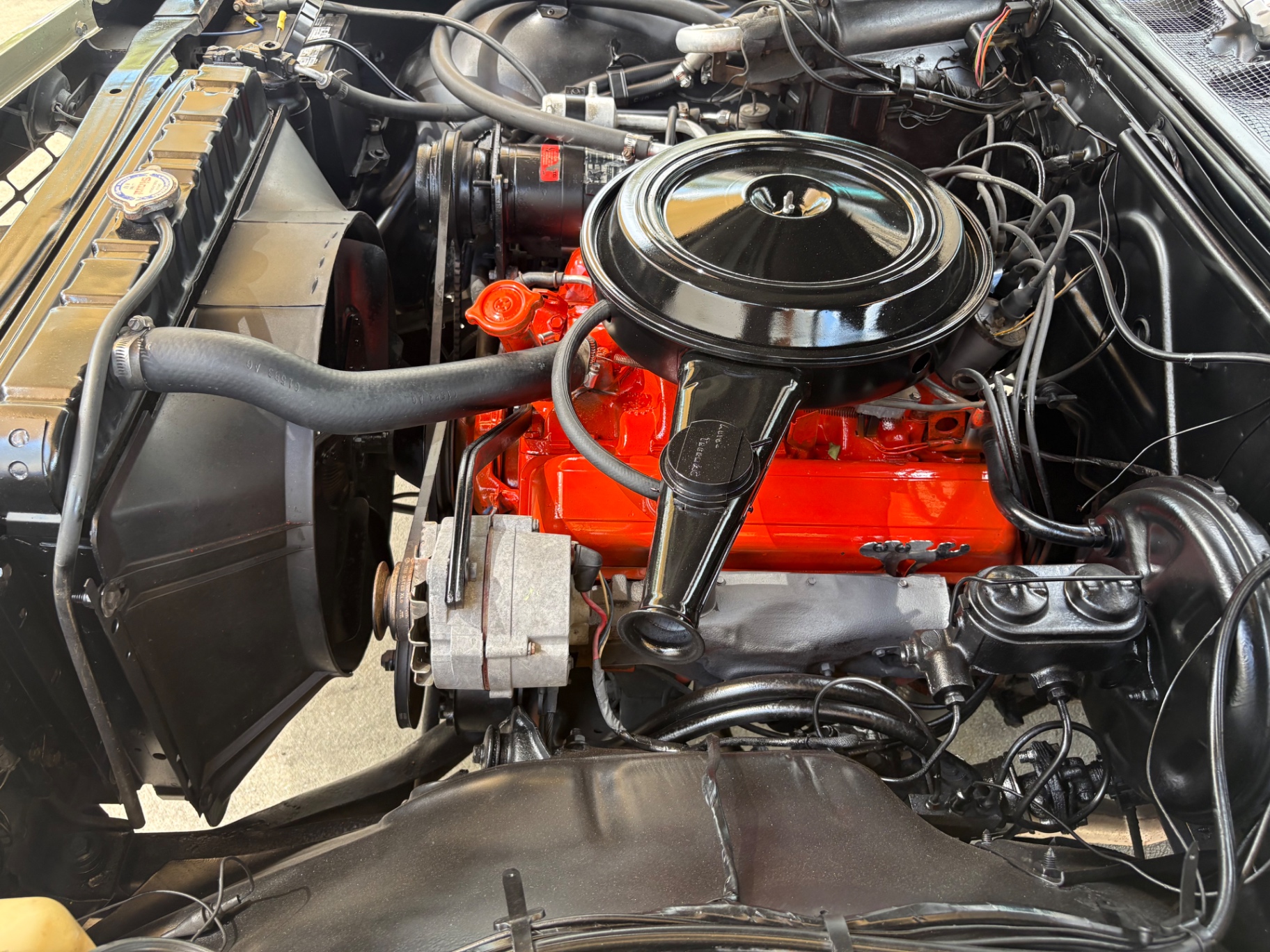
This particular 1968 Chevrolet Caprice carries the HH engine code, which identifies the 327 cubic inch V8 as the two-barrel carbureted version rated at 250 horsepower. The 327 was a well-sorted engine by 1968 — it had been in production since 1962 and Chevrolet had decades of refinement behind it by this point. It is not the high-winding, high-compression version that went into Corvettes, but for a full-size luxury car it was a practical and proven choice that delivered smooth, reliable power without the maintenance demands of a performance-spec engine. The fact that this engine is numbers matching — meaning the stamped engine code corresponds to this car's original build — is a meaningful detail for collectors. Finding a 56-year-old full-size Chevrolet with the original engine still in place is not as common as it once was.
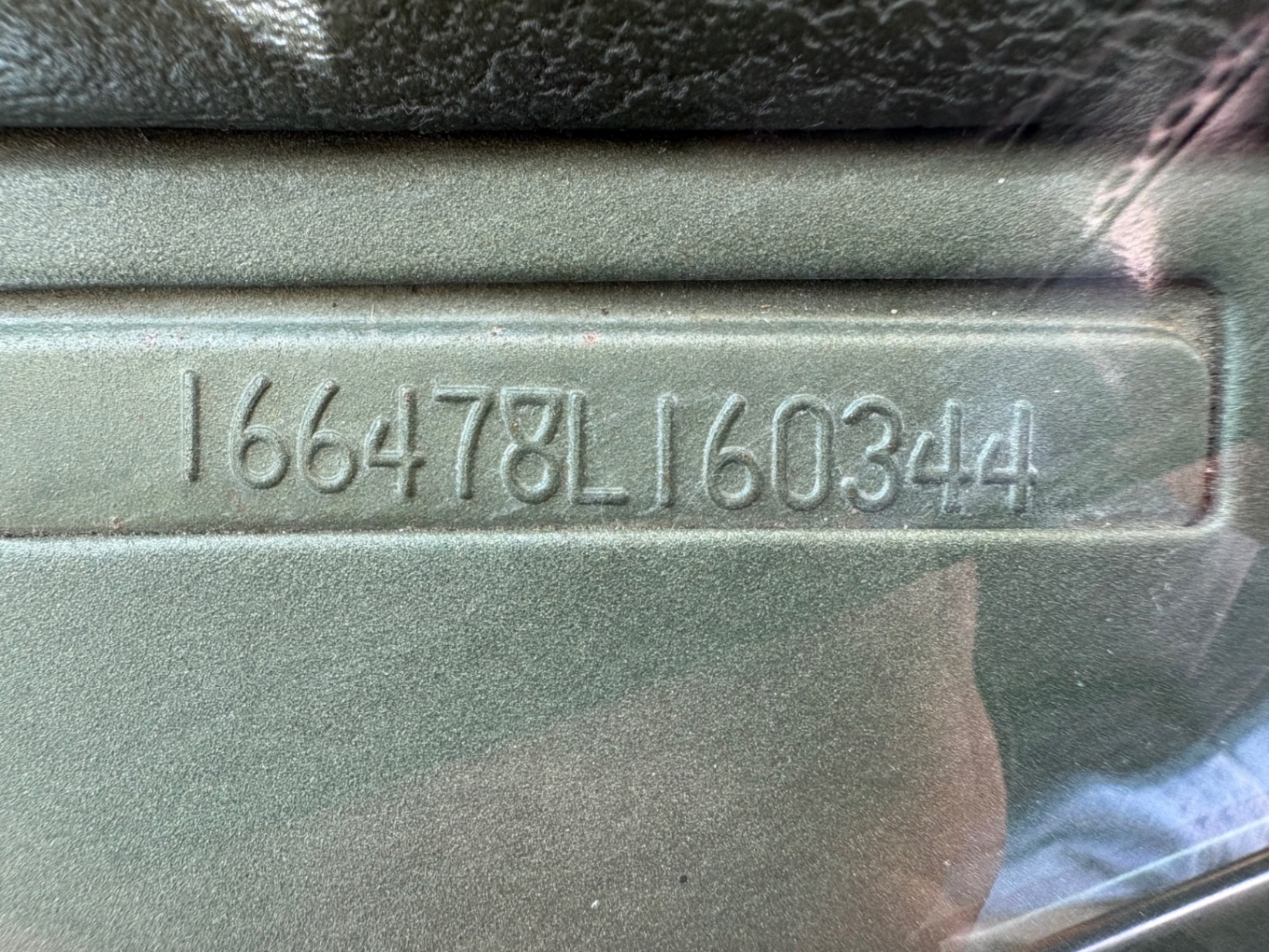
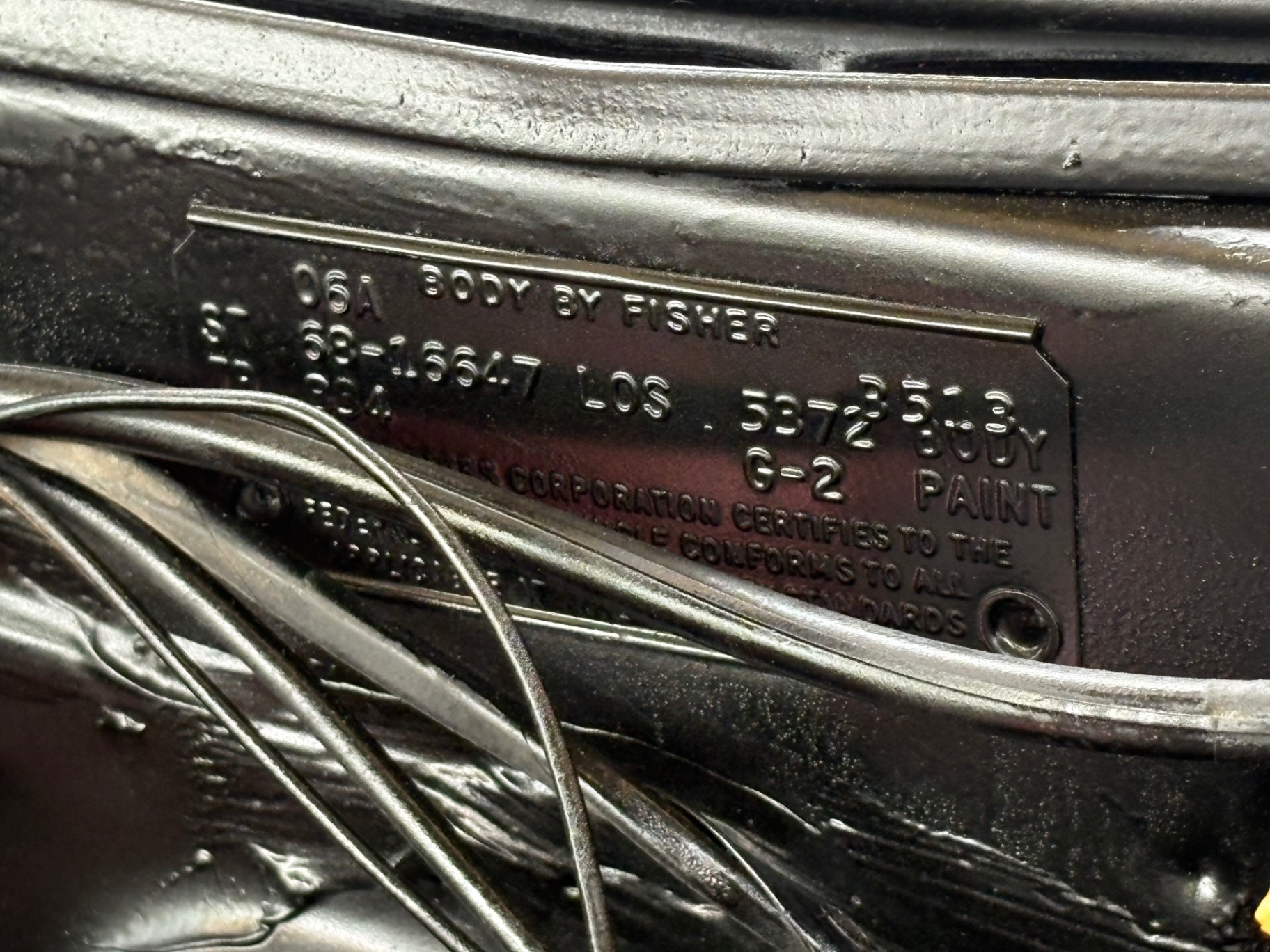
The VIN on this car encodes several details worth noting. The body style digit confirms this is a two-door hardtop Sport Sedan, which is the most desirable body configuration in the 1968 Caprice lineup. The assembly plant digit places production at the Flint, Michigan facility, one of the primary builders of full-size Chevrolets during this era.
Features List
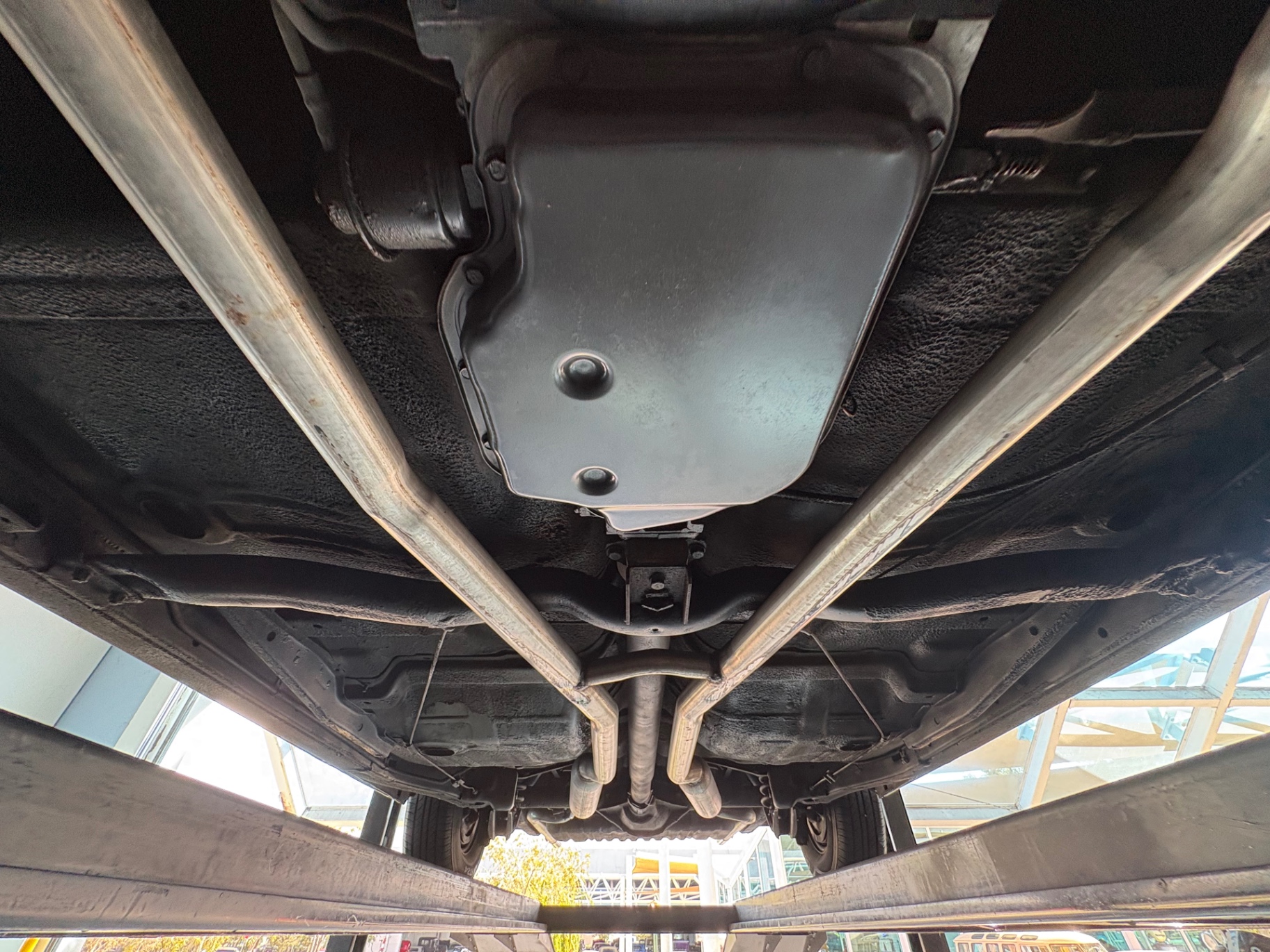
- Numbers Matching 327ci V8, HH Engine Code (250hp, 2-barrel) - Turbo-Hydramatic Automatic Transmission - Factory Air Conditioning - Dual Exhaust - Power Steering - Power Brakes - Tilt Steering Column - Factory Delco AM Radio - Black Vinyl Top - Ash Gold Exterior - Gold Vinyl Interior - Woodgrain Interior Trim - Fleur-de-lis Door Panel Emblems - Full-Width Front Bench Seat - Chrome Front and Rear Bumpers - Whitewall Tires - Caprice Hubcap Wheel Covers - 327 Fender Badge - Clean Undercarriage
Mechanical
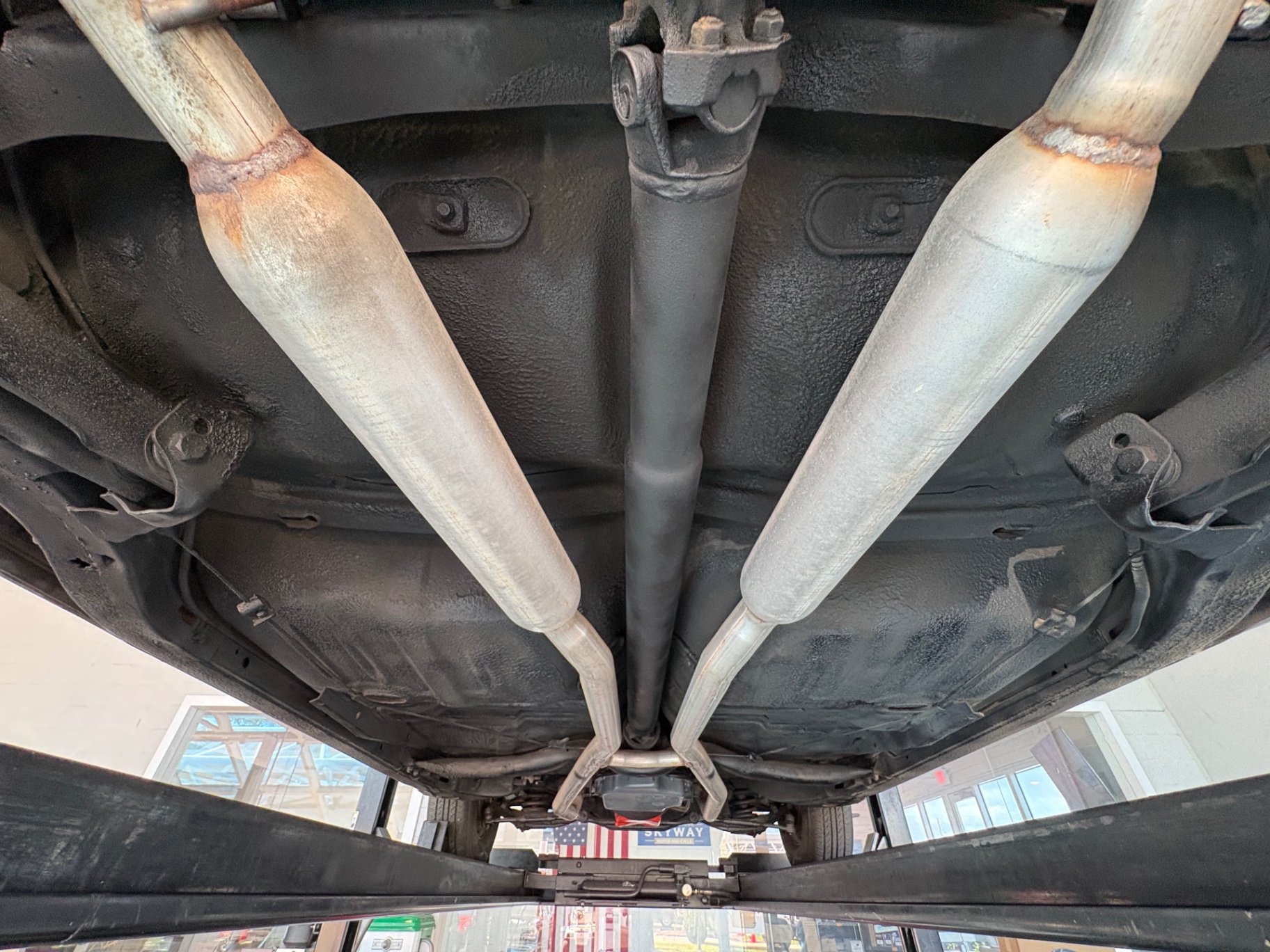
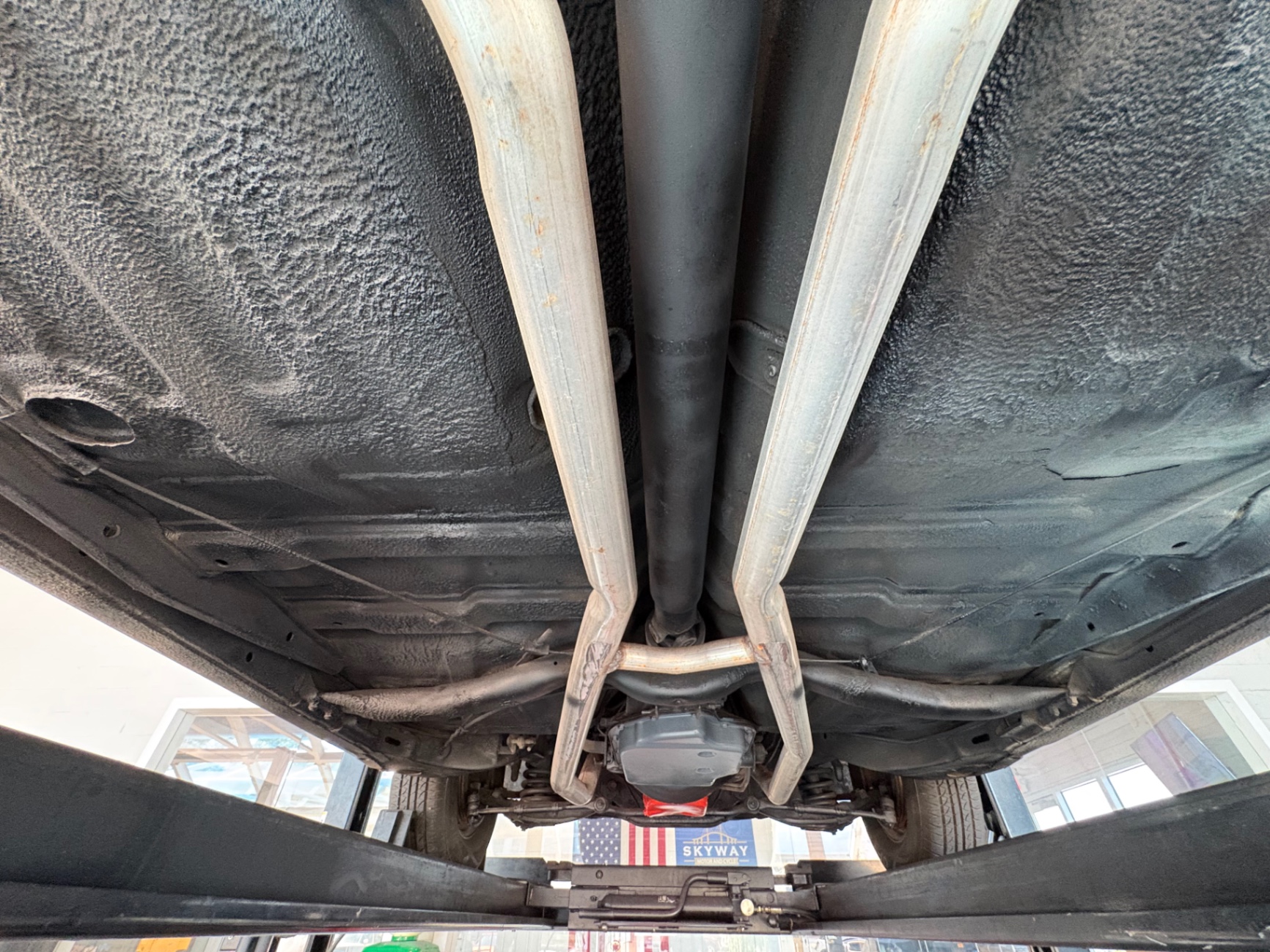
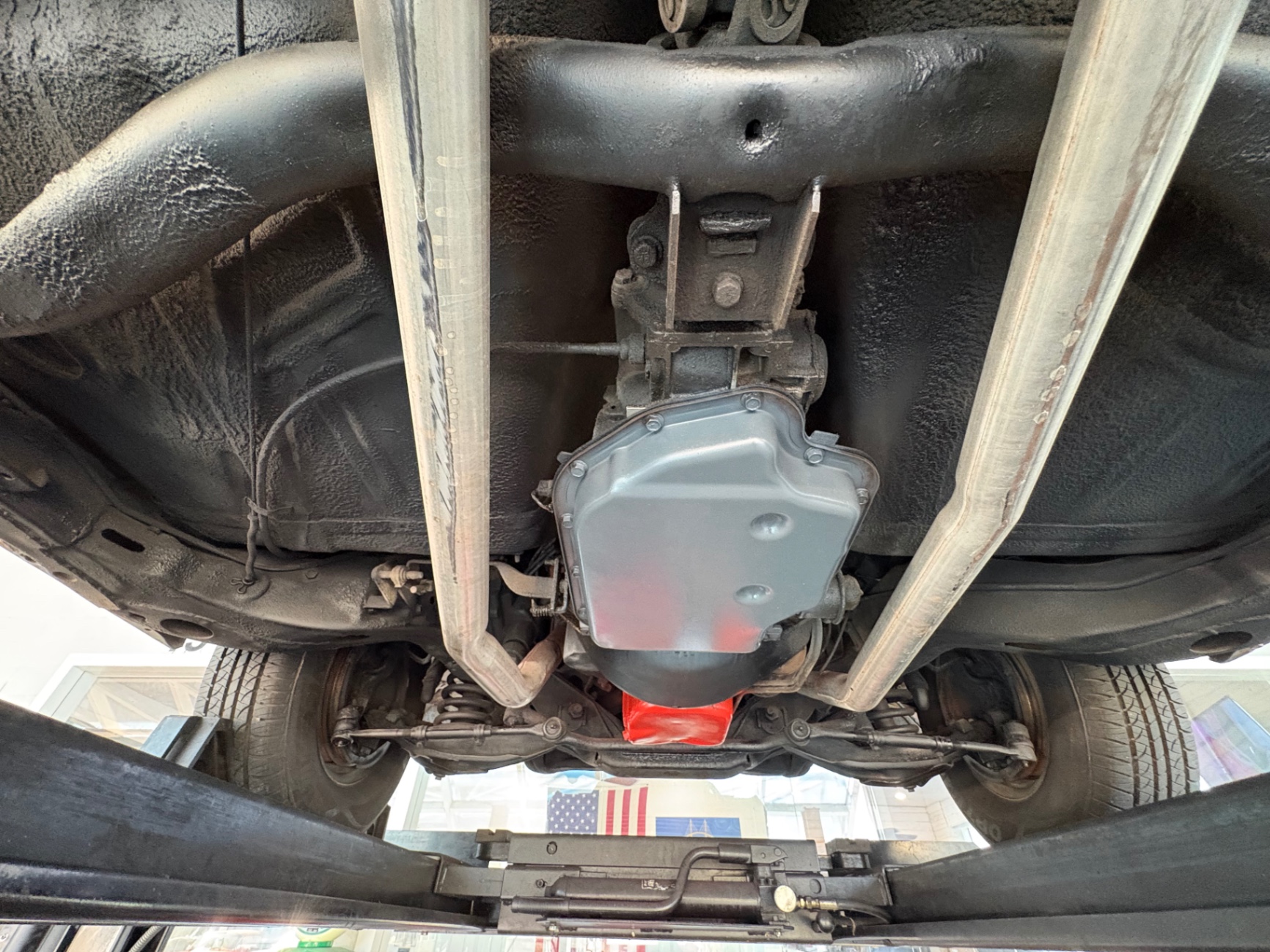
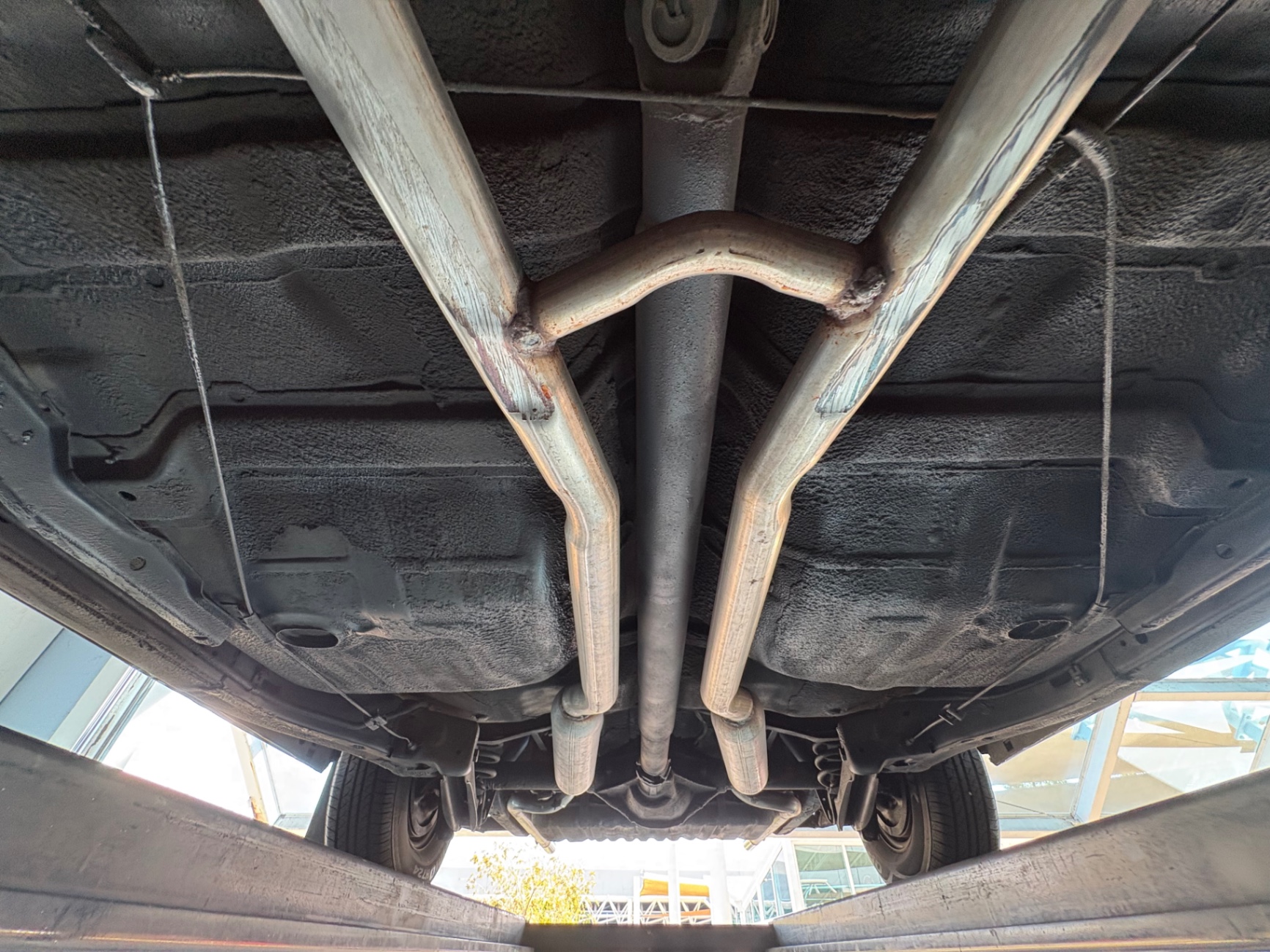
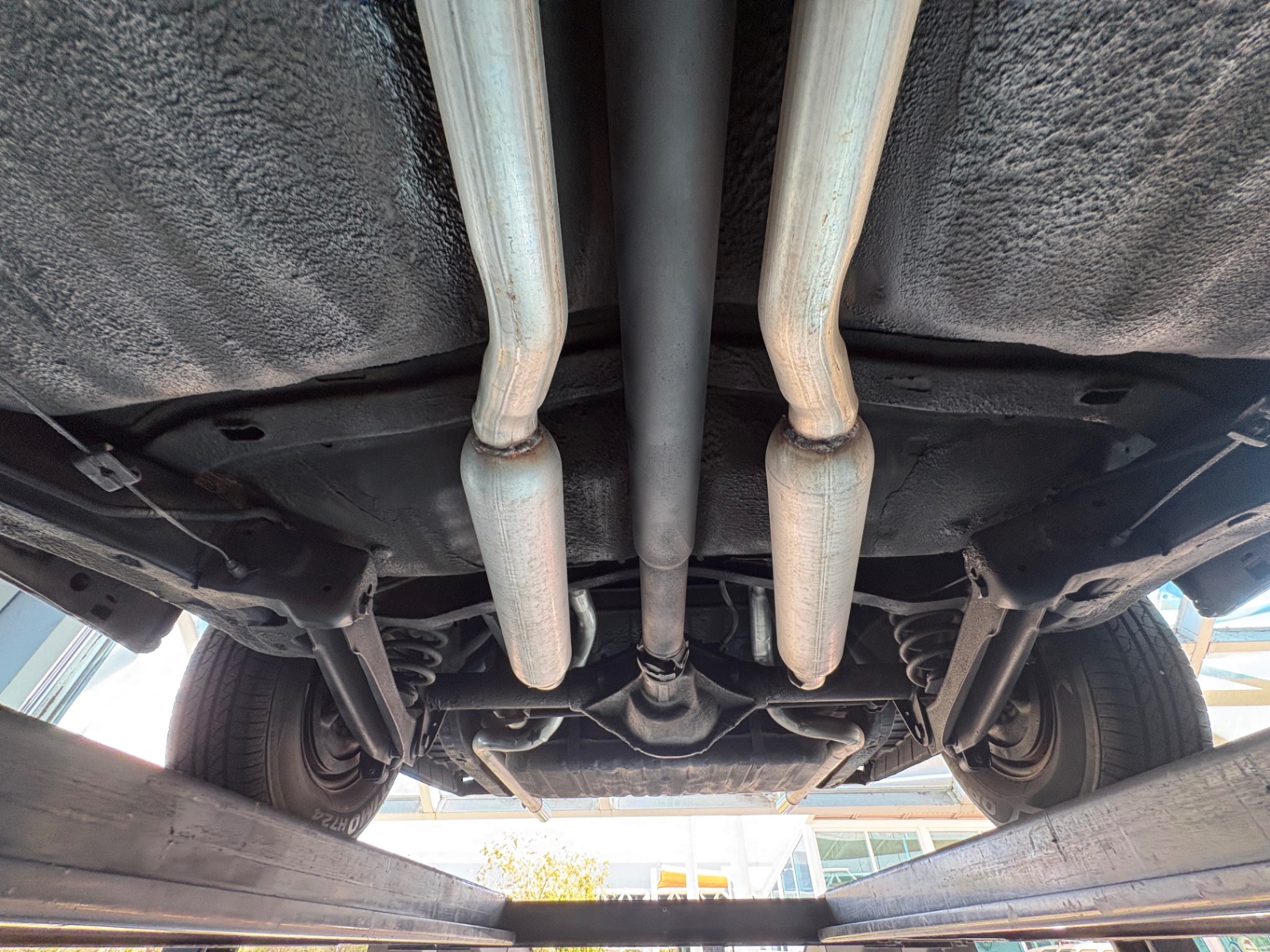
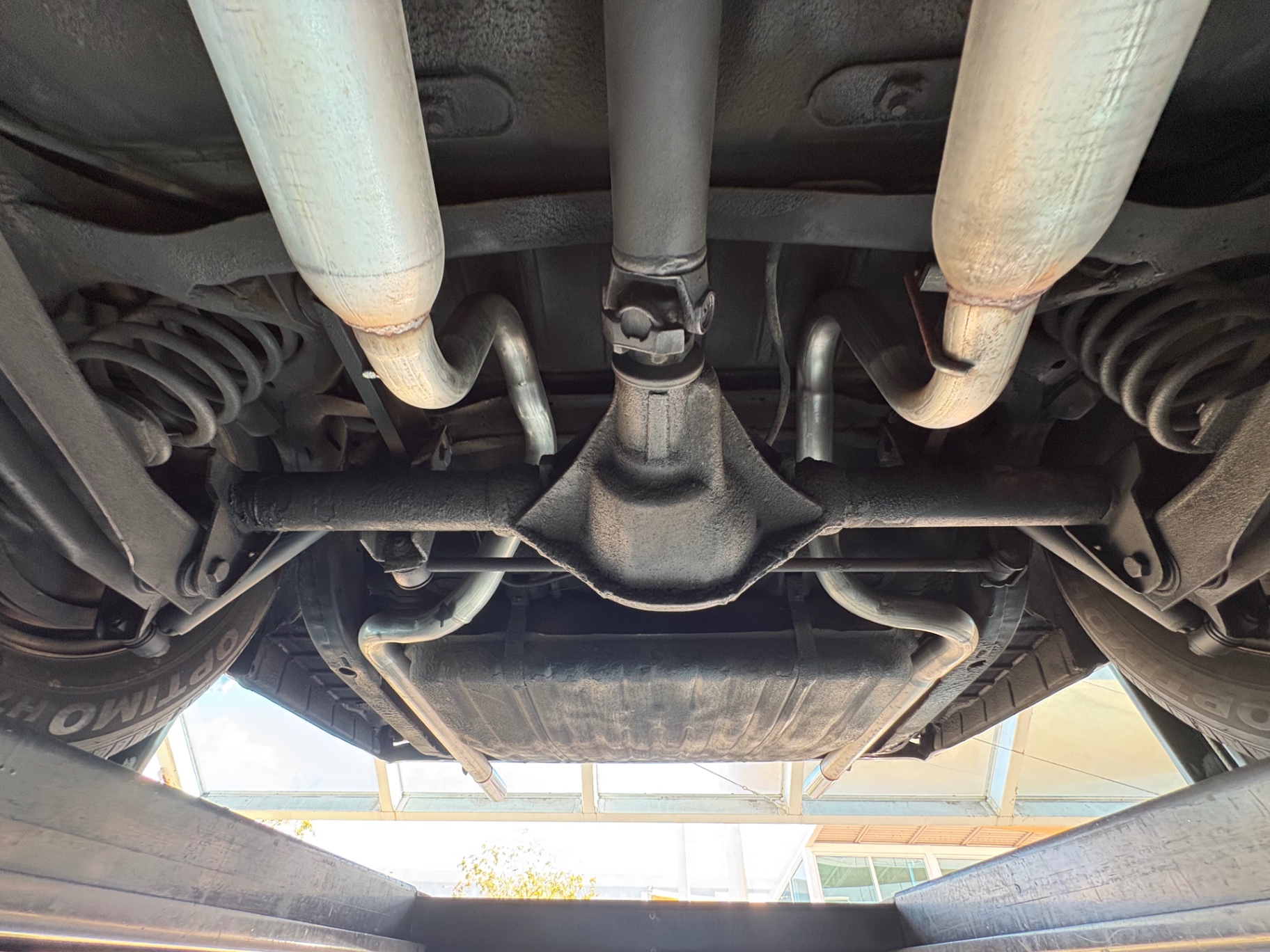
The 327 cubic inch small-block under this hood is the numbers matching original unit, confirmed by the HH stamp. Backed by the Turbo-Hydramatic automatic transmission, this drivetrain combination was the smooth-shifting, low-drama setup that made full-size Chevrolets popular with buyers who wanted reliable everyday transportation with enough power to merge onto a freeway without drama. The dual exhaust system gives the 327 a slightly more assertive note than a single exhaust setup, and it is a detail that collectors appreciate because it adds visual interest at the rear of the car without being a modification.
Factory power steering and power brakes were the right call on a car this size. A 1968 Caprice two-door hardtop carried substantial weight, and driving one without power assist would be an unpleasant experience. The factory air conditioning unit is present, which matters both for usability in the Florida climate and for authenticity. Factory AC cars were optioned that way from the beginning, meaning the firewall, brackets, and electrical routing were all done correctly at the factory rather than retrofitted later. The engine bay in the photos shows the small-block finished in Chevrolet's correct engine red, which is consistent with how these cars left the factory.
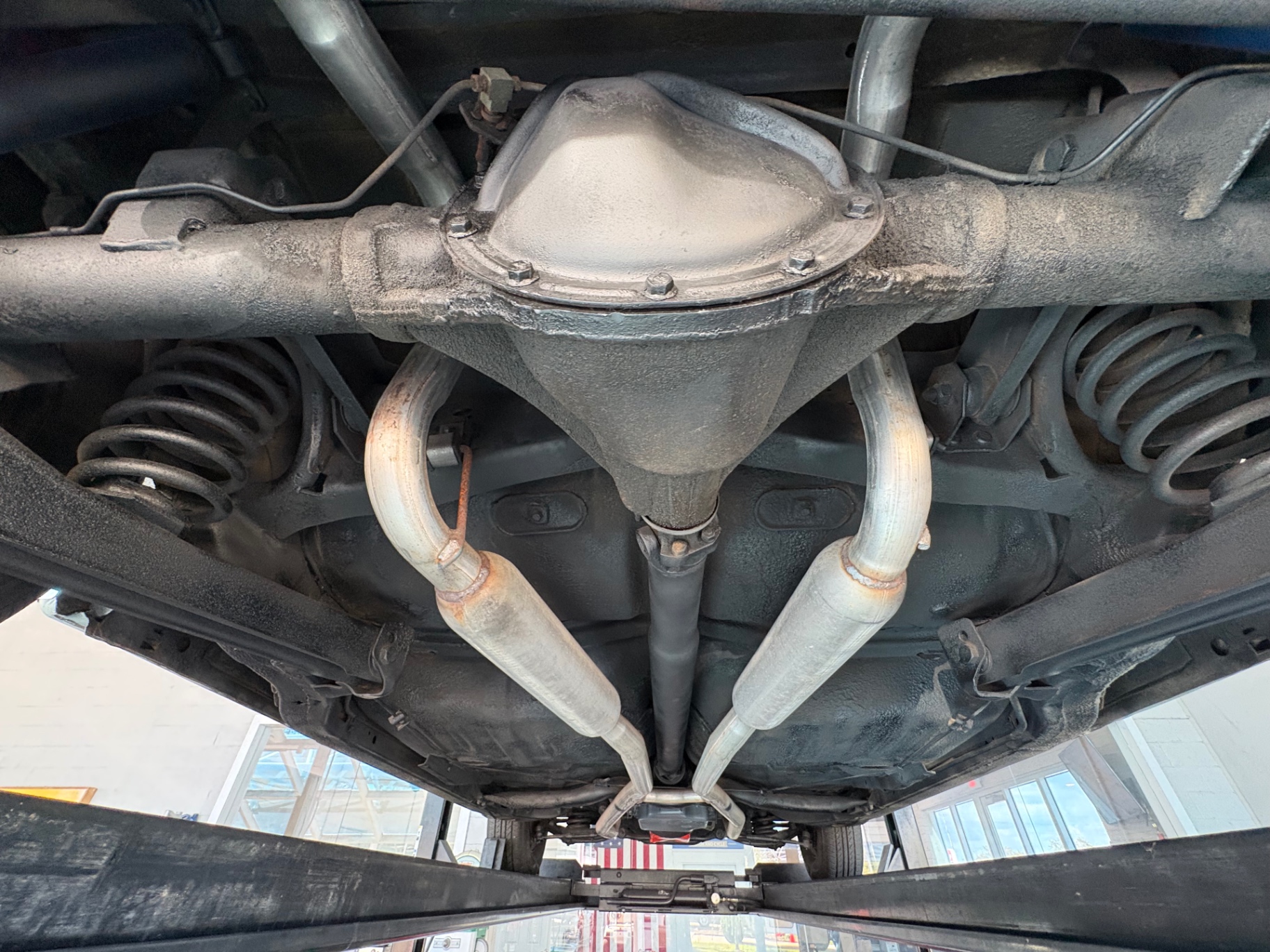
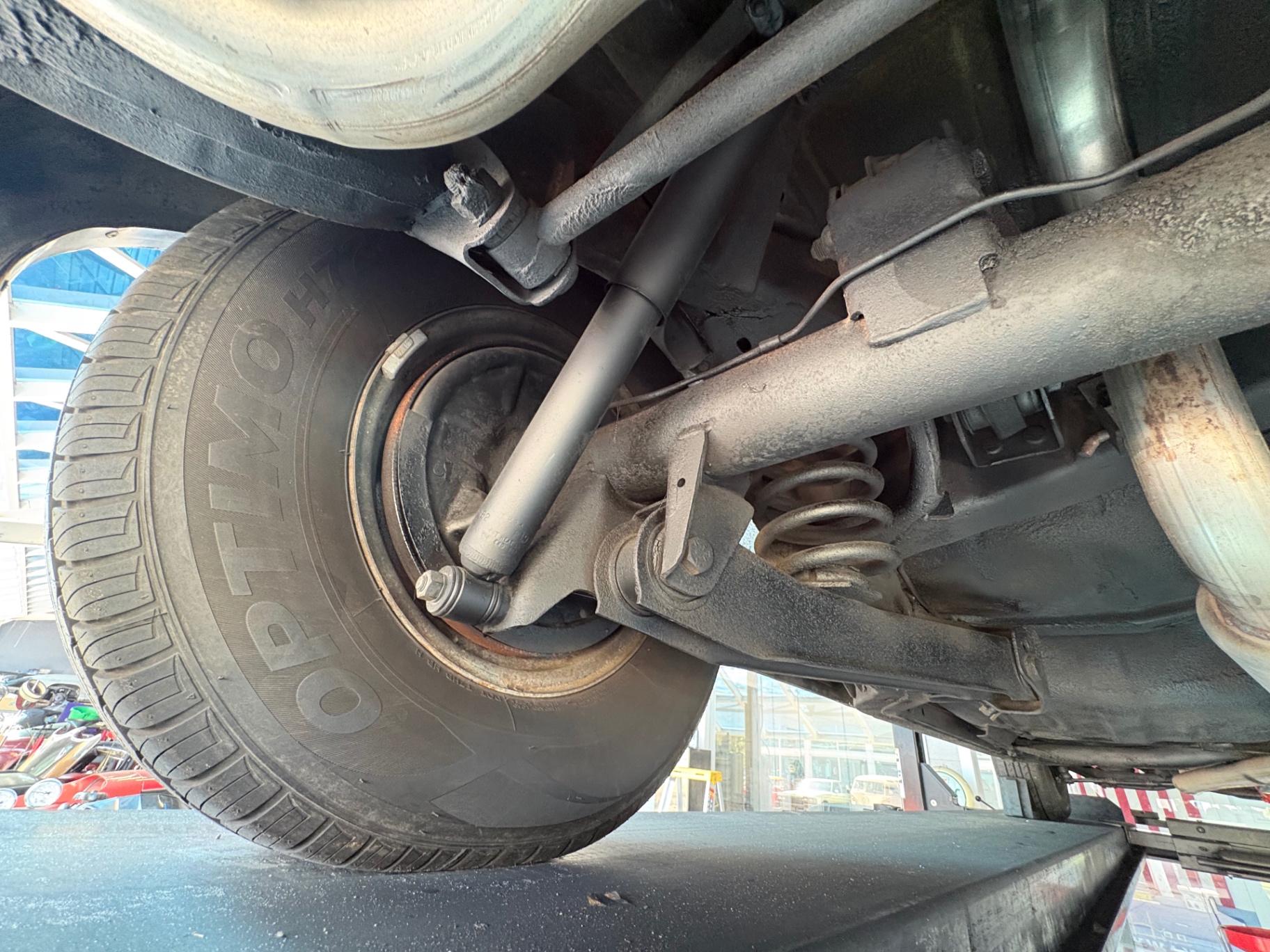
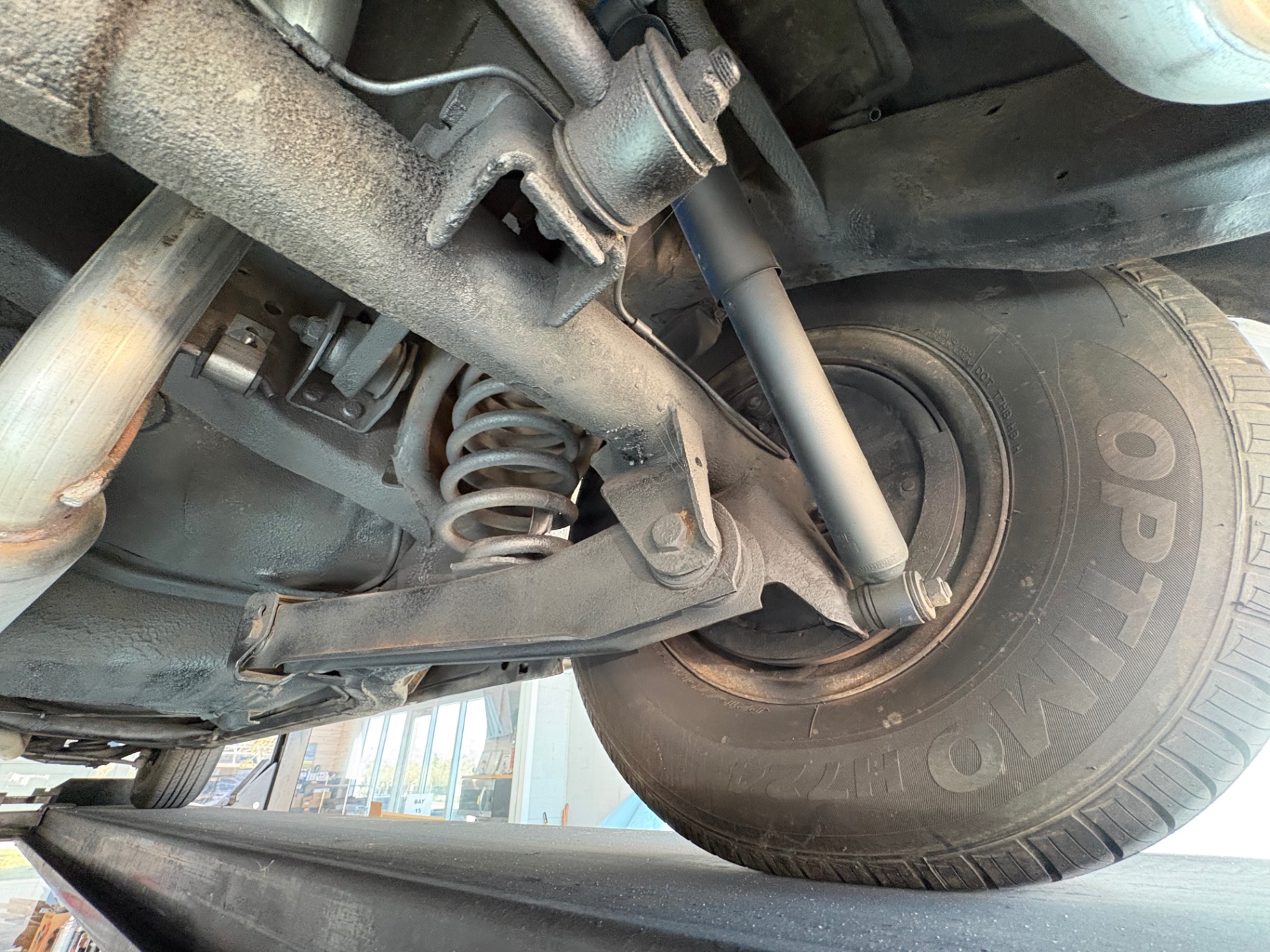
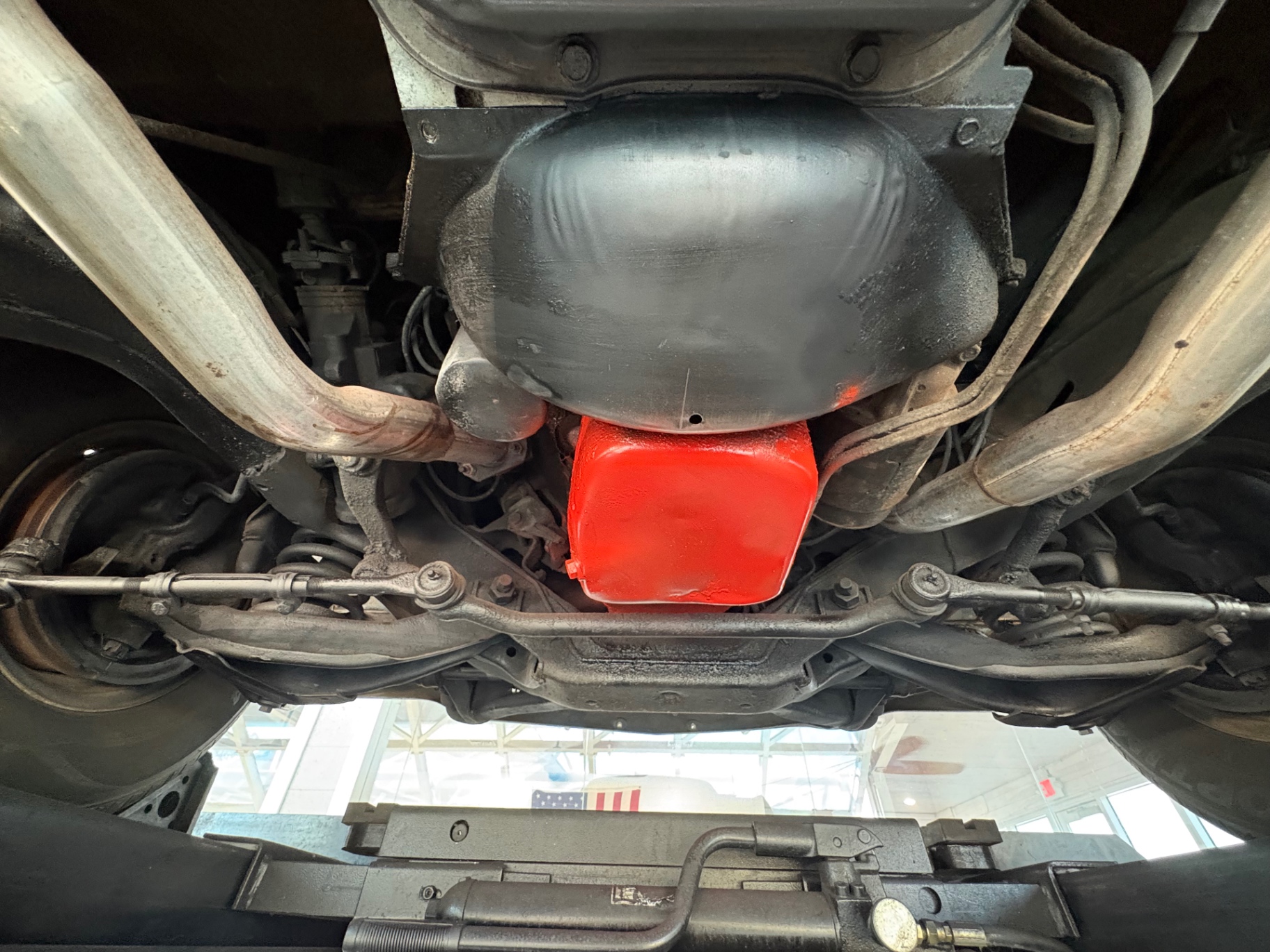
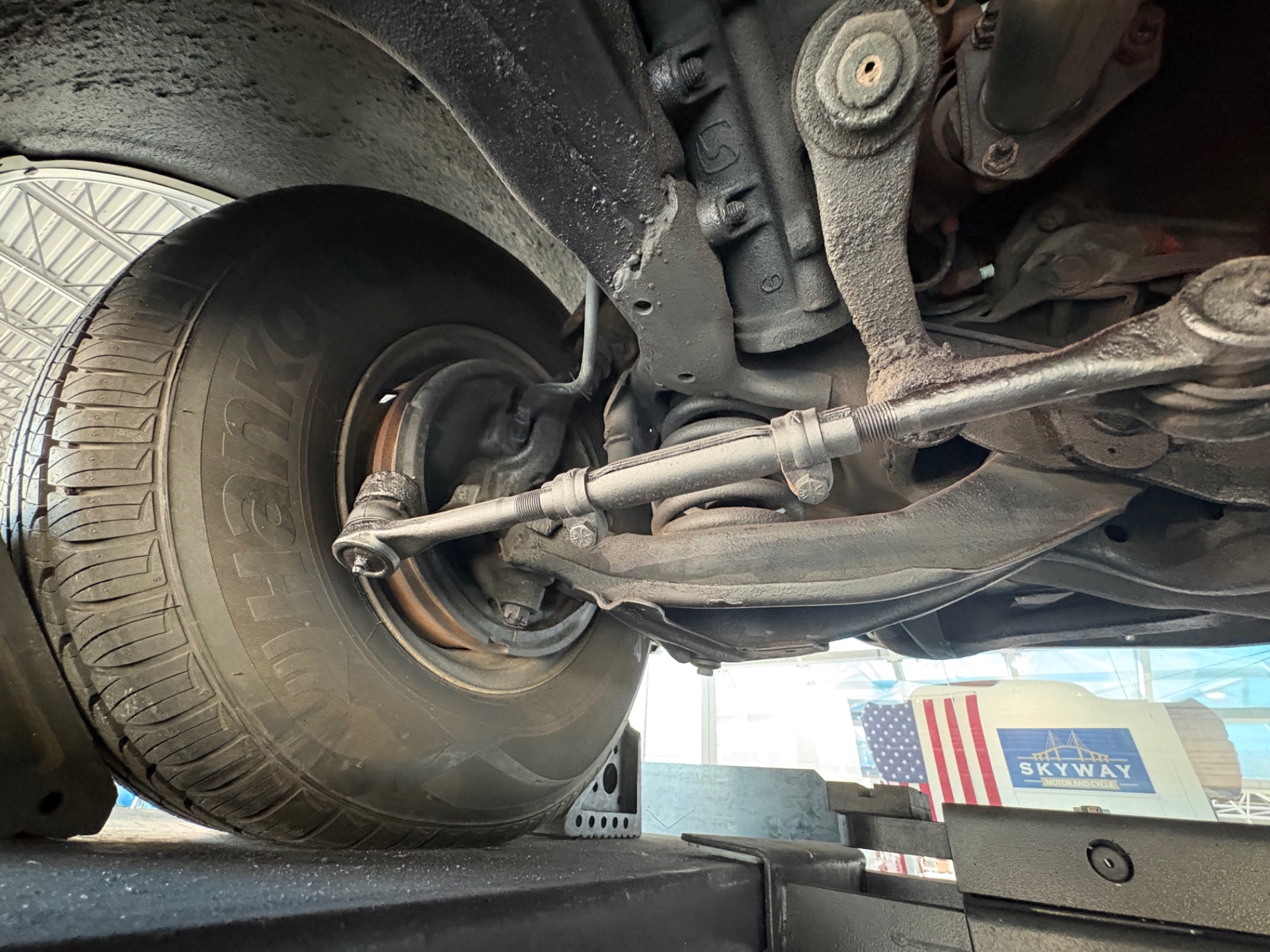
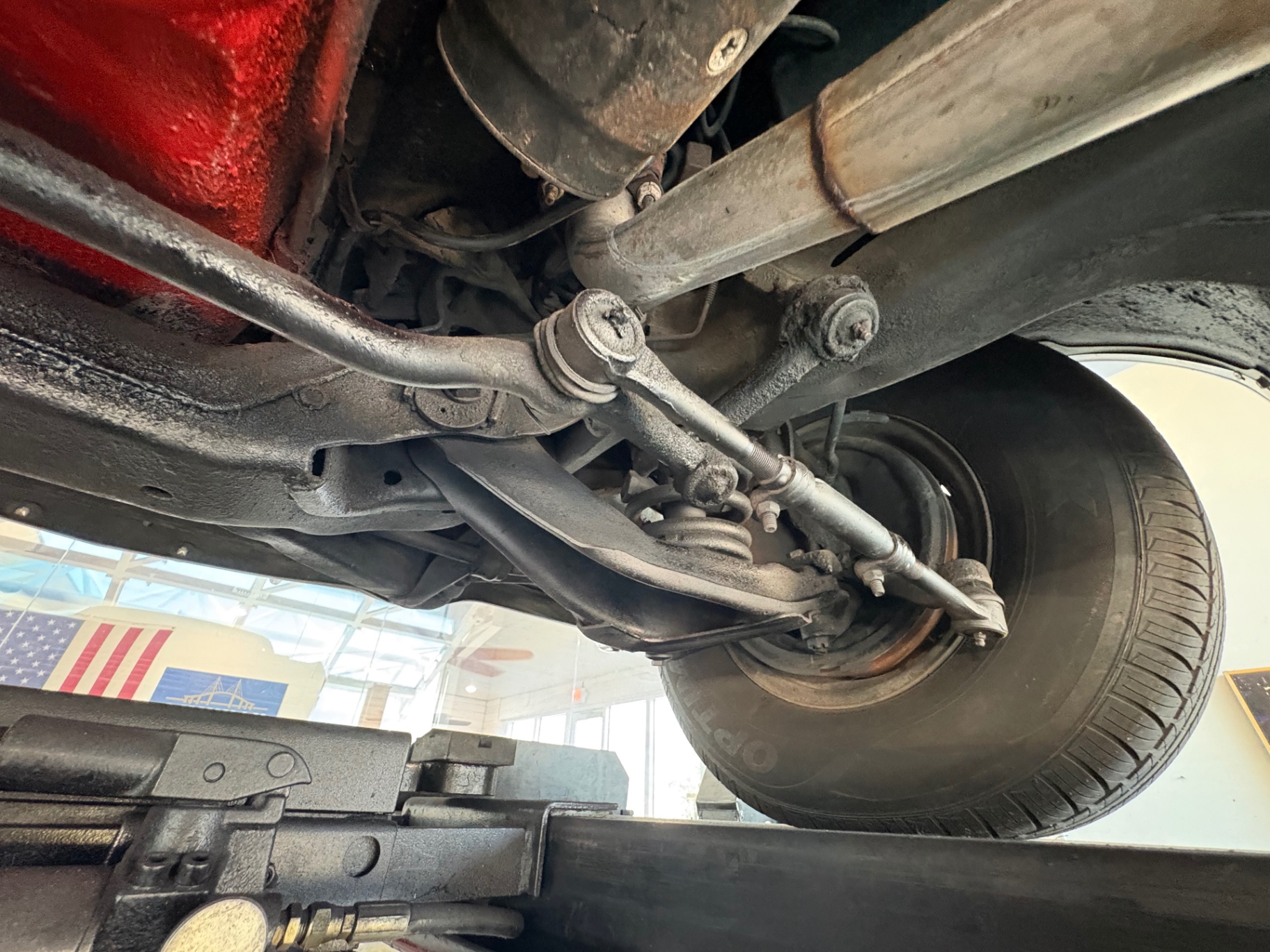
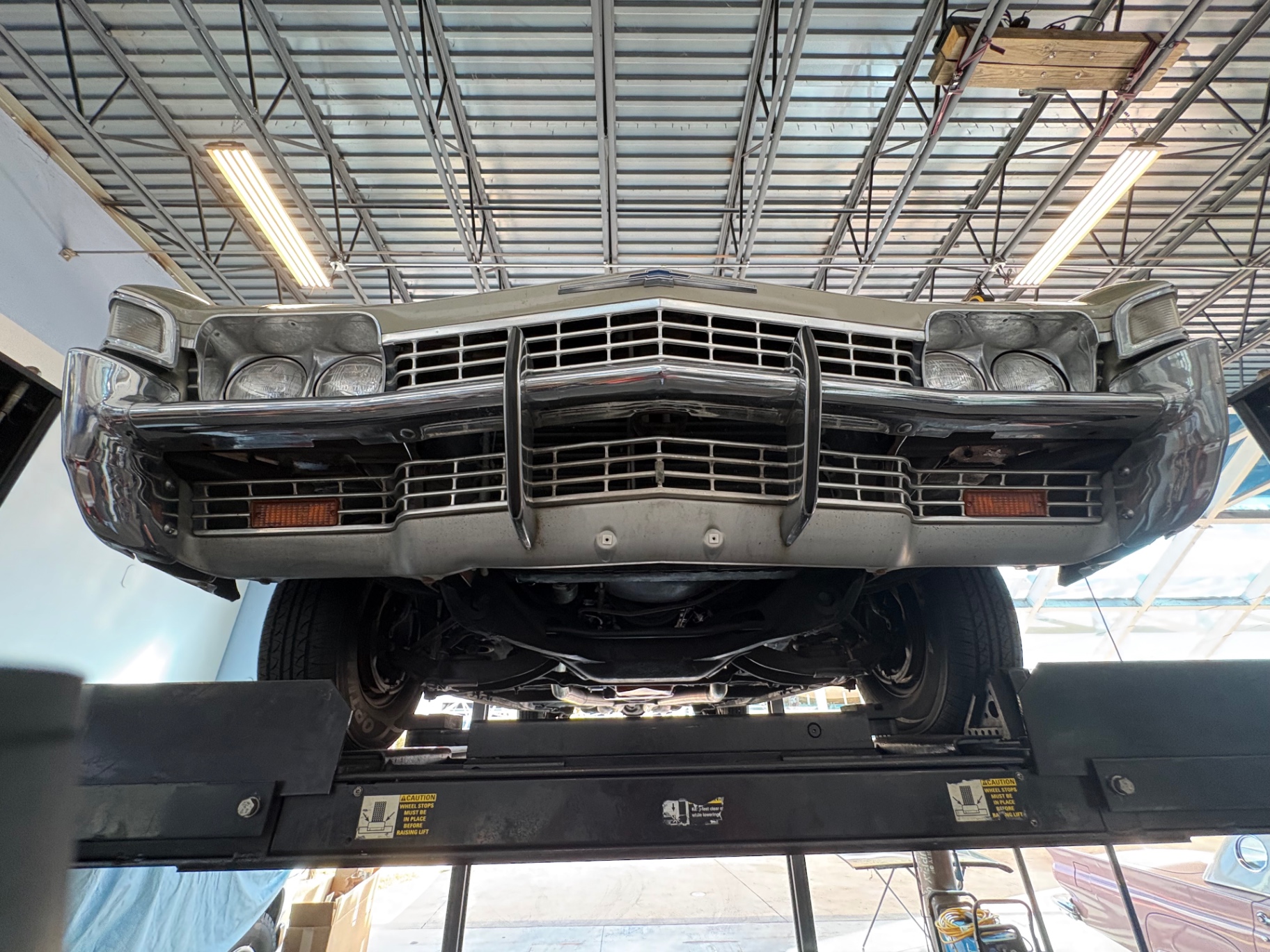
The undercarriage photos tell a clean story. There is no significant rust or rot visible, which is not something you take for granted on a 56-year-old car regardless of what climate it spent its life in. A solid floor and frame are the foundation everything else rests on.
Interior
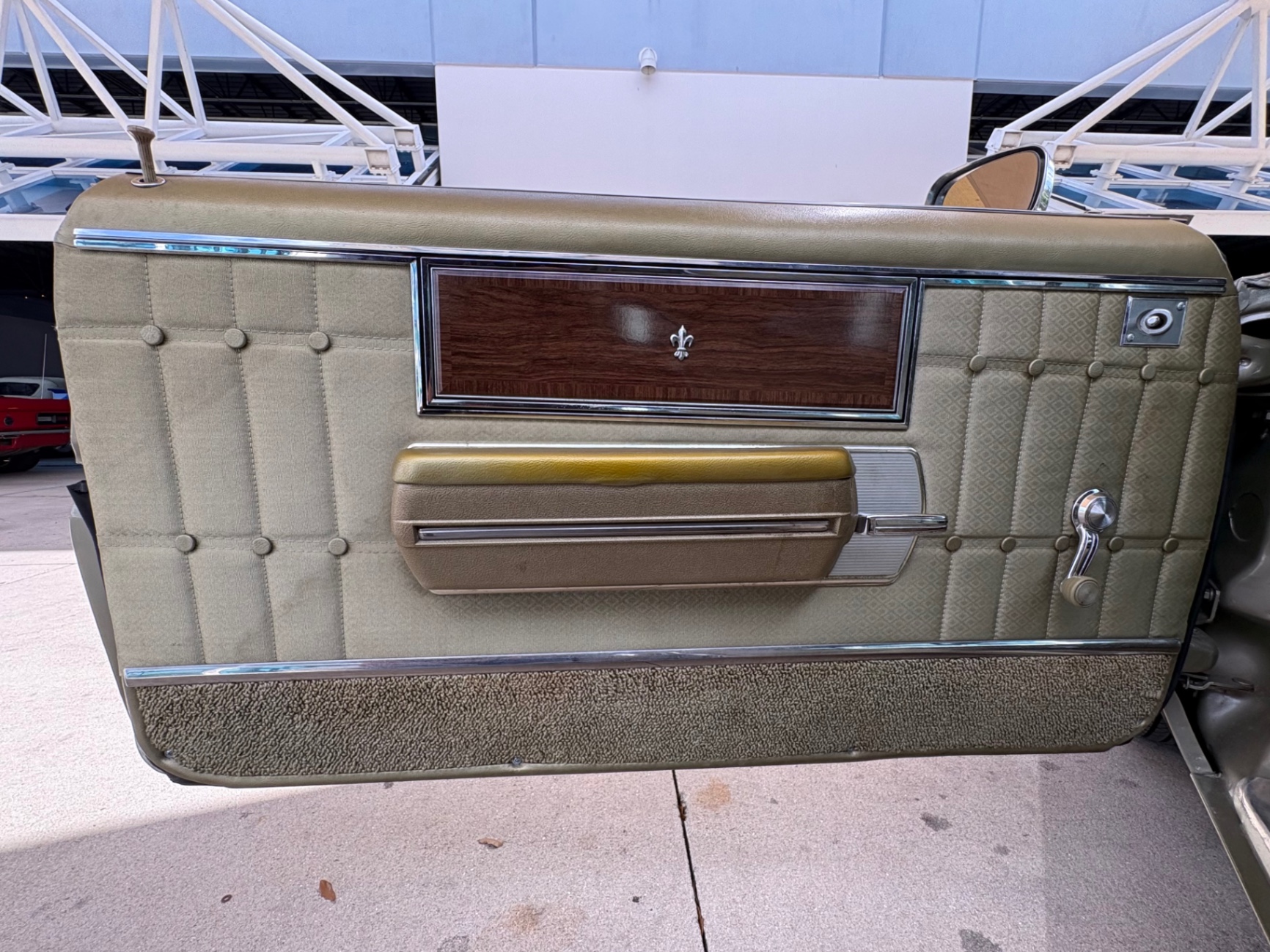
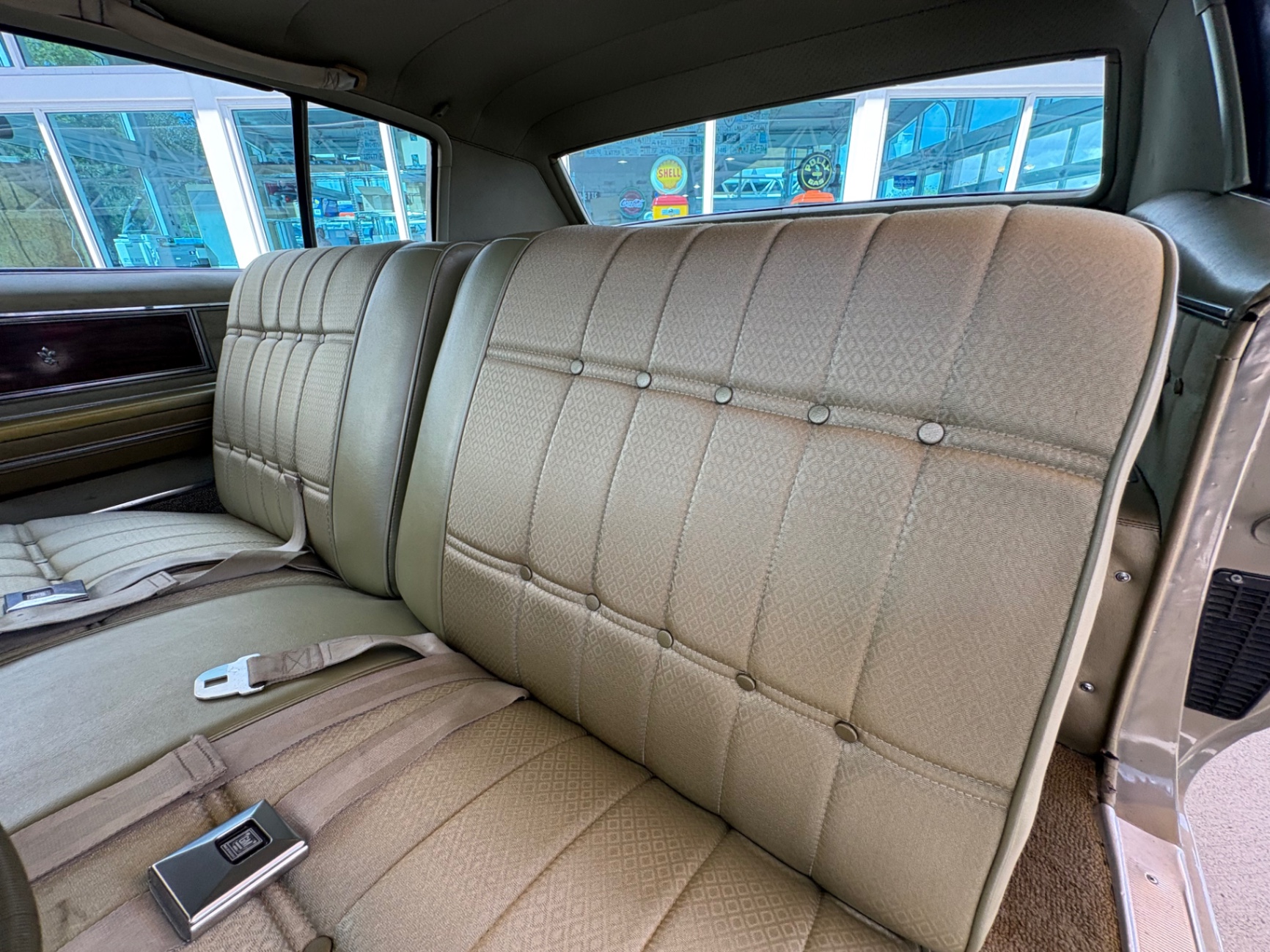
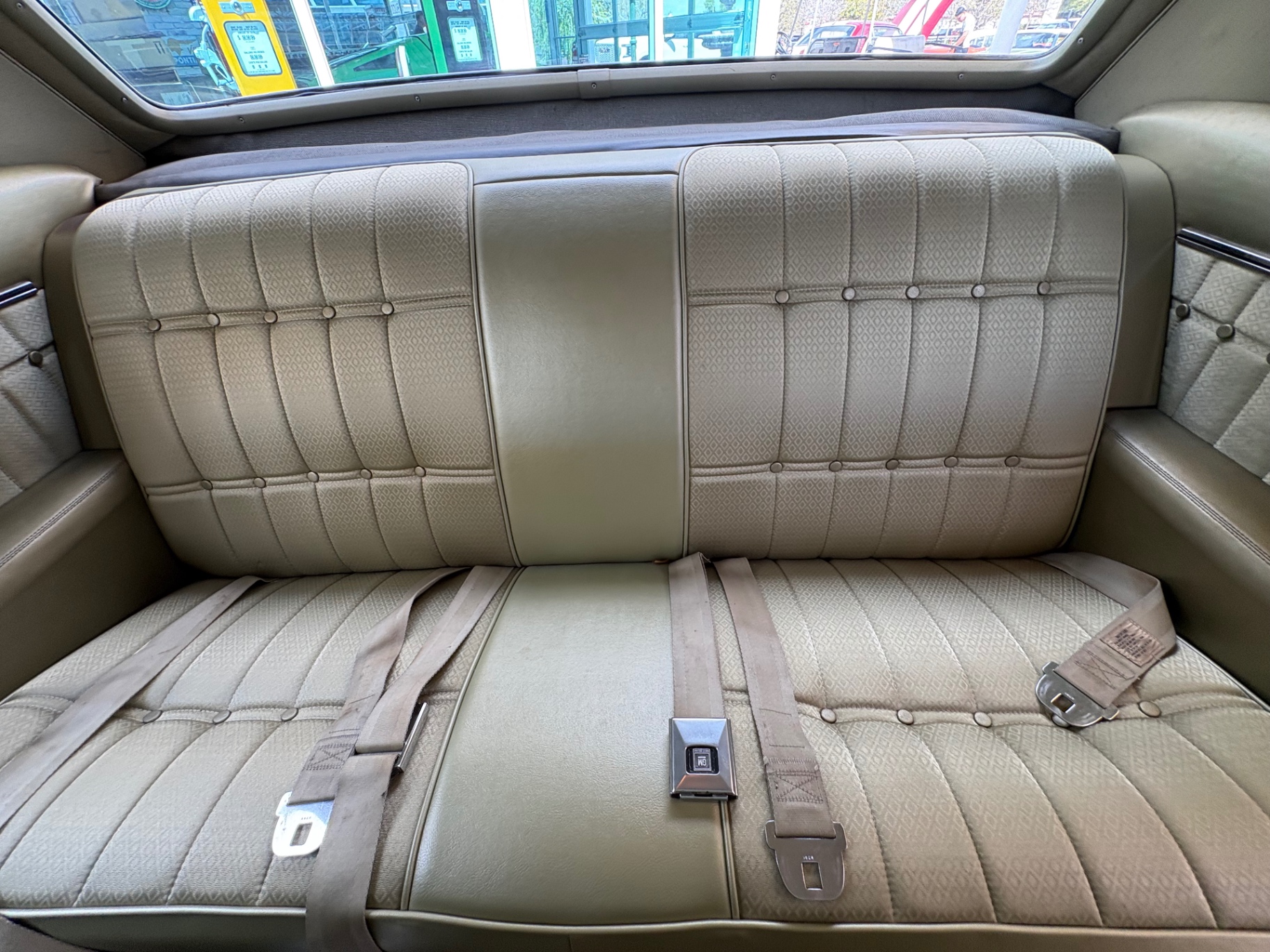
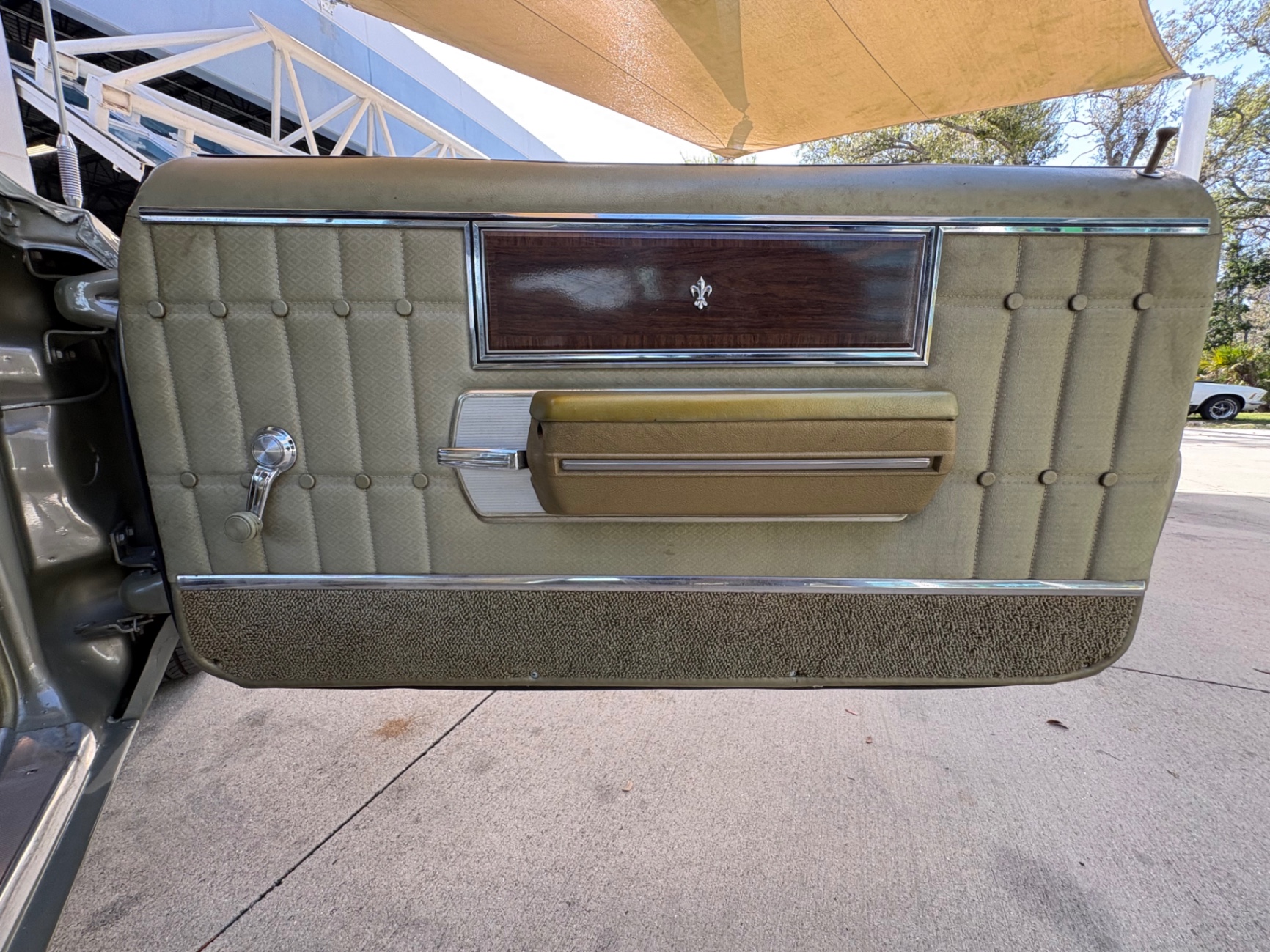
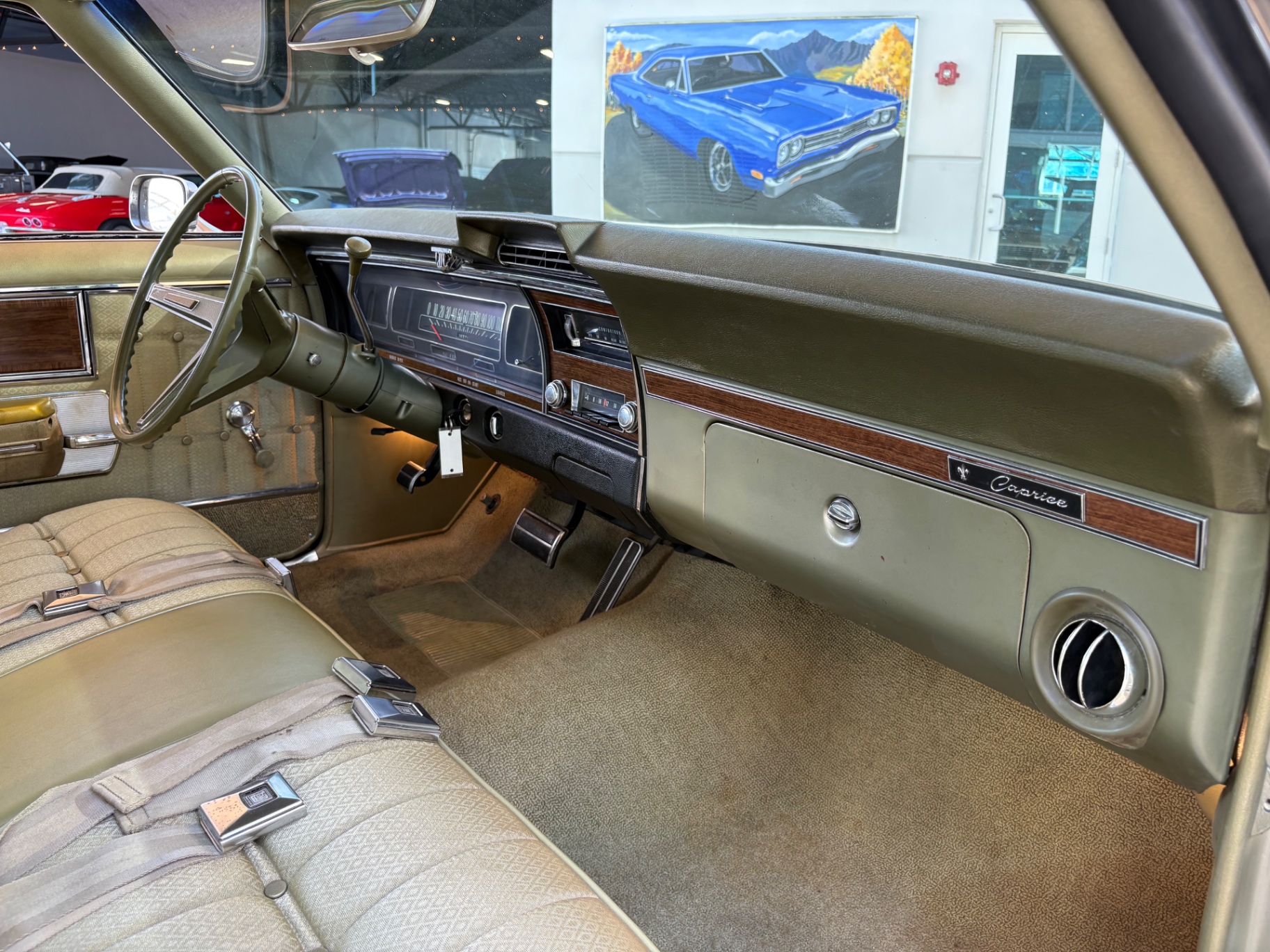
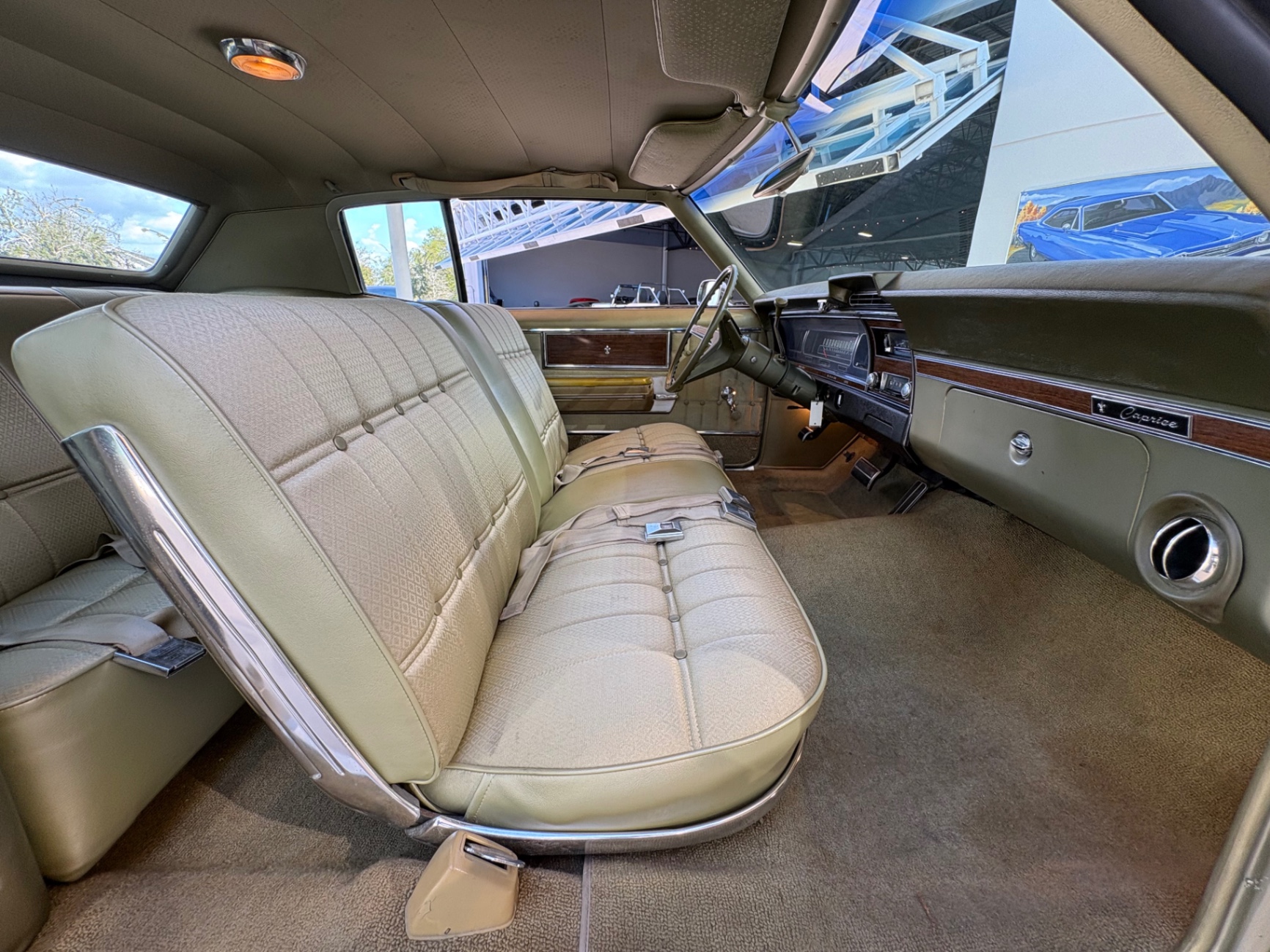
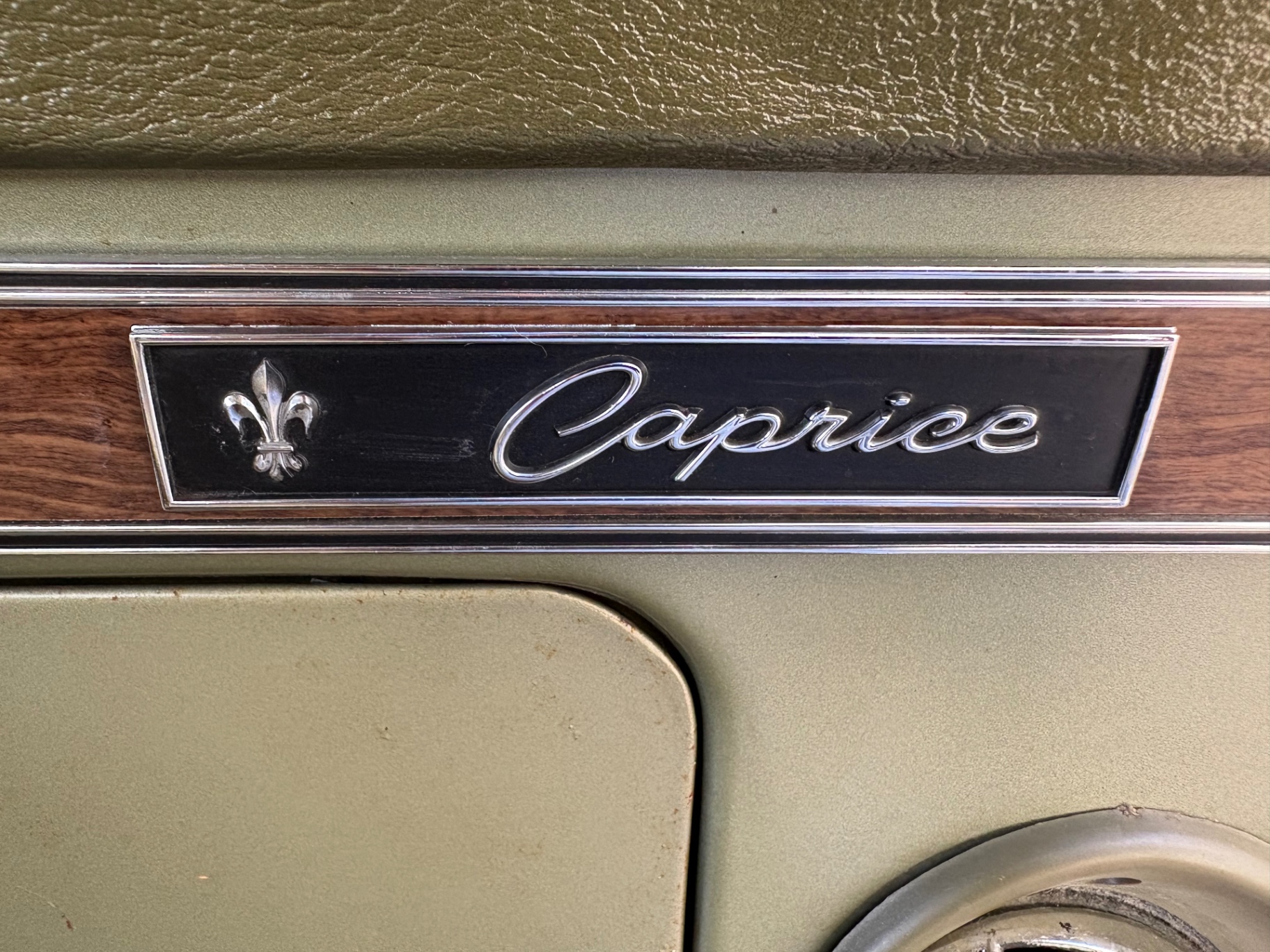
The 1968 Caprice interior was genuinely upmarket by Chevrolet standards. This car wears the gold vinyl interior that coordinates correctly with the Ash Gold exterior, and the condition of the door panels in the photos shows the material has held up well. The Caprice-specific door panels used a button-tufted pattern with a chrome trim strip and a woodgrain insert — and mounted at the center of each woodgrain panel is the small silver fleur-de-lis emblem that was unique to the Caprice. That emblem was Chevrolet's way of visually communicating that this was something more than a standard Impala. It is a subtle detail, but it is the kind of thing that separates a properly optioned Caprice from a look-alike.
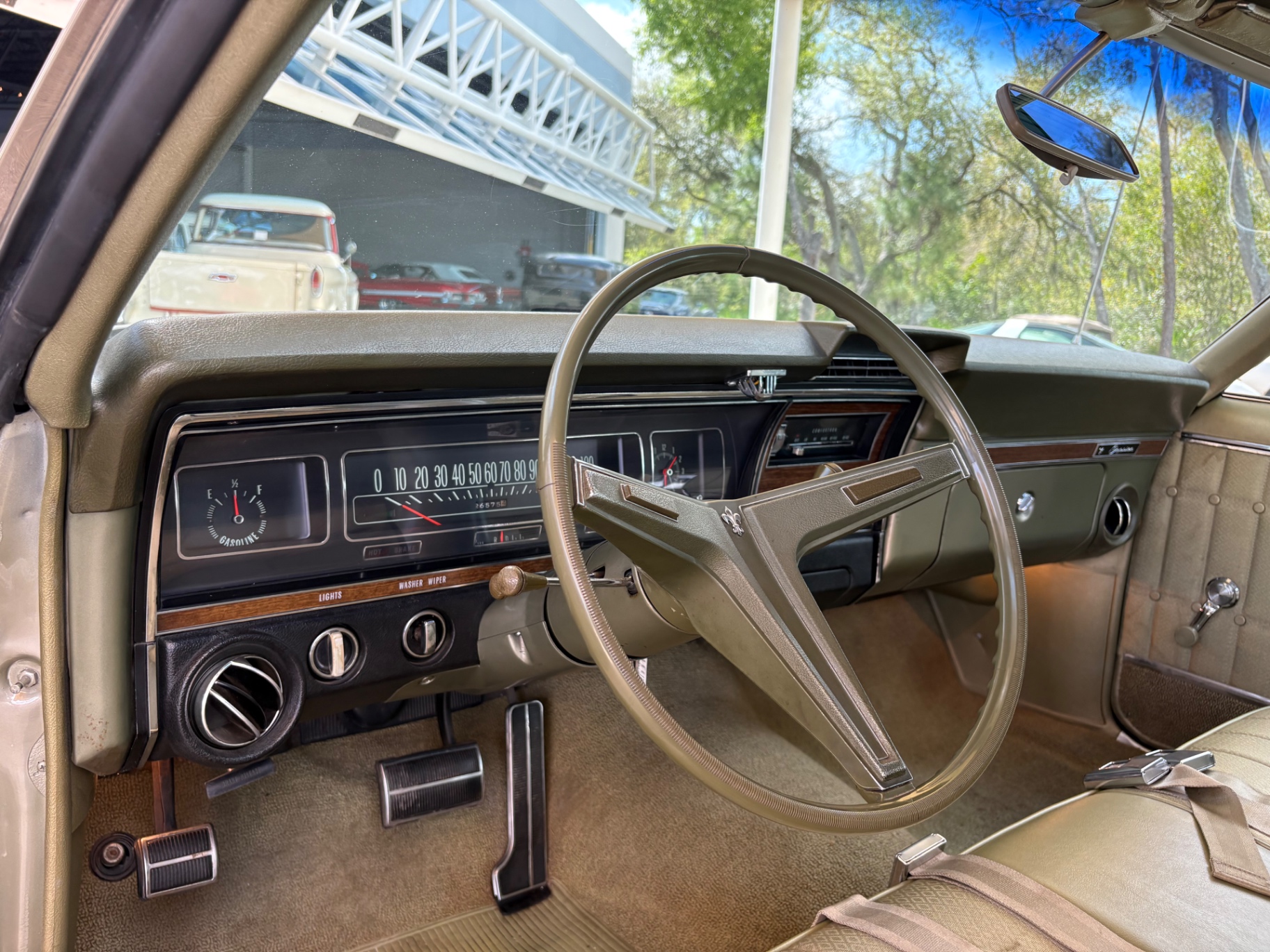
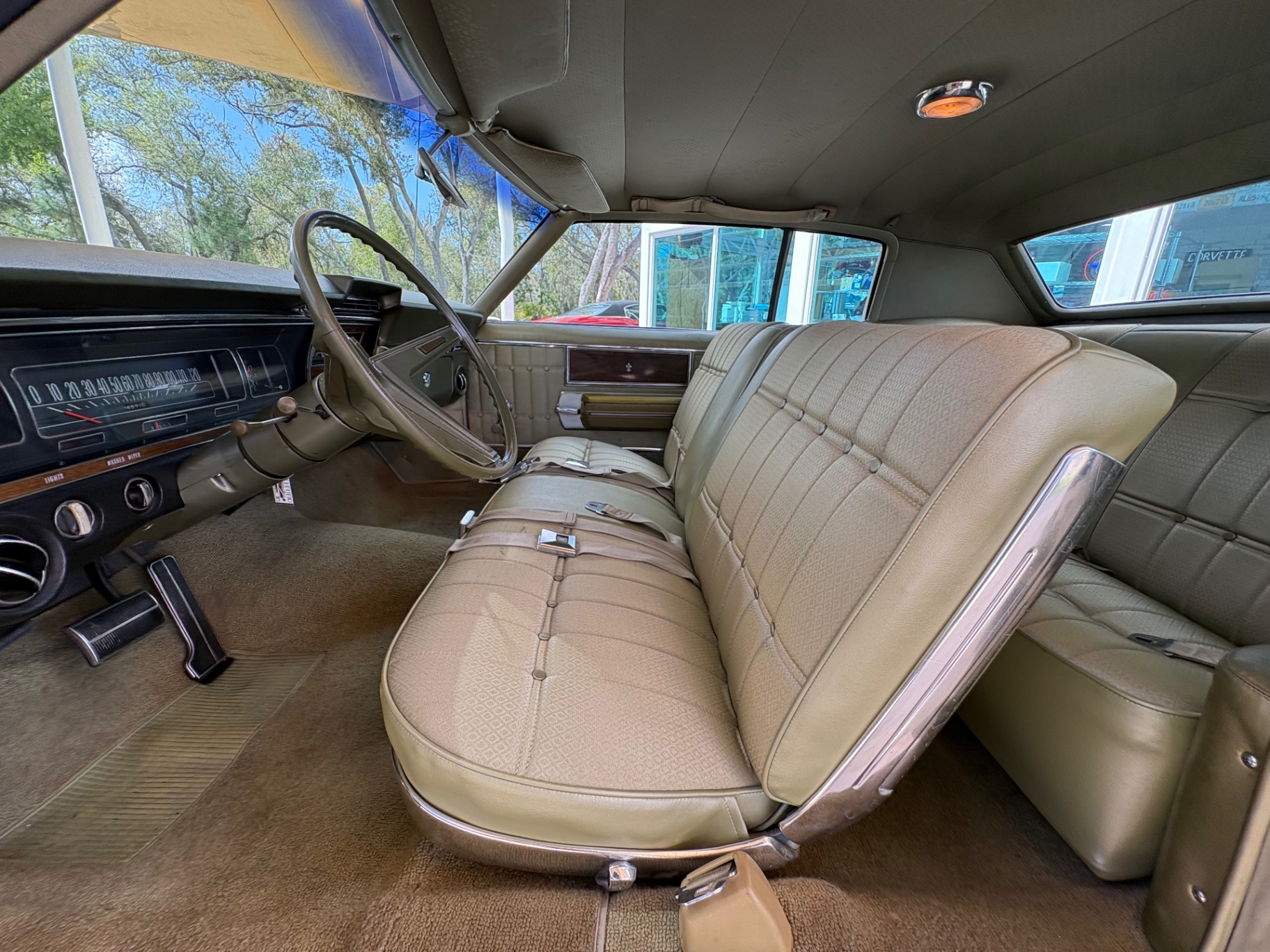
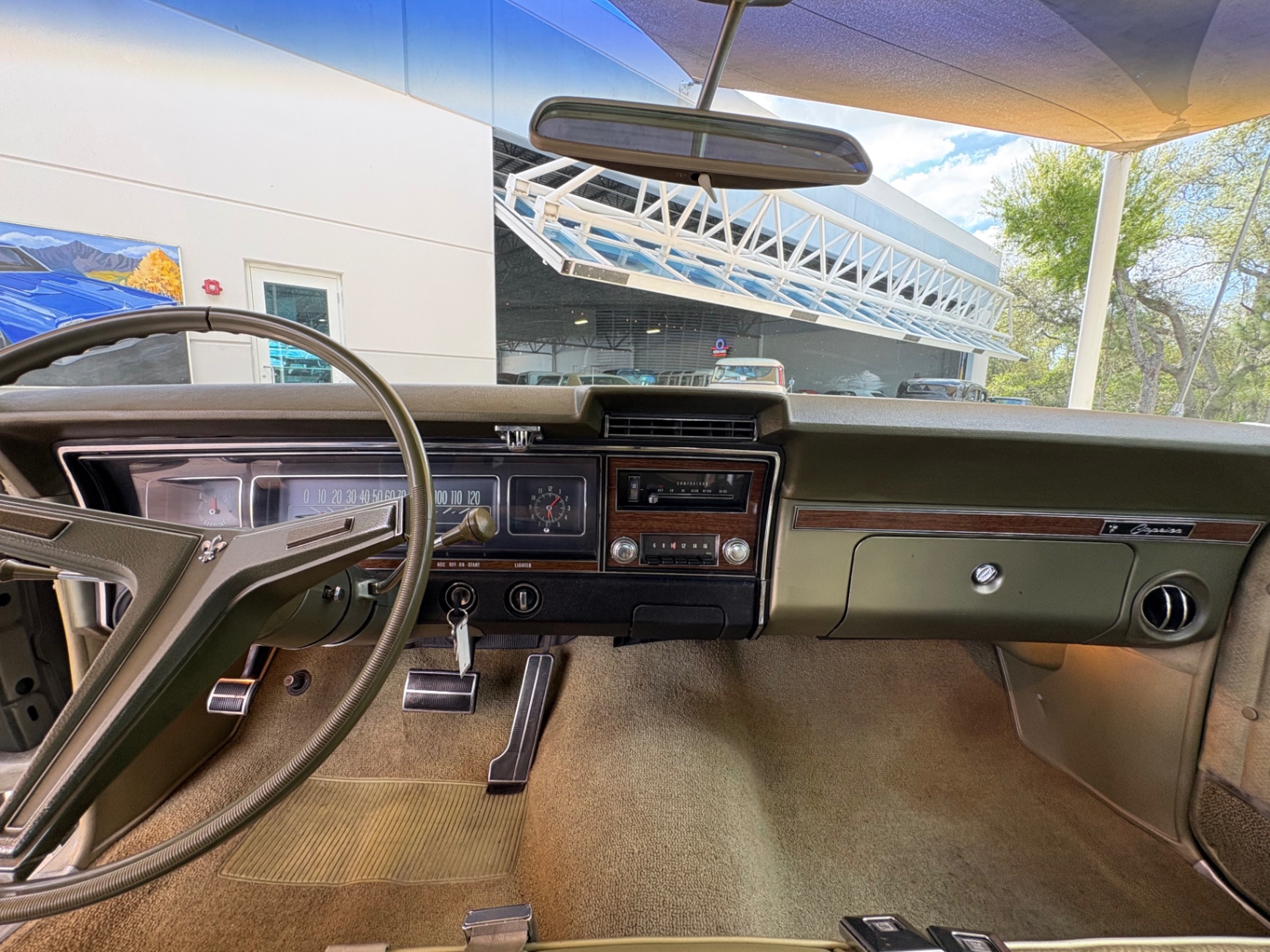
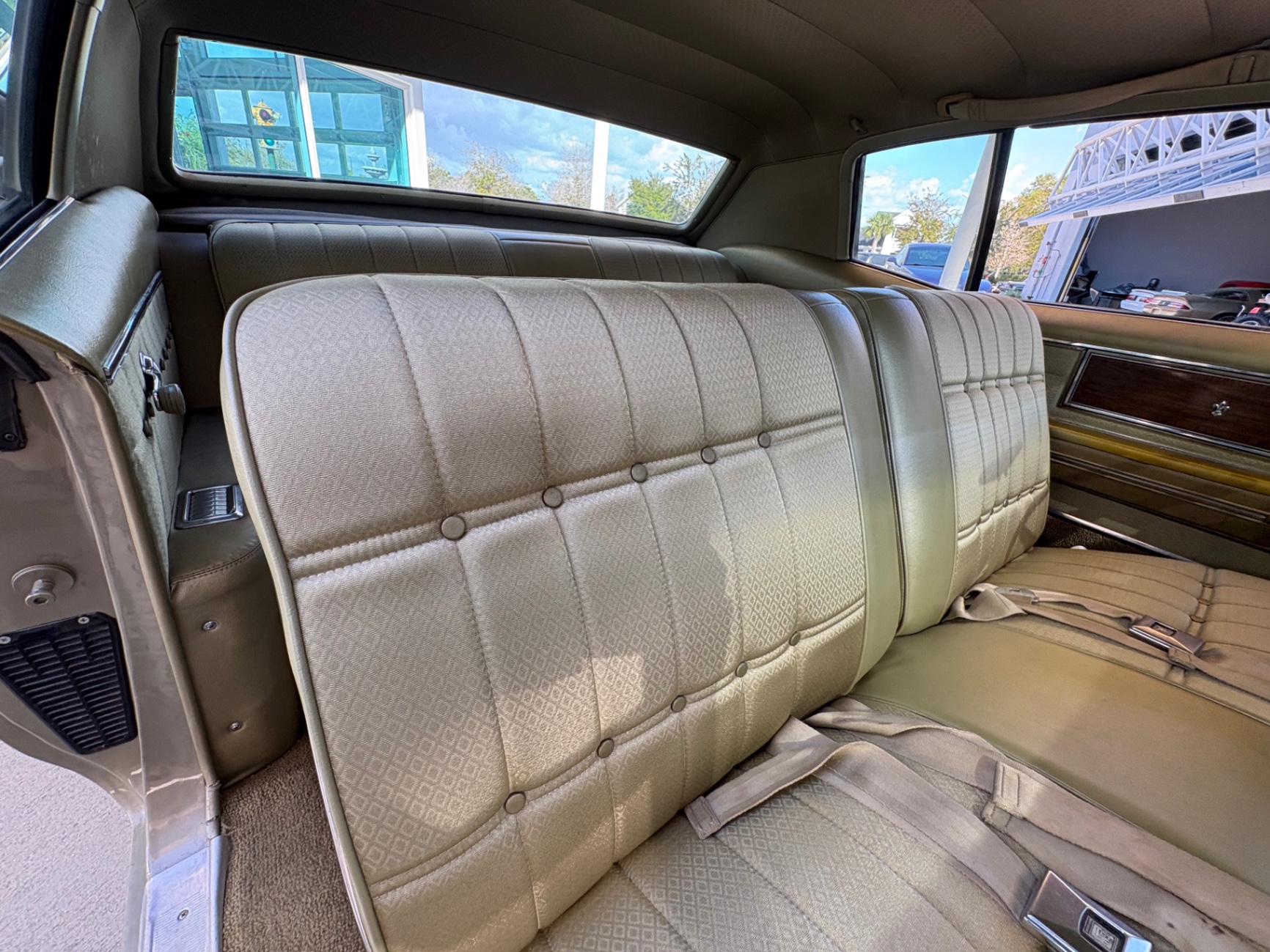
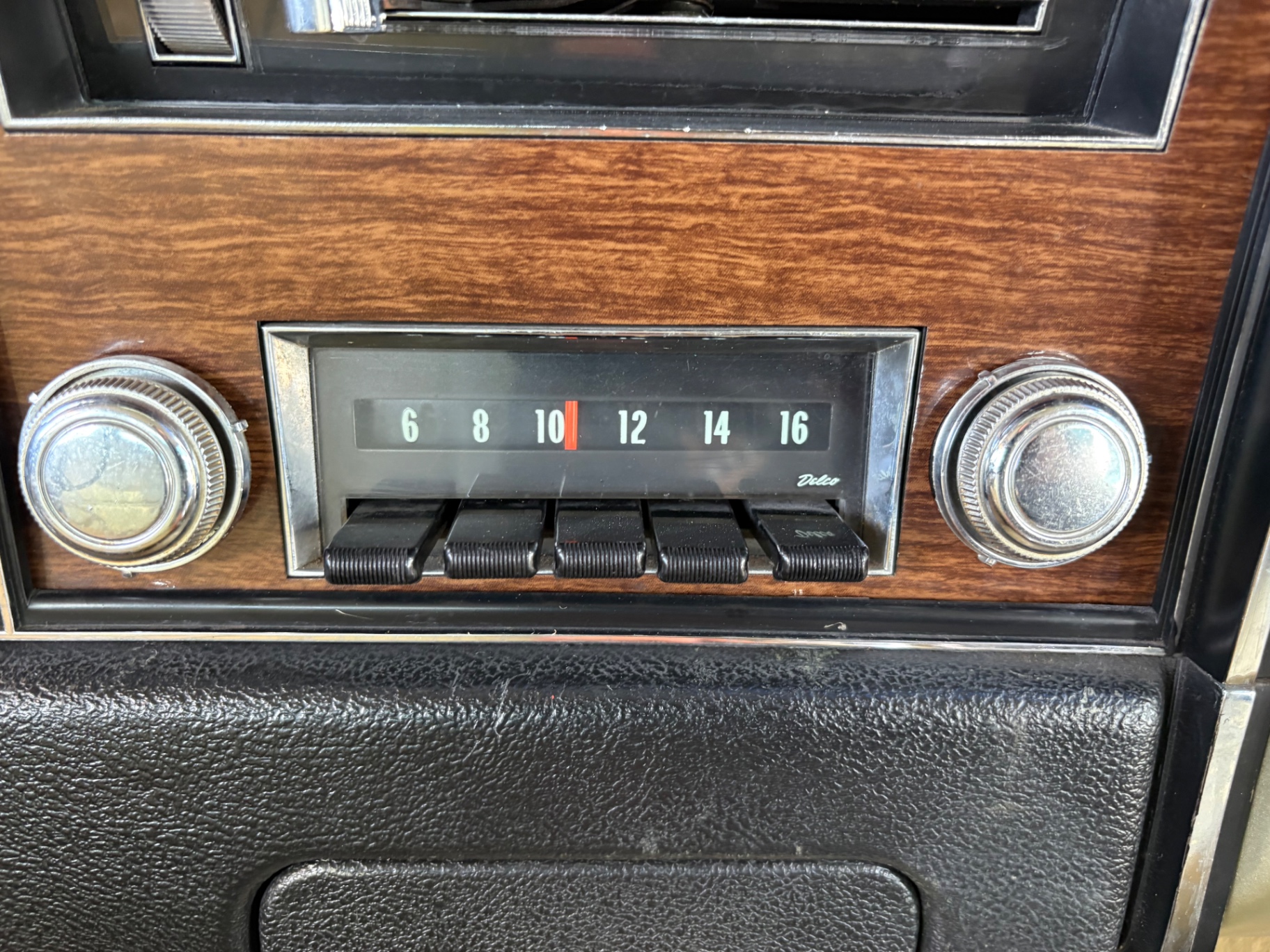
The full-width front bench seat is correct for this model and trim level, finished in gold vinyl that matches the rest of the interior. The woodgrain trim continues on the dashboard, which was a specific Caprice feature in 1968. The tilt steering column adds a practical dimension — something that buyers who actually drive these cars appreciate. The factory Delco AM radio sits in the dash where it was installed in 1968, which matters for overall originality. Replacement radios are common in cars this age, and keeping the factory unit intact is a detail that collectors notice. Factory air conditioning vents are integrated into the dash without modification, consistent with a car that was ordered with AC from the factory.
Exterior
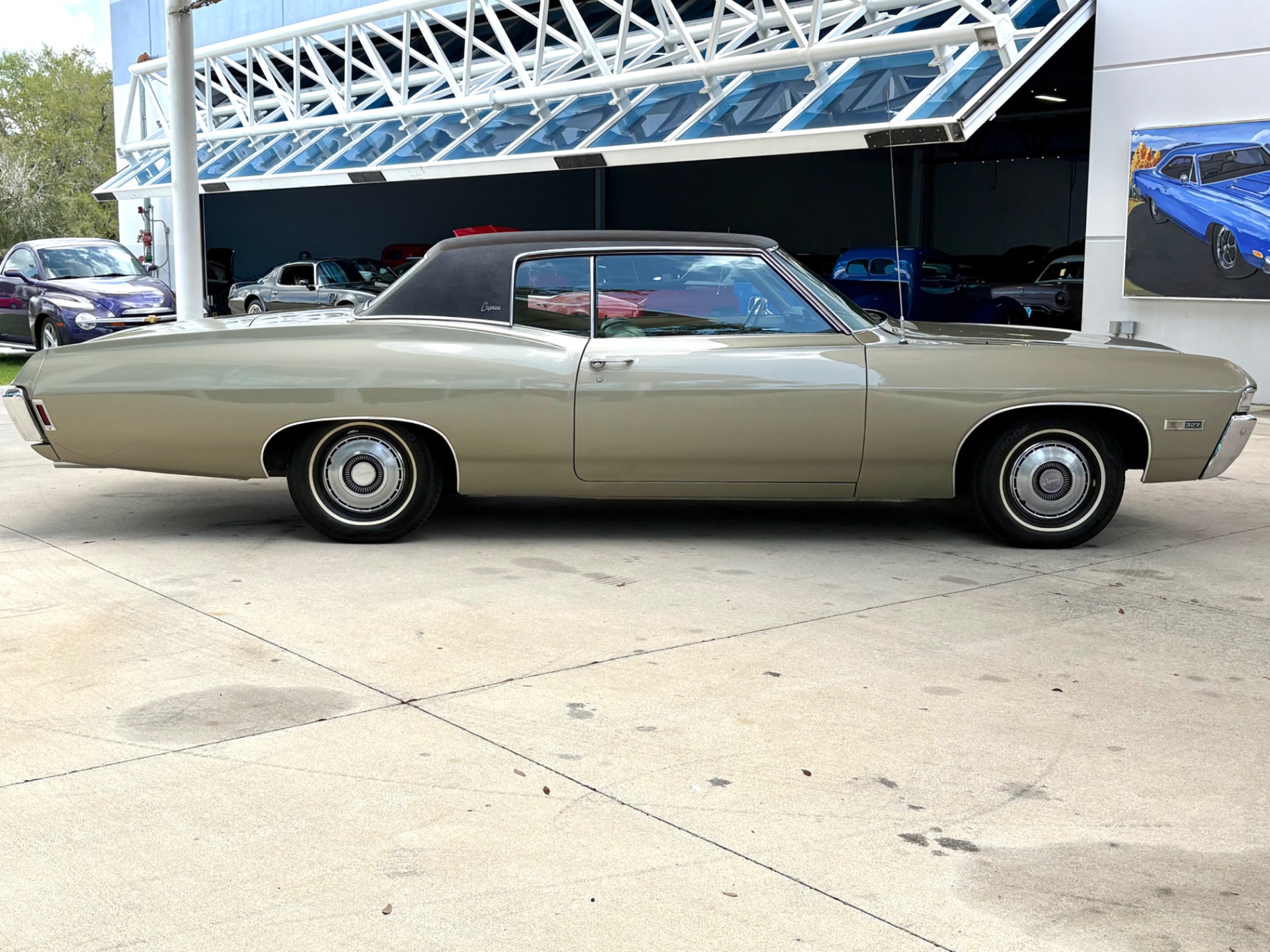
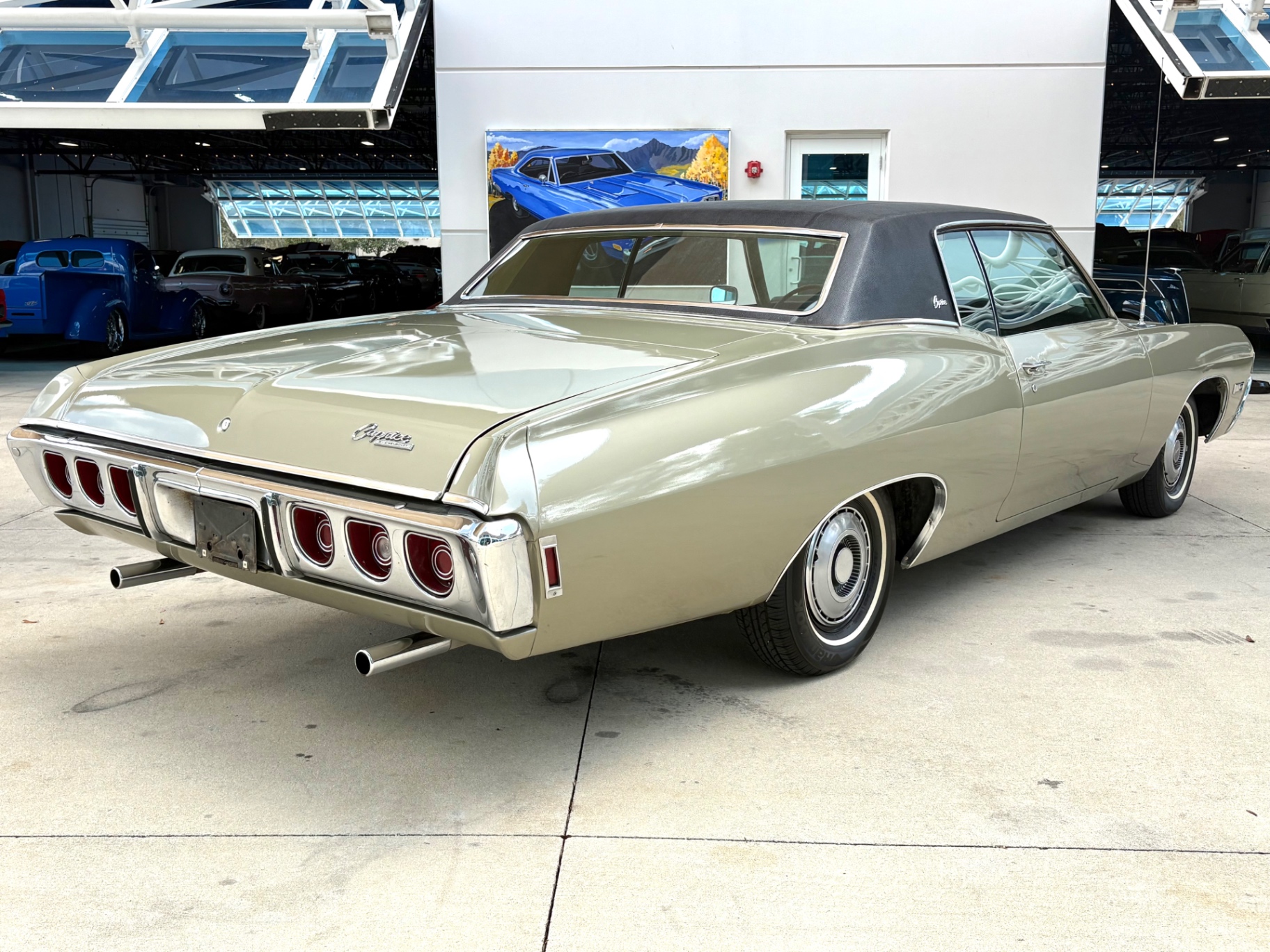
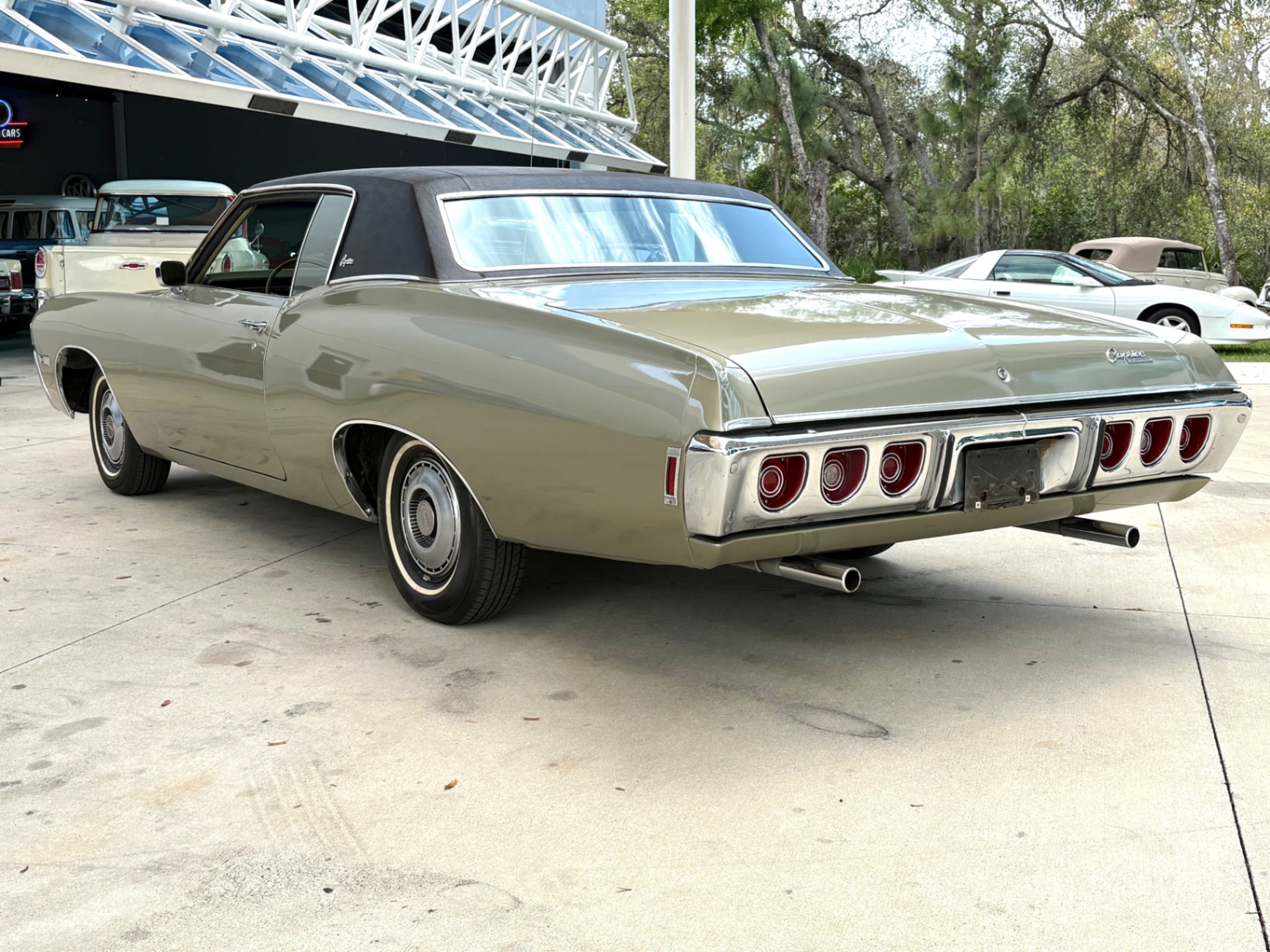
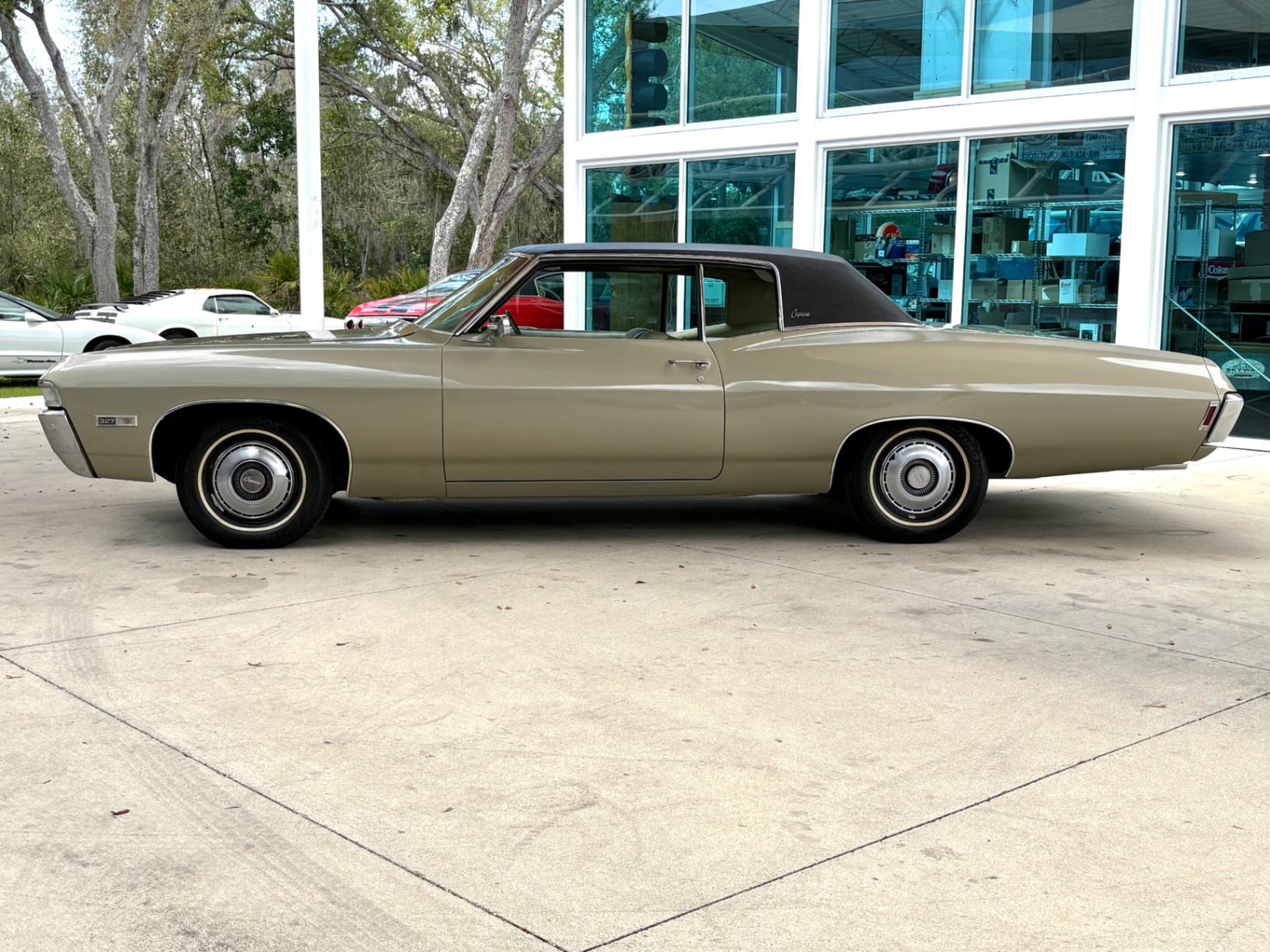
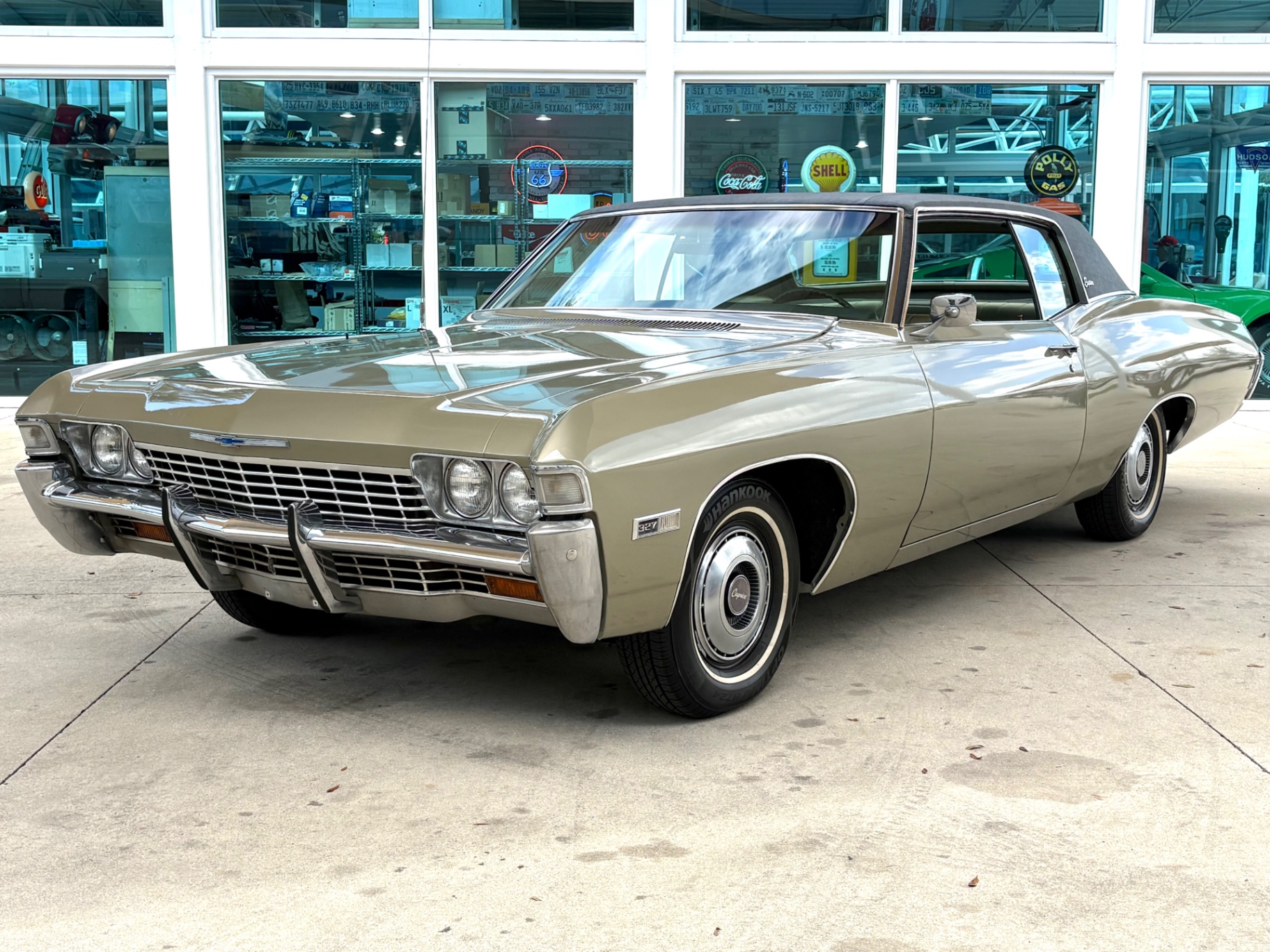
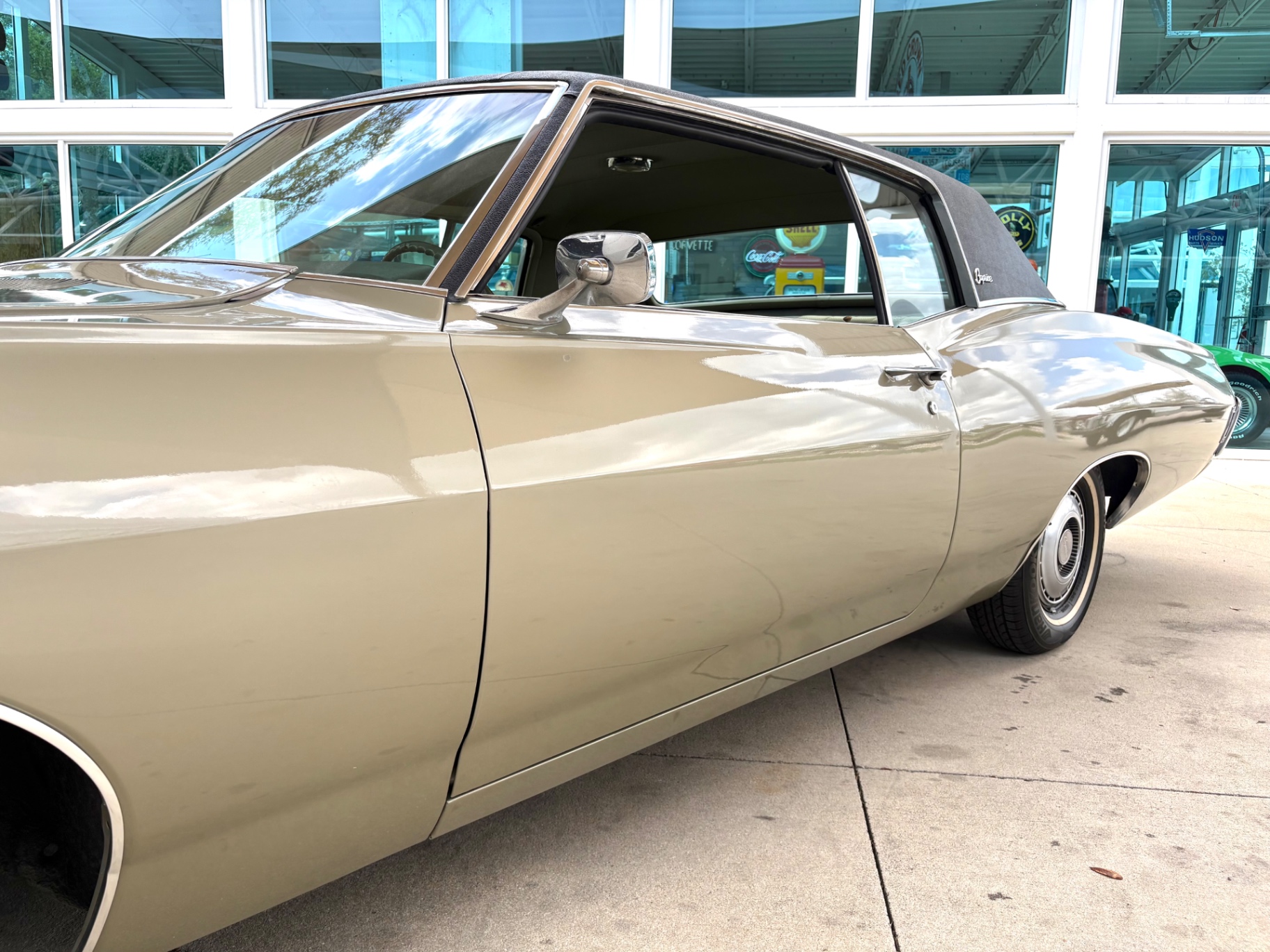
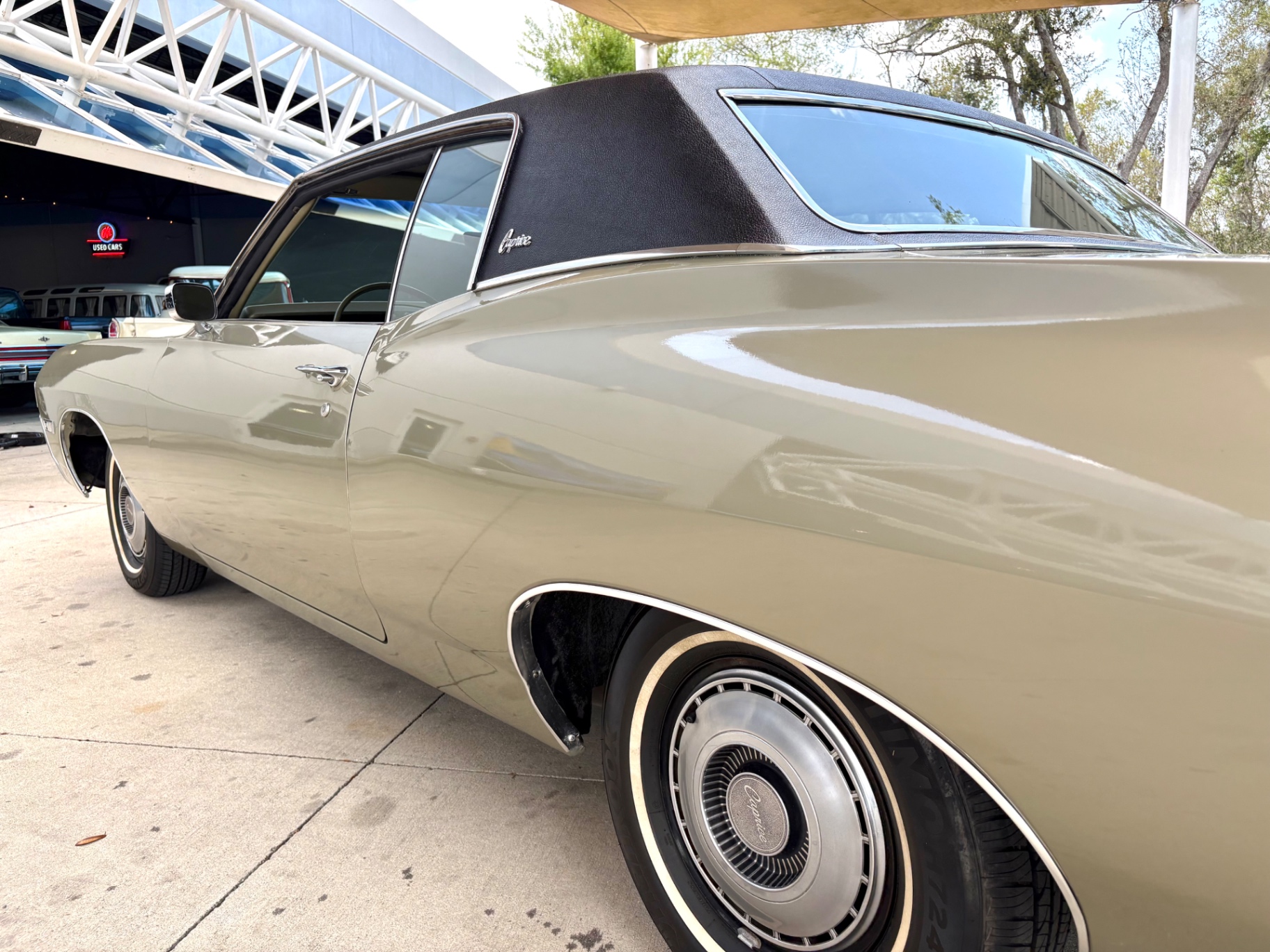
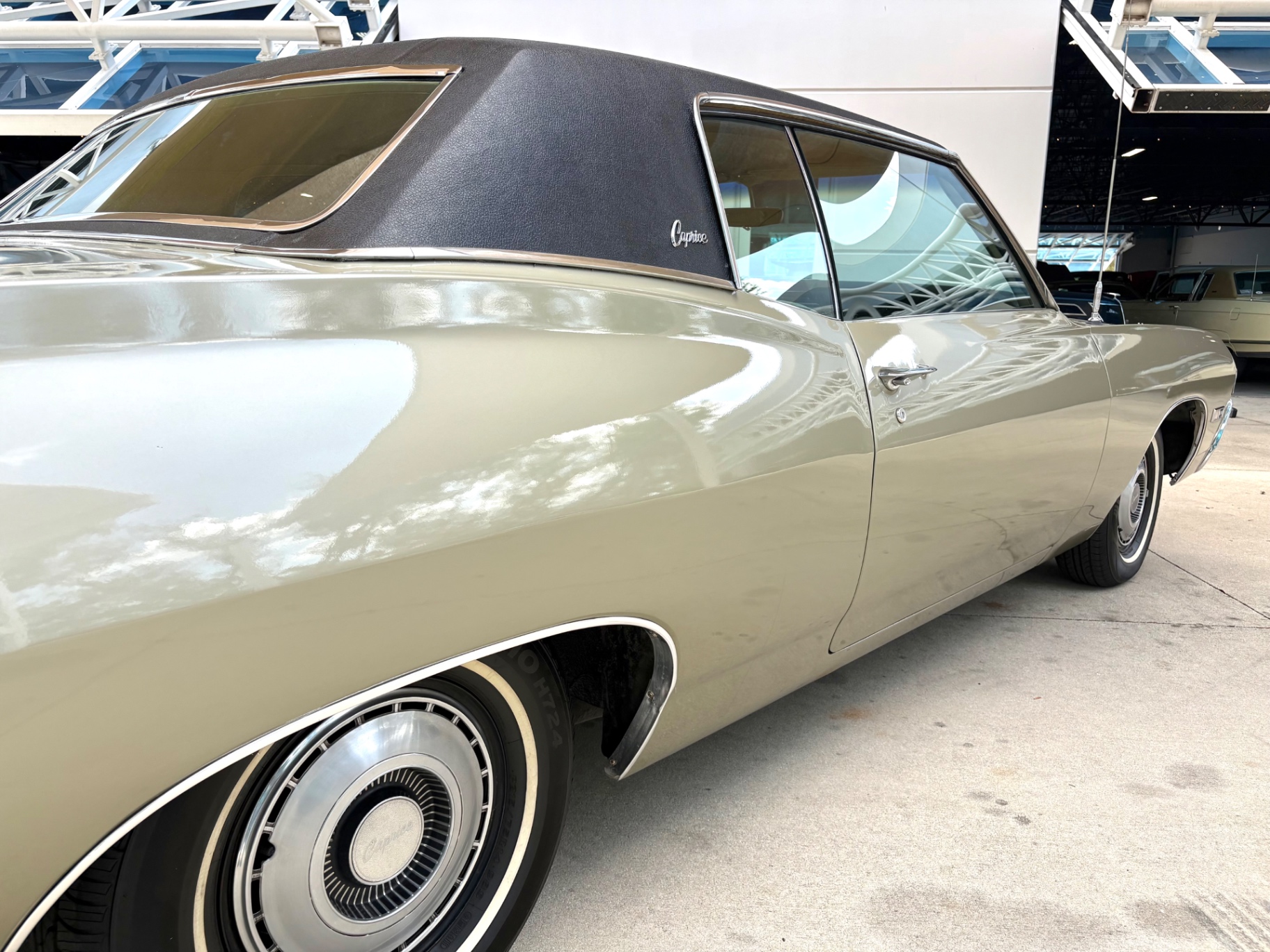
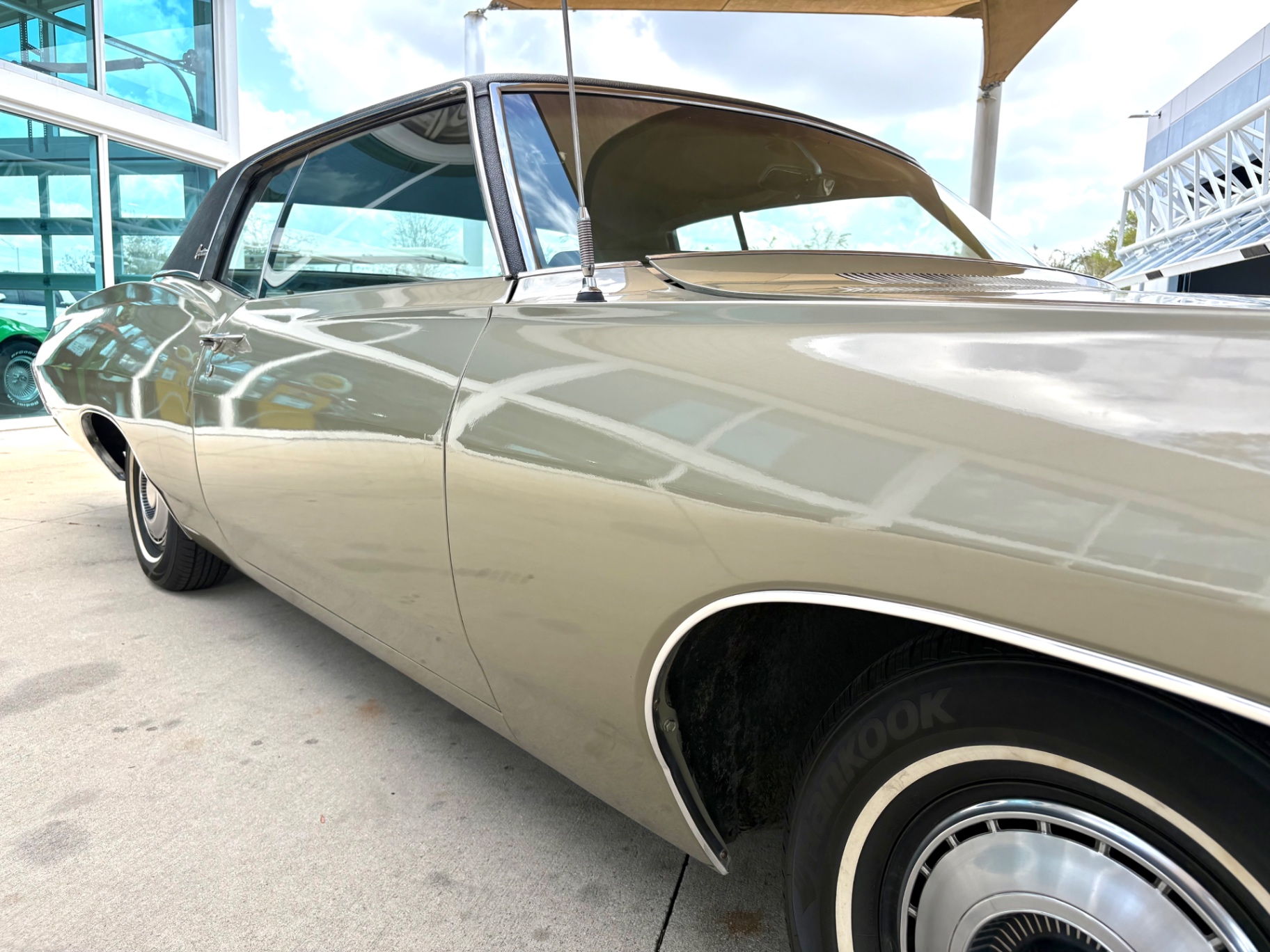
Ash Gold is not a color that shows up on many 1968 Chevrolets on the market today, and that relative scarcity is part of what makes this car visually distinctive in a field full of white, black, and red examples. It is a warm, slightly muted gold with enough depth to read differently in shade versus direct sunlight, and it pairs logically with the black vinyl top and the gold interior. The black vinyl top was a popular factory option in 1968 and gives the car the formal, semi-formal roofline that Chevrolet was using to position the Caprice above the Impala in the full-size hierarchy.
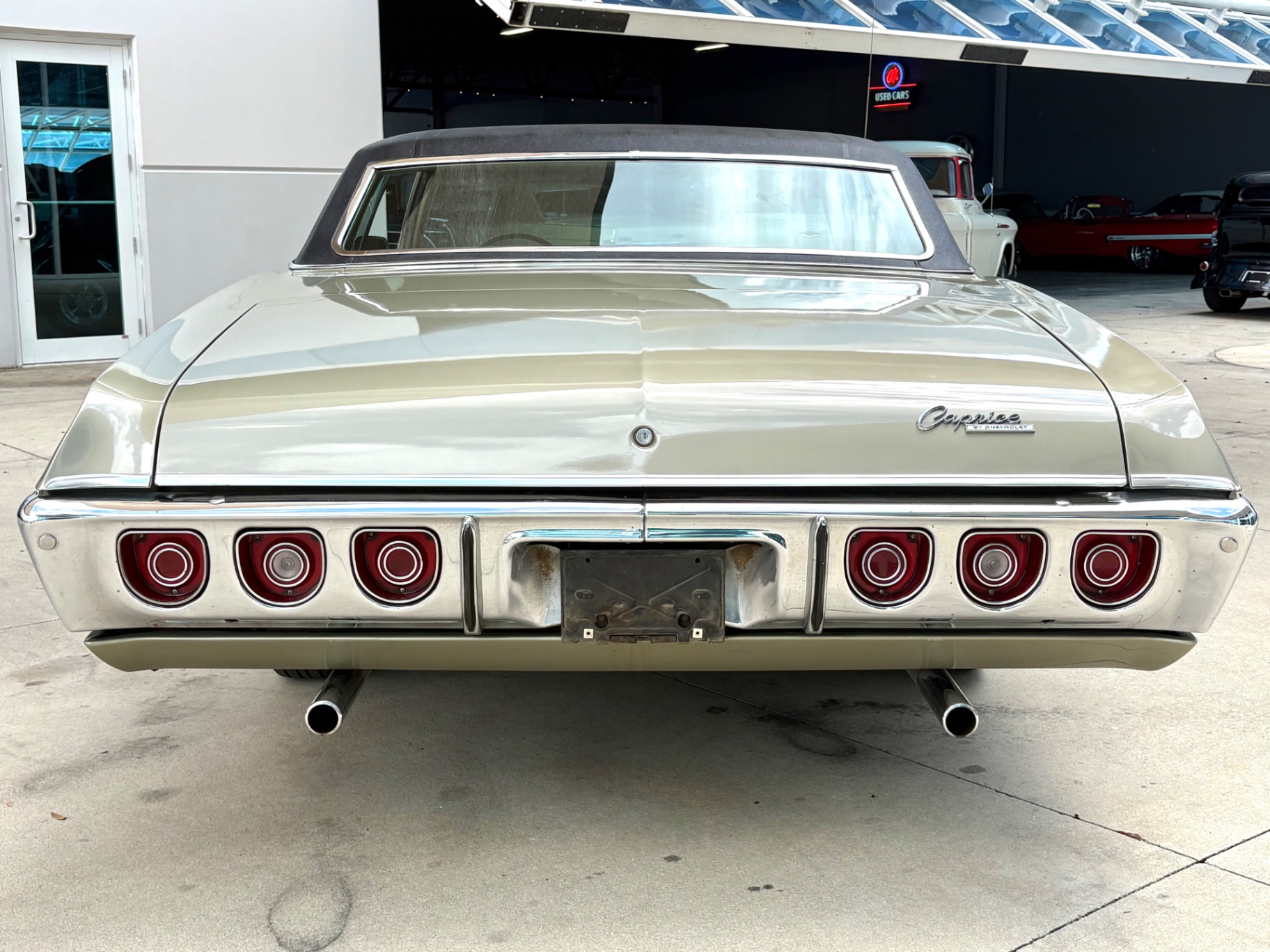
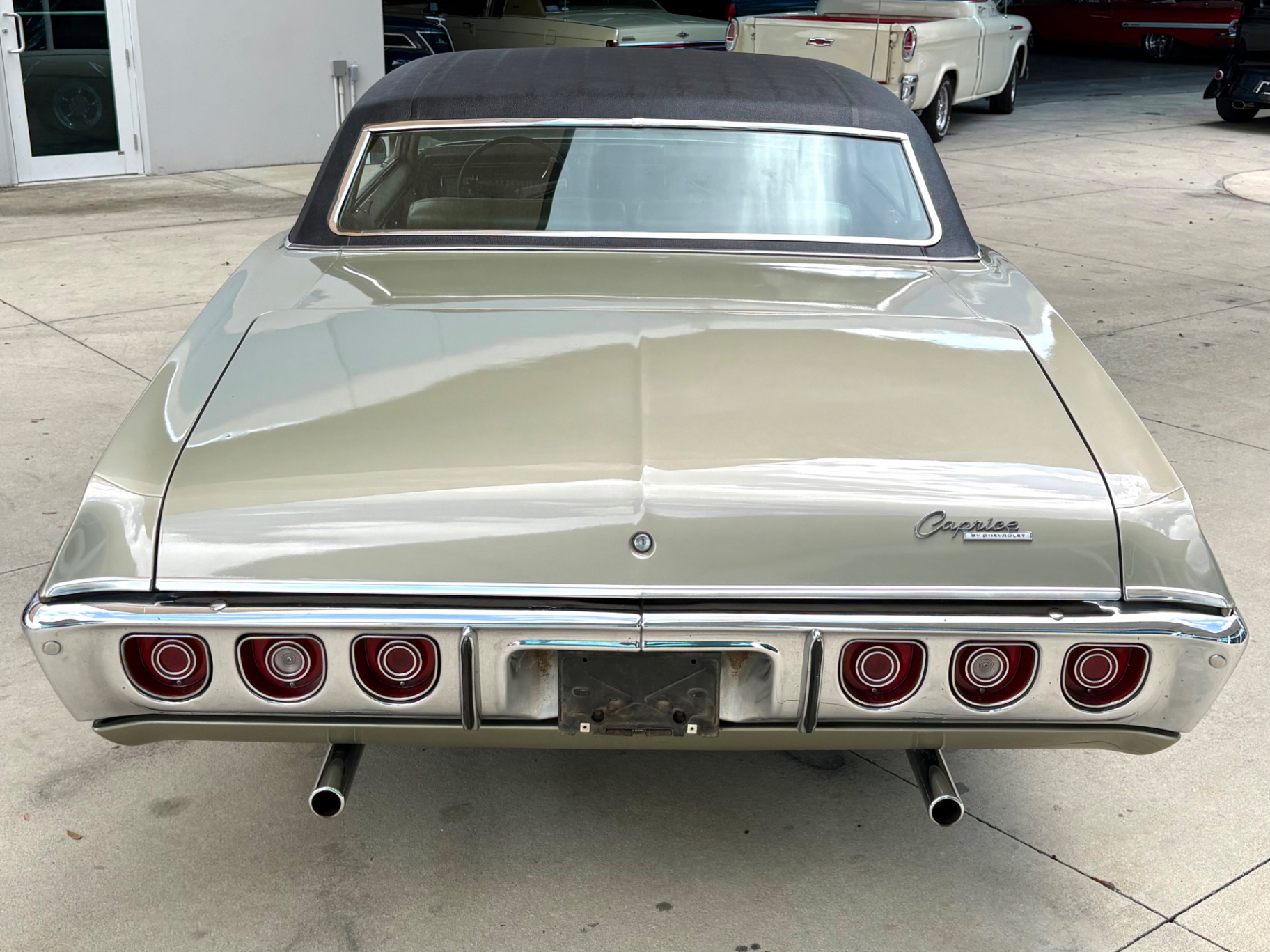
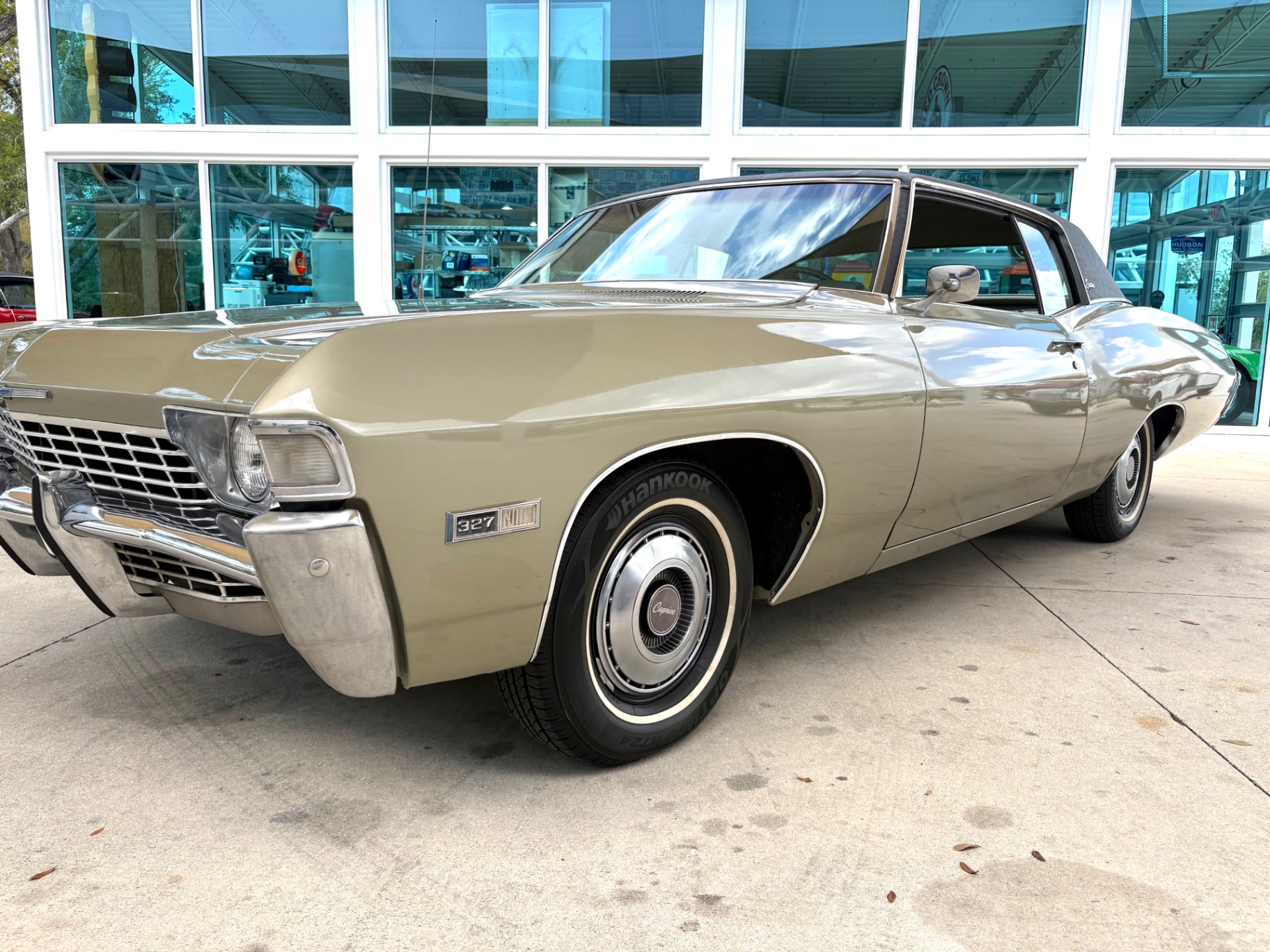
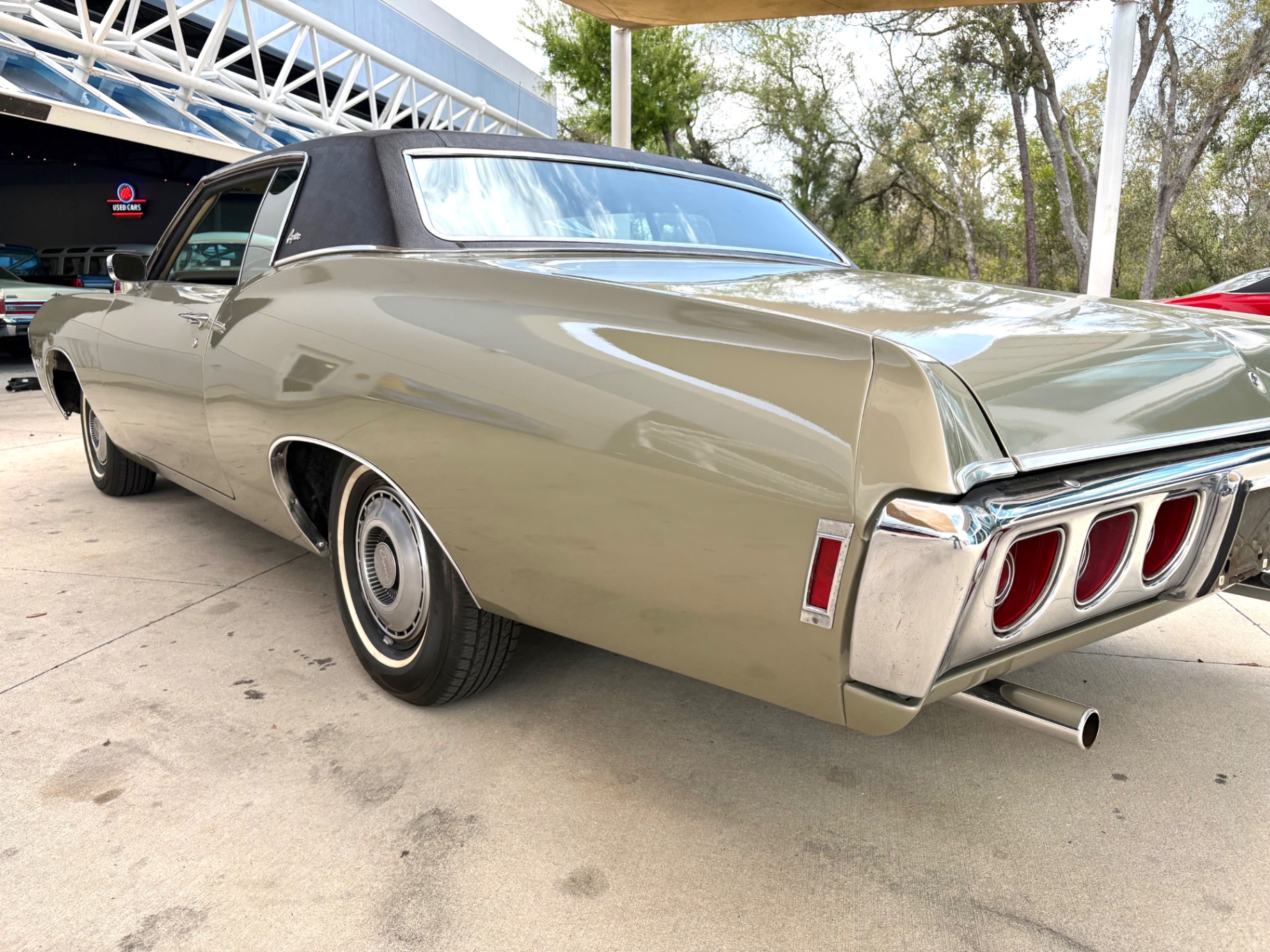
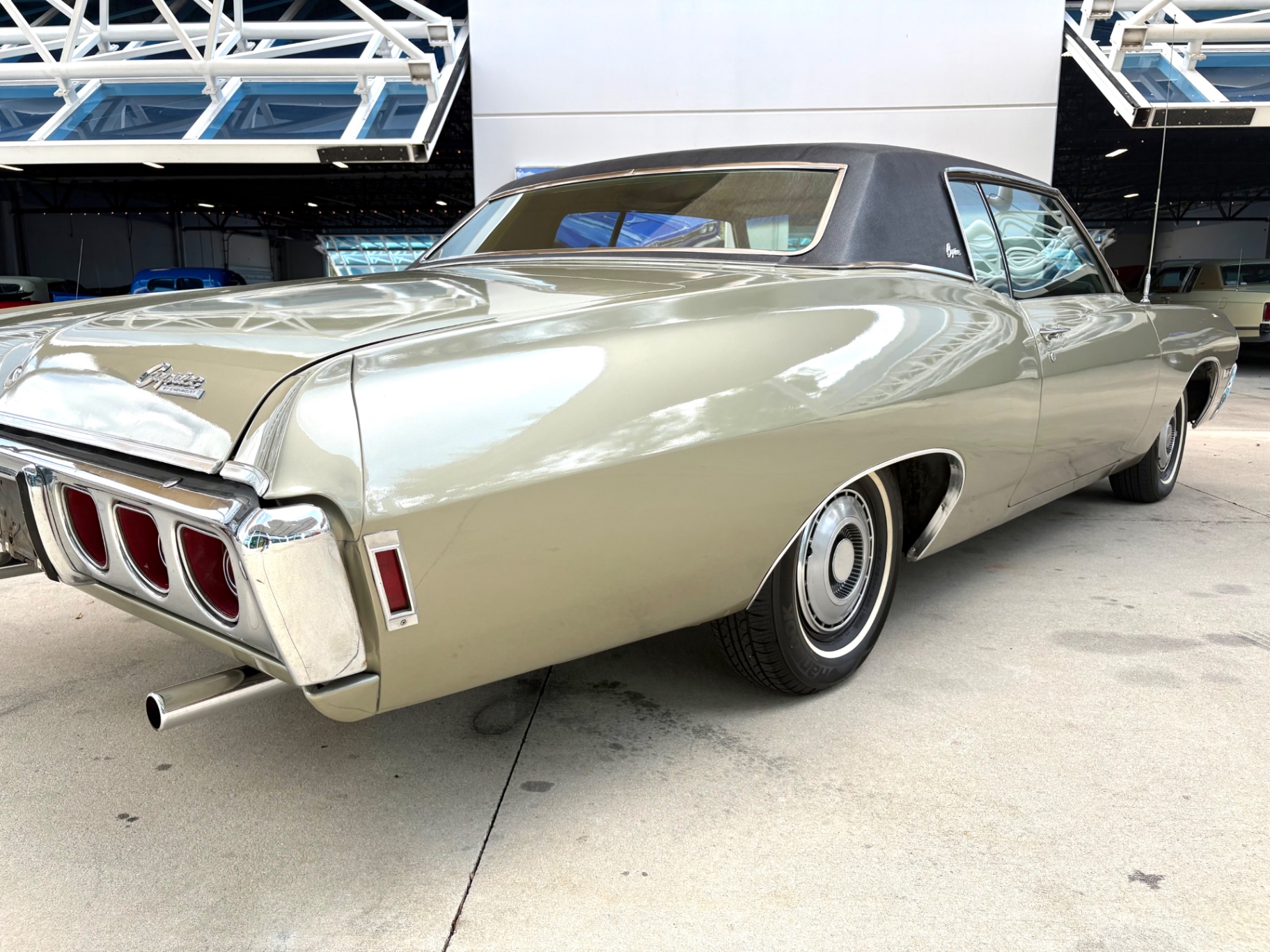
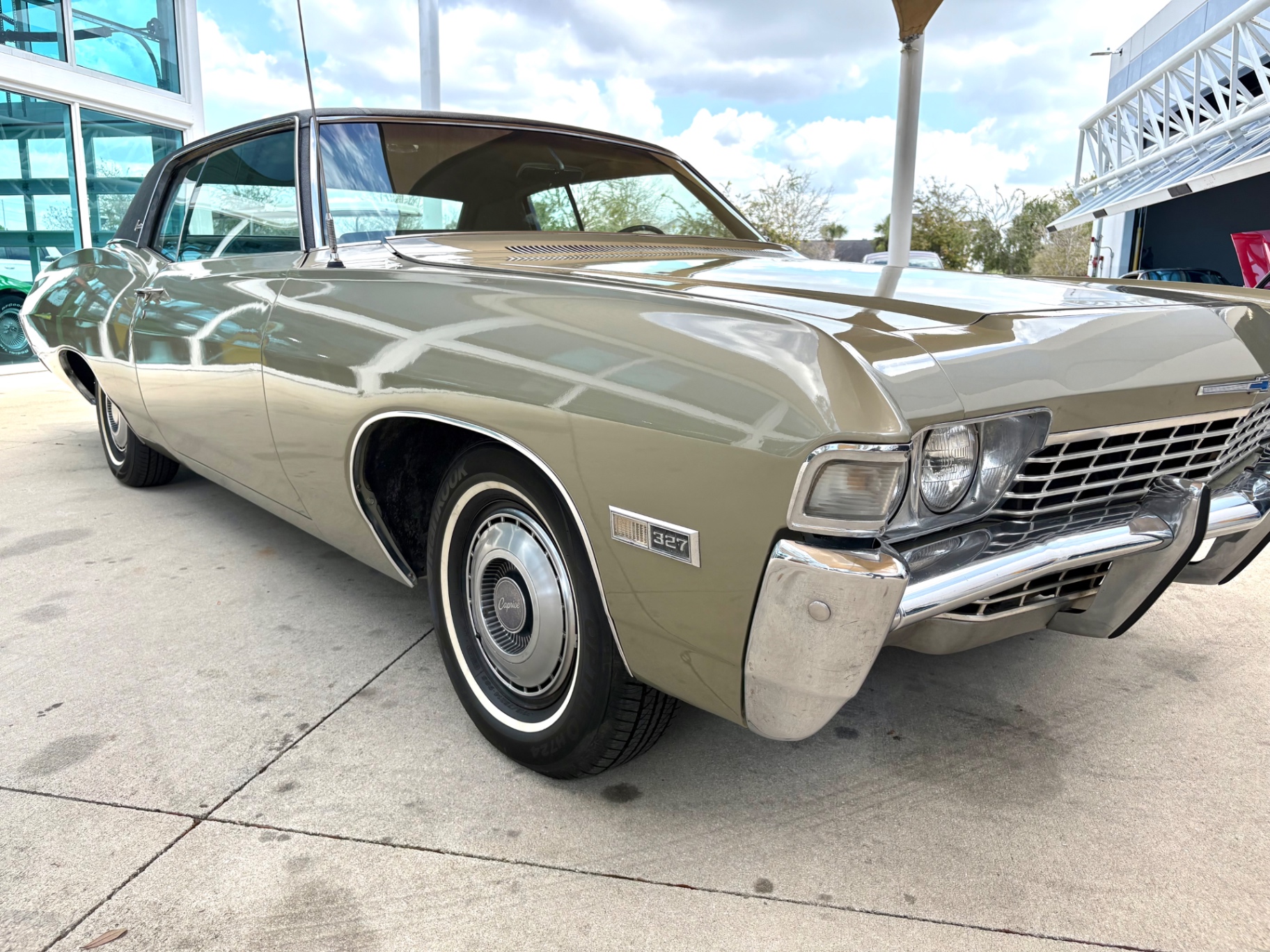
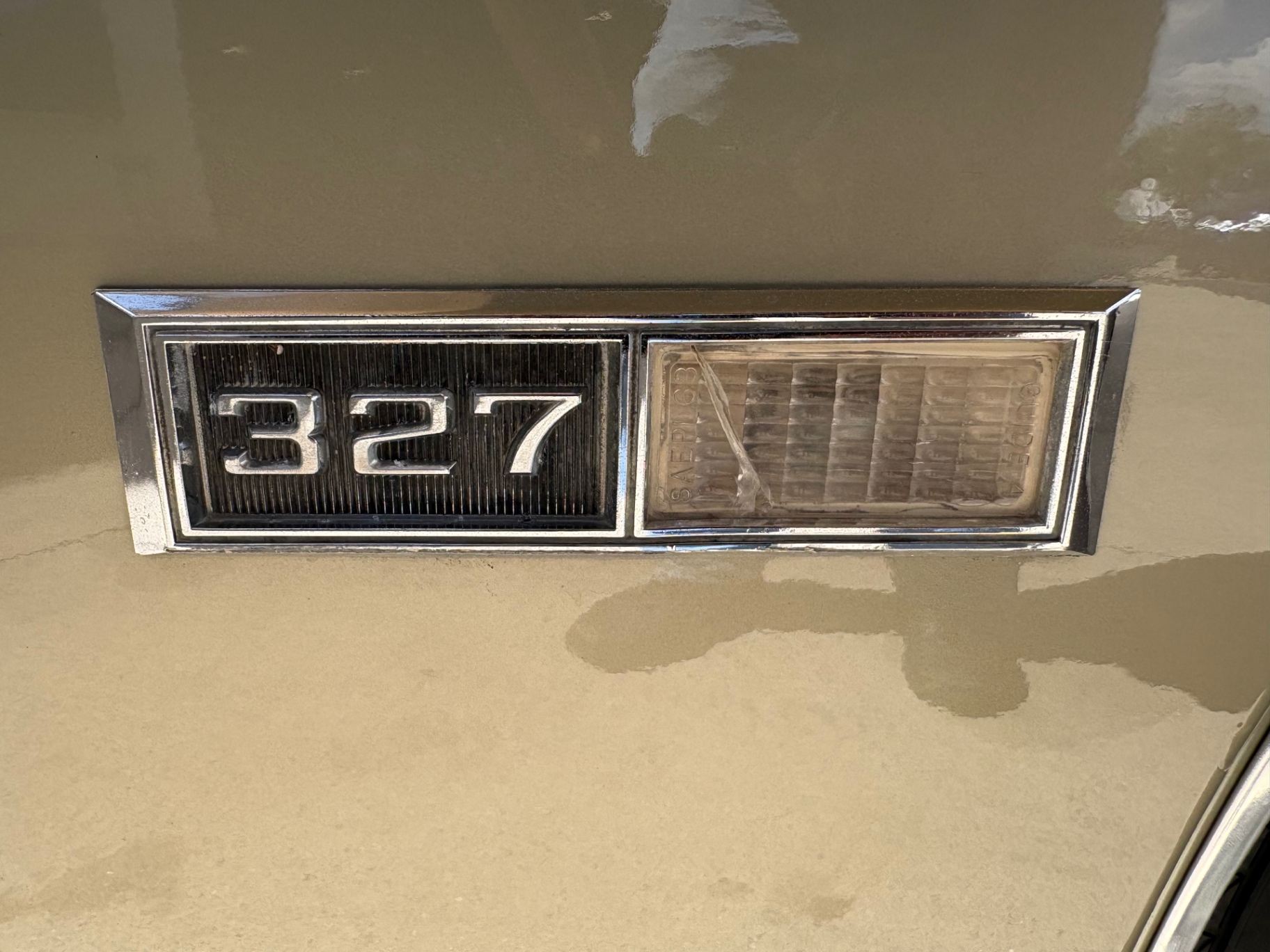
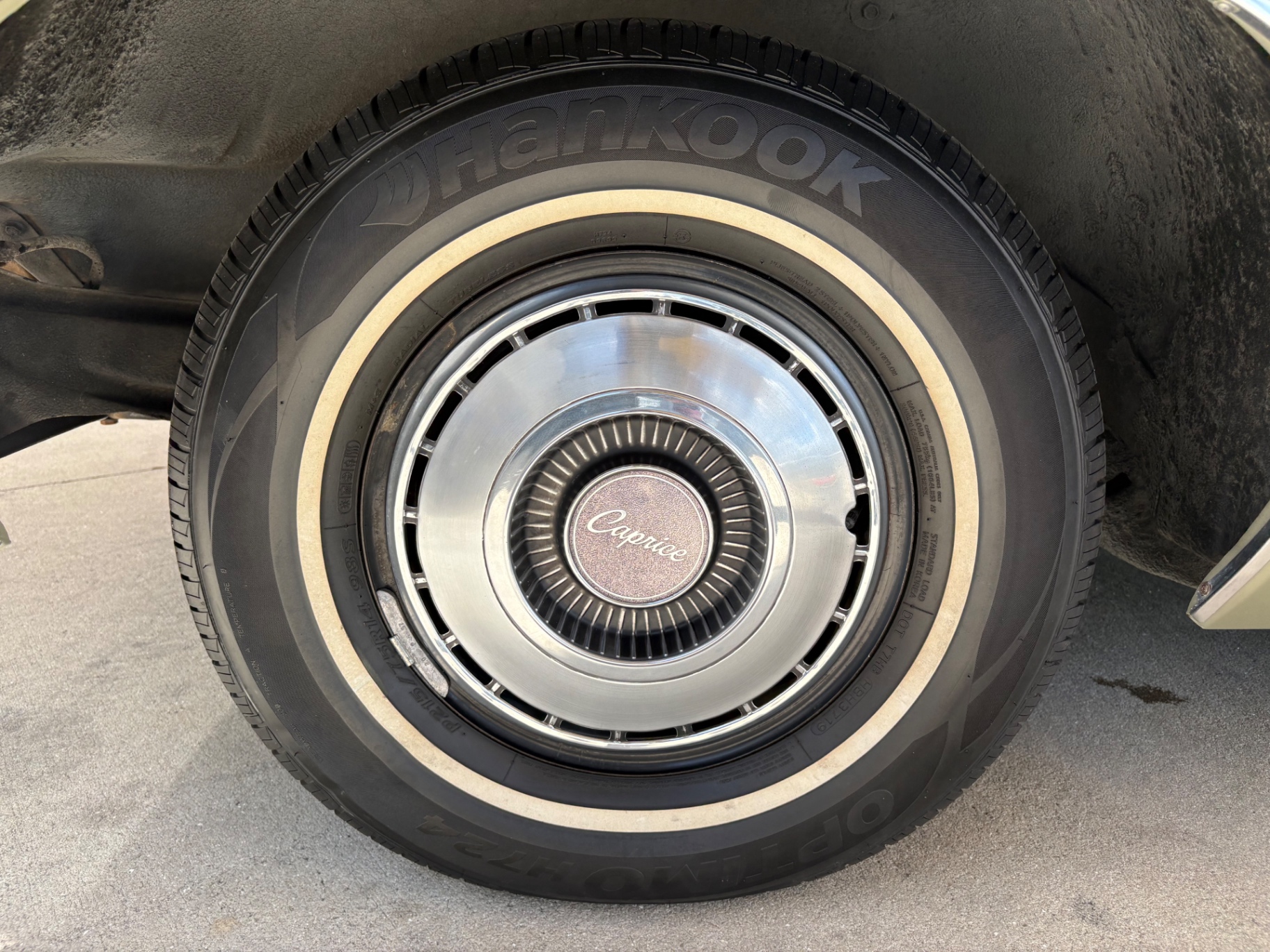
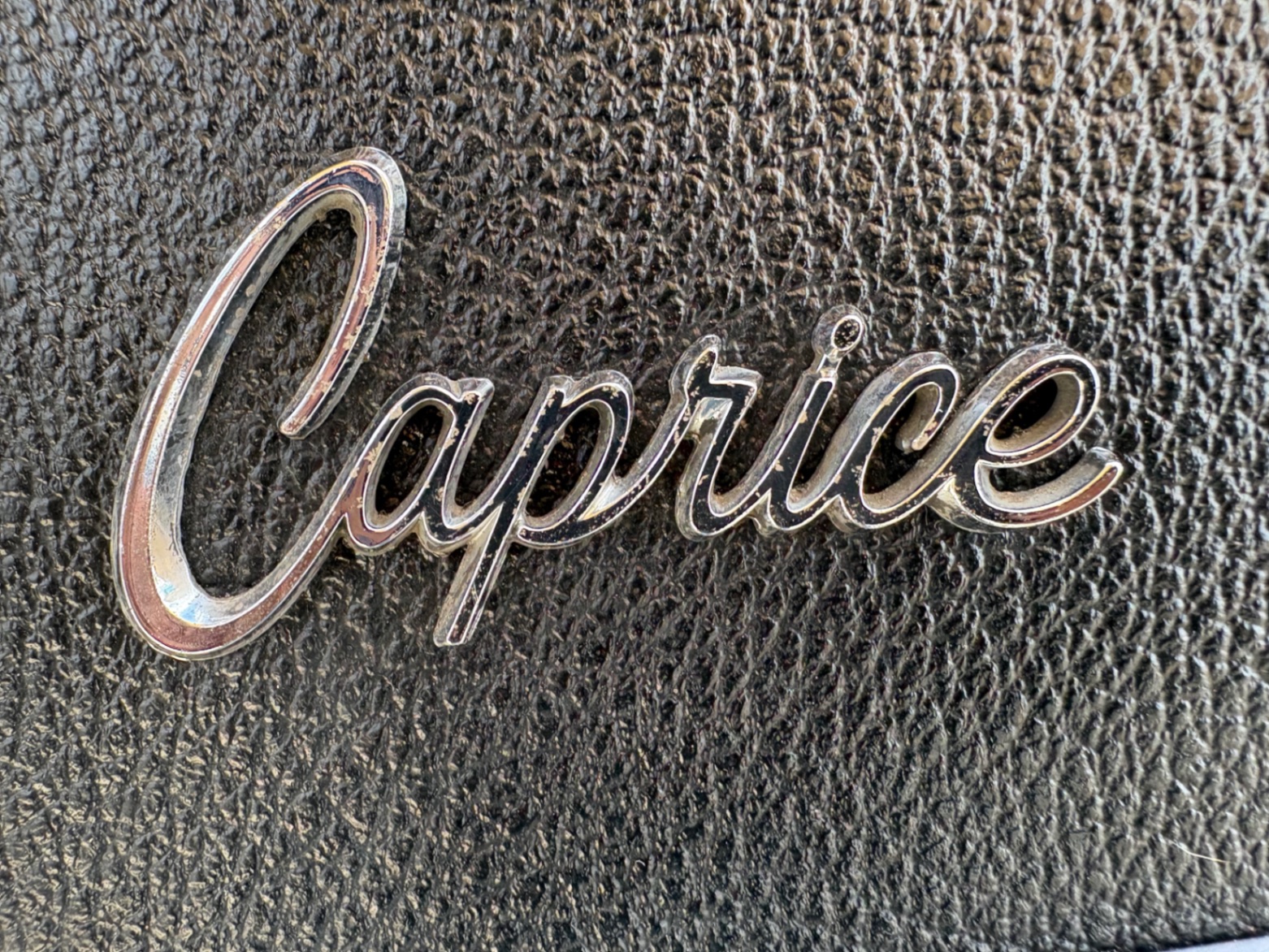
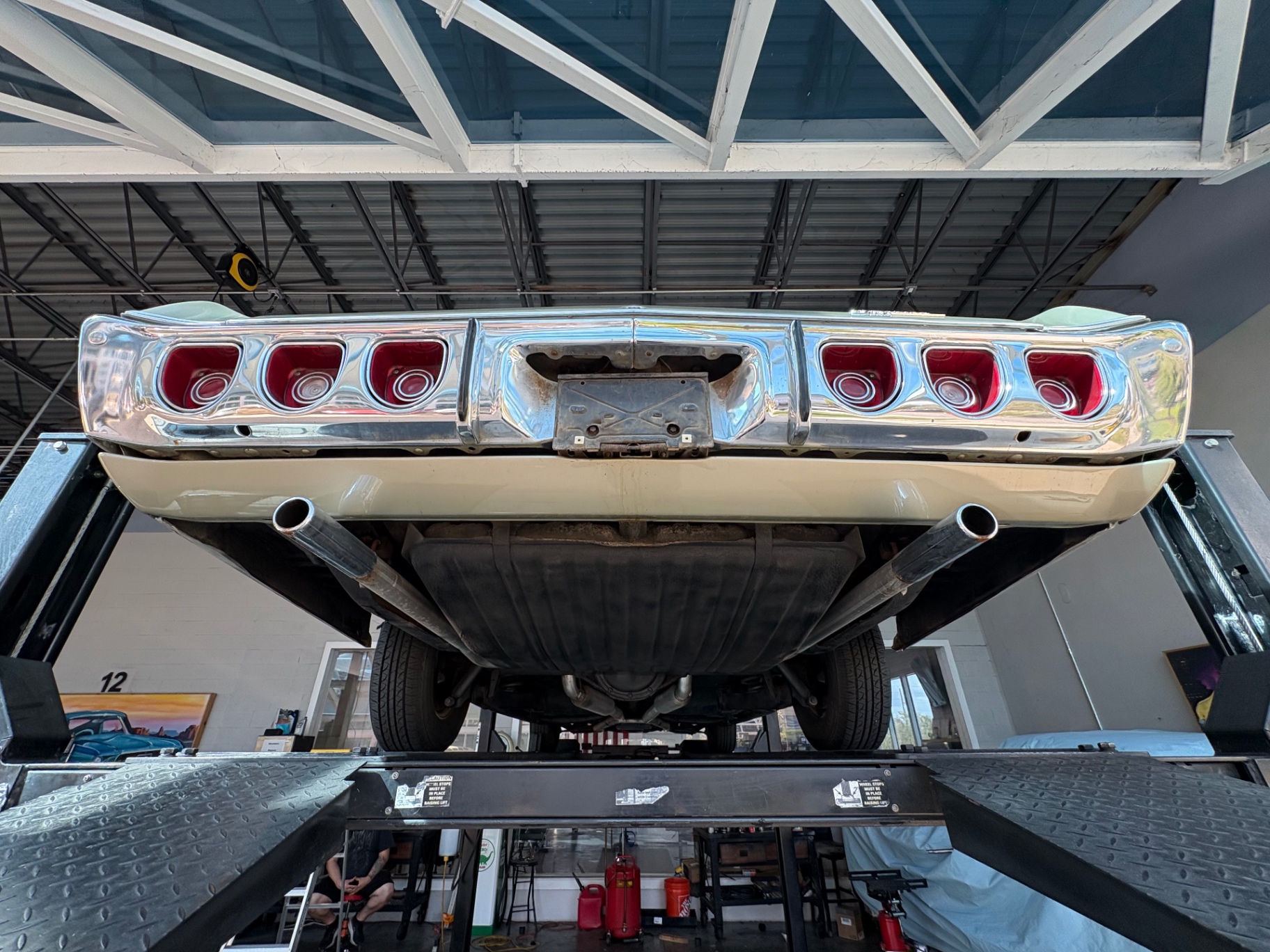
The chrome front and rear bumpers present well in the photos. The rear bumper, visible clearly in the undercarriage shot, shows the full-width chrome treatment that wraps around the six-lens taillight panel — a signature styling element of the 1968 Caprice that distinguished it from the Impala's tail treatment. The dual exhaust tips exit symmetrically below the rear bumper. The 327 fender badge on the front quarter panel is correct and in place, consistent with how the factory identified the engine under the hood without requiring someone to open it. The Caprice hubcap wheel covers and whitewall tires maintain the period-correct appearance that suits a car of this trim level and era.
Conclusion
The 1968 Chevrolet Caprice does not get the attention it deserves in the collector car market. Most buyers who come looking for a 1968 full-size Chevy are thinking about an Impala SS or a Biscayne drag car. What they overlook is that the 1968 Caprice was the top of the Chevrolet line in that model year, loaded with factory comfort and convenience features, built on the same solid B-body platform, and now available at a fraction of what the muscle car variants command. This example combines the most collectible attributes you can ask for in one of these cars: numbers matching engine, factory air conditioning, factory tilt column, correct color combination, clean undercarriage, and an interior that still shows its original character. It is a car you can drive, show, or simply keep in a collection knowing that the important details are all accounted for.
To learn more about this 1968 Chevrolet Caprice or to schedule a time to see it in person, call Skyway Classics at 941-254-6608.
Disclaimer Information found on the website is presented as given to us by the owner of the car, whether on consignment or from the owner we bought it from. Some Photos, materials for videos, descriptions and other information are provided by the consignor/seller and is deemed reliable, but Skyway Classics does not warranty or guarantee this information. Skyway Classics is not responsible for information that may incorrect or a publishing error. The decision to purchase should be based solely on the buyers personal inspection of the vehicle or by a professional inspection service prior to offer or purchase being made.
1968 Chevrolet Caprice - Numbers Matching, HH Code
Why This Car Is Special
The 1968 Chevrolet Caprice sits at an interesting crossroads in GM history. It was the first year the Caprice became its own fully independent model line rather than a trim package under the Impala umbrella, and Chevrolet made sure buyers noticed the difference. The 1968 Caprice wore unique front and rear styling compared to the Impala, including a more formal roofline on hardtop models, a distinctive hidden-wiper system, and interior appointments that pushed closer to Buick and Oldsmobile territory than anything Chevrolet had offered before in a full-size car. Chevrolet was deliberately targeting the Lincoln Continental and Cadillac DeVille buyer who thought a Chevy badge was beneath them. A lot of those buyers changed their minds in 1968.
This particular 1968 Chevrolet Caprice carries the HH engine code, which identifies the 327 cubic inch V8 as the two-barrel carbureted version rated at 250 horsepower. The 327 was a well-sorted engine by 1968 — it had been in production since 1962 and Chevrolet had decades of refinement behind it by this point. It is not the high-winding, high-compression version that went into Corvettes, but for a full-size luxury car it was a practical and proven choice that delivered smooth, reliable power without the maintenance demands of a performance-spec engine. The fact that this engine is numbers matching — meaning the stamped engine code corresponds to this car's original build — is a meaningful detail for collectors. Finding a 56-year-old full-size Chevrolet with the original engine still in place is not as common as it once was.
The VIN on this car encodes several details worth noting. The body style digit confirms this is a two-door hardtop Sport Sedan, which is the most desirable body configuration in the 1968 Caprice lineup. The assembly plant digit places production at the Flint, Michigan facility, one of the primary builders of full-size Chevrolets during this era.
Features List
- Numbers Matching 327ci V8, HH Engine Code (250hp, 2-barrel) - Turbo-Hydramatic Automatic Transmission - Factory Air Conditioning - Dual Exhaust - Power Steering - Power Brakes - Tilt Steering Column - Factory Delco AM Radio - Black Vinyl Top - Ash Gold Exterior - Gold Vinyl Interior - Woodgrain Interior Trim - Fleur-de-lis Door Panel Emblems - Full-Width Front Bench Seat - Chrome Front and Rear Bumpers - Whitewall Tires - Caprice Hubcap Wheel Covers - 327 Fender Badge - Clean Undercarriage
Mechanical
The 327 cubic inch small-block under this hood is the numbers matching original unit, confirmed by the HH stamp. Backed by the Turbo-Hydramatic automatic transmission, this drivetrain combination was the smooth-shifting, low-drama setup that made full-size Chevrolets popular with buyers who wanted reliable everyday transportation with enough power to merge onto a freeway without drama. The dual exhaust system gives the 327 a slightly more assertive note than a single exhaust setup, and it is a detail that collectors appreciate because it adds visual interest at the rear of the car without being a modification.
Factory power steering and power brakes were the right call on a car this size. A 1968 Caprice two-door hardtop carried substantial weight, and driving one without power assist would be an unpleasant experience. The factory air conditioning unit is present, which matters both for usability in the Florida climate and for authenticity. Factory AC cars were optioned that way from the beginning, meaning the firewall, brackets, and electrical routing were all done correctly at the factory rather than retrofitted later. The engine bay in the photos shows the small-block finished in Chevrolet's correct engine red, which is consistent with how these cars left the factory.
The undercarriage photos tell a clean story. There is no significant rust or rot visible, which is not something you take for granted on a 56-year-old car regardless of what climate it spent its life in. A solid floor and frame are the foundation everything else rests on.
Interior
The 1968 Caprice interior was genuinely upmarket by Chevrolet standards. This car wears the gold vinyl interior that coordinates correctly with the Ash Gold exterior, and the condition of the door panels in the photos shows the material has held up well. The Caprice-specific door panels used a button-tufted pattern with a chrome trim strip and a woodgrain insert — and mounted at the center of each woodgrain panel is the small silver fleur-de-lis emblem that was unique to the Caprice. That emblem was Chevrolet's way of visually communicating that this was something more than a standard Impala. It is a subtle detail, but it is the kind of thing that separates a properly optioned Caprice from a look-alike.
The full-width front bench seat is correct for this model and trim level, finished in gold vinyl that matches the rest of the interior. The woodgrain trim continues on the dashboard, which was a specific Caprice feature in 1968. The tilt steering column adds a practical dimension — something that buyers who actually drive these cars appreciate. The factory Delco AM radio sits in the dash where it was installed in 1968, which matters for overall originality. Replacement radios are common in cars this age, and keeping the factory unit intact is a detail that collectors notice. Factory air conditioning vents are integrated into the dash without modification, consistent with a car that was ordered with AC from the factory.
Exterior
Ash Gold is not a color that shows up on many 1968 Chevrolets on the market today, and that relative scarcity is part of what makes this car visually distinctive in a field full of white, black, and red examples. It is a warm, slightly muted gold with enough depth to read differently in shade versus direct sunlight, and it pairs logically with the black vinyl top and the gold interior. The black vinyl top was a popular factory option in 1968 and gives the car the formal, semi-formal roofline that Chevrolet was using to position the Caprice above the Impala in the full-size hierarchy.
The chrome front and rear bumpers present well in the photos. The rear bumper, visible clearly in the undercarriage shot, shows the full-width chrome treatment that wraps around the six-lens taillight panel — a signature styling element of the 1968 Caprice that distinguished it from the Impala's tail treatment. The dual exhaust tips exit symmetrically below the rear bumper. The 327 fender badge on the front quarter panel is correct and in place, consistent with how the factory identified the engine under the hood without requiring someone to open it. The Caprice hubcap wheel covers and whitewall tires maintain the period-correct appearance that suits a car of this trim level and era.
Conclusion
The 1968 Chevrolet Caprice does not get the attention it deserves in the collector car market. Most buyers who come looking for a 1968 full-size Chevy are thinking about an Impala SS or a Biscayne drag car. What they overlook is that the 1968 Caprice was the top of the Chevrolet line in that model year, loaded with factory comfort and convenience features, built on the same solid B-body platform, and now available at a fraction of what the muscle car variants command. This example combines the most collectible attributes you can ask for in one of these cars: numbers matching engine, factory air conditioning, factory tilt column, correct color combination, clean undercarriage, and an interior that still shows its original character. It is a car you can drive, show, or simply keep in a collection knowing that the important details are all accounted for.
To learn more about this 1968 Chevrolet Caprice or to schedule a time to see it in person, call Skyway Classics at 941-254-6608.
Disclaimer Information found on the website is presented as given to us by the owner of the car, whether on consignment or from the owner we bought it from. Some Photos, materials for videos, descriptions and other information are provided by the consignor/seller and is deemed reliable, but Skyway Classics does not warranty or guarantee this information. Skyway Classics is not responsible for information that may incorrect or a publishing error. The decision to purchase should be based solely on the buyers personal inspection of the vehicle or by a professional inspection service prior to offer or purchase being made.
1968 Chevrolet
Caprice Base
Why Choose Skyway Classics?
Explore our curated inventory of classic and collector cars—thoughtfully selected, ready to drive, and supported by experts who make ownership simple.
Expert Curation
Every vehicle is hand-selected by our experts for quality, authenticity, and investment potential.
Fast Transactions
Streamlined buying and selling process with quick financing and immediate delivery options.
Only National Dealer With Classic Service & Repair
We’re the only national dealership that services and repairs the classics we sell—before and after the sale.
Nationwide Network
Access to our extensive network of collectors, restorers, and classic car enthusiasts nationwide.
Concierge Ownership Support
From financing and insurance to paperwork, shipping, and titling—we handle the details so you can enjoy the drive.
Passion-Driven Service
We're classic car enthusiasts first, providing personalized service with genuine passion for the hobby.