
1963 Chevrolet
C10 Custom
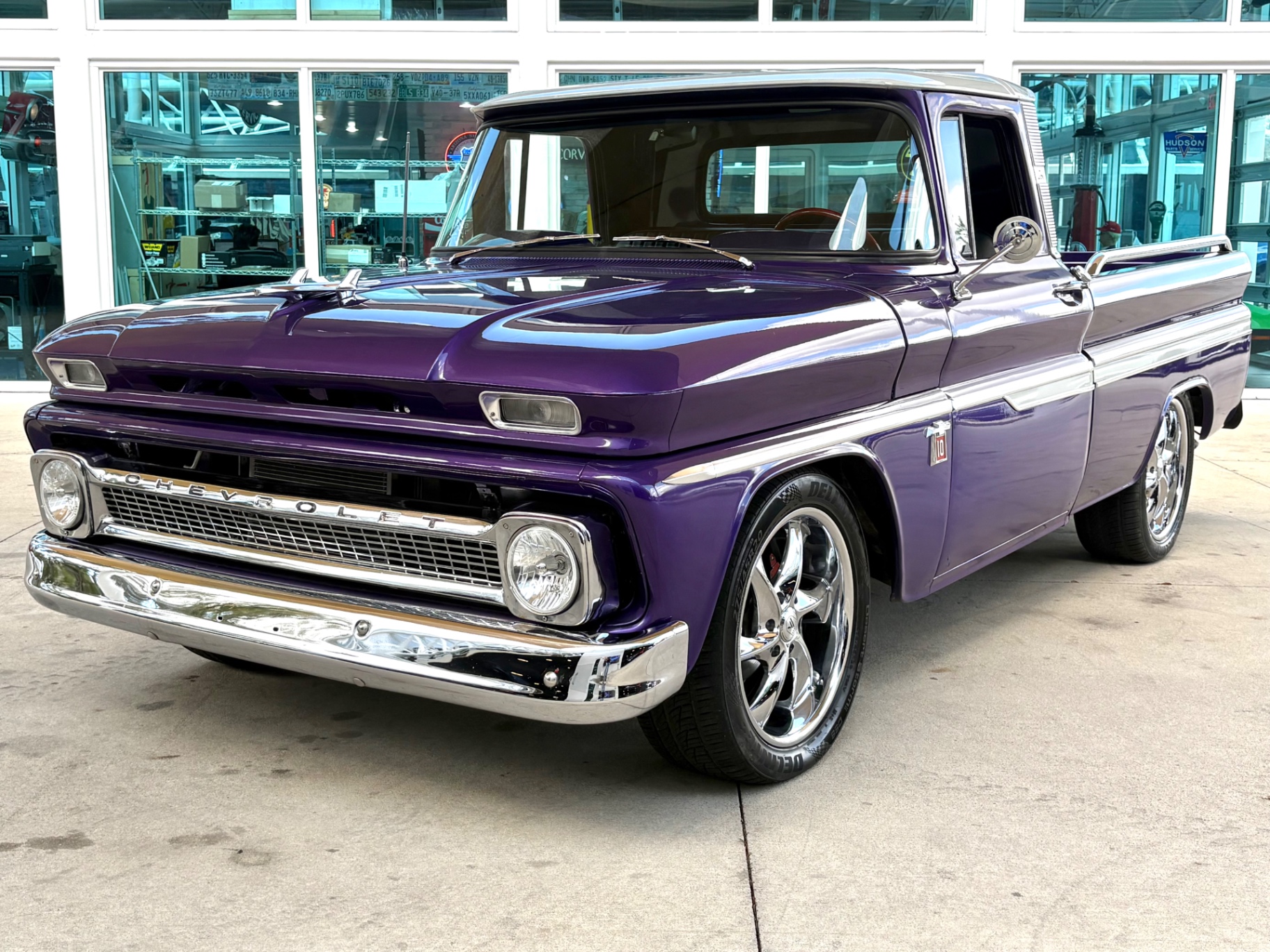
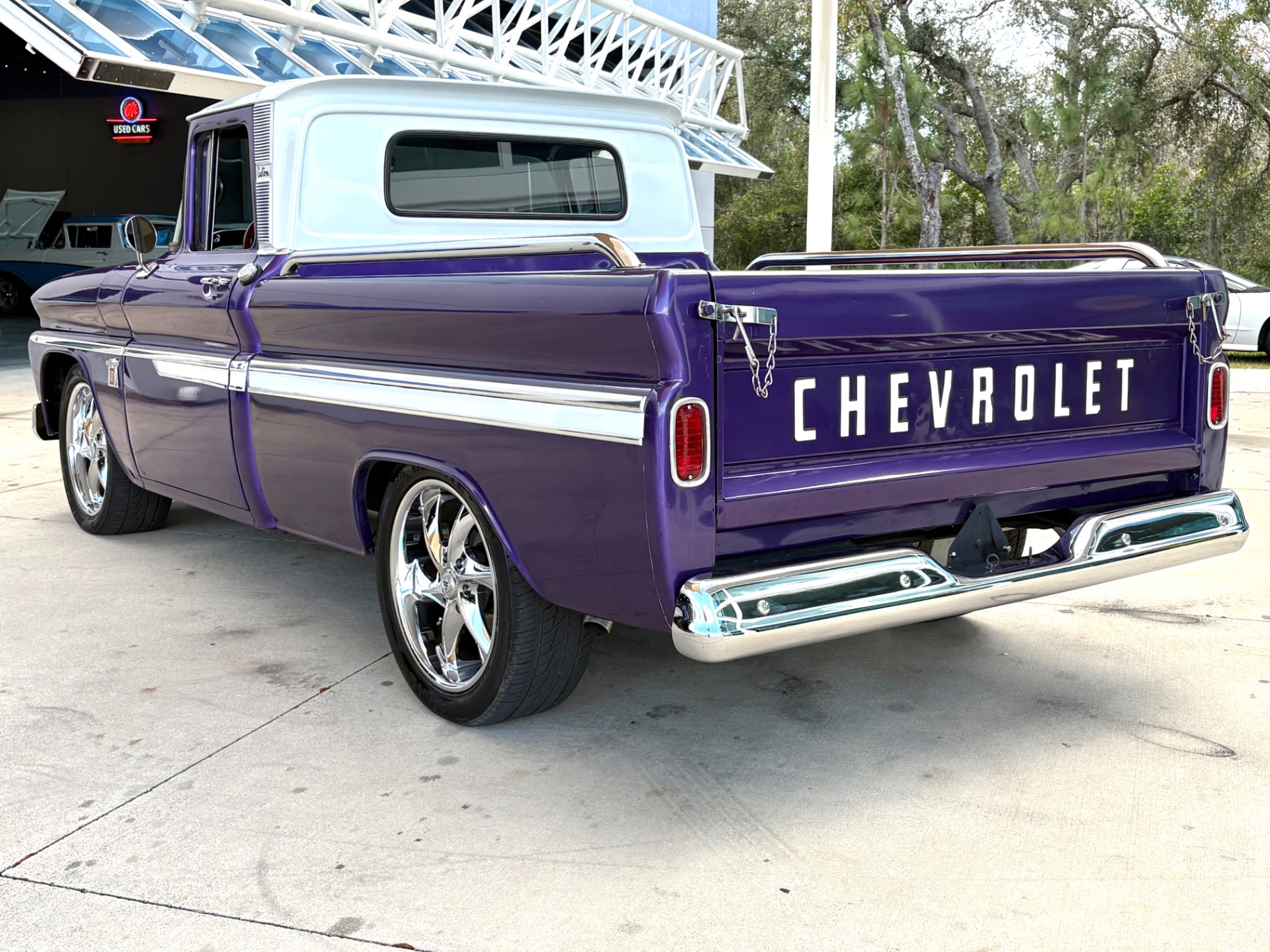
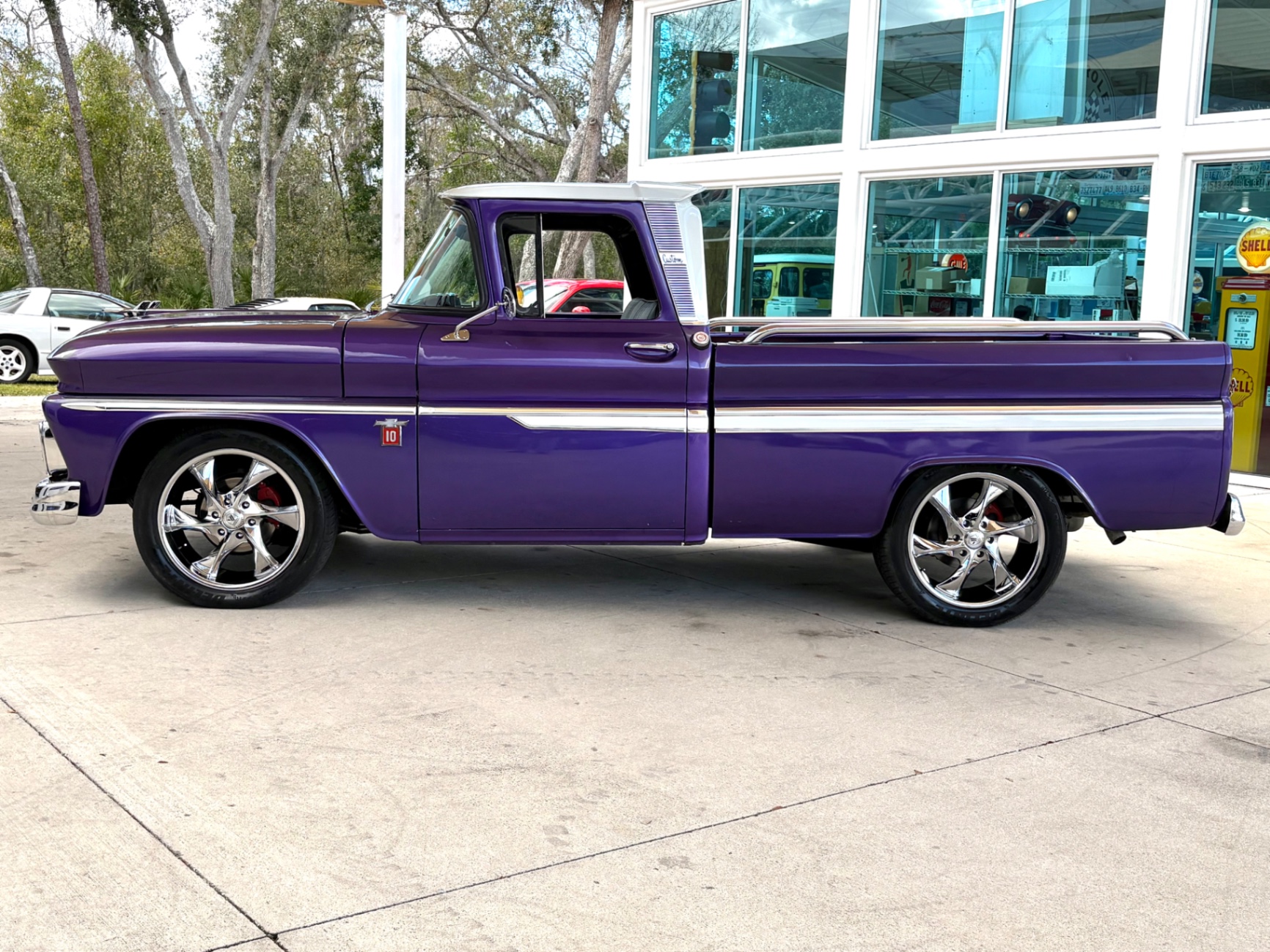
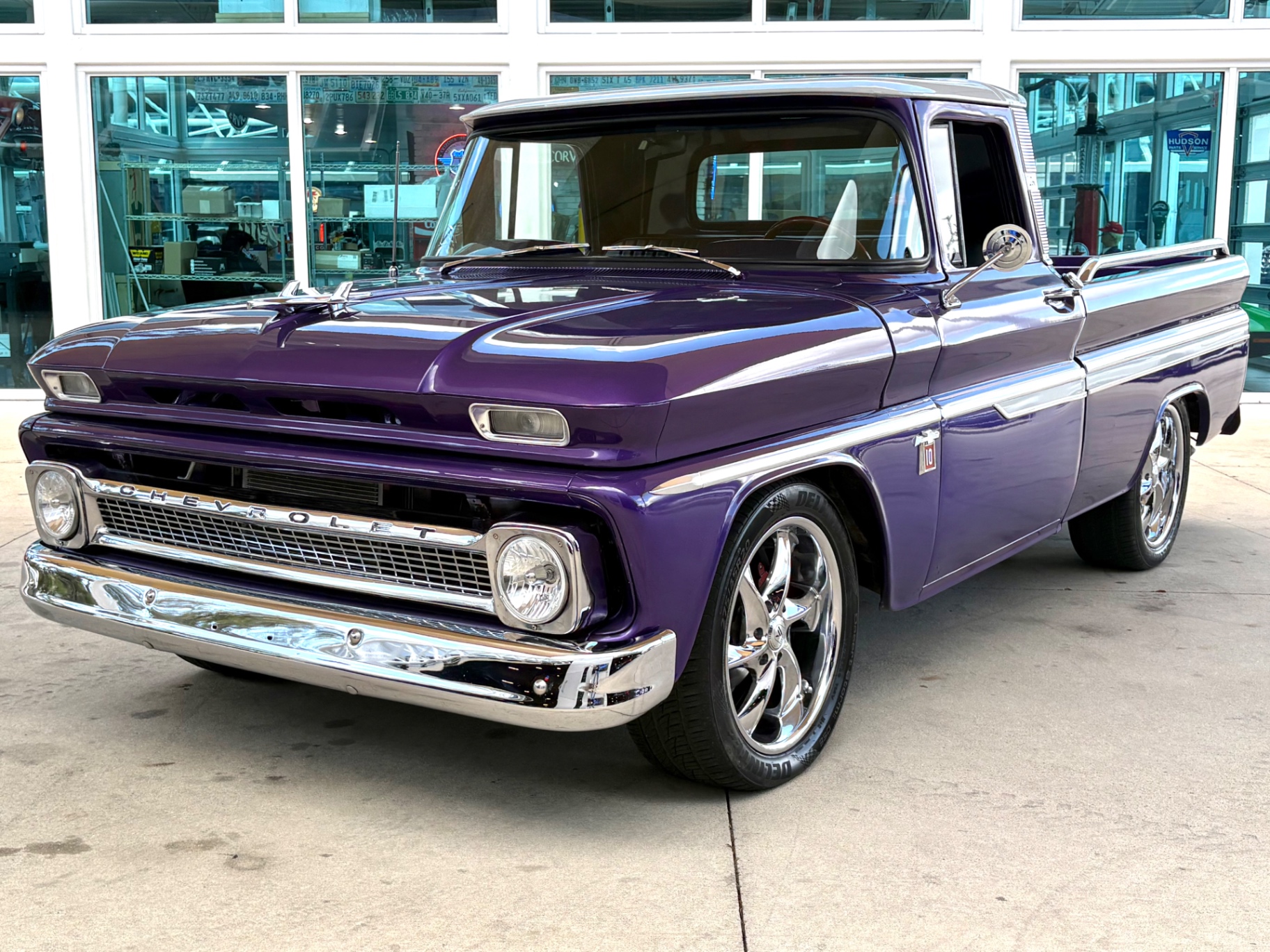
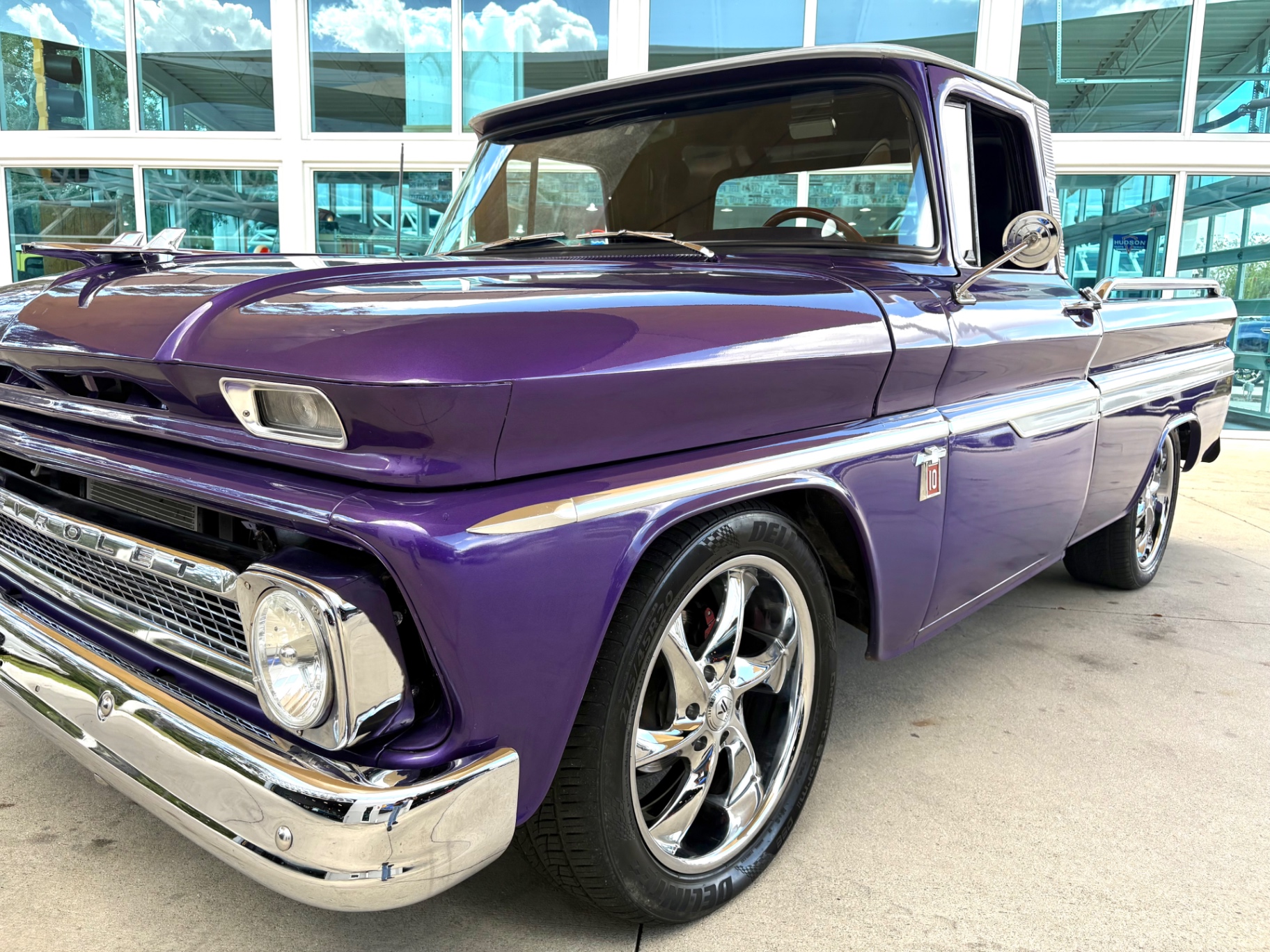
1963 Chevrolet C10 Short Bed Custom — LS-Swapped Pro-Touring Build with Full Custom Paint
Why This Car Is Special
The 1960–1966 Chevrolet C10 is one of the most popular platforms in the custom truck hobby, and for good reason. Chevrolet introduced the C/K series in 1960 as a complete redesign of its light-duty truck lineup, moving away from the round, fender-forward styling of the 1950s and into a cleaner, more modern double-wall cab design with a lower, wider stance. The 1963 model year sits right in the middle of the first generation, before the minor facelift that arrived for 1964. That means this truck carries the original grille treatment and hood line that many enthusiasts consider the cleanest iteration of the body style.
The short bed configuration — officially a 6.5-foot box on the half-ton C10 — has always been the more desirable variant for custom builds. It gives the truck better proportions and puts the cab and bed in a visual relationship that works, especially when the truck is lowered. The short bed C10 from this era has become a fixture on the pro-touring and custom truck show circuit, and the market for well-built examples has remained strong for years.
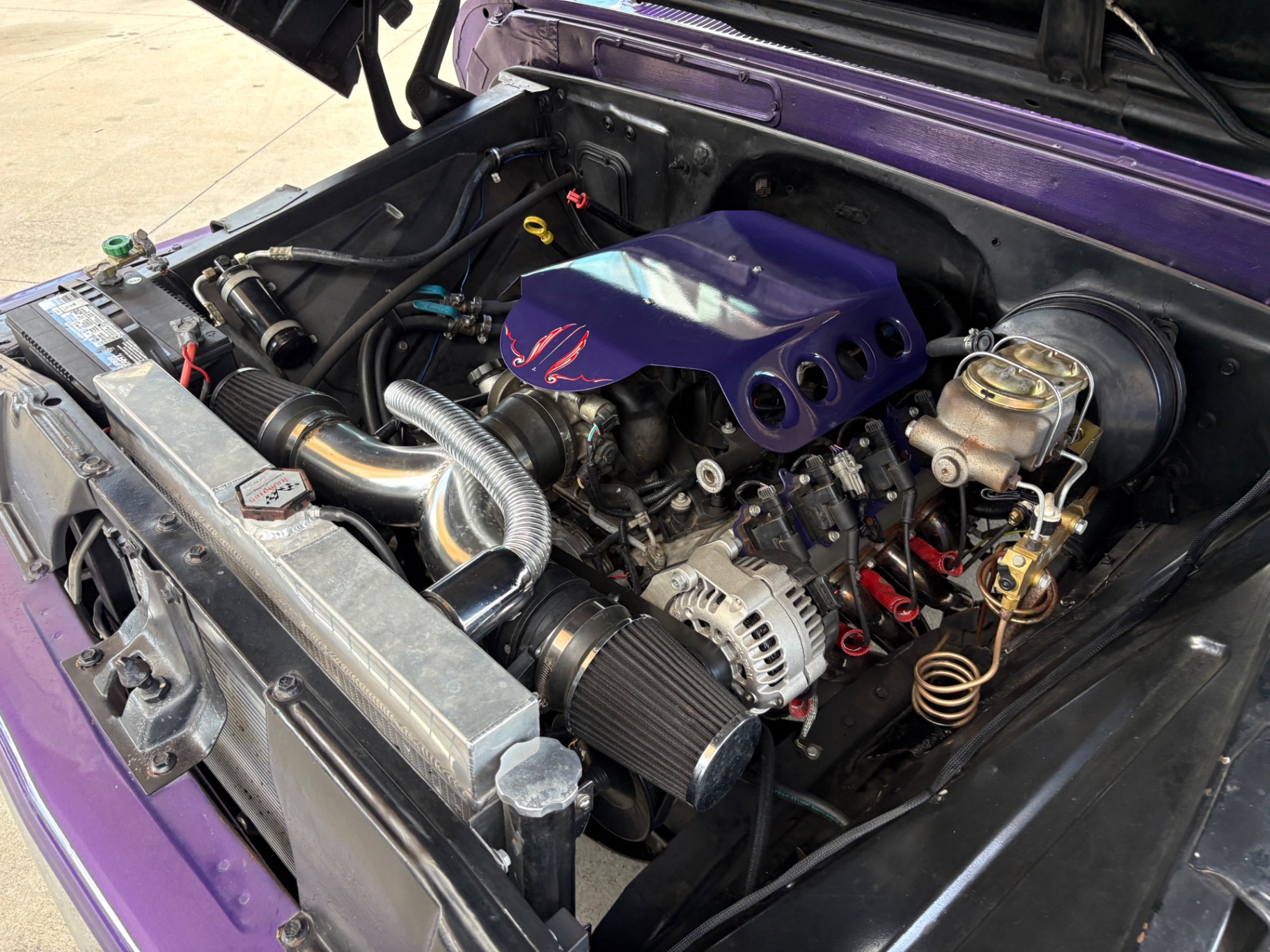
This particular 1963 Chevrolet C10 is not a trailer queen or a half-finished project. It is a completed, driven custom built around a GM LS 5.3-liter V8 and a 4L60E four-speed automatic overdrive transmission — a combination that makes this truck genuinely usable on today's roads. The builder made thoughtful choices throughout: independent front suspension for modern handling, four-wheel disc brakes for stopping power, Vintage Air for climate control, and an LMC gas tank relocation kit to free up clearance for the lowered stance and side-exit exhaust. The two-tone purple and white full custom paint is aggressive and committed, carrying through to the firewall, cab interior, and engine cover. This is not a truck that was built halfway.
Features List
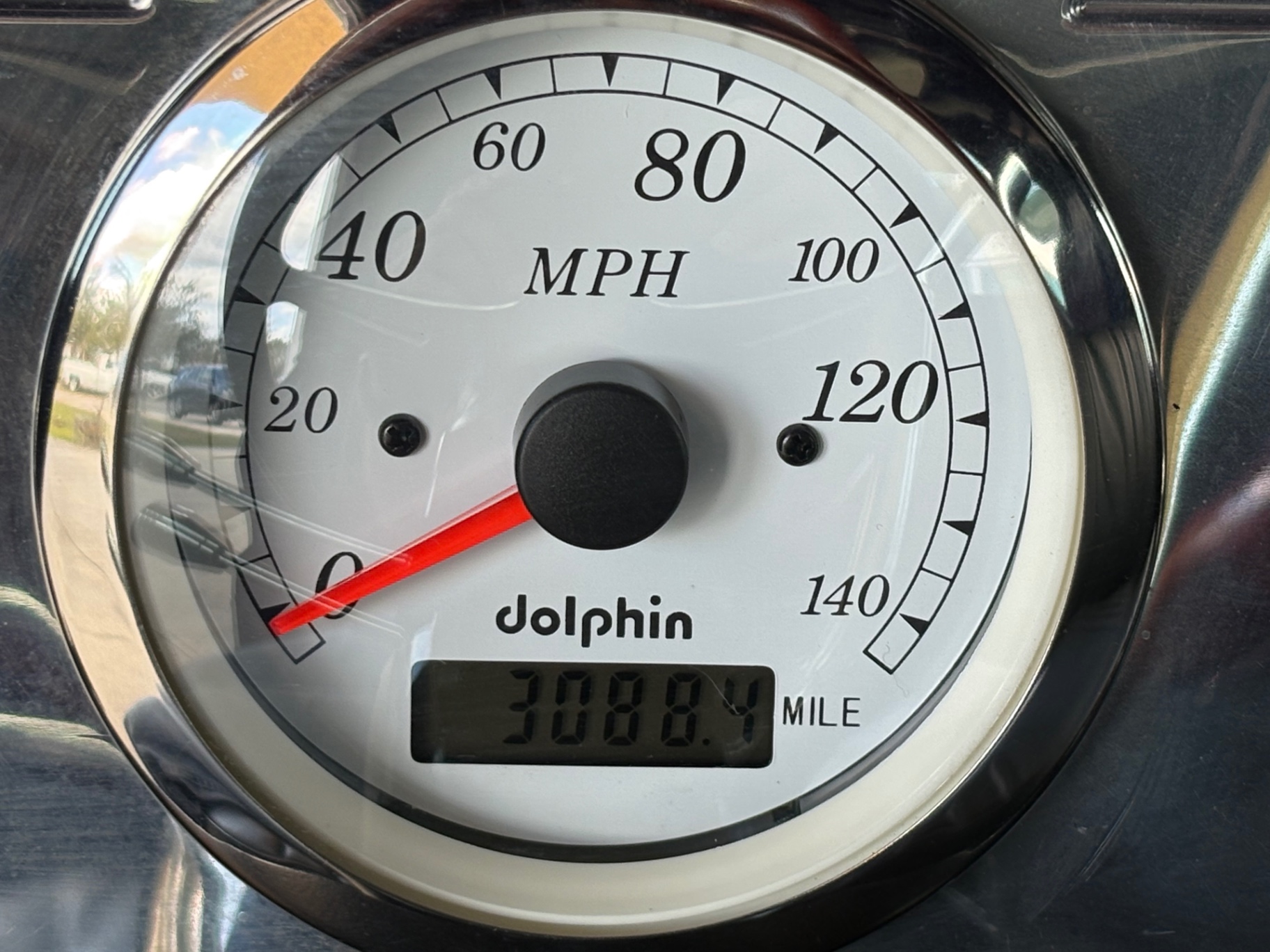
- LS 5.3L V8 engine
- 4L60E 4-speed automatic overdrive transmission
- Independent front suspension (IFS)
- 4-wheel disc brakes with red powder-coated calipers
- Power steering
- Stainless headers with Flowmaster mufflers, dual exhaust with side exits
- Cold air intake
- Aluminum radiator
- High-output alternator
- LMC gas tank relocation kit
- Vintage Air A/C system
- Ididit tilt steering column
- Grant steering wheel
- Dolphin gauges with billet dash
- Custom console with cup holders and Bowtie emblem
- Kenwood stereo with amplifiers and subwoofers
- HID headlights
- Custom engine cover with fire pinstripe graphics
- 20-inch custom wheels
- Two-tone purple and white full custom paint
- Custom cab badge and C10 fender badge
- Chrome hood ornament, chrome front and rear bumpers
- Chrome body side trim and moldings
- Chrome exterior door mirrors
- Stainless door sill plates
- Lowered stance
- Black painted frame and undercarriage
- Full bench seat reupholstery in black vinyl
- Custom painted interior, firewall, and cab
- Wood bed floor with stainless bed strips
- Rear vent and quarter windows
- Factory short bed configuration
Mechanical
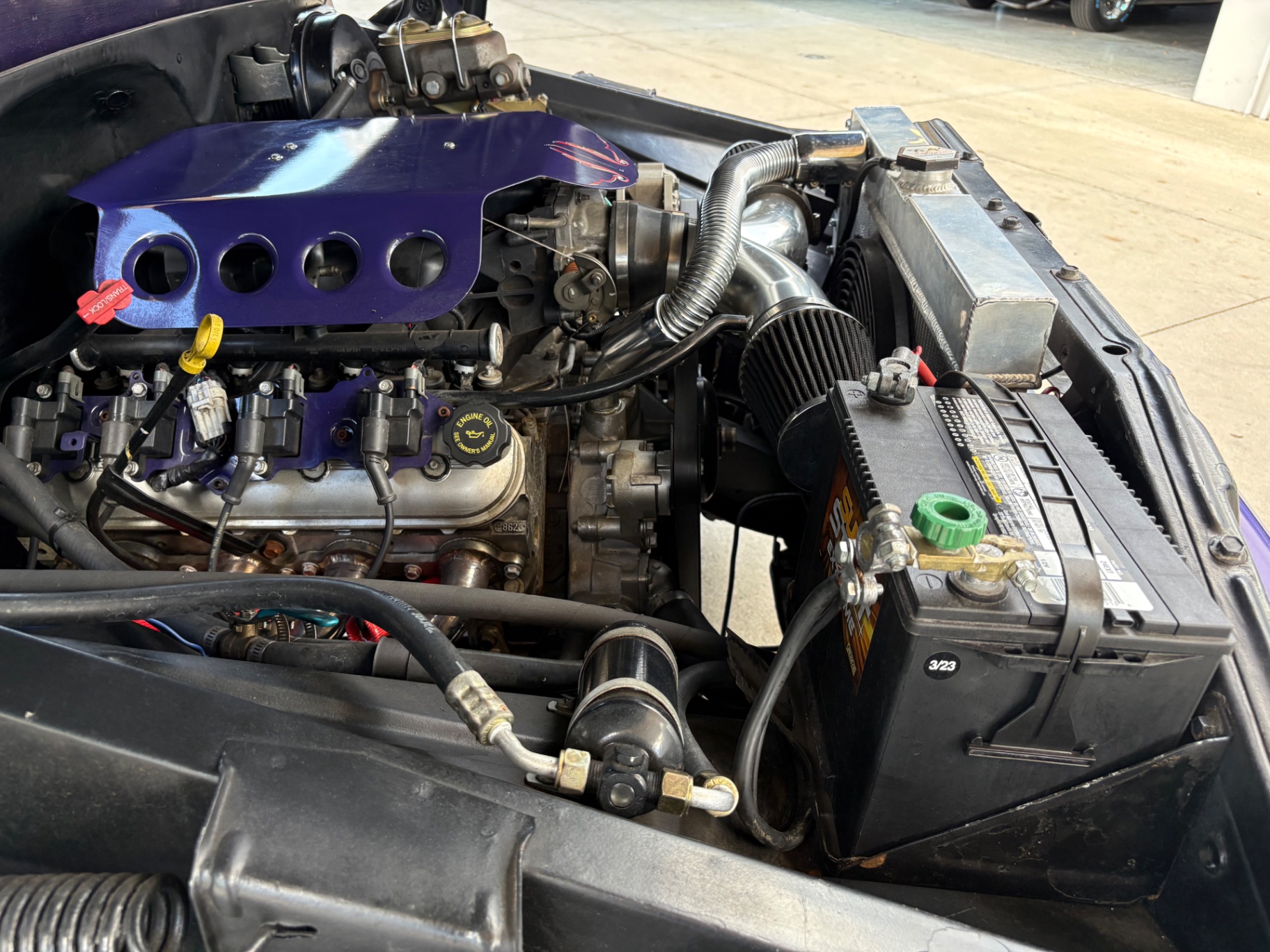
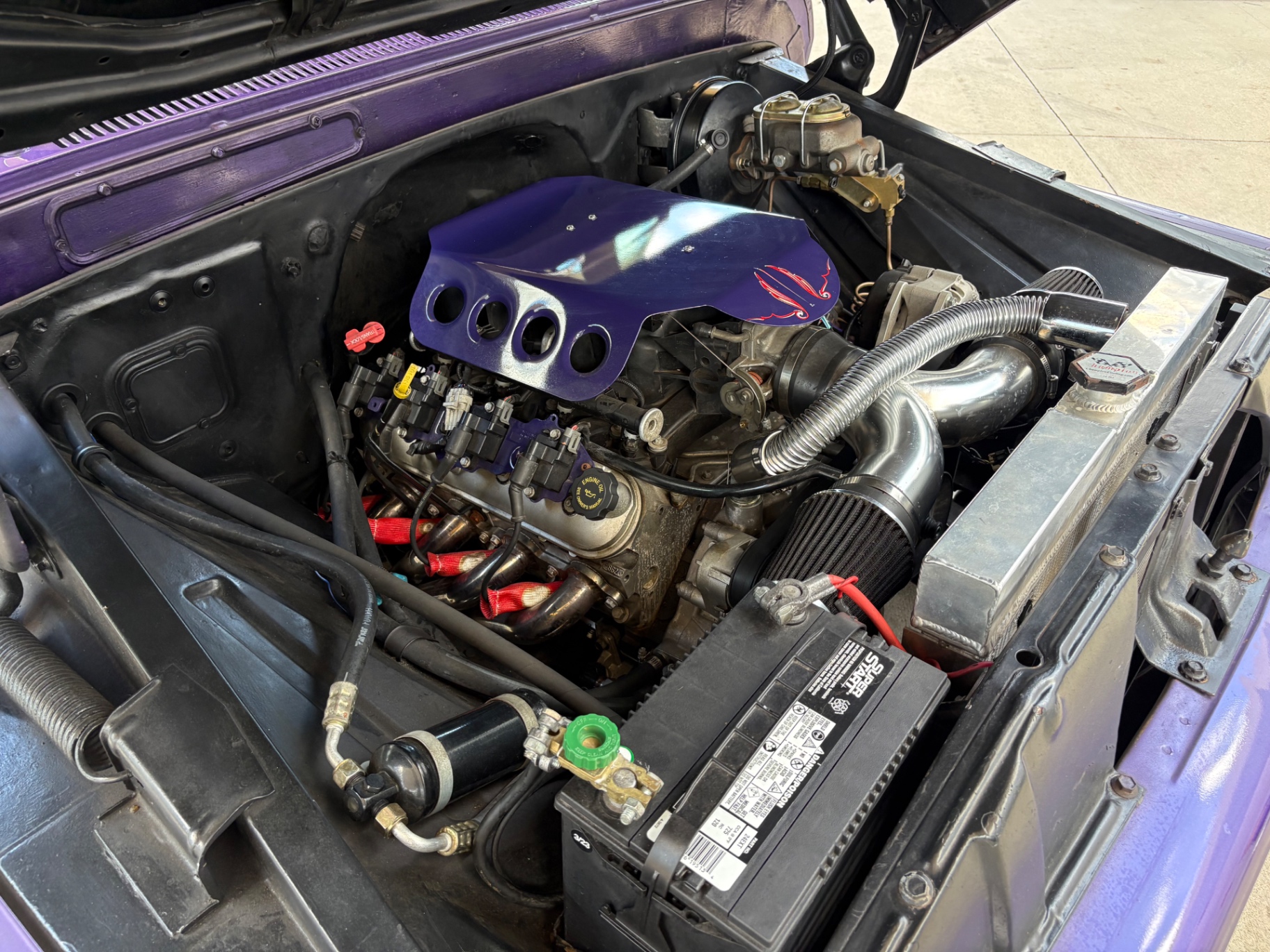
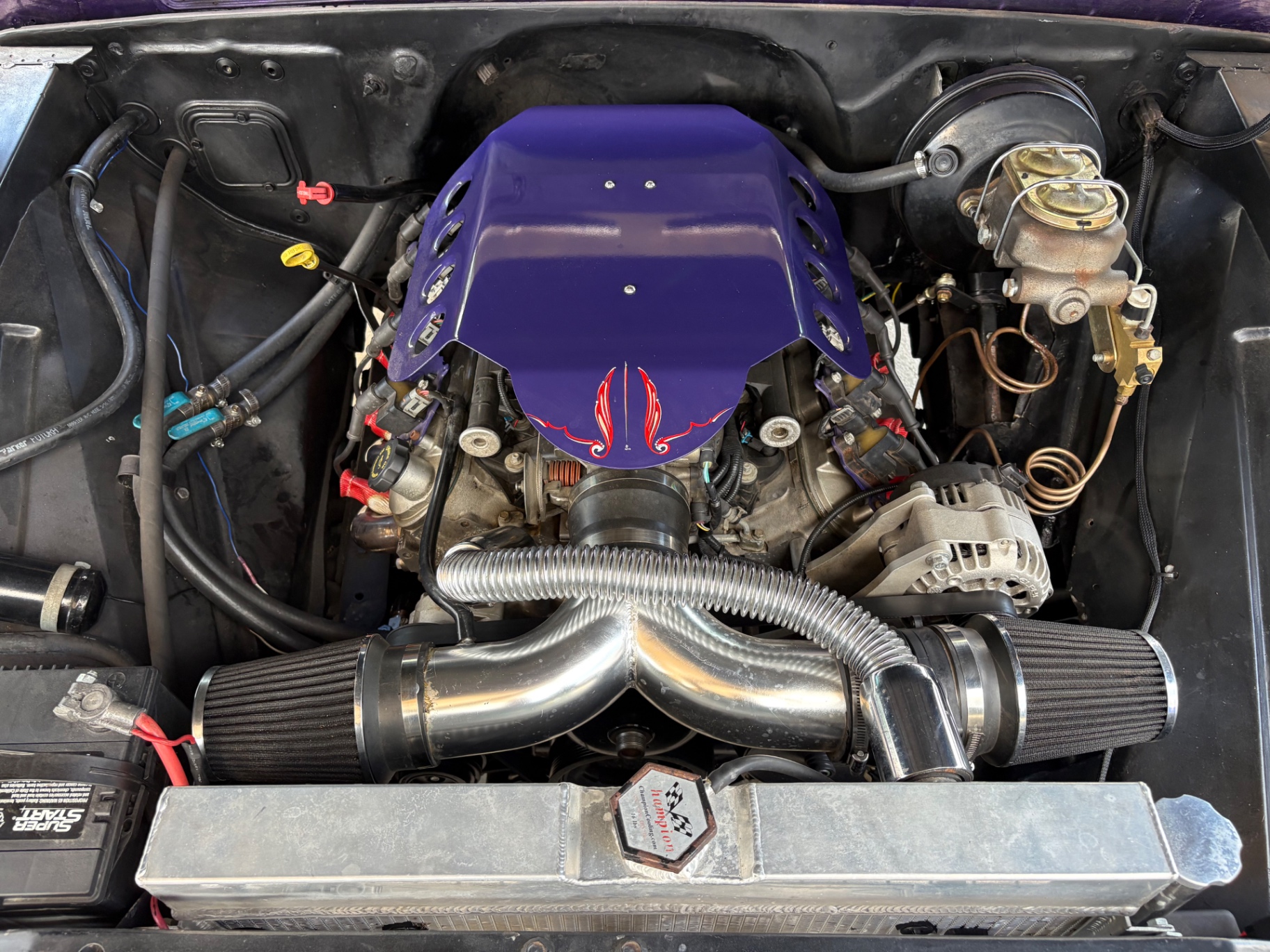
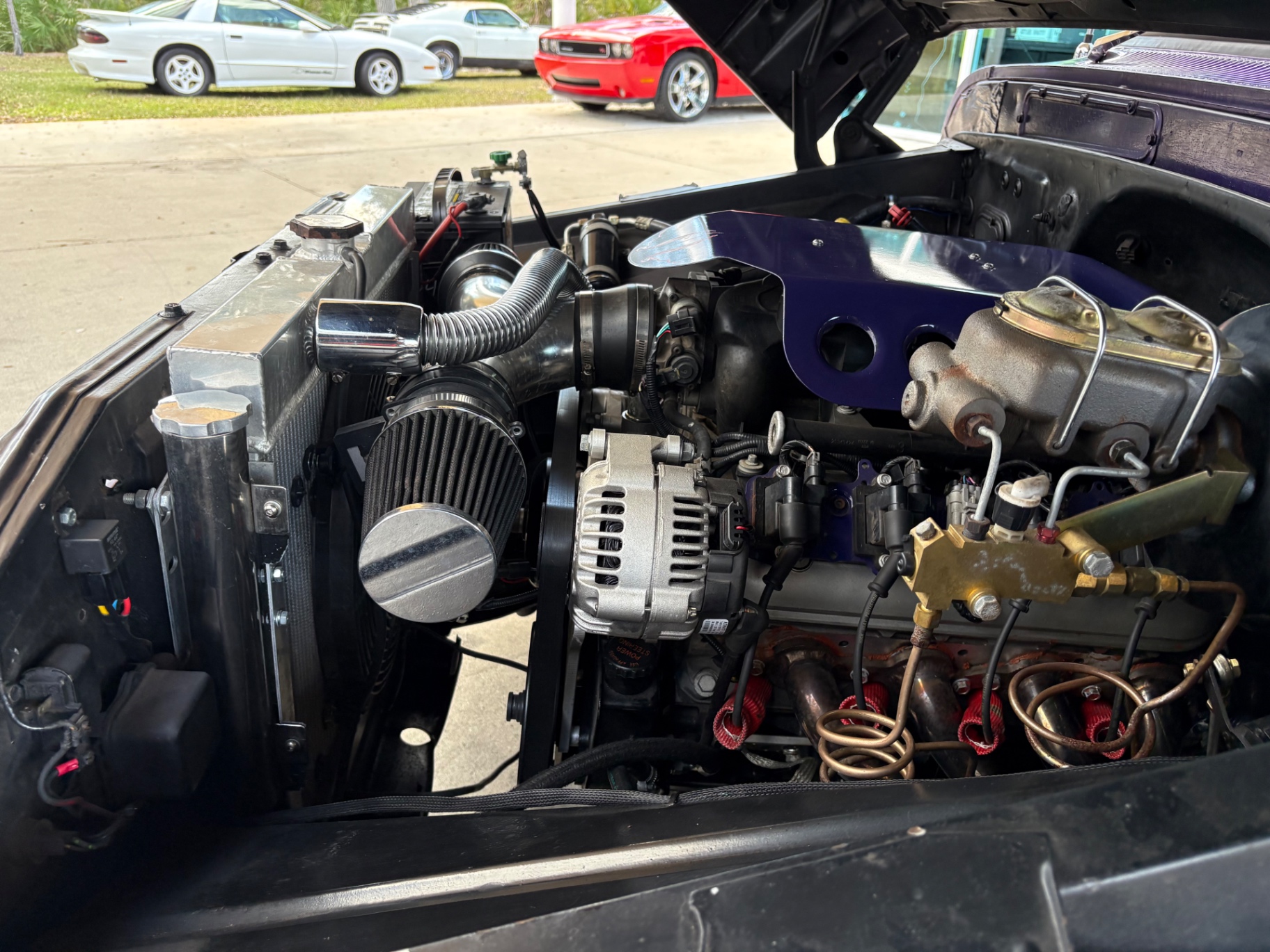
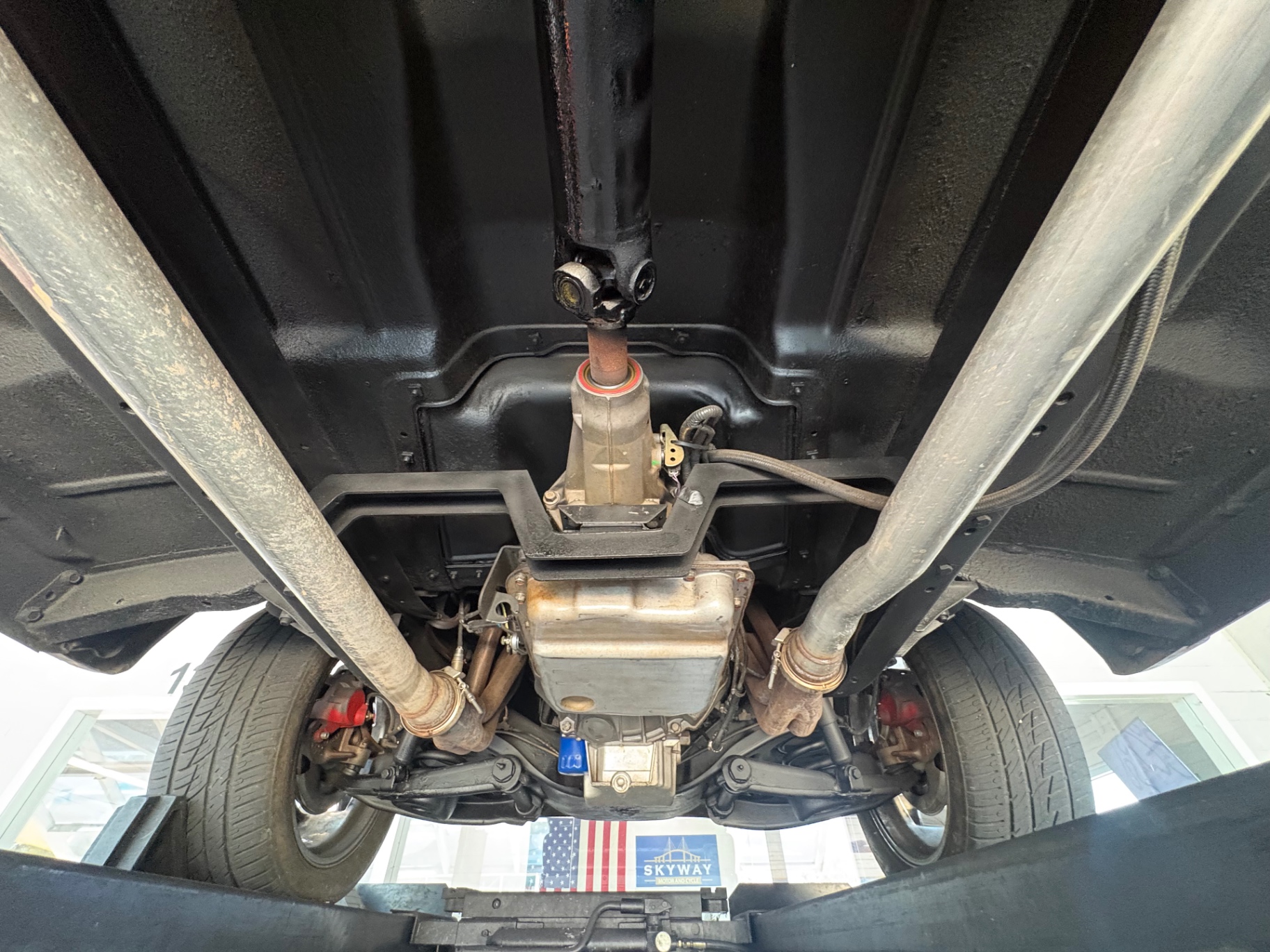
The heart of this 1963 Chevrolet C10 is a GM LS 5.3-liter V8, backed by a 4L60E four-speed automatic overdrive transmission. The LS 5.3 is one of the most proven engines in the GM catalog. In truck applications, it produced between 270 and 295 horsepower depending on the model year and calibration, and it is known for broad, usable torque throughout the RPM range. More importantly for a truck this size, it is fuel-injected, computer-controlled, and far more reliable in daily use than any carbureted period-correct engine. The 4L60E adds a true overdrive fourth gear, which keeps engine speed down on the highway and makes this truck comfortable to drive long distances — something the original three-speed was never designed to do.
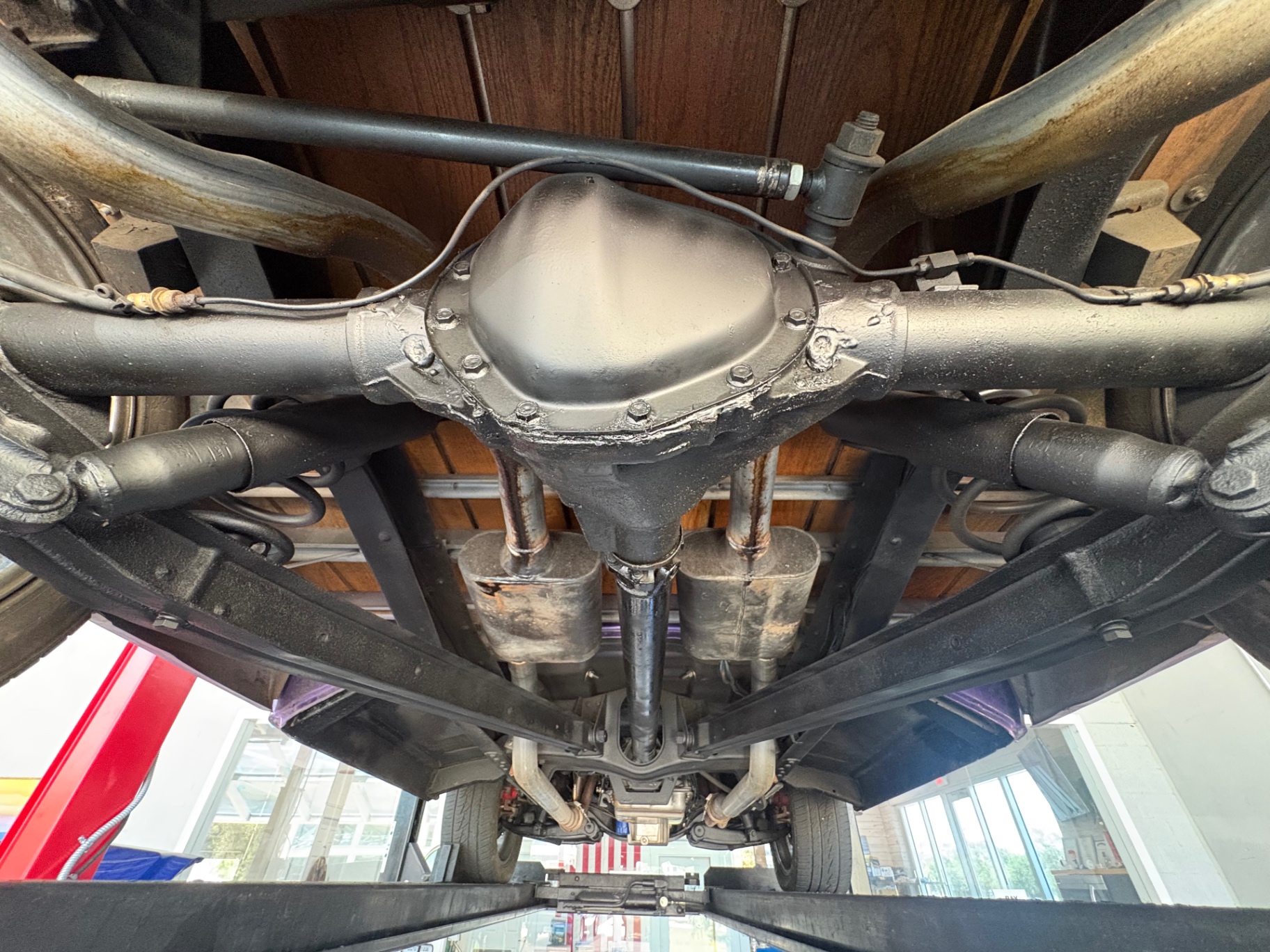
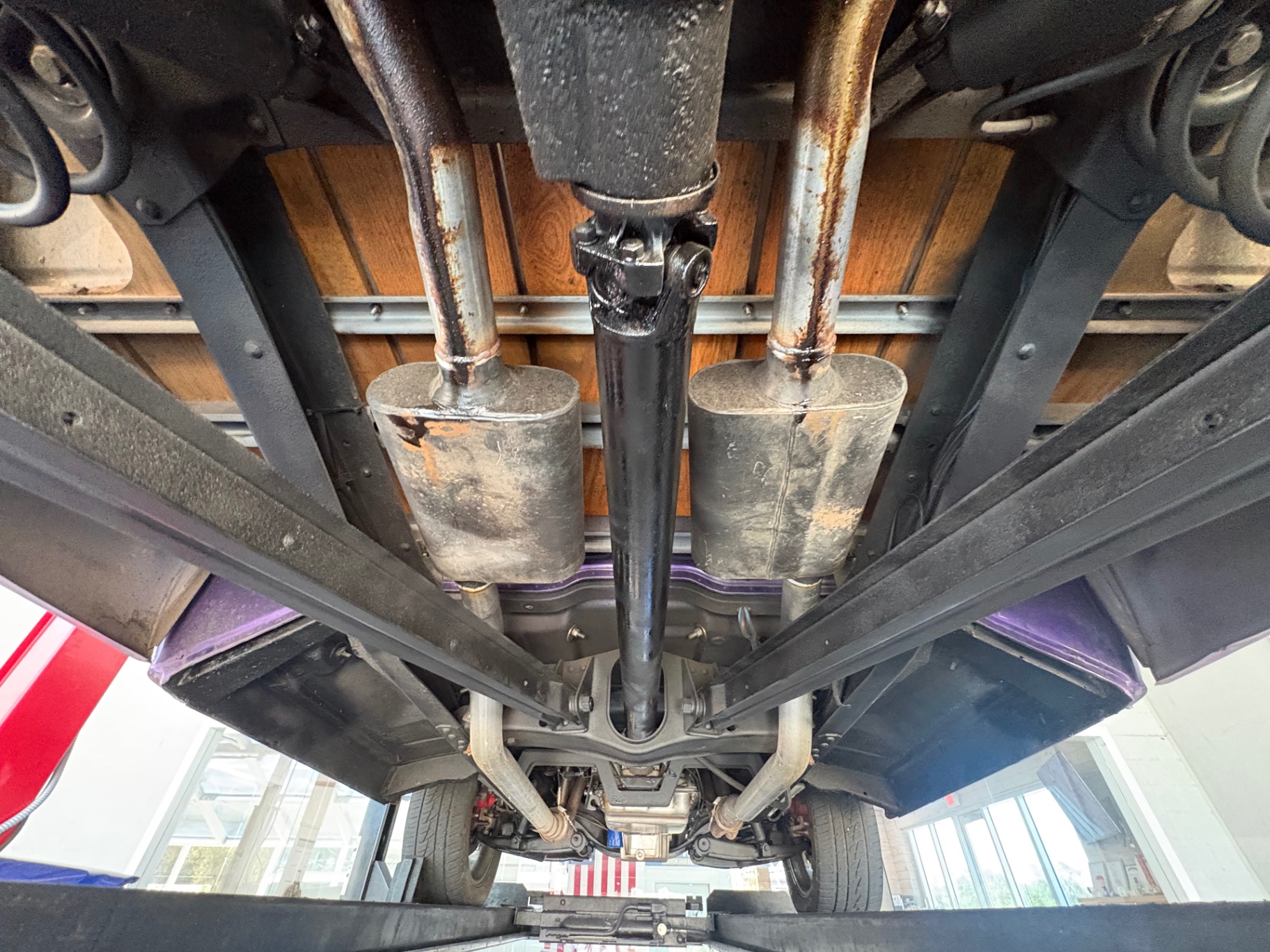
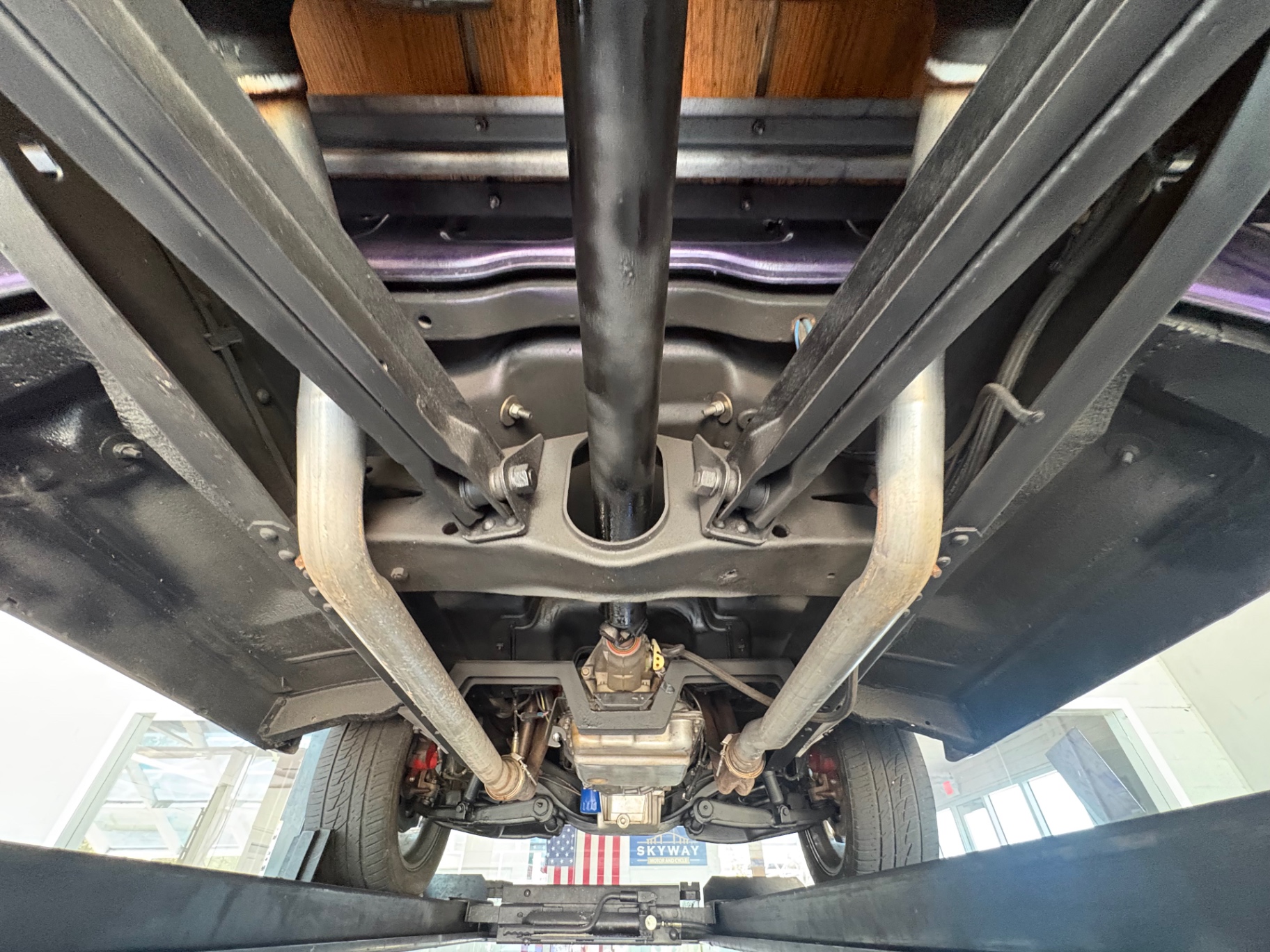
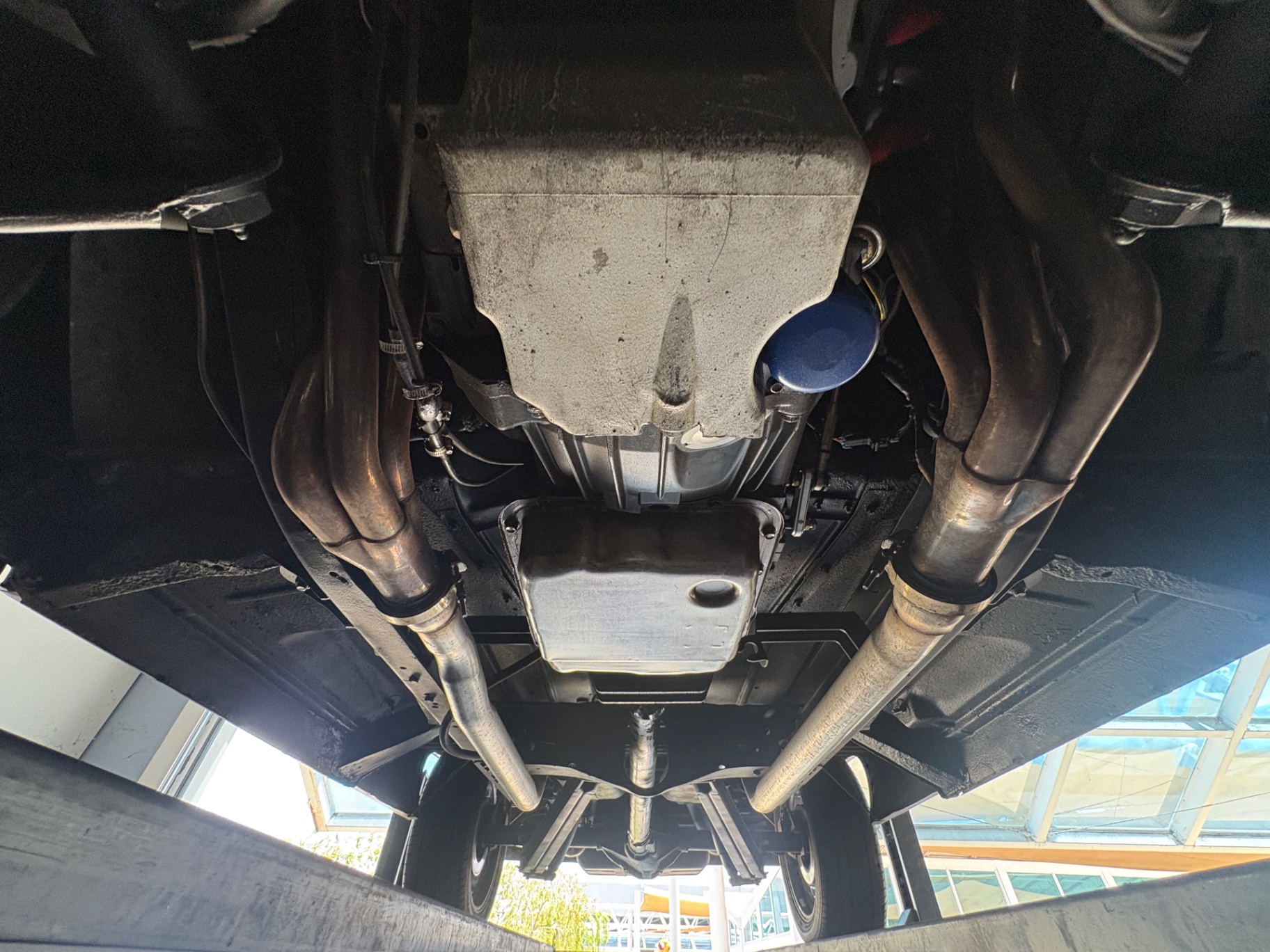
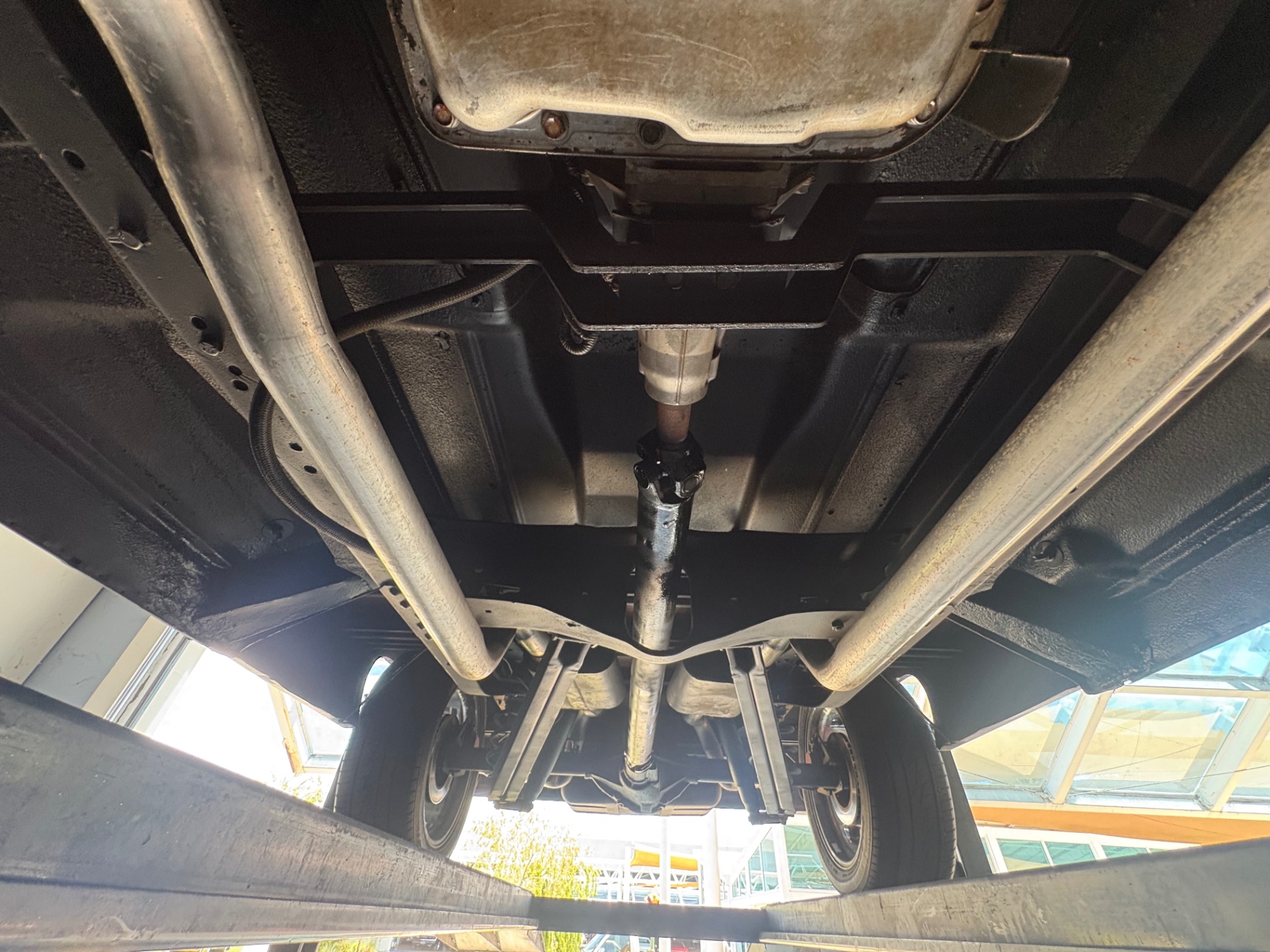
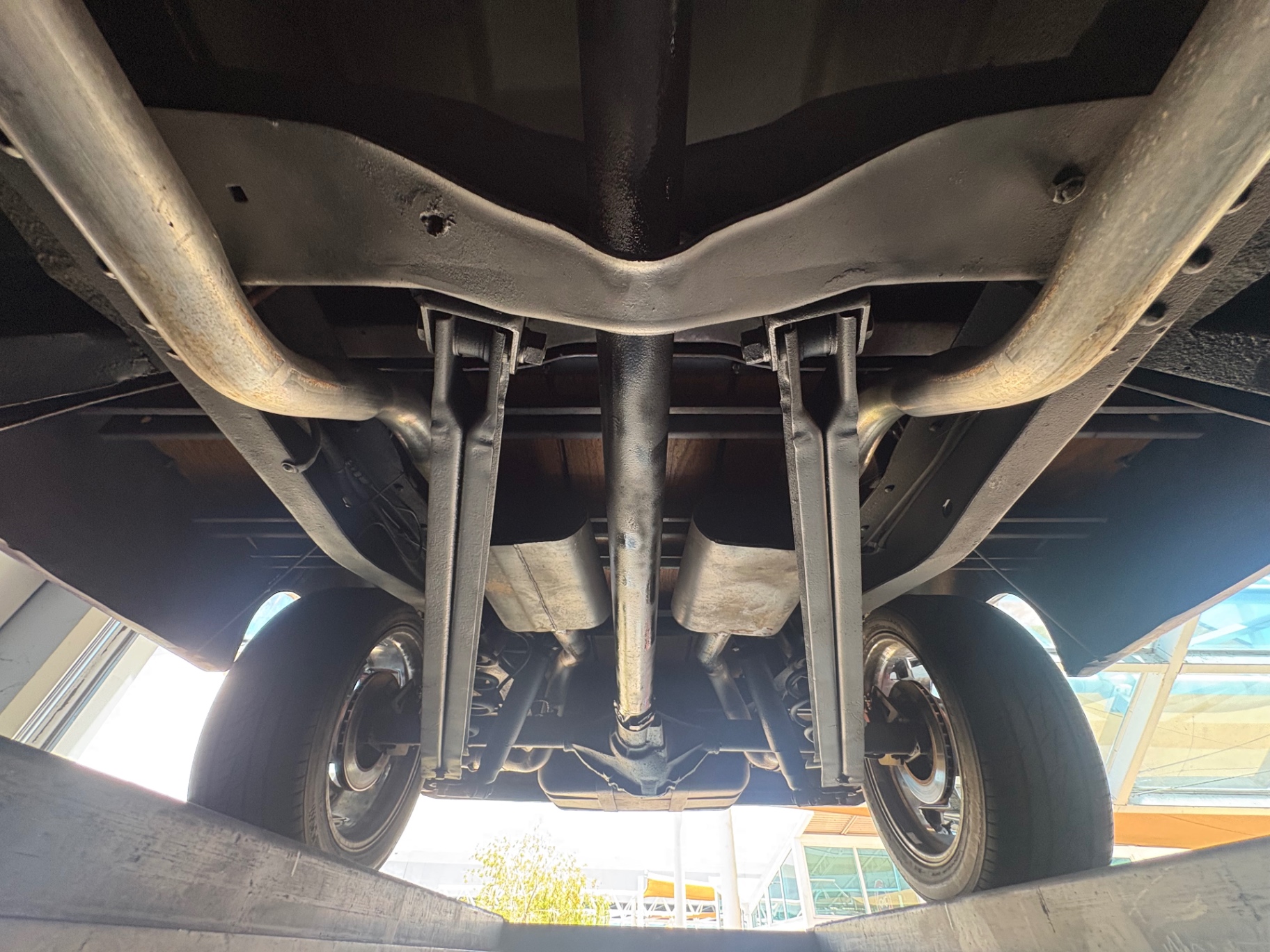
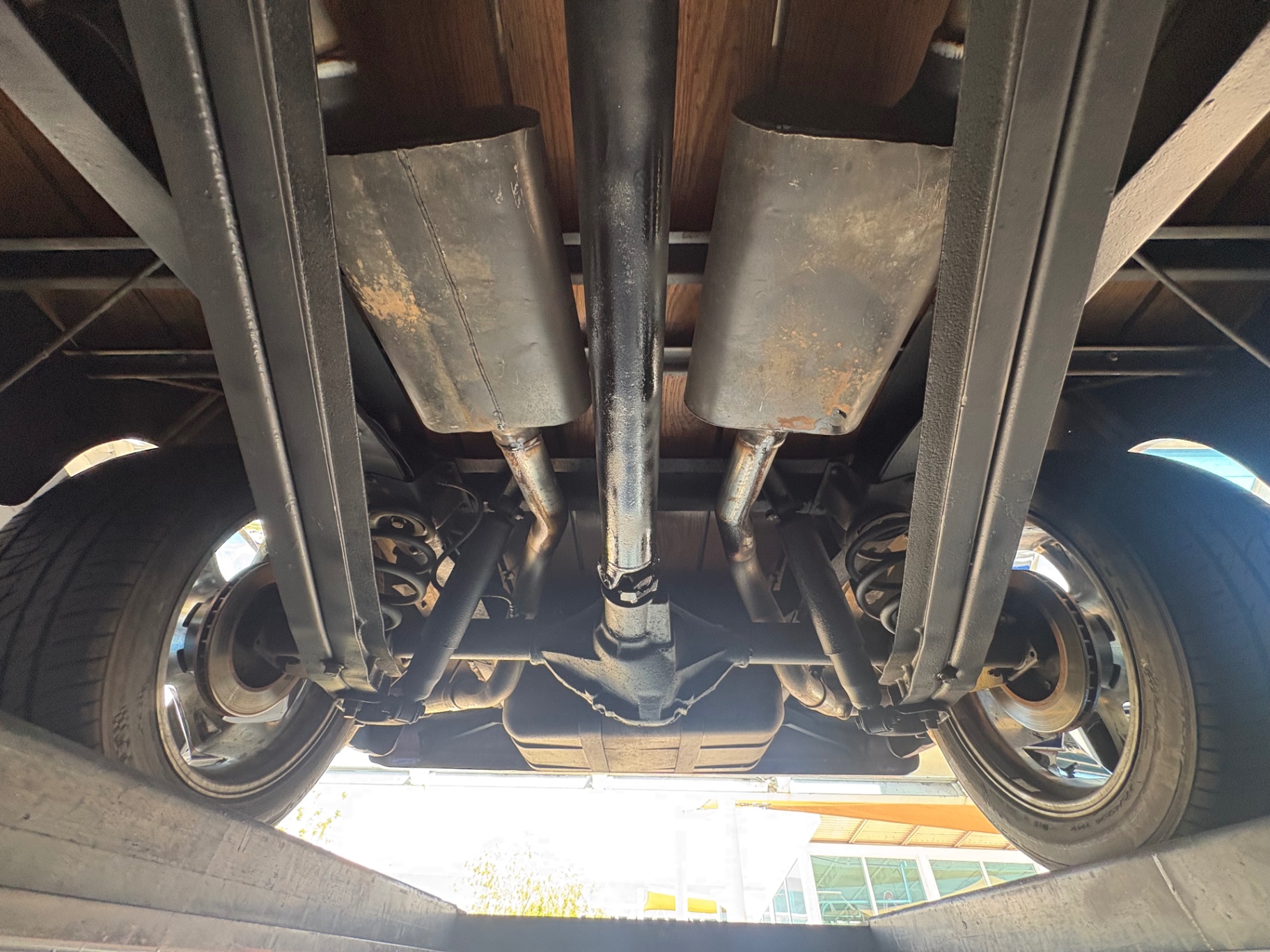
The exhaust begins with stainless headers, which improve flow compared to cast manifolds and resist corrosion better over time. From there, the system runs through Flowmaster mufflers and exits through side ports ahead of the rear wheels. The side-exit configuration is a deliberate visual and acoustic choice — it keeps the pipes out of view from the rear while letting the LS tone come through without being muffled into submission.
Cooling is handled by an aluminum radiator, which dissipates heat more efficiently than a period steel unit and weighs less. A high-output alternator supports the demands of the Vintage Air system, amplifier setup, and HID headlights without taxing the charging system.
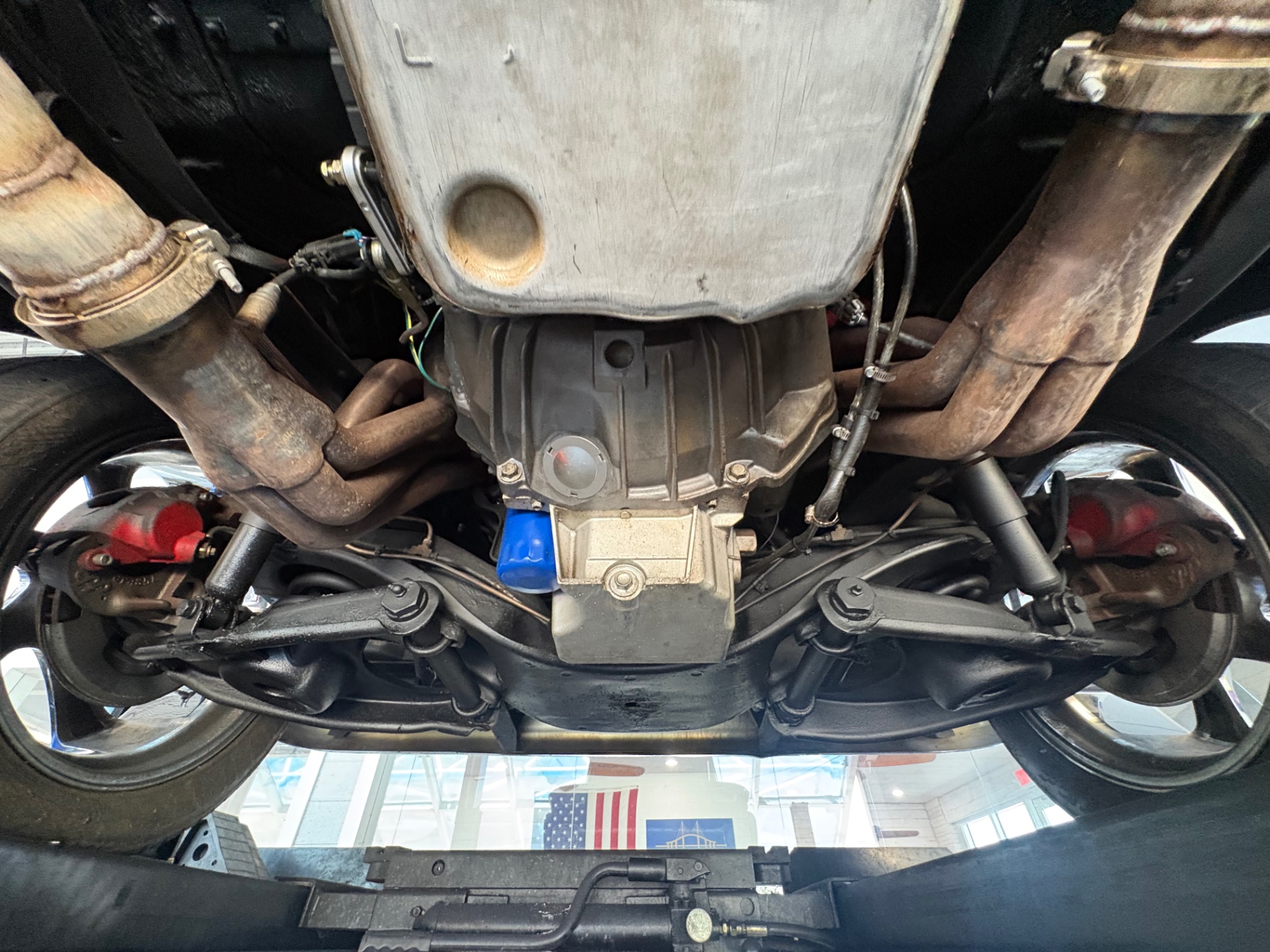
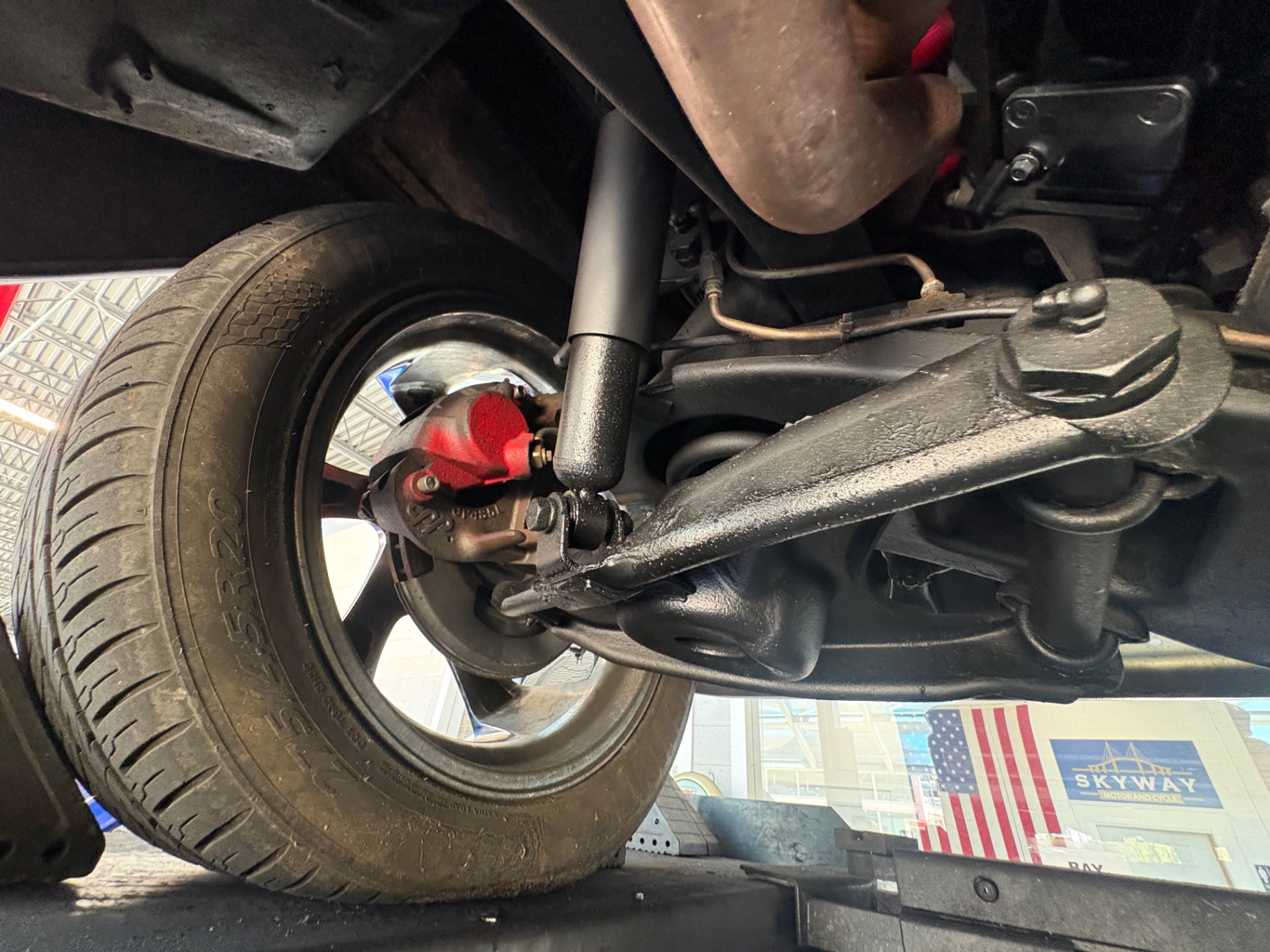
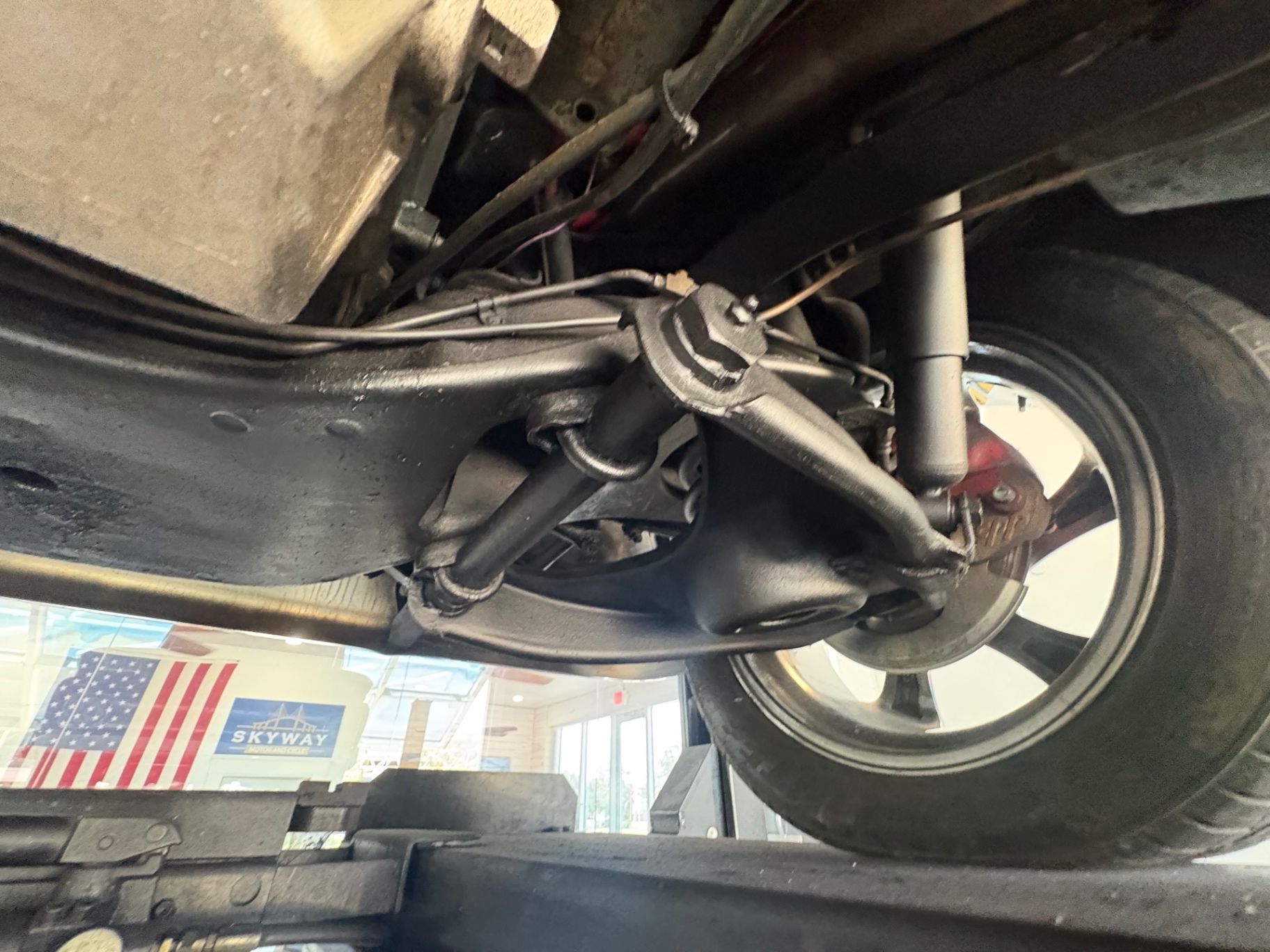
The front suspension has been converted to an independent front suspension setup, which is one of the most significant improvements a builder can make to a first-generation C10. The stock front end used a straight I-beam axle with kingpin-style steering — it worked fine for 1963 but has real limitations in terms of handling geometry, caster adjustment, and parts availability. The IFS conversion provides proper A-arm geometry, better camber and caster adjustment, and allows the front of the truck to be dropped significantly without the compromises that come with lowering a solid axle. The result is a truck that steers and corners in a way that matches its visual stance. Power steering is part of the package.
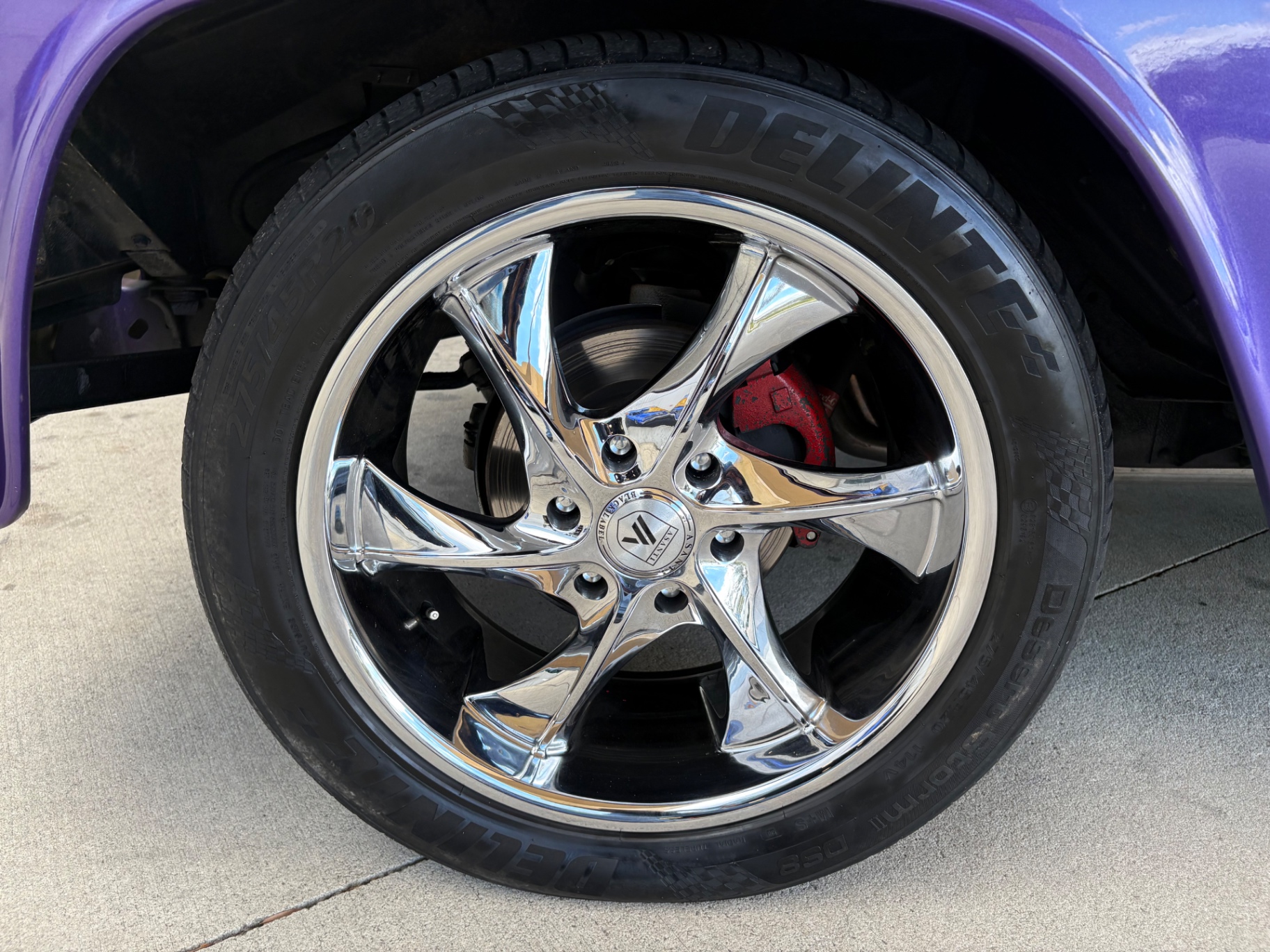
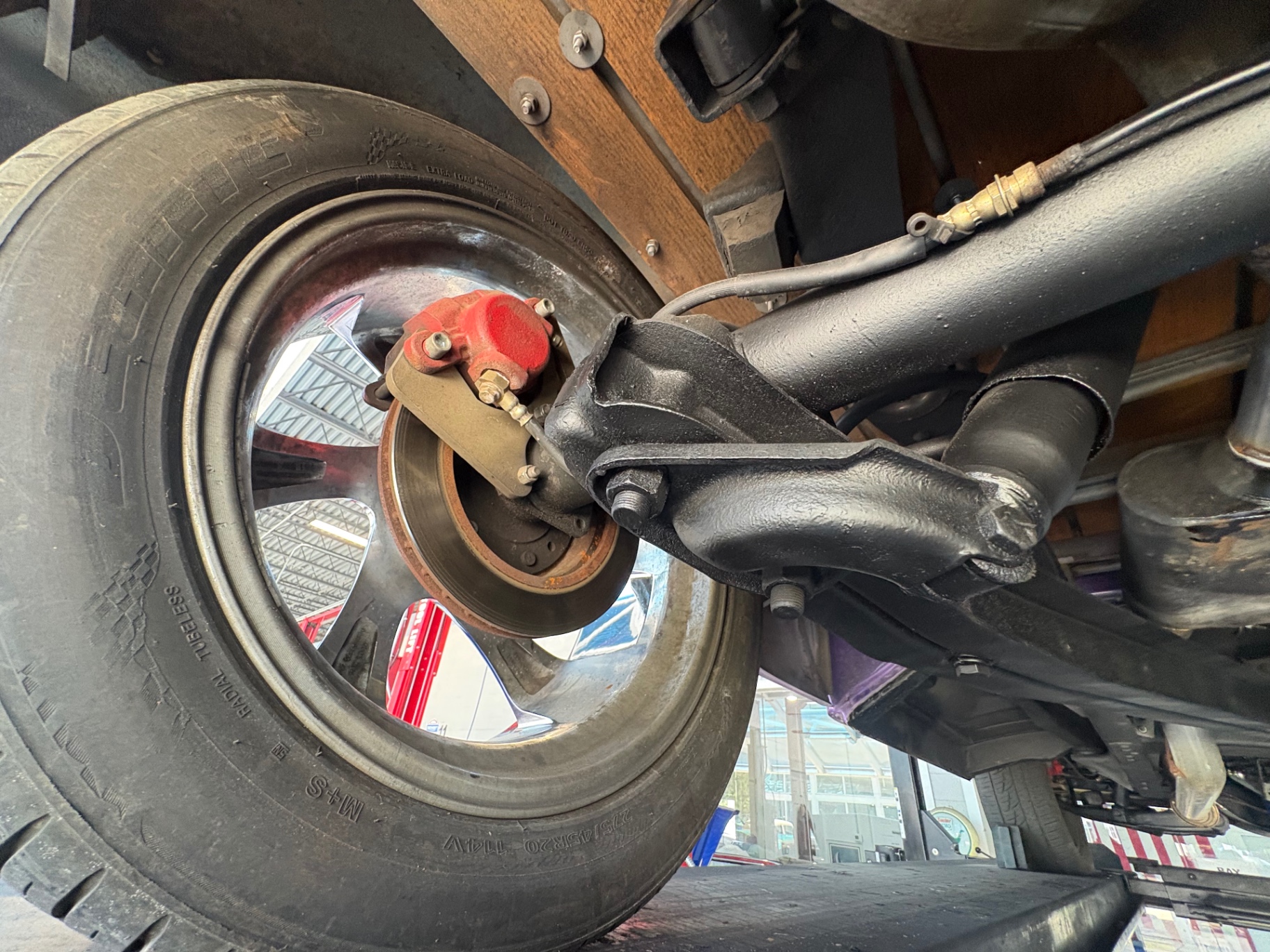
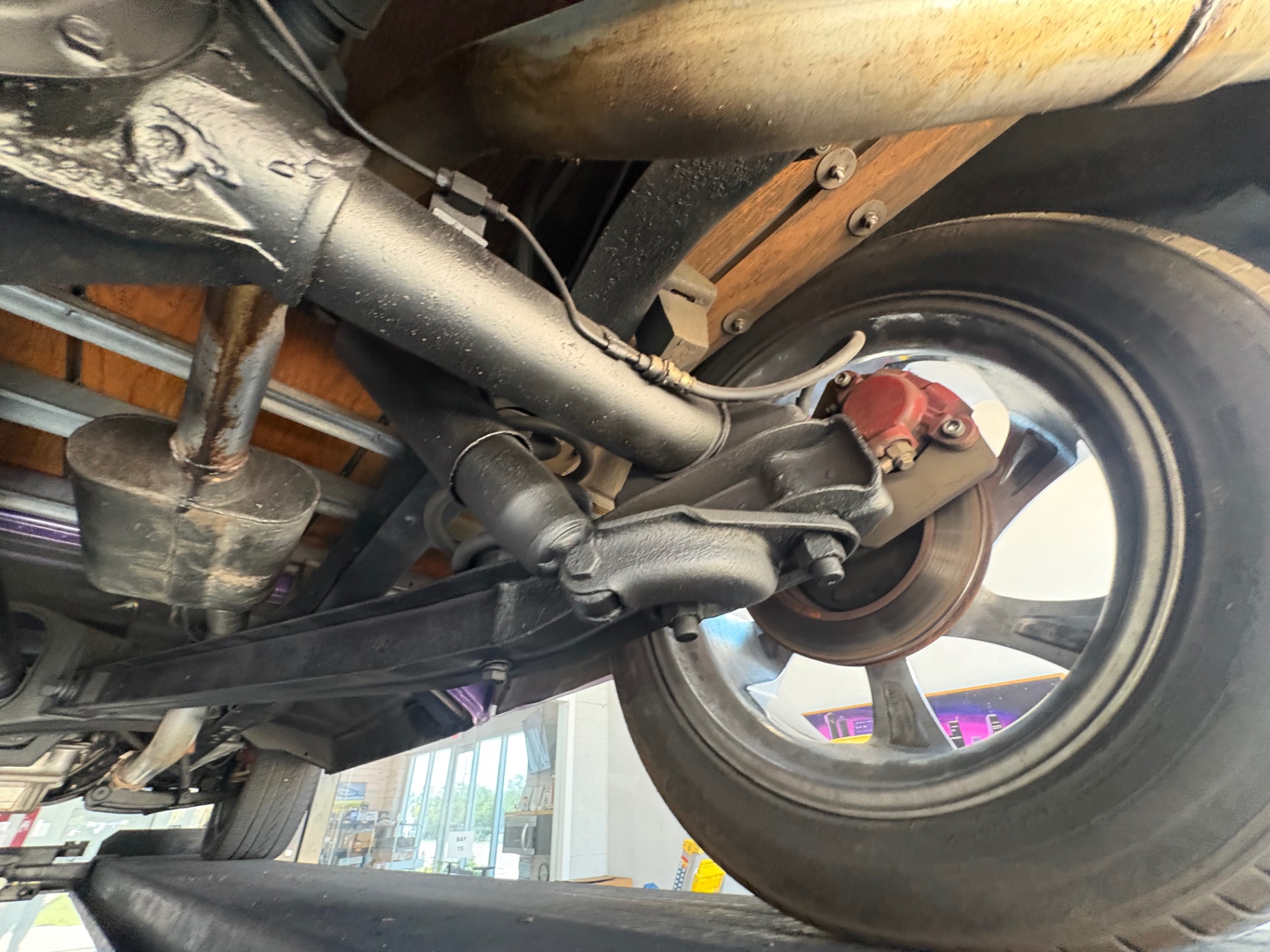
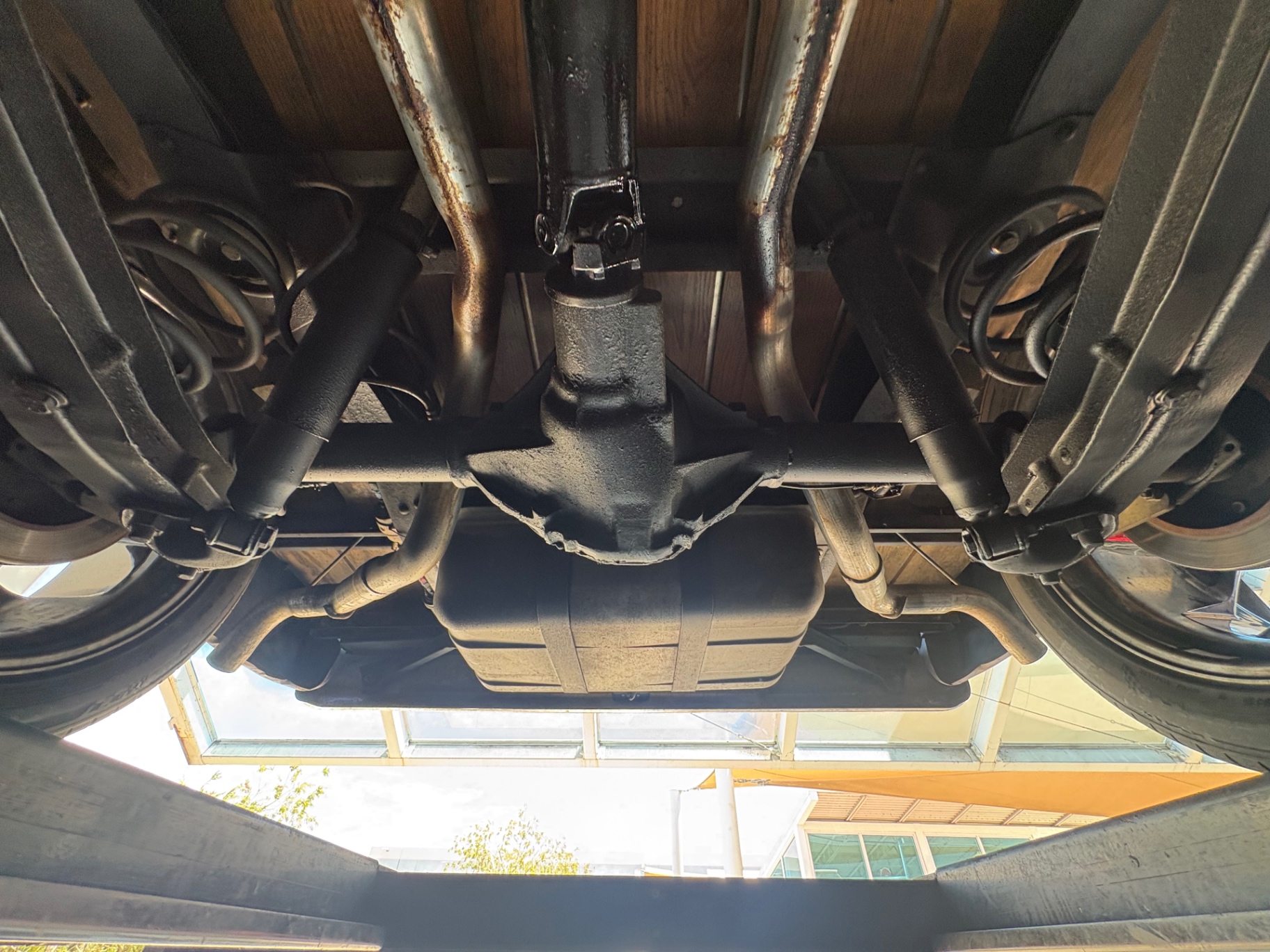
Braking is handled by a four-wheel disc setup with red powder-coated calipers visible through the 20-inch custom wheels. The stock 1963 C10 used four-wheel drums — adequate for the era, but not appropriate for a truck running LS power and modern tire sizes. The disc conversion dramatically reduces stopping distances and provides more consistent brake feel, especially when the brakes are warm. The LMC gas tank relocation kit moves the factory fuel tank to a position that accommodates the lowered ride height and side-exit exhaust routing cleanly.
Interior
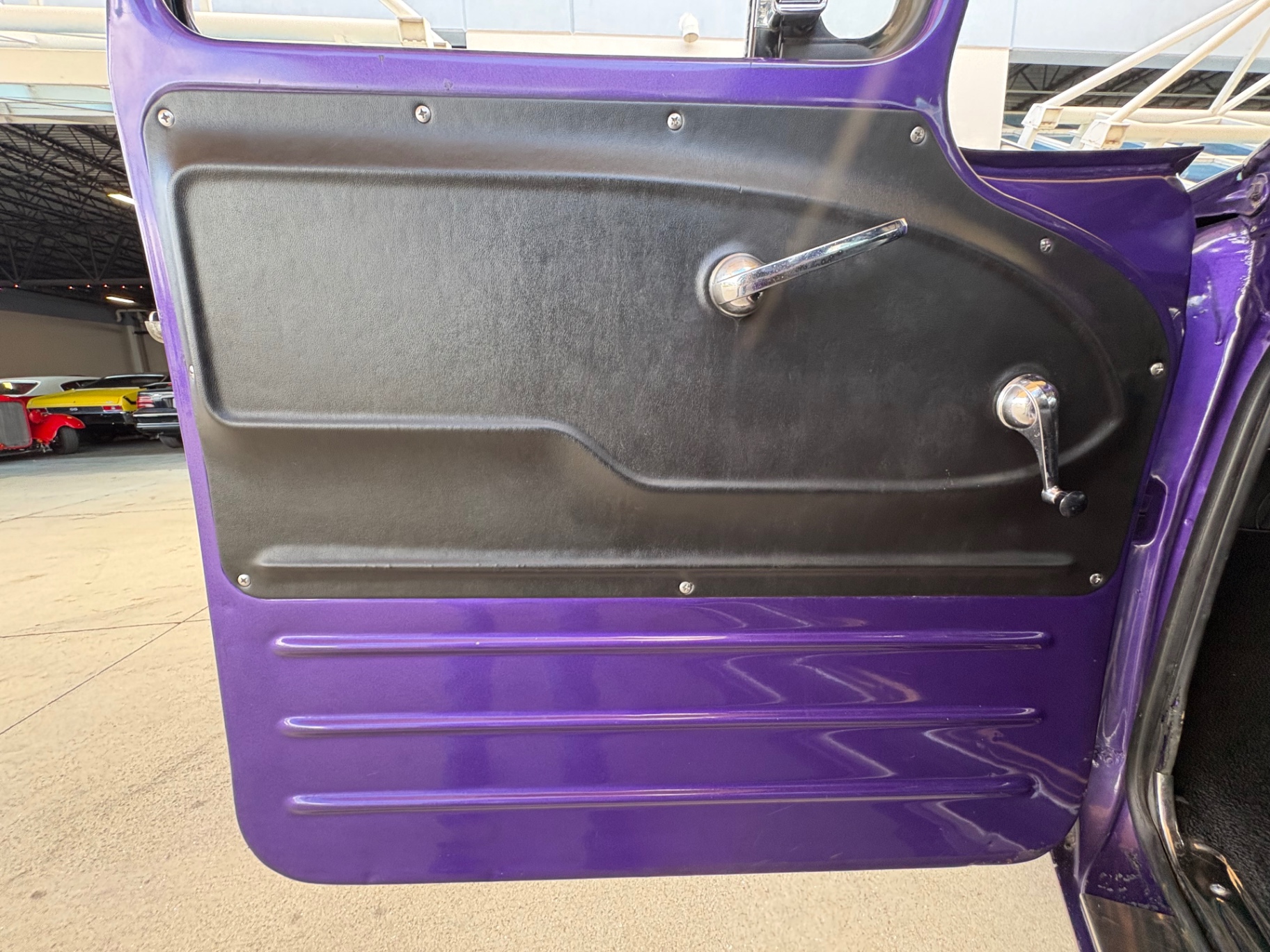
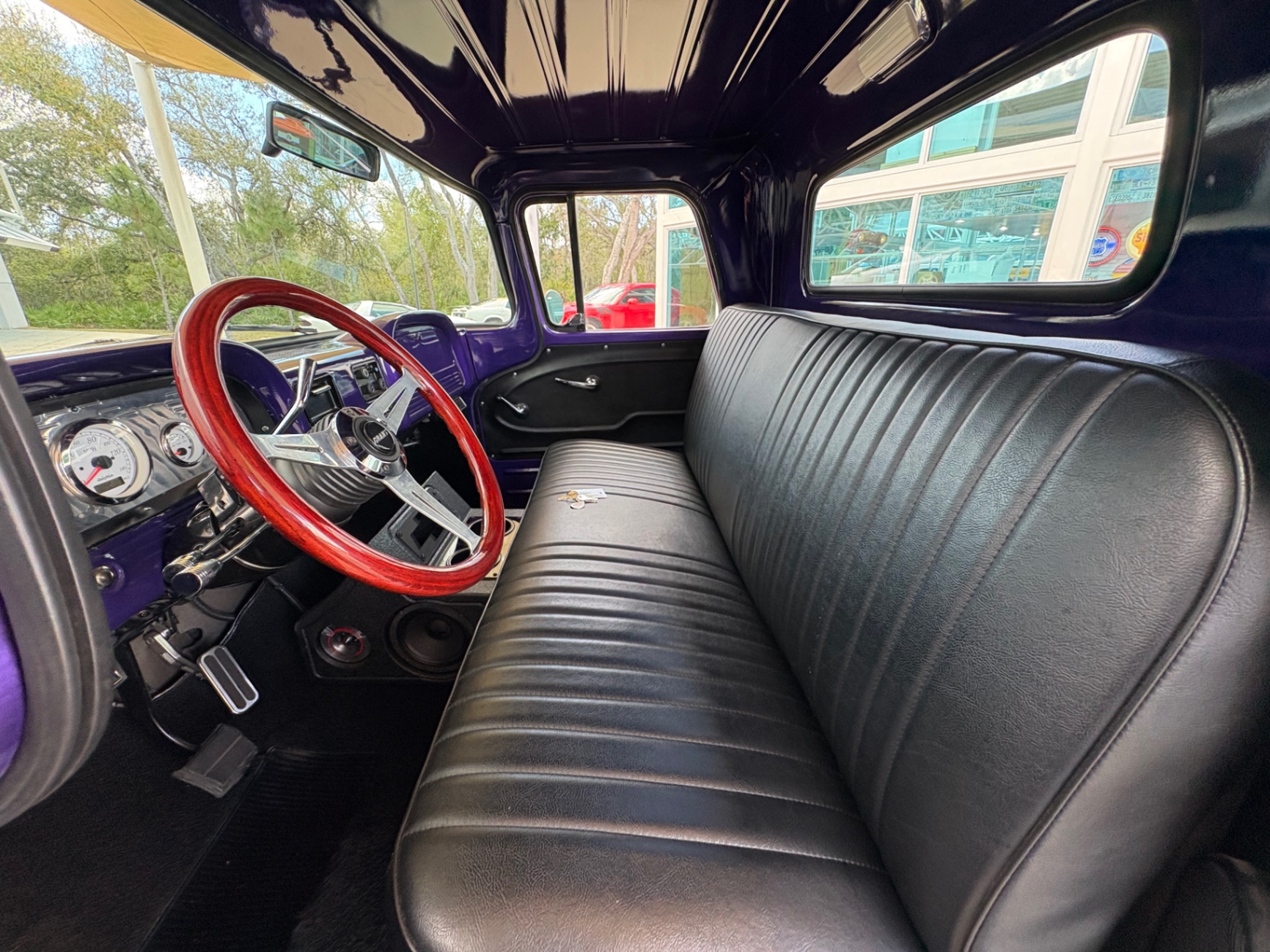
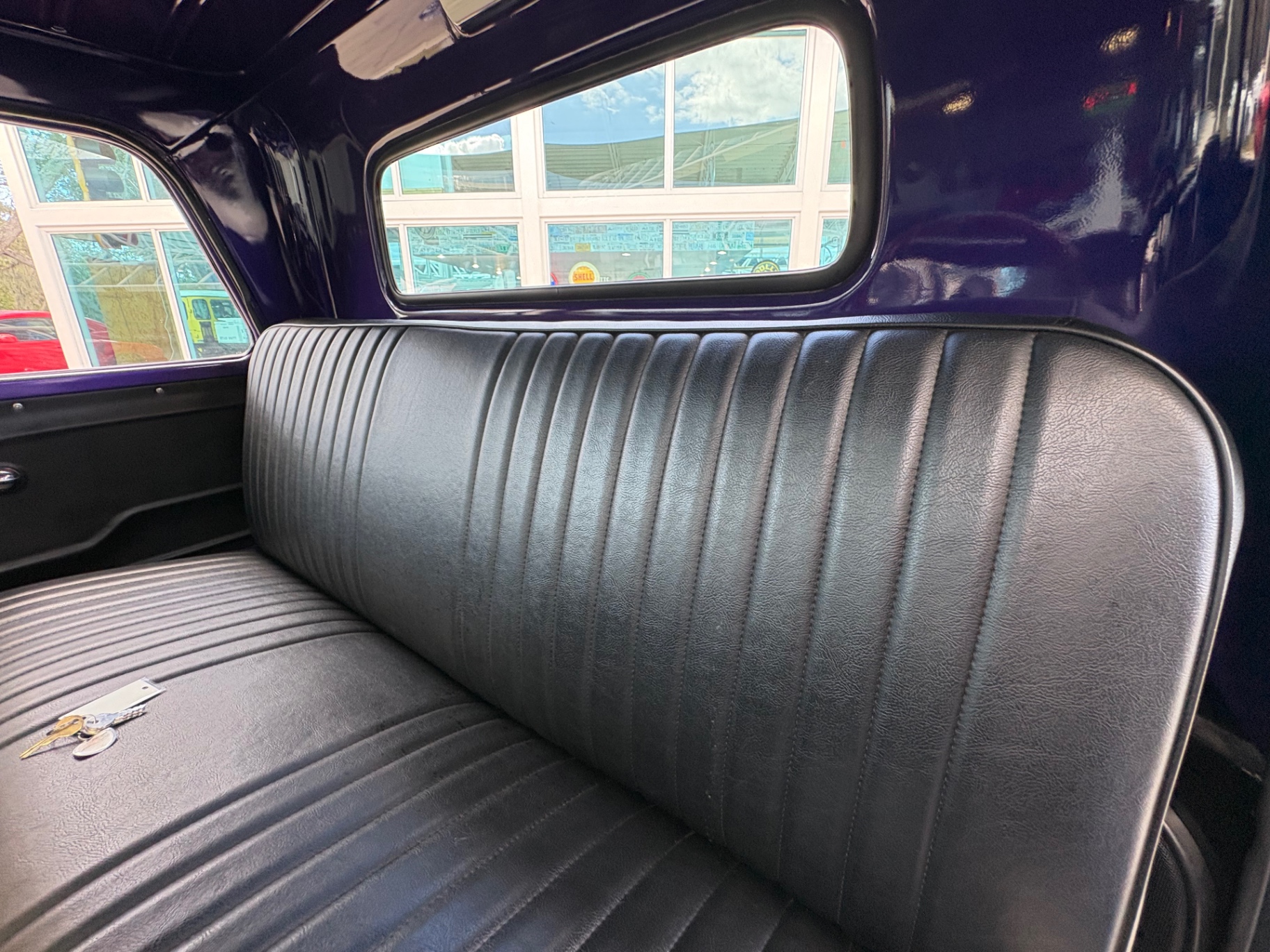
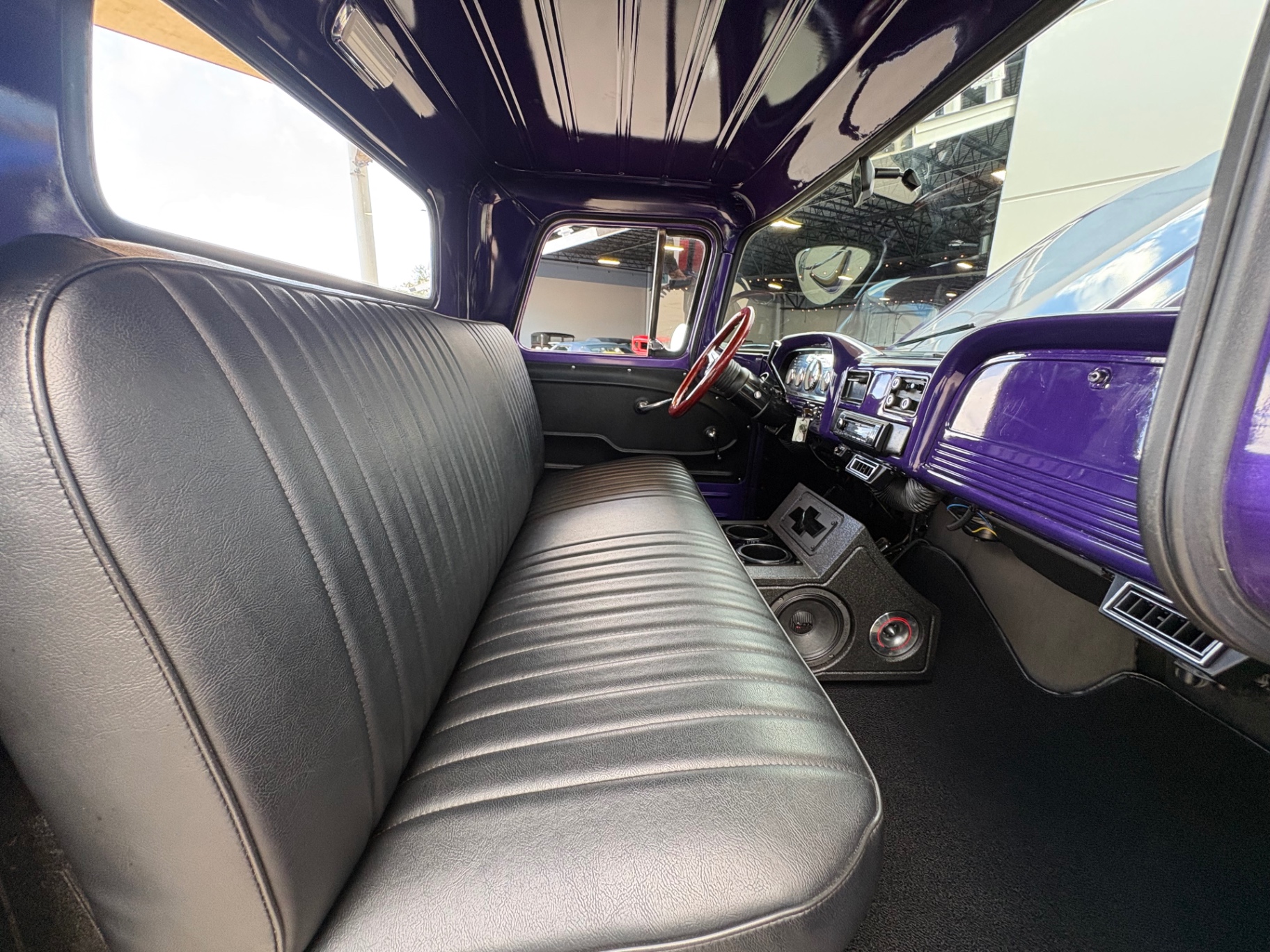
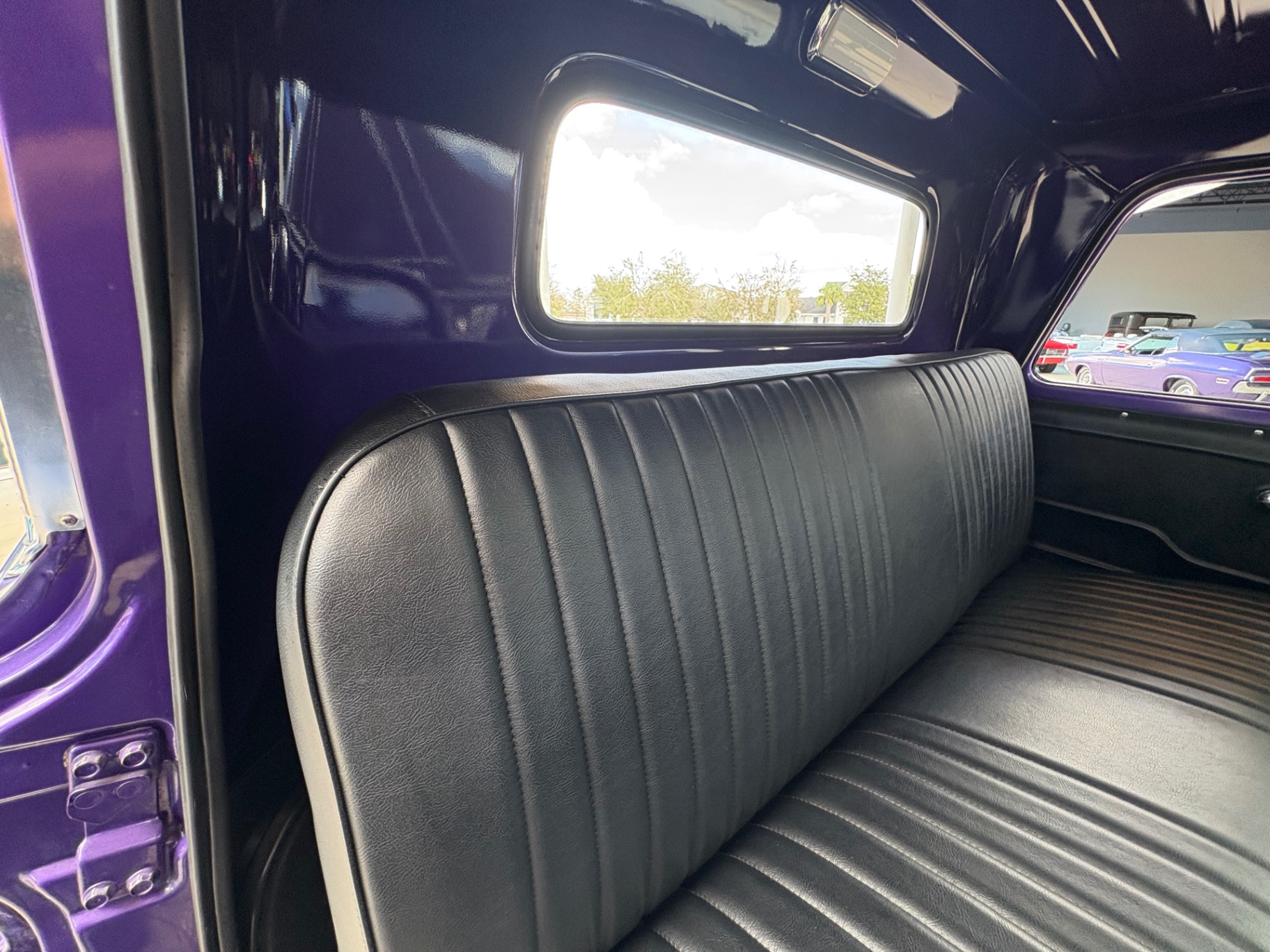
The cab of this 1963 Chevrolet C10 has been fully redone. The full bench seat has been reupholstered in black vinyl, which is period-appropriate in form but executed with current materials and workmanship. The seating surface is clean and uniform, with tight stitching across the ribbed panels. Black vinyl makes sense on a truck this color — the contrast between the deep purple exterior and the black interior reads well without competing.
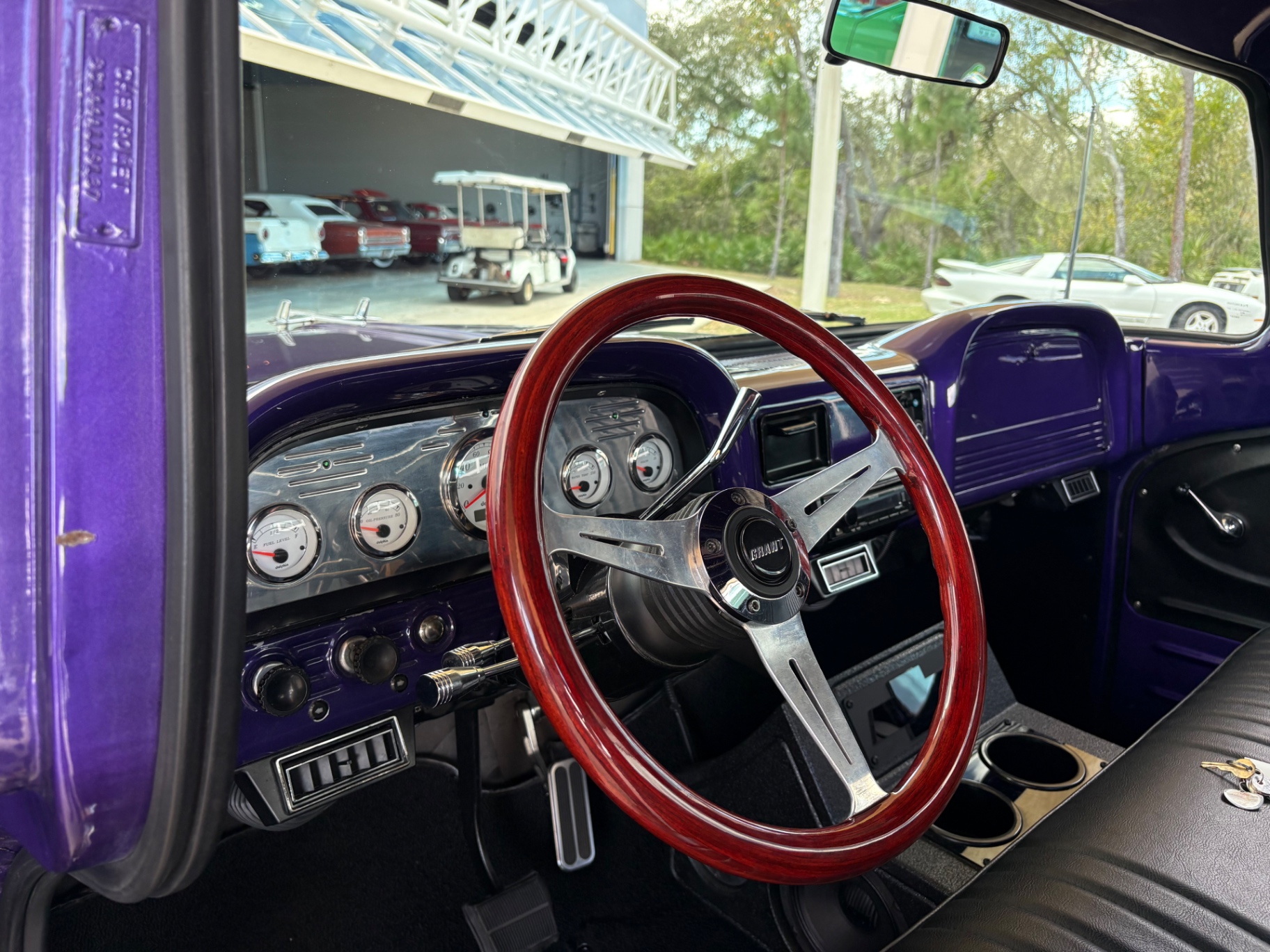
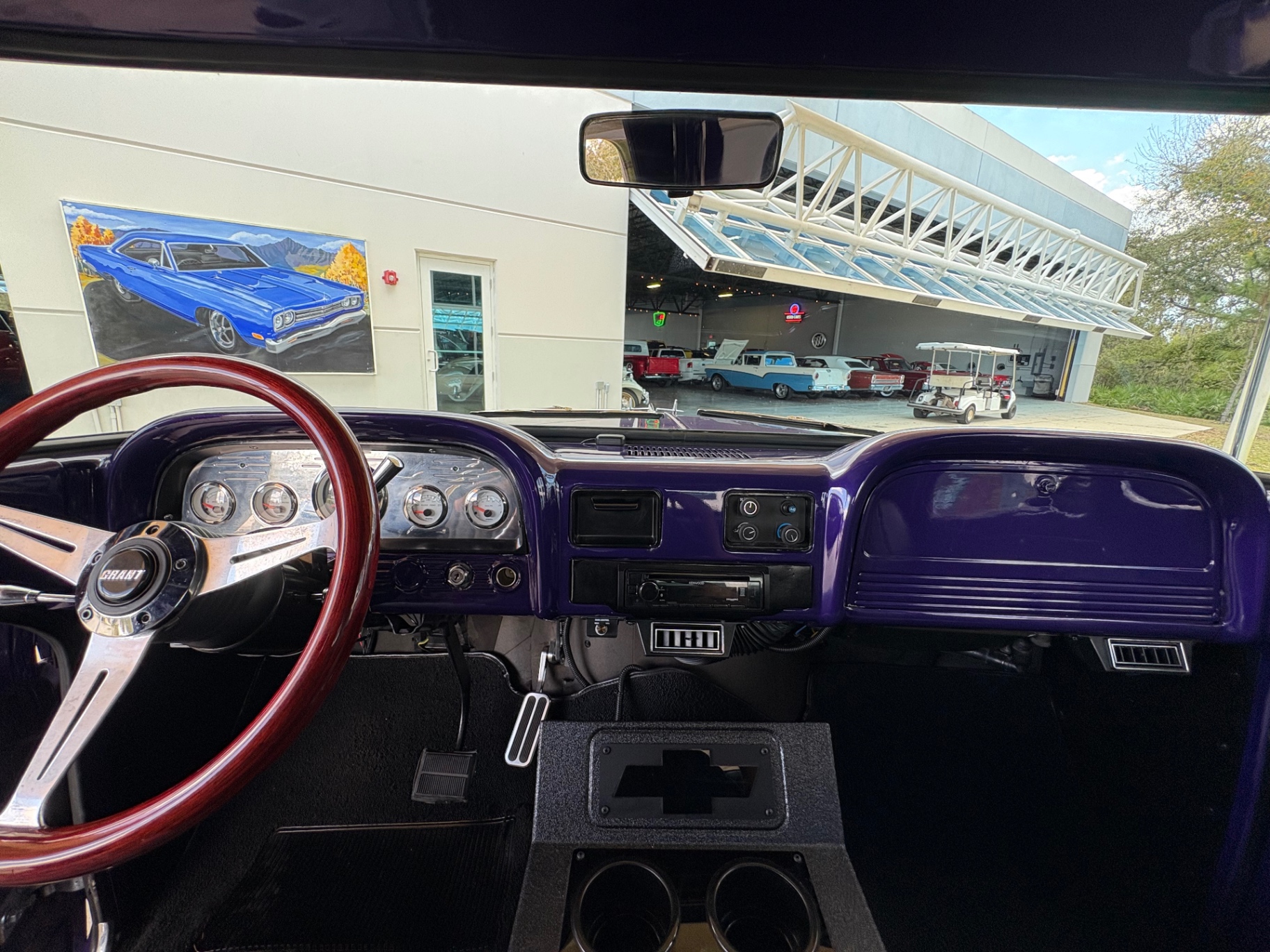
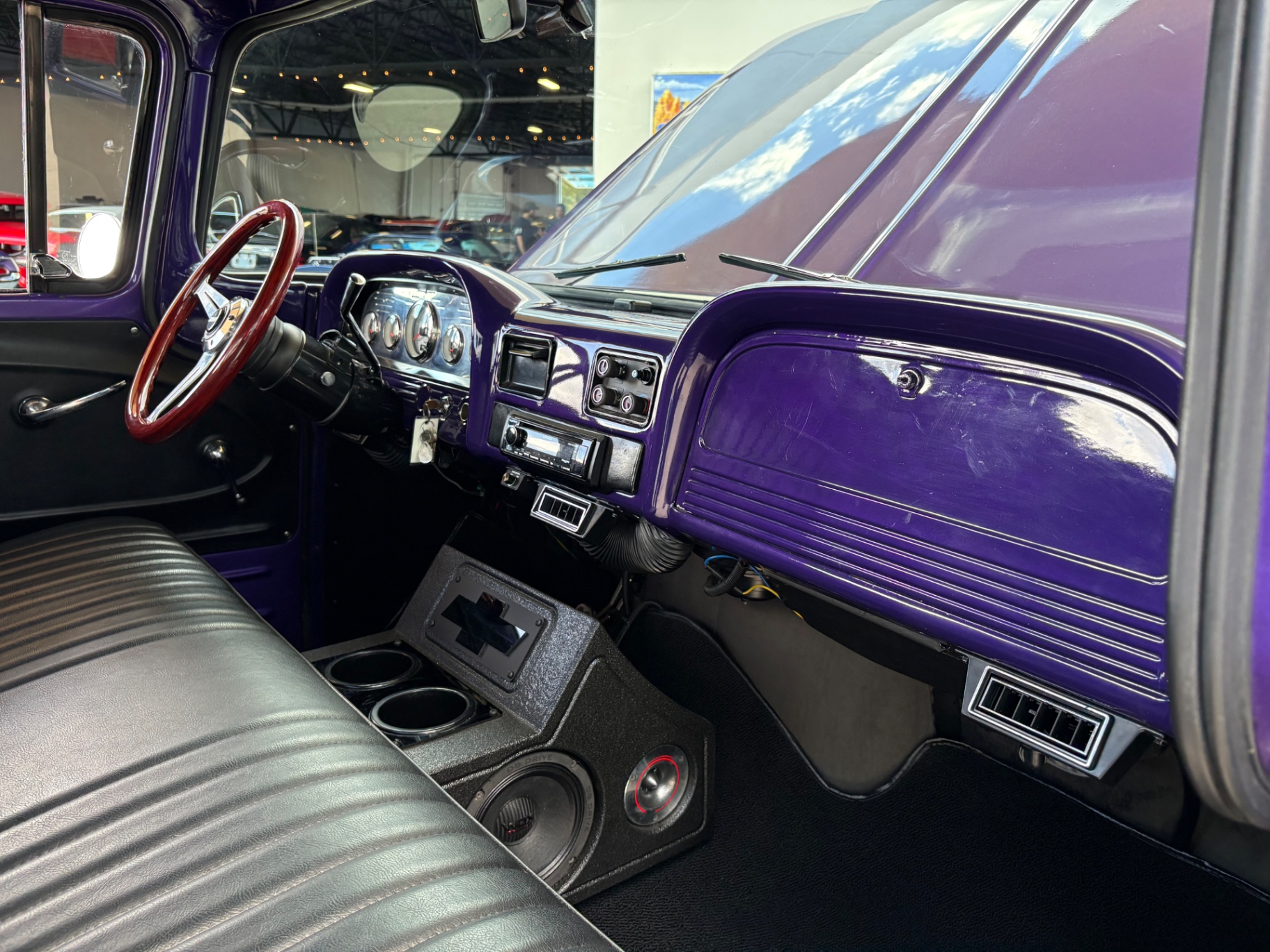
The dashboard has been fitted with a billet dash and Dolphin gauges, replacing the original instrument cluster with a cleaner, more legible set of round gauges. The billet dash surround integrates the gauge cluster with the rest of the interior without looking like an afterthought. The dash face itself is painted to match the exterior purple, which ties the cab interior together with the rest of the build. The same purple paint carries across the firewall, giving the engine bay a finished, coordinated look rather than the typical bare metal or black spray paint seen in most builds.
The Ididit tilt steering column gives the driver the ability to set the wheel angle for comfort, which matters on a truck with a bench seat and no adjustable pedals. The Grant steering wheel is a wood-rimmed three-spoke design — a classic aftermarket choice that fits the era of the truck while offering a better grip diameter than the original thin-rimmed factory wheel.
A custom console has been built between the driver and the bench, incorporating cup holders and a Bowtie emblem insert. The console also houses the subwoofer enclosure for the Kenwood audio system. The Kenwood head unit is mounted in the center of the dash. The amplifiers and subwoofers are integrated into the console in a way that does not sacrifice cab usability — you can still seat three across the bench.
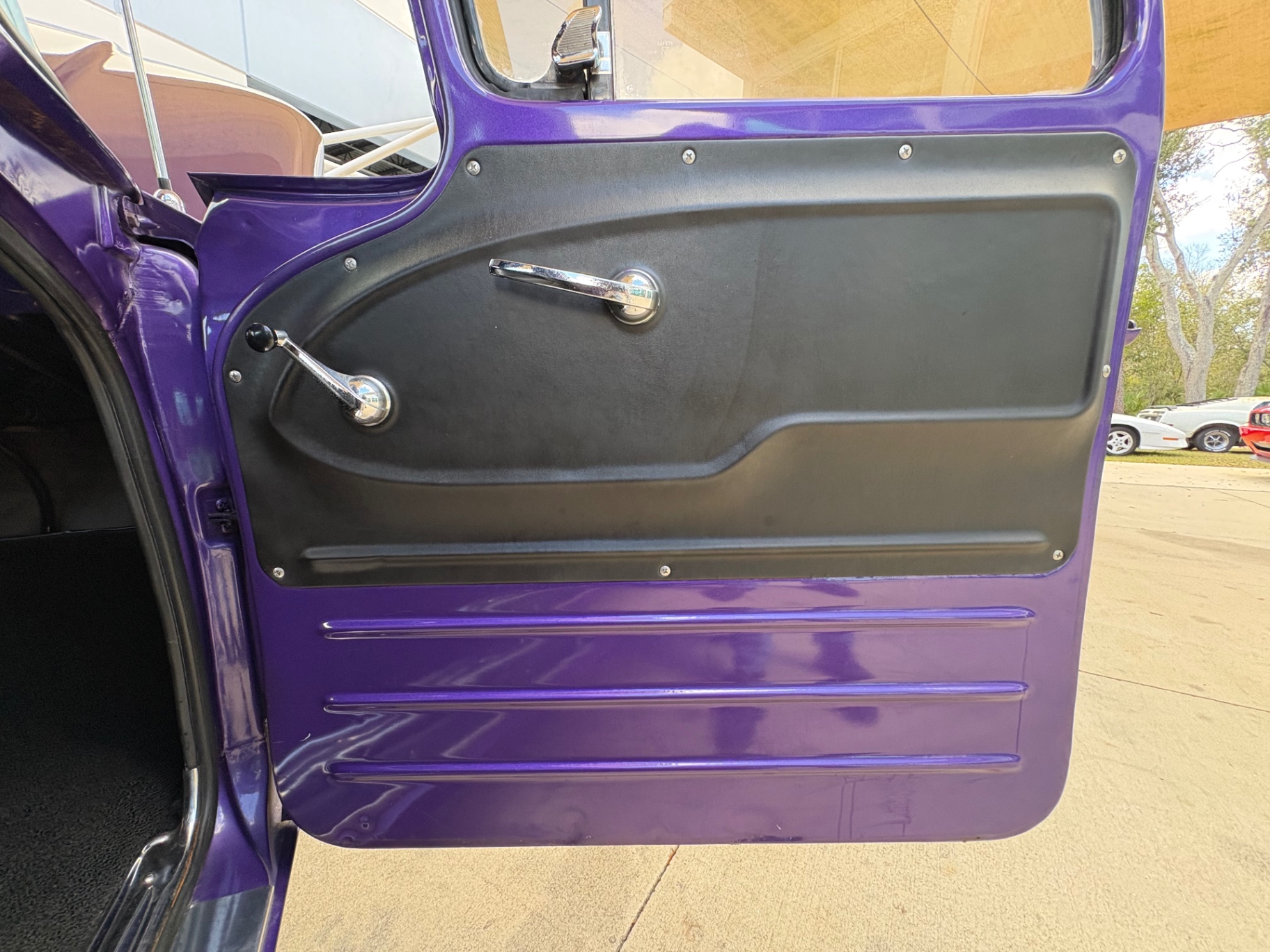
Vintage Air handles climate control. For anyone who has driven a Florida summer in an old truck without air conditioning, this is not a luxury — it is a requirement. The Vintage Air system uses modern refrigerant and a compact evaporator that fits within the original dash layout. The vents are visible on both sides of the dash. The rear quarter and vent windows on this cab open to assist airflow as well. Stainless door sill plates finish the entry points cleanly.
Exterior
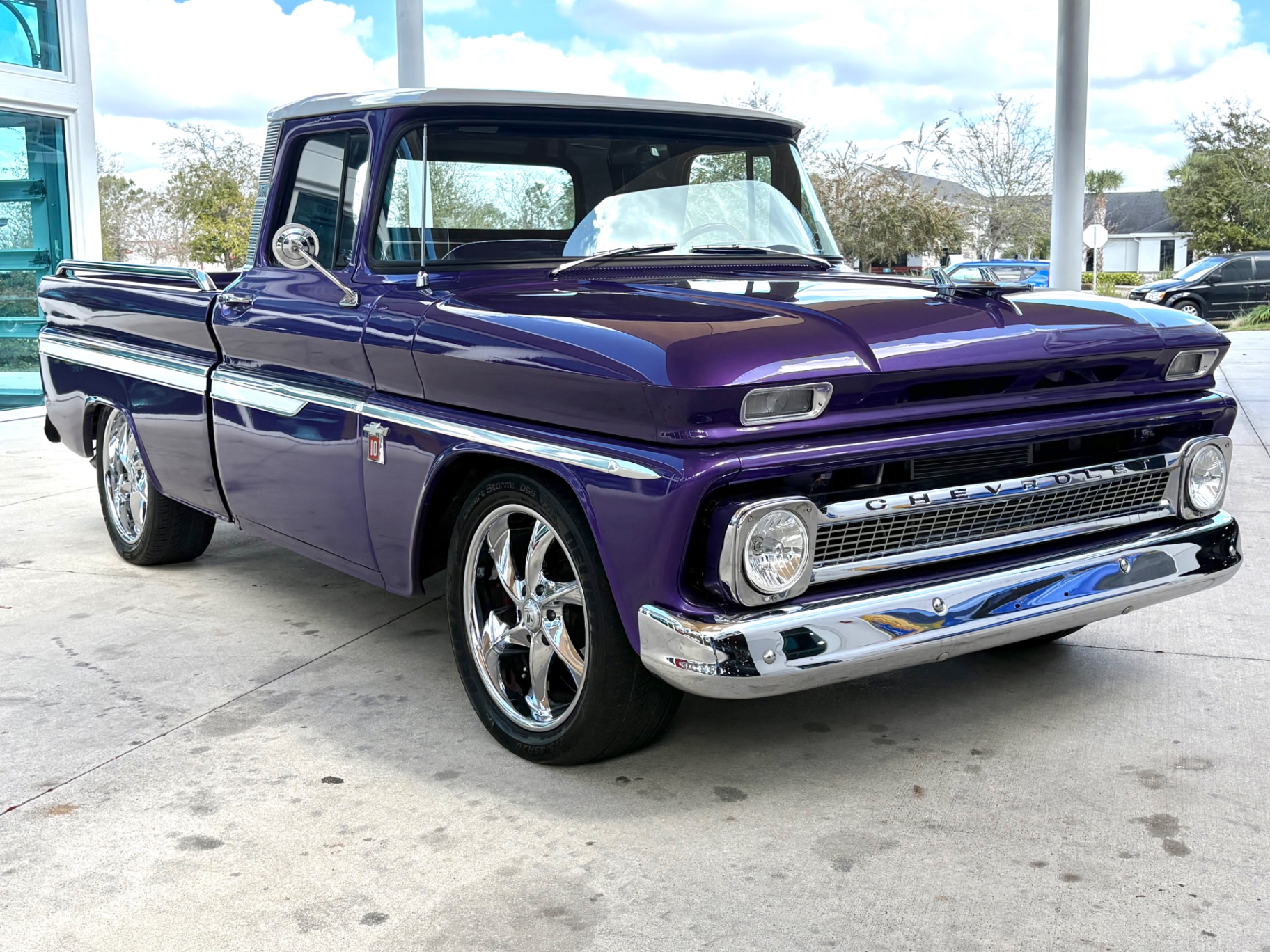
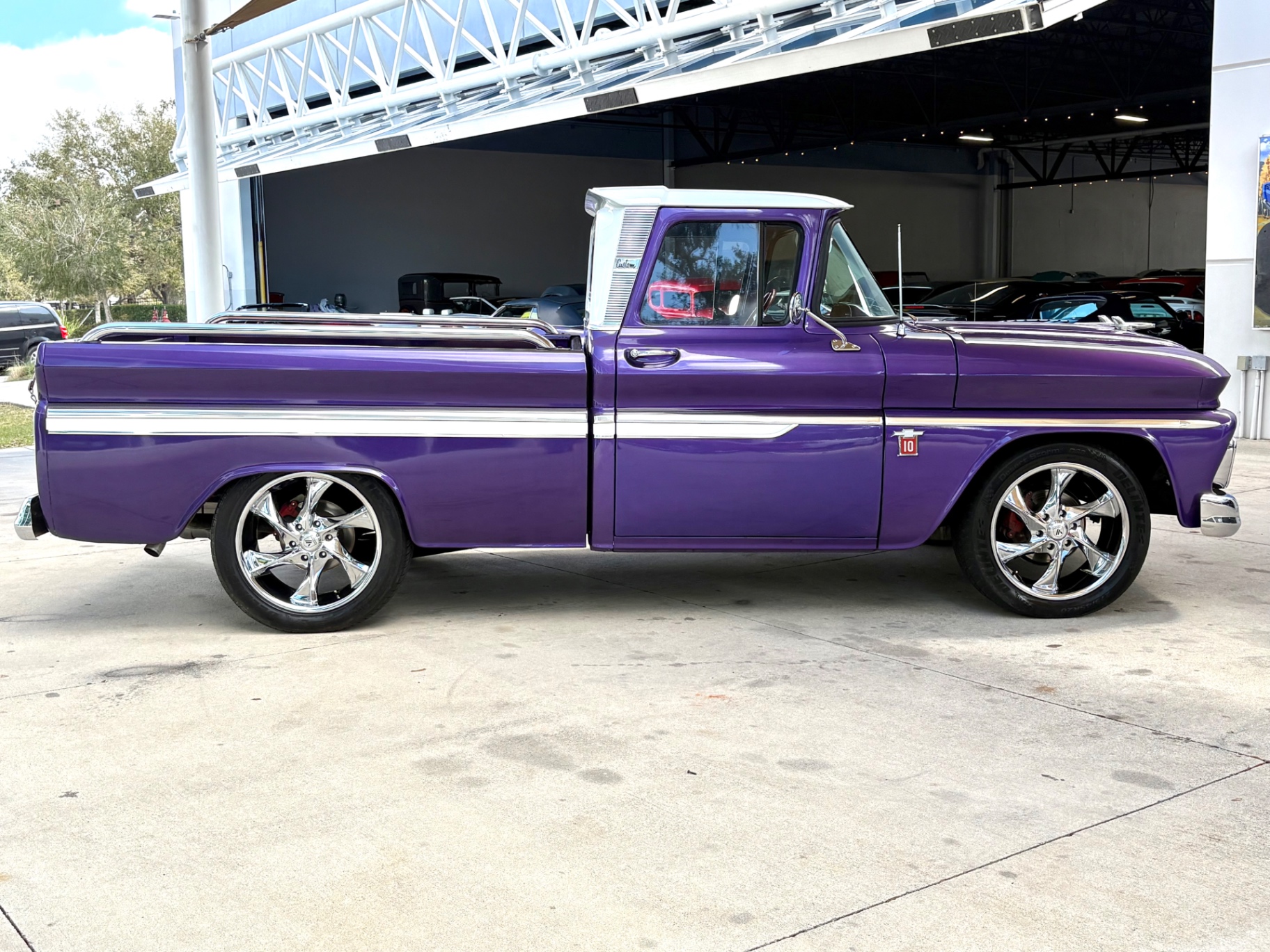
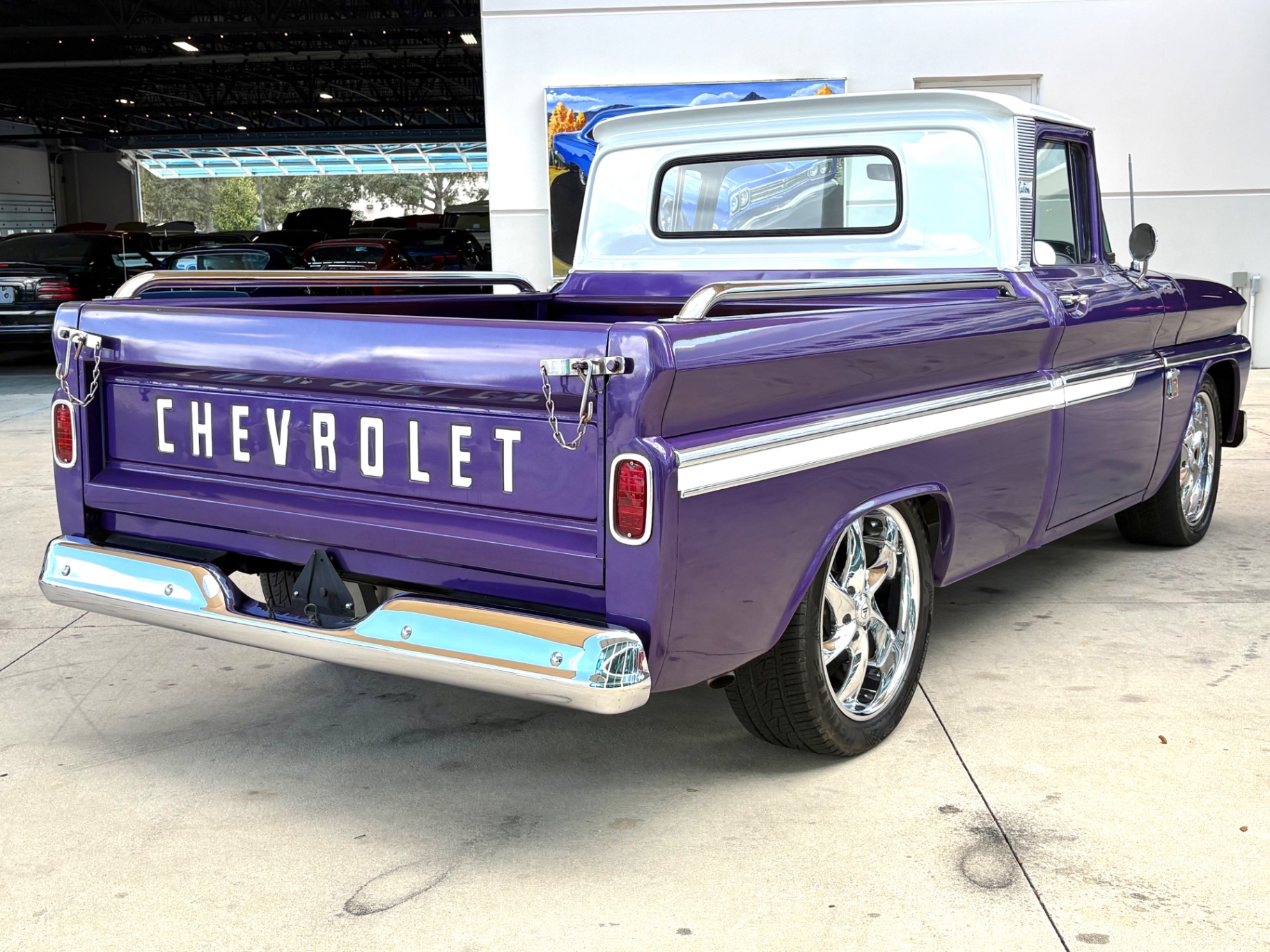
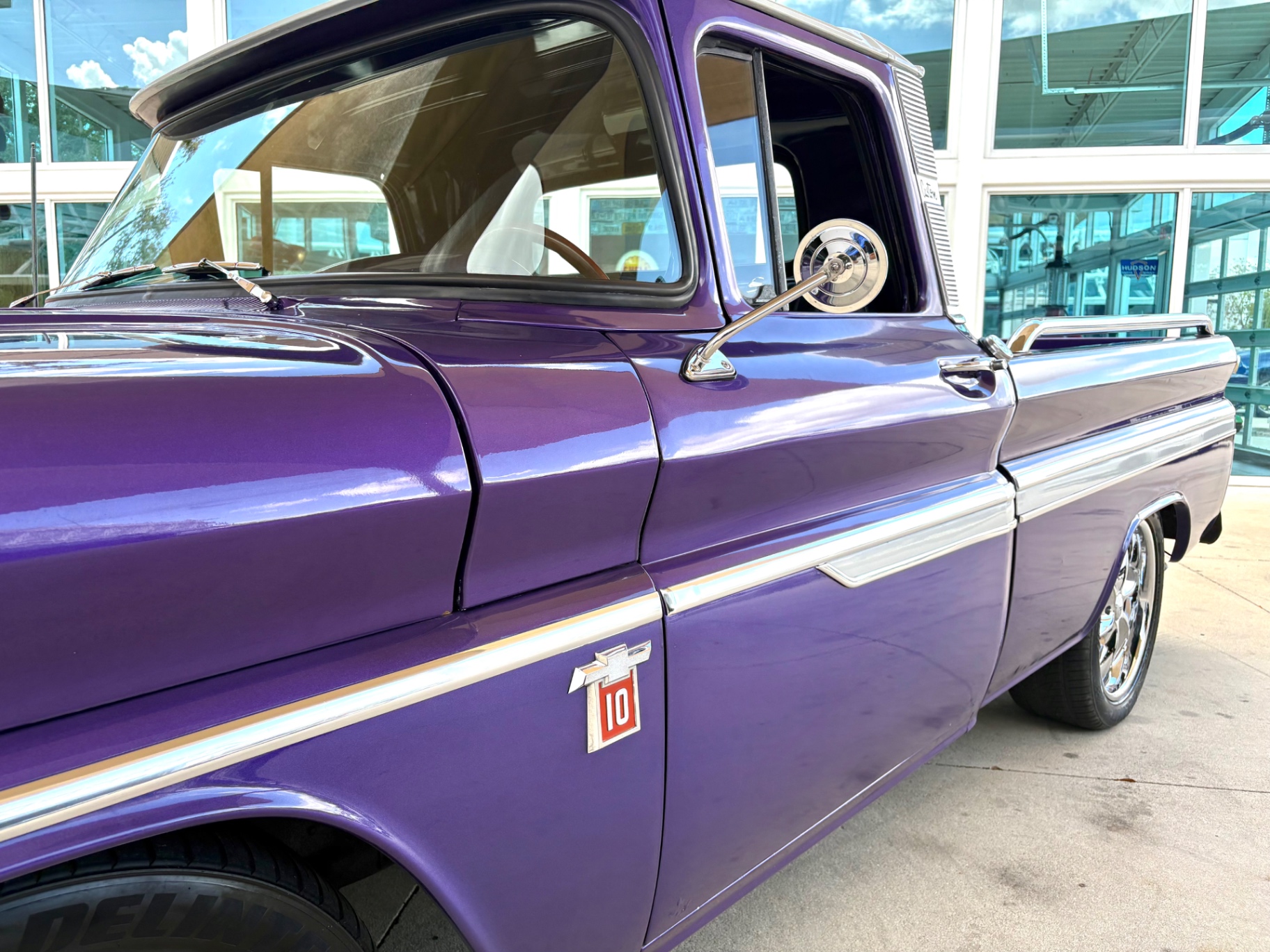
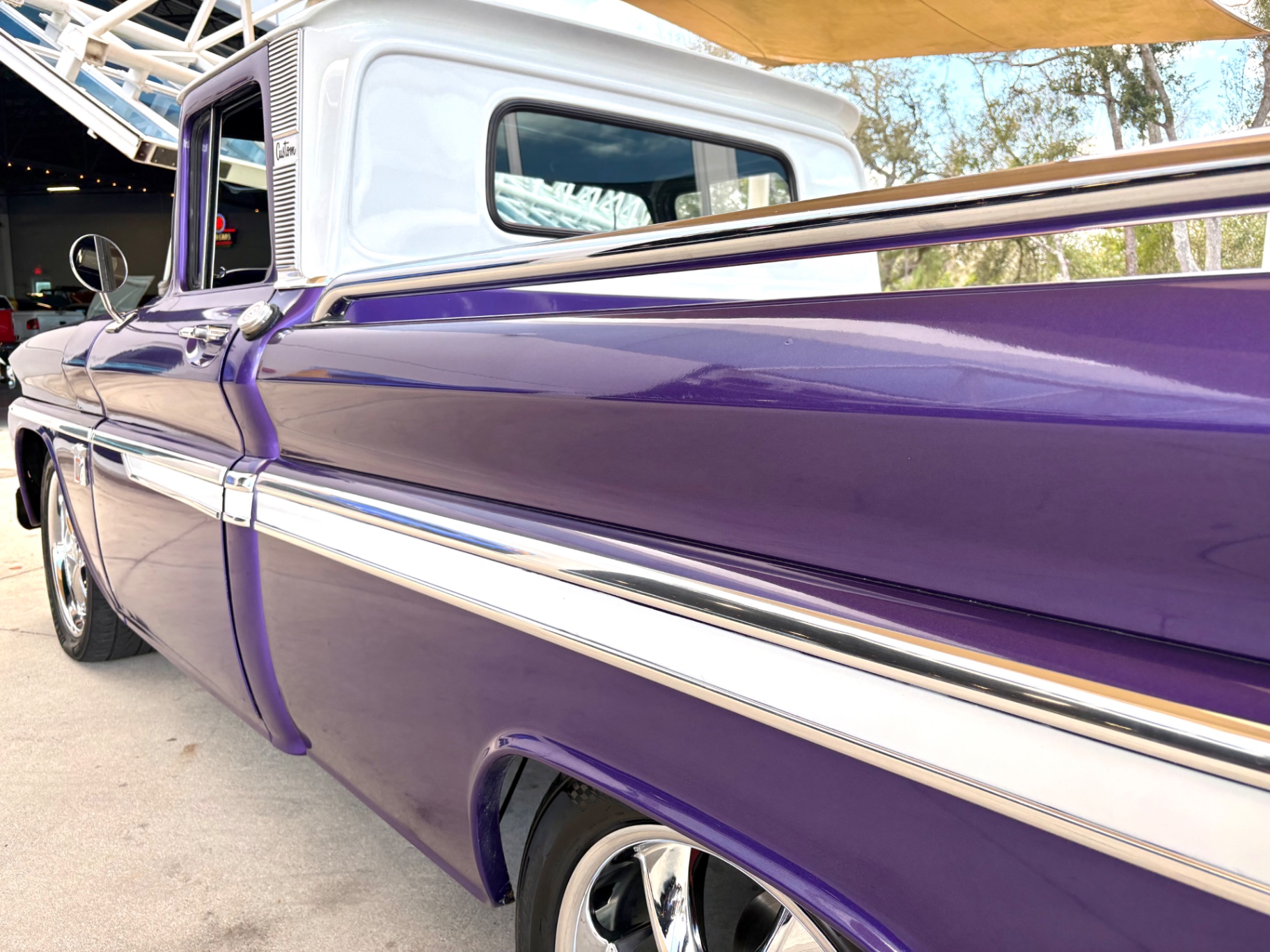
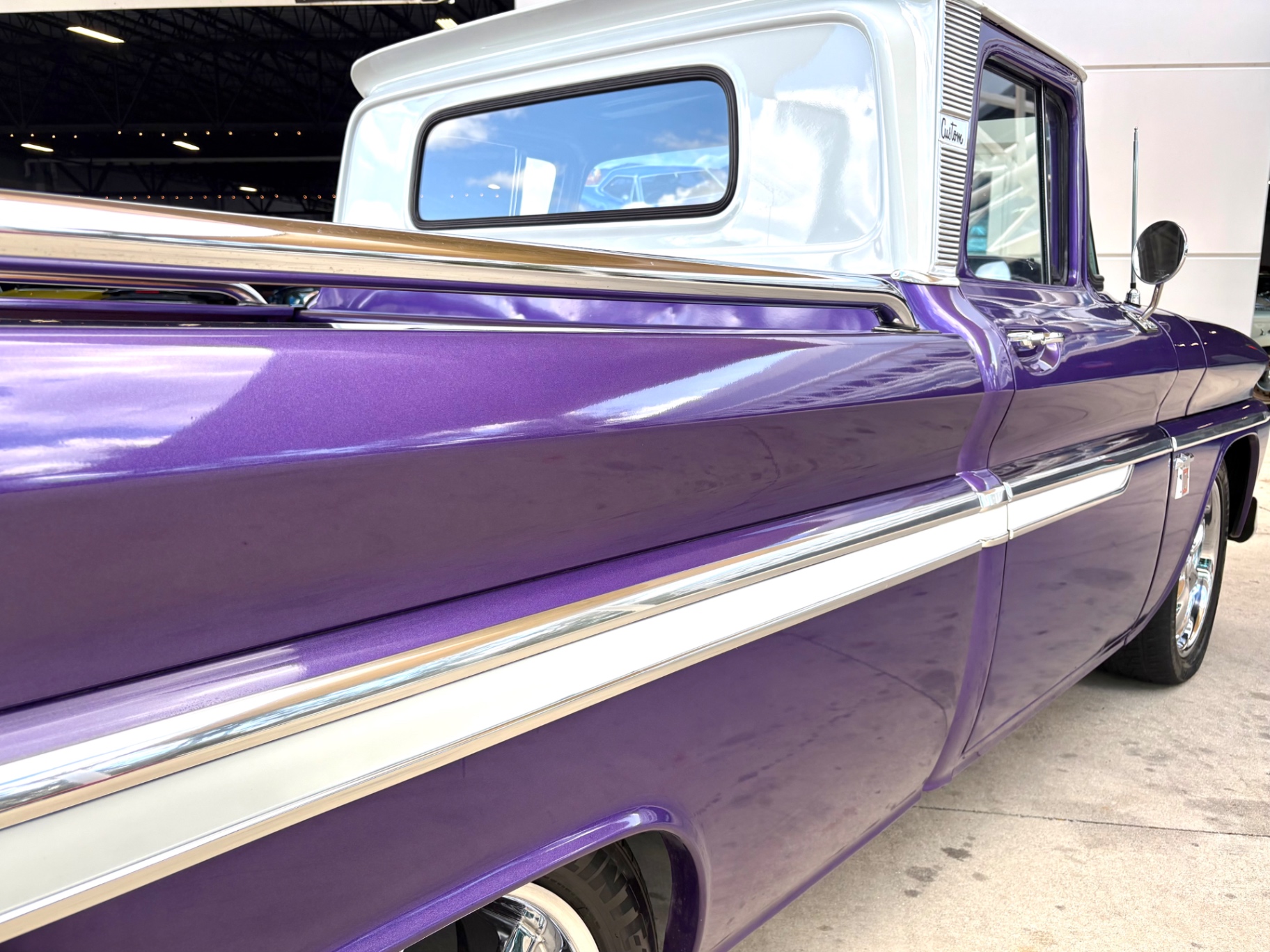
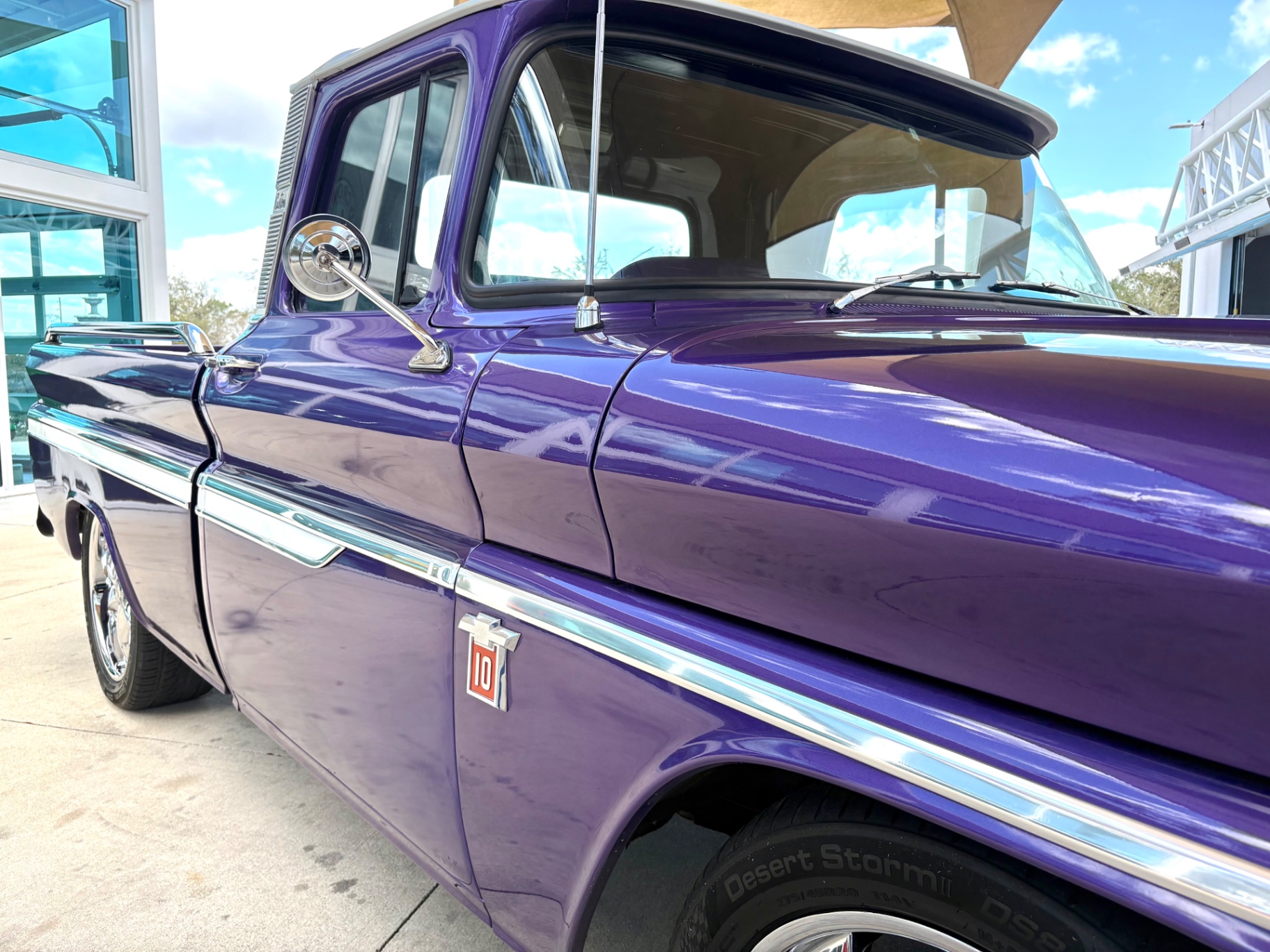
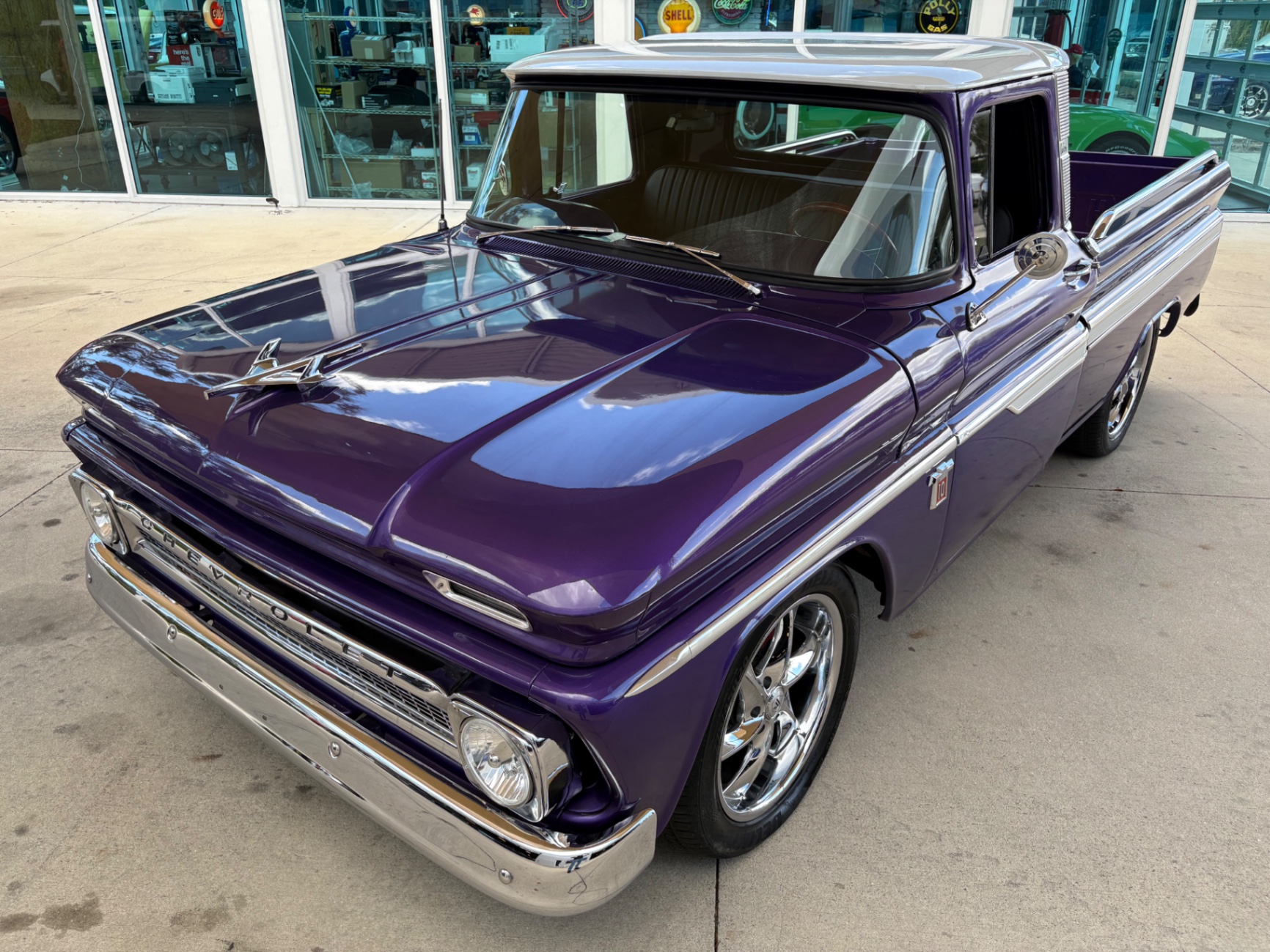
The two-tone purple and white full custom paint on this 1963 Chevrolet C10 is the most immediately visible element of the build, and it has been executed without compromise. The purple is a deep, saturated tone that reads differently in sunlight versus shade — in direct sun it shows vivid depth, in shade it pulls toward indigo. The white break follows the body's natural character line, dividing the lower body from the upper cab and bed sides in a layout that echoes classic two-tone factory truck configurations from the era without simply copying them.
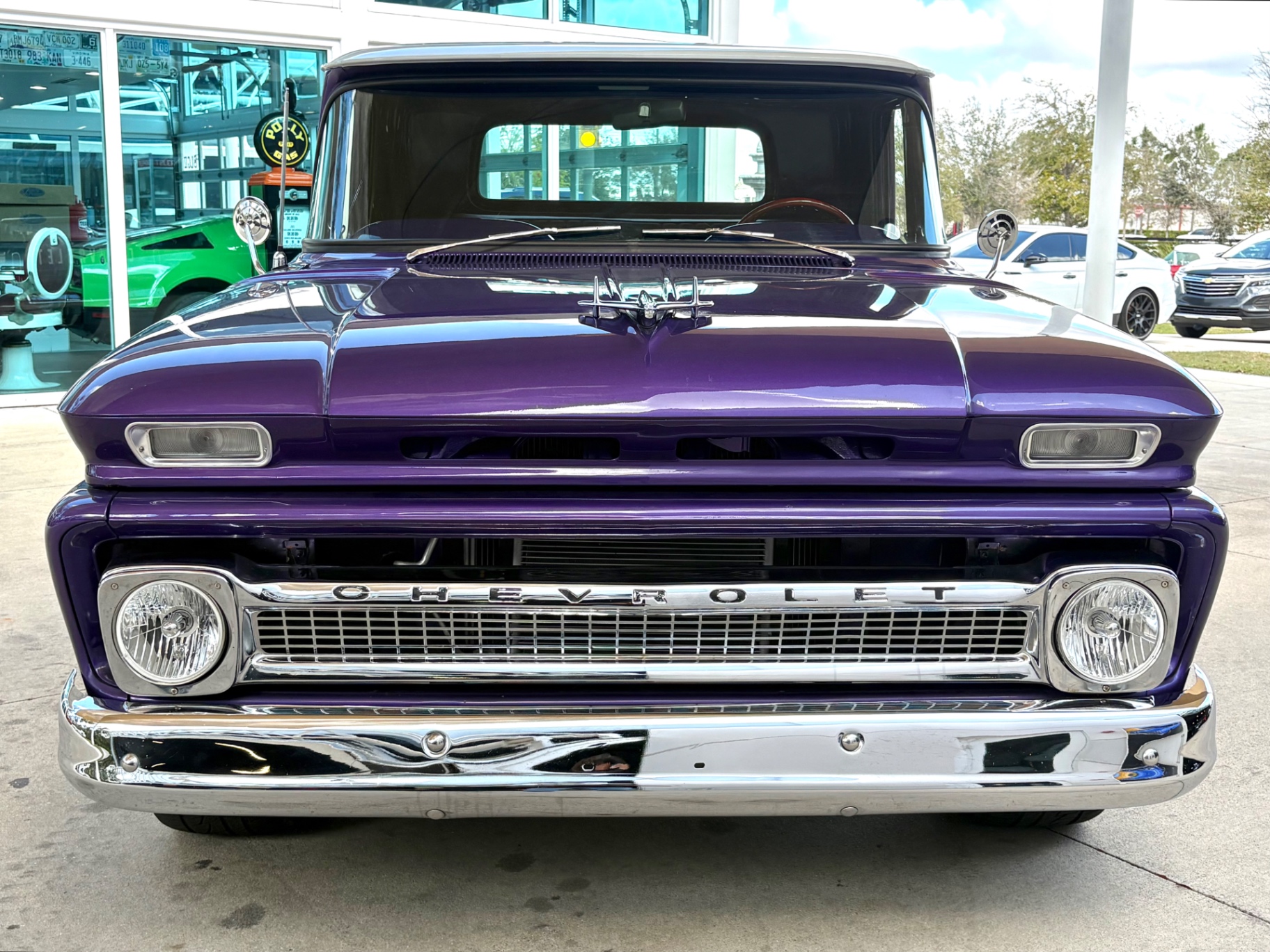
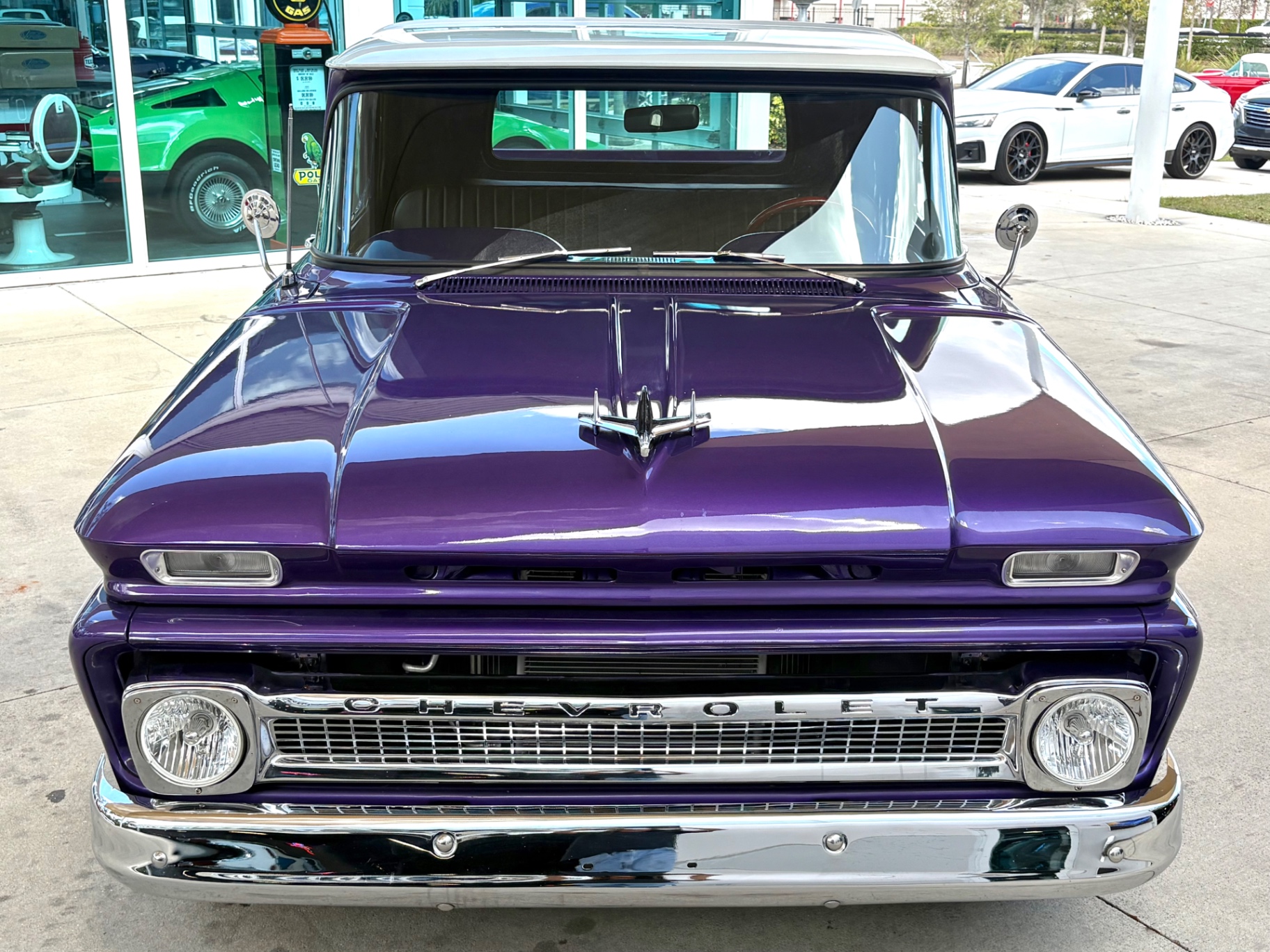
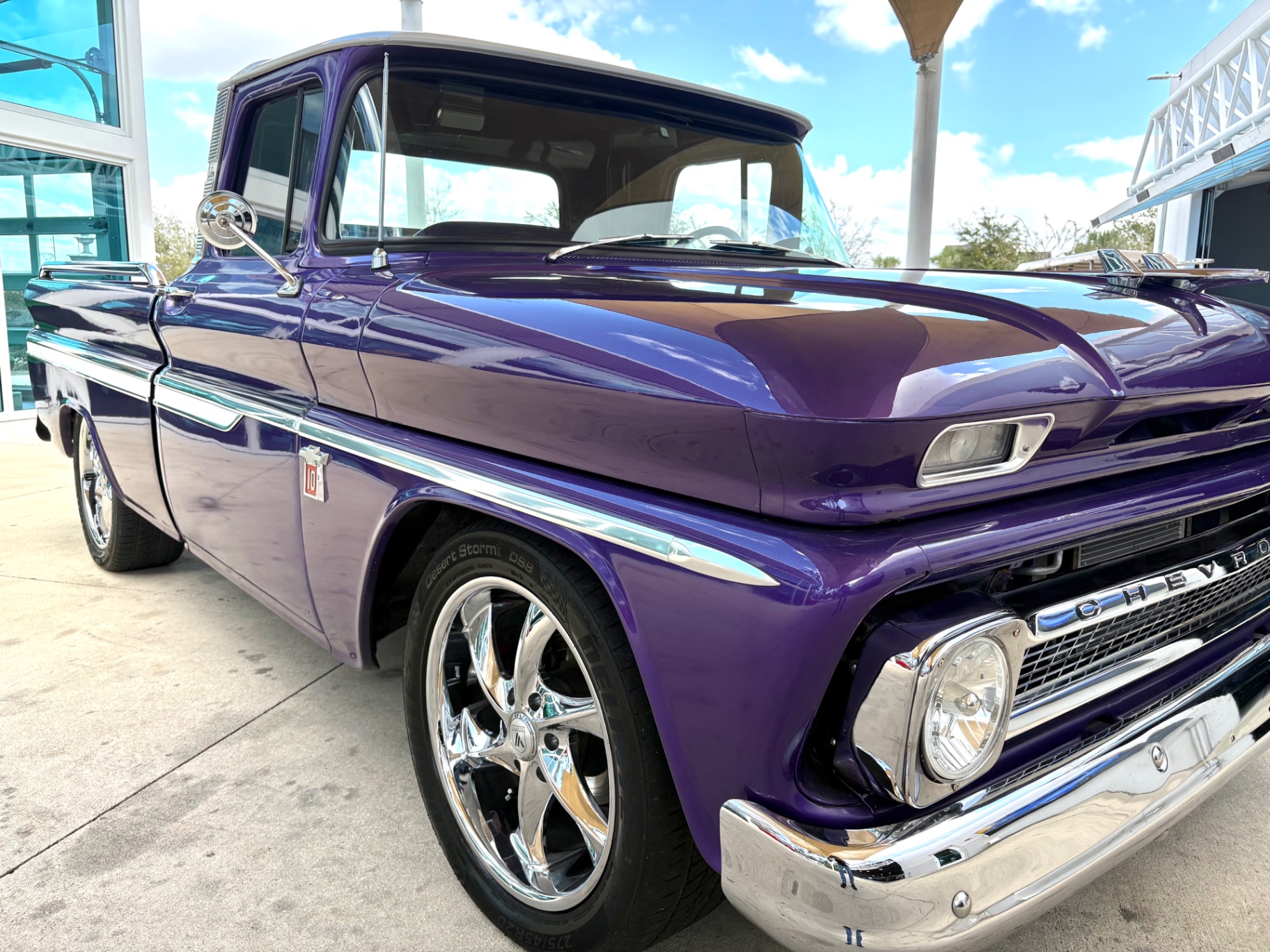
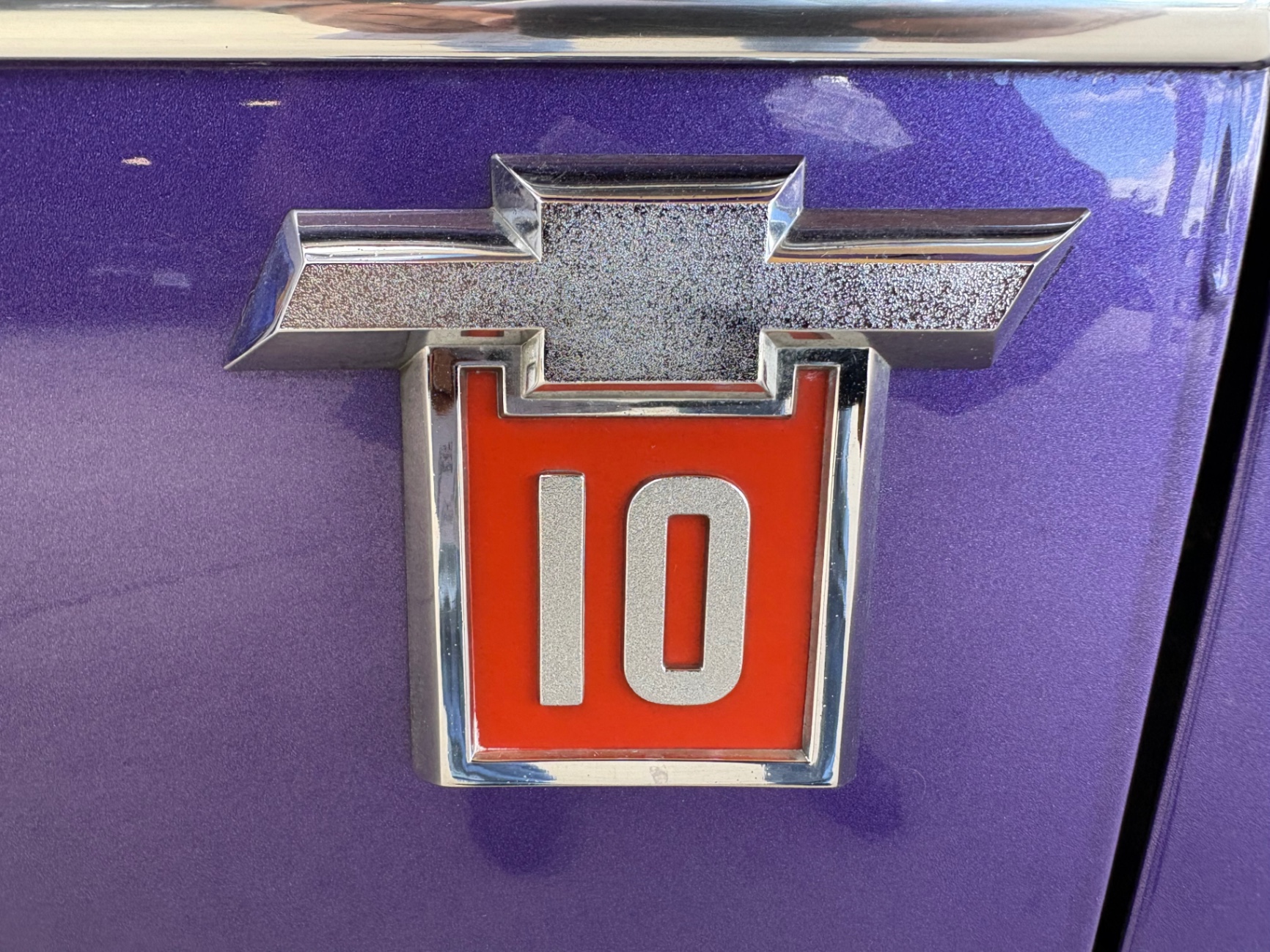
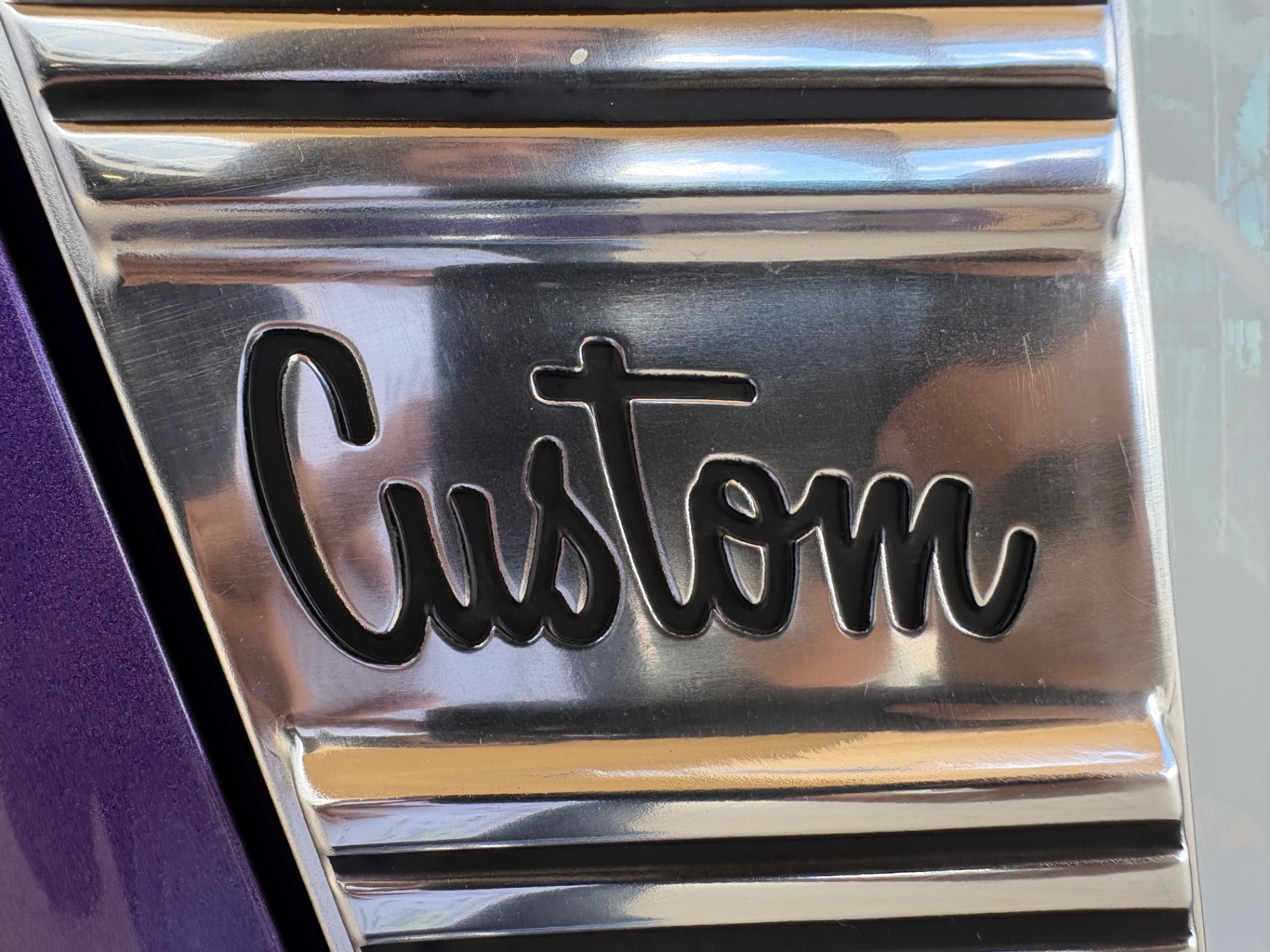
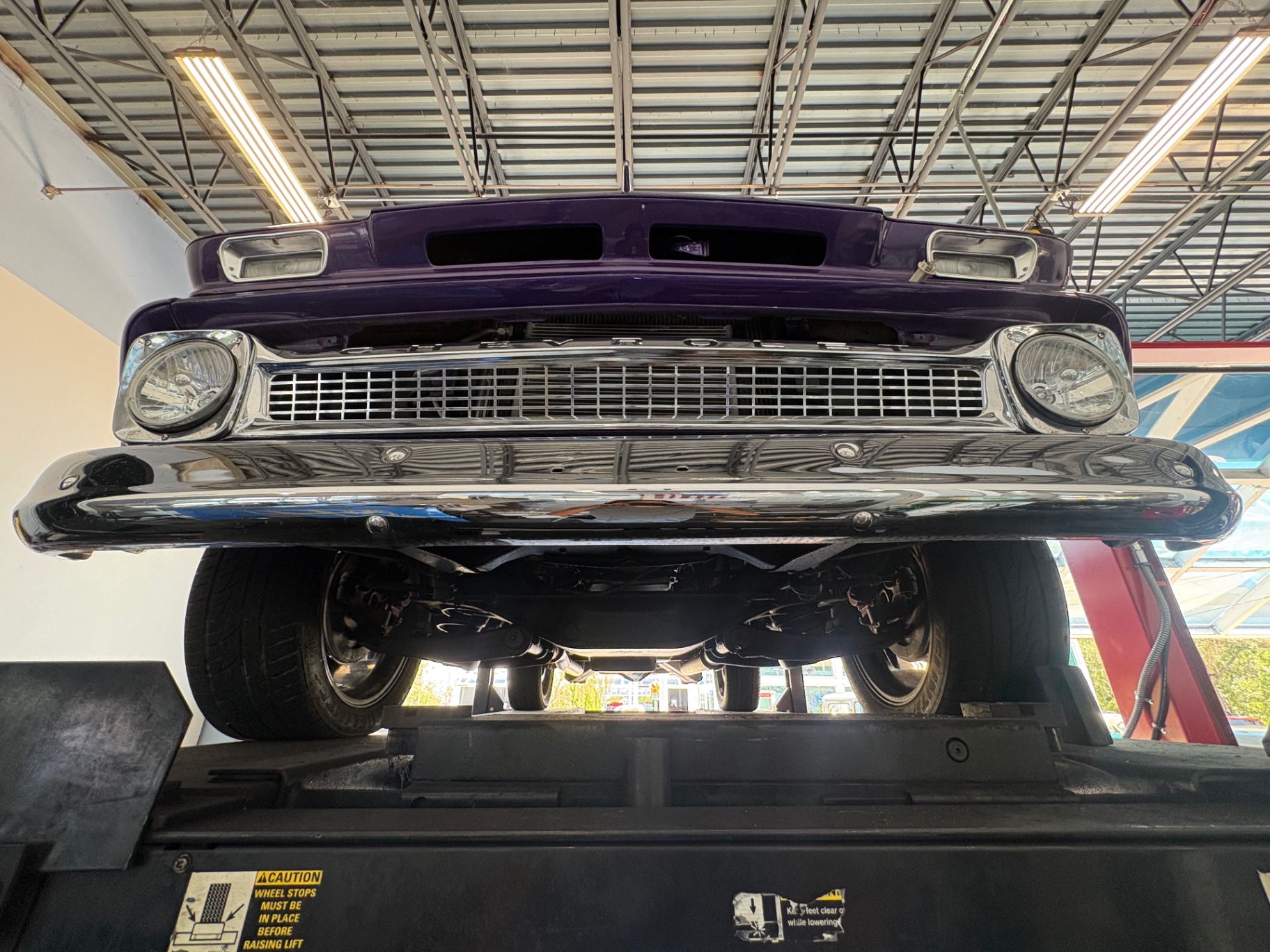
The chrome front and rear bumpers are clean and straight. The front carries the original rectangular Chevrolet script grille design, which is one of the defining visual details of the 1960–1963 C10. Chrome body side trim and moldings follow the body line and complement the two-tone break. The C10 fender badge and custom cab badge identify the model. The chrome hood ornament sits centered on the leading edge of the hood. Chrome exterior door mirrors are fitted on both sides.
The HID headlights replace the original sealed-beam units and provide a significantly brighter, whiter light output. They sit in the stock locations and do not change the profile of the truck from the front.
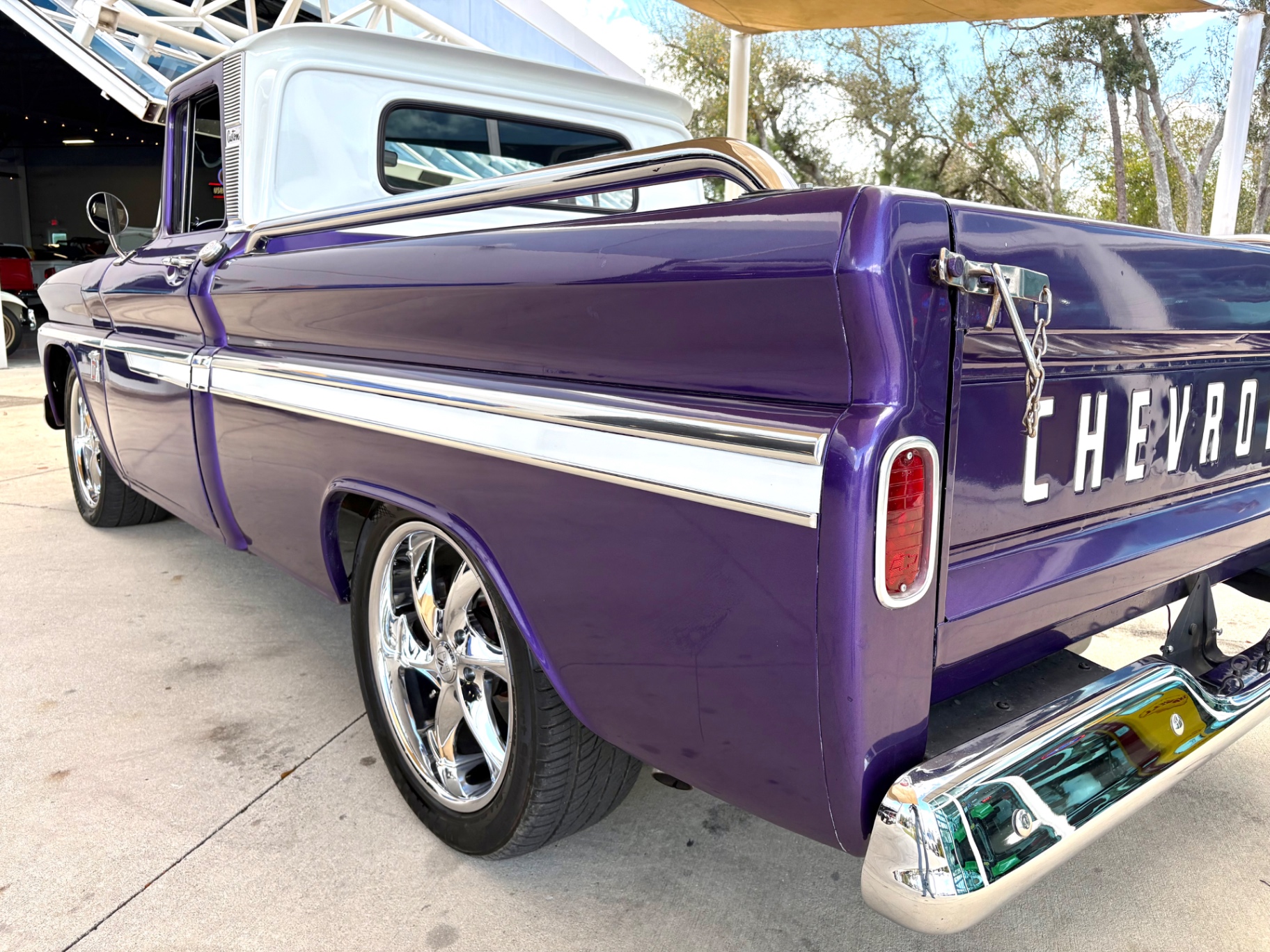
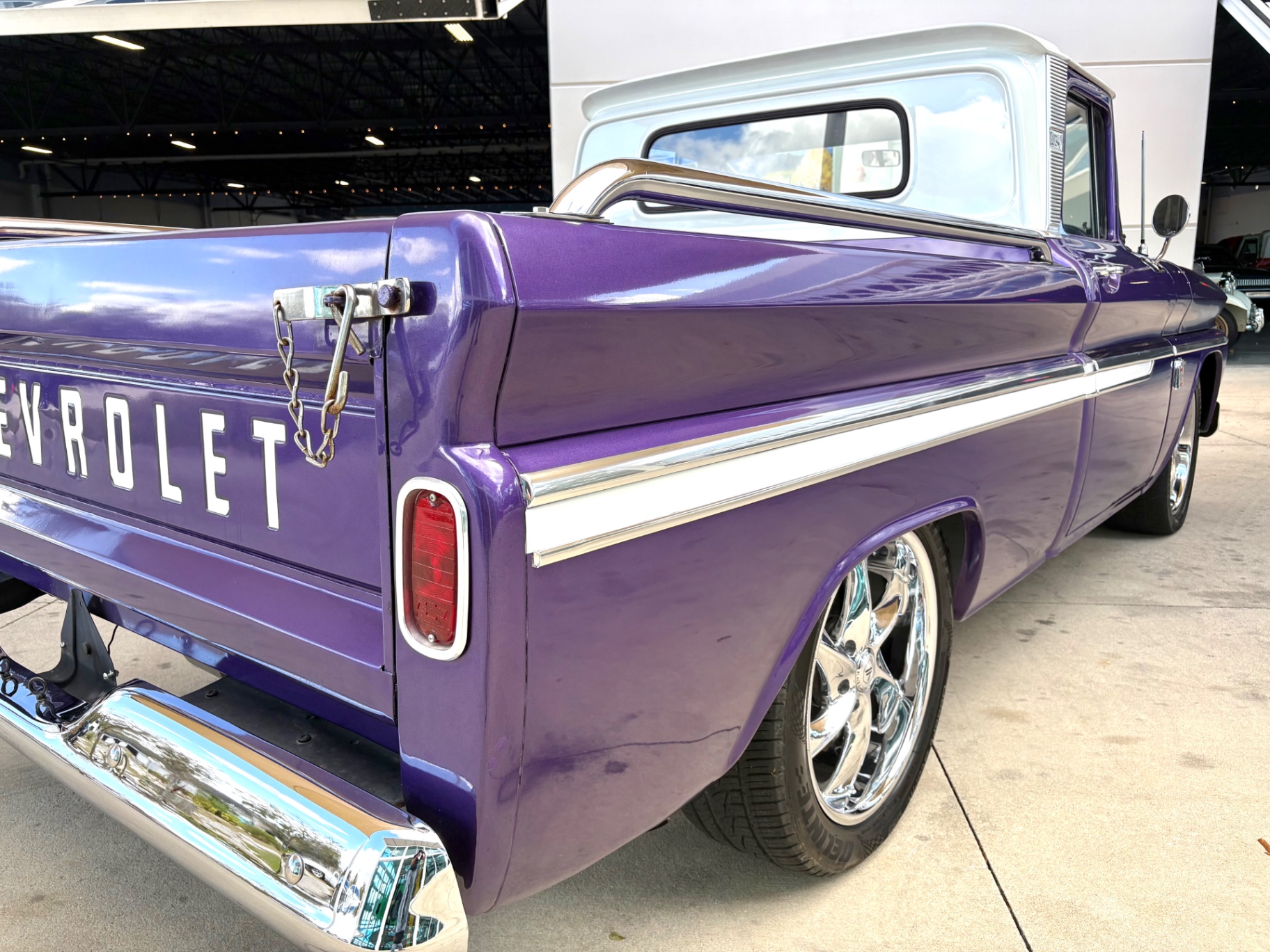
The 20-inch custom wheels fill the wheel openings appropriately for the lowered stance. Looking through the spokes reveals the red powder-coated disc brake calipers, which add a detail that ties the undercar work to the exterior finish. The lowered stance is the result of the IFS conversion up front, combined with suspension work in the rear.
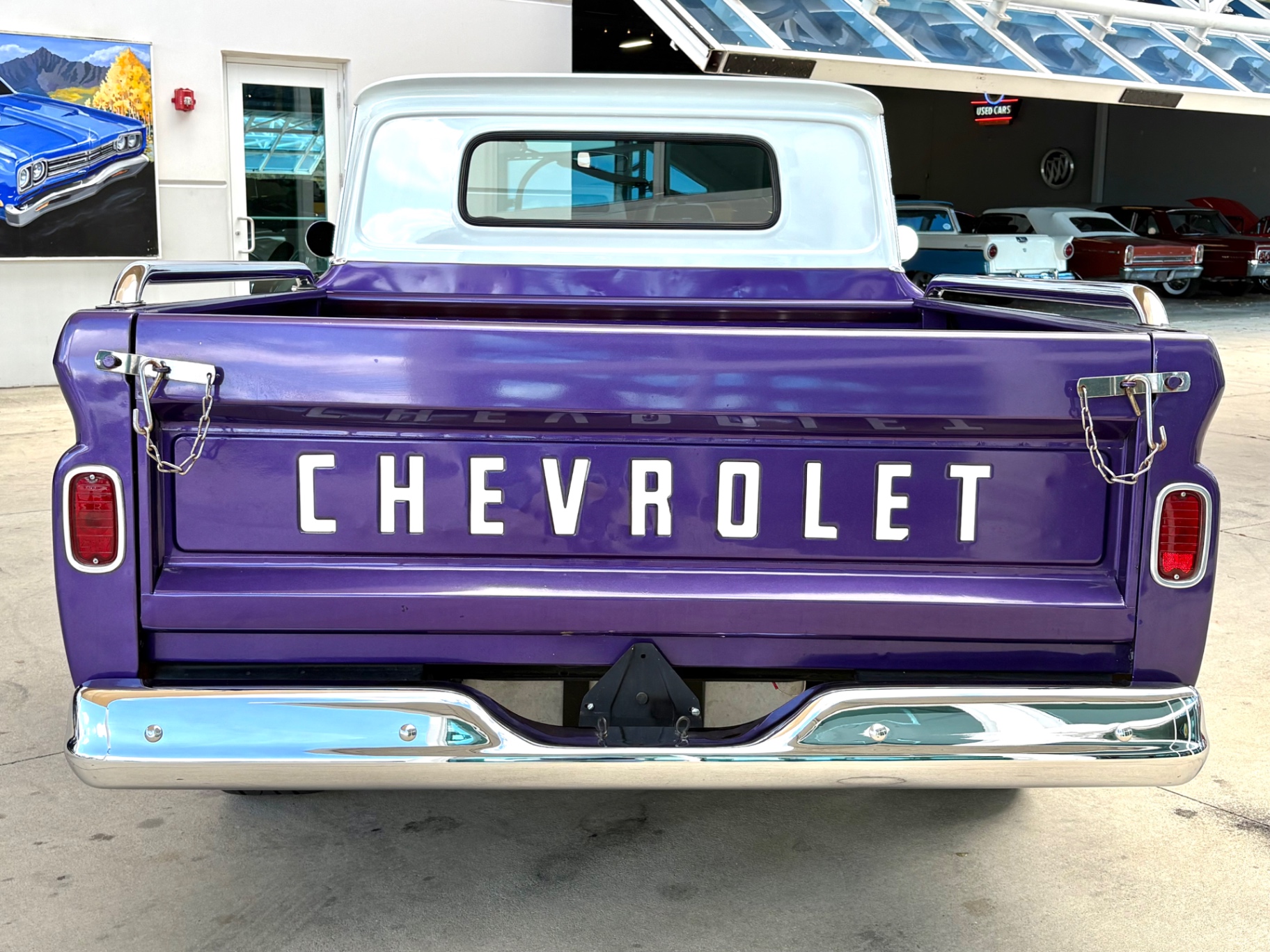
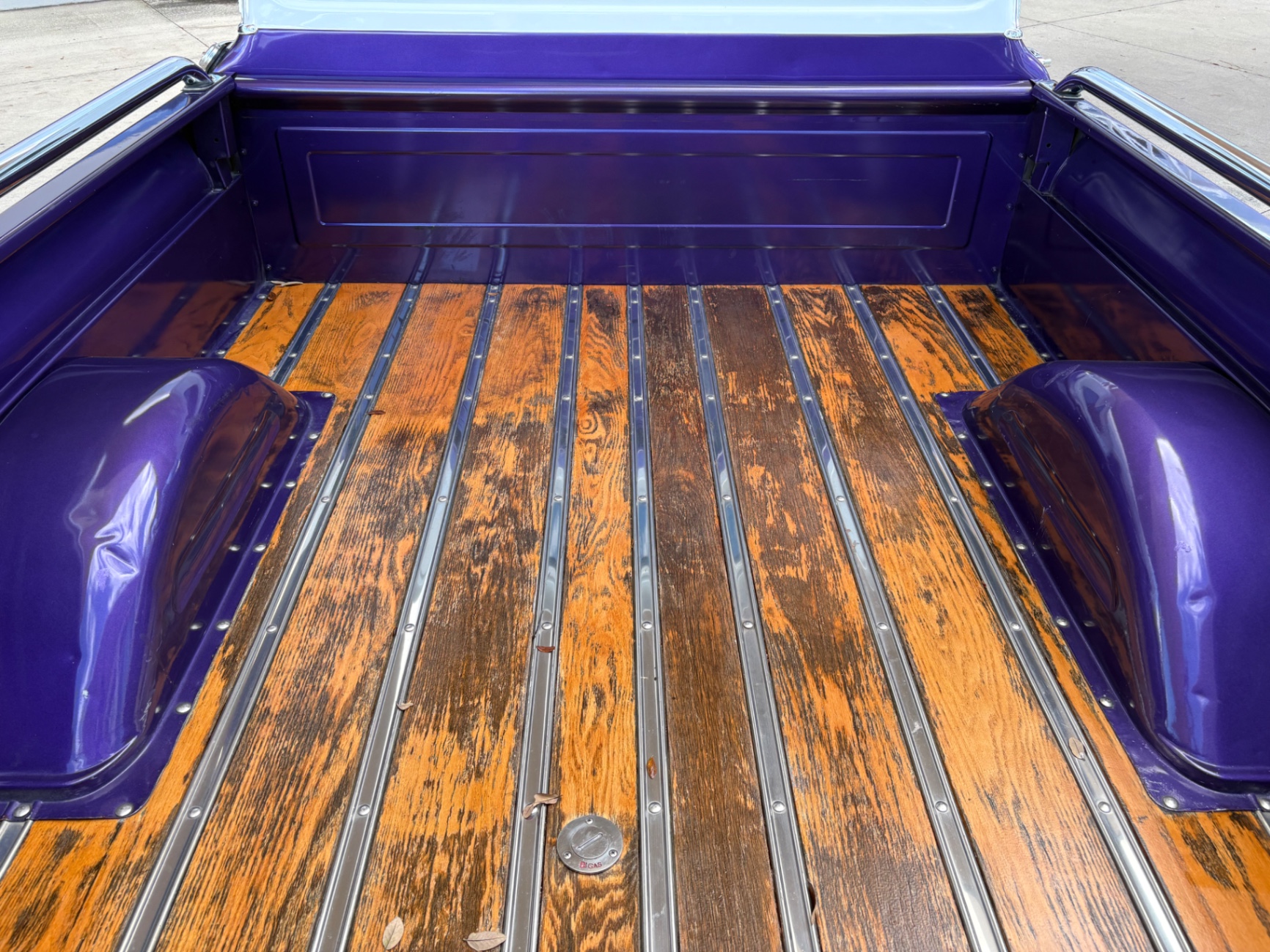
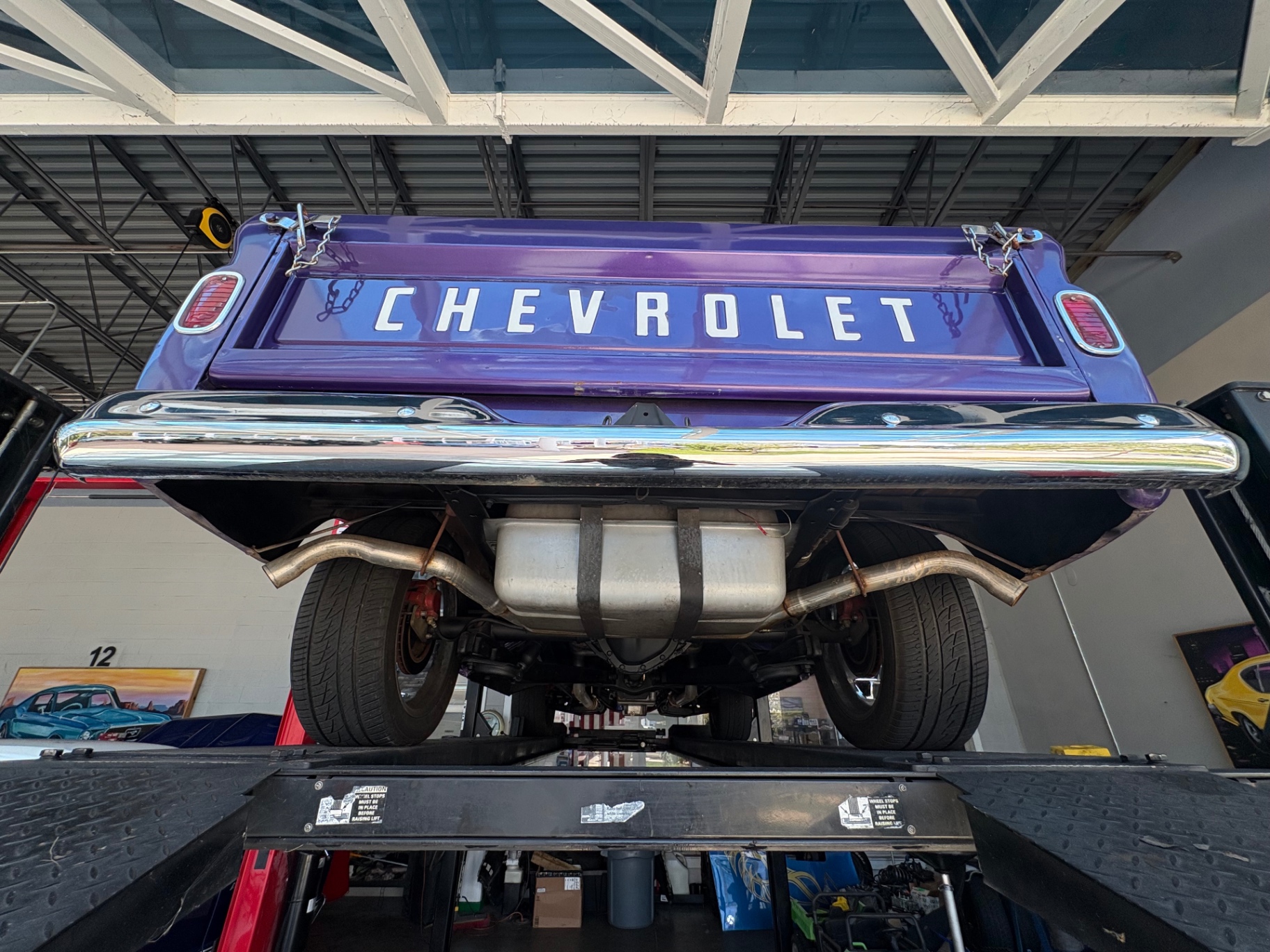
The bed is finished with a wood plank floor and stainless steel bed strips — the most traditional and visually correct bed treatment for a truck of this era. The wood planks run the width of the short bed and are secured with the stainless strips at even intervals. The tailgate carries full-width Chevrolet block lettering. Looking underneath the rear, the dual Flowmaster mufflers and side-exit pipes are clearly visible tucked within a painted black undercarriage. The LMC-relocated fuel tank sits forward of the axle, clearing the exhaust routing cleanly.
Conclusion
The 1963 Chevrolet C10 short bed occupies a well-established place in the custom truck market, and the best examples — the ones with real mechanical upgrades and cohesive builds — are not getting cheaper. This truck was built to be driven. The LS 5.3 and 4L60E combination is reliable, serviceable, and powerful. The IFS conversion and four-wheel disc brakes bring the handling and stopping capability up to a level that matches the truck's visual presentation. The Vintage Air, HID headlights, and Kenwood audio system make it a practical vehicle for regular use, not just shows and parades.
The purple and white paint is a committed choice that will appeal to the buyer looking for something that stands apart from the sea of black and silver custom trucks. The wood bed floor, chrome trim, and custom interior details show that the builder was working toward a finished product, not a rolling work in progress.
If you have questions about this 1963 Chevrolet C10, contact Skyway Classics at 941-254-6608. We are located in Sarasota, Florida, and are happy to arrange an inspection, answer technical questions, or discuss transport options.
Disclaimer
Information found on the website is presented as given to us by the owner of the car, whether on consignment or from the owner we bought it from. Some Photos, materials for videos, descriptions and other information are provided by the consignor/seller and is deemed reliable, but Skyway Classics does not warranty or guarantee this information. Skyway Classics is not responsible for information that may incorrect or a publishing error. The decision to purchase should be based solely on the buyers personal inspection of the vehicle or by a professional inspection service prior to offer or purchase being made.
1963 Chevrolet C10 Short Bed Custom — LS-Swapped Pro-Touring Build with Full Custom Paint
Why This Car Is Special
The 1960–1966 Chevrolet C10 is one of the most popular platforms in the custom truck hobby, and for good reason. Chevrolet introduced the C/K series in 1960 as a complete redesign of its light-duty truck lineup, moving away from the round, fender-forward styling of the 1950s and into a cleaner, more modern double-wall cab design with a lower, wider stance. The 1963 model year sits right in the middle of the first generation, before the minor facelift that arrived for 1964. That means this truck carries the original grille treatment and hood line that many enthusiasts consider the cleanest iteration of the body style.
The short bed configuration — officially a 6.5-foot box on the half-ton C10 — has always been the more desirable variant for custom builds. It gives the truck better proportions and puts the cab and bed in a visual relationship that works, especially when the truck is lowered. The short bed C10 from this era has become a fixture on the pro-touring and custom truck show circuit, and the market for well-built examples has remained strong for years.
This particular 1963 Chevrolet C10 is not a trailer queen or a half-finished project. It is a completed, driven custom built around a GM LS 5.3-liter V8 and a 4L60E four-speed automatic overdrive transmission — a combination that makes this truck genuinely usable on today's roads. The builder made thoughtful choices throughout: independent front suspension for modern handling, four-wheel disc brakes for stopping power, Vintage Air for climate control, and an LMC gas tank relocation kit to free up clearance for the lowered stance and side-exit exhaust. The two-tone purple and white full custom paint is aggressive and committed, carrying through to the firewall, cab interior, and engine cover. This is not a truck that was built halfway.
Features List
- LS 5.3L V8 engine
- 4L60E 4-speed automatic overdrive transmission
- Independent front suspension (IFS)
- 4-wheel disc brakes with red powder-coated calipers
- Power steering
- Stainless headers with Flowmaster mufflers, dual exhaust with side exits
- Cold air intake
- Aluminum radiator
- High-output alternator
- LMC gas tank relocation kit
- Vintage Air A/C system
- Ididit tilt steering column
- Grant steering wheel
- Dolphin gauges with billet dash
- Custom console with cup holders and Bowtie emblem
- Kenwood stereo with amplifiers and subwoofers
- HID headlights
- Custom engine cover with fire pinstripe graphics
- 20-inch custom wheels
- Two-tone purple and white full custom paint
- Custom cab badge and C10 fender badge
- Chrome hood ornament, chrome front and rear bumpers
- Chrome body side trim and moldings
- Chrome exterior door mirrors
- Stainless door sill plates
- Lowered stance
- Black painted frame and undercarriage
- Full bench seat reupholstery in black vinyl
- Custom painted interior, firewall, and cab
- Wood bed floor with stainless bed strips
- Rear vent and quarter windows
- Factory short bed configuration
Mechanical
The heart of this 1963 Chevrolet C10 is a GM LS 5.3-liter V8, backed by a 4L60E four-speed automatic overdrive transmission. The LS 5.3 is one of the most proven engines in the GM catalog. In truck applications, it produced between 270 and 295 horsepower depending on the model year and calibration, and it is known for broad, usable torque throughout the RPM range. More importantly for a truck this size, it is fuel-injected, computer-controlled, and far more reliable in daily use than any carbureted period-correct engine. The 4L60E adds a true overdrive fourth gear, which keeps engine speed down on the highway and makes this truck comfortable to drive long distances — something the original three-speed was never designed to do.
The exhaust begins with stainless headers, which improve flow compared to cast manifolds and resist corrosion better over time. From there, the system runs through Flowmaster mufflers and exits through side ports ahead of the rear wheels. The side-exit configuration is a deliberate visual and acoustic choice — it keeps the pipes out of view from the rear while letting the LS tone come through without being muffled into submission.
Cooling is handled by an aluminum radiator, which dissipates heat more efficiently than a period steel unit and weighs less. A high-output alternator supports the demands of the Vintage Air system, amplifier setup, and HID headlights without taxing the charging system.
The front suspension has been converted to an independent front suspension setup, which is one of the most significant improvements a builder can make to a first-generation C10. The stock front end used a straight I-beam axle with kingpin-style steering — it worked fine for 1963 but has real limitations in terms of handling geometry, caster adjustment, and parts availability. The IFS conversion provides proper A-arm geometry, better camber and caster adjustment, and allows the front of the truck to be dropped significantly without the compromises that come with lowering a solid axle. The result is a truck that steers and corners in a way that matches its visual stance. Power steering is part of the package.
Braking is handled by a four-wheel disc setup with red powder-coated calipers visible through the 20-inch custom wheels. The stock 1963 C10 used four-wheel drums — adequate for the era, but not appropriate for a truck running LS power and modern tire sizes. The disc conversion dramatically reduces stopping distances and provides more consistent brake feel, especially when the brakes are warm. The LMC gas tank relocation kit moves the factory fuel tank to a position that accommodates the lowered ride height and side-exit exhaust routing cleanly.
Interior
The cab of this 1963 Chevrolet C10 has been fully redone. The full bench seat has been reupholstered in black vinyl, which is period-appropriate in form but executed with current materials and workmanship. The seating surface is clean and uniform, with tight stitching across the ribbed panels. Black vinyl makes sense on a truck this color — the contrast between the deep purple exterior and the black interior reads well without competing.
The dashboard has been fitted with a billet dash and Dolphin gauges, replacing the original instrument cluster with a cleaner, more legible set of round gauges. The billet dash surround integrates the gauge cluster with the rest of the interior without looking like an afterthought. The dash face itself is painted to match the exterior purple, which ties the cab interior together with the rest of the build. The same purple paint carries across the firewall, giving the engine bay a finished, coordinated look rather than the typical bare metal or black spray paint seen in most builds.
The Ididit tilt steering column gives the driver the ability to set the wheel angle for comfort, which matters on a truck with a bench seat and no adjustable pedals. The Grant steering wheel is a wood-rimmed three-spoke design — a classic aftermarket choice that fits the era of the truck while offering a better grip diameter than the original thin-rimmed factory wheel.
A custom console has been built between the driver and the bench, incorporating cup holders and a Bowtie emblem insert. The console also houses the subwoofer enclosure for the Kenwood audio system. The Kenwood head unit is mounted in the center of the dash. The amplifiers and subwoofers are integrated into the console in a way that does not sacrifice cab usability — you can still seat three across the bench.
Vintage Air handles climate control. For anyone who has driven a Florida summer in an old truck without air conditioning, this is not a luxury — it is a requirement. The Vintage Air system uses modern refrigerant and a compact evaporator that fits within the original dash layout. The vents are visible on both sides of the dash. The rear quarter and vent windows on this cab open to assist airflow as well. Stainless door sill plates finish the entry points cleanly.
Exterior
The two-tone purple and white full custom paint on this 1963 Chevrolet C10 is the most immediately visible element of the build, and it has been executed without compromise. The purple is a deep, saturated tone that reads differently in sunlight versus shade — in direct sun it shows vivid depth, in shade it pulls toward indigo. The white break follows the body's natural character line, dividing the lower body from the upper cab and bed sides in a layout that echoes classic two-tone factory truck configurations from the era without simply copying them.
The chrome front and rear bumpers are clean and straight. The front carries the original rectangular Chevrolet script grille design, which is one of the defining visual details of the 1960–1963 C10. Chrome body side trim and moldings follow the body line and complement the two-tone break. The C10 fender badge and custom cab badge identify the model. The chrome hood ornament sits centered on the leading edge of the hood. Chrome exterior door mirrors are fitted on both sides.
The HID headlights replace the original sealed-beam units and provide a significantly brighter, whiter light output. They sit in the stock locations and do not change the profile of the truck from the front.
The 20-inch custom wheels fill the wheel openings appropriately for the lowered stance. Looking through the spokes reveals the red powder-coated disc brake calipers, which add a detail that ties the undercar work to the exterior finish. The lowered stance is the result of the IFS conversion up front, combined with suspension work in the rear.
The bed is finished with a wood plank floor and stainless steel bed strips — the most traditional and visually correct bed treatment for a truck of this era. The wood planks run the width of the short bed and are secured with the stainless strips at even intervals. The tailgate carries full-width Chevrolet block lettering. Looking underneath the rear, the dual Flowmaster mufflers and side-exit pipes are clearly visible tucked within a painted black undercarriage. The LMC-relocated fuel tank sits forward of the axle, clearing the exhaust routing cleanly.
Conclusion
The 1963 Chevrolet C10 short bed occupies a well-established place in the custom truck market, and the best examples — the ones with real mechanical upgrades and cohesive builds — are not getting cheaper. This truck was built to be driven. The LS 5.3 and 4L60E combination is reliable, serviceable, and powerful. The IFS conversion and four-wheel disc brakes bring the handling and stopping capability up to a level that matches the truck's visual presentation. The Vintage Air, HID headlights, and Kenwood audio system make it a practical vehicle for regular use, not just shows and parades.
The purple and white paint is a committed choice that will appeal to the buyer looking for something that stands apart from the sea of black and silver custom trucks. The wood bed floor, chrome trim, and custom interior details show that the builder was working toward a finished product, not a rolling work in progress.
If you have questions about this 1963 Chevrolet C10, contact Skyway Classics at 941-254-6608. We are located in Sarasota, Florida, and are happy to arrange an inspection, answer technical questions, or discuss transport options.
Disclaimer
Information found on the website is presented as given to us by the owner of the car, whether on consignment or from the owner we bought it from. Some Photos, materials for videos, descriptions and other information are provided by the consignor/seller and is deemed reliable, but Skyway Classics does not warranty or guarantee this information. Skyway Classics is not responsible for information that may incorrect or a publishing error. The decision to purchase should be based solely on the buyers personal inspection of the vehicle or by a professional inspection service prior to offer or purchase being made.
1963 Chevrolet
C10 Custom
Why Choose Skyway Classics?
Explore our curated inventory of classic and collector cars—thoughtfully selected, ready to drive, and supported by experts who make ownership simple.
Expert Curation
Every vehicle is hand-selected by our experts for quality, authenticity, and investment potential.
Fast Transactions
Streamlined buying and selling process with quick financing and immediate delivery options.
Only National Dealer With Classic Service & Repair
We’re the only national dealership that services and repairs the classics we sell—before and after the sale.
Nationwide Network
Access to our extensive network of collectors, restorers, and classic car enthusiasts nationwide.
Concierge Ownership Support
From financing and insurance to paperwork, shipping, and titling—we handle the details so you can enjoy the drive.
Passion-Driven Service
We're classic car enthusiasts first, providing personalized service with genuine passion for the hobby.