
1957 Chevrolet
Bel Air Base
1957 Chevrolet Bel Air
Why This Car Is Special
The 1957 Chevrolet Bel Air is one of the most recognized automobiles ever produced in the United States. That is not marketing language — it is a simple fact backed by decades of collector demand, cultural presence, and market history. Chevrolet sold just over 1.5 million cars in the 1957 model year across all trim levels, and the Bel Air sat at the top of the lineup, above the Two-Ten and One-Fifty. It was the prestige offering, the car Chevrolet dressed up with full-length side trim, a two-tone paint option, and a more finished interior than anything else in the GM stable at that price point.
What made 1957 specifically important was the engine program. Chevrolet introduced fuel injection as an option that year, the first American production car to offer it as a factory choice, though the vast majority of buyers opted for carbureted small-blocks. The 283 cubic inch V8 in its top fuel-injected form produced one horsepower per cubic inch — a benchmark that engineers and enthusiasts talked about for years afterward. The small-block Chevy architecture introduced in 1955 had already proven itself by 1957, and the platform earned a reputation for reliability and tunability that it has never really lost.
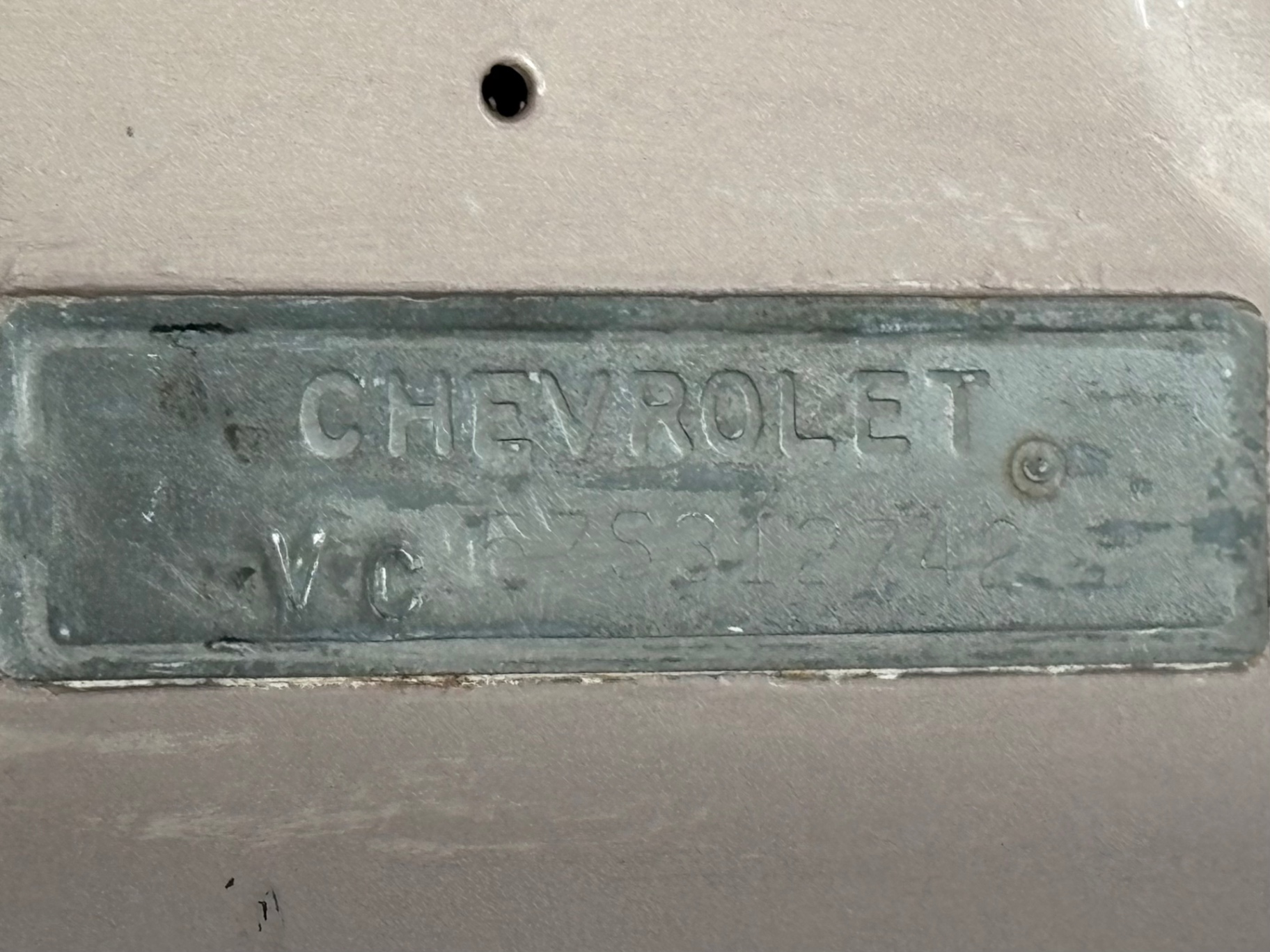
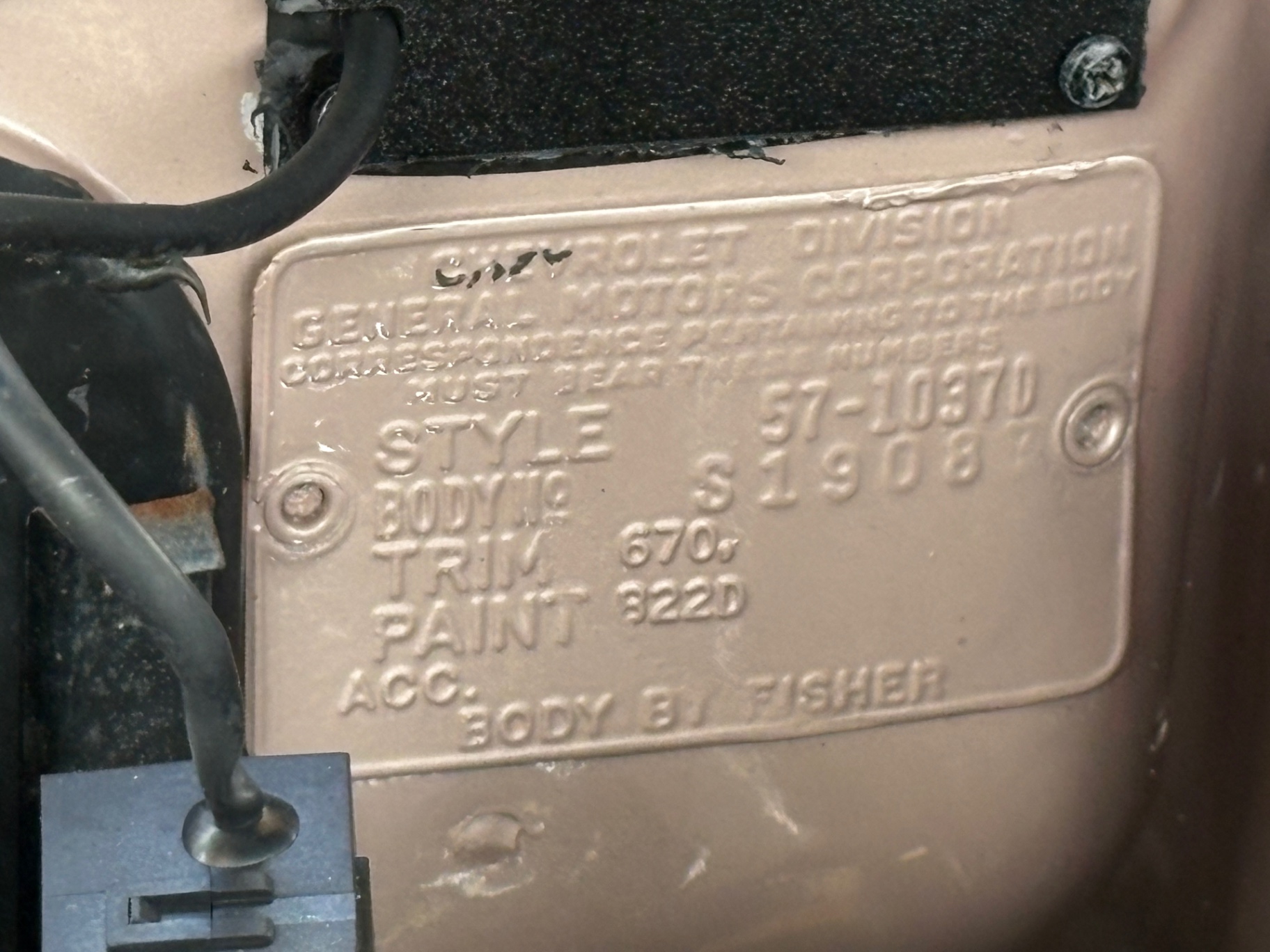
The VIN on this car decodes to a 1957 Chevrolet built in Flint, Michigan, with a V8 engine from the factory. The body style code identifies it as a Sport Sedan — the hardtop two-door body that defined the look of the era with its pillarless roofline and wide greenhouse glass.
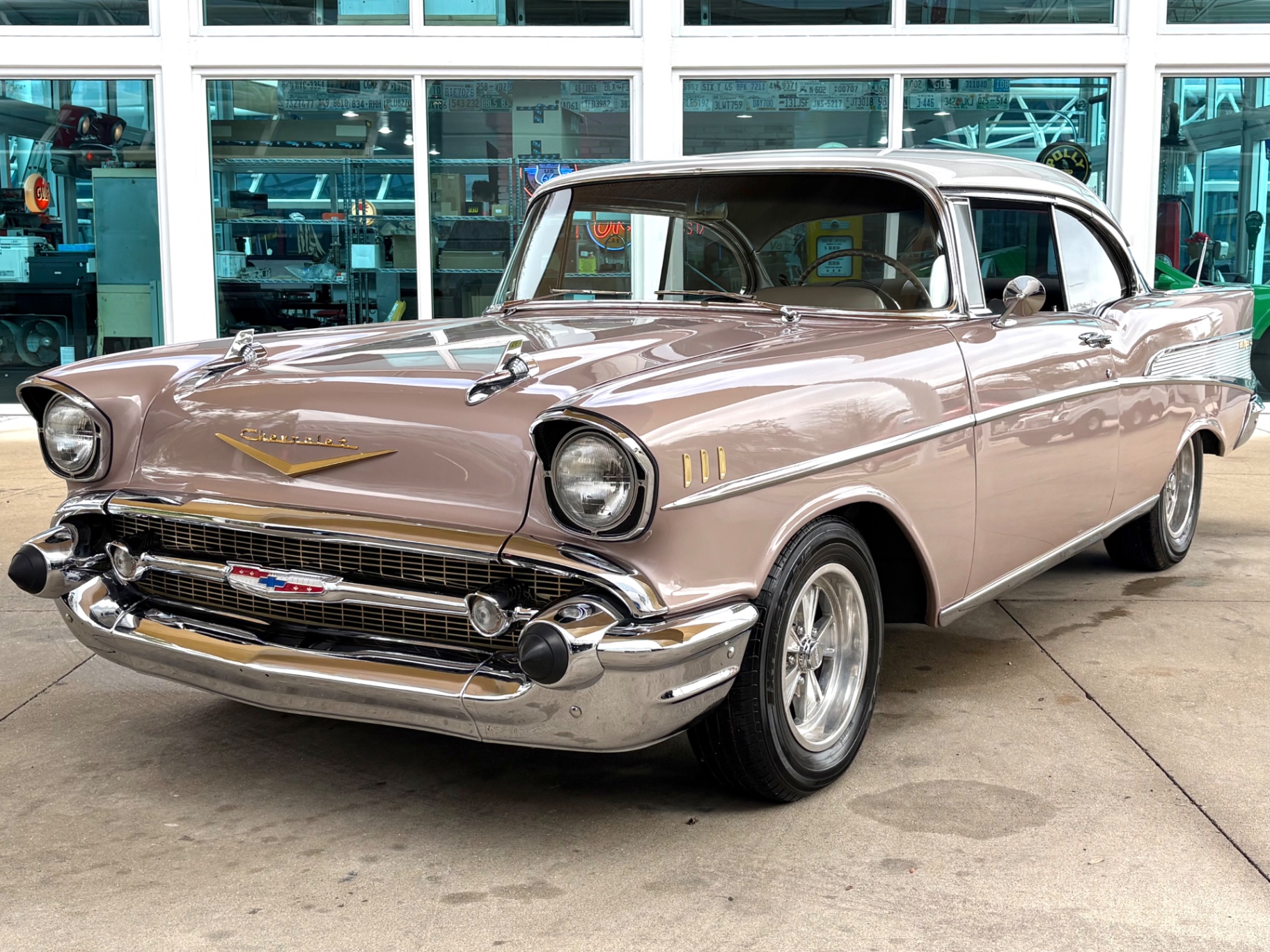
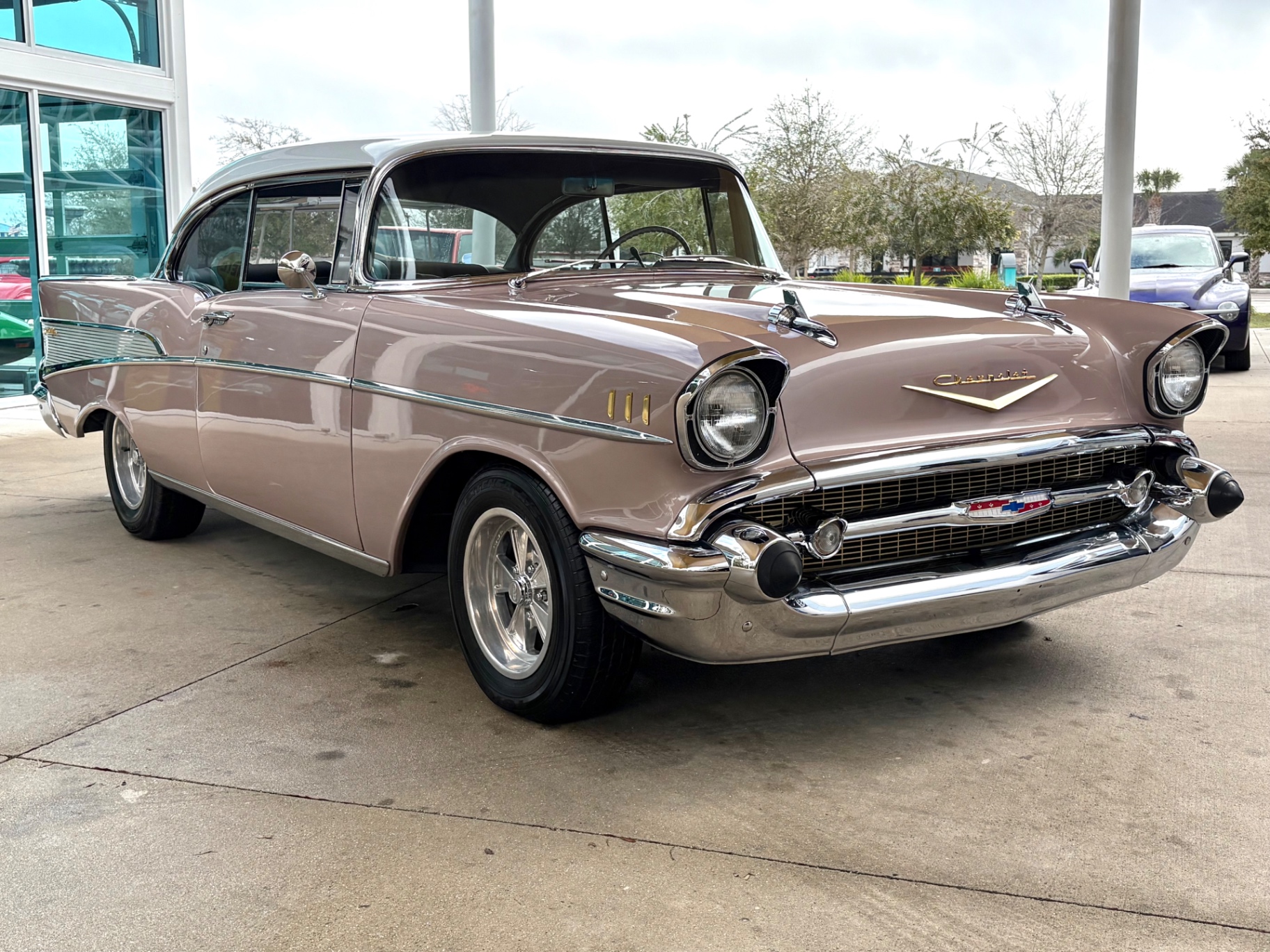
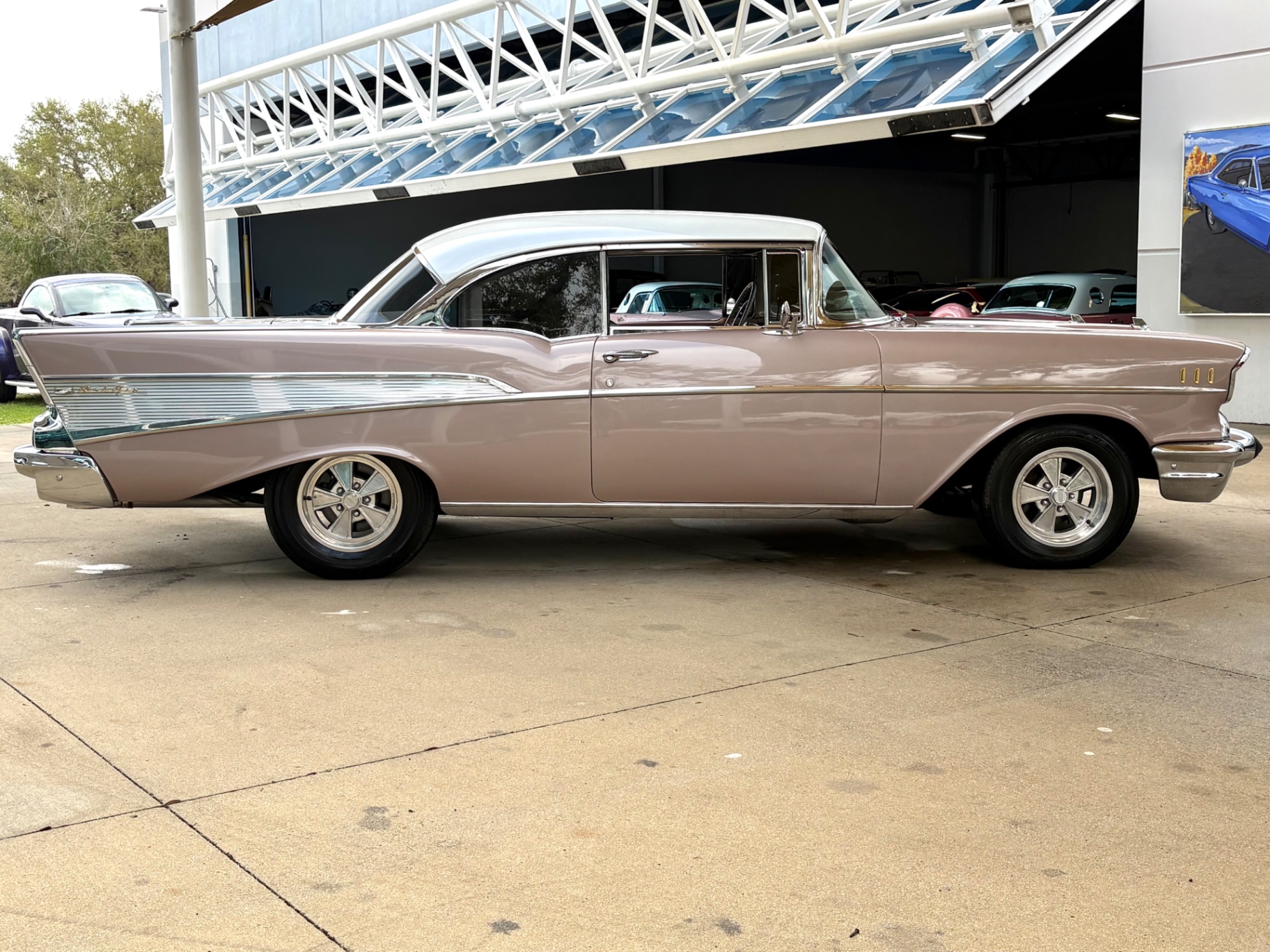
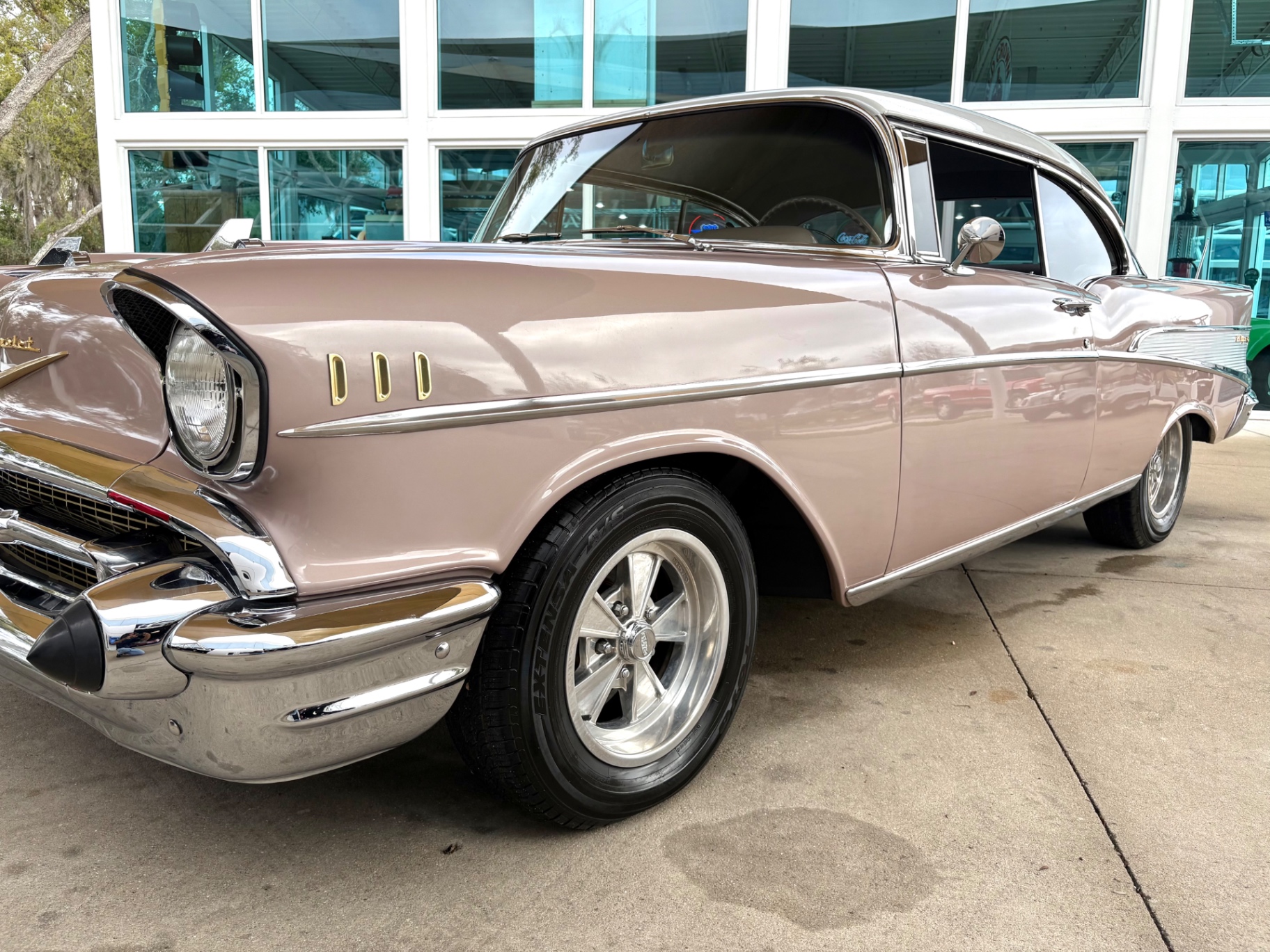
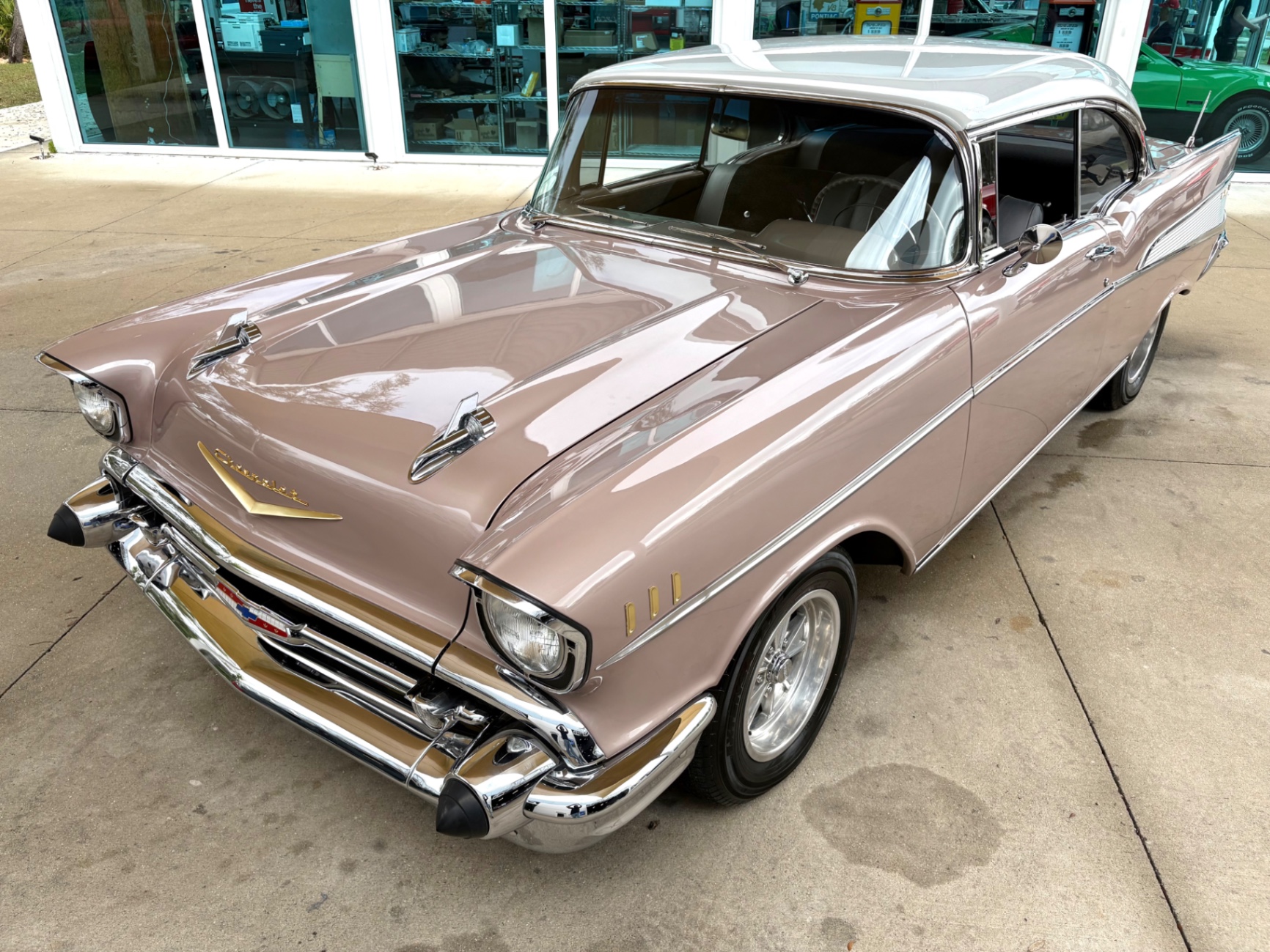
This particular 1957 Chevrolet Bel Air was restored in 2008 and has since been built into a well-sorted custom that prioritizes drivability without stripping the car of its identity. It carries a Pearl Metallic exterior finish over a black and gray custom interior, and nearly every system under the body has been updated to modern components. This is the kind of build that gets driven to shows rather than trailered, and the mechanical list reflects that philosophy clearly.
Features List
- GM 350 cubic inch V8, rated at 325 horsepower, with double hump (camelback) cylinder heads - 4-wheel disc brakes - Late model rear end - Vintage air conditioning system - Full custom interior with power windows and power seat - Dakota Digital gauge cluster - Custom auto sound system - Leather-lined trunk - Danchuk third brake light - LED tail lights - Custom-ordered Cragar mag wheels - Correct rocker panel moldings - Dual side mirrors - Tinted glass - Restored in 2008
Mechanical
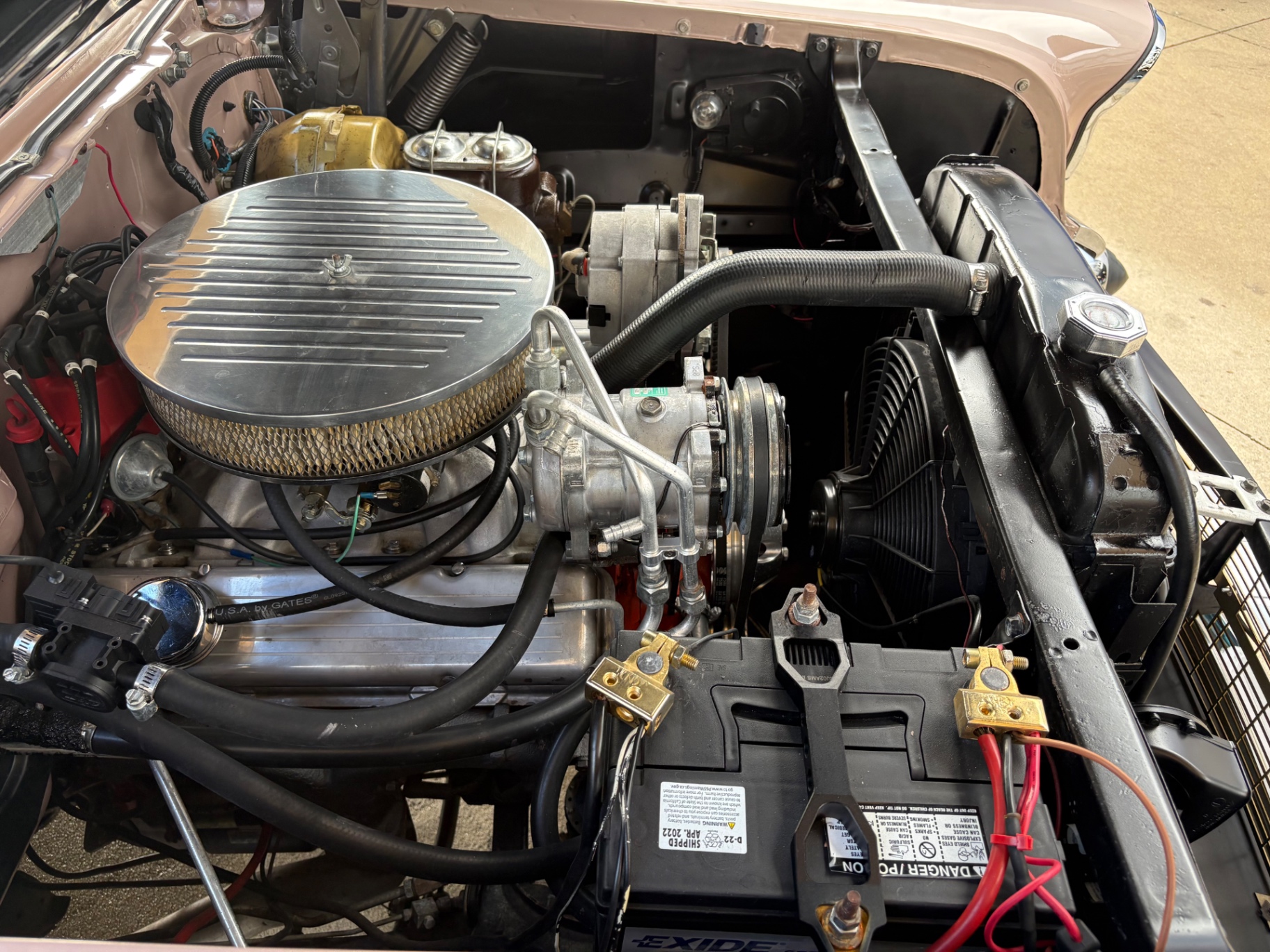
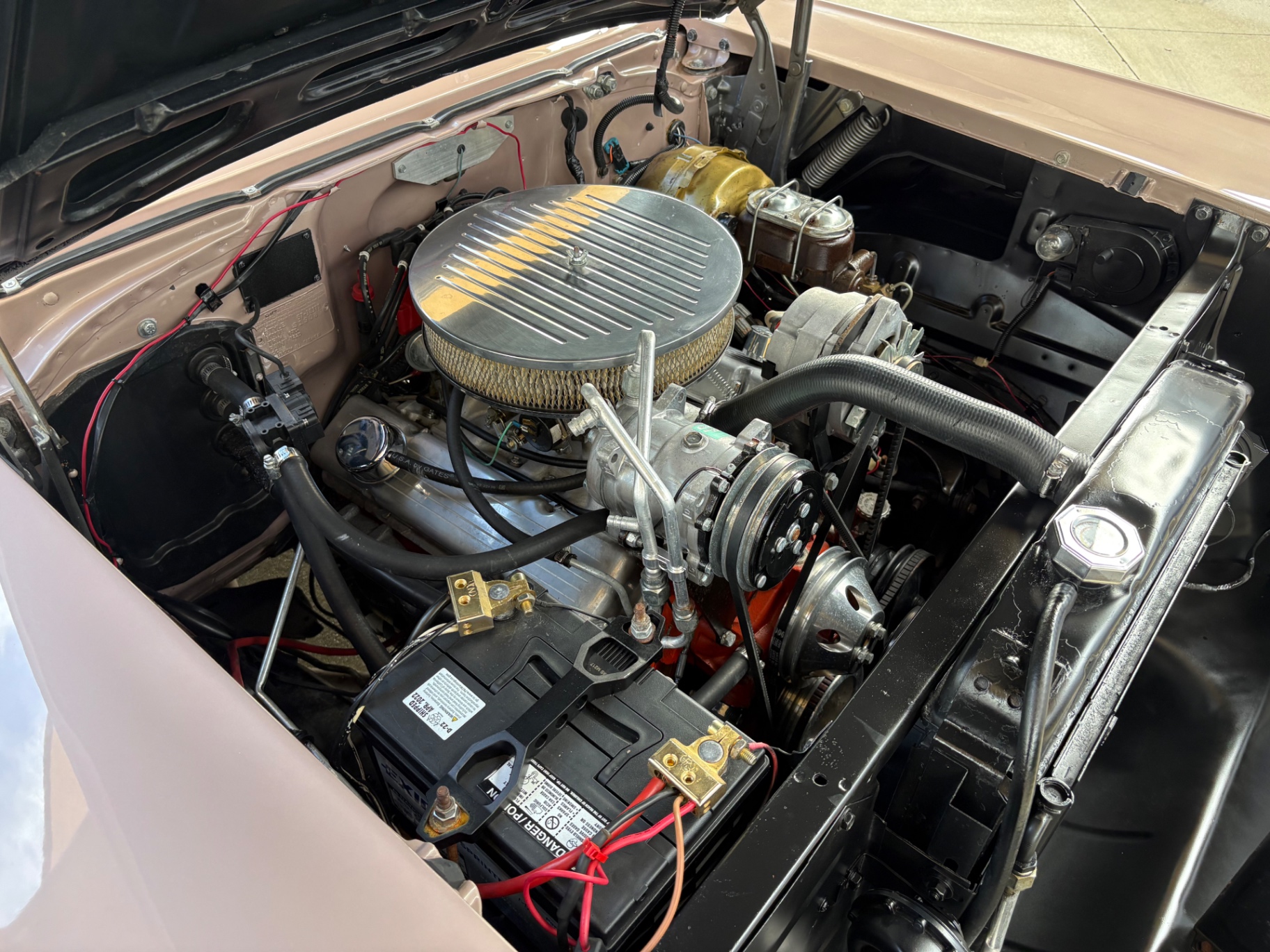
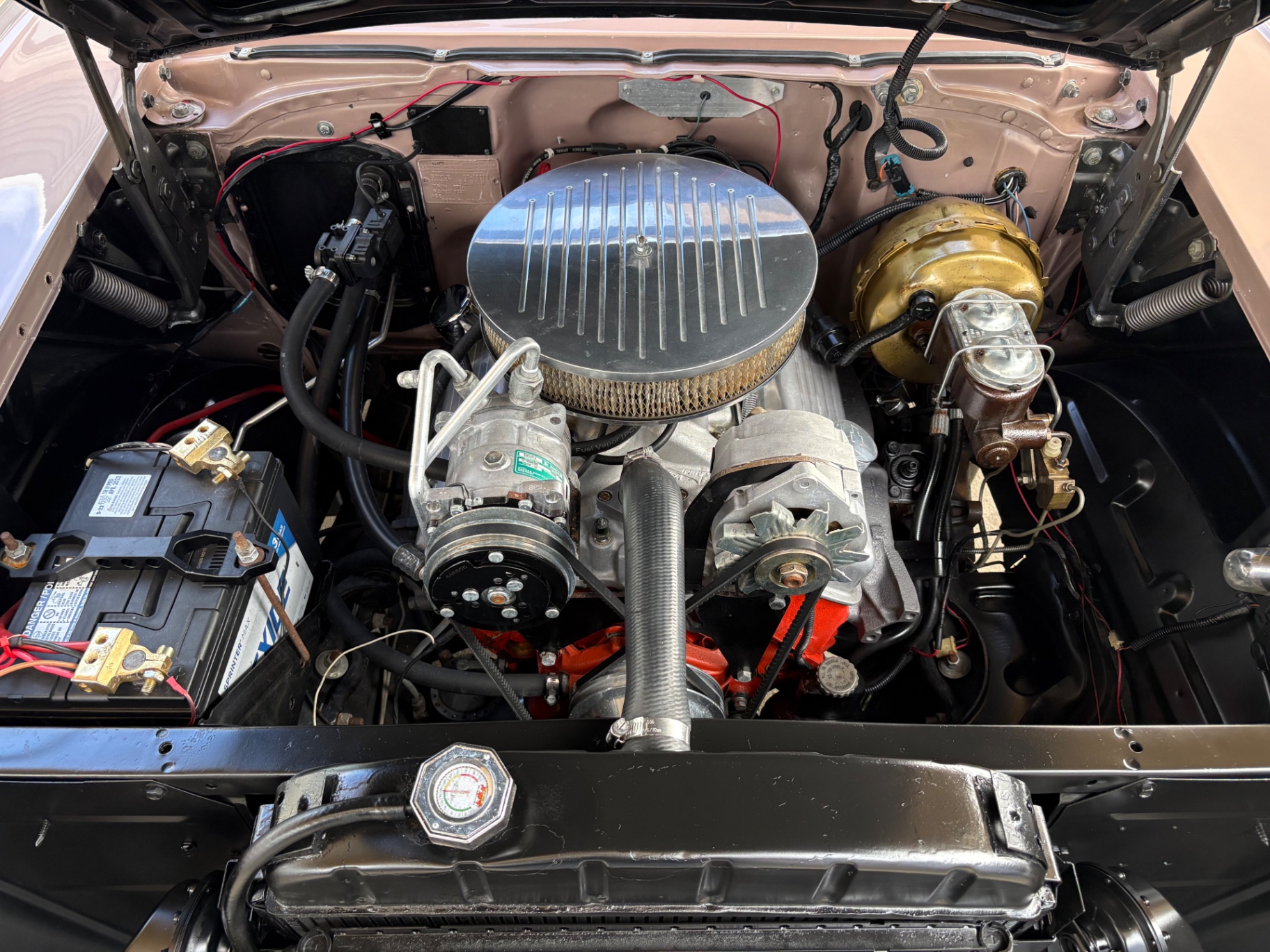
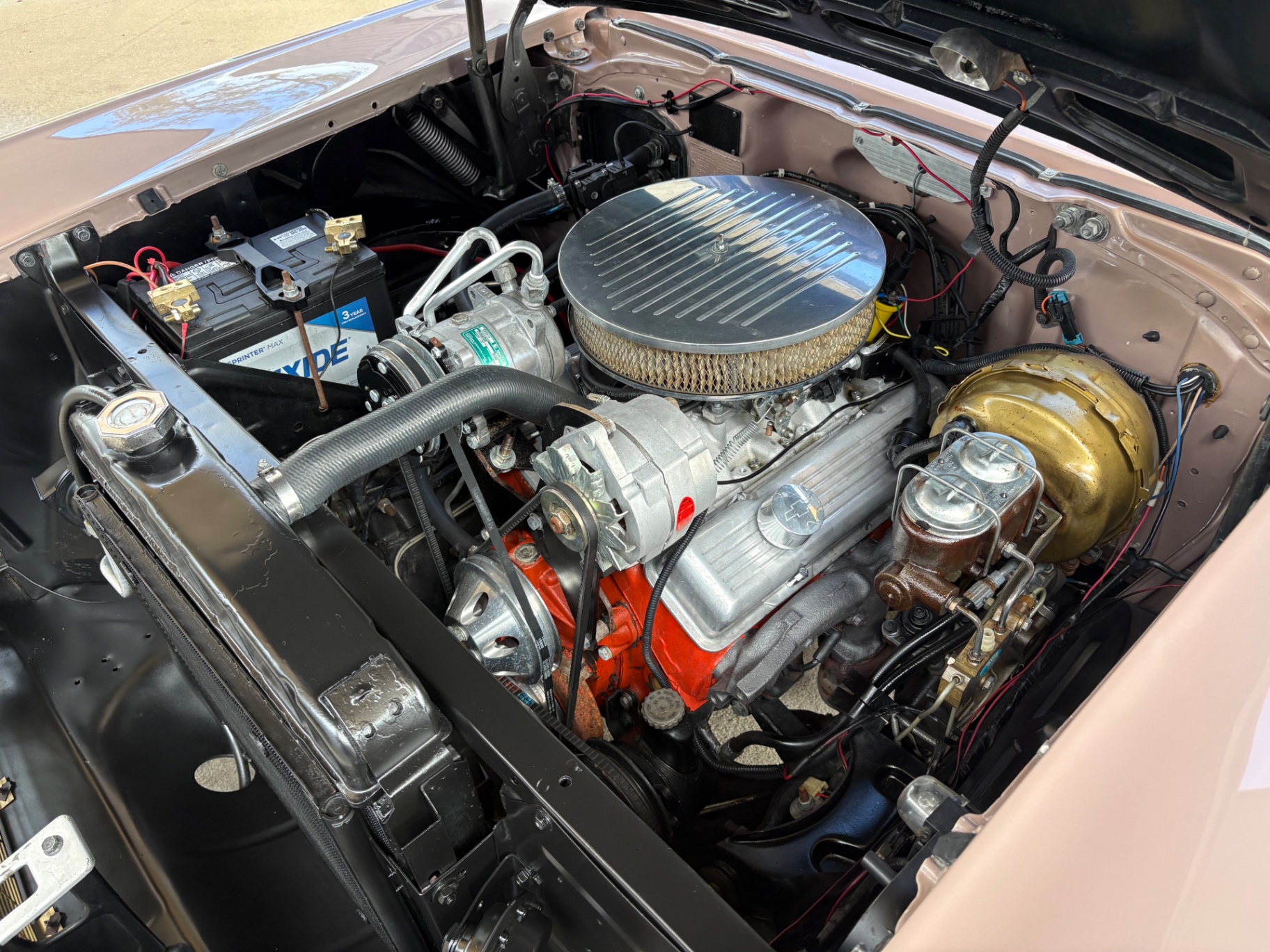
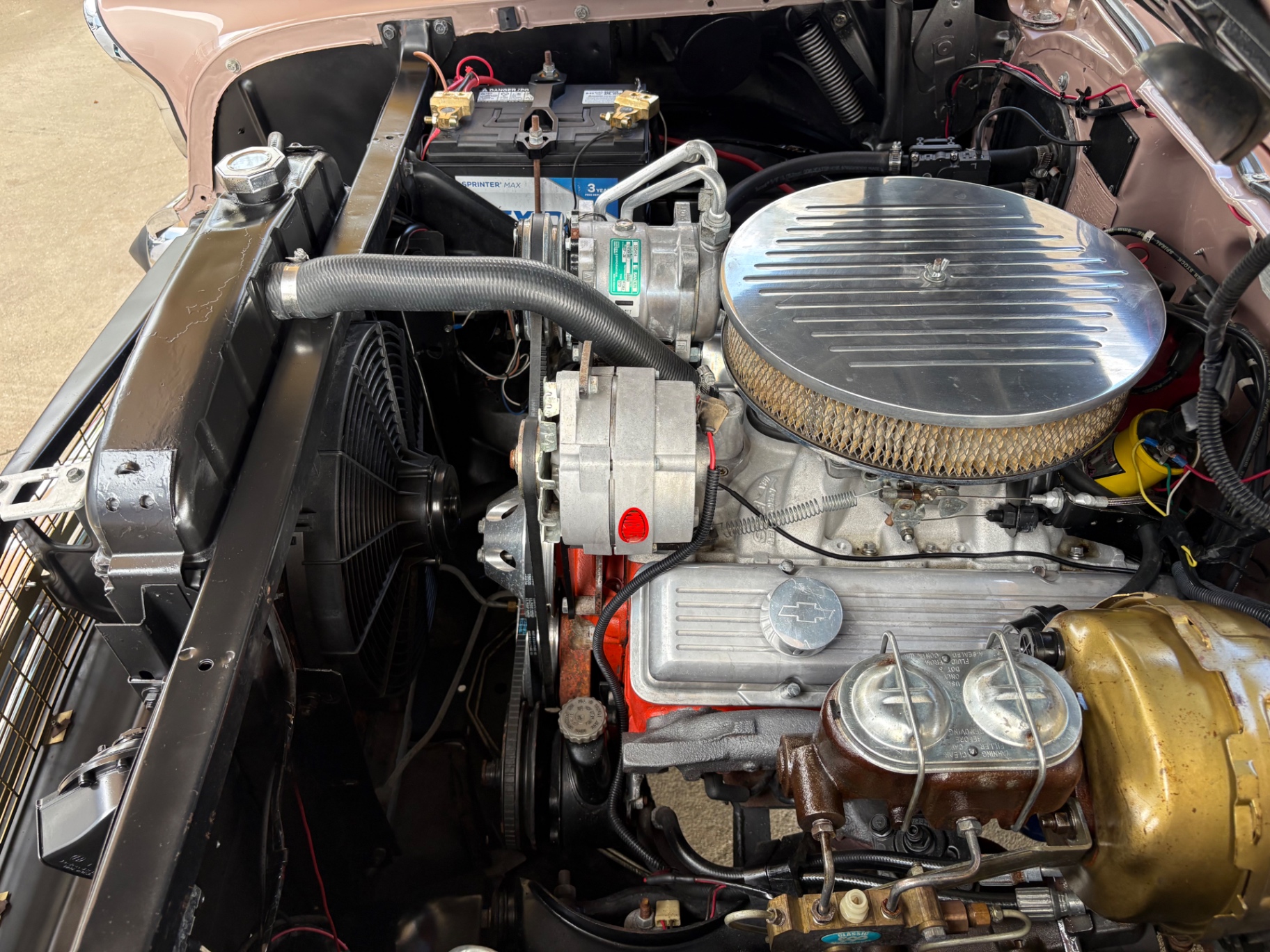
The engine in this 1957 Chevrolet Bel Air is a 350 cubic inch GM small-block V8 producing 325 horsepower, topped with a set of double hump cylinder heads — the nickname enthusiasts have used for decades to identify the high-performance double-hump casting marks on the ends of the heads. These castings were originally used on performance small-blocks from the mid-1960s onward and are still considered a desirable cylinder head for a street build because of their larger intake and exhaust ports compared to standard passenger car heads. Pairing them with the 350 puts this engine firmly in performance street territory without going to the extremes of an all-out race build.
Stopping the car is handled by a 4-wheel disc brake conversion, which is one of the most practical upgrades you can make to a 1957 Chevrolet. The factory drum brakes on these cars were adequate for 1957 traffic speeds and tire technology, but they are genuinely outmatched on modern roads. Four-wheel disc eliminates that concern entirely and gives the driver consistent, fade-resistant braking regardless of conditions. The late model rear end rounds out the drivetrain updates, providing a stronger, more reliable axle assembly than the original and making parts sourcing straightforward for years to come.
Vintage Air supplies the air conditioning system. For anyone not familiar, Vintage Air is the industry standard for classic car climate control. Their systems are purpose-built for early vehicles, designed to fit within the original dash and firewall layout, and they cool effectively in real heat — important context if you plan to drive this 1957 Bel Air in Florida summers.
Interior
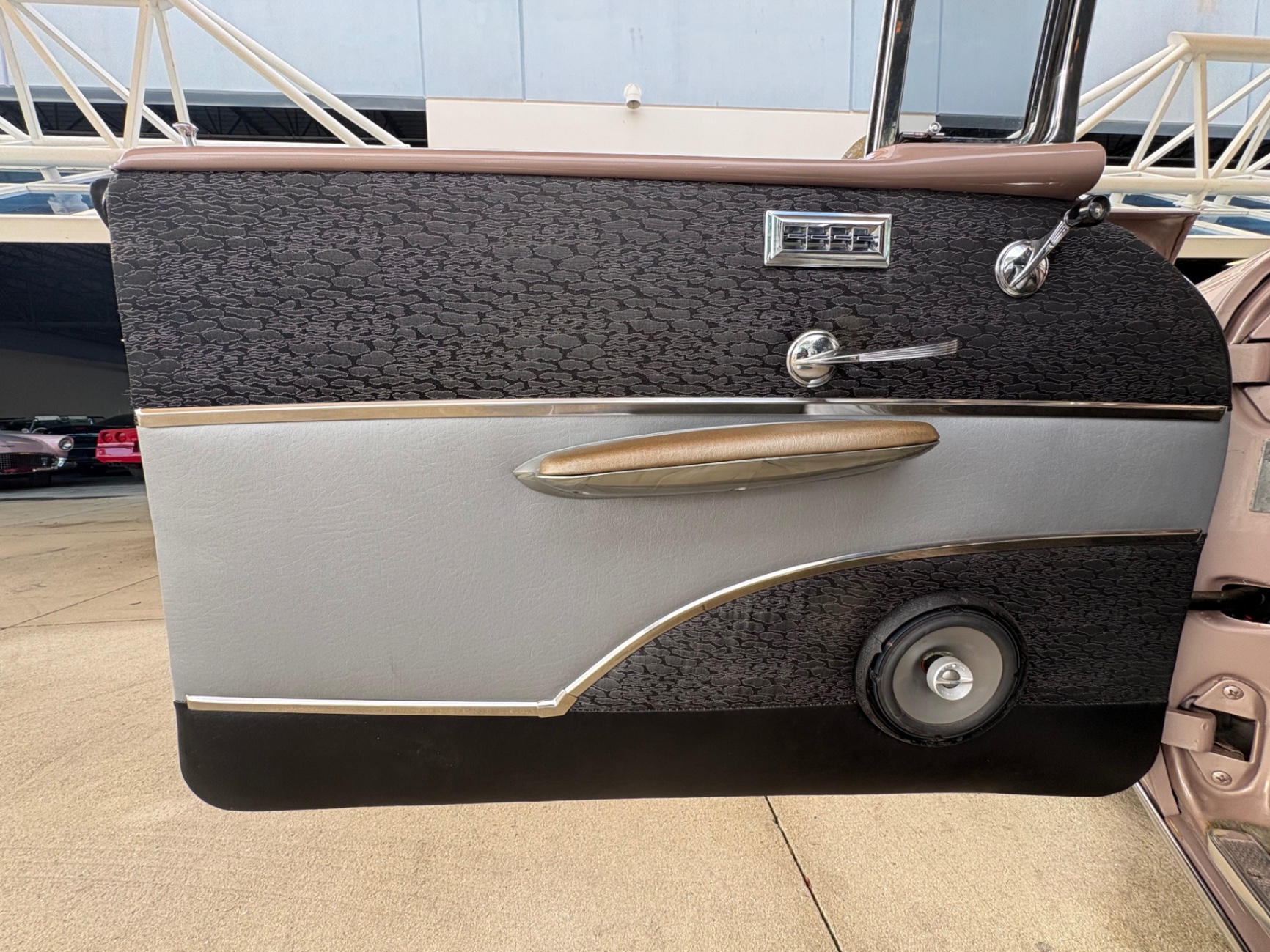
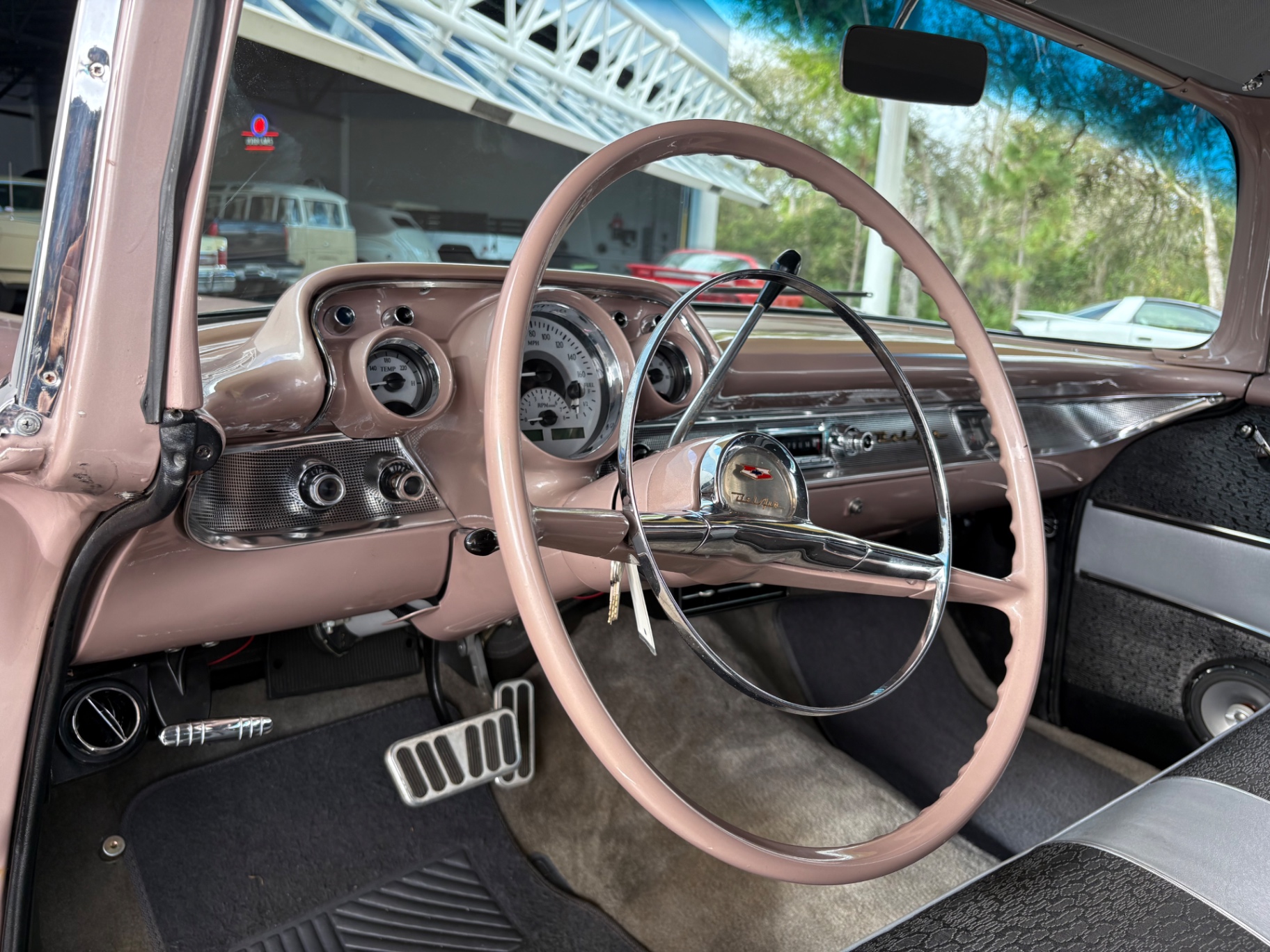
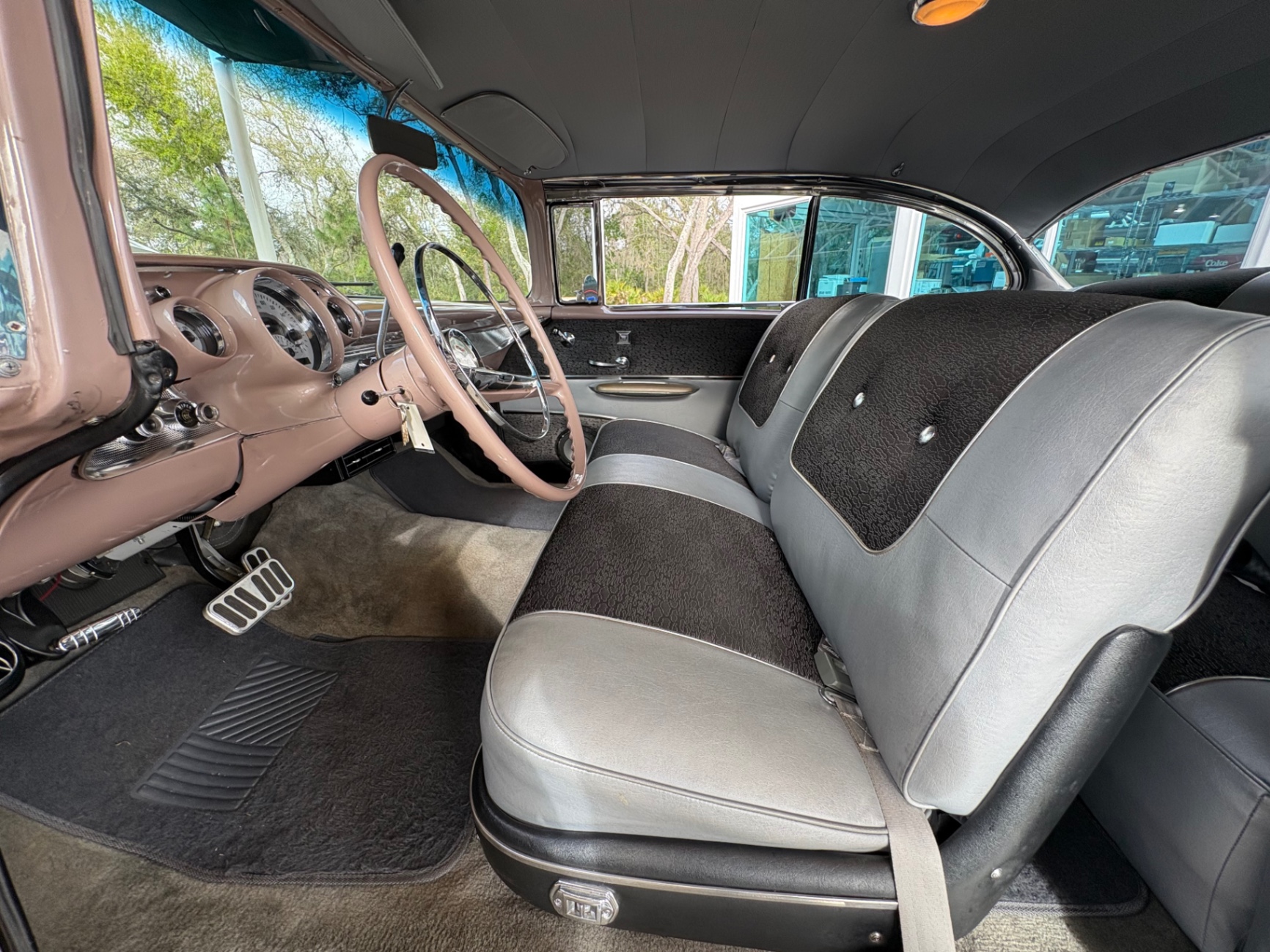
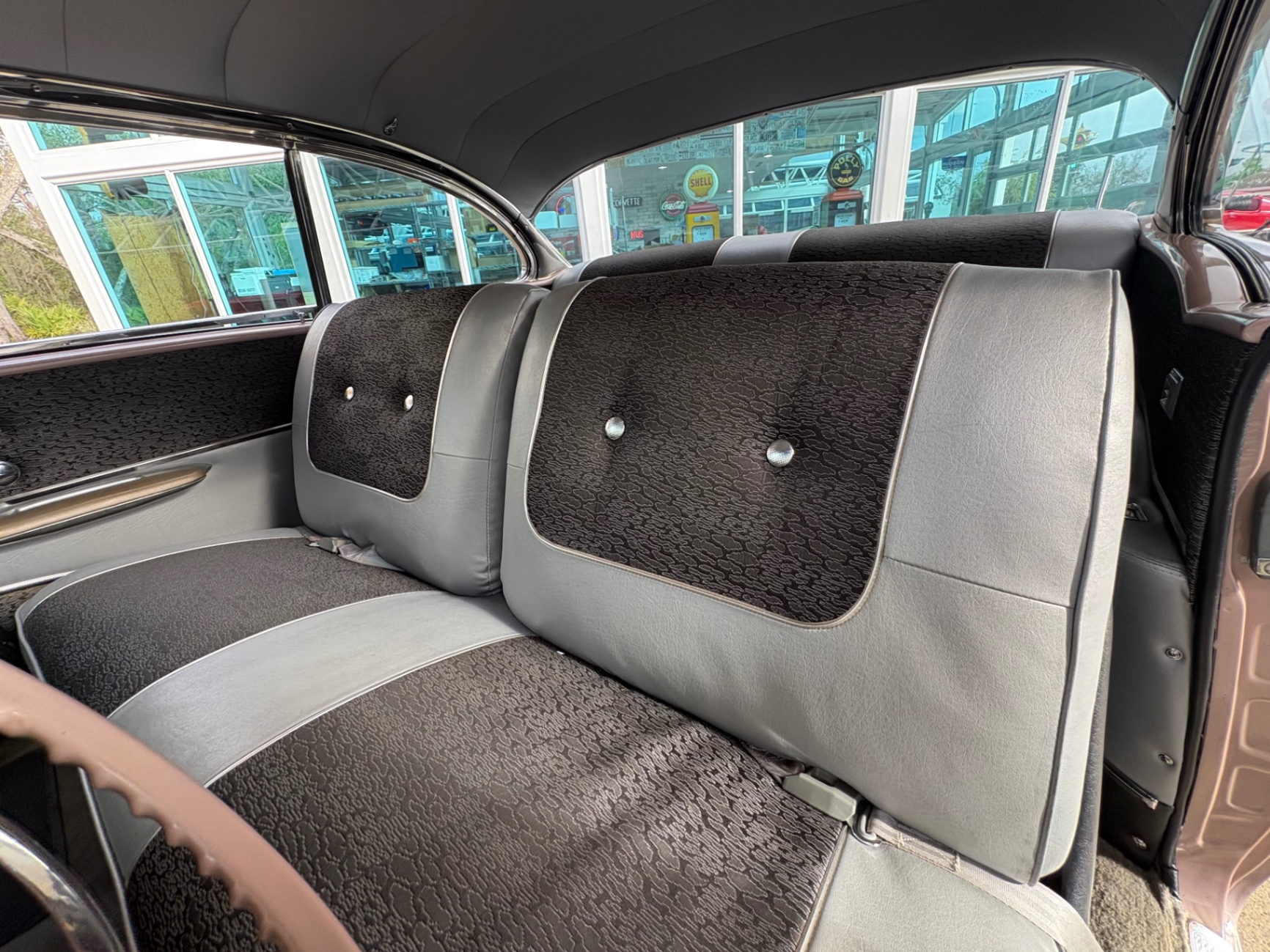
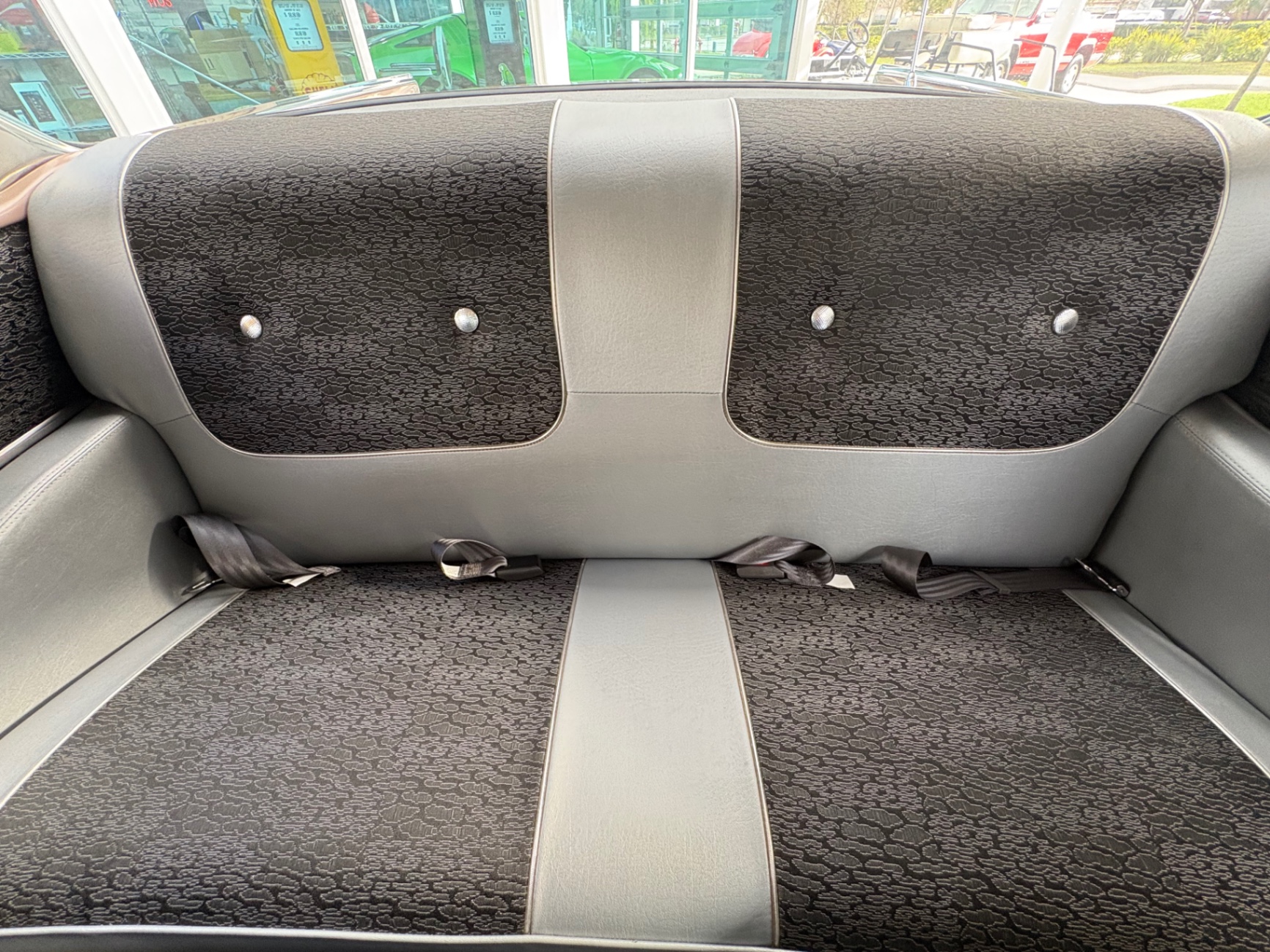
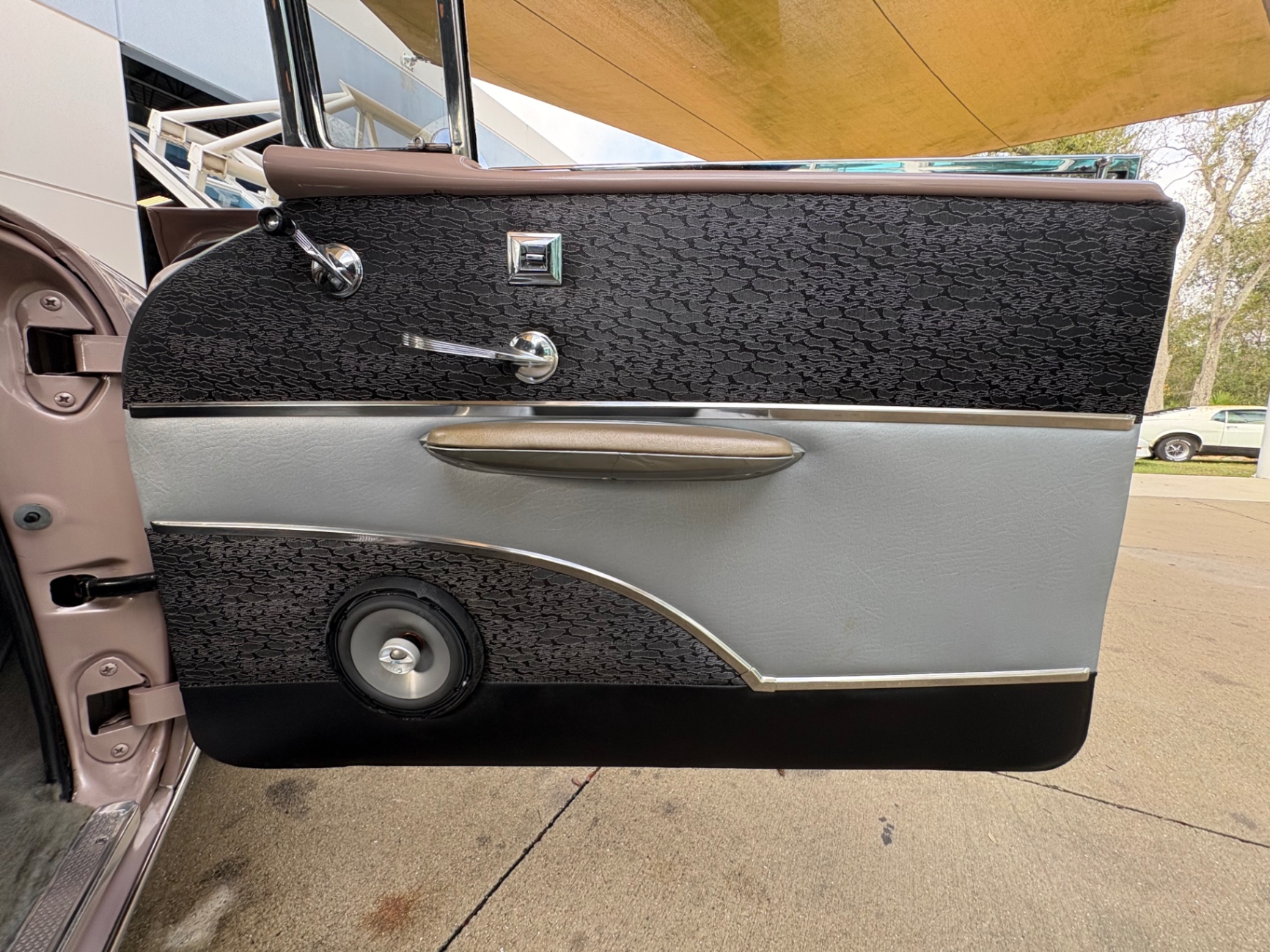
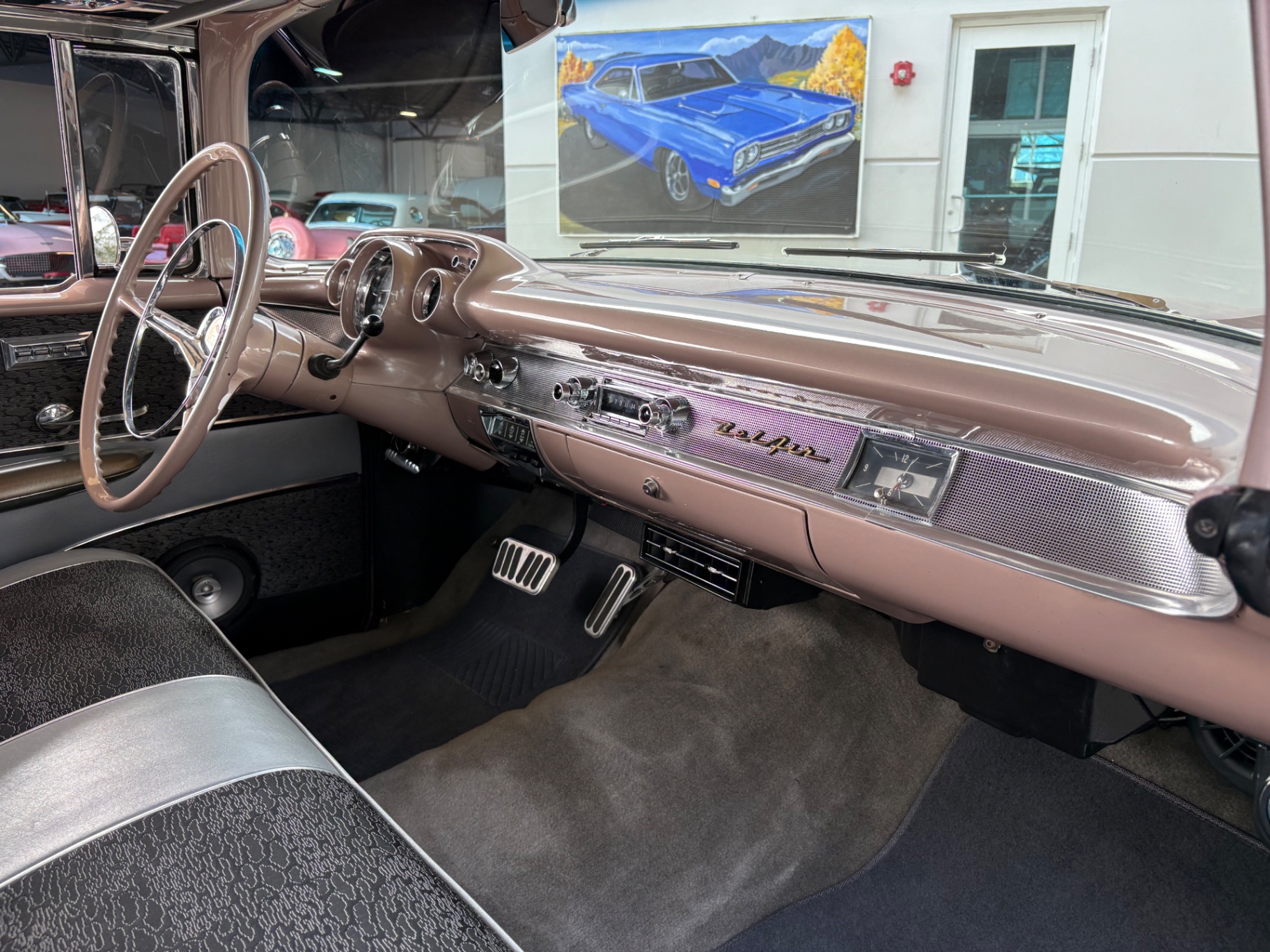
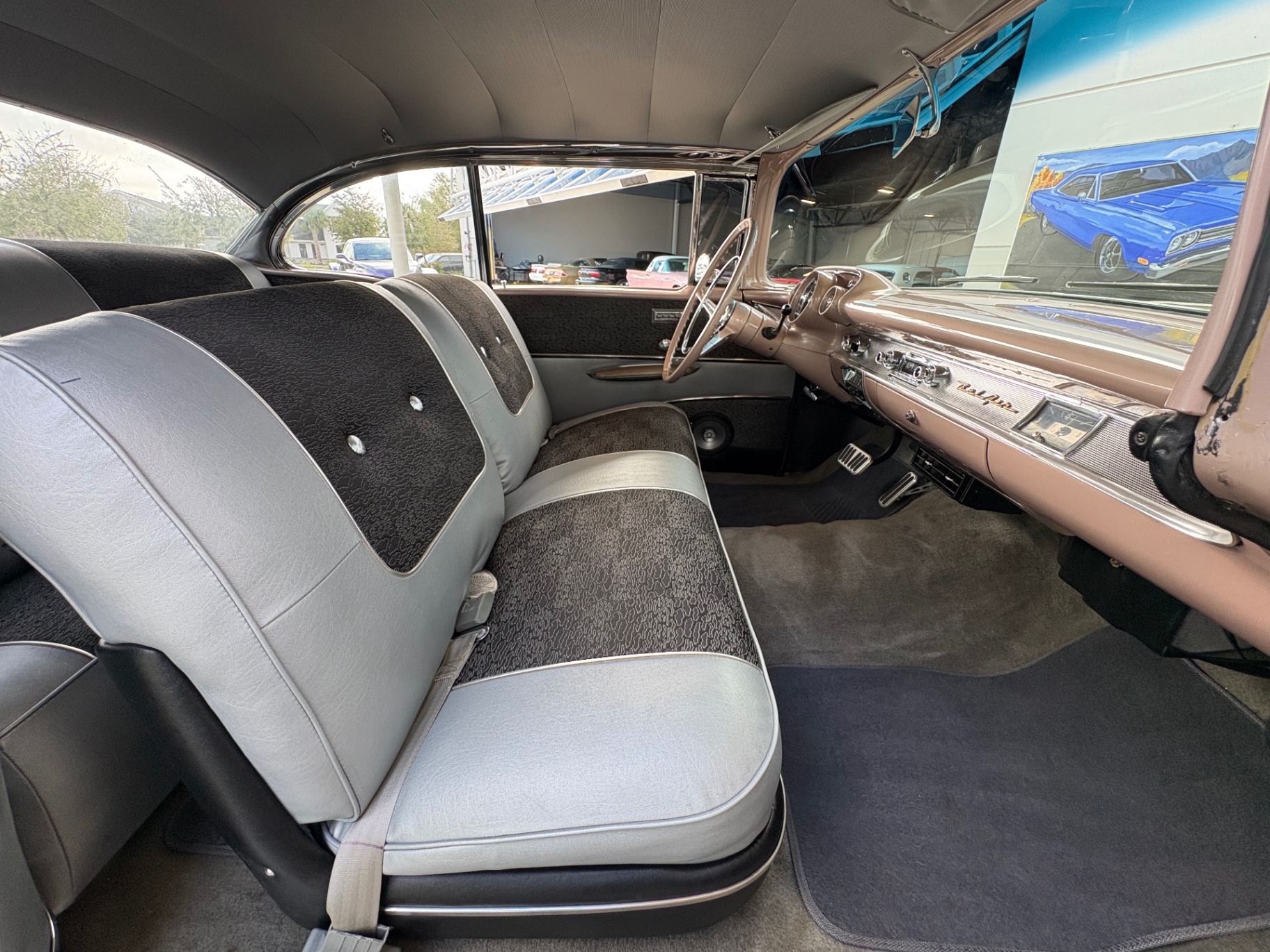
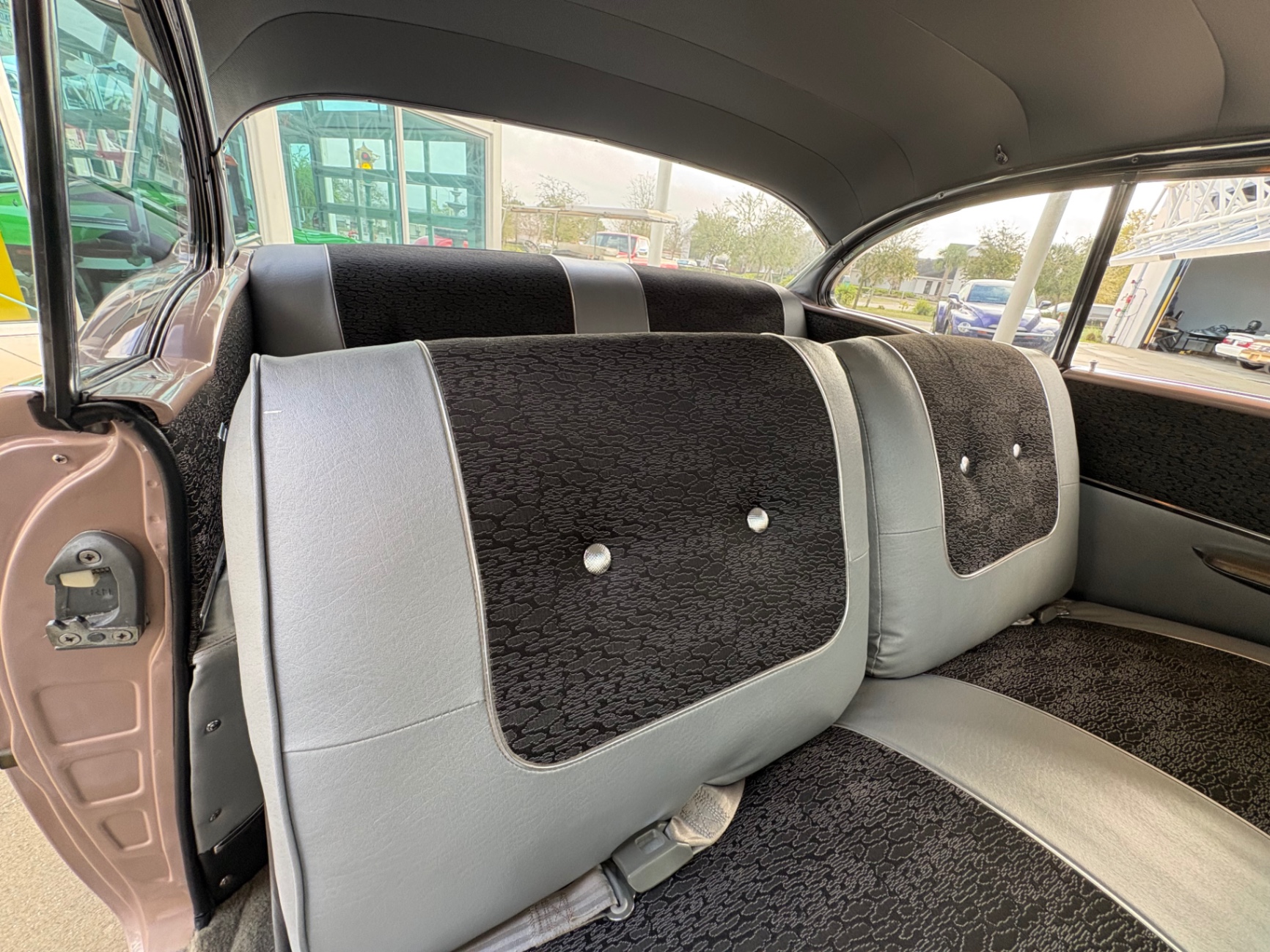
The interior of this 1957 Chevrolet Bel Air has been fully custom built in black and gray vinyl. The color combination works well with the Pearl Metallic exterior, giving the car a cohesive look rather than the mismatched feel that can happen when custom interiors are chosen independently of the body color. Power windows and a power seat have been integrated into the build, which required custom wiring work given that these were not factory options available on the 1957 Bel Air in their modern form.
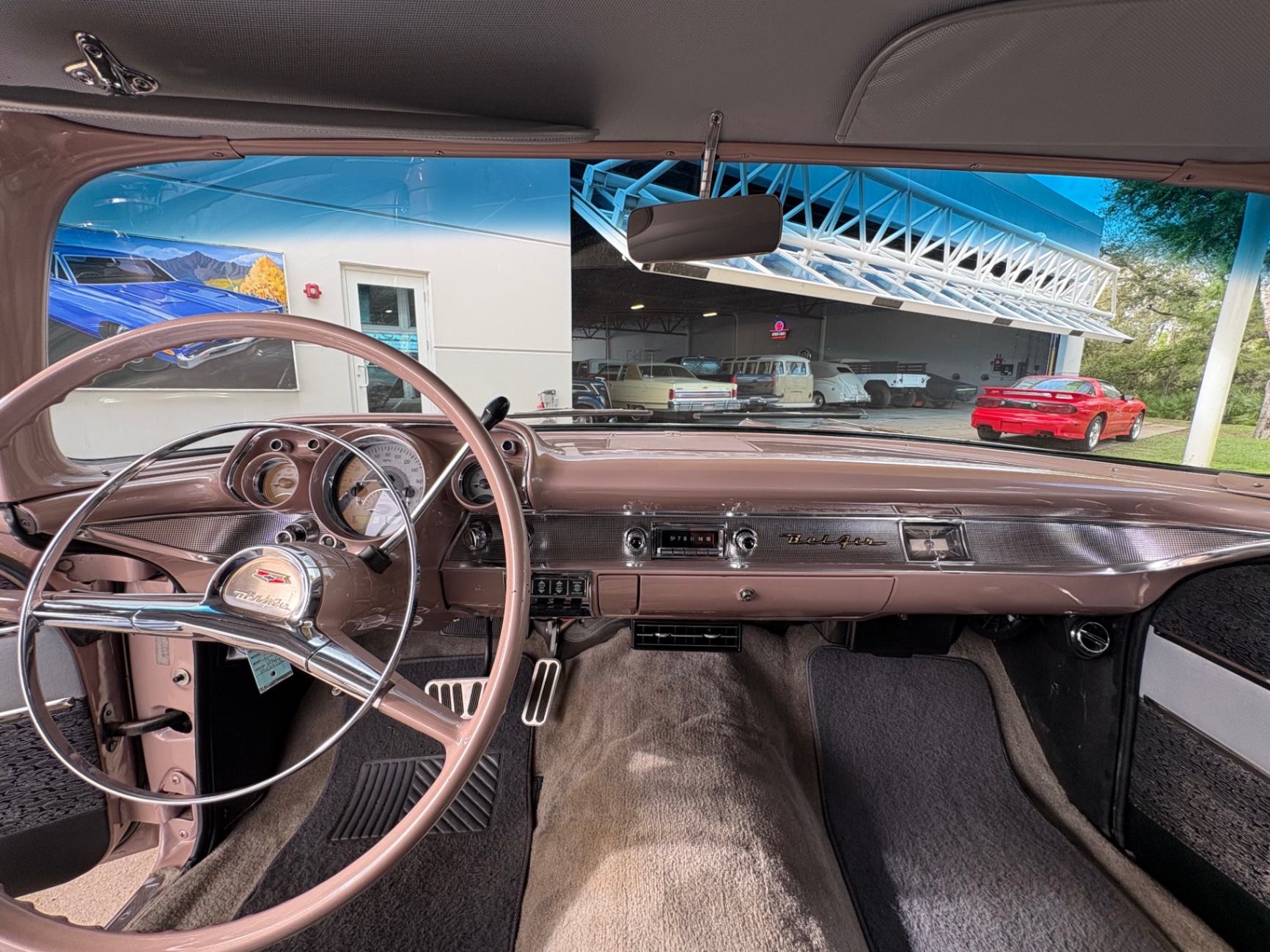
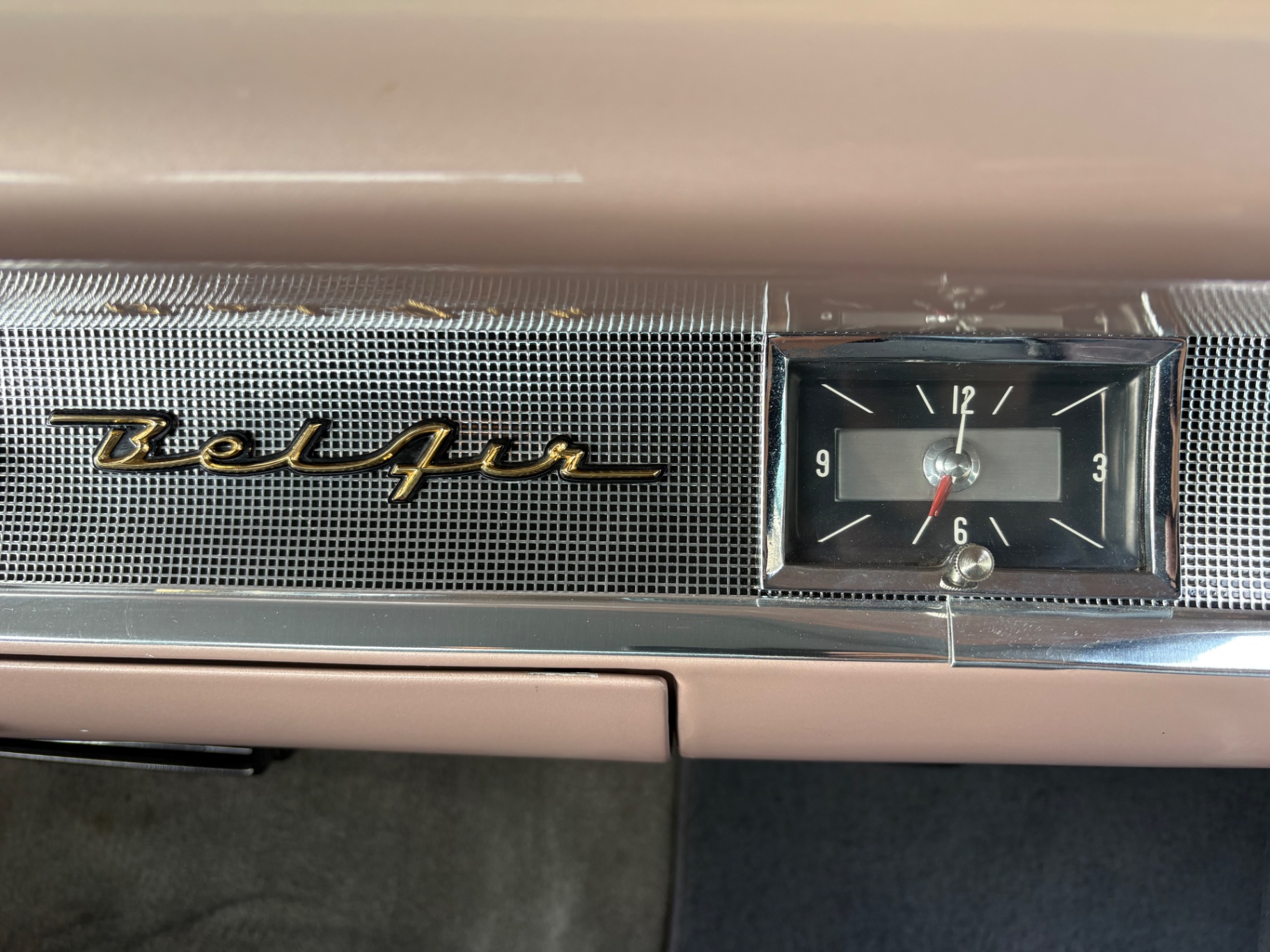
The instrument cluster has been replaced with a Dakota Digital gauge set. Dakota Digital is one of the most widely respected names in aftermarket instrumentation for classic cars. Their displays read cleanly, mount in period-correct bezels, and give the driver accurate information on oil pressure, coolant temperature, voltage, and speed — data that the original 1957 gauges either could not provide or provided with limited accuracy. It is a practical upgrade that does not announce itself loudly but makes a real difference every time you drive the car.
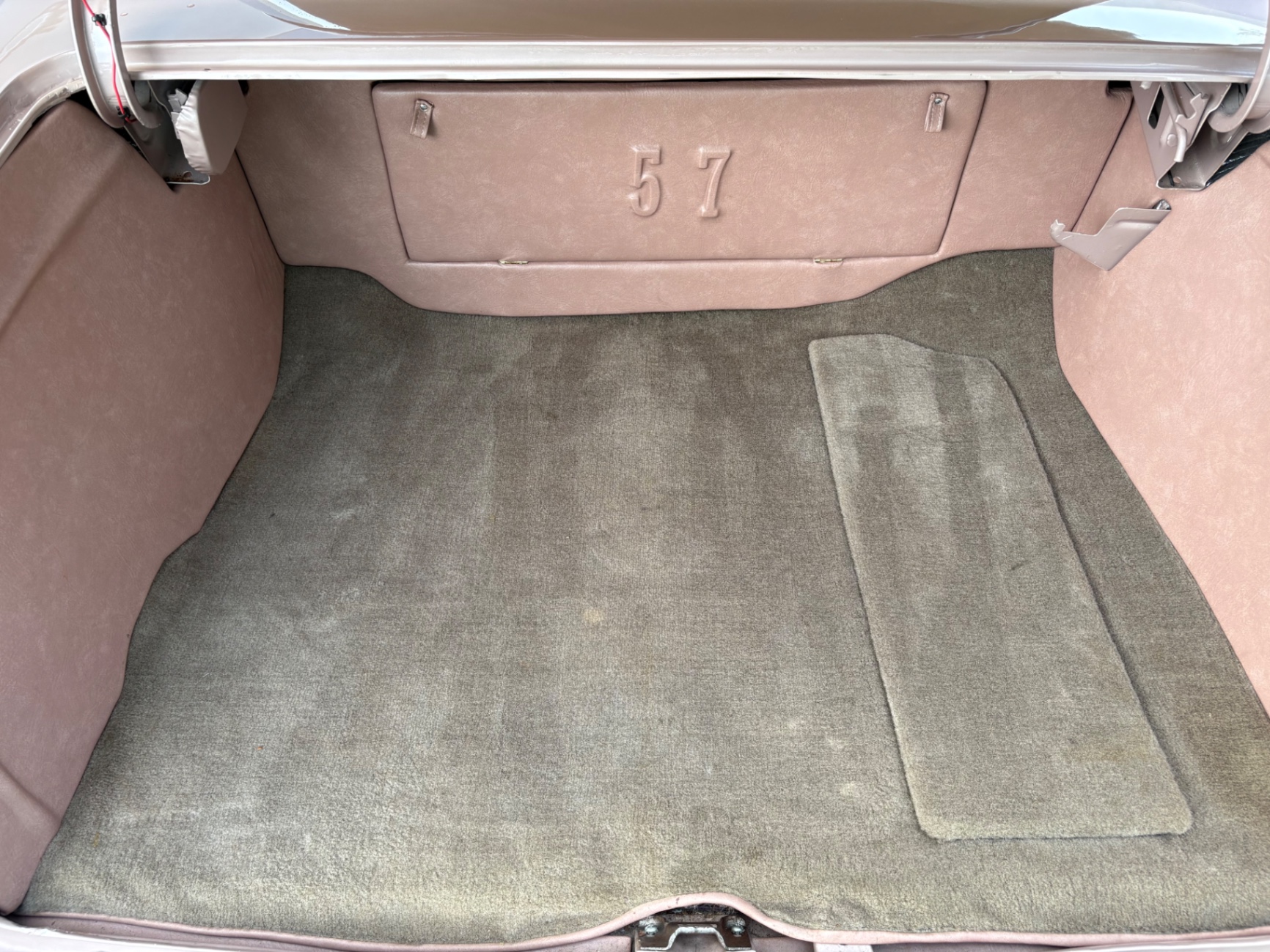
The custom auto sound system has been integrated throughout the cabin, with speakers visible in the door panels, placed behind period-style trim rings that keep the look consistent with the rest of the interior design. The trunk has been finished in leather, which is a detail that speaks to the overall level of attention given to this build — it is the kind of finishing touch that gets noticed at shows and signals that the builder cared about the complete car, not just the parts that show at first glance.
Exterior
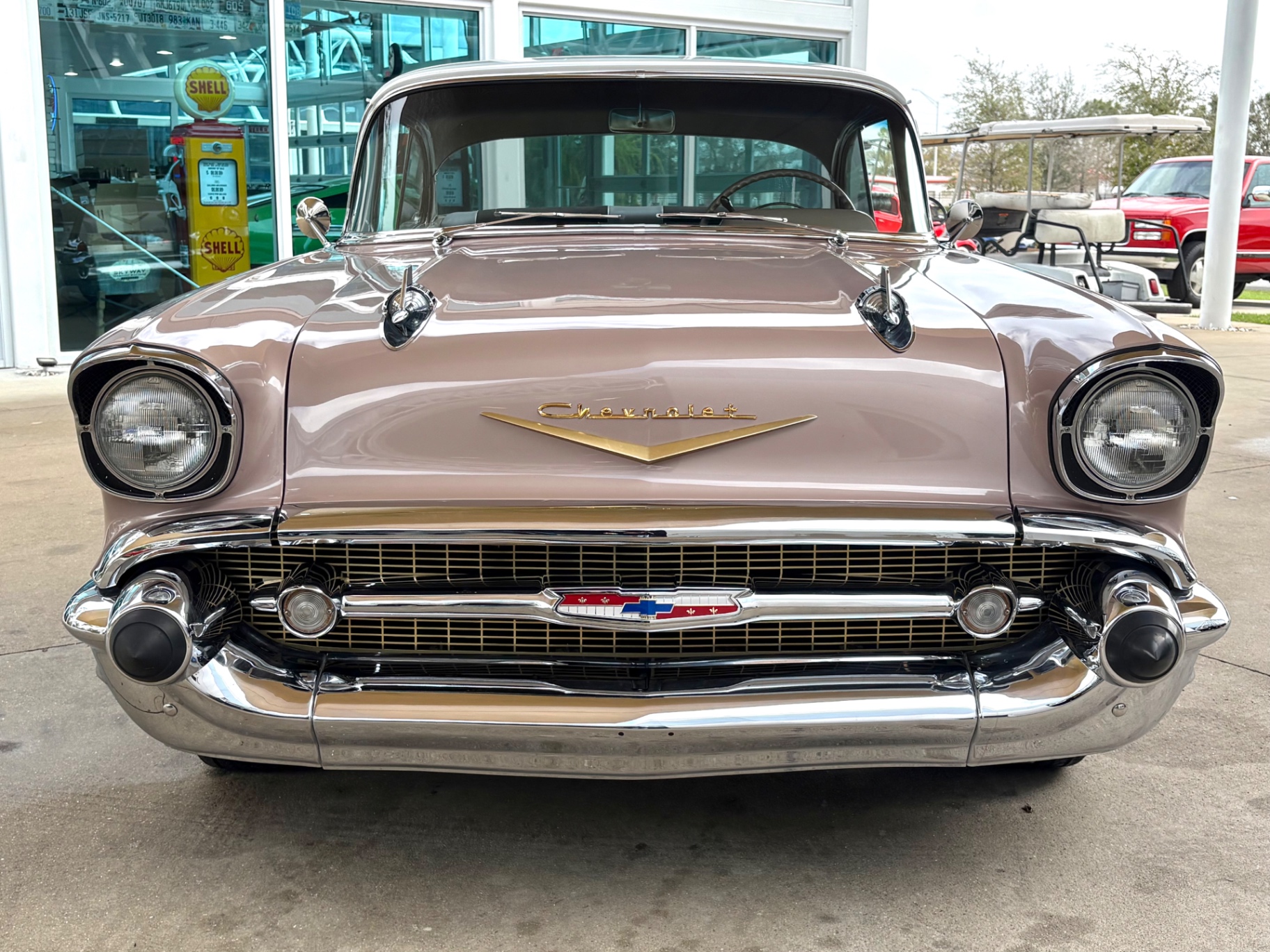
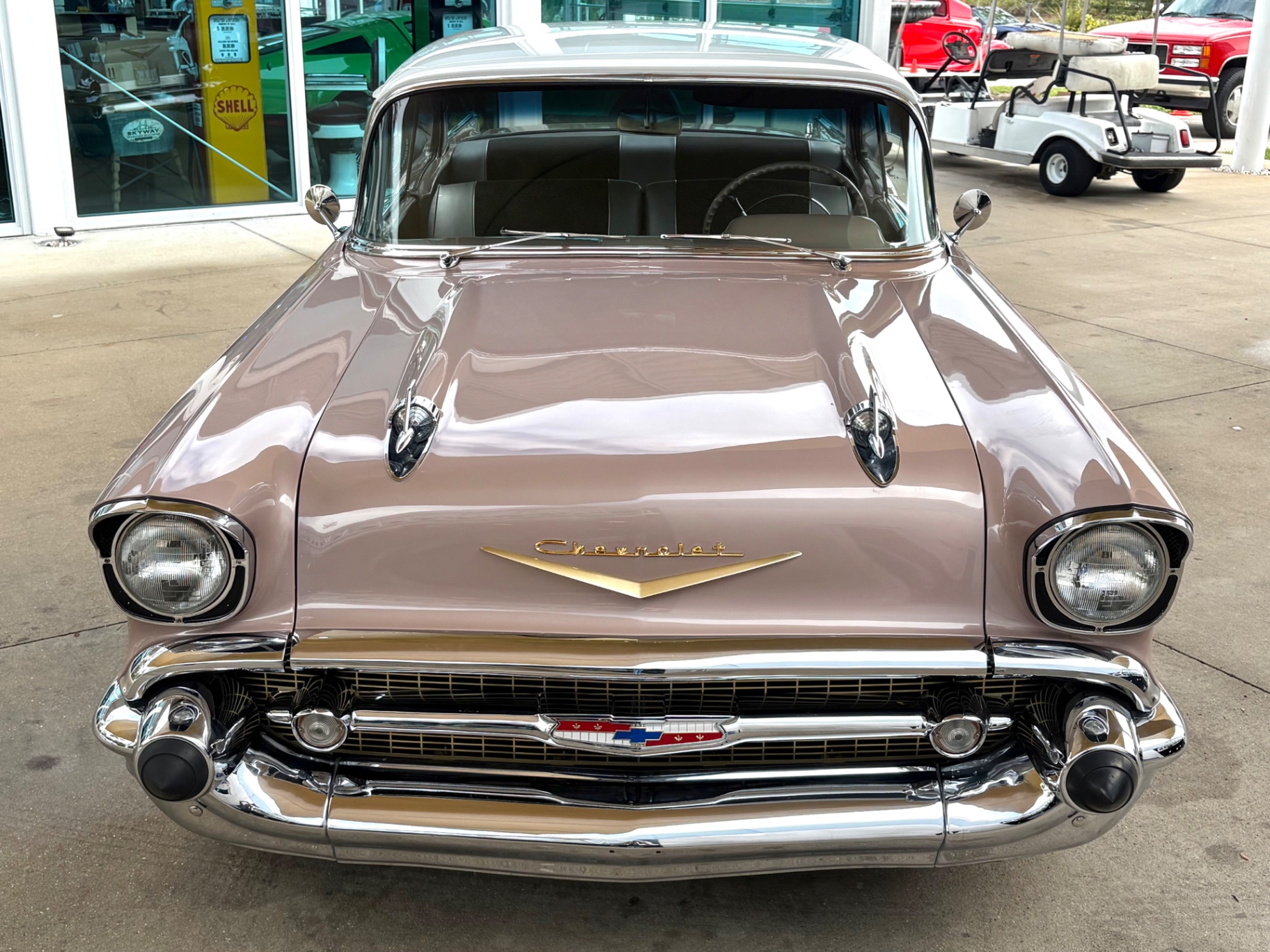
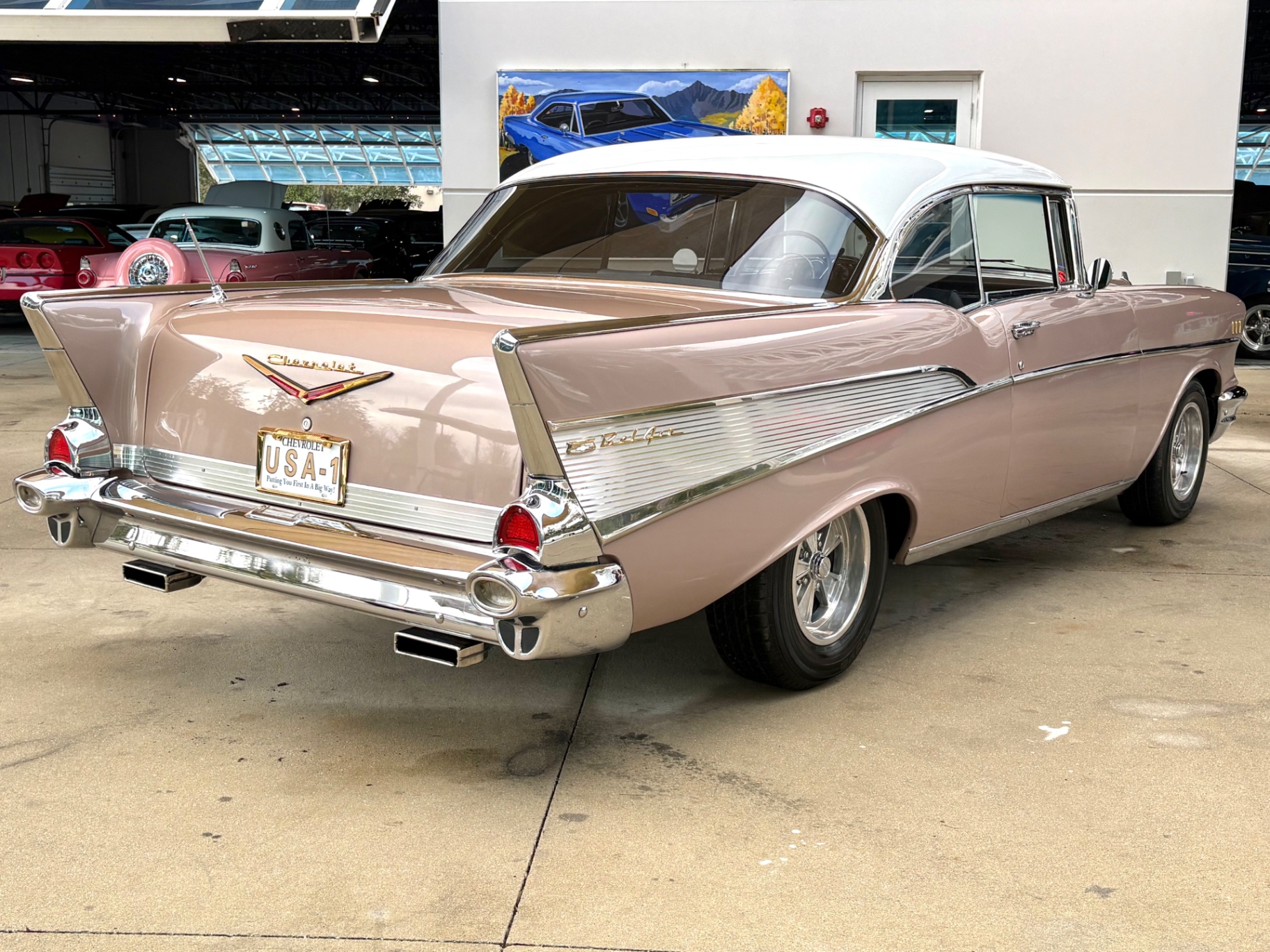
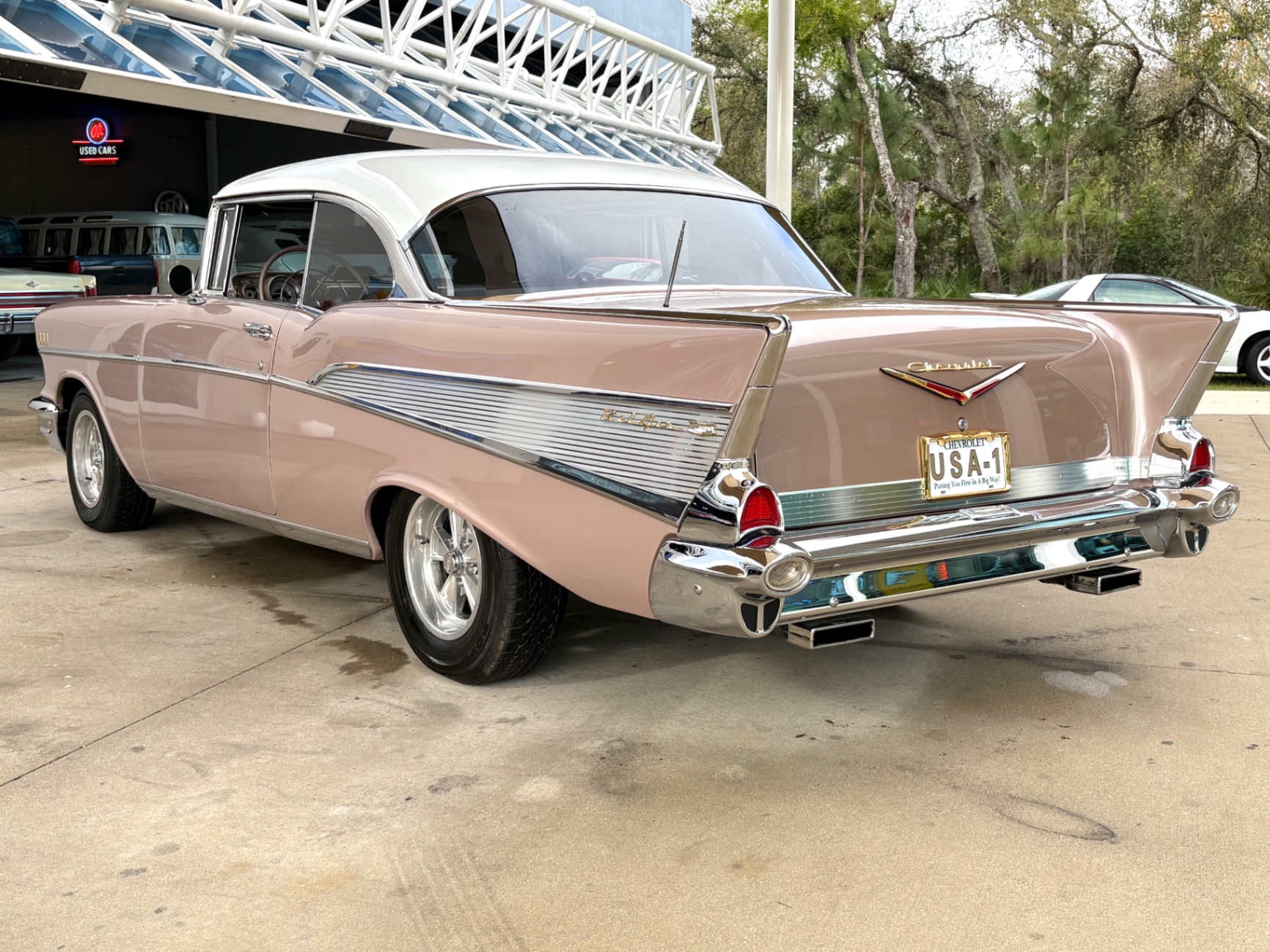
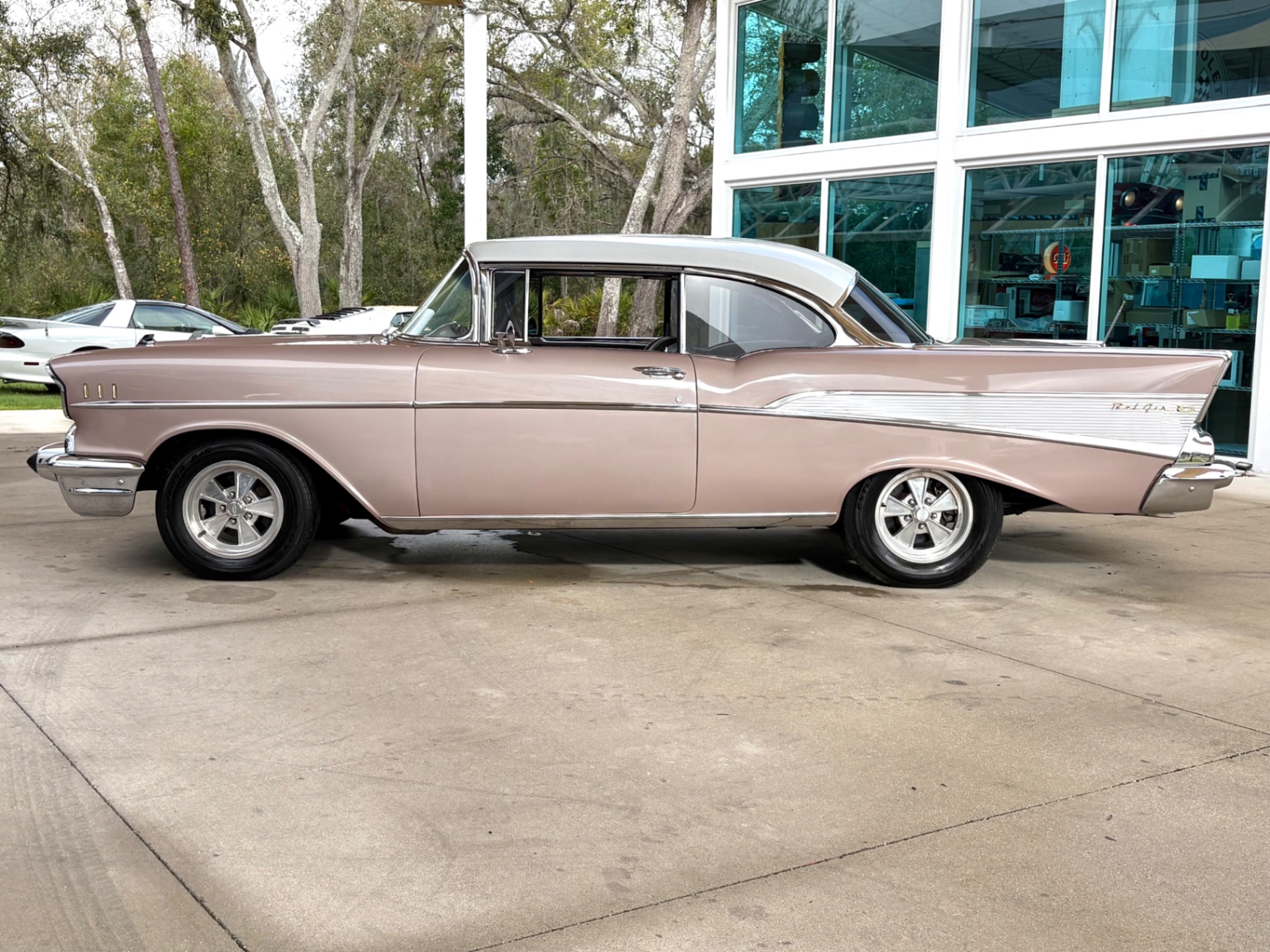
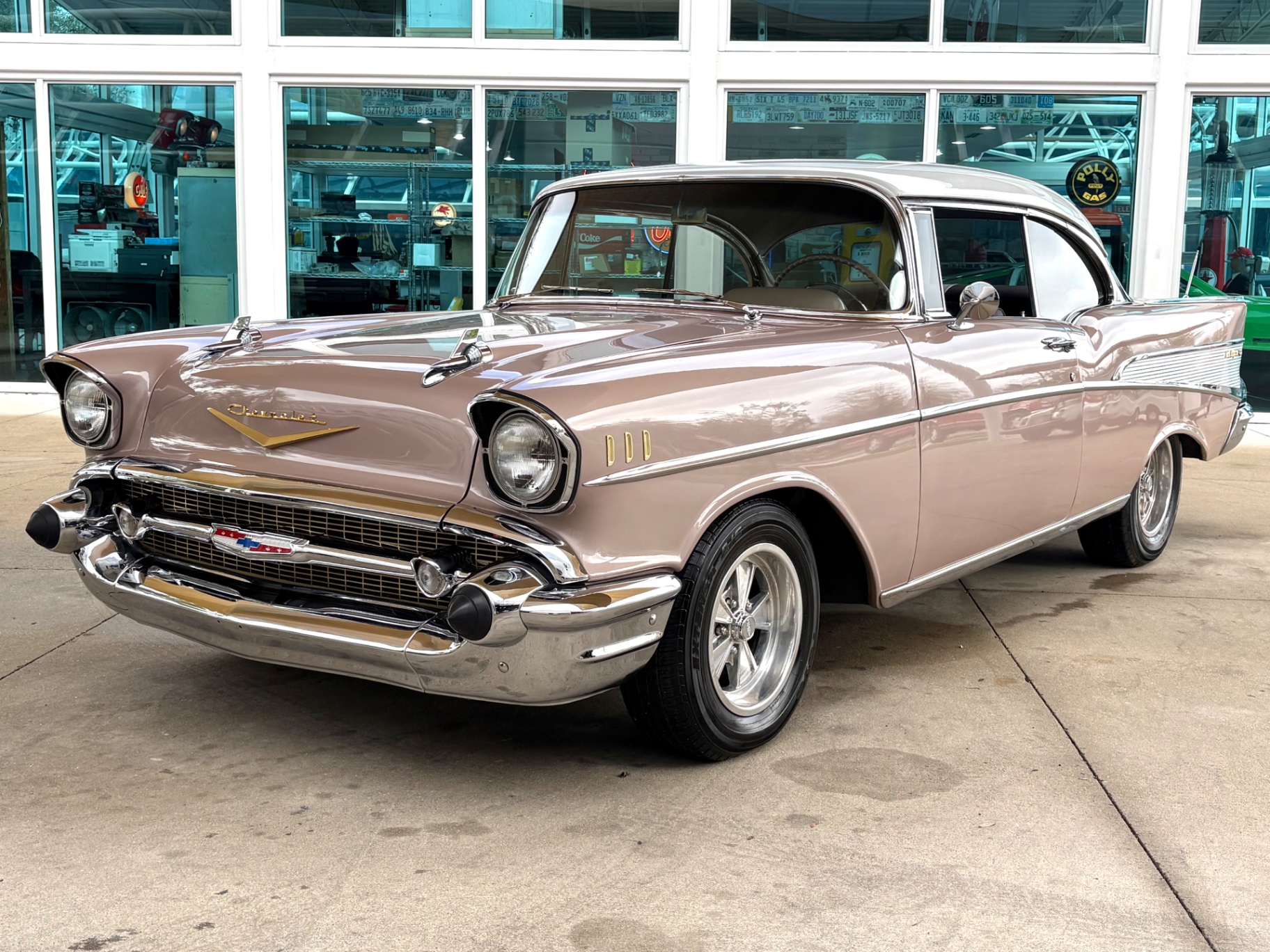
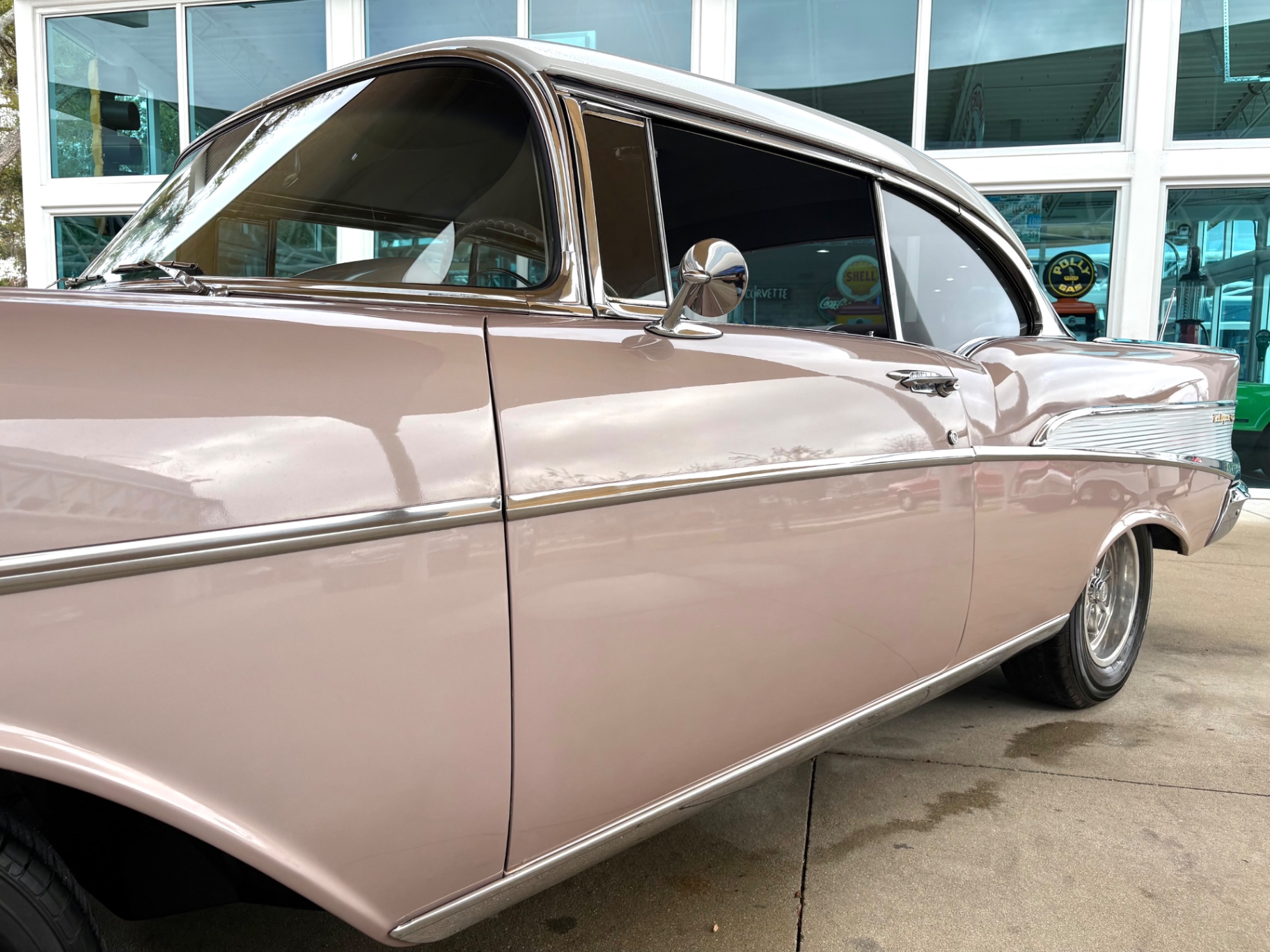
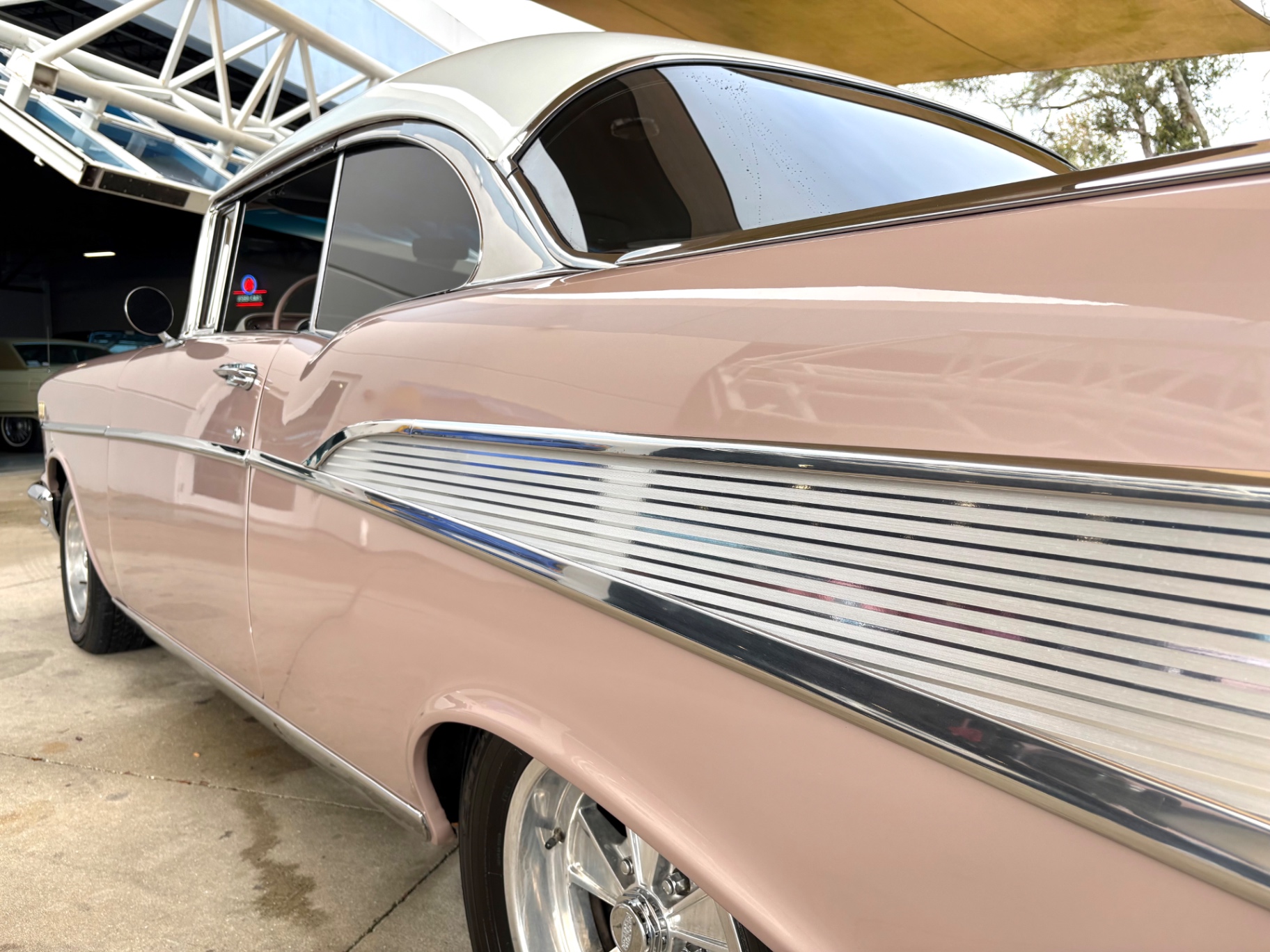
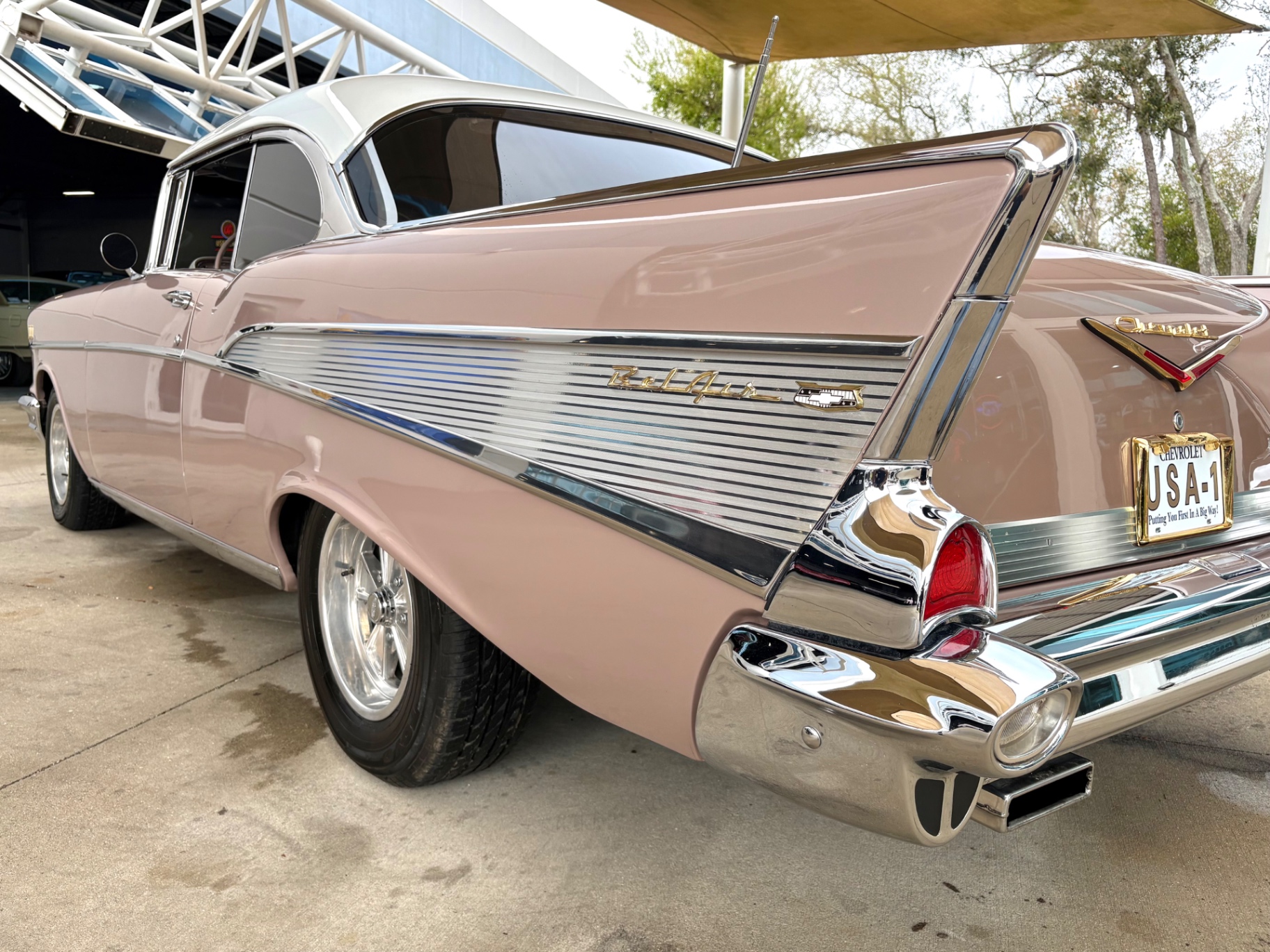
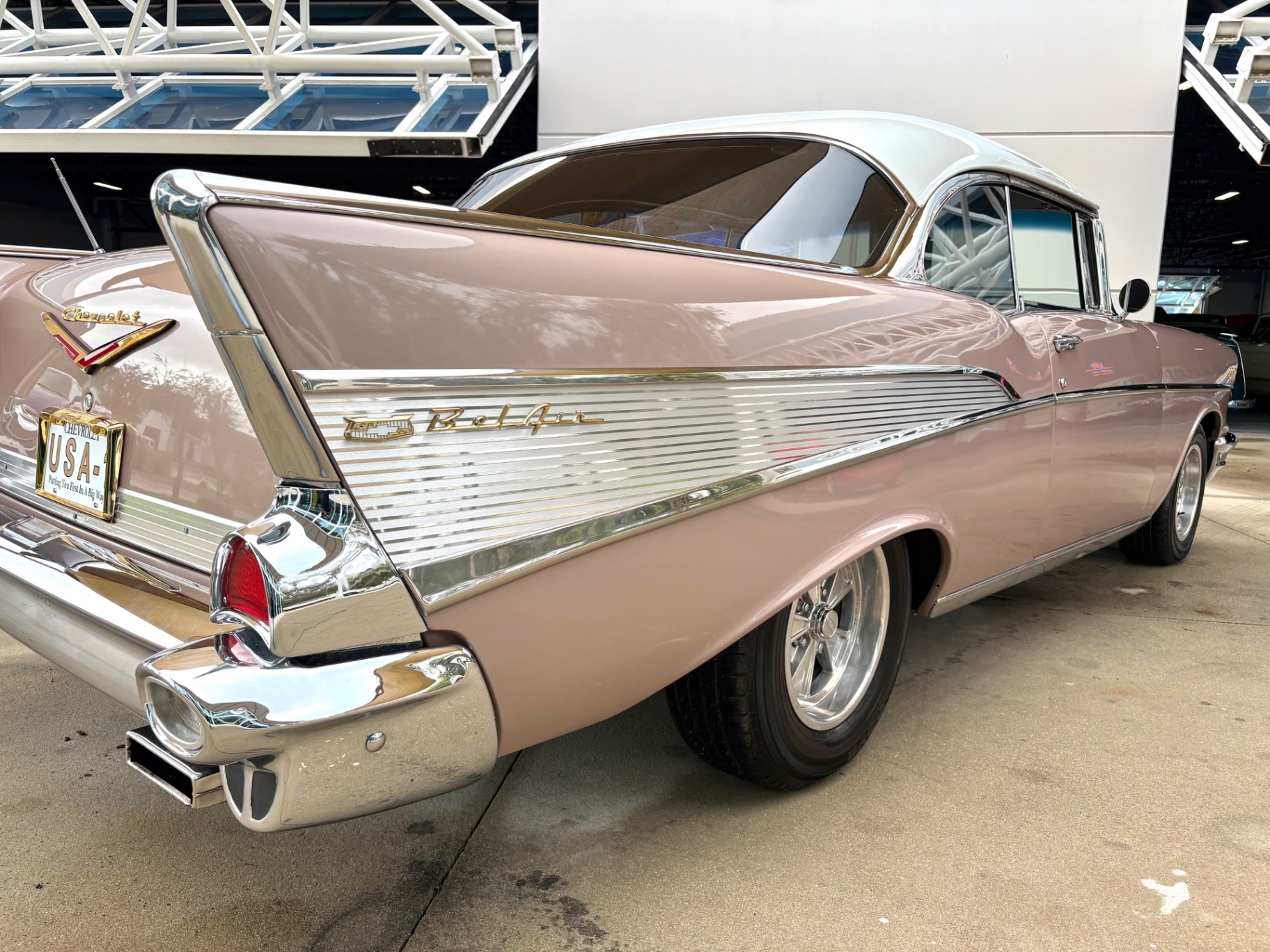
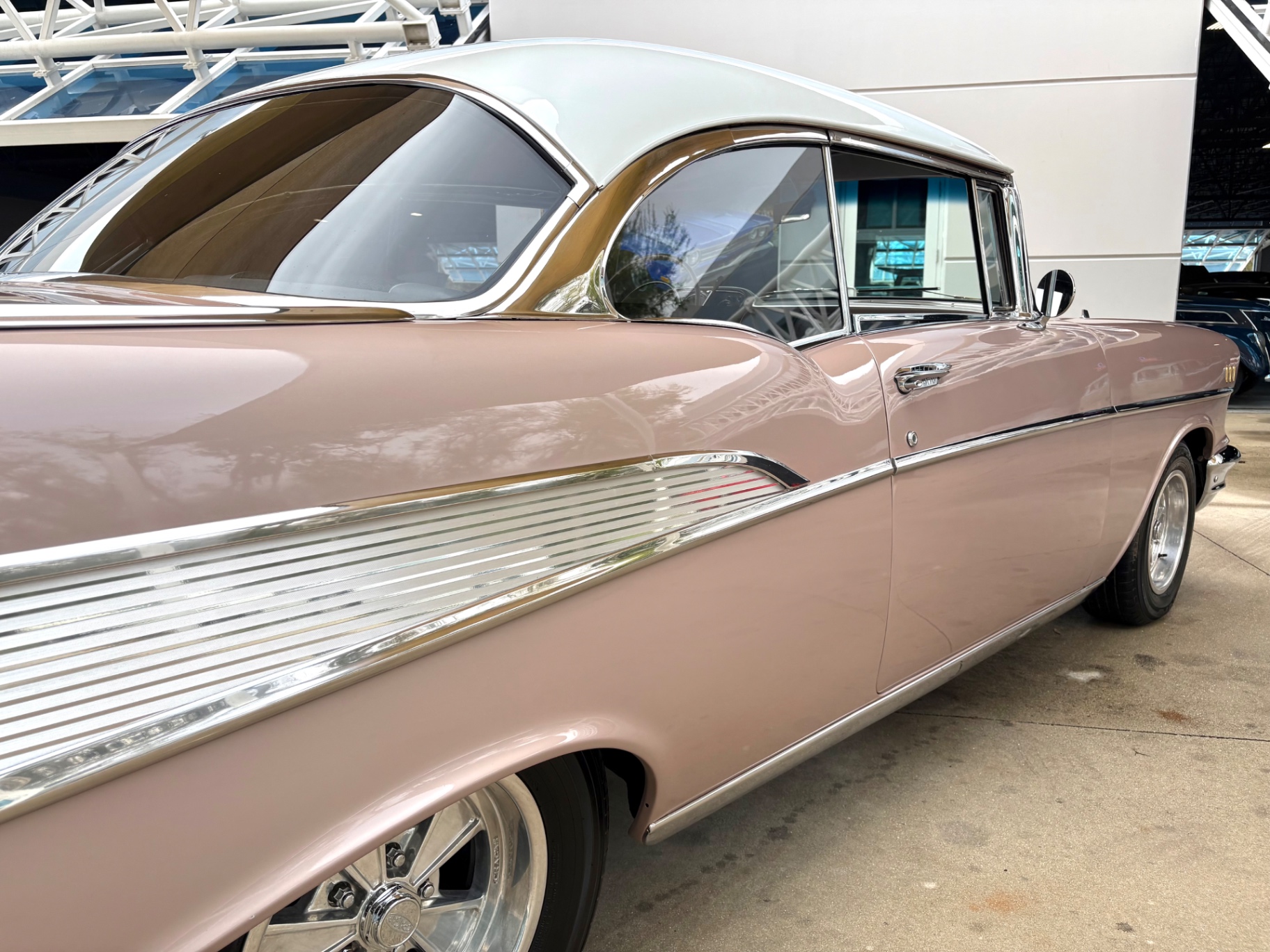
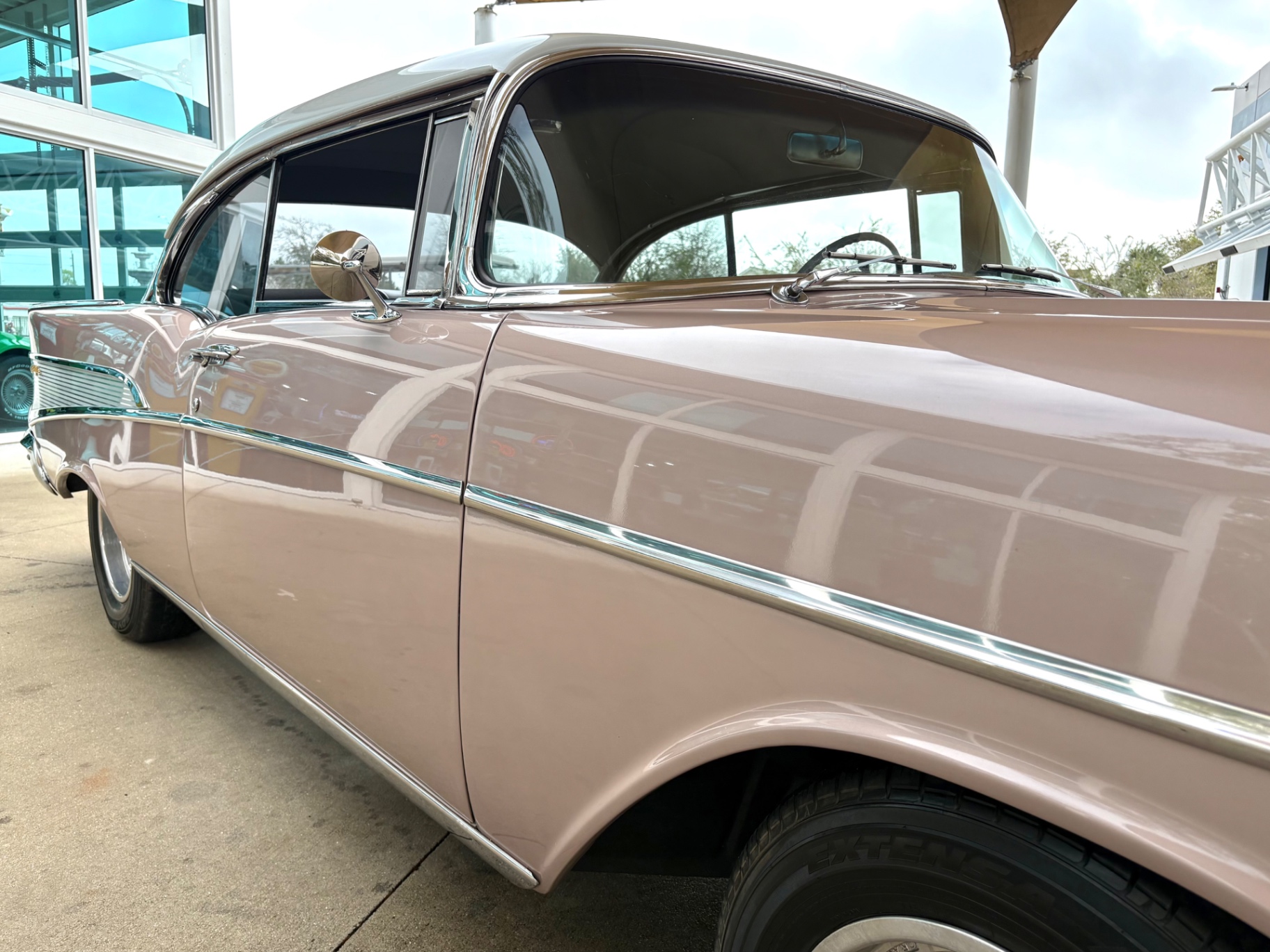
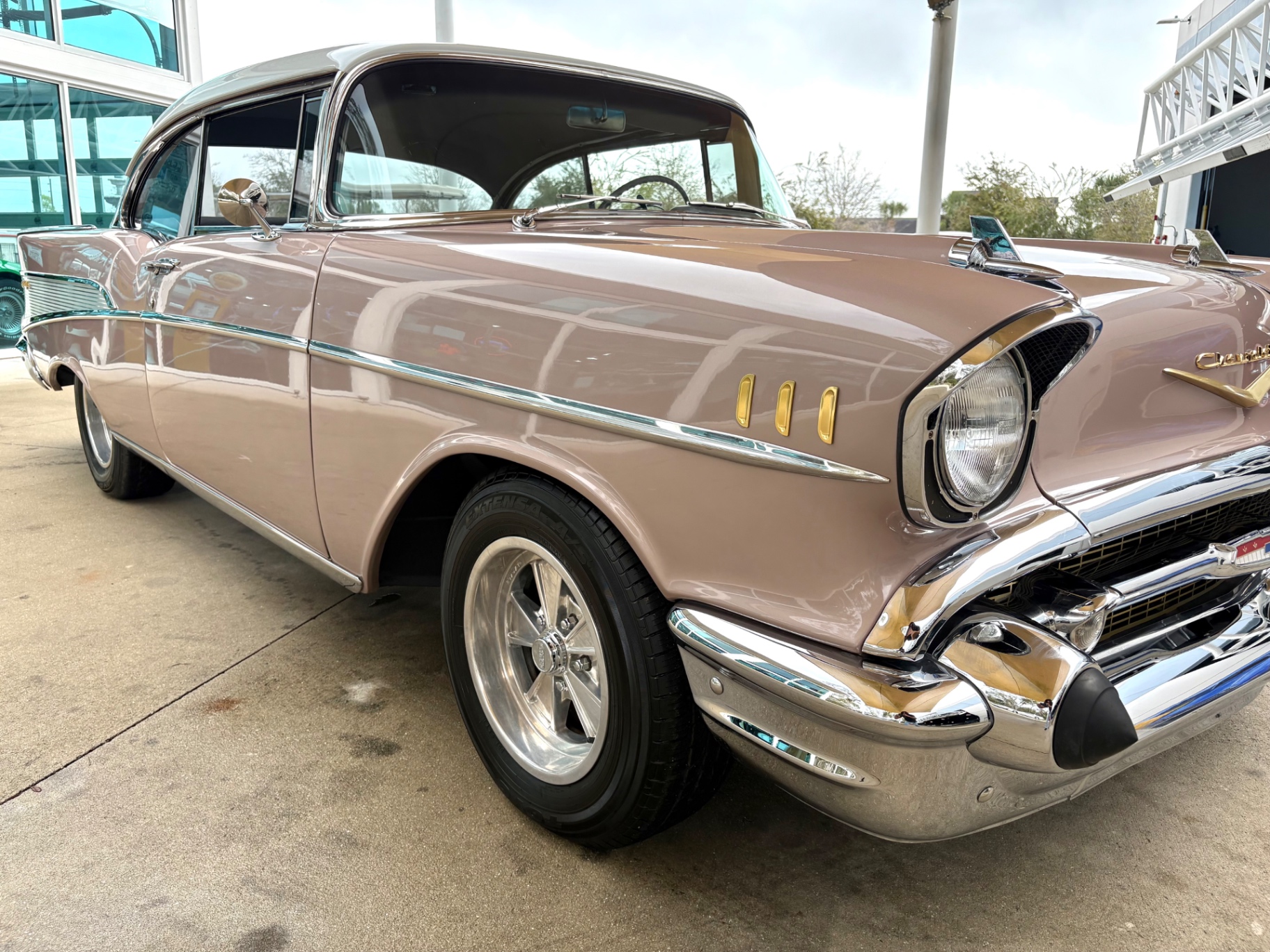
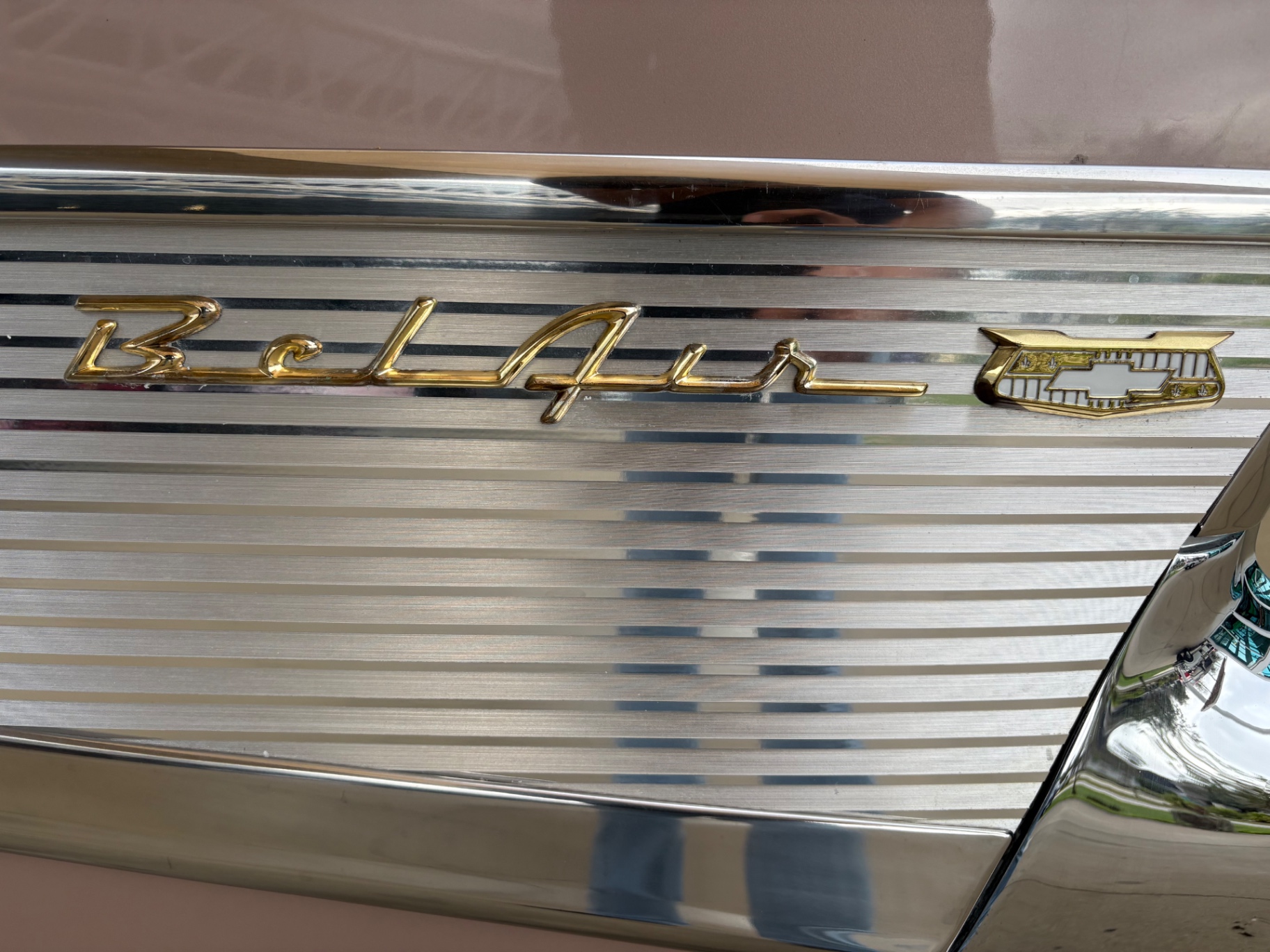
The Pearl Metallic finish on this 1957 Chevrolet Bel Air reads as a soft, warm tone in natural light — it sits in a range that complements the original design language of the car rather than working against it. The 1957 Bel Air was designed by a team working under GM design chief Harley Earl, and its combination of chrome trim, sculpted side spears, and modest tailfins represented the height of late-1950s American styling. The rocker panel moldings on this car are correct to the Bel Air trim level, which is worth noting — the full-length rocker trim was one of the visual distinctions between the Bel Air and the lower Two-Ten trim, and using the correct pieces keeps the car honest.
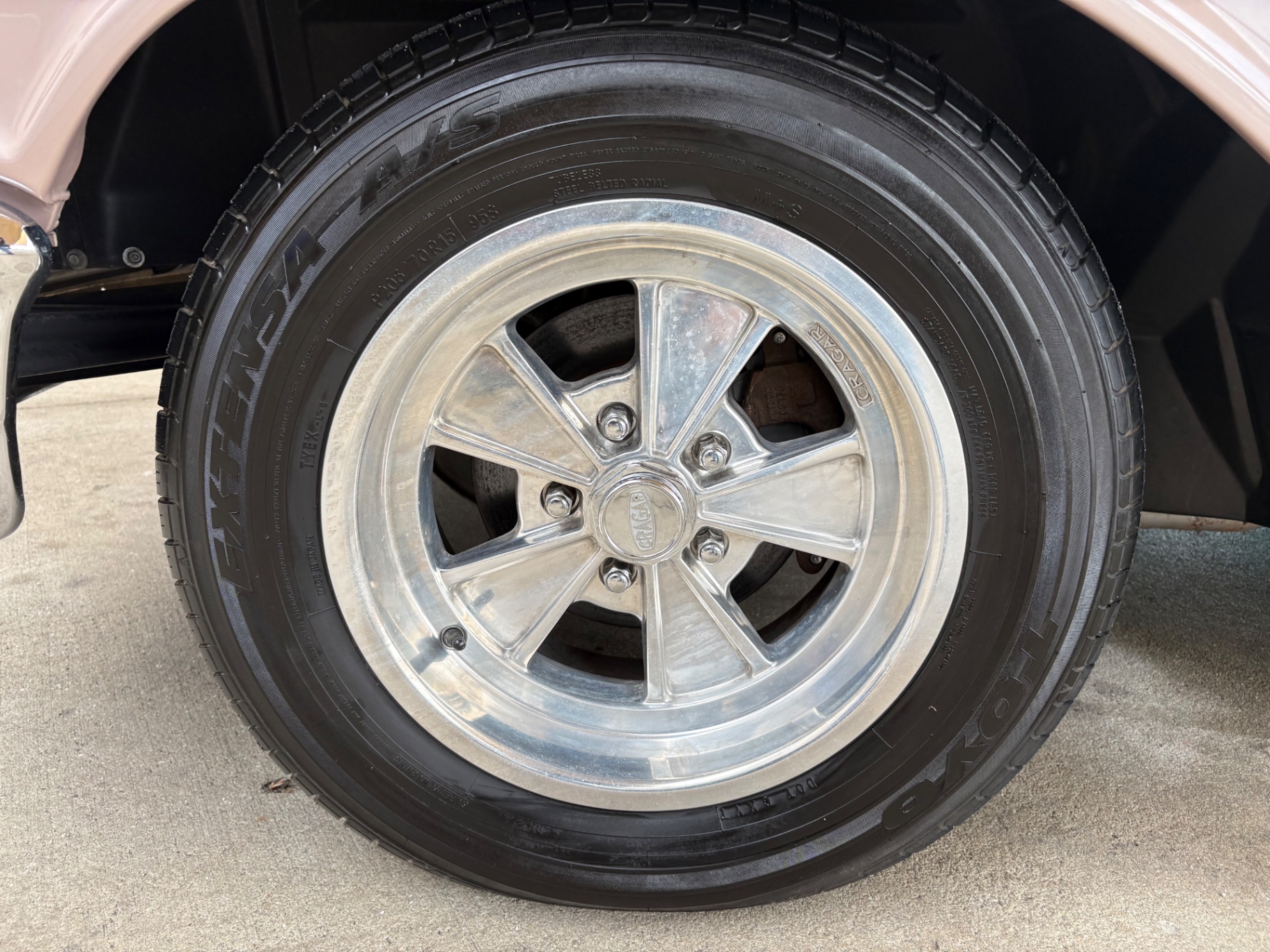
The wheels are custom-ordered Cragar mag wheels, a name that needs no introduction to anyone who has spent time around American performance cars. Cragar S/S mags have been a staple of the custom and hot rod world since the 1960s, and they suit the proportions of the 1957 Bel Air well without being anachronistic — this is the kind of wheel that could have plausibly appeared on a built Bel Air from the 1960s or 1970s forward.
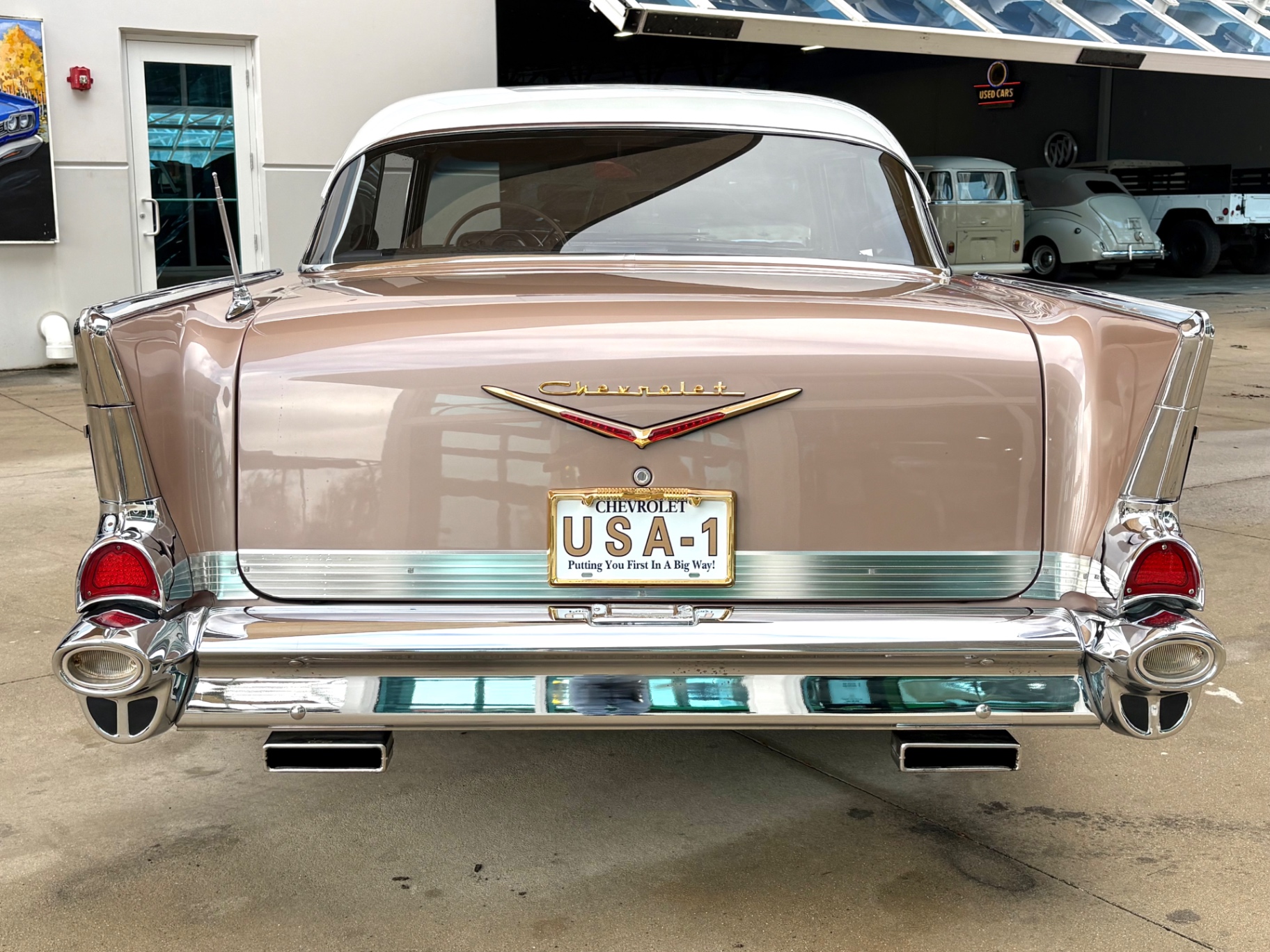
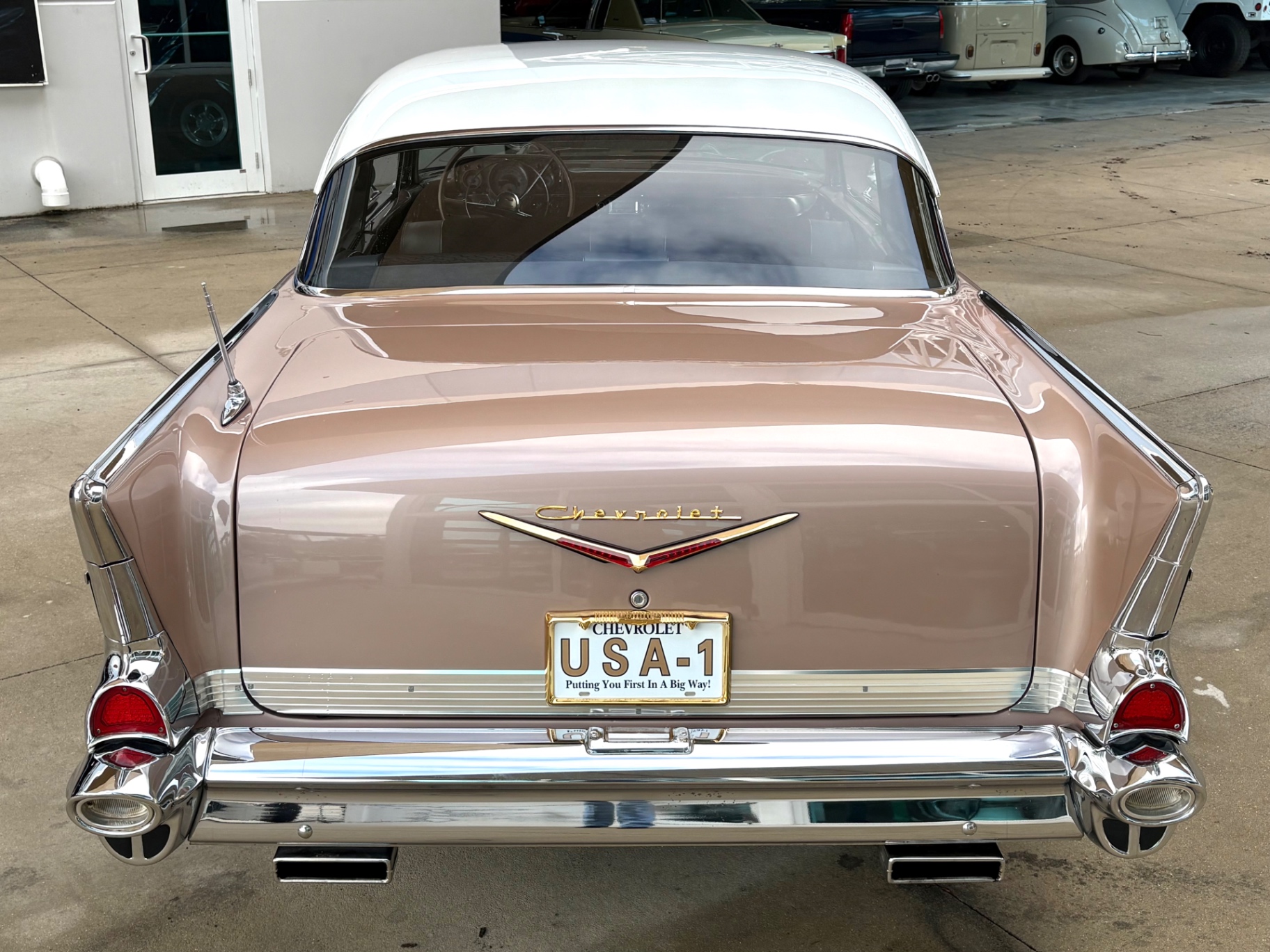
Safety and lighting updates include LED tail lights, a Danchuk third brake light, and tinted glass. Danchuk is the primary manufacturer and supplier of 1955-1957 Chevrolet reproduction and specialty parts, and their third brake light is a clean, integrated solution that adds a modern safety function without requiring visible structural changes to the car. The LED tail lights improve visibility significantly compared to the original incandescent bulbs while retaining the correct lens and housing appearance. Dual side mirrors round out the exterior, giving the driver actual visibility rather than the decorative near-uselessness of a single driver's mirror on a car this size.
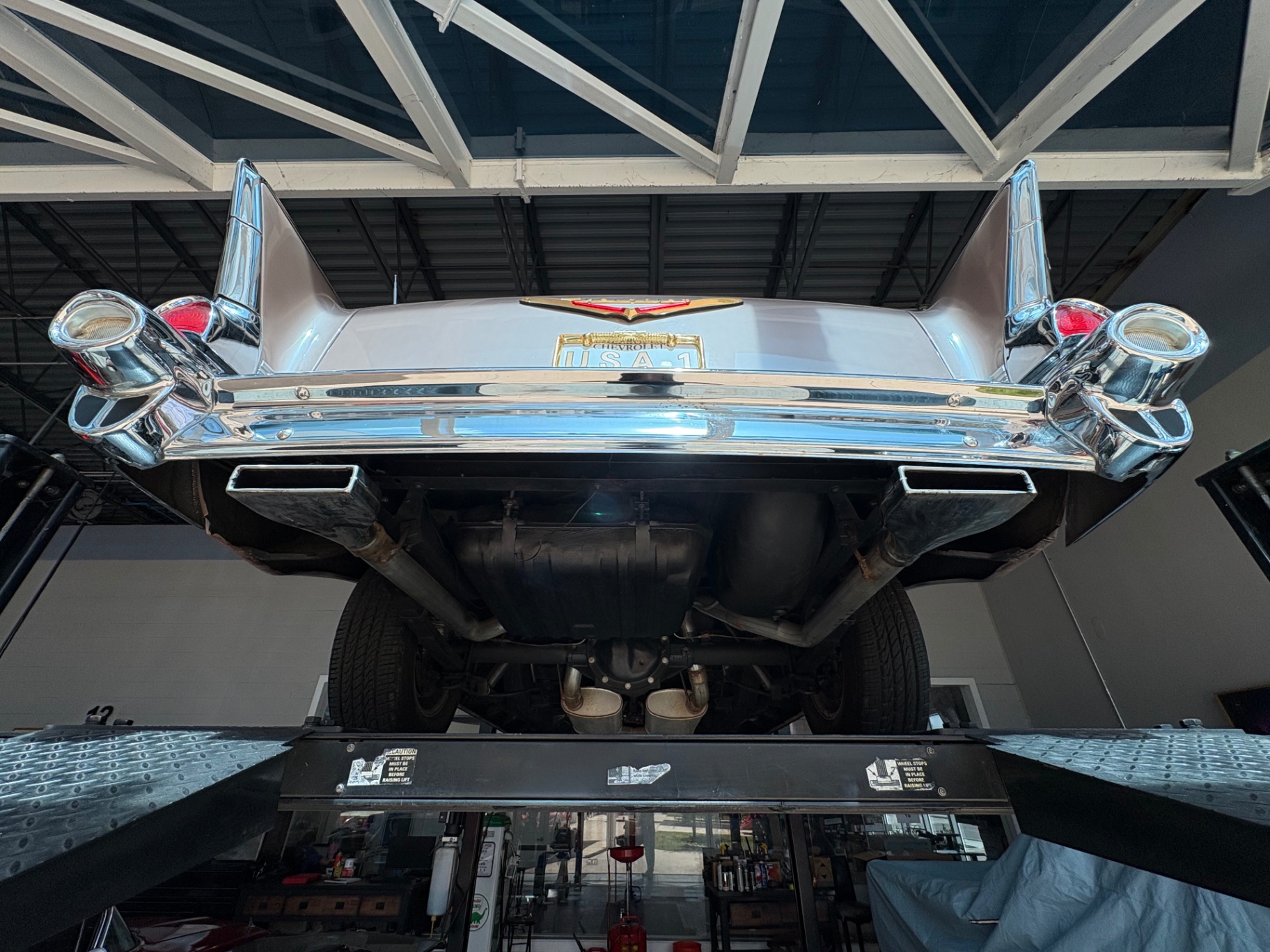
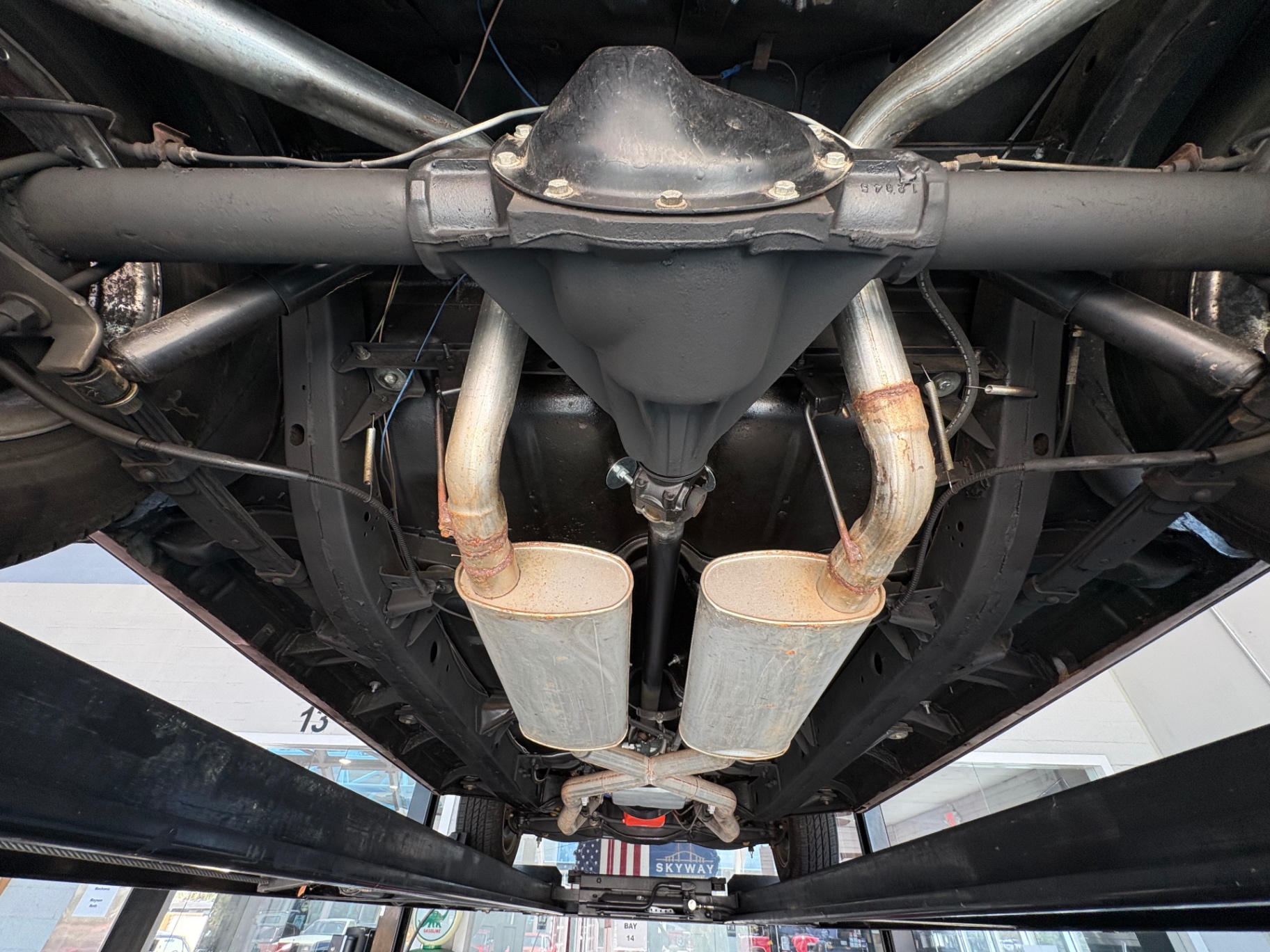
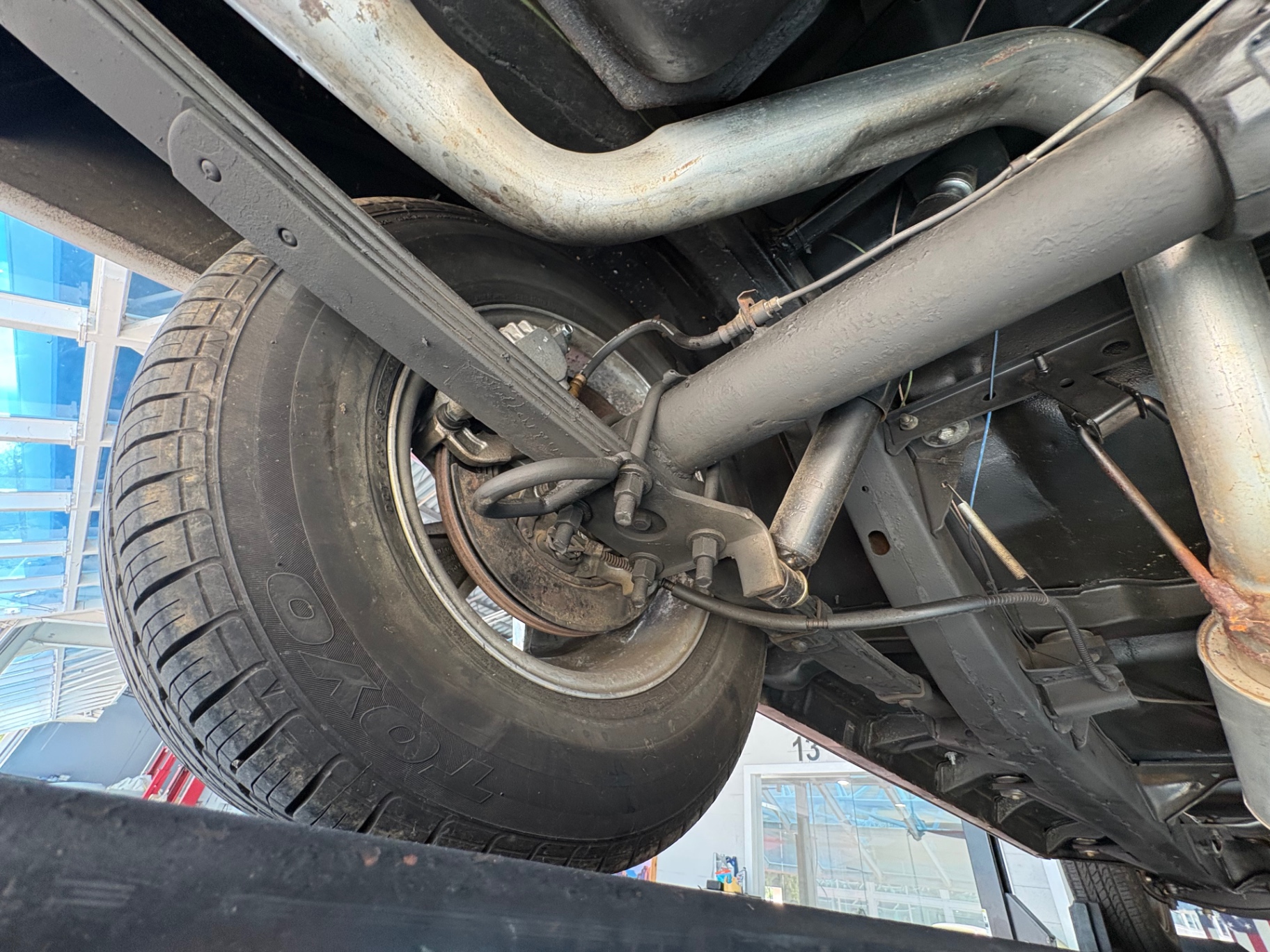
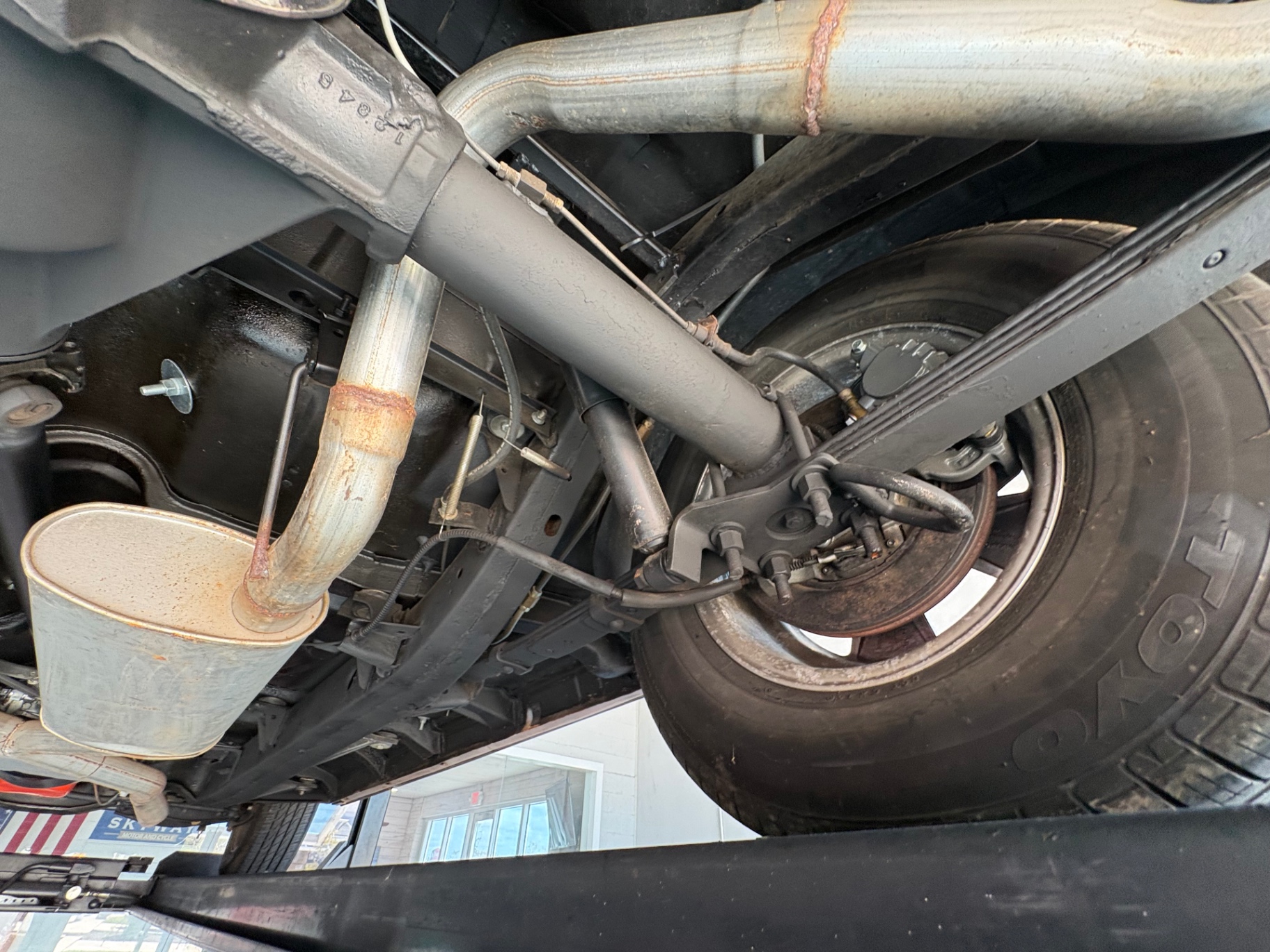
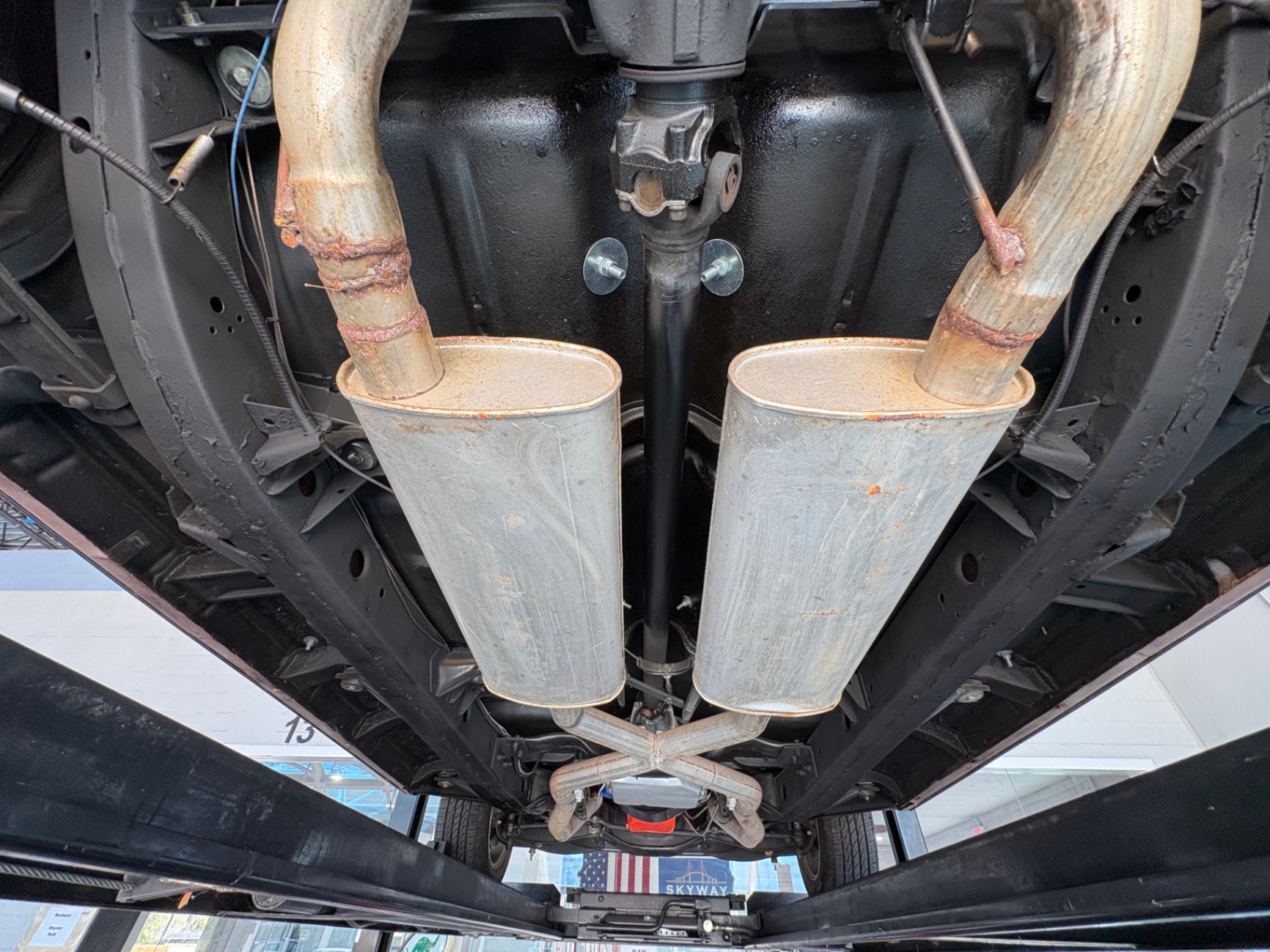
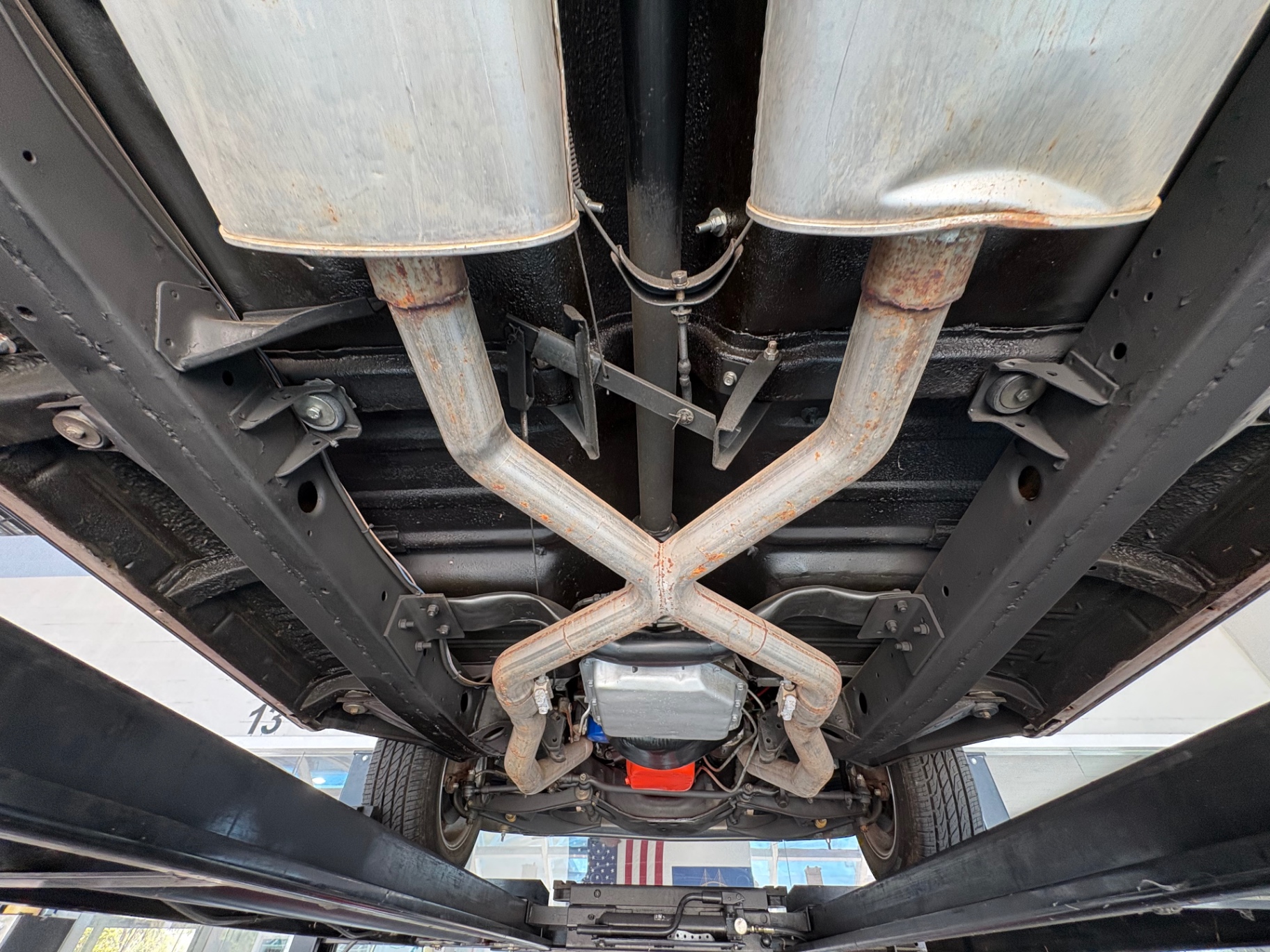
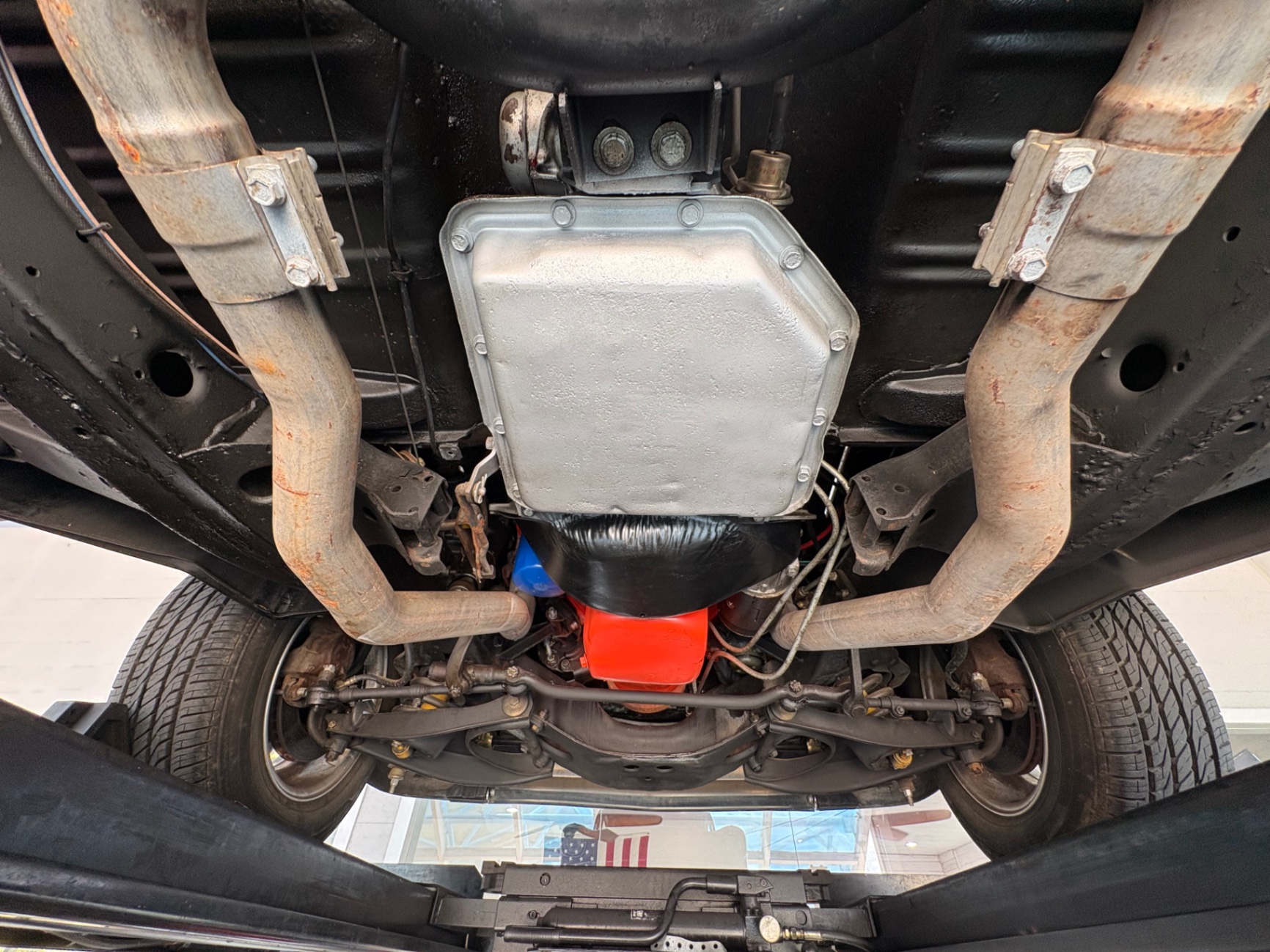
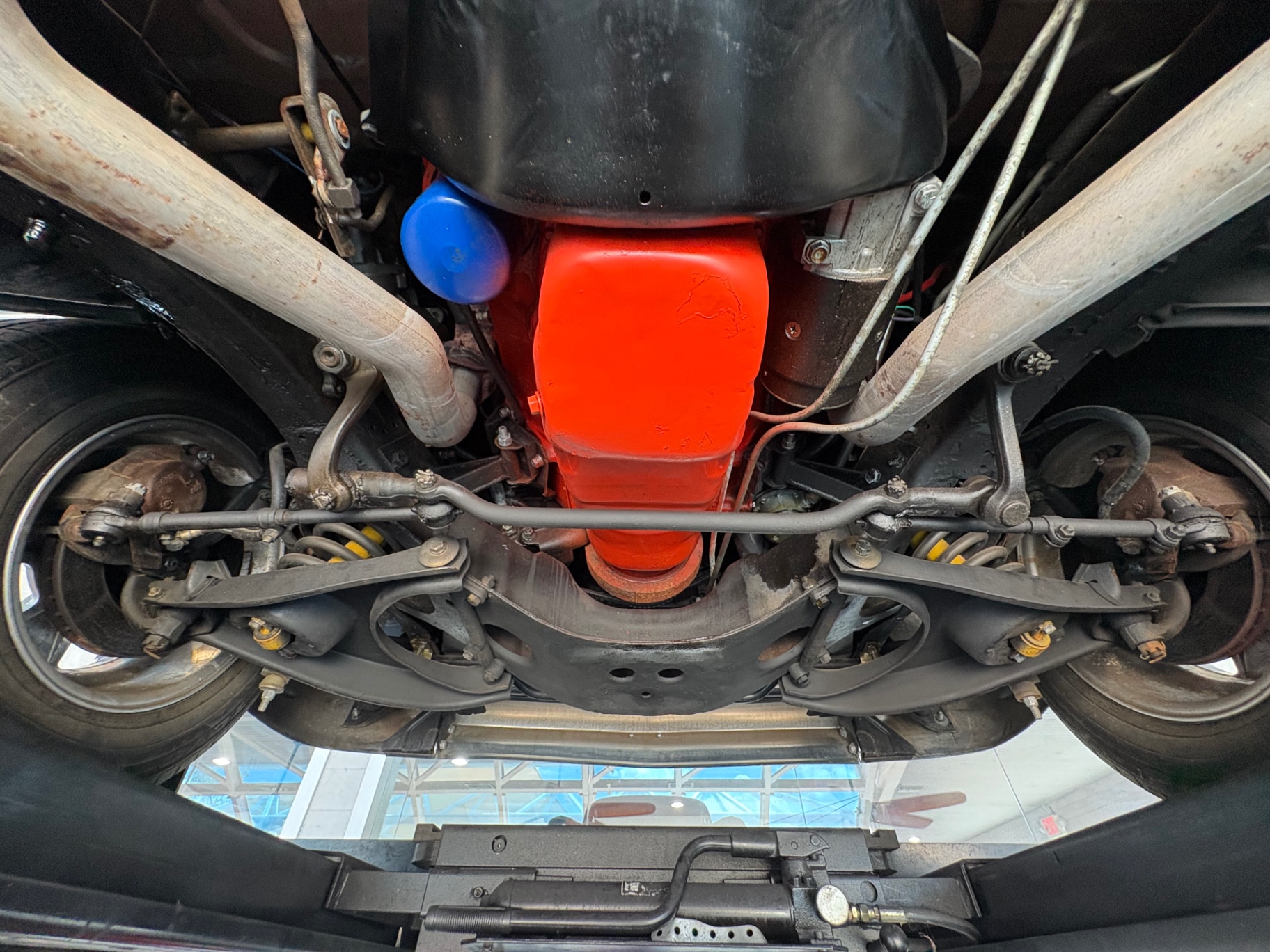
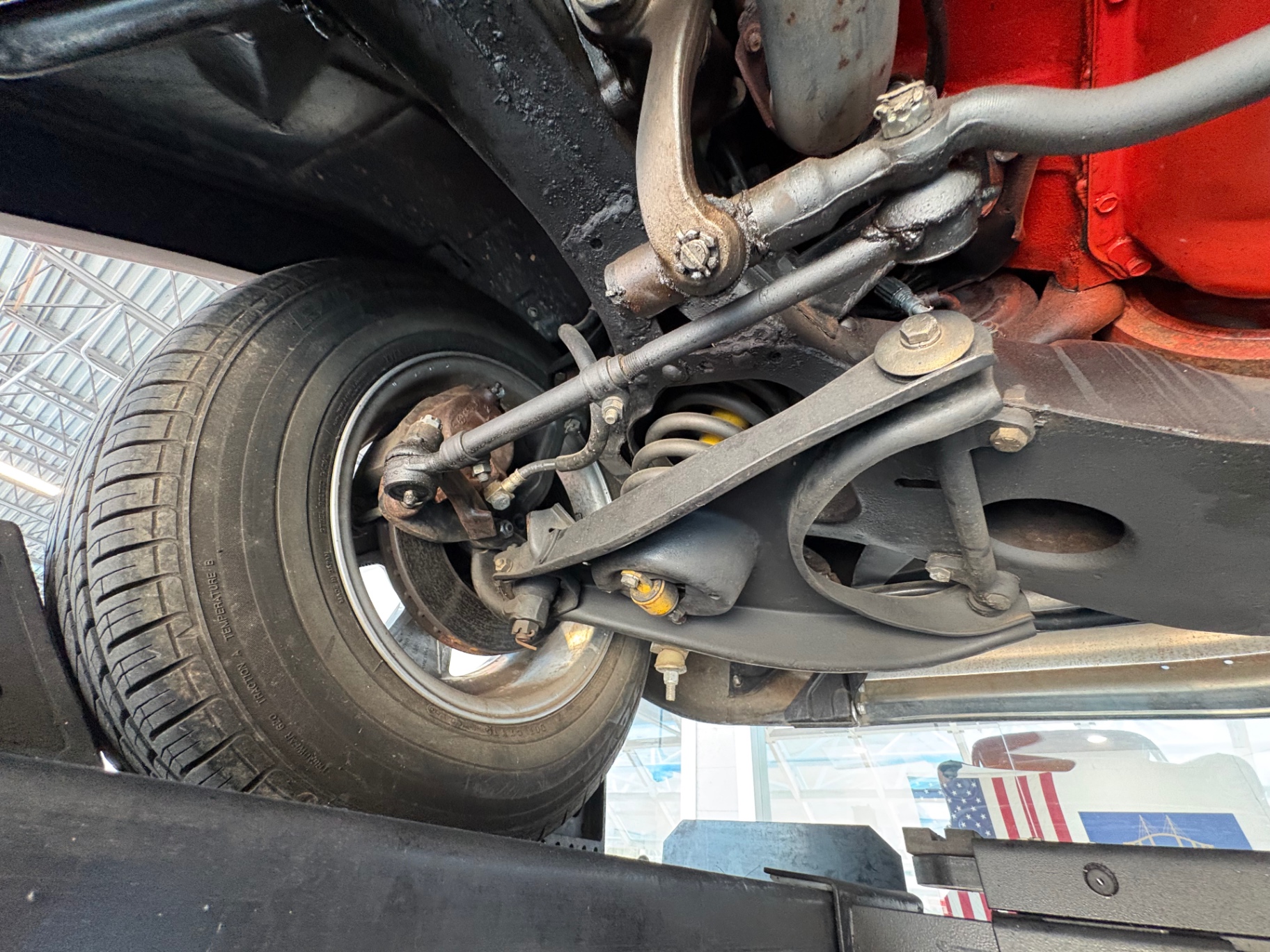
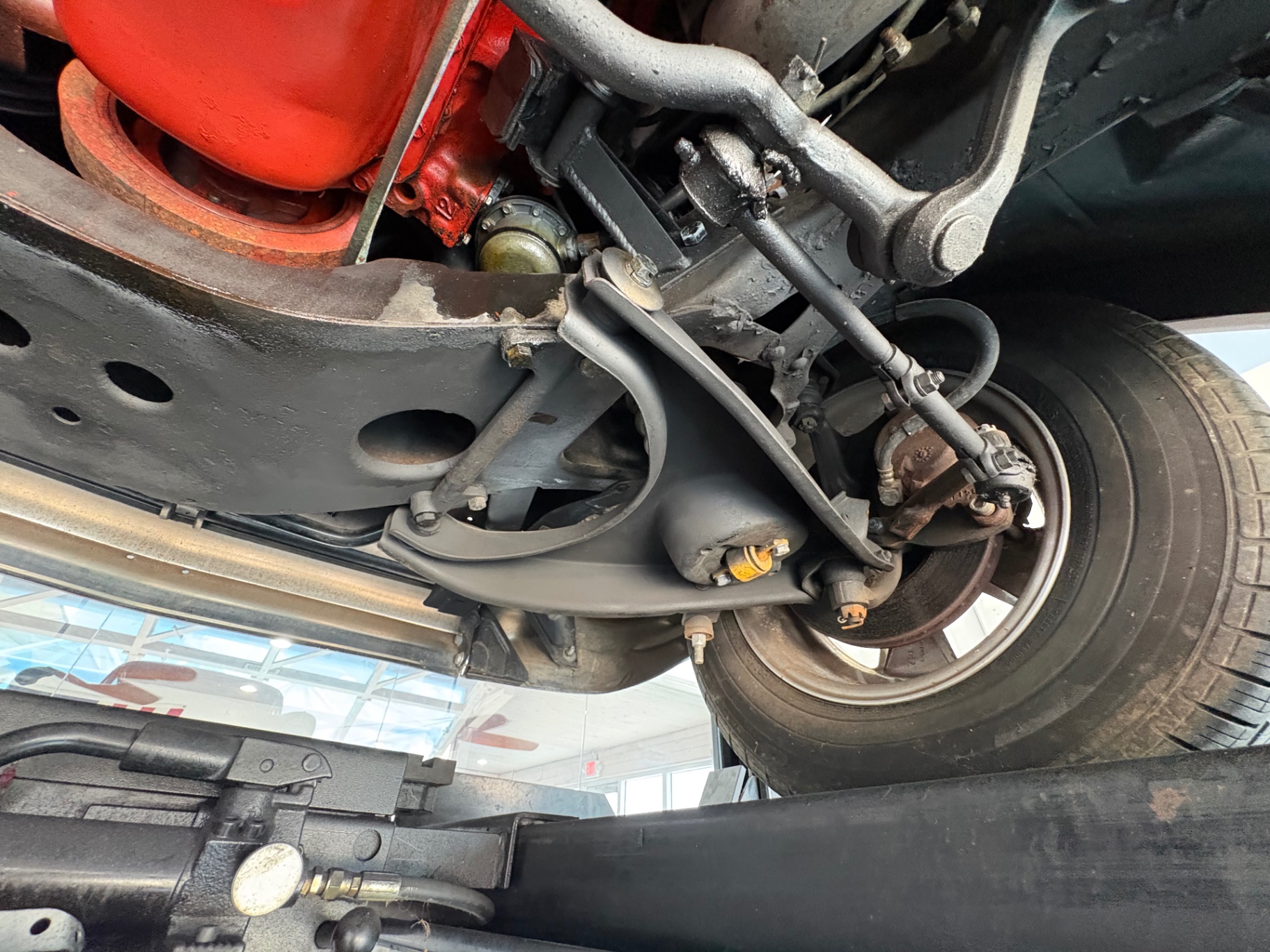
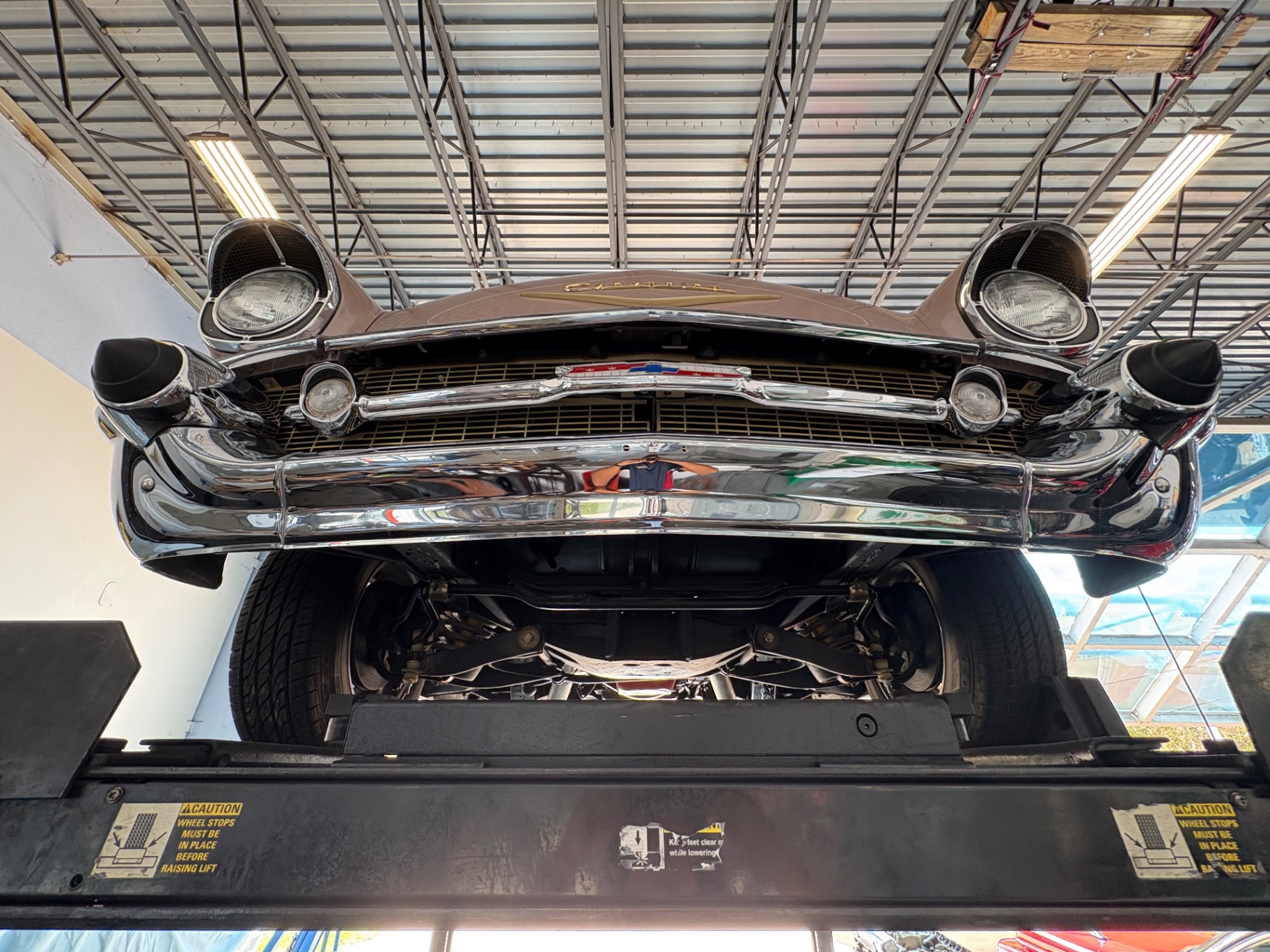
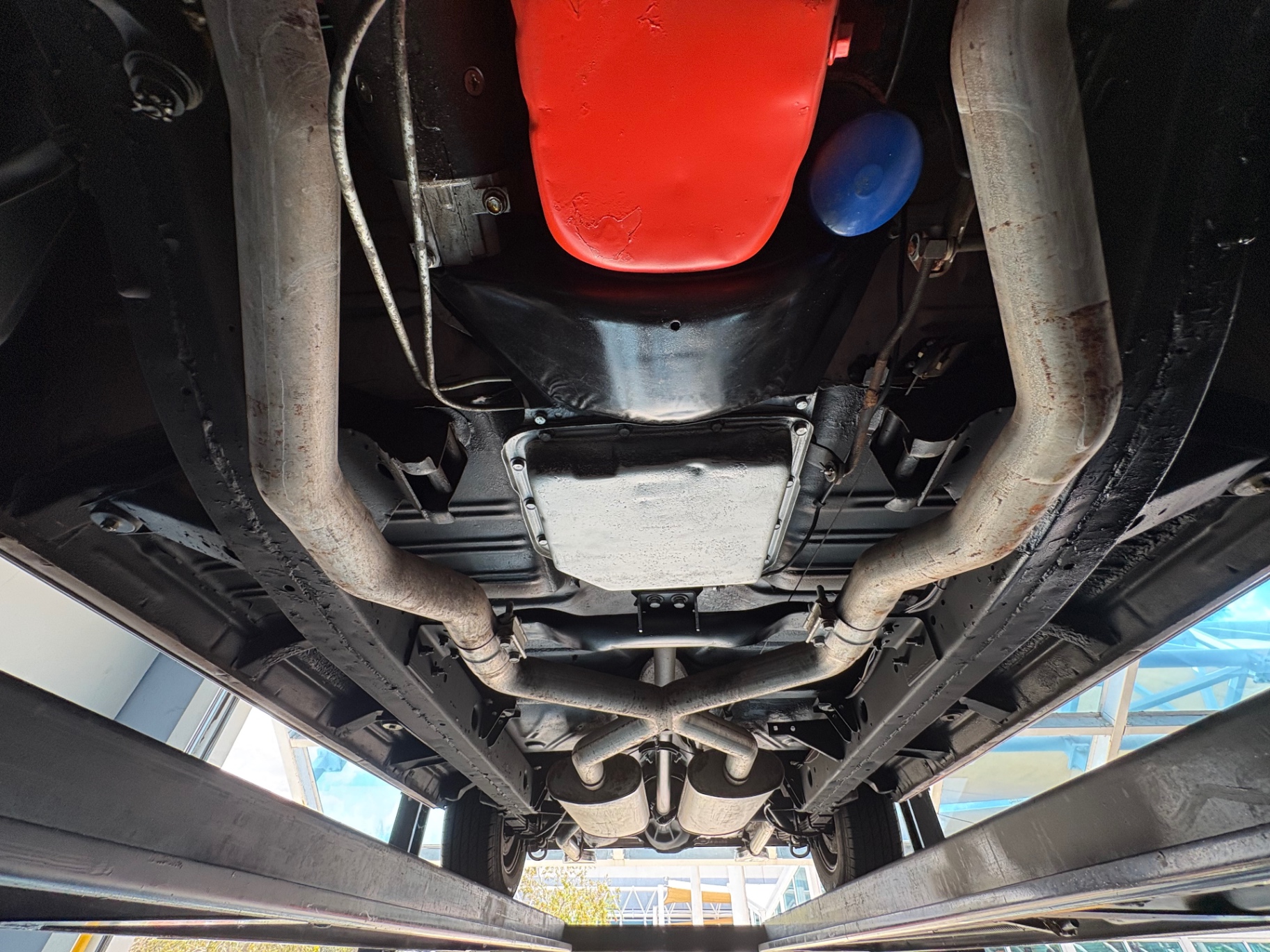
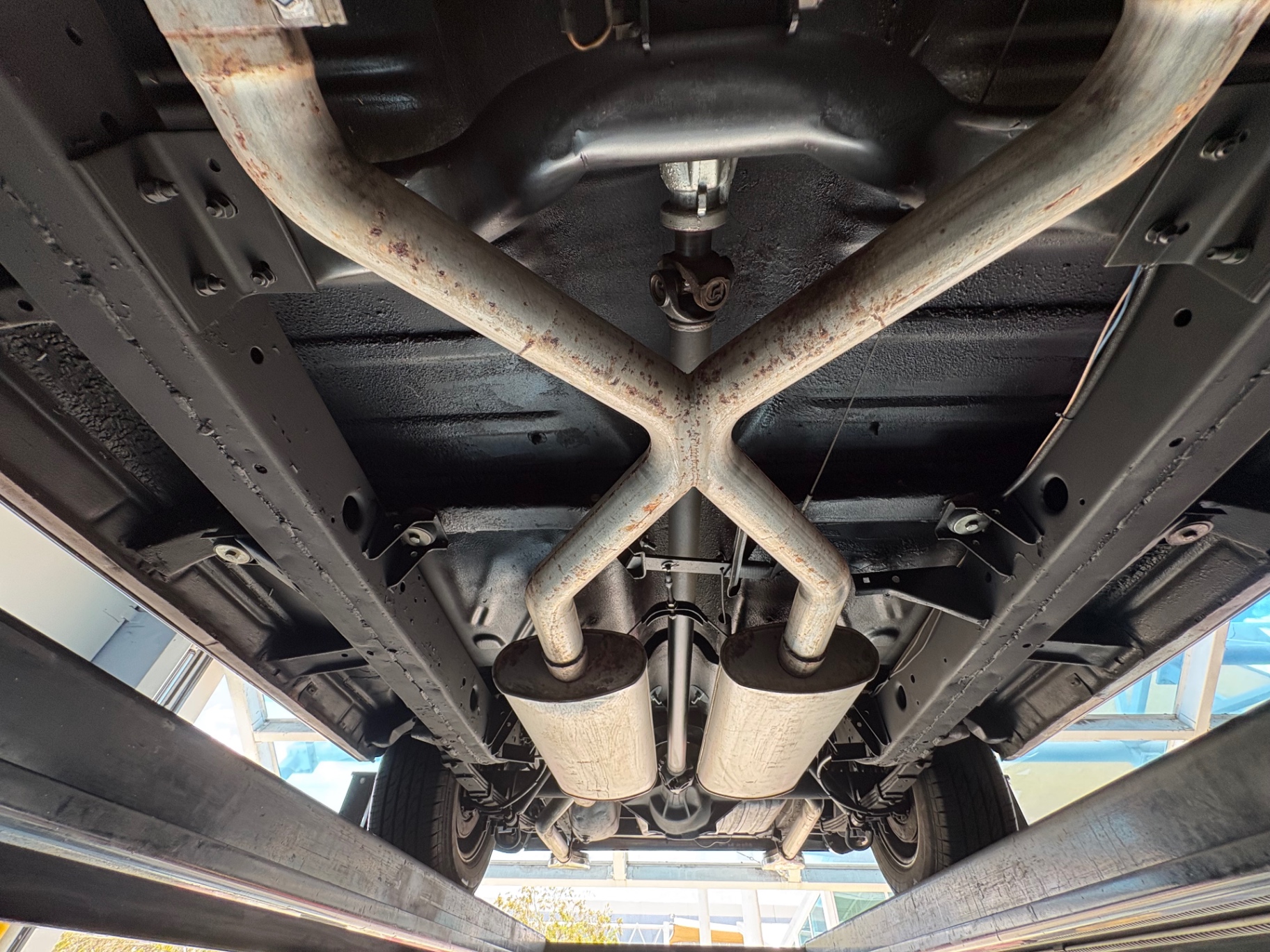
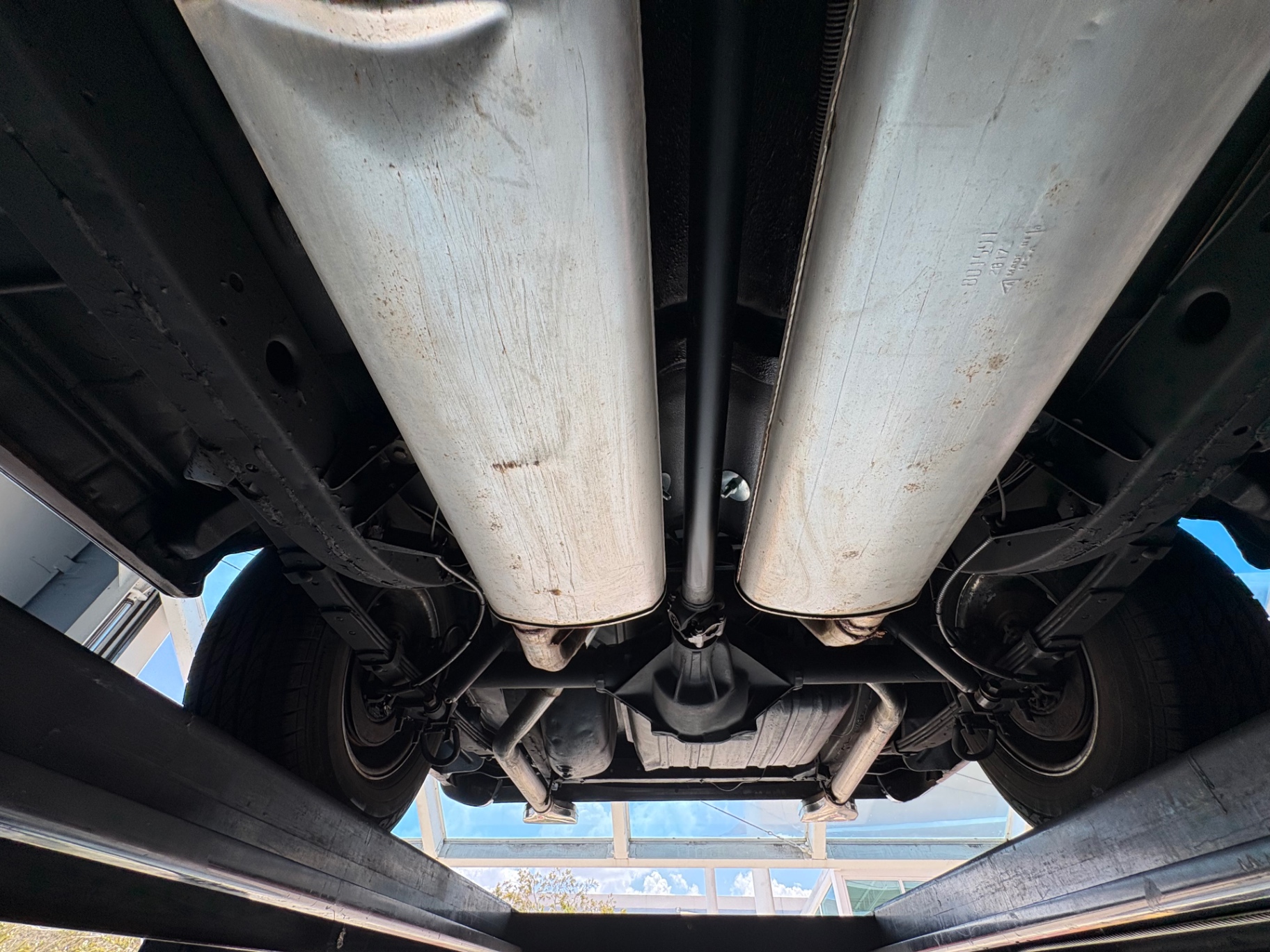
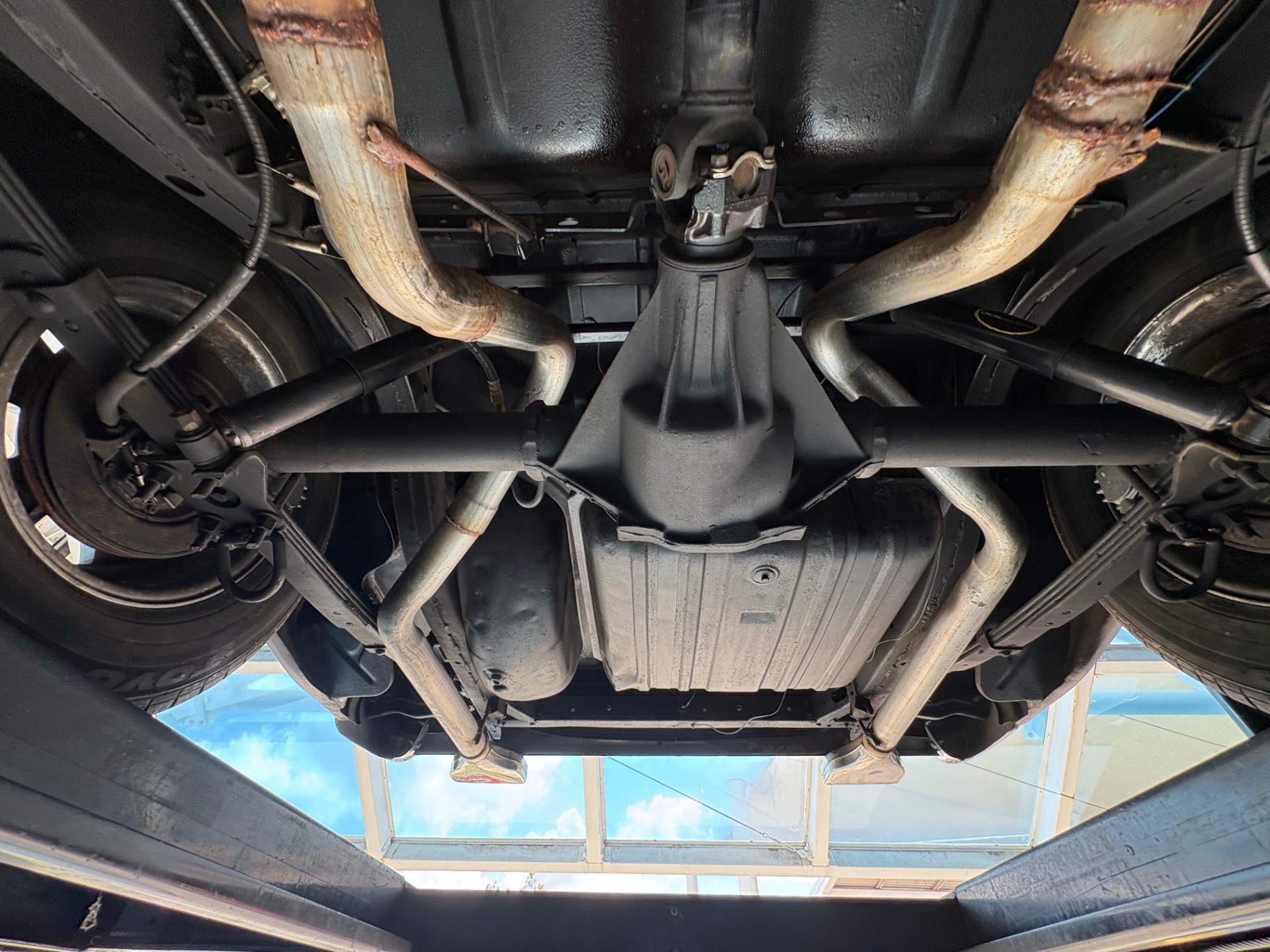
The underside photos confirm a solid, clean undercarriage — a straight rear axle housing, clean exhaust routing exiting through the bumper valance, and no visible rust or patchwork. For a Florida car that gets driven, this is exactly what you want to see.
Conclusion
The 1957 Chevrolet Bel Air does not need a sales pitch. Its place in American automotive history is permanent, and demand for solid examples has been consistent for decades. What this specific car offers is a well-executed combination of correct 1957 Bel Air identity — the trim, the body, the proportions — with a mechanical package that makes it practical to drive regularly. The 350 with double hump heads and 4-wheel disc, the Vintage Air system, the Dakota Digital gauges, and the updated rear end are all choices made by someone who intended to use this car, not park it. The 2008 restoration gave it a solid foundation, and the custom work on top of that foundation was done with attention to detail.
If you are looking at 1957 Chevrolet Bel Airs and want one that drives as well as it presents, this car warrants a serious look.
Call Skyway Classics at 941-254-6608 to schedule a time to see this 1957 Chevrolet Bel Air in person.
Disclaimer Information found on the website is presented as given to us by the owner of the car, whether on consignment or from the owner we bought it from. Some Photos, materials for videos, descriptions and other information are provided by the consignor/seller and is deemed reliable, but Skyway Classics does not warranty or guarantee this information. Skyway Classics is not responsible for information that may incorrect or a publishing error. The decision to purchase should be based solely on the buyers personal inspection of the vehicle or by a professional inspection service prior to offer or purchase being made.
1957 Chevrolet Bel Air
Why This Car Is Special
The 1957 Chevrolet Bel Air is one of the most recognized automobiles ever produced in the United States. That is not marketing language — it is a simple fact backed by decades of collector demand, cultural presence, and market history. Chevrolet sold just over 1.5 million cars in the 1957 model year across all trim levels, and the Bel Air sat at the top of the lineup, above the Two-Ten and One-Fifty. It was the prestige offering, the car Chevrolet dressed up with full-length side trim, a two-tone paint option, and a more finished interior than anything else in the GM stable at that price point.
What made 1957 specifically important was the engine program. Chevrolet introduced fuel injection as an option that year, the first American production car to offer it as a factory choice, though the vast majority of buyers opted for carbureted small-blocks. The 283 cubic inch V8 in its top fuel-injected form produced one horsepower per cubic inch — a benchmark that engineers and enthusiasts talked about for years afterward. The small-block Chevy architecture introduced in 1955 had already proven itself by 1957, and the platform earned a reputation for reliability and tunability that it has never really lost.
The VIN on this car decodes to a 1957 Chevrolet built in Flint, Michigan, with a V8 engine from the factory. The body style code identifies it as a Sport Sedan — the hardtop two-door body that defined the look of the era with its pillarless roofline and wide greenhouse glass.
This particular 1957 Chevrolet Bel Air was restored in 2008 and has since been built into a well-sorted custom that prioritizes drivability without stripping the car of its identity. It carries a Pearl Metallic exterior finish over a black and gray custom interior, and nearly every system under the body has been updated to modern components. This is the kind of build that gets driven to shows rather than trailered, and the mechanical list reflects that philosophy clearly.
Features List
- GM 350 cubic inch V8, rated at 325 horsepower, with double hump (camelback) cylinder heads - 4-wheel disc brakes - Late model rear end - Vintage air conditioning system - Full custom interior with power windows and power seat - Dakota Digital gauge cluster - Custom auto sound system - Leather-lined trunk - Danchuk third brake light - LED tail lights - Custom-ordered Cragar mag wheels - Correct rocker panel moldings - Dual side mirrors - Tinted glass - Restored in 2008
Mechanical
The engine in this 1957 Chevrolet Bel Air is a 350 cubic inch GM small-block V8 producing 325 horsepower, topped with a set of double hump cylinder heads — the nickname enthusiasts have used for decades to identify the high-performance double-hump casting marks on the ends of the heads. These castings were originally used on performance small-blocks from the mid-1960s onward and are still considered a desirable cylinder head for a street build because of their larger intake and exhaust ports compared to standard passenger car heads. Pairing them with the 350 puts this engine firmly in performance street territory without going to the extremes of an all-out race build.
Stopping the car is handled by a 4-wheel disc brake conversion, which is one of the most practical upgrades you can make to a 1957 Chevrolet. The factory drum brakes on these cars were adequate for 1957 traffic speeds and tire technology, but they are genuinely outmatched on modern roads. Four-wheel disc eliminates that concern entirely and gives the driver consistent, fade-resistant braking regardless of conditions. The late model rear end rounds out the drivetrain updates, providing a stronger, more reliable axle assembly than the original and making parts sourcing straightforward for years to come.
Vintage Air supplies the air conditioning system. For anyone not familiar, Vintage Air is the industry standard for classic car climate control. Their systems are purpose-built for early vehicles, designed to fit within the original dash and firewall layout, and they cool effectively in real heat — important context if you plan to drive this 1957 Bel Air in Florida summers.
Interior
The interior of this 1957 Chevrolet Bel Air has been fully custom built in black and gray vinyl. The color combination works well with the Pearl Metallic exterior, giving the car a cohesive look rather than the mismatched feel that can happen when custom interiors are chosen independently of the body color. Power windows and a power seat have been integrated into the build, which required custom wiring work given that these were not factory options available on the 1957 Bel Air in their modern form.
The instrument cluster has been replaced with a Dakota Digital gauge set. Dakota Digital is one of the most widely respected names in aftermarket instrumentation for classic cars. Their displays read cleanly, mount in period-correct bezels, and give the driver accurate information on oil pressure, coolant temperature, voltage, and speed — data that the original 1957 gauges either could not provide or provided with limited accuracy. It is a practical upgrade that does not announce itself loudly but makes a real difference every time you drive the car.
The custom auto sound system has been integrated throughout the cabin, with speakers visible in the door panels, placed behind period-style trim rings that keep the look consistent with the rest of the interior design. The trunk has been finished in leather, which is a detail that speaks to the overall level of attention given to this build — it is the kind of finishing touch that gets noticed at shows and signals that the builder cared about the complete car, not just the parts that show at first glance.
Exterior
The Pearl Metallic finish on this 1957 Chevrolet Bel Air reads as a soft, warm tone in natural light — it sits in a range that complements the original design language of the car rather than working against it. The 1957 Bel Air was designed by a team working under GM design chief Harley Earl, and its combination of chrome trim, sculpted side spears, and modest tailfins represented the height of late-1950s American styling. The rocker panel moldings on this car are correct to the Bel Air trim level, which is worth noting — the full-length rocker trim was one of the visual distinctions between the Bel Air and the lower Two-Ten trim, and using the correct pieces keeps the car honest.
The wheels are custom-ordered Cragar mag wheels, a name that needs no introduction to anyone who has spent time around American performance cars. Cragar S/S mags have been a staple of the custom and hot rod world since the 1960s, and they suit the proportions of the 1957 Bel Air well without being anachronistic — this is the kind of wheel that could have plausibly appeared on a built Bel Air from the 1960s or 1970s forward.
Safety and lighting updates include LED tail lights, a Danchuk third brake light, and tinted glass. Danchuk is the primary manufacturer and supplier of 1955-1957 Chevrolet reproduction and specialty parts, and their third brake light is a clean, integrated solution that adds a modern safety function without requiring visible structural changes to the car. The LED tail lights improve visibility significantly compared to the original incandescent bulbs while retaining the correct lens and housing appearance. Dual side mirrors round out the exterior, giving the driver actual visibility rather than the decorative near-uselessness of a single driver's mirror on a car this size.
The underside photos confirm a solid, clean undercarriage — a straight rear axle housing, clean exhaust routing exiting through the bumper valance, and no visible rust or patchwork. For a Florida car that gets driven, this is exactly what you want to see.
Conclusion
The 1957 Chevrolet Bel Air does not need a sales pitch. Its place in American automotive history is permanent, and demand for solid examples has been consistent for decades. What this specific car offers is a well-executed combination of correct 1957 Bel Air identity — the trim, the body, the proportions — with a mechanical package that makes it practical to drive regularly. The 350 with double hump heads and 4-wheel disc, the Vintage Air system, the Dakota Digital gauges, and the updated rear end are all choices made by someone who intended to use this car, not park it. The 2008 restoration gave it a solid foundation, and the custom work on top of that foundation was done with attention to detail.
If you are looking at 1957 Chevrolet Bel Airs and want one that drives as well as it presents, this car warrants a serious look.
Call Skyway Classics at 941-254-6608 to schedule a time to see this 1957 Chevrolet Bel Air in person.
Disclaimer Information found on the website is presented as given to us by the owner of the car, whether on consignment or from the owner we bought it from. Some Photos, materials for videos, descriptions and other information are provided by the consignor/seller and is deemed reliable, but Skyway Classics does not warranty or guarantee this information. Skyway Classics is not responsible for information that may incorrect or a publishing error. The decision to purchase should be based solely on the buyers personal inspection of the vehicle or by a professional inspection service prior to offer or purchase being made.
1957 Chevrolet
Bel Air Base
Why Choose Skyway Classics?
Explore our curated inventory of classic and collector cars—thoughtfully selected, ready to drive, and supported by experts who make ownership simple.
Expert Curation
Every vehicle is hand-selected by our experts for quality, authenticity, and investment potential.
Fast Transactions
Streamlined buying and selling process with quick financing and immediate delivery options.
Only National Dealer With Classic Service & Repair
We’re the only national dealership that services and repairs the classics we sell—before and after the sale.
Nationwide Network
Access to our extensive network of collectors, restorers, and classic car enthusiasts nationwide.
Concierge Ownership Support
From financing and insurance to paperwork, shipping, and titling—we handle the details so you can enjoy the drive.
Passion-Driven Service
We're classic car enthusiasts first, providing personalized service with genuine passion for the hobby.