
1972 Chevrolet
Corvette Stingray
1972 Chevrolet Corvette Stingray — White T-Top Coupe with Rare LT-1 Hood and Numbers-Correct 350
Why This Car Is Special
The 1972 Chevrolet Corvette Stingray holds a specific and well-documented place in Corvette history. It was the last model year to carry the traditional egg-crate grille, the last to use chrome front bumpers, and the last to feature the removable rear window on coupe models. It was also the final year that Chevrolet published gross horsepower ratings before the industry shifted to the lower net figures — a change that made the 1973 and later cars look less powerful on paper even when they weren't dramatically different mechanically. For collectors who know the C3 generation well, 1972 sits at a distinct transition point, and it attracts buyers who want the last of the classic Stingray styling cues before the federally mandated changes began reshaping the car in 1973.
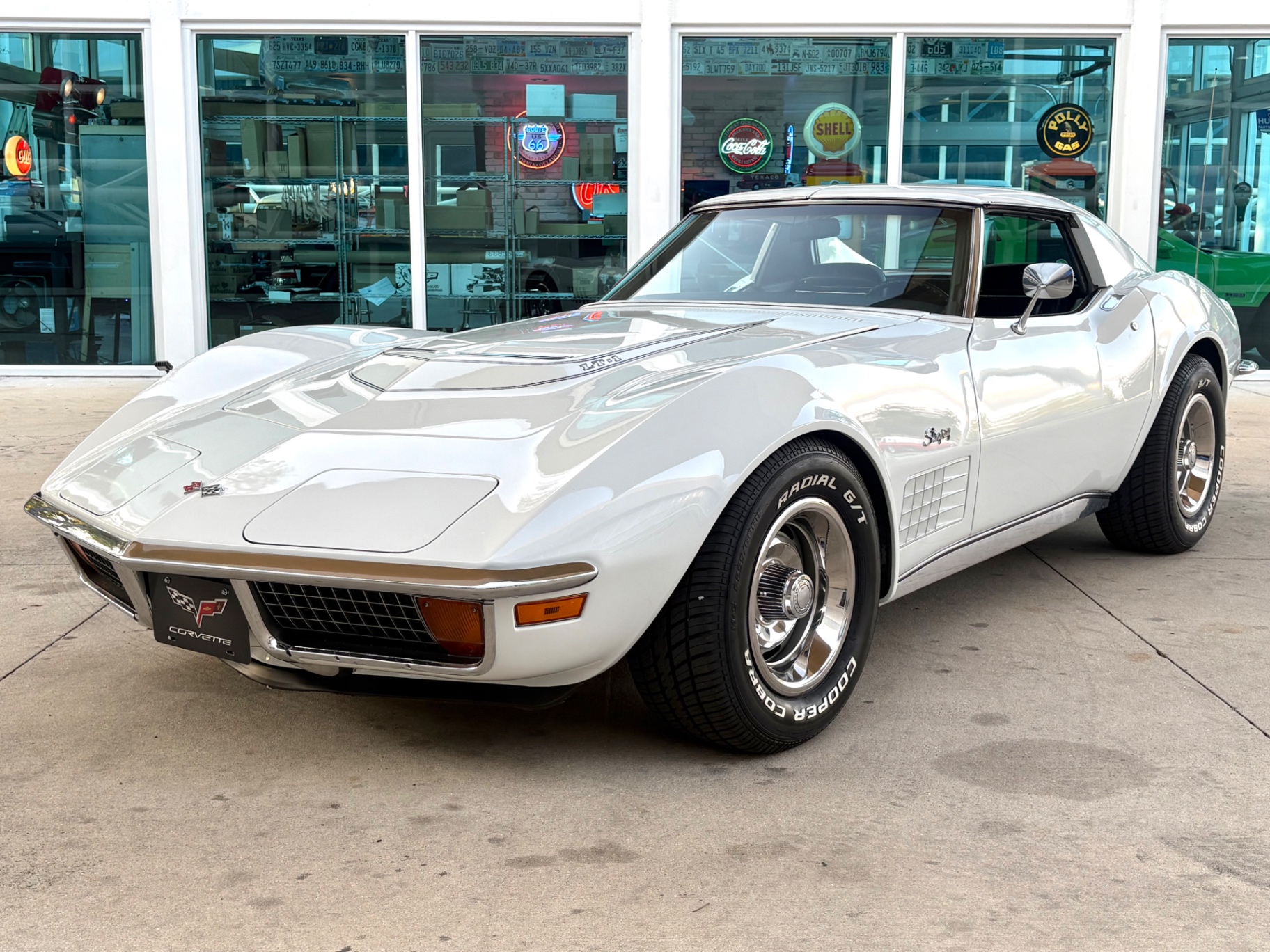
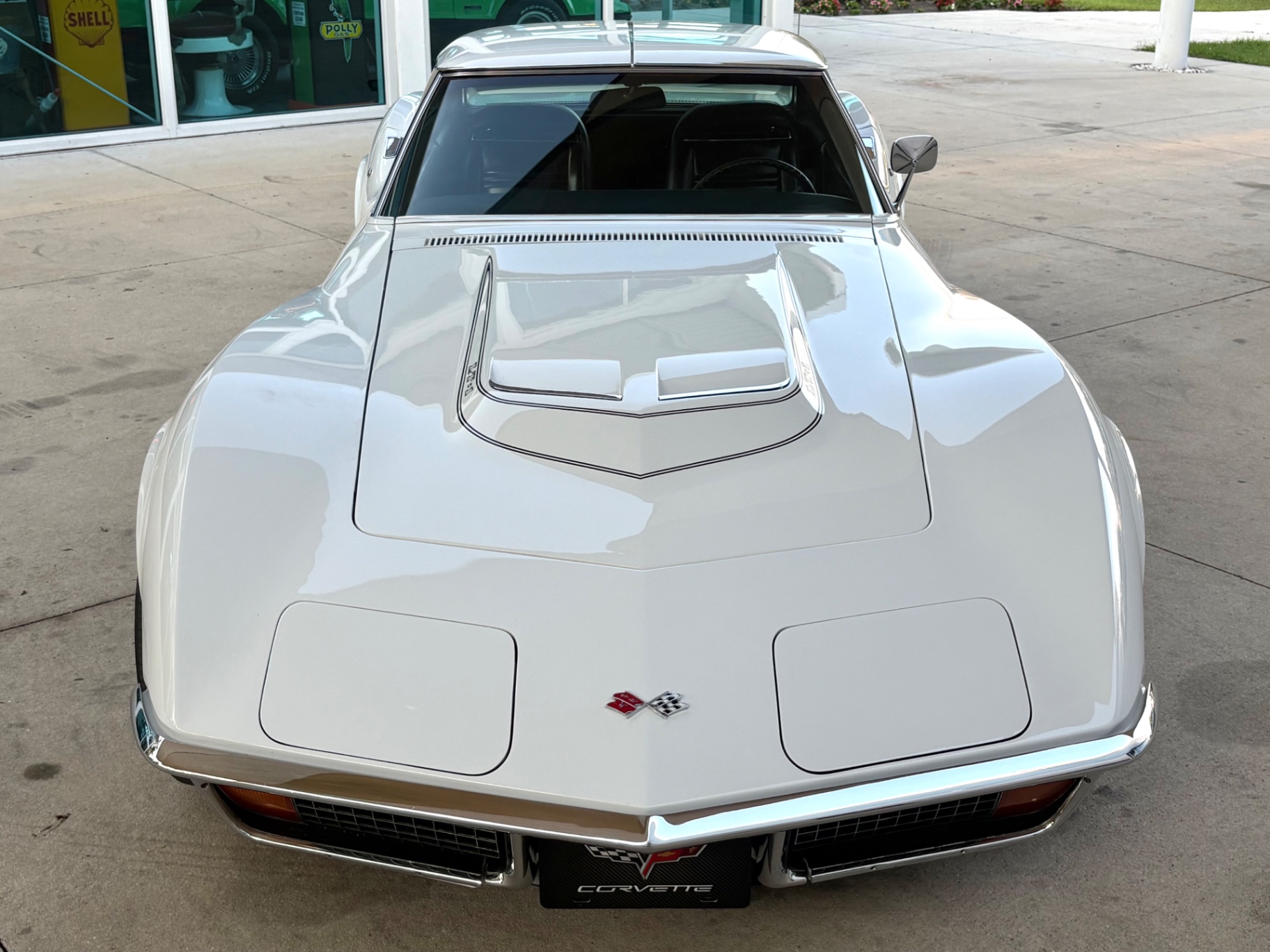
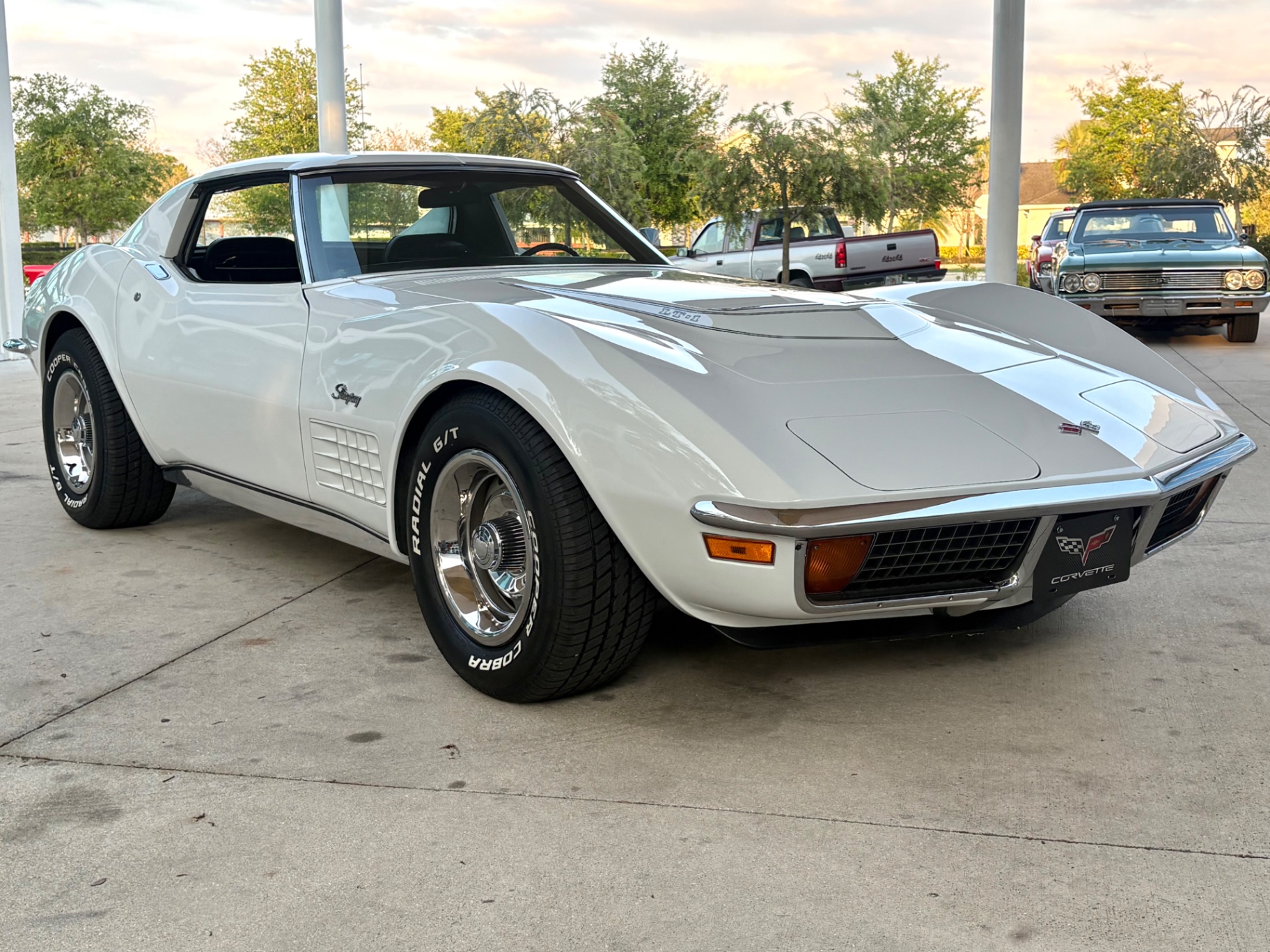
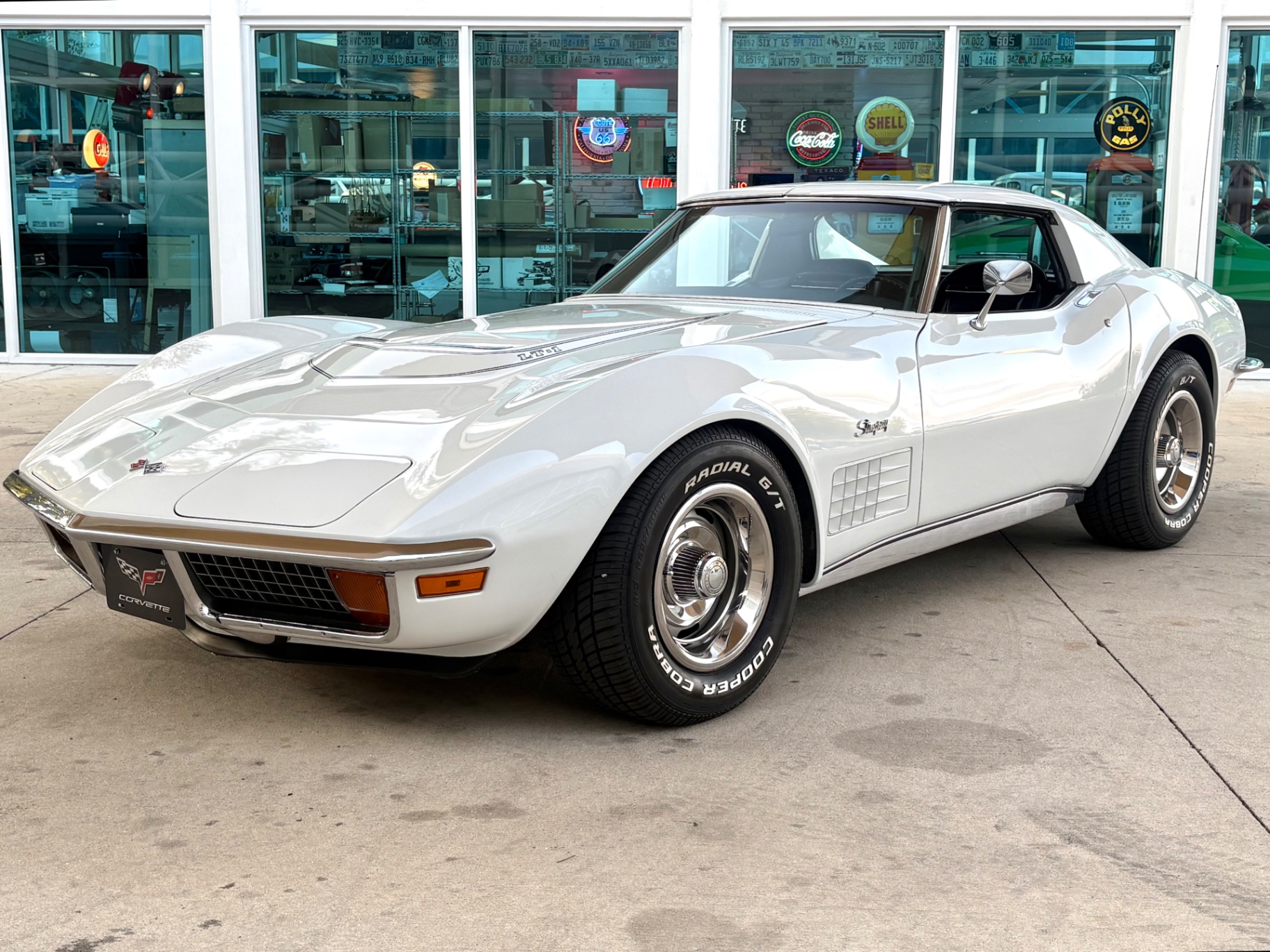
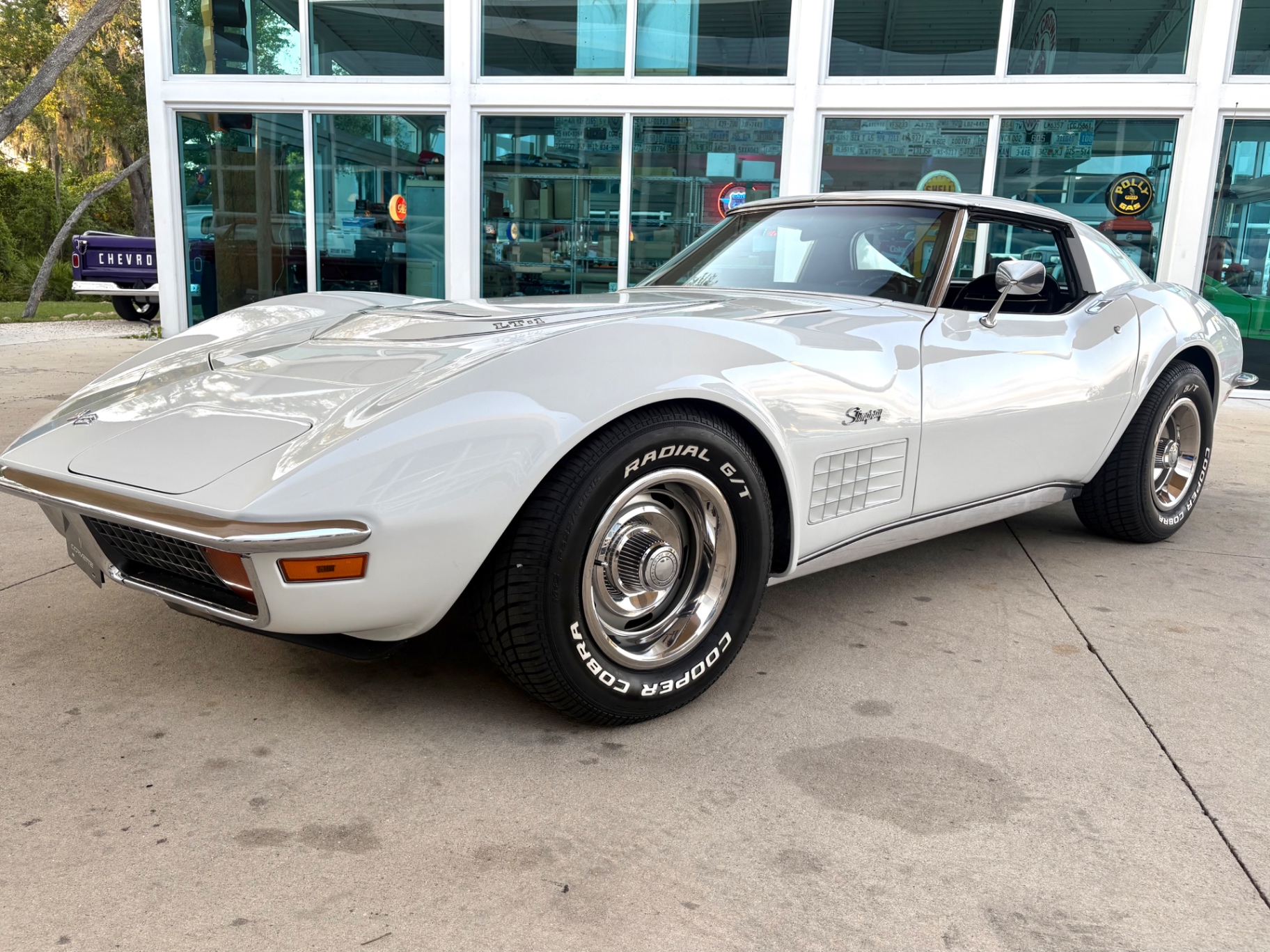
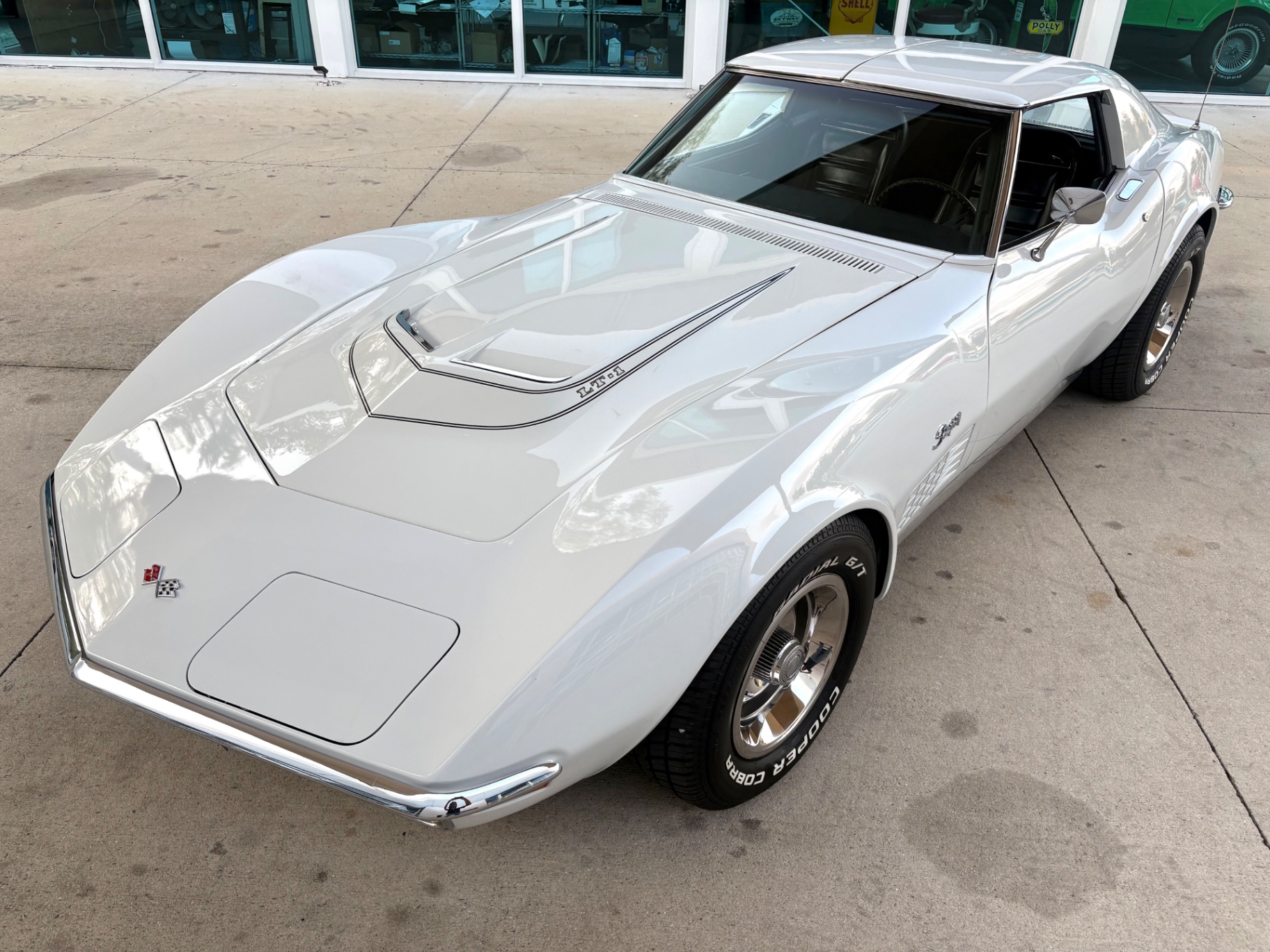
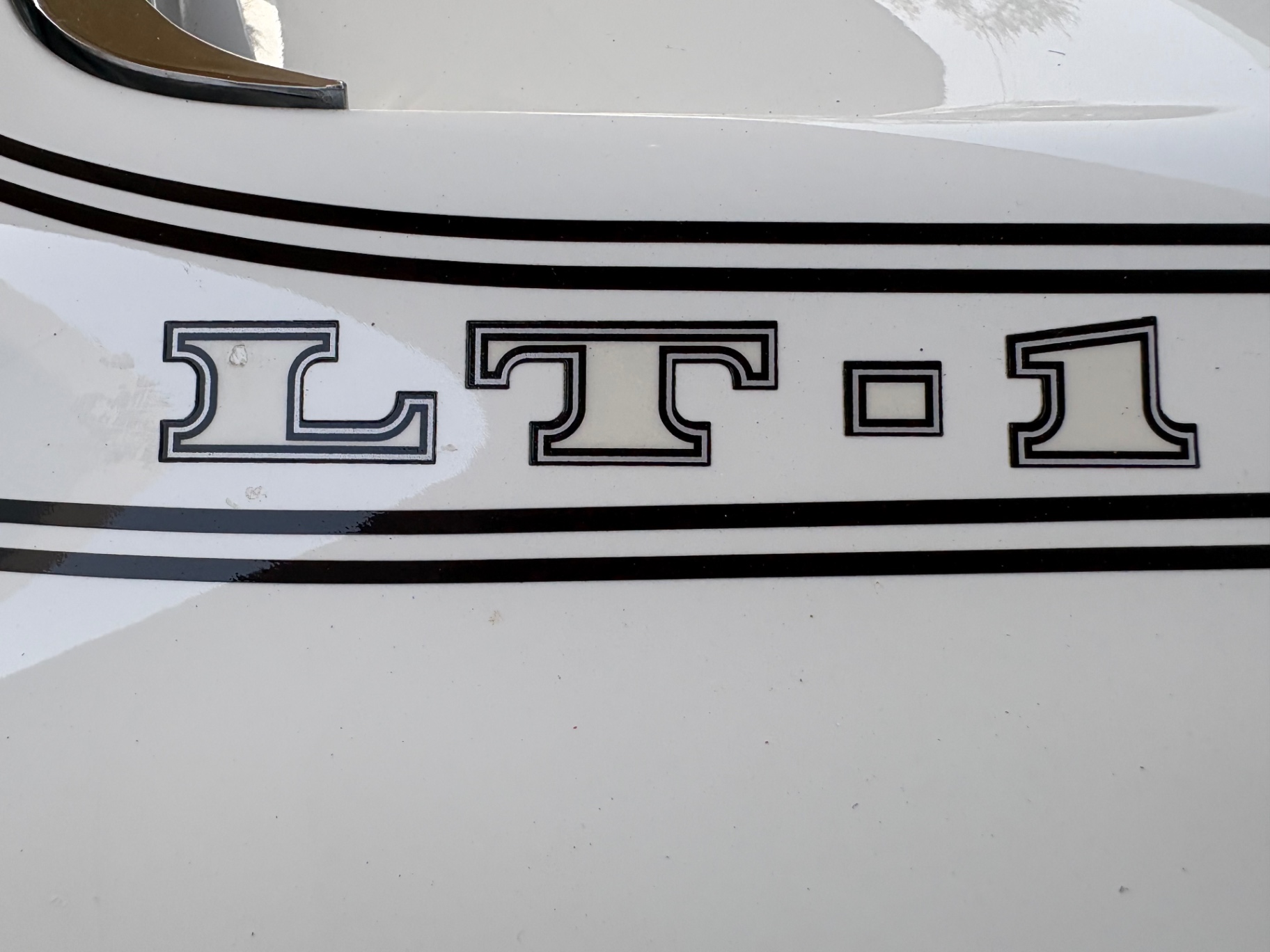
This particular 1972 Chevrolet Corvette Stingray is finished in white over a black vinyl interior and carries a combination of features that goes well beyond a typical base-spec example. The presence of the LT-1 hood is the detail that separates this car from most of the 27,004 Corvettes built for the 1972 model year. The LT-1 was the high-winding, solid-lifter 350 cubic inch V8 option that Chevrolet carried over from 1970 and 1971. In 1972, only 1,741 Corvettes were ordered with the LT-1 engine, making it by far the rarest powertrain choice that year. The LT-1 hood — with its distinctive center-exit scoop — is a visually specific and historically significant piece of fiberglass that belongs to that engine option, and its presence on this car is worth understanding before you assume anything about what's under it.
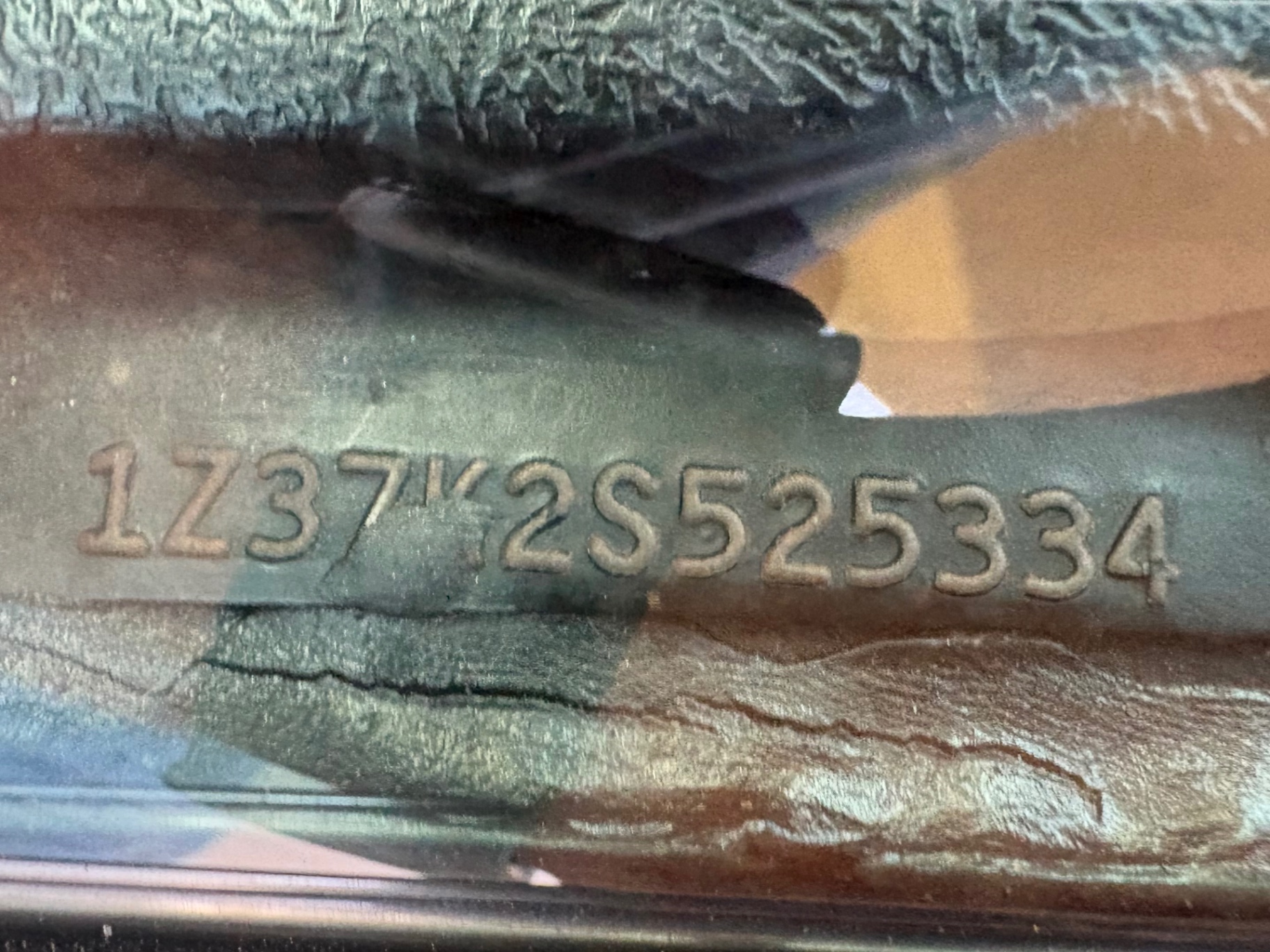
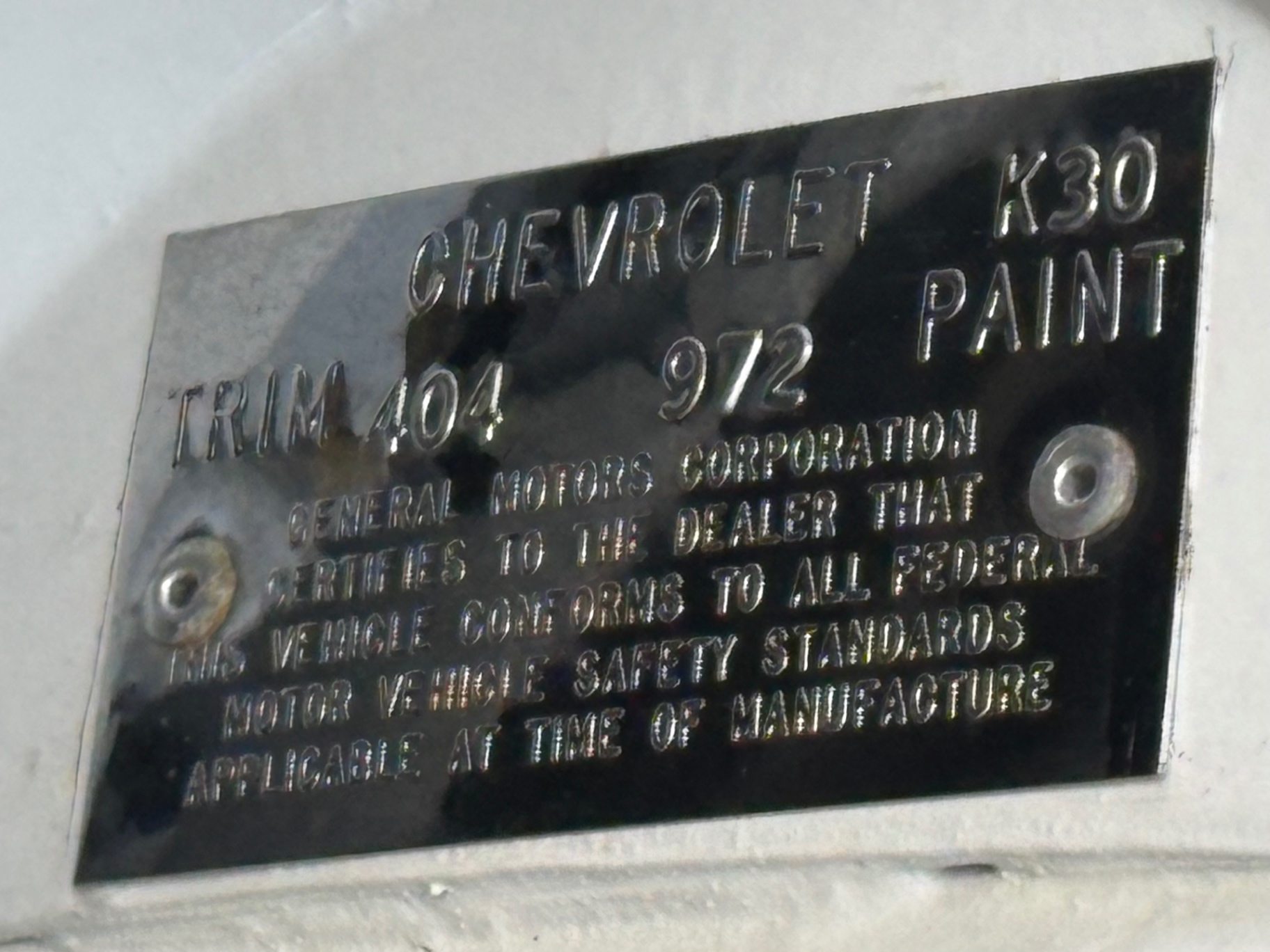
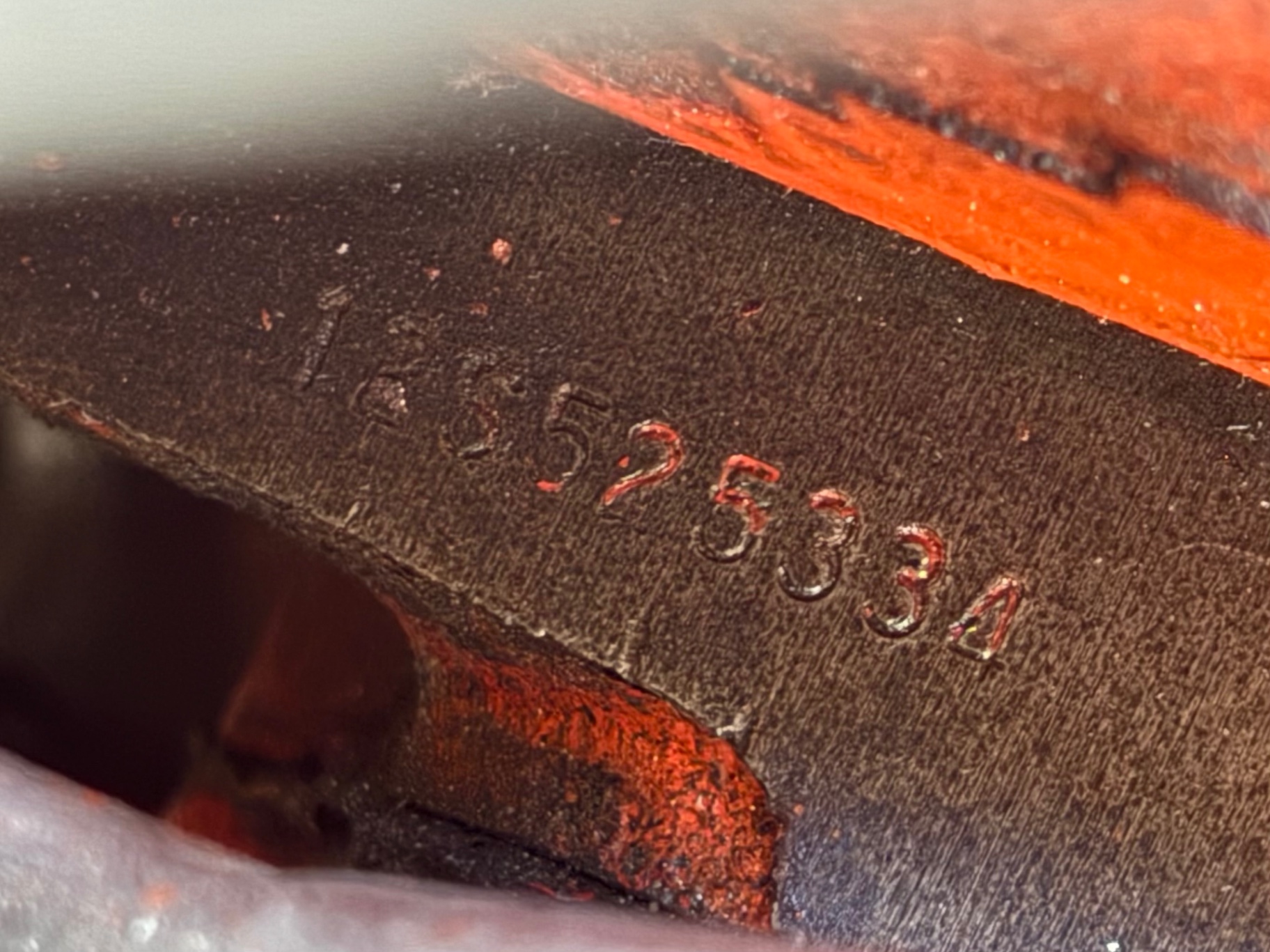
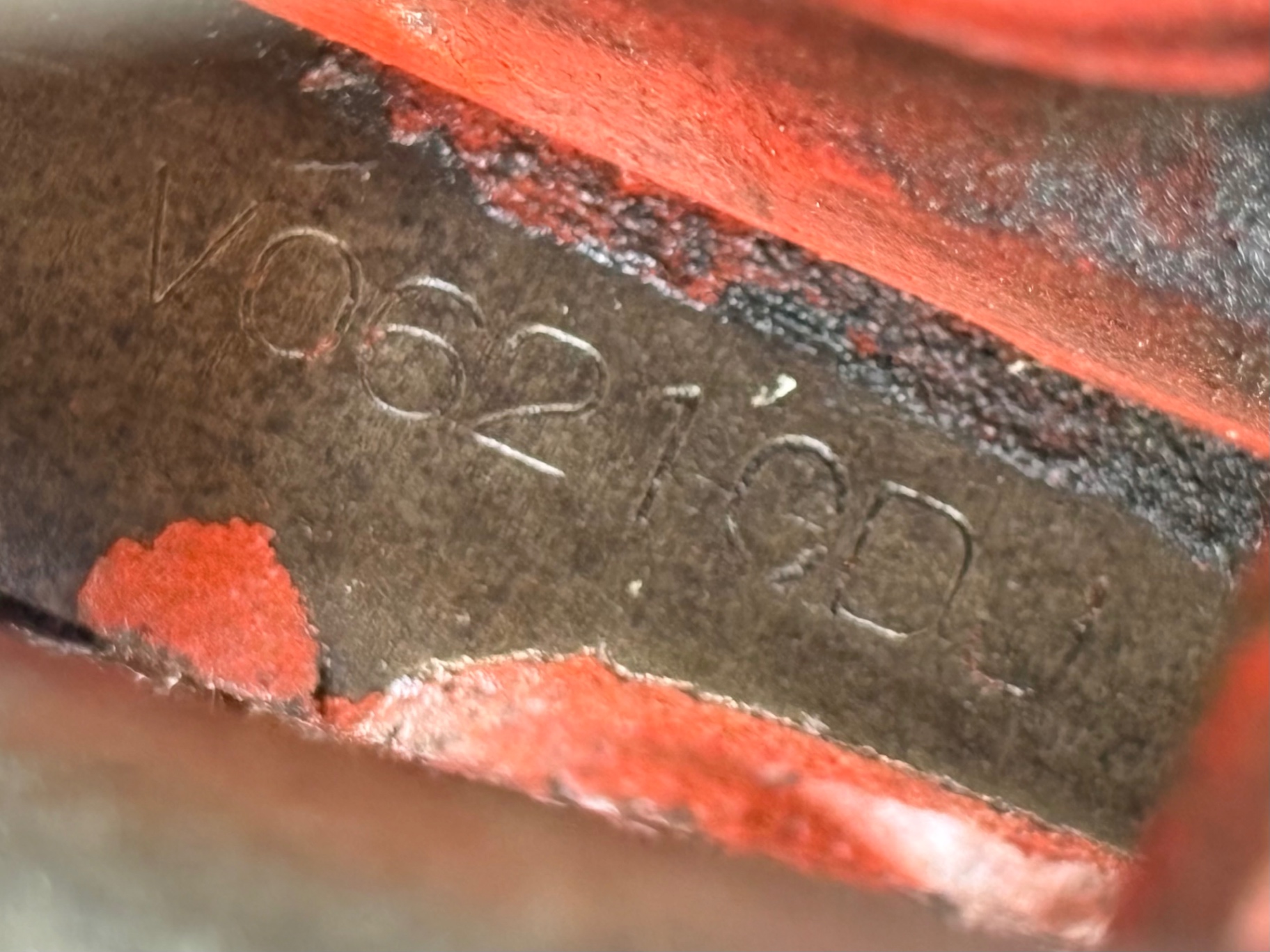
The VIN on this car decodes to a 1972 Corvette coupe built at the St. Louis assembly plant with a 350 cubic inch V8 and an automatic transmission. The "K" in the engine position of the VIN denotes the 200-horsepower base 350, not the LT-1 solid-lifter engine. That means the LT-1 hood on this car is a cosmetic addition rather than original equipment — an important distinction for any buyer doing their research. The car is honest about what it is: a well-equipped 1972 Chevrolet Corvette Stingray with a correct 350 V8, a desirable options list, and the visual presence of one of the most recognizable hoods in Corvette history. Whether you view the hood as an upgrade or a deviation from numbers-matching spec will depend on what you're looking for.
What this car does offer is a compelling combination of usability and style. Air conditioning, power steering, power brakes, removable T-tops, and a functioning tachometer and 160-mph speedometer make this a Corvette you can drive regularly without the anxiety that comes with a fully documented, concours-correct collector piece. It's equipped to be used.
Features List
- Numbers-correct 350ci V8 engine (VIN-decoded as the base 350, RPO L48 equivalent) - Automatic transmission - Rare LT-1 hood (cosmetic addition, not matching the VIN engine code) - Removable T-tops - Power steering - Power brakes - Air conditioning - Dual exhaust with exposed rear tips - Chrome rear bumpers - Tachometer - 160-mph speedometer - Corvette Sport steering wheel - Woodgrain interior trim - Black vinyl interior - Center console - White exterior
Mechanical
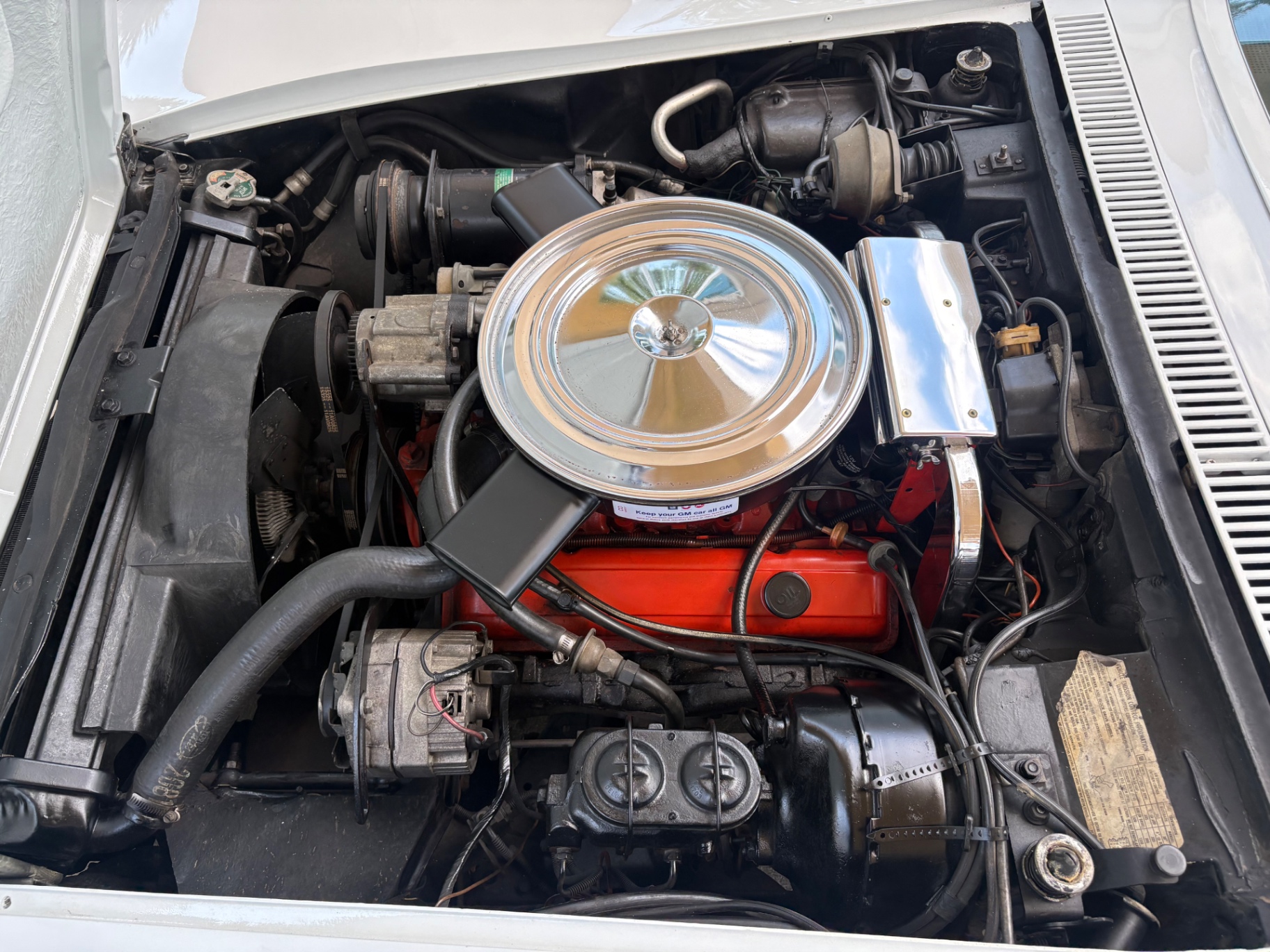
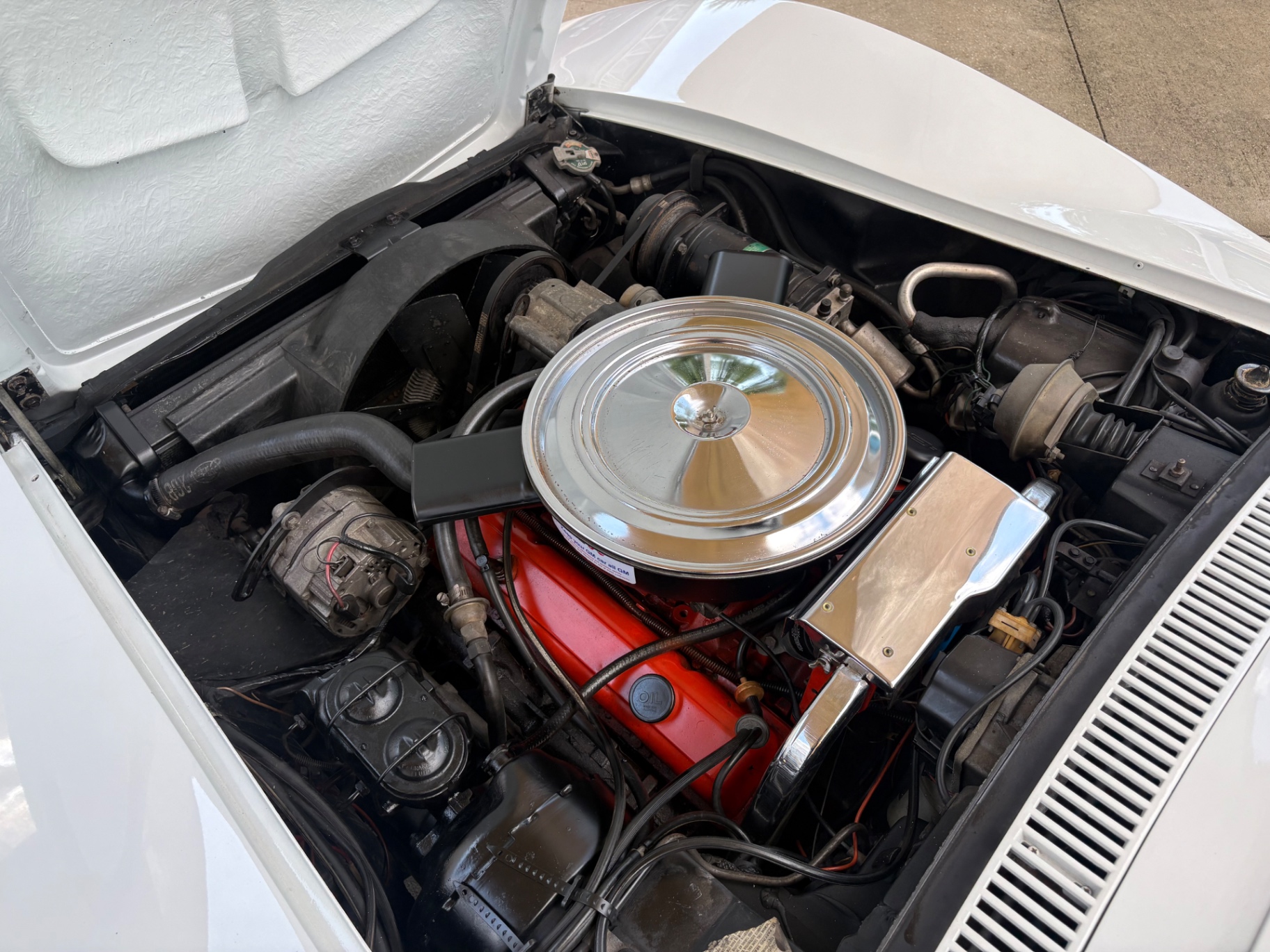
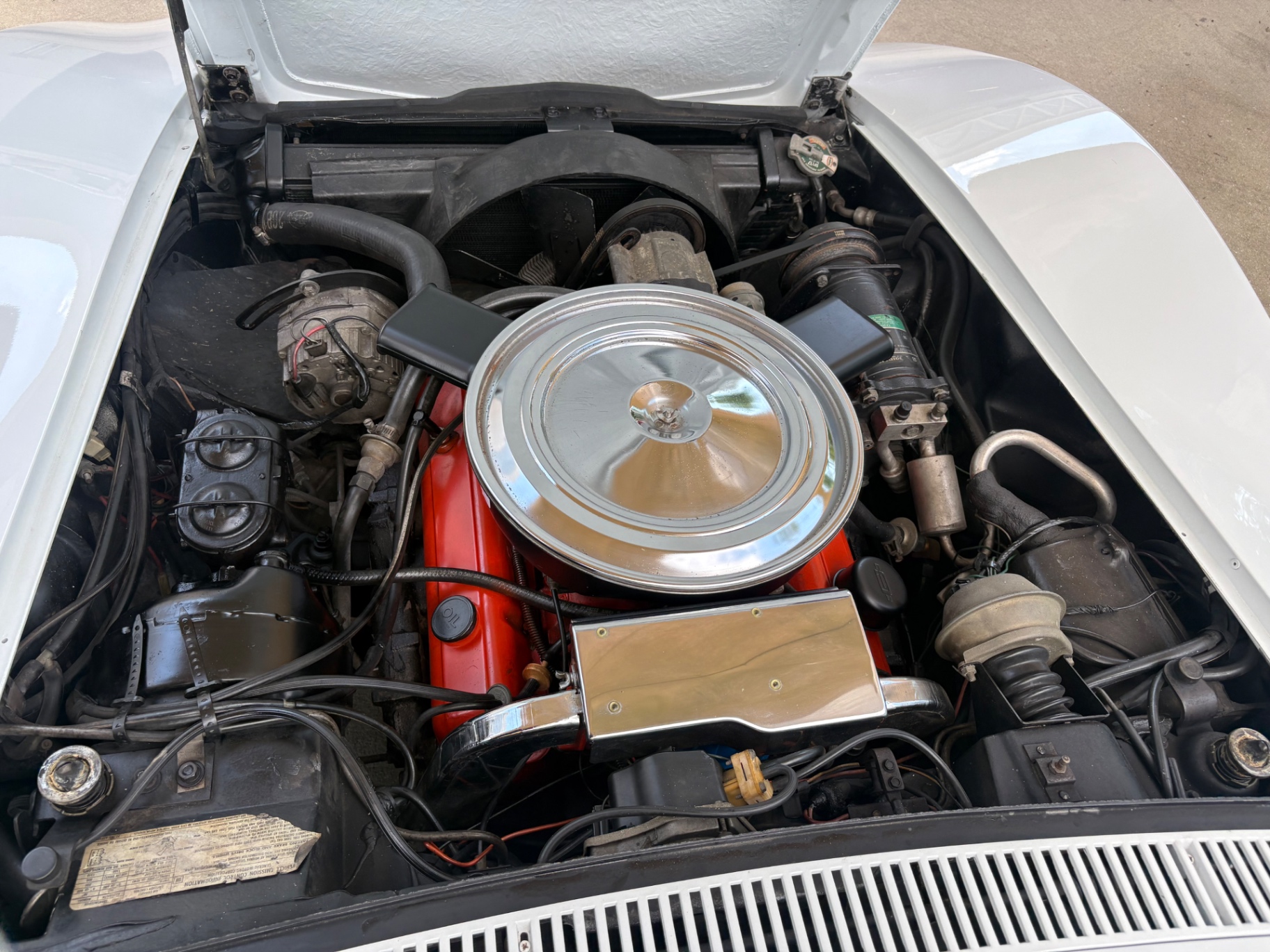
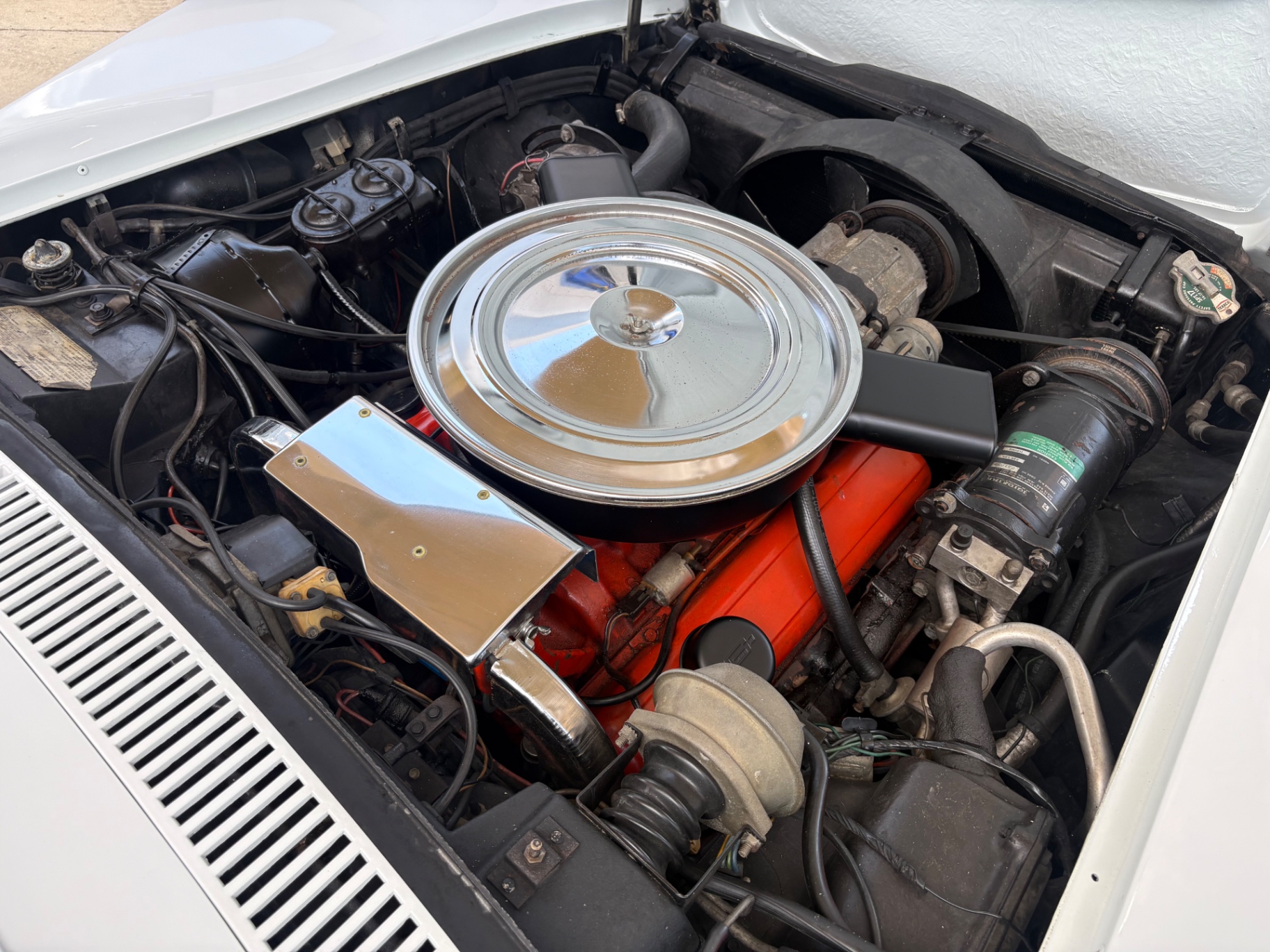
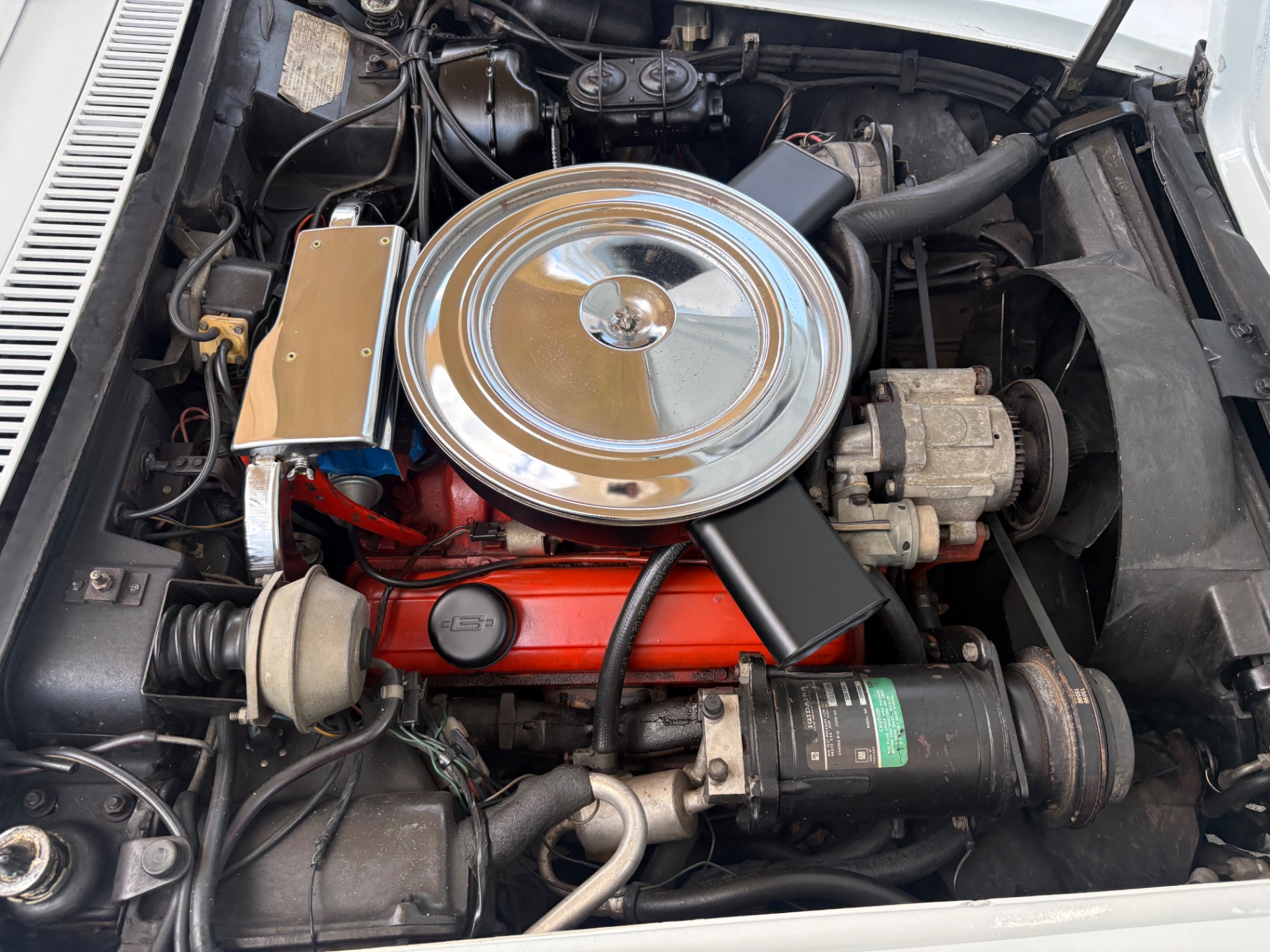
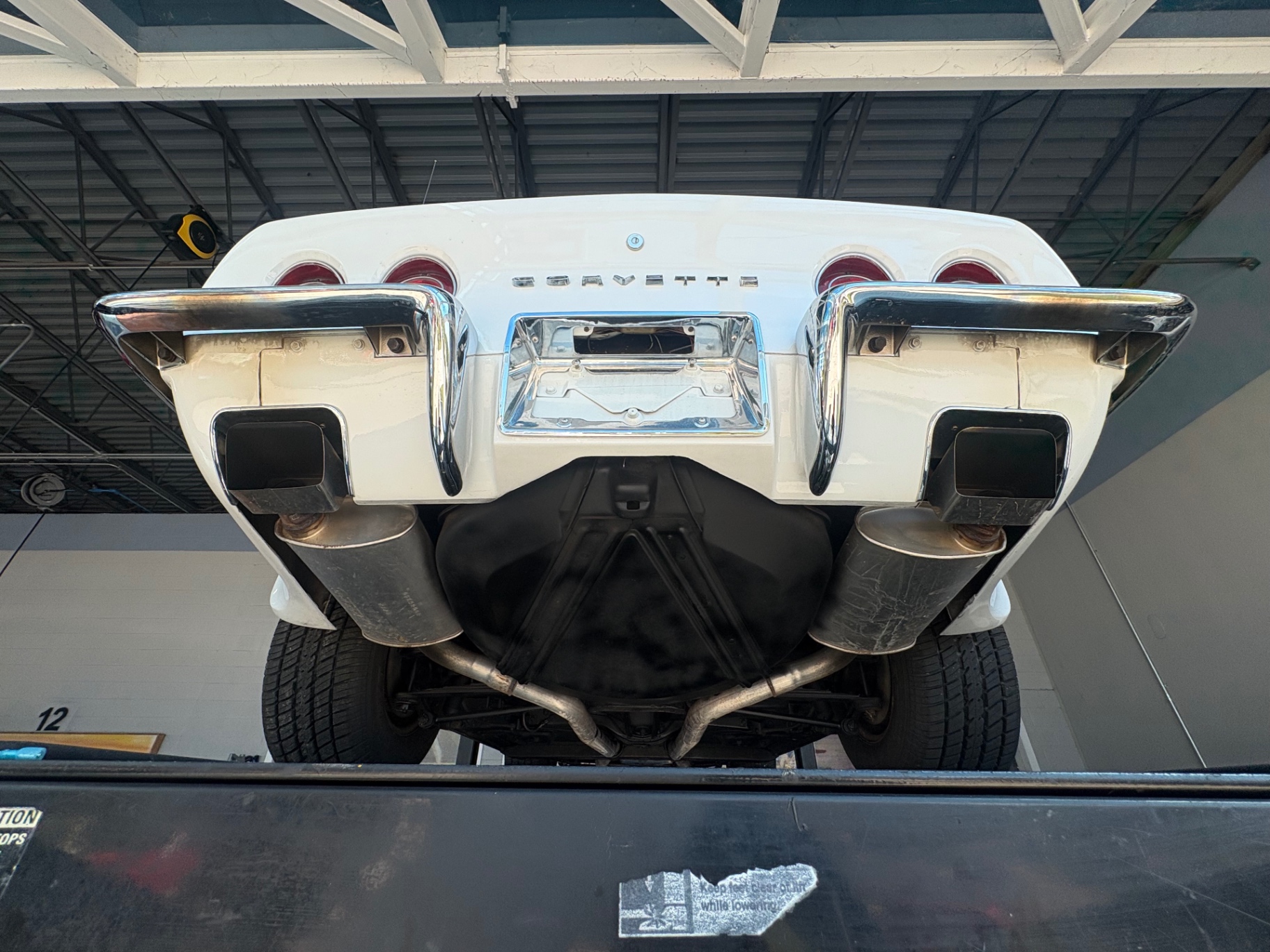
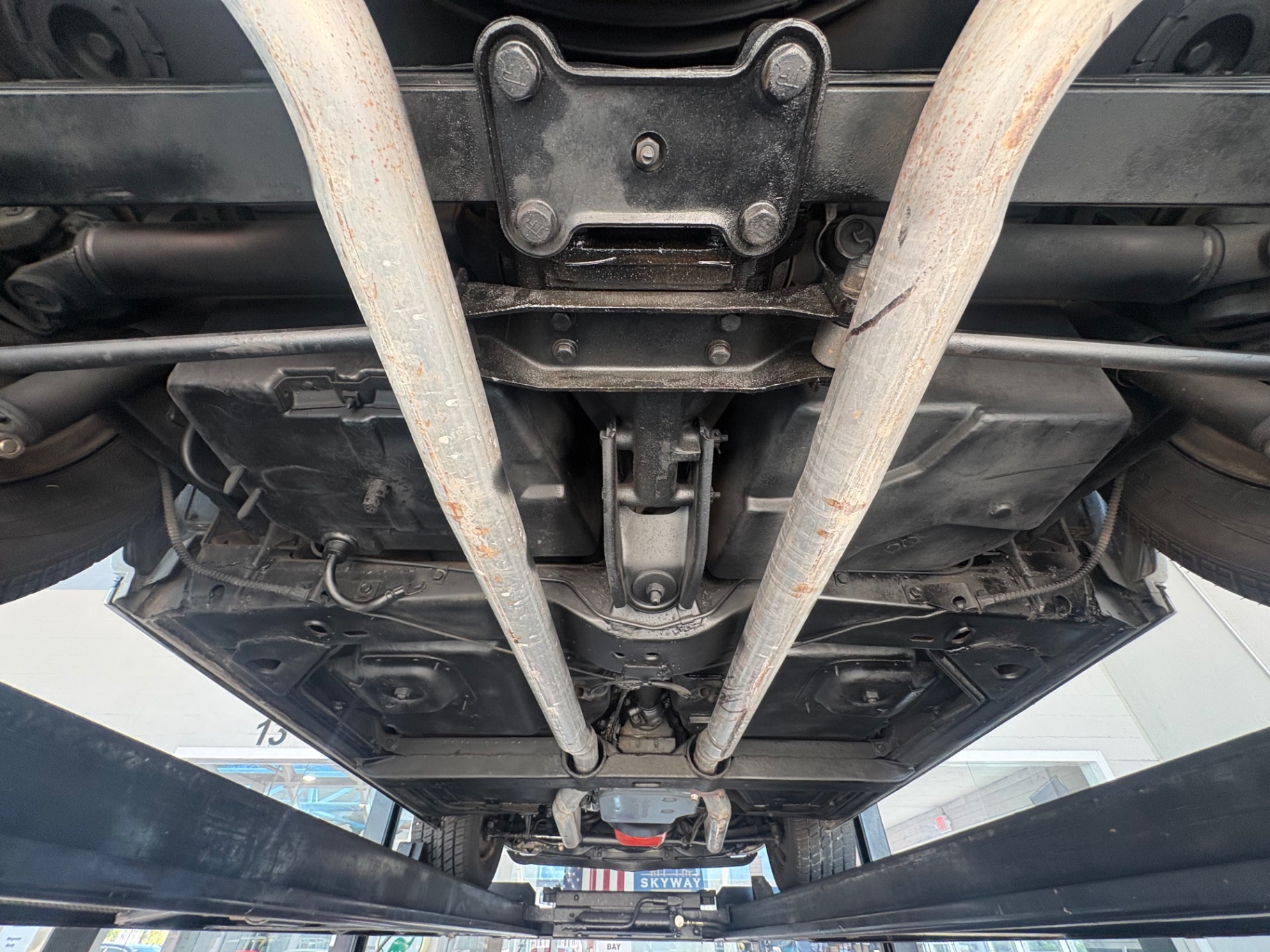
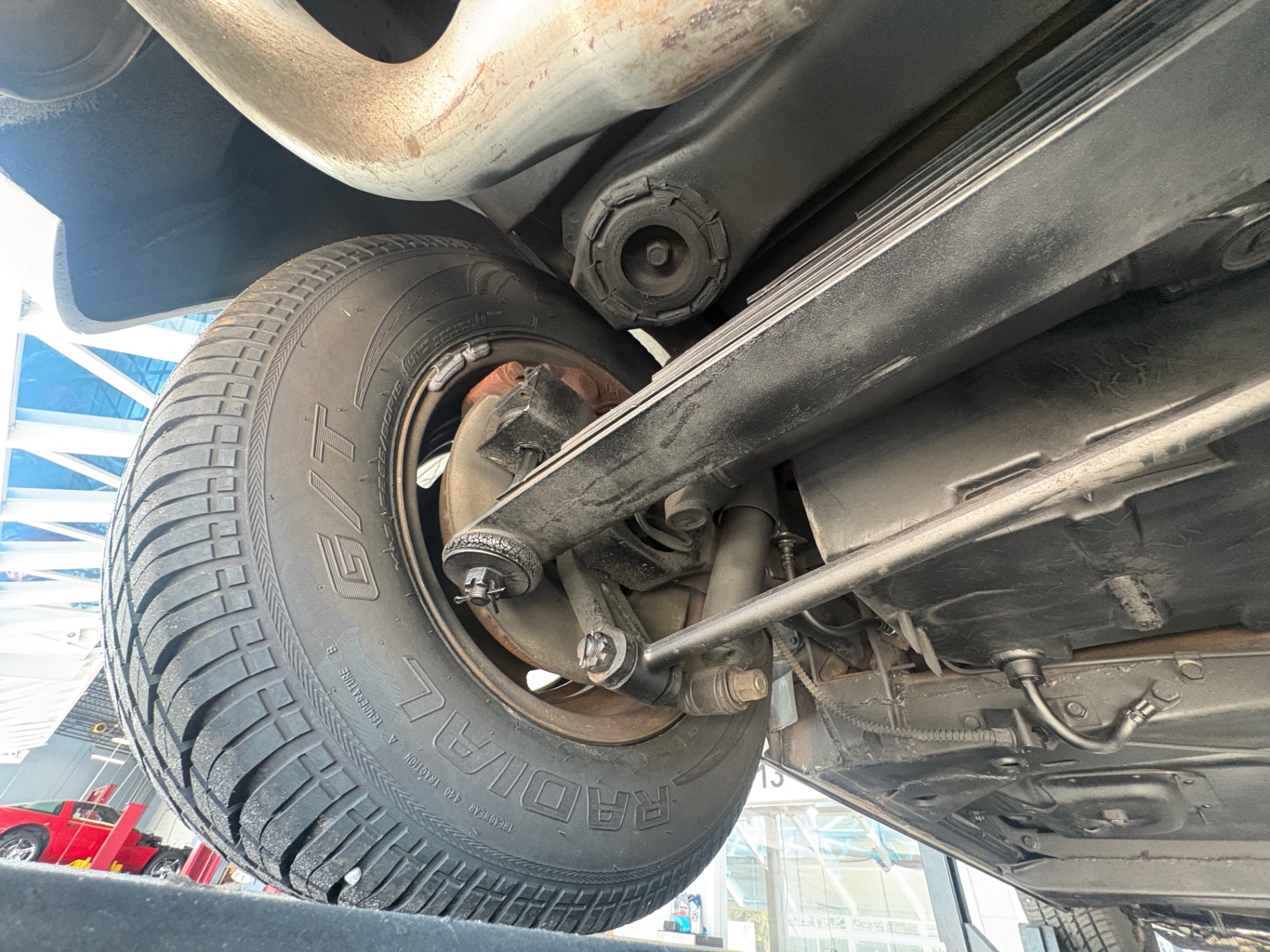
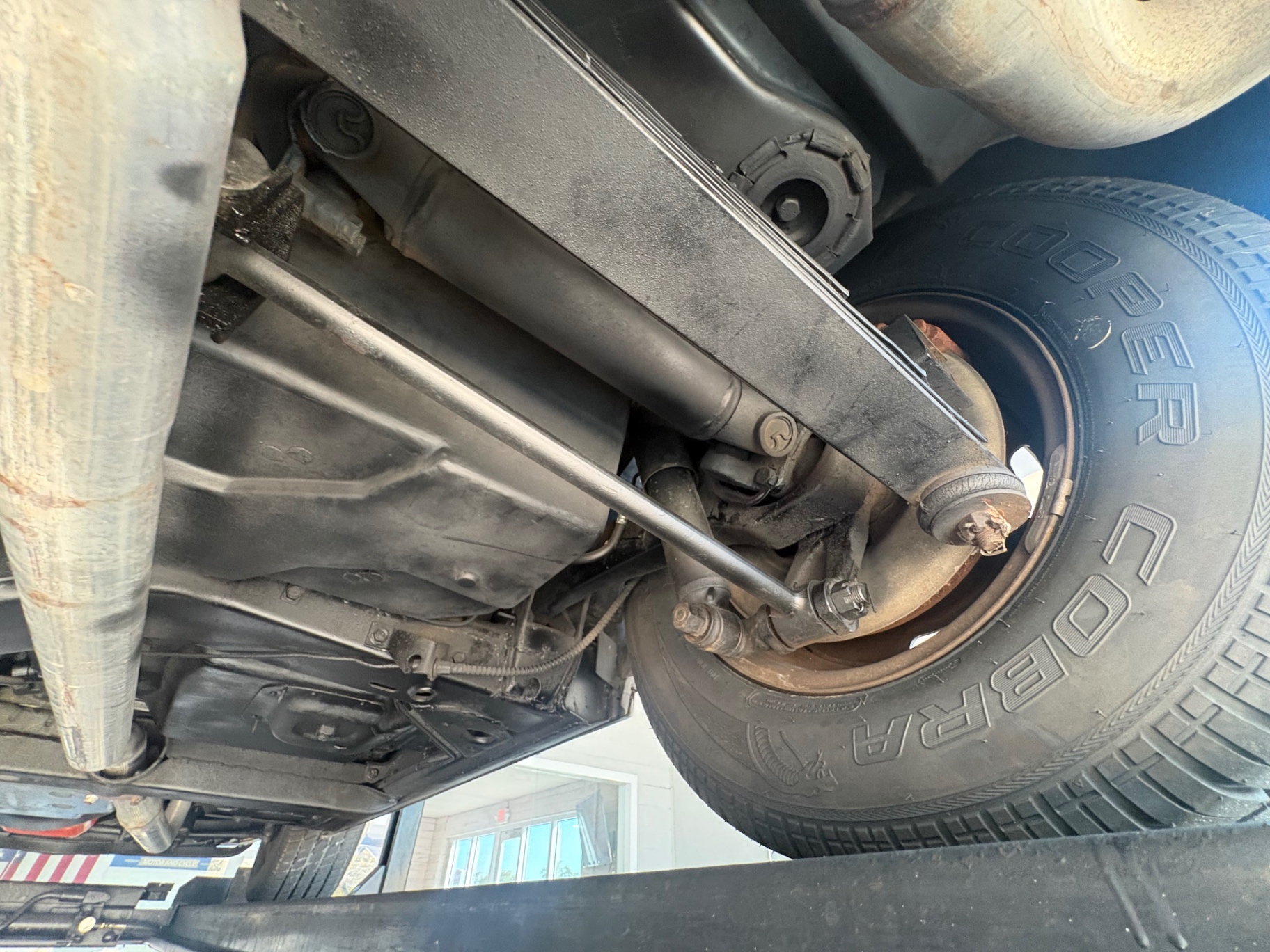
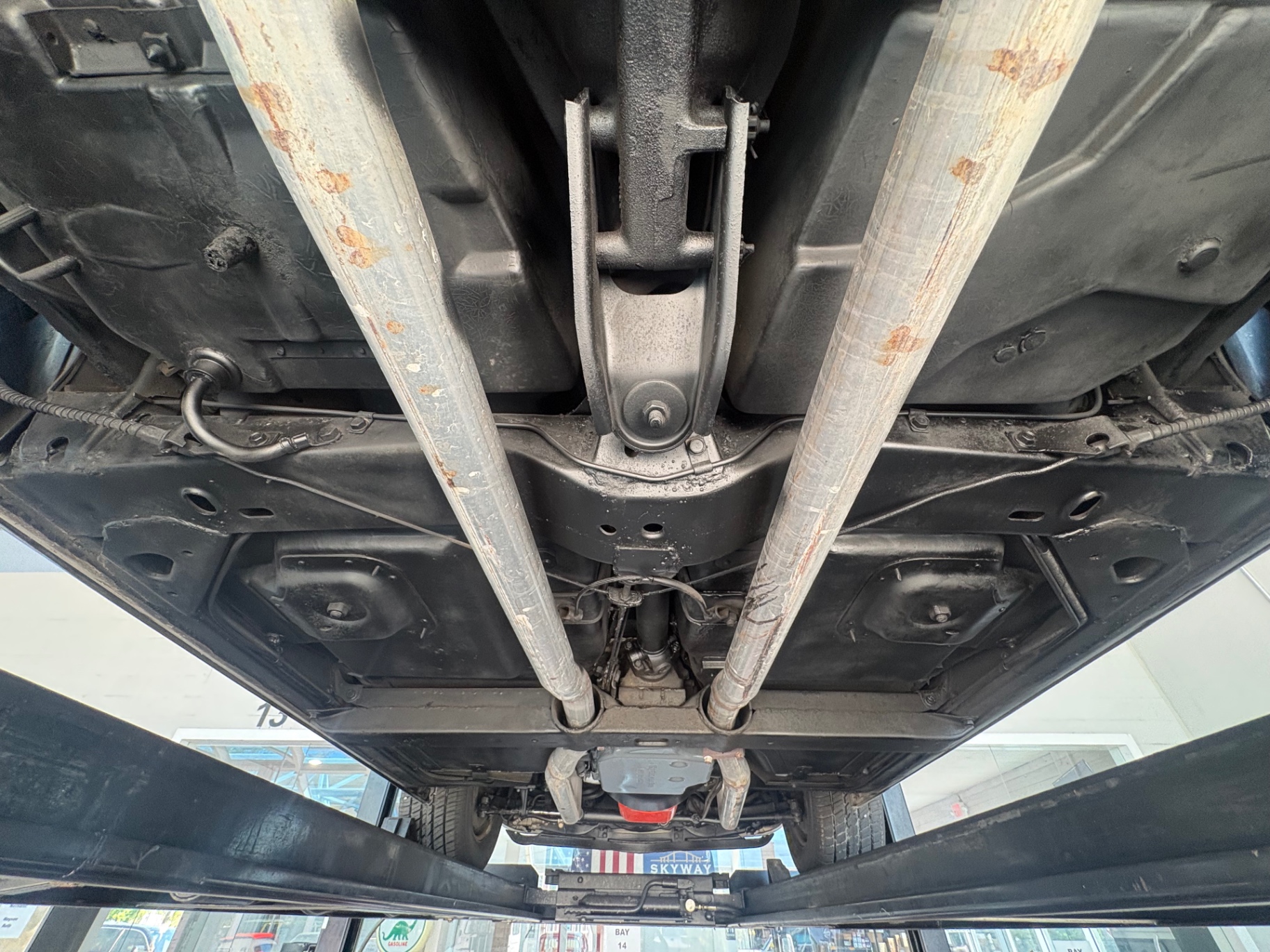
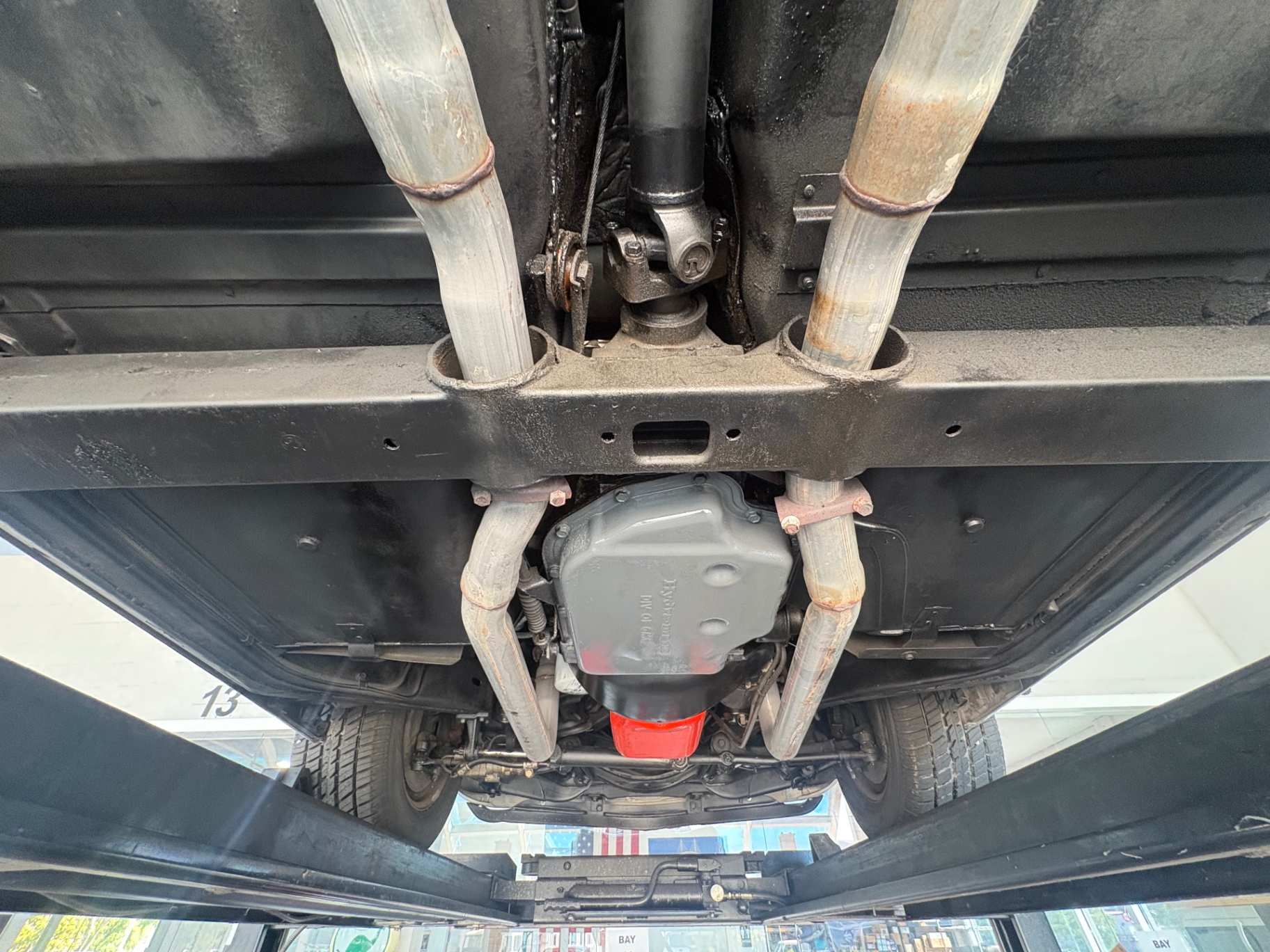
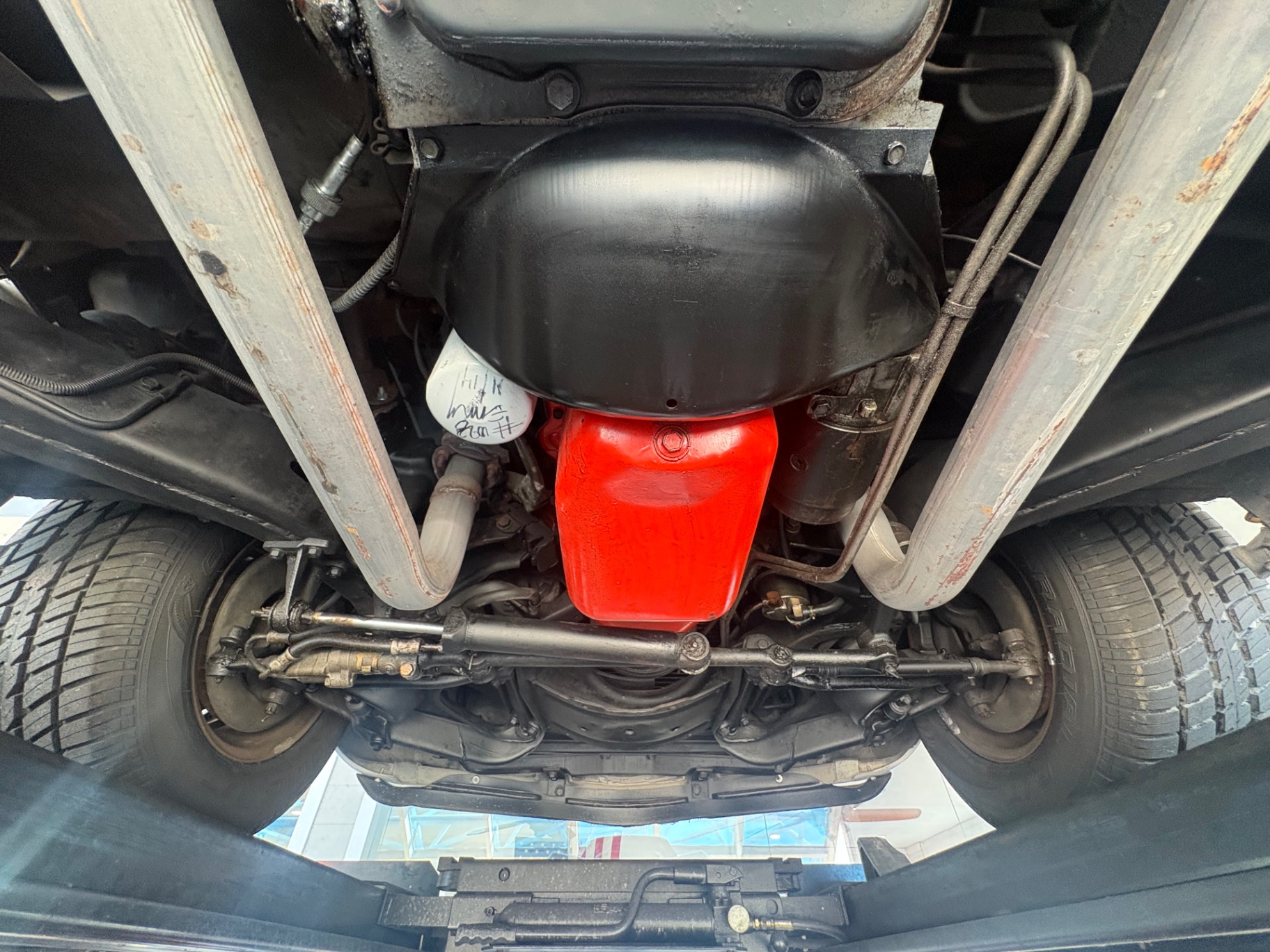
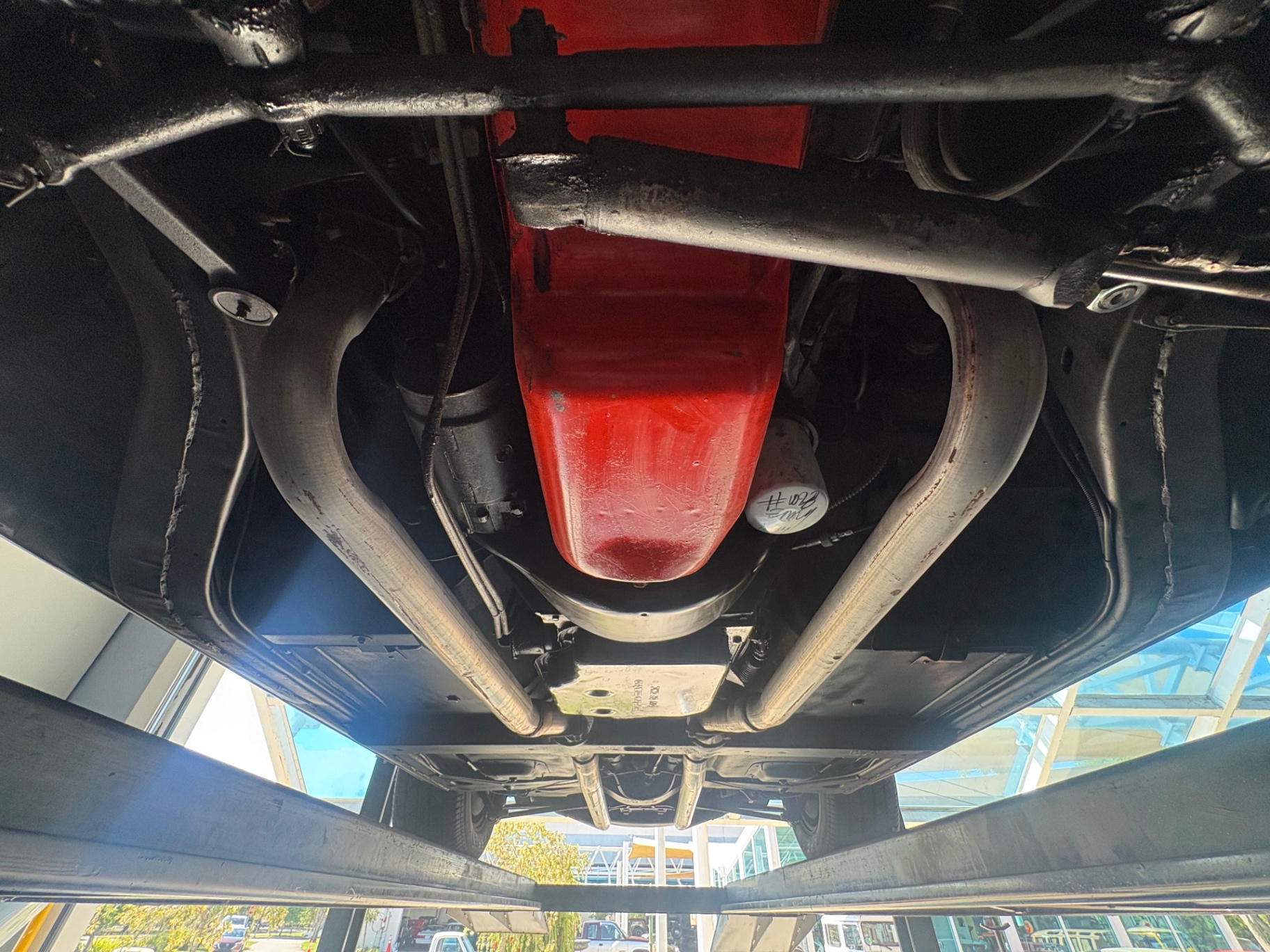
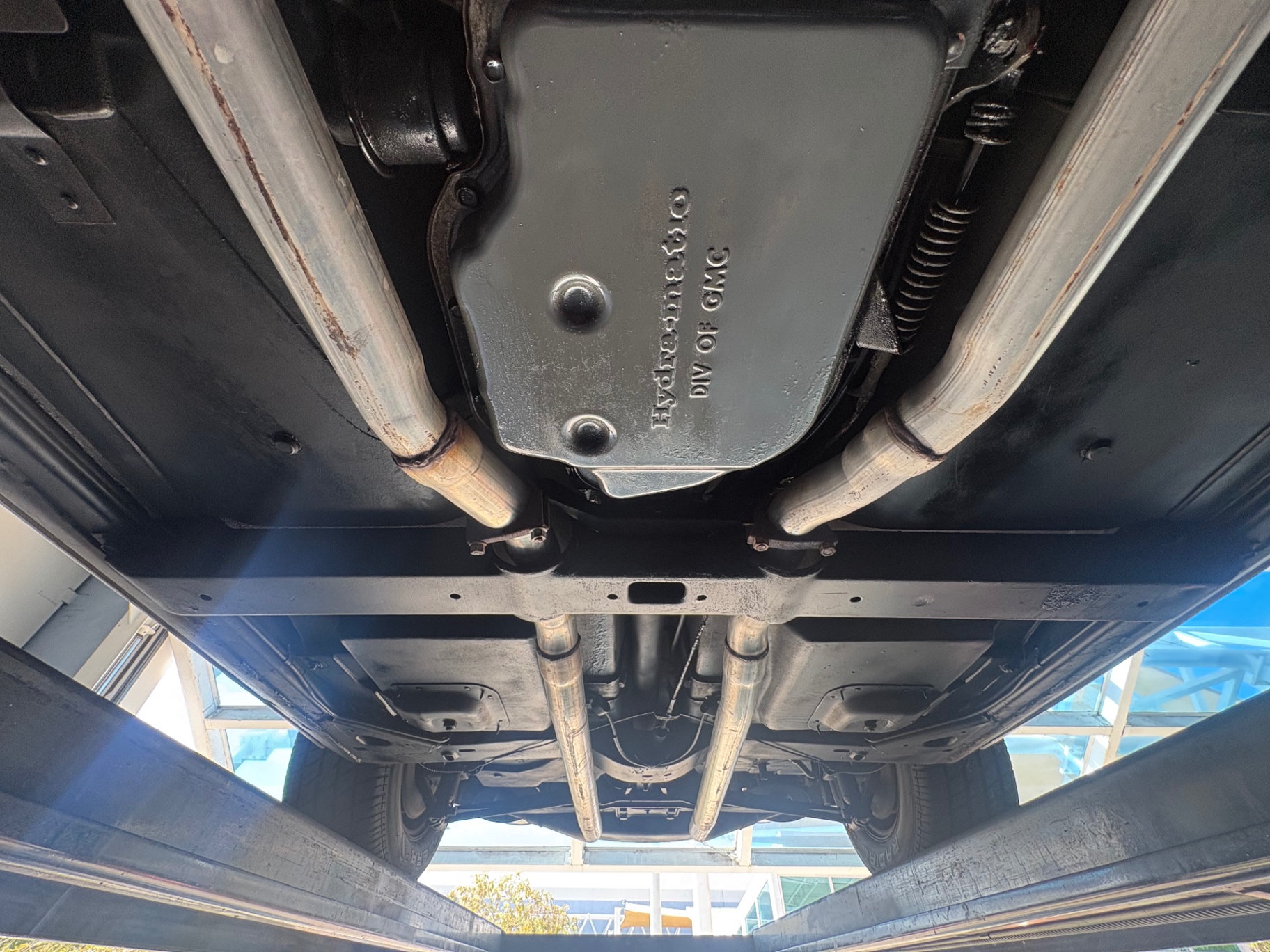
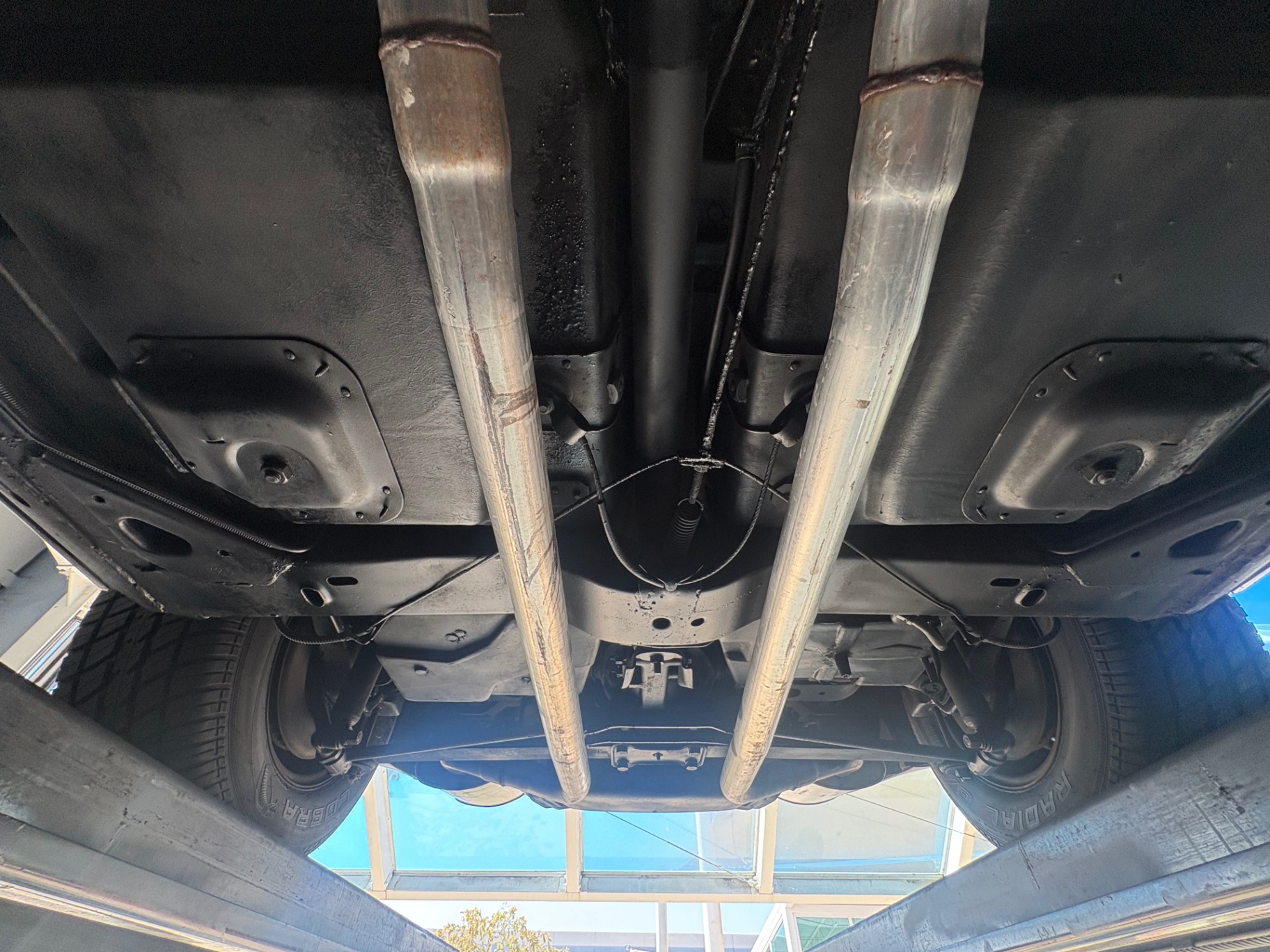
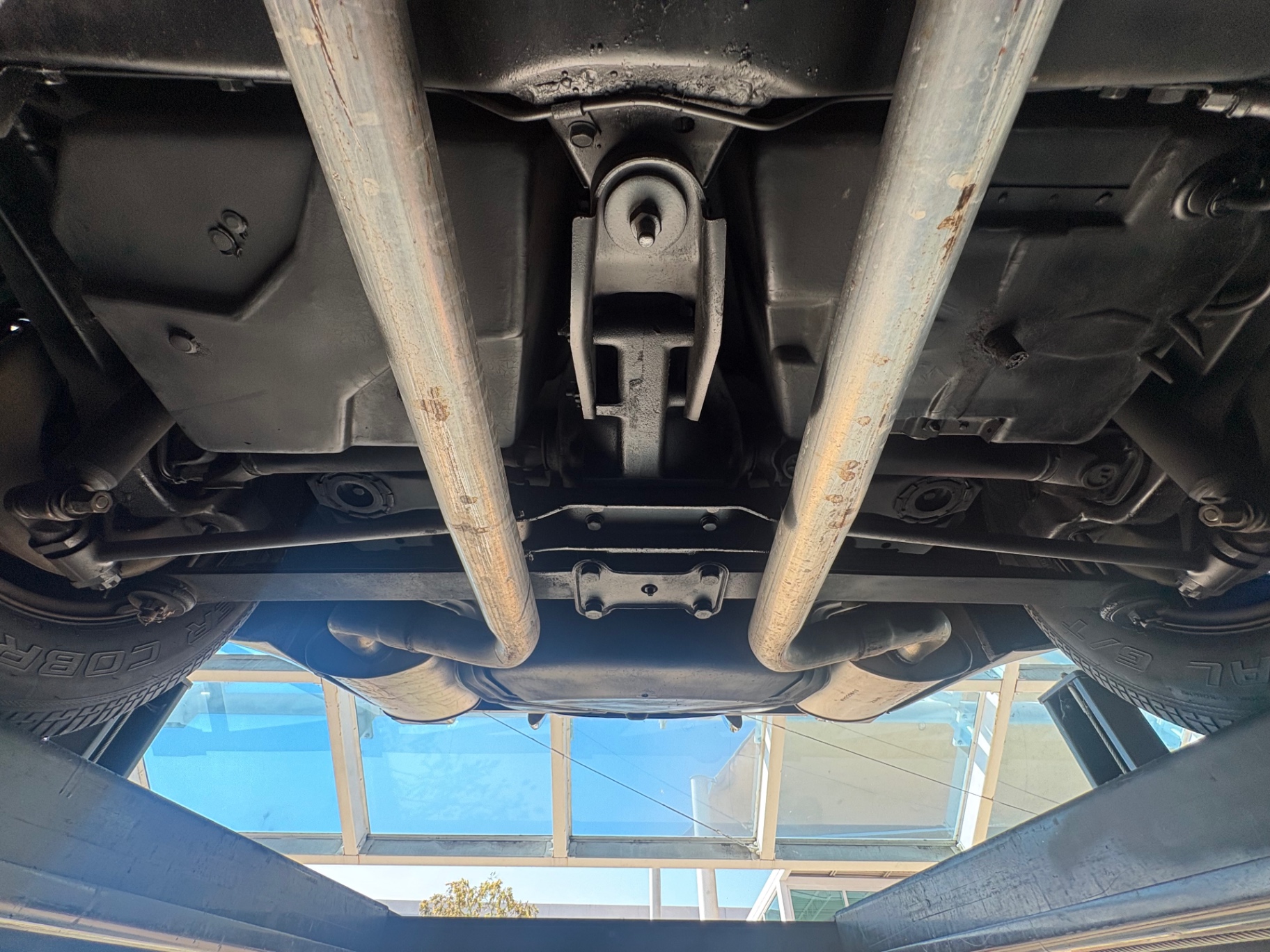
Under the hood sits the correct 350 cubic inch V8 for this VIN, backed by an automatic transmission. The engine bay presents well, with red-painted valve covers and a polished air cleaner assembly that are visually consistent with how these cars left the factory. Dual exhaust exits through the iconic squared-off rear tips that are characteristic of the C3 Corvette, and the system appears clean from the underside photos.
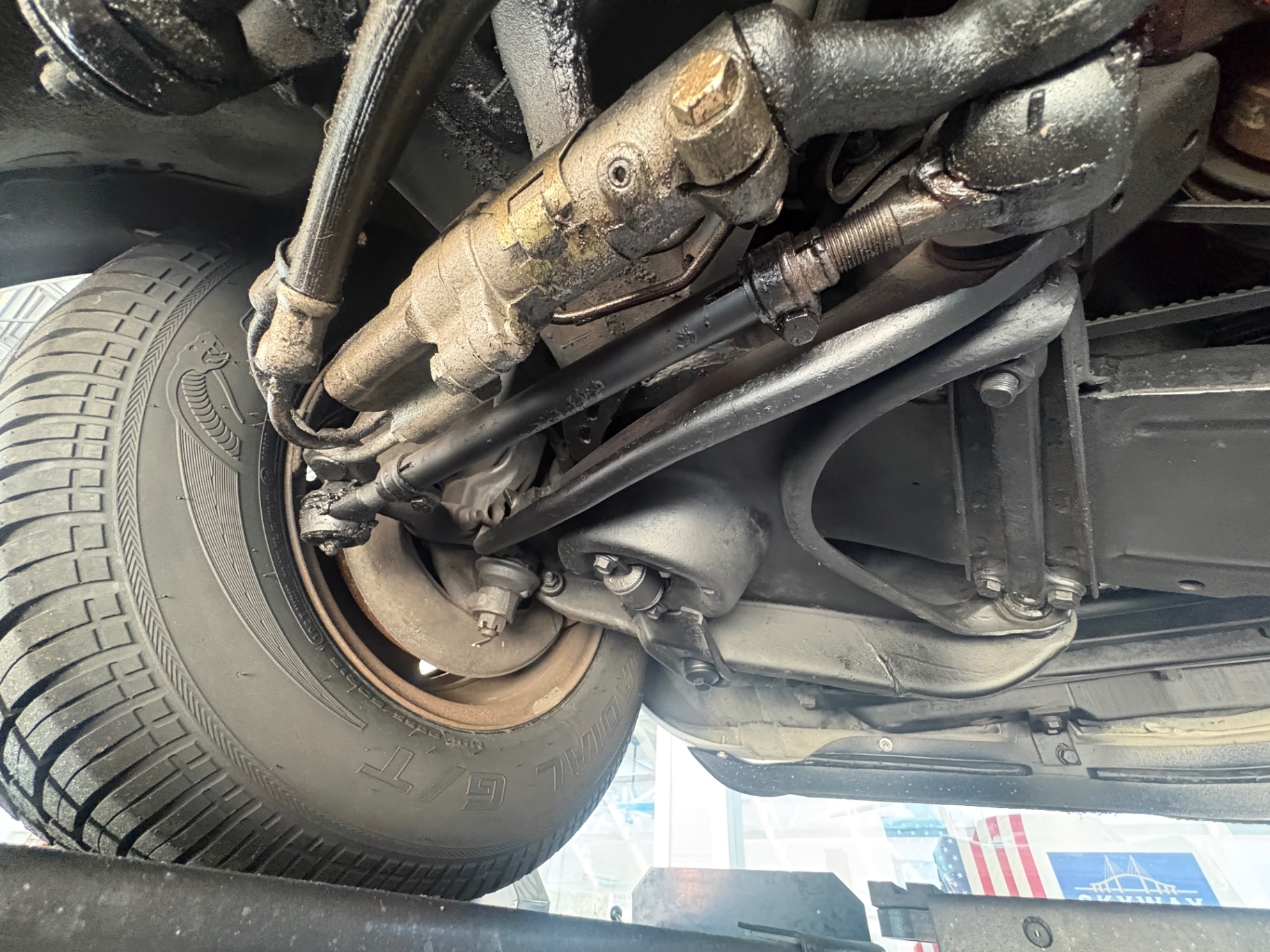
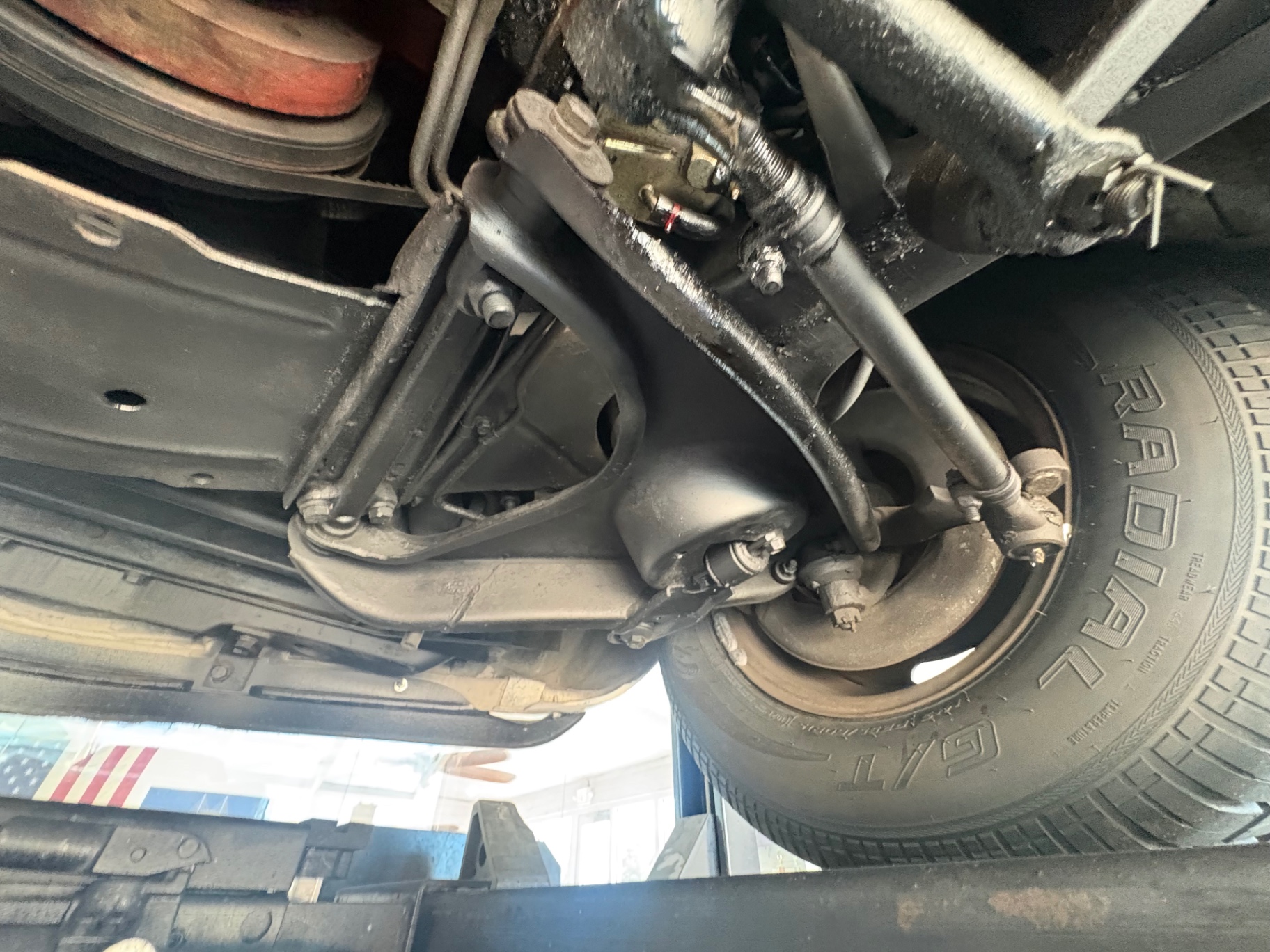
Power steering and power brakes were factory options on the 1972 Corvette, and both are present here. These features matter on a C3 that you plan to drive. Without power steering, the Corvette's recirculating ball unit requires real effort at low speeds. Without power assist on the brakes, the pedal effort on these cars — particularly in stop-and-go traffic — is significant. Having both checks two of the most important boxes for a daily-usable classic. The air conditioning is described as functioning well, which is not something to take for granted on a 50-year-old system.
The LT-1 hood deserves a mechanical footnote. The LT-1 engine it was designed to complement was a 370-gross-horsepower, solid-lifter, high-compression unit that was genuinely the performance choice of 1972. With the base 350 under this hood, you get the looks without the maintenance demands of a solid-lifter valvetrain — a trade-off some buyers will actually prefer.
Interior
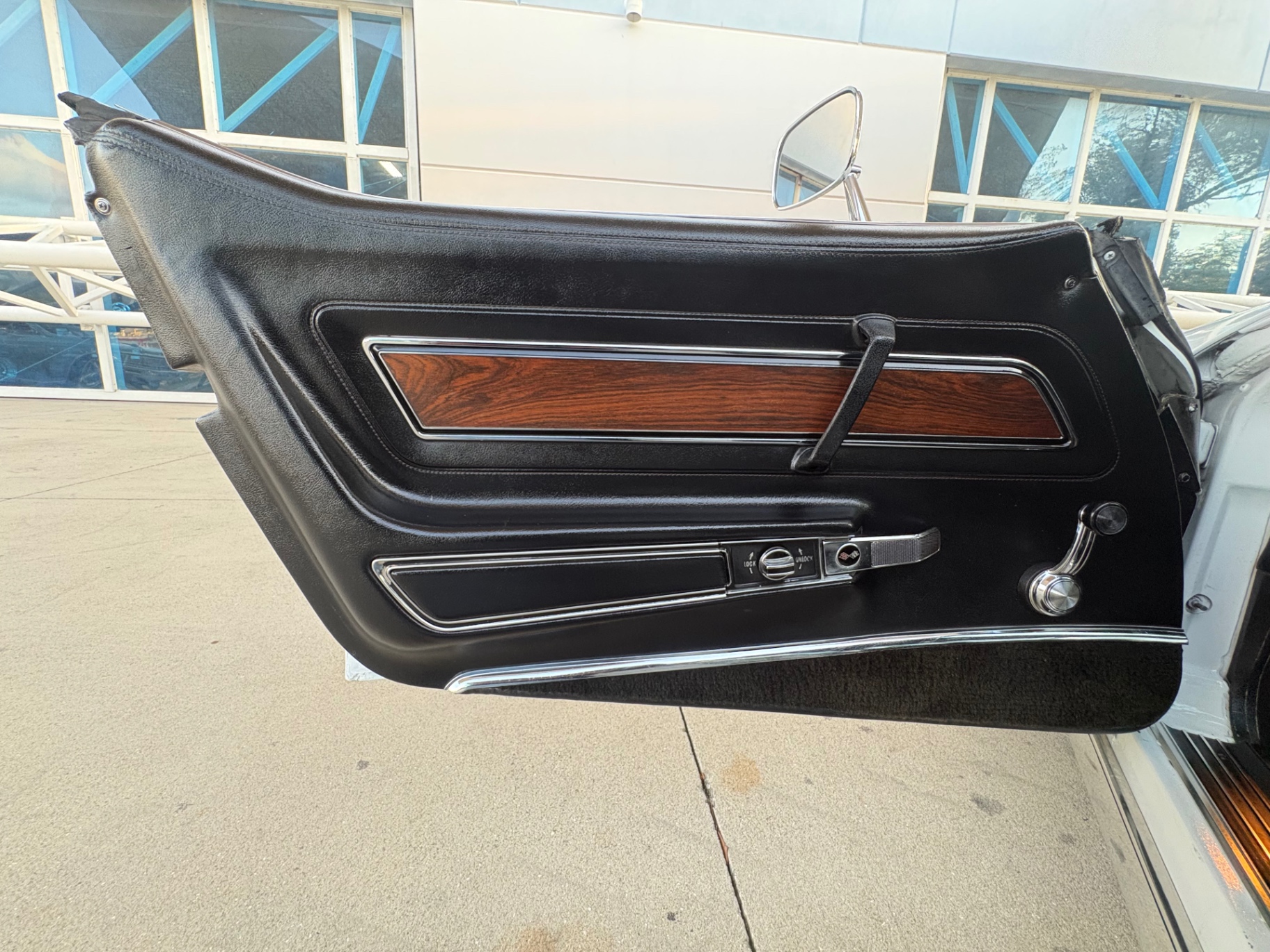
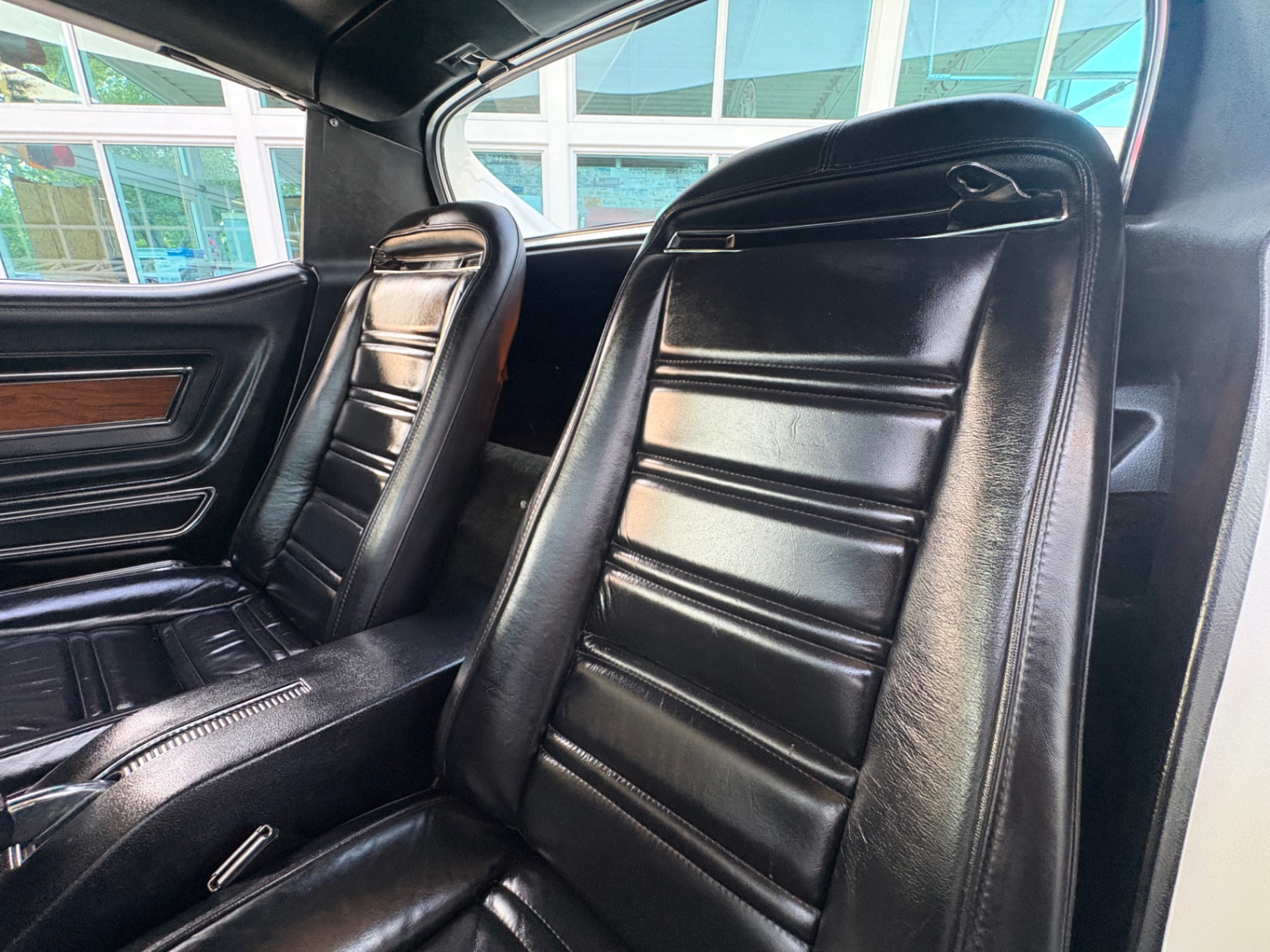
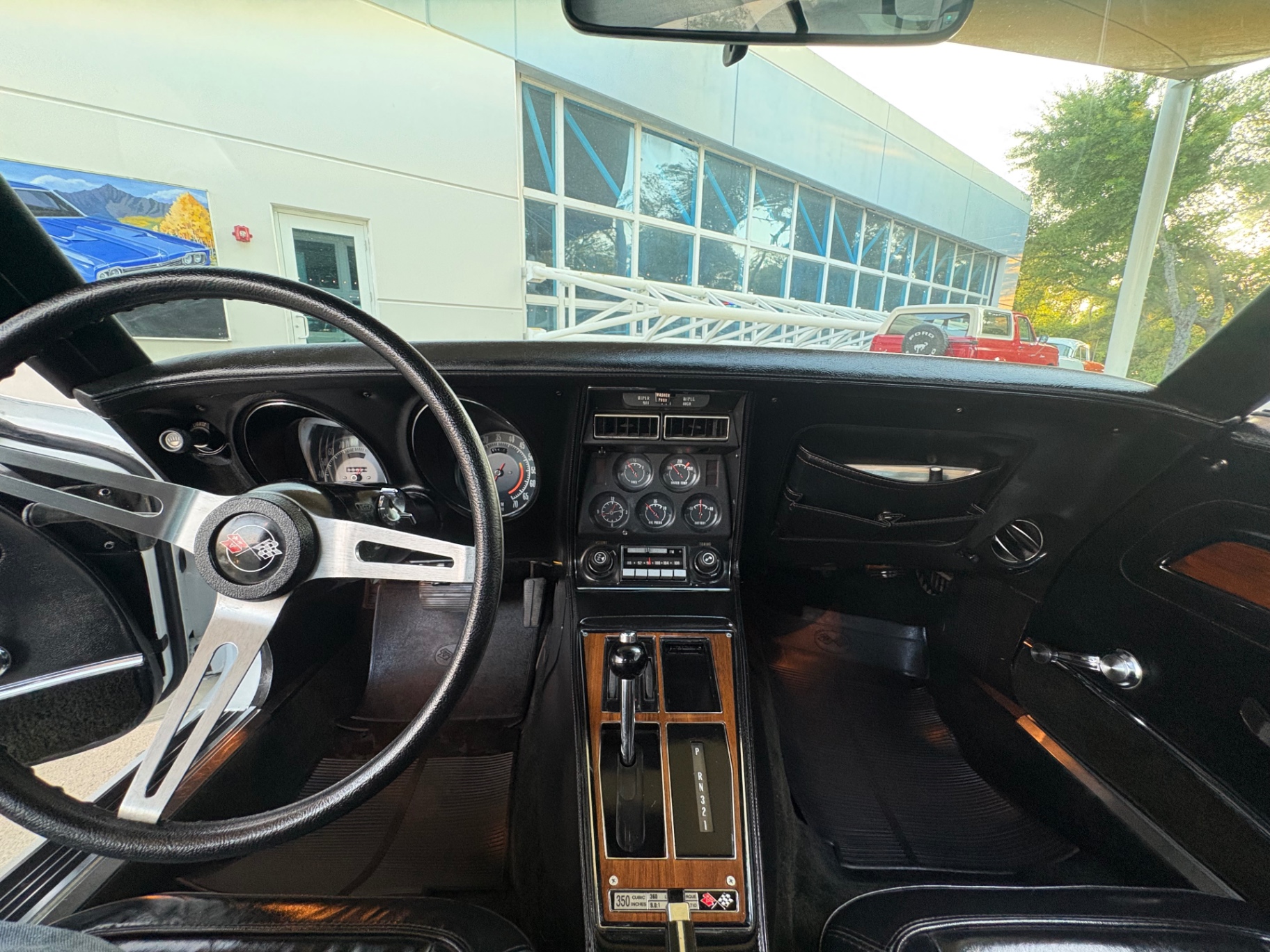
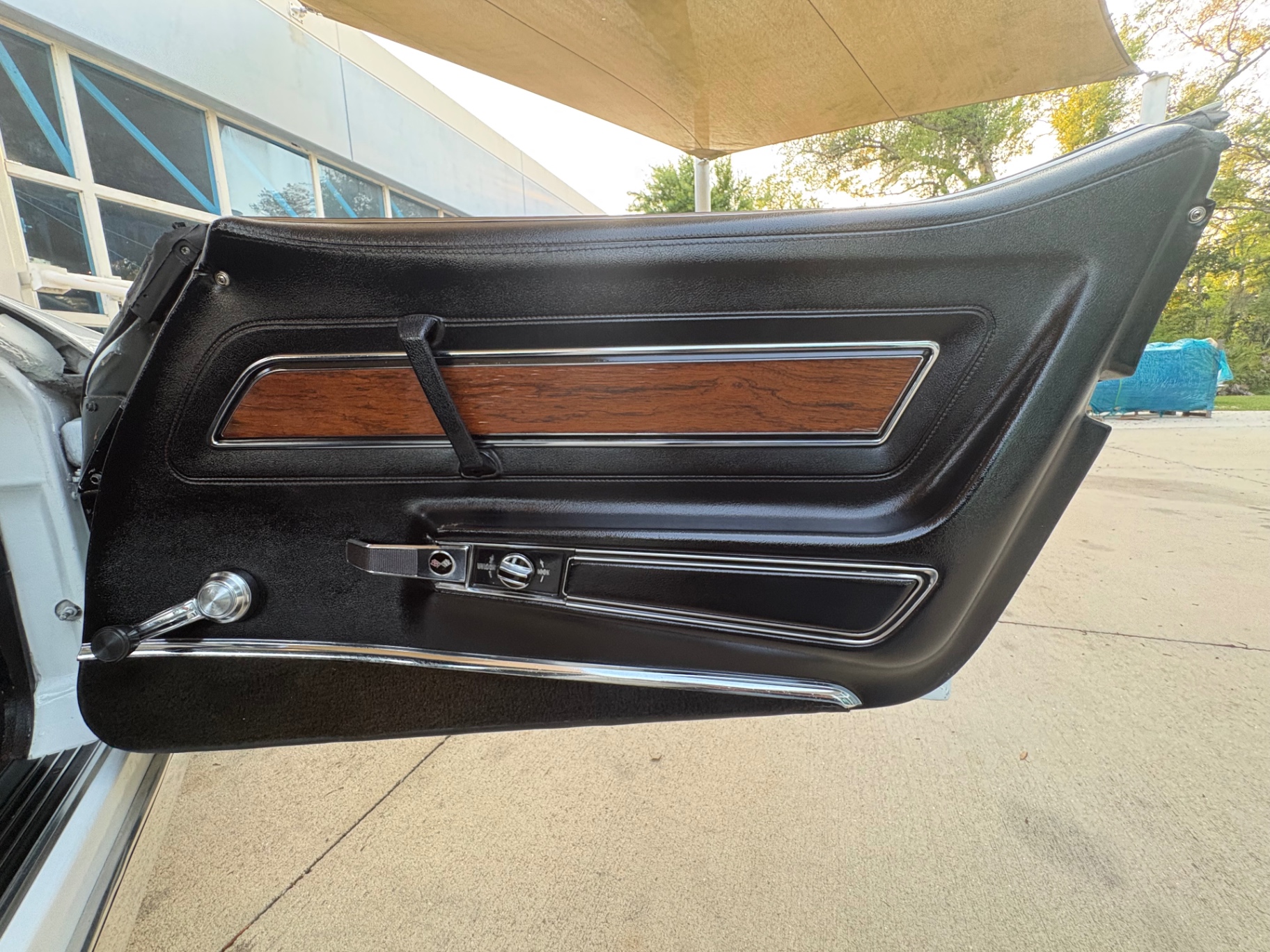
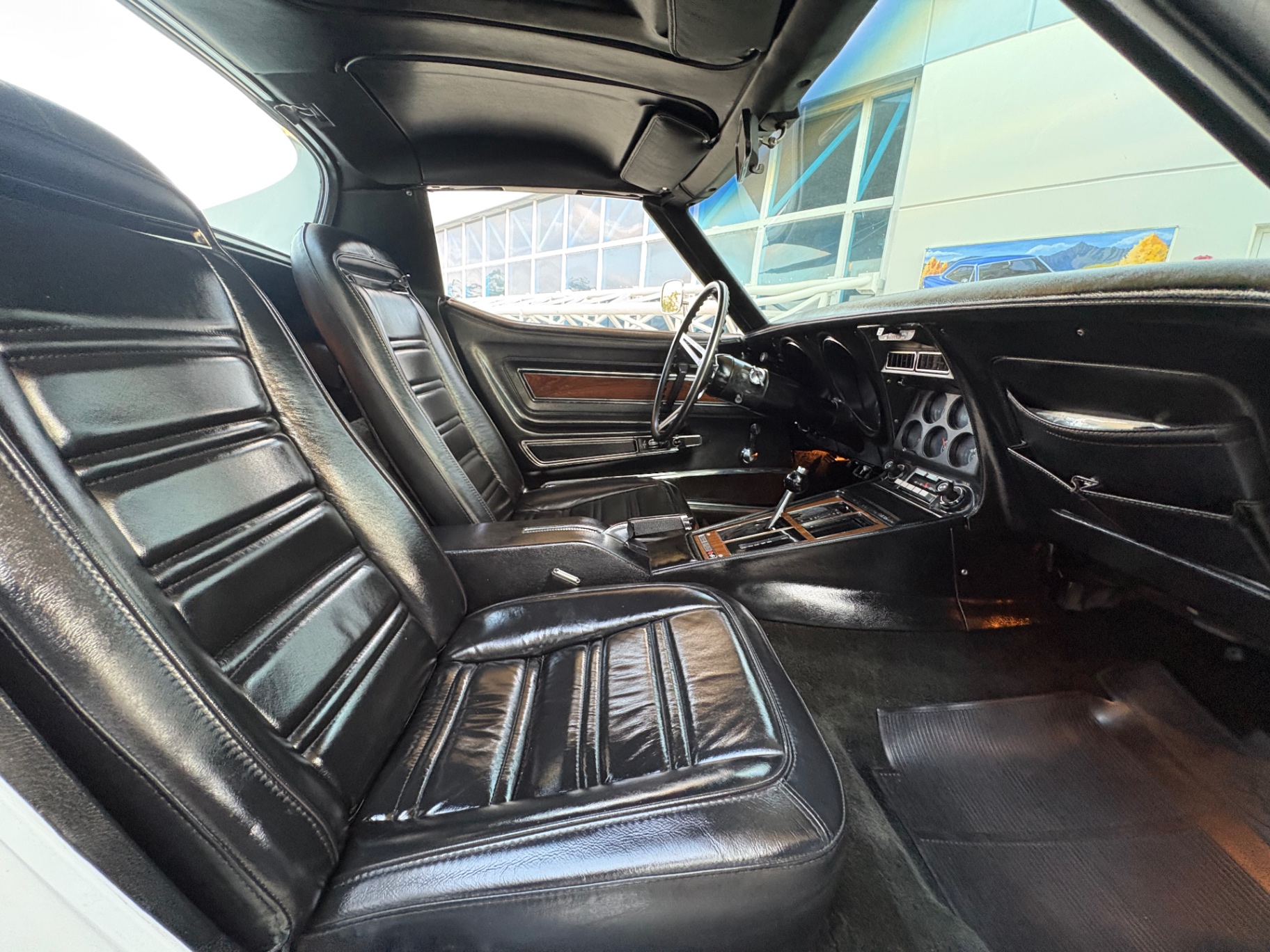
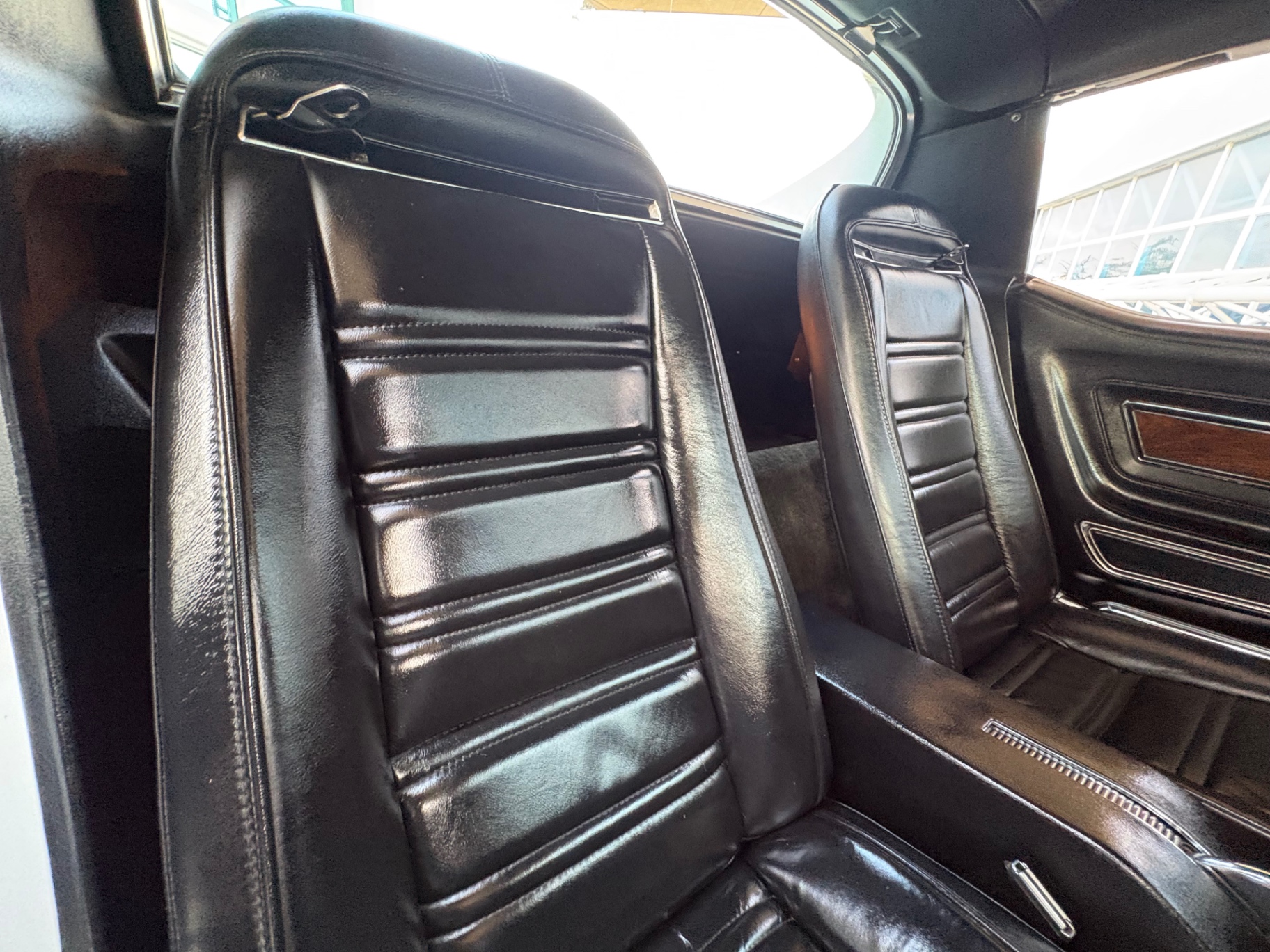
The black vinyl interior on this 1972 Chevrolet Corvette Stingray is in presentable condition based on the photos. The door panels show the characteristic C3 layout, with woodgrain accent trim inset into the black vinyl panel — a factory styling detail that Chevrolet used throughout the C3 generation to add a touch of refinement to what was otherwise a sport-focused cockpit. The chrome trim surrounding the woodgrain insert is intact and shows well.
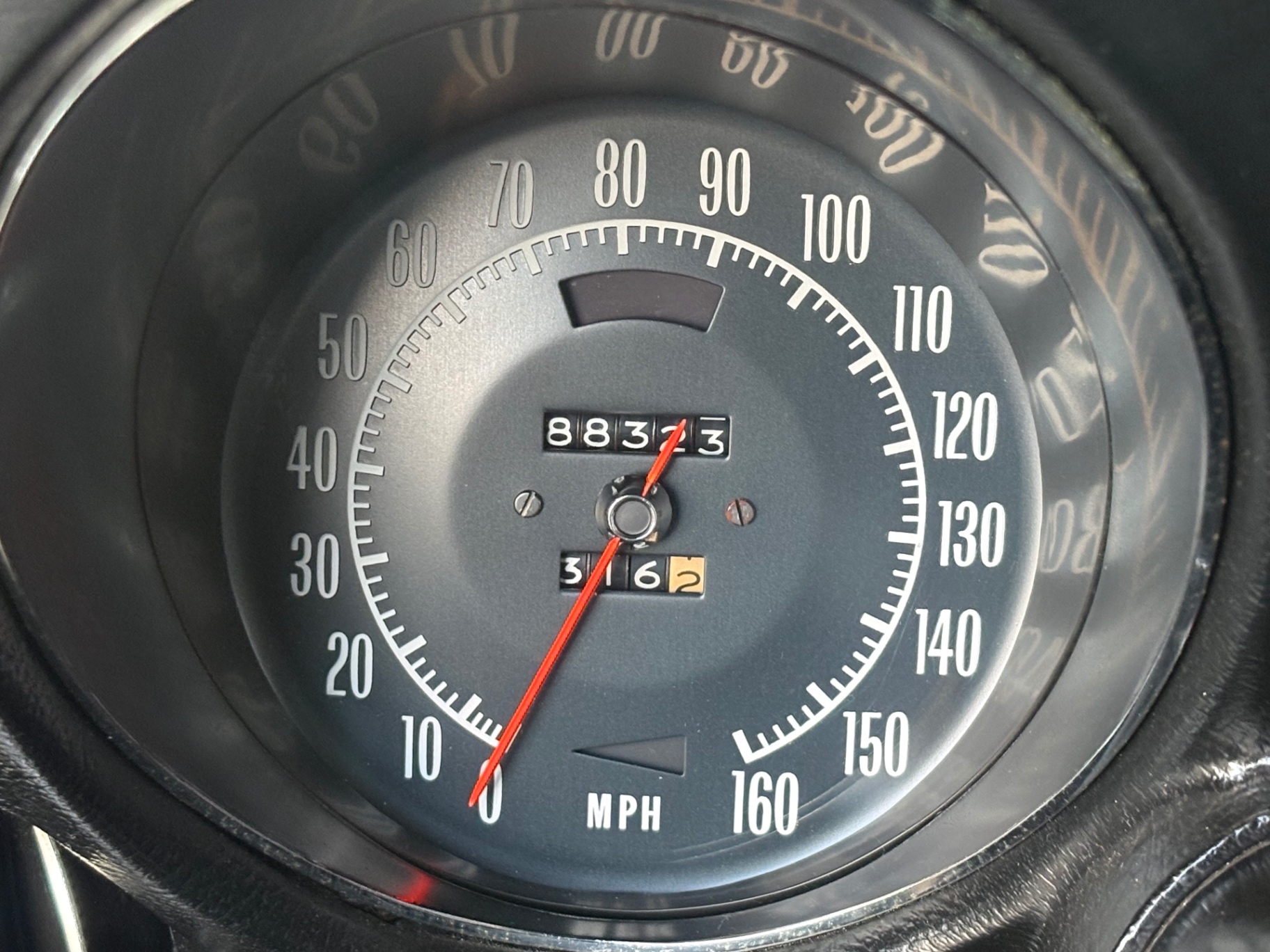
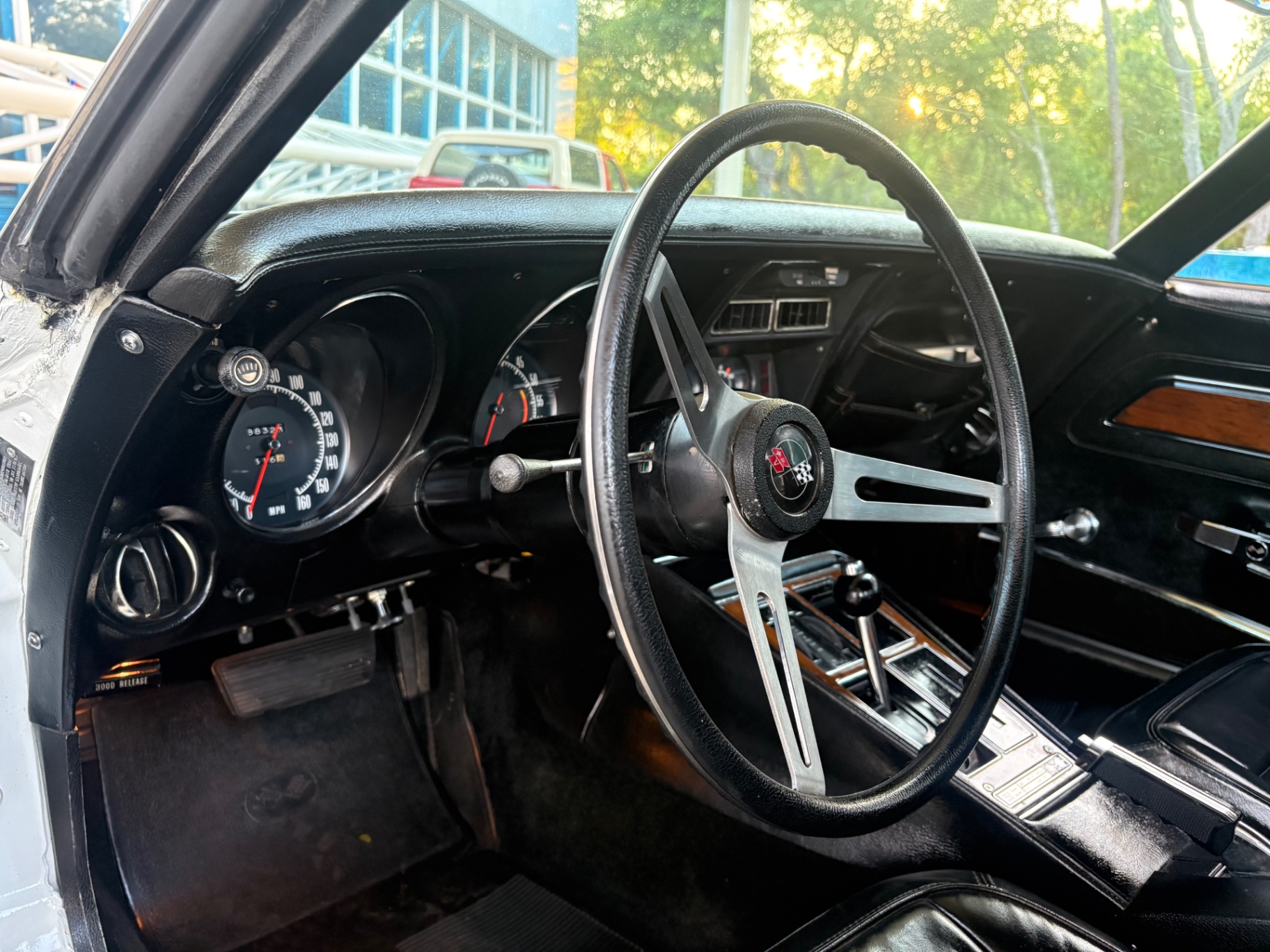
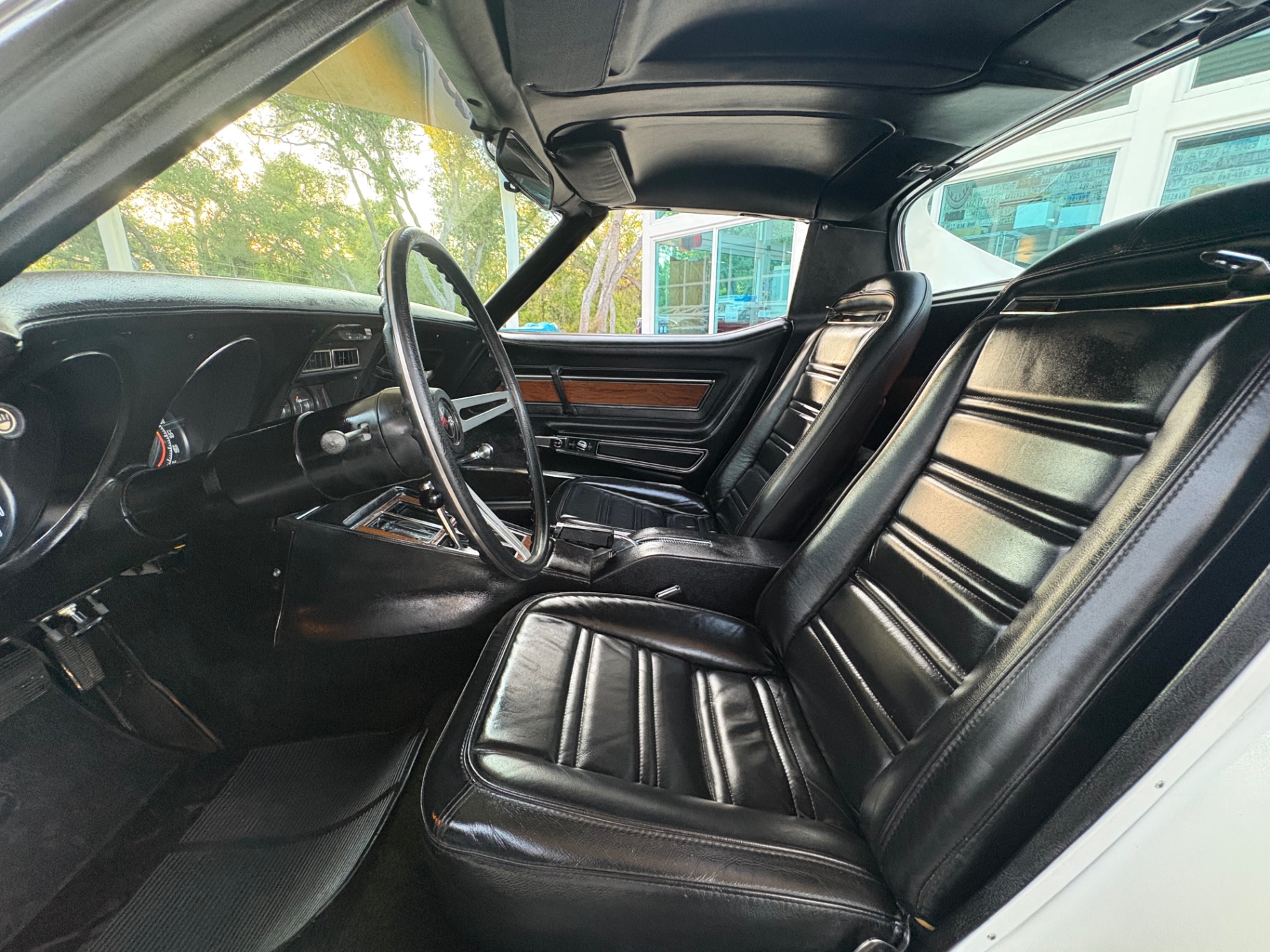
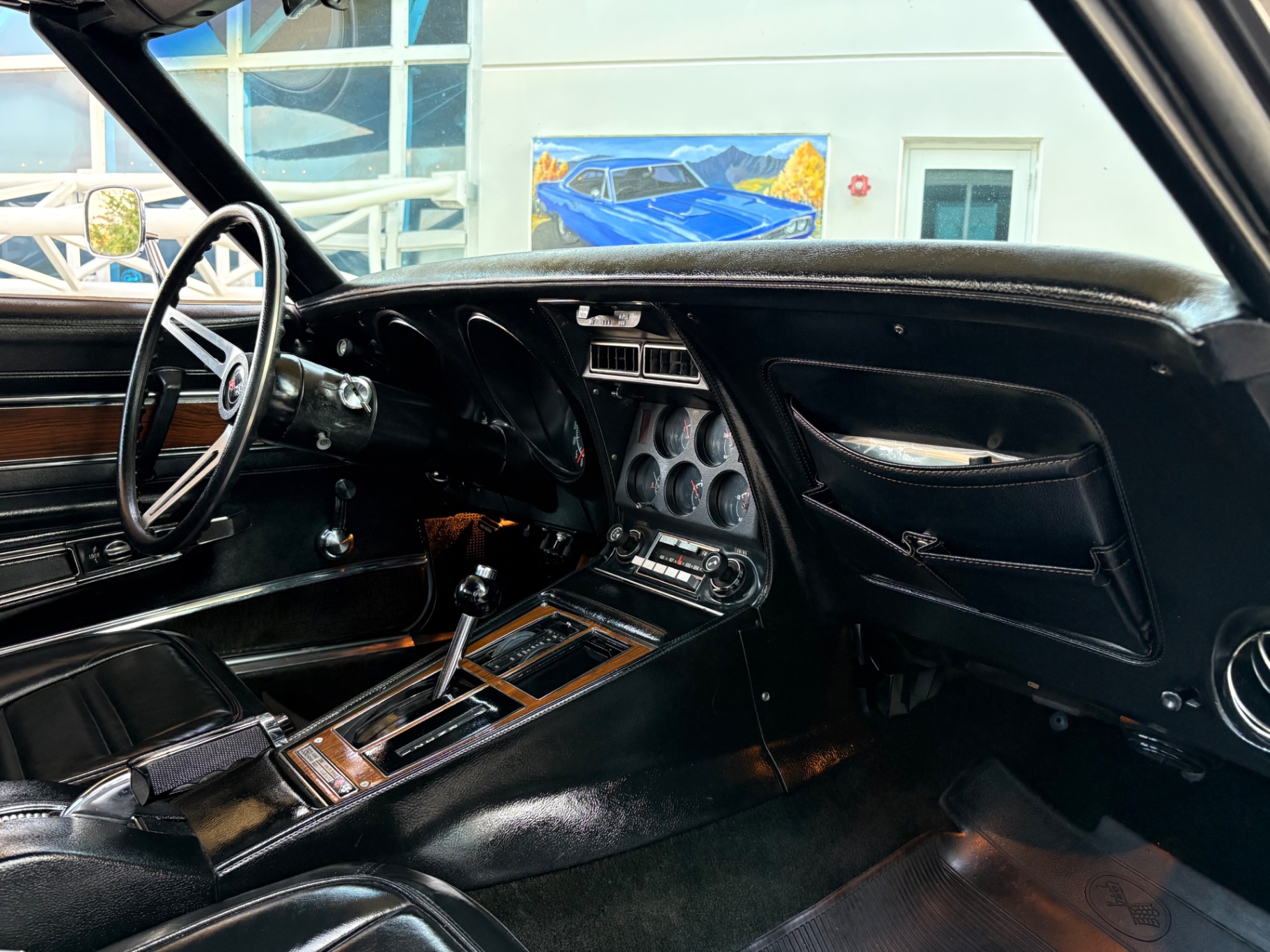
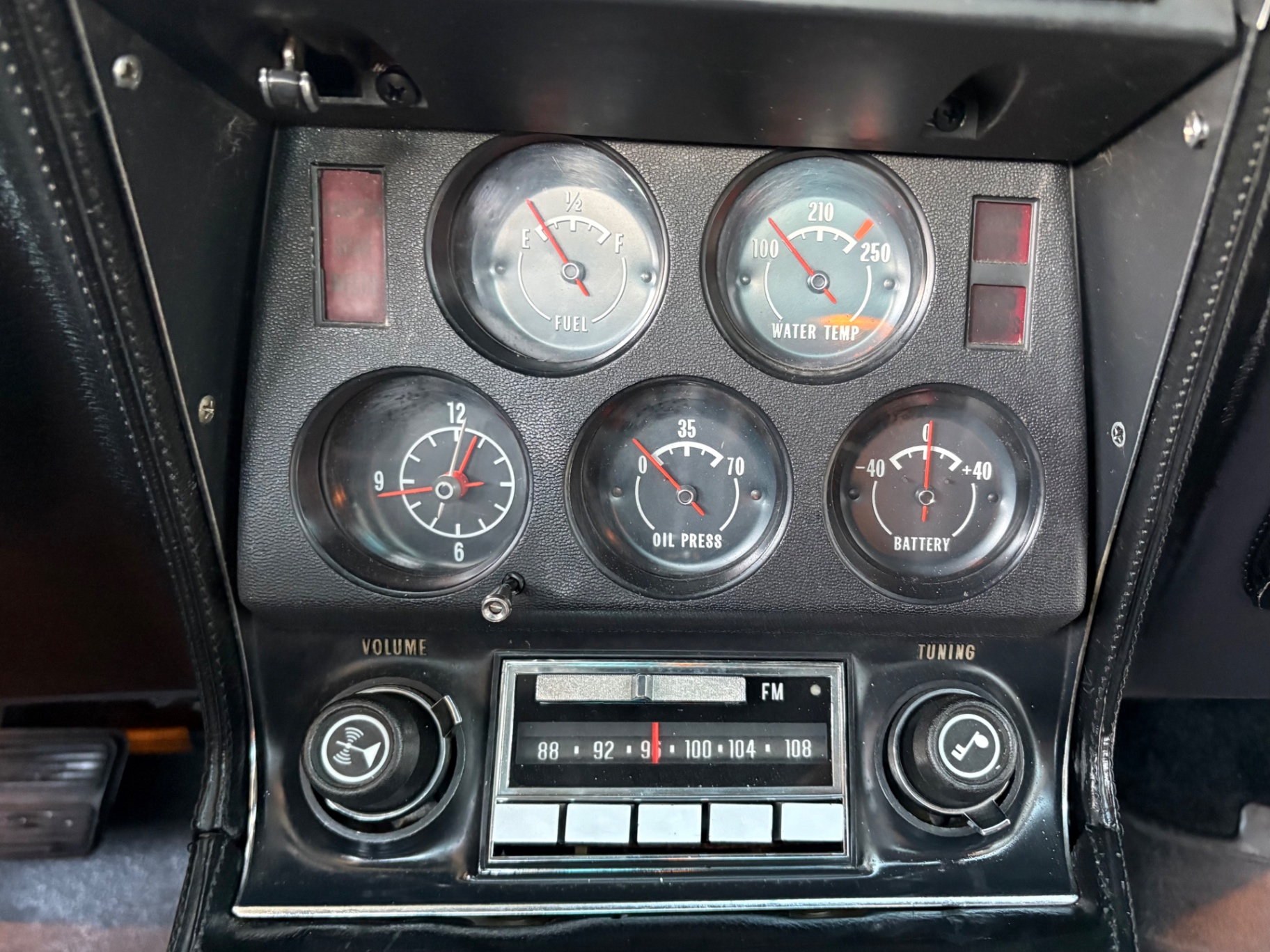
The center console houses the shifter for the automatic transmission and contributes to the tight, purposeful feel of the C3 interior. The Corvette Sport steering wheel — a three-spoke design with a smaller diameter than the standard wheel — gives the driver a more direct connection to the car and was a popular option on performance-oriented builds. The tachometer and 160-mph speedometer are both present in the instrument cluster, the latter being a Corvette-specific piece not shared with other GM models of the era. That speedometer is a detail that Corvette buyers notice, and its presence confirms this car was optioned with the performance gauge package.
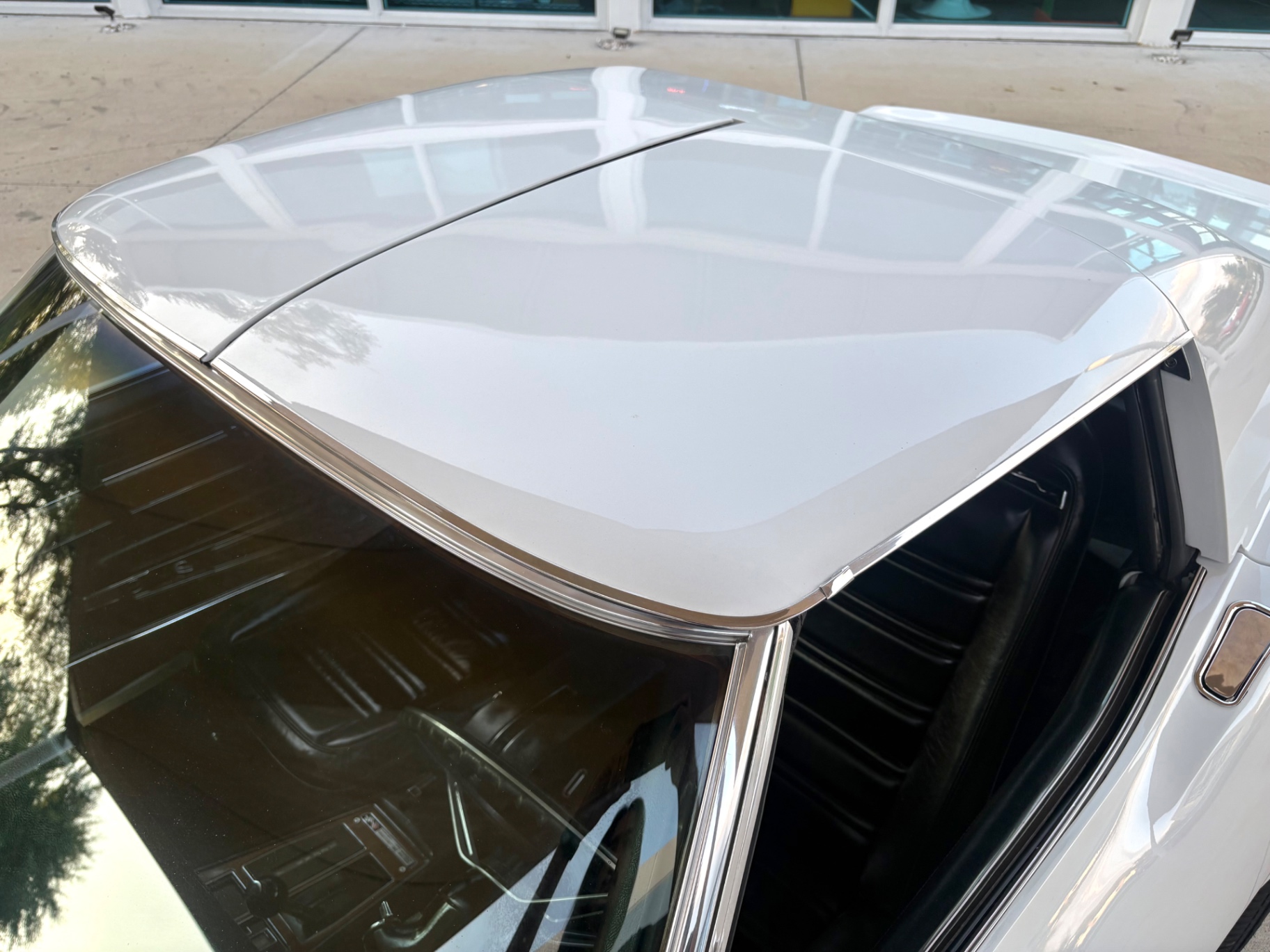
The T-tops remove to give an open-air experience that a full convertible delivers differently — the T-top coupe was actually more structurally rigid, and the 1972 coupe body is considered by many C3 enthusiasts to be the cleaner design compared to the convertible.
Exterior
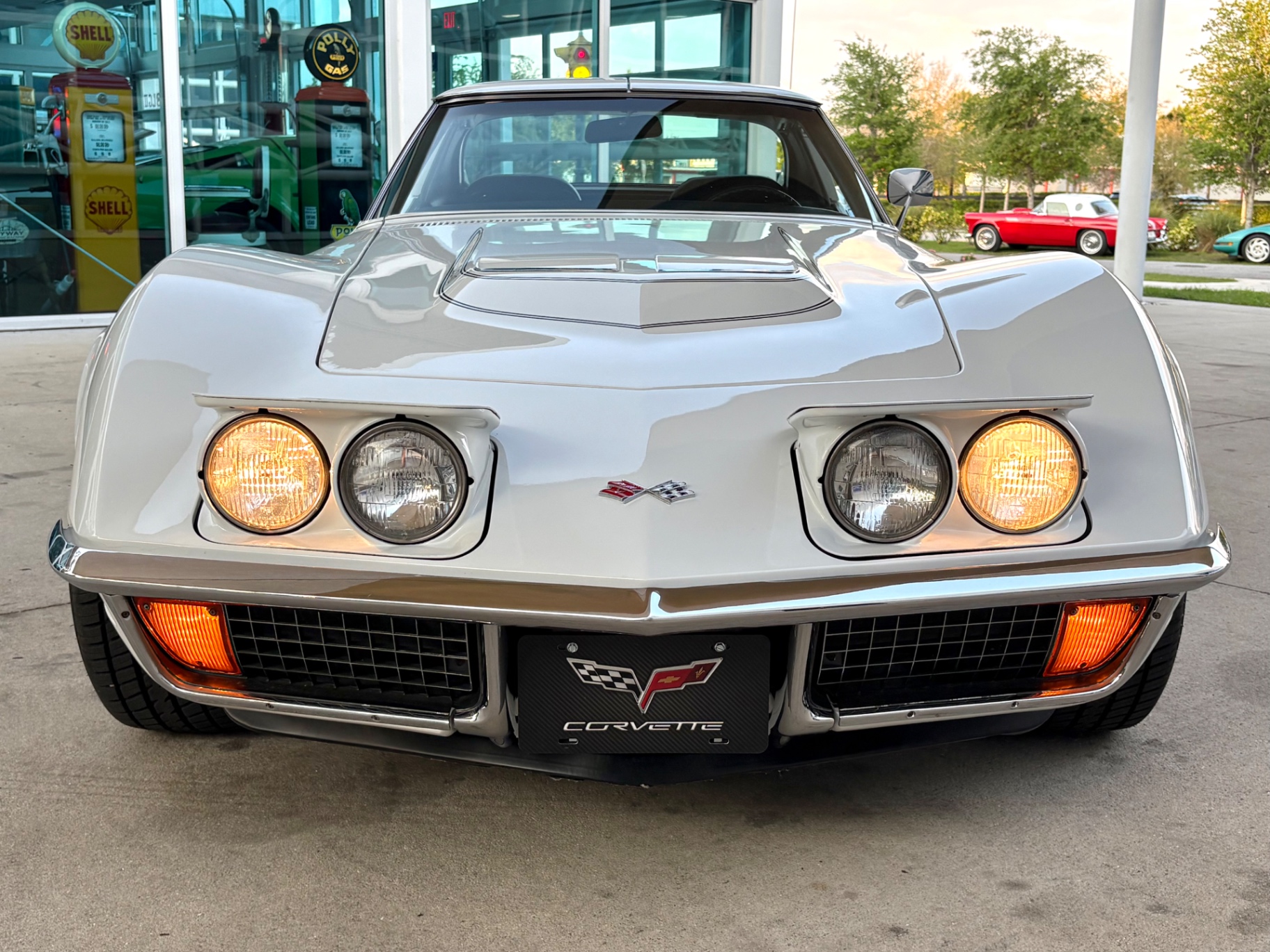
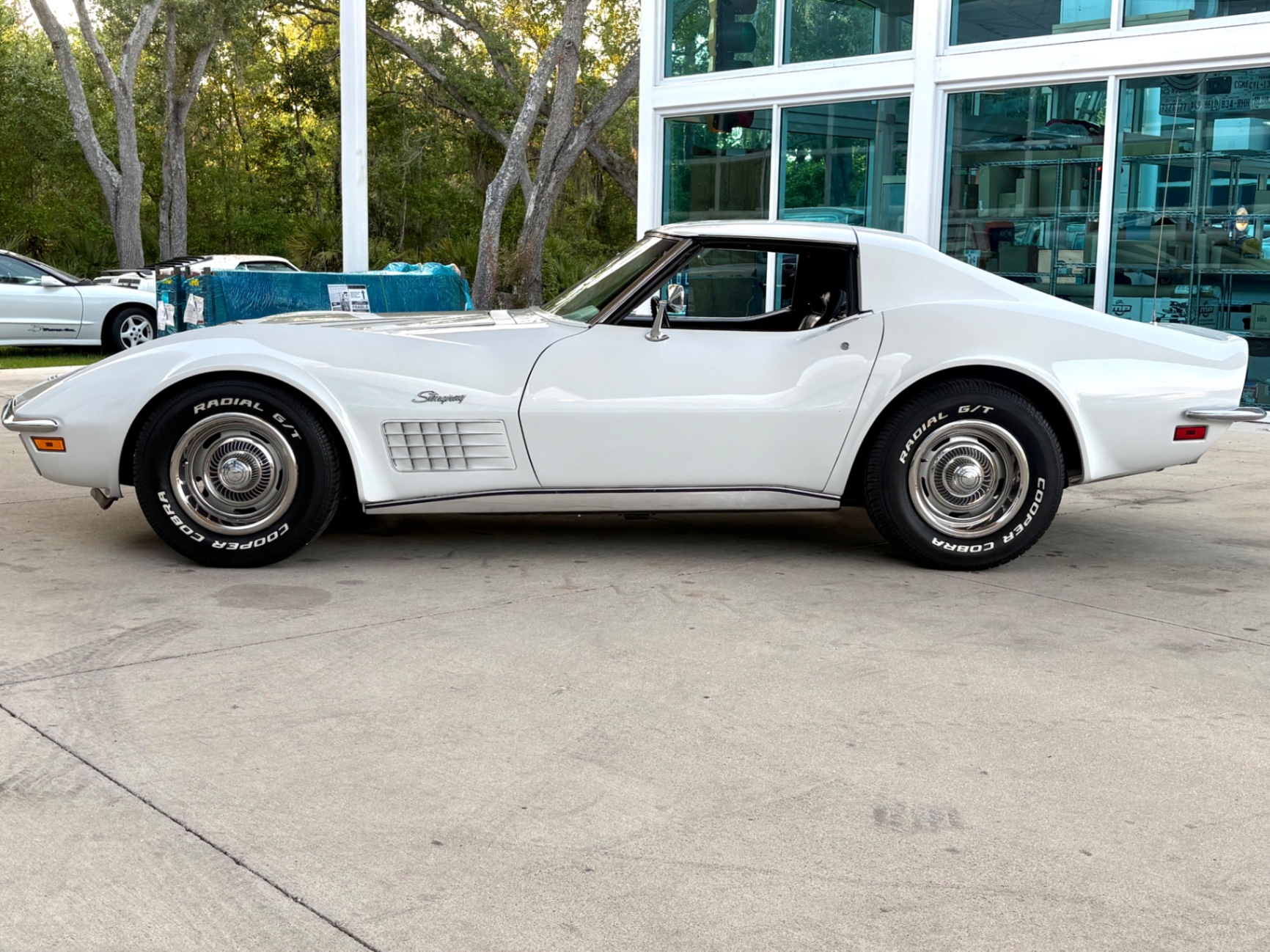
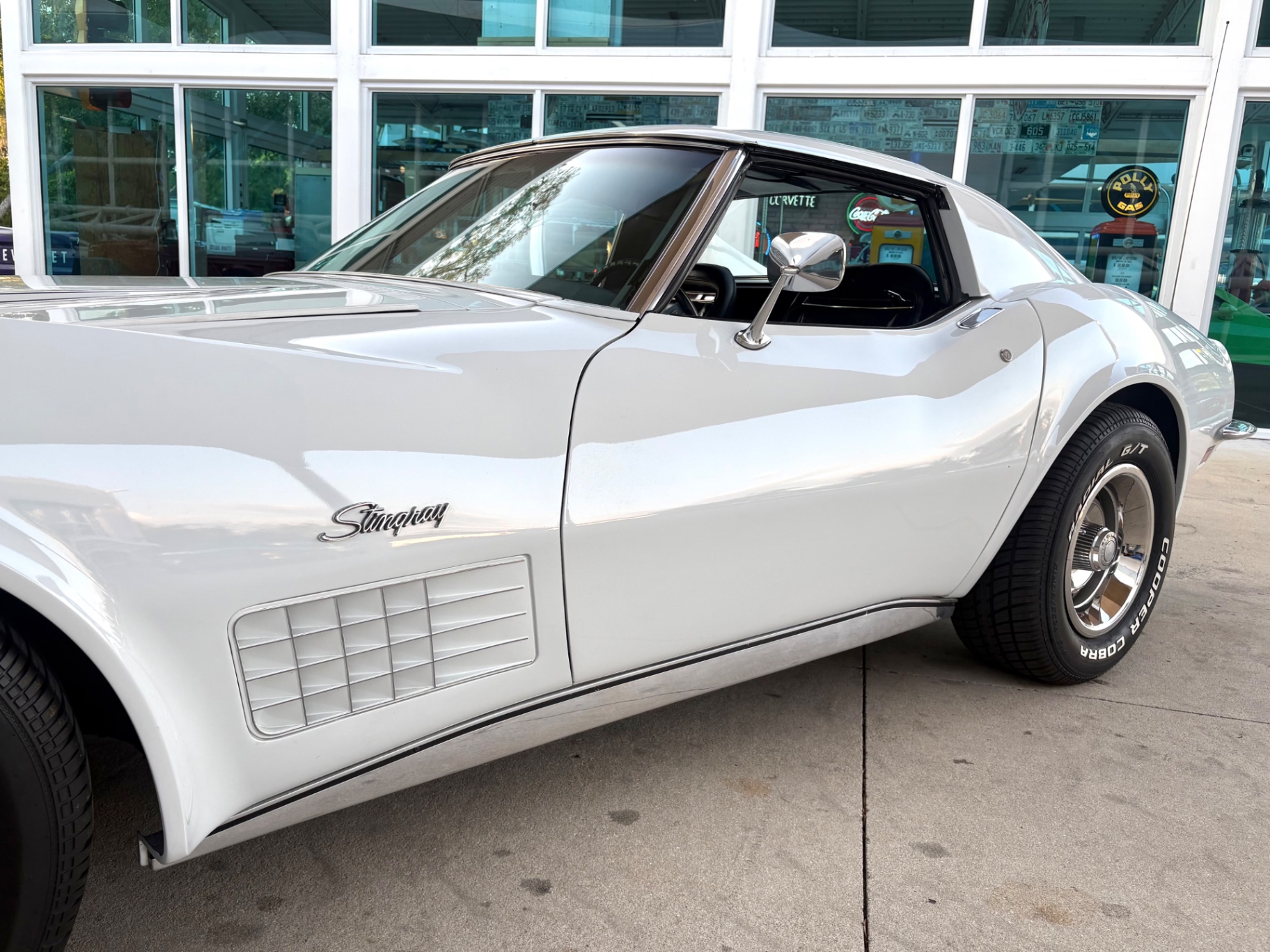
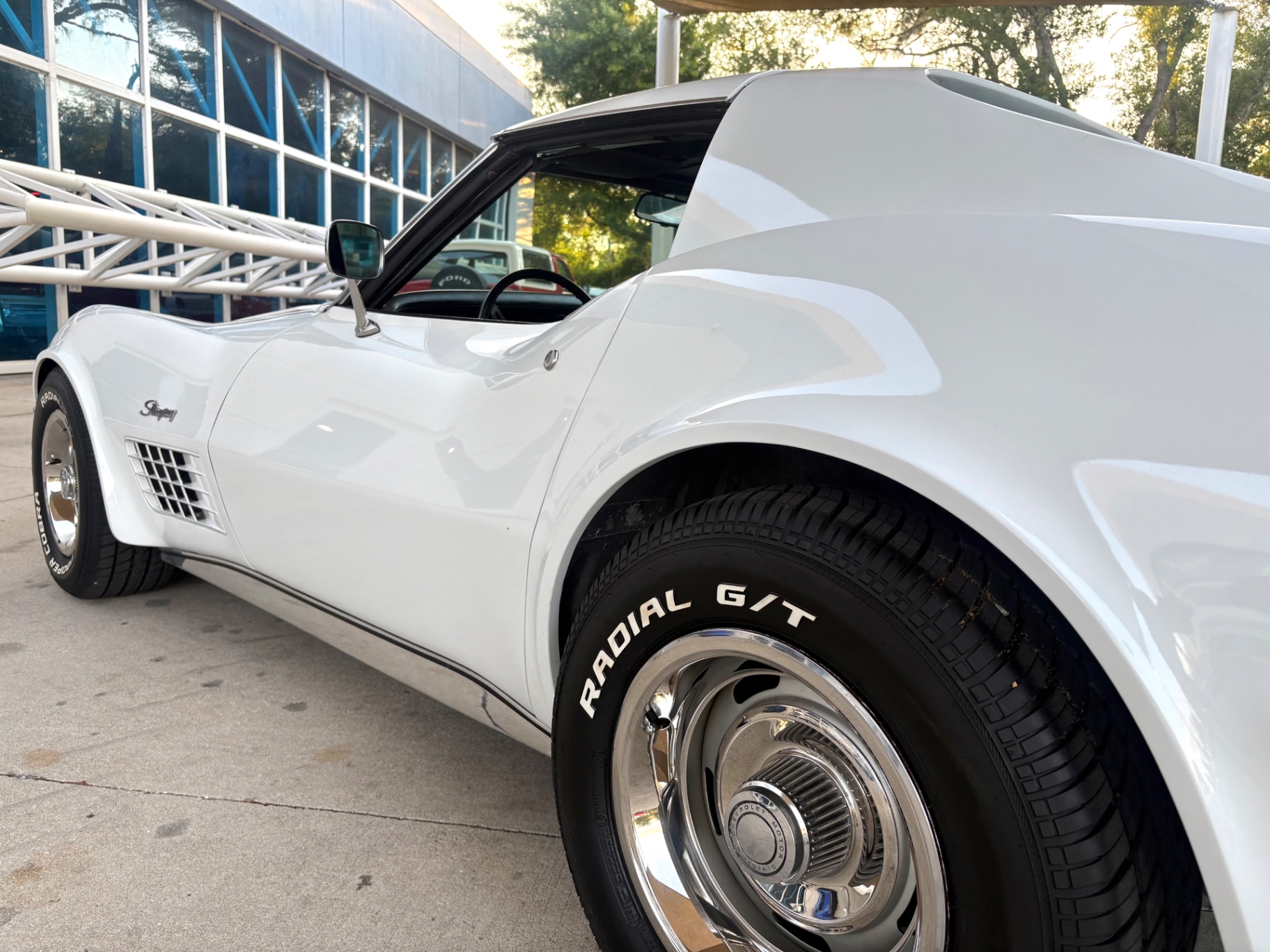
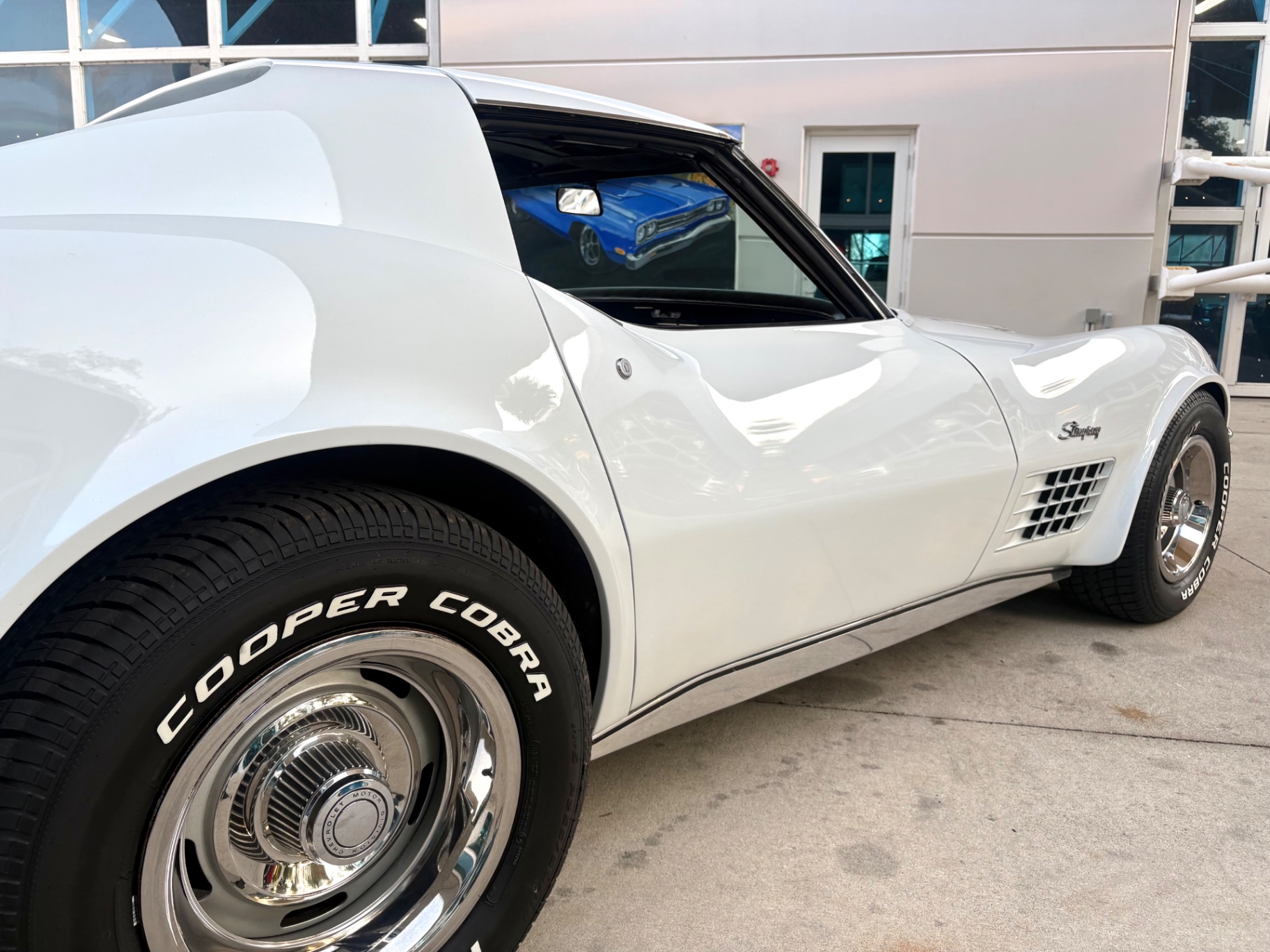
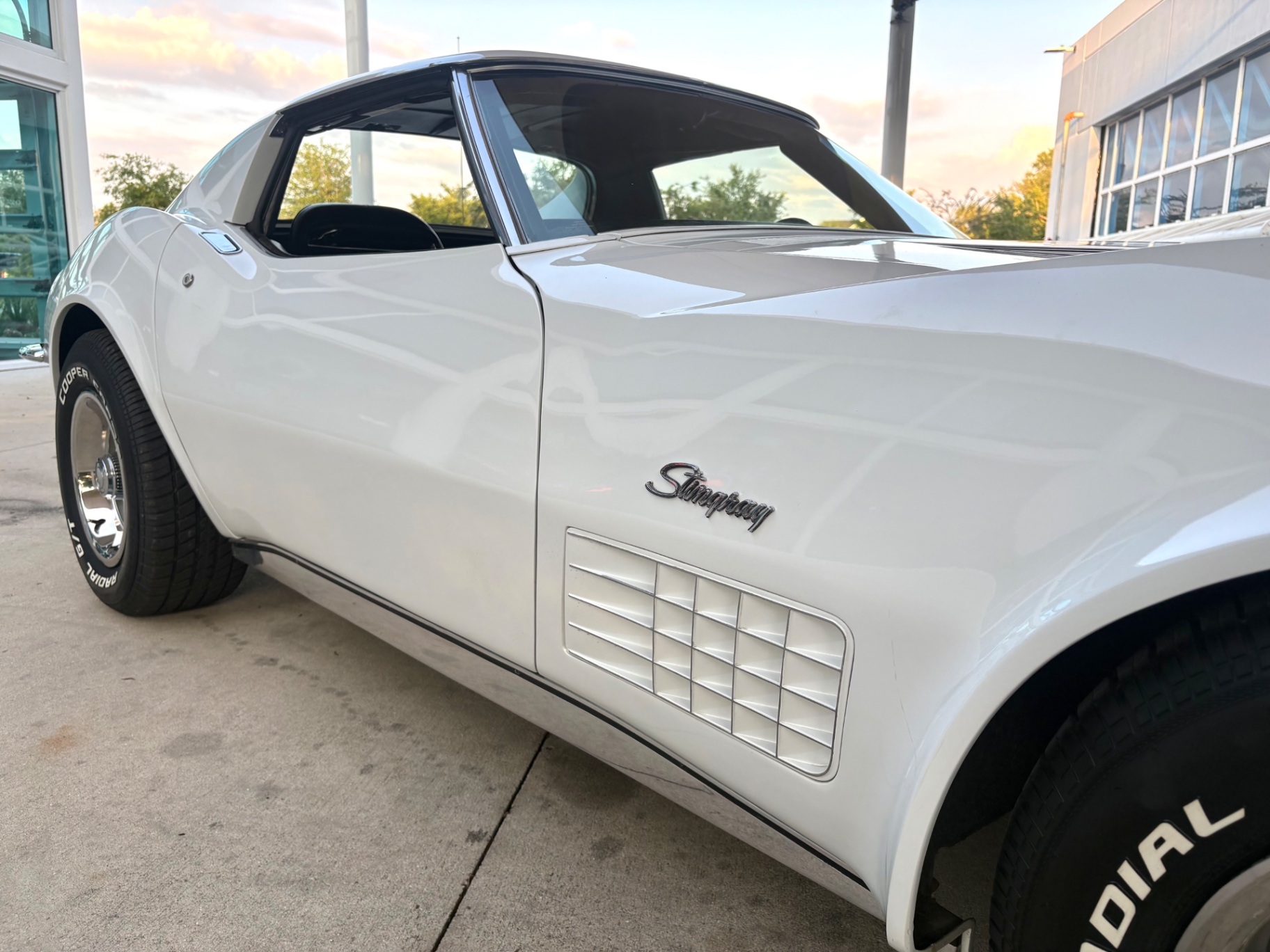
White is a straightforward color choice on a C3 Corvette, and it works particularly well with the body's sculpted fender lines and the contrast of the black interior visible through the glass. The 1972 Corvette Stingray's body design was in its third year of the C3 generation by this point, and the shape had settled into what most people picture when they think of a classic Stingray: the tunneled rear window, the peaked front fenders, the hidden headlights, and the aggressive side gill vents behind the front wheels.
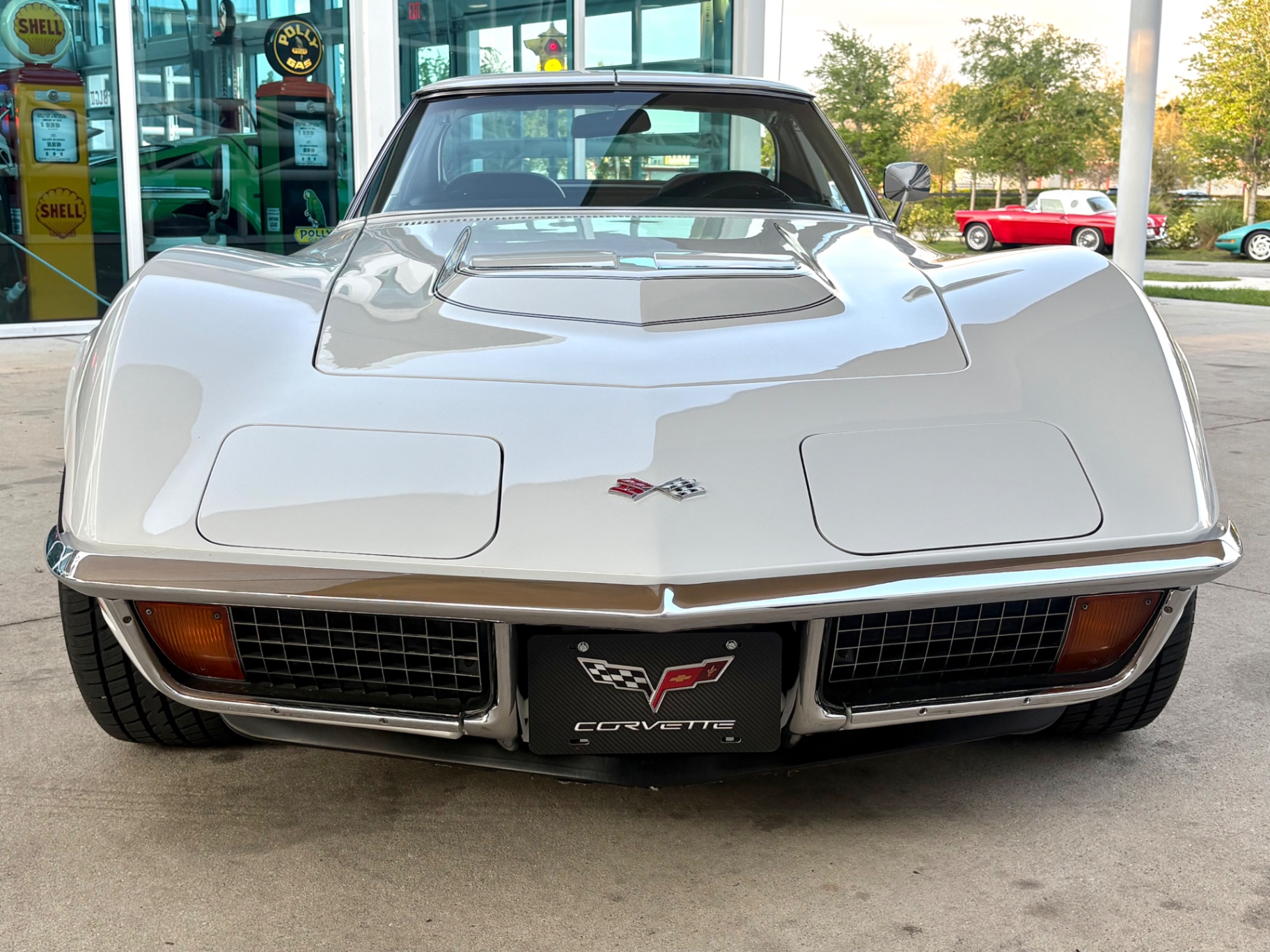
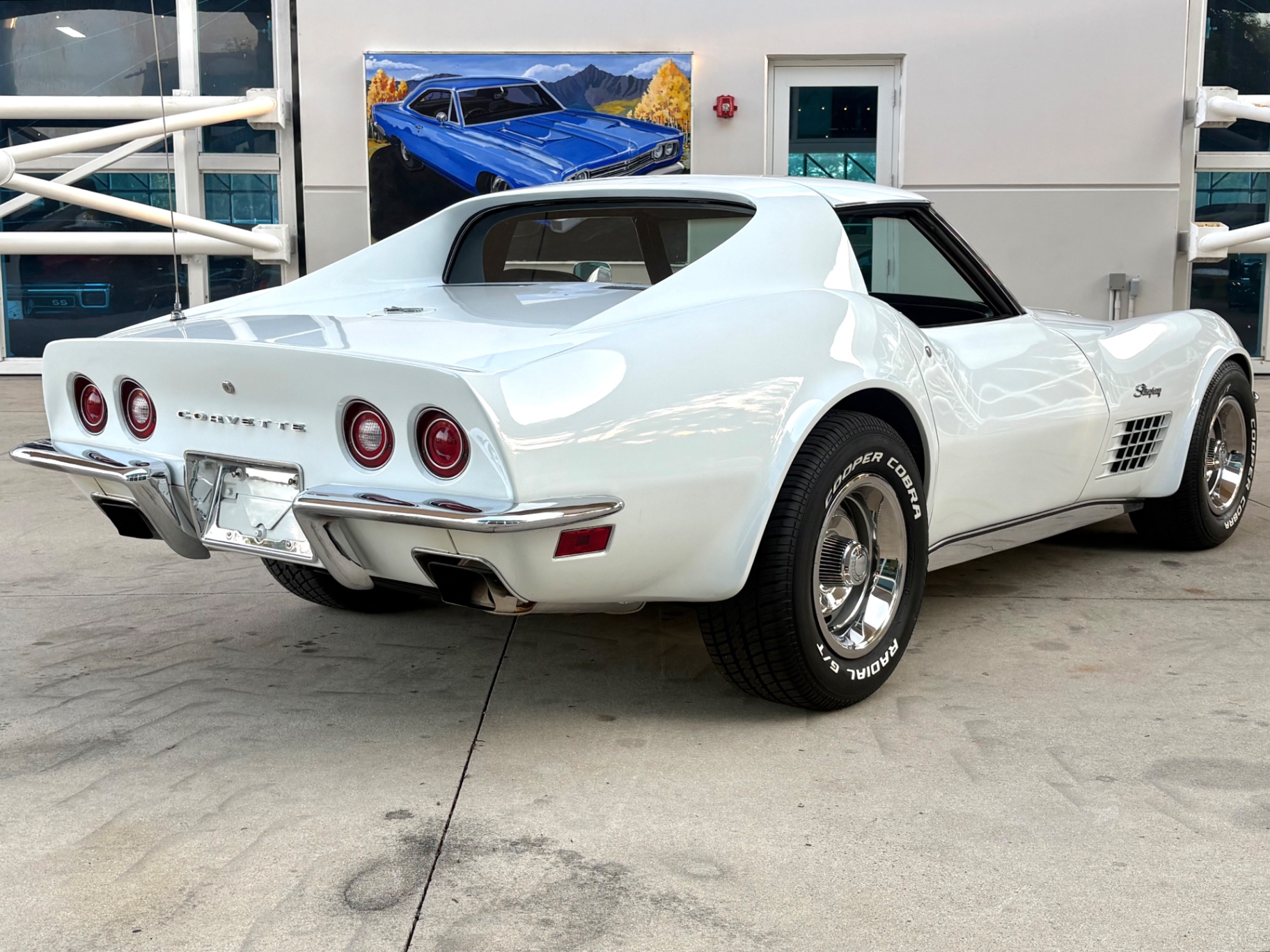
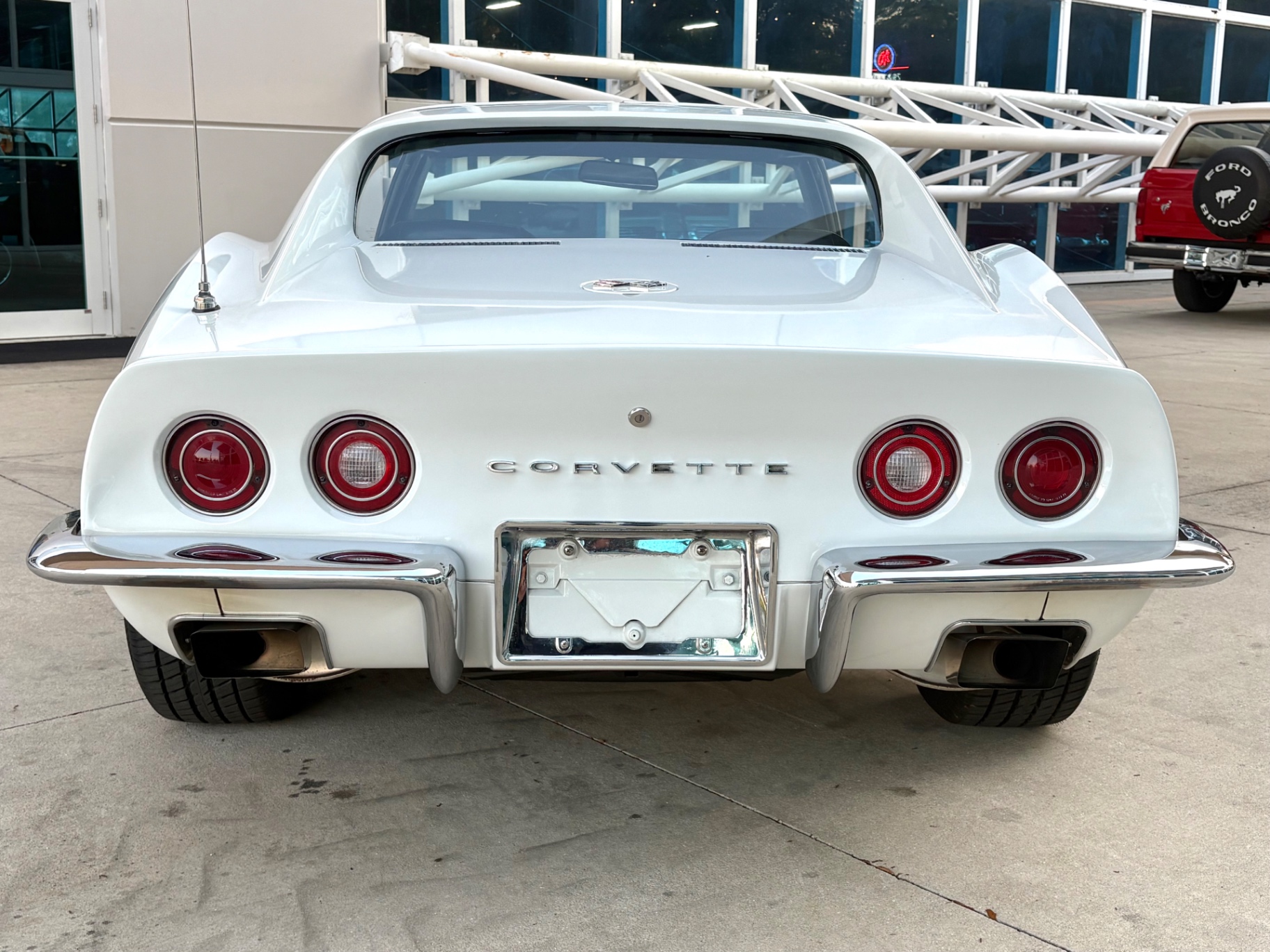
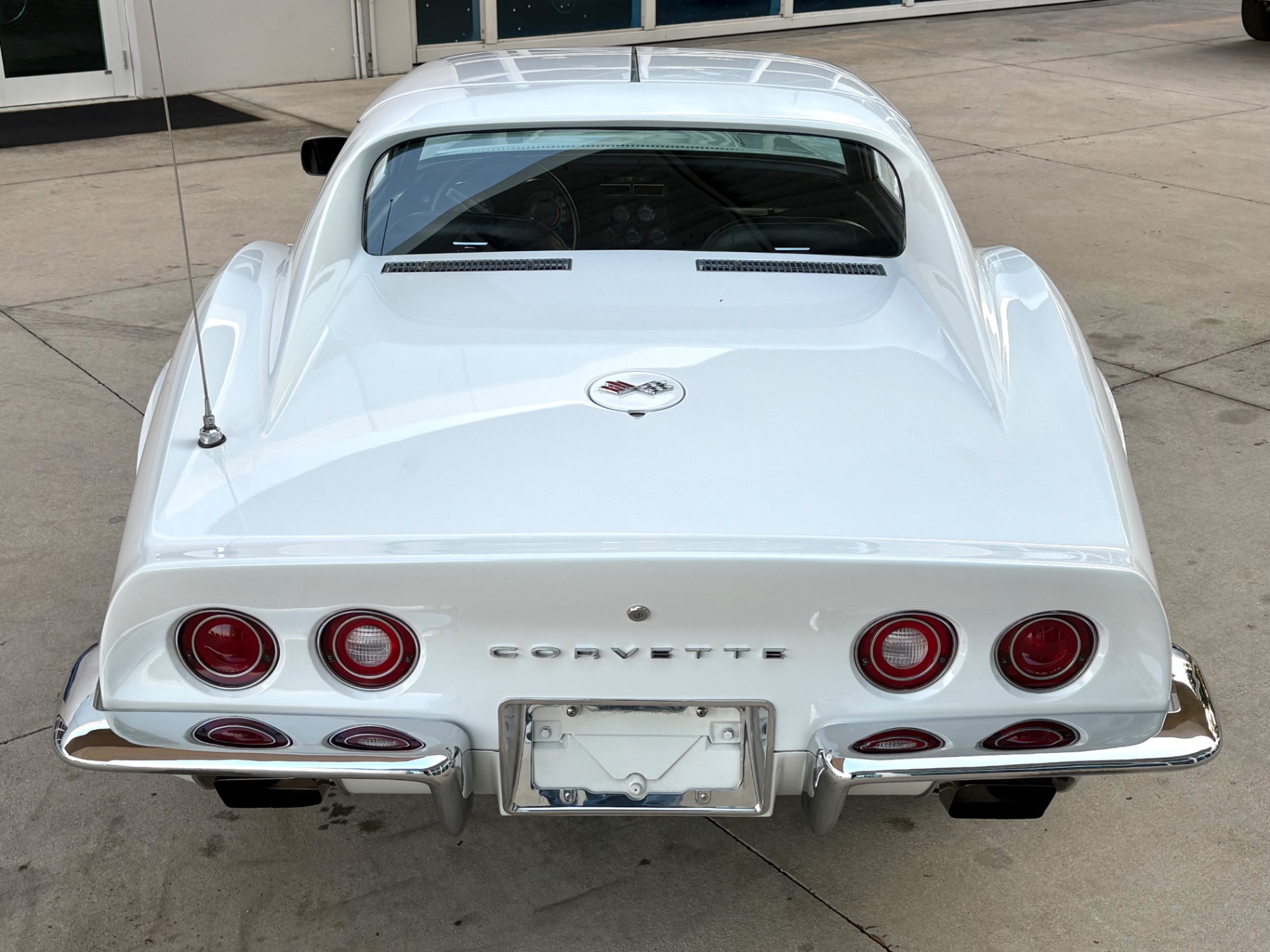
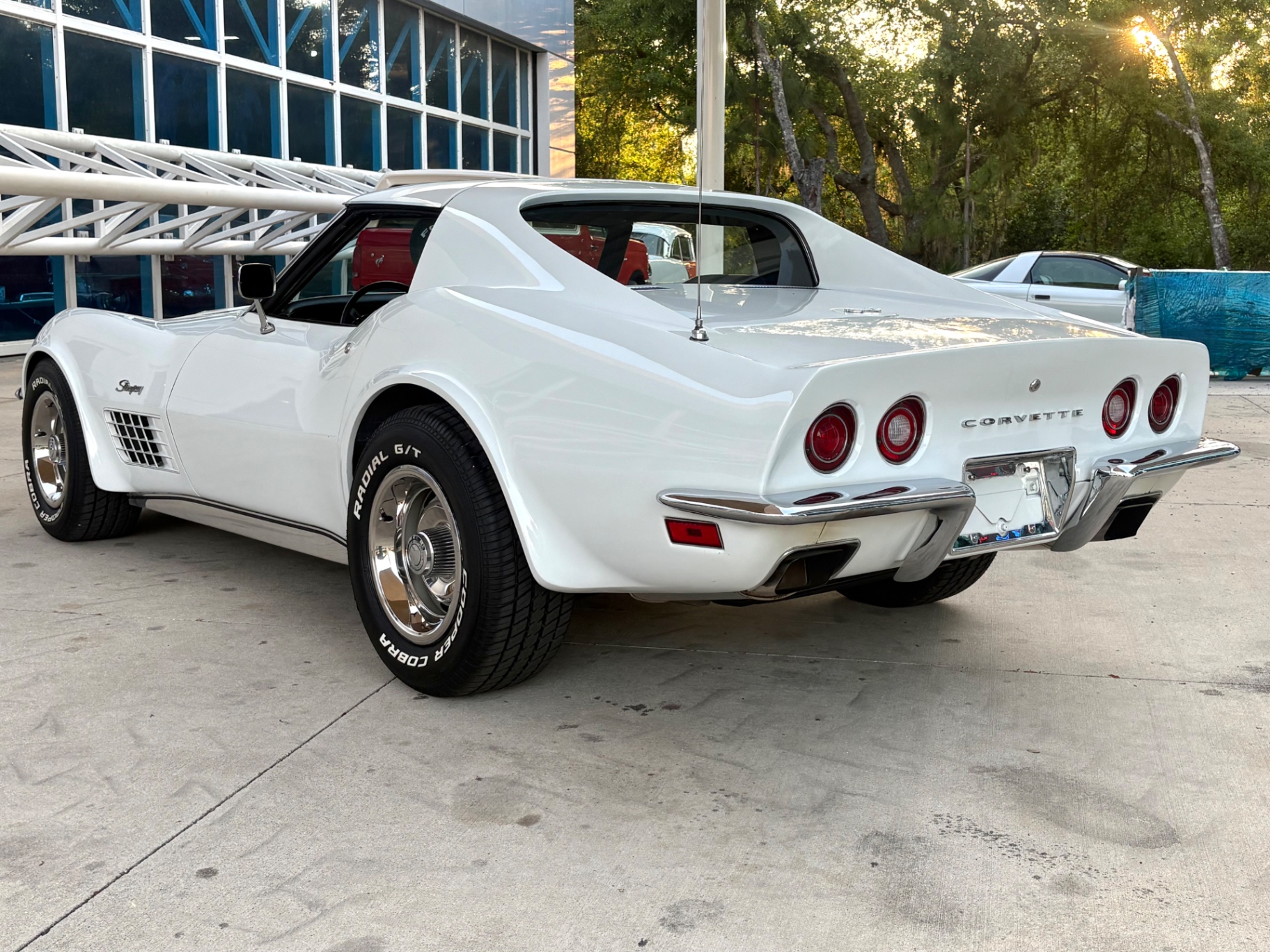
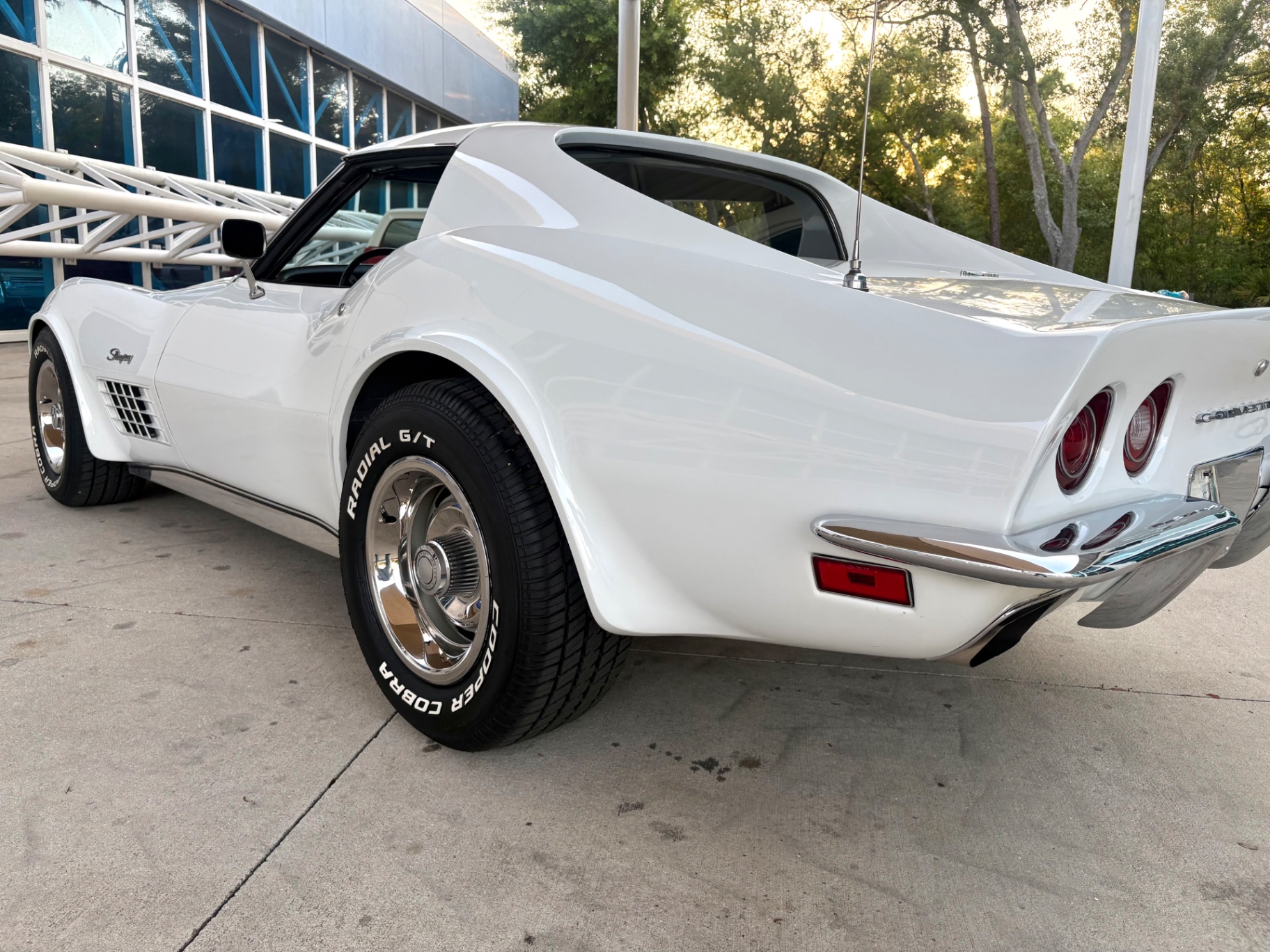
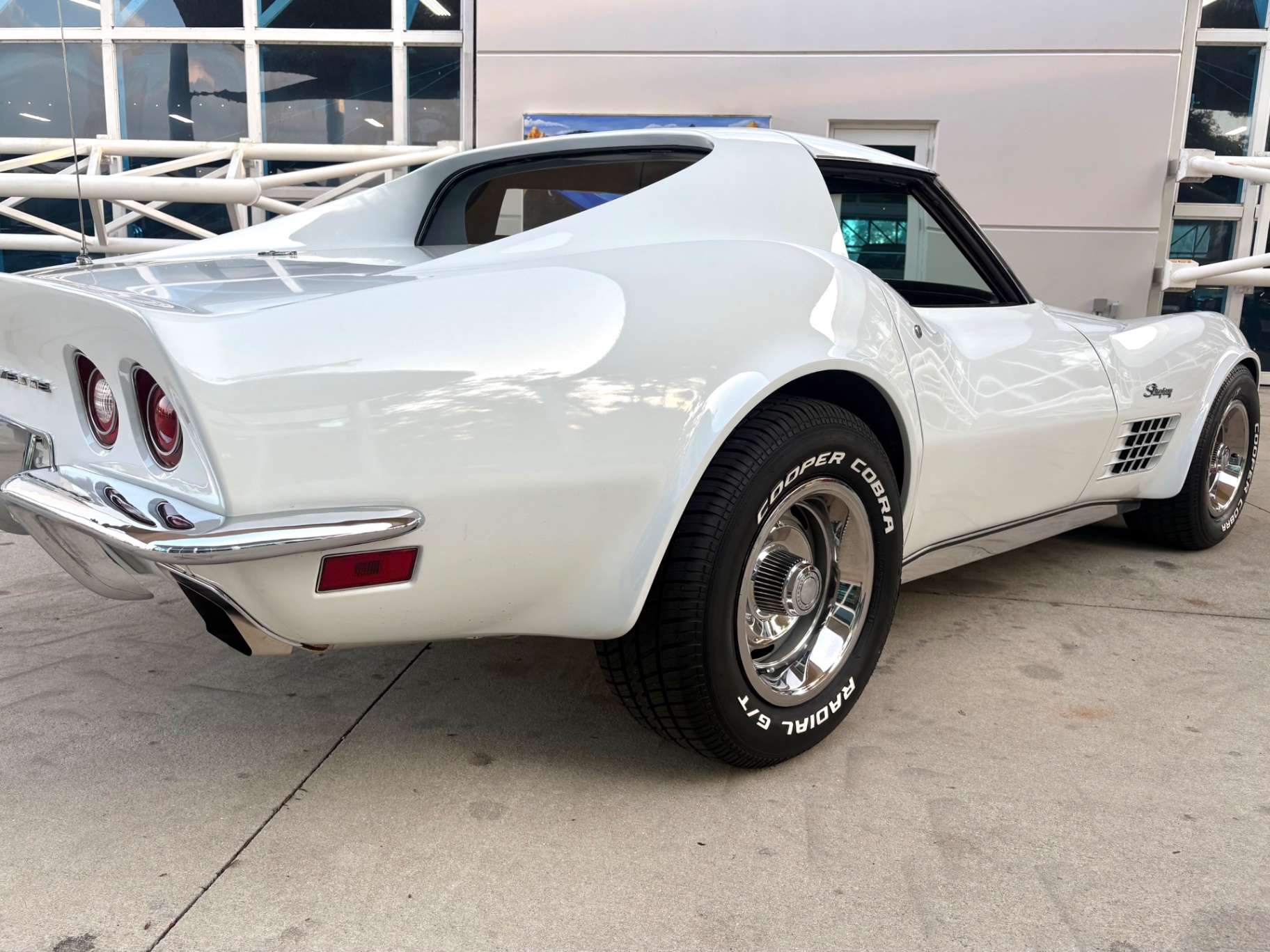
The chrome rear bumpers are correct for 1972 — this was the last year for chrome bumpers at the rear, as 1973 brought the federally required body-color urethane nose, and 1974 extended that treatment to the rear. The chrome bumpers on this car flank the iconic four-round taillights and the exposed dual exhaust tips, and the rear-end photo shows them in good condition. The bumpers are a detail that immediately separates a pre-1974 Corvette from the later cars, and among C3 collectors, the 1972 rear end is considered the cleanest.
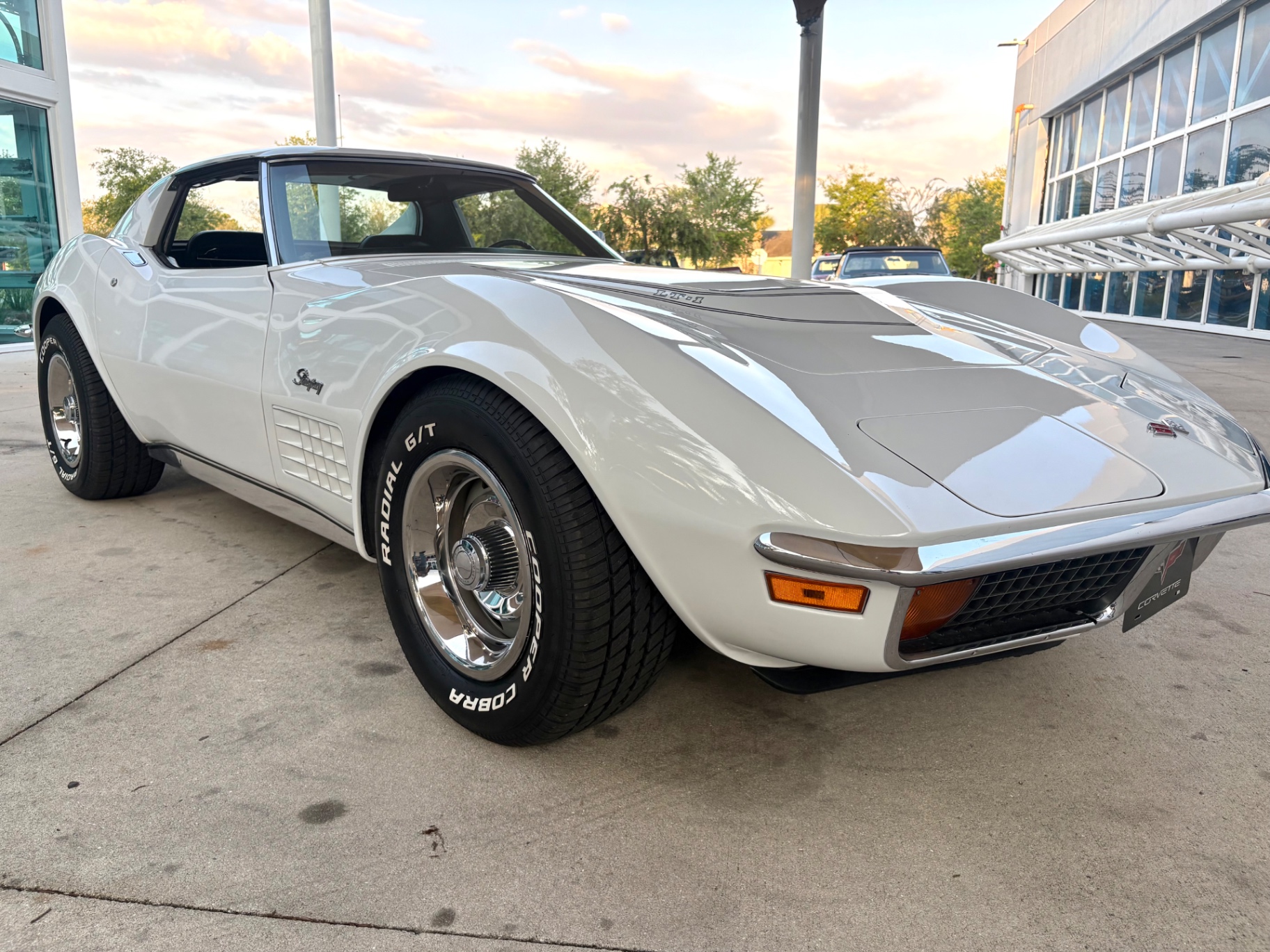
The LT-1 hood sits atop all of this with its raised center section and functional scoop profile, giving the white exterior a more aggressive stance than a standard hood would provide. Whether or not the engine underneath matches the hood's origins, the visual effect is period-correct and consistent with how Chevrolet's performance Corvettes of the era were presented.
Conclusion
The 1972 Chevrolet Corvette Stingray represents the end of an era in a very literal sense. Chrome bumpers front and rear, the egg-crate grille, the gross horsepower ratings — all of it went away after this model year. What you have here is a white T-top coupe with a solid options list, a functioning drivetrain, and the LT-1 hood that gives it the visual identity of the rarest variant built that year.
For a buyer who wants a C3 Corvette they can actually use — comfortable in traffic, cool in the Florida heat, and correct enough to hold its value — this car covers the essentials and does it with one of the more distinctive hood profiles in the C3 lineup.
To learn more or schedule a time to see this 1972 Chevrolet Corvette Stingray in person, call Skyway Classics in Sarasota, Florida at 941-254-6608.
Disclaimer Information found on the website is presented as given to us by the owner of the car, whether on consignment or from the owner we bought it from. Some Photos, materials for videos, descriptions and other information are provided by the consignor/seller and is deemed reliable, but Skyway Classics does not warranty or guarantee this information. Skyway Classics is not responsible for information that may incorrect or a publishing error. The decision to purchase should be based solely on the buyers personal inspection of the vehicle or by a professional inspection service prior to offer or purchase being made.
1972 Chevrolet Corvette Stingray — White T-Top Coupe with Rare LT-1 Hood and Numbers-Correct 350
Why This Car Is Special
The 1972 Chevrolet Corvette Stingray holds a specific and well-documented place in Corvette history. It was the last model year to carry the traditional egg-crate grille, the last to use chrome front bumpers, and the last to feature the removable rear window on coupe models. It was also the final year that Chevrolet published gross horsepower ratings before the industry shifted to the lower net figures — a change that made the 1973 and later cars look less powerful on paper even when they weren't dramatically different mechanically. For collectors who know the C3 generation well, 1972 sits at a distinct transition point, and it attracts buyers who want the last of the classic Stingray styling cues before the federally mandated changes began reshaping the car in 1973.
This particular 1972 Chevrolet Corvette Stingray is finished in white over a black vinyl interior and carries a combination of features that goes well beyond a typical base-spec example. The presence of the LT-1 hood is the detail that separates this car from most of the 27,004 Corvettes built for the 1972 model year. The LT-1 was the high-winding, solid-lifter 350 cubic inch V8 option that Chevrolet carried over from 1970 and 1971. In 1972, only 1,741 Corvettes were ordered with the LT-1 engine, making it by far the rarest powertrain choice that year. The LT-1 hood — with its distinctive center-exit scoop — is a visually specific and historically significant piece of fiberglass that belongs to that engine option, and its presence on this car is worth understanding before you assume anything about what's under it.
The VIN on this car decodes to a 1972 Corvette coupe built at the St. Louis assembly plant with a 350 cubic inch V8 and an automatic transmission. The "K" in the engine position of the VIN denotes the 200-horsepower base 350, not the LT-1 solid-lifter engine. That means the LT-1 hood on this car is a cosmetic addition rather than original equipment — an important distinction for any buyer doing their research. The car is honest about what it is: a well-equipped 1972 Chevrolet Corvette Stingray with a correct 350 V8, a desirable options list, and the visual presence of one of the most recognizable hoods in Corvette history. Whether you view the hood as an upgrade or a deviation from numbers-matching spec will depend on what you're looking for.
What this car does offer is a compelling combination of usability and style. Air conditioning, power steering, power brakes, removable T-tops, and a functioning tachometer and 160-mph speedometer make this a Corvette you can drive regularly without the anxiety that comes with a fully documented, concours-correct collector piece. It's equipped to be used.
Features List
- Numbers-correct 350ci V8 engine (VIN-decoded as the base 350, RPO L48 equivalent) - Automatic transmission - Rare LT-1 hood (cosmetic addition, not matching the VIN engine code) - Removable T-tops - Power steering - Power brakes - Air conditioning - Dual exhaust with exposed rear tips - Chrome rear bumpers - Tachometer - 160-mph speedometer - Corvette Sport steering wheel - Woodgrain interior trim - Black vinyl interior - Center console - White exterior
Mechanical
Under the hood sits the correct 350 cubic inch V8 for this VIN, backed by an automatic transmission. The engine bay presents well, with red-painted valve covers and a polished air cleaner assembly that are visually consistent with how these cars left the factory. Dual exhaust exits through the iconic squared-off rear tips that are characteristic of the C3 Corvette, and the system appears clean from the underside photos.
Power steering and power brakes were factory options on the 1972 Corvette, and both are present here. These features matter on a C3 that you plan to drive. Without power steering, the Corvette's recirculating ball unit requires real effort at low speeds. Without power assist on the brakes, the pedal effort on these cars — particularly in stop-and-go traffic — is significant. Having both checks two of the most important boxes for a daily-usable classic. The air conditioning is described as functioning well, which is not something to take for granted on a 50-year-old system.
The LT-1 hood deserves a mechanical footnote. The LT-1 engine it was designed to complement was a 370-gross-horsepower, solid-lifter, high-compression unit that was genuinely the performance choice of 1972. With the base 350 under this hood, you get the looks without the maintenance demands of a solid-lifter valvetrain — a trade-off some buyers will actually prefer.
Interior
The black vinyl interior on this 1972 Chevrolet Corvette Stingray is in presentable condition based on the photos. The door panels show the characteristic C3 layout, with woodgrain accent trim inset into the black vinyl panel — a factory styling detail that Chevrolet used throughout the C3 generation to add a touch of refinement to what was otherwise a sport-focused cockpit. The chrome trim surrounding the woodgrain insert is intact and shows well.
The center console houses the shifter for the automatic transmission and contributes to the tight, purposeful feel of the C3 interior. The Corvette Sport steering wheel — a three-spoke design with a smaller diameter than the standard wheel — gives the driver a more direct connection to the car and was a popular option on performance-oriented builds. The tachometer and 160-mph speedometer are both present in the instrument cluster, the latter being a Corvette-specific piece not shared with other GM models of the era. That speedometer is a detail that Corvette buyers notice, and its presence confirms this car was optioned with the performance gauge package.
The T-tops remove to give an open-air experience that a full convertible delivers differently — the T-top coupe was actually more structurally rigid, and the 1972 coupe body is considered by many C3 enthusiasts to be the cleaner design compared to the convertible.
Exterior
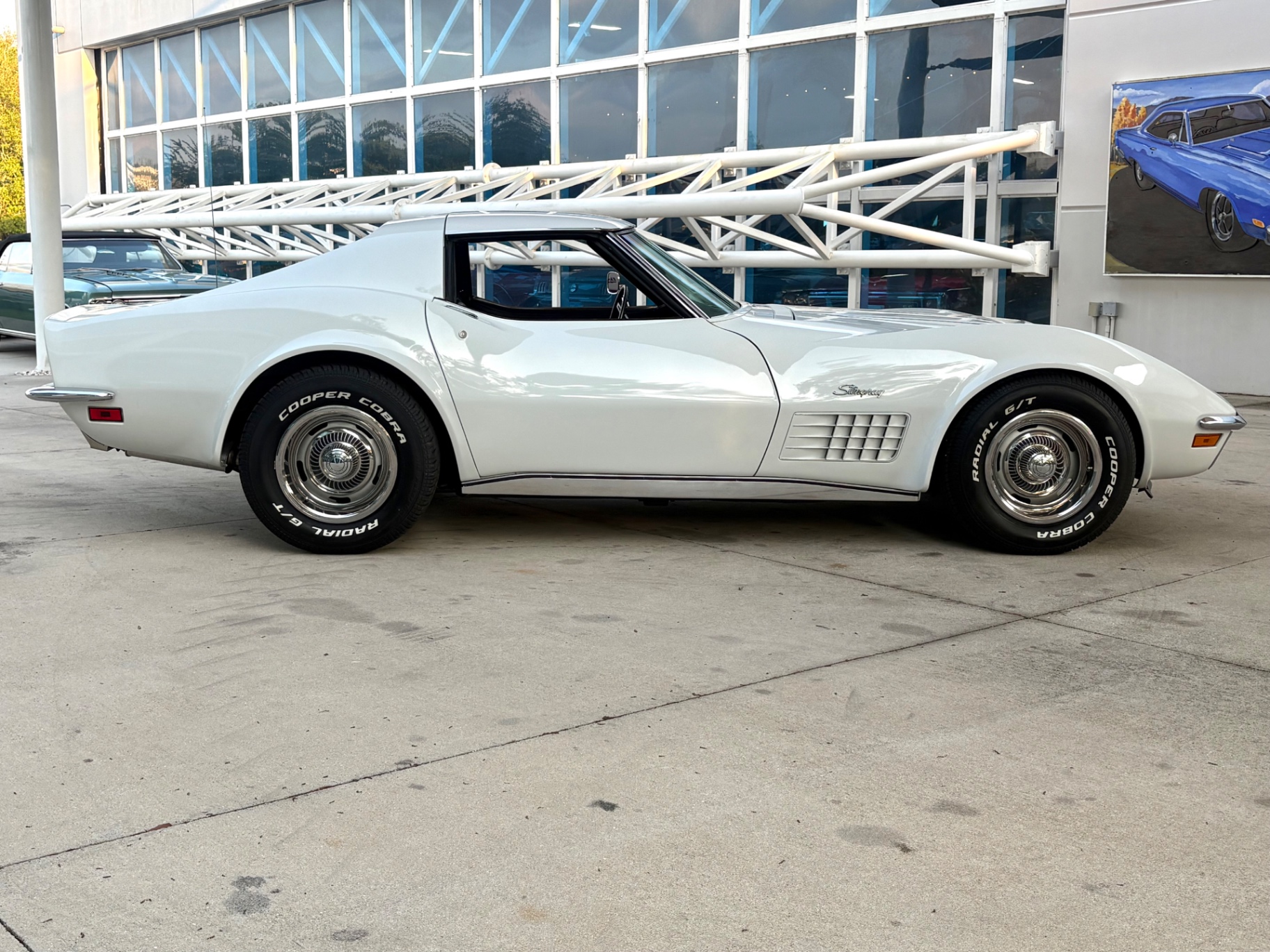
White is a straightforward color choice on a C3 Corvette, and it works particularly well with the body's sculpted fender lines and the contrast of the black interior visible through the glass. The 1972 Corvette Stingray's body design was in its third year of the C3 generation by this point, and the shape had settled into what most people picture when they think of a classic Stingray: the tunneled rear window, the peaked front fenders, the hidden headlights, and the aggressive side gill vents behind the front wheels.
The chrome rear bumpers are correct for 1972 — this was the last year for chrome bumpers at the rear, as 1973 brought the federally required body-color urethane nose, and 1974 extended that treatment to the rear. The chrome bumpers on this car flank the iconic four-round taillights and the exposed dual exhaust tips, and the rear-end photo shows them in good condition. The bumpers are a detail that immediately separates a pre-1974 Corvette from the later cars, and among C3 collectors, the 1972 rear end is considered the cleanest.
The LT-1 hood sits atop all of this with its raised center section and functional scoop profile, giving the white exterior a more aggressive stance than a standard hood would provide. Whether or not the engine underneath matches the hood's origins, the visual effect is period-correct and consistent with how Chevrolet's performance Corvettes of the era were presented.
Conclusion
The 1972 Chevrolet Corvette Stingray represents the end of an era in a very literal sense. Chrome bumpers front and rear, the egg-crate grille, the gross horsepower ratings — all of it went away after this model year. What you have here is a white T-top coupe with a solid options list, a functioning drivetrain, and the LT-1 hood that gives it the visual identity of the rarest variant built that year.
For a buyer who wants a C3 Corvette they can actually use — comfortable in traffic, cool in the Florida heat, and correct enough to hold its value — this car covers the essentials and does it with one of the more distinctive hood profiles in the C3 lineup.
To learn more or schedule a time to see this 1972 Chevrolet Corvette Stingray in person, call Skyway Classics in Sarasota, Florida at 941-254-6608.
Disclaimer Information found on the website is presented as given to us by the owner of the car, whether on consignment or from the owner we bought it from. Some Photos, materials for videos, descriptions and other information are provided by the consignor/seller and is deemed reliable, but Skyway Classics does not warranty or guarantee this information. Skyway Classics is not responsible for information that may incorrect or a publishing error. The decision to purchase should be based solely on the buyers personal inspection of the vehicle or by a professional inspection service prior to offer or purchase being made.
1972 Chevrolet
Corvette Stingray
Why Choose Skyway Classics?
Explore our curated inventory of classic and collector cars—thoughtfully selected, ready to drive, and supported by experts who make ownership simple.
Expert Curation
Every vehicle is hand-selected by our experts for quality, authenticity, and investment potential.
Fast Transactions
Streamlined buying and selling process with quick financing and immediate delivery options.
Only National Dealer With Classic Service & Repair
We’re the only national dealership that services and repairs the classics we sell—before and after the sale.
Nationwide Network
Access to our extensive network of collectors, restorers, and classic car enthusiasts nationwide.
Concierge Ownership Support
From financing and insurance to paperwork, shipping, and titling—we handle the details so you can enjoy the drive.
Passion-Driven Service
We're classic car enthusiasts first, providing personalized service with genuine passion for the hobby.