
1957 Chevrolet
Bel Air Base
1957 Chevrolet Bel Air — Pro-Touring Custom with 350 V8, AC,
Why This Car Is Special
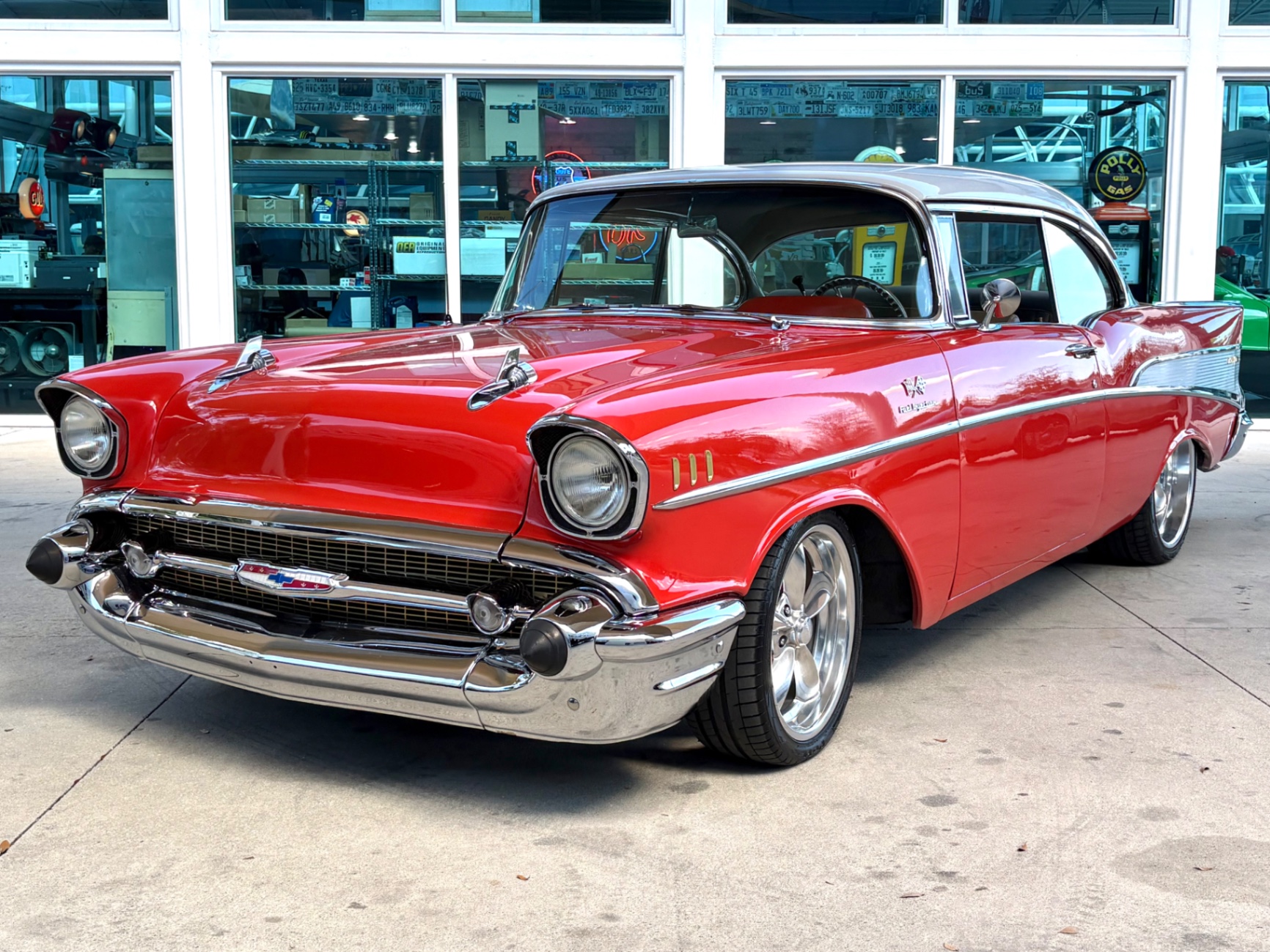
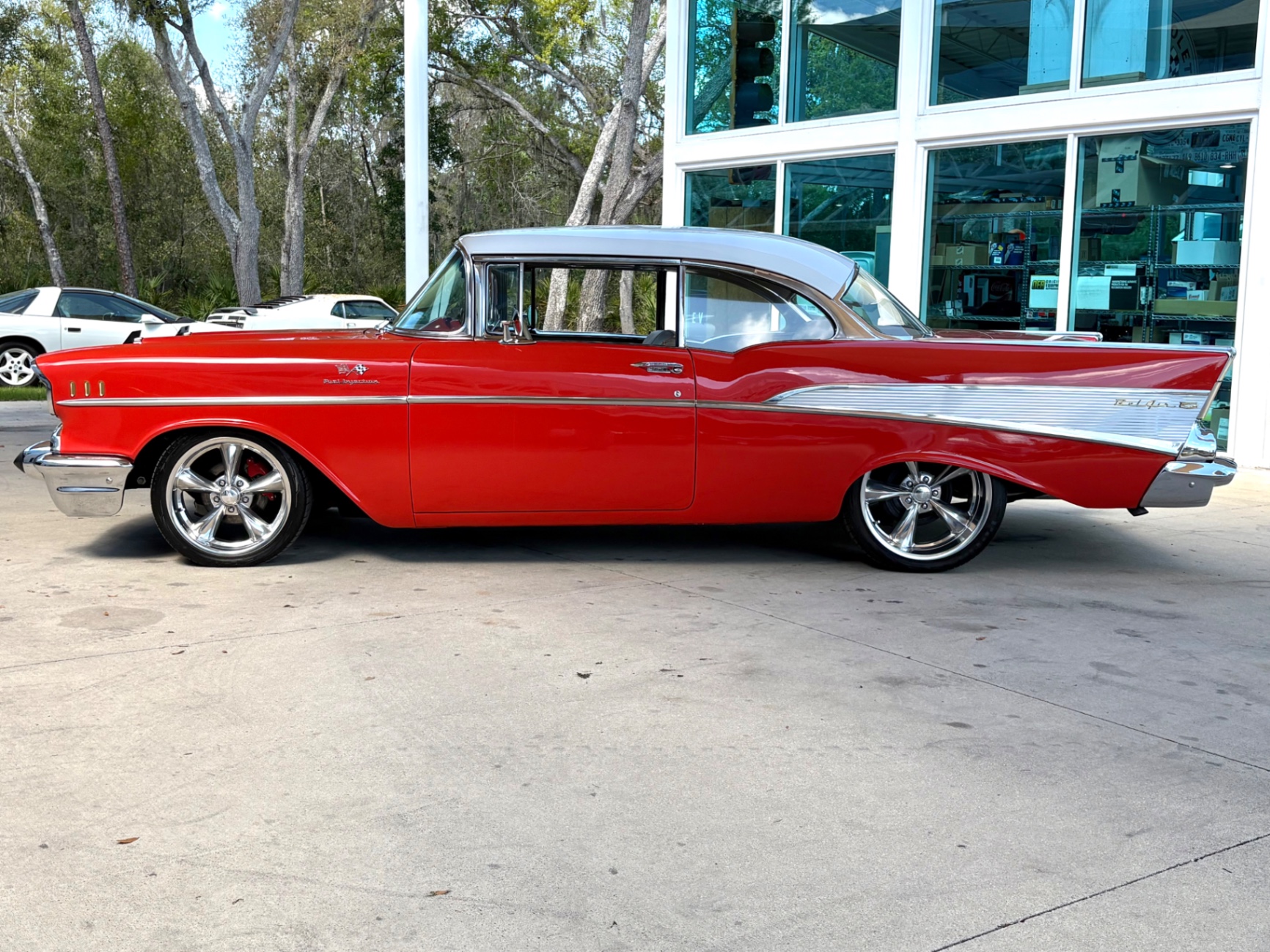
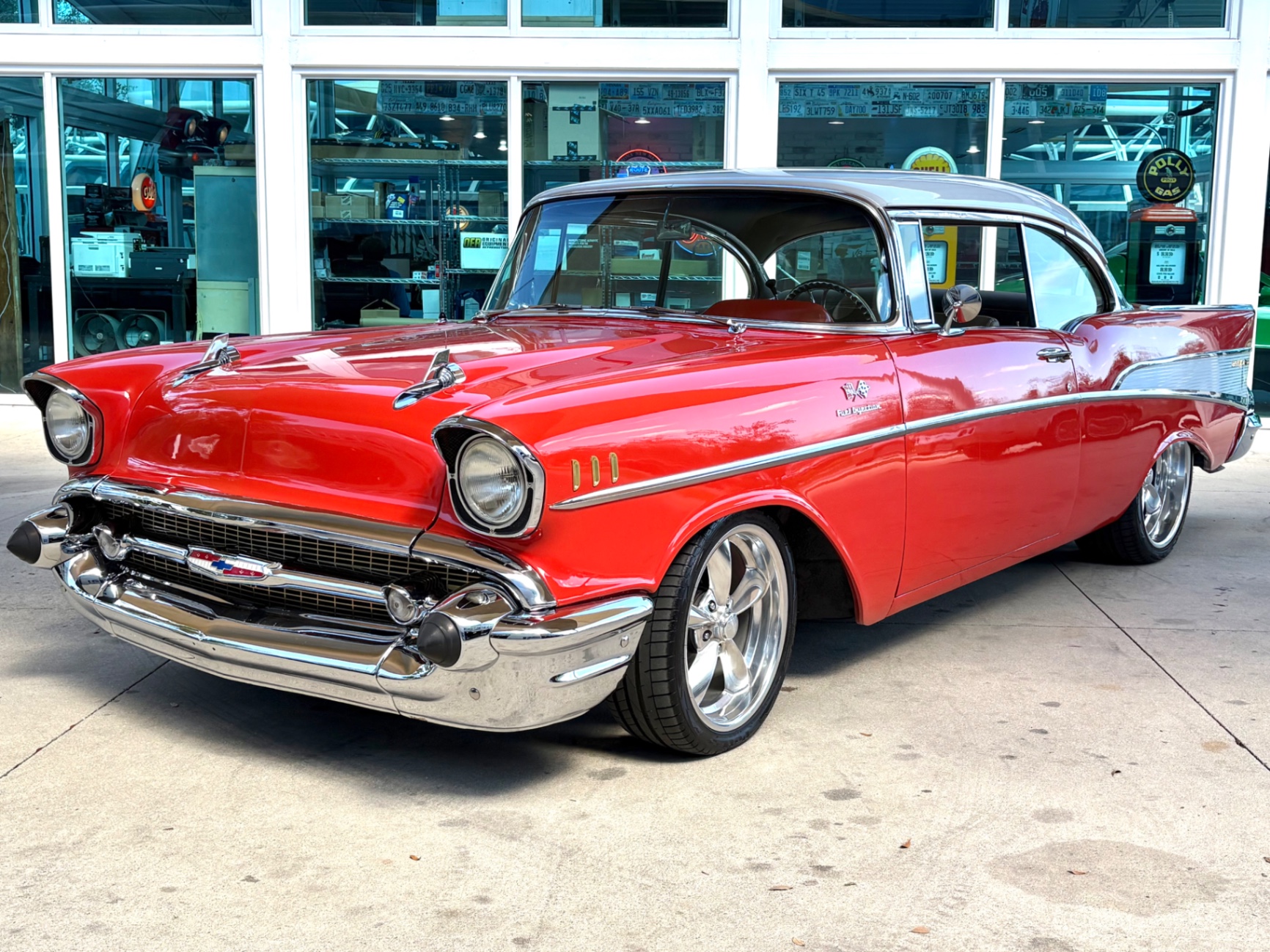
The 1957 Chevrolet Bel Air is one of the most recognized automobiles ever built in America. That is not hyperbole — it is a fact backed by decades of collector demand, cultural presence, and a design language so complete that it has never gone out of style. But this particular 1957 Chevrolet Bel Air is not a museum piece. It has been built to be driven, and built well. It sits on a staggered Billet Specialties wheel package, stops with power disc brakes at all four corners. This is the kind of build that took real money and real decisions — not a parts-bin special, but a cohesive pro-touring build on one of the most desirable platforms in American collector car history.
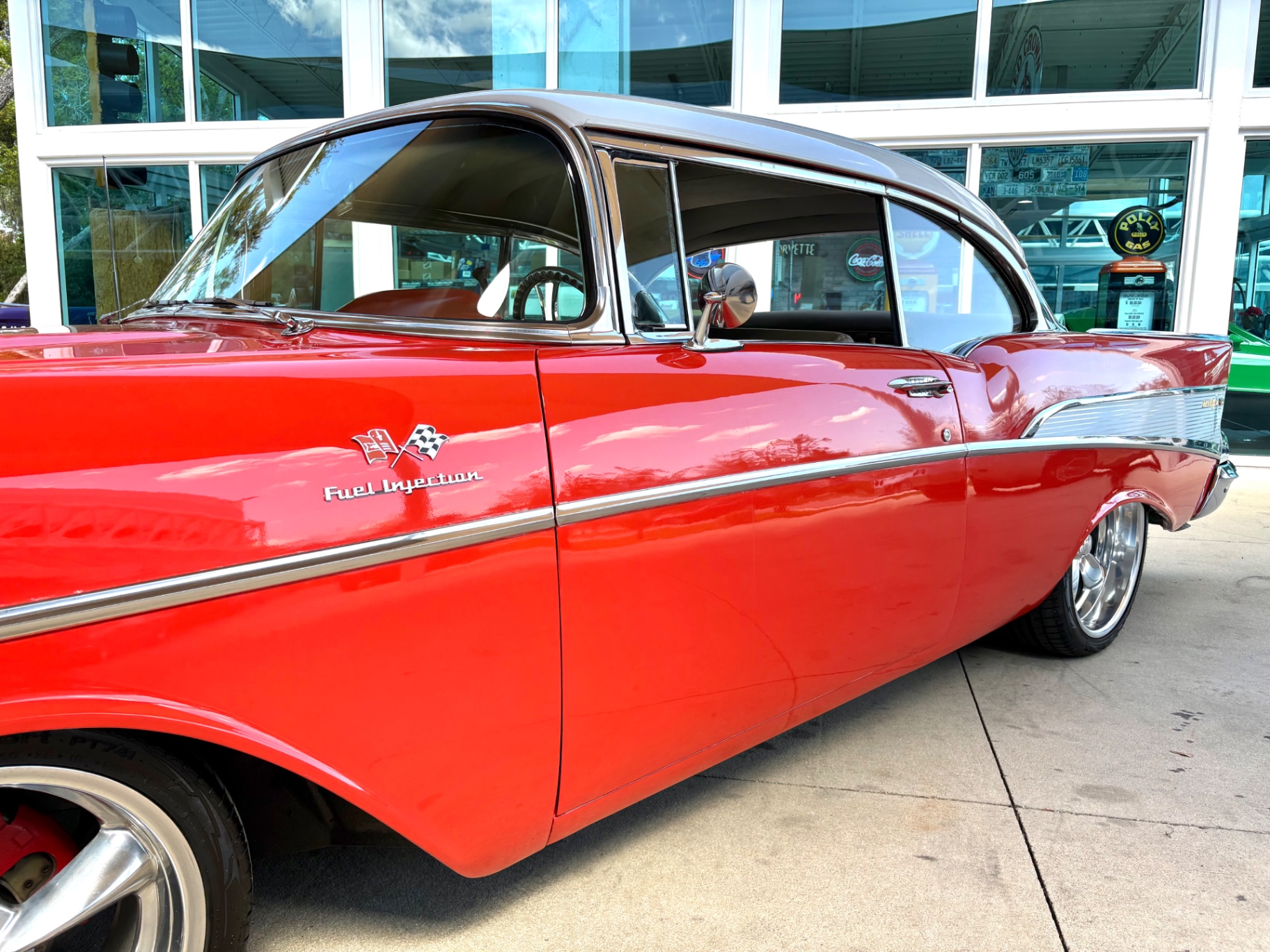
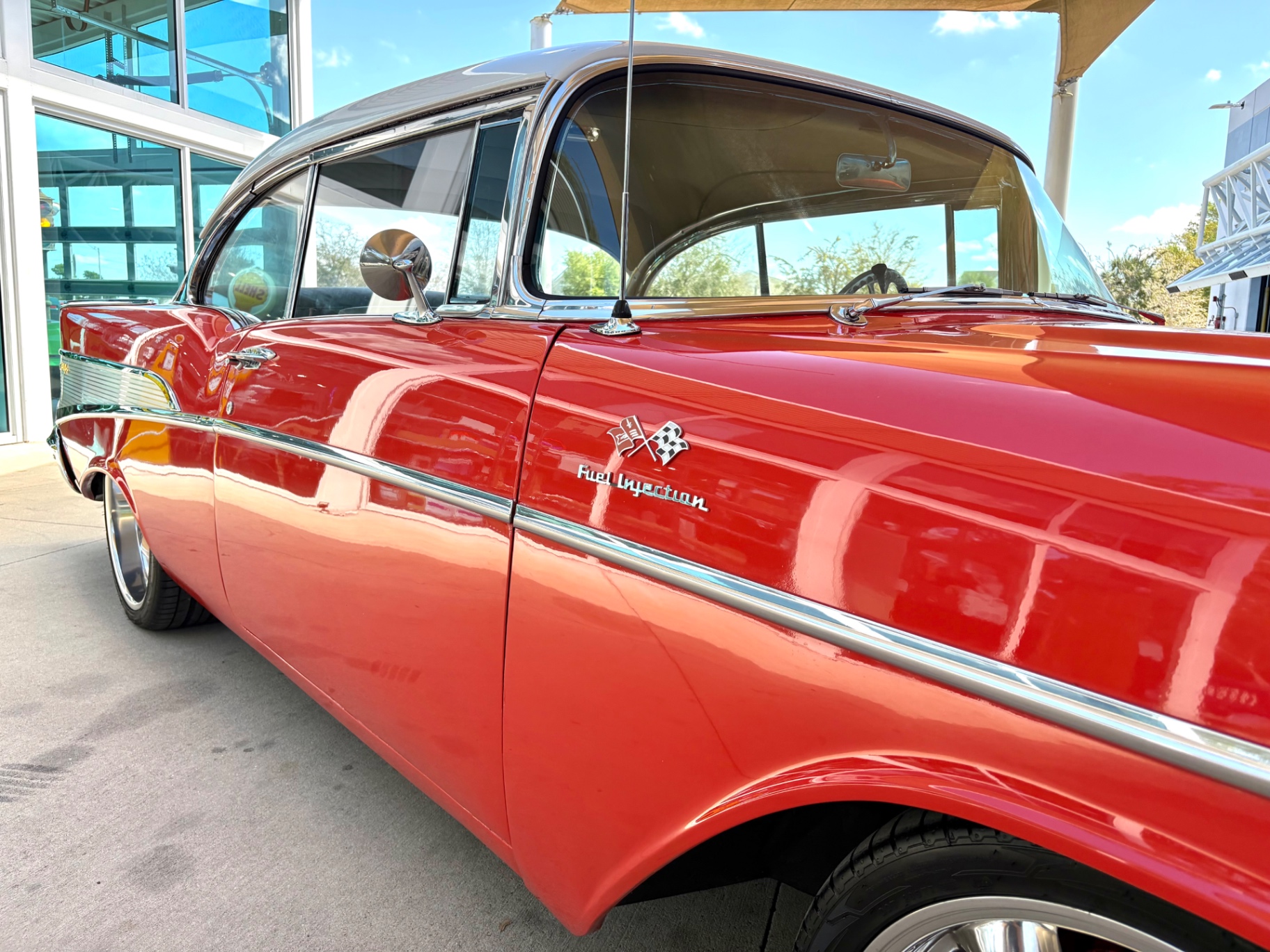
To understand why the 1957 Bel Air commands the attention it does, you have to go back to what Chevrolet accomplished that model year. The '57 was the final year of the classic tri-five generation — the third and most refined iteration of the 1955-1957 run. Chevrolet sold over 1.5 million vehicles in 1957, and the Bel Air was the top trim level in the passenger car lineup, sitting above the Two-Ten and One-Fifty. The Bel Air brought more exterior chrome, richer interior appointments, and the broadest option list of the three. That year, Chevrolet also introduced the Rochester fuel injection system as a factory option — one of the first American production cars to offer it — and offered the 283 cubic inch small block in multiple states of tune. The "fuelie" 283 with one horsepower per cubic inch became legendary. This car wears a fuel injection badge, a nod to that heritage, though the engine installed is a 350 cubic inch small block V8 with dual quad carburetors — a setup that pays homage to the performance spirit of the original while delivering reliable, tuneable power.
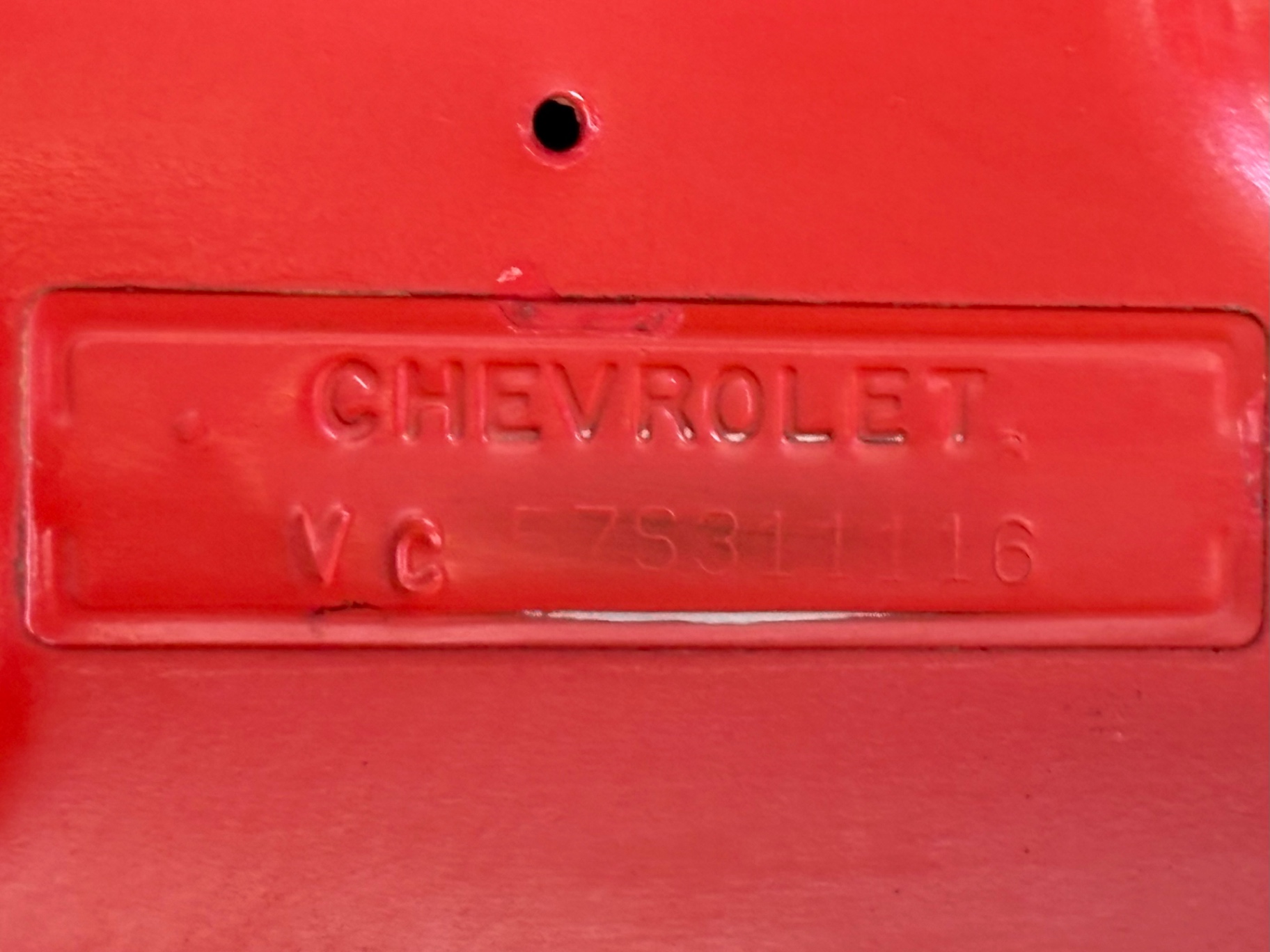
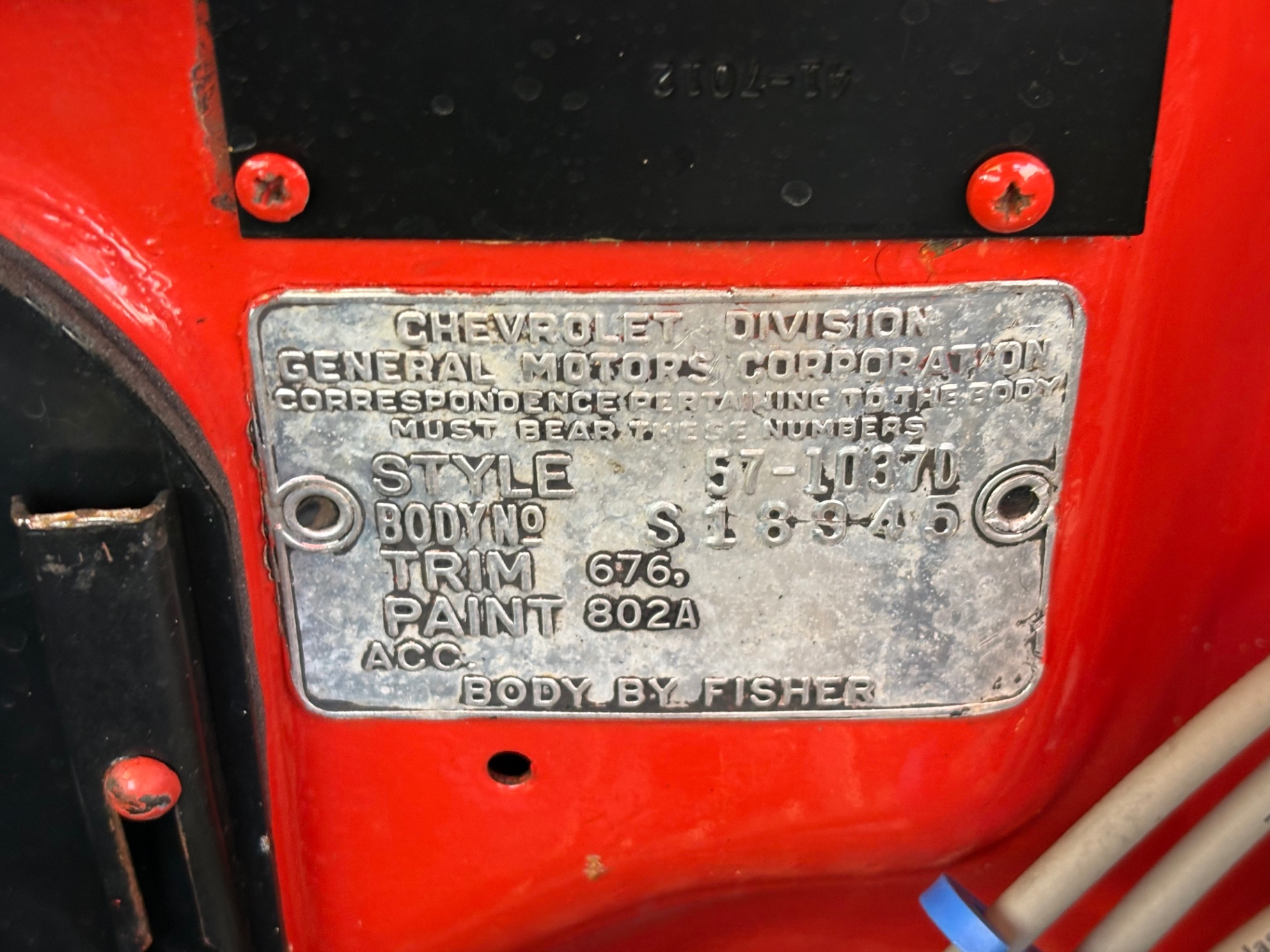
The VIN on this car decodes to confirm it was assembled in 1957, is a Bel Air, and was built at the St. Louis assembly plant — one of several GM facilities producing Bel Airs that year. The "S" in the VIN sequence confirms St. Louis assembly, which is a detail worth knowing for documentation purposes.
Features List
- 350 V8 with dual quad carburetors - Double hump cylinder heads (Camel hump / fuelie heads) - Polished valve covers - Red painted engine bay - Aluminum radiator - Power steering - Power front disc brakes - Dual exhaust - Air conditioning - Tilt steering column - Custom Le Carra steering wheel - Leather and vinyl interior in gray - Aftermarket stereo - Billet Specialties wheels — 18-inch front, 20-inch rear - Two-tone red and gray roof - Chrome bumpers front and rear - Fuel injection badge - Clean undercarriage
Mechanical
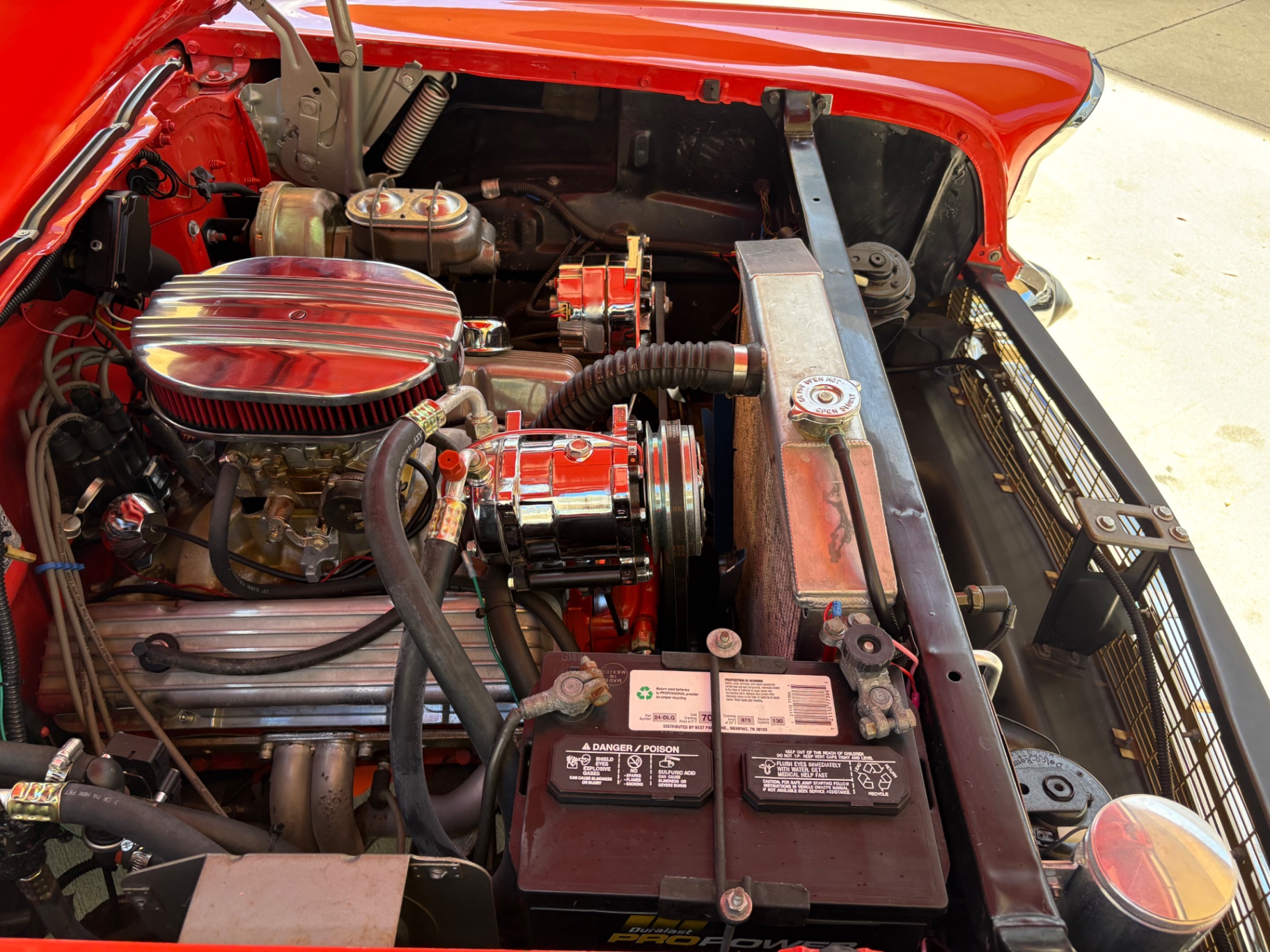
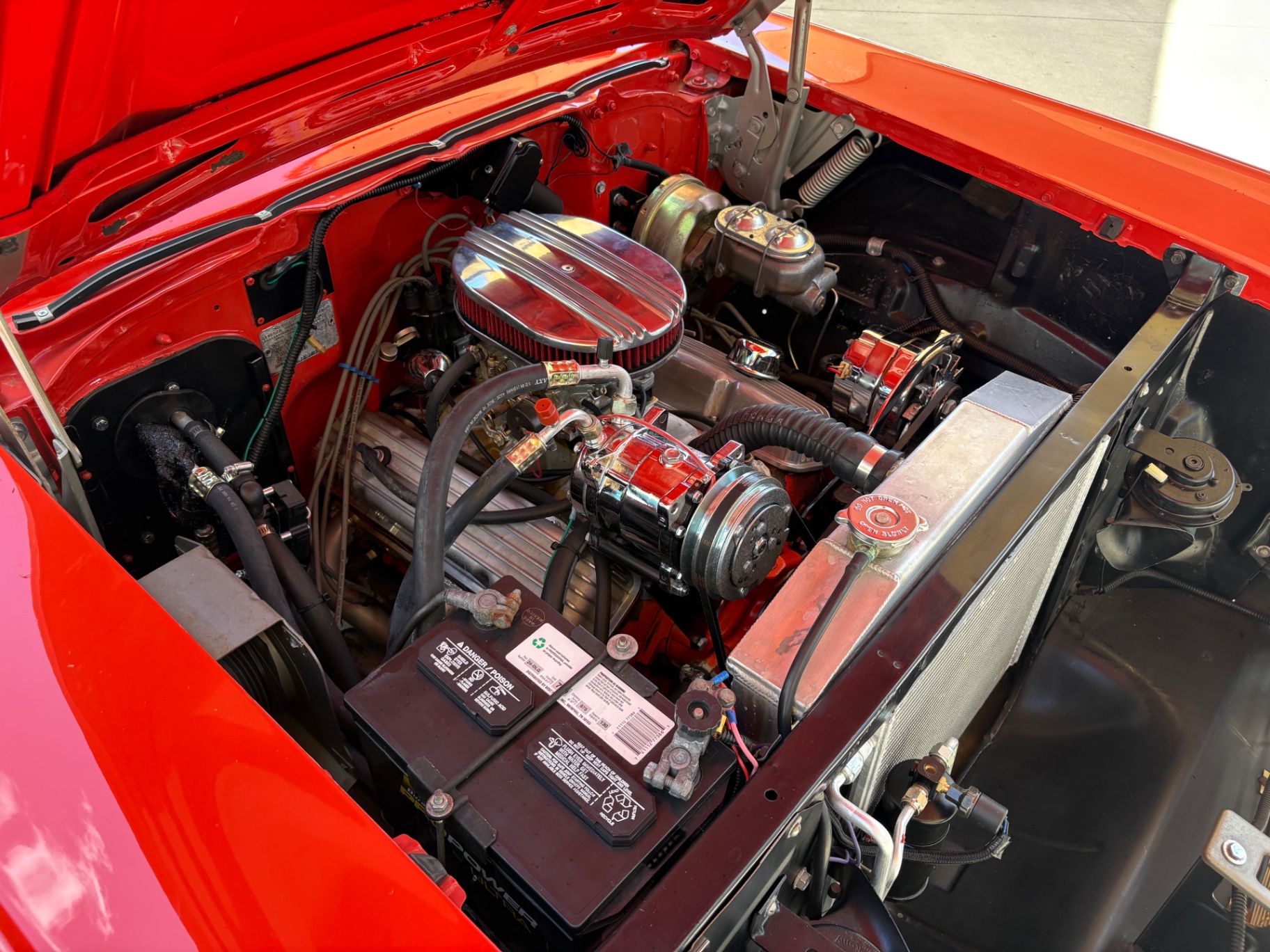
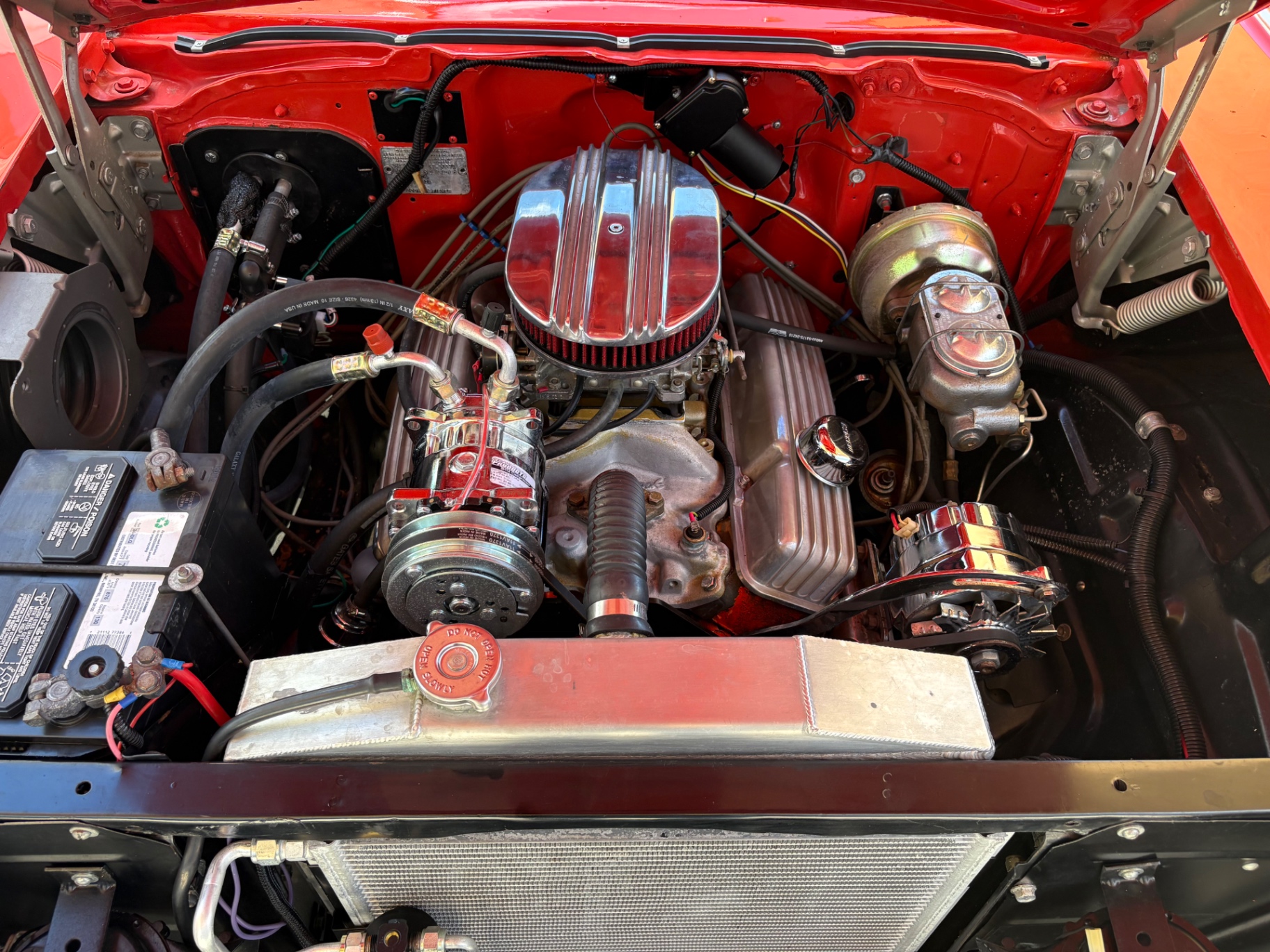
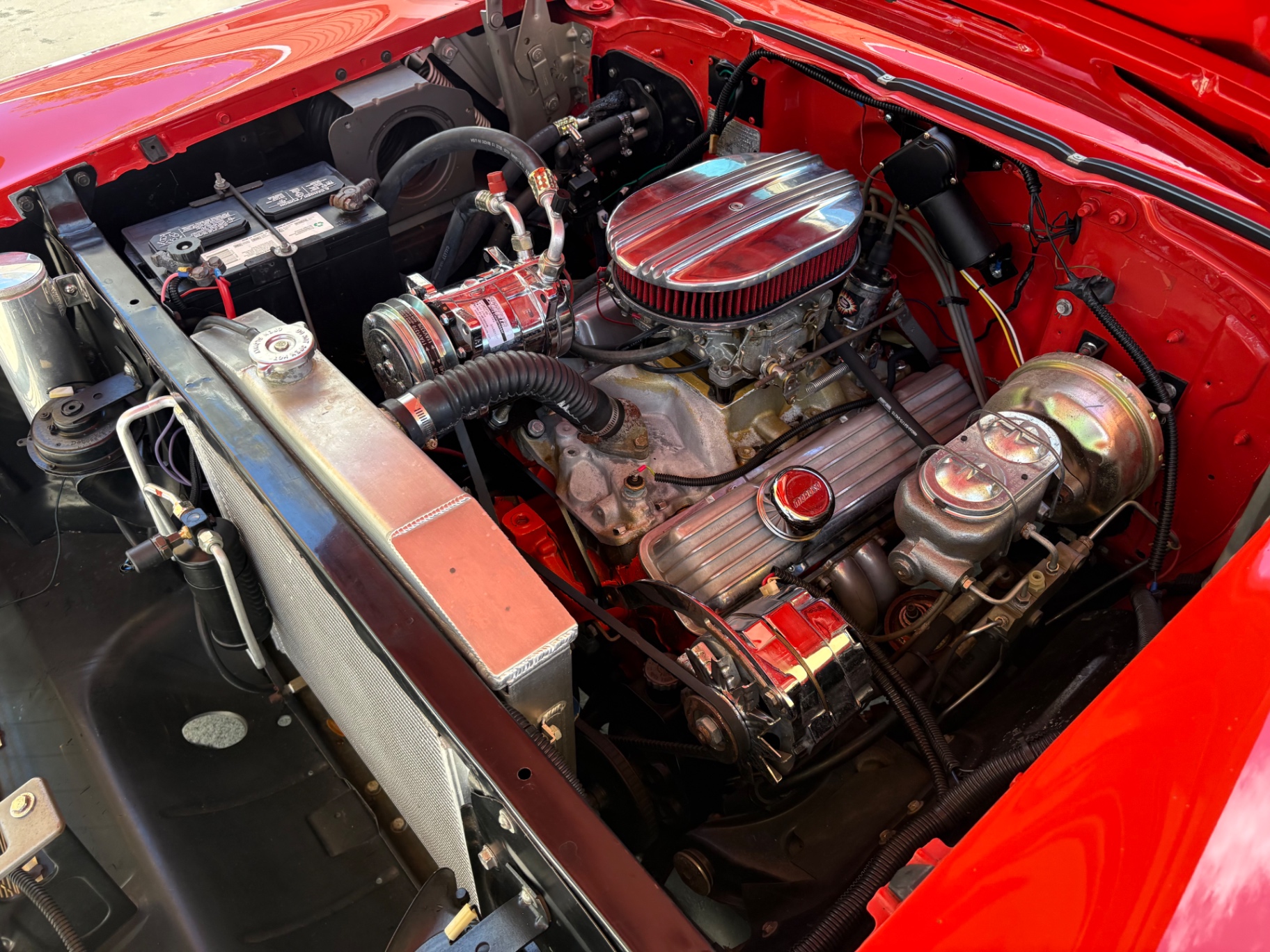
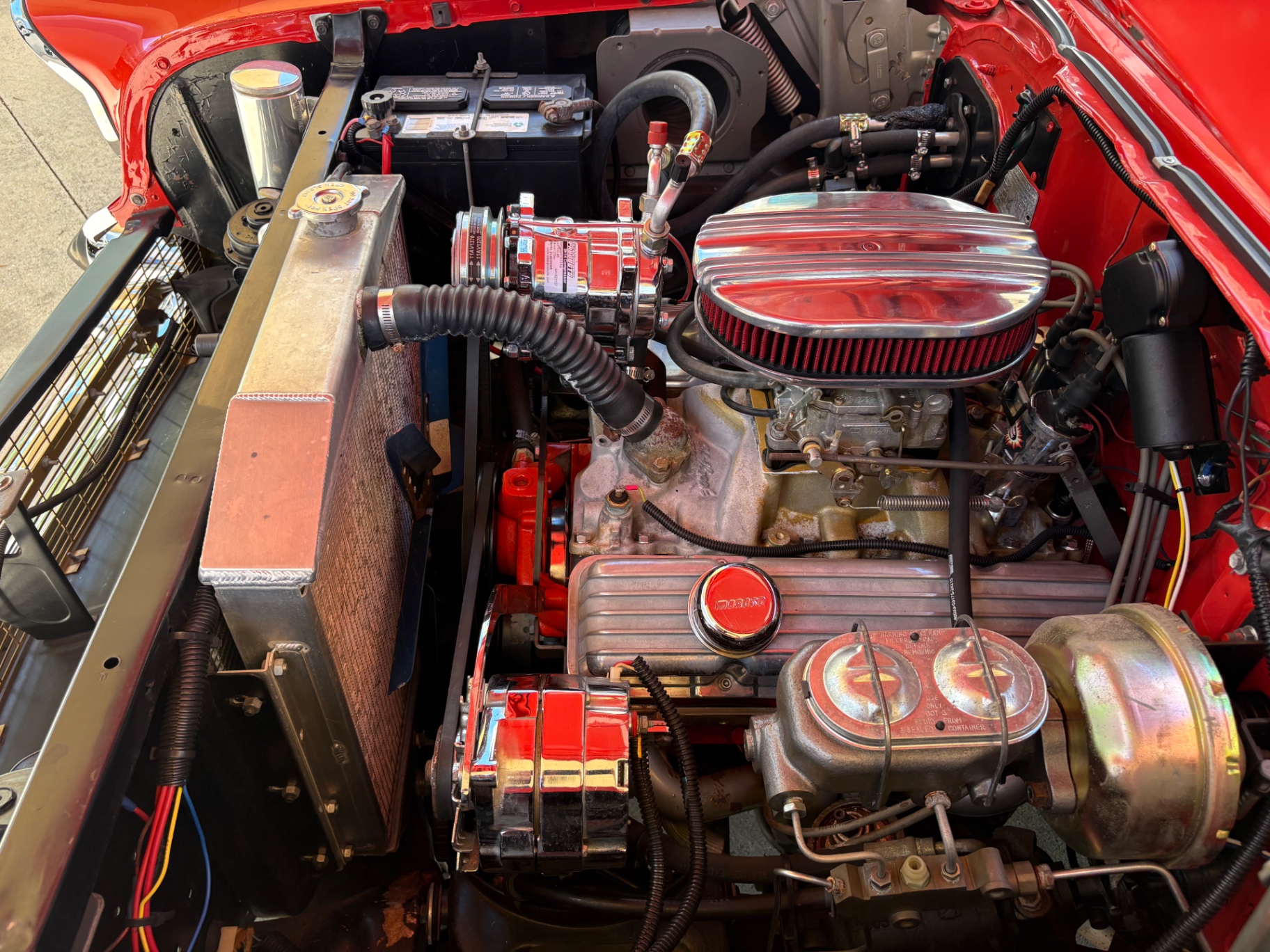
The heart of this 1957 Chevrolet Bel Air is a 350 cubic inch small block Chevrolet V8. This configuration is a popular performance setup for hot rods. Sitting beneath the carb is a set of double hump cylinder heads — commonly called fuelie heads or camel hump heads — which are identified by the two bumps visible on the end of the casting. These heads feature larger ports and better flow characteristics than the standard small block heads of the era, and they remain highly regarded for performance builds to this day. Finding them on a finished build like this one is a detail that separates informed builds from uninformed ones.
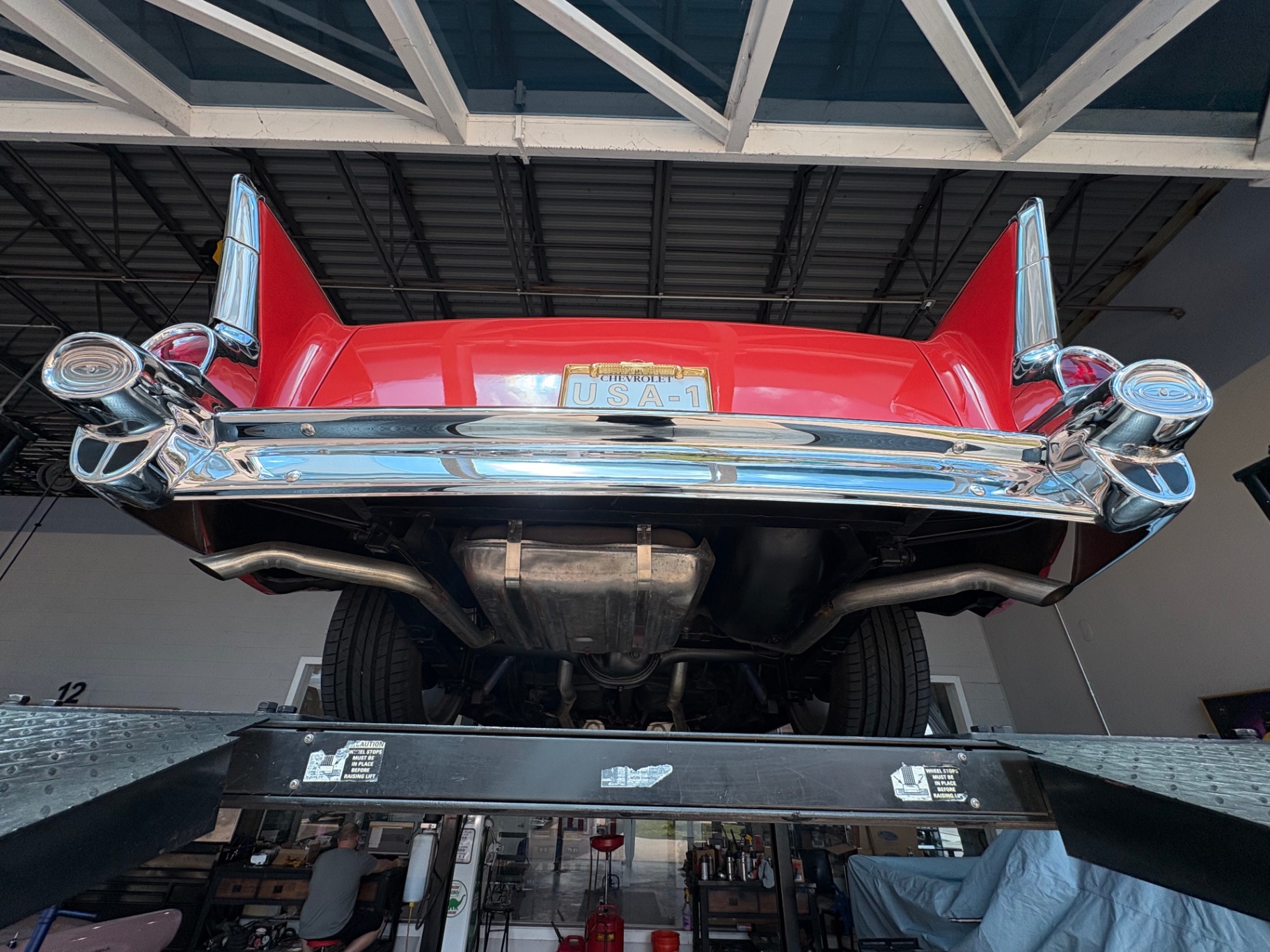
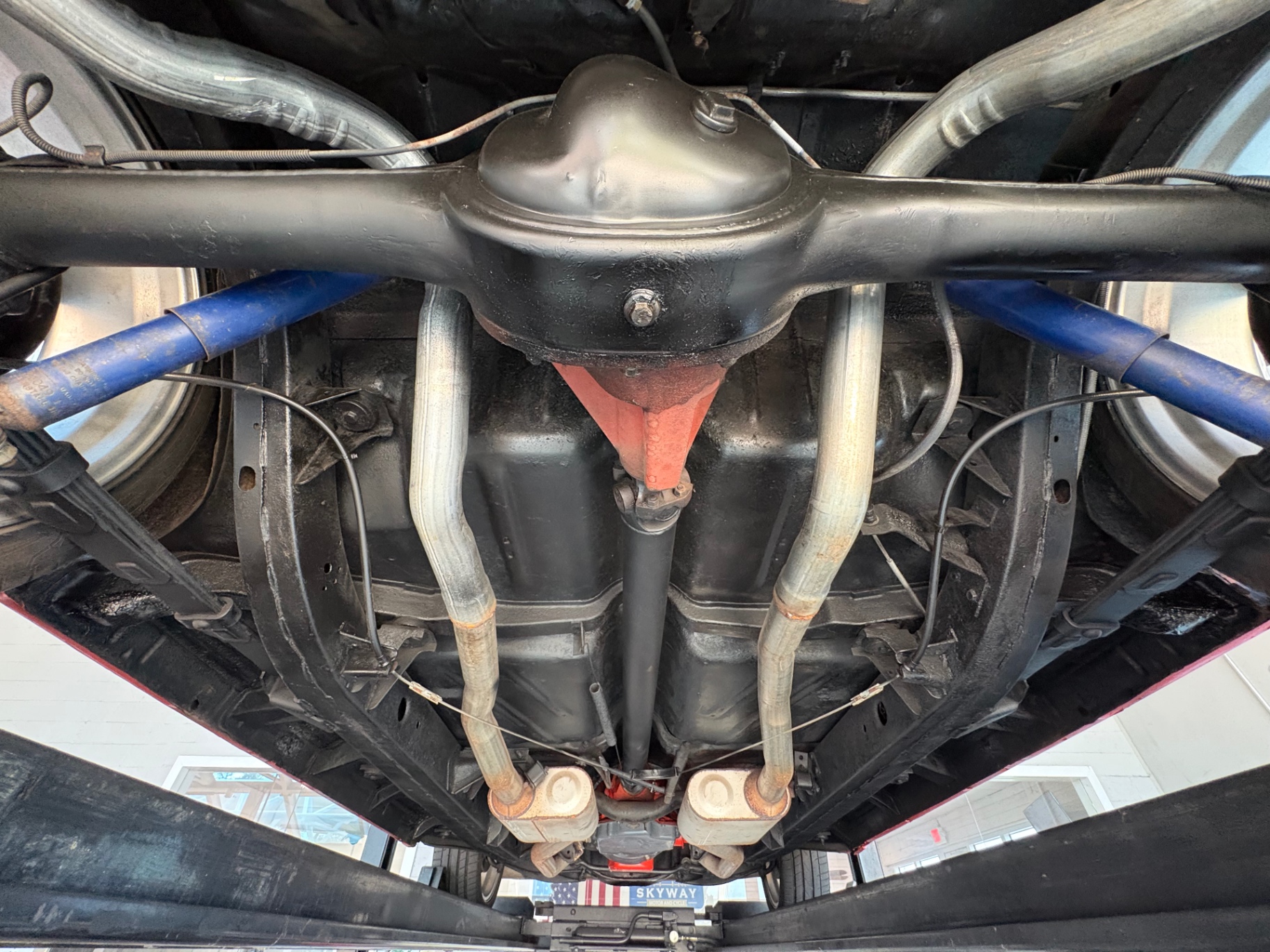
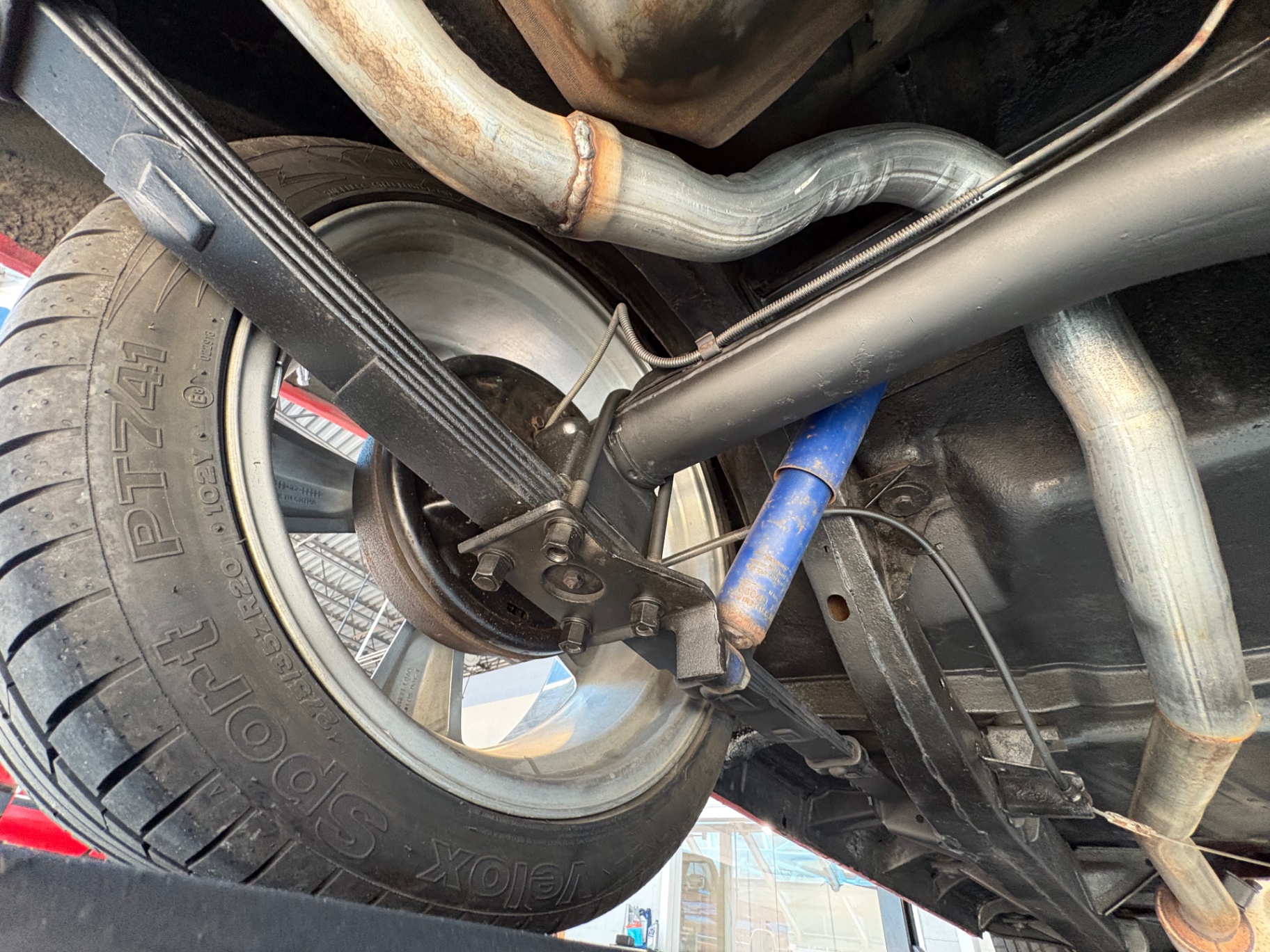
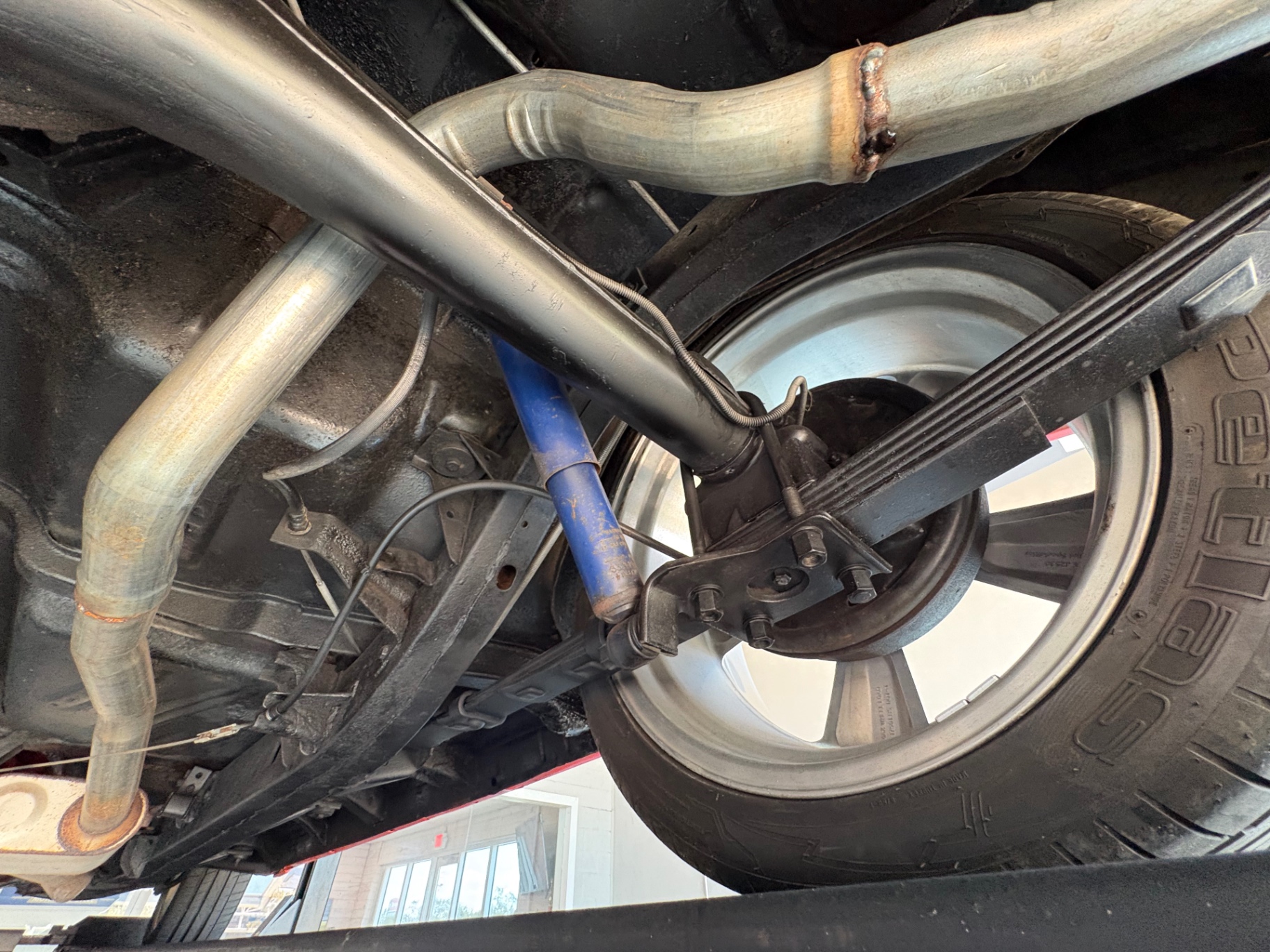
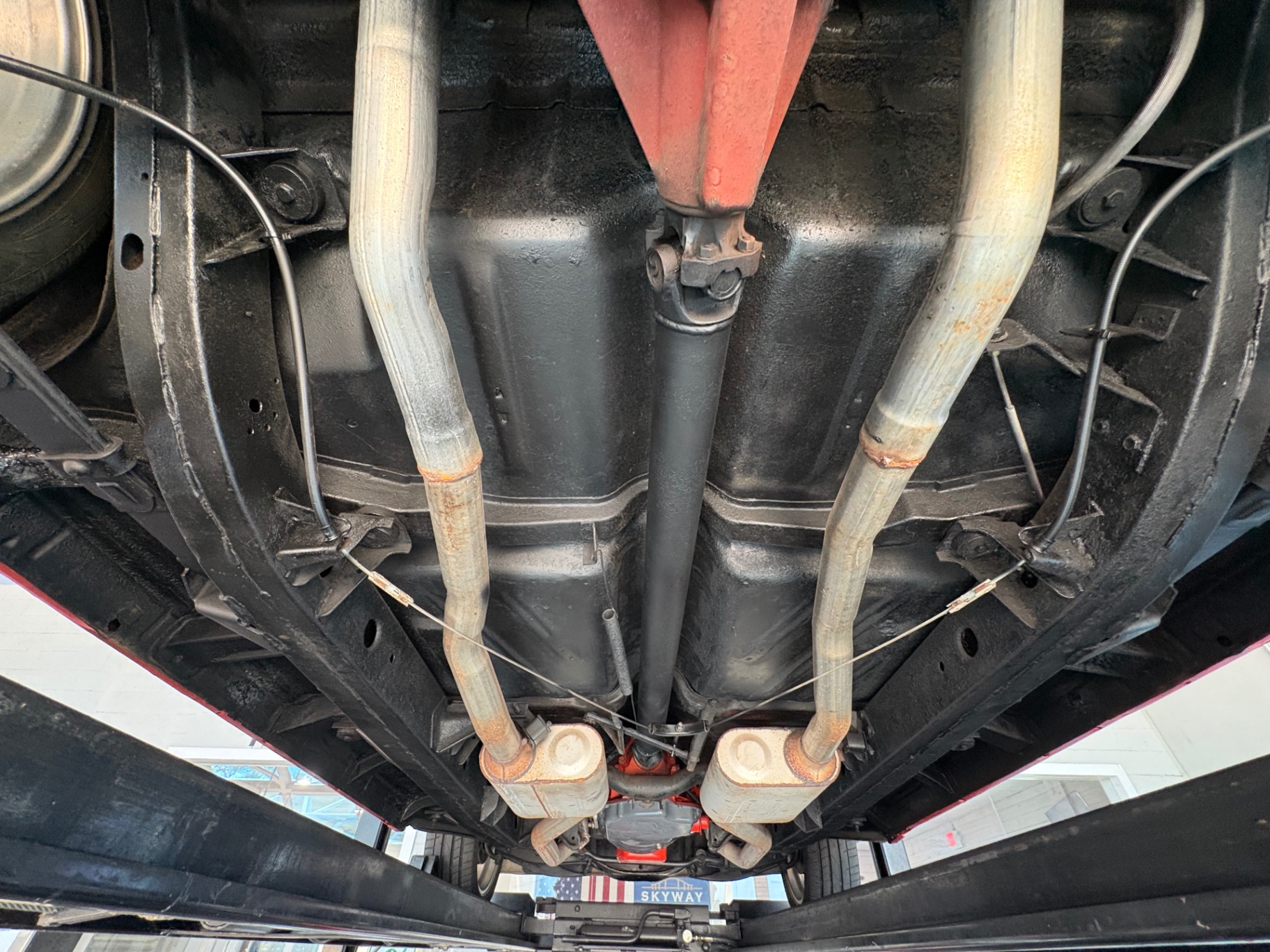
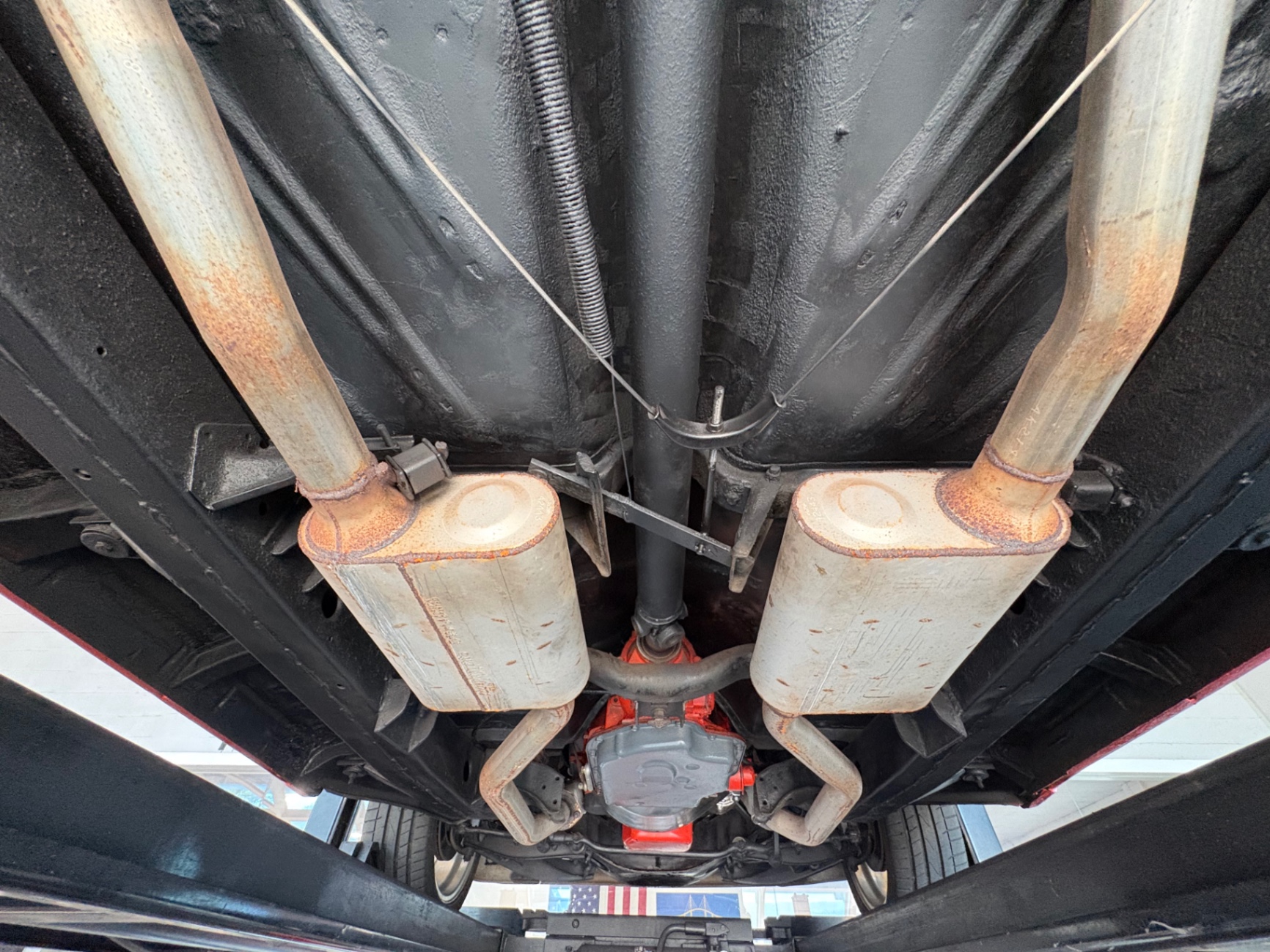
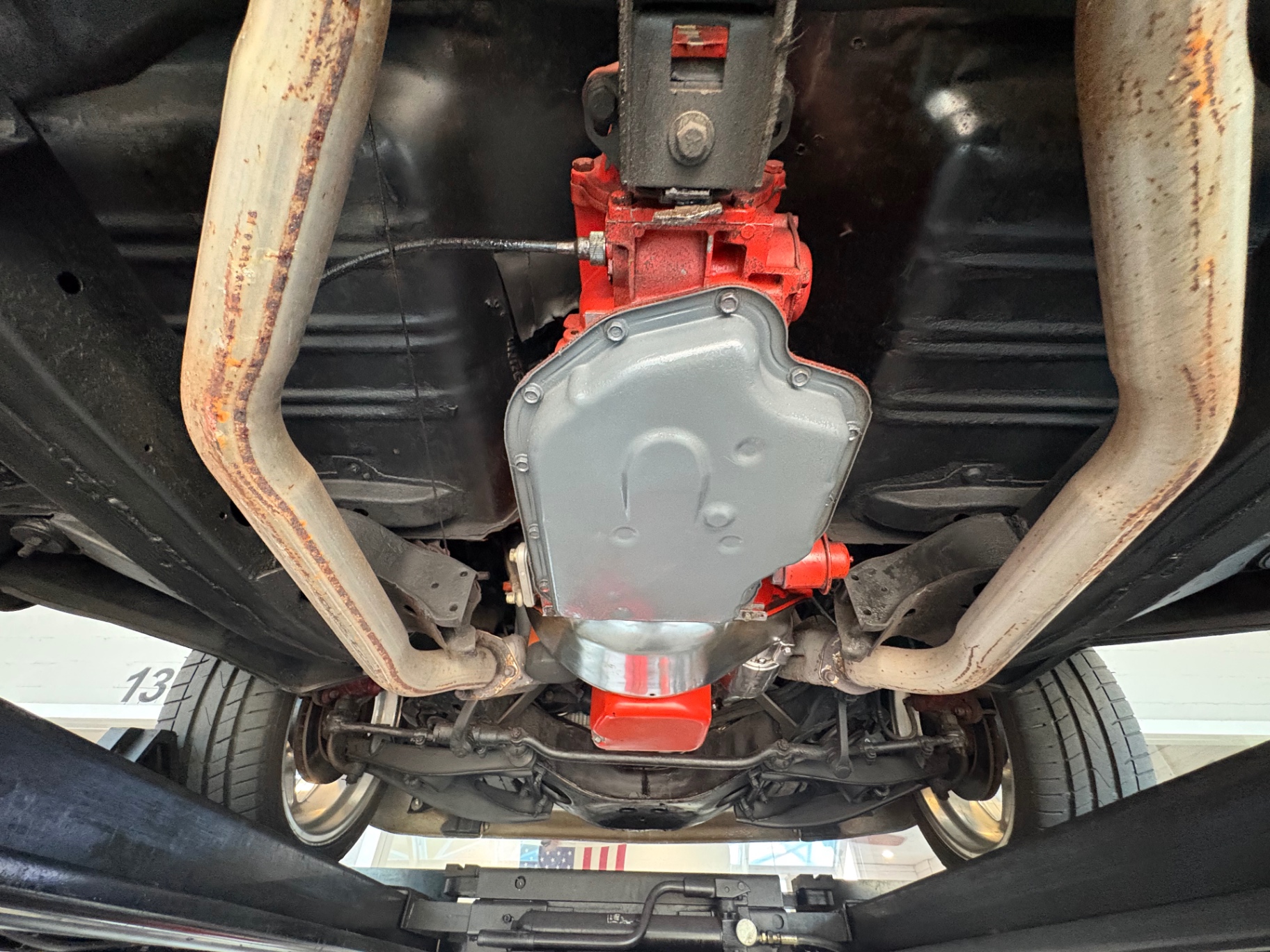
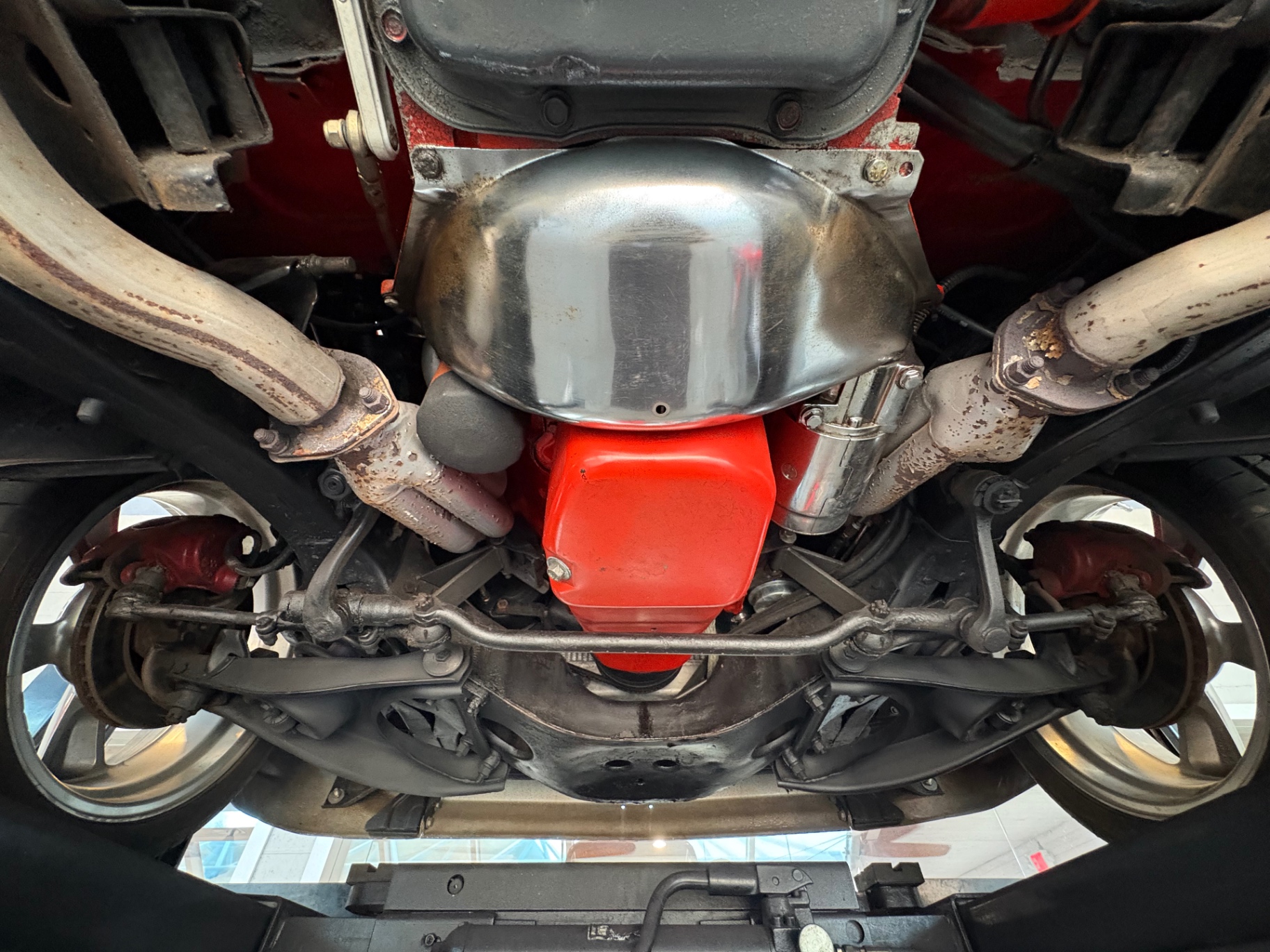
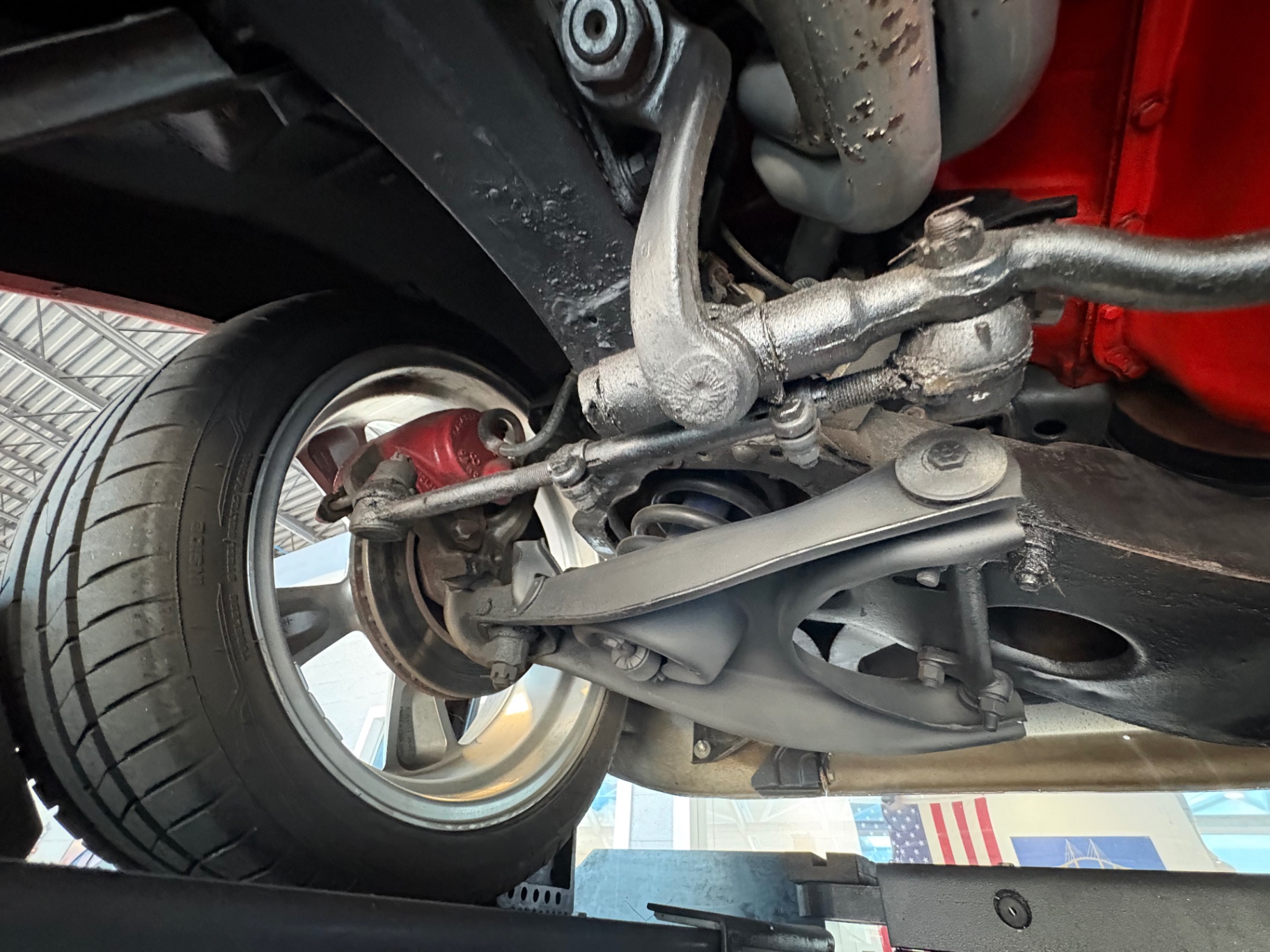
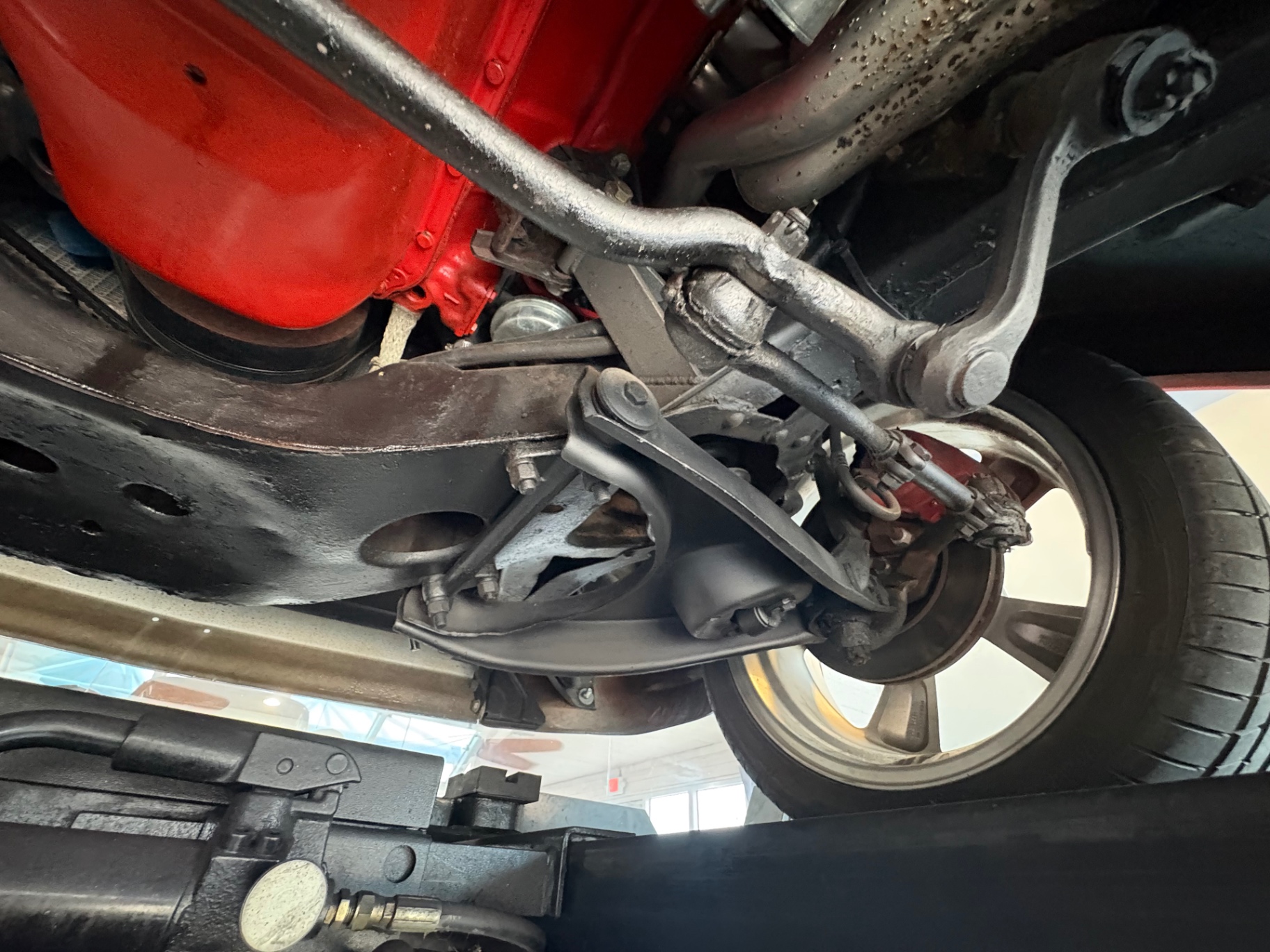
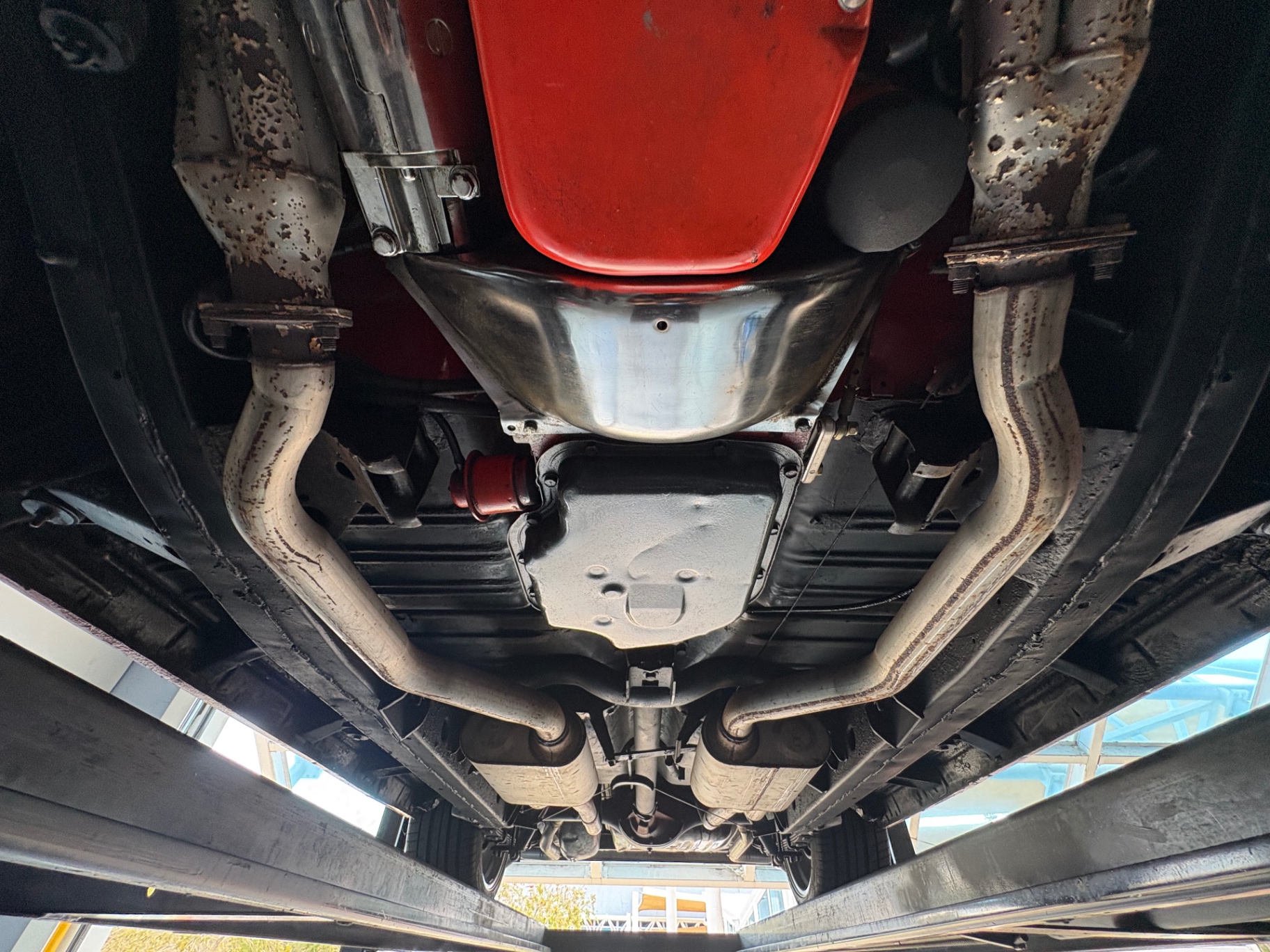
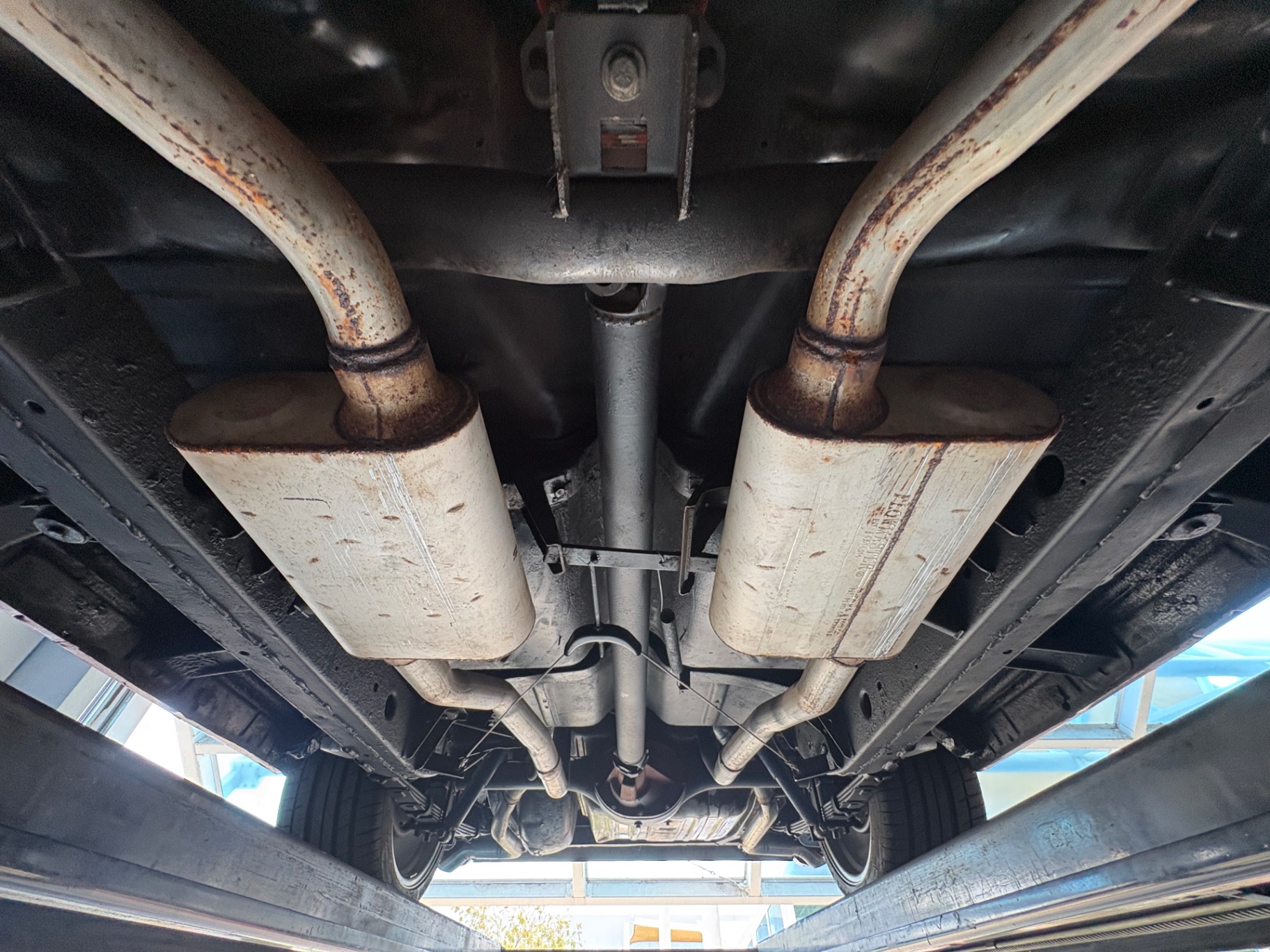
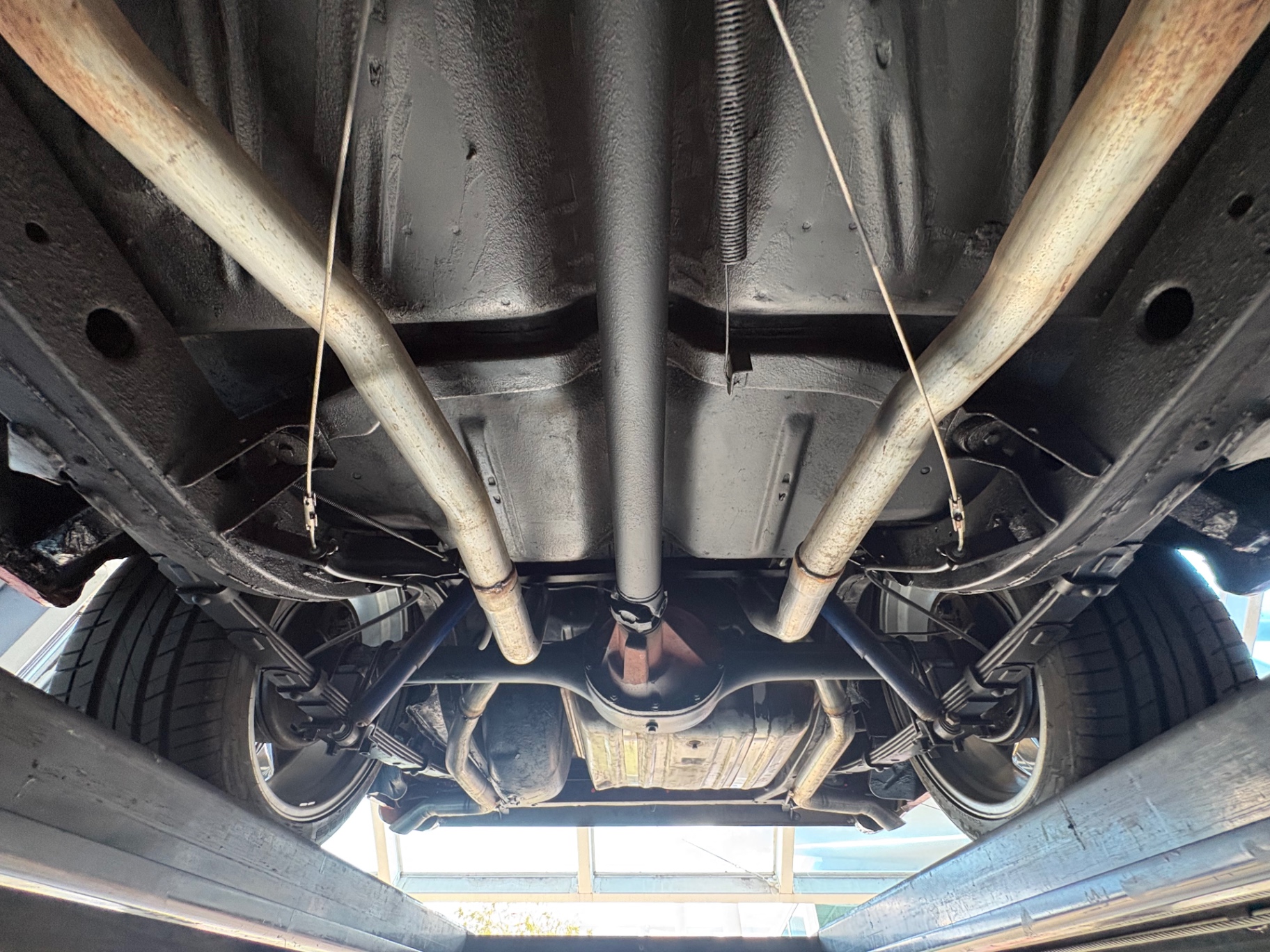
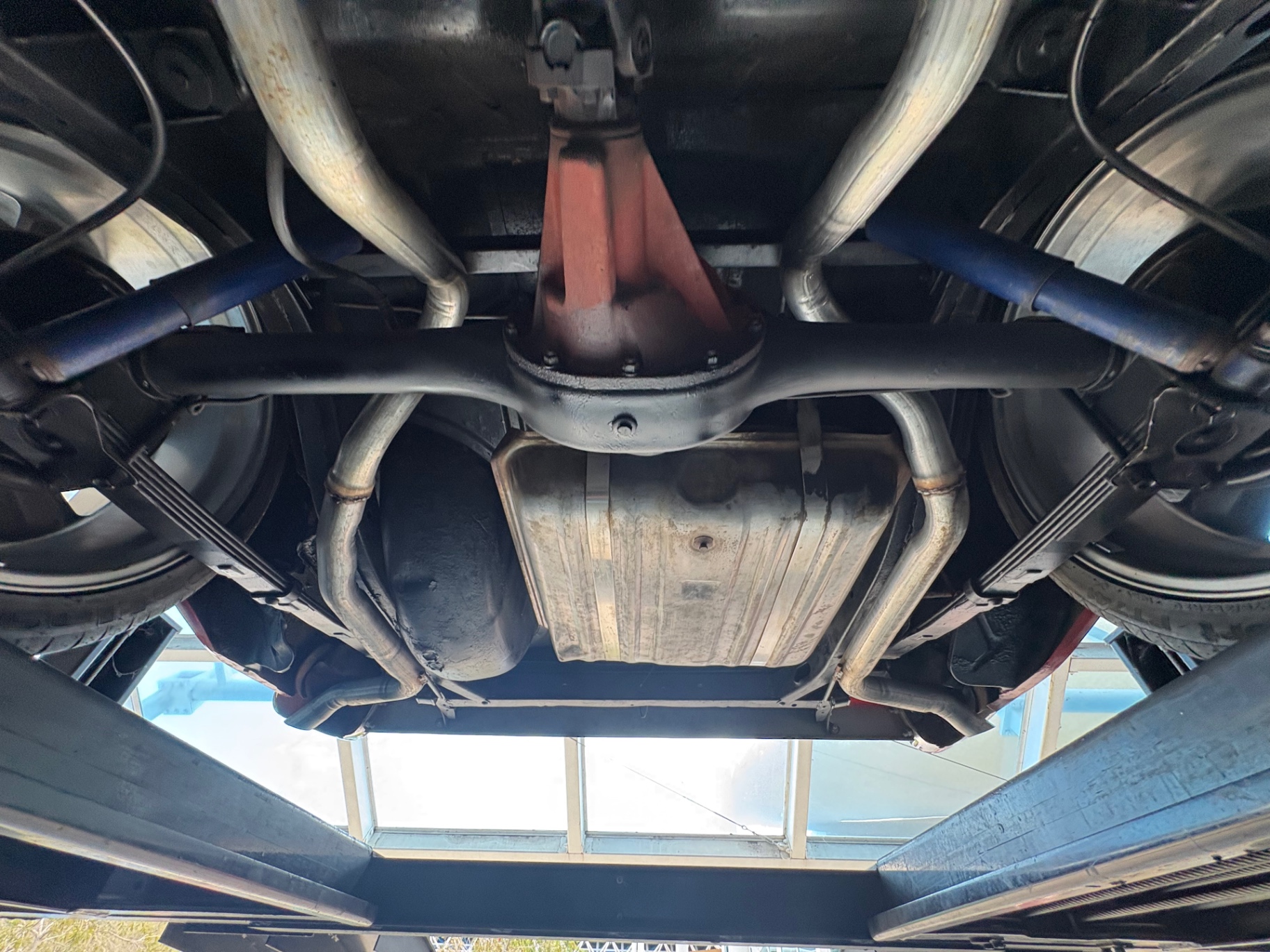
The engine bay has been finished in red to match the car's exterior, and the polished valve covers and chrome accessories give the compartment a clean, intentional look. Cooling is handled by an aluminum radiator, which is a practical upgrade over the original copper-brass unit — aluminum transfers heat more efficiently and is significantly lighter. Power steering makes the car manageable at parking lot speeds without killing road feel at highway speeds, and the power front disc brake conversion is the right call on a car that gets driven. The original drum brake setup on a 1957 Chevrolet Bel Air was not engineered for modern traffic or the speeds this engine is capable of producing. The disc brake conversion addresses that directly. Dual exhaust exits cleanly at the rear, and the undercarriage photo confirms this car has been maintained with care — no rot, no patchwork, no surprises.
Interior
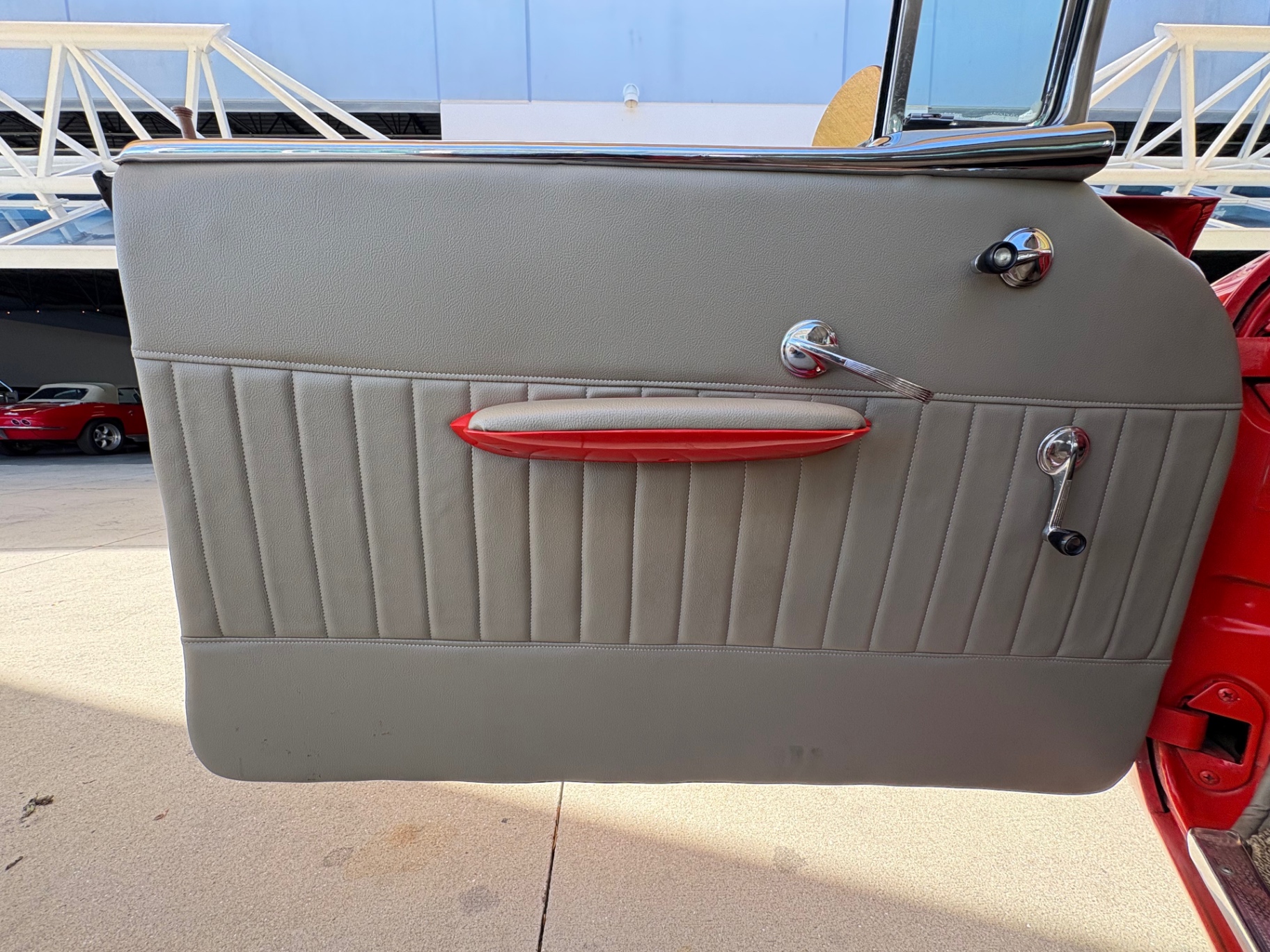
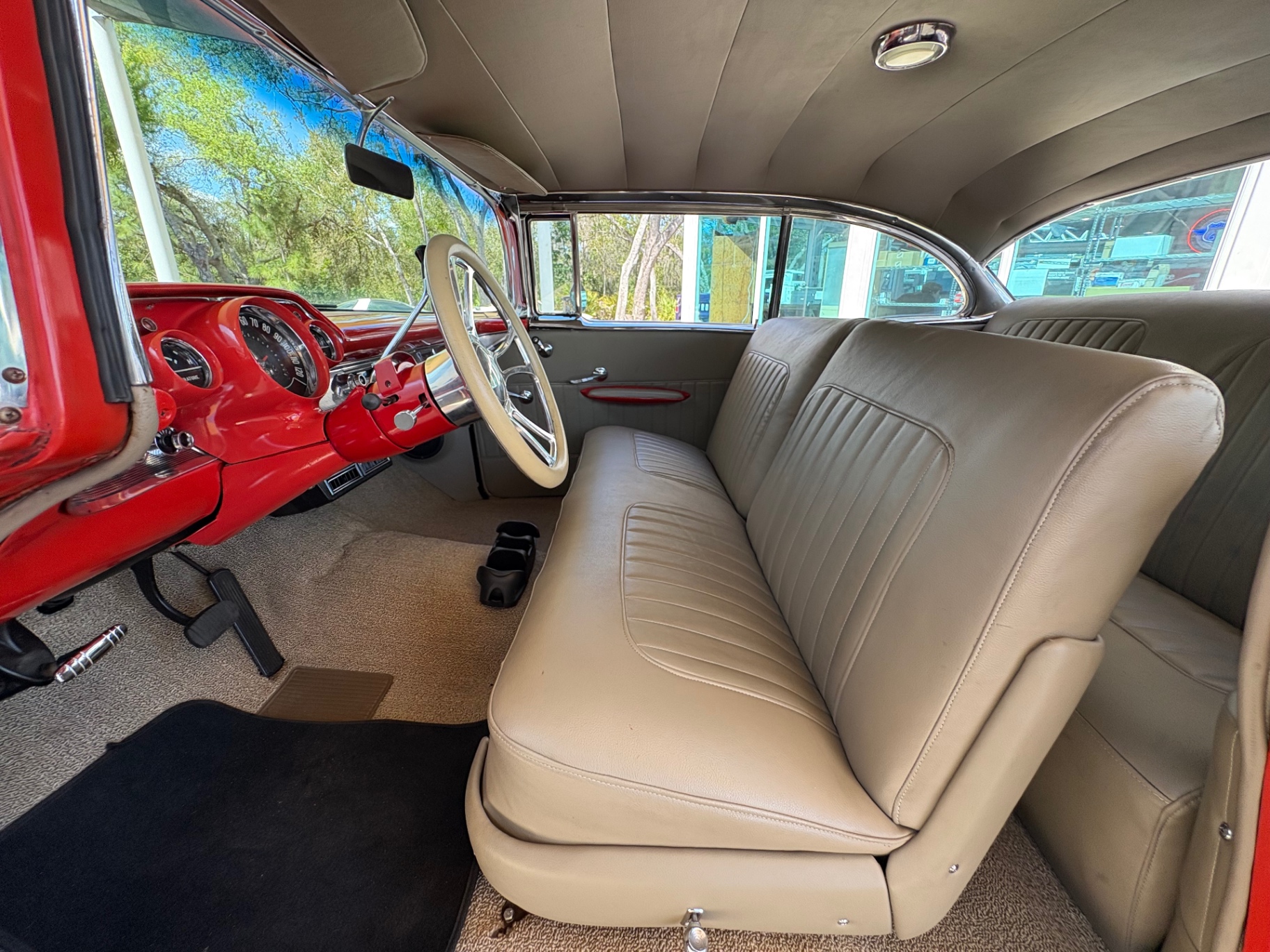
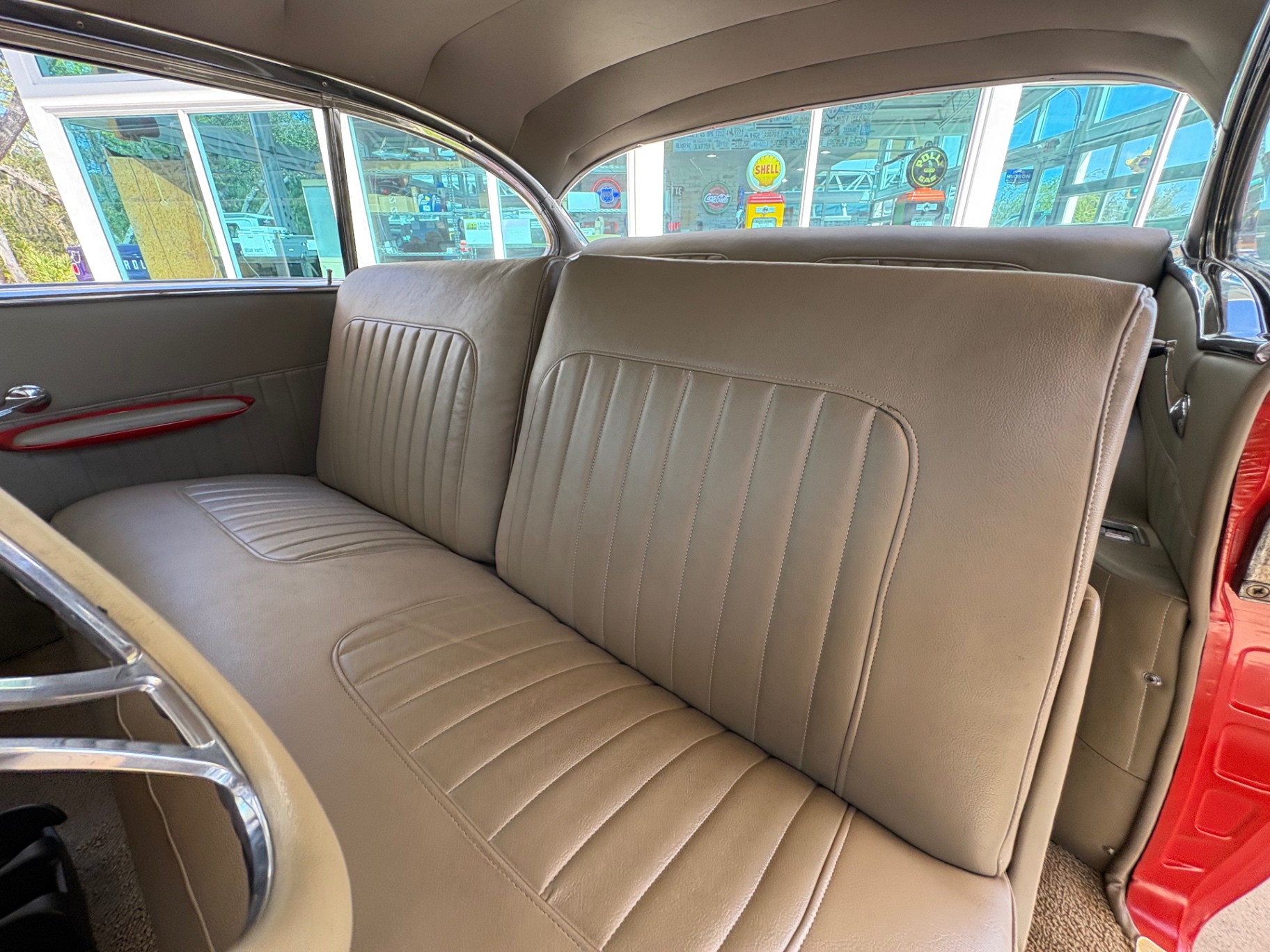
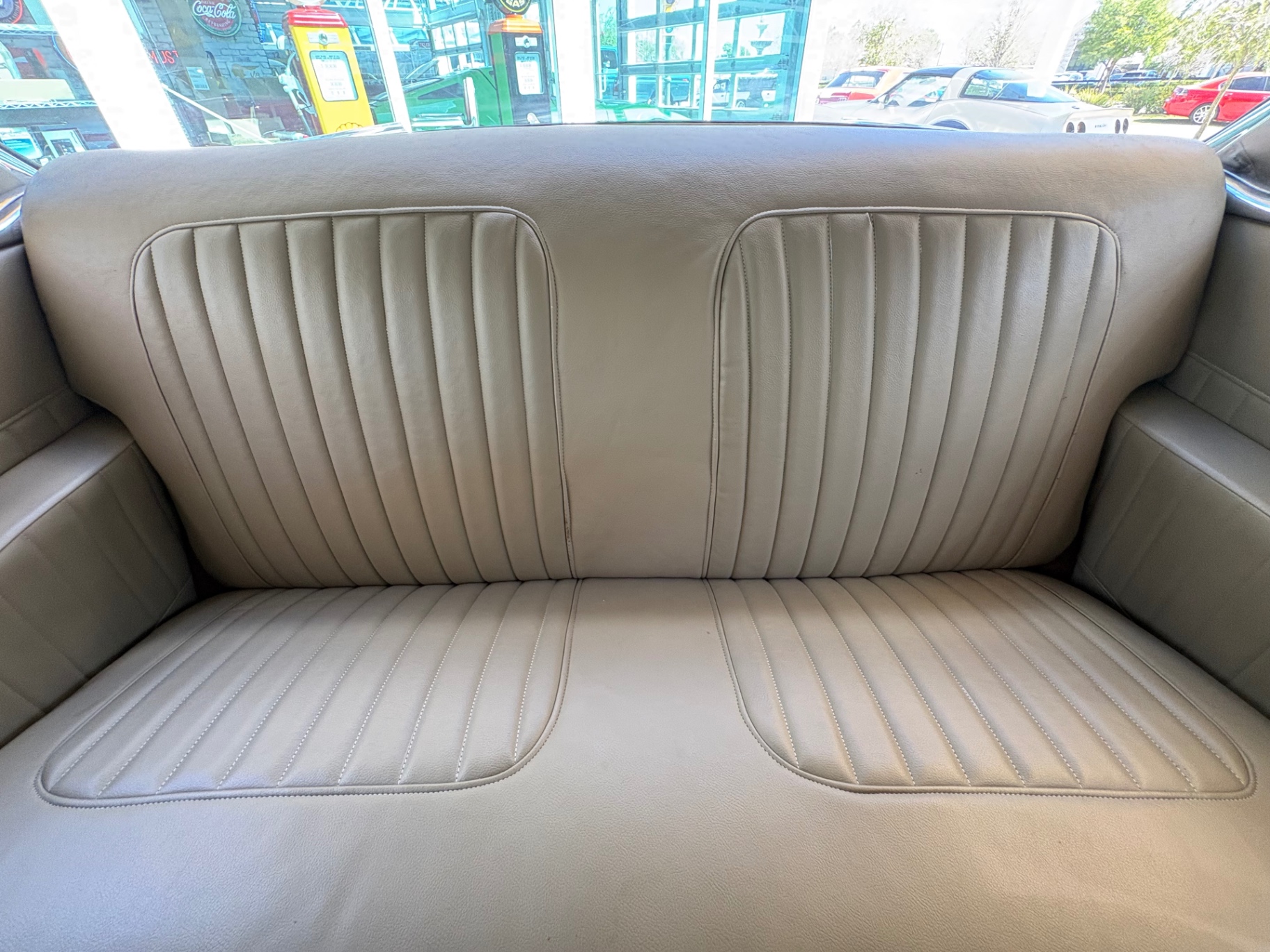
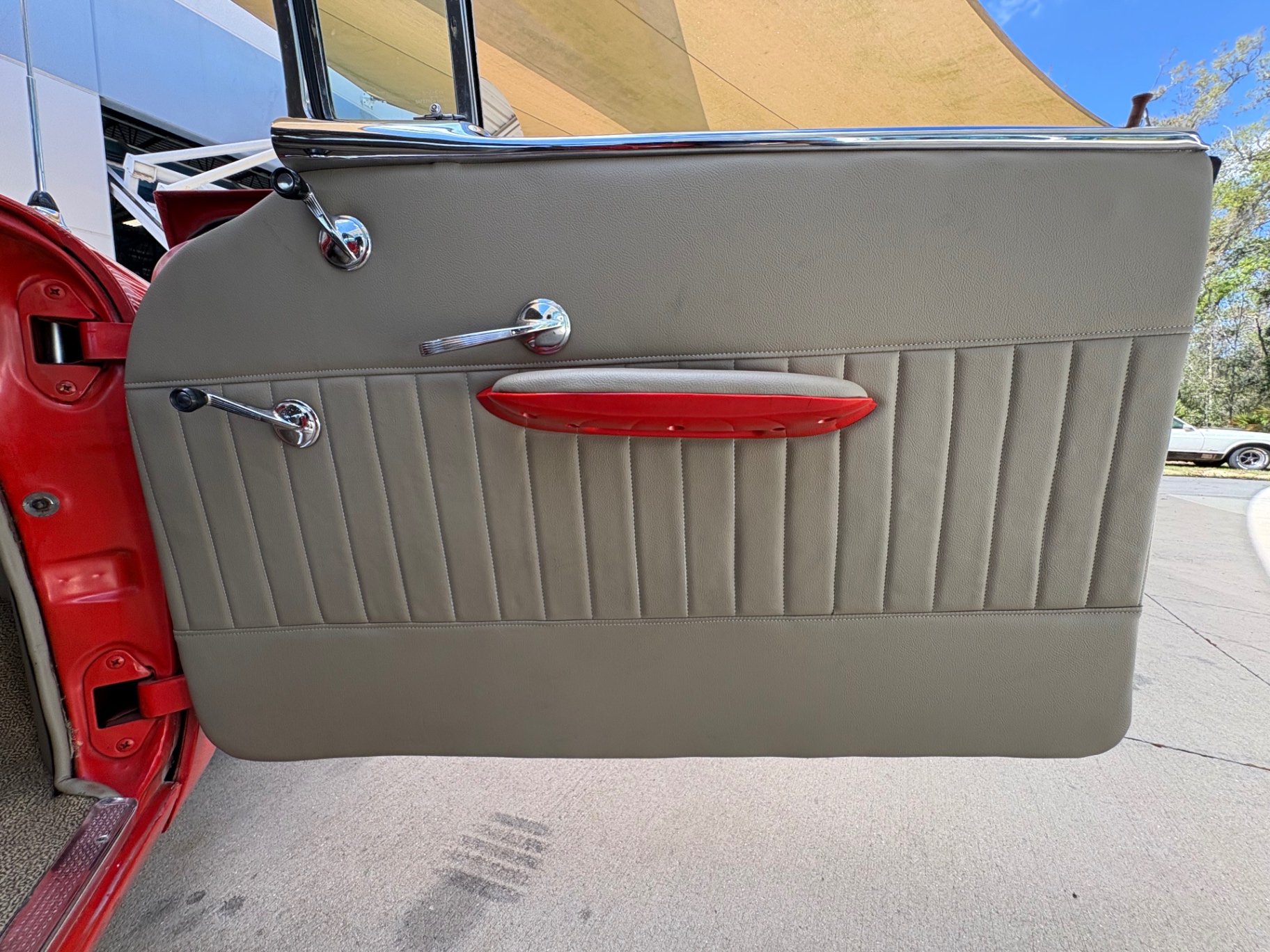
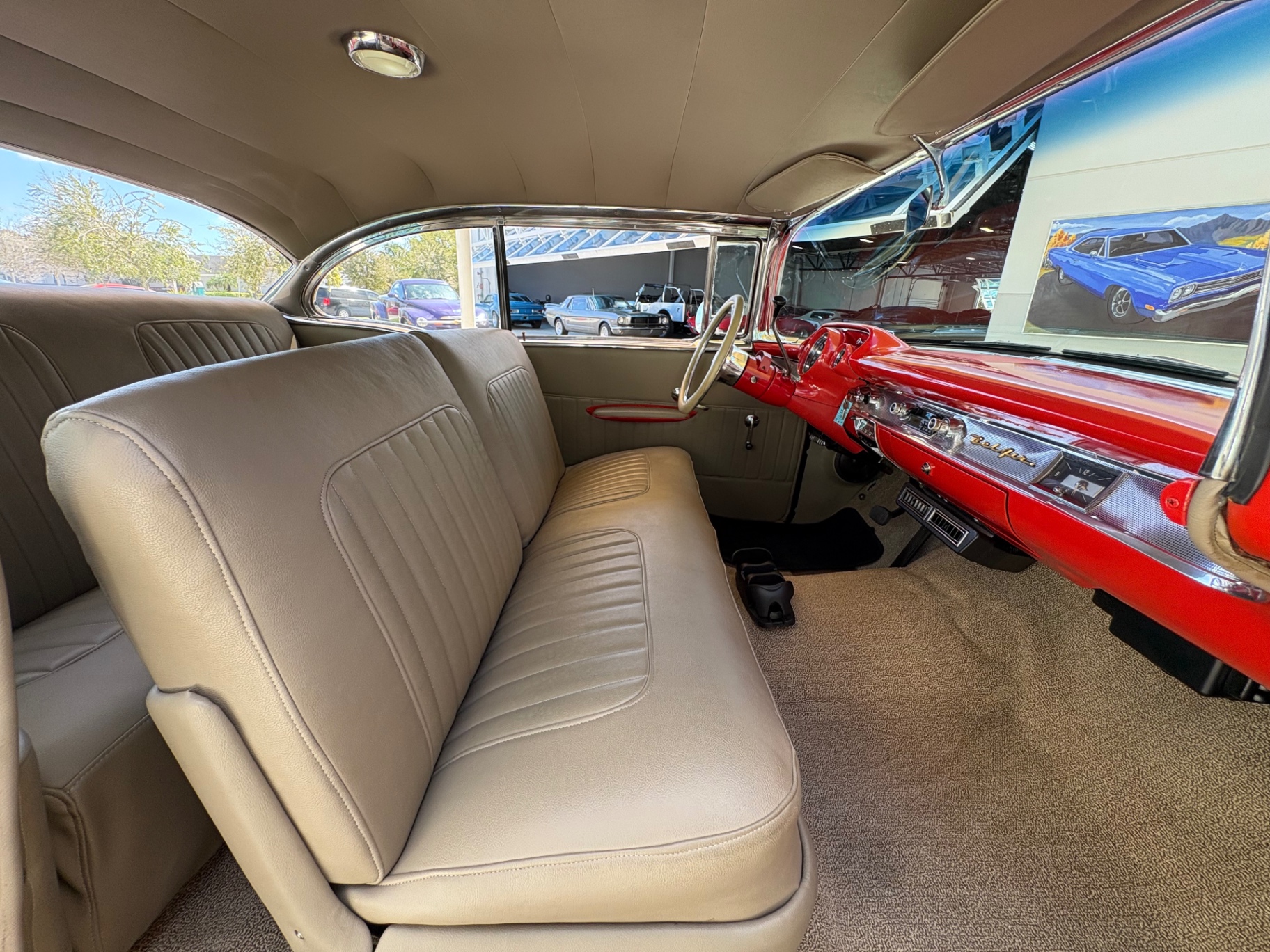
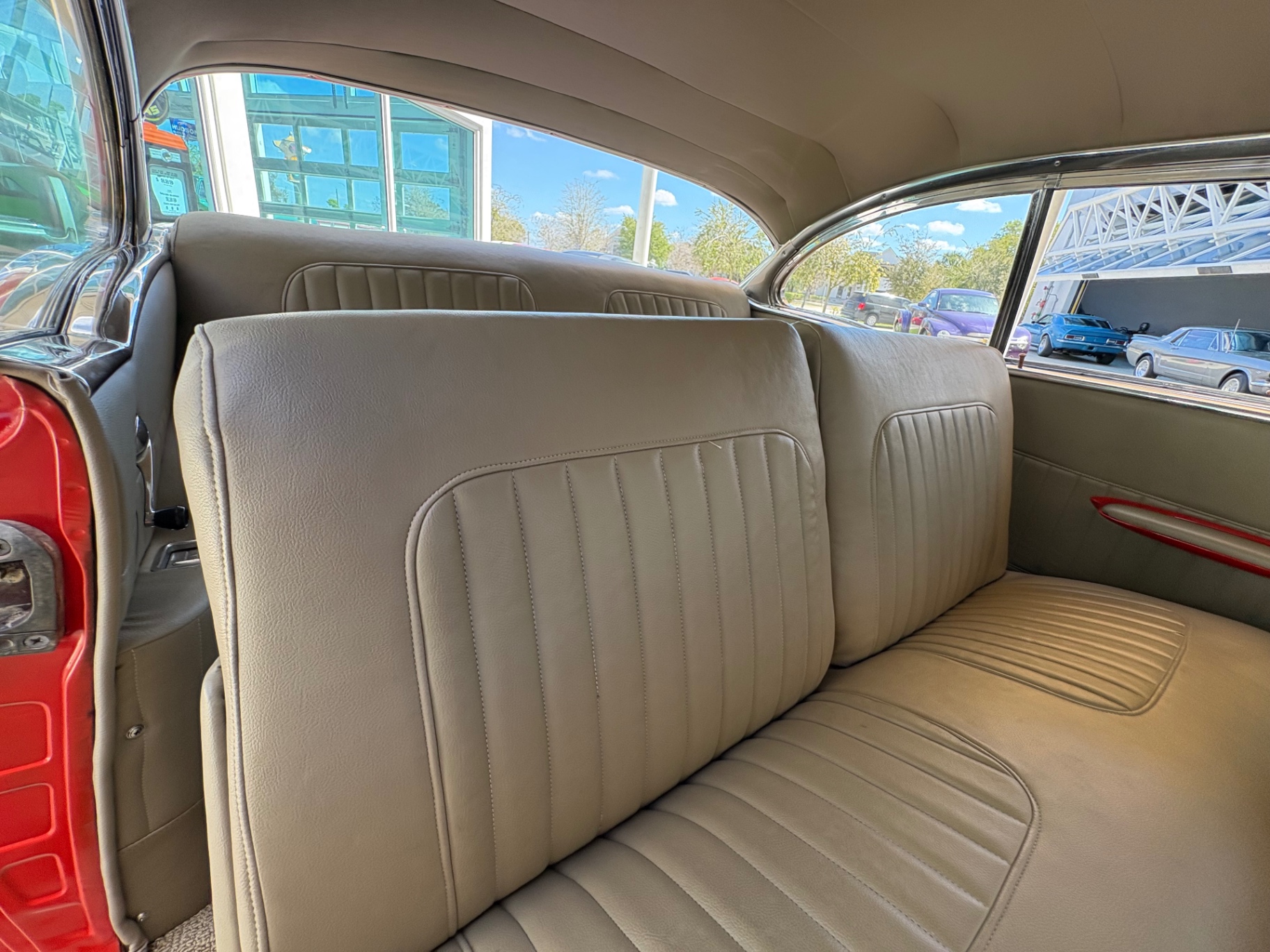
The interior of this 1957 Chevrolet Bel Air has been redone in gray leather and vinyl, which works well against the red exterior and keeps the cabin from feeling visually heavy. The door panels are clean and well-fitted, with a vertical pleat pattern and red accent on the armrest pull that ties back to the exterior color in a subtle, controlled way. The overall execution reads more like a professional shop build than a garage project.
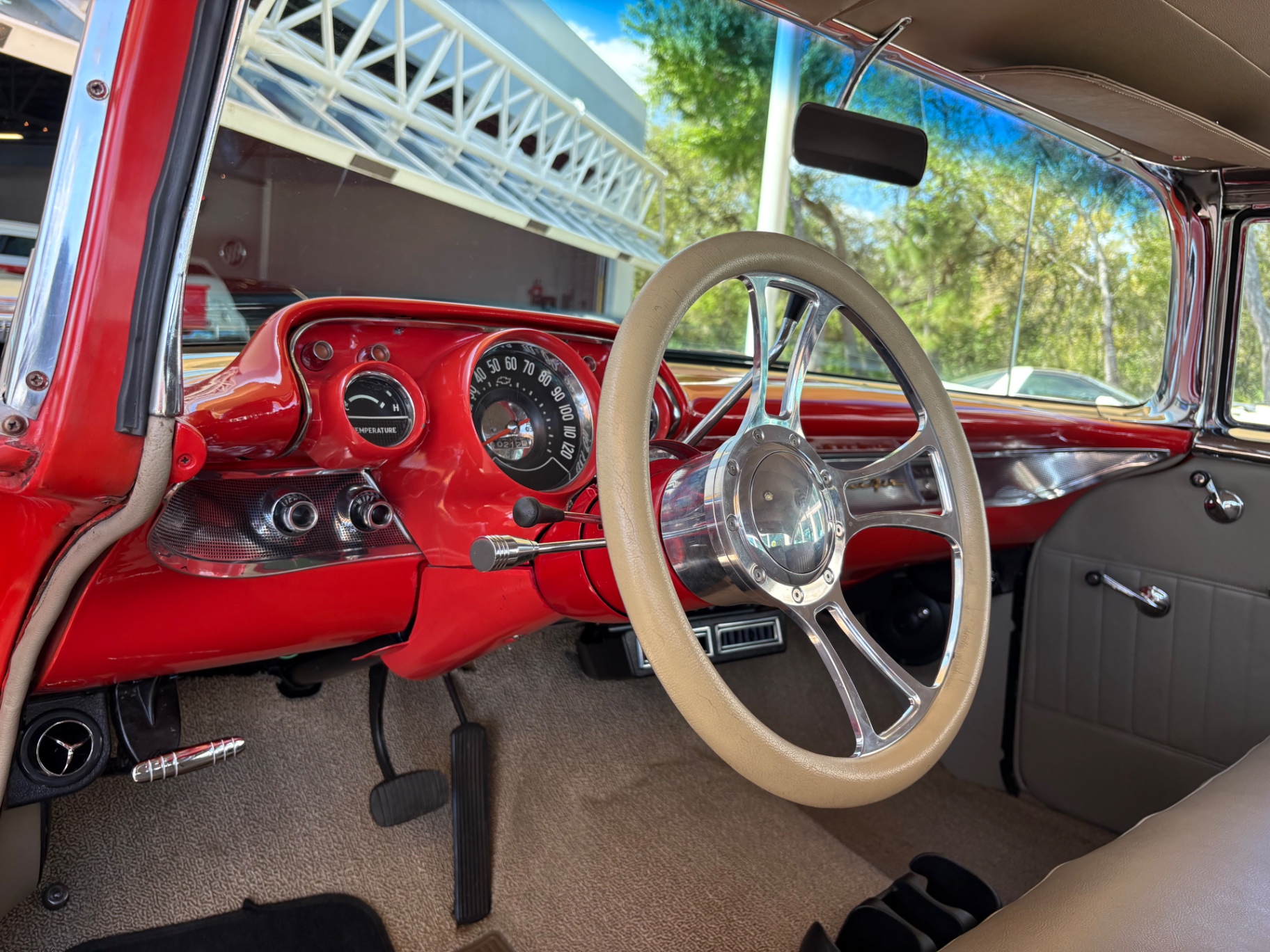
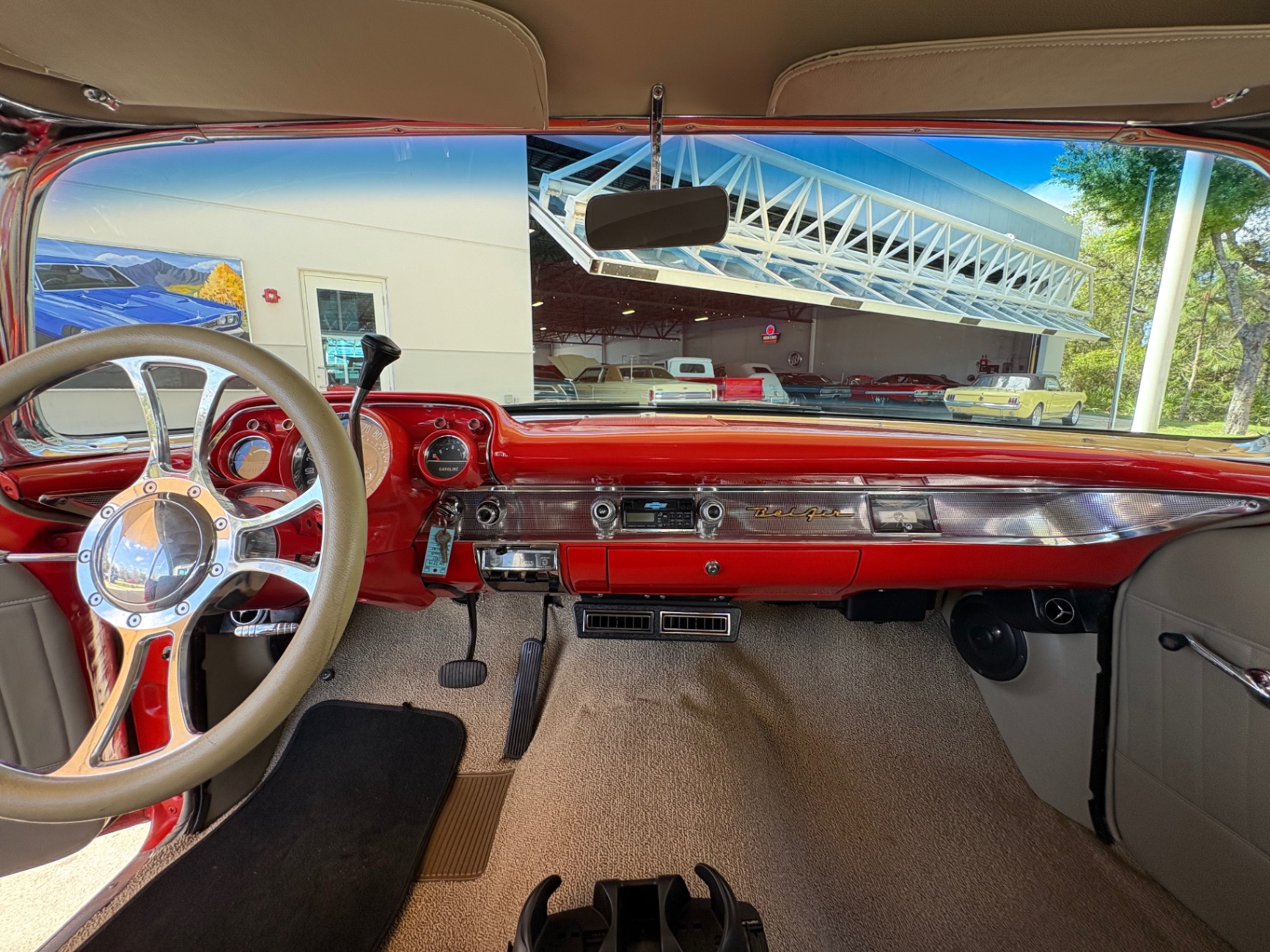
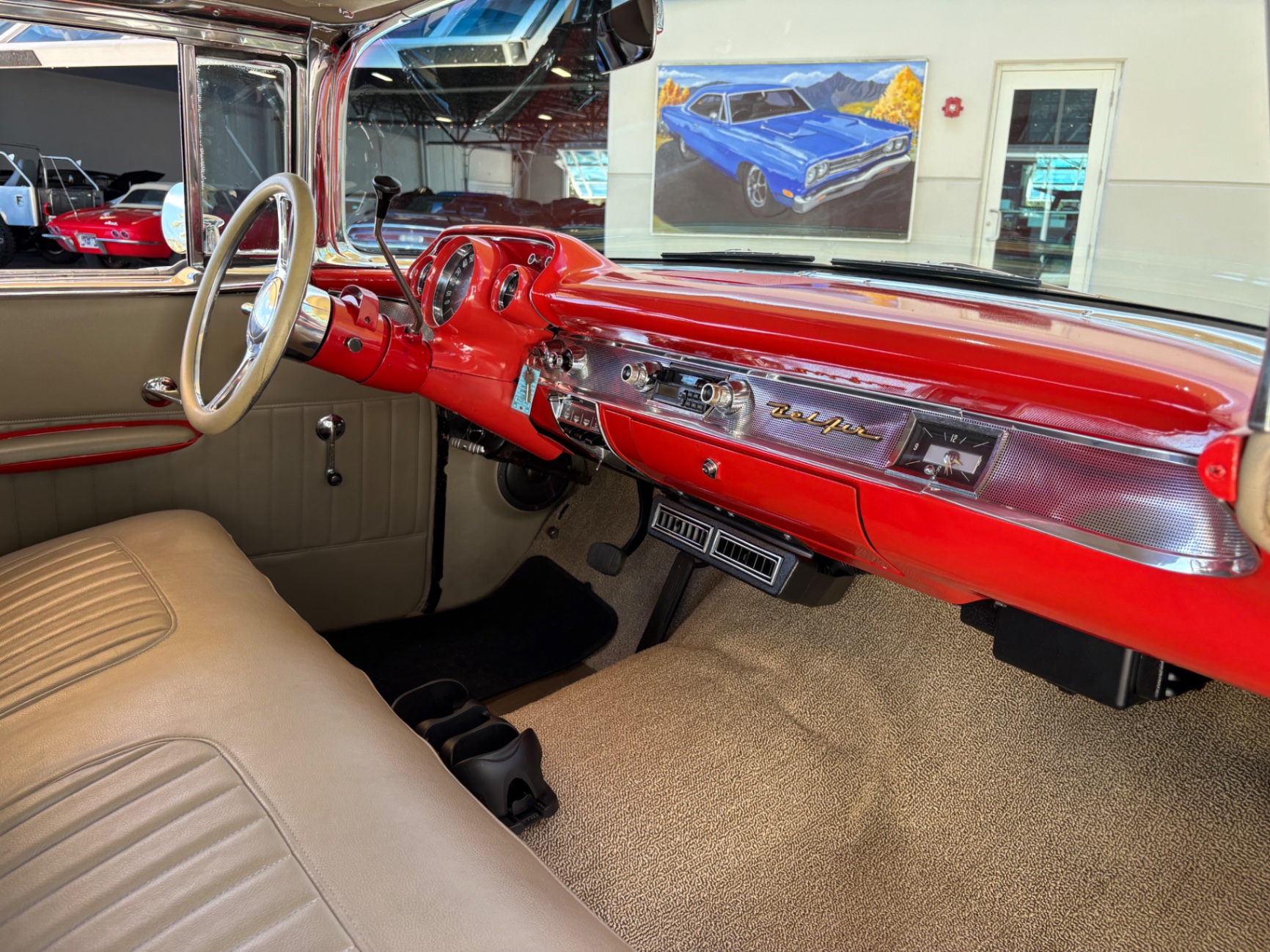
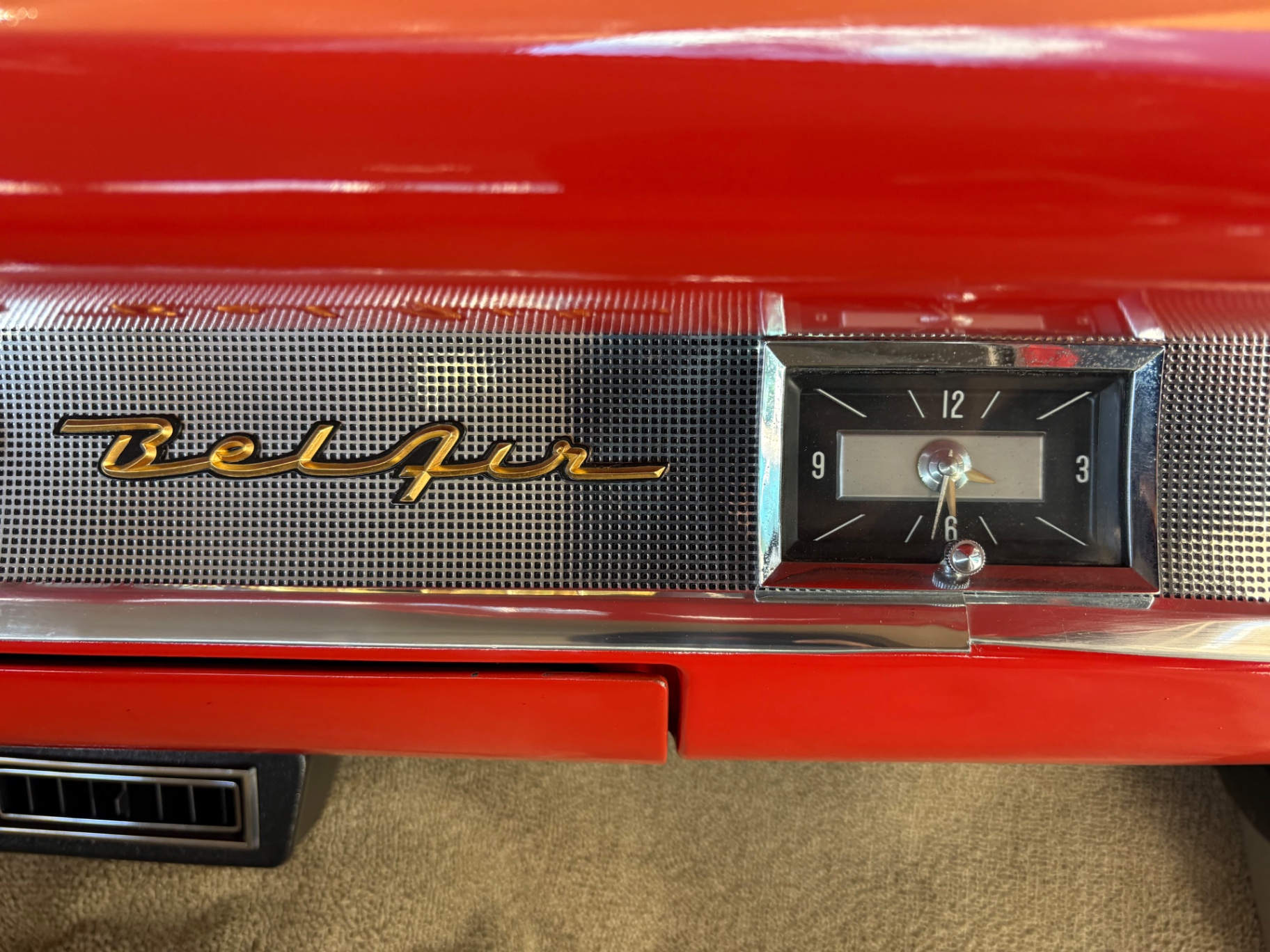
The Le Carra steering wheel is a well-known name in the custom and pro-touring market — these wheels are manufactured in Italy and are used across a range of high-end custom builds for their tactile quality and period-correct diameter. It is paired with a tilt steering column, which makes entry and exit considerably easier in a car with the tight footwell dimensions of a 1950s Chevrolet. Air conditioning has been fitted, which in the Florida climate is not a luxury — it is a necessity for anything other than early morning drives. An aftermarket stereo rounds out the cabin amenities without being intrusive.
Exterior
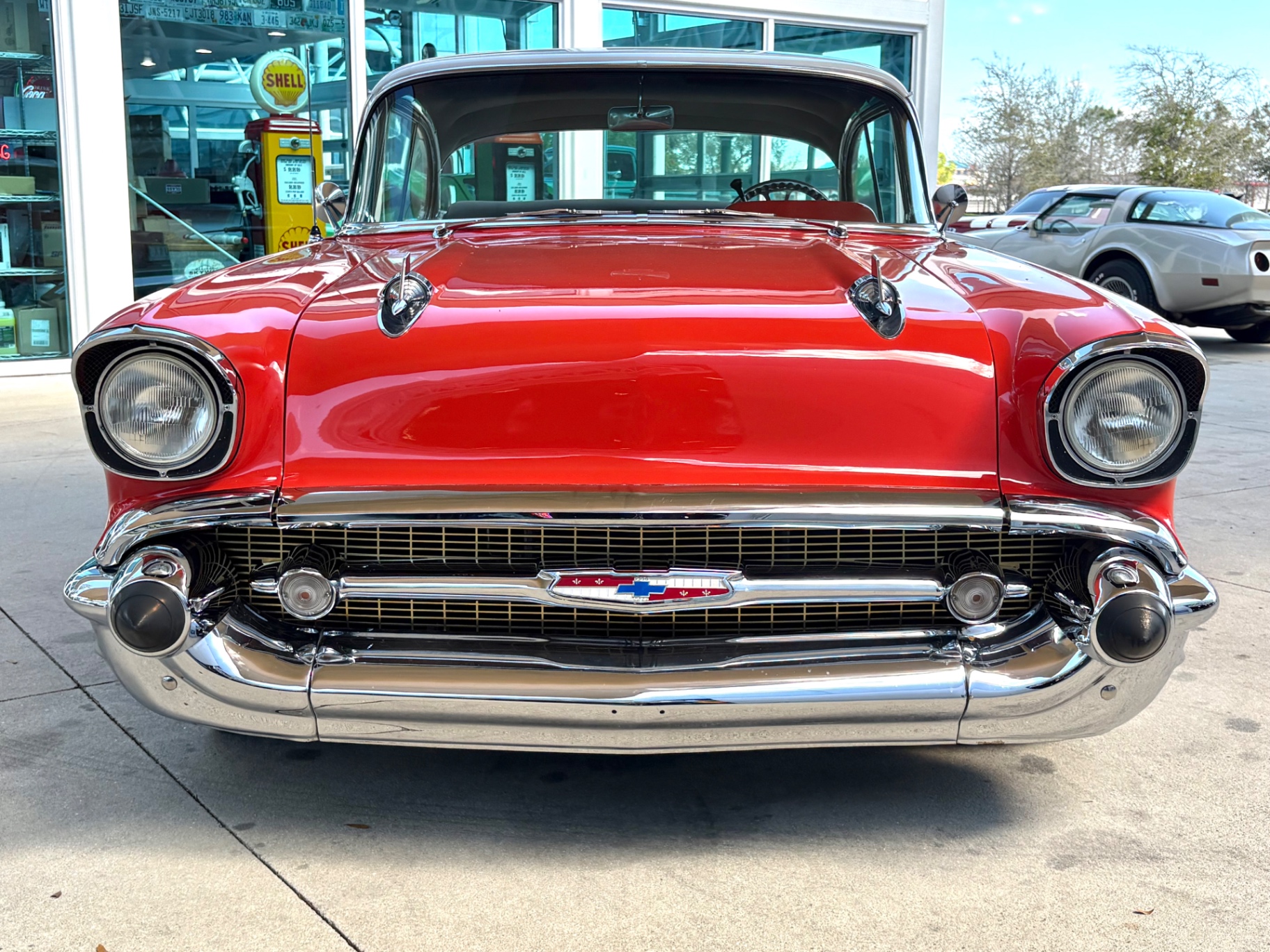
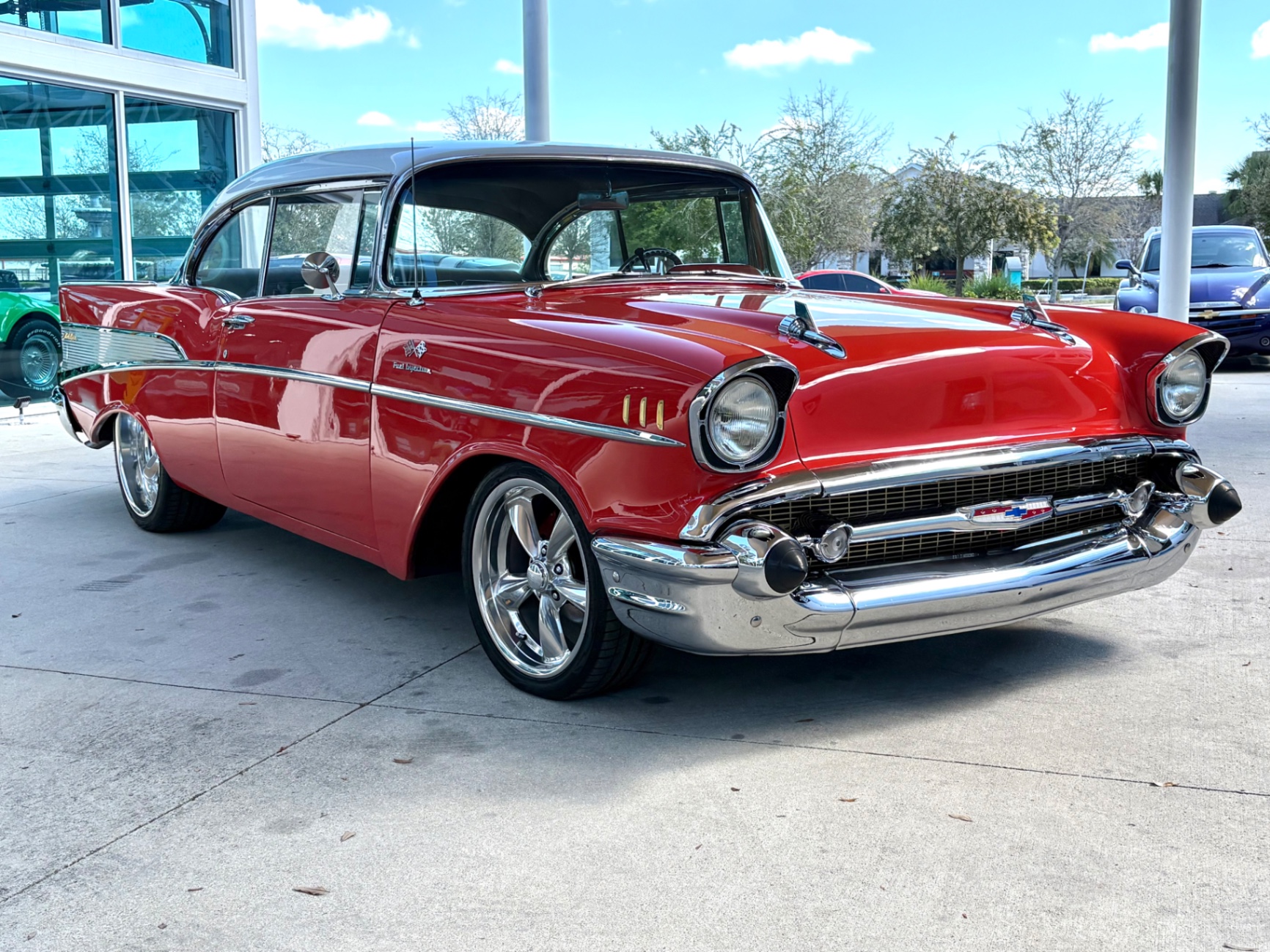
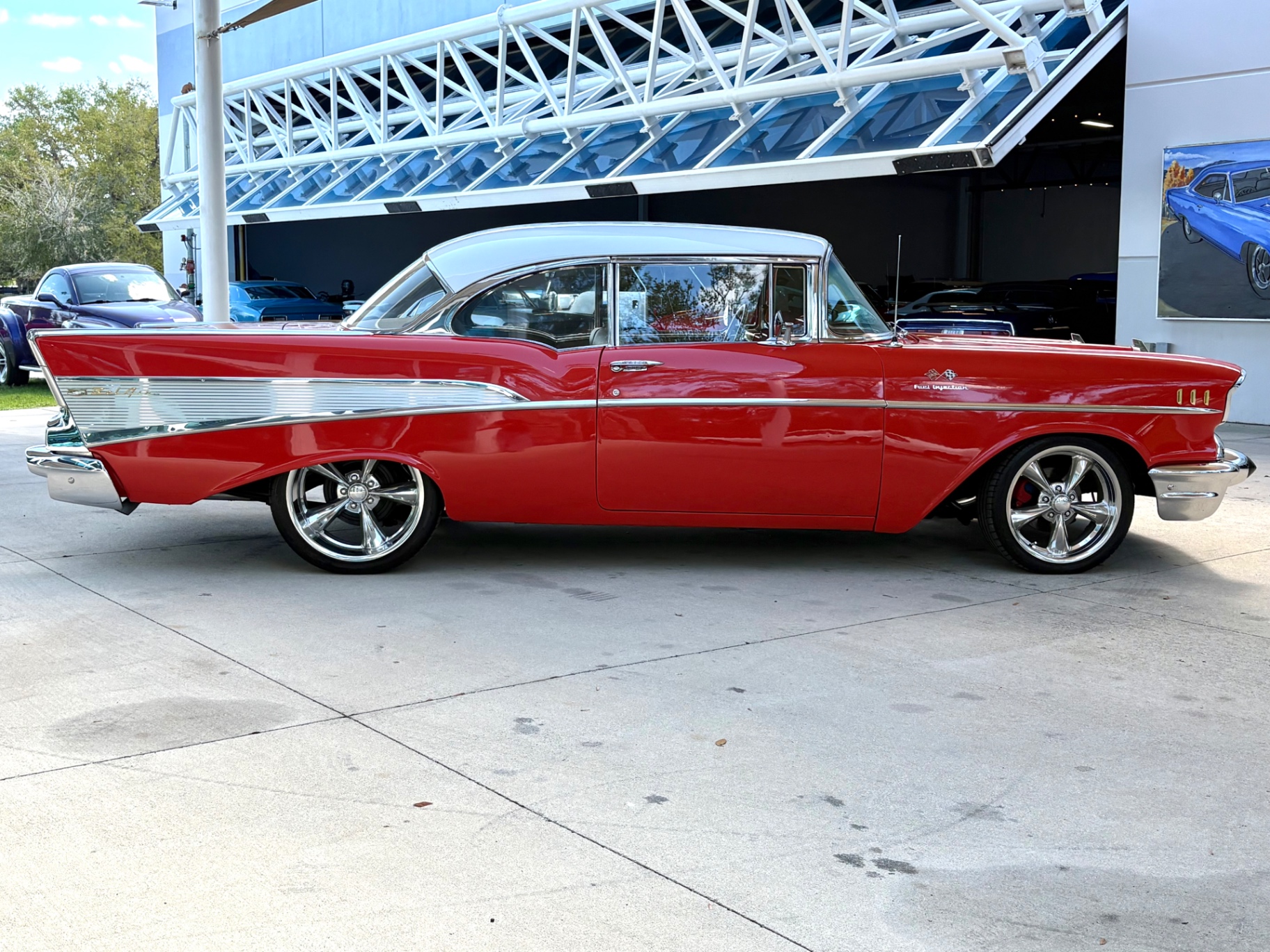
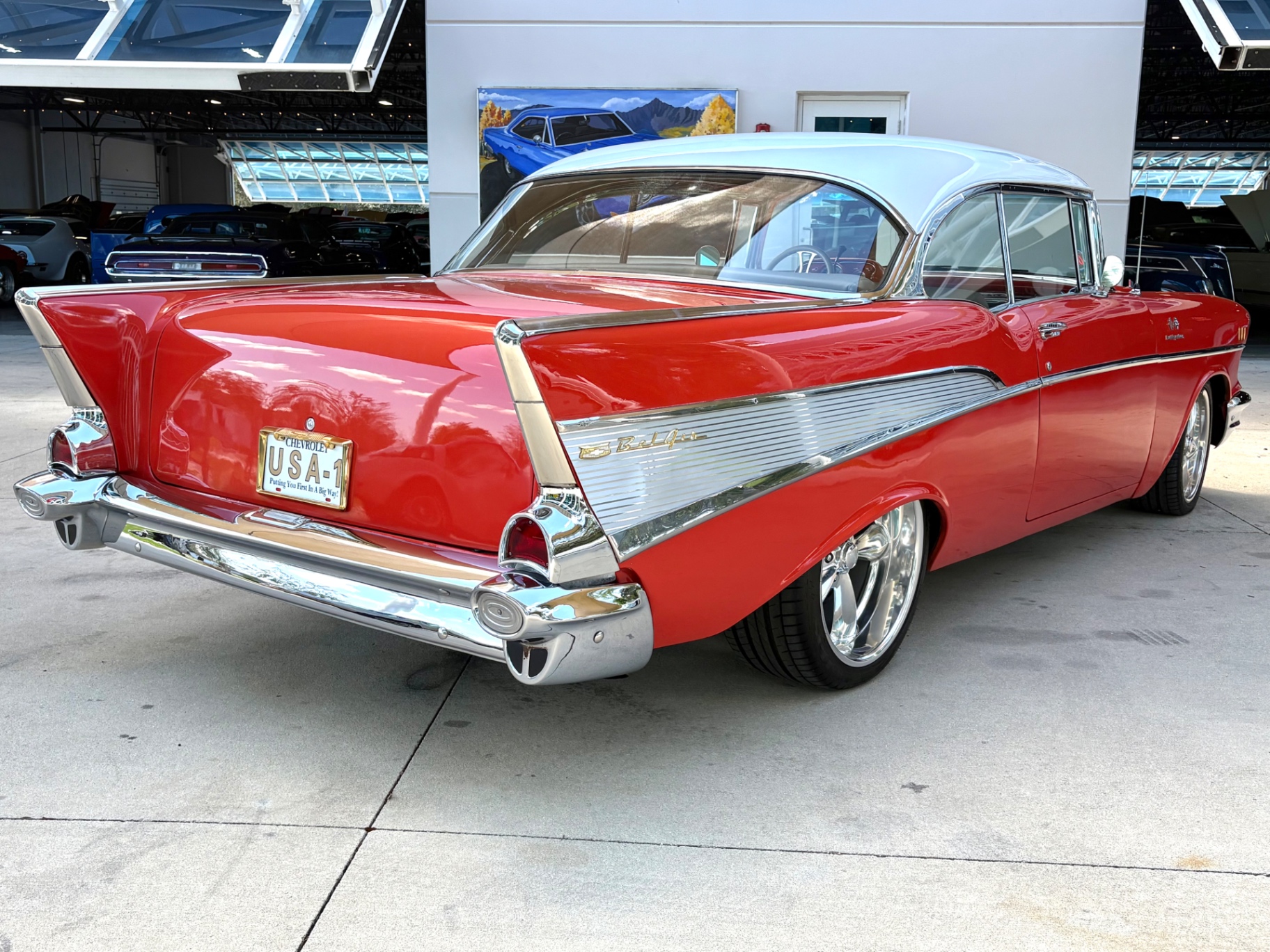
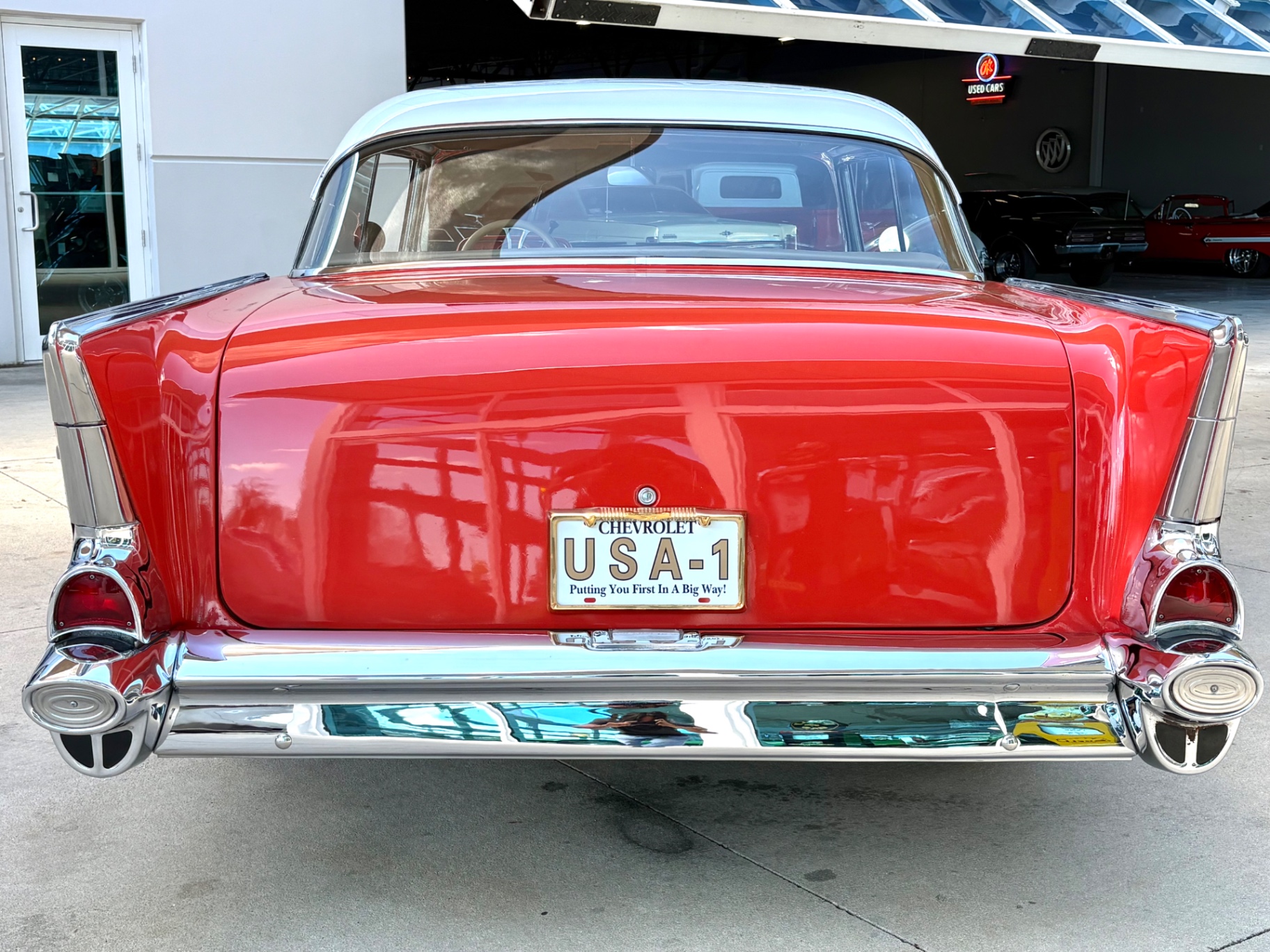
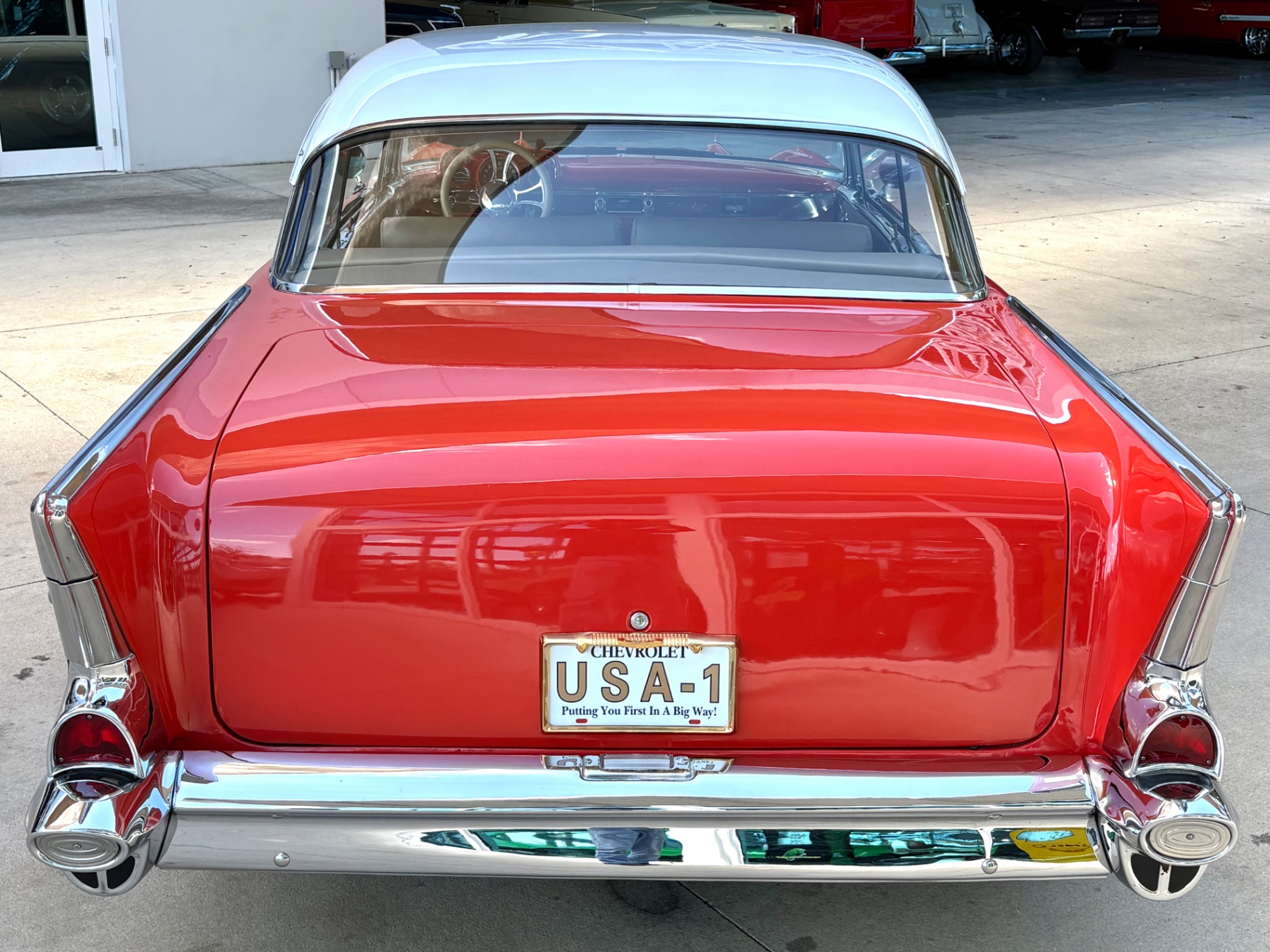
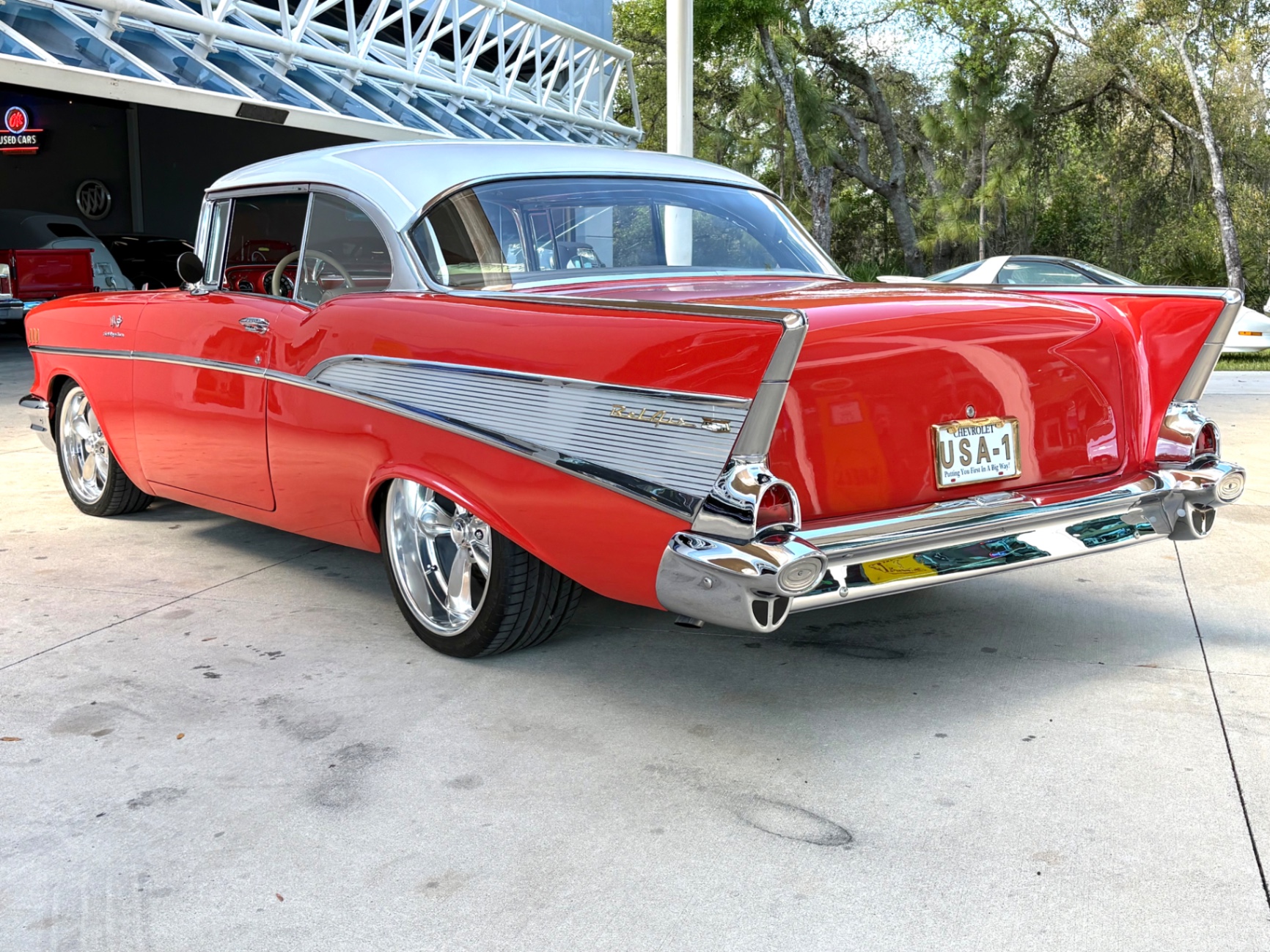
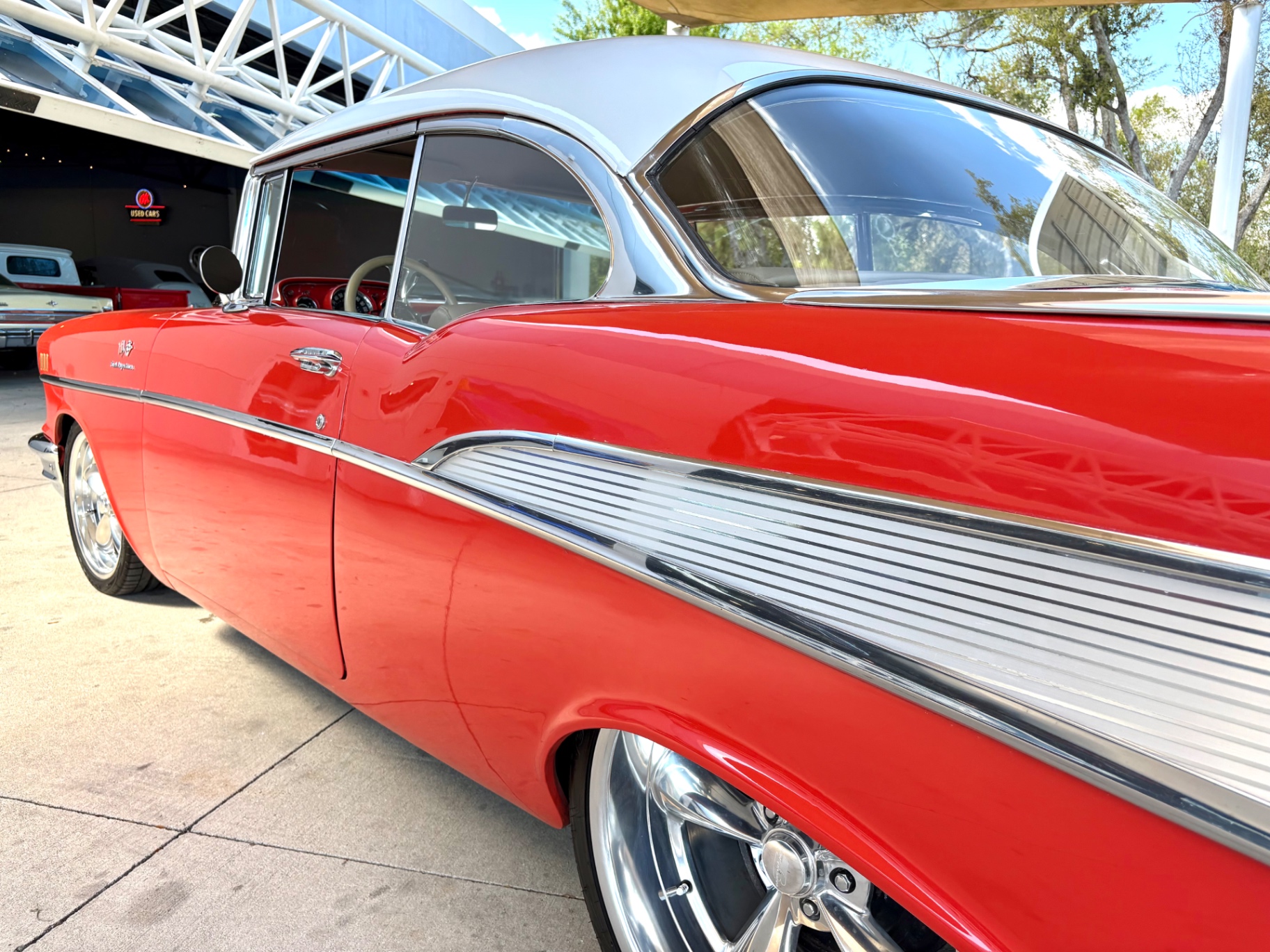
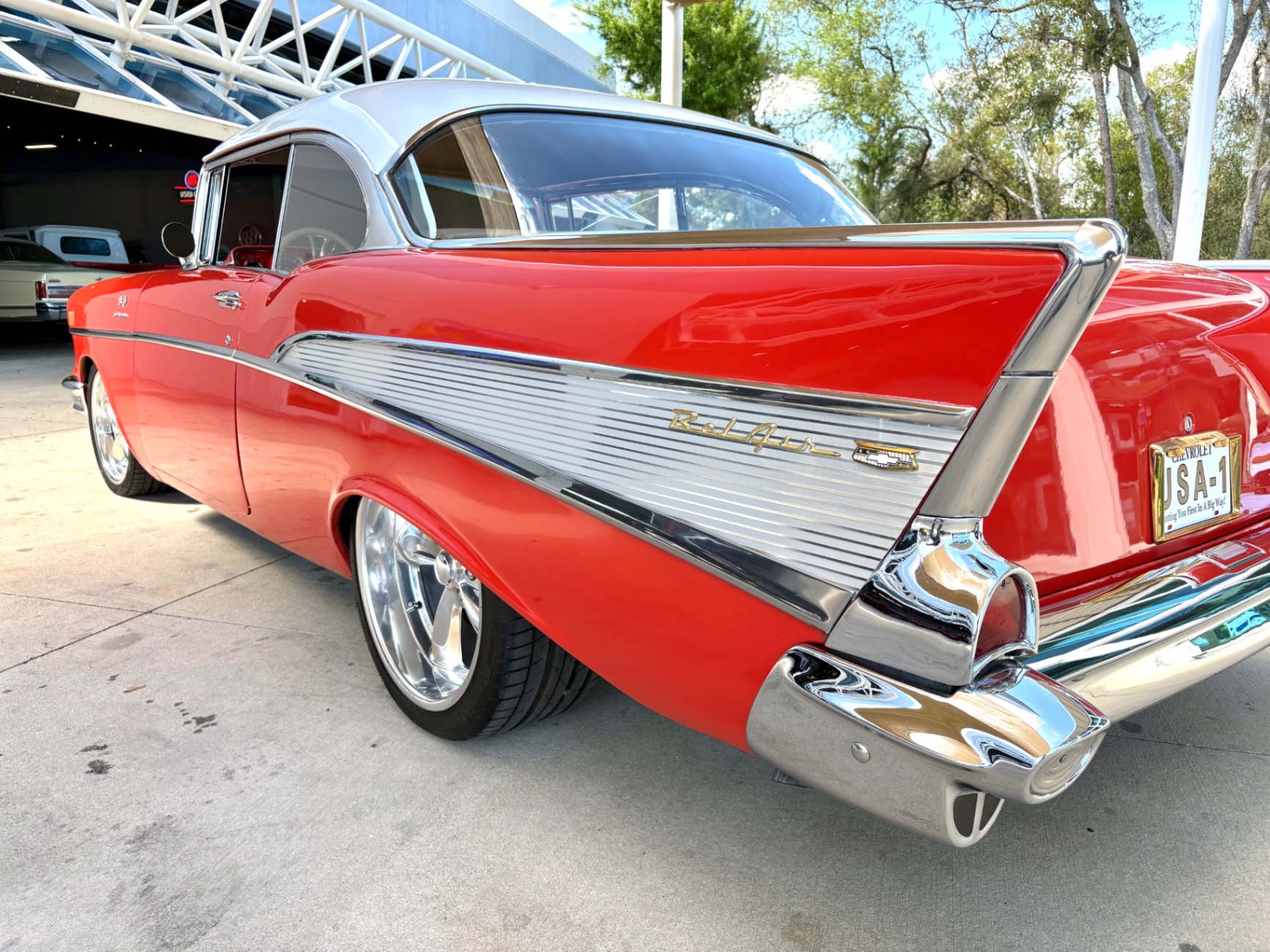
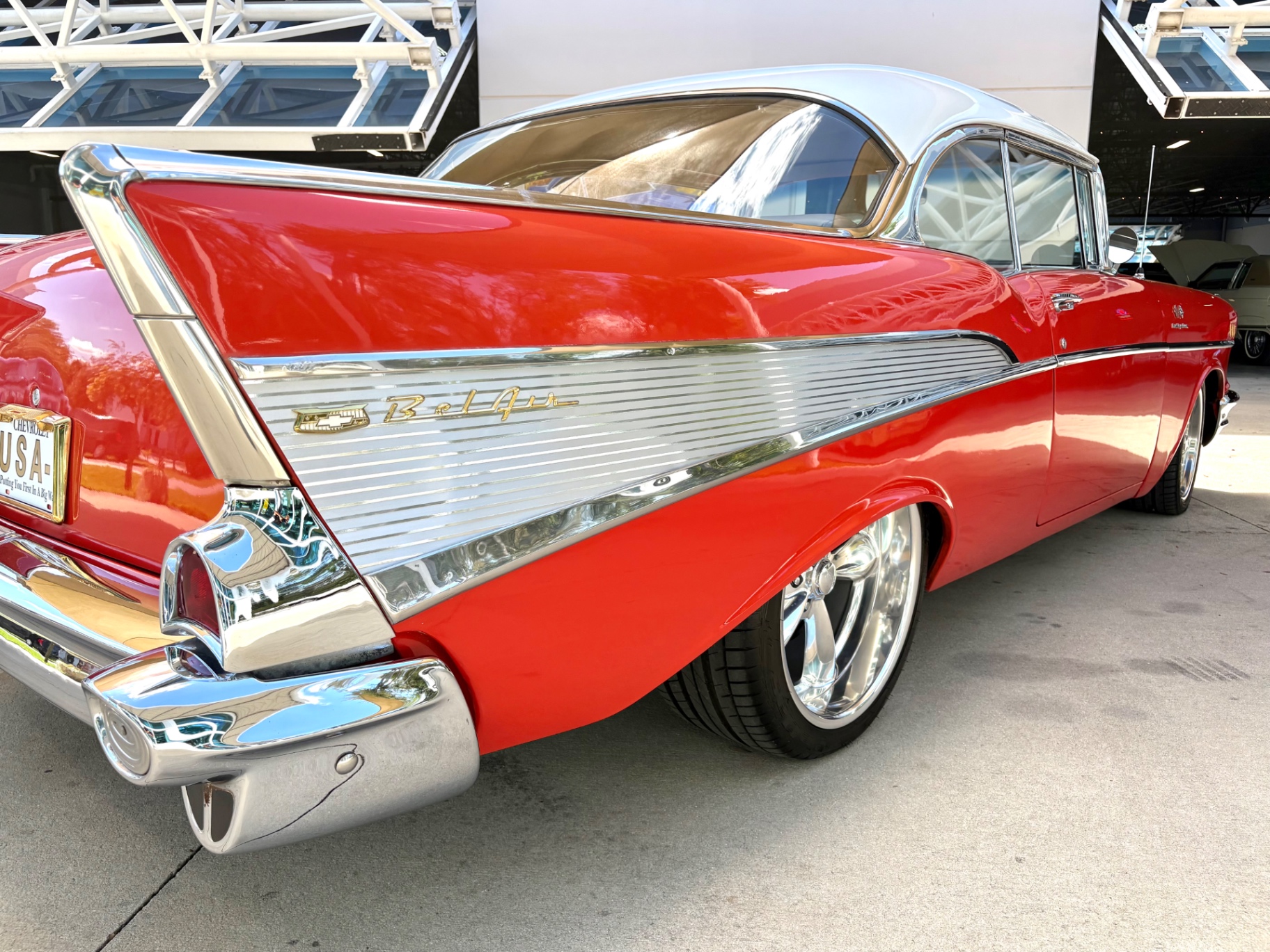
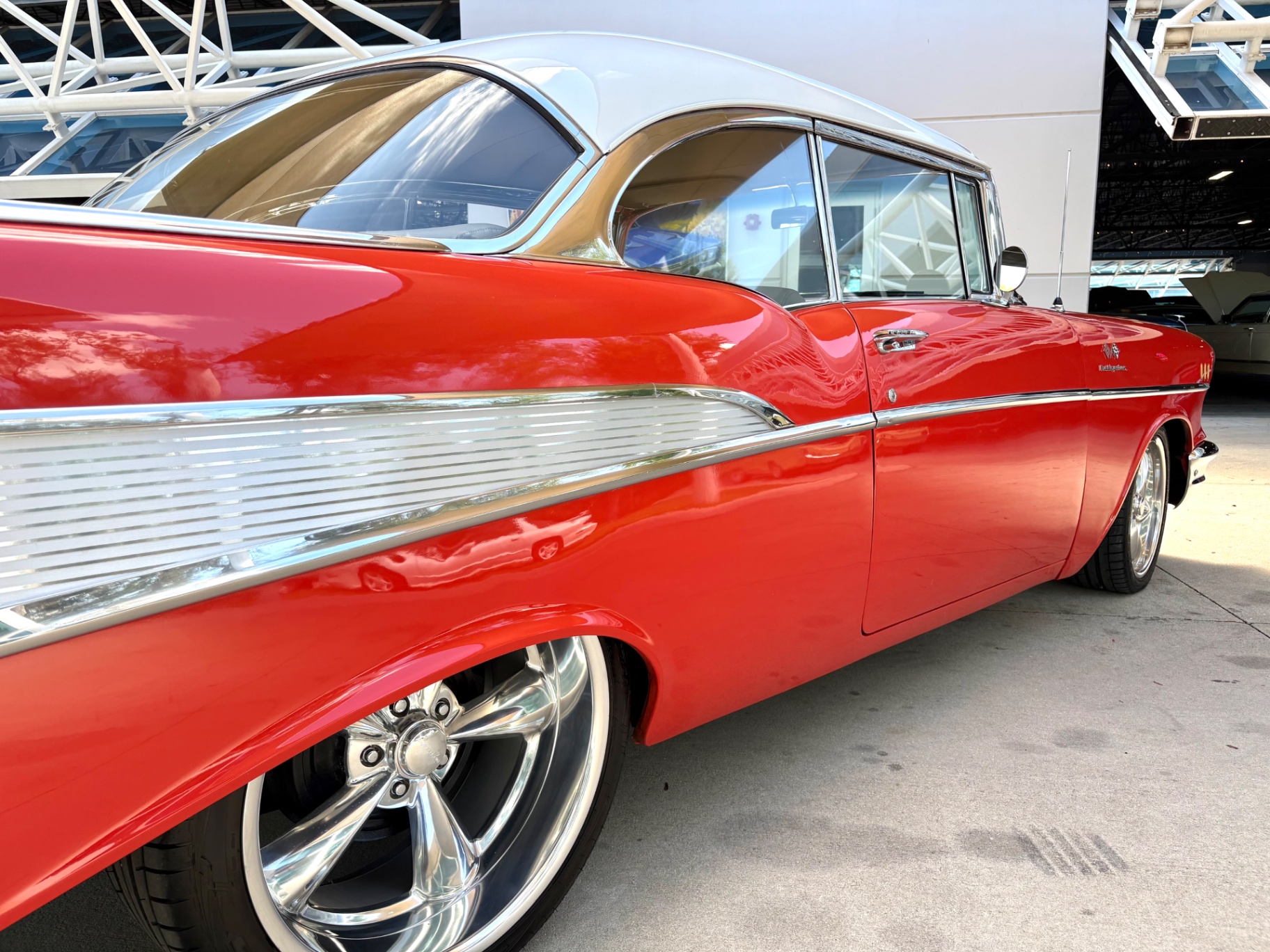
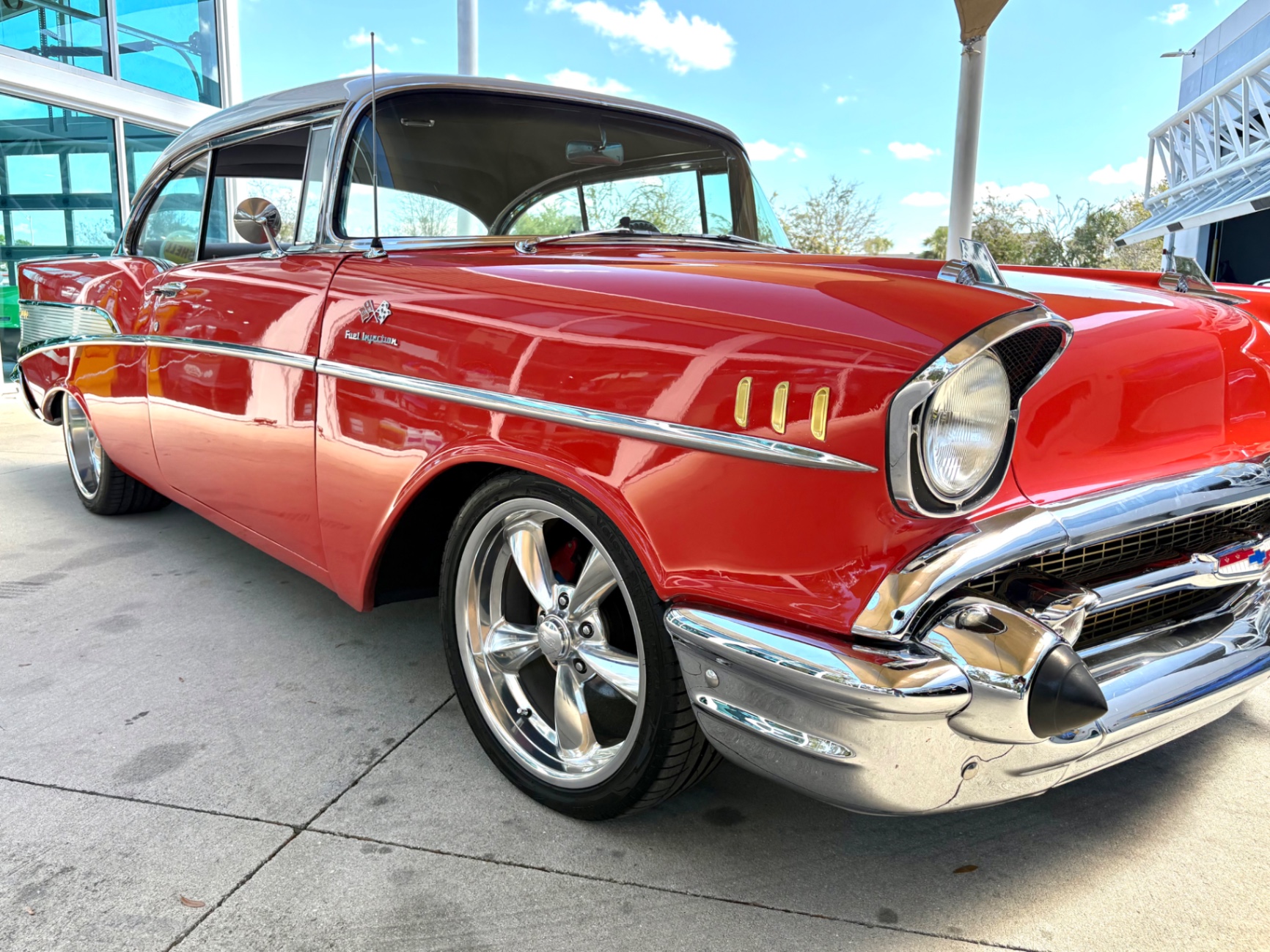
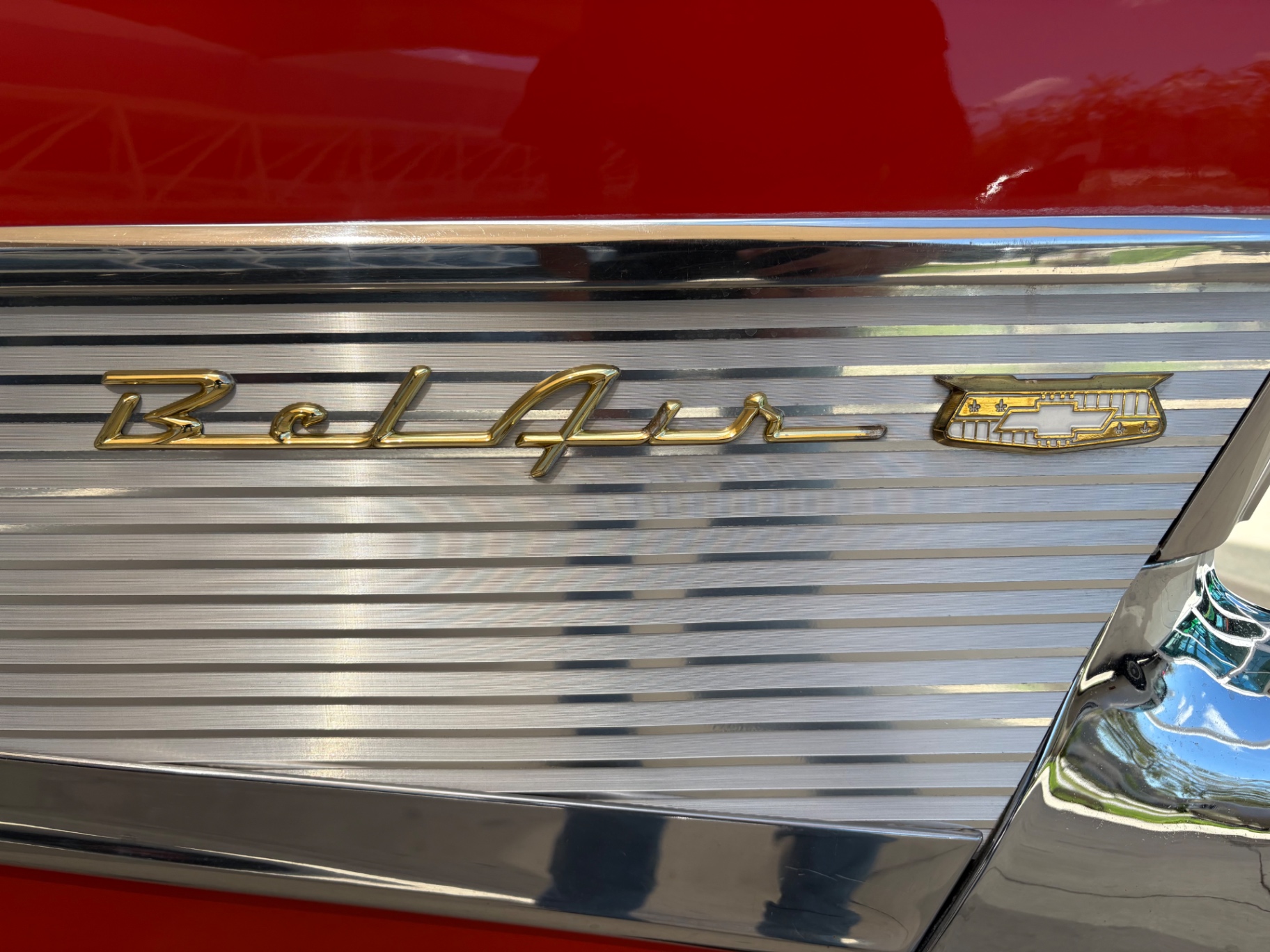
The 1957 Chevrolet Bel Air was already a well-resolved design when it left the factory, and this car's two-tone red and gray roof treatment is consistent with how many Bel Airs were originally ordered. Two-tone paint was a popular and factory-supported option in 1957, and the combination of a bold body color with a contrasting roof was the signature look of the Bel Air trim level. The chrome bumpers are in good condition front and rear, and the rear of the car shows the distinctive dual pod taillights and pronounced fins that make the 1957 so immediately identifiable.
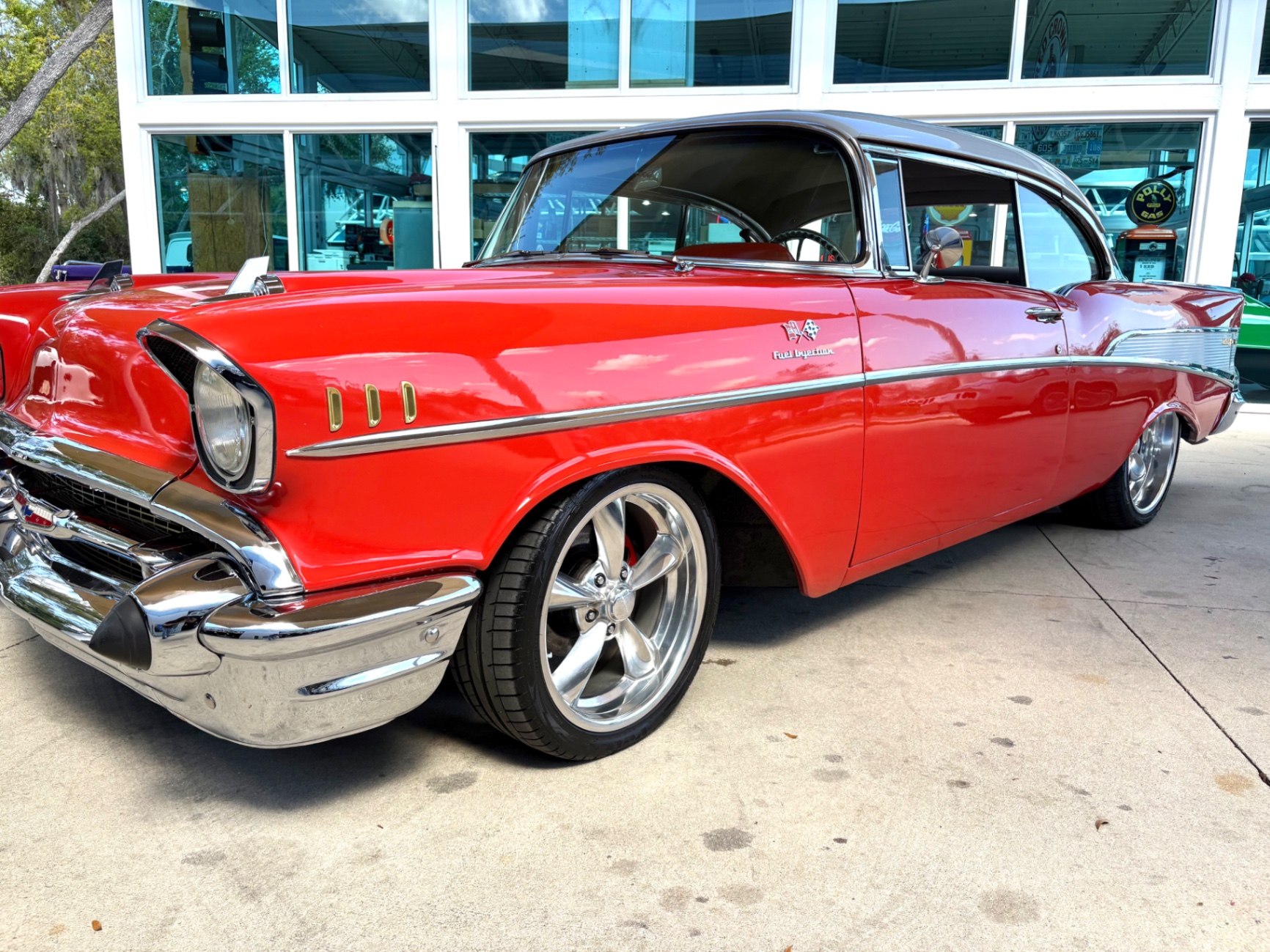
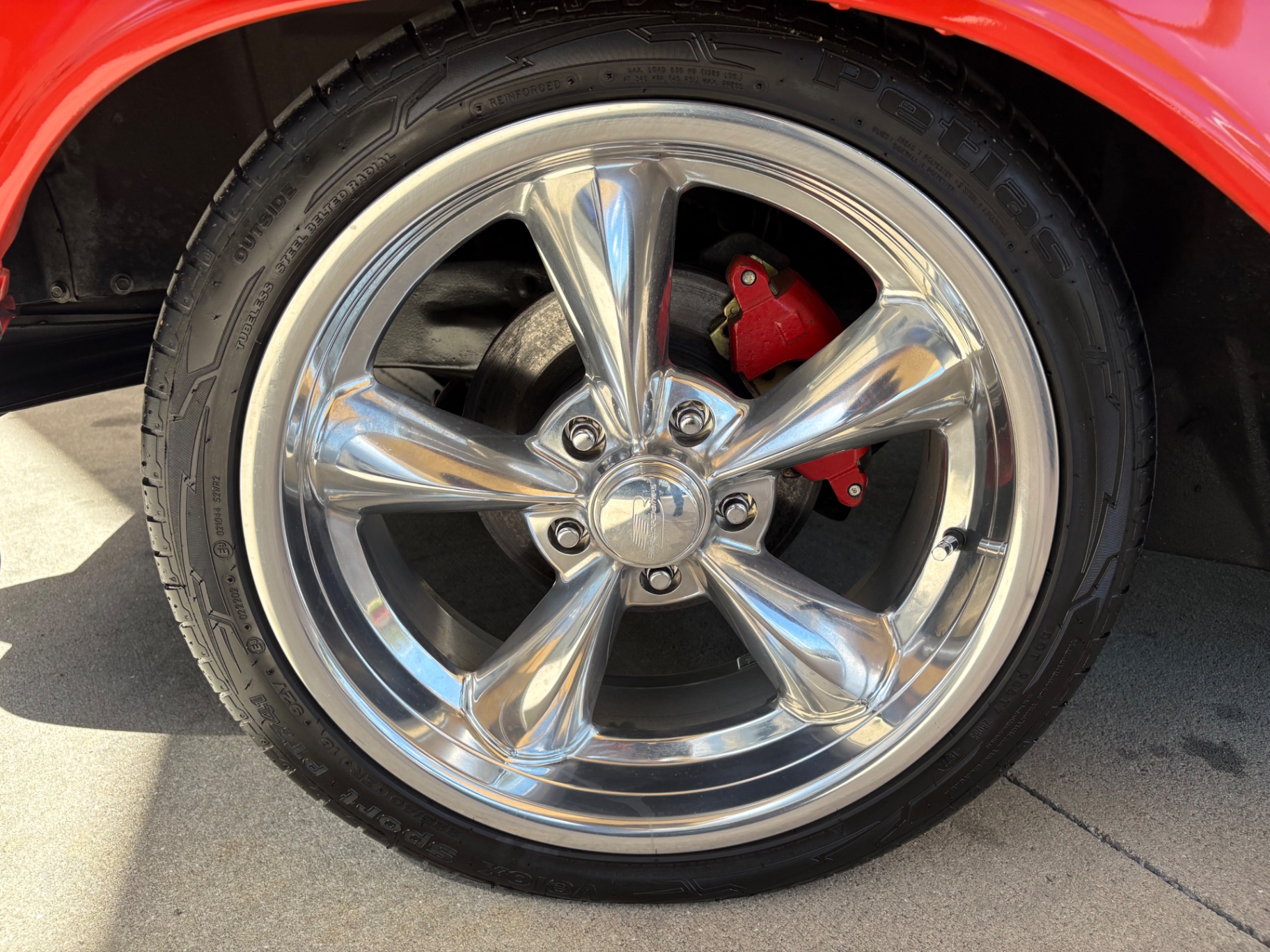
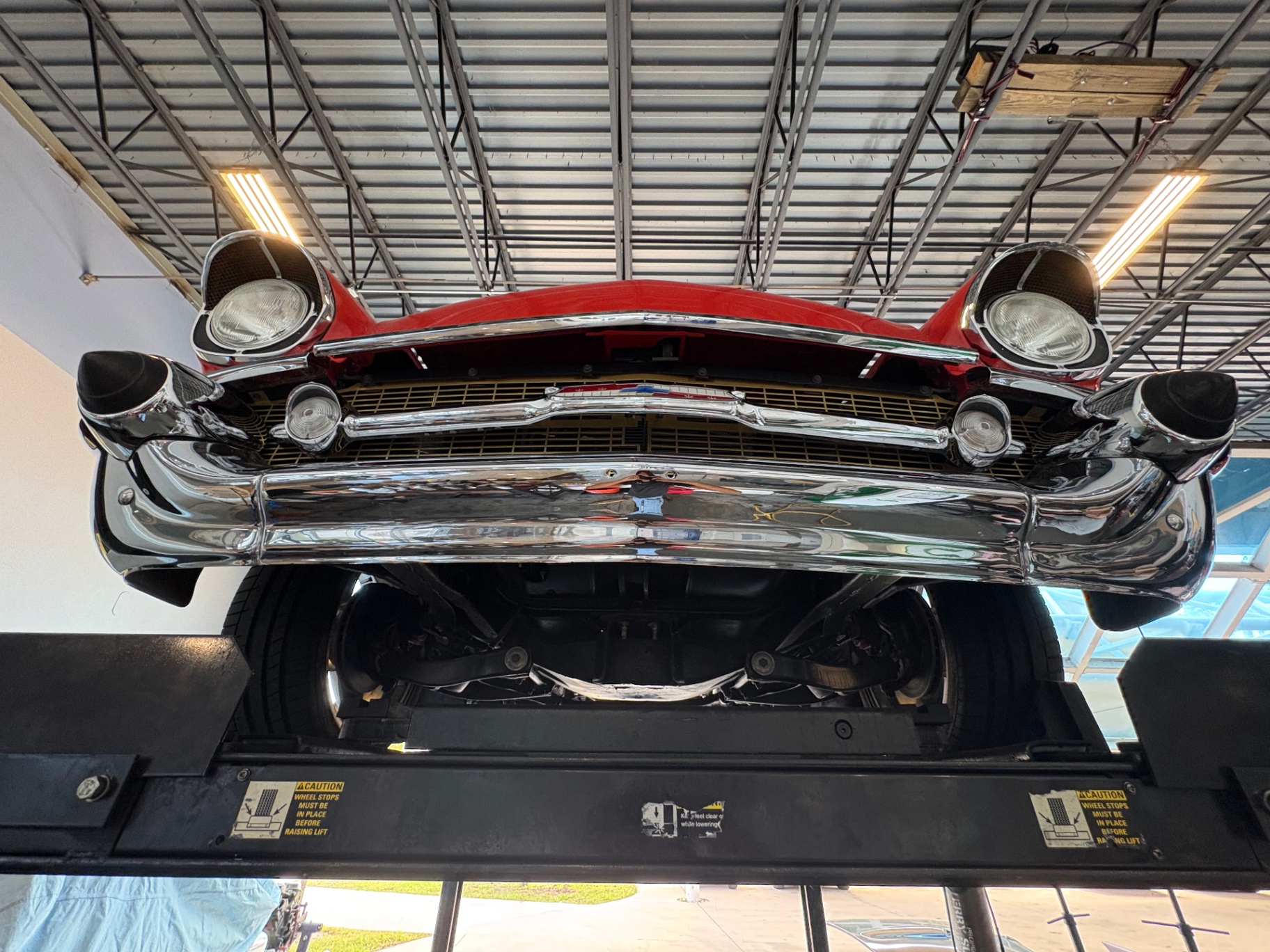
The wheel and tire package is one of the most visible modifications on the car. Billet Specialties wheels in an 18-inch front and 20-inch rear staggered fitment give the car a planted, aggressive stance without requiring bodywork or tubbing. Billet Specialties is a respected name in the billet wheel market — their products are machined in the United States and are commonly seen on pro-touring builds at this level. The larger rear diameter fills the wheel well correctly and gives the car a stance that works with the original body proportions rather than fighting them. The chrome bumpers are intact and correct, the fuel injection badge is a period-appropriate reference to the 1957 model's heritage, and the overall body finish is consistent and straight in the photos.
Conclusion
This 1957 Chevrolet Bel Air is a finished, thoughtful pro-touring build on the most desirable platform from one of the most collectible model years in American automotive history. The mechanical upgrades — double hump heads, power disc brakes, aluminum radiator, power steering — were made with driving in mind, not just display. The interior is clean and livable. The exterior is correct in its two-tone execution and properly proportioned with the Billet Specialties wheel package. This is not a car that needs a list of follow-up projects. It is ready to drive the day it leaves our lot.
If you want to know more about this 1957 Chevrolet Bel Air or schedule a time to see it in person, call Skyway Classics at 941-254-6608. We are located in Sarasota, Florida, and we are happy to answer questions, arrange inspections, and assist with transport.
Disclaimer Information found on the website is presented as given to us by the owner of the car, whether on consignment or from the owner we bought it from. Some Photos, materials for videos, descriptions and other information are provided by the consignor/seller and is deemed reliable, but Skyway Classics does not warranty or guarantee this information. Skyway Classics is not responsible for information that may incorrect or a publishing error. The decision to purchase should be based solely on the buyers personal inspection of the vehicle or by a professional inspection service prior to offer or purchase being made.
1957 Chevrolet Bel Air — Pro-Touring Custom with 350 V8, AC,
Why This Car Is Special
The 1957 Chevrolet Bel Air is one of the most recognized automobiles ever built in America. That is not hyperbole — it is a fact backed by decades of collector demand, cultural presence, and a design language so complete that it has never gone out of style. But this particular 1957 Chevrolet Bel Air is not a museum piece. It has been built to be driven, and built well. It sits on a staggered Billet Specialties wheel package, stops with power disc brakes at all four corners. This is the kind of build that took real money and real decisions — not a parts-bin special, but a cohesive pro-touring build on one of the most desirable platforms in American collector car history.
To understand why the 1957 Bel Air commands the attention it does, you have to go back to what Chevrolet accomplished that model year. The '57 was the final year of the classic tri-five generation — the third and most refined iteration of the 1955-1957 run. Chevrolet sold over 1.5 million vehicles in 1957, and the Bel Air was the top trim level in the passenger car lineup, sitting above the Two-Ten and One-Fifty. The Bel Air brought more exterior chrome, richer interior appointments, and the broadest option list of the three. That year, Chevrolet also introduced the Rochester fuel injection system as a factory option — one of the first American production cars to offer it — and offered the 283 cubic inch small block in multiple states of tune. The "fuelie" 283 with one horsepower per cubic inch became legendary. This car wears a fuel injection badge, a nod to that heritage, though the engine installed is a 350 cubic inch small block V8 with dual quad carburetors — a setup that pays homage to the performance spirit of the original while delivering reliable, tuneable power.
The VIN on this car decodes to confirm it was assembled in 1957, is a Bel Air, and was built at the St. Louis assembly plant — one of several GM facilities producing Bel Airs that year. The "S" in the VIN sequence confirms St. Louis assembly, which is a detail worth knowing for documentation purposes.
Features List
- 350 V8 with dual quad carburetors - Double hump cylinder heads (Camel hump / fuelie heads) - Polished valve covers - Red painted engine bay - Aluminum radiator - Power steering - Power front disc brakes - Dual exhaust - Air conditioning - Tilt steering column - Custom Le Carra steering wheel - Leather and vinyl interior in gray - Aftermarket stereo - Billet Specialties wheels — 18-inch front, 20-inch rear - Two-tone red and gray roof - Chrome bumpers front and rear - Fuel injection badge - Clean undercarriage
Mechanical
The heart of this 1957 Chevrolet Bel Air is a 350 cubic inch small block Chevrolet V8. This configuration is a popular performance setup for hot rods. Sitting beneath the carb is a set of double hump cylinder heads — commonly called fuelie heads or camel hump heads — which are identified by the two bumps visible on the end of the casting. These heads feature larger ports and better flow characteristics than the standard small block heads of the era, and they remain highly regarded for performance builds to this day. Finding them on a finished build like this one is a detail that separates informed builds from uninformed ones.
The engine bay has been finished in red to match the car's exterior, and the polished valve covers and chrome accessories give the compartment a clean, intentional look. Cooling is handled by an aluminum radiator, which is a practical upgrade over the original copper-brass unit — aluminum transfers heat more efficiently and is significantly lighter. Power steering makes the car manageable at parking lot speeds without killing road feel at highway speeds, and the power front disc brake conversion is the right call on a car that gets driven. The original drum brake setup on a 1957 Chevrolet Bel Air was not engineered for modern traffic or the speeds this engine is capable of producing. The disc brake conversion addresses that directly. Dual exhaust exits cleanly at the rear, and the undercarriage photo confirms this car has been maintained with care — no rot, no patchwork, no surprises.
Interior
The interior of this 1957 Chevrolet Bel Air has been redone in gray leather and vinyl, which works well against the red exterior and keeps the cabin from feeling visually heavy. The door panels are clean and well-fitted, with a vertical pleat pattern and red accent on the armrest pull that ties back to the exterior color in a subtle, controlled way. The overall execution reads more like a professional shop build than a garage project.
The Le Carra steering wheel is a well-known name in the custom and pro-touring market — these wheels are manufactured in Italy and are used across a range of high-end custom builds for their tactile quality and period-correct diameter. It is paired with a tilt steering column, which makes entry and exit considerably easier in a car with the tight footwell dimensions of a 1950s Chevrolet. Air conditioning has been fitted, which in the Florida climate is not a luxury — it is a necessity for anything other than early morning drives. An aftermarket stereo rounds out the cabin amenities without being intrusive.
Exterior
The 1957 Chevrolet Bel Air was already a well-resolved design when it left the factory, and this car's two-tone red and gray roof treatment is consistent with how many Bel Airs were originally ordered. Two-tone paint was a popular and factory-supported option in 1957, and the combination of a bold body color with a contrasting roof was the signature look of the Bel Air trim level. The chrome bumpers are in good condition front and rear, and the rear of the car shows the distinctive dual pod taillights and pronounced fins that make the 1957 so immediately identifiable.
The wheel and tire package is one of the most visible modifications on the car. Billet Specialties wheels in an 18-inch front and 20-inch rear staggered fitment give the car a planted, aggressive stance without requiring bodywork or tubbing. Billet Specialties is a respected name in the billet wheel market — their products are machined in the United States and are commonly seen on pro-touring builds at this level. The larger rear diameter fills the wheel well correctly and gives the car a stance that works with the original body proportions rather than fighting them. The chrome bumpers are intact and correct, the fuel injection badge is a period-appropriate reference to the 1957 model's heritage, and the overall body finish is consistent and straight in the photos.
Conclusion
This 1957 Chevrolet Bel Air is a finished, thoughtful pro-touring build on the most desirable platform from one of the most collectible model years in American automotive history. The mechanical upgrades — double hump heads, power disc brakes, aluminum radiator, power steering — were made with driving in mind, not just display. The interior is clean and livable. The exterior is correct in its two-tone execution and properly proportioned with the Billet Specialties wheel package. This is not a car that needs a list of follow-up projects. It is ready to drive the day it leaves our lot.
If you want to know more about this 1957 Chevrolet Bel Air or schedule a time to see it in person, call Skyway Classics at 941-254-6608. We are located in Sarasota, Florida, and we are happy to answer questions, arrange inspections, and assist with transport.
Disclaimer Information found on the website is presented as given to us by the owner of the car, whether on consignment or from the owner we bought it from. Some Photos, materials for videos, descriptions and other information are provided by the consignor/seller and is deemed reliable, but Skyway Classics does not warranty or guarantee this information. Skyway Classics is not responsible for information that may incorrect or a publishing error. The decision to purchase should be based solely on the buyers personal inspection of the vehicle or by a professional inspection service prior to offer or purchase being made.
1957 Chevrolet
Bel Air Base
Why Choose Skyway Classics?
Explore our curated inventory of classic and collector cars—thoughtfully selected, ready to drive, and supported by experts who make ownership simple.
Expert Curation
Every vehicle is hand-selected by our experts for quality, authenticity, and investment potential.
Fast Transactions
Streamlined buying and selling process with quick financing and immediate delivery options.
Only National Dealer With Classic Service & Repair
We’re the only national dealership that services and repairs the classics we sell—before and after the sale.
Nationwide Network
Access to our extensive network of collectors, restorers, and classic car enthusiasts nationwide.
Concierge Ownership Support
From financing and insurance to paperwork, shipping, and titling—we handle the details so you can enjoy the drive.
Passion-Driven Service
We're classic car enthusiasts first, providing personalized service with genuine passion for the hobby.