
1961 Chevrolet
Corvette Base
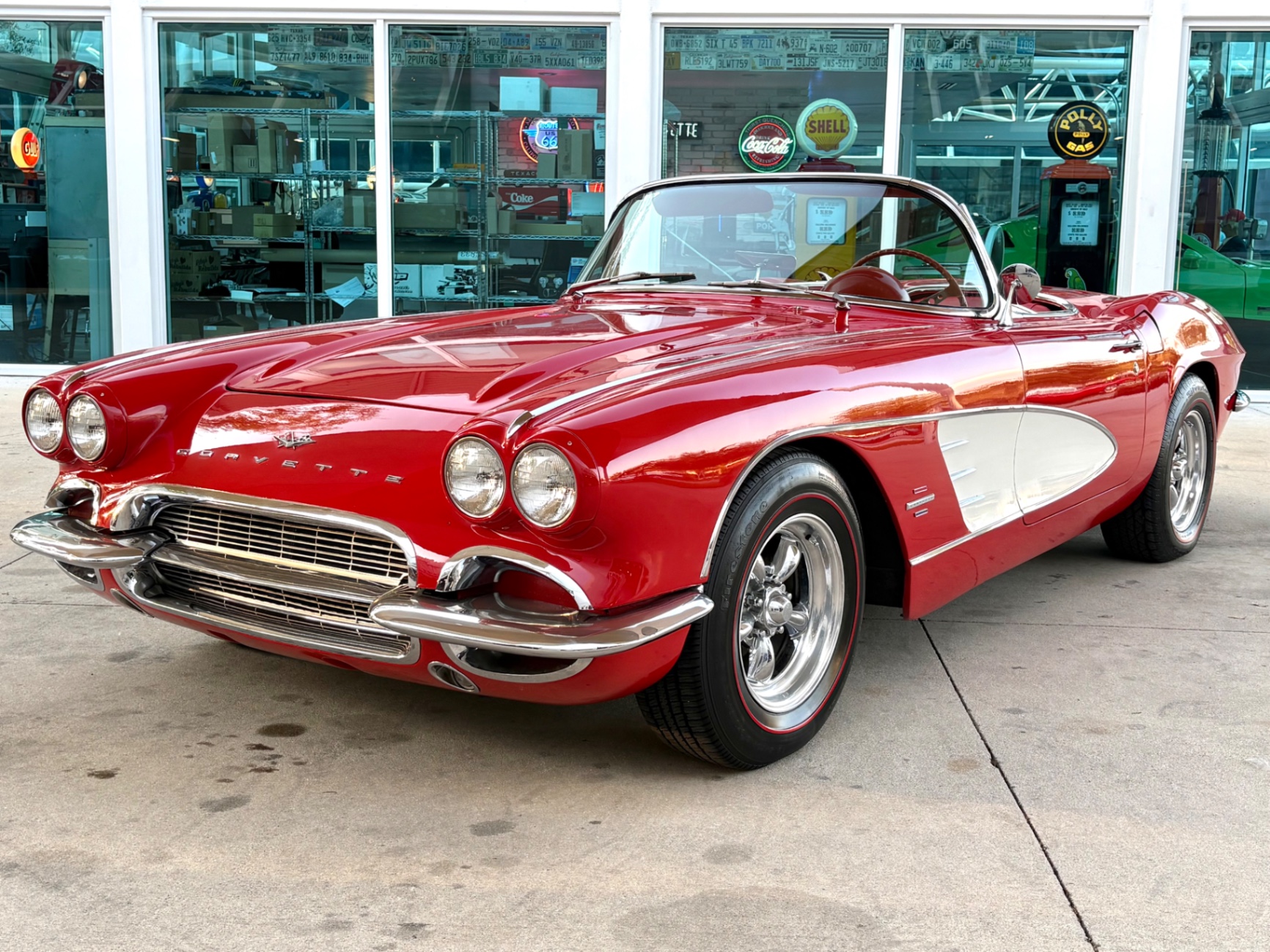
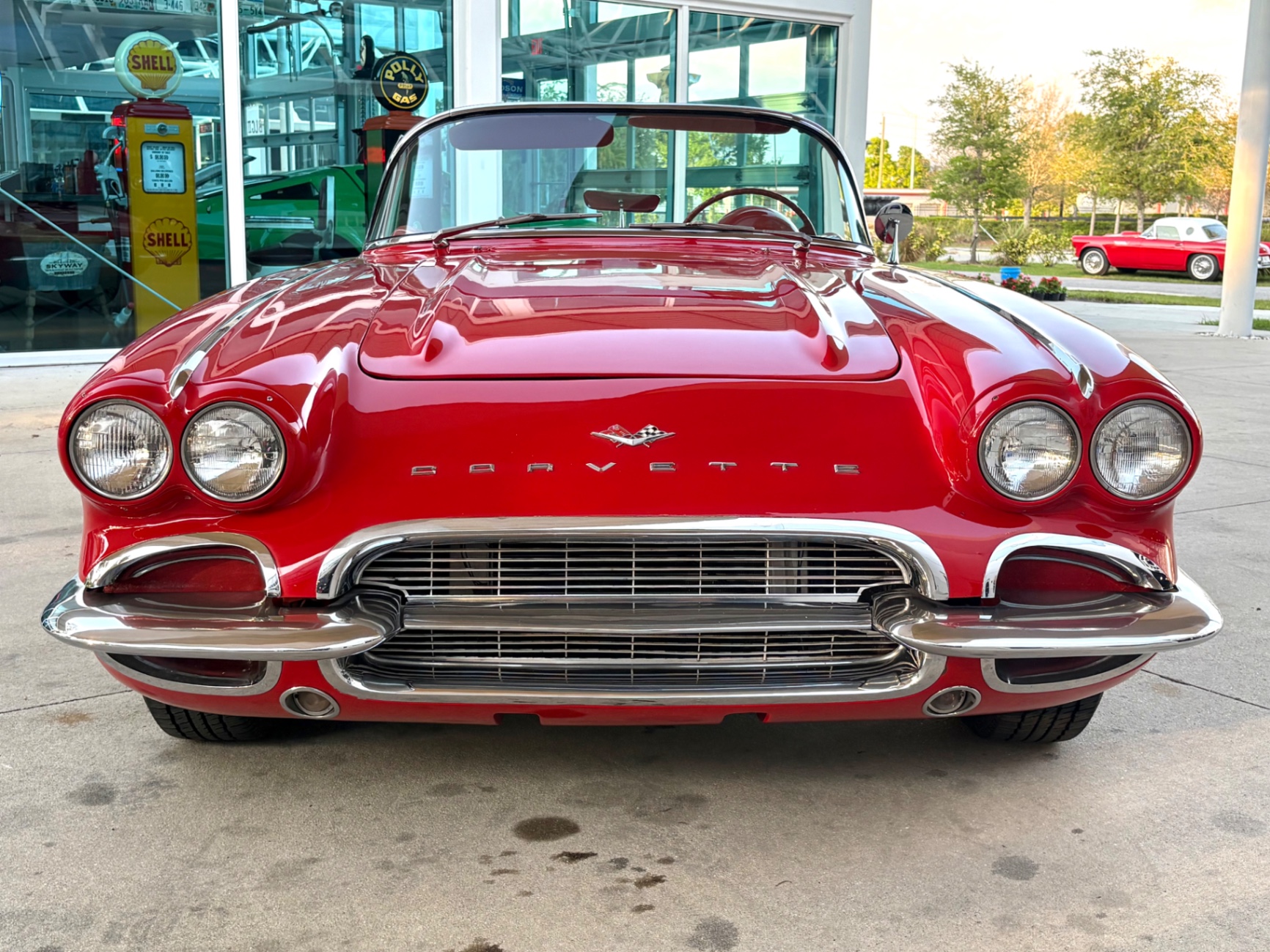
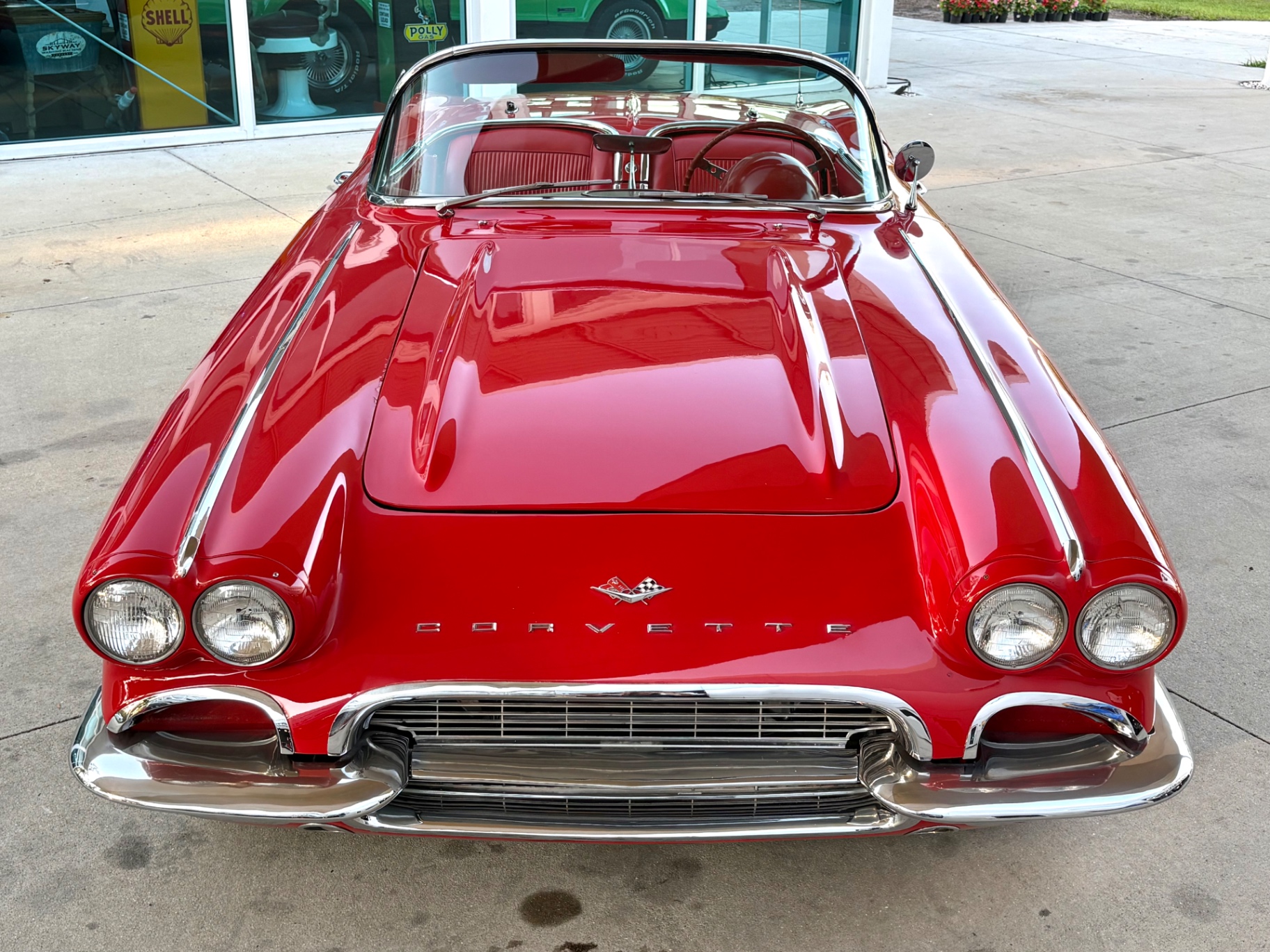
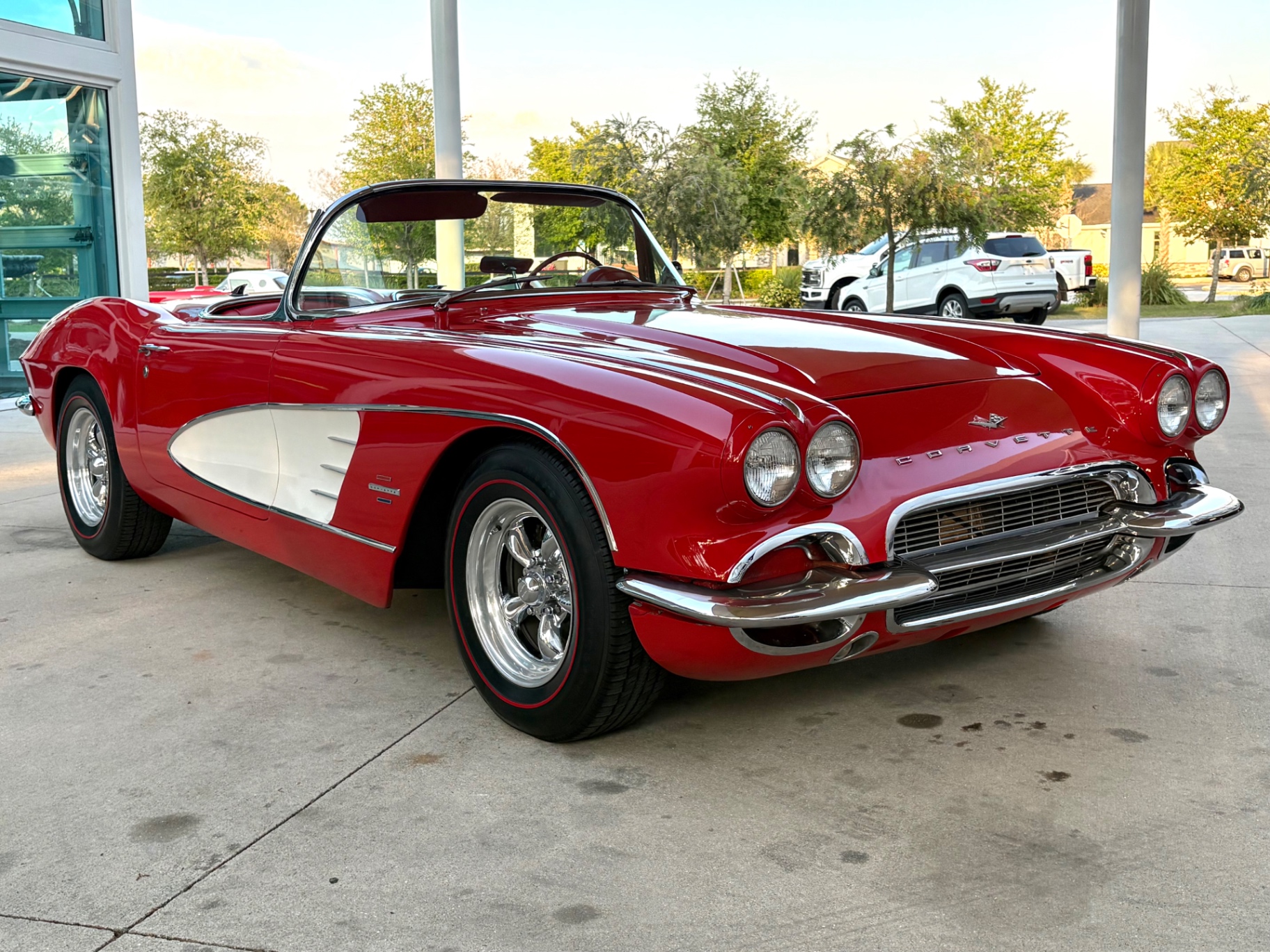
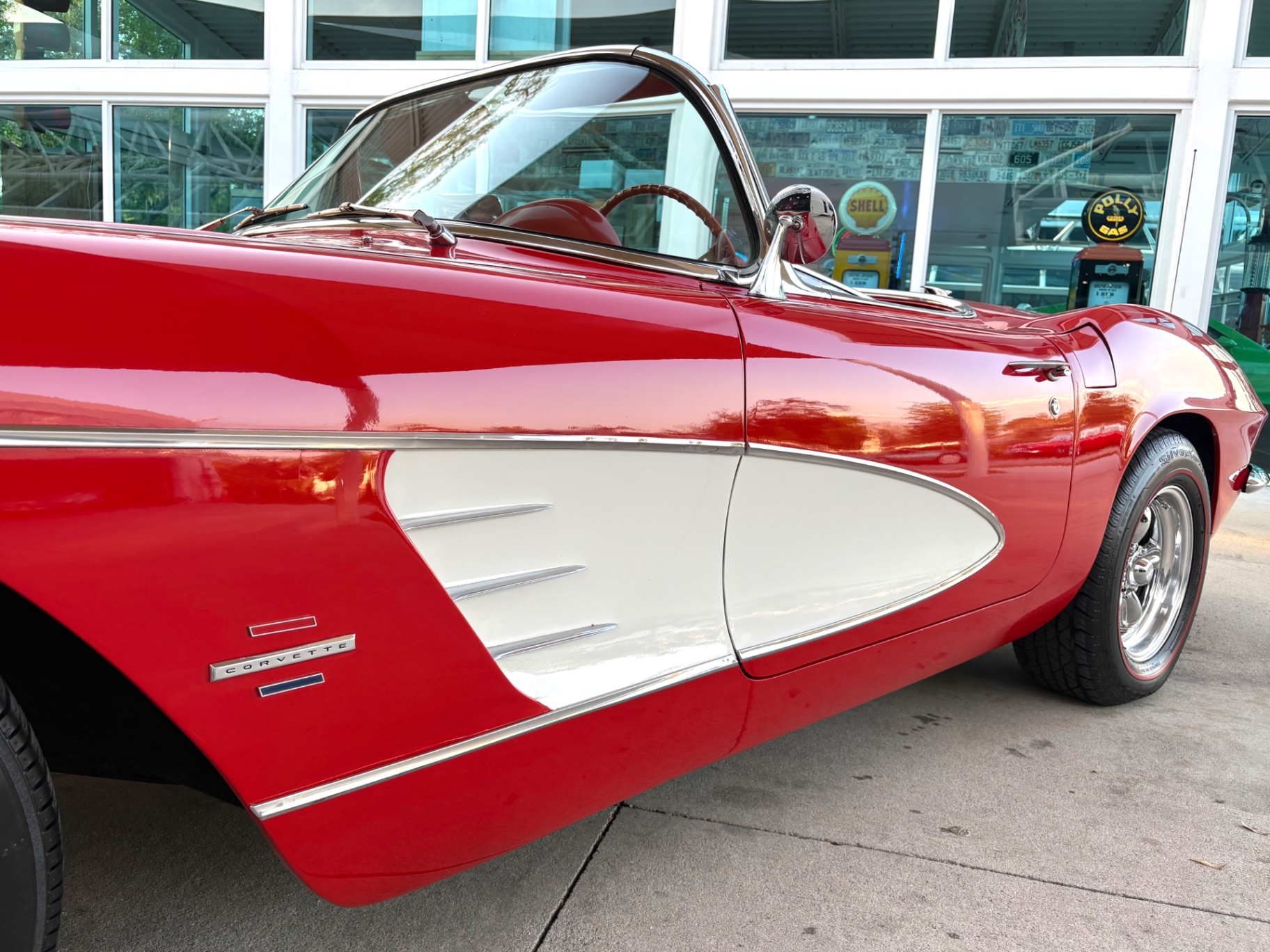
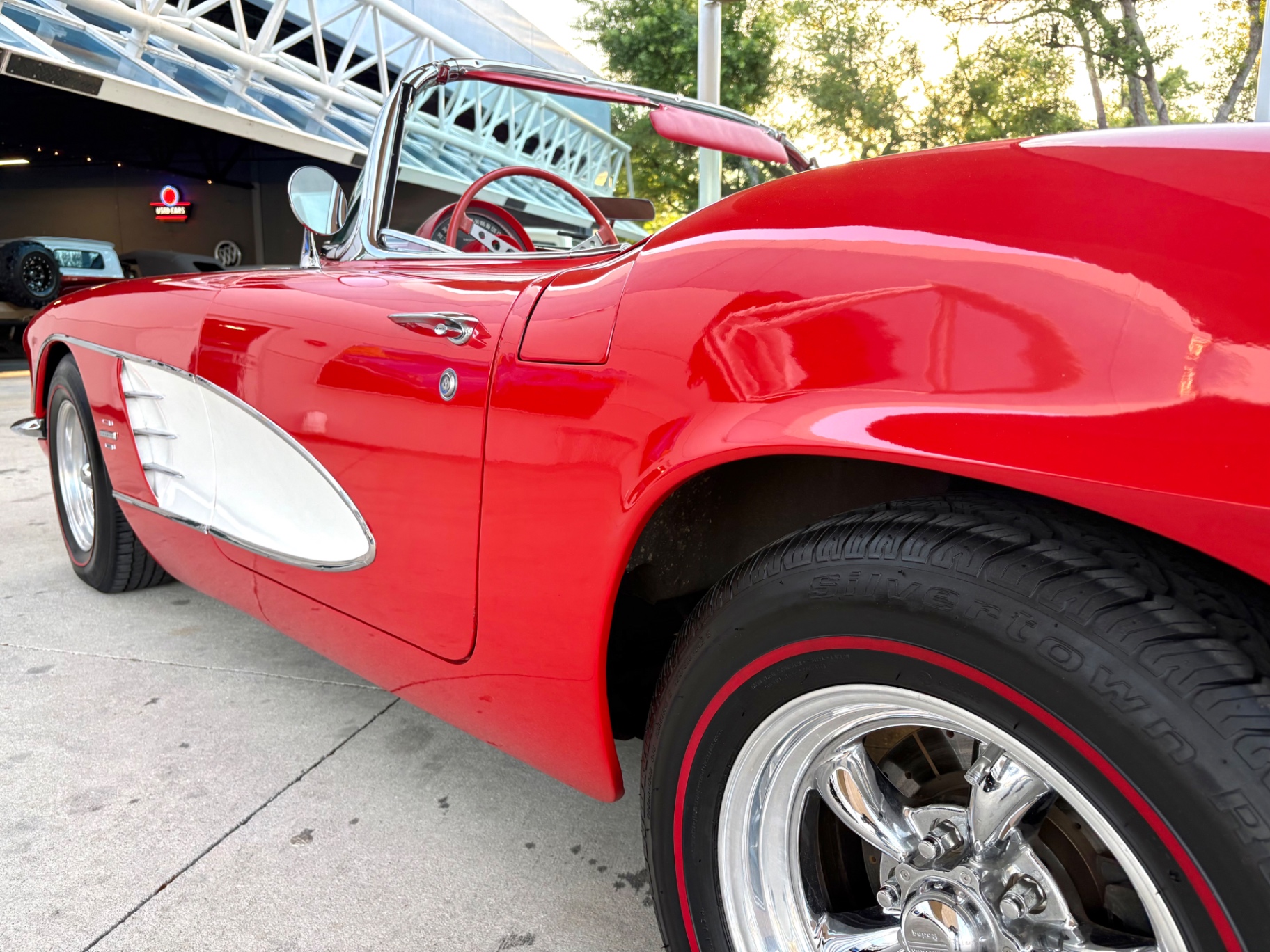
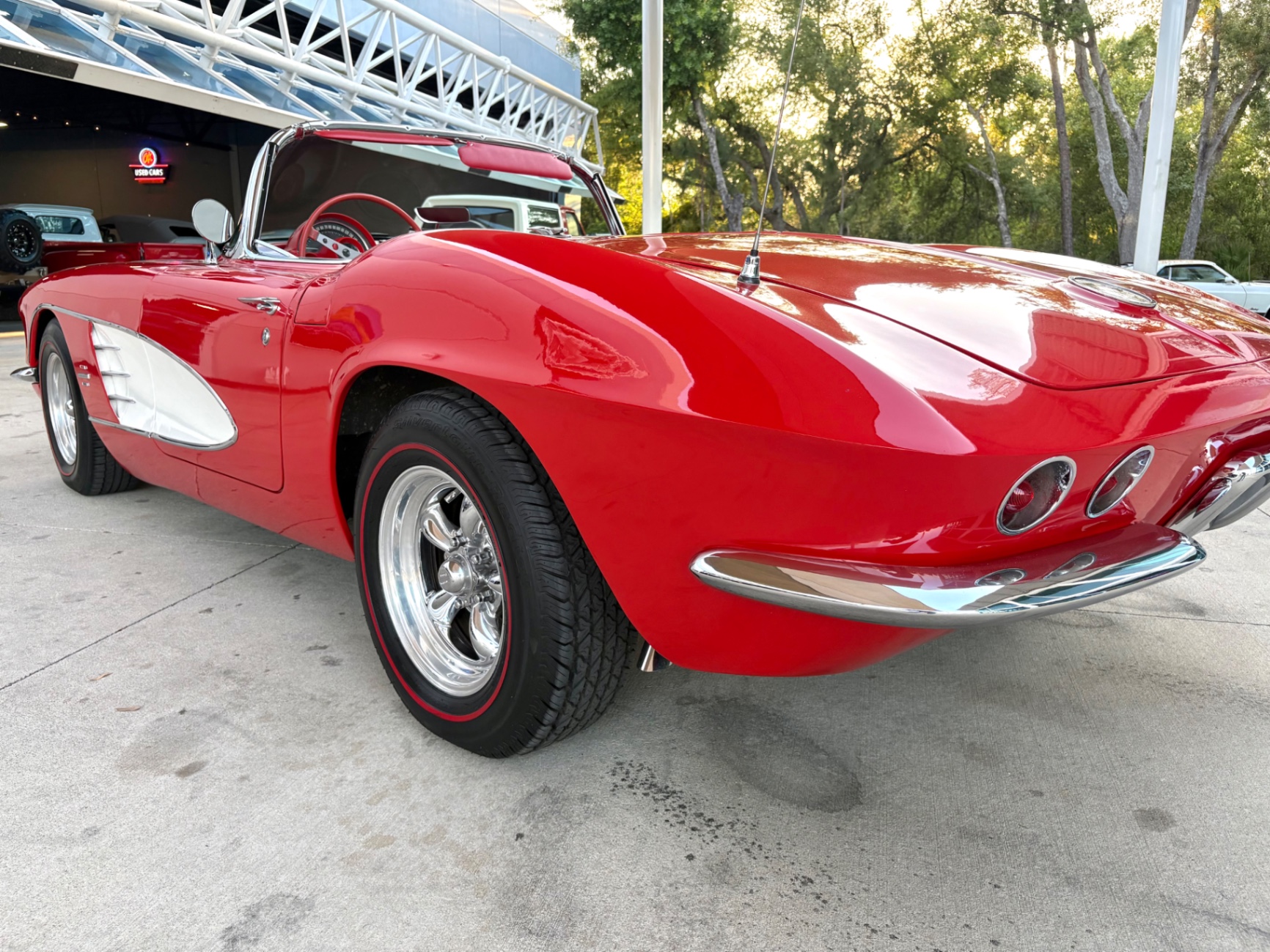
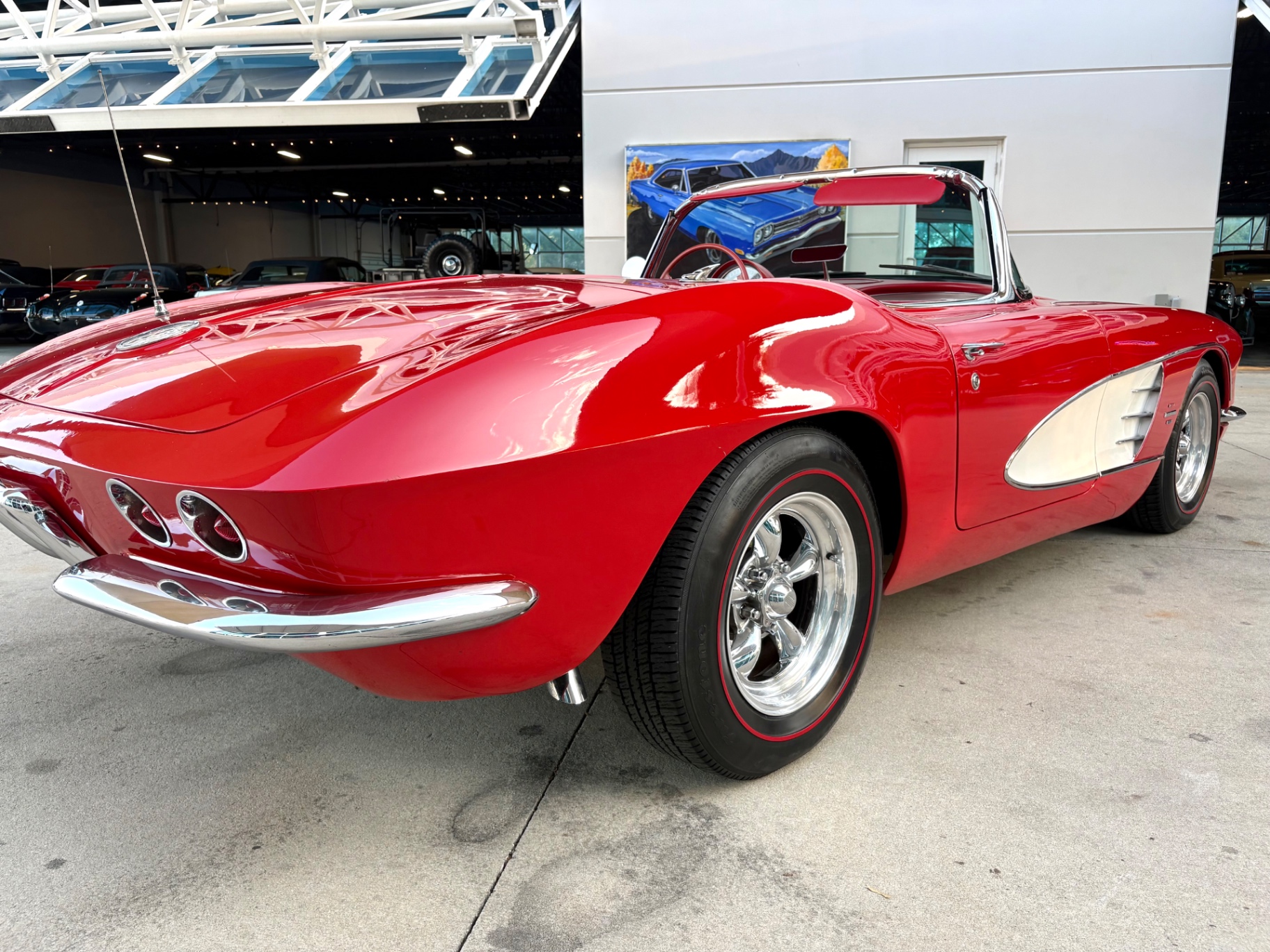
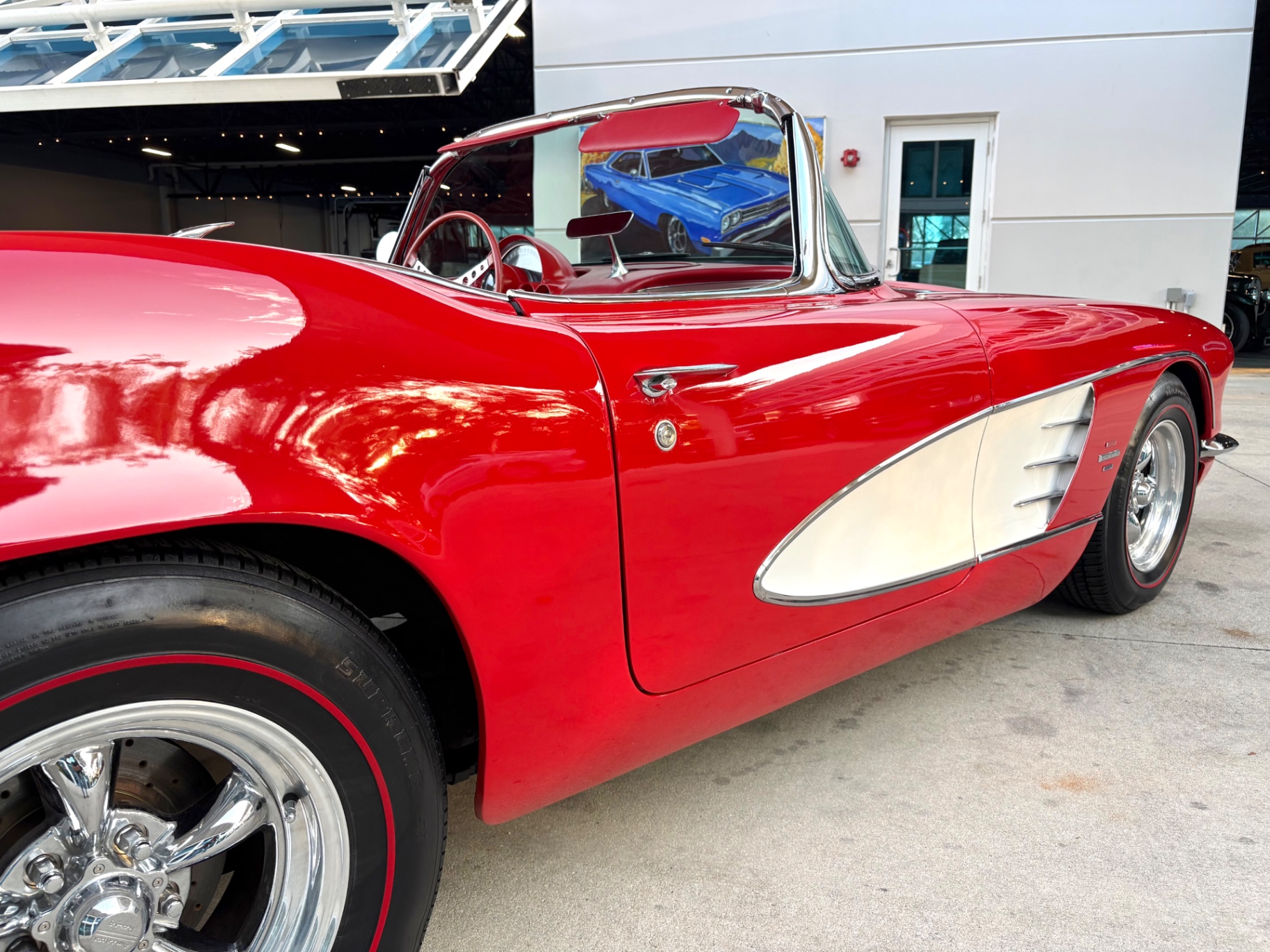
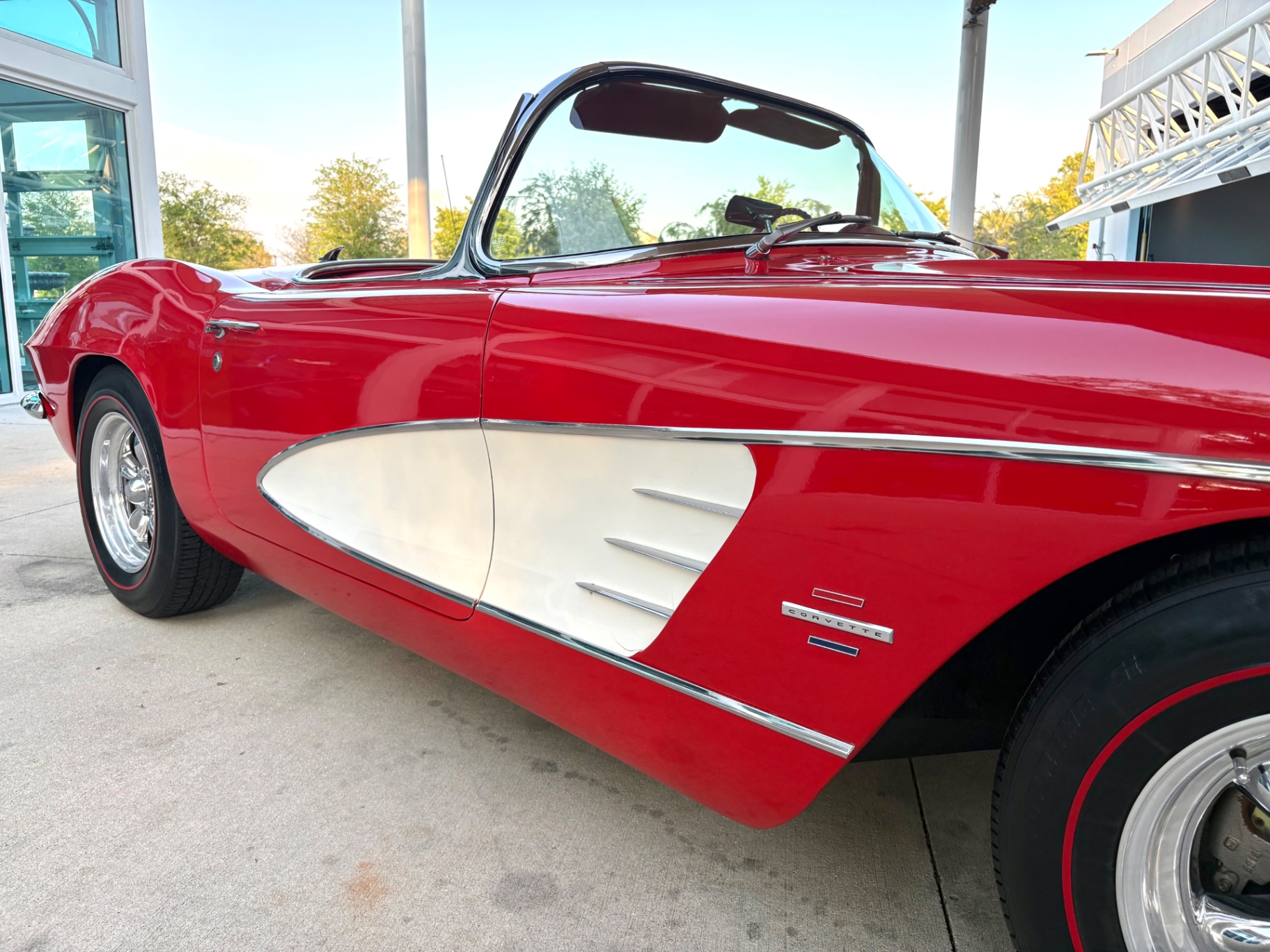
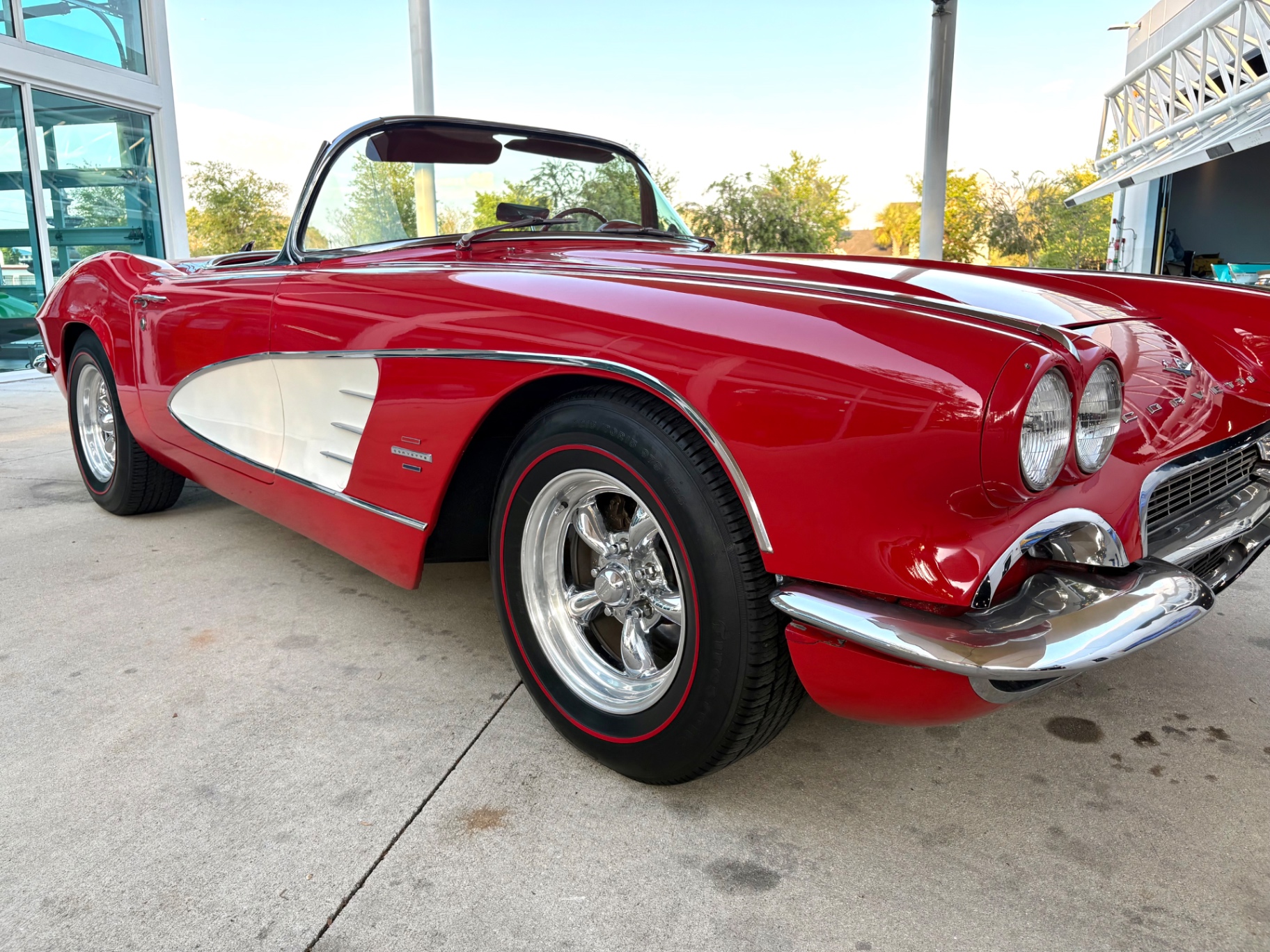
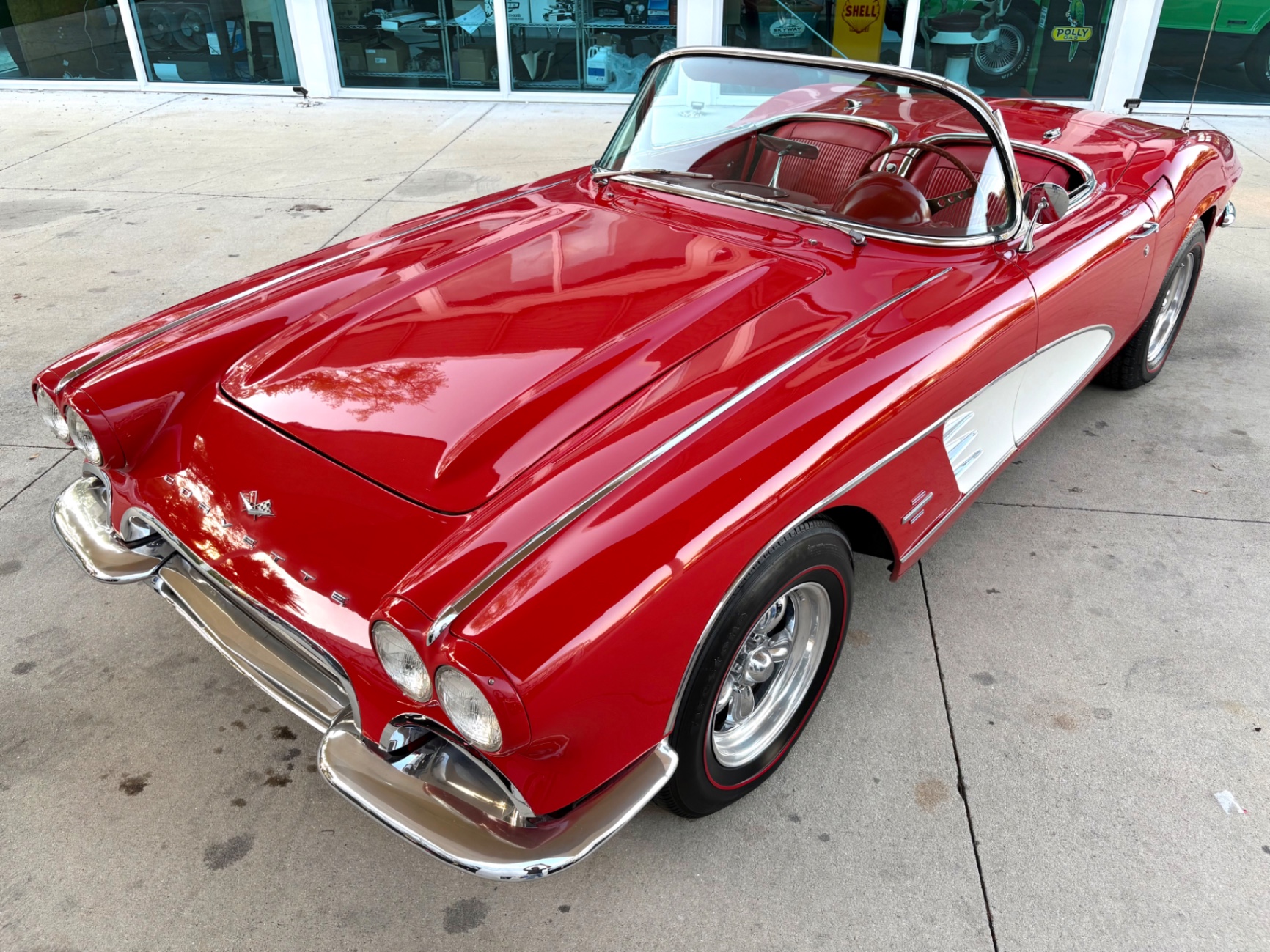

1961 Chevrolet Corvette — 283ci Dual Quad V8, 4-Speed, Red on Red Convertible
Why This Car Is Special
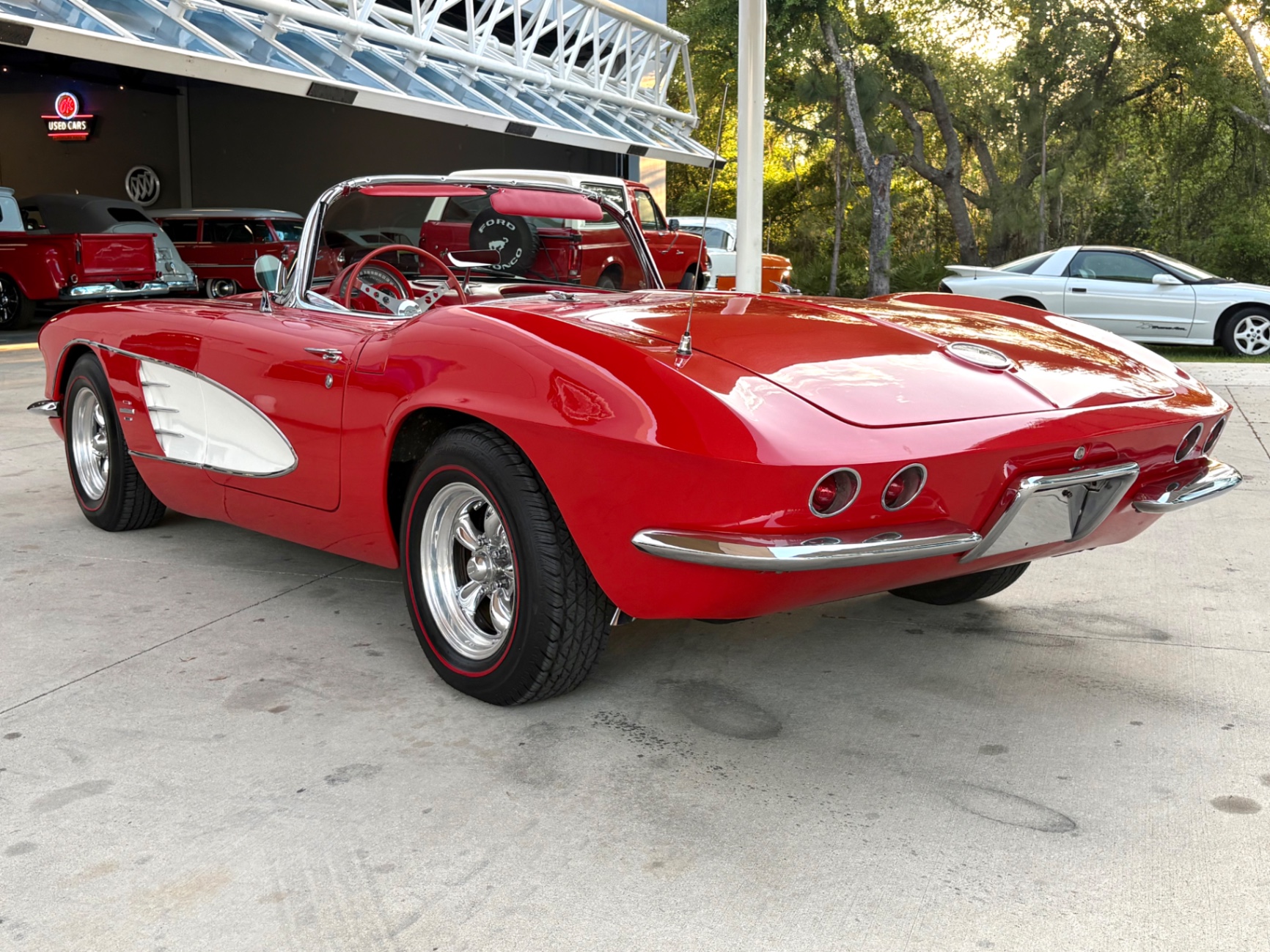
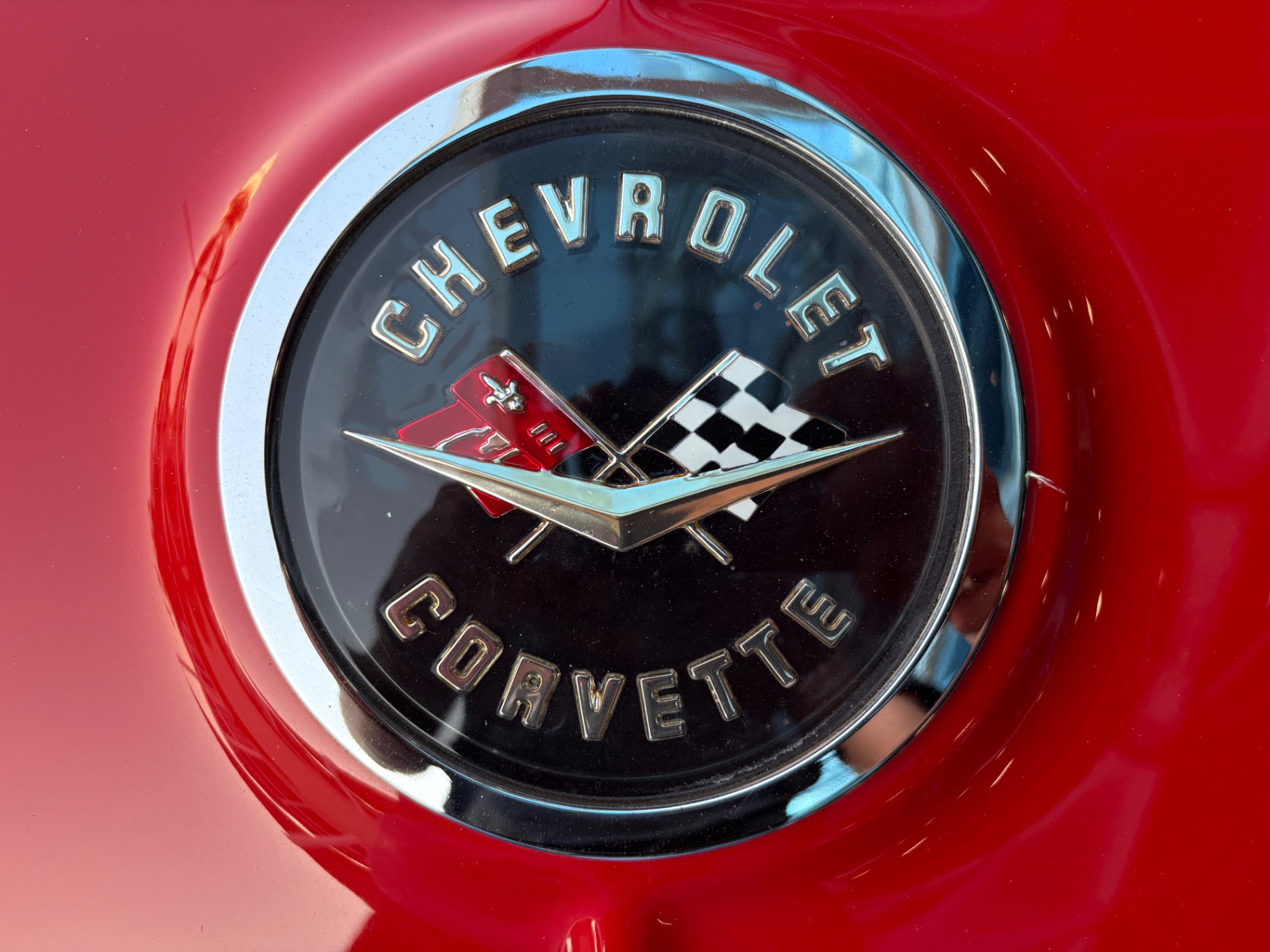
The 1961 Chevrolet Corvette sits at a turning point in the model's history, and that's exactly what makes it so desirable to serious collectors and drivers today. By 1961, Chevrolet's designers under Bill Mitchell had already begun reshaping the Corvette's identity. The front end retained the classic toothy grille that defined the C1 generation from 1953 onward, while the rear received a new ducktail treatment influenced by the Stingray racing car Mitchell had been campaigning privately. That combination of old-school front and forward-thinking rear makes the 1961 the only year in Corvette history with that exact look — a transitional design that collectors have come to regard as one of the most balanced of the entire C1 run.
Total 1961 Corvette production came in at 10,939 units, making it a relatively rare survivor compared to later C2 and C3 numbers. The body, as with all C1 Corvettes, was fiberglass — a choice that set the car apart from virtually every other American production vehicle of the era. That construction kept weight down and eliminated the rust issues that have plagued so many steel-bodied contemporaries. A well-preserved 1961 Corvette fiberglass body, like what you see here, holds up in a way that a steel car from the same period simply cannot.
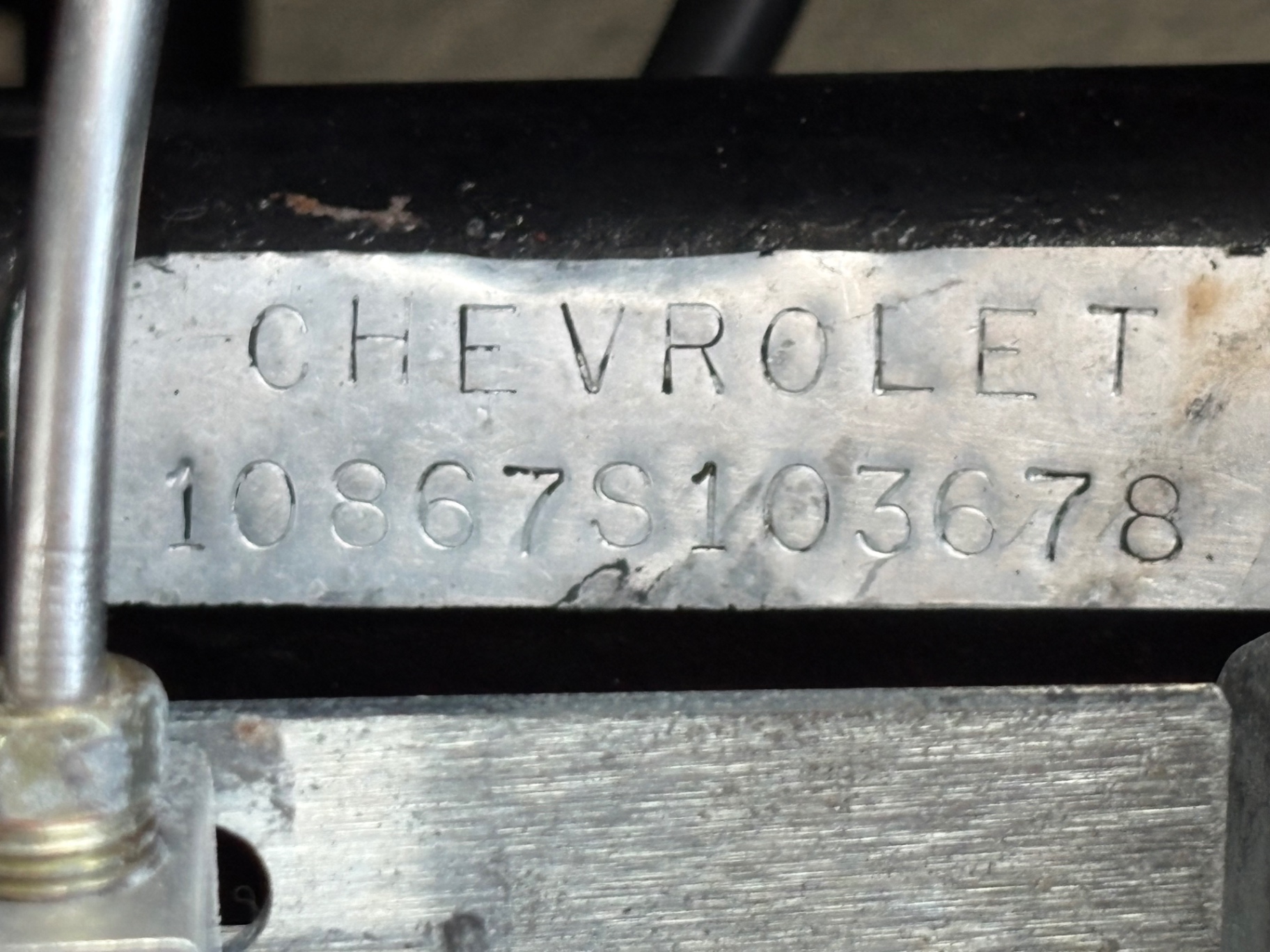
The VIN on this car decodes to confirm it was built at the St. Louis assembly plant, which produced all Corvettes from 1954 through 1981. The sequential serial number places it solidly within the 1961 model year production run. The "08" in the model number confirms this is the Corvette convertible body style, the only body style offered that year.
This particular 1961 Corvette is finished in red over a matching red vinyl interior, carries the 283 cubic inch V8 with dual four-barrel carburetors, and is paired with a 4-speed manual transmission. It presents as a well-sorted, driver-quality classic with a handful of practical upgrades that make it more enjoyable to use in modern conditions without compromising its character.
Features
- 283ci V8 with dual four-barrel carburetors - 4-speed manual transmission - Dual K&N air filters on the dual quad carb setup - Corvette script valve covers - Aluminum radiator upgrade - Electric cooling fan - Custom alloy wheels - Red-line tires - Red exterior finish - White cove body trim - Chrome bumpers - Red vinyl interior - Bucket seats - Center console shifter
Mechanical
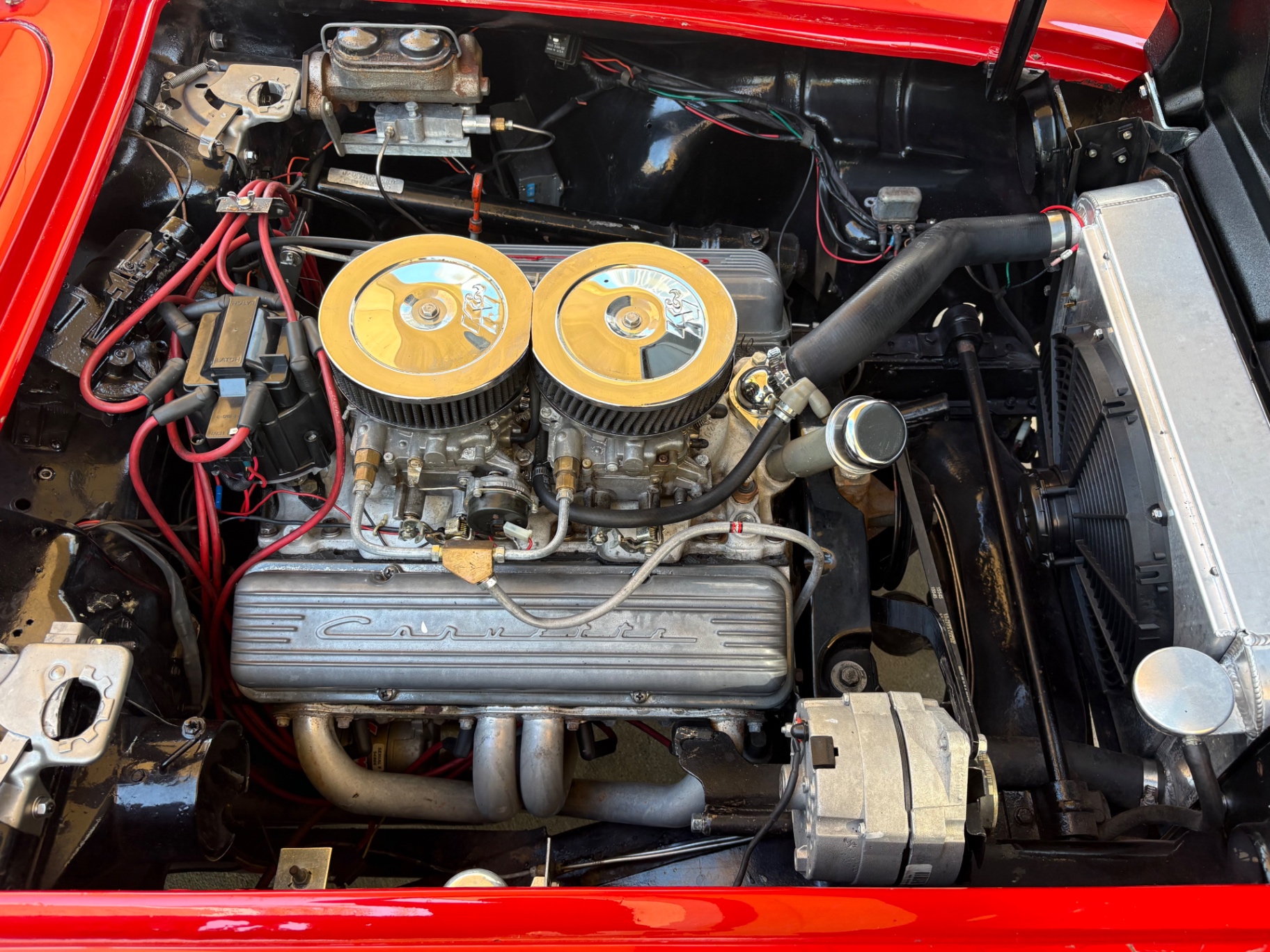
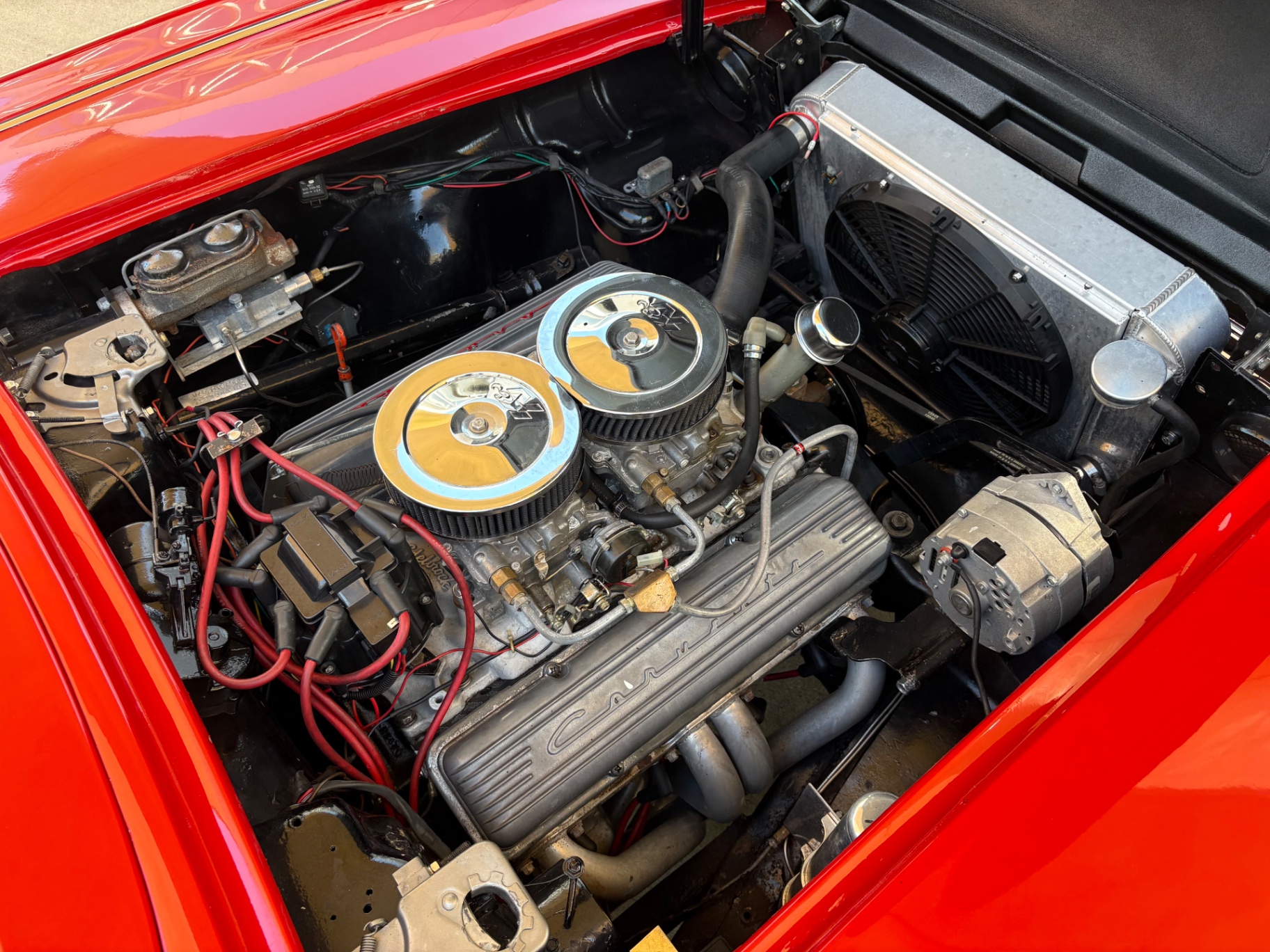
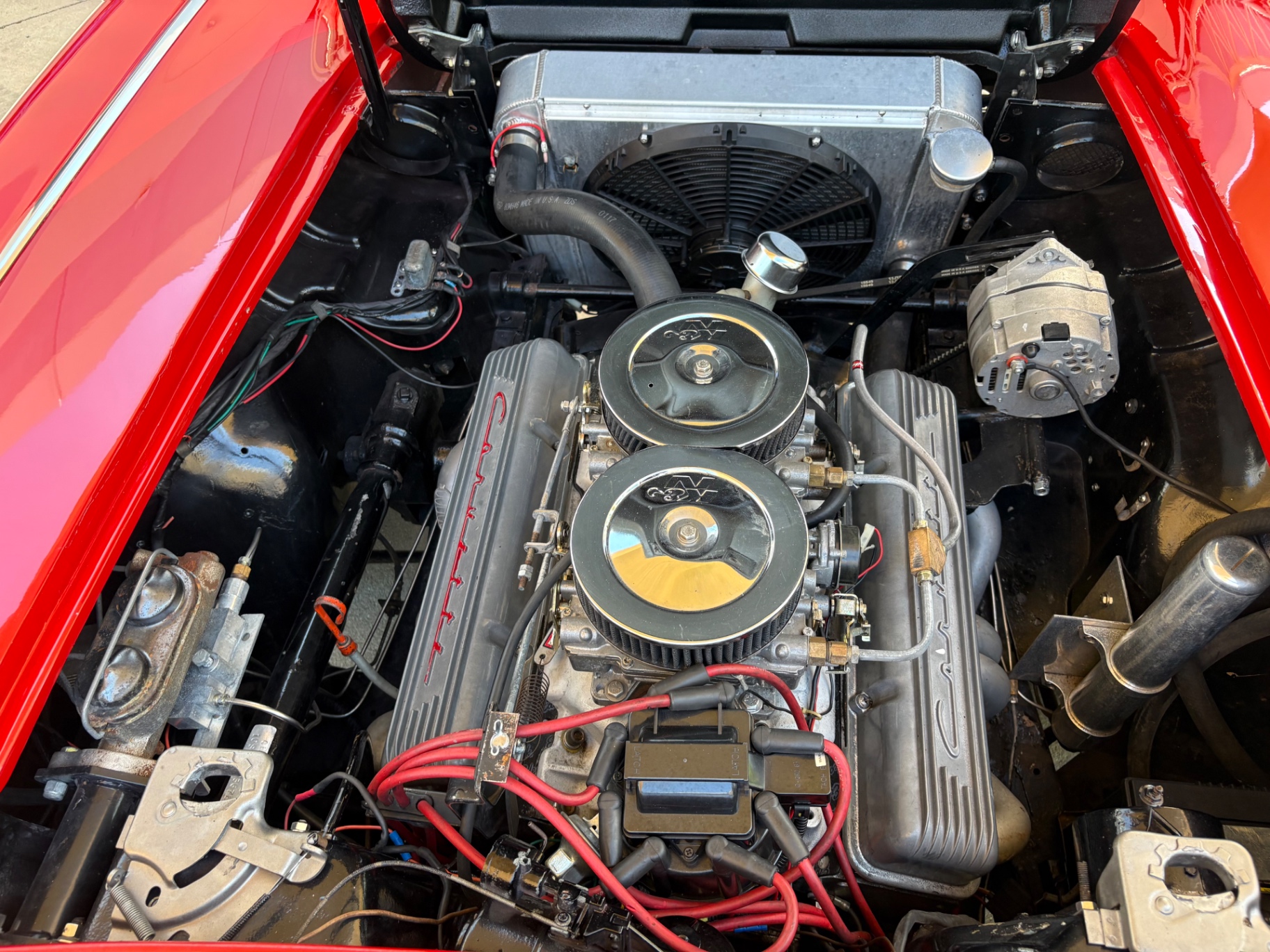
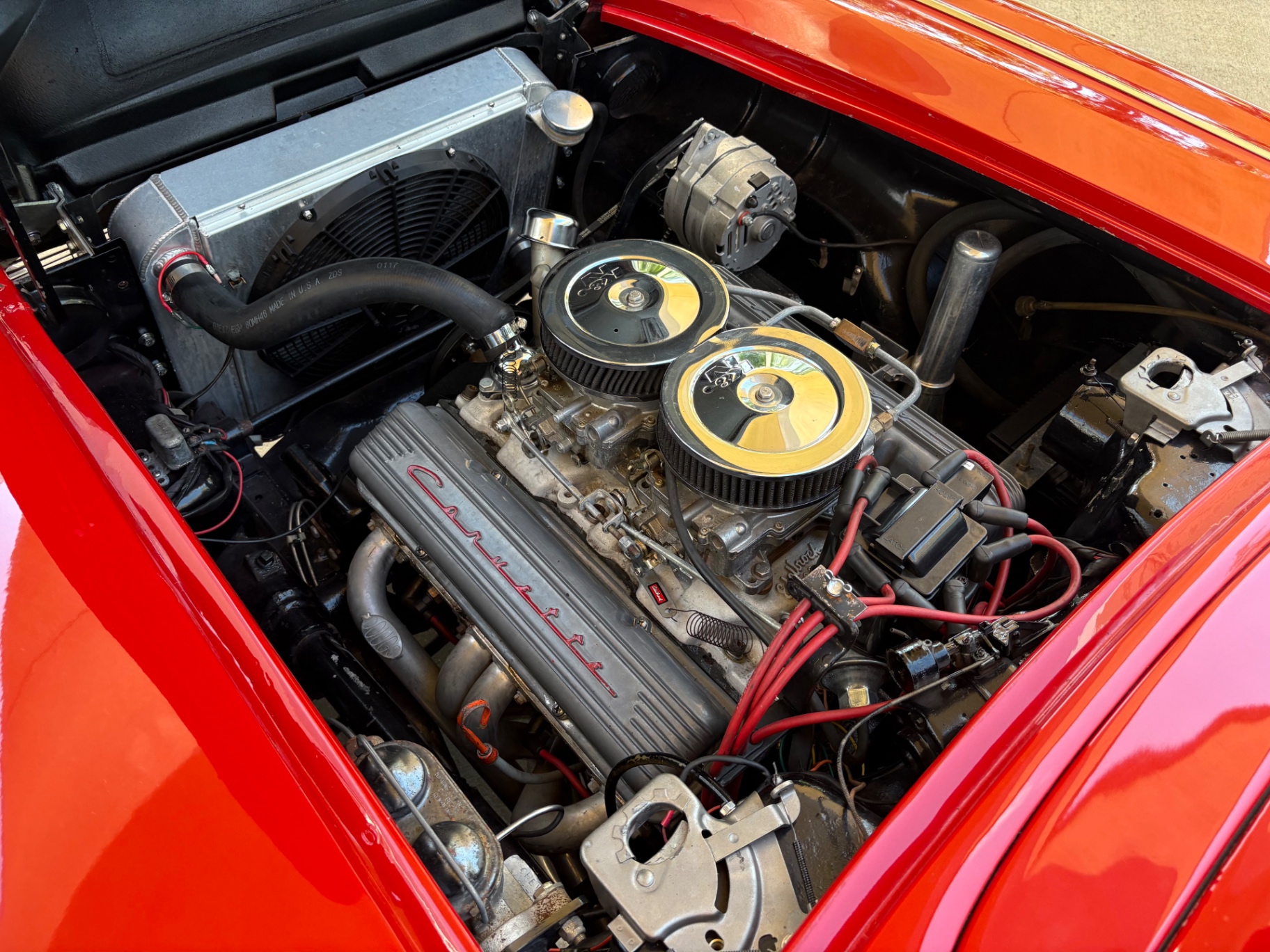
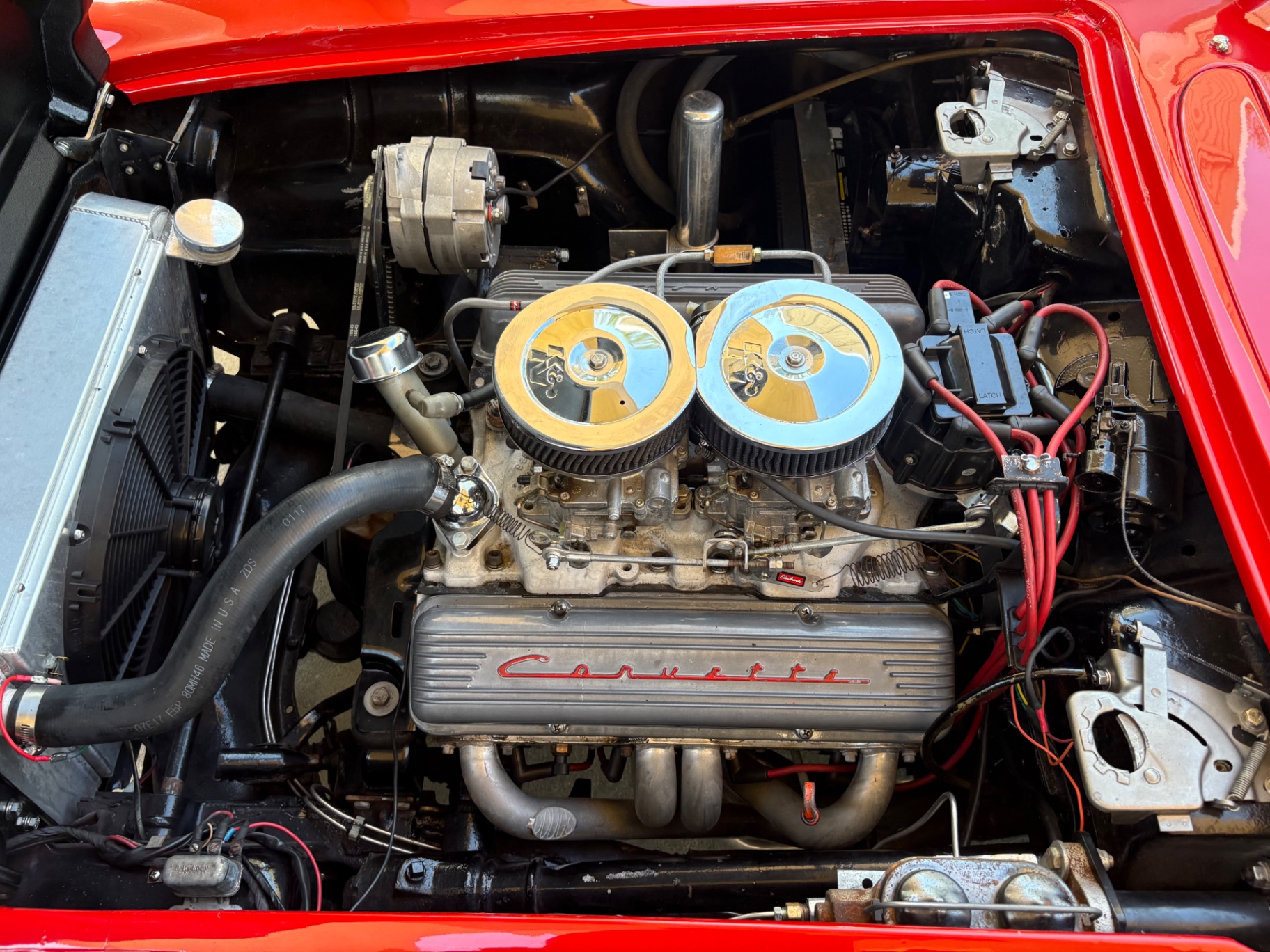
The 283 cubic inch small-block V8 was the Corvette's engine of record throughout the entire C1 era, and the dual four-barrel carburetor version was among the most desirable configurations offered. In factory trim, the dual-quad 283 was rated at 245 horsepower in standard form, with the fuel-injected version at the top of the range. The dual carb setup on this car is a strong, tractable combination — two four-barrel carbs on a dual-plane intake give the engine broad torque across the rpm range, which is exactly what you want in a car you plan to actually drive.
The dual K&N air filters sit atop each carburetor, providing better filtration and airflow compared to stock paper elements. These are a straightforward upgrade that doesn't change the character of the setup — they simply let the engine breathe more cleanly.
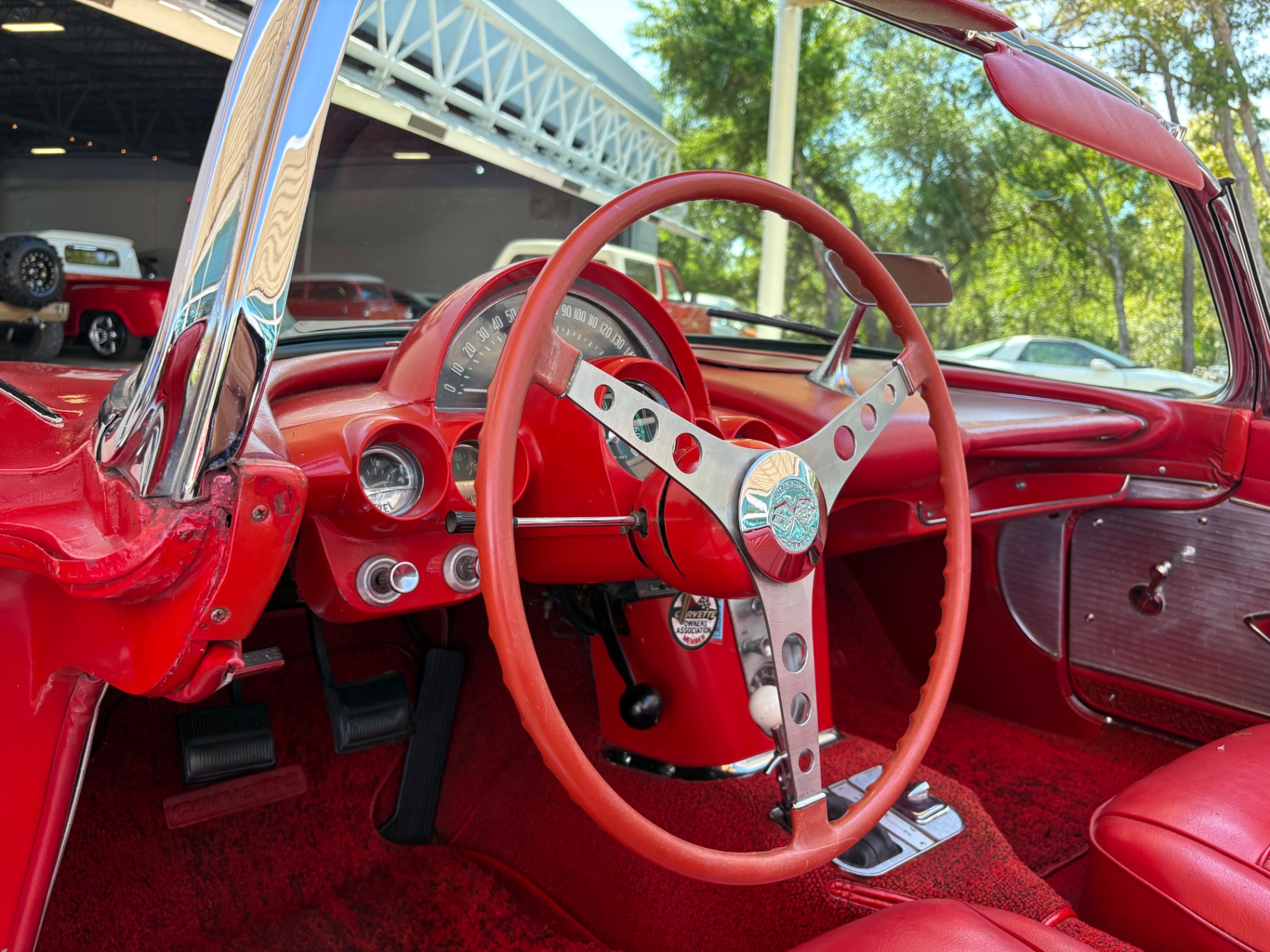
The 4-speed manual transmission is the correct pairing for this engine. Chevrolet introduced the close-ratio 4-speed as a Corvette option in 1957, and by 1961 it had become the transmission of choice for buyers who wanted to get the most out of the small-block. The center console shifter is properly positioned and works with the bucket seat configuration to give the cockpit a purposeful, focused feel.
Under the hood, two practical upgrades deserve specific mention. The aluminum radiator replaces the original copper-brass unit with a more efficient modern core that handles heat more effectively, particularly in stop-and-go traffic or during warm Florida summers. Paired with the electric cooling fan, this combination keeps coolant temperatures in check without relying on a mechanical fan that robs horsepower and only moves air when the engine is running fast. These are sensible changes for a car that gets driven, not trailered.
The Corvette script valve covers are a period-correct cosmetic touch that look right at home on this engine and reinforce the visual character of the 283.
Interior
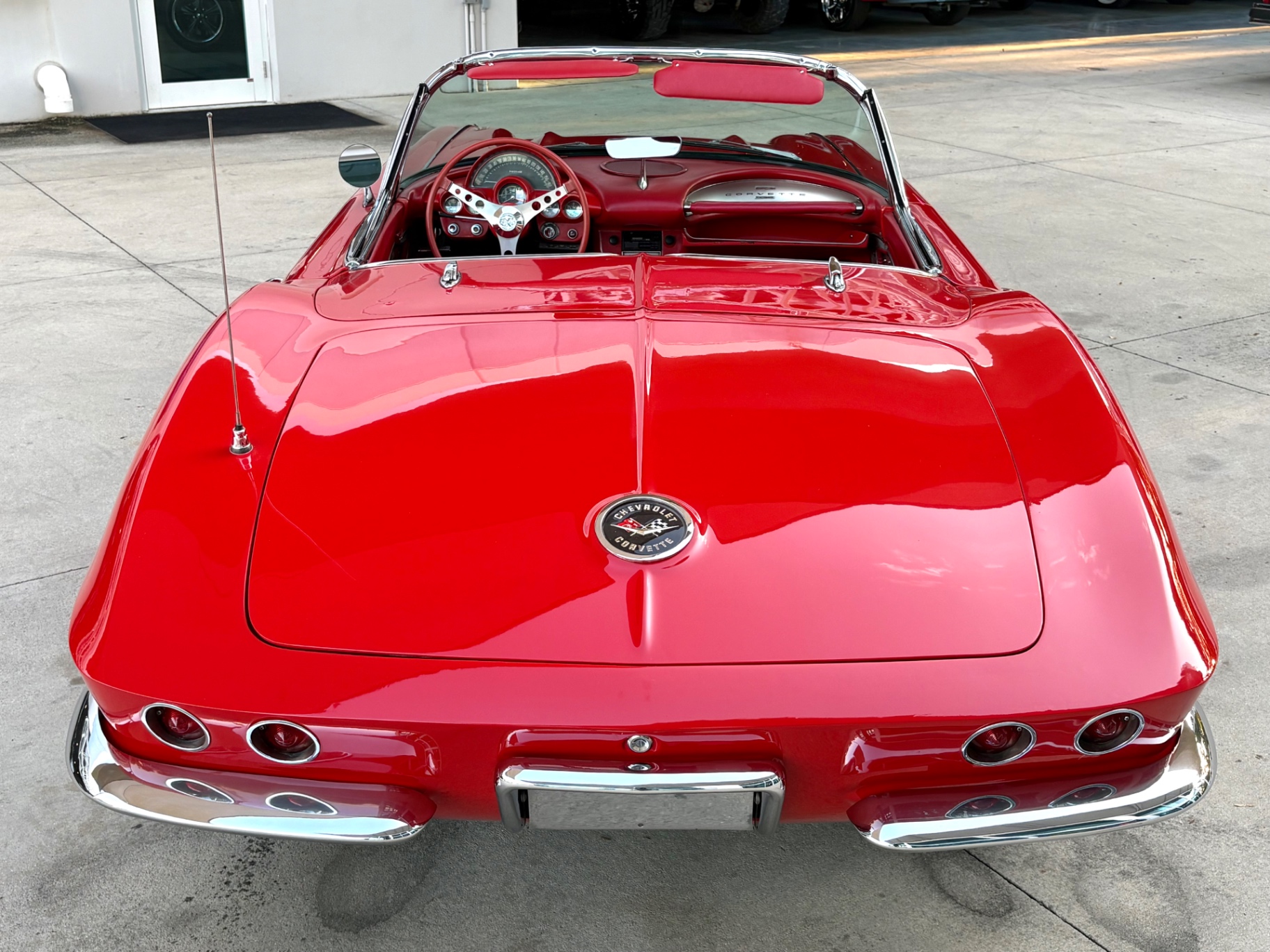
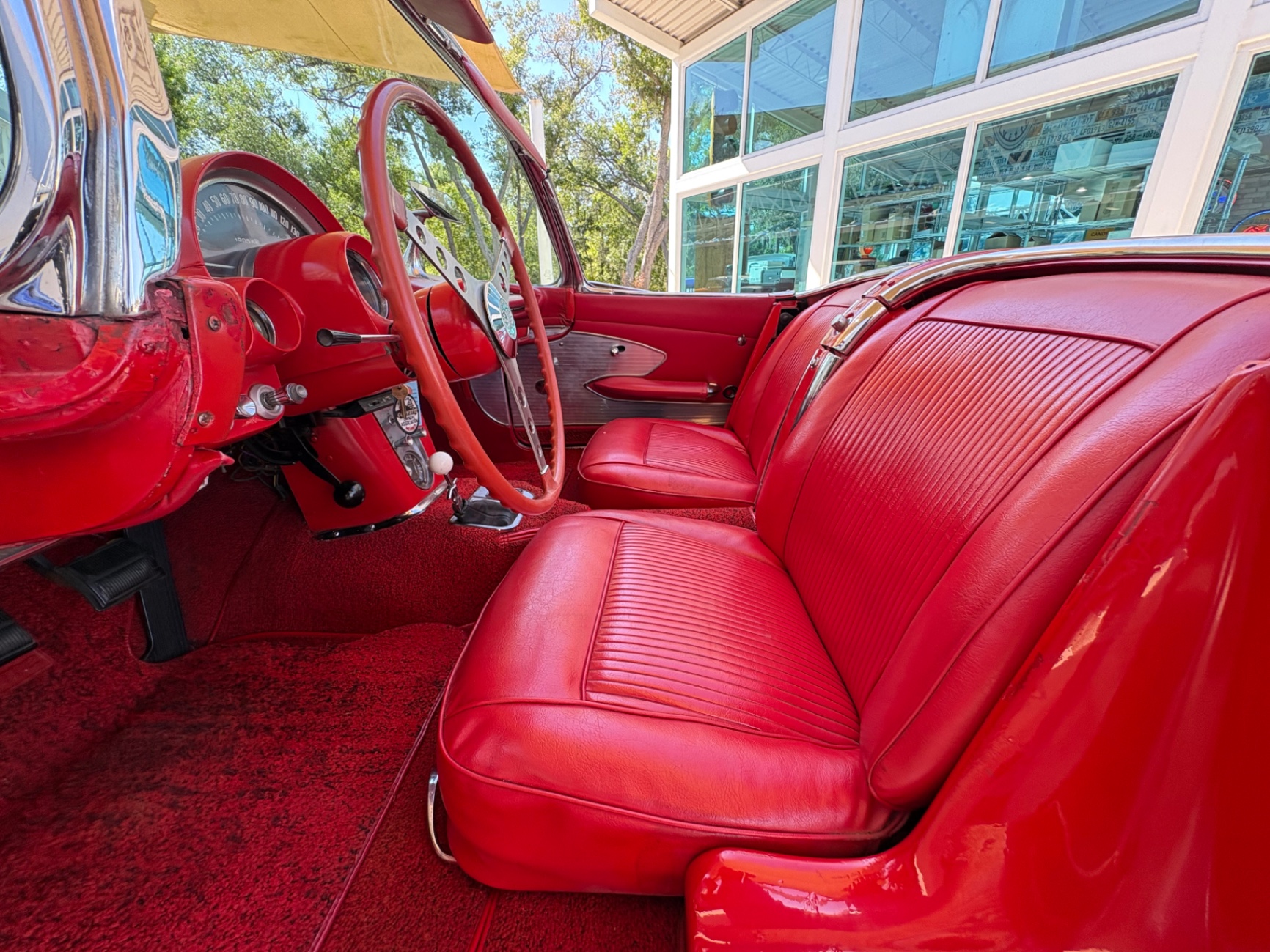
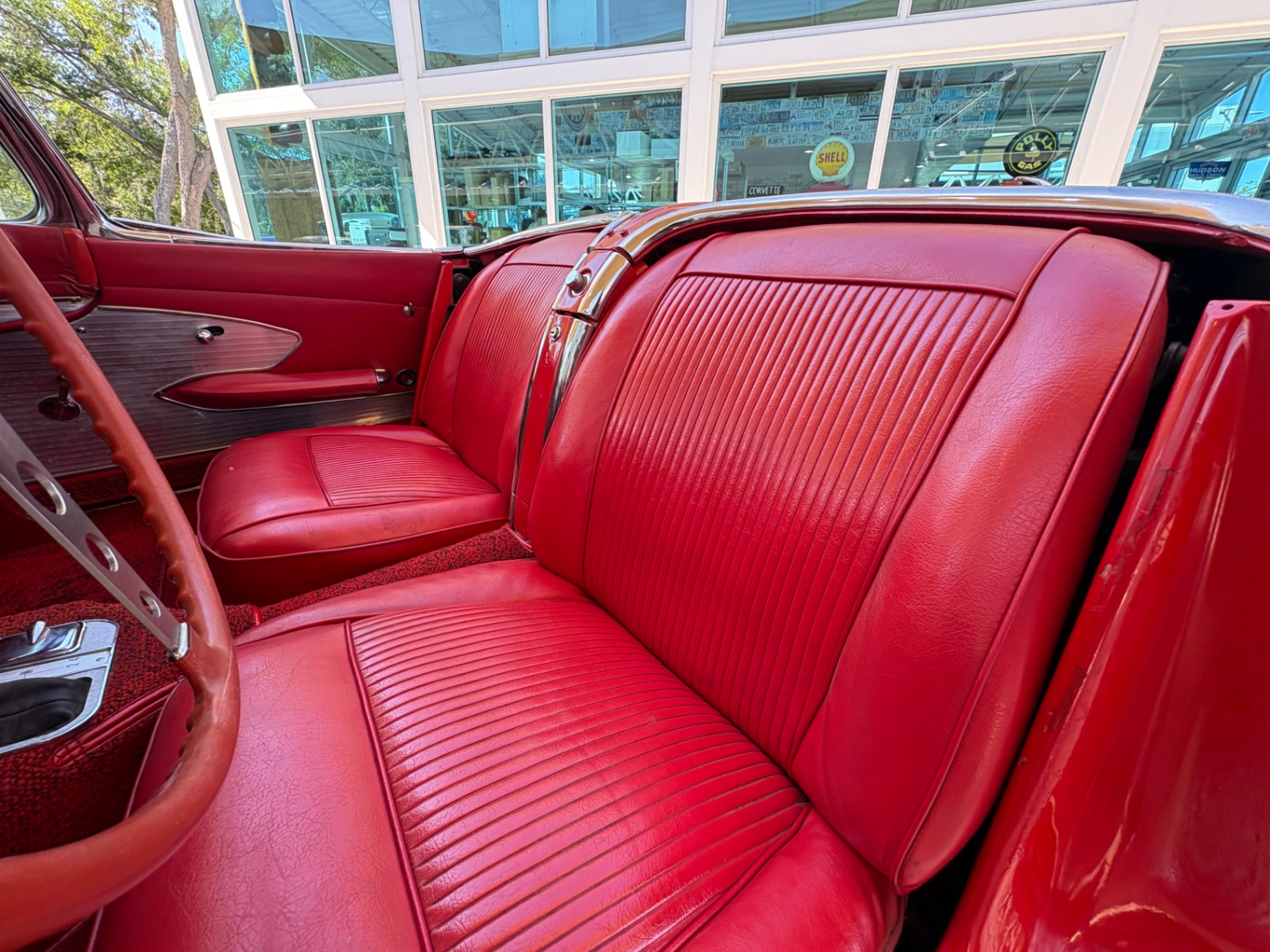
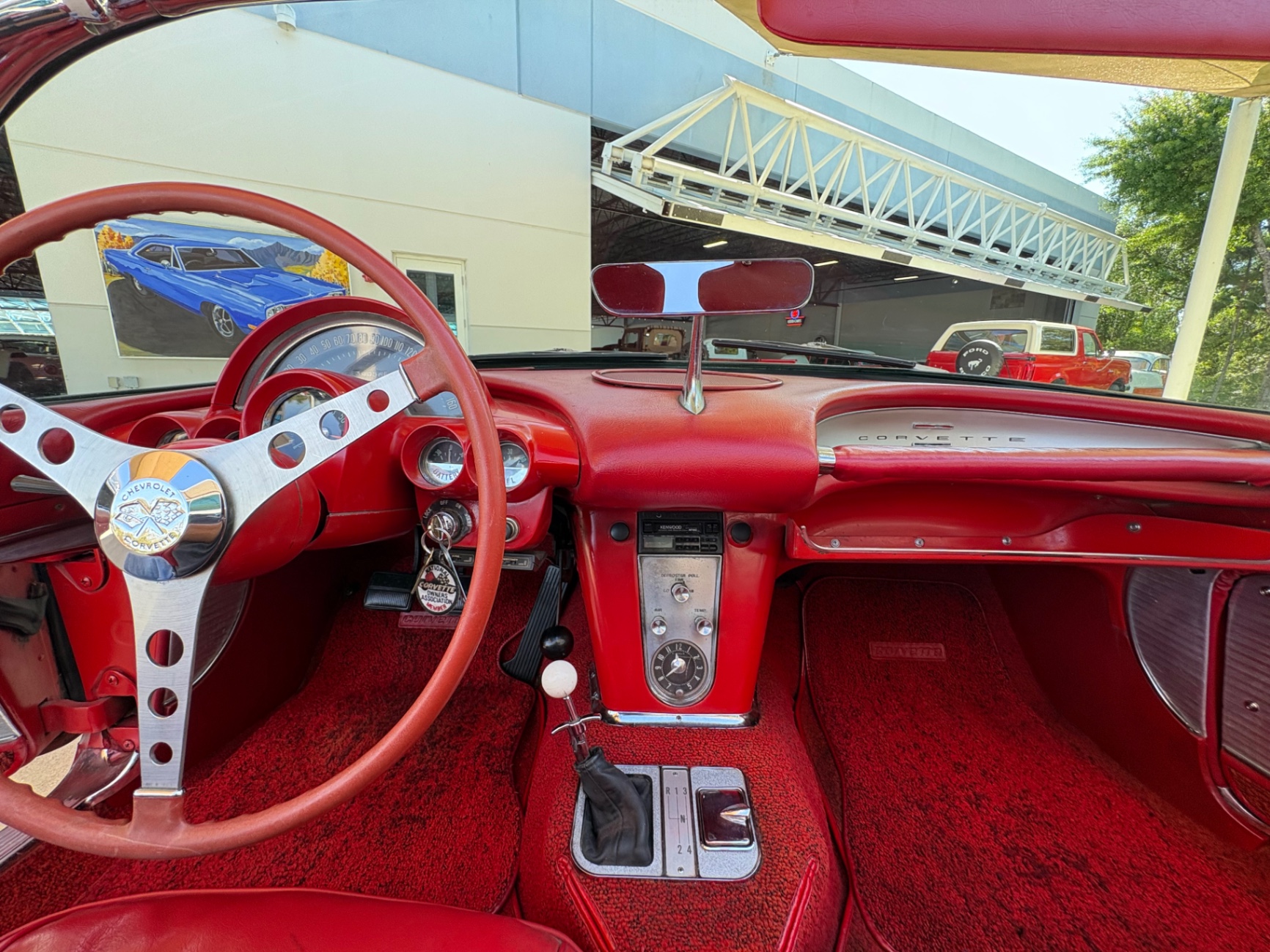
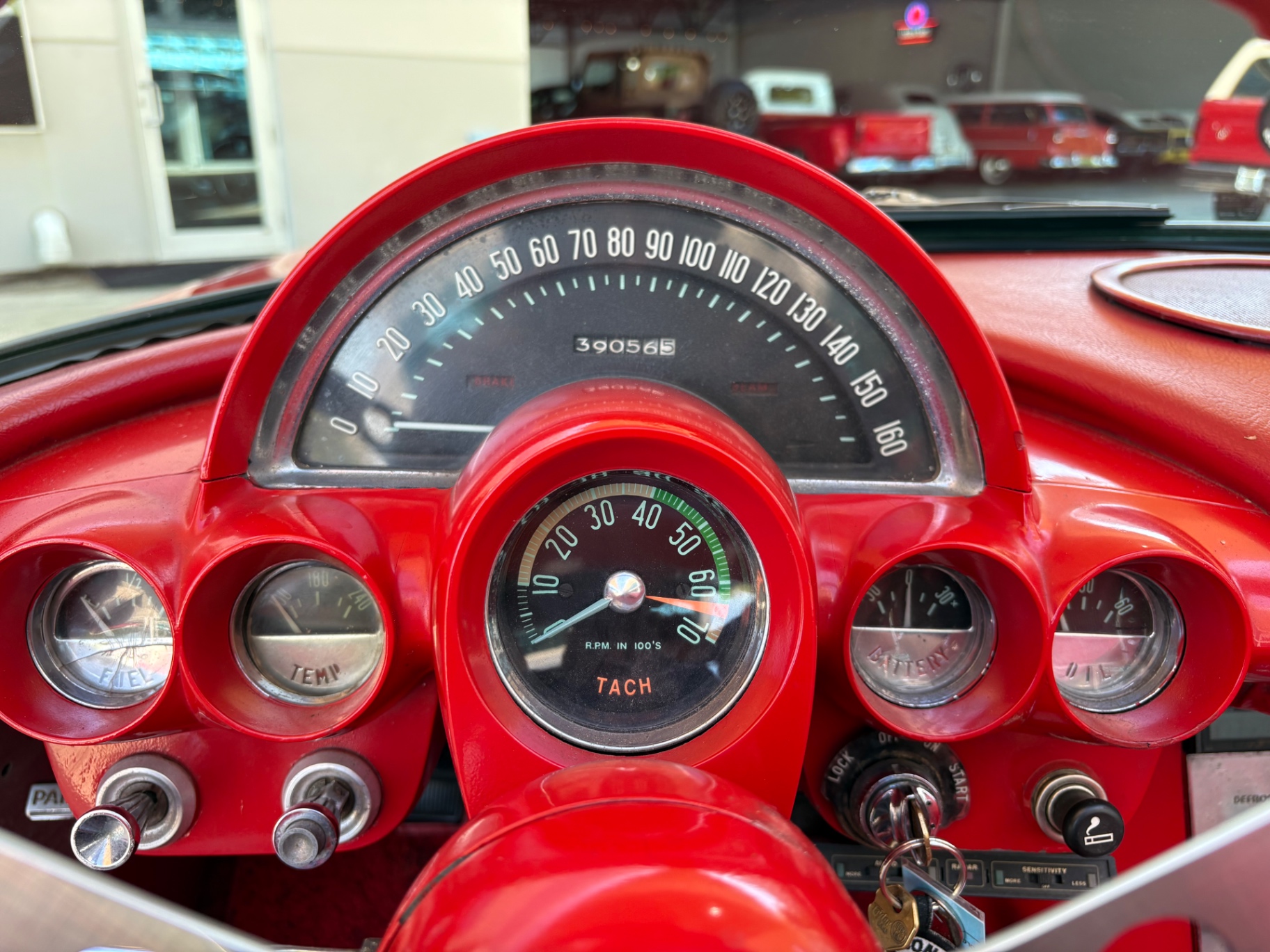
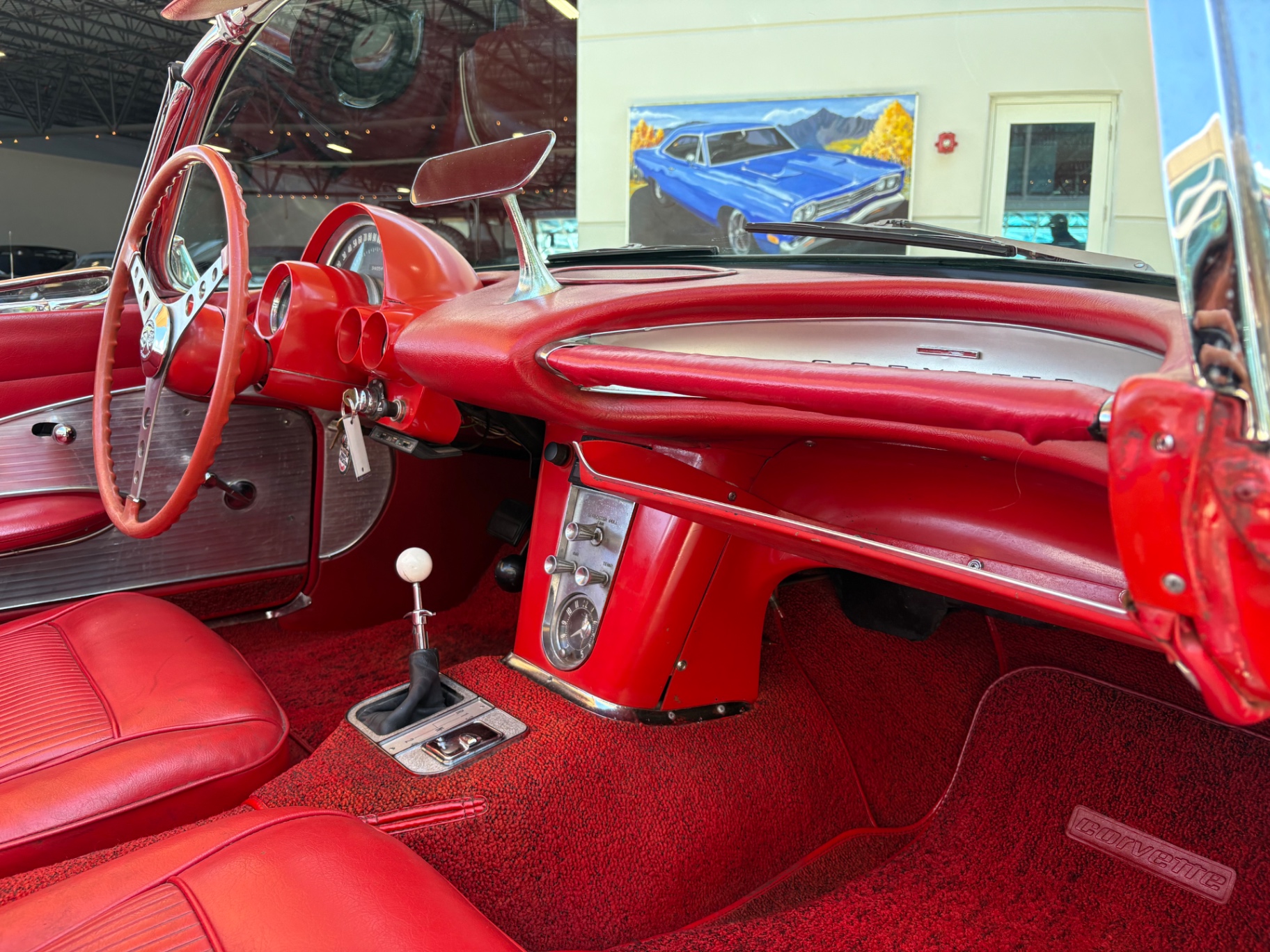
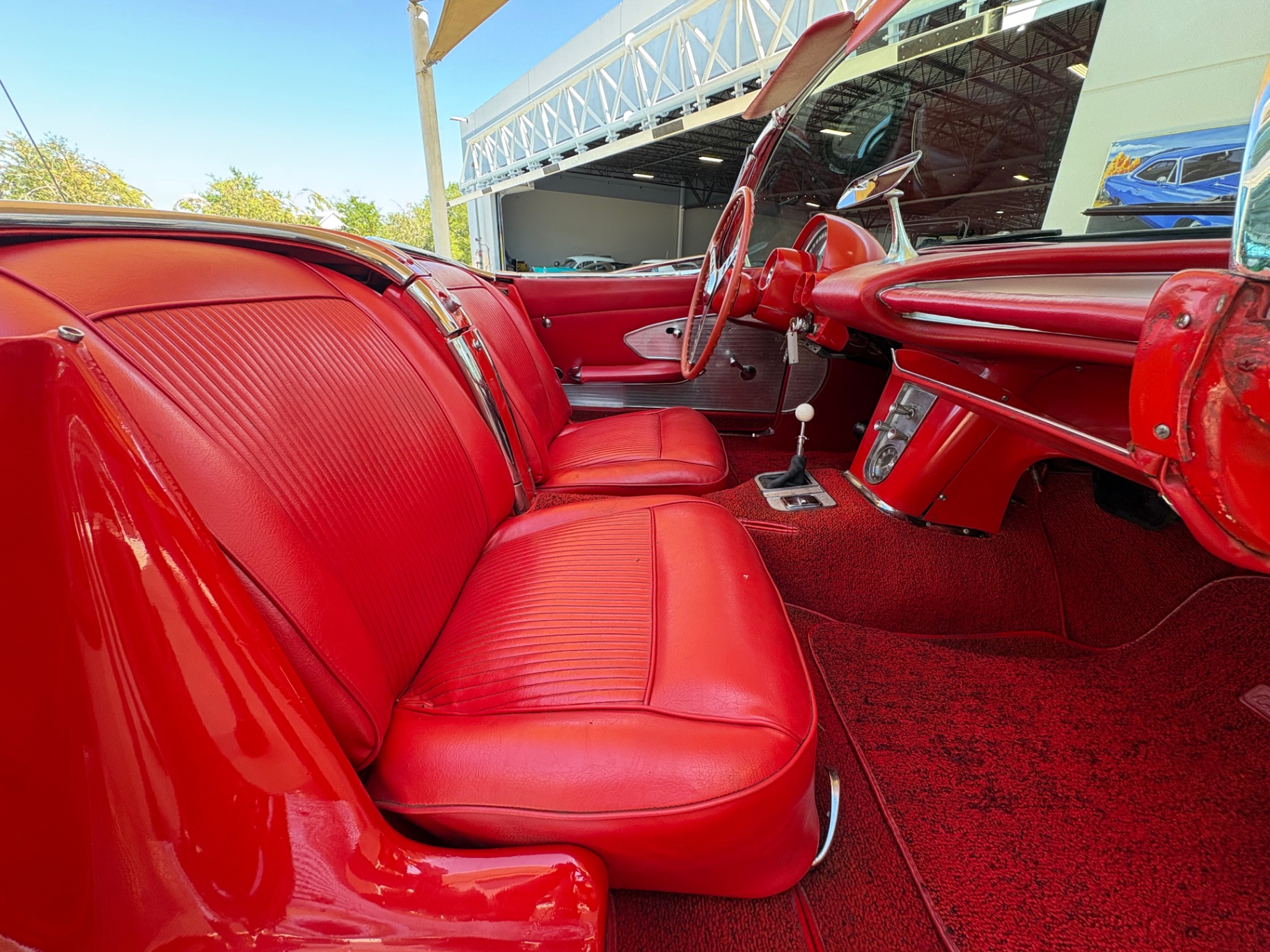
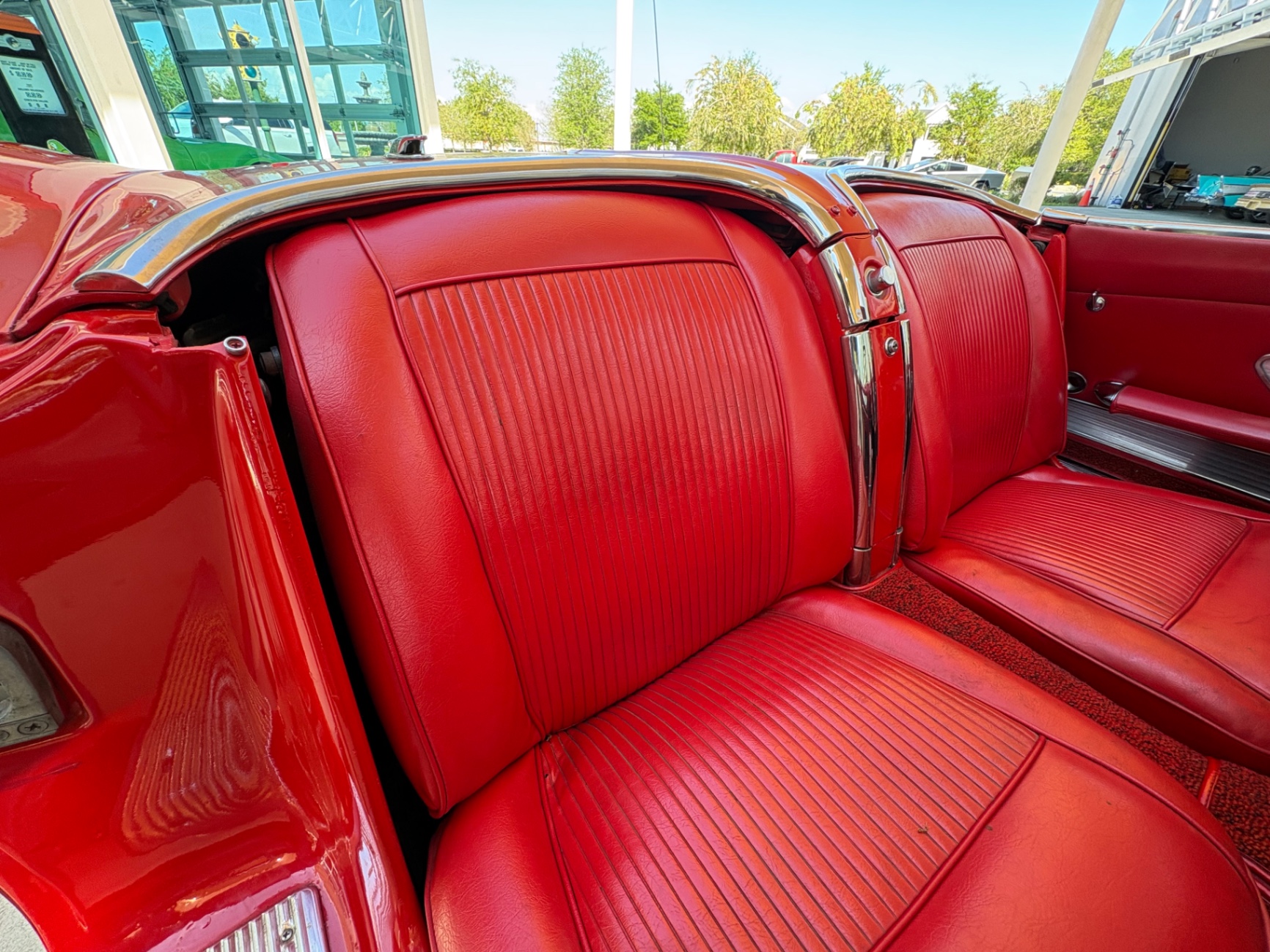
The interior of this 1961 Corvette is trimmed in red vinyl throughout, matching the exterior color in a combination that was very much in the spirit of the era. Chevrolet offered color-matched interior options on the 1961 Corvette, and red on red was one of the more assertive choices a buyer could make. The vinyl has held up well and presents cleanly in the photos.
The bucket seats are correct for the C1 Corvette and reflect the car's sports car intent from day one. Unlike the bench-seat configurations found across most of GM's lineup in 1961, the Corvette came standard with buckets — a detail that reinforced its positioning as a two-seat sports car rather than a personal luxury vehicle.
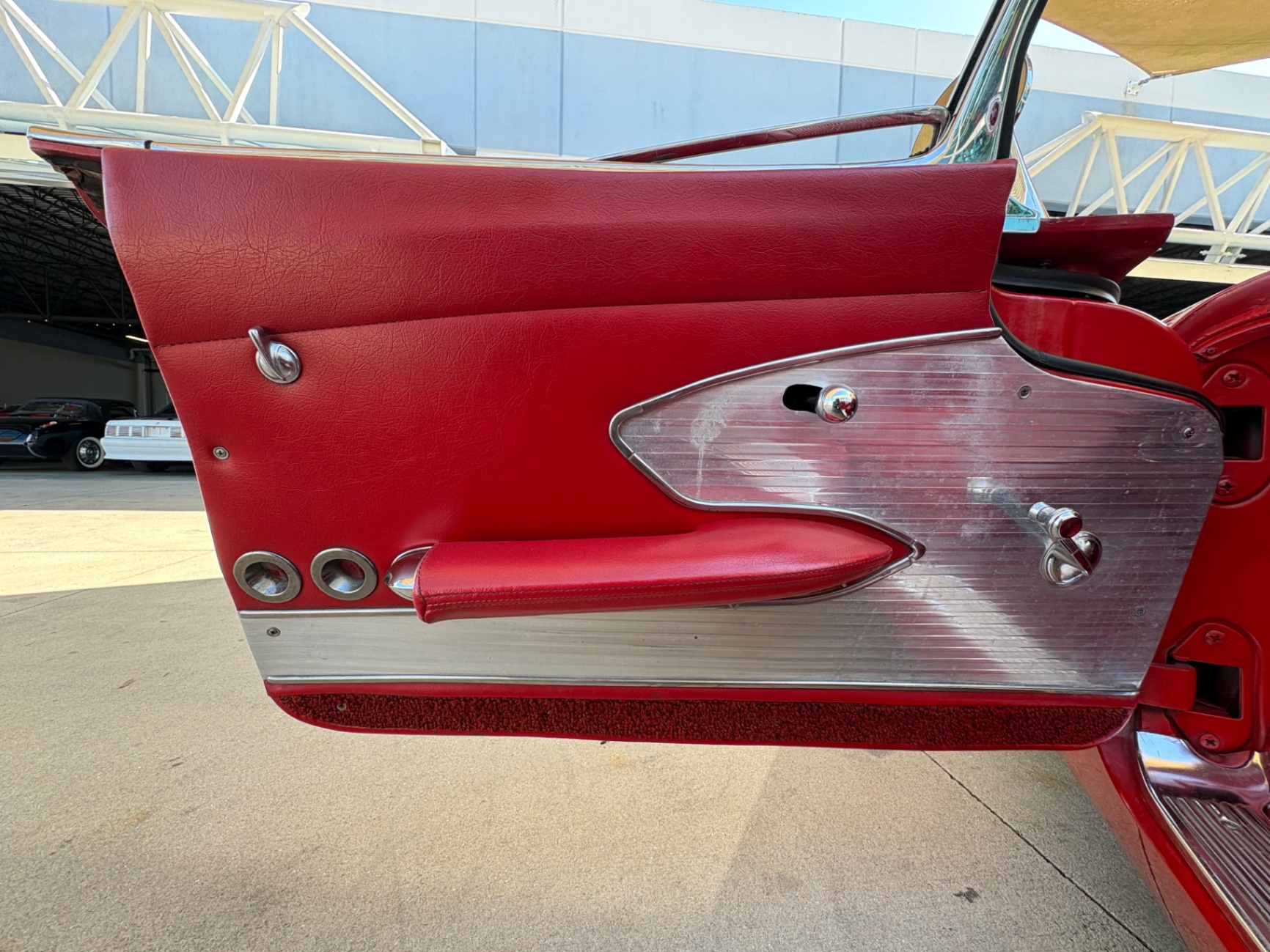
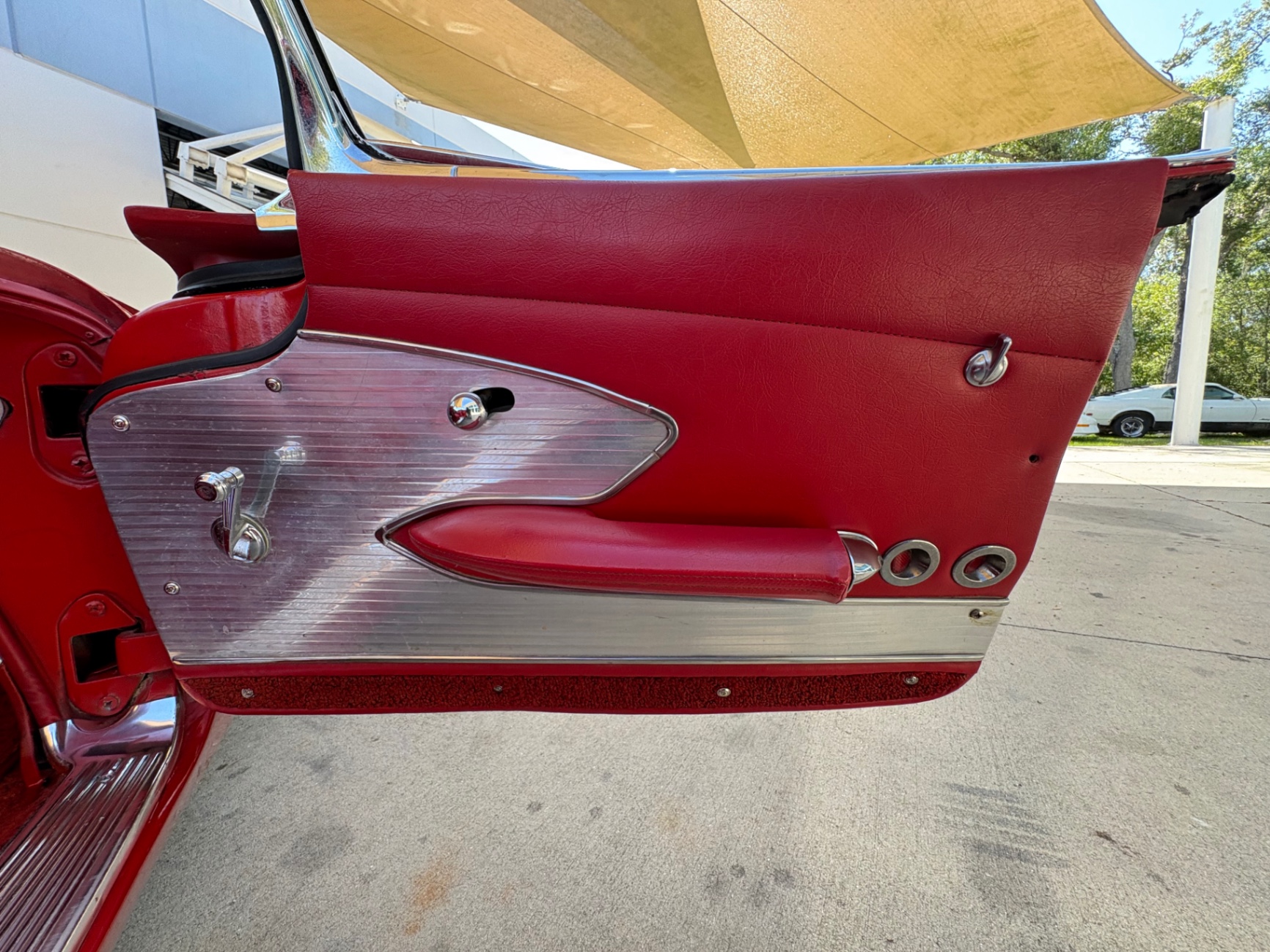
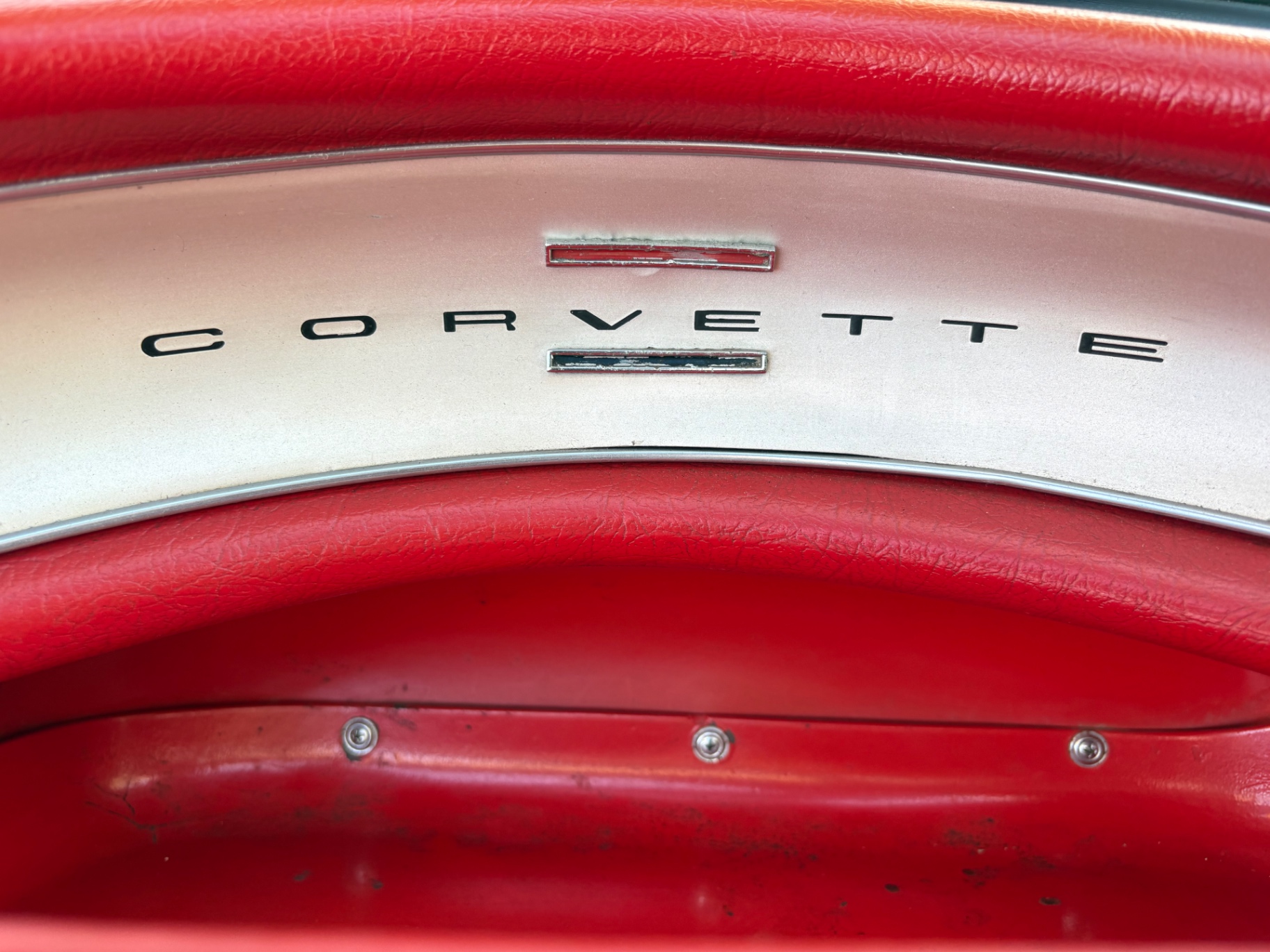
The door panels carry the characteristic aluminum trim inserts that defined C1 Corvette interiors in this period. The brushed aluminum panel set against the red vinyl creates the kind of contrast that was considered cutting-edge in American car design at the time. The chrome window crank hardware and door pull details visible in the photos are in good order.
The center console houses the 4-speed shifter in the correct location, giving the driver easy, natural access to the gearbox. The overall cockpit is tight by modern standards, which is part of what makes a C1 Corvette feel like a sports car rather than a cruiser.
Exterior
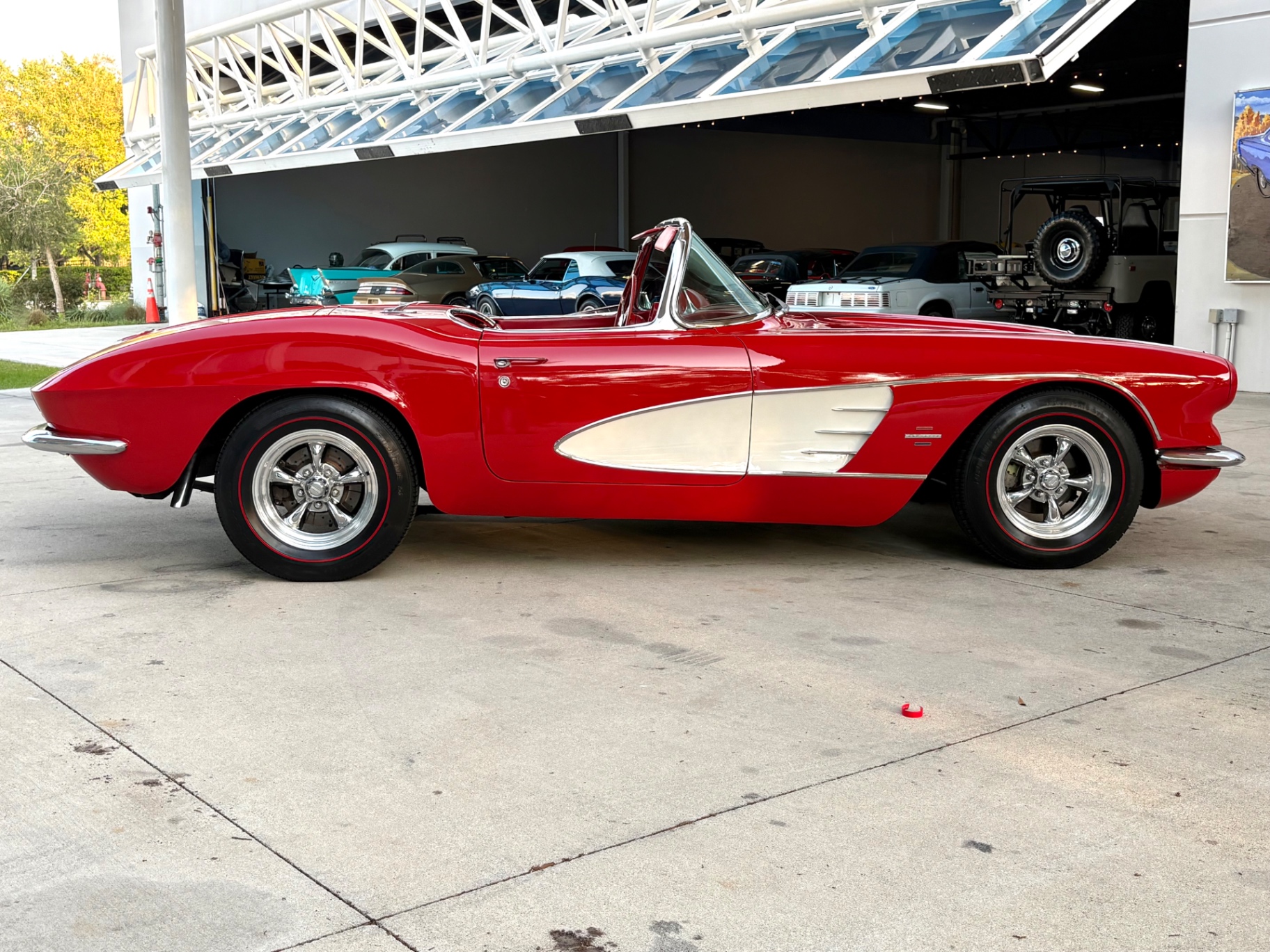
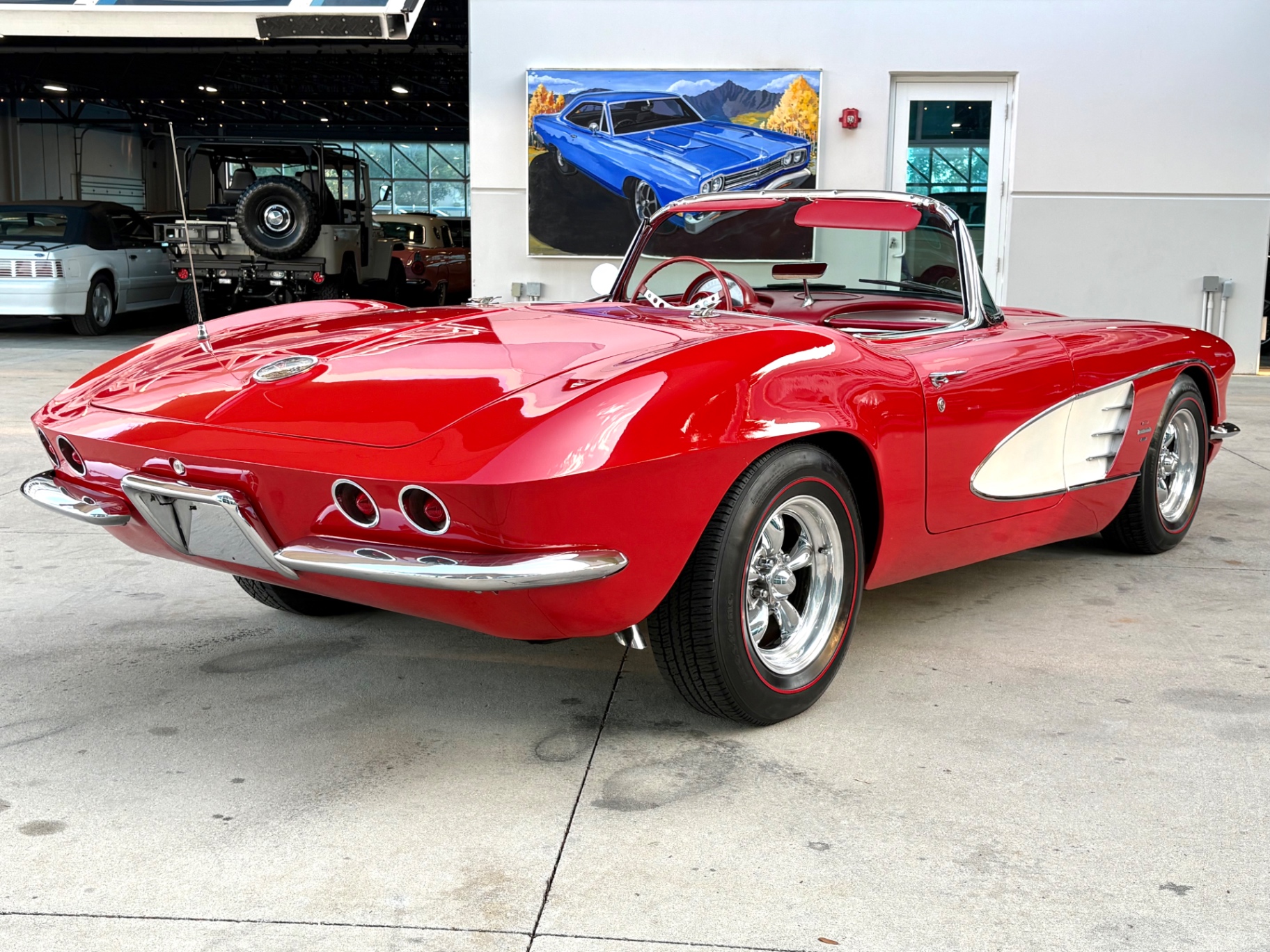
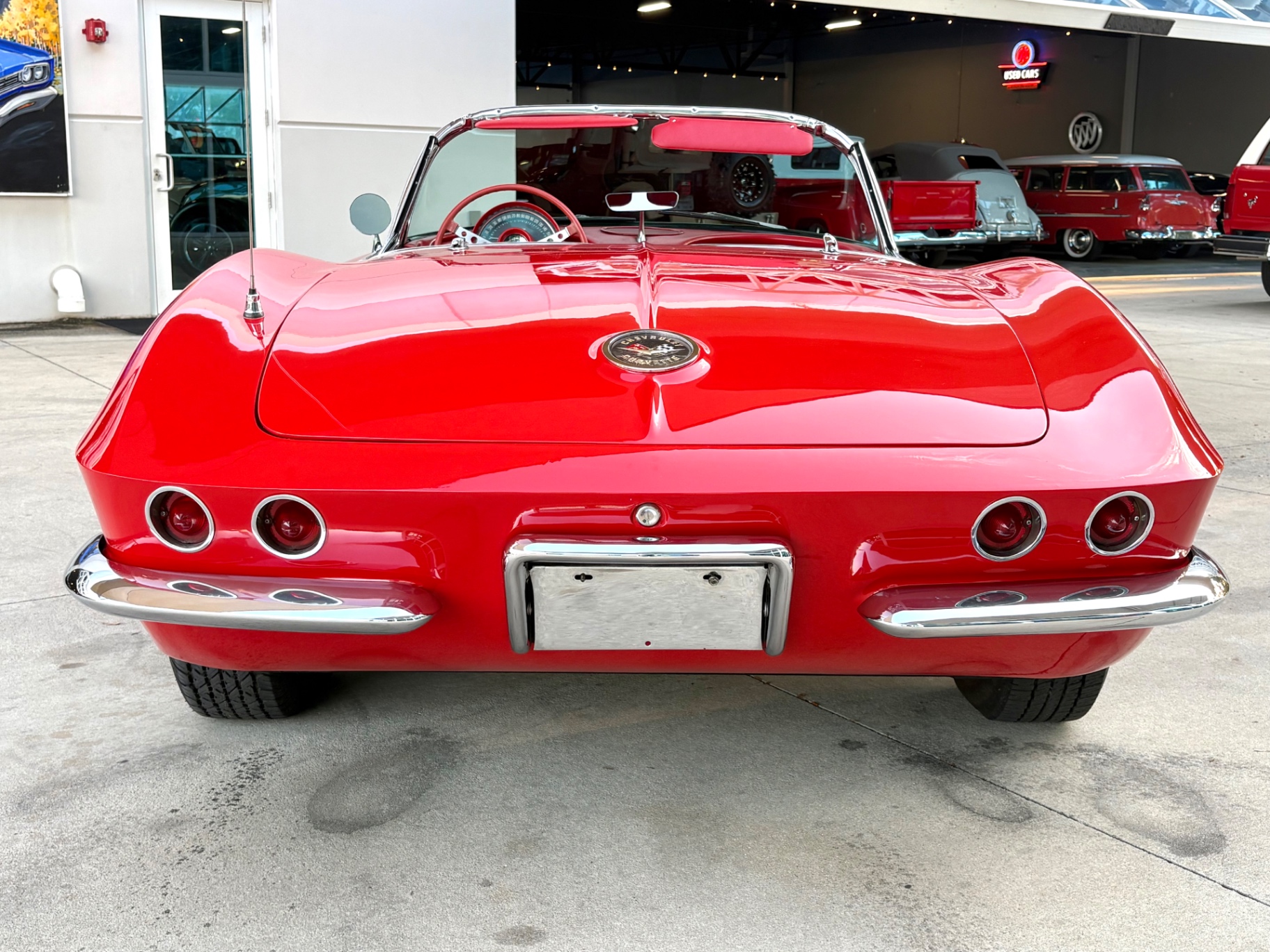
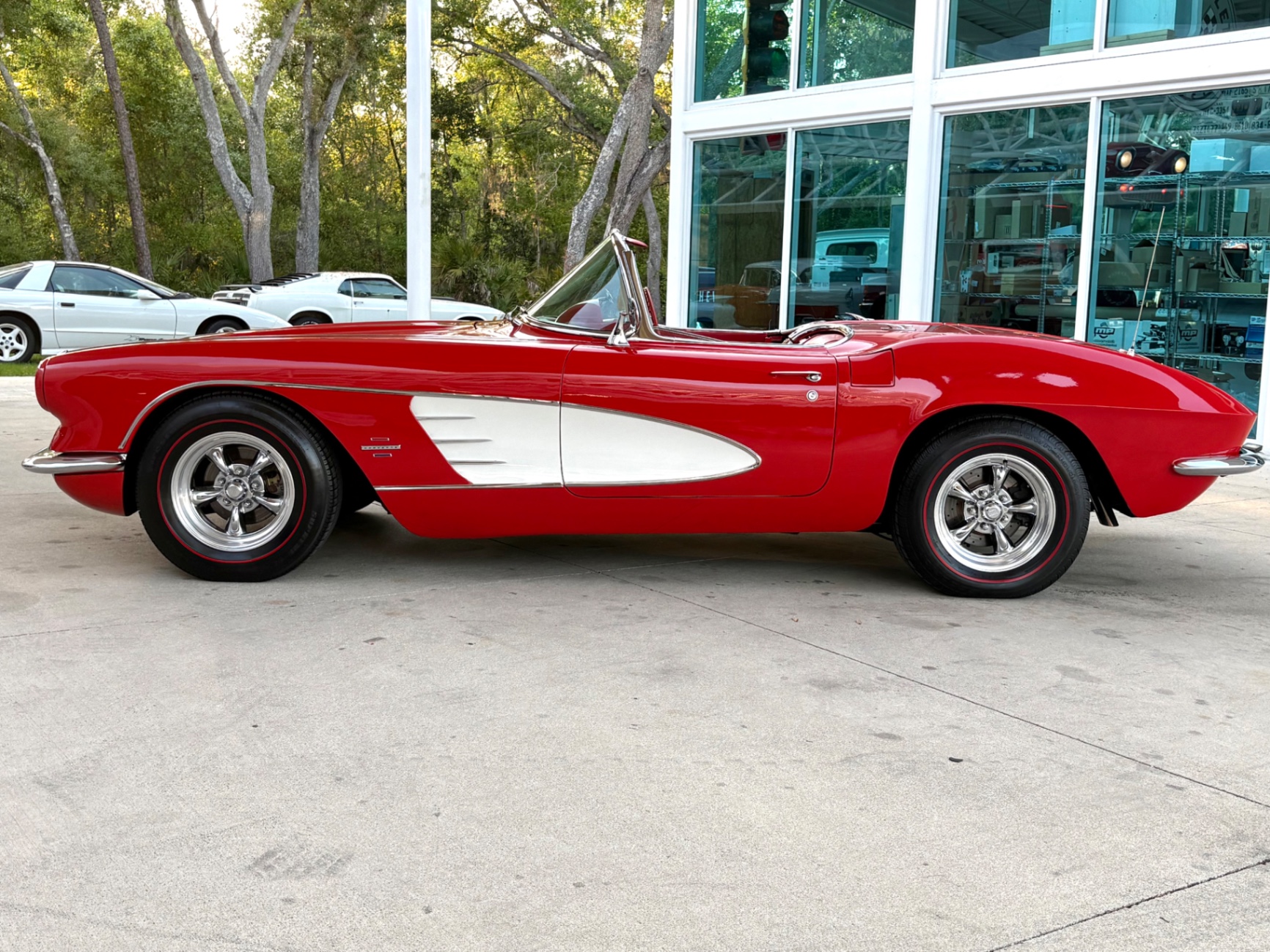
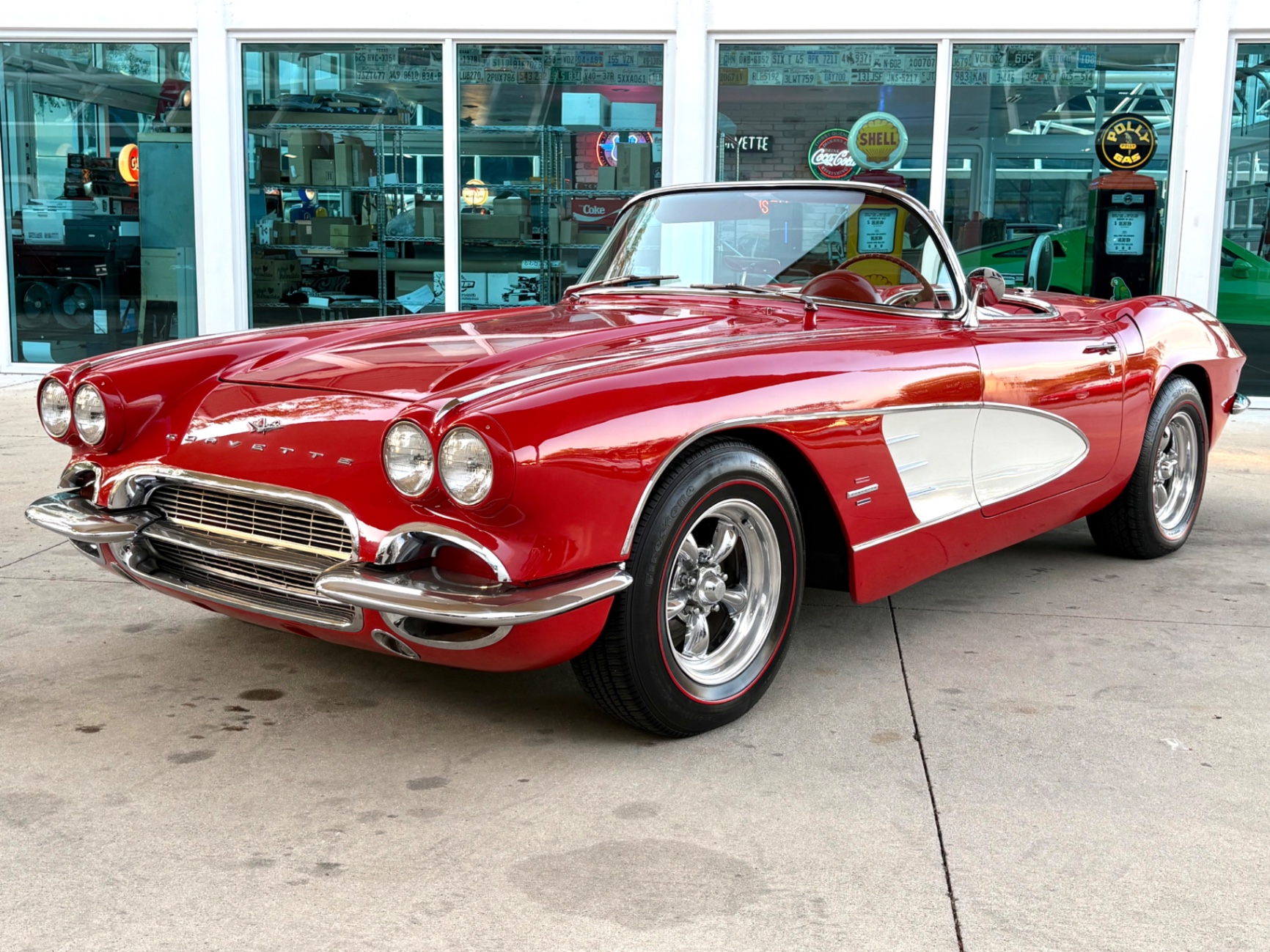
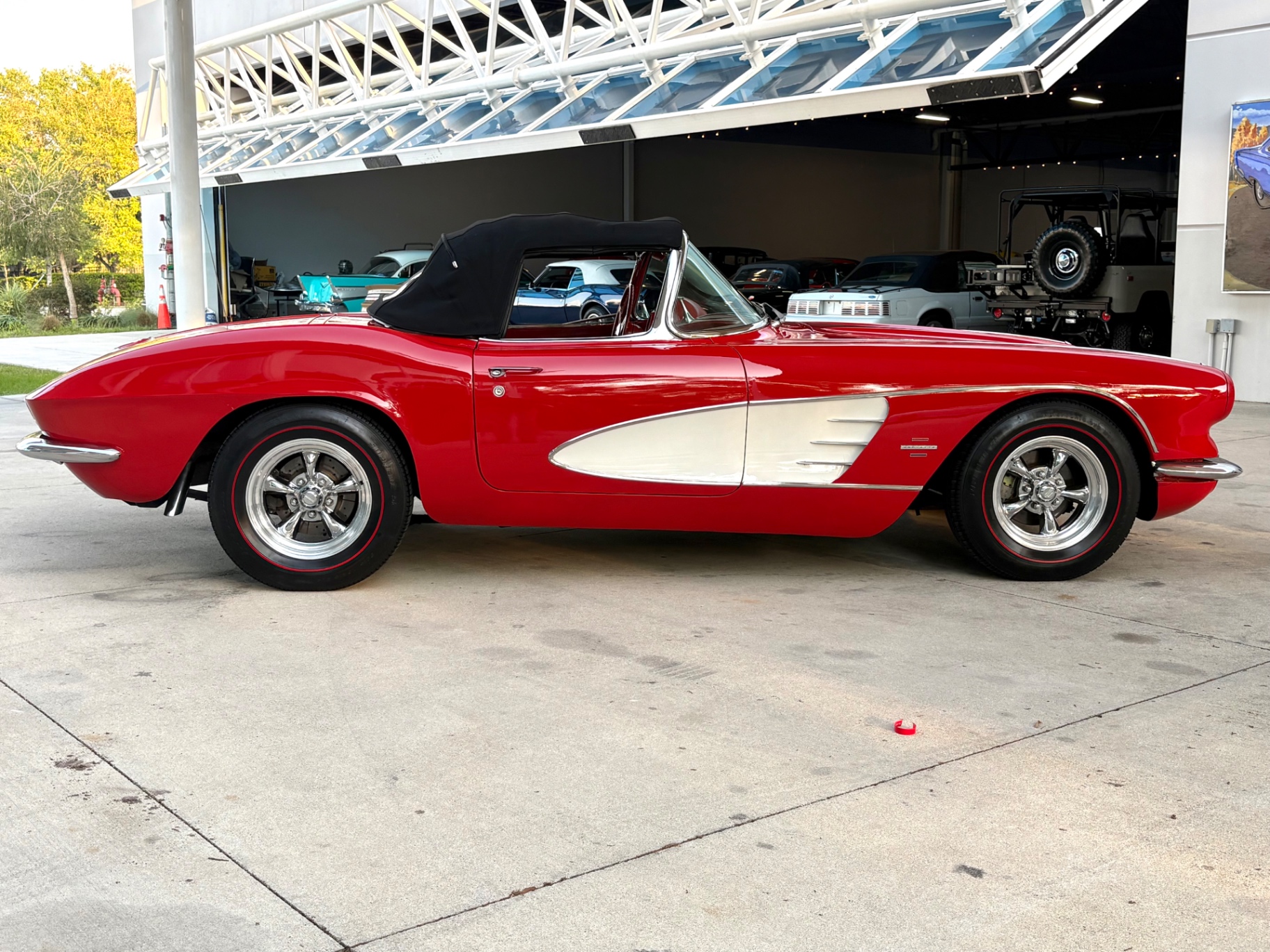
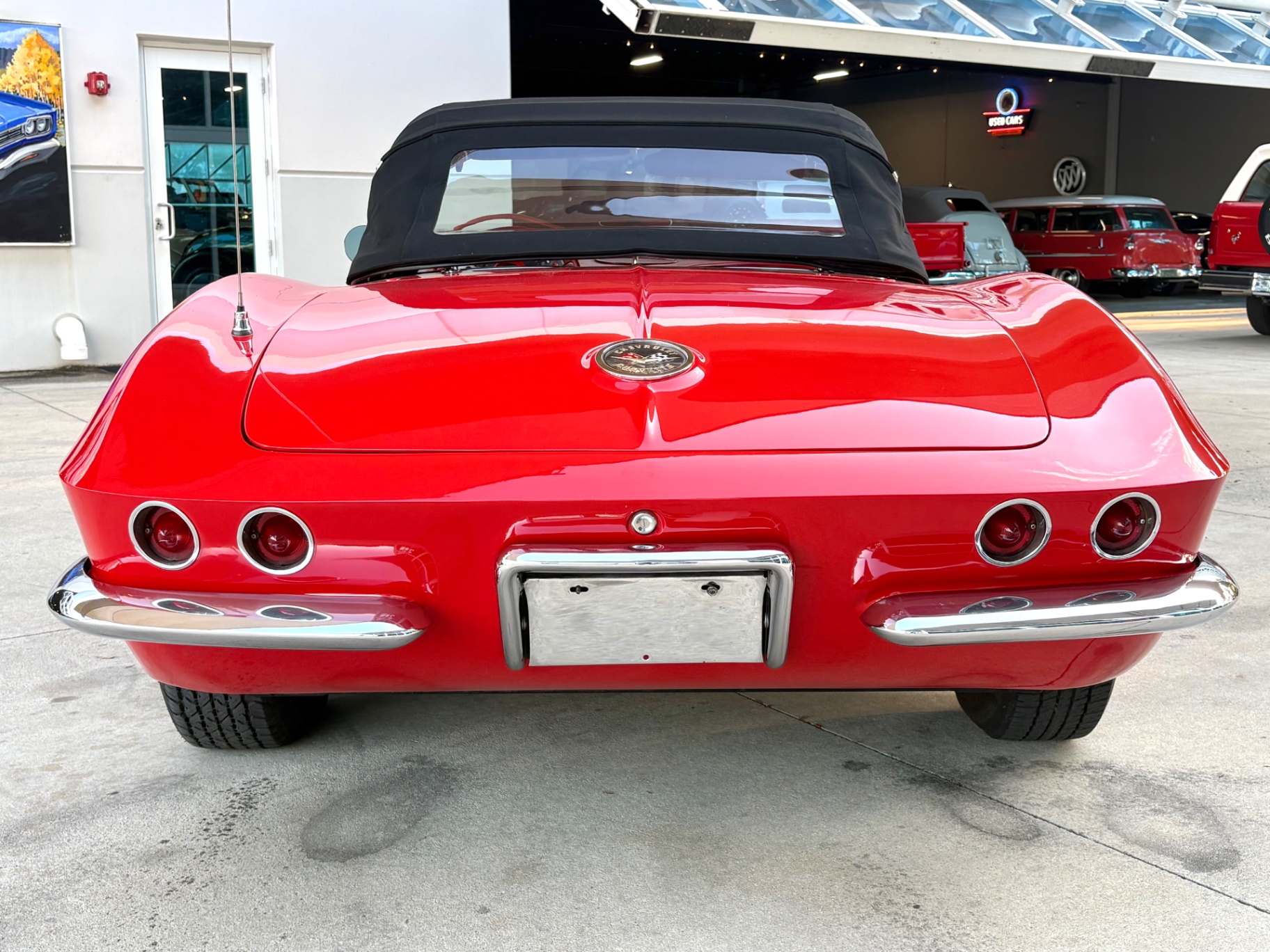
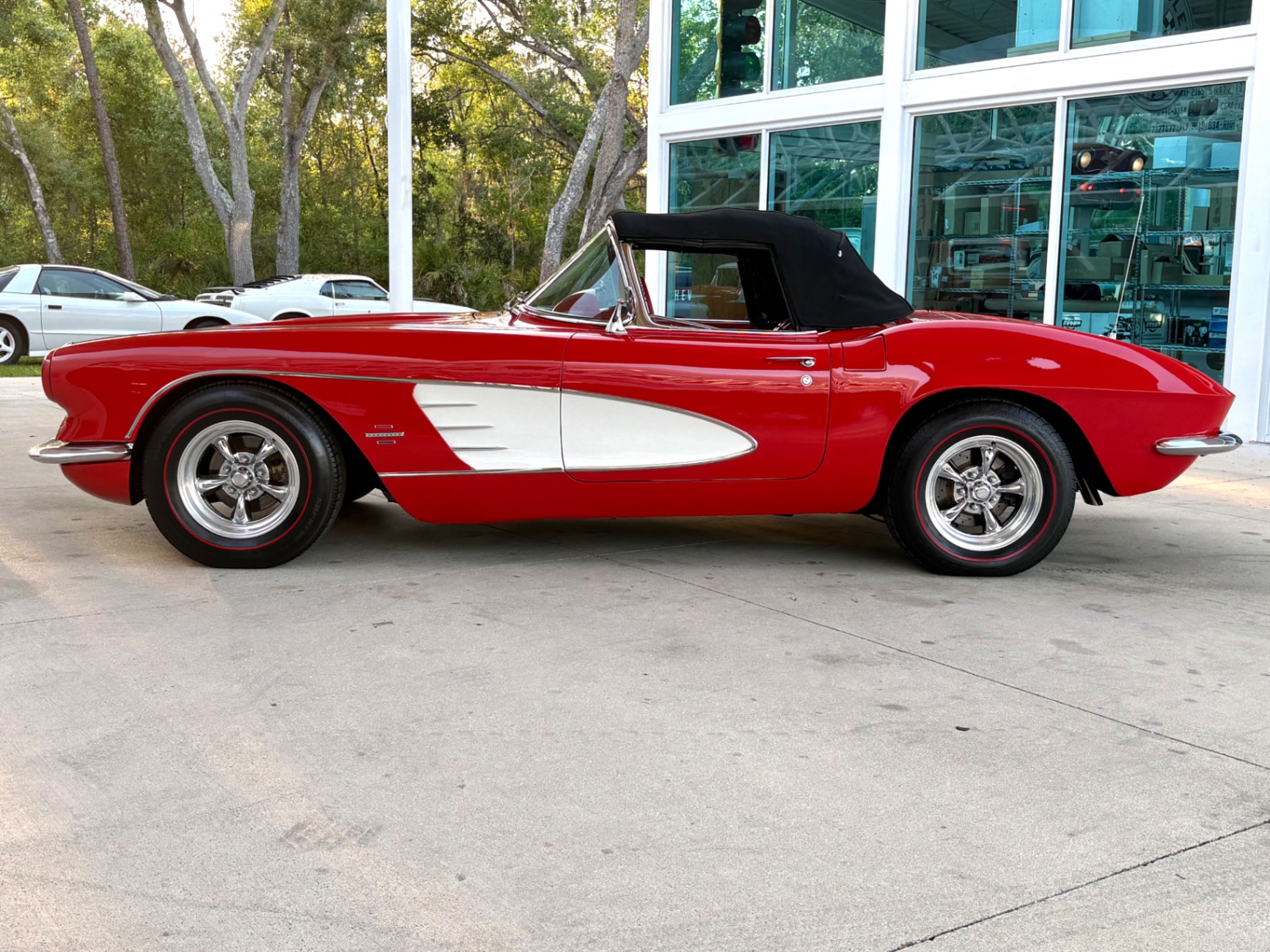
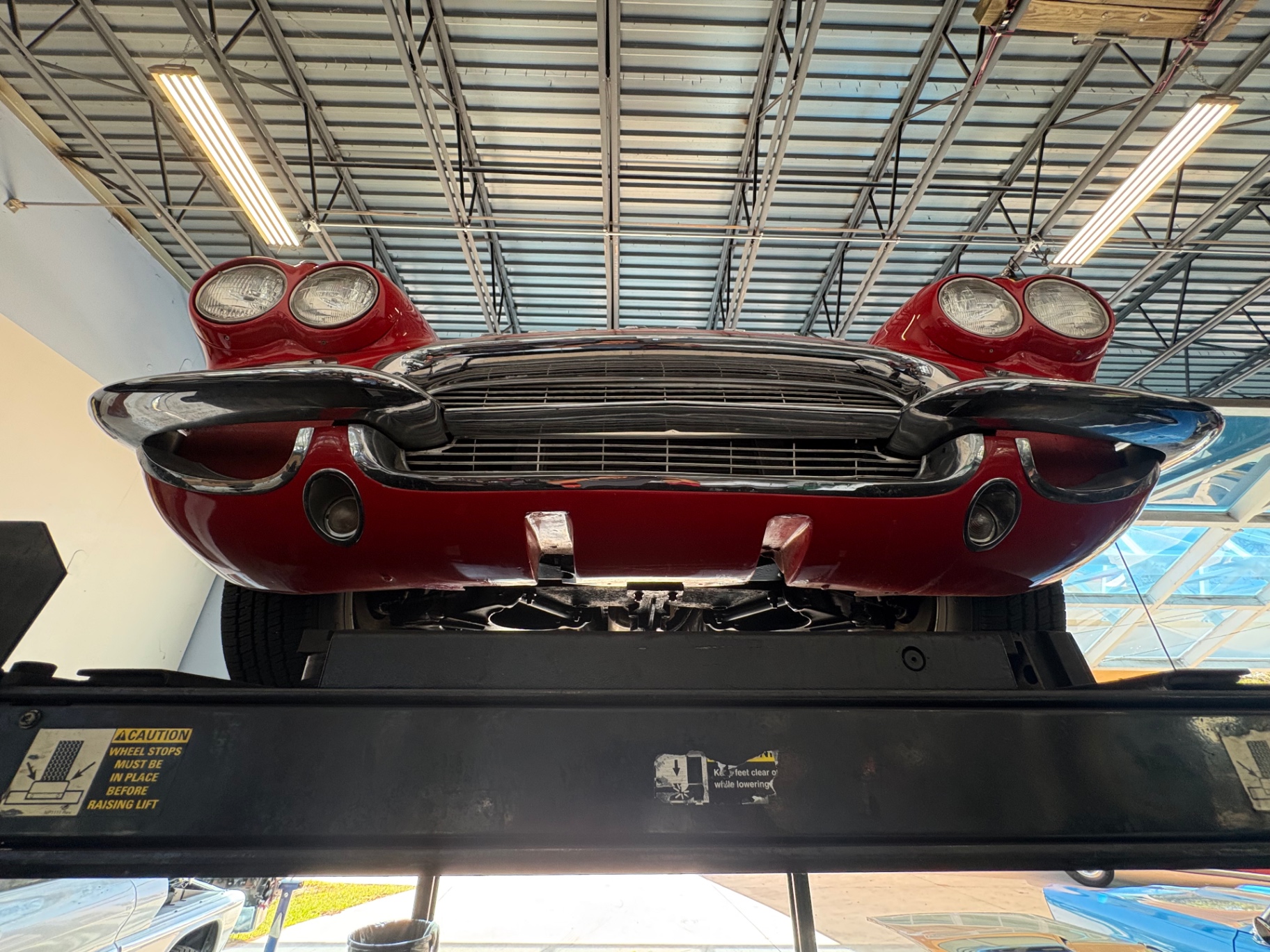
The exterior of this 1961 Chevrolet Corvette is finished in red, one of the classic color choices for the model. The fiberglass body panels show well, with consistent panel gaps and good surface quality visible in the photos. The 1961 body style, with its quad headlights set in a horizontal grille opening at the front and the ducktail-influenced rear treatment, is one of the cleaner designs in the entire C1 run.
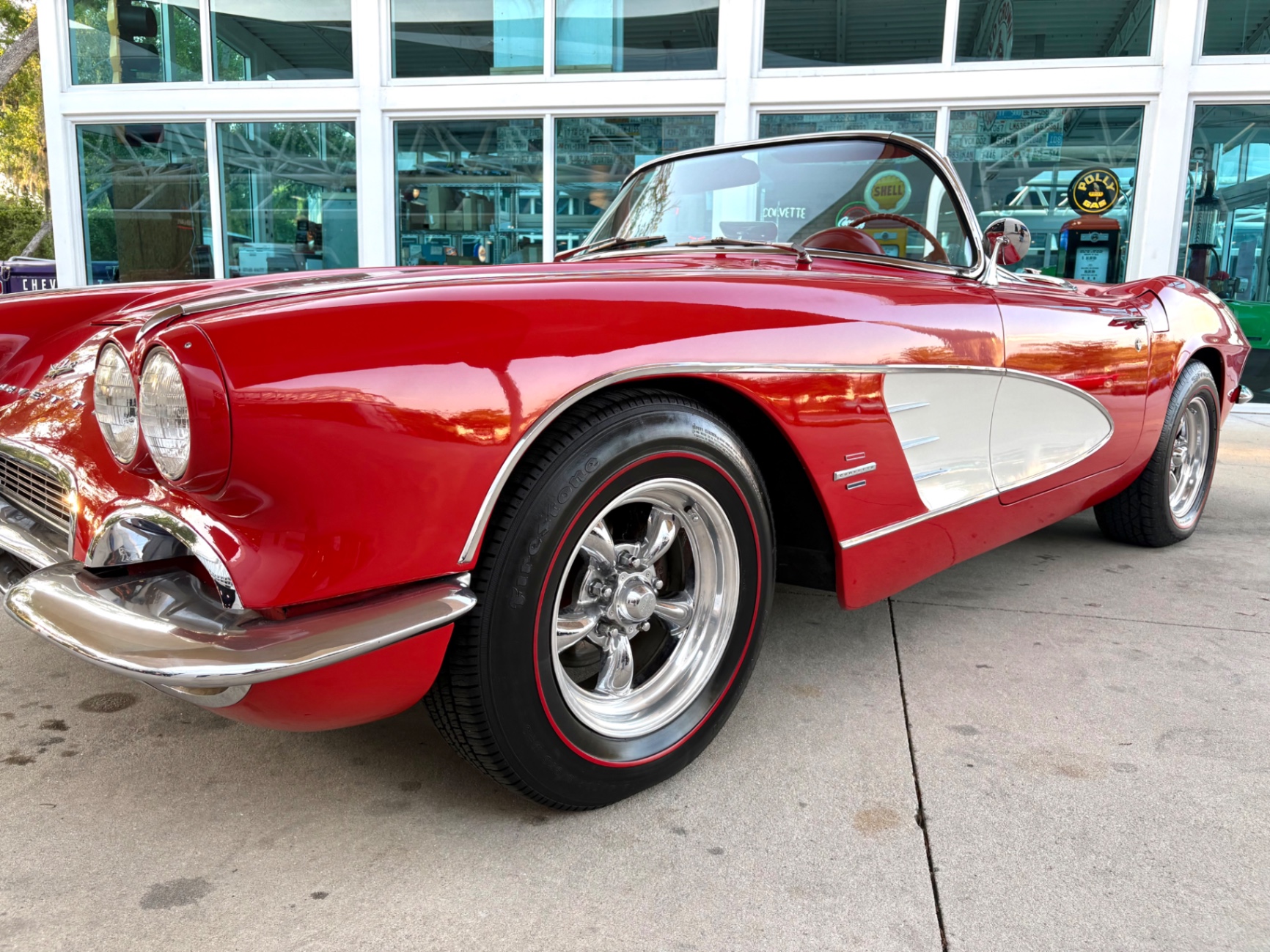
White cove body trim fills the side coves — the sculpted recesses that run along the mid-body of the C1 from 1956 onward. Chevrolet offered the option to paint these coves a contrasting color from the beginning, and the red-and-white combination on this car is one of the most traditional and visually correct pairings for the model. It breaks up the body mass in exactly the way the designers intended.
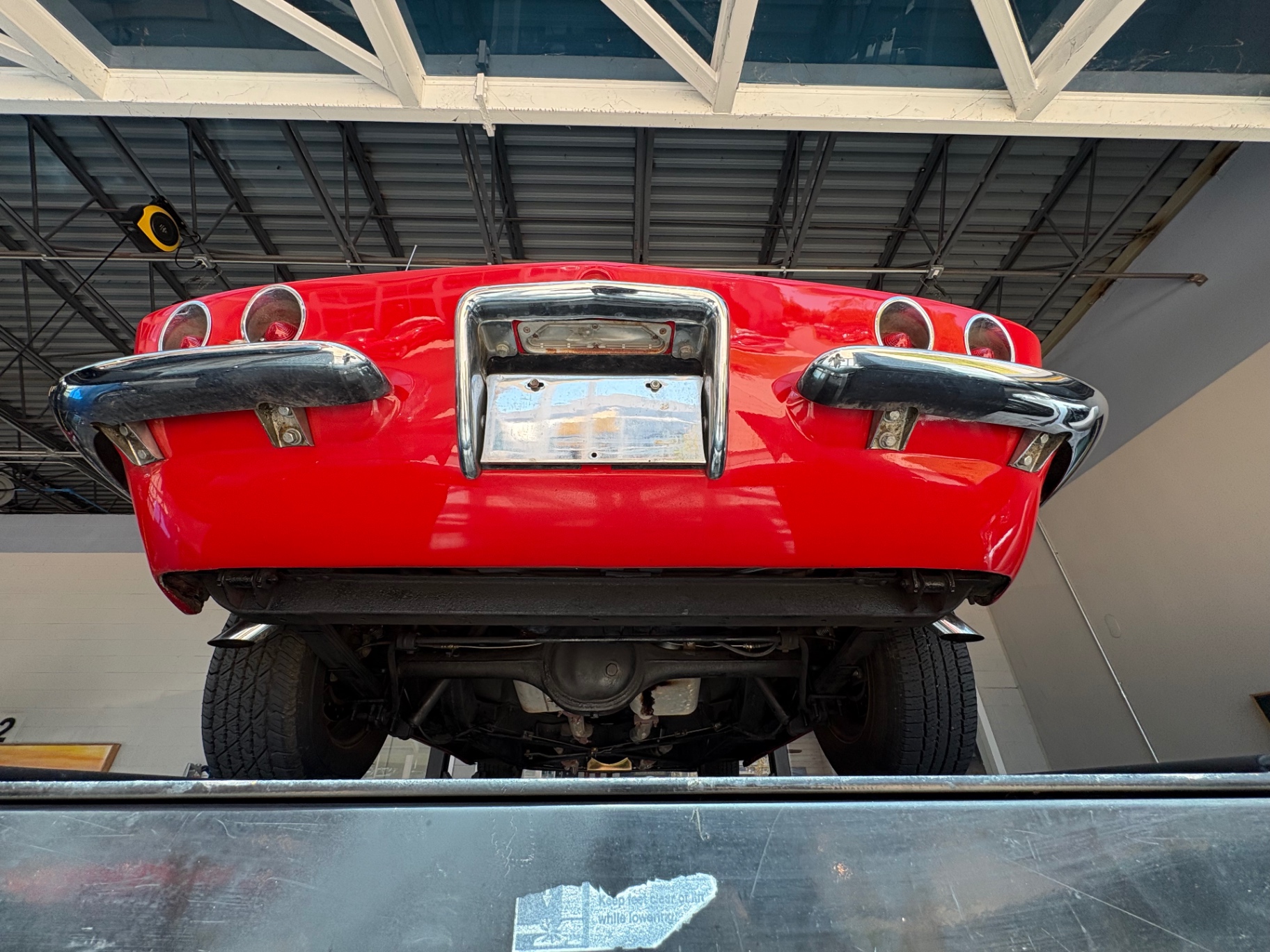
Chrome bumpers at both ends are in presentable condition and carry the correct 1961 style, including the rear bumper ends that wrap around the new ducktail tail treatment introduced that year. The chrome is intact and shows well.
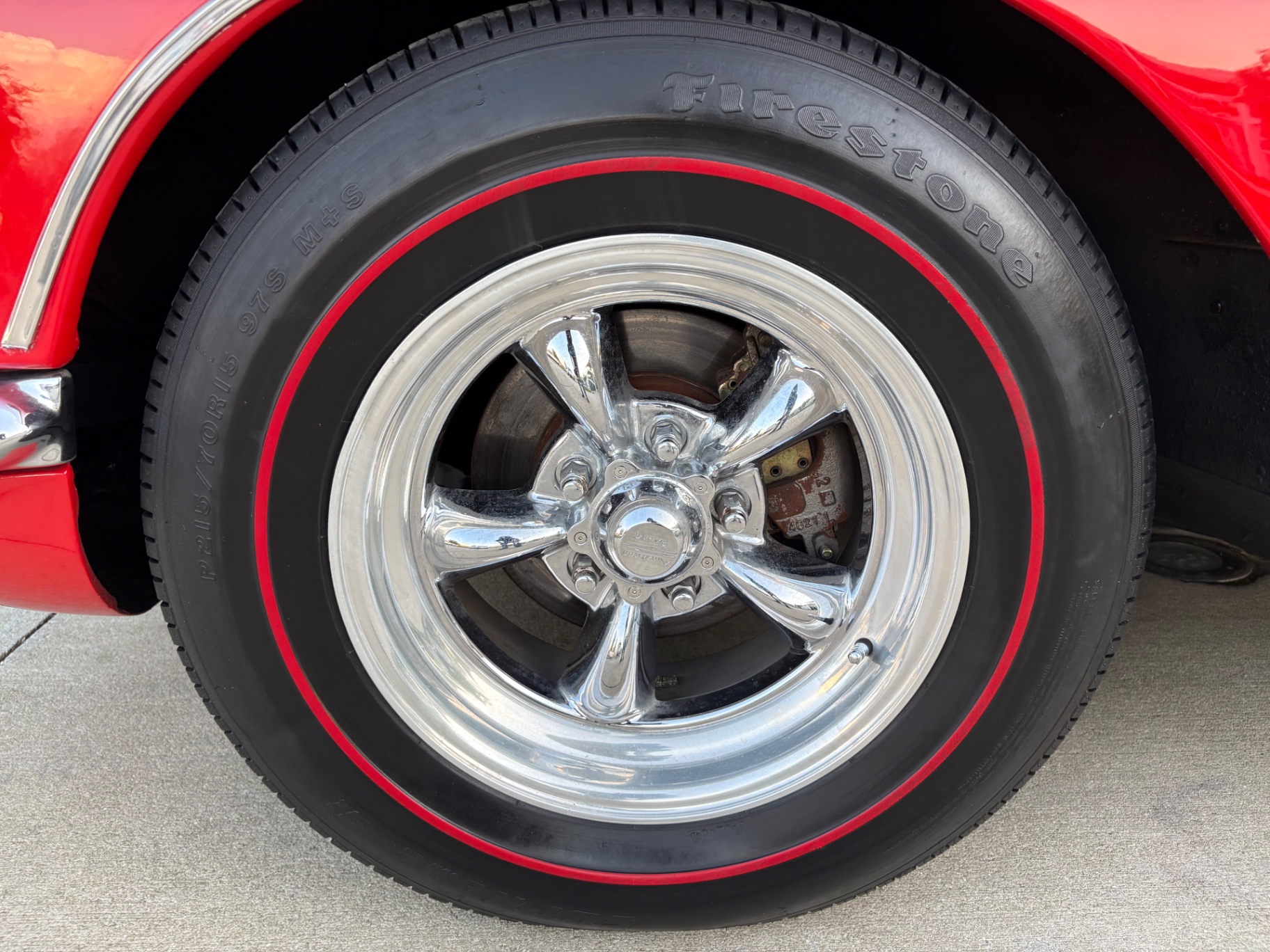
The custom alloy wheels are a departure from the stock steel wheels with hubcaps that left the factory, but they work proportionally with the body and carry a period-inspired style that fits the car's character without looking anachronistic. Red-line tires complete the rolling stock and are consistent with the early 1960s aesthetic this car presents.
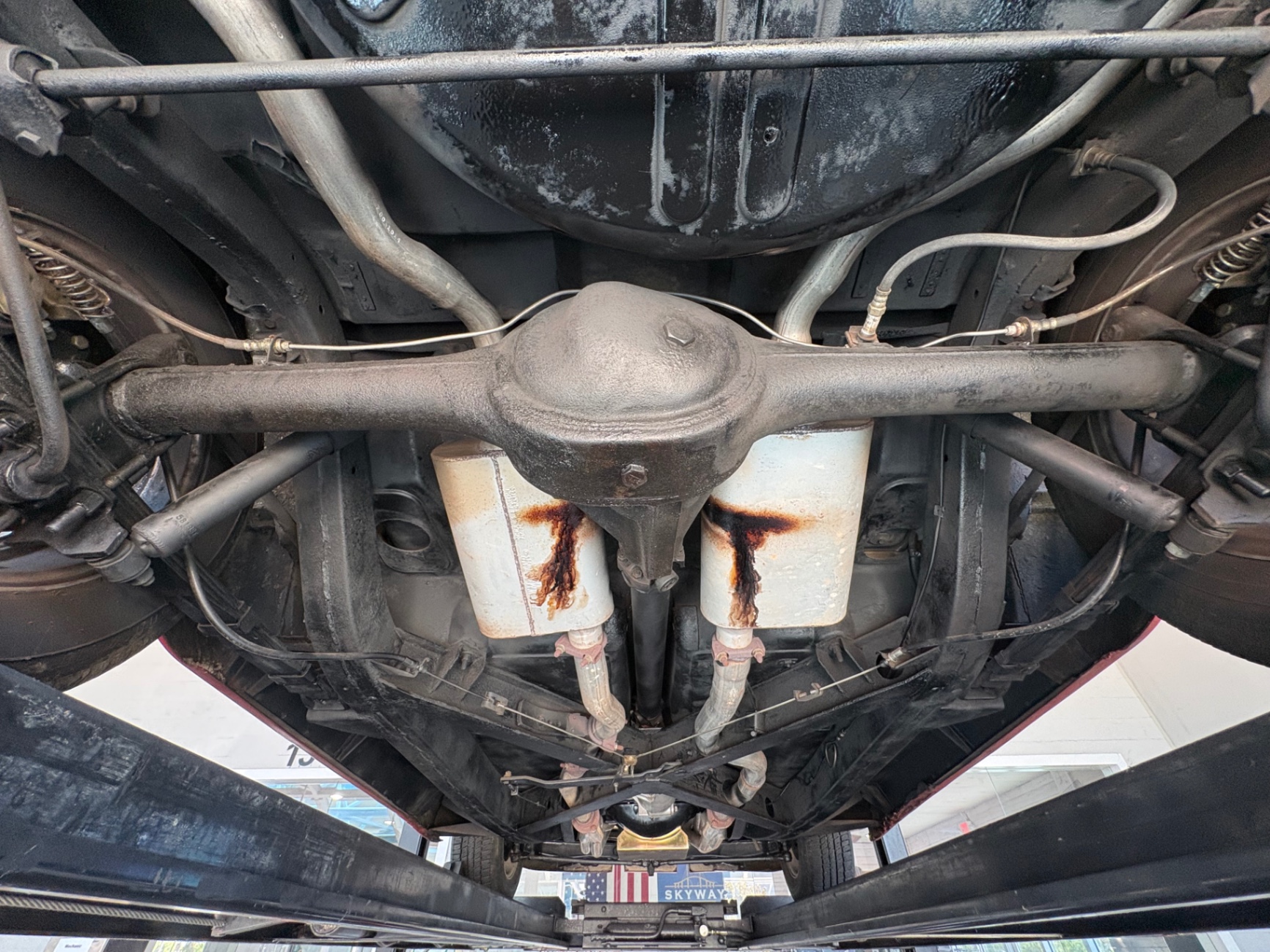
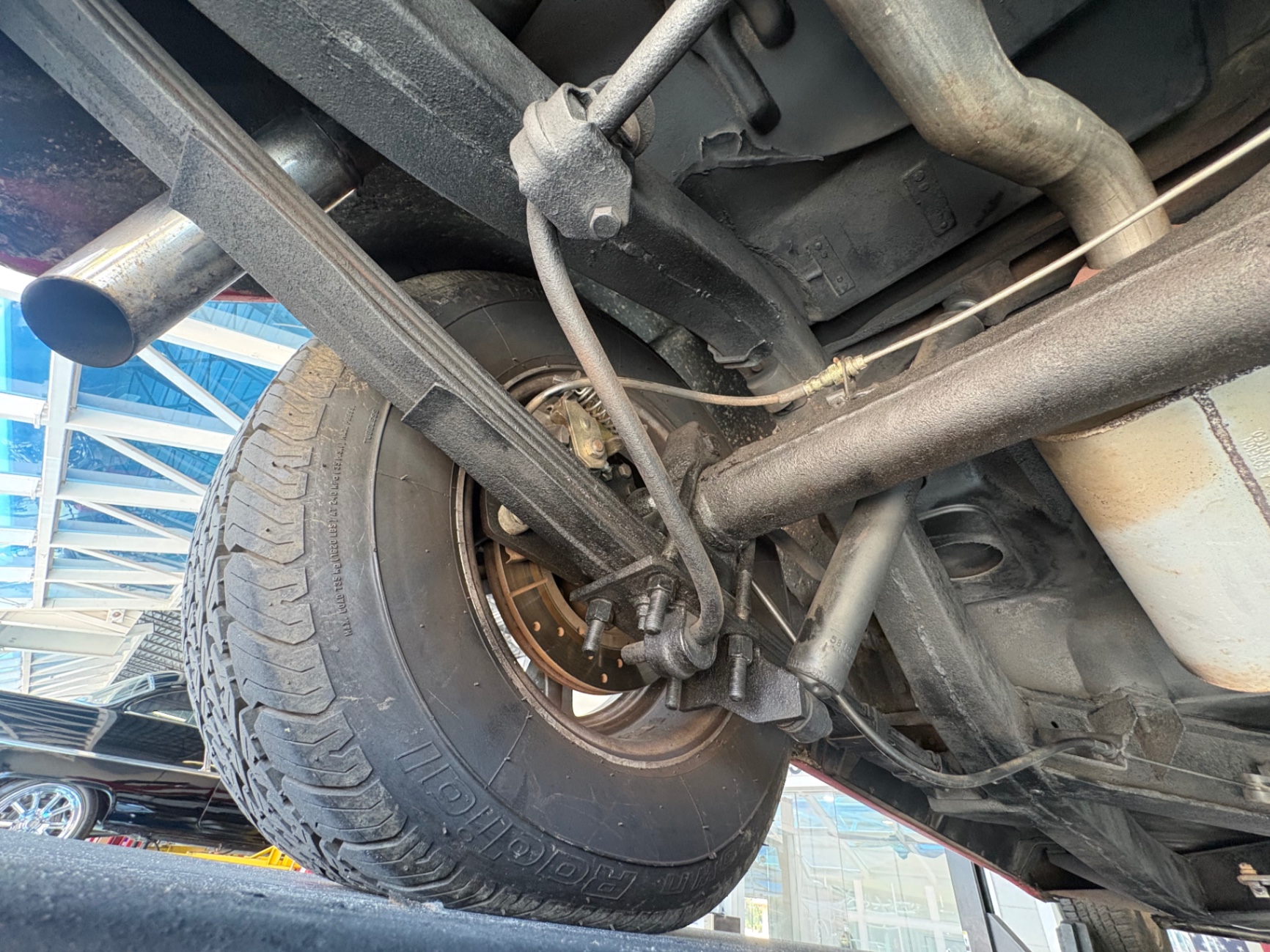
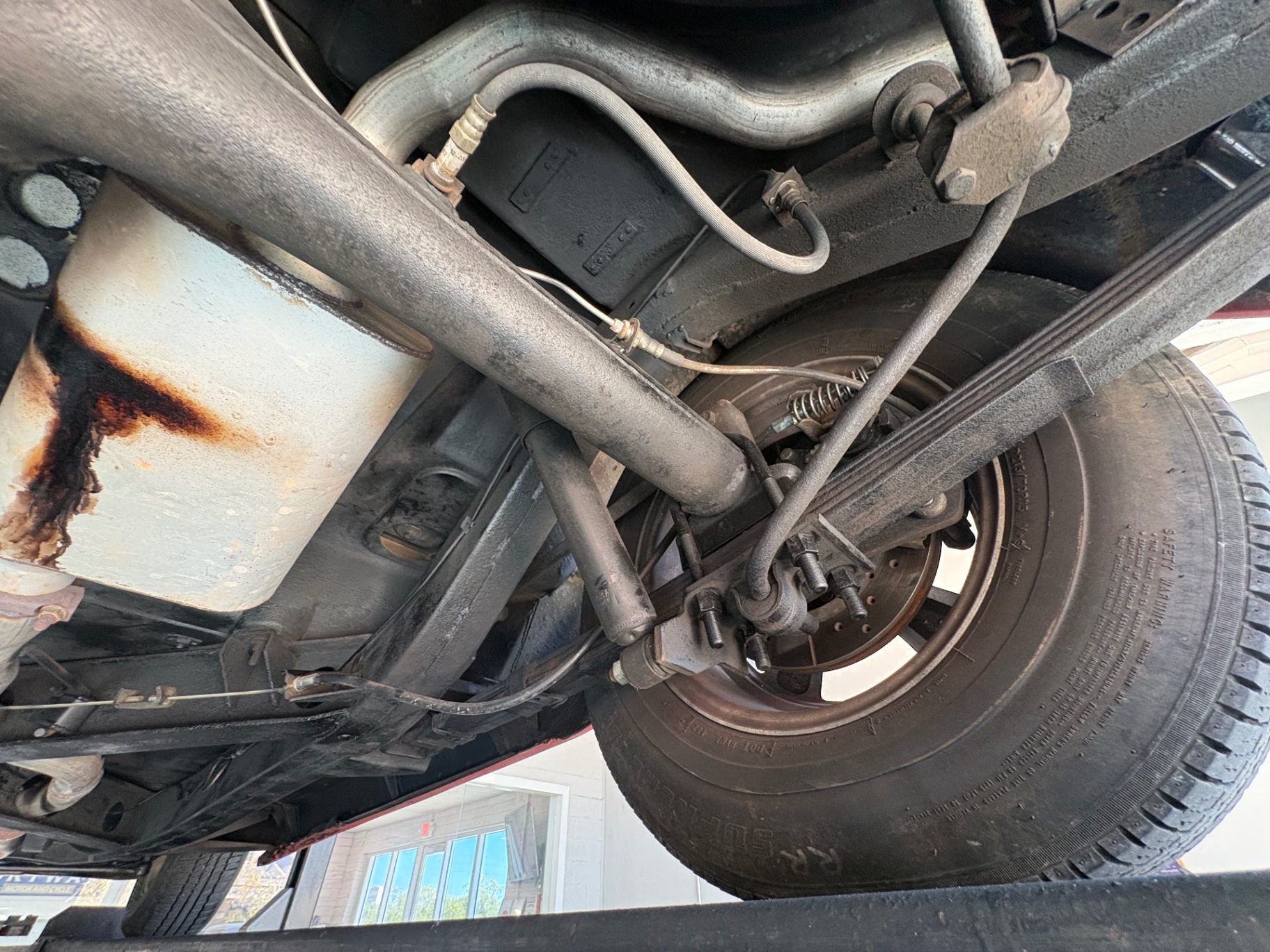
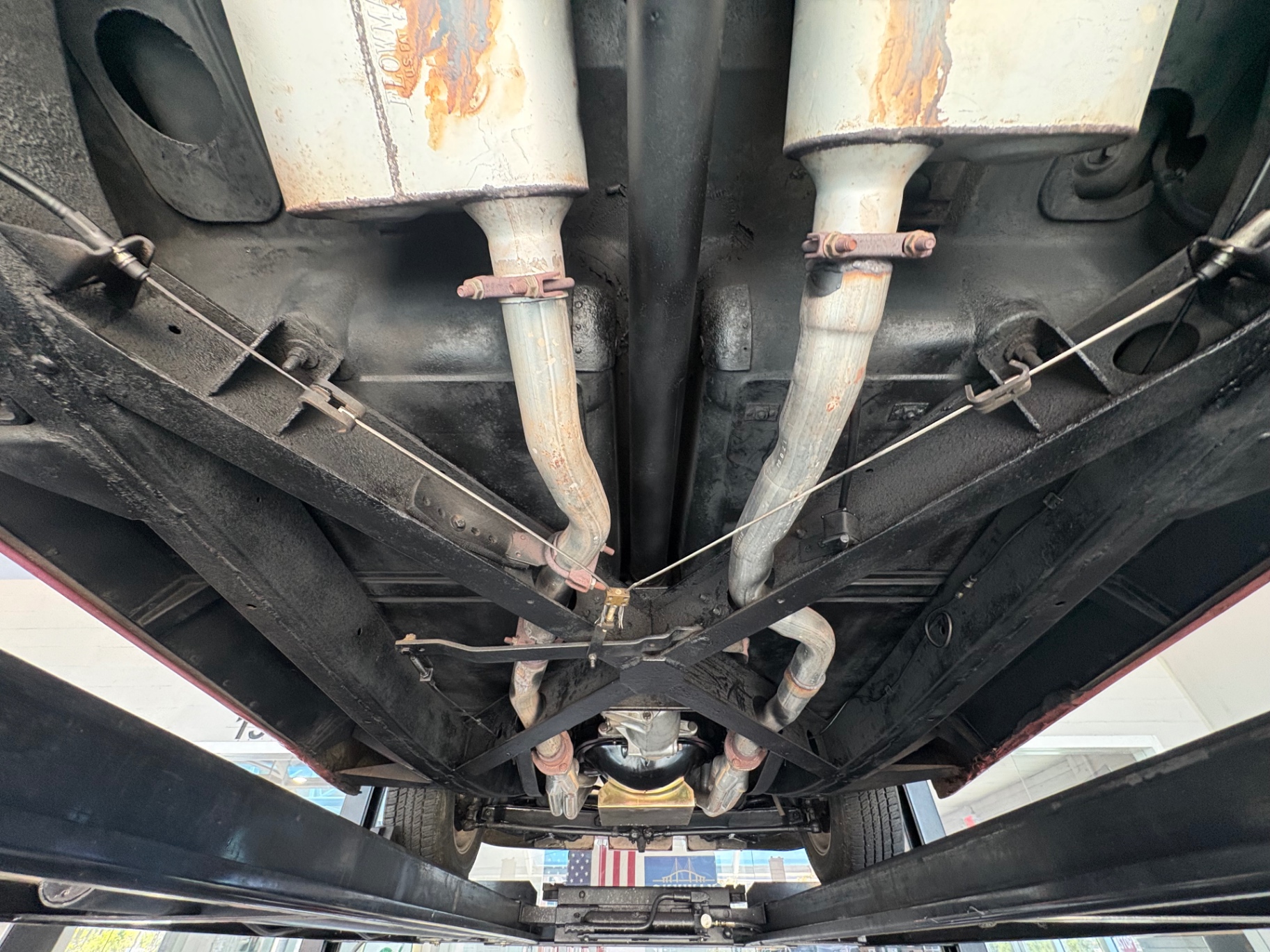
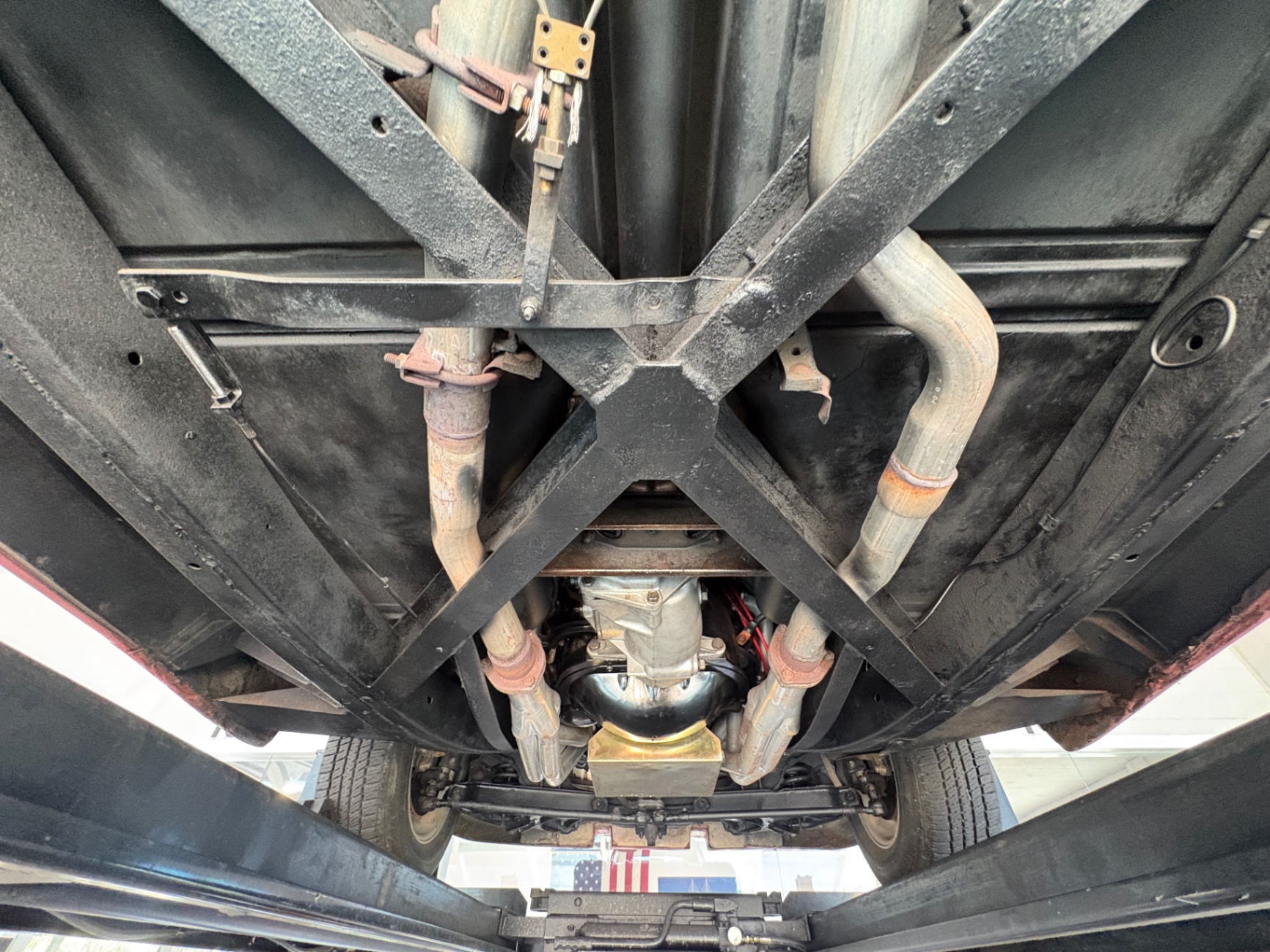
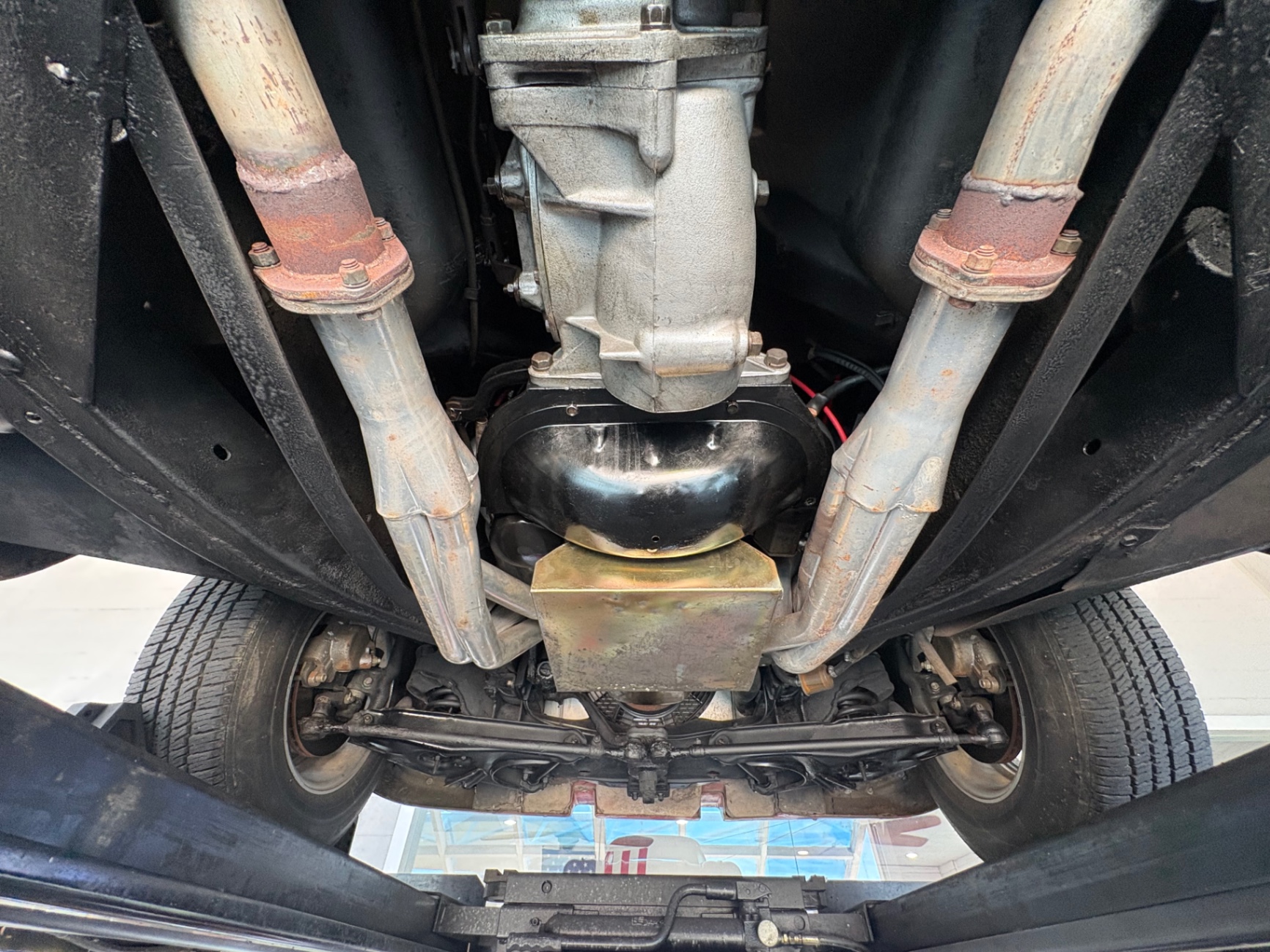
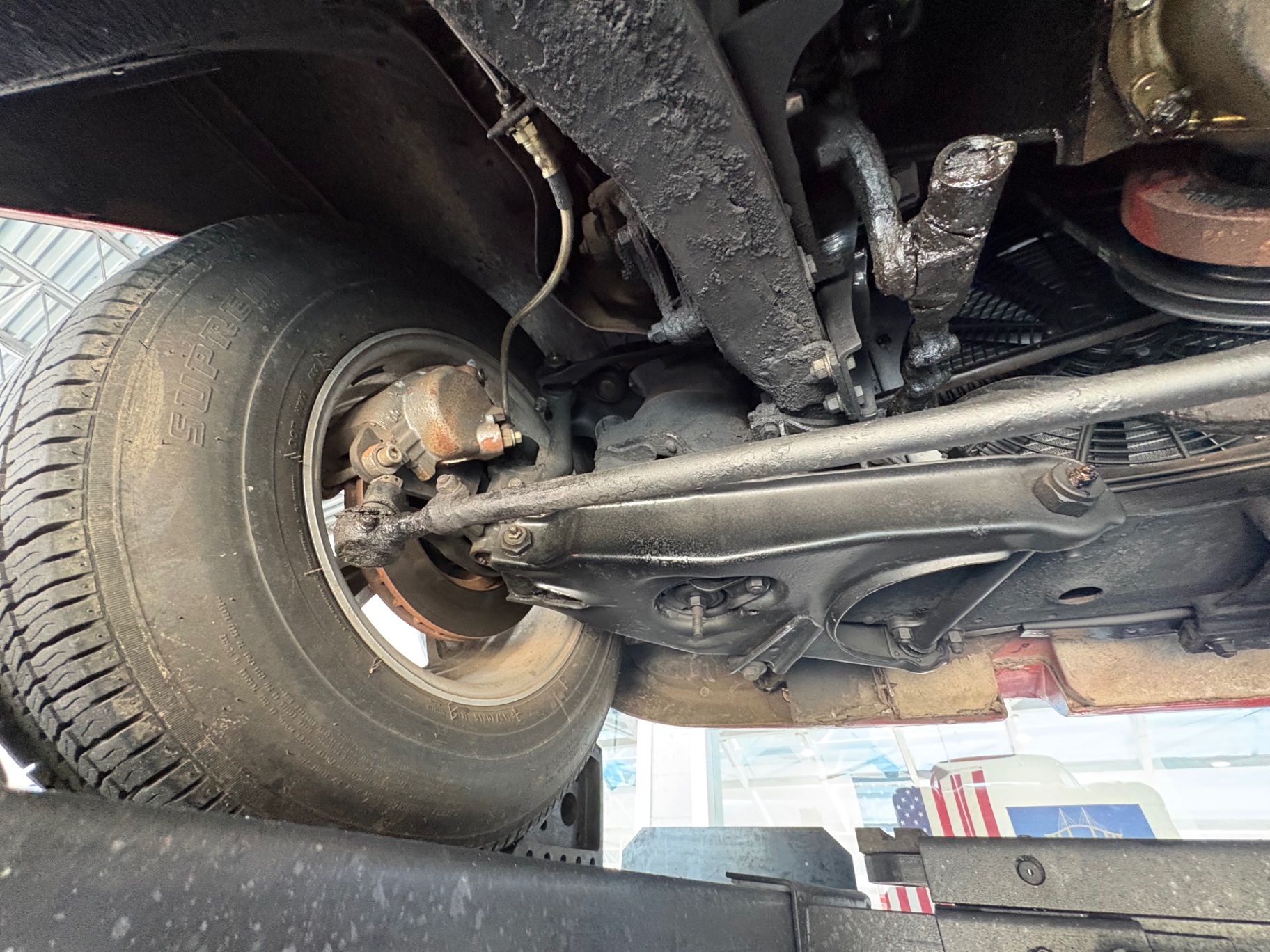
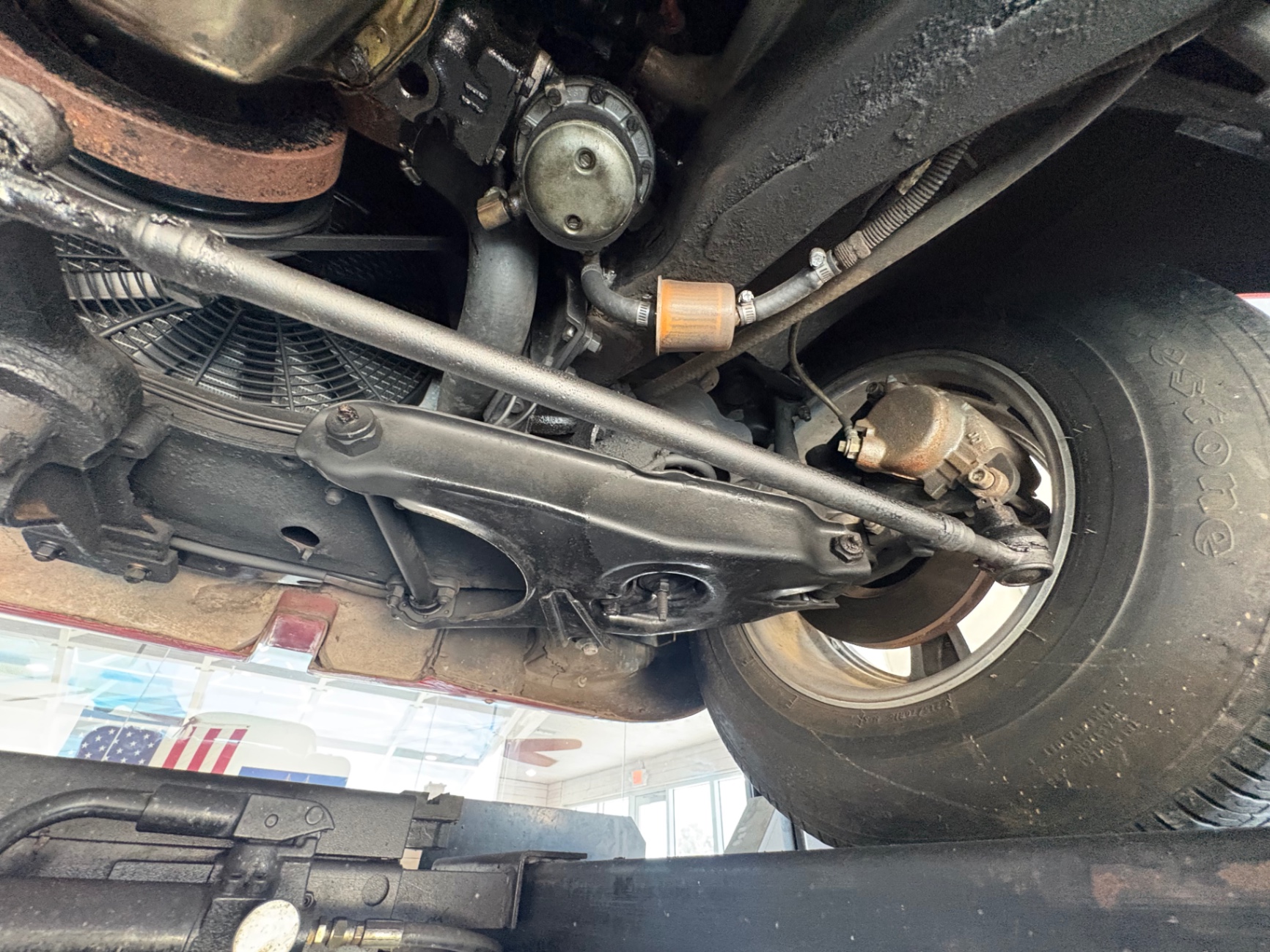
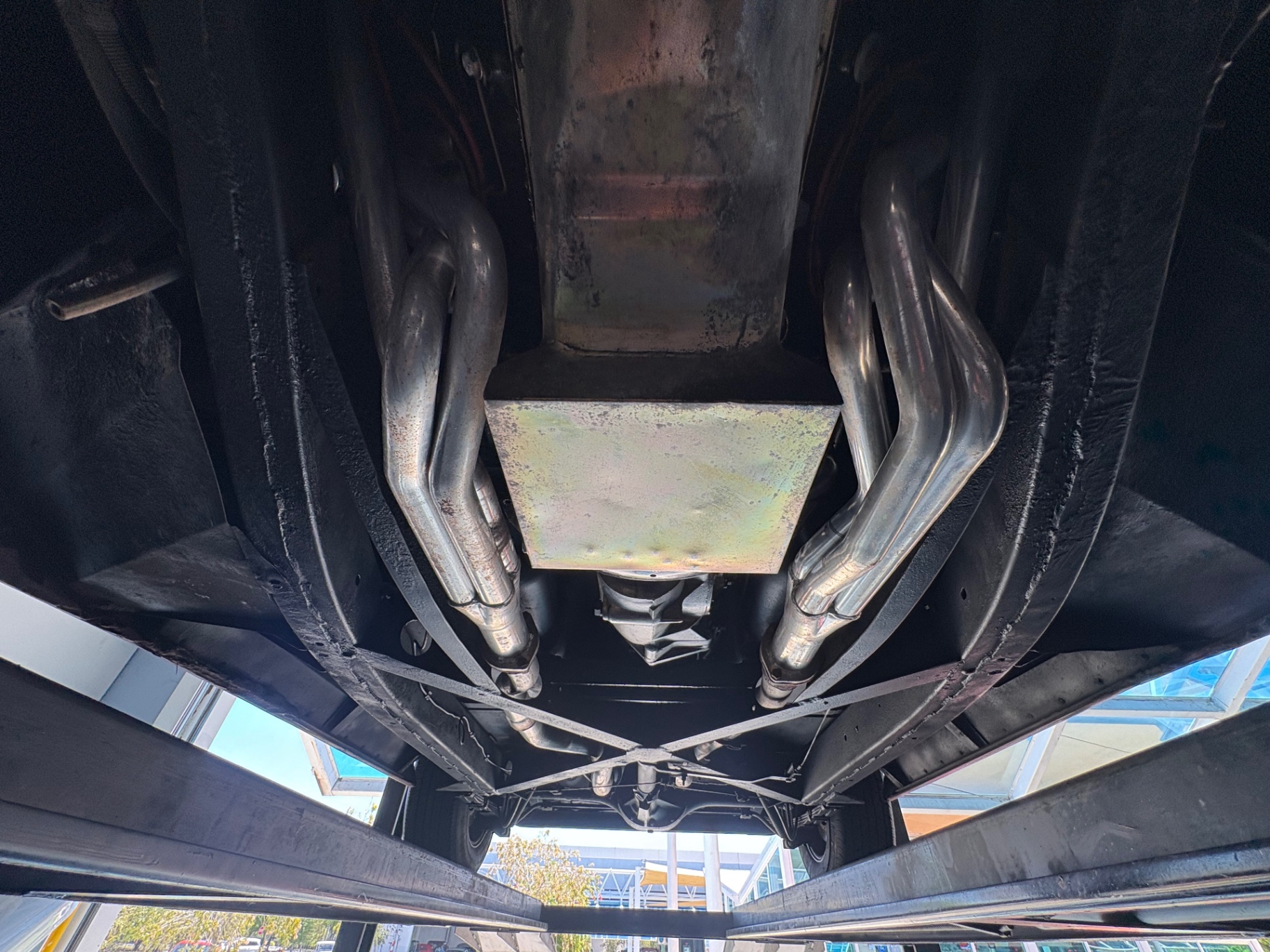
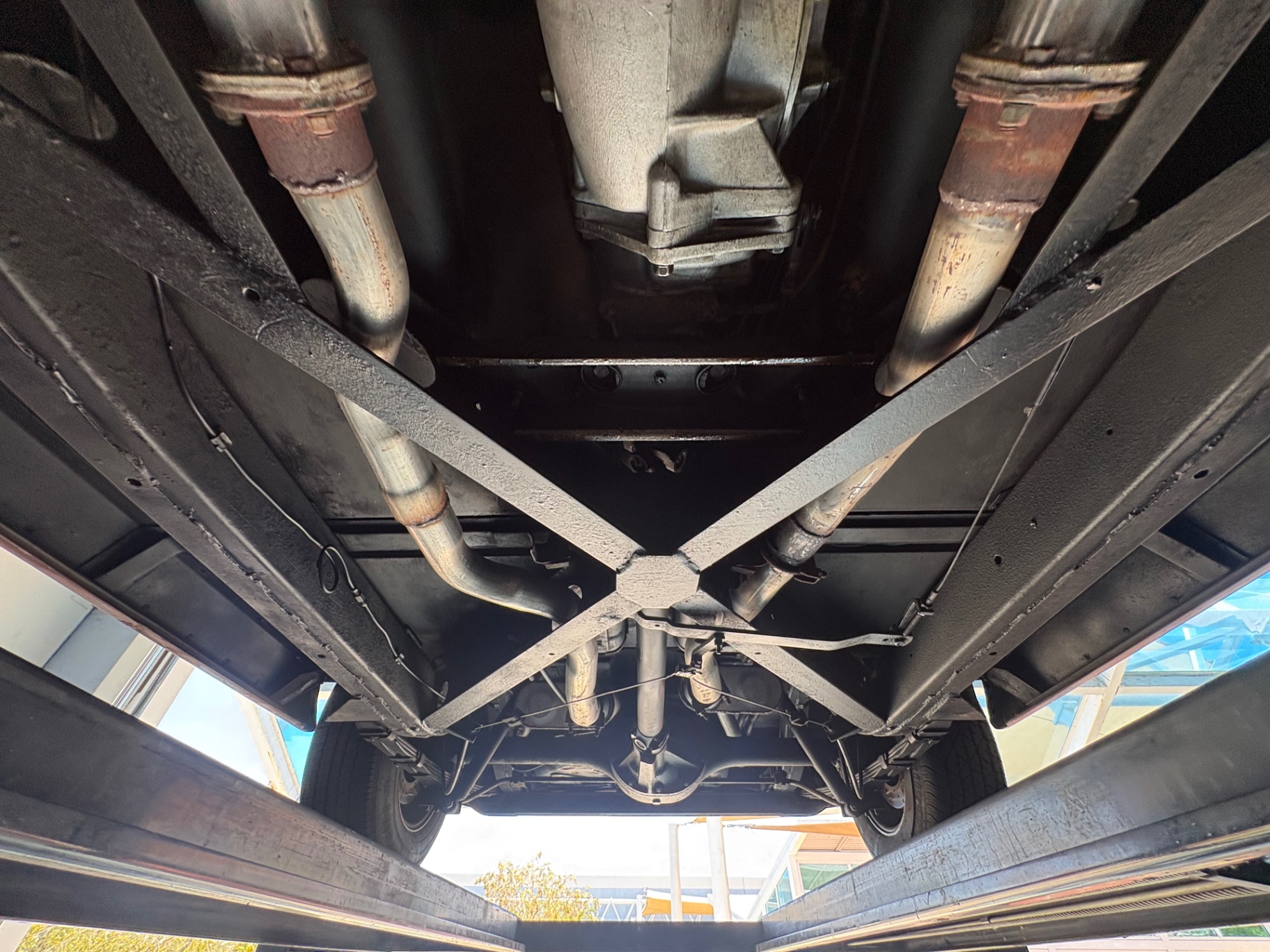
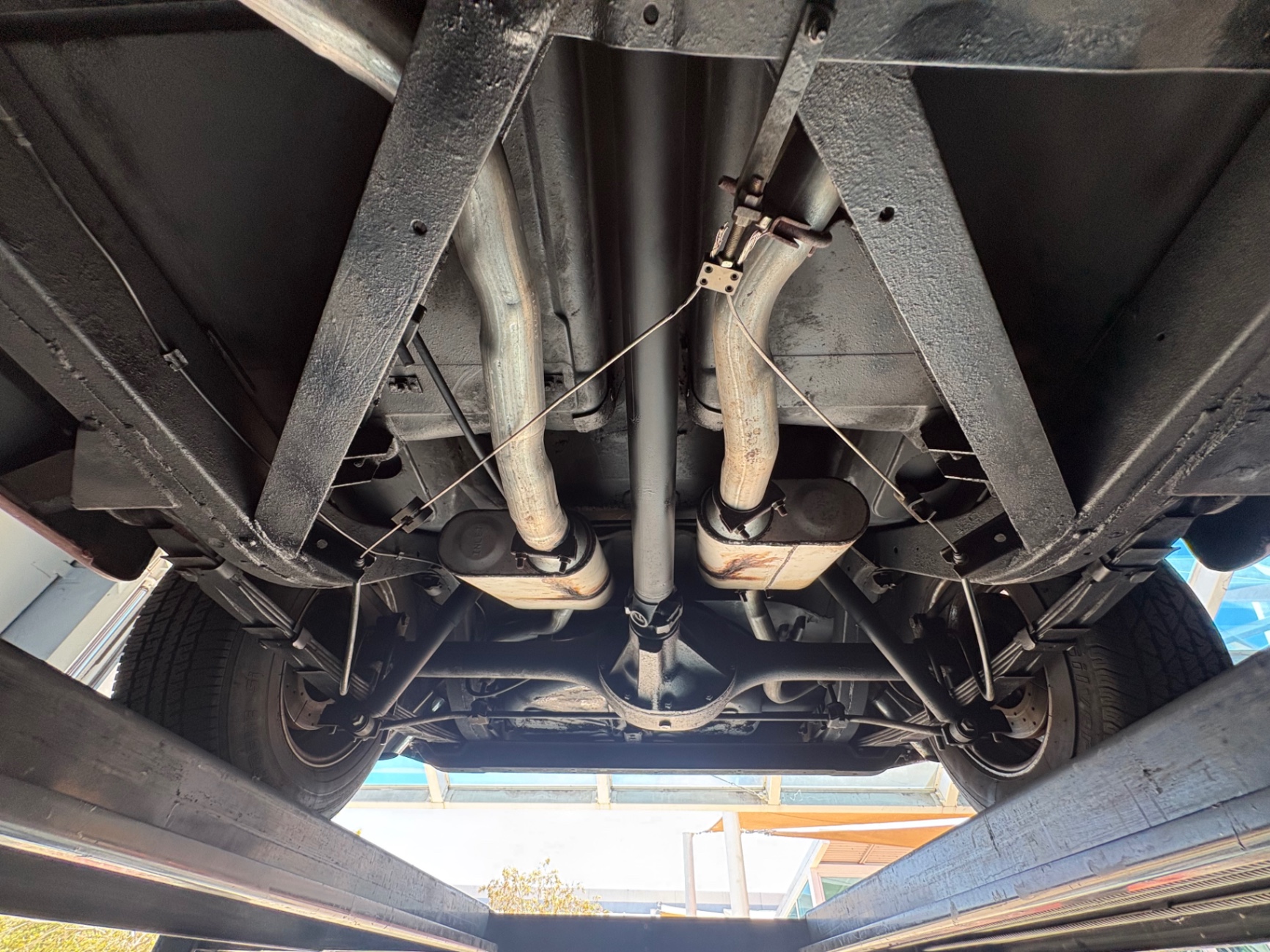
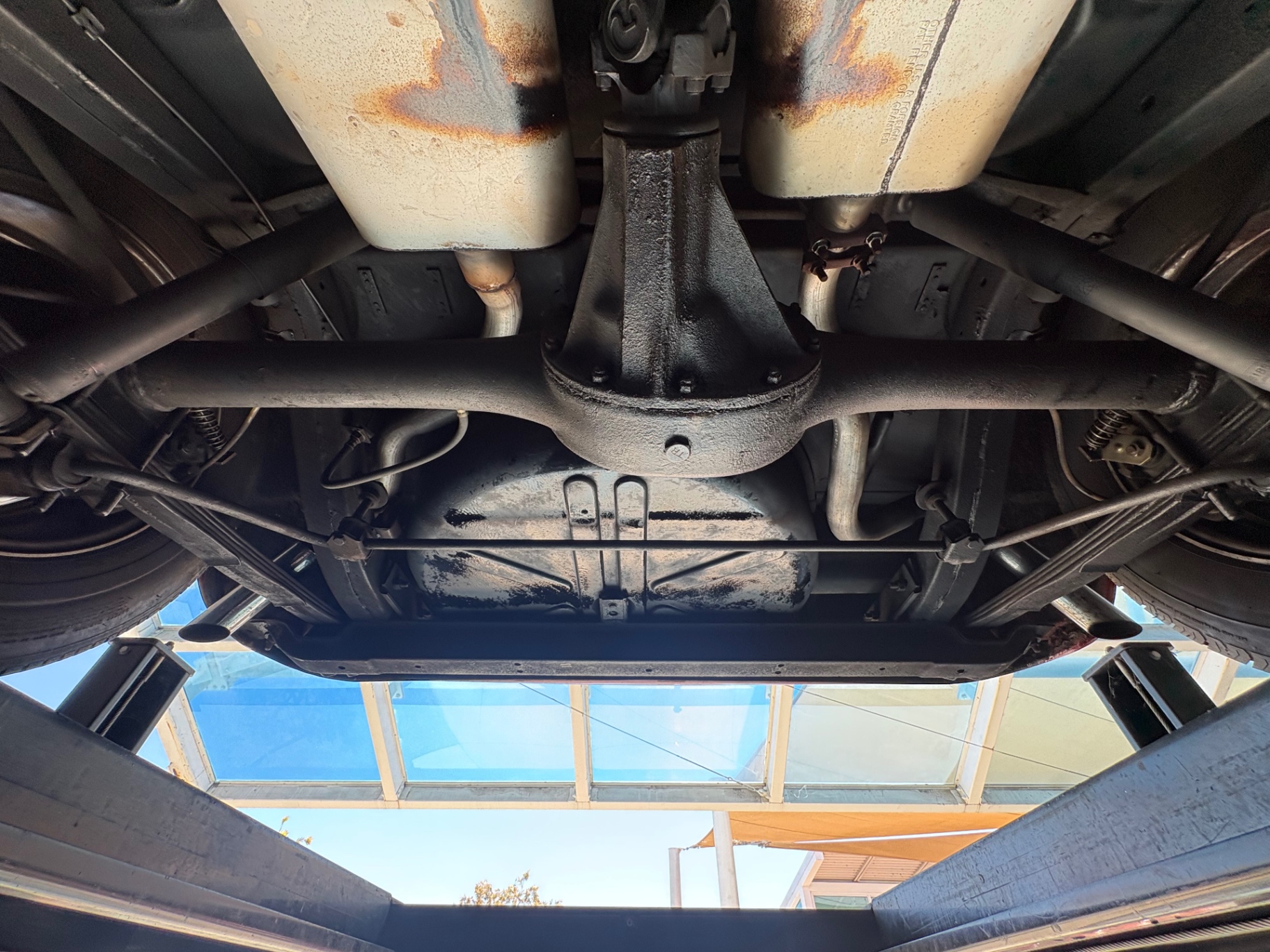
The underside photo confirms a solid, clean structure — no visible rust concerns, which is consistent with fiberglass body construction and further supported by the car's Florida history.
Conclusion
The 1961 Chevrolet Corvette is one of the most historically significant years in the model's first generation. It marks the transition between the original styling and the direction that would become the Sting Ray, it was the last year with the classic front clip before the full 1962 redesign, and it carried what remains one of the most capable naturally aspirated small-block configurations of the era in the dual-quad 283. This particular car puts that history into a package that is ready to drive, maintained with practical upgrades that address real-world reliability without stripping the car of its original identity.
If you want to own a 1961 Corvette that looks correct, drives well, and doesn't require a trailer to enjoy, this is the car to evaluate seriously.
Call Skyway Classics at 941-254-6608 to get more information or schedule a time to come see this 1961 Chevrolet Corvette in person at our Sarasota, Florida showroom.
Disclaimer Information found on the website is presented as given to us by the owner of the car, whether on consignment or from the owner we bought it from. Some Photos, materials for videos, descriptions and other information are provided by the consignor/seller and is deemed reliable, but Skyway Classics does not warranty or guarantee this information. Skyway Classics is not responsible for information that may incorrect or a publishing error. The decision to purchase should be based solely on the buyers personal inspection of the vehicle or by a professional inspection service prior to offer or purchase being made.
1961 Chevrolet Corvette — 283ci Dual Quad V8, 4-Speed, Red on Red Convertible
Why This Car Is Special
The 1961 Chevrolet Corvette sits at a turning point in the model's history, and that's exactly what makes it so desirable to serious collectors and drivers today. By 1961, Chevrolet's designers under Bill Mitchell had already begun reshaping the Corvette's identity. The front end retained the classic toothy grille that defined the C1 generation from 1953 onward, while the rear received a new ducktail treatment influenced by the Stingray racing car Mitchell had been campaigning privately. That combination of old-school front and forward-thinking rear makes the 1961 the only year in Corvette history with that exact look — a transitional design that collectors have come to regard as one of the most balanced of the entire C1 run.
Total 1961 Corvette production came in at 10,939 units, making it a relatively rare survivor compared to later C2 and C3 numbers. The body, as with all C1 Corvettes, was fiberglass — a choice that set the car apart from virtually every other American production vehicle of the era. That construction kept weight down and eliminated the rust issues that have plagued so many steel-bodied contemporaries. A well-preserved 1961 Corvette fiberglass body, like what you see here, holds up in a way that a steel car from the same period simply cannot.
The VIN on this car decodes to confirm it was built at the St. Louis assembly plant, which produced all Corvettes from 1954 through 1981. The sequential serial number places it solidly within the 1961 model year production run. The "08" in the model number confirms this is the Corvette convertible body style, the only body style offered that year.
This particular 1961 Corvette is finished in red over a matching red vinyl interior, carries the 283 cubic inch V8 with dual four-barrel carburetors, and is paired with a 4-speed manual transmission. It presents as a well-sorted, driver-quality classic with a handful of practical upgrades that make it more enjoyable to use in modern conditions without compromising its character.
Features
- 283ci V8 with dual four-barrel carburetors - 4-speed manual transmission - Dual K&N air filters on the dual quad carb setup - Corvette script valve covers - Aluminum radiator upgrade - Electric cooling fan - Custom alloy wheels - Red-line tires - Red exterior finish - White cove body trim - Chrome bumpers - Red vinyl interior - Bucket seats - Center console shifter
Mechanical
The 283 cubic inch small-block V8 was the Corvette's engine of record throughout the entire C1 era, and the dual four-barrel carburetor version was among the most desirable configurations offered. In factory trim, the dual-quad 283 was rated at 245 horsepower in standard form, with the fuel-injected version at the top of the range. The dual carb setup on this car is a strong, tractable combination — two four-barrel carbs on a dual-plane intake give the engine broad torque across the rpm range, which is exactly what you want in a car you plan to actually drive.
The dual K&N air filters sit atop each carburetor, providing better filtration and airflow compared to stock paper elements. These are a straightforward upgrade that doesn't change the character of the setup — they simply let the engine breathe more cleanly.
The 4-speed manual transmission is the correct pairing for this engine. Chevrolet introduced the close-ratio 4-speed as a Corvette option in 1957, and by 1961 it had become the transmission of choice for buyers who wanted to get the most out of the small-block. The center console shifter is properly positioned and works with the bucket seat configuration to give the cockpit a purposeful, focused feel.
Under the hood, two practical upgrades deserve specific mention. The aluminum radiator replaces the original copper-brass unit with a more efficient modern core that handles heat more effectively, particularly in stop-and-go traffic or during warm Florida summers. Paired with the electric cooling fan, this combination keeps coolant temperatures in check without relying on a mechanical fan that robs horsepower and only moves air when the engine is running fast. These are sensible changes for a car that gets driven, not trailered.
The Corvette script valve covers are a period-correct cosmetic touch that look right at home on this engine and reinforce the visual character of the 283.
Interior
The interior of this 1961 Corvette is trimmed in red vinyl throughout, matching the exterior color in a combination that was very much in the spirit of the era. Chevrolet offered color-matched interior options on the 1961 Corvette, and red on red was one of the more assertive choices a buyer could make. The vinyl has held up well and presents cleanly in the photos.
The bucket seats are correct for the C1 Corvette and reflect the car's sports car intent from day one. Unlike the bench-seat configurations found across most of GM's lineup in 1961, the Corvette came standard with buckets — a detail that reinforced its positioning as a two-seat sports car rather than a personal luxury vehicle.
The door panels carry the characteristic aluminum trim inserts that defined C1 Corvette interiors in this period. The brushed aluminum panel set against the red vinyl creates the kind of contrast that was considered cutting-edge in American car design at the time. The chrome window crank hardware and door pull details visible in the photos are in good order.
The center console houses the 4-speed shifter in the correct location, giving the driver easy, natural access to the gearbox. The overall cockpit is tight by modern standards, which is part of what makes a C1 Corvette feel like a sports car rather than a cruiser.
Exterior
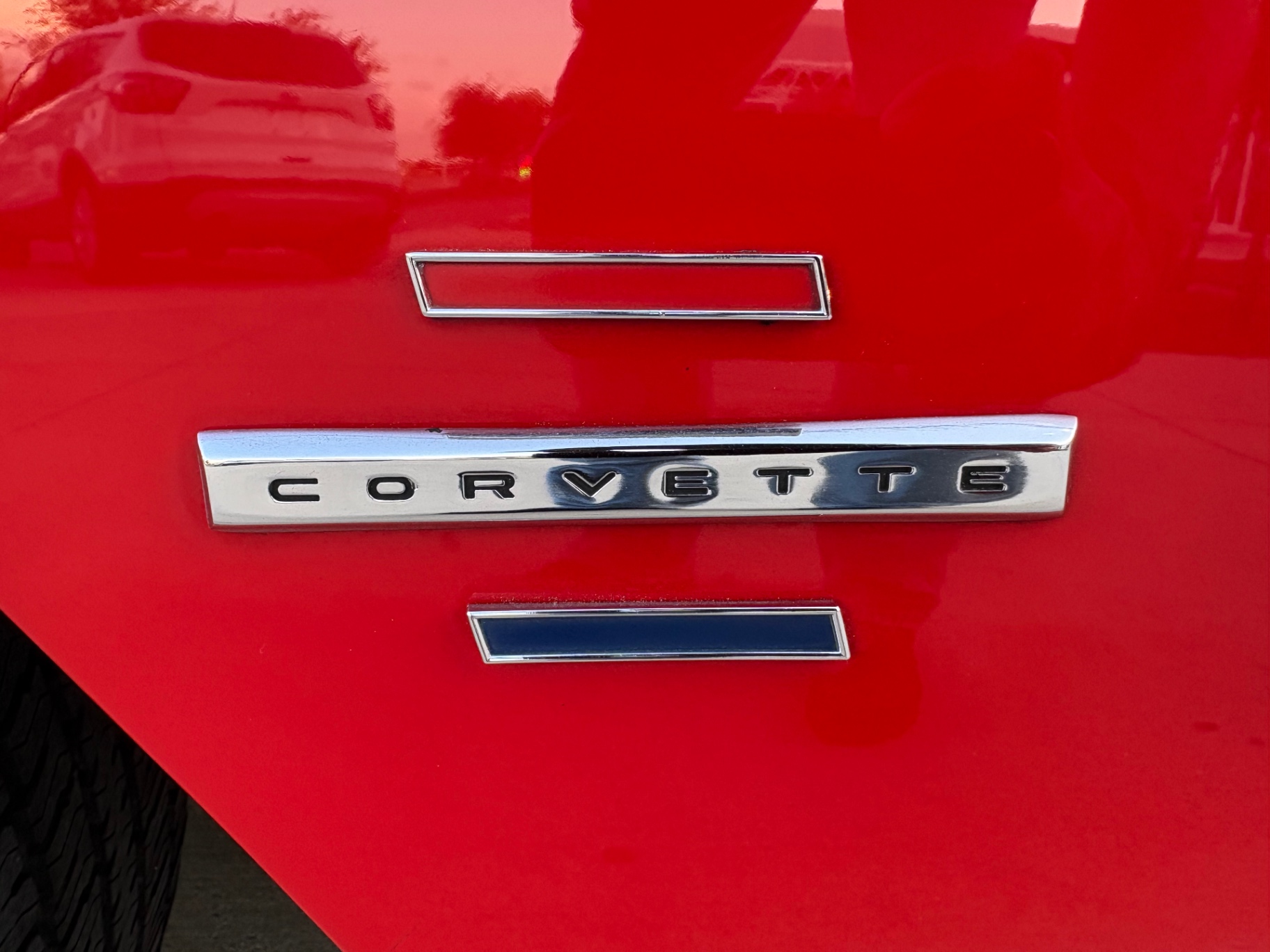
The exterior of this 1961 Chevrolet Corvette is finished in red, one of the classic color choices for the model. The fiberglass body panels show well, with consistent panel gaps and good surface quality visible in the photos. The 1961 body style, with its quad headlights set in a horizontal grille opening at the front and the ducktail-influenced rear treatment, is one of the cleaner designs in the entire C1 run.
White cove body trim fills the side coves — the sculpted recesses that run along the mid-body of the C1 from 1956 onward. Chevrolet offered the option to paint these coves a contrasting color from the beginning, and the red-and-white combination on this car is one of the most traditional and visually correct pairings for the model. It breaks up the body mass in exactly the way the designers intended.
Chrome bumpers at both ends are in presentable condition and carry the correct 1961 style, including the rear bumper ends that wrap around the new ducktail tail treatment introduced that year. The chrome is intact and shows well.
The custom alloy wheels are a departure from the stock steel wheels with hubcaps that left the factory, but they work proportionally with the body and carry a period-inspired style that fits the car's character without looking anachronistic. Red-line tires complete the rolling stock and are consistent with the early 1960s aesthetic this car presents.
The underside photo confirms a solid, clean structure — no visible rust concerns, which is consistent with fiberglass body construction and further supported by the car's Florida history.
Conclusion
The 1961 Chevrolet Corvette is one of the most historically significant years in the model's first generation. It marks the transition between the original styling and the direction that would become the Sting Ray, it was the last year with the classic front clip before the full 1962 redesign, and it carried what remains one of the most capable naturally aspirated small-block configurations of the era in the dual-quad 283. This particular car puts that history into a package that is ready to drive, maintained with practical upgrades that address real-world reliability without stripping the car of its original identity.
If you want to own a 1961 Corvette that looks correct, drives well, and doesn't require a trailer to enjoy, this is the car to evaluate seriously.
Call Skyway Classics at 941-254-6608 to get more information or schedule a time to come see this 1961 Chevrolet Corvette in person at our Sarasota, Florida showroom.
Disclaimer Information found on the website is presented as given to us by the owner of the car, whether on consignment or from the owner we bought it from. Some Photos, materials for videos, descriptions and other information are provided by the consignor/seller and is deemed reliable, but Skyway Classics does not warranty or guarantee this information. Skyway Classics is not responsible for information that may incorrect or a publishing error. The decision to purchase should be based solely on the buyers personal inspection of the vehicle or by a professional inspection service prior to offer or purchase being made.
1961 Chevrolet
Corvette Base
Why Choose Skyway Classics?
Explore our curated inventory of classic and collector cars—thoughtfully selected, ready to drive, and supported by experts who make ownership simple.
Expert Curation
Every vehicle is hand-selected by our experts for quality, authenticity, and investment potential.
Fast Transactions
Streamlined buying and selling process with quick financing and immediate delivery options.
Only National Dealer With Classic Service & Repair
We’re the only national dealership that services and repairs the classics we sell—before and after the sale.
Nationwide Network
Access to our extensive network of collectors, restorers, and classic car enthusiasts nationwide.
Concierge Ownership Support
From financing and insurance to paperwork, shipping, and titling—we handle the details so you can enjoy the drive.
Passion-Driven Service
We're classic car enthusiasts first, providing personalized service with genuine passion for the hobby.