
1966 Chevrolet
Corvette Sting Ray
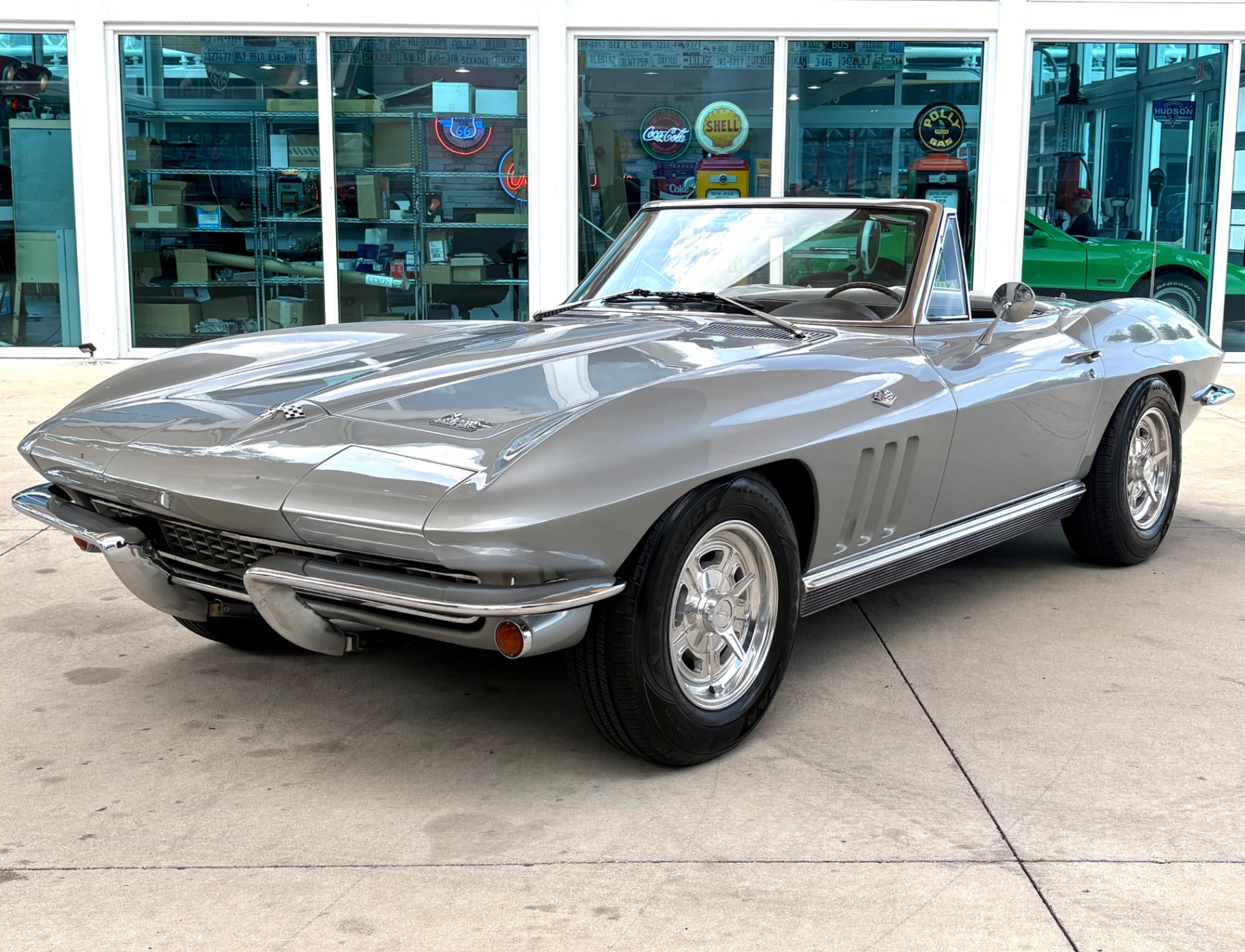
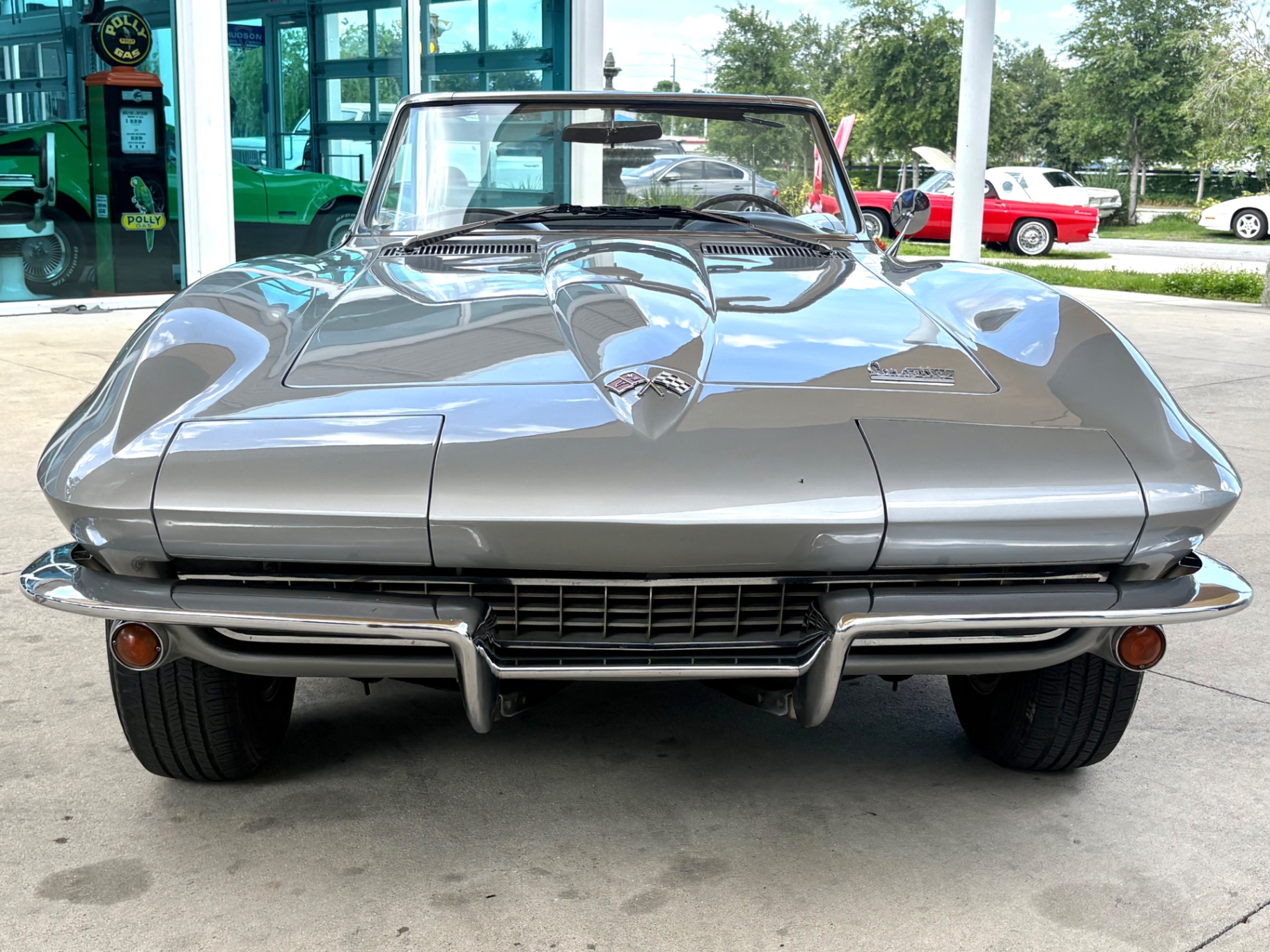
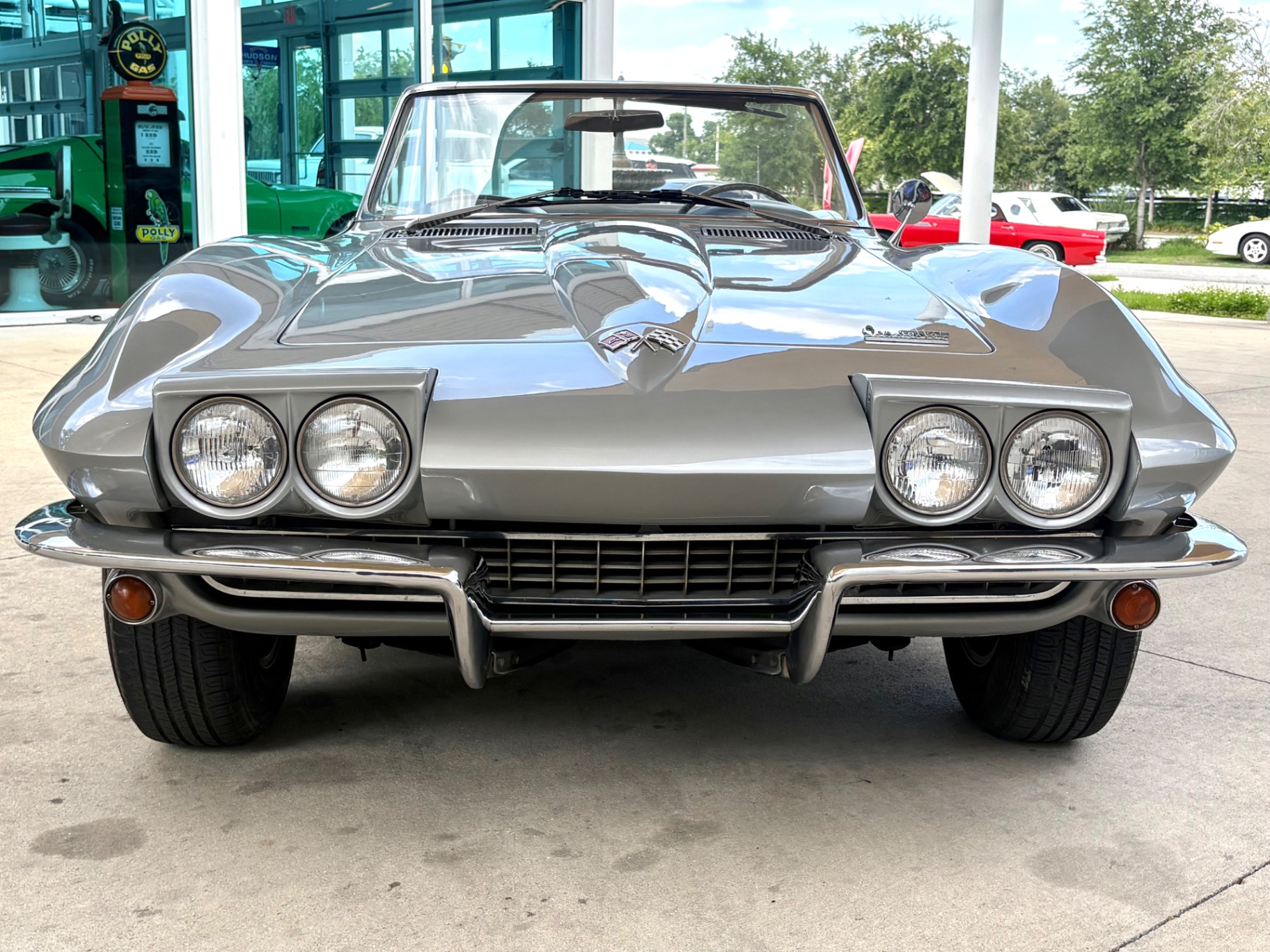
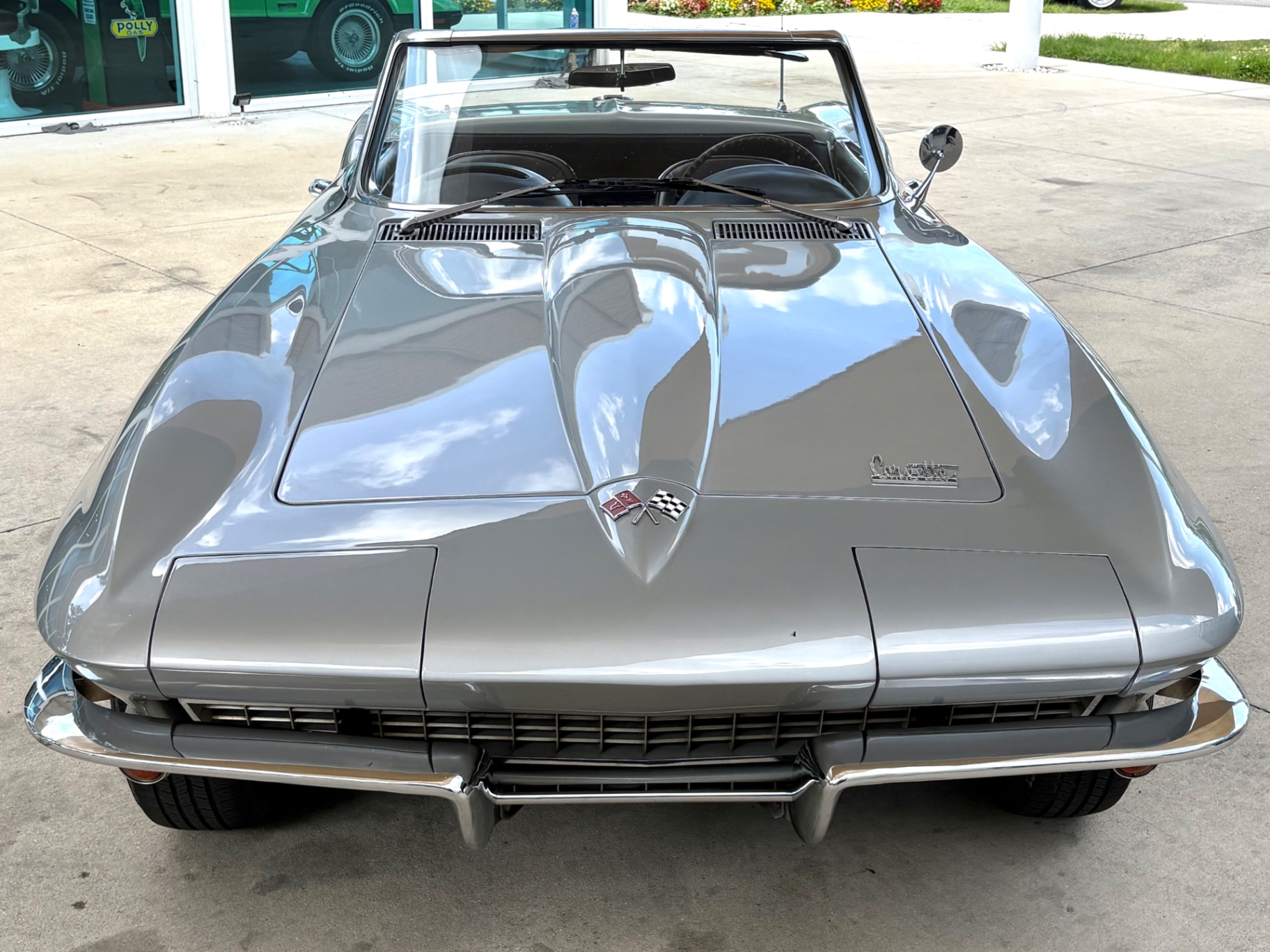
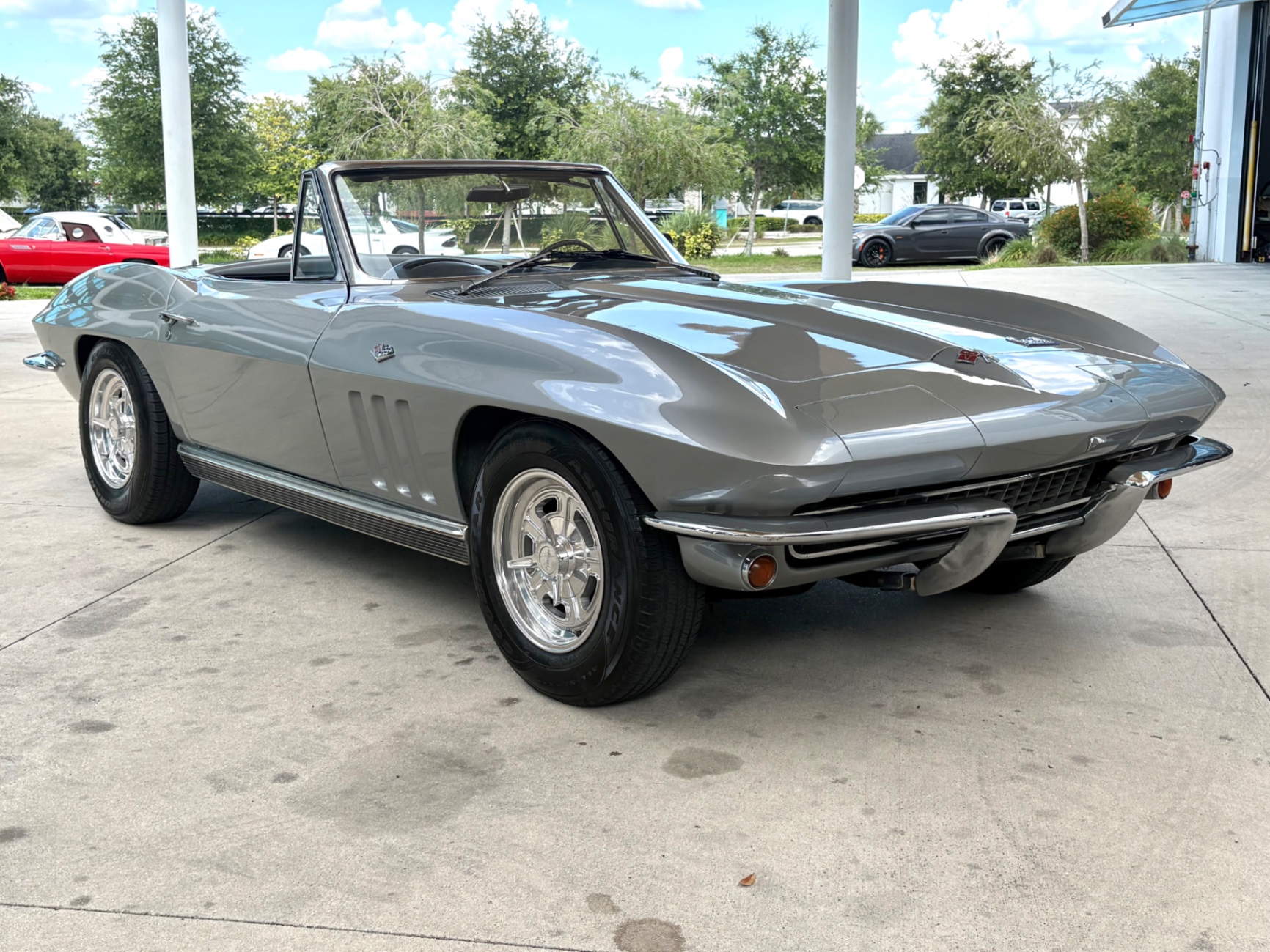
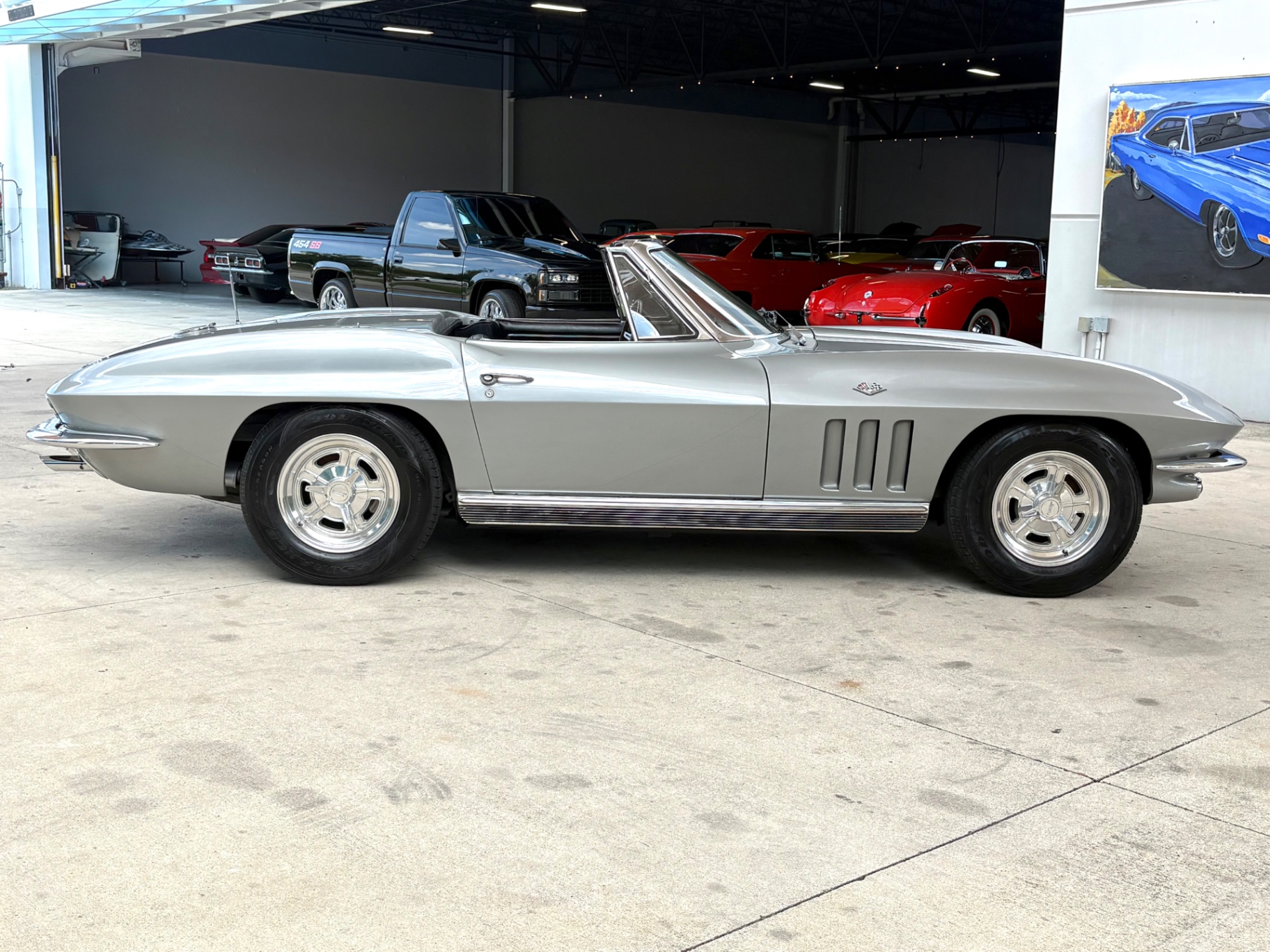
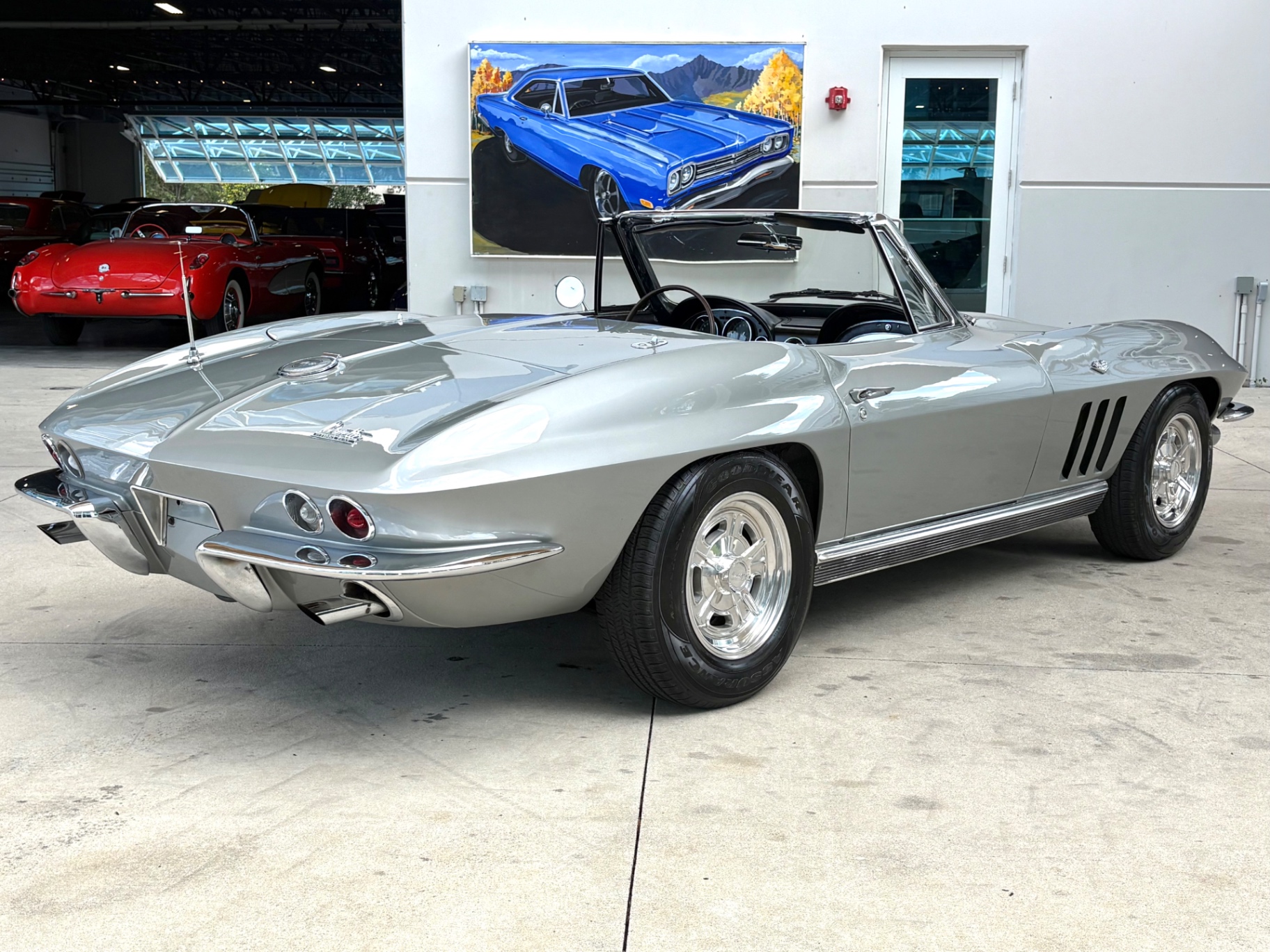
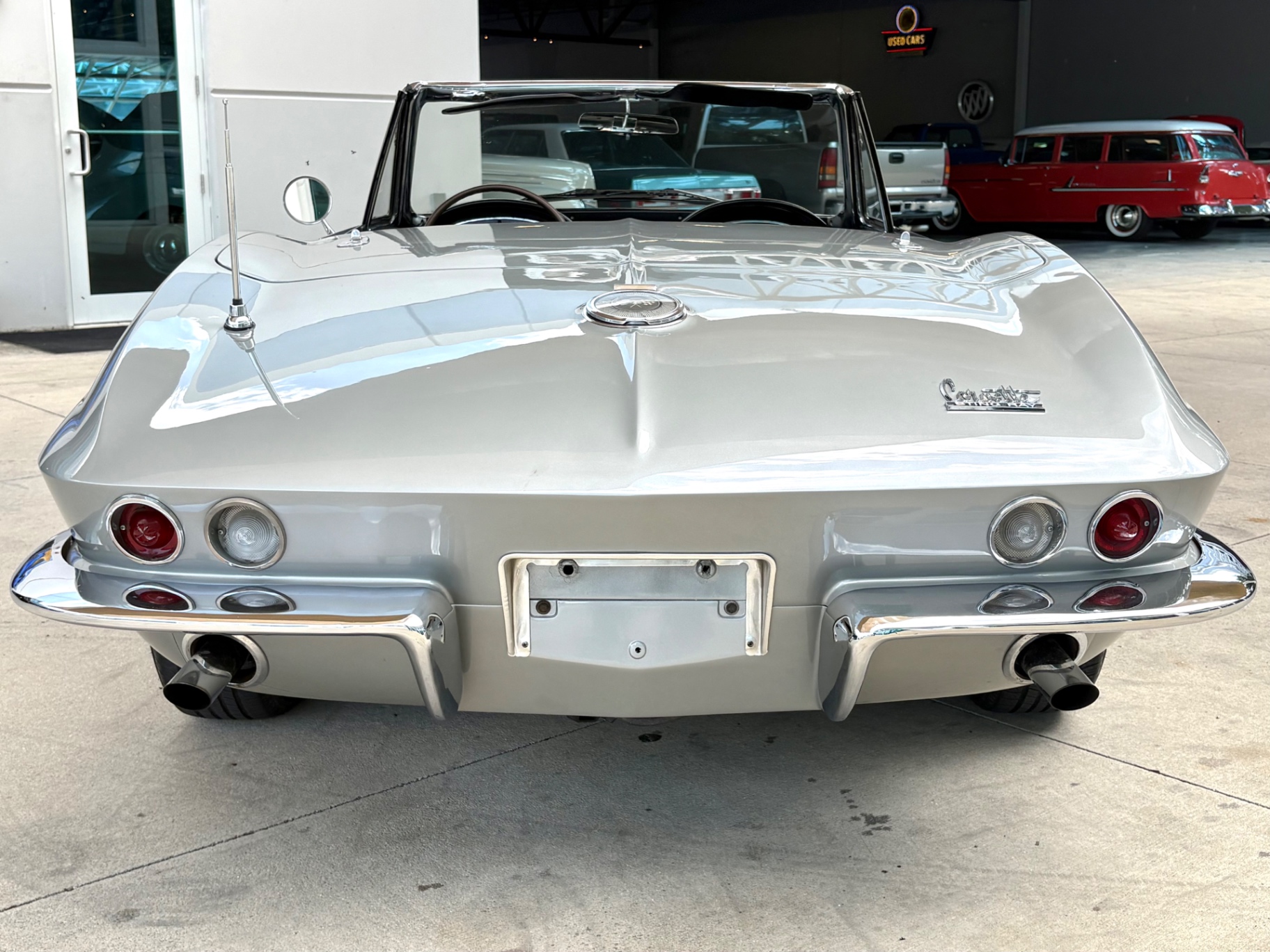
1966 Chevrolet Corvette Sting Ray Convertible — L79 327/350 V8, 4-Speed Muncie, 4-Wheel Disc Brakes
Why This Car Is Special
The 1966 Chevrolet Corvette Sting Ray sits at the peak of the C2 generation, which ran from 1963 through 1967. Of all five years in that generation, enthusiasts consistently rank 1966 and 1967 as the most refined. The split rear window of 1963 is more polarizing than pure; the 1964 and 1965 were still evolving. By 1966, Chevrolet had sorted out the ergonomics, refined the body lines, and expanded the engine lineup to include some of the most capable small- and big-block combinations ever offered in an American sports car. Total Corvette production for 1966 came to 27,720 units, split between the coupe and the convertible. This car is the convertible.
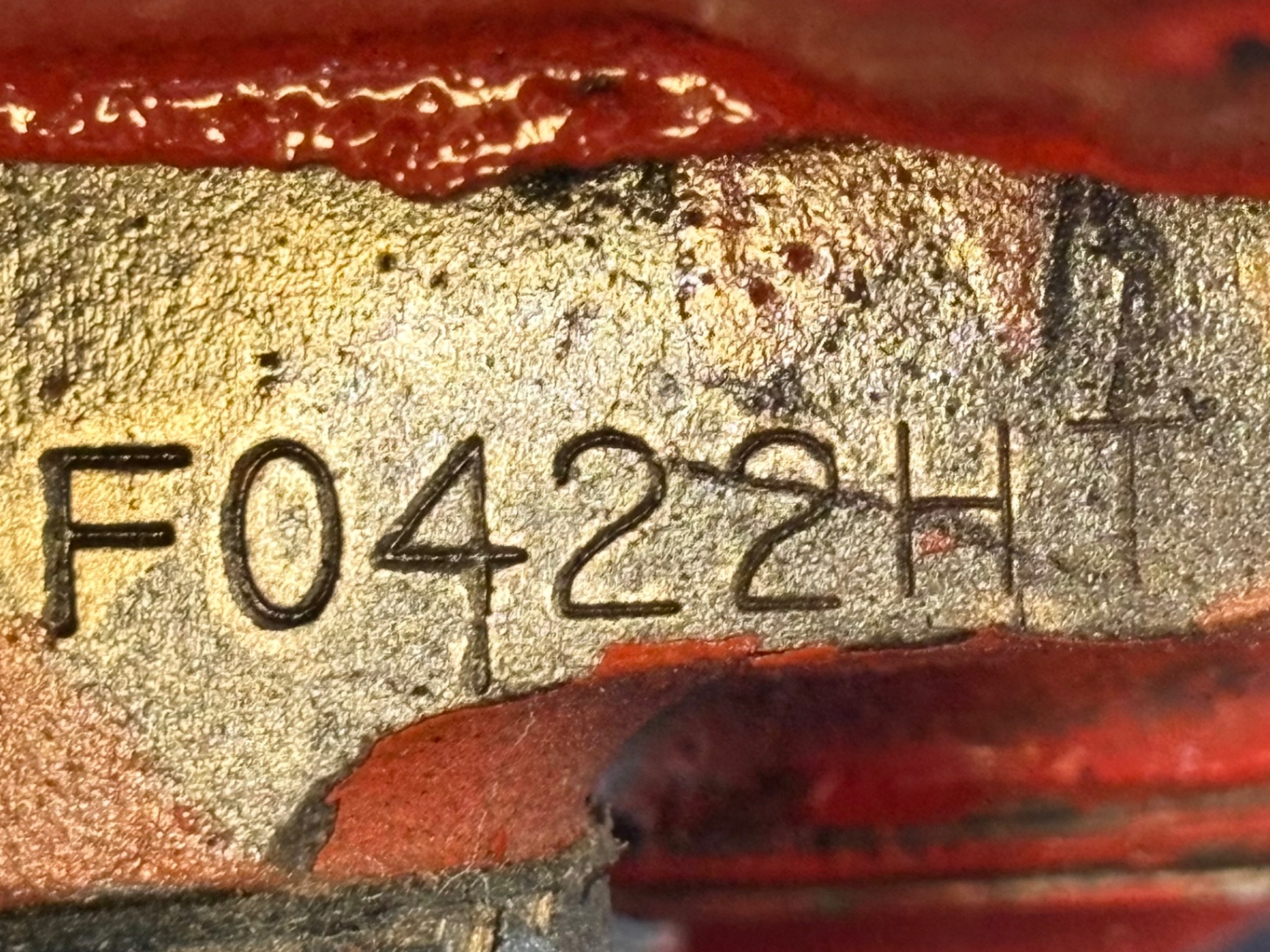
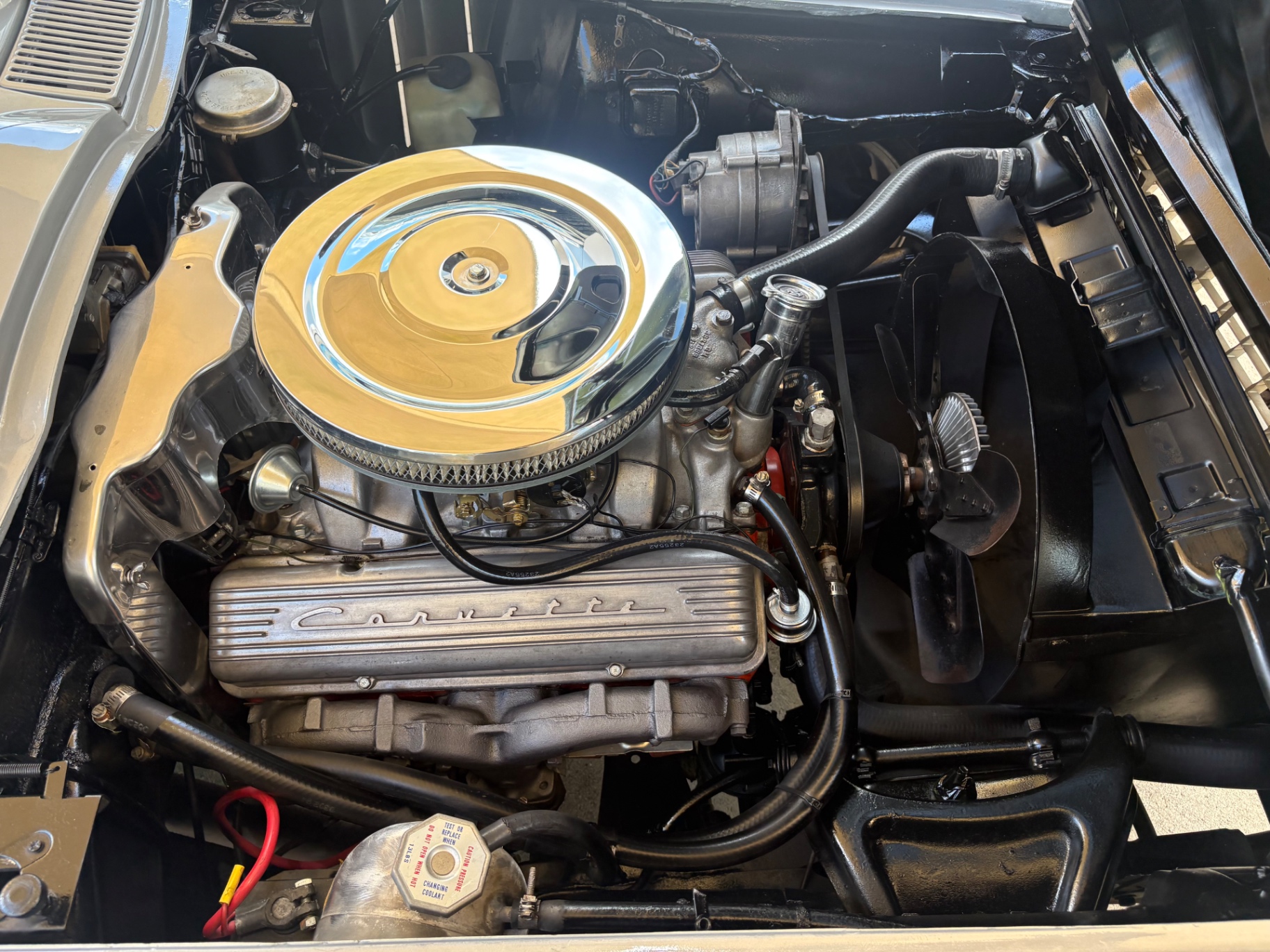
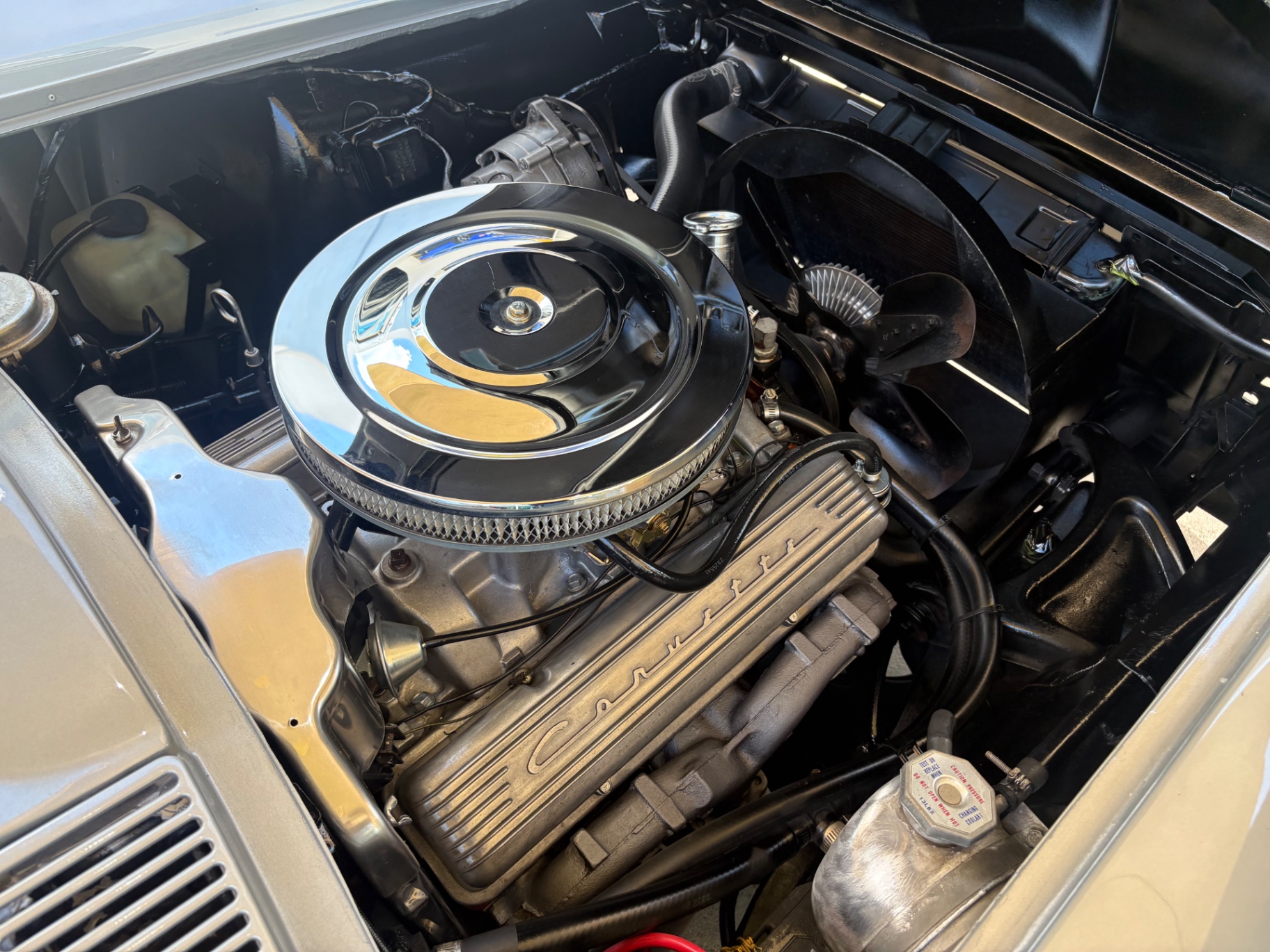
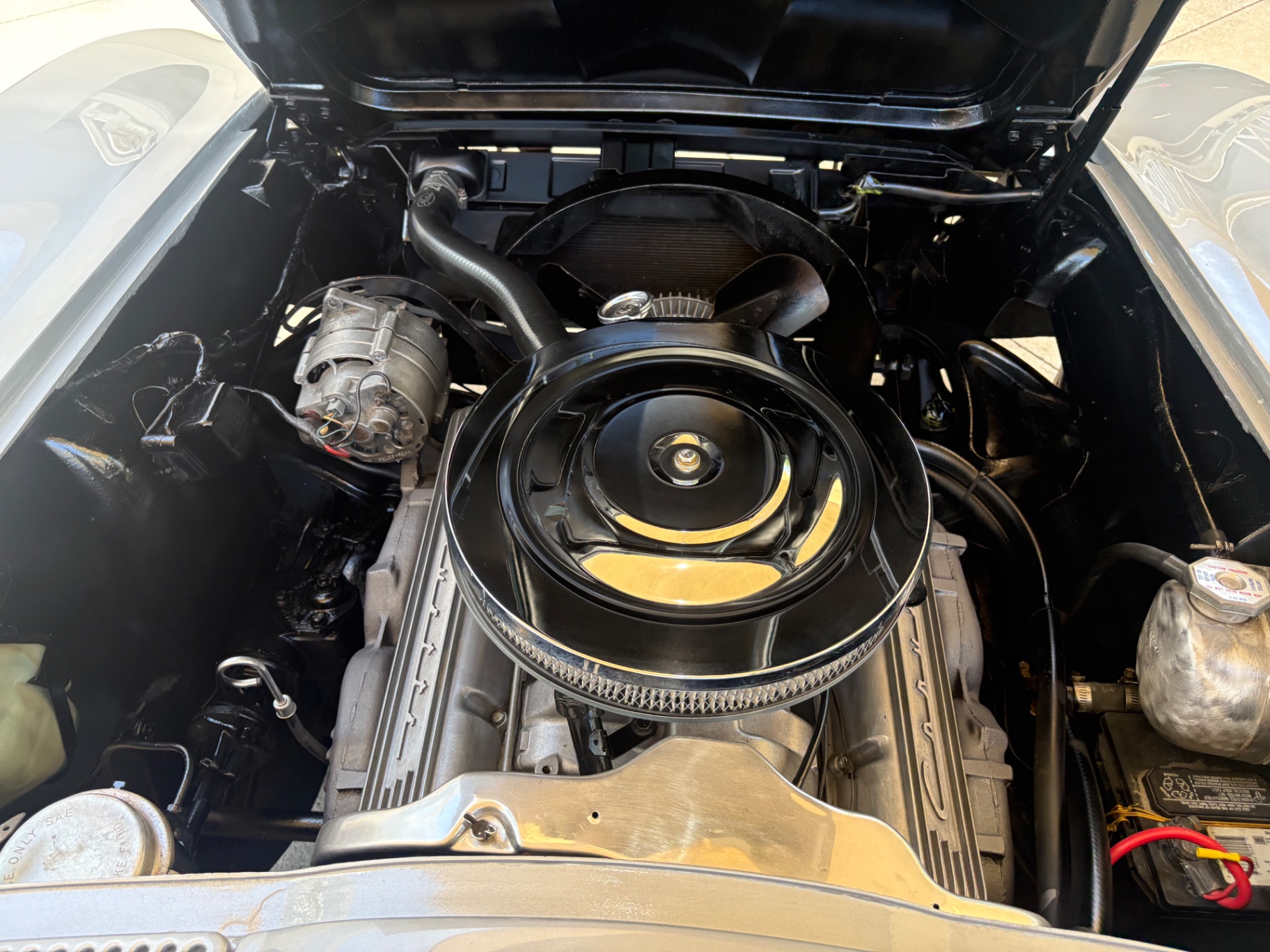
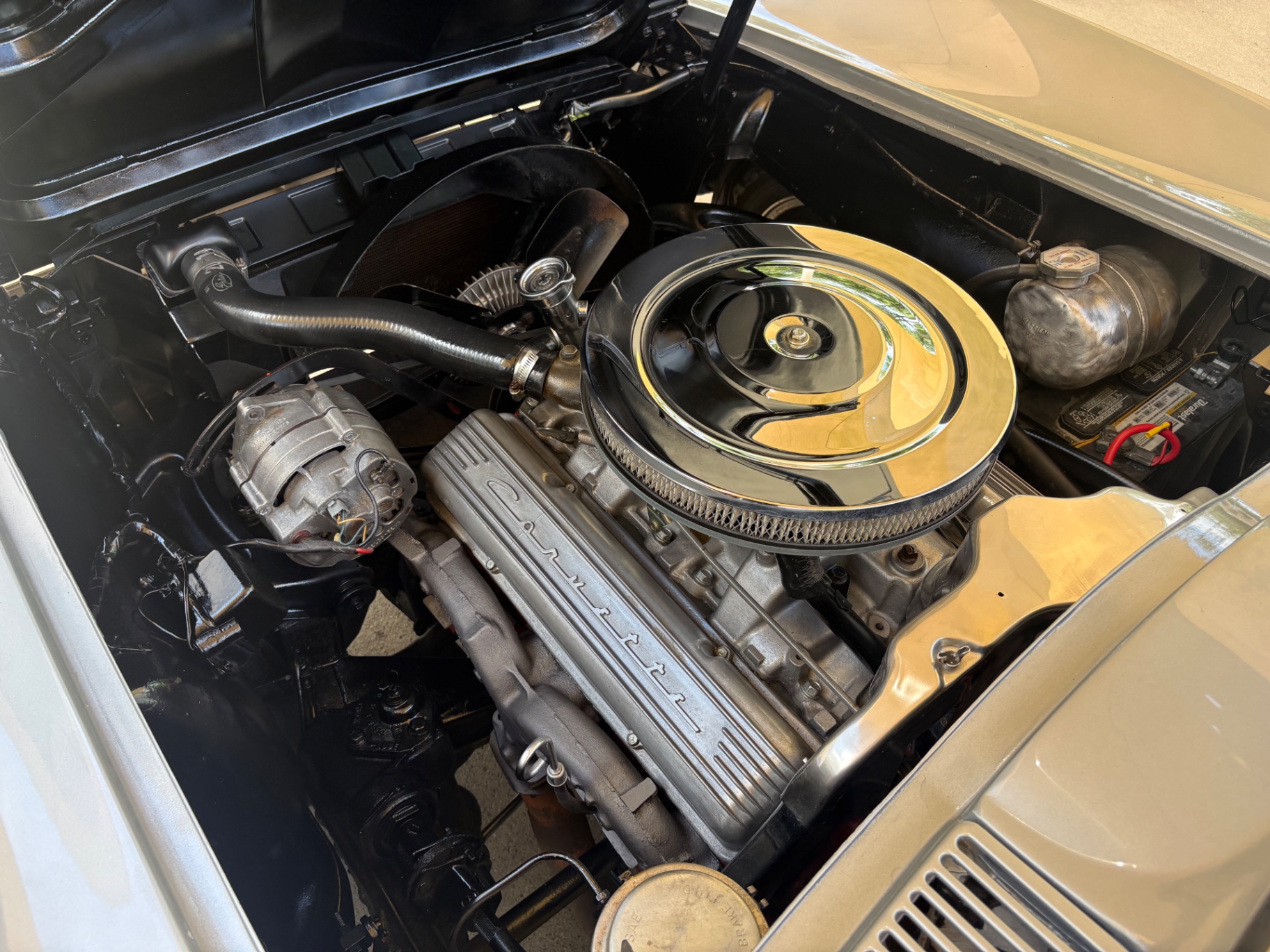
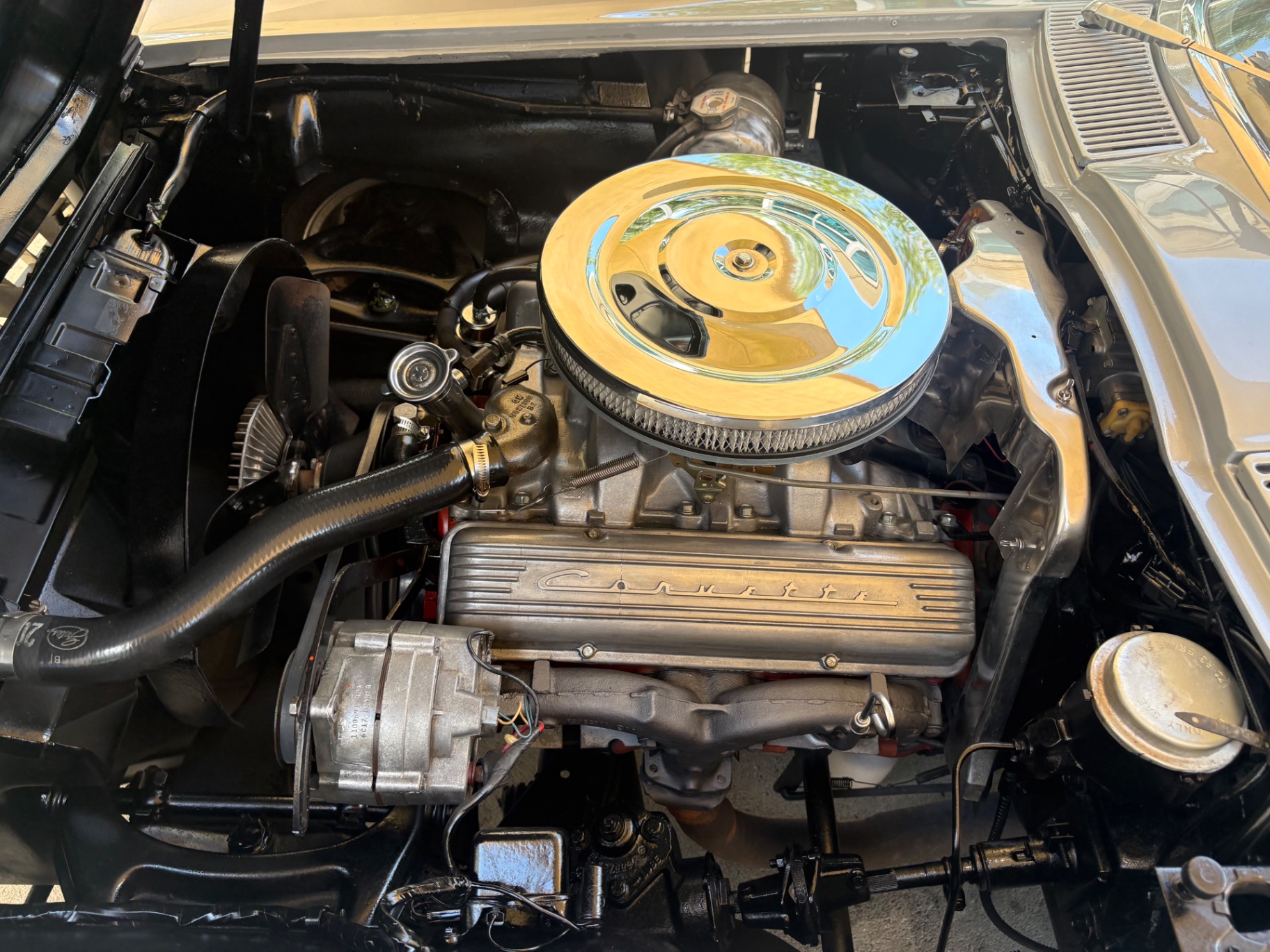
What makes this specific 1966 Corvette Sting Ray worth serious attention is its factory engine code. The L79 was the 327 cubic inch small block tuned to 350 horsepower — the highest output version of the 327 offered that year. Chevrolet accomplished this with a high-compression ratio, a more aggressive camshaft profile, and larger-port cylinder heads compared to the base 300-horsepower 327. The result was a small block that ran hard without the weight, fuel consumption, or insurance implications of the big-block 427. Among Corvette buyers who understood what they were looking at, the L79 was a smart, driver-focused choice. It was quick enough to be genuinely fast and light enough to handle well.
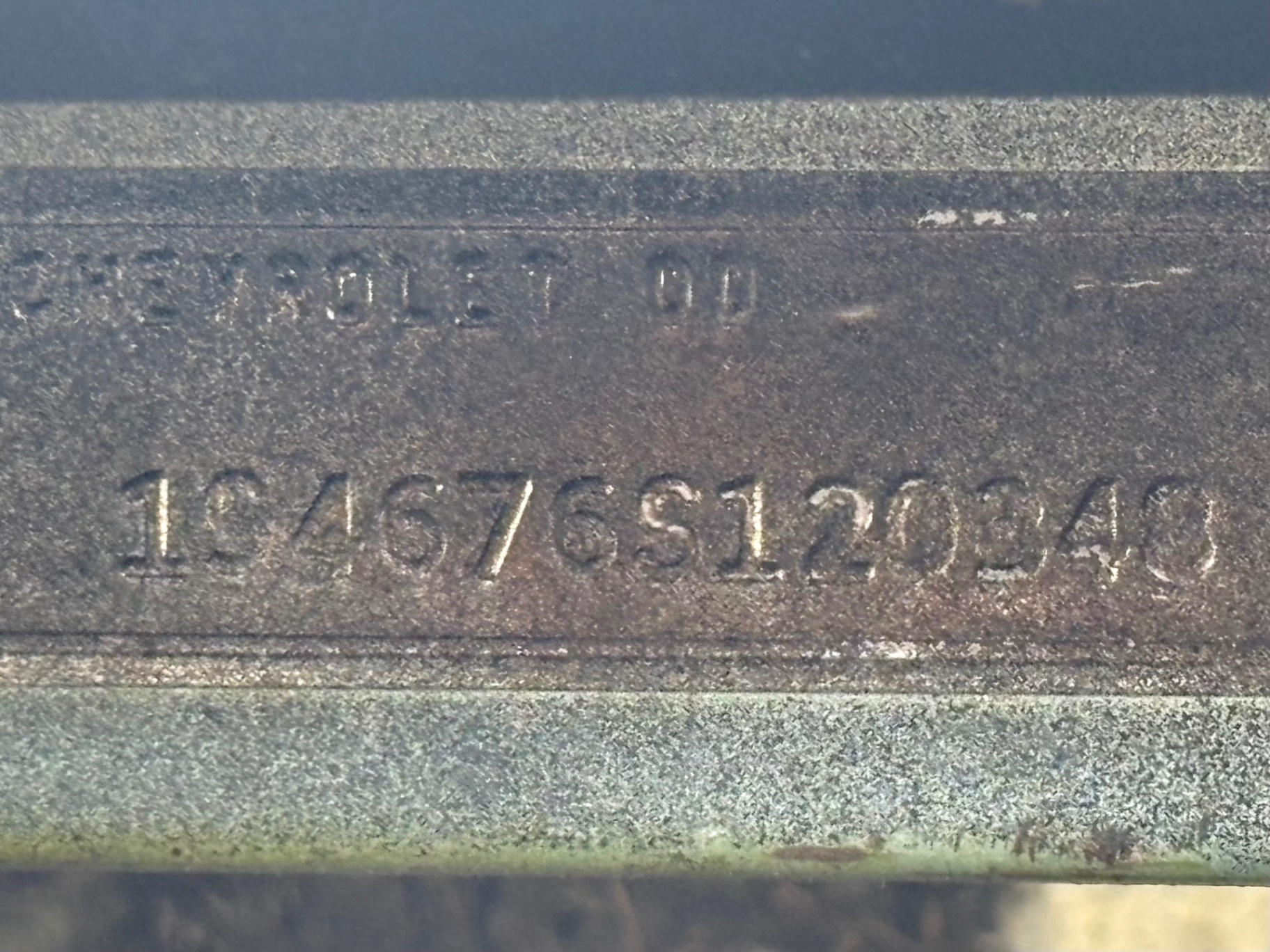
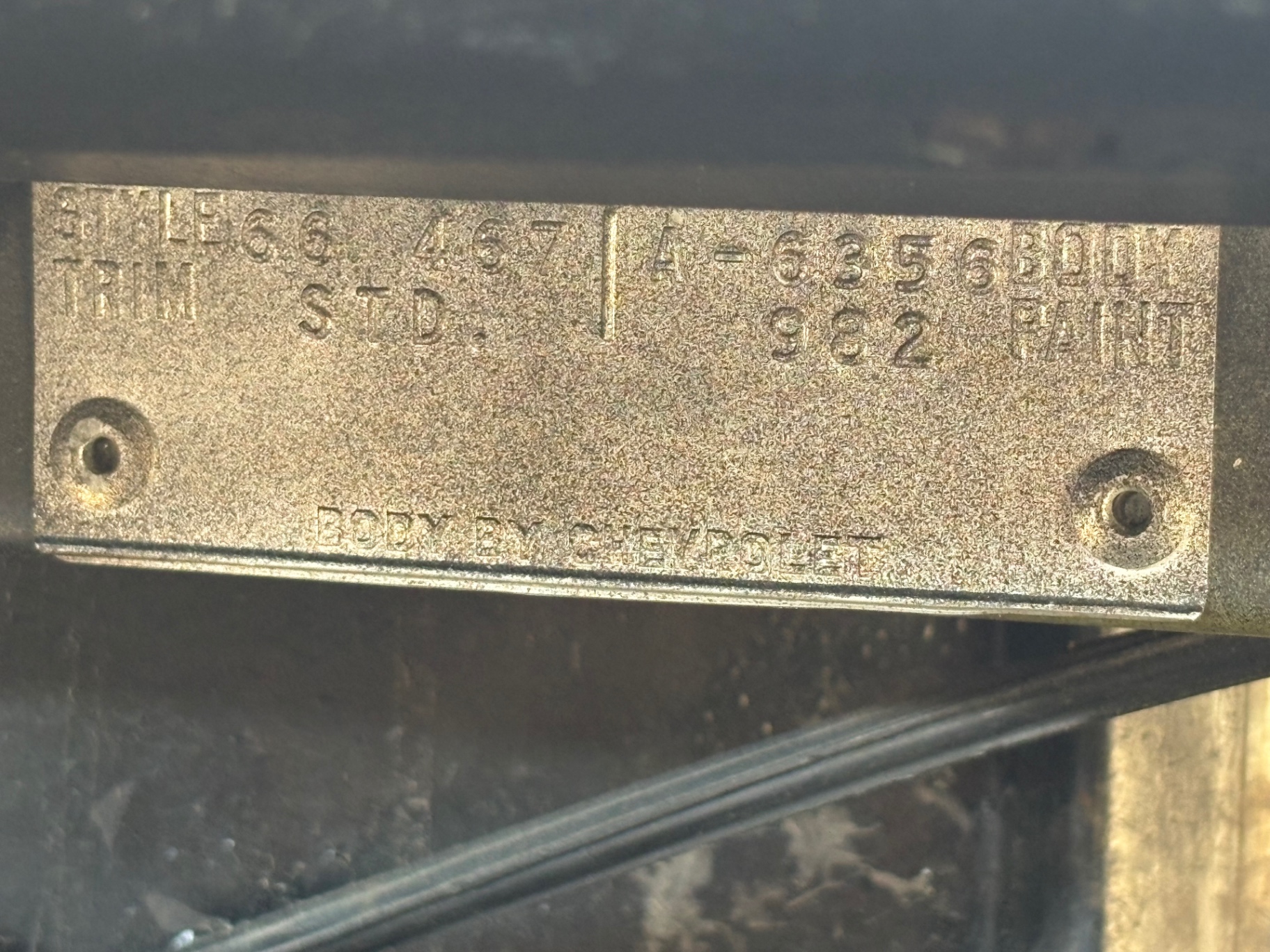
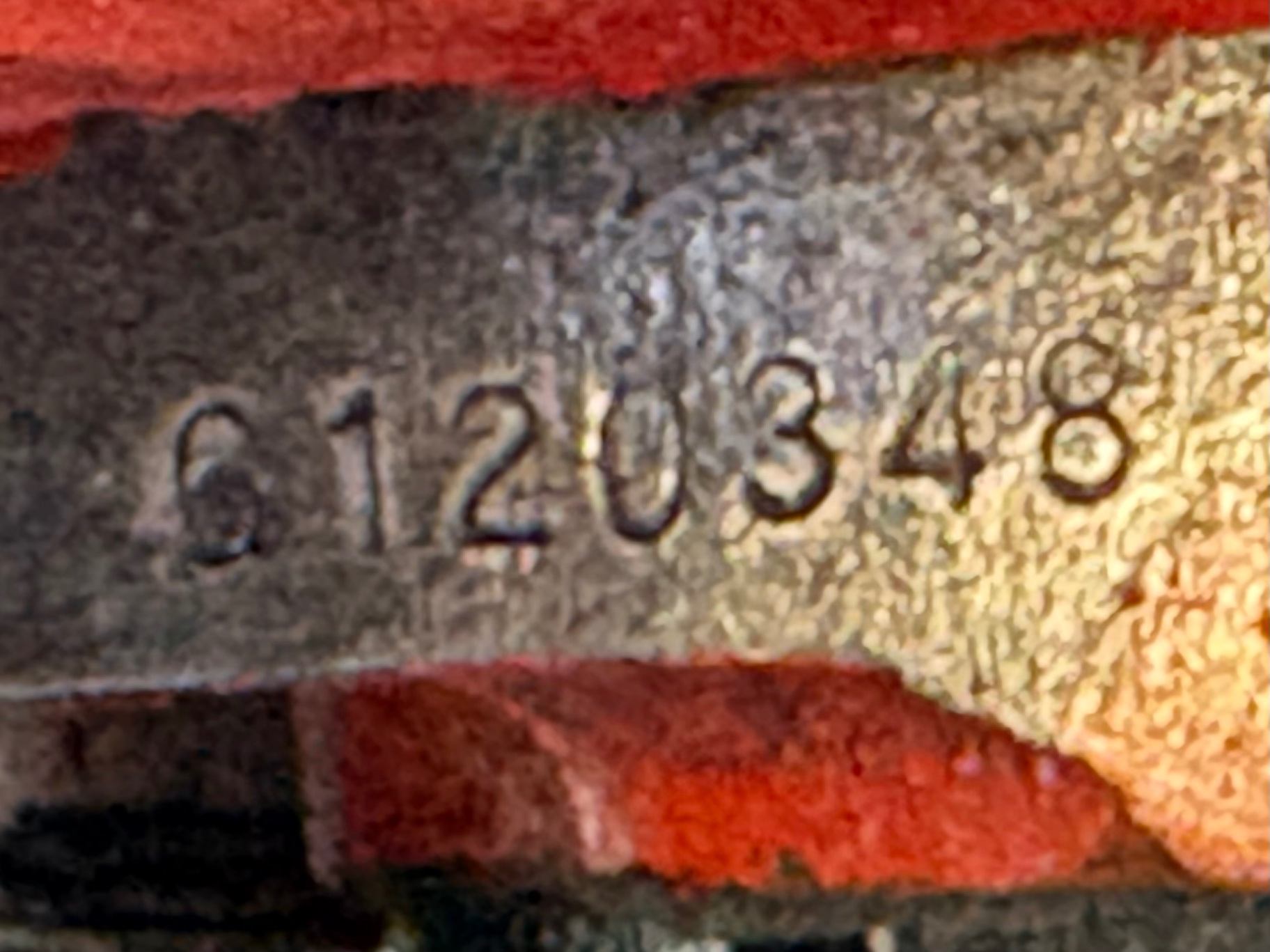
The VIN on this car decodes to a 1966 Corvette convertible, built at the St. Louis assembly plant, with the 327 V8 and a 4-speed manual transmission — all of which aligns with the equipment present on the car today. Factory color was Mosport Green, code 982, a medium green that was exclusive to 1966. The car has since been repainted silver, which is fully disclosed. The undercarriage and structure tell a cleaner story than the paint change might suggest.
Features List
- 327 cubic inch L79 V8, factory rated at 350 horsepower
- Holley 4-barrel carburetor
- Muncie 4-speed manual transmission
- 4-wheel disc brakes (front and rear)
- Independent rear suspension
- Dual exhaust with chrome tips
- Hidden retractable headlights
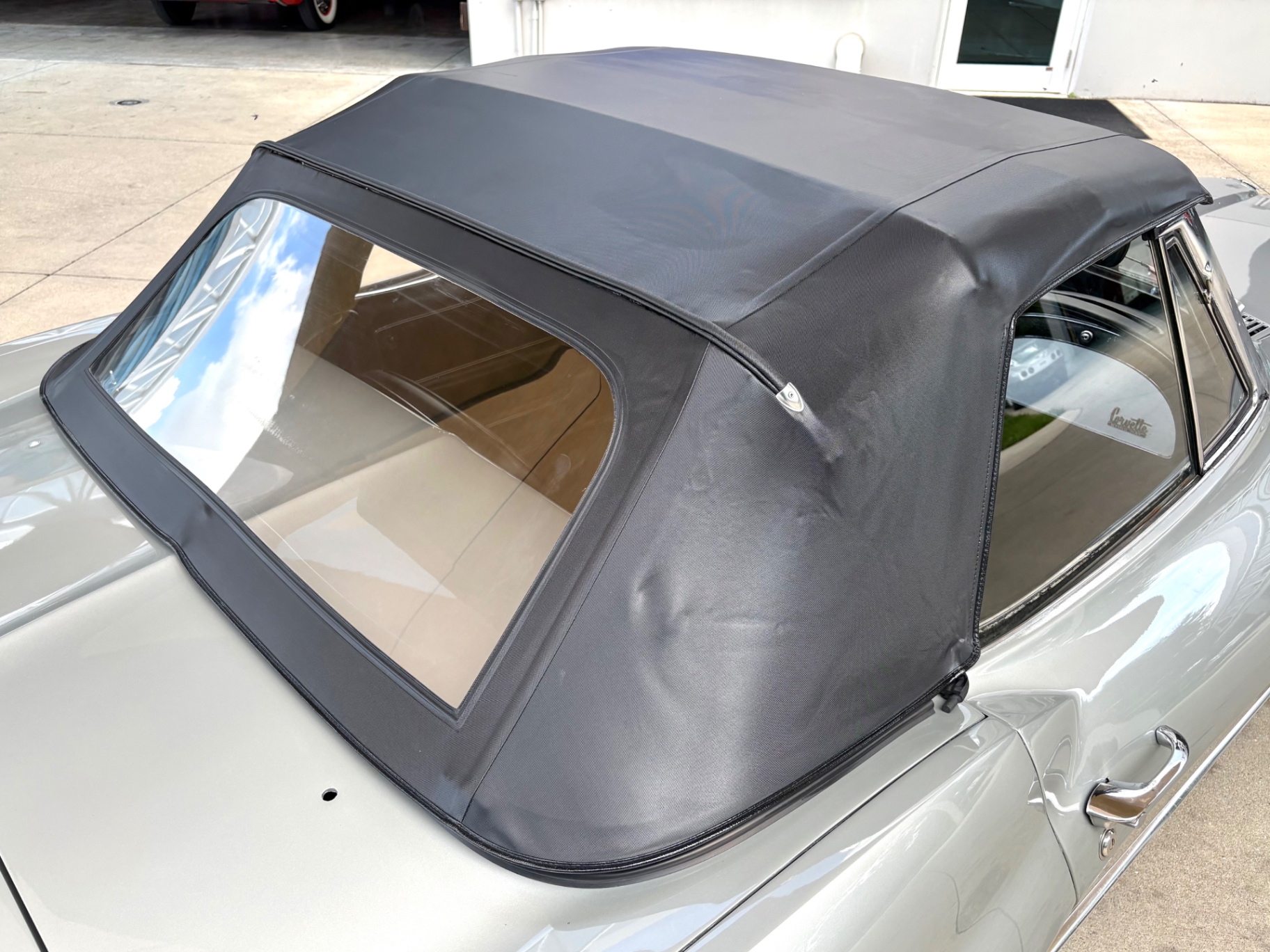
- Black convertible soft top
- Chrome front and rear bumpers
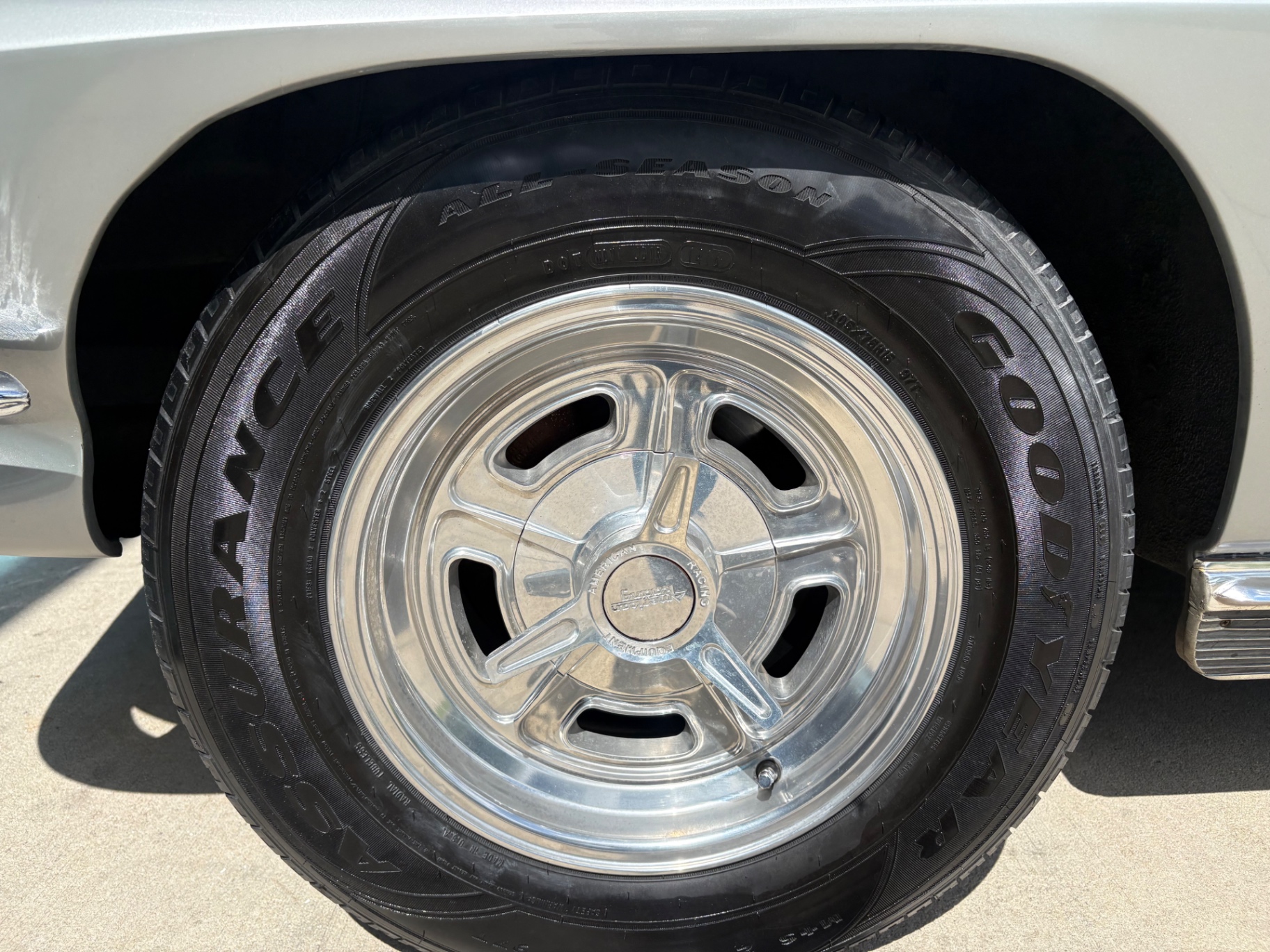
- American Racing Torq-Thrust wheels
- Corvette Sting Ray badges (front fenders and rear deck)
- Wood rim steering wheel
- Black leather bucket seats
- Center console with 4-speed shift gate
- Tachometer (dash-mounted, factory cluster)
- Dashboard clock
- Delco AM radio
- Seat belts
- Recent repaint (silver over factory Mosport Green)
- Clean undercarriage
Mechanical
The L79 327 is the engine to have in a C2 Corvette if you want a car that drives rather than just shows. At 350 horsepower from 327 cubic inches, this engine produced more power per cubic inch than any other small block in the 1966 Corvette lineup. It used 11.0:1 compression, a hydraulic camshaft with more duration and lift than the base engines, and large-port cylinder heads shared with the more powerful small blocks. Chevrolet paired it with a Holley 4-barrel carburetor, which provided crisp throttle response and reliable fuel delivery. The combination was factory-tested to run in the mid-14-second range in the quarter mile in period testing, which was competitive with much larger displacement engines of the era.
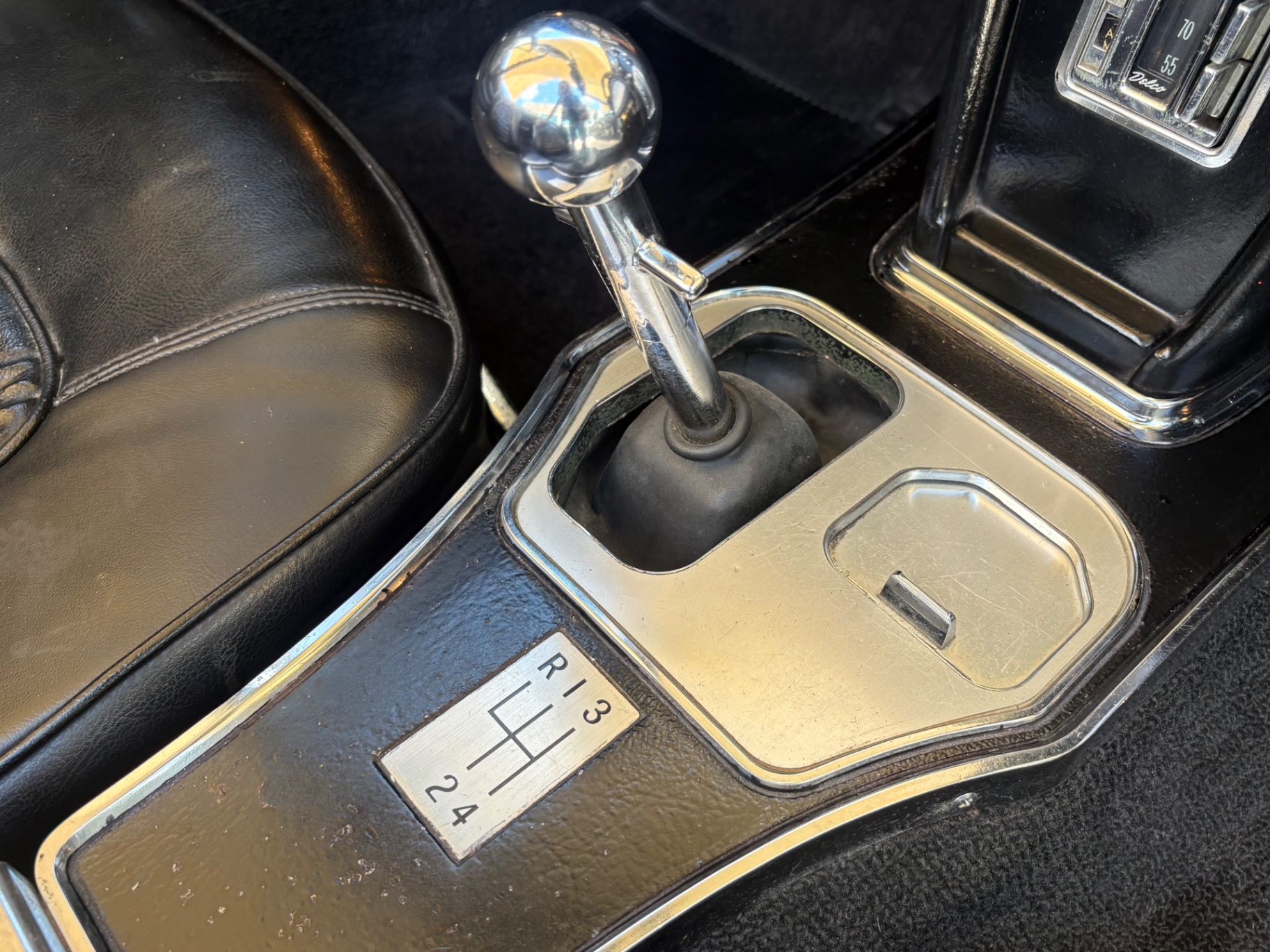
The Muncie 4-speed manual is the correct transmission pairing for the L79. Muncie transmissions were produced in Muncie, Indiana, and supplied to GM's performance divisions throughout the 1960s. They were known for their strength and precise gating. The 4-speed gives the driver full control over power delivery, which matters in a car with this much torque from a relatively short stroke engine.
Four-wheel disc brakes were a significant option on the 1966 Corvette. In 1965, Chevrolet introduced disc brakes across all four corners as an available option, replacing the drums that had been standard. By 1966, this car came equipped with them, which means progressive, fade-resistant stopping power that holds up under repeated use — something drum brakes simply cannot match. The independent rear suspension, also standard on C2 Corvettes, uses a three-link setup with a transverse leaf spring and U-jointed half-shafts. It gives the car a planted feel through corners and keeps the rear tires in contact with the road rather than bouncing over surface changes.
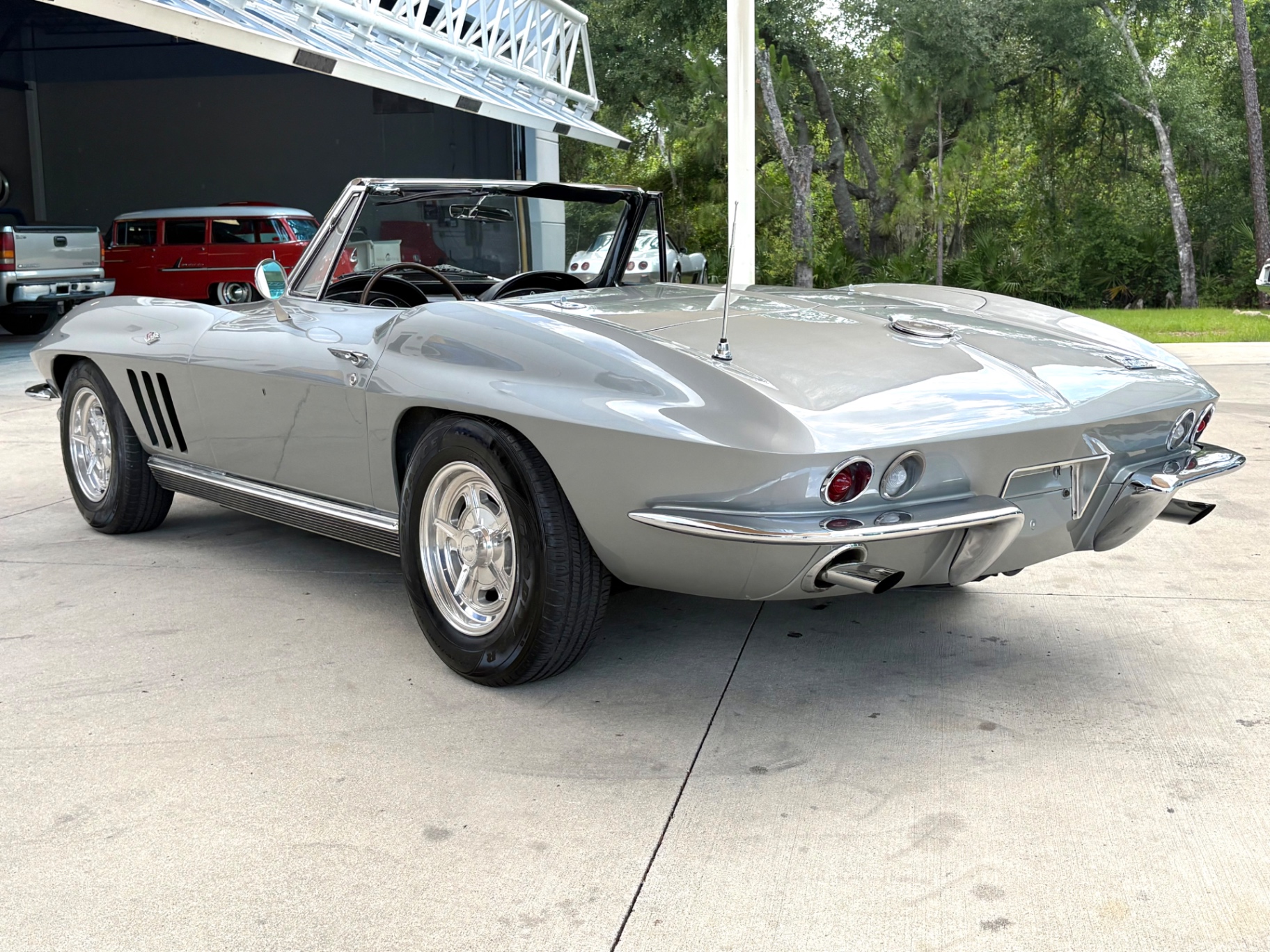
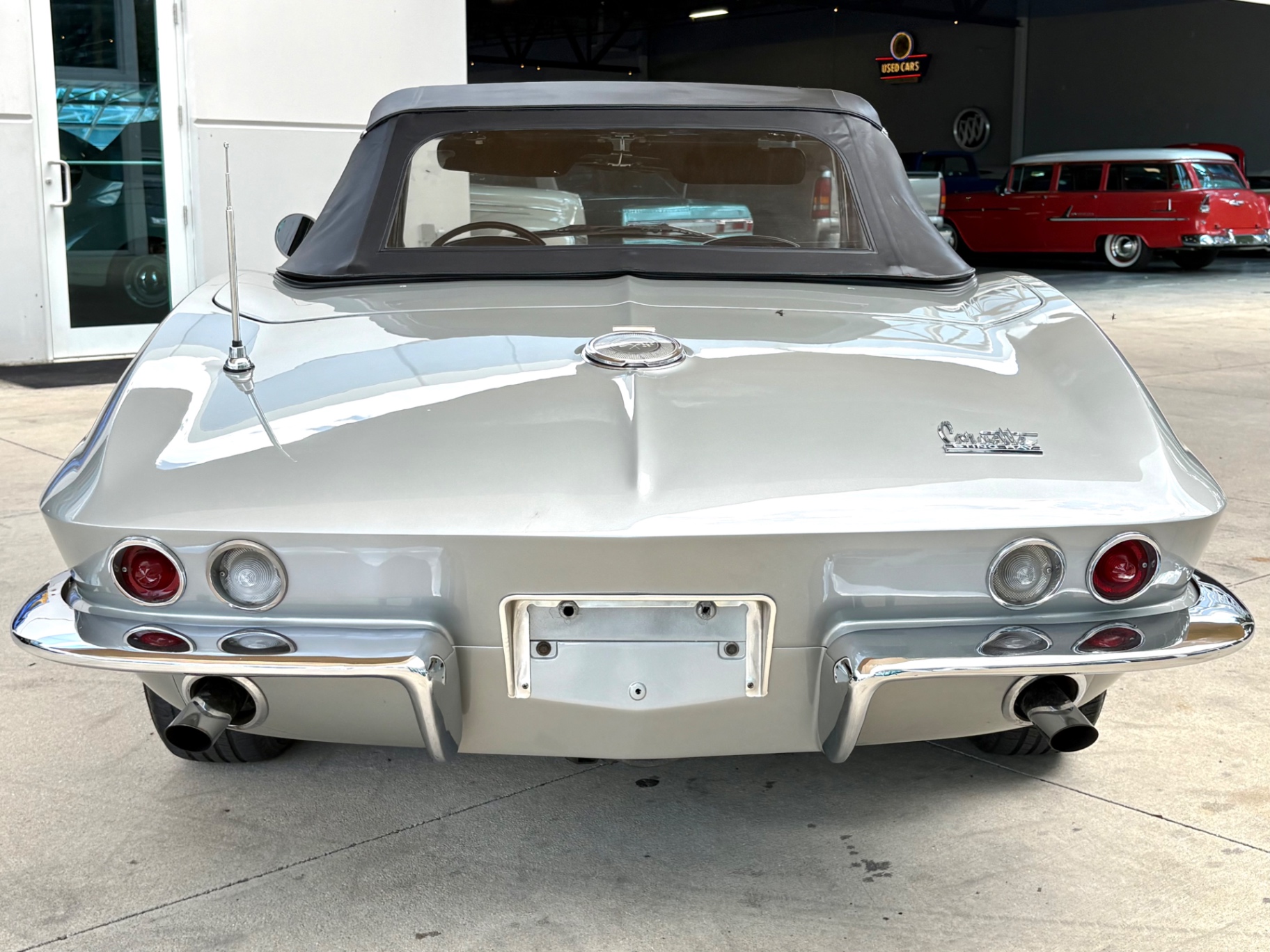
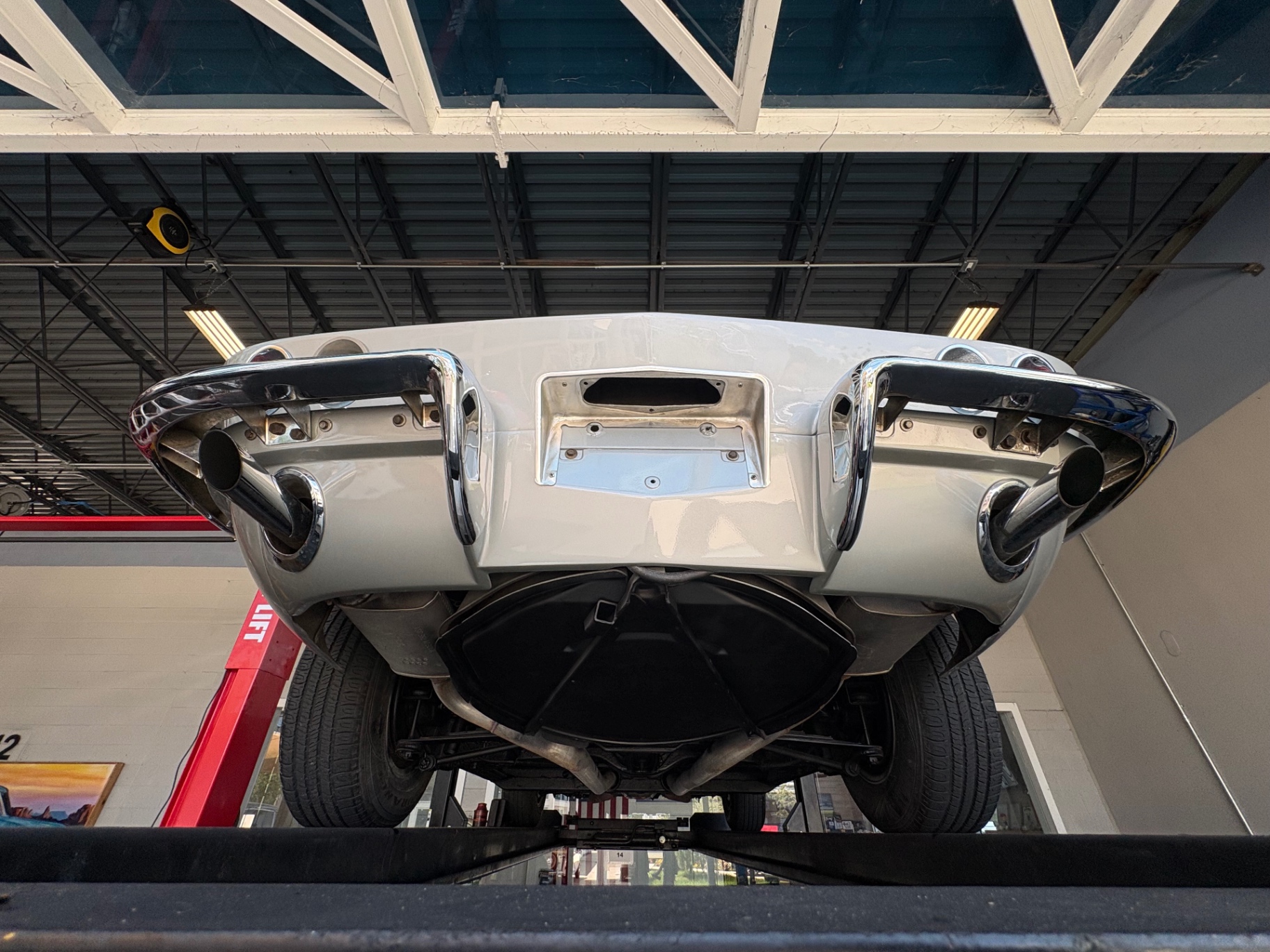
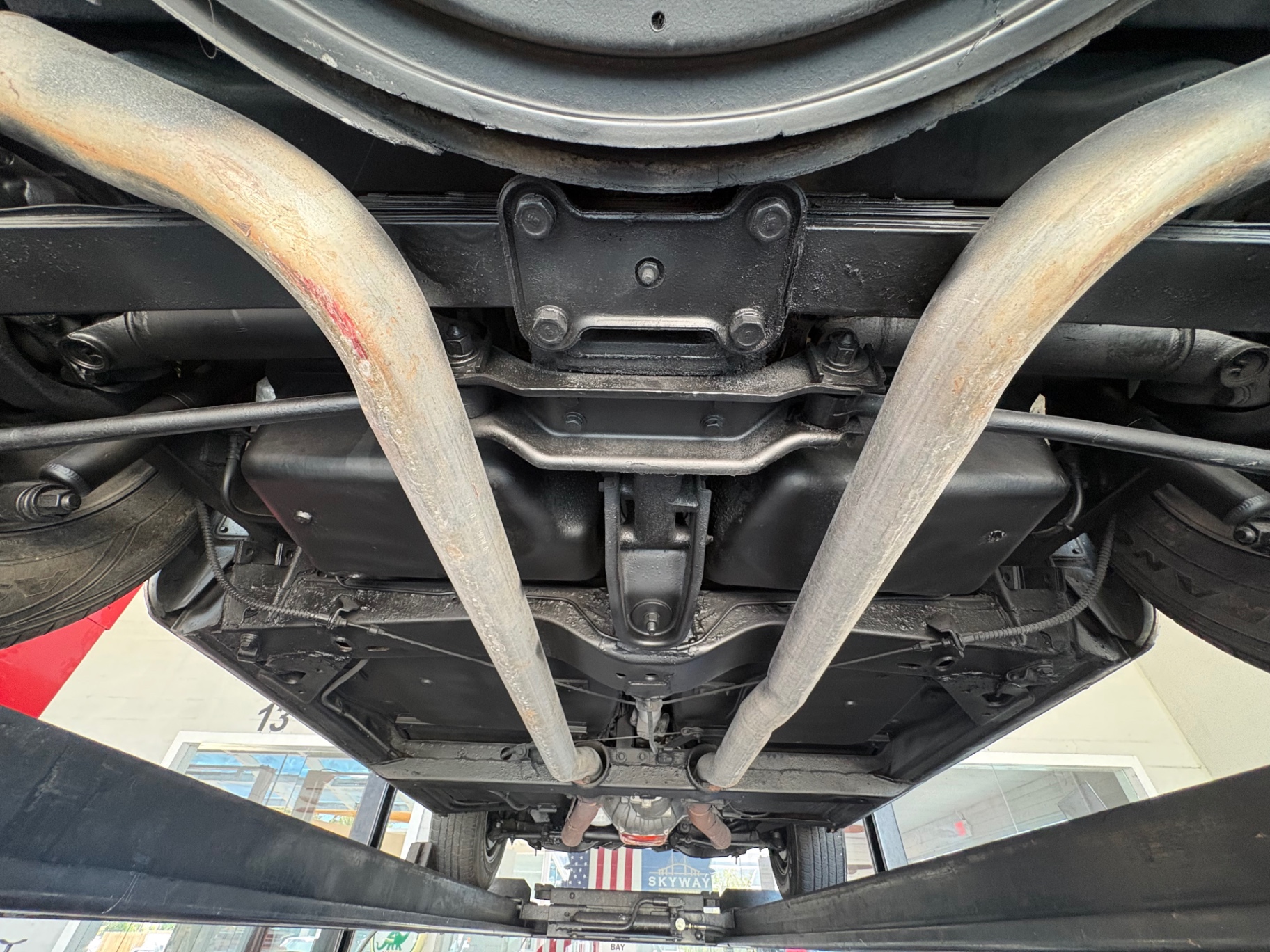
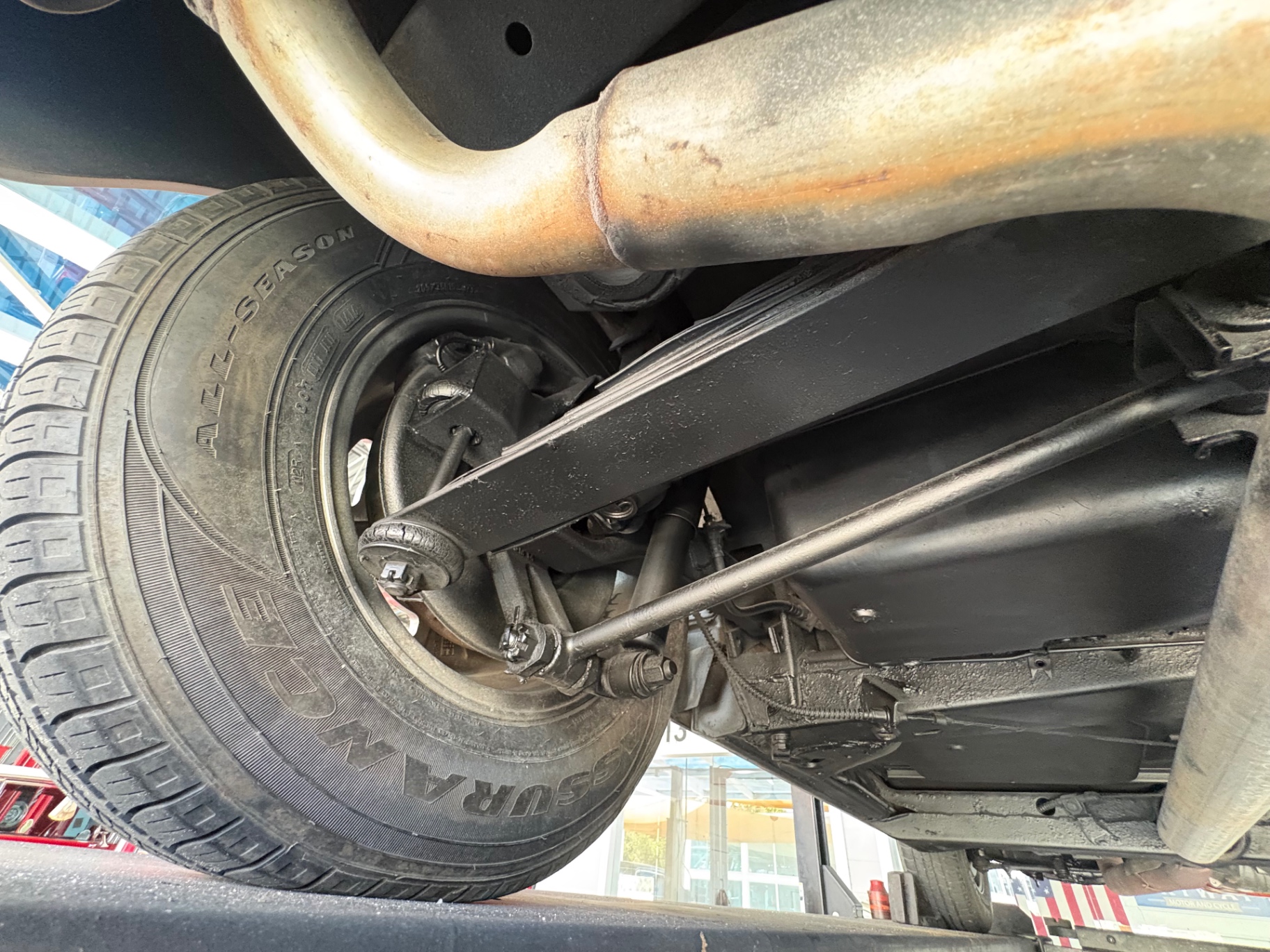
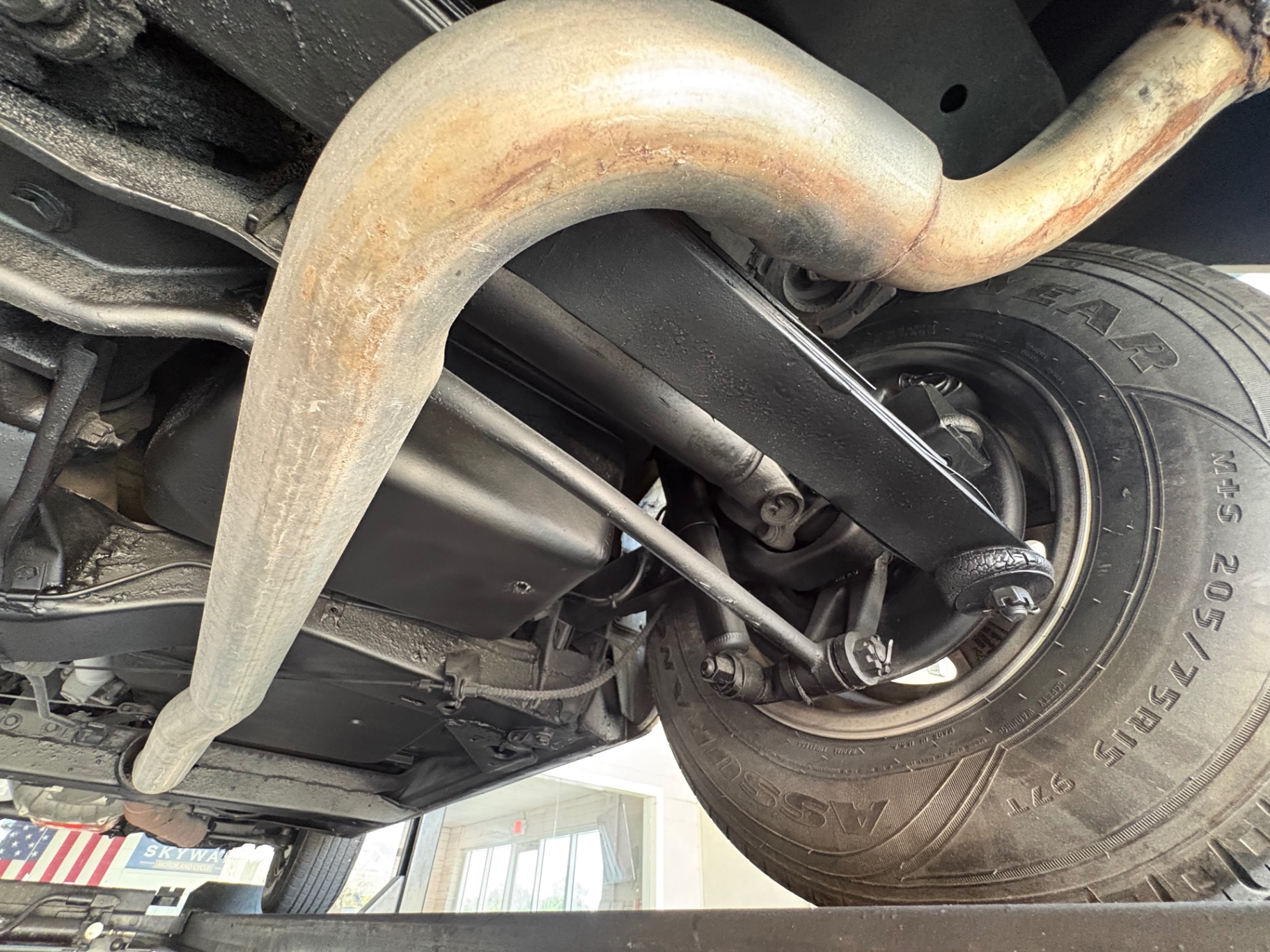
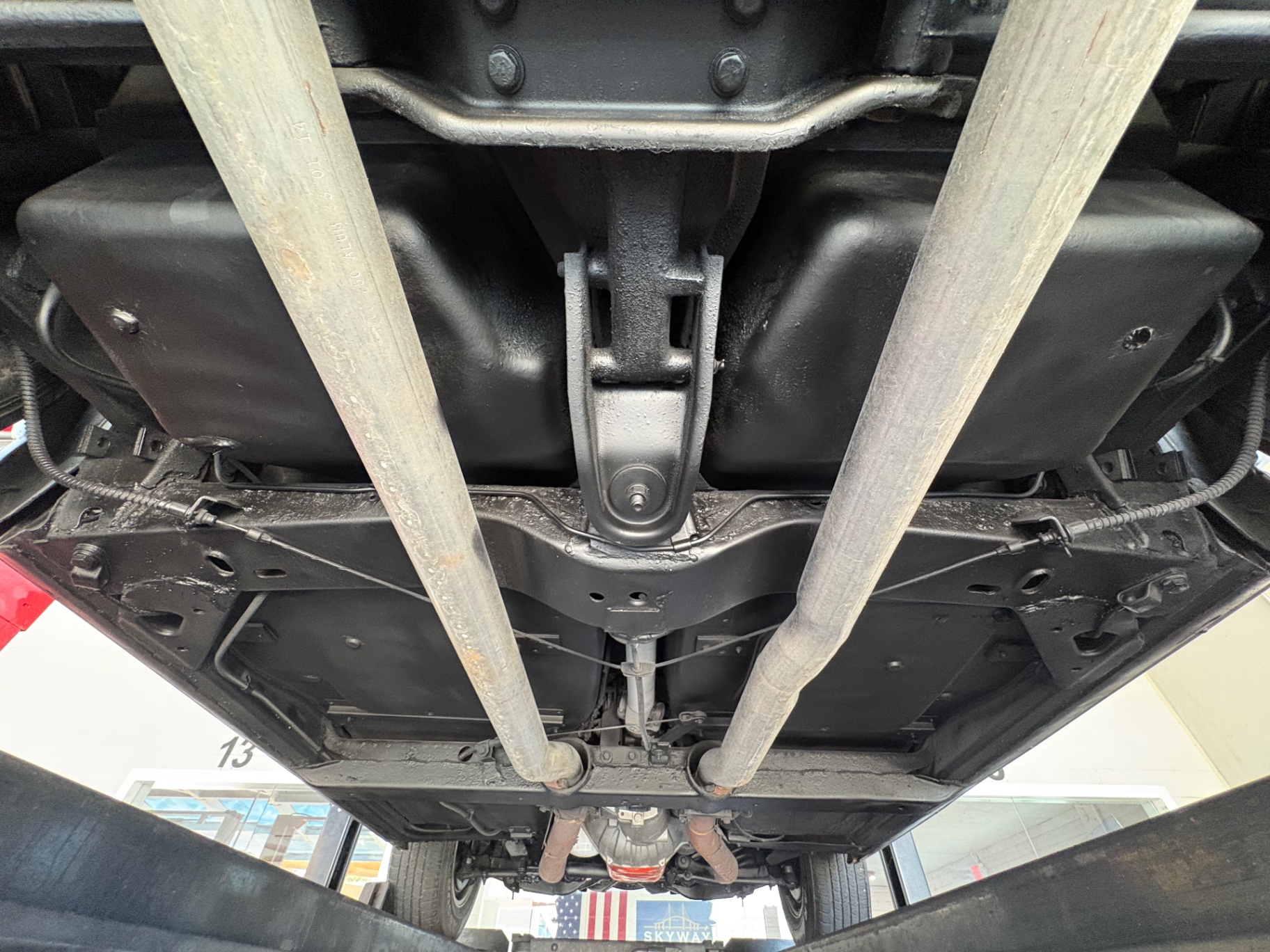
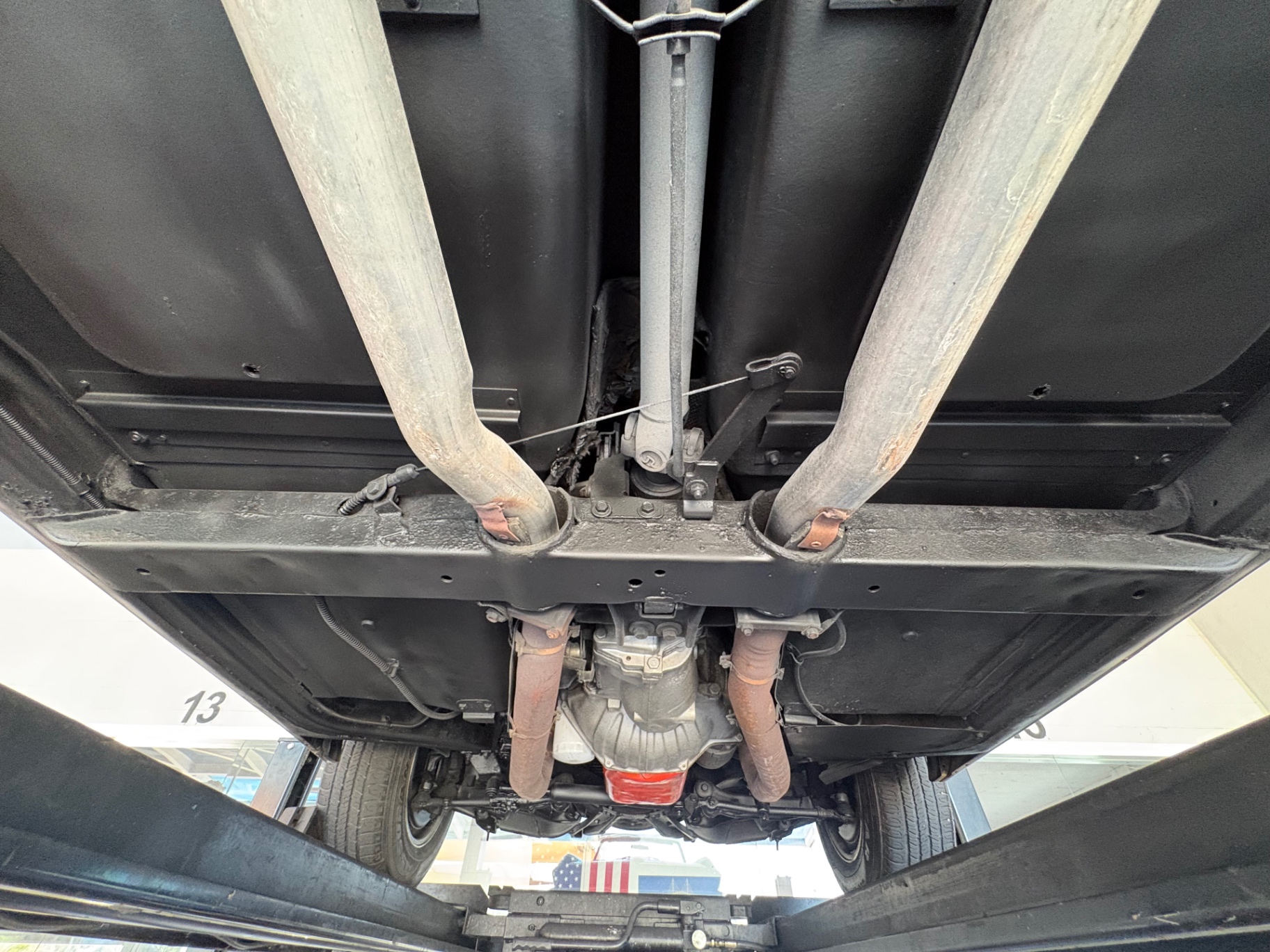
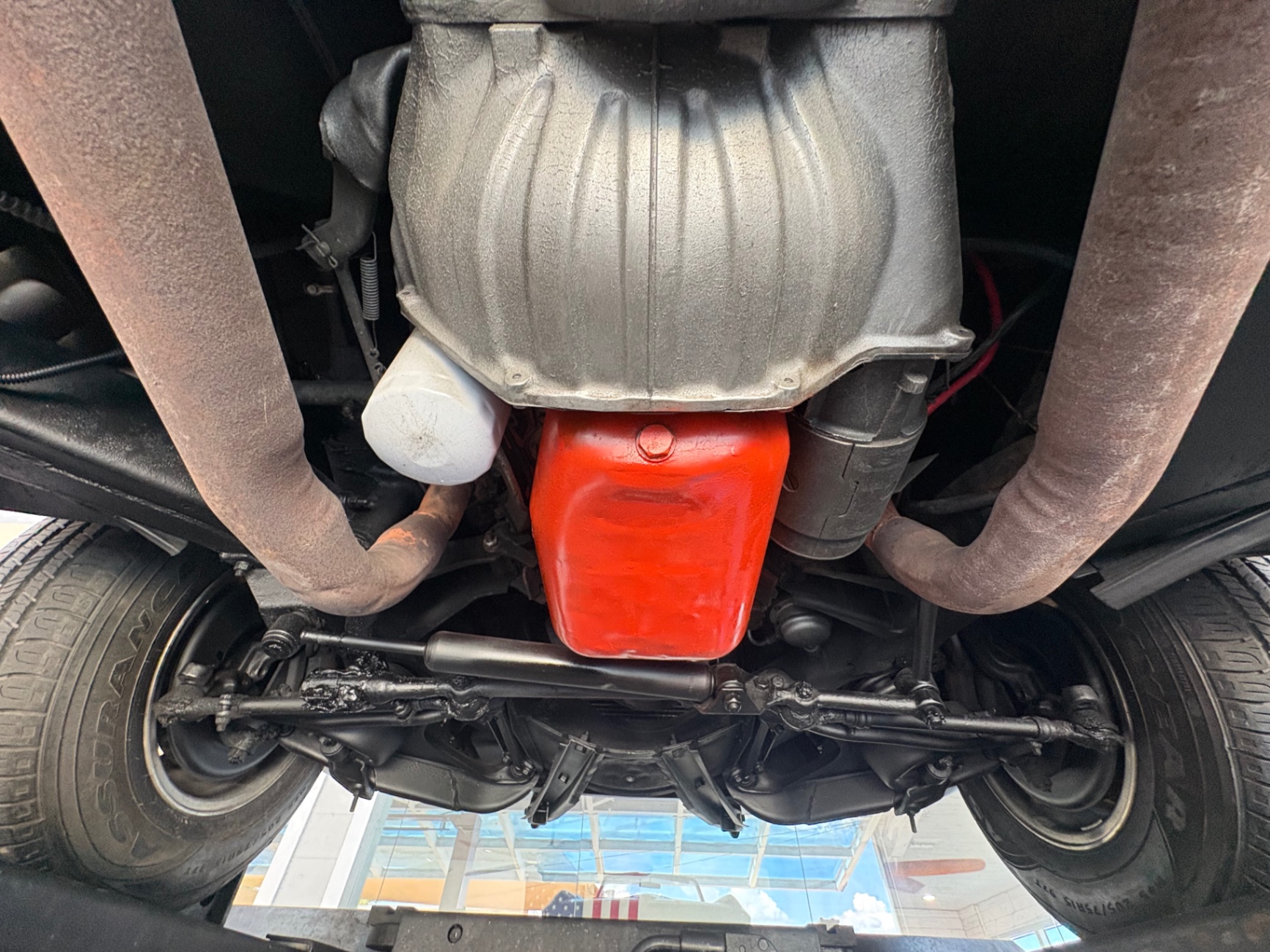
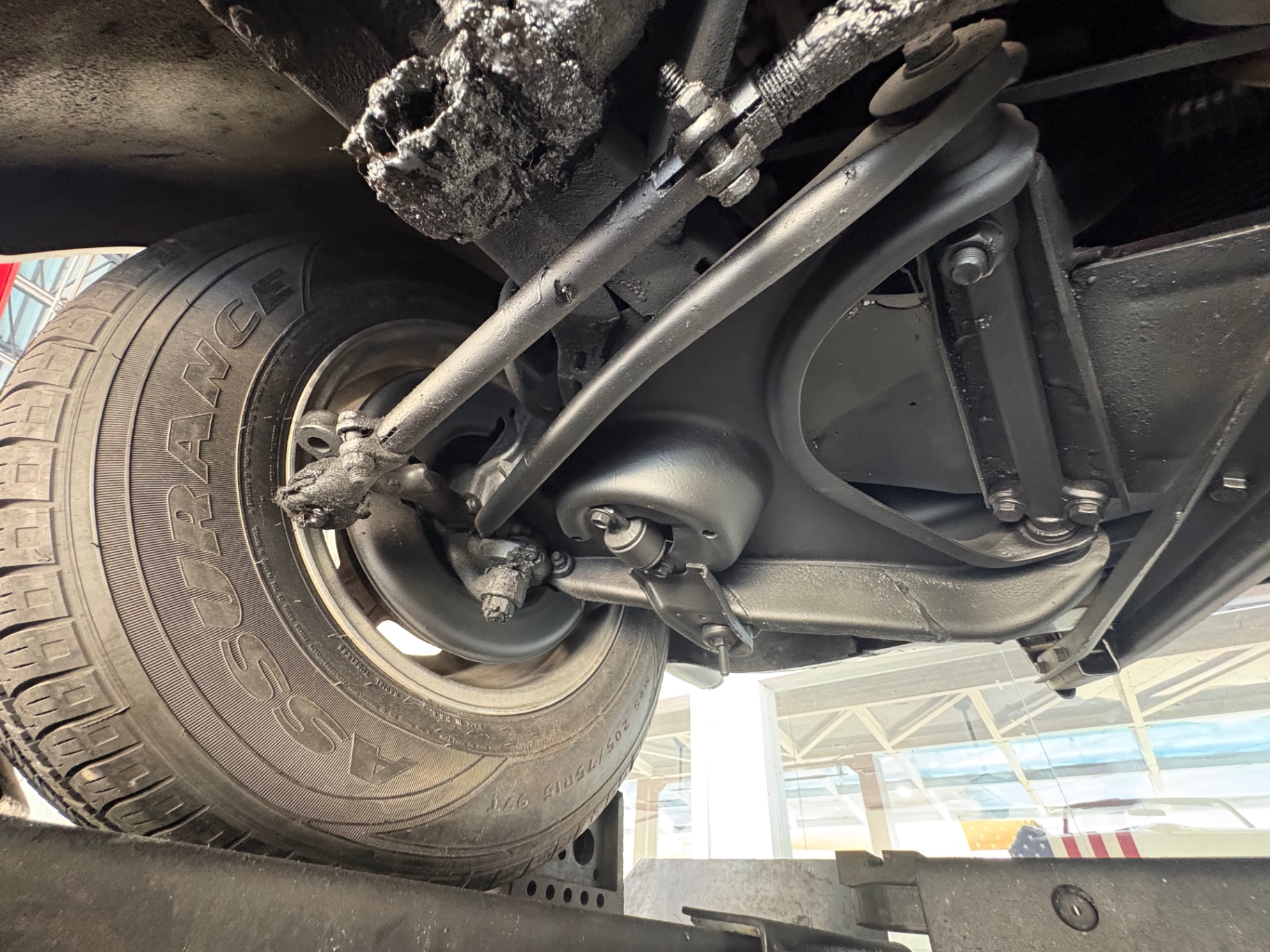
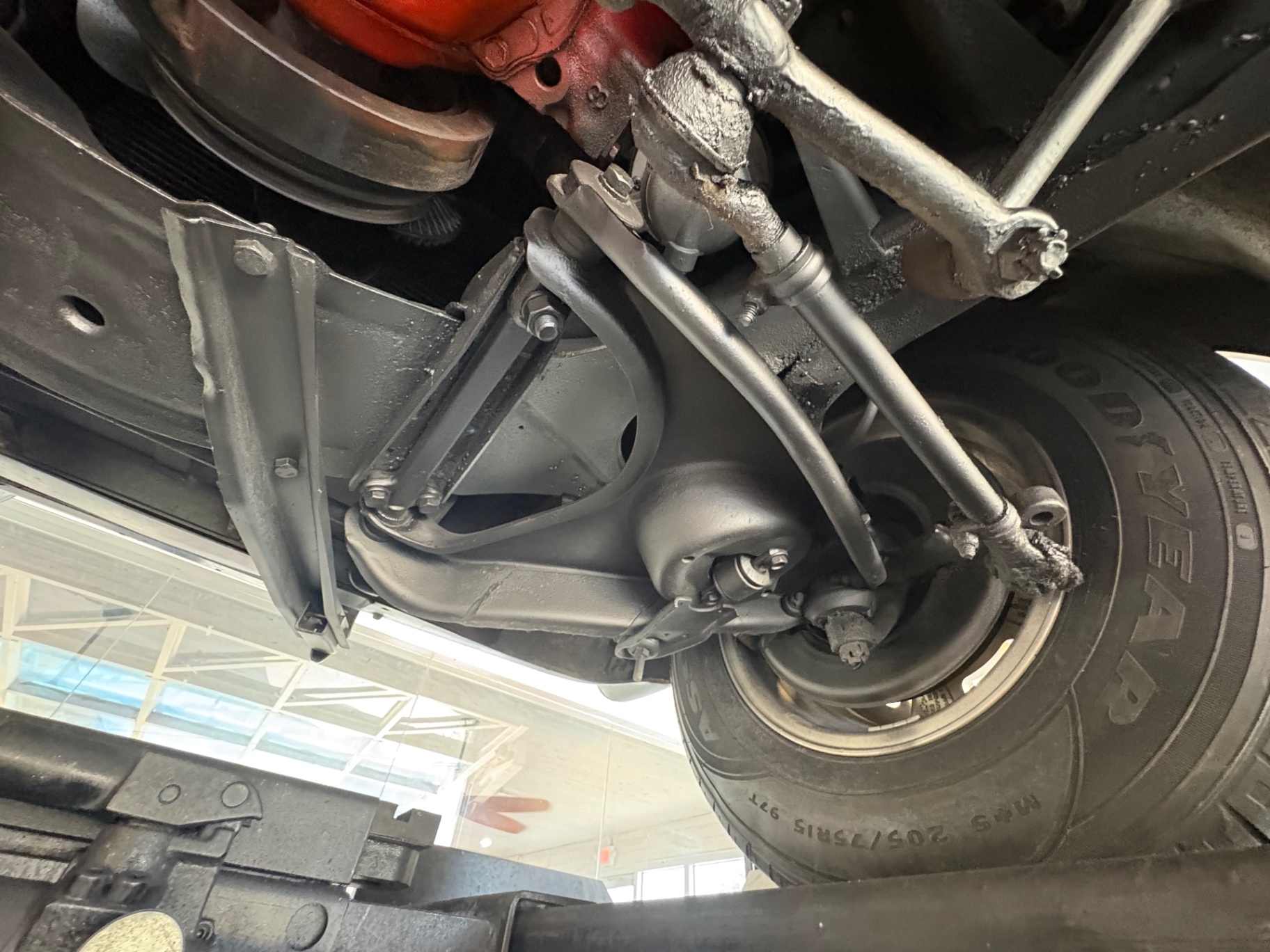
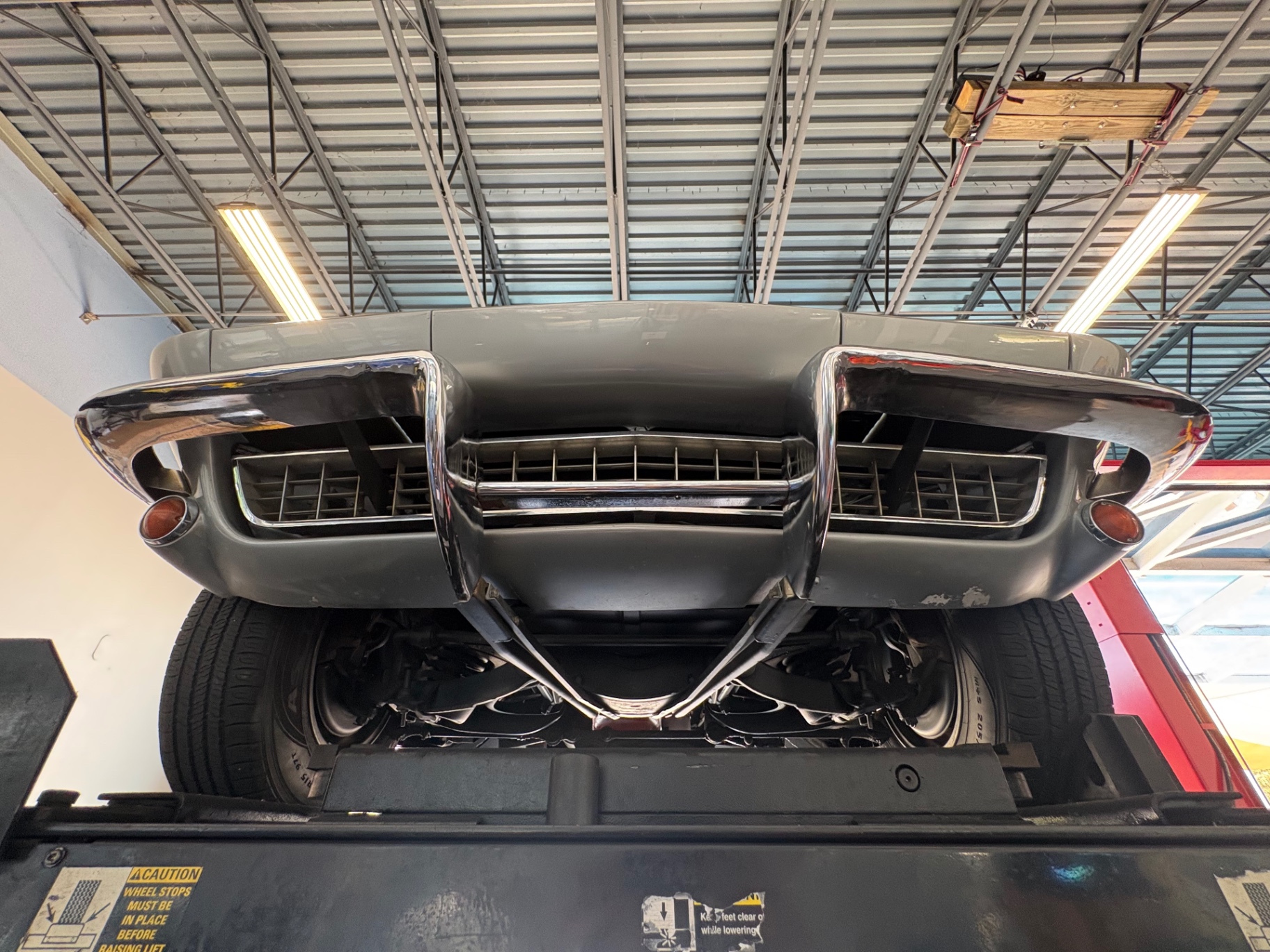
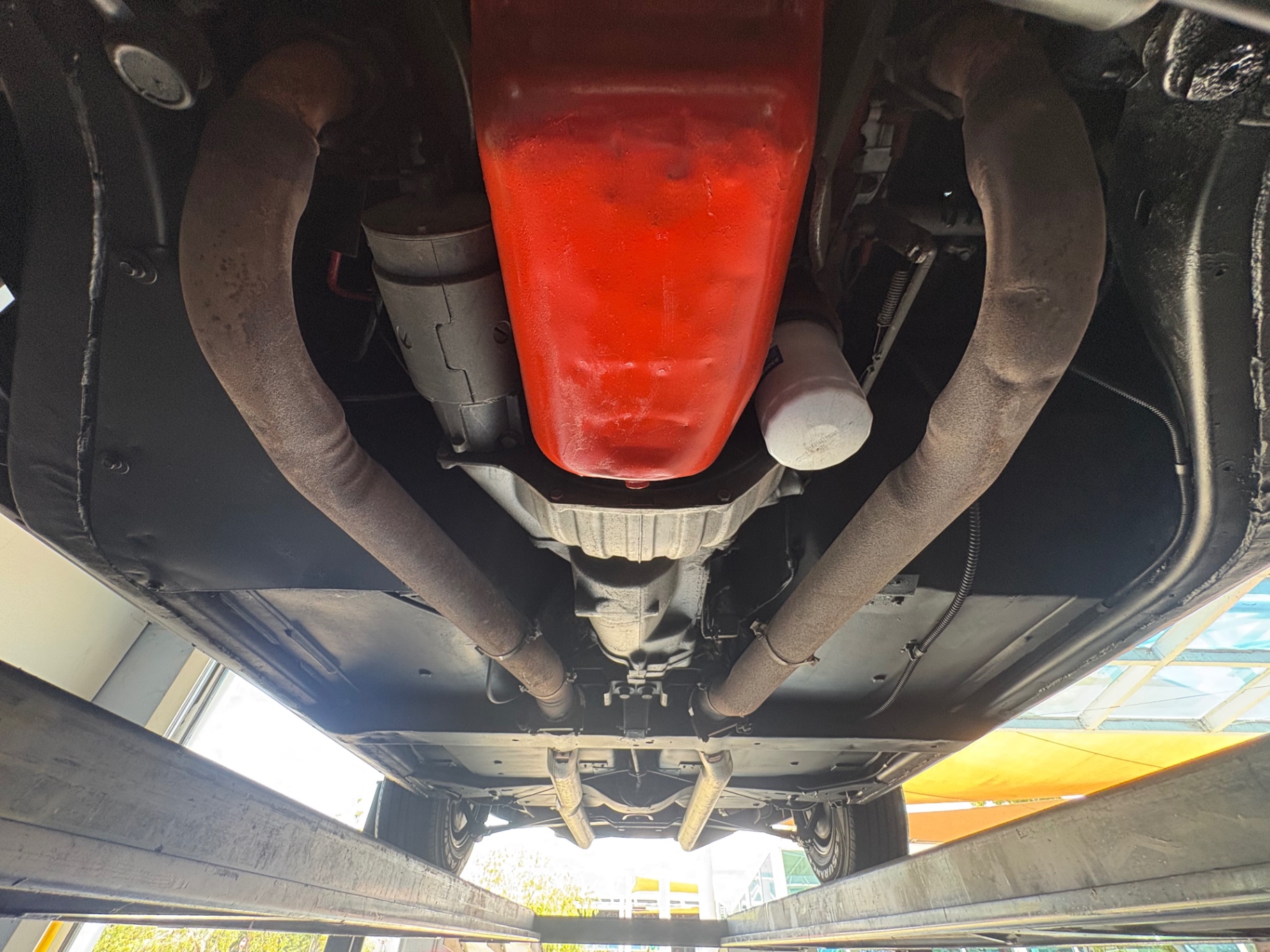
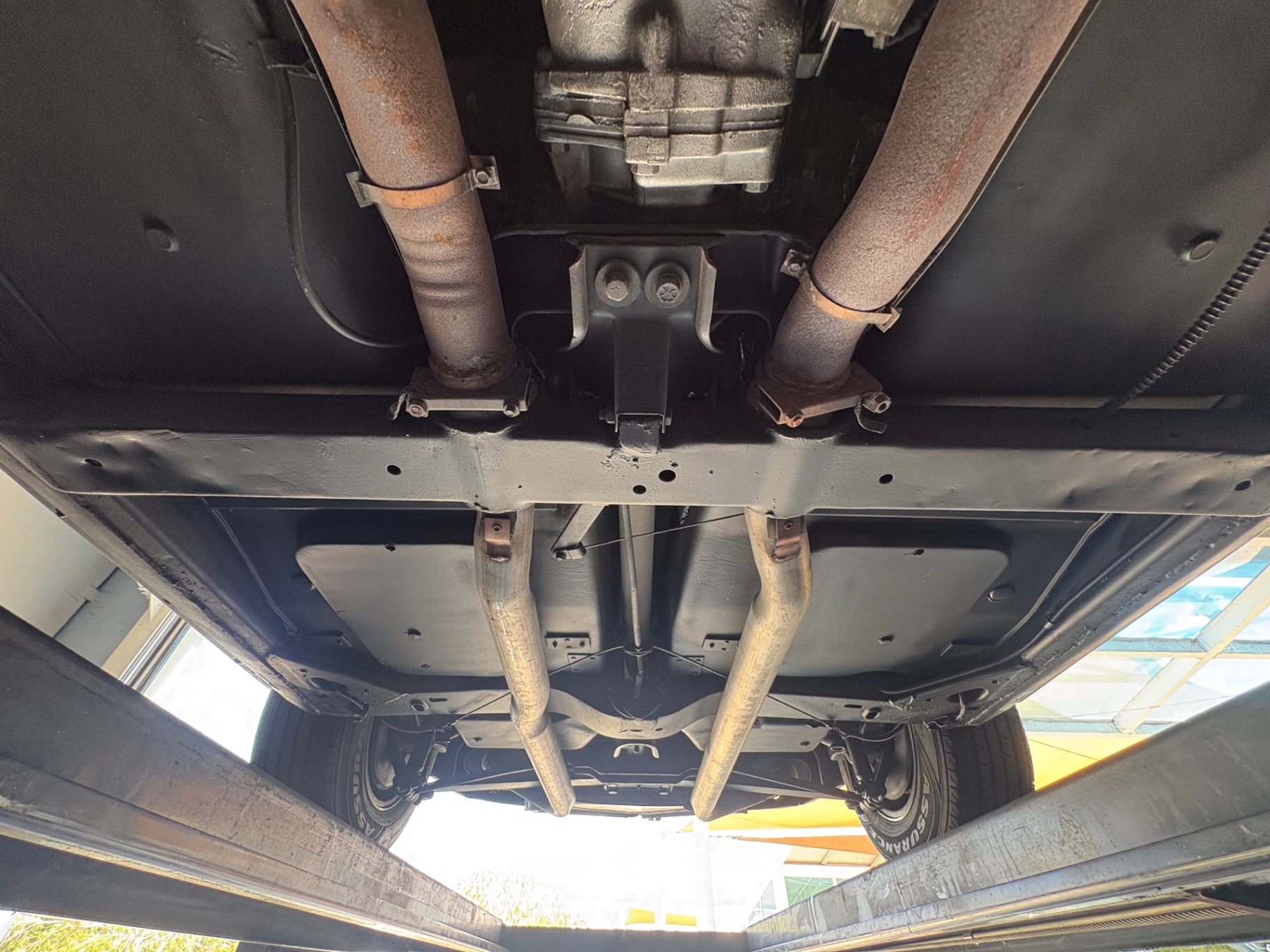
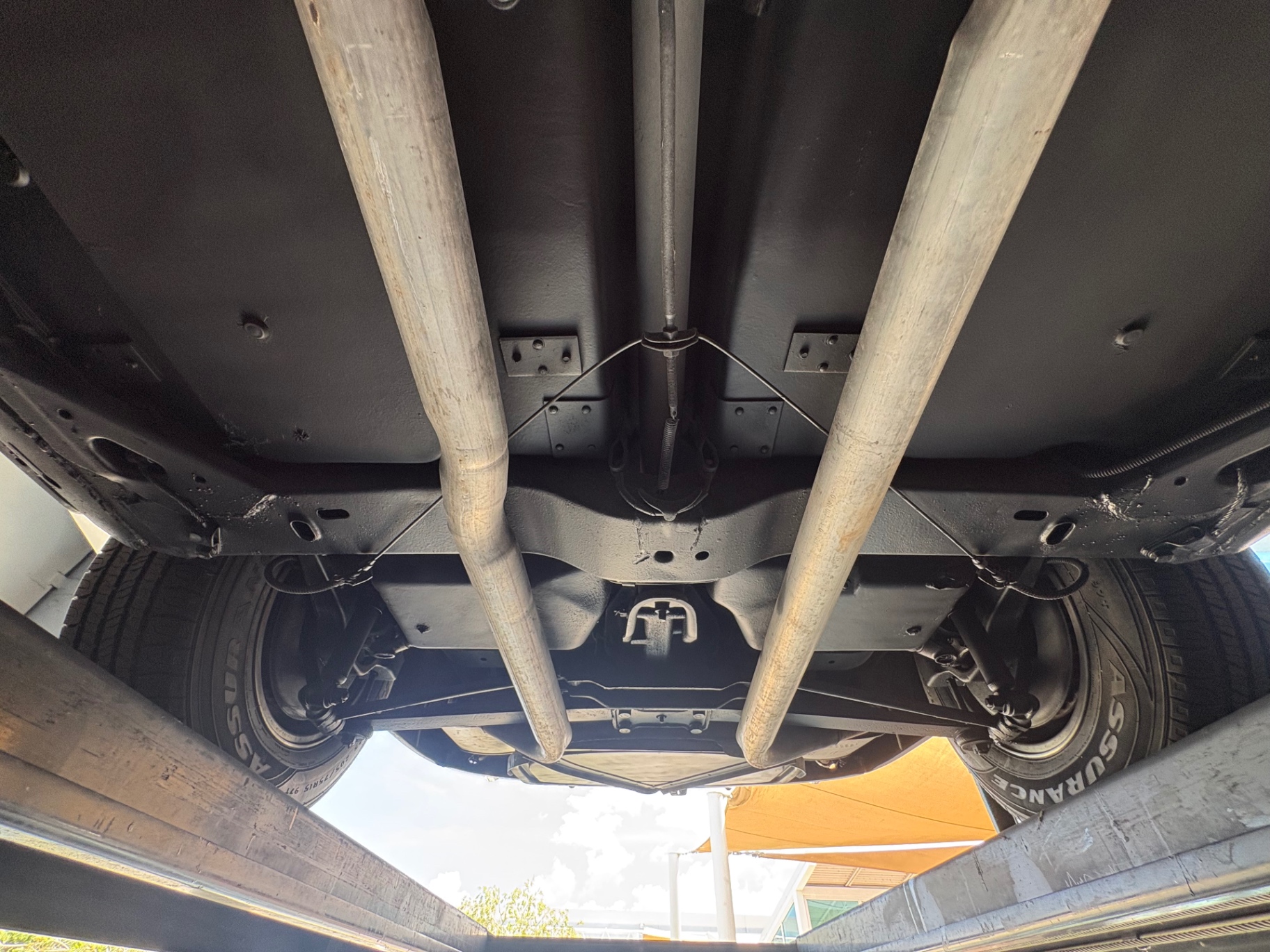
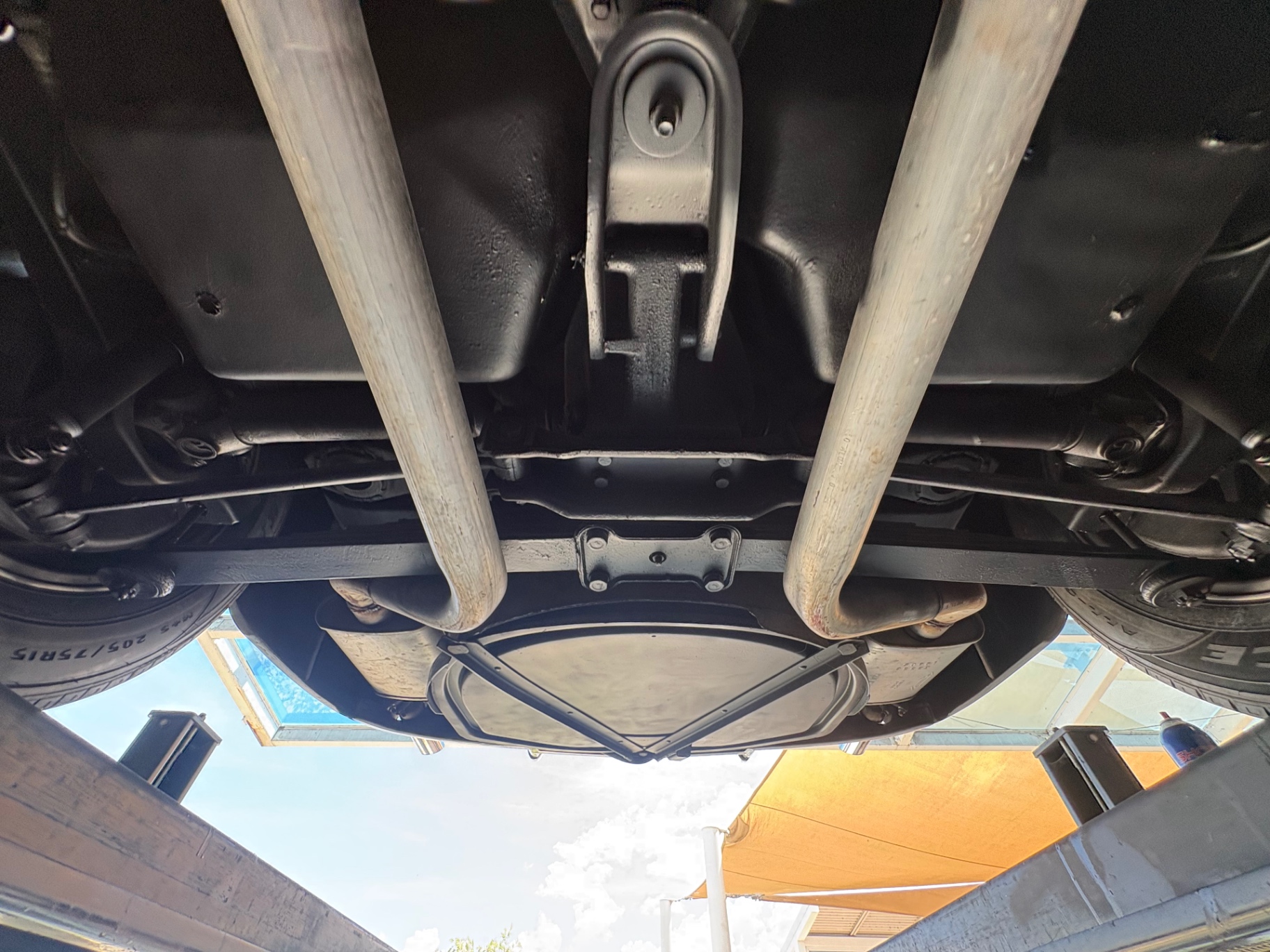
The undercarriage photos confirm what the description states — this is a clean car underneath. The frame, floor pans, and suspension components show solid, well-maintained structure. The dual exhaust exits through chrome tips flanking the rear bumper, which is correct for the body style.
Interior
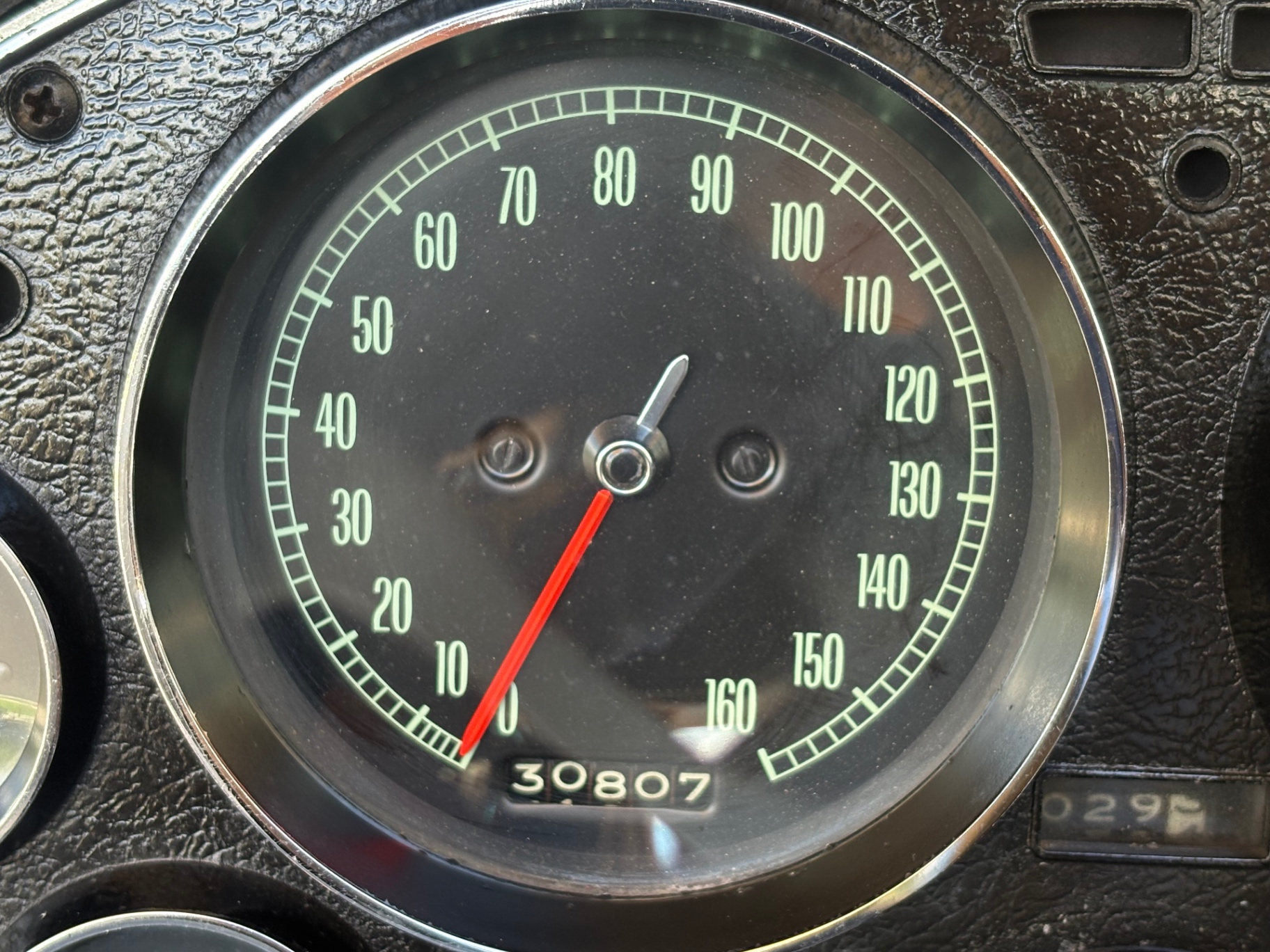
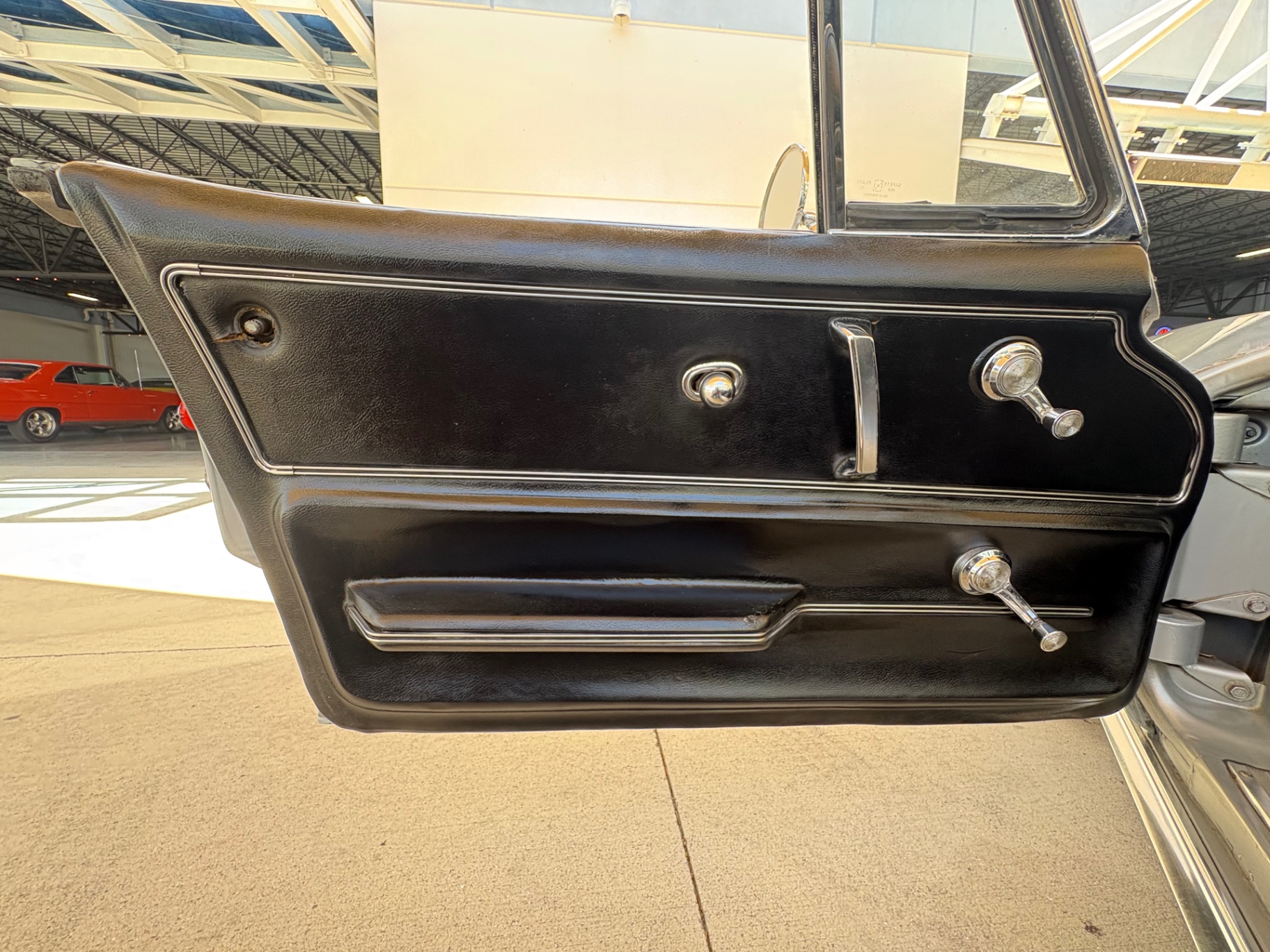
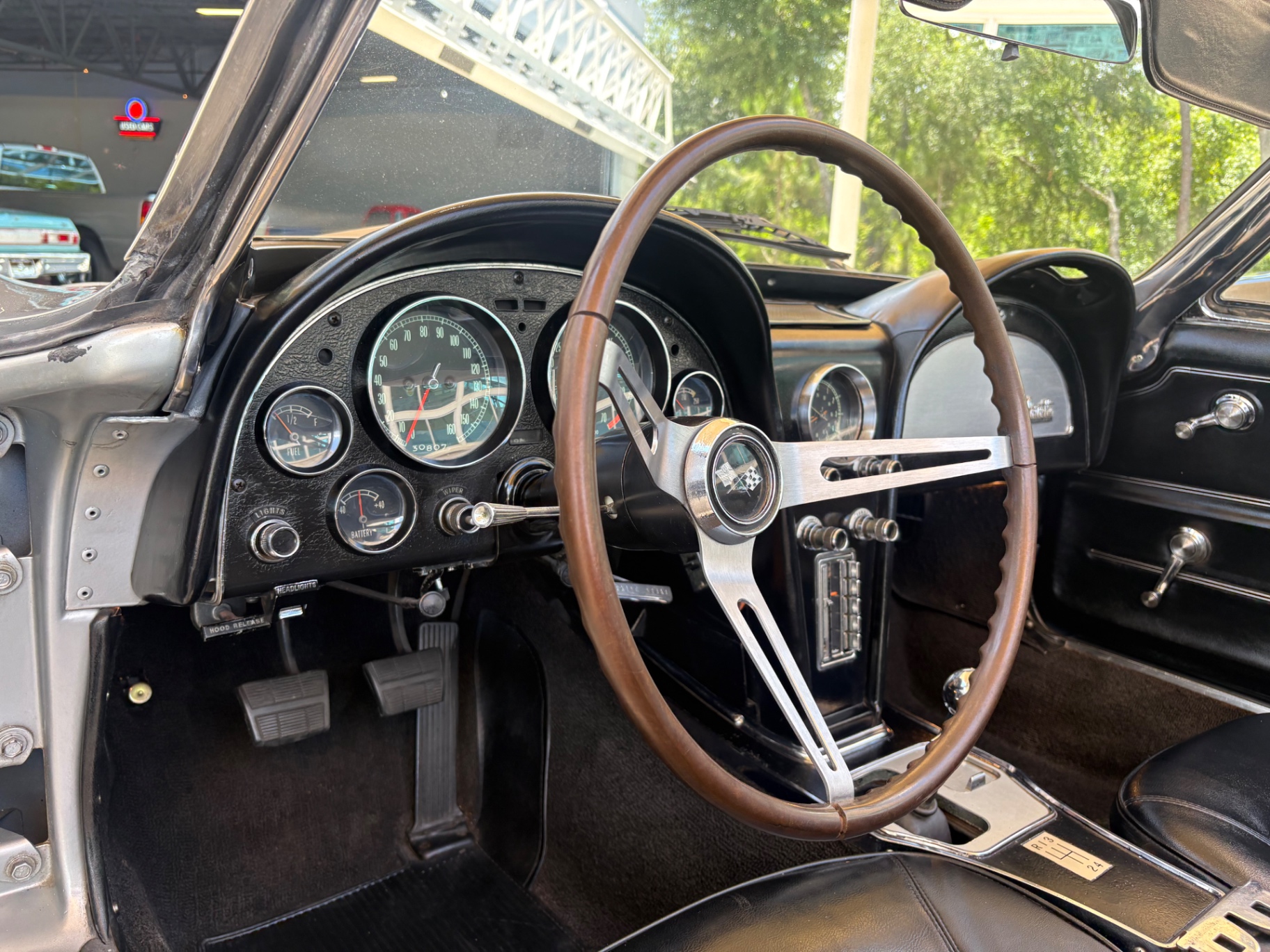
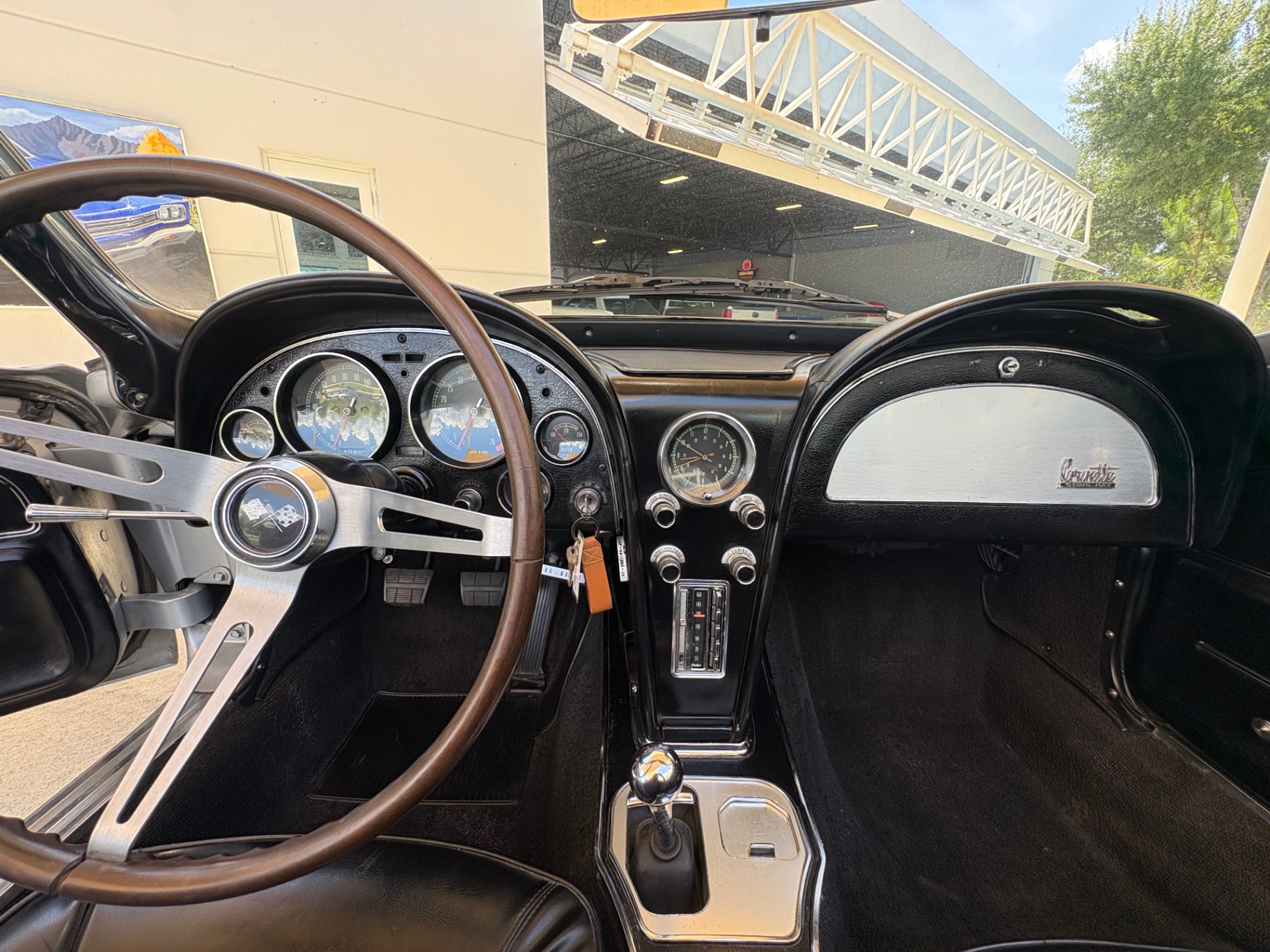
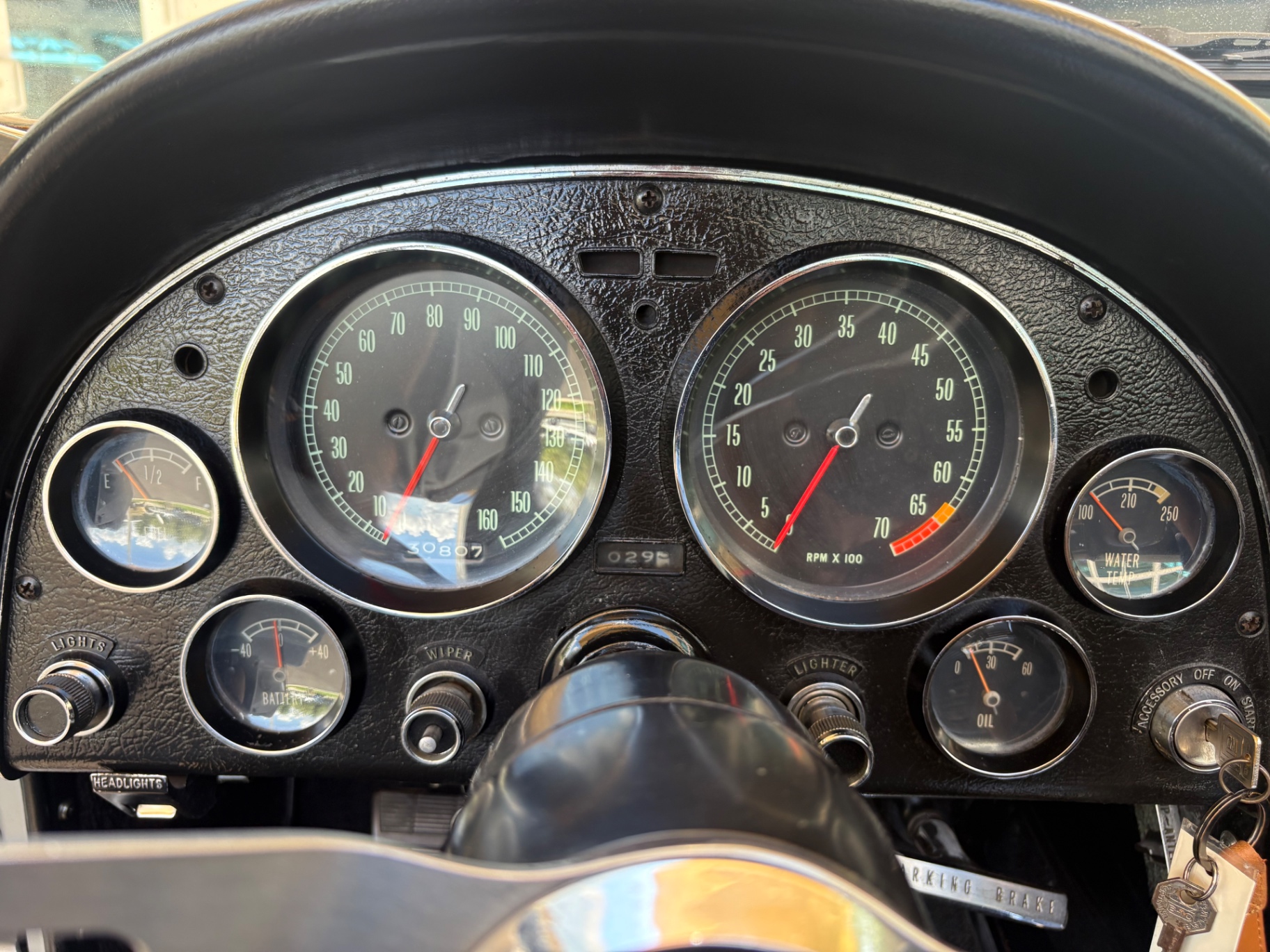
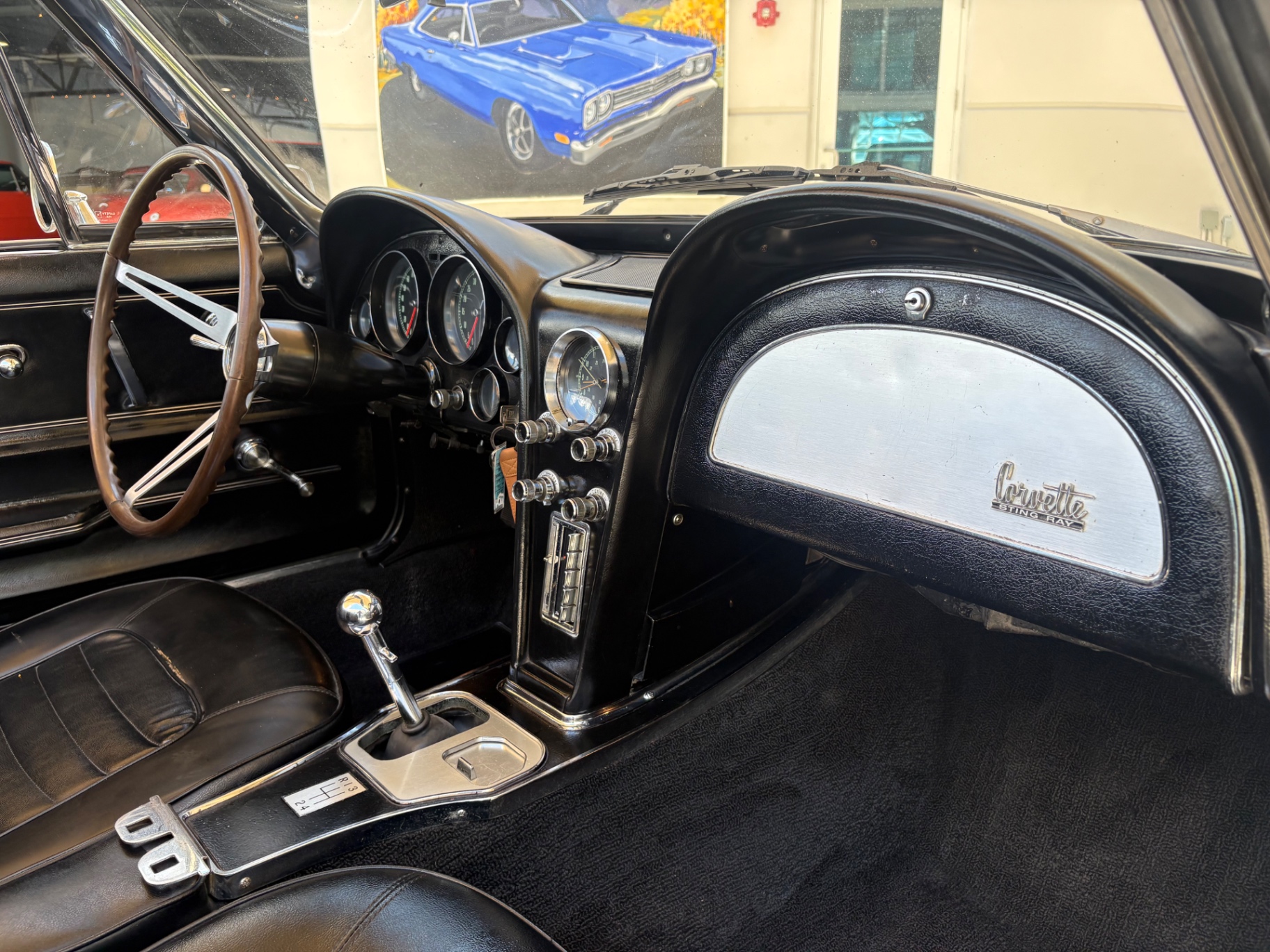
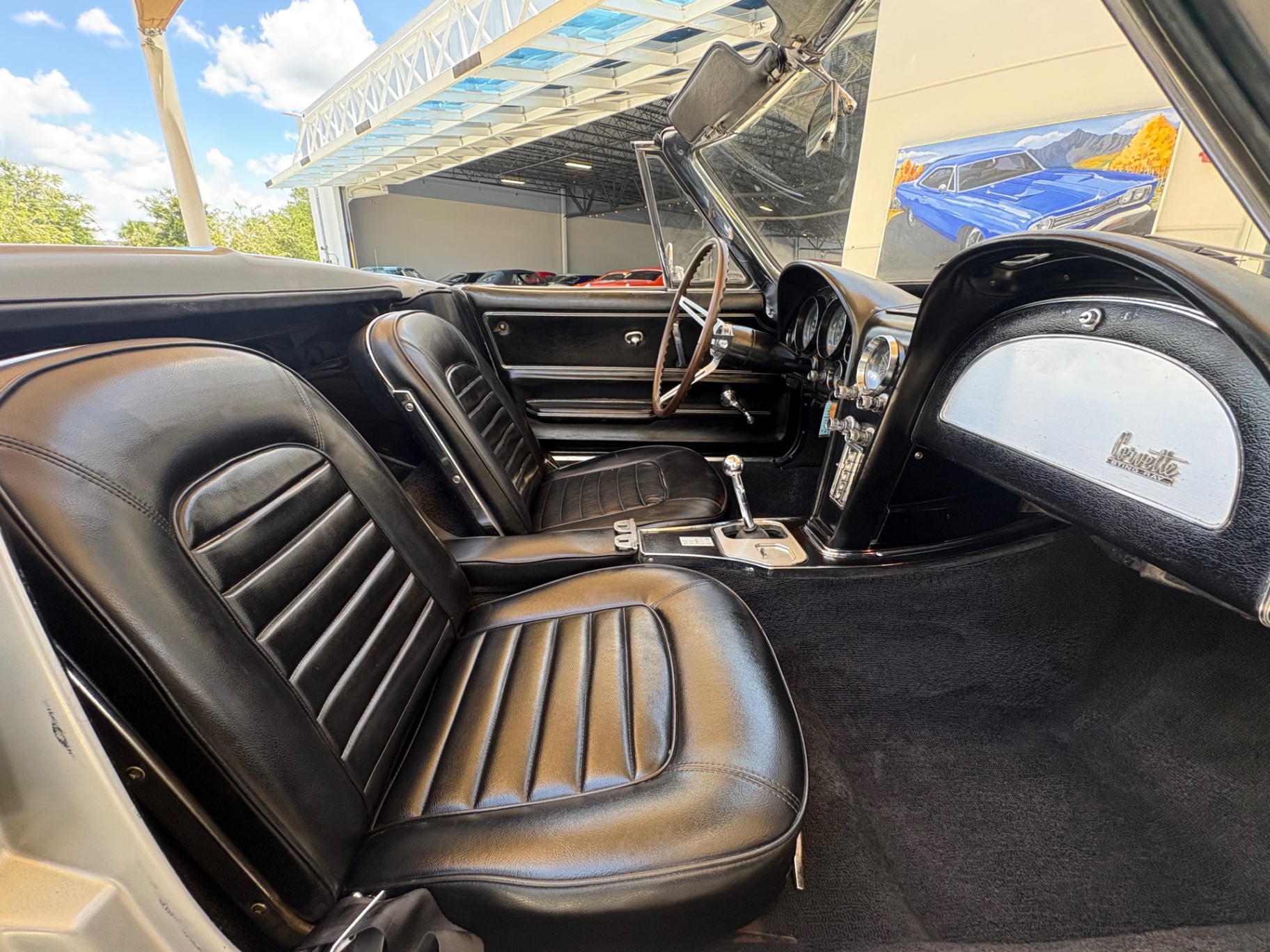
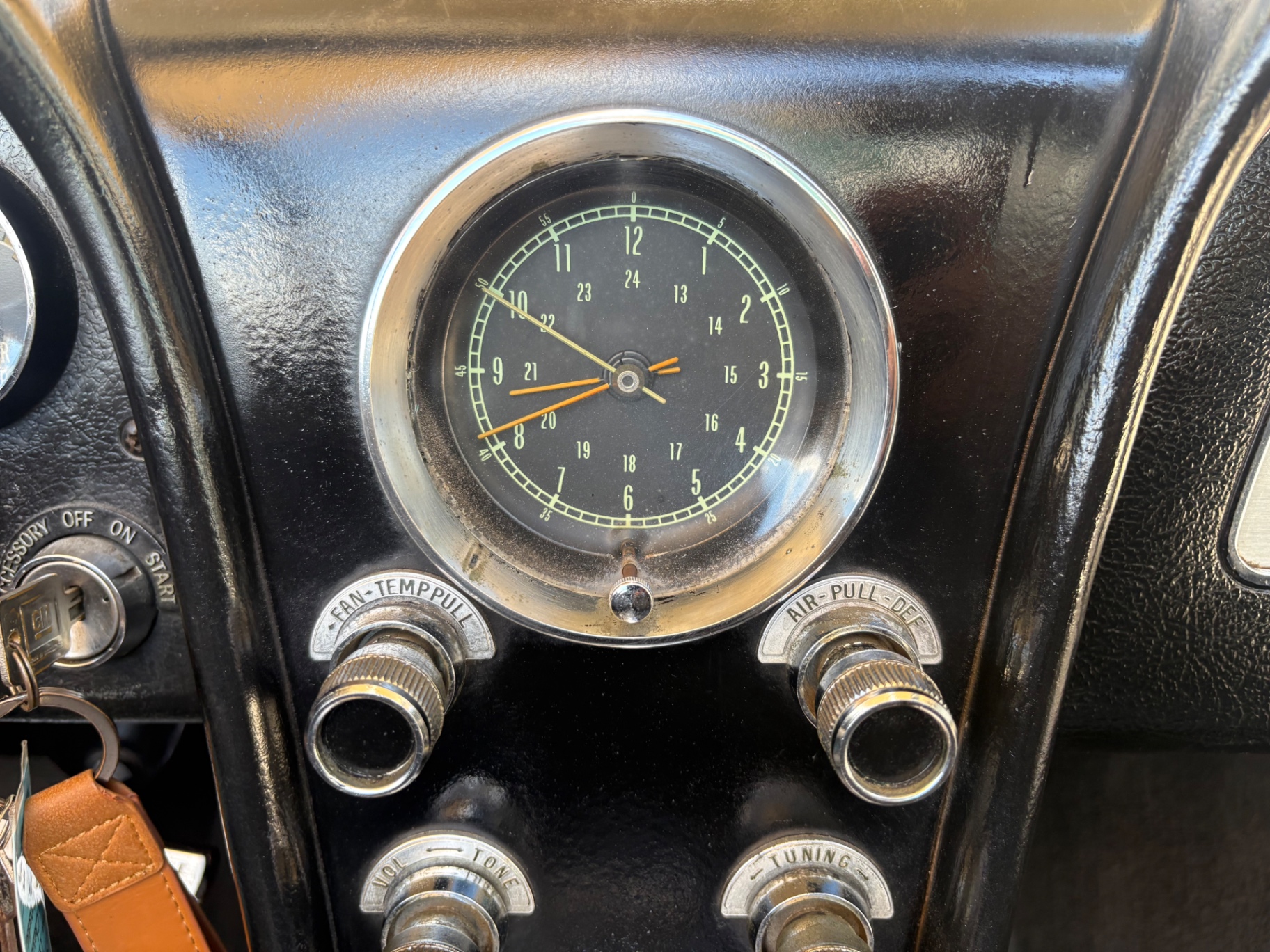
The 1966 Corvette Sting Ray interior was designed to put the driver in the center of the information and control experience. The instrument cluster spans the width of the dash in front of the driver, grouping the speedometer and tachometer as the two dominant gauges, with fuel, water temperature, oil pressure, and battery gauges filling in the lower row. The tachometer on this car is factory-spec, redlined appropriately for the L79's operating range. The dashboard clock is mounted on the passenger side of the center console area, which is a detail that was an available option and adds a finished quality to the cockpit.
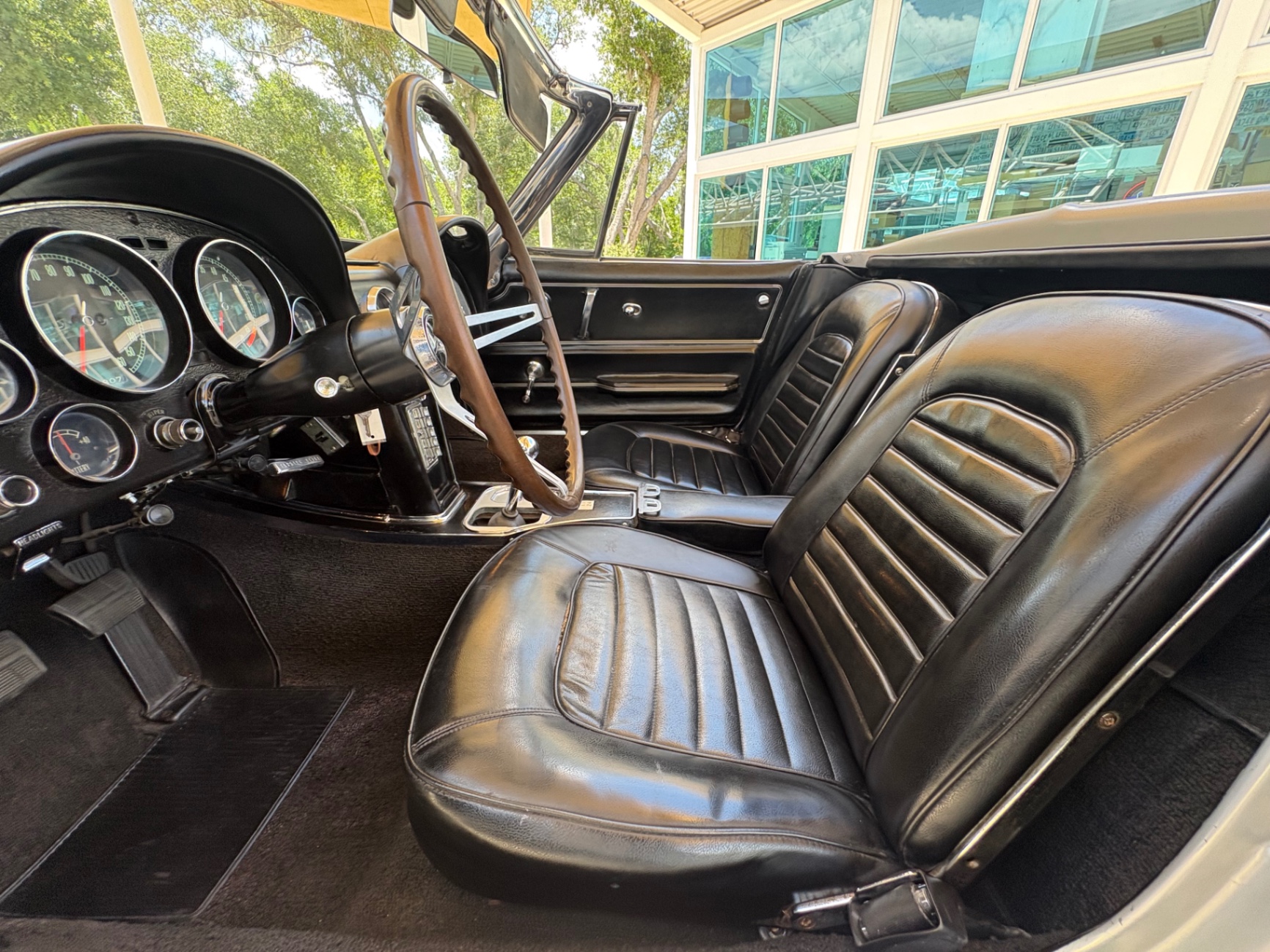
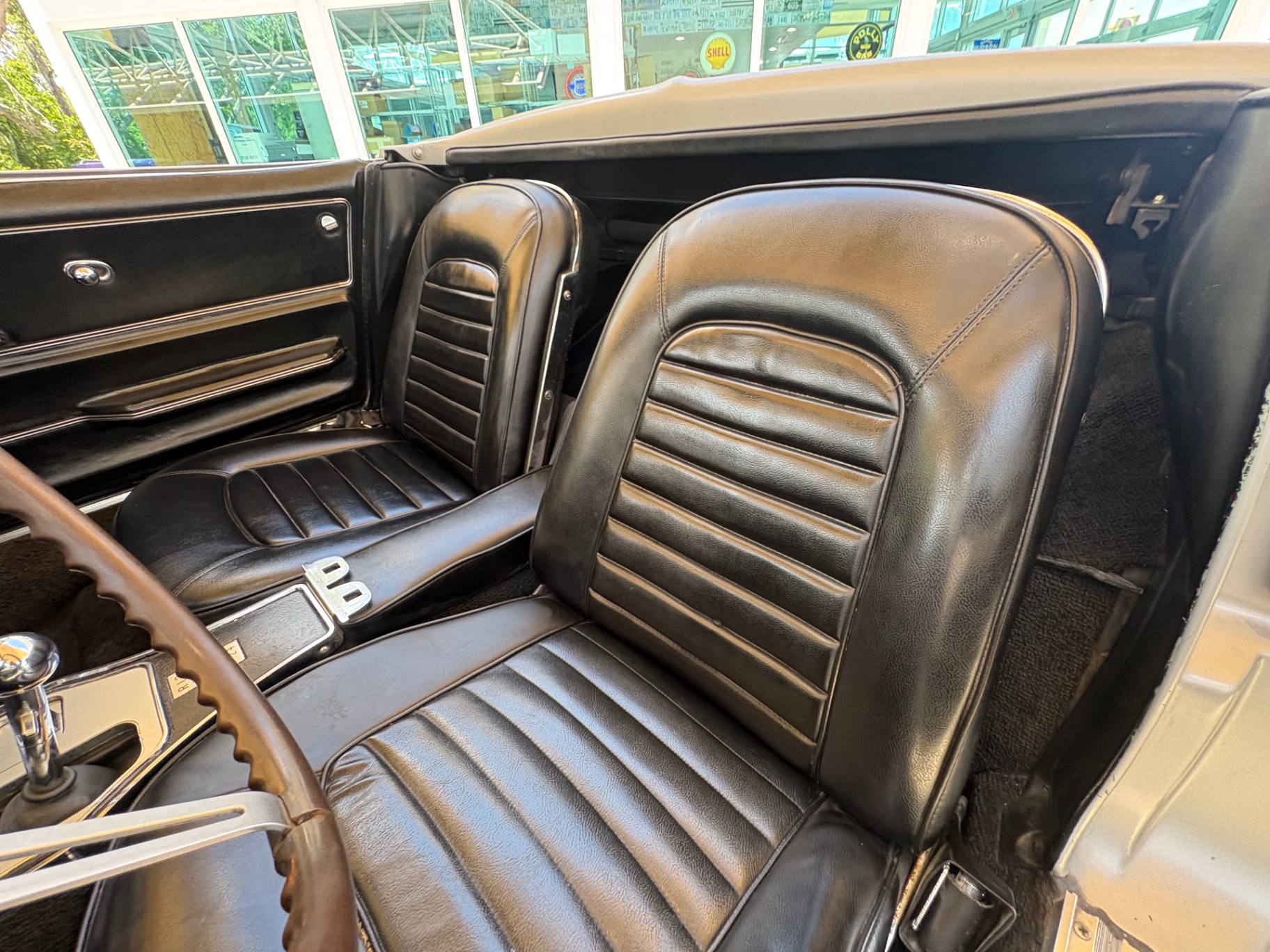
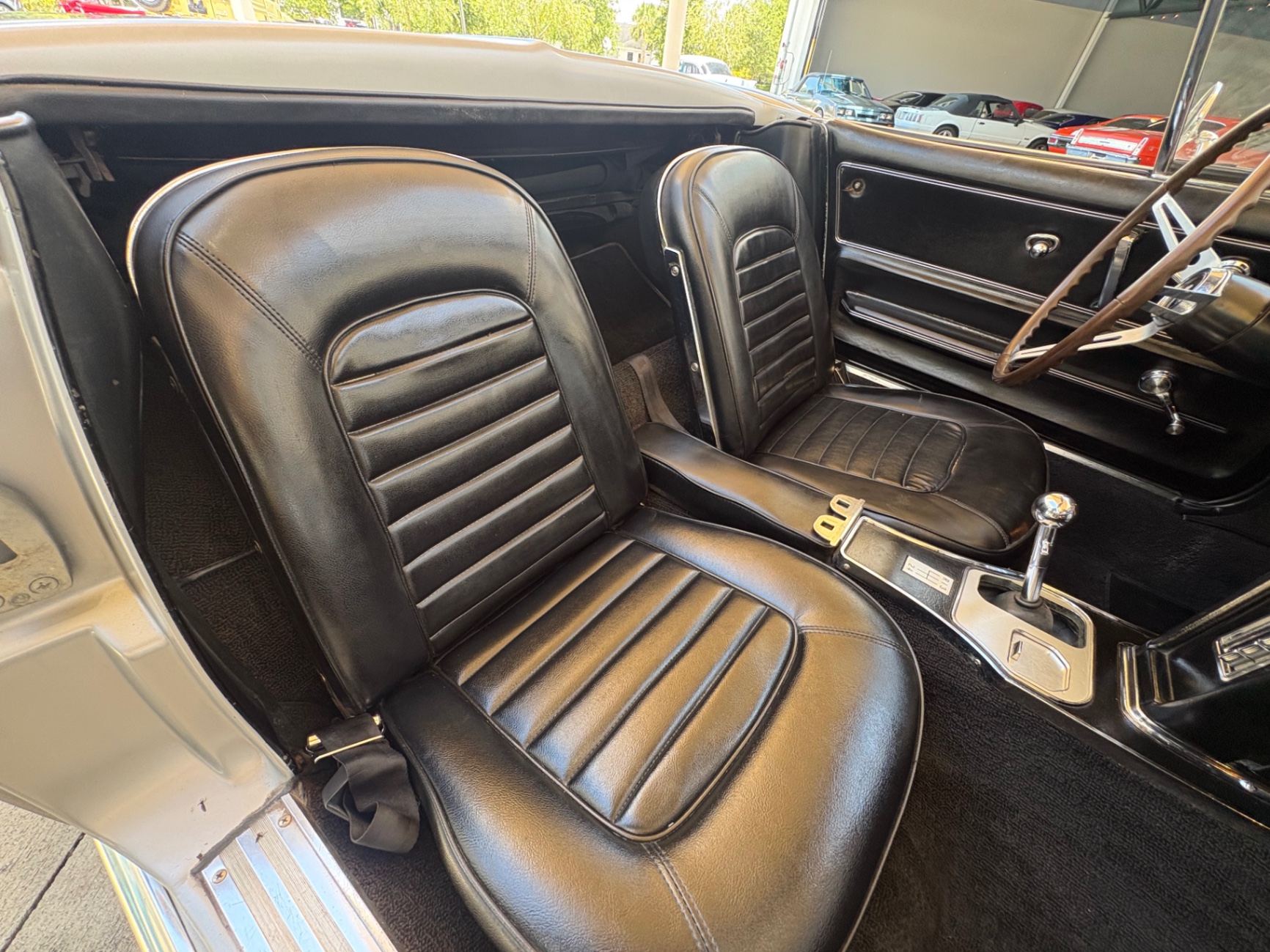
The black leather bucket seats are in presentable condition and show the correct ribbed pattern for the period. Leather was a step up from the standard vinyl interior and was a popular option among buyers who intended to keep their cars long-term. The wood rim steering wheel gives the driver a better grip feel than the standard wheel and was a popular period upgrade. It also frames the instrument cluster cleanly and adds a purposeful look to the driving position.
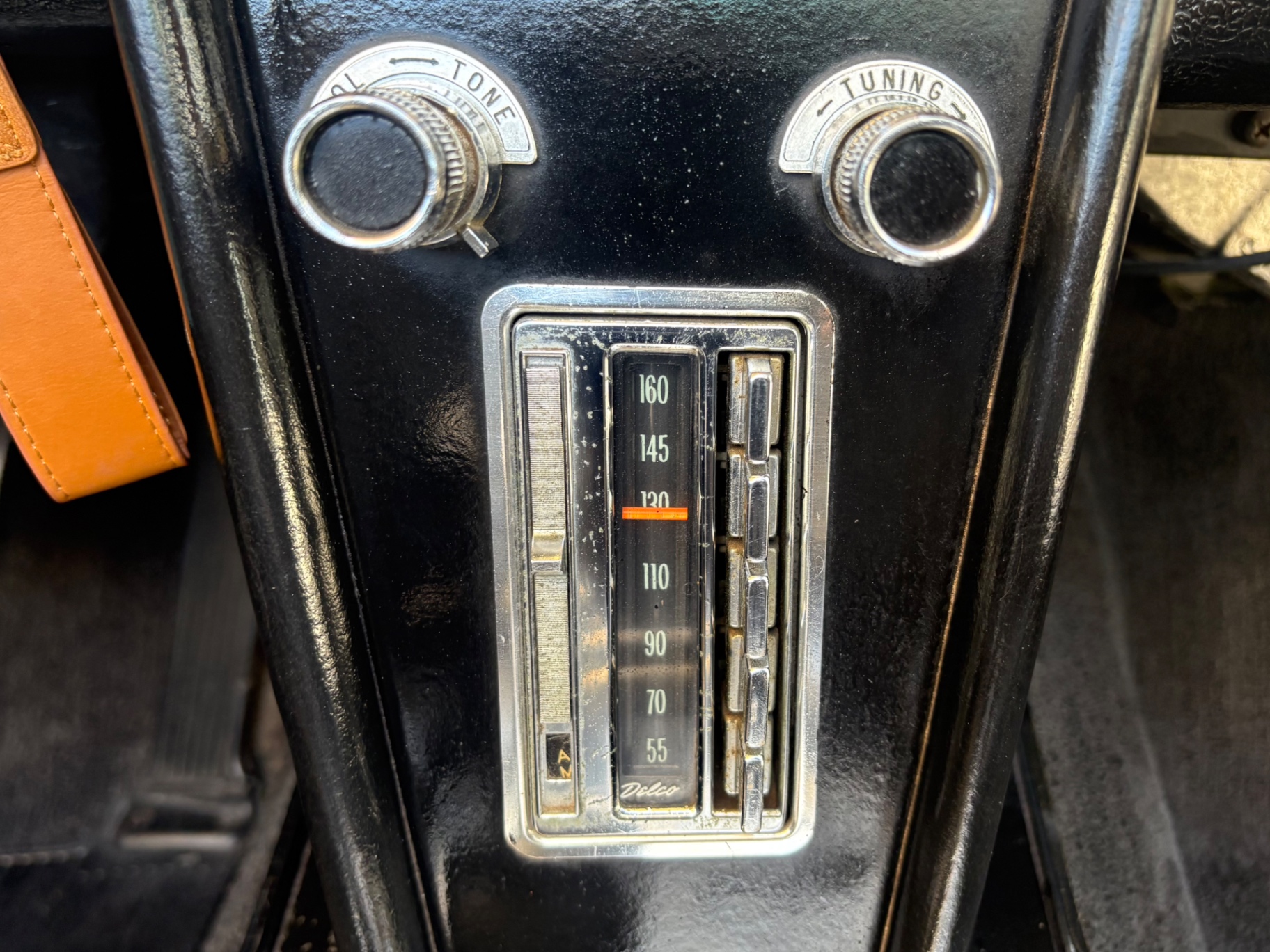
The center console houses the Muncie 4-speed shifter with a chrome ball shifter knob, and the shift gate plate with the H-pattern engraved is correct and intact. The Delco AM radio is mounted in the console below the climate controls, and the original push-button tuning mechanism is present. The dashboard clock on the passenger side of the console area is a period detail that not every 1966 Corvette had. Seat belts are fitted at both positions.
Exterior
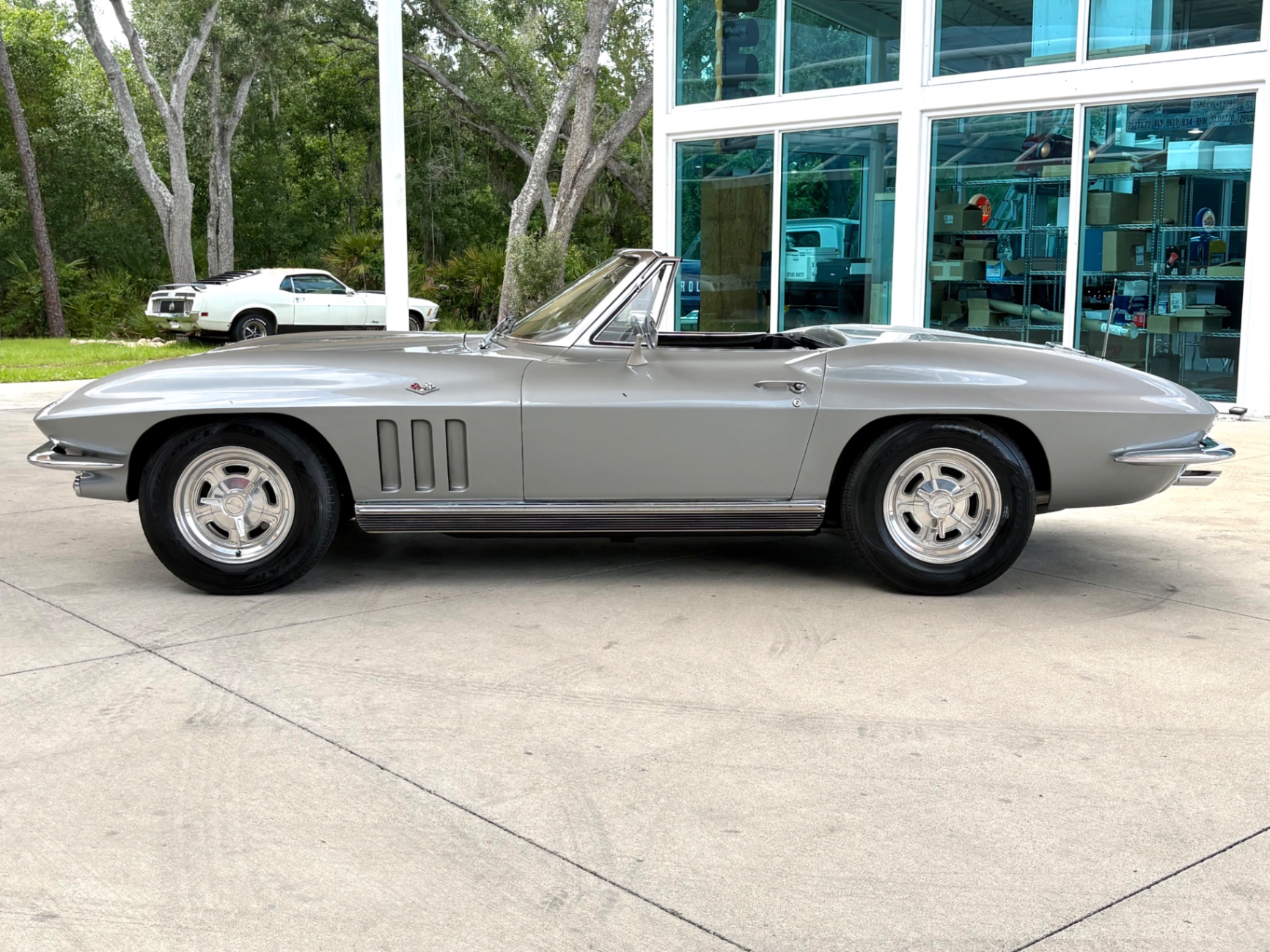
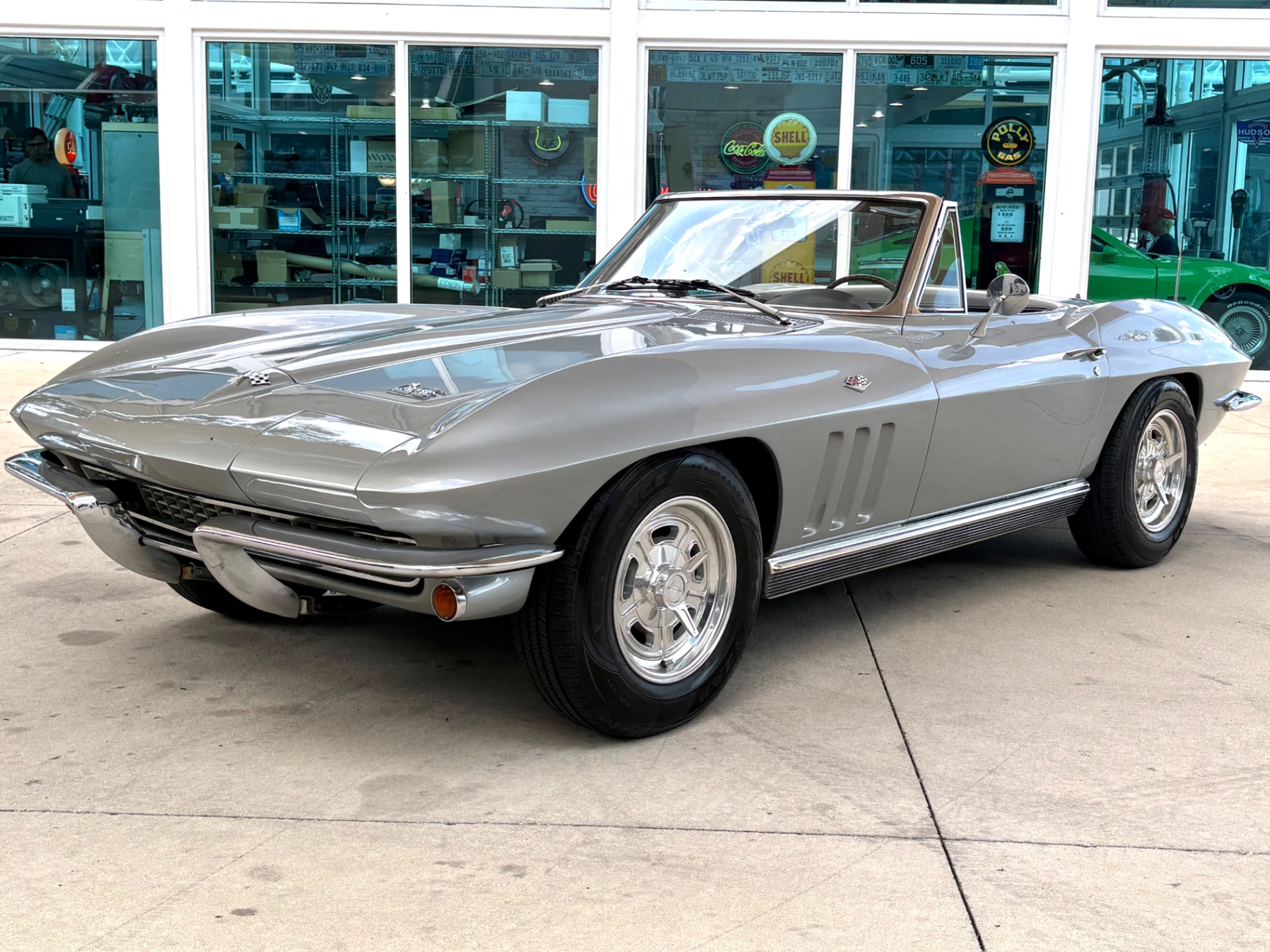
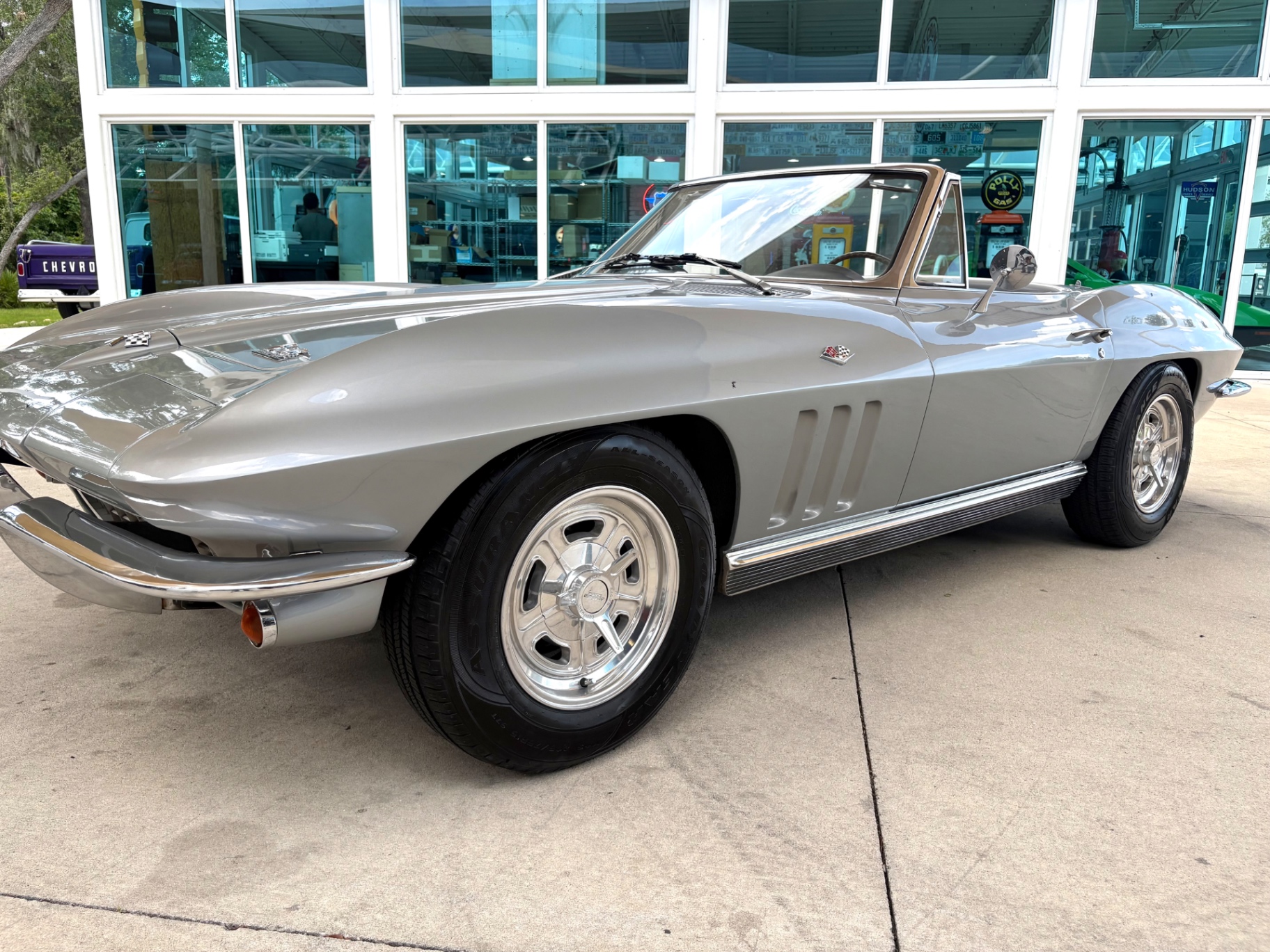
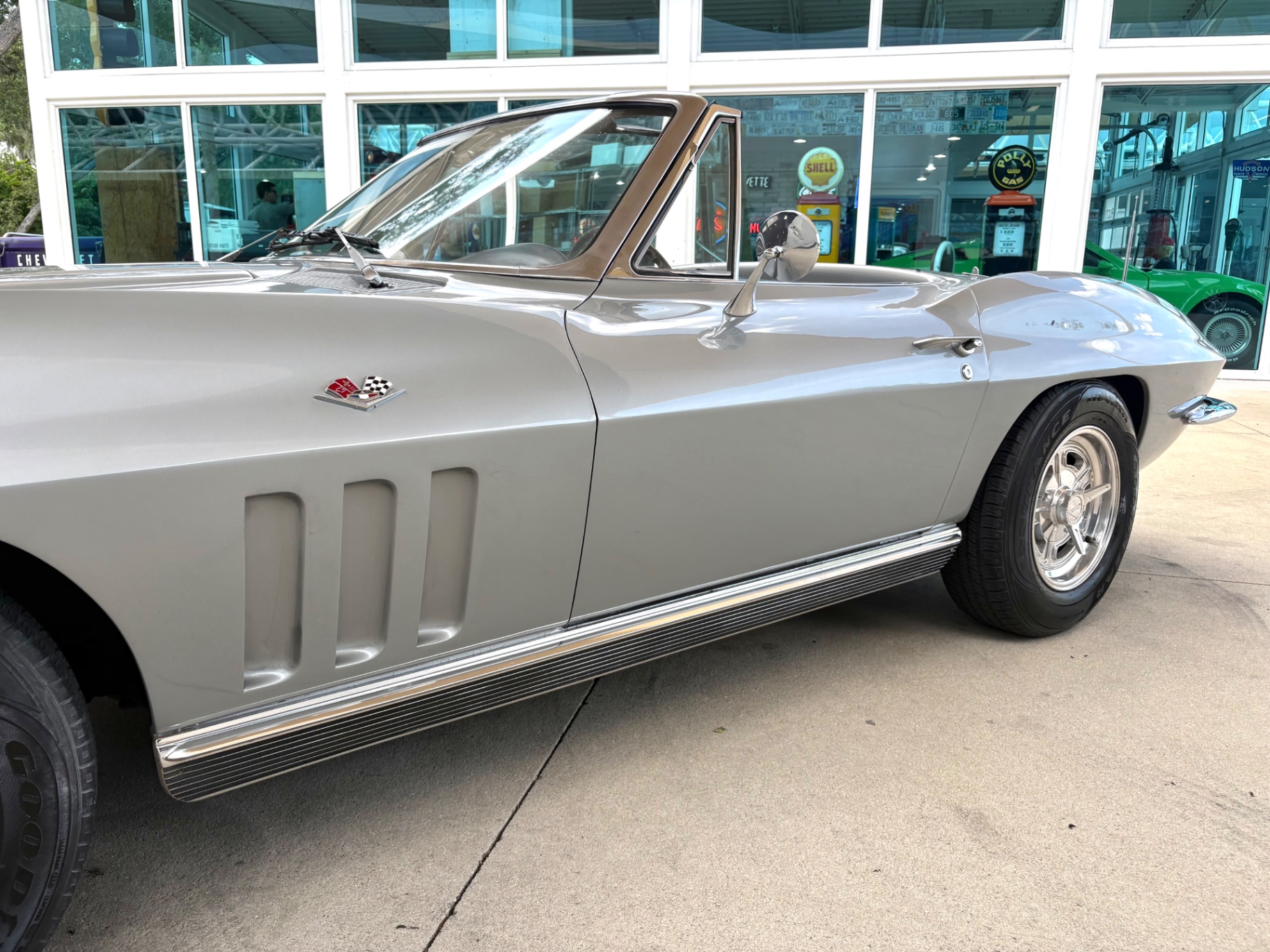
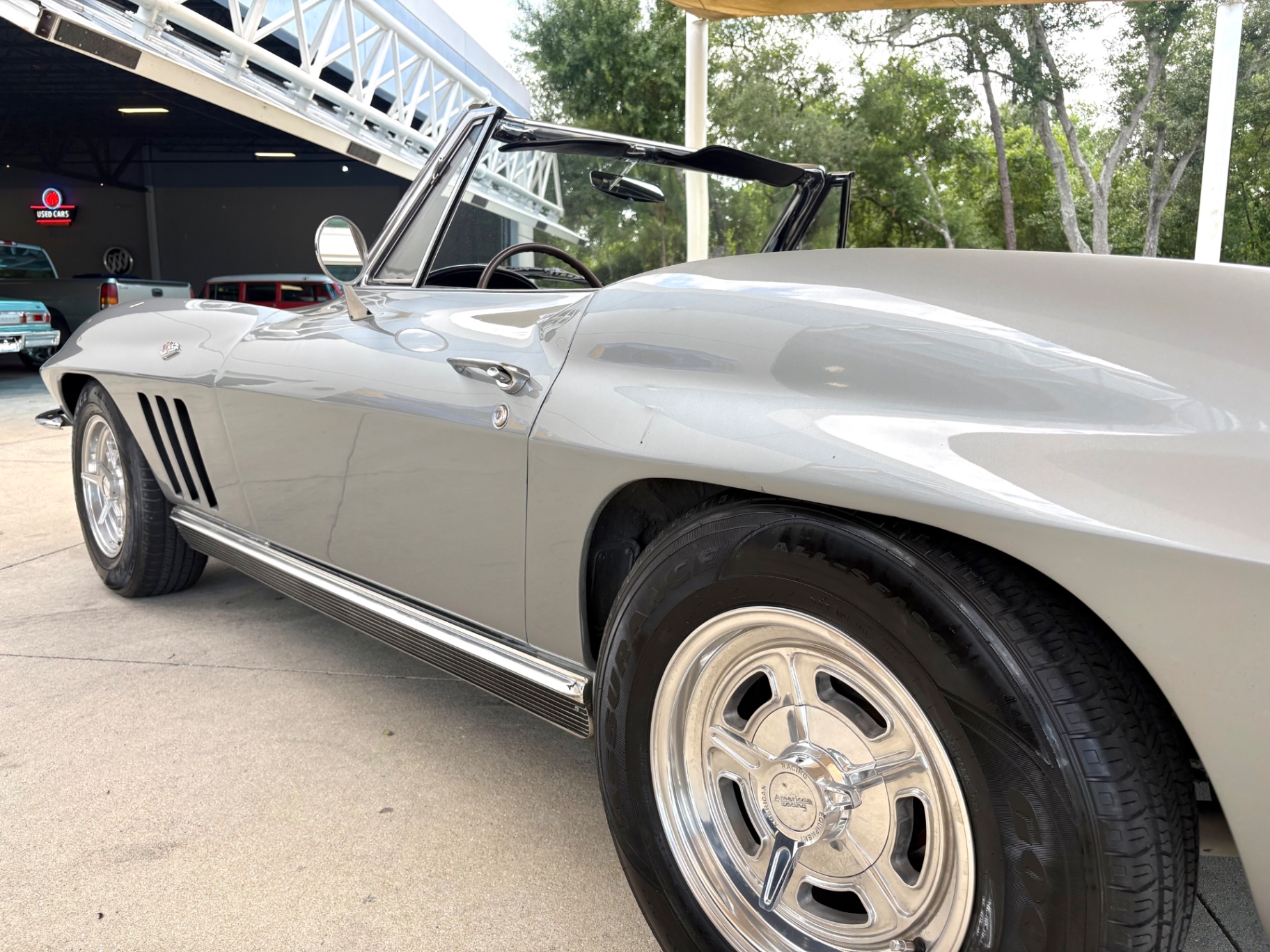
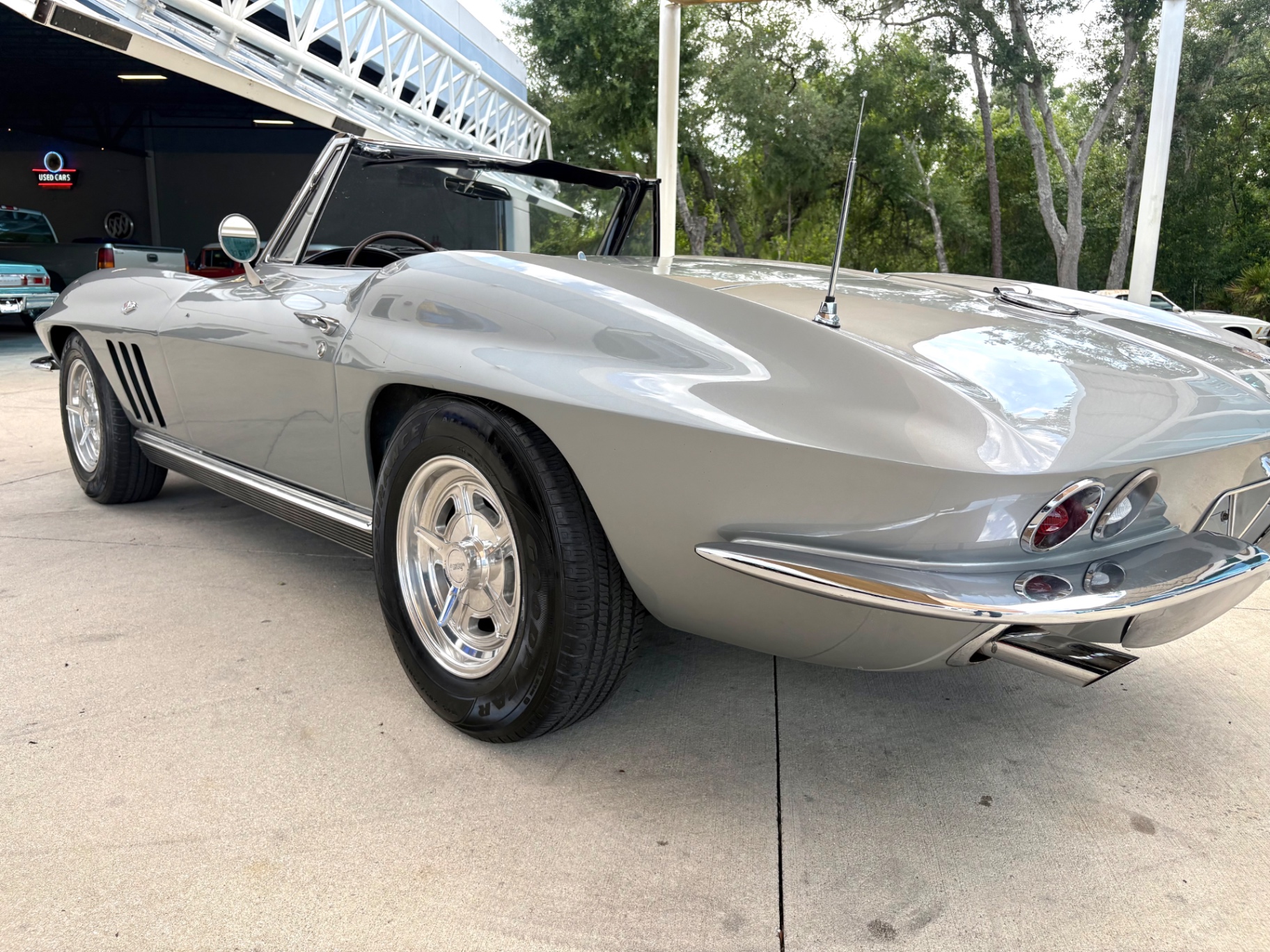
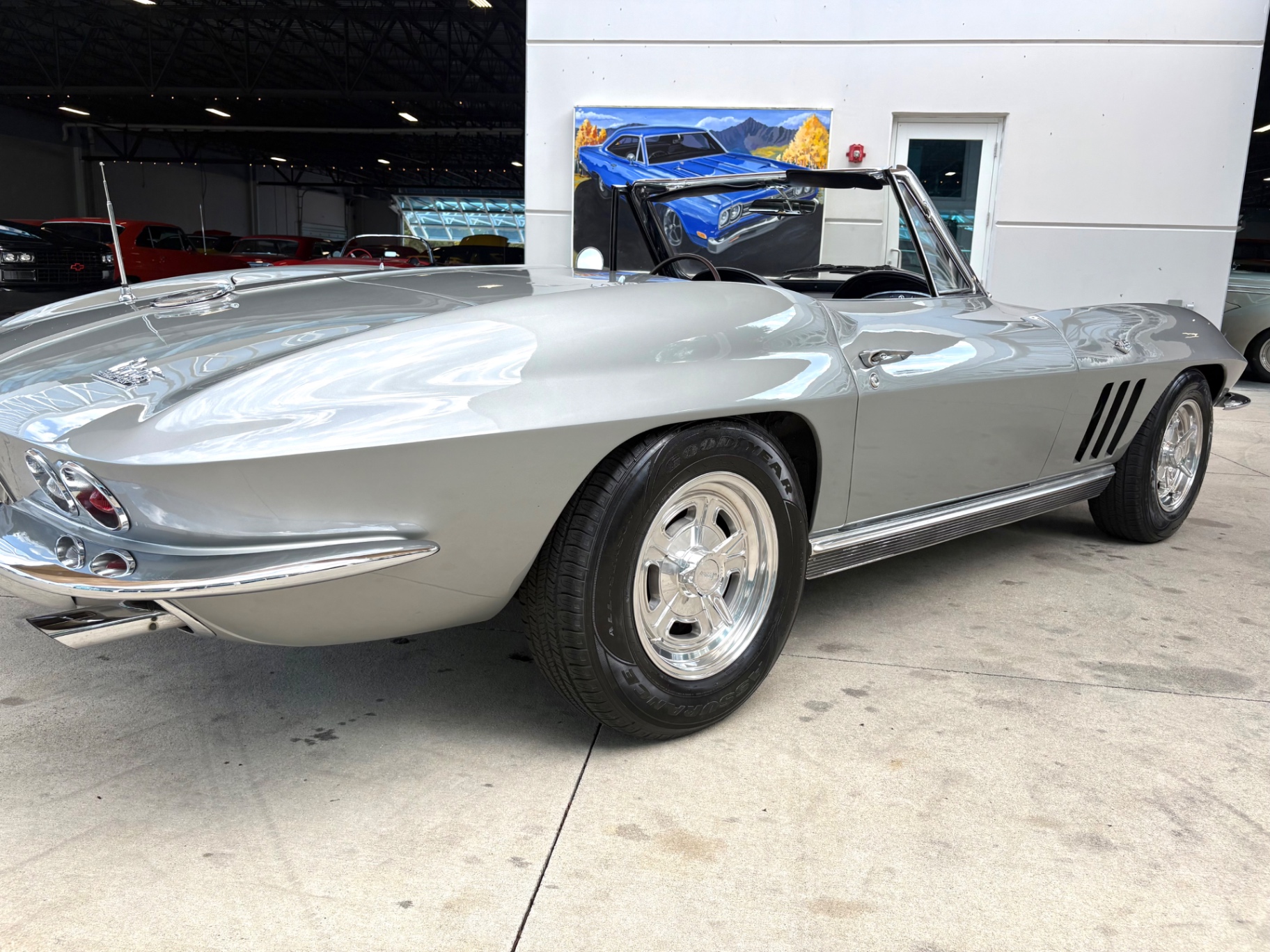
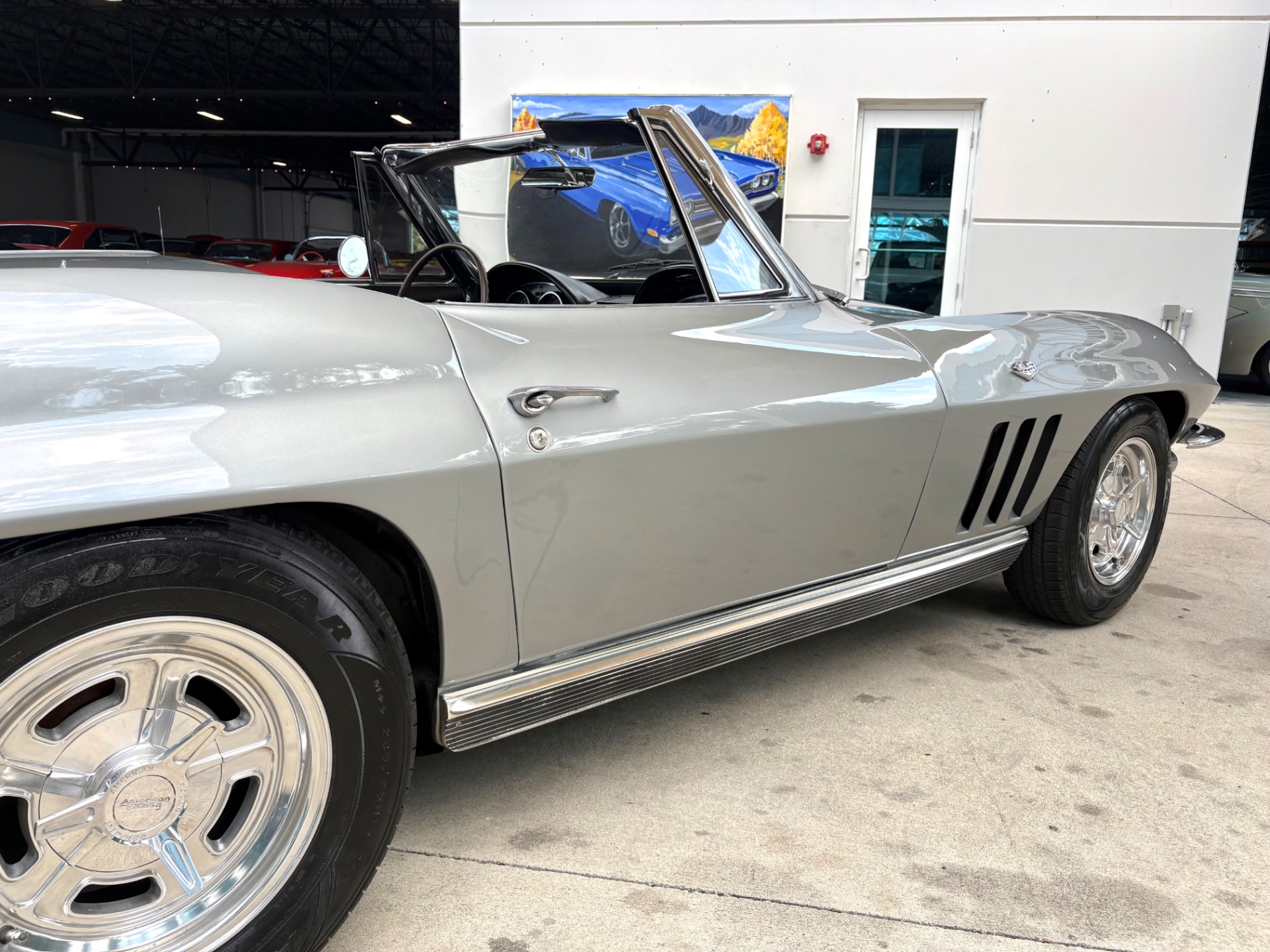
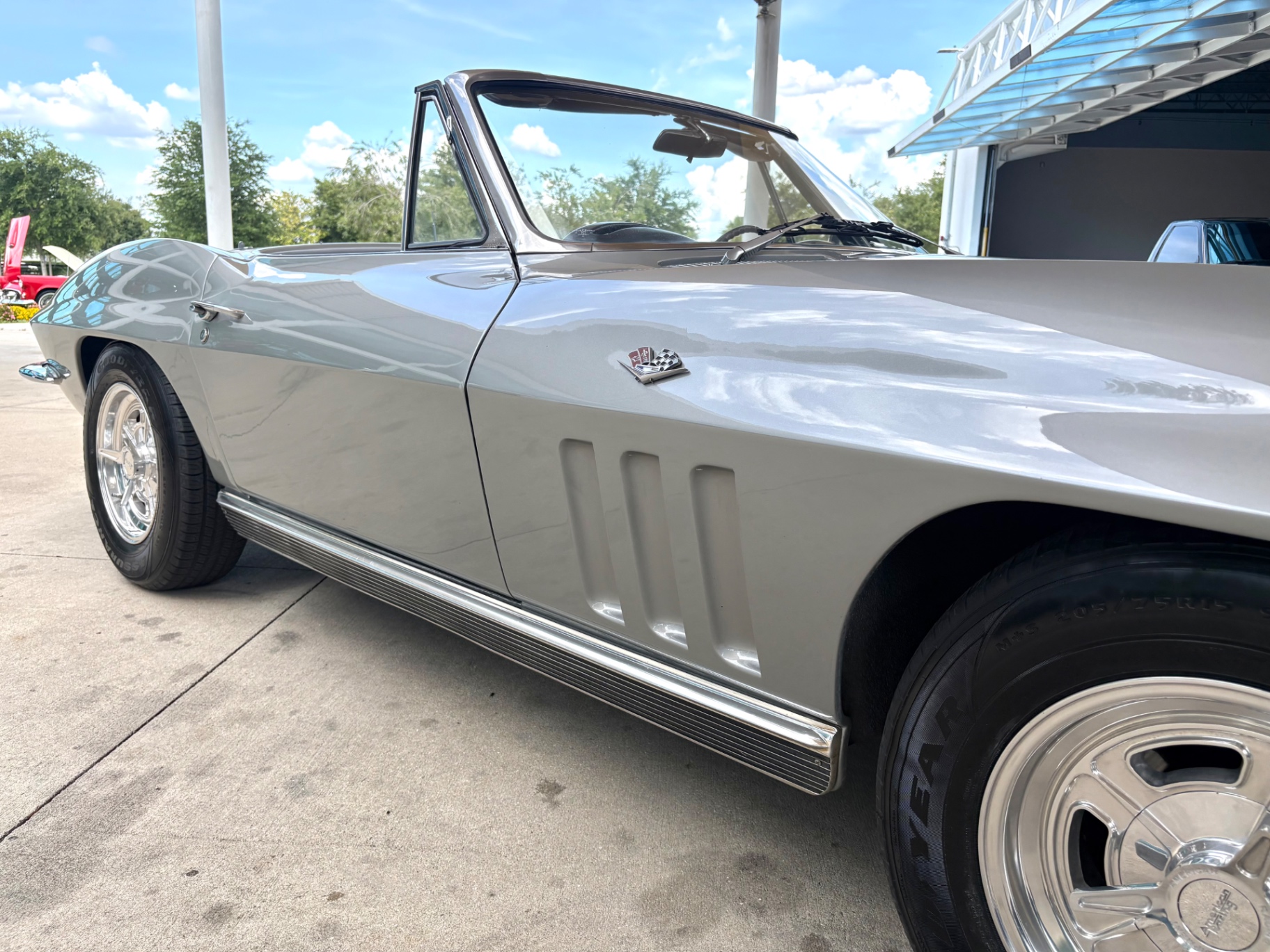
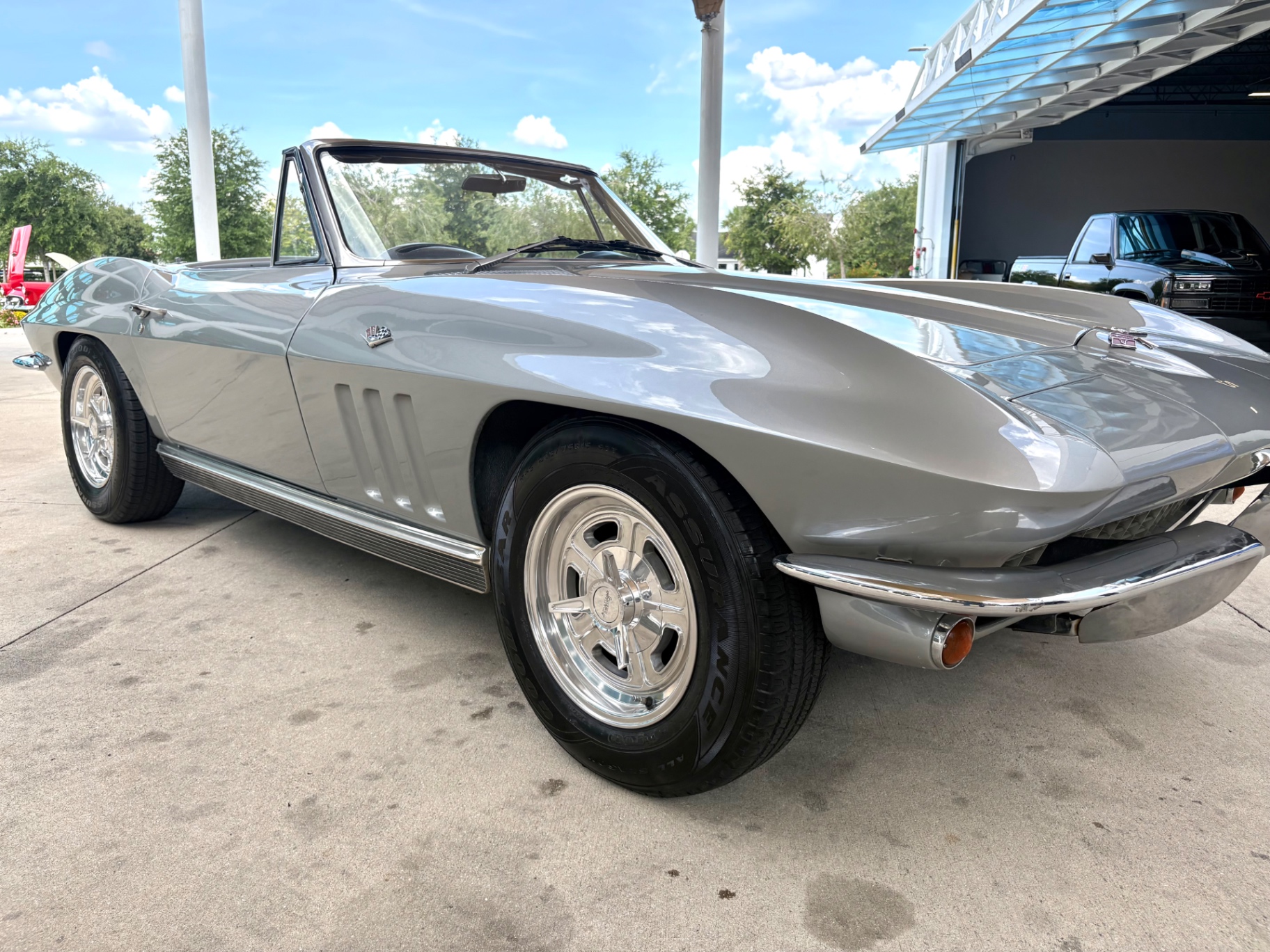
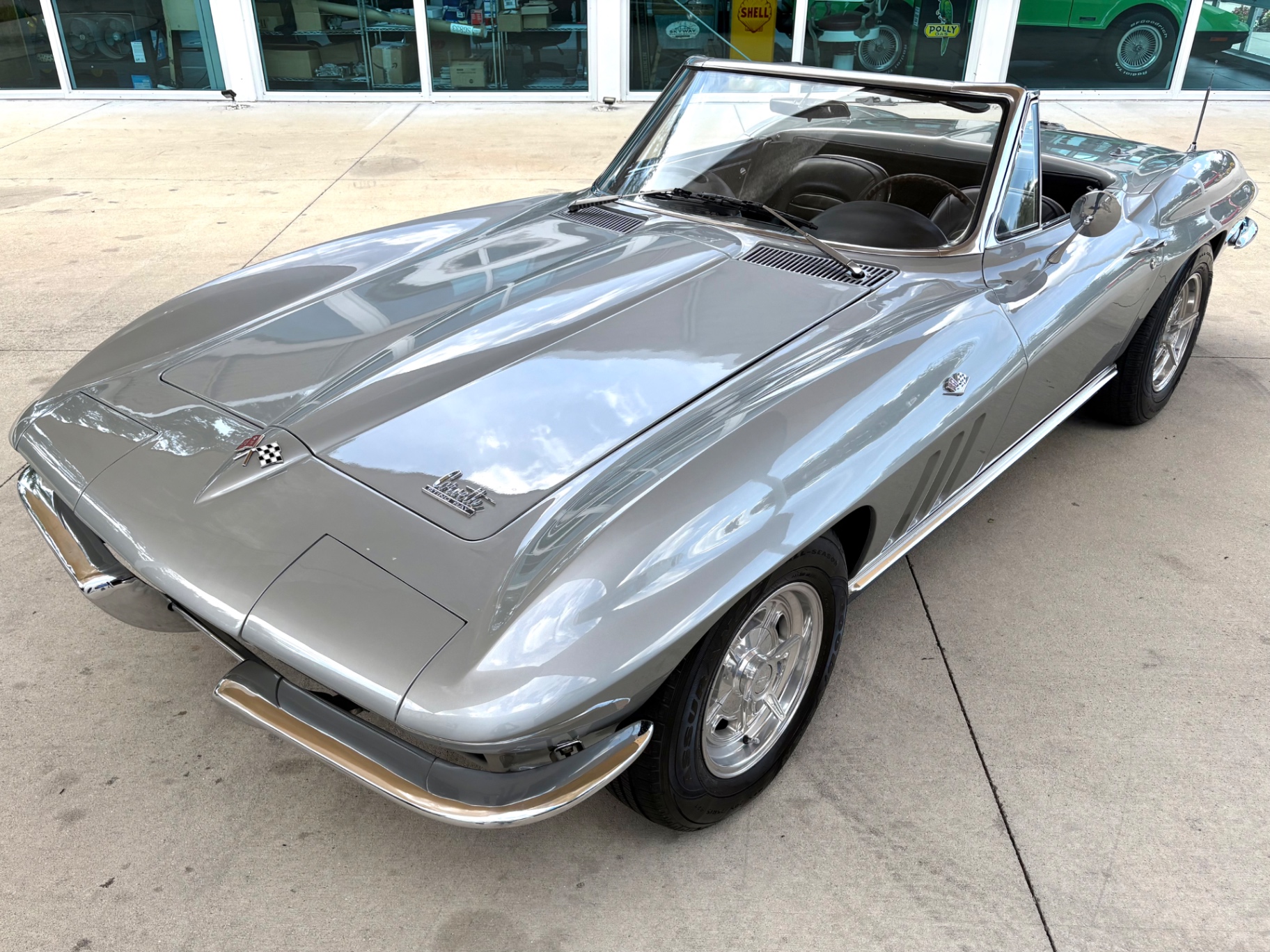
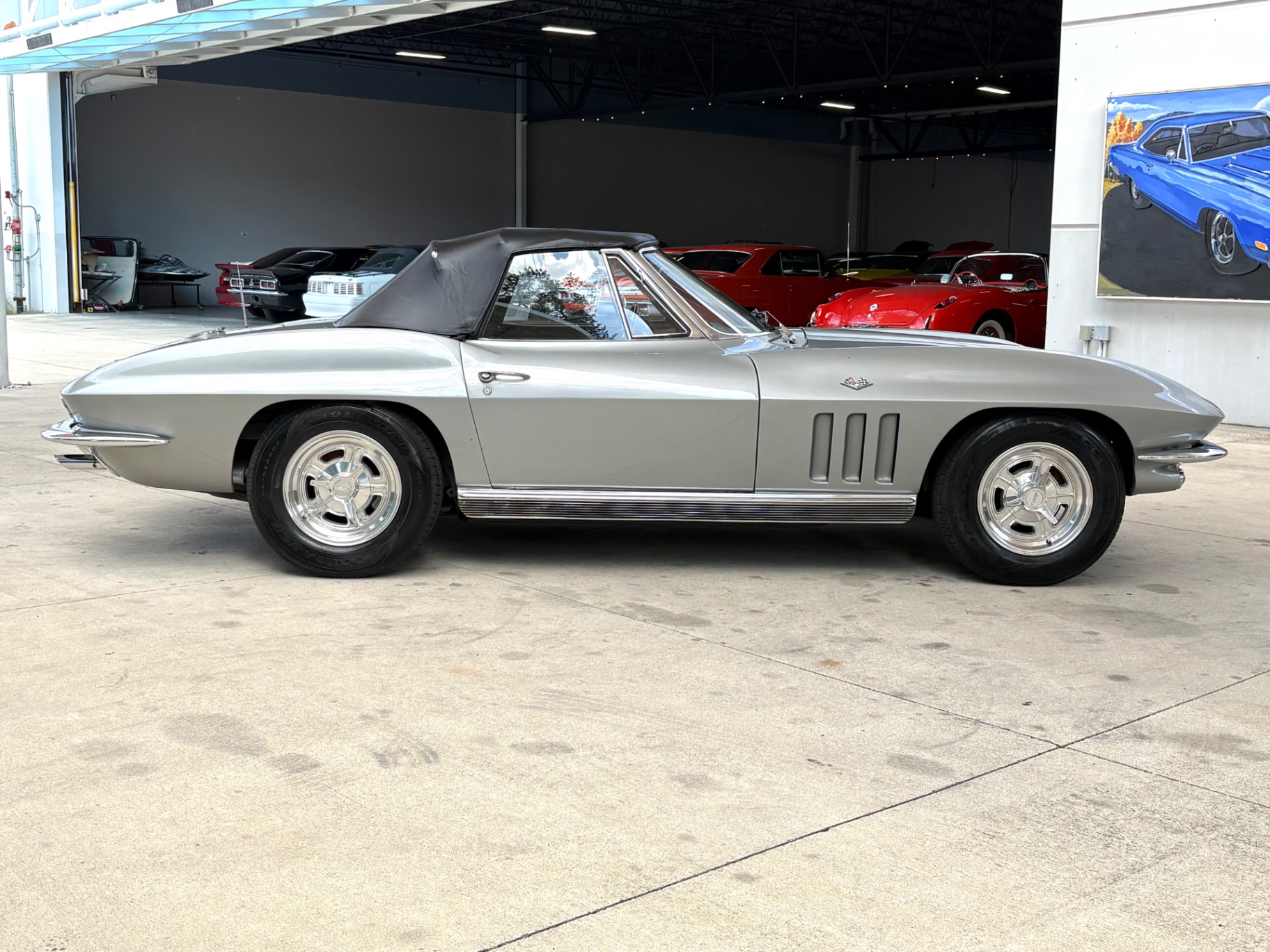
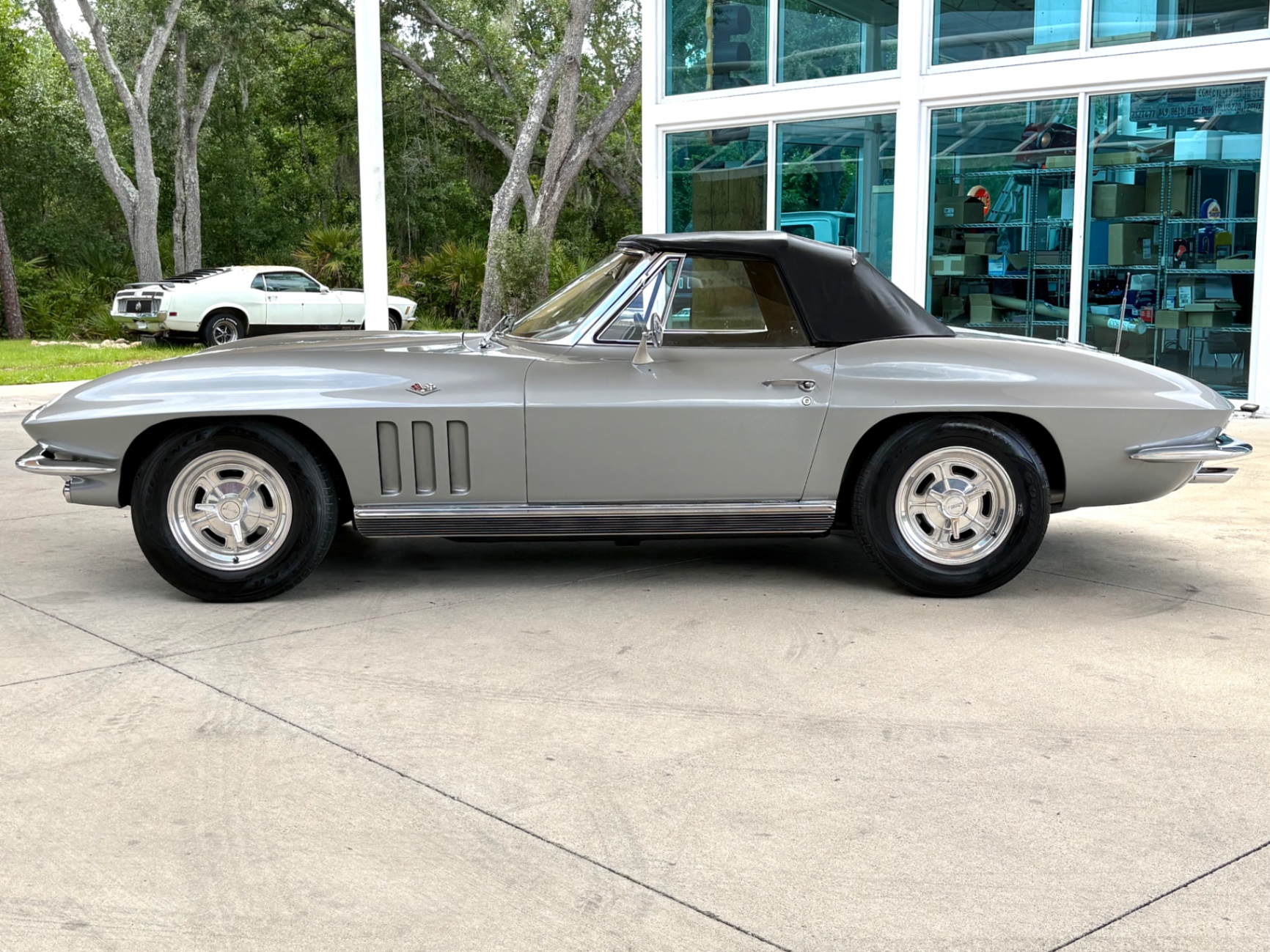
The car currently wears a silver repaint over its factory Mosport Green, code 982. Mosport Green was introduced for 1966 and was not carried over to 1967, making it a color specific to this model year. The repaint is a change from factory spec, and that is disclosed plainly. The silver finish is applied over the fiberglass body, and the panel fit and body lines read correctly throughout.
The C2 Corvette convertible body is defined by the horizontal crease that runs the length of the car, the pronounced rear haunches, and the steeply raked front end that flows into the retractable headlight housings. When the headlights are retracted and the hood is closed, the front of the car is uninterrupted — no visible lighting hardware, just bodywork. This was a design element that required a vacuum-operated mechanism to rotate the headlight pods into position, and it remains one of the most distinctive styling choices of the era.
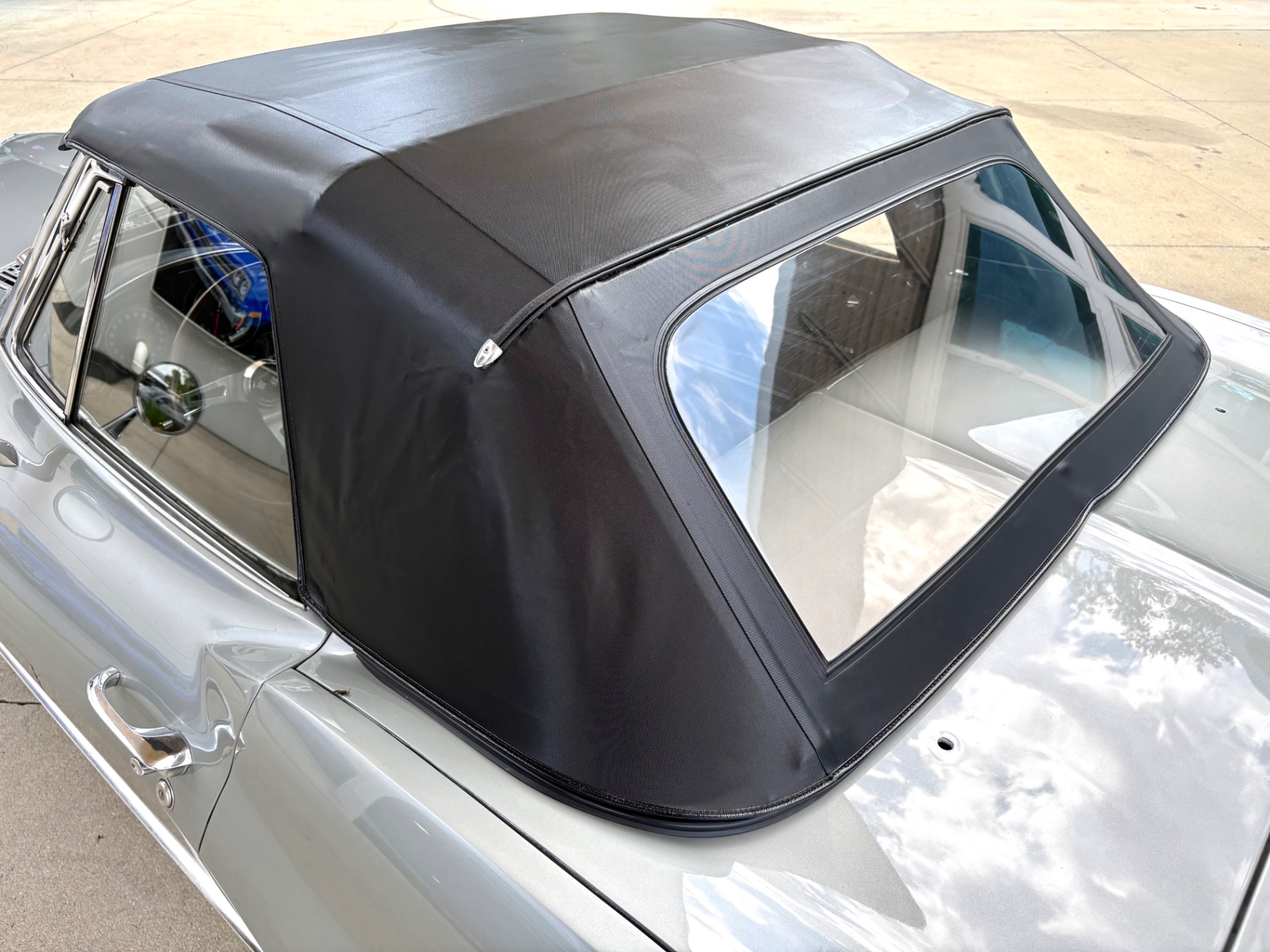
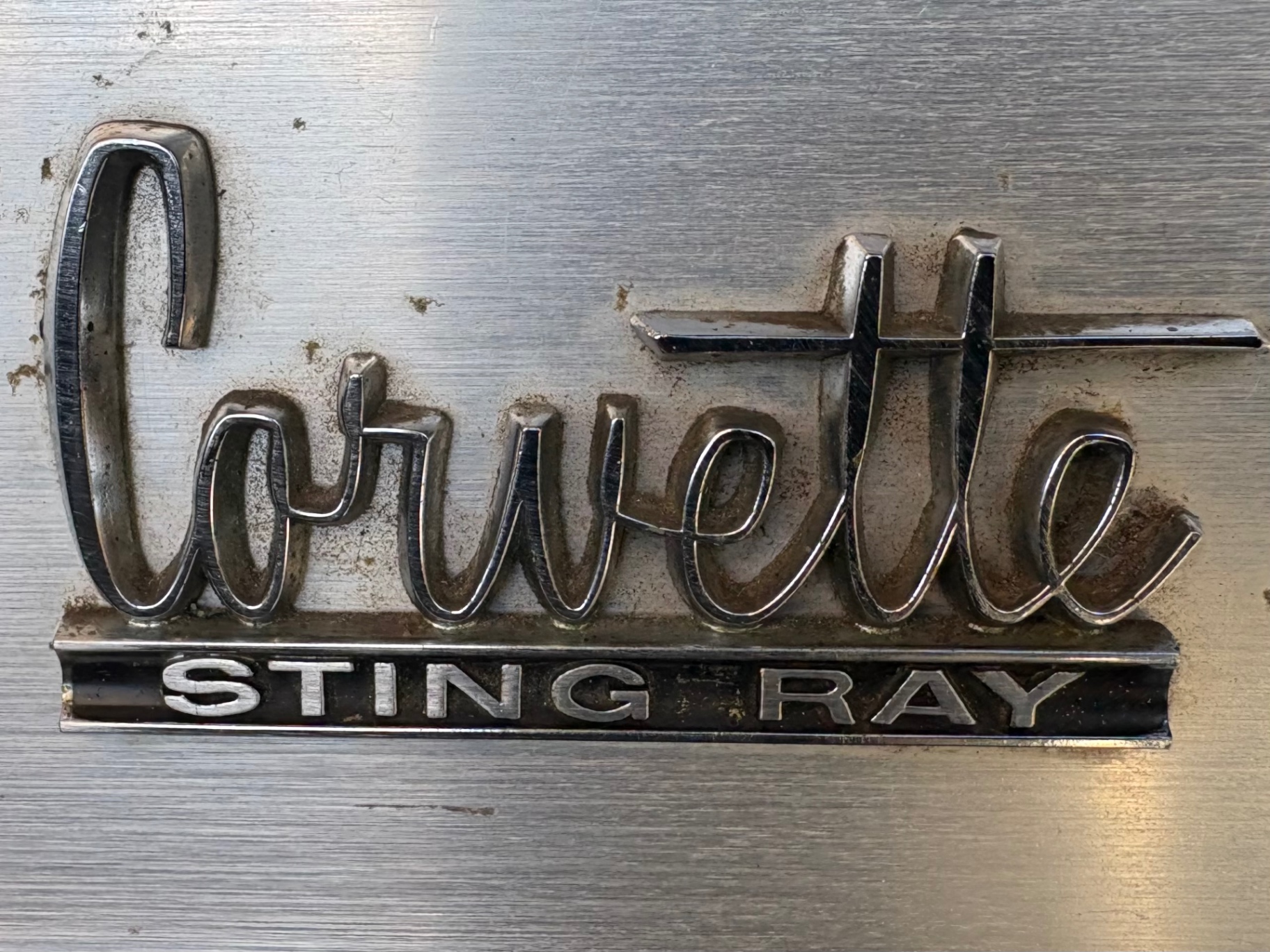
The chrome front and rear bumpers are in good condition. The Corvette Sting Ray fender badges are present on both sides, and the rear deck badge is correct. American Racing Torq-Thrust wheels replace the factory steel wheels. Torq-Thrust wheels were the wheel of choice for performance cars throughout the 1960s and were produced by American Racing Equipment. They were widely used in both street and competition applications and remain one of the most period-correct aftermarket wheels you can put on a C2 Corvette. The black convertible soft top is fitted and shows no visible damage.
Conclusion
The 1966 Chevrolet Corvette Sting Ray with the L79 327/350 engine is a driver's car with legitimate performance credentials. It is not the most powerful 1966 Corvette — the big-block 427 variants hold that title — but the L79 is widely considered the most balanced combination available that year. It is quick, communicative, properly equipped with four-wheel disc brakes and a 4-speed manual, and it carries the clean structure and correct drivetrain that serious buyers look for. The factory color change from Mosport Green to silver is noted and should be factored into evaluation, but the mechanicals and undercarriage reflect a car that has been maintained and preserved. If you have been searching for a 1966 Corvette Sting Ray with the right engine and transmission combination, without rust or structural concerns, this one warrants a close look.
To schedule an inspection or ask specific questions about this 1966 Chevrolet Corvette Sting Ray, call Skyway Classics at 941-254-6608. Our team is in Sarasota, Florida, and we are glad to walk you through the car in detail.
Disclaimer
Information found on the website is presented as given to us by the owner of the car, whether on consignment or from the owner we bought it from. Some Photos, materials for videos, descriptions and other information are provided by the consignor/seller and is deemed reliable, but Skyway Classics does not warranty or guarantee this information. Skyway Classics is not responsible for information that may incorrect or a publishing error. The decision to purchase should be based solely on the buyers personal inspection of the vehicle or by a professional inspection service prior to offer or purchase being made.
1966 Chevrolet Corvette Sting Ray Convertible — L79 327/350 V8, 4-Speed Muncie, 4-Wheel Disc Brakes
Why This Car Is Special
The 1966 Chevrolet Corvette Sting Ray sits at the peak of the C2 generation, which ran from 1963 through 1967. Of all five years in that generation, enthusiasts consistently rank 1966 and 1967 as the most refined. The split rear window of 1963 is more polarizing than pure; the 1964 and 1965 were still evolving. By 1966, Chevrolet had sorted out the ergonomics, refined the body lines, and expanded the engine lineup to include some of the most capable small- and big-block combinations ever offered in an American sports car. Total Corvette production for 1966 came to 27,720 units, split between the coupe and the convertible. This car is the convertible.
What makes this specific 1966 Corvette Sting Ray worth serious attention is its factory engine code. The L79 was the 327 cubic inch small block tuned to 350 horsepower — the highest output version of the 327 offered that year. Chevrolet accomplished this with a high-compression ratio, a more aggressive camshaft profile, and larger-port cylinder heads compared to the base 300-horsepower 327. The result was a small block that ran hard without the weight, fuel consumption, or insurance implications of the big-block 427. Among Corvette buyers who understood what they were looking at, the L79 was a smart, driver-focused choice. It was quick enough to be genuinely fast and light enough to handle well.
The VIN on this car decodes to a 1966 Corvette convertible, built at the St. Louis assembly plant, with the 327 V8 and a 4-speed manual transmission — all of which aligns with the equipment present on the car today. Factory color was Mosport Green, code 982, a medium green that was exclusive to 1966. The car has since been repainted silver, which is fully disclosed. The undercarriage and structure tell a cleaner story than the paint change might suggest.
Features List
- 327 cubic inch L79 V8, factory rated at 350 horsepower
- Holley 4-barrel carburetor
- Muncie 4-speed manual transmission
- 4-wheel disc brakes (front and rear)
- Independent rear suspension
- Dual exhaust with chrome tips
- Hidden retractable headlights
- Black convertible soft top
- Chrome front and rear bumpers
- American Racing Torq-Thrust wheels
- Corvette Sting Ray badges (front fenders and rear deck)
- Wood rim steering wheel
- Black leather bucket seats
- Center console with 4-speed shift gate
- Tachometer (dash-mounted, factory cluster)
- Dashboard clock
- Delco AM radio
- Seat belts
- Recent repaint (silver over factory Mosport Green)
- Clean undercarriage
Mechanical
The L79 327 is the engine to have in a C2 Corvette if you want a car that drives rather than just shows. At 350 horsepower from 327 cubic inches, this engine produced more power per cubic inch than any other small block in the 1966 Corvette lineup. It used 11.0:1 compression, a hydraulic camshaft with more duration and lift than the base engines, and large-port cylinder heads shared with the more powerful small blocks. Chevrolet paired it with a Holley 4-barrel carburetor, which provided crisp throttle response and reliable fuel delivery. The combination was factory-tested to run in the mid-14-second range in the quarter mile in period testing, which was competitive with much larger displacement engines of the era.
The Muncie 4-speed manual is the correct transmission pairing for the L79. Muncie transmissions were produced in Muncie, Indiana, and supplied to GM's performance divisions throughout the 1960s. They were known for their strength and precise gating. The 4-speed gives the driver full control over power delivery, which matters in a car with this much torque from a relatively short stroke engine.
Four-wheel disc brakes were a significant option on the 1966 Corvette. In 1965, Chevrolet introduced disc brakes across all four corners as an available option, replacing the drums that had been standard. By 1966, this car came equipped with them, which means progressive, fade-resistant stopping power that holds up under repeated use — something drum brakes simply cannot match. The independent rear suspension, also standard on C2 Corvettes, uses a three-link setup with a transverse leaf spring and U-jointed half-shafts. It gives the car a planted feel through corners and keeps the rear tires in contact with the road rather than bouncing over surface changes.
The undercarriage photos confirm what the description states — this is a clean car underneath. The frame, floor pans, and suspension components show solid, well-maintained structure. The dual exhaust exits through chrome tips flanking the rear bumper, which is correct for the body style.
Interior
The 1966 Corvette Sting Ray interior was designed to put the driver in the center of the information and control experience. The instrument cluster spans the width of the dash in front of the driver, grouping the speedometer and tachometer as the two dominant gauges, with fuel, water temperature, oil pressure, and battery gauges filling in the lower row. The tachometer on this car is factory-spec, redlined appropriately for the L79's operating range. The dashboard clock is mounted on the passenger side of the center console area, which is a detail that was an available option and adds a finished quality to the cockpit.
The black leather bucket seats are in presentable condition and show the correct ribbed pattern for the period. Leather was a step up from the standard vinyl interior and was a popular option among buyers who intended to keep their cars long-term. The wood rim steering wheel gives the driver a better grip feel than the standard wheel and was a popular period upgrade. It also frames the instrument cluster cleanly and adds a purposeful look to the driving position.
The center console houses the Muncie 4-speed shifter with a chrome ball shifter knob, and the shift gate plate with the H-pattern engraved is correct and intact. The Delco AM radio is mounted in the console below the climate controls, and the original push-button tuning mechanism is present. The dashboard clock on the passenger side of the console area is a period detail that not every 1966 Corvette had. Seat belts are fitted at both positions.
Exterior
The car currently wears a silver repaint over its factory Mosport Green, code 982. Mosport Green was introduced for 1966 and was not carried over to 1967, making it a color specific to this model year. The repaint is a change from factory spec, and that is disclosed plainly. The silver finish is applied over the fiberglass body, and the panel fit and body lines read correctly throughout.
The C2 Corvette convertible body is defined by the horizontal crease that runs the length of the car, the pronounced rear haunches, and the steeply raked front end that flows into the retractable headlight housings. When the headlights are retracted and the hood is closed, the front of the car is uninterrupted — no visible lighting hardware, just bodywork. This was a design element that required a vacuum-operated mechanism to rotate the headlight pods into position, and it remains one of the most distinctive styling choices of the era.
The chrome front and rear bumpers are in good condition. The Corvette Sting Ray fender badges are present on both sides, and the rear deck badge is correct. American Racing Torq-Thrust wheels replace the factory steel wheels. Torq-Thrust wheels were the wheel of choice for performance cars throughout the 1960s and were produced by American Racing Equipment. They were widely used in both street and competition applications and remain one of the most period-correct aftermarket wheels you can put on a C2 Corvette. The black convertible soft top is fitted and shows no visible damage.
Conclusion
The 1966 Chevrolet Corvette Sting Ray with the L79 327/350 engine is a driver's car with legitimate performance credentials. It is not the most powerful 1966 Corvette — the big-block 427 variants hold that title — but the L79 is widely considered the most balanced combination available that year. It is quick, communicative, properly equipped with four-wheel disc brakes and a 4-speed manual, and it carries the clean structure and correct drivetrain that serious buyers look for. The factory color change from Mosport Green to silver is noted and should be factored into evaluation, but the mechanicals and undercarriage reflect a car that has been maintained and preserved. If you have been searching for a 1966 Corvette Sting Ray with the right engine and transmission combination, without rust or structural concerns, this one warrants a close look.
To schedule an inspection or ask specific questions about this 1966 Chevrolet Corvette Sting Ray, call Skyway Classics at 941-254-6608. Our team is in Sarasota, Florida, and we are glad to walk you through the car in detail.
Disclaimer
Information found on the website is presented as given to us by the owner of the car, whether on consignment or from the owner we bought it from. Some Photos, materials for videos, descriptions and other information are provided by the consignor/seller and is deemed reliable, but Skyway Classics does not warranty or guarantee this information. Skyway Classics is not responsible for information that may incorrect or a publishing error. The decision to purchase should be based solely on the buyers personal inspection of the vehicle or by a professional inspection service prior to offer or purchase being made.
1966 Chevrolet
Corvette Sting Ray
Why Choose Skyway Classics?
Explore our curated inventory of classic and collector cars—thoughtfully selected, ready to drive, and supported by experts who make ownership simple.
Expert Curation
Every vehicle is hand-selected by our experts for quality, authenticity, and investment potential.
Fast Transactions
Streamlined buying and selling process with quick financing and immediate delivery options.
Only National Dealer With Classic Service & Repair
We’re the only national dealership that services and repairs the classics we sell—before and after the sale.
Nationwide Network
Access to our extensive network of collectors, restorers, and classic car enthusiasts nationwide.
Concierge Ownership Support
From financing and insurance to paperwork, shipping, and titling—we handle the details so you can enjoy the drive.
Passion-Driven Service
We're classic car enthusiasts first, providing personalized service with genuine passion for the hobby.