
1967 Chevrolet
Camaro RS
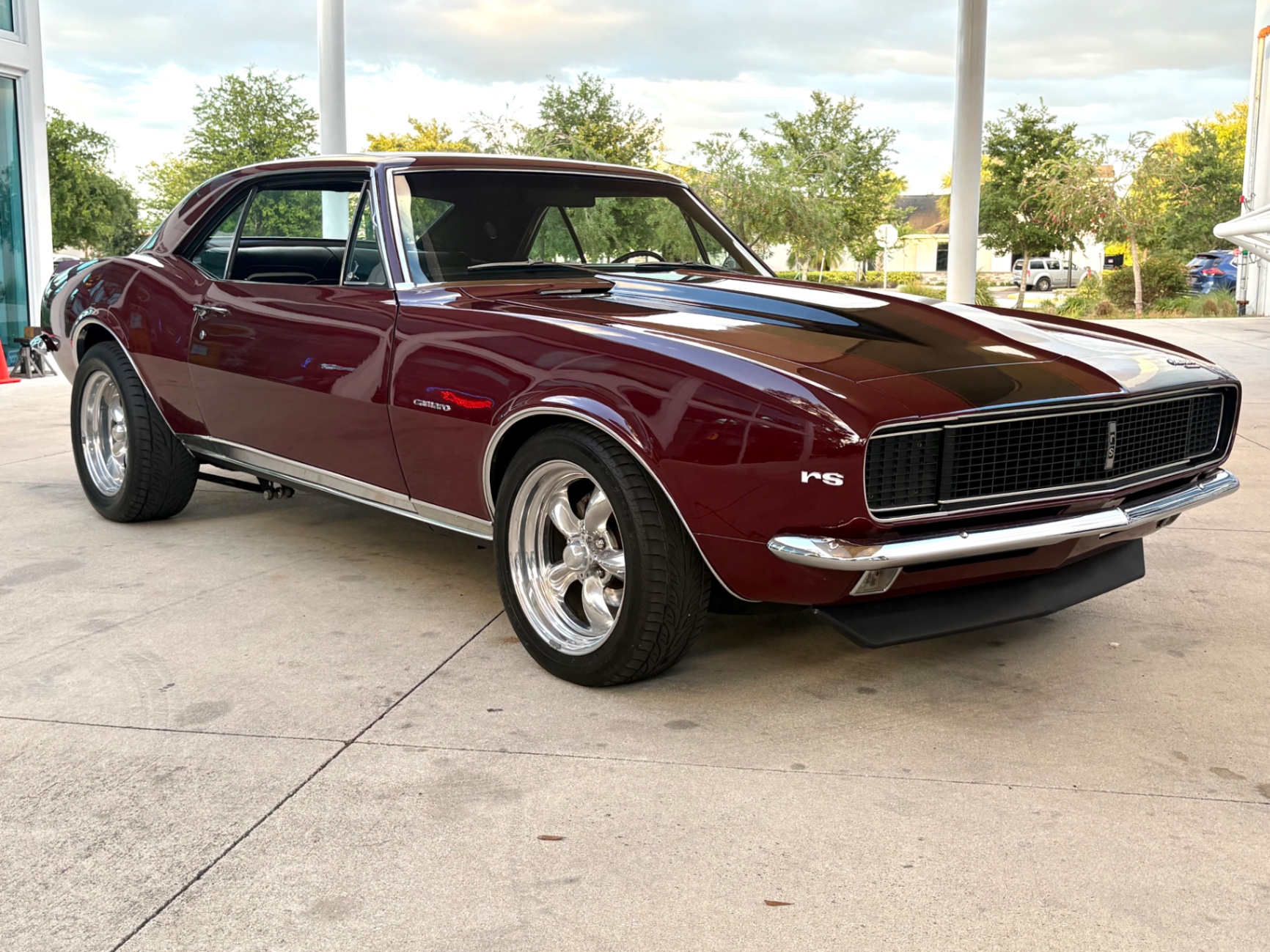
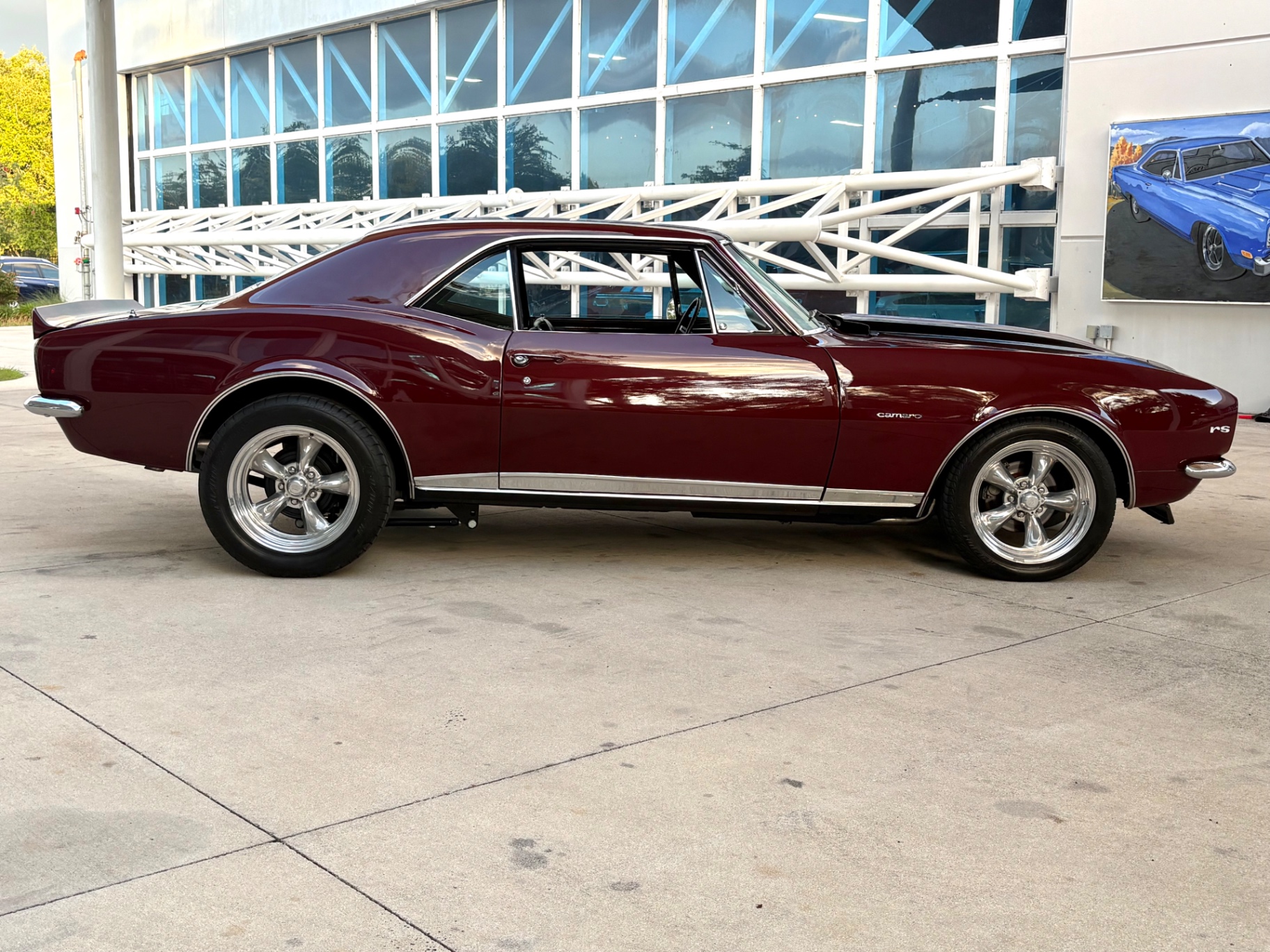
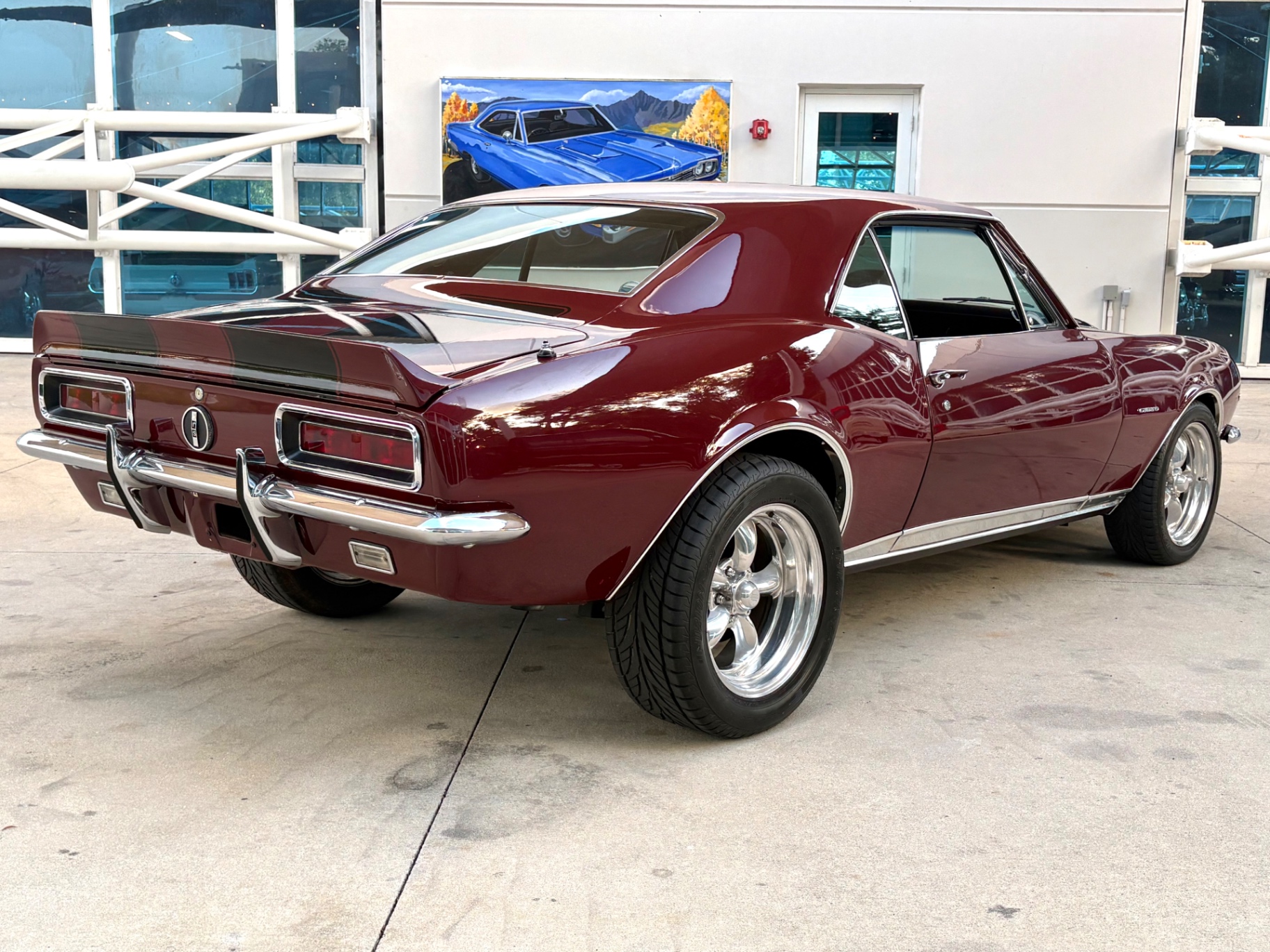
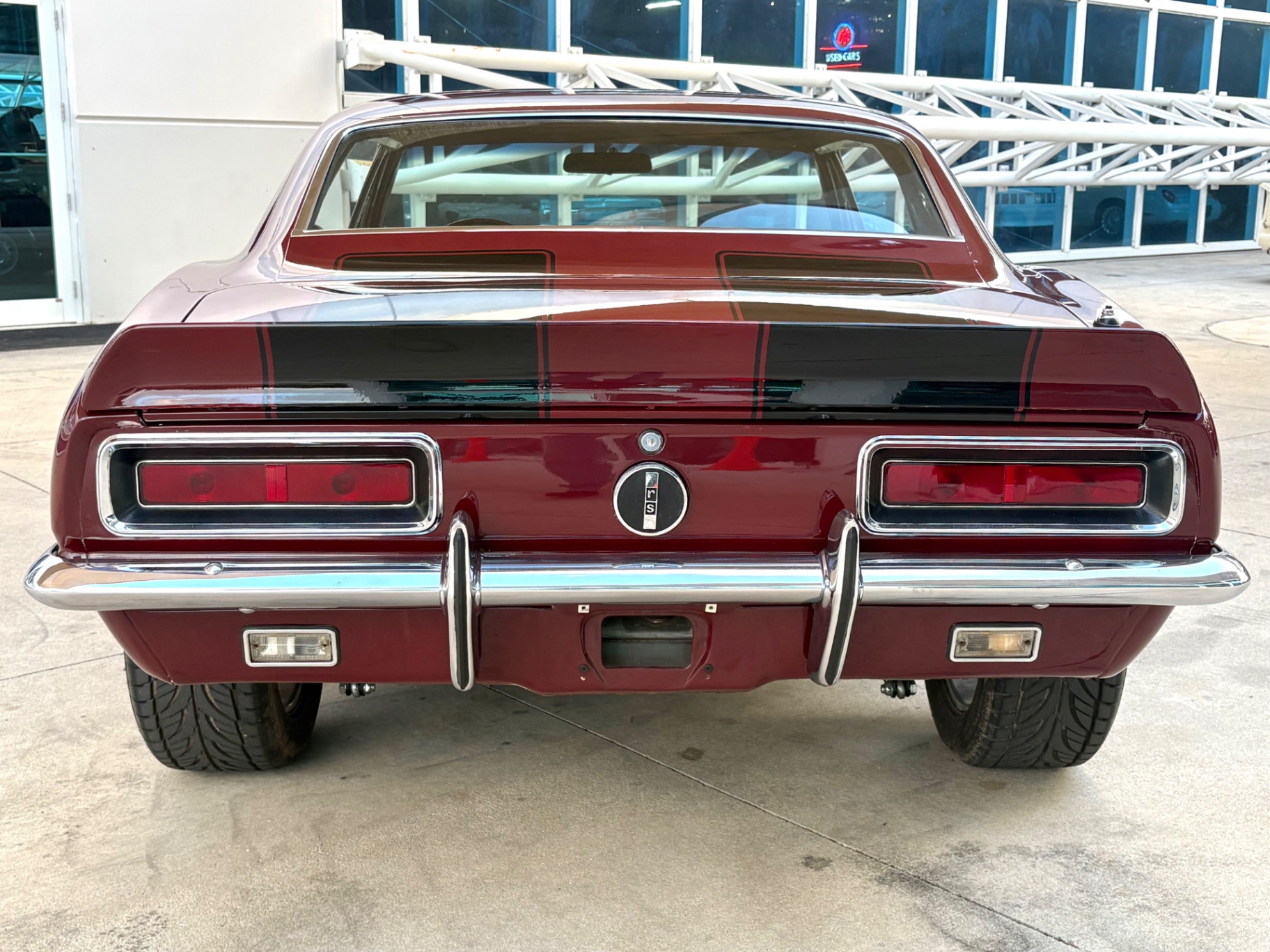
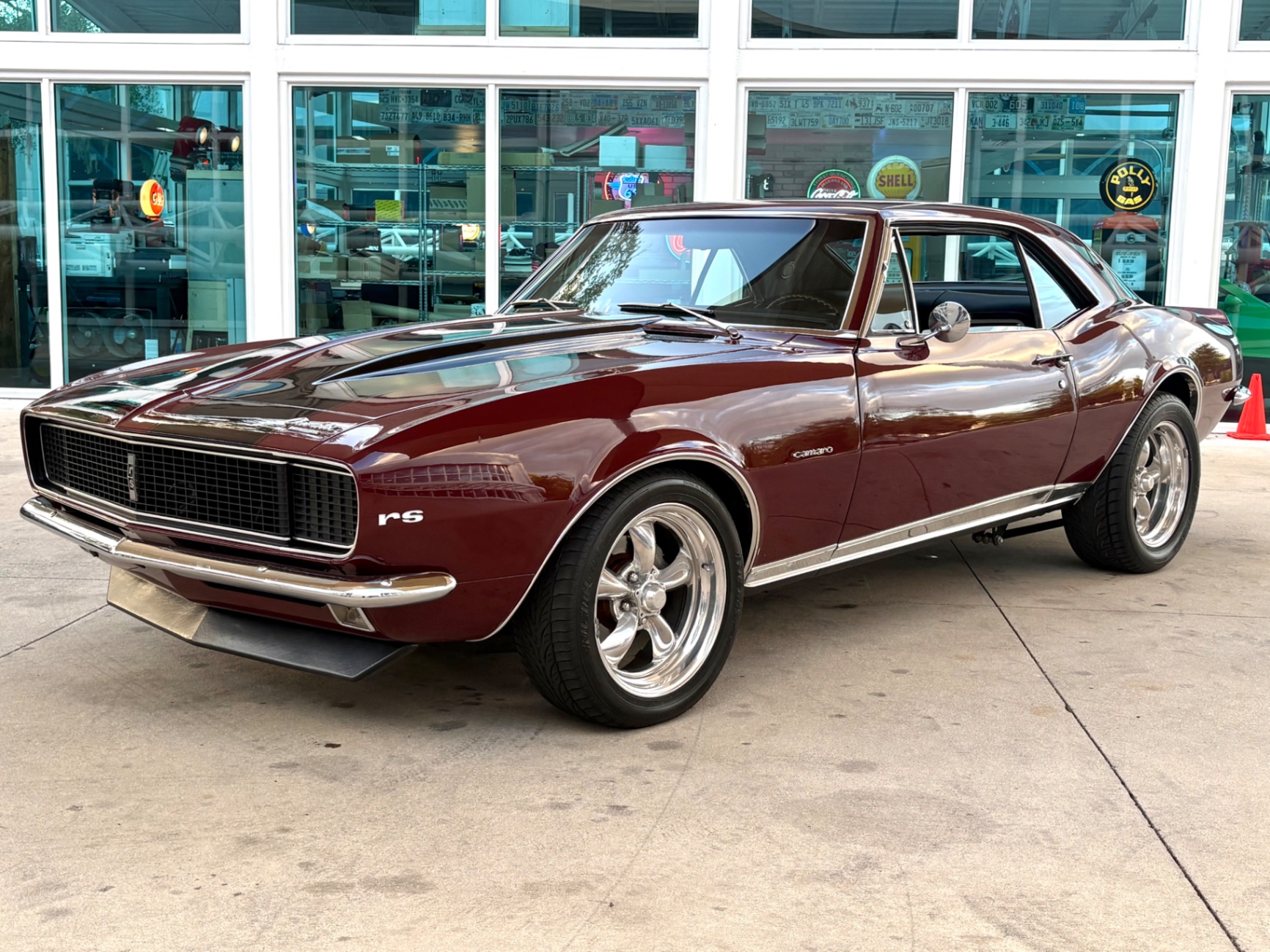
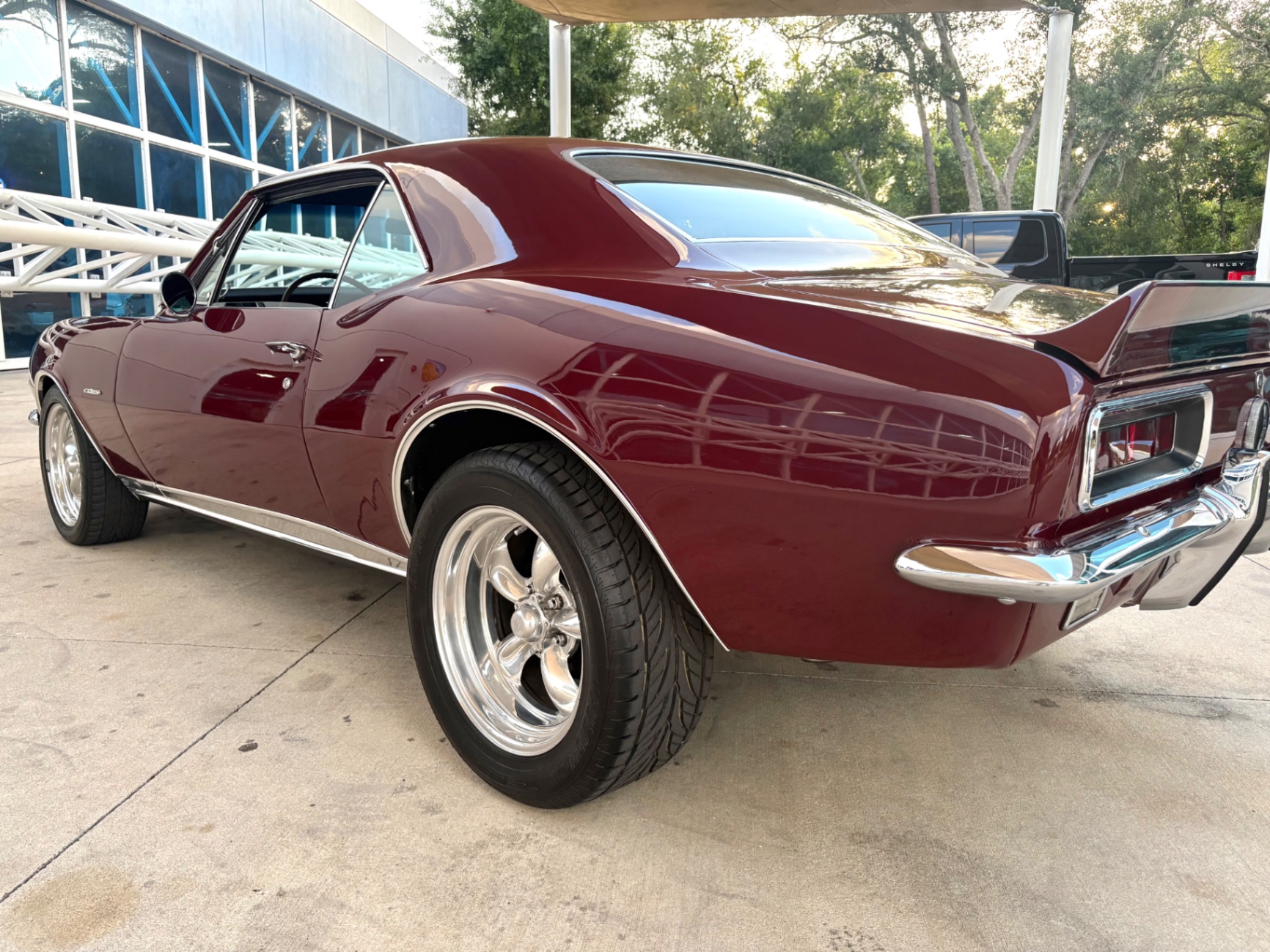
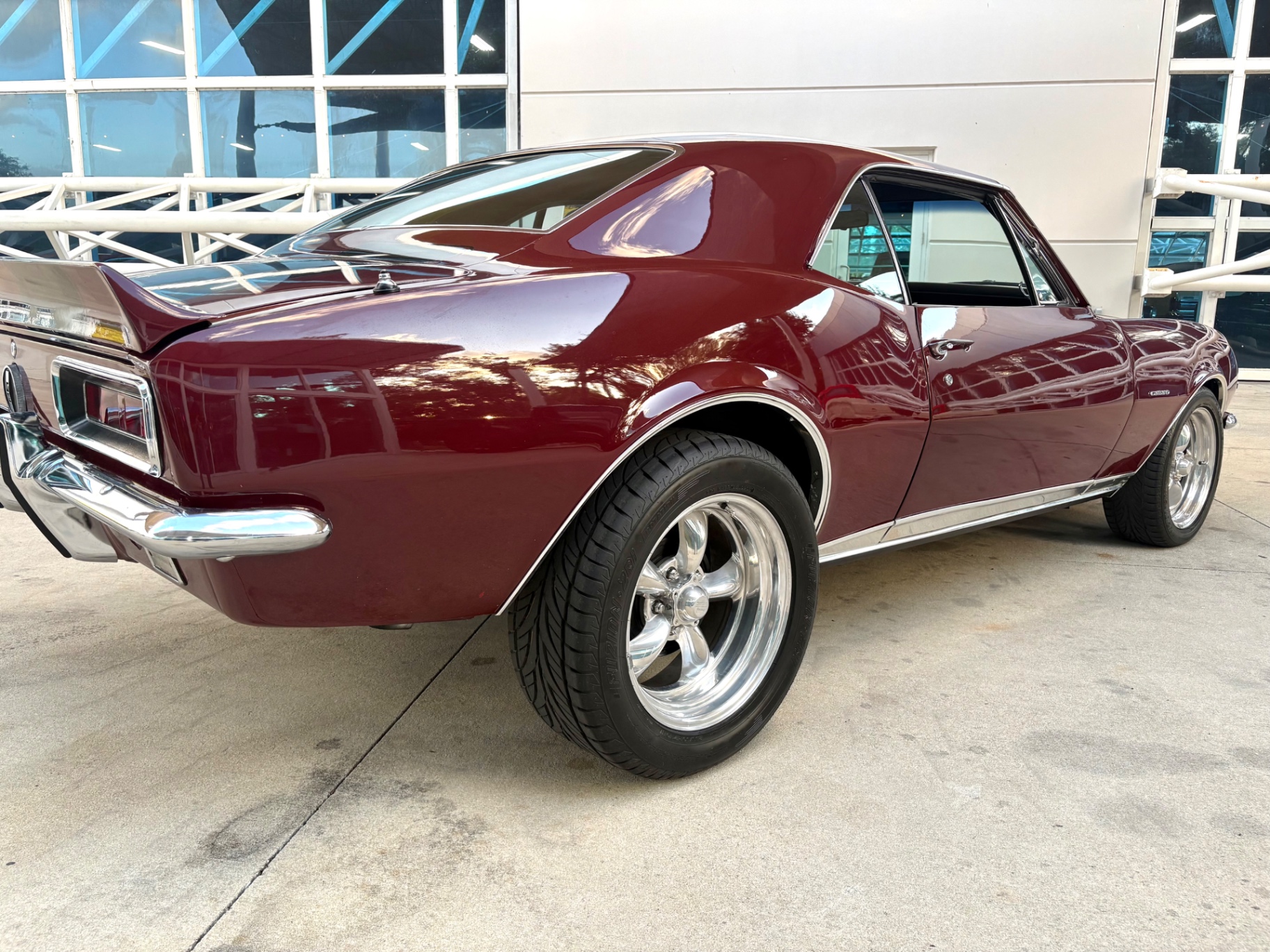
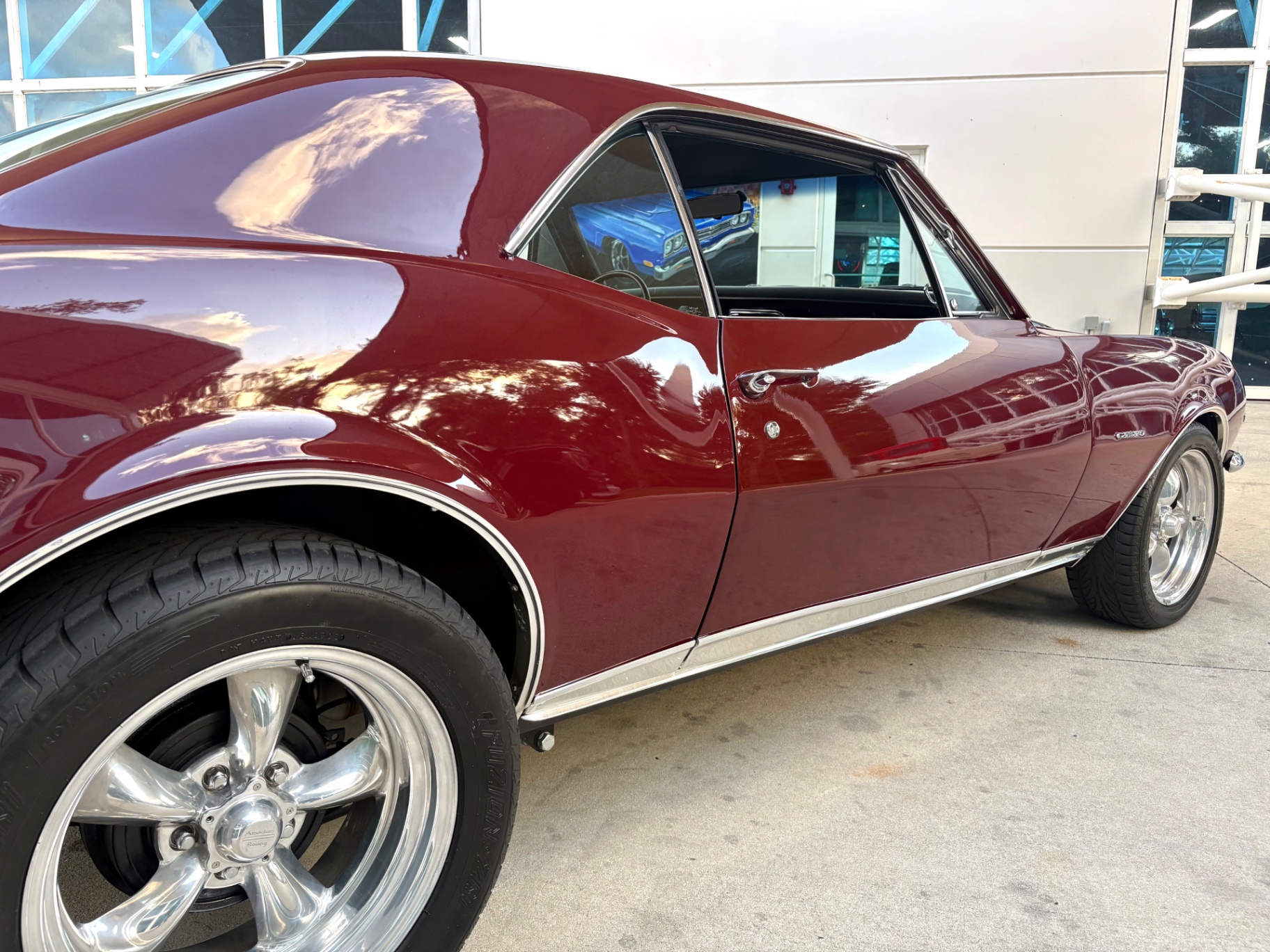
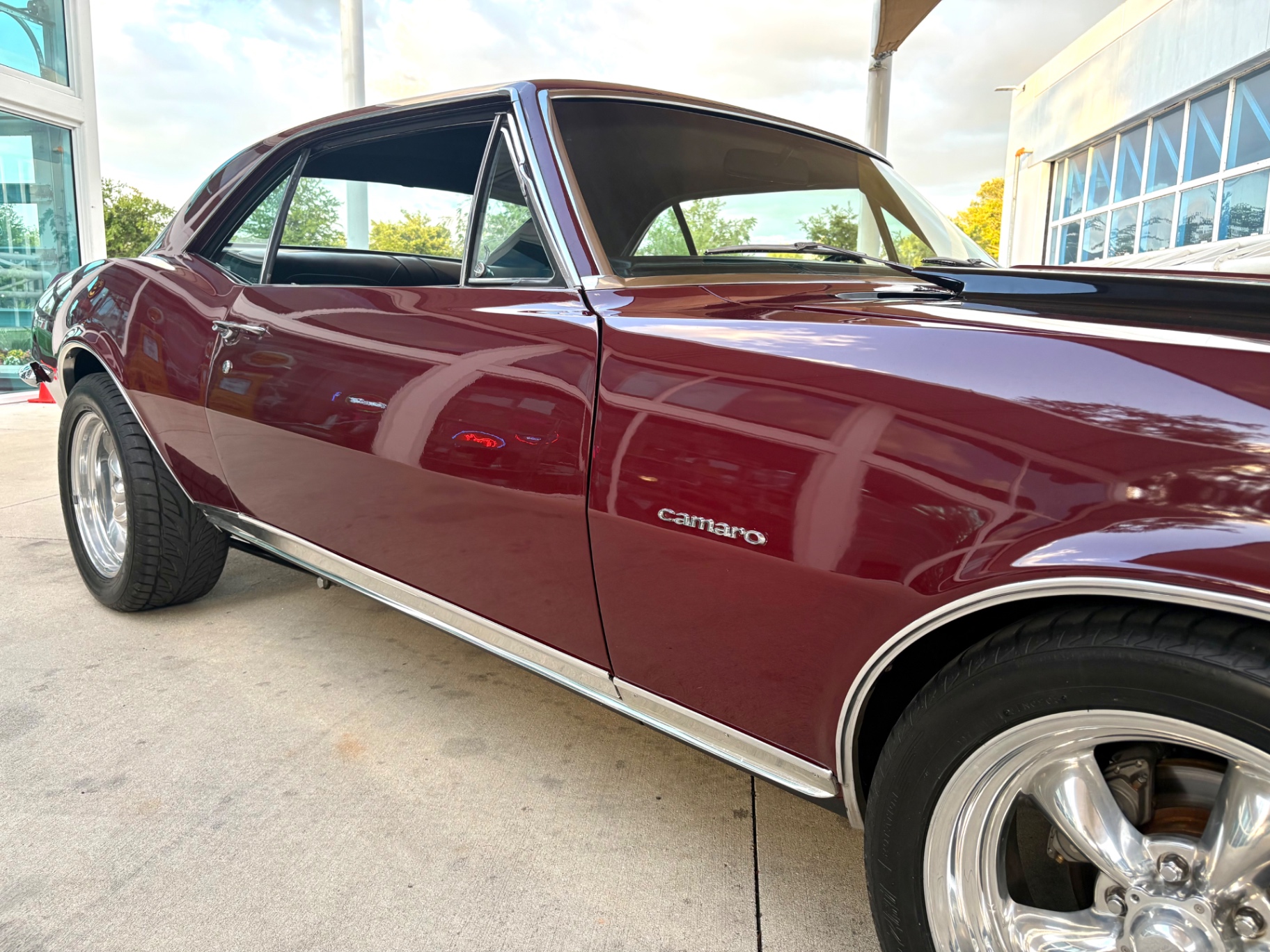
1967 Chevrolet Camaro RS — Restored V8 4-Speed with Performance Upgrades Throughout
Why This Car Is Special
The 1967 Chevrolet Camaro RS is one of the most sought-after first-generation Camaros on the market today, and for good reason. Chevrolet launched the Camaro for the 1967 model year as a direct answer to Ford's Mustang, which had been outselling everything in its segment since 1964. General Motors engineers and designers had been working on the platform — internally called the F-body — for several years before the car debuted on September 26, 1966. The result was a car with sharper handling than the Mustang, a wider range of factory performance options, and a body style that has aged remarkably well.
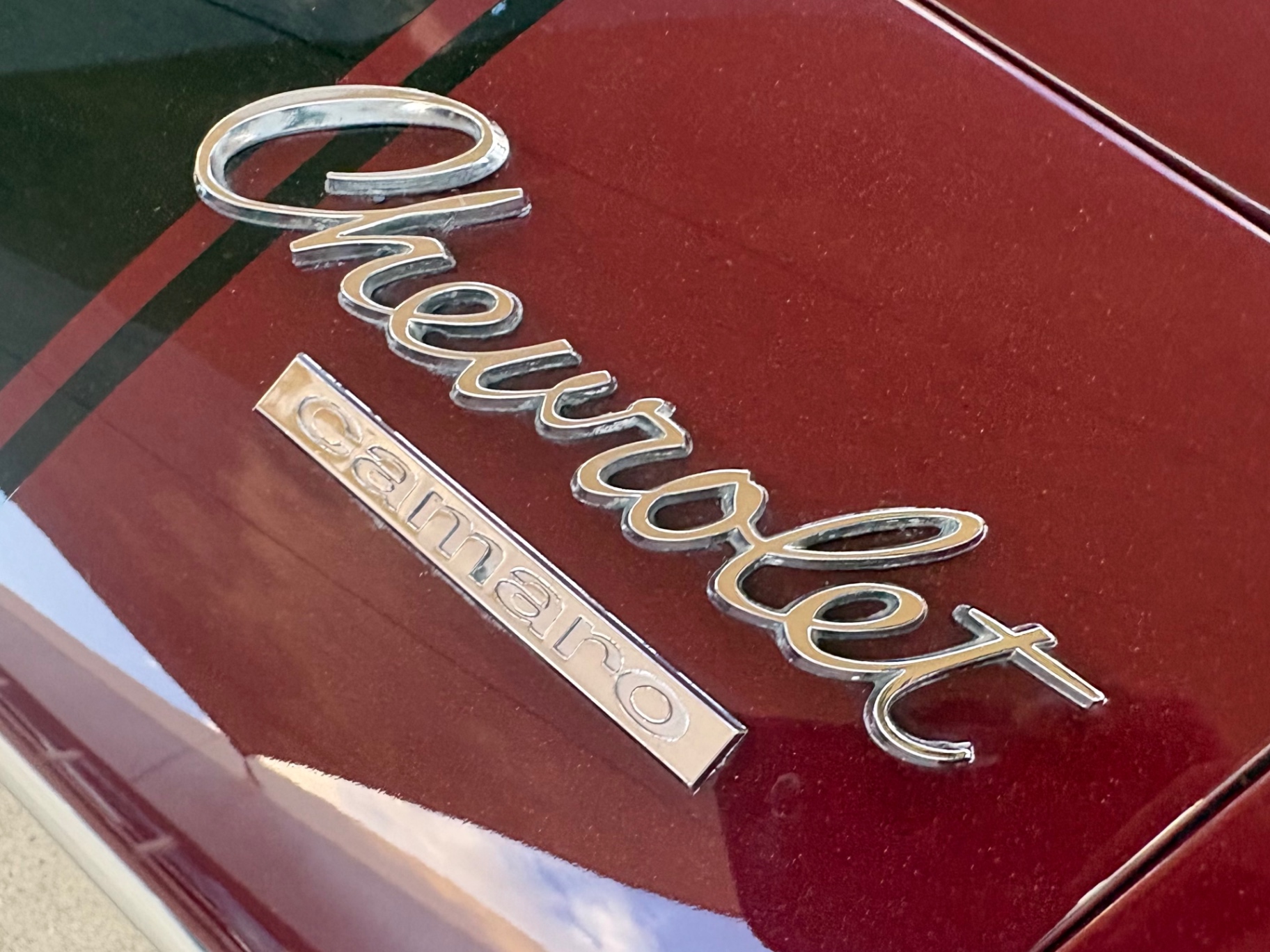
The RS, or Rally Sport package, was one of the first options buyers could add to any 1967 Camaro regardless of engine choice. It brought hidden headlights with vacuum-actuated doors, a blacked-out grille, RS badging, revised taillights, and additional exterior trim. It was a cosmetic and appearance package, not a performance upgrade, which meant buyers could combine it with the Super Sport package or any engine in the lineup. That flexibility made the RS one of the most popular option groups Chevrolet offered that year.
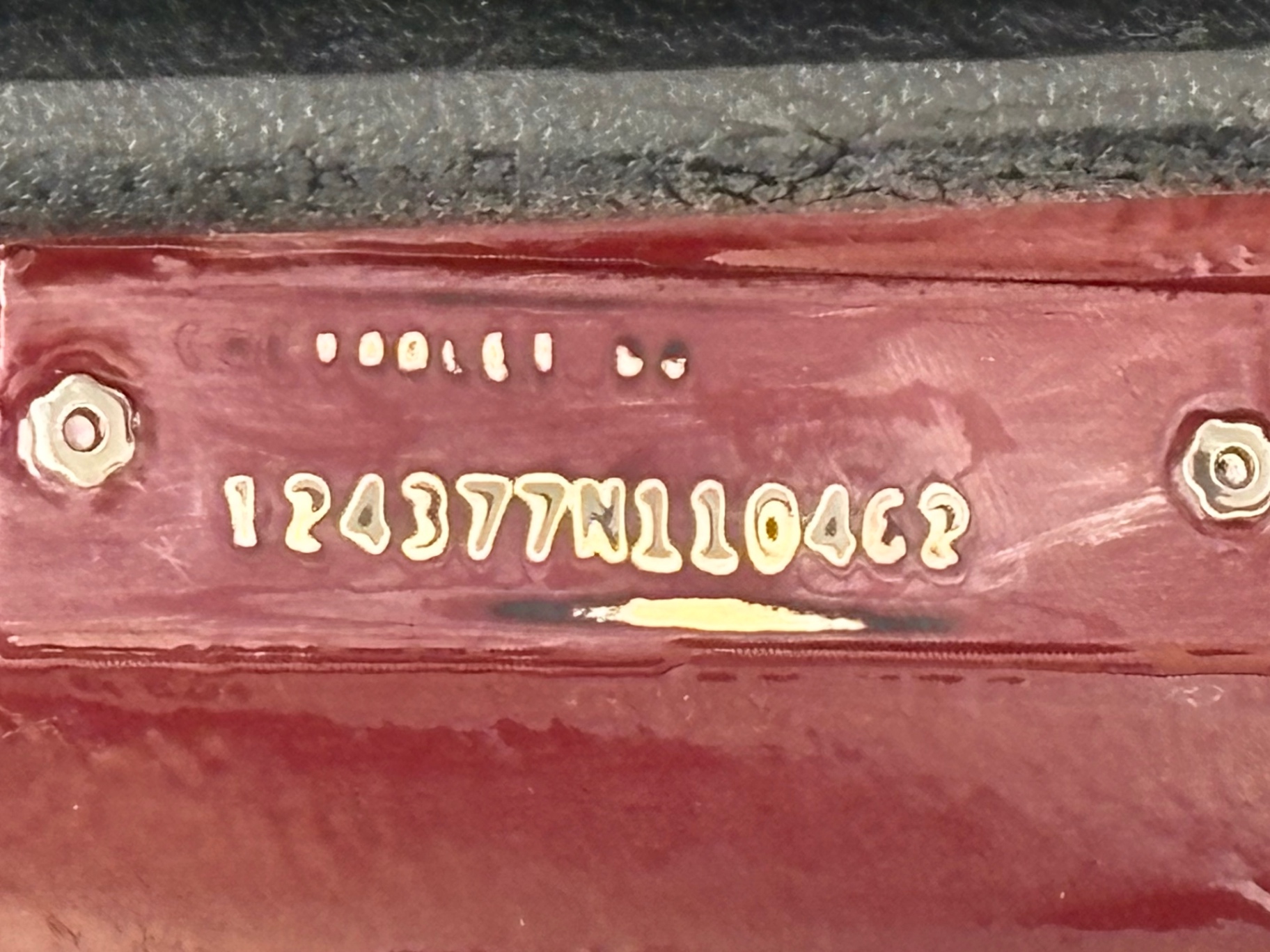
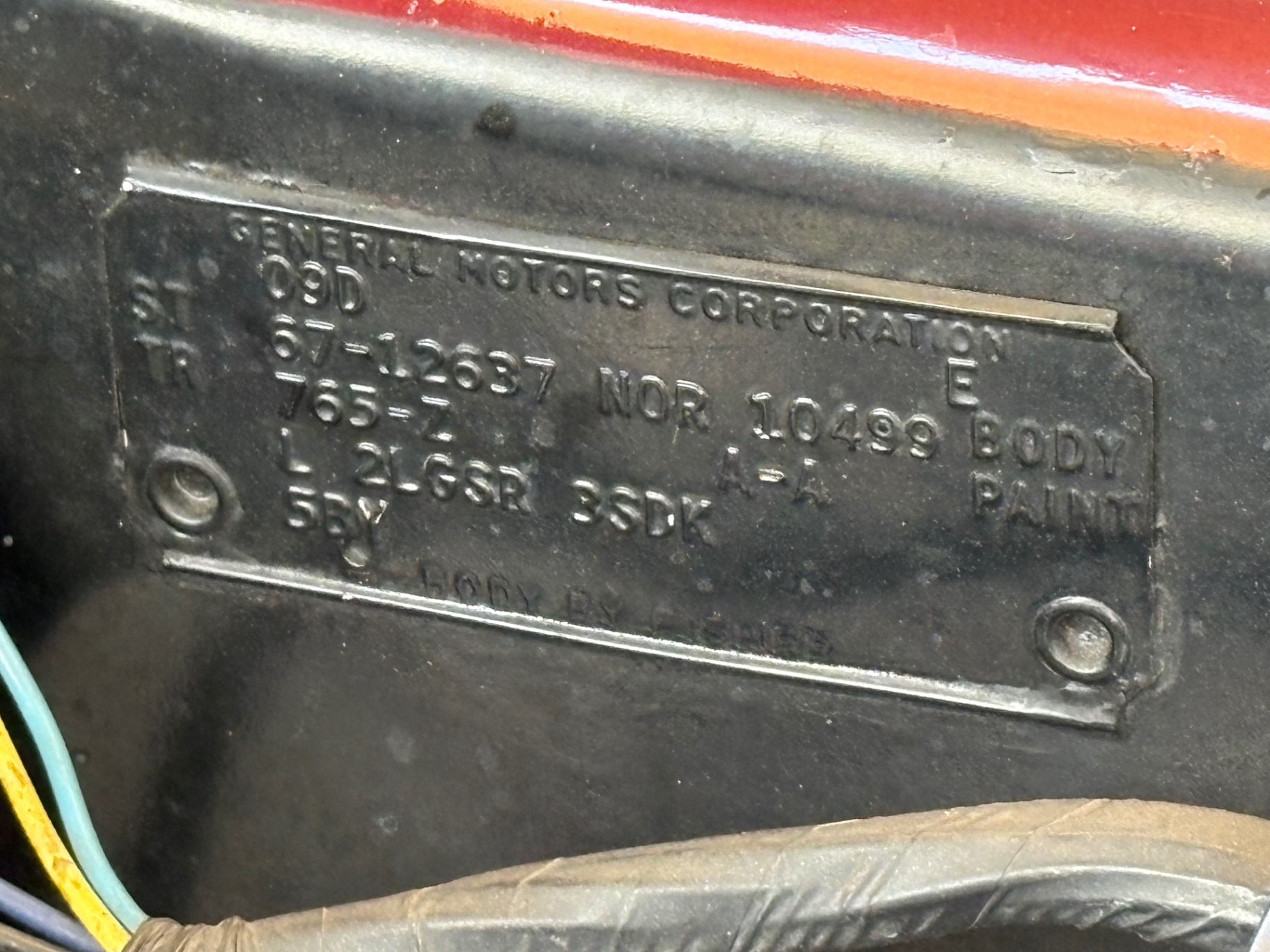
The VIN on this car decodes to a 1967 Camaro Sport Coupe built at the Norwood, Ohio assembly plant. The seventh character confirms this is a V8-equipped car from the factory, which aligns with the 350 cubic inch small block under the cowl hood today. Norwood-built first-gen Camaros have a devoted following among collectors, and Norwood production has been well documented by Camaro Research Group records.
This particular 1967 Camaro RS was fully restored in 2021 and has been upgraded with a thoughtful combination of performance hardware and retained factory features — including several options that were not commonly ordered, which we will detail below.
Features List
- 350 cubic inch small block V8, rated at 300 horsepower - Muncie 4-speed manual transmission - Factory RS Badge Package with hidden headlights - Headman ceramic-coated headers with 2.5-inch exhaust - Stainless steel mufflers, dual exhaust - Open-element chrome air cleaner - Steel cowl induction hood - Moser aftermarket 12-bolt rear end - CalTracs suspension system - QA1 shocks - Aftermarket rear sway bar - 17-inch American Racing Torque Thrust wheels with wide tires - Factory console with factory gauges - Factory tachometer - Rare factory tilt steering column - Rosewood wood-rim steering wheel - Floor shifter - Deluxe interior package - Rare factory fold-down rear seat - Aftermarket stereo - Front and rear spoilers - Racing stripes - Chrome bumpers with bumper guards - Optima battery - Clean undercarriage
Mechanical
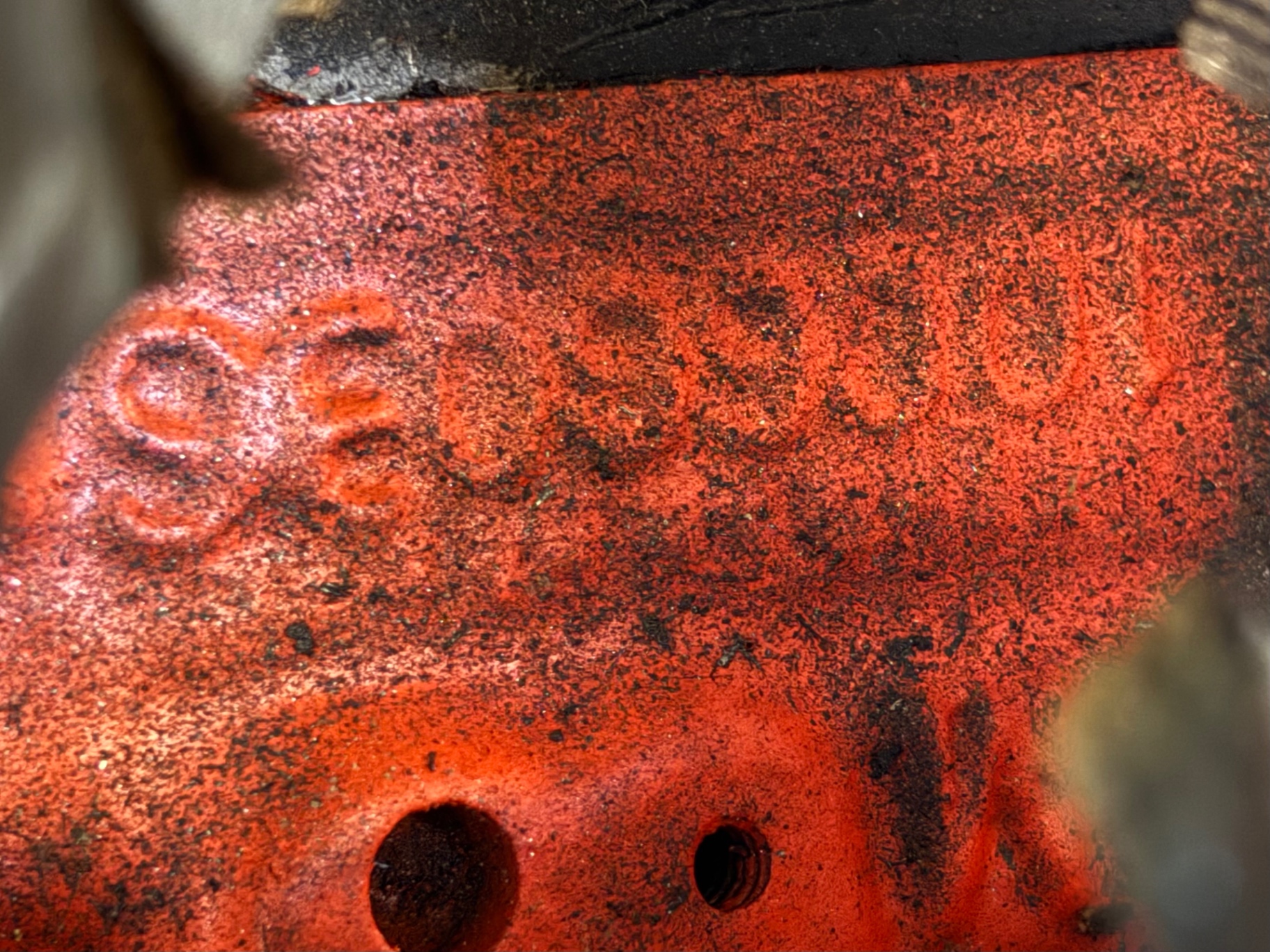
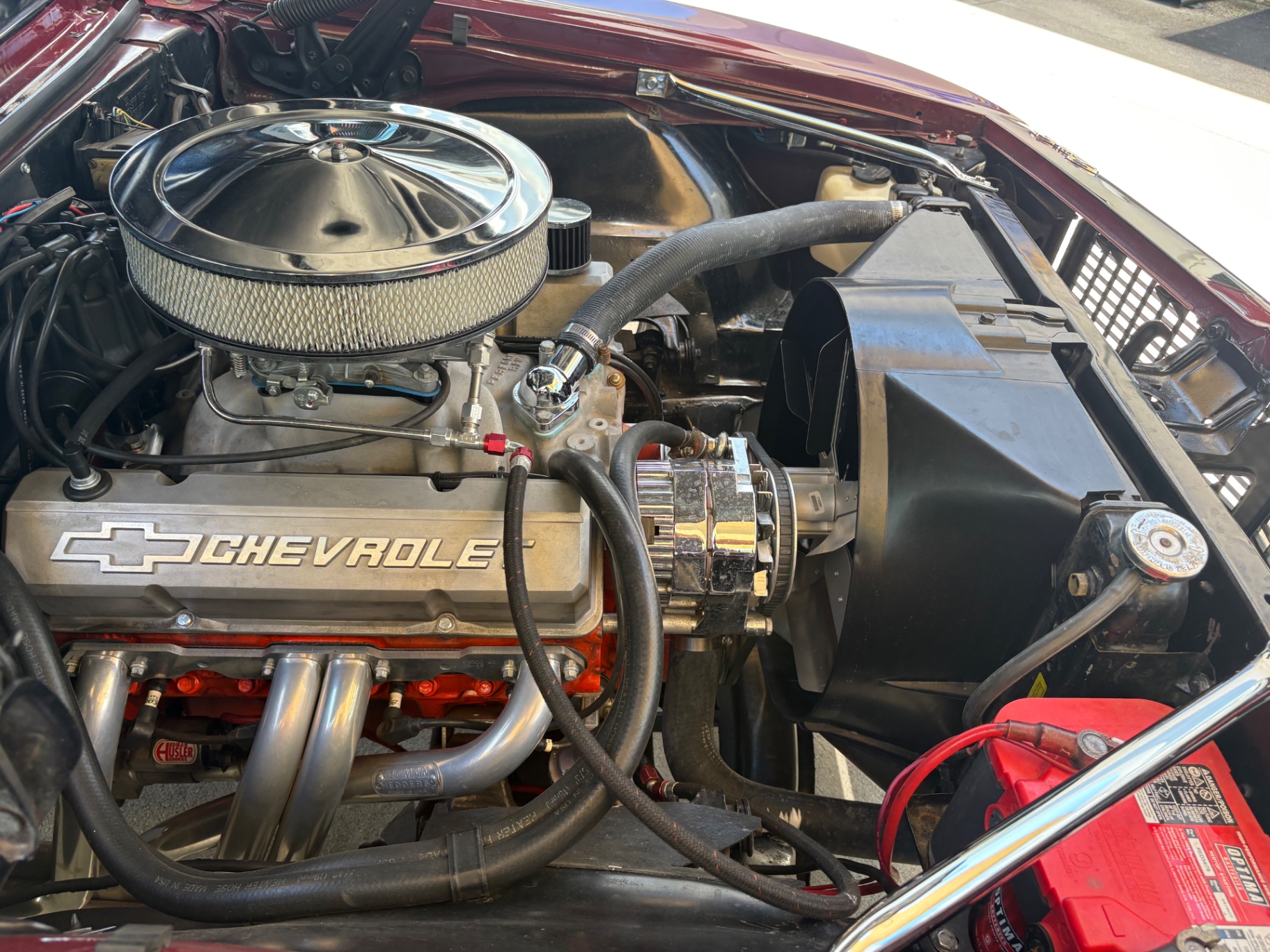
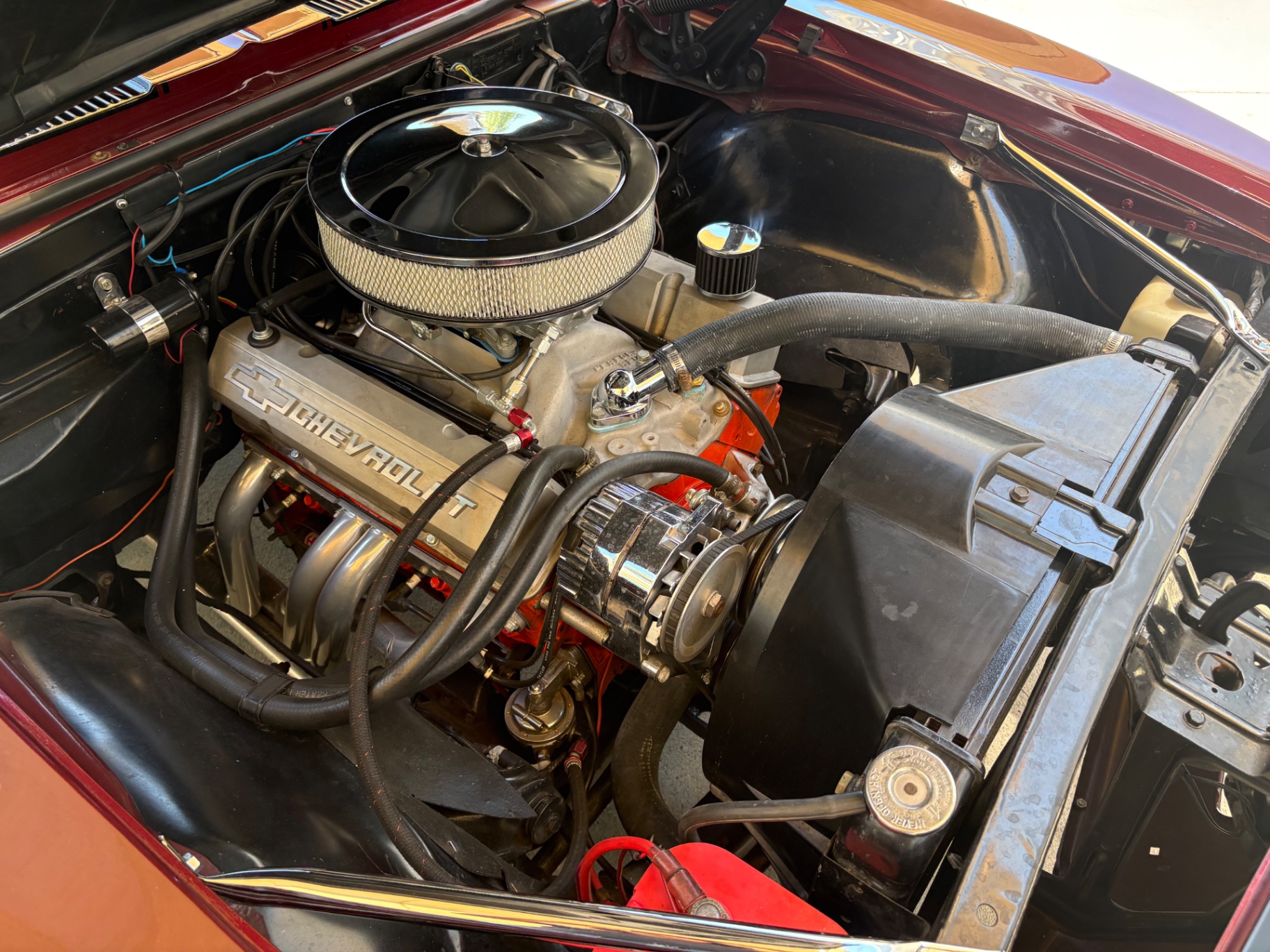
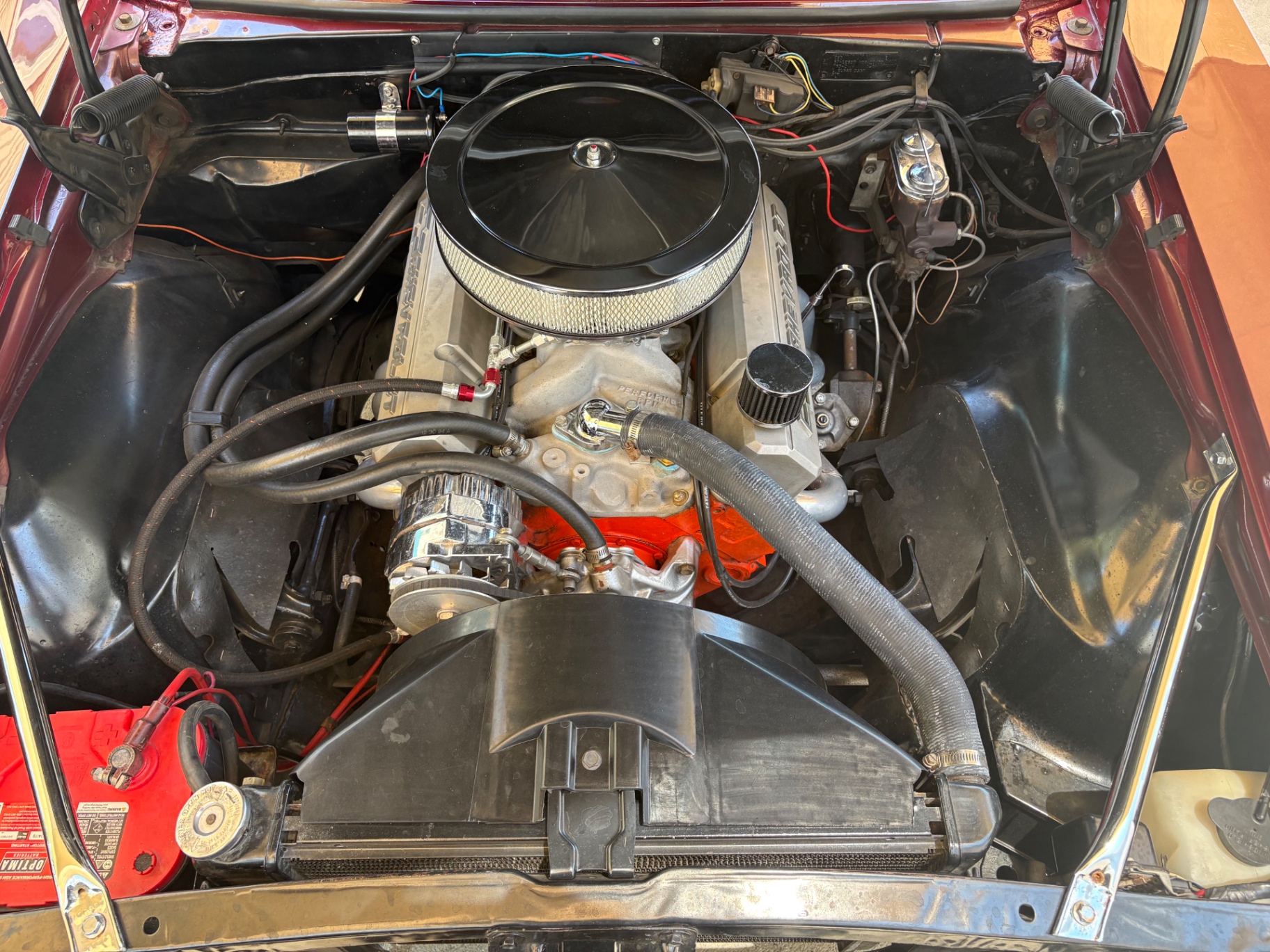
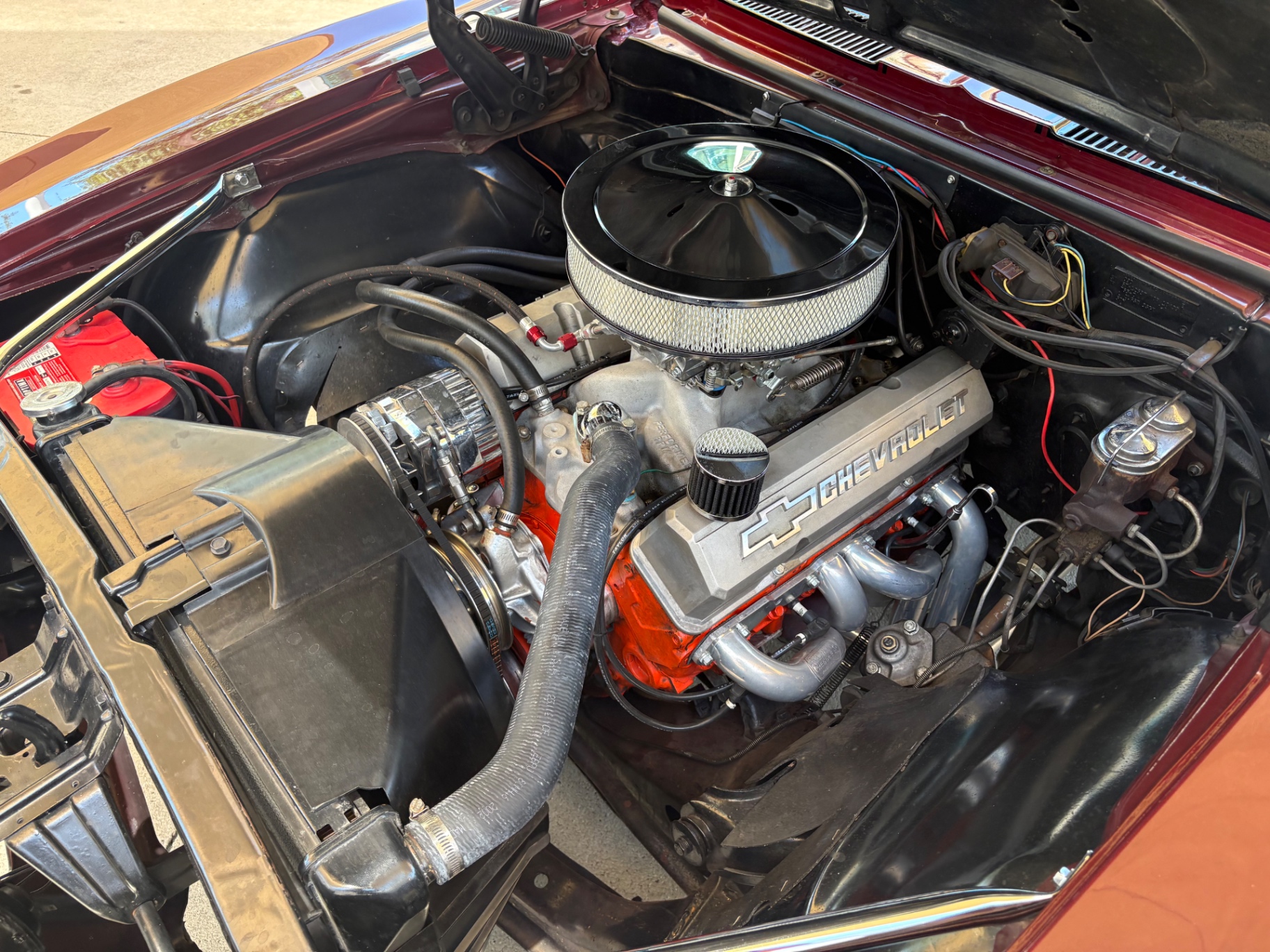
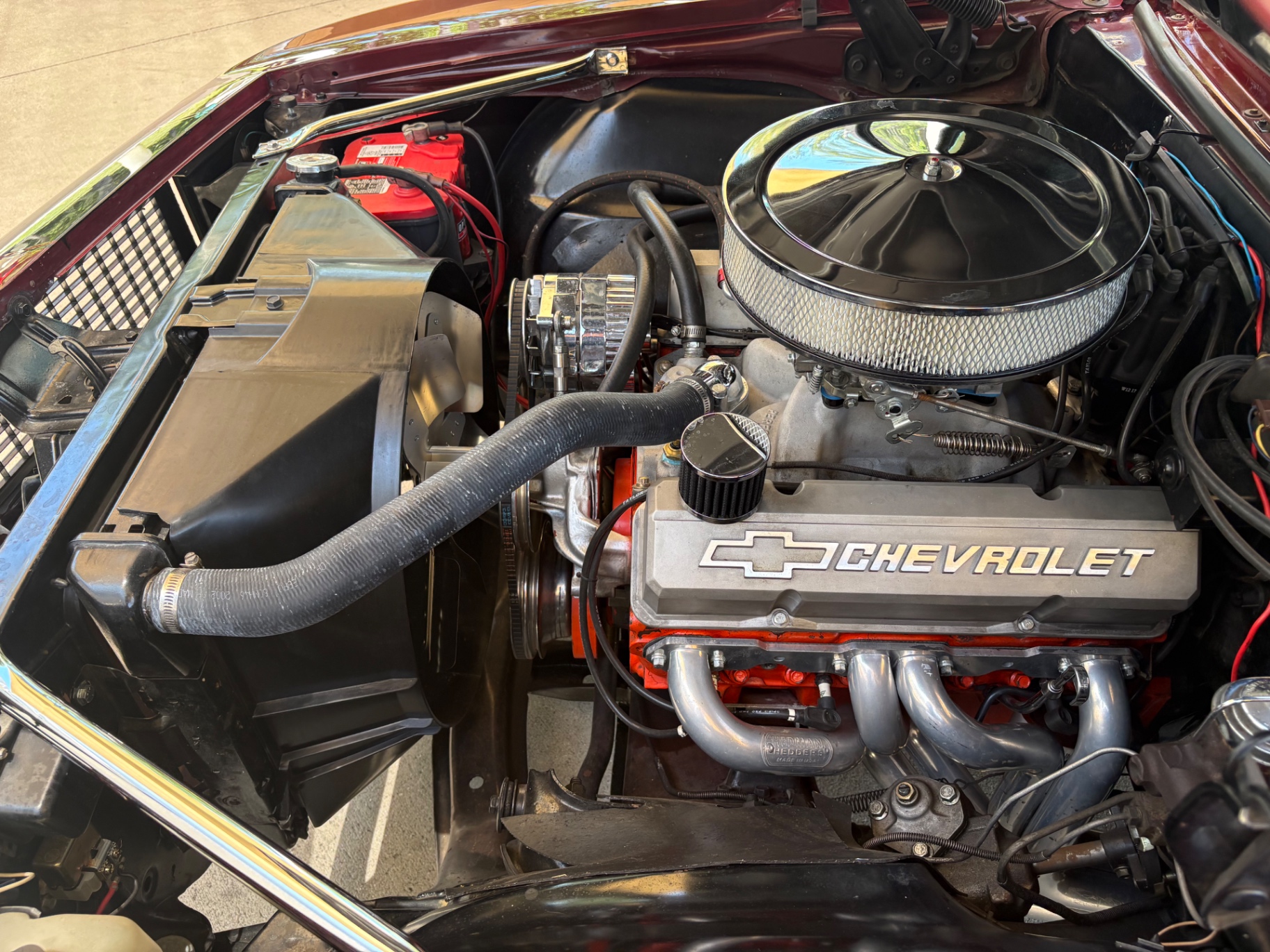
The engine in this 1967 Chevrolet Camaro RS is a 350 cubic inch small block Chevrolet V8 producing 300 horsepower. The 350 was introduced as a Camaro option for the 1967 model year, making its debut in this very generation of car. Backed by a Muncie 4-speed manual transmission, the drivetrain combination here is the kind of setup that made these cars popular on both the street and the track in the late 1960s — and it still works exactly that way today.
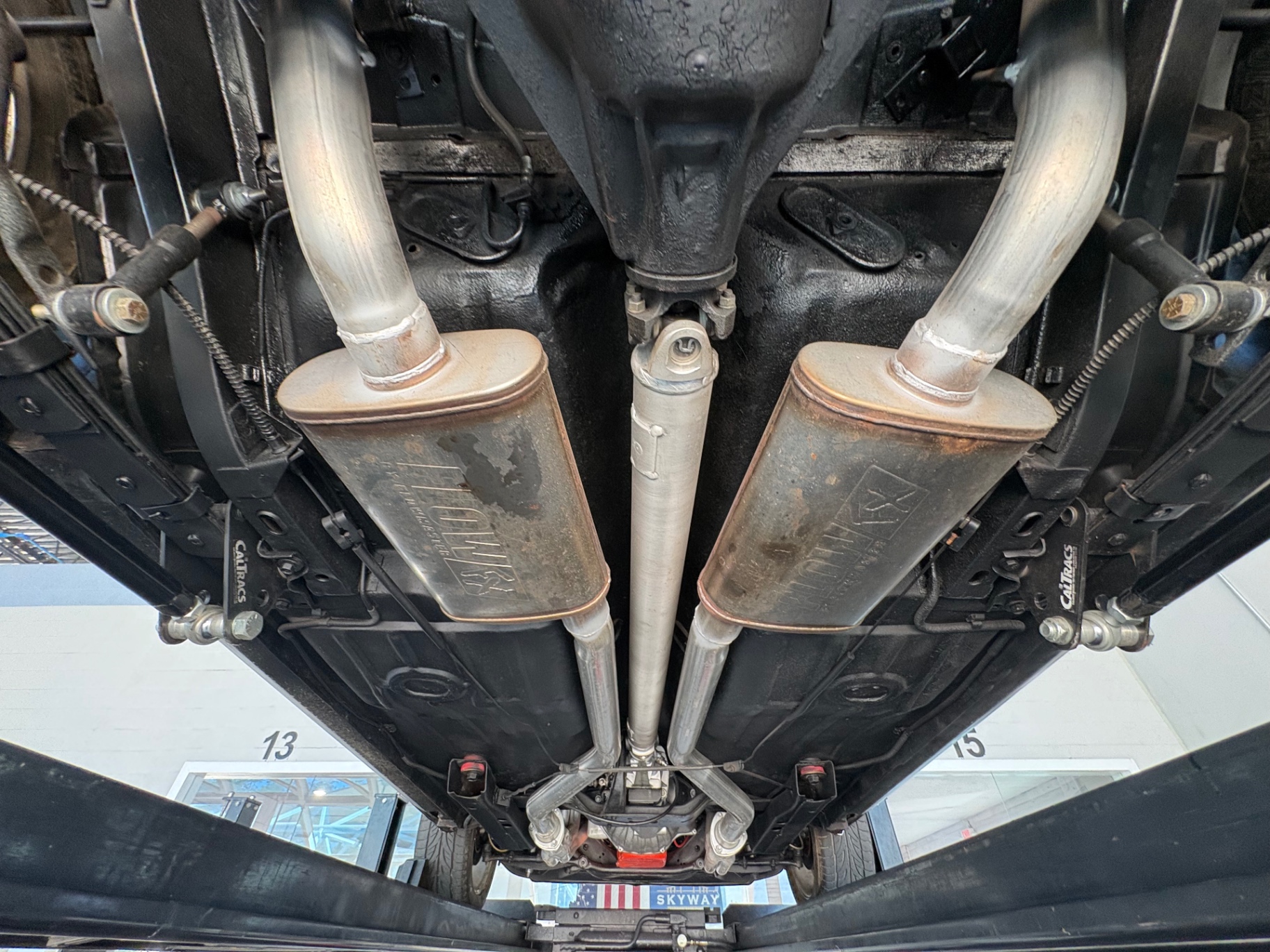
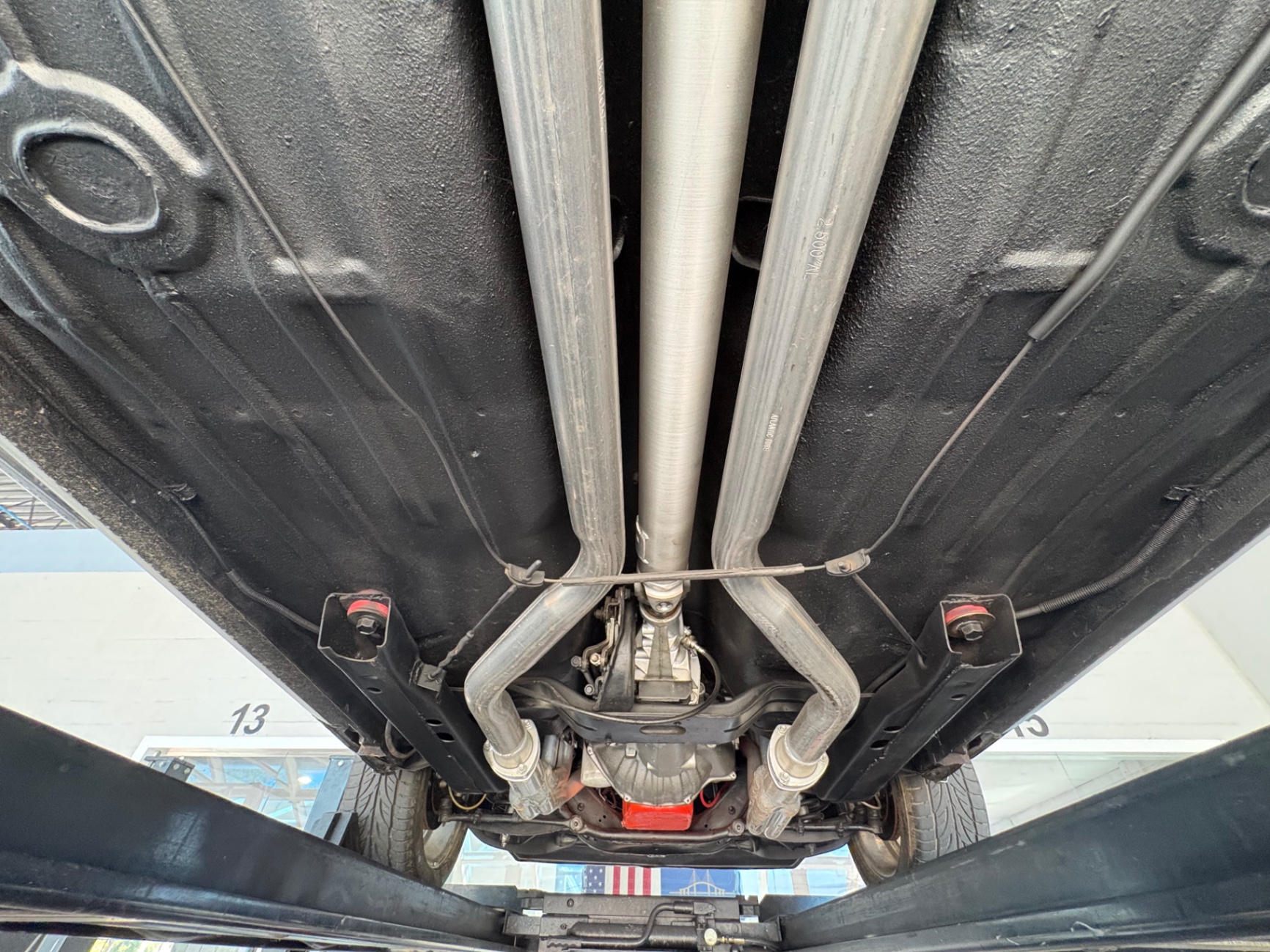
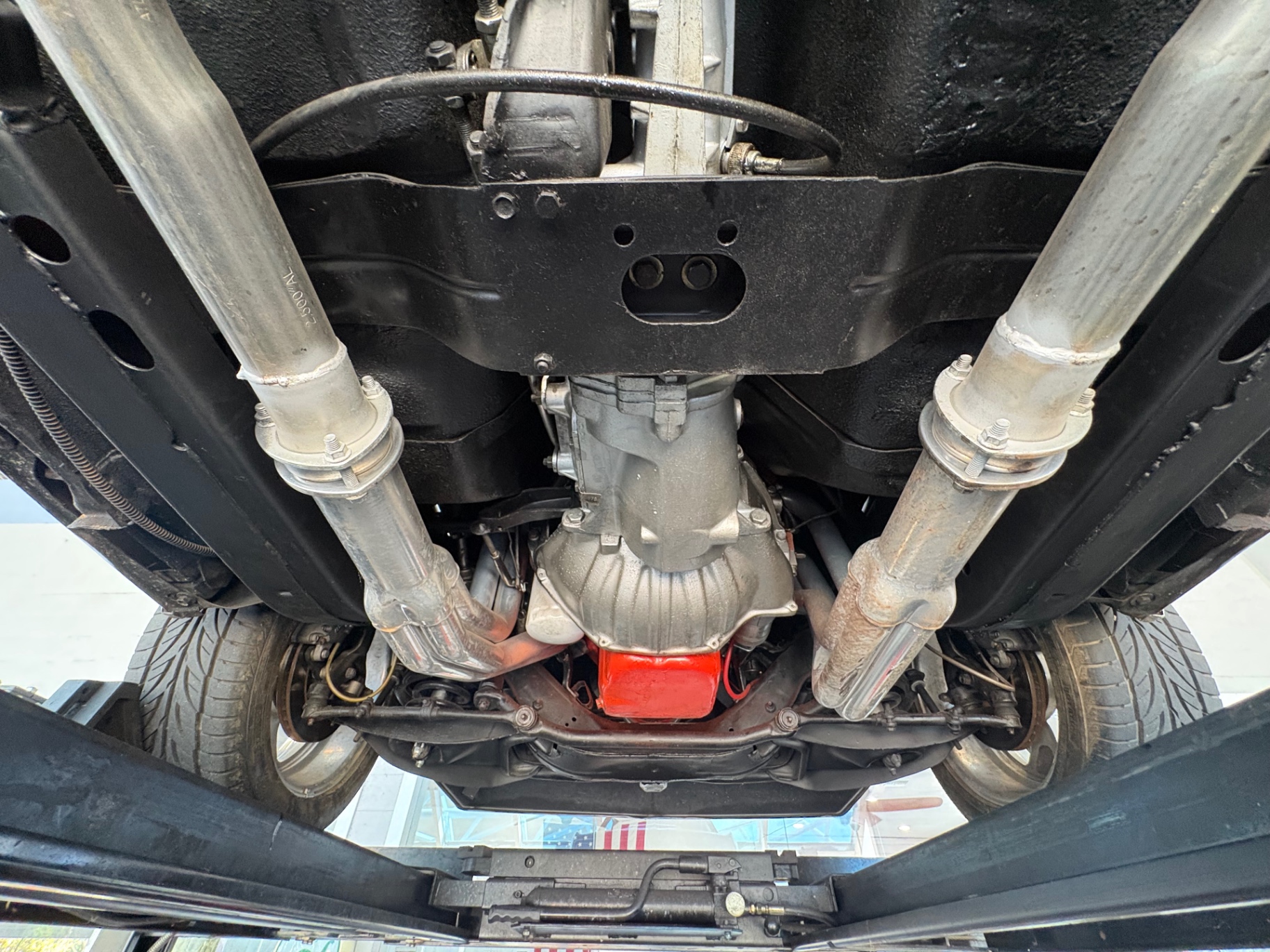
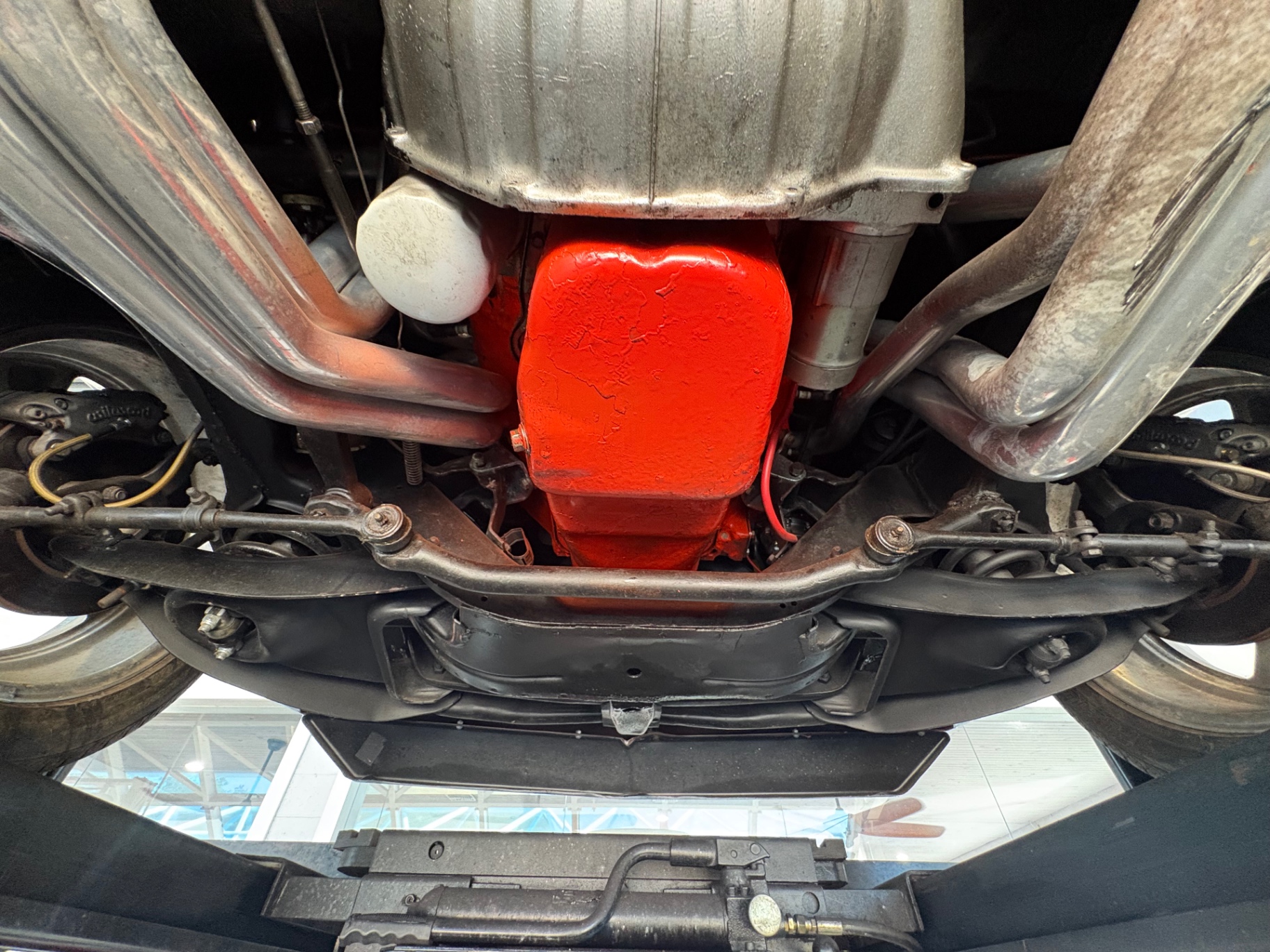
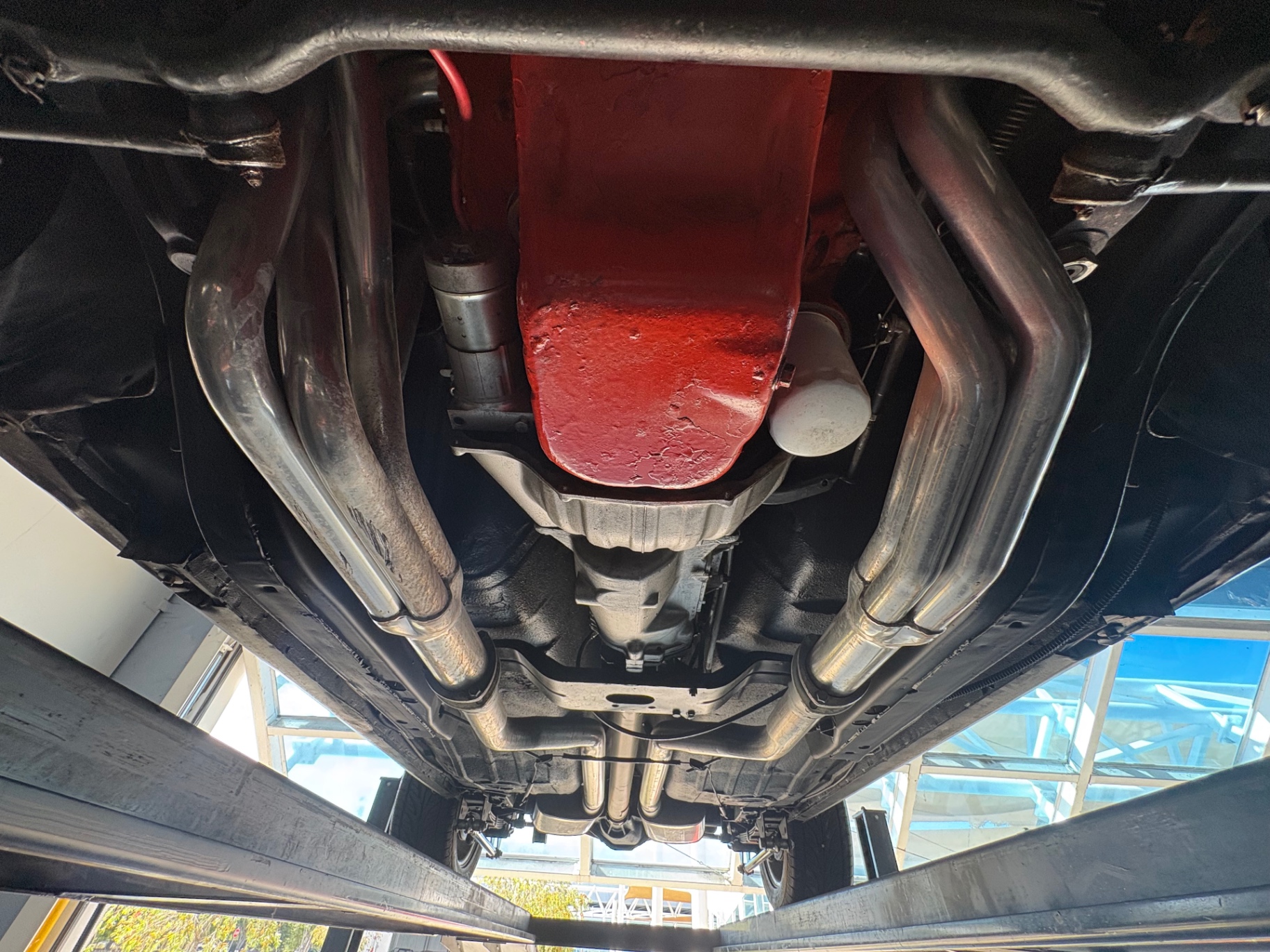
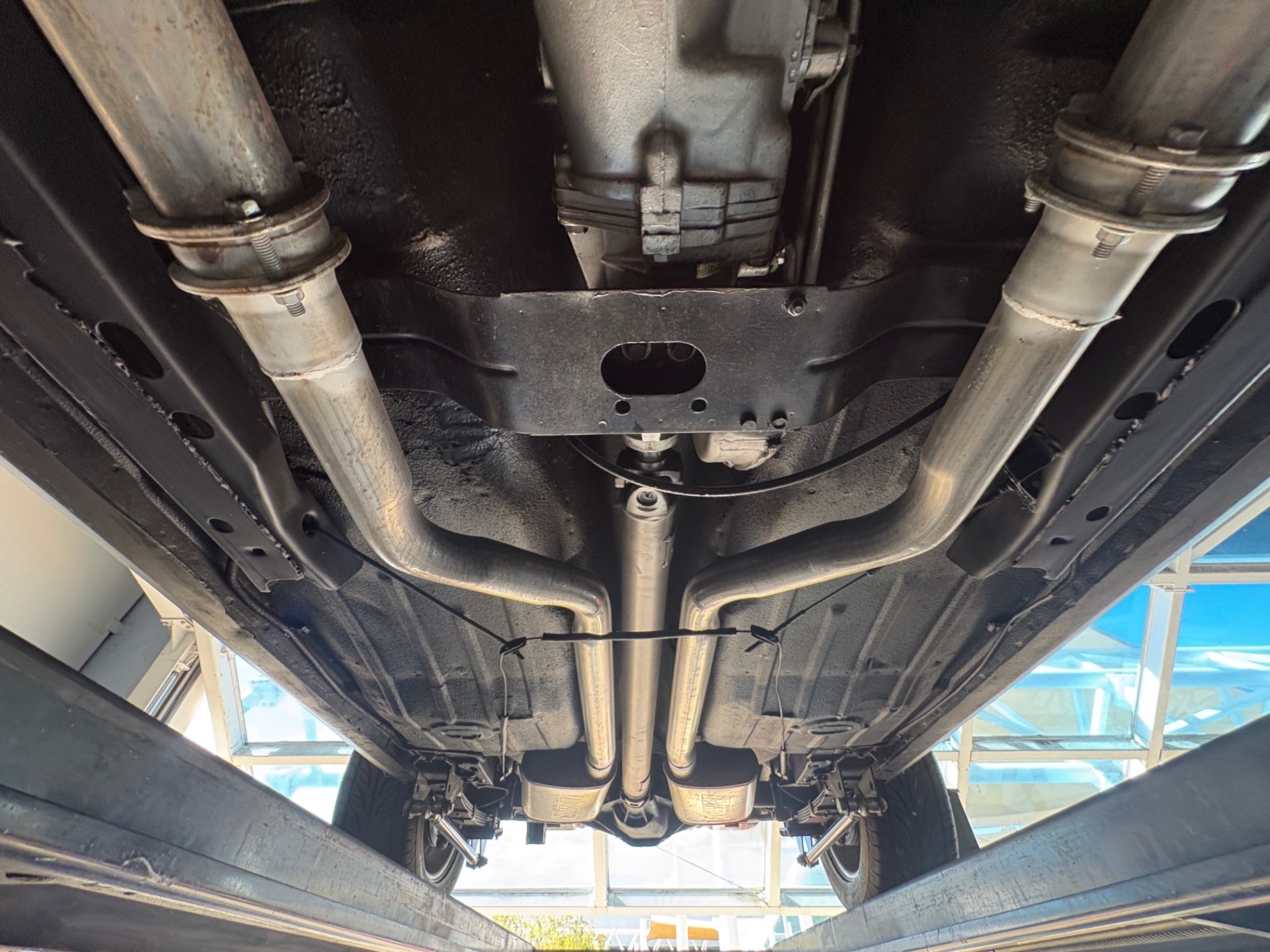
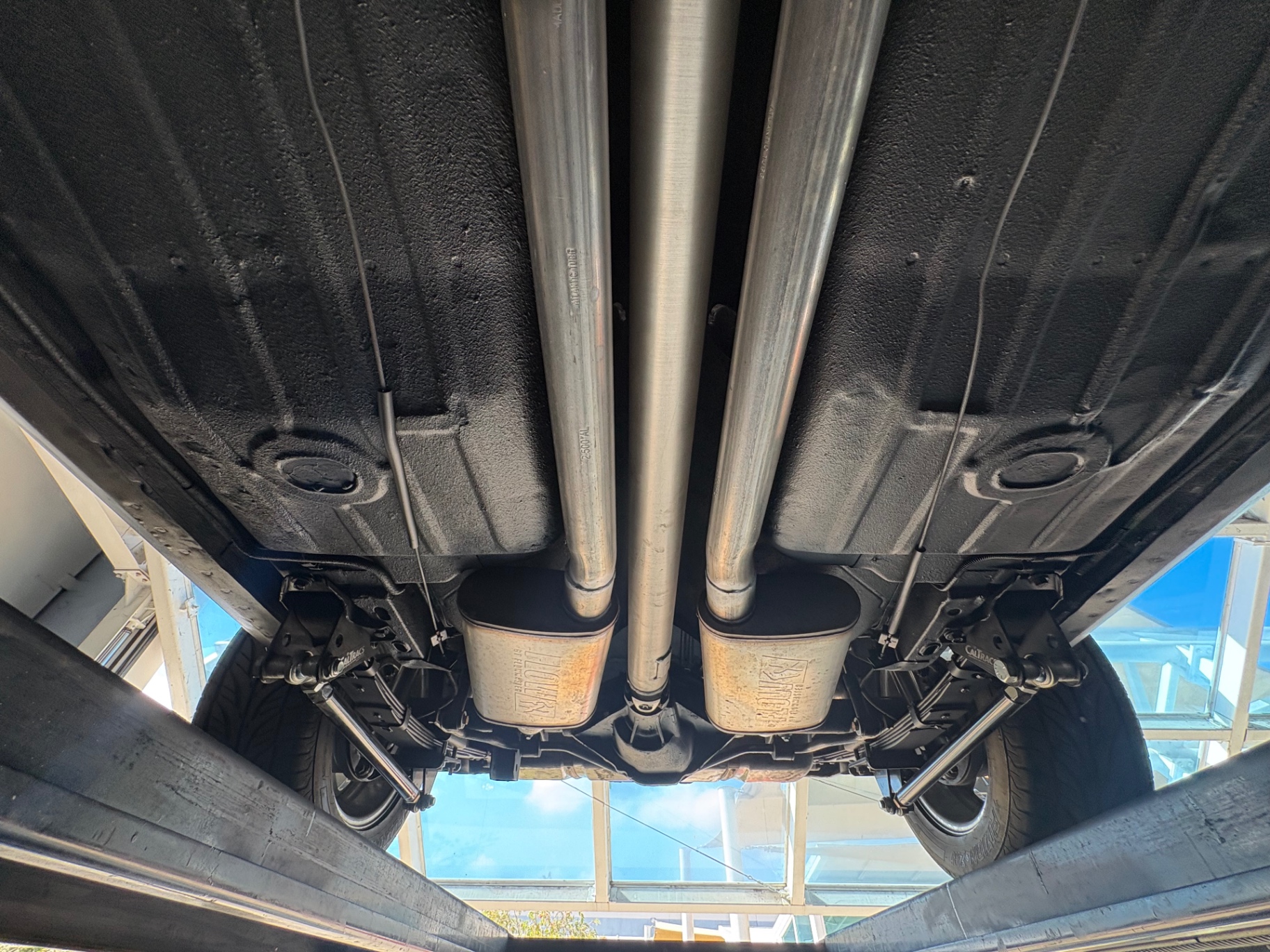
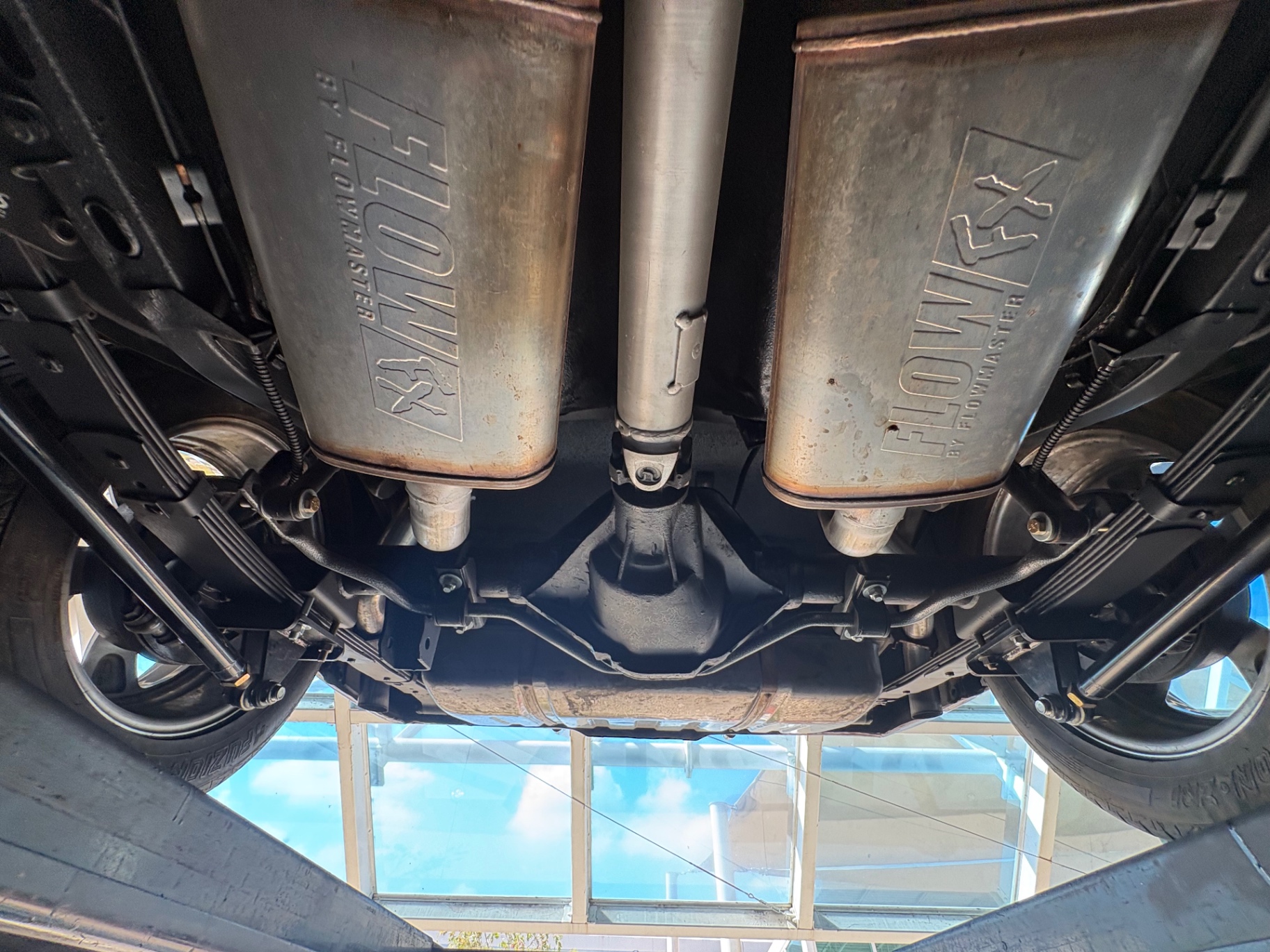
The exhaust system is a properly spec'd performance setup. Headman ceramic-coated headers flow into 2.5-inch pipes and exit through stainless steel mufflers. Ceramic coating on the headers helps retain exhaust heat inside the pipe, which improves flow efficiency and also protects the metal from the kind of heat cycling that causes rust and cracking over time. The sound profile of this system is aggressive without being obnoxious — it has the deep, even tone that a well-tuned small block with good headers and the right muffler produces. An open-element air cleaner sits on top of the carburetor, and the steel cowl hood above it feeds cooler outside air directly into the engine bay.
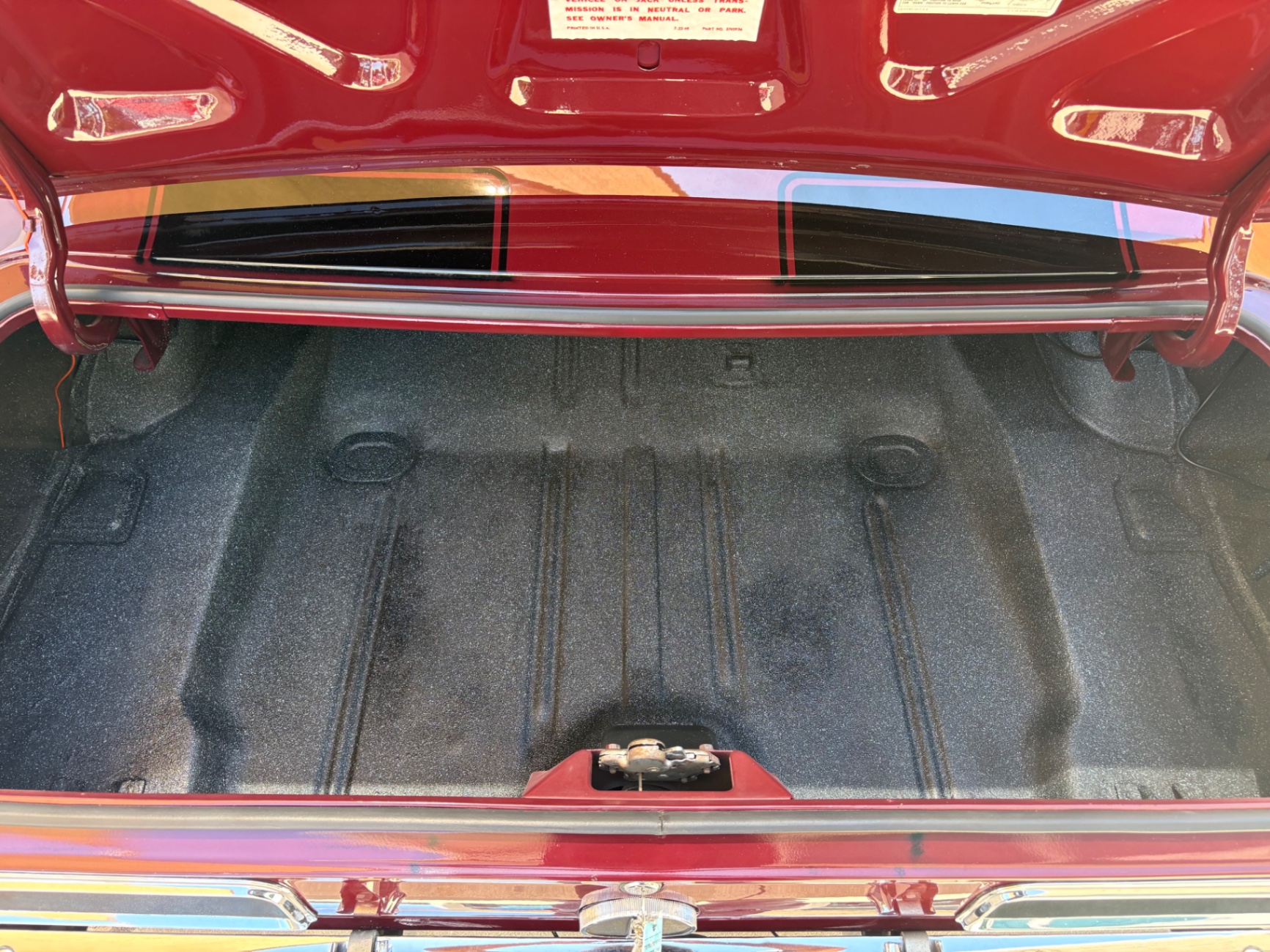
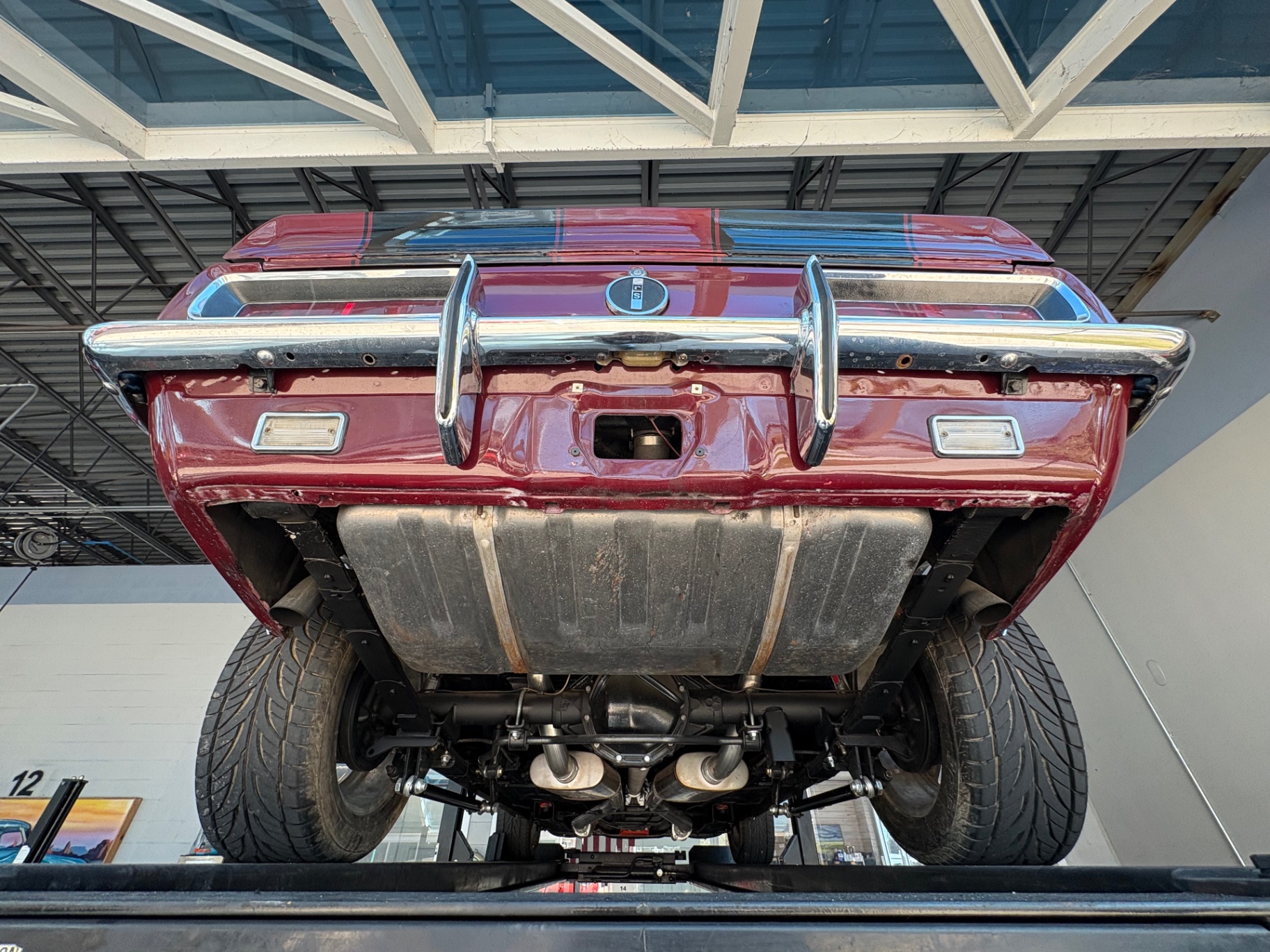
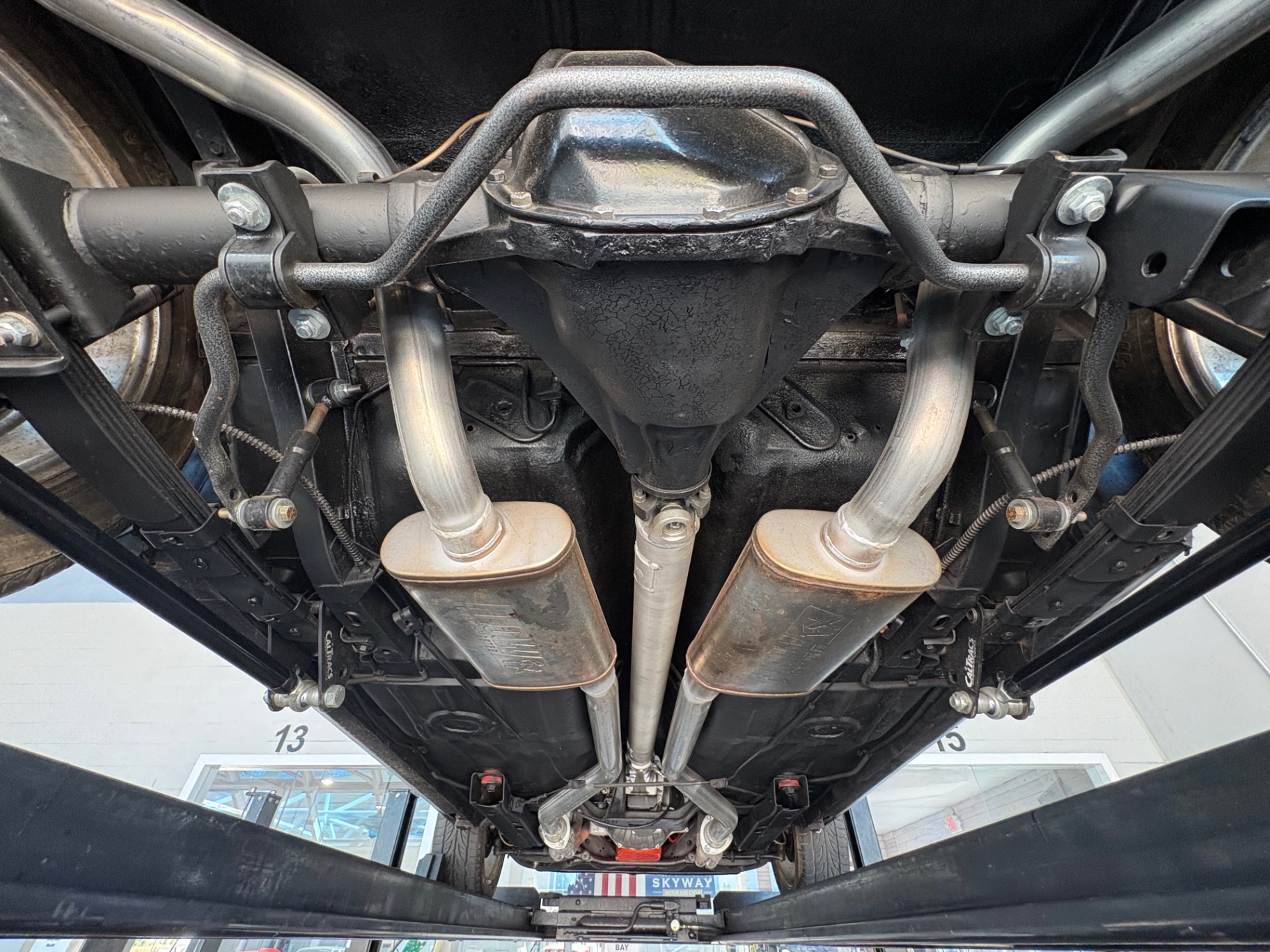
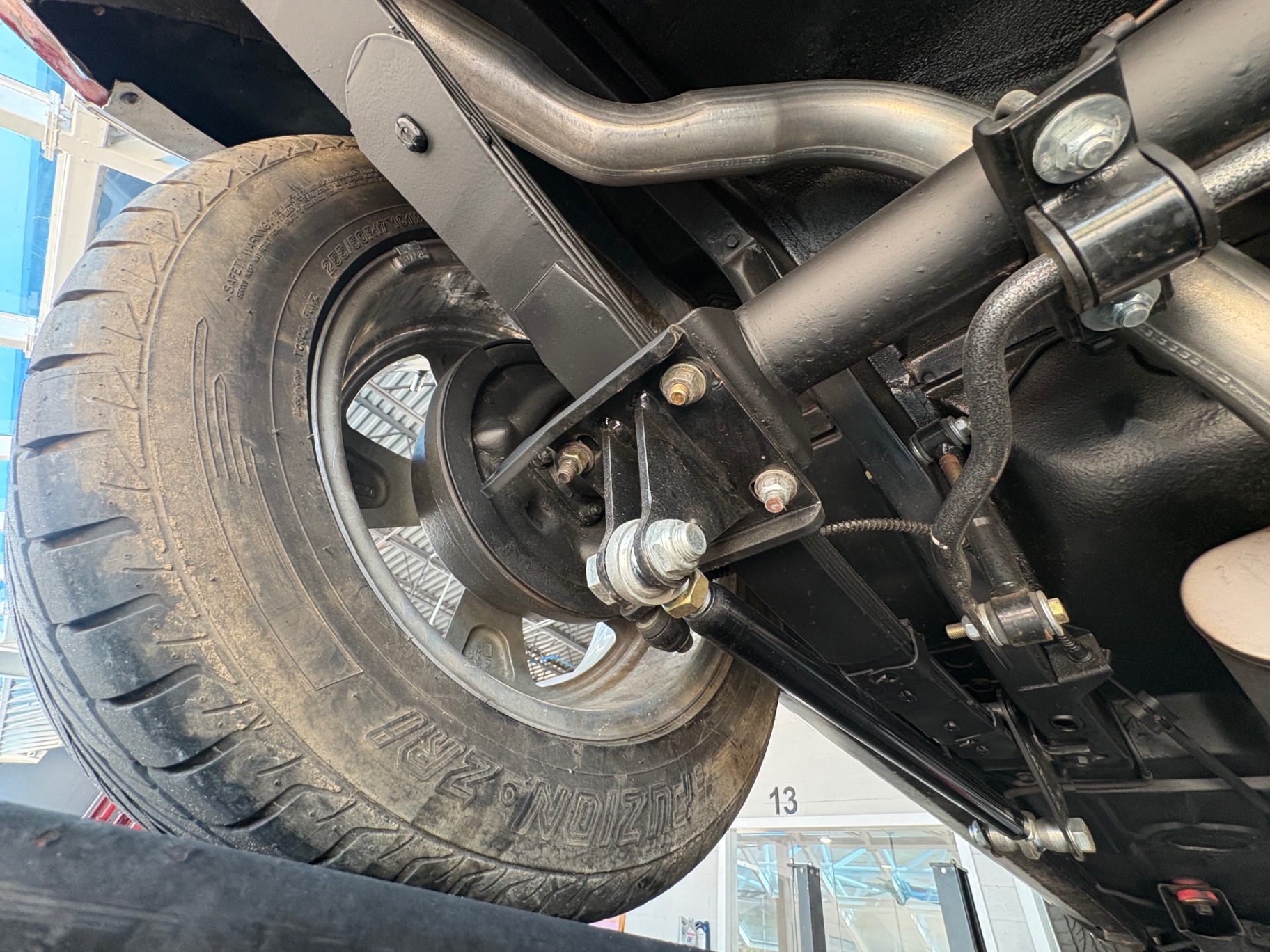
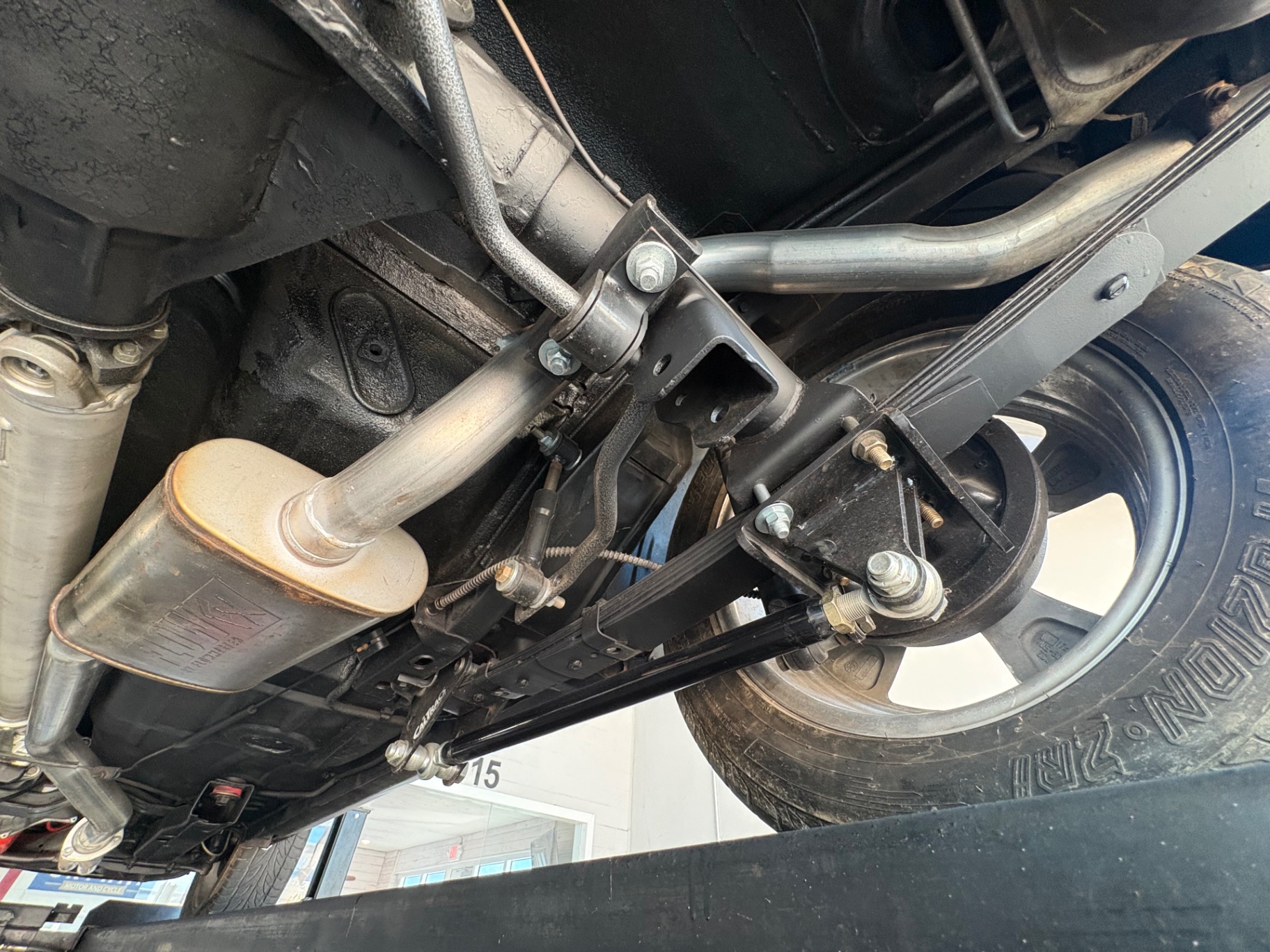
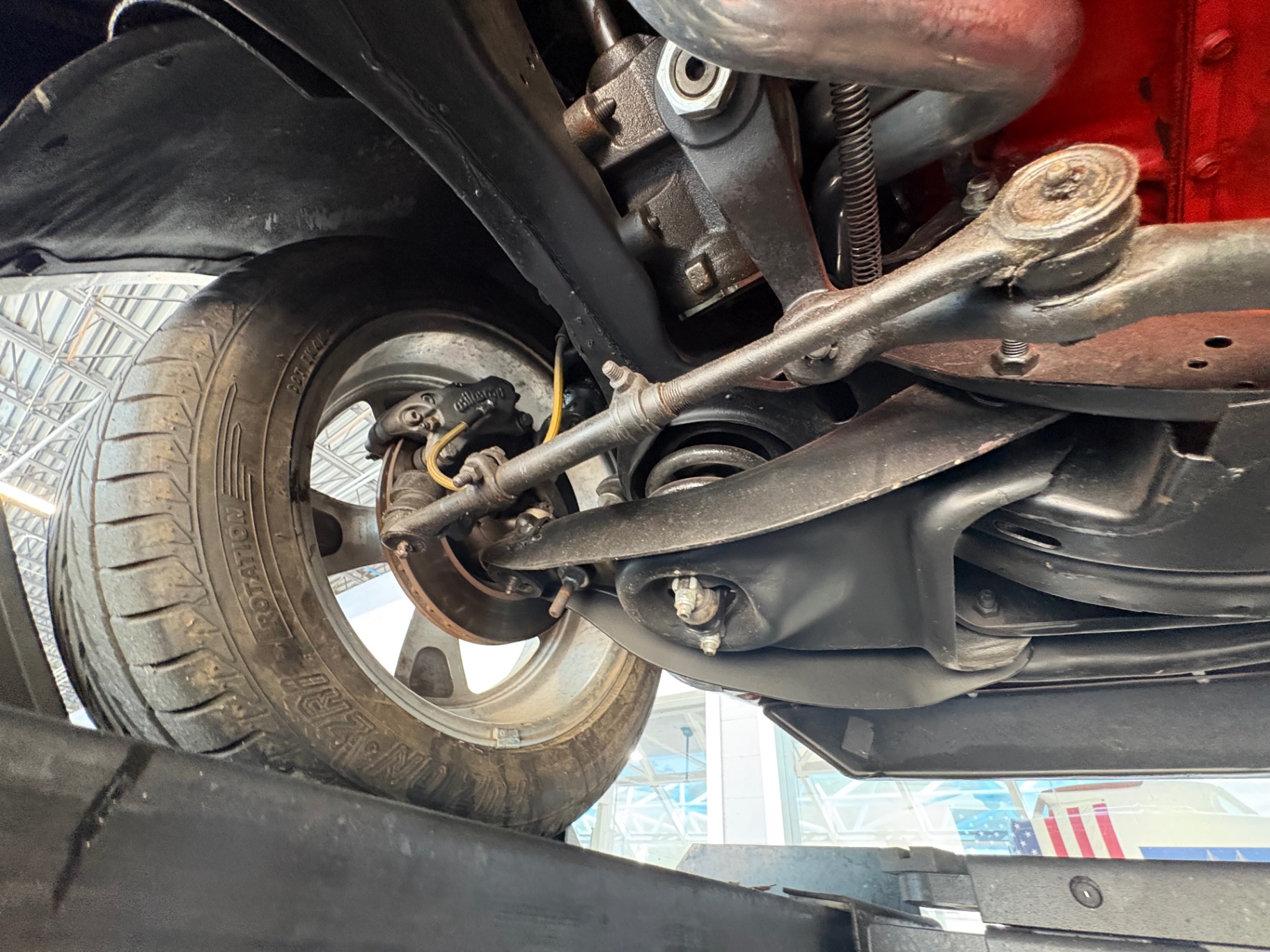
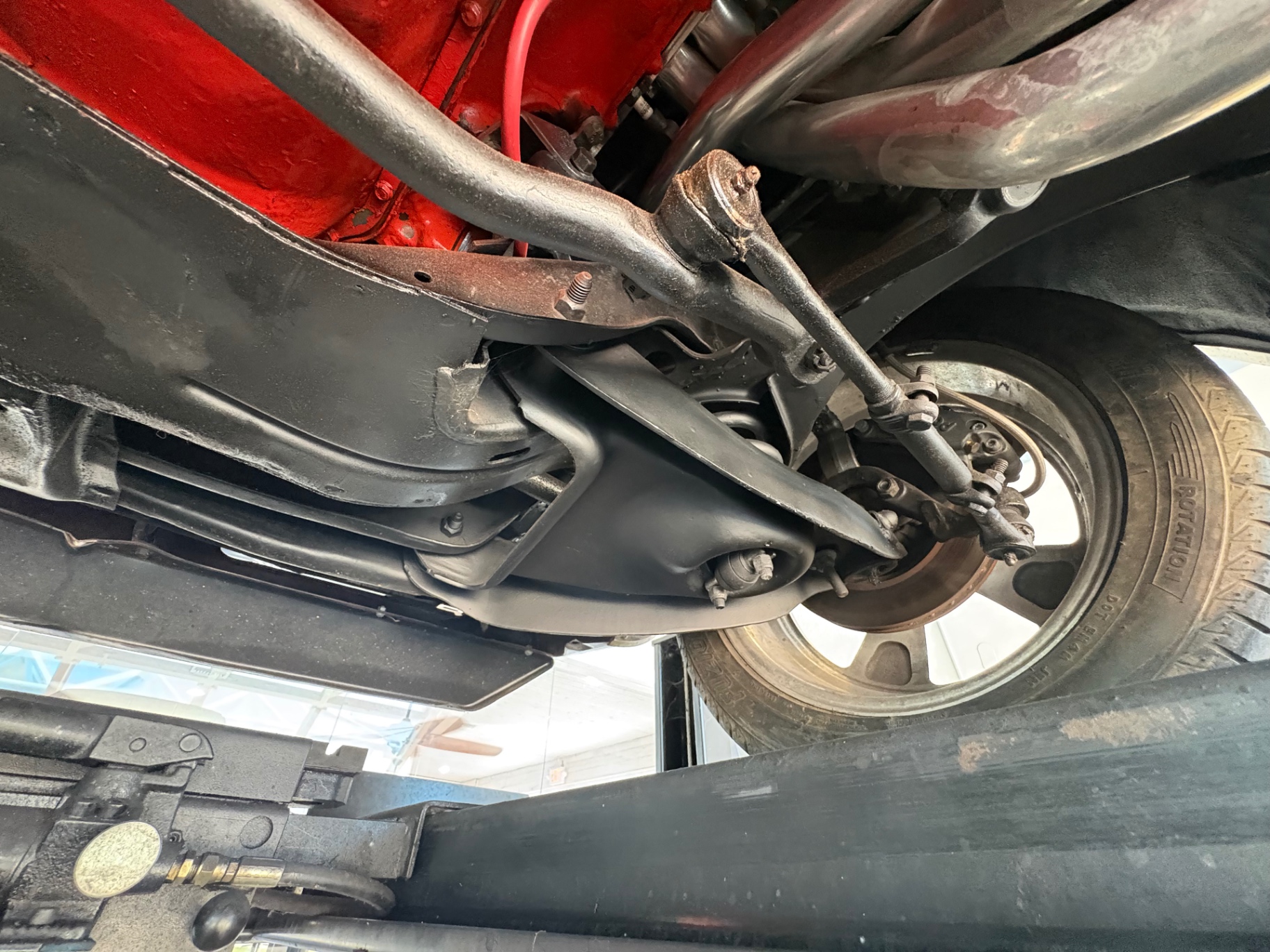
Out back, the factory rear end has been replaced with a Moser 12-bolt unit. The GM 12-bolt rear was already one of the strongest passenger car axle assemblies ever built when it came from the factory, and a Moser version takes that further with upgraded internals and axle shafts built to handle increased power. The CalTracs suspension system addresses the torque-steer and wheel hop that stock rear leaf spring setups can produce under hard acceleration. QA1 shocks and an aftermarket rear sway bar round out the suspension work, improving both straight-line traction and cornering stability. The undercarriage photographs cleanly, with no visible rust or rot — this is a Florida-kept car that received proper restoration attention in 2021.
Interior
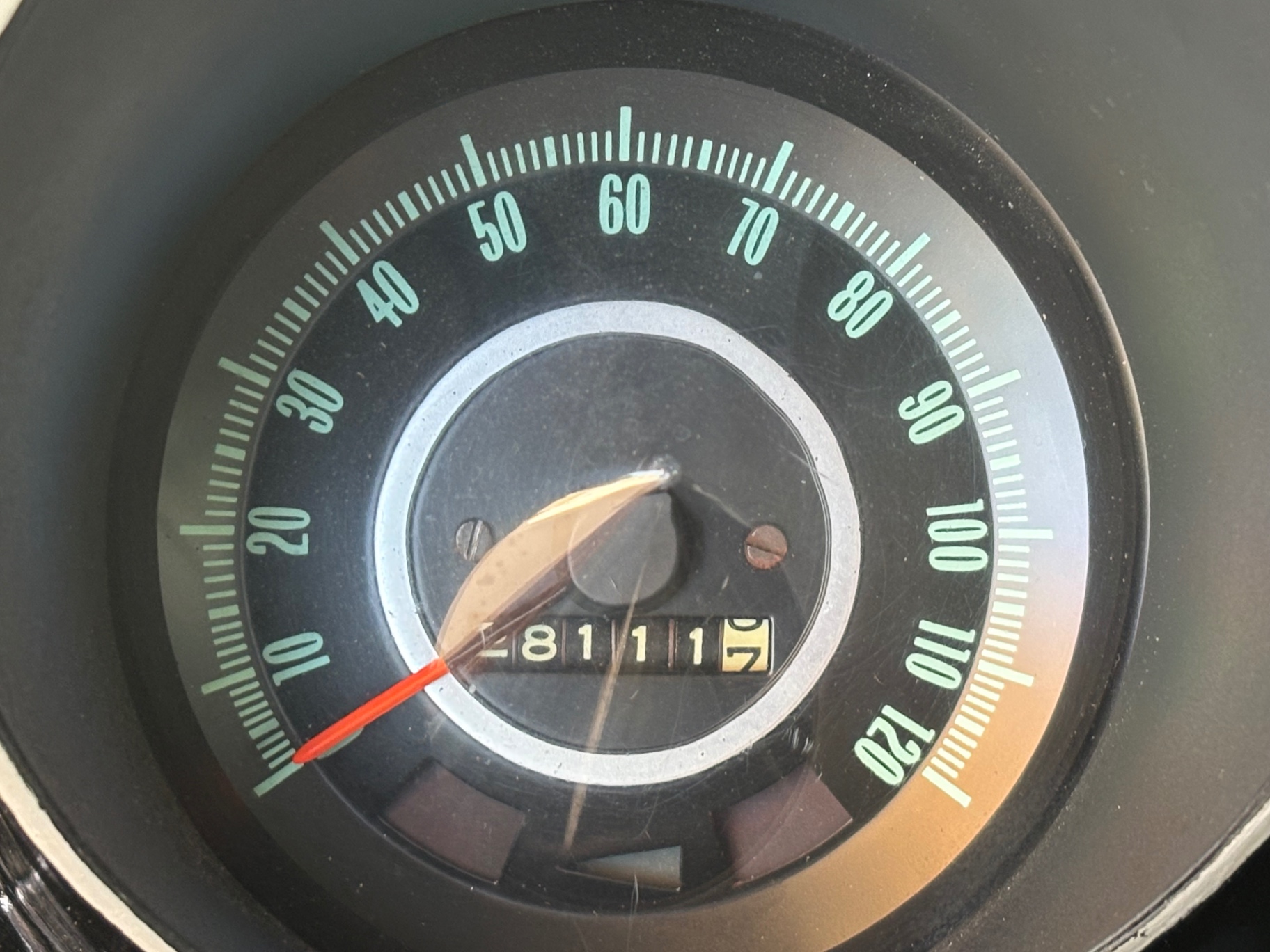
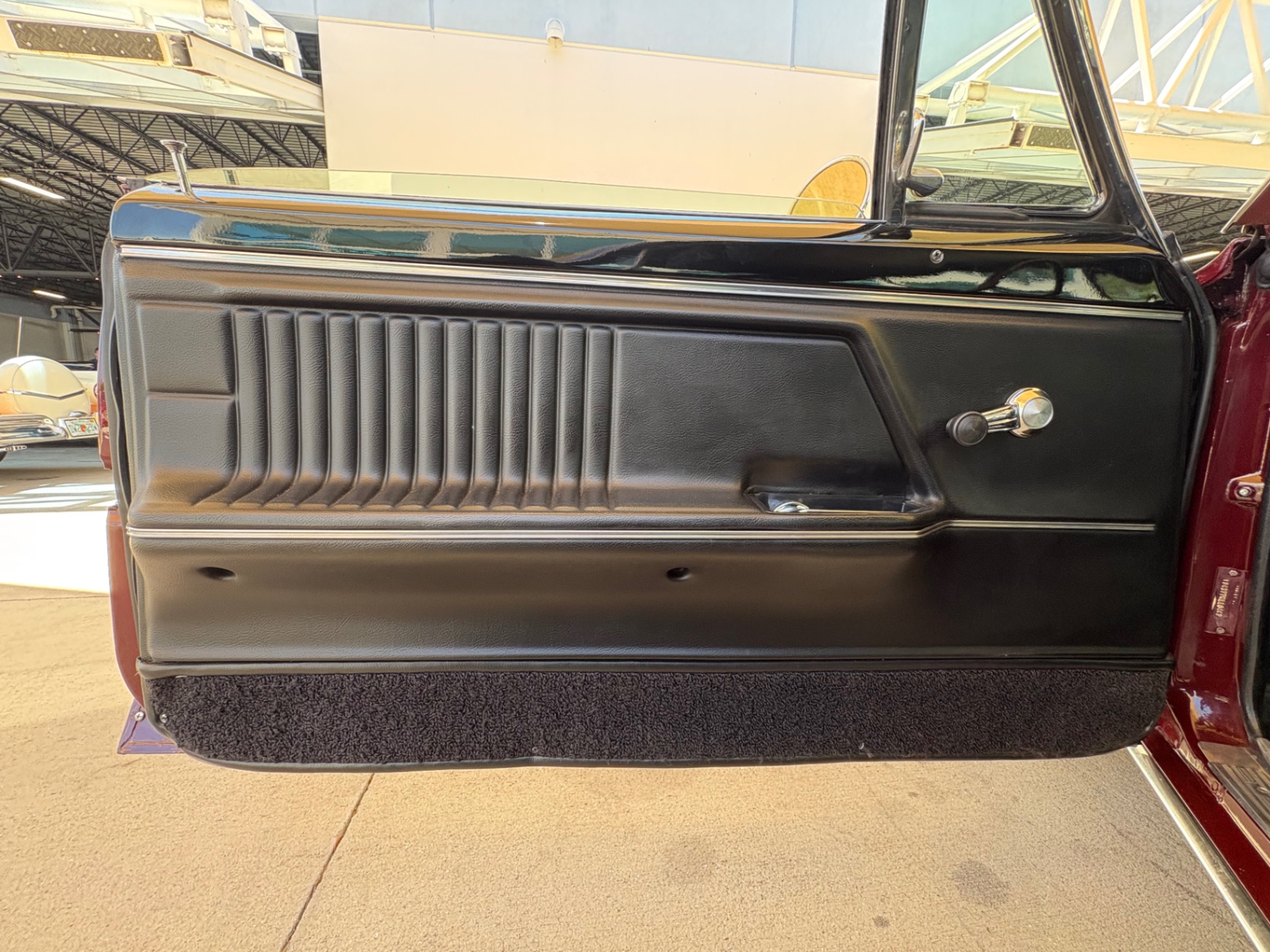
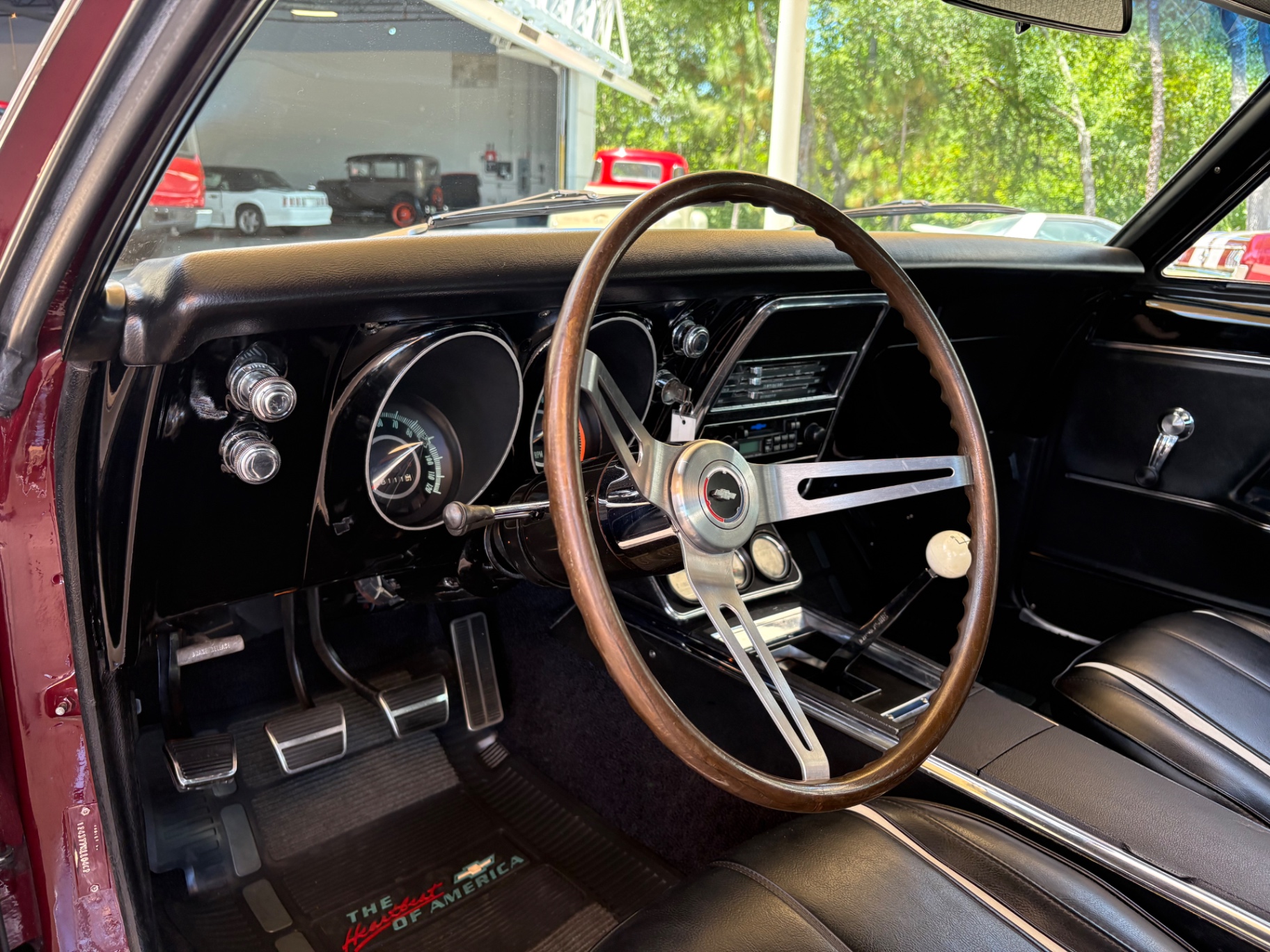
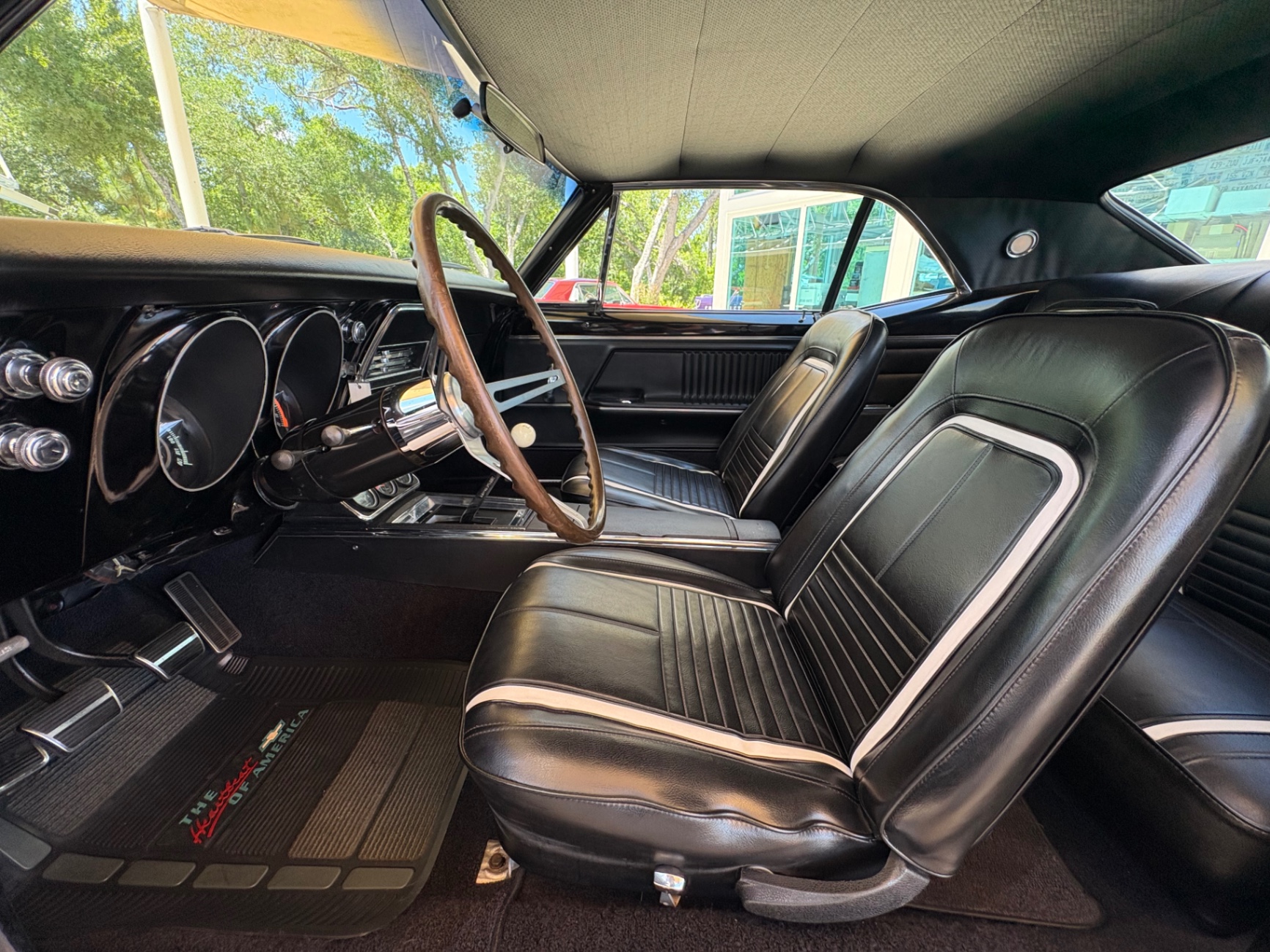
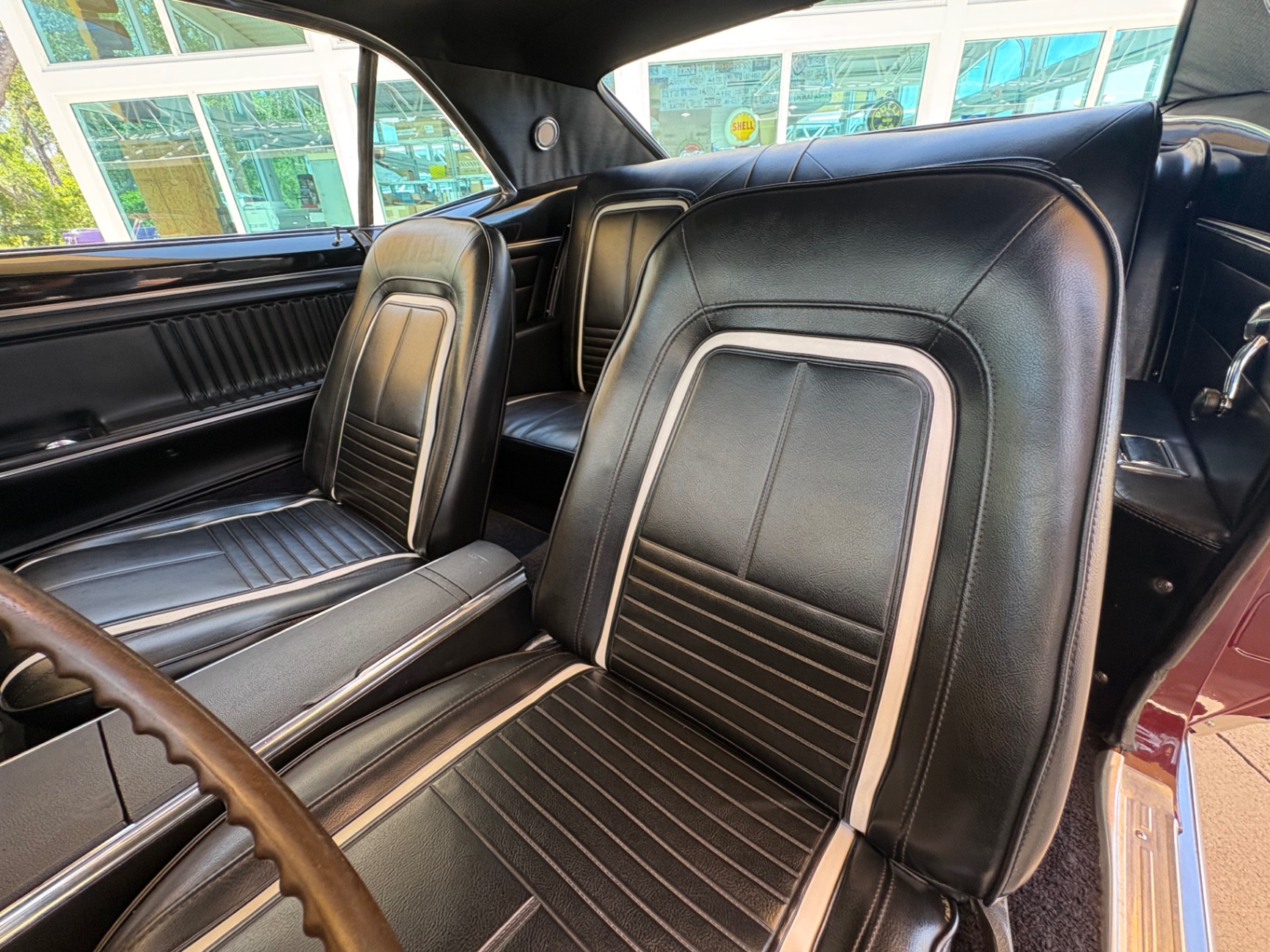
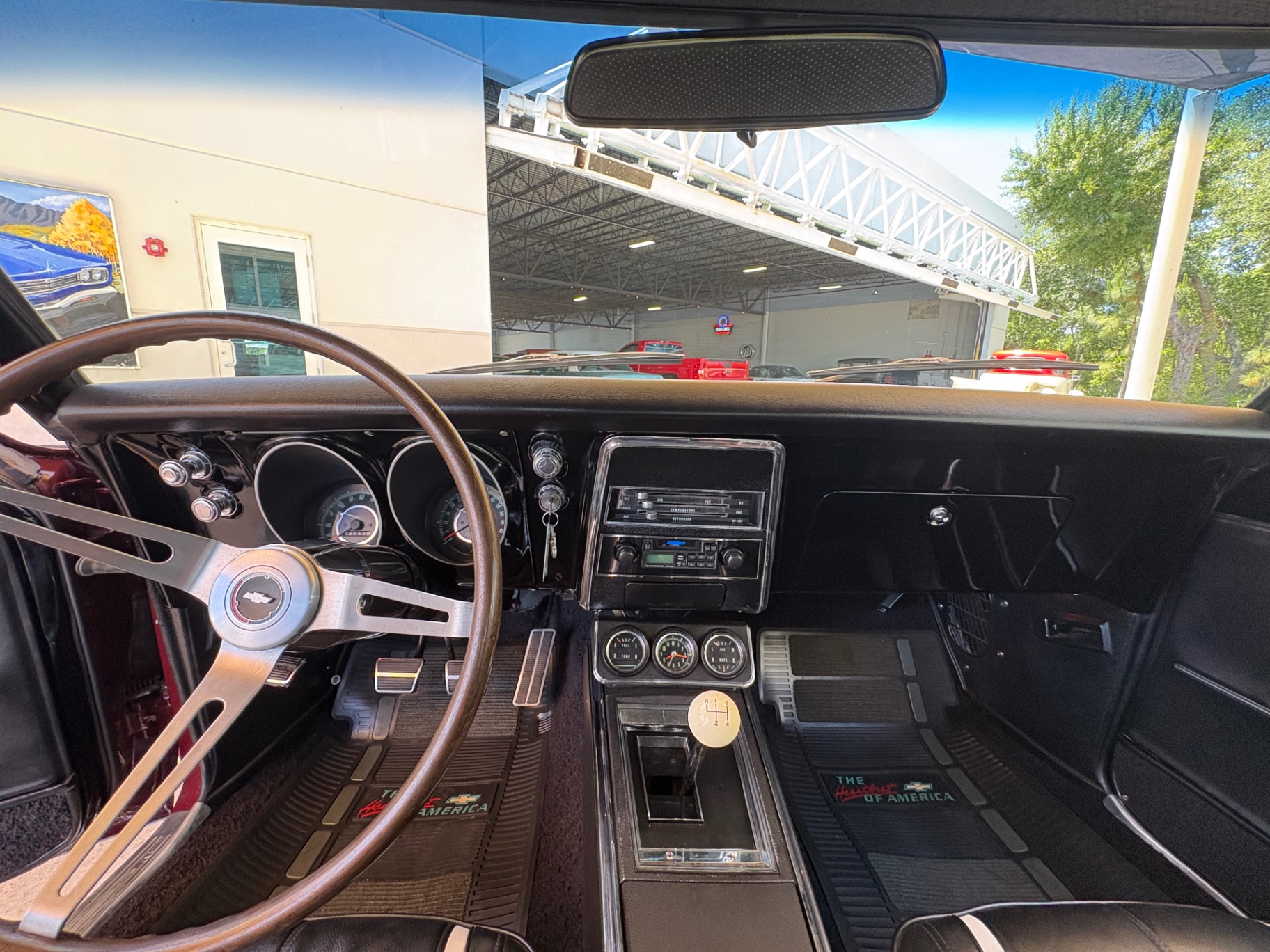
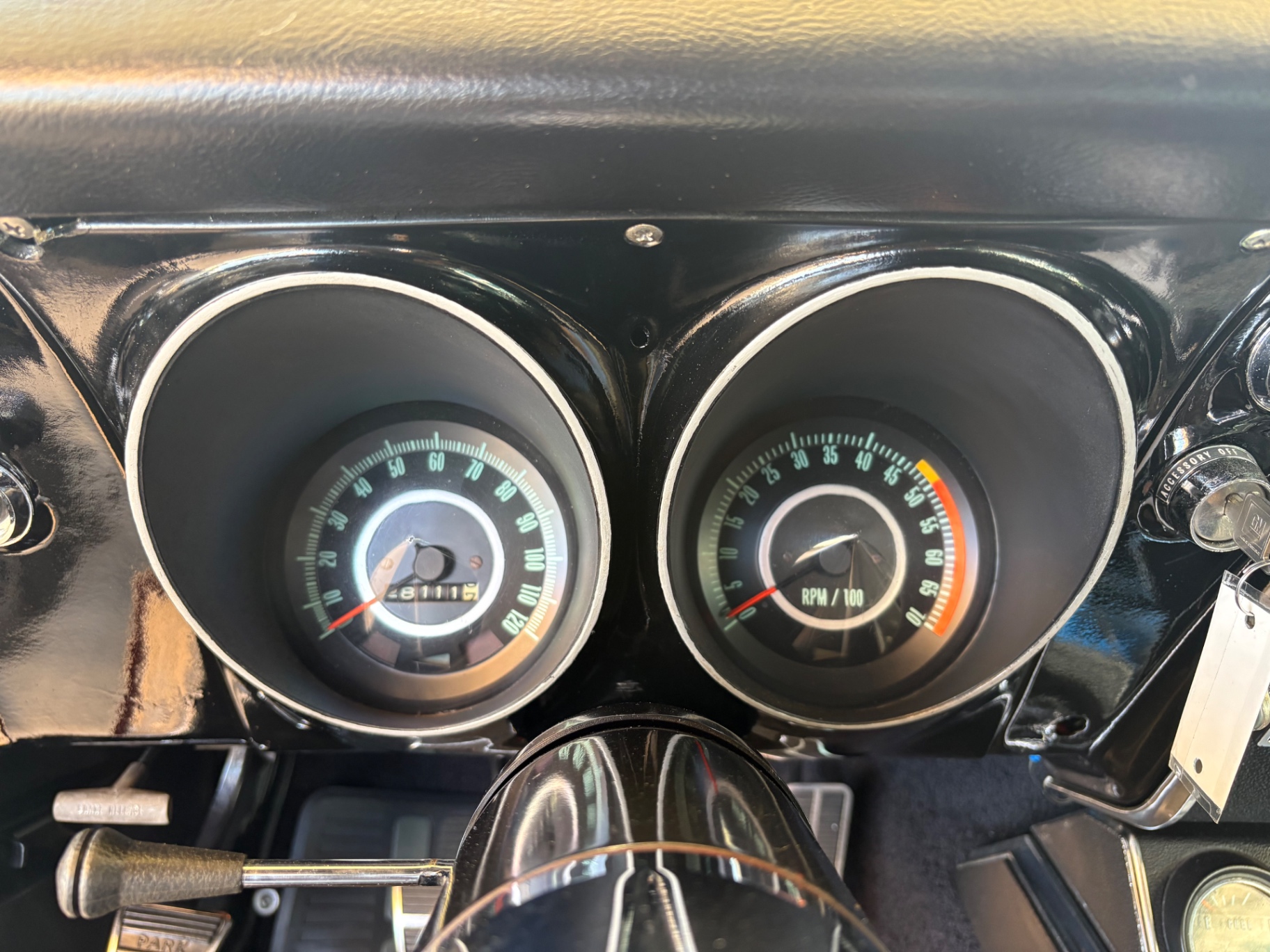
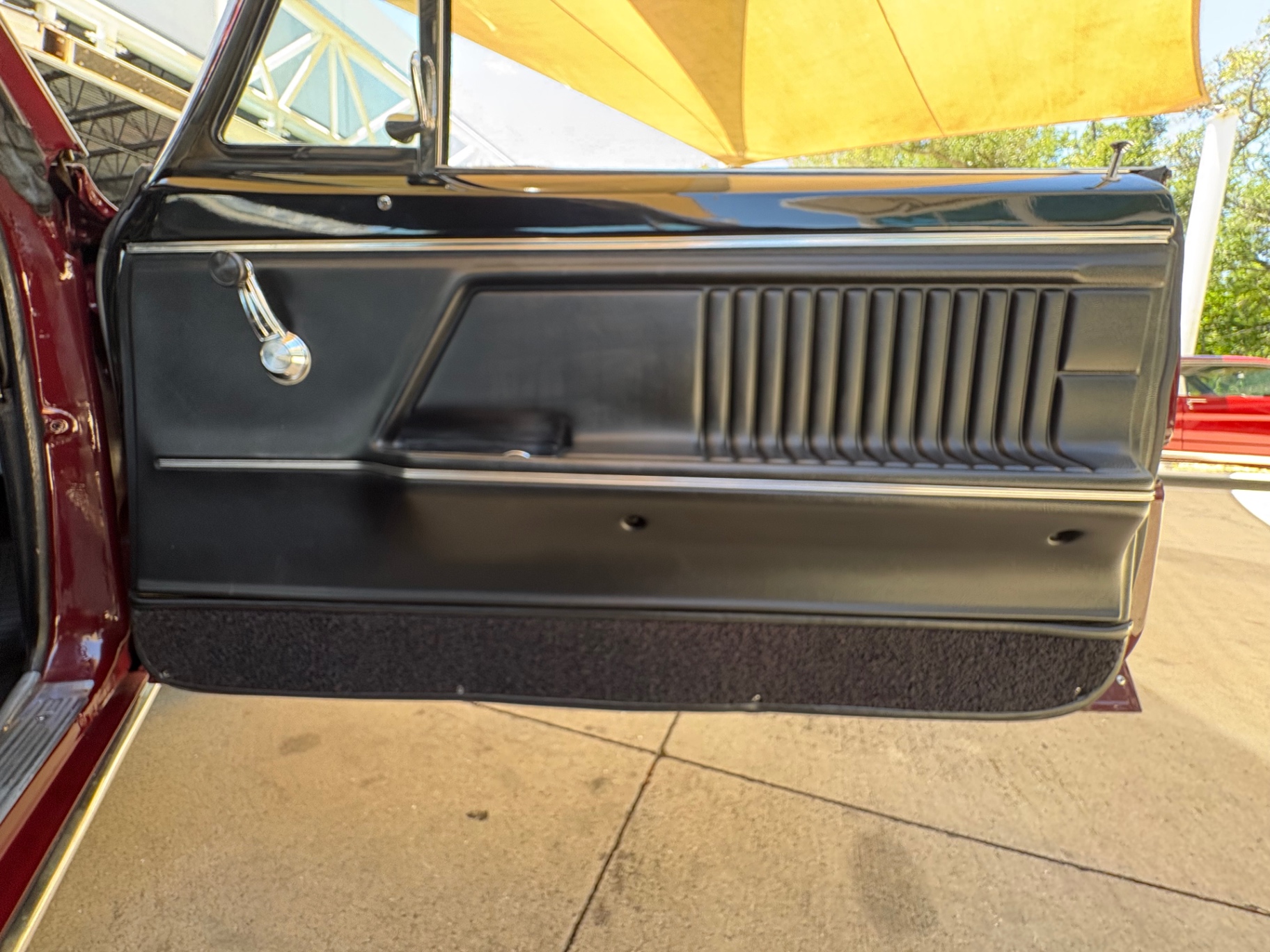
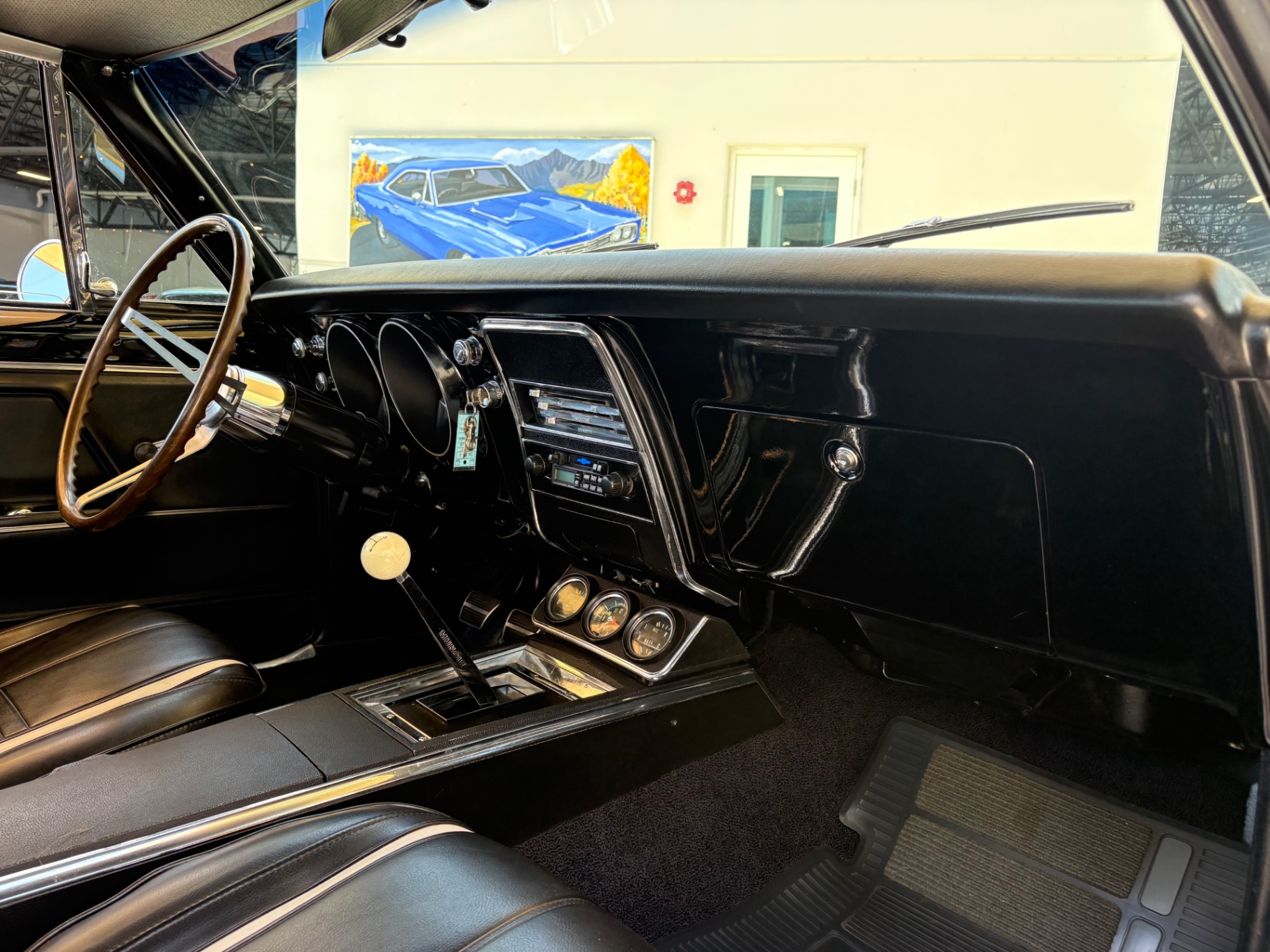
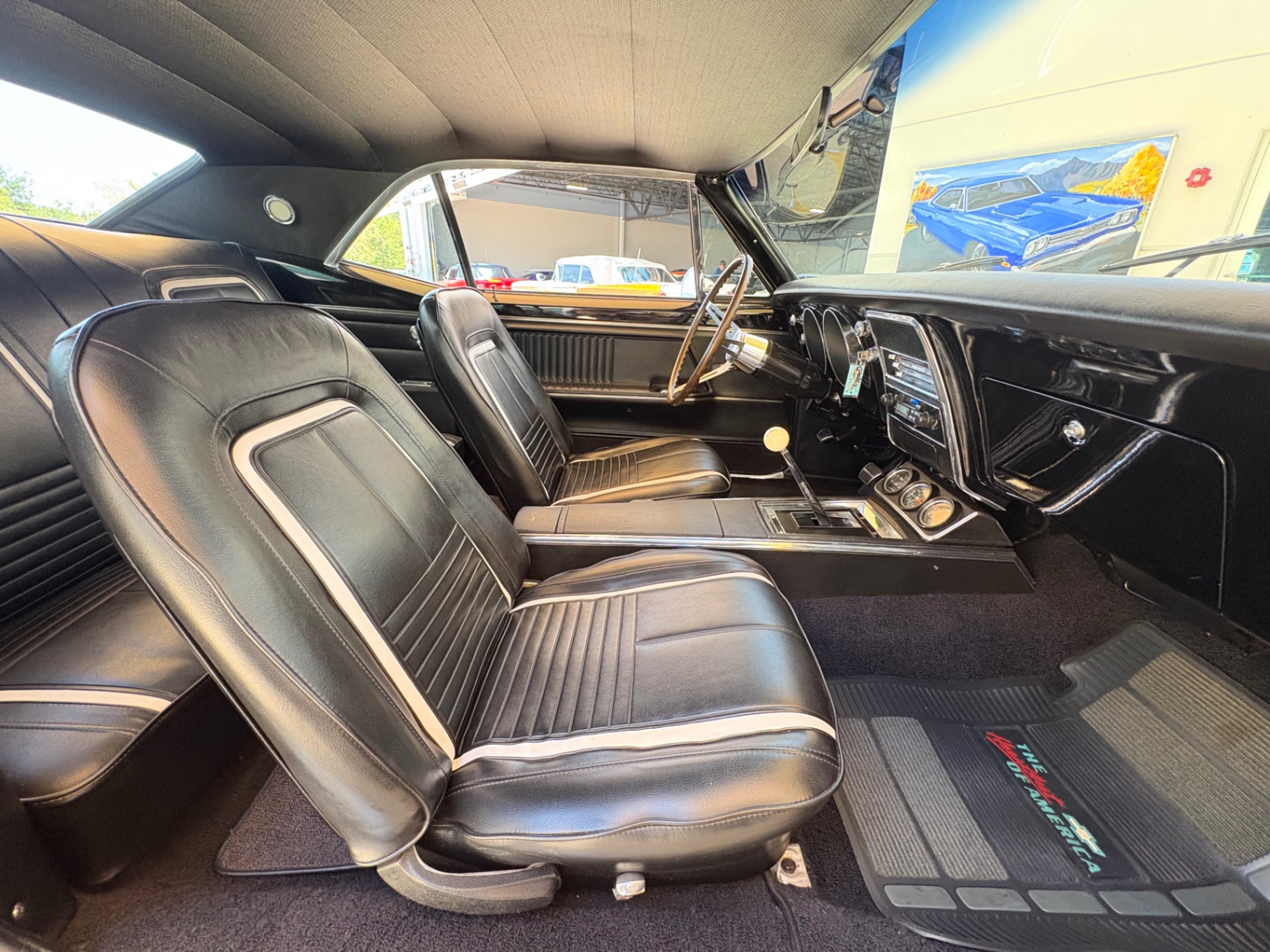
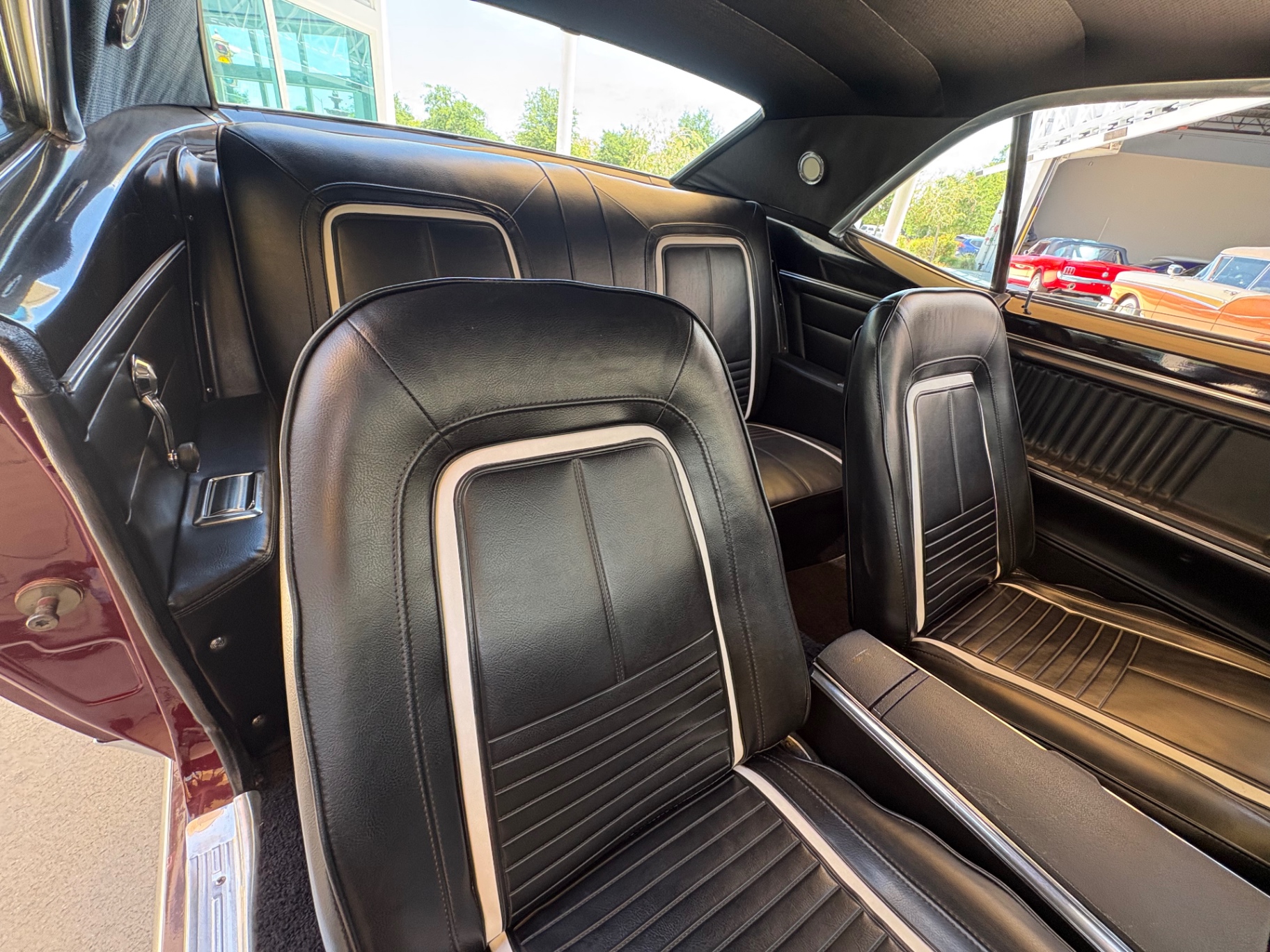
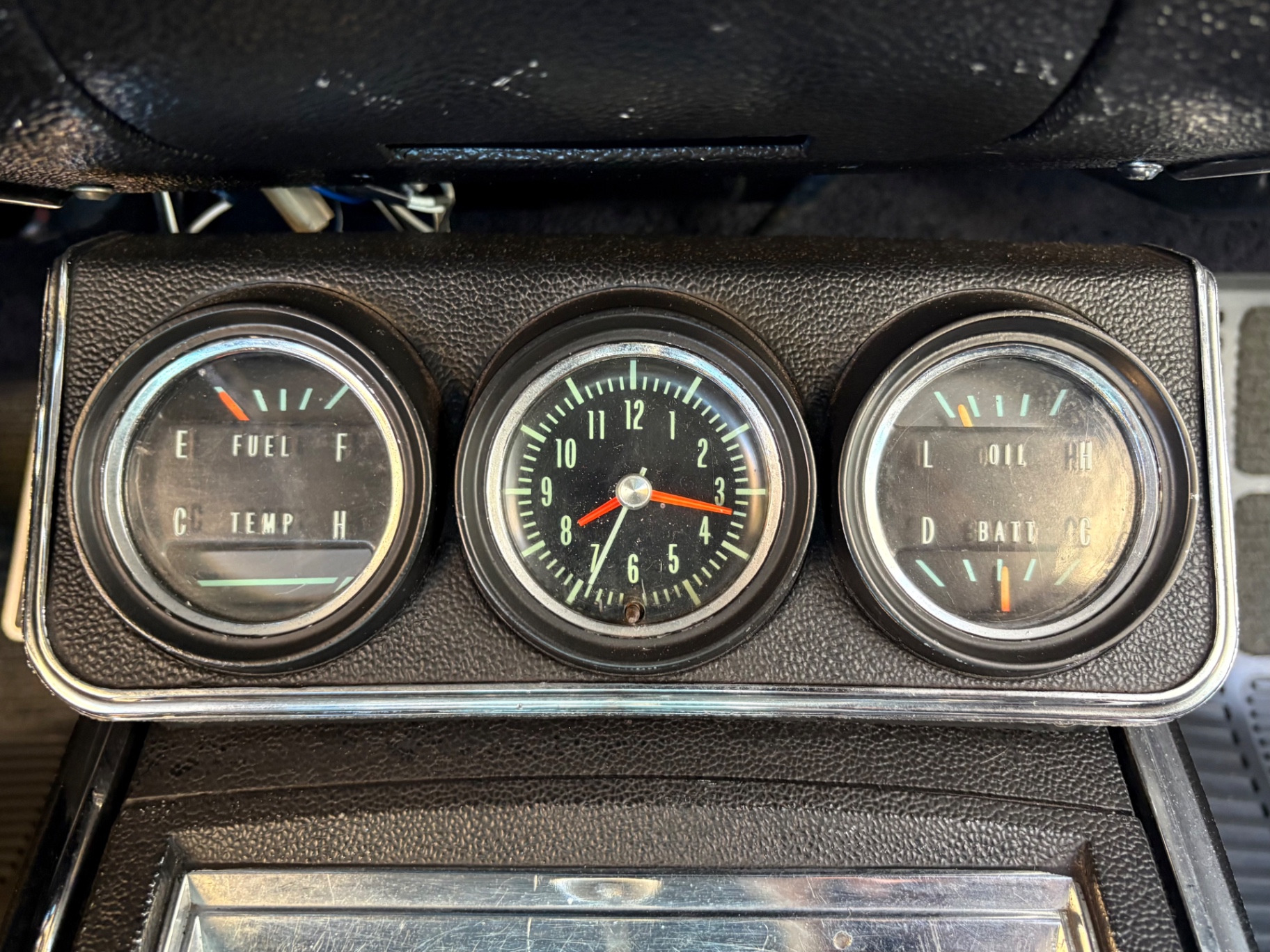
The interior of this 1967 Camaro RS reflects a higher level of factory specification than most buyers ordered at the time. The Deluxe interior package was an option that upgraded trim materials, door panels, and appointments throughout the cabin. Combined with the factory console, factory gauges, and factory tachometer, the dashboard of this car tells you Chevrolet built it for someone who wanted more than the base configuration.
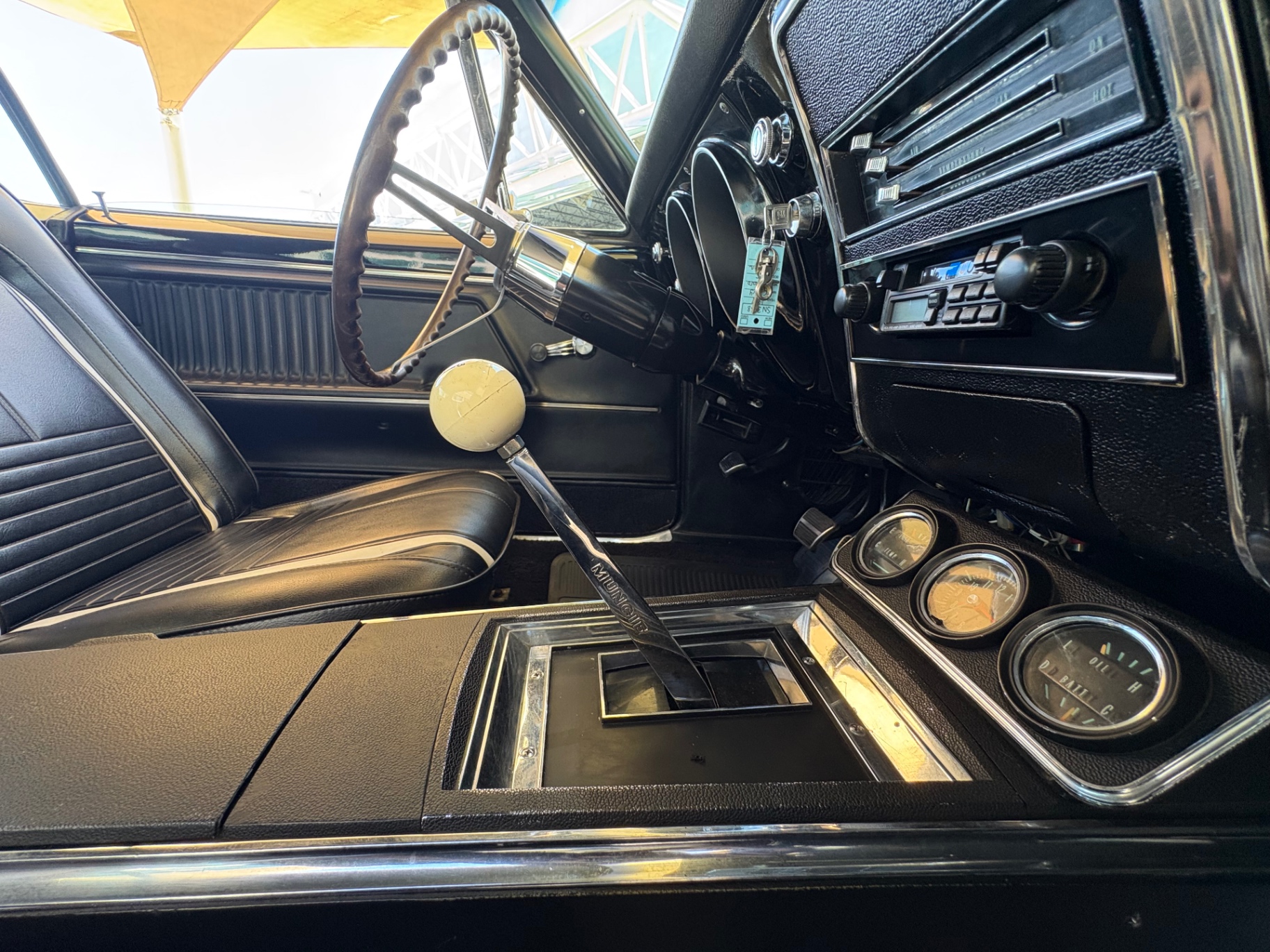
The factory tilt steering column deserves specific mention. The tilt wheel was a relatively uncommon option on 1967 Camaros, and finding one that has survived intact through a full restoration is not common. It is paired here with a rosewood wood-rim steering wheel, which gives the interior a period-correct sport feel. The floor shifter connects to the Muncie 4-speed and sits in the factory console, keeping the cockpit layout exactly as it was designed to be used.
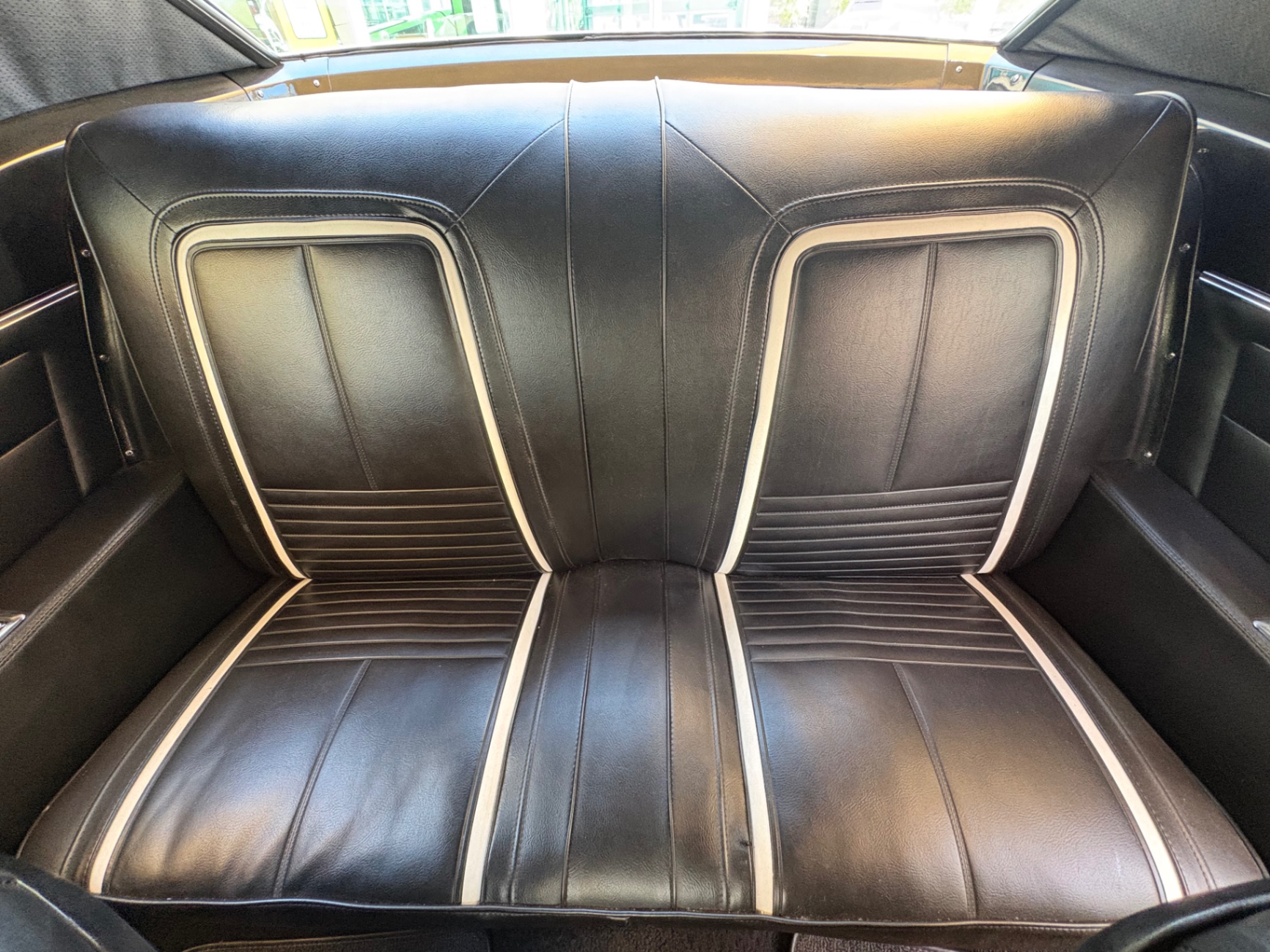
The fold-down rear seat is another factory option that rarely turns up on first-gen Camaros. Chevrolet offered it as a way to extend cargo capacity through the trunk, essentially creating a pass-through that made the small back seat more practical. It is a small detail, but it is the kind of thing that separates a well-documented, heavily-optioned car from one that left the factory in base trim. The black vinyl throughout is consistent and correct for this interior color combination, and the overall condition reflects the 2021 restoration work. An aftermarket stereo has been added for everyday usability.
Exterior
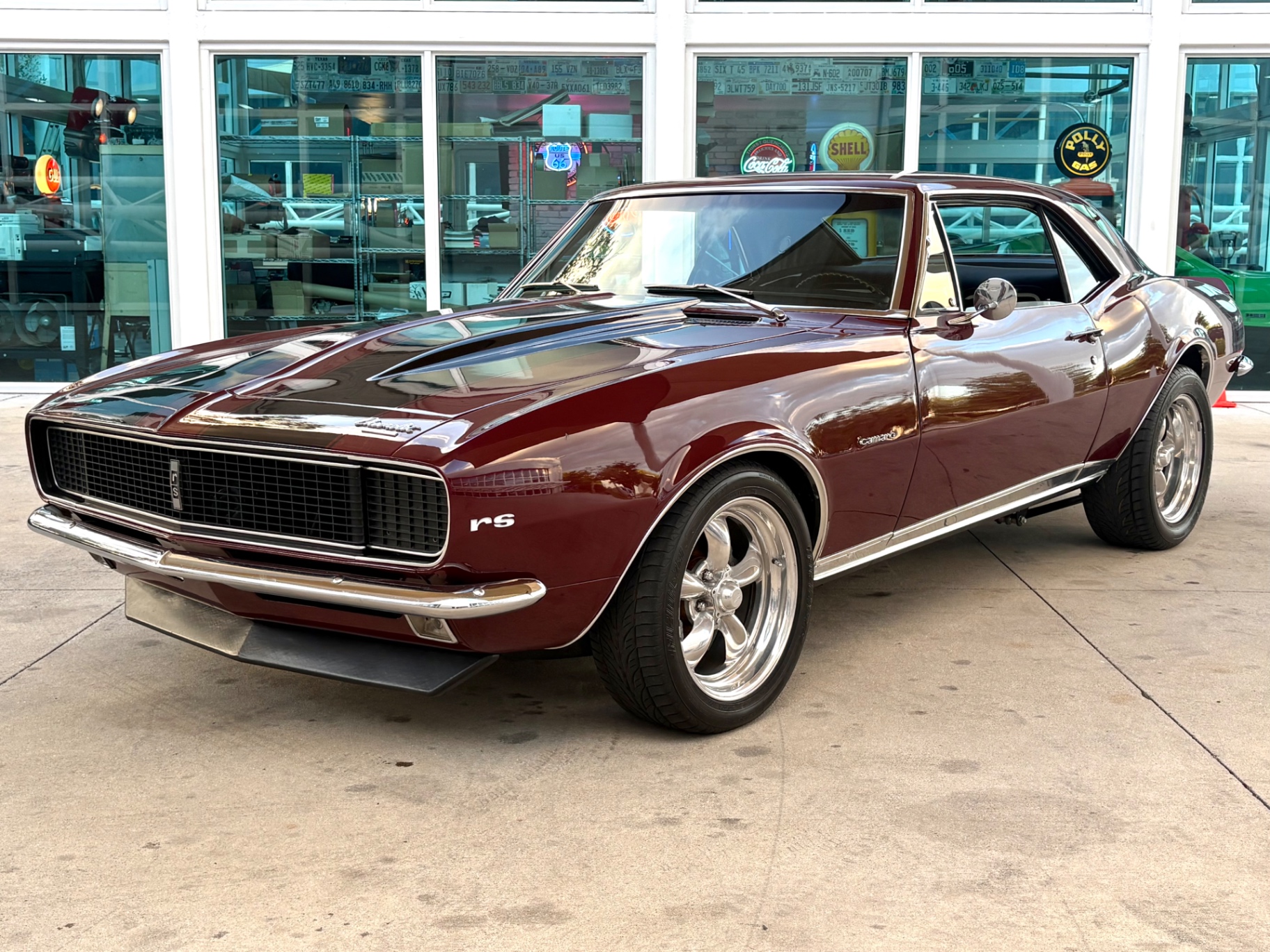
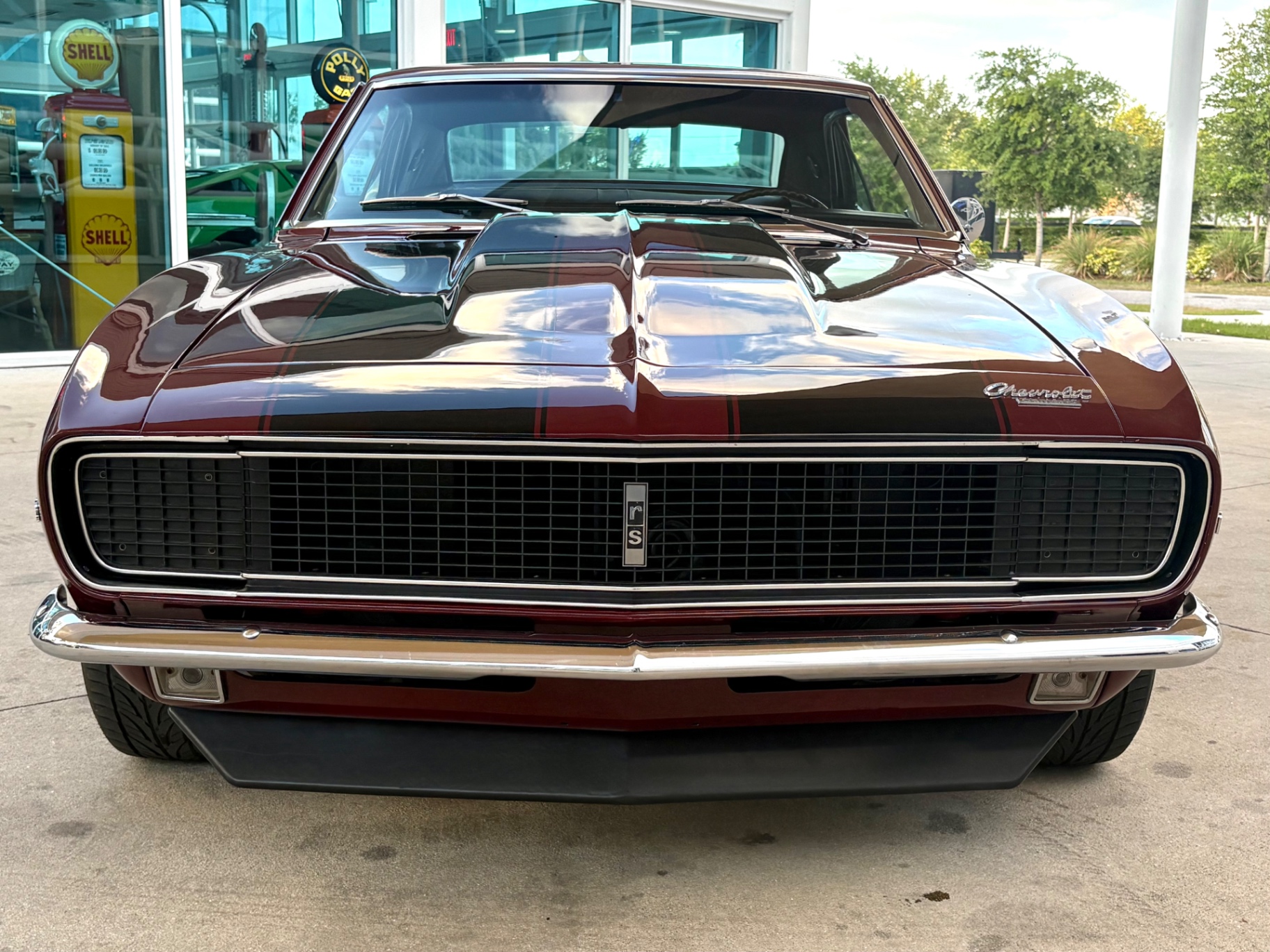
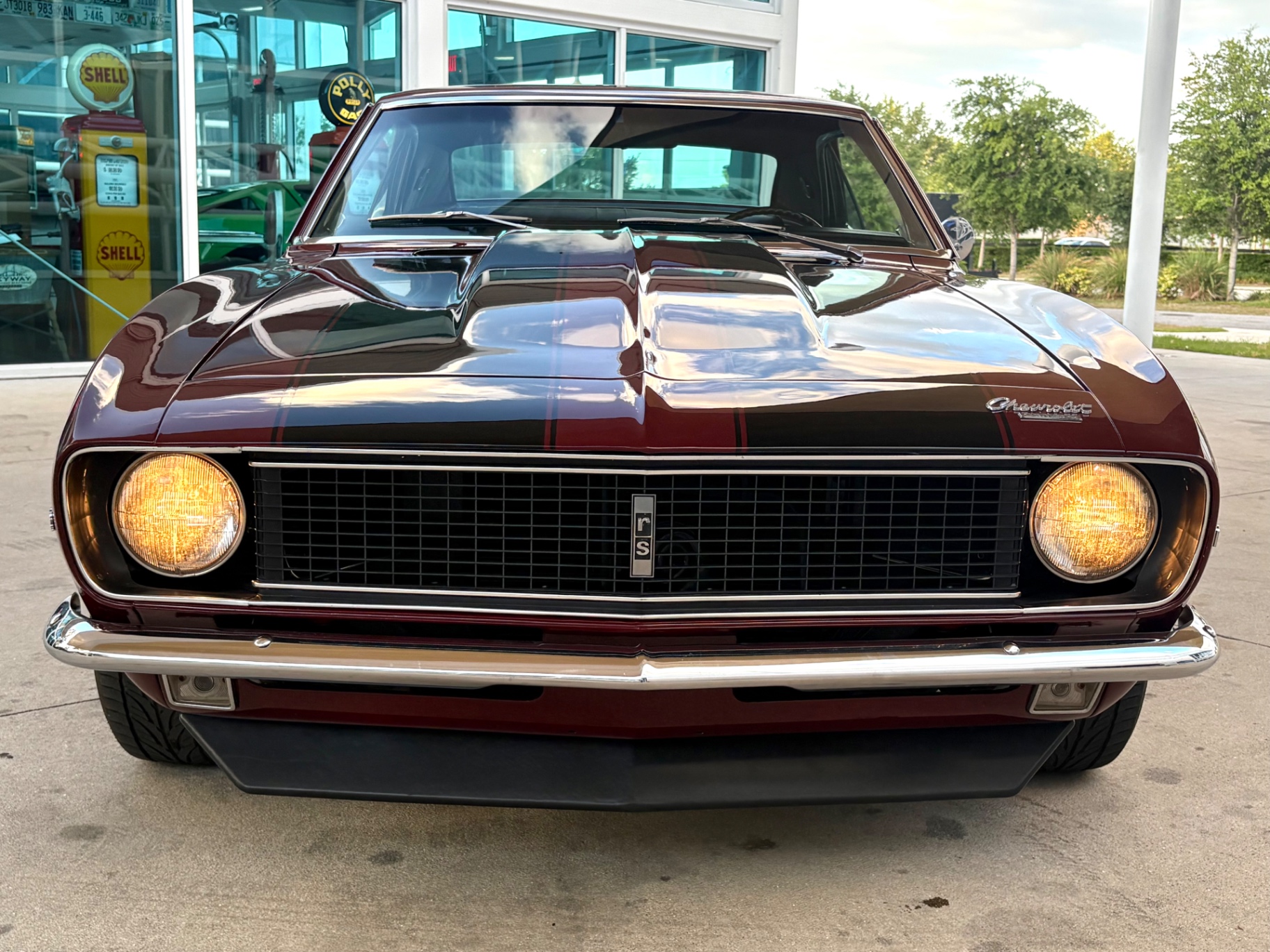
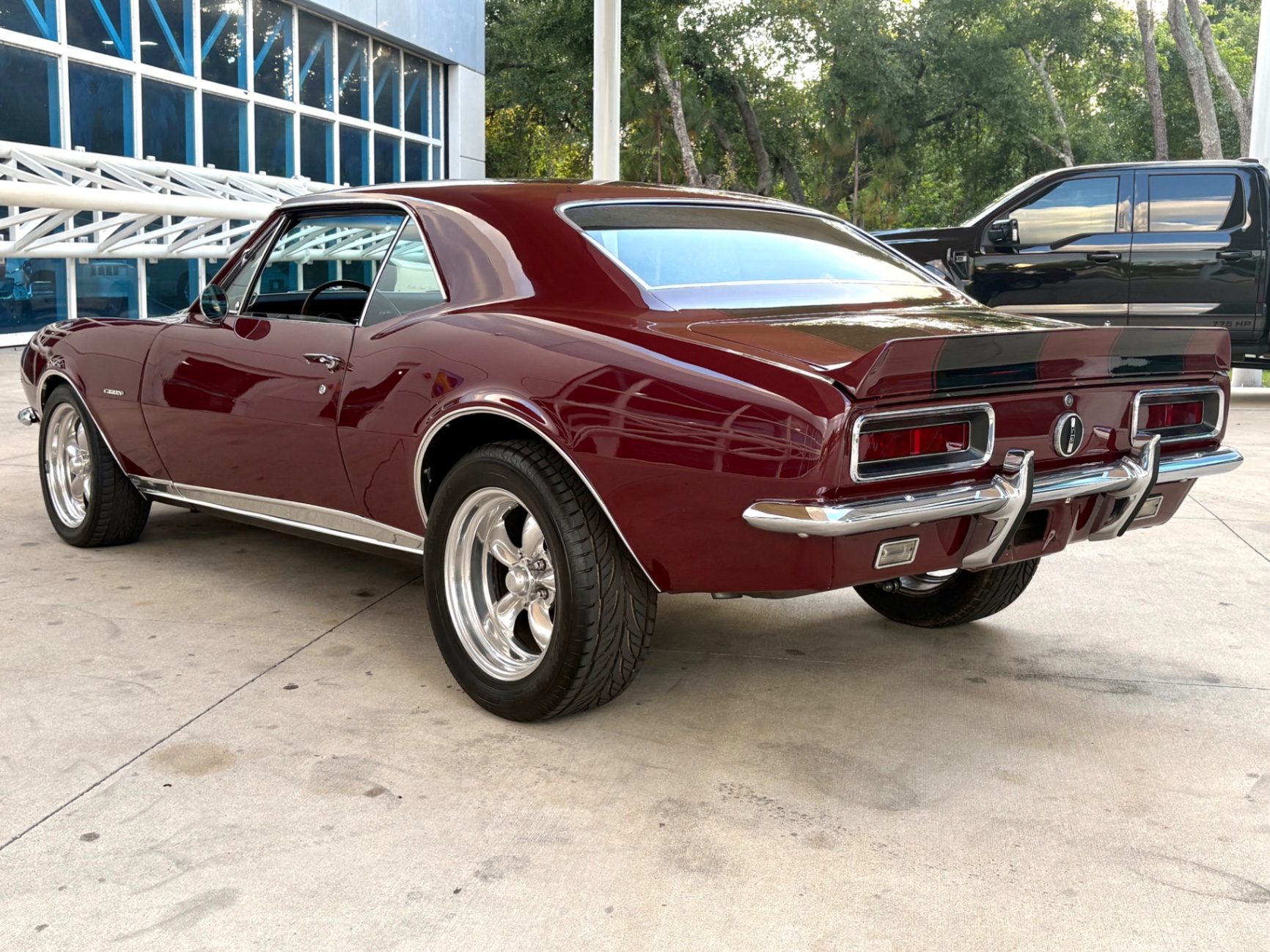
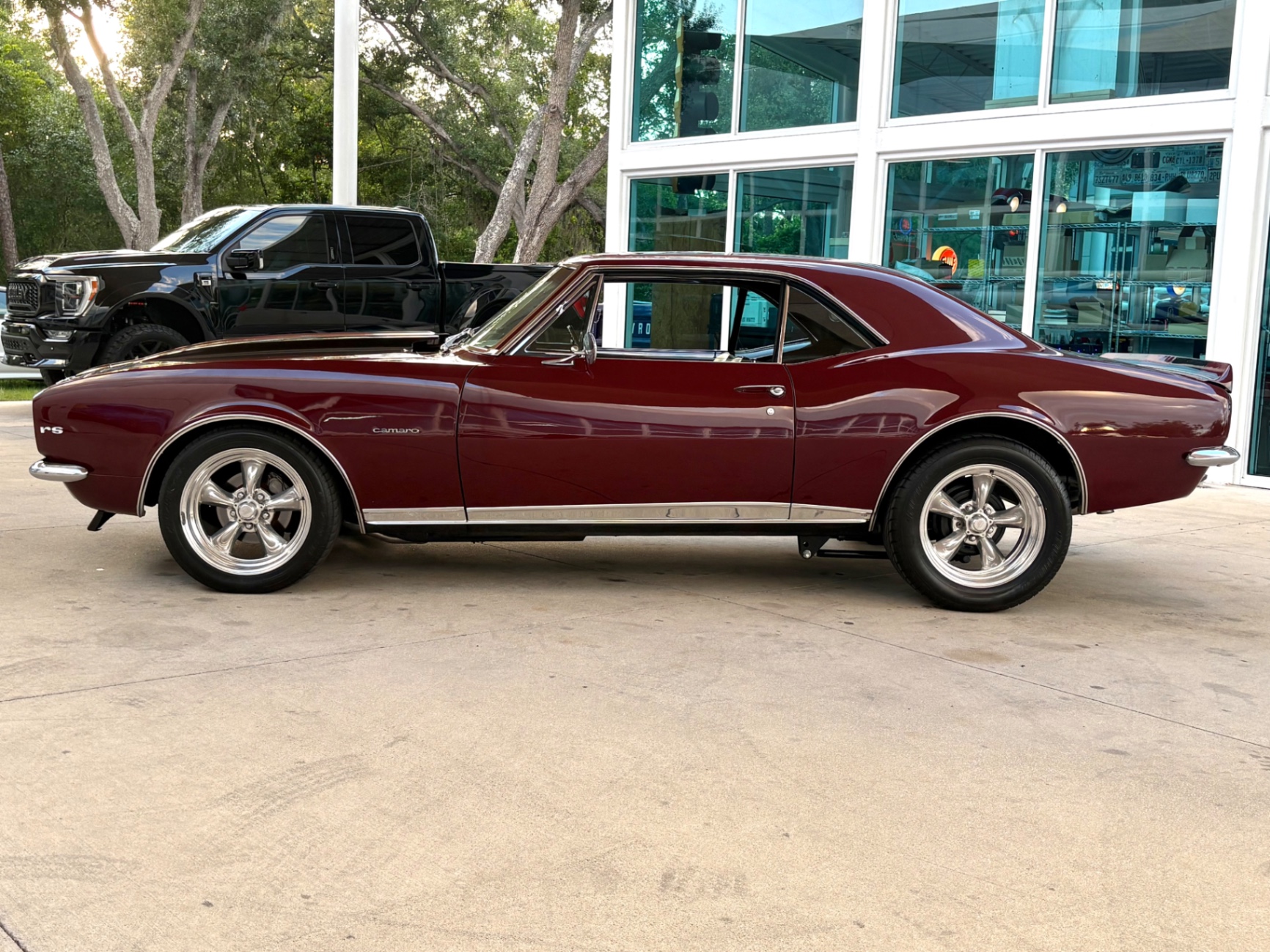
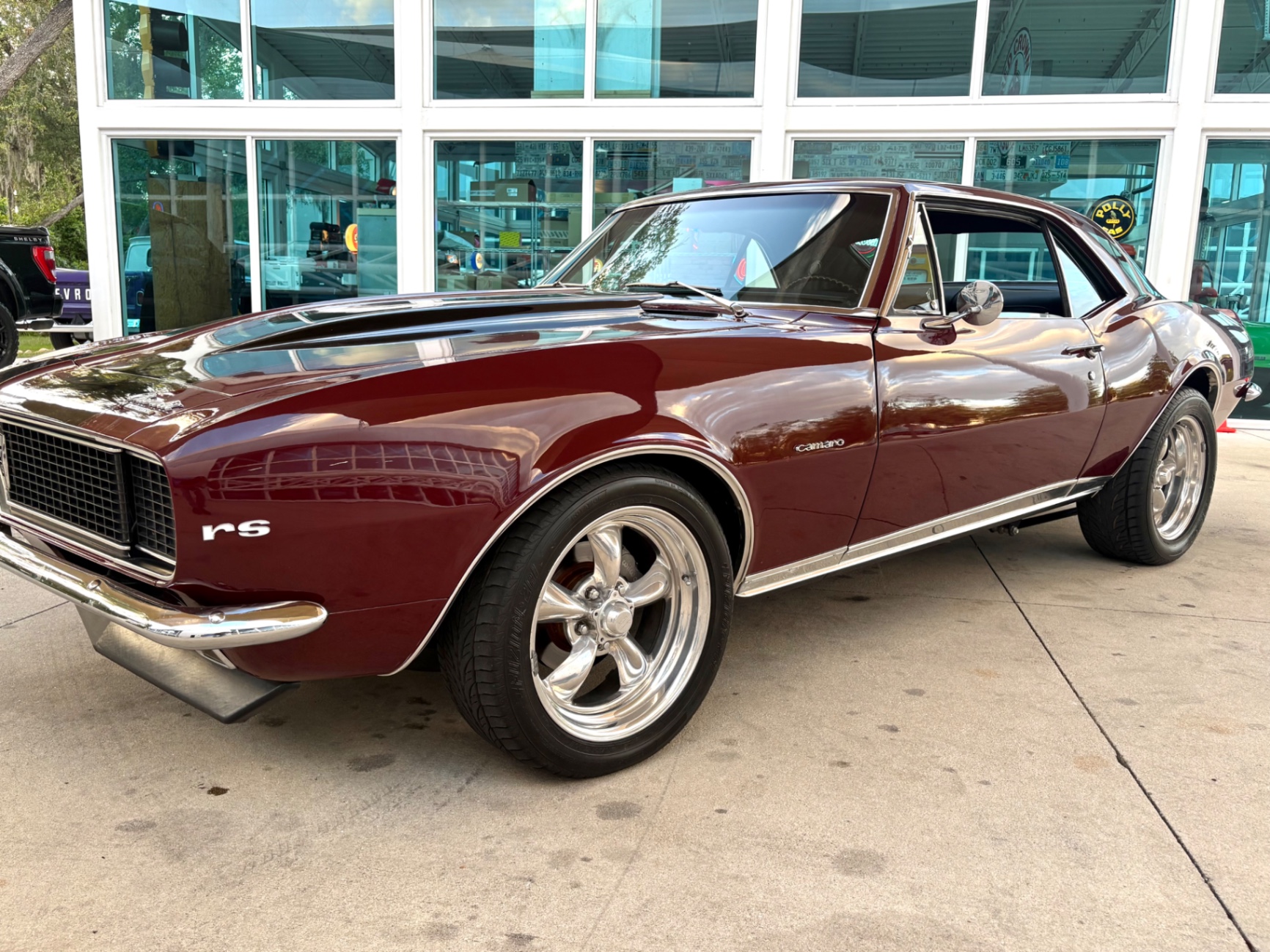
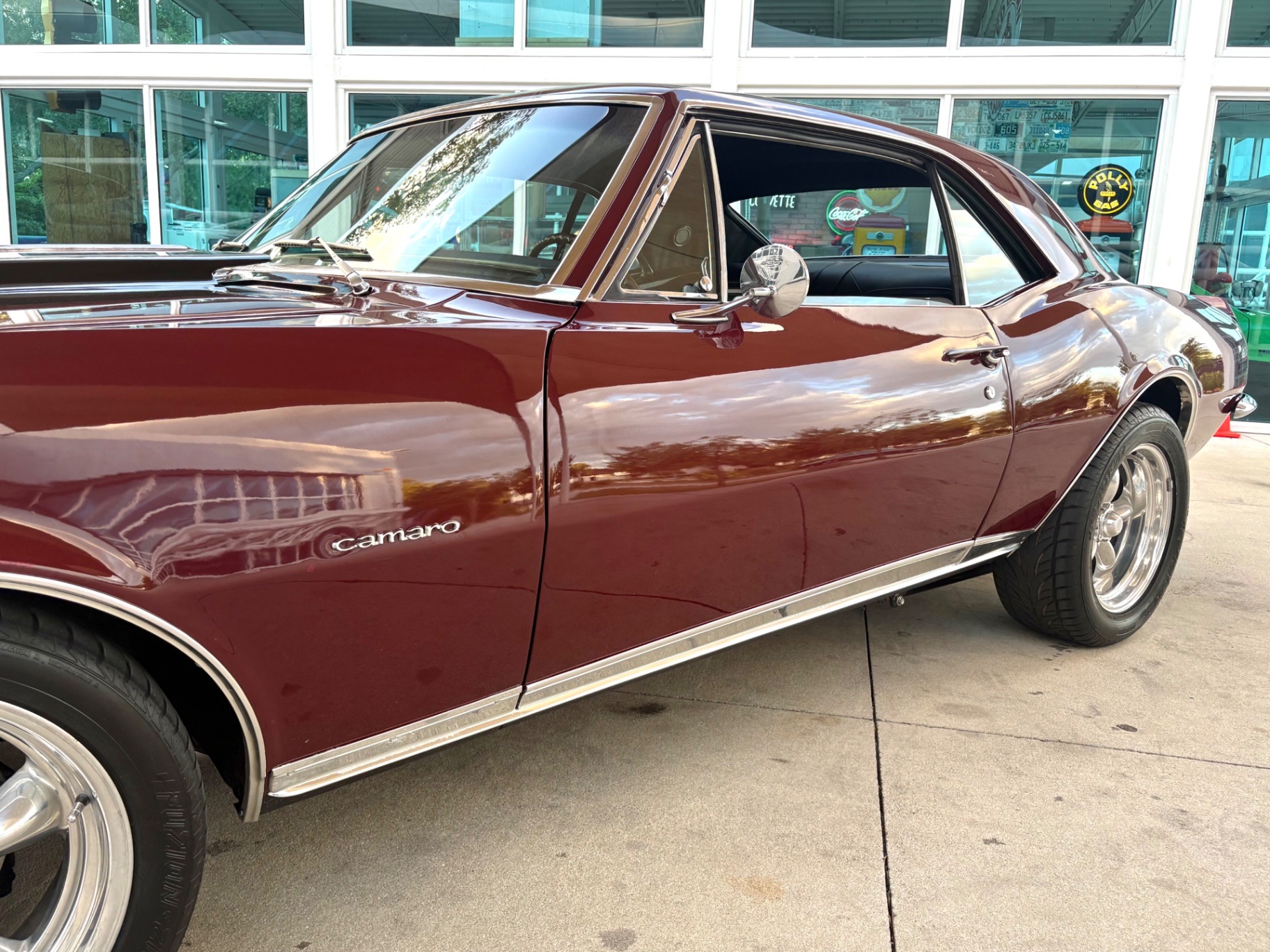
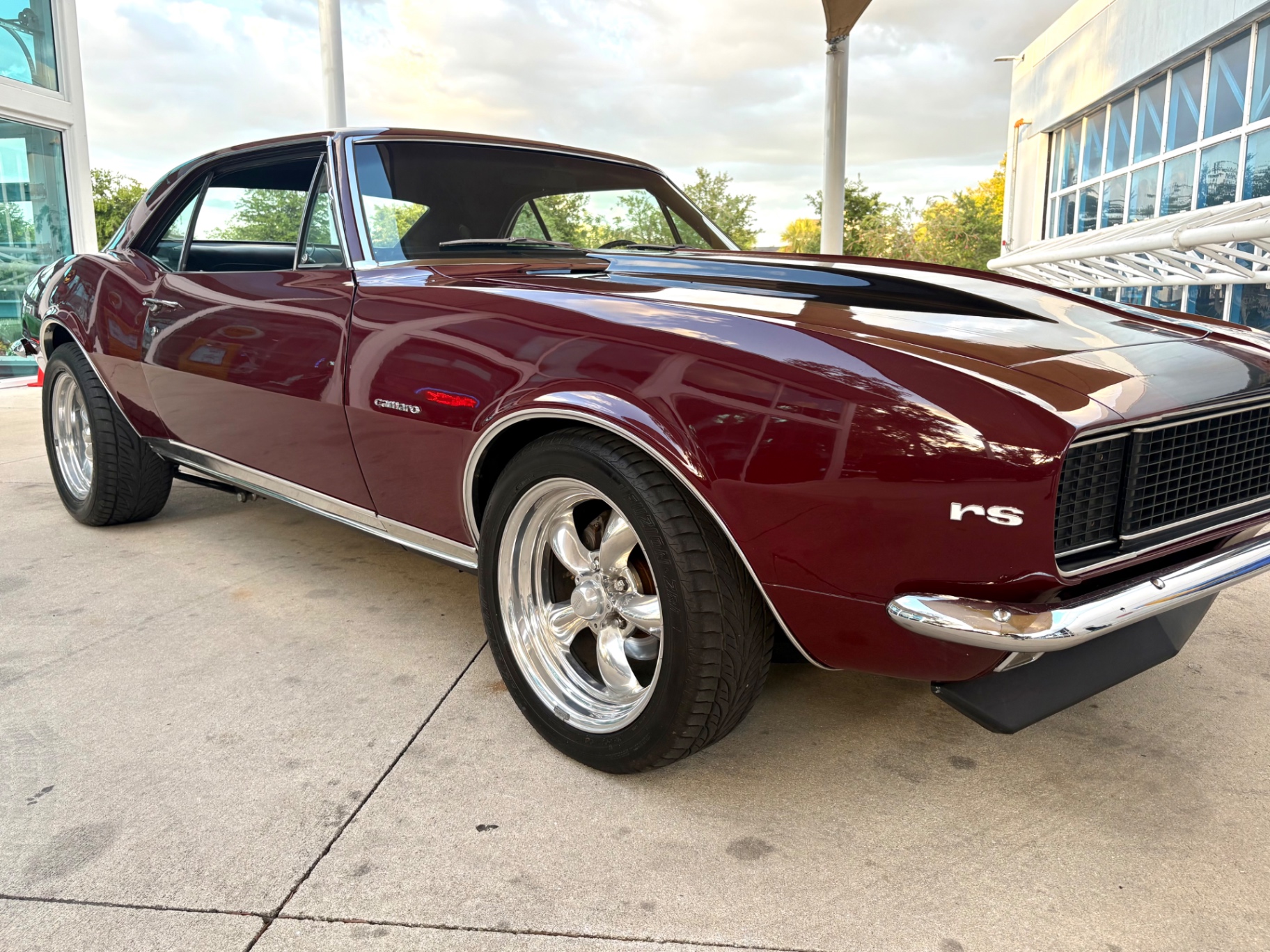
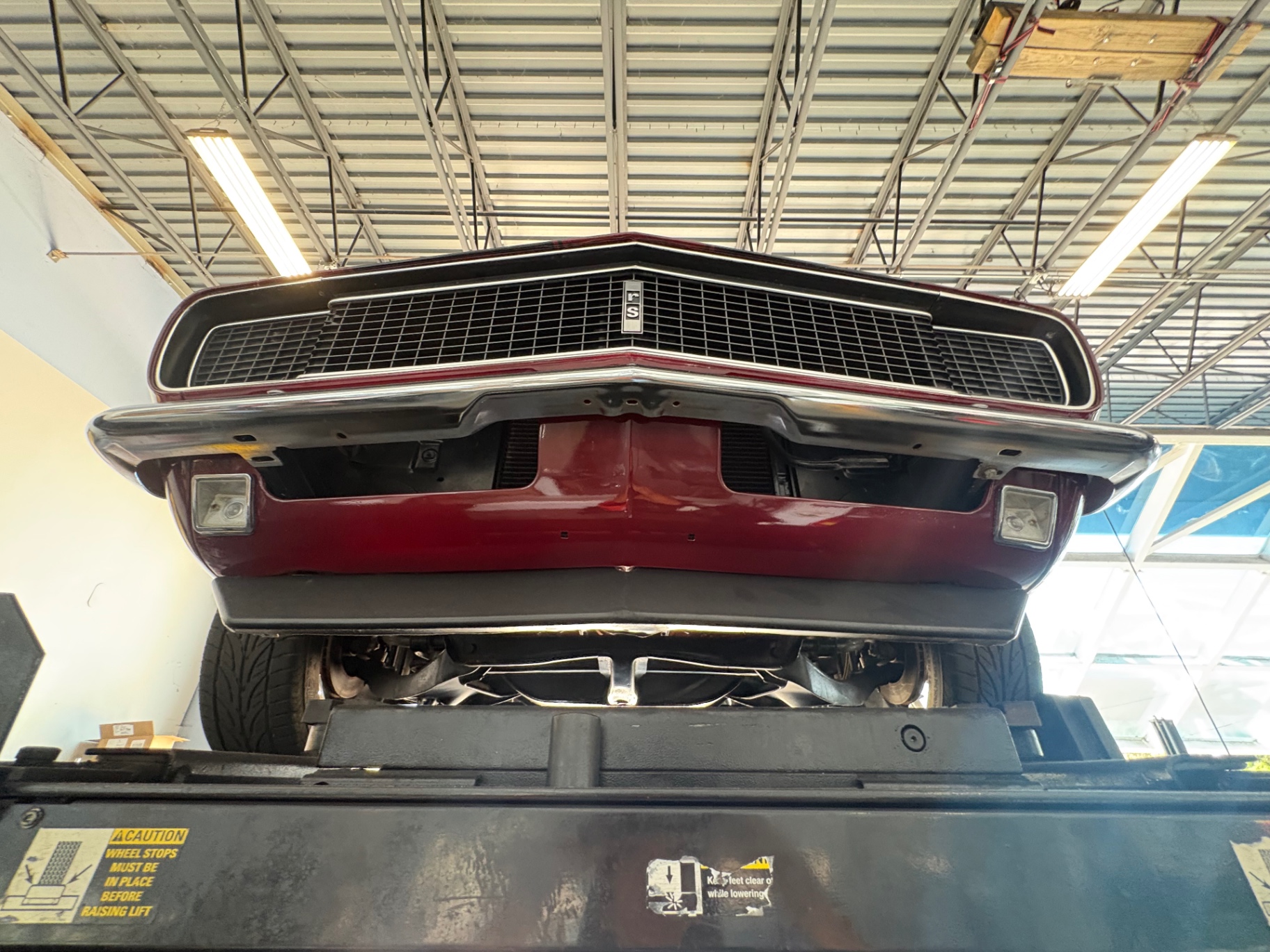
The maroon exterior on this 1967 Chevrolet Camaro RS is a rich, deep color that suits the body lines of the first-generation car well. The RS package on this car includes the signature hidden headlight doors in the grille, which is one of the most recognizable styling features of the entire first-gen Camaro lineup. When the lights are retracted, the front end presents an uninterrupted blacked-out grille with RS badges — the look that made the Rally Sport package worth ordering in 1967 and still makes it easy to identify today.
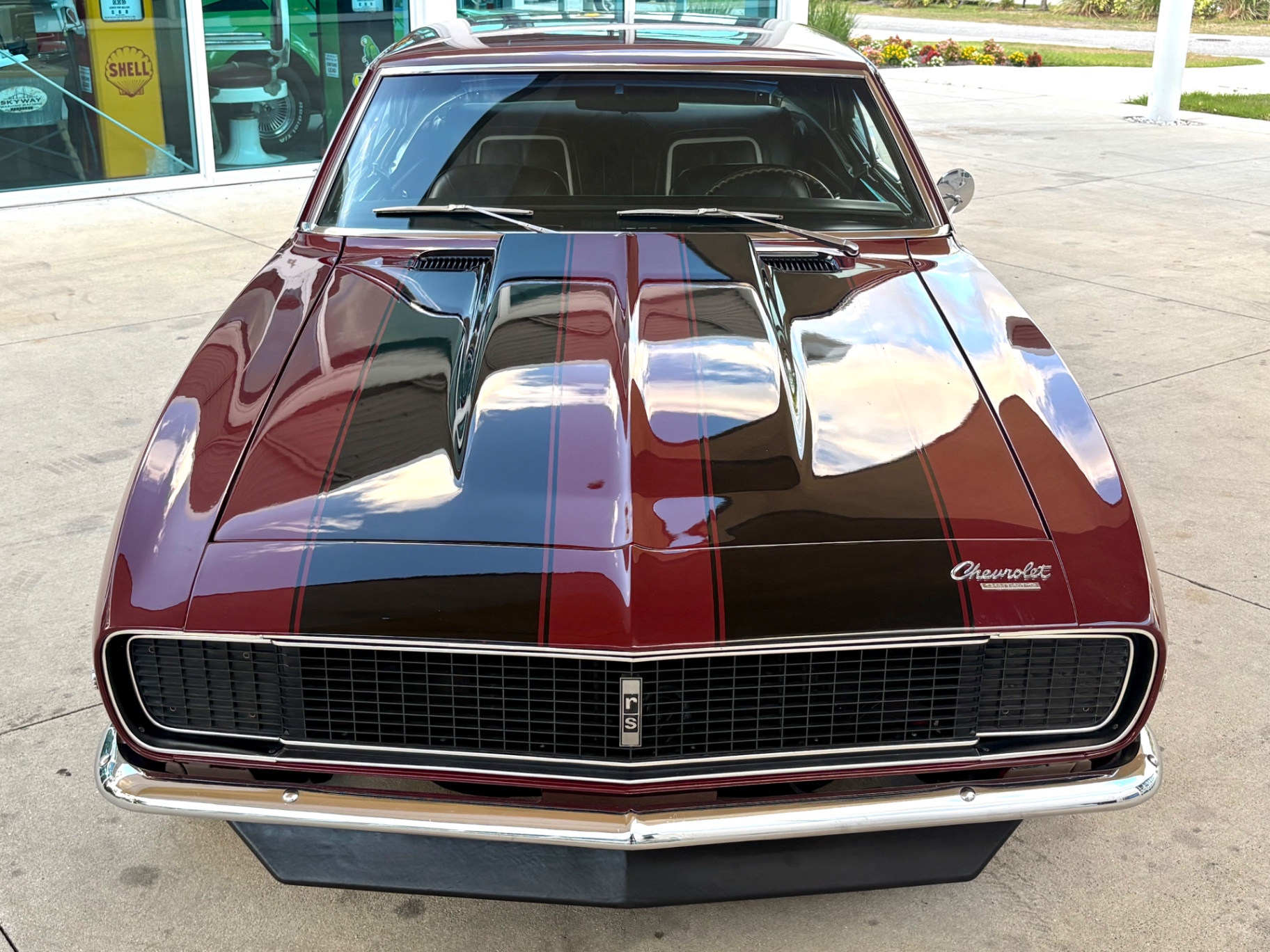
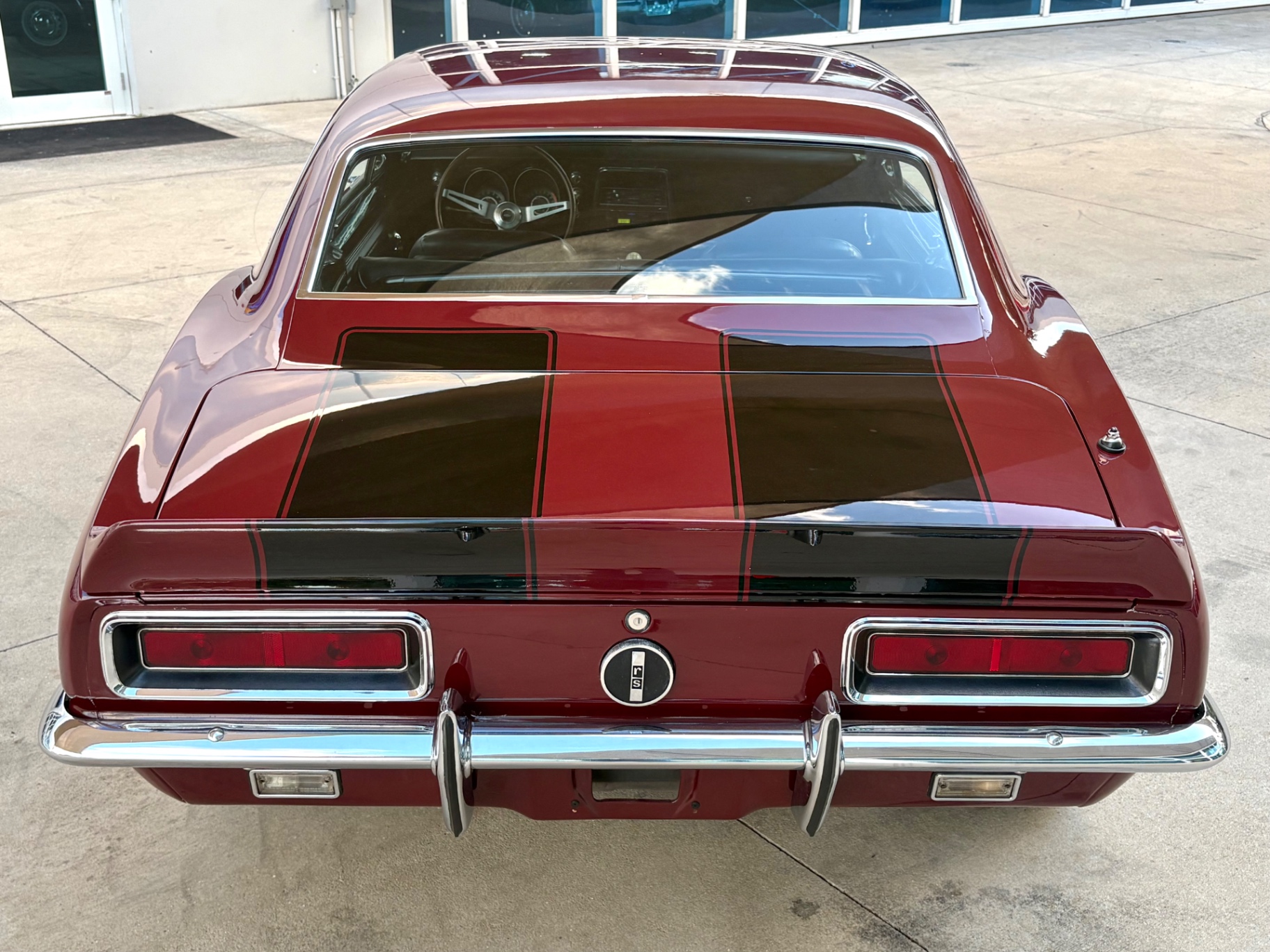
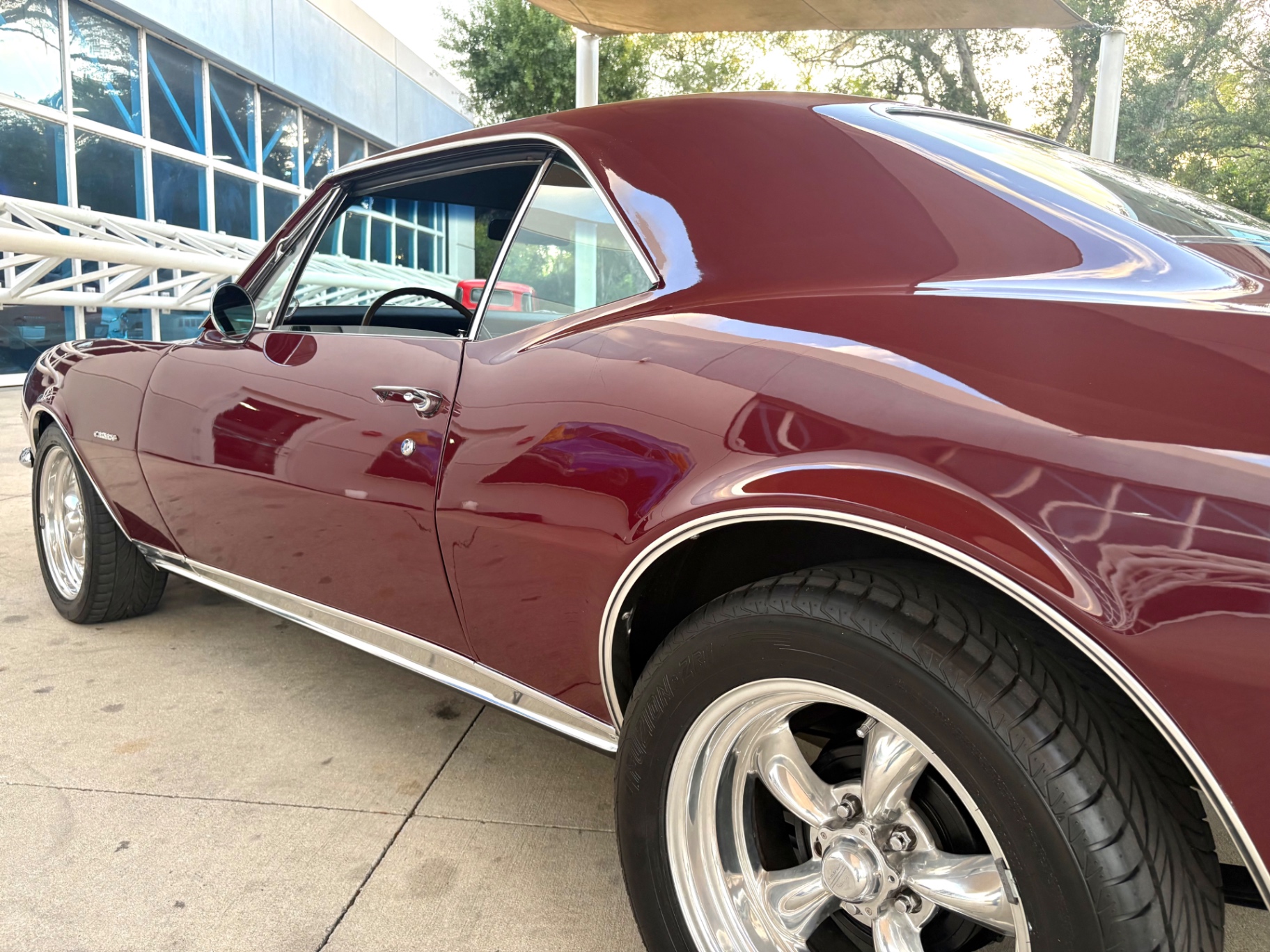
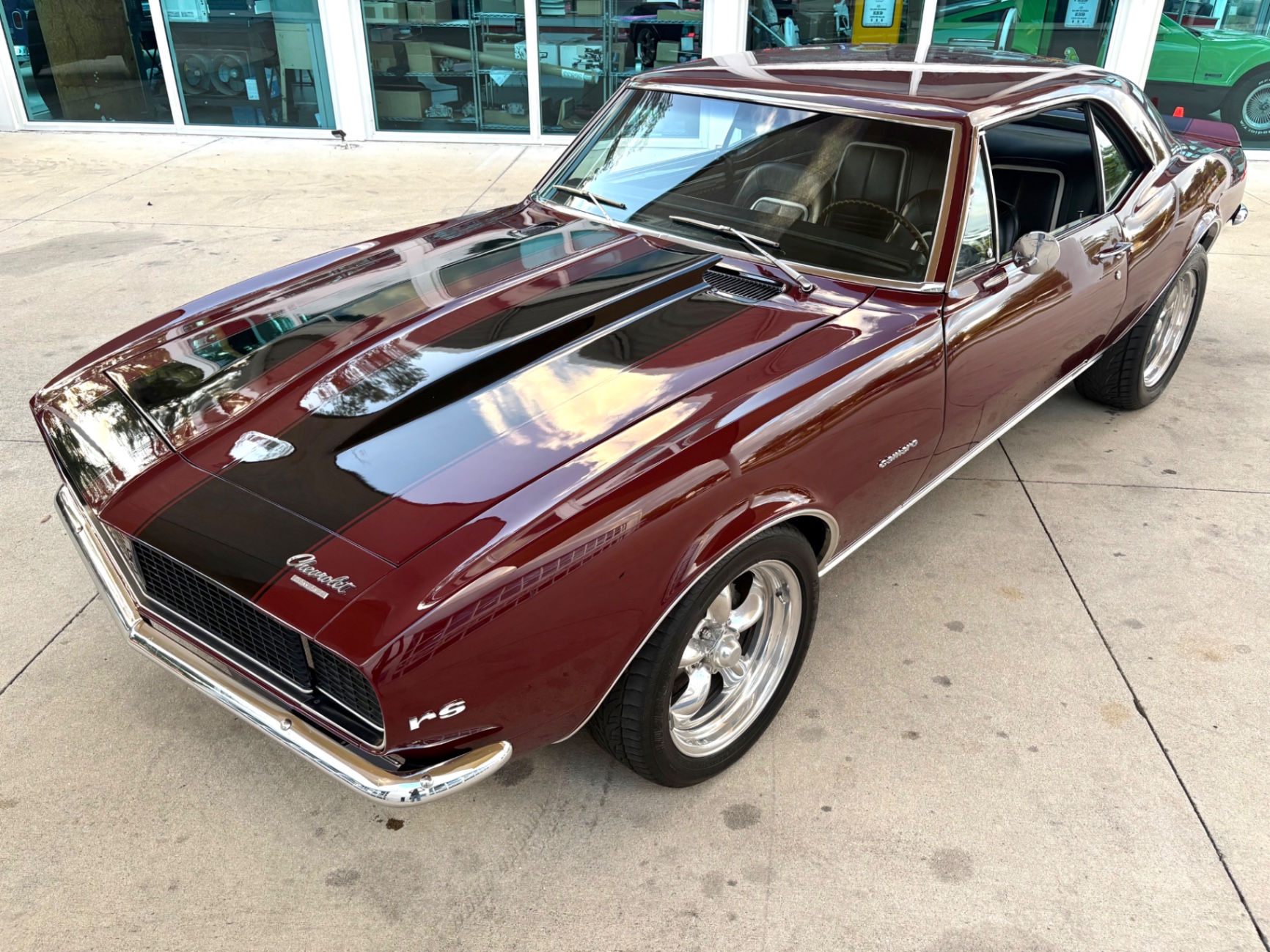
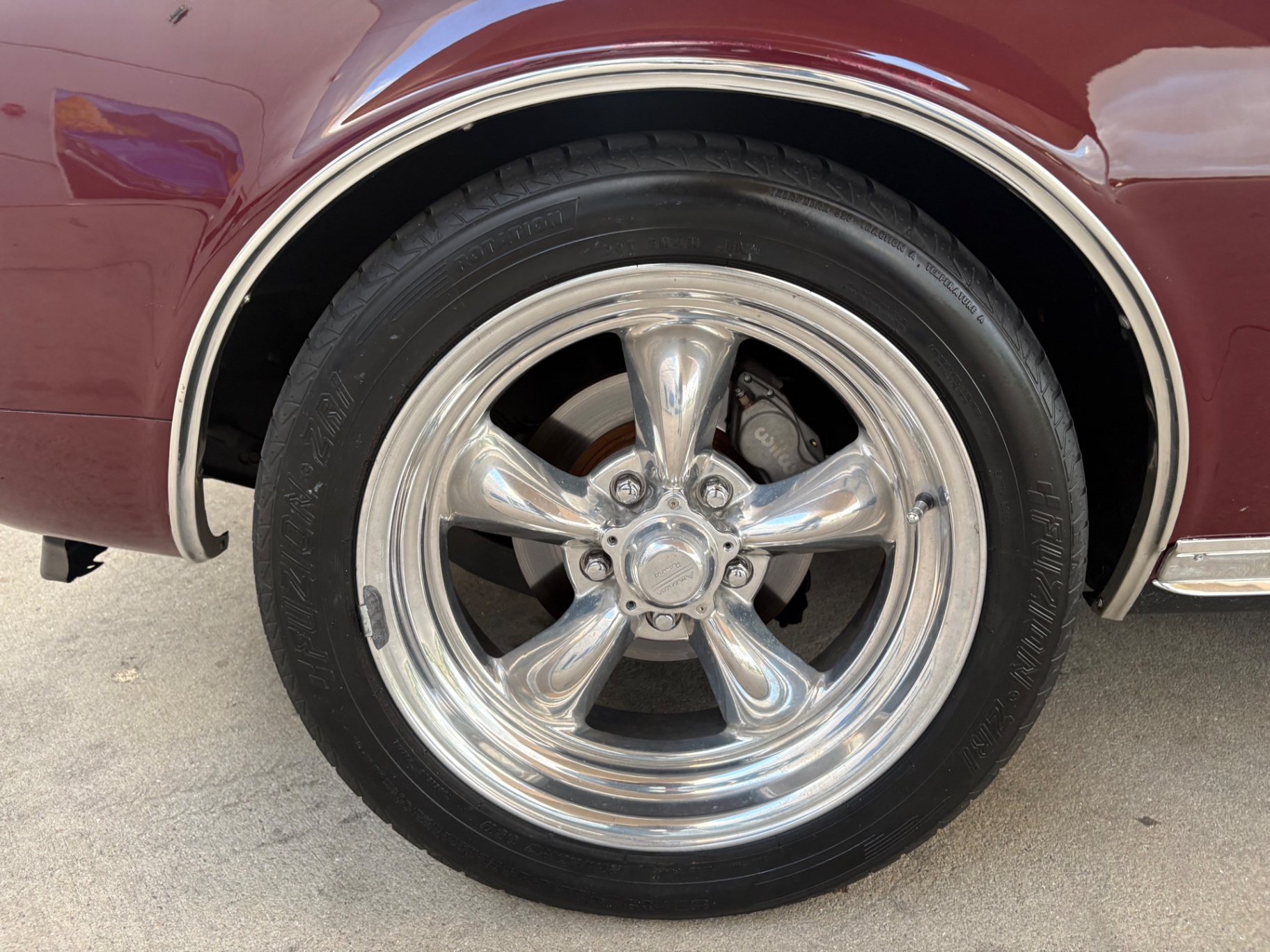
The steel cowl hood is a functional addition that feeds air into the engine bay and gives the car a more purposeful profile compared to the standard flat hood. Racing stripes run along the body, a classic visual accent that works with the maroon paint rather than fighting it. Front and rear spoilers have been added, giving the car a more aggressive stance at both ends. The 17-inch American Racing Torque Thrust wheels are one of the most historically appropriate aftermarket wheel choices available for a car of this era — the original Torque Thrust design dates back to the 1960s and was developed with racing applications in mind. They fill the wheel wells properly with the upgraded wide tires mounted to them. Chrome bumpers are present front and rear, with bumper guards installed. The undercarriage, as visible in the photos, is clean and solid.
Conclusion
The 1967 Chevrolet Camaro RS occupies an important place in American automotive history as the car that gave Chevrolet a genuine performance platform to compete with Ford through the rest of the muscle car era. This example combines factory documentation — RS package, factory tach, factory console, factory tilt column, factory fold-down rear seat — with a well-executed set of performance upgrades that make it a car people actually drive rather than just display. The 2021 restoration brought the body and interior up to a high standard, and the mechanical work underneath gives this car real capability. It is sorted, it is documented, and it is the kind of first-generation Camaro that does not sit around in a garage waiting for good weather.
To schedule a viewing or ask questions about this 1967 Chevrolet Camaro RS, contact Skyway Classics in Sarasota, Florida at 941-254-6608.
Disclaimer Information found on the website is presented as given to us by the owner of the car, whether on consignment or from the owner we bought it from. Some Photos, materials for videos, descriptions and other information are provided by the consignor/seller and is deemed reliable, but Skyway Classics does not warranty or guarantee this information. Skyway Classics is not responsible for information that may incorrect or a publishing error. The decision to purchase should be based solely on the buyers personal inspection of the vehicle or by a professional inspection service prior to offer or purchase being made.
1967 Chevrolet Camaro RS — Restored V8 4-Speed with Performance Upgrades Throughout
Why This Car Is Special
The 1967 Chevrolet Camaro RS is one of the most sought-after first-generation Camaros on the market today, and for good reason. Chevrolet launched the Camaro for the 1967 model year as a direct answer to Ford's Mustang, which had been outselling everything in its segment since 1964. General Motors engineers and designers had been working on the platform — internally called the F-body — for several years before the car debuted on September 26, 1966. The result was a car with sharper handling than the Mustang, a wider range of factory performance options, and a body style that has aged remarkably well.
The RS, or Rally Sport package, was one of the first options buyers could add to any 1967 Camaro regardless of engine choice. It brought hidden headlights with vacuum-actuated doors, a blacked-out grille, RS badging, revised taillights, and additional exterior trim. It was a cosmetic and appearance package, not a performance upgrade, which meant buyers could combine it with the Super Sport package or any engine in the lineup. That flexibility made the RS one of the most popular option groups Chevrolet offered that year.
The VIN on this car decodes to a 1967 Camaro Sport Coupe built at the Norwood, Ohio assembly plant. The seventh character confirms this is a V8-equipped car from the factory, which aligns with the 350 cubic inch small block under the cowl hood today. Norwood-built first-gen Camaros have a devoted following among collectors, and Norwood production has been well documented by Camaro Research Group records.
This particular 1967 Camaro RS was fully restored in 2021 and has been upgraded with a thoughtful combination of performance hardware and retained factory features — including several options that were not commonly ordered, which we will detail below.
Features List
- 350 cubic inch small block V8, rated at 300 horsepower - Muncie 4-speed manual transmission - Factory RS Badge Package with hidden headlights - Headman ceramic-coated headers with 2.5-inch exhaust - Stainless steel mufflers, dual exhaust - Open-element chrome air cleaner - Steel cowl induction hood - Moser aftermarket 12-bolt rear end - CalTracs suspension system - QA1 shocks - Aftermarket rear sway bar - 17-inch American Racing Torque Thrust wheels with wide tires - Factory console with factory gauges - Factory tachometer - Rare factory tilt steering column - Rosewood wood-rim steering wheel - Floor shifter - Deluxe interior package - Rare factory fold-down rear seat - Aftermarket stereo - Front and rear spoilers - Racing stripes - Chrome bumpers with bumper guards - Optima battery - Clean undercarriage
Mechanical
The engine in this 1967 Chevrolet Camaro RS is a 350 cubic inch small block Chevrolet V8 producing 300 horsepower. The 350 was introduced as a Camaro option for the 1967 model year, making its debut in this very generation of car. Backed by a Muncie 4-speed manual transmission, the drivetrain combination here is the kind of setup that made these cars popular on both the street and the track in the late 1960s — and it still works exactly that way today.
The exhaust system is a properly spec'd performance setup. Headman ceramic-coated headers flow into 2.5-inch pipes and exit through stainless steel mufflers. Ceramic coating on the headers helps retain exhaust heat inside the pipe, which improves flow efficiency and also protects the metal from the kind of heat cycling that causes rust and cracking over time. The sound profile of this system is aggressive without being obnoxious — it has the deep, even tone that a well-tuned small block with good headers and the right muffler produces. An open-element air cleaner sits on top of the carburetor, and the steel cowl hood above it feeds cooler outside air directly into the engine bay.
Out back, the factory rear end has been replaced with a Moser 12-bolt unit. The GM 12-bolt rear was already one of the strongest passenger car axle assemblies ever built when it came from the factory, and a Moser version takes that further with upgraded internals and axle shafts built to handle increased power. The CalTracs suspension system addresses the torque-steer and wheel hop that stock rear leaf spring setups can produce under hard acceleration. QA1 shocks and an aftermarket rear sway bar round out the suspension work, improving both straight-line traction and cornering stability. The undercarriage photographs cleanly, with no visible rust or rot — this is a Florida-kept car that received proper restoration attention in 2021.
Interior
The interior of this 1967 Camaro RS reflects a higher level of factory specification than most buyers ordered at the time. The Deluxe interior package was an option that upgraded trim materials, door panels, and appointments throughout the cabin. Combined with the factory console, factory gauges, and factory tachometer, the dashboard of this car tells you Chevrolet built it for someone who wanted more than the base configuration.
The factory tilt steering column deserves specific mention. The tilt wheel was a relatively uncommon option on 1967 Camaros, and finding one that has survived intact through a full restoration is not common. It is paired here with a rosewood wood-rim steering wheel, which gives the interior a period-correct sport feel. The floor shifter connects to the Muncie 4-speed and sits in the factory console, keeping the cockpit layout exactly as it was designed to be used.
The fold-down rear seat is another factory option that rarely turns up on first-gen Camaros. Chevrolet offered it as a way to extend cargo capacity through the trunk, essentially creating a pass-through that made the small back seat more practical. It is a small detail, but it is the kind of thing that separates a well-documented, heavily-optioned car from one that left the factory in base trim. The black vinyl throughout is consistent and correct for this interior color combination, and the overall condition reflects the 2021 restoration work. An aftermarket stereo has been added for everyday usability.
Exterior
The maroon exterior on this 1967 Chevrolet Camaro RS is a rich, deep color that suits the body lines of the first-generation car well. The RS package on this car includes the signature hidden headlight doors in the grille, which is one of the most recognizable styling features of the entire first-gen Camaro lineup. When the lights are retracted, the front end presents an uninterrupted blacked-out grille with RS badges — the look that made the Rally Sport package worth ordering in 1967 and still makes it easy to identify today.
The steel cowl hood is a functional addition that feeds air into the engine bay and gives the car a more purposeful profile compared to the standard flat hood. Racing stripes run along the body, a classic visual accent that works with the maroon paint rather than fighting it. Front and rear spoilers have been added, giving the car a more aggressive stance at both ends. The 17-inch American Racing Torque Thrust wheels are one of the most historically appropriate aftermarket wheel choices available for a car of this era — the original Torque Thrust design dates back to the 1960s and was developed with racing applications in mind. They fill the wheel wells properly with the upgraded wide tires mounted to them. Chrome bumpers are present front and rear, with bumper guards installed. The undercarriage, as visible in the photos, is clean and solid.
Conclusion
The 1967 Chevrolet Camaro RS occupies an important place in American automotive history as the car that gave Chevrolet a genuine performance platform to compete with Ford through the rest of the muscle car era. This example combines factory documentation — RS package, factory tach, factory console, factory tilt column, factory fold-down rear seat — with a well-executed set of performance upgrades that make it a car people actually drive rather than just display. The 2021 restoration brought the body and interior up to a high standard, and the mechanical work underneath gives this car real capability. It is sorted, it is documented, and it is the kind of first-generation Camaro that does not sit around in a garage waiting for good weather.
To schedule a viewing or ask questions about this 1967 Chevrolet Camaro RS, contact Skyway Classics in Sarasota, Florida at 941-254-6608.
Disclaimer Information found on the website is presented as given to us by the owner of the car, whether on consignment or from the owner we bought it from. Some Photos, materials for videos, descriptions and other information are provided by the consignor/seller and is deemed reliable, but Skyway Classics does not warranty or guarantee this information. Skyway Classics is not responsible for information that may incorrect or a publishing error. The decision to purchase should be based solely on the buyers personal inspection of the vehicle or by a professional inspection service prior to offer or purchase being made.
1967 Chevrolet
Camaro RS
Why Choose Skyway Classics?
Explore our curated inventory of classic and collector cars—thoughtfully selected, ready to drive, and supported by experts who make ownership simple.
Expert Curation
Every vehicle is hand-selected by our experts for quality, authenticity, and investment potential.
Fast Transactions
Streamlined buying and selling process with quick financing and immediate delivery options.
Only National Dealer With Classic Service & Repair
We’re the only national dealership that services and repairs the classics we sell—before and after the sale.
Nationwide Network
Access to our extensive network of collectors, restorers, and classic car enthusiasts nationwide.
Concierge Ownership Support
From financing and insurance to paperwork, shipping, and titling—we handle the details so you can enjoy the drive.
Passion-Driven Service
We're classic car enthusiasts first, providing personalized service with genuine passion for the hobby.