
1980 Chevrolet
Corvette Base
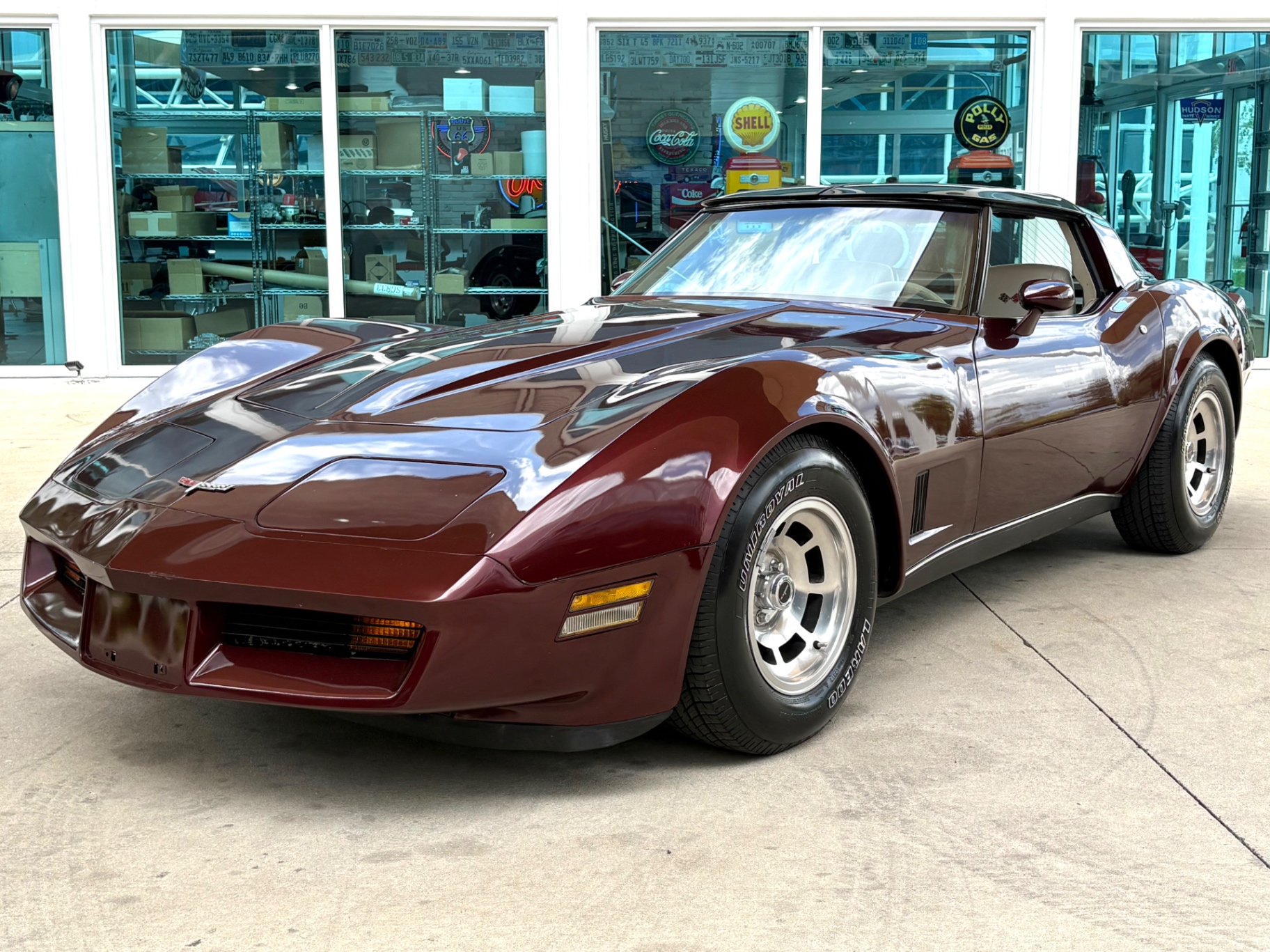
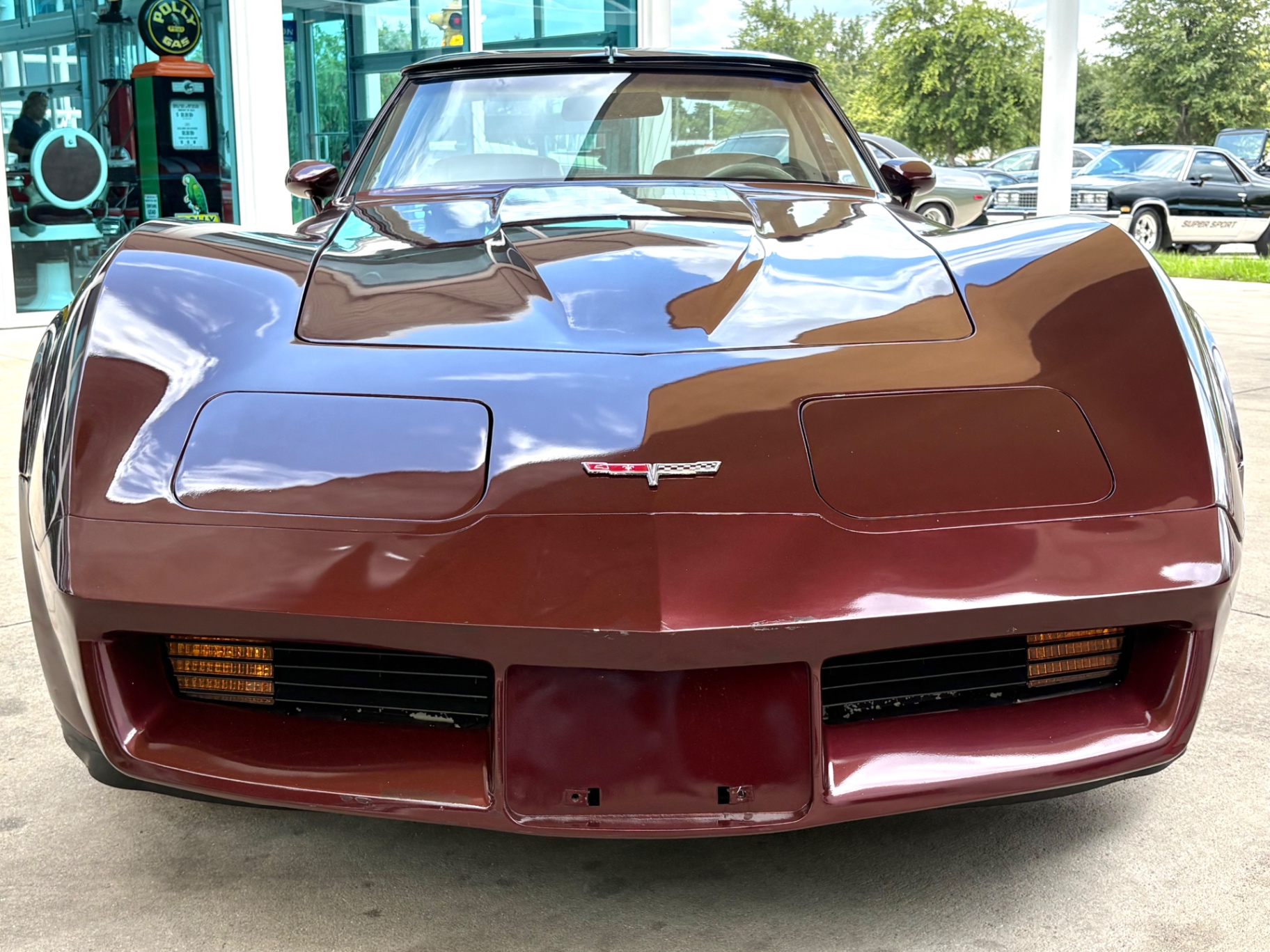
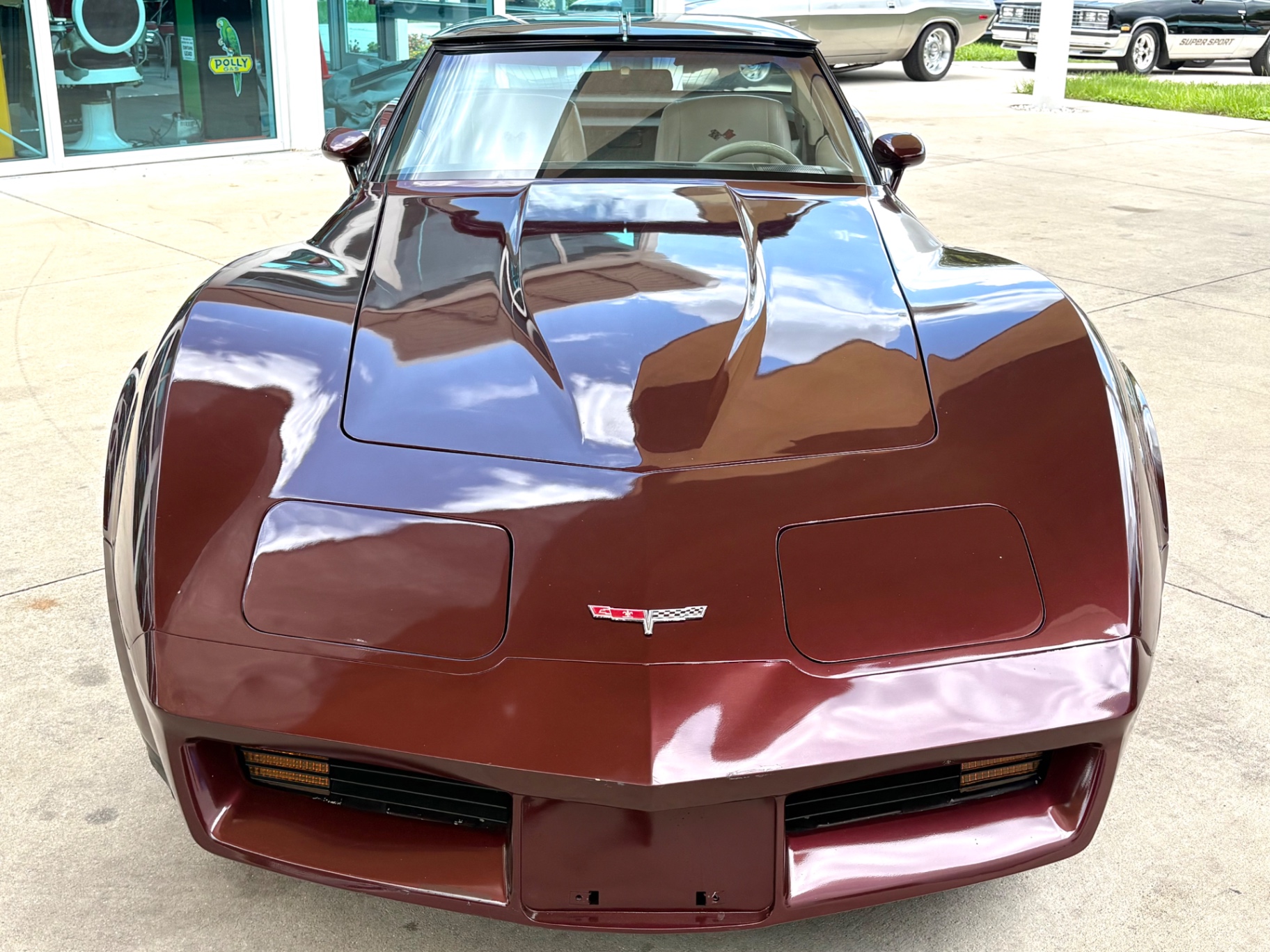
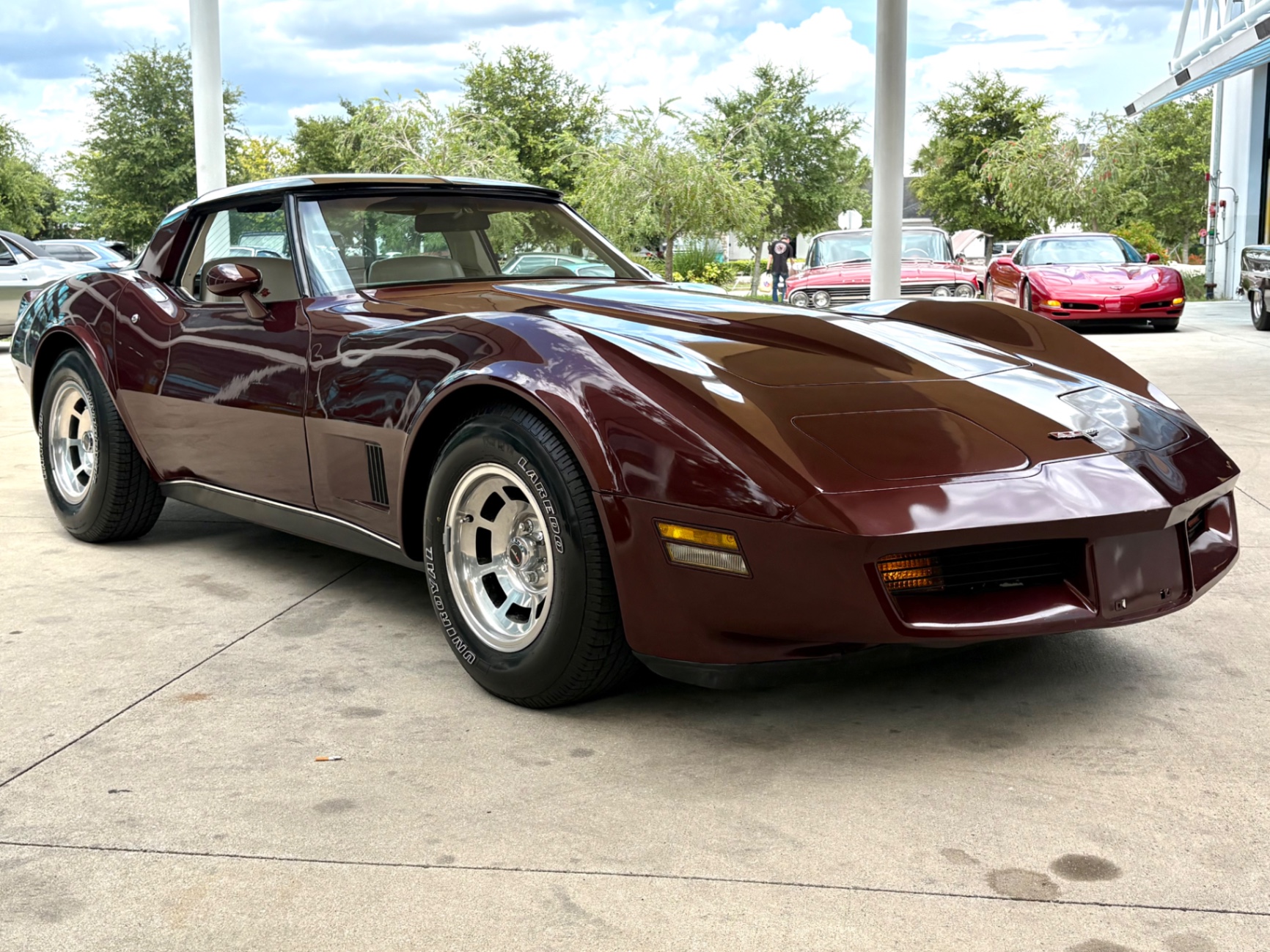
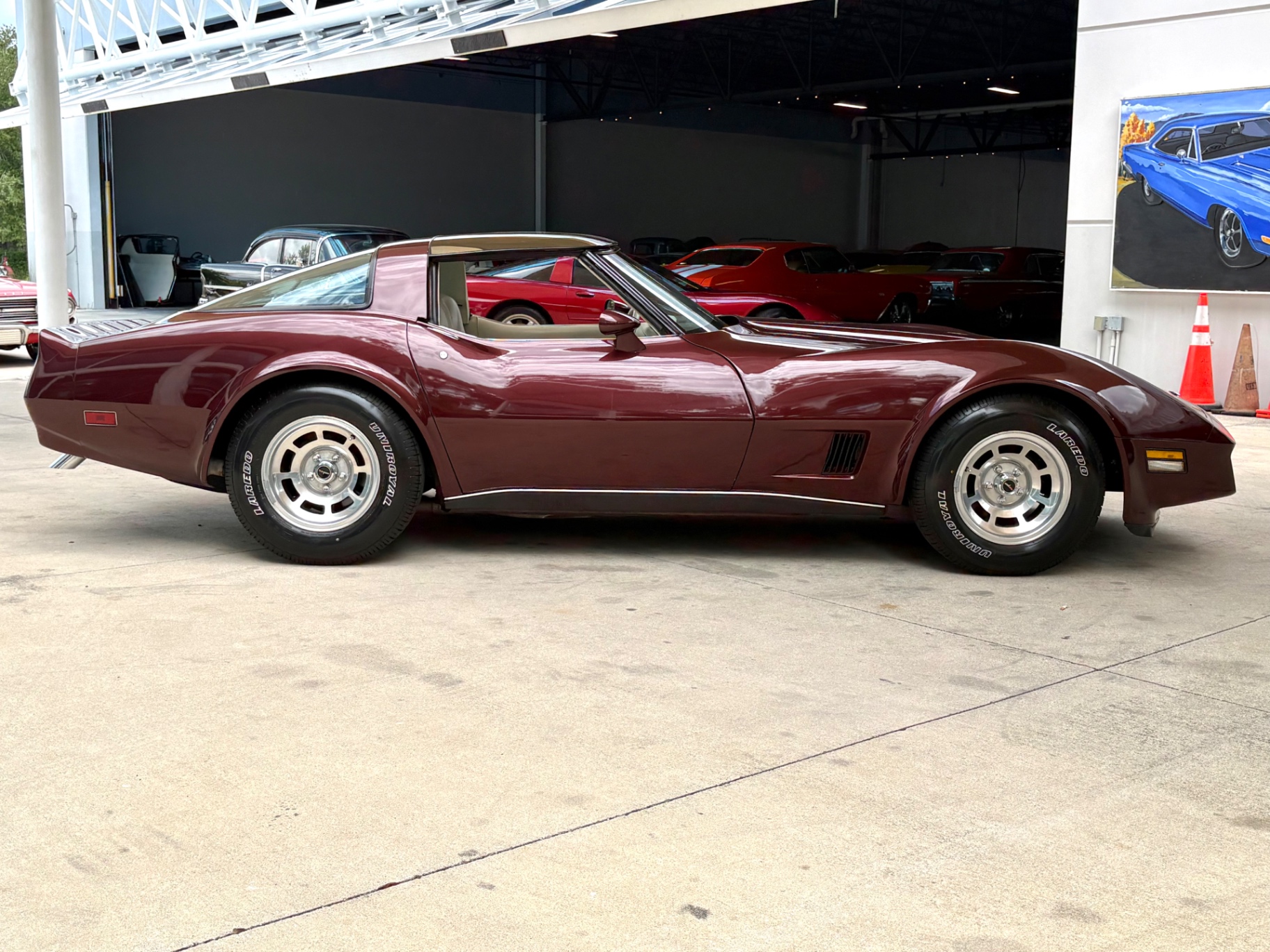
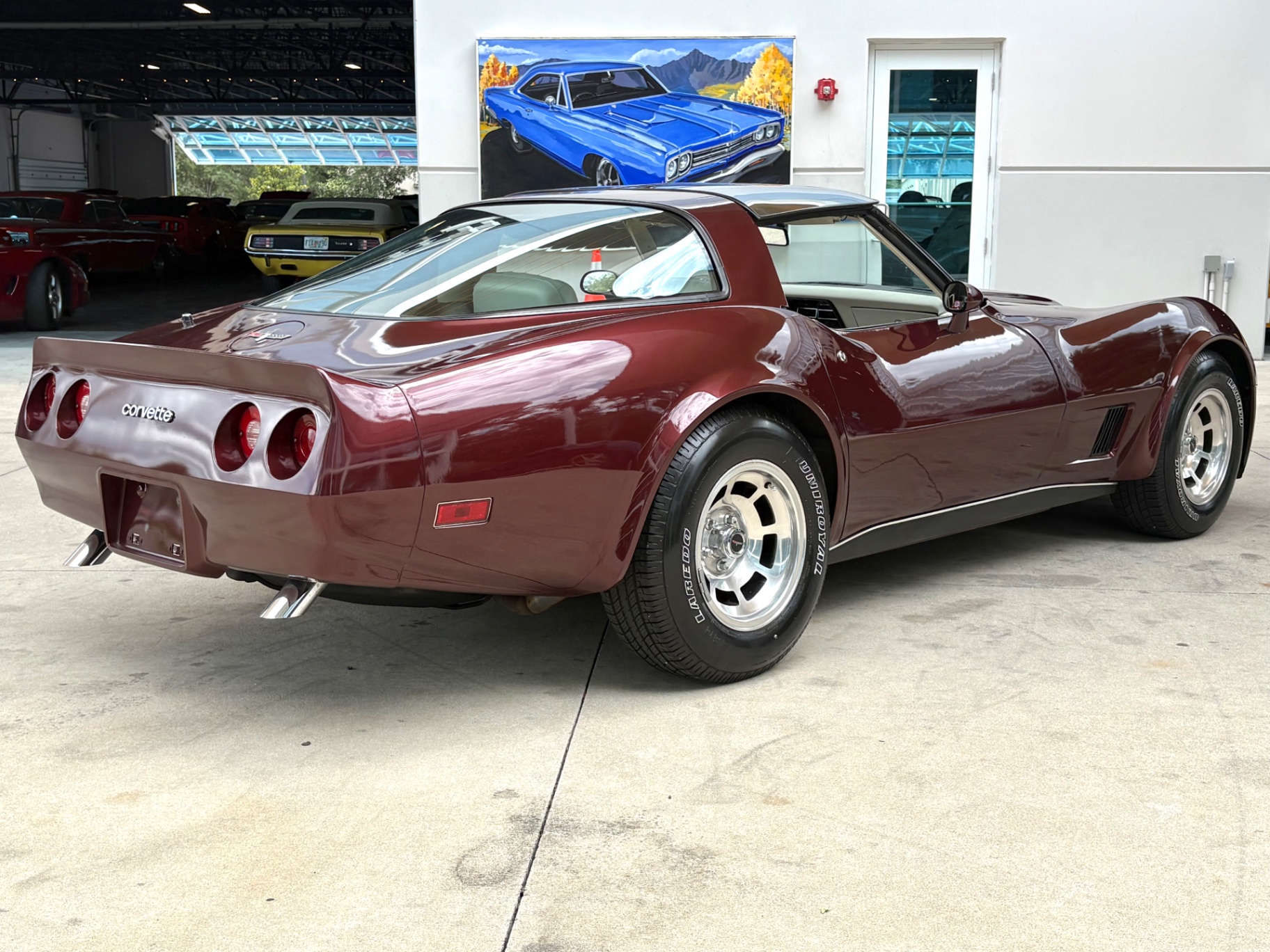
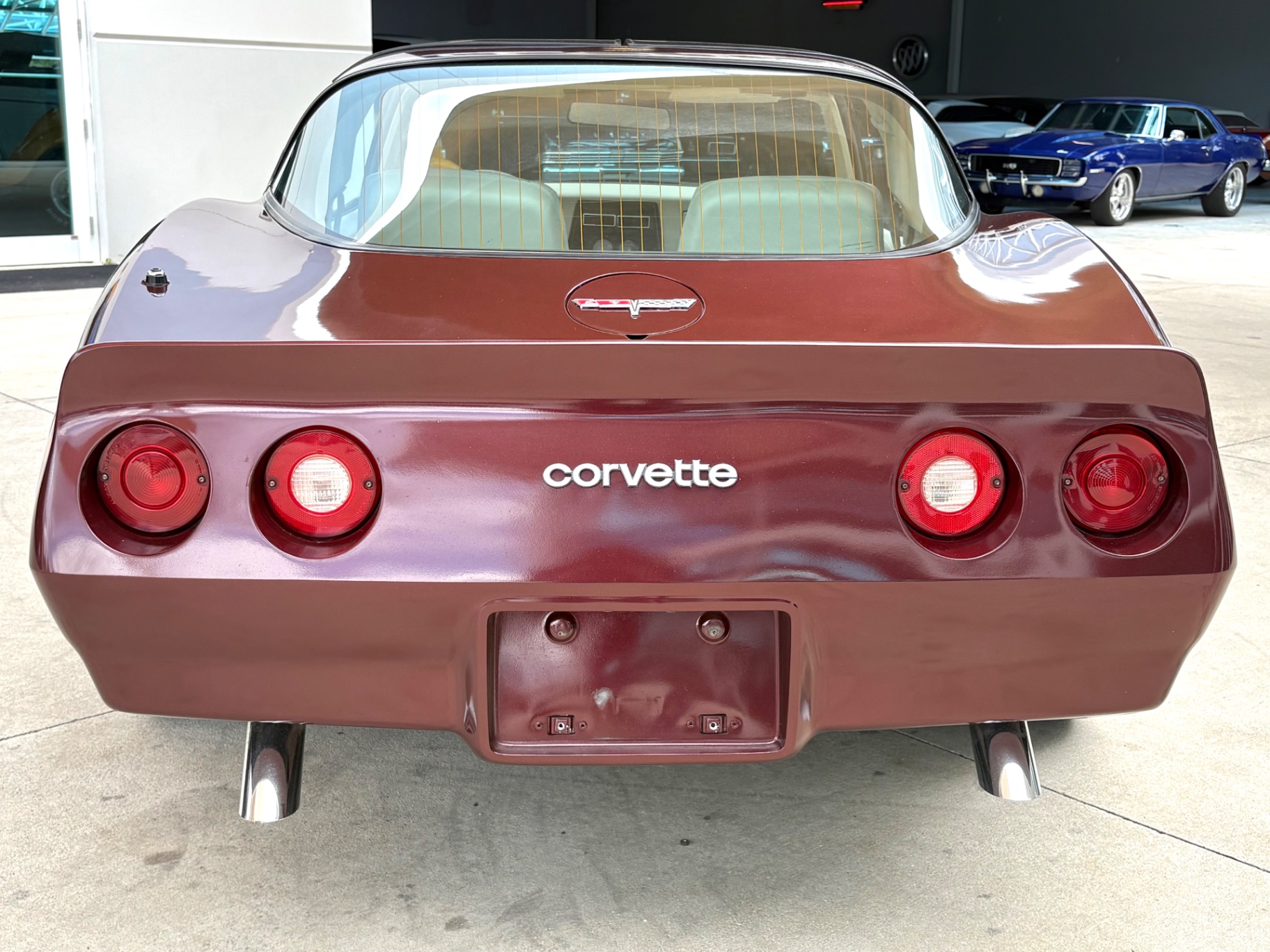
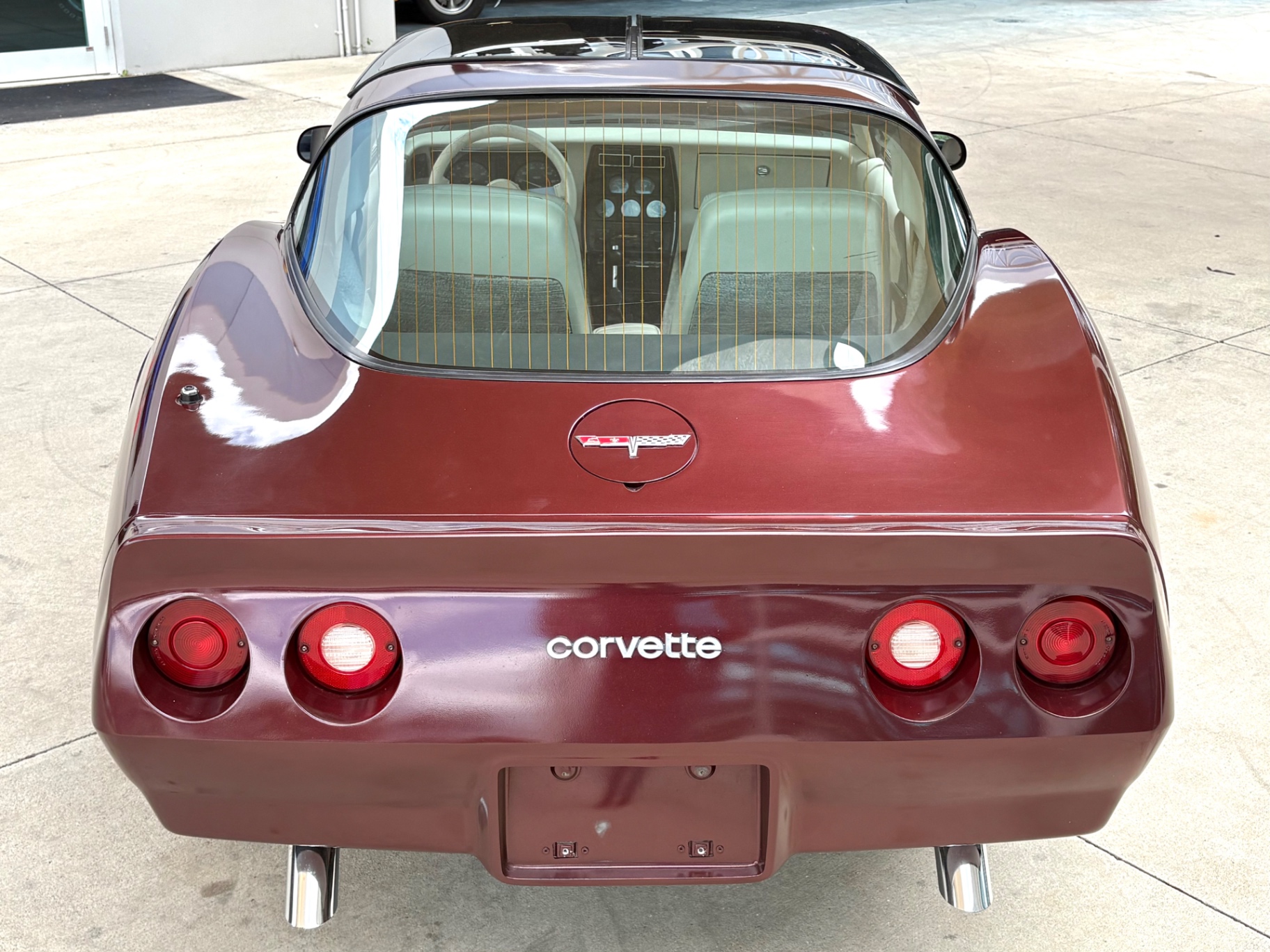
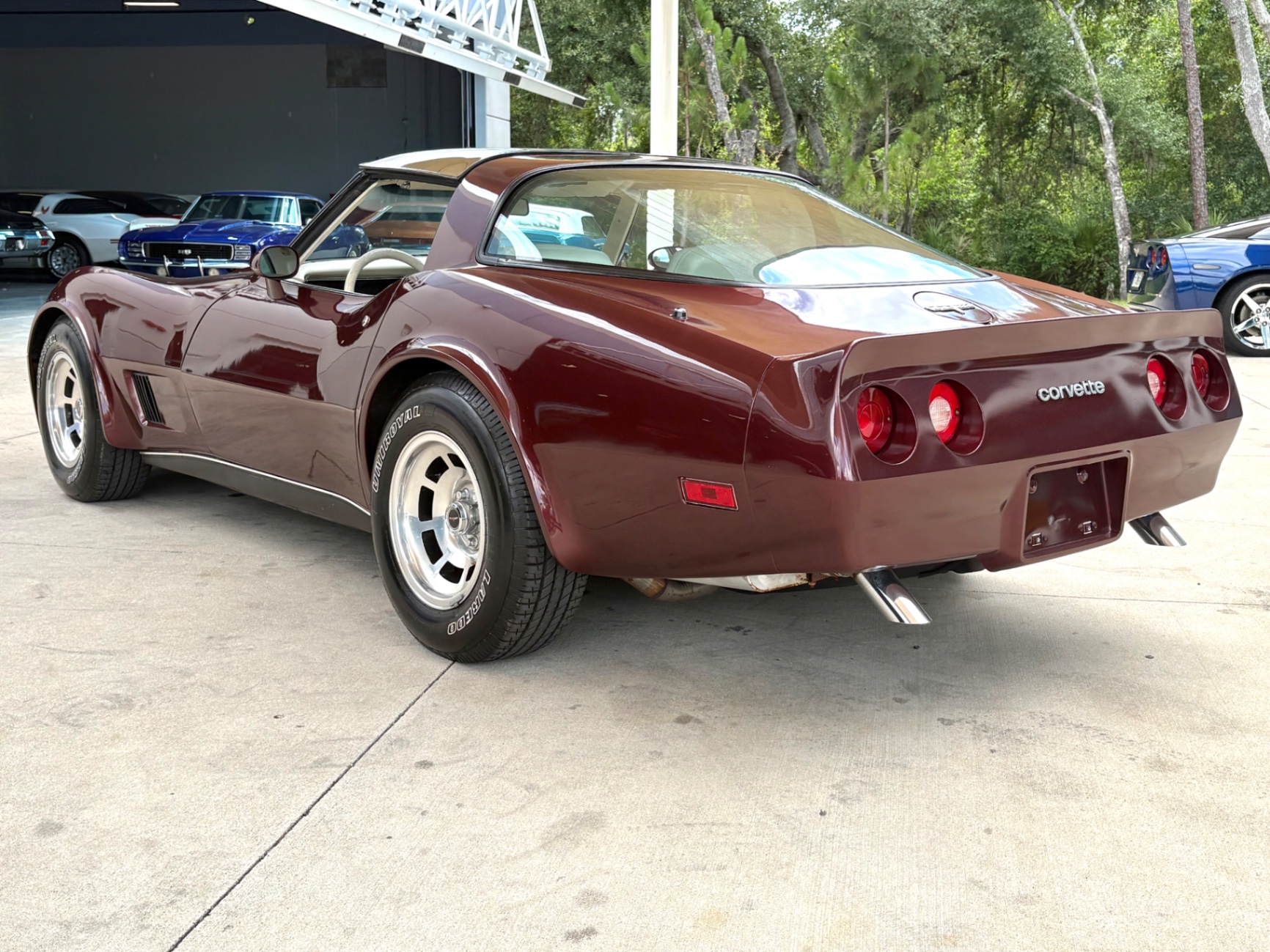
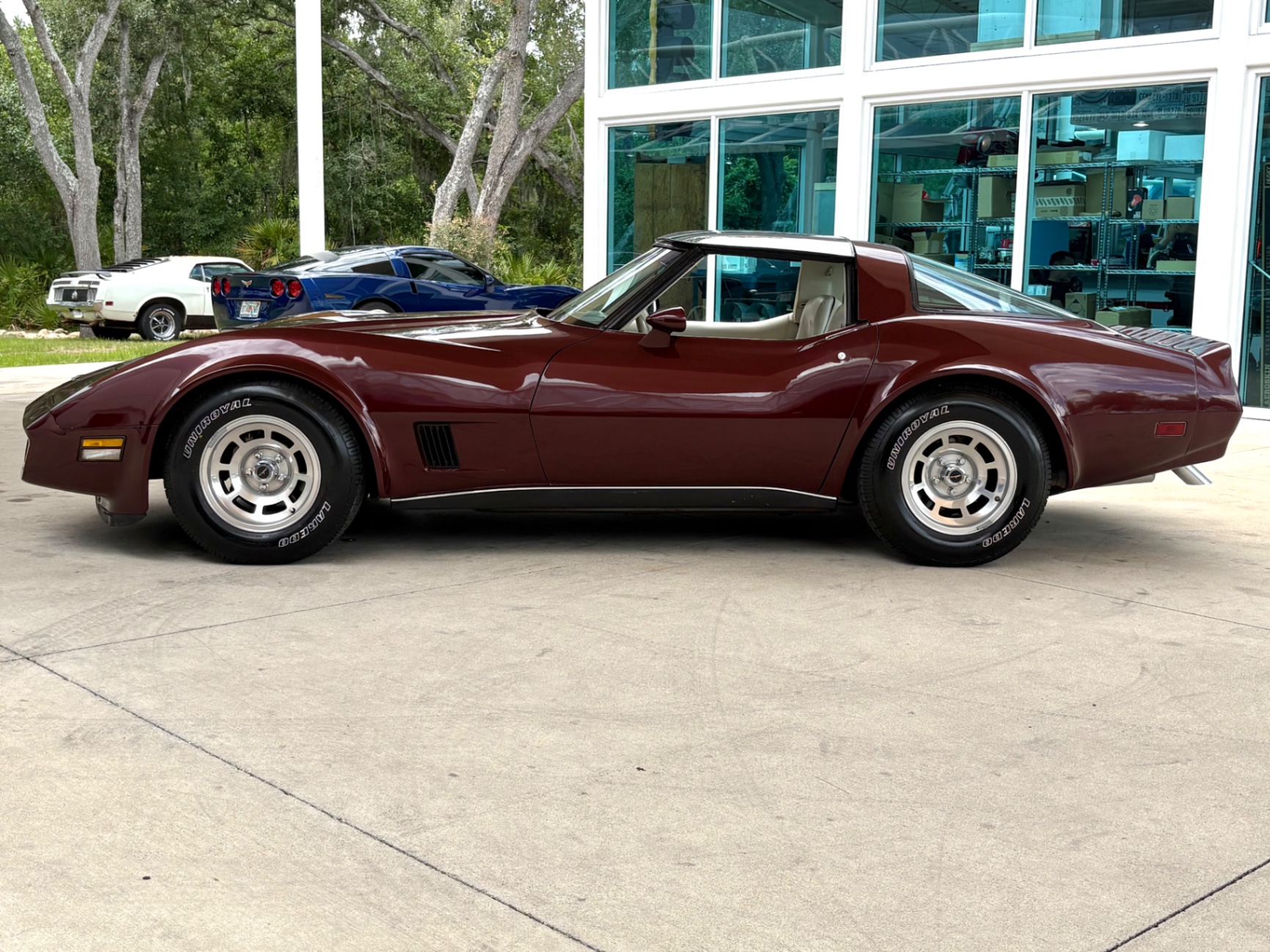
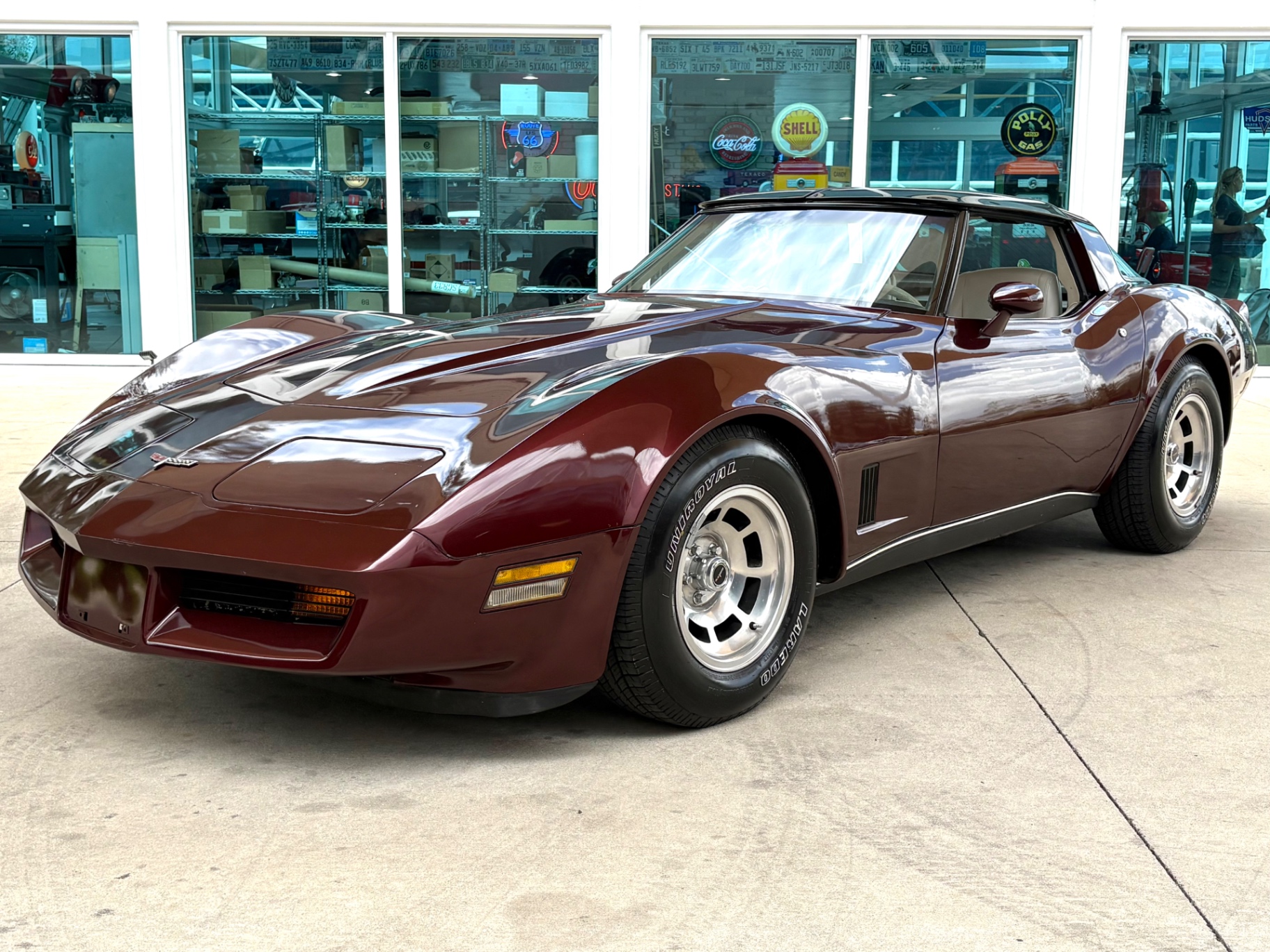
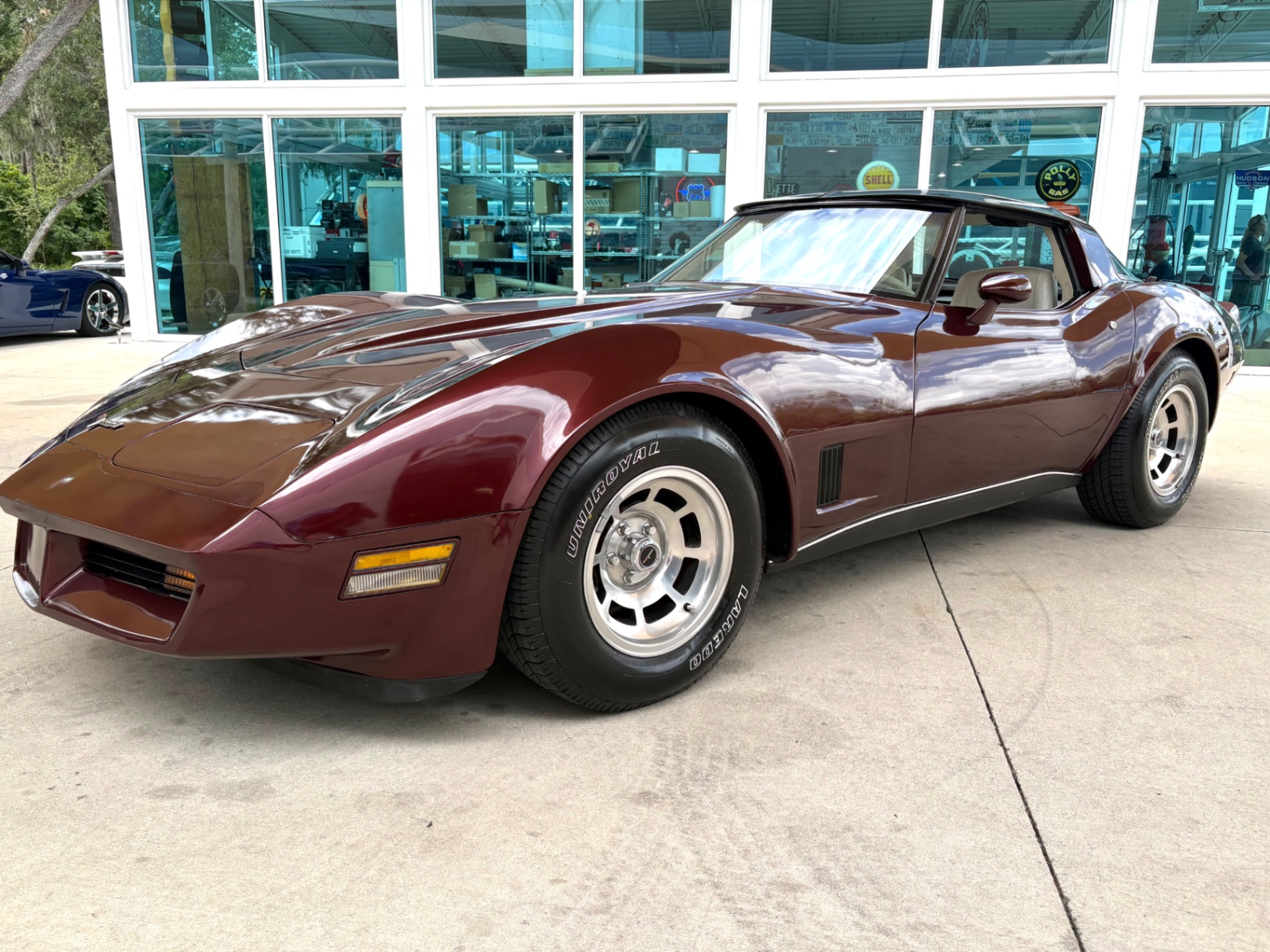
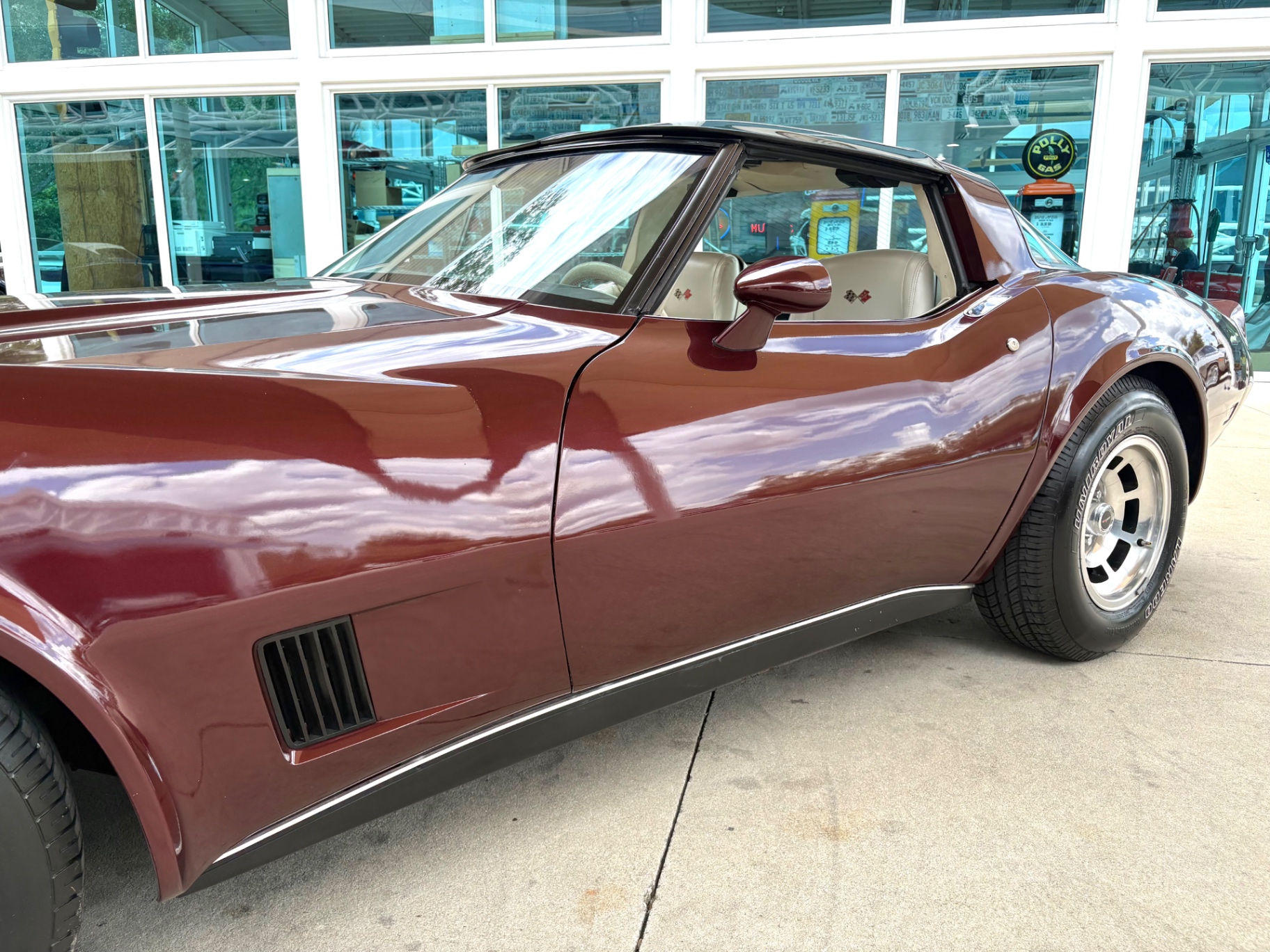
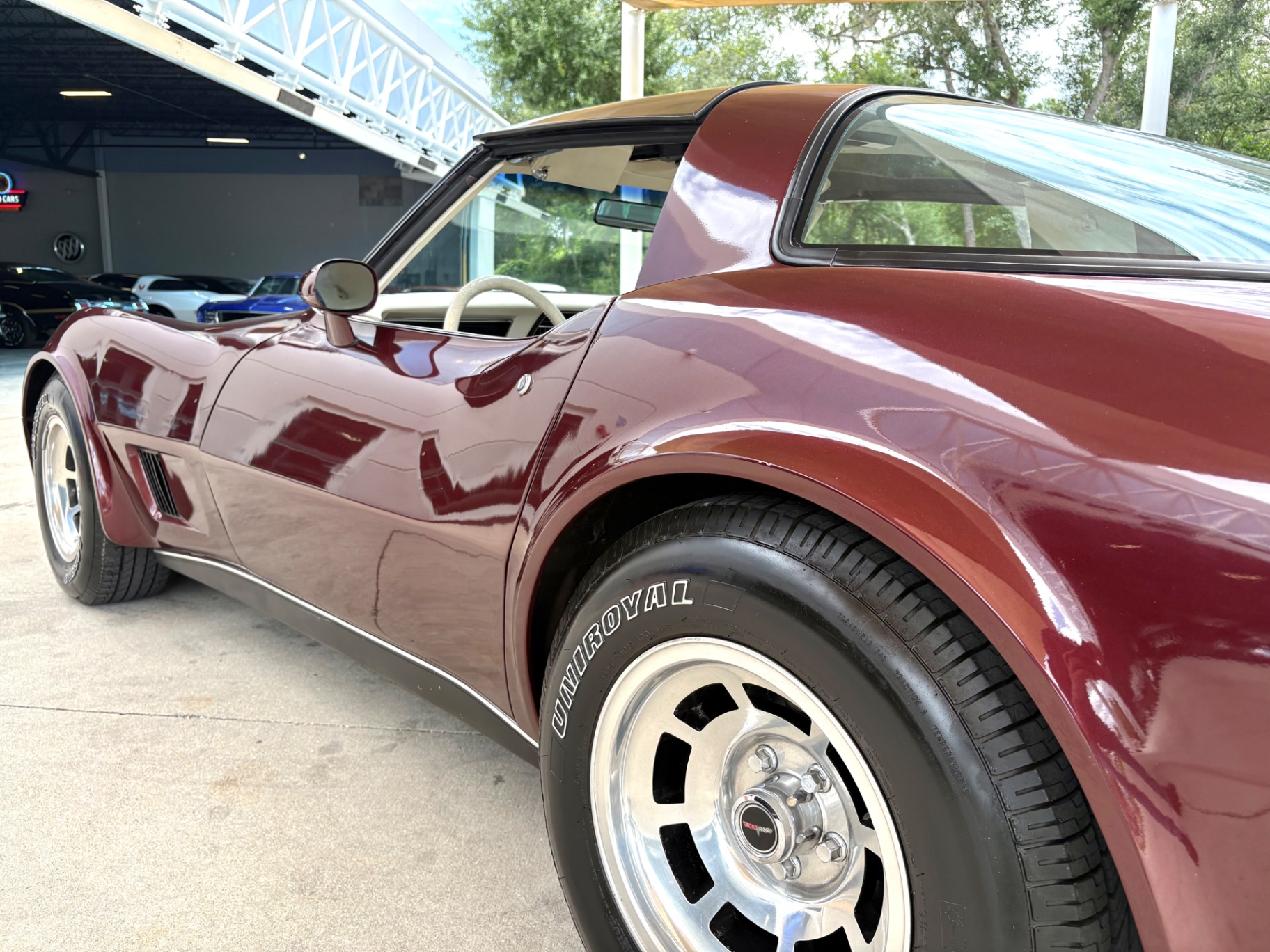
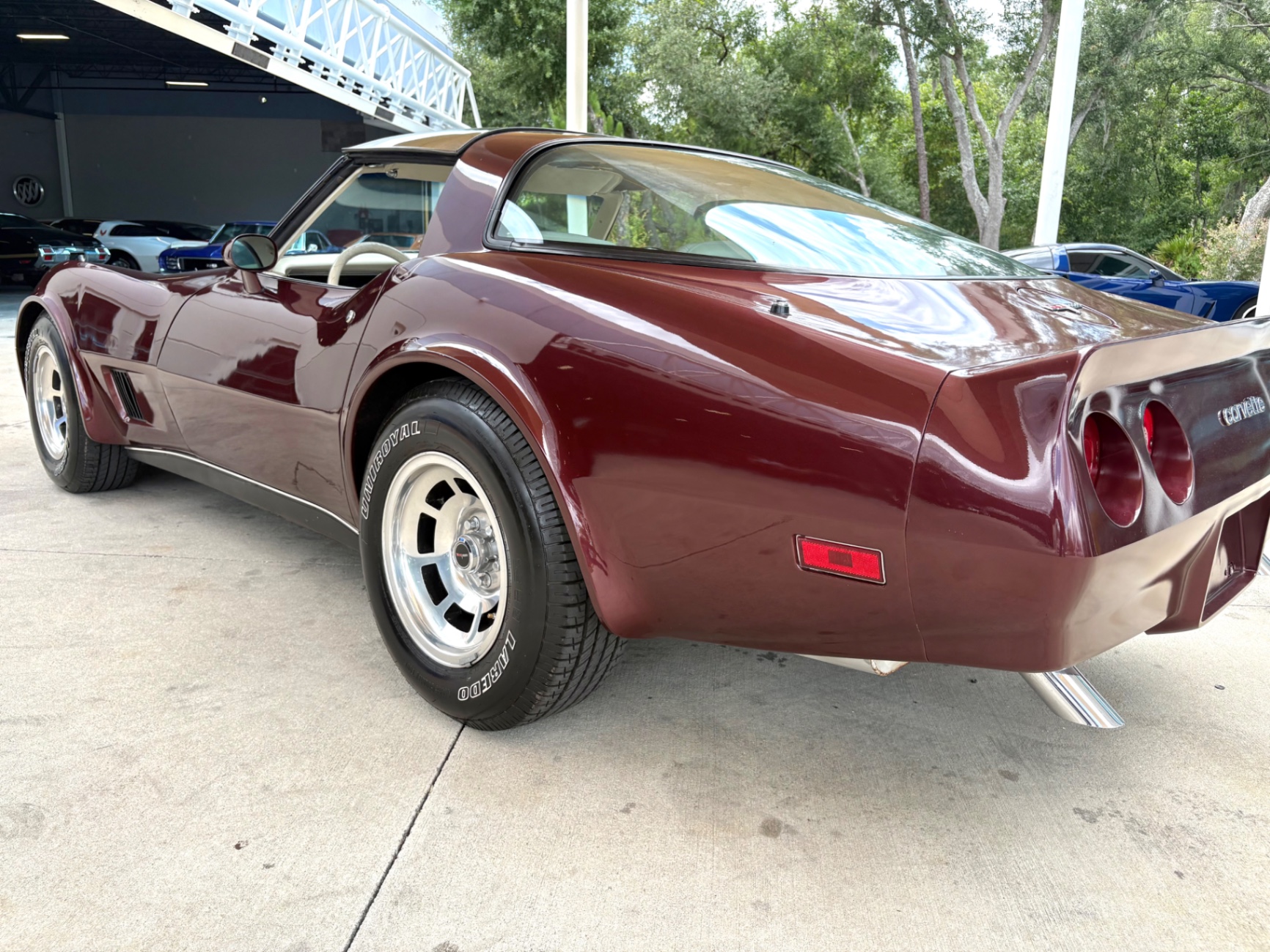
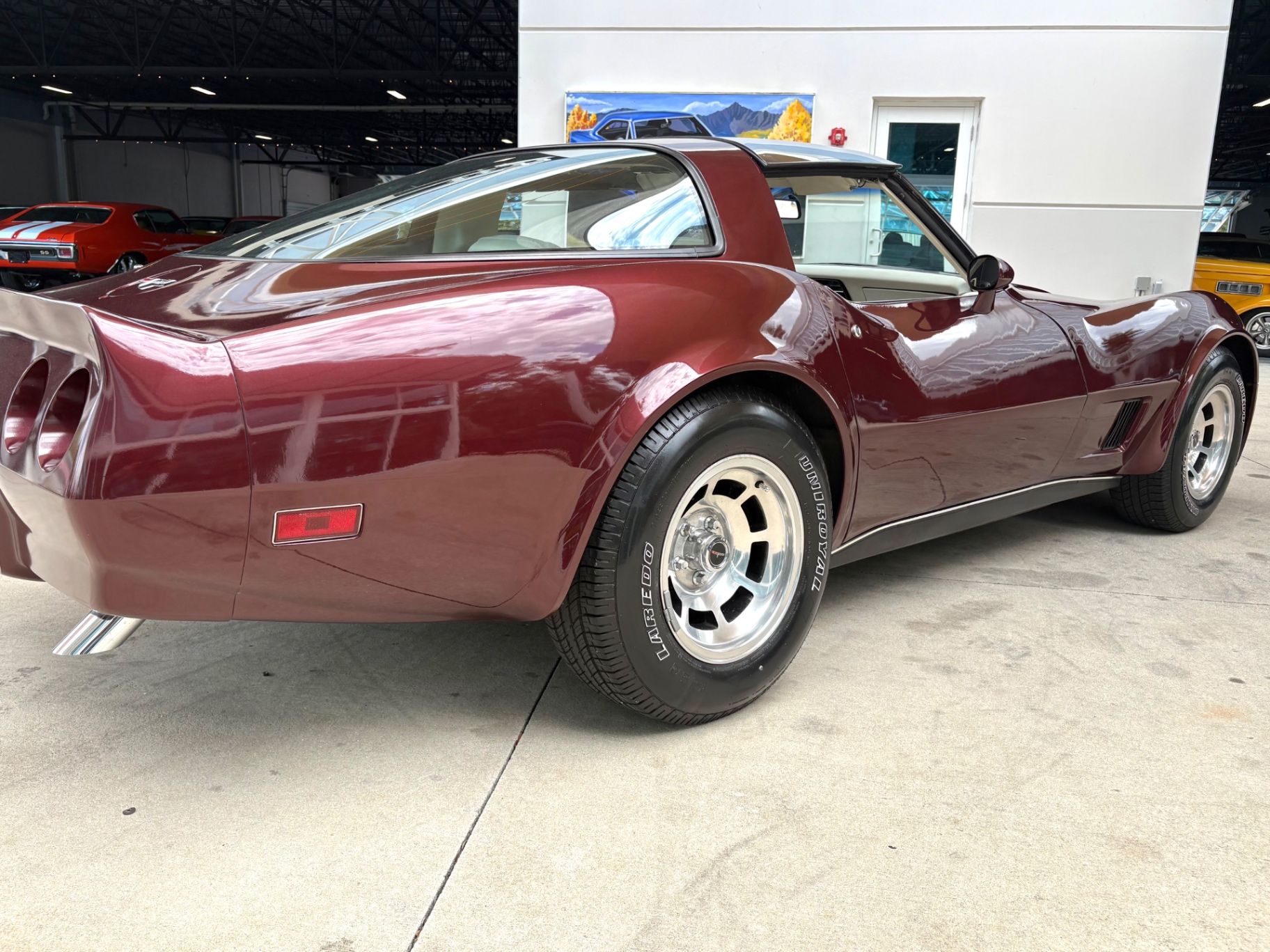
1980 Chevrolet Corvette — 350ci V8, 4-Speed Manual, Maroon over Oyster White Leather
Why This Car Is Special
The 1980 Chevrolet Corvette sits at an interesting crossroads in C3 history. It was the first model year to feature an integrated front air dam and rear spoiler molded directly into the body — a functional aerodynamic upgrade that gave the car a cleaner, more purposeful look compared to earlier C3s. Chevrolet also made the aluminum intake manifold standard equipment on the 350ci engine for 1980, reducing weight while improving heat management. These were not cosmetic updates. They were engineering choices made to extend the relevance of a body style that had been in production since 1968.
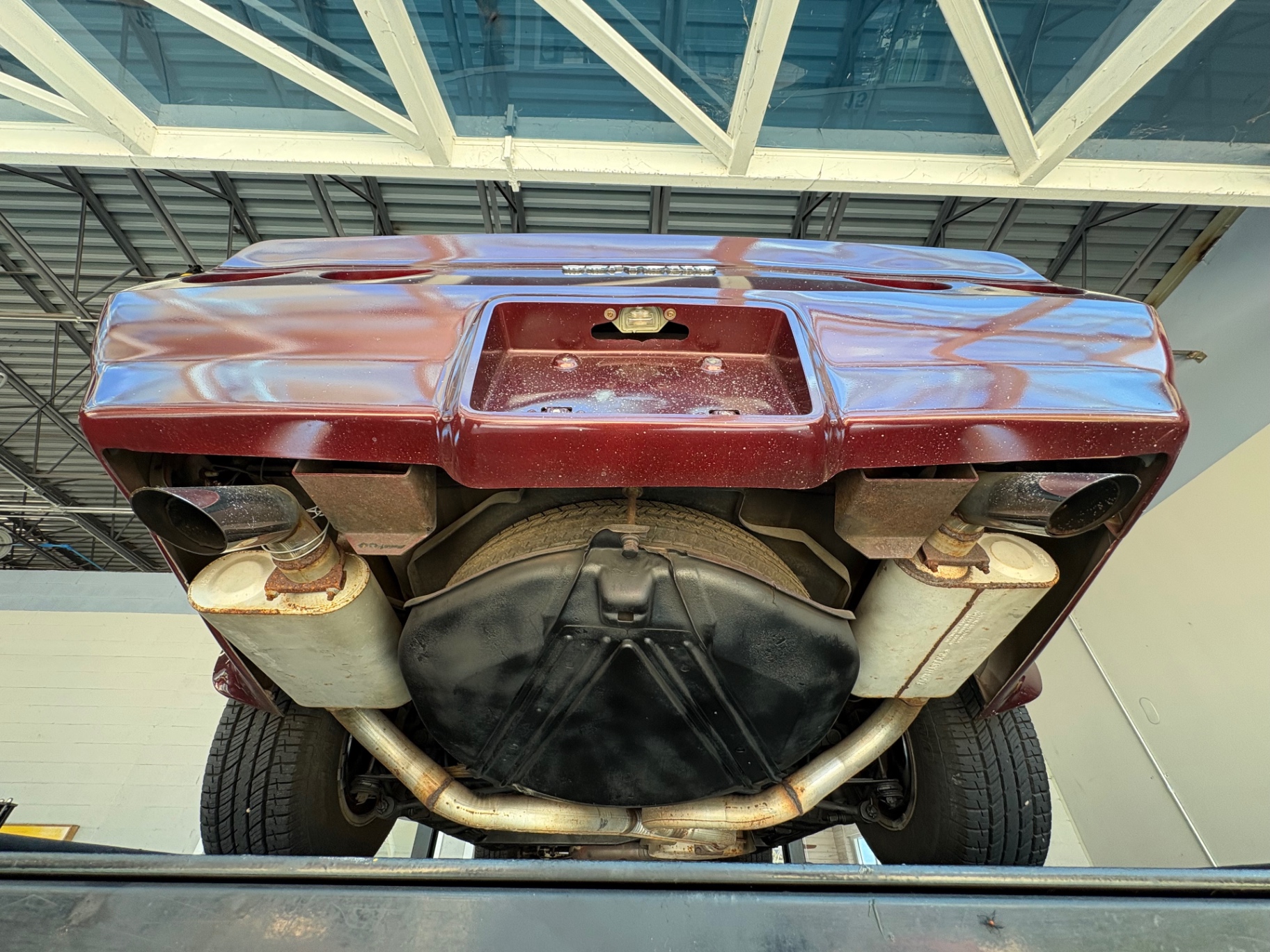
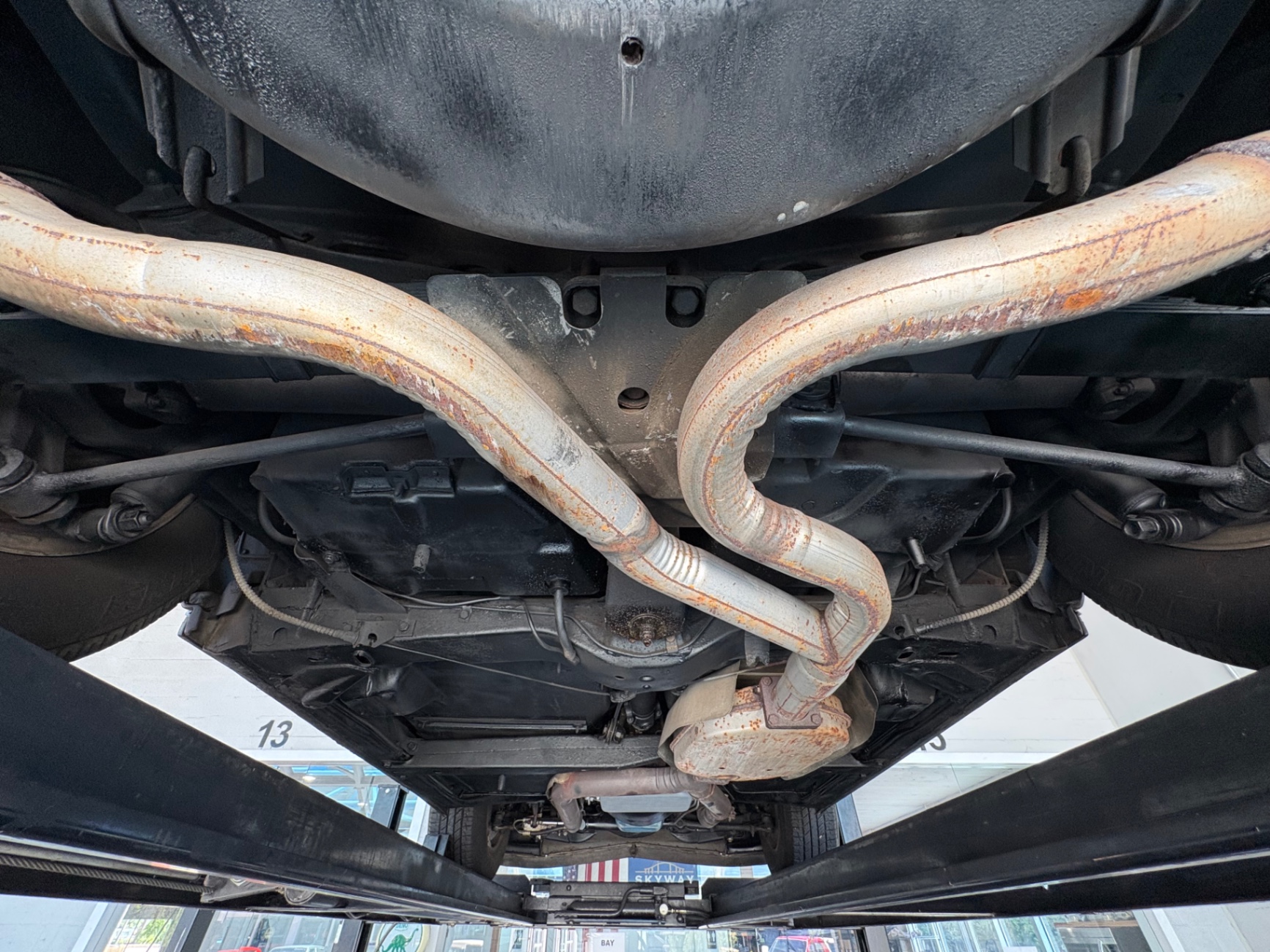
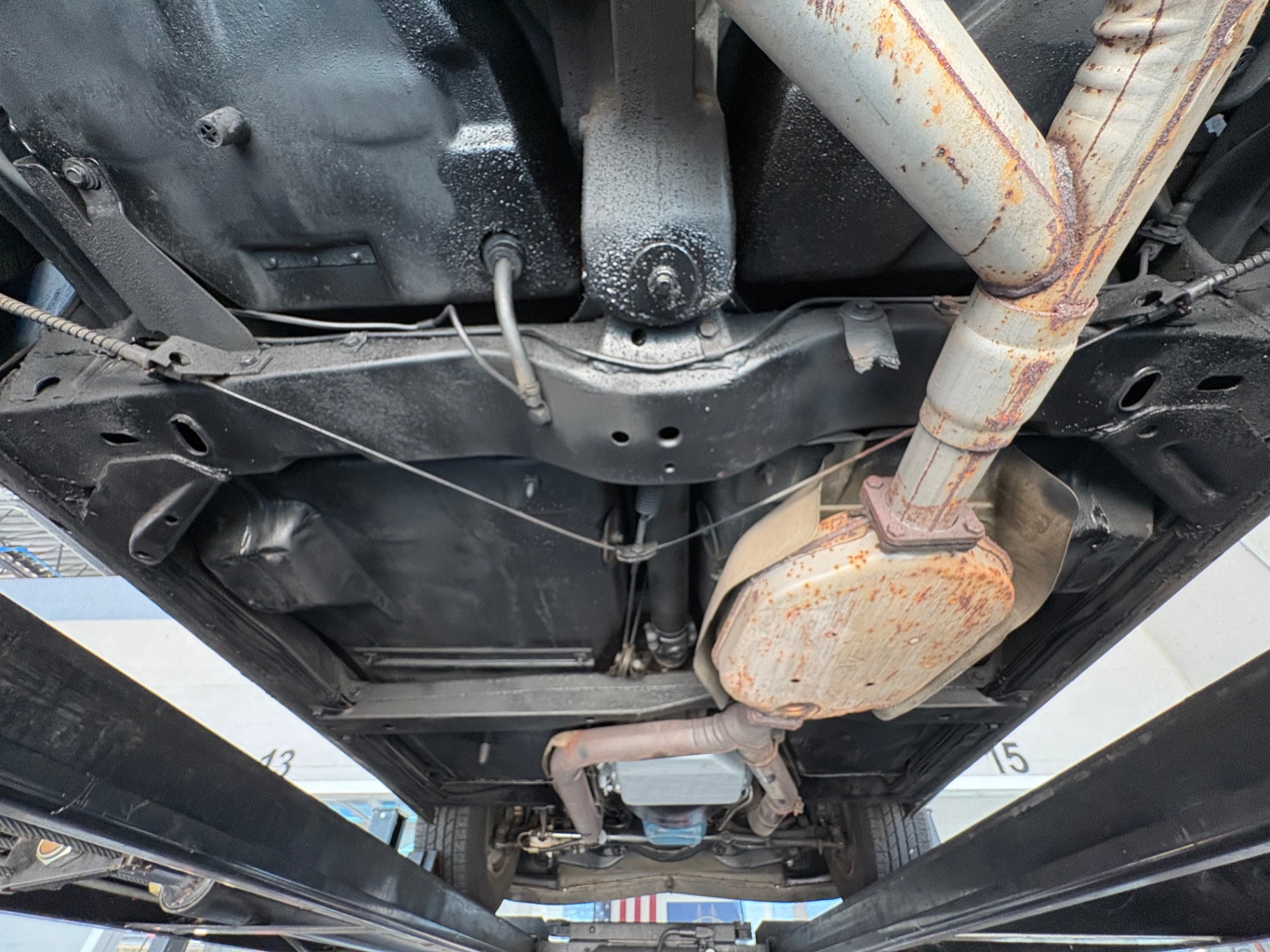
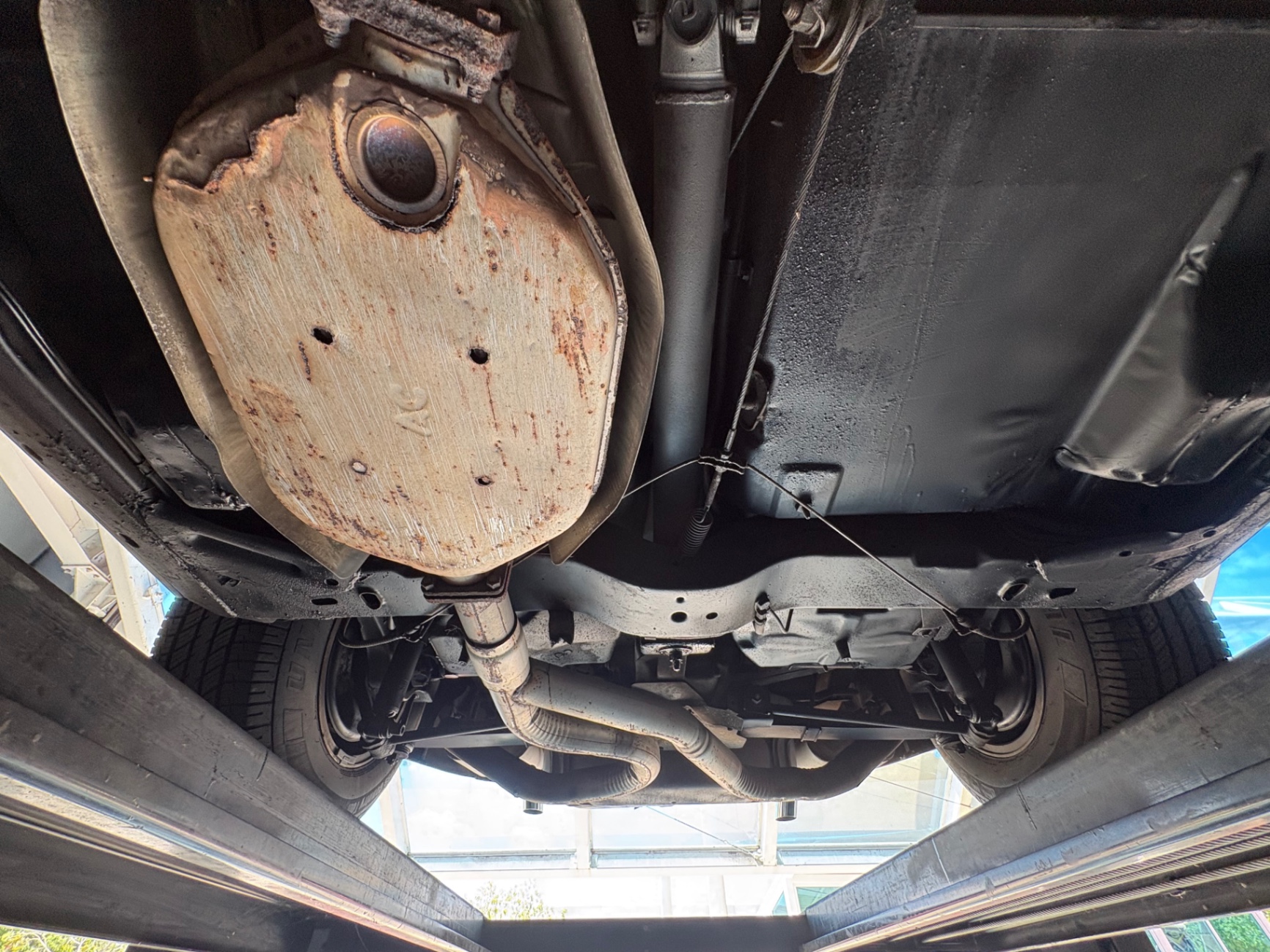
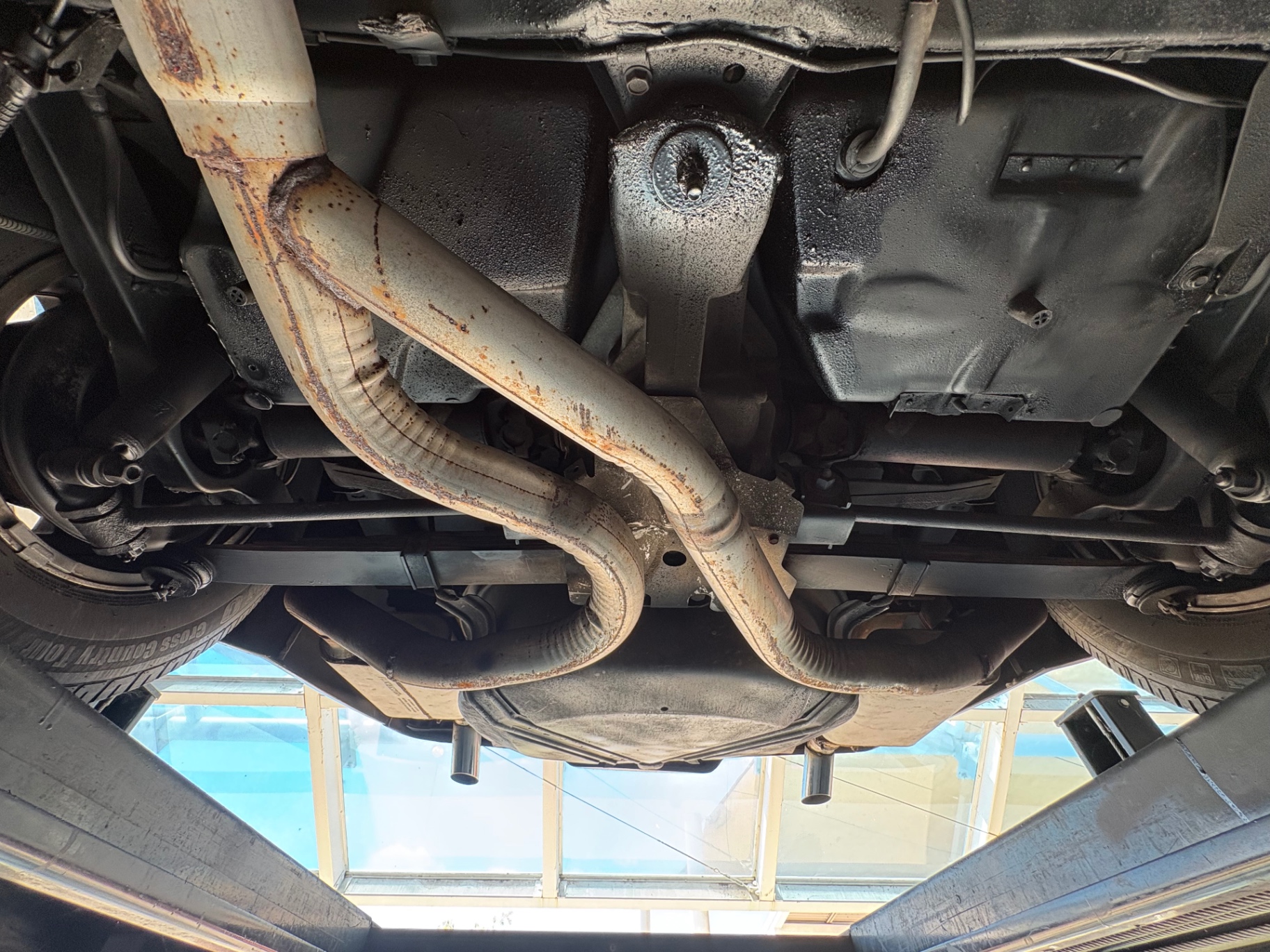
The C3 generation ran from 1968 through 1982, making it the longest-running Corvette generation to date. By 1980, GM had refined the formula considerably. The chassis carried an independent rear suspension — a Corvette hallmark since 1963 — and the fiberglass body continued to prove its durability advantages over steel in a Florida climate. These cars simply do not rust in the way that conventional unibody vehicles do. The ladder-type steel frame underneath can show age-related surface oxidation on the exhaust components, as seen here, but the structural and body integrity of a well-kept C3 holds up in ways that steel-bodied contemporaries often cannot match.
This particular 1980 Chevrolet Corvette is finished in Maroon over an Oyster White leather interior — a combination that reads as composed and intentional rather than flashy. The 4-speed manual transmission is the configuration most Corvette enthusiasts prefer, and it was a deliberate option choice in 1980 when the automatic was also available. Combined with the 350ci 5.7L V8, this car delivers the mechanical experience the C3 was built around.
Chevrolet produced 40,614 Corvettes for the 1980 model year. That number reflects strong demand, but it also means these cars were bought by real people who drove them. Finding a 1980 Chevrolet Corvette that has survived with a clean undercarriage, intact leather interior, and all its original trim pieces — including the T-top storage bag — is less common than the production numbers suggest.
Features List
- 350ci 5.7L V8 engine with aluminum intake manifold - 4-Speed manual transmission - Removable T-tops with original storage bag included - Oyster White leather bucket seats with Crossflags embroidery - Maroon exterior finish - Original aluminum wheels - Integrated front air dam and rear spoiler (body-colored, factory) - Power windows - Power steering - Power brakes - Air conditioning - Tilt-telescopic steering wheel - Pop-up headlights - Dual exhaust - Independent rear suspension - Fiberglass body - Sport mirrors - AM/FM radio - Center console - Rear storage compartment - Spare tire
Mechanical
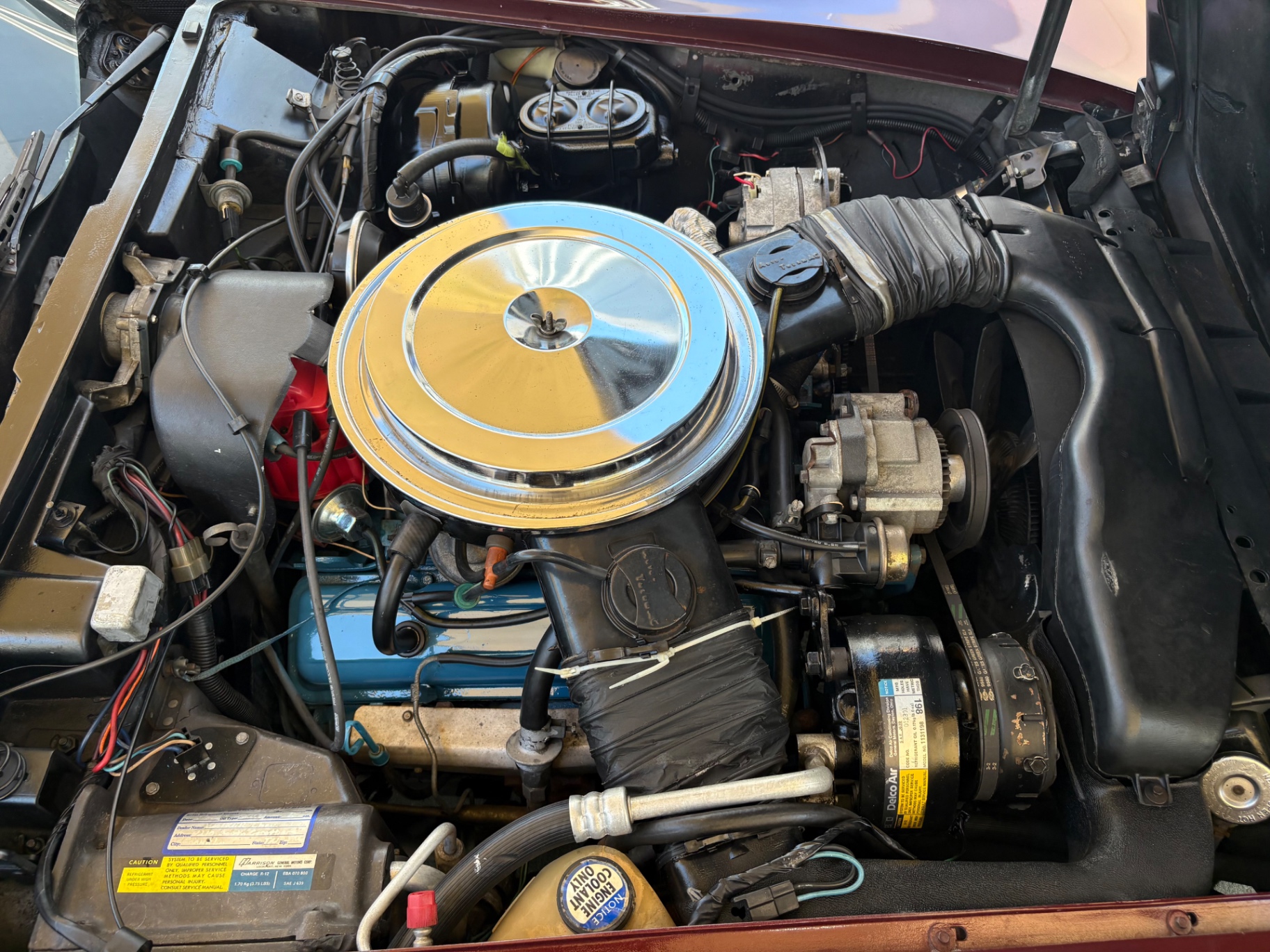
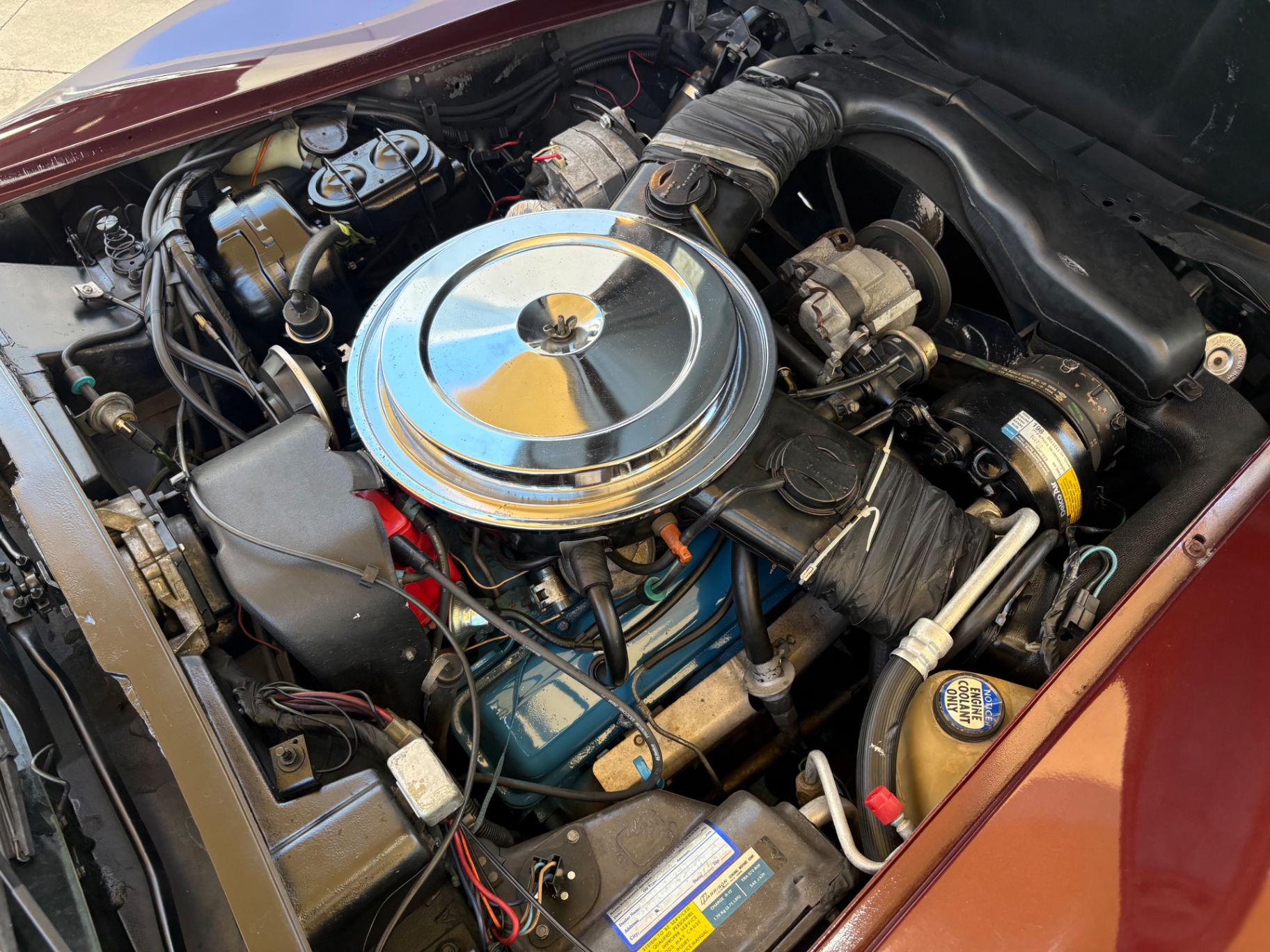
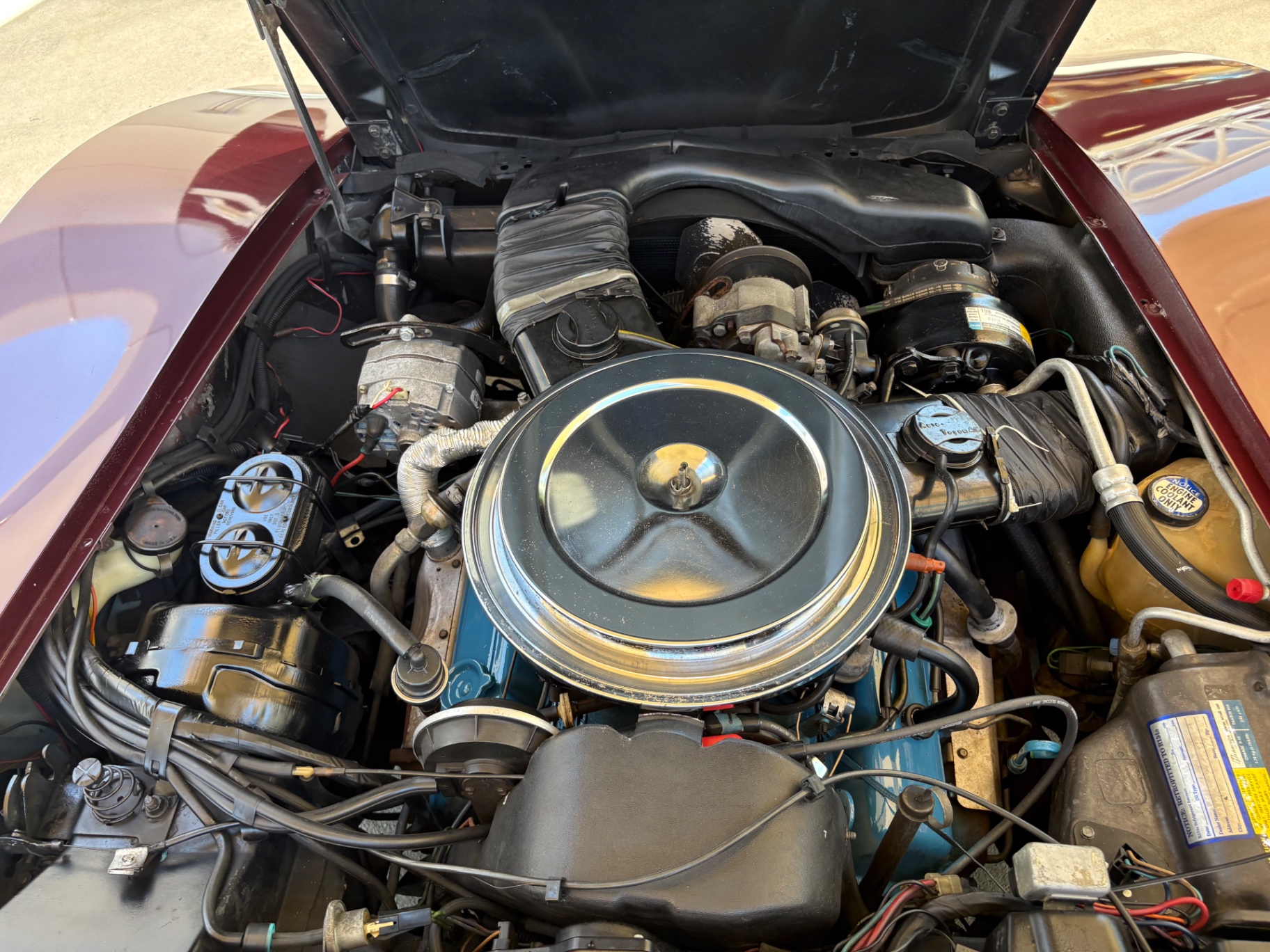
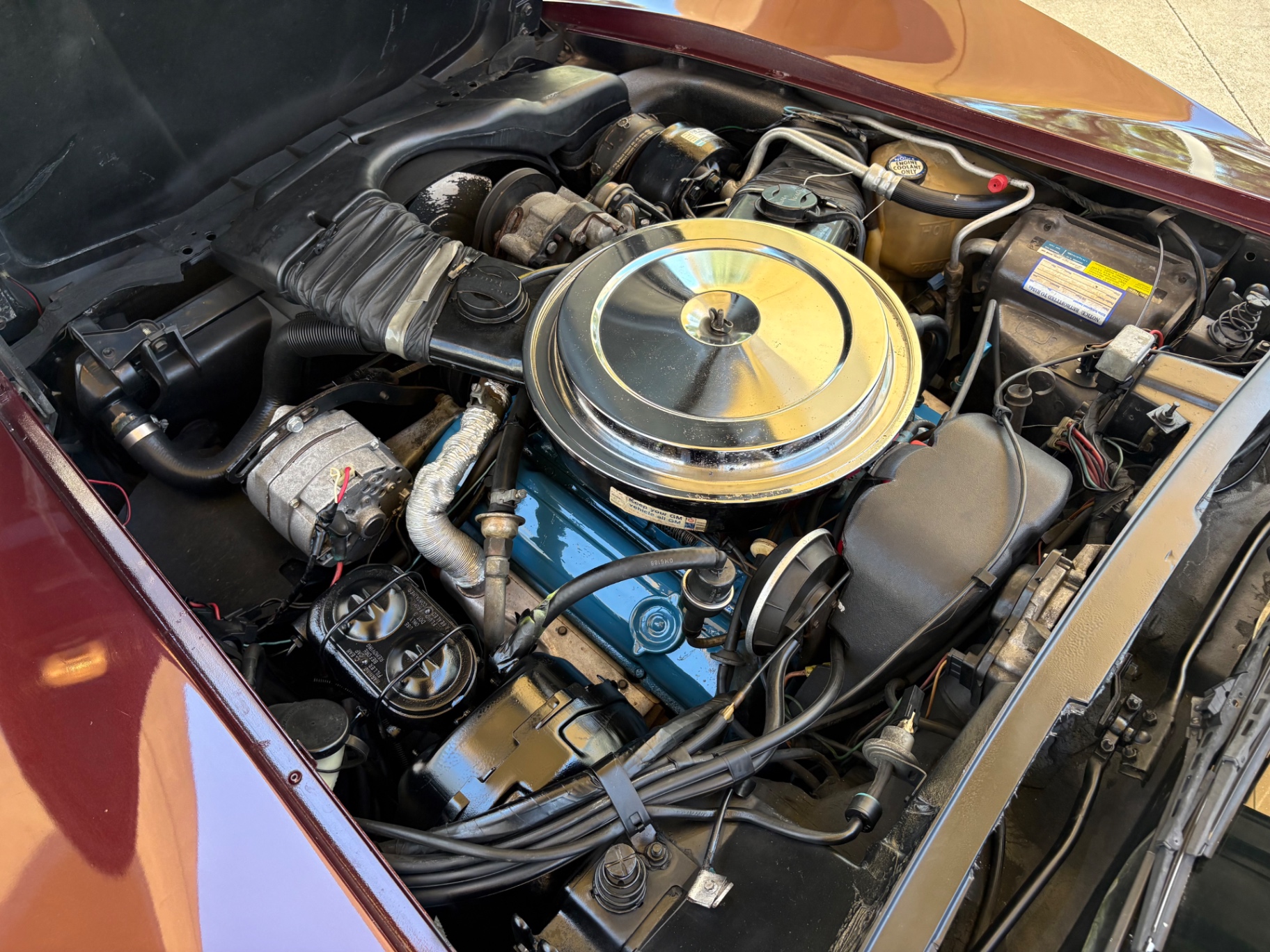
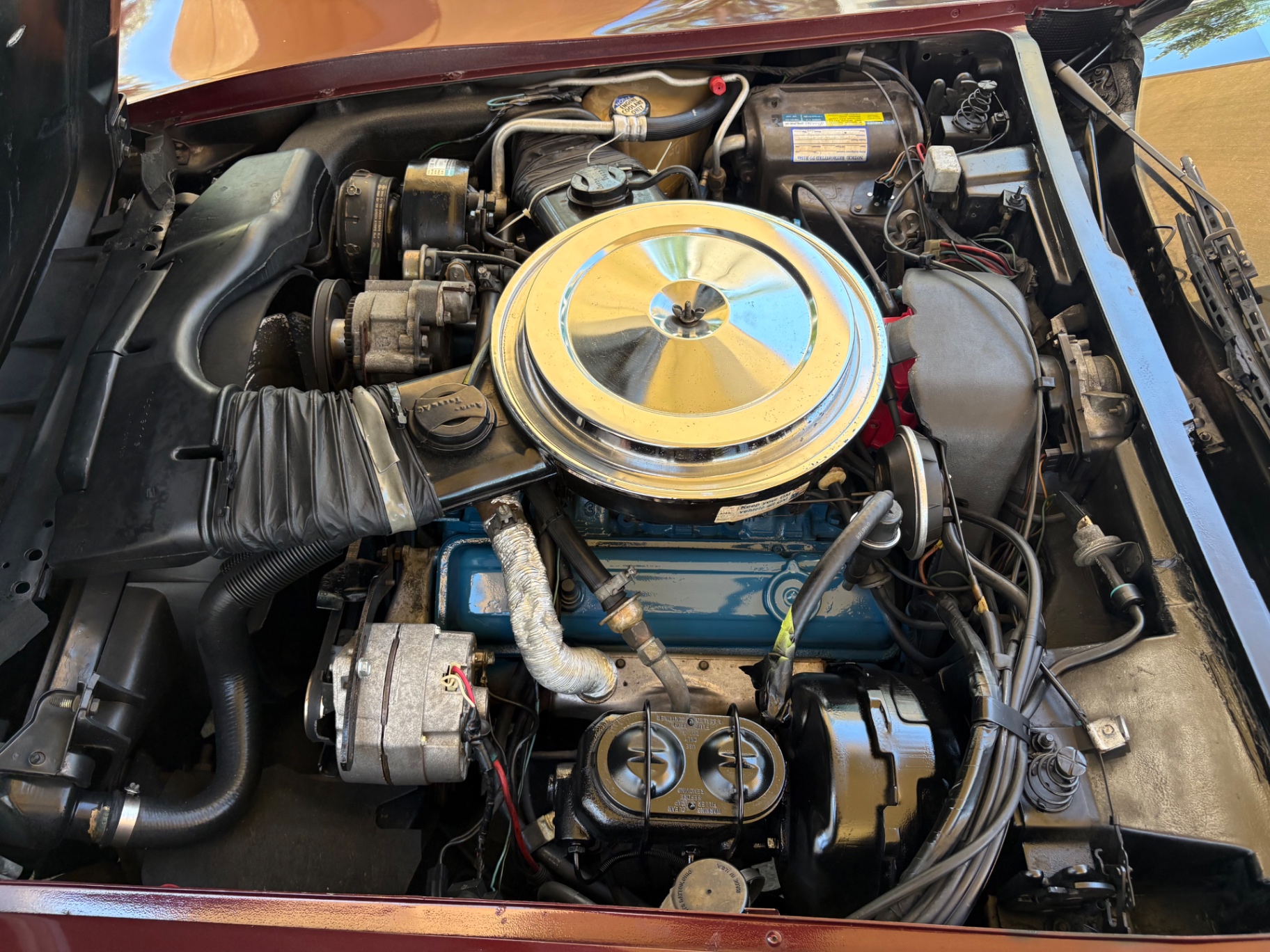
The 350ci 5.7L V8 under the hood is the L48 engine configuration, which was the standard engine offering for the 1980 Corvette. For 1980, Chevrolet standardized the aluminum intake manifold across the 350, which had previously been an optional or performance-package component. The result is an engine that runs cooler on top and carries less weight forward of the firewall. The Rochester carburetor sits under a polished chrome air cleaner that is clearly visible in the engine bay photos and presents well.
The 4-speed manual gearbox is the correct companion to this engine. In 1980, the wide-ratio and close-ratio 4-speed options were both available, and the manual transmission buyers were typically the more driver-focused Corvette purchasers. The shifter is mounted in the center console between the two seats, exactly where it belongs in a car like this.
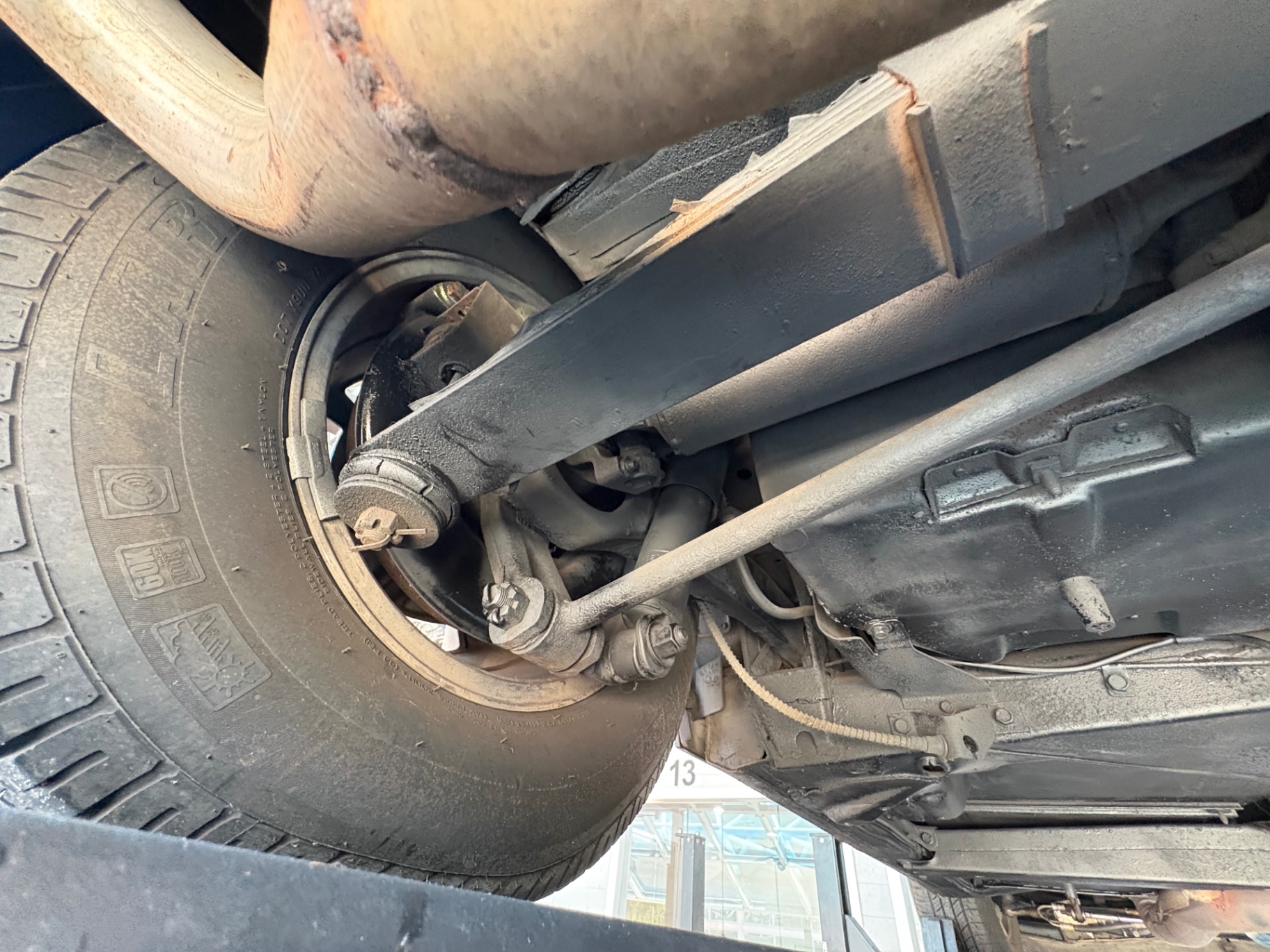
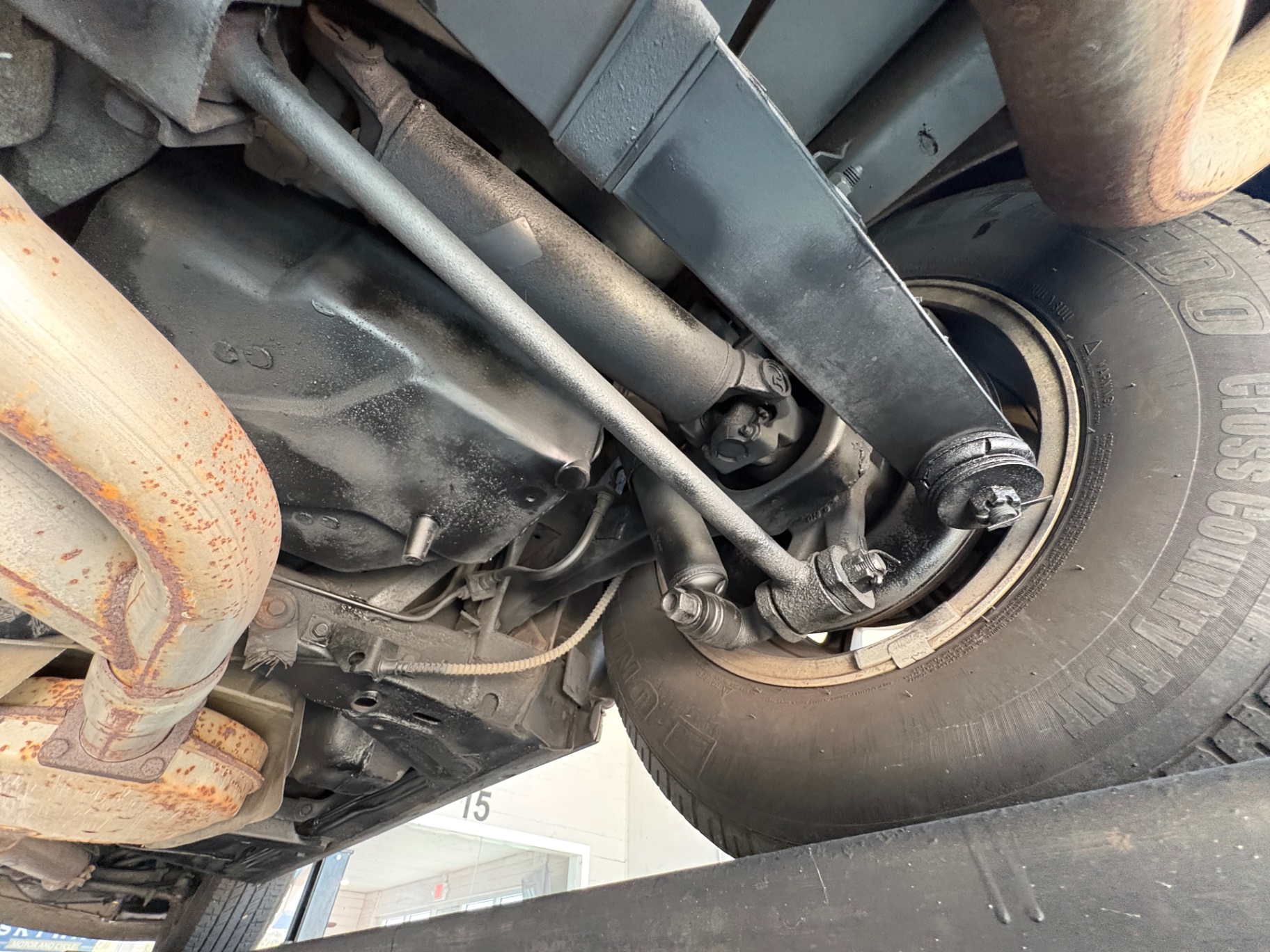
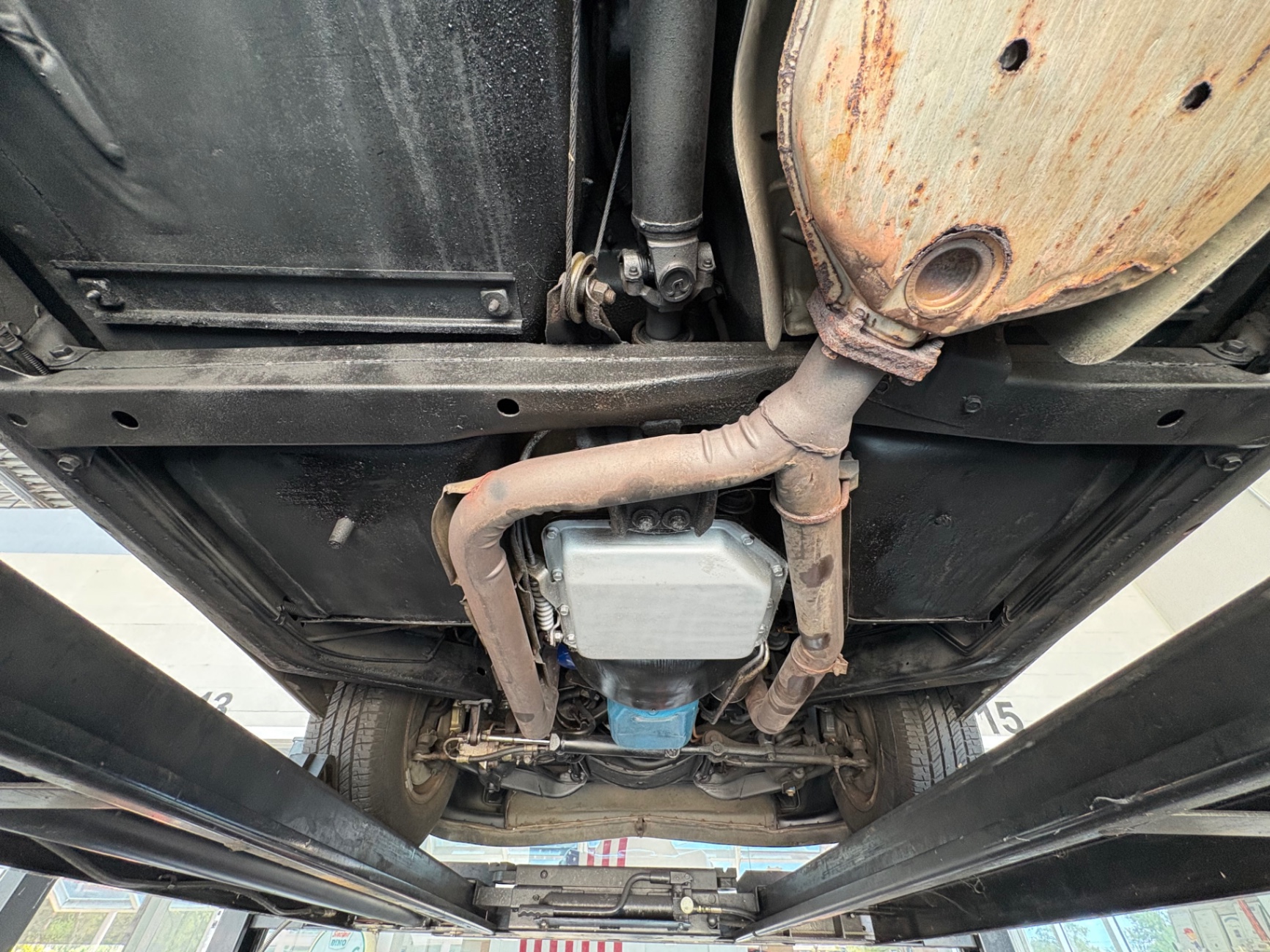
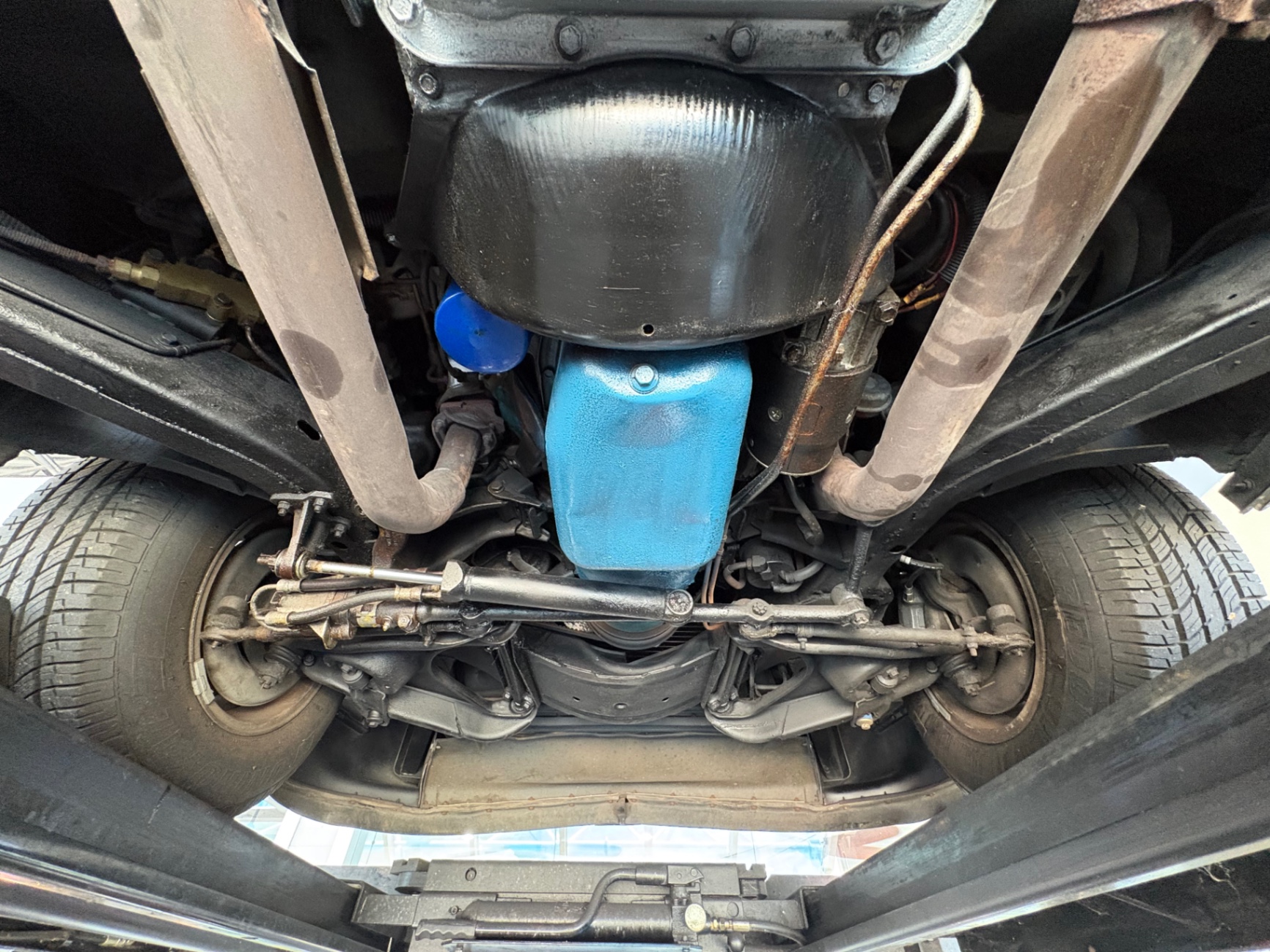
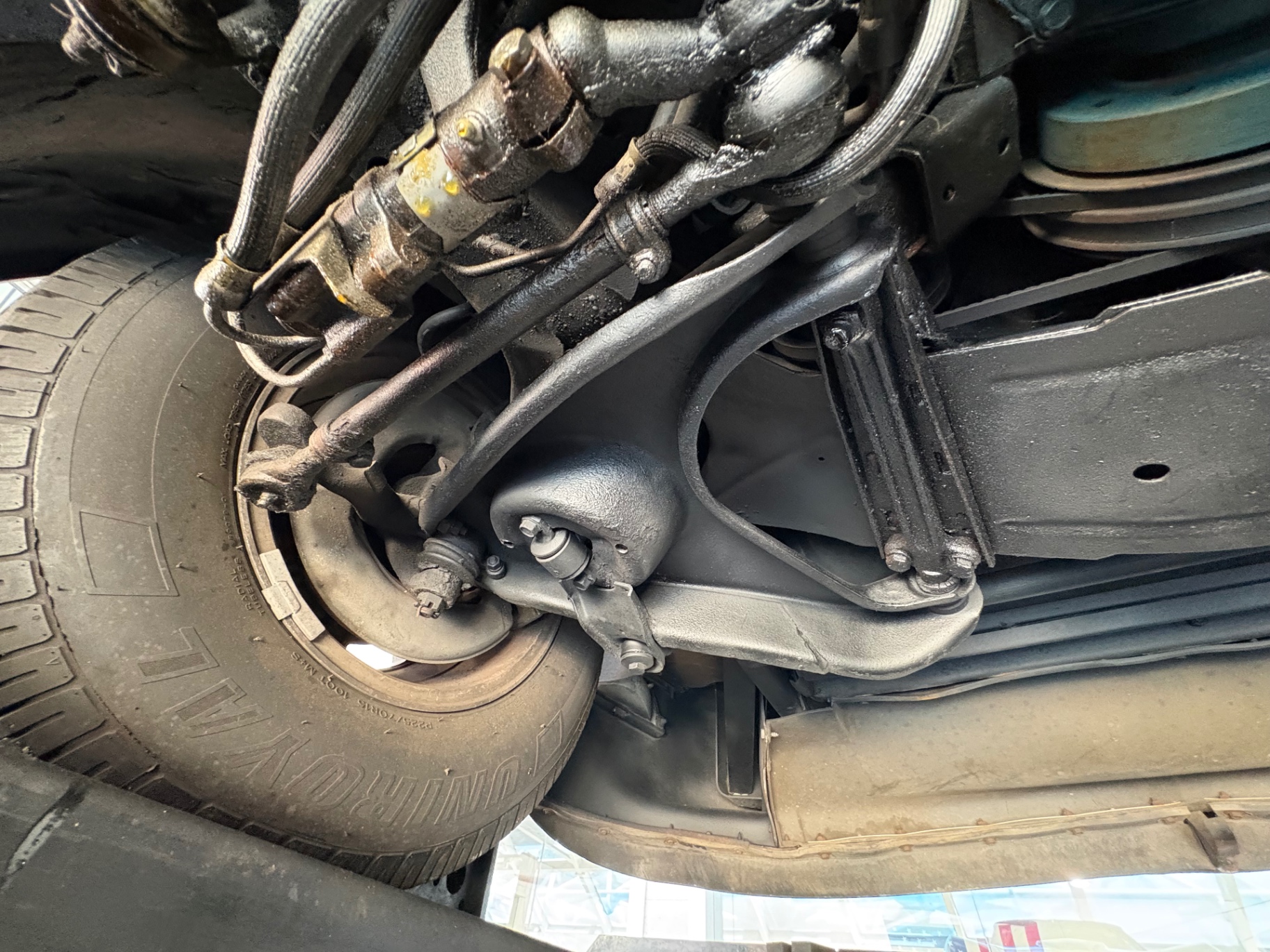
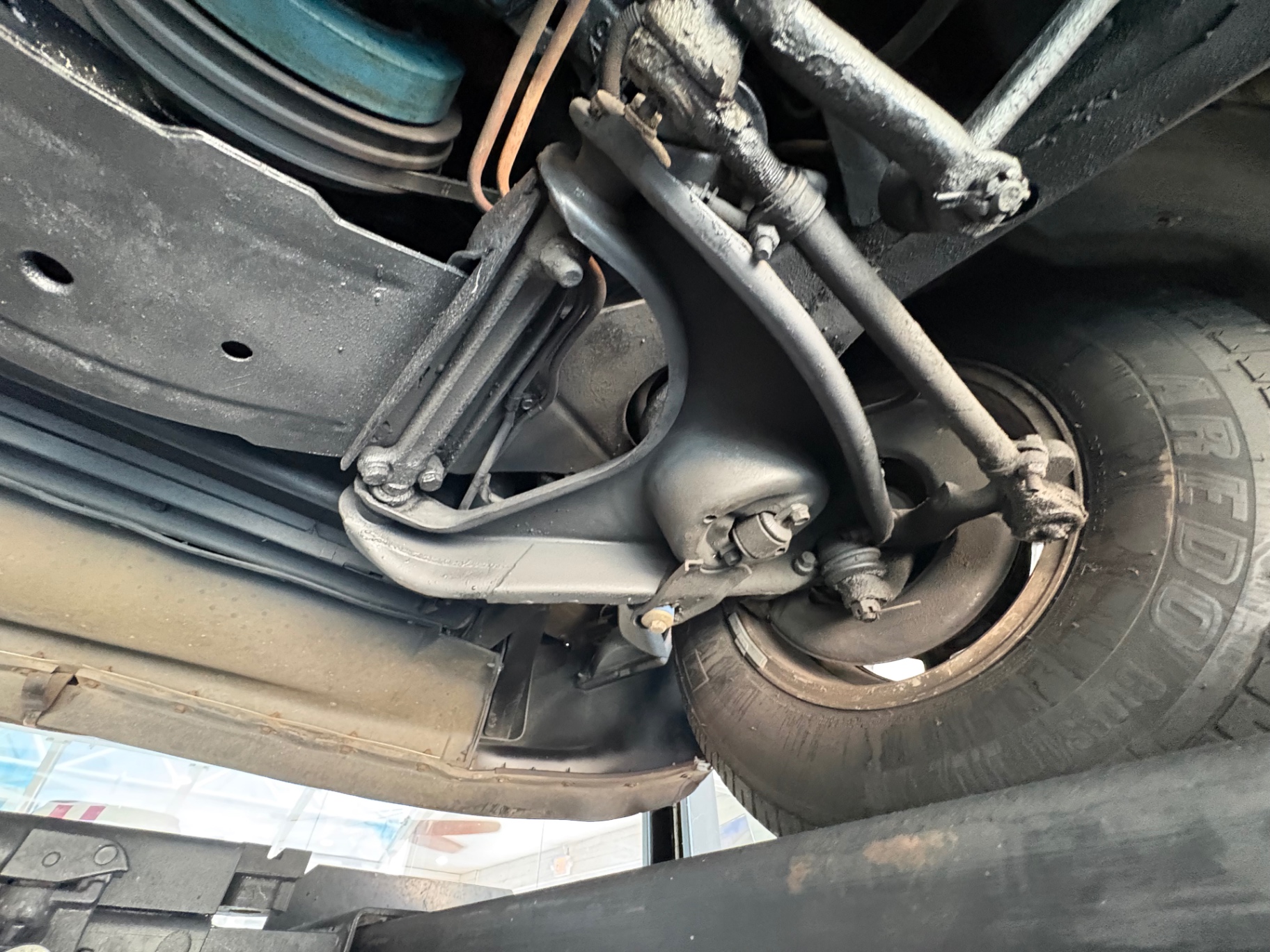
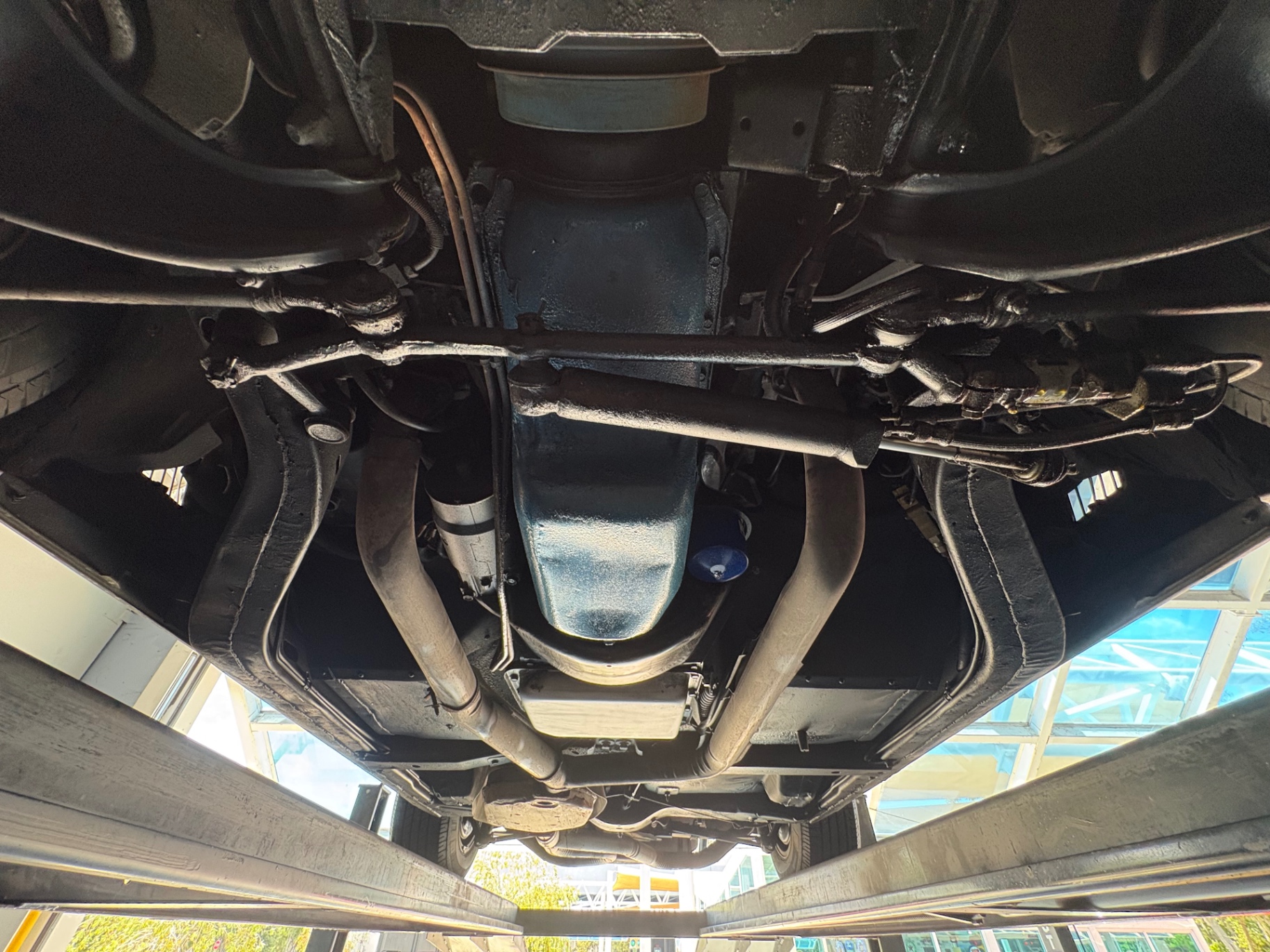
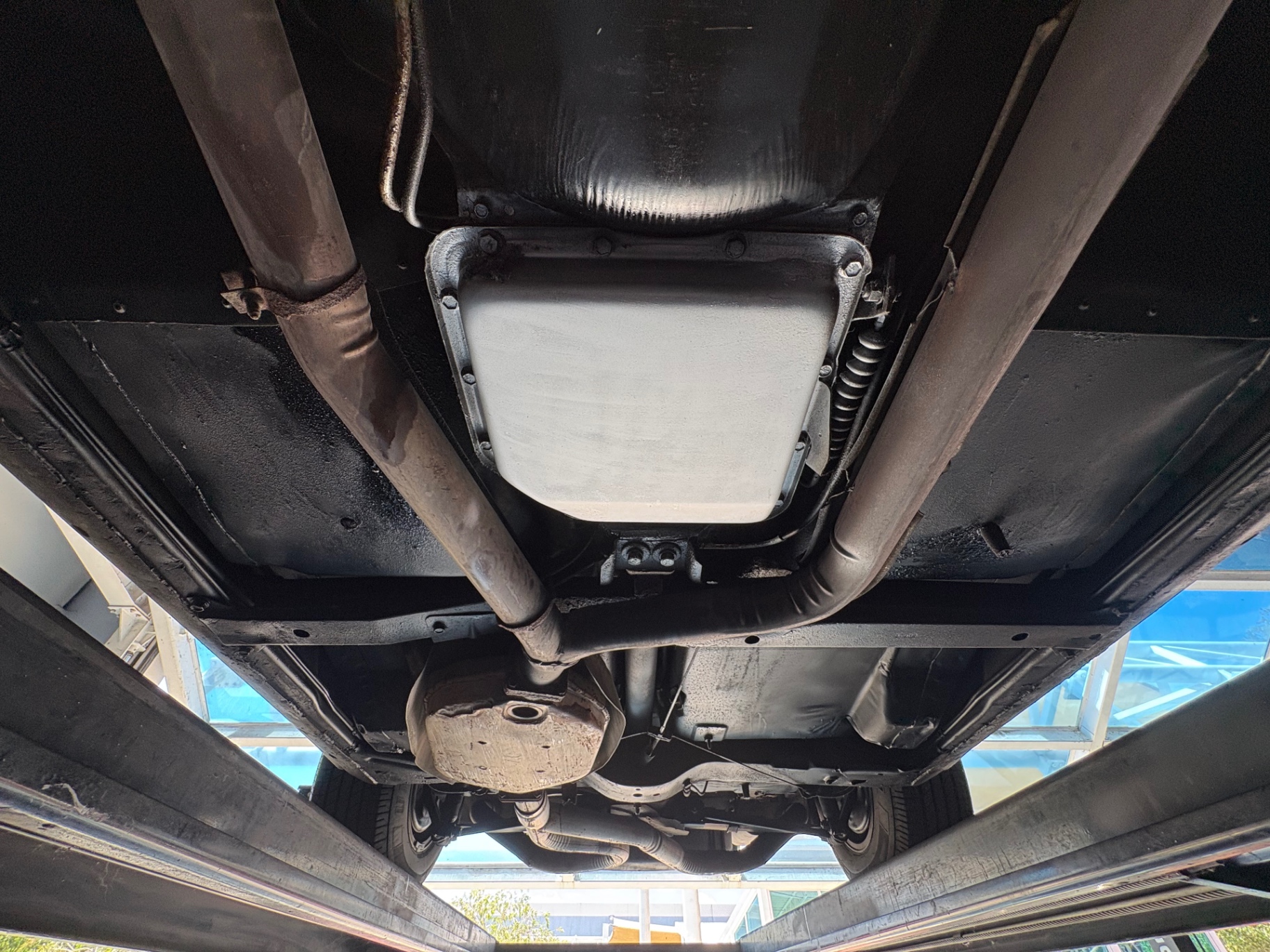
The undercarriage photos tell a straightforward story. The body-colored fiberglass panels and the frame rails show well. The exhaust components — catalytic converters and pipes — show surface oxidation typical of a car this age, which is normal and expected on any 40-plus-year-old vehicle. What matters more is the absence of structural rot, and the undercarriage here is clean in the areas that count. The independent rear suspension geometry is intact and shows no signs of damage or deferred structural maintenance. Four-wheel disc brakes were standard on the 1980 Corvette, and power-assisted braking is confirmed on this car.
Interior
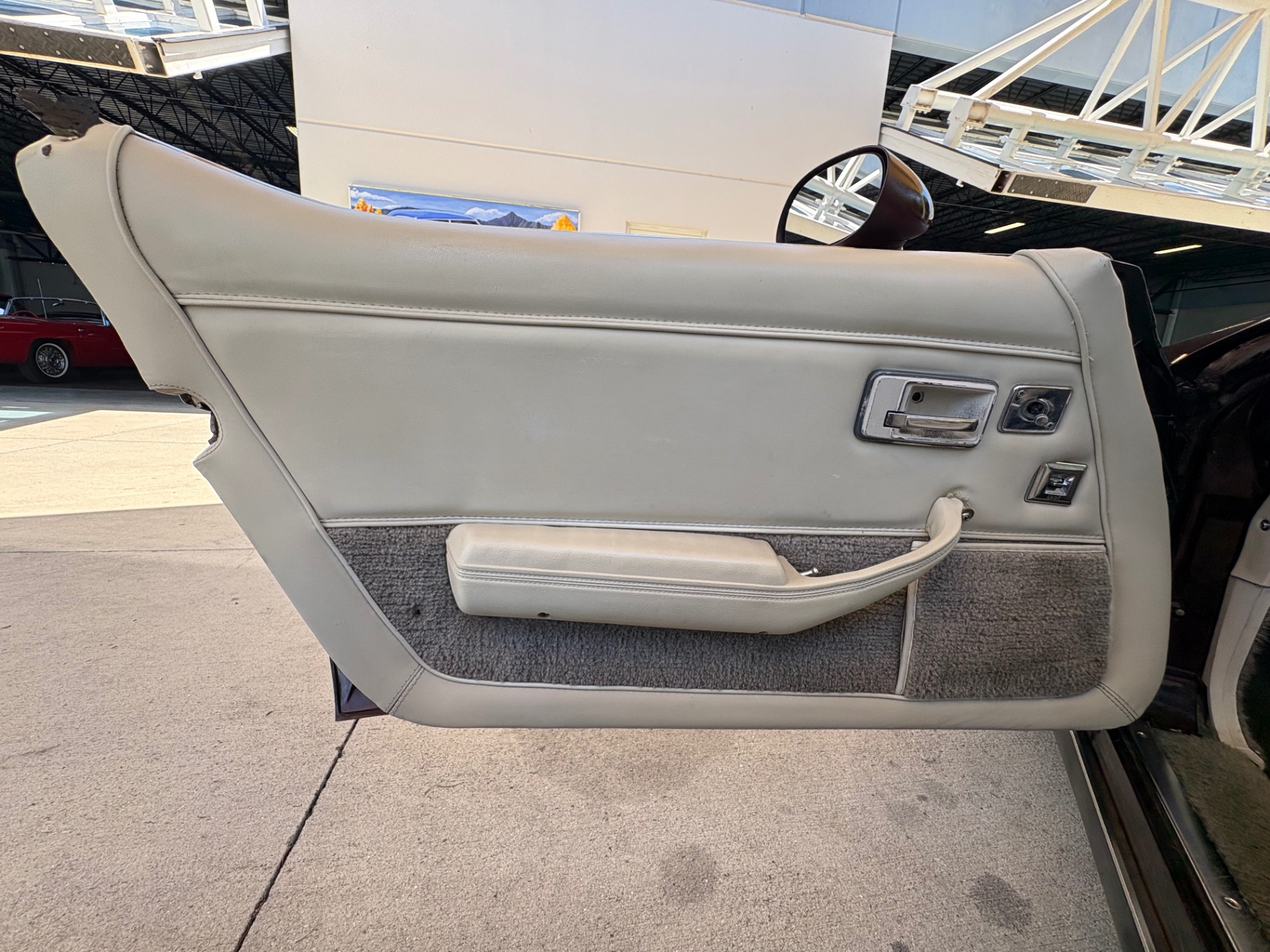
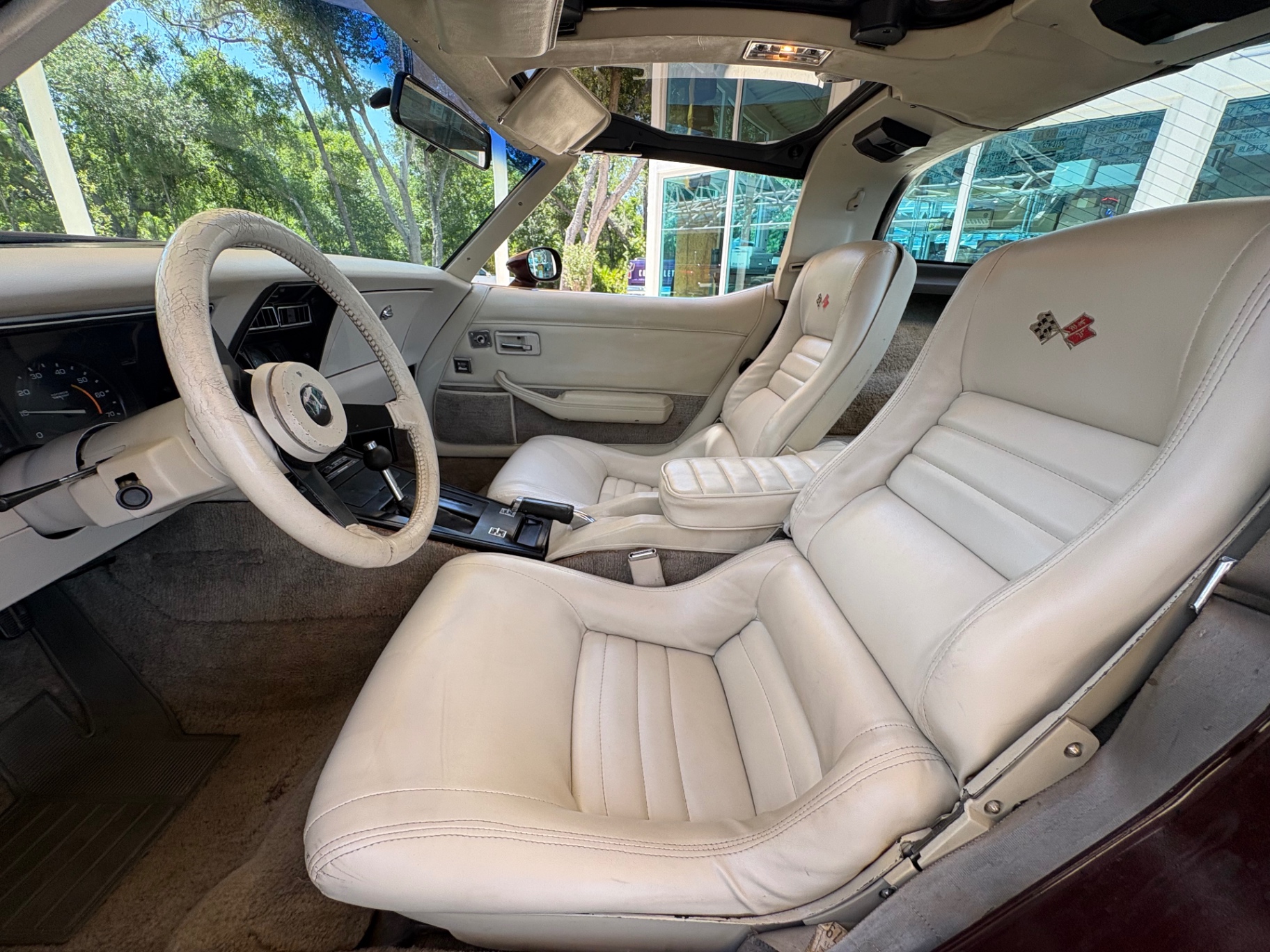
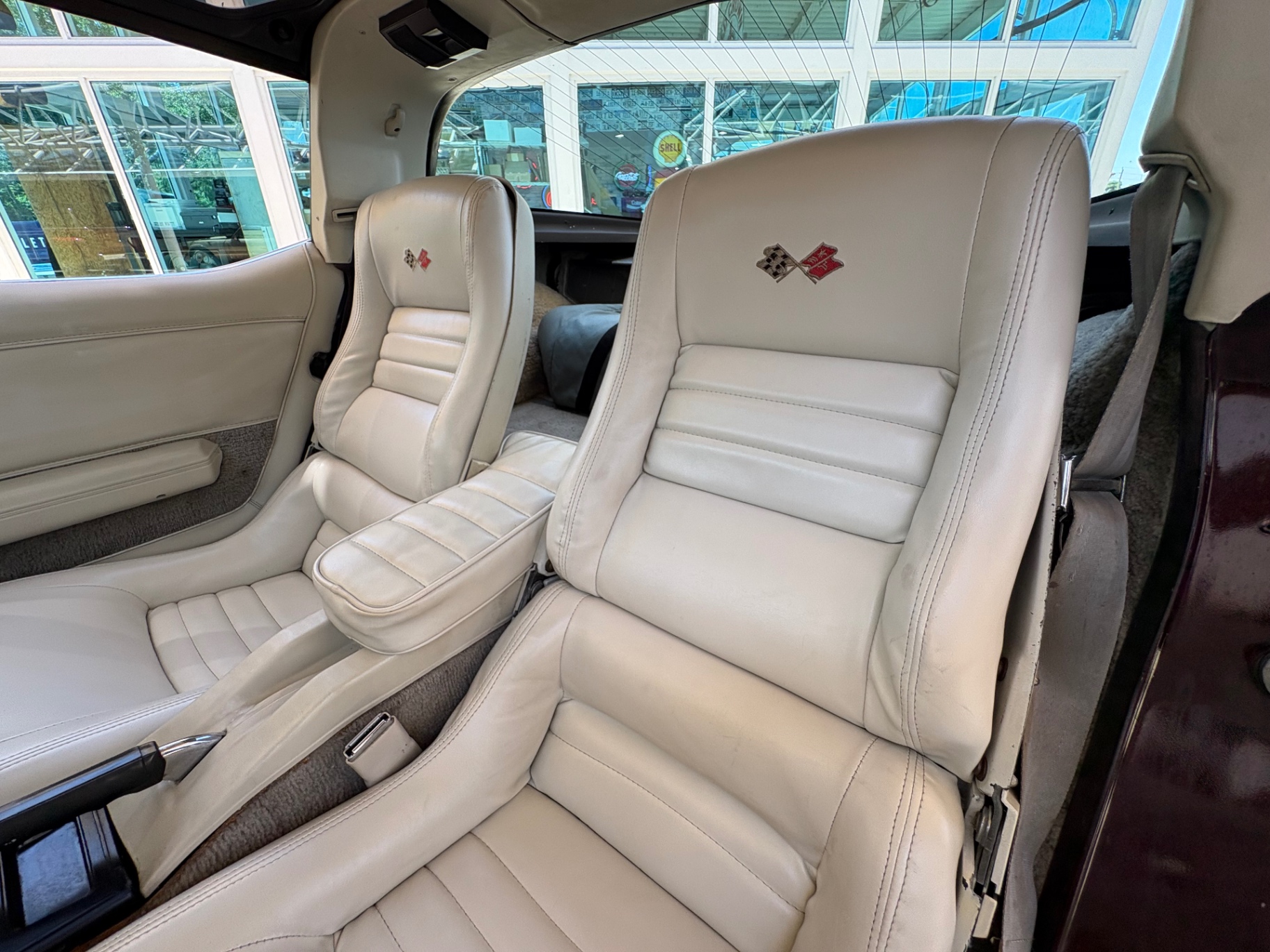
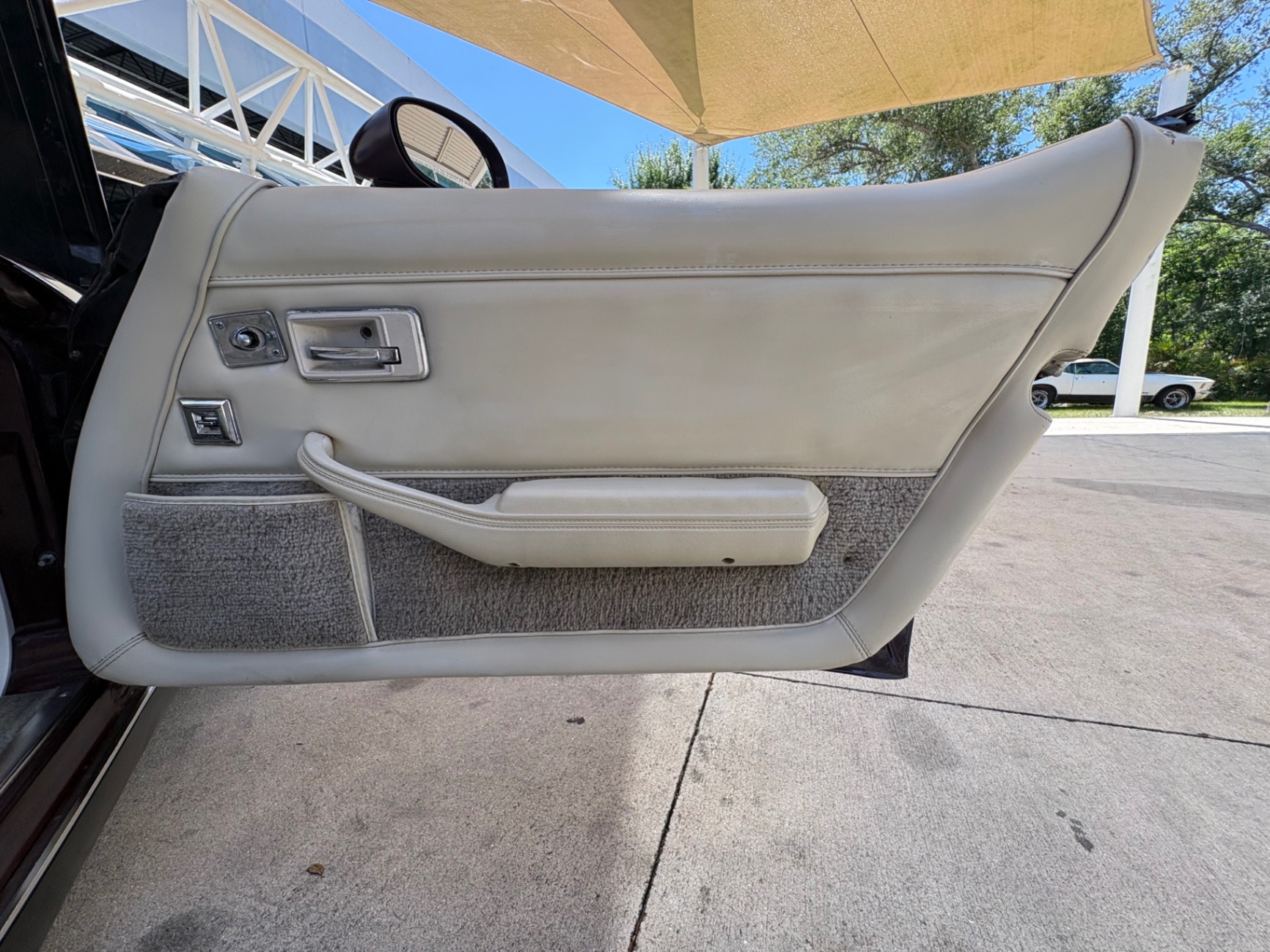
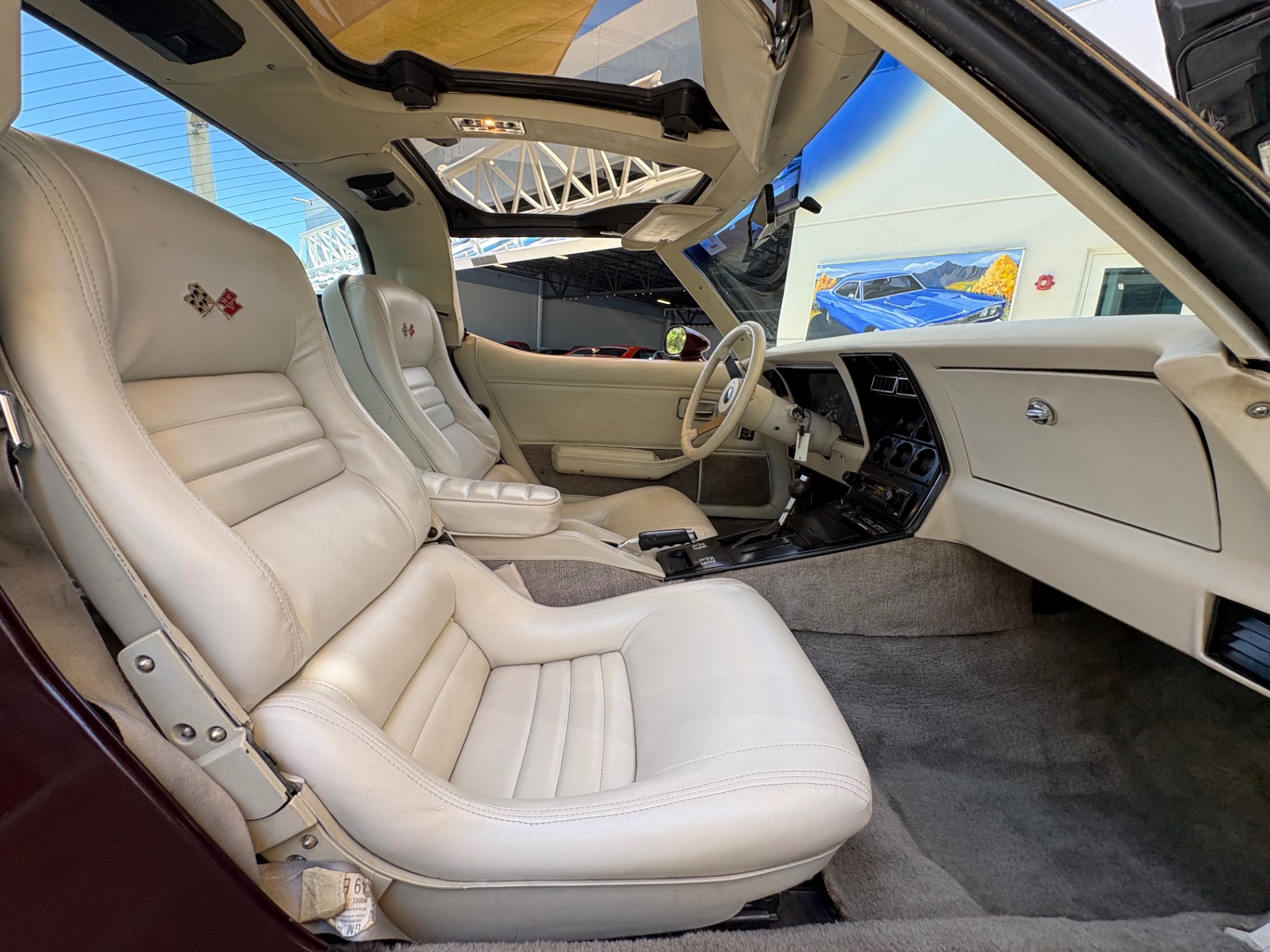
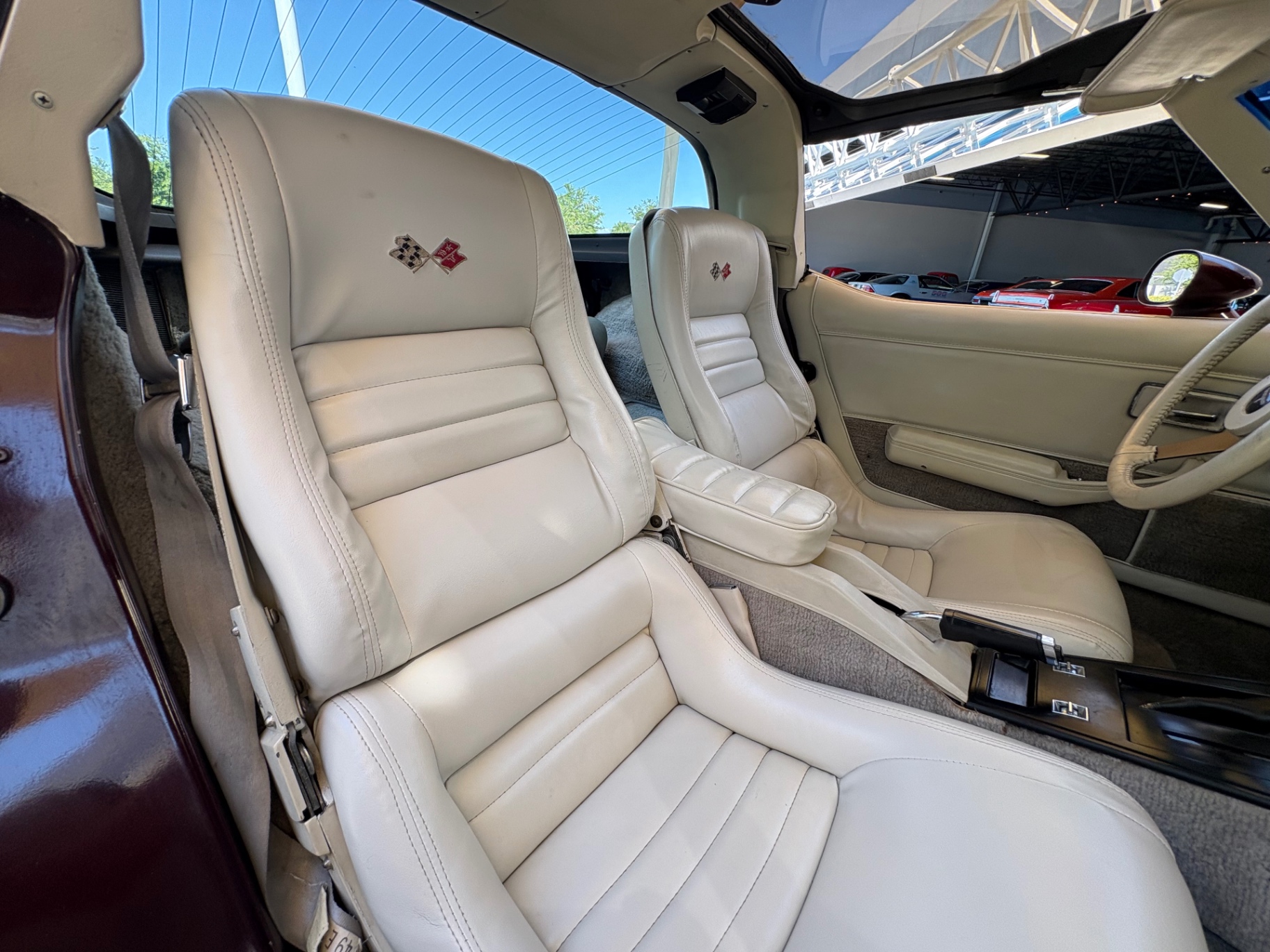
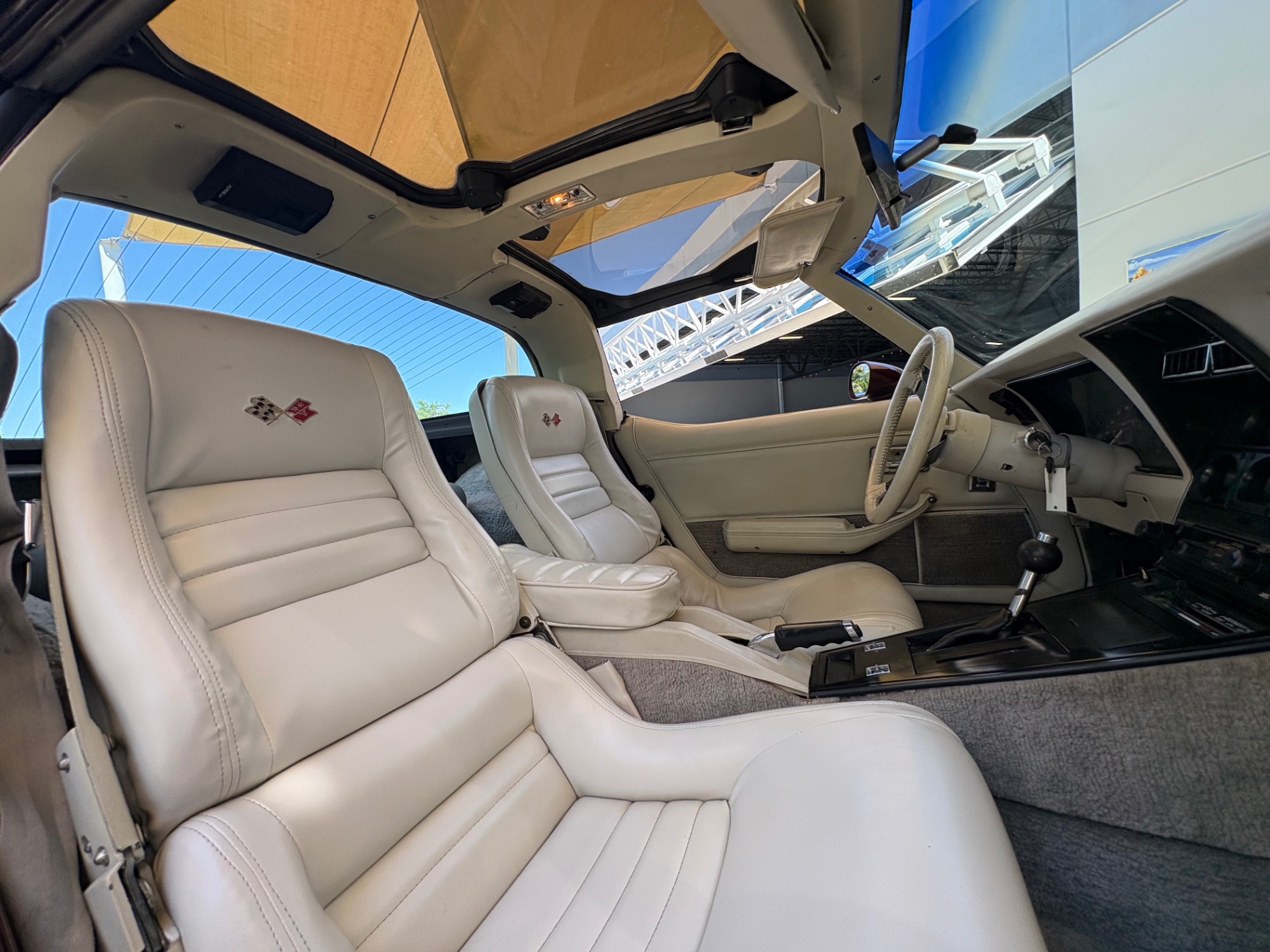
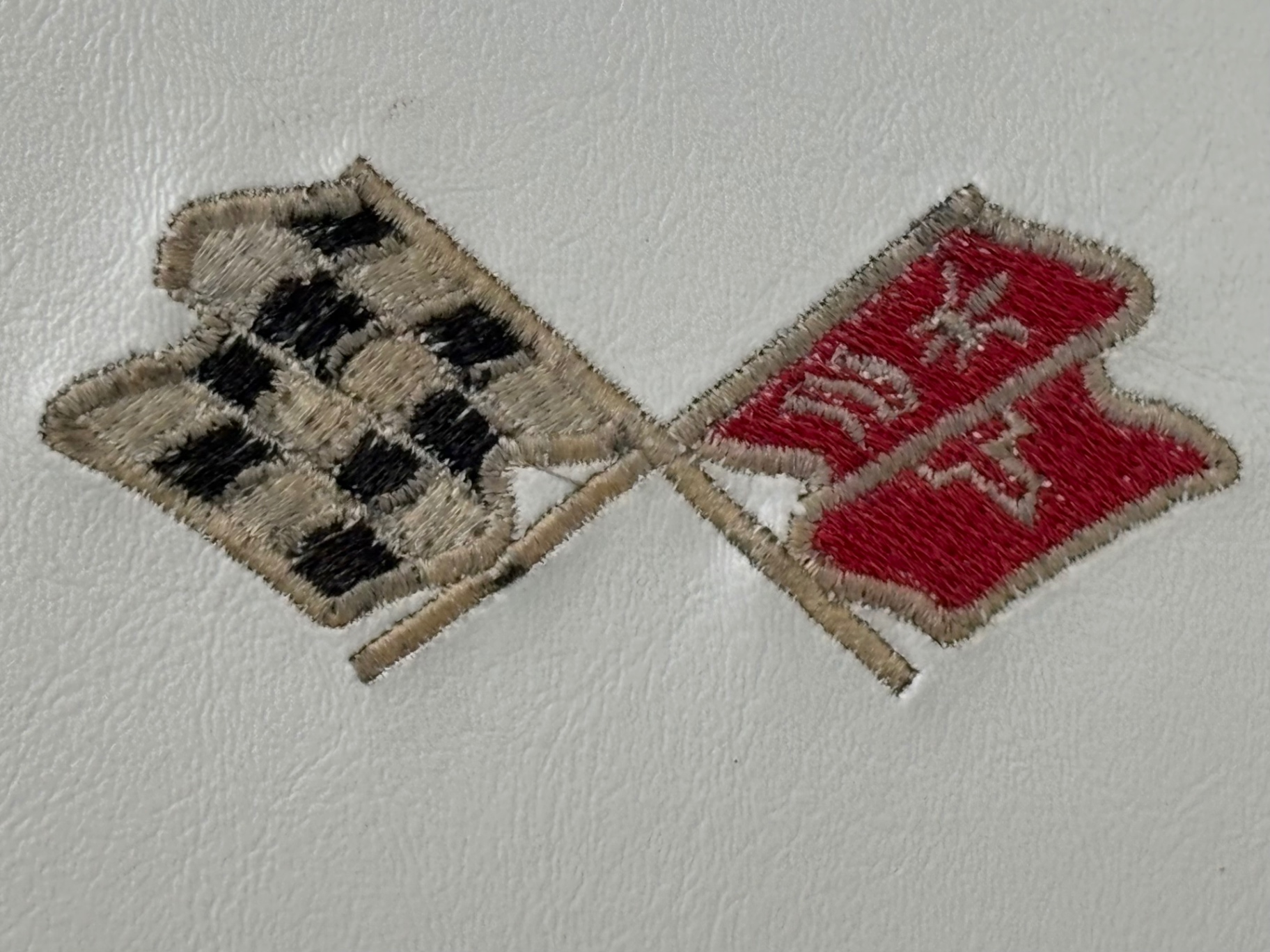
Step inside the 1980 Chevrolet Corvette and the Oyster White leather makes an immediate impression. The color has held its tone across both bucket seats, the door panels, the console, and the dashboard surround. The seats are in good shape for their age, with the horizontal pleating still defined and the Crossflags embroidery present on both headrests — a detail that was specific to the Corvette's leather seating option and one of the more desirable interior touches on a C3. The crossflags logo, rendered in black and red thread on the oyster-white leather, is a period-correct detail that collectors and enthusiasts specifically look for.
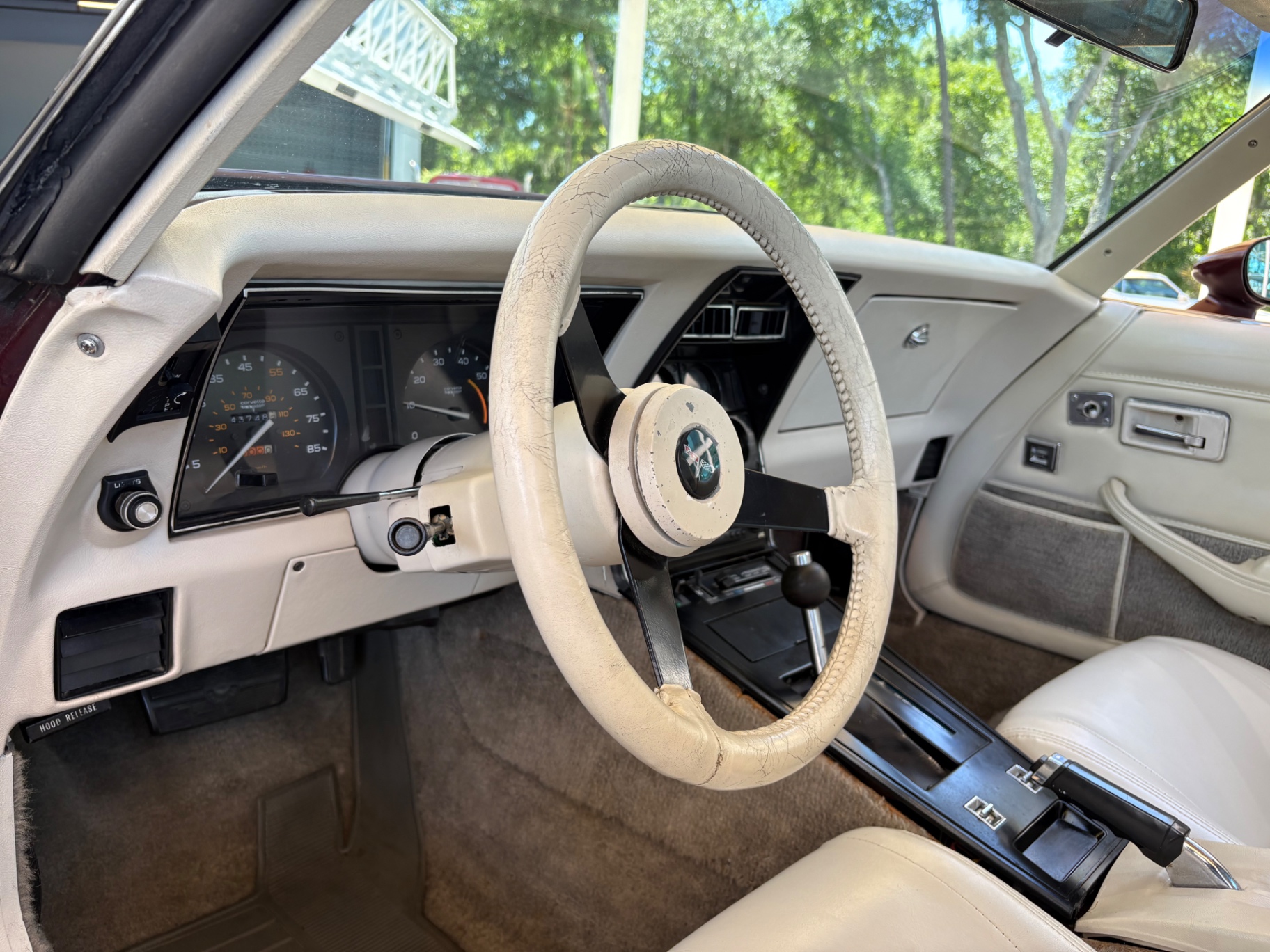
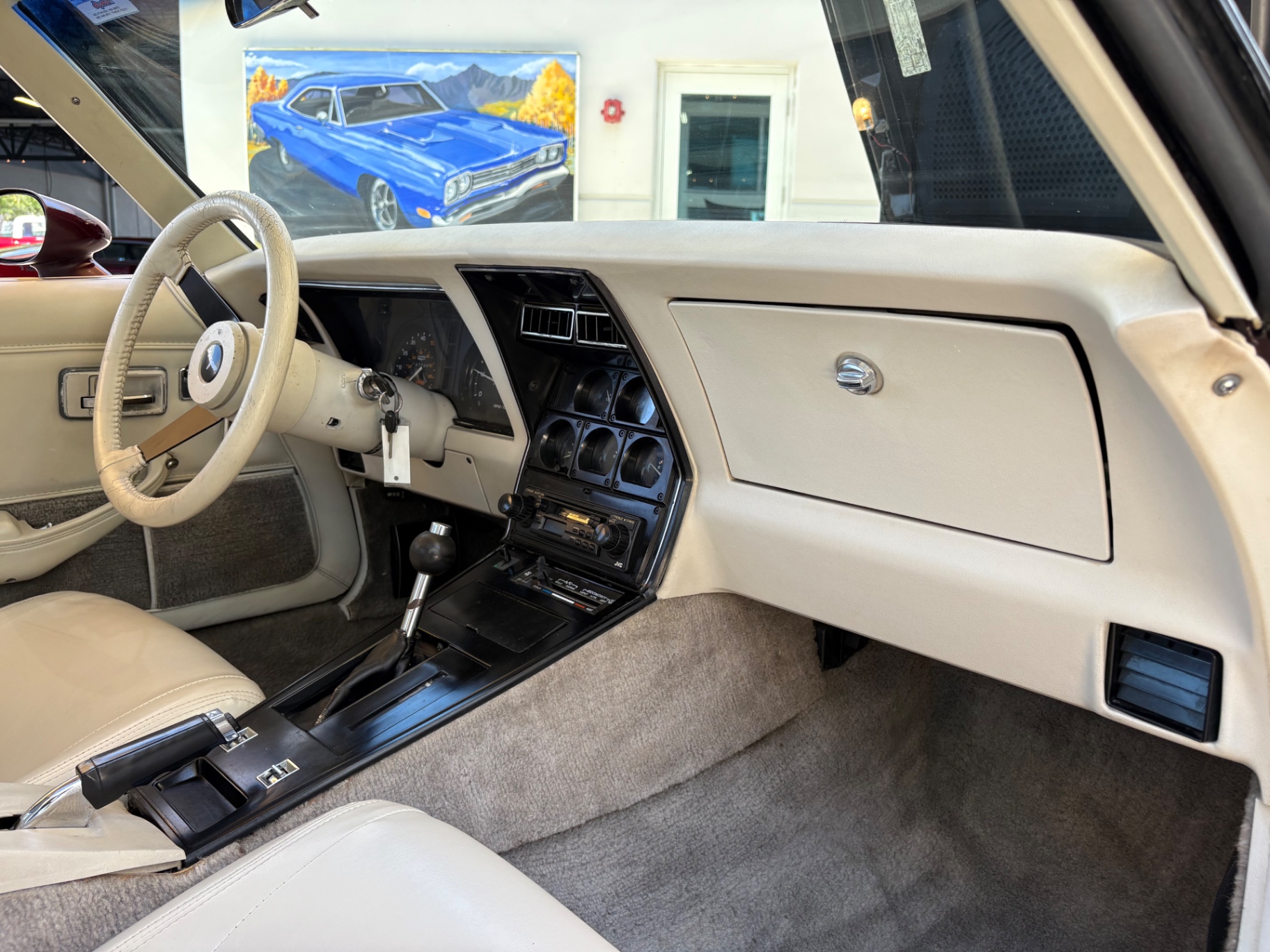
The steering wheel is the leather-wrapped, three-spoke design with the Corvette badge at the center — matching the interior color and featuring the tilt-telescopic adjustment that made longer drives considerably more comfortable than the fixed-column cars of the muscle car era. The instrument cluster sits directly in the driver's sightline, with the speedometer and tachometer positioned for easy reading. The dashboard itself is the angular C3 design, with the secondary gauges stacked in the center of the dash panel — fuel, temperature, oil pressure, and voltage — all in the driver's peripheral vision.
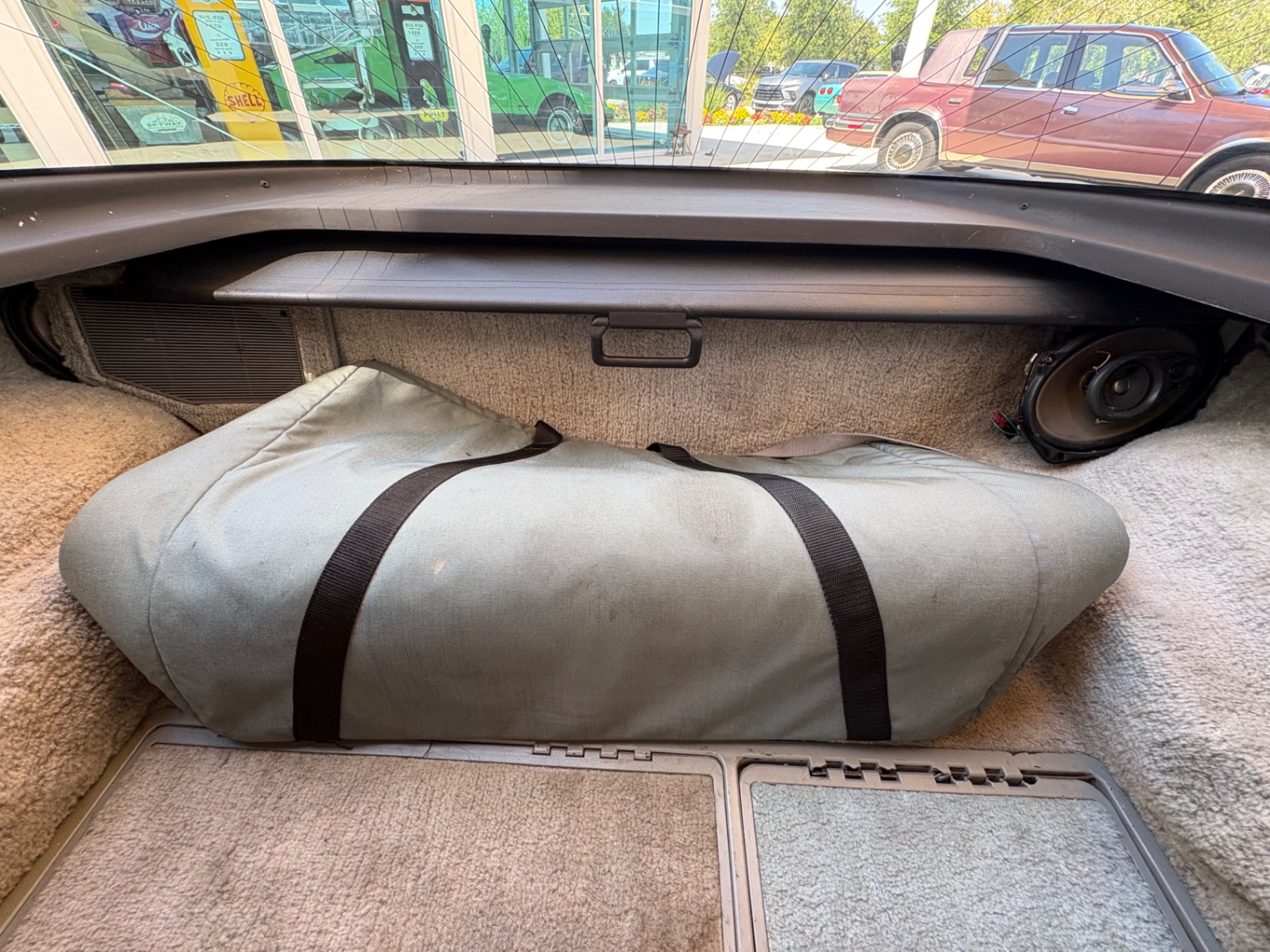
The center console runs the length of the cabin between the seats, housing the 4-speed shifter and the power window switches. The rear storage compartment behind the seats is carpeted and intact, and it's where the T-top storage bag currently lives. That bag is present and accounted for — a detail that often goes missing over the decades and adds real value to a car being evaluated for completeness. The air conditioning system is present, which in Florida is not optional equipment in any practical sense.
Exterior
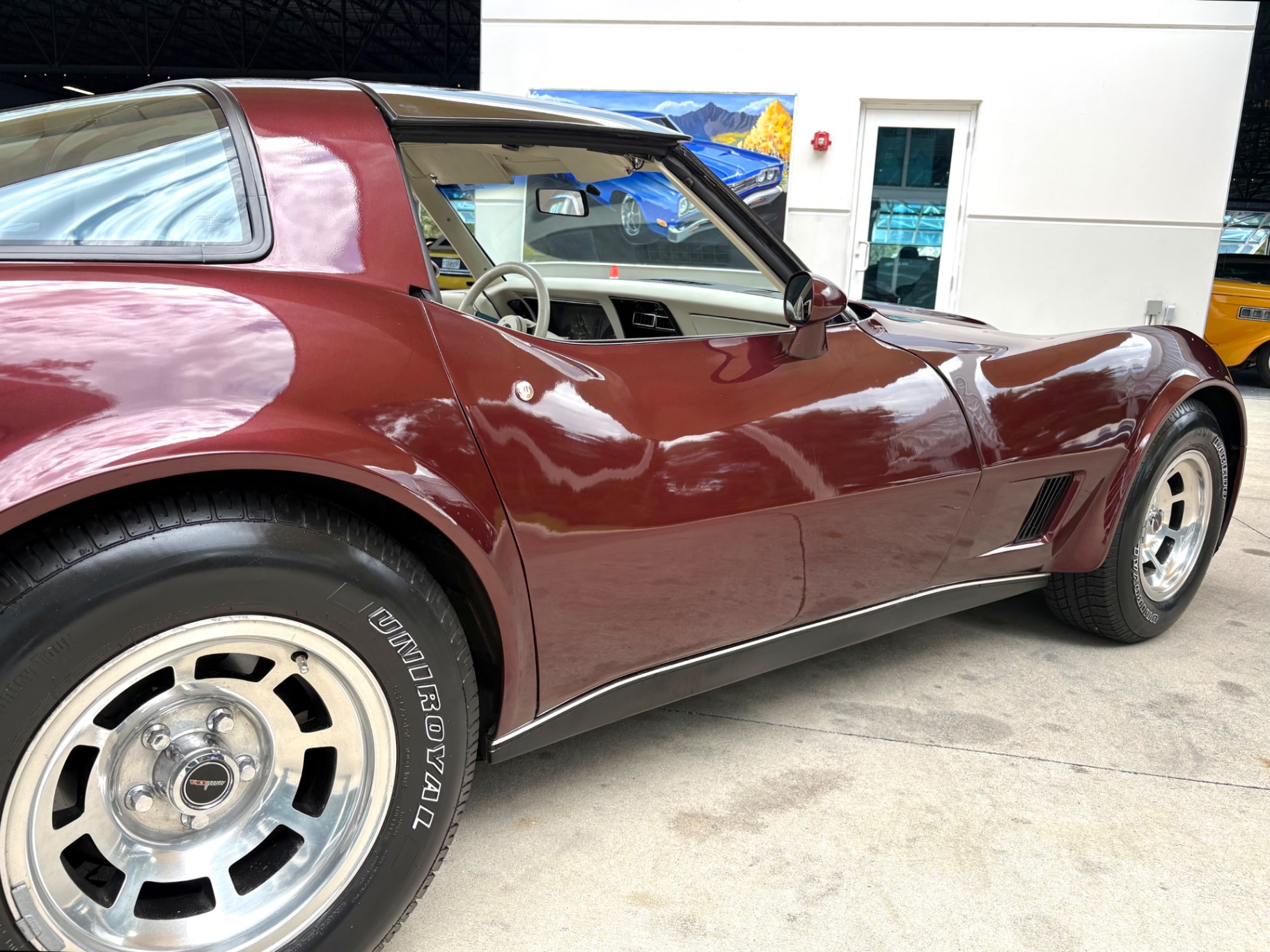
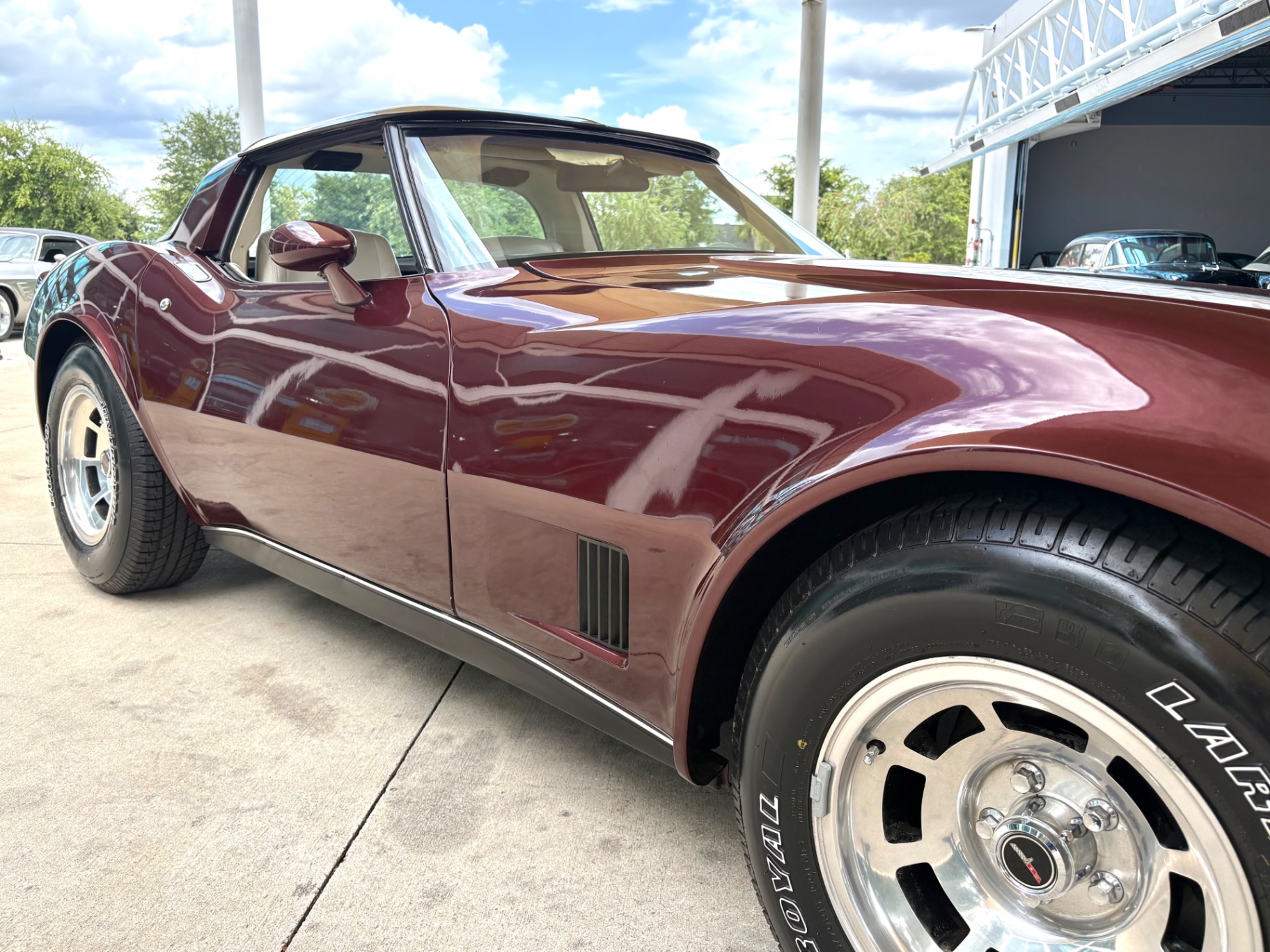
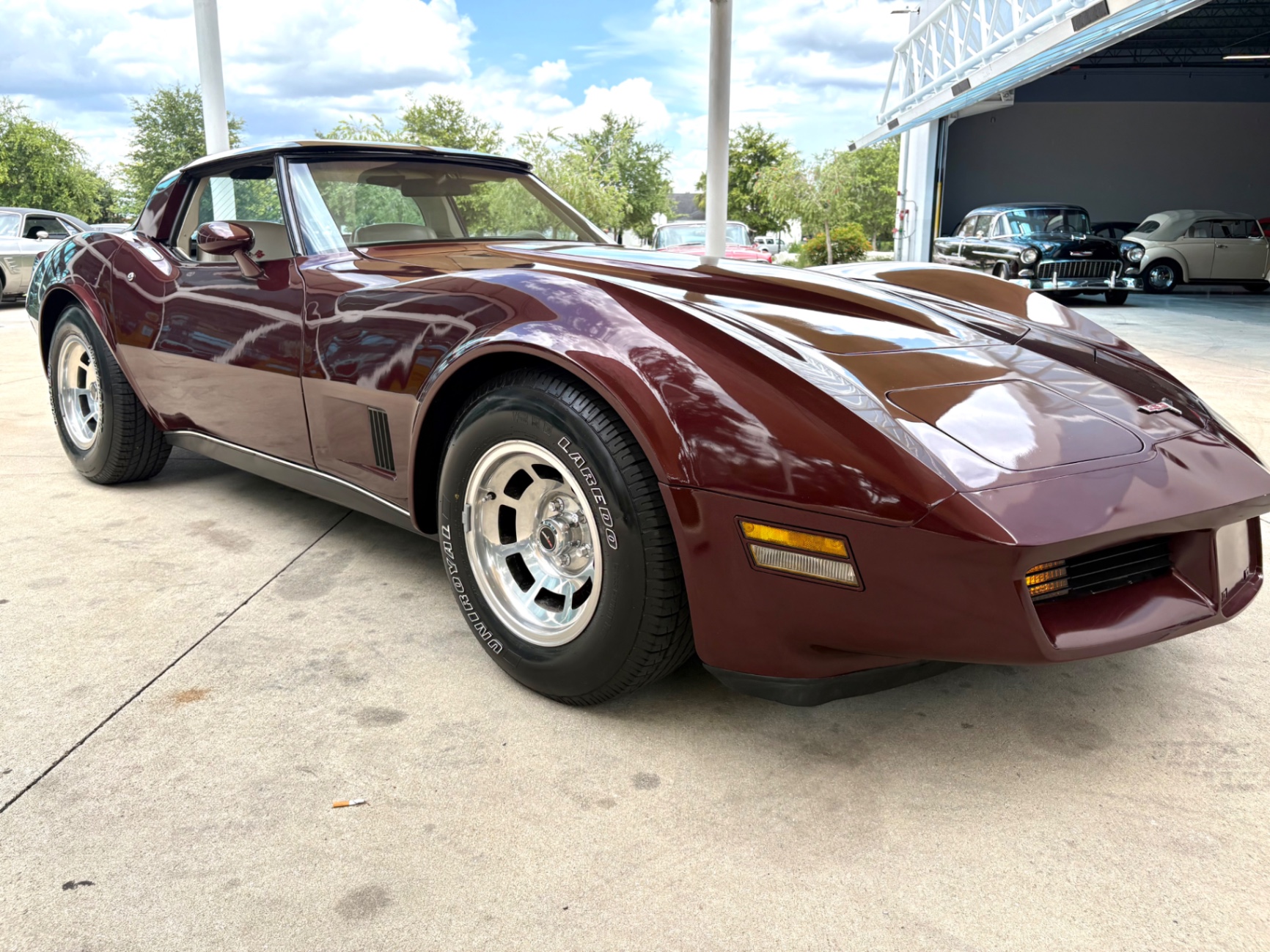
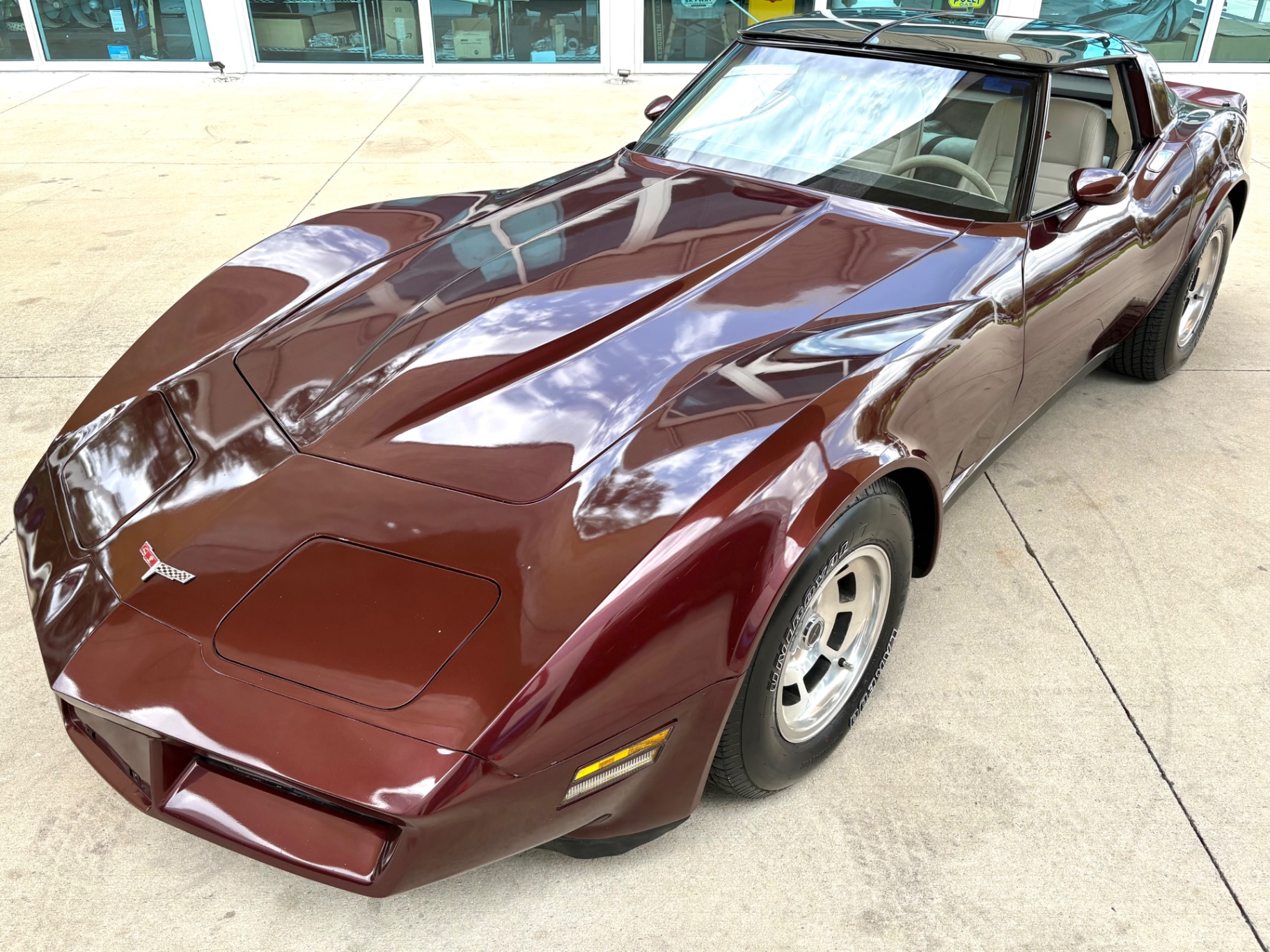
The Maroon finish on this 1980 Chevrolet Corvette is a deep, wine-toned red that suits the C3 body lines well. The car sits low, as it should, and the long hood-to-short-deck proportion that defined the Corvette from the Sting Ray era forward is still effective on the third-generation body. The pop-up headlights are functional and flush when retracted, maintaining the clean nose profile that required them in the first place.
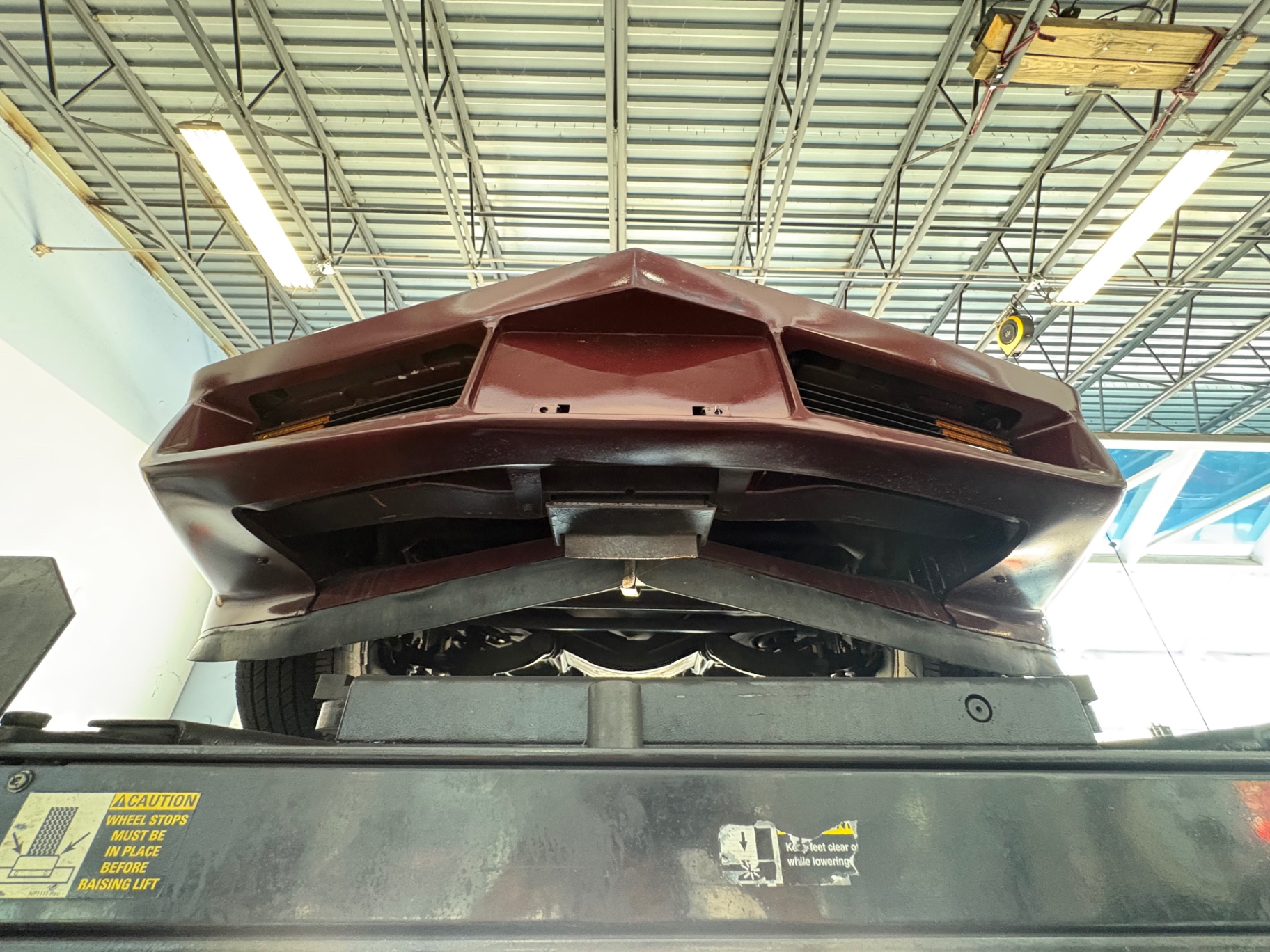
The front air dam is one of the defining visual changes for 1980. In earlier C3 years, the front bumper area was more upright. For 1980, Chevrolet reshaped the front fascia to incorporate a lower air dam that improved high-speed stability and reduced lift. The rear spoiler was similarly integrated into the tail section for the same model year. Both are present here and finished in the body color, which is correct.
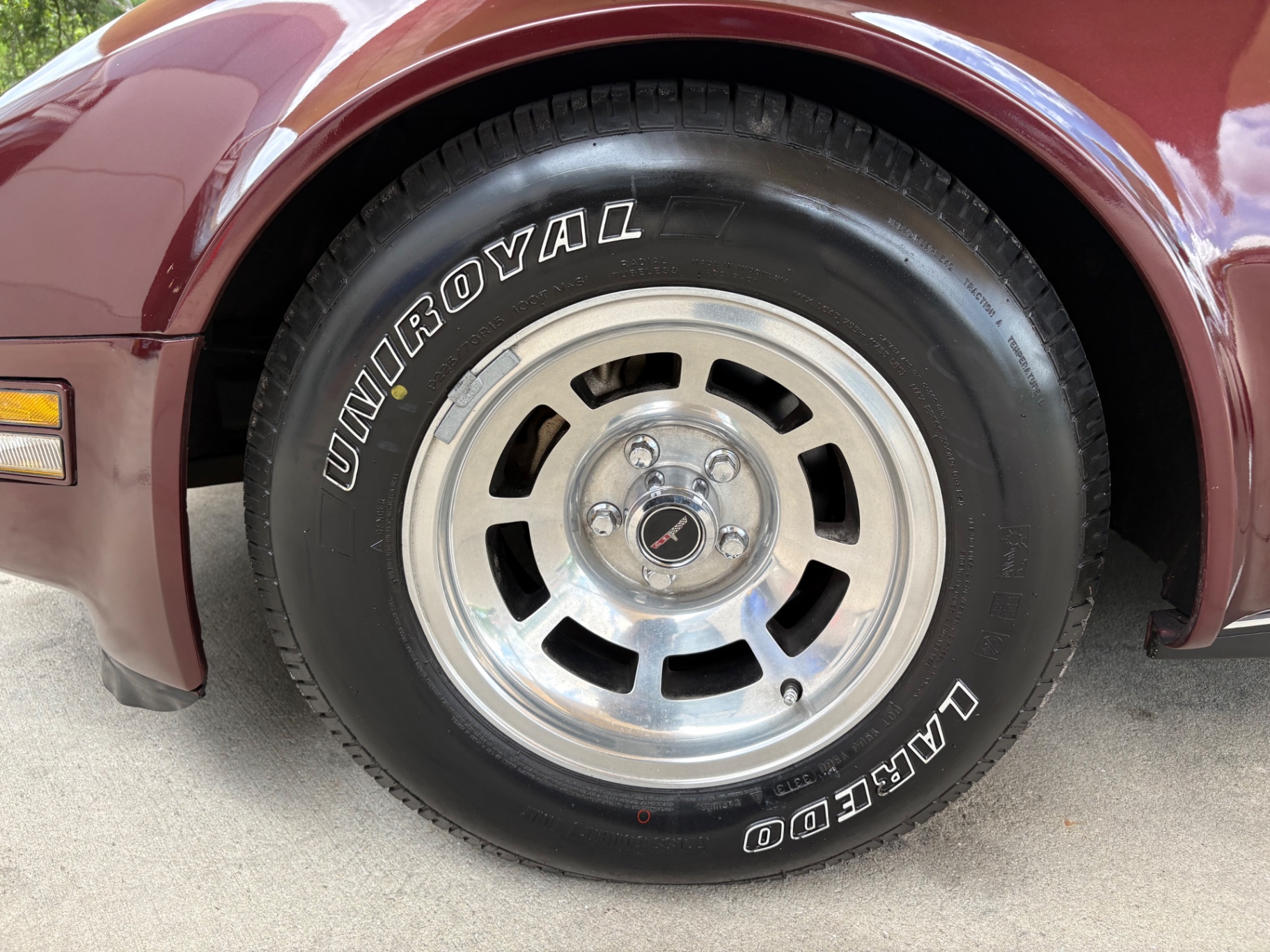
The original aluminum wheels are intact on all four corners. These are the five-spoke aluminum alloy wheels that came standard on the 1980 Corvette — lighter than the steel alternatives and a visual cue that distinguishes a properly equipped car from one that has been modified or had its wheels swapped. The sport mirrors are body-colored and mounted at the correct positions on each door. The fiberglass panels show no evidence of patchwork or bubbling, which is the primary long-term concern with any C3 body.
Conclusion
The 1980 Chevrolet Corvette is no longer the overlooked end of the C3 era. Values on well-preserved, driver-quality examples have been rising as the generation that came of age with these cars has reached the stage of life where they can buy the one they always wanted. This particular car checks the boxes that matter: 4-speed manual, 350ci V8, correct color combination, original wheels, intact leather interior with Crossflags embroidery, clean undercarriage, and a complete T-top storage bag. It is a driver-quality 1980 Corvette with honest, original character — not a trailer queen, and not a project.
To ask questions or arrange a viewing, call Skyway Classics in Sarasota, Florida at 941-254-6608.
Disclaimer Information found on the website is presented as given to us by the owner of the car, whether on consignment or from the owner we bought it from. Some Photos, materials for videos, descriptions and other information are provided by the consignor/seller and is deemed reliable, but Skyway Classics does not warranty or guarantee this information. Skyway Classics is not responsible for information that may incorrect or a publishing error. The decision to purchase should be based solely on the buyers personal inspection of the vehicle or by a professional inspection service prior to offer or purchase being made.
1980 Chevrolet Corvette — 350ci V8, 4-Speed Manual, Maroon over Oyster White Leather
Why This Car Is Special
The 1980 Chevrolet Corvette sits at an interesting crossroads in C3 history. It was the first model year to feature an integrated front air dam and rear spoiler molded directly into the body — a functional aerodynamic upgrade that gave the car a cleaner, more purposeful look compared to earlier C3s. Chevrolet also made the aluminum intake manifold standard equipment on the 350ci engine for 1980, reducing weight while improving heat management. These were not cosmetic updates. They were engineering choices made to extend the relevance of a body style that had been in production since 1968.
The C3 generation ran from 1968 through 1982, making it the longest-running Corvette generation to date. By 1980, GM had refined the formula considerably. The chassis carried an independent rear suspension — a Corvette hallmark since 1963 — and the fiberglass body continued to prove its durability advantages over steel in a Florida climate. These cars simply do not rust in the way that conventional unibody vehicles do. The ladder-type steel frame underneath can show age-related surface oxidation on the exhaust components, as seen here, but the structural and body integrity of a well-kept C3 holds up in ways that steel-bodied contemporaries often cannot match.
This particular 1980 Chevrolet Corvette is finished in Maroon over an Oyster White leather interior — a combination that reads as composed and intentional rather than flashy. The 4-speed manual transmission is the configuration most Corvette enthusiasts prefer, and it was a deliberate option choice in 1980 when the automatic was also available. Combined with the 350ci 5.7L V8, this car delivers the mechanical experience the C3 was built around.
Chevrolet produced 40,614 Corvettes for the 1980 model year. That number reflects strong demand, but it also means these cars were bought by real people who drove them. Finding a 1980 Chevrolet Corvette that has survived with a clean undercarriage, intact leather interior, and all its original trim pieces — including the T-top storage bag — is less common than the production numbers suggest.
Features List
- 350ci 5.7L V8 engine with aluminum intake manifold - 4-Speed manual transmission - Removable T-tops with original storage bag included - Oyster White leather bucket seats with Crossflags embroidery - Maroon exterior finish - Original aluminum wheels - Integrated front air dam and rear spoiler (body-colored, factory) - Power windows - Power steering - Power brakes - Air conditioning - Tilt-telescopic steering wheel - Pop-up headlights - Dual exhaust - Independent rear suspension - Fiberglass body - Sport mirrors - AM/FM radio - Center console - Rear storage compartment - Spare tire
Mechanical
The 350ci 5.7L V8 under the hood is the L48 engine configuration, which was the standard engine offering for the 1980 Corvette. For 1980, Chevrolet standardized the aluminum intake manifold across the 350, which had previously been an optional or performance-package component. The result is an engine that runs cooler on top and carries less weight forward of the firewall. The Rochester carburetor sits under a polished chrome air cleaner that is clearly visible in the engine bay photos and presents well.
The 4-speed manual gearbox is the correct companion to this engine. In 1980, the wide-ratio and close-ratio 4-speed options were both available, and the manual transmission buyers were typically the more driver-focused Corvette purchasers. The shifter is mounted in the center console between the two seats, exactly where it belongs in a car like this.
The undercarriage photos tell a straightforward story. The body-colored fiberglass panels and the frame rails show well. The exhaust components — catalytic converters and pipes — show surface oxidation typical of a car this age, which is normal and expected on any 40-plus-year-old vehicle. What matters more is the absence of structural rot, and the undercarriage here is clean in the areas that count. The independent rear suspension geometry is intact and shows no signs of damage or deferred structural maintenance. Four-wheel disc brakes were standard on the 1980 Corvette, and power-assisted braking is confirmed on this car.
Interior
Step inside the 1980 Chevrolet Corvette and the Oyster White leather makes an immediate impression. The color has held its tone across both bucket seats, the door panels, the console, and the dashboard surround. The seats are in good shape for their age, with the horizontal pleating still defined and the Crossflags embroidery present on both headrests — a detail that was specific to the Corvette's leather seating option and one of the more desirable interior touches on a C3. The crossflags logo, rendered in black and red thread on the oyster-white leather, is a period-correct detail that collectors and enthusiasts specifically look for.
The steering wheel is the leather-wrapped, three-spoke design with the Corvette badge at the center — matching the interior color and featuring the tilt-telescopic adjustment that made longer drives considerably more comfortable than the fixed-column cars of the muscle car era. The instrument cluster sits directly in the driver's sightline, with the speedometer and tachometer positioned for easy reading. The dashboard itself is the angular C3 design, with the secondary gauges stacked in the center of the dash panel — fuel, temperature, oil pressure, and voltage — all in the driver's peripheral vision.
The center console runs the length of the cabin between the seats, housing the 4-speed shifter and the power window switches. The rear storage compartment behind the seats is carpeted and intact, and it's where the T-top storage bag currently lives. That bag is present and accounted for — a detail that often goes missing over the decades and adds real value to a car being evaluated for completeness. The air conditioning system is present, which in Florida is not optional equipment in any practical sense.
Exterior
The Maroon finish on this 1980 Chevrolet Corvette is a deep, wine-toned red that suits the C3 body lines well. The car sits low, as it should, and the long hood-to-short-deck proportion that defined the Corvette from the Sting Ray era forward is still effective on the third-generation body. The pop-up headlights are functional and flush when retracted, maintaining the clean nose profile that required them in the first place.
The front air dam is one of the defining visual changes for 1980. In earlier C3 years, the front bumper area was more upright. For 1980, Chevrolet reshaped the front fascia to incorporate a lower air dam that improved high-speed stability and reduced lift. The rear spoiler was similarly integrated into the tail section for the same model year. Both are present here and finished in the body color, which is correct.
The original aluminum wheels are intact on all four corners. These are the five-spoke aluminum alloy wheels that came standard on the 1980 Corvette — lighter than the steel alternatives and a visual cue that distinguishes a properly equipped car from one that has been modified or had its wheels swapped. The sport mirrors are body-colored and mounted at the correct positions on each door. The fiberglass panels show no evidence of patchwork or bubbling, which is the primary long-term concern with any C3 body.
Conclusion
The 1980 Chevrolet Corvette is no longer the overlooked end of the C3 era. Values on well-preserved, driver-quality examples have been rising as the generation that came of age with these cars has reached the stage of life where they can buy the one they always wanted. This particular car checks the boxes that matter: 4-speed manual, 350ci V8, correct color combination, original wheels, intact leather interior with Crossflags embroidery, clean undercarriage, and a complete T-top storage bag. It is a driver-quality 1980 Corvette with honest, original character — not a trailer queen, and not a project.
To ask questions or arrange a viewing, call Skyway Classics in Sarasota, Florida at 941-254-6608.
Disclaimer Information found on the website is presented as given to us by the owner of the car, whether on consignment or from the owner we bought it from. Some Photos, materials for videos, descriptions and other information are provided by the consignor/seller and is deemed reliable, but Skyway Classics does not warranty or guarantee this information. Skyway Classics is not responsible for information that may incorrect or a publishing error. The decision to purchase should be based solely on the buyers personal inspection of the vehicle or by a professional inspection service prior to offer or purchase being made.
1980 Chevrolet
Corvette Base
Why Choose Skyway Classics?
Explore our curated inventory of classic and collector cars—thoughtfully selected, ready to drive, and supported by experts who make ownership simple.
Expert Curation
Every vehicle is hand-selected by our experts for quality, authenticity, and investment potential.
Fast Transactions
Streamlined buying and selling process with quick financing and immediate delivery options.
Only National Dealer With Classic Service & Repair
We’re the only national dealership that services and repairs the classics we sell—before and after the sale.
Nationwide Network
Access to our extensive network of collectors, restorers, and classic car enthusiasts nationwide.
Concierge Ownership Support
From financing and insurance to paperwork, shipping, and titling—we handle the details so you can enjoy the drive.
Passion-Driven Service
We're classic car enthusiasts first, providing personalized service with genuine passion for the hobby.