
1978 Toyota
Land Cruiser FJ43
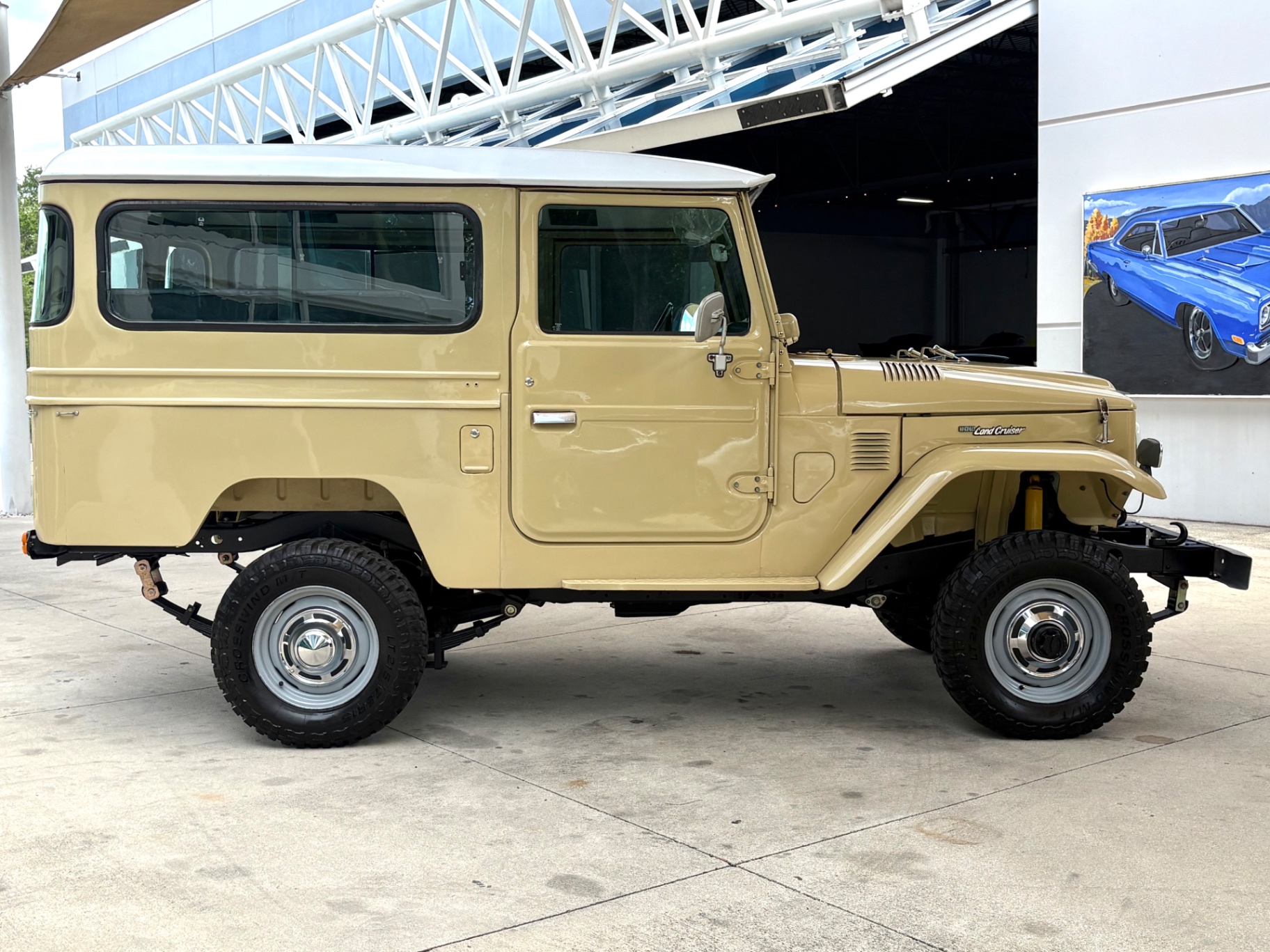
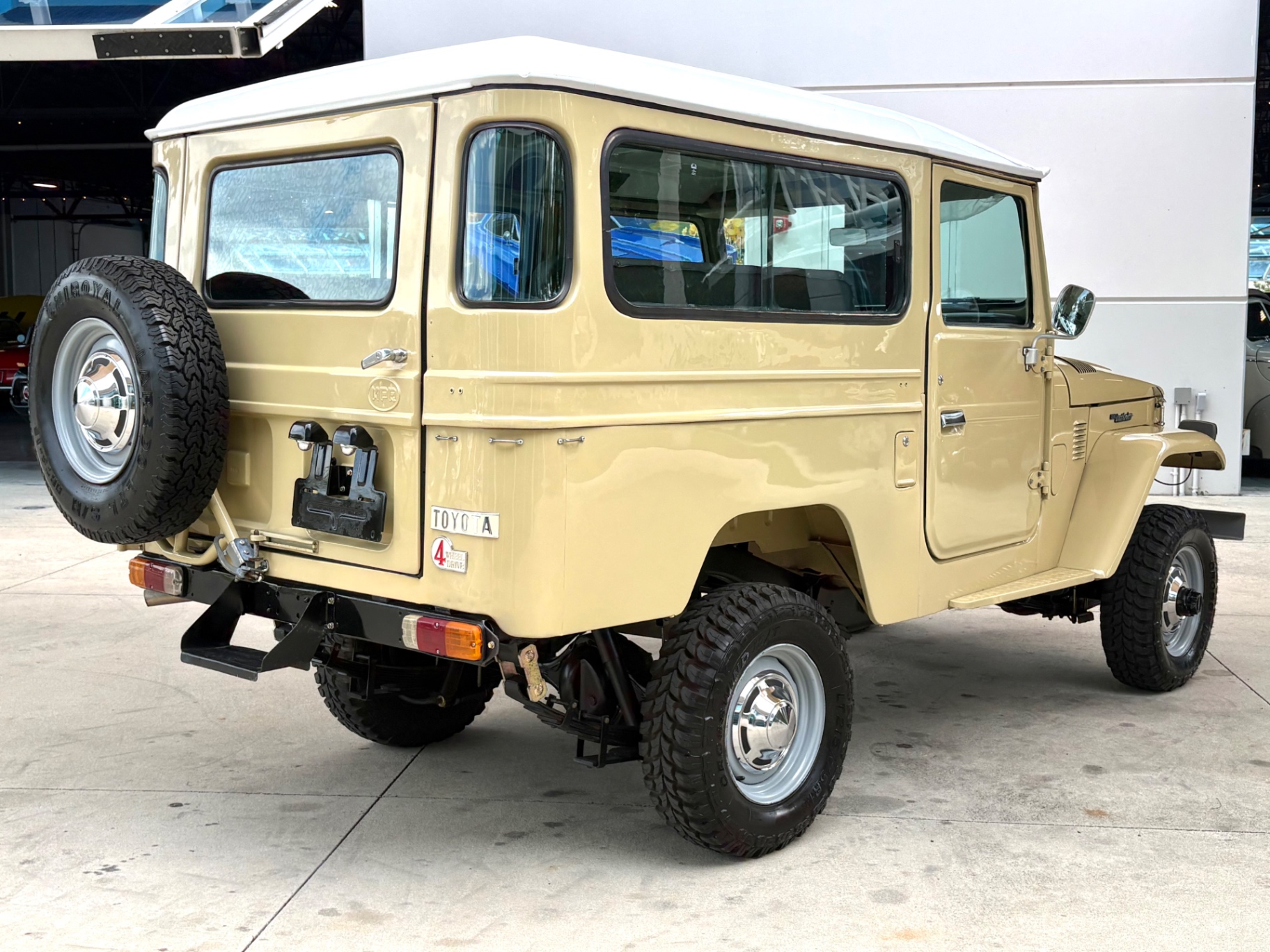
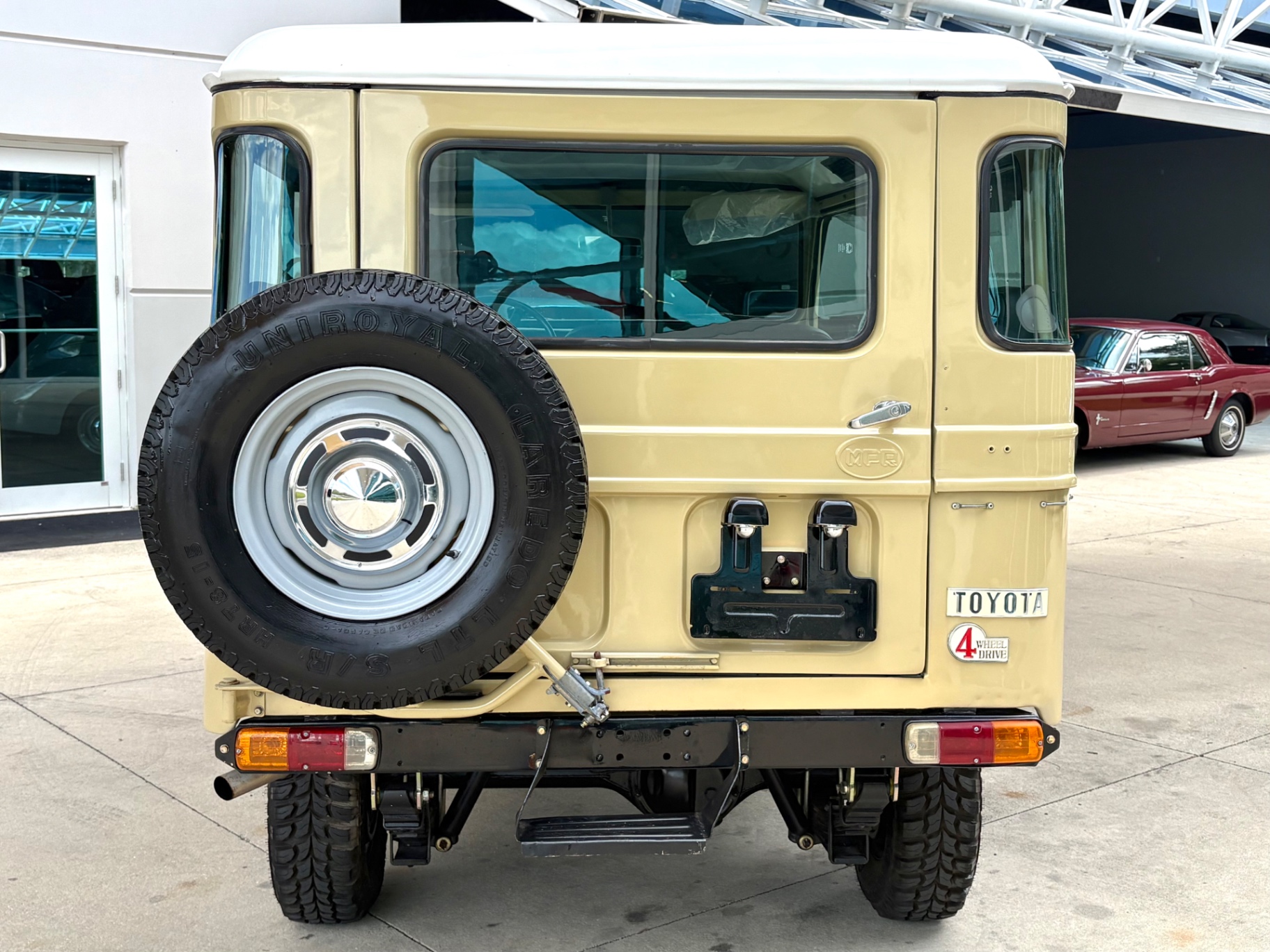
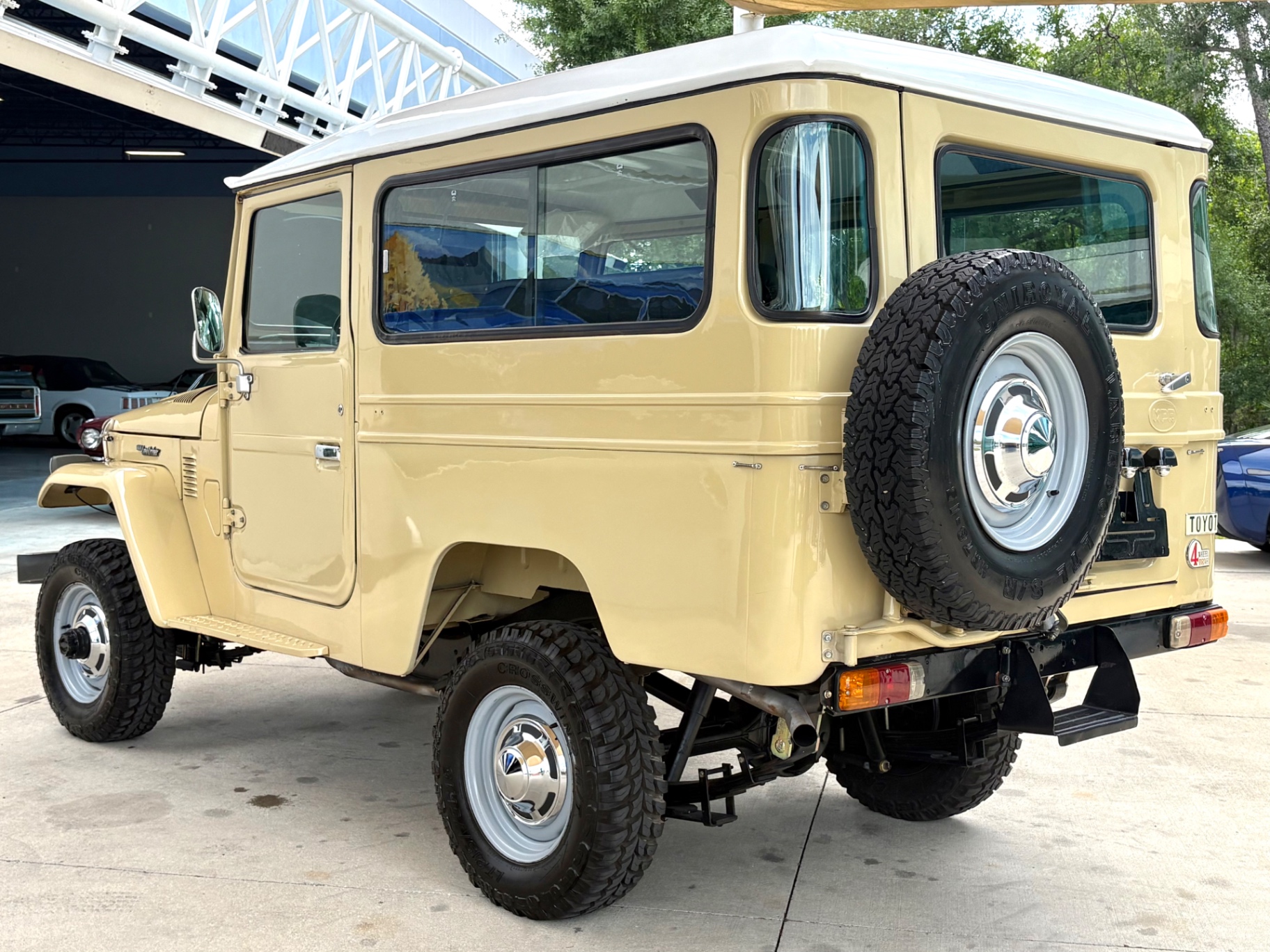
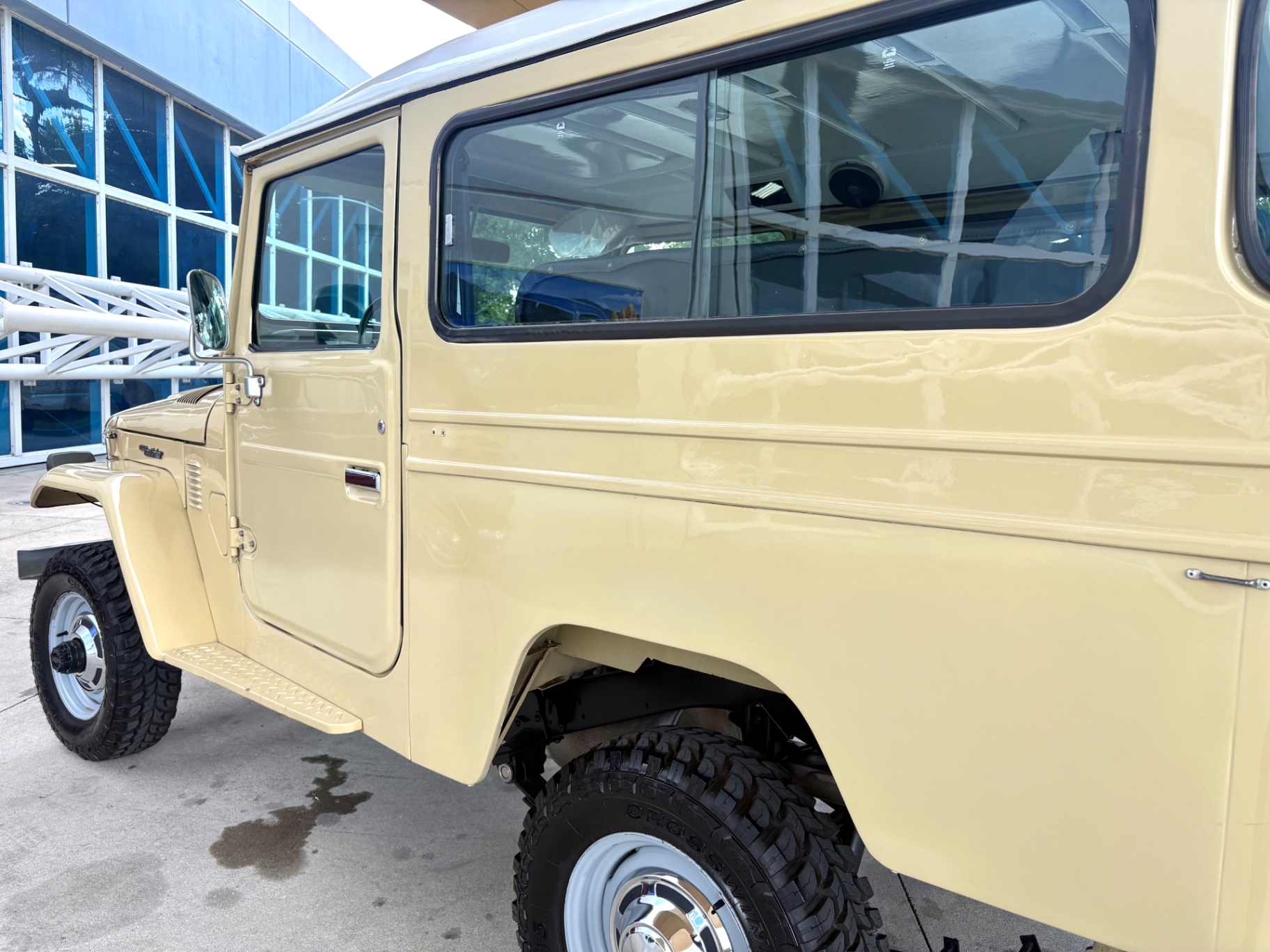
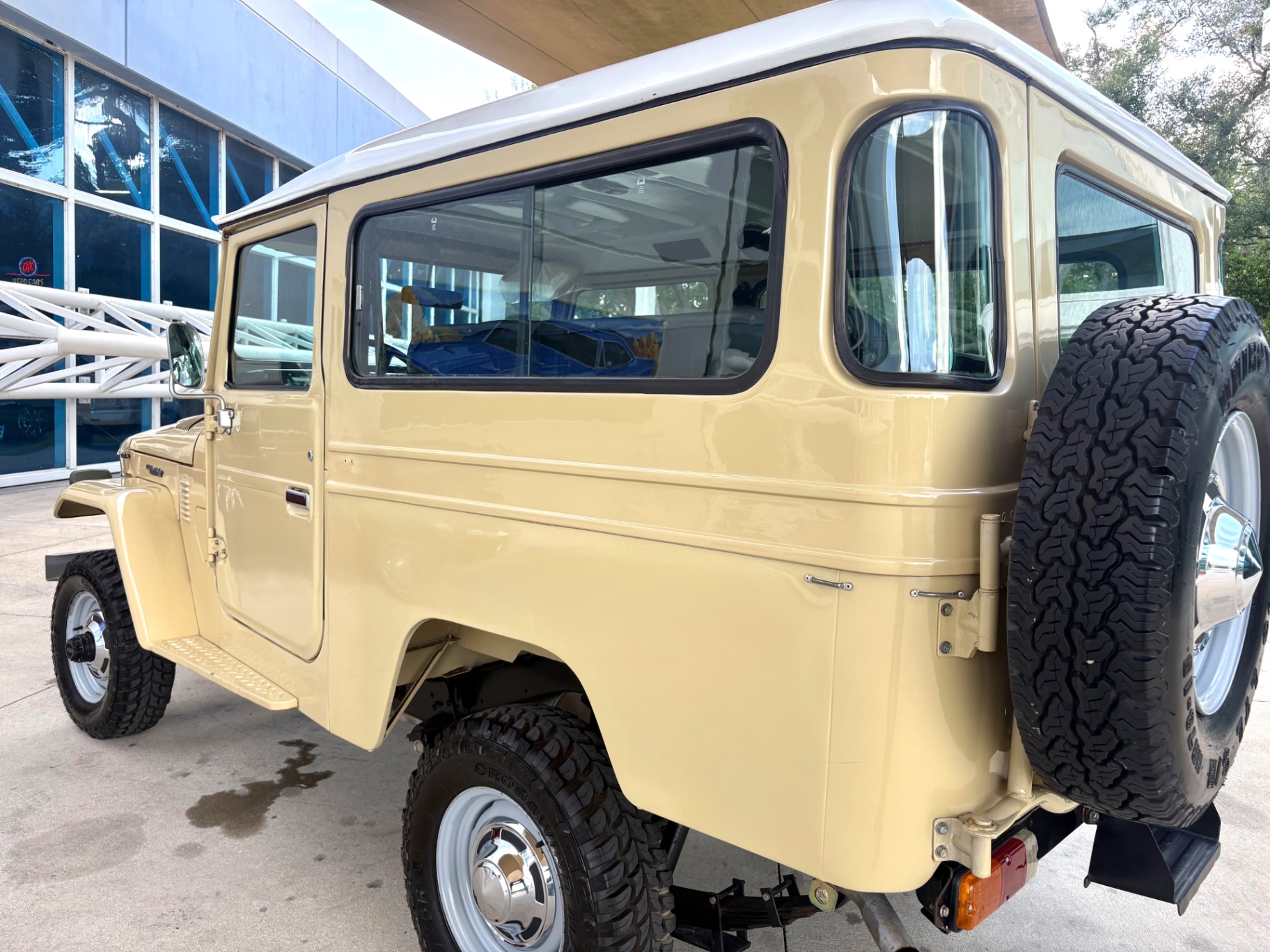
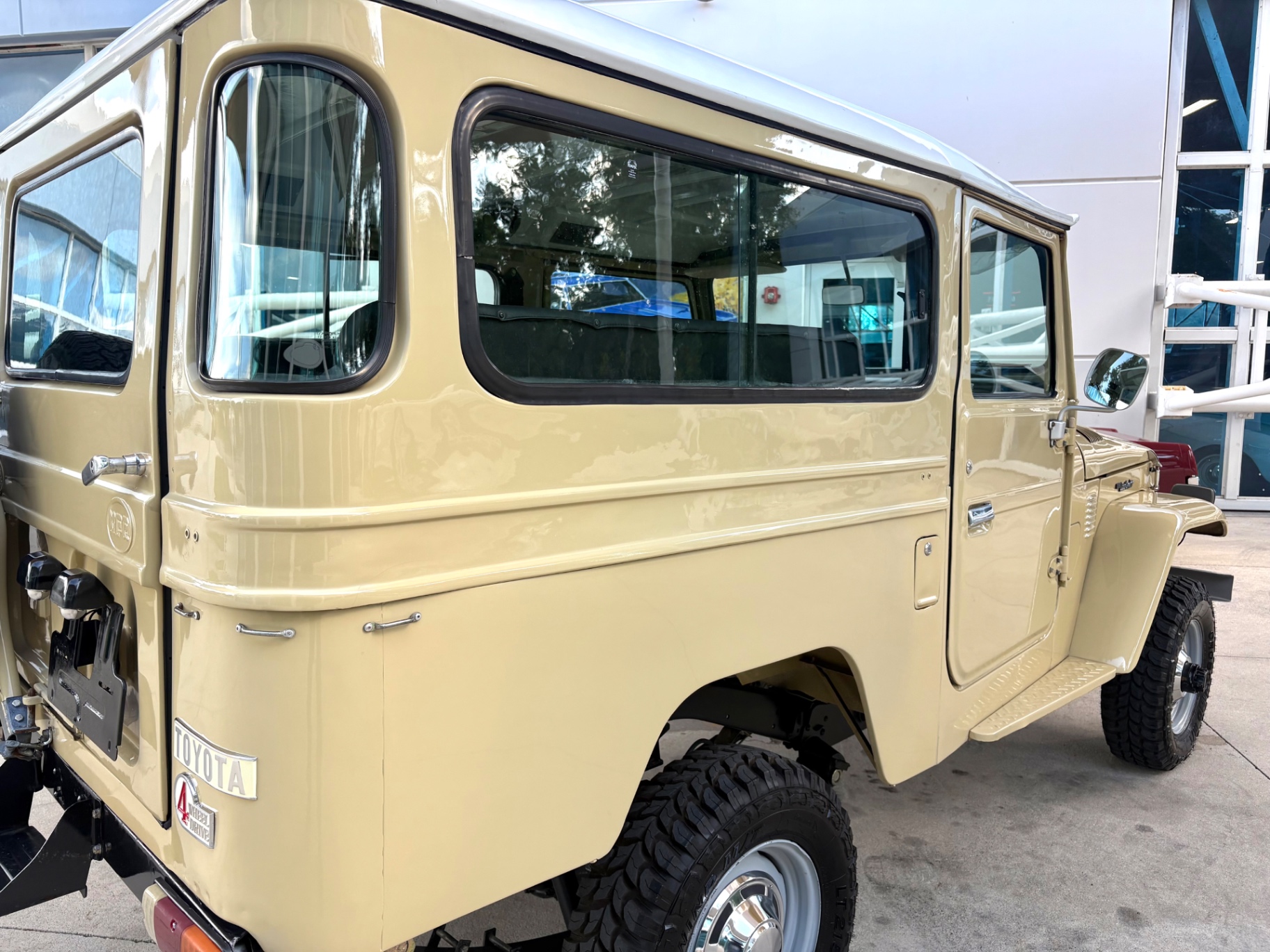
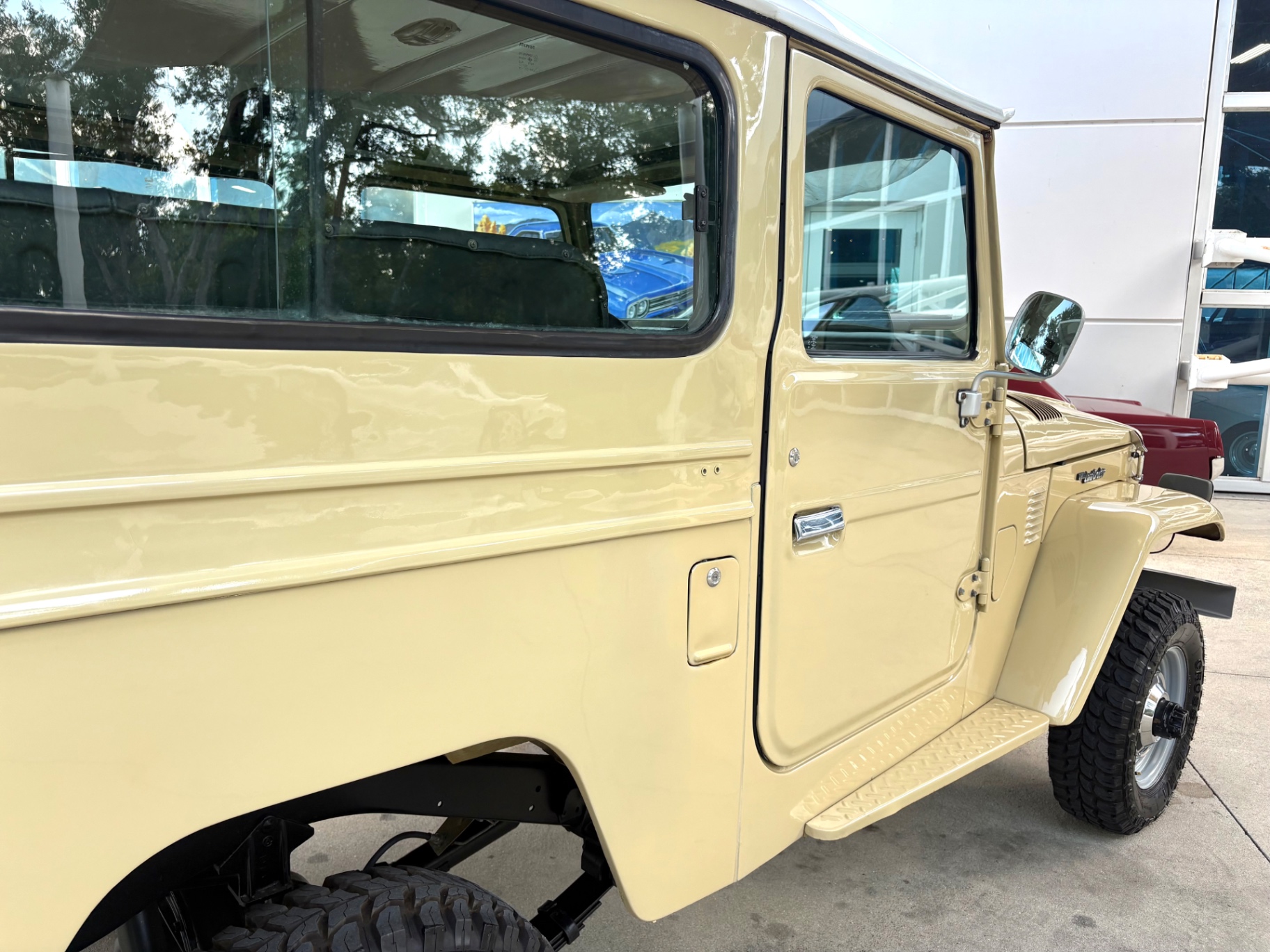
1978 Toyota Land Cruiser FJ40 — Restored Body, Undercarriage, and 2F Engine with 5-Speed Overdrive
Why This Car Is Special
The 1978 Toyota Land Cruiser FJ40 occupies a specific place in four-wheel-drive history that no other vehicle quite matches. While American buyers were gravitating toward increasingly comfortable and road-focused SUVs through the late 1970s, the FJ40 remained exactly what it had always been: a purpose-built, body-on-frame off-road vehicle engineered to go places other trucks couldn't follow. Toyota had been refining the Land Cruiser formula since the early 1950s, and by 1978 the FJ40 had proven itself on every continent, in the hands of military operators, ranchers, missionaries, and expedition teams who needed something that simply would not quit.
The FJ prefix in this truck's designation tells you the most important thing about it: it carries the F-series gasoline engine, specifically the 2F inline-six. The 40 designates the short-wheelbase hardtop body style, the configuration most associated with the Land Cruiser name in North America. By the late 1970s, emissions regulations had forced many automakers to strangle their engines with compromises that hurt performance and reliability. Toyota responded differently with the 2F — they refined and enlarged the original F engine, producing a unit that Land Cruiser enthusiasts still regard as one of the most durable truck engines ever built.
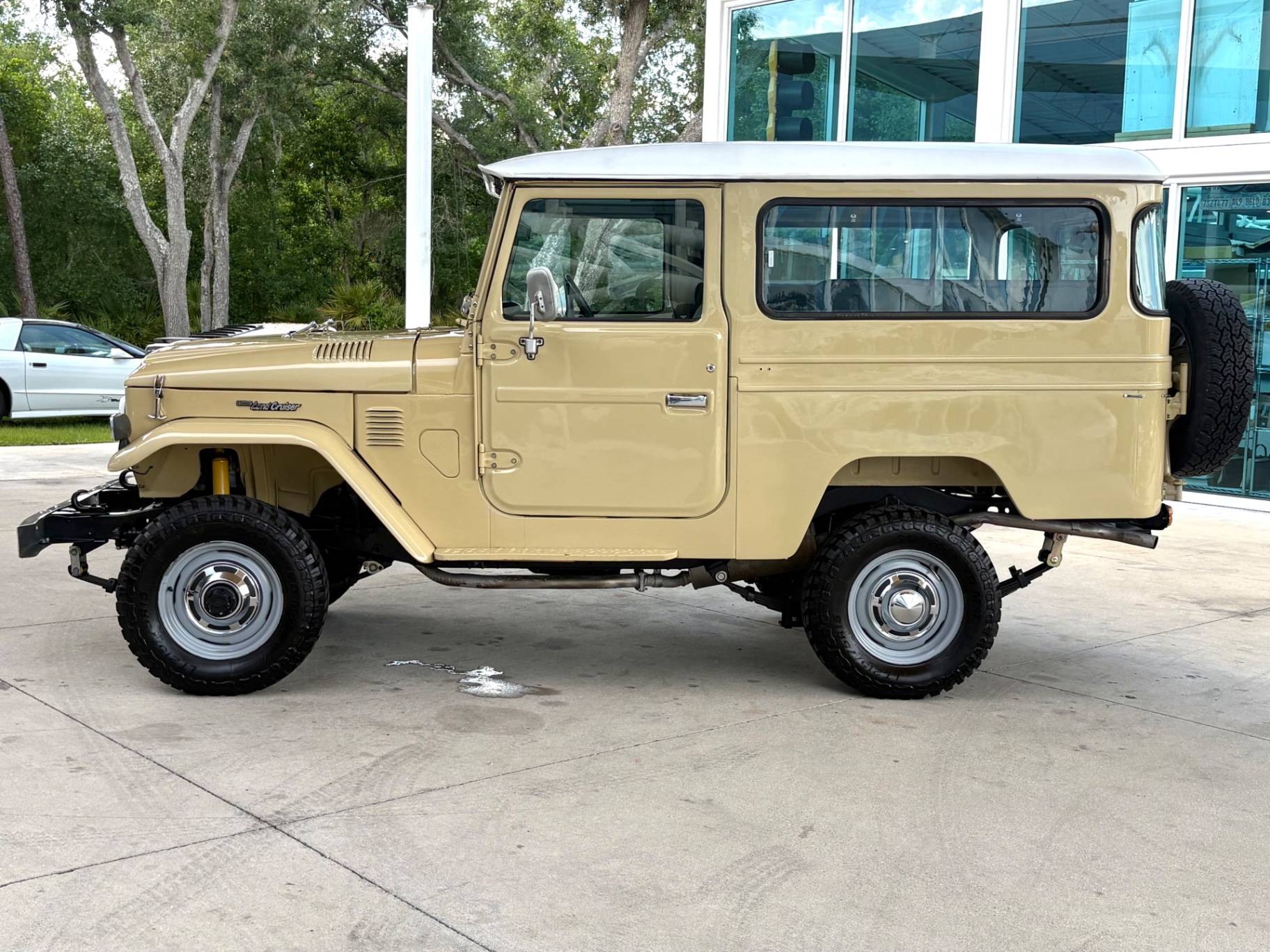
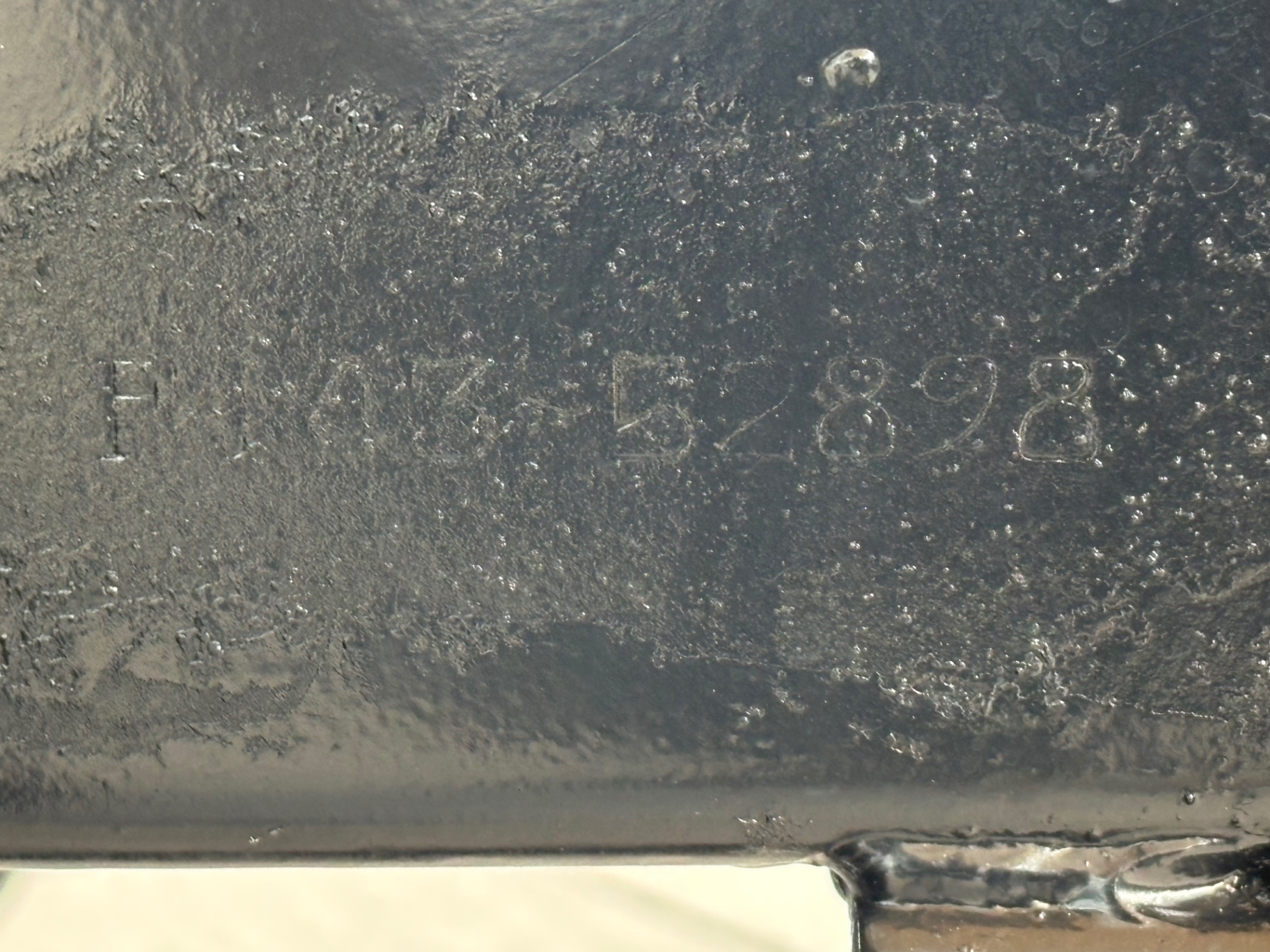
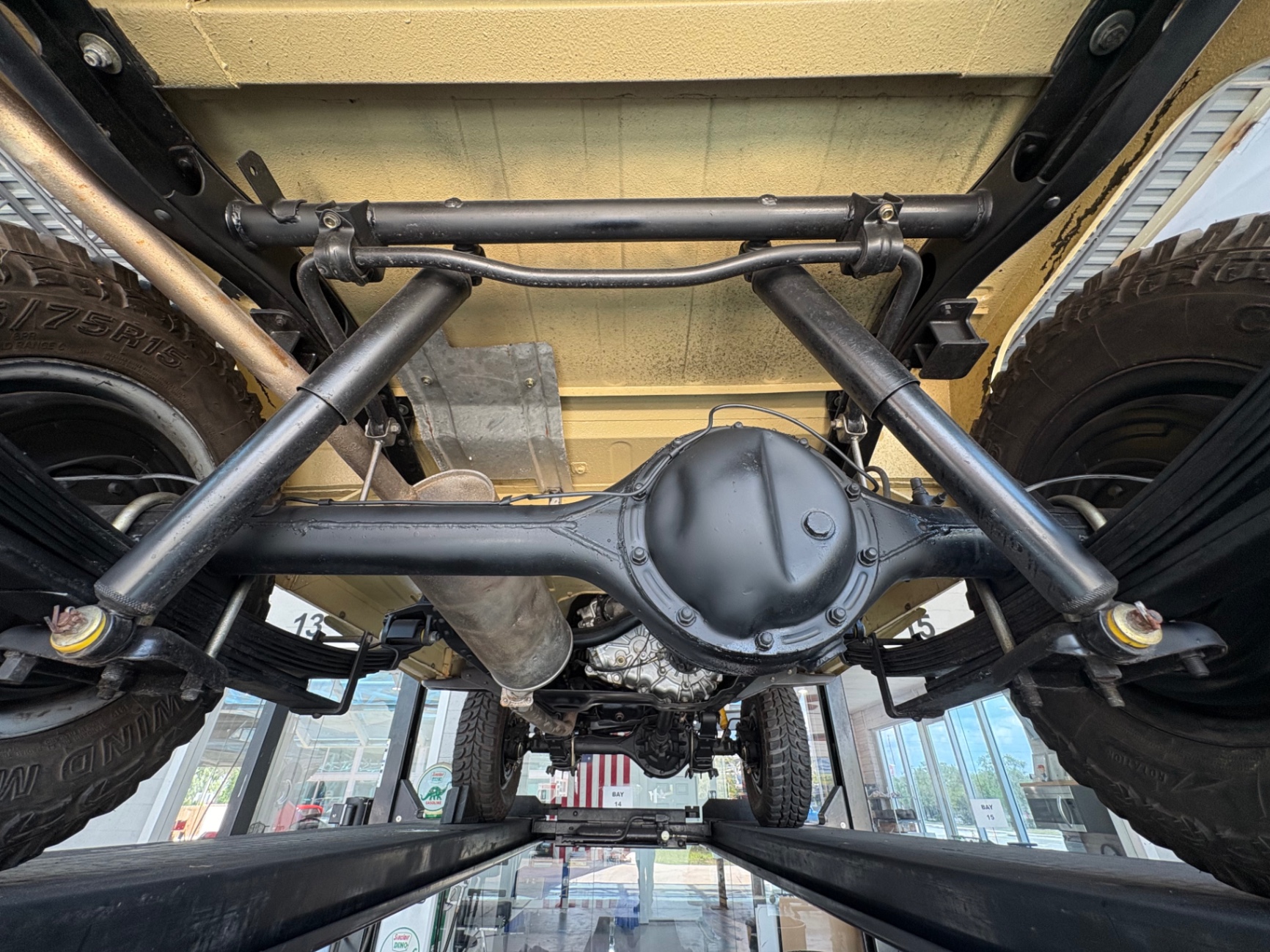
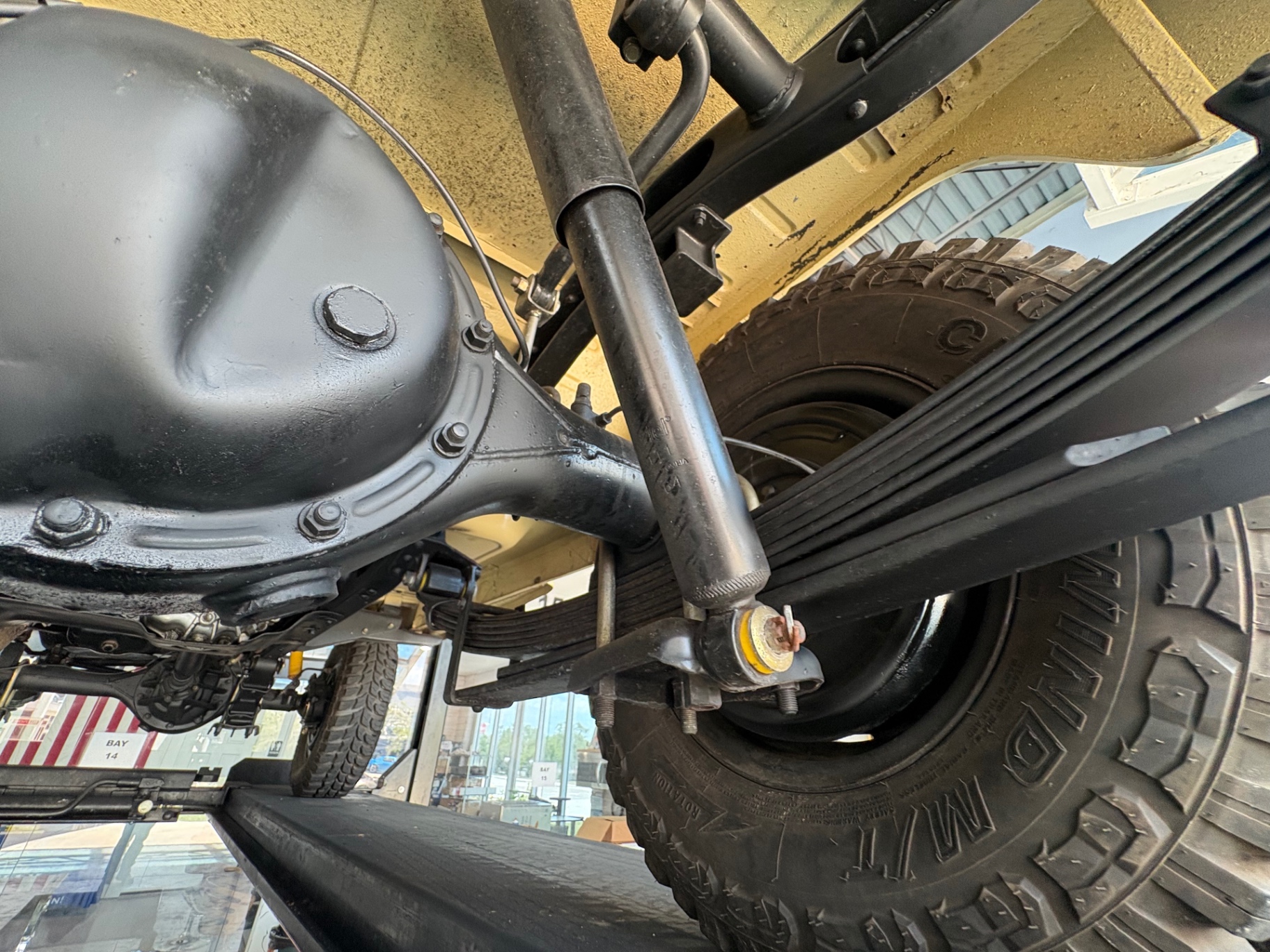
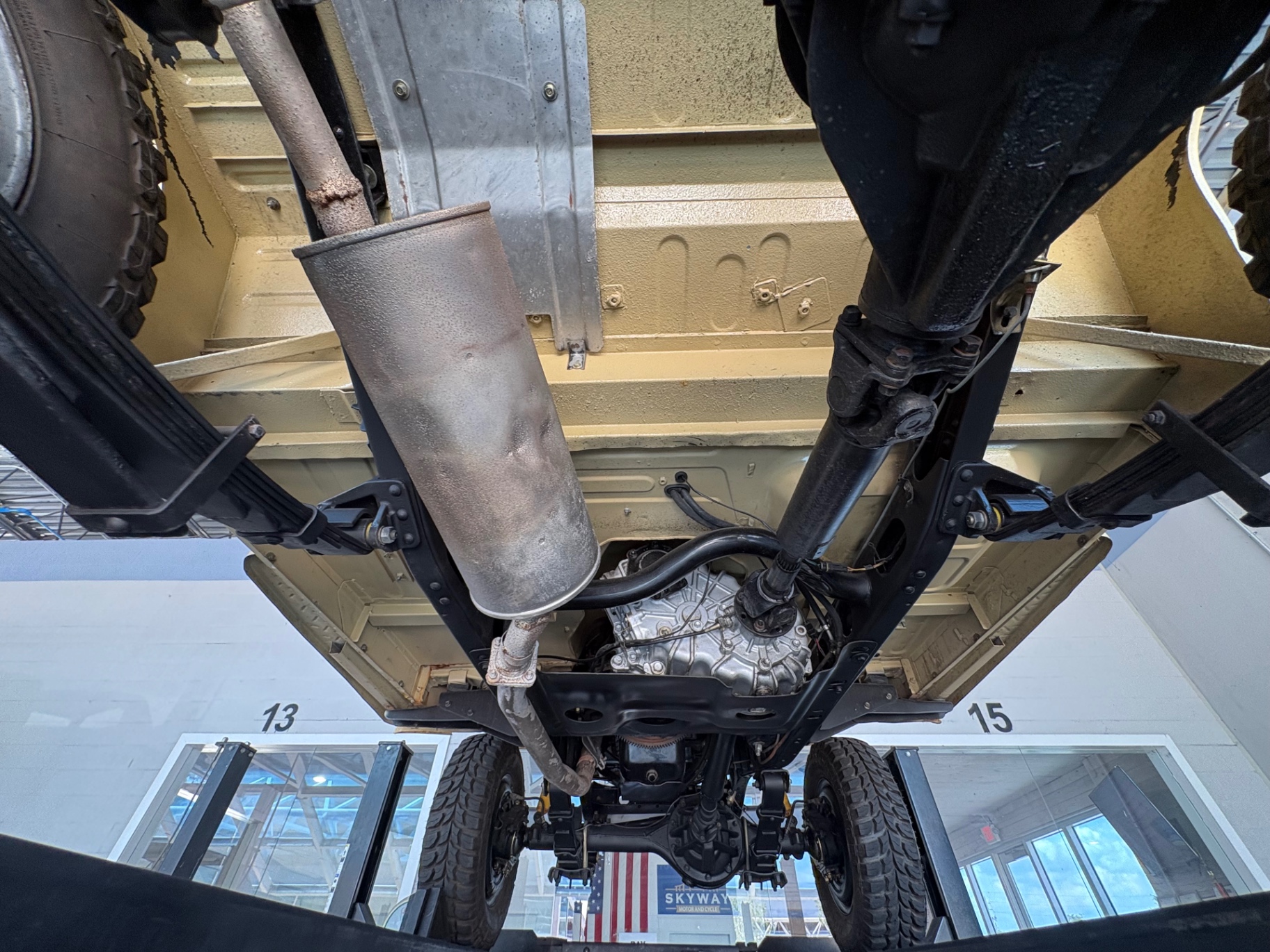
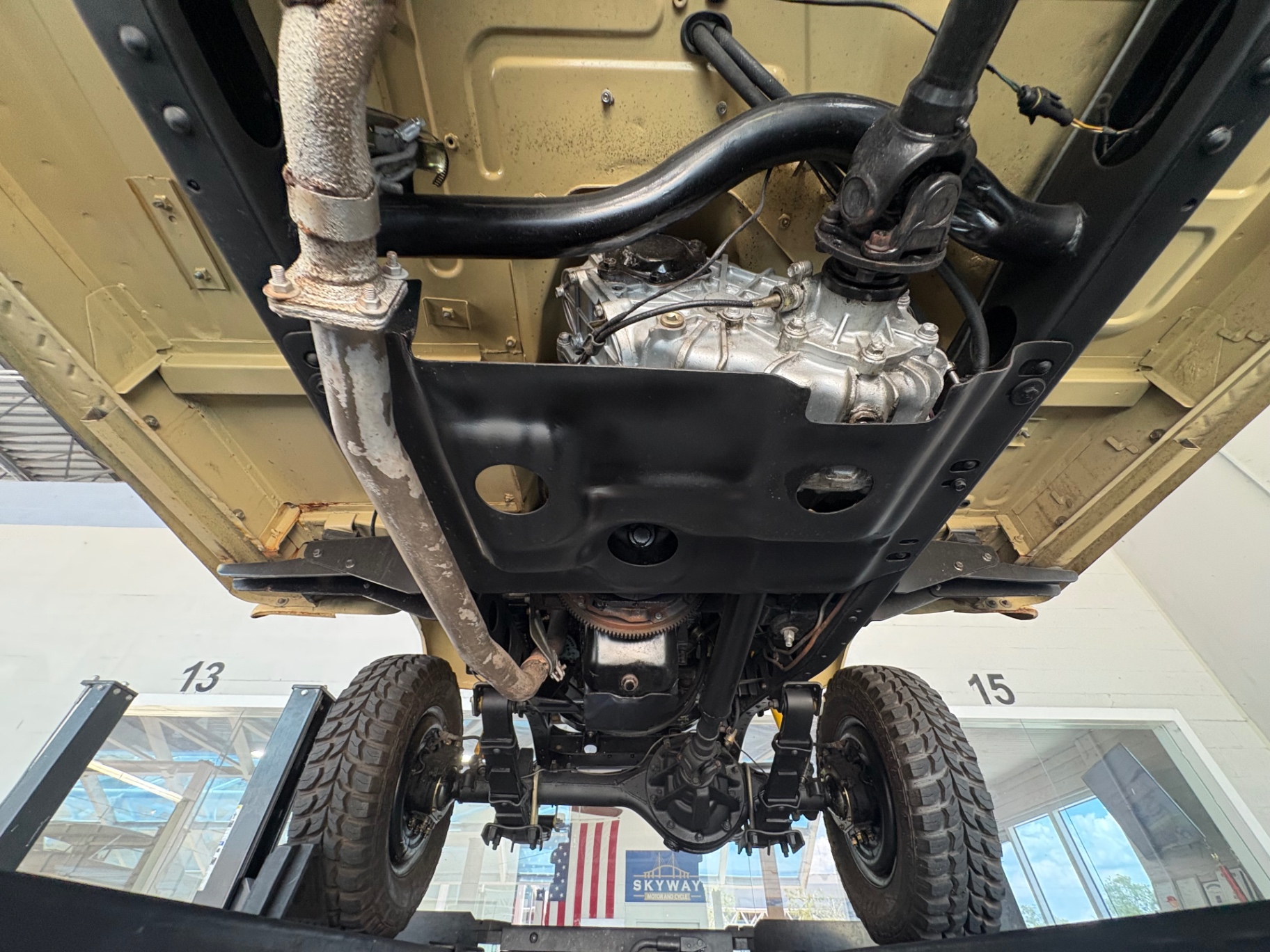
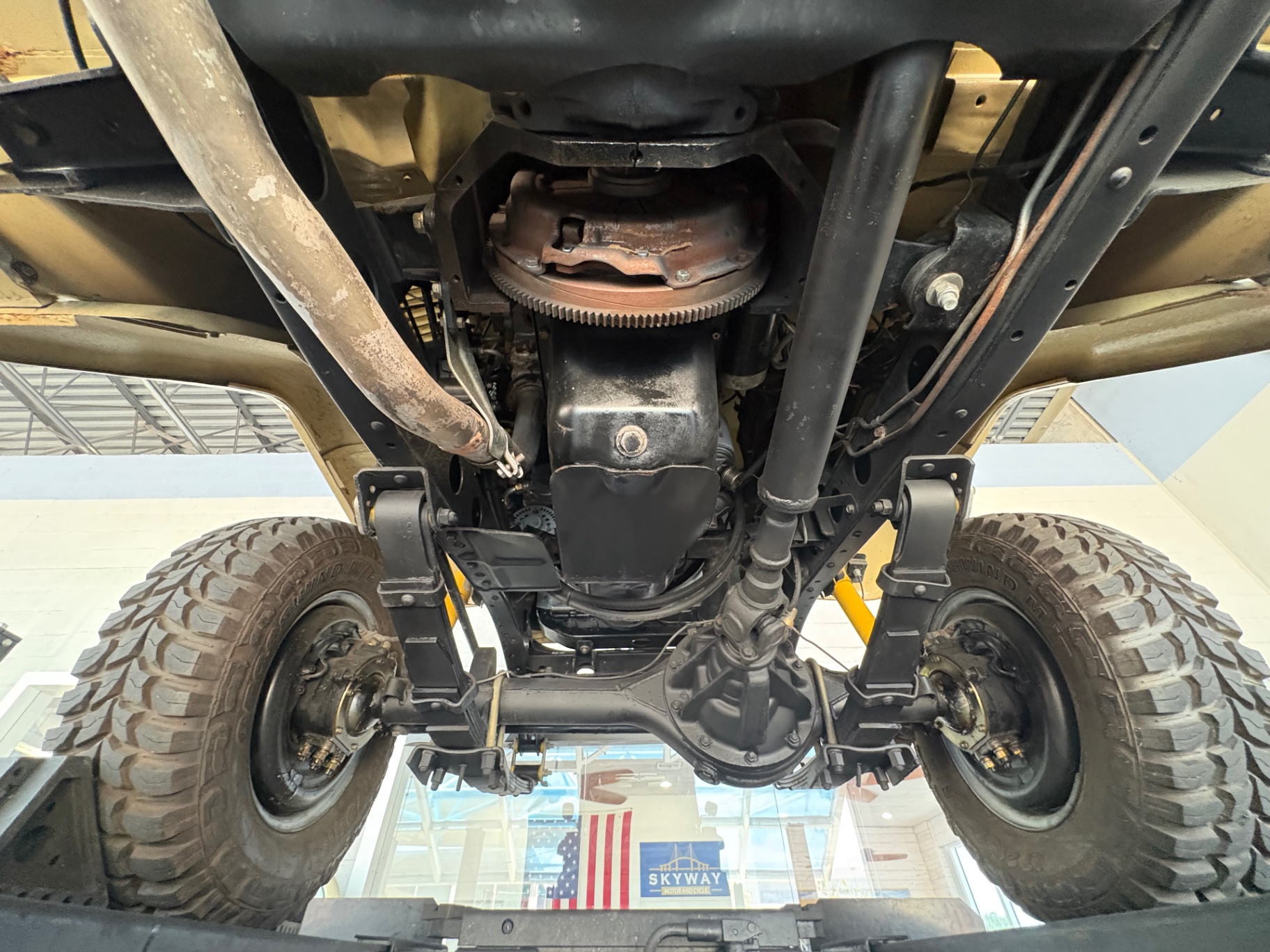
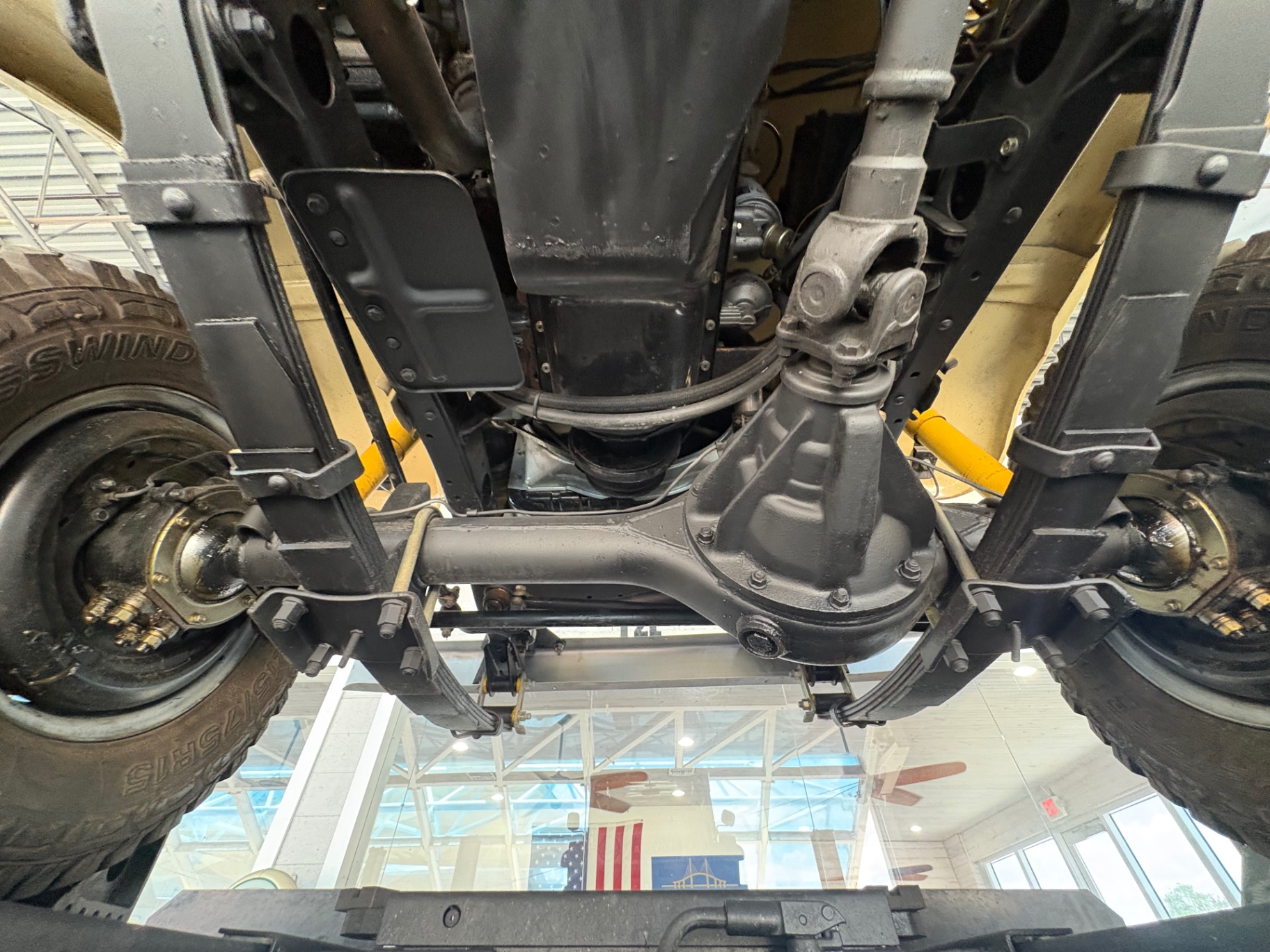
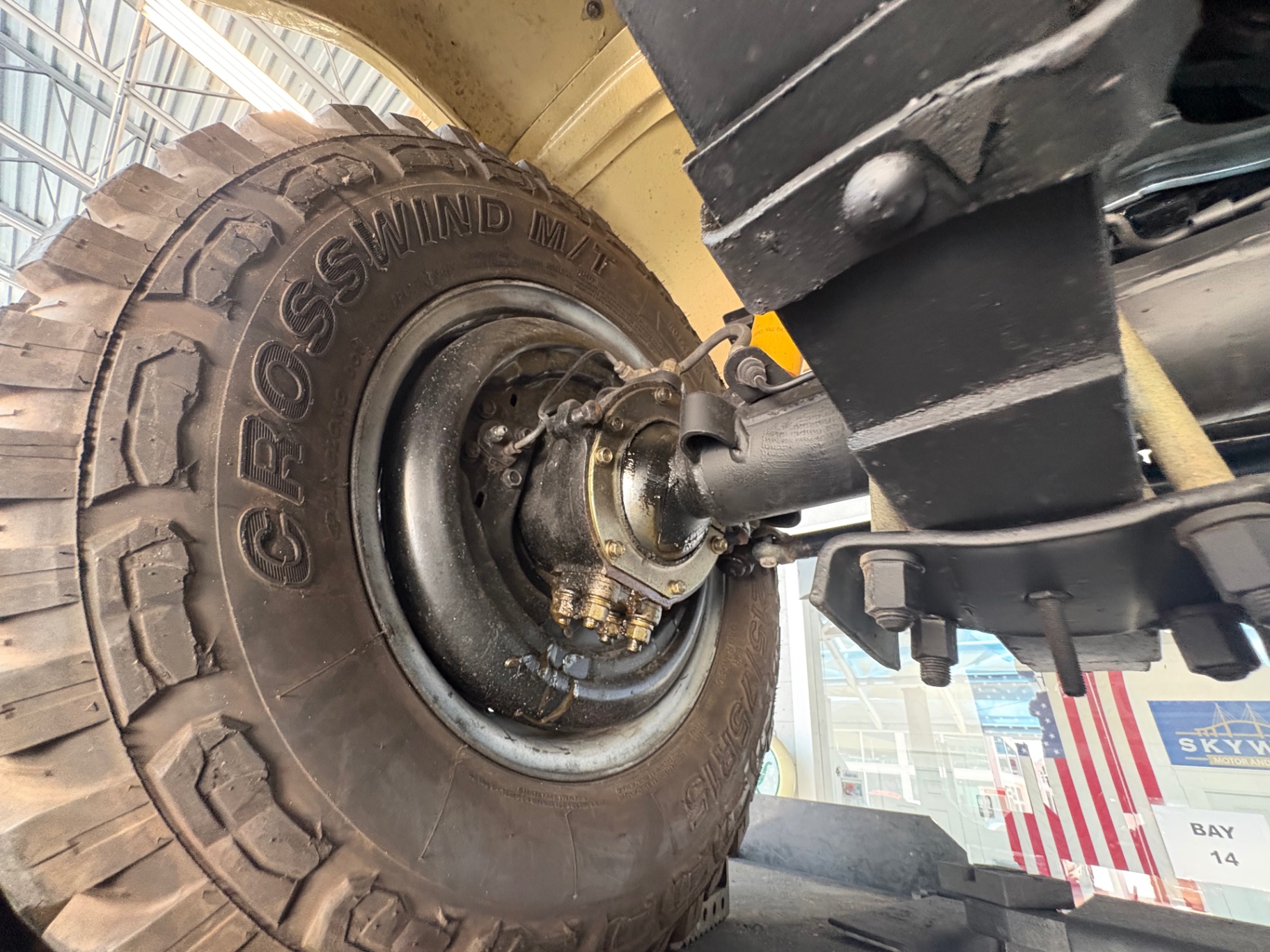
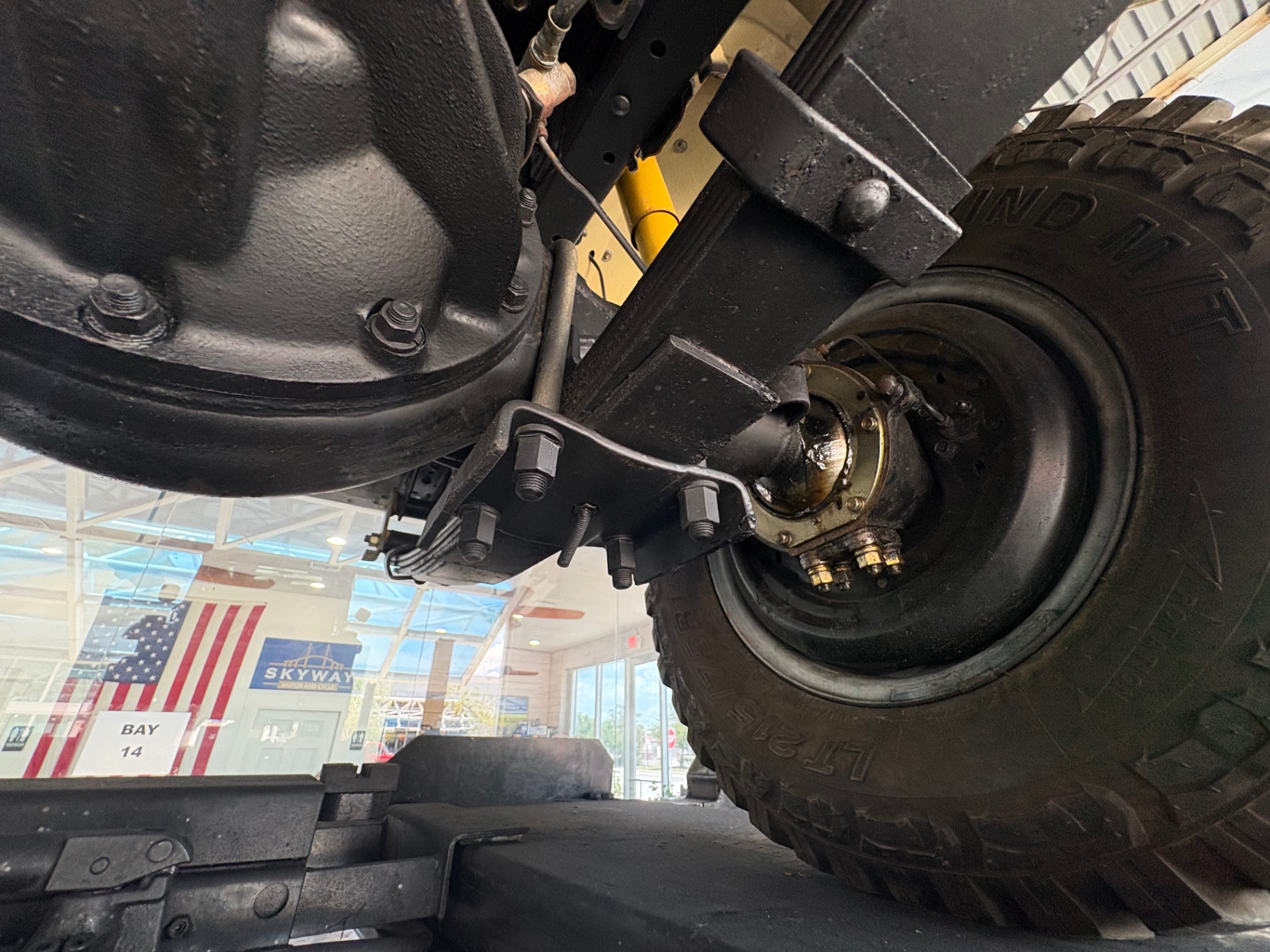
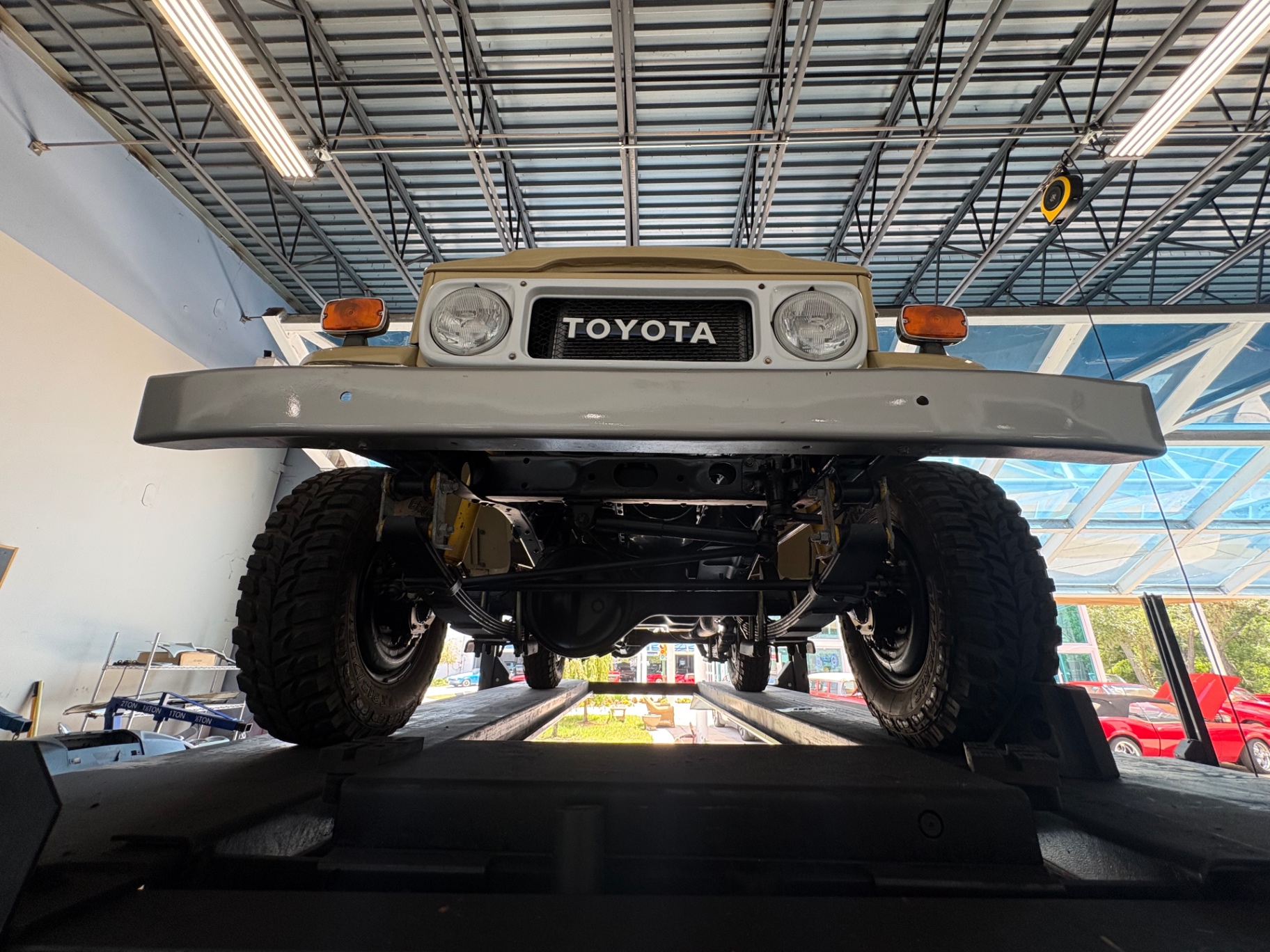
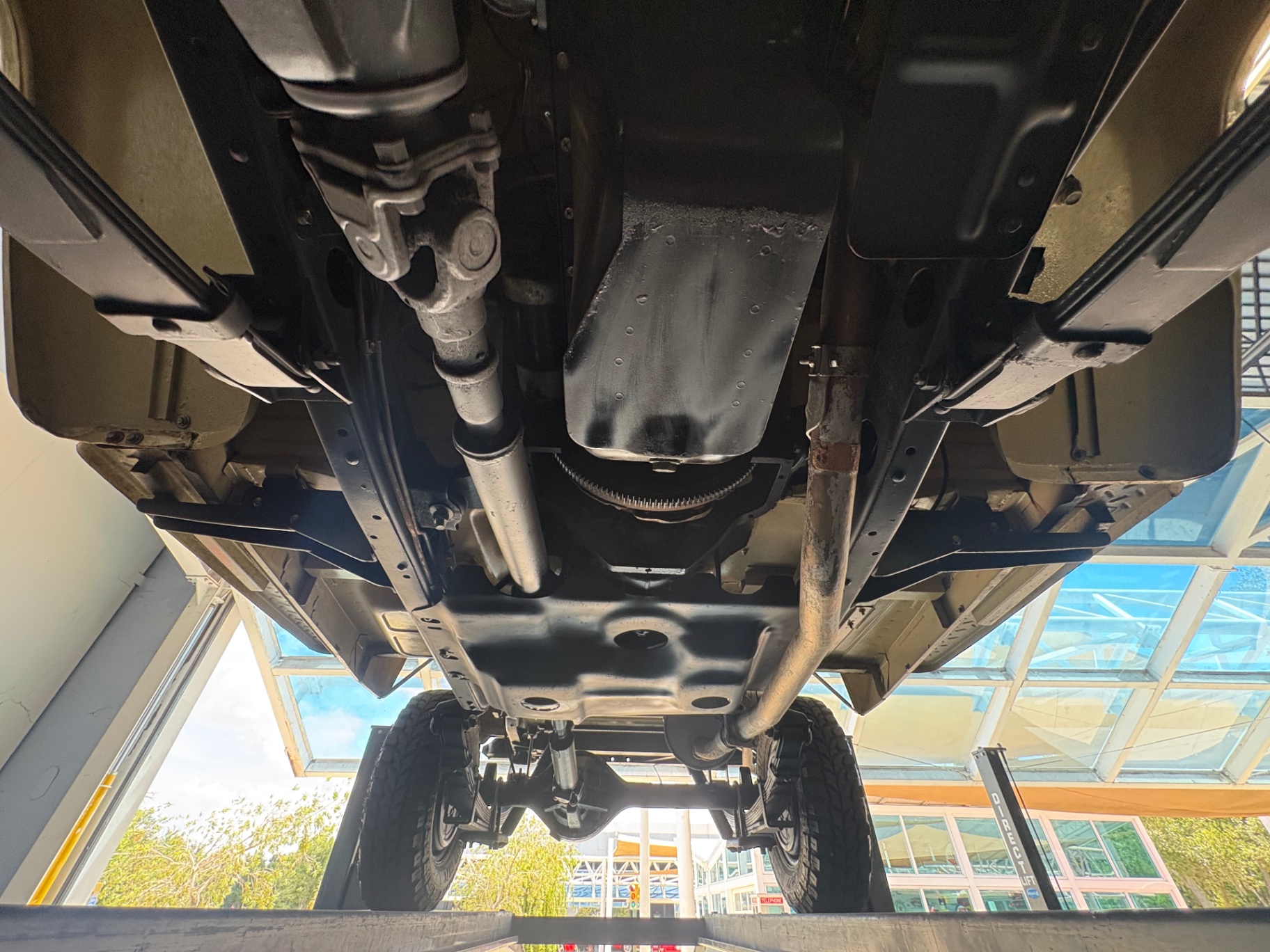
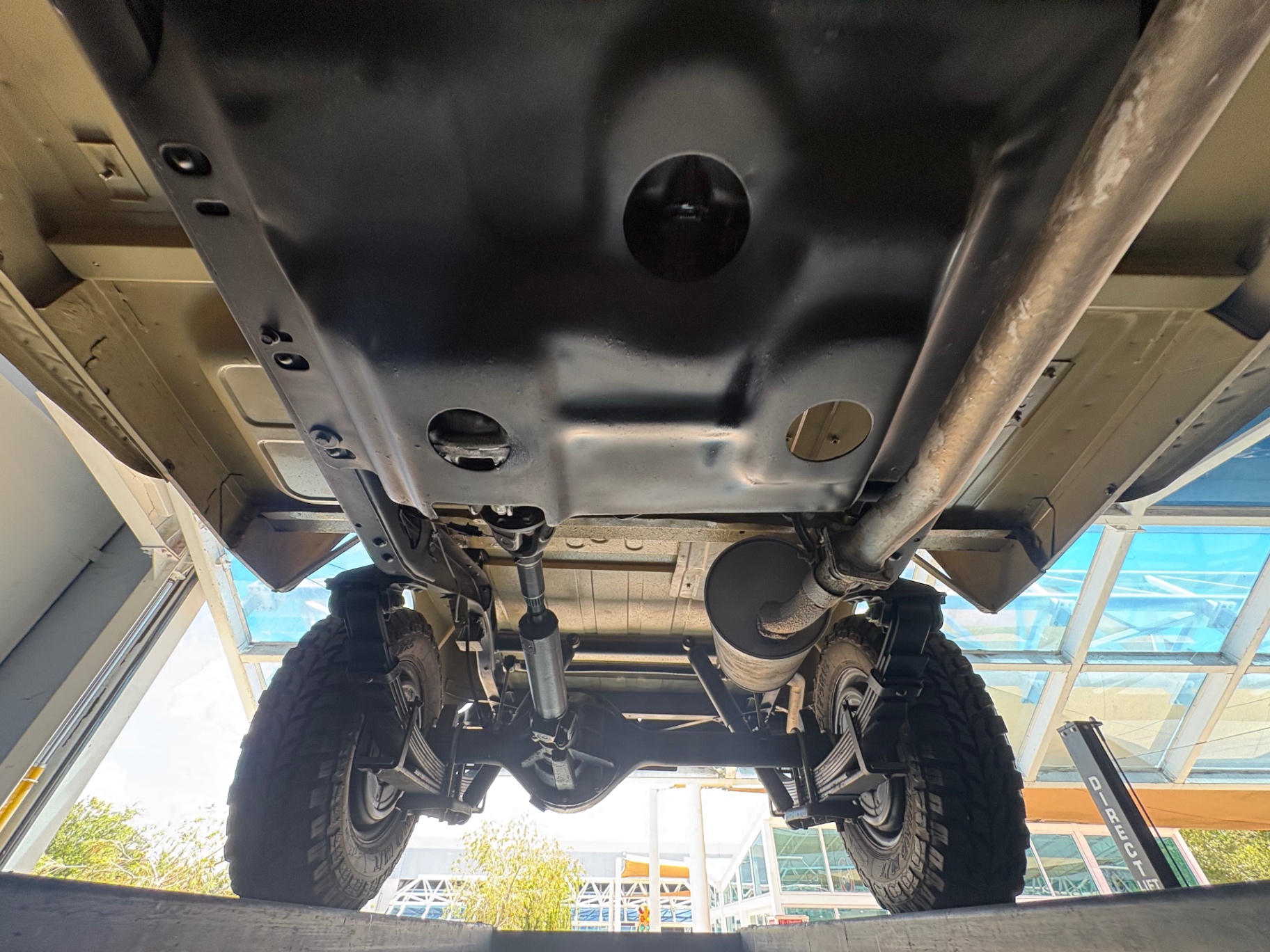
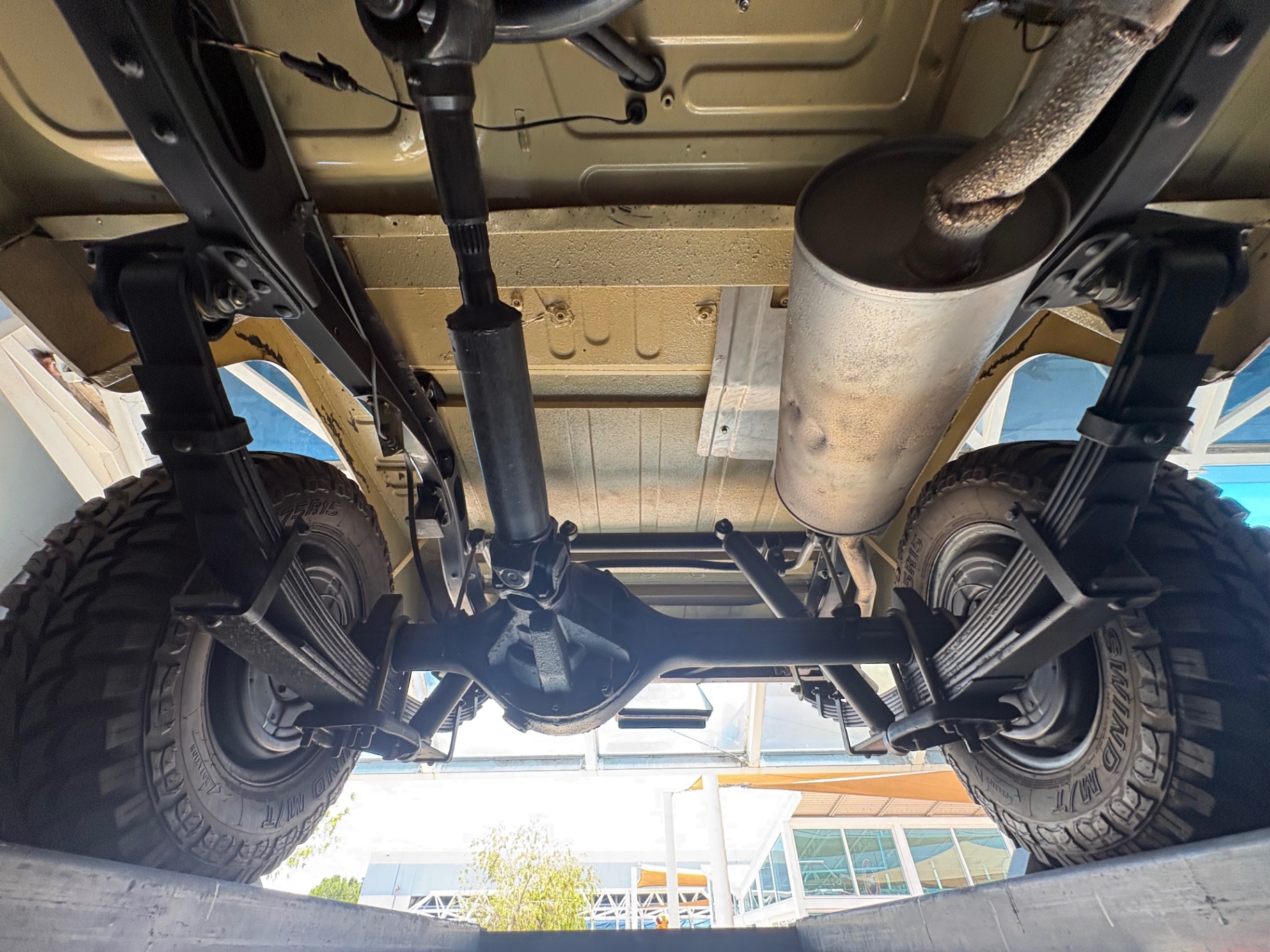
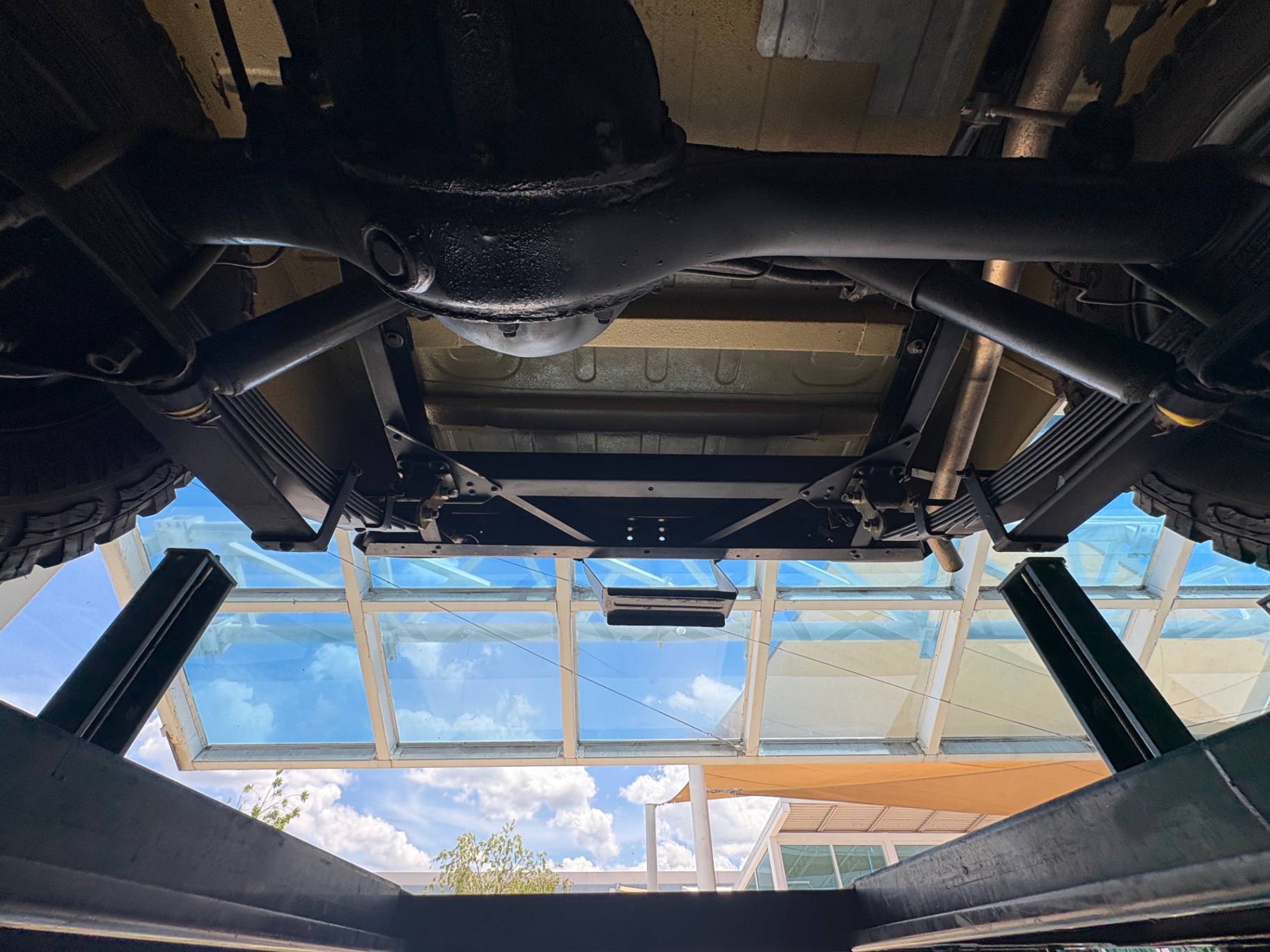
What separates this particular 1978 Toyota Land Cruiser FJ40 from a typical survivor is the extent of the restoration work. The body has been restored, the undercarriage has been fully restored, and the engine bay is clean and tight. This is not a driver that was cleaned up for photos. The undercarriage shots tell the real story — fresh black paint on the frame rails, axle housings, and suspension components, with no rust, no rot, and no improvised repairs. For FJ40 buyers who understand what it costs and what it takes to get a 46-year-old truck to this standard, the condition of this example is the central fact of the listing.
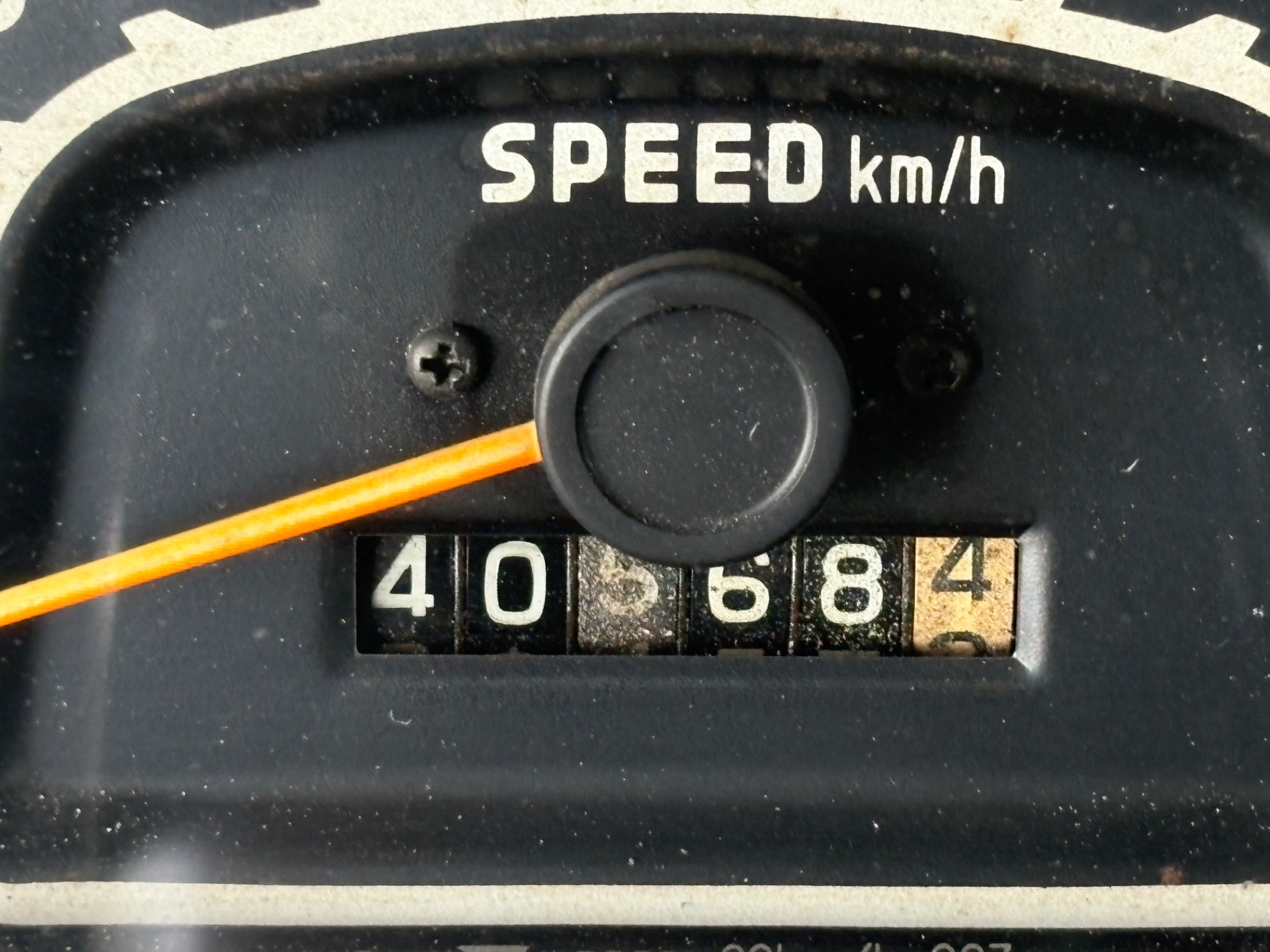
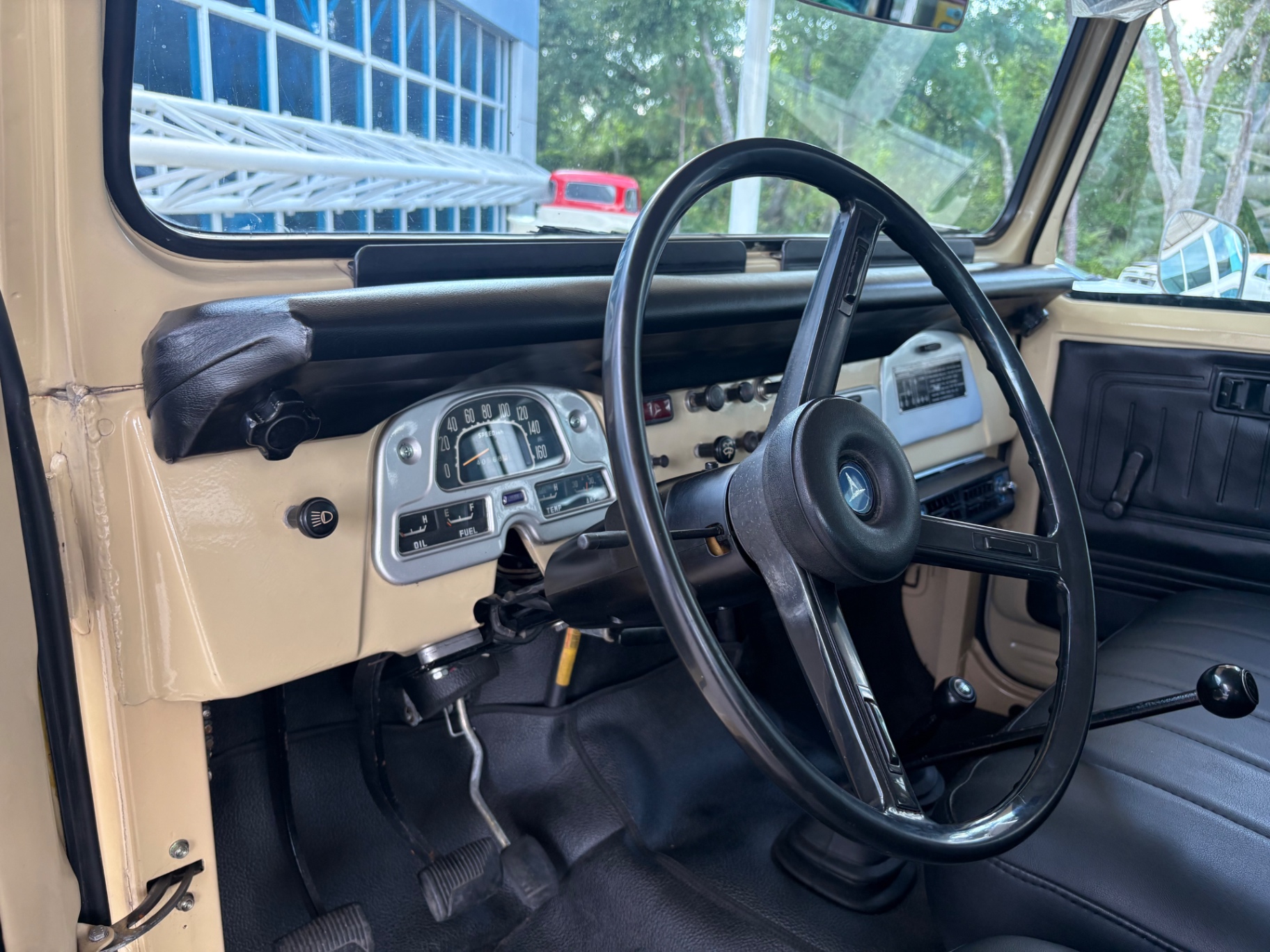
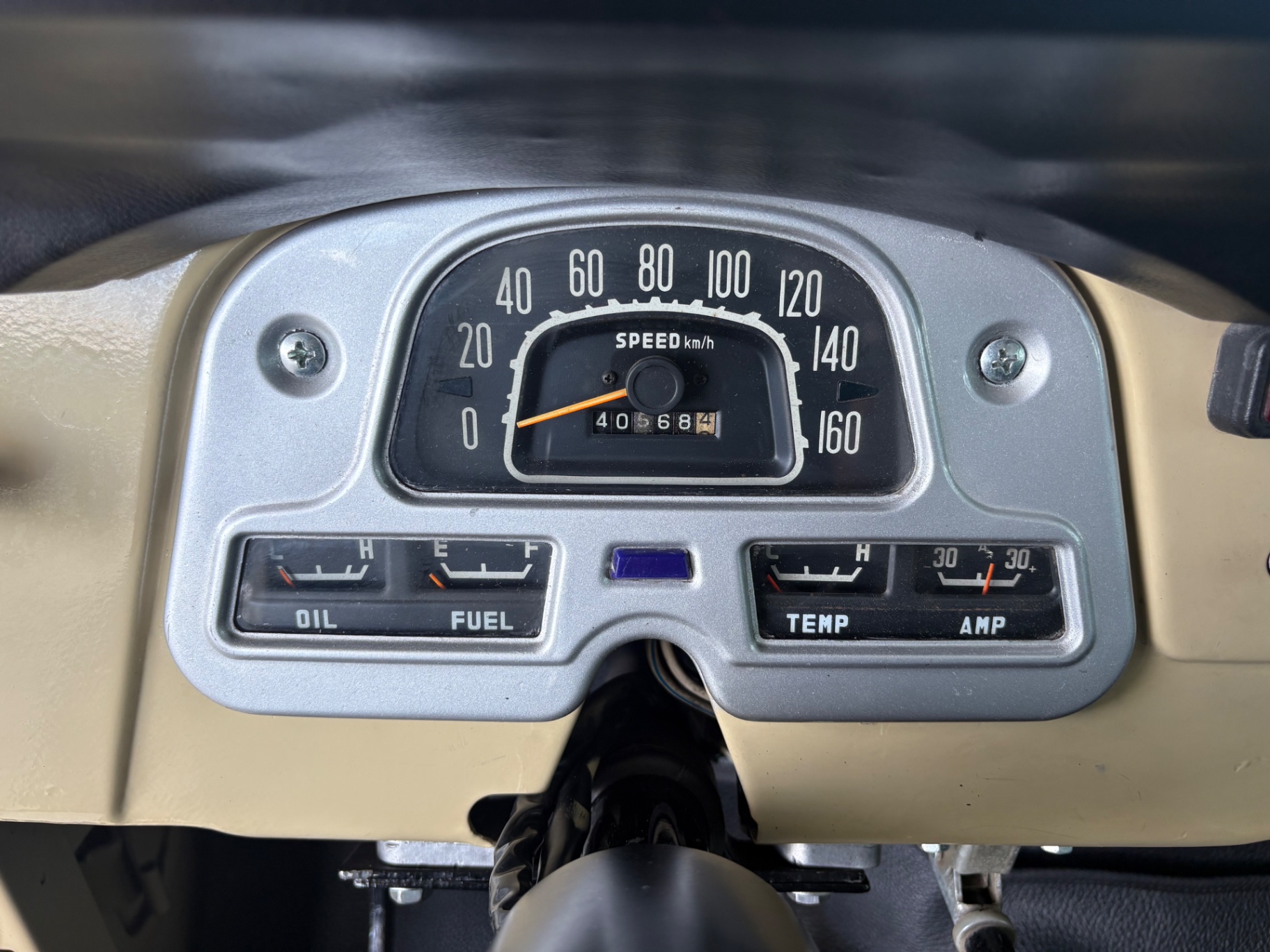
The speedometer reads in km/h, which is consistent with a vehicle originally built for a non-US market or a Canadian-specification unit. The odometer shows 40,568 — whether kilometers or miles, the restoration work present throughout this truck speaks for itself in terms of current condition.
Features List
- Toyota 2F 4.2-liter Inline-6 engine
- 5-Speed Manual transmission with Overdrive
- Part-time 4-Wheel Drive with high and low range
- Manual locking front hubs
- Solid front and rear axles
- Leaf spring suspension, front and rear
- Four-wheel drum brakes with power assist
- Air conditioning
- Restored body
- Fully restored undercarriage and frame
- Clean engine bay
- Floor-mounted main and transfer case shifters
- Rear bench seating (fold-up, side-facing)
- All-terrain tires
- Spare tire mounted on rear door
- Chrome hub caps
- Manual windows
Mechanical
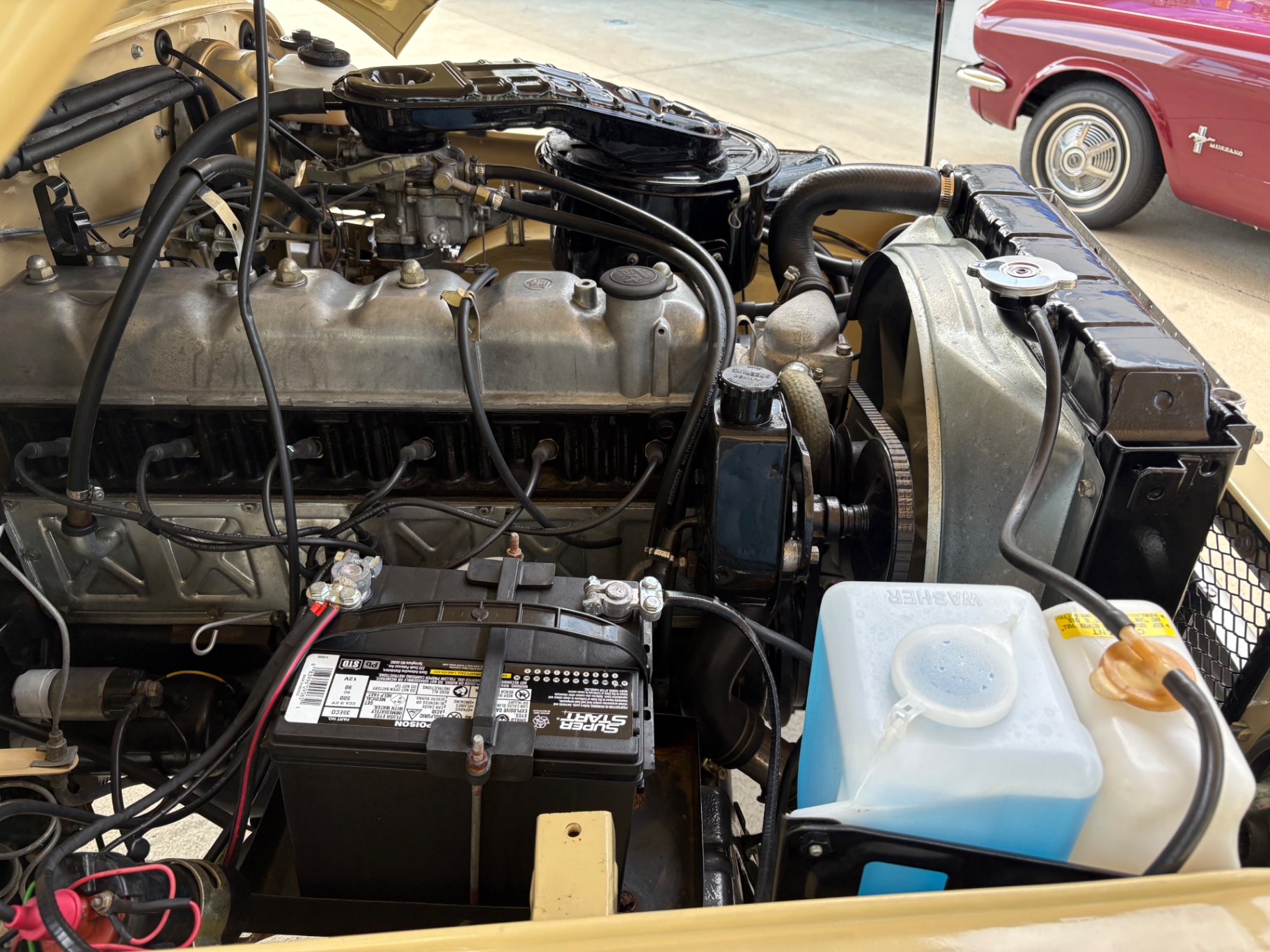
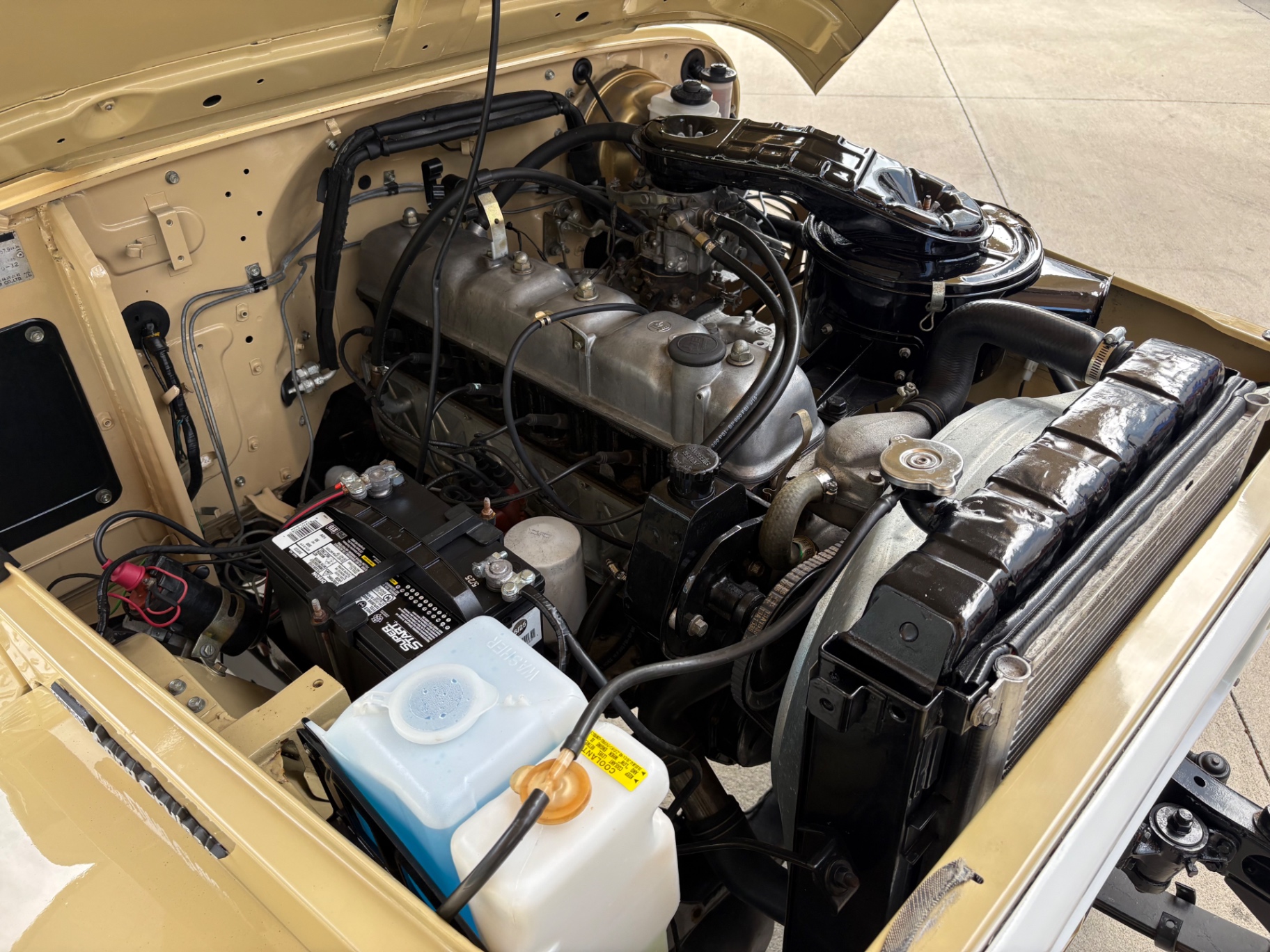
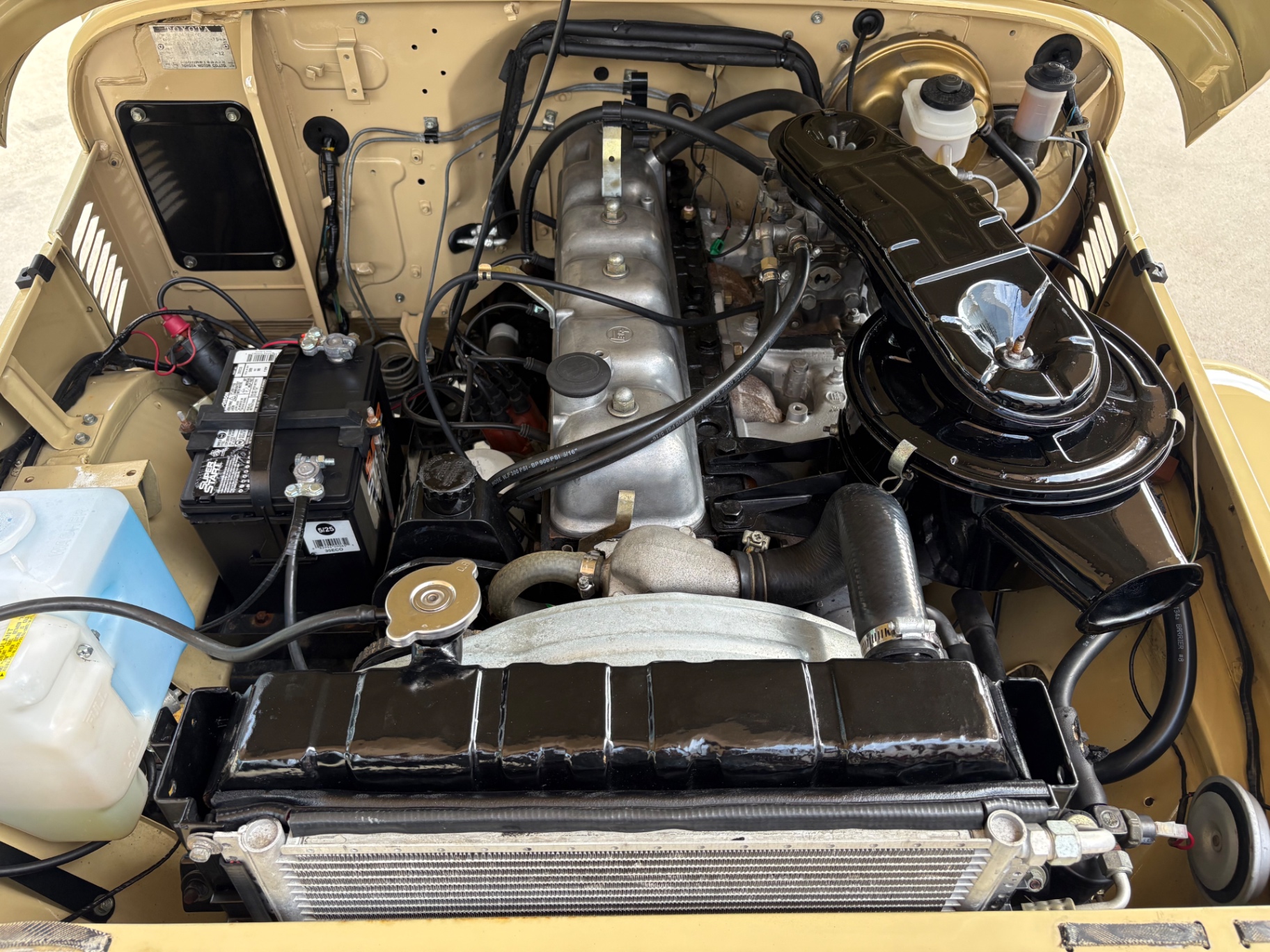
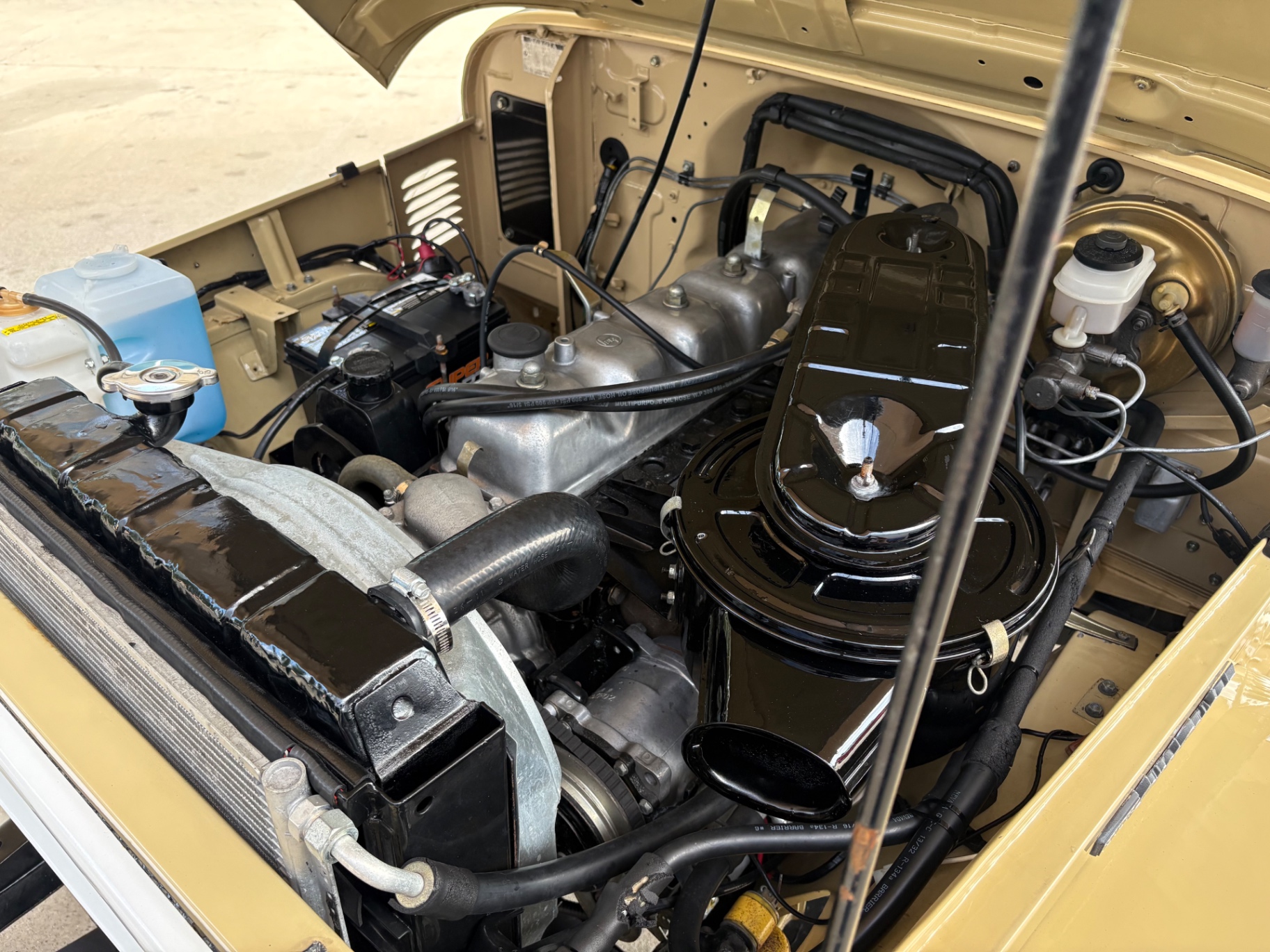
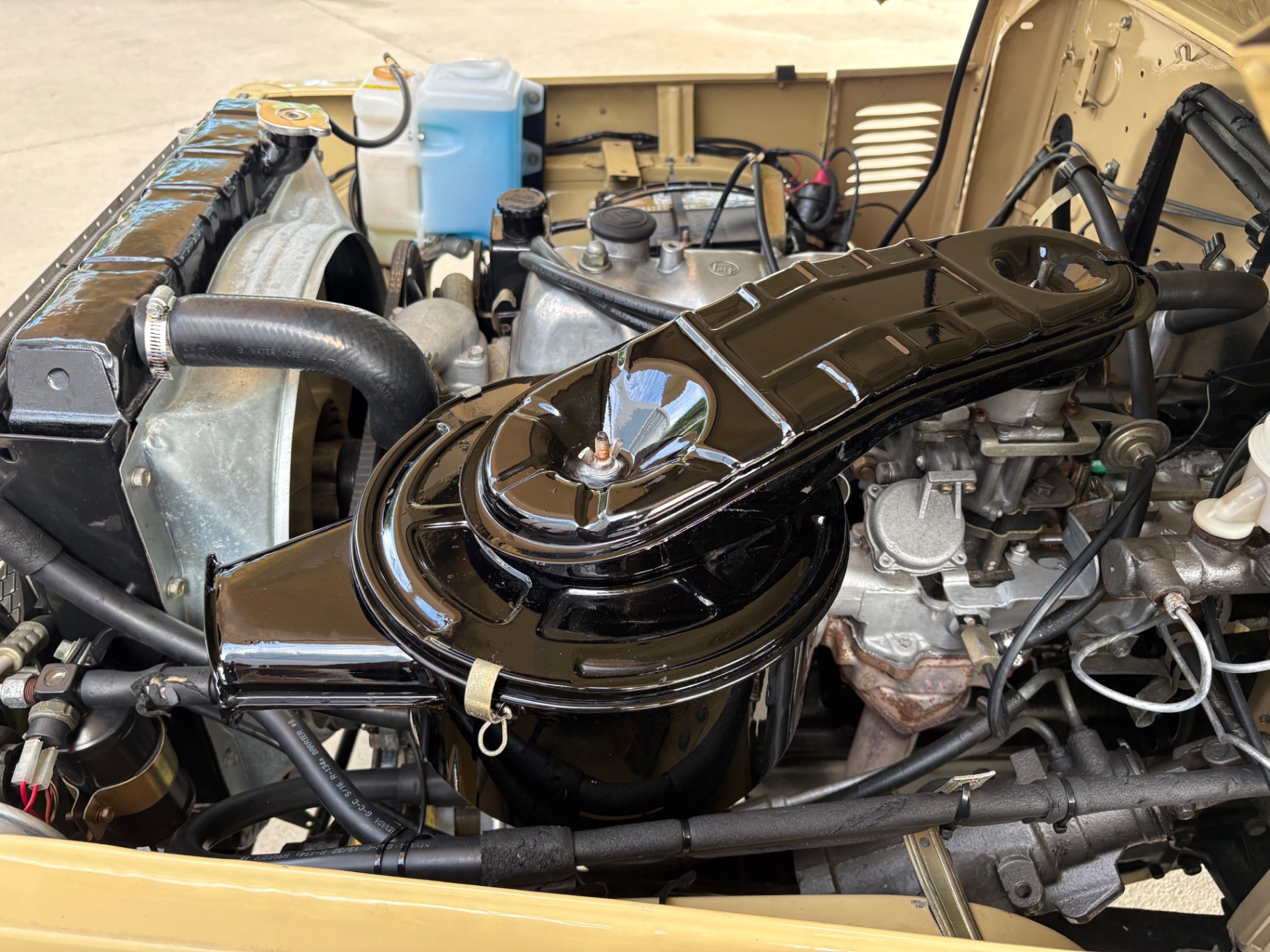
The 2F engine is a 4.2-liter overhead-valve inline-six that Toyota introduced in the Land Cruiser for the 1975 model year as a replacement for the original F engine. It displaces 4,230cc and produces torque in a broad, usable band that suits low-speed off-road work exceptionally well. The 2F is a cast-iron unit — both block and head — and it is known for tolerating high mileage and neglect better than most engines of its era, provided it receives adequate cooling system attention. This example's engine bay is notably clean, with properly routed hoses and well-maintained components visible throughout the multiple engine bay photos.
The transmission fitted to this truck is a 5-speed manual with overdrive, which is a significant upgrade over the 4-speed unit that came standard on the FJ40. The fifth gear overdrive brings highway cruising rpm down considerably, making the 1978 Toyota Land Cruiser FJ40 genuinely more livable on modern roads than a stock 4-speed example while preserving the mechanical simplicity that FJ40 owners value. The transfer case provides high and low range, and the manual locking front hubs allow the front axle to be disconnected entirely when four-wheel drive is not needed — the correct way to do it on a truck of this type, and better for front axle longevity than automatic systems.
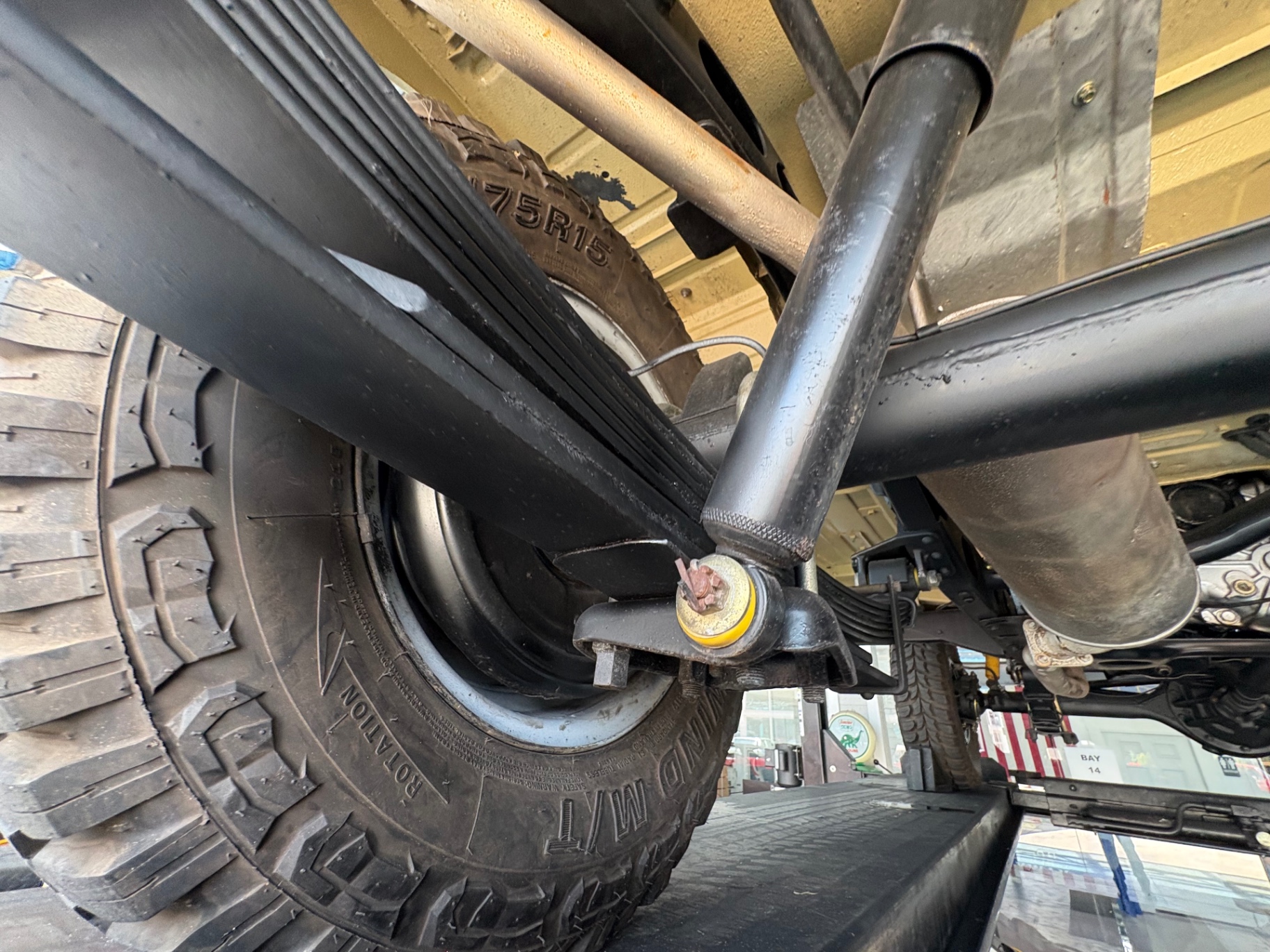
The suspension setup is the factory configuration: leaf springs front and rear with solid axles at both ends. This layout gives the FJ40 its characteristic articulation on rough terrain and makes the suspension geometry predictable and easy to work on. The restored undercarriage shows both front and rear leaf spring packs in sound condition, with the solid axle housings painted and clean. Four-wheel drum brakes with power assist handle stopping duties. Drum brakes require more attention to adjustment and fade management than disc setups, but they are entirely serviceable for the type of use an FJ40 is built for, and replacement parts remain widely available.
Interior
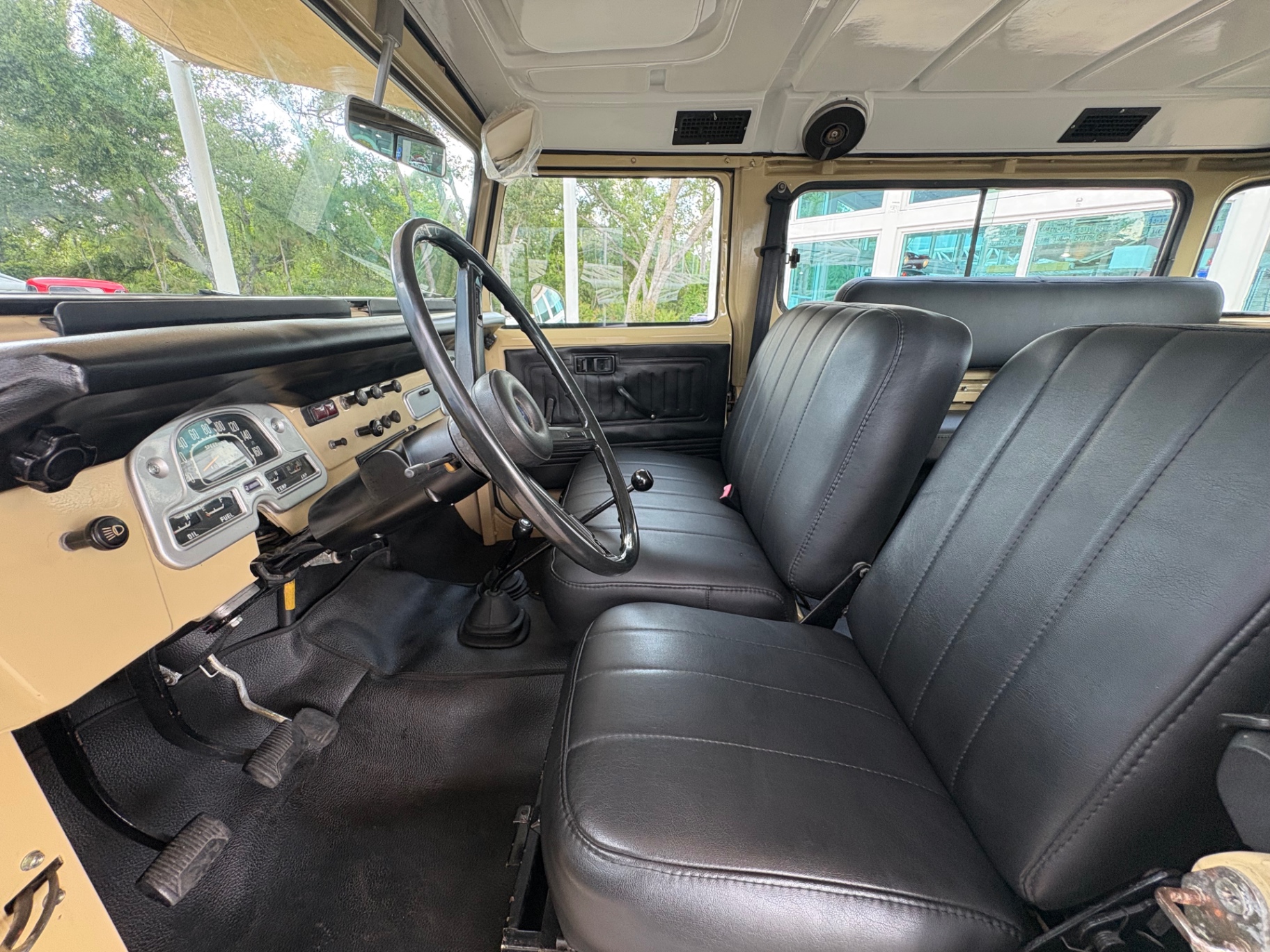
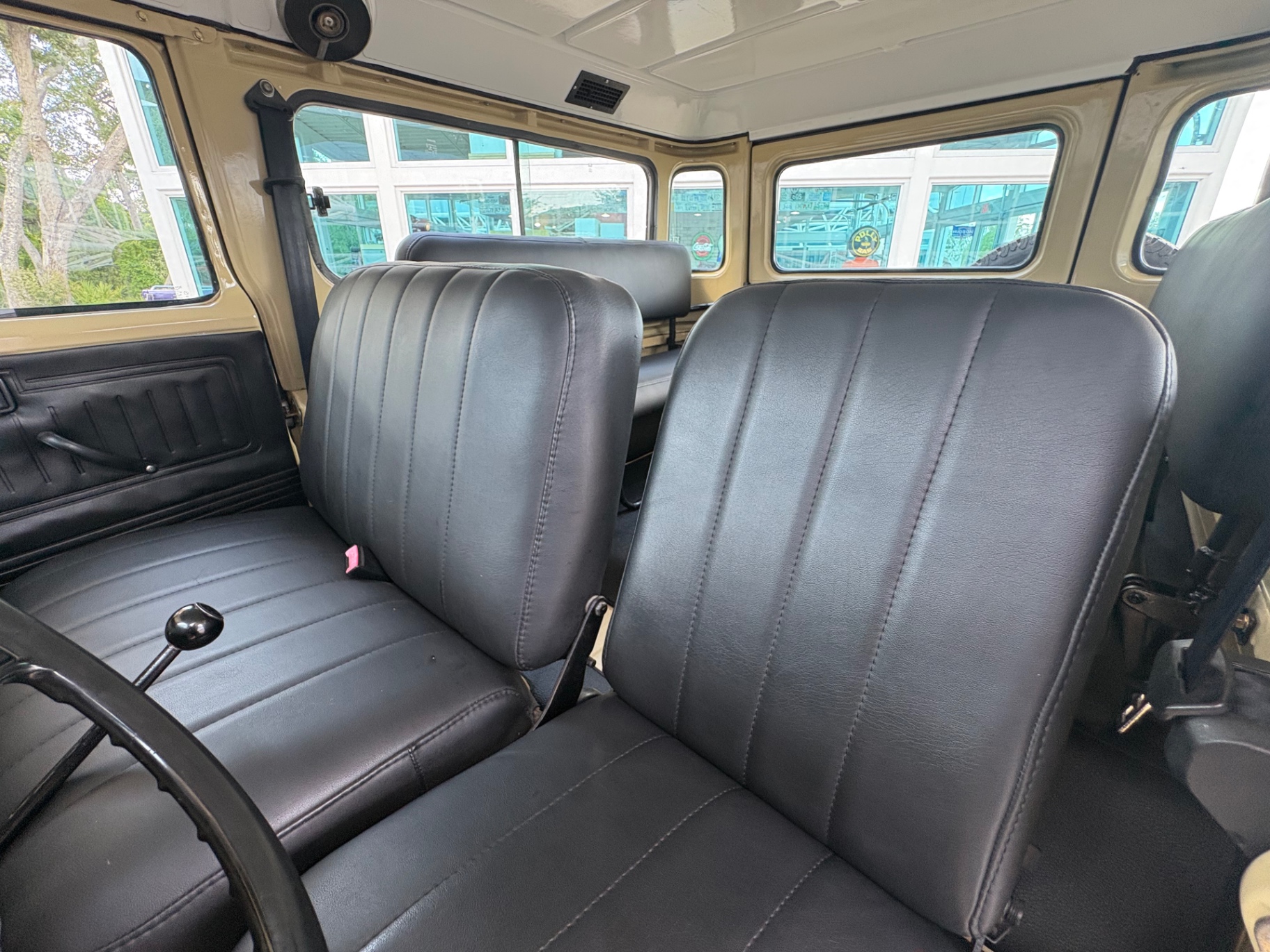
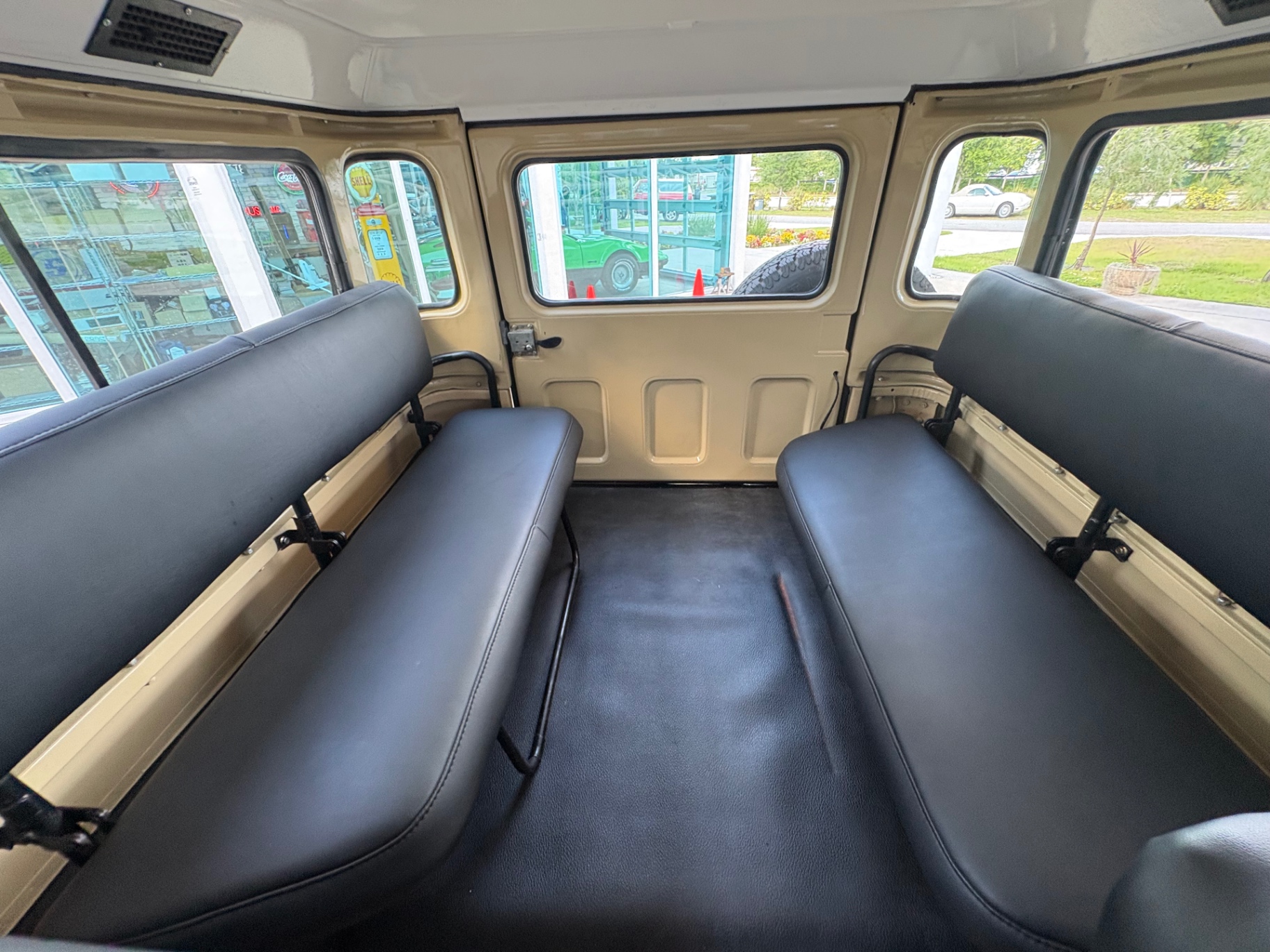
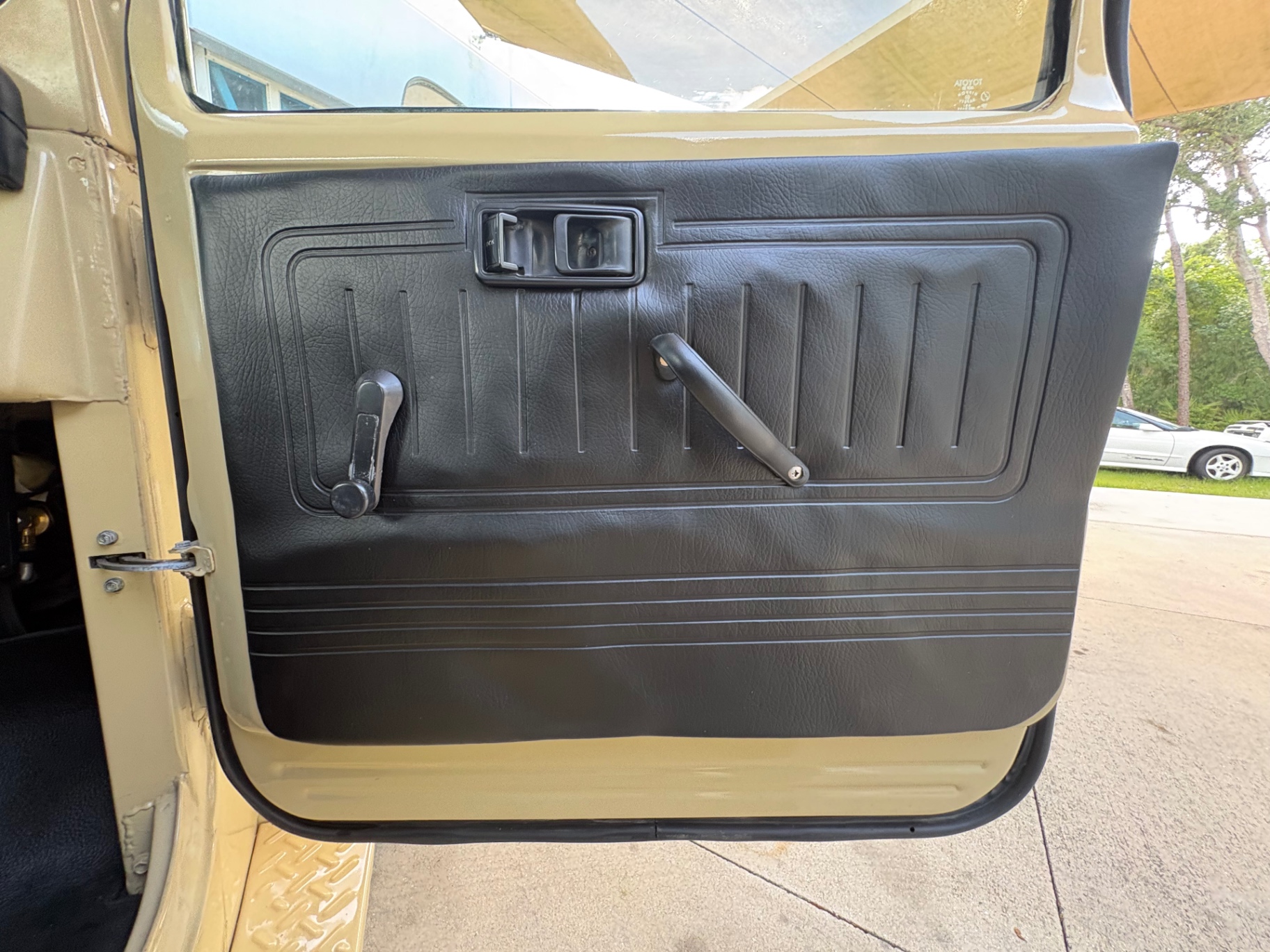
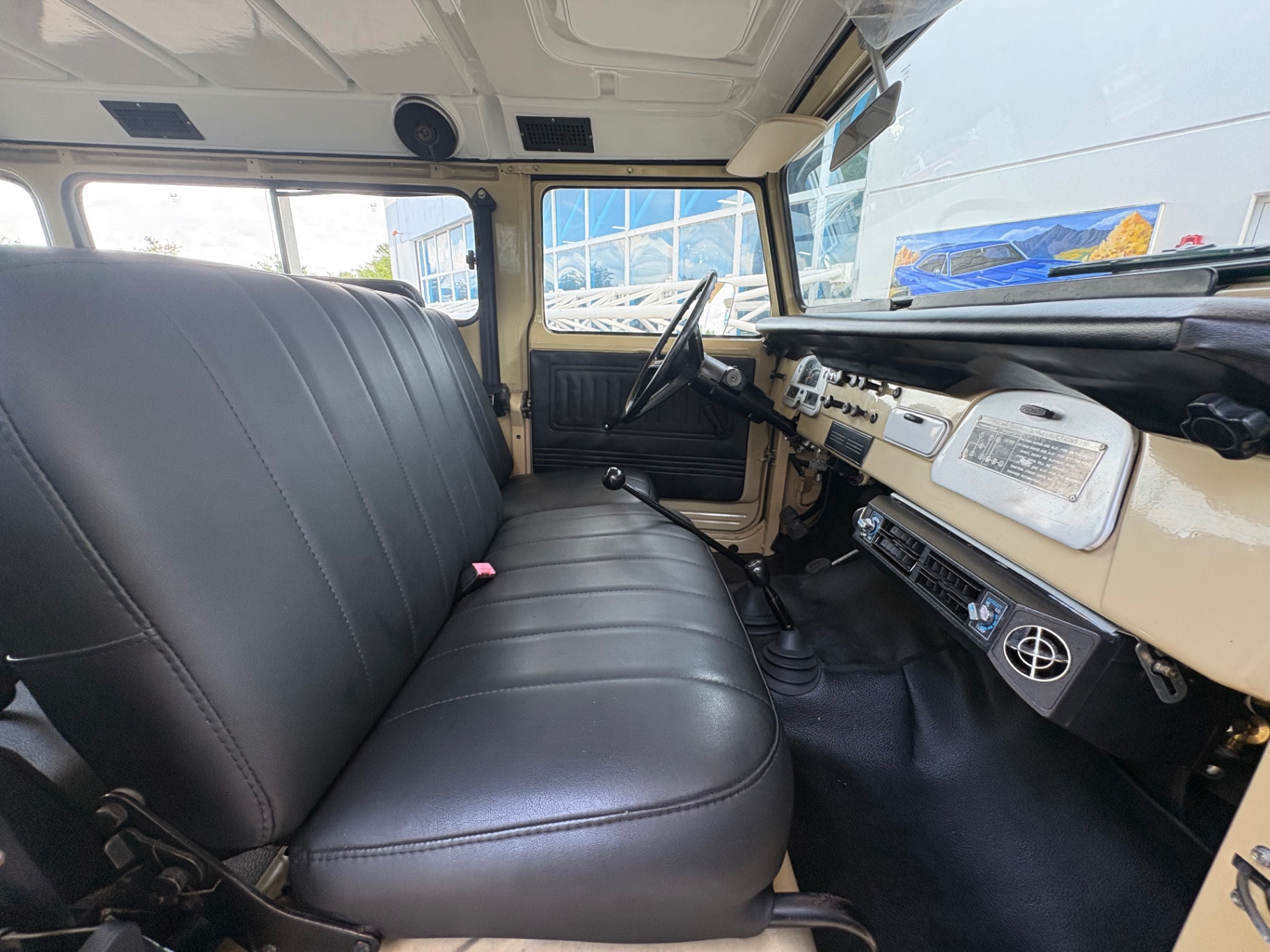
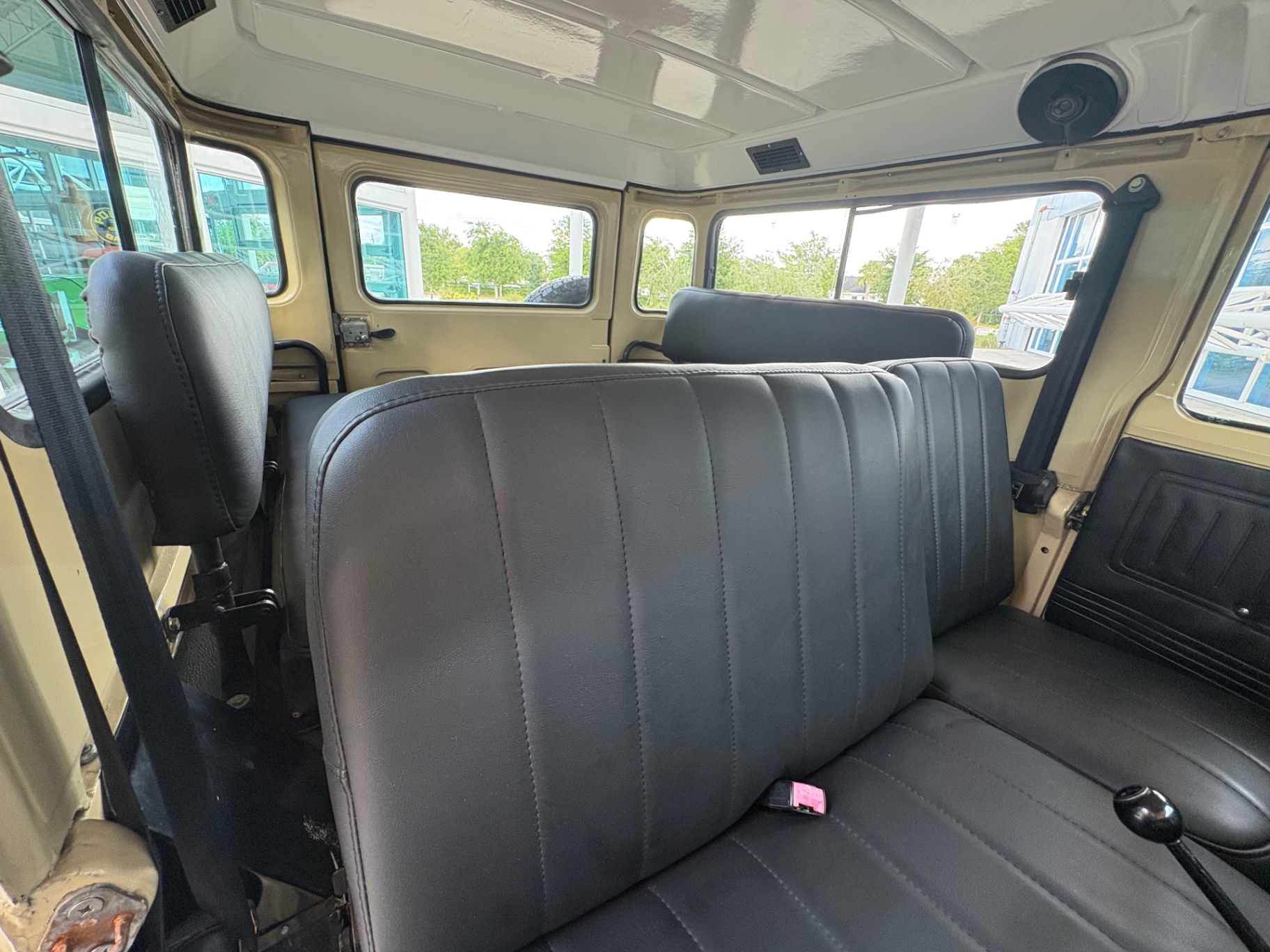
The cabin of the 1978 Toyota Land Cruiser FJ40 follows the philosophy of the truck itself: functional, durable, and without unnecessary complexity. The interior is finished in black vinyl throughout — seats, door panels, and floor covering — a material choice that makes sense for a vehicle designed to get dirty and be cleaned out. The front bench seat and rear fold-up benches are in good condition, with the stitching and surface of the vinyl showing well in the photos.
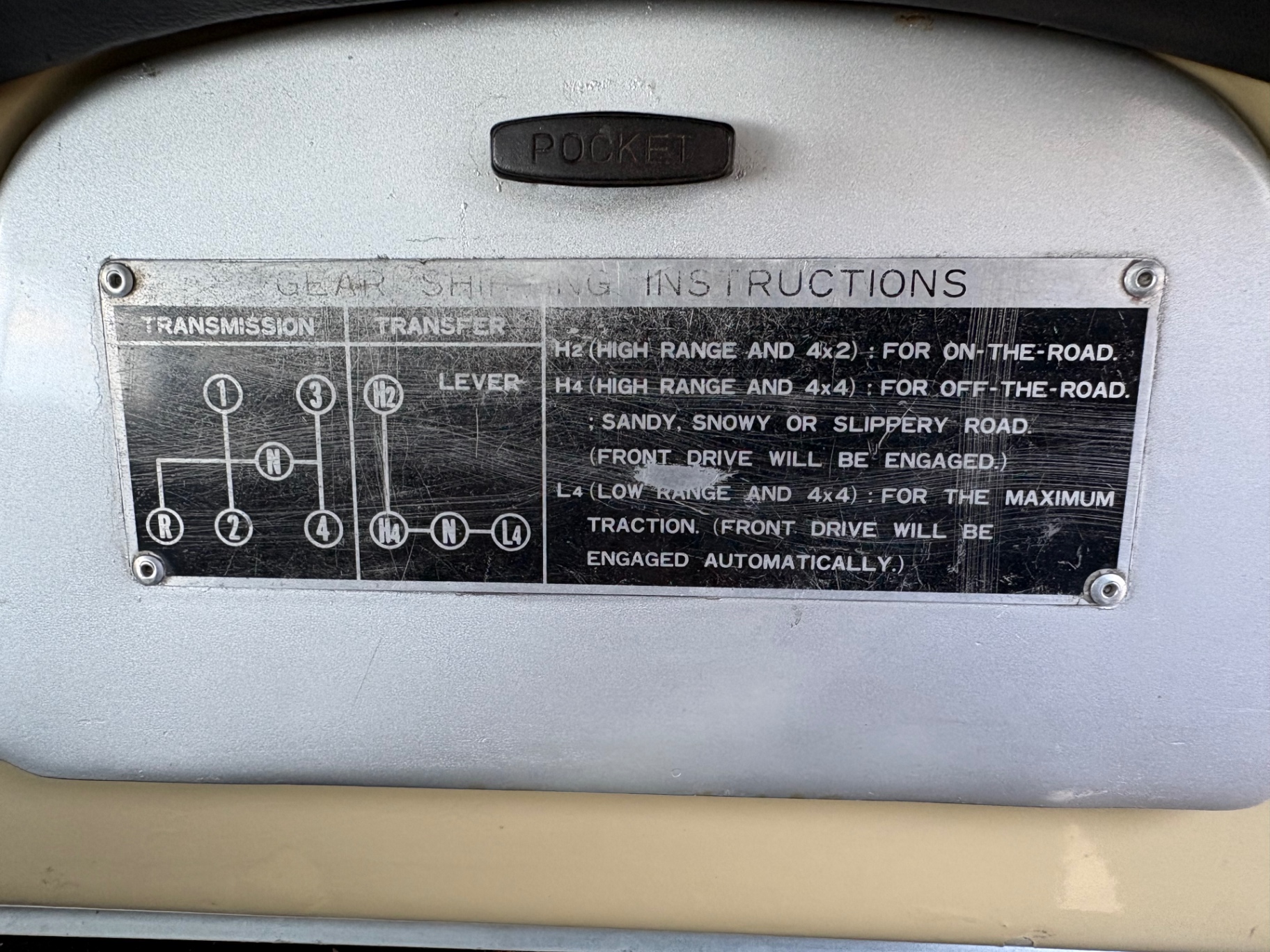
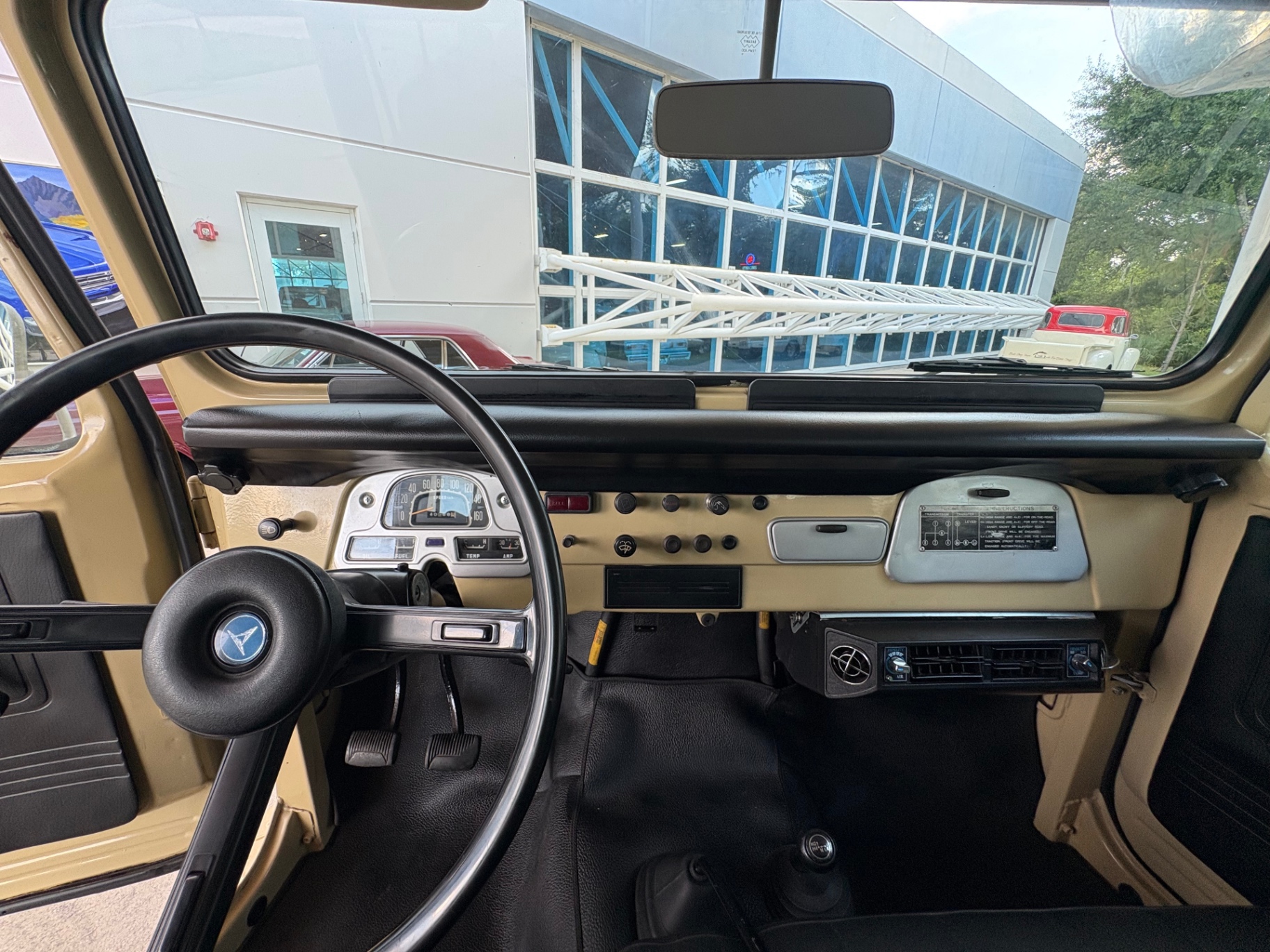
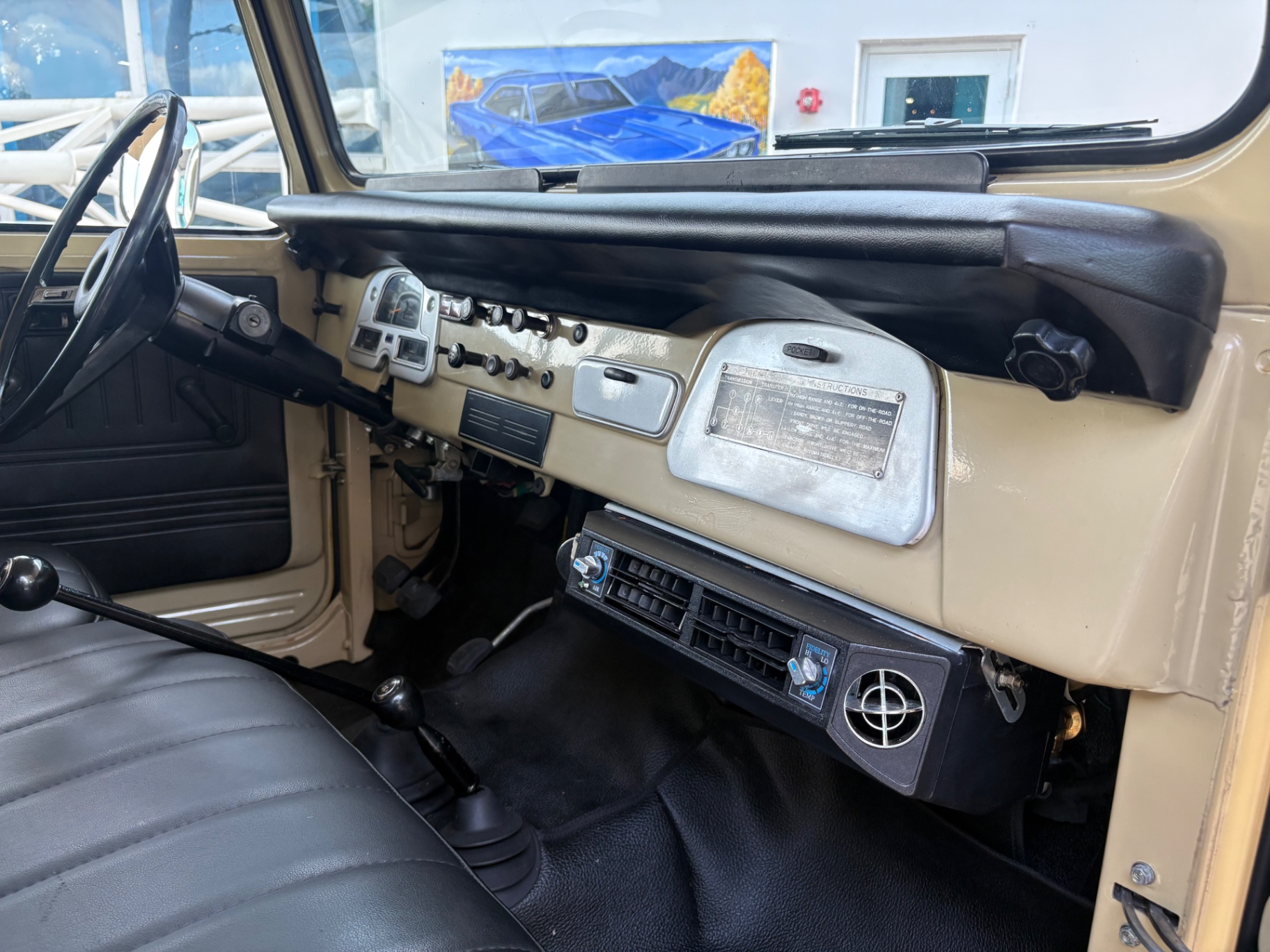
Two floor-mounted shifters dominate the center of the cabin floor: the primary gear lever for the 5-speed transmission and the transfer case lever for selecting between 2-High, 4-High, and 4-Low. There is also a metal transfer case instruction placard mounted on the dashboard, which is a detail that Land Cruiser collectors appreciate seeing in place on original or restored examples. The instrument cluster is the correct factory unit for this generation, with gauges for oil pressure, fuel level, water temperature, and amperage arranged below a large speedometer — basic readouts that tell you everything you actually need to know.
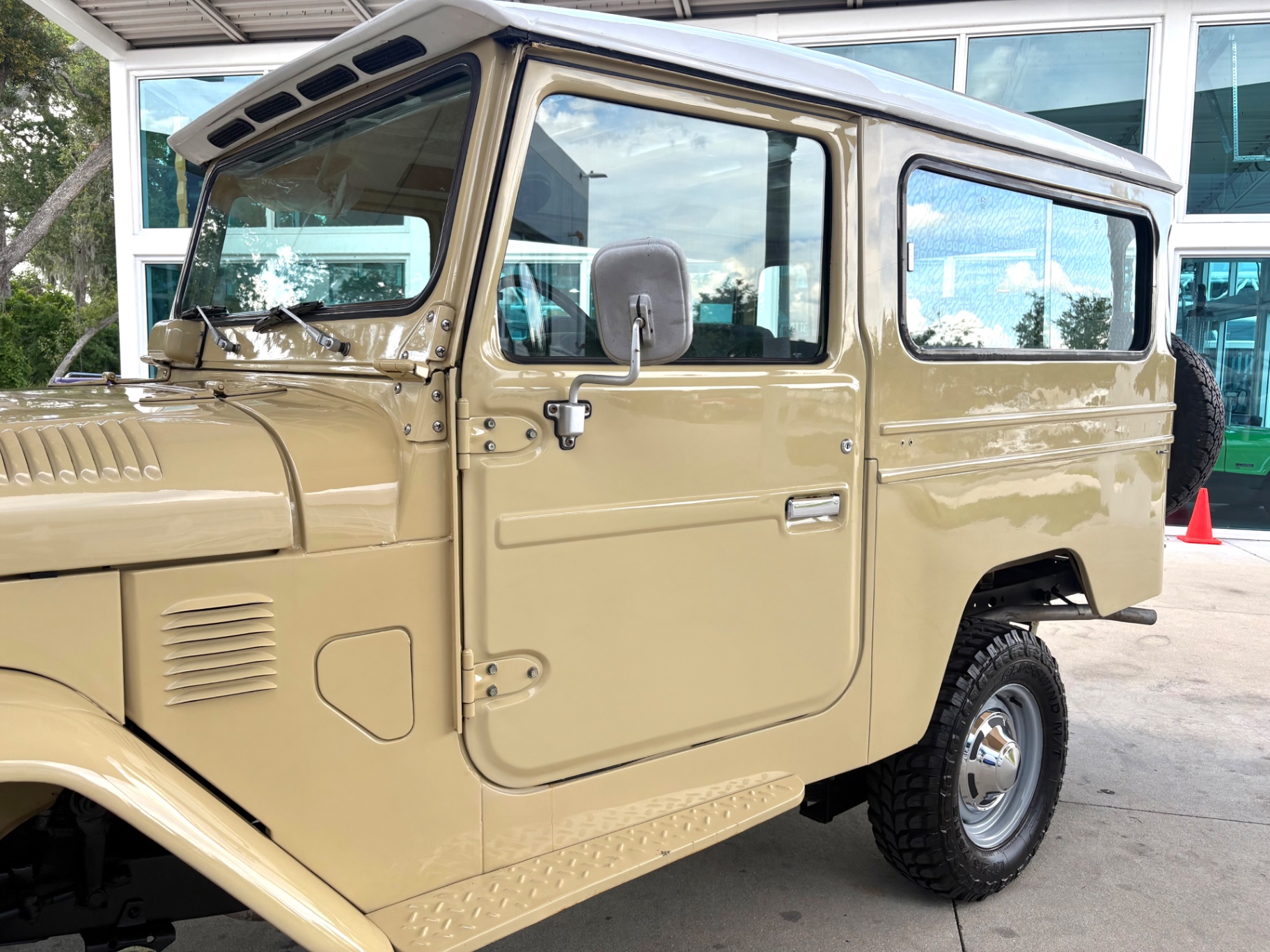
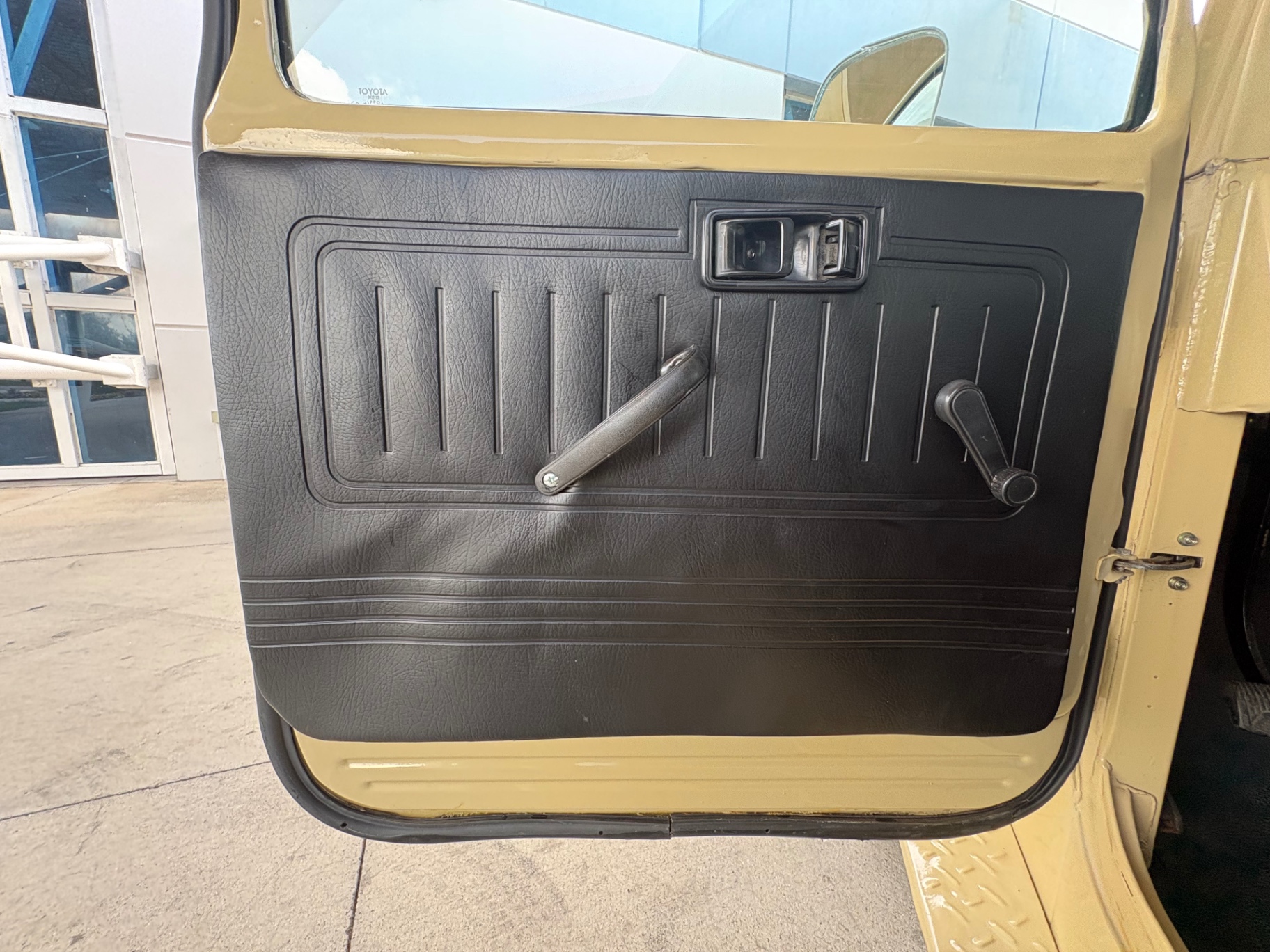
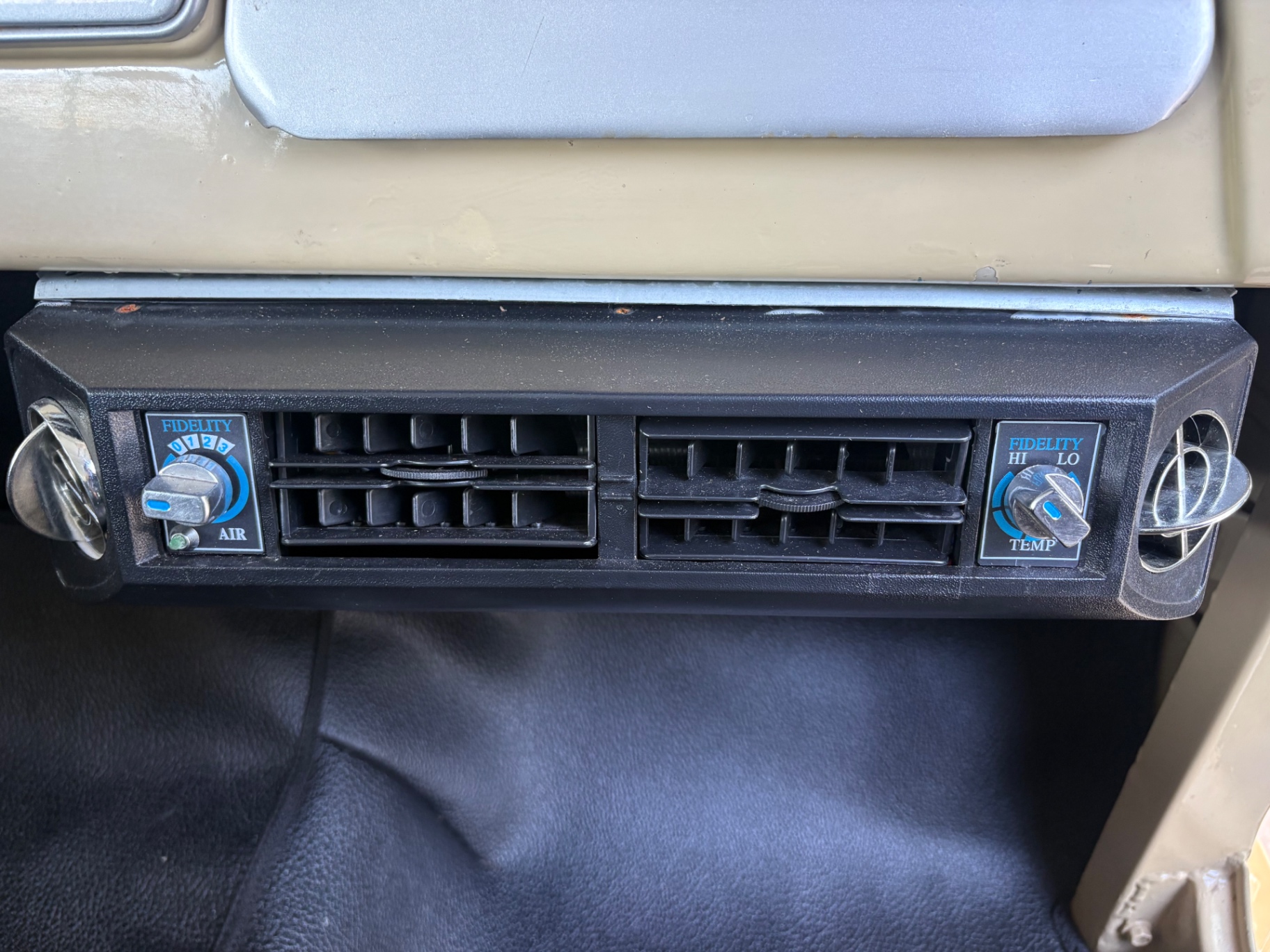
Air conditioning is fitted and visible in the photos, with a period-correct underdash evaporator unit. The controls appear intact and functional. Manual windows with crank regulators are present on both doors, correct for the FJ40 of this era. The dashboard retains its factory layout, and the overall presentation of the interior is tidy and honest — not over-restored or dressed up with materials that don't belong.
Exterior
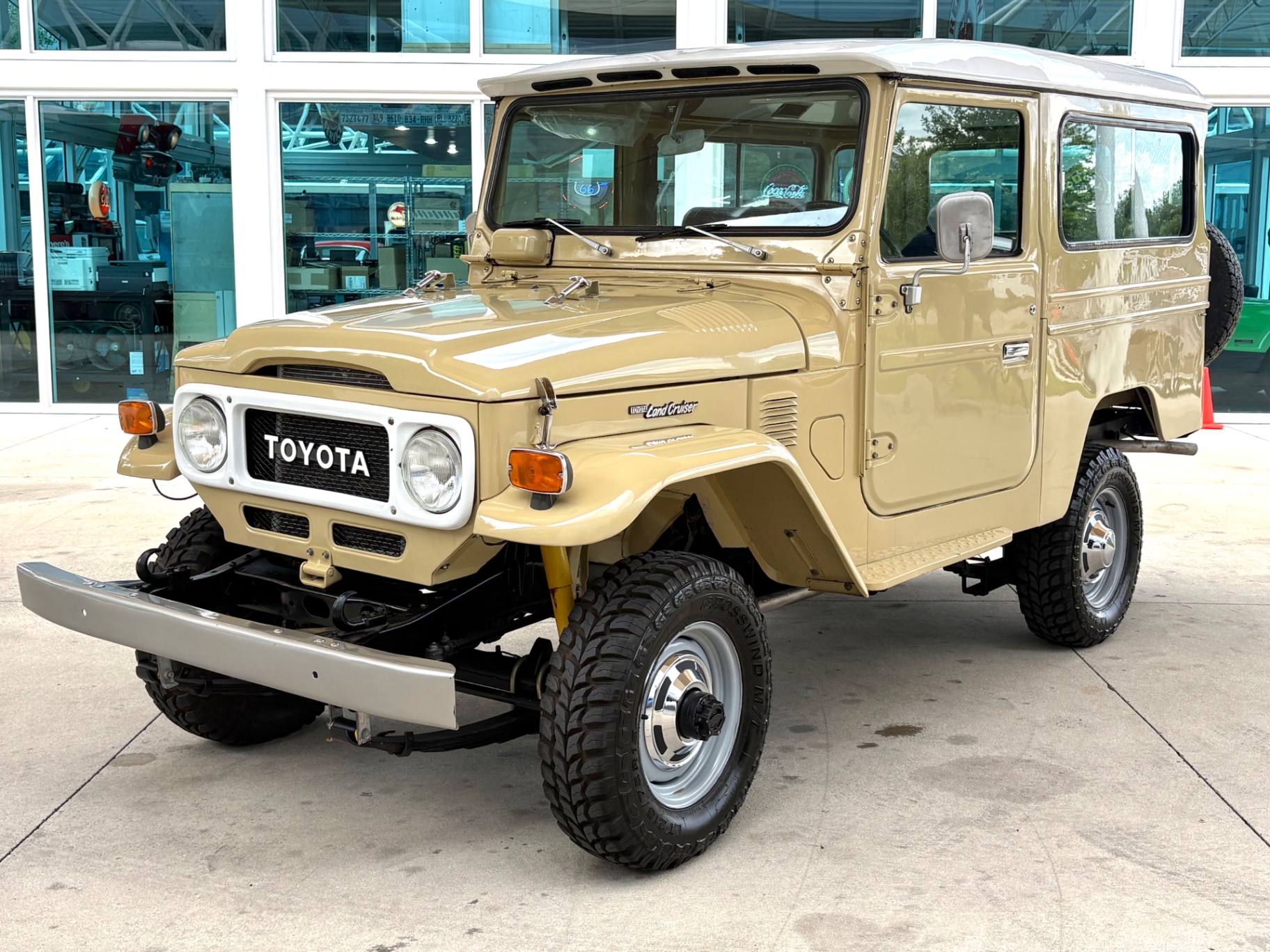
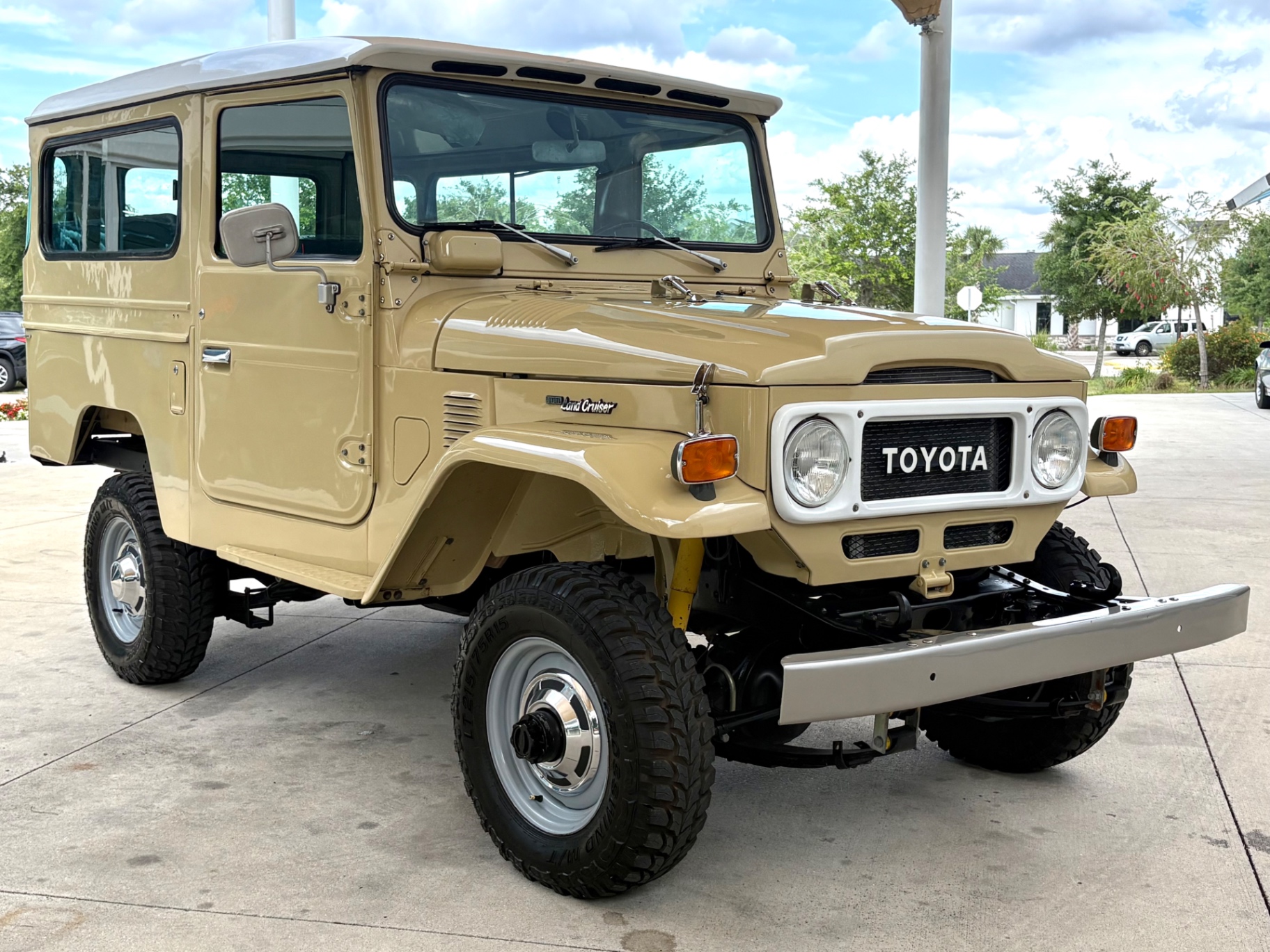
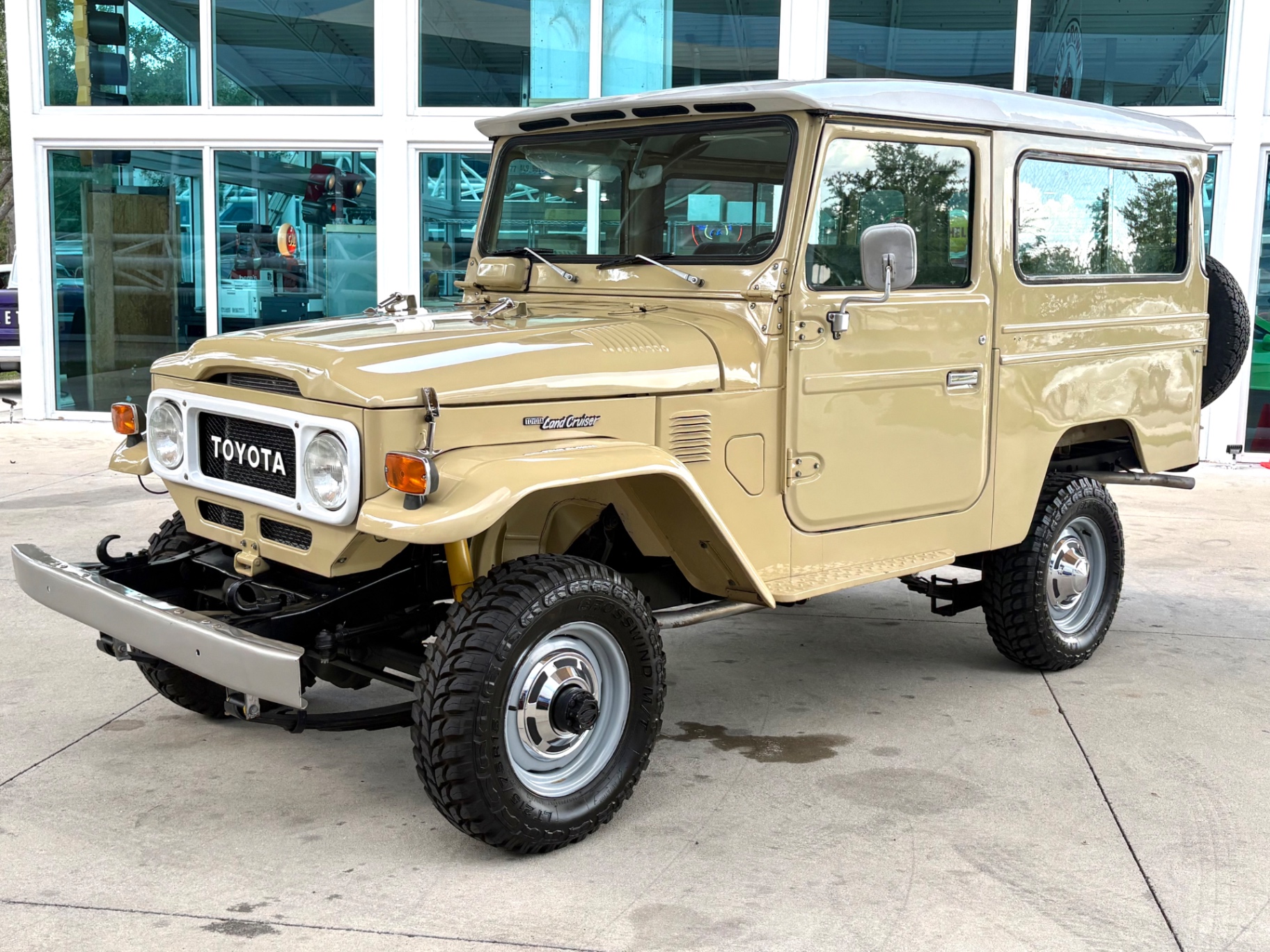
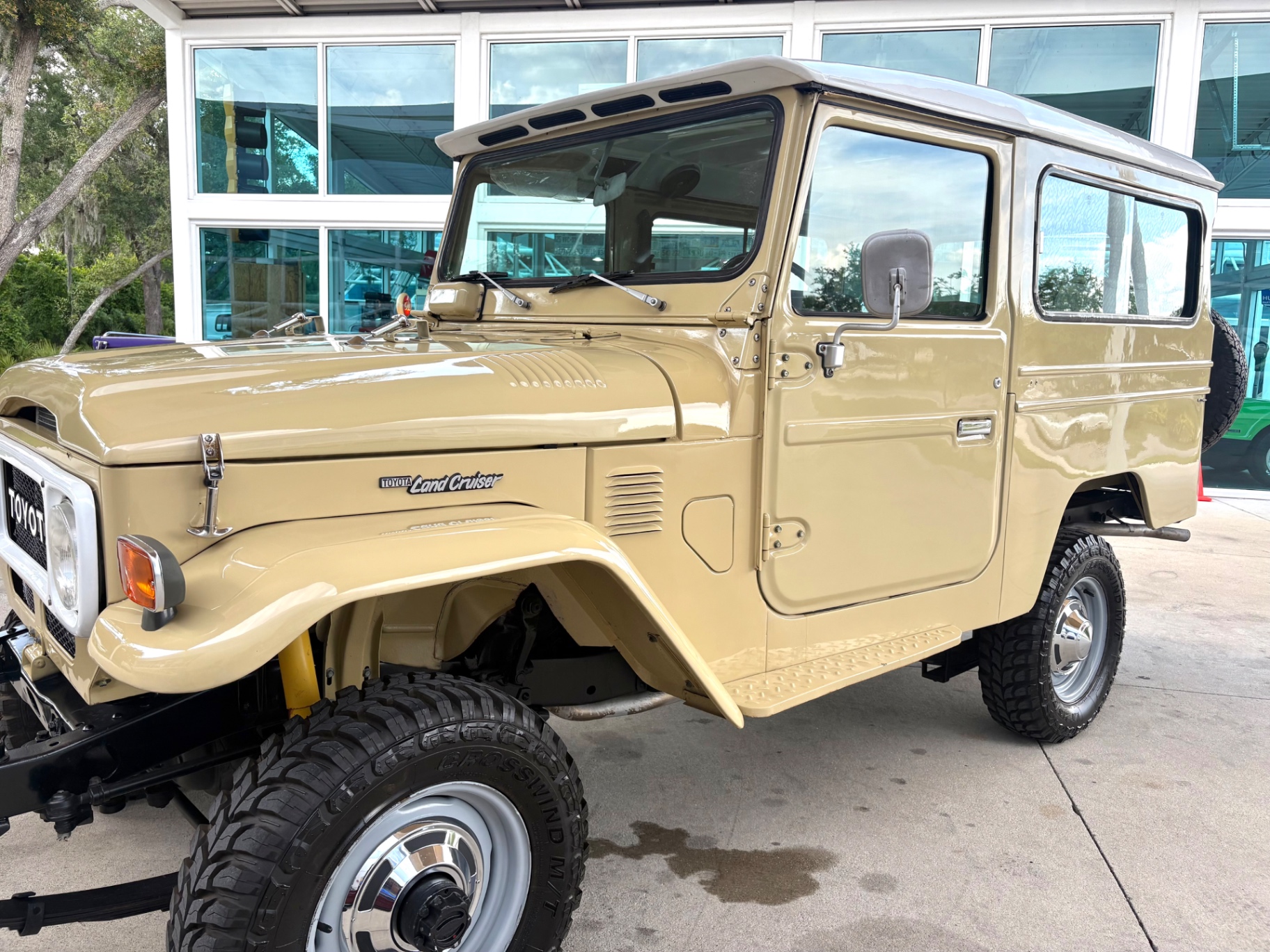
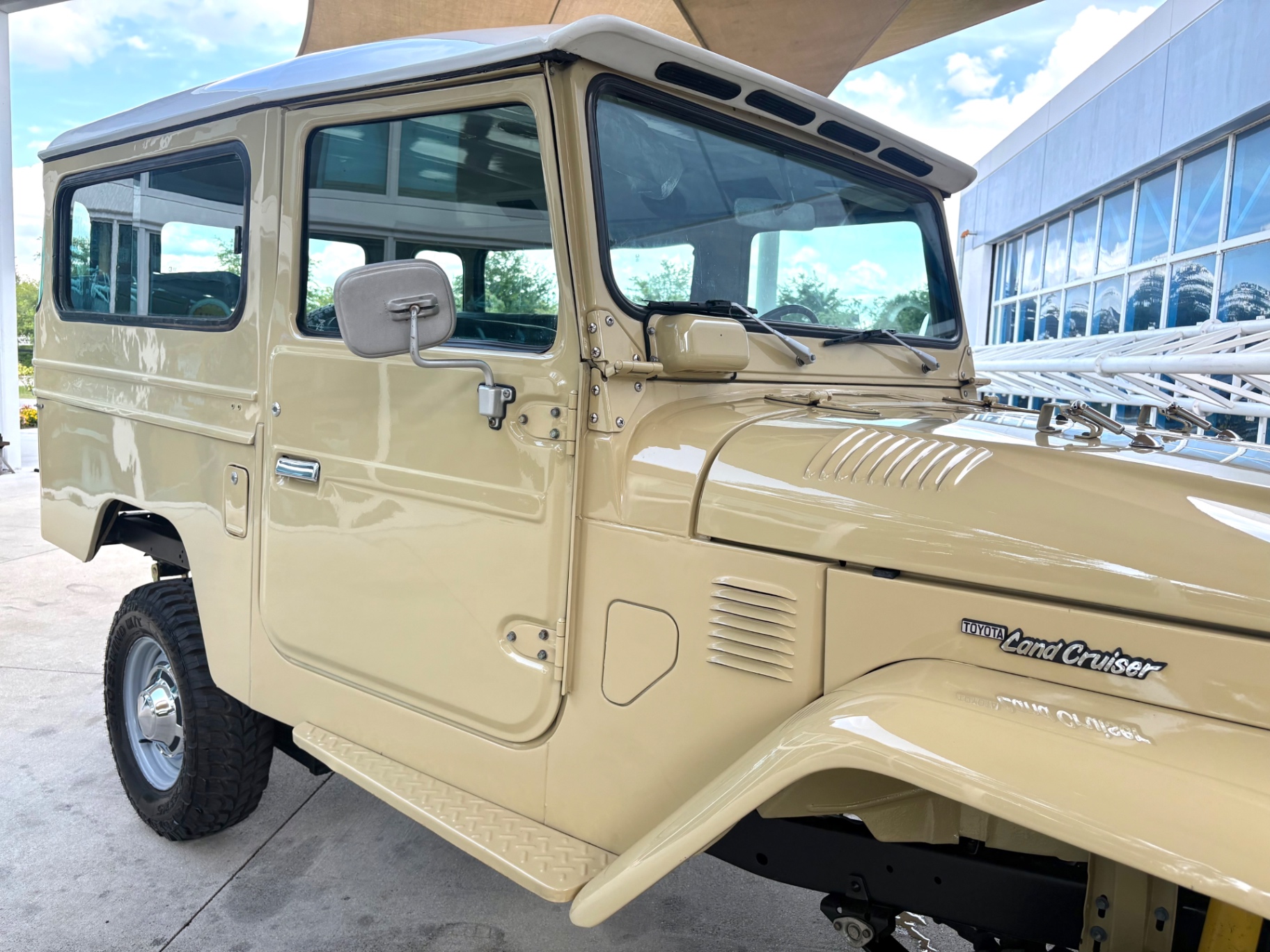
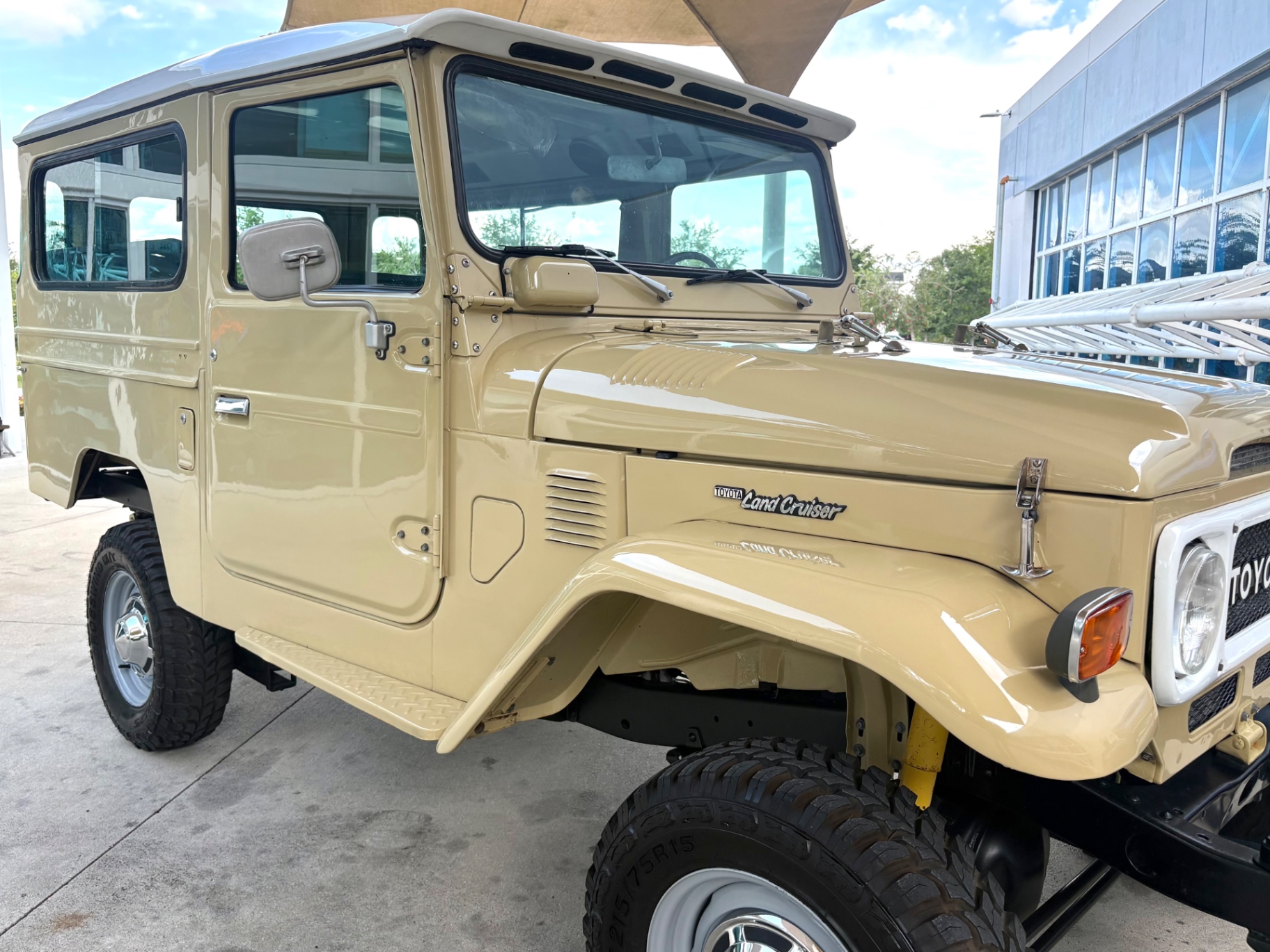
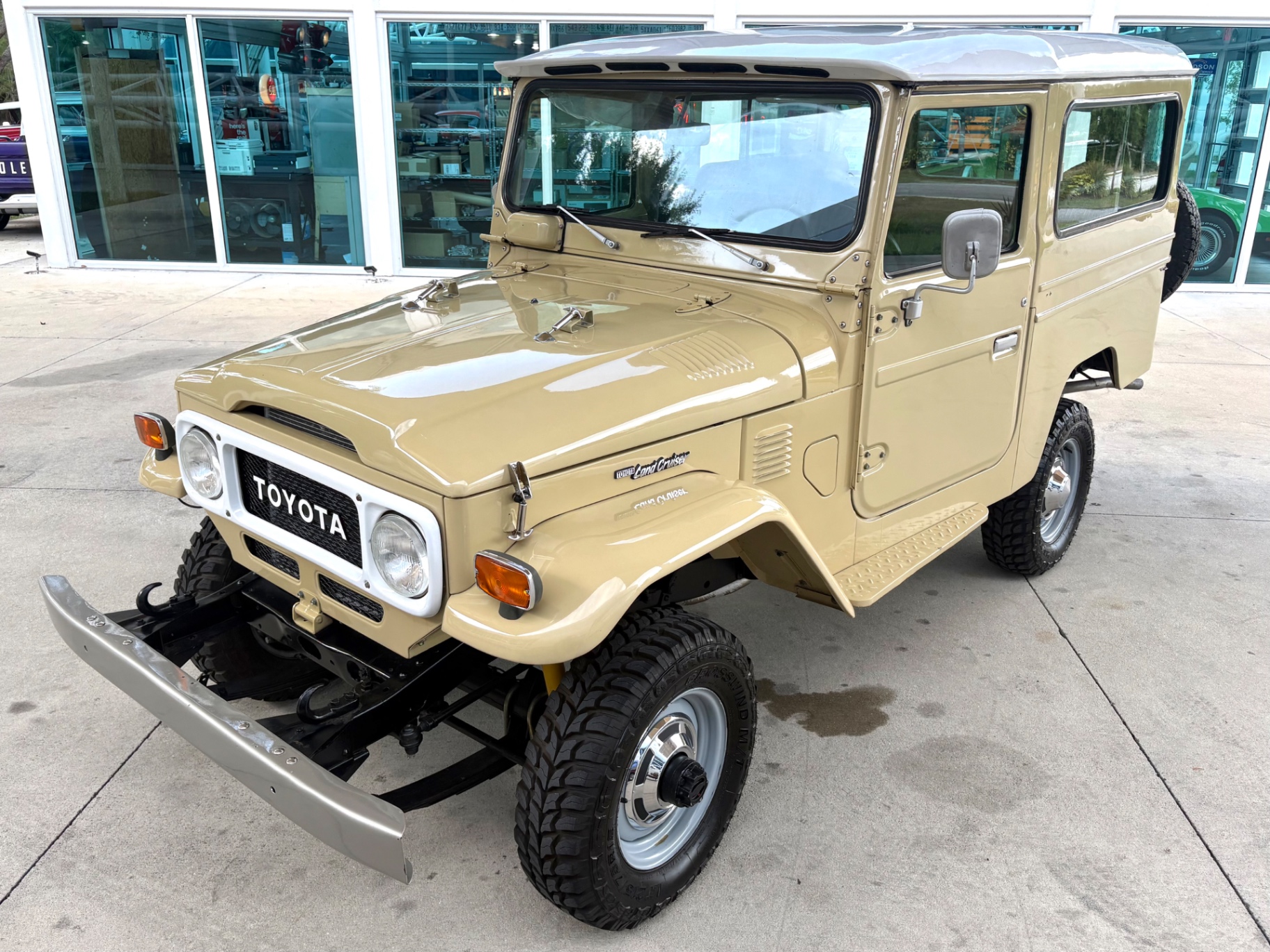
The 1978 Toyota Land Cruiser FJ40 wears a cream exterior finish that suits the truck's proportions well. The boxy, upright body lines of the FJ40 — unchanged in their essential form from the early 1960s through the end of production in 1984 — work particularly well in lighter colors that allow the panel details and hardware to read clearly. The body restoration is evident in the paint consistency and panel fit visible throughout the exterior photos. The white hardtop contrasts cleanly with the cream lower body, which is the correct two-tone configuration for this body style.
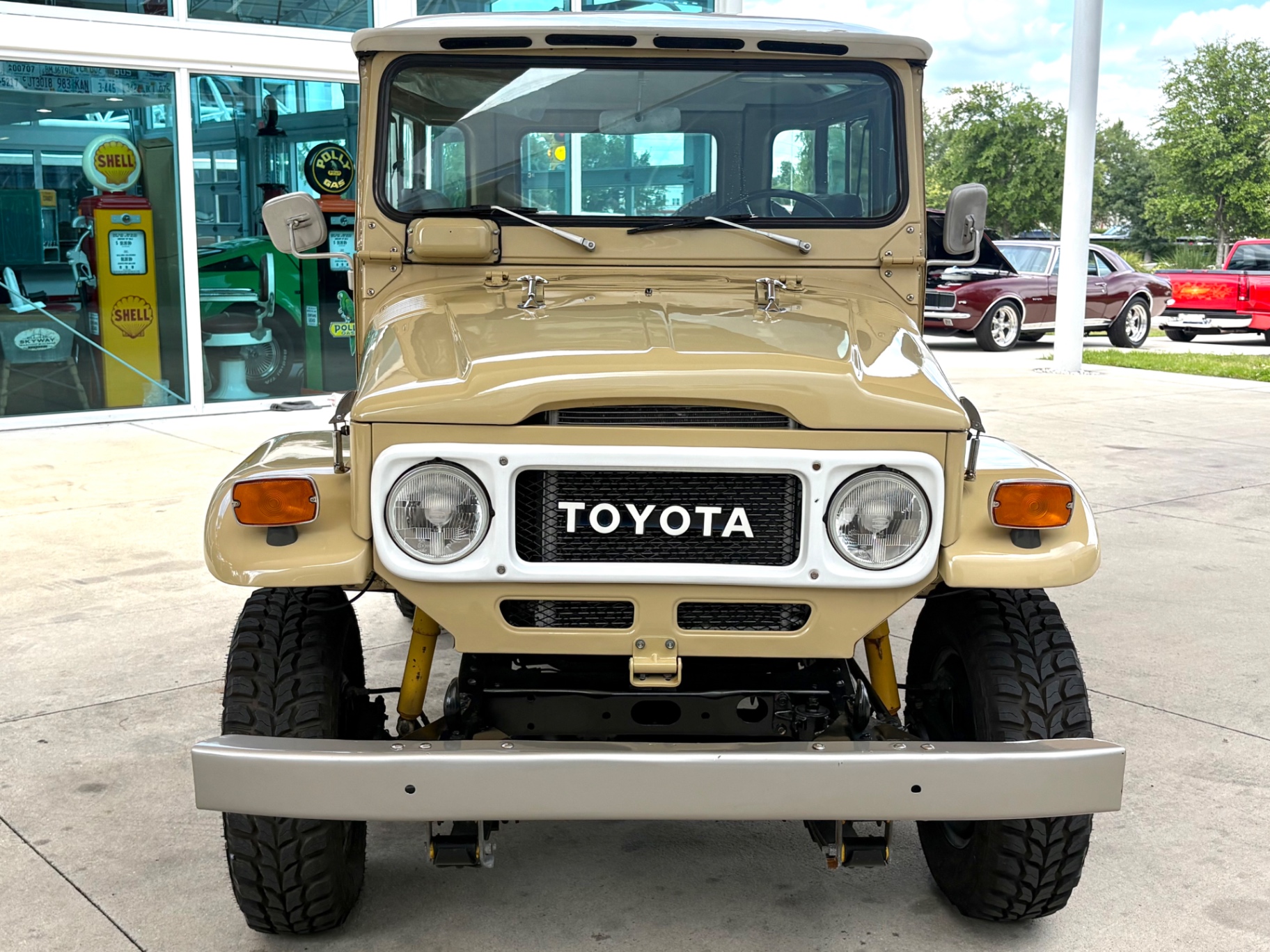
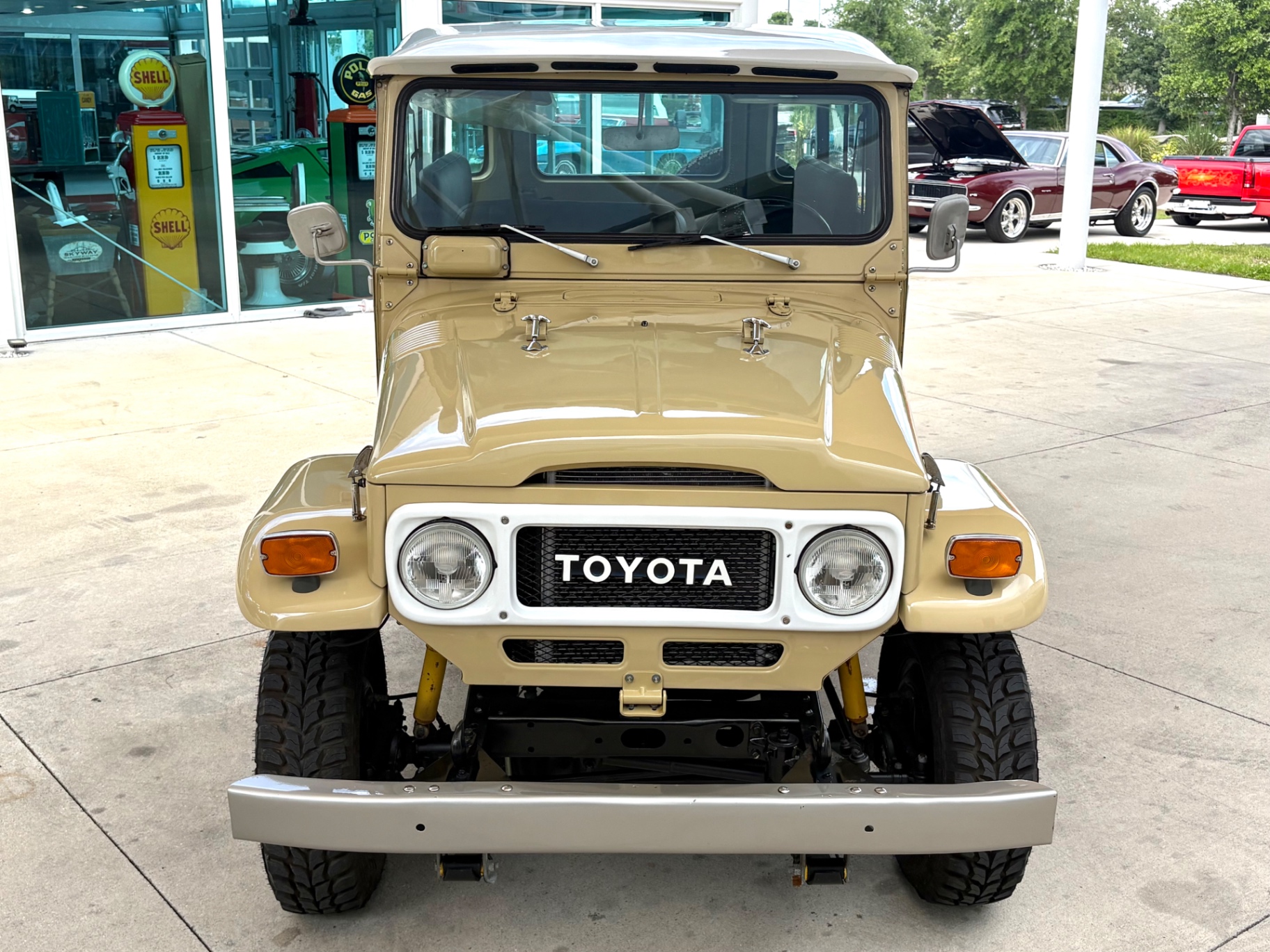
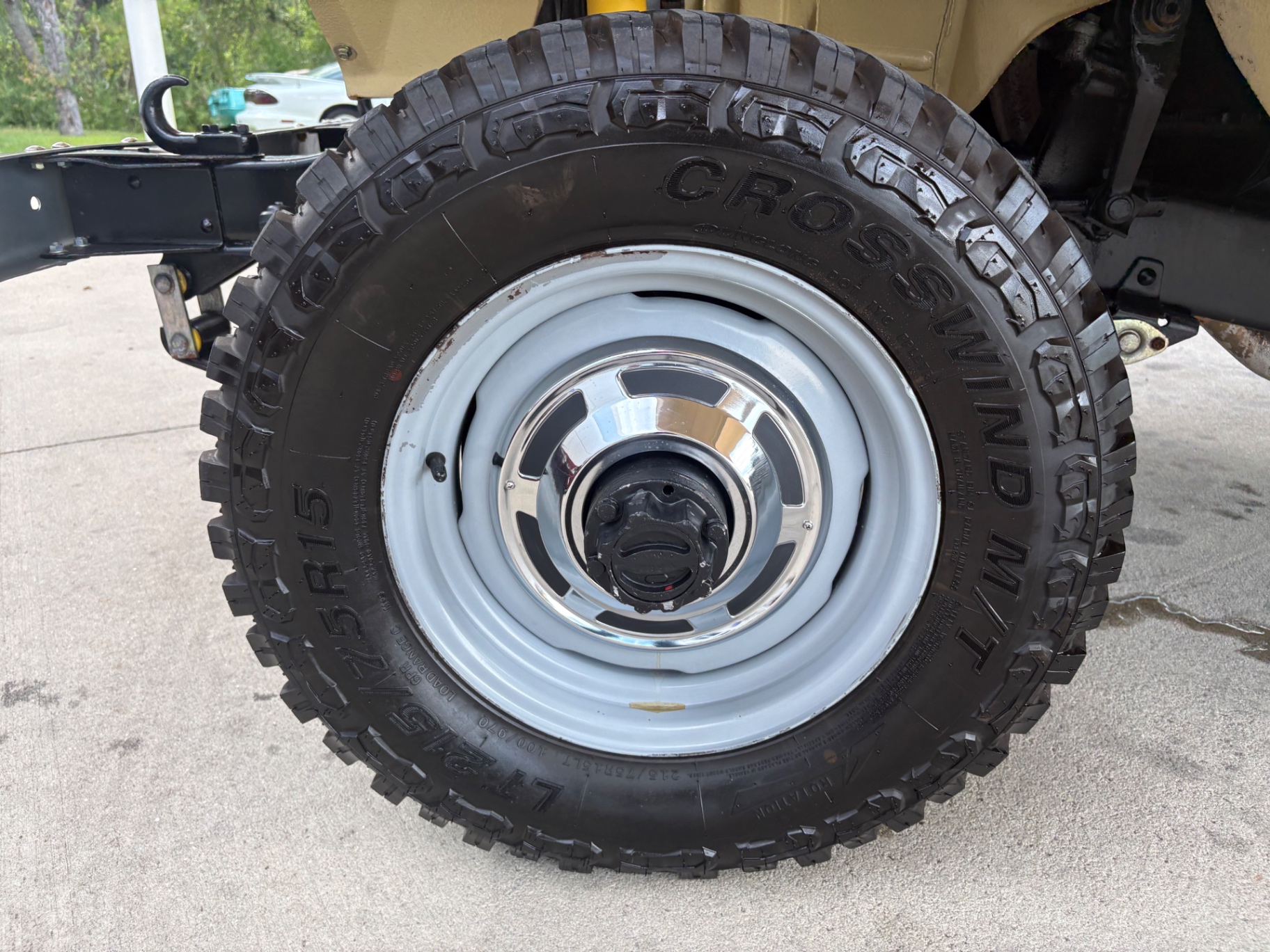
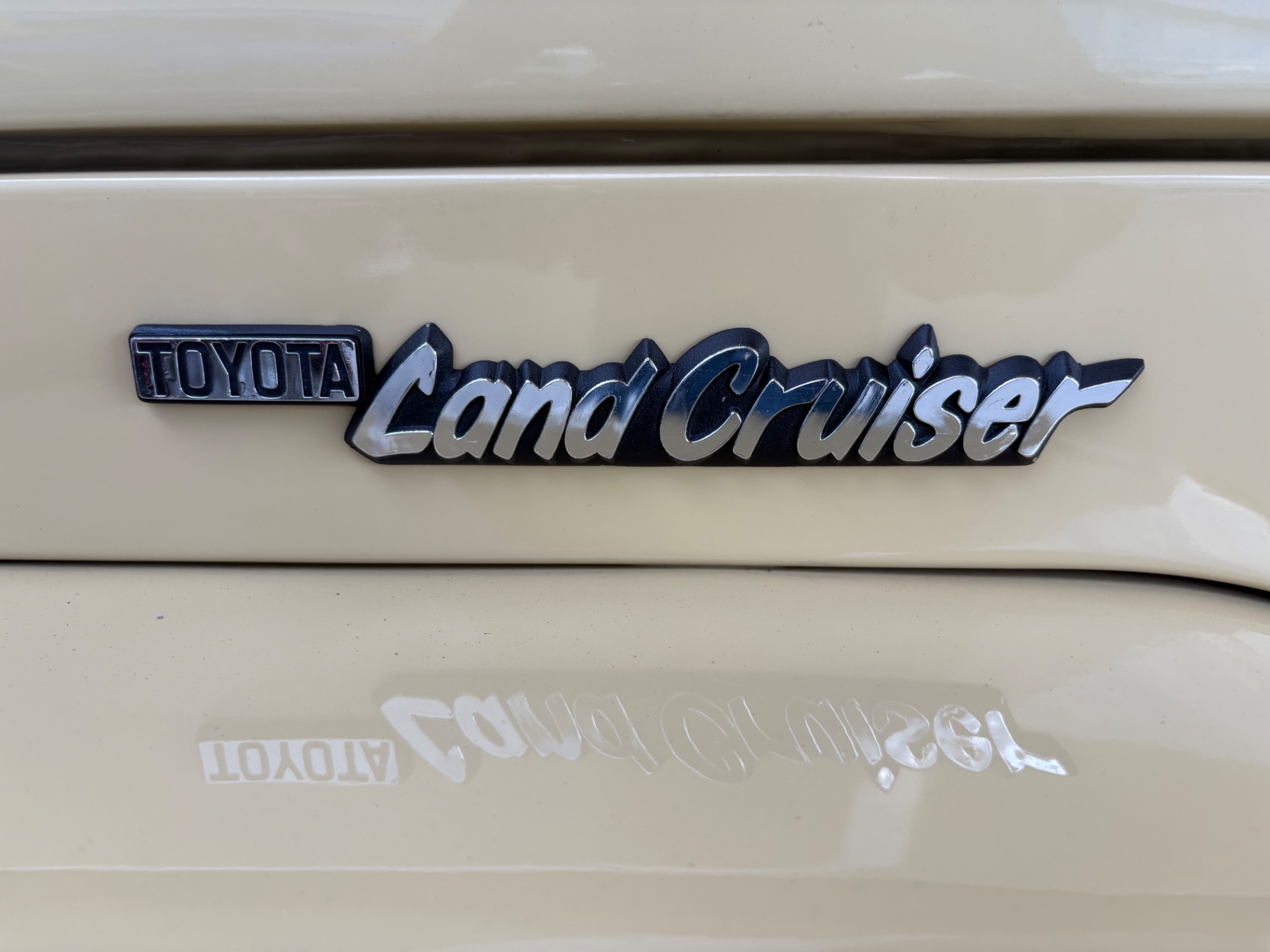
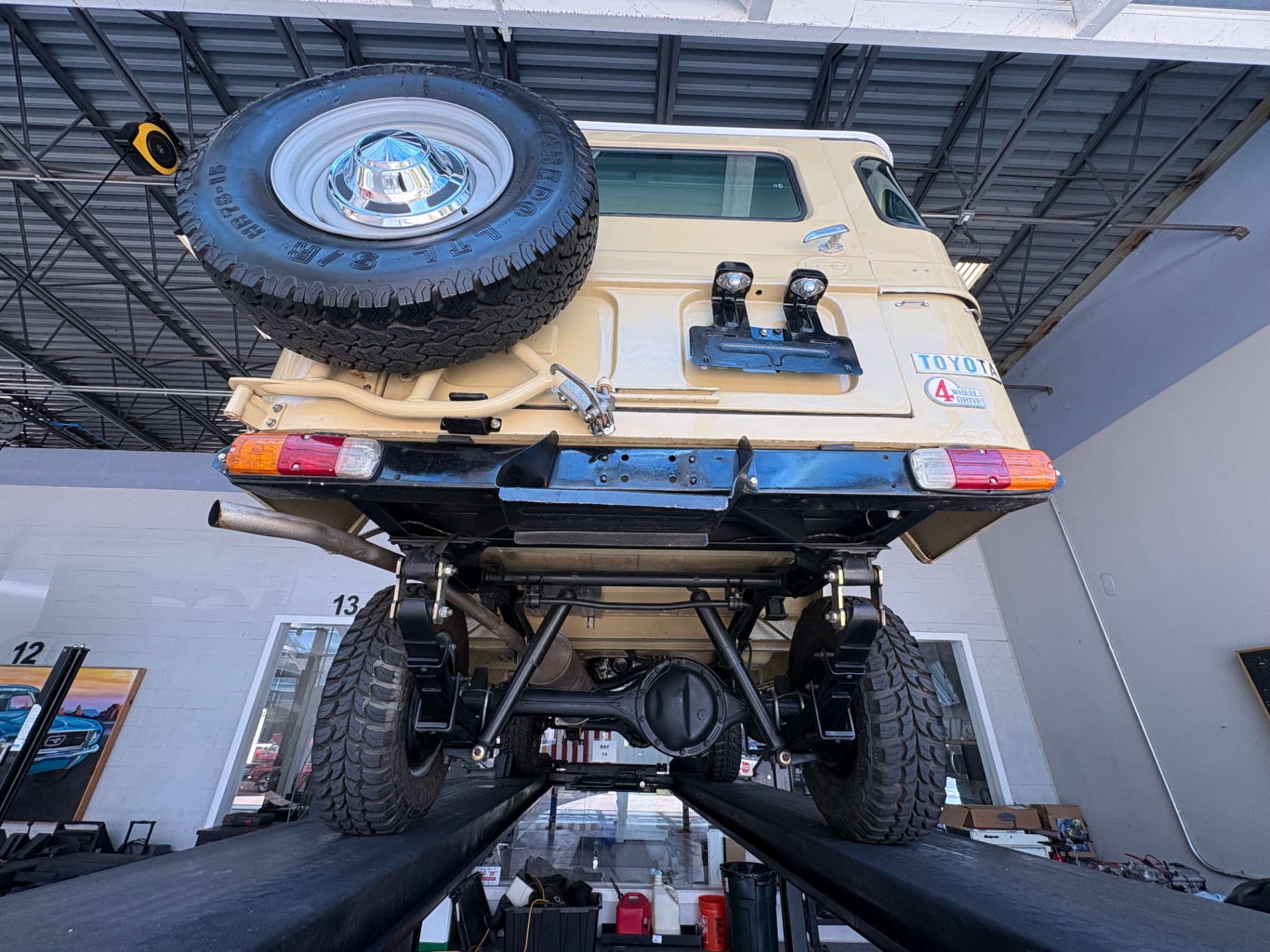
The front end carries the period Toyota grille with the block-letter TOYOTA nameplate, round headlights with amber corner markers, and a flat front bumper — all correct for the 1978 model year. Chrome hub caps are fitted to all four corners, and the all-terrain tires are mounted on steel wheels sized appropriately for the FJ40's wheel wells. A full-size spare tire is mounted on the rear door in the factory location, with a chrome hub cap in place matching the road wheels. The rear of the truck shows the factory tail lamp clusters and the Toyota 4-Wheel Drive badge on the tailgate — details that collectors look for on an FJ40 restoration.
The undercarriage is where this truck's restoration story is clearest. The frame rails, crossmembers, axle housings, and suspension components have all been cleaned, coated, and painted in satin black. There is no surface rust visible on the structural components, no evidence of repair patches or welded-in sections, and the overall integrity of the frame appears solid throughout all of the undercarriage photos. For a vehicle of this age, that level of undercarriage condition represents a substantial investment of time and money, and it is the foundation that determines long-term value and reliability.
Conclusion
The 1978 Toyota Land Cruiser FJ40 was discontinued in North America after the 1983 model year, replaced by the larger and more refined FJ60. In the decades since, the FJ40 has appreciated steadily as collectors and off-road enthusiasts recognized what the market was losing: a simple, over-engineered, body-on-frame 4x4 that could be maintained with basic tools and that had a documented track record of outlasting everything around it. Clean, restored FJ40s with solid drivetrains, honest interiors, and documented undercarriage work have become genuinely difficult to find at any price point.
This specific 1978 Toyota Land Cruiser FJ40 — with its 2F inline-six, 5-speed overdrive transmission, restored body, and fully restored undercarriage — represents the right combination of mechanical fundamentals and restoration quality that serious FJ40 buyers are looking for. It is a truck you can drive, show, or continue to build on a foundation that has already been properly addressed.
To schedule a time to see this 1978 Toyota Land Cruiser FJ40 in person, call Skyway Classics in Sarasota, Florida at 941-254-6608.
Disclaimer
Information found on the website is presented as given to us by the owner of the car, whether on consignment or from the owner we bought it from. Some Photos, materials for videos, descriptions and other information are provided by the consignor/seller and is deemed reliable, but Skyway Classics does not warranty or guarantee this information. Skyway Classics is not responsible for information that may incorrect or a publishing error. The decision to purchase should be based solely on the buyers personal inspection of the vehicle or by a professional inspection service prior to offer or purchase being made.
1978 Toyota Land Cruiser FJ40 — Restored Body, Undercarriage, and 2F Engine with 5-Speed Overdrive
Why This Car Is Special
The 1978 Toyota Land Cruiser FJ40 occupies a specific place in four-wheel-drive history that no other vehicle quite matches. While American buyers were gravitating toward increasingly comfortable and road-focused SUVs through the late 1970s, the FJ40 remained exactly what it had always been: a purpose-built, body-on-frame off-road vehicle engineered to go places other trucks couldn't follow. Toyota had been refining the Land Cruiser formula since the early 1950s, and by 1978 the FJ40 had proven itself on every continent, in the hands of military operators, ranchers, missionaries, and expedition teams who needed something that simply would not quit.
The FJ prefix in this truck's designation tells you the most important thing about it: it carries the F-series gasoline engine, specifically the 2F inline-six. The 40 designates the short-wheelbase hardtop body style, the configuration most associated with the Land Cruiser name in North America. By the late 1970s, emissions regulations had forced many automakers to strangle their engines with compromises that hurt performance and reliability. Toyota responded differently with the 2F — they refined and enlarged the original F engine, producing a unit that Land Cruiser enthusiasts still regard as one of the most durable truck engines ever built.
What separates this particular 1978 Toyota Land Cruiser FJ40 from a typical survivor is the extent of the restoration work. The body has been restored, the undercarriage has been fully restored, and the engine bay is clean and tight. This is not a driver that was cleaned up for photos. The undercarriage shots tell the real story — fresh black paint on the frame rails, axle housings, and suspension components, with no rust, no rot, and no improvised repairs. For FJ40 buyers who understand what it costs and what it takes to get a 46-year-old truck to this standard, the condition of this example is the central fact of the listing.
The speedometer reads in km/h, which is consistent with a vehicle originally built for a non-US market or a Canadian-specification unit. The odometer shows 40,568 — whether kilometers or miles, the restoration work present throughout this truck speaks for itself in terms of current condition.
Features List
- Toyota 2F 4.2-liter Inline-6 engine
- 5-Speed Manual transmission with Overdrive
- Part-time 4-Wheel Drive with high and low range
- Manual locking front hubs
- Solid front and rear axles
- Leaf spring suspension, front and rear
- Four-wheel drum brakes with power assist
- Air conditioning
- Restored body
- Fully restored undercarriage and frame
- Clean engine bay
- Floor-mounted main and transfer case shifters
- Rear bench seating (fold-up, side-facing)
- All-terrain tires
- Spare tire mounted on rear door
- Chrome hub caps
- Manual windows
Mechanical
The 2F engine is a 4.2-liter overhead-valve inline-six that Toyota introduced in the Land Cruiser for the 1975 model year as a replacement for the original F engine. It displaces 4,230cc and produces torque in a broad, usable band that suits low-speed off-road work exceptionally well. The 2F is a cast-iron unit — both block and head — and it is known for tolerating high mileage and neglect better than most engines of its era, provided it receives adequate cooling system attention. This example's engine bay is notably clean, with properly routed hoses and well-maintained components visible throughout the multiple engine bay photos.
The transmission fitted to this truck is a 5-speed manual with overdrive, which is a significant upgrade over the 4-speed unit that came standard on the FJ40. The fifth gear overdrive brings highway cruising rpm down considerably, making the 1978 Toyota Land Cruiser FJ40 genuinely more livable on modern roads than a stock 4-speed example while preserving the mechanical simplicity that FJ40 owners value. The transfer case provides high and low range, and the manual locking front hubs allow the front axle to be disconnected entirely when four-wheel drive is not needed — the correct way to do it on a truck of this type, and better for front axle longevity than automatic systems.
The suspension setup is the factory configuration: leaf springs front and rear with solid axles at both ends. This layout gives the FJ40 its characteristic articulation on rough terrain and makes the suspension geometry predictable and easy to work on. The restored undercarriage shows both front and rear leaf spring packs in sound condition, with the solid axle housings painted and clean. Four-wheel drum brakes with power assist handle stopping duties. Drum brakes require more attention to adjustment and fade management than disc setups, but they are entirely serviceable for the type of use an FJ40 is built for, and replacement parts remain widely available.
Interior
The cabin of the 1978 Toyota Land Cruiser FJ40 follows the philosophy of the truck itself: functional, durable, and without unnecessary complexity. The interior is finished in black vinyl throughout — seats, door panels, and floor covering — a material choice that makes sense for a vehicle designed to get dirty and be cleaned out. The front bench seat and rear fold-up benches are in good condition, with the stitching and surface of the vinyl showing well in the photos.
Two floor-mounted shifters dominate the center of the cabin floor: the primary gear lever for the 5-speed transmission and the transfer case lever for selecting between 2-High, 4-High, and 4-Low. There is also a metal transfer case instruction placard mounted on the dashboard, which is a detail that Land Cruiser collectors appreciate seeing in place on original or restored examples. The instrument cluster is the correct factory unit for this generation, with gauges for oil pressure, fuel level, water temperature, and amperage arranged below a large speedometer — basic readouts that tell you everything you actually need to know.
Air conditioning is fitted and visible in the photos, with a period-correct underdash evaporator unit. The controls appear intact and functional. Manual windows with crank regulators are present on both doors, correct for the FJ40 of this era. The dashboard retains its factory layout, and the overall presentation of the interior is tidy and honest — not over-restored or dressed up with materials that don't belong.
Exterior
The 1978 Toyota Land Cruiser FJ40 wears a cream exterior finish that suits the truck's proportions well. The boxy, upright body lines of the FJ40 — unchanged in their essential form from the early 1960s through the end of production in 1984 — work particularly well in lighter colors that allow the panel details and hardware to read clearly. The body restoration is evident in the paint consistency and panel fit visible throughout the exterior photos. The white hardtop contrasts cleanly with the cream lower body, which is the correct two-tone configuration for this body style.
The front end carries the period Toyota grille with the block-letter TOYOTA nameplate, round headlights with amber corner markers, and a flat front bumper — all correct for the 1978 model year. Chrome hub caps are fitted to all four corners, and the all-terrain tires are mounted on steel wheels sized appropriately for the FJ40's wheel wells. A full-size spare tire is mounted on the rear door in the factory location, with a chrome hub cap in place matching the road wheels. The rear of the truck shows the factory tail lamp clusters and the Toyota 4-Wheel Drive badge on the tailgate — details that collectors look for on an FJ40 restoration.
The undercarriage is where this truck's restoration story is clearest. The frame rails, crossmembers, axle housings, and suspension components have all been cleaned, coated, and painted in satin black. There is no surface rust visible on the structural components, no evidence of repair patches or welded-in sections, and the overall integrity of the frame appears solid throughout all of the undercarriage photos. For a vehicle of this age, that level of undercarriage condition represents a substantial investment of time and money, and it is the foundation that determines long-term value and reliability.
Conclusion
The 1978 Toyota Land Cruiser FJ40 was discontinued in North America after the 1983 model year, replaced by the larger and more refined FJ60. In the decades since, the FJ40 has appreciated steadily as collectors and off-road enthusiasts recognized what the market was losing: a simple, over-engineered, body-on-frame 4x4 that could be maintained with basic tools and that had a documented track record of outlasting everything around it. Clean, restored FJ40s with solid drivetrains, honest interiors, and documented undercarriage work have become genuinely difficult to find at any price point.
This specific 1978 Toyota Land Cruiser FJ40 — with its 2F inline-six, 5-speed overdrive transmission, restored body, and fully restored undercarriage — represents the right combination of mechanical fundamentals and restoration quality that serious FJ40 buyers are looking for. It is a truck you can drive, show, or continue to build on a foundation that has already been properly addressed.
To schedule a time to see this 1978 Toyota Land Cruiser FJ40 in person, call Skyway Classics in Sarasota, Florida at 941-254-6608.
Disclaimer
Information found on the website is presented as given to us by the owner of the car, whether on consignment or from the owner we bought it from. Some Photos, materials for videos, descriptions and other information are provided by the consignor/seller and is deemed reliable, but Skyway Classics does not warranty or guarantee this information. Skyway Classics is not responsible for information that may incorrect or a publishing error. The decision to purchase should be based solely on the buyers personal inspection of the vehicle or by a professional inspection service prior to offer or purchase being made.
1978 Toyota
Land Cruiser FJ43
Why Choose Skyway Classics?
Explore our curated inventory of classic and collector cars—thoughtfully selected, ready to drive, and supported by experts who make ownership simple.
Expert Curation
Every vehicle is hand-selected by our experts for quality, authenticity, and investment potential.
Fast Transactions
Streamlined buying and selling process with quick financing and immediate delivery options.
Only National Dealer With Classic Service & Repair
We’re the only national dealership that services and repairs the classics we sell—before and after the sale.
Nationwide Network
Access to our extensive network of collectors, restorers, and classic car enthusiasts nationwide.
Concierge Ownership Support
From financing and insurance to paperwork, shipping, and titling—we handle the details so you can enjoy the drive.
Passion-Driven Service
We're classic car enthusiasts first, providing personalized service with genuine passion for the hobby.