
1971 Chevrolet
Camaro SS
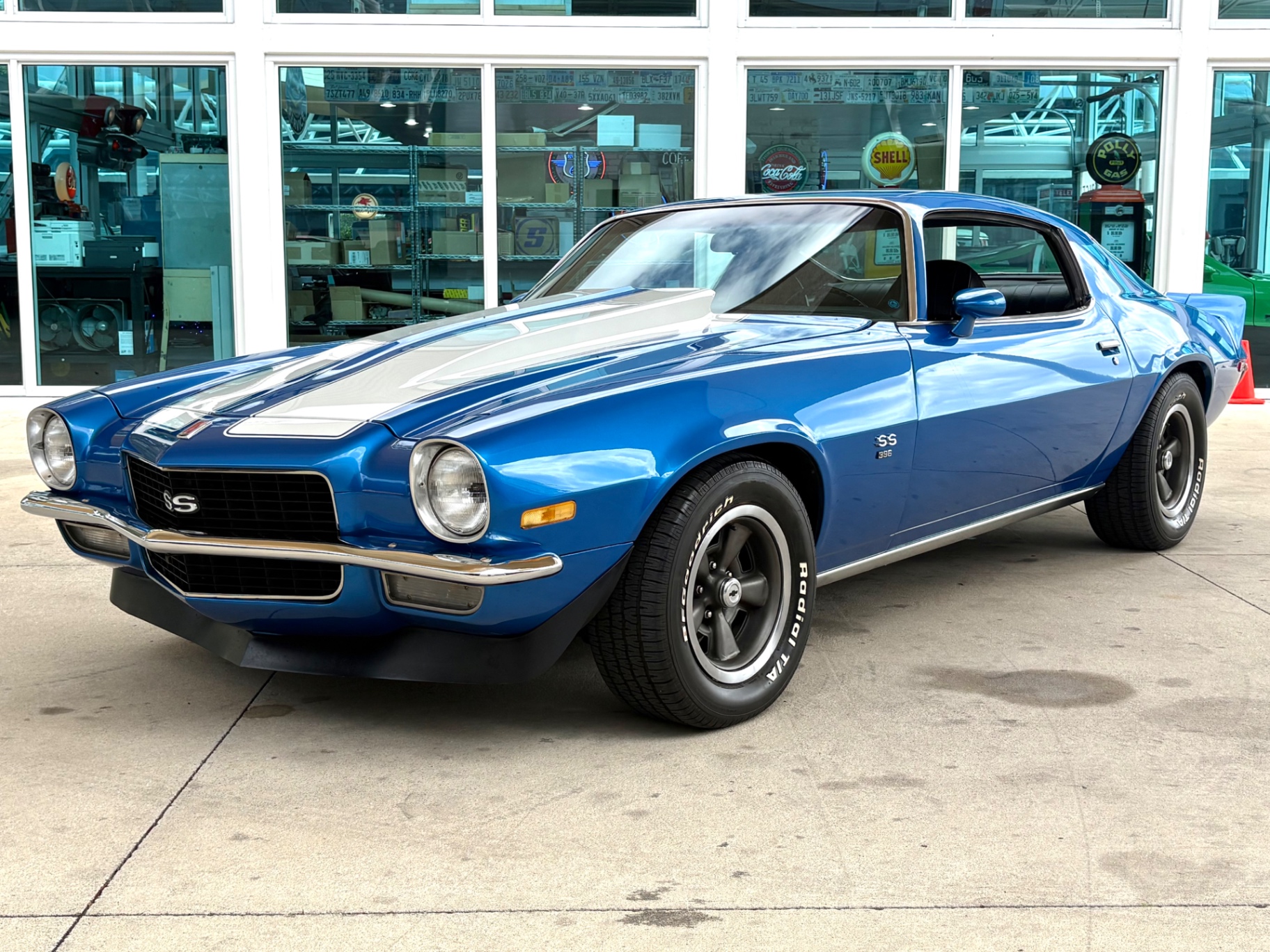
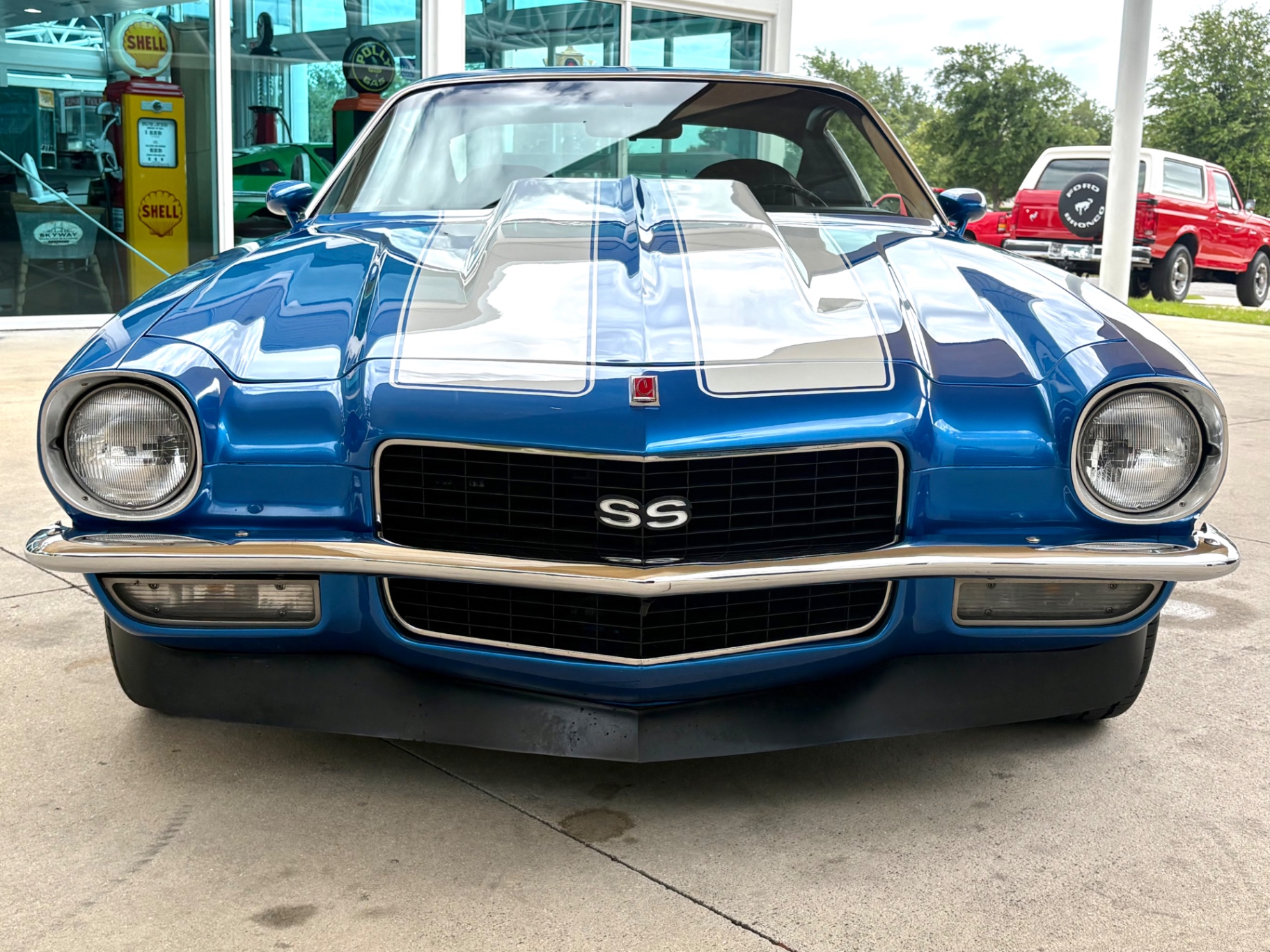
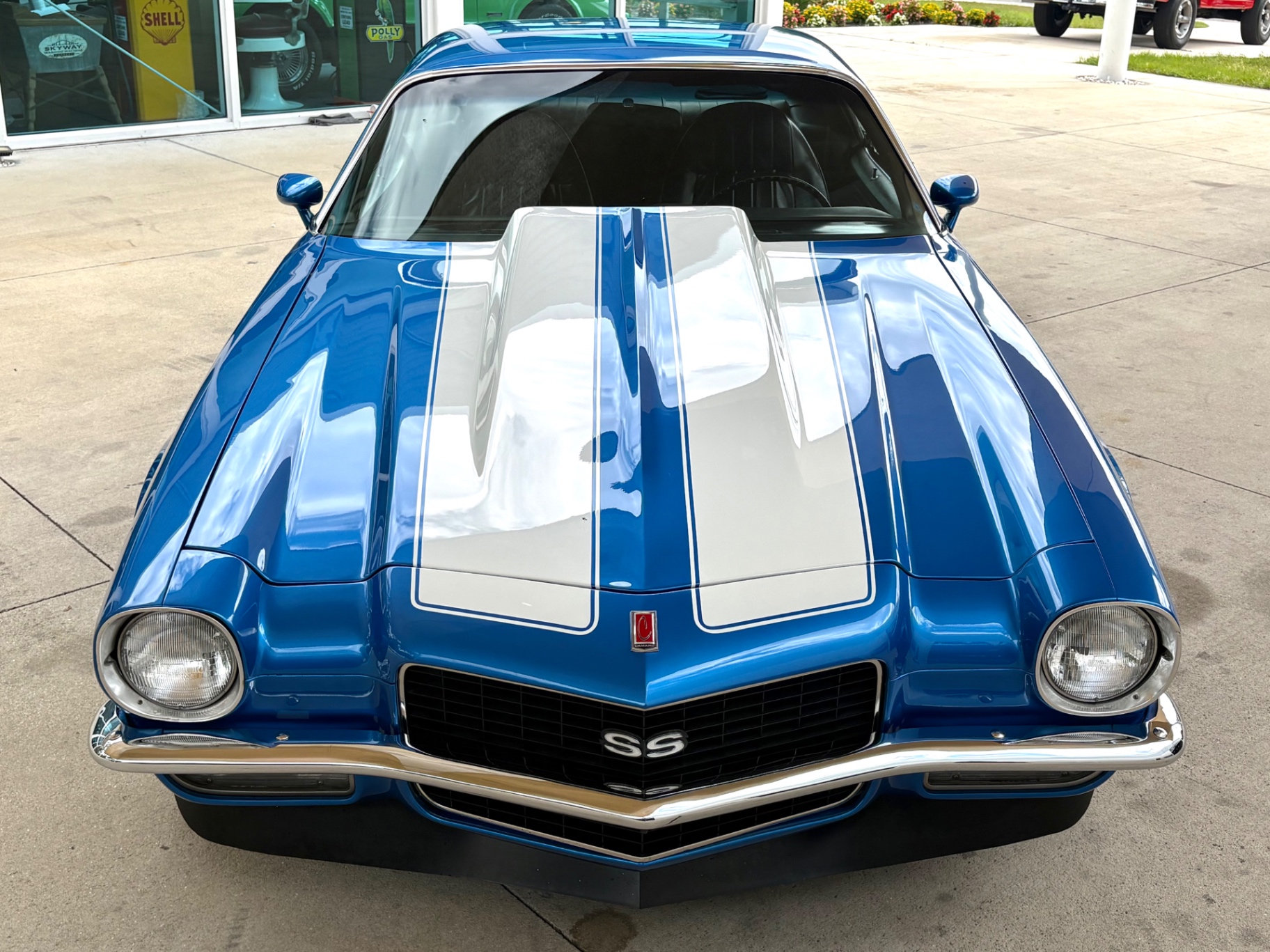
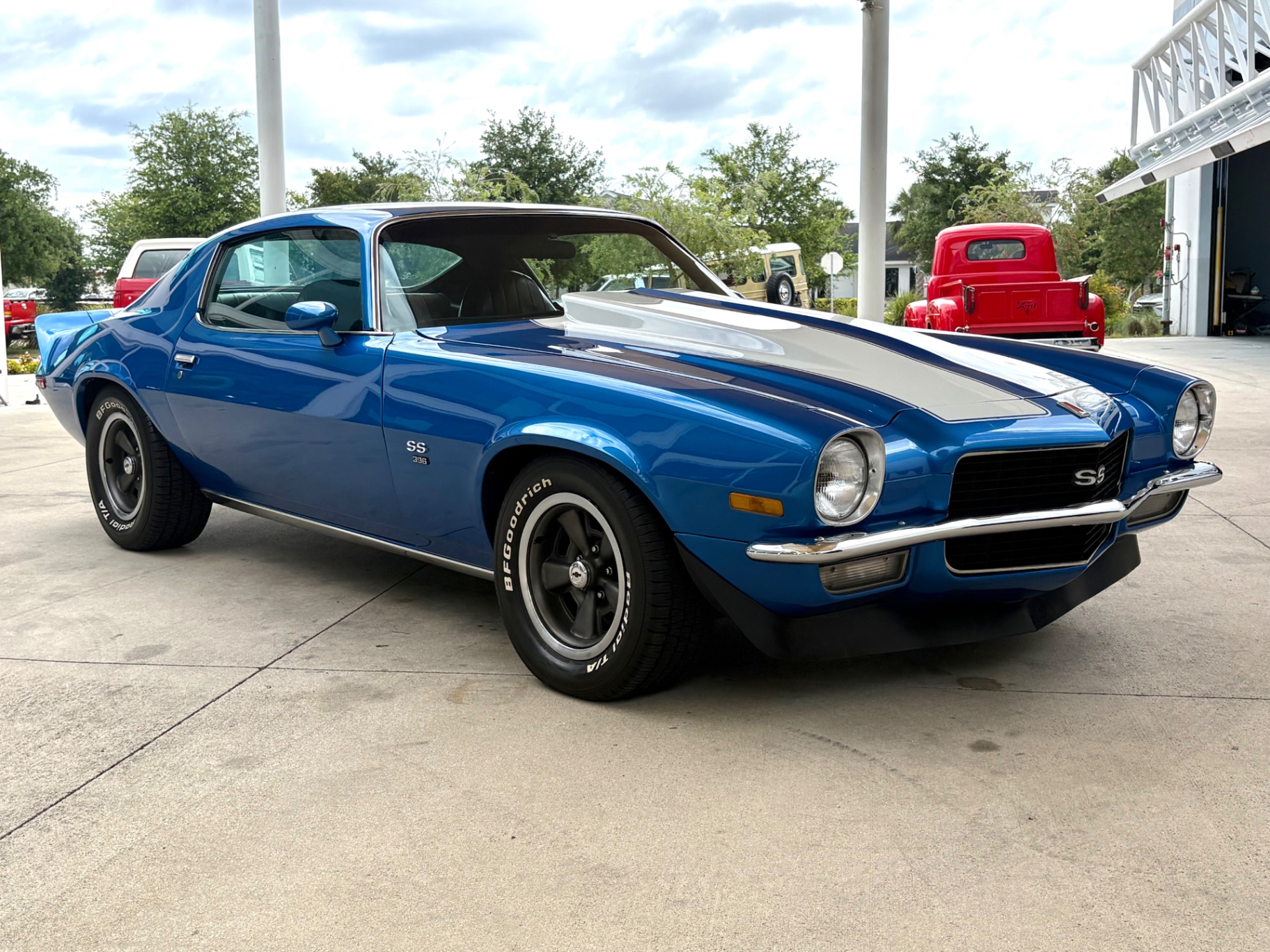
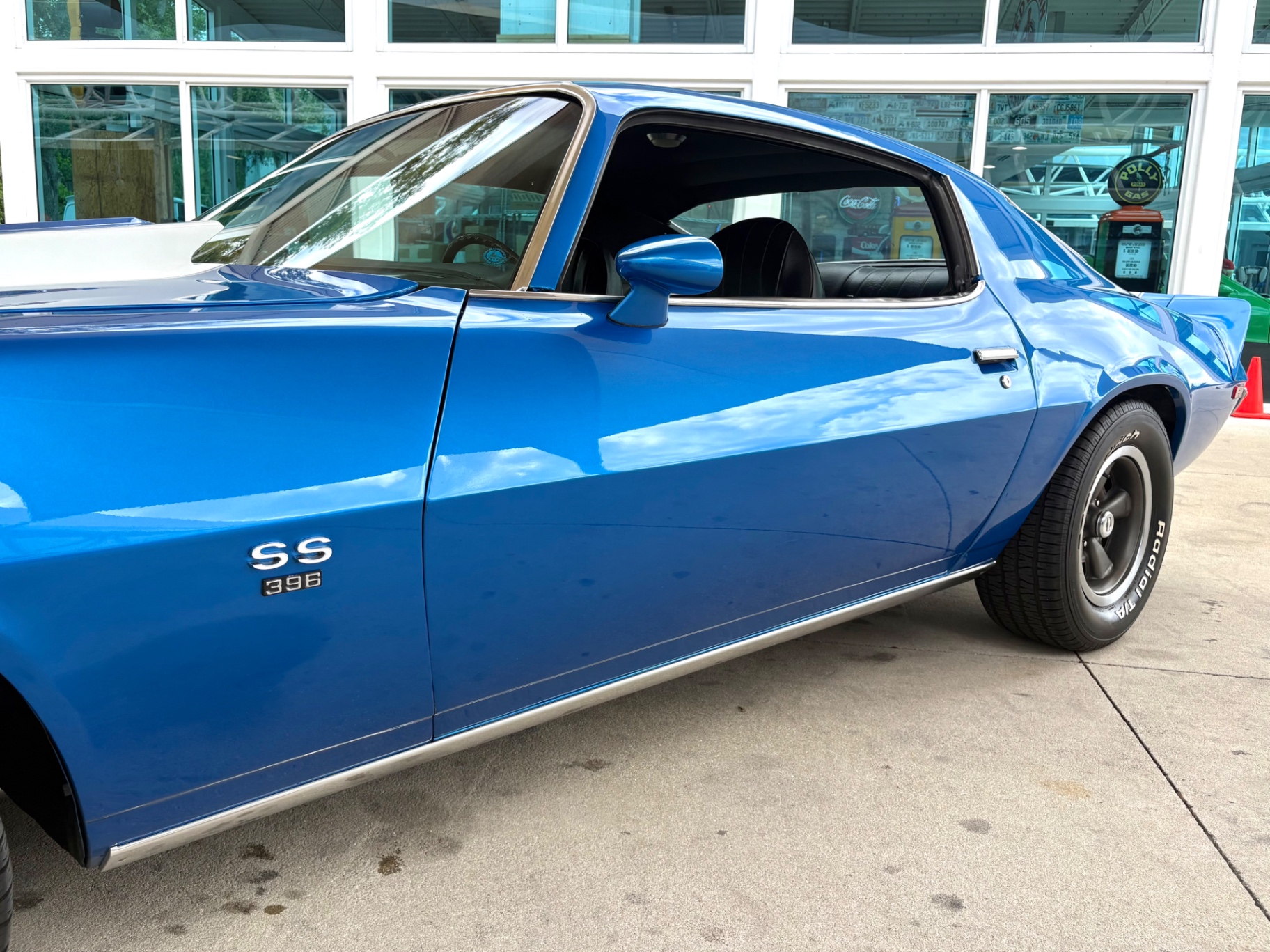
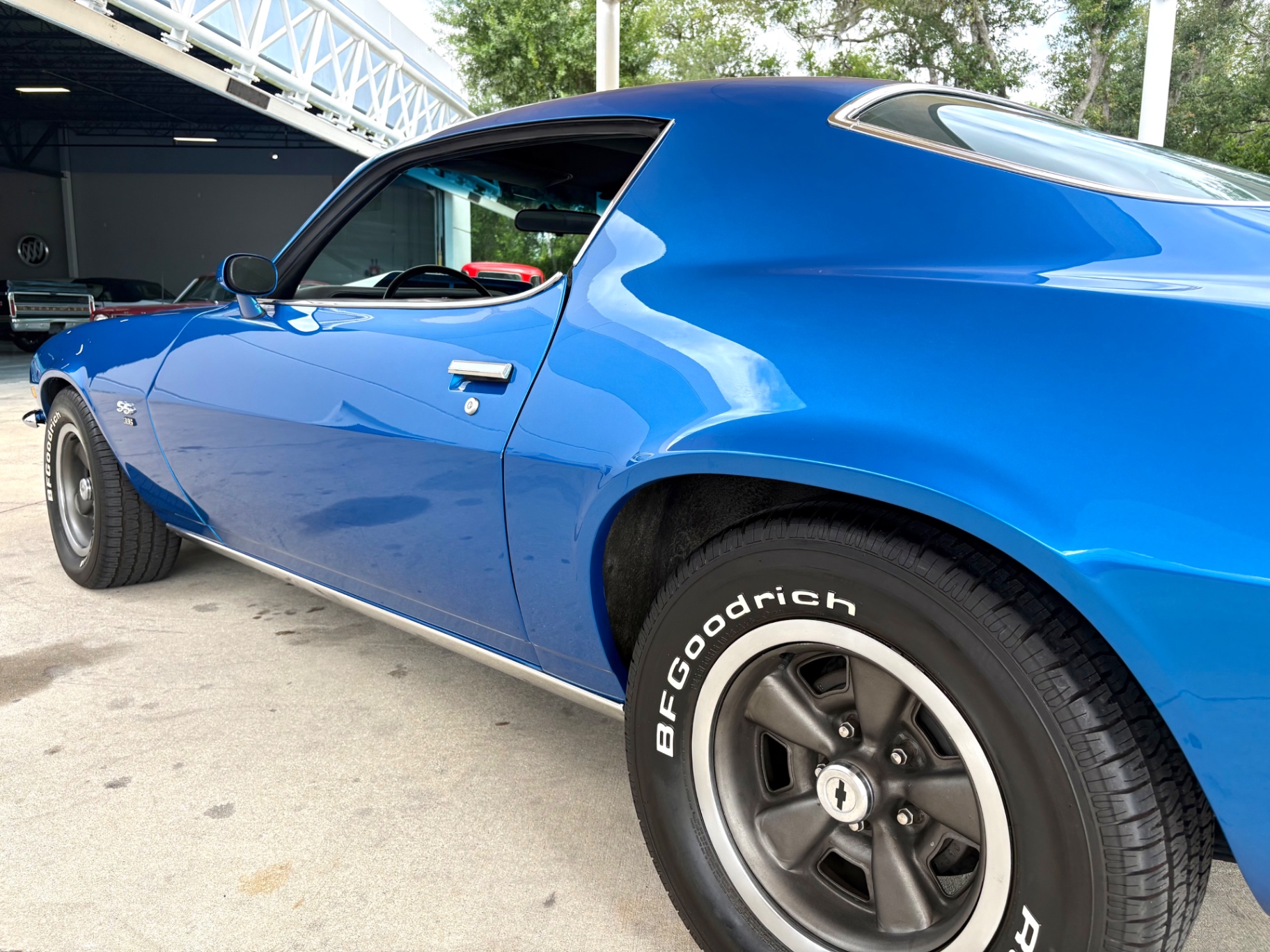
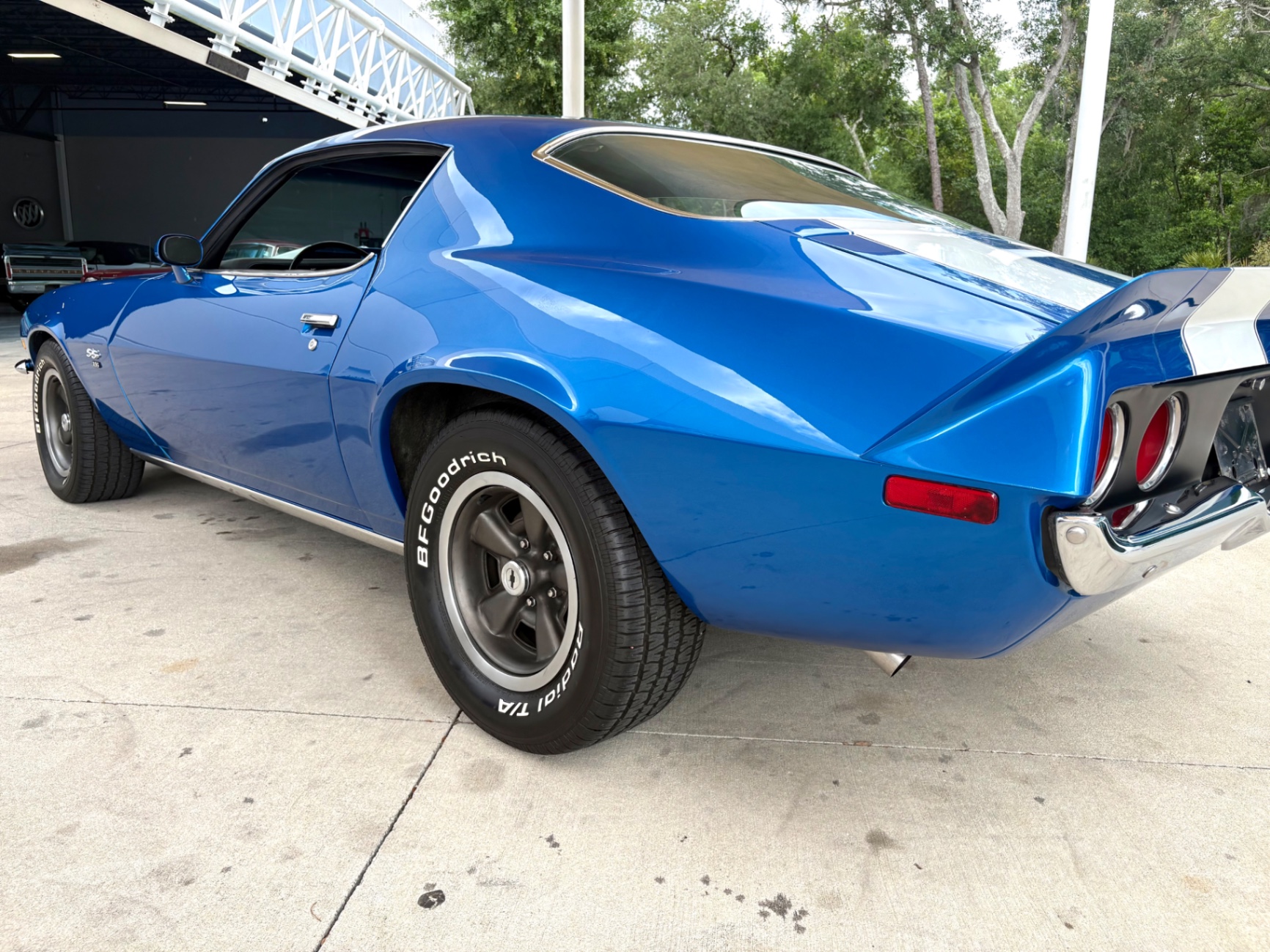
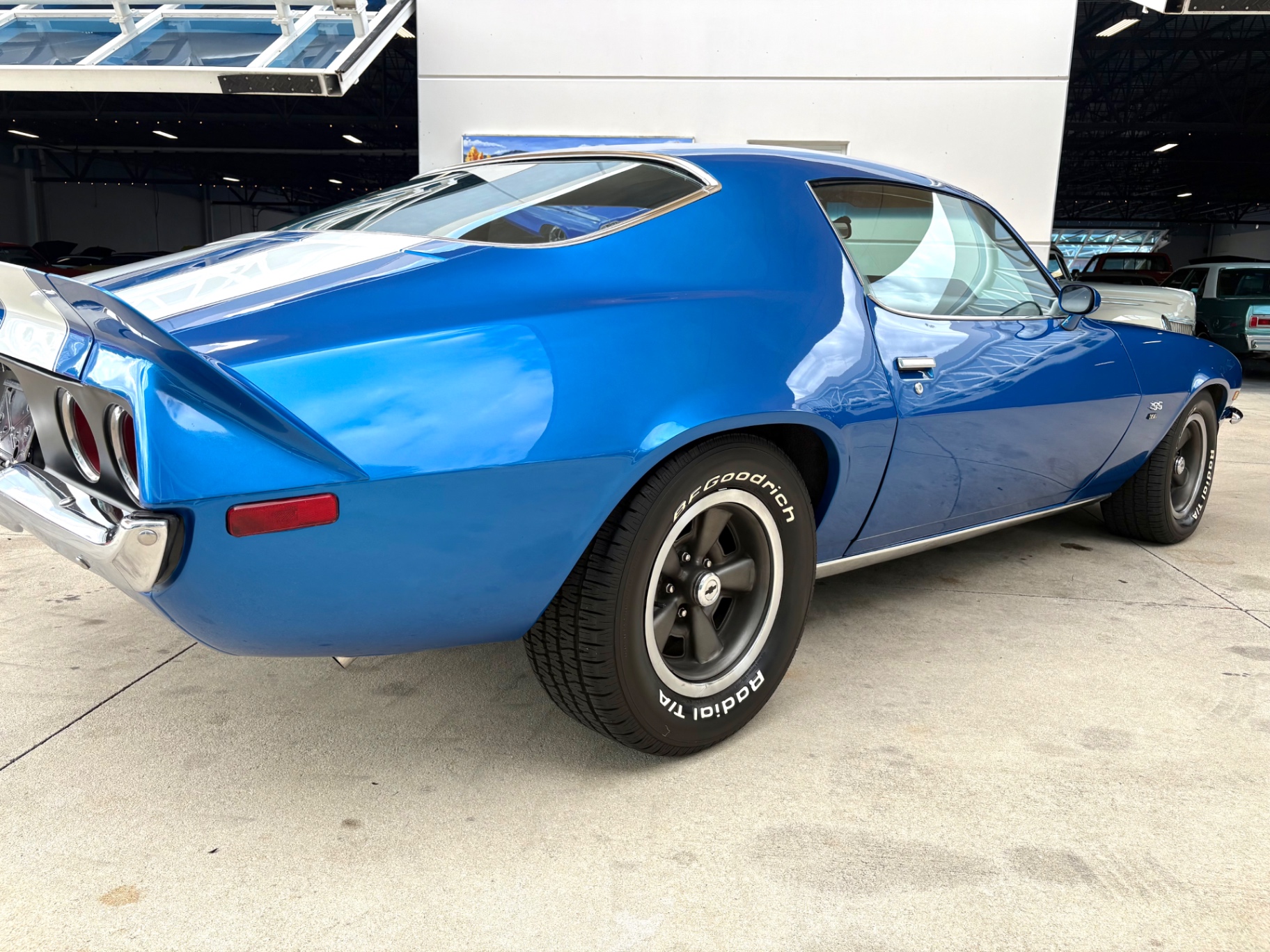

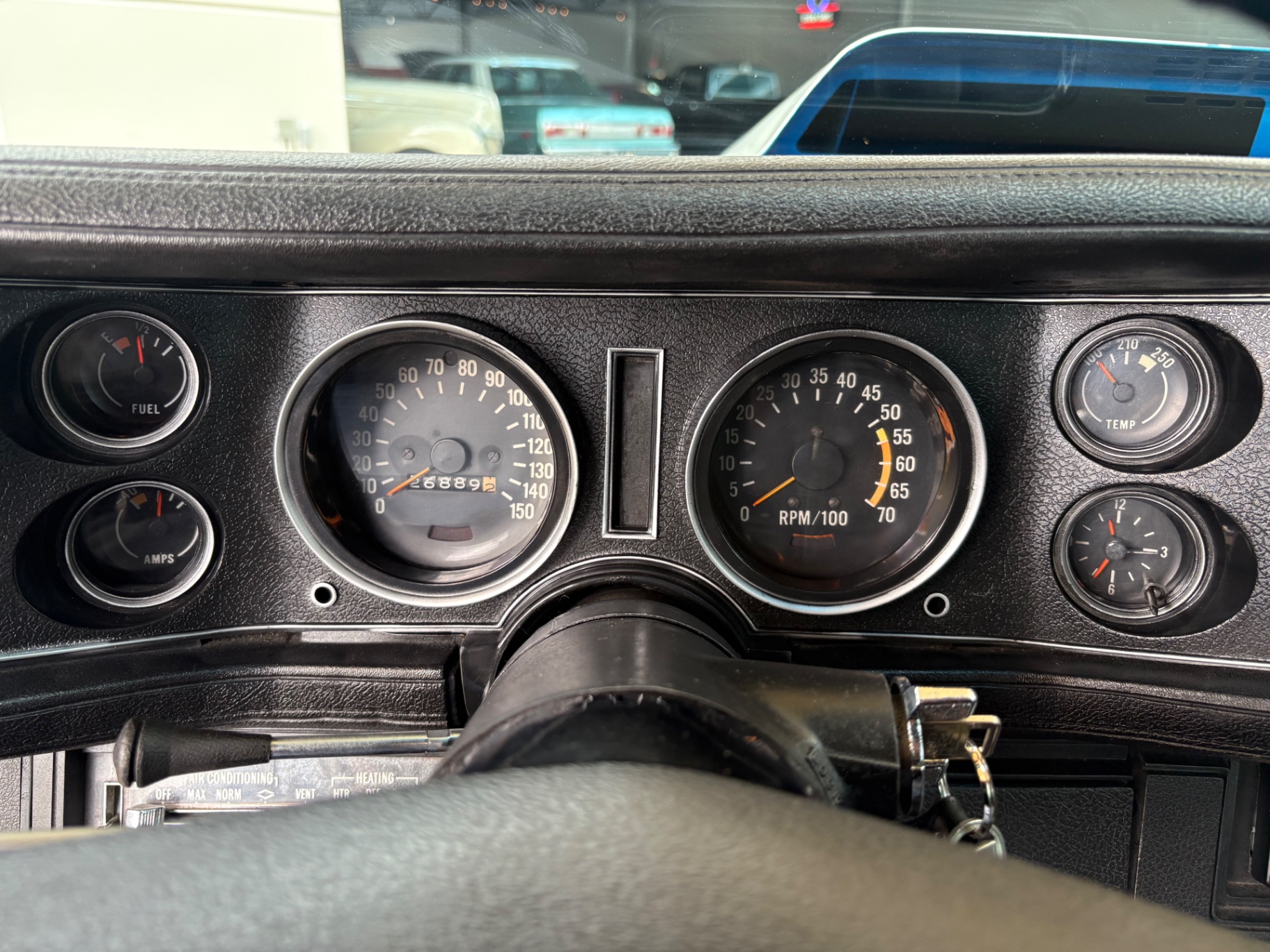

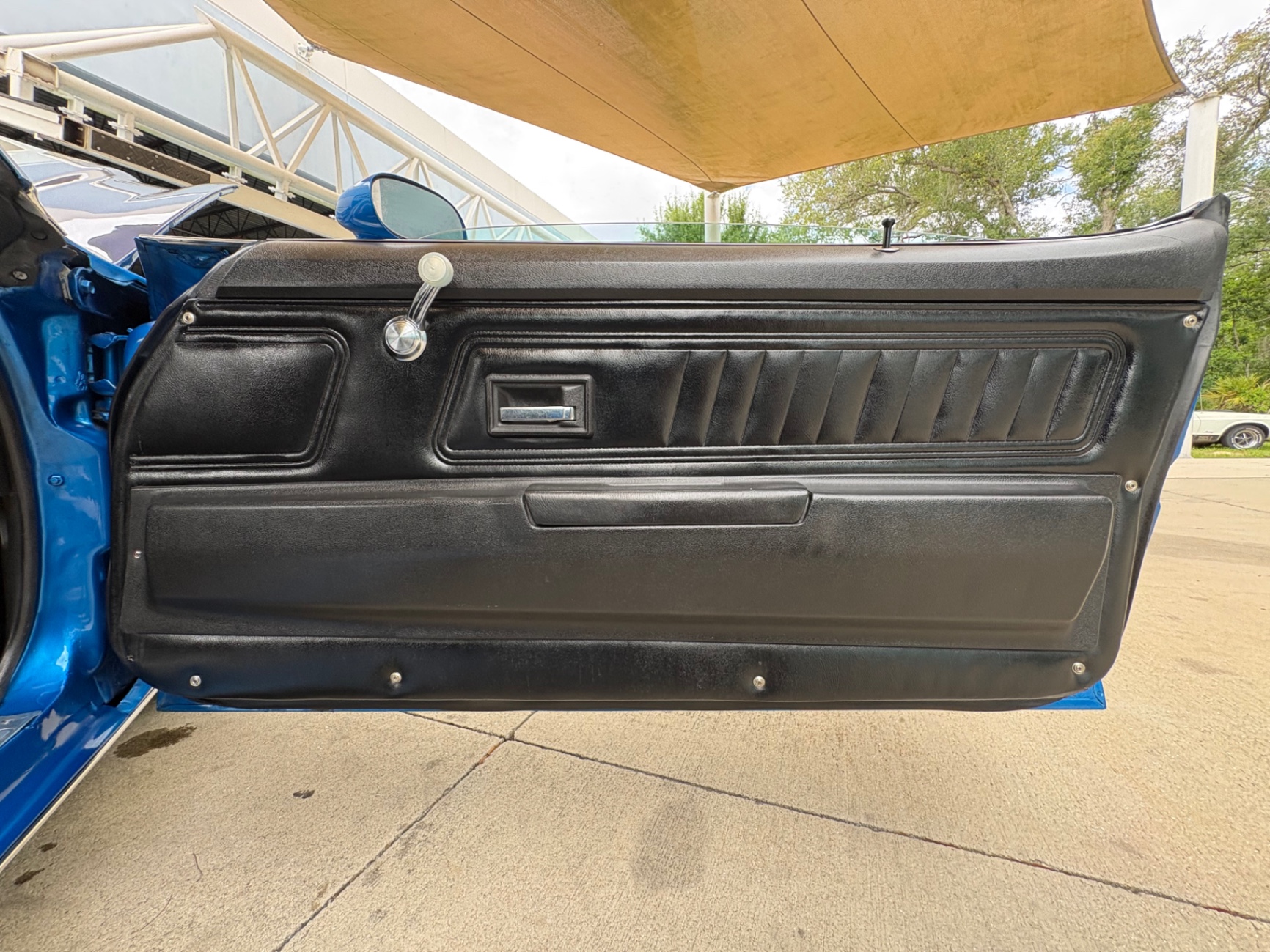
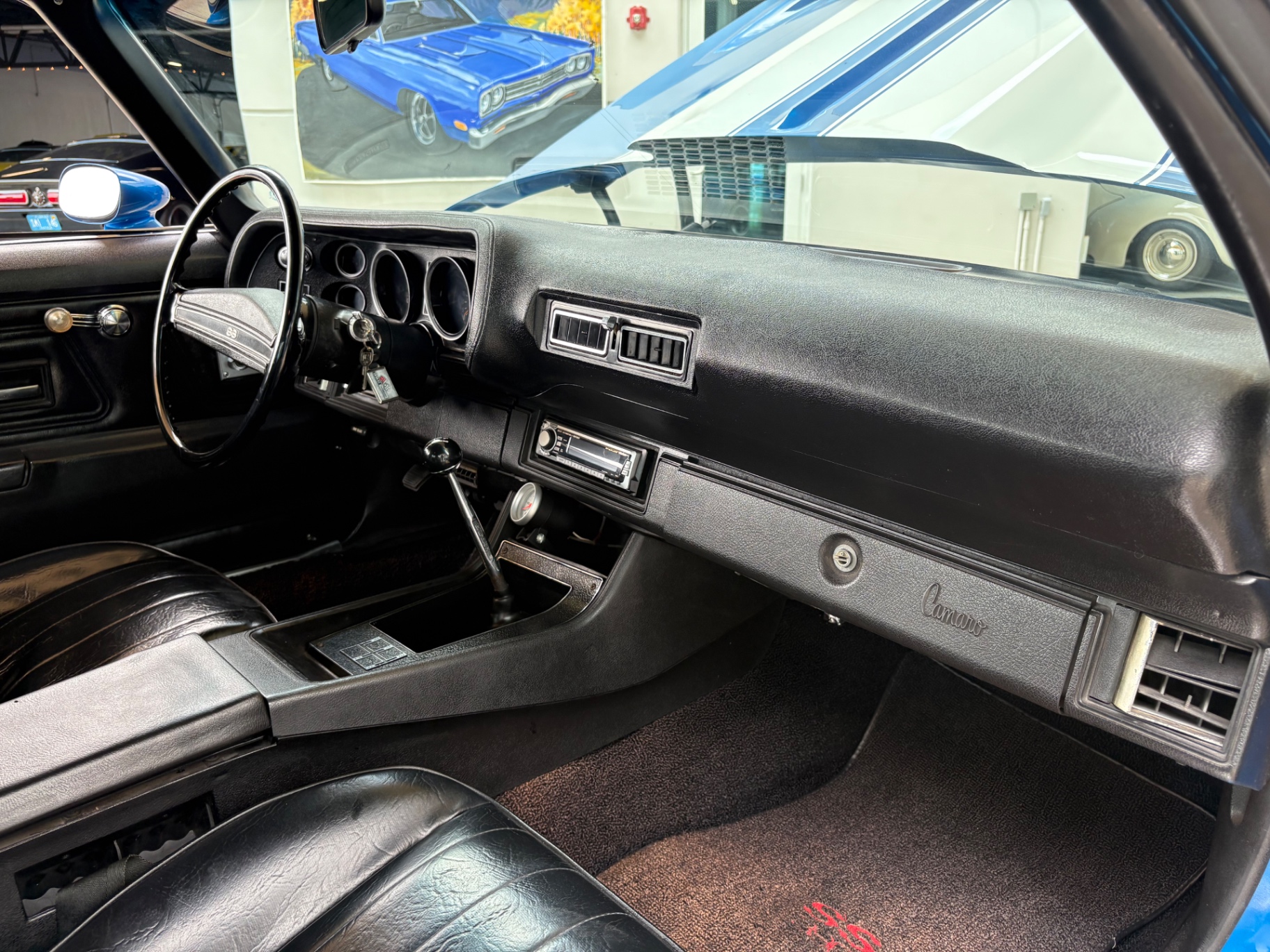
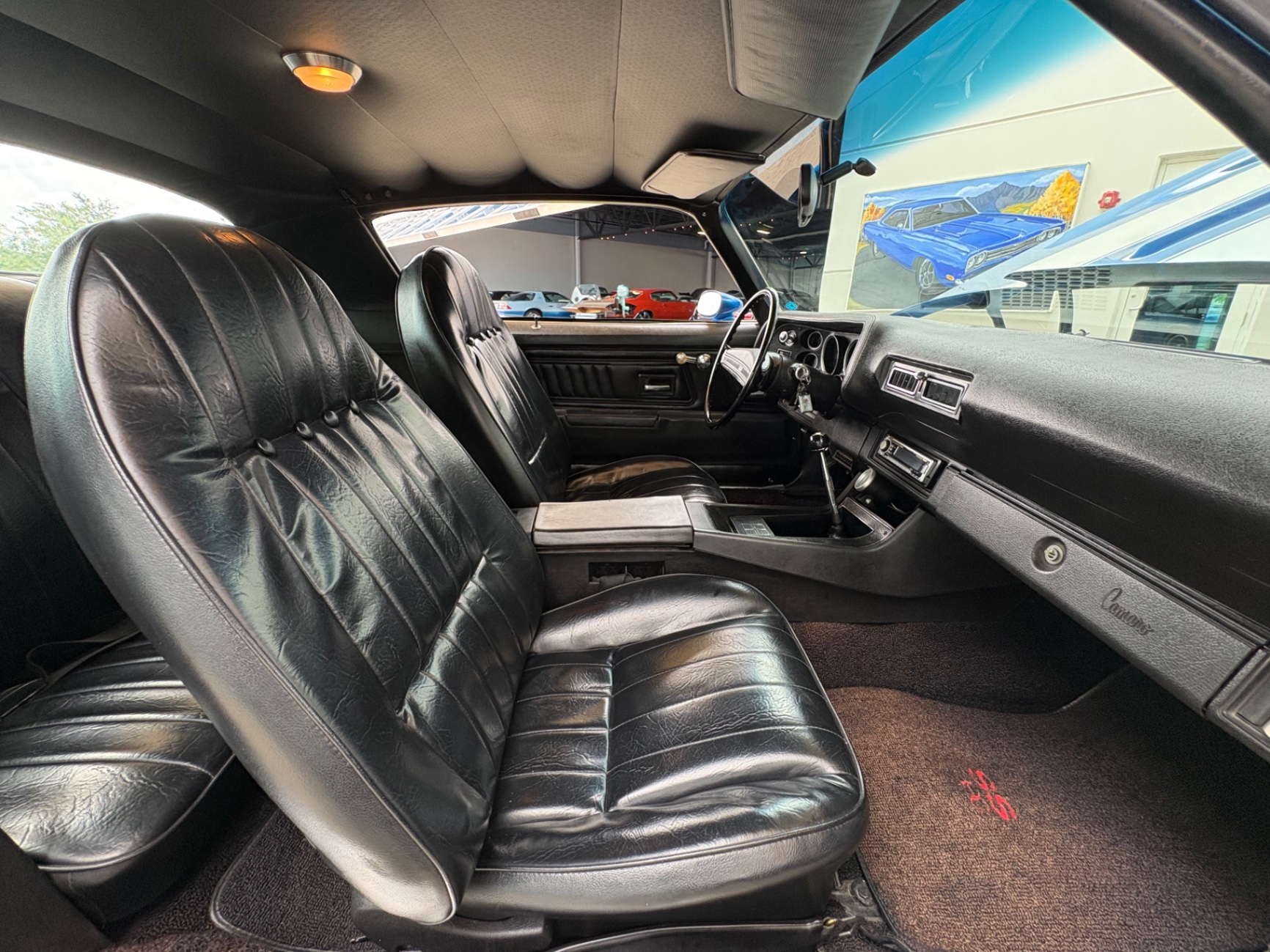
1971 Chevrolet Camaro SS 396 — Big Block, Muncie 4-Speed, Factory Air
Why This Car Is Special
The 1971 Chevrolet Camaro SS 396 sits at an interesting crossroads in muscle car history. It was the first year of the redesigned second-generation body — a longer, lower, wider platform that many enthusiasts consider the best-looking Camaro ever produced. Chevrolet stretched the wheelbase to 108 inches and gave the car a more sculpted, European-influenced roofline that set it apart from the boxier first-generation cars. At the same time, 1971 was one of the last years you could order a Camaro with a genuine big block engine before tightening emissions regulations and insurance pressures pushed the industry toward smaller displacement motors. That combination of the new body style and the outgoing big block powertrain makes the 1971 Camaro SS 396 a particularly desirable intersection of form and function.
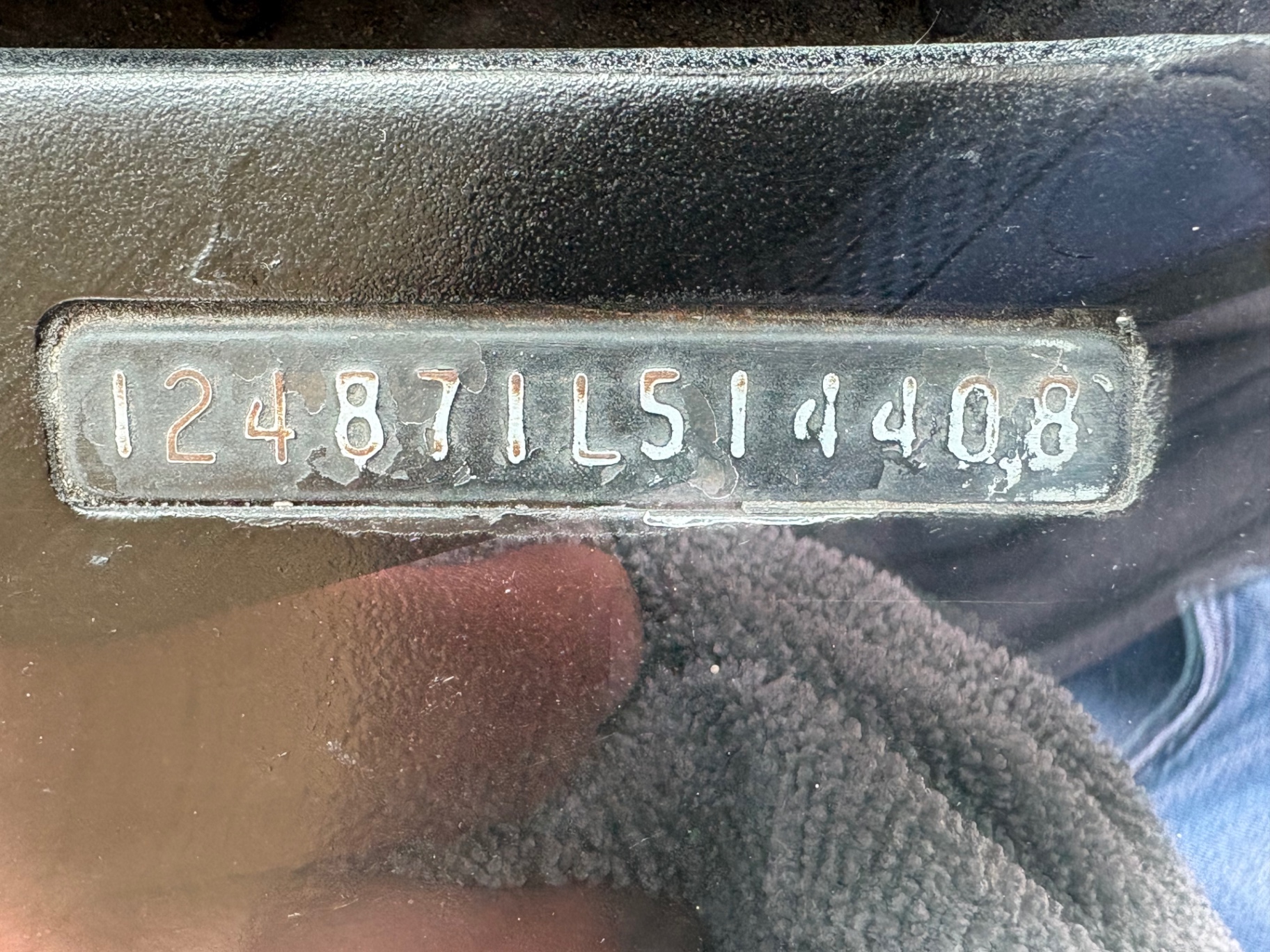
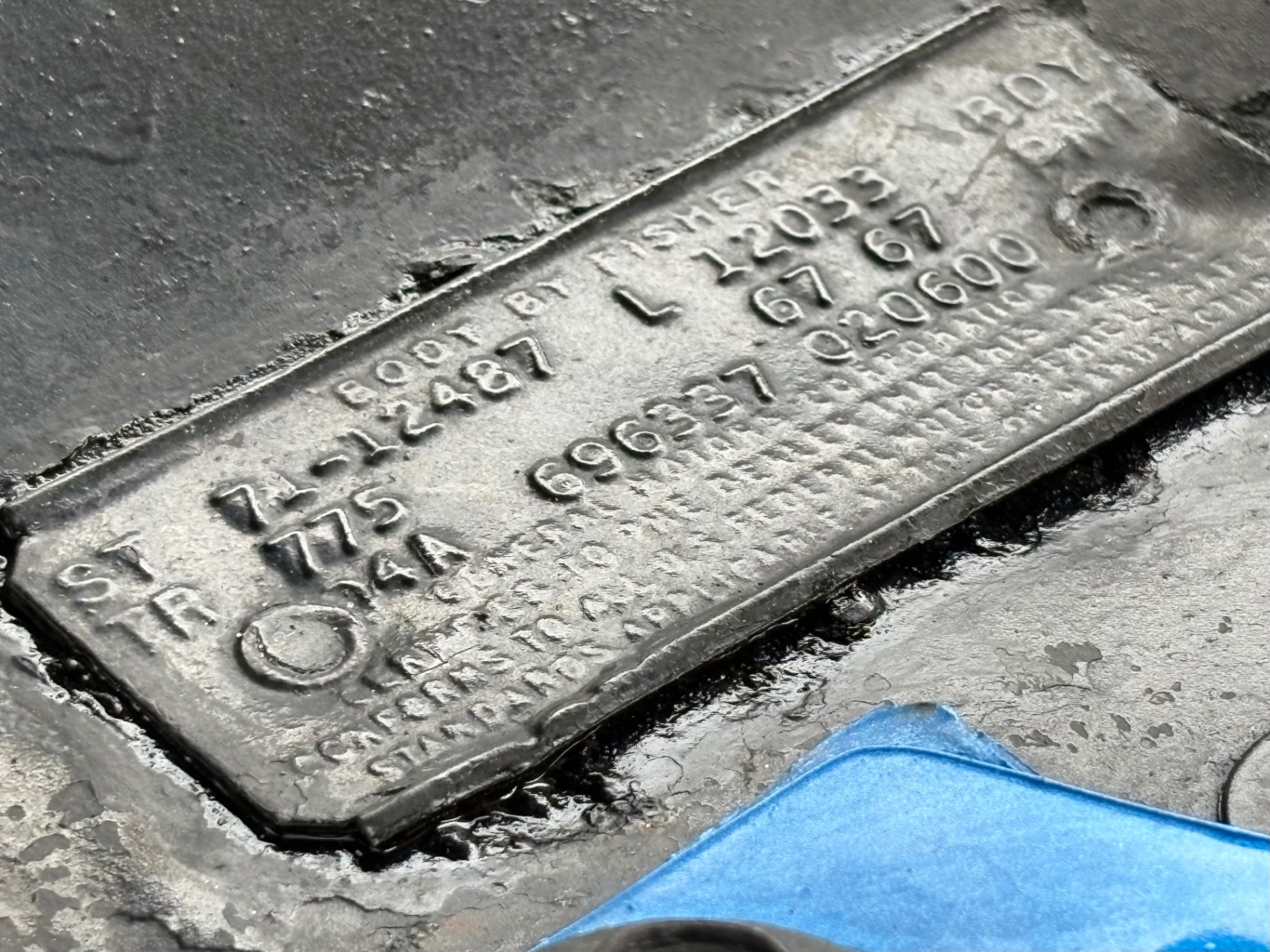
The VIN on this car decodes to confirm it was built at the Lordstown, Ohio assembly plant. The engine code confirms the 396 cubic inch big block at 300 horsepower, and the body style code identifies it as the Sport Coupe. The SS package in 1971 was a separate option that added specific badging, a blacked-out grille, and sport suspension tuning over a standard Camaro — it was not simply a sticker package. Pairing that with the Muncie 4-speed manual and factory air conditioning on a big block car was an uncommon and expensive combination at the time, and it makes this particular car a well-optioned example of the model.
It is also worth noting what happened to the Camaro line just one year later. In 1972, a lengthy strike at the Norwood, Ohio plant essentially wiped out most of that year's production. The combination of the 1971 model being the first year of the new design and having genuine high-output big block availability makes surviving, well-equipped examples like this one increasingly difficult to find in presentable condition.
Features
- 396 cubic inch big block V8, 300 horsepower - Muncie 4-speed manual transmission - True factory air conditioning - Dual exhaust - Power brakes - Power steering - Rear sway bar - White racing stripes - Black vinyl top - SS badges front and rear - SS steering wheel - Center console - Black sport wheels - BFGoodrich Radial T/A tires - Chrome bumpers - Black vinyl bucket seats - Clean undercarriage
Mechanical
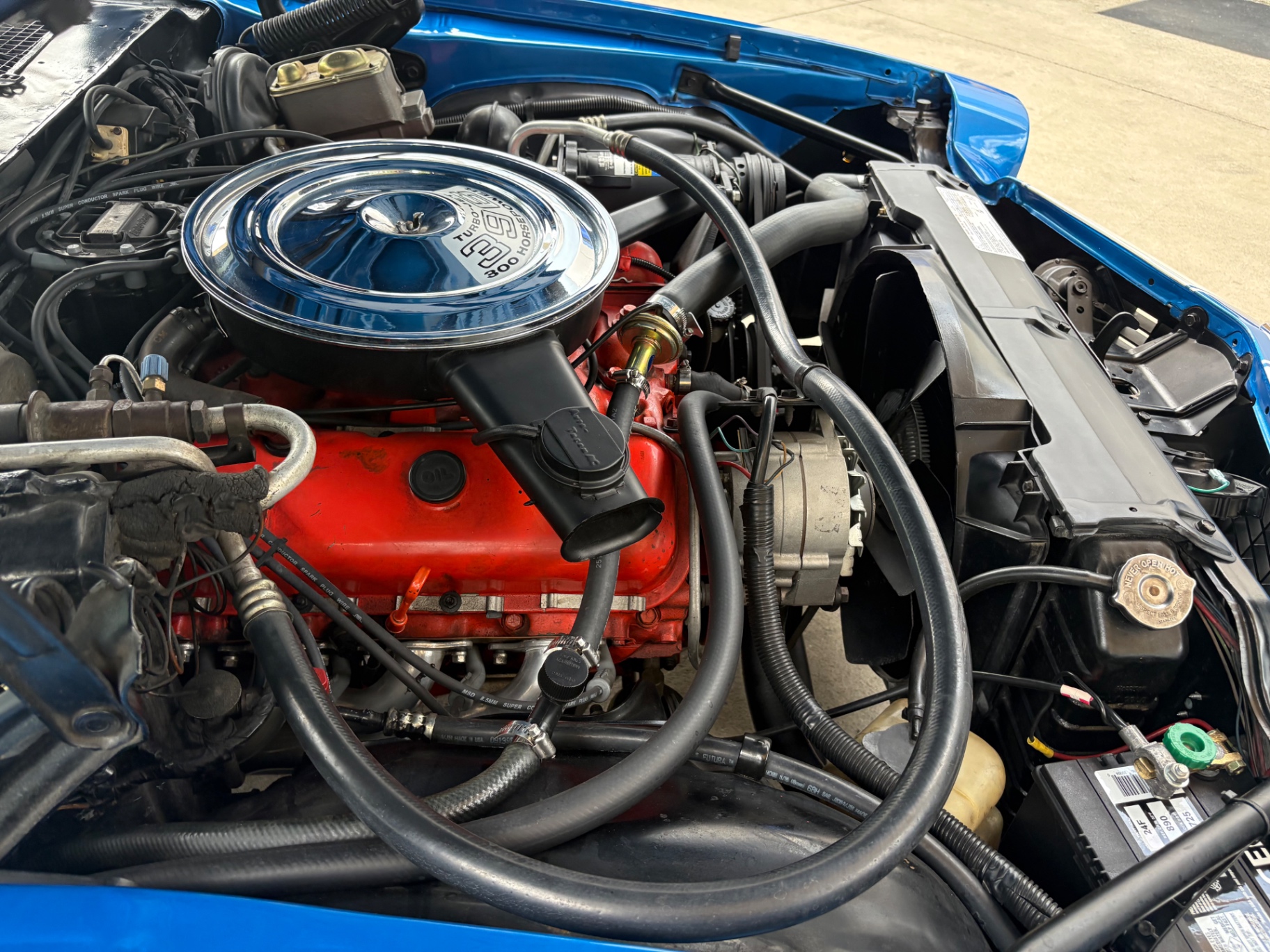
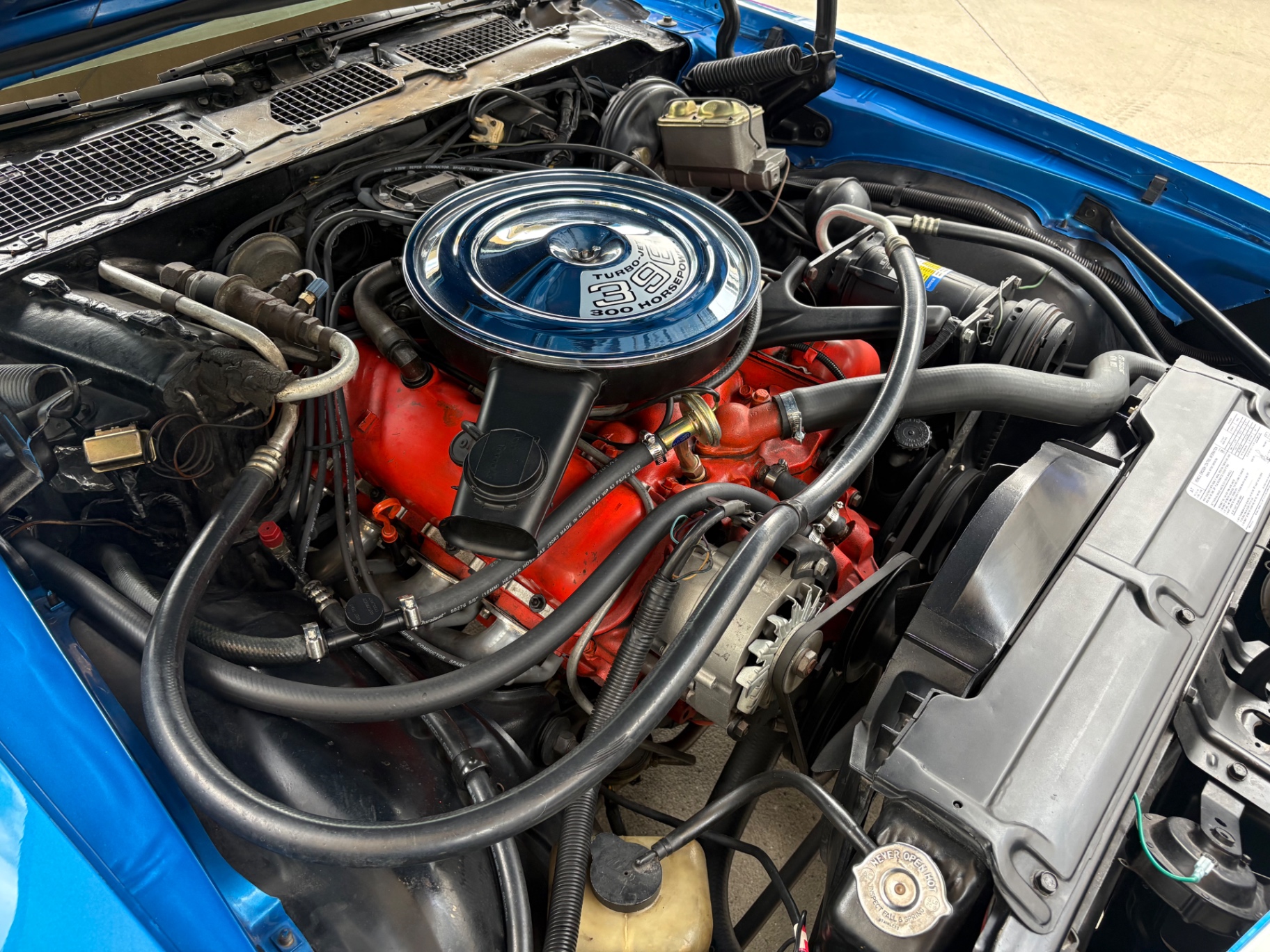
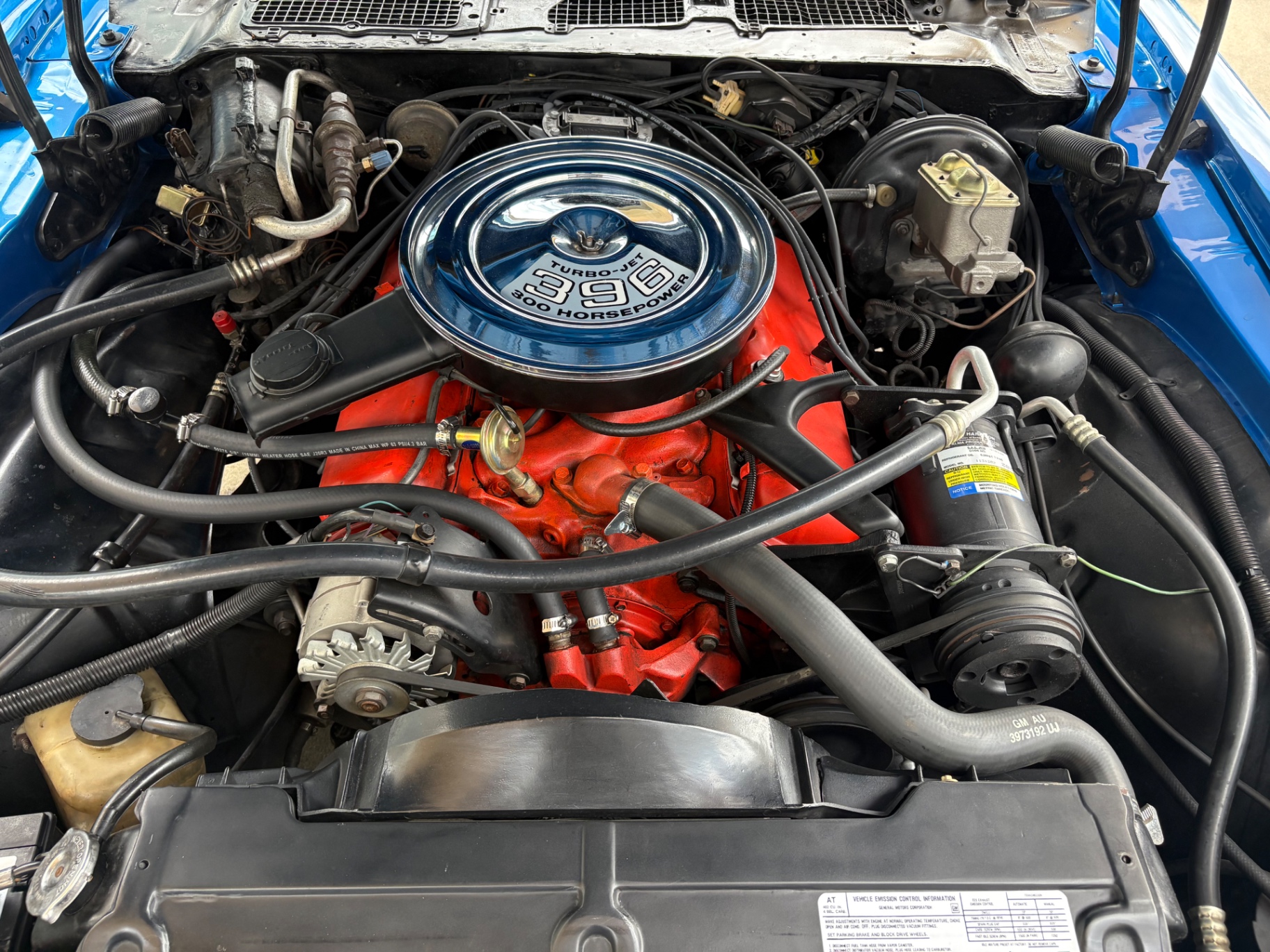
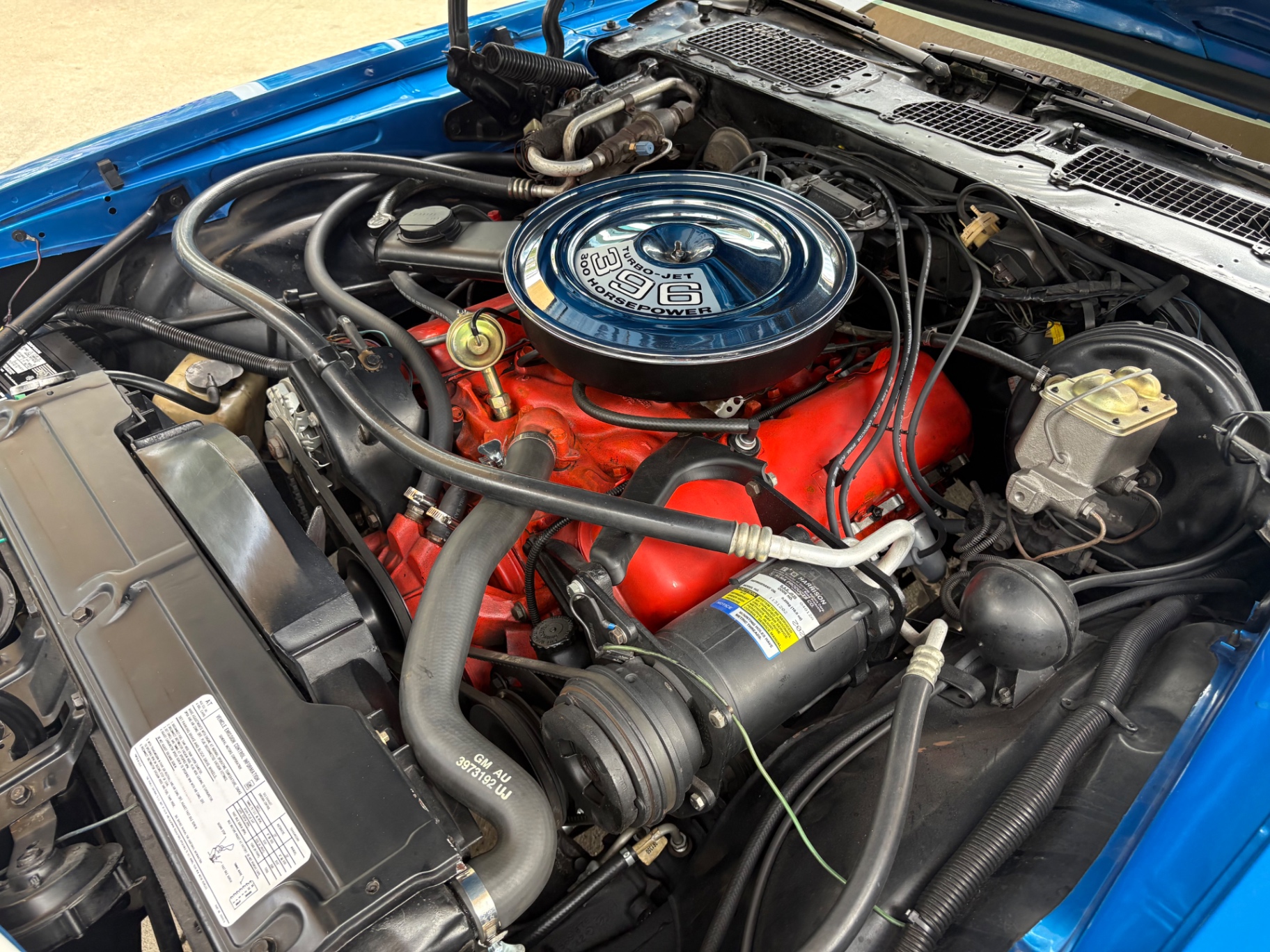
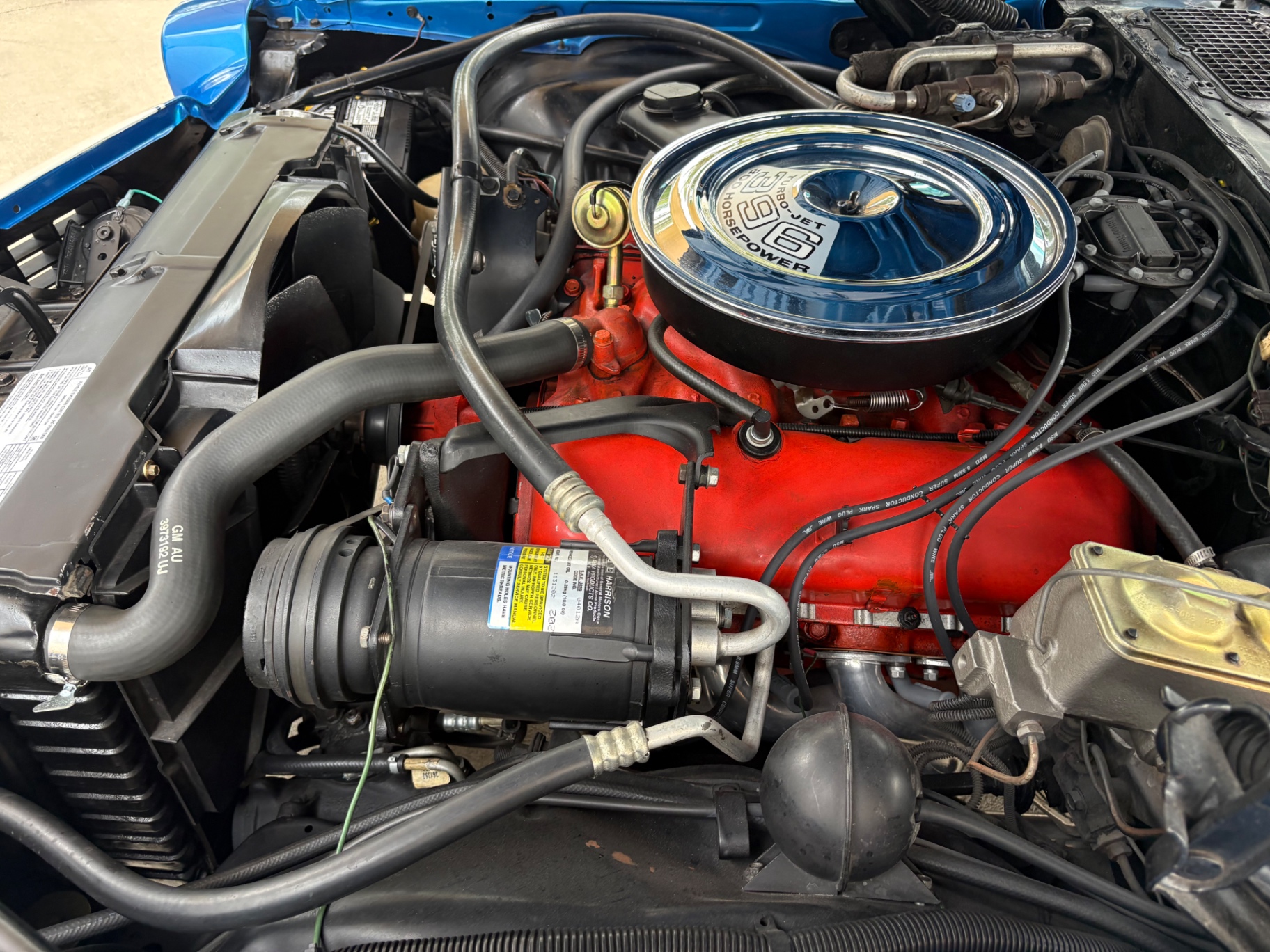
Under the hood is the 396 cubic inch Turbo-Jet V8 rated at 300 horsepower, backed by a Muncie close-ratio 4-speed manual gearbox — one of the most respected manual transmissions of the era. Muncie 4-speeds were built in Muncie, Indiana and were known for their durability and precise shift feel. Chevrolet offered them in two gear ratios depending on the intended use, and they were a preferred choice for buyers who wanted to actually drive their car rather than simply own it. The combination of a 396 big block and a Muncie 4-speed is exactly the drivetrain configuration that buyers specified when they were serious about performance.
Factory air conditioning on a big block Camaro required additional engineering at the factory level — the system had to be designed around the larger engine bay demands of the 396 — which is why it was a less common option than on small block cars. Having true factory air means the firewall, brackets, and wiring are correct and original to the car, not a retrofit. Power brakes and power steering round out the driving experience, making this a car that can be driven regularly without the heavy steering and firm pedal effort of a base-spec muscle car. The rear sway bar improves handling balance under cornering, a detail that matters on a car this size carrying a big block up front.
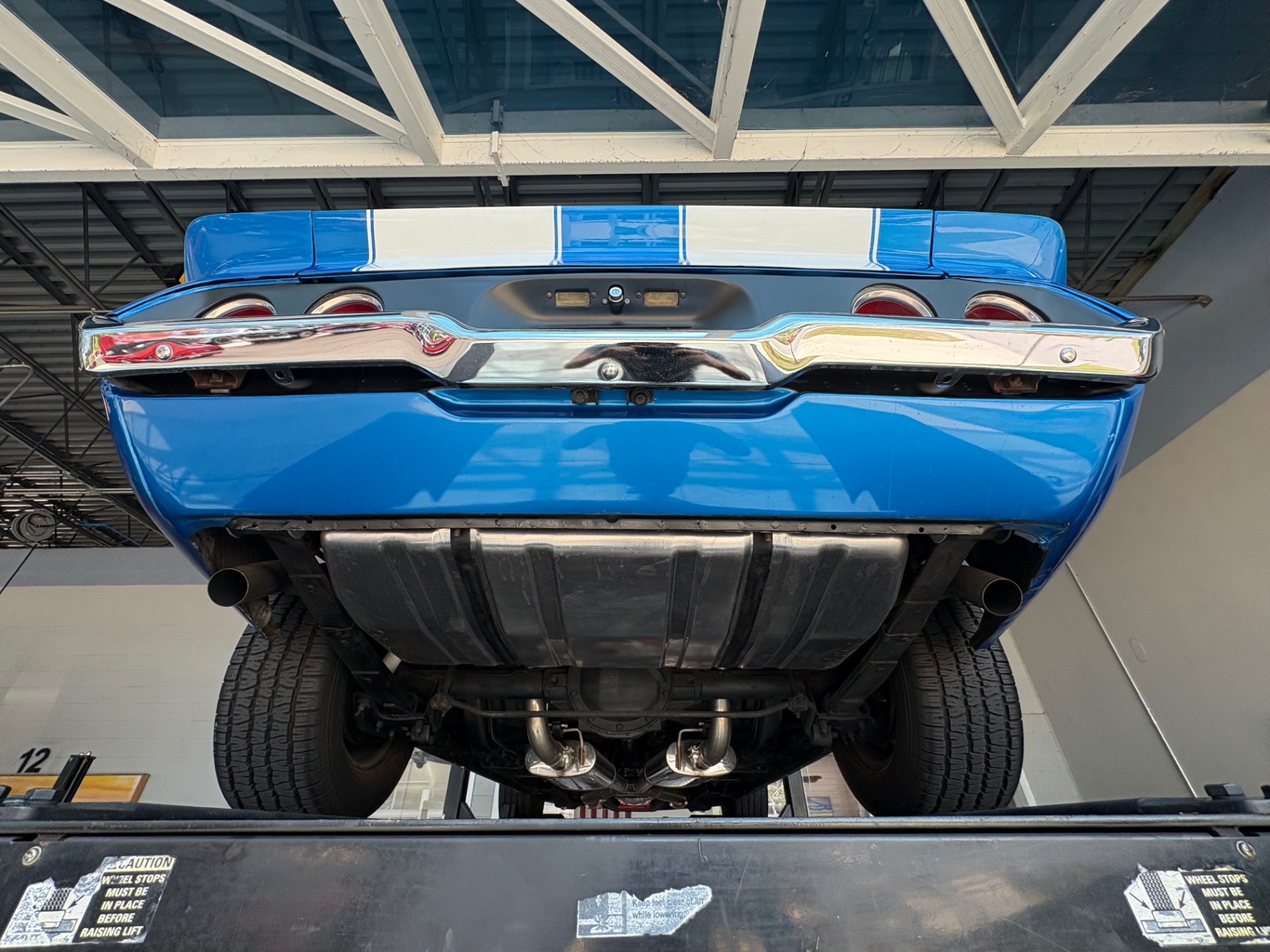
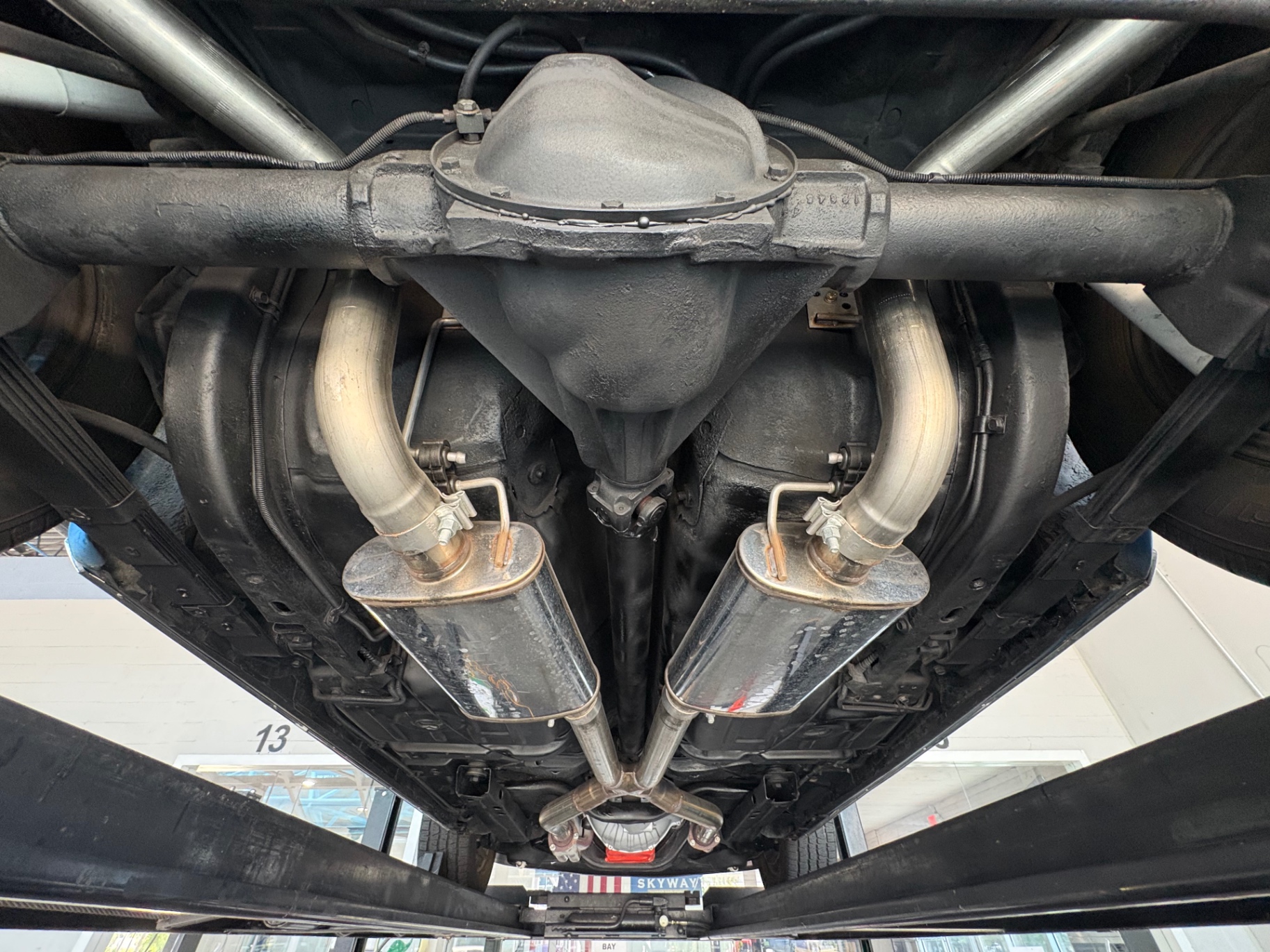
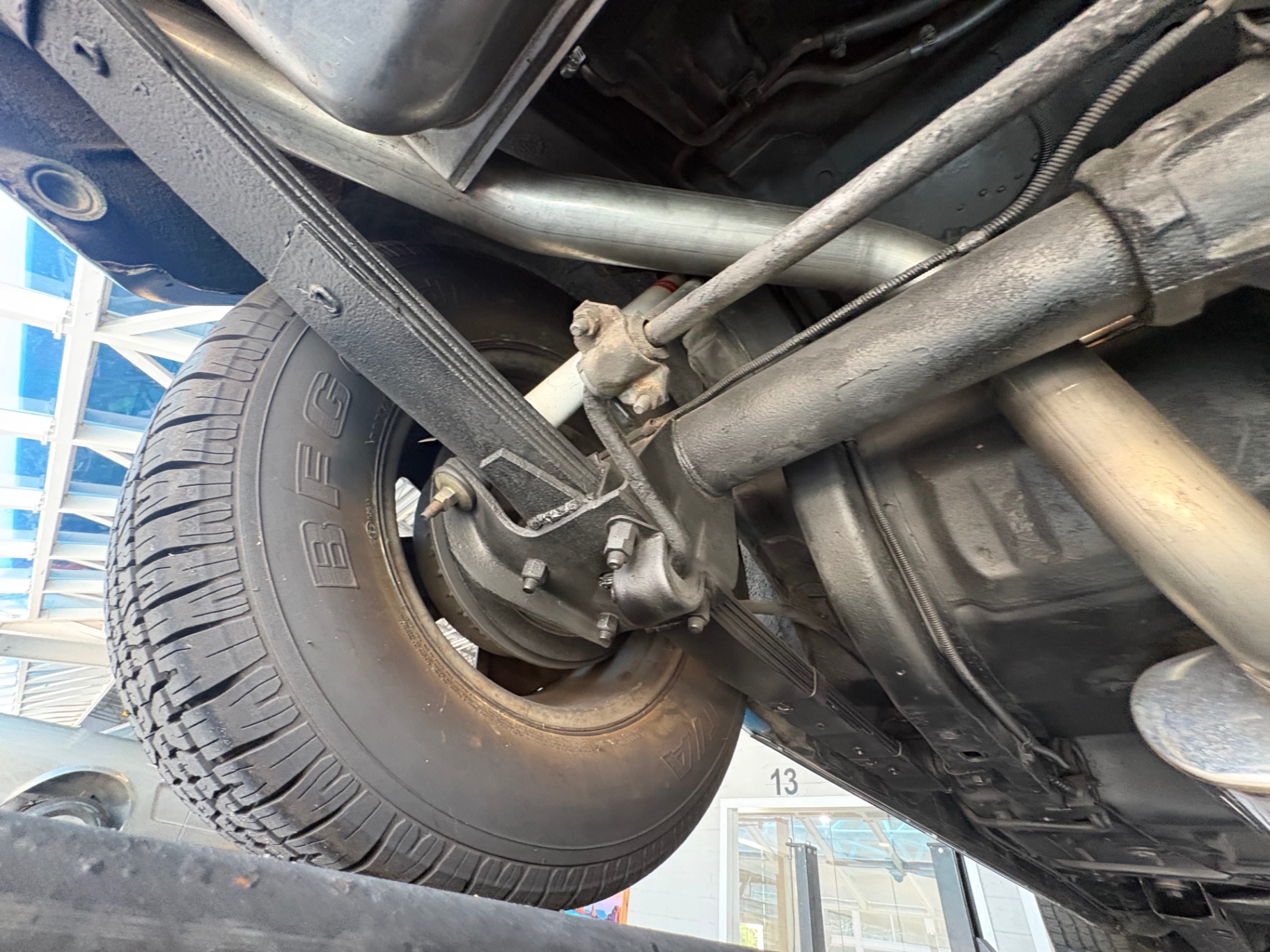
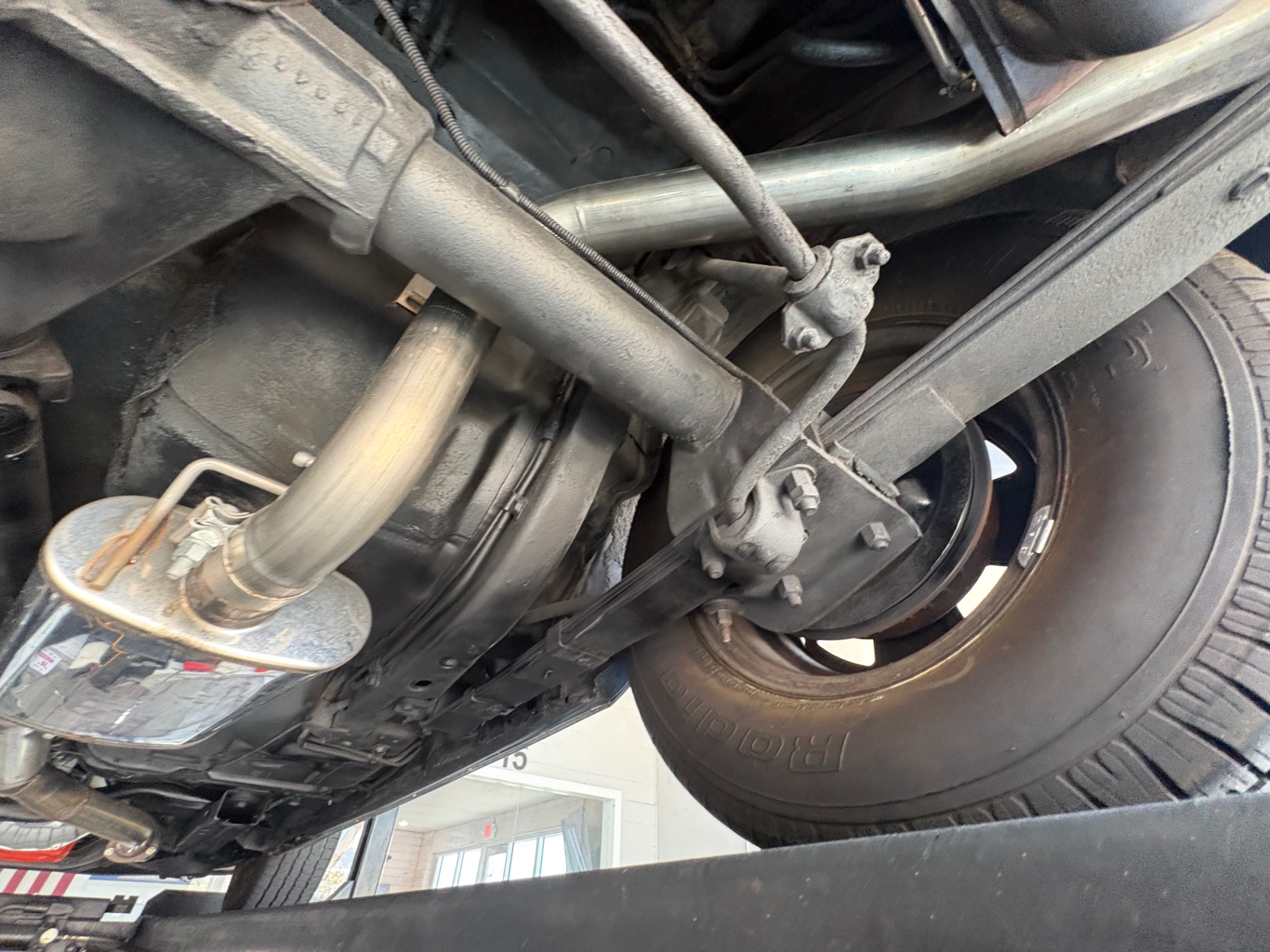
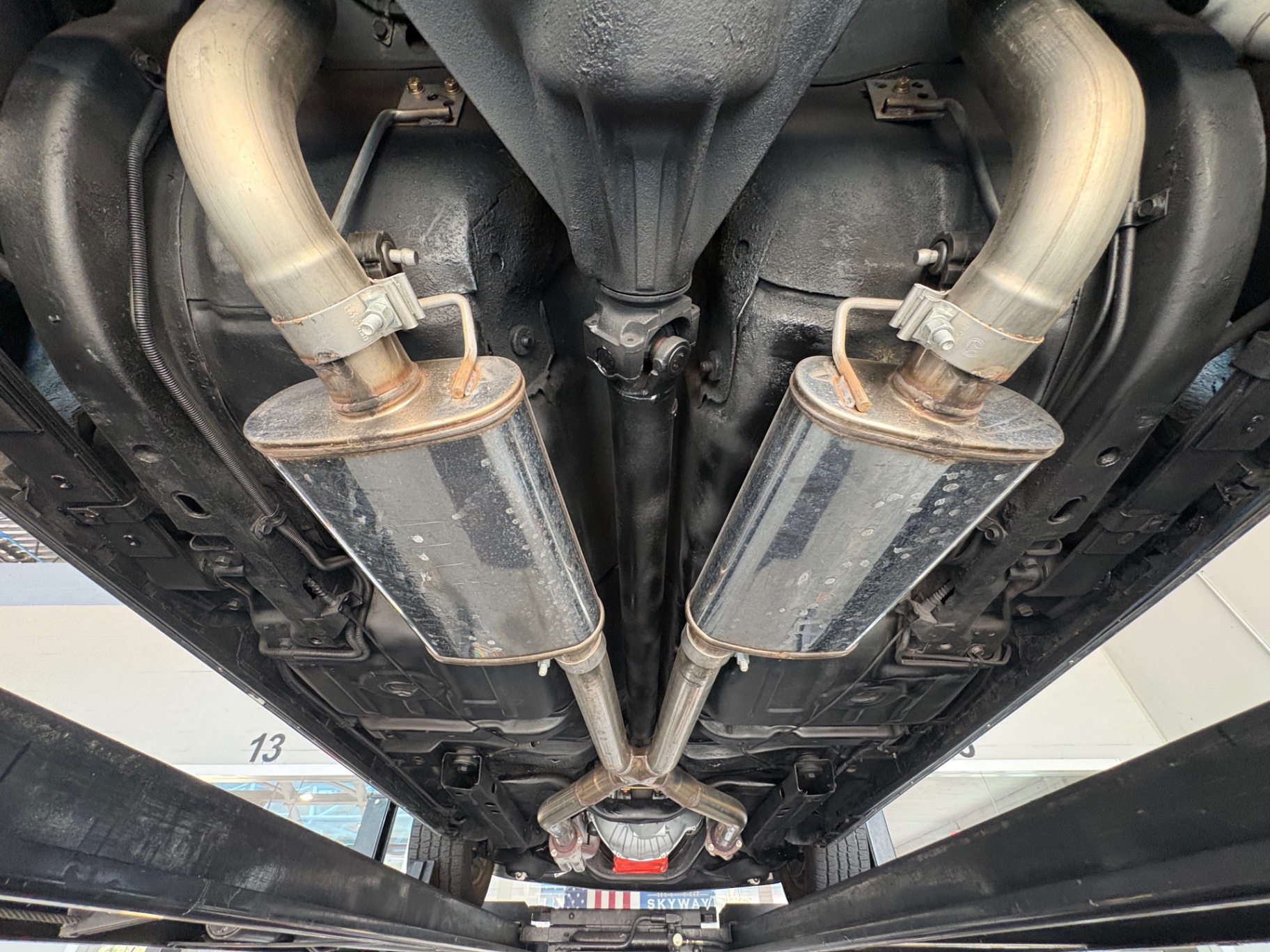
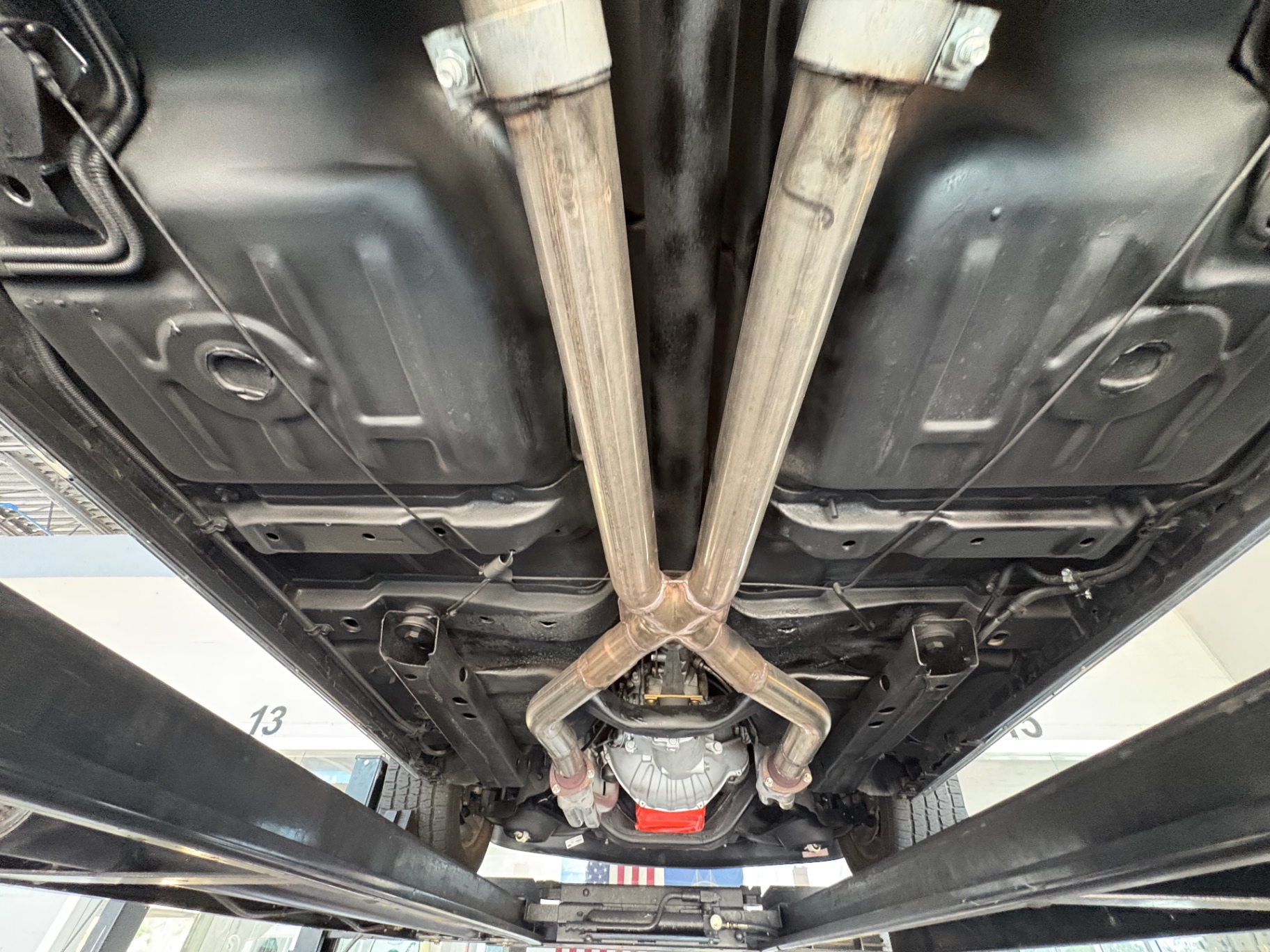
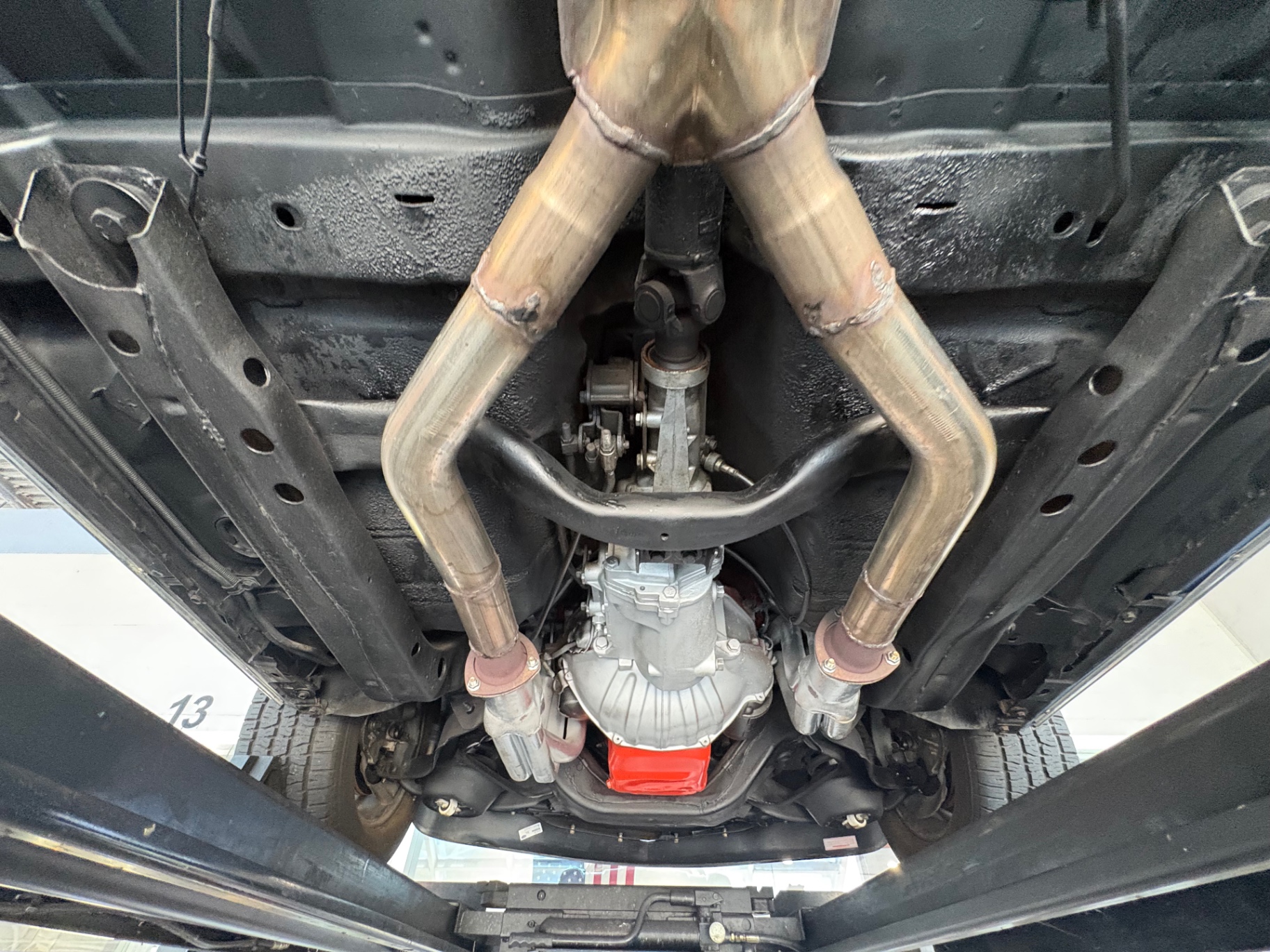
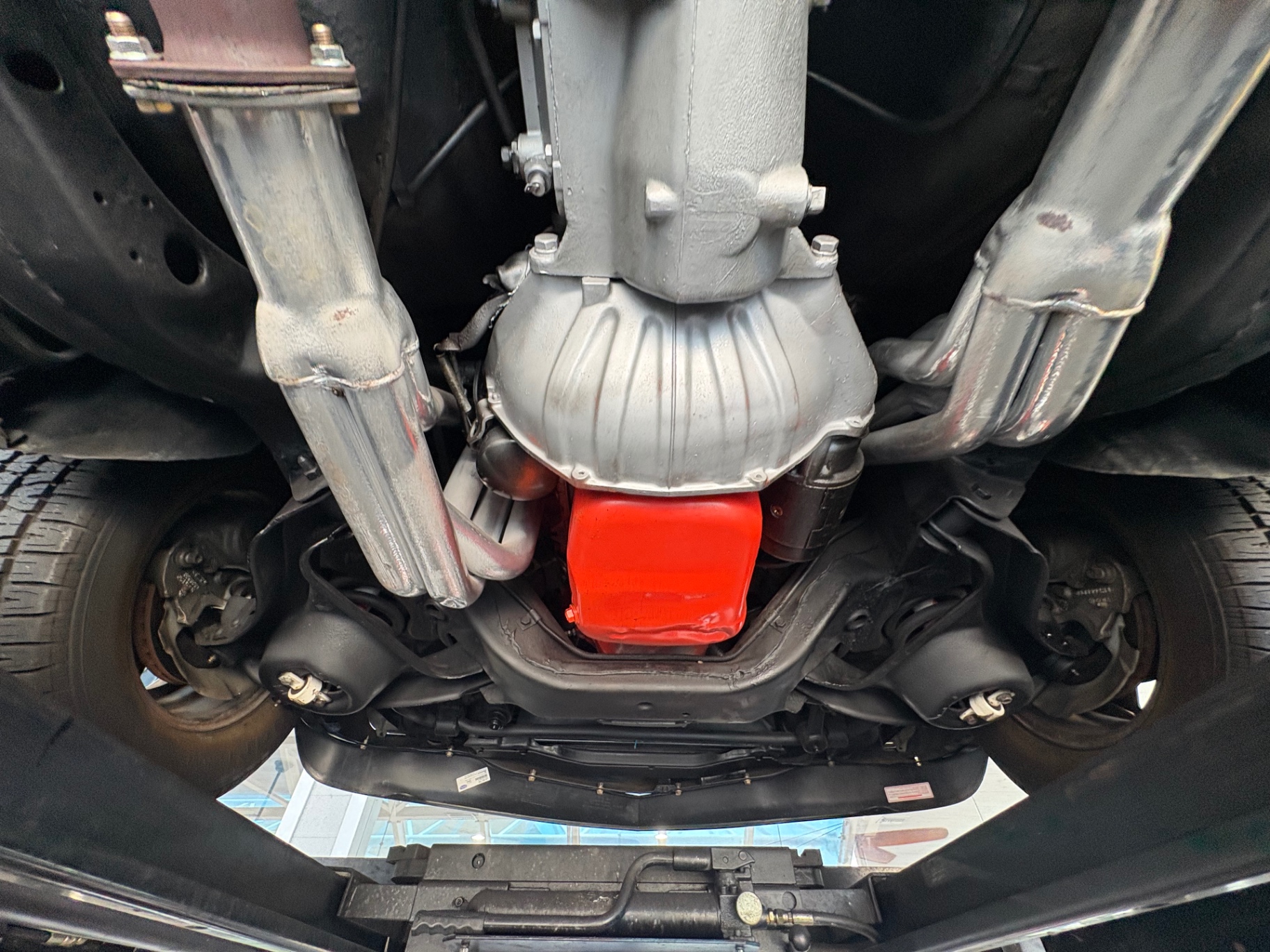
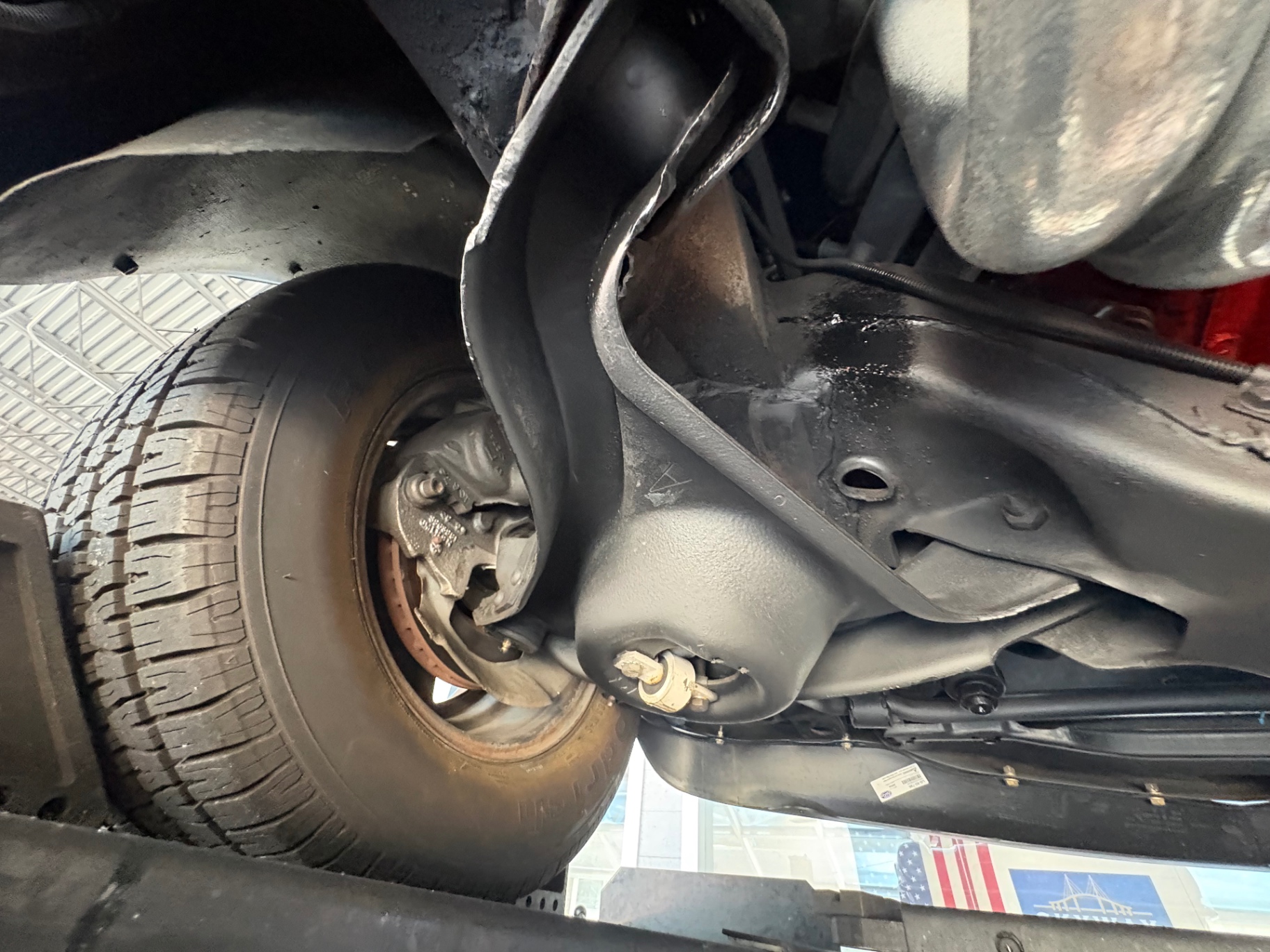
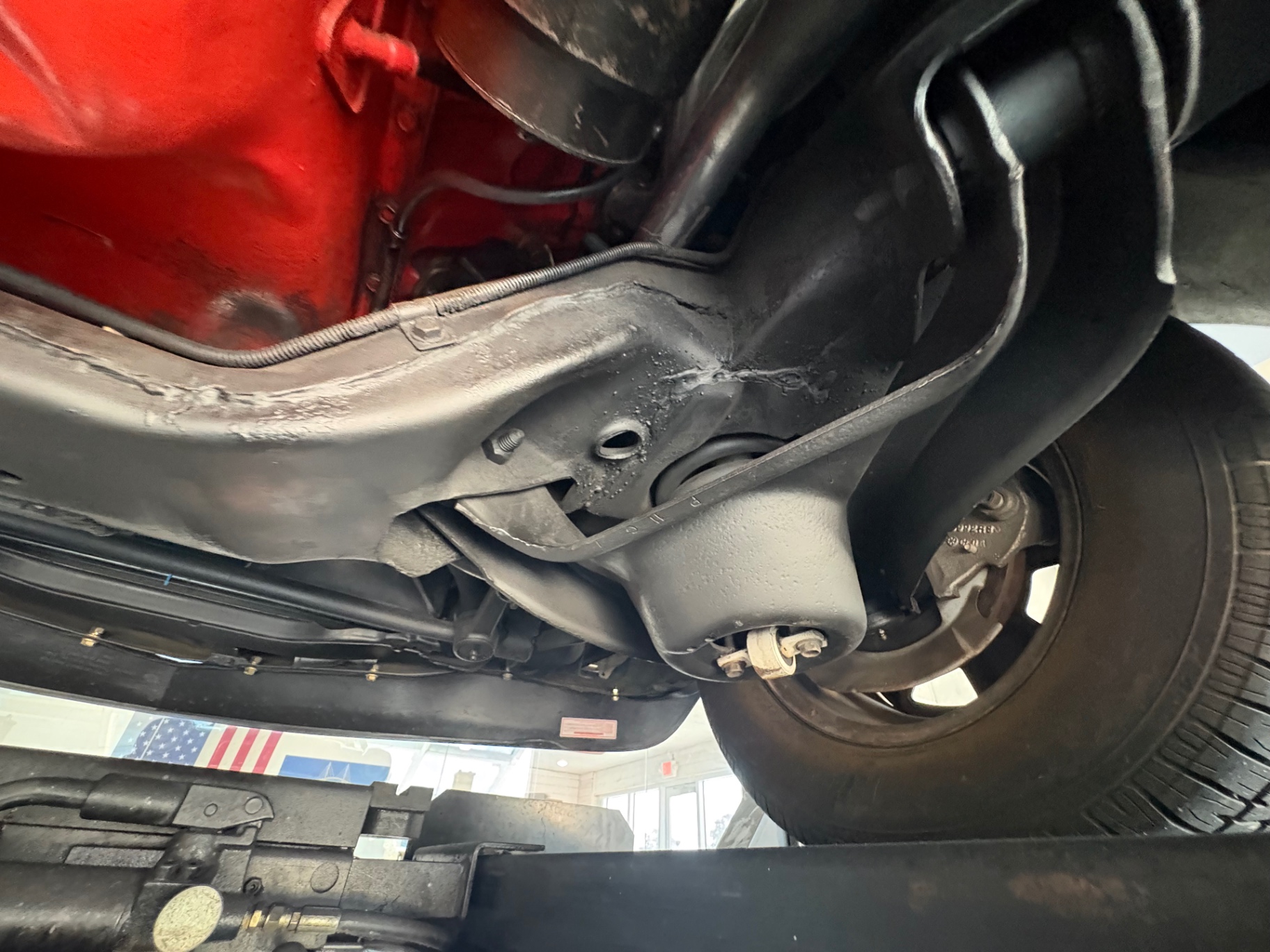
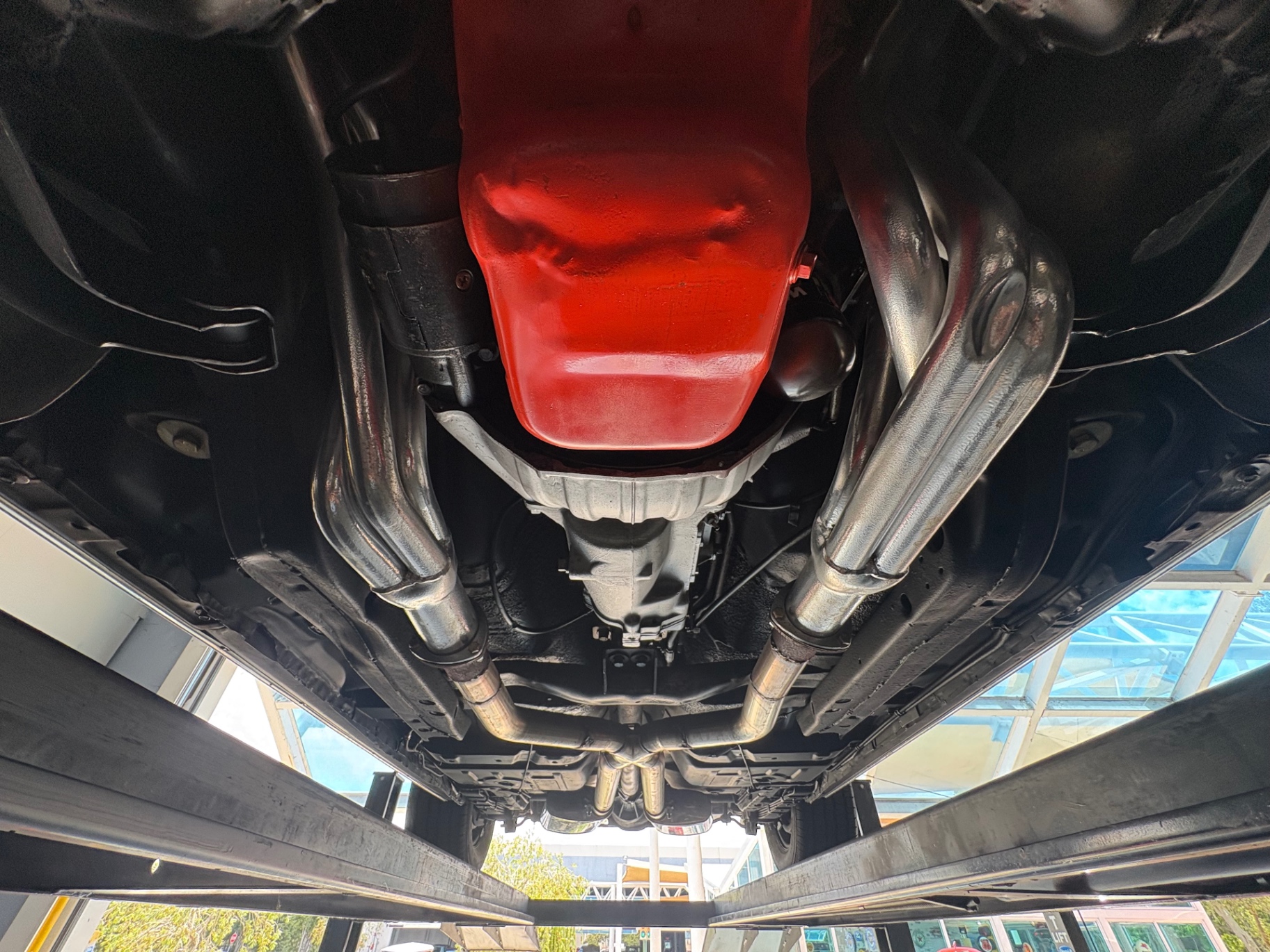
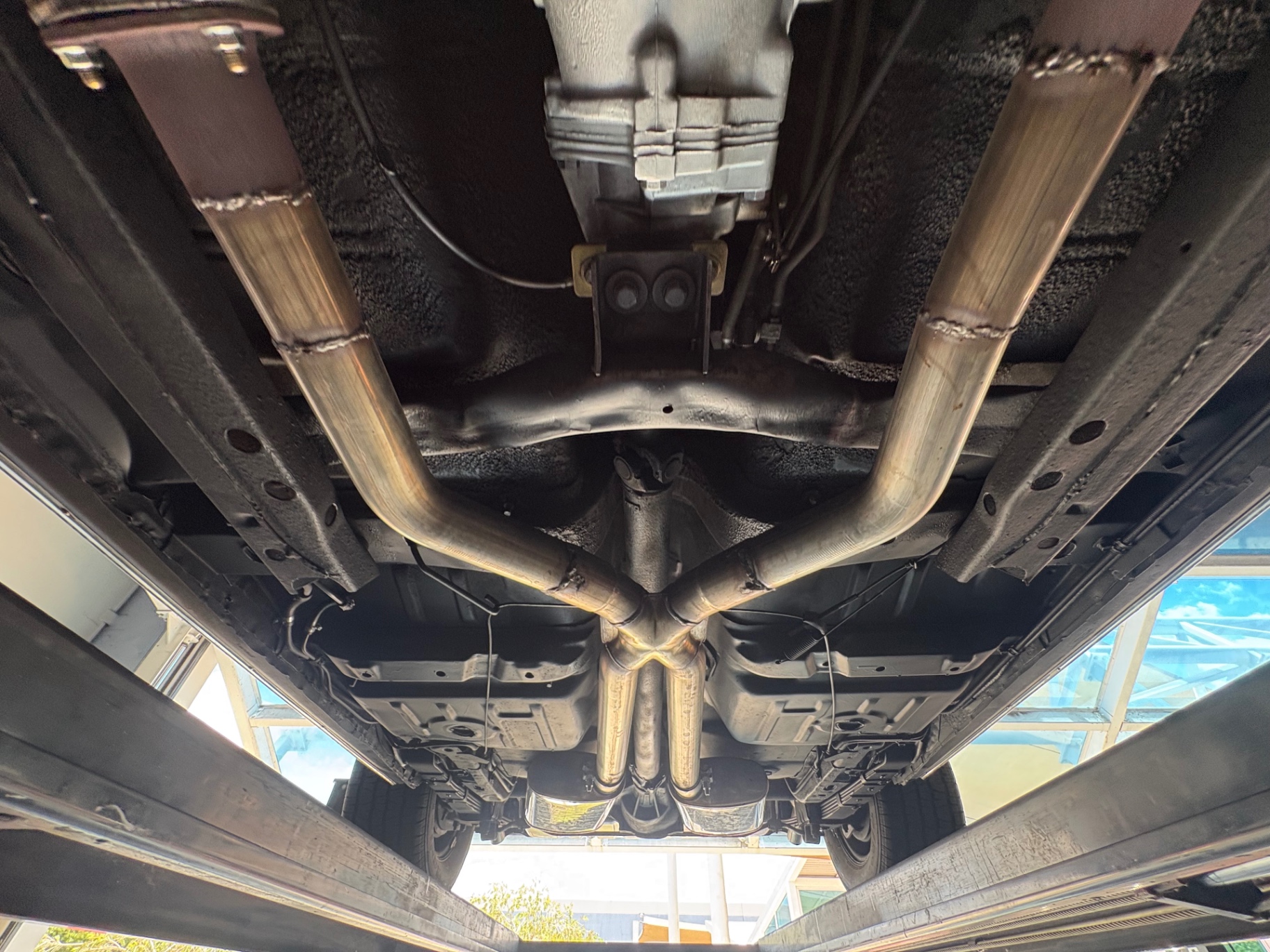
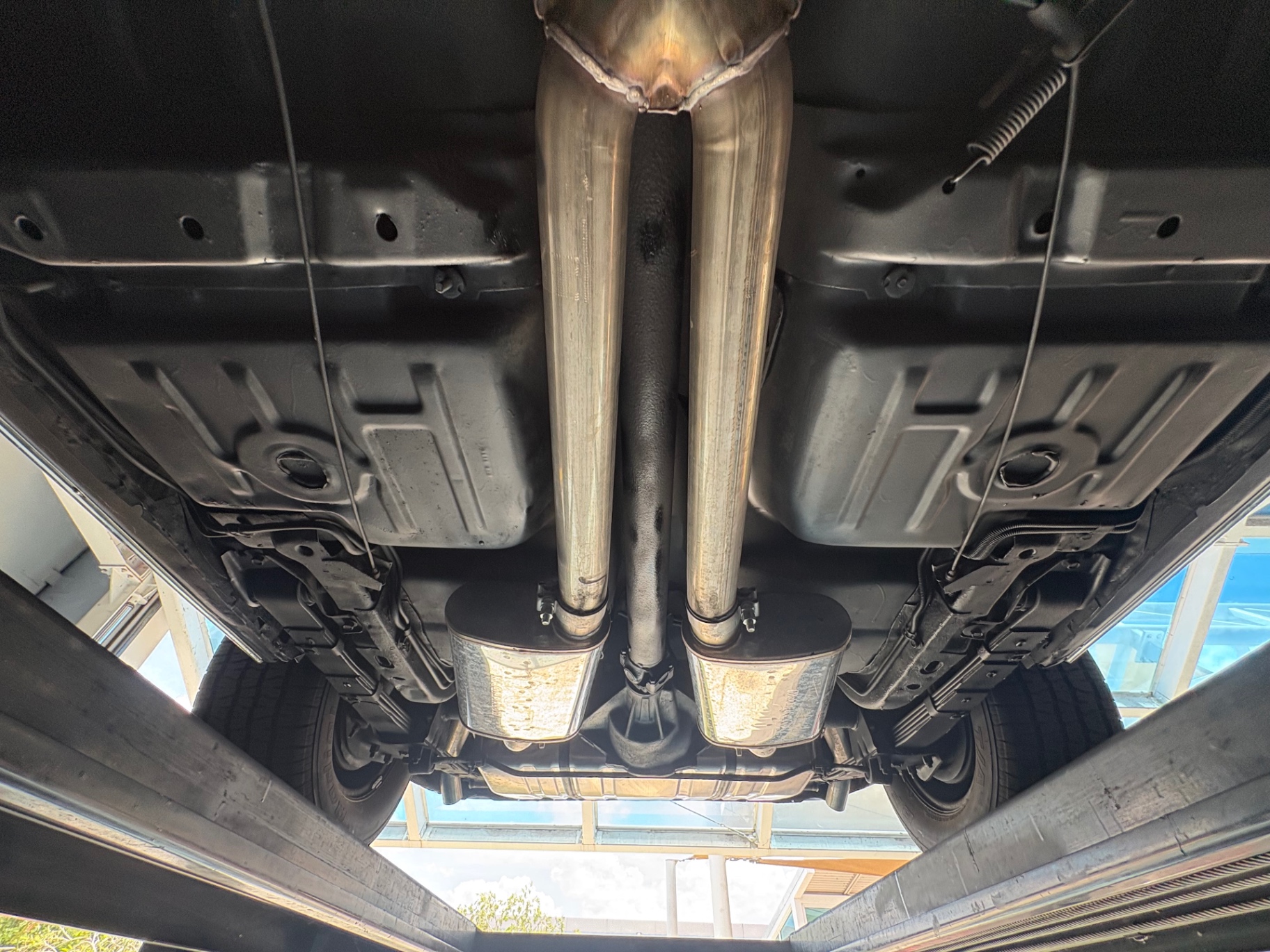
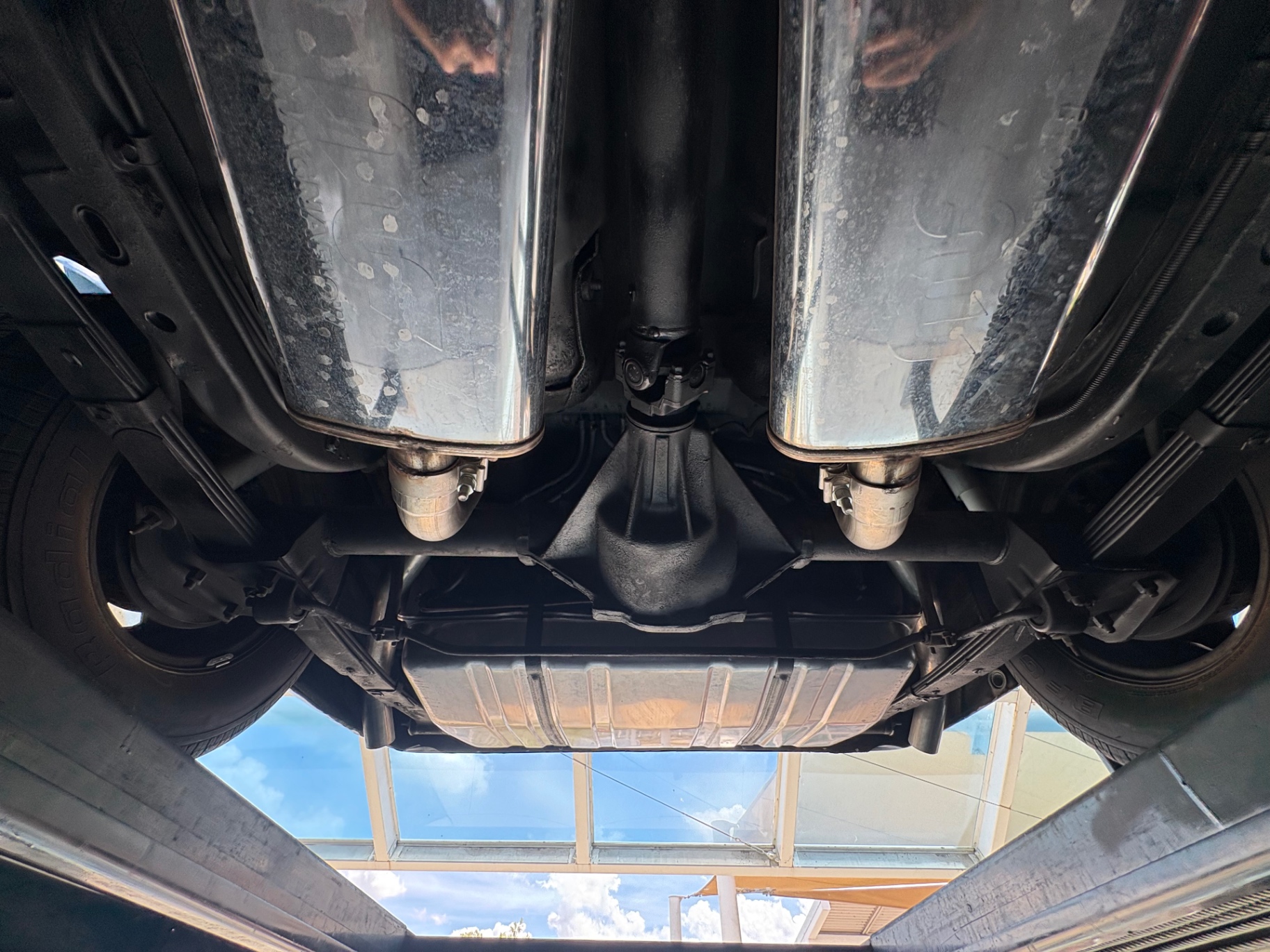
The undercarriage photos show a clean, solid structure — no significant rust, no patched floor pans, no evidence of previous accident damage to the frame rails. For a car based in Florida for any portion of its life, that condition is worth examining carefully, and this one holds up to scrutiny.
Interior
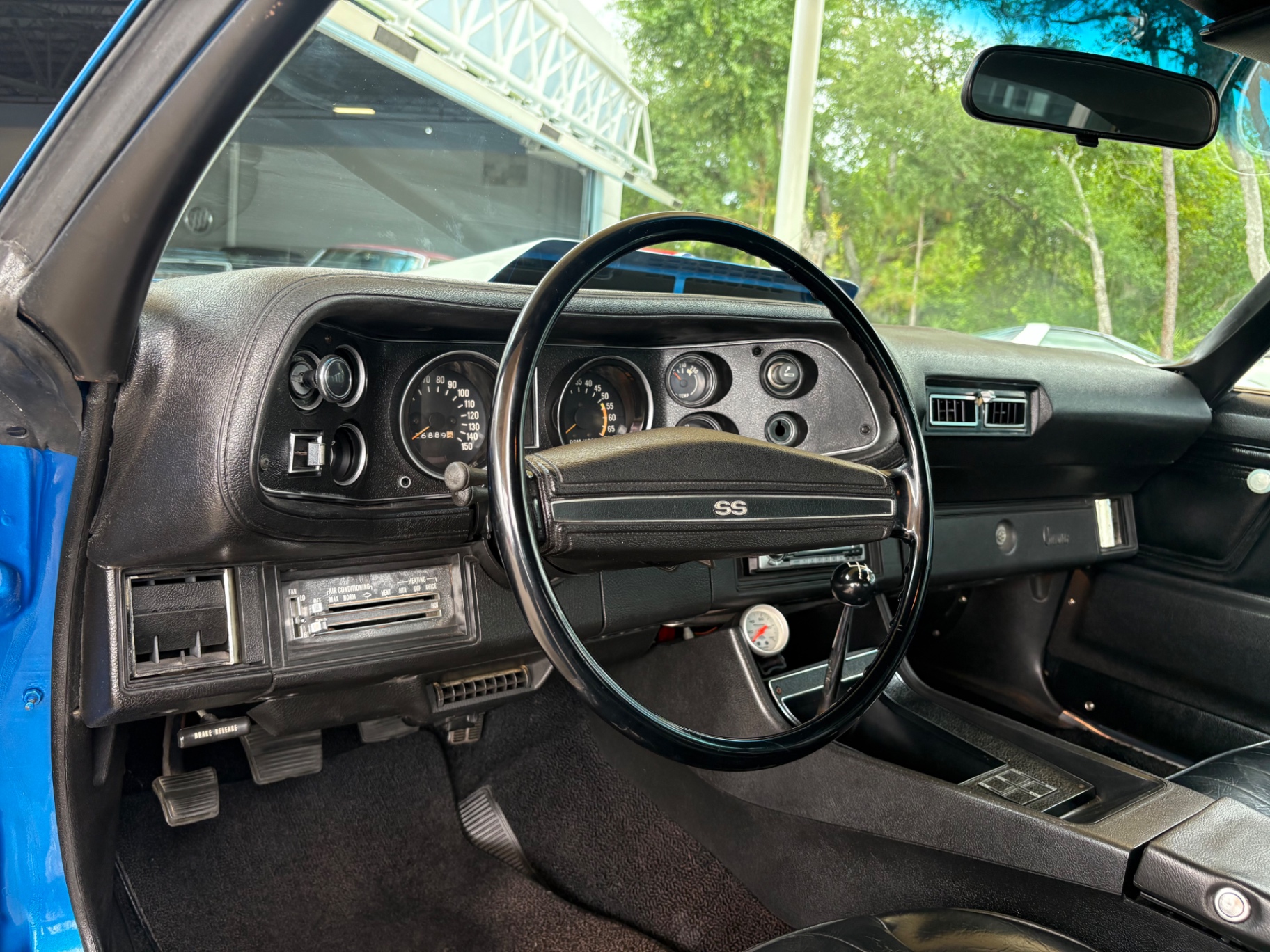
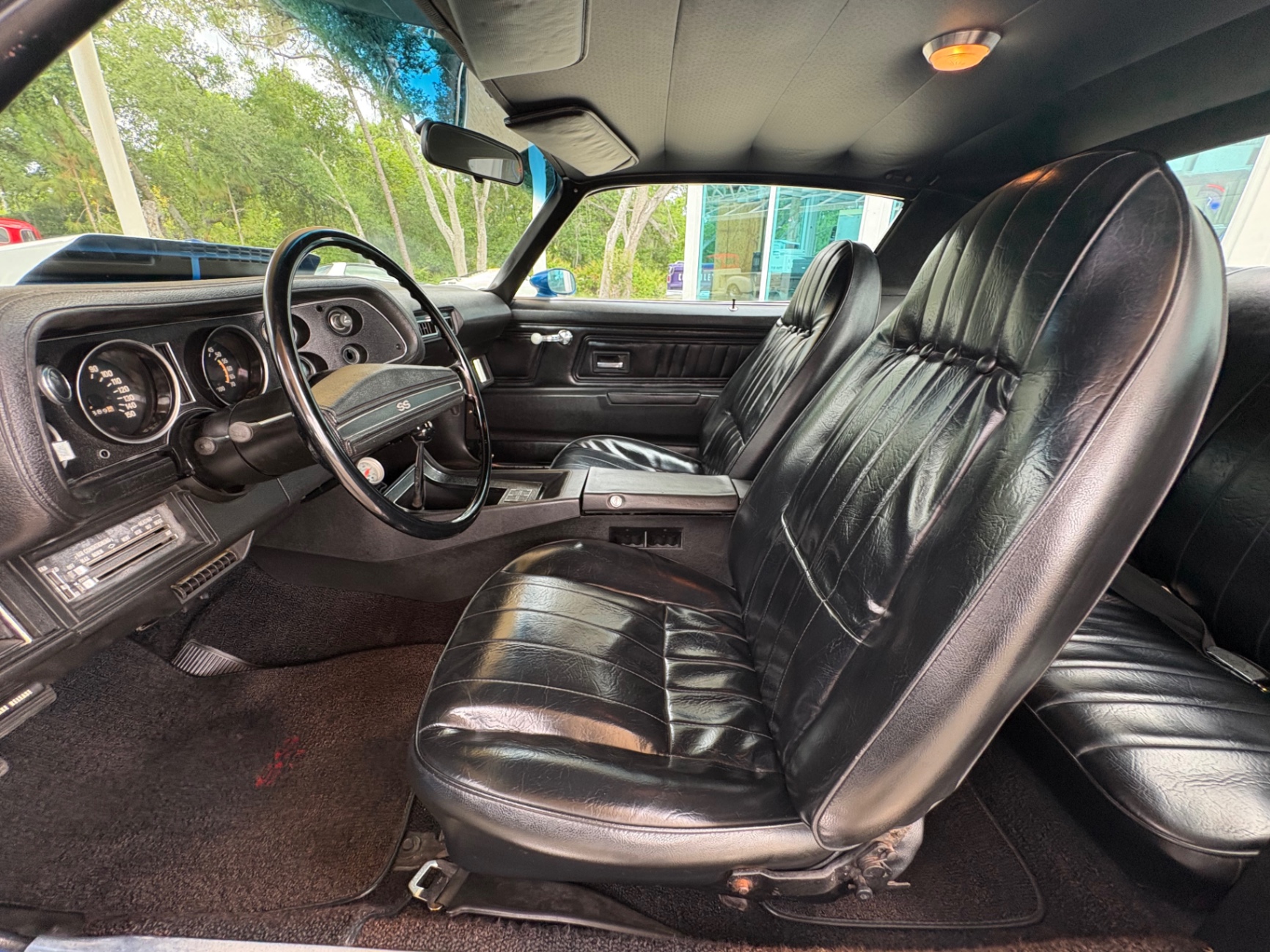
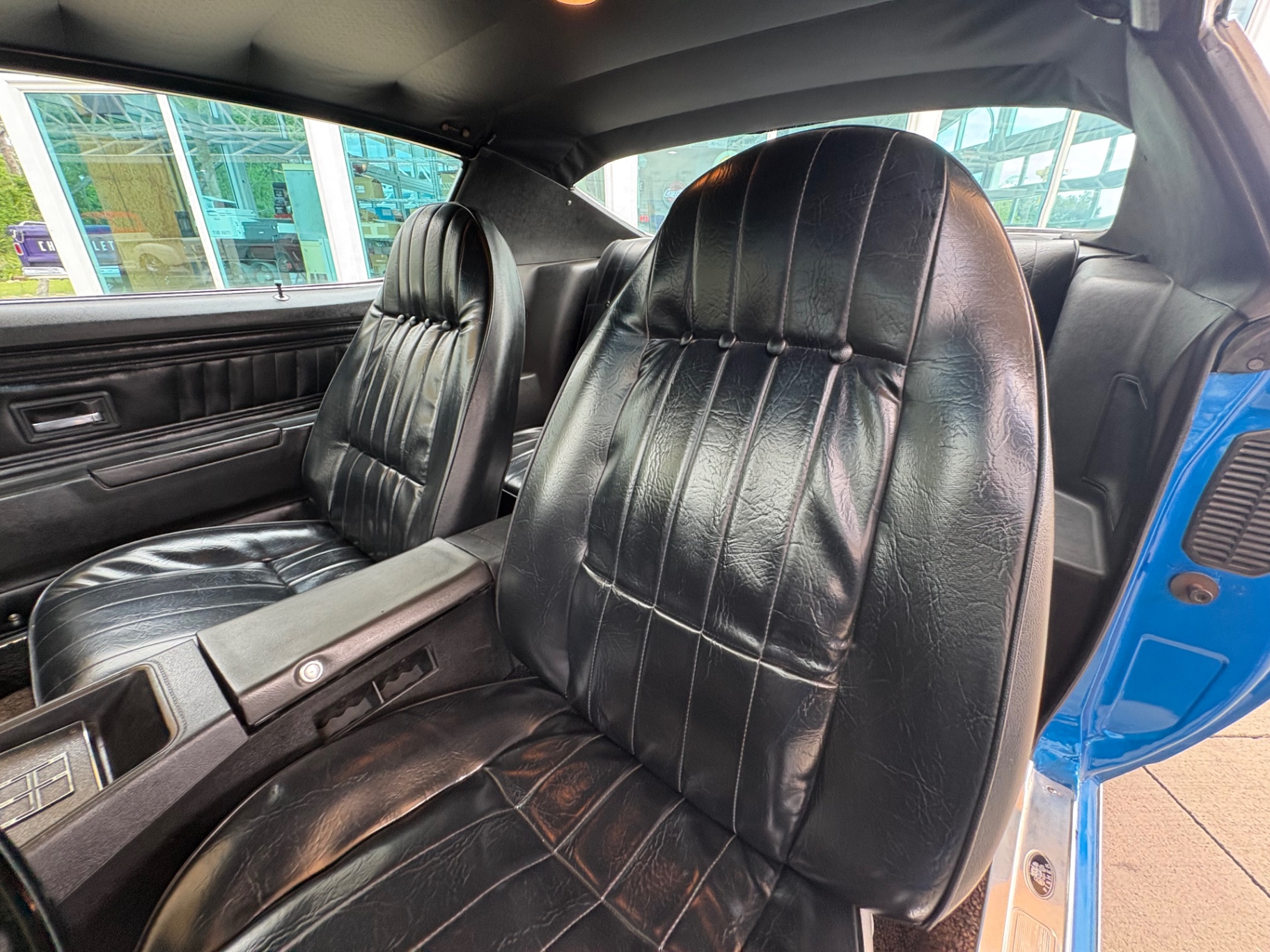
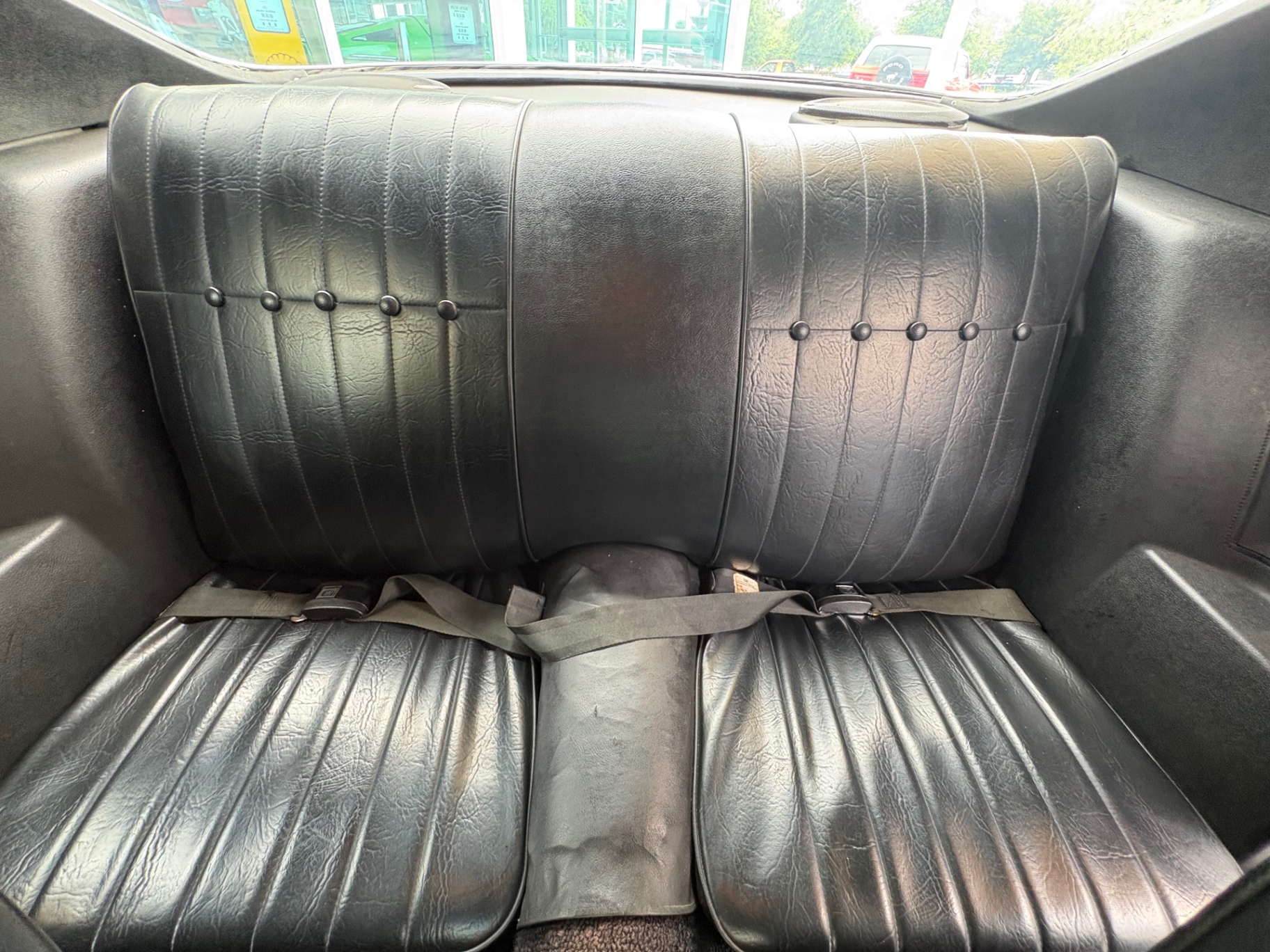
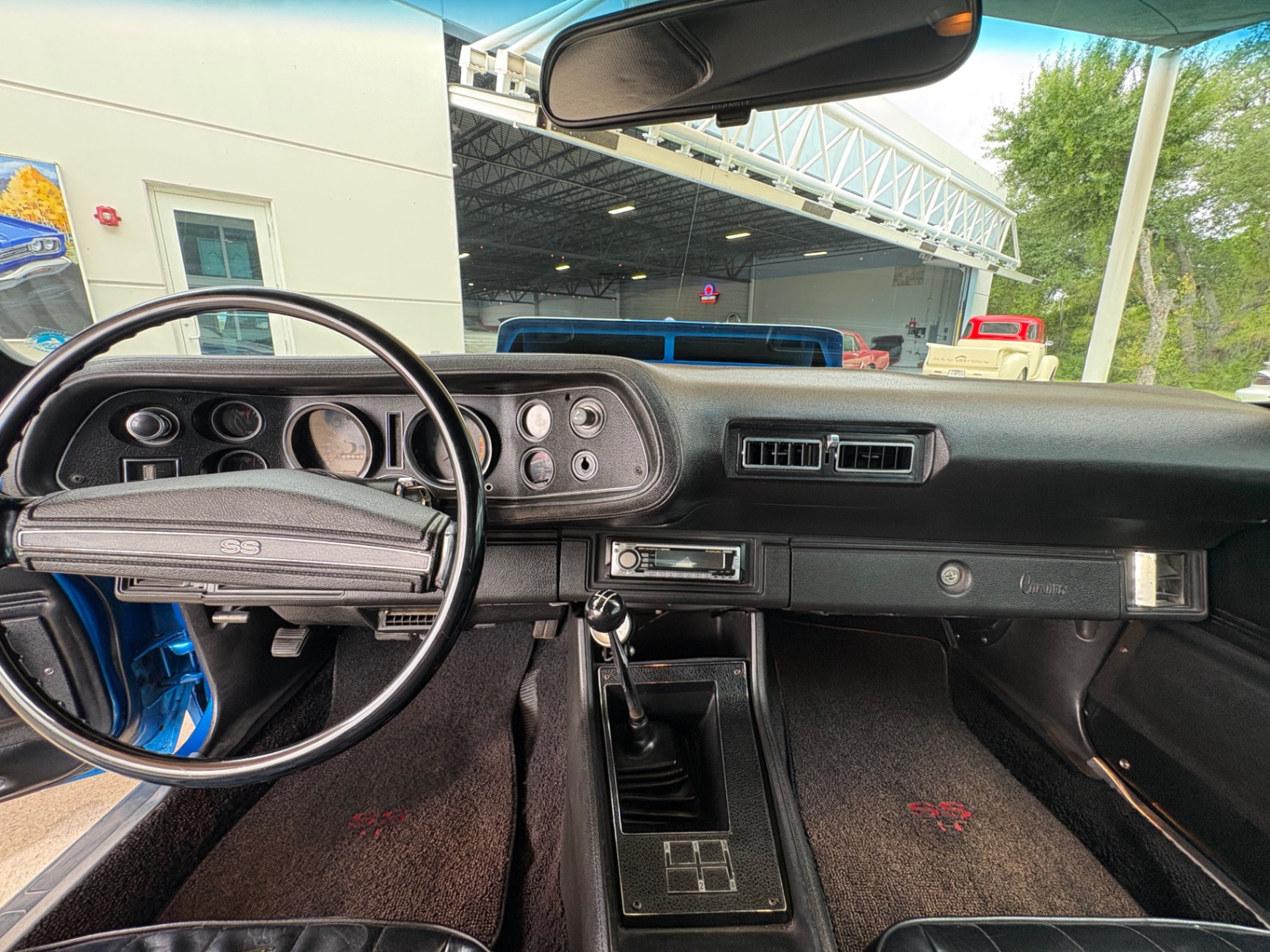
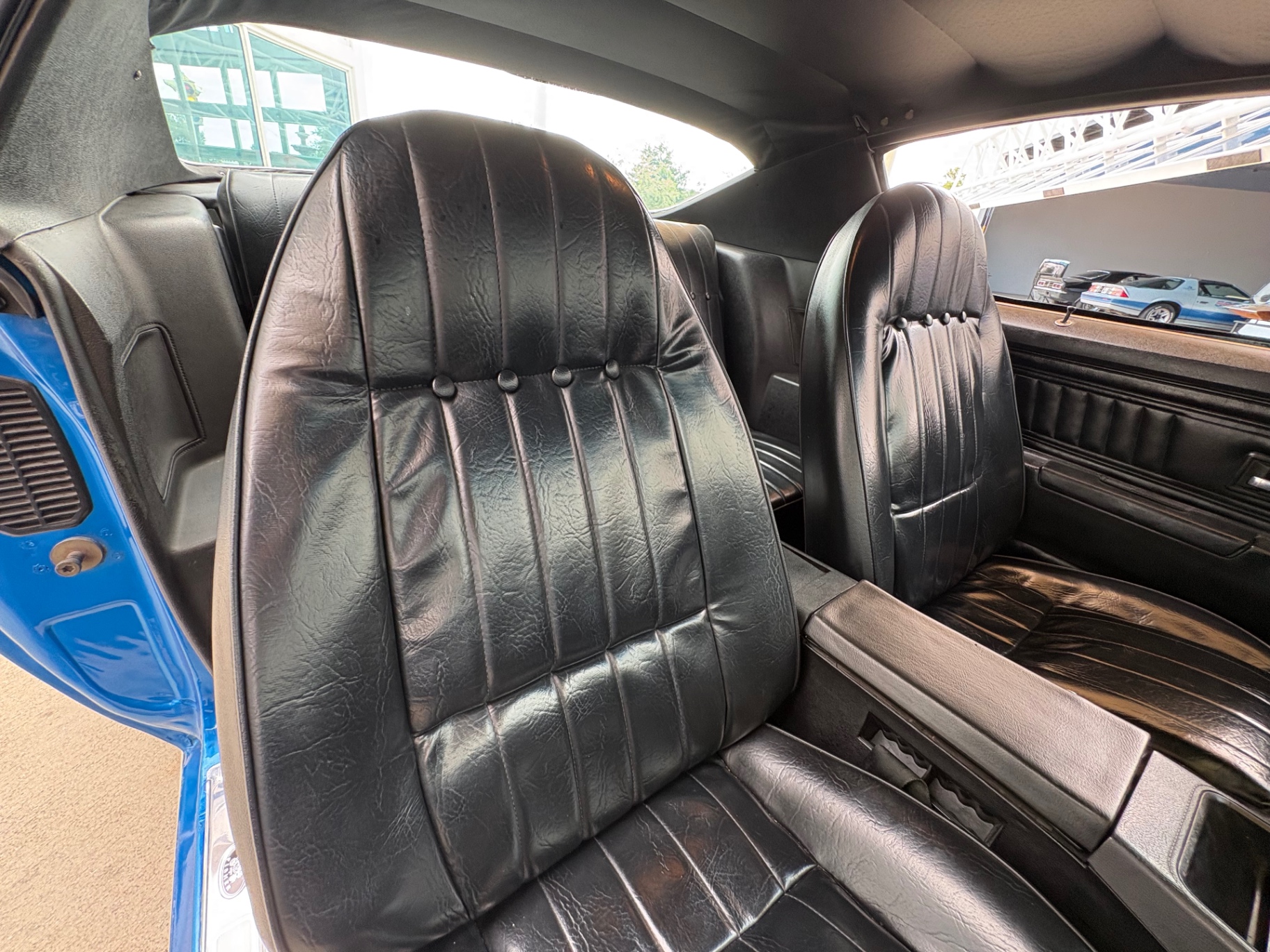
The black vinyl interior is correctly spec'd for the SS package. Bucket seats up front are covered in black vinyl and remain in solid condition without the cracking or shrinkage that commonly afflicts original vinyl on cars of this age. The center console runs between the buckets and houses the Muncie shifter, which is exactly where it belongs in a car like this. The SS steering wheel is a sport three-spoke unit specific to the SS package, smaller in diameter than the standard wheel and giving a more direct connection to the front suspension.
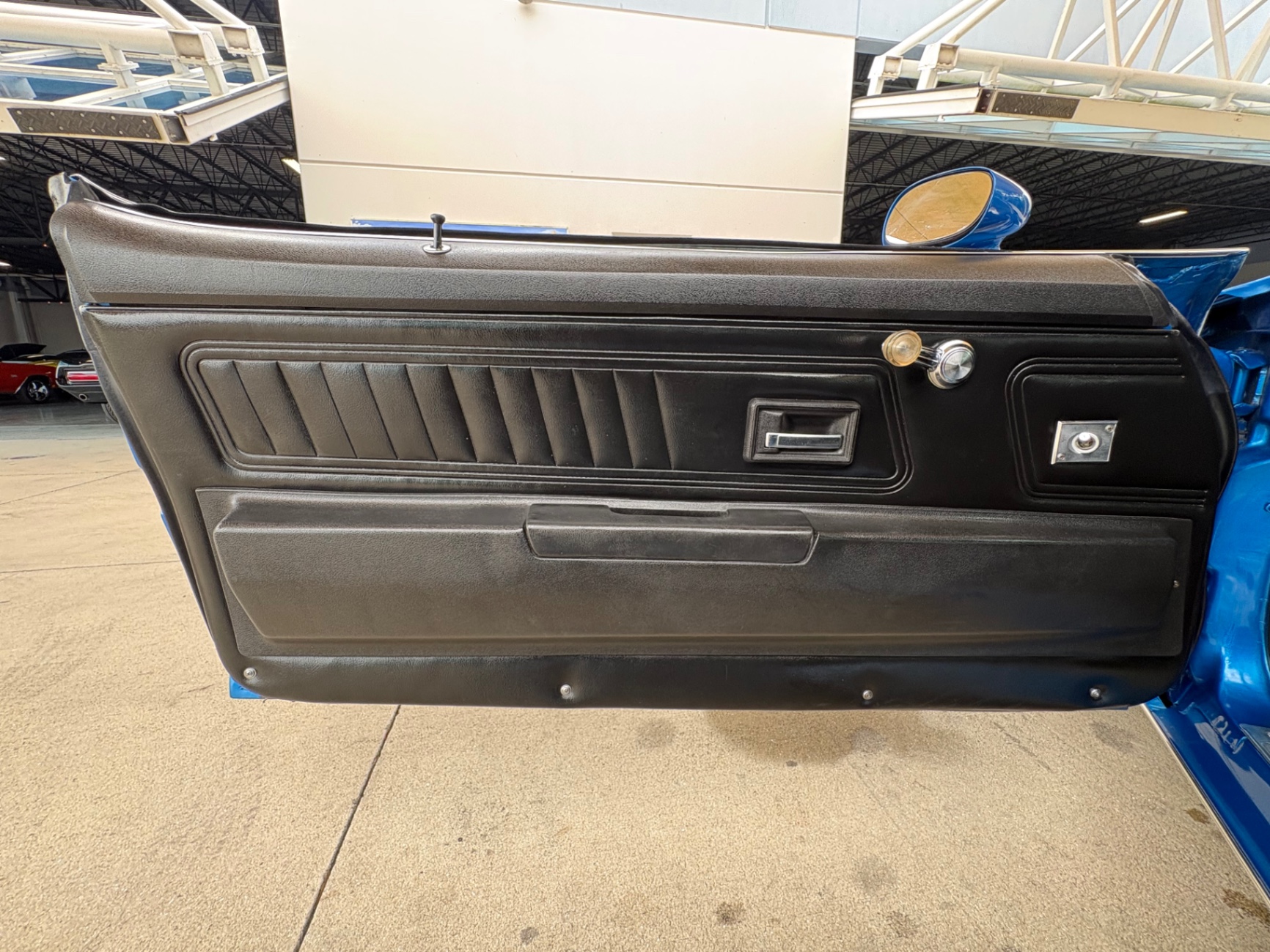
The door panels, dash, and headliner carry the correct black theme throughout, keeping the interior cohesive. Factory air conditioning vents are integrated into the dash as they should be on a car with the factory system. The console-mounted configuration with bucket seats was a popular option combination in 1971, and it reflects how the original buyer configured this car — as a performance machine that could also be driven comfortably on a longer trip.
Exterior
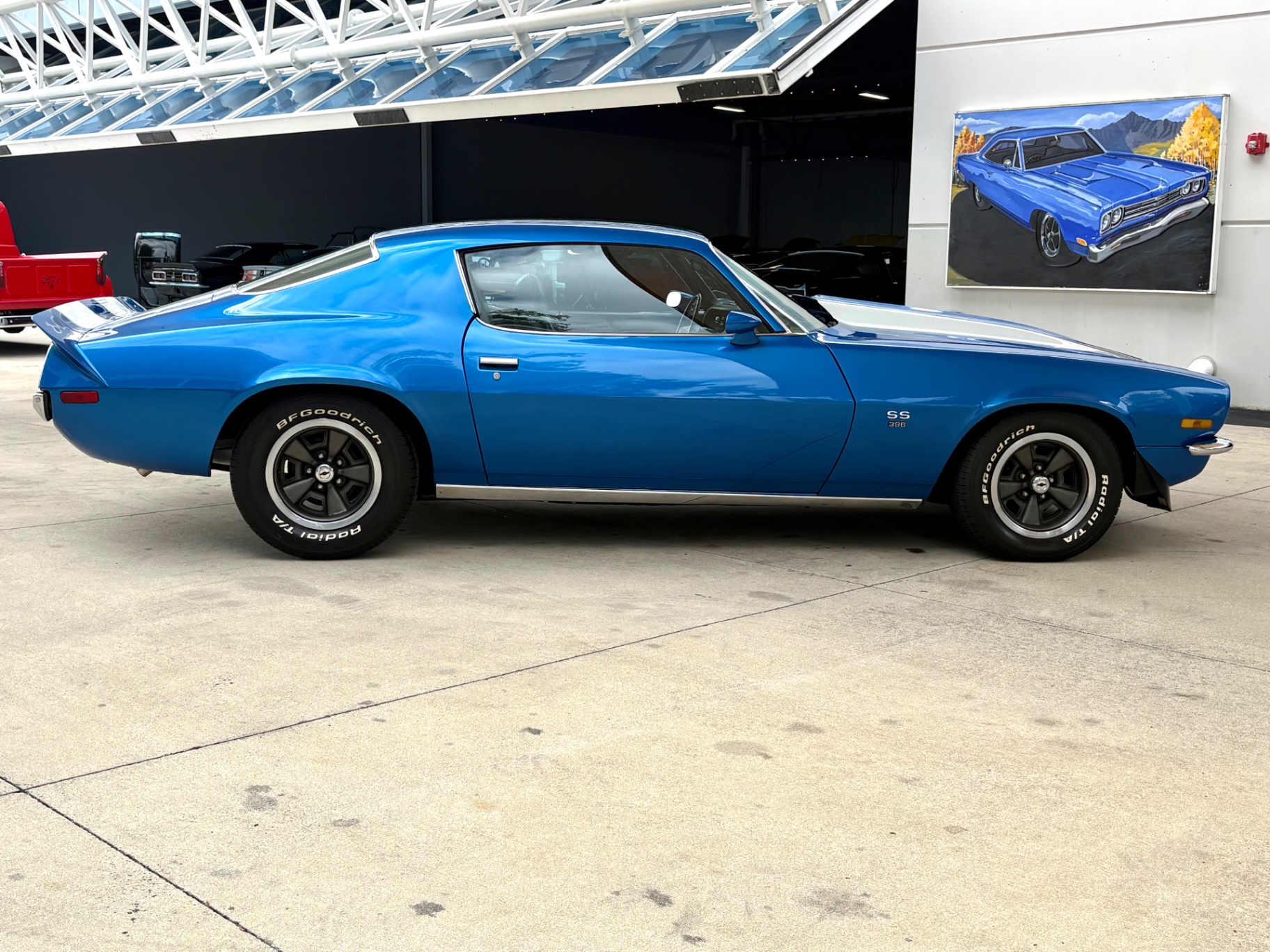
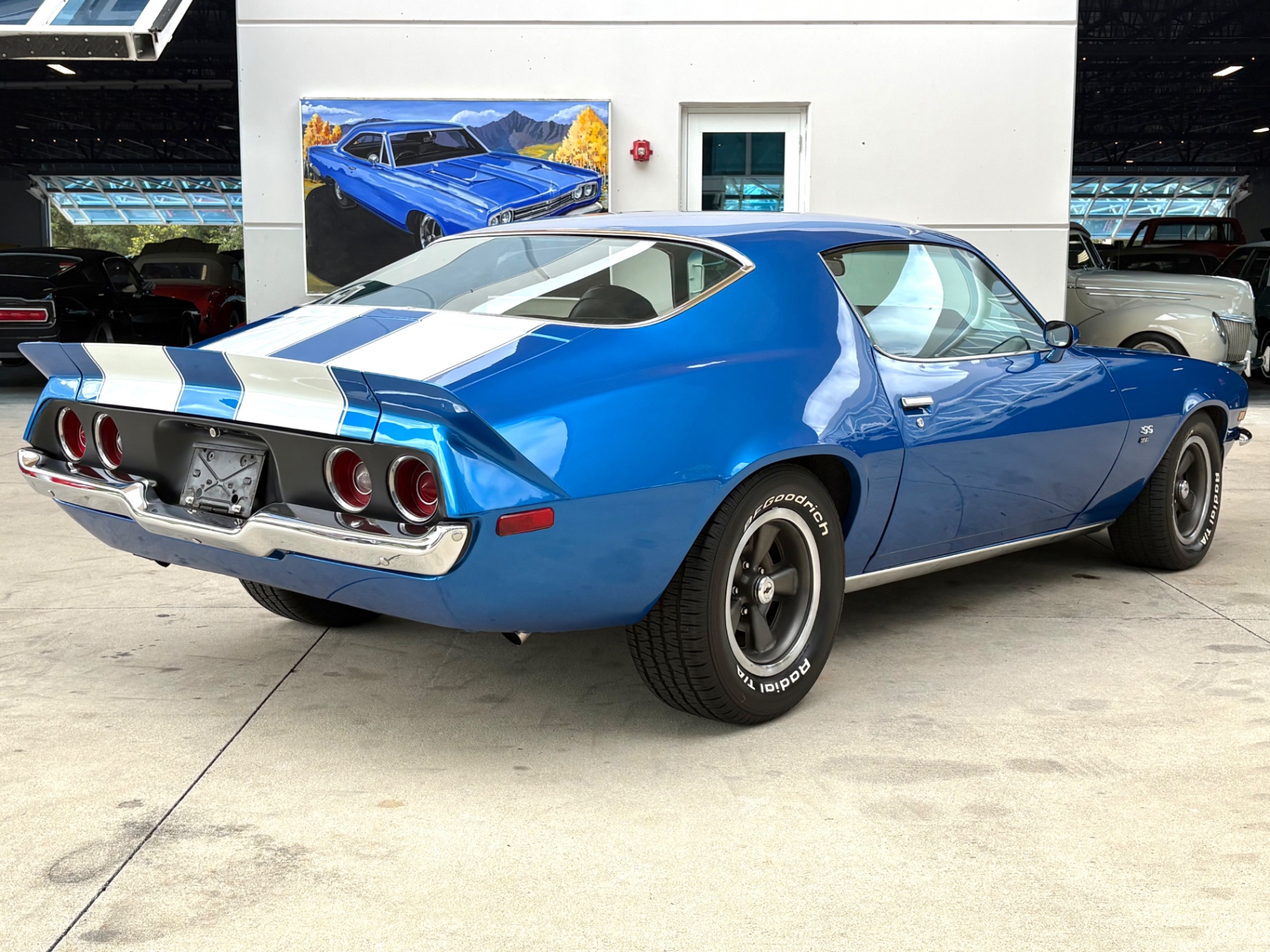
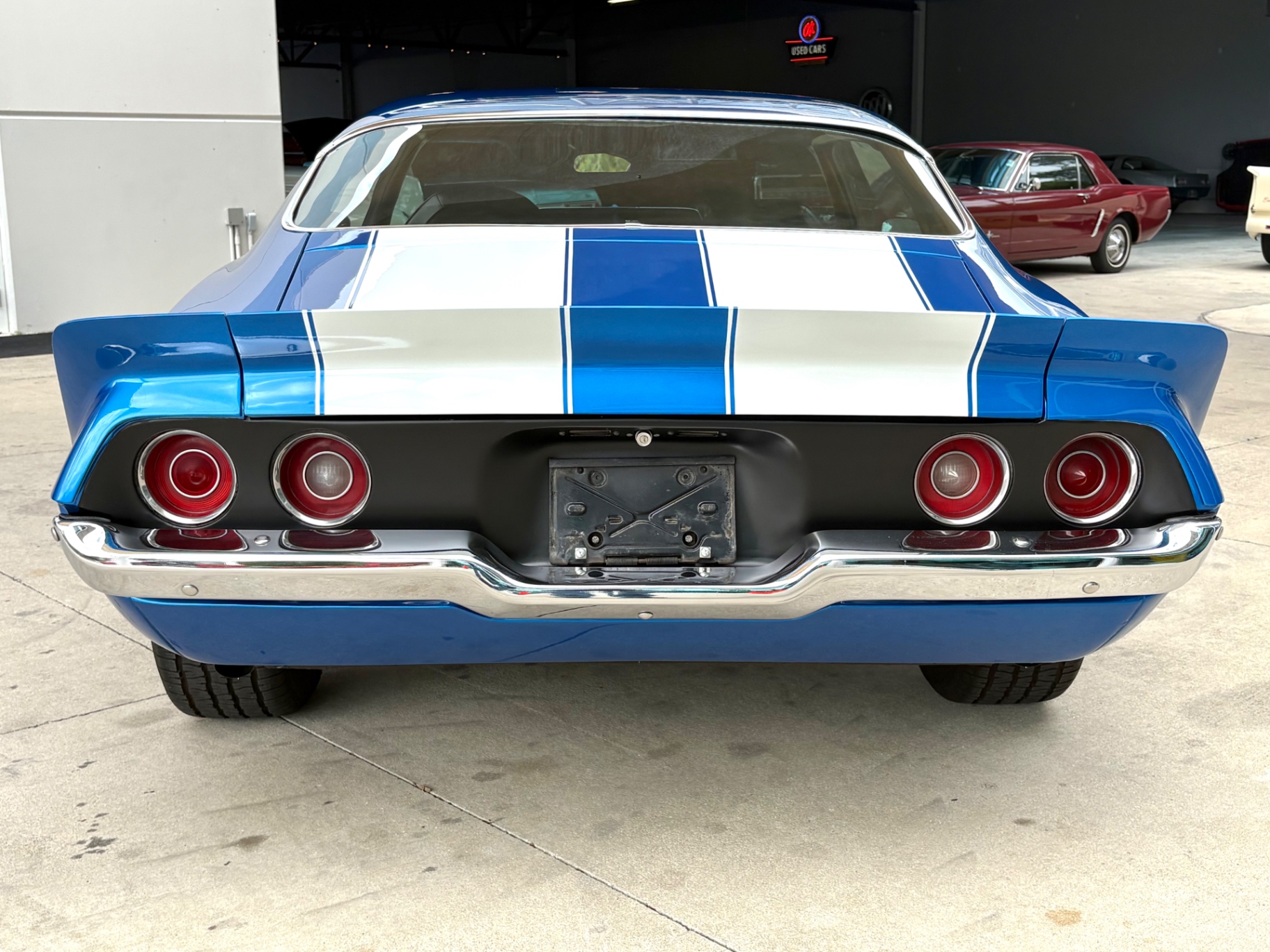
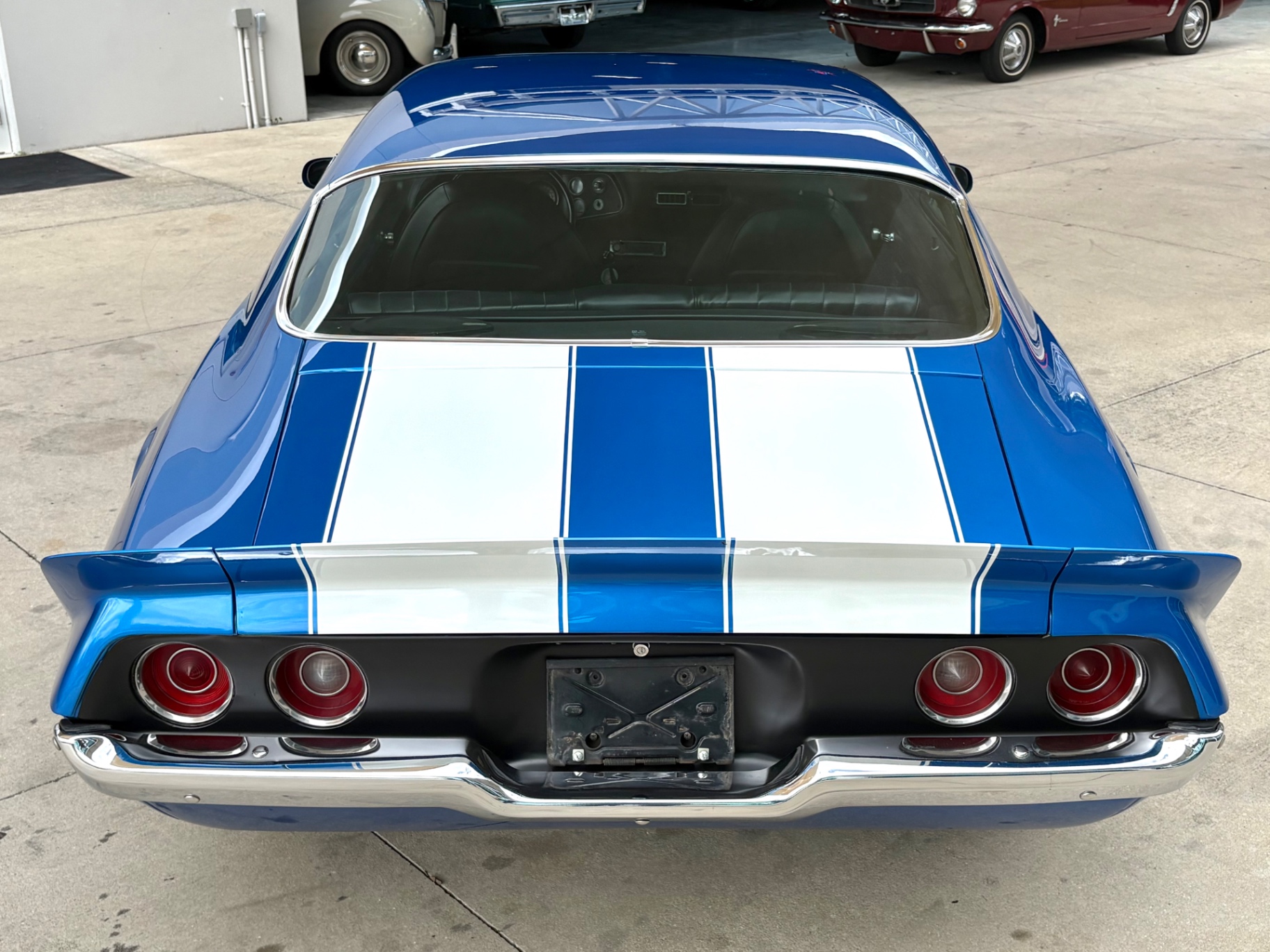
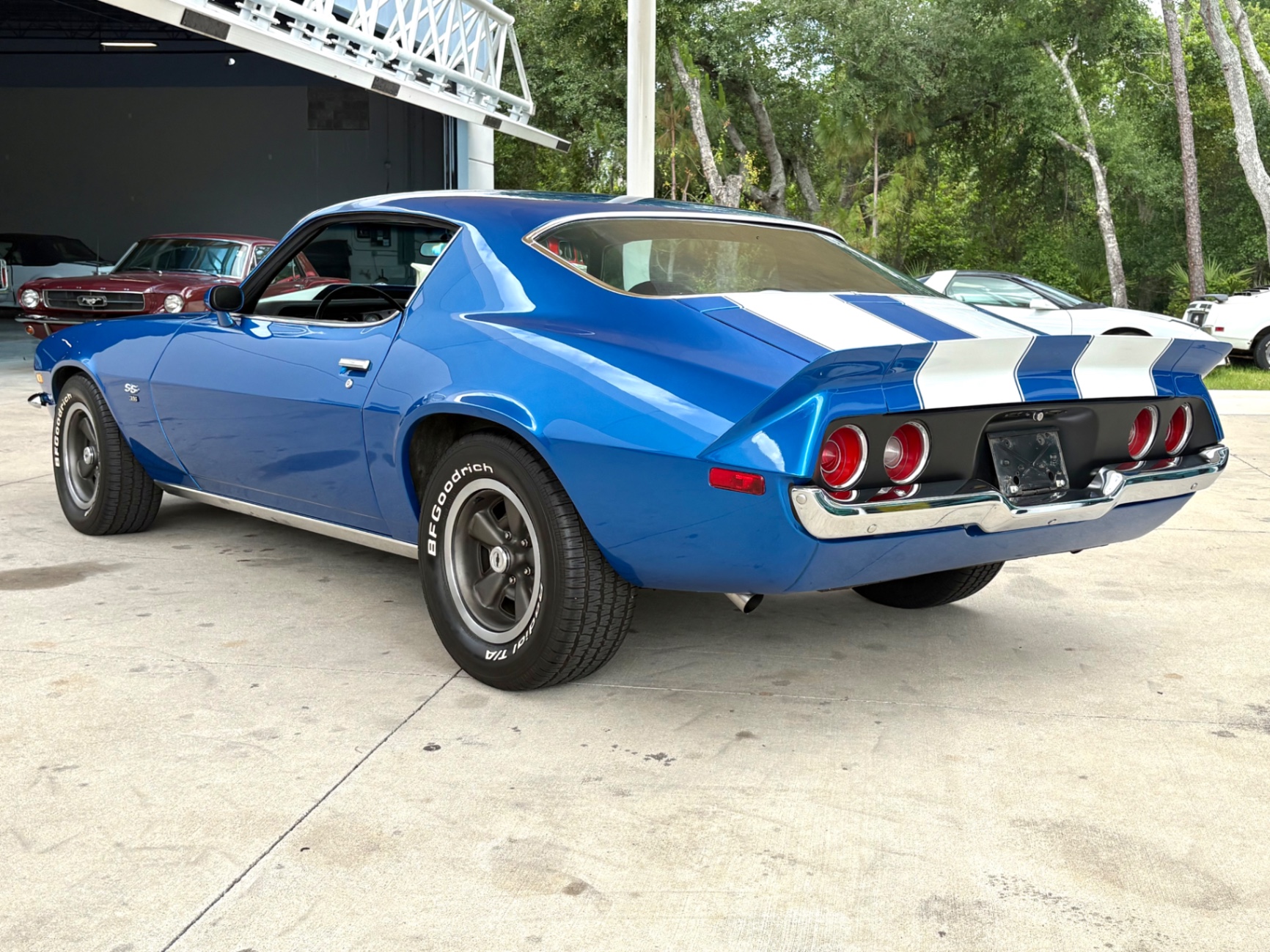
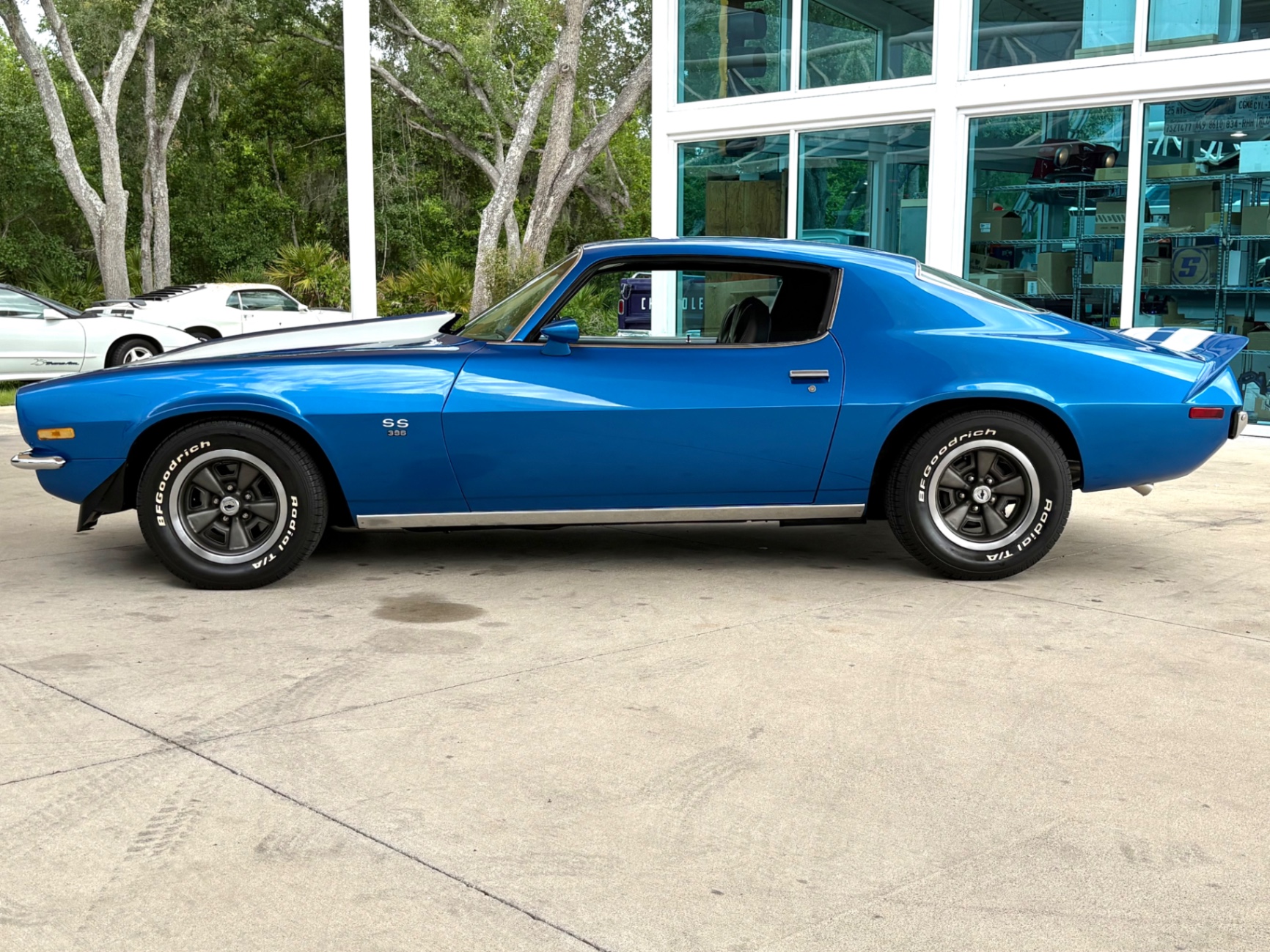
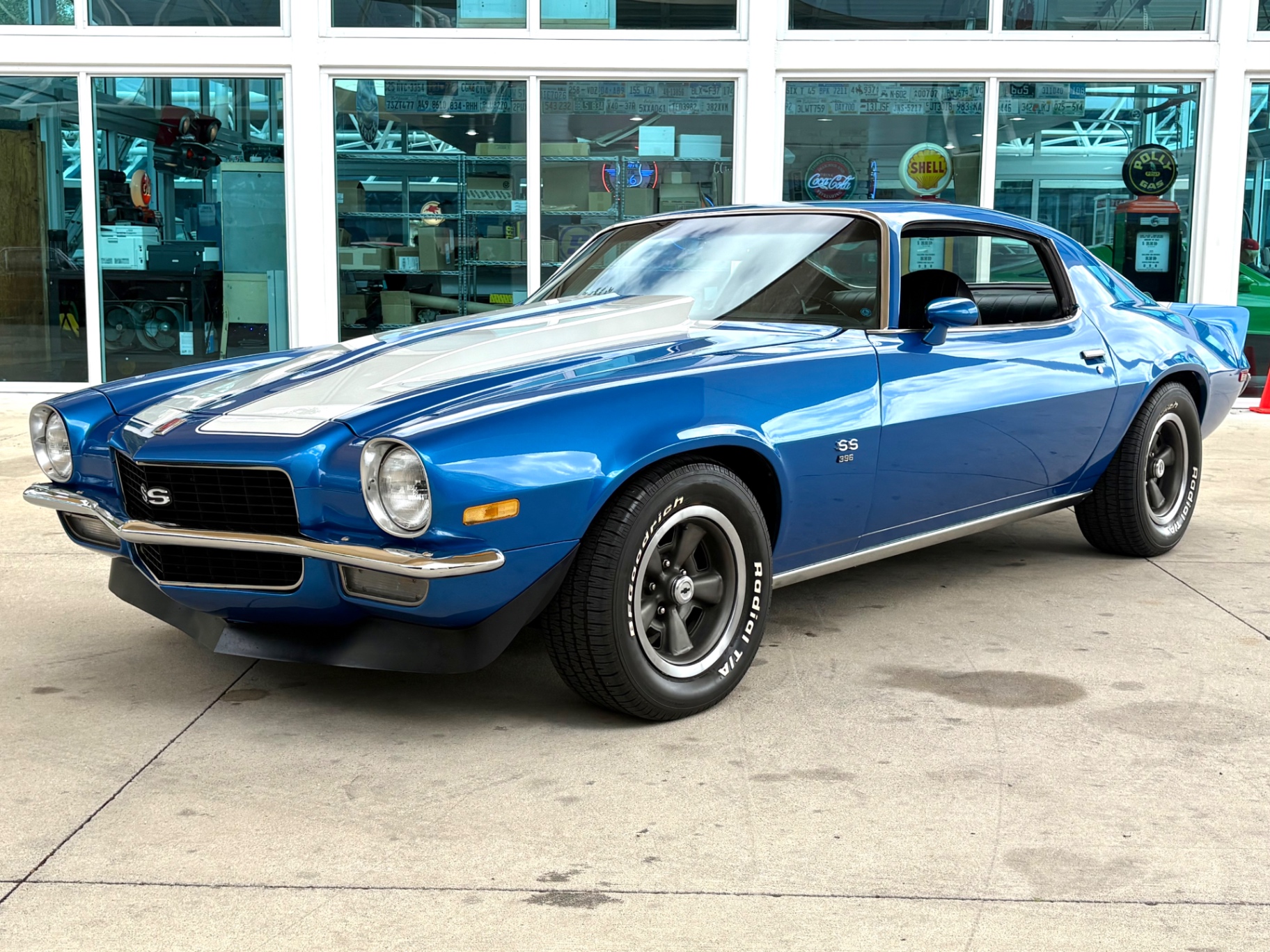
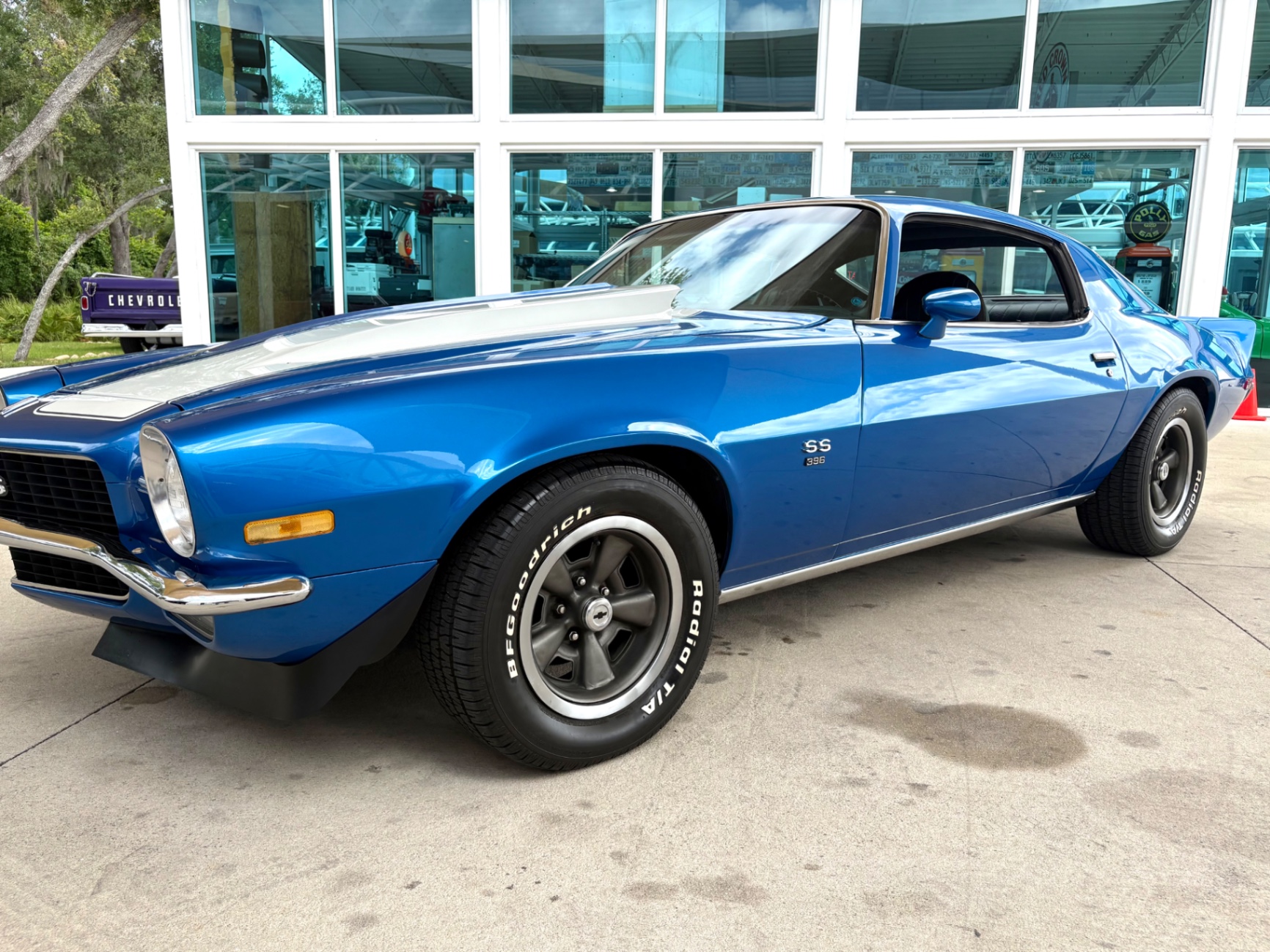
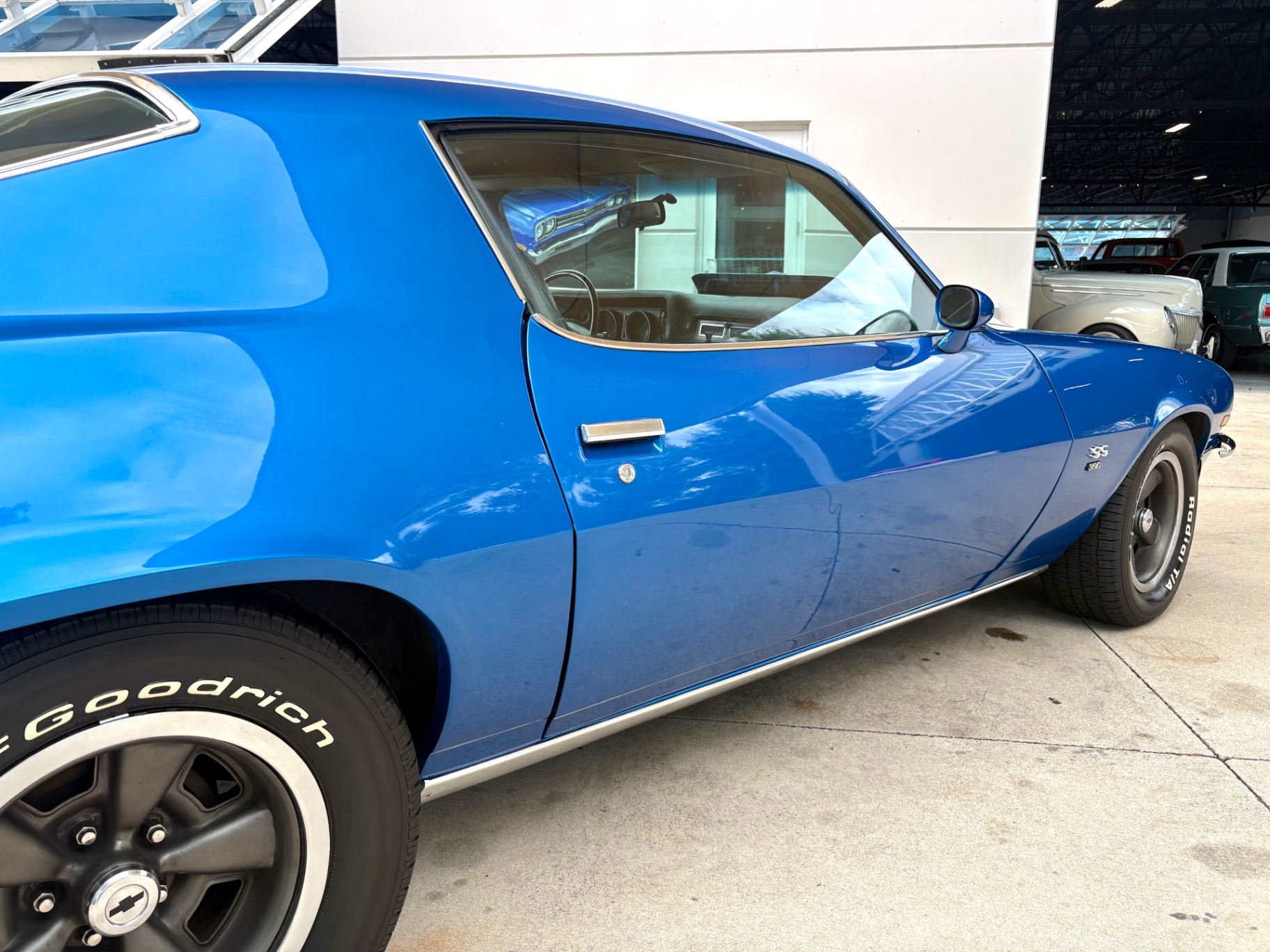
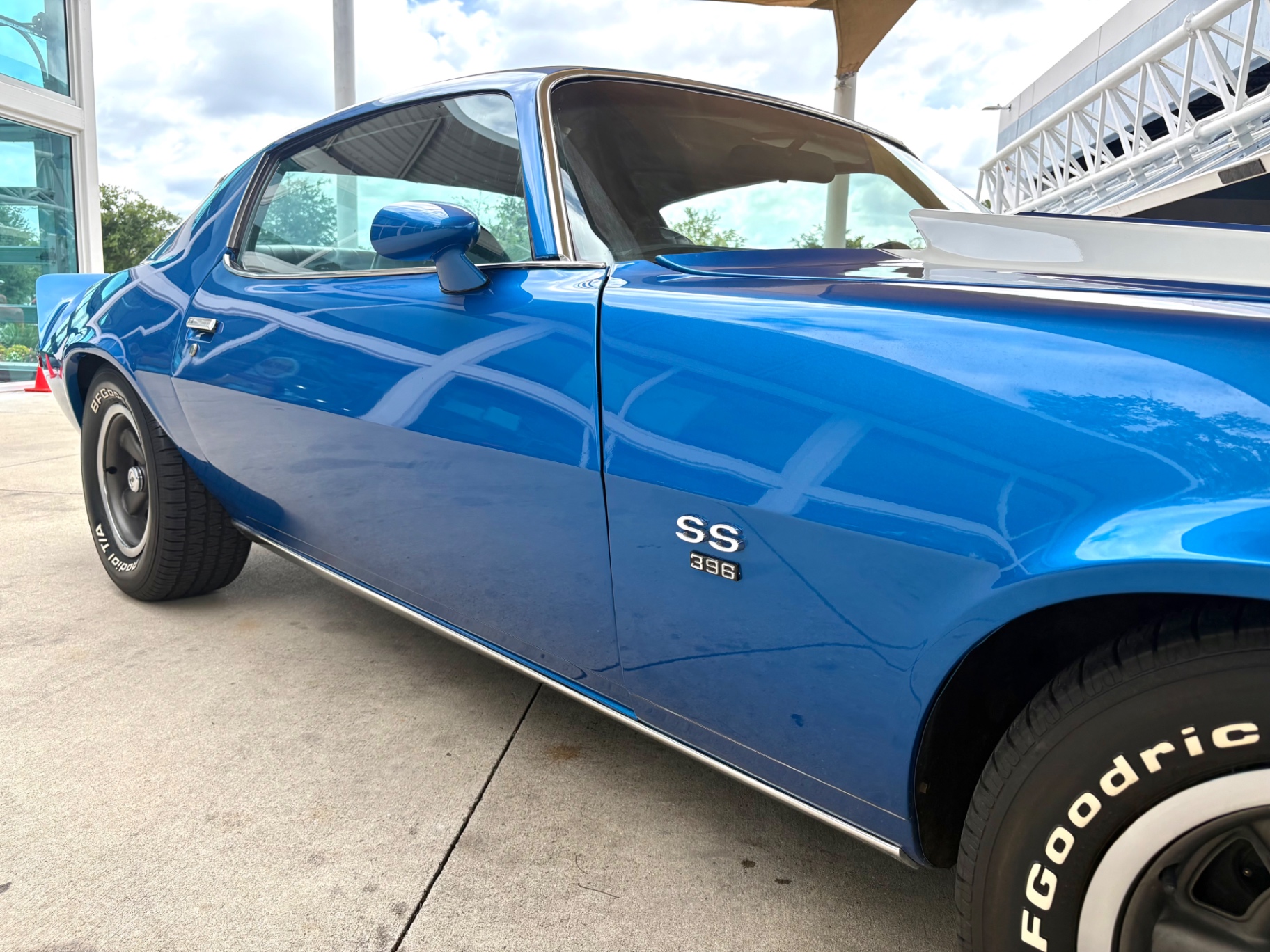
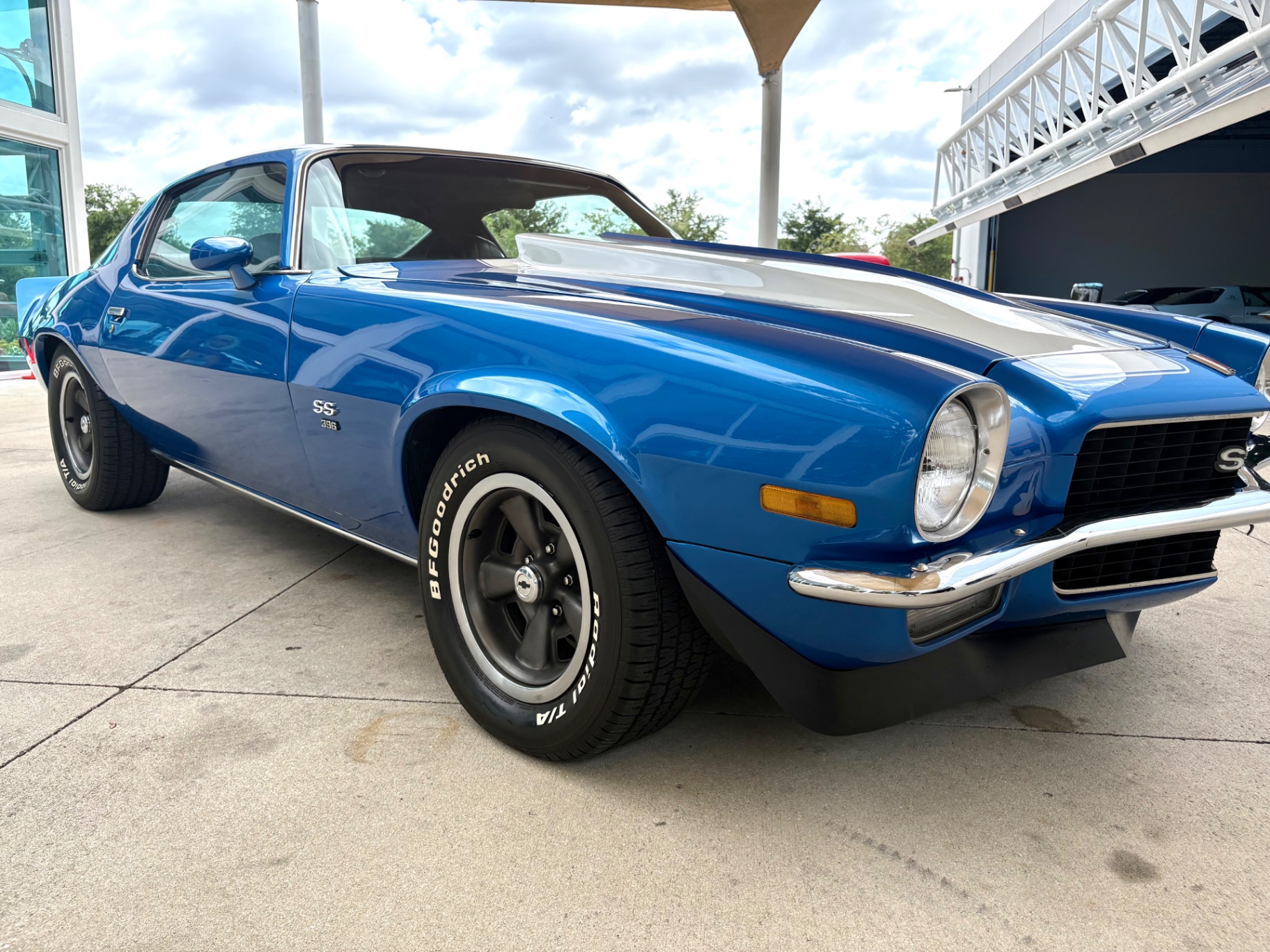
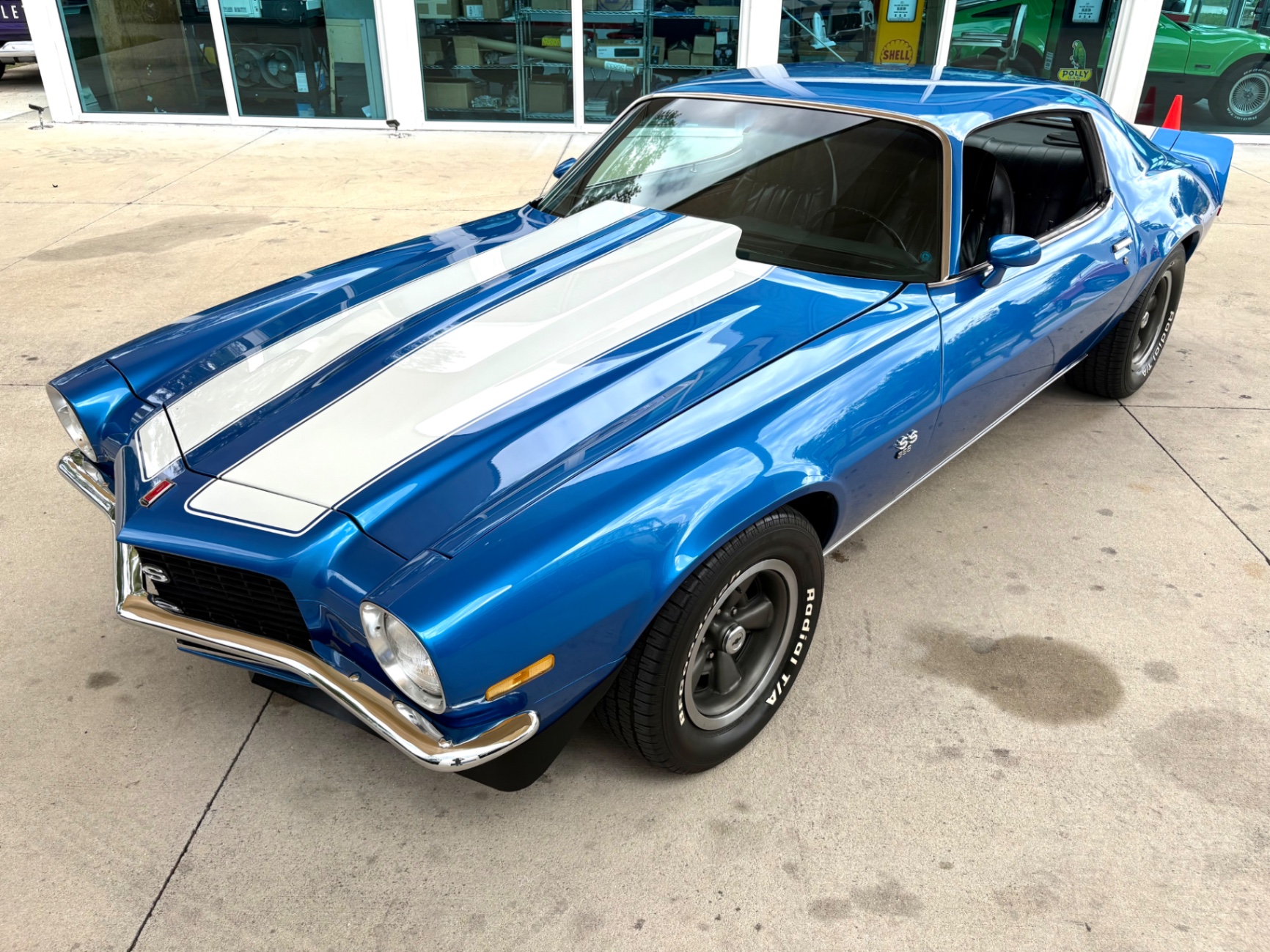
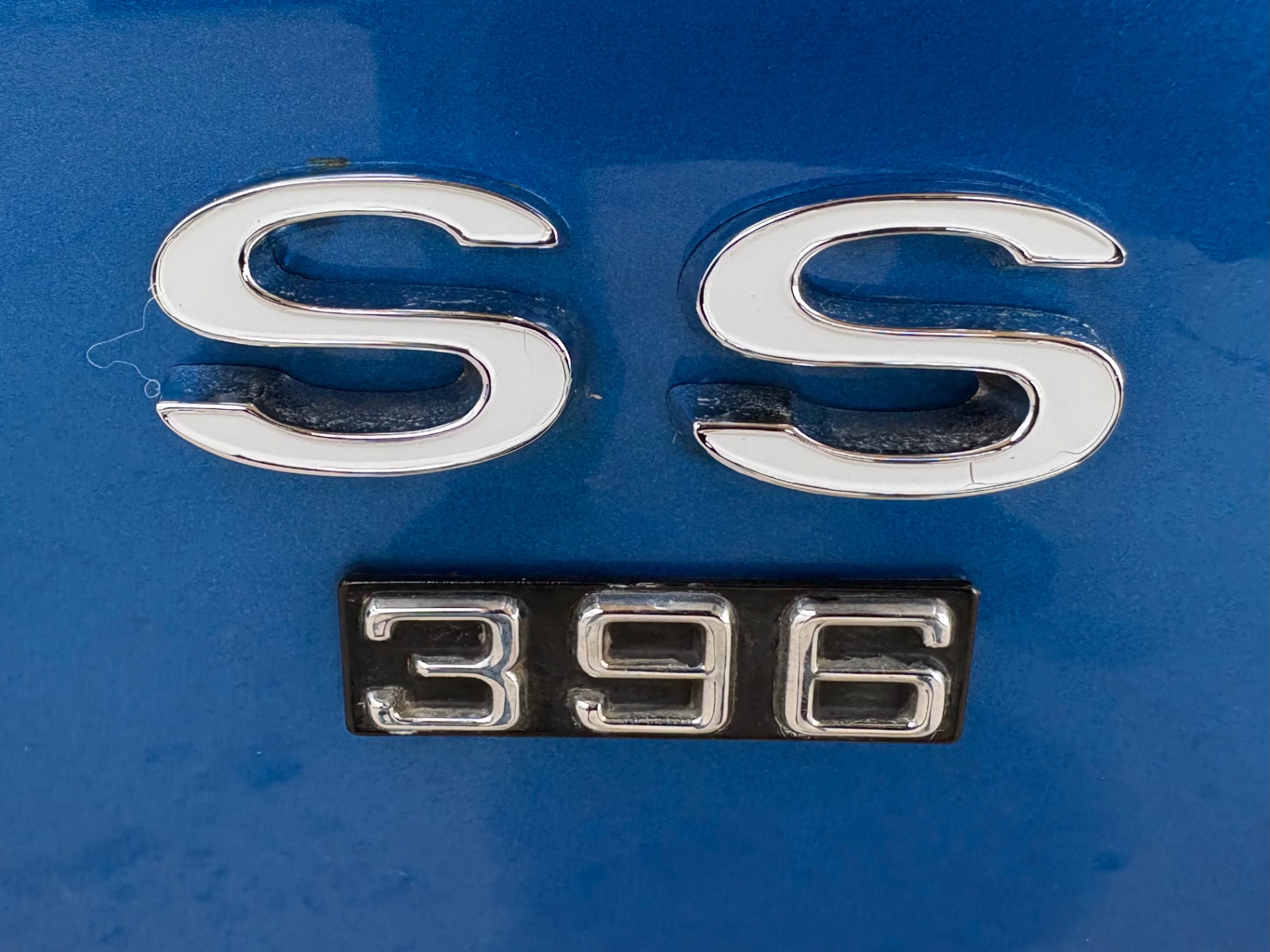
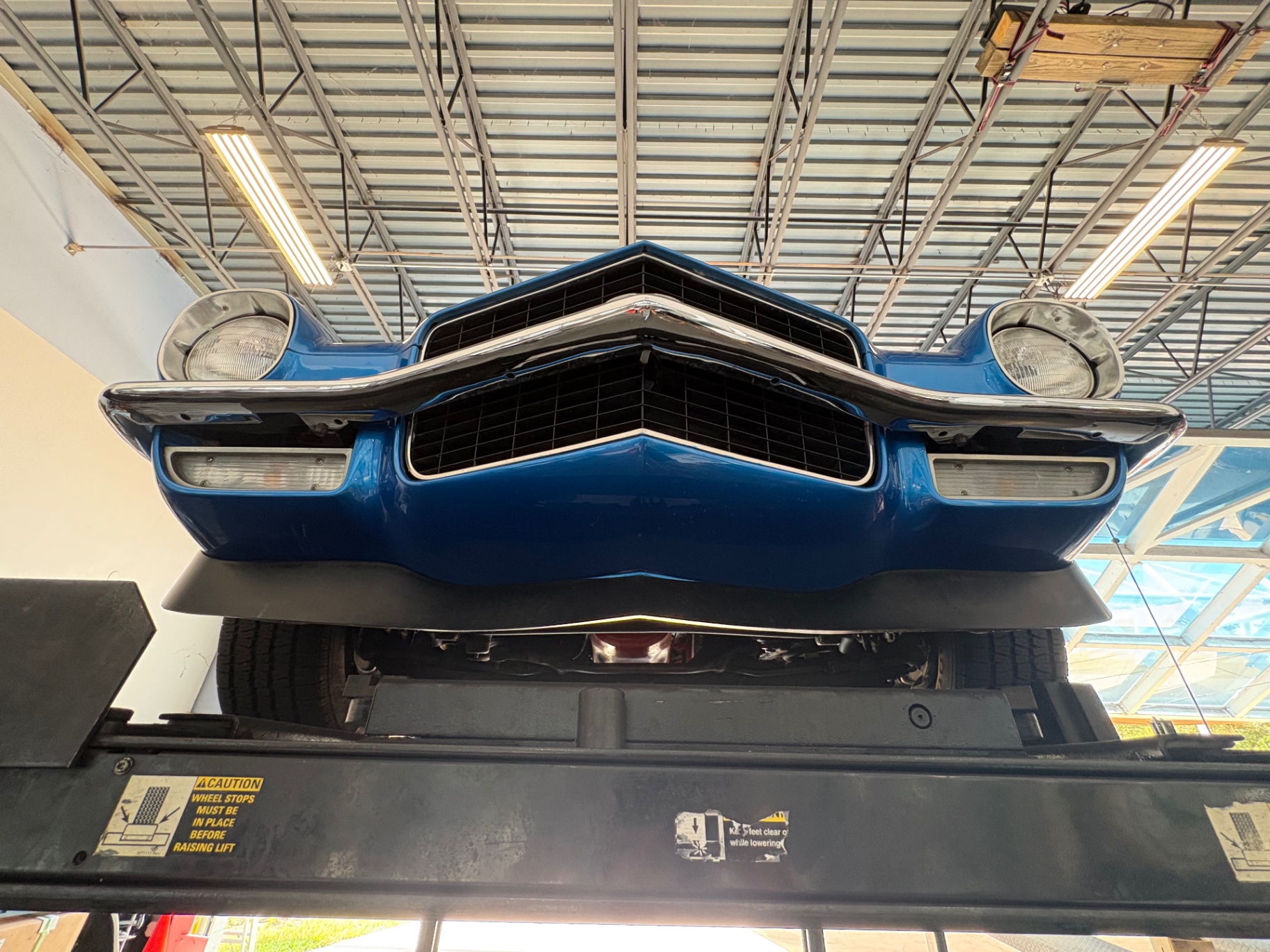
The exterior presents in blue with white racing stripes running over the hood and rear deck, a combination that reads correctly on the second-generation body. The black vinyl top adds a contrast element that was popular on personal luxury and performance cars of the early 1970s and complements the blue paint without conflict. Chrome bumpers are present front and rear and show well. The SS badge appears on the grille at the front and at the rear, consistent with how the factory applied them.
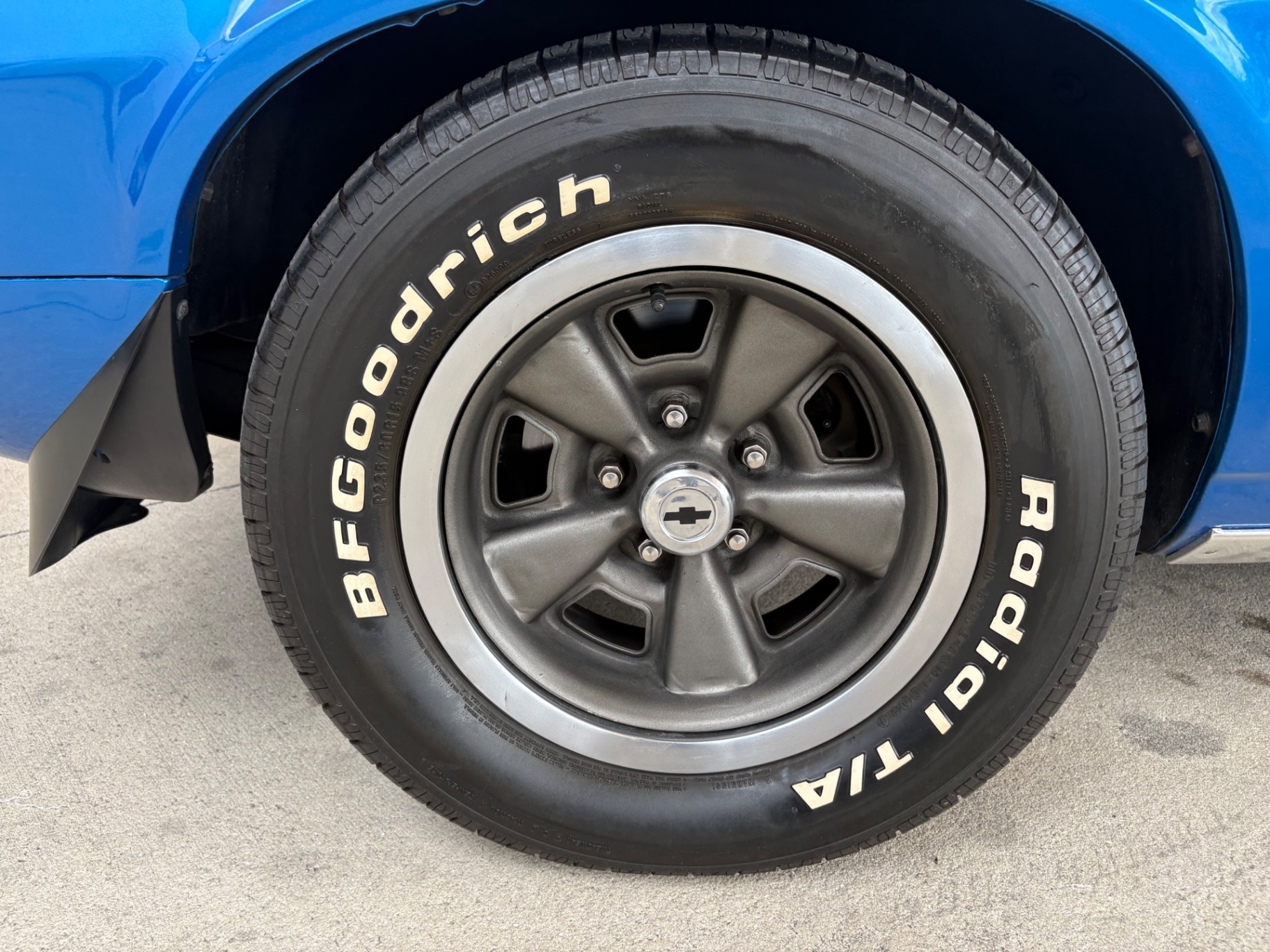
The black sport wheels fill the wheel wells correctly and are mounted with BFGoodrich Radial T/A tires — a period-correct choice that many enthusiasts prefer on first and second-generation muscle cars for their appearance and road manners. The dual exhaust exits cleanly at the rear, visible in the undercarriage photos, and the tips sit symmetrically below the bumper as they should.
The second-generation Camaro body introduced for 1971 featured a longer hood, a more steeply raked windshield, and tighter body lines than its predecessor. On this car, those lines are straight and consistent, with door gaps and panel alignment that reflect a body that has not been through major collision repair.
Conclusion
This 1971 Chevrolet Camaro SS 396 represents a well-documented, well-optioned example of one of the most collectible configurations available in that model year. The 396 big block with 300 horsepower, Muncie 4-speed, and factory air conditioning is a combination that was expensive to specify new and is genuinely difficult to locate today in a car this presentable. The first year of the redesigned body, the last era of unrestricted big block availability, a clean undercarriage, and a complete options list that reflects a buyer who wanted the full experience — this 1971 Camaro SS 396 checks the boxes that matter to a serious collector or driver.
To schedule a time to inspect this 1971 Chevrolet Camaro SS 396 in person, call Skyway Classics at 941-254-6608.
Disclaimer Information found on the website is presented as given to us by the owner of the car, whether on consignment or from the owner we bought it from. Some Photos, materials for videos, descriptions and other information are provided by the consignor/seller and is deemed reliable, but Skyway Classics does not warranty or guarantee this information. Skyway Classics is not responsible for information that may incorrect or a publishing error. The decision to purchase should be based solely on the buyers personal inspection of the vehicle or by a professional inspection service prior to offer or purchase being made.
1971 Chevrolet Camaro SS 396 — Big Block, Muncie 4-Speed, Factory Air
Why This Car Is Special
The 1971 Chevrolet Camaro SS 396 sits at an interesting crossroads in muscle car history. It was the first year of the redesigned second-generation body — a longer, lower, wider platform that many enthusiasts consider the best-looking Camaro ever produced. Chevrolet stretched the wheelbase to 108 inches and gave the car a more sculpted, European-influenced roofline that set it apart from the boxier first-generation cars. At the same time, 1971 was one of the last years you could order a Camaro with a genuine big block engine before tightening emissions regulations and insurance pressures pushed the industry toward smaller displacement motors. That combination of the new body style and the outgoing big block powertrain makes the 1971 Camaro SS 396 a particularly desirable intersection of form and function.
The VIN on this car decodes to confirm it was built at the Lordstown, Ohio assembly plant. The engine code confirms the 396 cubic inch big block at 300 horsepower, and the body style code identifies it as the Sport Coupe. The SS package in 1971 was a separate option that added specific badging, a blacked-out grille, and sport suspension tuning over a standard Camaro — it was not simply a sticker package. Pairing that with the Muncie 4-speed manual and factory air conditioning on a big block car was an uncommon and expensive combination at the time, and it makes this particular car a well-optioned example of the model.
It is also worth noting what happened to the Camaro line just one year later. In 1972, a lengthy strike at the Norwood, Ohio plant essentially wiped out most of that year's production. The combination of the 1971 model being the first year of the new design and having genuine high-output big block availability makes surviving, well-equipped examples like this one increasingly difficult to find in presentable condition.
Features
- 396 cubic inch big block V8, 300 horsepower - Muncie 4-speed manual transmission - True factory air conditioning - Dual exhaust - Power brakes - Power steering - Rear sway bar - White racing stripes - Black vinyl top - SS badges front and rear - SS steering wheel - Center console - Black sport wheels - BFGoodrich Radial T/A tires - Chrome bumpers - Black vinyl bucket seats - Clean undercarriage
Mechanical
Under the hood is the 396 cubic inch Turbo-Jet V8 rated at 300 horsepower, backed by a Muncie close-ratio 4-speed manual gearbox — one of the most respected manual transmissions of the era. Muncie 4-speeds were built in Muncie, Indiana and were known for their durability and precise shift feel. Chevrolet offered them in two gear ratios depending on the intended use, and they were a preferred choice for buyers who wanted to actually drive their car rather than simply own it. The combination of a 396 big block and a Muncie 4-speed is exactly the drivetrain configuration that buyers specified when they were serious about performance.
Factory air conditioning on a big block Camaro required additional engineering at the factory level — the system had to be designed around the larger engine bay demands of the 396 — which is why it was a less common option than on small block cars. Having true factory air means the firewall, brackets, and wiring are correct and original to the car, not a retrofit. Power brakes and power steering round out the driving experience, making this a car that can be driven regularly without the heavy steering and firm pedal effort of a base-spec muscle car. The rear sway bar improves handling balance under cornering, a detail that matters on a car this size carrying a big block up front.
The undercarriage photos show a clean, solid structure — no significant rust, no patched floor pans, no evidence of previous accident damage to the frame rails. For a car based in Florida for any portion of its life, that condition is worth examining carefully, and this one holds up to scrutiny.
Interior
The black vinyl interior is correctly spec'd for the SS package. Bucket seats up front are covered in black vinyl and remain in solid condition without the cracking or shrinkage that commonly afflicts original vinyl on cars of this age. The center console runs between the buckets and houses the Muncie shifter, which is exactly where it belongs in a car like this. The SS steering wheel is a sport three-spoke unit specific to the SS package, smaller in diameter than the standard wheel and giving a more direct connection to the front suspension.
The door panels, dash, and headliner carry the correct black theme throughout, keeping the interior cohesive. Factory air conditioning vents are integrated into the dash as they should be on a car with the factory system. The console-mounted configuration with bucket seats was a popular option combination in 1971, and it reflects how the original buyer configured this car — as a performance machine that could also be driven comfortably on a longer trip.
Exterior
The exterior presents in blue with white racing stripes running over the hood and rear deck, a combination that reads correctly on the second-generation body. The black vinyl top adds a contrast element that was popular on personal luxury and performance cars of the early 1970s and complements the blue paint without conflict. Chrome bumpers are present front and rear and show well. The SS badge appears on the grille at the front and at the rear, consistent with how the factory applied them.
The black sport wheels fill the wheel wells correctly and are mounted with BFGoodrich Radial T/A tires — a period-correct choice that many enthusiasts prefer on first and second-generation muscle cars for their appearance and road manners. The dual exhaust exits cleanly at the rear, visible in the undercarriage photos, and the tips sit symmetrically below the bumper as they should.
The second-generation Camaro body introduced for 1971 featured a longer hood, a more steeply raked windshield, and tighter body lines than its predecessor. On this car, those lines are straight and consistent, with door gaps and panel alignment that reflect a body that has not been through major collision repair.
Conclusion
This 1971 Chevrolet Camaro SS 396 represents a well-documented, well-optioned example of one of the most collectible configurations available in that model year. The 396 big block with 300 horsepower, Muncie 4-speed, and factory air conditioning is a combination that was expensive to specify new and is genuinely difficult to locate today in a car this presentable. The first year of the redesigned body, the last era of unrestricted big block availability, a clean undercarriage, and a complete options list that reflects a buyer who wanted the full experience — this 1971 Camaro SS 396 checks the boxes that matter to a serious collector or driver.
To schedule a time to inspect this 1971 Chevrolet Camaro SS 396 in person, call Skyway Classics at 941-254-6608.
Disclaimer Information found on the website is presented as given to us by the owner of the car, whether on consignment or from the owner we bought it from. Some Photos, materials for videos, descriptions and other information are provided by the consignor/seller and is deemed reliable, but Skyway Classics does not warranty or guarantee this information. Skyway Classics is not responsible for information that may incorrect or a publishing error. The decision to purchase should be based solely on the buyers personal inspection of the vehicle or by a professional inspection service prior to offer or purchase being made.
1971 Chevrolet
Camaro SS
Why Choose Skyway Classics?
Explore our curated inventory of classic and collector cars—thoughtfully selected, ready to drive, and supported by experts who make ownership simple.
Expert Curation
Every vehicle is hand-selected by our experts for quality, authenticity, and investment potential.
Fast Transactions
Streamlined buying and selling process with quick financing and immediate delivery options.
Only National Dealer With Classic Service & Repair
We’re the only national dealership that services and repairs the classics we sell—before and after the sale.
Nationwide Network
Access to our extensive network of collectors, restorers, and classic car enthusiasts nationwide.
Concierge Ownership Support
From financing and insurance to paperwork, shipping, and titling—we handle the details so you can enjoy the drive.
Passion-Driven Service
We're classic car enthusiasts first, providing personalized service with genuine passion for the hobby.