
1971 Volkswagen
Beetle Cabriolet
1971 Volkswagen Beetle Convertible — Karmann-Built Cabriolet in Tan over White
Why This Car Is Special
The 1971 Volkswagen Beetle Convertible is not a car that Volkswagen built. It is a car that Volkswagen engineered and then handed off to Karmann, the Osnabrück coachbuilder, to finish. That distinction matters. Karmann had been converting Beetle platforms into open-air cabriolets since 1949, and by 1971 the process was refined to the point where the convertible body was significantly stiffer and better-finished than the standard sedan. Karmann added reinforcement to the rocker panels, door frames, and floor to compensate for the missing roof structure, and the result was a car that did not flex or shake the way most convertibles of that era did. The convertible also received a more carefully fitted interior and a multi-layer folding top with a dedicated storage boot, details that set it apart from the sedan at every level.
The 1971 model year was a notable one for the Beetle in the United States. It was the first year VW fitted the 1600cc dual-port engine across the standard lineup, replacing the earlier single-port configuration. The dual-port cylinder heads improved breathing and increased power slightly compared to what came before — a meaningful refinement on a car that had been slowly and deliberately improved over decades rather than redesigned wholesale. The Beetle convertible was sold in the US throughout the early 1970s in relatively modest numbers compared to the sedan, making surviving examples with honest, usable condition increasingly difficult to find.
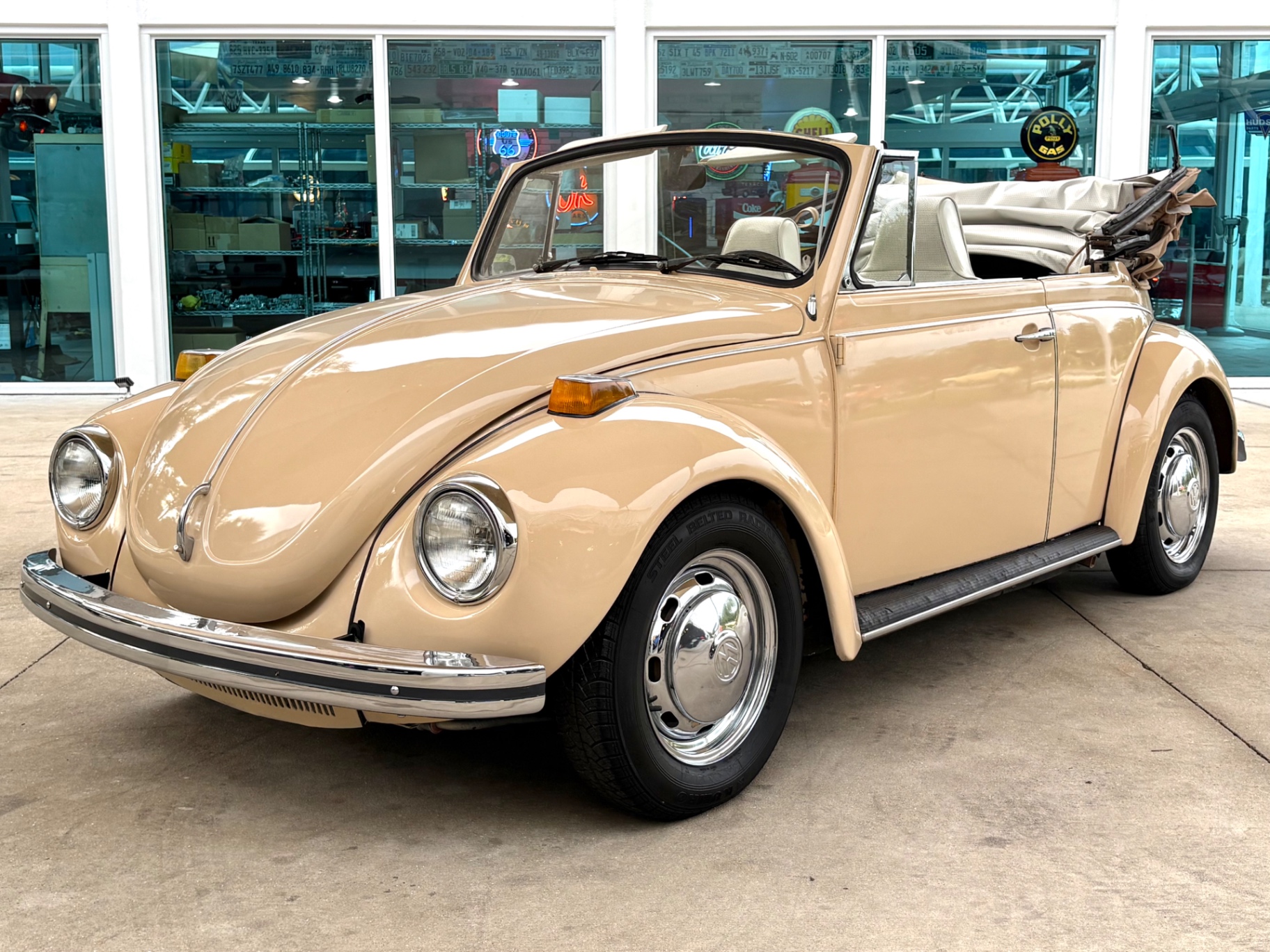
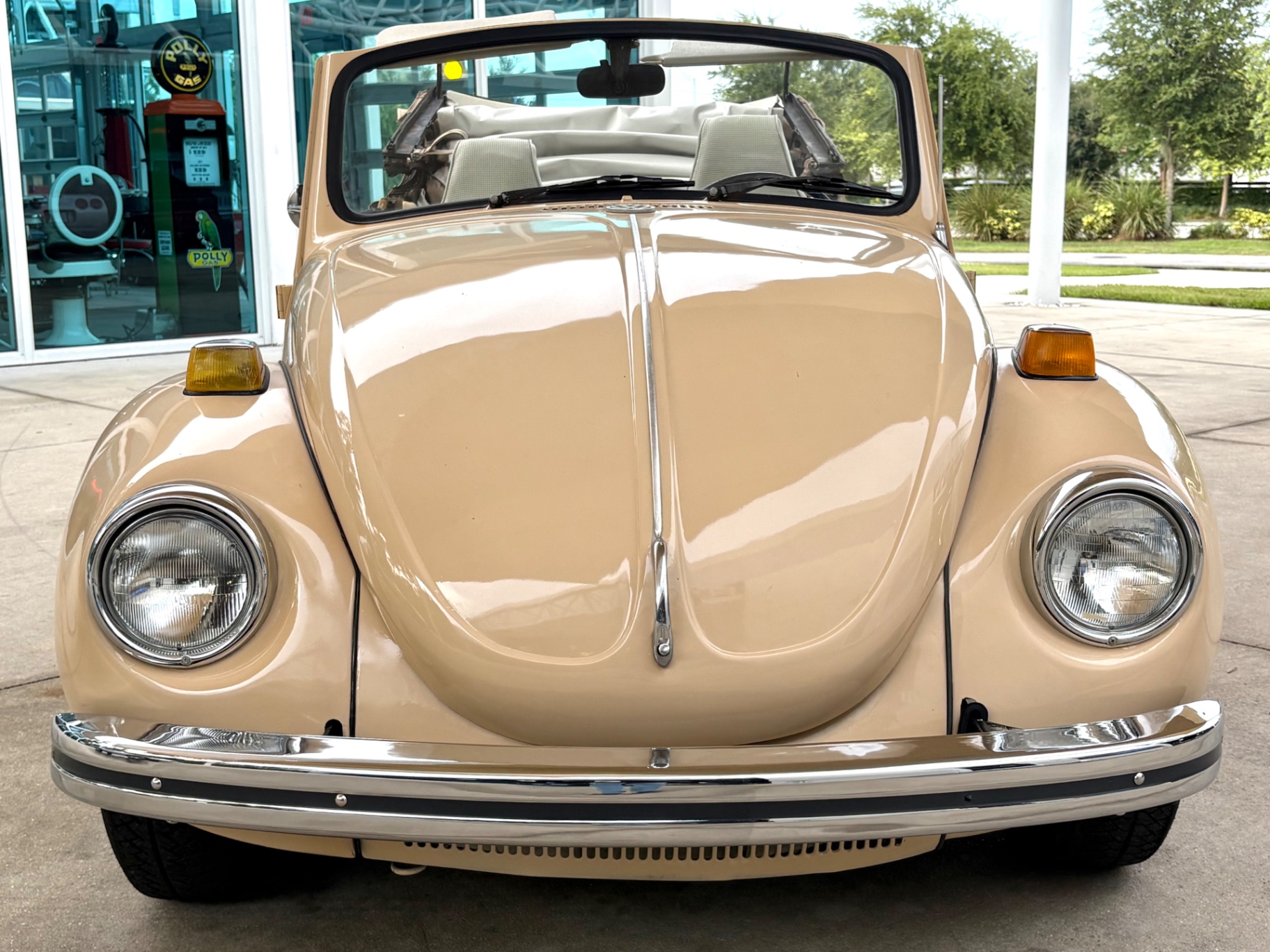
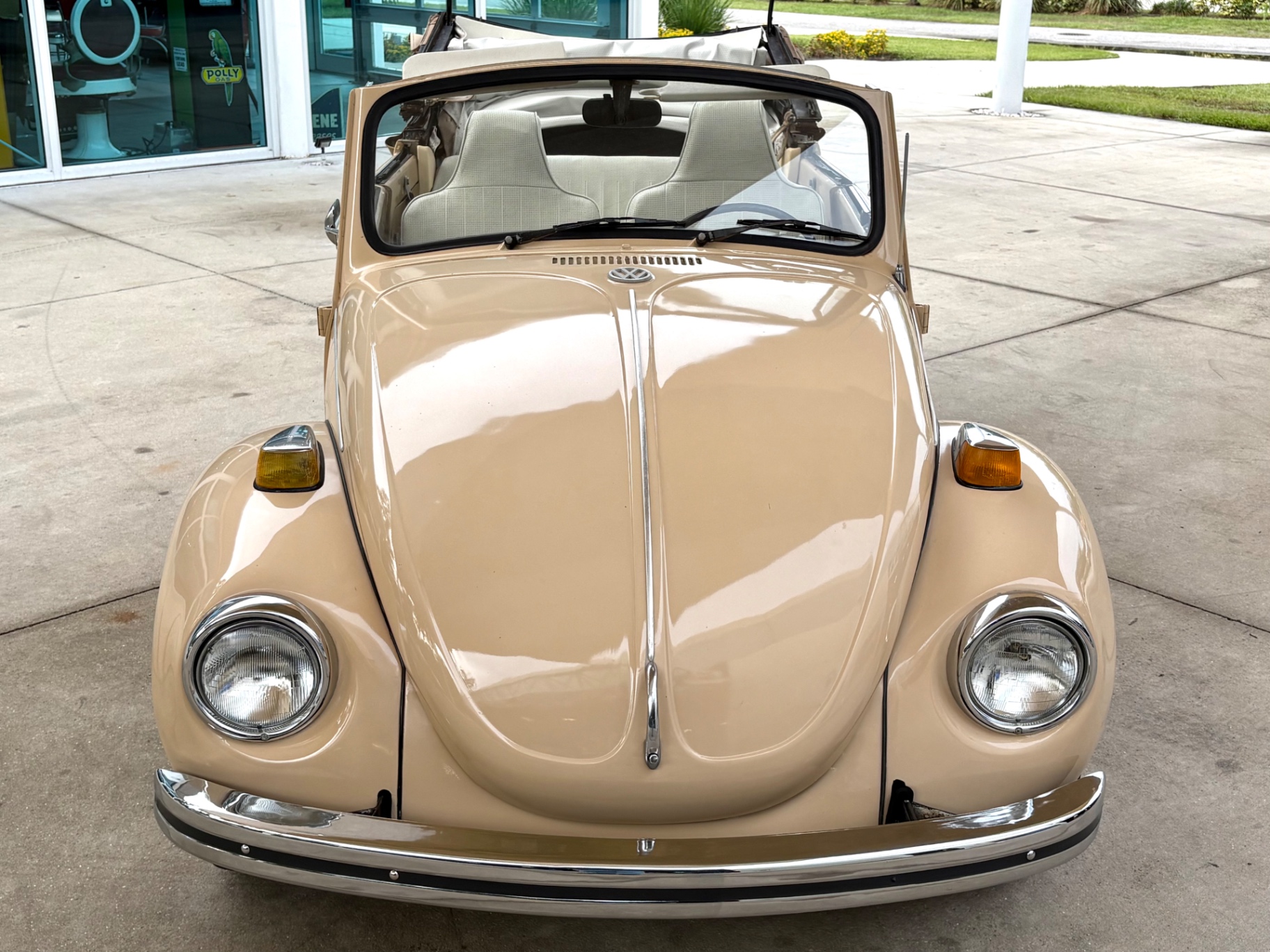
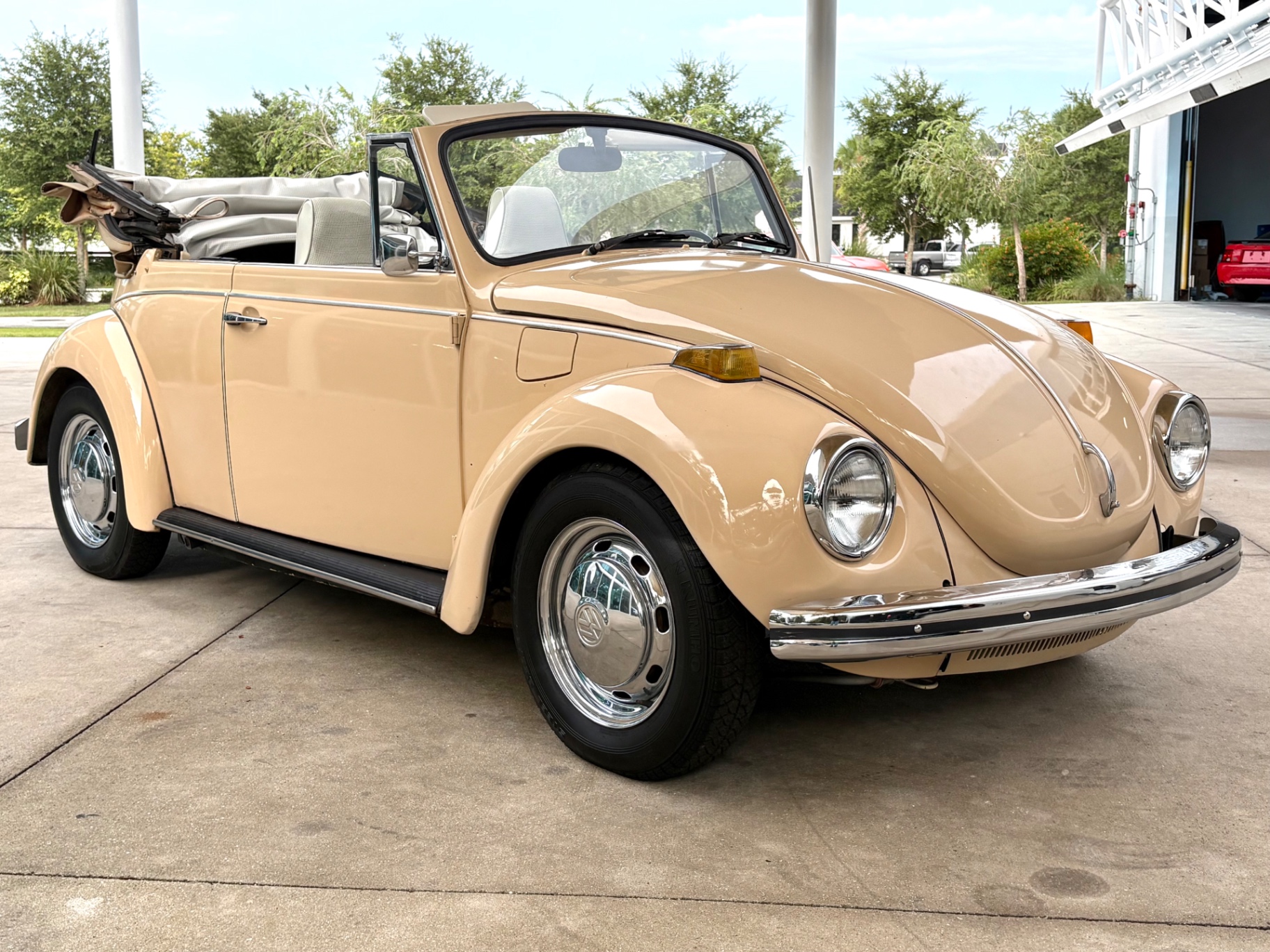
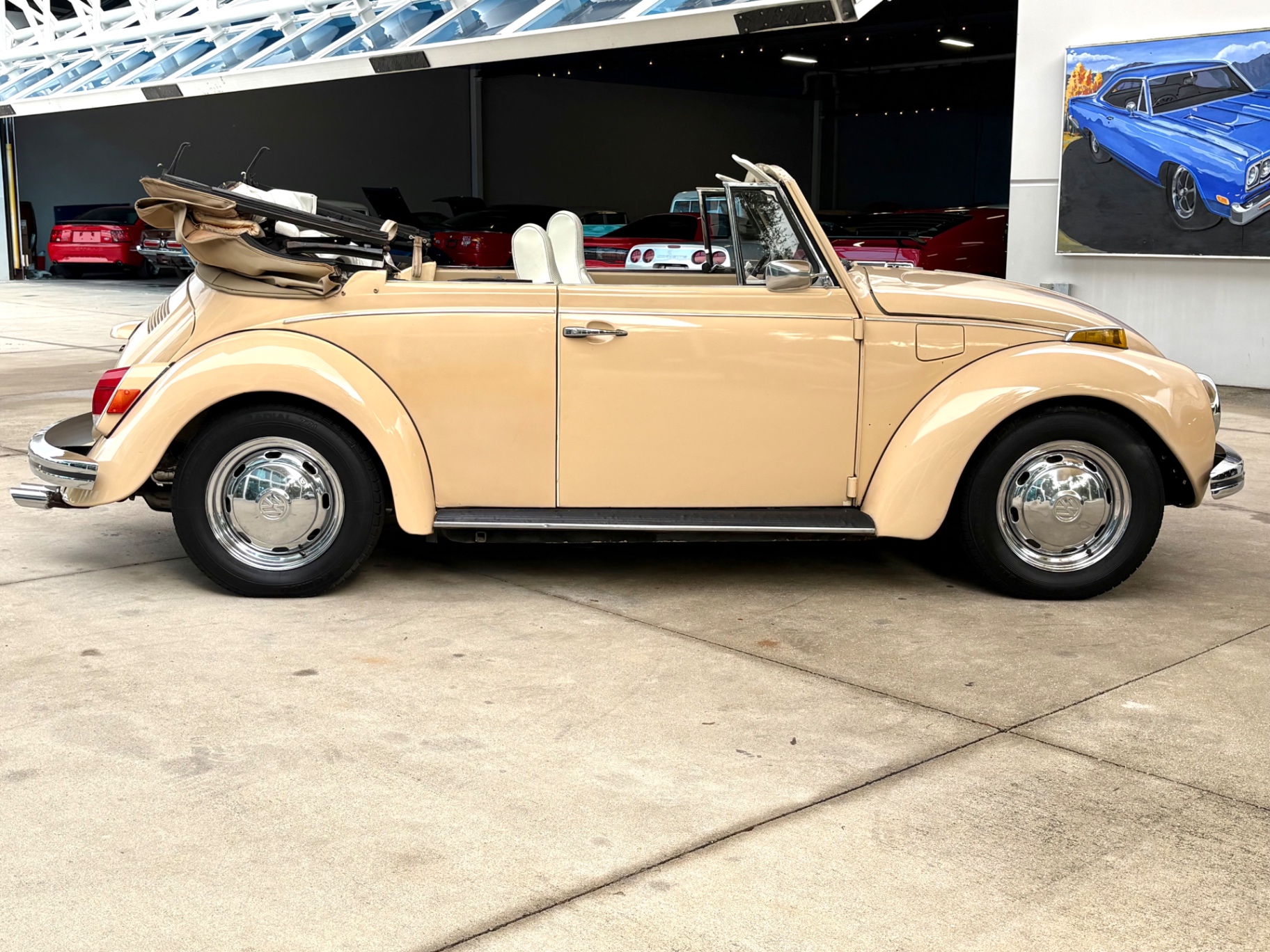
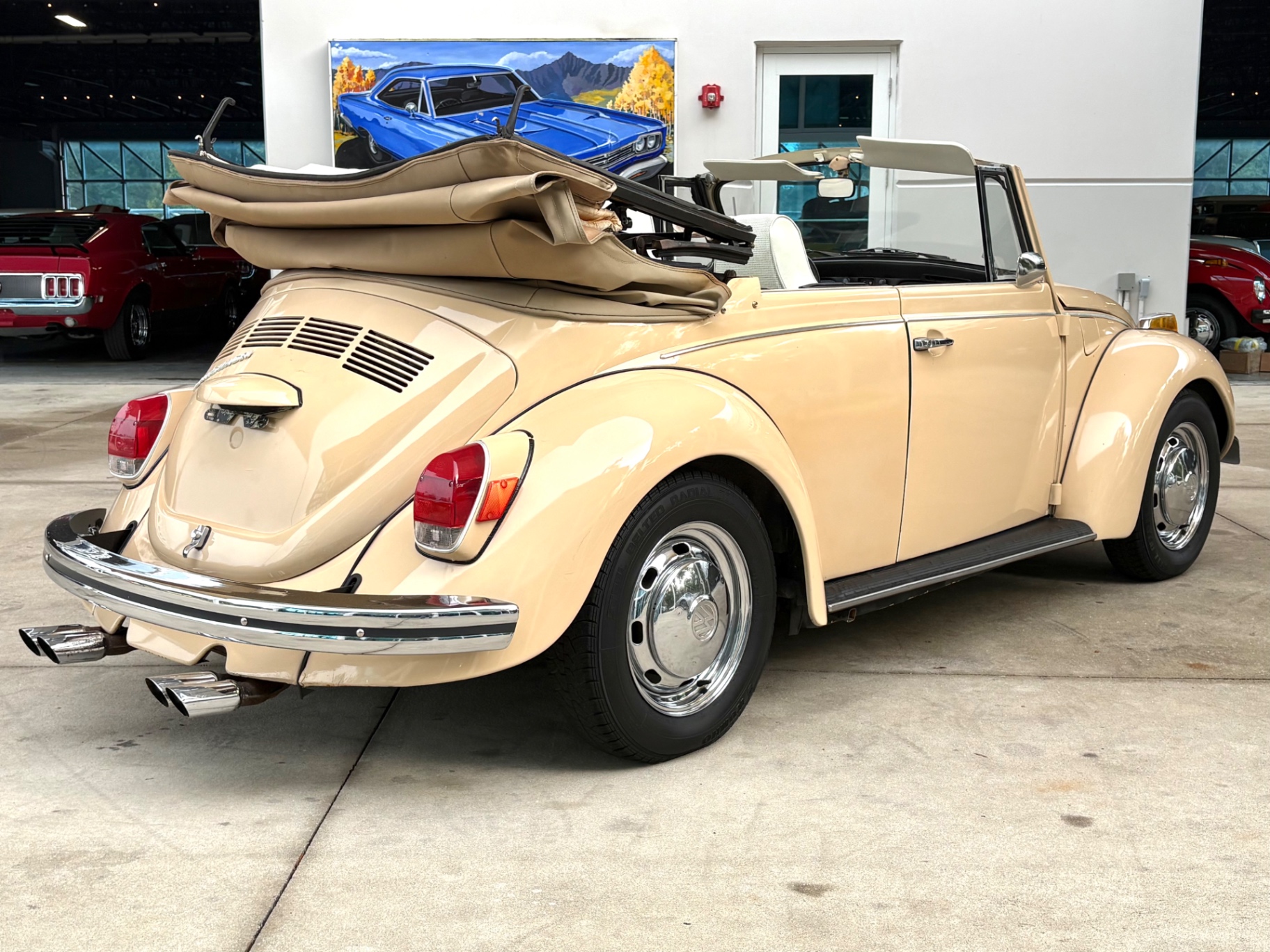
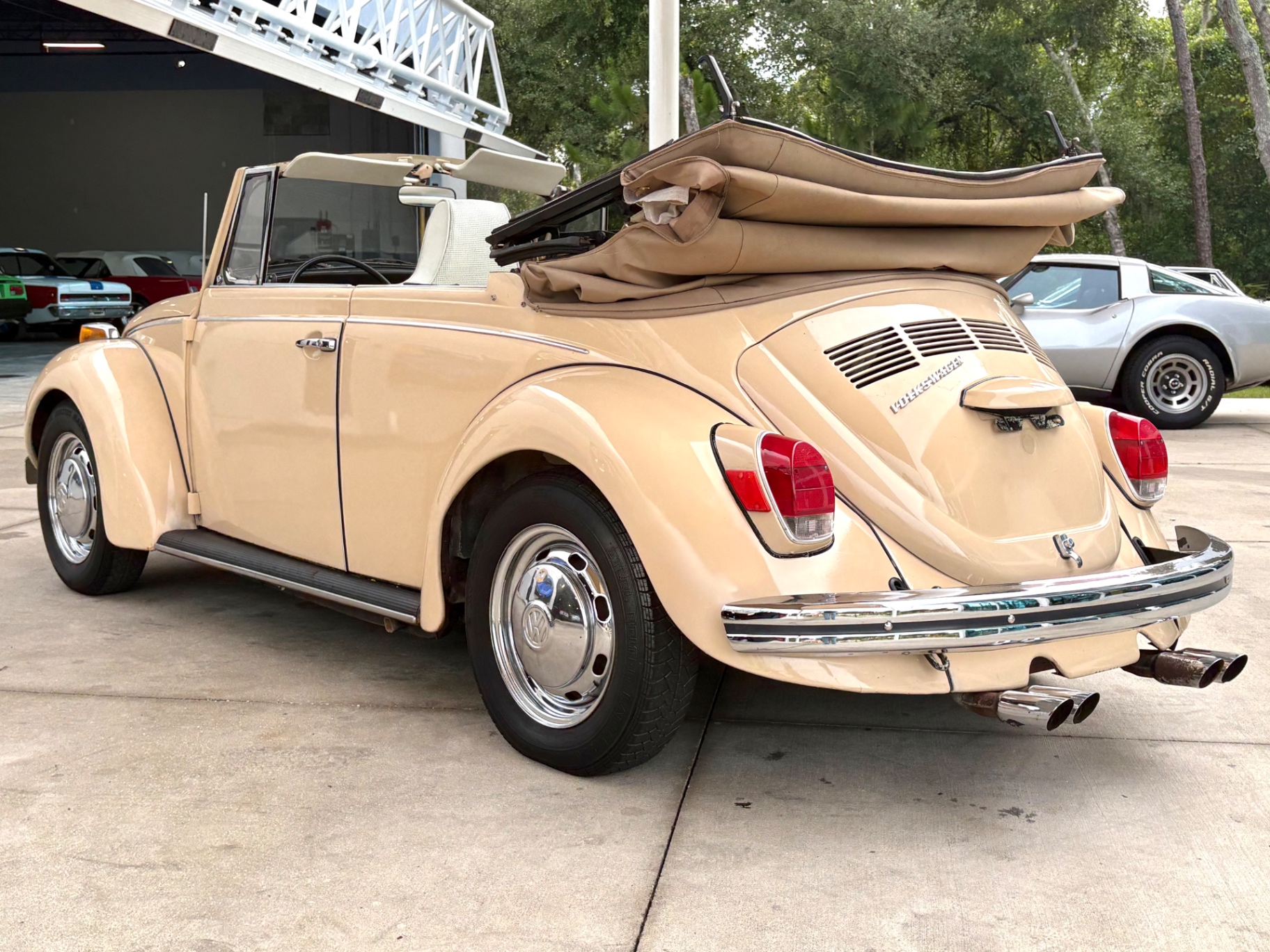
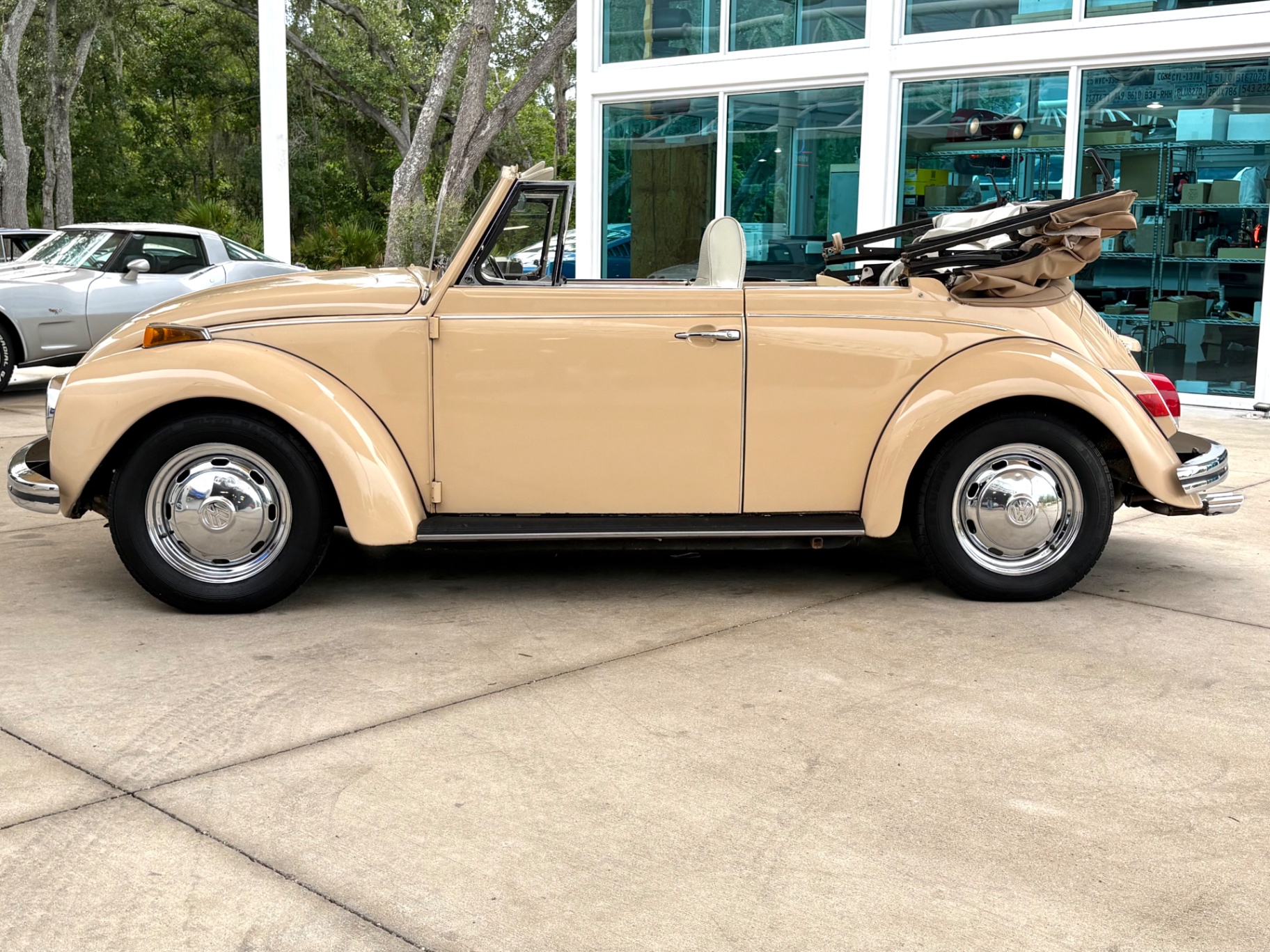
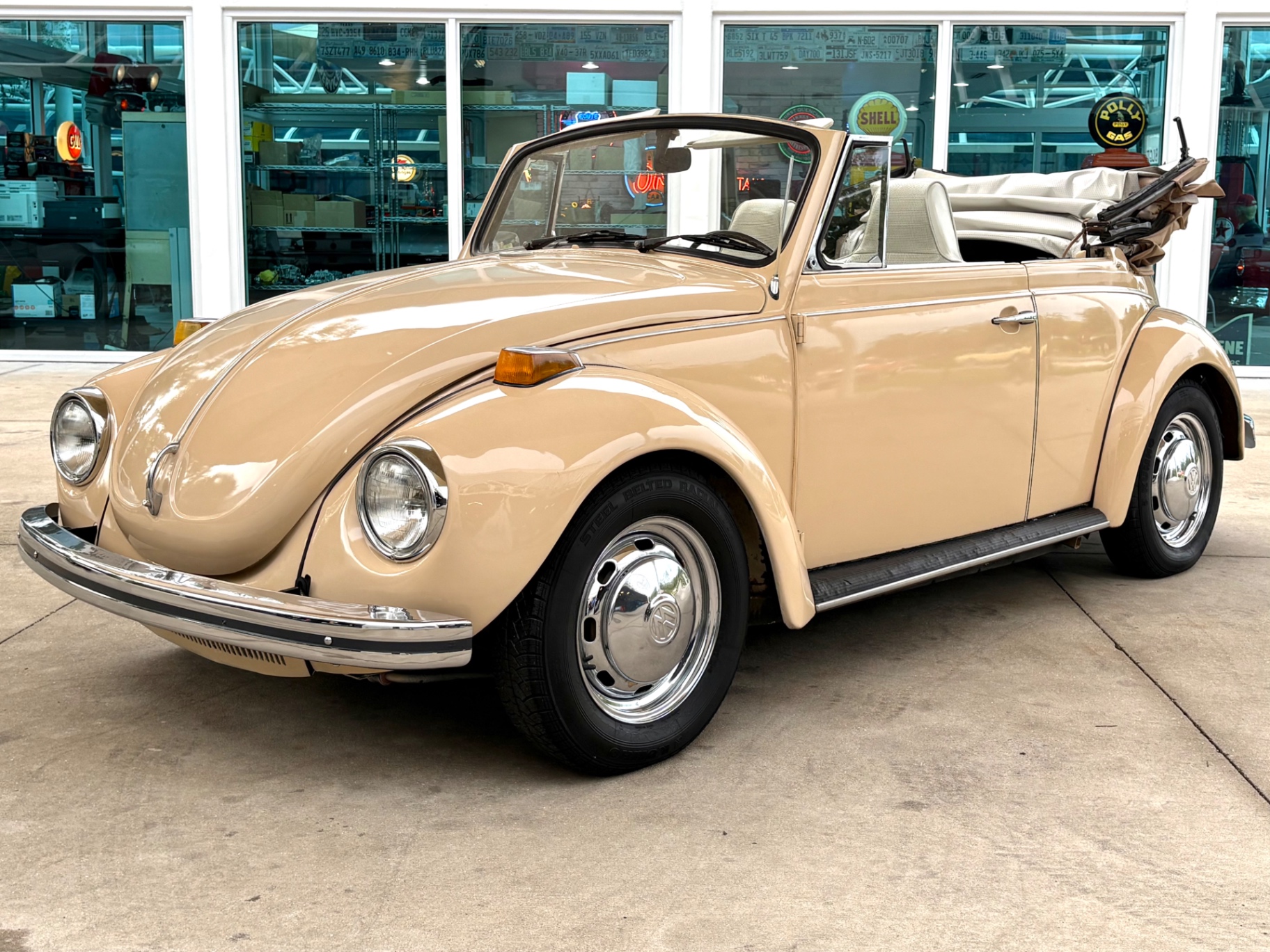
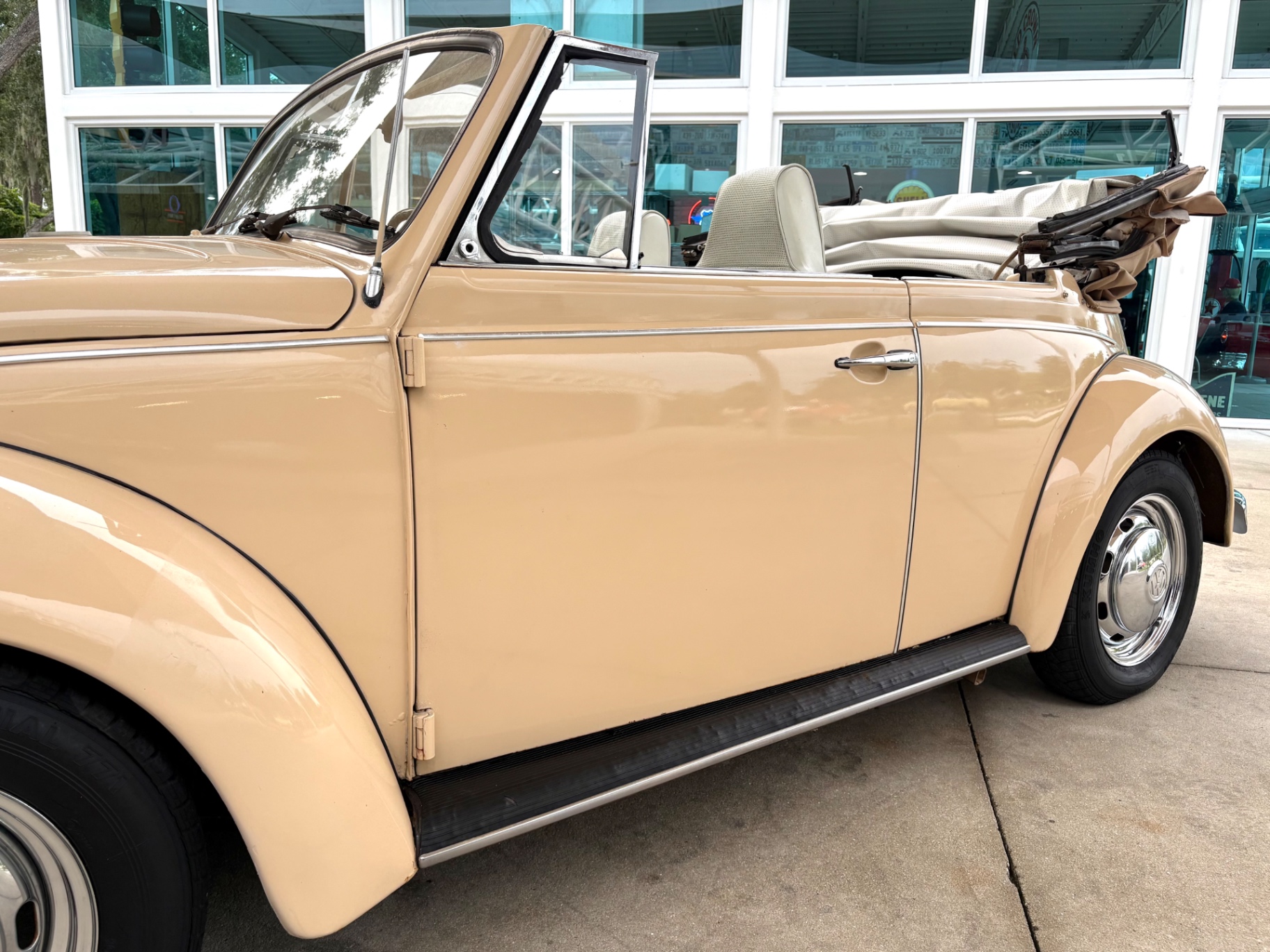
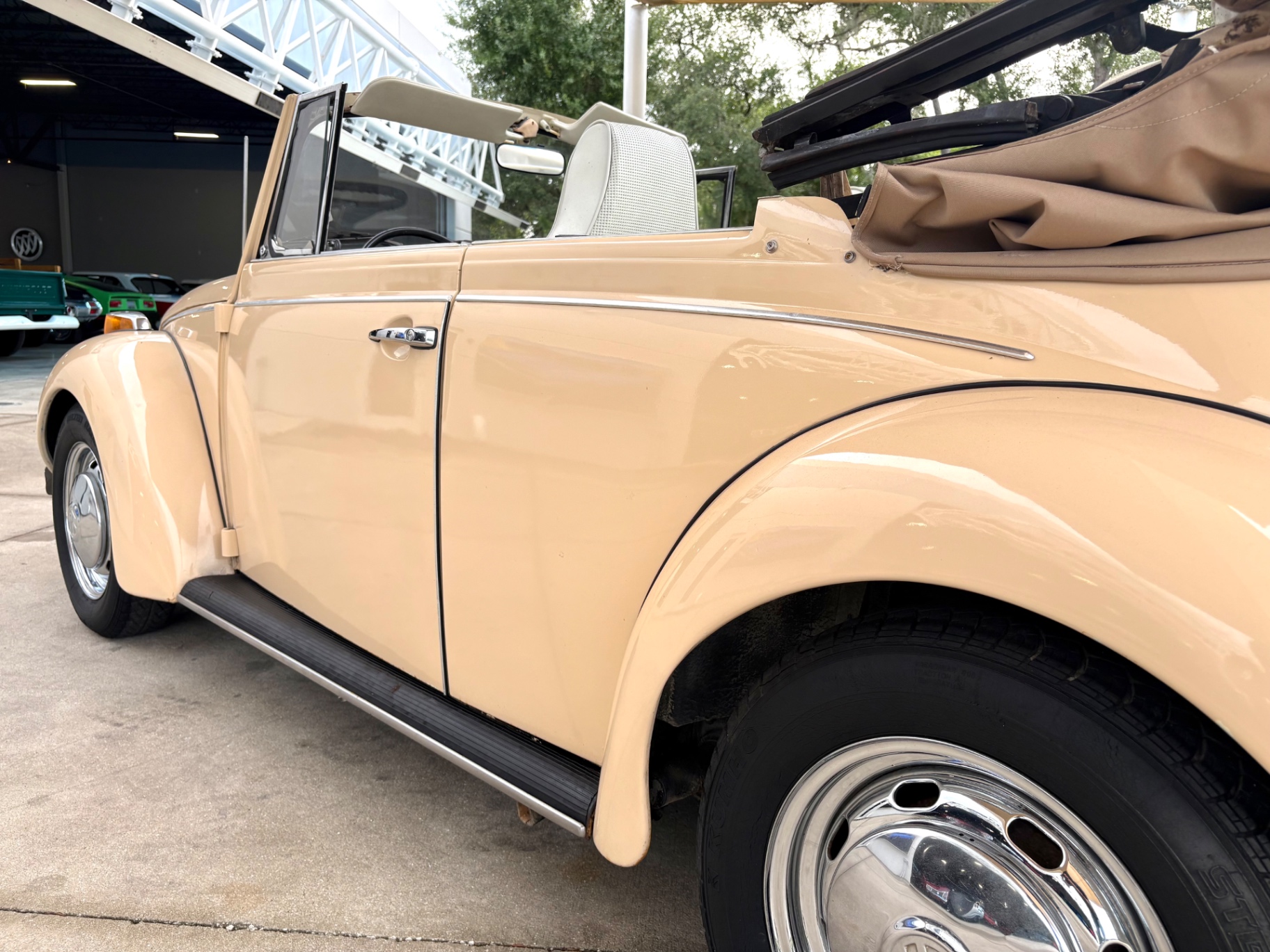
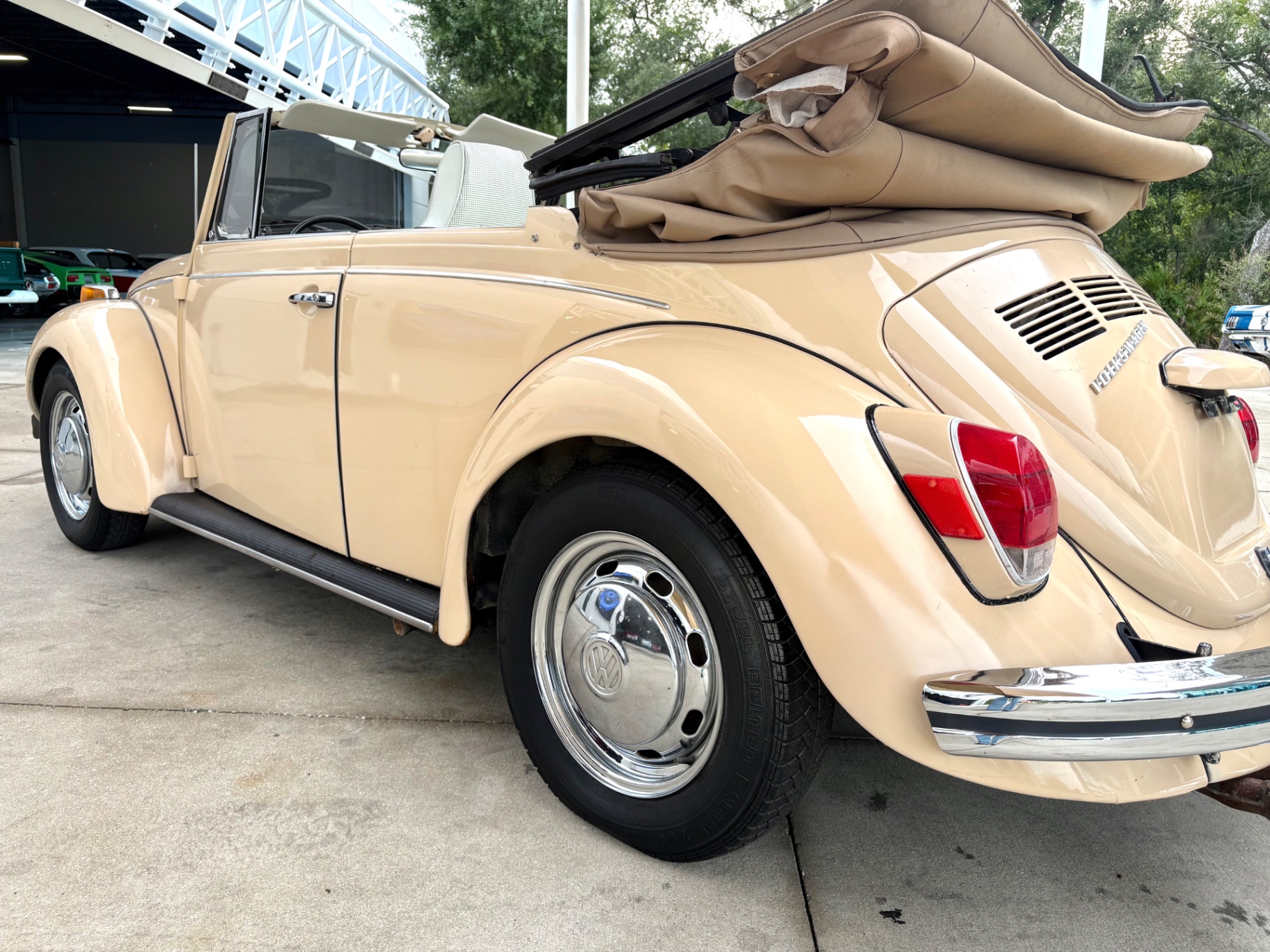
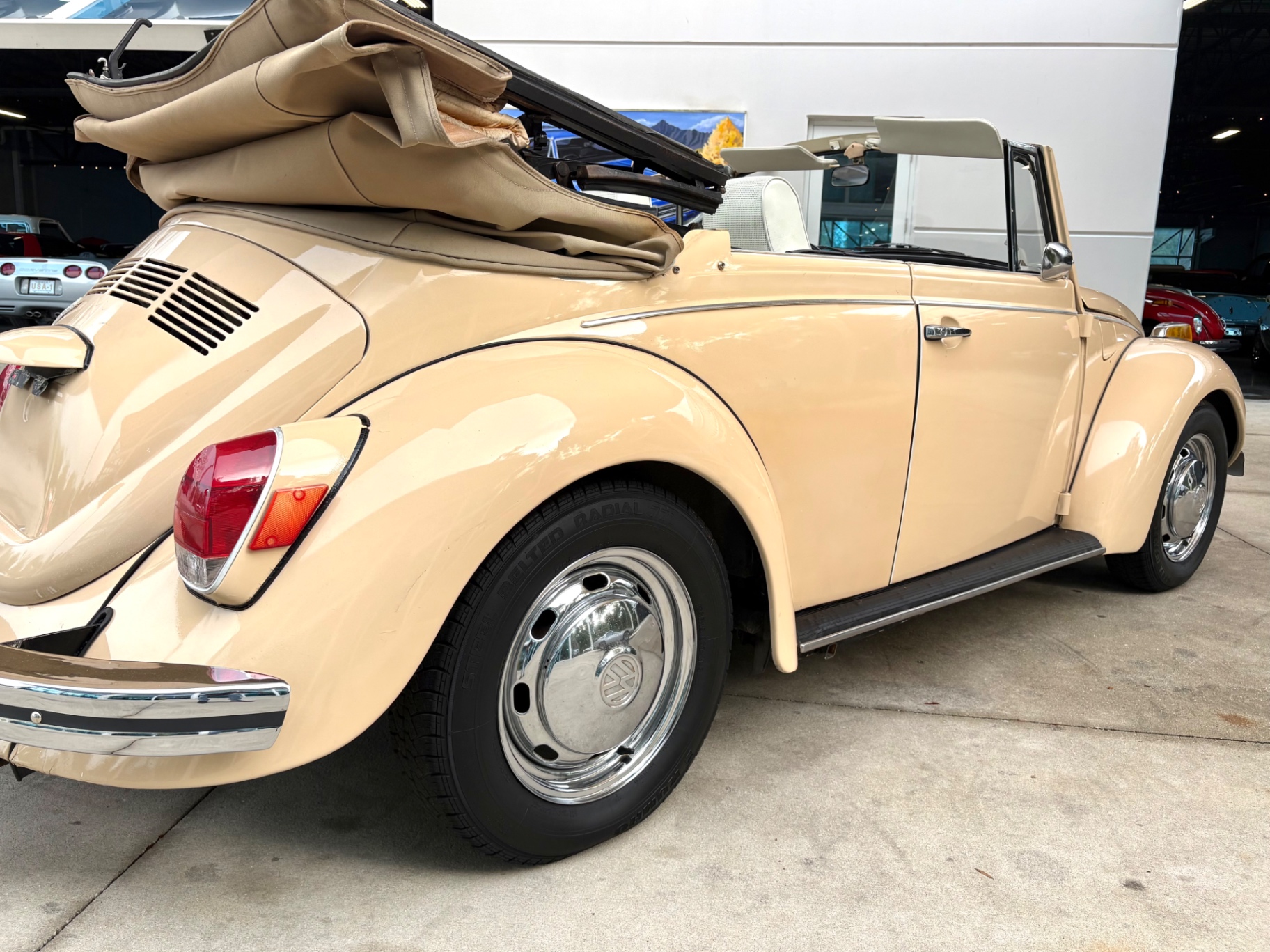
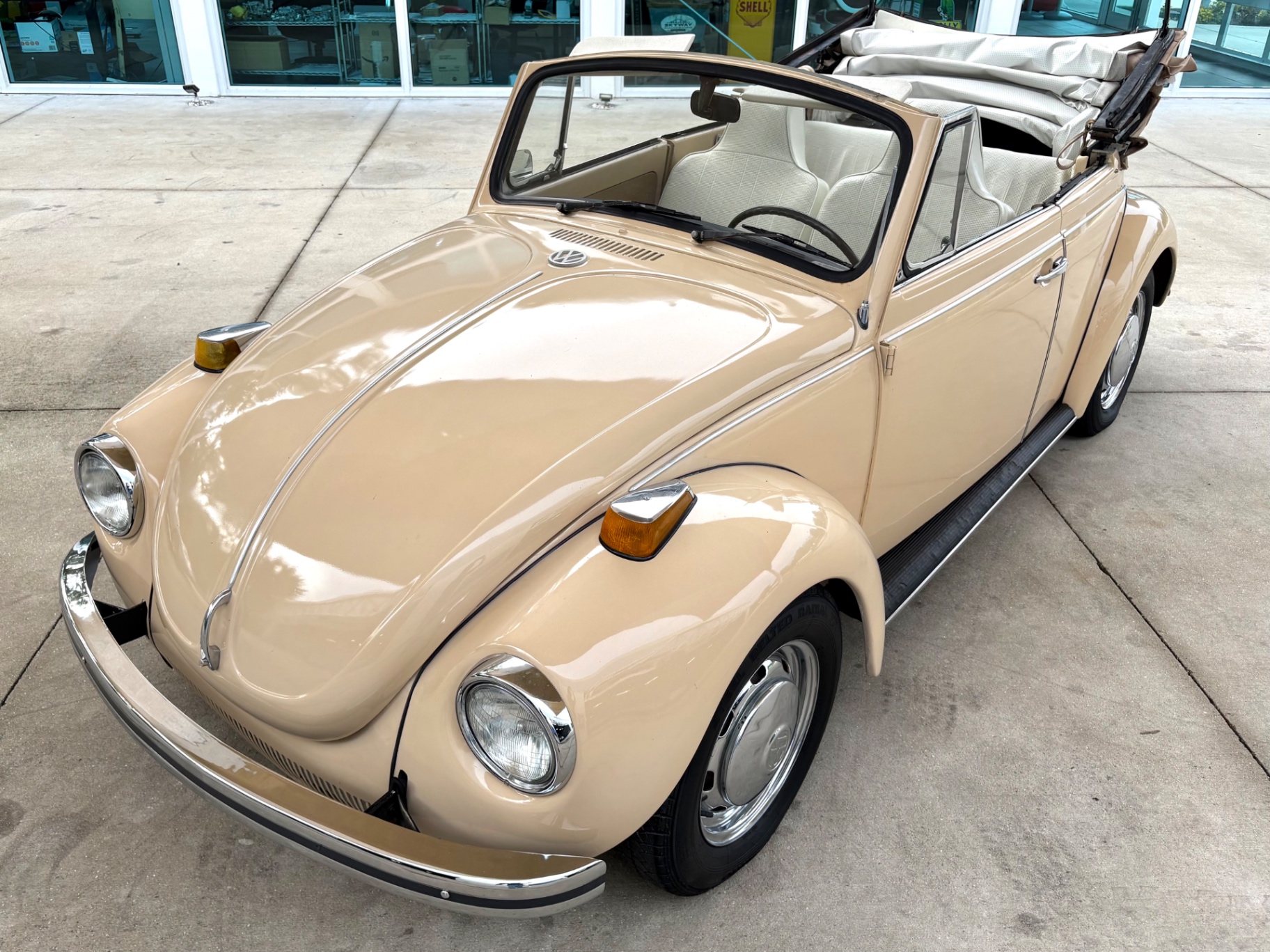
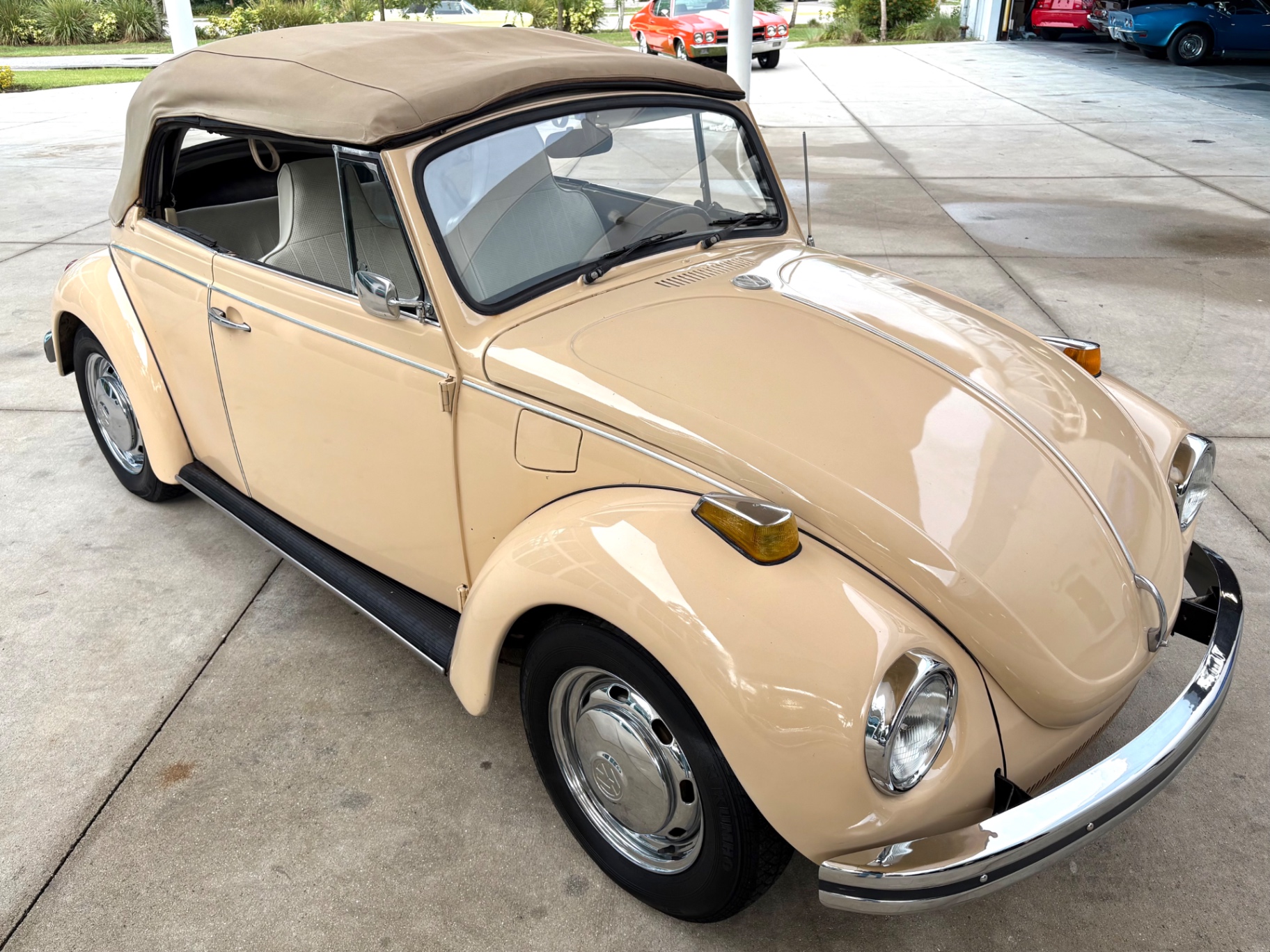
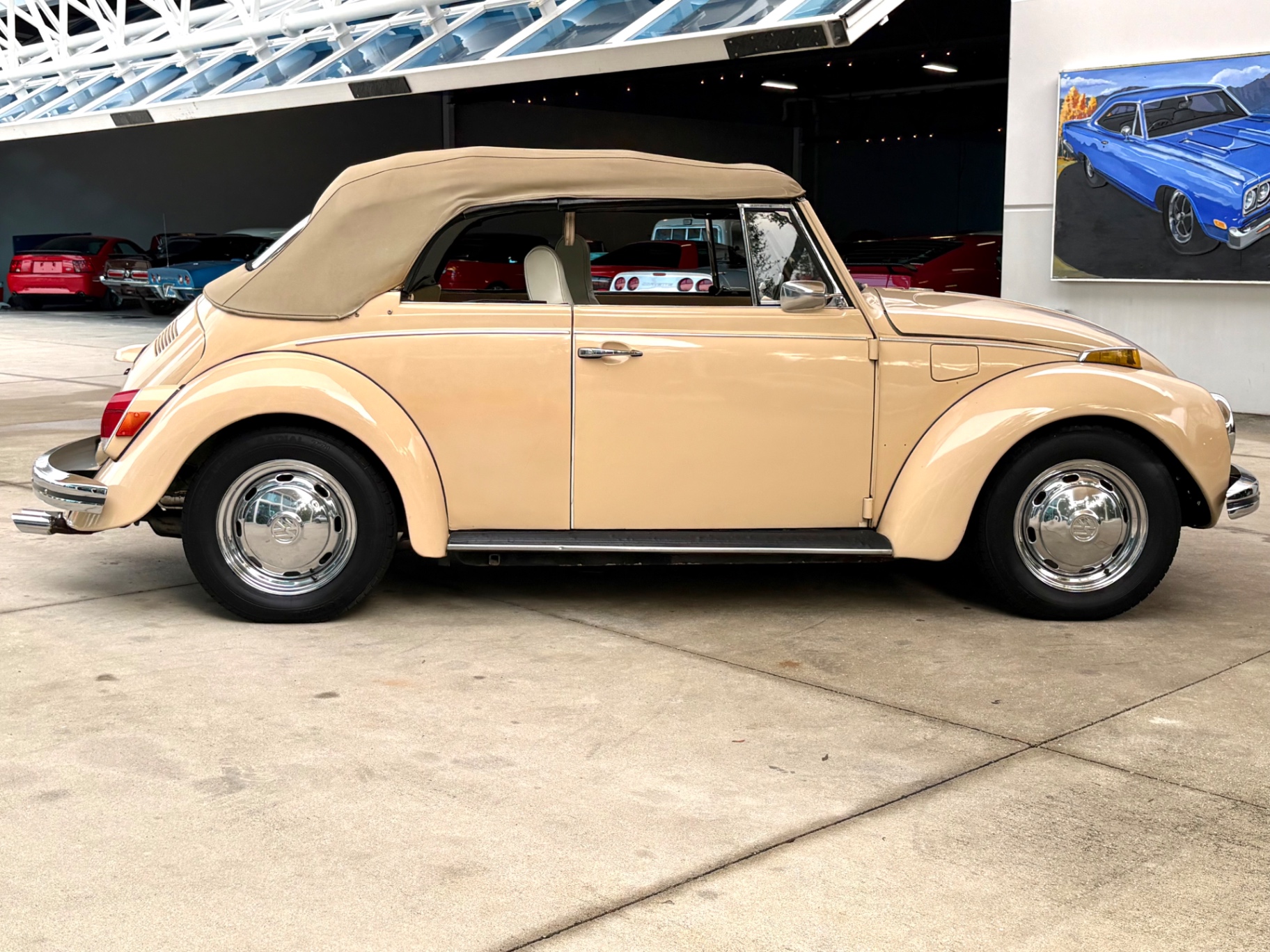
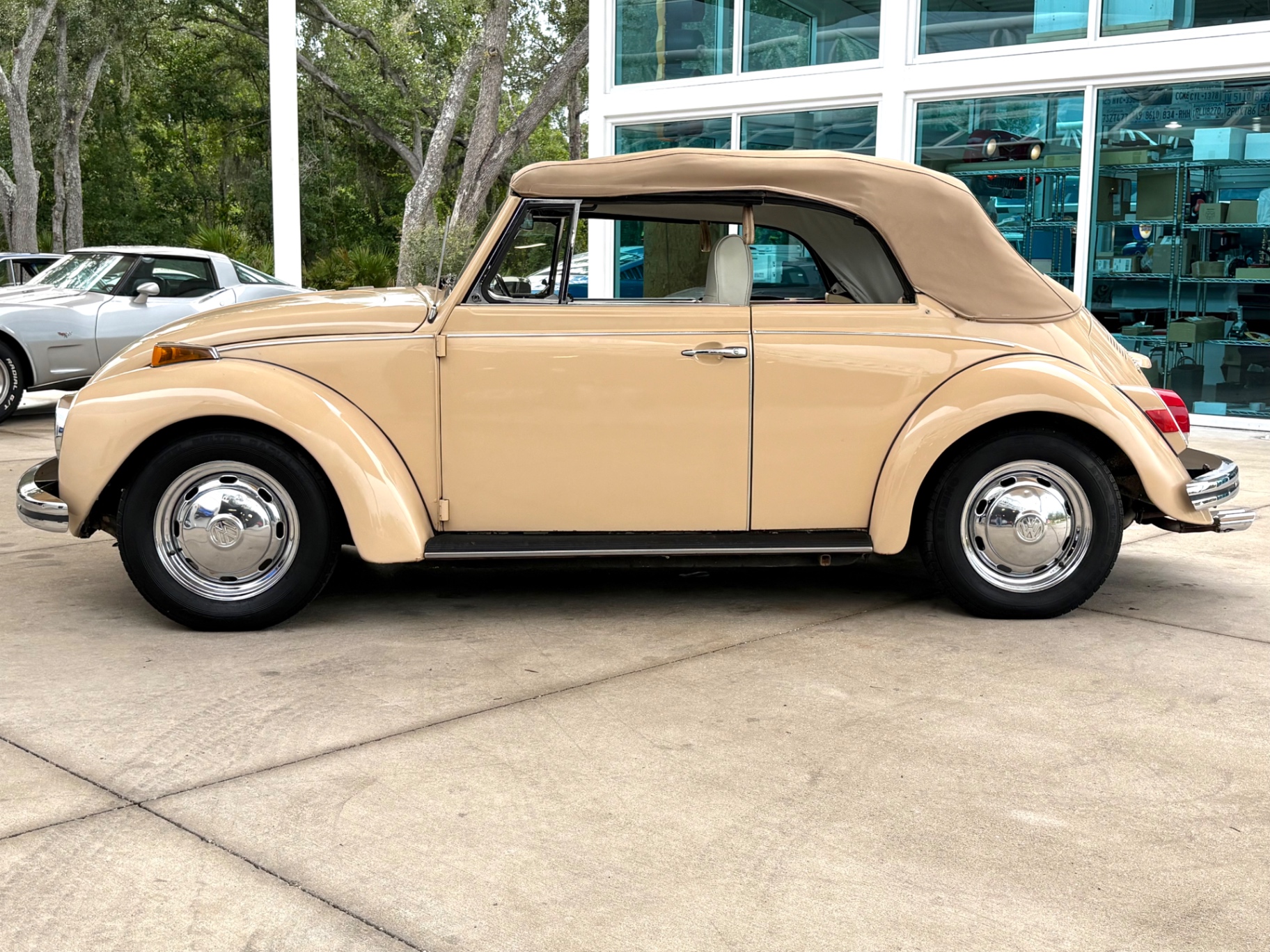
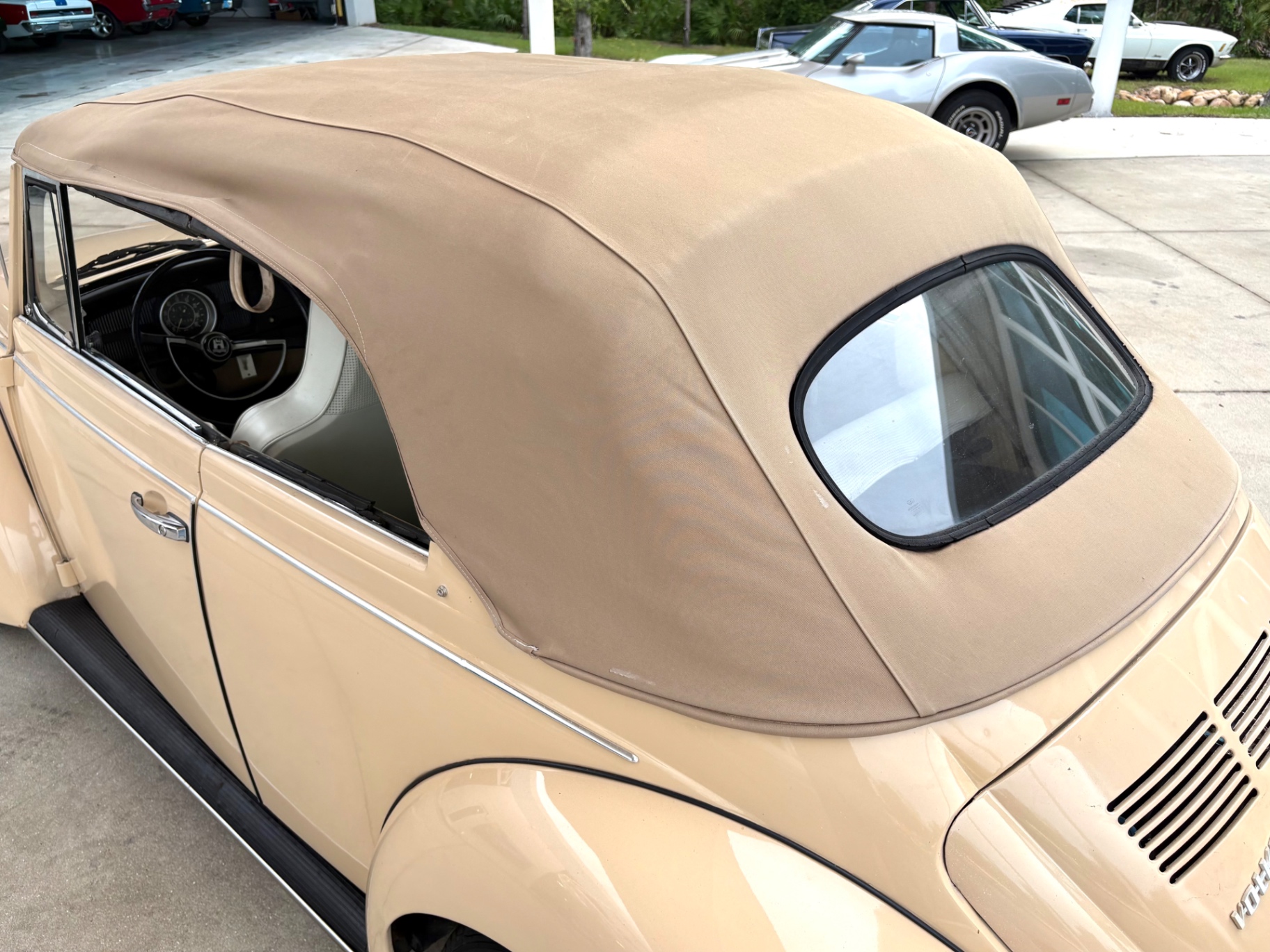
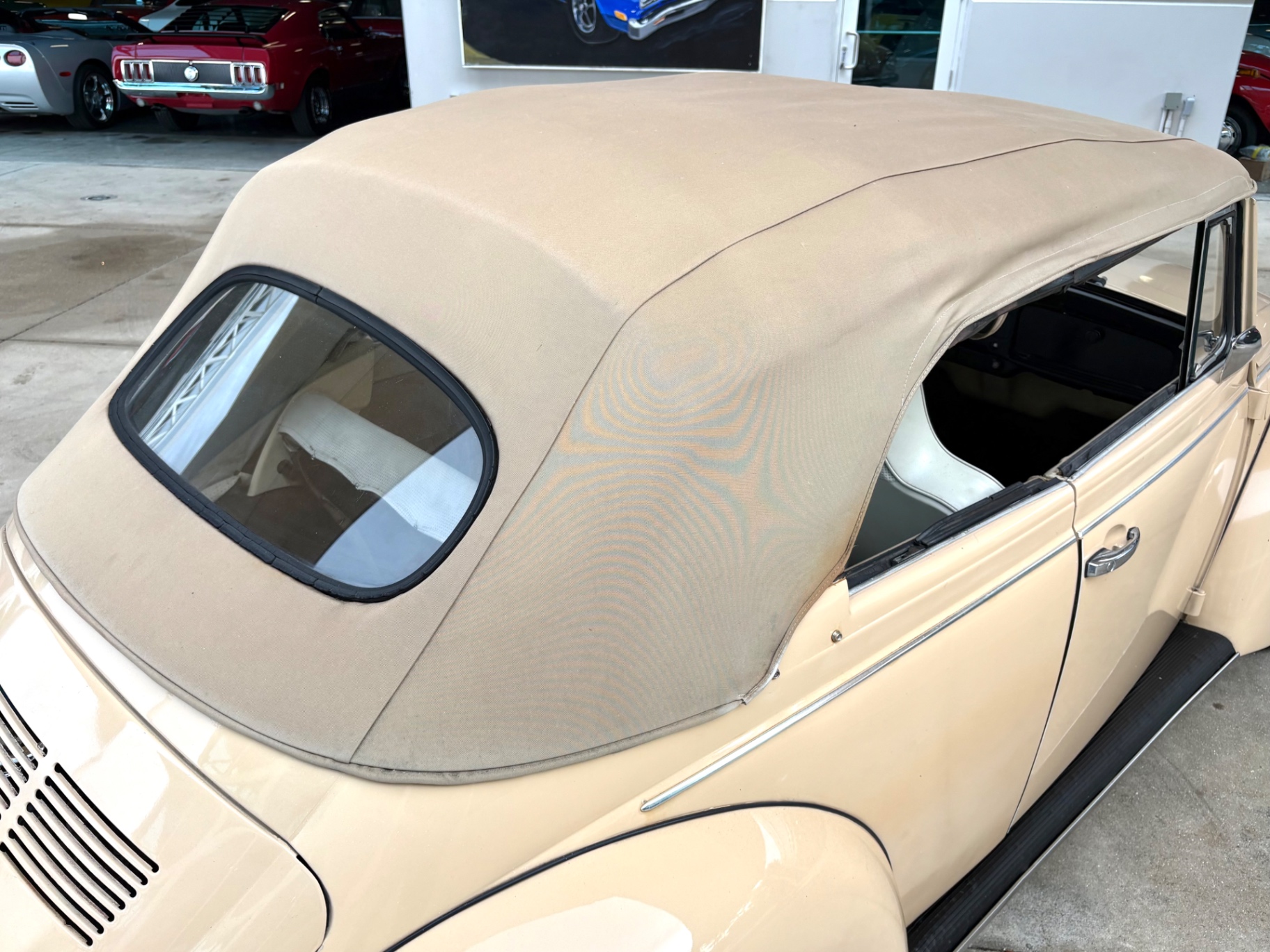
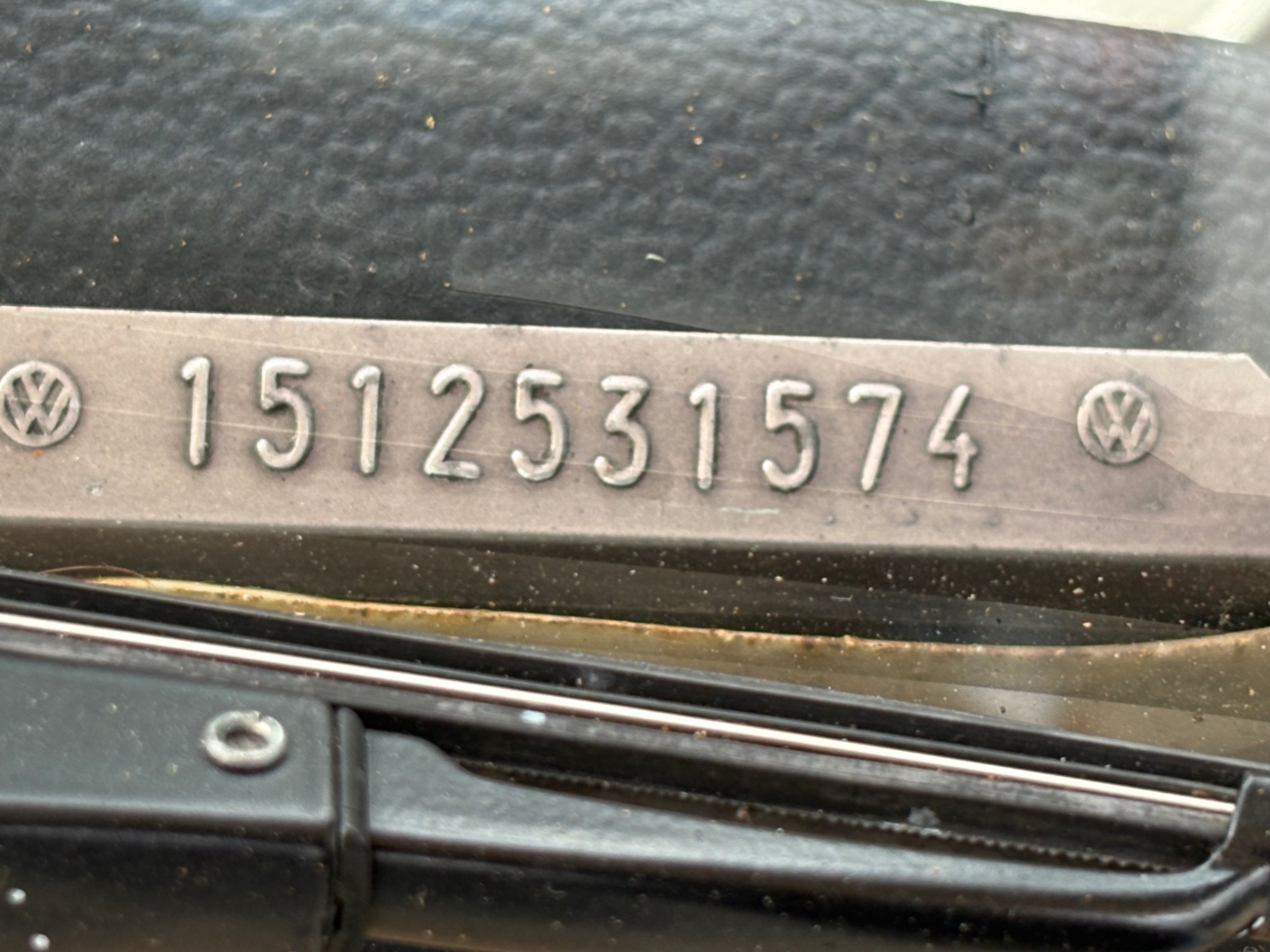
This particular 1971 Volkswagen Beetle Convertible presents in tan exterior with a matching tan convertible top and top boot, over a white vinyl interior. The VIN sequence confirms this is a genuine 1971 model year Beetle cabriolet built to US market specification. It is an honest, driving-condition example with several practical upgrades already in place, and an undercarriage that holds up to inspection on the lift — something that cannot be said for many survivors of this age.
Features List
- 1.6L Air-Cooled Flat-4 Engine with Dual-Port Cylinder Heads
- 4-Speed Manual Transmission with Floor-Shift Gear Lever
- Karmann-Built Open-Air Convertible Body
- Tan Convertible Top with Matching Storage Boot
- Torsion Bar Front Suspension
- Swing Axle Rear Suspension
- Drum Brakes All Around
- Aftermarket Performance Air Filter
- Aftermarket Ignition Distributor
- Aftermarket Quad Exhaust Tips
- White Vinyl Front Bucket Seats
- White Vinyl Rear Bench Seat
- Two-Spoke VW Steering Wheel
- Door Pockets Both Sides
- Lap Seat Belts
- Front Trunk Storage
- Chrome Bumpers Front and Rear
- Chrome Body Side Molding
- Chrome Running Boards
- VW Emblem Hubcaps
- Exterior Mirrors Both Sides
- Solid Undercarriage
Mechanical
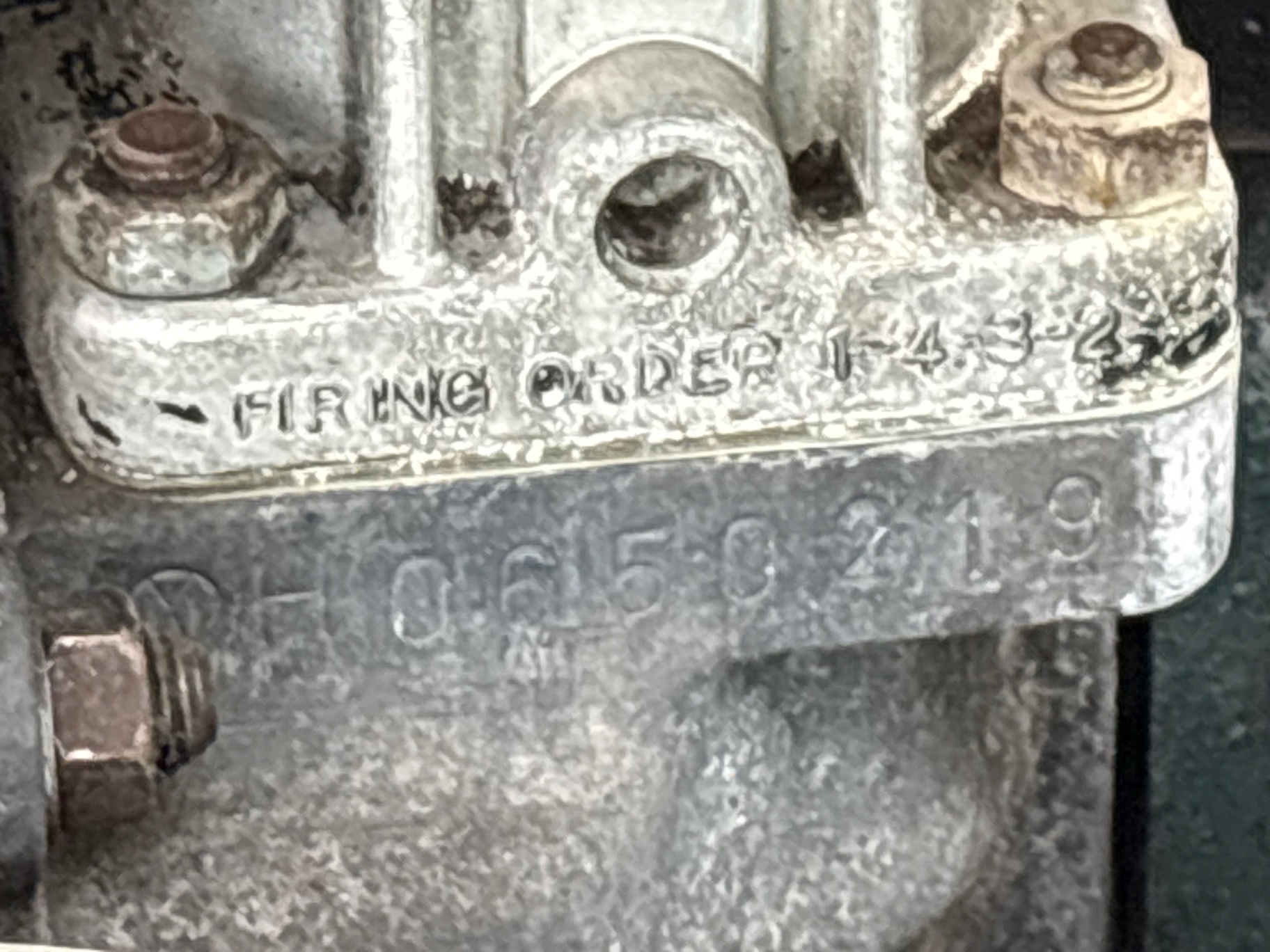
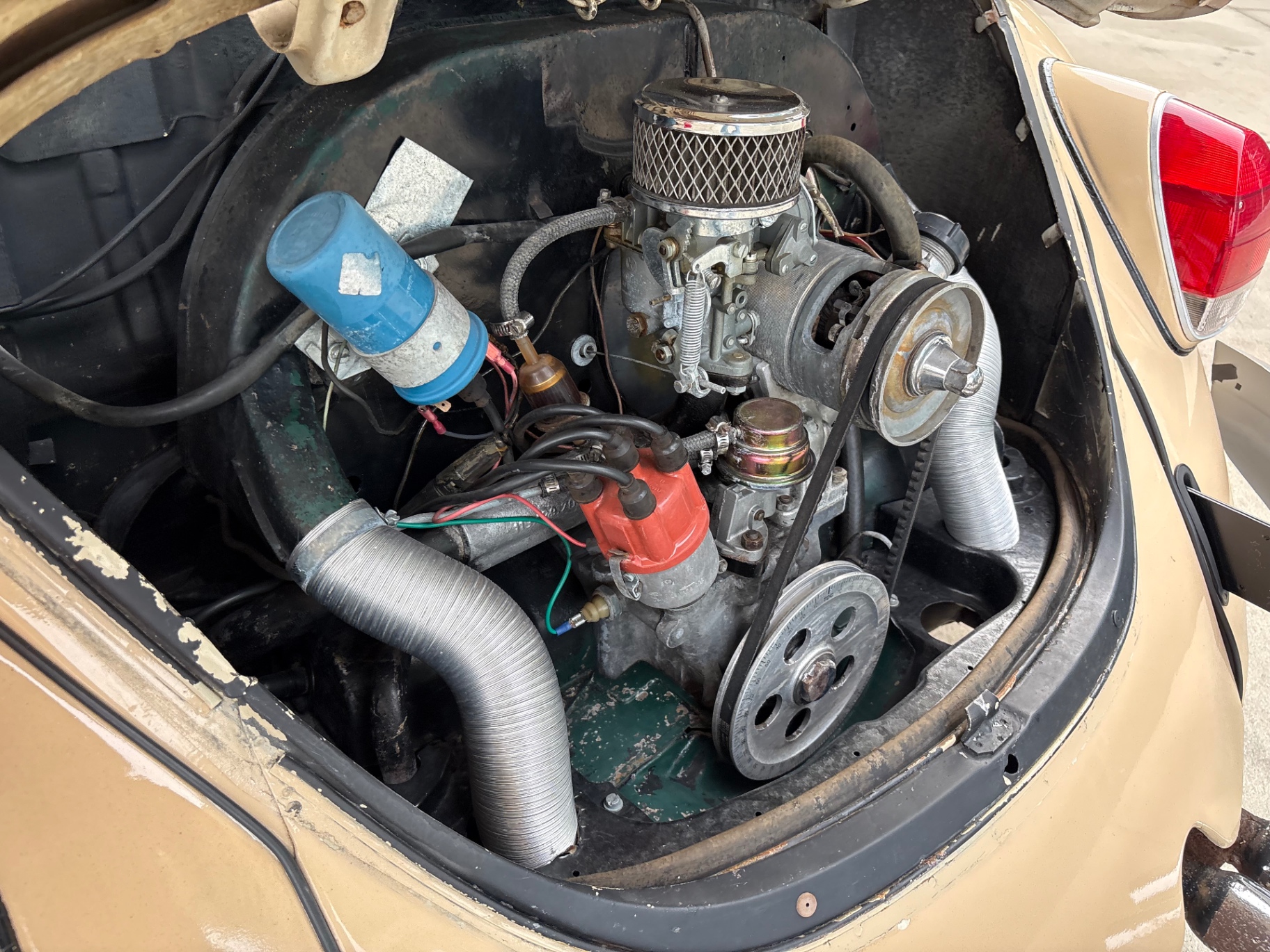
The heart of this 1971 Volkswagen Beetle Convertible is the 1.6-liter air-cooled flat-four, fitted here with the dual-port cylinder heads that VW introduced to the full Beetle lineup for 1971. Compared to the single-port heads used on earlier 1600cc engines, the dual-port design allows each cylinder to draw from its own intake port, which improves mixture distribution and idle quality. It is a straightforward engine to work on — no water cooling system, no complex emissions hardware on a car of this age — and parts availability remains excellent through both OEM-style reproduction suppliers and the active VW air-cooled community.
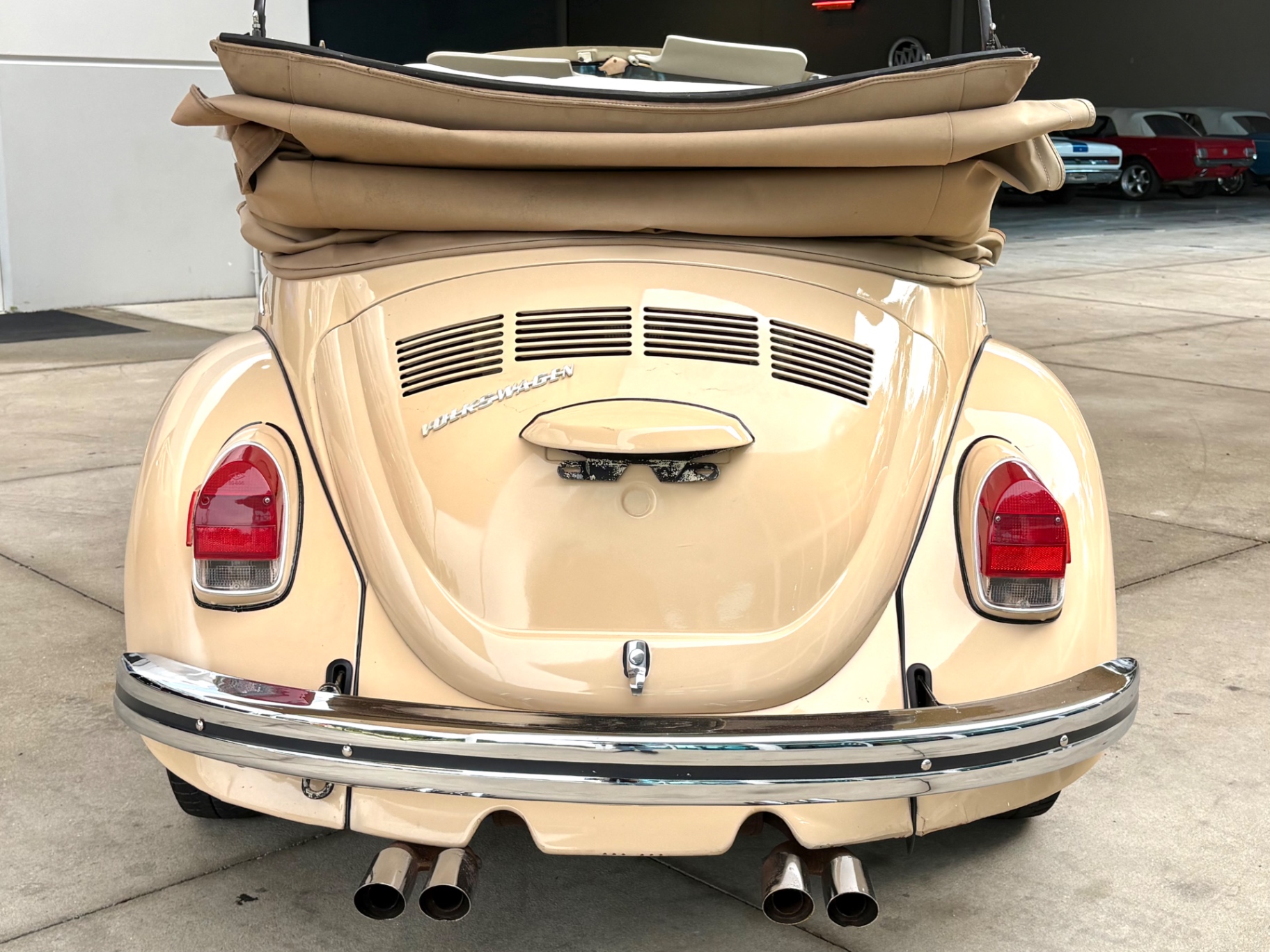
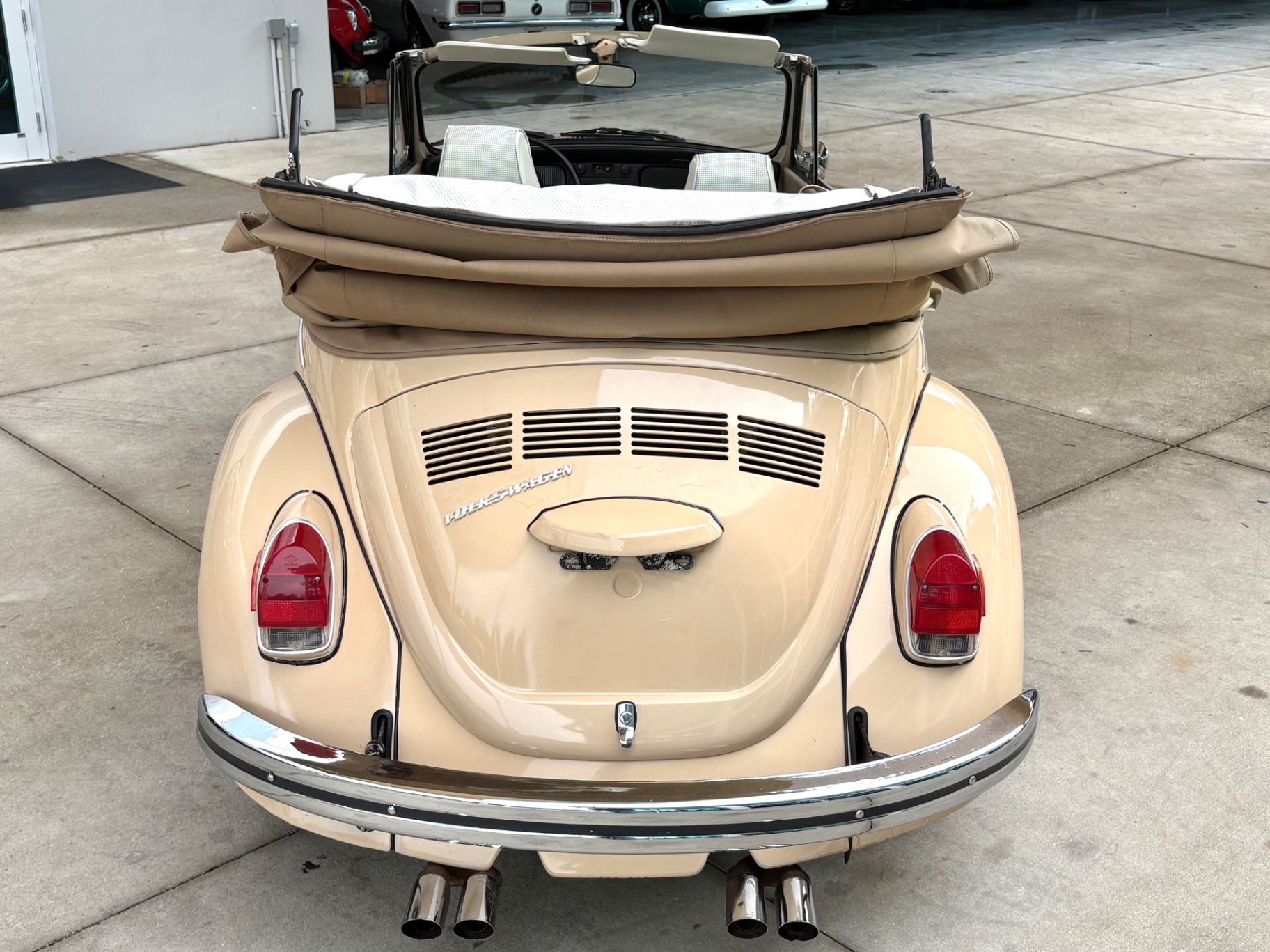
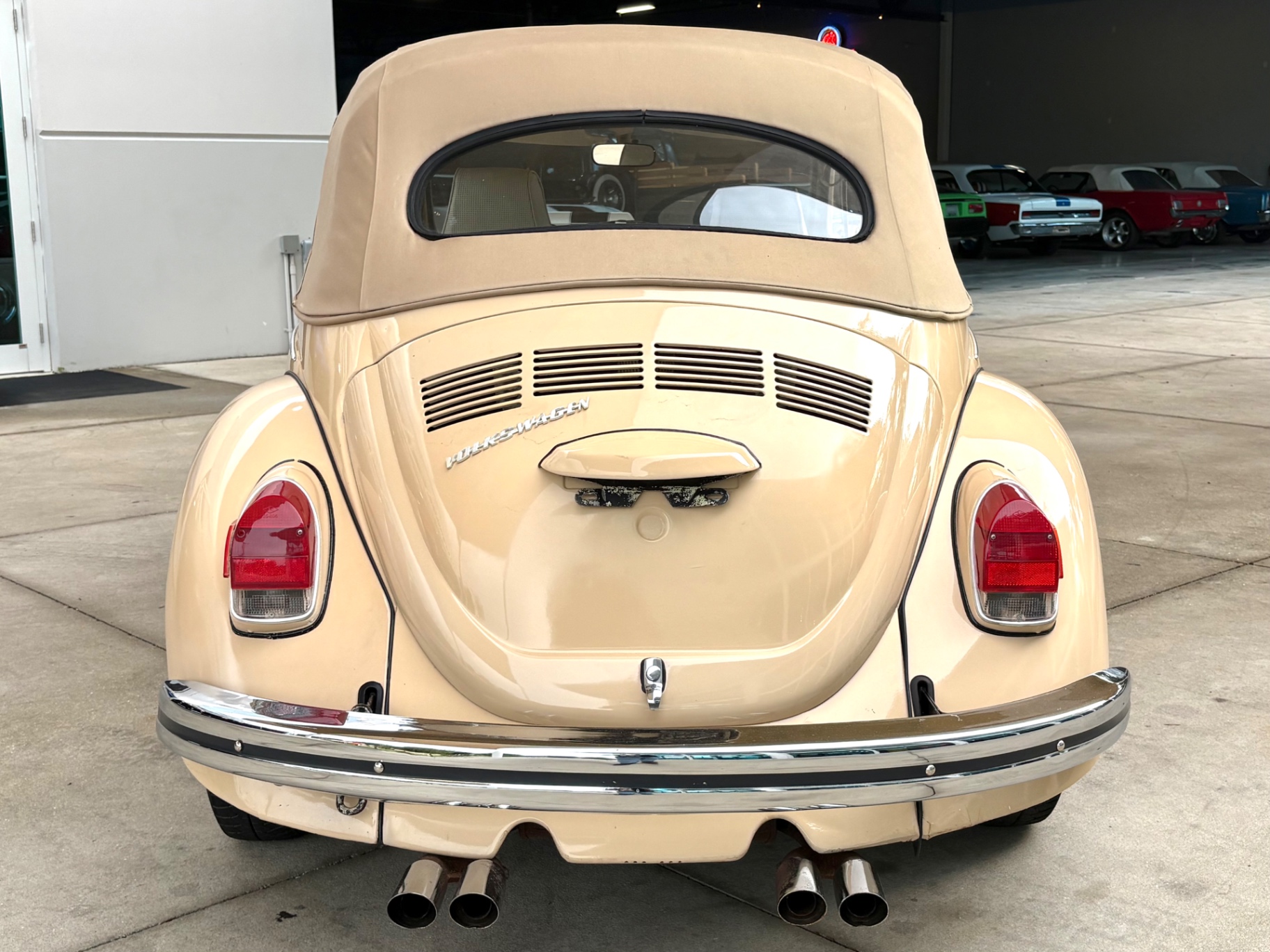
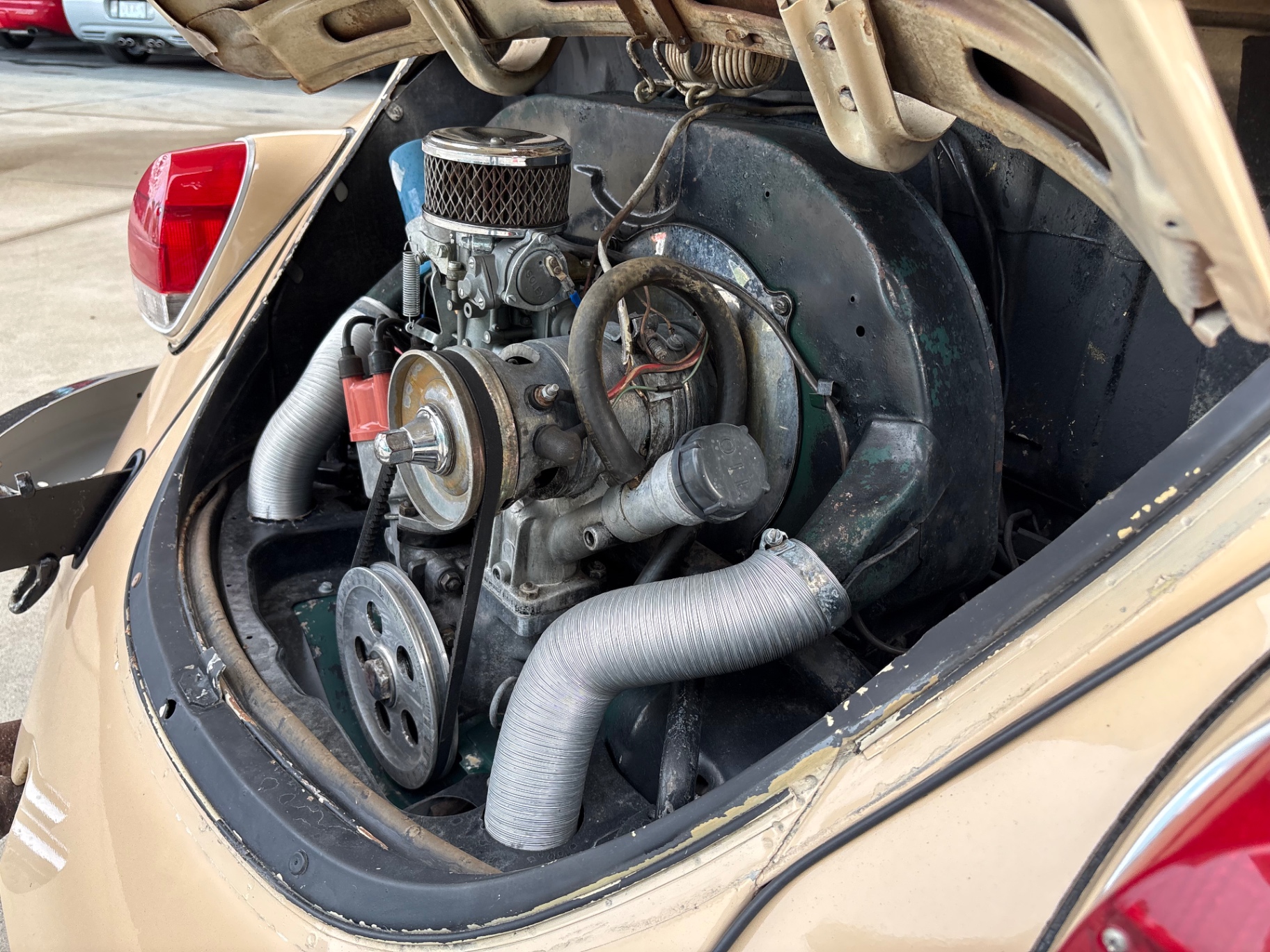
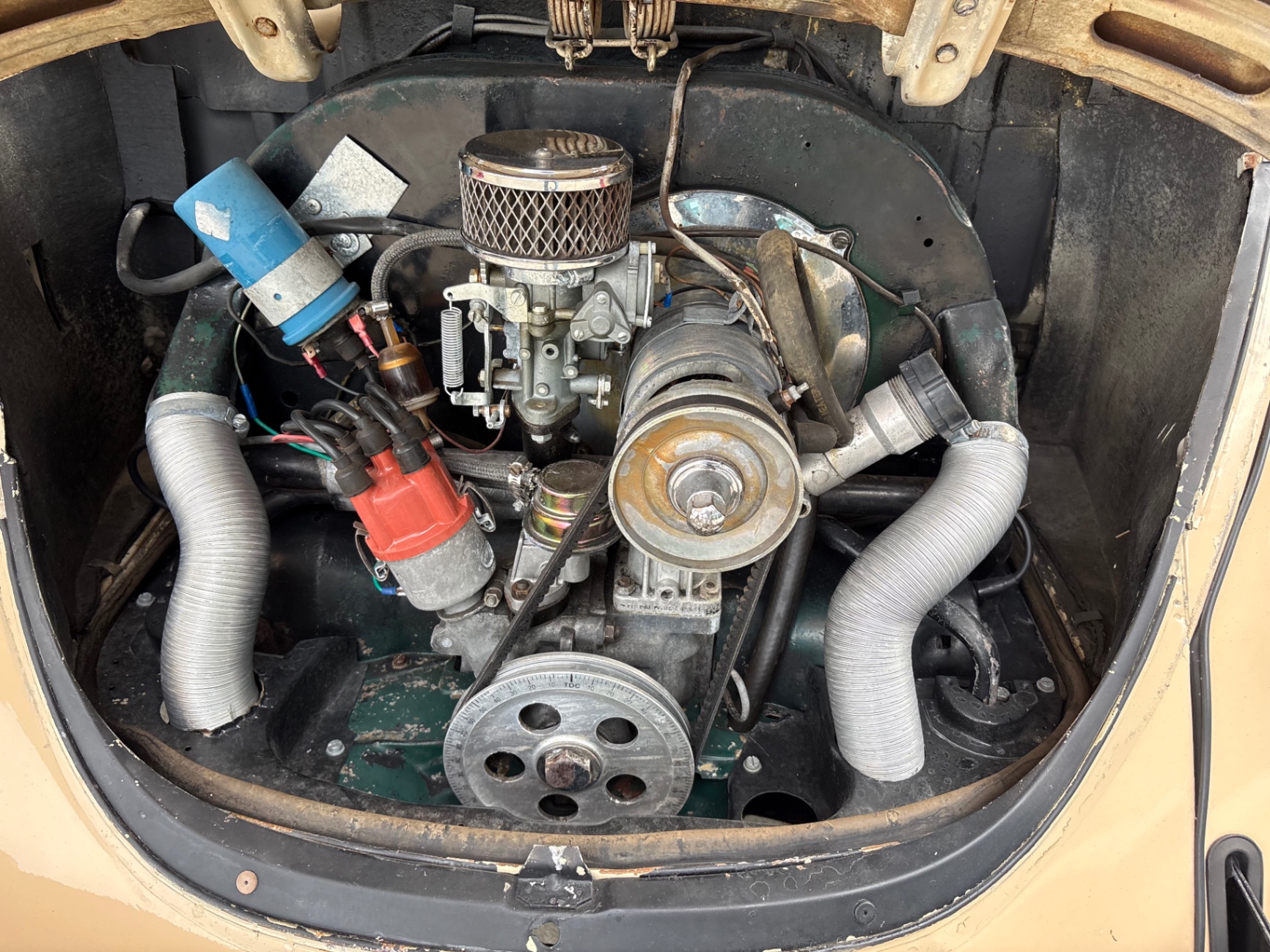
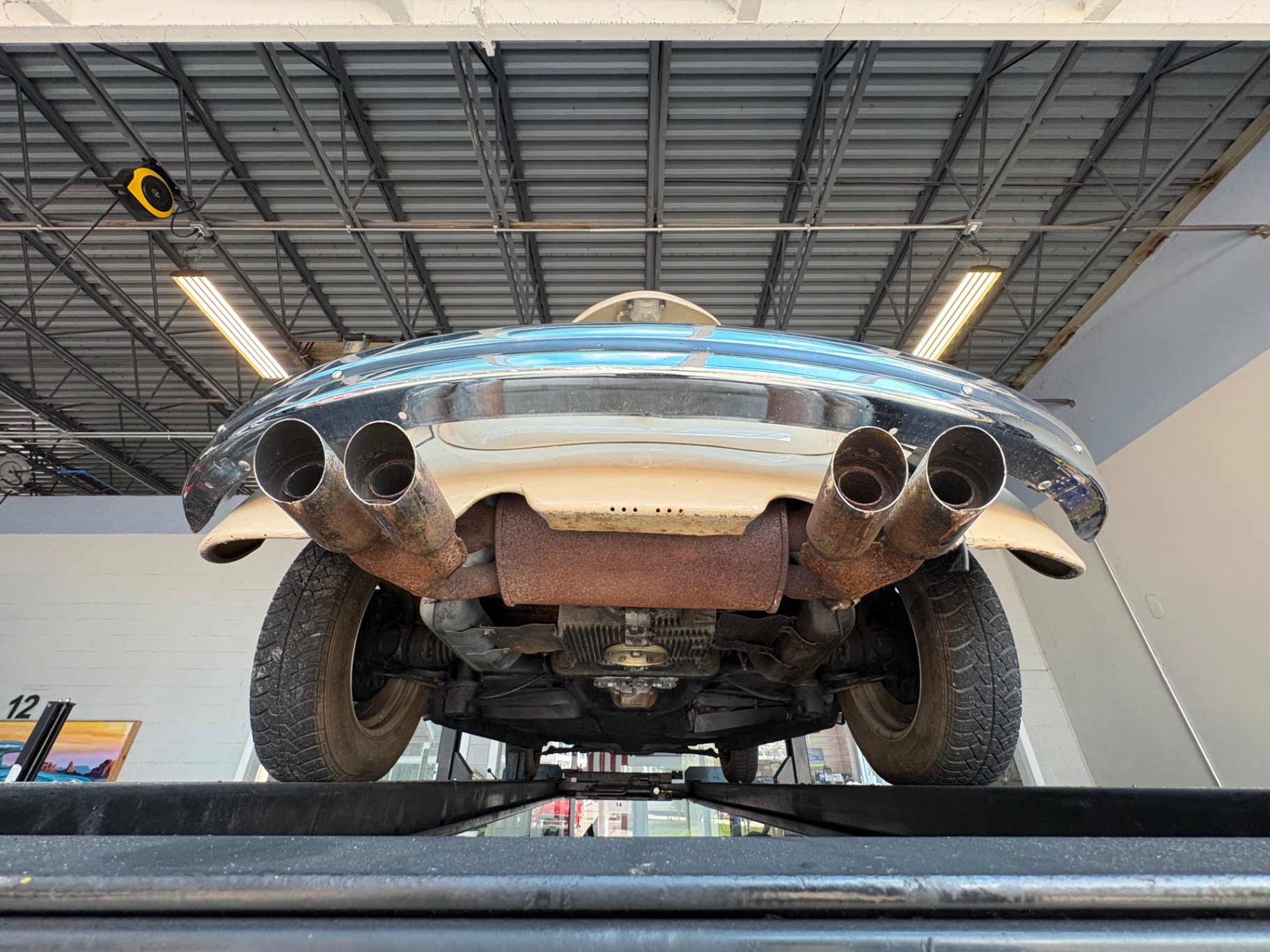
Two practical upgrades have been made to the engine bay. An aftermarket performance air filter replaces the stock unit, and an aftermarket ignition distributor is fitted in place of the original. Both are common and sensible modifications on a driver-grade air-cooled Beetle, improving throttle response and making ignition timing adjustments more accessible. The quad exhaust tips exiting below the rear bumper are a cosmetic addition that gives the car a slightly more purposeful look without requiring any structural changes to the exhaust system itself.
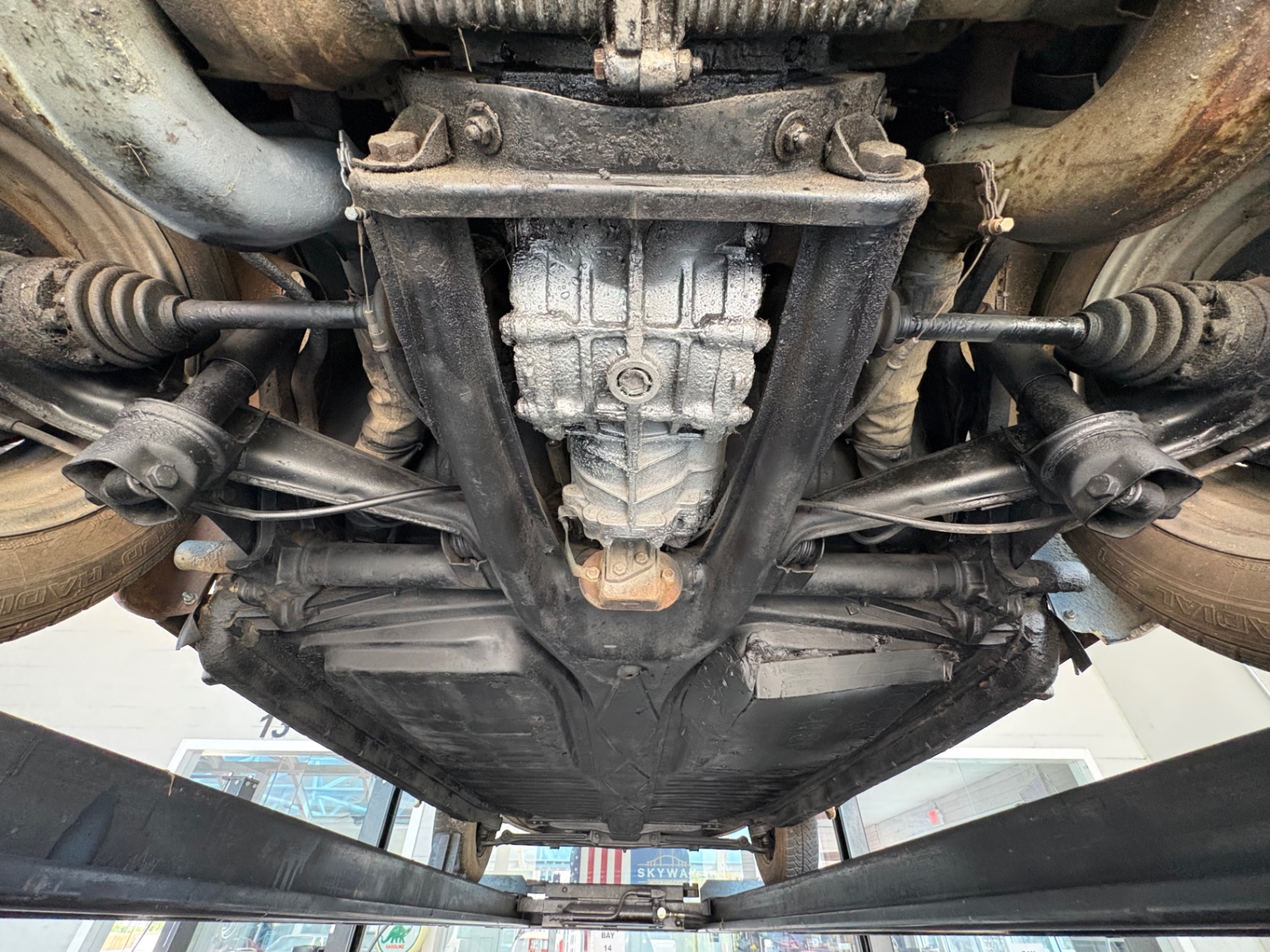
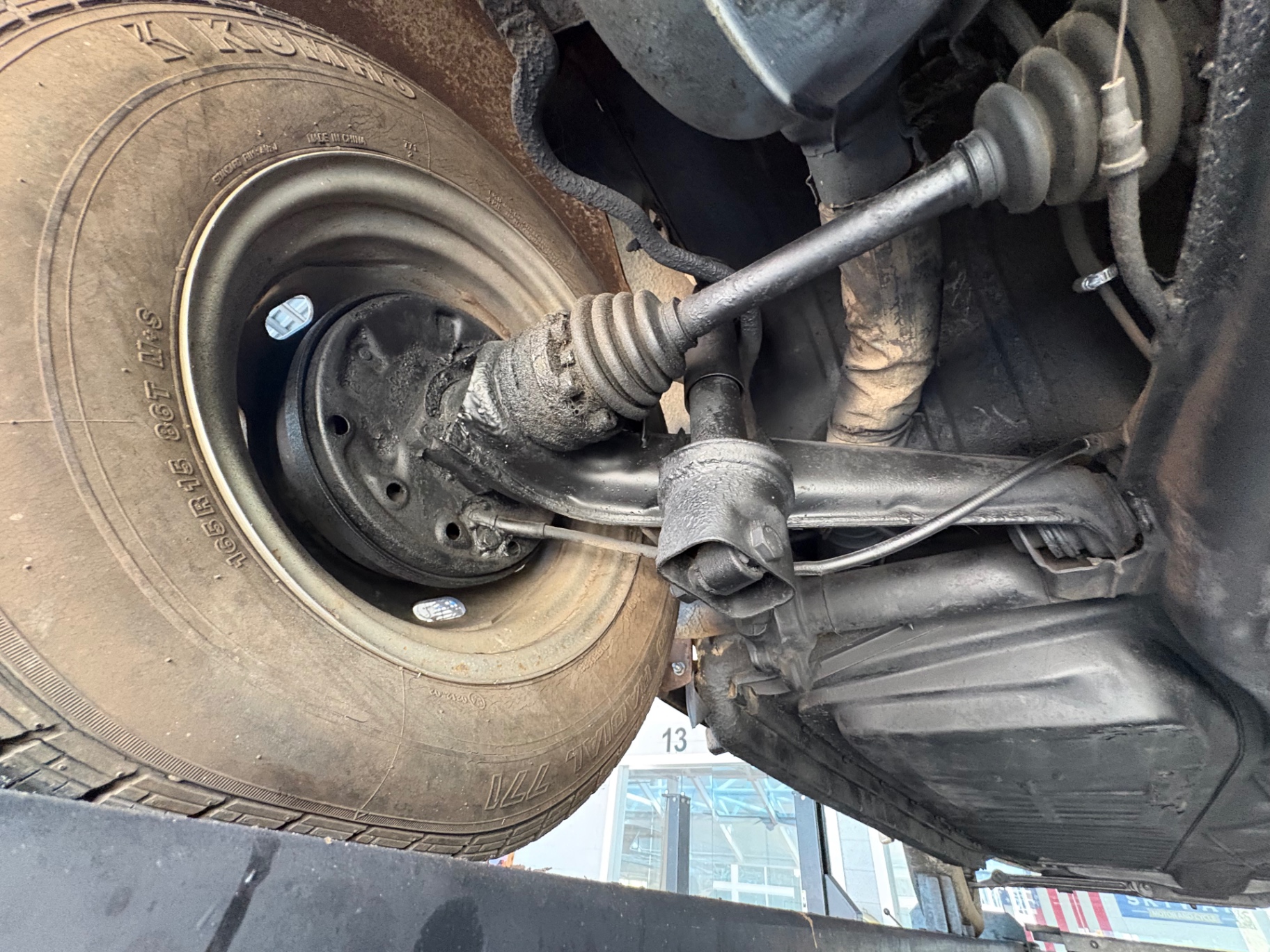
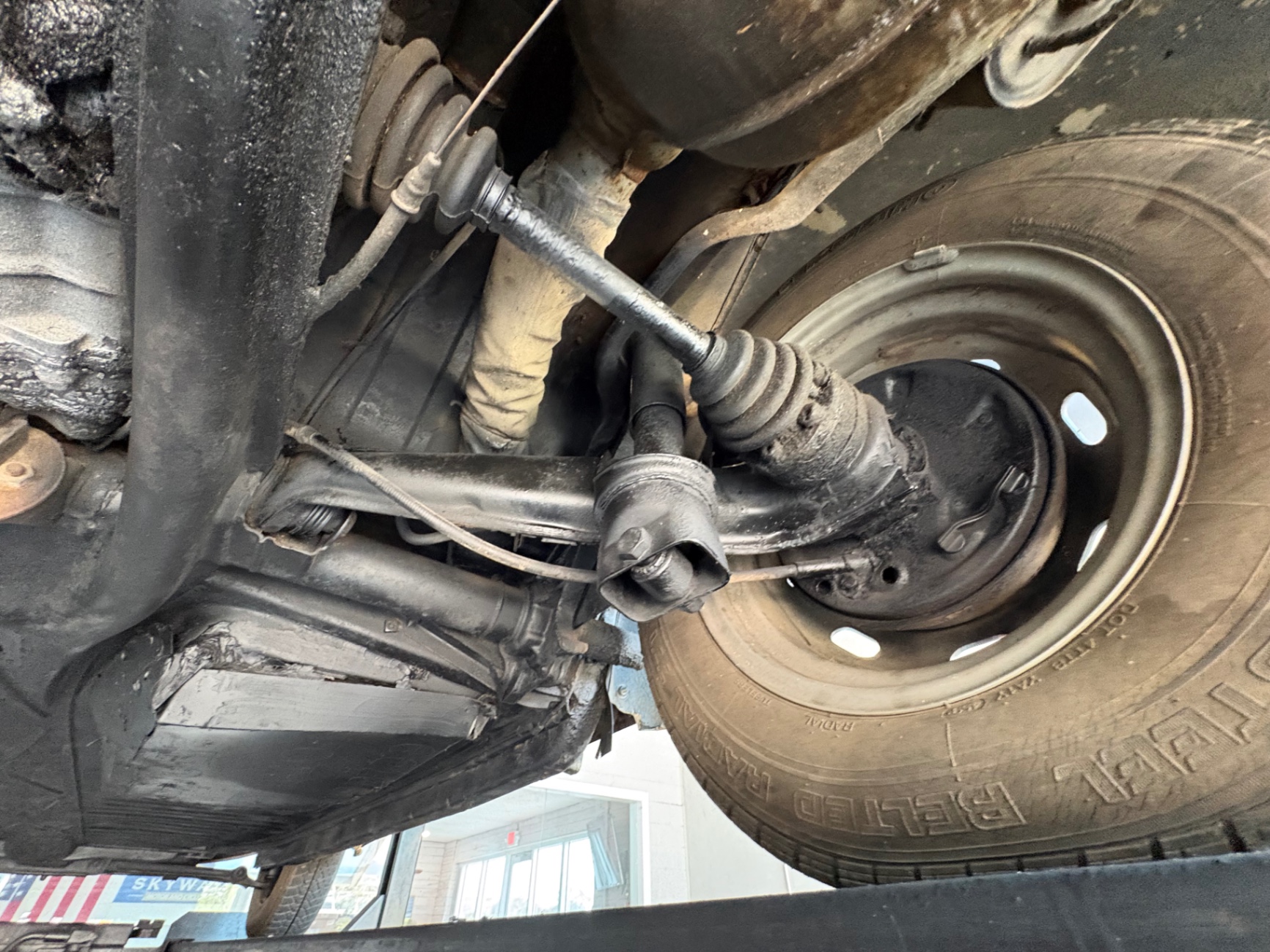
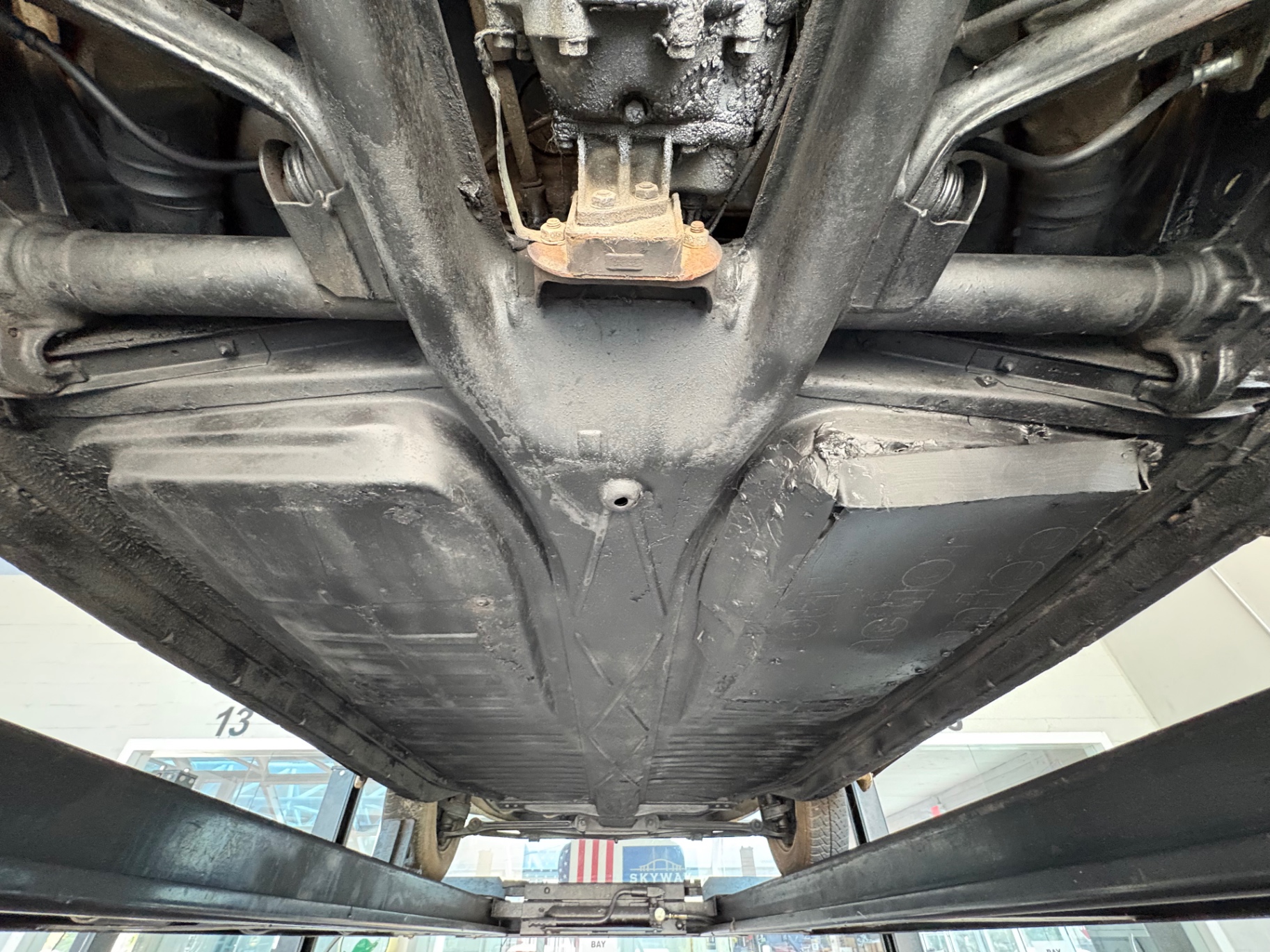
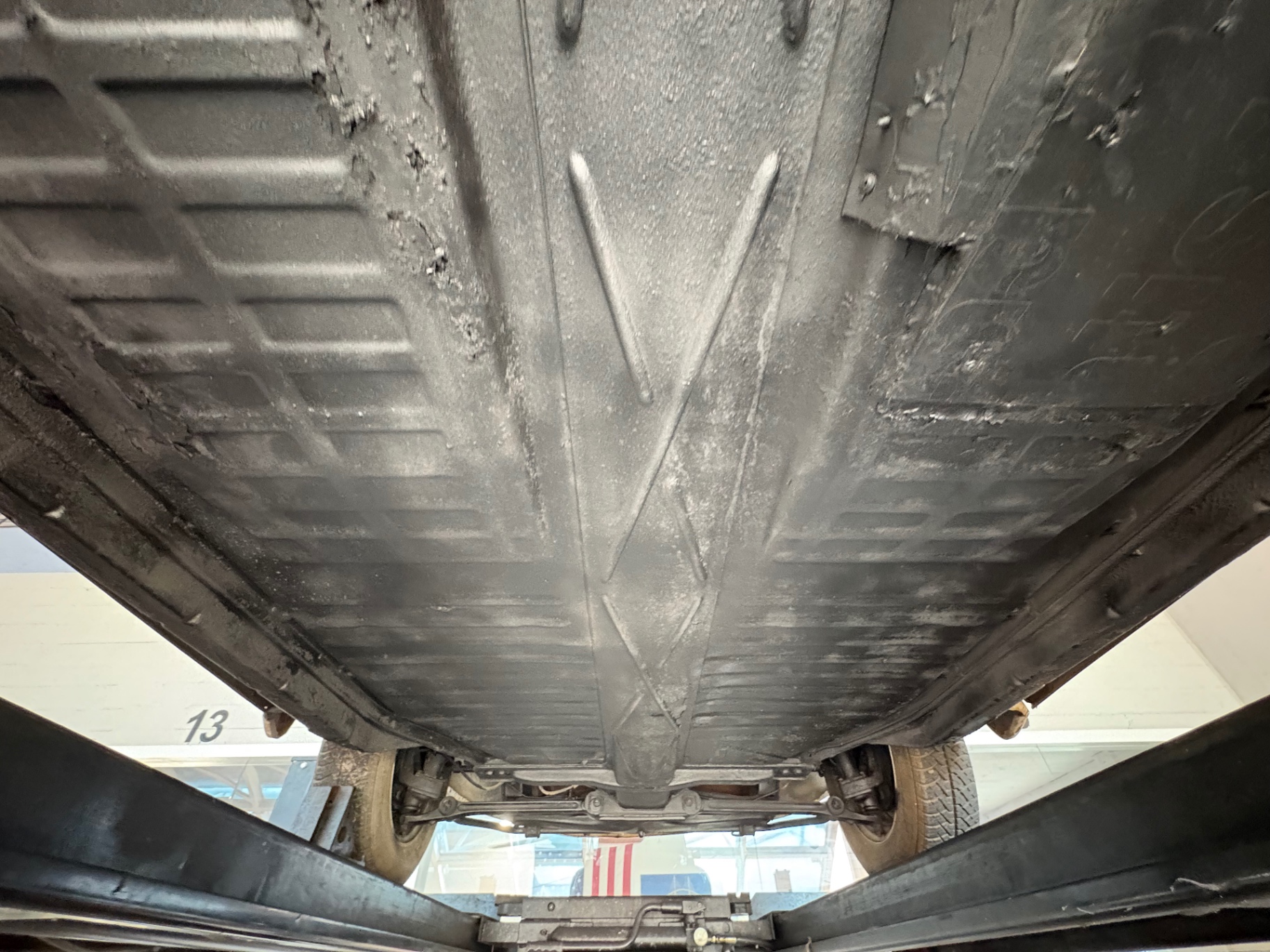
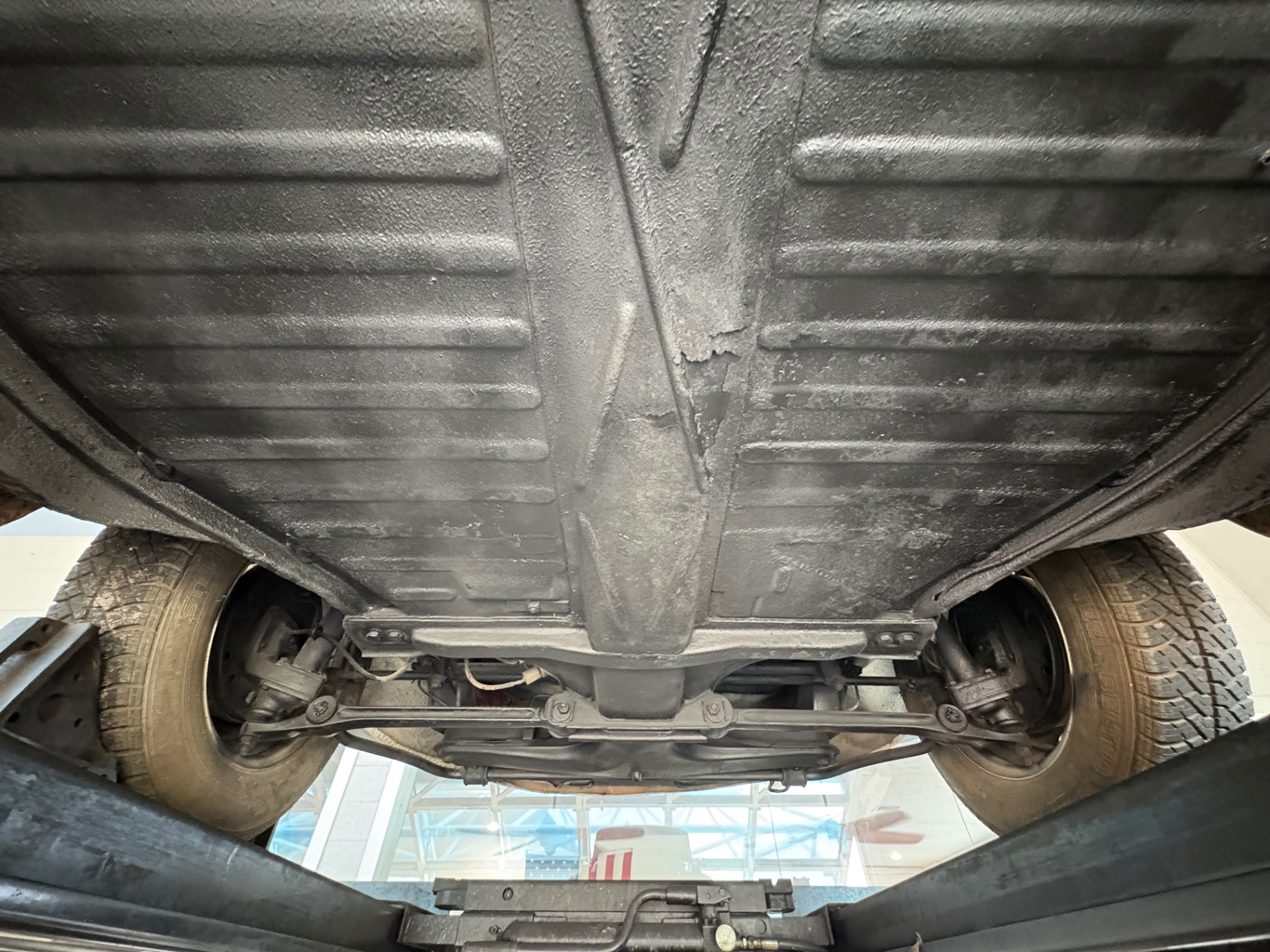
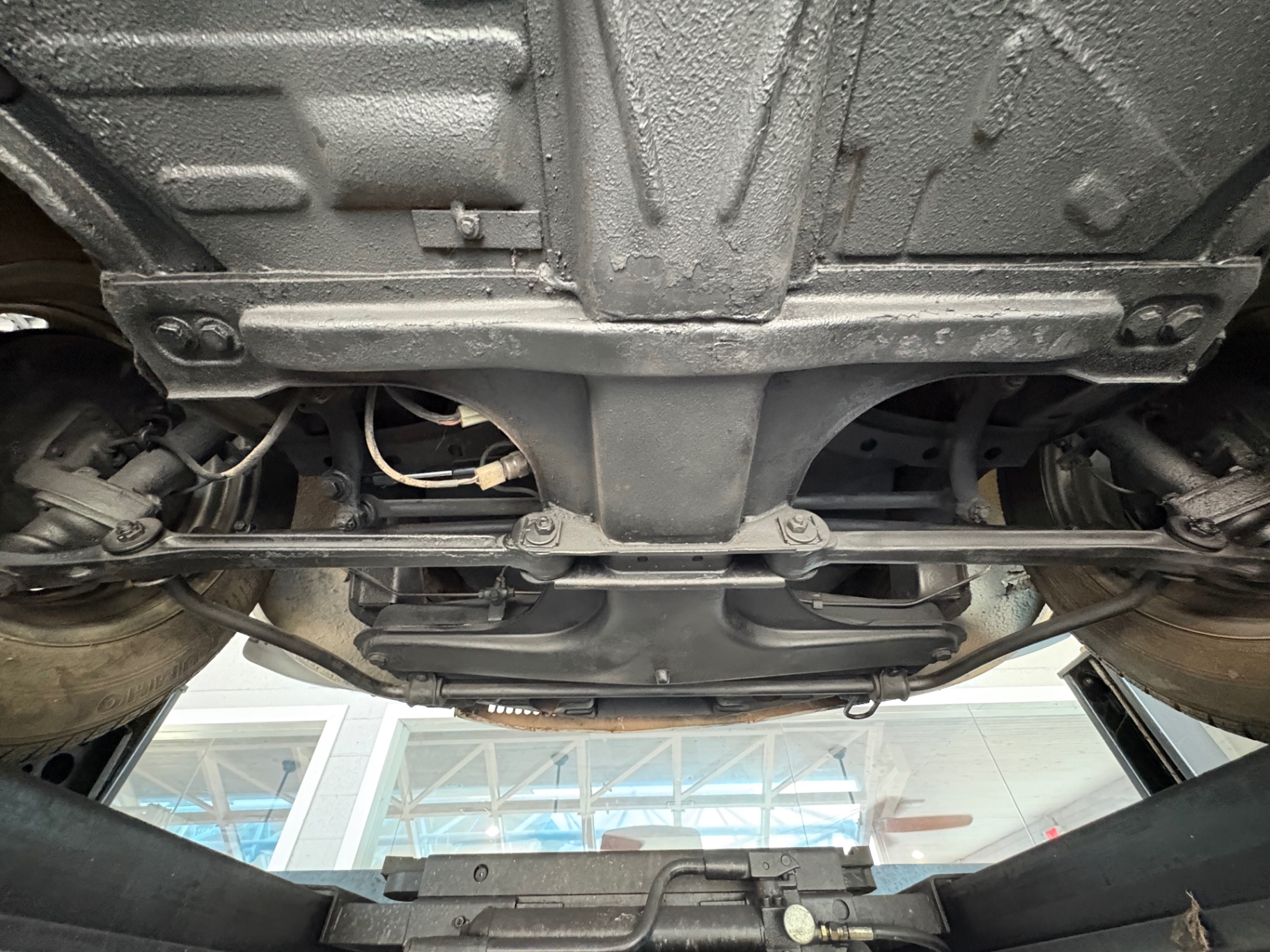
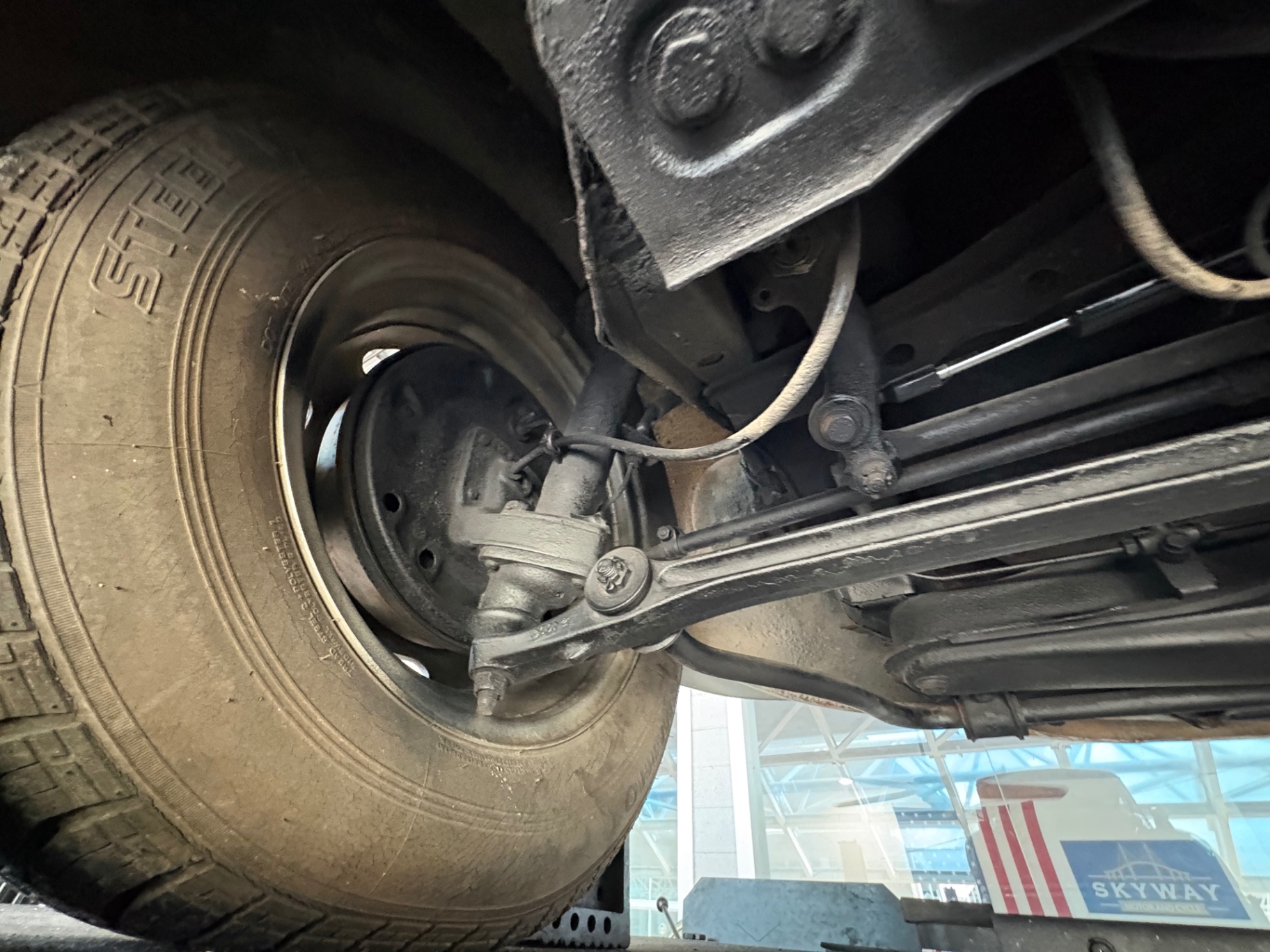
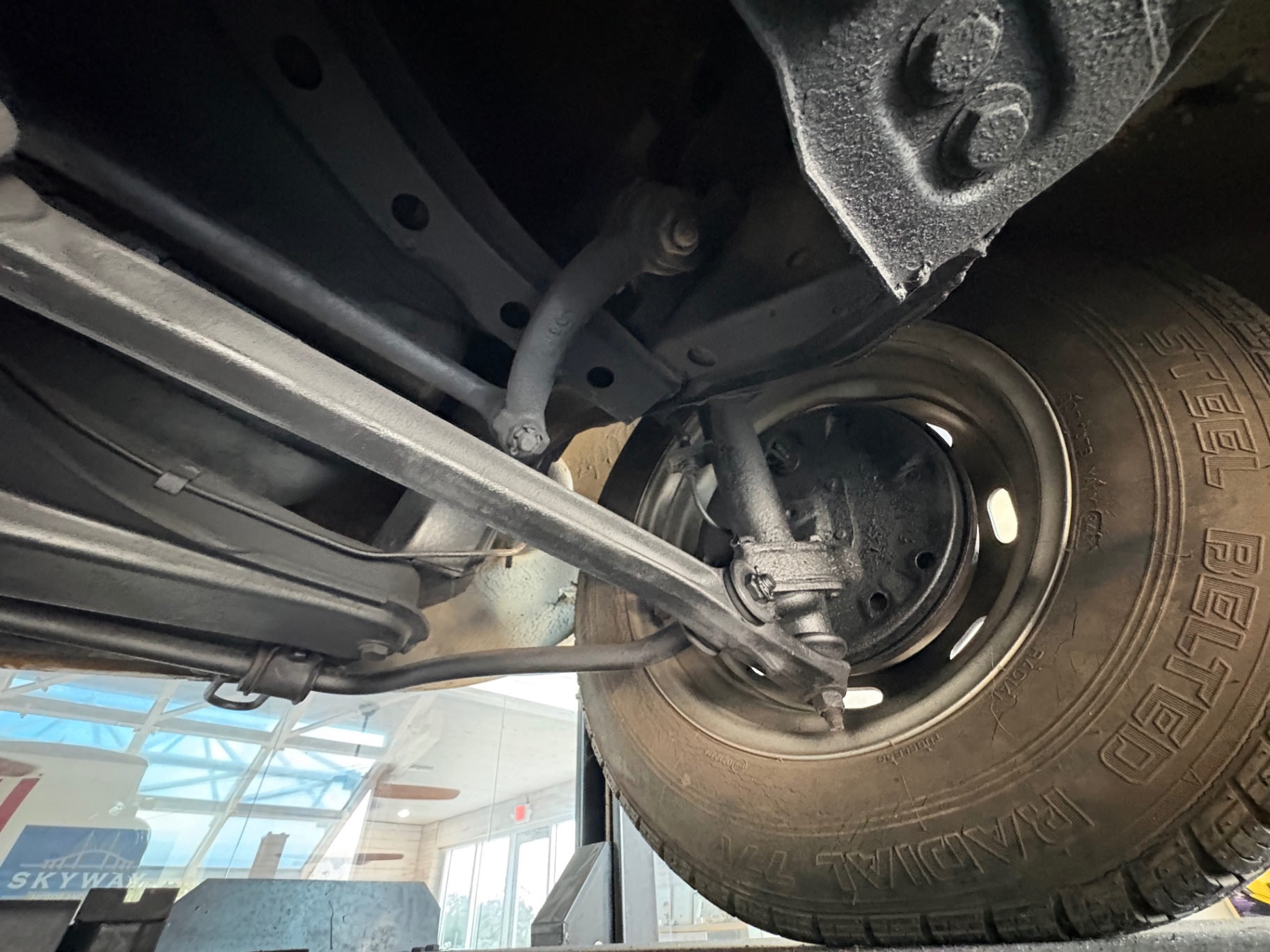
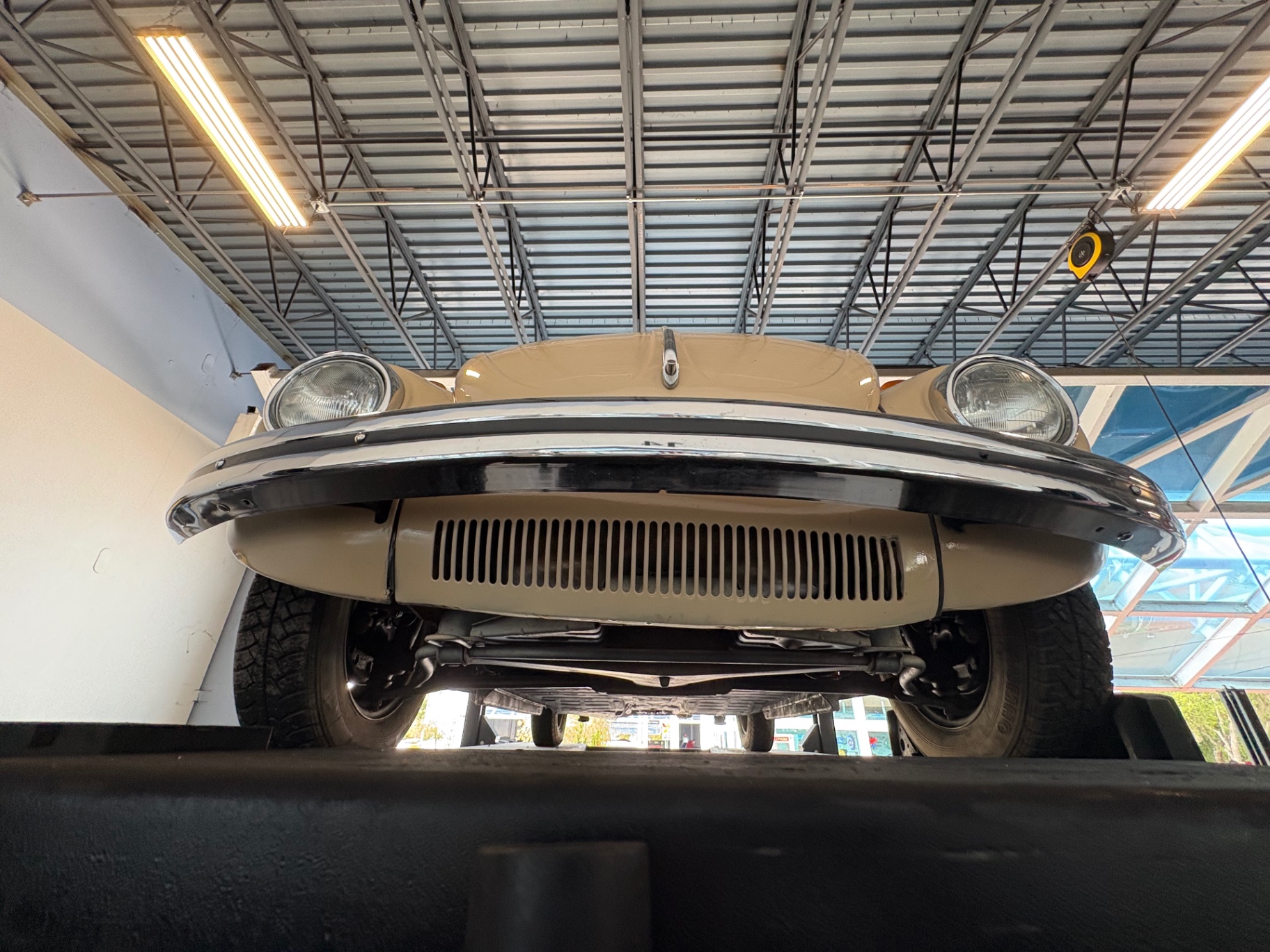
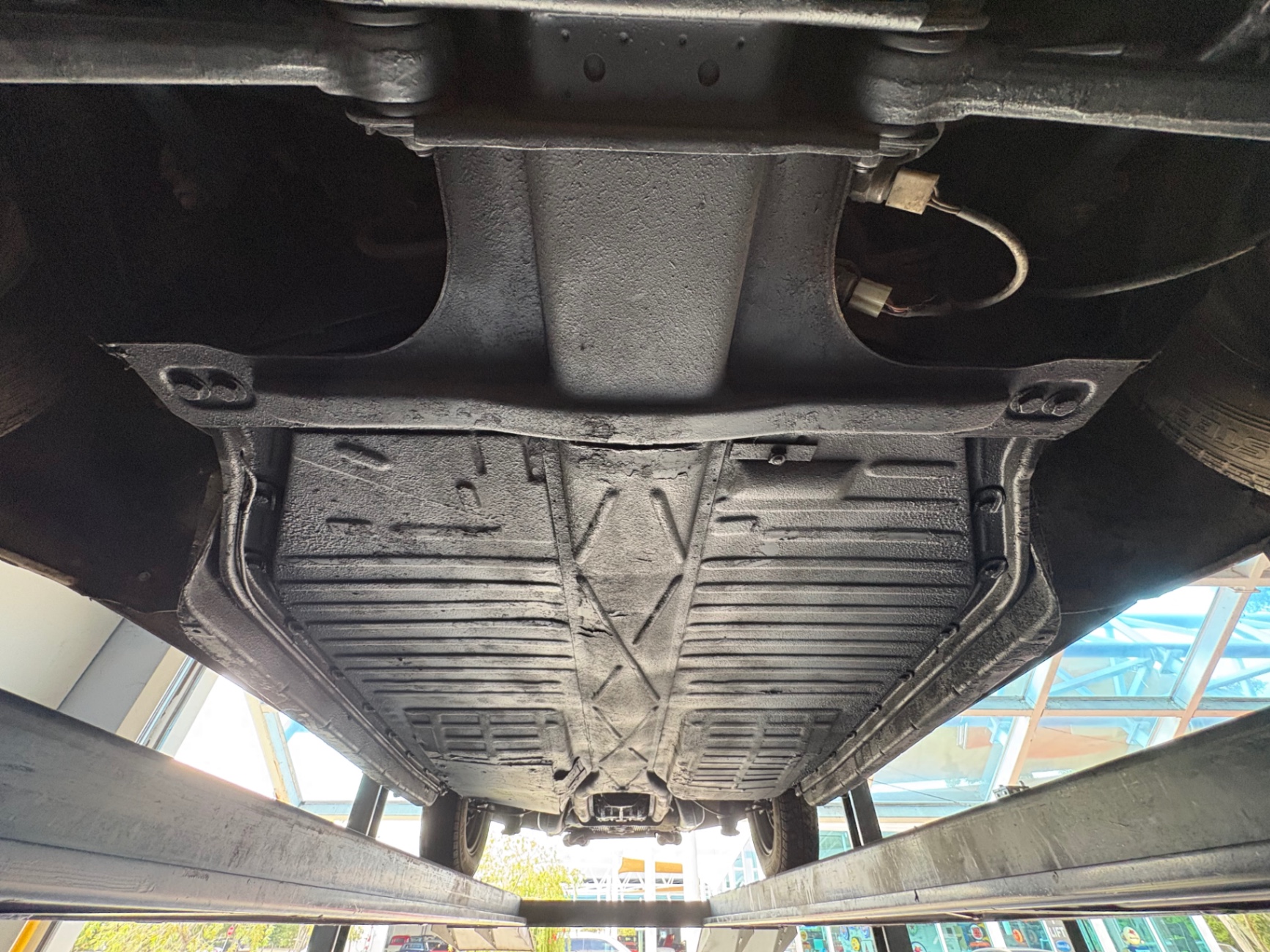
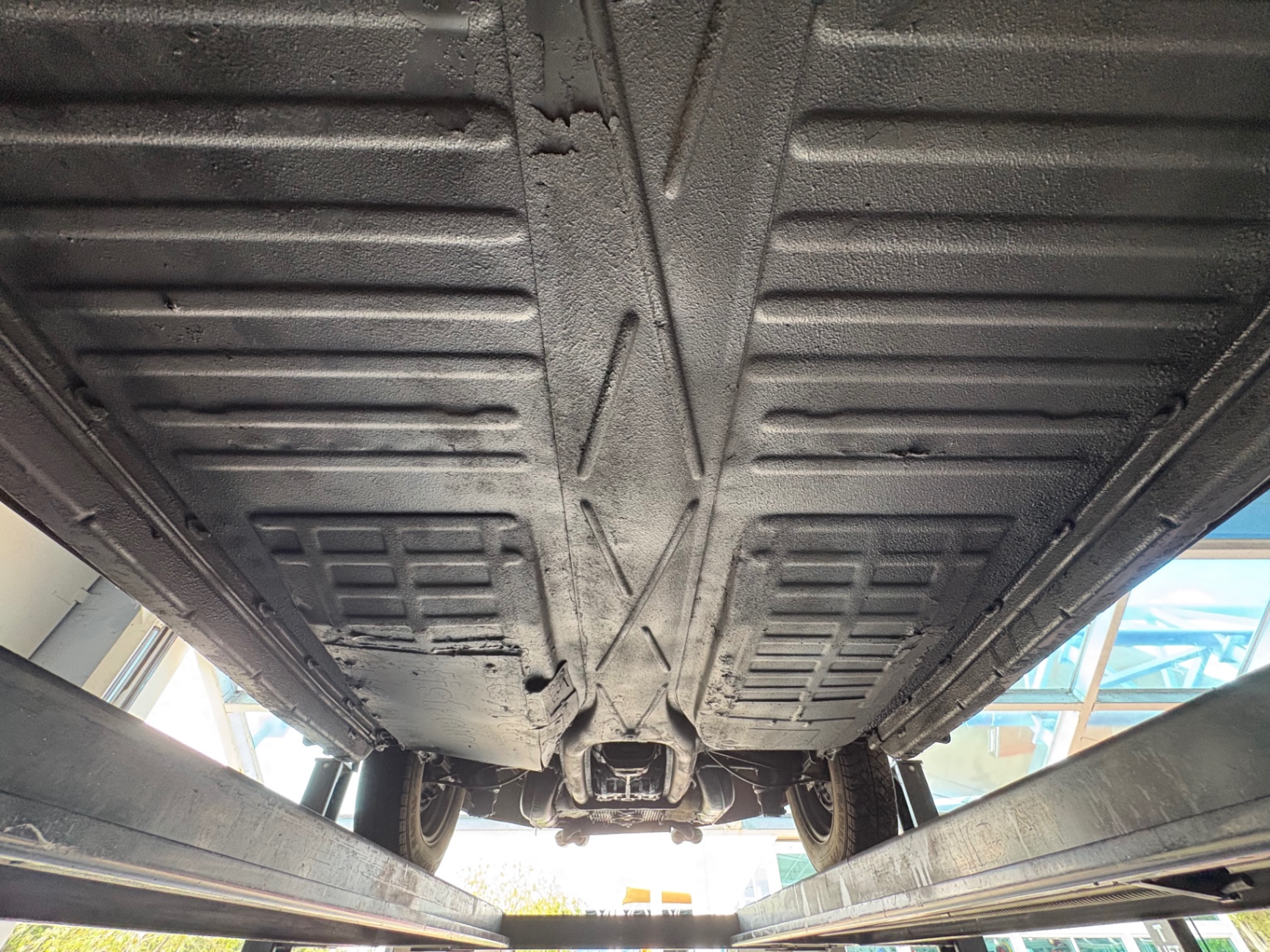
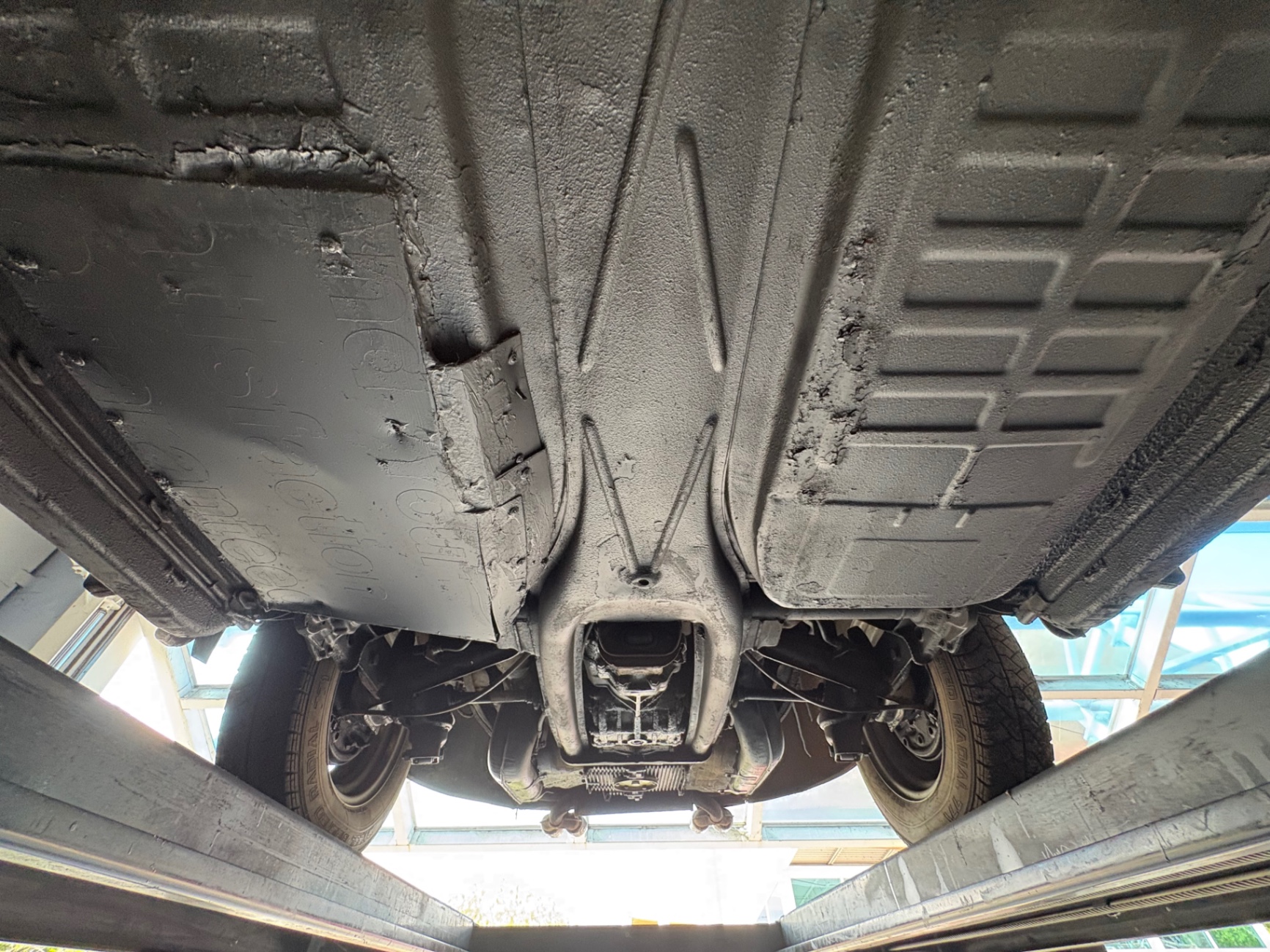
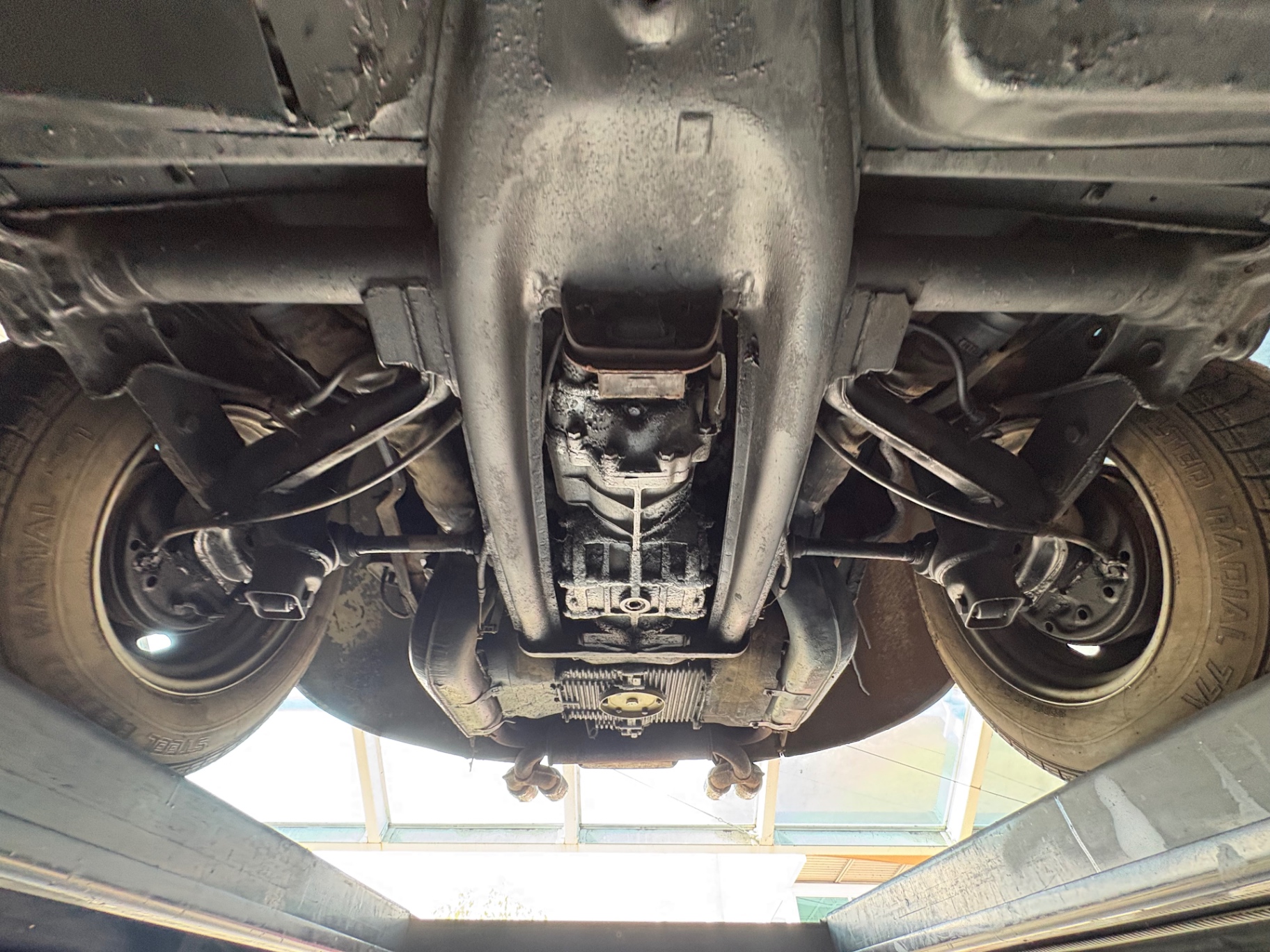
The 4-speed manual transmission is shifted via a floor-mounted gear lever, correct for this model. Up front, the Beetle's torsion bar suspension does its job with no springs to sag or replace. At the rear, the swing axle rear suspension — the setup used on Beetles through 1968 and retained on the cabriolet platform into the early 1970s — is intact and visible on the undercarriage shots. Drum brakes are fitted all around, which is stock for this car. The undercarriage itself is notably solid. The floorpan, tunnel, and heater channels show no significant rot or patch work, which is the single most important thing to verify on any air-cooled Beetle of this vintage. A bad floor is the project; a solid floor is the car. This one has a solid floor.
Interior
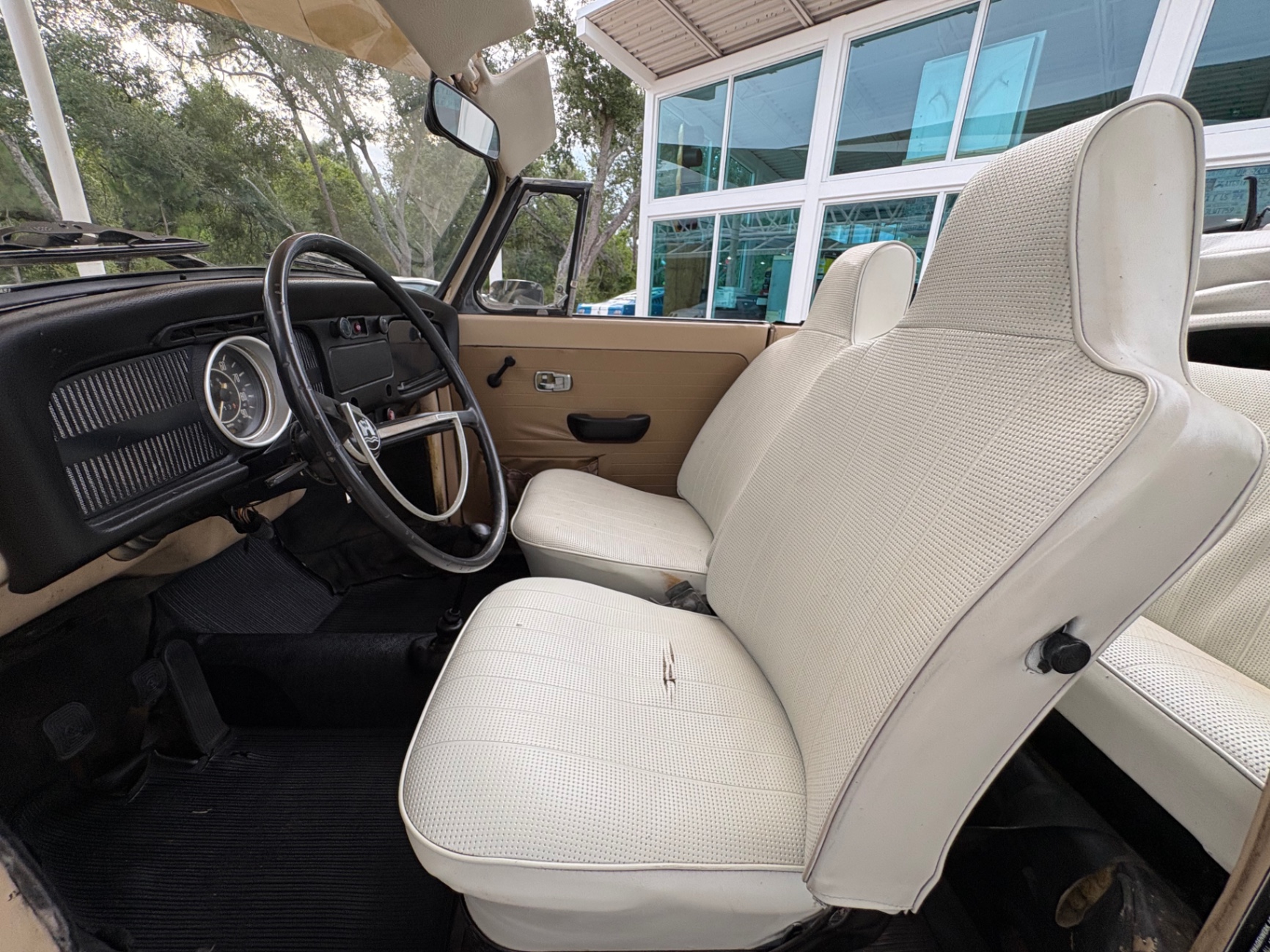
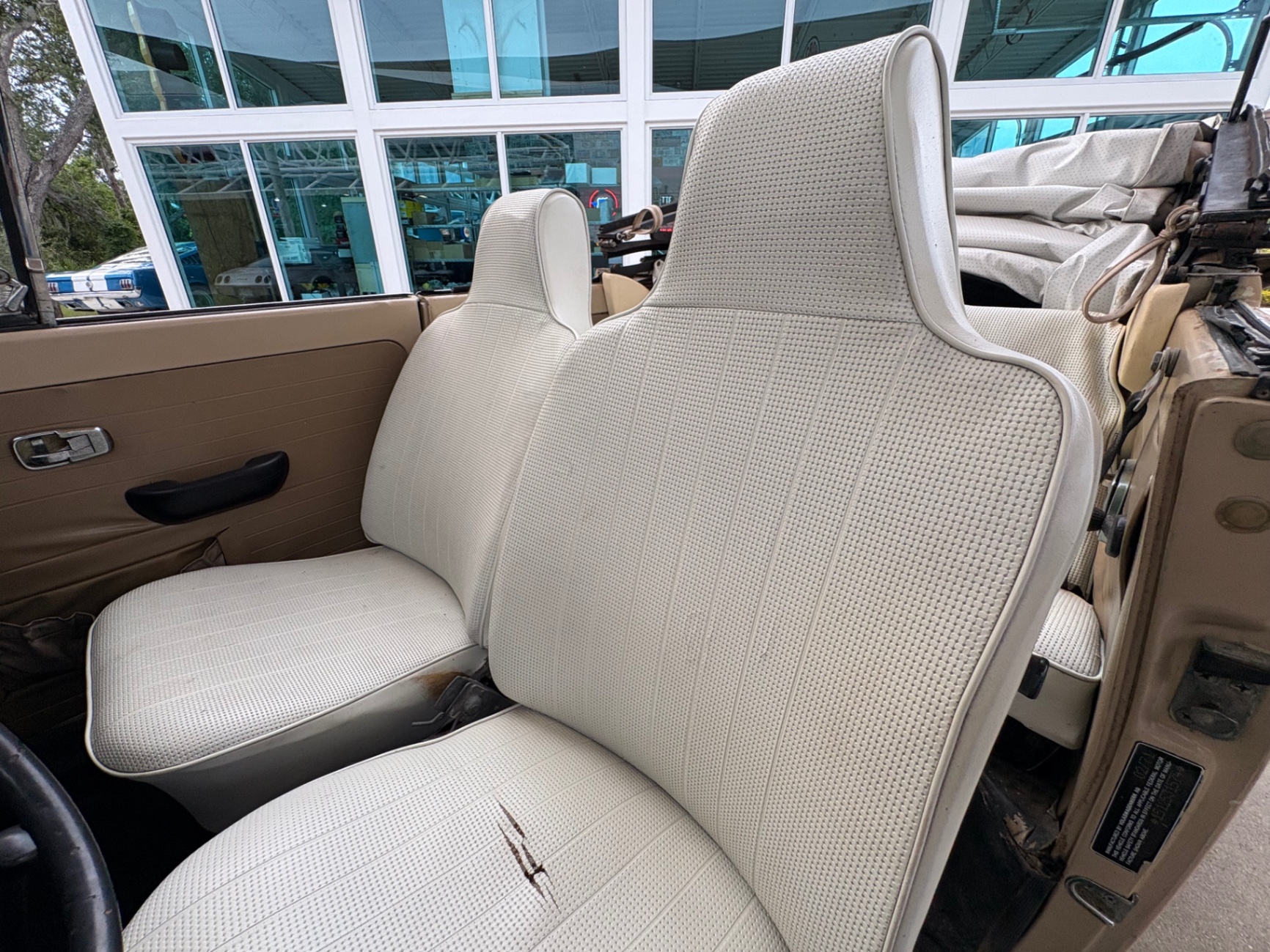
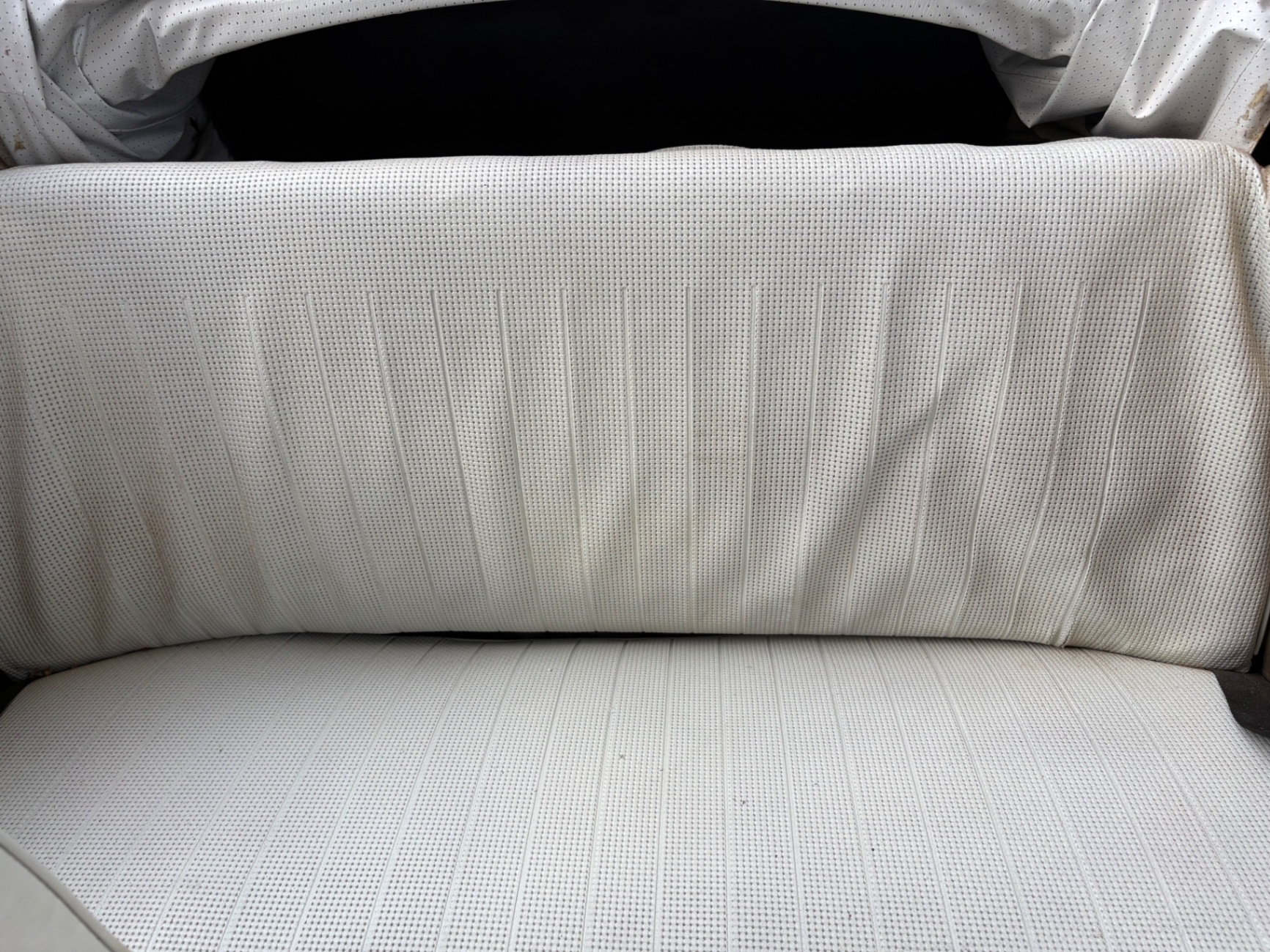
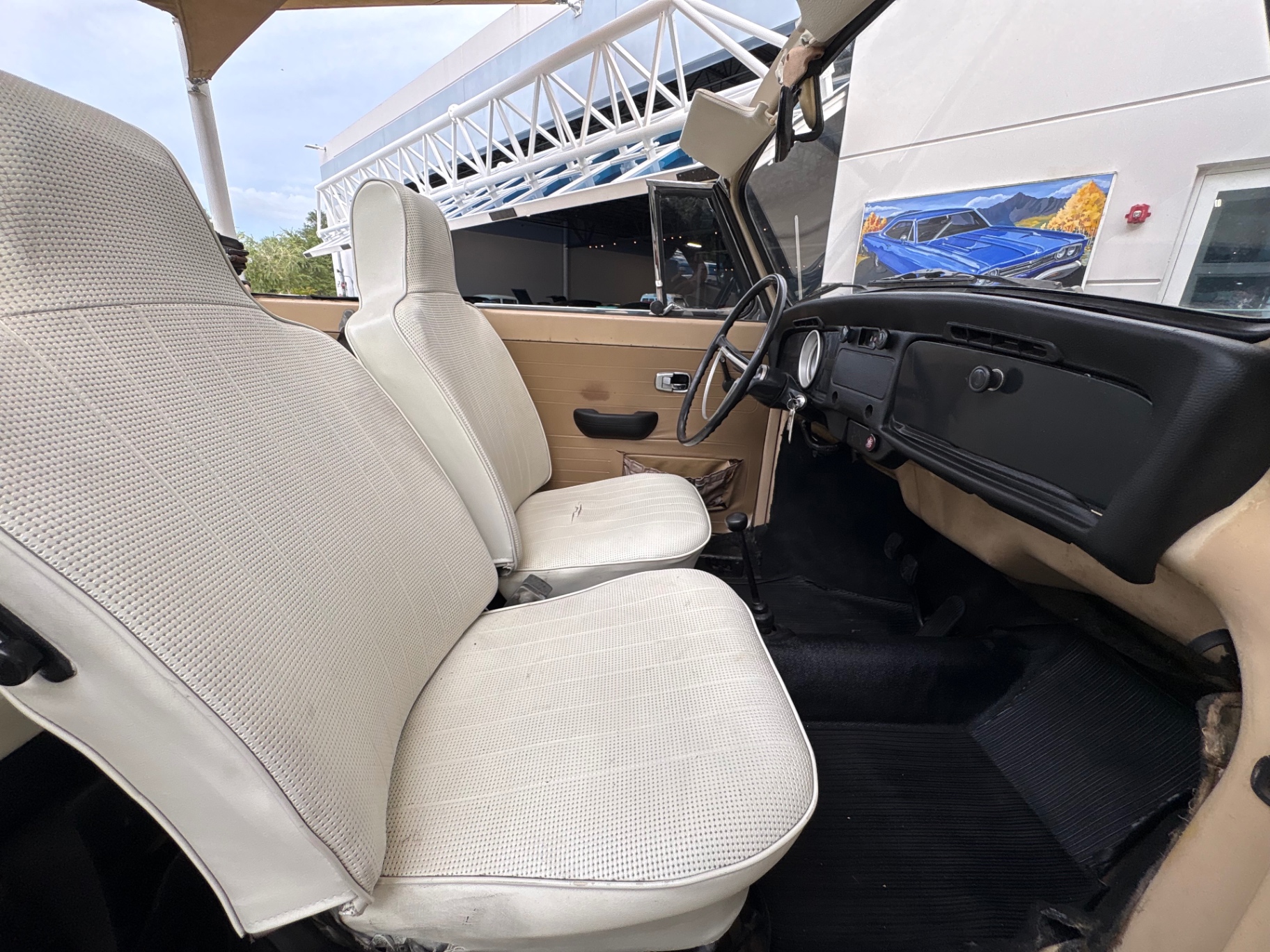
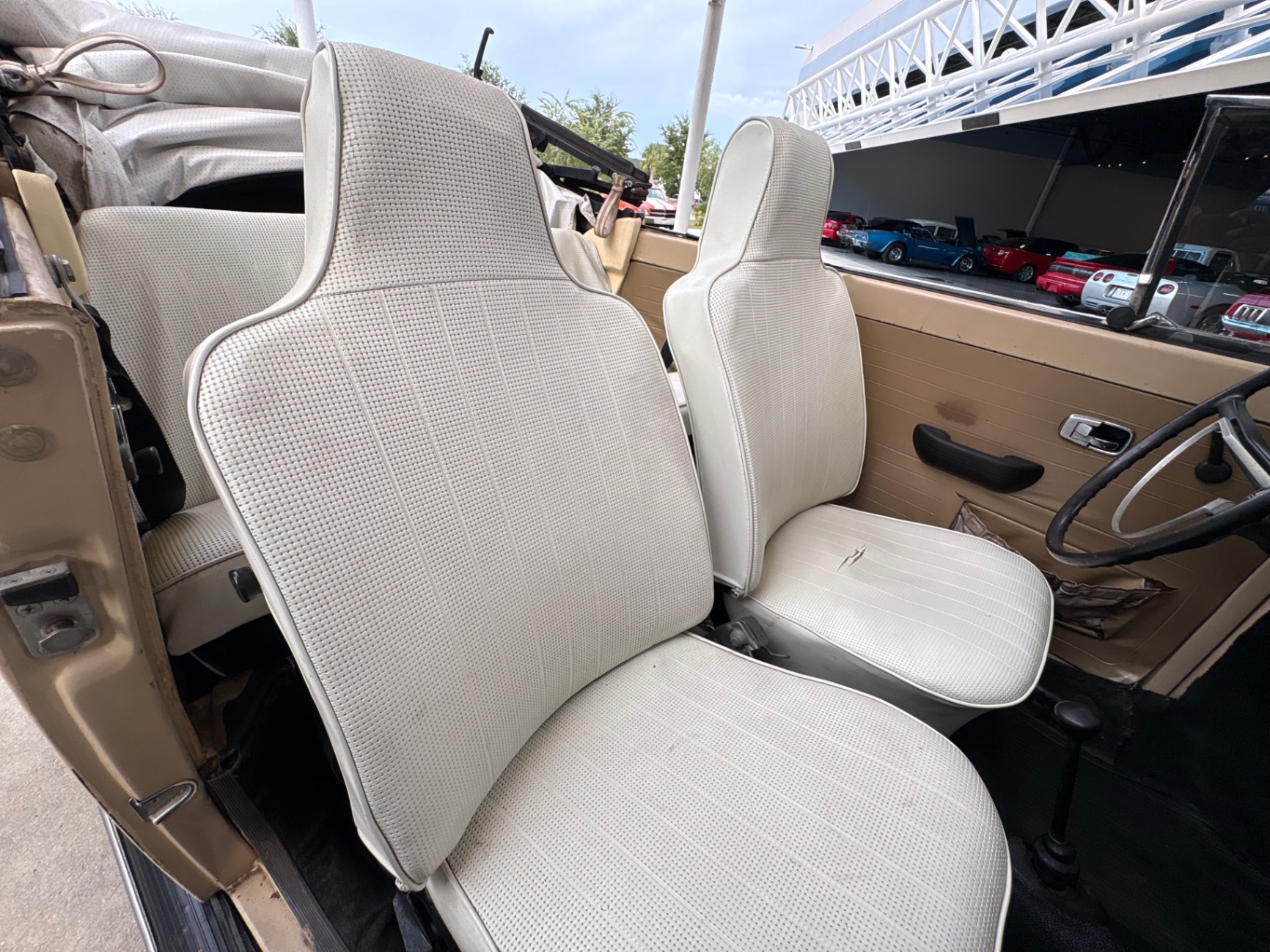
The interior of this 1971 Volkswagen Beetle Convertible is trimmed in white vinyl throughout. The front bucket seats and rear bench seat all wear the same white vinyl, which is correct for this color combination and presents in reasonable condition consistent with a car that has been used rather than preserved in a climate-controlled garage. There is a small split visible in the driver's seat bolster — visible in the photos — which is common on vinyl of this age and easy to address with a patch or a full seat cover if the new owner prefers. The rear bench is clean and intact.
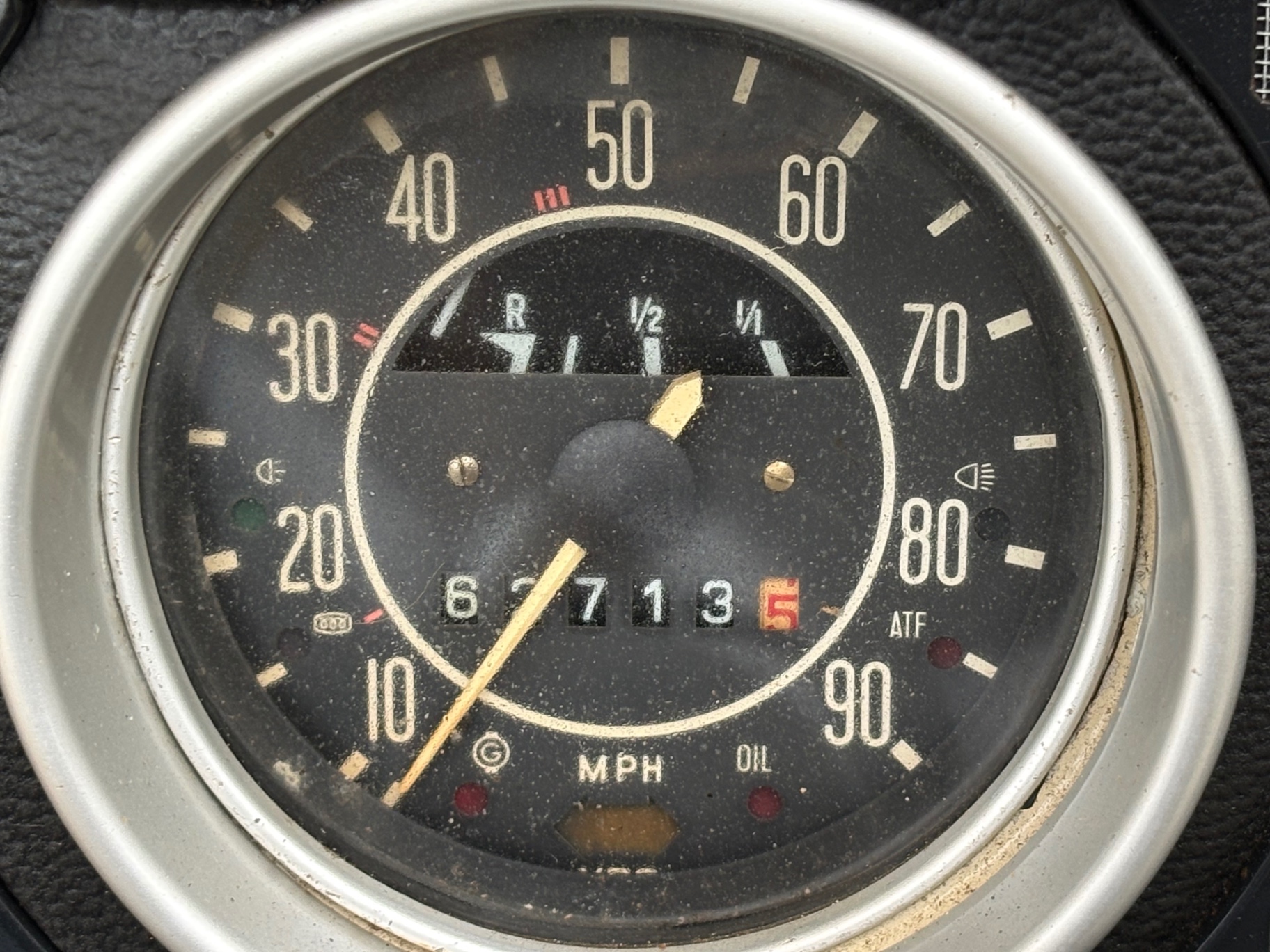
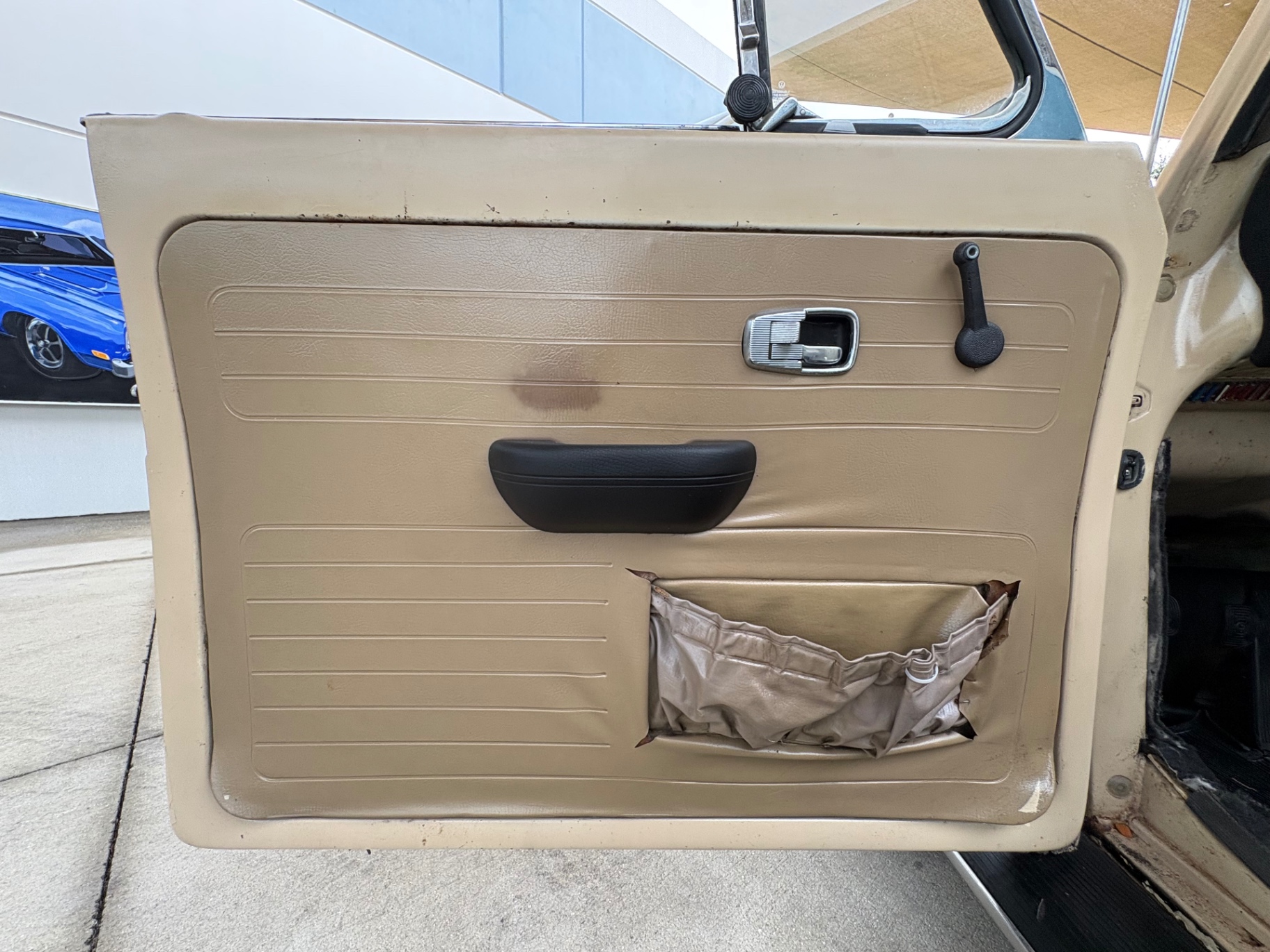
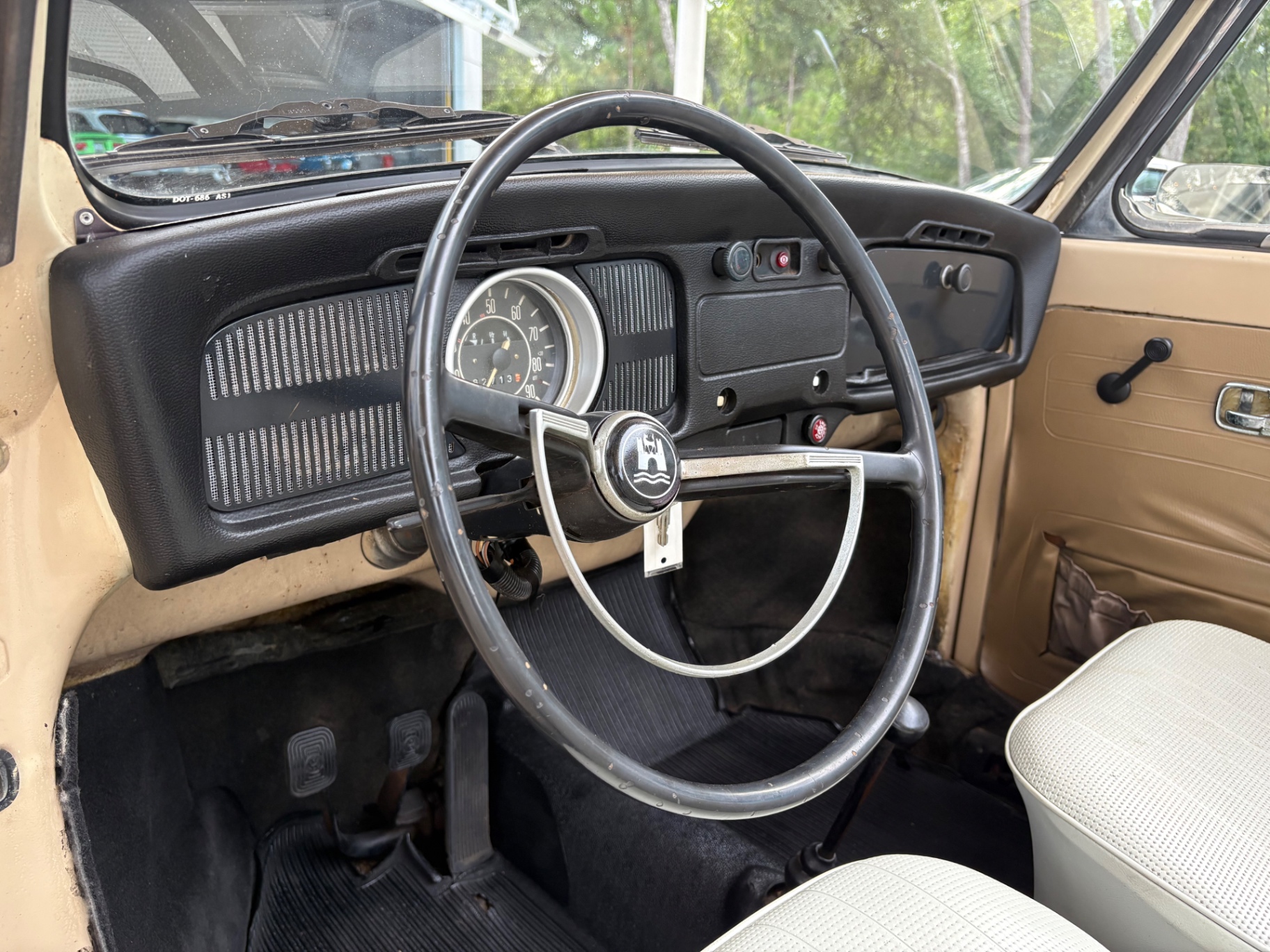
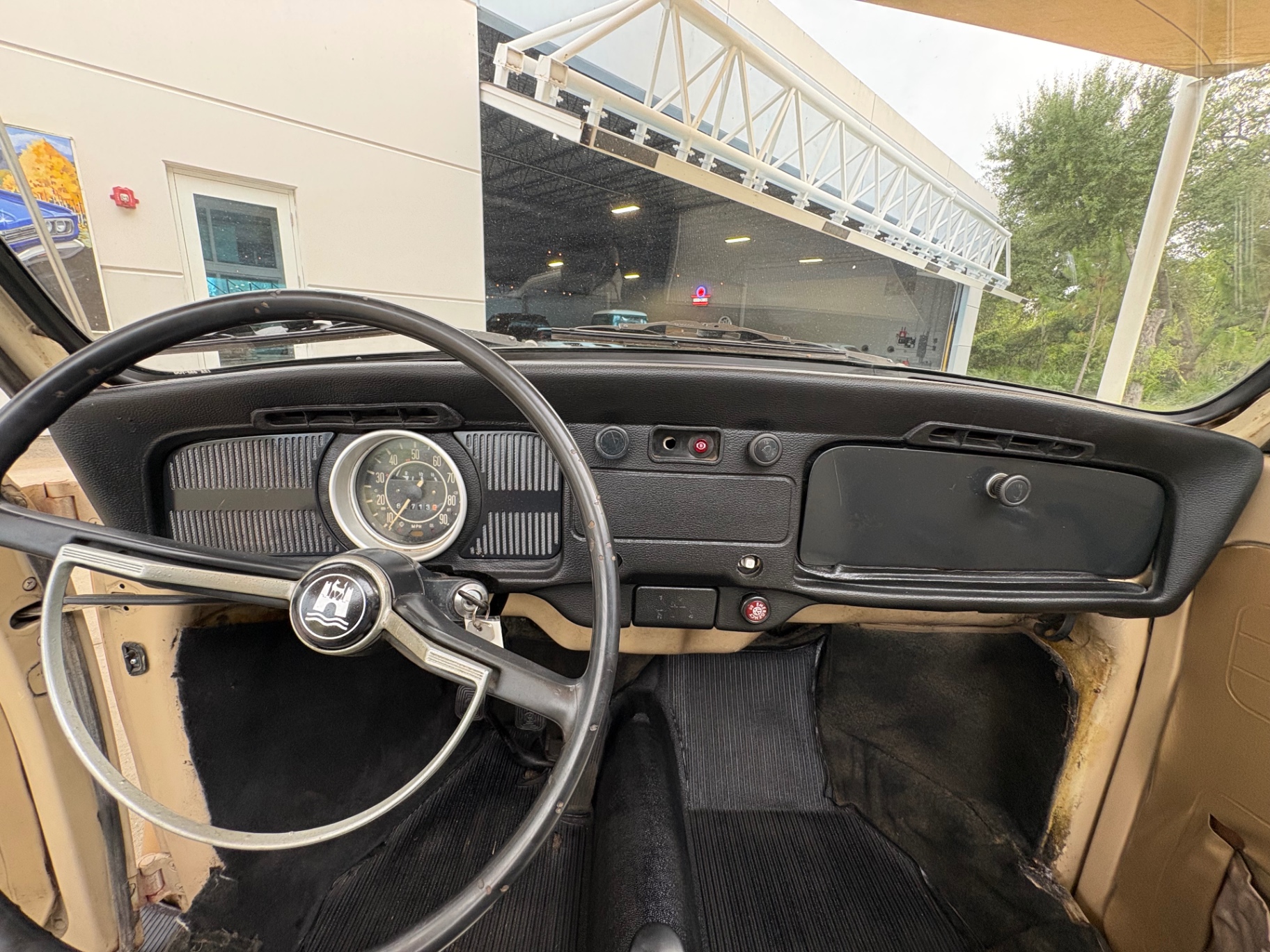
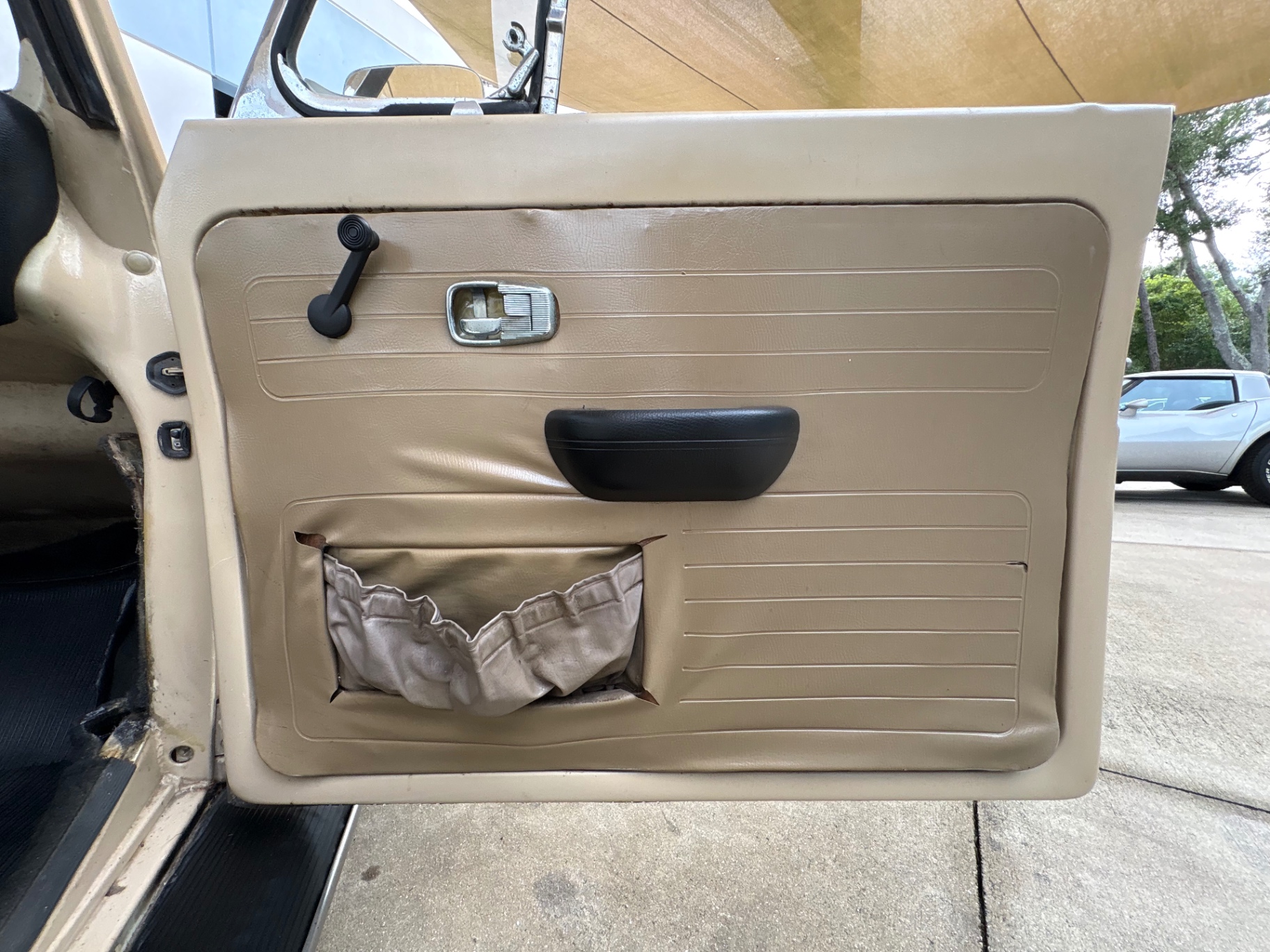
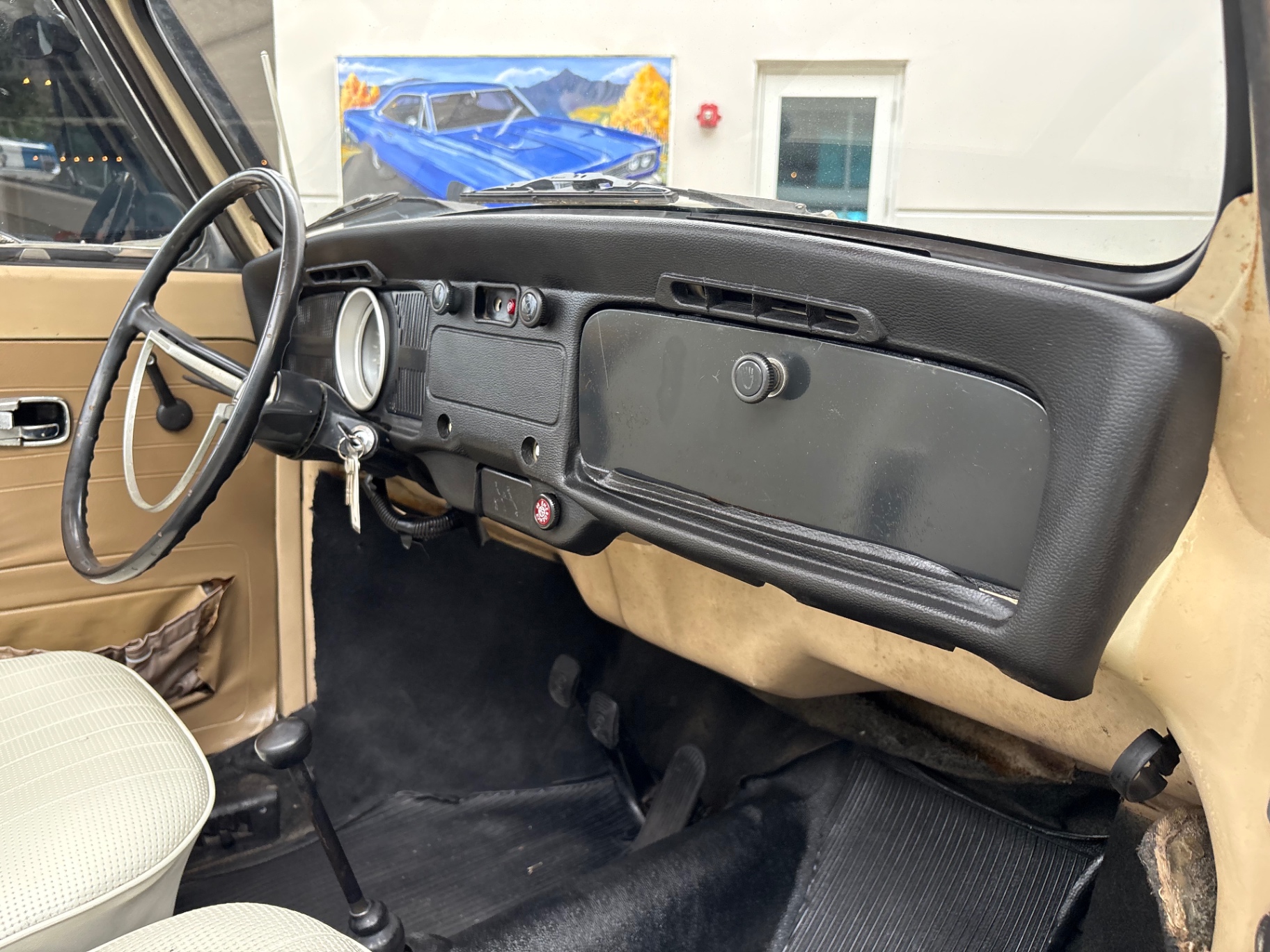
The dashboard is correct and complete, featuring the single large-dial instrument pod with speedometer that was standard on the 1971 Beetle. The two-spoke VW steering wheel is in place with its center emblem. The controls are minimal by design — VW kept the Beetle's cockpit intentionally simple, and the 1971 interior reflects that philosophy. The door panels are tan vinyl with functional door pockets on both sides, though the pocket vinyl shows some wear and looseness. The floor-shift gear lever sits in its correct central position. Lap belts are fitted front and rear. The front trunk, under the hood at the nose of the car, provides usable storage space — a practical feature since the engine occupies the rear of the vehicle.
The convertible top is tan and folds away neatly, secured by a matching tan storage boot that snaps into place behind the rear seat. The top mechanism is the multi-bow folding design used by Karmann on these cabriolets, which is more robust than it looks and straightforward to service.
Exterior
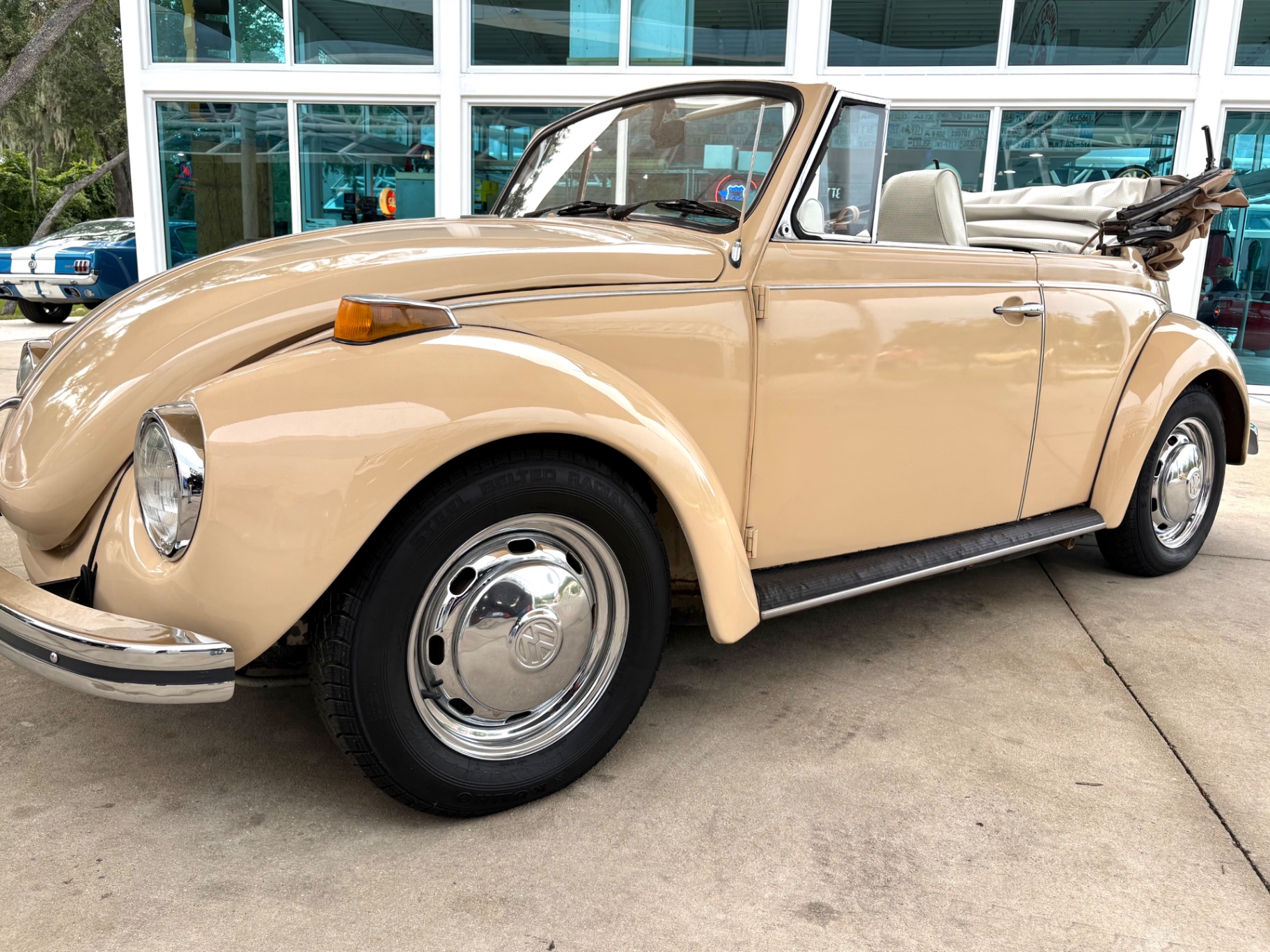
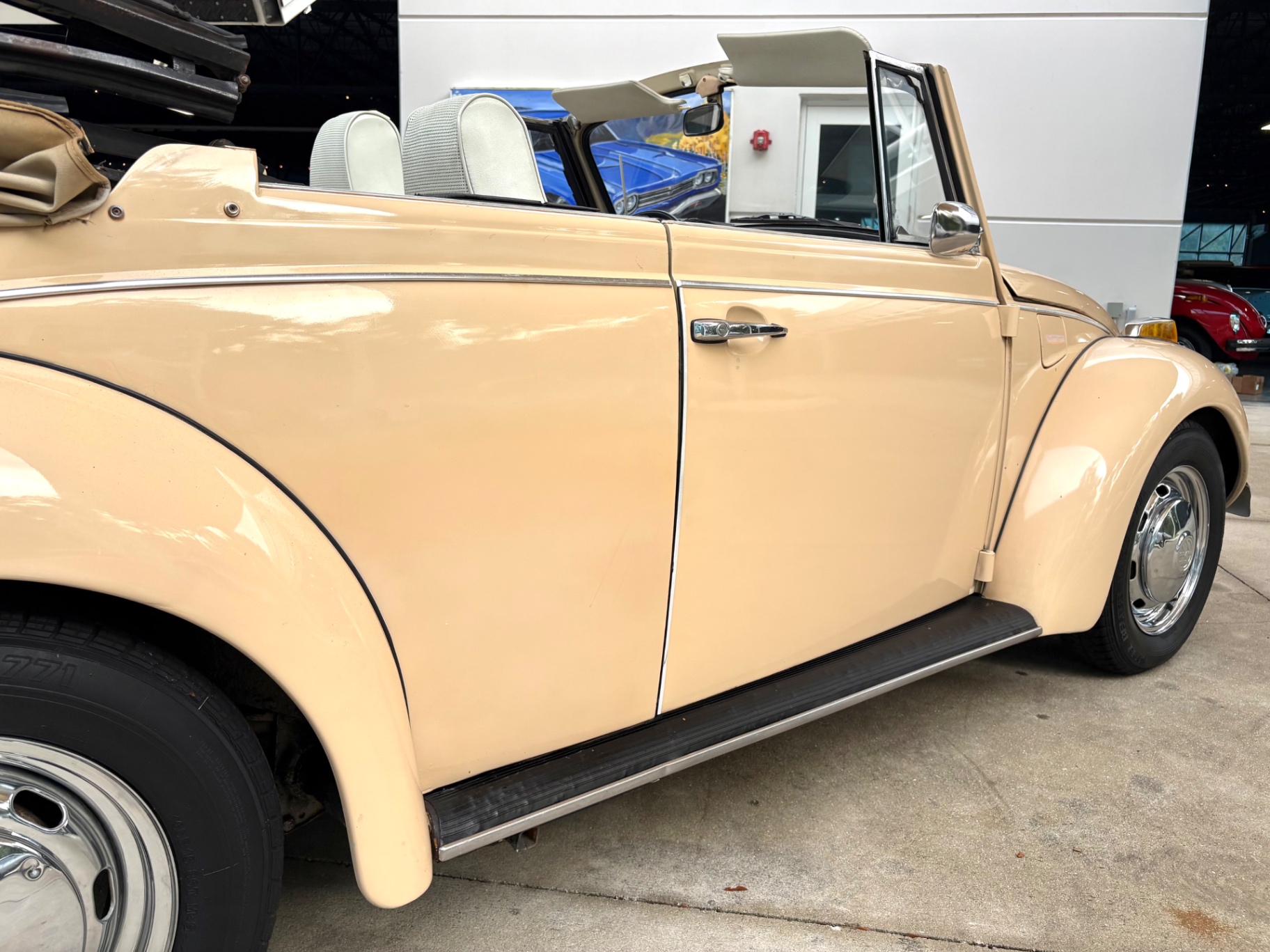
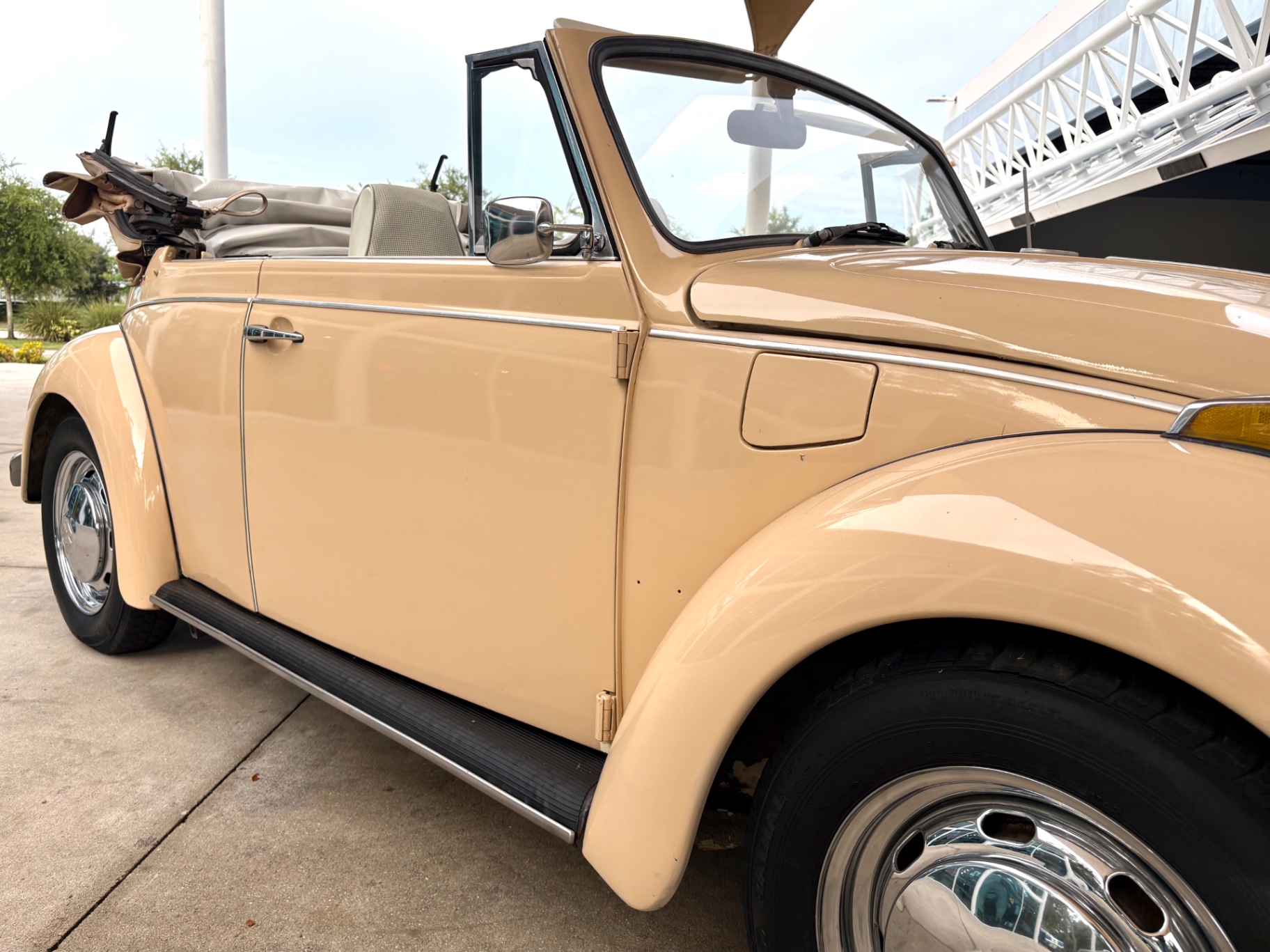
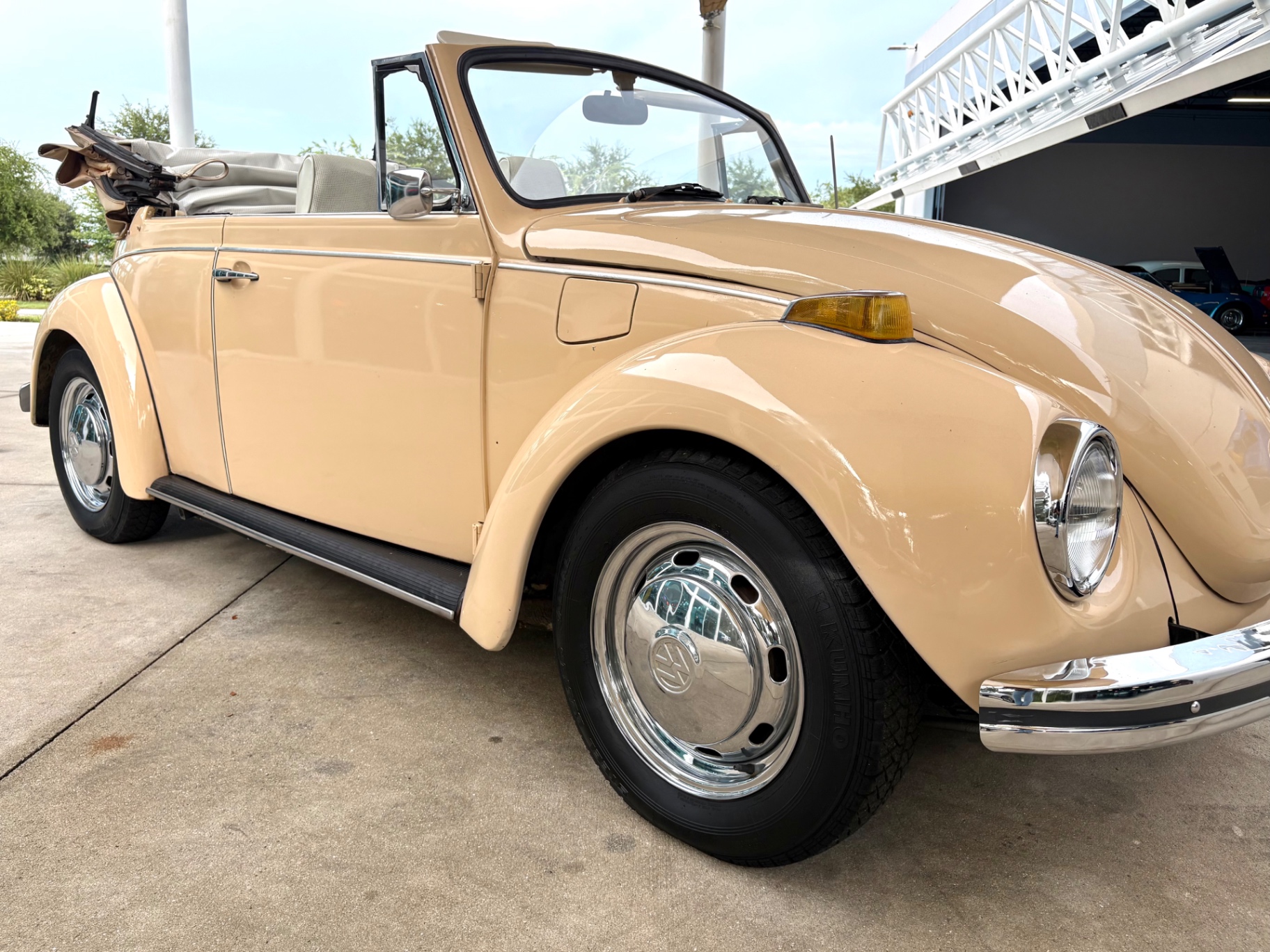
The exterior of this 1971 Volkswagen Beetle Convertible is finished in tan, a warm neutral that suits the open-air Karmann cabriolet body well and pairs cleanly with the white interior. The paint has an honest patina consistent with a car from this era — not a fresh repaint, but not a car that has been neglected either. The body lines are straight and the panels align correctly, which matters on a Karmann-built car because the additional body reinforcement means a well-kept example holds its shape over time.
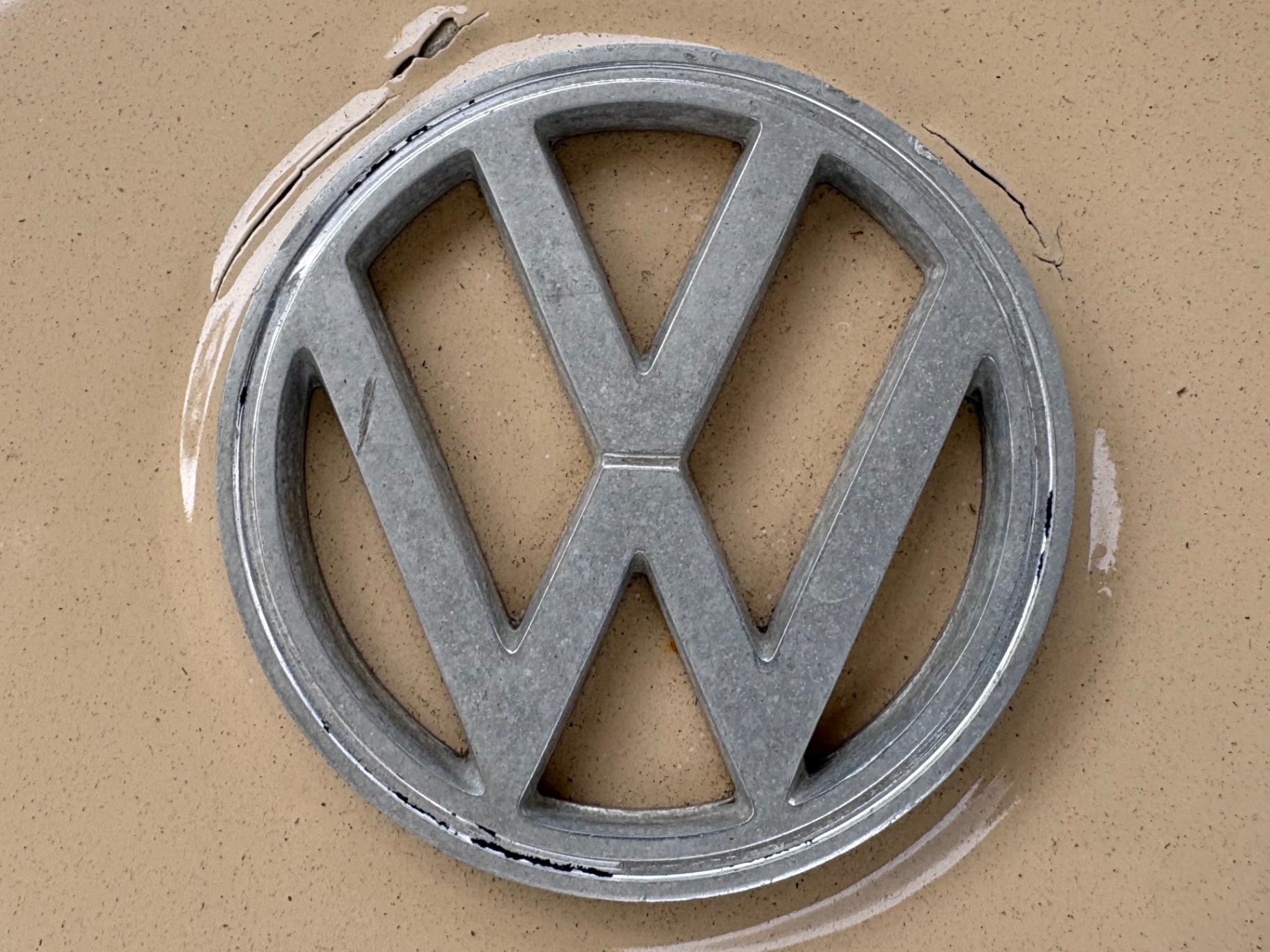
Chrome bumpers are fitted front and rear and show the expected light surface aging without significant pitting. Chrome body side molding runs along both flanks, and chrome running boards are fitted below the doors — both period-correct details that add to the car's finished look. VW emblem hubcaps cover the steel wheels. Exterior mirrors are mounted on both sides, a practical addition for daily use. The Karmann body tag is part of what makes this car identifiable as a factory cabriolet rather than a custom conversion, and the overall presentation is consistent with that heritage.
The undercarriage photos, taken on the lift, tell the most important story. The floor is solid and has been undercoated. The front and rear suspension components are intact and correctly assembled. There is no structural rust compromising the heater channels, floor sections, or frame head area — the areas where Beetle rust problems almost always begin. The quad exhaust tips exit cleanly below the chrome rear bumper.
Conclusion
The 1971 Volkswagen Beetle Convertible is one of the more historically grounded open-air cars you can buy at this price point. It was not built in large numbers relative to the sedan, it was hand-finished by Karmann rather than assembled on a standard production line, and it carries the dual-port 1600cc engine that represents the mature form of the air-cooled Beetle powertrain. This example has a solid undercarriage, a correct and complete interior, a functioning top with its boot, and a handful of sensible mechanical upgrades already in place. It is a car you can drive, enjoy, and work on without needing a specialist shop or a parts car in the driveway.
If you would like to discuss this 1971 Volkswagen Beetle Convertible further, call Skyway Classics in Sarasota, Florida at 941-254-6608.
Disclaimer
Information found on the website is presented as given to us by the owner of the car, whether on consignment or from the owner we bought it from. Some Photos, materials for videos, descriptions and other information are provided by the consignor/seller and is deemed reliable, but Skyway Classics does not warranty or guarantee this information. Skyway Classics is not responsible for information that may incorrect or a publishing error. The decision to purchase should be based solely on the buyers personal inspection of the vehicle or by a professional inspection service prior to offer or purchase being made.
1971 Volkswagen Beetle Convertible — Karmann-Built Cabriolet in Tan over White
Why This Car Is Special
The 1971 Volkswagen Beetle Convertible is not a car that Volkswagen built. It is a car that Volkswagen engineered and then handed off to Karmann, the Osnabrück coachbuilder, to finish. That distinction matters. Karmann had been converting Beetle platforms into open-air cabriolets since 1949, and by 1971 the process was refined to the point where the convertible body was significantly stiffer and better-finished than the standard sedan. Karmann added reinforcement to the rocker panels, door frames, and floor to compensate for the missing roof structure, and the result was a car that did not flex or shake the way most convertibles of that era did. The convertible also received a more carefully fitted interior and a multi-layer folding top with a dedicated storage boot, details that set it apart from the sedan at every level.
The 1971 model year was a notable one for the Beetle in the United States. It was the first year VW fitted the 1600cc dual-port engine across the standard lineup, replacing the earlier single-port configuration. The dual-port cylinder heads improved breathing and increased power slightly compared to what came before — a meaningful refinement on a car that had been slowly and deliberately improved over decades rather than redesigned wholesale. The Beetle convertible was sold in the US throughout the early 1970s in relatively modest numbers compared to the sedan, making surviving examples with honest, usable condition increasingly difficult to find.
This particular 1971 Volkswagen Beetle Convertible presents in tan exterior with a matching tan convertible top and top boot, over a white vinyl interior. The VIN sequence confirms this is a genuine 1971 model year Beetle cabriolet built to US market specification. It is an honest, driving-condition example with several practical upgrades already in place, and an undercarriage that holds up to inspection on the lift — something that cannot be said for many survivors of this age.
Features List
- 1.6L Air-Cooled Flat-4 Engine with Dual-Port Cylinder Heads
- 4-Speed Manual Transmission with Floor-Shift Gear Lever
- Karmann-Built Open-Air Convertible Body
- Tan Convertible Top with Matching Storage Boot
- Torsion Bar Front Suspension
- Swing Axle Rear Suspension
- Drum Brakes All Around
- Aftermarket Performance Air Filter
- Aftermarket Ignition Distributor
- Aftermarket Quad Exhaust Tips
- White Vinyl Front Bucket Seats
- White Vinyl Rear Bench Seat
- Two-Spoke VW Steering Wheel
- Door Pockets Both Sides
- Lap Seat Belts
- Front Trunk Storage
- Chrome Bumpers Front and Rear
- Chrome Body Side Molding
- Chrome Running Boards
- VW Emblem Hubcaps
- Exterior Mirrors Both Sides
- Solid Undercarriage
Mechanical
The heart of this 1971 Volkswagen Beetle Convertible is the 1.6-liter air-cooled flat-four, fitted here with the dual-port cylinder heads that VW introduced to the full Beetle lineup for 1971. Compared to the single-port heads used on earlier 1600cc engines, the dual-port design allows each cylinder to draw from its own intake port, which improves mixture distribution and idle quality. It is a straightforward engine to work on — no water cooling system, no complex emissions hardware on a car of this age — and parts availability remains excellent through both OEM-style reproduction suppliers and the active VW air-cooled community.
Two practical upgrades have been made to the engine bay. An aftermarket performance air filter replaces the stock unit, and an aftermarket ignition distributor is fitted in place of the original. Both are common and sensible modifications on a driver-grade air-cooled Beetle, improving throttle response and making ignition timing adjustments more accessible. The quad exhaust tips exiting below the rear bumper are a cosmetic addition that gives the car a slightly more purposeful look without requiring any structural changes to the exhaust system itself.
The 4-speed manual transmission is shifted via a floor-mounted gear lever, correct for this model. Up front, the Beetle's torsion bar suspension does its job with no springs to sag or replace. At the rear, the swing axle rear suspension — the setup used on Beetles through 1968 and retained on the cabriolet platform into the early 1970s — is intact and visible on the undercarriage shots. Drum brakes are fitted all around, which is stock for this car. The undercarriage itself is notably solid. The floorpan, tunnel, and heater channels show no significant rot or patch work, which is the single most important thing to verify on any air-cooled Beetle of this vintage. A bad floor is the project; a solid floor is the car. This one has a solid floor.
Interior
The interior of this 1971 Volkswagen Beetle Convertible is trimmed in white vinyl throughout. The front bucket seats and rear bench seat all wear the same white vinyl, which is correct for this color combination and presents in reasonable condition consistent with a car that has been used rather than preserved in a climate-controlled garage. There is a small split visible in the driver's seat bolster — visible in the photos — which is common on vinyl of this age and easy to address with a patch or a full seat cover if the new owner prefers. The rear bench is clean and intact.
The dashboard is correct and complete, featuring the single large-dial instrument pod with speedometer that was standard on the 1971 Beetle. The two-spoke VW steering wheel is in place with its center emblem. The controls are minimal by design — VW kept the Beetle's cockpit intentionally simple, and the 1971 interior reflects that philosophy. The door panels are tan vinyl with functional door pockets on both sides, though the pocket vinyl shows some wear and looseness. The floor-shift gear lever sits in its correct central position. Lap belts are fitted front and rear. The front trunk, under the hood at the nose of the car, provides usable storage space — a practical feature since the engine occupies the rear of the vehicle.
The convertible top is tan and folds away neatly, secured by a matching tan storage boot that snaps into place behind the rear seat. The top mechanism is the multi-bow folding design used by Karmann on these cabriolets, which is more robust than it looks and straightforward to service.
Exterior
The exterior of this 1971 Volkswagen Beetle Convertible is finished in tan, a warm neutral that suits the open-air Karmann cabriolet body well and pairs cleanly with the white interior. The paint has an honest patina consistent with a car from this era — not a fresh repaint, but not a car that has been neglected either. The body lines are straight and the panels align correctly, which matters on a Karmann-built car because the additional body reinforcement means a well-kept example holds its shape over time.
Chrome bumpers are fitted front and rear and show the expected light surface aging without significant pitting. Chrome body side molding runs along both flanks, and chrome running boards are fitted below the doors — both period-correct details that add to the car's finished look. VW emblem hubcaps cover the steel wheels. Exterior mirrors are mounted on both sides, a practical addition for daily use. The Karmann body tag is part of what makes this car identifiable as a factory cabriolet rather than a custom conversion, and the overall presentation is consistent with that heritage.
The undercarriage photos, taken on the lift, tell the most important story. The floor is solid and has been undercoated. The front and rear suspension components are intact and correctly assembled. There is no structural rust compromising the heater channels, floor sections, or frame head area — the areas where Beetle rust problems almost always begin. The quad exhaust tips exit cleanly below the chrome rear bumper.
Conclusion
The 1971 Volkswagen Beetle Convertible is one of the more historically grounded open-air cars you can buy at this price point. It was not built in large numbers relative to the sedan, it was hand-finished by Karmann rather than assembled on a standard production line, and it carries the dual-port 1600cc engine that represents the mature form of the air-cooled Beetle powertrain. This example has a solid undercarriage, a correct and complete interior, a functioning top with its boot, and a handful of sensible mechanical upgrades already in place. It is a car you can drive, enjoy, and work on without needing a specialist shop or a parts car in the driveway.
If you would like to discuss this 1971 Volkswagen Beetle Convertible further, call Skyway Classics in Sarasota, Florida at 941-254-6608.
Disclaimer
Information found on the website is presented as given to us by the owner of the car, whether on consignment or from the owner we bought it from. Some Photos, materials for videos, descriptions and other information are provided by the consignor/seller and is deemed reliable, but Skyway Classics does not warranty or guarantee this information. Skyway Classics is not responsible for information that may incorrect or a publishing error. The decision to purchase should be based solely on the buyers personal inspection of the vehicle or by a professional inspection service prior to offer or purchase being made.
1971 Volkswagen
Beetle Cabriolet
Why Choose Skyway Classics?
Explore our curated inventory of classic and collector cars—thoughtfully selected, ready to drive, and supported by experts who make ownership simple.
Expert Curation
Every vehicle is hand-selected by our experts for quality, authenticity, and investment potential.
Fast Transactions
Streamlined buying and selling process with quick financing and immediate delivery options.
Only National Dealer With Classic Service & Repair
We’re the only national dealership that services and repairs the classics we sell—before and after the sale.
Nationwide Network
Access to our extensive network of collectors, restorers, and classic car enthusiasts nationwide.
Concierge Ownership Support
From financing and insurance to paperwork, shipping, and titling—we handle the details so you can enjoy the drive.
Passion-Driven Service
We're classic car enthusiasts first, providing personalized service with genuine passion for the hobby.