
1974 Dodge
Charger SE
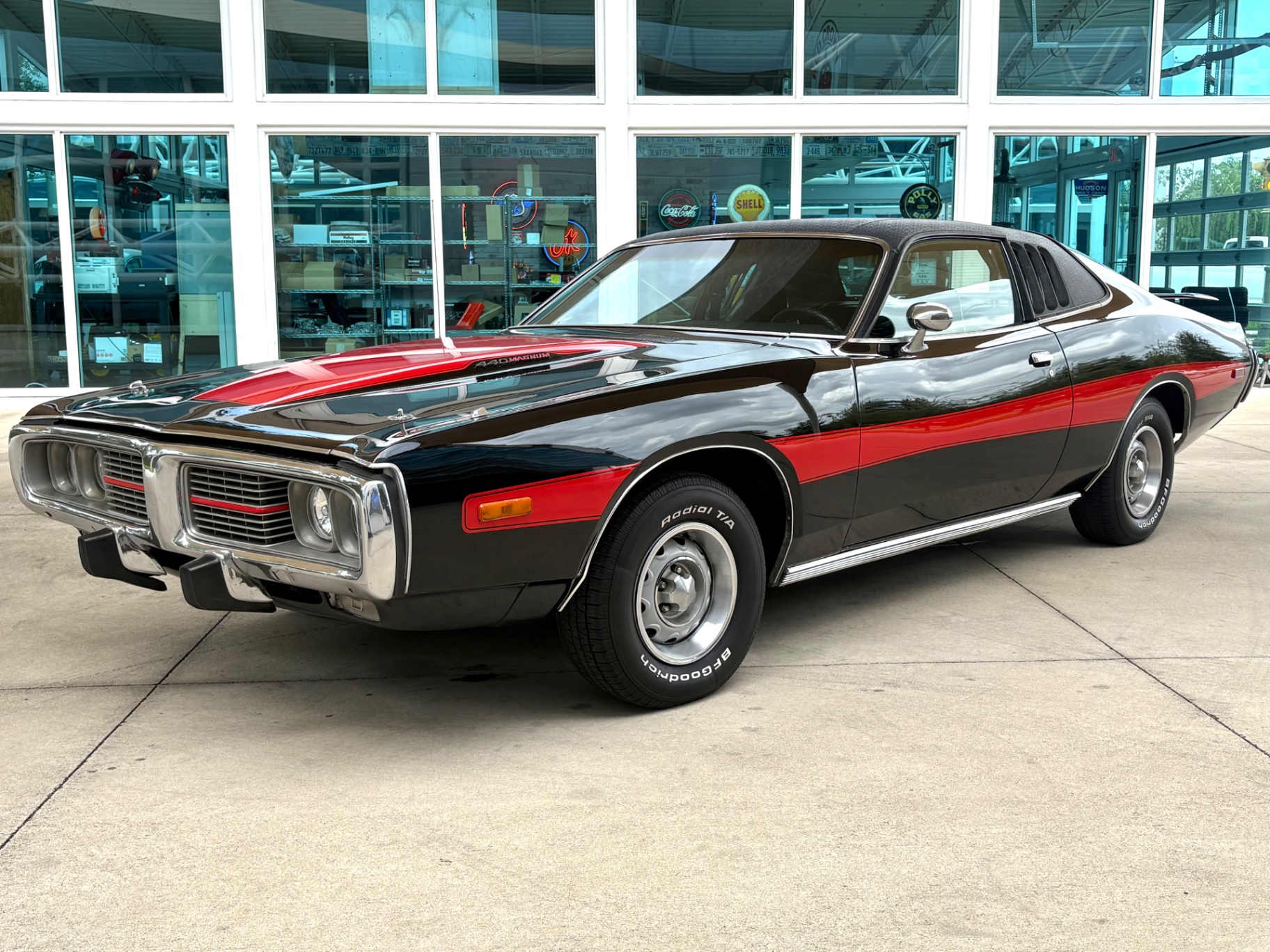
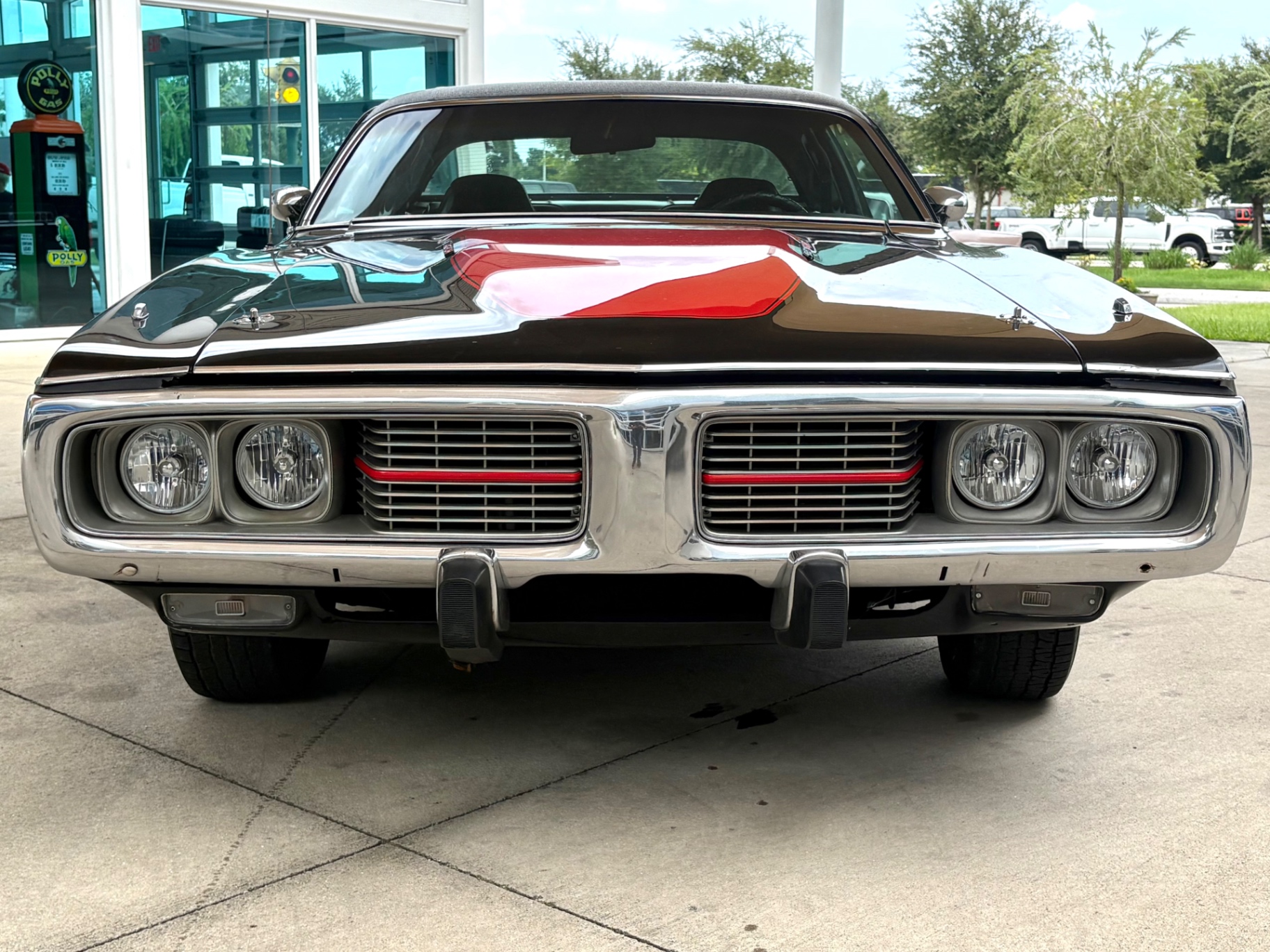
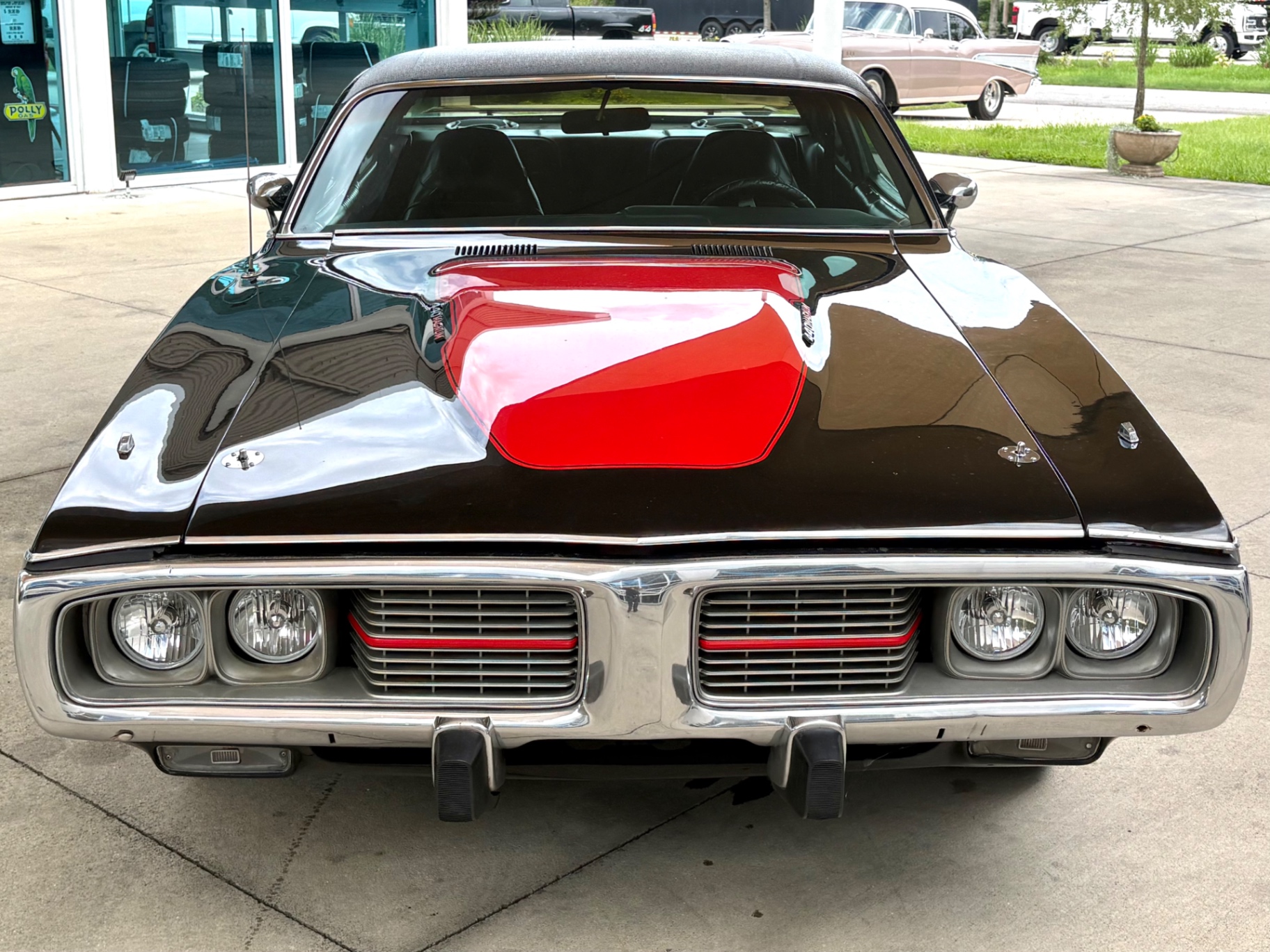
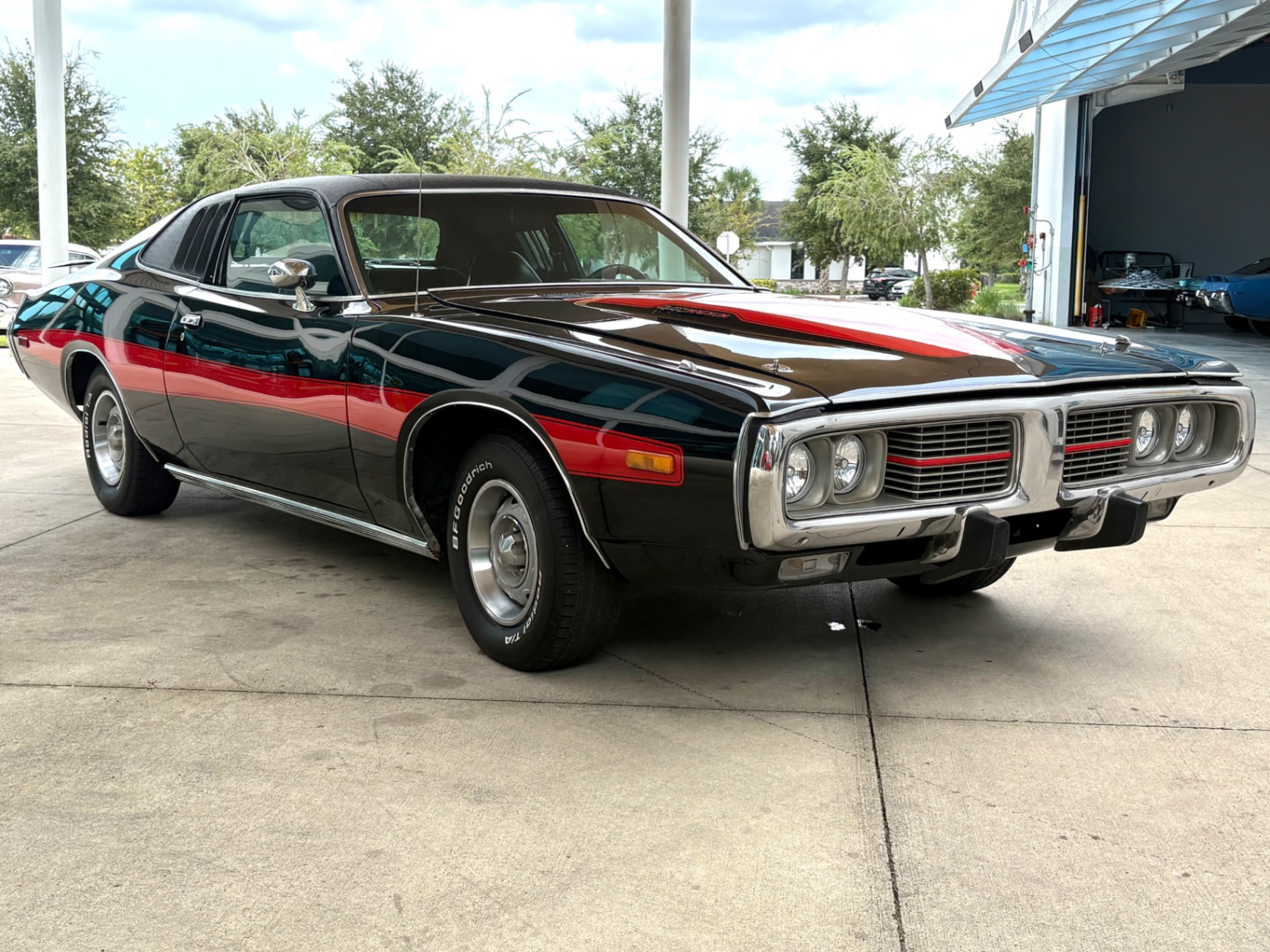
1974 Dodge Charger SE — 440 Magnum V8, Black on Black, Factory Air
Why This Car Is Special
The 1974 Dodge Charger occupies a specific and interesting place in muscle car history. It was the last model year of the B-body Charger before Dodge completely reworked the platform for 1975, shrinking the car and repositioning it as a personal luxury coupe. That makes the 1974 Dodge Charger the final expression of the original concept — a large, body-on-frame American performance coupe with a real engine under the hood. After 1974, you could still buy a Charger, but it wasn't the same car.
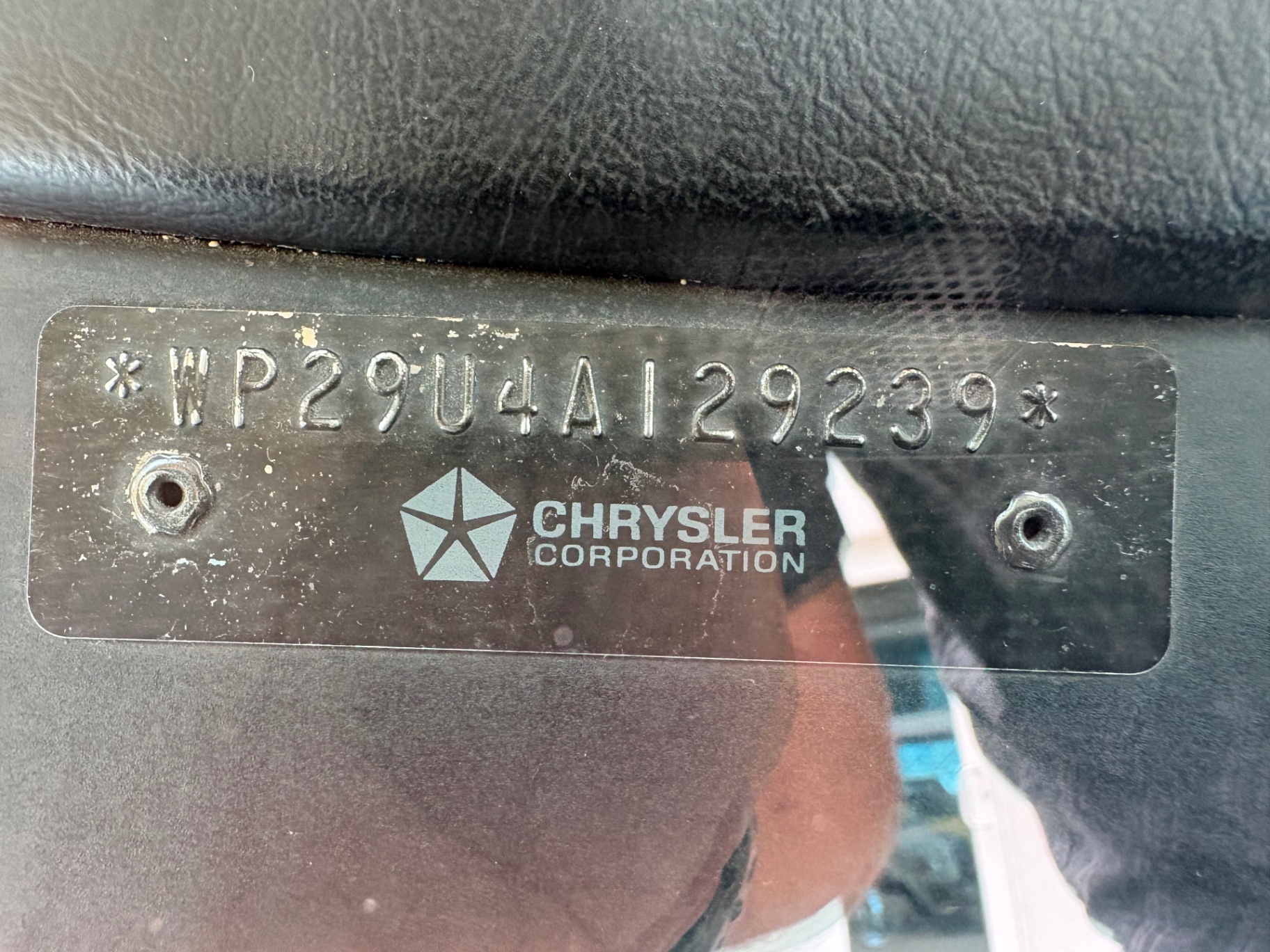
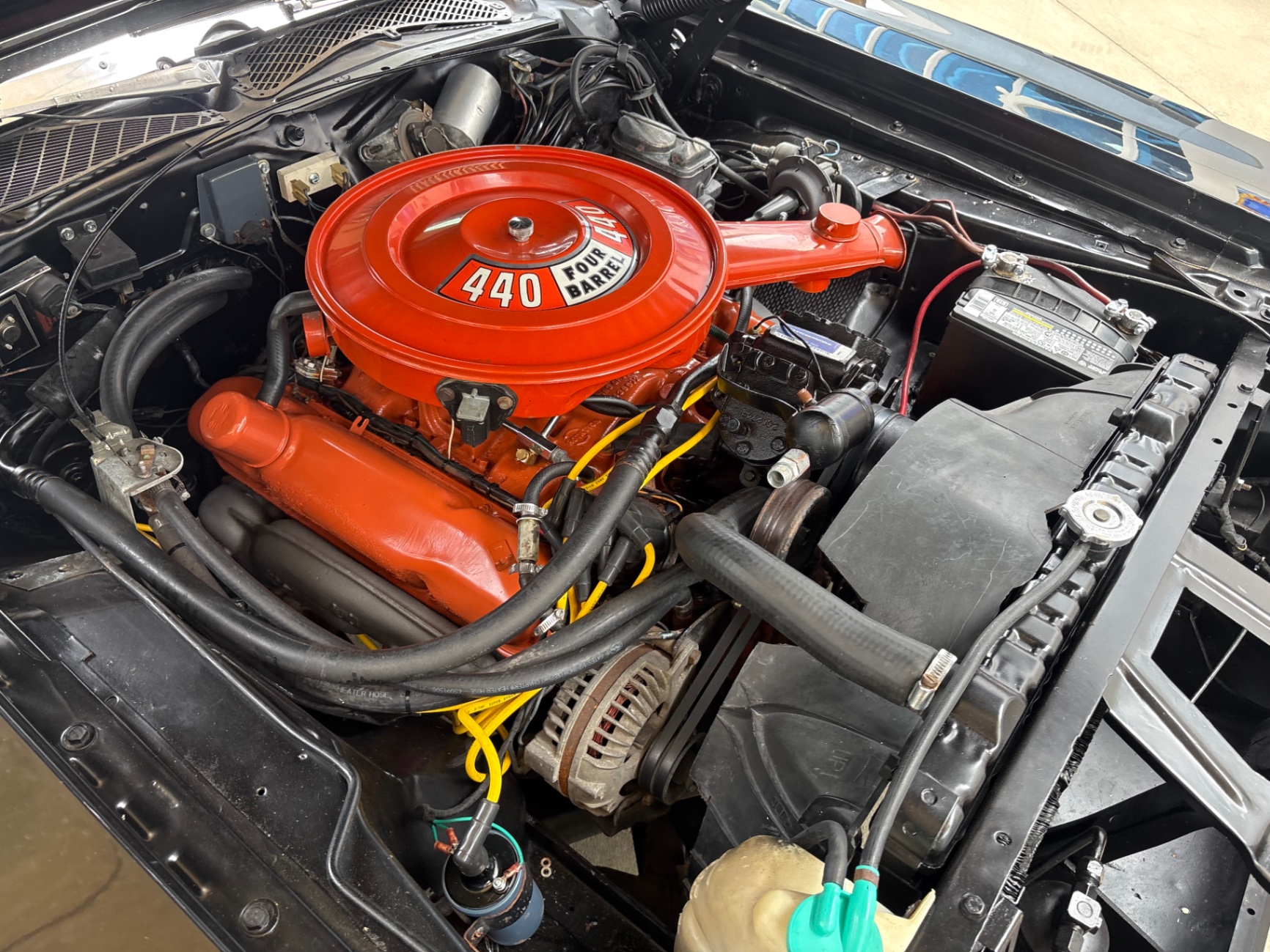
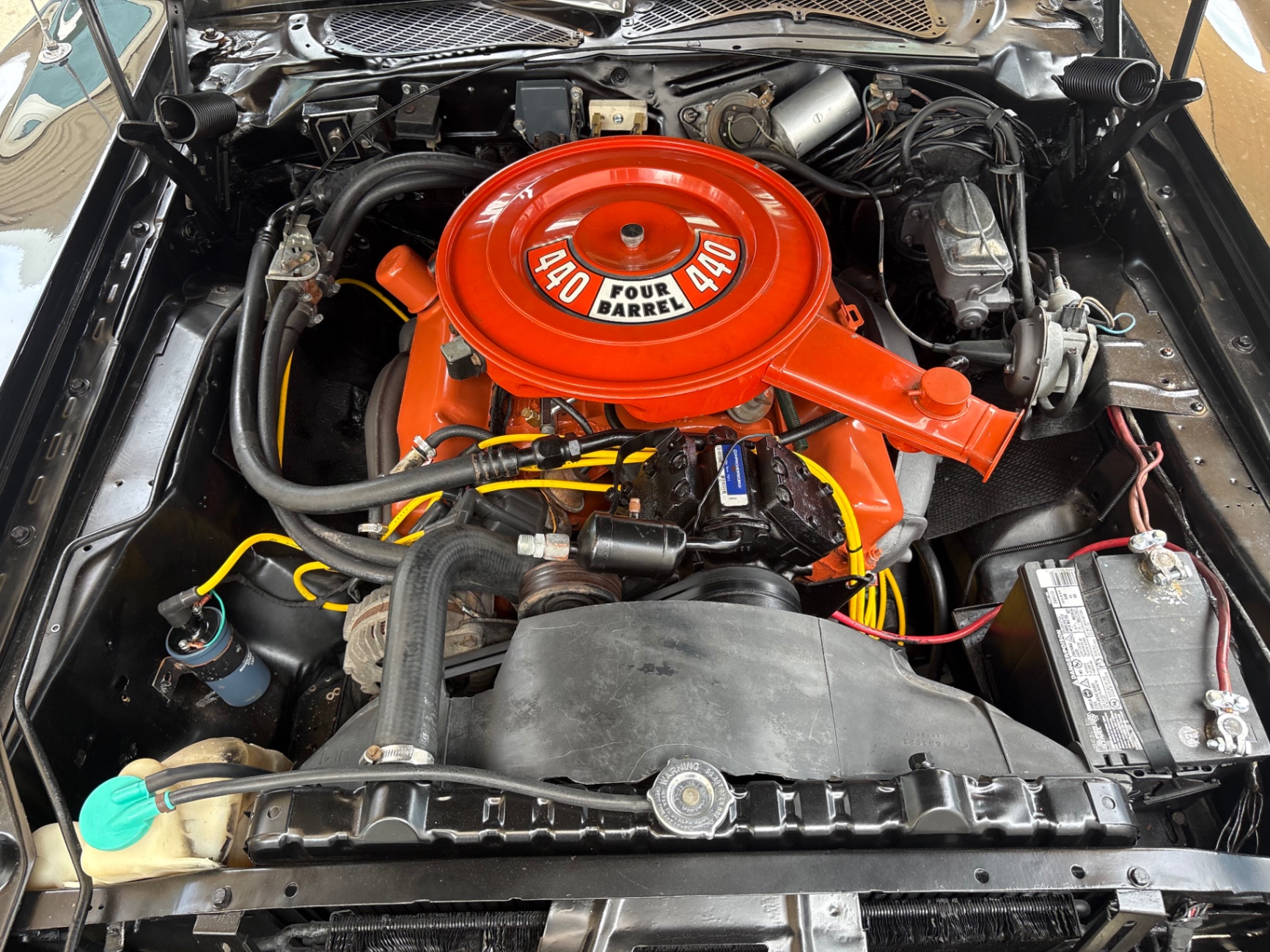
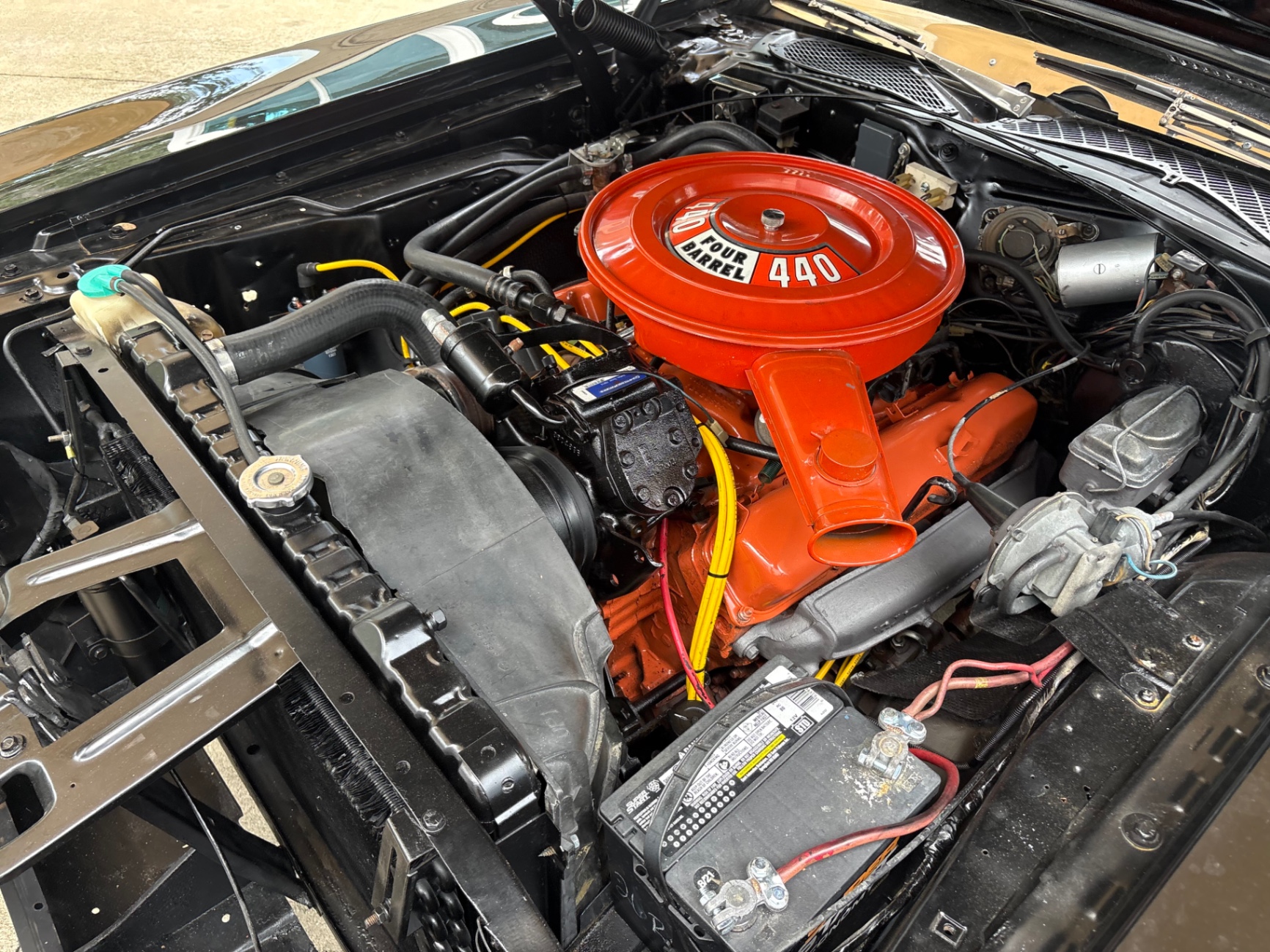
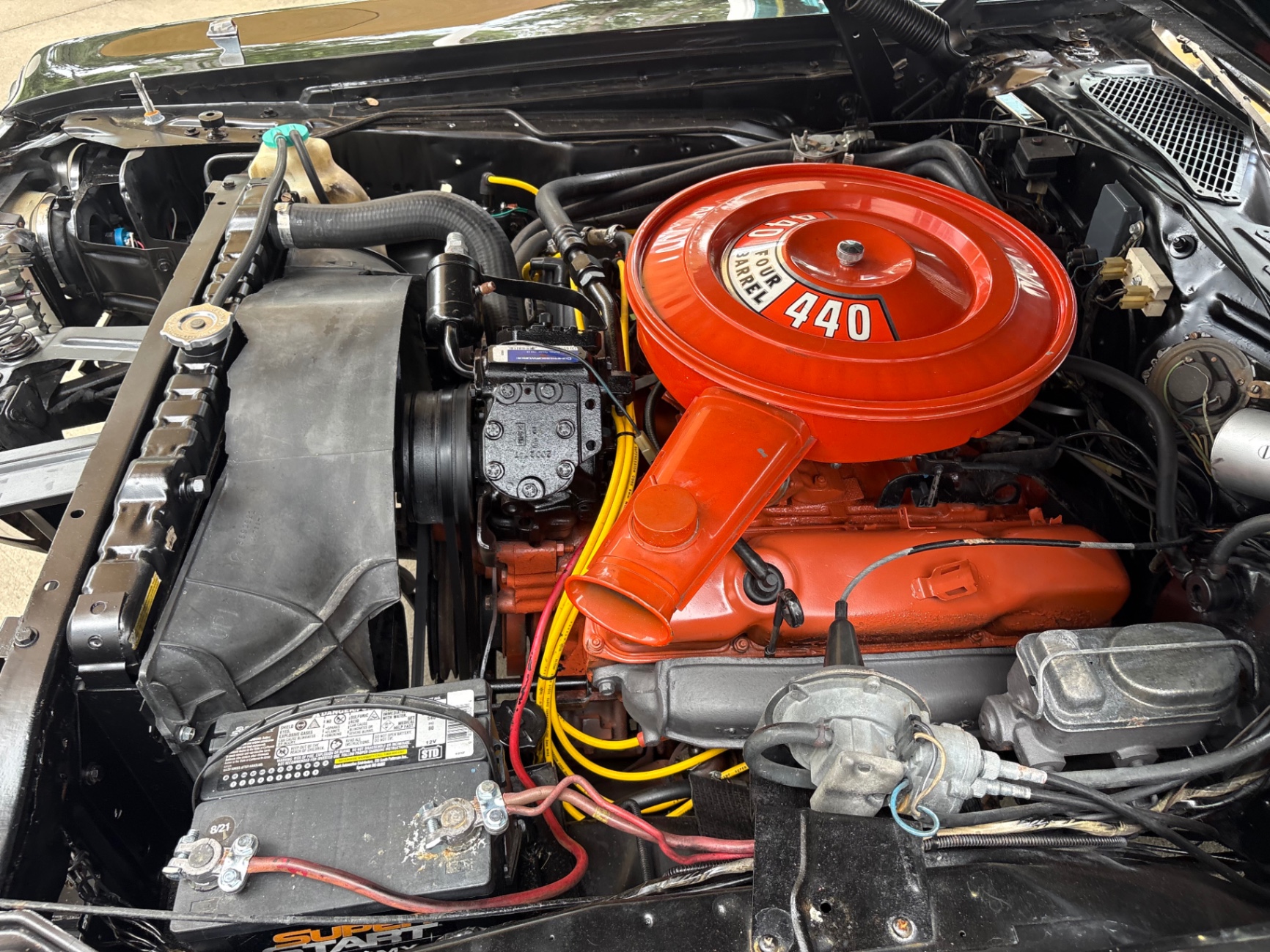
This particular 1974 Dodge Charger SE is equipped with the 440 Magnum V8, which by 1974 was one of the last truly large-displacement engines still available in a production Dodge. The 440 had been a staple of Mopar performance since the late 1960s, and while emissions regulations had begun to squeeze output across the industry by 1974, the 440 Magnum with its four-barrel carburetor still delivered substantial torque — the engine was always more about low-end pulling power than peak horsepower numbers, and that character remained intact. The VIN on this car confirms it was built at the Hamtramck, Michigan assembly plant, which produced a significant share of Dodge's higher-optioned B-body cars during this era.
The SE designation on this Charger stands for Special Edition, which was Dodge's trim level positioned above the base Charger. SE models received upgraded interior appointments and a distinct exterior identity compared to standard Chargers, making this a car that was optioned for comfort and appearance in addition to performance. The combination of the 440 Magnum engine with the SE interior package is exactly what a buyer in 1974 would have specified if they wanted the complete experience — big engine, air conditioning, bucket seats, center console, and the Brougham interior trim that was part of the SE's character.
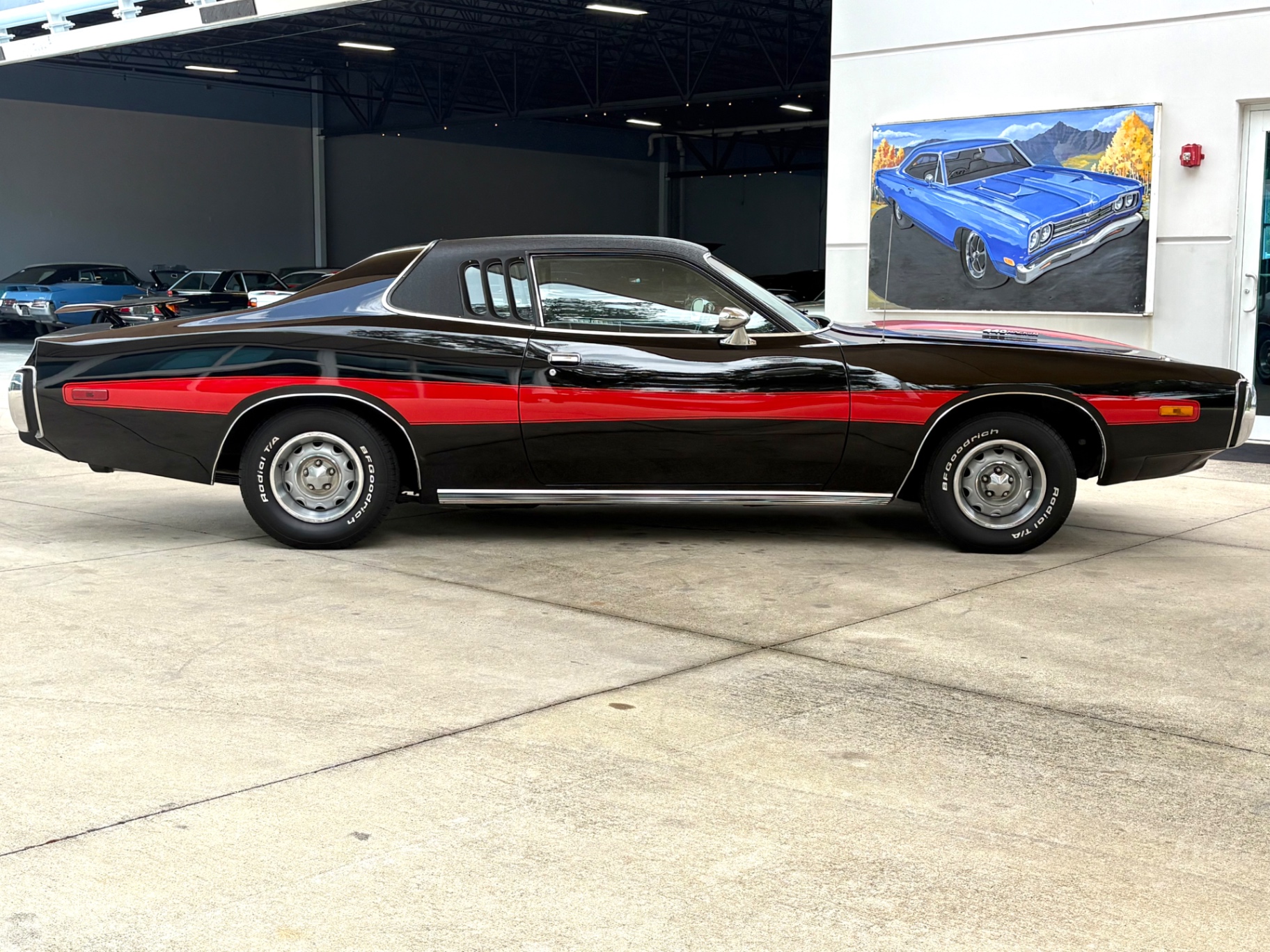
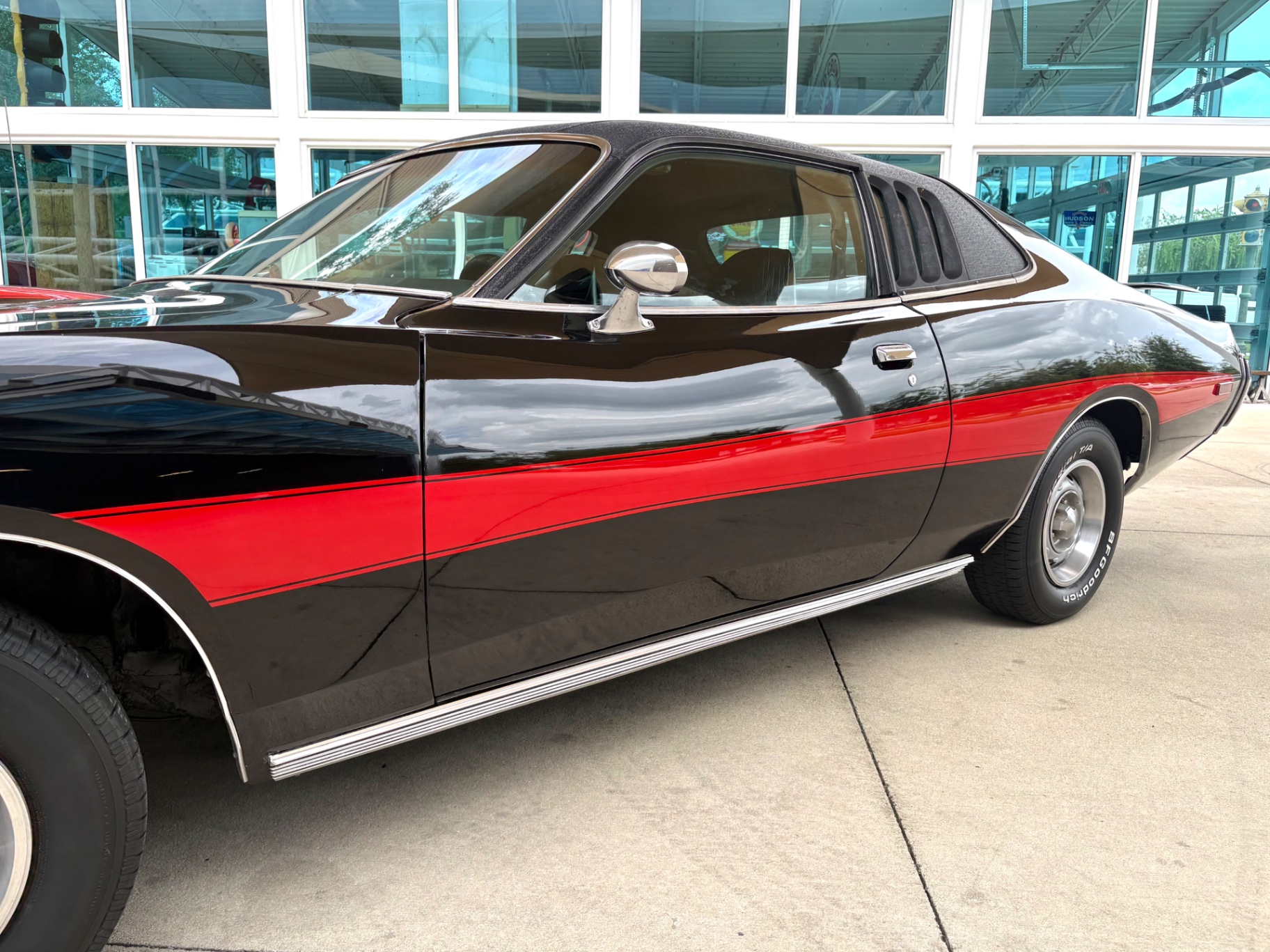
The black exterior with black and red side stripe, black vinyl interior, and black vinyl roof gives this car a coherent visual presentation that works entirely in its favor. Nothing about the color scheme is an afterthought.
Features List
- 440 Magnum V8, 7.2 liter displacement
- Four-Barrel Carburetor
- TorqueFlite 727 Automatic Transmission
- Power Steering
- Power Brakes
- Factory Air Conditioning
- Dual Exhaust with Dual Rear Exhaust Tips
- Rear Deck Spoiler
- Black Vinyl Roof
- Louvered Opera Windows
- Black and Red Body Side Stripe with 440 Magnum Callout
- Chrome Front and Rear Bumpers
- Chrome Rocker Panel Moldings
- BFGoodrich Radial T/A Tires
- Black Vinyl Bucket Seats, Front and Rear
- Center Console with Woodgrain Trim and Floor Shifter
- Woodgrain Interior Trim Throughout
- Brougham Door Panels with Embossed Script Badging
- Factory Drum Brakes, Four Wheel
Mechanical
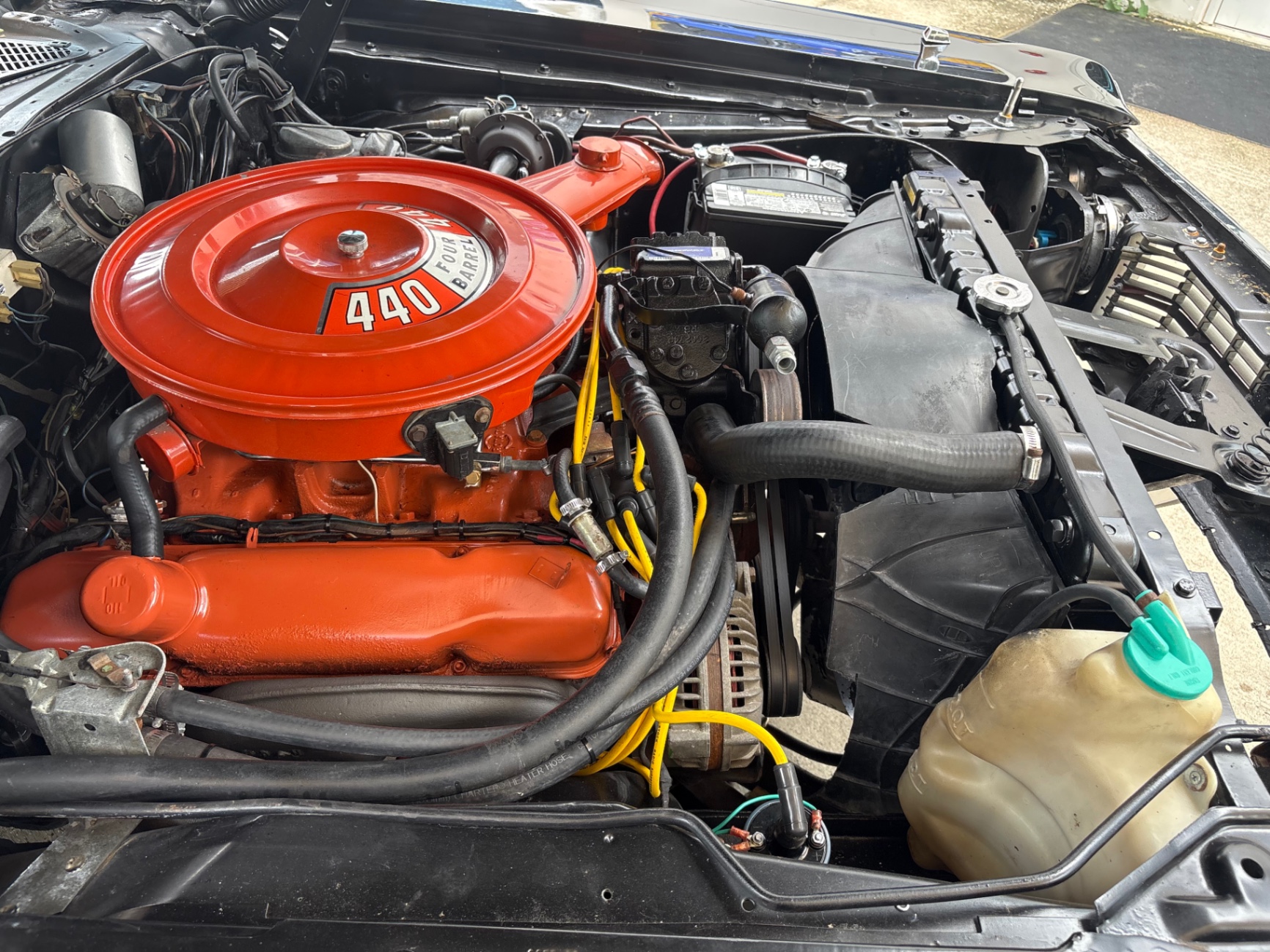
The engine in this 1974 Dodge Charger SE is the 440 Magnum V8, displacing 7.2 liters and fed by a four-barrel carburetor. The 440 was Chrysler's premier large-block engine for street use throughout the late muscle car era. It was never a high-revving engine — that was the job of the 426 Hemi — but the 440 produced massive torque across a wide RPM range, which made it well-suited to a heavy car like the Charger. In 1974 the engine was net-rated at 275 horsepower, a figure that reflected the new SAE net measurement standard adopted industrywide in 1972 rather than the older gross rating method. The actual real-world performance was strong for the period.
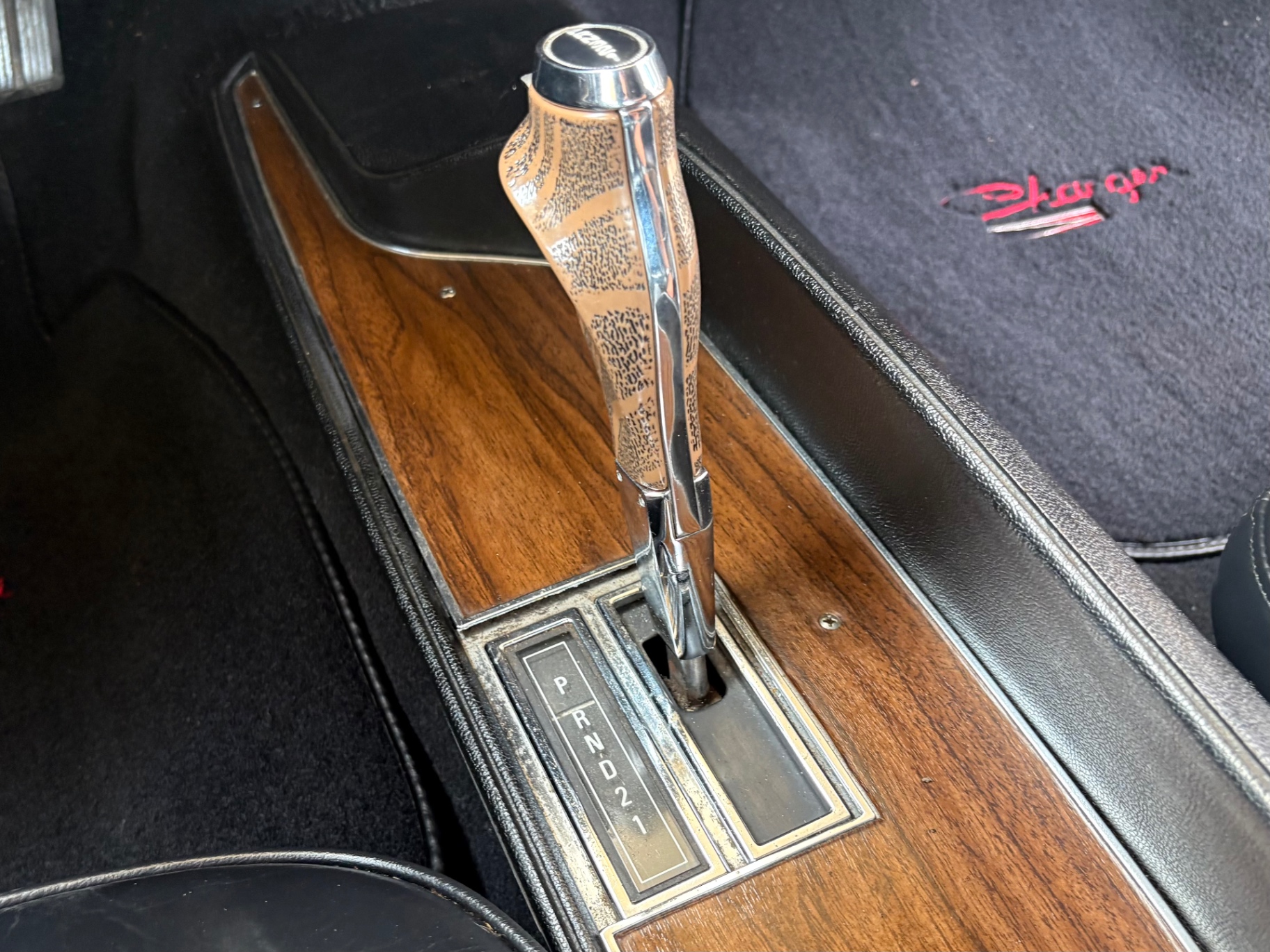
Backing the 440 is the TorqueFlite 727 automatic transmission, one of the most durable production automatics ever built. Chrysler used the 727 across a wide range of applications from the 1960s through the 1980s, and its reputation for reliability and strength behind high-torque engines is well established among Mopar enthusiasts. The floor-shifted console unit in this car adds a sporting element to what is otherwise a very comfortable grand touring package.
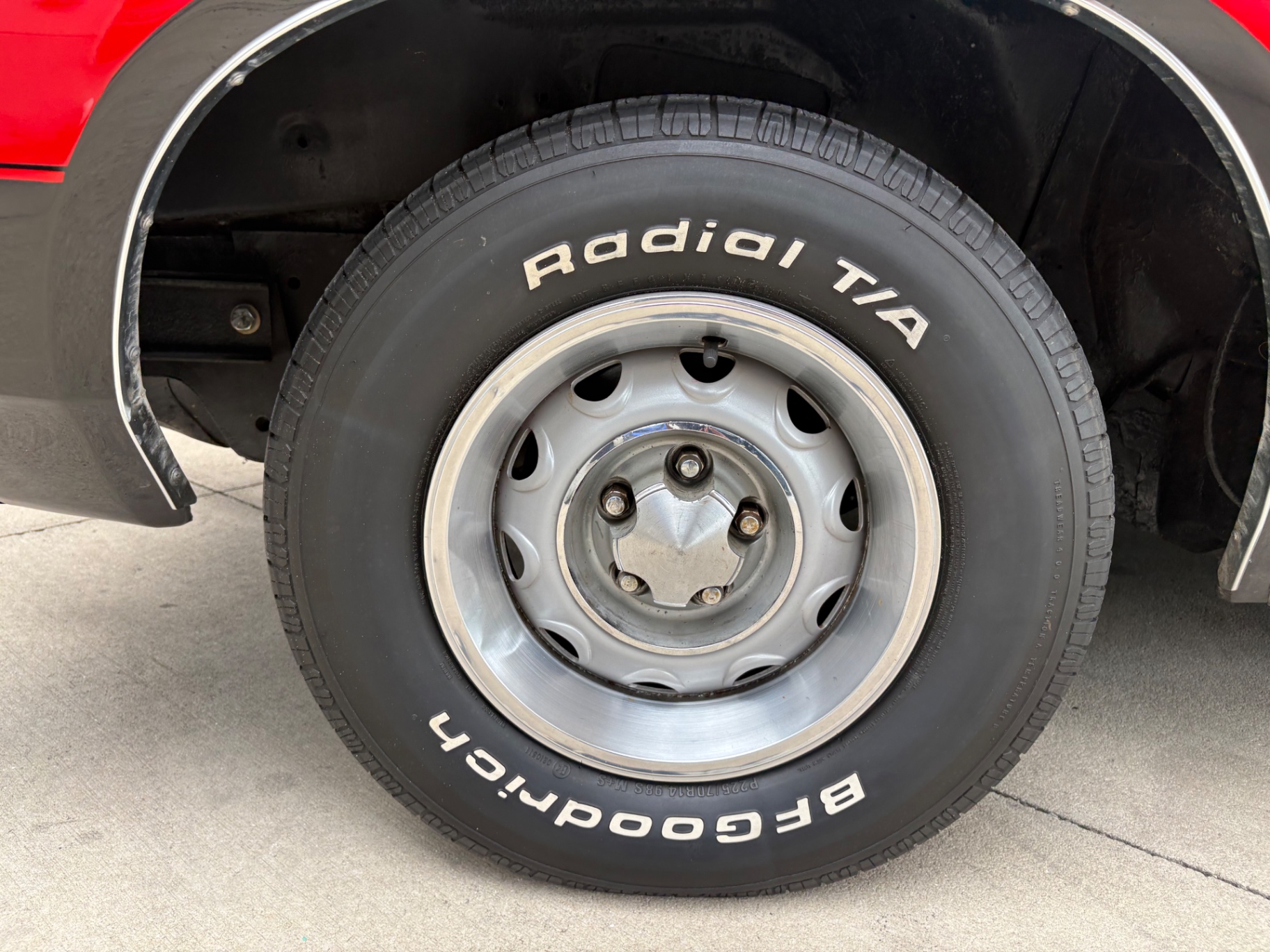
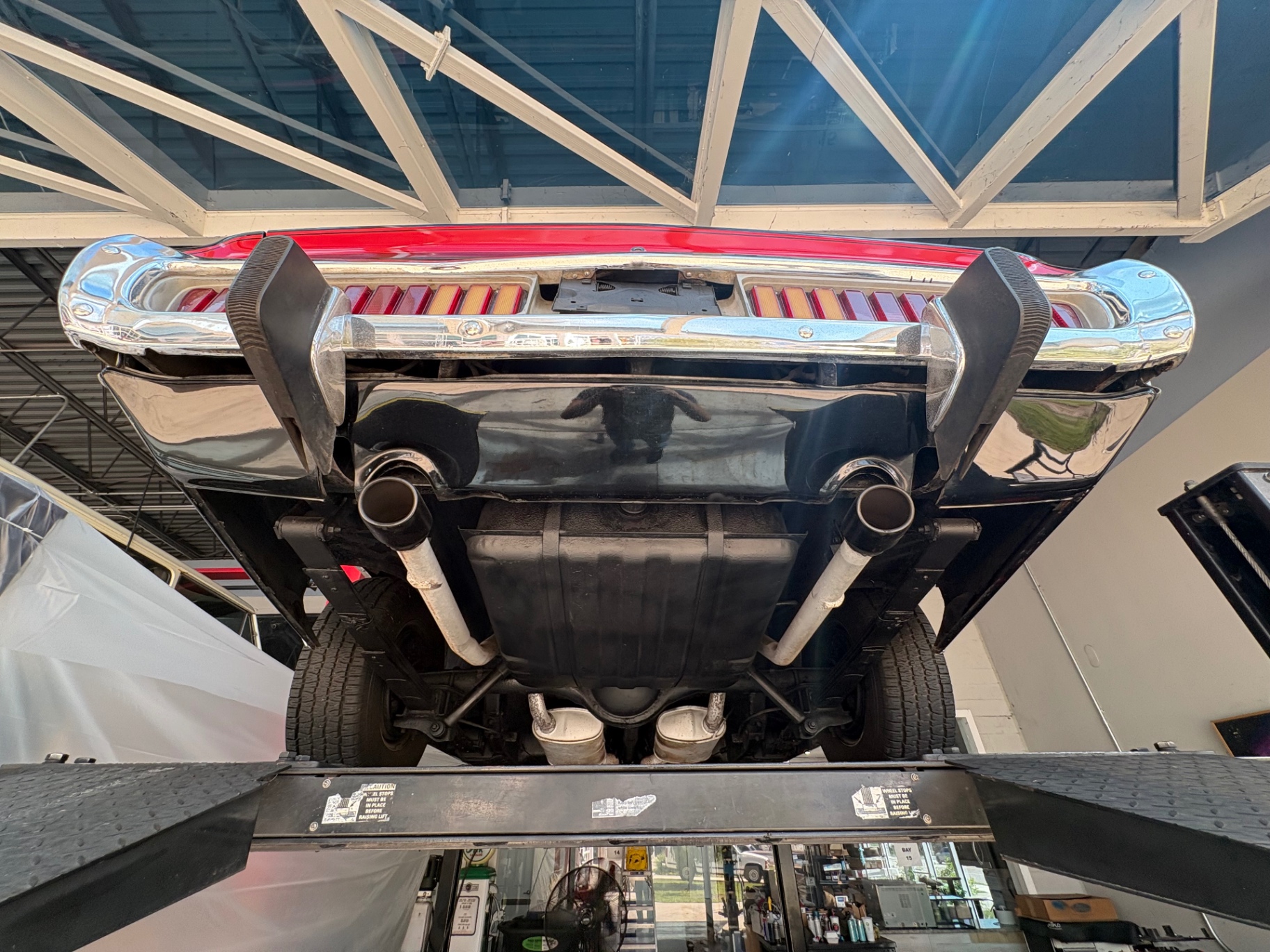
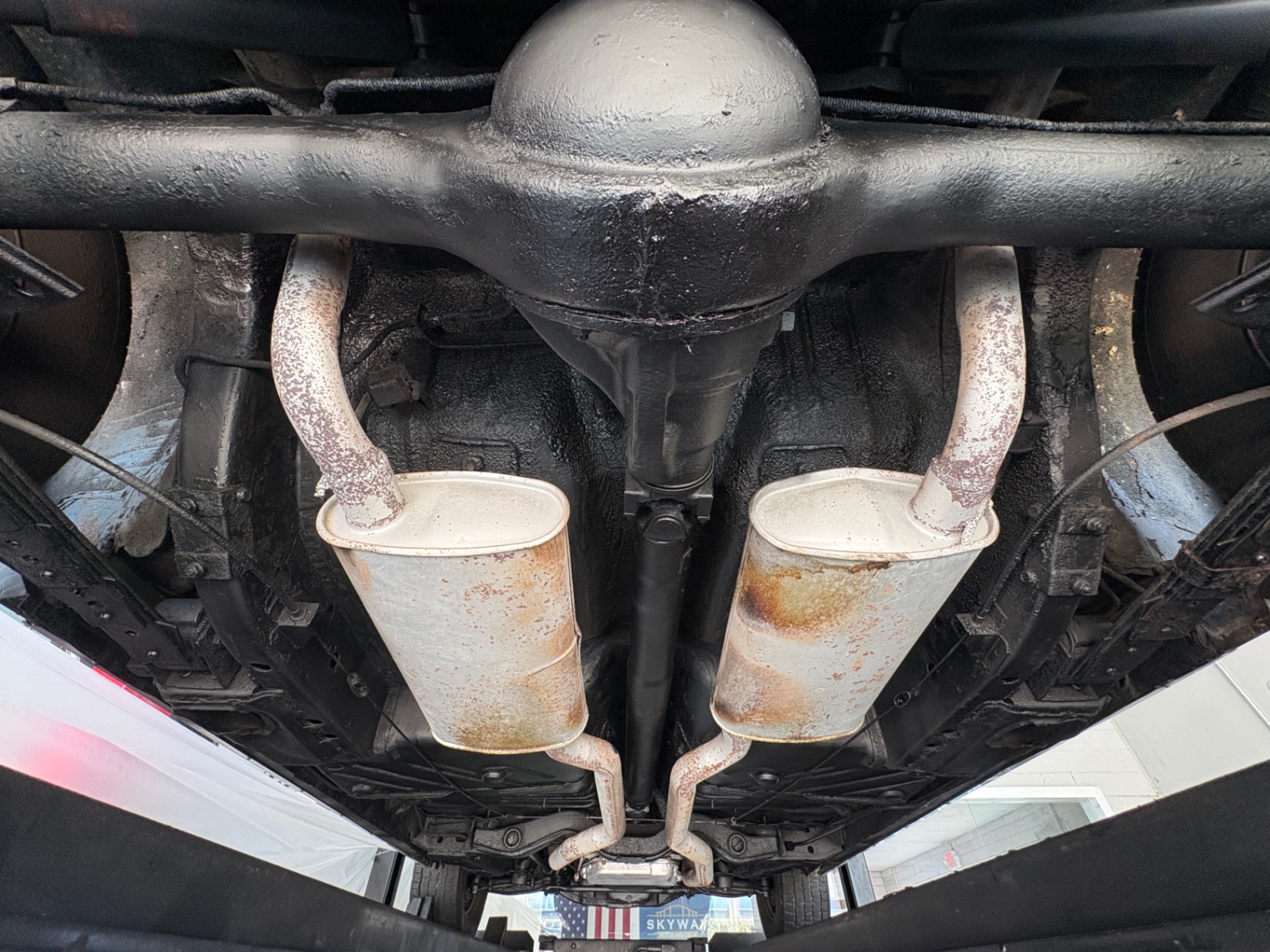
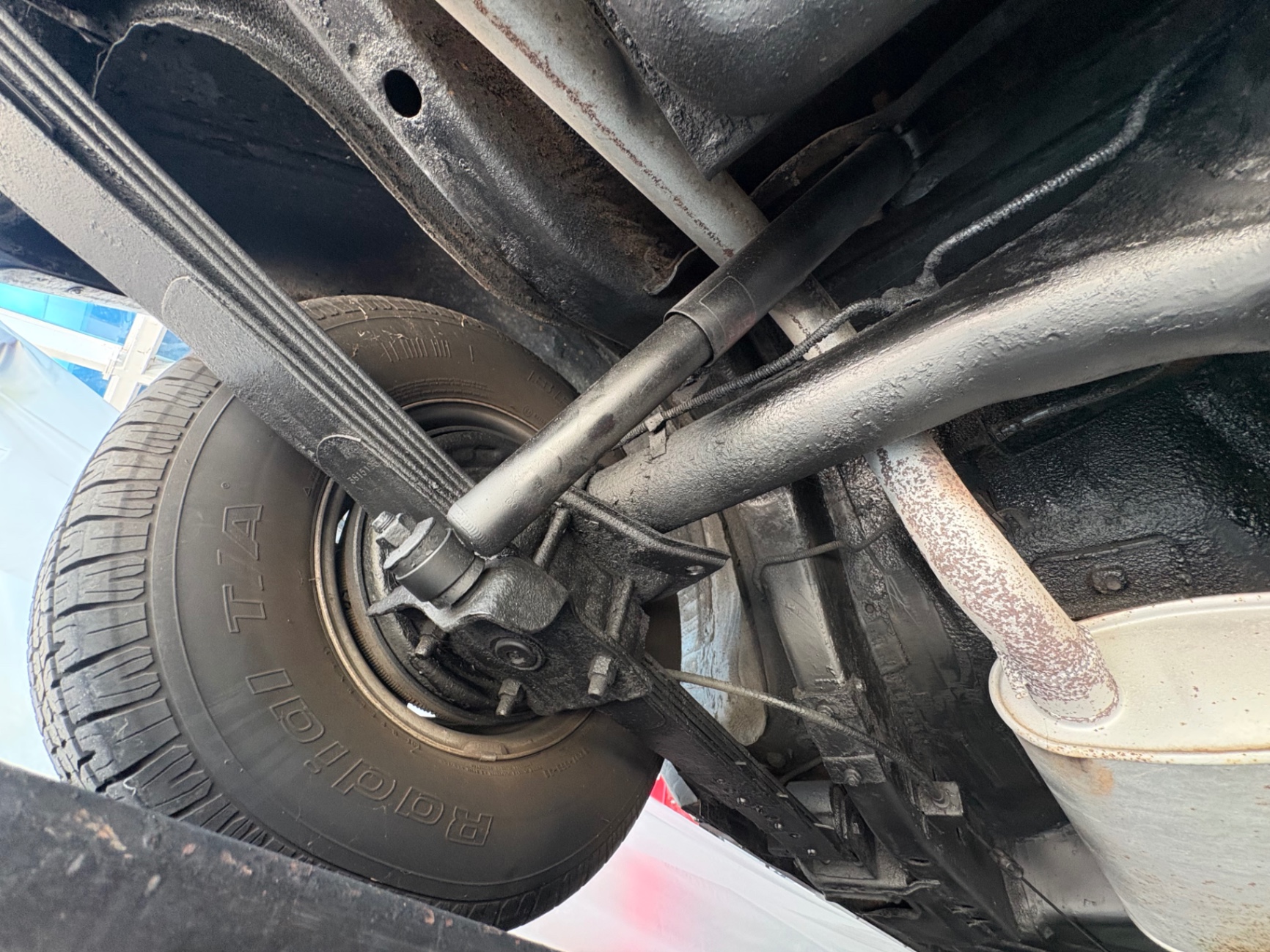
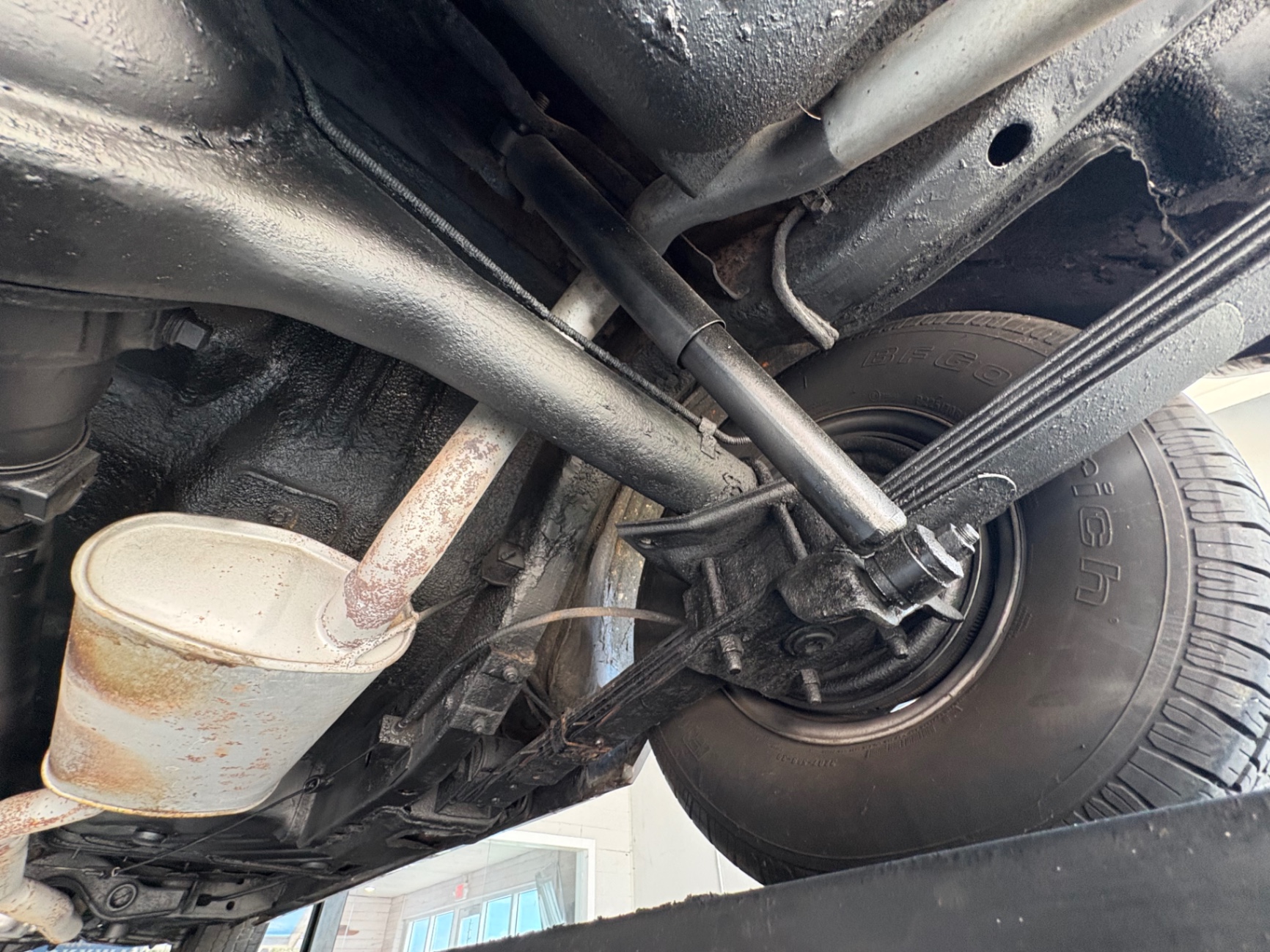
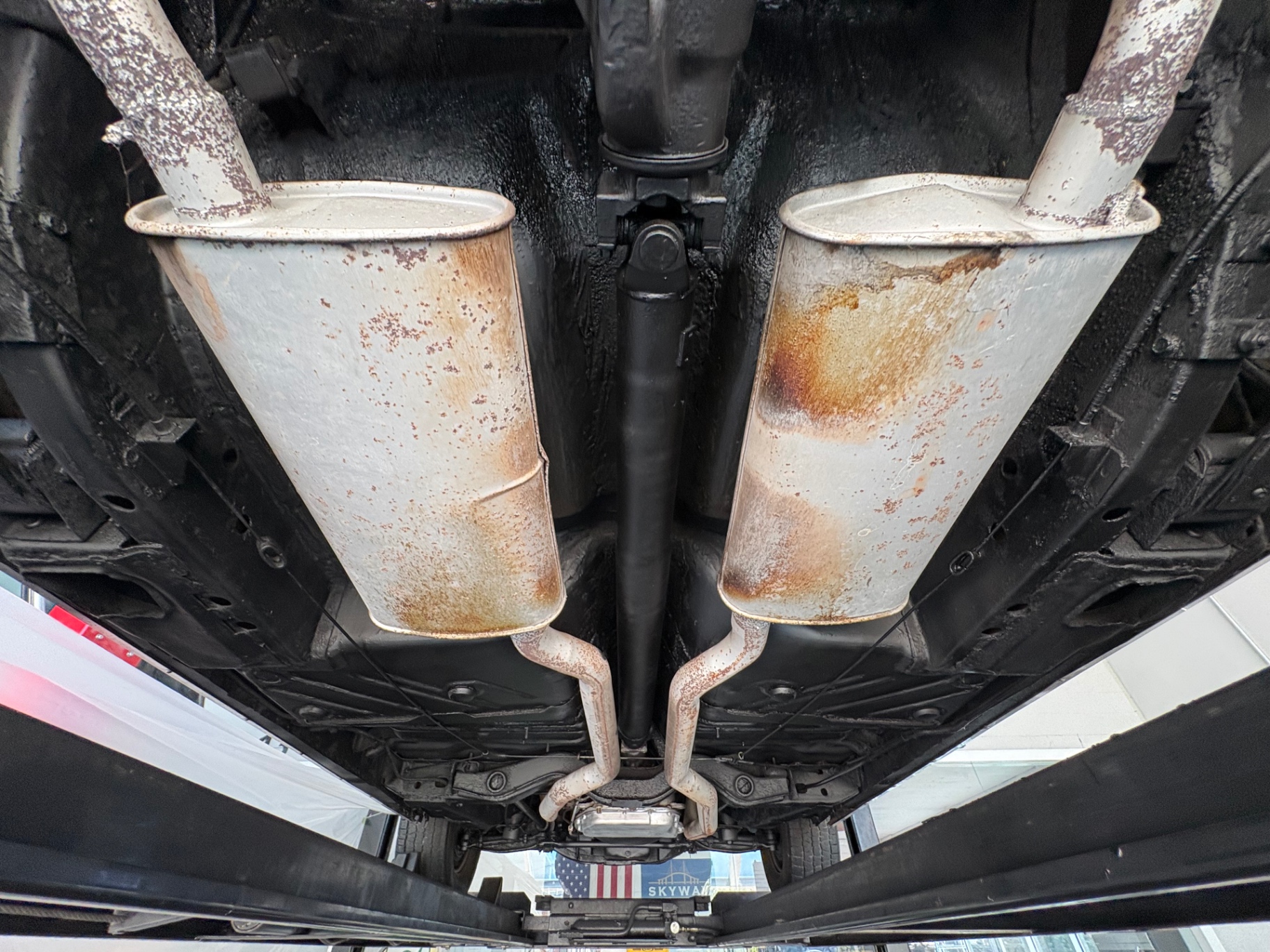
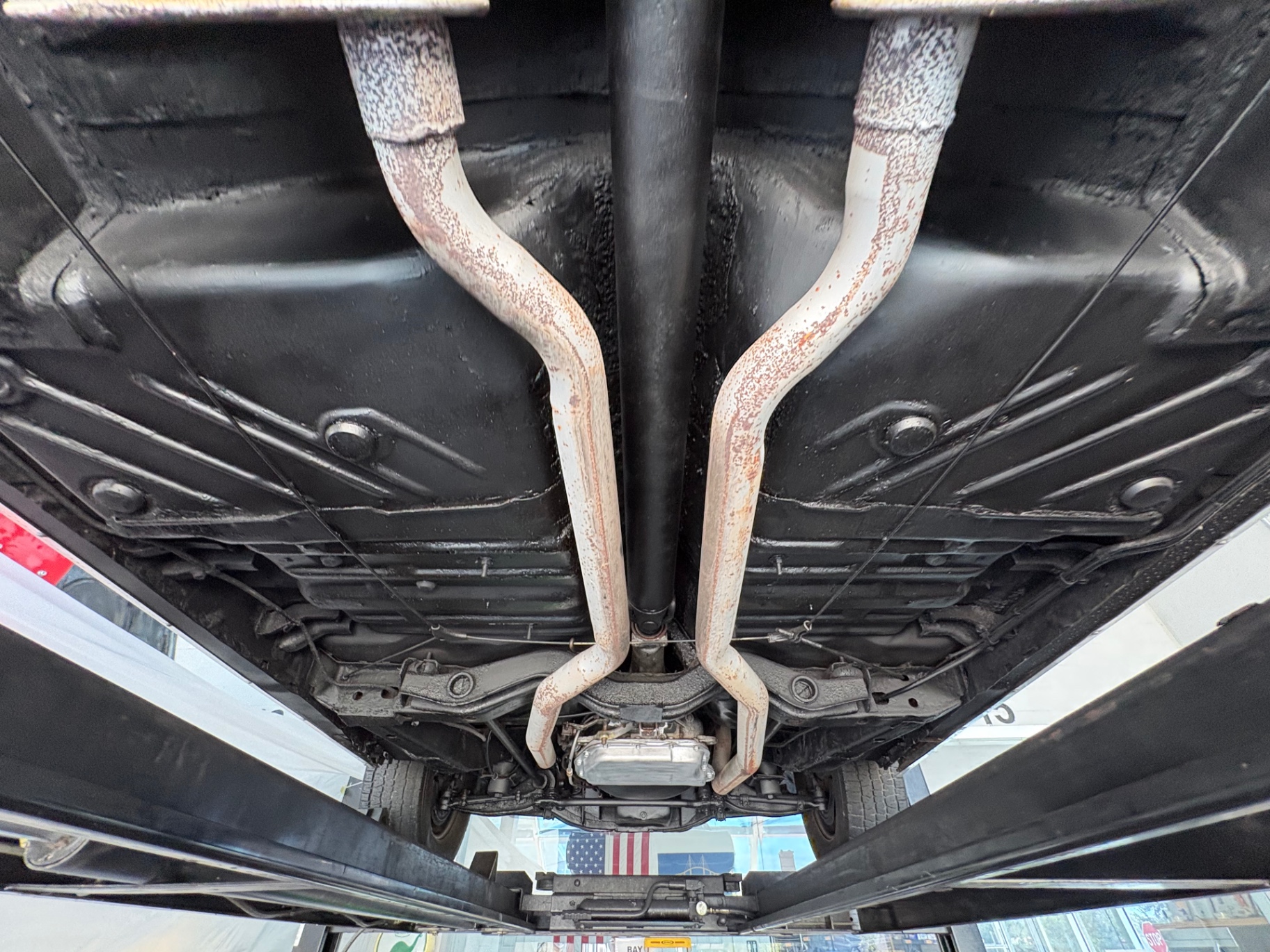
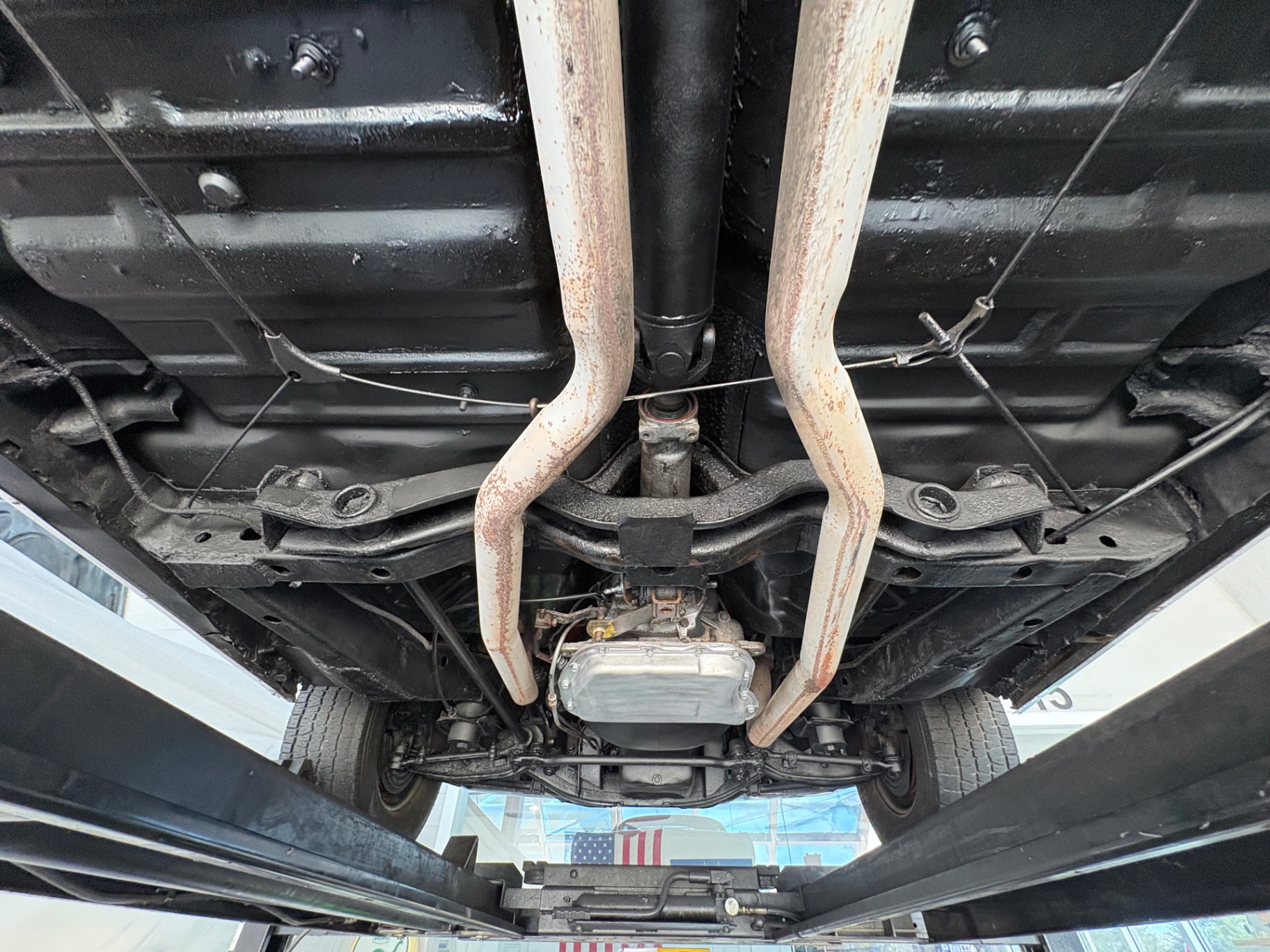
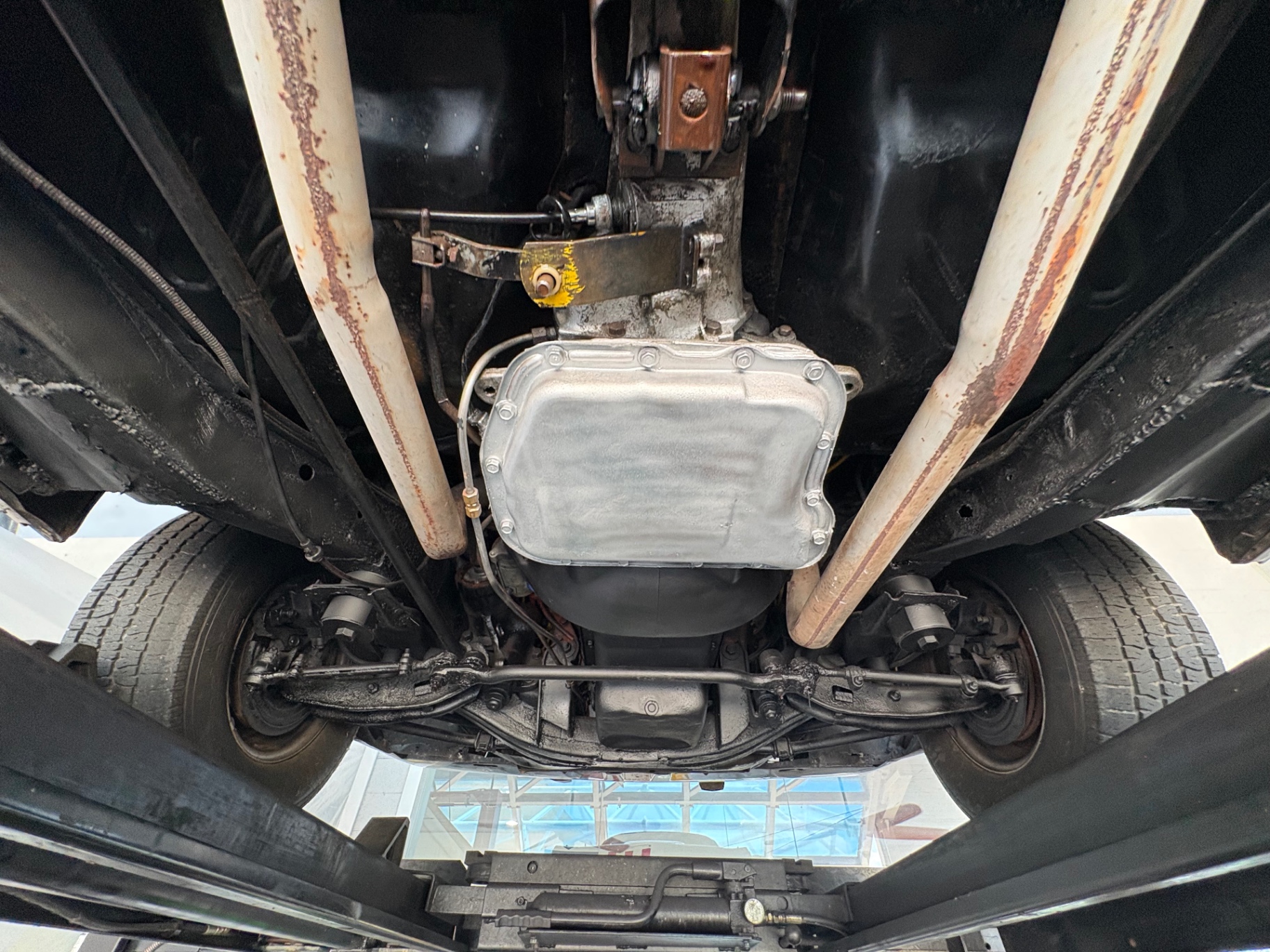
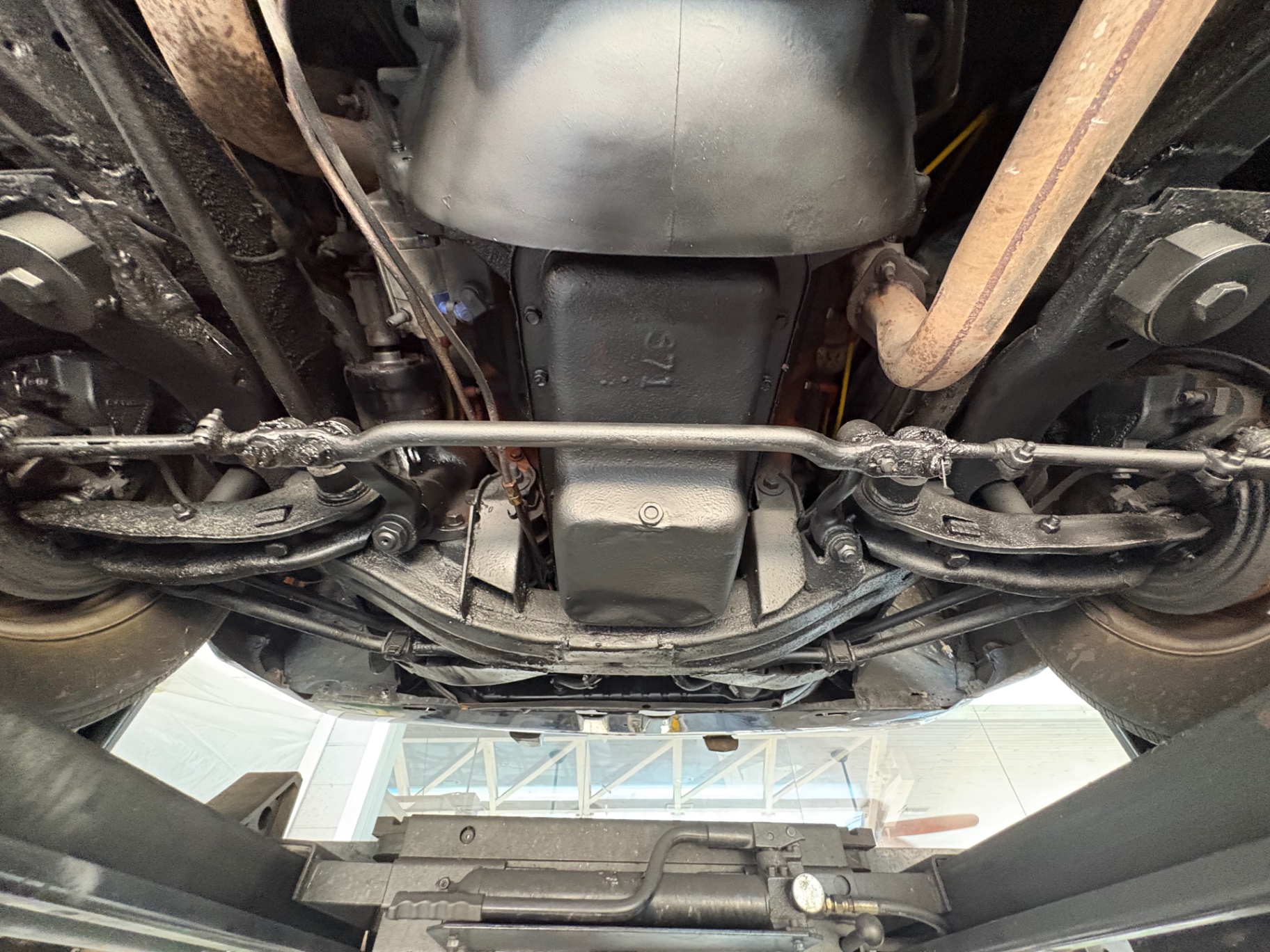
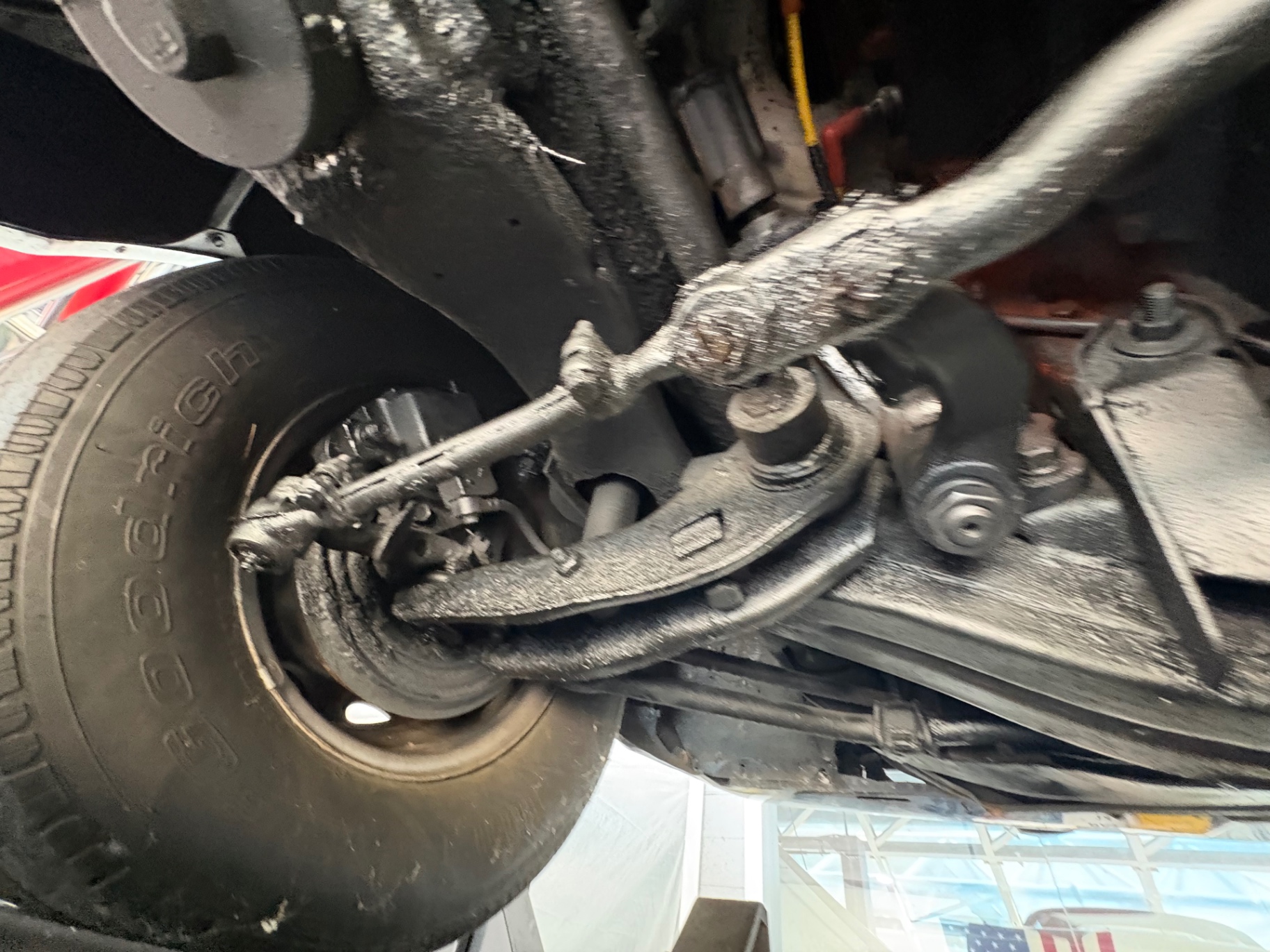
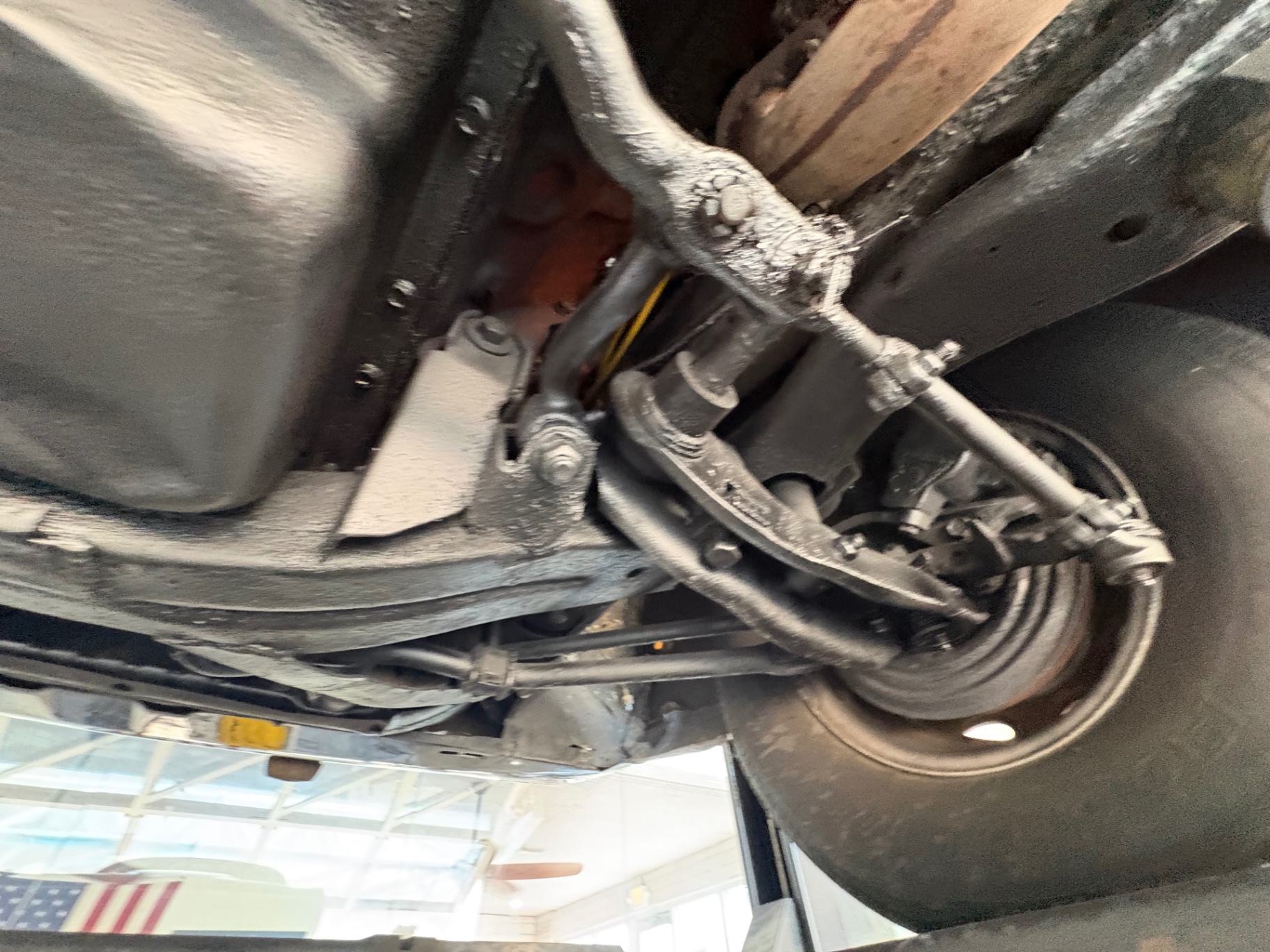
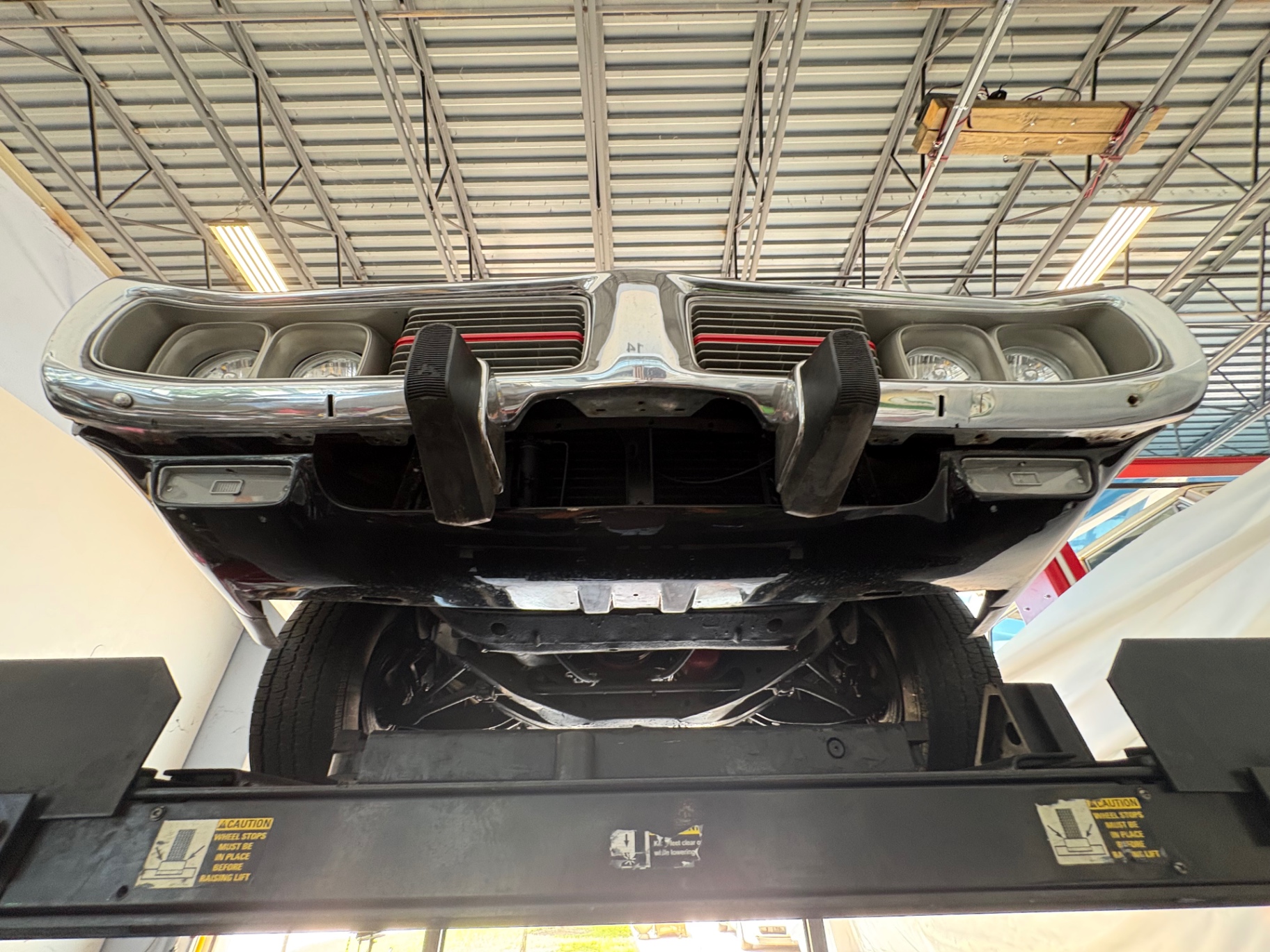
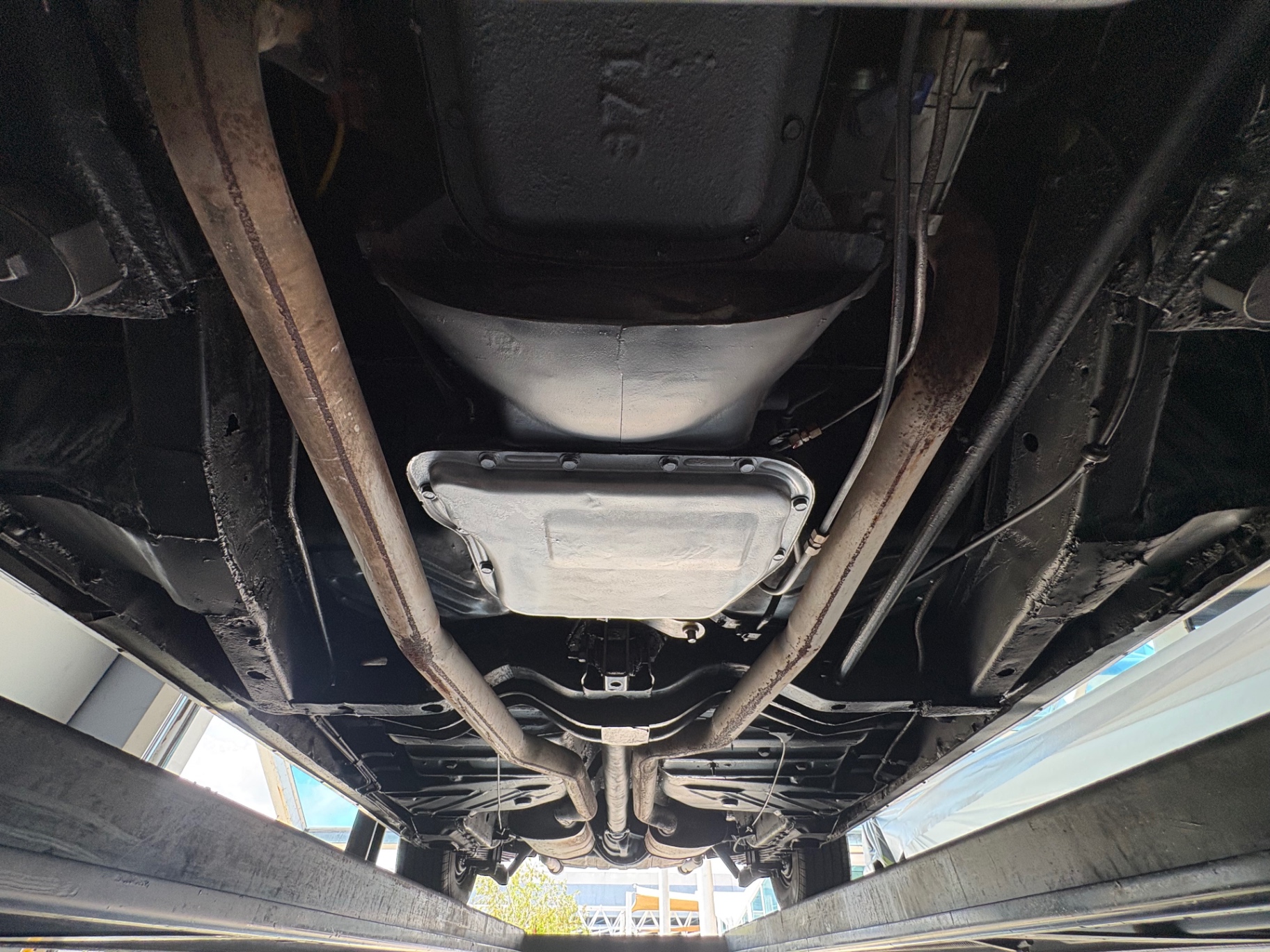
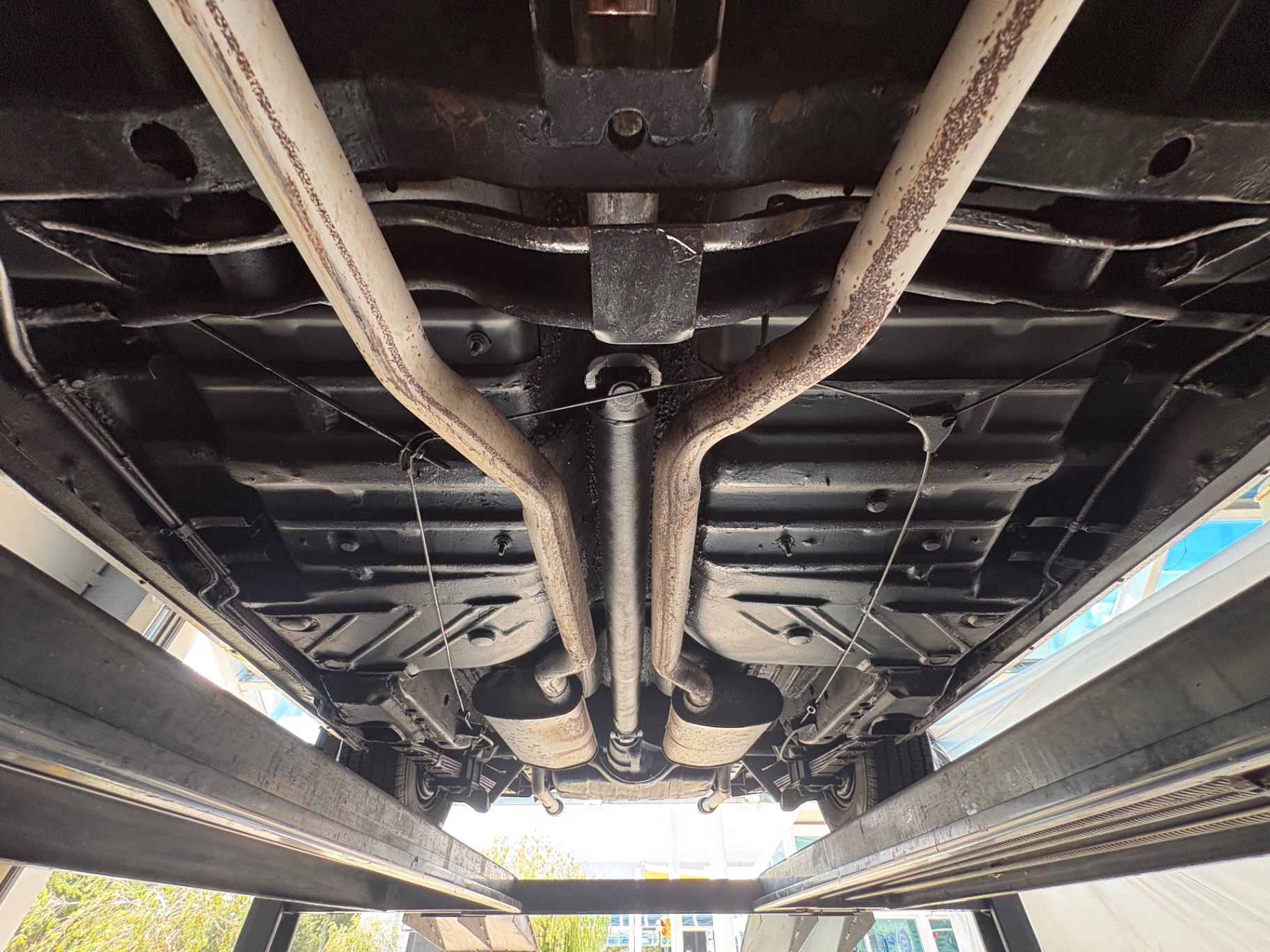
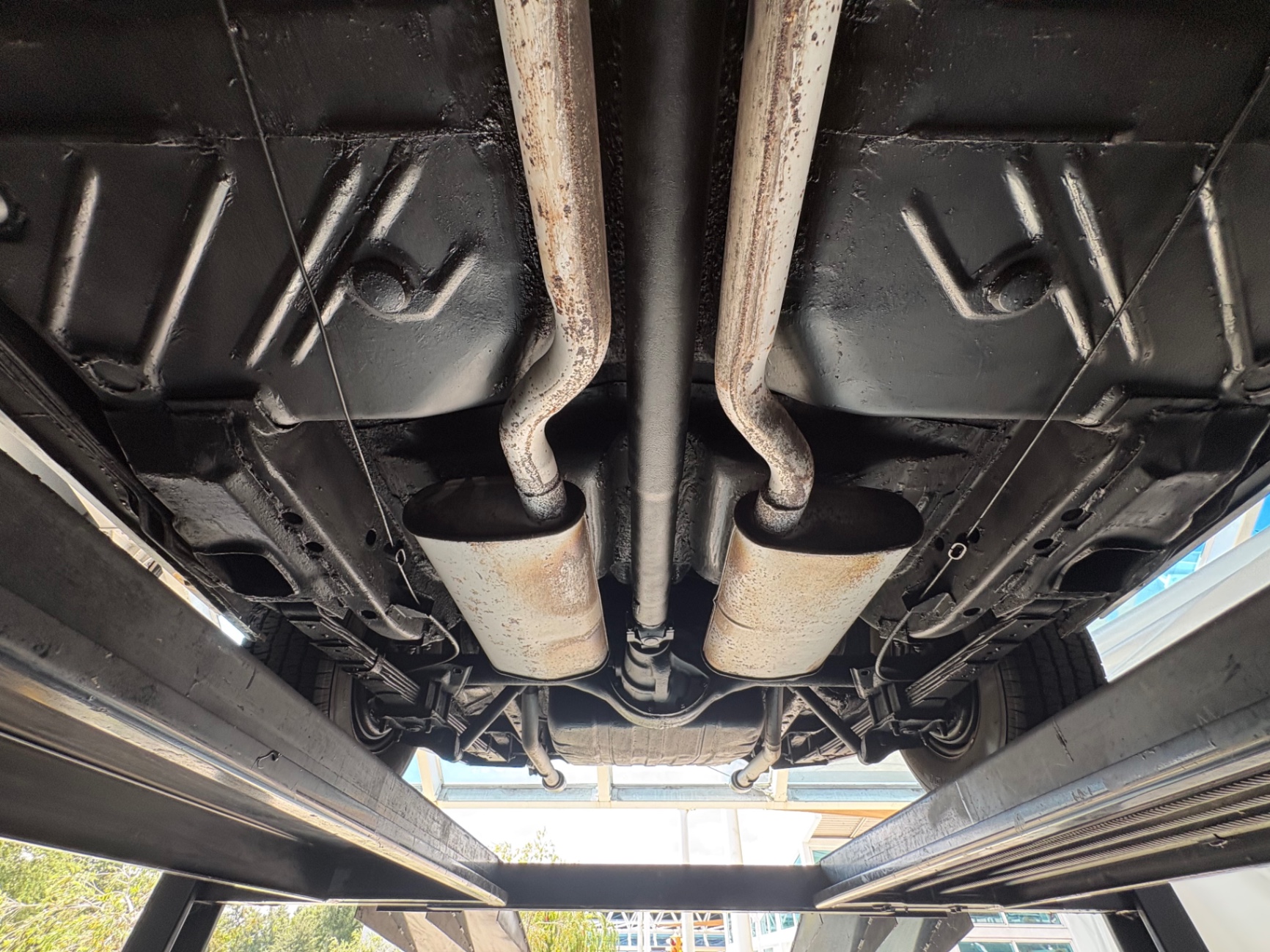
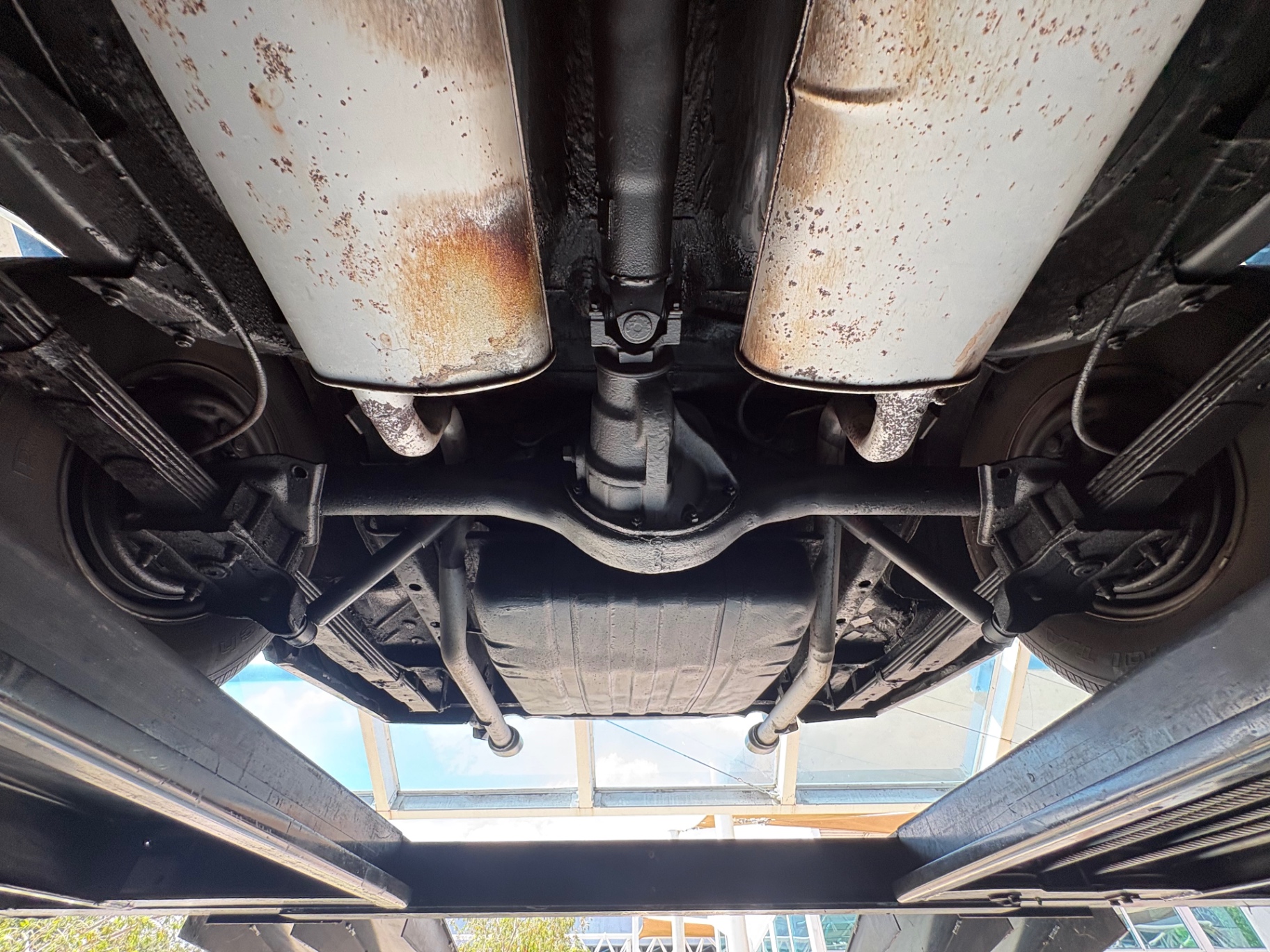
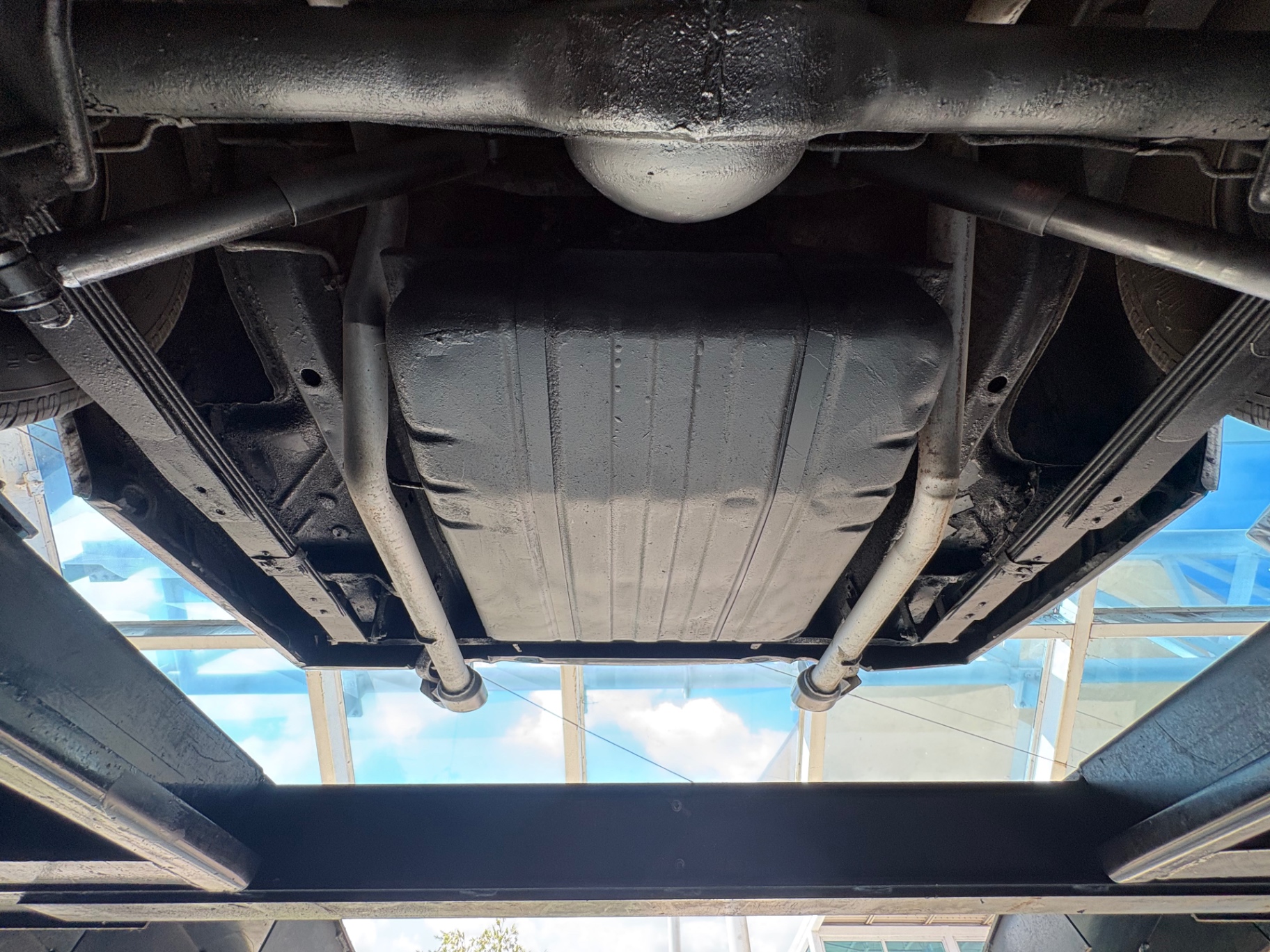
The underside of this 1974 Dodge Charger is well-preserved. The floor pans and frame rails show solid, coated metal, and the dual exhaust system exits cleanly through the rear bumper with the correct chrome tips. The rear axle and suspension components visible in the undercarriage photos show the car has been maintained. Drum brakes on all four corners were standard equipment for the 1974 Charger SE, and this car retains that factory configuration. The BFGoodrich Radial T/A tires are an appropriate period-correct choice that fits the character of the car well.
Interior
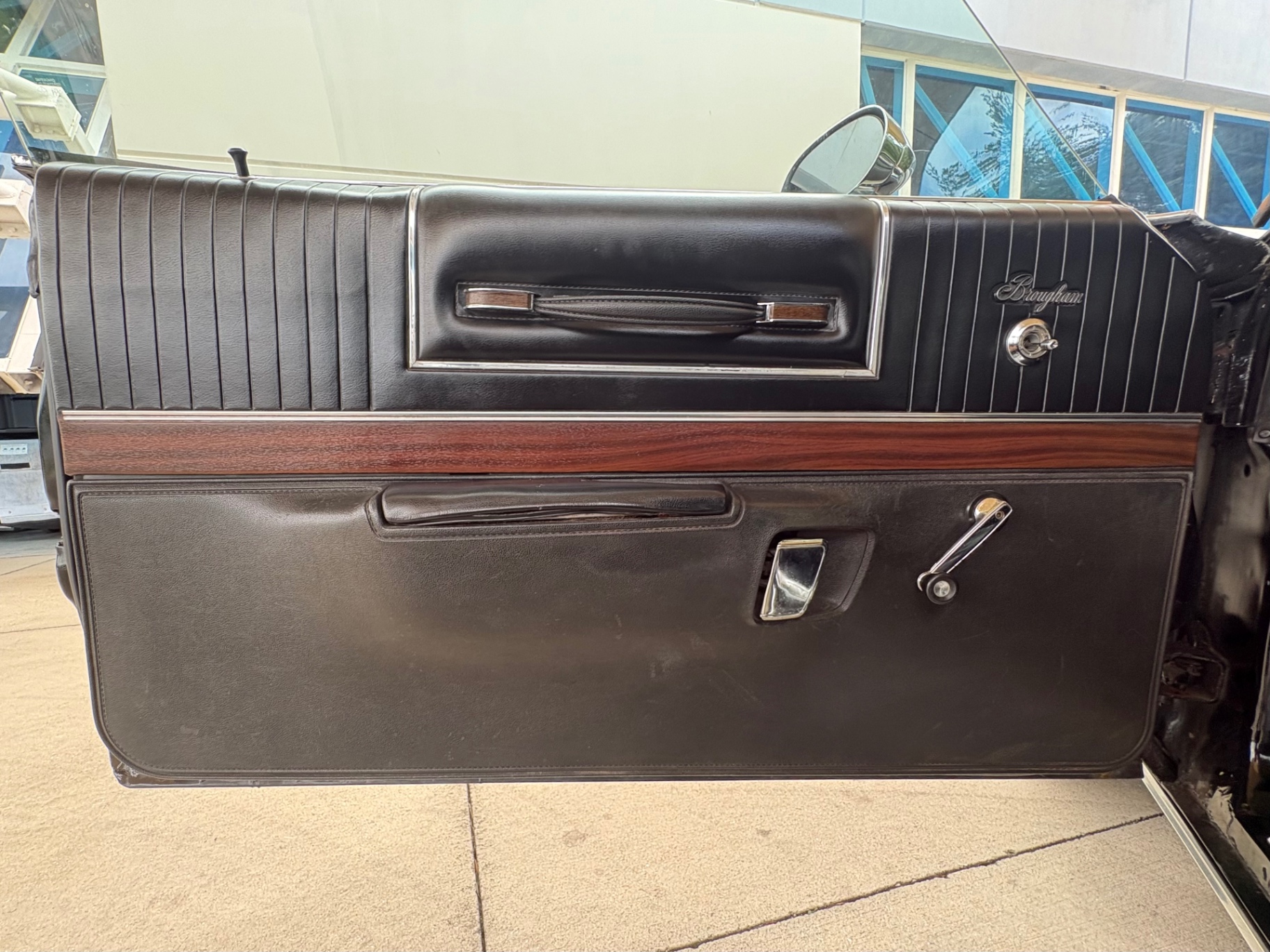
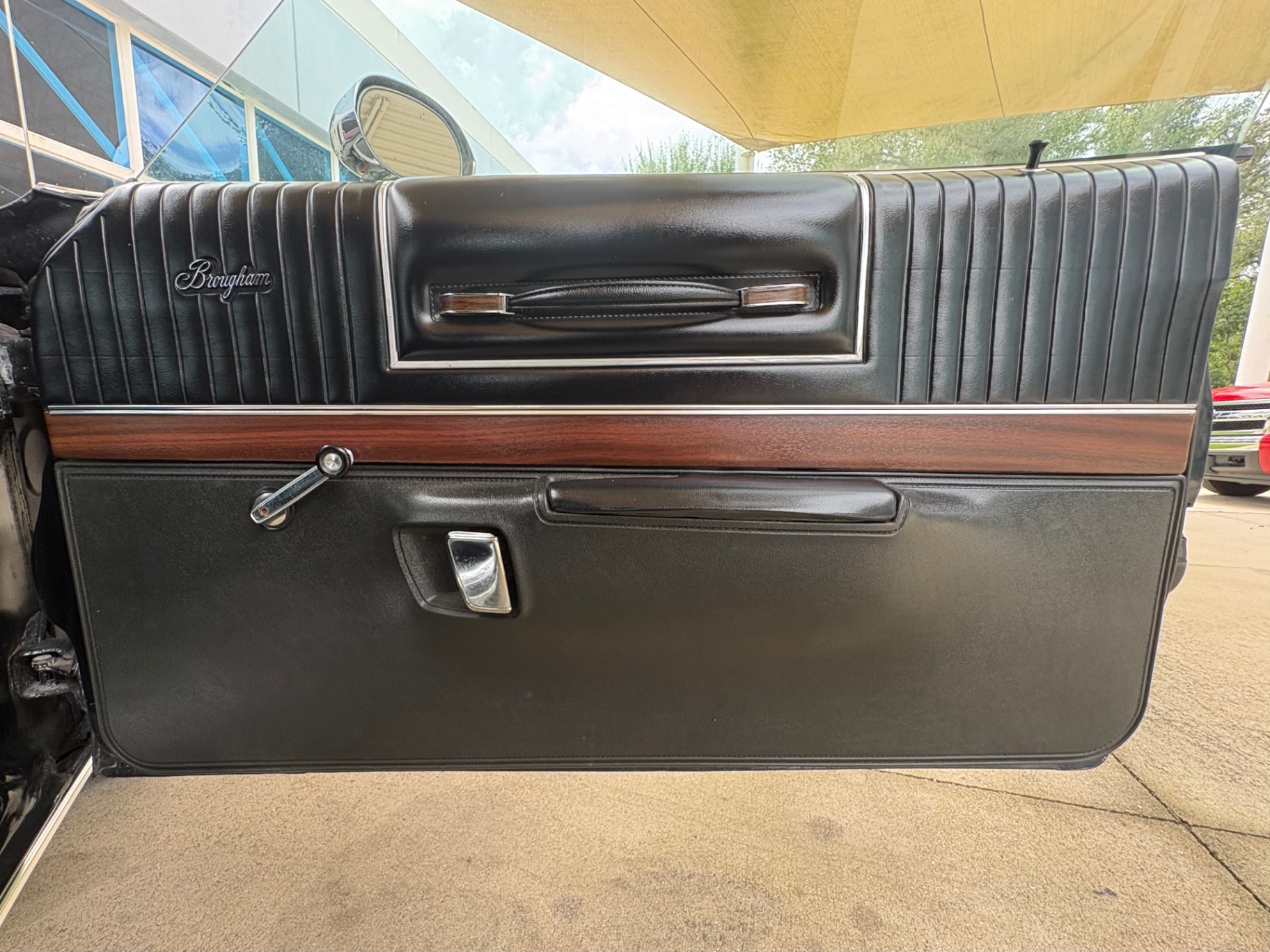
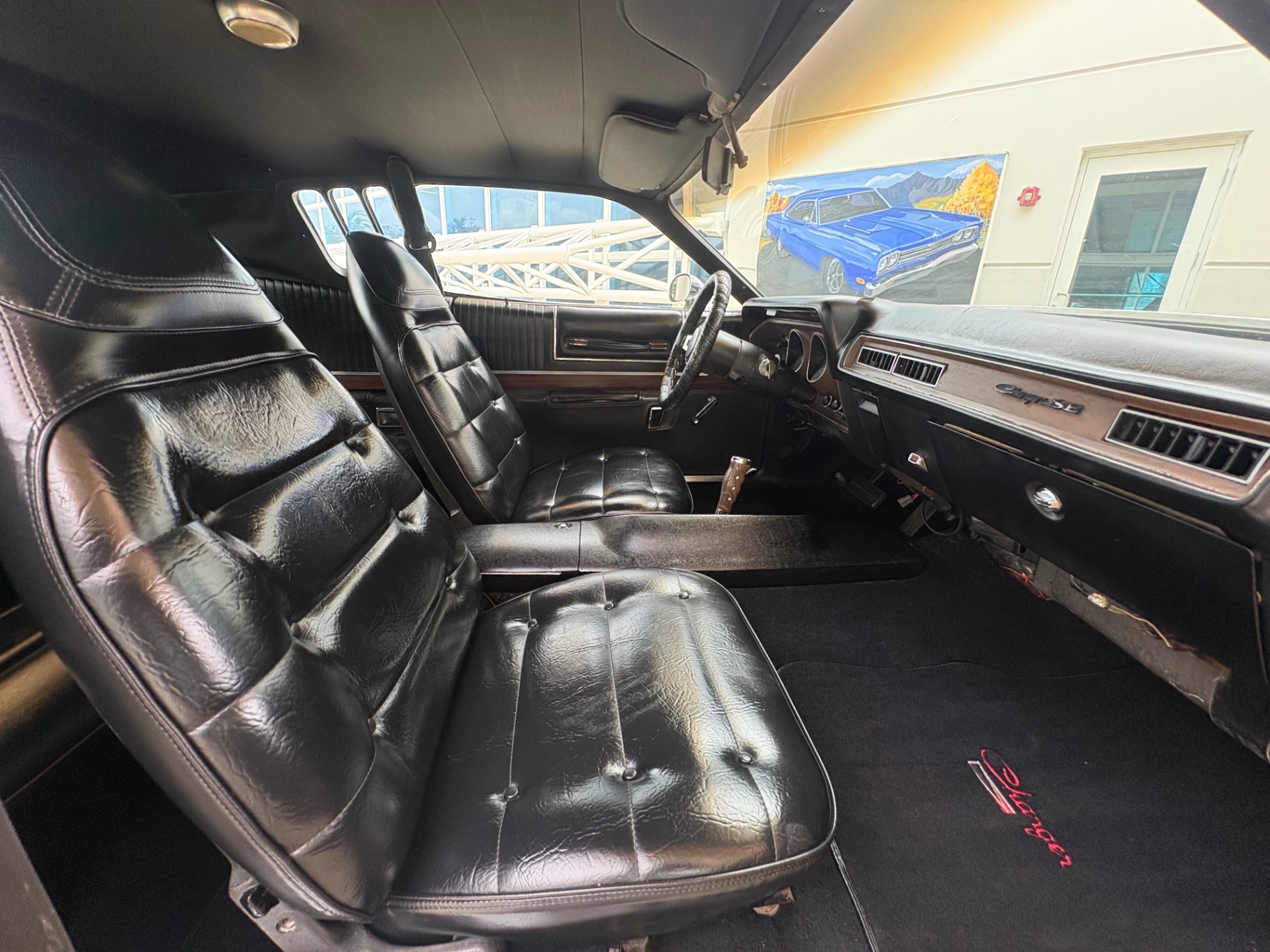
Step inside the 1974 Dodge Charger SE and the cabin tells you exactly what kind of car this is. The SE trim level was Dodge's answer to buyers who wanted performance hardware wrapped in a more refined interior, and the Brougham door panels with their embossed script badging, padded upper sections, and woodgrain inserts were central to that pitch. The door panels on this car are in solid shape, with the chrome trim and script badges intact and the woodgrain appliques showing cleanly on both front doors.
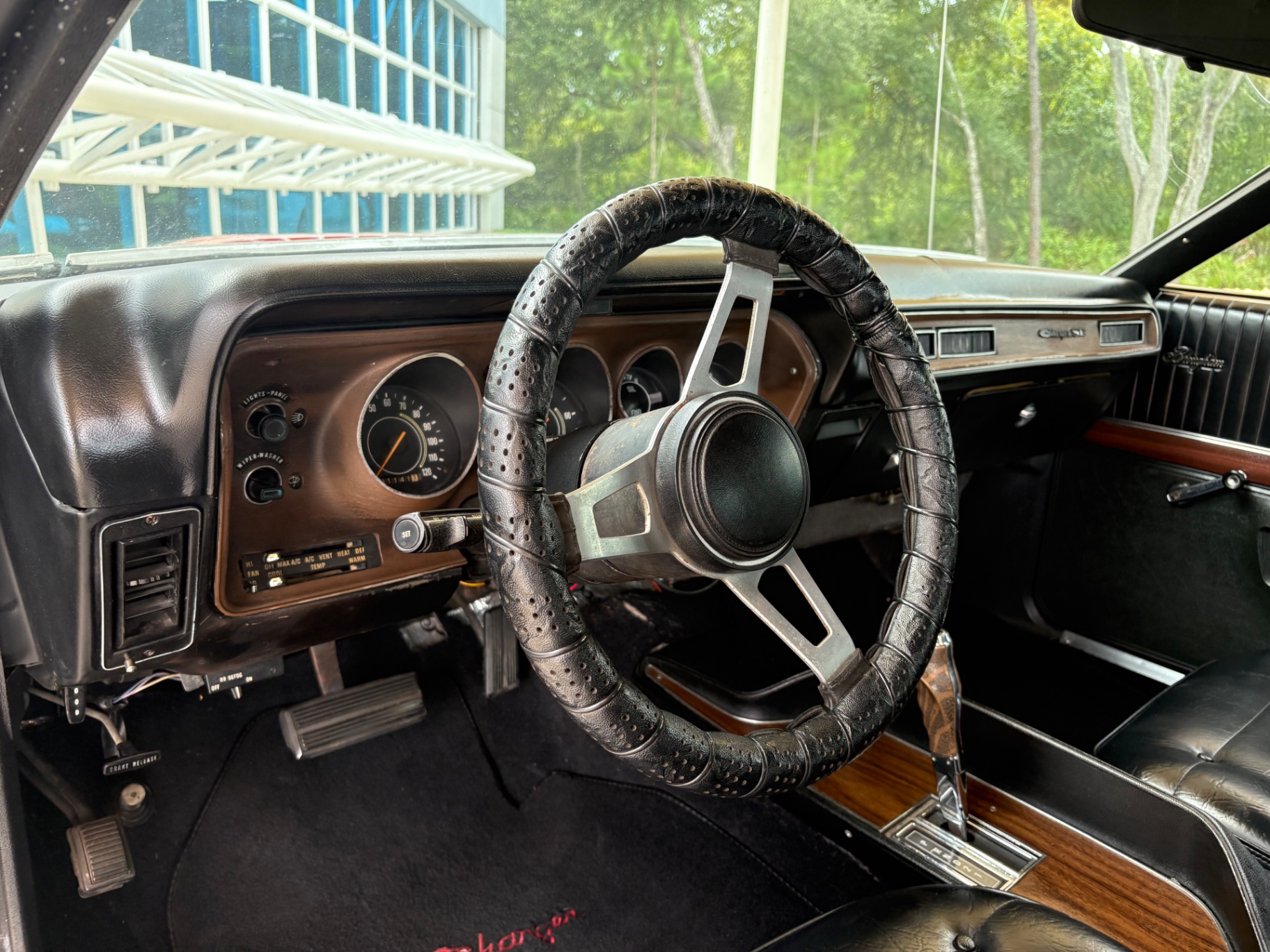
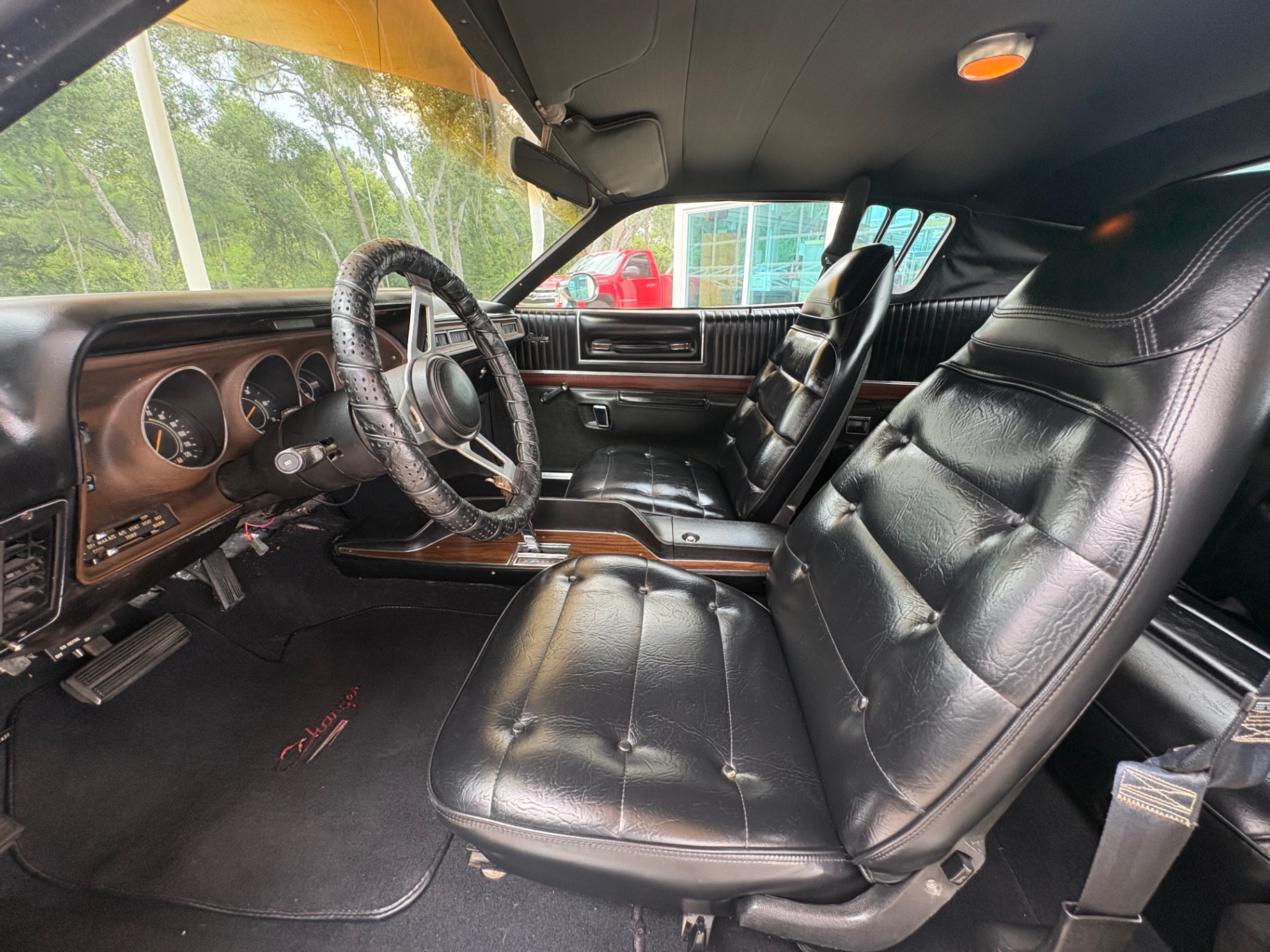
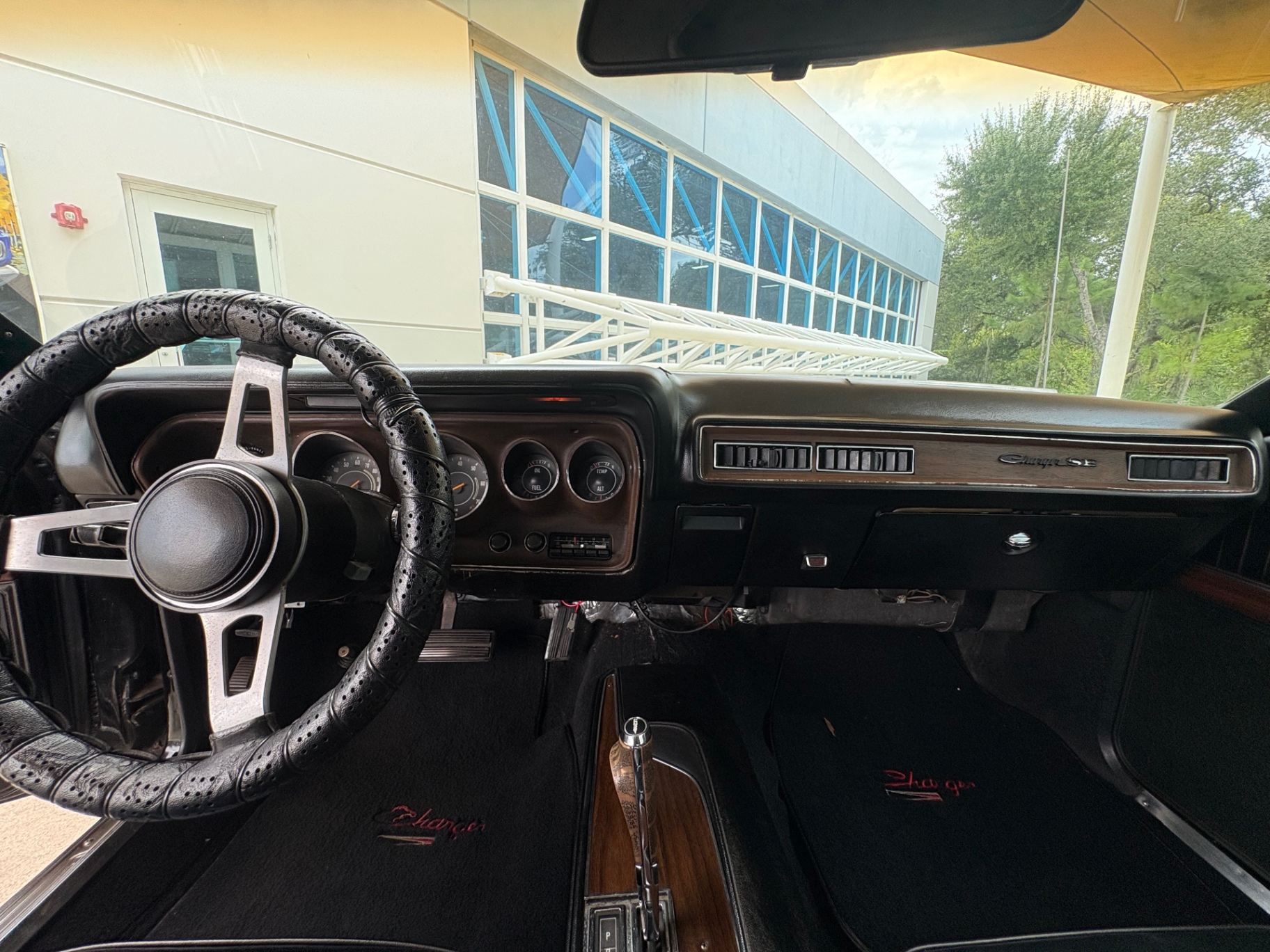
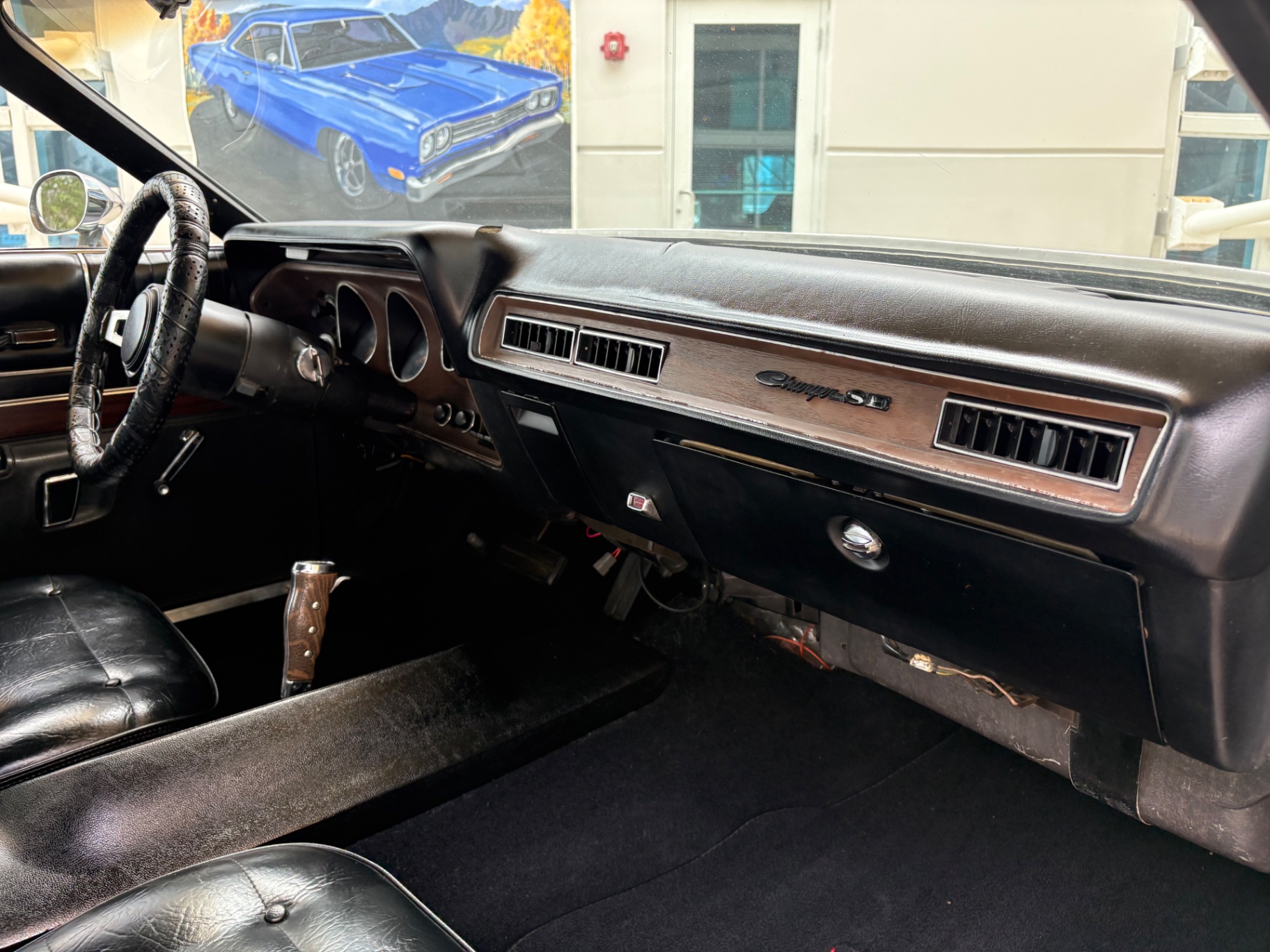
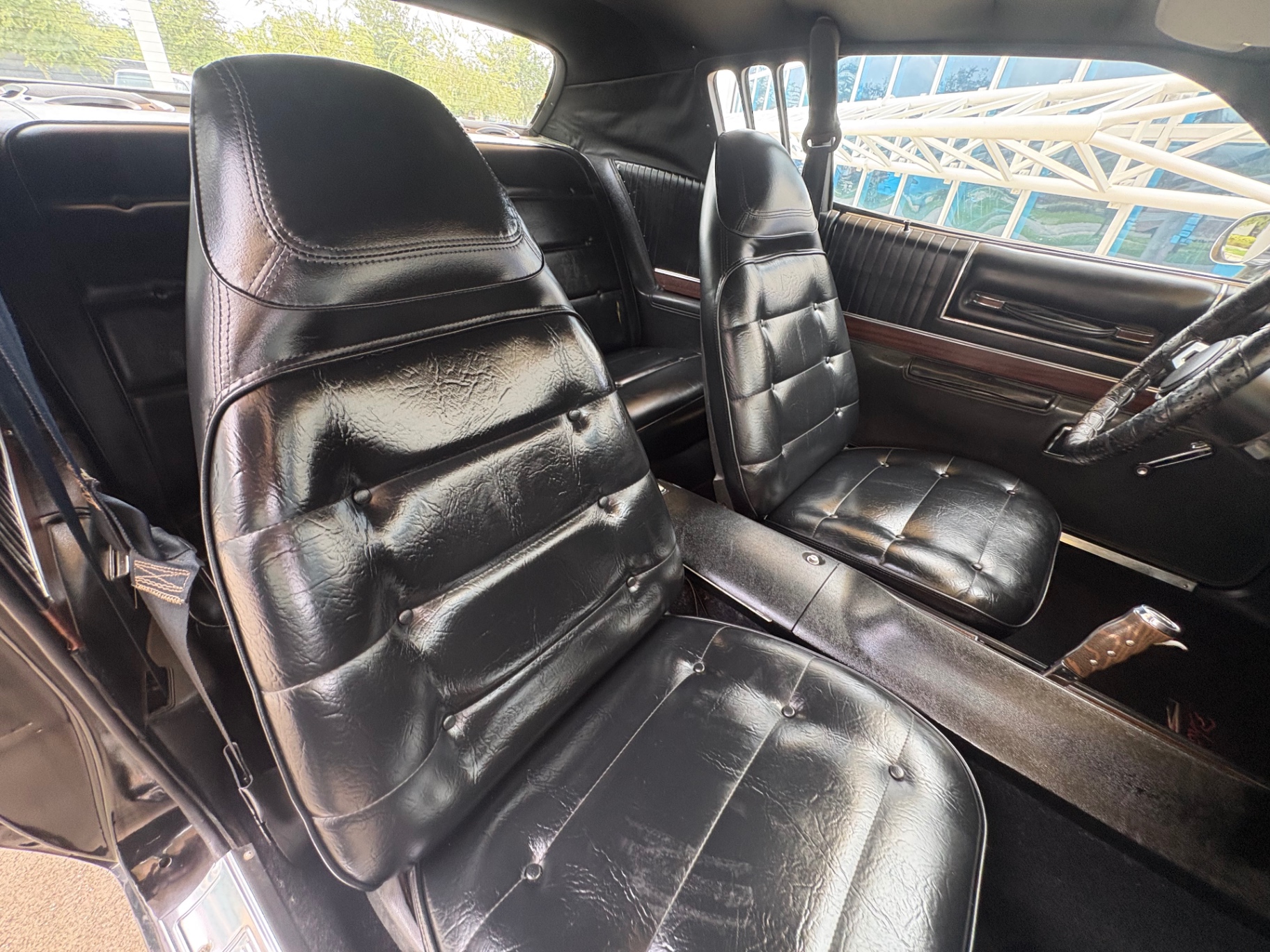
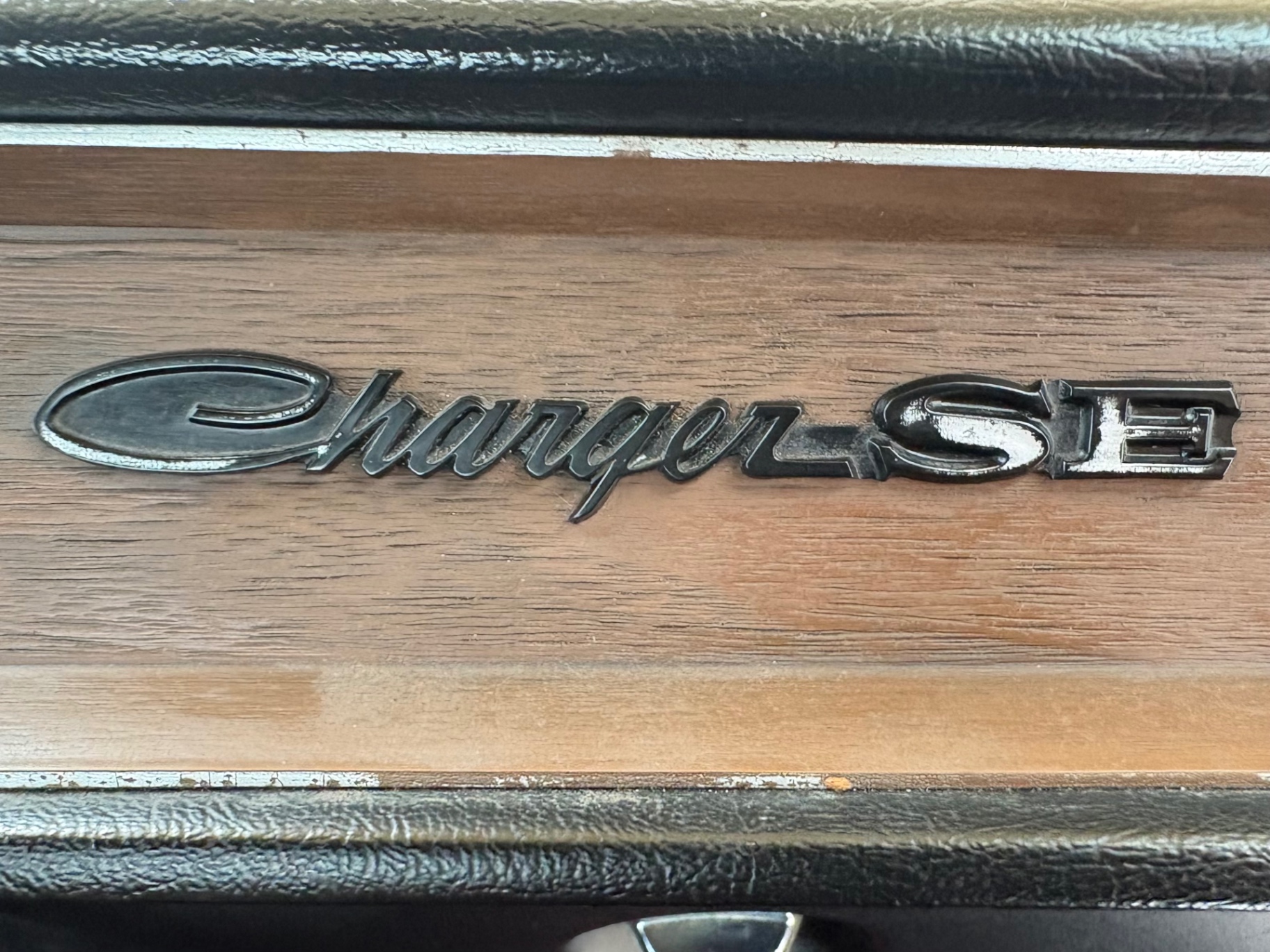
The front bucket seats are covered in black vinyl with a tufted pattern and retain their shape well. The center console runs between them with a woodgrain-trimmed floor shifter for the TorqueFlite 727, and the shift indicator shows the correct P-R-N-D-2-1 gate. The dashboard uses a recessed instrument cluster layout with a woodgrain-finished center panel carrying the Charger SE badge in chrome script — a detail that photographs well and confirms the trim level at a glance. The climate control panel, wiper controls, and lighting switches are all in their correct factory locations.
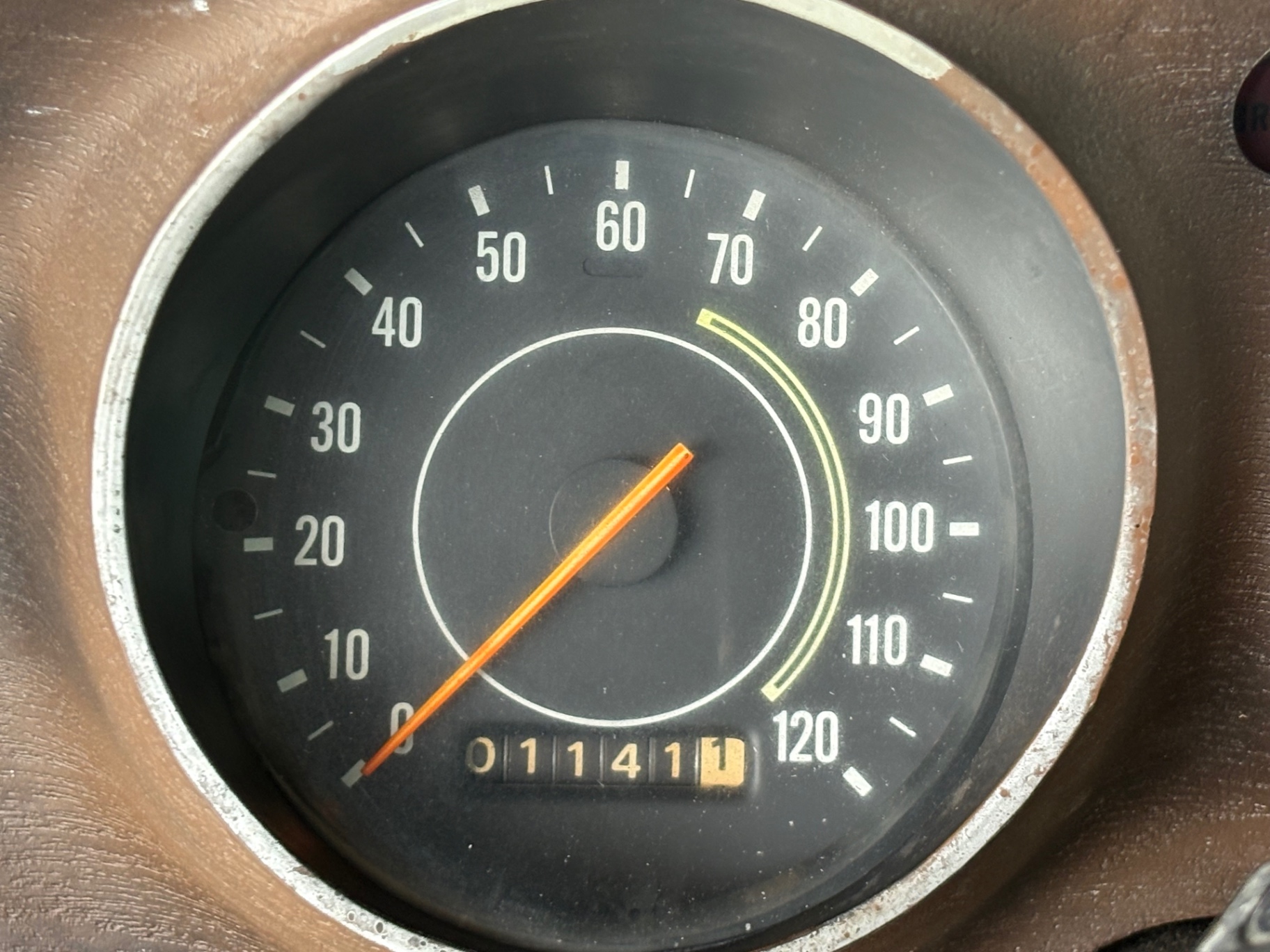
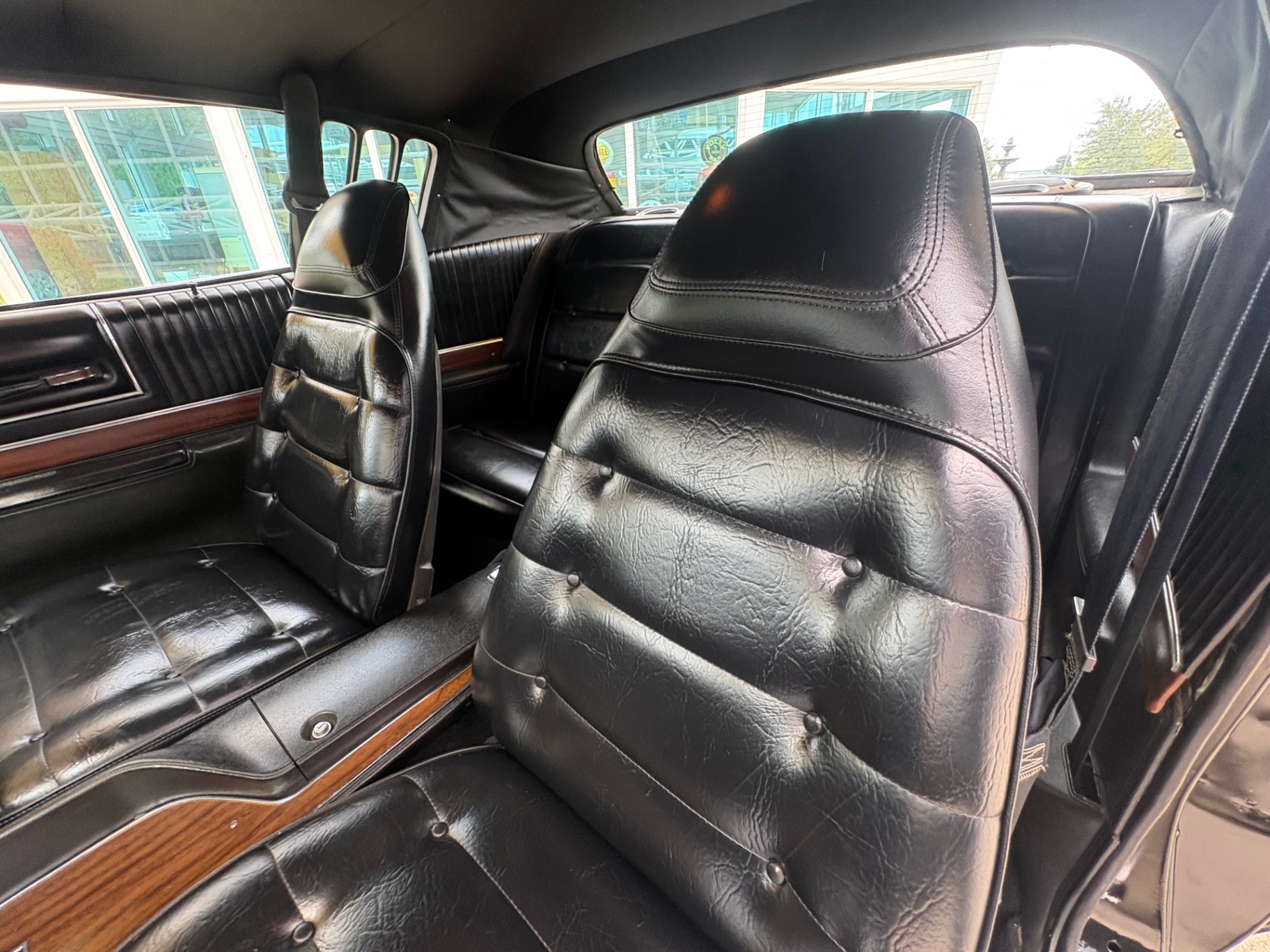
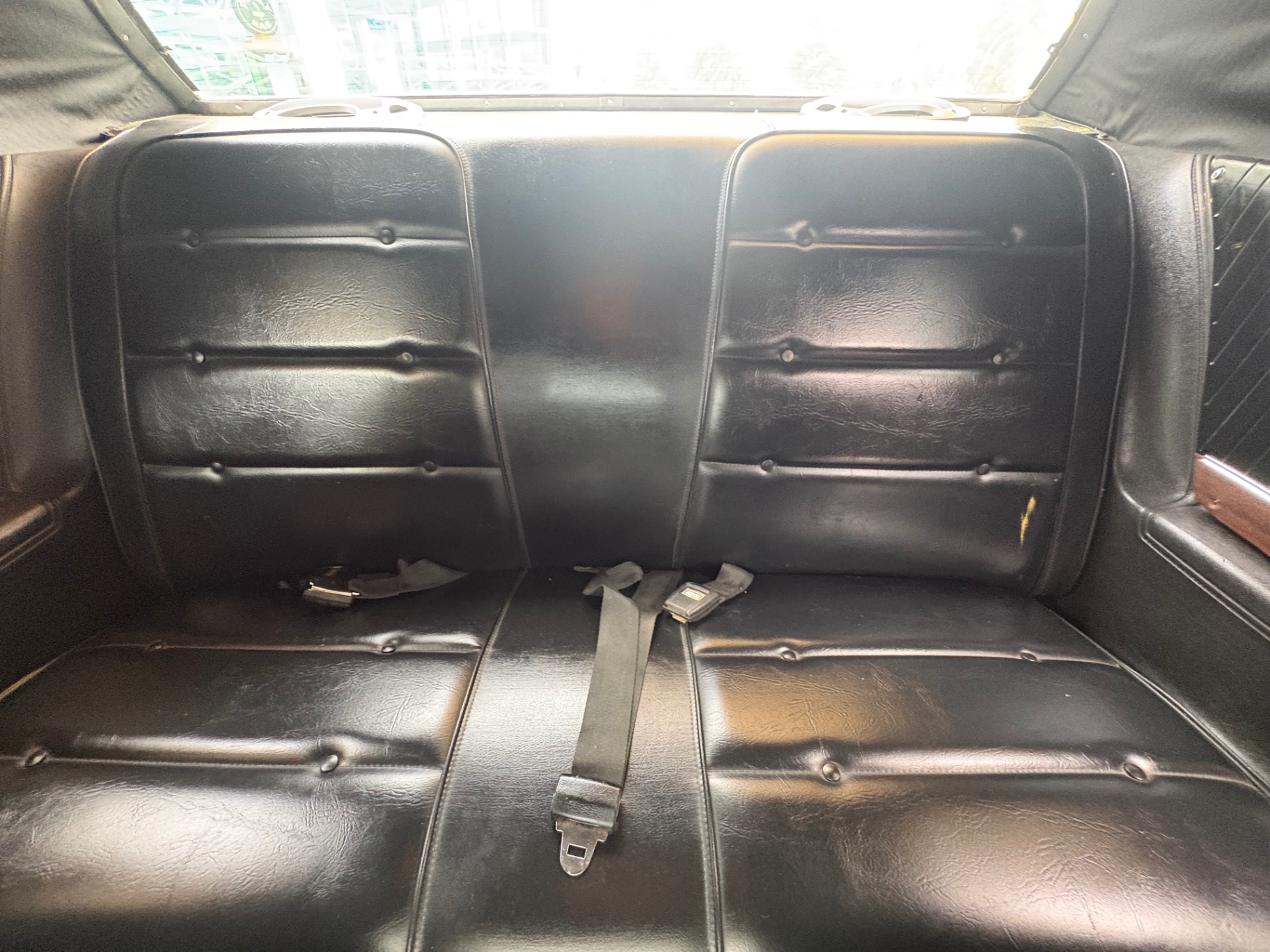
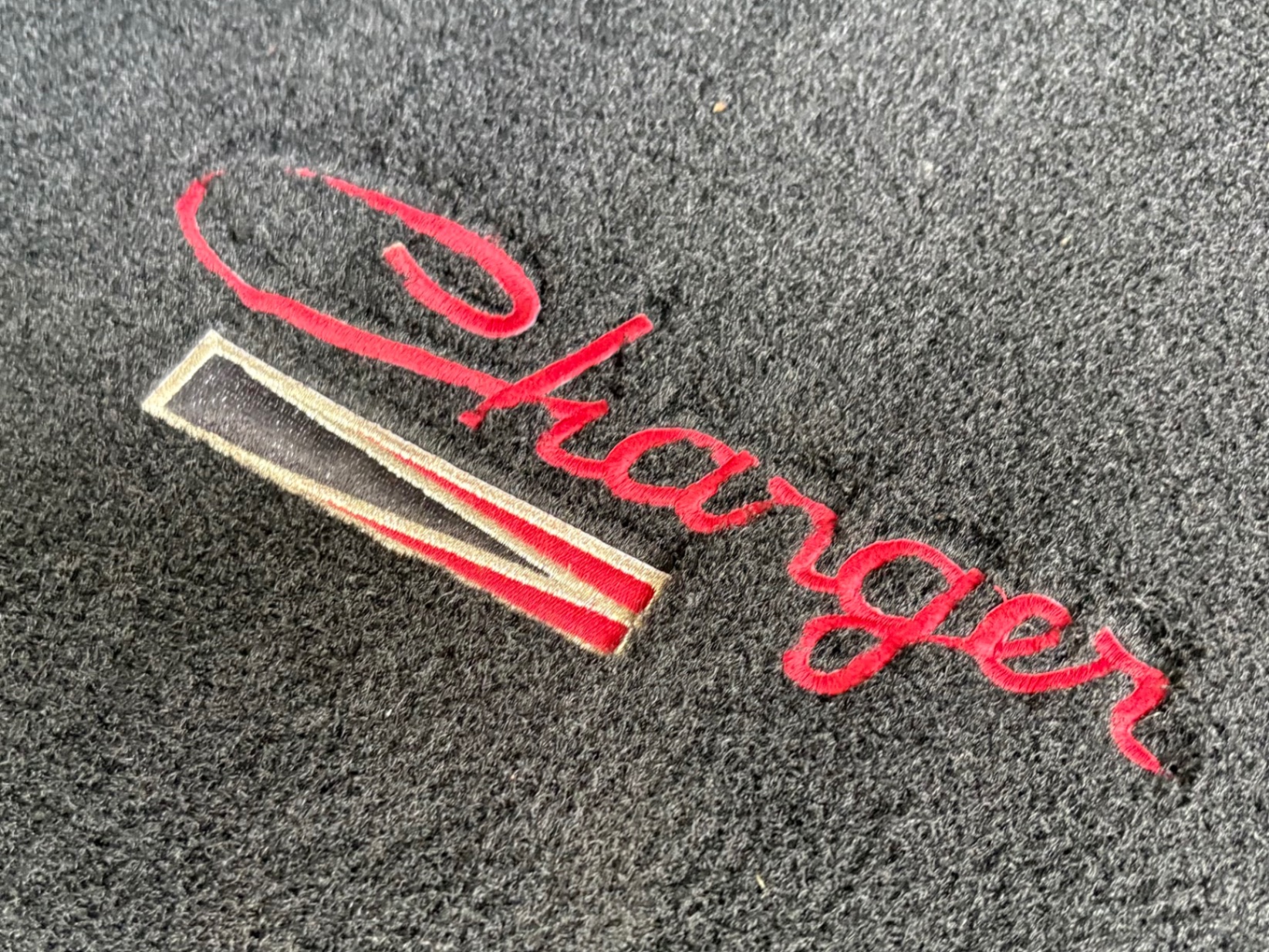
Black carpet covers the floors front and rear, with embroidered Charger script floor mats adding a period-appropriate custom touch. The rear seat is a full bench in matching black tufted vinyl with a rear armrest. The headliner is black, consistent with the all-black interior theme. Factory air conditioning is present and the controls are on the dash below the center cluster. The overall condition of the interior is consistent with a car that has been used and maintained rather than stored — honest and solid throughout.
Exterior
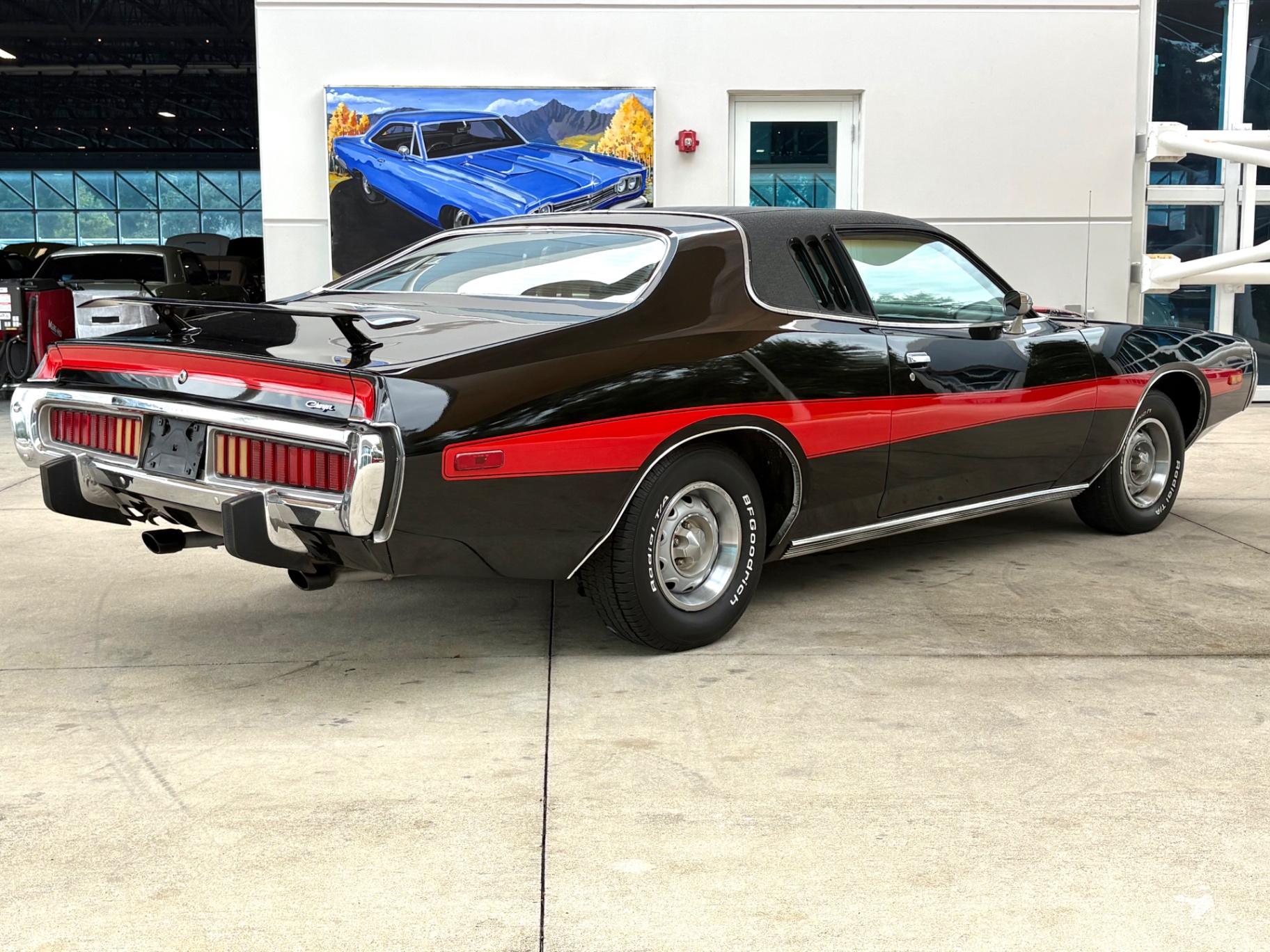
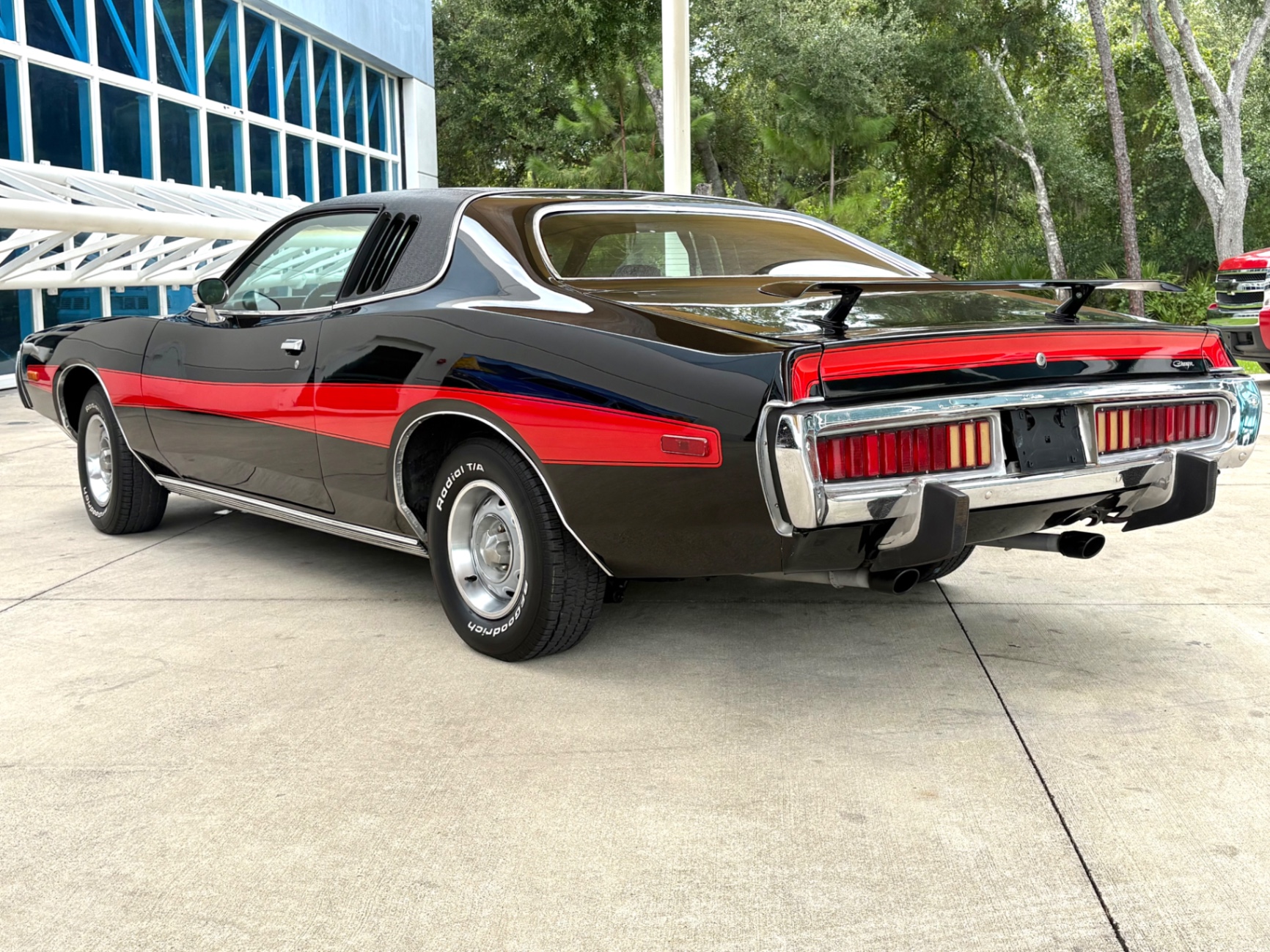
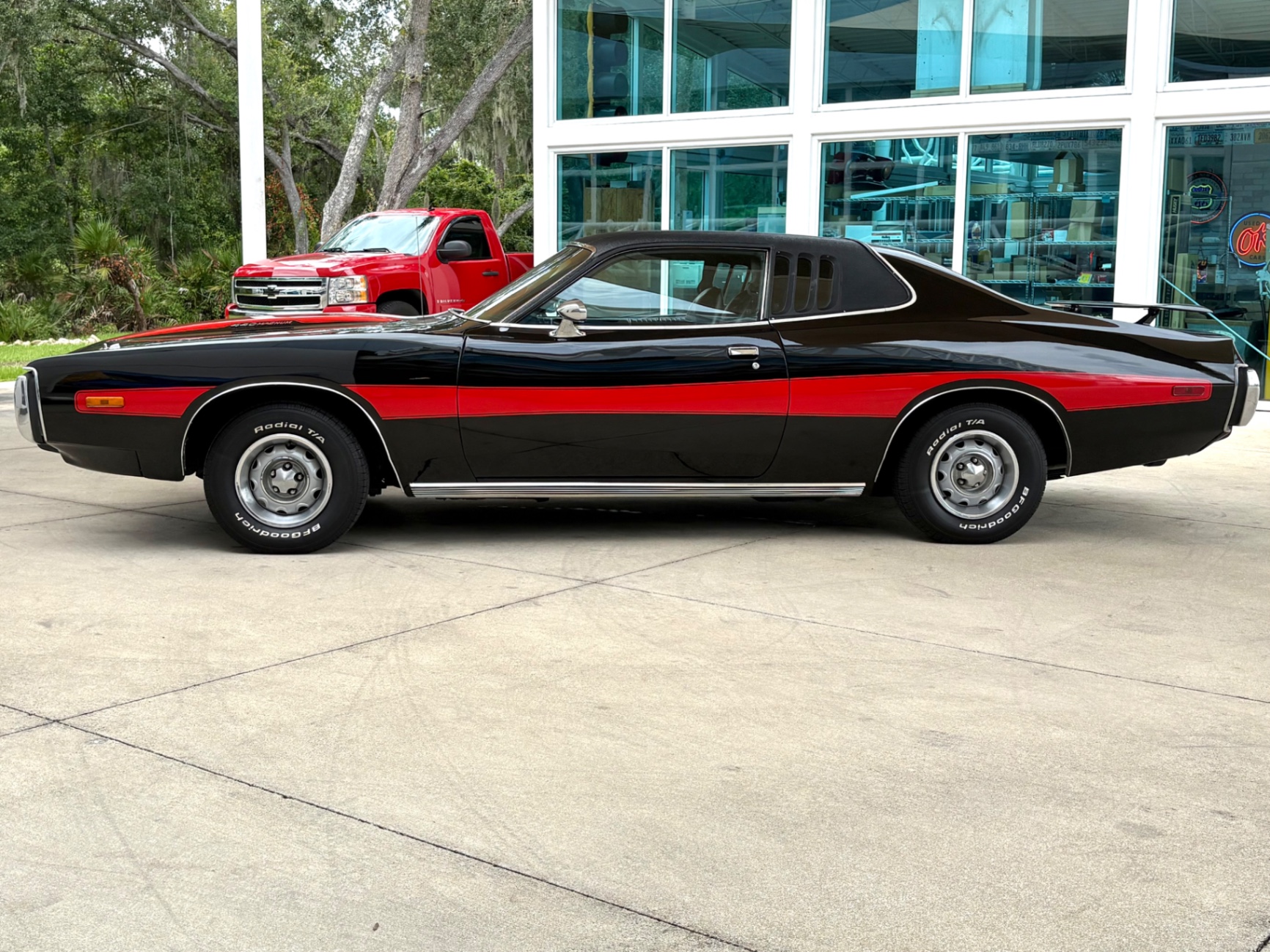
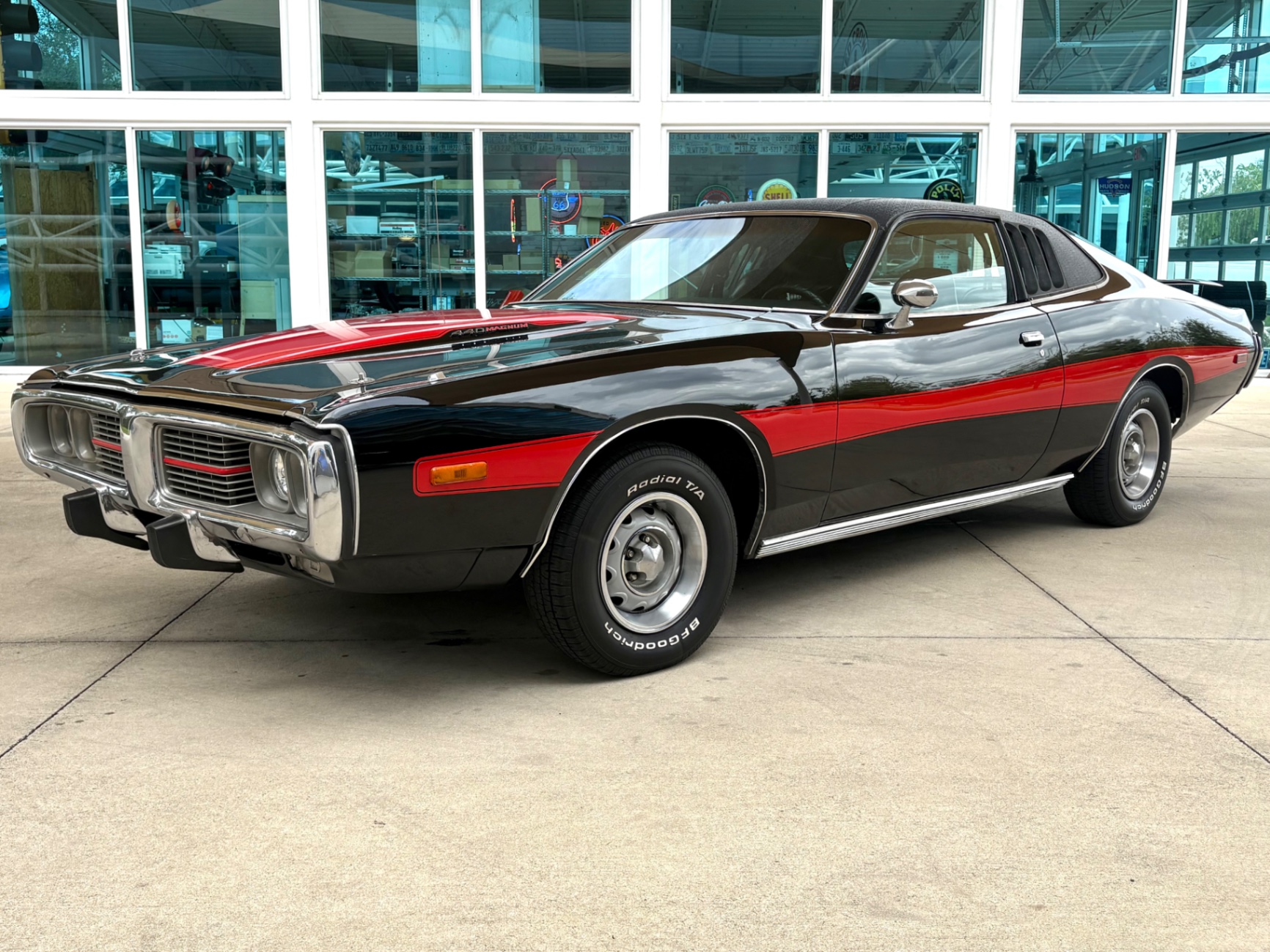
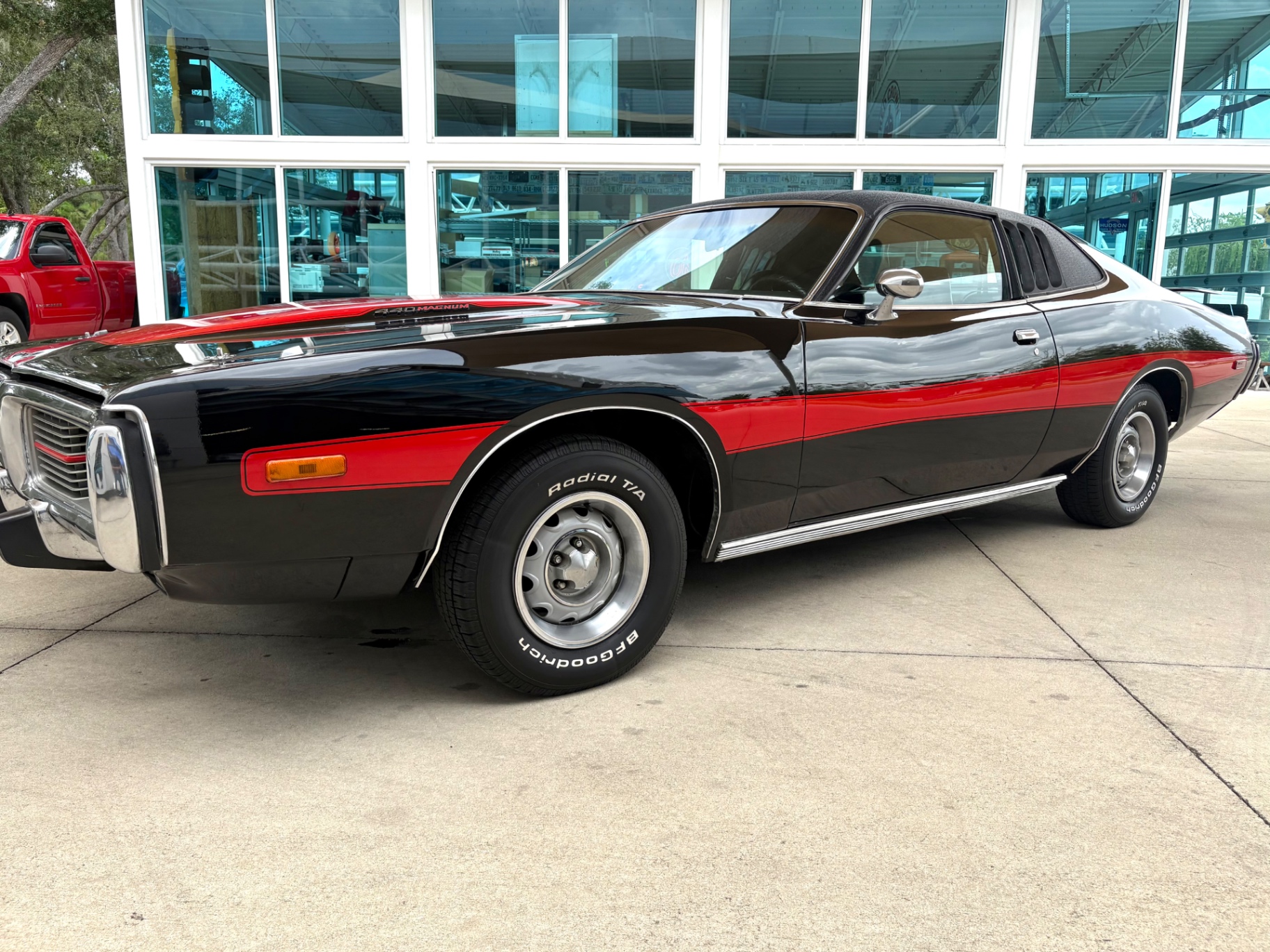
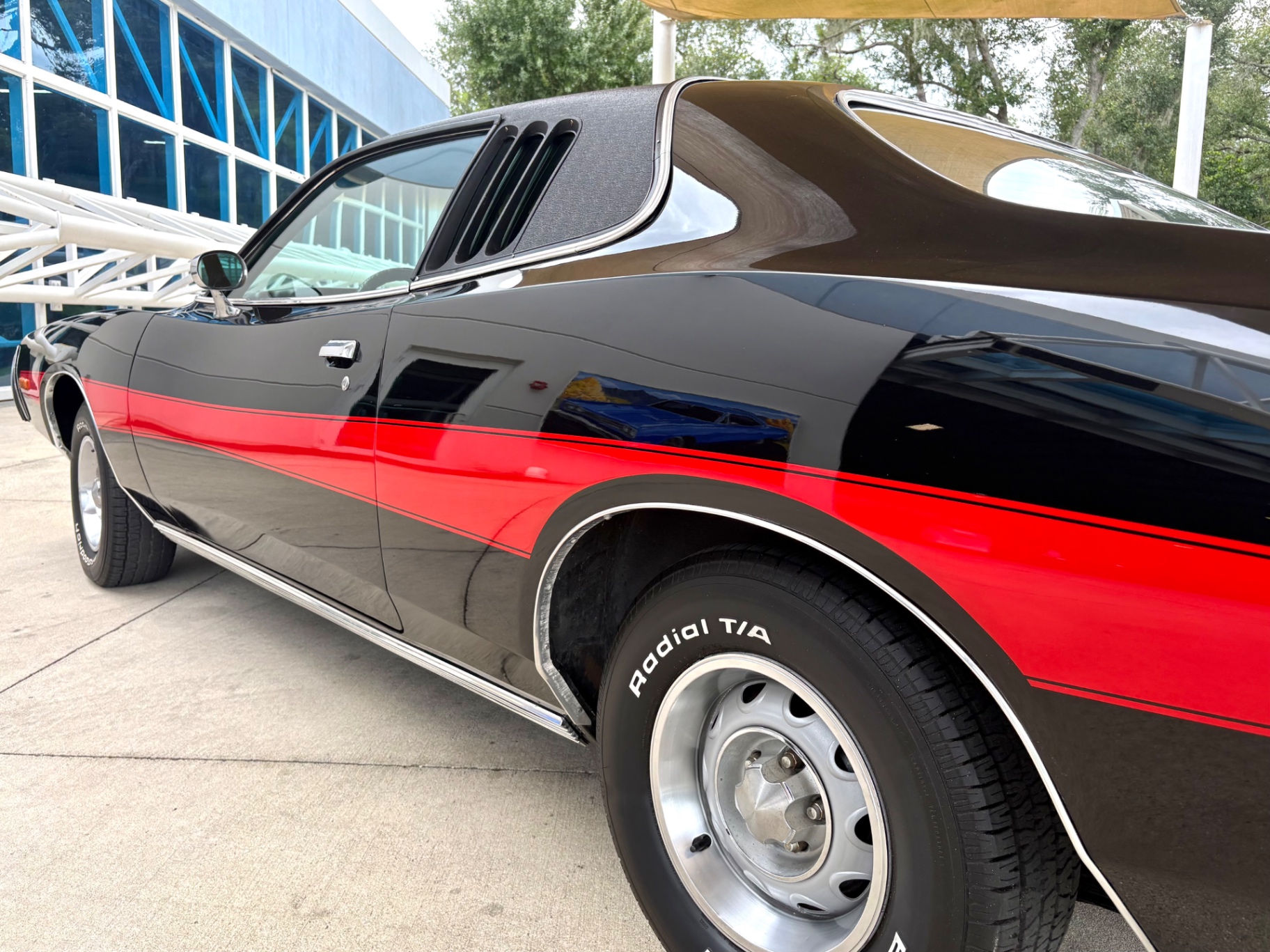
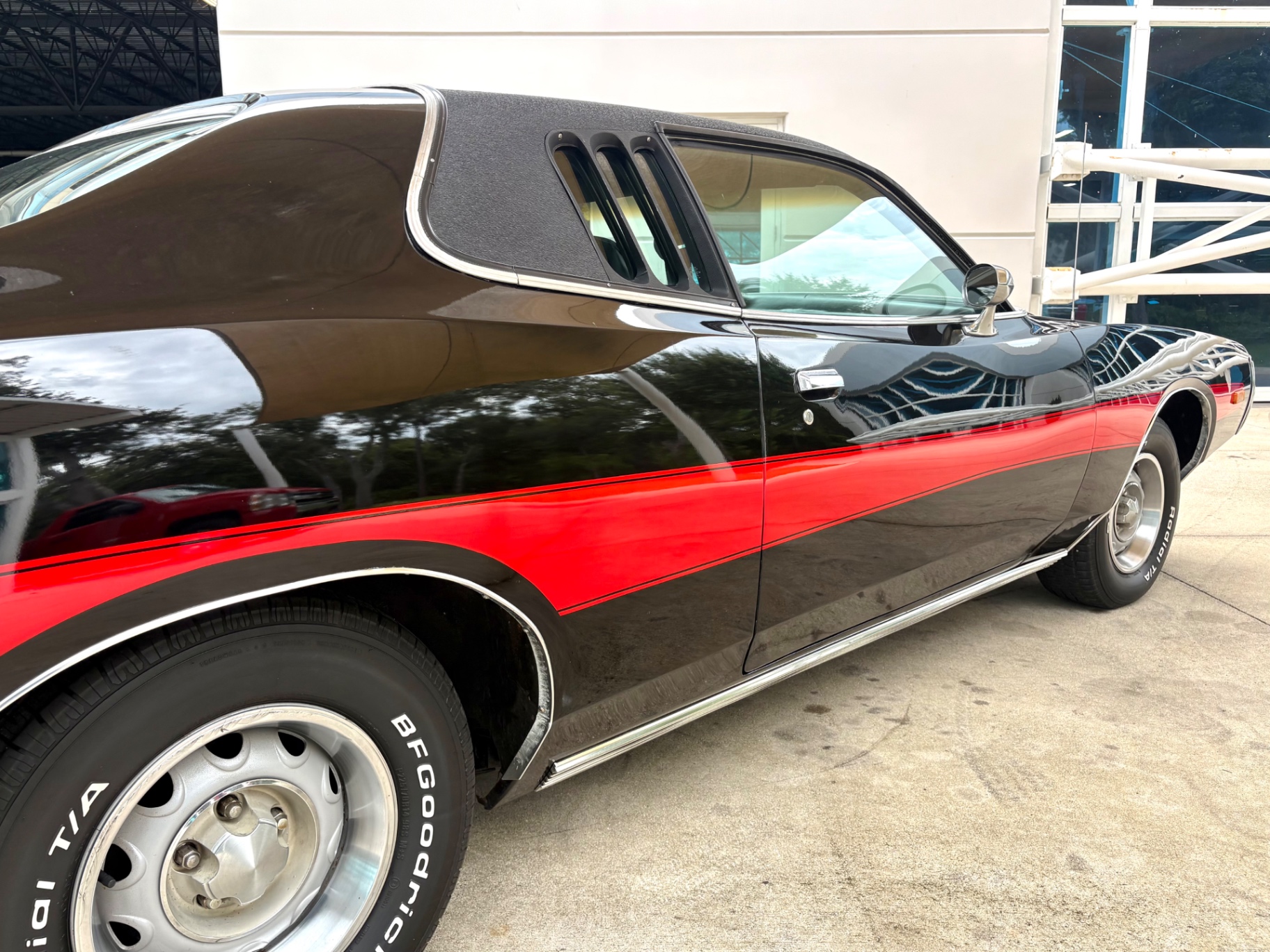
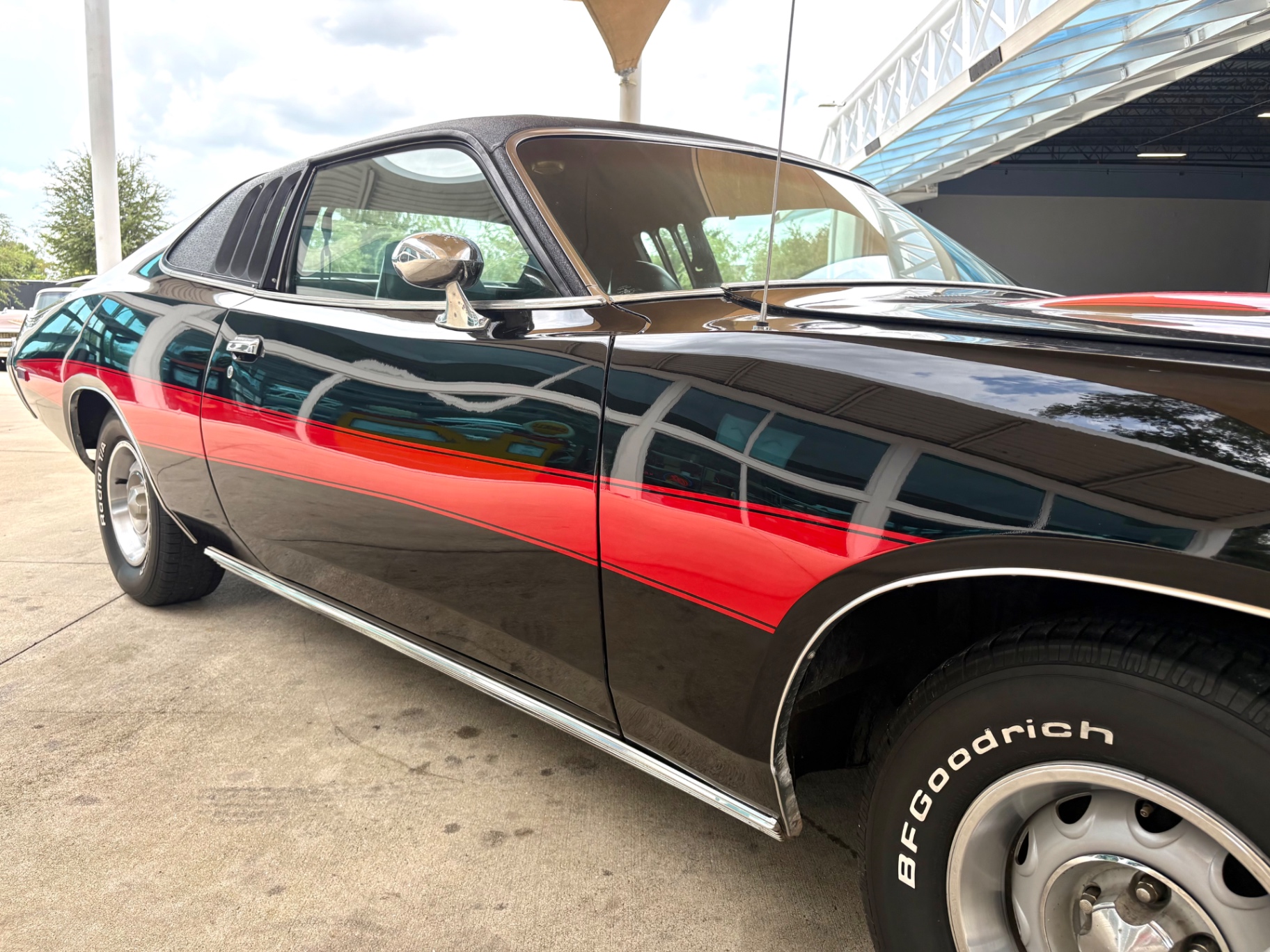
The 1974 Dodge Charger SE wears black paint over a body that still carries the signature Charger styling elements — the long hood, the fastback roofline transitioning to the louvered opera windows, and the full-width tail lamp treatment at the rear. The opera windows with their vertical louvers were a styling element Dodge introduced on the 1973 redesign and they were closely associated with the SE models. They give the car a formal coupe profile from the rear quarter that distinguished it from the base Charger.
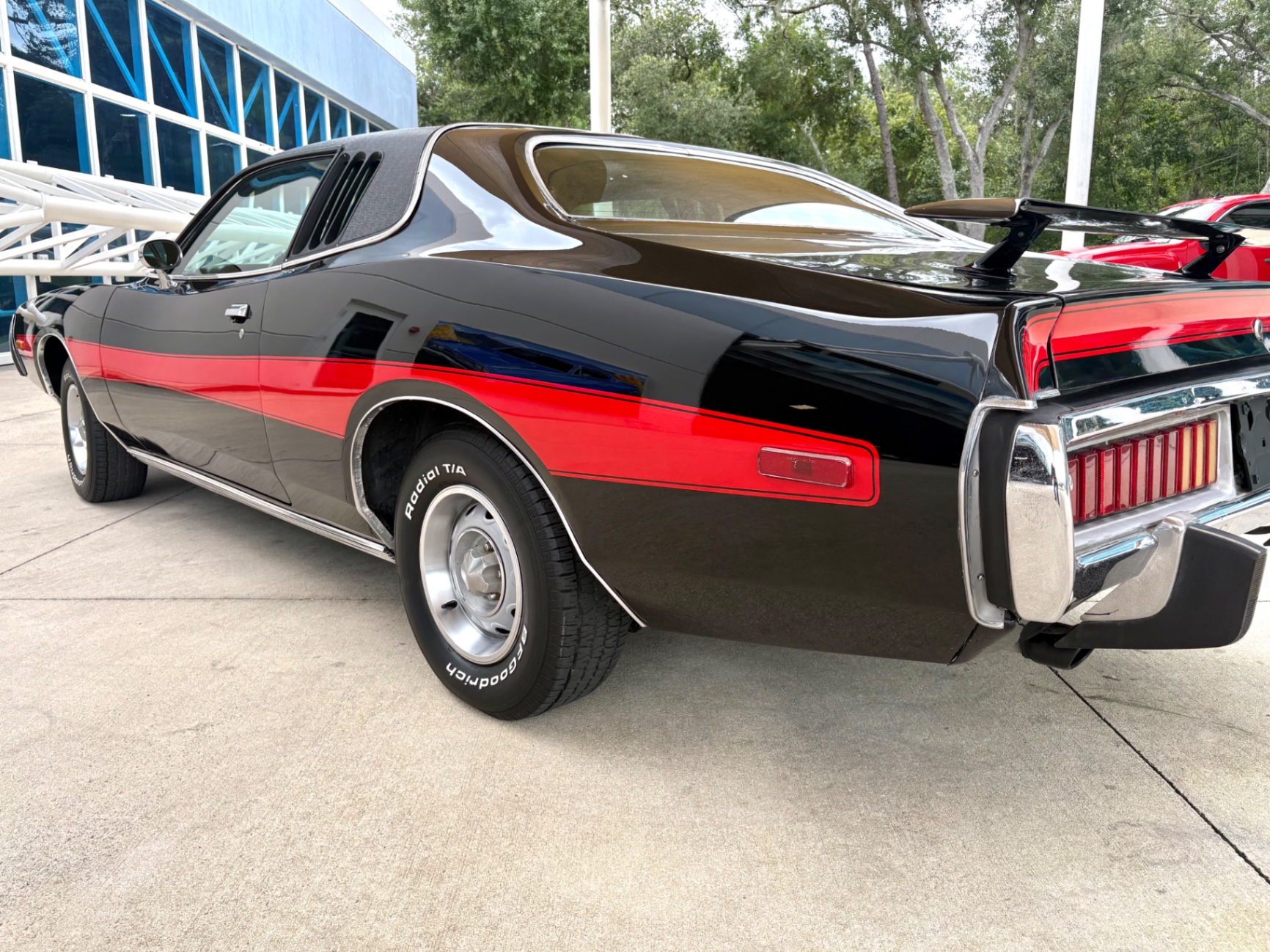
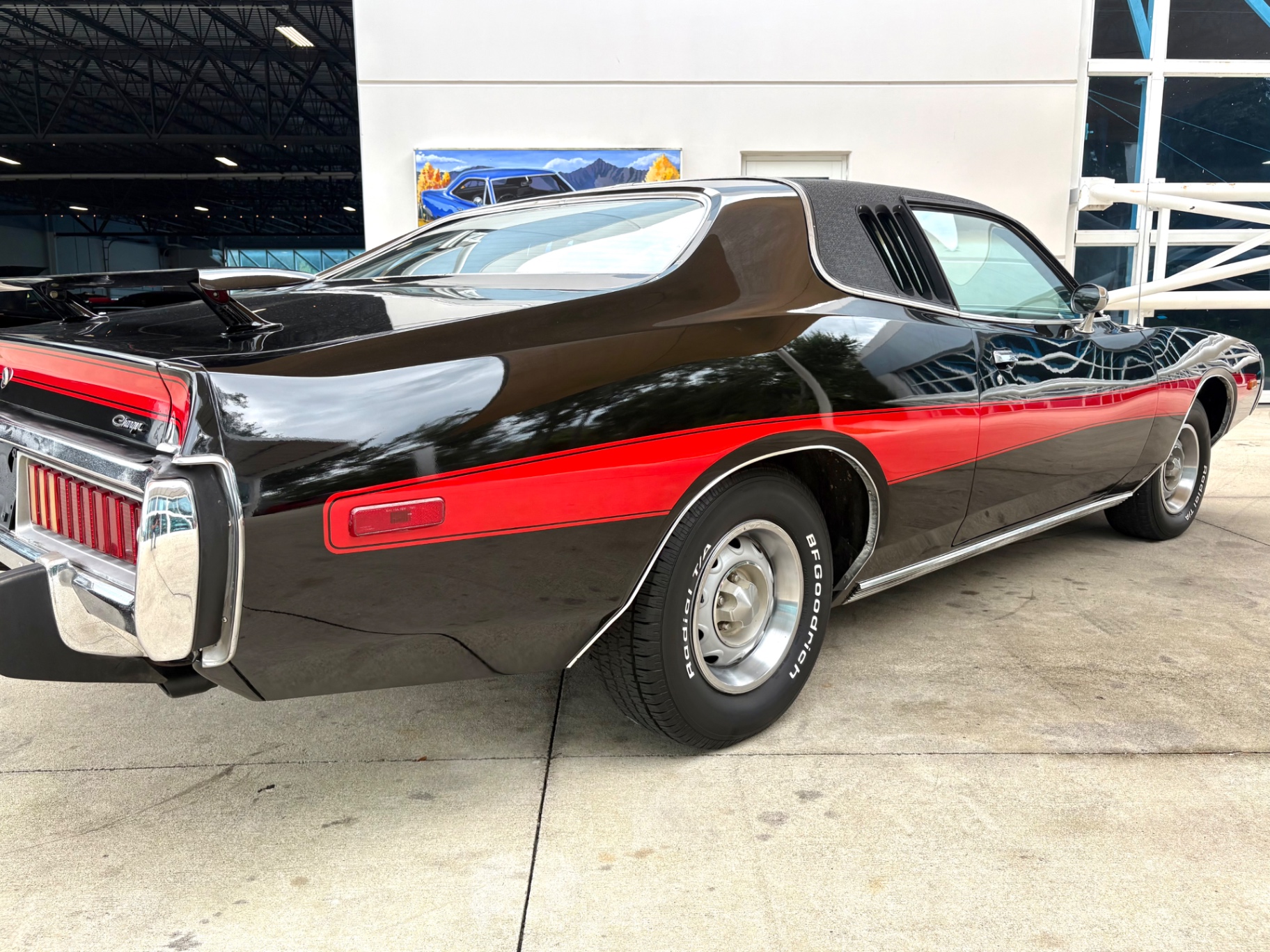
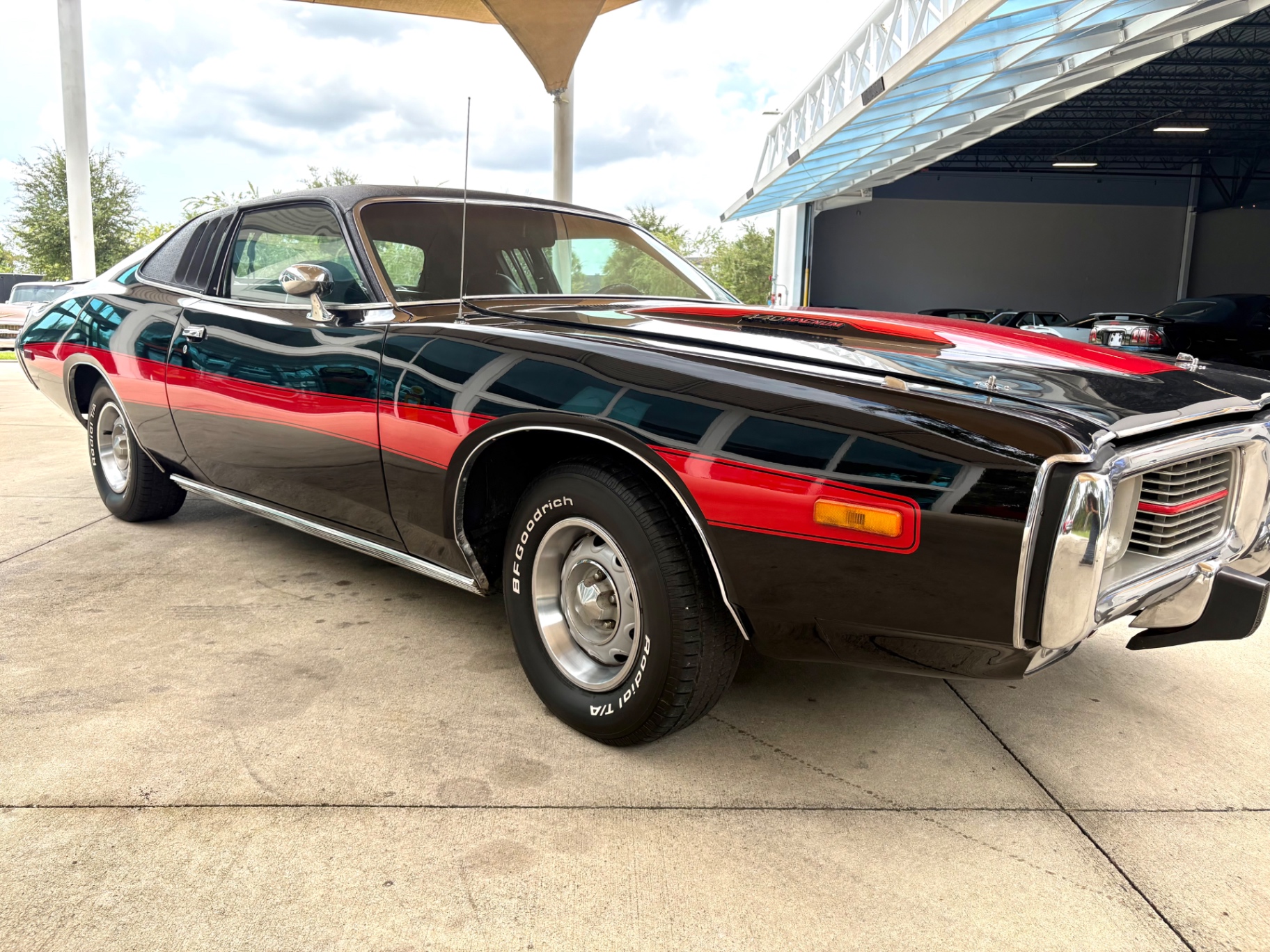
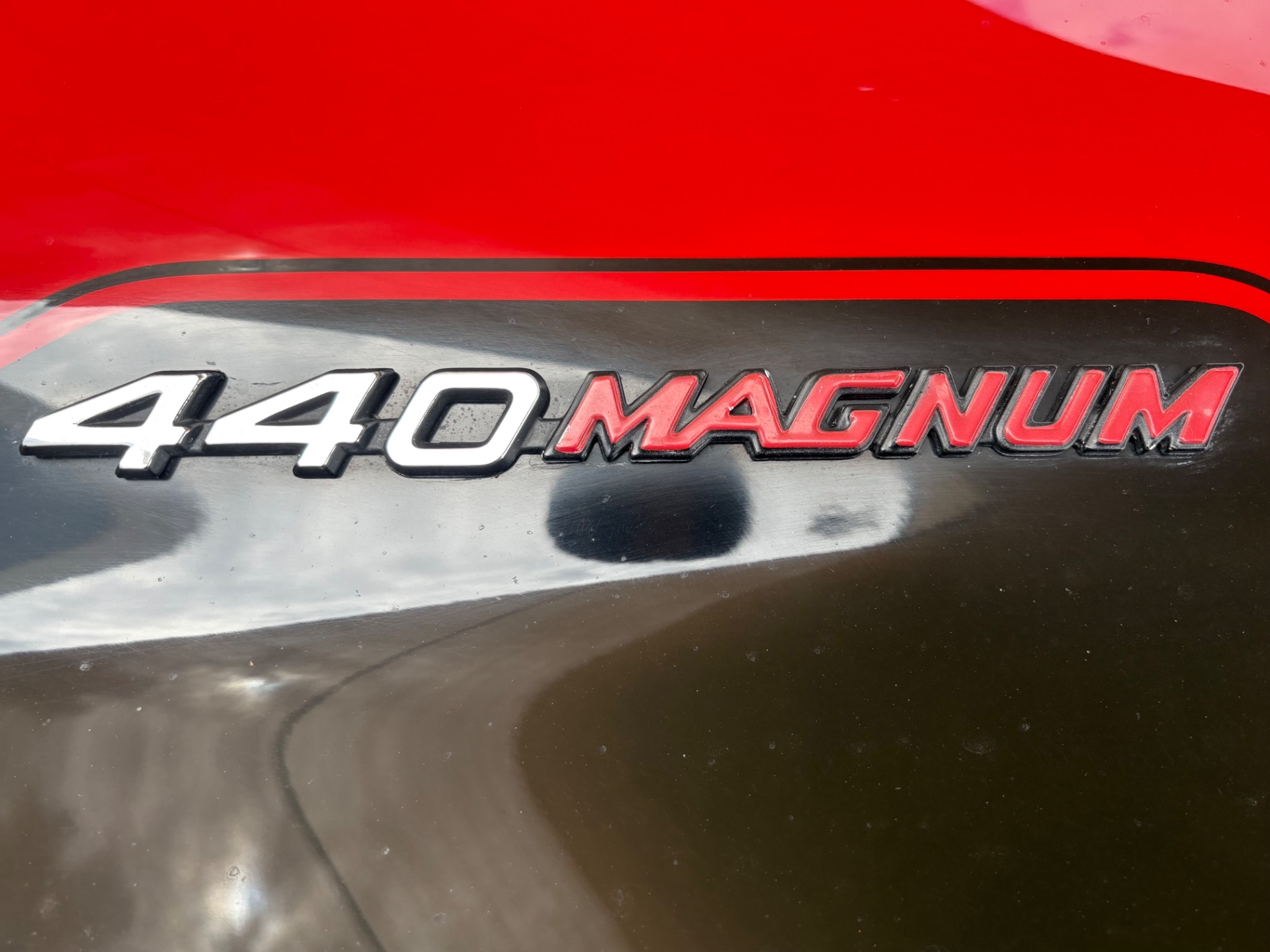
The black and red body side stripe with the 440 Magnum callout runs along the lower body crease and communicates the engine choice immediately. On a black car, the red graphics read cleanly without looking overdone. The vinyl roof is black, maintaining the monochromatic exterior scheme. Chrome bumpers front and rear are present and in good shape, and the chrome rocker panel moldings along the lower body add the horizontal trim line that the SE was known for.
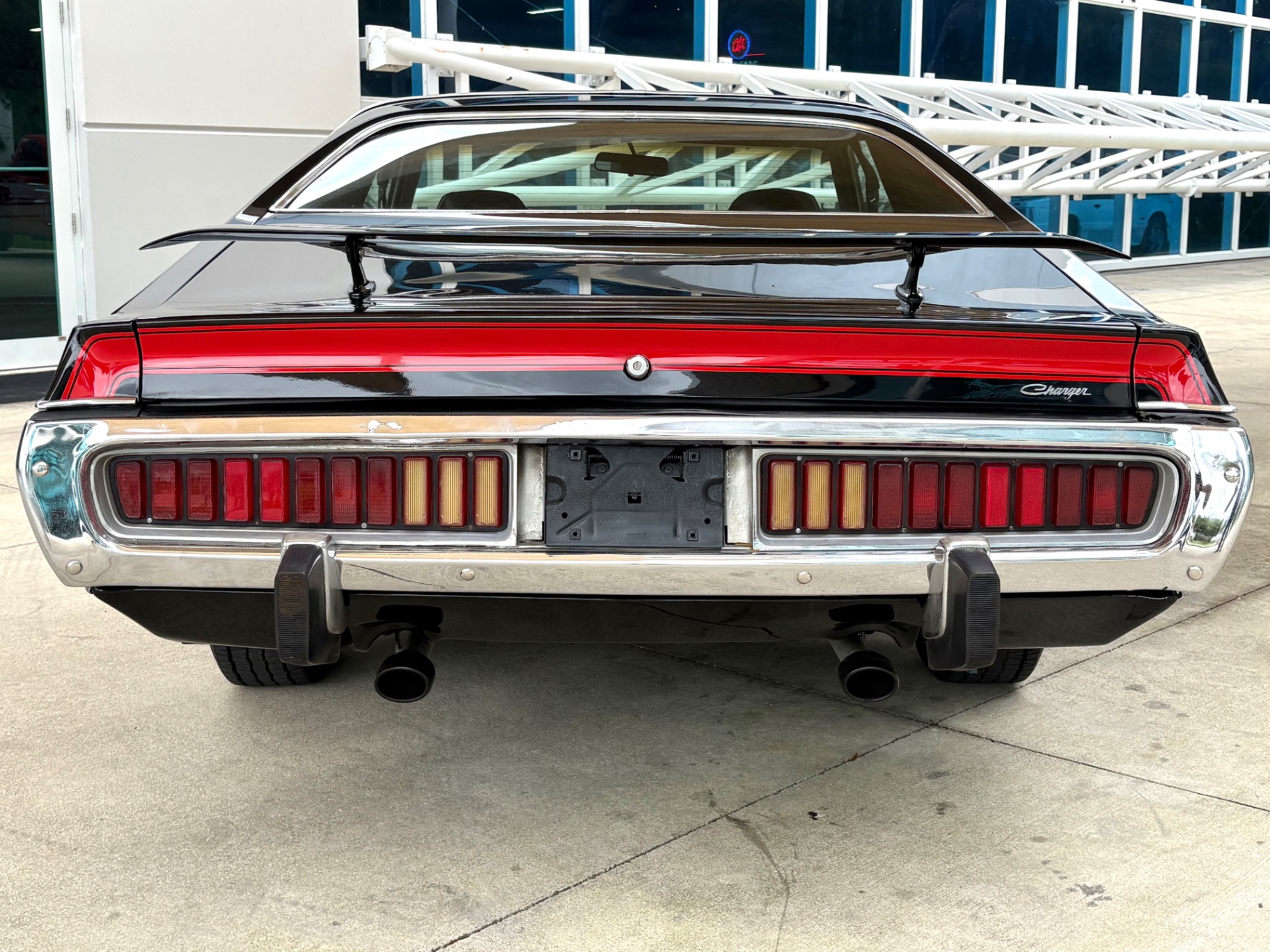
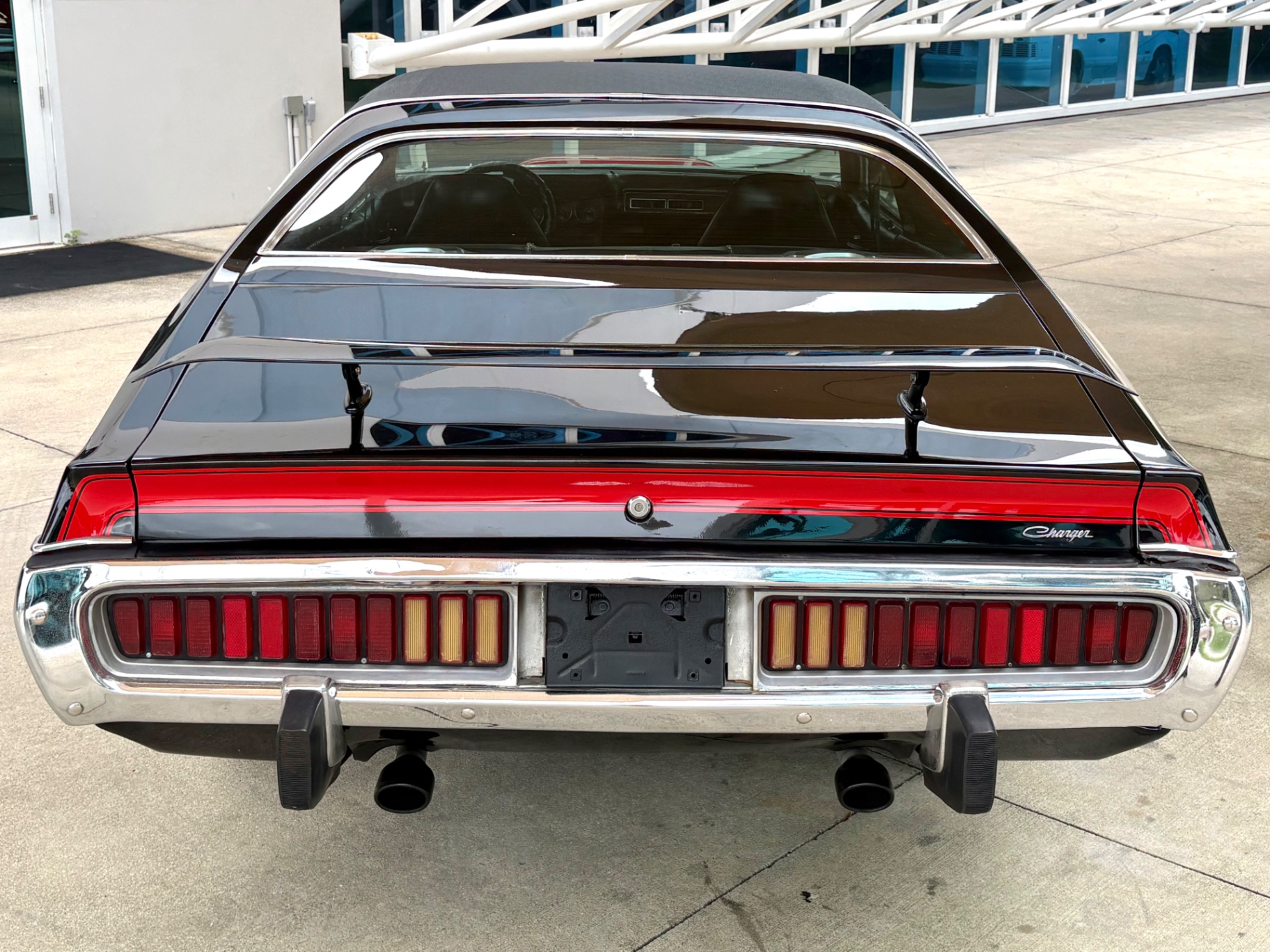
The rear deck spoiler is the factory-style lip unit that was available on 1974 Chargers and fits the roofline properly. The rear view of this car with the full-width tail lamp panel, the chrome rear bumper with its rubber-tipped overriders, and the dual exhaust tips exiting below center is one of the more complete-looking rear ends of any early 1970s American coupe. The BFGoodrich Radial T/A tires on the steel wheels give the car a period look that suits its character — not over-wheeled, not out of scale.
Conclusion
The 1974 Dodge Charger SE with the 440 Magnum represents the end of a specific era. After 1974, Dodge moved the Charger nameplate to a smaller, lighter platform and repositioned it entirely. What you have here is the last year of the real thing — a full-size B-body Charger with the biggest engine in the catalog, the top interior trim package, factory air conditioning, and a color combination that presents well and photographs honestly. It is not a trailered show car, and the price reflects that. It is a driver-quality 1974 Dodge Charger SE with the 440 Magnum that you can actually use, and that combination at this level of correctness and completeness is increasingly difficult to find.
To learn more about this 1974 Dodge Charger SE or to schedule a time to see it in person, call Skyway Classics at 941-254-6608. We are located in Sarasota, Florida and are happy to assist with shipping, financing references, and inspections.
Disclaimer
Information found on the website is presented as given to us by the owner of the car, whether on consignment or from the owner we bought it from. Some Photos, materials for videos, descriptions and other information are provided by the consignor/seller and is deemed reliable, but Skyway Classics does not warranty or guarantee this information. Skyway Classics is not responsible for information that may incorrect or a publishing error. The decision to purchase should be based solely on the buyers personal inspection of the vehicle or by a professional inspection service prior to offer or purchase being made.
1974 Dodge Charger SE — 440 Magnum V8, Black on Black, Factory Air
Why This Car Is Special
The 1974 Dodge Charger occupies a specific and interesting place in muscle car history. It was the last model year of the B-body Charger before Dodge completely reworked the platform for 1975, shrinking the car and repositioning it as a personal luxury coupe. That makes the 1974 Dodge Charger the final expression of the original concept — a large, body-on-frame American performance coupe with a real engine under the hood. After 1974, you could still buy a Charger, but it wasn't the same car.
This particular 1974 Dodge Charger SE is equipped with the 440 Magnum V8, which by 1974 was one of the last truly large-displacement engines still available in a production Dodge. The 440 had been a staple of Mopar performance since the late 1960s, and while emissions regulations had begun to squeeze output across the industry by 1974, the 440 Magnum with its four-barrel carburetor still delivered substantial torque — the engine was always more about low-end pulling power than peak horsepower numbers, and that character remained intact. The VIN on this car confirms it was built at the Hamtramck, Michigan assembly plant, which produced a significant share of Dodge's higher-optioned B-body cars during this era.
The SE designation on this Charger stands for Special Edition, which was Dodge's trim level positioned above the base Charger. SE models received upgraded interior appointments and a distinct exterior identity compared to standard Chargers, making this a car that was optioned for comfort and appearance in addition to performance. The combination of the 440 Magnum engine with the SE interior package is exactly what a buyer in 1974 would have specified if they wanted the complete experience — big engine, air conditioning, bucket seats, center console, and the Brougham interior trim that was part of the SE's character.
The black exterior with black and red side stripe, black vinyl interior, and black vinyl roof gives this car a coherent visual presentation that works entirely in its favor. Nothing about the color scheme is an afterthought.
Features List
- 440 Magnum V8, 7.2 liter displacement
- Four-Barrel Carburetor
- TorqueFlite 727 Automatic Transmission
- Power Steering
- Power Brakes
- Factory Air Conditioning
- Dual Exhaust with Dual Rear Exhaust Tips
- Rear Deck Spoiler
- Black Vinyl Roof
- Louvered Opera Windows
- Black and Red Body Side Stripe with 440 Magnum Callout
- Chrome Front and Rear Bumpers
- Chrome Rocker Panel Moldings
- BFGoodrich Radial T/A Tires
- Black Vinyl Bucket Seats, Front and Rear
- Center Console with Woodgrain Trim and Floor Shifter
- Woodgrain Interior Trim Throughout
- Brougham Door Panels with Embossed Script Badging
- Factory Drum Brakes, Four Wheel
Mechanical
The engine in this 1974 Dodge Charger SE is the 440 Magnum V8, displacing 7.2 liters and fed by a four-barrel carburetor. The 440 was Chrysler's premier large-block engine for street use throughout the late muscle car era. It was never a high-revving engine — that was the job of the 426 Hemi — but the 440 produced massive torque across a wide RPM range, which made it well-suited to a heavy car like the Charger. In 1974 the engine was net-rated at 275 horsepower, a figure that reflected the new SAE net measurement standard adopted industrywide in 1972 rather than the older gross rating method. The actual real-world performance was strong for the period.
Backing the 440 is the TorqueFlite 727 automatic transmission, one of the most durable production automatics ever built. Chrysler used the 727 across a wide range of applications from the 1960s through the 1980s, and its reputation for reliability and strength behind high-torque engines is well established among Mopar enthusiasts. The floor-shifted console unit in this car adds a sporting element to what is otherwise a very comfortable grand touring package.
The underside of this 1974 Dodge Charger is well-preserved. The floor pans and frame rails show solid, coated metal, and the dual exhaust system exits cleanly through the rear bumper with the correct chrome tips. The rear axle and suspension components visible in the undercarriage photos show the car has been maintained. Drum brakes on all four corners were standard equipment for the 1974 Charger SE, and this car retains that factory configuration. The BFGoodrich Radial T/A tires are an appropriate period-correct choice that fits the character of the car well.
Interior
Step inside the 1974 Dodge Charger SE and the cabin tells you exactly what kind of car this is. The SE trim level was Dodge's answer to buyers who wanted performance hardware wrapped in a more refined interior, and the Brougham door panels with their embossed script badging, padded upper sections, and woodgrain inserts were central to that pitch. The door panels on this car are in solid shape, with the chrome trim and script badges intact and the woodgrain appliques showing cleanly on both front doors.
The front bucket seats are covered in black vinyl with a tufted pattern and retain their shape well. The center console runs between them with a woodgrain-trimmed floor shifter for the TorqueFlite 727, and the shift indicator shows the correct P-R-N-D-2-1 gate. The dashboard uses a recessed instrument cluster layout with a woodgrain-finished center panel carrying the Charger SE badge in chrome script — a detail that photographs well and confirms the trim level at a glance. The climate control panel, wiper controls, and lighting switches are all in their correct factory locations.
Black carpet covers the floors front and rear, with embroidered Charger script floor mats adding a period-appropriate custom touch. The rear seat is a full bench in matching black tufted vinyl with a rear armrest. The headliner is black, consistent with the all-black interior theme. Factory air conditioning is present and the controls are on the dash below the center cluster. The overall condition of the interior is consistent with a car that has been used and maintained rather than stored — honest and solid throughout.
Exterior
The 1974 Dodge Charger SE wears black paint over a body that still carries the signature Charger styling elements — the long hood, the fastback roofline transitioning to the louvered opera windows, and the full-width tail lamp treatment at the rear. The opera windows with their vertical louvers were a styling element Dodge introduced on the 1973 redesign and they were closely associated with the SE models. They give the car a formal coupe profile from the rear quarter that distinguished it from the base Charger.
The black and red body side stripe with the 440 Magnum callout runs along the lower body crease and communicates the engine choice immediately. On a black car, the red graphics read cleanly without looking overdone. The vinyl roof is black, maintaining the monochromatic exterior scheme. Chrome bumpers front and rear are present and in good shape, and the chrome rocker panel moldings along the lower body add the horizontal trim line that the SE was known for.
The rear deck spoiler is the factory-style lip unit that was available on 1974 Chargers and fits the roofline properly. The rear view of this car with the full-width tail lamp panel, the chrome rear bumper with its rubber-tipped overriders, and the dual exhaust tips exiting below center is one of the more complete-looking rear ends of any early 1970s American coupe. The BFGoodrich Radial T/A tires on the steel wheels give the car a period look that suits its character — not over-wheeled, not out of scale.
Conclusion
The 1974 Dodge Charger SE with the 440 Magnum represents the end of a specific era. After 1974, Dodge moved the Charger nameplate to a smaller, lighter platform and repositioned it entirely. What you have here is the last year of the real thing — a full-size B-body Charger with the biggest engine in the catalog, the top interior trim package, factory air conditioning, and a color combination that presents well and photographs honestly. It is not a trailered show car, and the price reflects that. It is a driver-quality 1974 Dodge Charger SE with the 440 Magnum that you can actually use, and that combination at this level of correctness and completeness is increasingly difficult to find.
To learn more about this 1974 Dodge Charger SE or to schedule a time to see it in person, call Skyway Classics at 941-254-6608. We are located in Sarasota, Florida and are happy to assist with shipping, financing references, and inspections.
Disclaimer
Information found on the website is presented as given to us by the owner of the car, whether on consignment or from the owner we bought it from. Some Photos, materials for videos, descriptions and other information are provided by the consignor/seller and is deemed reliable, but Skyway Classics does not warranty or guarantee this information. Skyway Classics is not responsible for information that may incorrect or a publishing error. The decision to purchase should be based solely on the buyers personal inspection of the vehicle or by a professional inspection service prior to offer or purchase being made.
1974 Dodge
Charger SE
Why Choose Skyway Classics?
Explore our curated inventory of classic and collector cars—thoughtfully selected, ready to drive, and supported by experts who make ownership simple.
Expert Curation
Every vehicle is hand-selected by our experts for quality, authenticity, and investment potential.
Fast Transactions
Streamlined buying and selling process with quick financing and immediate delivery options.
Only National Dealer With Classic Service & Repair
We’re the only national dealership that services and repairs the classics we sell—before and after the sale.
Nationwide Network
Access to our extensive network of collectors, restorers, and classic car enthusiasts nationwide.
Concierge Ownership Support
From financing and insurance to paperwork, shipping, and titling—we handle the details so you can enjoy the drive.
Passion-Driven Service
We're classic car enthusiasts first, providing personalized service with genuine passion for the hobby.