
1973 Ford
Mustang Convertible


1973 Ford Mustang Convertible — 302 V8, Red Interior, NASA Hood, Power Top
Why This Car Is Special
The 1973 Ford Mustang convertible occupies a genuinely significant place in pony car history: it was the last open-top Mustang Ford would build for a full decade. After 1973, the convertible body style disappeared from the Mustang lineup until 1983, when Ford revived it on the much smaller Fox-body platform. That ten-year gap makes the 1973 Ford Mustang convertible the final expression of the original "large" Mustang era — a car built before emissions regulations and fuel shortages forced a complete redesign. Anyone who understands that history knows exactly why these cars are worth preserving.
The 1973 model year was also the last for the SportsRoof and the classic Mustang body that had been evolving since 1969. Ford made some meaningful updates that year, including standard front bumper guards designed to meet the new federal 5-mph impact standard, which gave the front end a slightly more substantial appearance. Convertible production for 1973 totaled just 11,853 units, making open-top examples a small fraction of total Mustang output that year. Of those, examples optioned with a V8 engine, factory air conditioning, power top, auxiliary gauges, tachometer, and a full sport interior represent a more select group still.
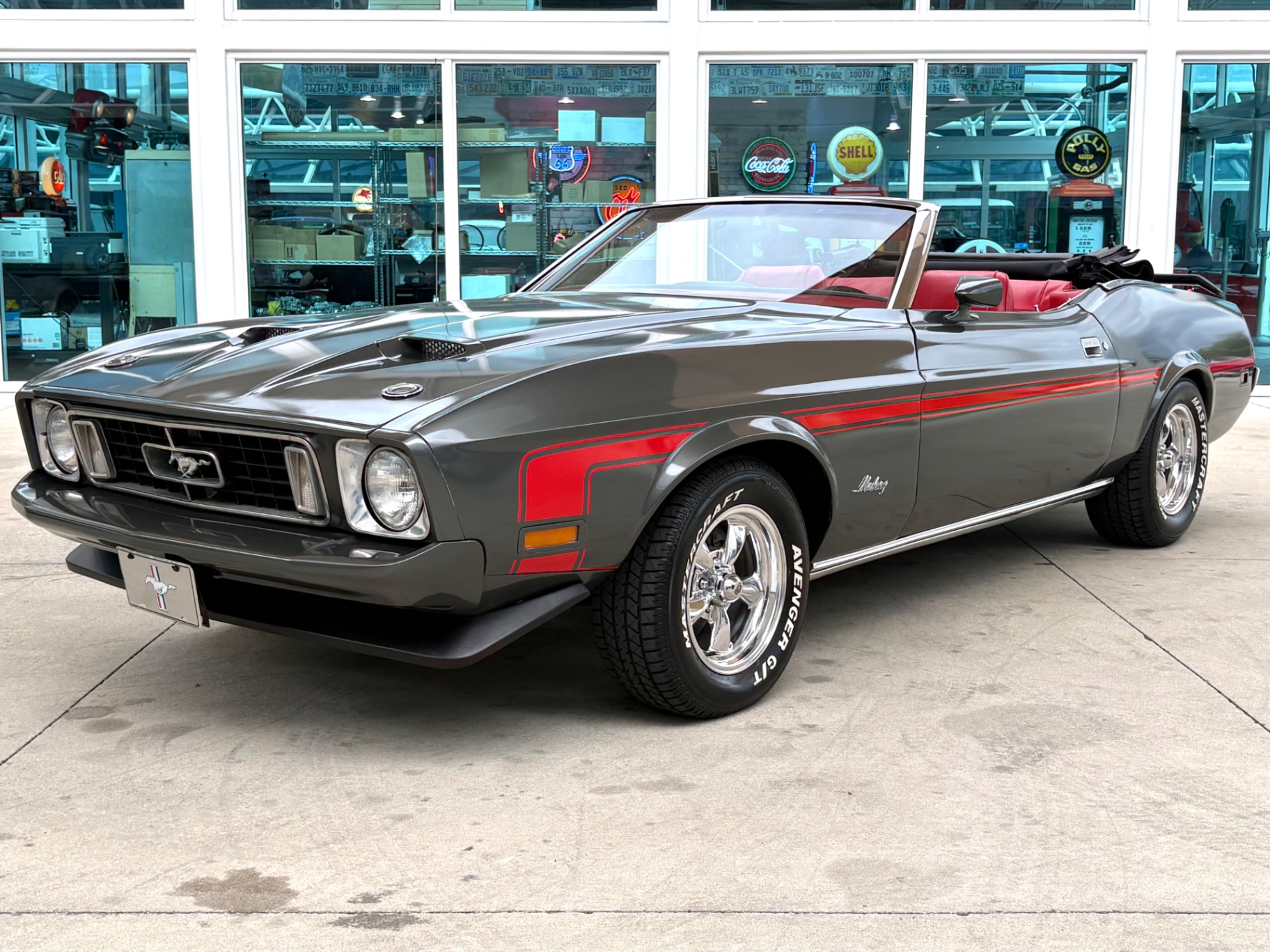
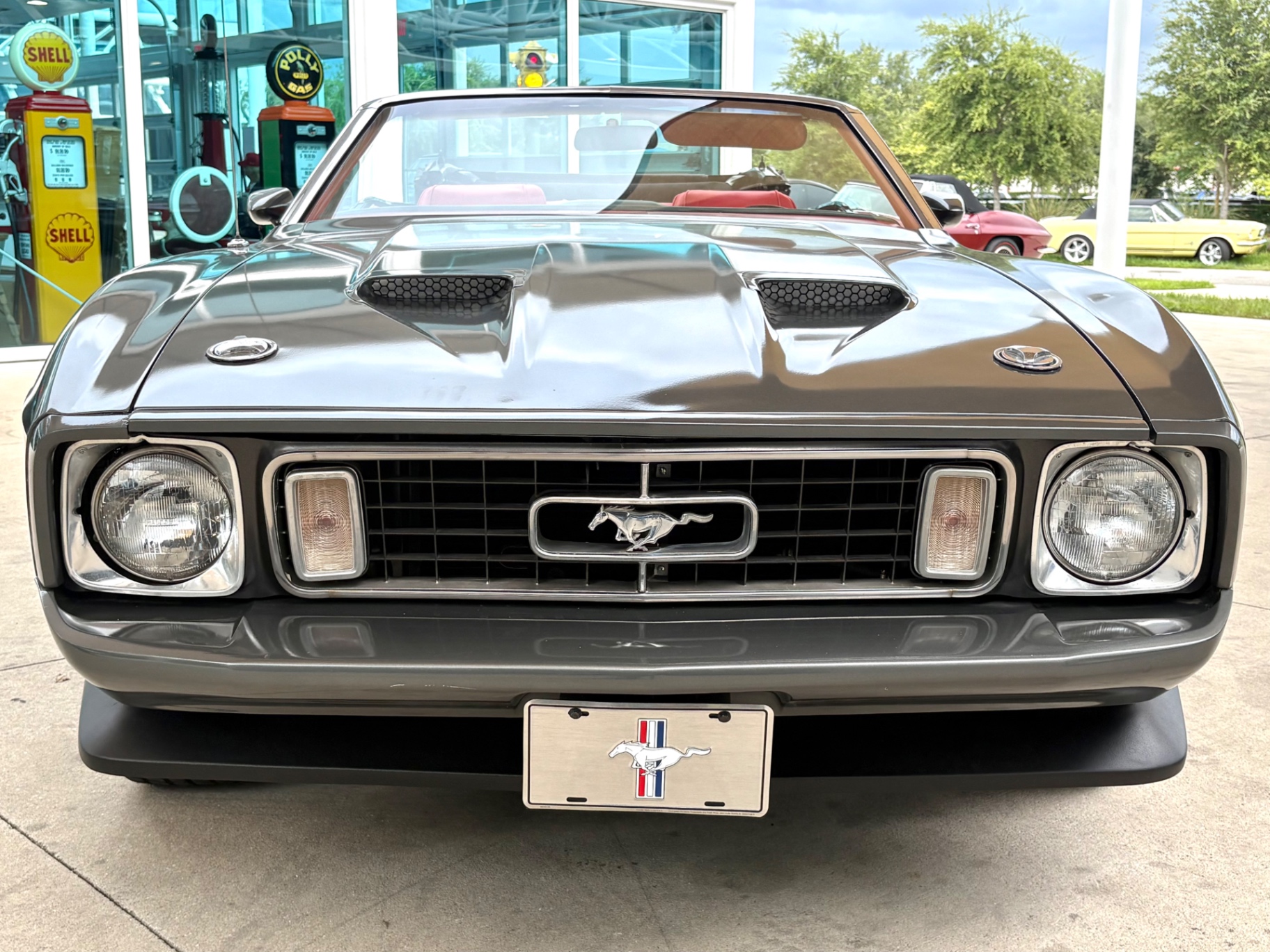
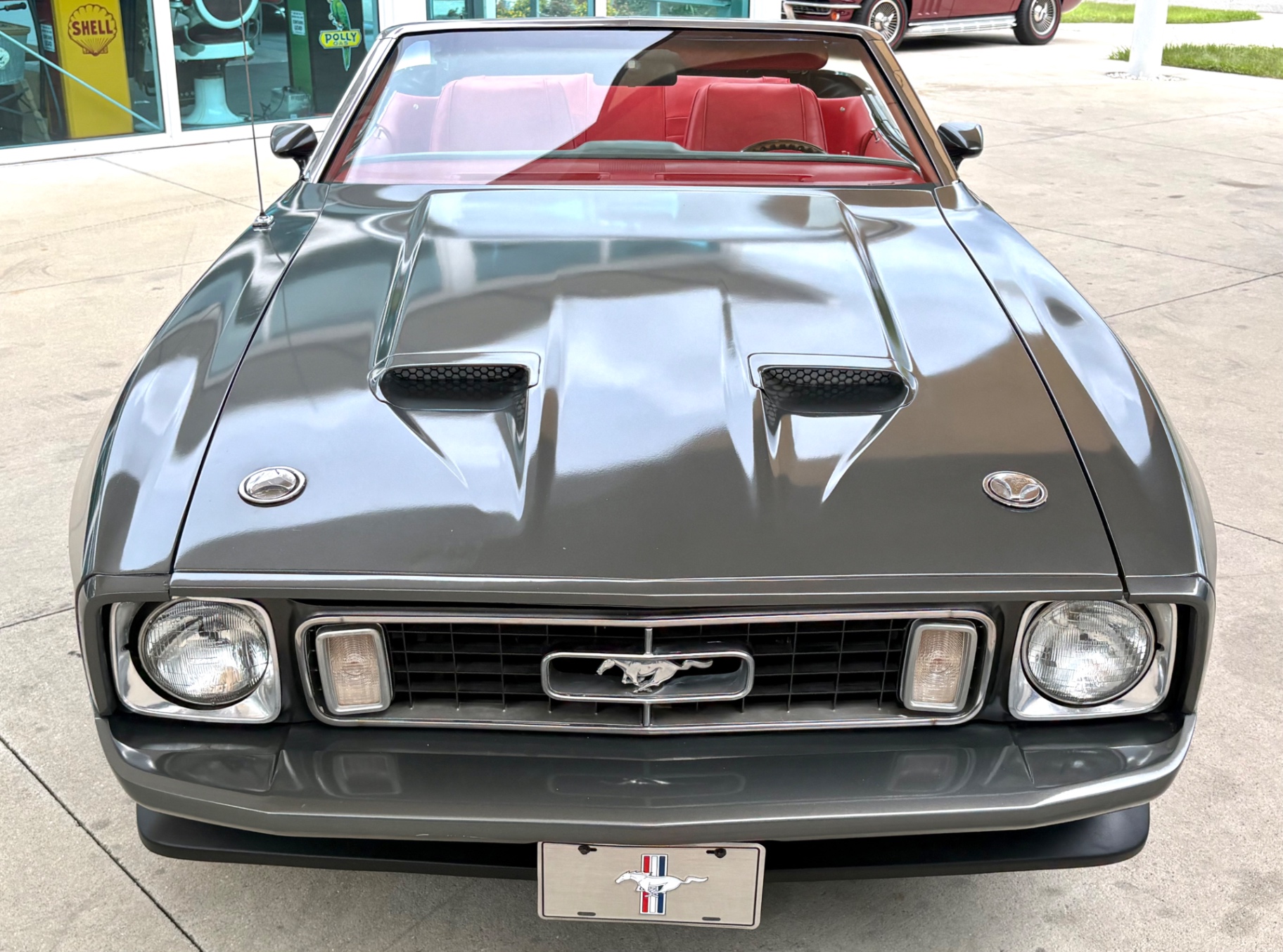
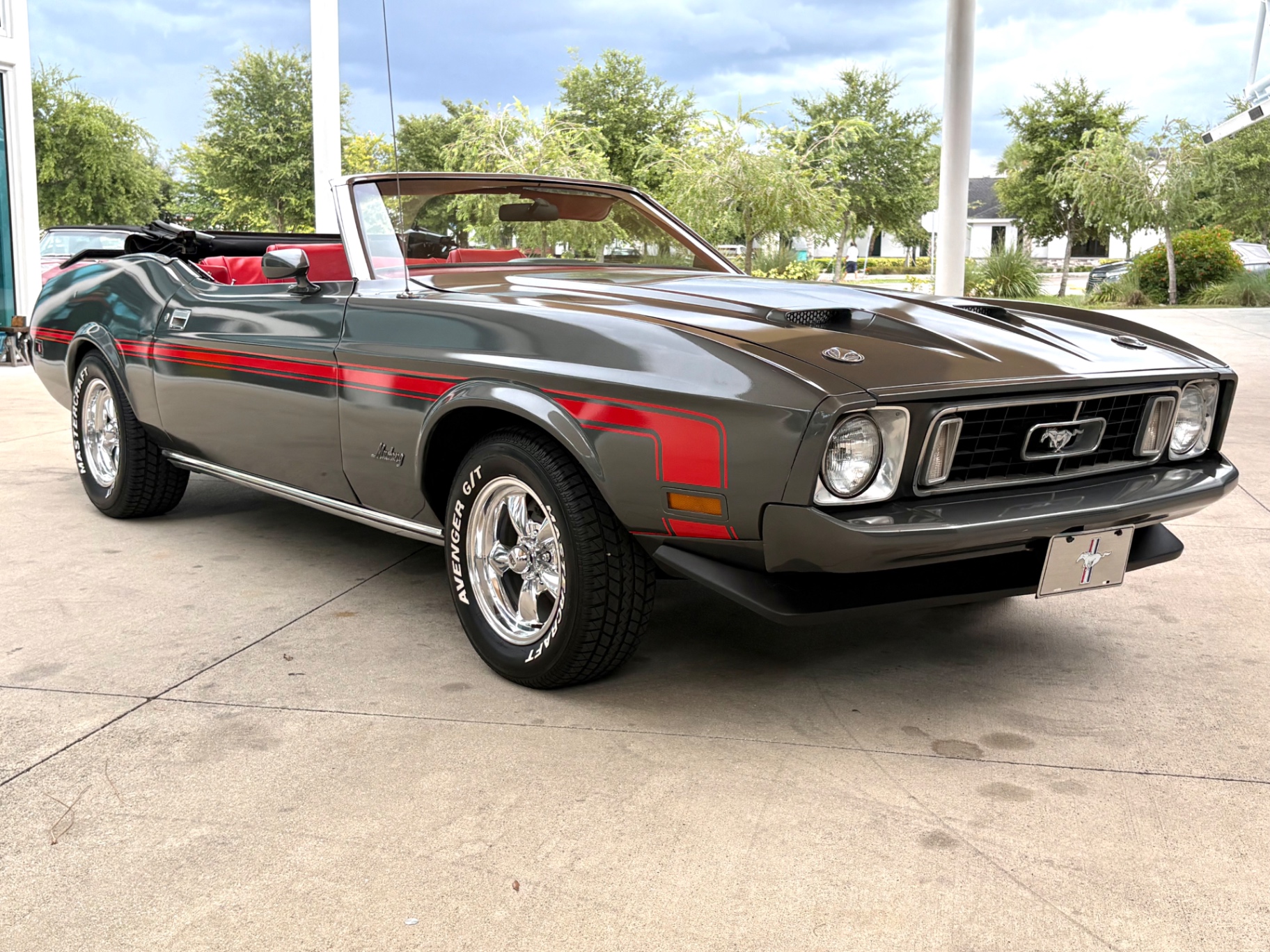
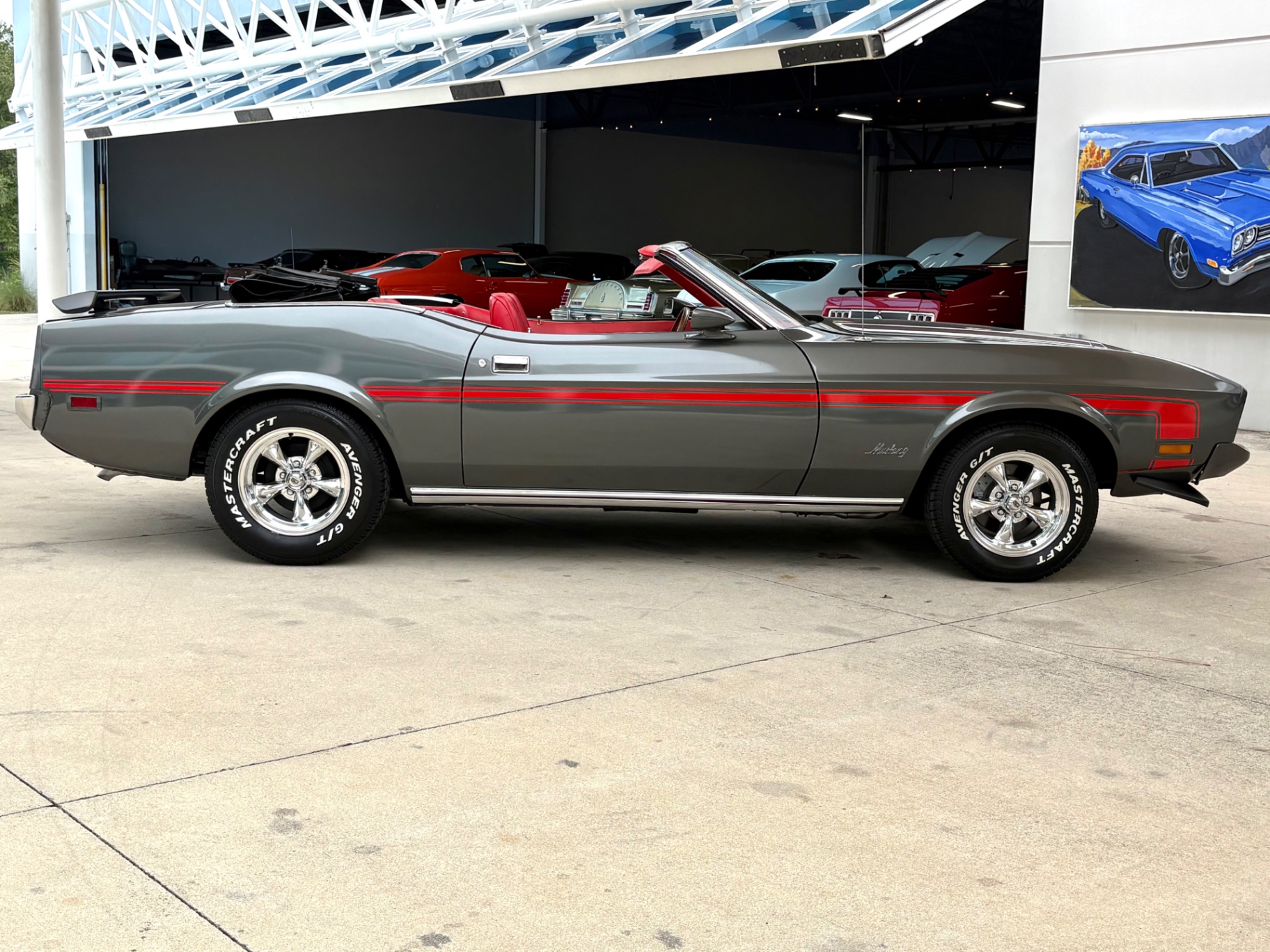
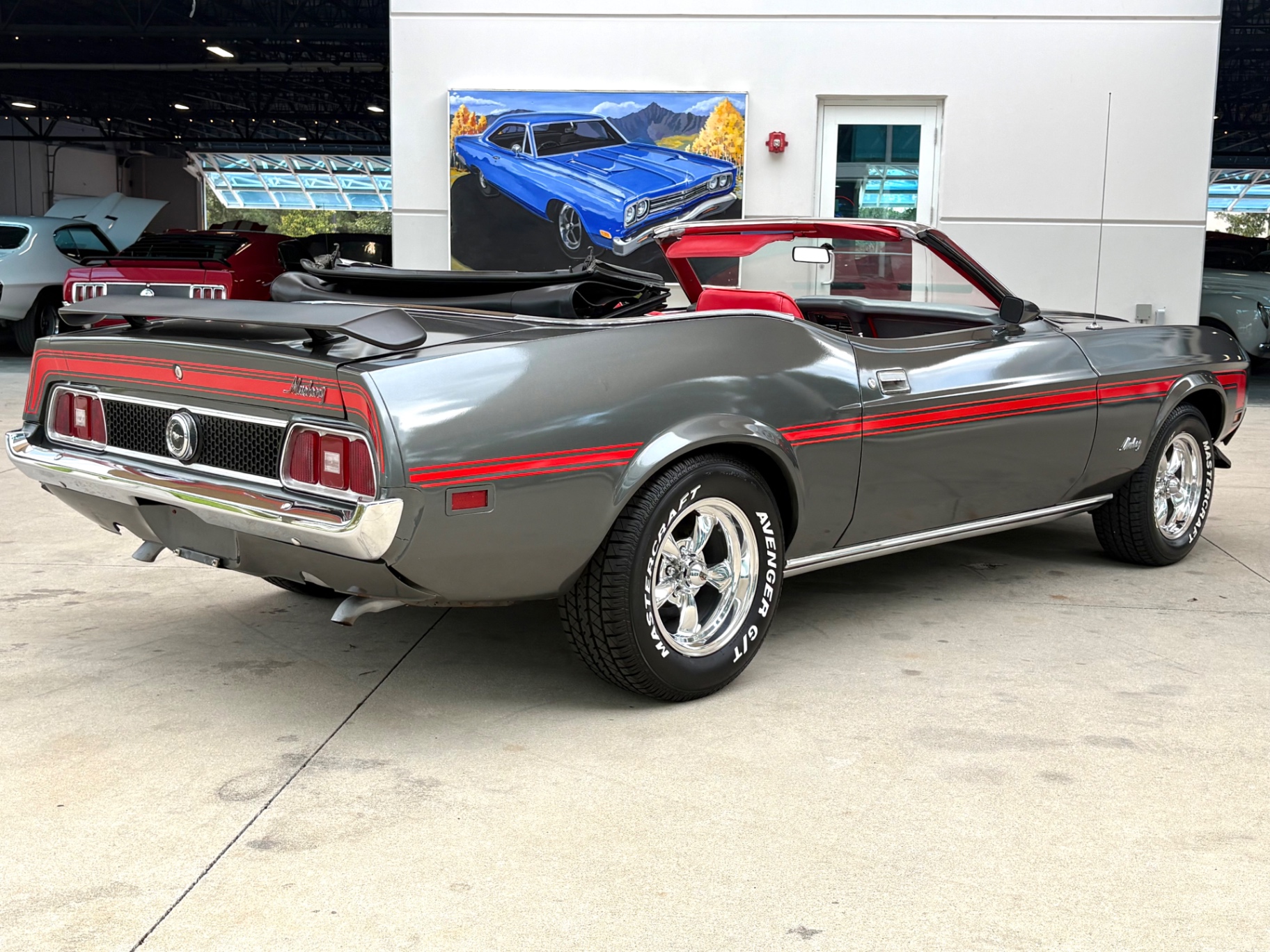
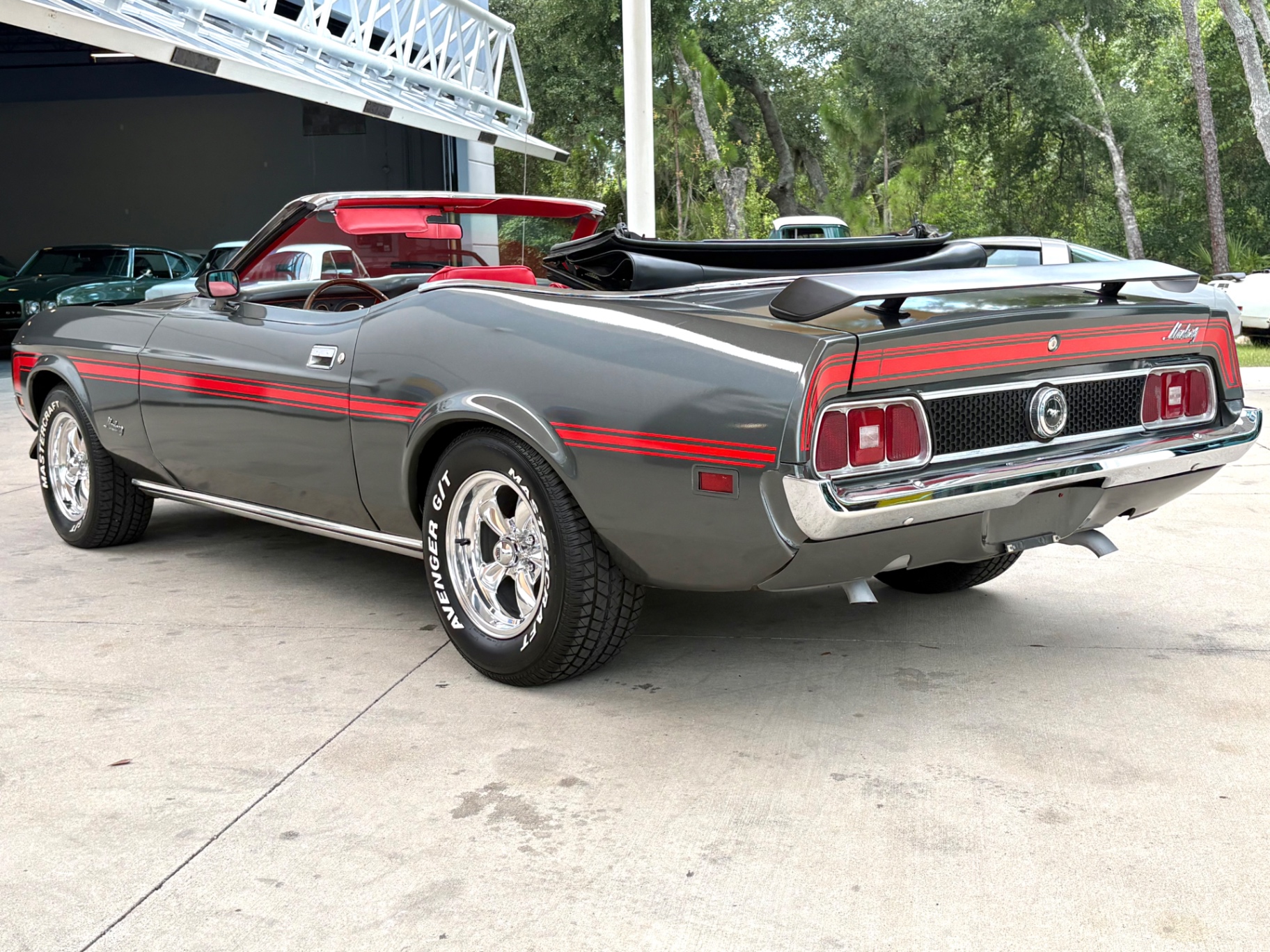
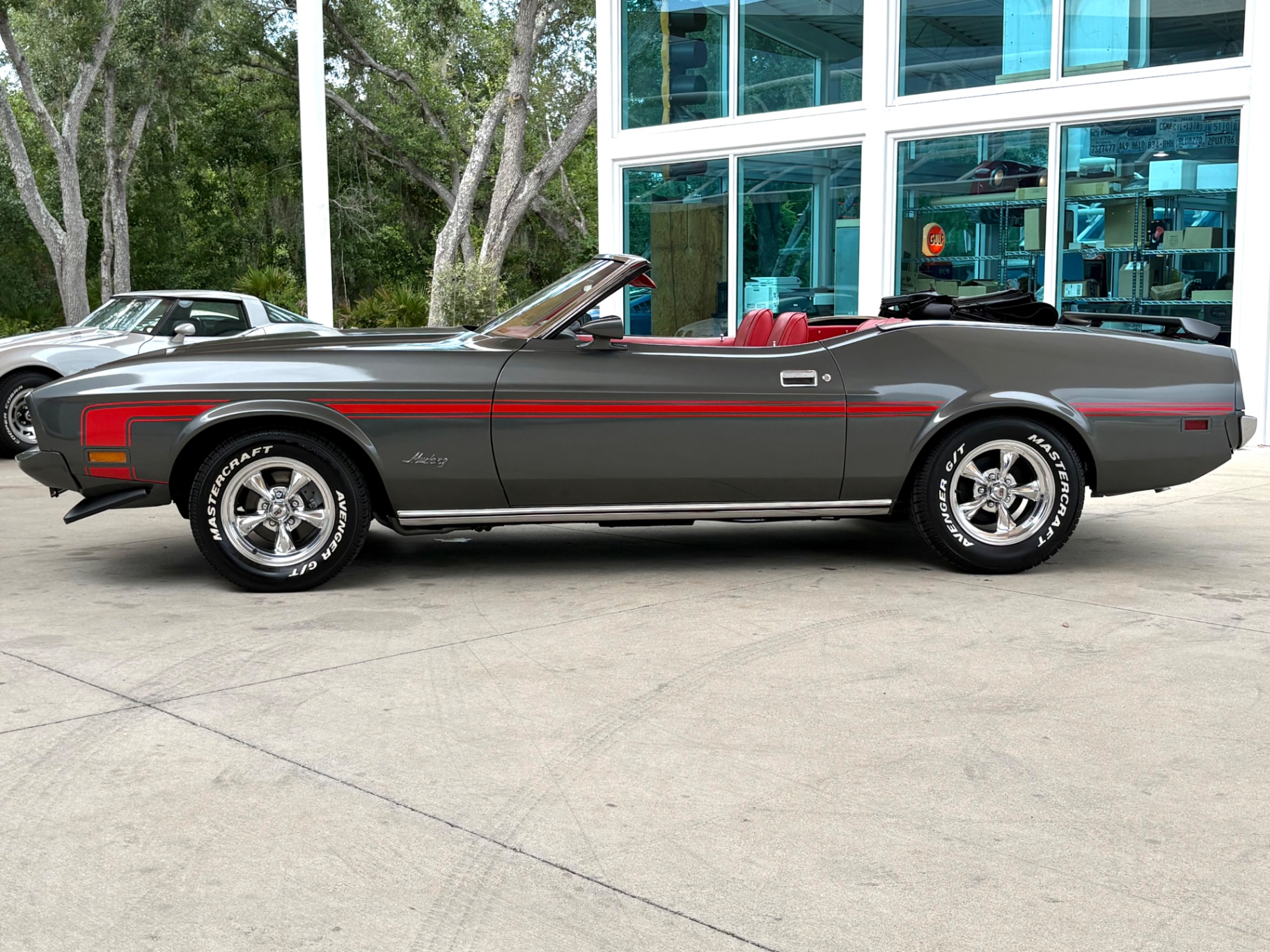
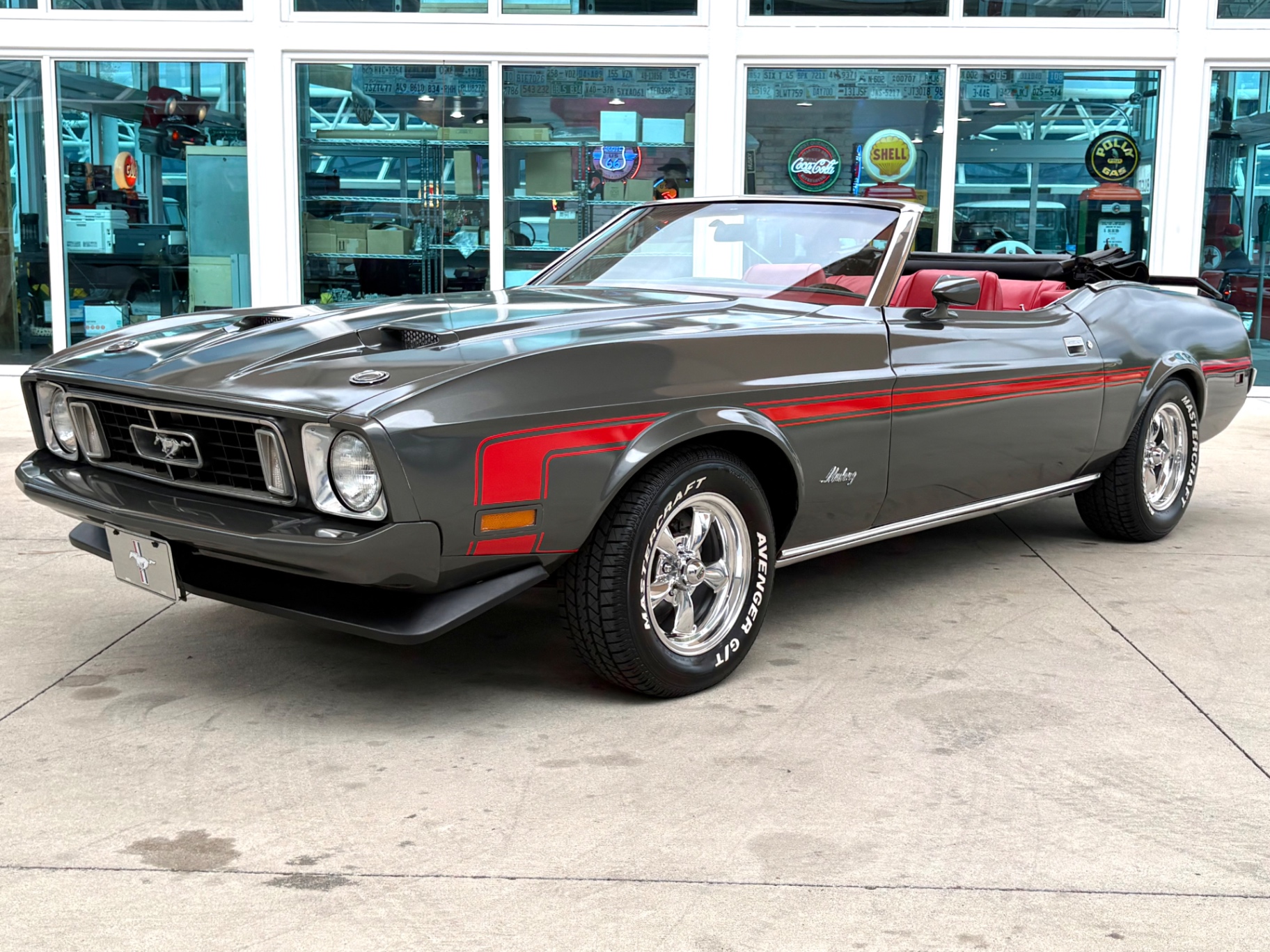
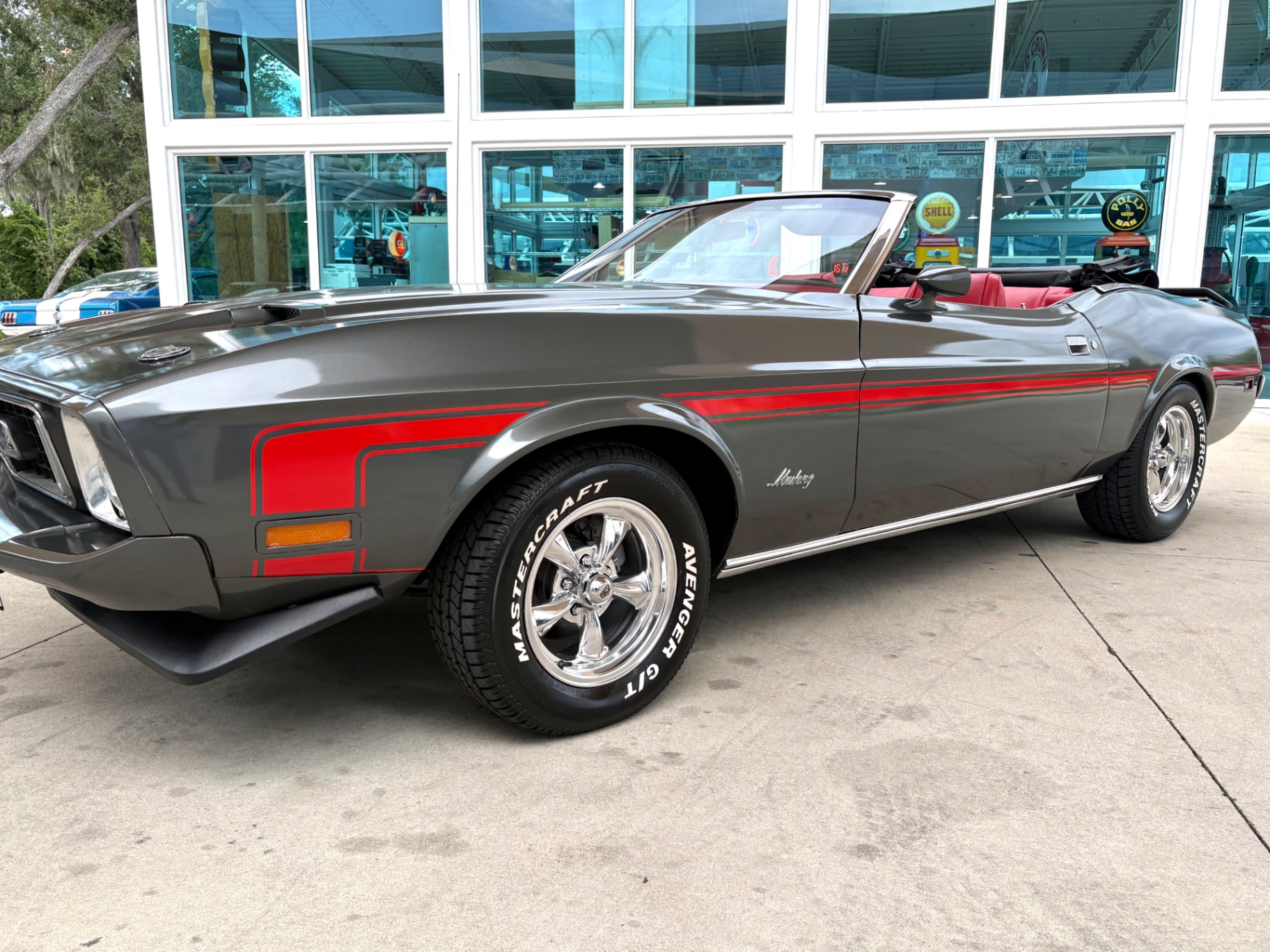
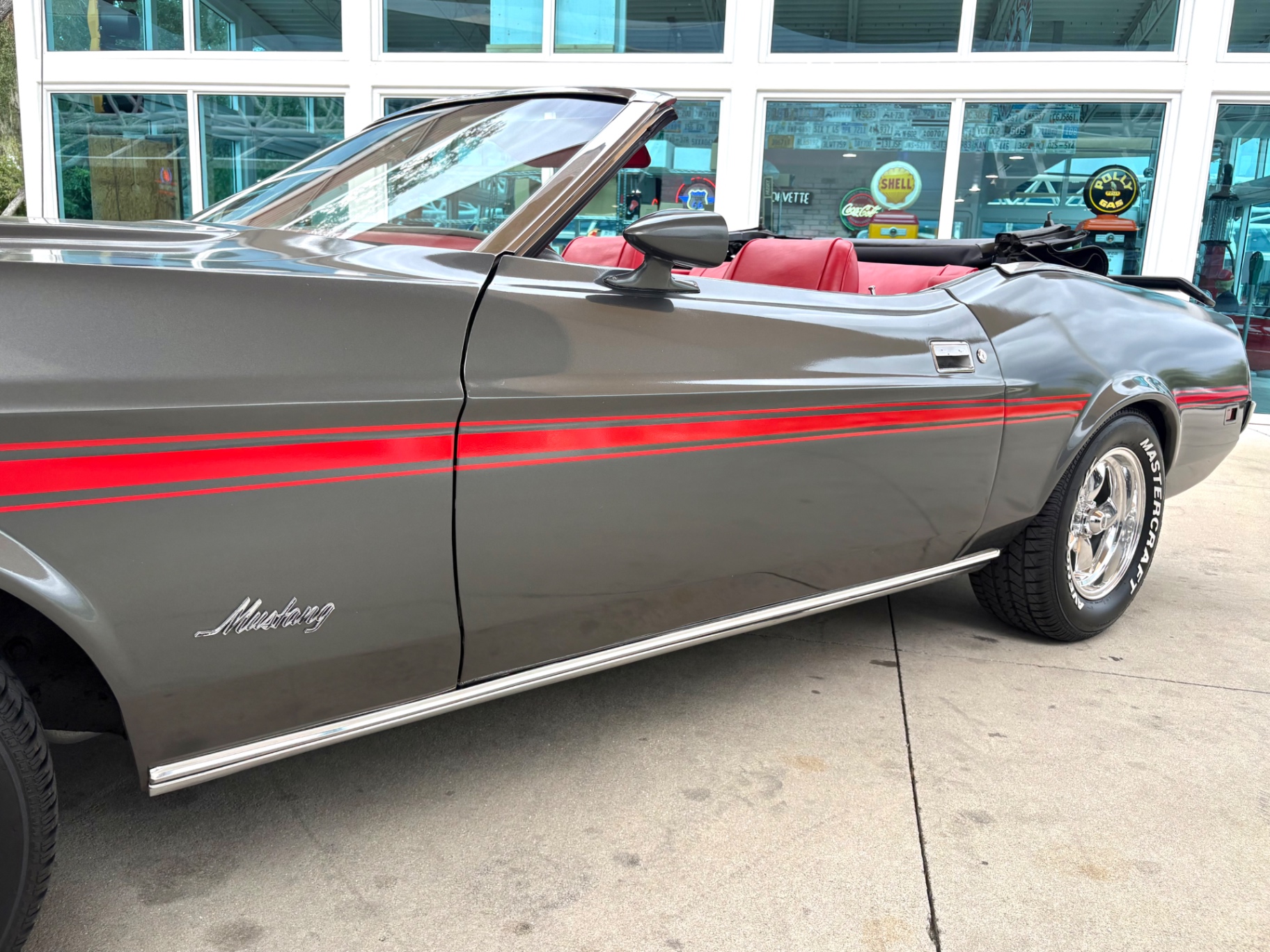
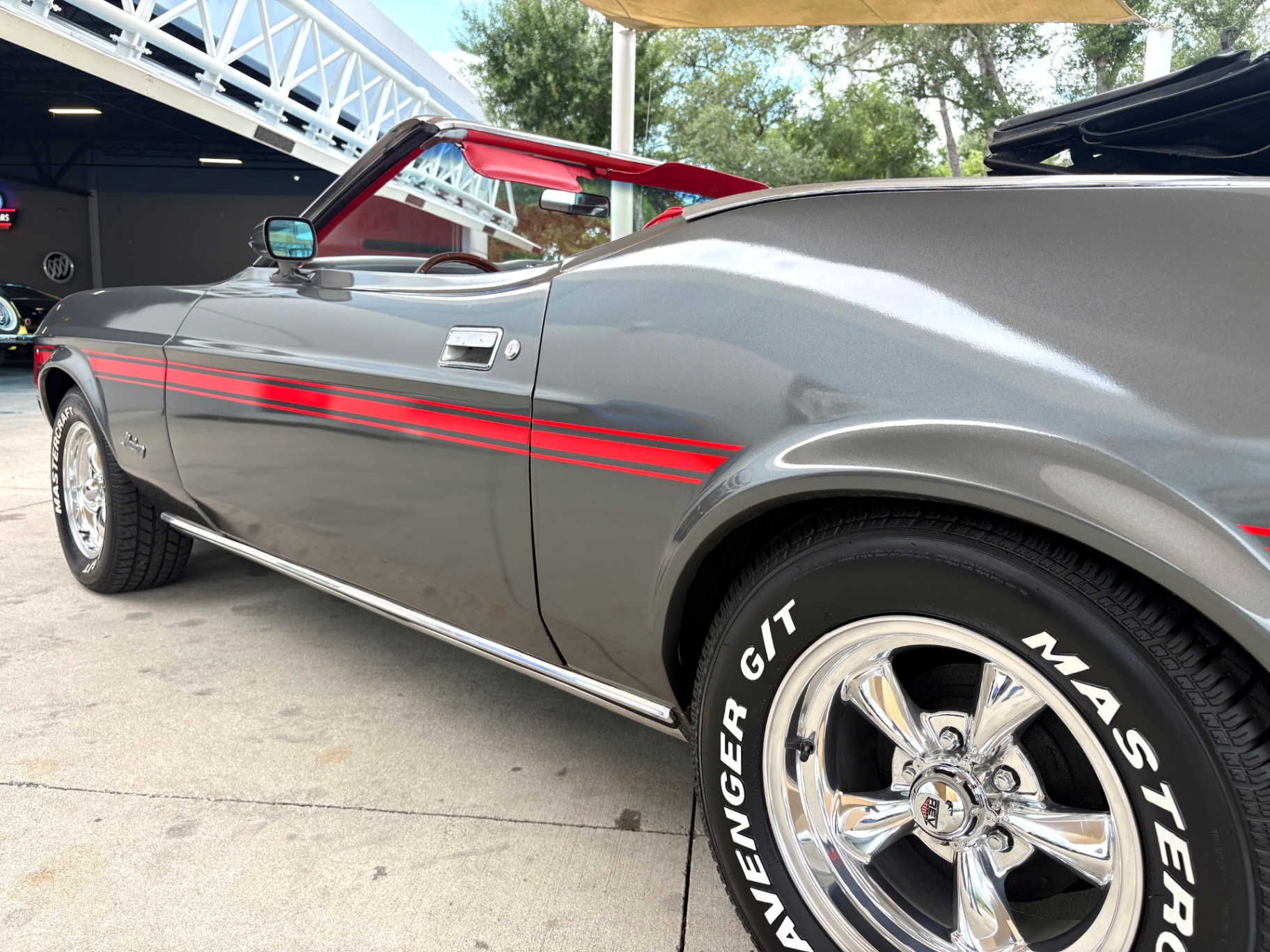
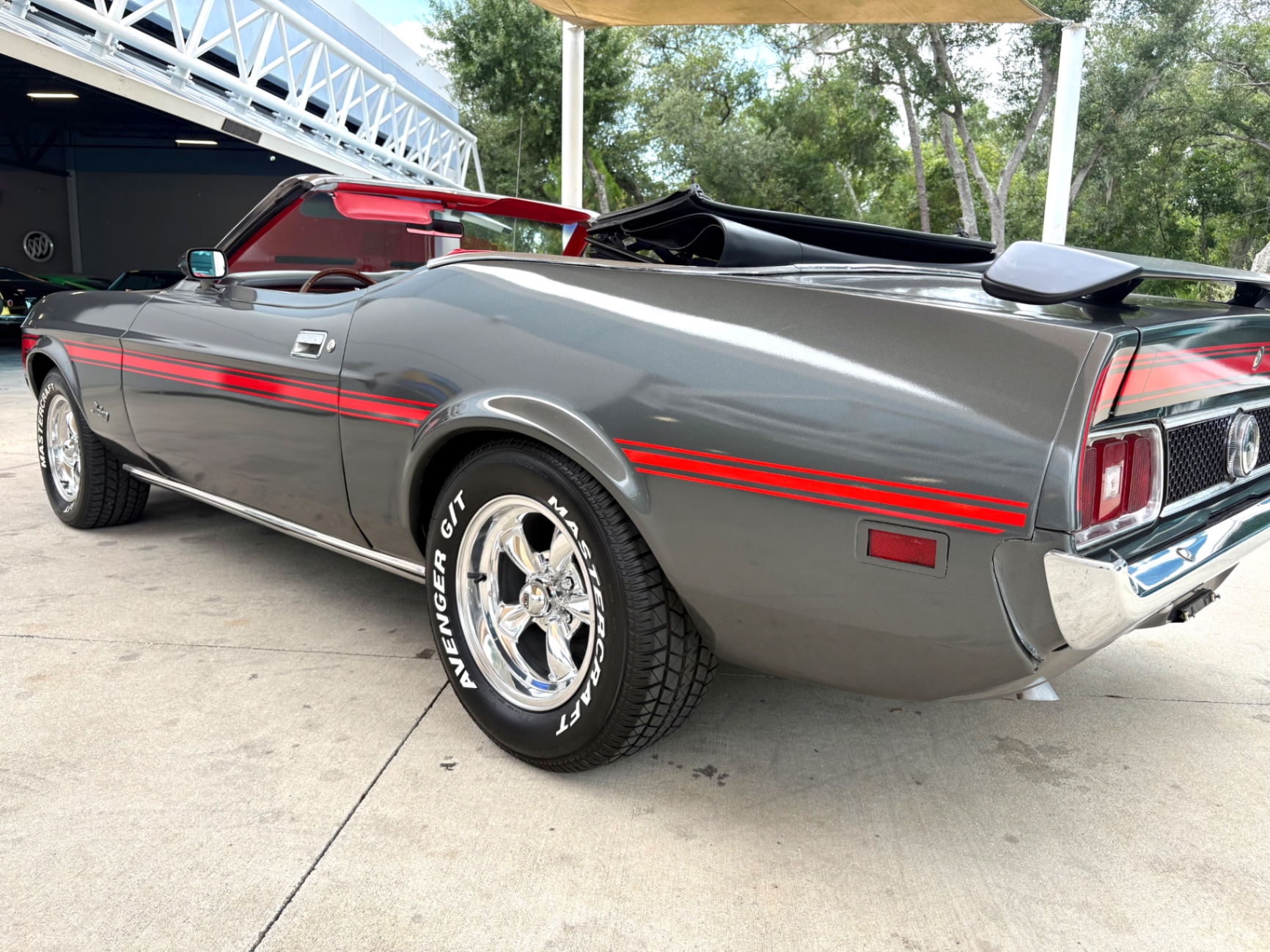
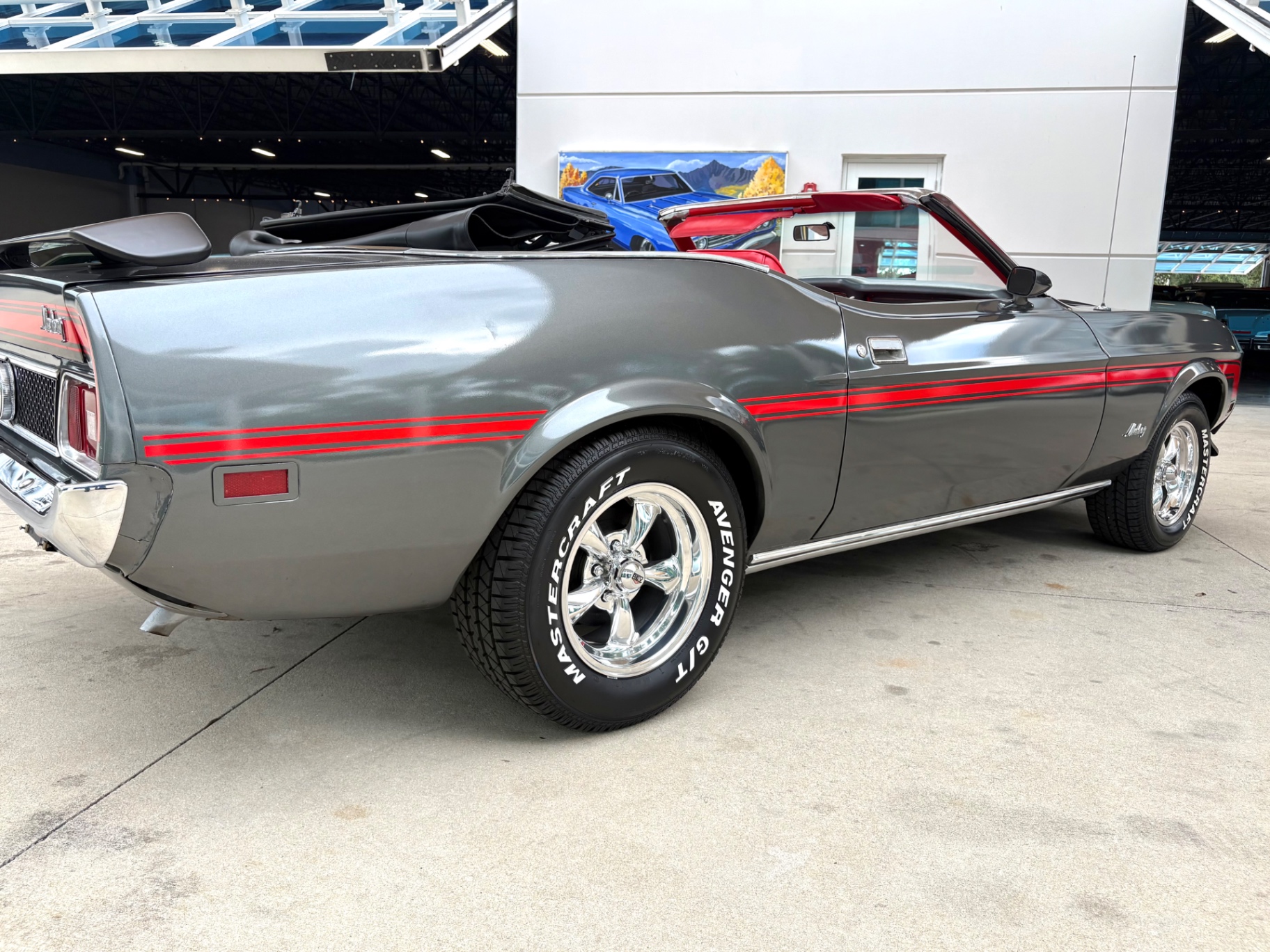
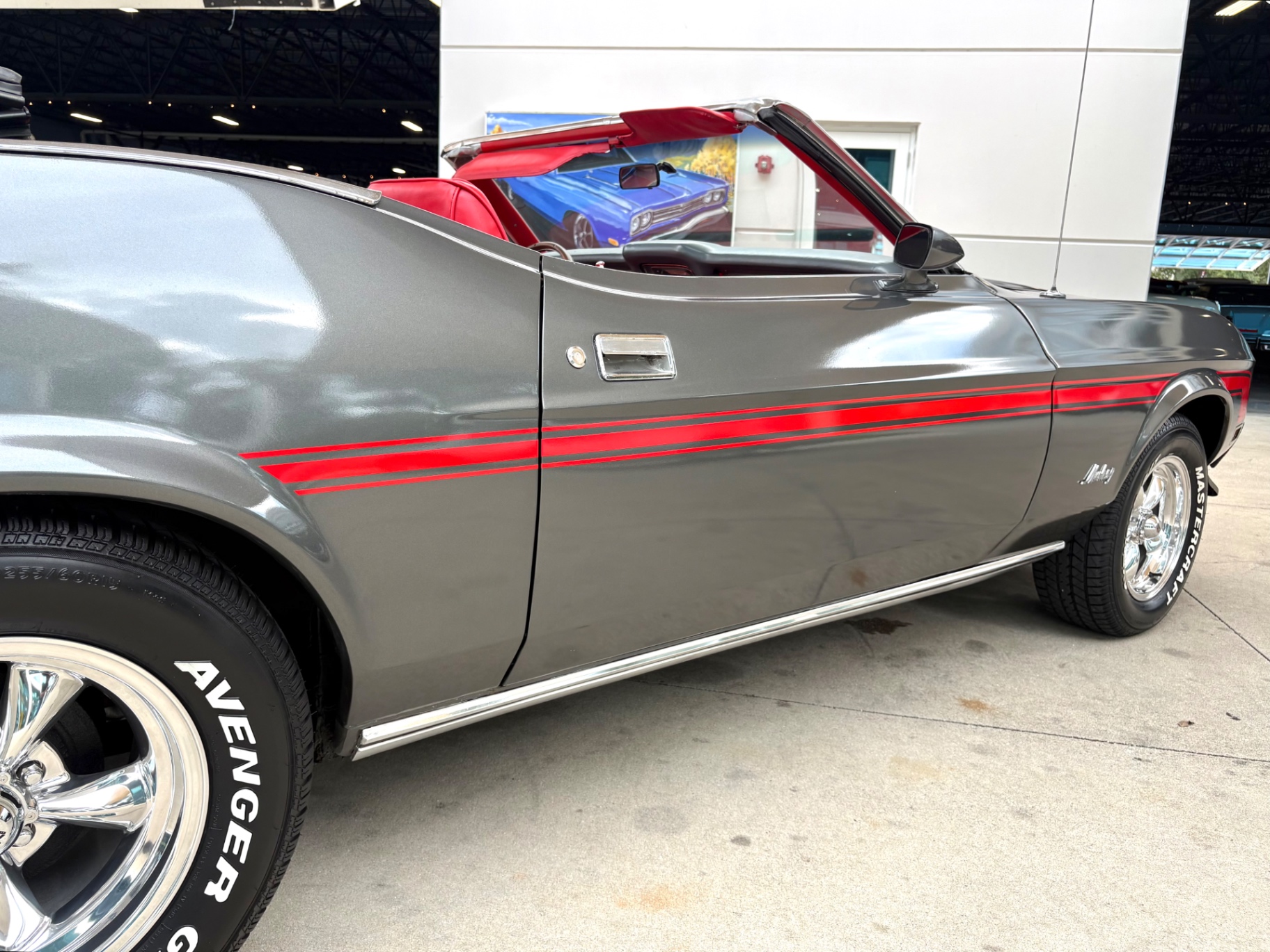
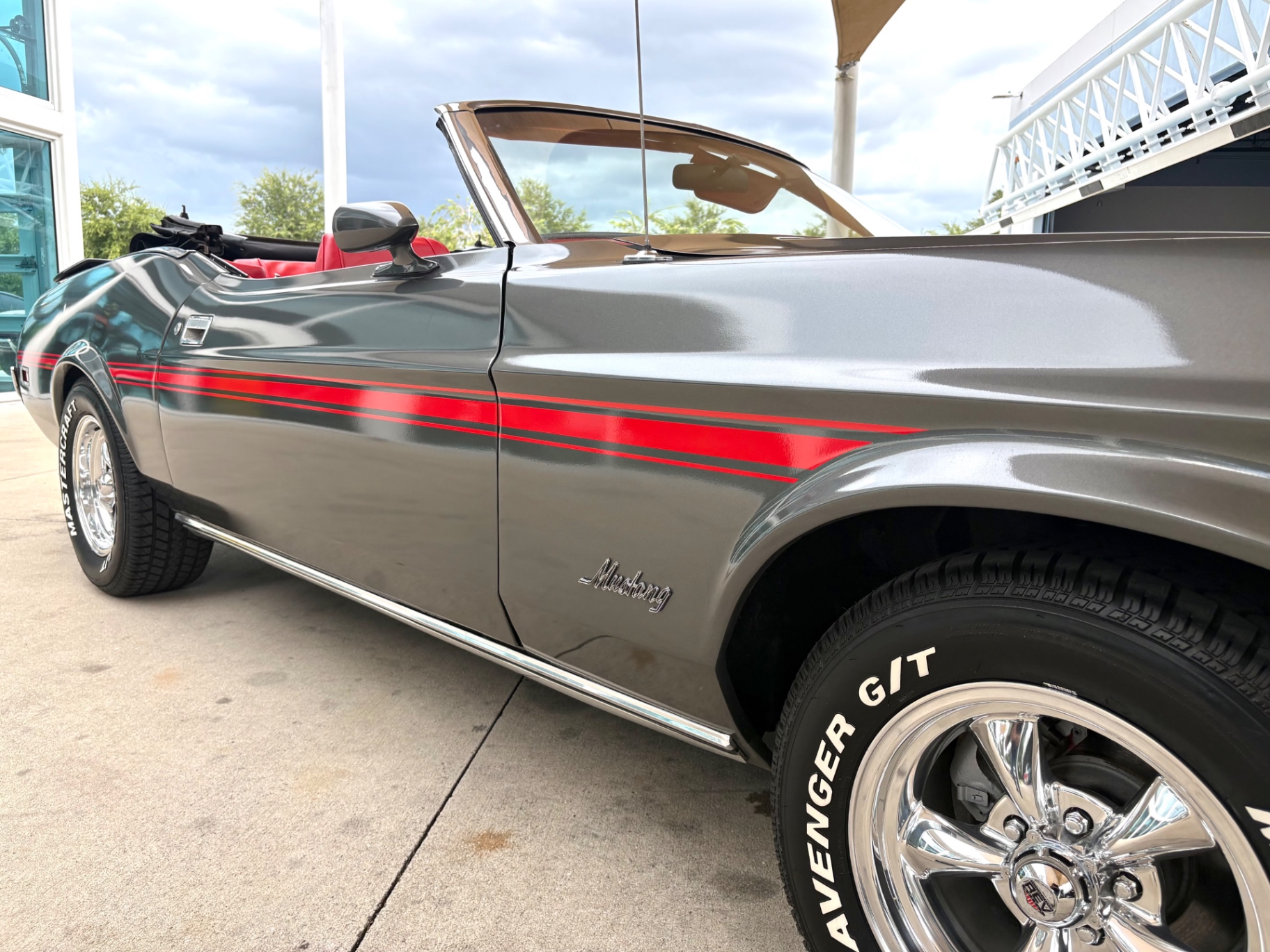
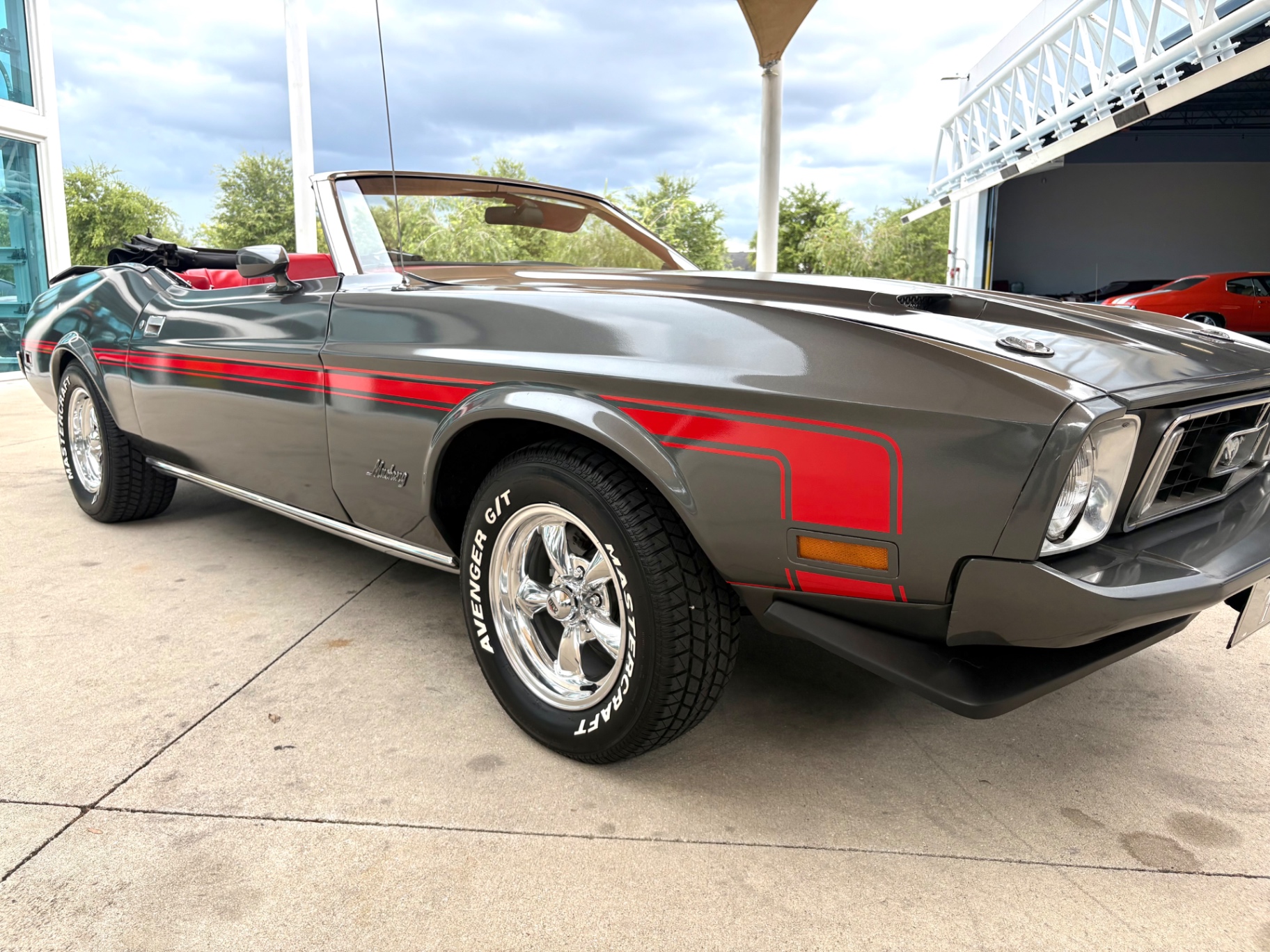
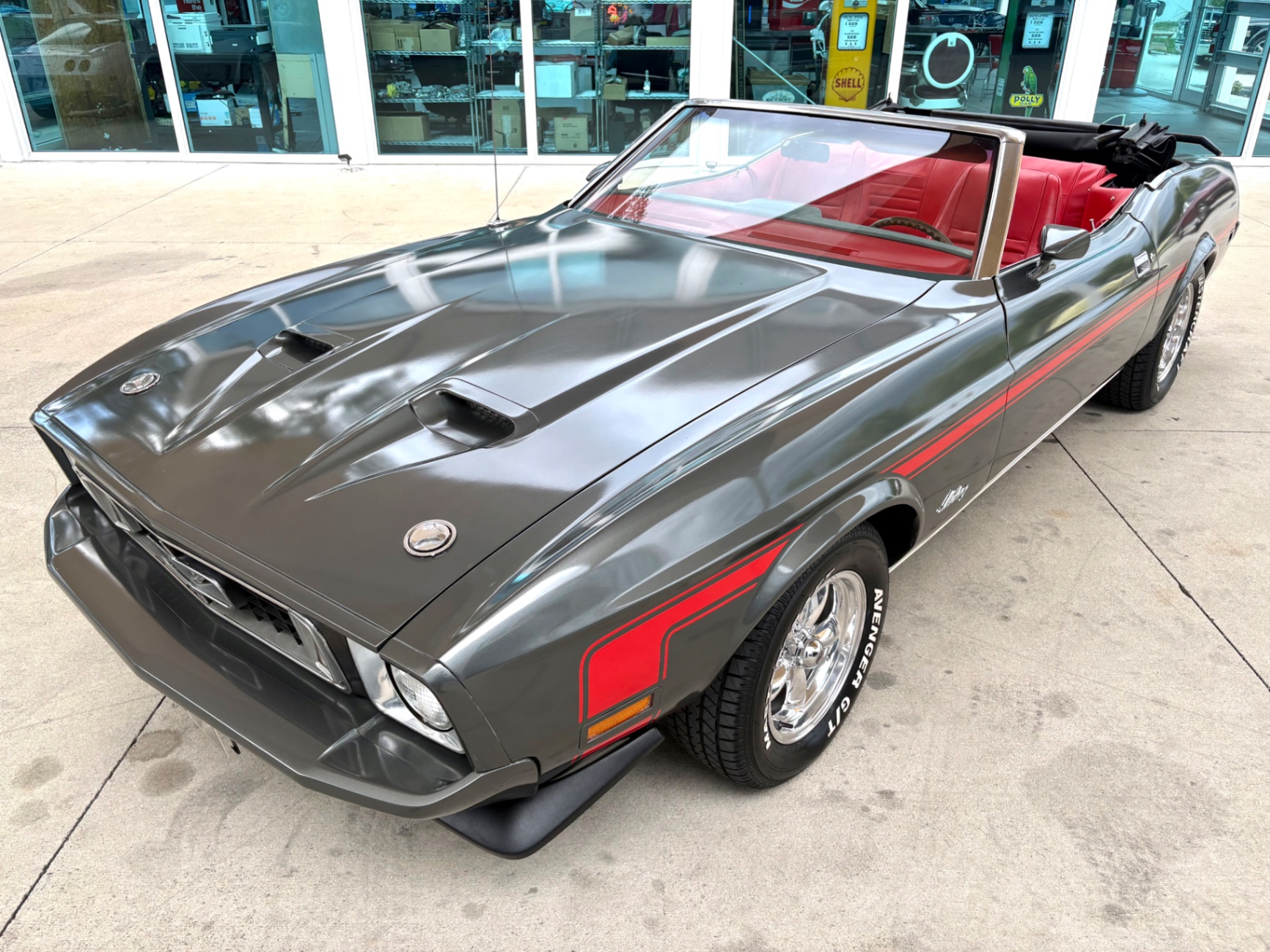
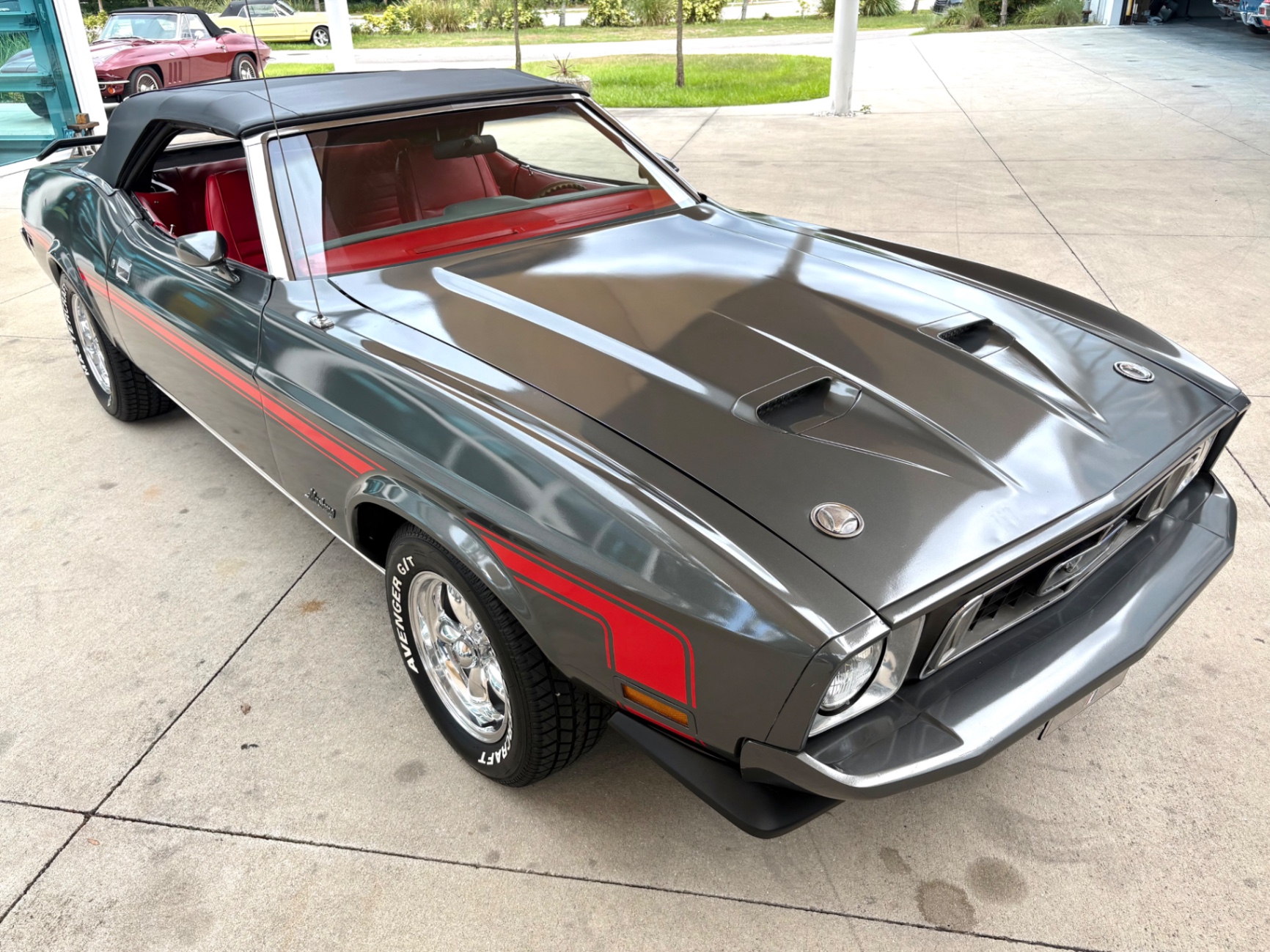
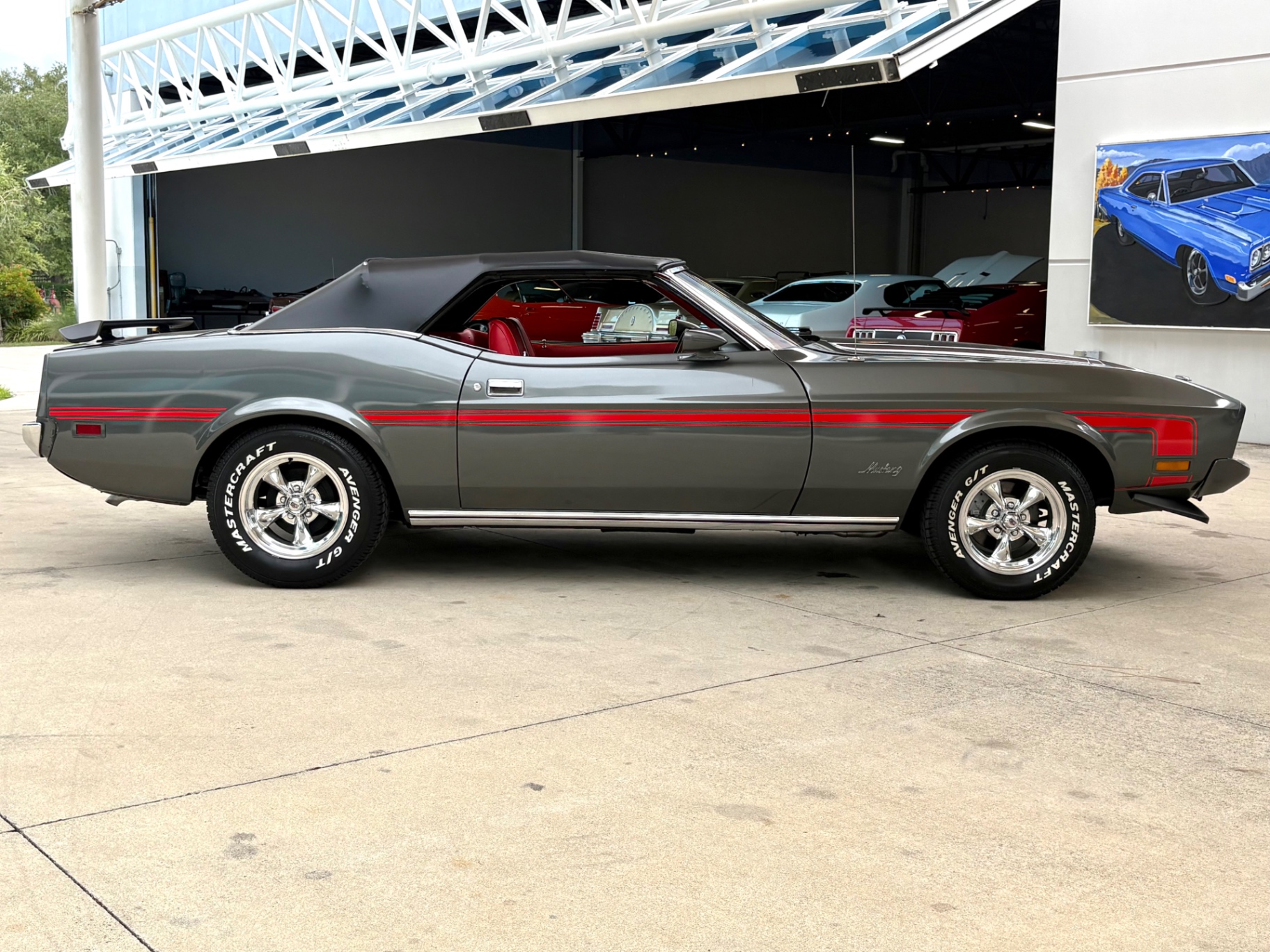
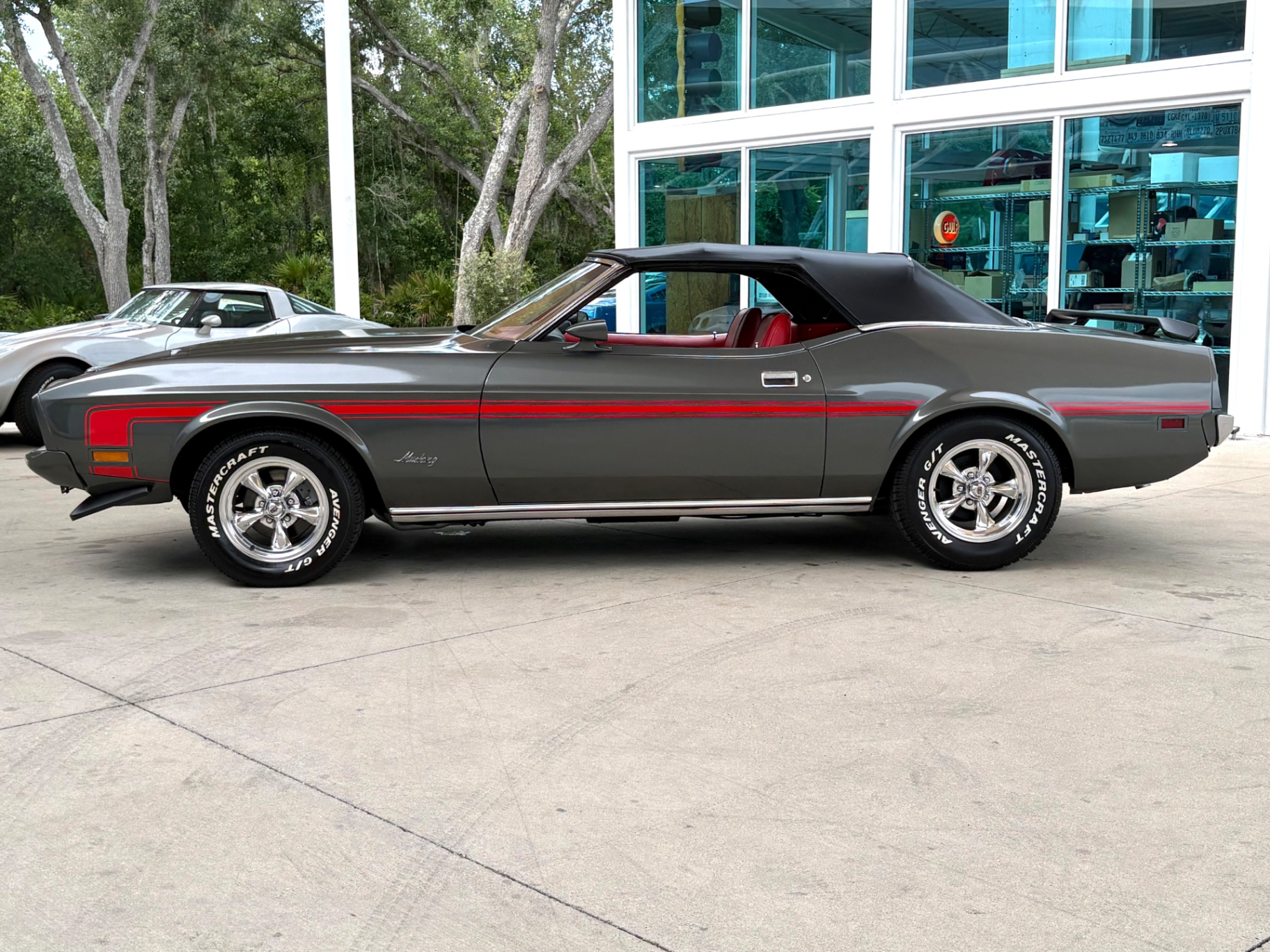
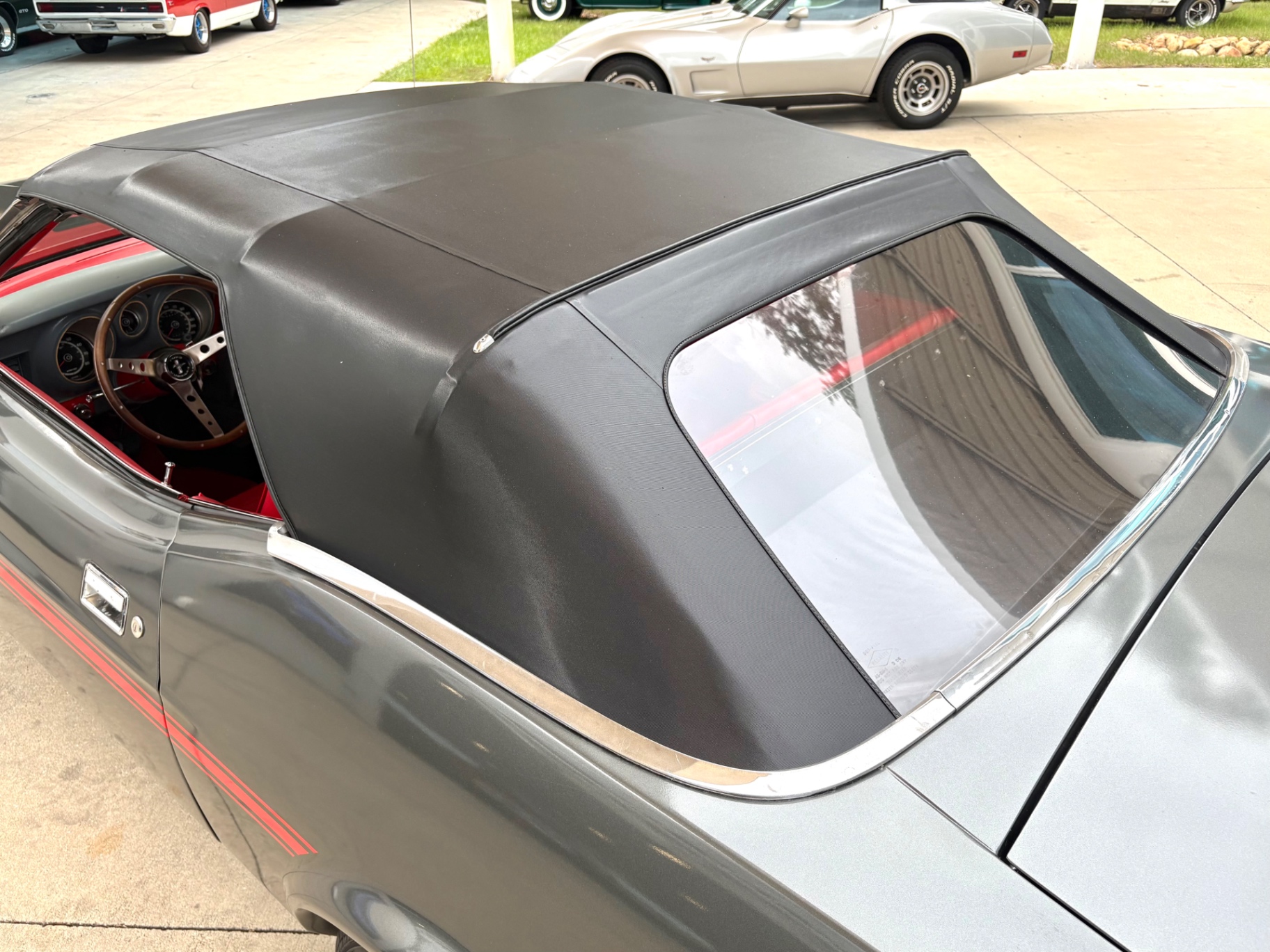
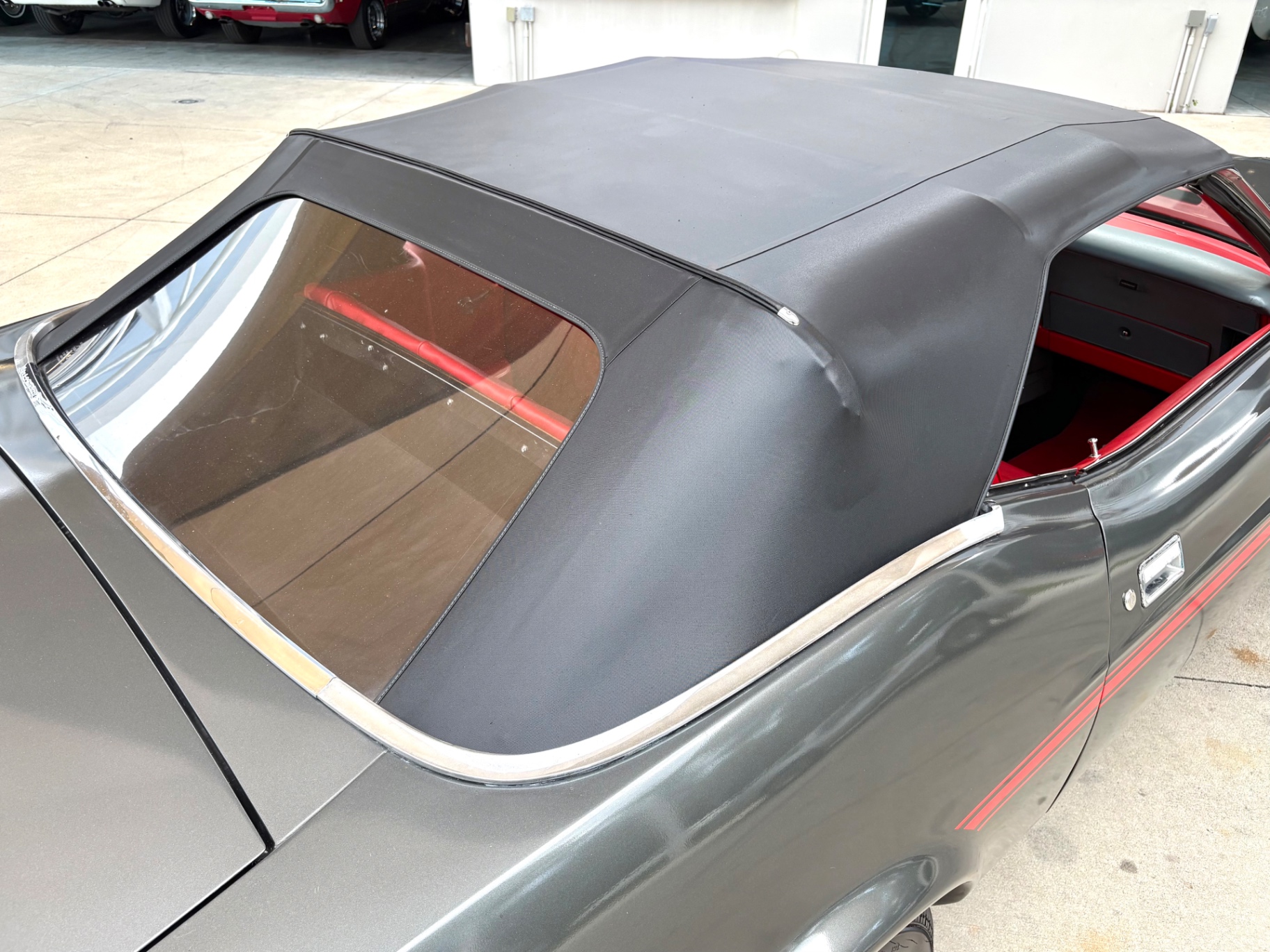
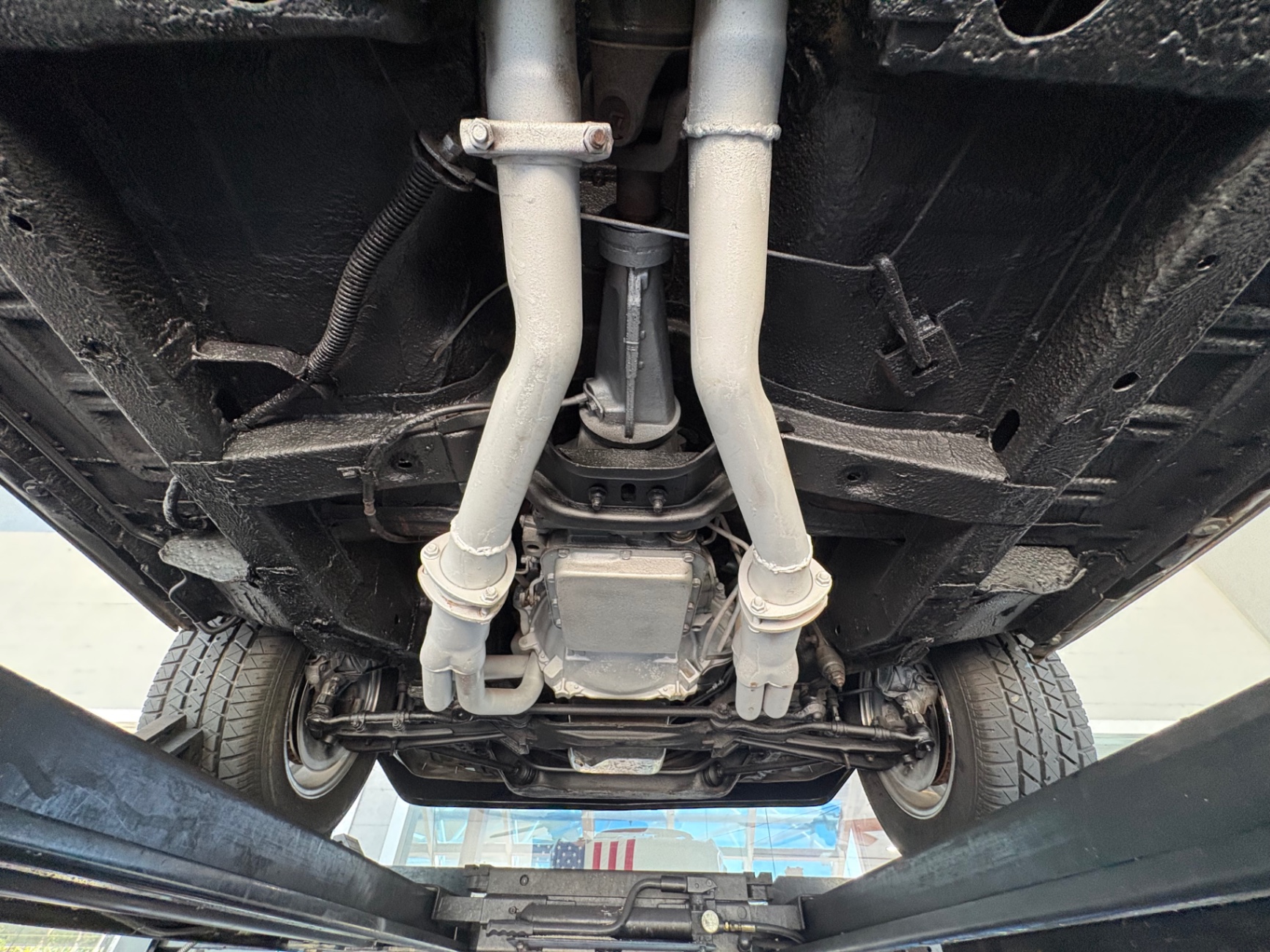
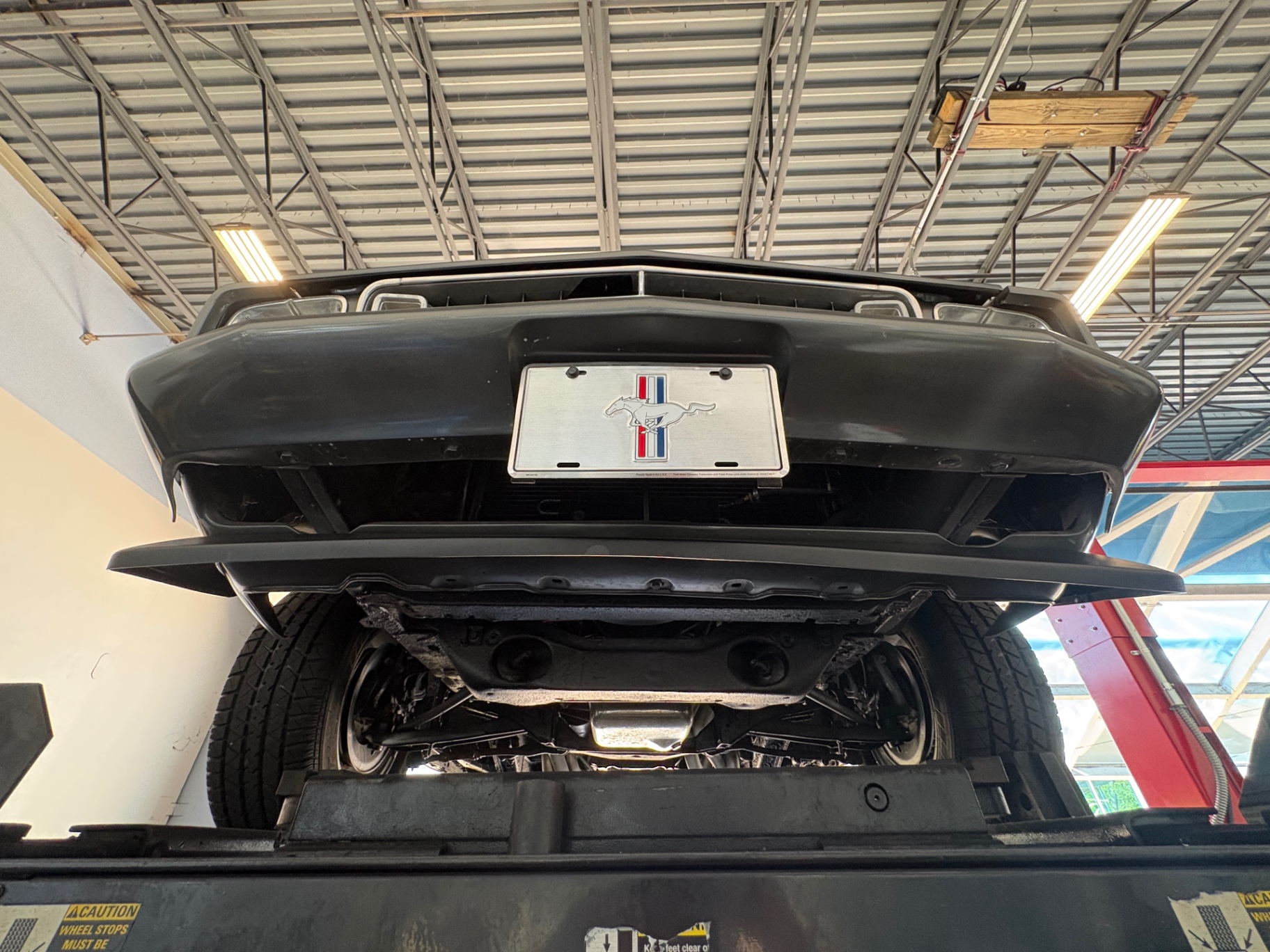
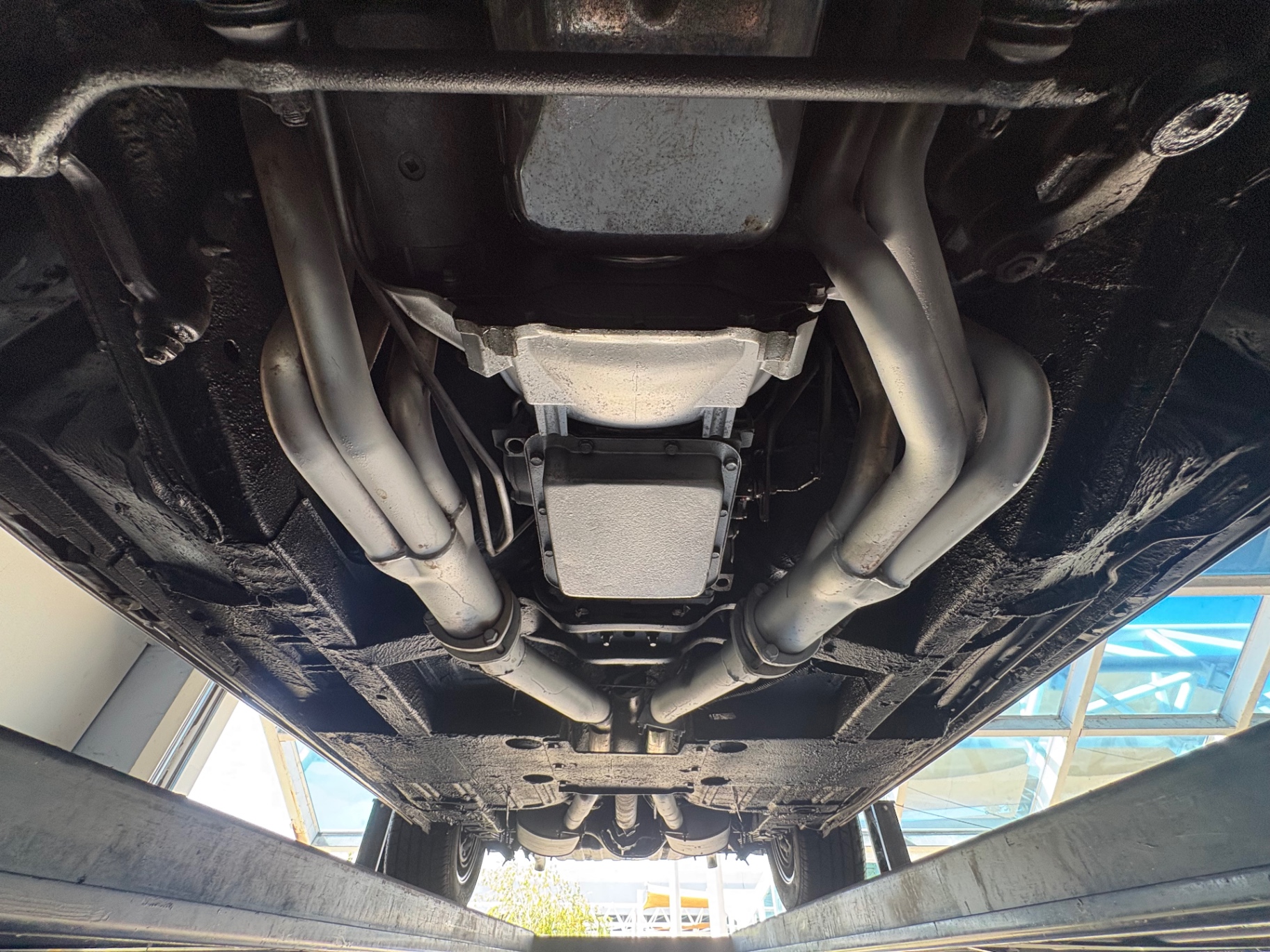
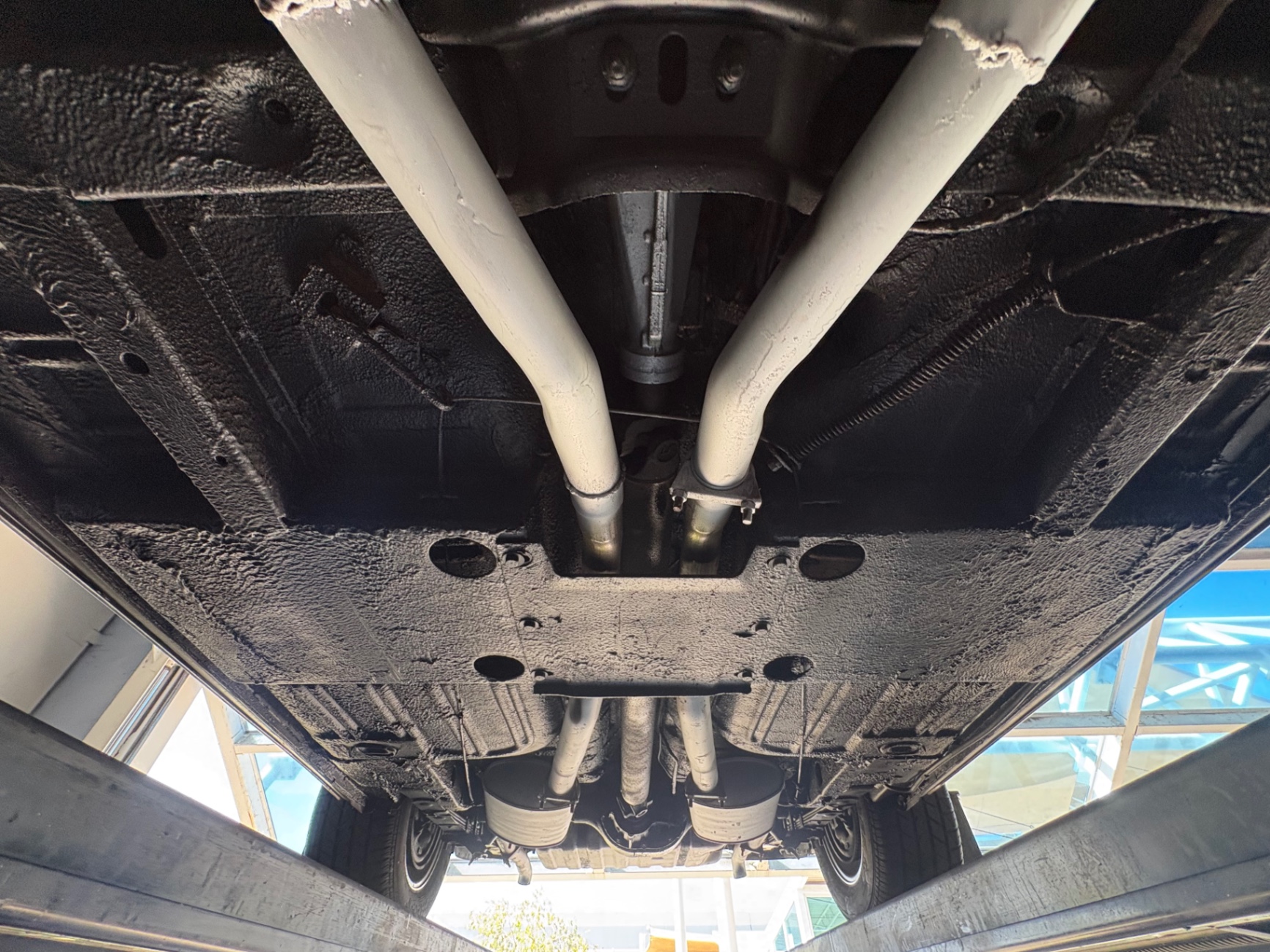
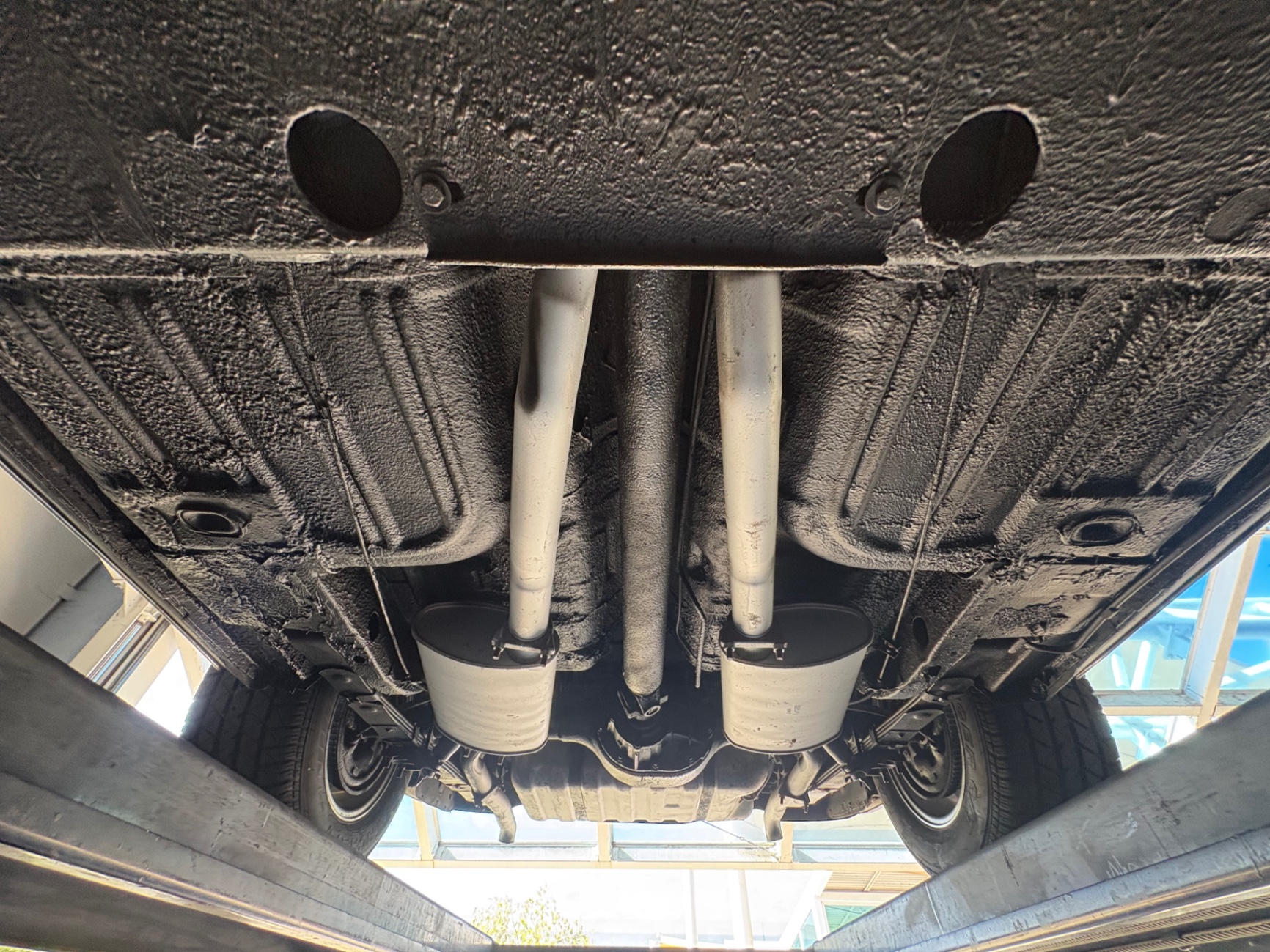
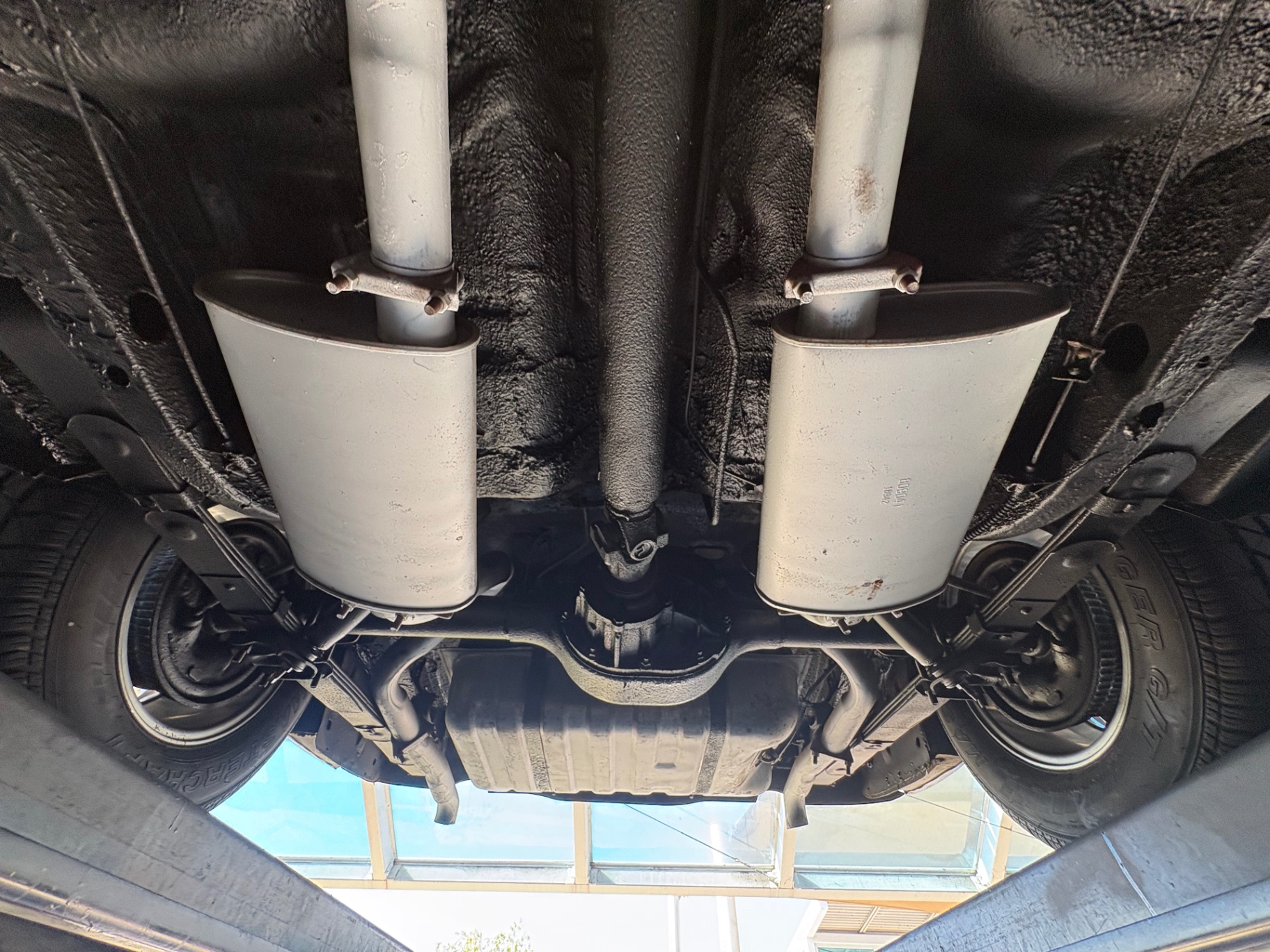
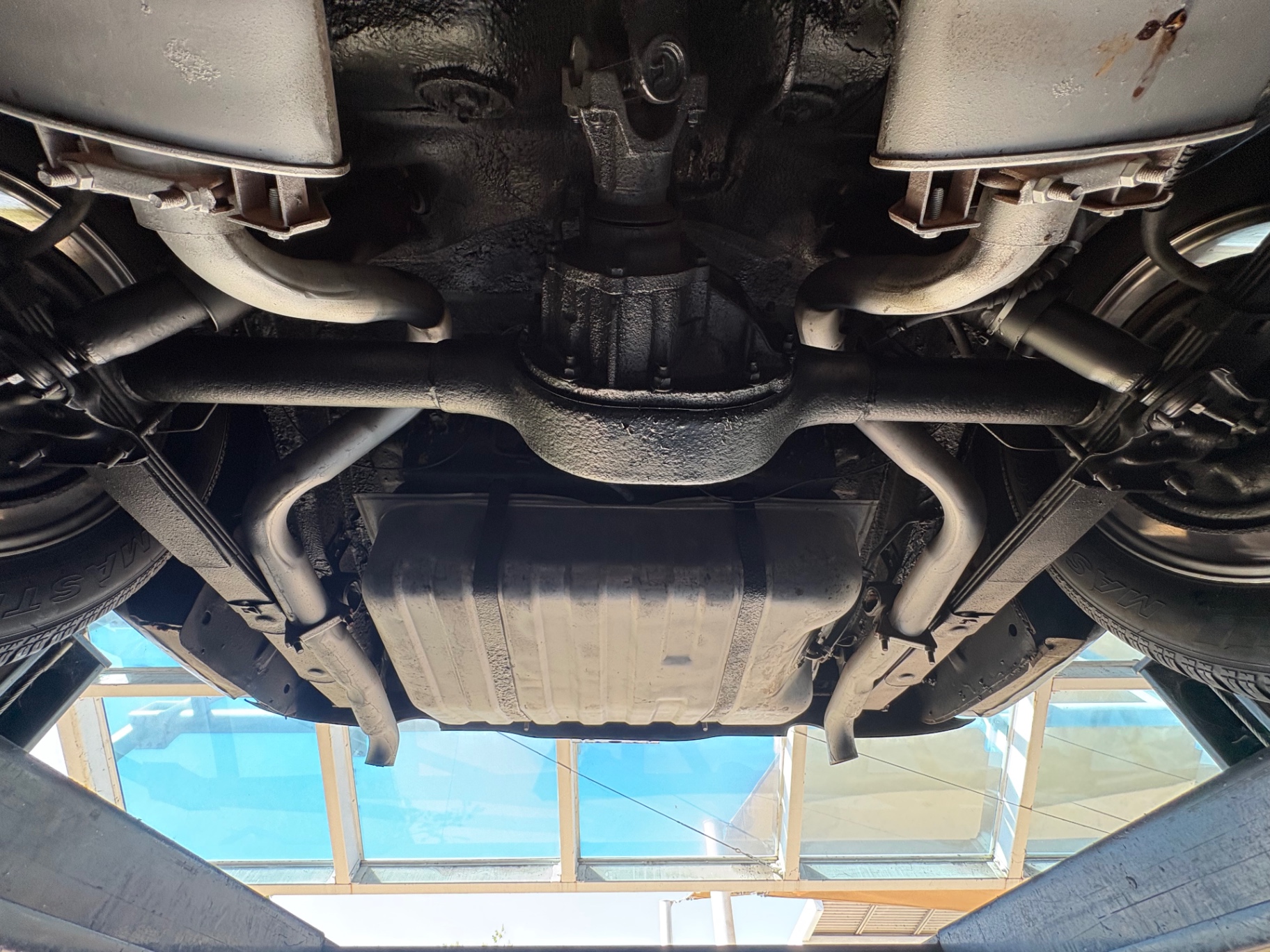
This particular 1973 Ford Mustang convertible is finished in Gray Metallic with a red side stripe package and wears a black power convertible top. Inside, everything is red vinyl — bucket seats, door panels, floor mats, all of it. The car is equipped with the 302 cubic inch V8 backed by a 3-speed automatic transmission, factory air conditioning, power steering, power brakes with front discs, dual exhaust, and a NASA-style functional hood scoop. The underside has been coated and shows well on the lift. This is a fully optioned, driver-quality 1973 Ford Mustang convertible with the kind of specification list that takes real effort to recreate from scratch.
Features List
- 302ci V8 Engine
- 3-Speed Automatic Transmission
- Convertible Body Style
- Power Convertible Top
- Black Convertible Top
- Gray Metallic Exterior
- Red Side Stripes
- NASA Hood Scoop
- Rear Deck Spoiler
- Chrome 5-Spoke Wheels
- White Letter Tires
- Red Vinyl Bucket Seats
- Red Vinyl Door Panels with Woodgrain Inserts
- Wood-Rim Steering Wheel
- Center Console
- Console Clock
- Auxiliary Gauge Cluster (Oil, Alternator, Temperature)
- Tachometer
- AM Radio
- Air Conditioning
- Power Steering
- Power Brakes
- Front Disc Brakes
- Rear Drum Brakes
- Dual Exhaust
- Pony Floor Mats
- Undercoated Floor Pan
Mechanical
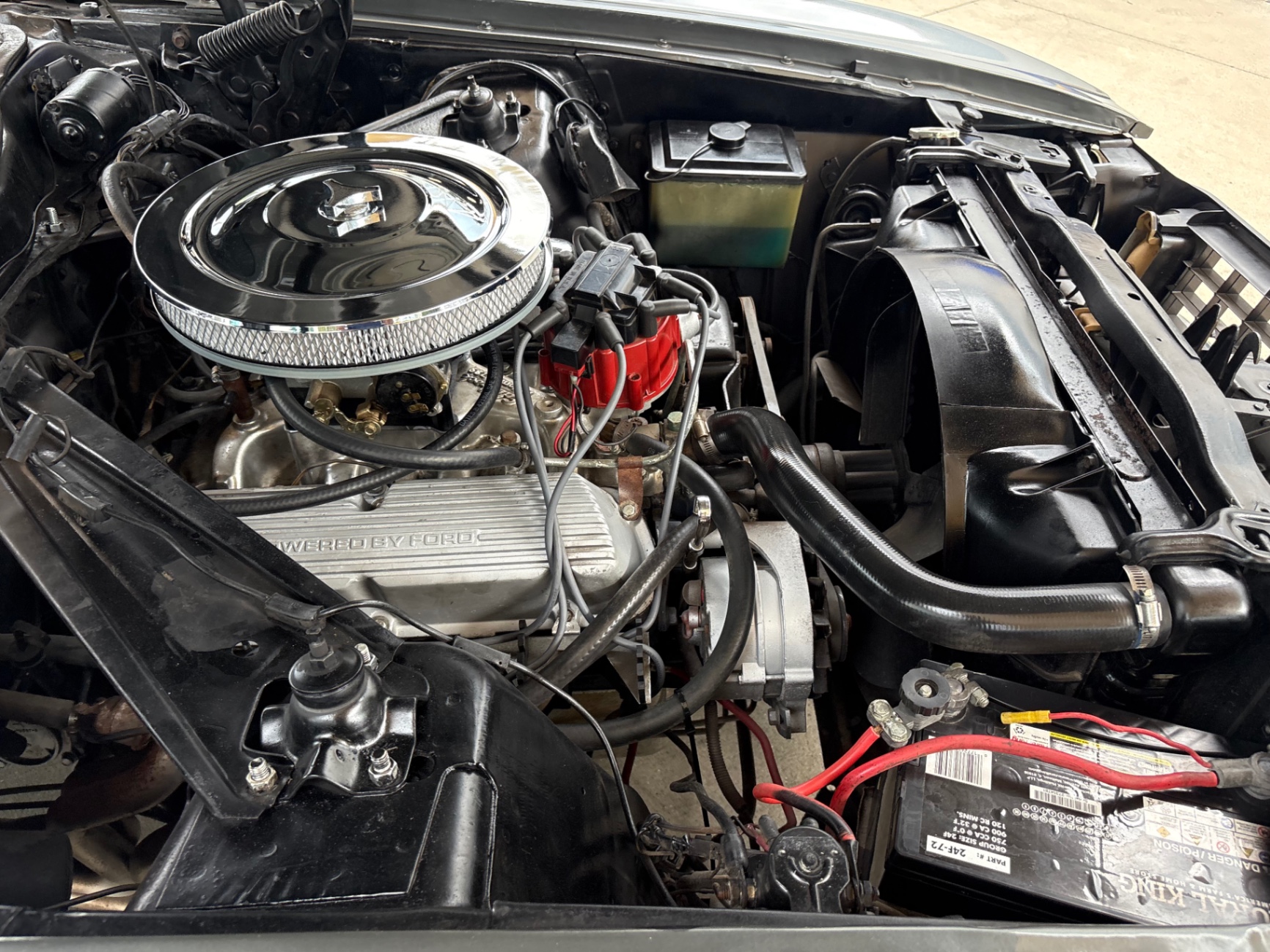
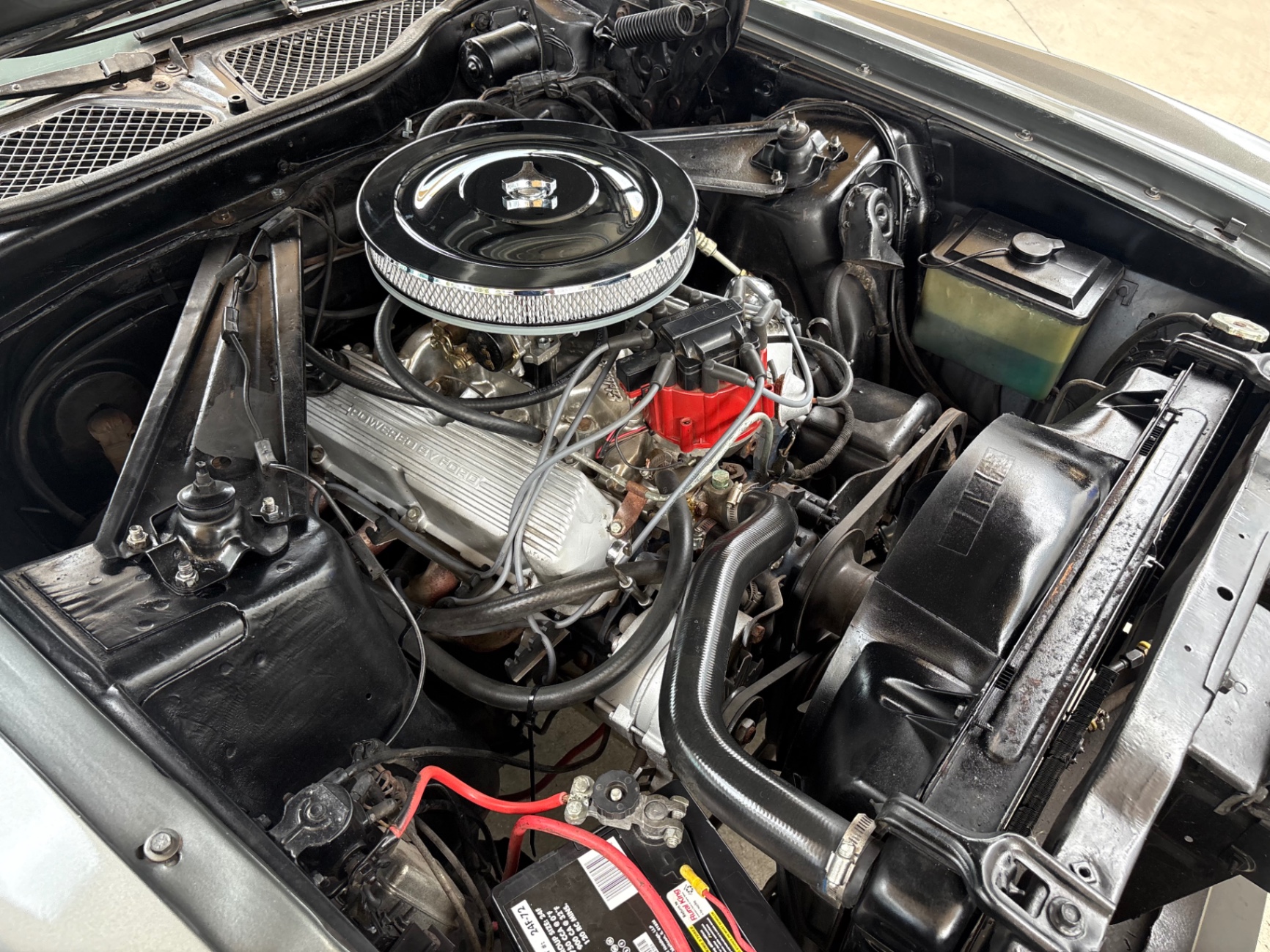
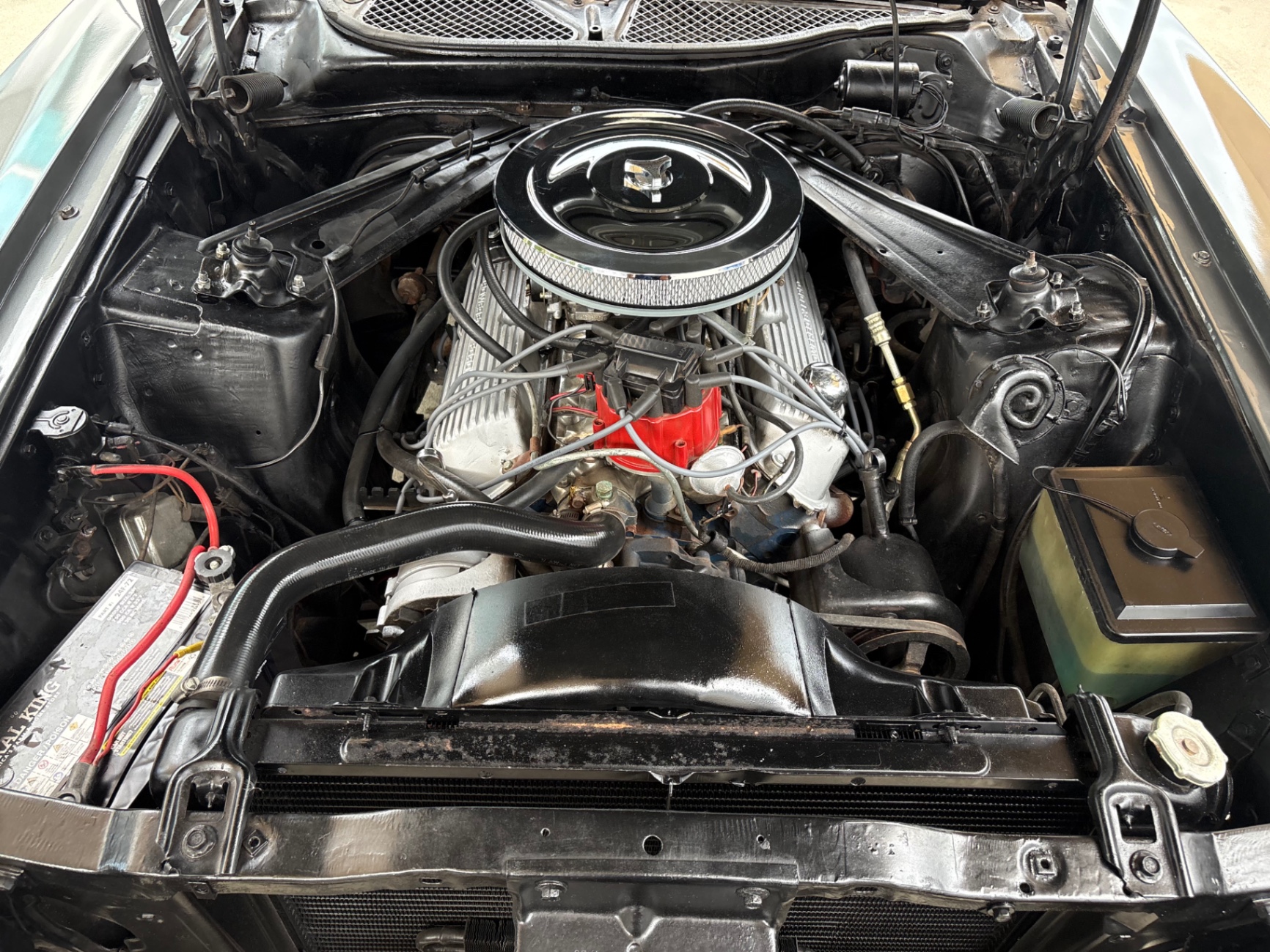
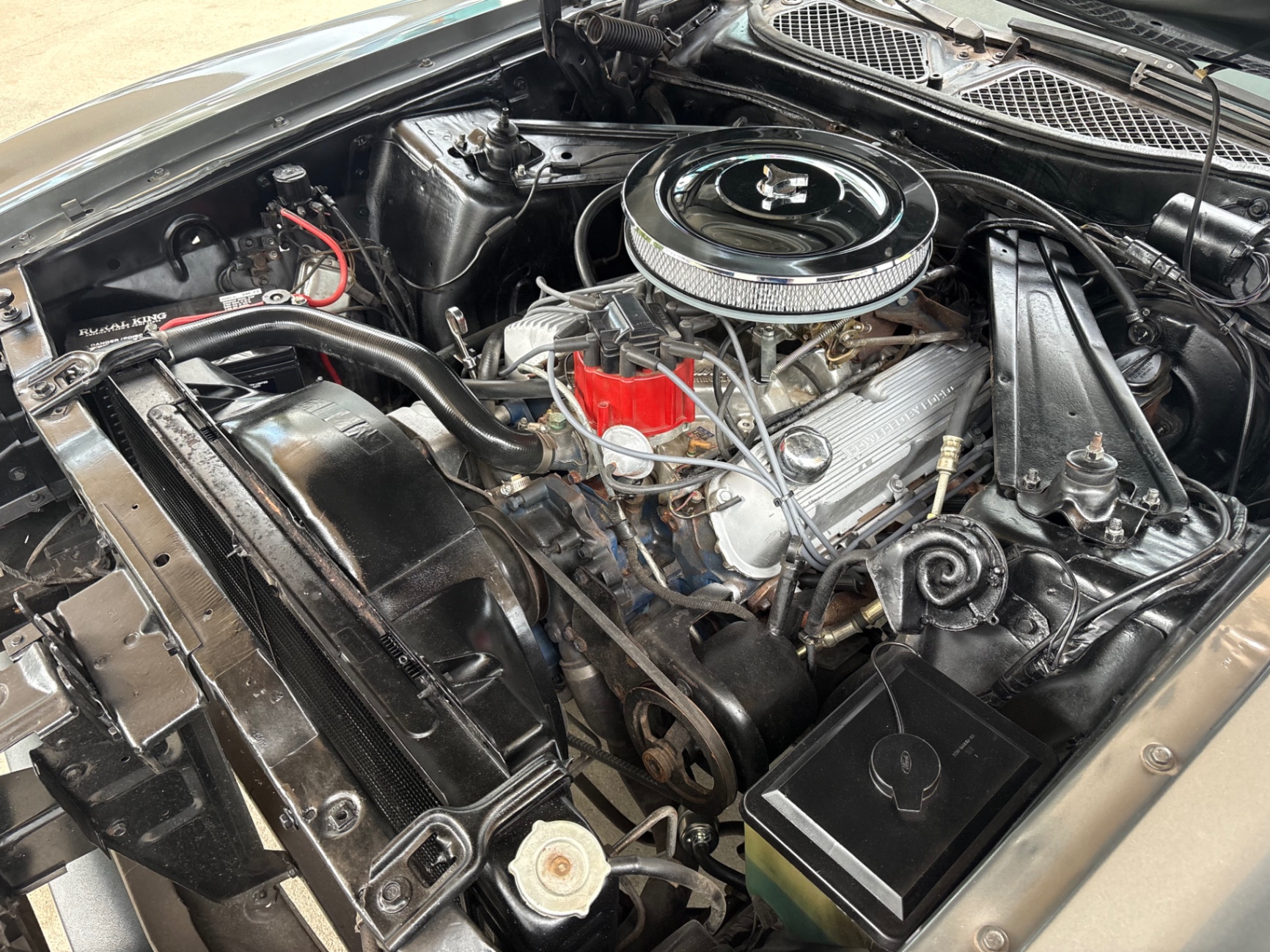
The 302 cubic inch small-block V8 was a well-proven engine by 1973, having been in continuous development since 1968. Ford marketed it as the "Windsor" 302, and while net horsepower ratings had come down from the high-compression muscle car era due to new SAE net measurement standards and emissions tuning, the 302 remained a capable and durable engine with a long service history. Its compact dimensions made it a natural fit for the Mustang's engine bay, and the combination of a lightweight short-stroke design and broad parts availability has made it one of the most supported classic V8s in existence today.
Backing the 302 is a 3-speed automatic transmission, which Ford sourced as the SelectShift unit during this period, allowing manual gear selection when the driver chose to use it. The combination of the 302 and automatic made this car a comfortable highway cruiser with enough pull to feel like a proper V8 Mustang. Power steering and power brakes are both present. The front brakes are discs — an important safety upgrade that Ford made standard on V8 Mustangs — while the rear uses drums, which was the standard configuration for this generation.
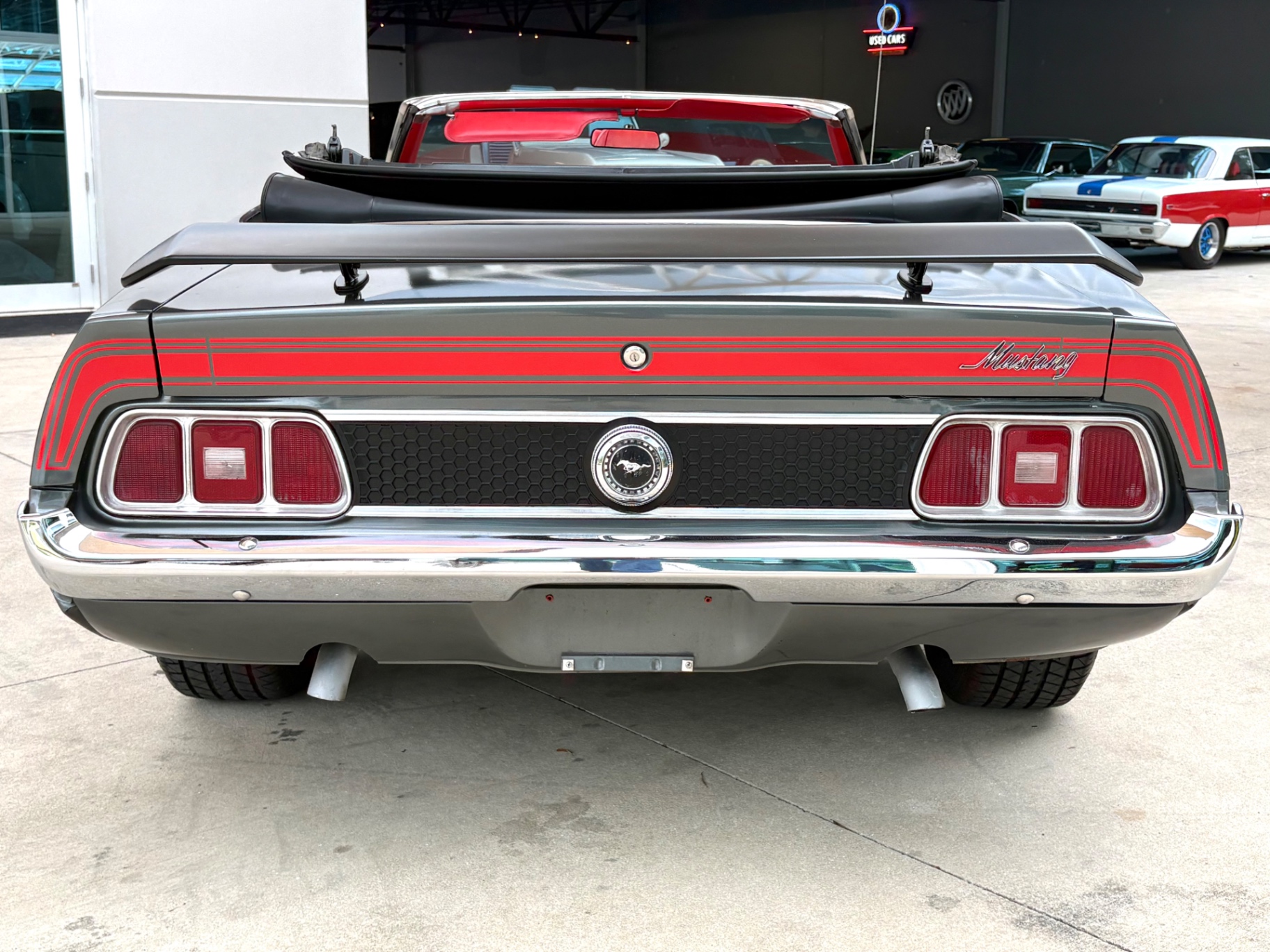
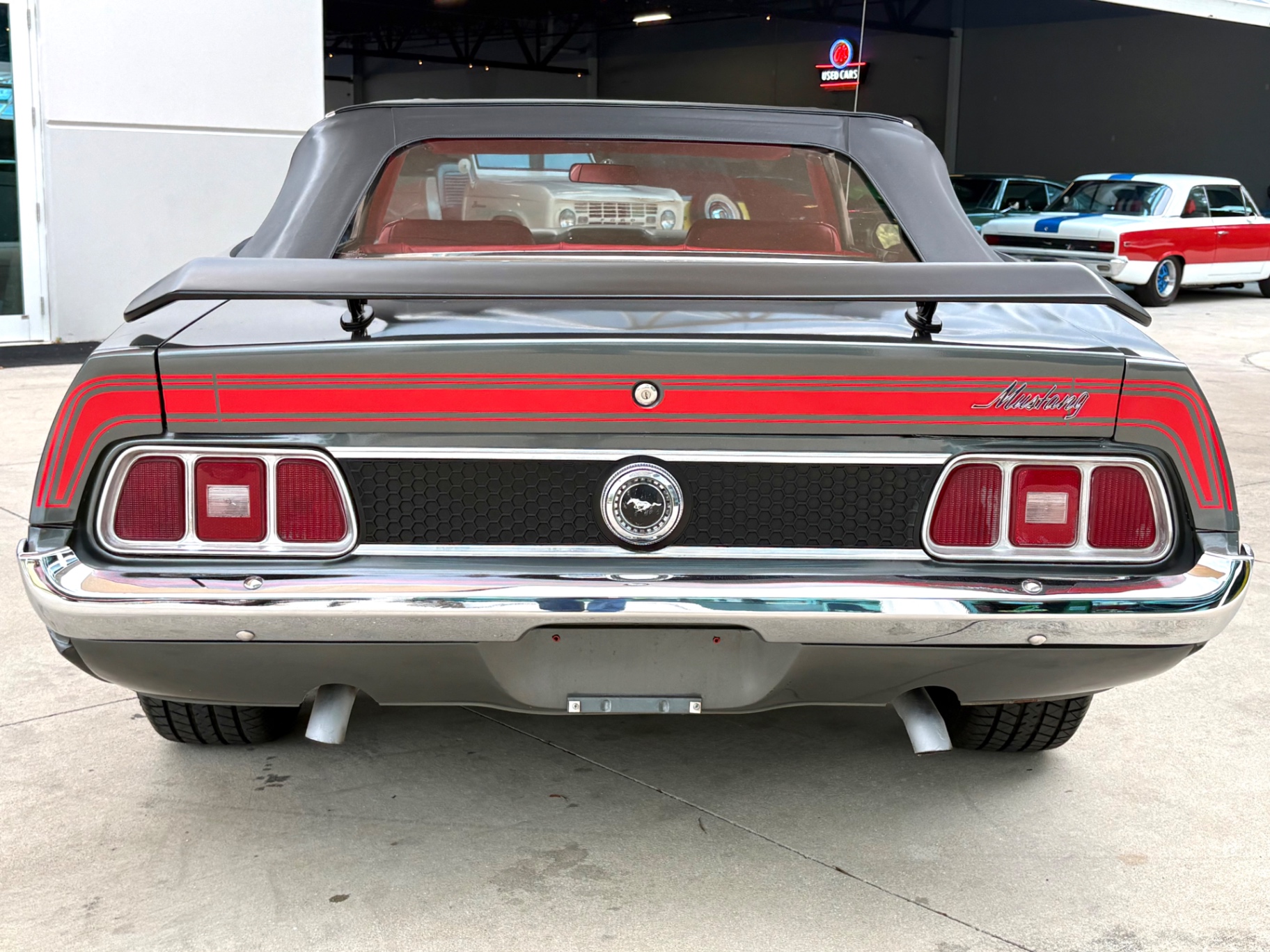
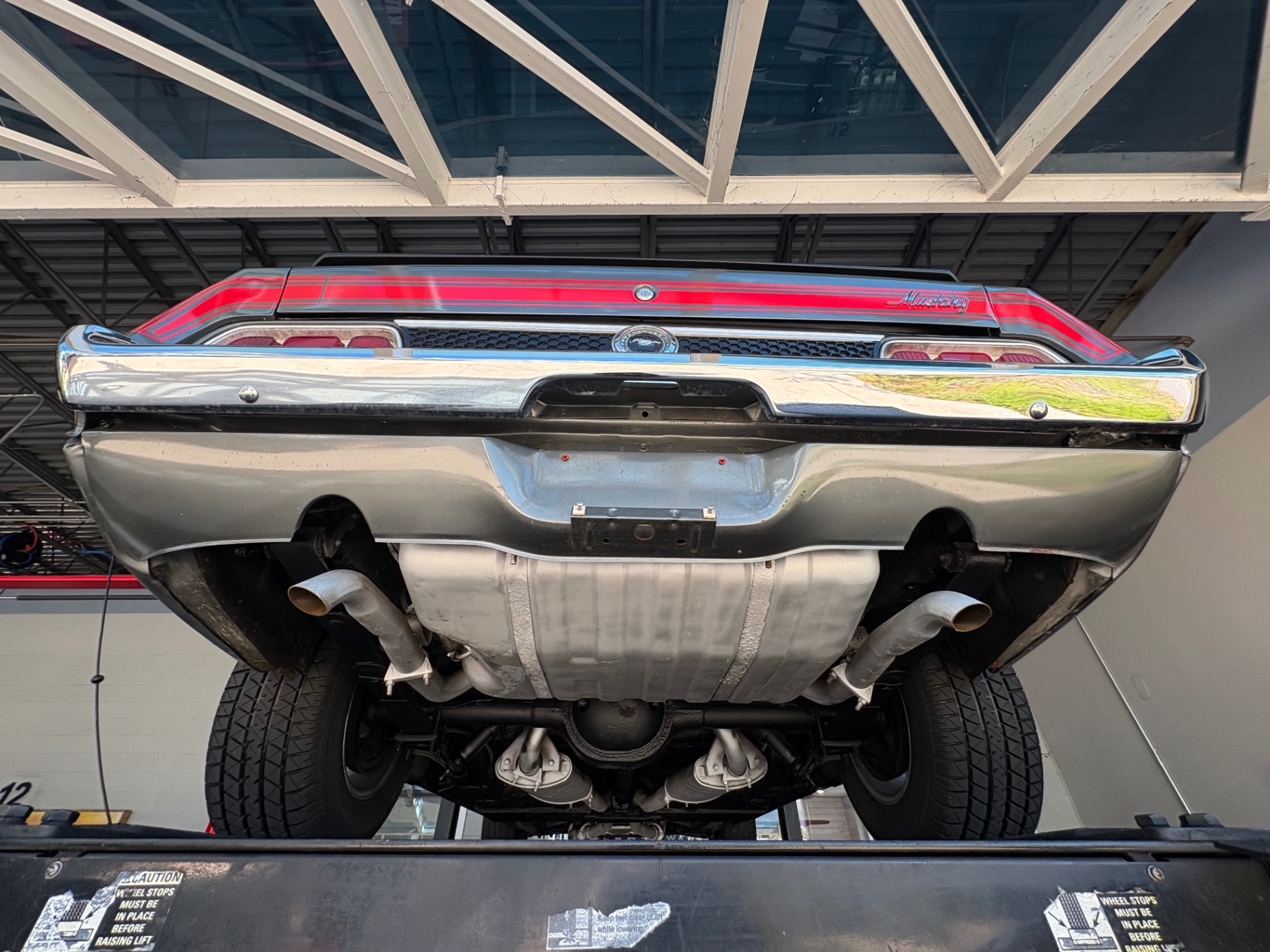
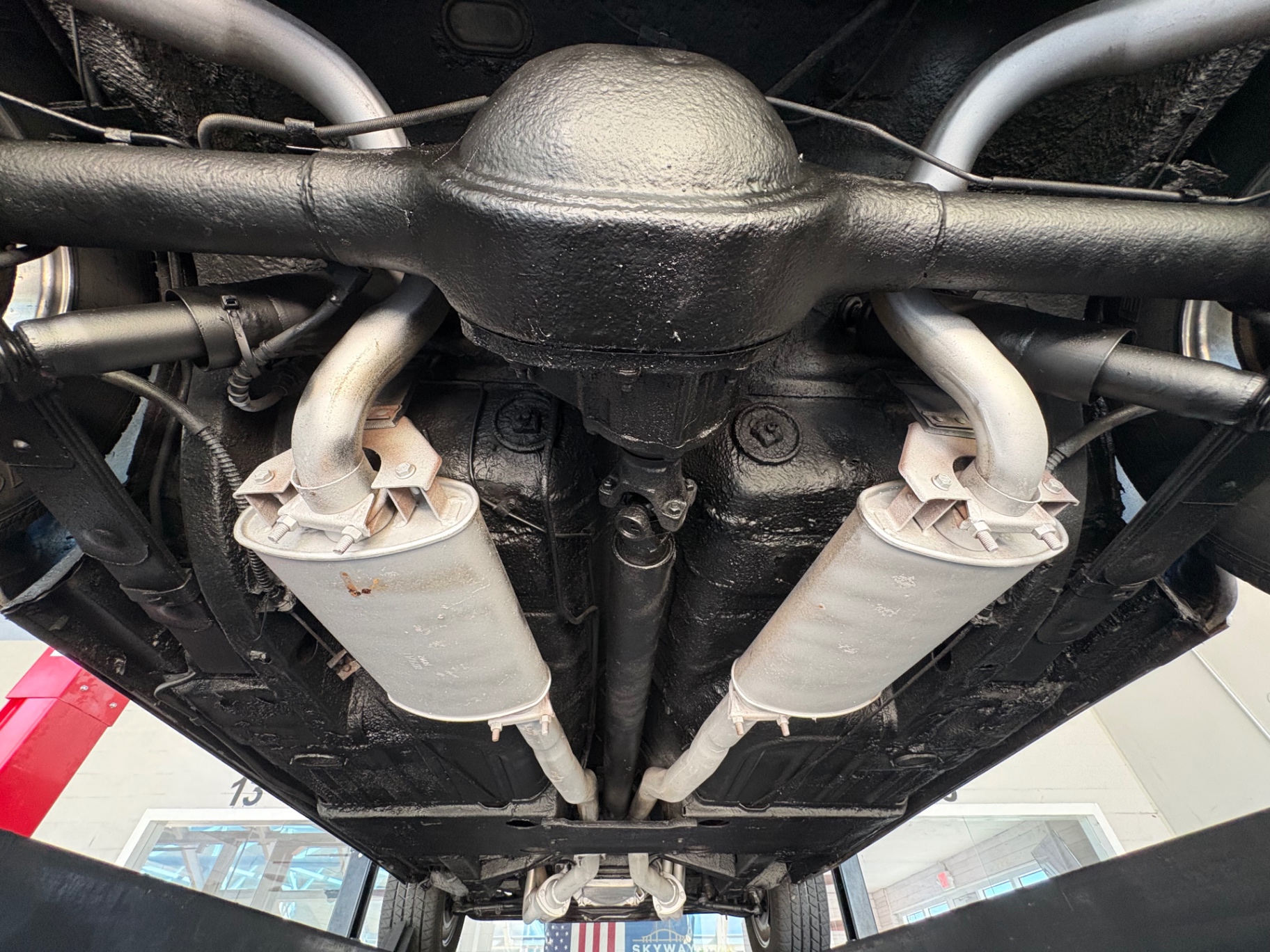
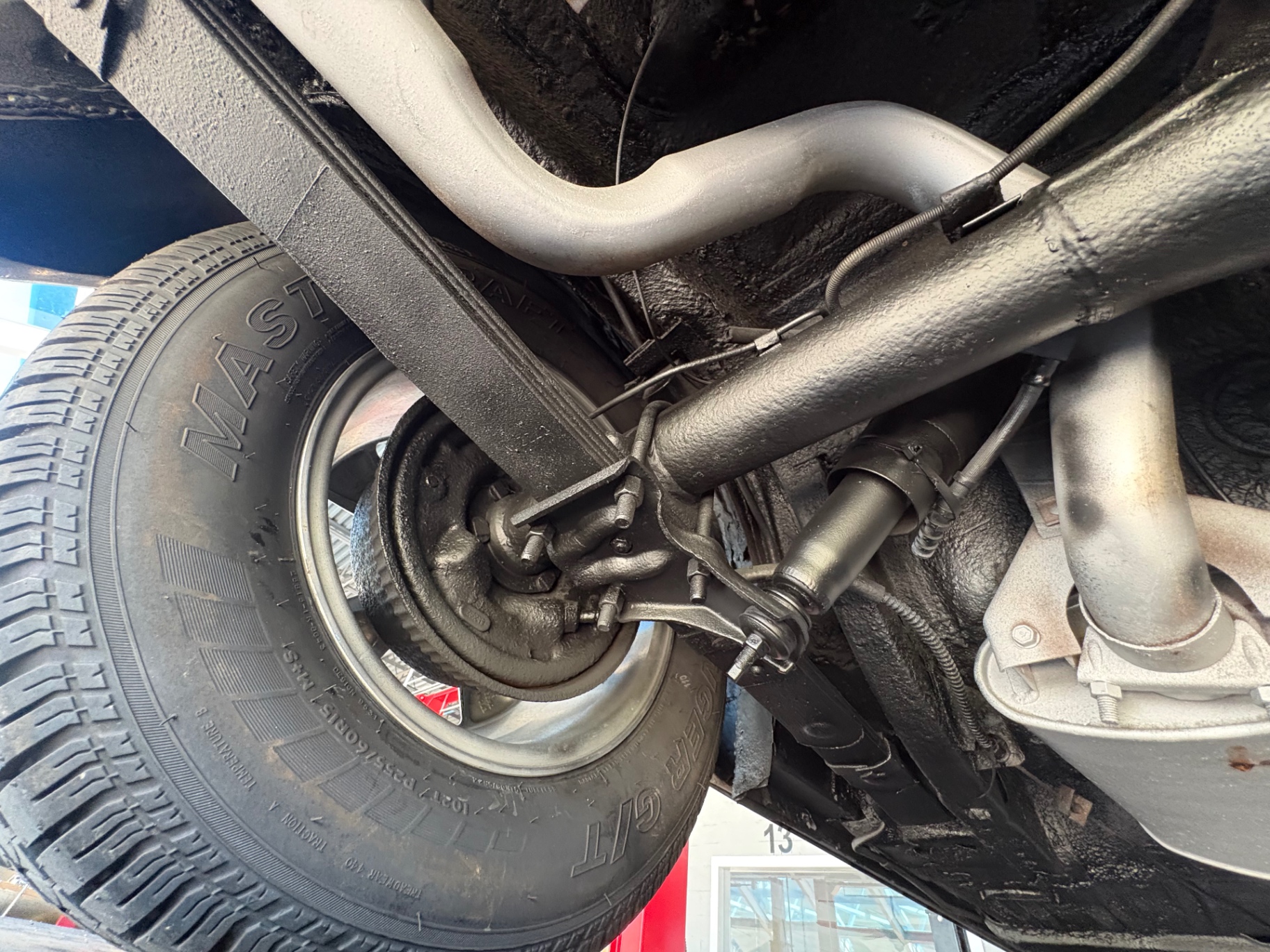
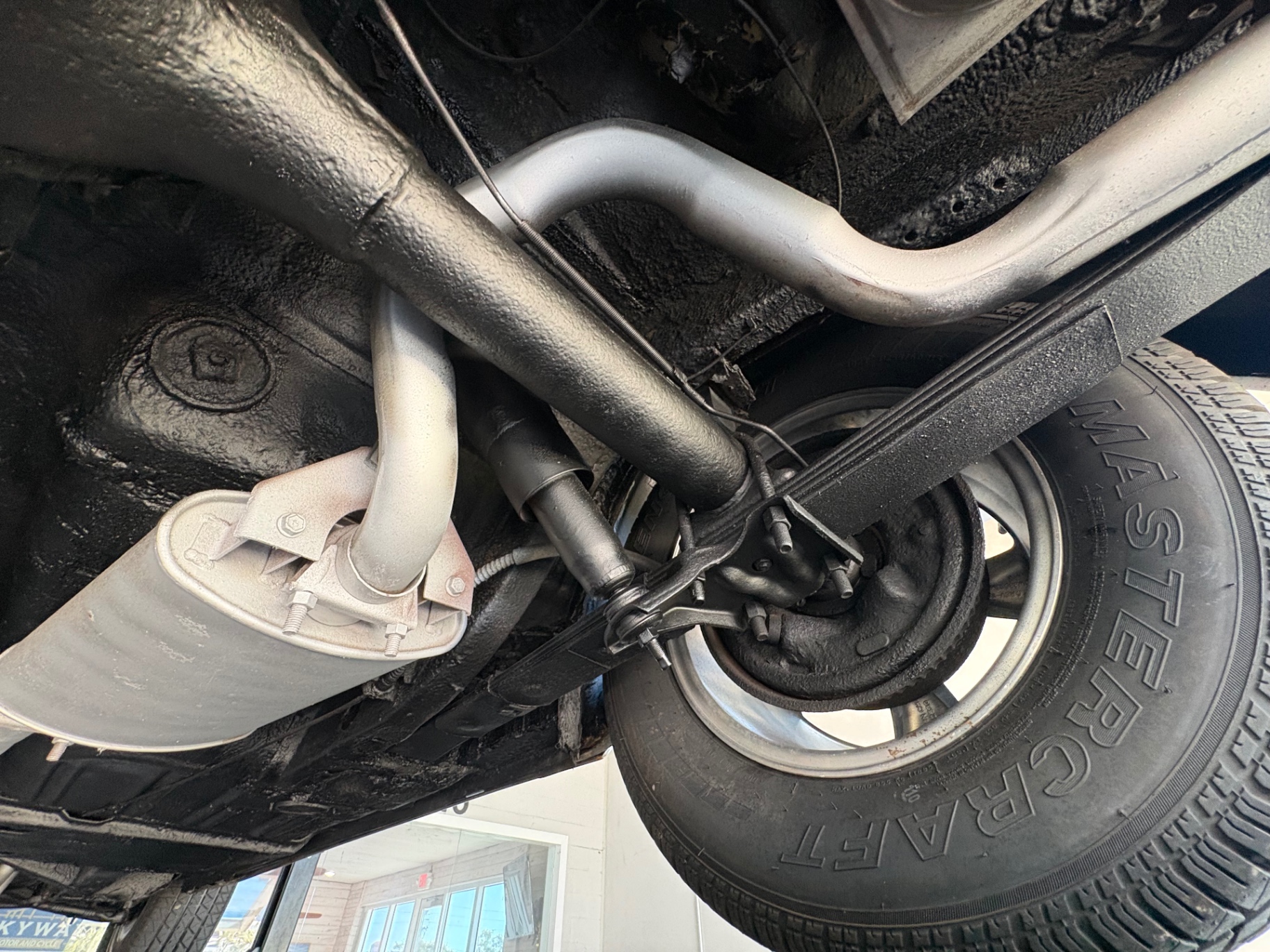
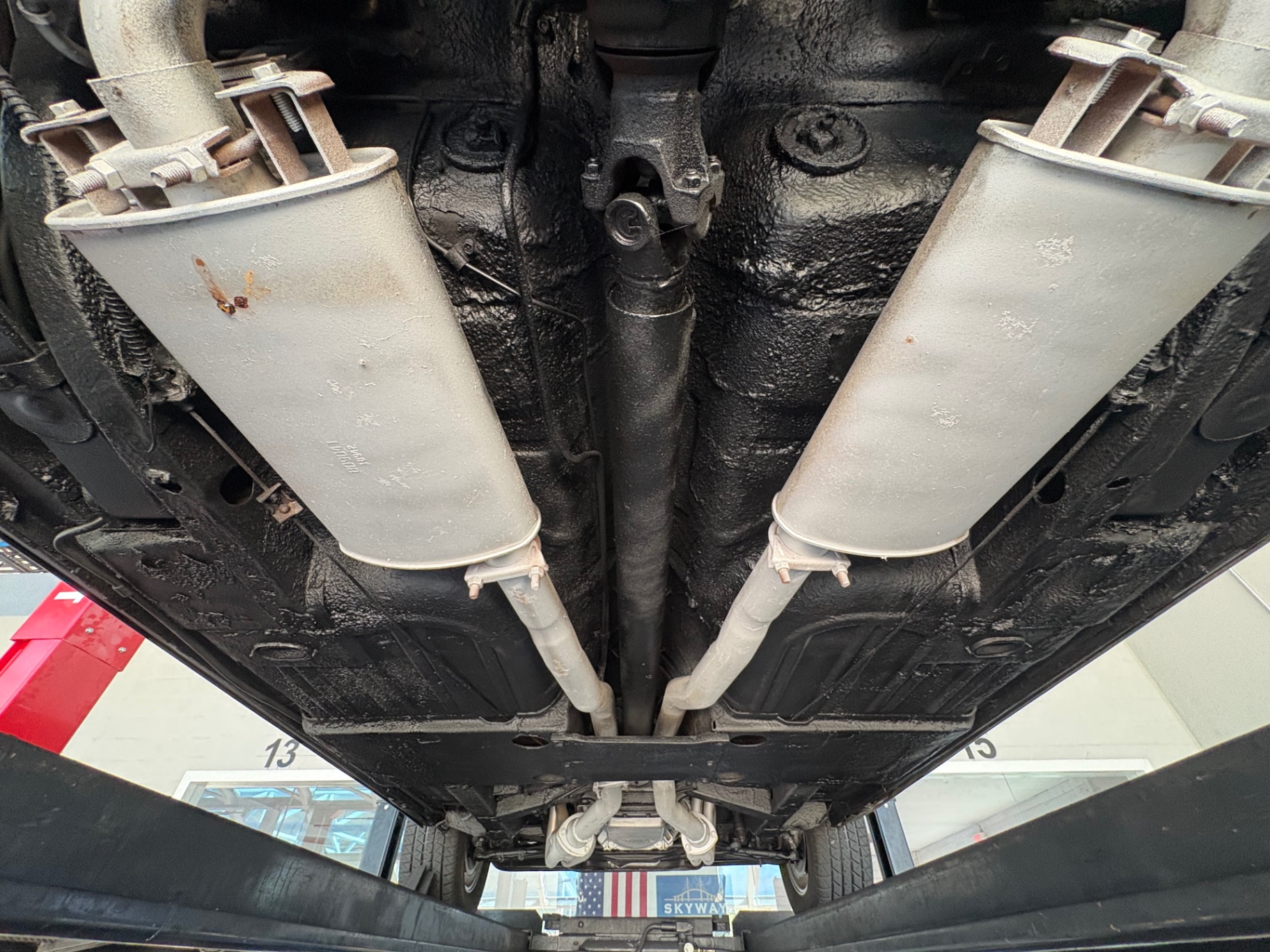
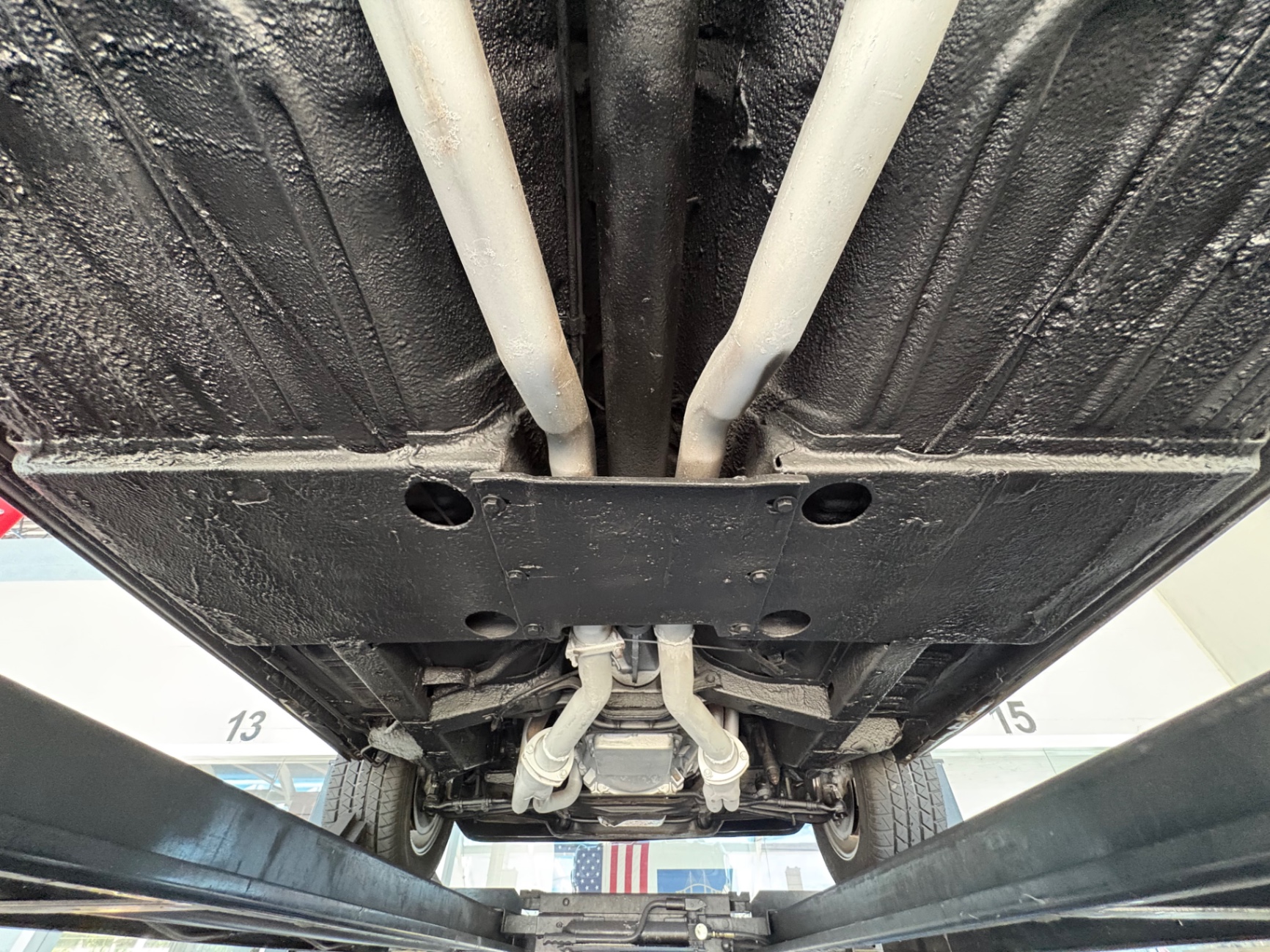
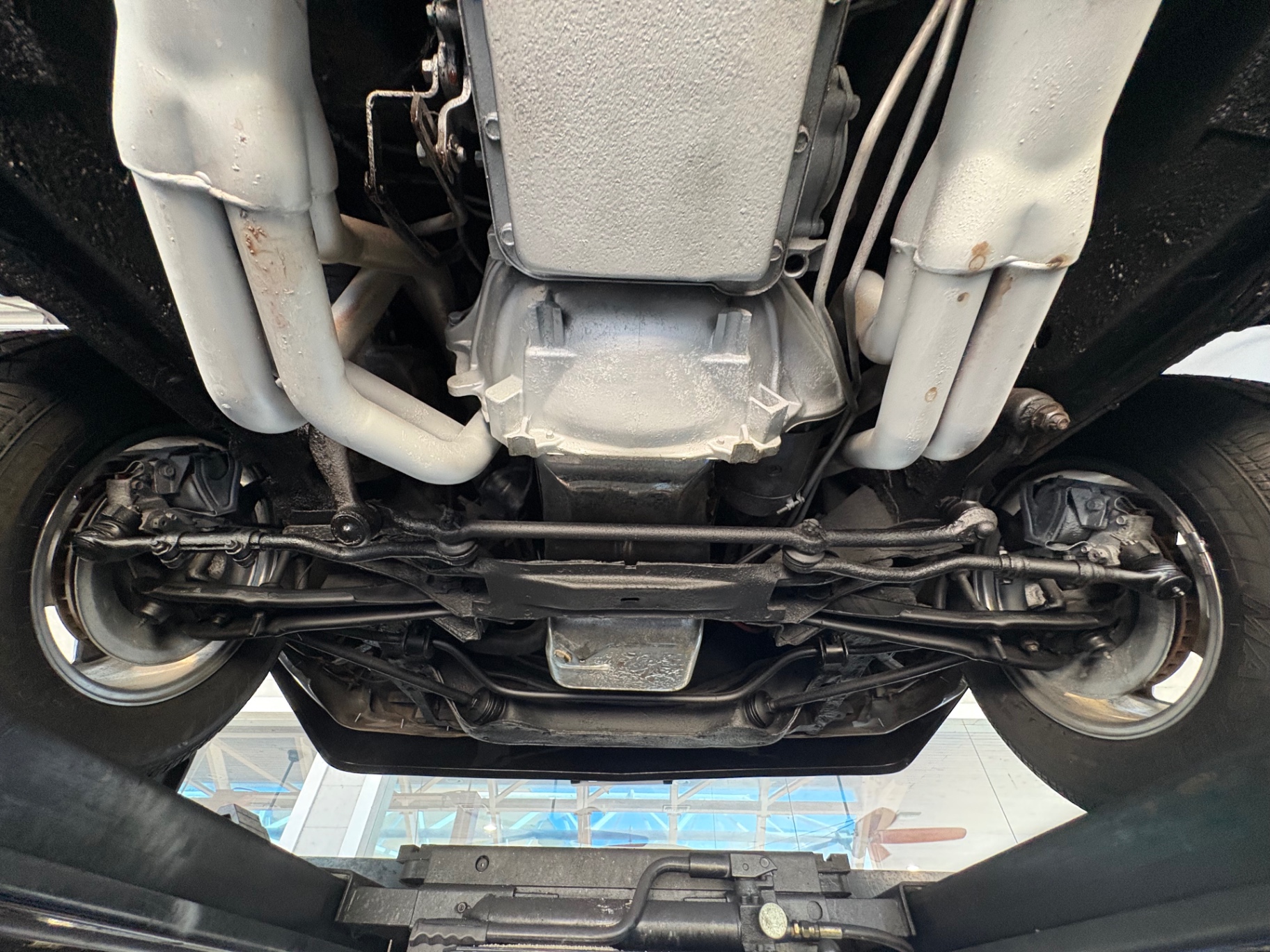
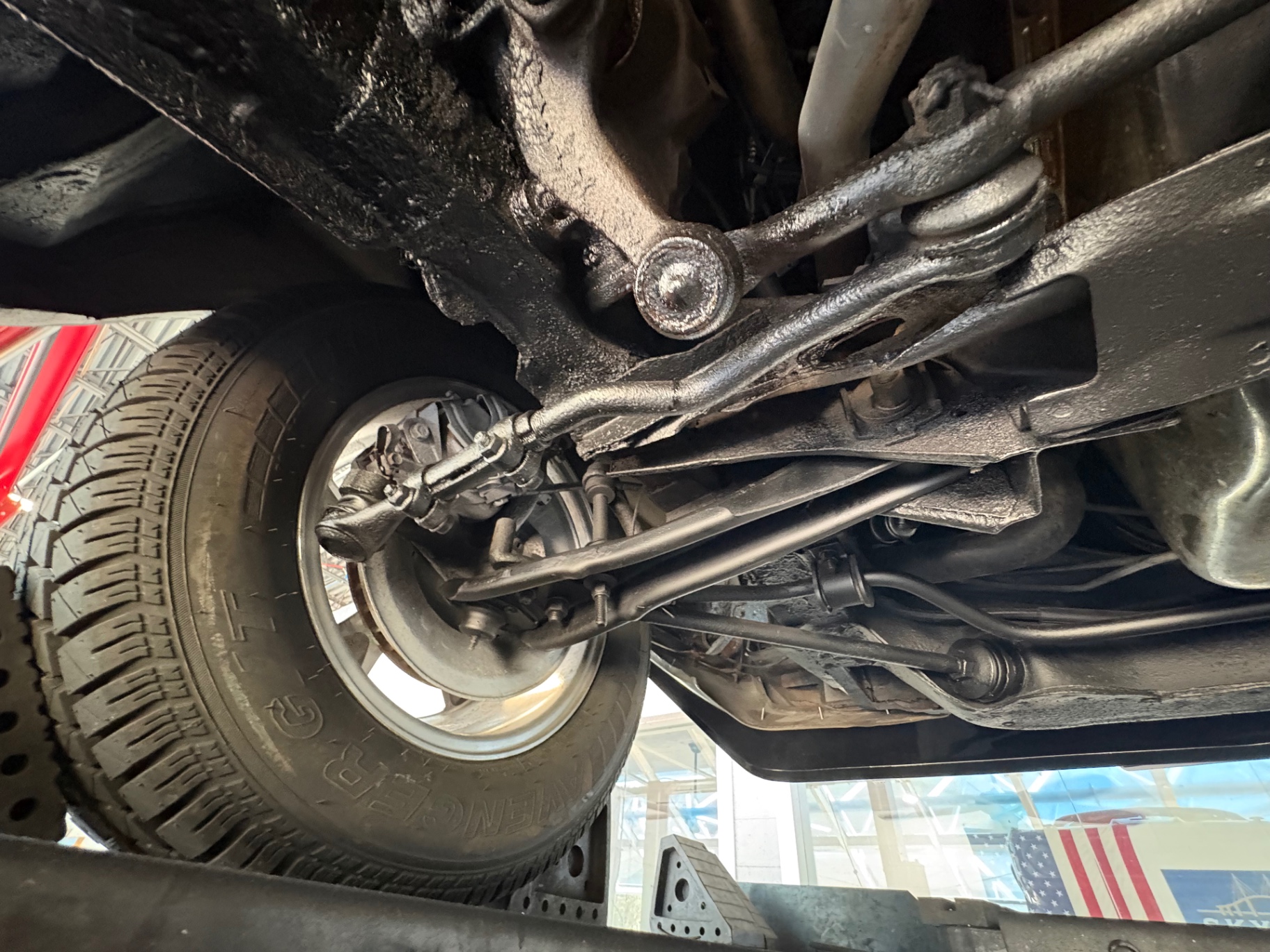
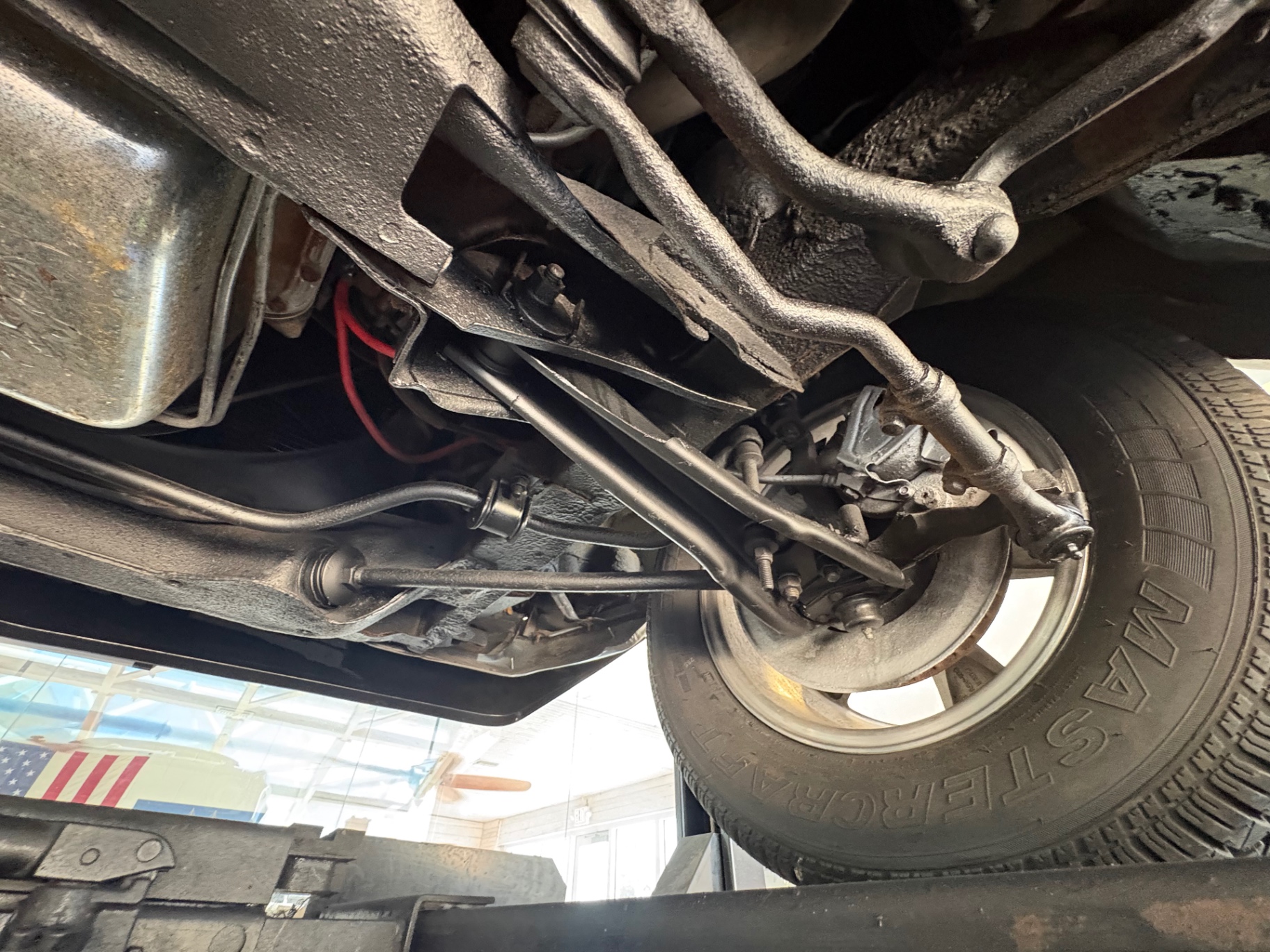
The dual exhaust system exits cleanly at the rear and is clearly visible in the underbody photos. The floor pan has been coated, and the underside of this 1973 Ford Mustang convertible presents well, with no visible rot or major structural concerns evident in the lift photos. The exhaust routing, suspension components, and rear axle all appear solid and properly sorted. The front suspension uses the Mustang's long-running strut-rod front end layout, and the undercarriage shots confirm that the front disc brake setup is intact and in place. Headers are visible in the engine bay area photos, suggesting the exhaust system has seen some attention during the car's life, which is consistent with a vehicle that has been maintained and driven rather than ignored.
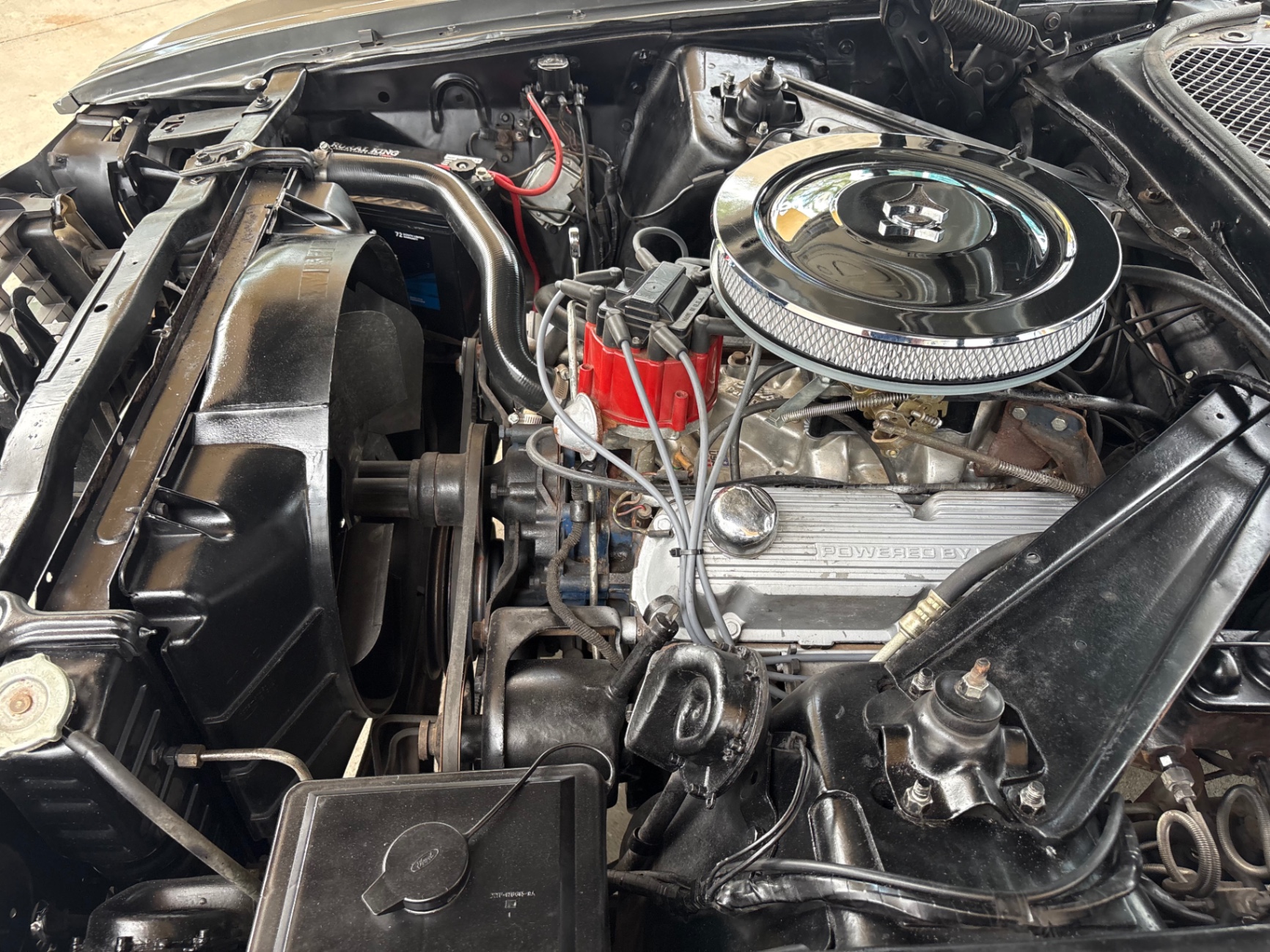
The NASA-style hood scoop on the 1973 Ford Mustang was not purely decorative on all applications, and the presence of dual exhaust and the V8 engine here suggests this car was put together with performance presentation in mind. The engine bay has chrome and polished accents including a chrome air cleaner and dressed valve covers, which read cleanly in the photographs.
Interior
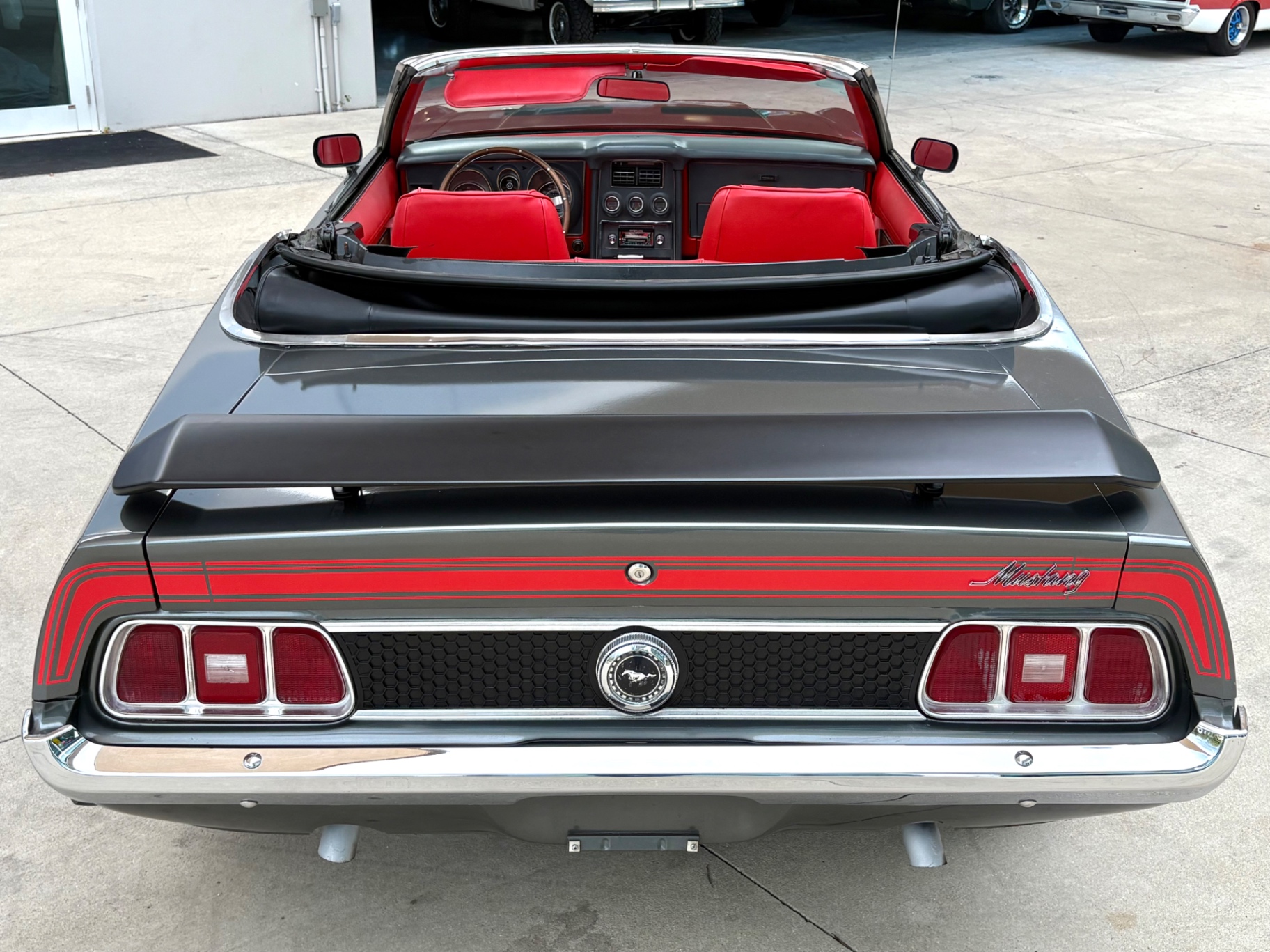
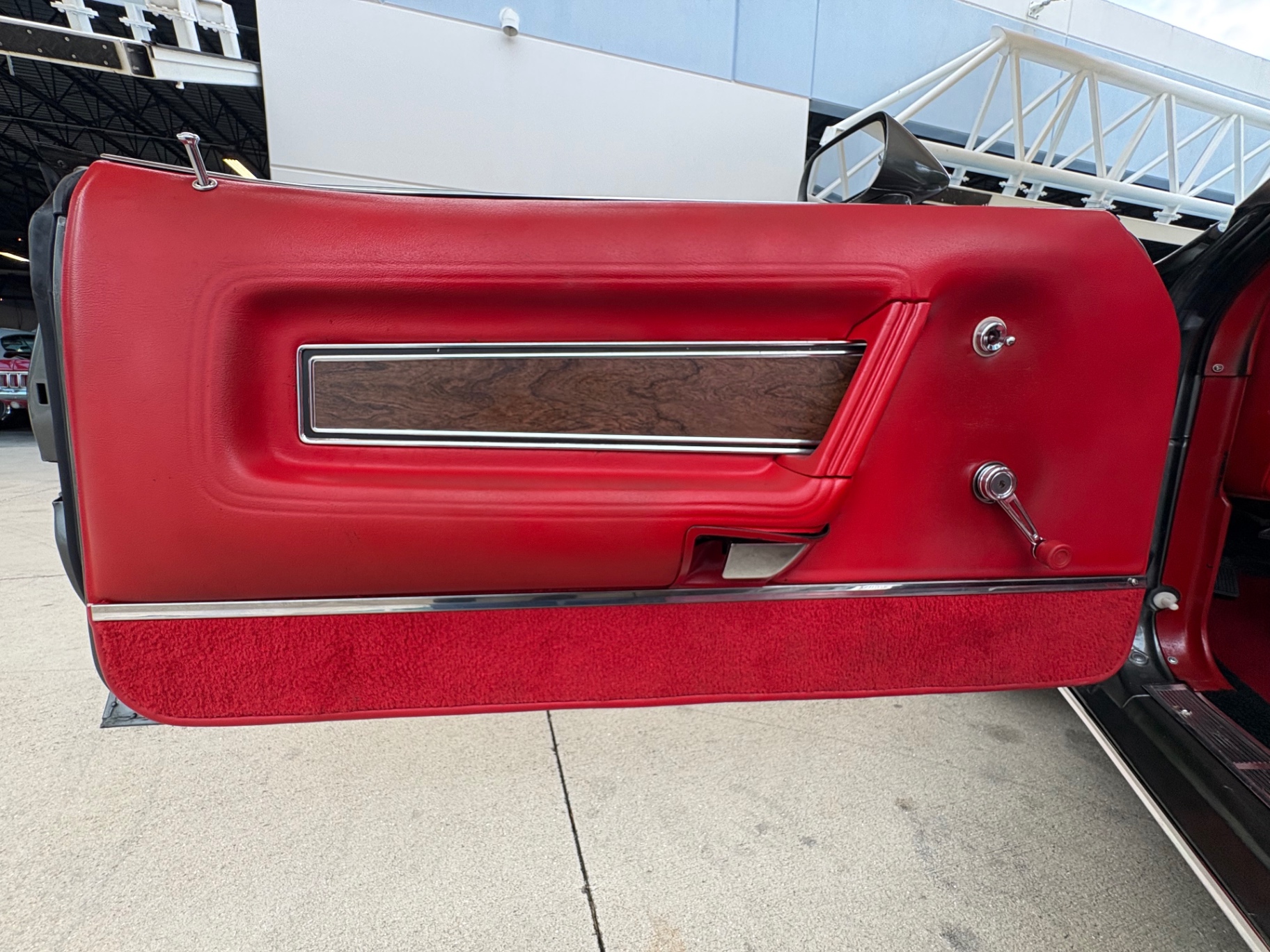
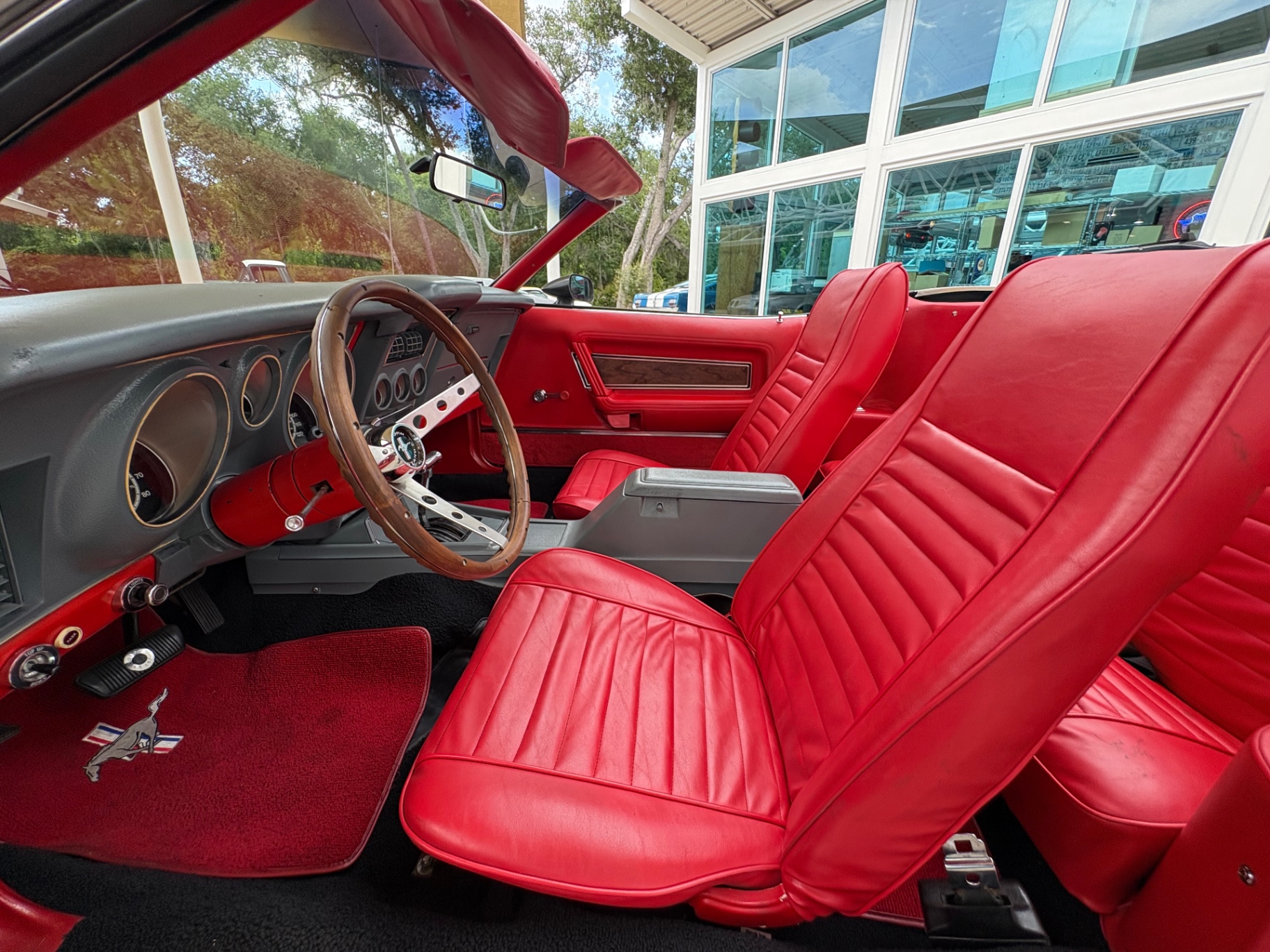
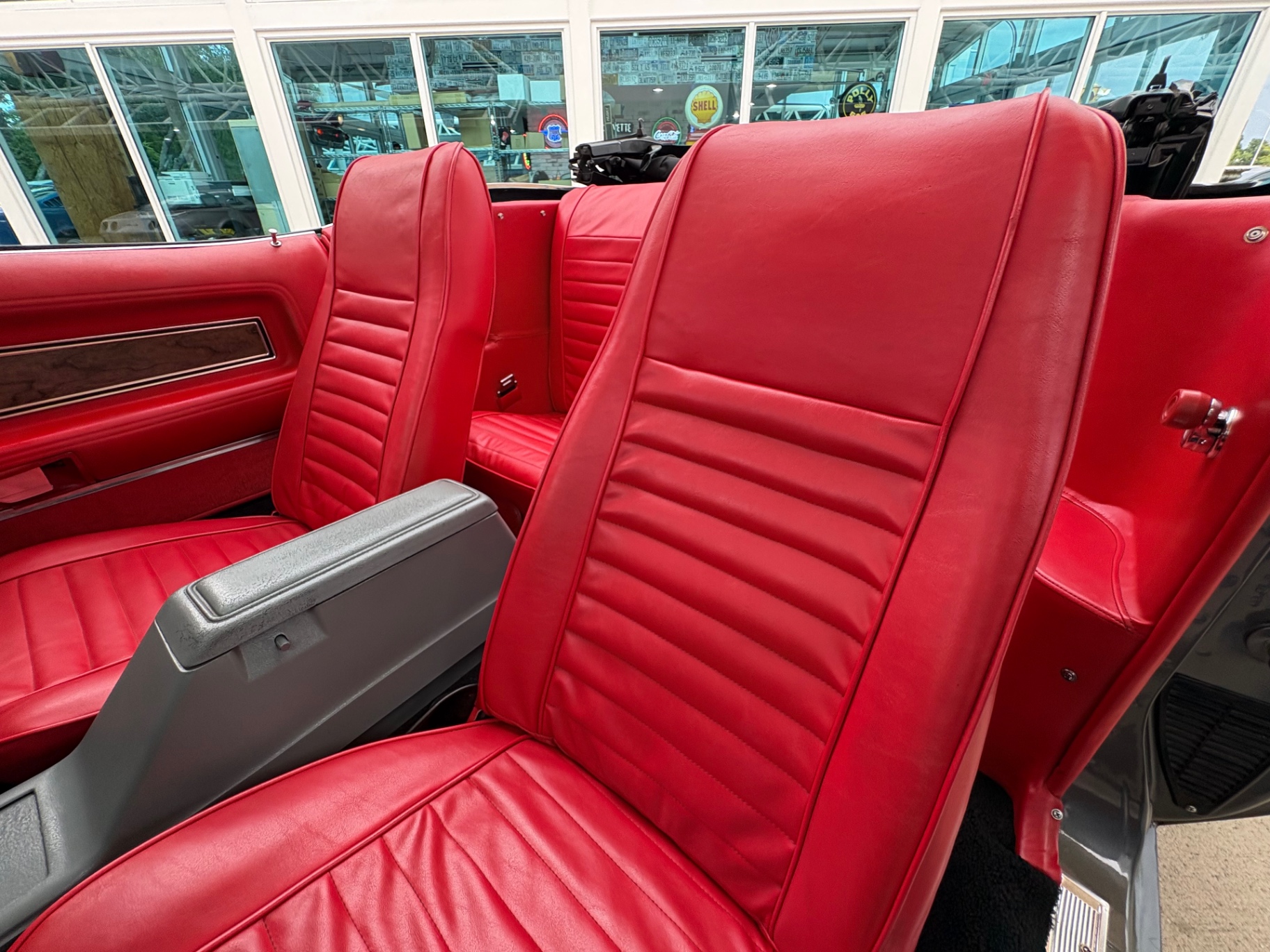
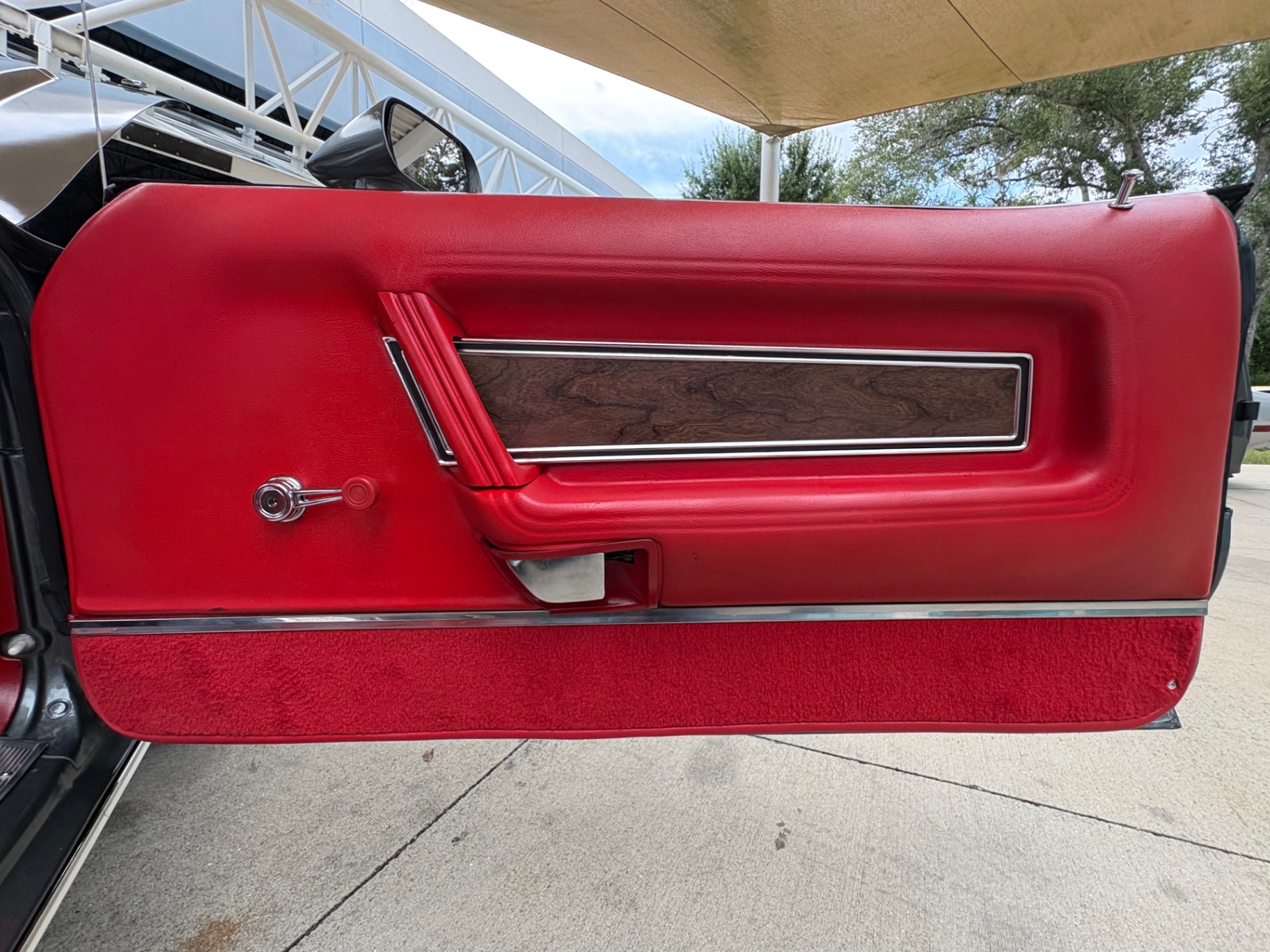
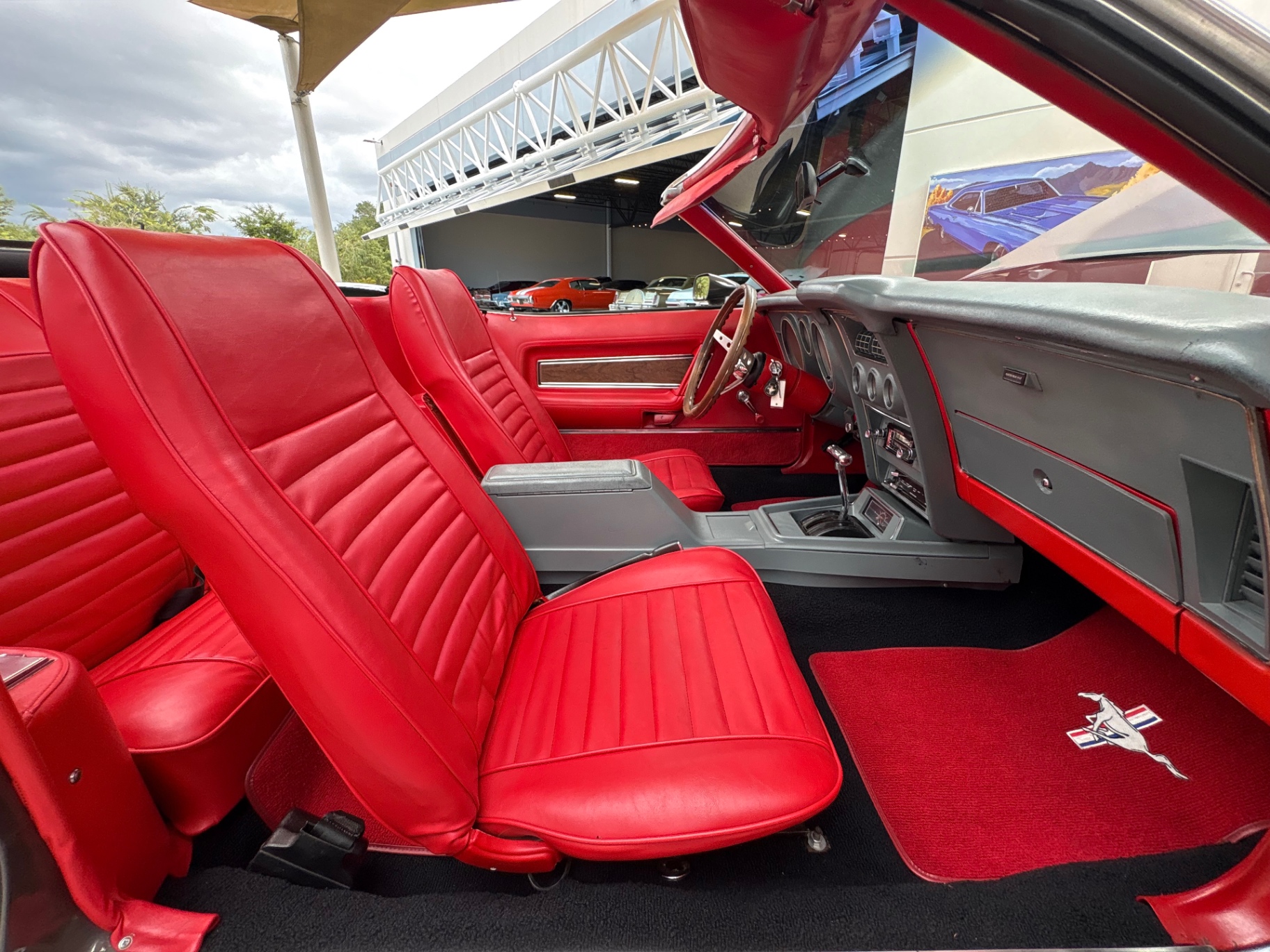
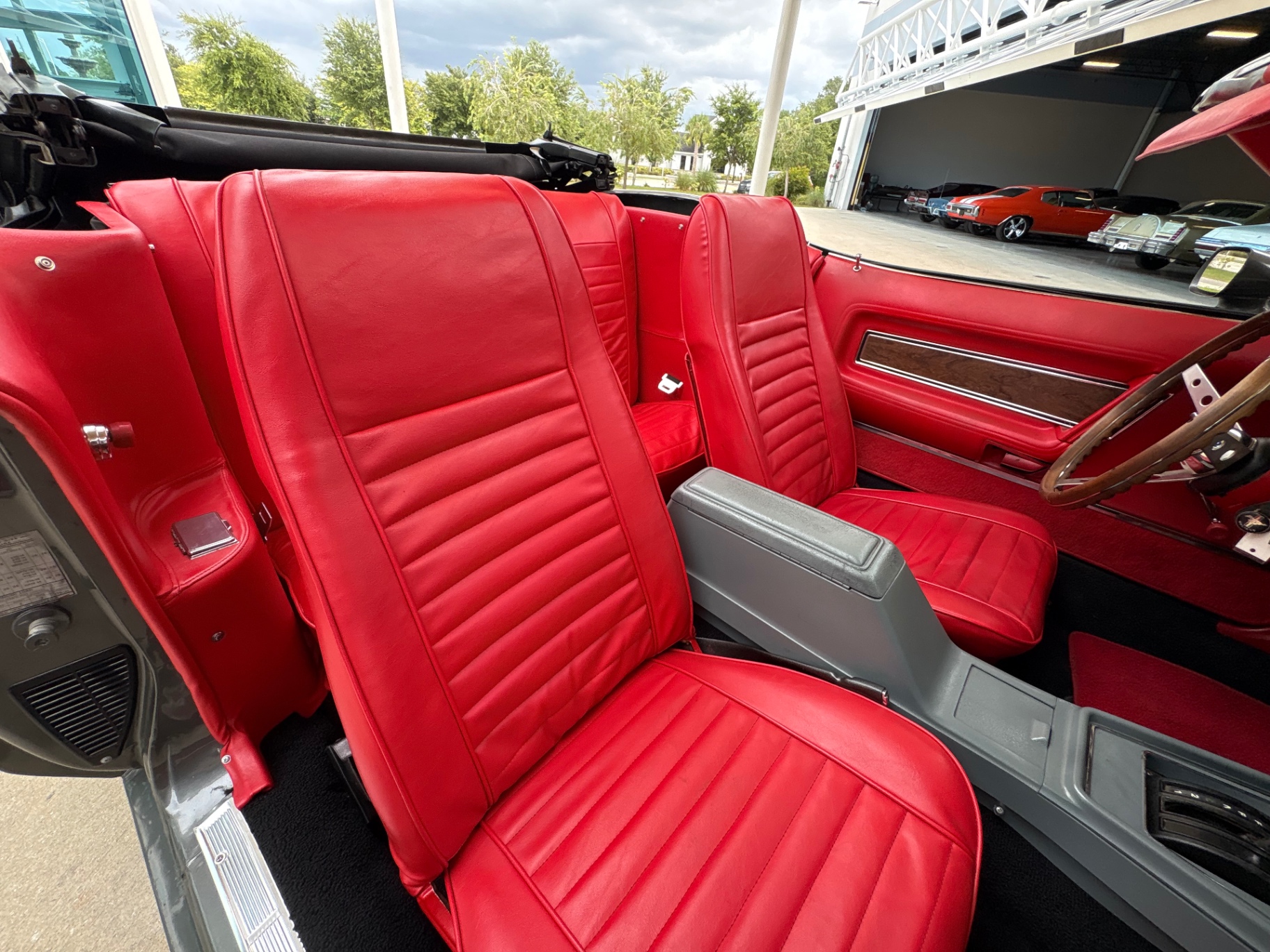
The interior of this 1973 Ford Mustang convertible is finished entirely in red vinyl, and the photographs show it in sharp condition. The bucket seats front and rear are upholstered in ribbed red vinyl, which was the correct style for this generation. The door panels carry the matching red vinyl with woodgrain inserts framed in bright chrome trim — a detail that reads particularly well in person. The door panel carpet kick panels at the bottom are also red, tying the entire cabin together in a consistent color story.
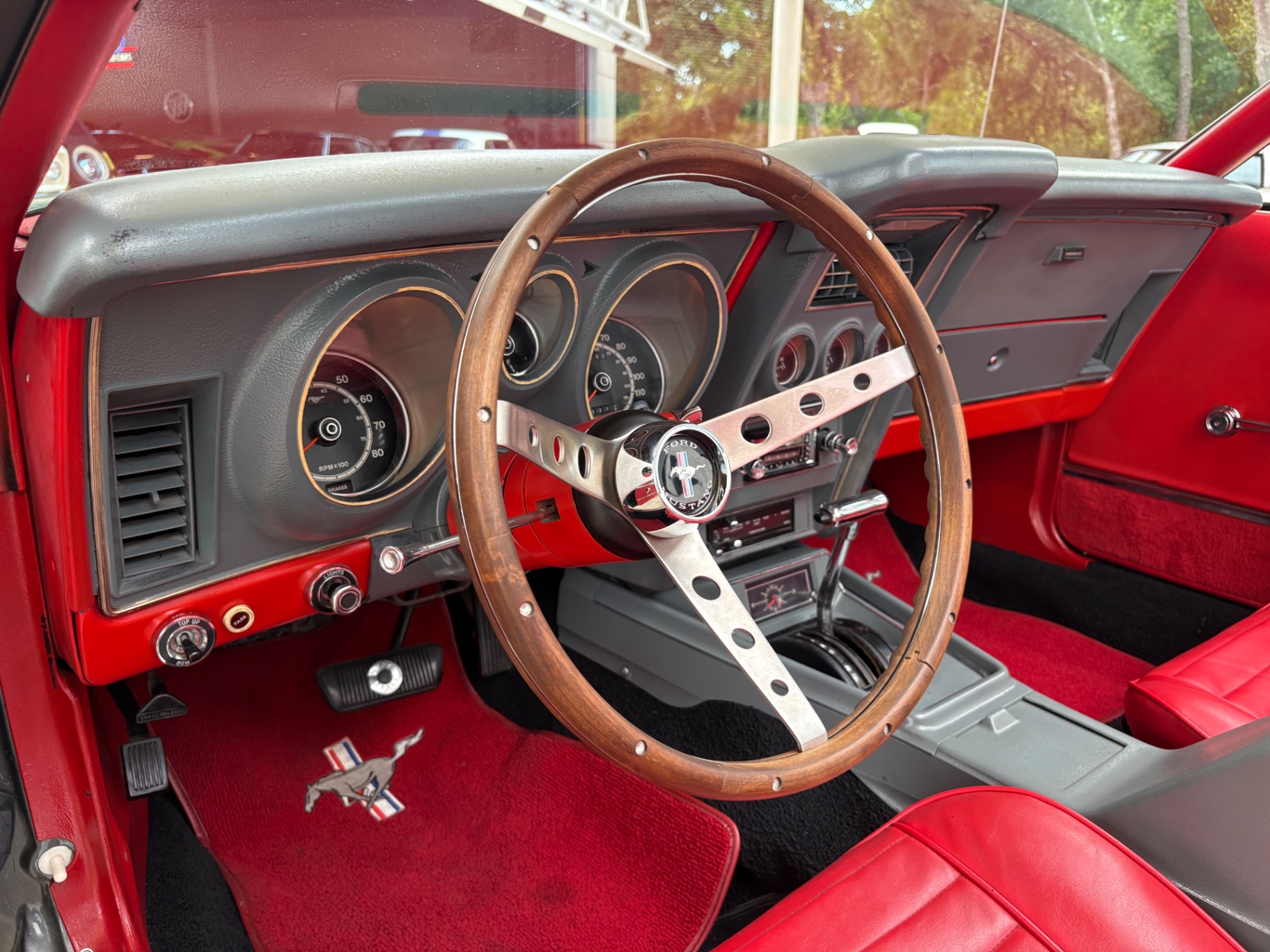
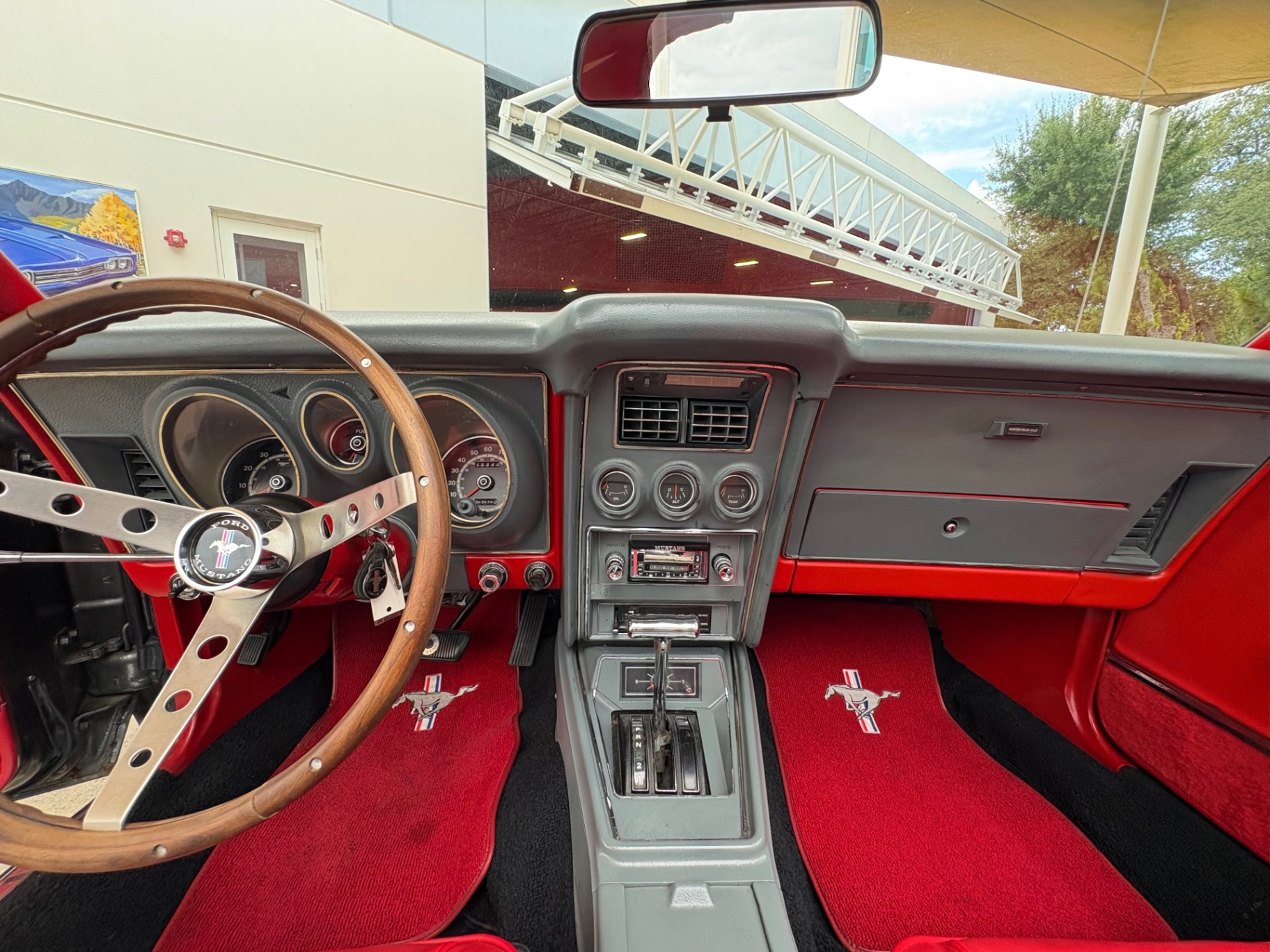
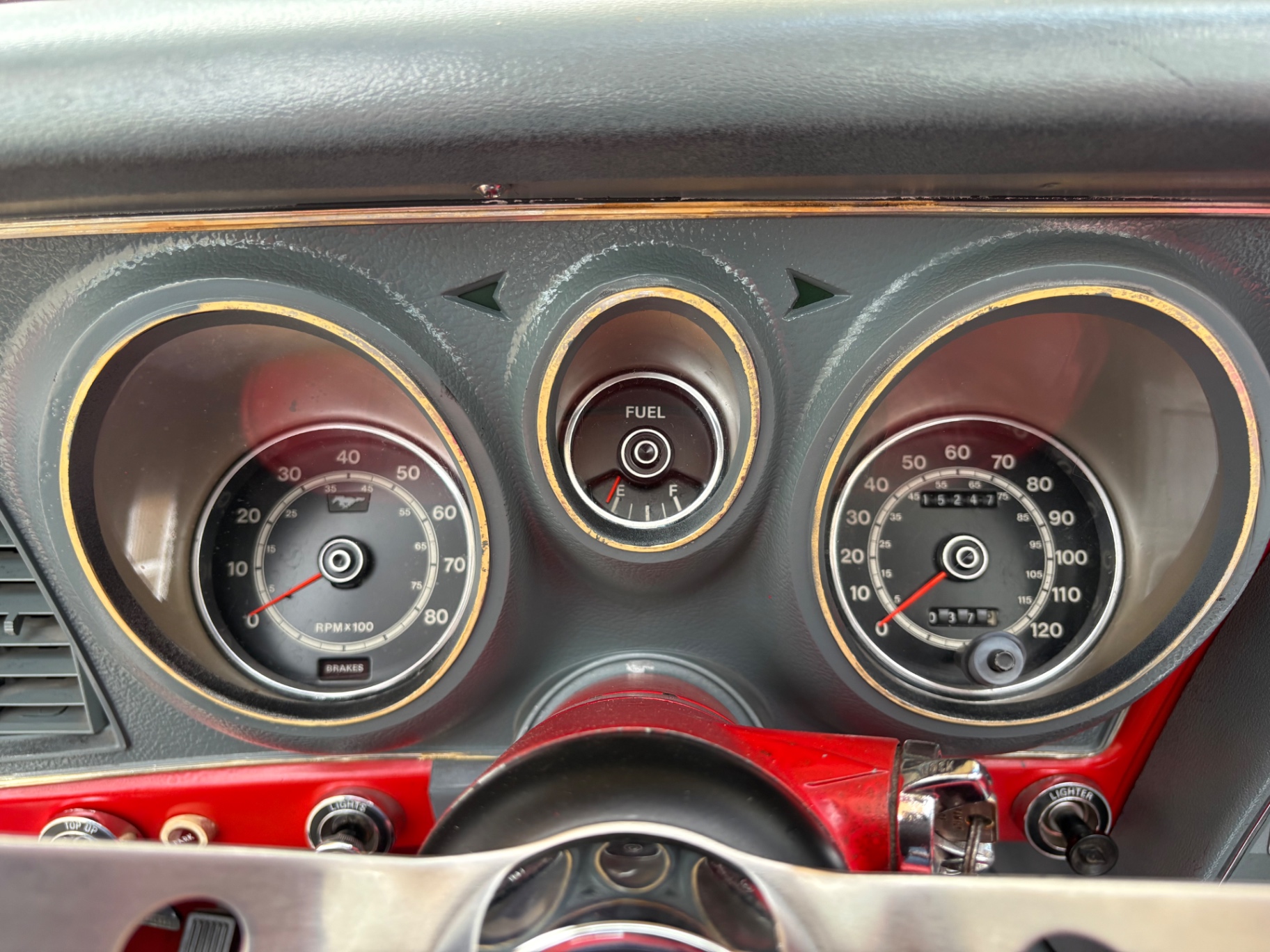
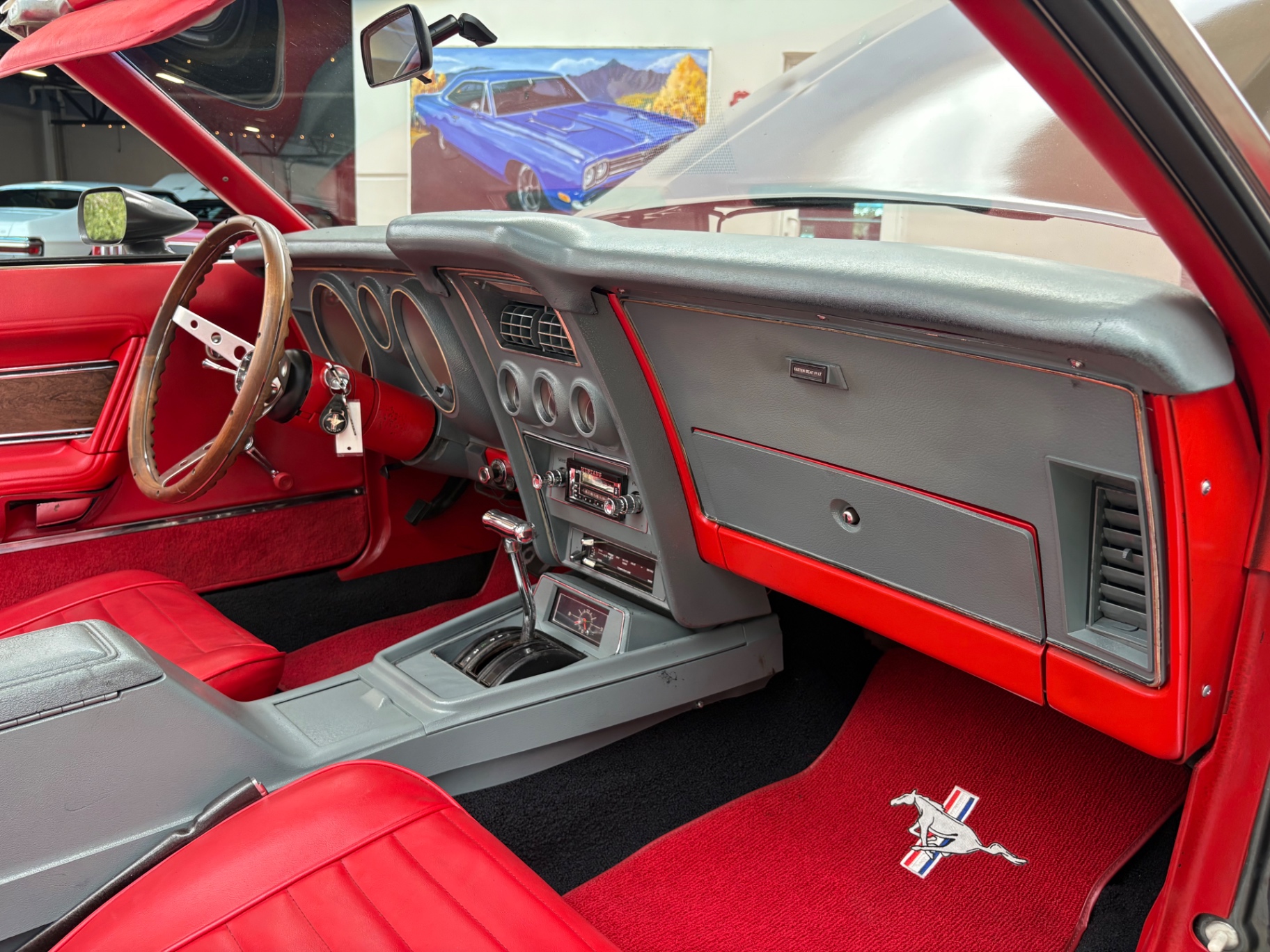
The wood-rim steering wheel is a period-correct option that Ford offered on the 1971 through 1973 Mustang, and it centers the driver's side of the cockpit nicely. The instrument cluster on the 1973 Mustang used a three-pod dash design introduced with the 1971 body, and this car has the optional tachometer in the left pod alongside the fuel gauge in the center and speedometer on the right. The gauge pods are ringed in gold trim and set against the dark instrument panel, giving it a clean, purposeful look.
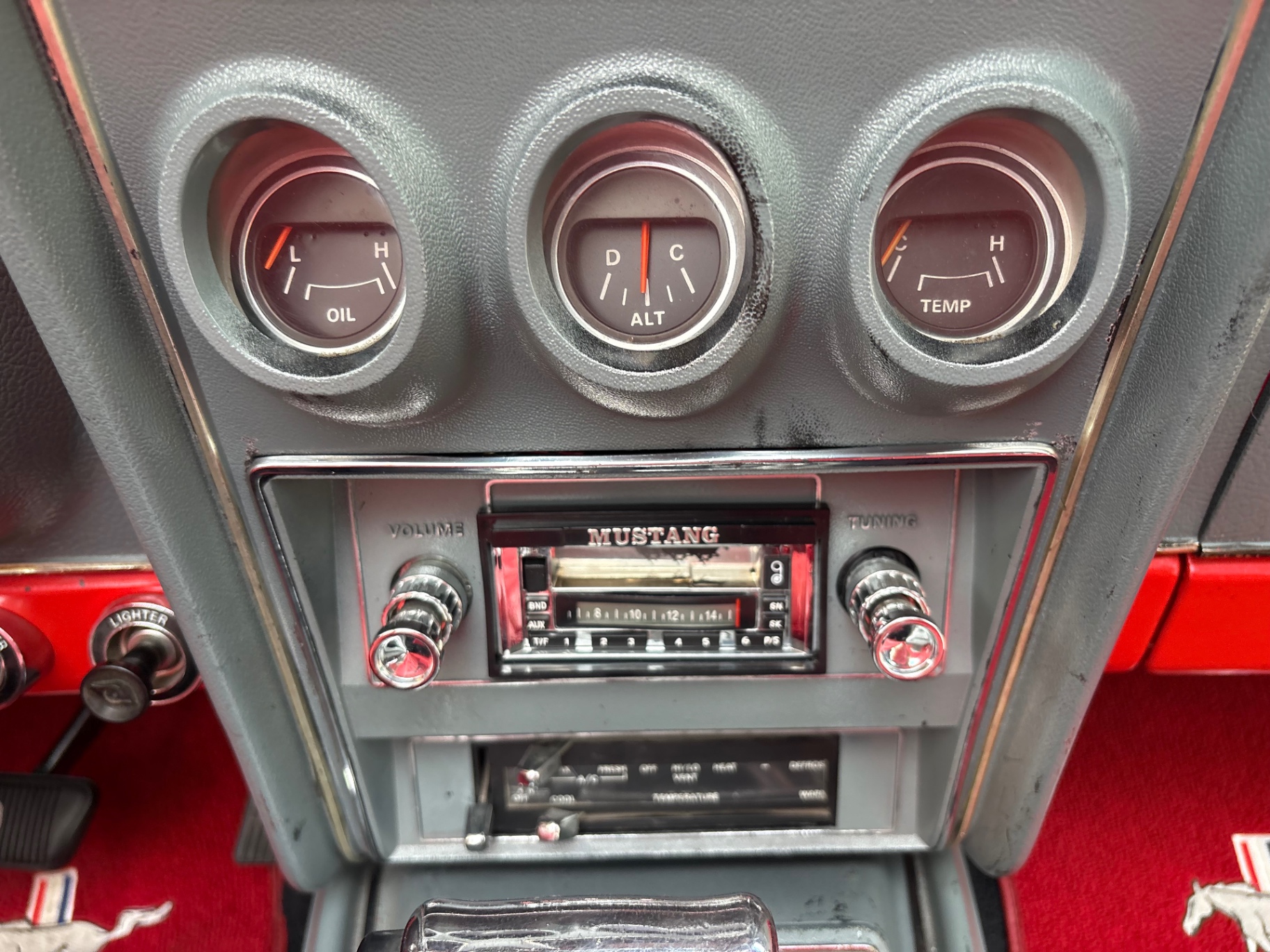
Auxiliary gauges — oil pressure, alternator charge, and coolant temperature — are mounted in a three-pod cluster in the center console area, positioned above the AM radio. Below those sits the factory-style Mustang-branded AM radio with its period-correct face. The console clock is also present, visible in the console between the seats. The climate controls are laid out in the center dash panel in the correct horizontal format for this generation, and the air conditioning controls are clearly shown in the photographs.
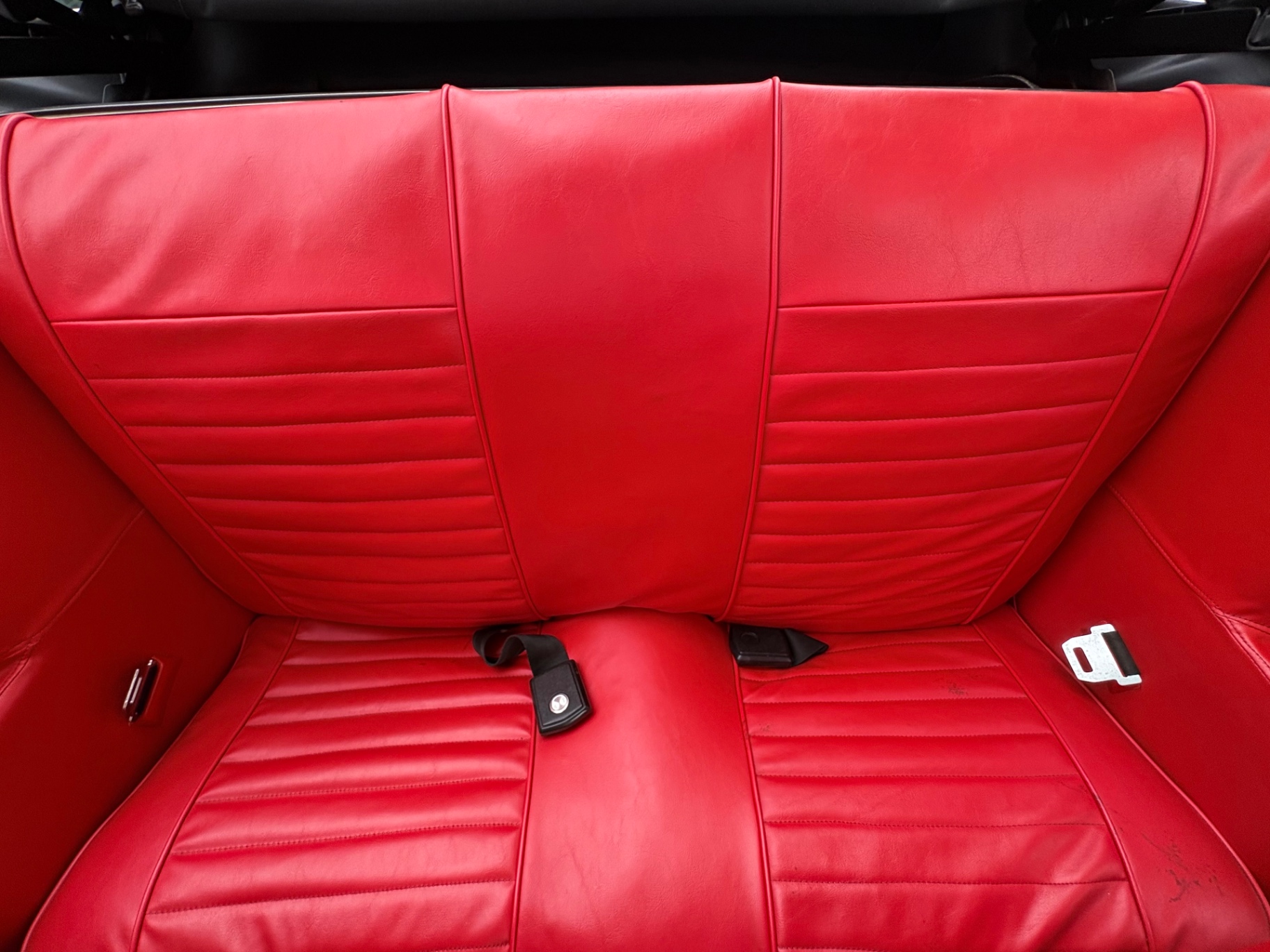
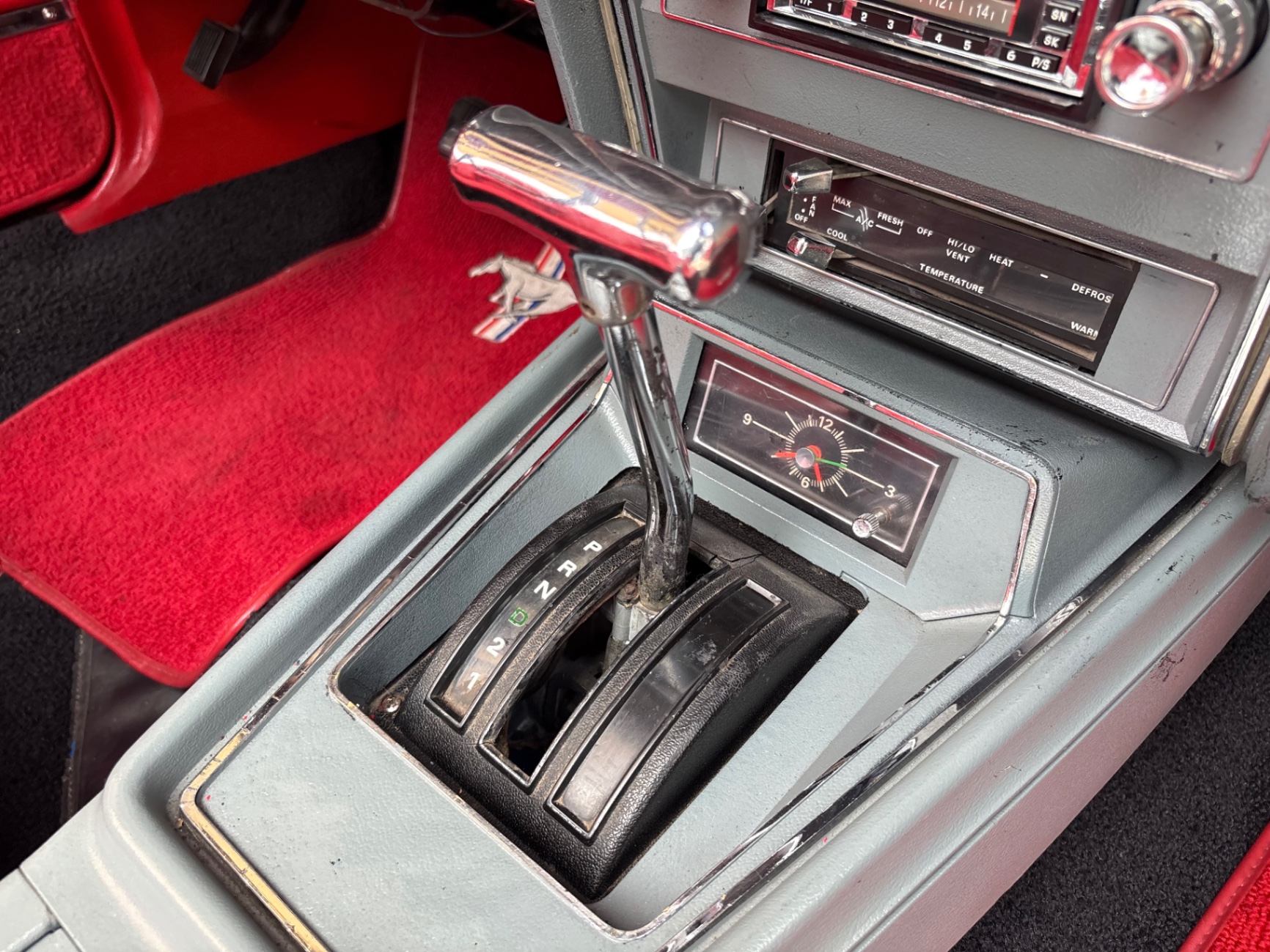
The center console houses the automatic shifter with a chrome T-handle, and the console clock sits just behind it. Pony floor mats with the running horse and tri-bar logo cover the floor on both sides. The rear seat area of the convertible is finished in the same red vinyl with ribbed upholstery, and the photos show it in presentable condition. The power top switch and related controls are mounted on the lower dash near the driver's left knee, which is the correct location for the 1973 Ford Mustang convertible.
Exterior
The Gray Metallic exterior on this 1973 Ford Mustang convertible is a low-key, serious color choice that works well against the red side stripe package and the black convertible top. The contrast between the three colors — gray body, red stripe, black top — gives the car a composed, purposeful appearance without relying on a flashy primary color. The red stripes run along the lower body and are correct to the sport stripe packages Ford offered during this period.
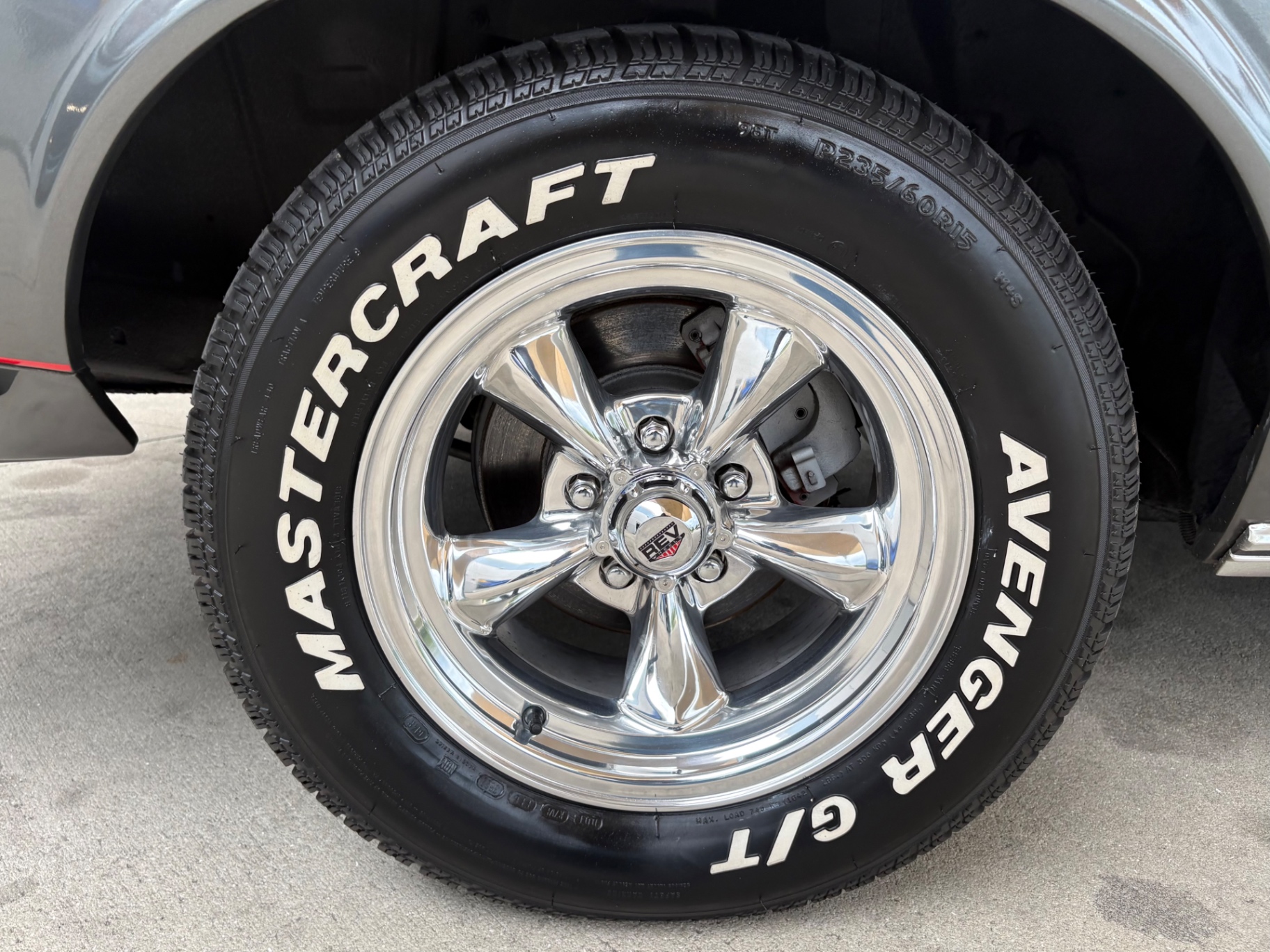
The NASA-style hood scoop was a factory or dealer-level option during the early 1970s Mustang era and gives the hood a performance-oriented profile. It sits flush with the hood line and is finished in body color. The rear deck spoiler adds a period-correct finishing detail at the back of the car. Chrome 5-spoke wheels are fitted with white letter tires — a classic combination for a 1973 Ford Mustang that puts the car visually in its correct era without looking overwrought.
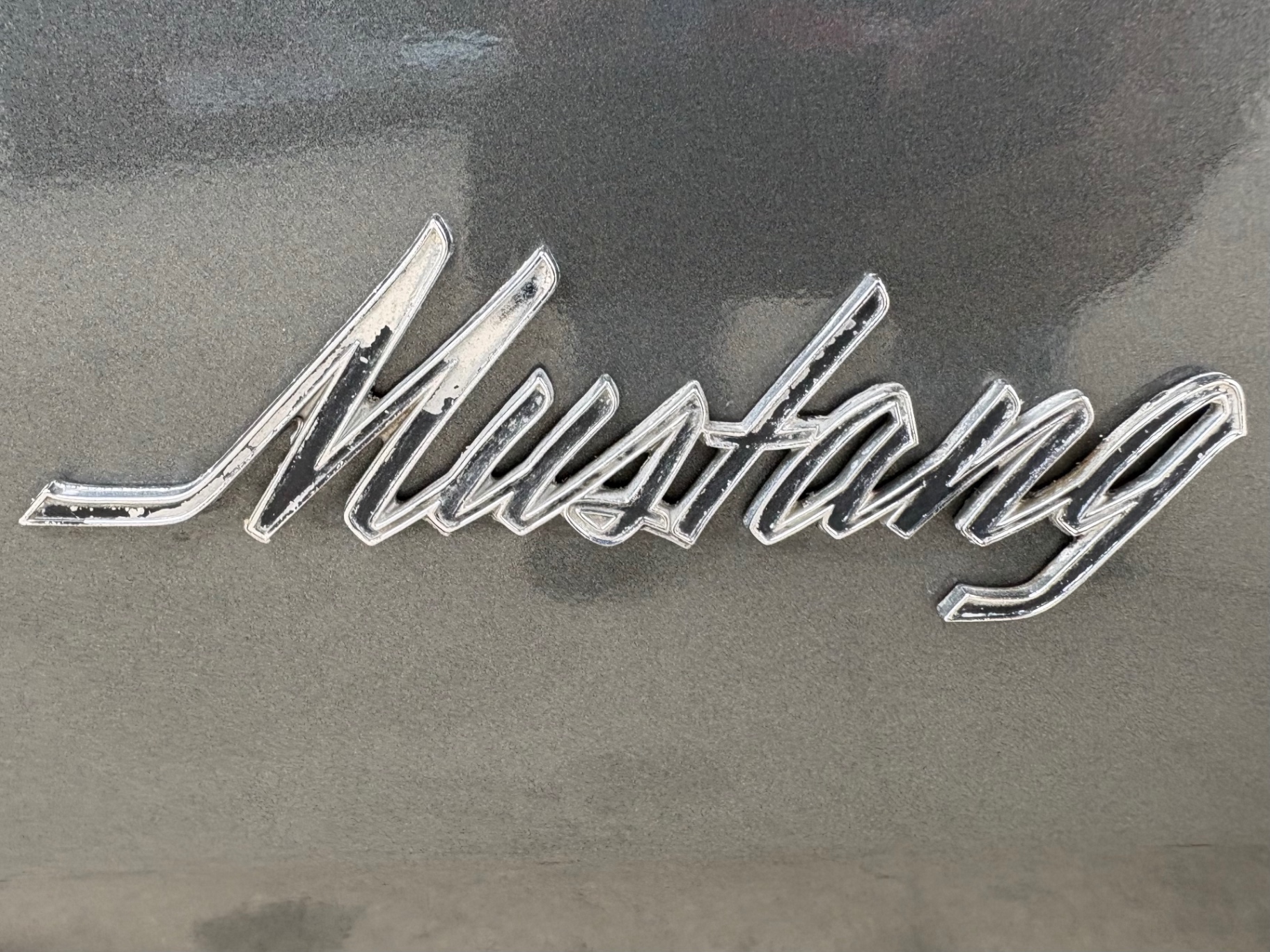
The rear end of the 1973 Mustang features the full-width taillight panel with the sequential-style turn signal design that Ford carried through the 1971 to 1973 body run. The chrome rear bumper and Mustang script are present, and the photos show the back end in clean condition. The dual exhaust tips exit symmetrically below the rear bumper, which is a clean, correct presentation for a V8 car.
The black power convertible top is shown folded in most of the photos, and the mechanism appears to be in working order as noted in the feature list. When raised, the black top against the Gray Metallic body is a combination that suits the car well. The top well cover area is visible in some photos and appears tidy.
Conclusion
The 1973 Ford Mustang convertible is a car with a clear historical identity: the last of its kind for a full decade, built when Ford was still committed to the original pony car formula before the Mustang II arrived for 1974. This example is equipped at a level that made these cars genuinely enjoyable to drive — V8 power, factory air conditioning, power top, disc brakes, auxiliary gauges, sport interior — without being a stripped or base-level car that was simply built to hit a price point. The red interior against the gray exterior is a color pairing that photographs well and reads correctly for the era, and the underside condition visible in the lift photos suggests this car has been looked after.
Finding a 1973 Ford Mustang convertible with this combination of body style, engine, comfort features, and interior quality in one car is not as easy as it used to be. The convertible top cars from this generation were used hard because they were meant to be driven, which is exactly why solid, well-optioned survivors like this one are worth serious attention.
To get more information or to arrange a viewing of this 1973 Ford Mustang convertible, call Skyway Classics in Sarasota, Florida at 941-254-6608. Our team is happy to answer questions, provide additional photos, or assist with transportation arrangements.
Disclaimer
Information found on the website is presented as given to us by the owner of the car, whether on consignment or from the owner we bought it from. Some Photos, materials for videos, descriptions and other information are provided by the consignor/seller and is deemed reliable, but Skyway Classics does not warranty or guarantee this information. Skyway Classics is not responsible for information that may incorrect or a publishing error. The decision to purchase should be based solely on the buyers personal inspection of the vehicle or by a professional inspection service prior to offer or purchase being made.
1973 Ford Mustang Convertible — 302 V8, Red Interior, NASA Hood, Power Top
Why This Car Is Special
The 1973 Ford Mustang convertible occupies a genuinely significant place in pony car history: it was the last open-top Mustang Ford would build for a full decade. After 1973, the convertible body style disappeared from the Mustang lineup until 1983, when Ford revived it on the much smaller Fox-body platform. That ten-year gap makes the 1973 Ford Mustang convertible the final expression of the original "large" Mustang era — a car built before emissions regulations and fuel shortages forced a complete redesign. Anyone who understands that history knows exactly why these cars are worth preserving.
The 1973 model year was also the last for the SportsRoof and the classic Mustang body that had been evolving since 1969. Ford made some meaningful updates that year, including standard front bumper guards designed to meet the new federal 5-mph impact standard, which gave the front end a slightly more substantial appearance. Convertible production for 1973 totaled just 11,853 units, making open-top examples a small fraction of total Mustang output that year. Of those, examples optioned with a V8 engine, factory air conditioning, power top, auxiliary gauges, tachometer, and a full sport interior represent a more select group still.
This particular 1973 Ford Mustang convertible is finished in Gray Metallic with a red side stripe package and wears a black power convertible top. Inside, everything is red vinyl — bucket seats, door panels, floor mats, all of it. The car is equipped with the 302 cubic inch V8 backed by a 3-speed automatic transmission, factory air conditioning, power steering, power brakes with front discs, dual exhaust, and a NASA-style functional hood scoop. The underside has been coated and shows well on the lift. This is a fully optioned, driver-quality 1973 Ford Mustang convertible with the kind of specification list that takes real effort to recreate from scratch.
Features List
- 302ci V8 Engine
- 3-Speed Automatic Transmission
- Convertible Body Style
- Power Convertible Top
- Black Convertible Top
- Gray Metallic Exterior
- Red Side Stripes
- NASA Hood Scoop
- Rear Deck Spoiler
- Chrome 5-Spoke Wheels
- White Letter Tires
- Red Vinyl Bucket Seats
- Red Vinyl Door Panels with Woodgrain Inserts
- Wood-Rim Steering Wheel
- Center Console
- Console Clock
- Auxiliary Gauge Cluster (Oil, Alternator, Temperature)
- Tachometer
- AM Radio
- Air Conditioning
- Power Steering
- Power Brakes
- Front Disc Brakes
- Rear Drum Brakes
- Dual Exhaust
- Pony Floor Mats
- Undercoated Floor Pan
Mechanical
The 302 cubic inch small-block V8 was a well-proven engine by 1973, having been in continuous development since 1968. Ford marketed it as the "Windsor" 302, and while net horsepower ratings had come down from the high-compression muscle car era due to new SAE net measurement standards and emissions tuning, the 302 remained a capable and durable engine with a long service history. Its compact dimensions made it a natural fit for the Mustang's engine bay, and the combination of a lightweight short-stroke design and broad parts availability has made it one of the most supported classic V8s in existence today.
Backing the 302 is a 3-speed automatic transmission, which Ford sourced as the SelectShift unit during this period, allowing manual gear selection when the driver chose to use it. The combination of the 302 and automatic made this car a comfortable highway cruiser with enough pull to feel like a proper V8 Mustang. Power steering and power brakes are both present. The front brakes are discs — an important safety upgrade that Ford made standard on V8 Mustangs — while the rear uses drums, which was the standard configuration for this generation.
The dual exhaust system exits cleanly at the rear and is clearly visible in the underbody photos. The floor pan has been coated, and the underside of this 1973 Ford Mustang convertible presents well, with no visible rot or major structural concerns evident in the lift photos. The exhaust routing, suspension components, and rear axle all appear solid and properly sorted. The front suspension uses the Mustang's long-running strut-rod front end layout, and the undercarriage shots confirm that the front disc brake setup is intact and in place. Headers are visible in the engine bay area photos, suggesting the exhaust system has seen some attention during the car's life, which is consistent with a vehicle that has been maintained and driven rather than ignored.
The NASA-style hood scoop on the 1973 Ford Mustang was not purely decorative on all applications, and the presence of dual exhaust and the V8 engine here suggests this car was put together with performance presentation in mind. The engine bay has chrome and polished accents including a chrome air cleaner and dressed valve covers, which read cleanly in the photographs.
Interior
The interior of this 1973 Ford Mustang convertible is finished entirely in red vinyl, and the photographs show it in sharp condition. The bucket seats front and rear are upholstered in ribbed red vinyl, which was the correct style for this generation. The door panels carry the matching red vinyl with woodgrain inserts framed in bright chrome trim — a detail that reads particularly well in person. The door panel carpet kick panels at the bottom are also red, tying the entire cabin together in a consistent color story.
The wood-rim steering wheel is a period-correct option that Ford offered on the 1971 through 1973 Mustang, and it centers the driver's side of the cockpit nicely. The instrument cluster on the 1973 Mustang used a three-pod dash design introduced with the 1971 body, and this car has the optional tachometer in the left pod alongside the fuel gauge in the center and speedometer on the right. The gauge pods are ringed in gold trim and set against the dark instrument panel, giving it a clean, purposeful look.
Auxiliary gauges — oil pressure, alternator charge, and coolant temperature — are mounted in a three-pod cluster in the center console area, positioned above the AM radio. Below those sits the factory-style Mustang-branded AM radio with its period-correct face. The console clock is also present, visible in the console between the seats. The climate controls are laid out in the center dash panel in the correct horizontal format for this generation, and the air conditioning controls are clearly shown in the photographs.
The center console houses the automatic shifter with a chrome T-handle, and the console clock sits just behind it. Pony floor mats with the running horse and tri-bar logo cover the floor on both sides. The rear seat area of the convertible is finished in the same red vinyl with ribbed upholstery, and the photos show it in presentable condition. The power top switch and related controls are mounted on the lower dash near the driver's left knee, which is the correct location for the 1973 Ford Mustang convertible.
Exterior
The Gray Metallic exterior on this 1973 Ford Mustang convertible is a low-key, serious color choice that works well against the red side stripe package and the black convertible top. The contrast between the three colors — gray body, red stripe, black top — gives the car a composed, purposeful appearance without relying on a flashy primary color. The red stripes run along the lower body and are correct to the sport stripe packages Ford offered during this period.
The NASA-style hood scoop was a factory or dealer-level option during the early 1970s Mustang era and gives the hood a performance-oriented profile. It sits flush with the hood line and is finished in body color. The rear deck spoiler adds a period-correct finishing detail at the back of the car. Chrome 5-spoke wheels are fitted with white letter tires — a classic combination for a 1973 Ford Mustang that puts the car visually in its correct era without looking overwrought.
The rear end of the 1973 Mustang features the full-width taillight panel with the sequential-style turn signal design that Ford carried through the 1971 to 1973 body run. The chrome rear bumper and Mustang script are present, and the photos show the back end in clean condition. The dual exhaust tips exit symmetrically below the rear bumper, which is a clean, correct presentation for a V8 car.
The black power convertible top is shown folded in most of the photos, and the mechanism appears to be in working order as noted in the feature list. When raised, the black top against the Gray Metallic body is a combination that suits the car well. The top well cover area is visible in some photos and appears tidy.
Conclusion
The 1973 Ford Mustang convertible is a car with a clear historical identity: the last of its kind for a full decade, built when Ford was still committed to the original pony car formula before the Mustang II arrived for 1974. This example is equipped at a level that made these cars genuinely enjoyable to drive — V8 power, factory air conditioning, power top, disc brakes, auxiliary gauges, sport interior — without being a stripped or base-level car that was simply built to hit a price point. The red interior against the gray exterior is a color pairing that photographs well and reads correctly for the era, and the underside condition visible in the lift photos suggests this car has been looked after.
Finding a 1973 Ford Mustang convertible with this combination of body style, engine, comfort features, and interior quality in one car is not as easy as it used to be. The convertible top cars from this generation were used hard because they were meant to be driven, which is exactly why solid, well-optioned survivors like this one are worth serious attention.
To get more information or to arrange a viewing of this 1973 Ford Mustang convertible, call Skyway Classics in Sarasota, Florida at 941-254-6608. Our team is happy to answer questions, provide additional photos, or assist with transportation arrangements.
Disclaimer
Information found on the website is presented as given to us by the owner of the car, whether on consignment or from the owner we bought it from. Some Photos, materials for videos, descriptions and other information are provided by the consignor/seller and is deemed reliable, but Skyway Classics does not warranty or guarantee this information. Skyway Classics is not responsible for information that may incorrect or a publishing error. The decision to purchase should be based solely on the buyers personal inspection of the vehicle or by a professional inspection service prior to offer or purchase being made.
1973 Ford
Mustang Convertible
Why Choose Skyway Classics?
Explore our curated inventory of classic and collector cars—thoughtfully selected, ready to drive, and supported by experts who make ownership simple.
Expert Curation
Every vehicle is hand-selected by our experts for quality, authenticity, and investment potential.
Fast Transactions
Streamlined buying and selling process with quick financing and immediate delivery options.
Only National Dealer With Classic Service & Repair
We’re the only national dealership that services and repairs the classics we sell—before and after the sale.
Nationwide Network
Access to our extensive network of collectors, restorers, and classic car enthusiasts nationwide.
Concierge Ownership Support
From financing and insurance to paperwork, shipping, and titling—we handle the details so you can enjoy the drive.
Passion-Driven Service
We're classic car enthusiasts first, providing personalized service with genuine passion for the hobby.