
1966 Ford
Bronco U13 Roadster
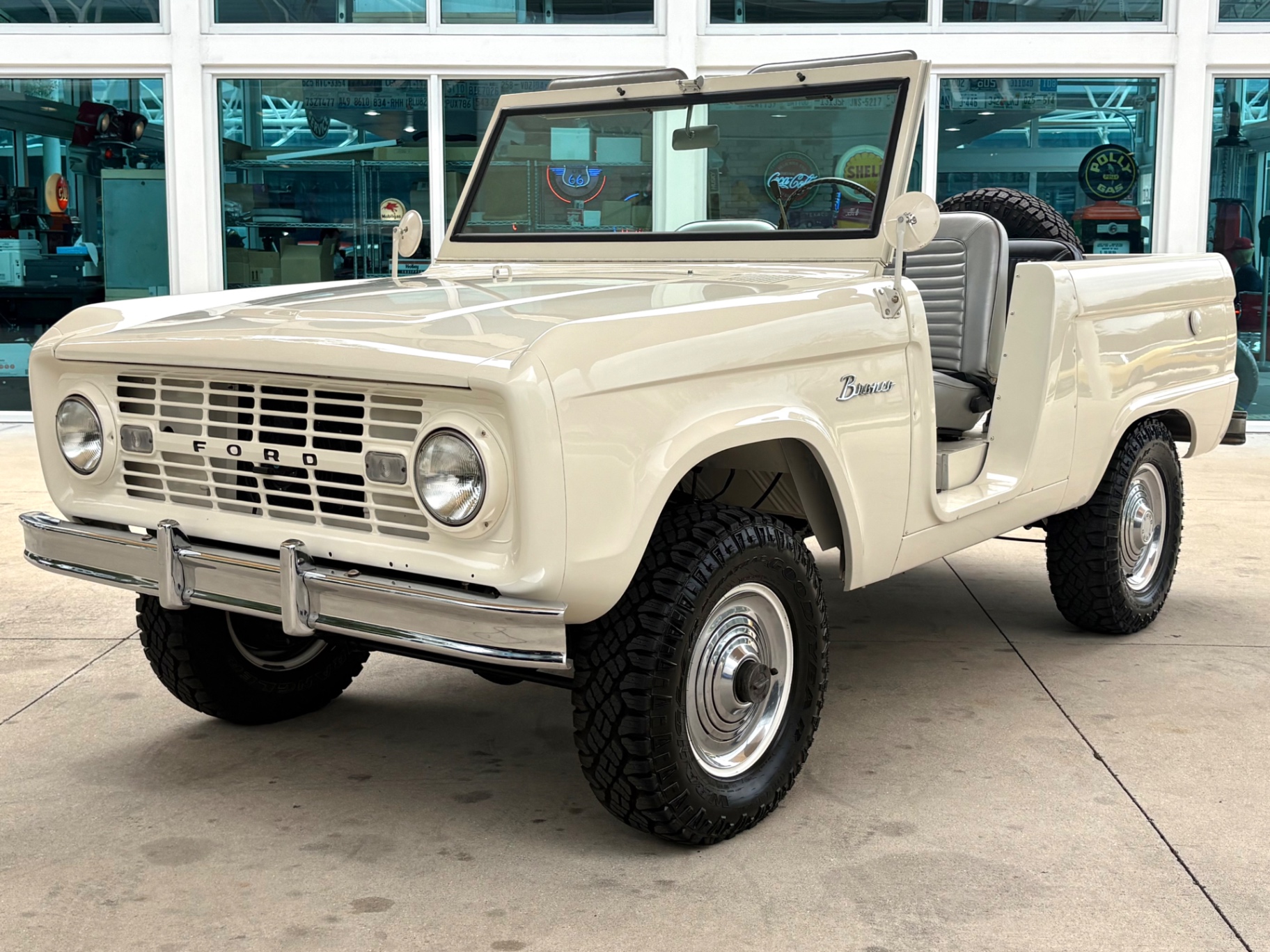
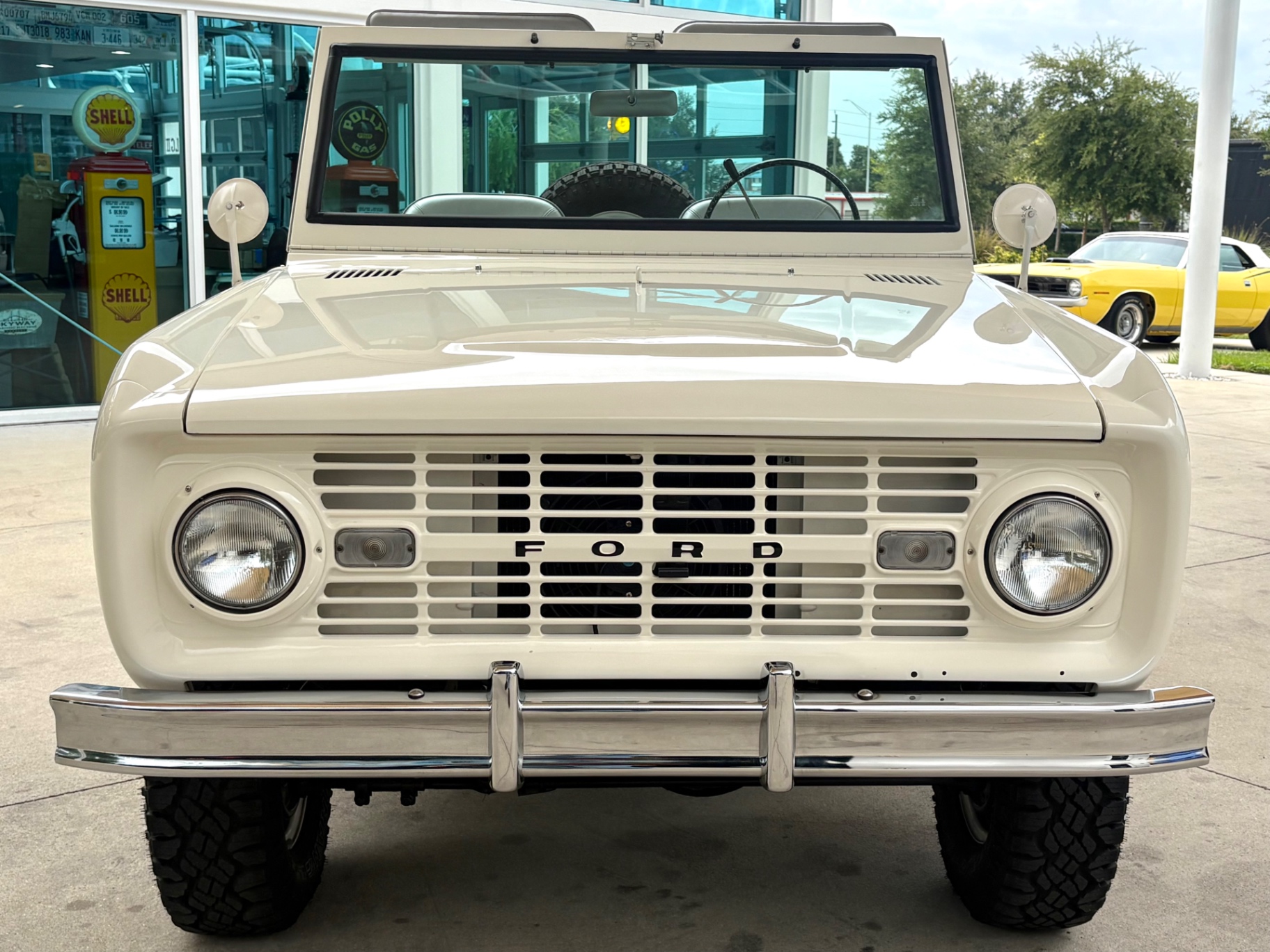
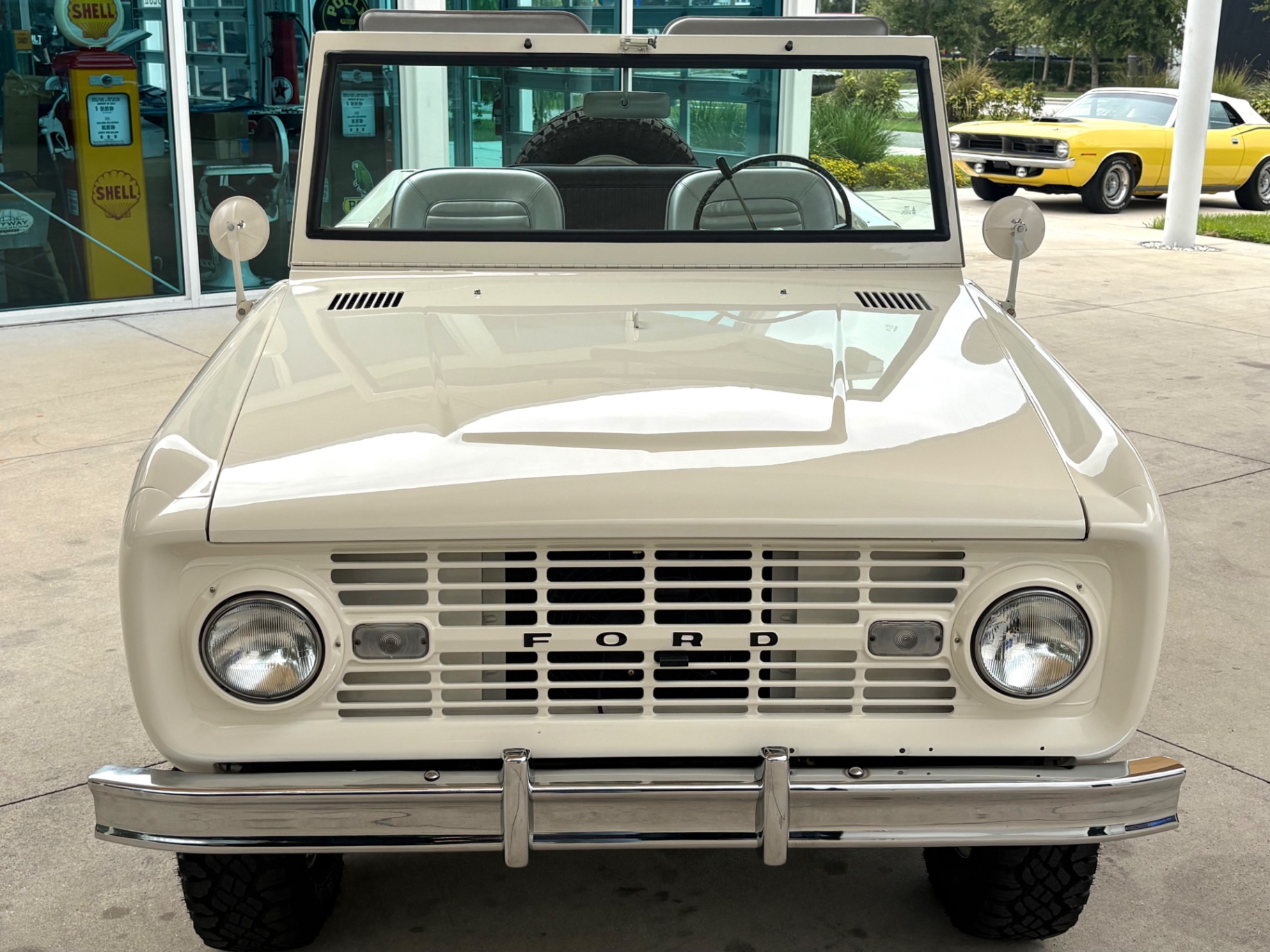
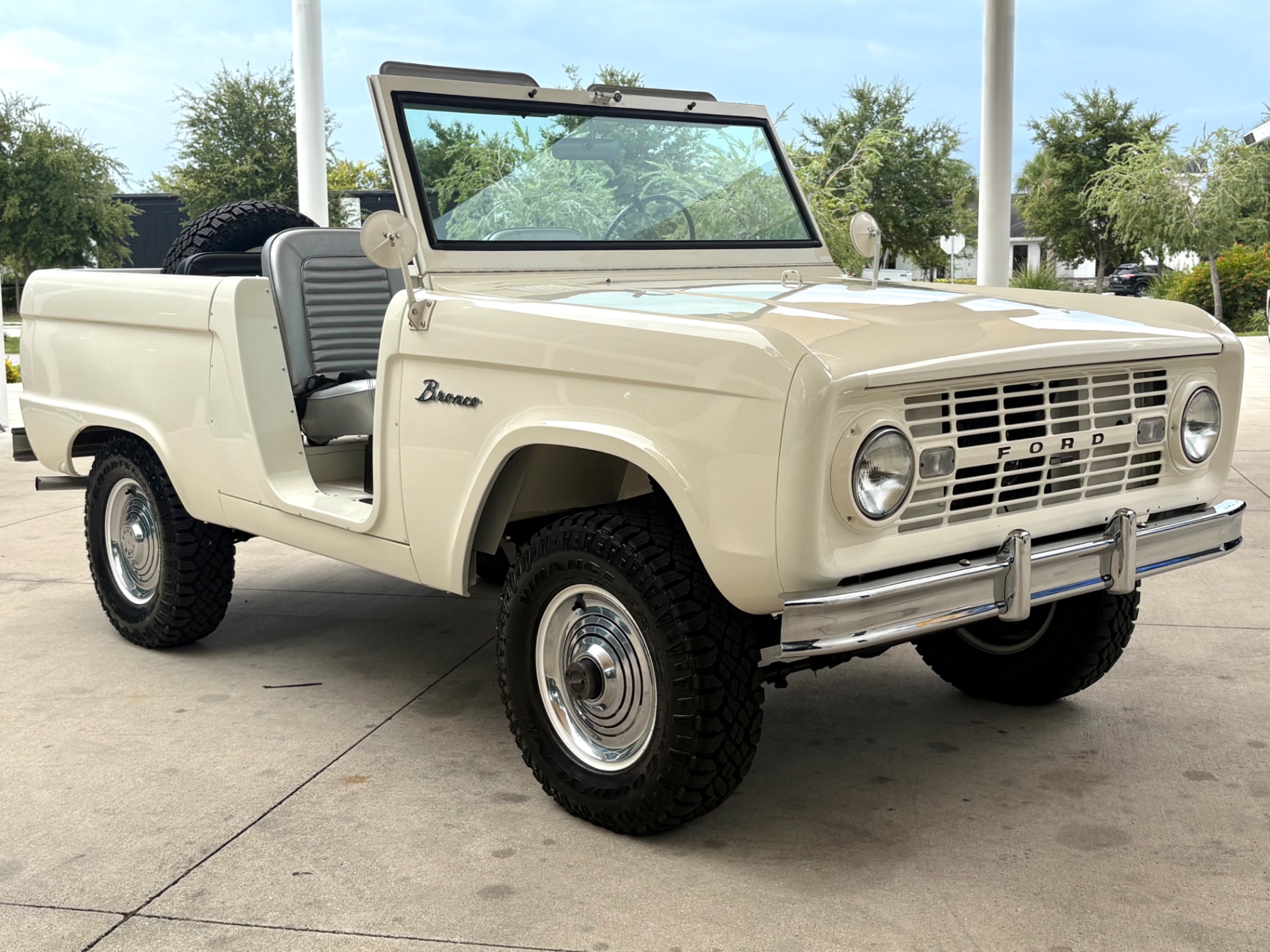
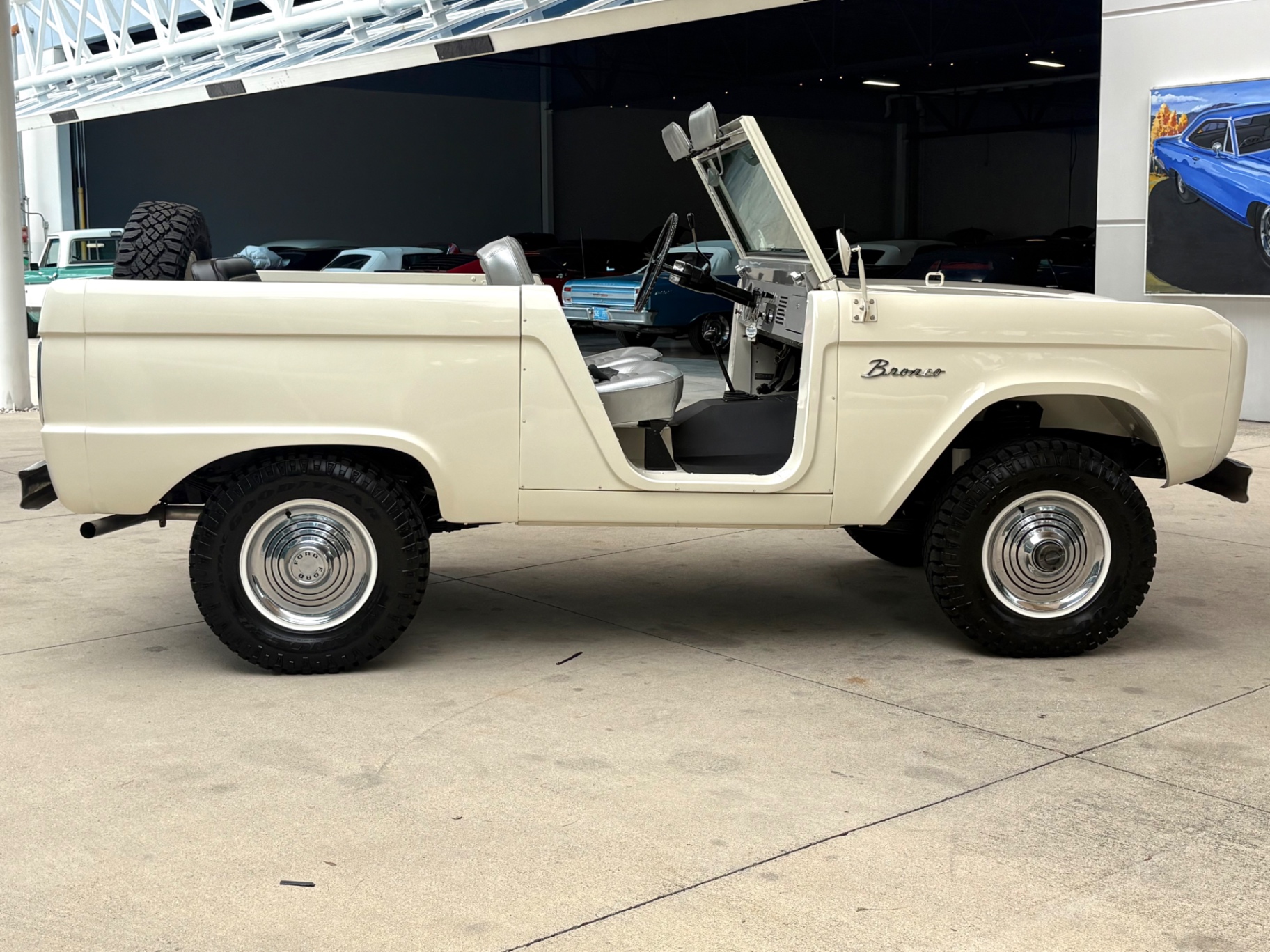
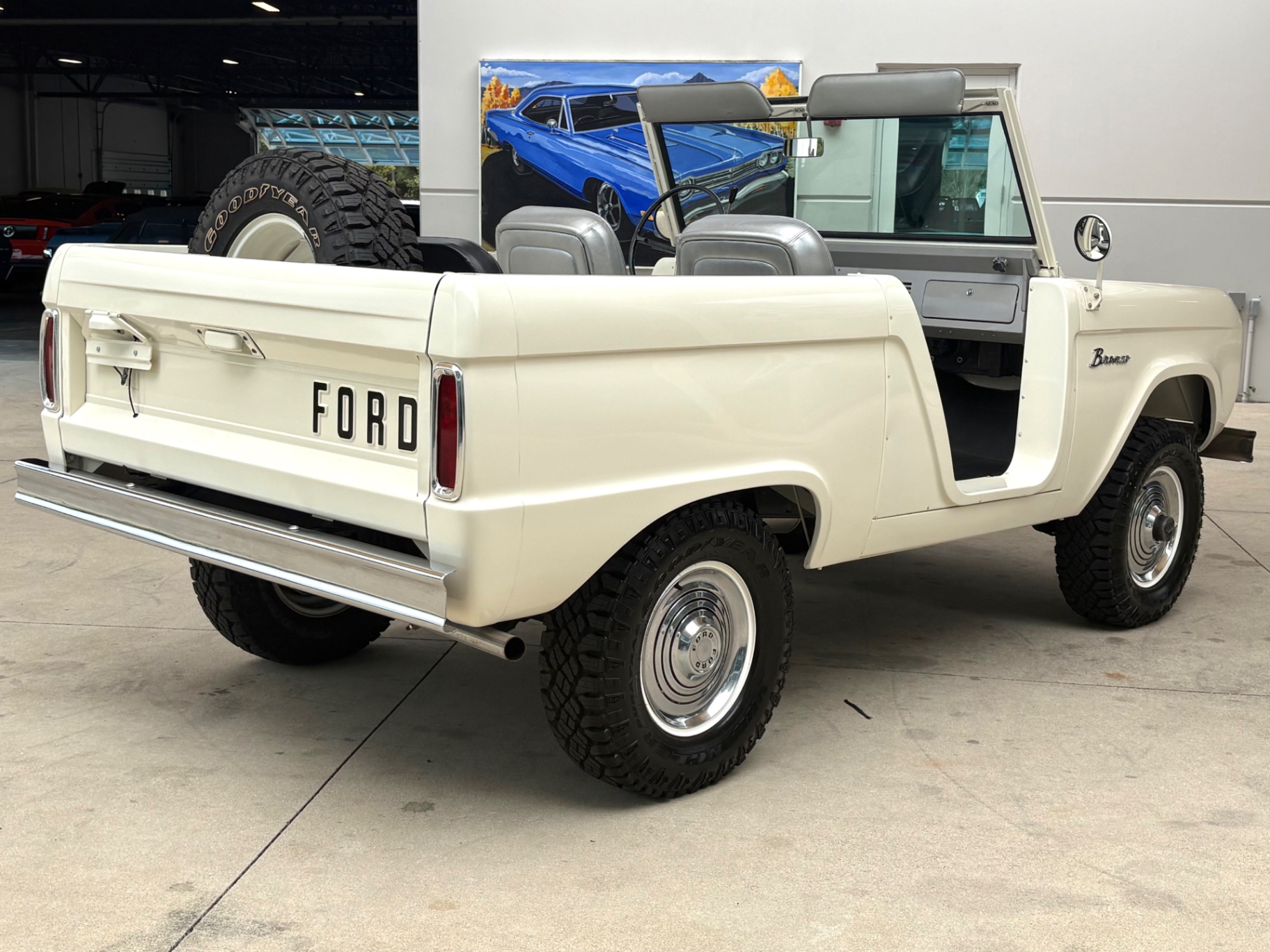
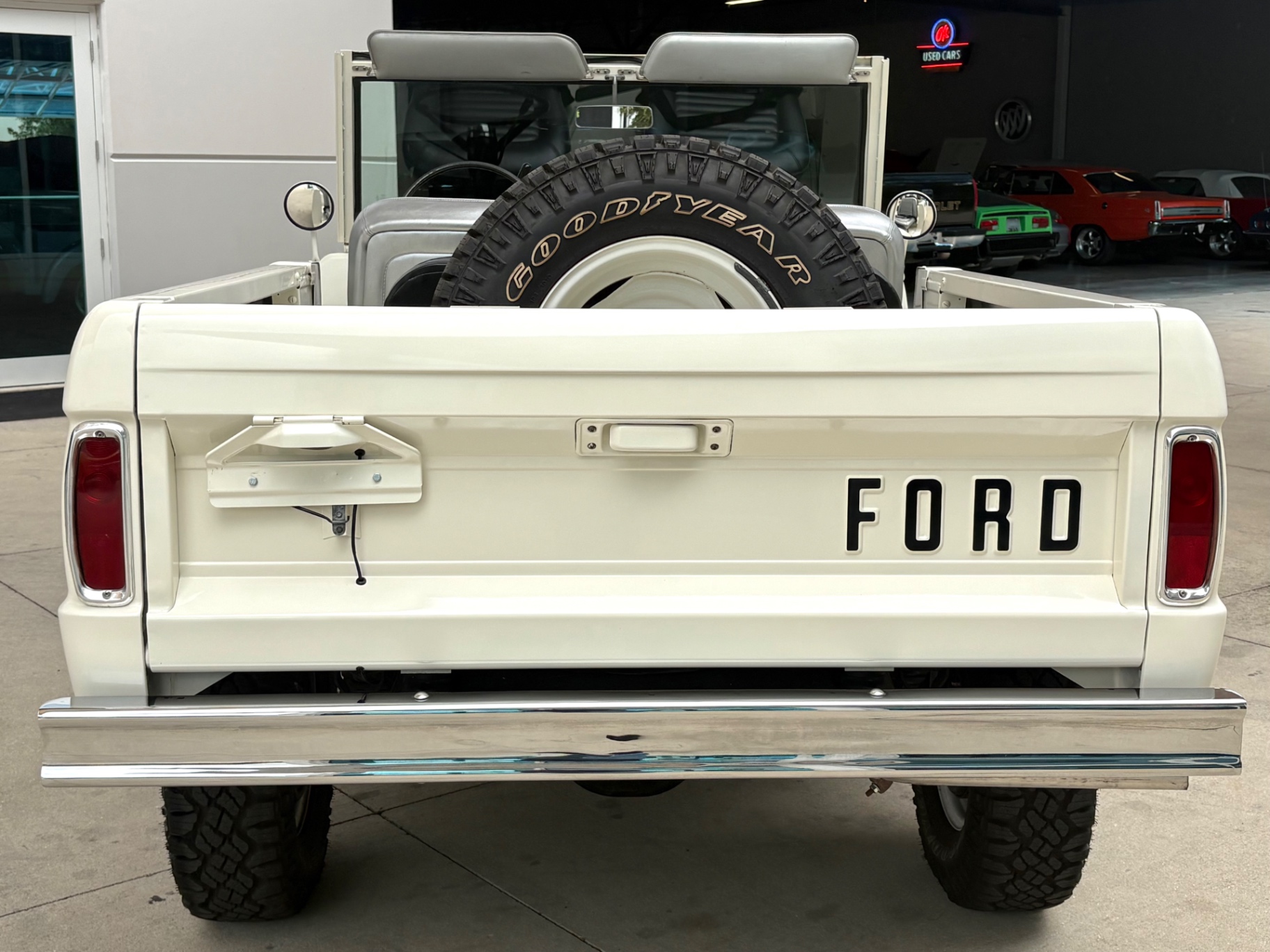
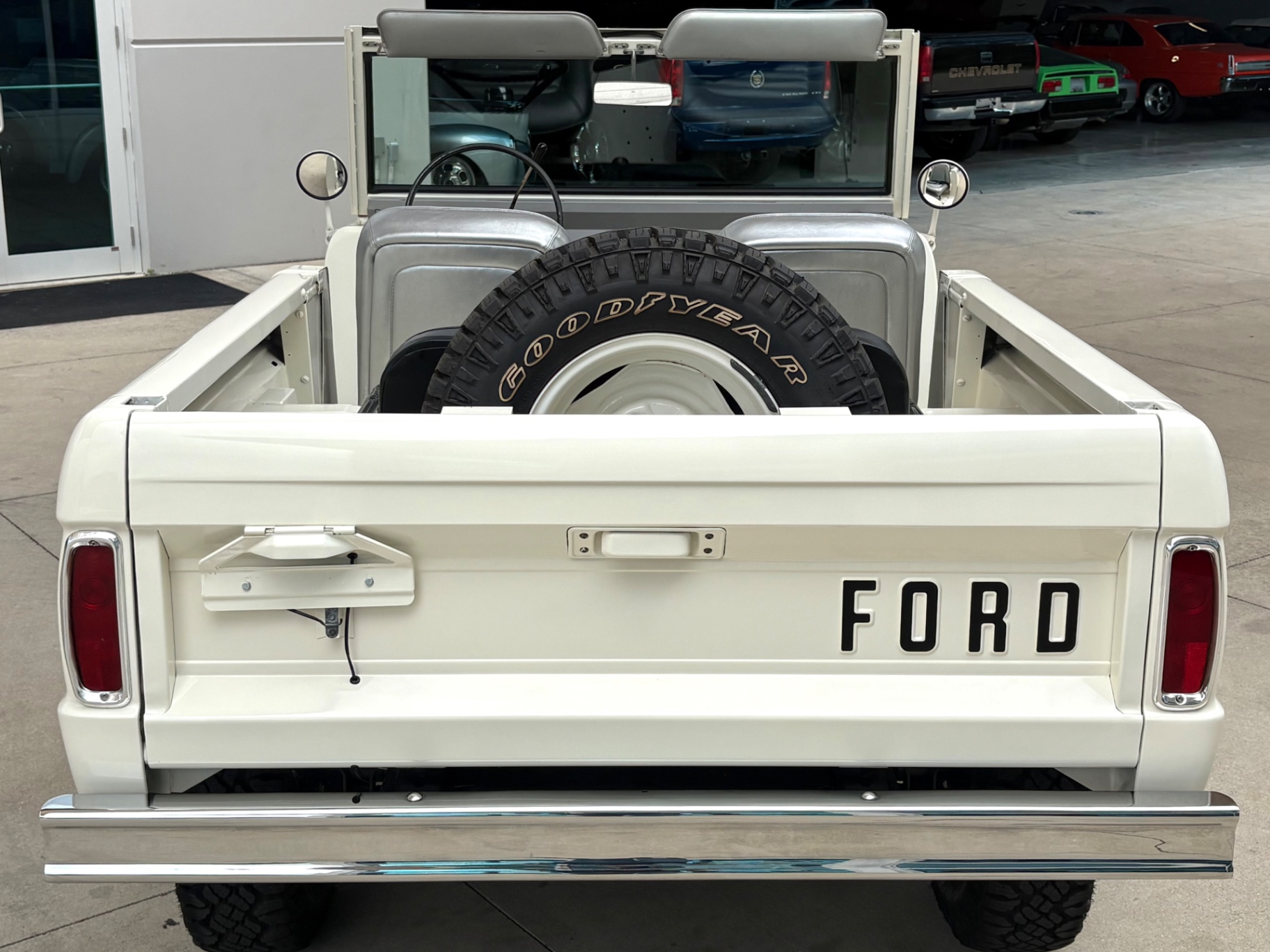
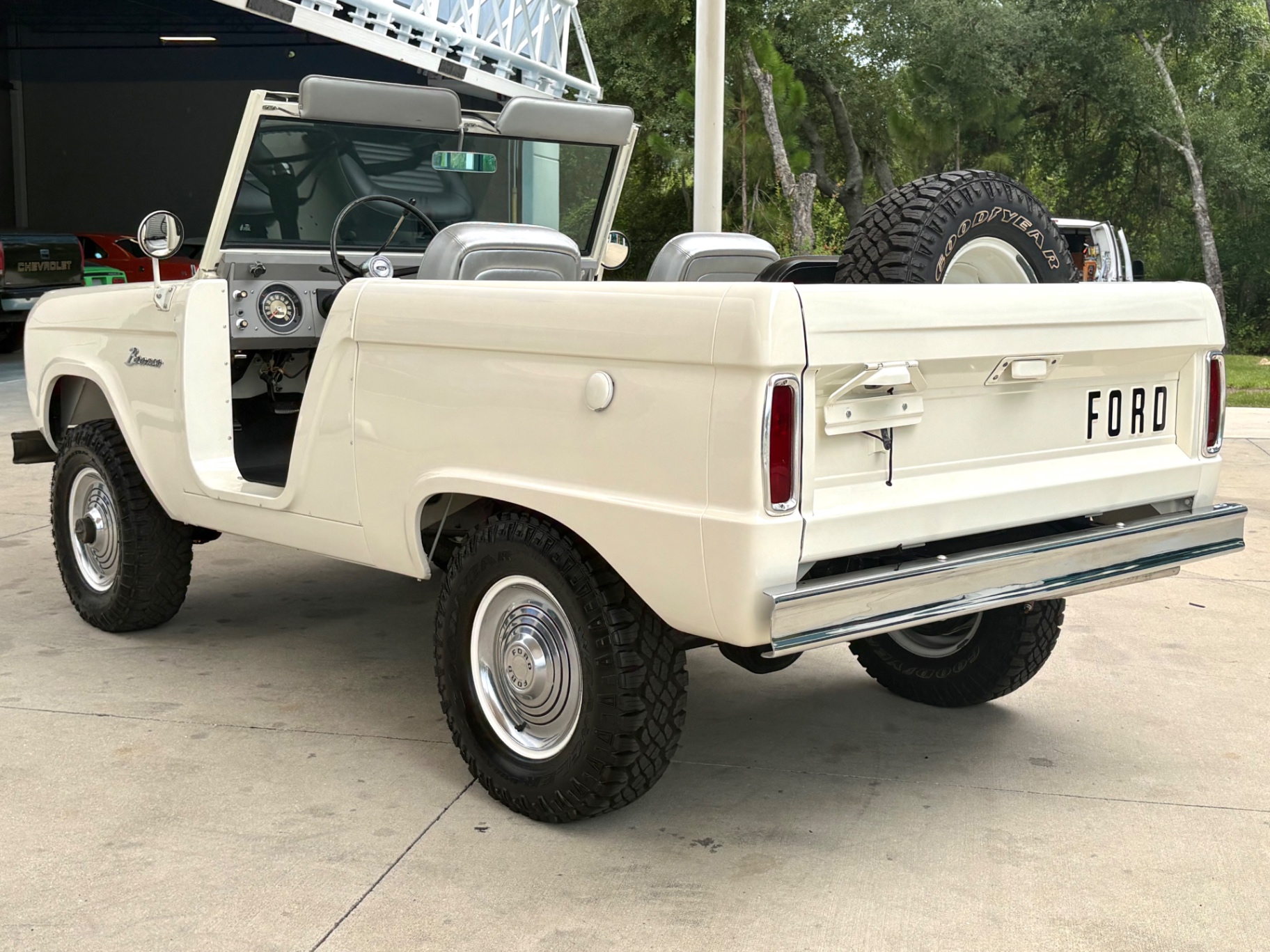
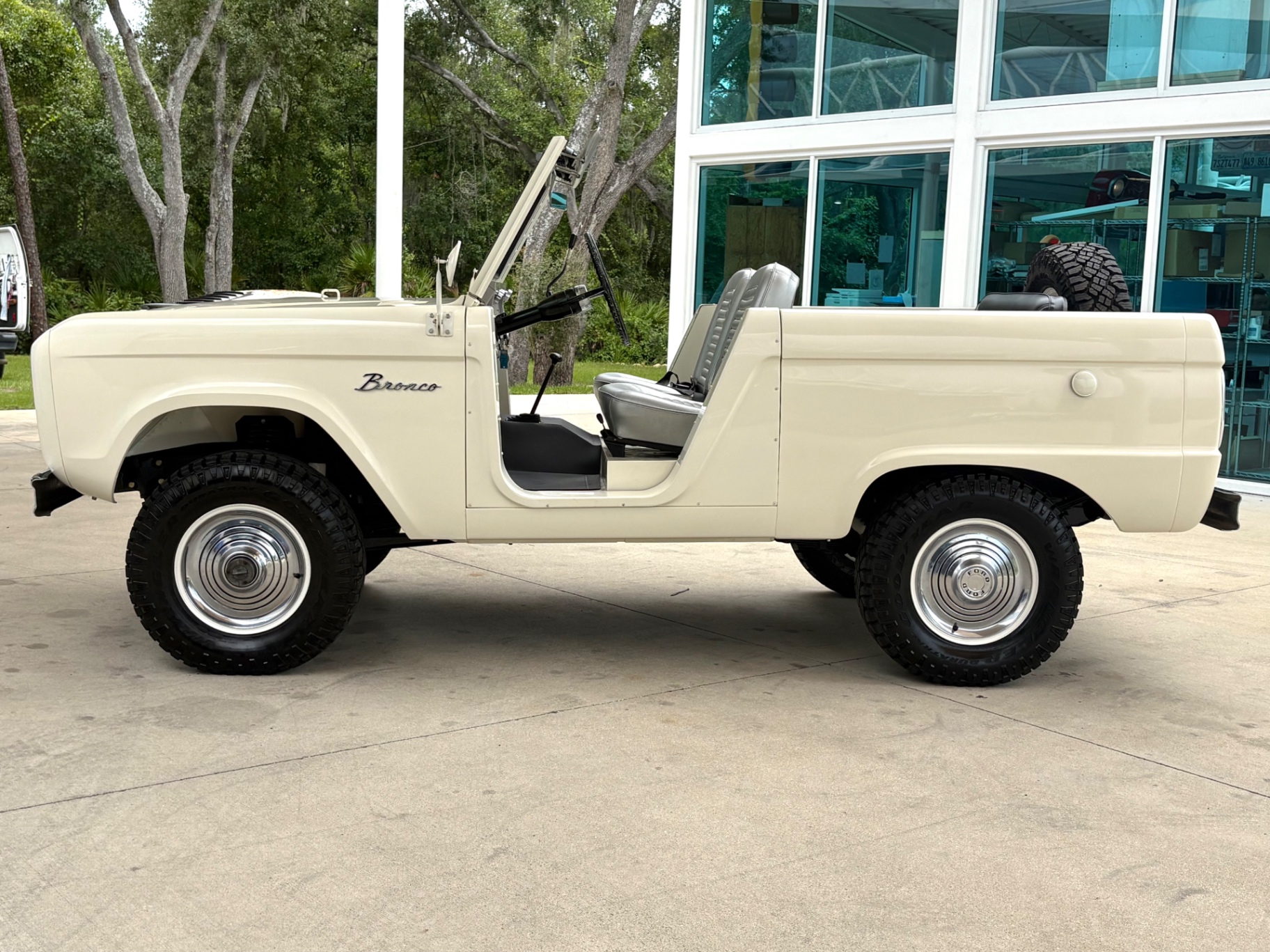
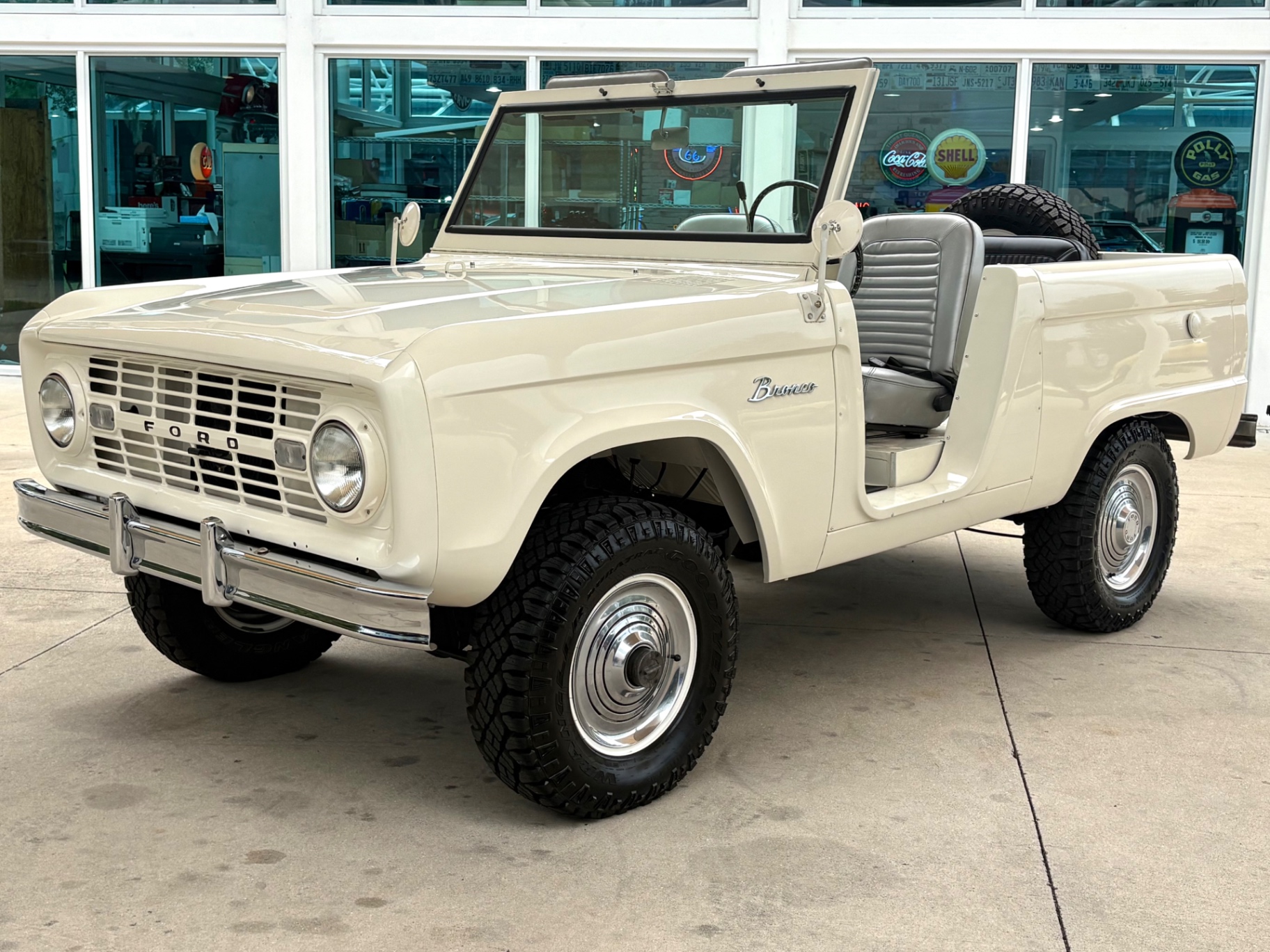
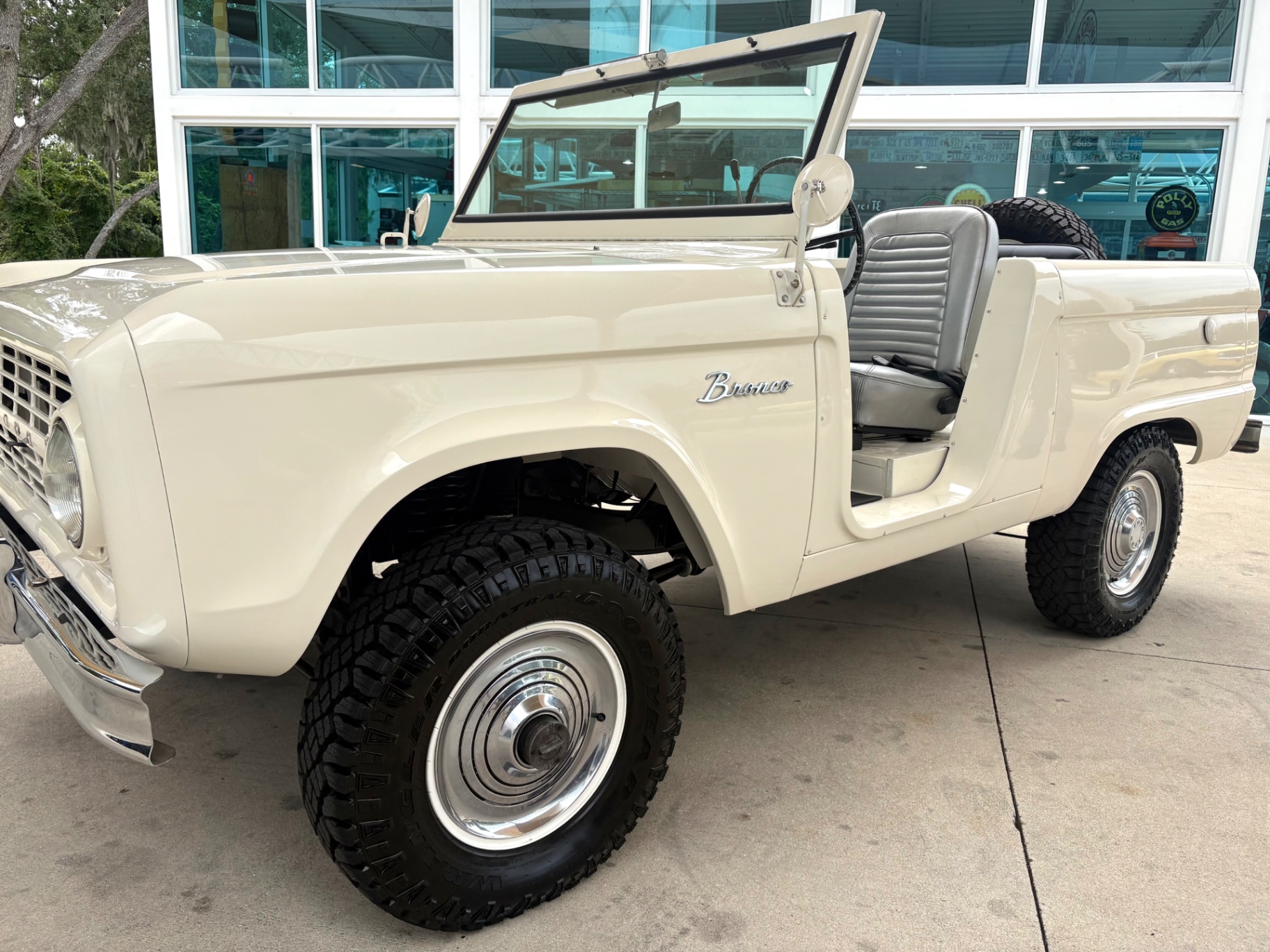
1966 Ford Bronco Roadster — Wimbledon White, 170 Six-Cylinder, Open-Air Original
Why This Car Is Special
The 1966 Ford Bronco holds a specific place in American automotive history that no amount of marketing can manufacture. It was the second model year of an entirely new vehicle — Ford's answer to the Jeep CJ and International Harvester Scout — and one of the few times a major American manufacturer got a purpose-built compact 4x4 right on the first try. Ford introduced the Bronco for the 1966 model year after years of development under product planner Donald Frey, the same man who helped shepherd the Mustang into production. The goal was a vehicle that could genuinely compete off-road while remaining comfortable enough for daily use. It worked.
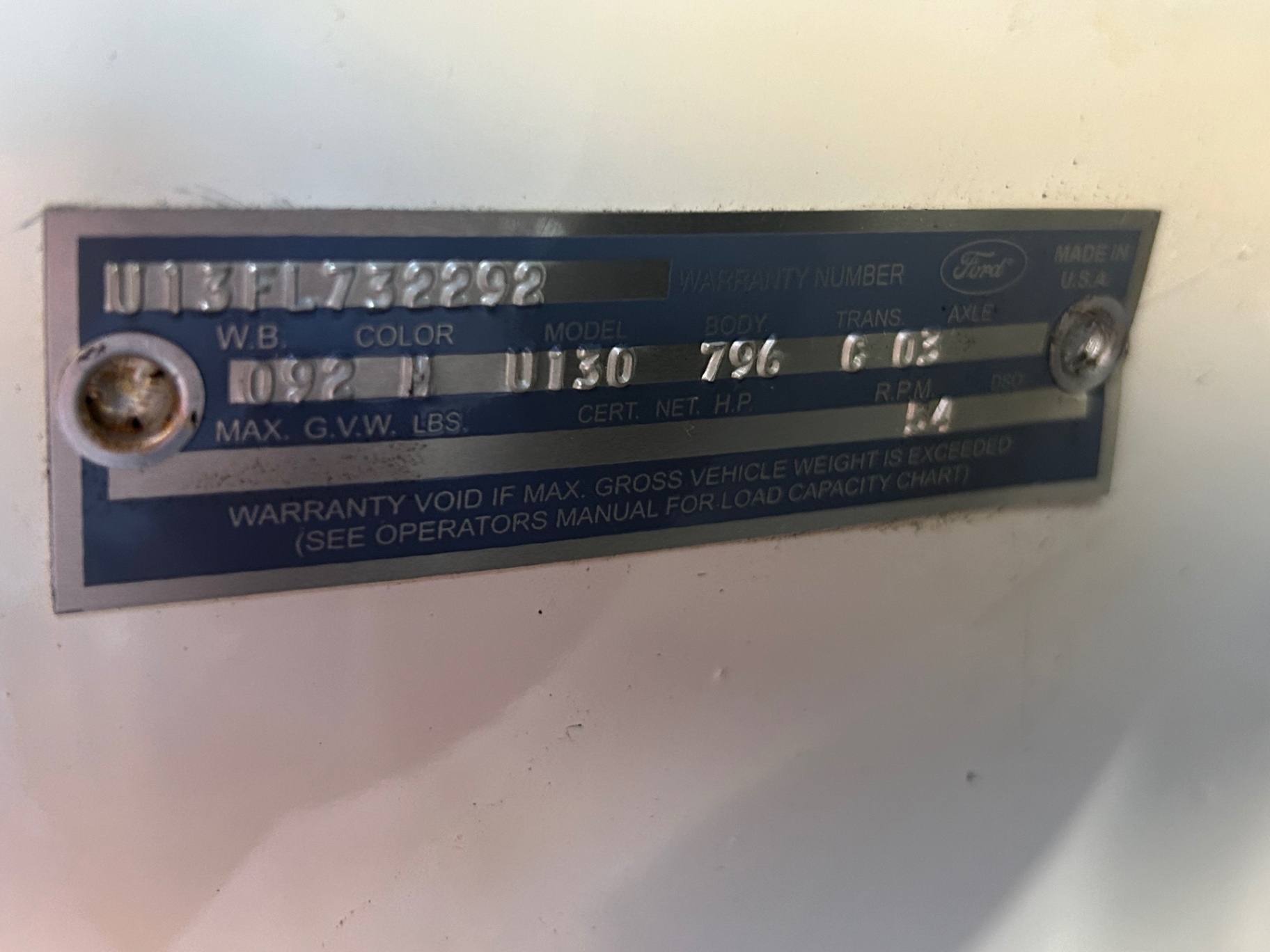
What makes the early Bronco particularly compelling today is how it was sold. Ford offered three body styles from the start: the Wagon, the Pickup, and the Roadster. The Roadster — the body style on this specific truck — is the rarest of the three. It came from the factory with no doors and no roof, a completely open design intended for recreational and light utility use. The Roadster was discontinued after 1968, making any surviving example a genuine piece of first-generation Bronco history. The VIN on this truck begins with U13, confirming it is exactly that: a 1966 Ford Bronco Roadster built at the Michigan Truck Plant in Wayne, Michigan.
First-generation Broncos — covering model years 1966 through 1977 — have become one of the most sought-after collector vehicles in the American market. Values have climbed sharply over the past decade, particularly for early examples in honest condition with documented drivetrains. This 1966 Ford Bronco Roadster presents in Wimbledon White with a freshly redone grey vinyl interior, a correct 170ci inline six-cylinder engine, and a stainless steel exhaust system. It has been maintained and improved thoughtfully without being overdone. The result is a 1966 Ford Bronco that drives, looks, and feels like what it is — a well-sorted early example of one of the most collectible American 4x4s ever built.
Features List
- U13 Roadster body — no doors, no roof, factory open-air configuration
- 170ci Ford inline six-cylinder engine, 105 horsepower
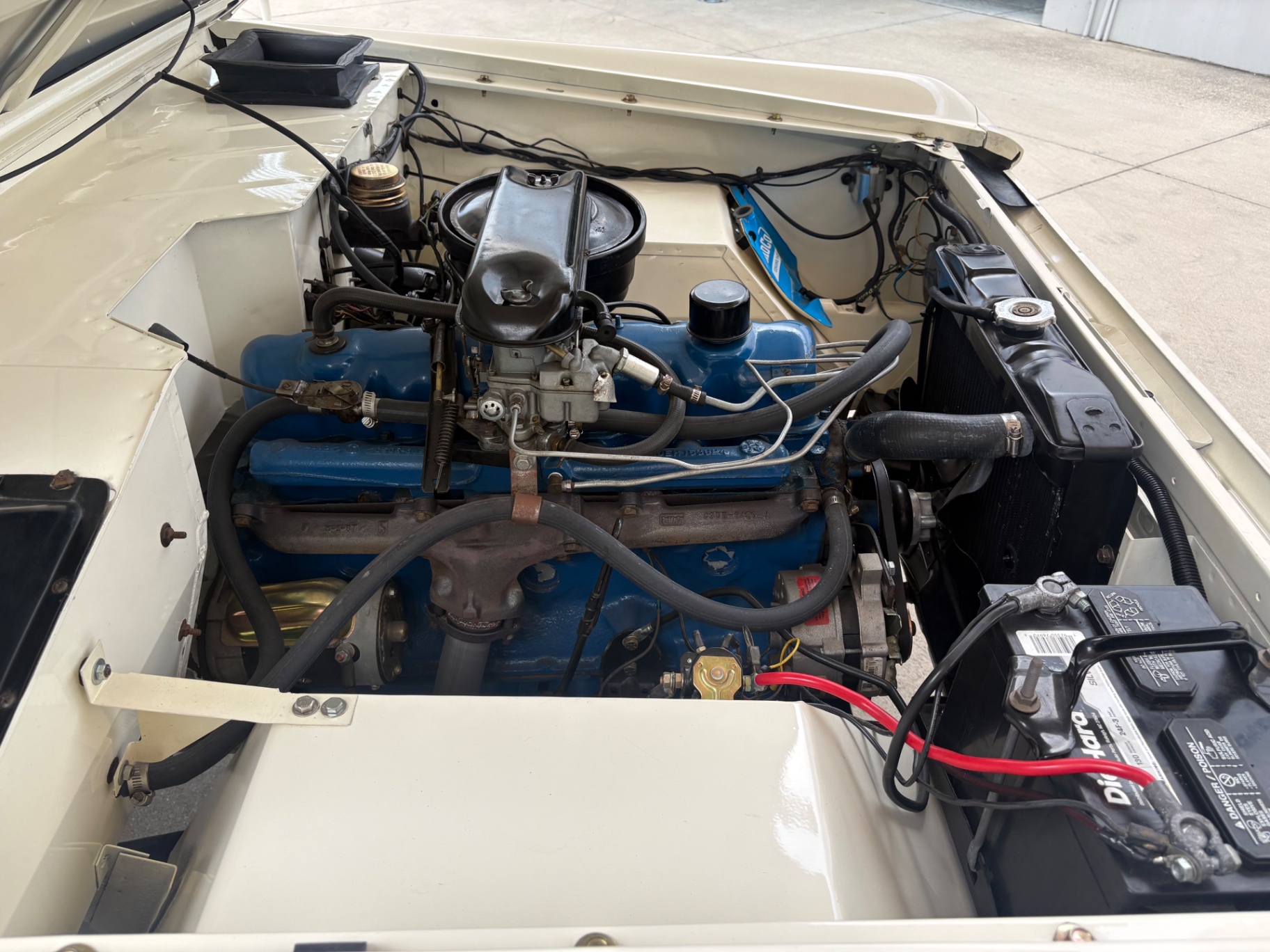
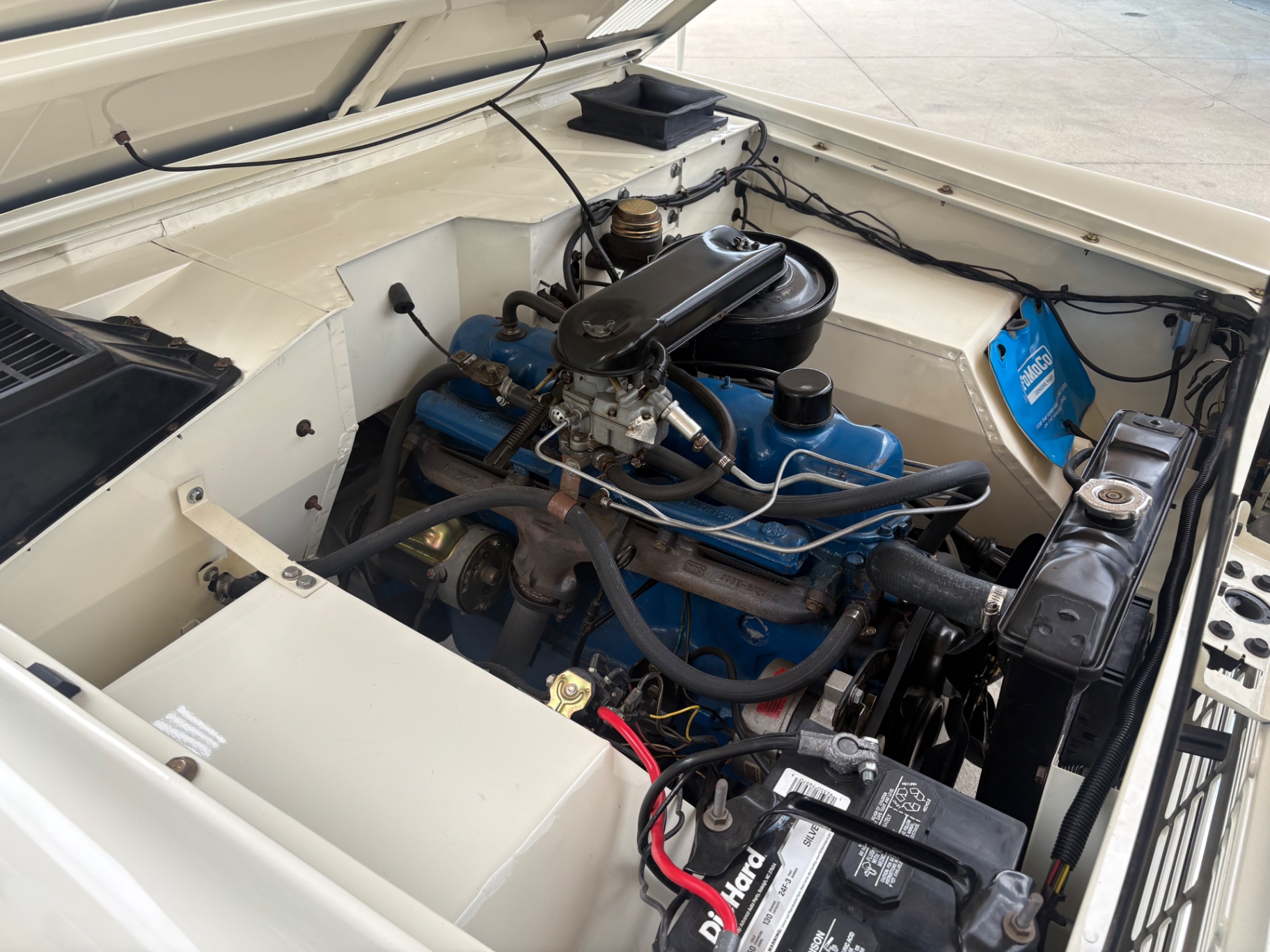
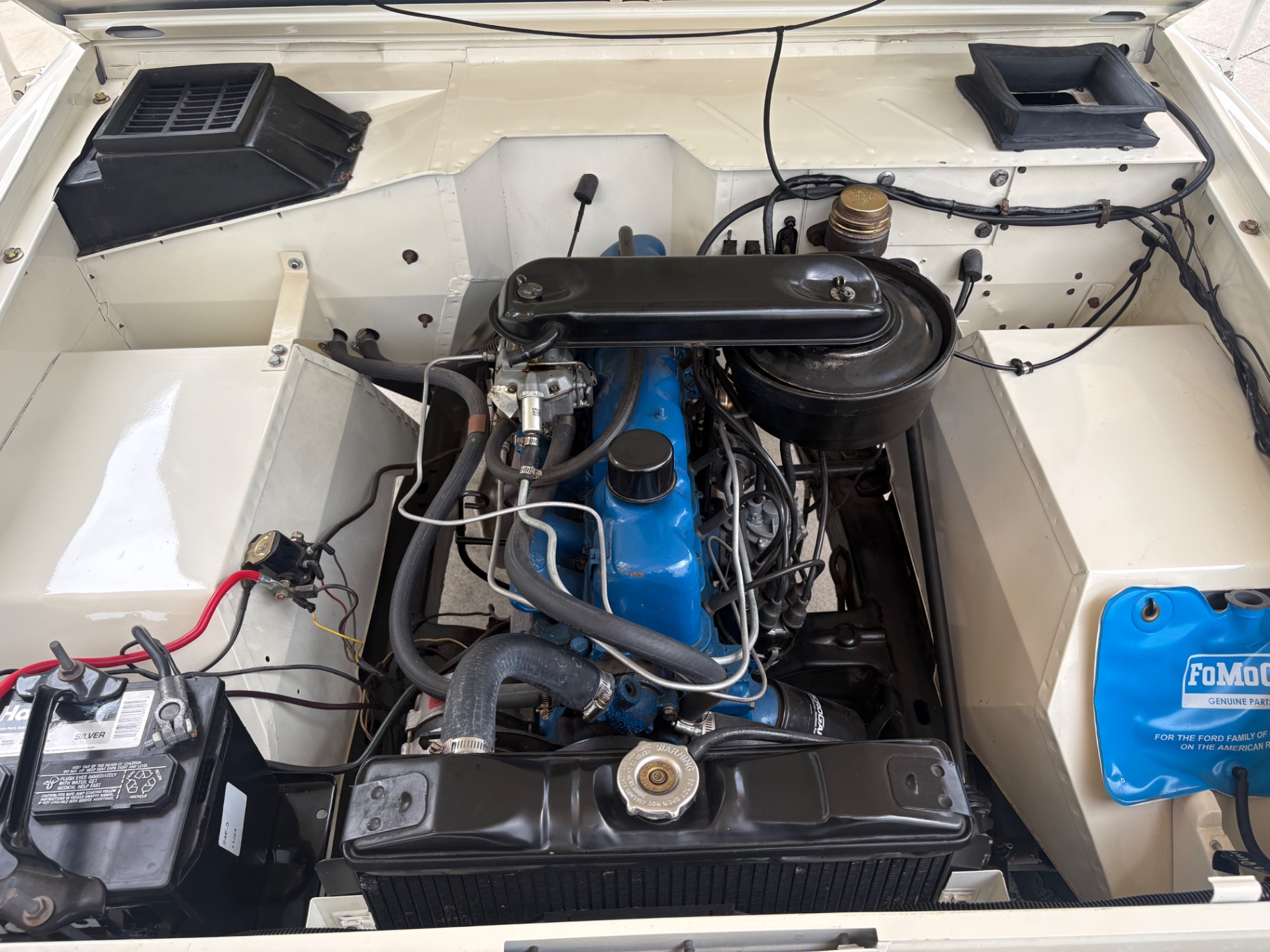
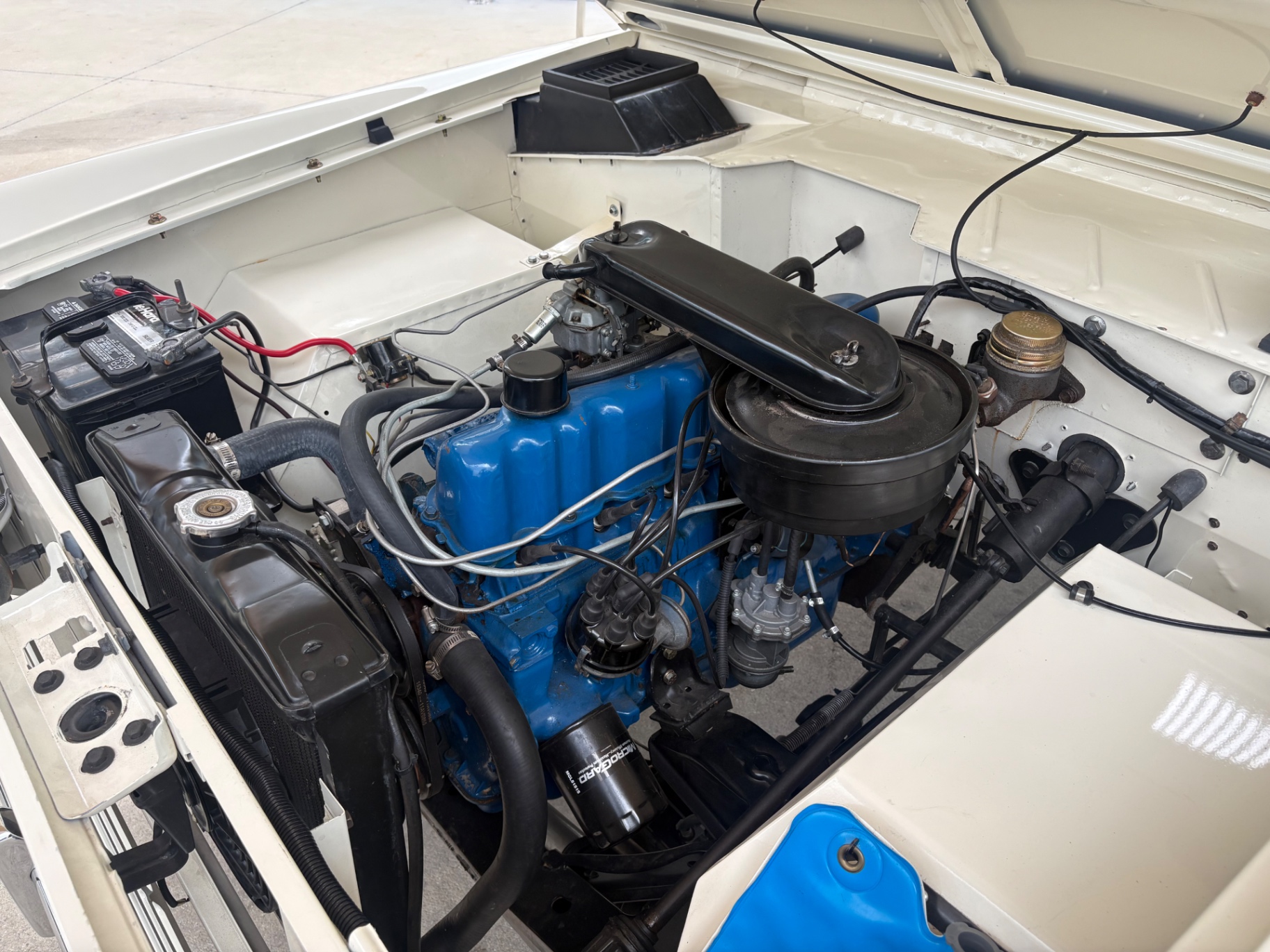
- Single-barrel carburetor with oil-bath air cleaner and factory black air cleaner assembly
- Engine painted Ford Racing Blue on block, head, and intake
- Heavy-duty fuel pump and performance spark plug wires
- Three-speed manual transmission
- 2-speed 4x4 transfer case
- Dana 30 front axle with front locking hubs
- Front coil spring suspension, rear leaf spring suspension
- Four-wheel drum brakes
- Stainless steel exhaust system
- Factory steel wheels with chrome hubcaps
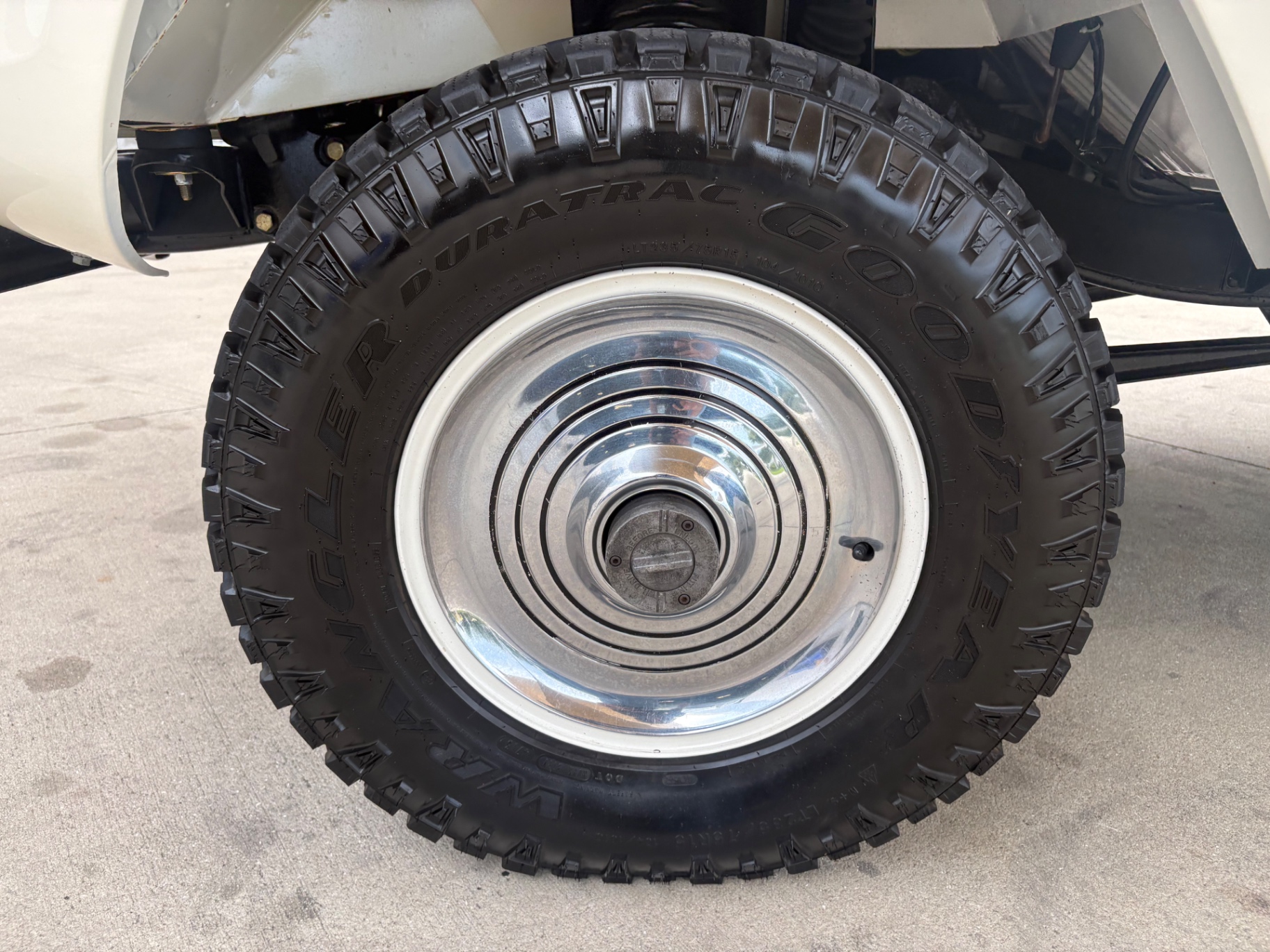
- Goodyear Wrangler Duratrac white-letter off-road tires, all four corners plus spare
- Factory chrome front and rear bumpers
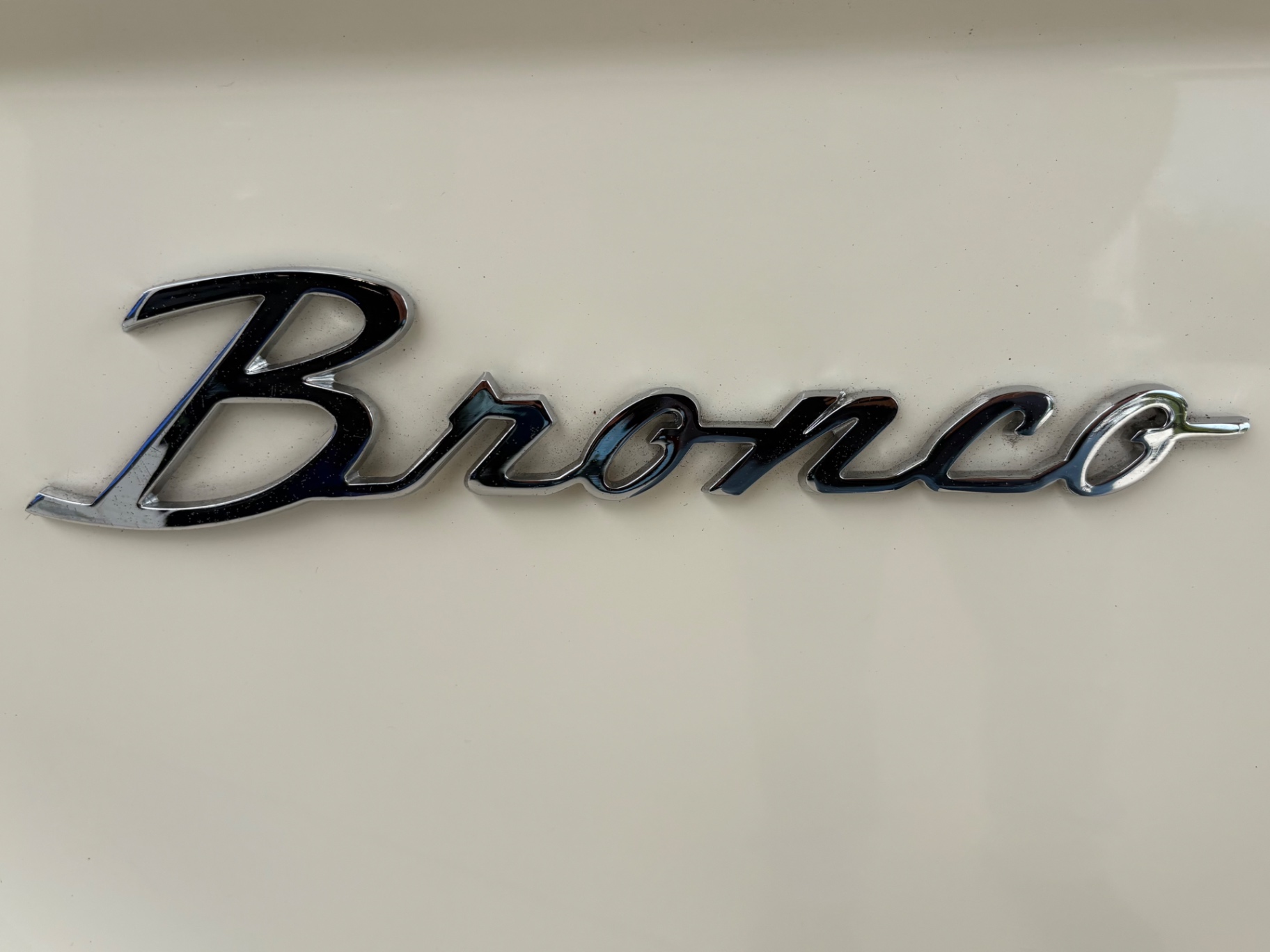
- Chrome Bronco script badge
- Dual fender-mounted side mirrors
- Windshield-mount rearview mirror
- Swing-out rear tailgate with Ford block lettering
- Body repainted in Wimbledon White
- Redone grey vinyl twin bucket seats, front lap seatbelts
- Grey vinyl rear bench seat
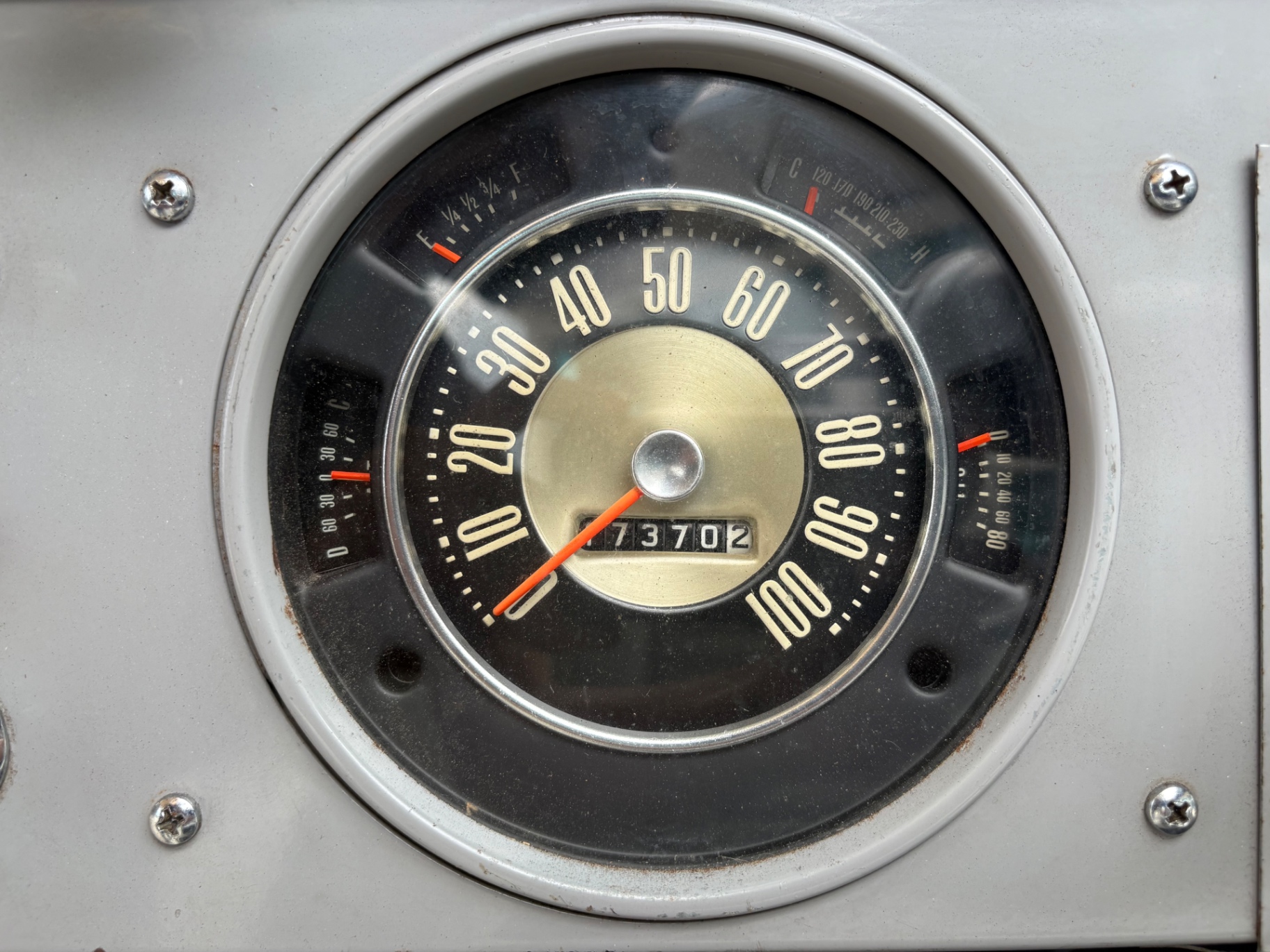
- Grey painted dash with functioning gauges
- Philco AM pushbutton radio
- Heater with pull-knob dash controls
- Passenger-side glove box
- Factory Ford steering wheel with Product of Ford horn button
Mechanical
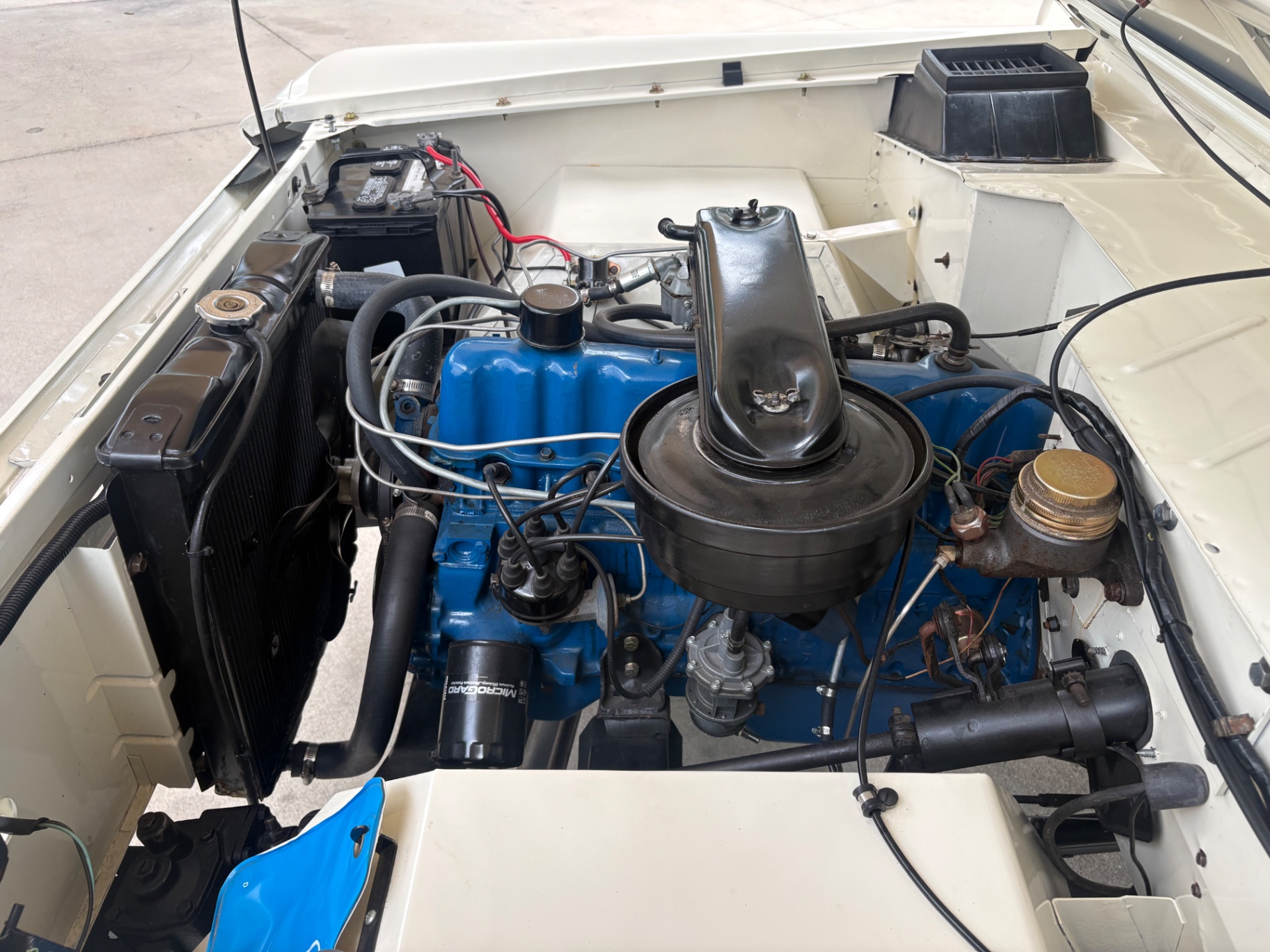
The 1966 Ford Bronco came standard with Ford's 170ci inline six-cylinder, and that is exactly what powers this truck. The 170 was a compact, undersquare design shared with the contemporary Falcon and early Mustang. Rated at 105 horsepower from the factory, it is fed by a single-barrel carburetor sitting beneath a factory black oil-bath air cleaner assembly. The oil-bath setup was Ford's standard equipment on the early Bronco, specifically chosen for dusty off-road environments where a dry paper filter would clog quickly. It is a detail that tells you Ford took the off-road mission seriously when they engineered this vehicle.
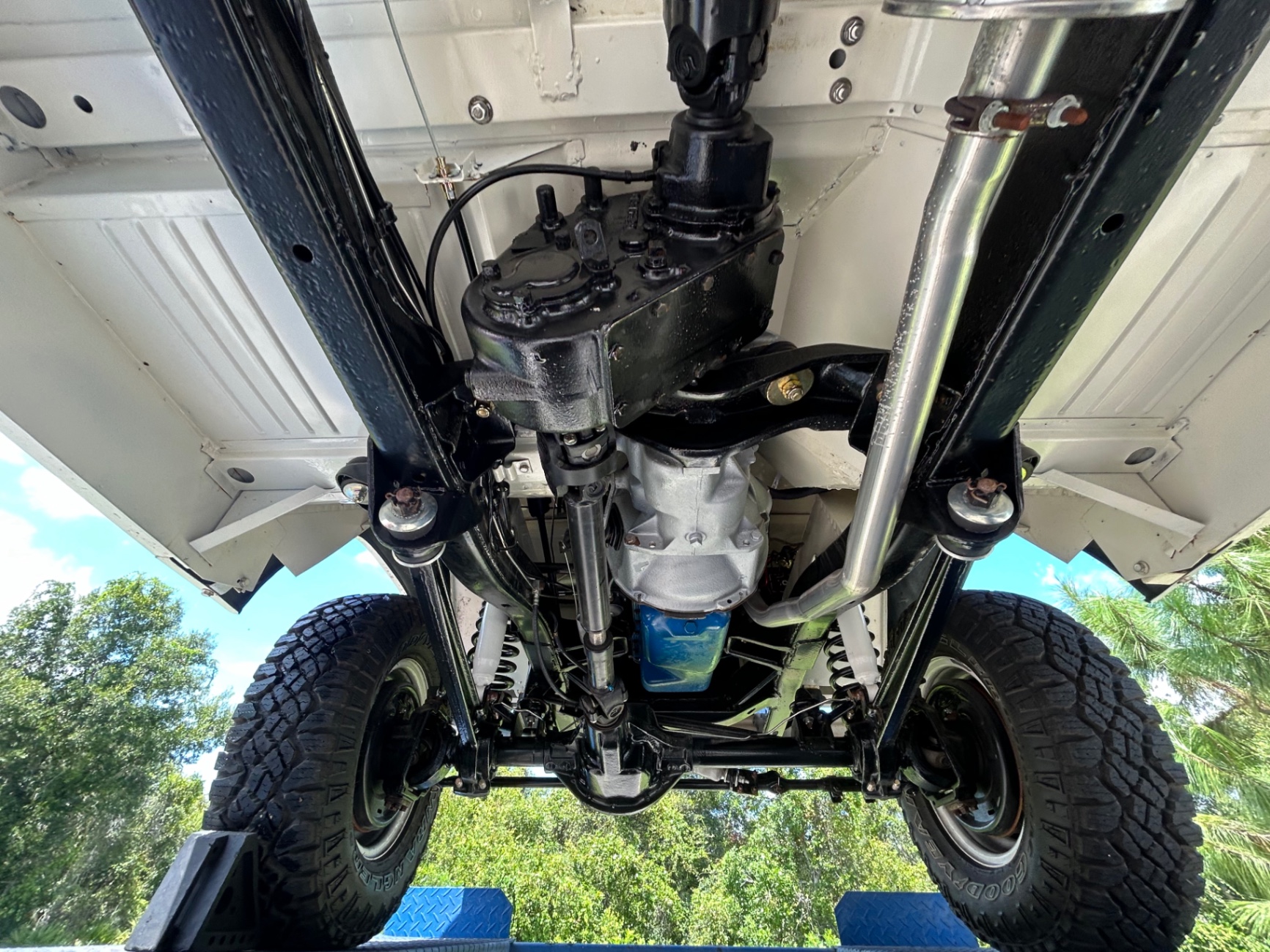
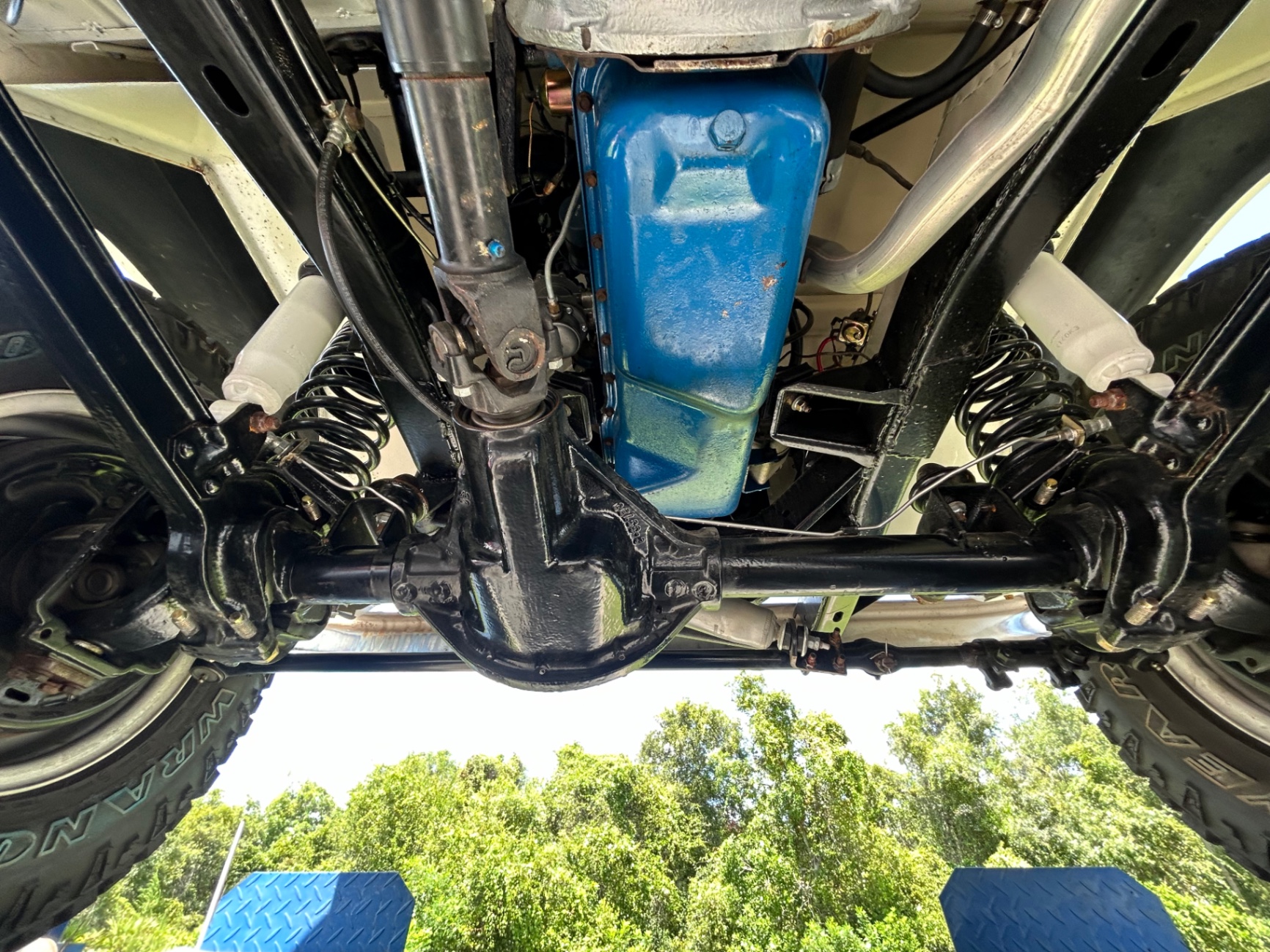
The engine has been painted in Ford Racing Blue across the block, head, and intake — a visually clean presentation that matches period-correct practice. Performance spark plug wires and a heavy-duty fuel pump round out the top-end details. The three-speed manual transmission shifts through a floor-mounted lever, and the transfer case is the factory 2-speed unit that gives you both high and low range for serious terrain. Up front sits a Dana 30 axle — the correct unit for this application — equipped with manual locking hubs that allow you to disconnect the front axle when four-wheel drive is not needed. The front suspension uses coil springs, which gave the early Bronco notably better articulation and ride quality than the leaf-sprung competition of the era. The rear runs leaf springs as designed. All four corners stop with drum brakes, correct for 1966.
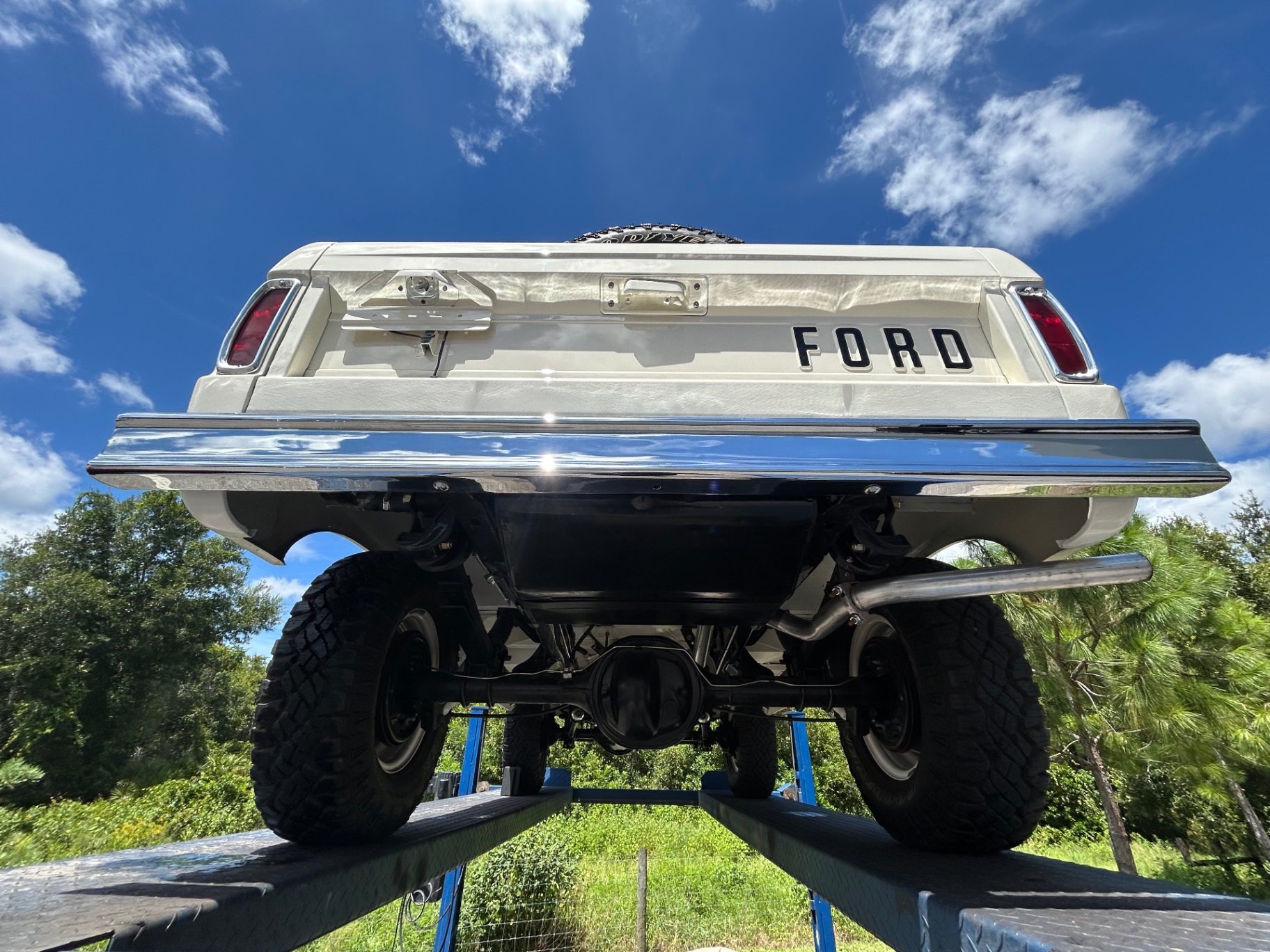
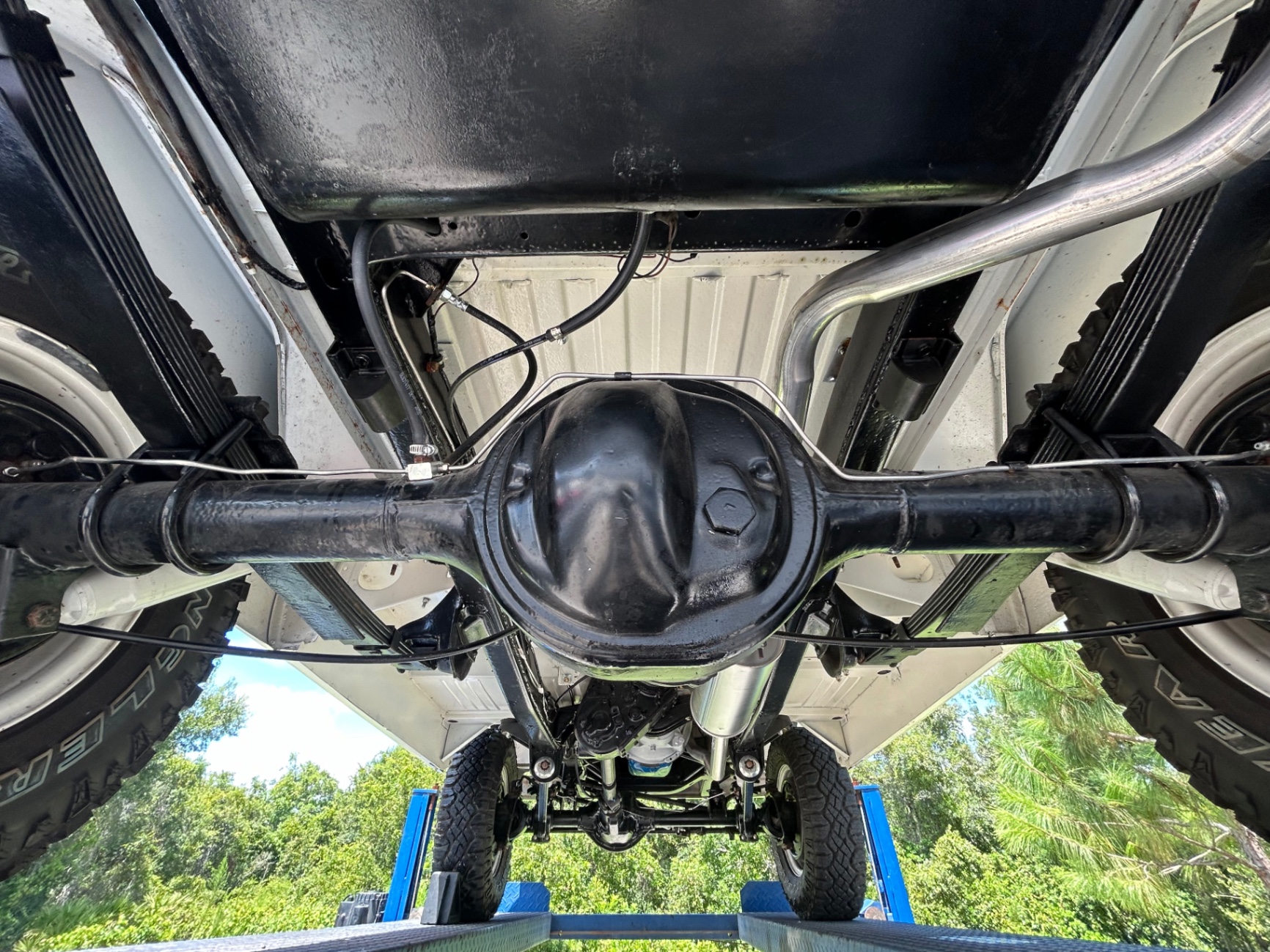
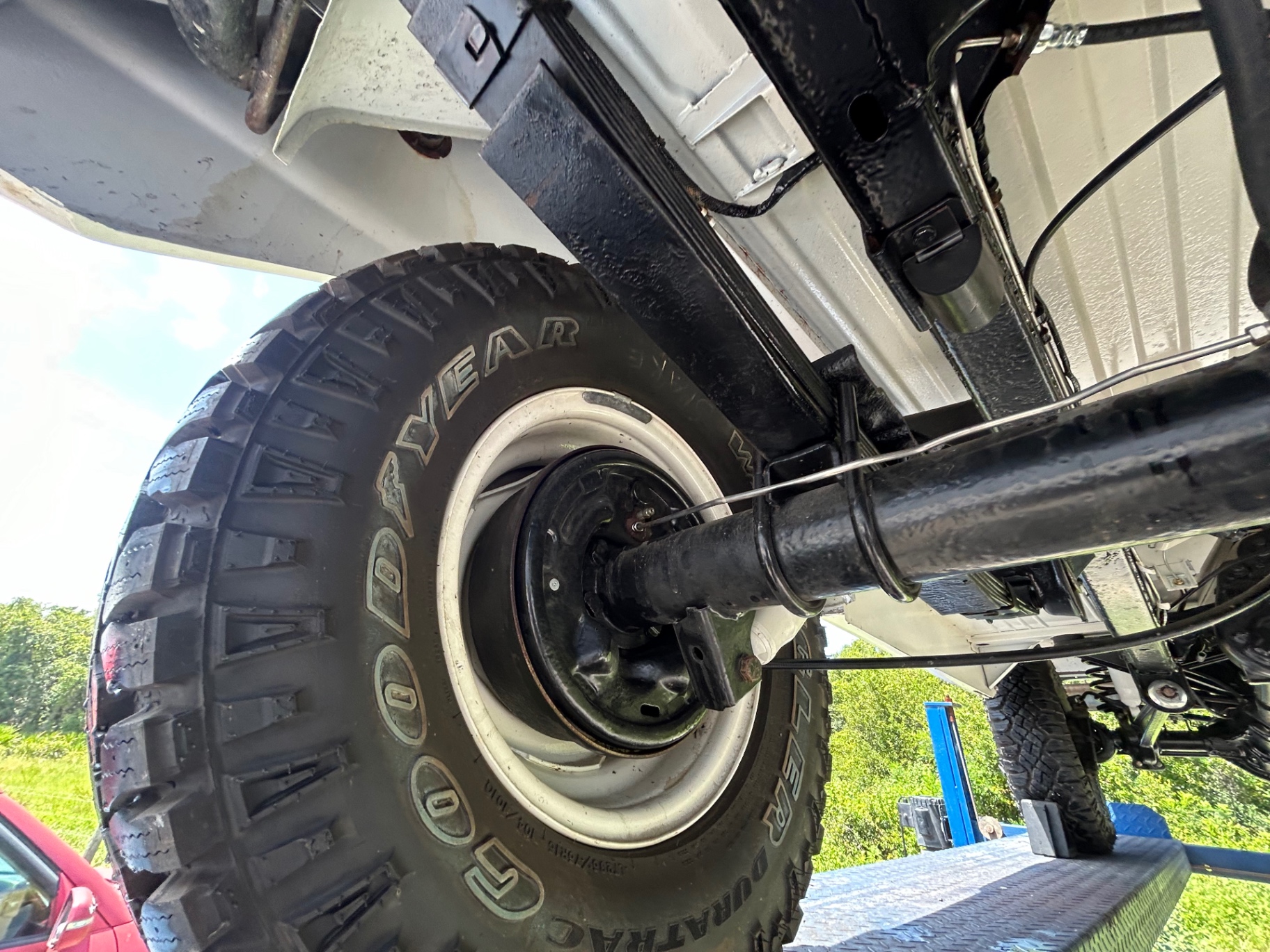
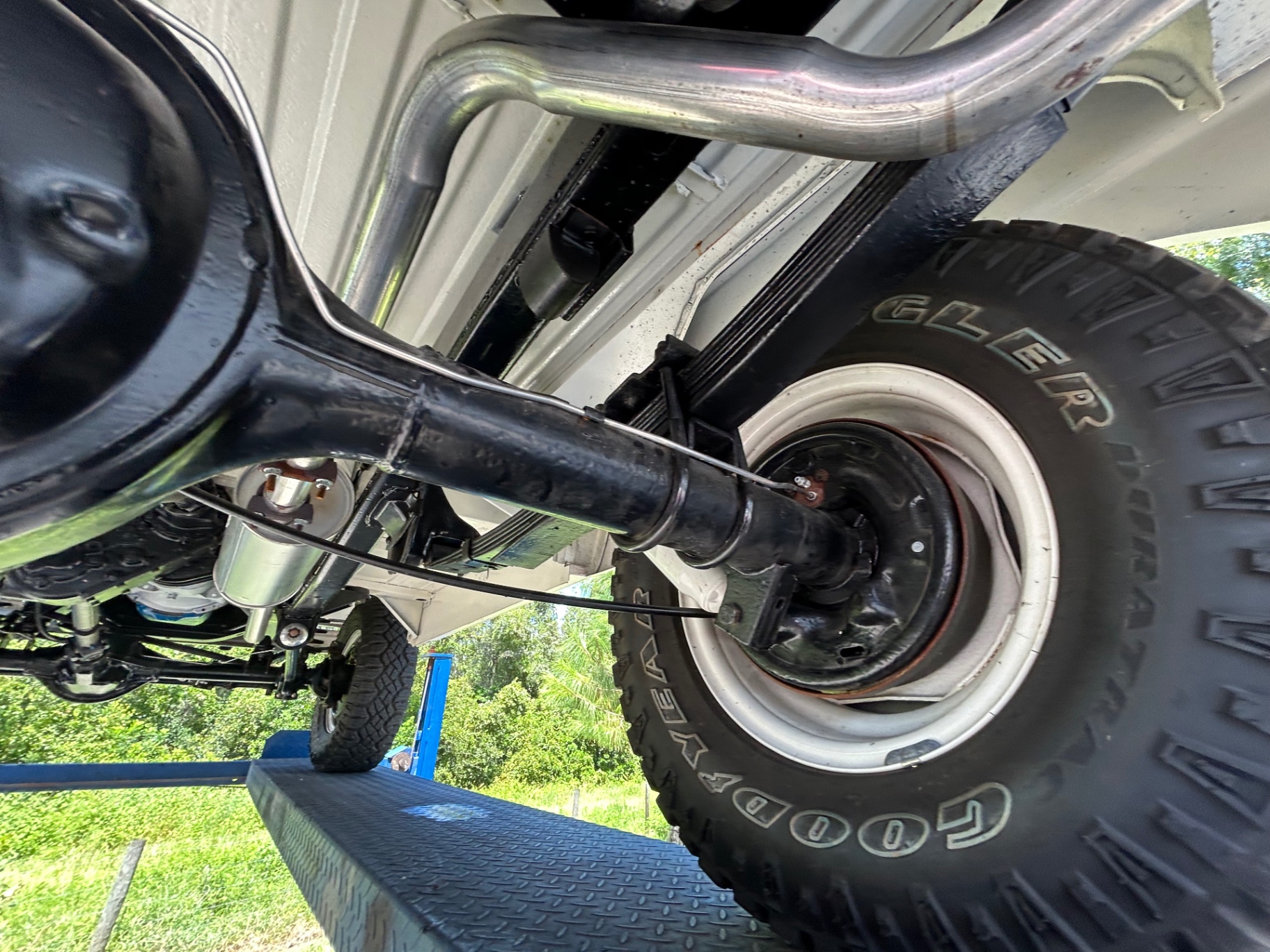
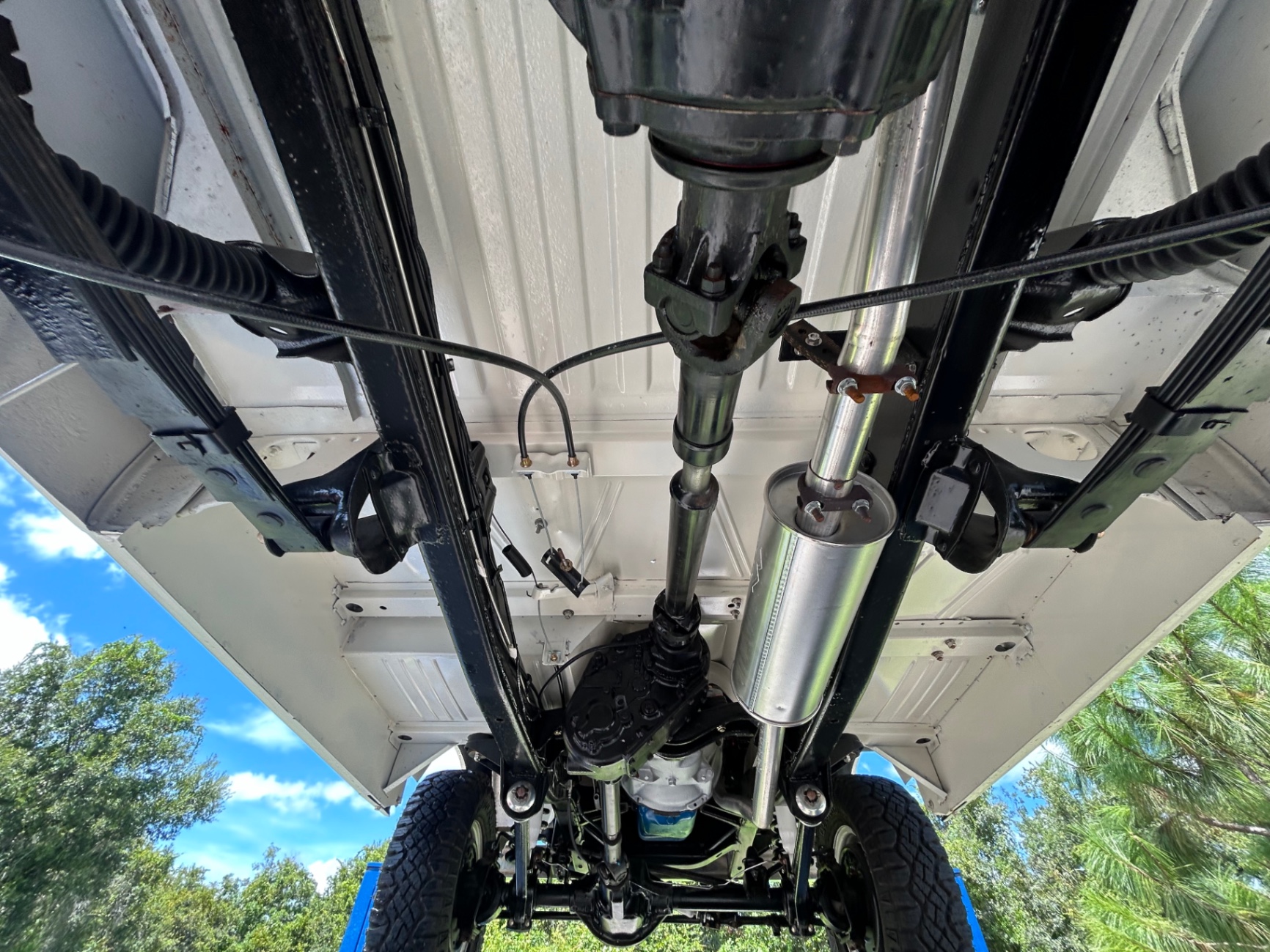
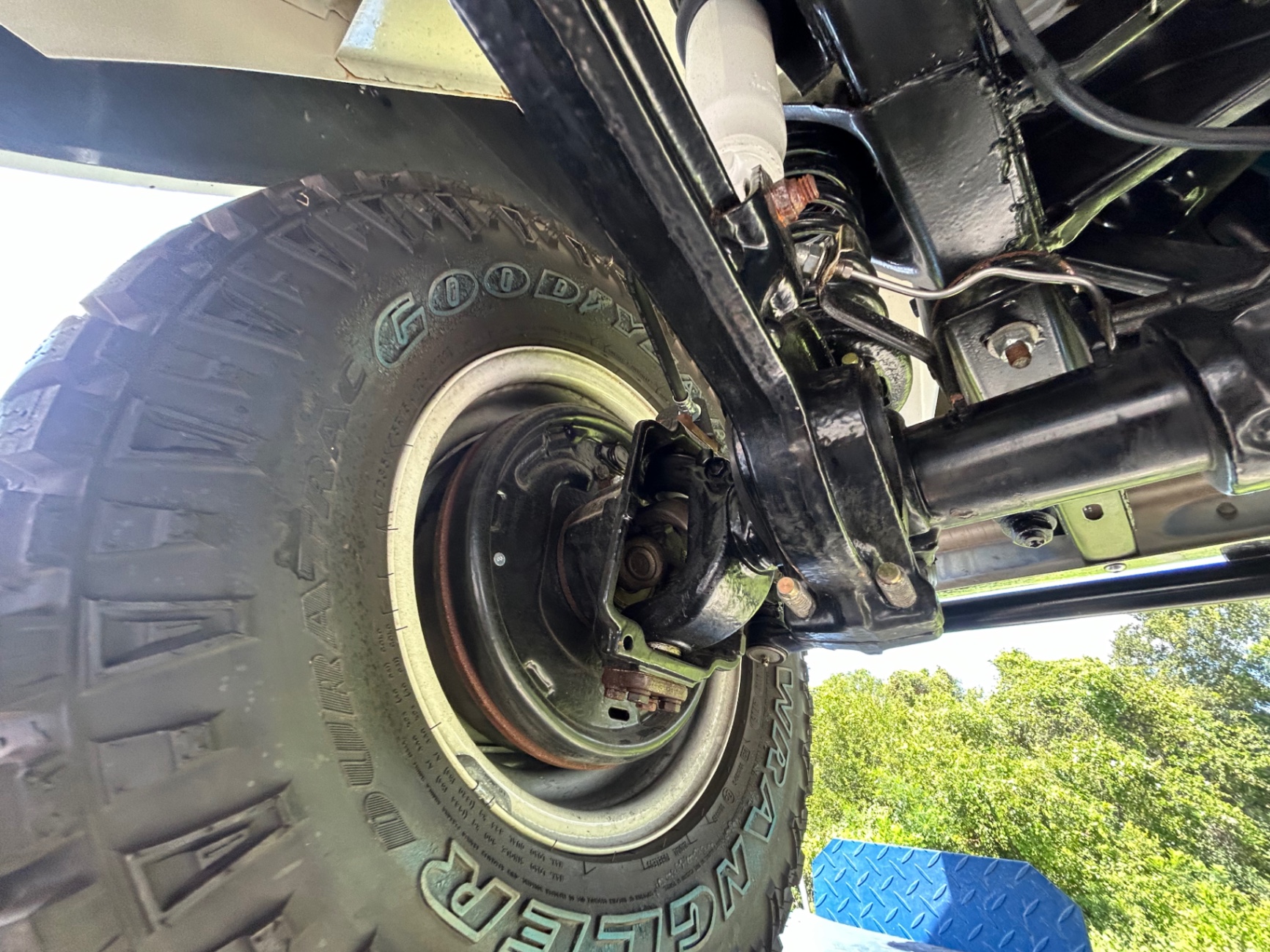
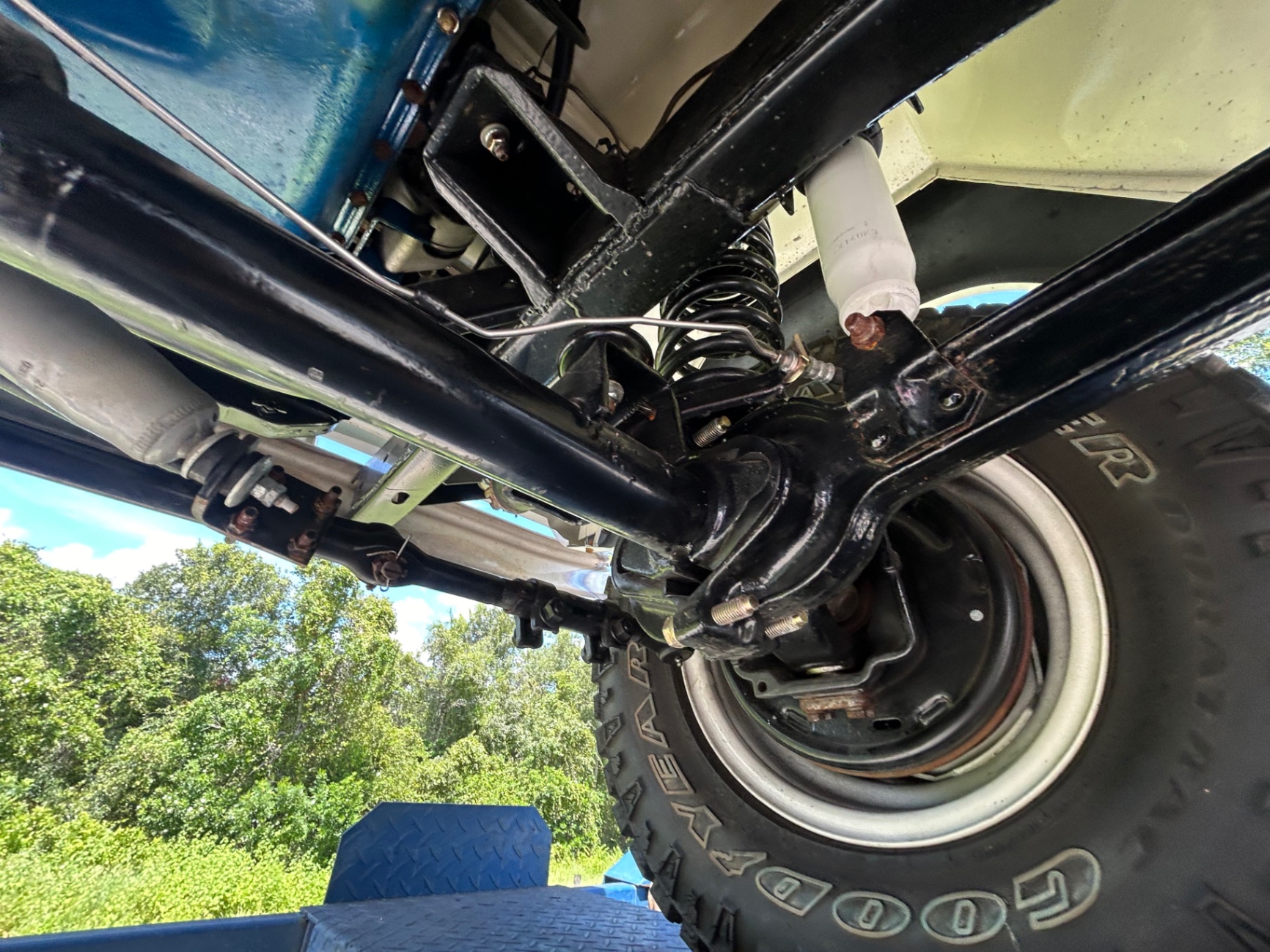
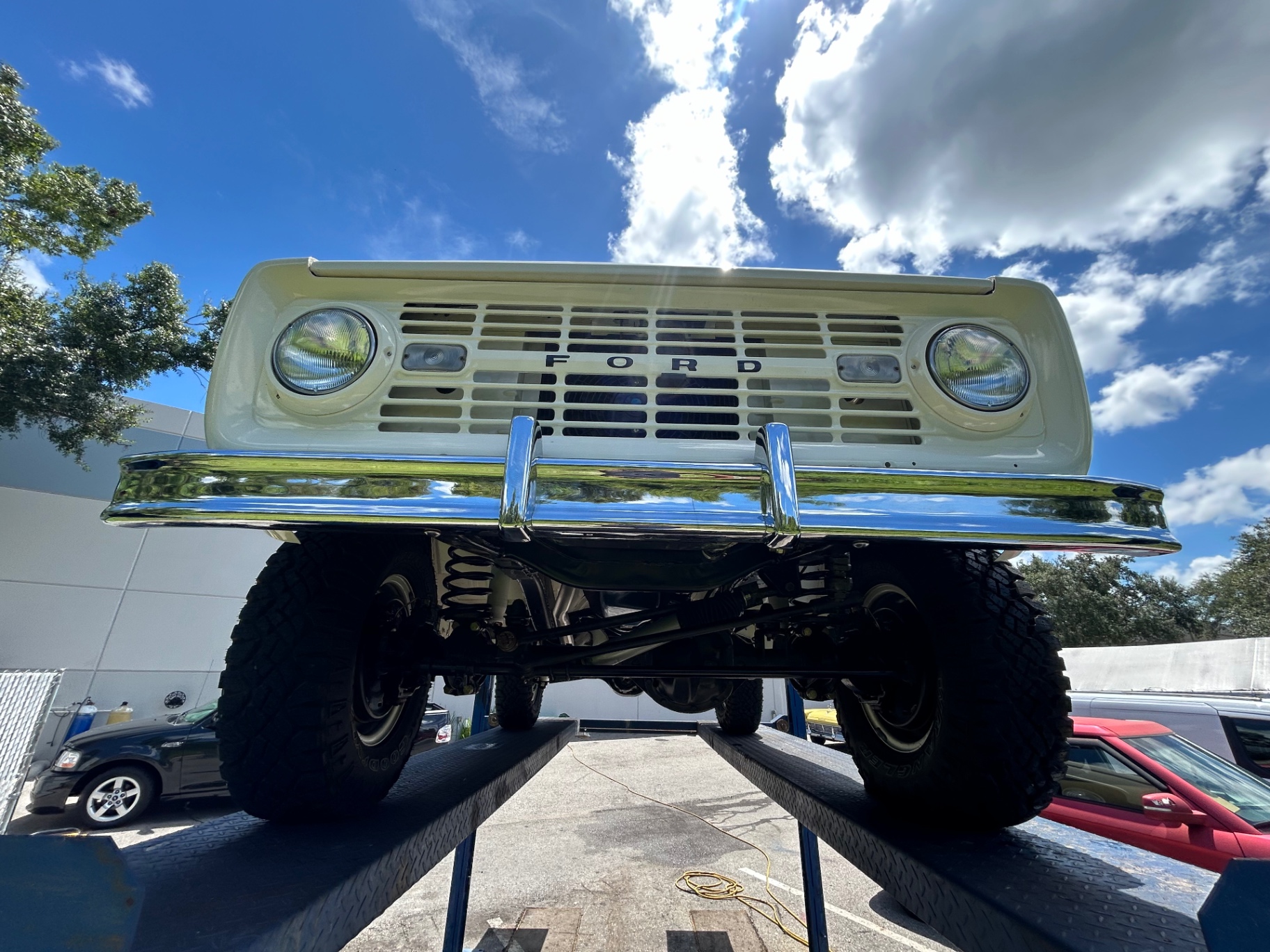
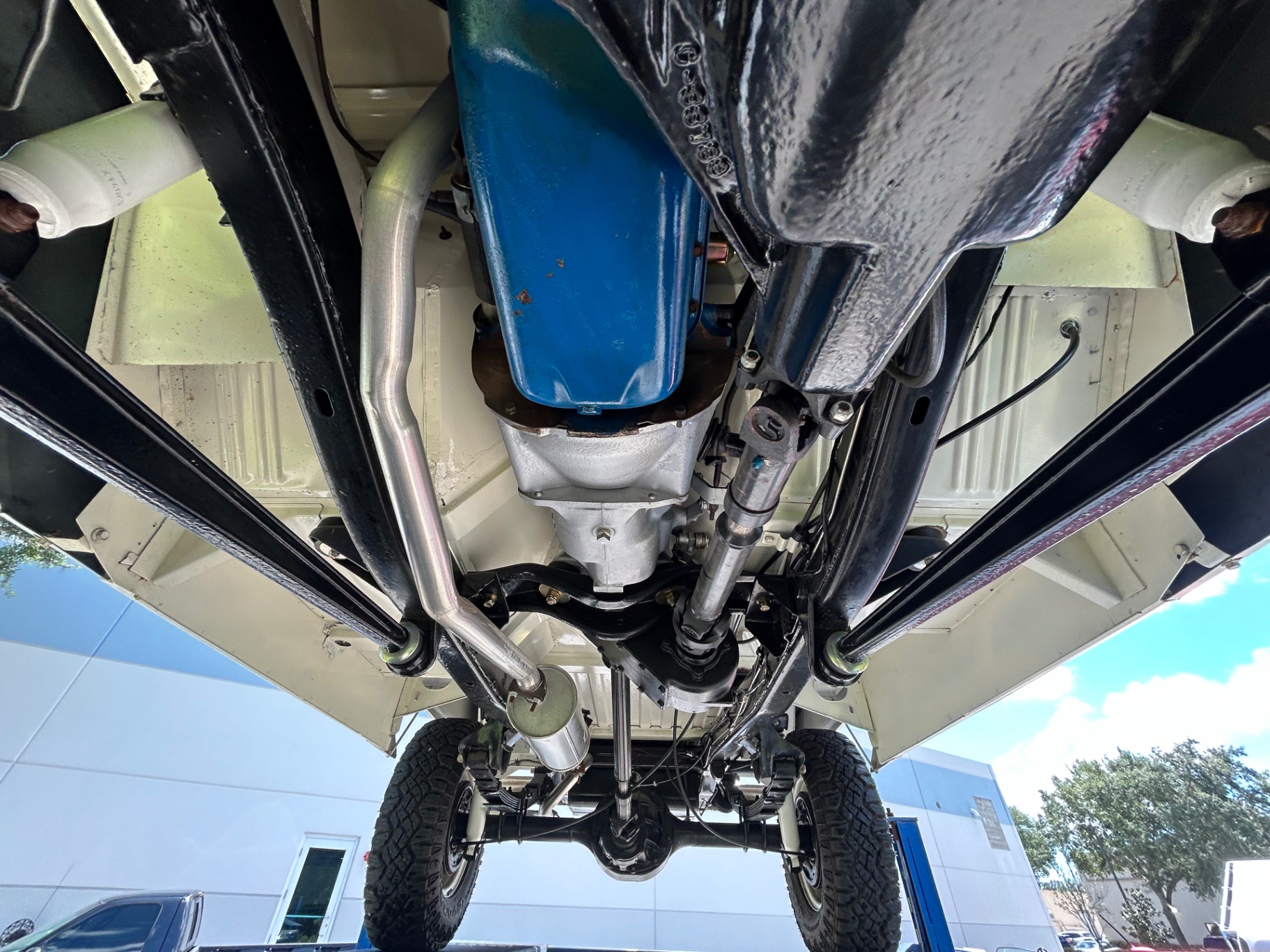
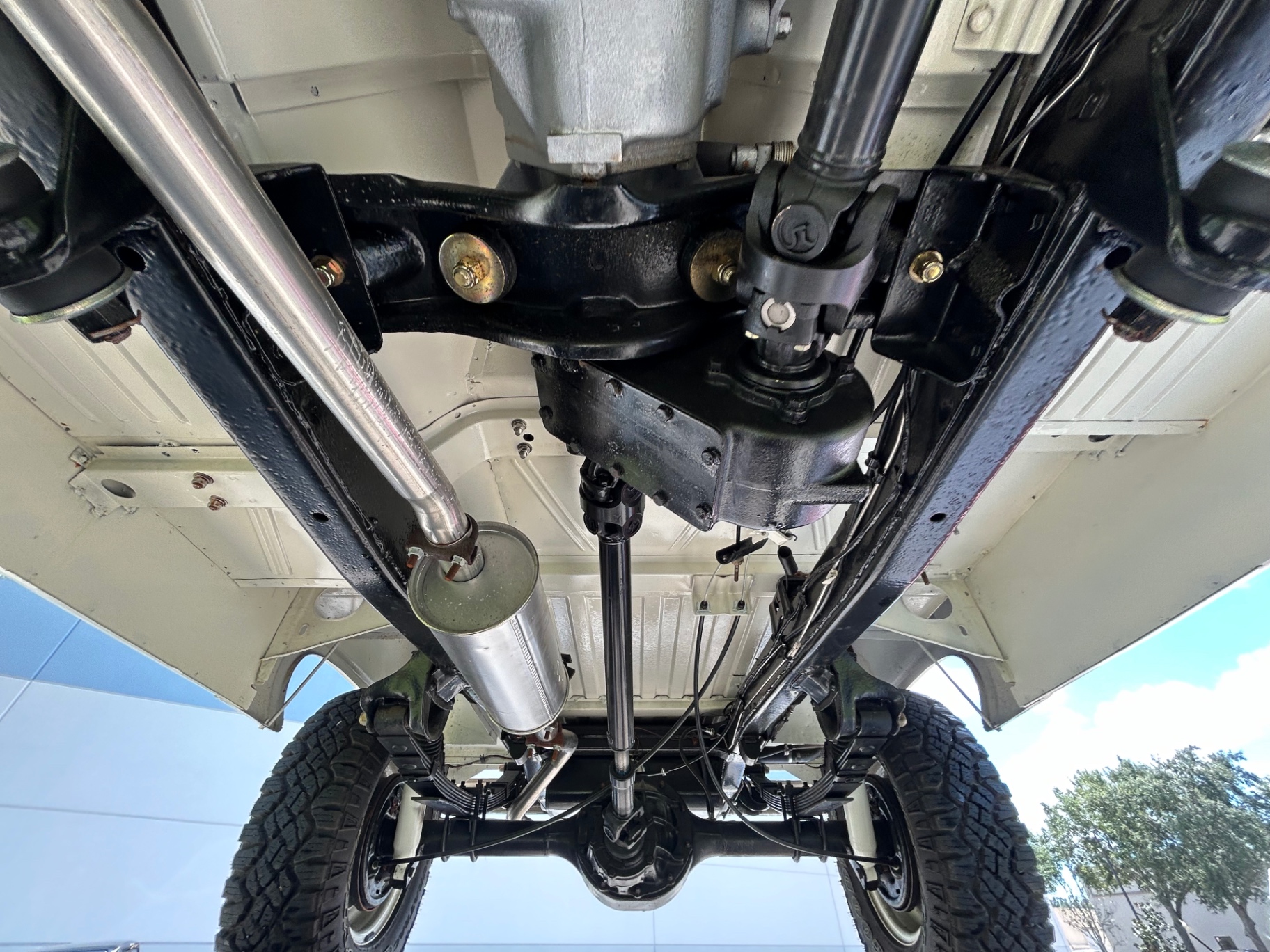
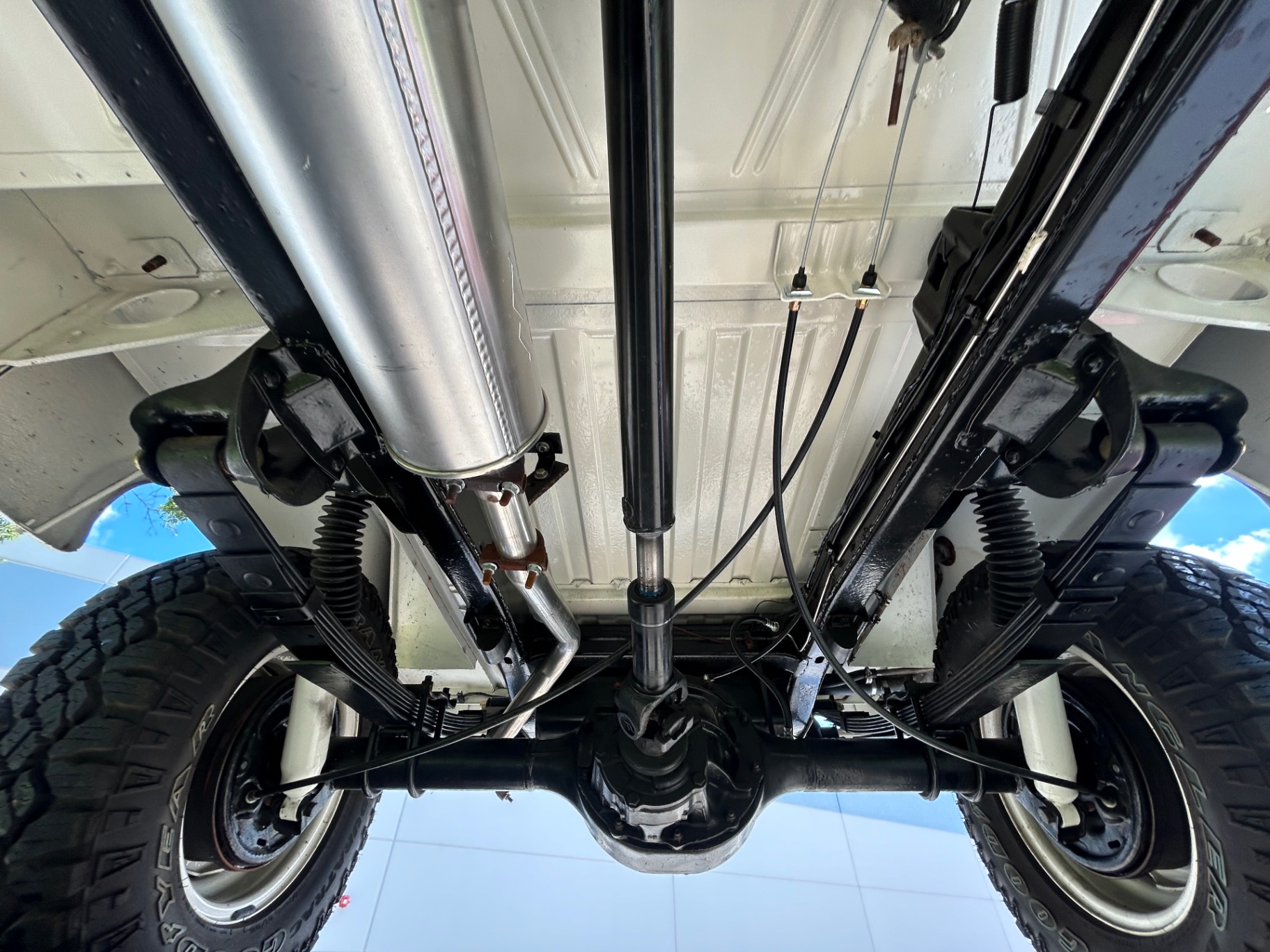
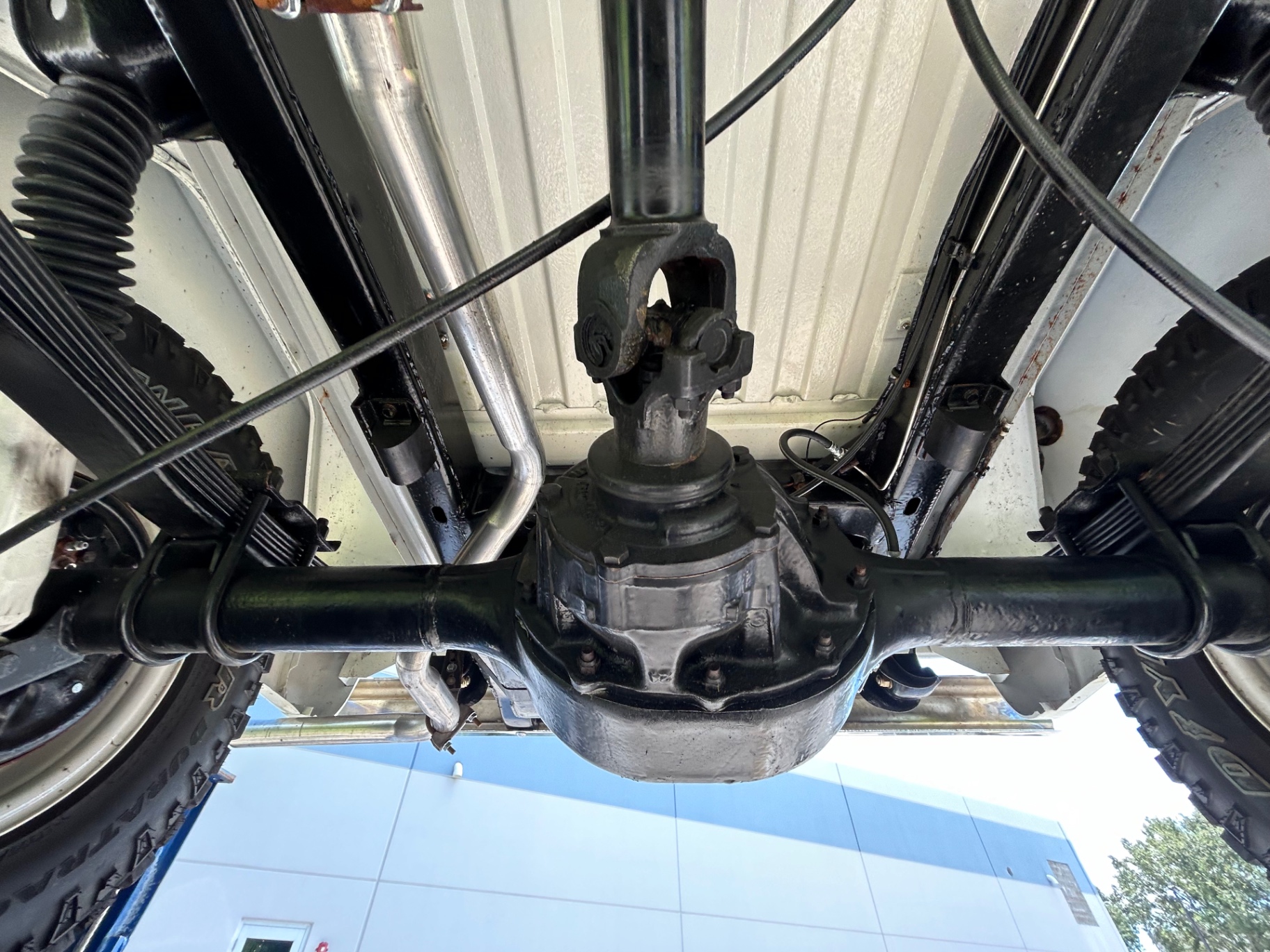
The underside of this truck is one of its strongest selling points. The undercarriage photographs show a clean, well-maintained structure with no visible rot or significant corrosion — a meaningful detail on any 58-year-old truck. The stainless steel exhaust system is a practical long-term upgrade that eliminates the rust problems that plague original mild steel systems. The Goodyear Wrangler Duratrac tires are a capable modern off-road tire that fits the period steel wheels well and does not look out of place on a working-era Bronco.
Interior
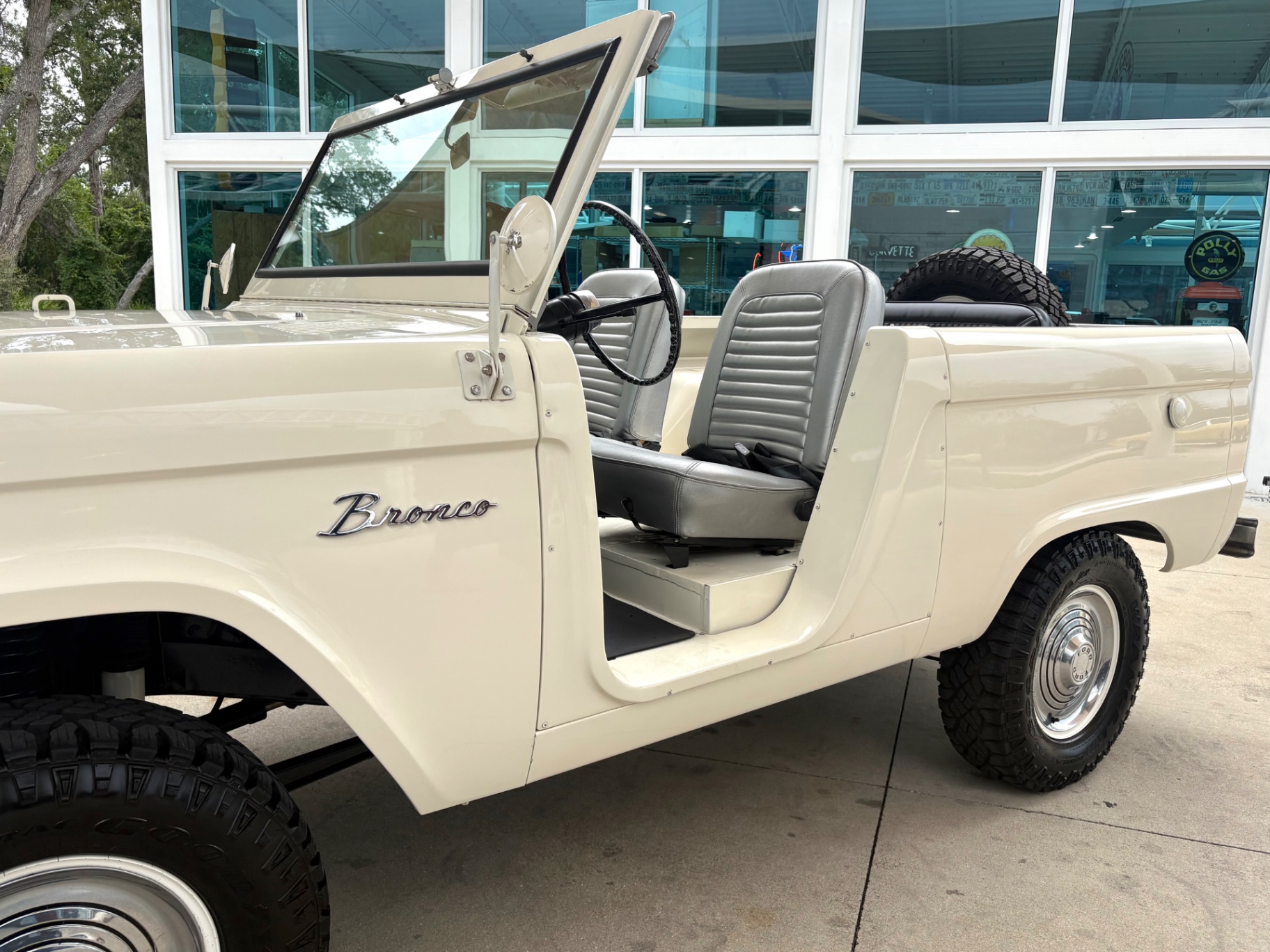
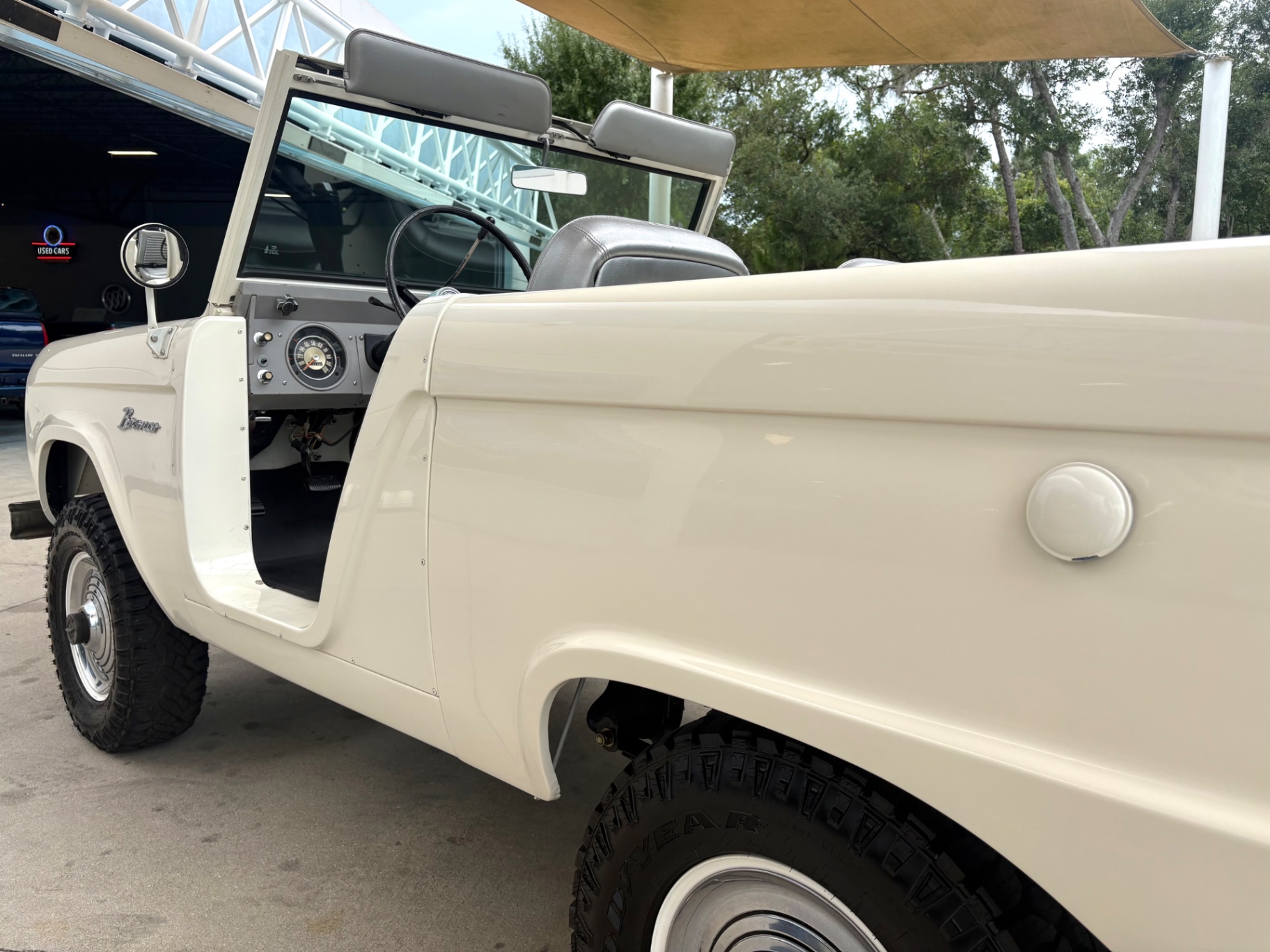
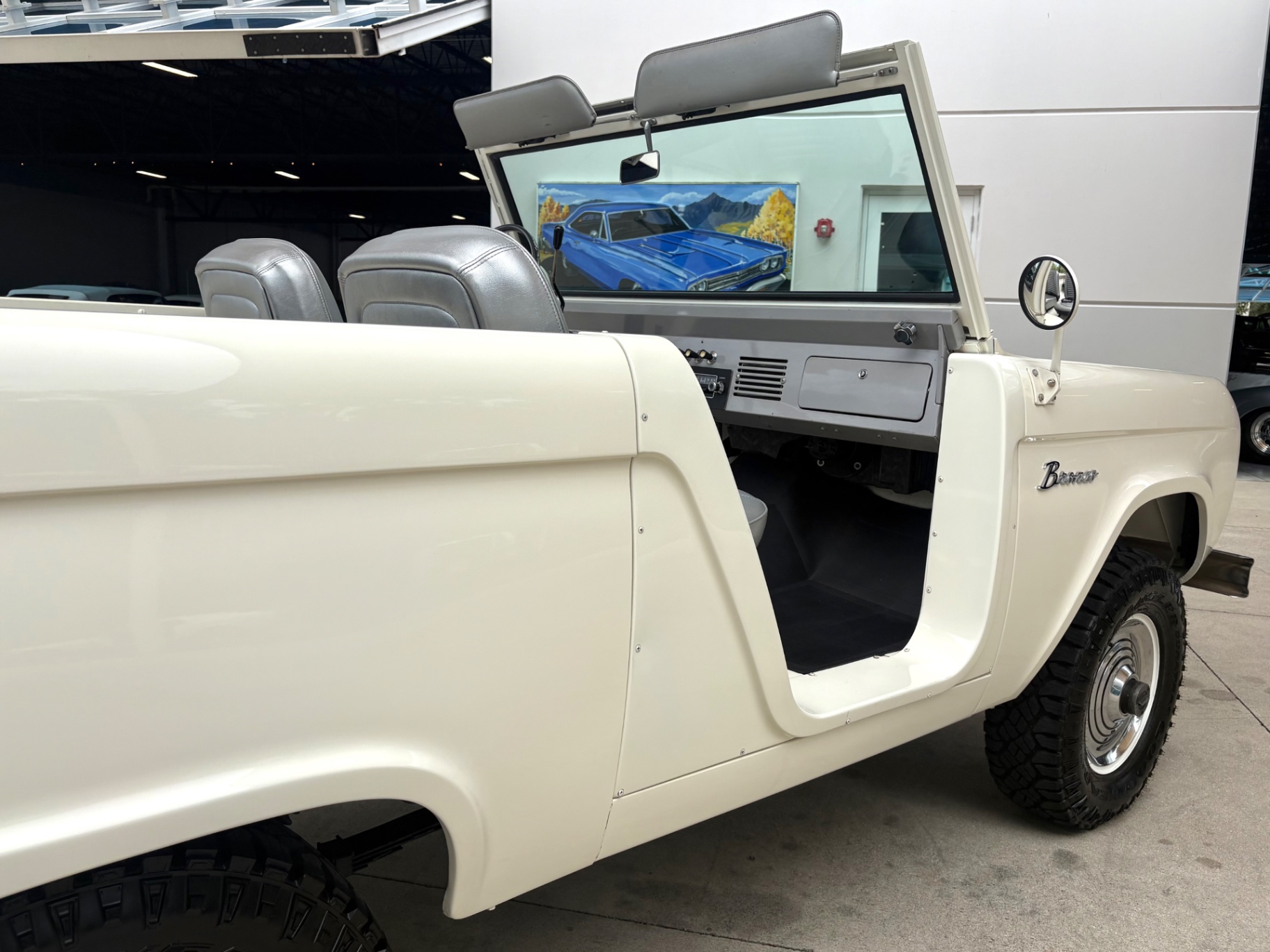
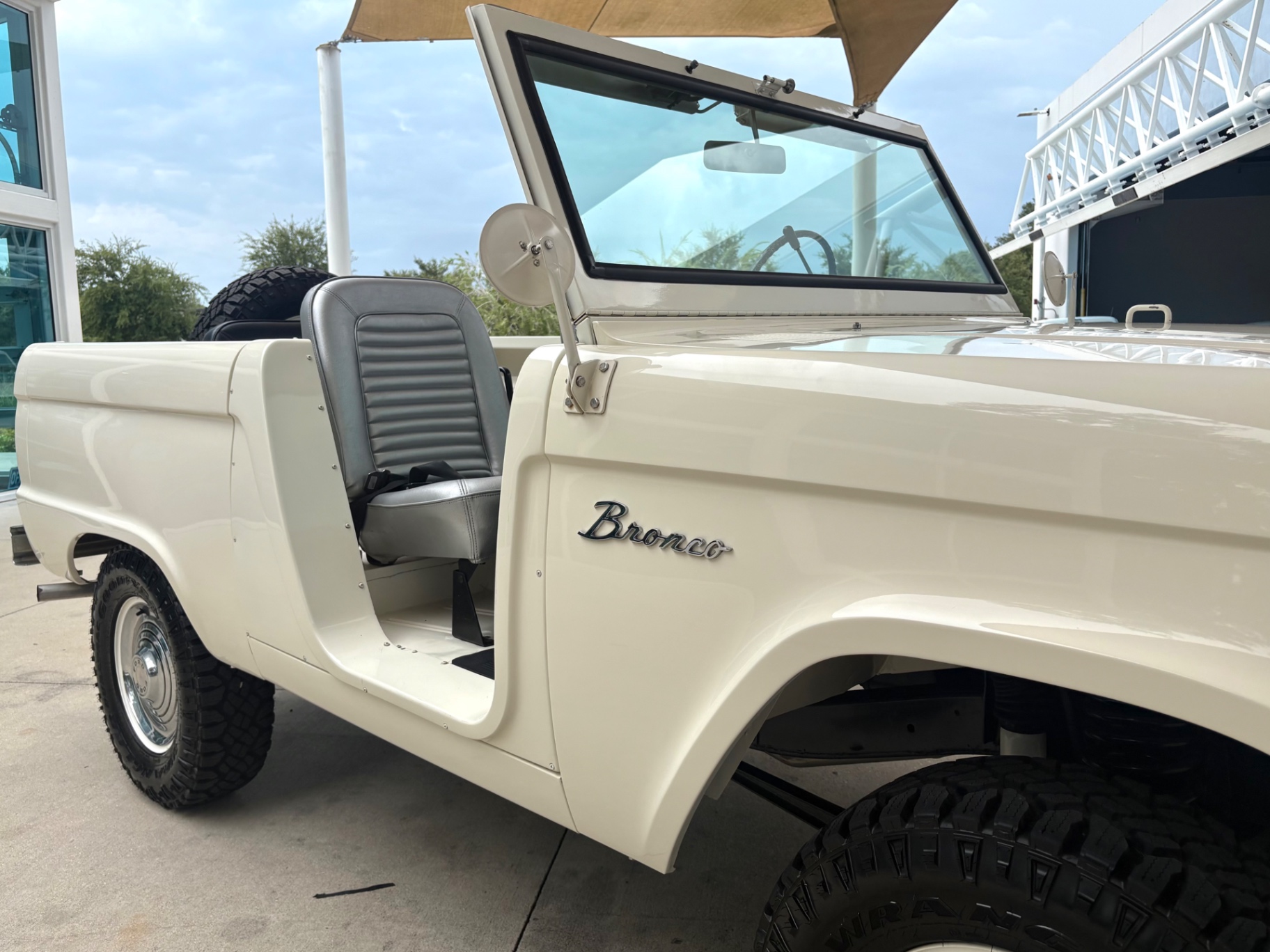
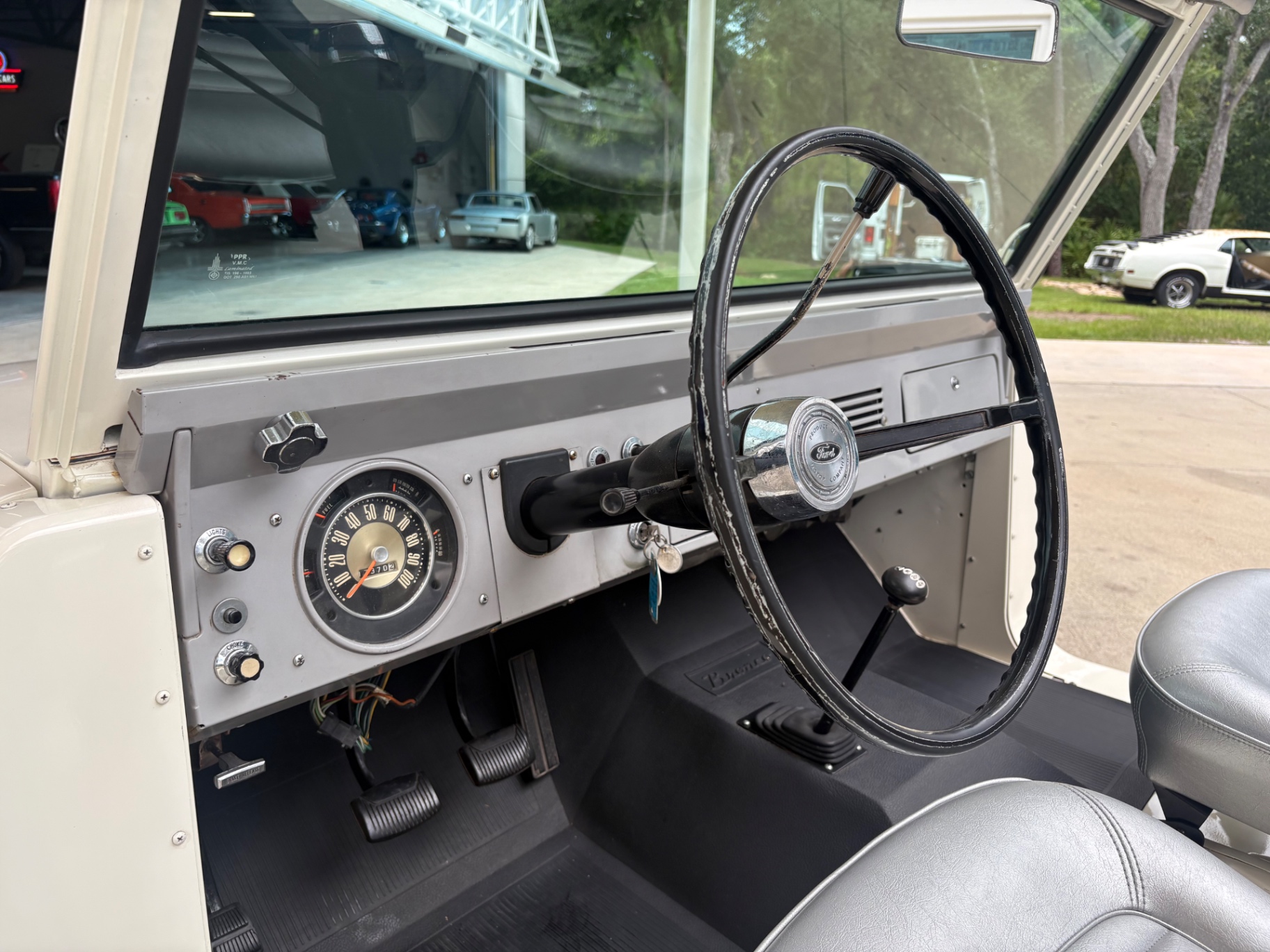
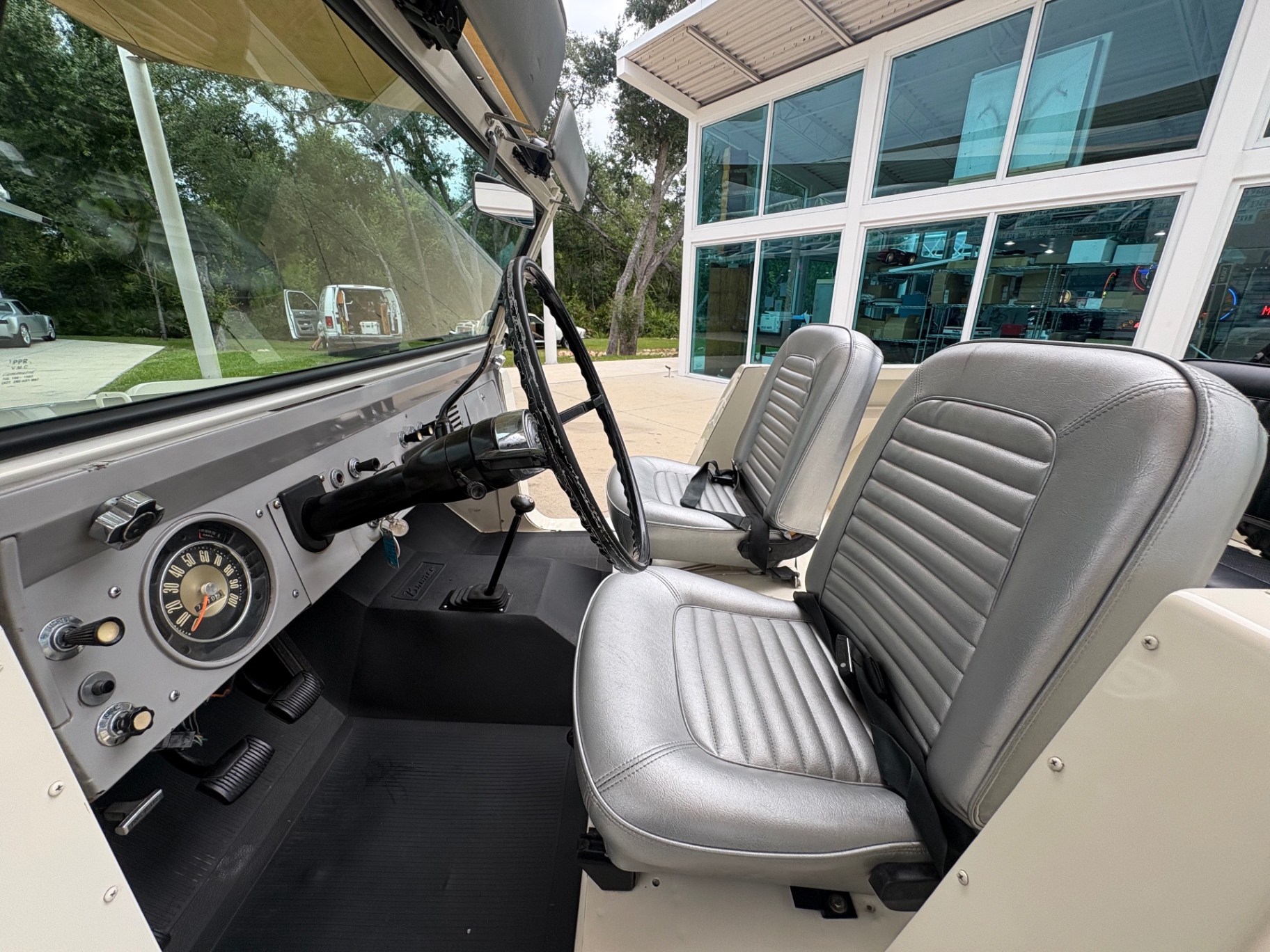
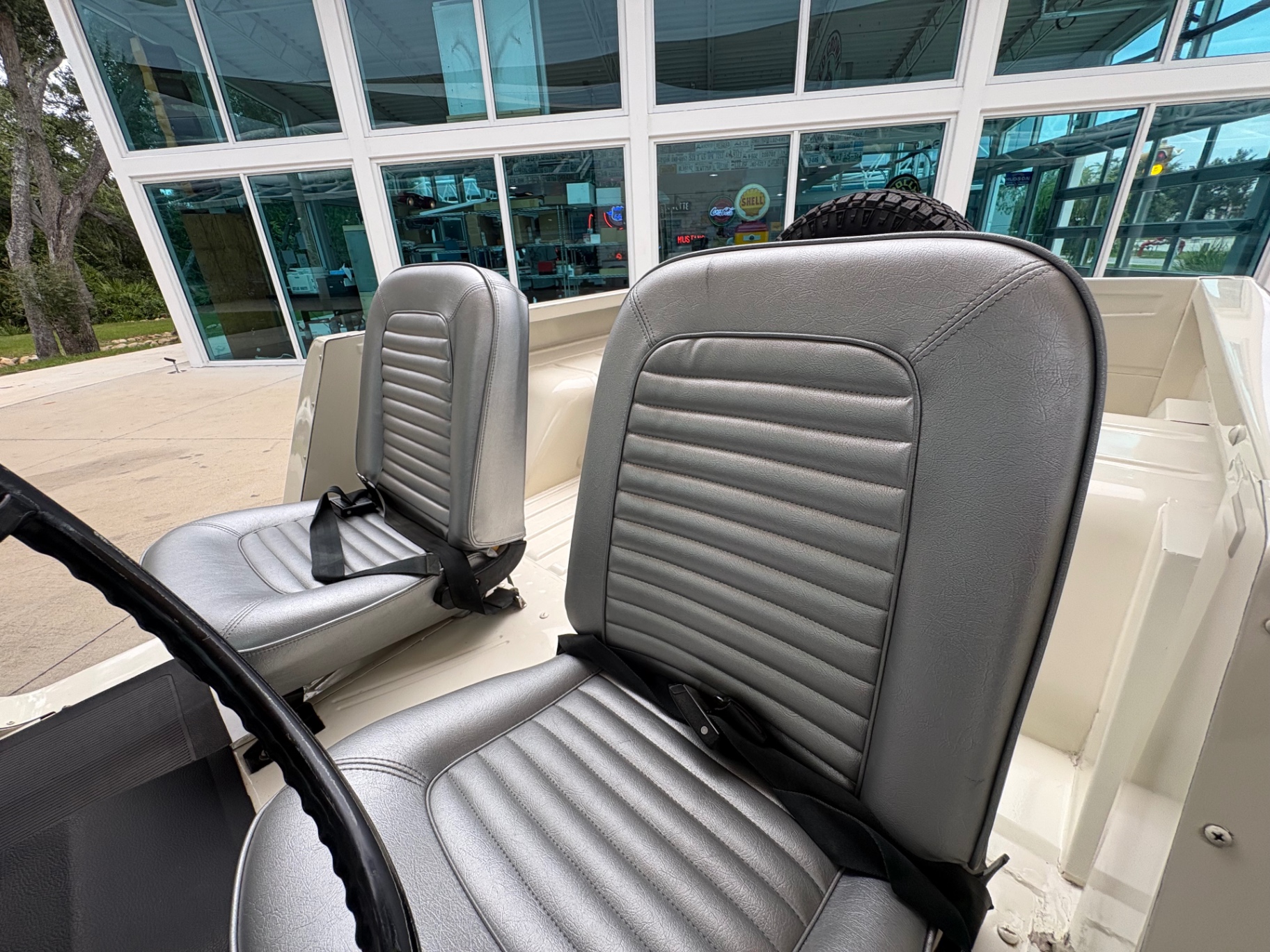
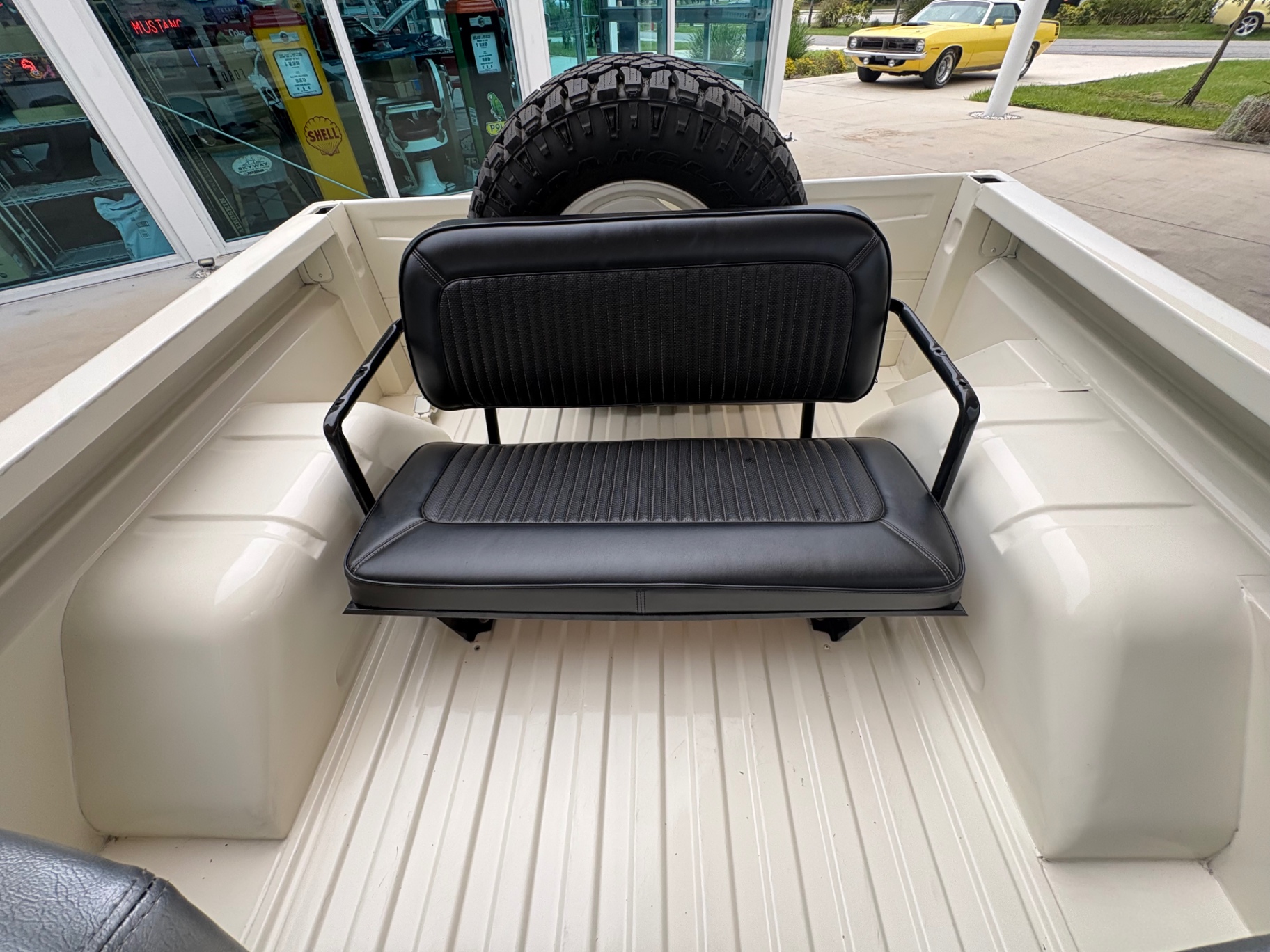
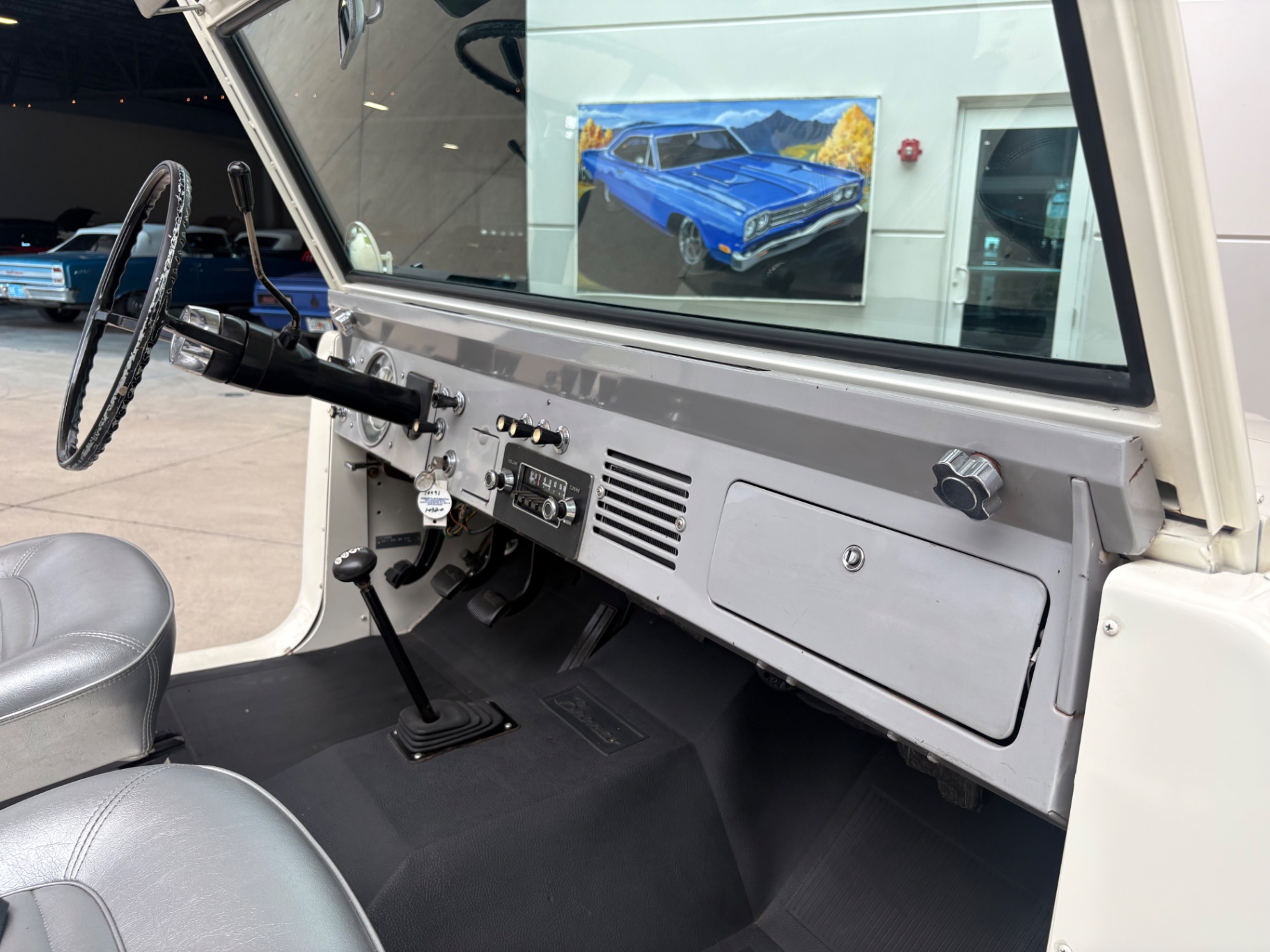
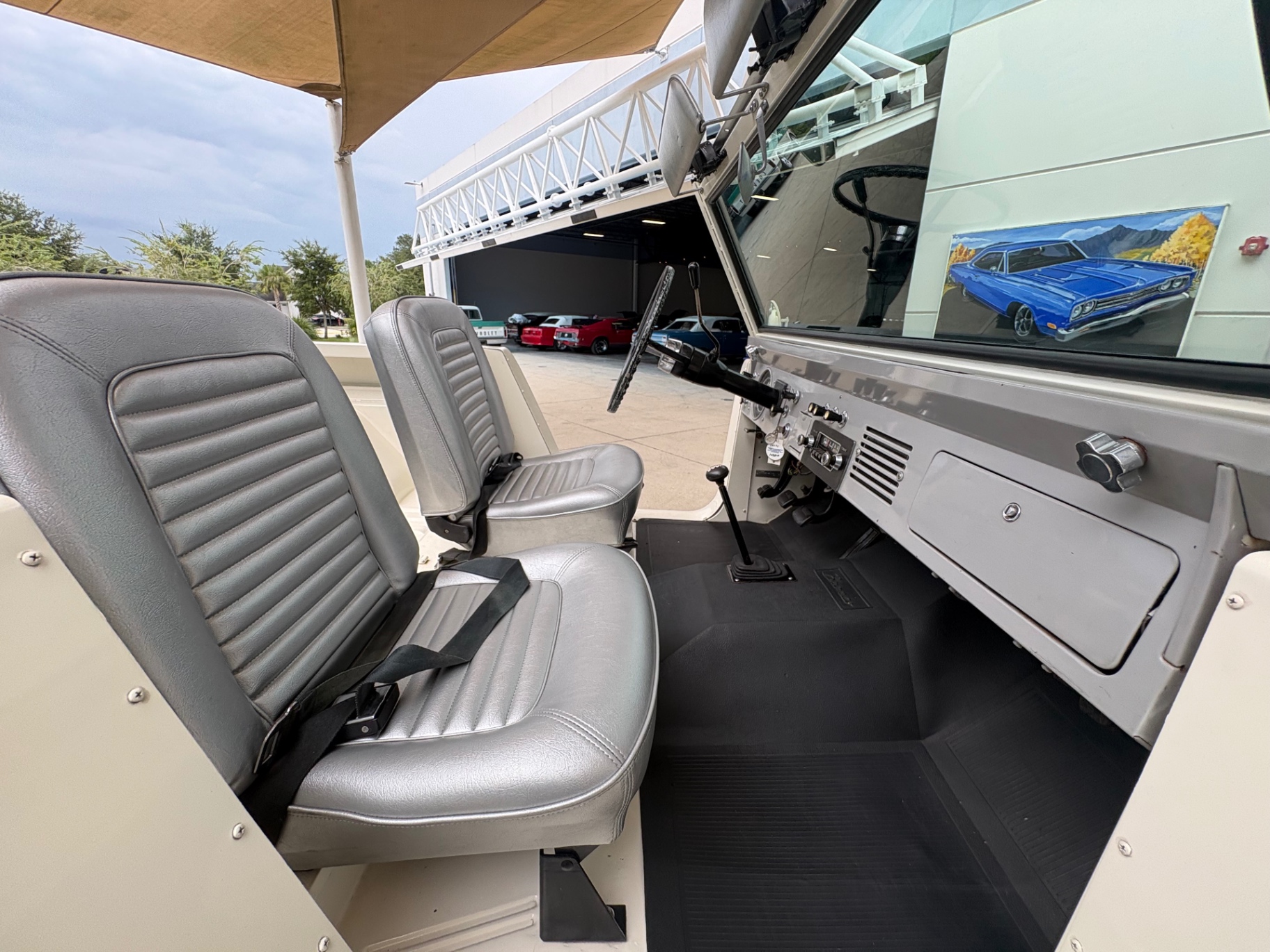
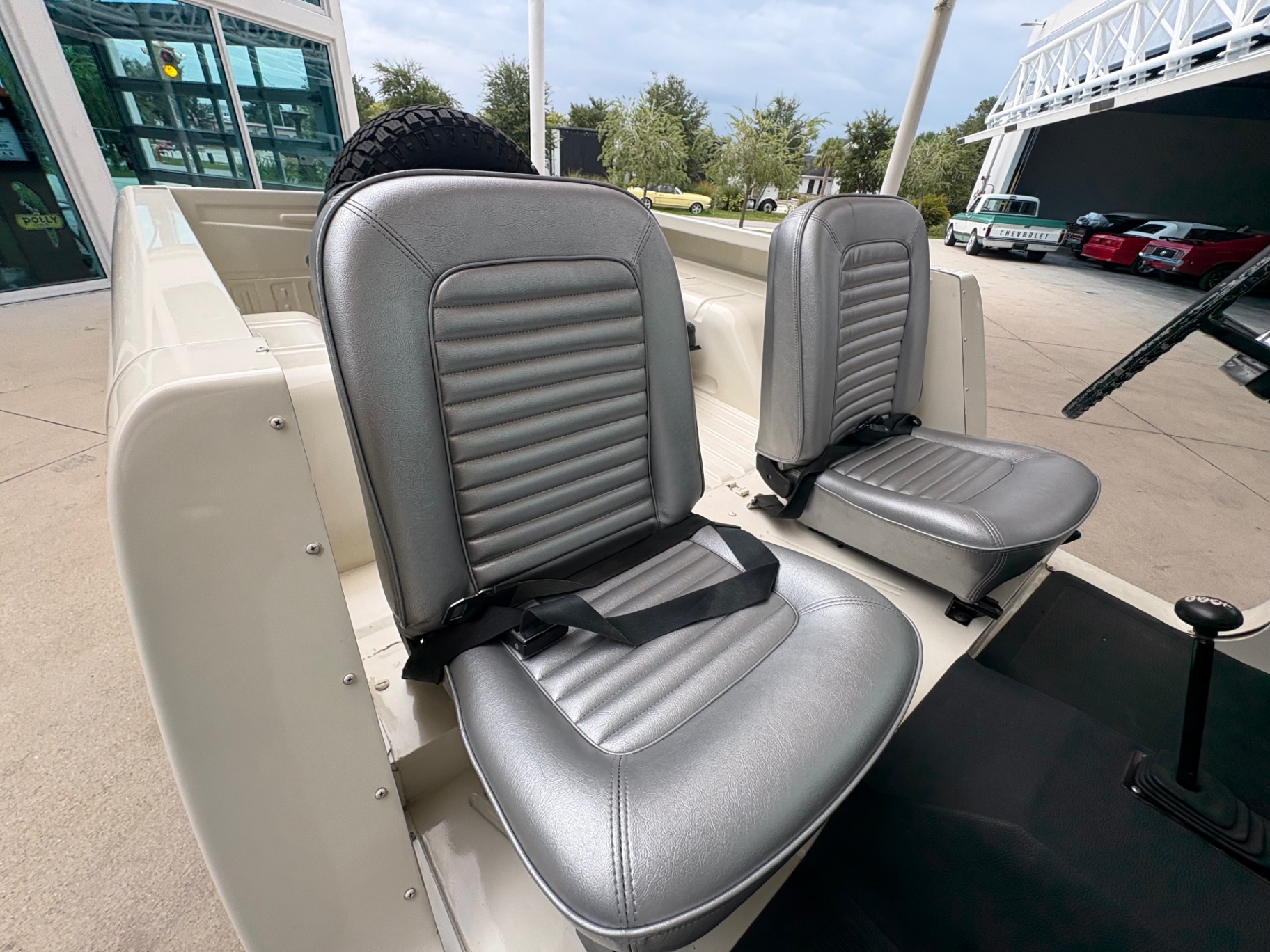
The interior of this 1966 Ford Bronco Roadster has been redone in grey vinyl, covering both the front bucket seats and the rear bench. The bucket seat configuration is correct for the Roadster body style and provides a more sporting driving position than a bench setup would. Front lap seatbelts are in place. The grey painted dash is intact and correct, with functioning gauges providing the driver with basic but necessary readouts. There are no warning lights substituting for real instruments here.
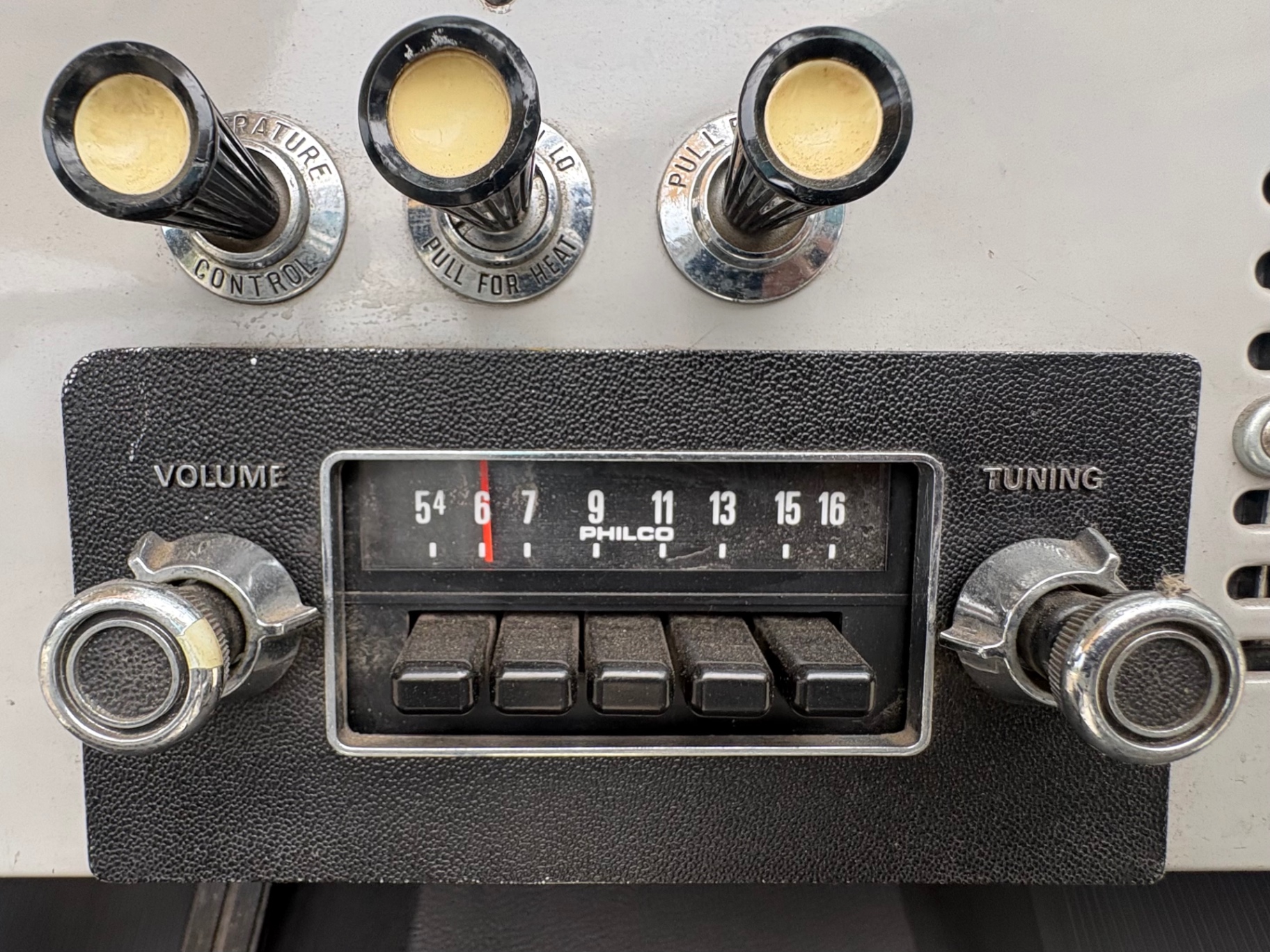
The Philco AM pushbutton radio is a period-correct unit that fits the dash opening cleanly. Ford used Philco-built radios as factory-installed options throughout the 1960s, and having one present — rather than a blank plate or a modern head unit — keeps the interior honest. The heater uses the factory pull-knob controls visible below the radio, and the passenger-side glove box door is intact. The factory Ford steering wheel carries the correct "Product of Ford Motor Company" horn button at its center, a detail that Bronco restorers specifically look for and often have difficulty sourcing.
Because this is a Roadster, there are no doors and no roof — the entire cabin is open to the elements. That is not a missing component. That is the correct factory configuration for this body style. The windshield and its mount-top rearview mirror are present, along with dual fender-mounted side mirrors that provide rear visibility without doors. The overall presentation is clean, purposeful, and consistent with a vehicle built to be used outdoors.
Exterior
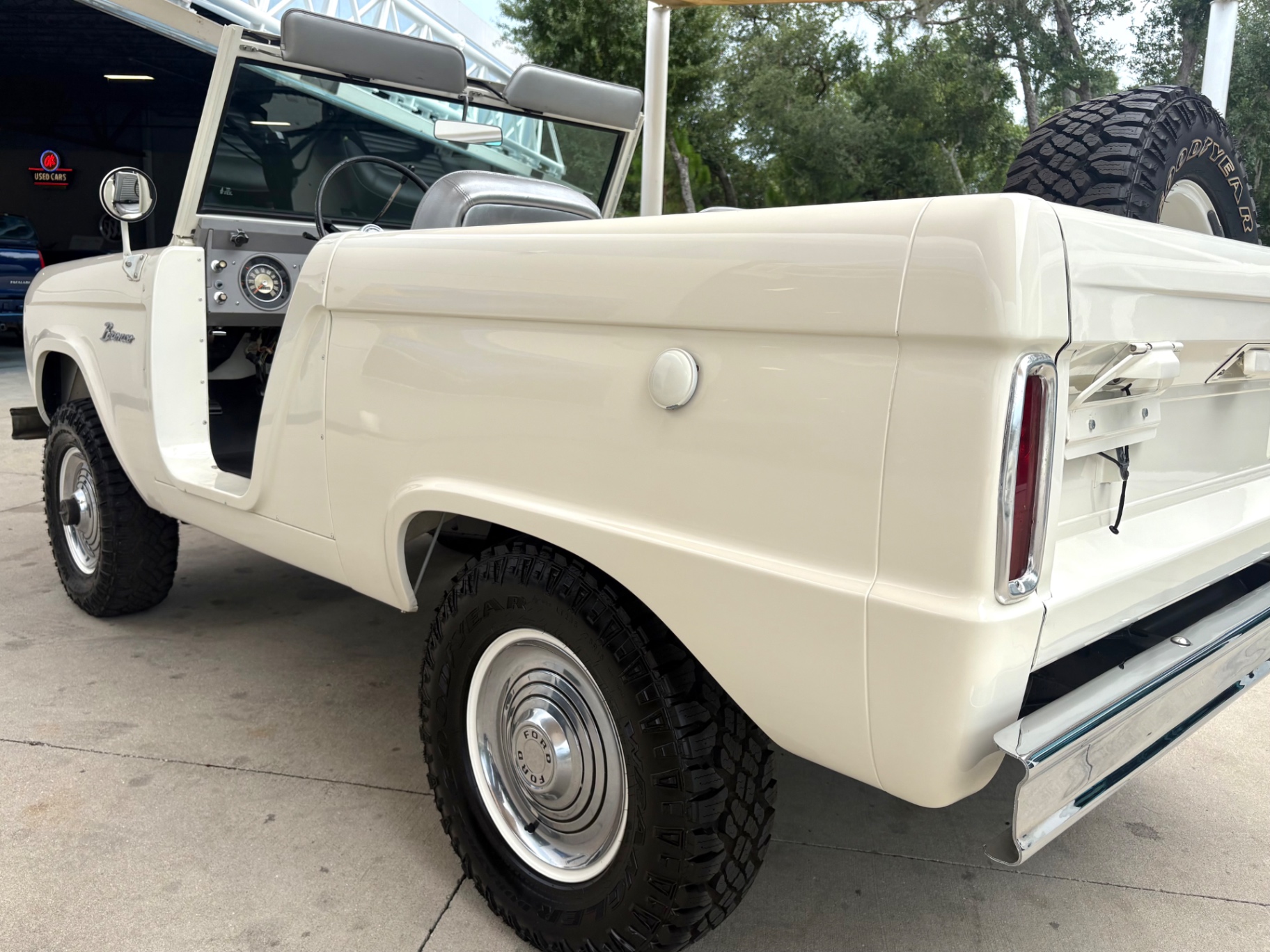
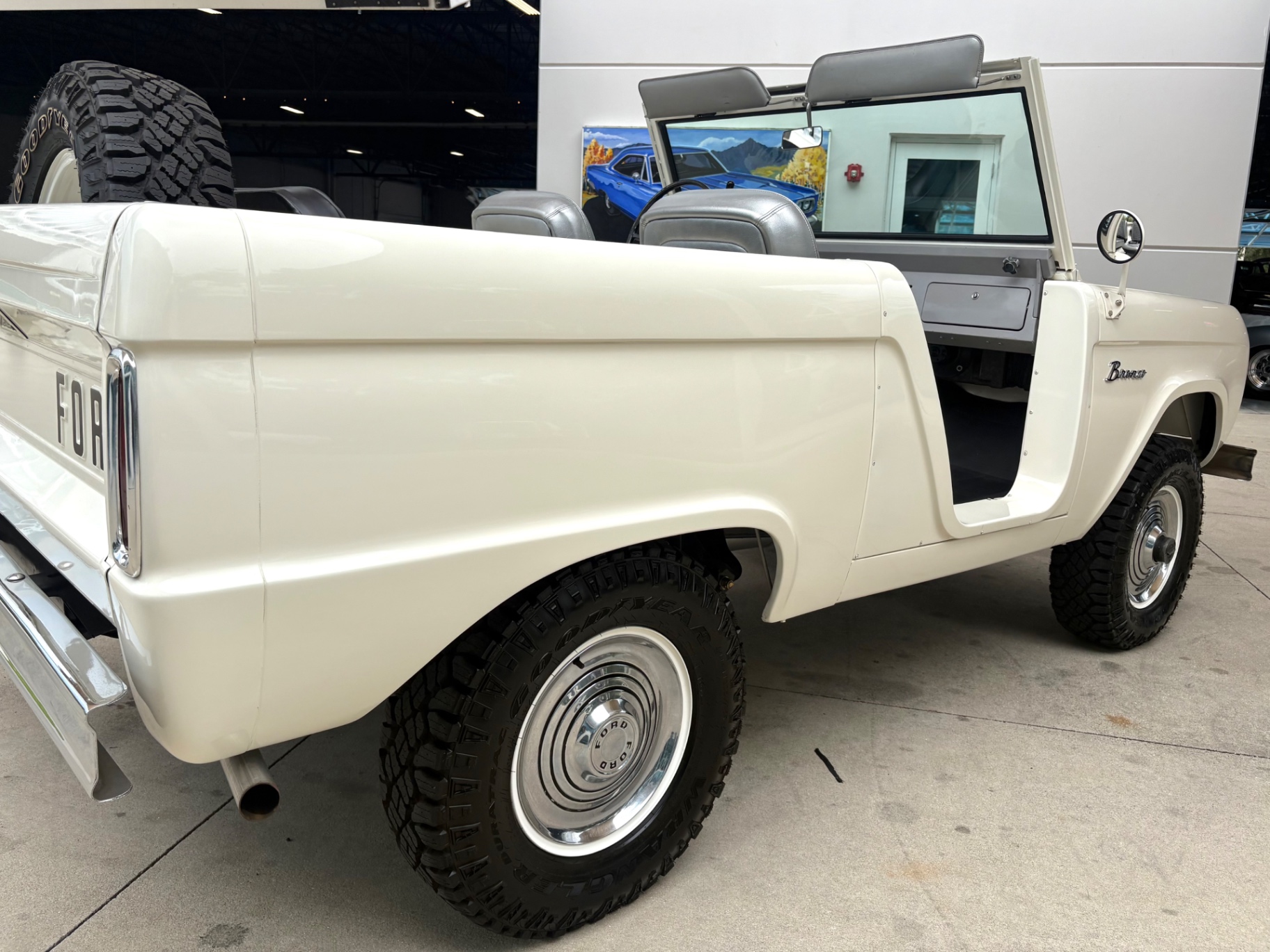
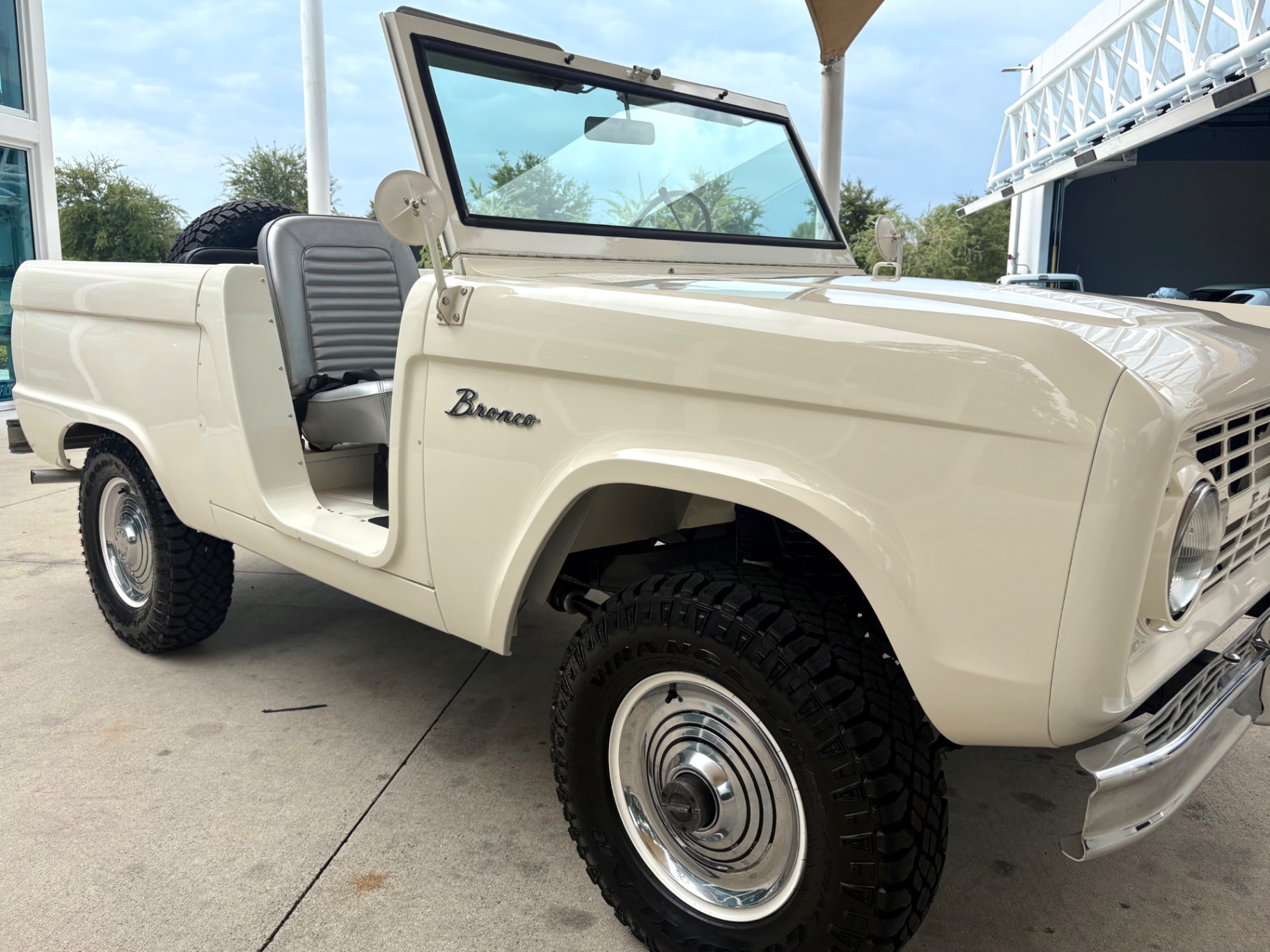
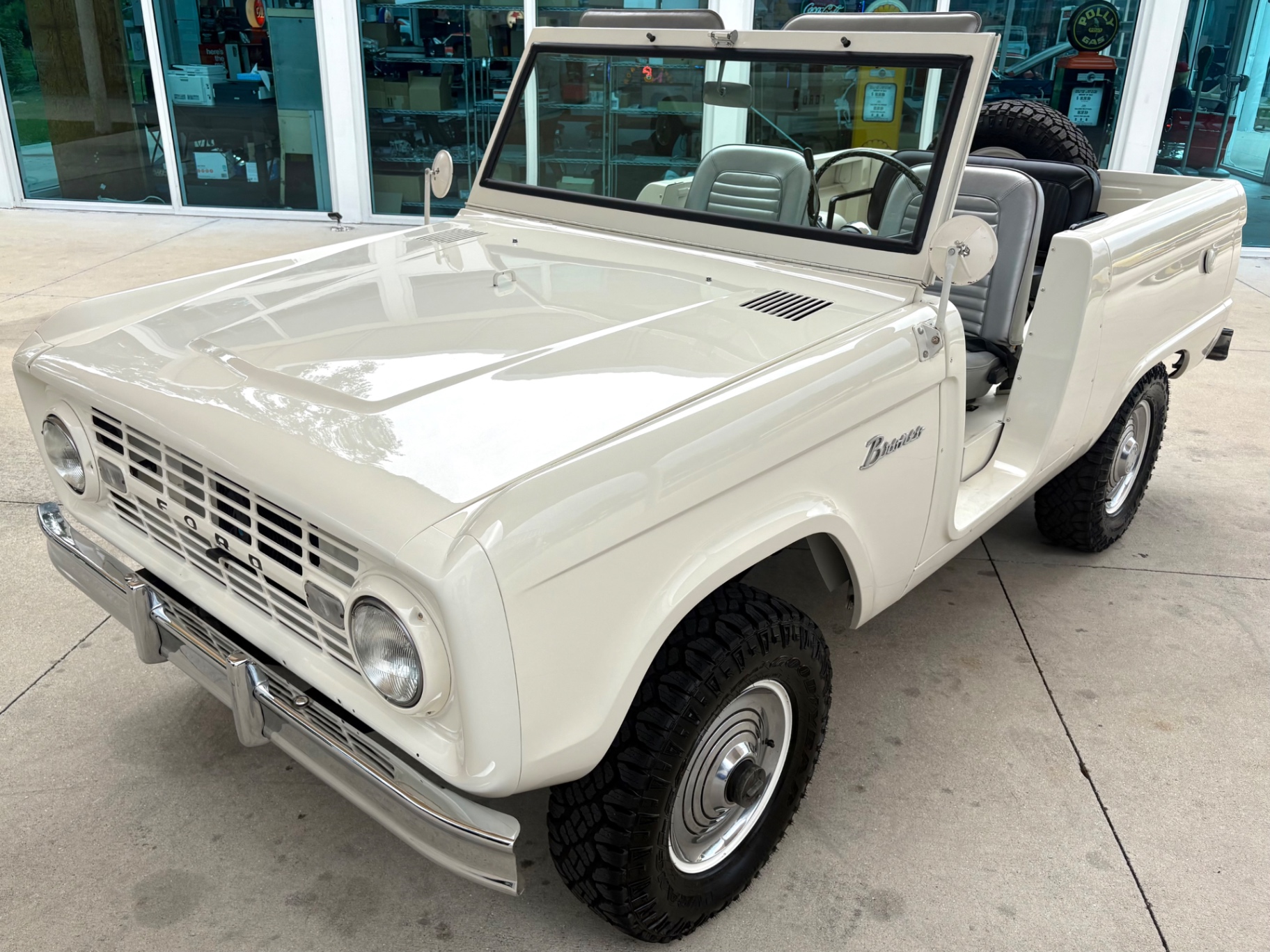
This 1966 Ford Bronco has been repainted in Wimbledon White, one of the period Ford colors associated with the early Bronco and the broader Ford lineup of the mid-1960s. The color choice suits the boxy, upright Roadster body well. The factory chrome front and rear bumpers are present and in good shape, and the chrome Bronco script badge on the front of the body is intact. The swing-out rear tailgate carries Ford block lettering — a detail unique to the early Bronco that distinguishes it from the later hinged tailgate design used on Wagons.
Factory steel wheels are shod with Goodyear Wrangler Duratrac white-letter tires on all four corners, with a matching spare included. The Duratrac is a well-regarded all-terrain tire with aggressive shoulder lugs and a tread pattern capable of handling both dirt roads and highway miles without drama. The chrome hubcaps cap the steel wheels cleanly. The combination of white paint, chrome bumpers, and white-letter tires gives the truck a classic look that is consistent with early 1960s American utility vehicles without resorting to anything trendy or overwrought.
Conclusion
The 1966 Ford Bronco Roadster is a specific thing: the rarest body style from the earliest years of one of America's most collectible off-road vehicles. Ford only offered the Roadster through 1968, and very few survive in any condition. This example has been kept honest — correct drivetrain, correct body style, a clean undercarriage, and a thoughtfully redone interior that doesn't try to turn a working truck into something it never was. The 170 inline six is the right engine for this application, the Dana 30 and 2-speed transfer case are the correct hardware, and the stainless exhaust is a sensible long-term upgrade. If you have been looking for a first-generation 1966 Ford Bronco Roadster that presents well, drives correctly, and doesn't require a year of catch-up work before you can enjoy it, this is worth a serious look.
Call Skyway Classics at 941-254-6608 to schedule a time to see this 1966 Ford Bronco Roadster in person.
Disclaimer
Information found on the website is presented as given to us by the owner of the car, whether on consignment or from the owner we bought it from. Some Photos, materials for videos, descriptions and other information are provided by the consignor/seller and is deemed reliable, but Skyway Classics does not warranty or guarantee this information. Skyway Classics is not responsible for information that may incorrect or a publishing error. The decision to purchase should be based solely on the buyers personal inspection of the vehicle or by a professional inspection service prior to offer or purchase being made.
1966 Ford Bronco Roadster — Wimbledon White, 170 Six-Cylinder, Open-Air Original
Why This Car Is Special
The 1966 Ford Bronco holds a specific place in American automotive history that no amount of marketing can manufacture. It was the second model year of an entirely new vehicle — Ford's answer to the Jeep CJ and International Harvester Scout — and one of the few times a major American manufacturer got a purpose-built compact 4x4 right on the first try. Ford introduced the Bronco for the 1966 model year after years of development under product planner Donald Frey, the same man who helped shepherd the Mustang into production. The goal was a vehicle that could genuinely compete off-road while remaining comfortable enough for daily use. It worked.
What makes the early Bronco particularly compelling today is how it was sold. Ford offered three body styles from the start: the Wagon, the Pickup, and the Roadster. The Roadster — the body style on this specific truck — is the rarest of the three. It came from the factory with no doors and no roof, a completely open design intended for recreational and light utility use. The Roadster was discontinued after 1968, making any surviving example a genuine piece of first-generation Bronco history. The VIN on this truck begins with U13, confirming it is exactly that: a 1966 Ford Bronco Roadster built at the Michigan Truck Plant in Wayne, Michigan.
First-generation Broncos — covering model years 1966 through 1977 — have become one of the most sought-after collector vehicles in the American market. Values have climbed sharply over the past decade, particularly for early examples in honest condition with documented drivetrains. This 1966 Ford Bronco Roadster presents in Wimbledon White with a freshly redone grey vinyl interior, a correct 170ci inline six-cylinder engine, and a stainless steel exhaust system. It has been maintained and improved thoughtfully without being overdone. The result is a 1966 Ford Bronco that drives, looks, and feels like what it is — a well-sorted early example of one of the most collectible American 4x4s ever built.
Features List
- U13 Roadster body — no doors, no roof, factory open-air configuration
- 170ci Ford inline six-cylinder engine, 105 horsepower
- Single-barrel carburetor with oil-bath air cleaner and factory black air cleaner assembly
- Engine painted Ford Racing Blue on block, head, and intake
- Heavy-duty fuel pump and performance spark plug wires
- Three-speed manual transmission
- 2-speed 4x4 transfer case
- Dana 30 front axle with front locking hubs
- Front coil spring suspension, rear leaf spring suspension
- Four-wheel drum brakes
- Stainless steel exhaust system
- Factory steel wheels with chrome hubcaps
- Goodyear Wrangler Duratrac white-letter off-road tires, all four corners plus spare
- Factory chrome front and rear bumpers
- Chrome Bronco script badge
- Dual fender-mounted side mirrors
- Windshield-mount rearview mirror
- Swing-out rear tailgate with Ford block lettering
- Body repainted in Wimbledon White
- Redone grey vinyl twin bucket seats, front lap seatbelts
- Grey vinyl rear bench seat
- Grey painted dash with functioning gauges
- Philco AM pushbutton radio
- Heater with pull-knob dash controls
- Passenger-side glove box
- Factory Ford steering wheel with Product of Ford horn button
Mechanical
The 1966 Ford Bronco came standard with Ford's 170ci inline six-cylinder, and that is exactly what powers this truck. The 170 was a compact, undersquare design shared with the contemporary Falcon and early Mustang. Rated at 105 horsepower from the factory, it is fed by a single-barrel carburetor sitting beneath a factory black oil-bath air cleaner assembly. The oil-bath setup was Ford's standard equipment on the early Bronco, specifically chosen for dusty off-road environments where a dry paper filter would clog quickly. It is a detail that tells you Ford took the off-road mission seriously when they engineered this vehicle.
The engine has been painted in Ford Racing Blue across the block, head, and intake — a visually clean presentation that matches period-correct practice. Performance spark plug wires and a heavy-duty fuel pump round out the top-end details. The three-speed manual transmission shifts through a floor-mounted lever, and the transfer case is the factory 2-speed unit that gives you both high and low range for serious terrain. Up front sits a Dana 30 axle — the correct unit for this application — equipped with manual locking hubs that allow you to disconnect the front axle when four-wheel drive is not needed. The front suspension uses coil springs, which gave the early Bronco notably better articulation and ride quality than the leaf-sprung competition of the era. The rear runs leaf springs as designed. All four corners stop with drum brakes, correct for 1966.
The underside of this truck is one of its strongest selling points. The undercarriage photographs show a clean, well-maintained structure with no visible rot or significant corrosion — a meaningful detail on any 58-year-old truck. The stainless steel exhaust system is a practical long-term upgrade that eliminates the rust problems that plague original mild steel systems. The Goodyear Wrangler Duratrac tires are a capable modern off-road tire that fits the period steel wheels well and does not look out of place on a working-era Bronco.
Interior
The interior of this 1966 Ford Bronco Roadster has been redone in grey vinyl, covering both the front bucket seats and the rear bench. The bucket seat configuration is correct for the Roadster body style and provides a more sporting driving position than a bench setup would. Front lap seatbelts are in place. The grey painted dash is intact and correct, with functioning gauges providing the driver with basic but necessary readouts. There are no warning lights substituting for real instruments here.
The Philco AM pushbutton radio is a period-correct unit that fits the dash opening cleanly. Ford used Philco-built radios as factory-installed options throughout the 1960s, and having one present — rather than a blank plate or a modern head unit — keeps the interior honest. The heater uses the factory pull-knob controls visible below the radio, and the passenger-side glove box door is intact. The factory Ford steering wheel carries the correct "Product of Ford Motor Company" horn button at its center, a detail that Bronco restorers specifically look for and often have difficulty sourcing.
Because this is a Roadster, there are no doors and no roof — the entire cabin is open to the elements. That is not a missing component. That is the correct factory configuration for this body style. The windshield and its mount-top rearview mirror are present, along with dual fender-mounted side mirrors that provide rear visibility without doors. The overall presentation is clean, purposeful, and consistent with a vehicle built to be used outdoors.
Exterior
This 1966 Ford Bronco has been repainted in Wimbledon White, one of the period Ford colors associated with the early Bronco and the broader Ford lineup of the mid-1960s. The color choice suits the boxy, upright Roadster body well. The factory chrome front and rear bumpers are present and in good shape, and the chrome Bronco script badge on the front of the body is intact. The swing-out rear tailgate carries Ford block lettering — a detail unique to the early Bronco that distinguishes it from the later hinged tailgate design used on Wagons.
Factory steel wheels are shod with Goodyear Wrangler Duratrac white-letter tires on all four corners, with a matching spare included. The Duratrac is a well-regarded all-terrain tire with aggressive shoulder lugs and a tread pattern capable of handling both dirt roads and highway miles without drama. The chrome hubcaps cap the steel wheels cleanly. The combination of white paint, chrome bumpers, and white-letter tires gives the truck a classic look that is consistent with early 1960s American utility vehicles without resorting to anything trendy or overwrought.
Conclusion
The 1966 Ford Bronco Roadster is a specific thing: the rarest body style from the earliest years of one of America's most collectible off-road vehicles. Ford only offered the Roadster through 1968, and very few survive in any condition. This example has been kept honest — correct drivetrain, correct body style, a clean undercarriage, and a thoughtfully redone interior that doesn't try to turn a working truck into something it never was. The 170 inline six is the right engine for this application, the Dana 30 and 2-speed transfer case are the correct hardware, and the stainless exhaust is a sensible long-term upgrade. If you have been looking for a first-generation 1966 Ford Bronco Roadster that presents well, drives correctly, and doesn't require a year of catch-up work before you can enjoy it, this is worth a serious look.
Call Skyway Classics at 941-254-6608 to schedule a time to see this 1966 Ford Bronco Roadster in person.
Disclaimer
Information found on the website is presented as given to us by the owner of the car, whether on consignment or from the owner we bought it from. Some Photos, materials for videos, descriptions and other information are provided by the consignor/seller and is deemed reliable, but Skyway Classics does not warranty or guarantee this information. Skyway Classics is not responsible for information that may incorrect or a publishing error. The decision to purchase should be based solely on the buyers personal inspection of the vehicle or by a professional inspection service prior to offer or purchase being made.
1966 Ford
Bronco U13 Roadster
Why Choose Skyway Classics?
Explore our curated inventory of classic and collector cars—thoughtfully selected, ready to drive, and supported by experts who make ownership simple.
Expert Curation
Every vehicle is hand-selected by our experts for quality, authenticity, and investment potential.
Fast Transactions
Streamlined buying and selling process with quick financing and immediate delivery options.
Only National Dealer With Classic Service & Repair
We’re the only national dealership that services and repairs the classics we sell—before and after the sale.
Nationwide Network
Access to our extensive network of collectors, restorers, and classic car enthusiasts nationwide.
Concierge Ownership Support
From financing and insurance to paperwork, shipping, and titling—we handle the details so you can enjoy the drive.
Passion-Driven Service
We're classic car enthusiasts first, providing personalized service with genuine passion for the hobby.