
1979 Pontiac
Firebird Trans Am
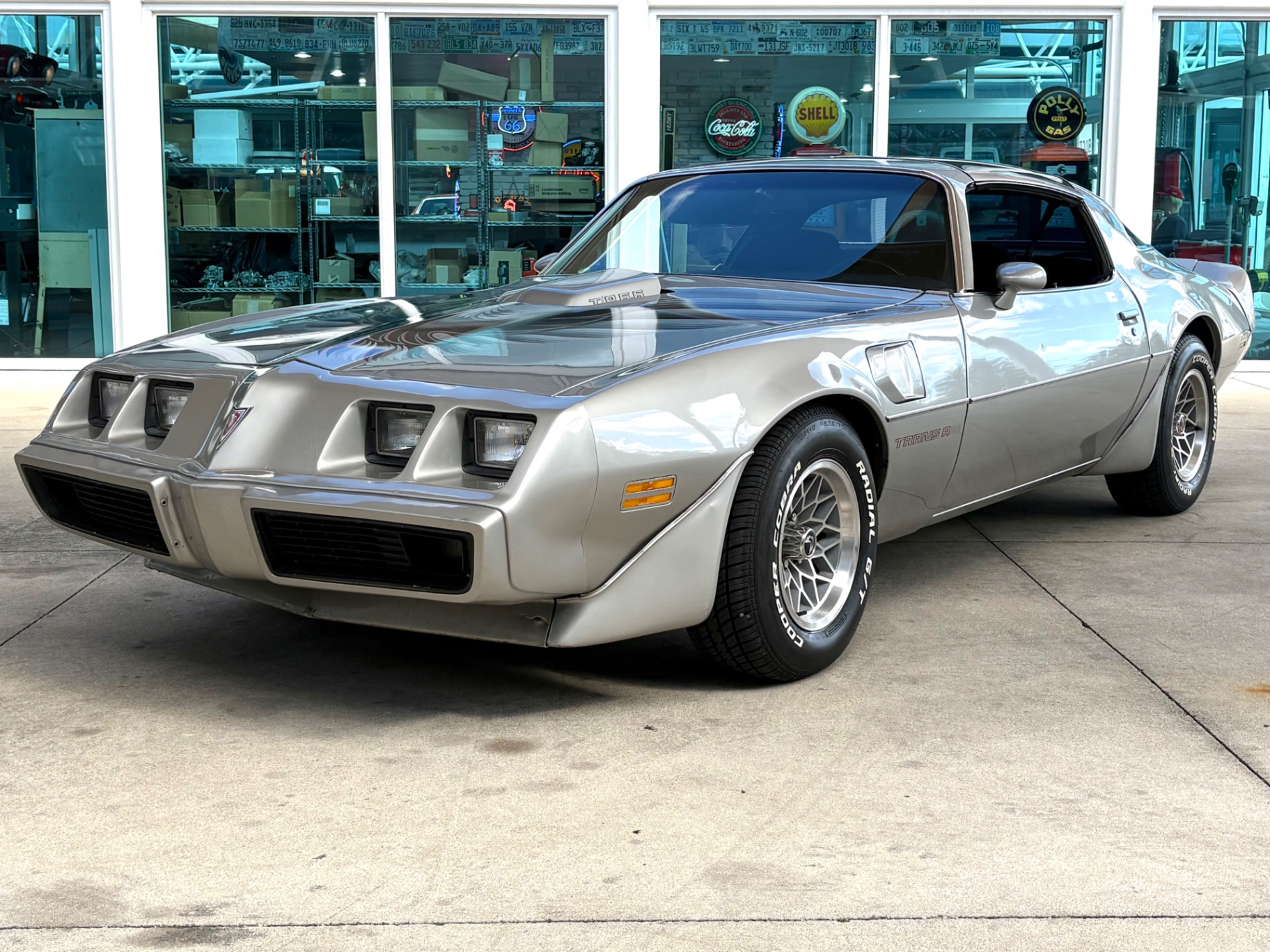
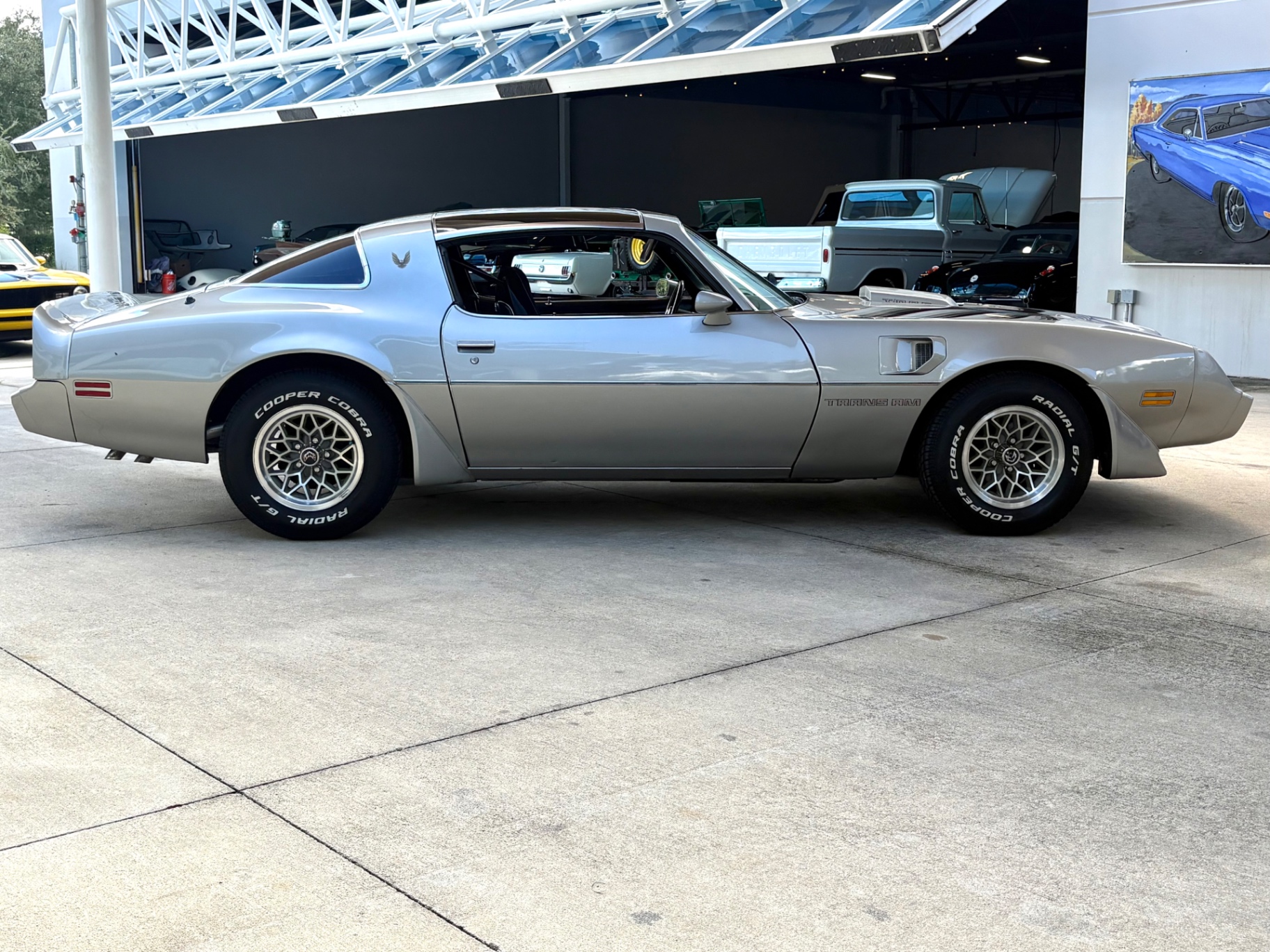
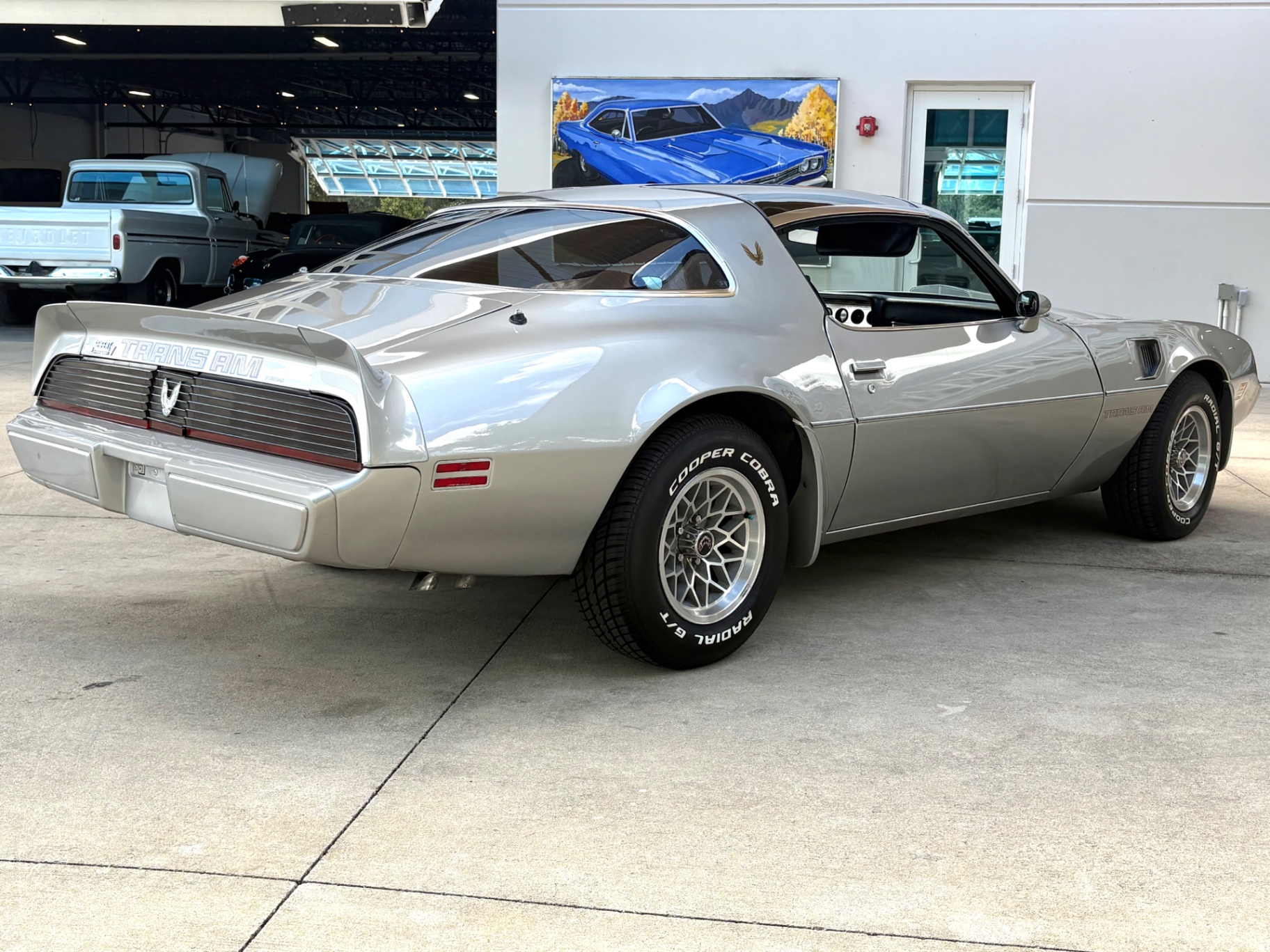
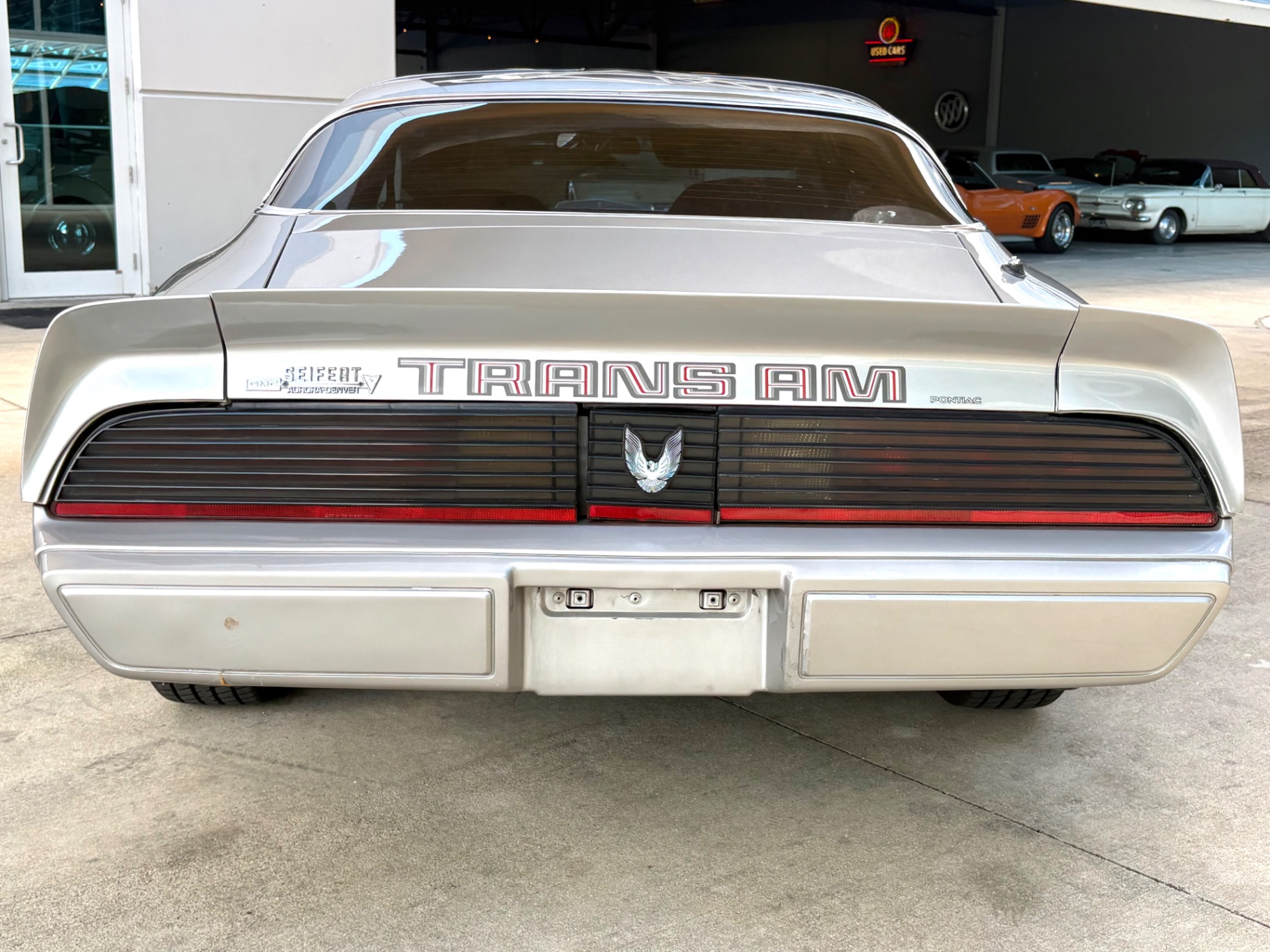
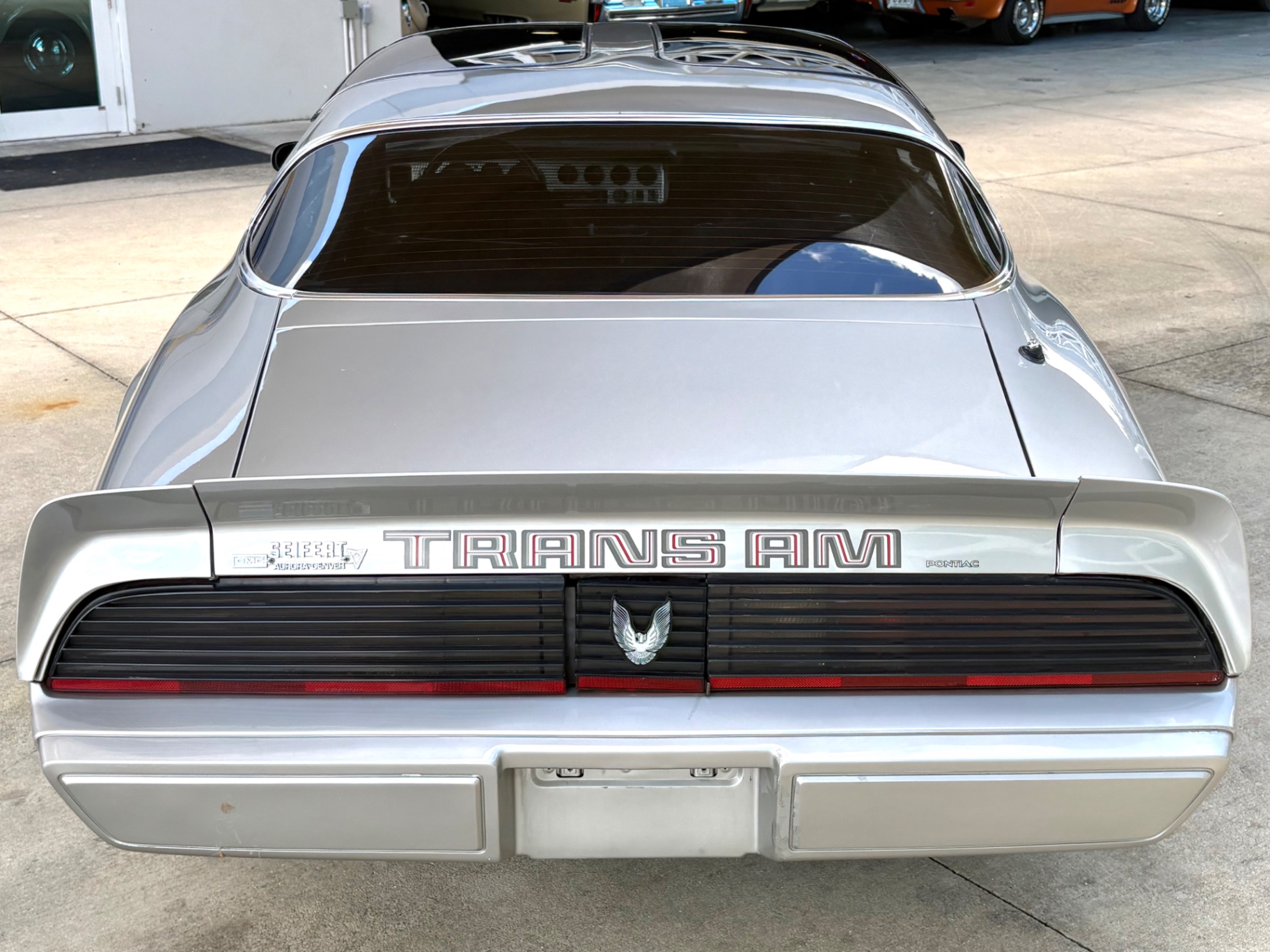
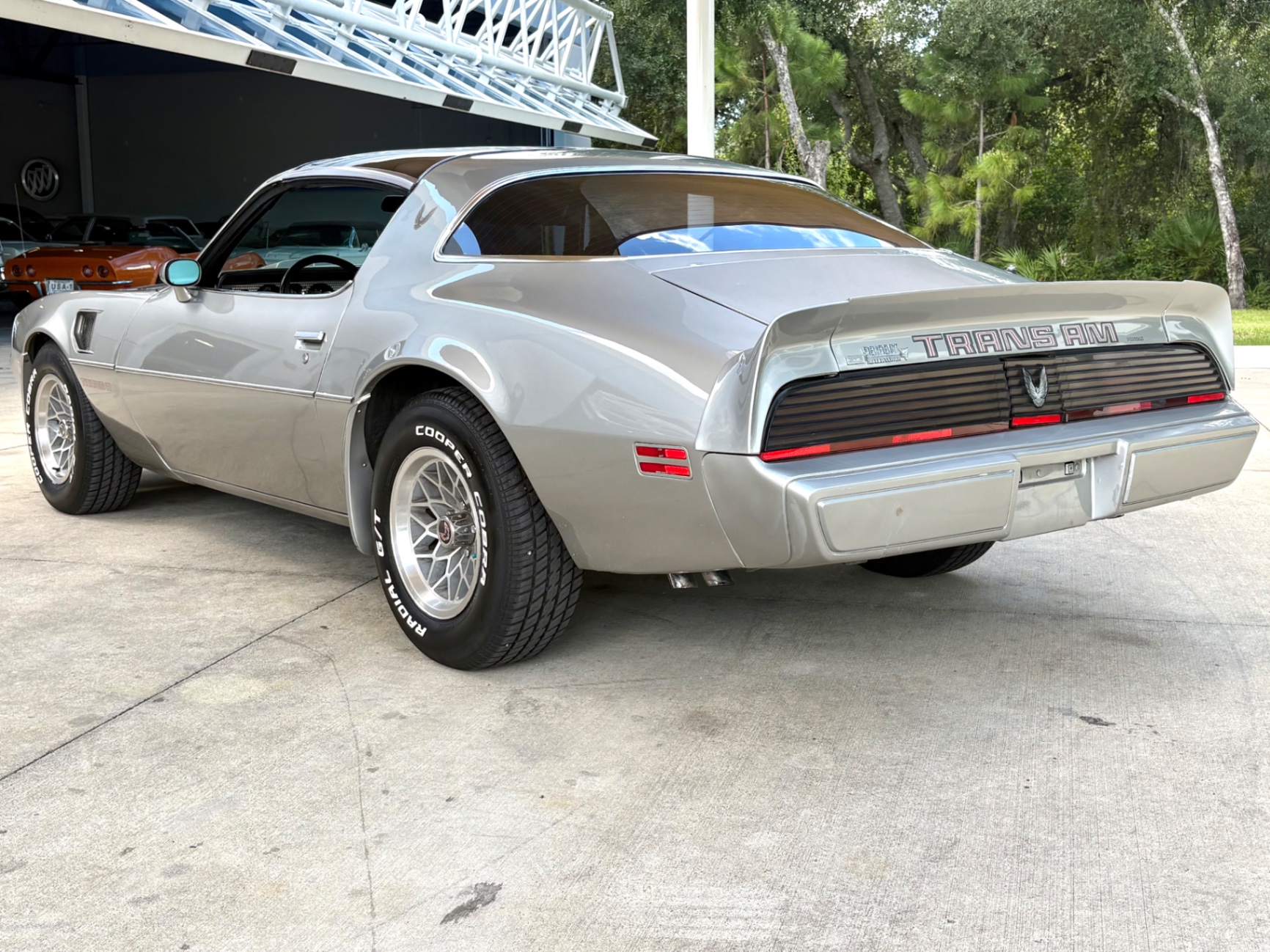
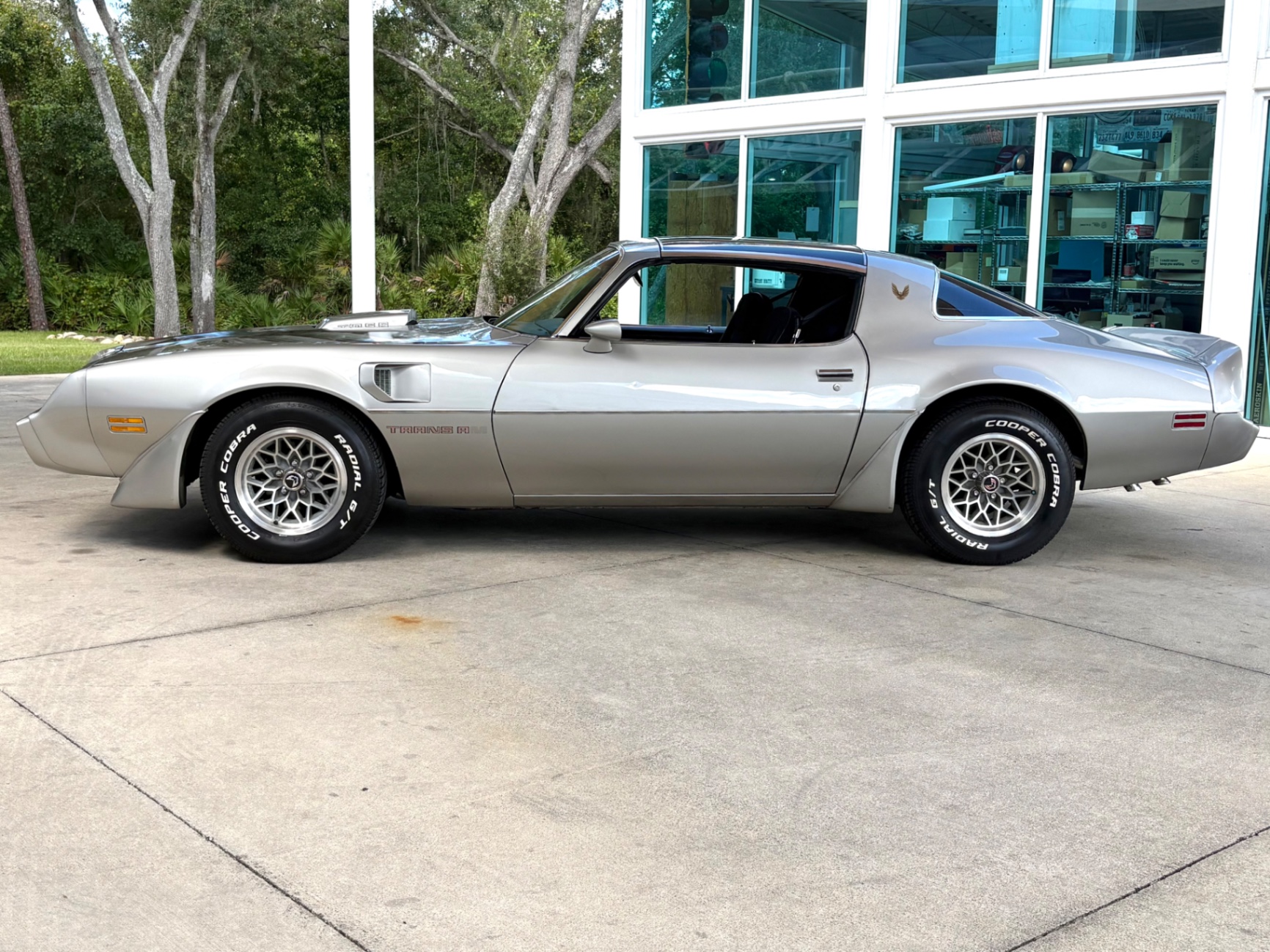
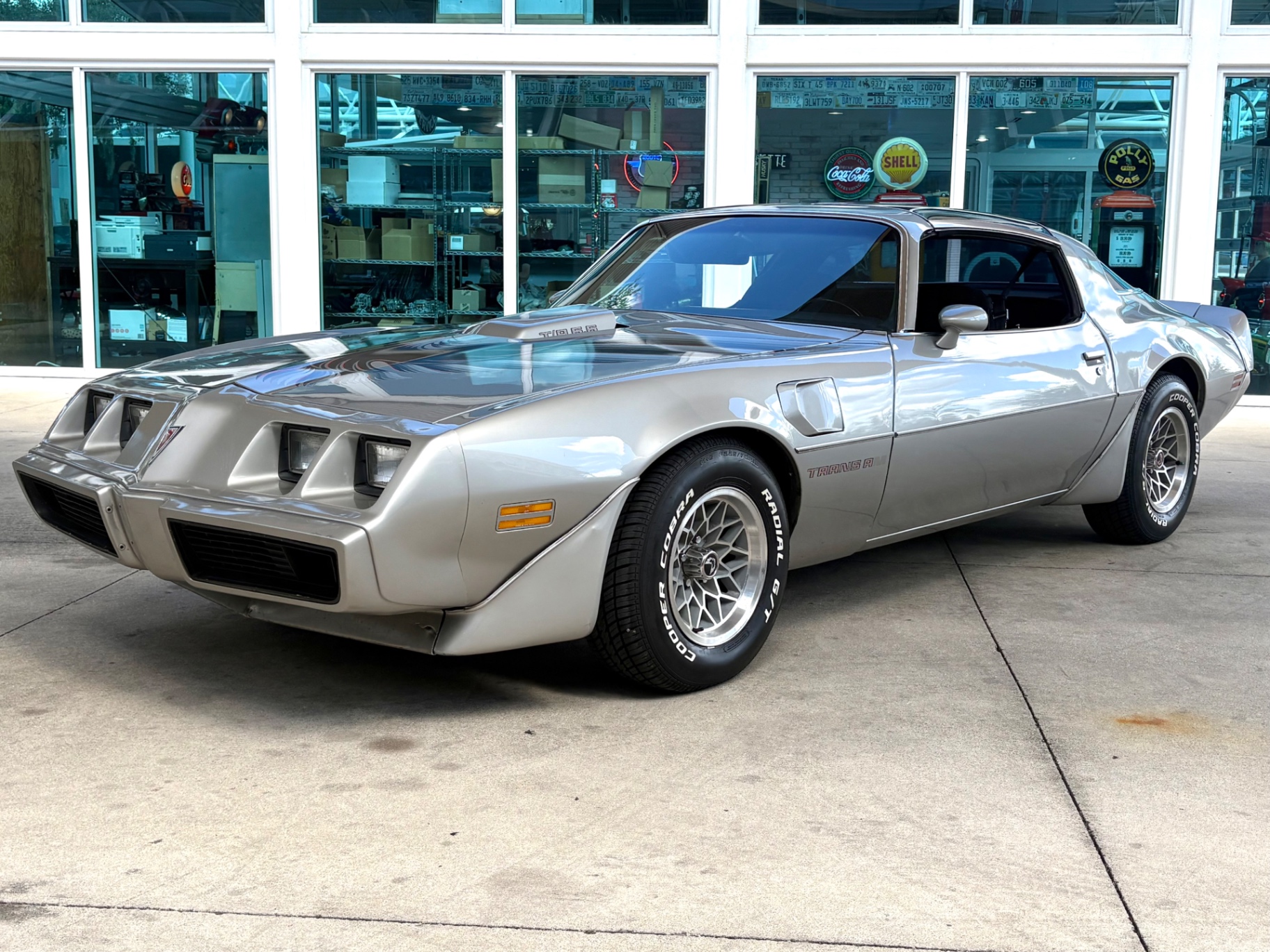
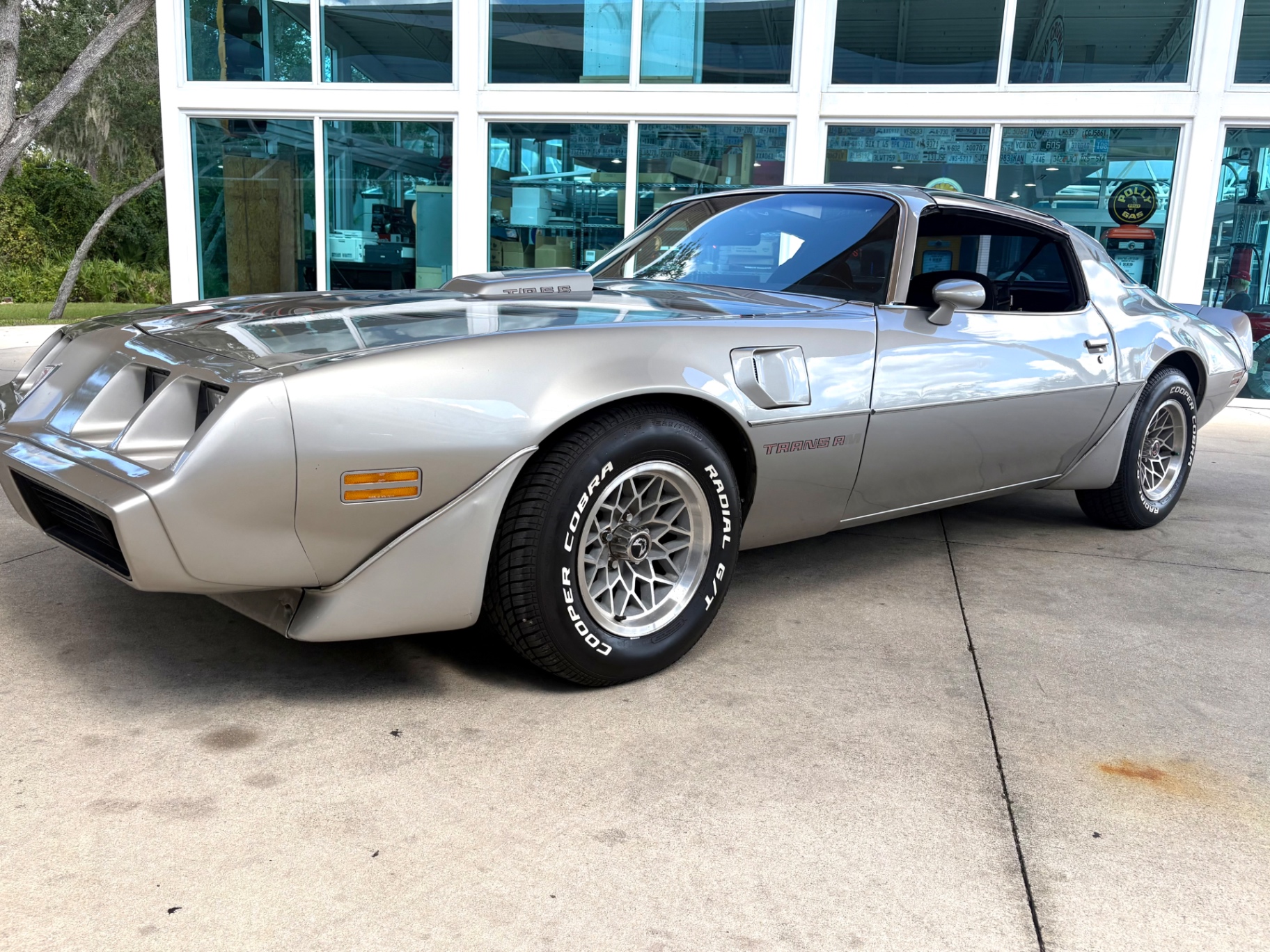
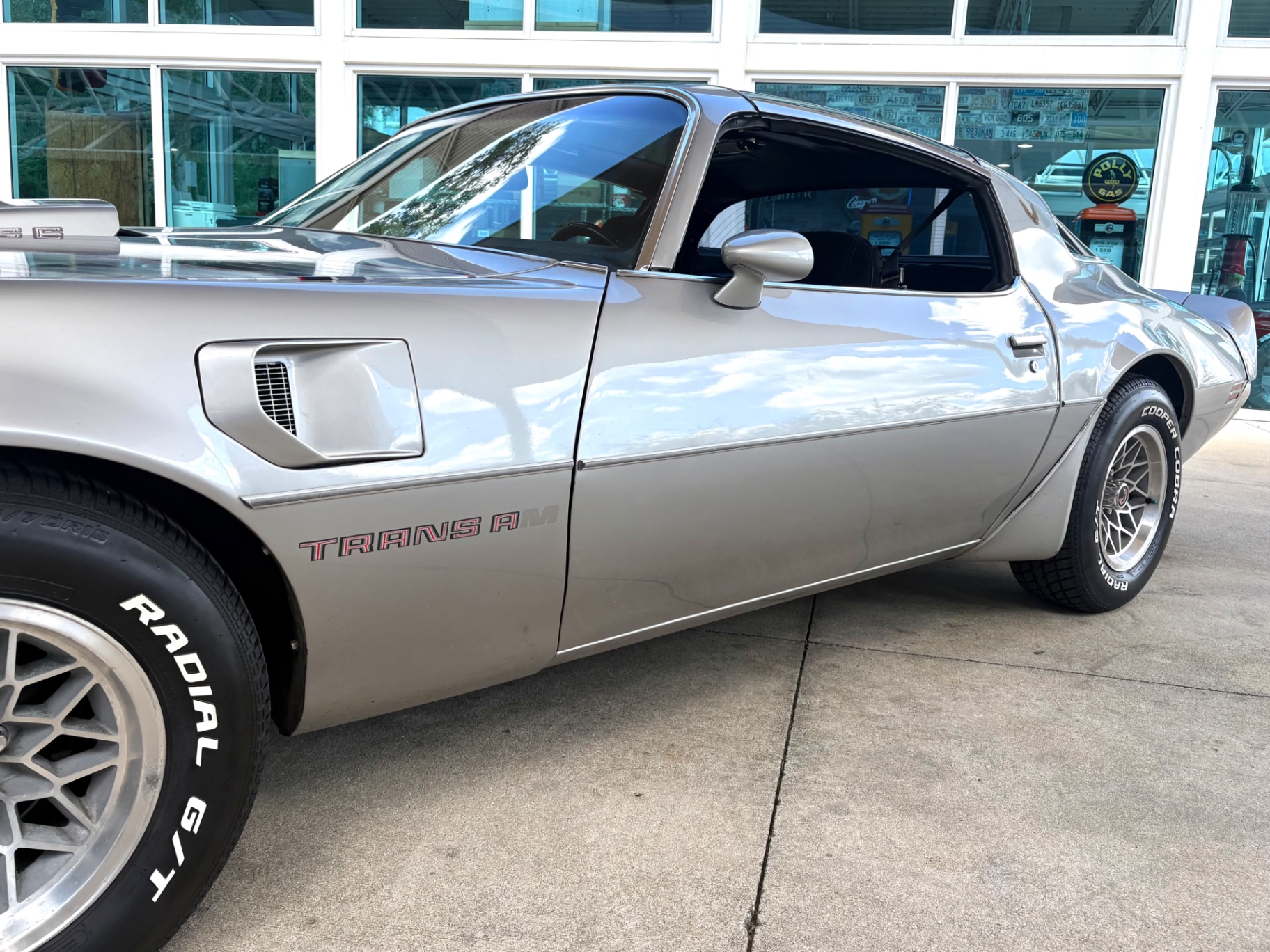
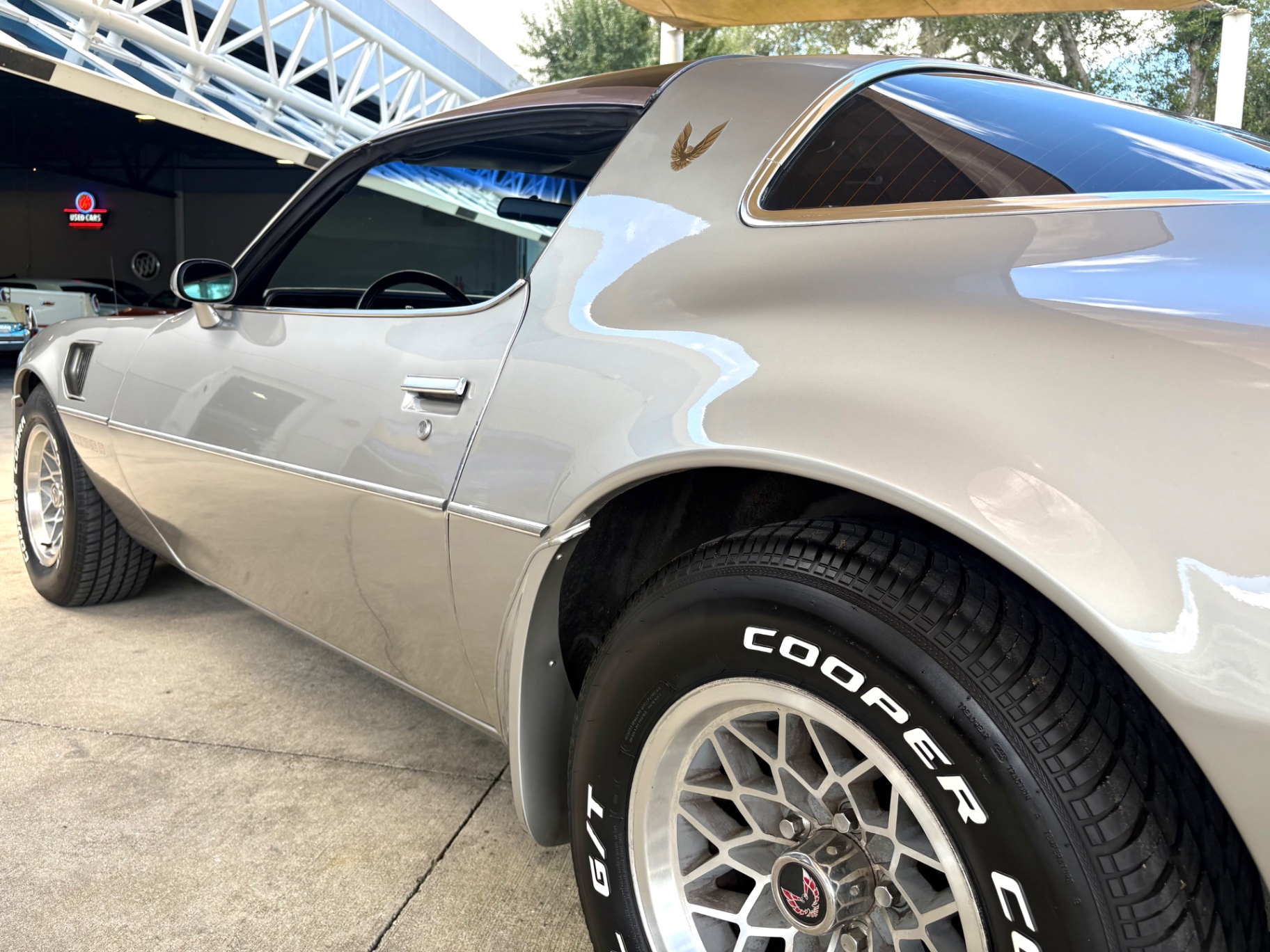
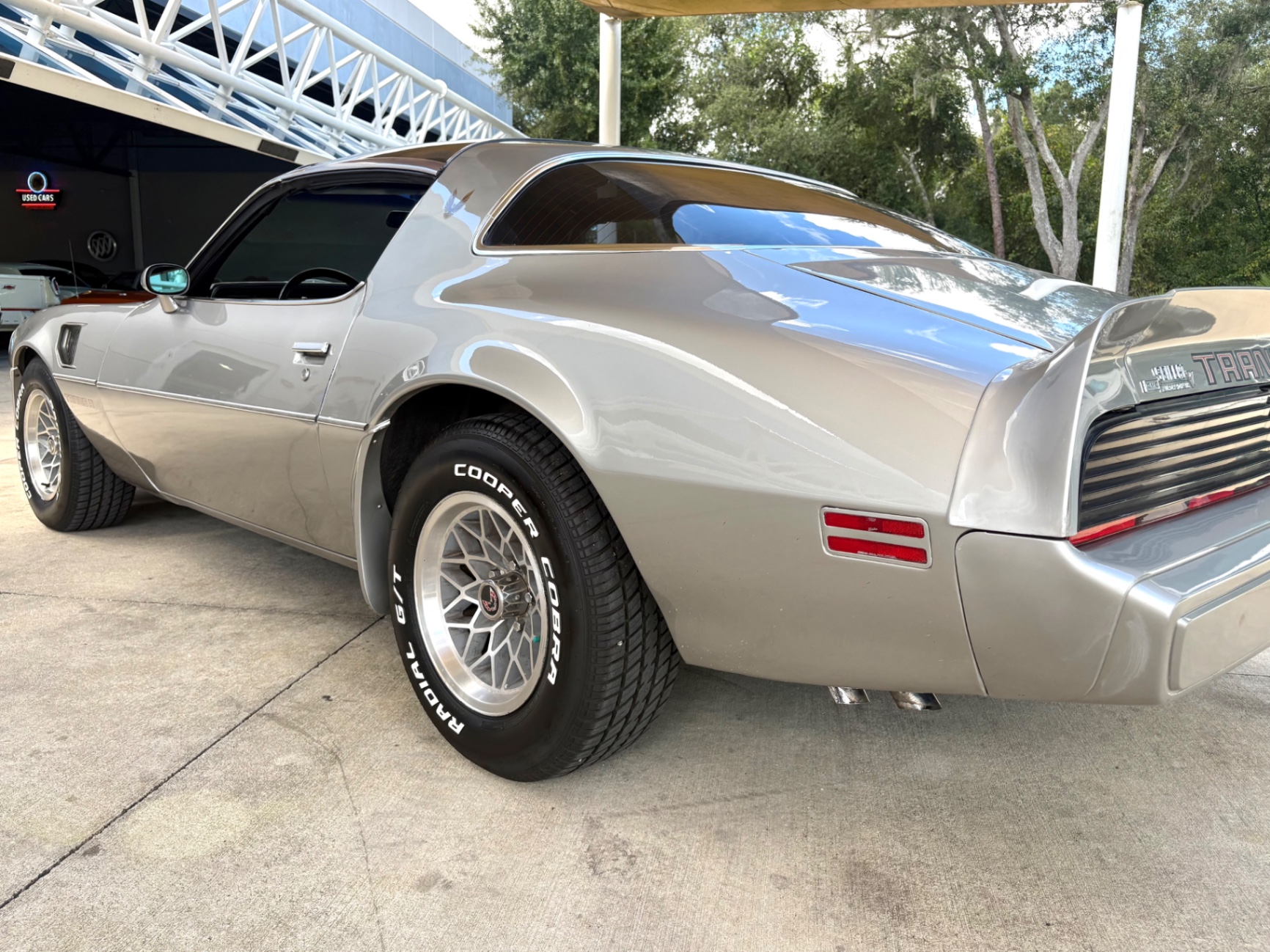
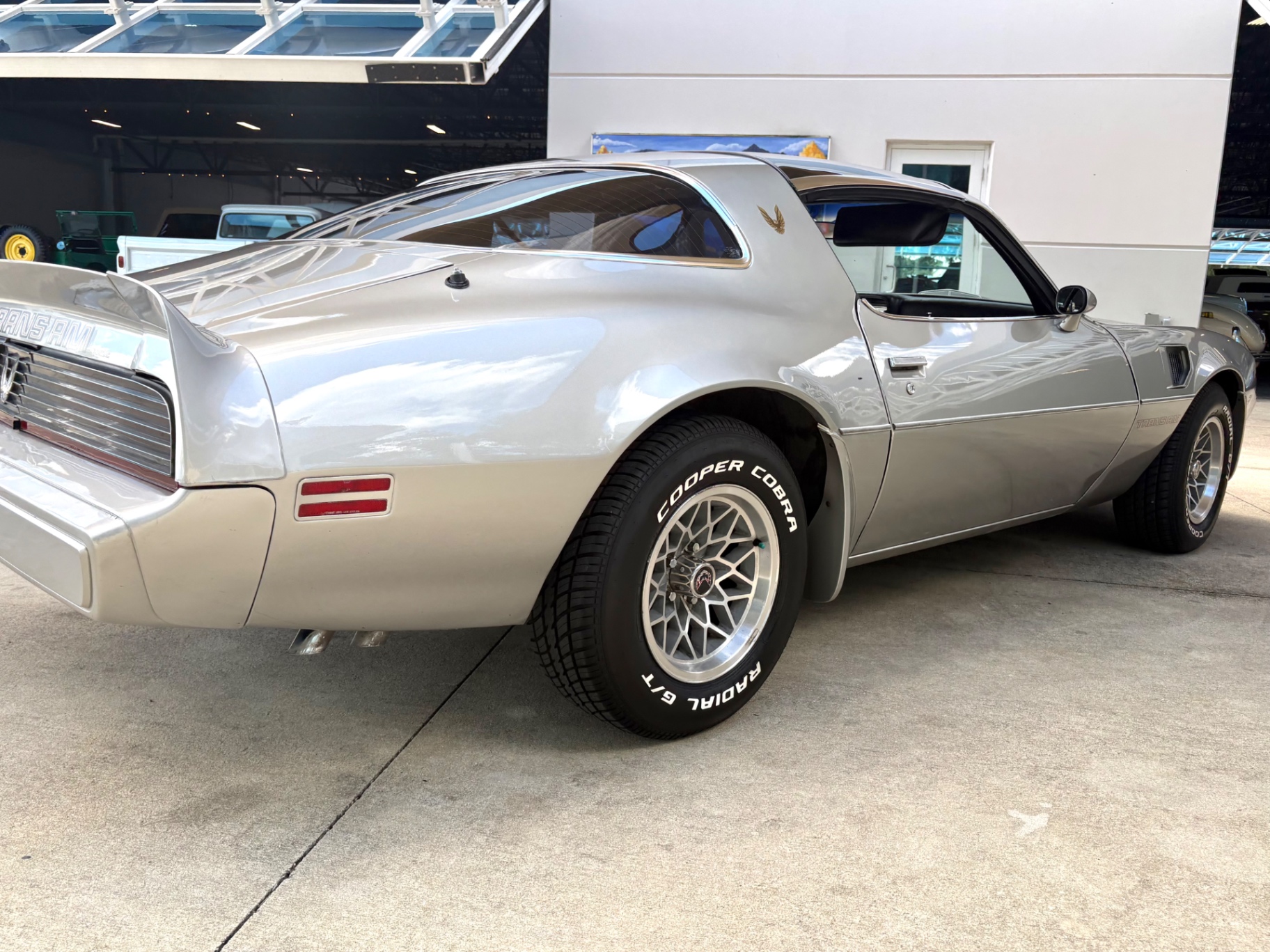
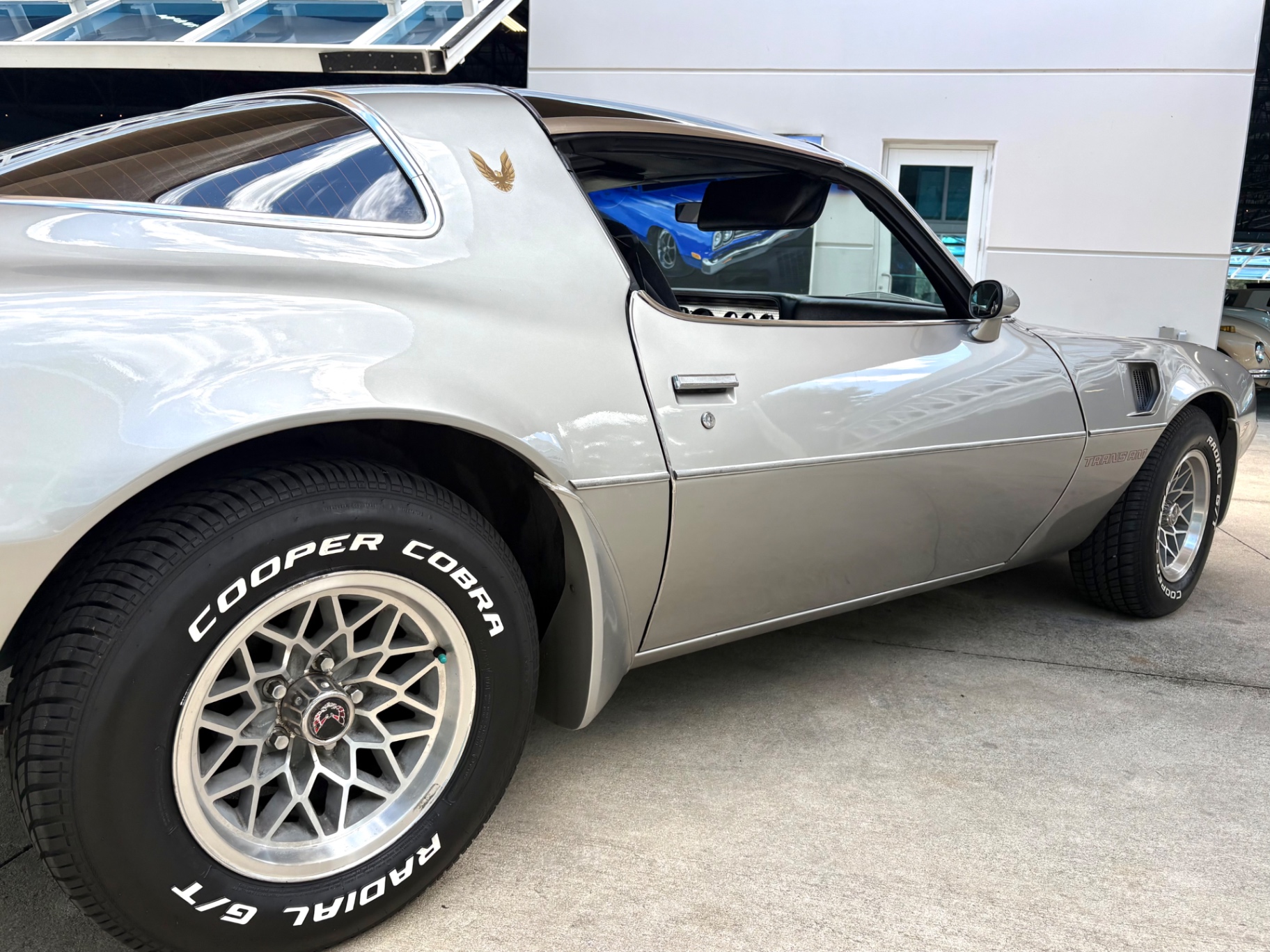
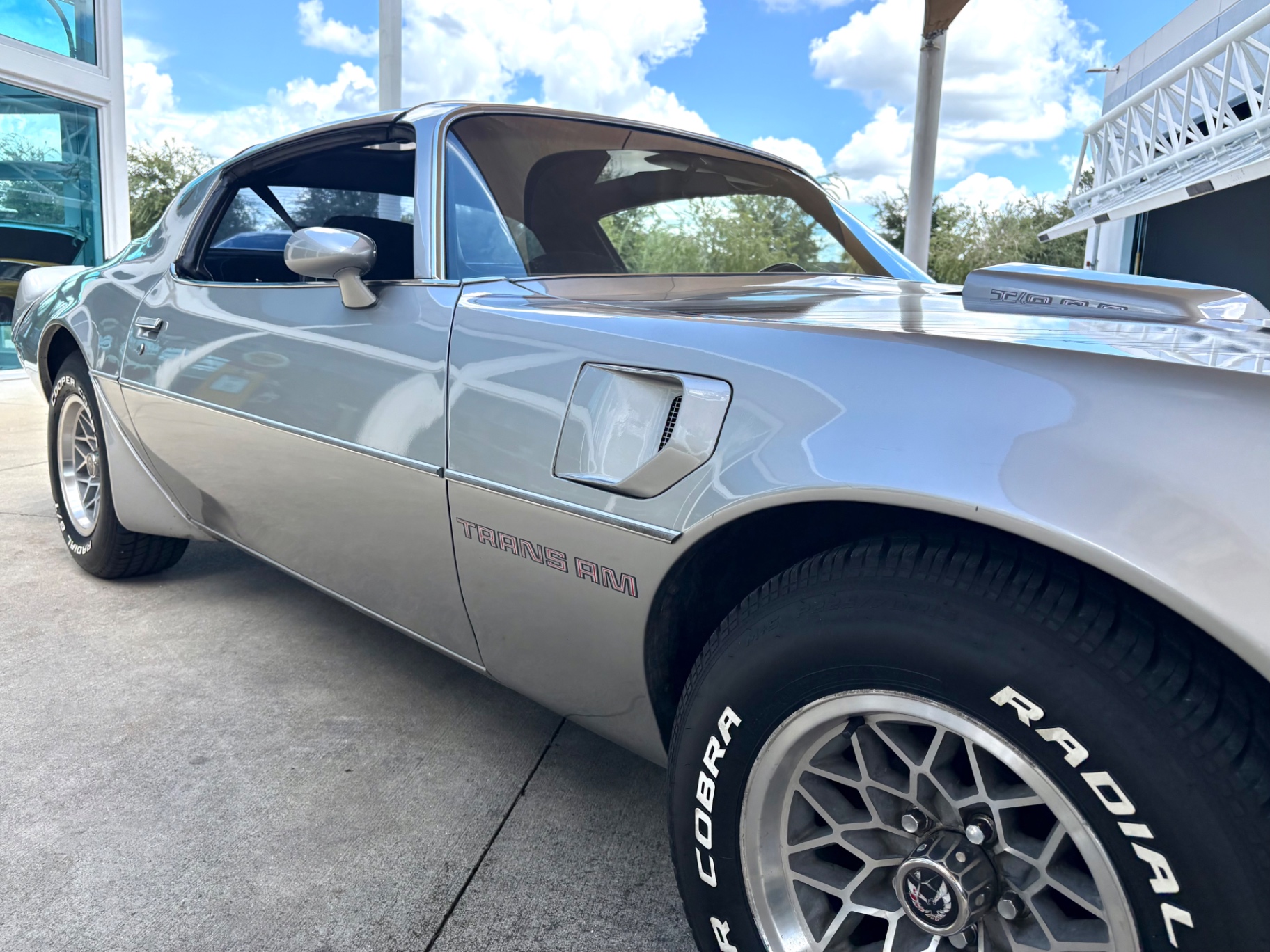
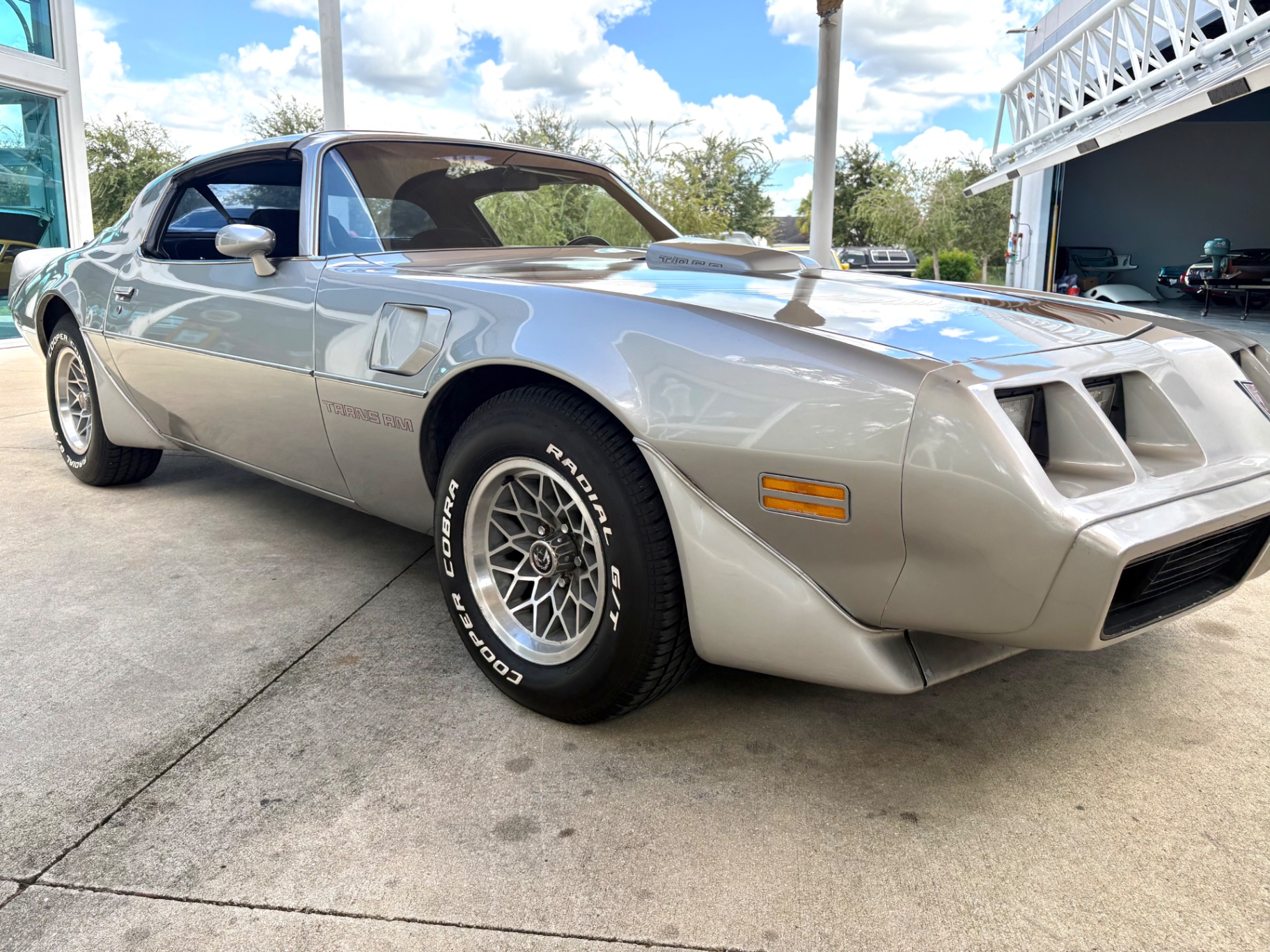
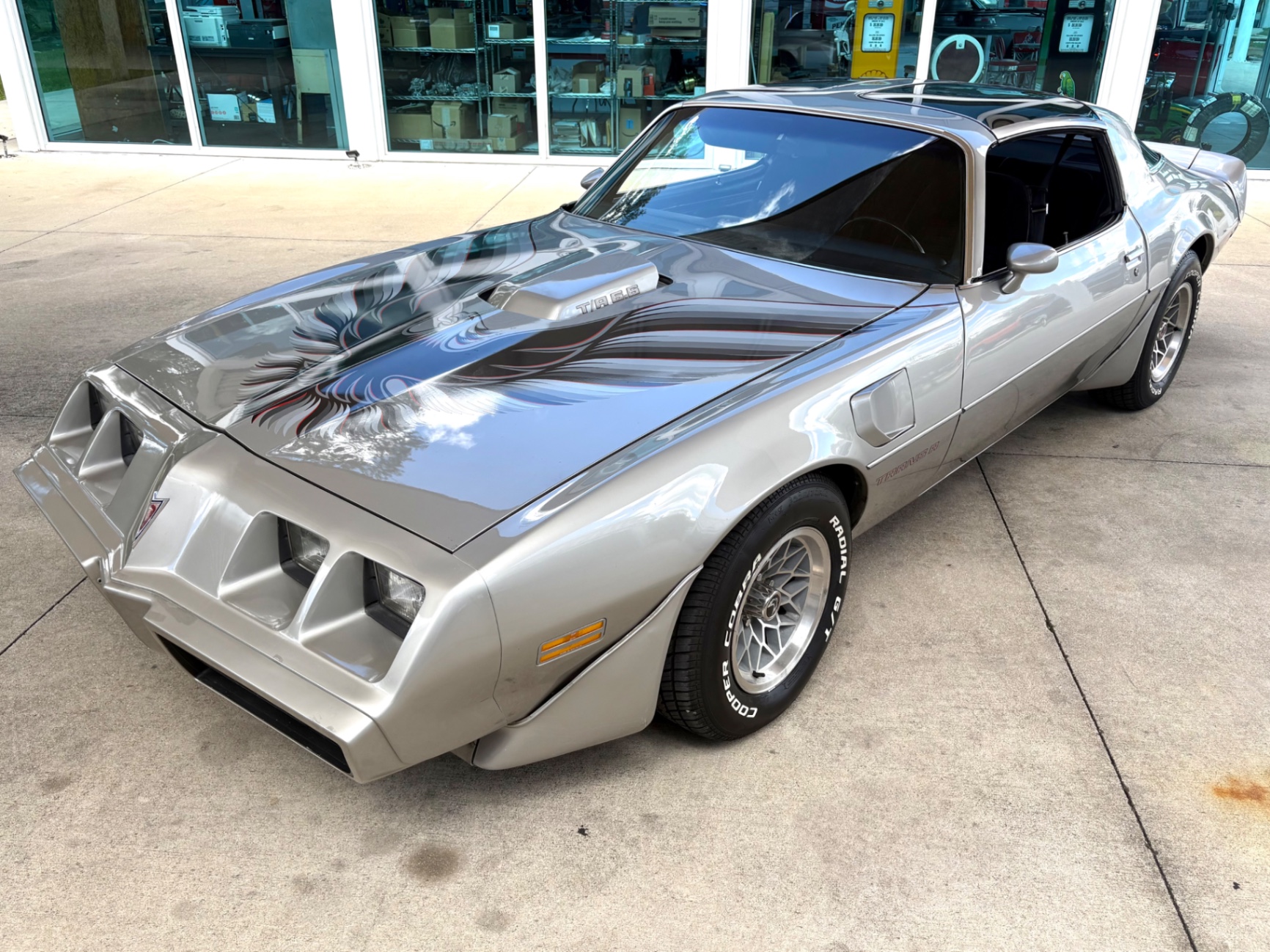
1979 Pontiac Firebird Trans Am — 403 V8, T-Tops, Platinum, Florida Car with Solid Undercarriage
Why This Car Is Special
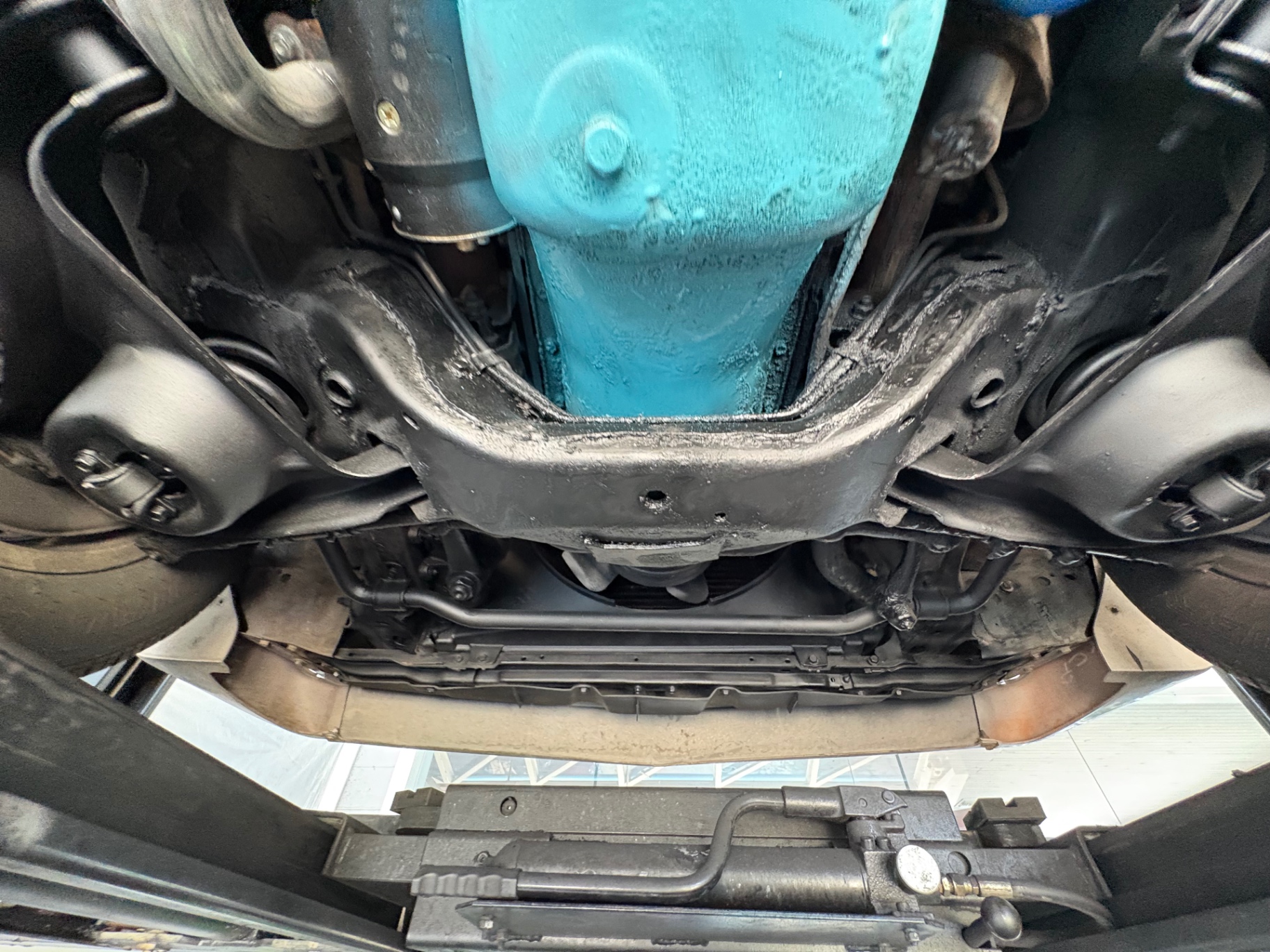
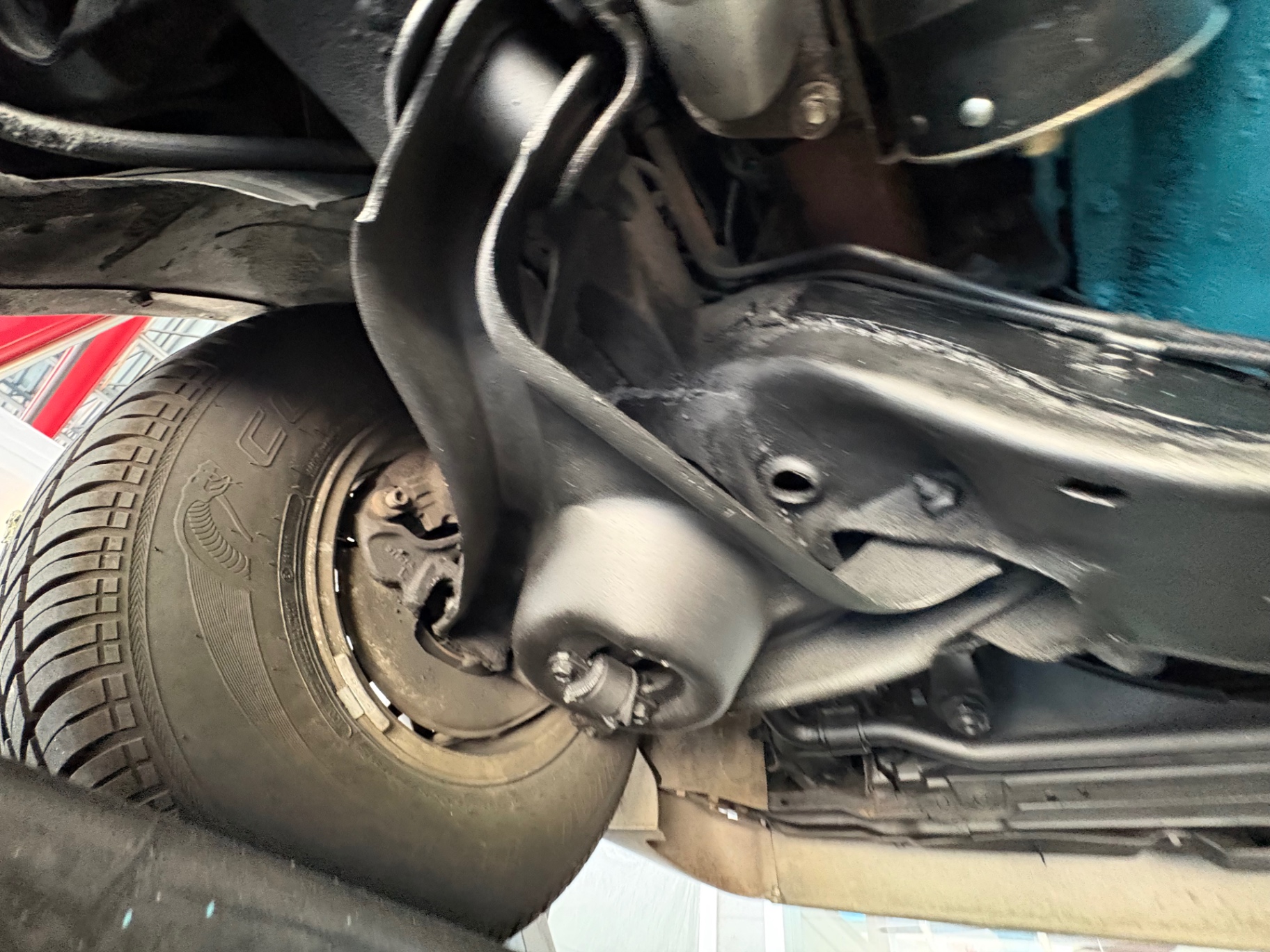
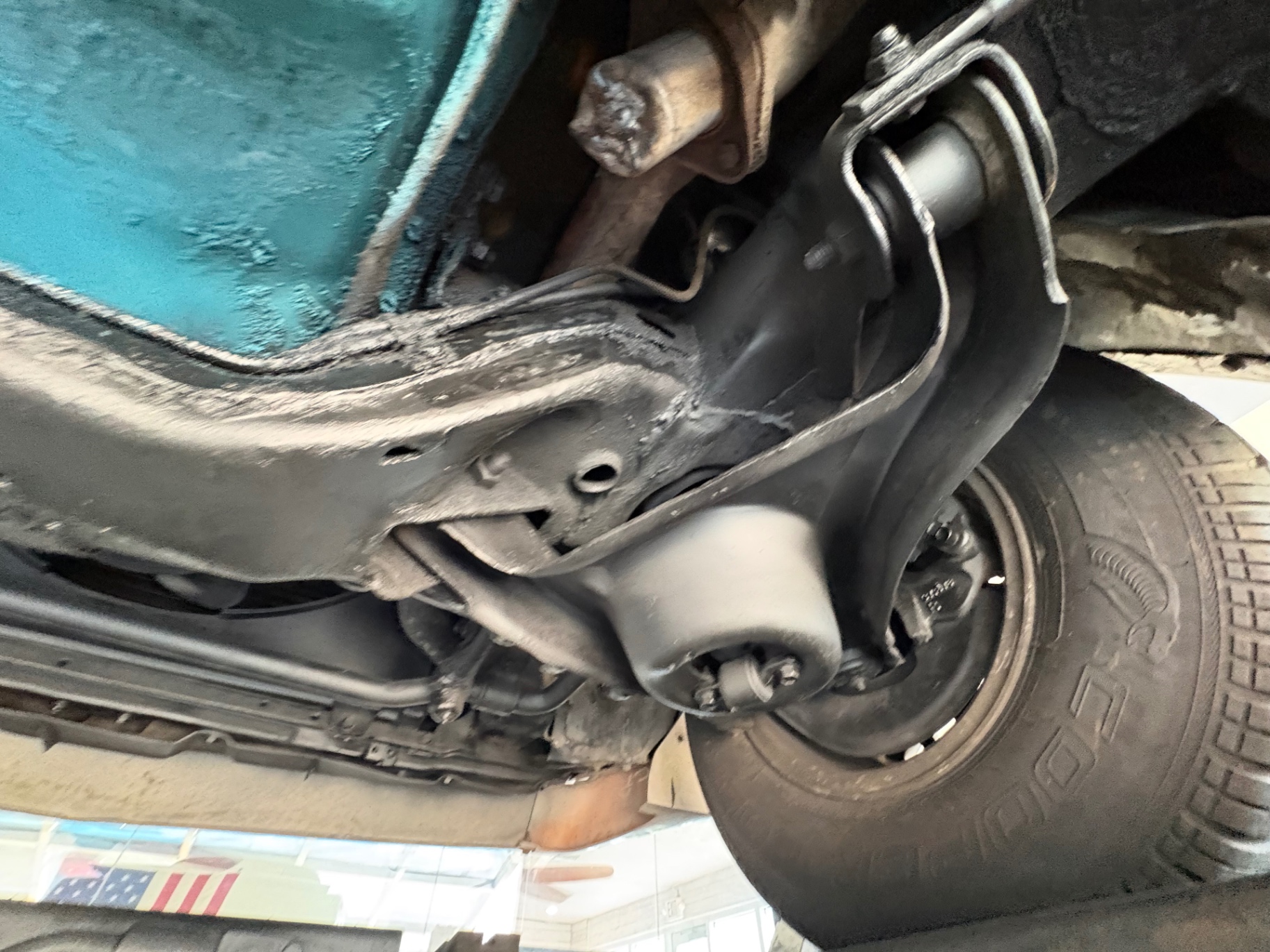
The 1979 Pontiac Firebird Trans Am sits at the peak of the second-generation Firebird's popularity. By 1979, Trans Am sales had exploded thanks in large part to the Smokey and the Bandit film franchise — Pontiac sold over 117,000 Trans Ams that model year, a record for the nameplate. That cultural moment is now four decades in the rearview mirror, and clean, honest examples like this one have become increasingly difficult to find. What separates this car from the pack is not just its factory-correct Trans Am equipment, but where it spent its life. Florida cars avoid the salt, the rust, and the rot that end the stories of most late-1970s muscle cars. The undercarriage on this one bears that out in photographs, and you can confirm it in person.
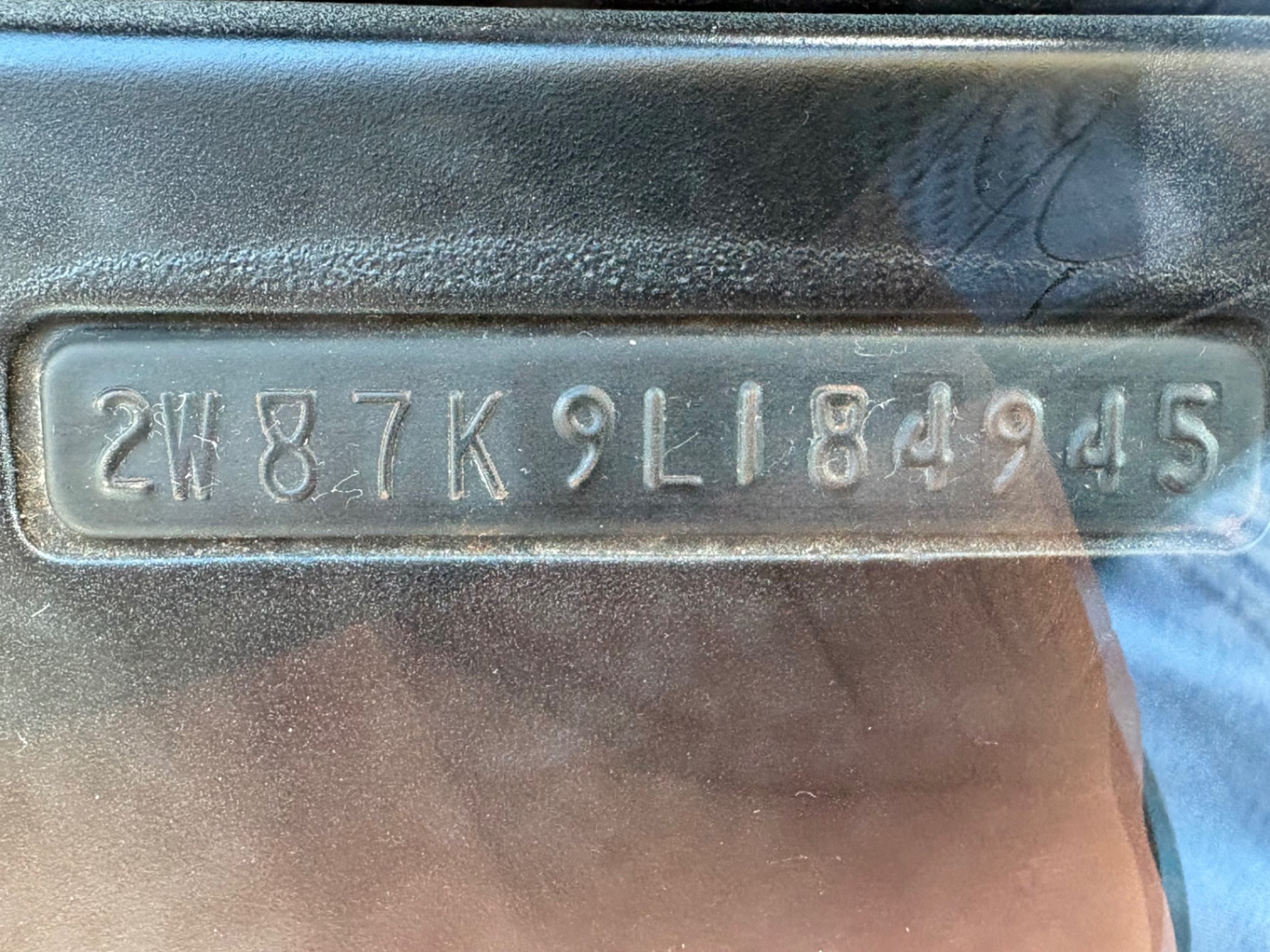
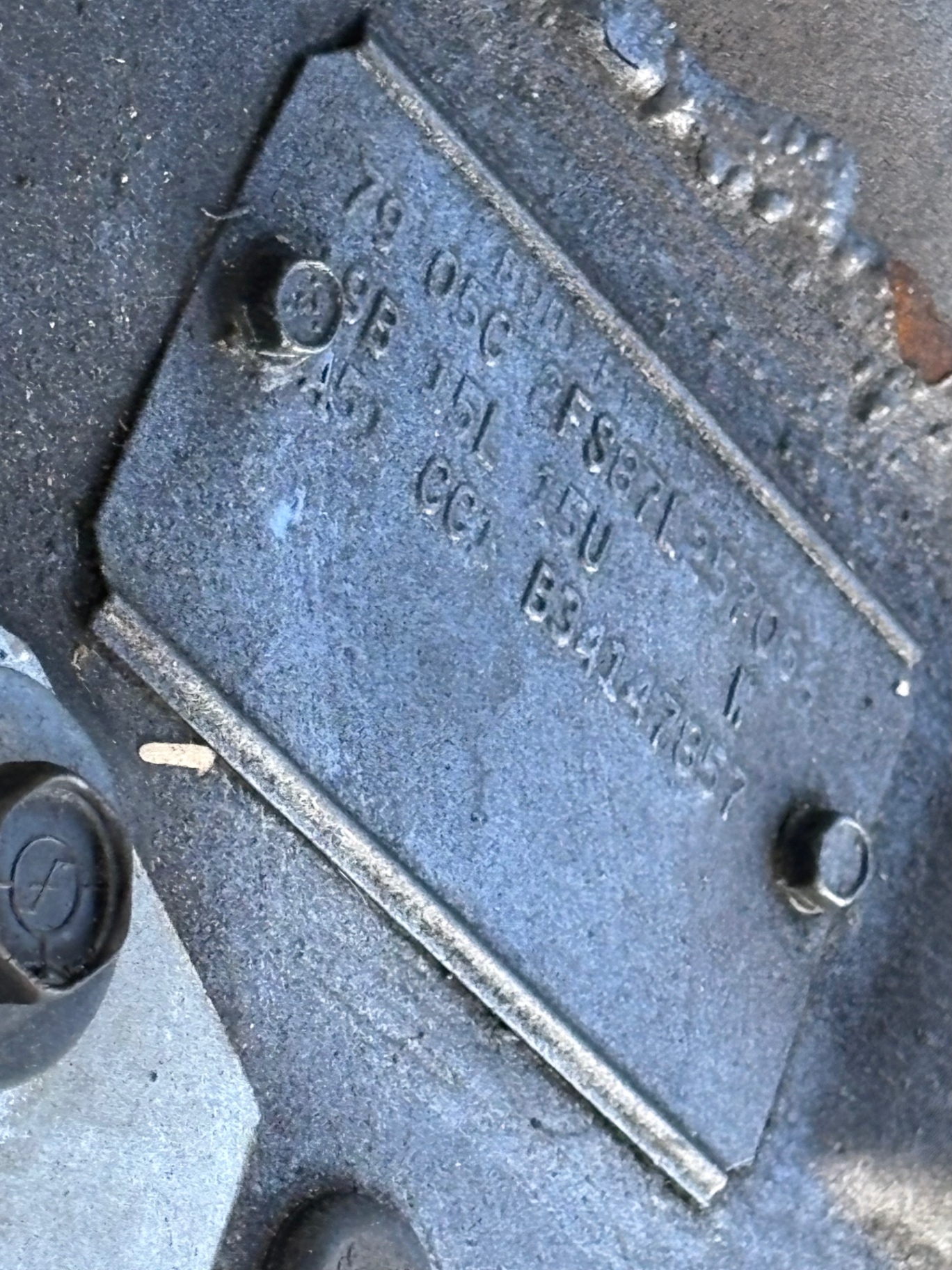
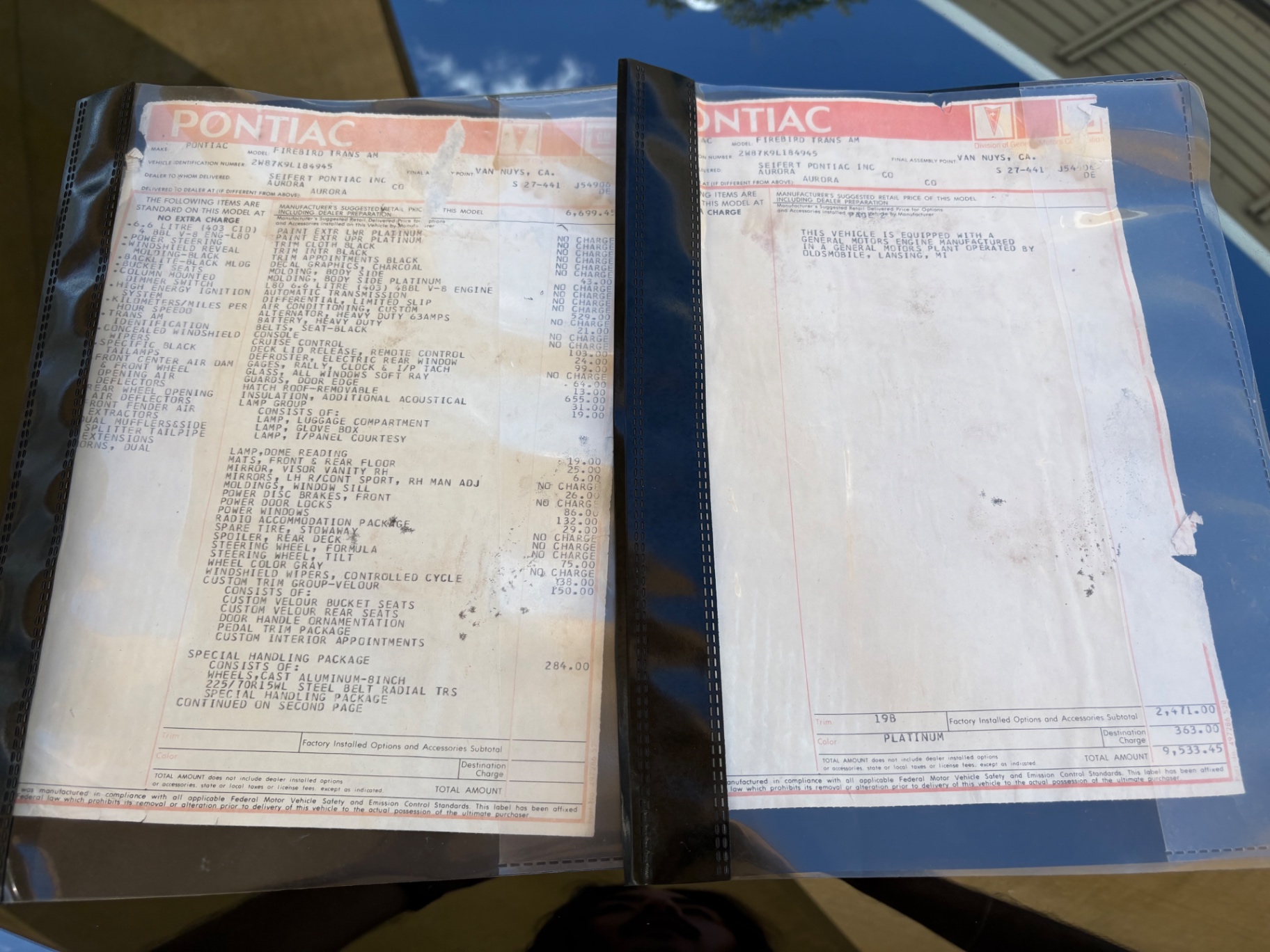
The VIN decodes this car as a Norwood, Ohio-assembled 1979 Pontiac Firebird Trans Am, body style 87 — the standard coupe. The engine code in the VIN confirms the 403 cubic inch Oldsmobile V8, which was the automatic transmission engine option for the Trans Am in 1979. Buyers in states with stricter emissions requirements, including California, received this engine rather than the Pontiac 400. The 403 was built by Oldsmobile and is a well-regarded unit with good torque characteristics and a strong parts supply today.
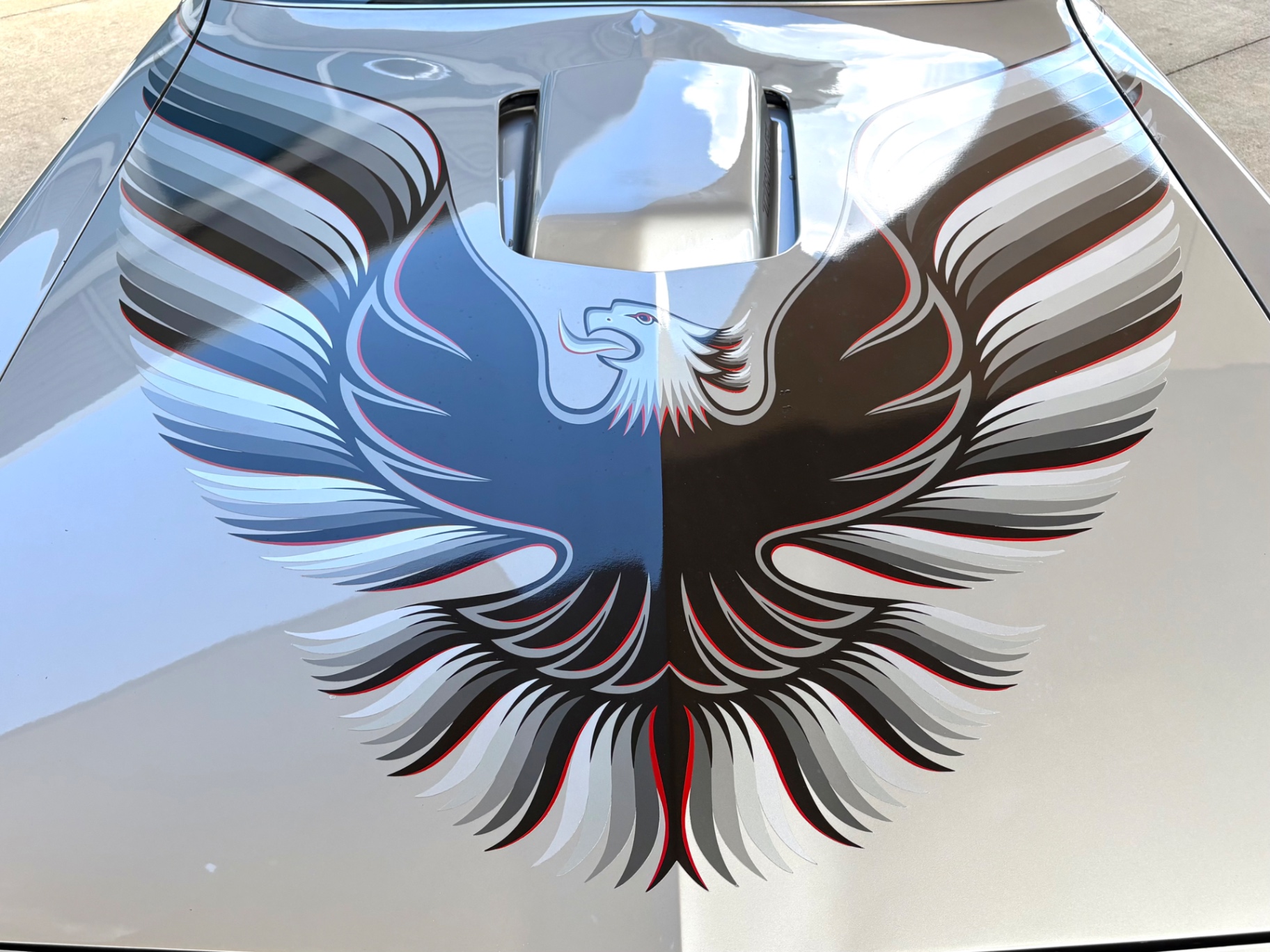
This is a complete, honest, driver-quality 1979 Pontiac Firebird Trans Am with all the right factory features — T-tops, the Screaming Chicken hood decal, Snowflake wheels, the T/A 6.6 air cleaner, and a black interior. It wears Platinum exterior paint, a color that photographs as a cool silver-gray and suits the Trans Am's long hood and aggressive body lines particularly well. If you were a teenager in 1979, this is exactly the car that was on your bedroom wall.
Features List
- 6.6L 403ci Oldsmobile V8 engine
- 3-Speed Turbo Hydra-Matic automatic transmission
- T/A 6.6 stamped aluminum air cleaner
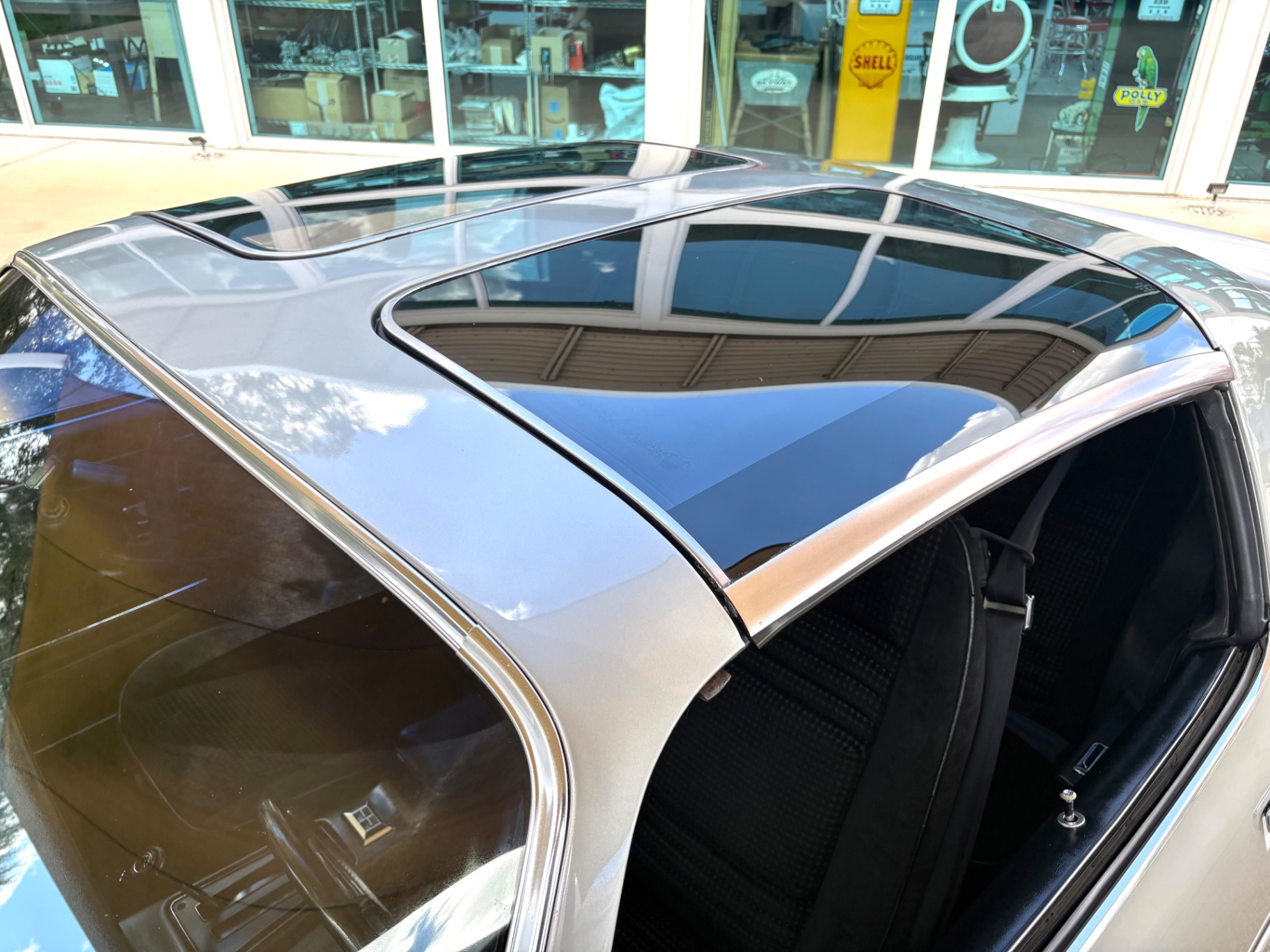
- Factory T-tops with removable roof panels
- Pontiac Snowflake cast aluminum wheels
- Firebird hood decal (Screaming Chicken)
- Factory rear spoiler
- Dual exhaust
- Radial Tuned Suspension (RTS)
- Factory gauge cluster with tachometer and water temperature gauge
- Factory 4-spoke Trans Am steering wheel with Firebird emblem
- Black cloth bucket seats
- Center console with floor shifter
- Air conditioning
- Power steering
- Power windows
- Cruise control
- Upgraded aftermarket stereo
- White-letter Cooper Cobra Radial tires
- Clean Florida undercarriage — solid floor pans, no rust
Mechanical
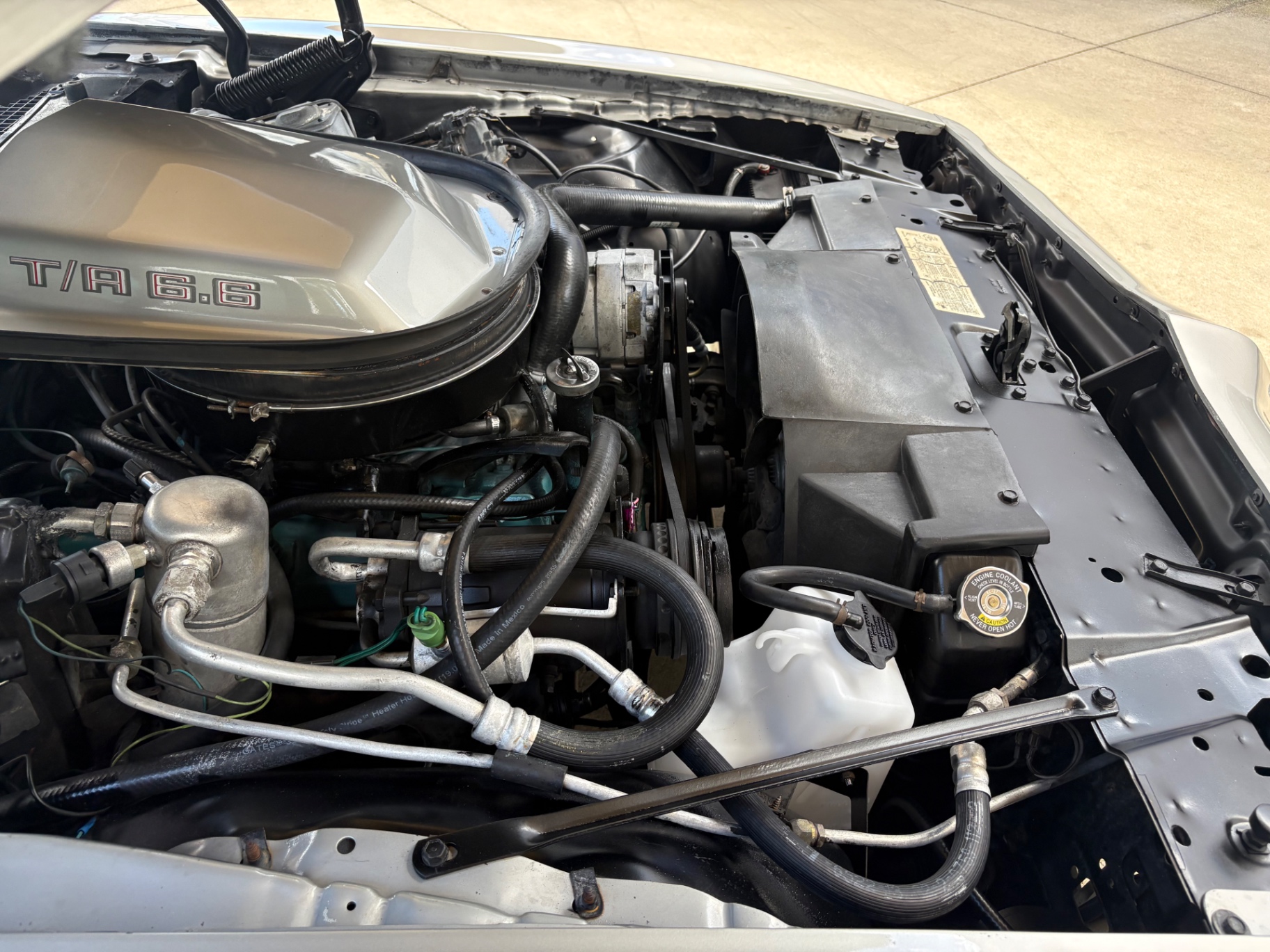
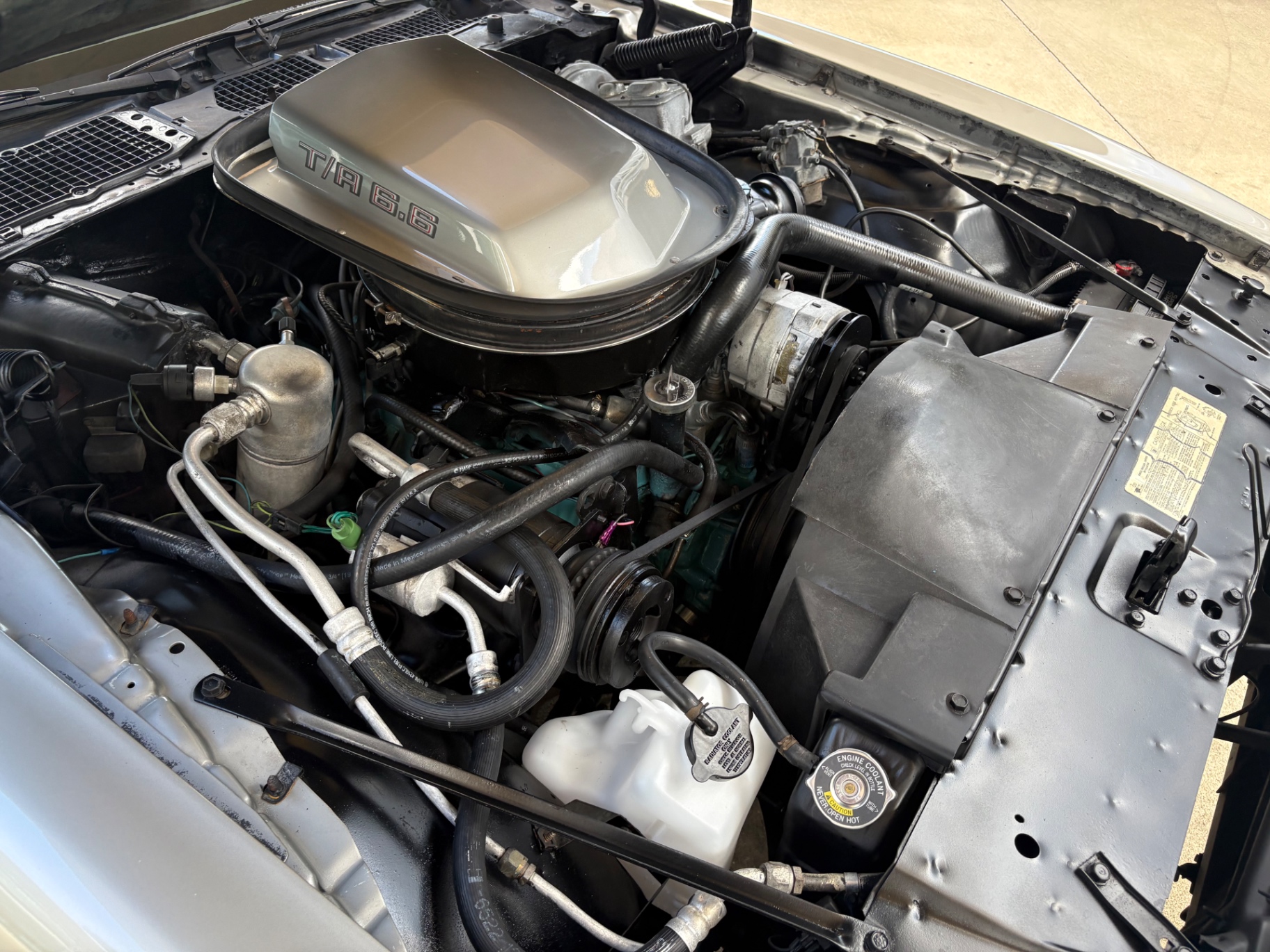
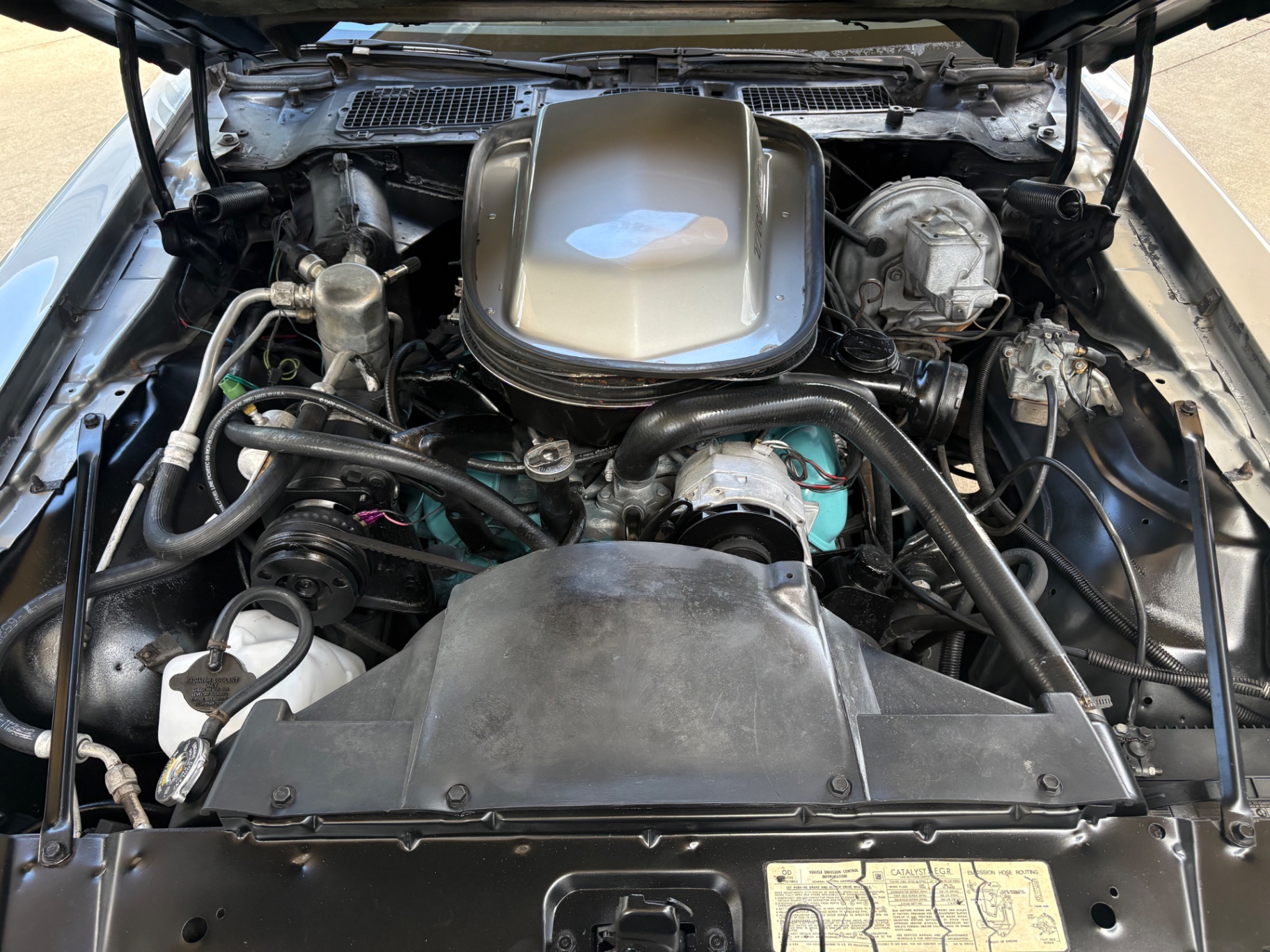
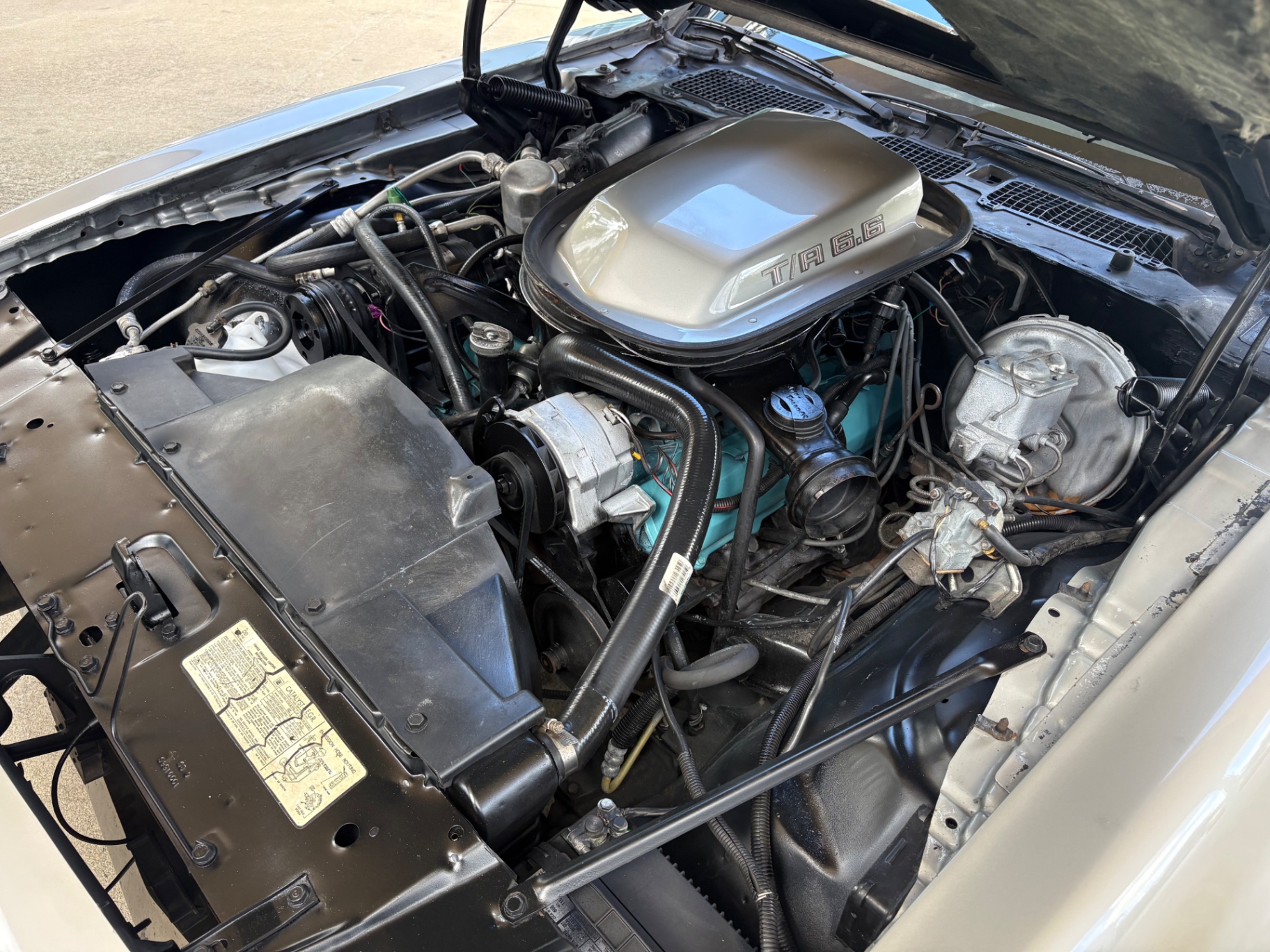
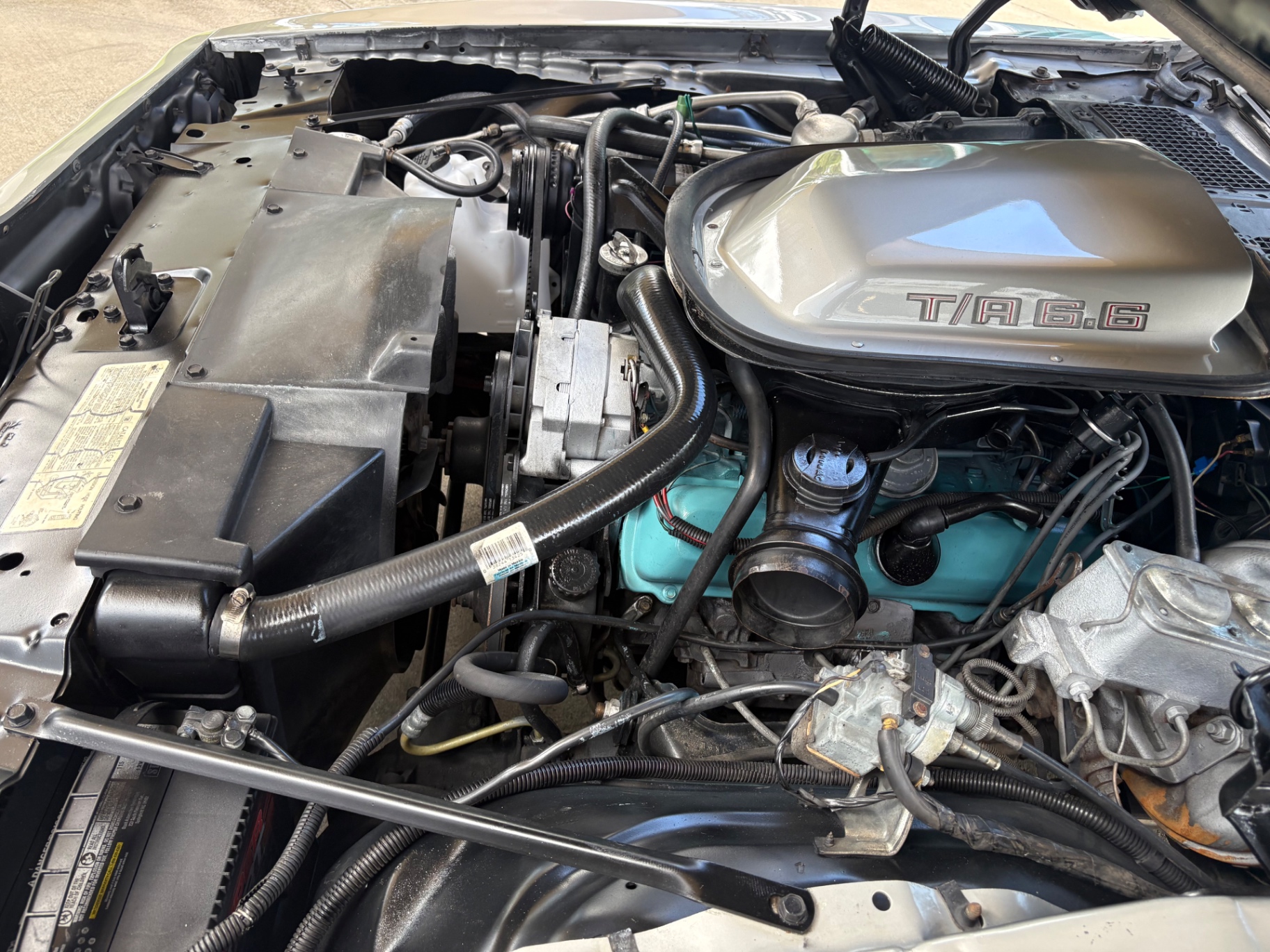
The 403 cubic inch Oldsmobile V8 under this car's hood is one of the more interesting footnotes in GM's late-1970s engine sourcing story. By 1979, Pontiac's own 400 cubic inch V8 was being phased out to meet tightening emissions standards. For Trans Am buyers who ordered the Turbo Hydra-Matic automatic — as this car's original buyer did — the engine that came from the factory was Oldsmobile's 403, dressed up with a Trans Am-specific T/A 6.6 stamped aluminum air cleaner lid to keep the engine identity somewhat ambiguous at a glance. It was a marketing decision that upset some purists at the time, but the 403 is a torquey, durable engine that has proven itself over decades of use. The stamped T/A 6.6 air cleaner is correct and present on this car, which matters for anyone building toward a show-quality example.
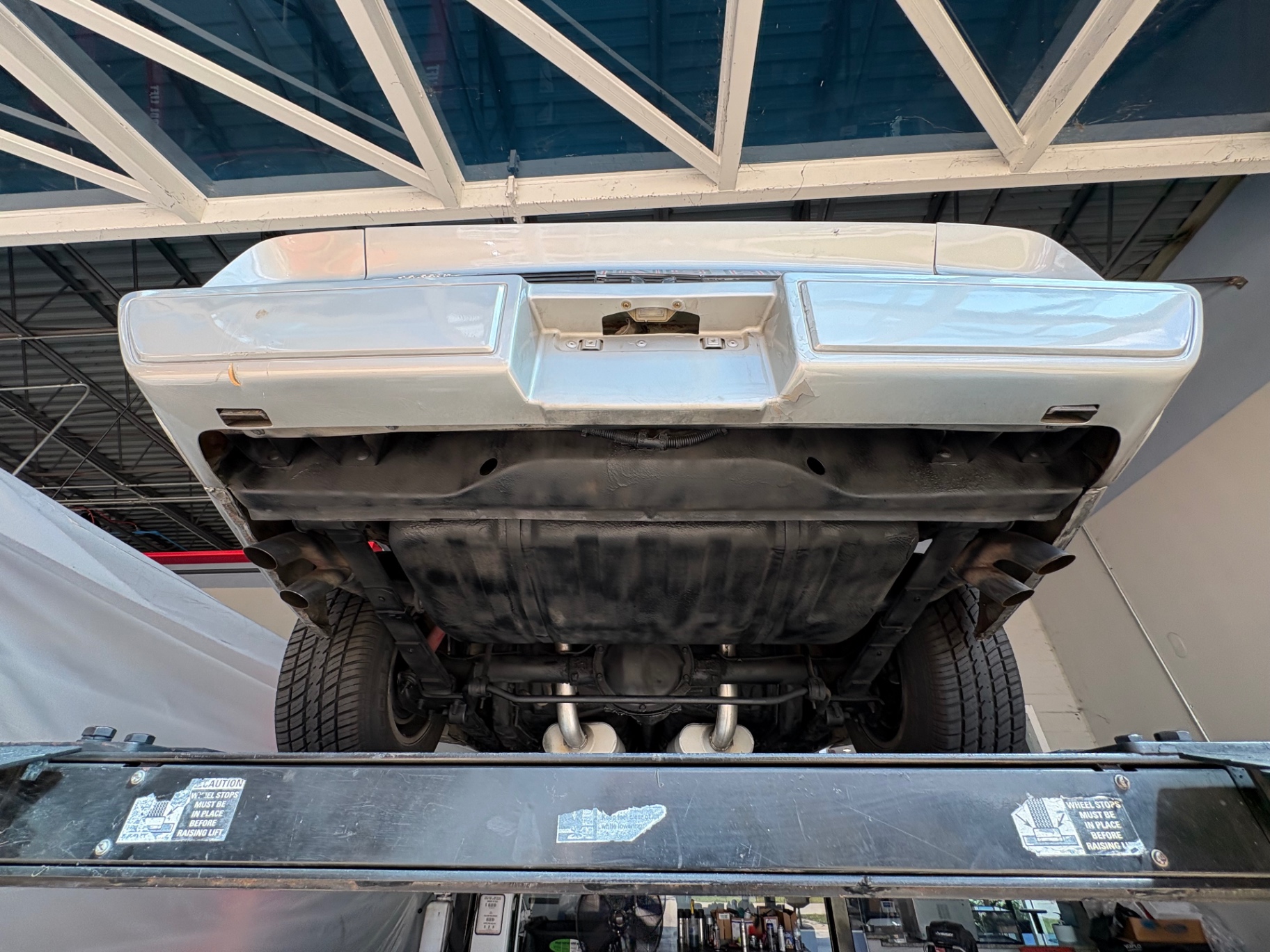
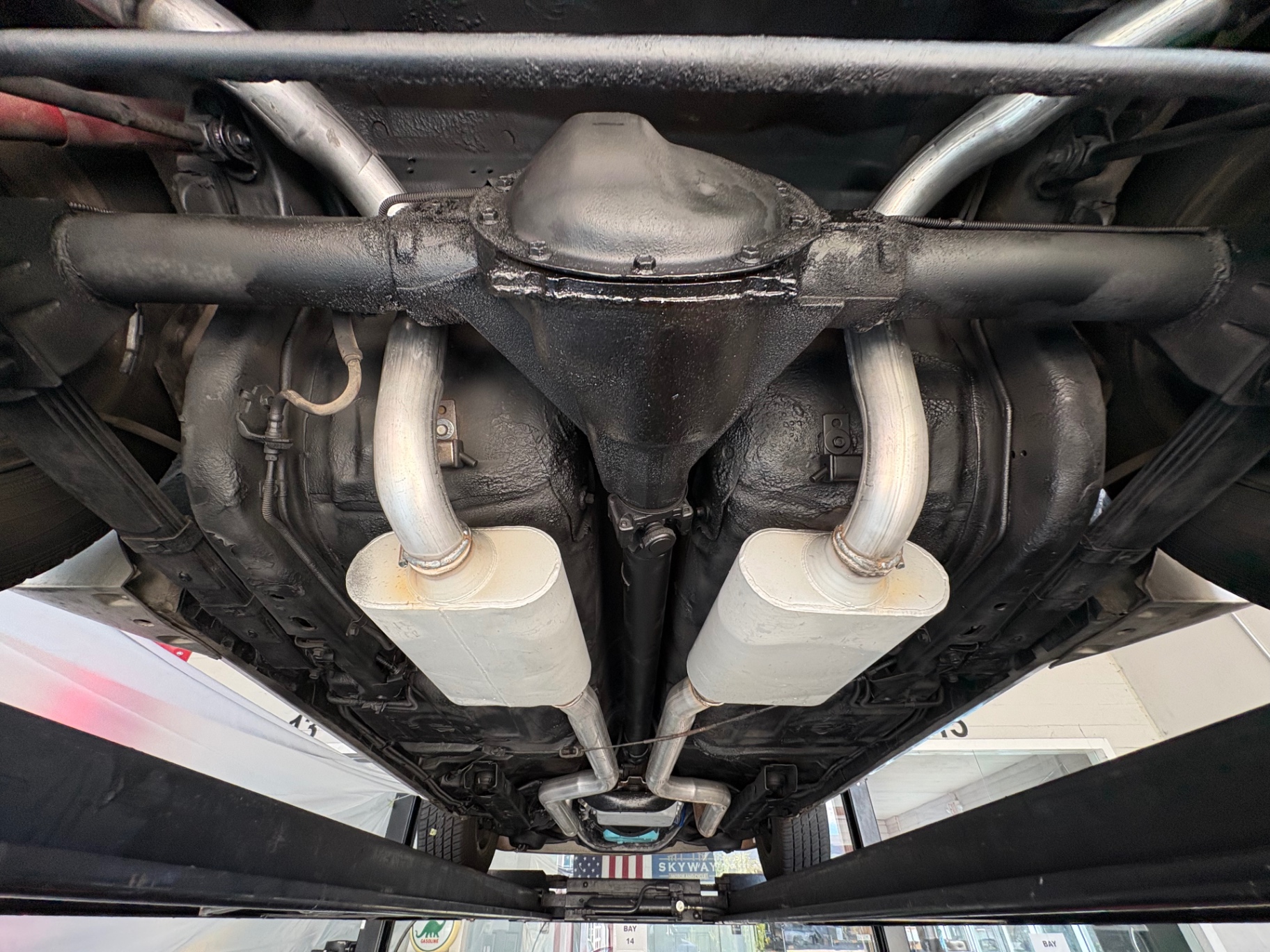
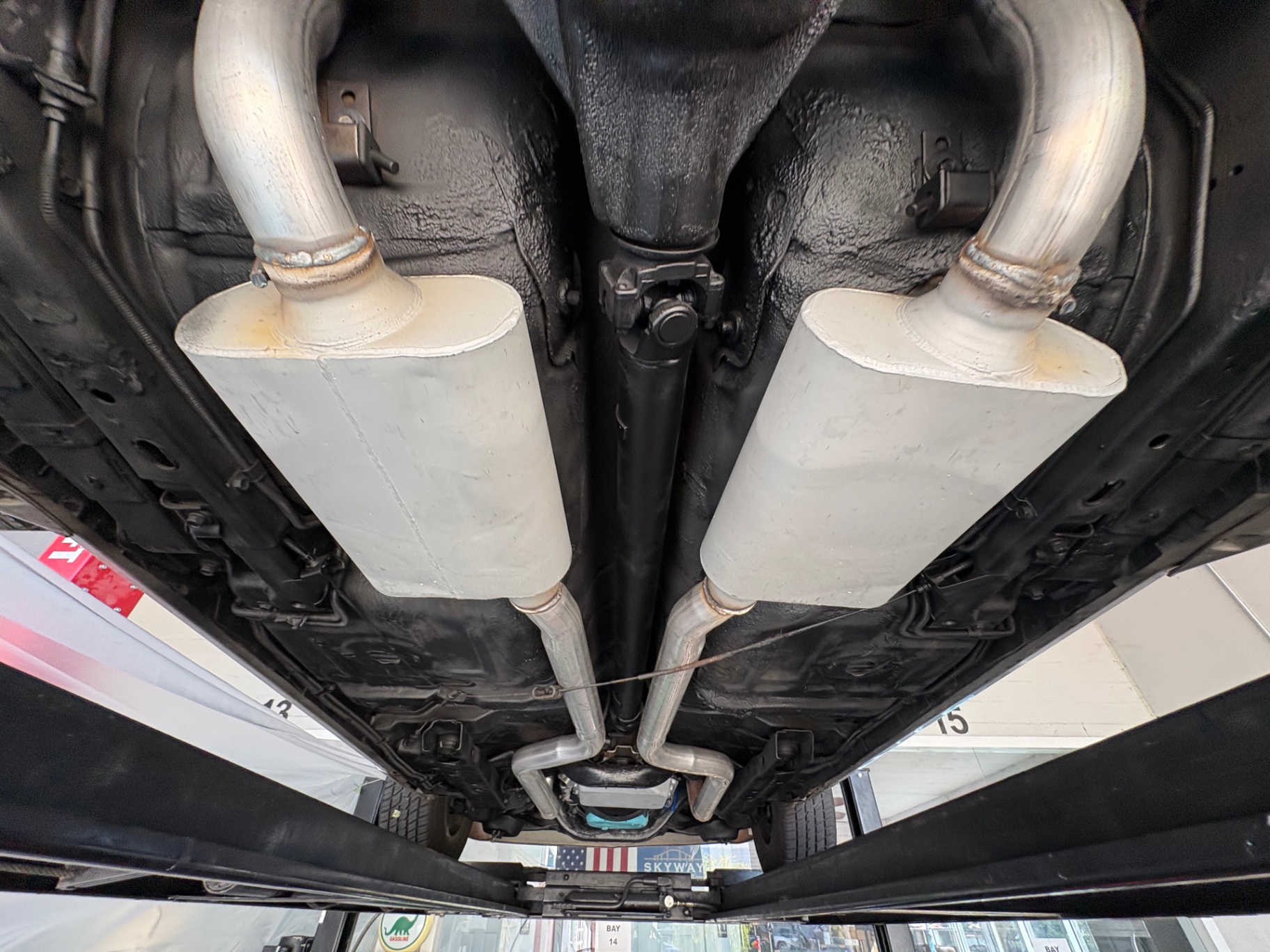
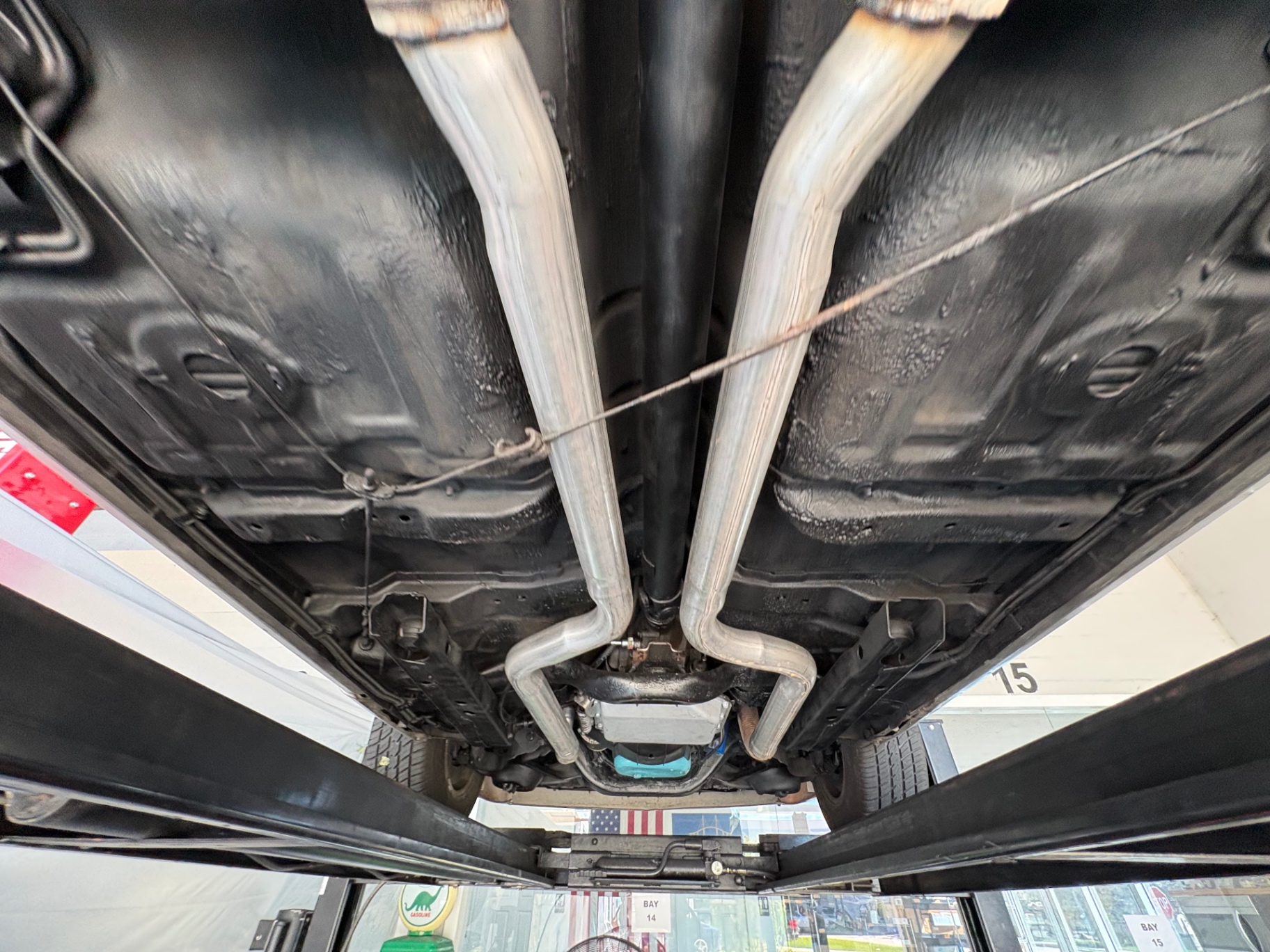
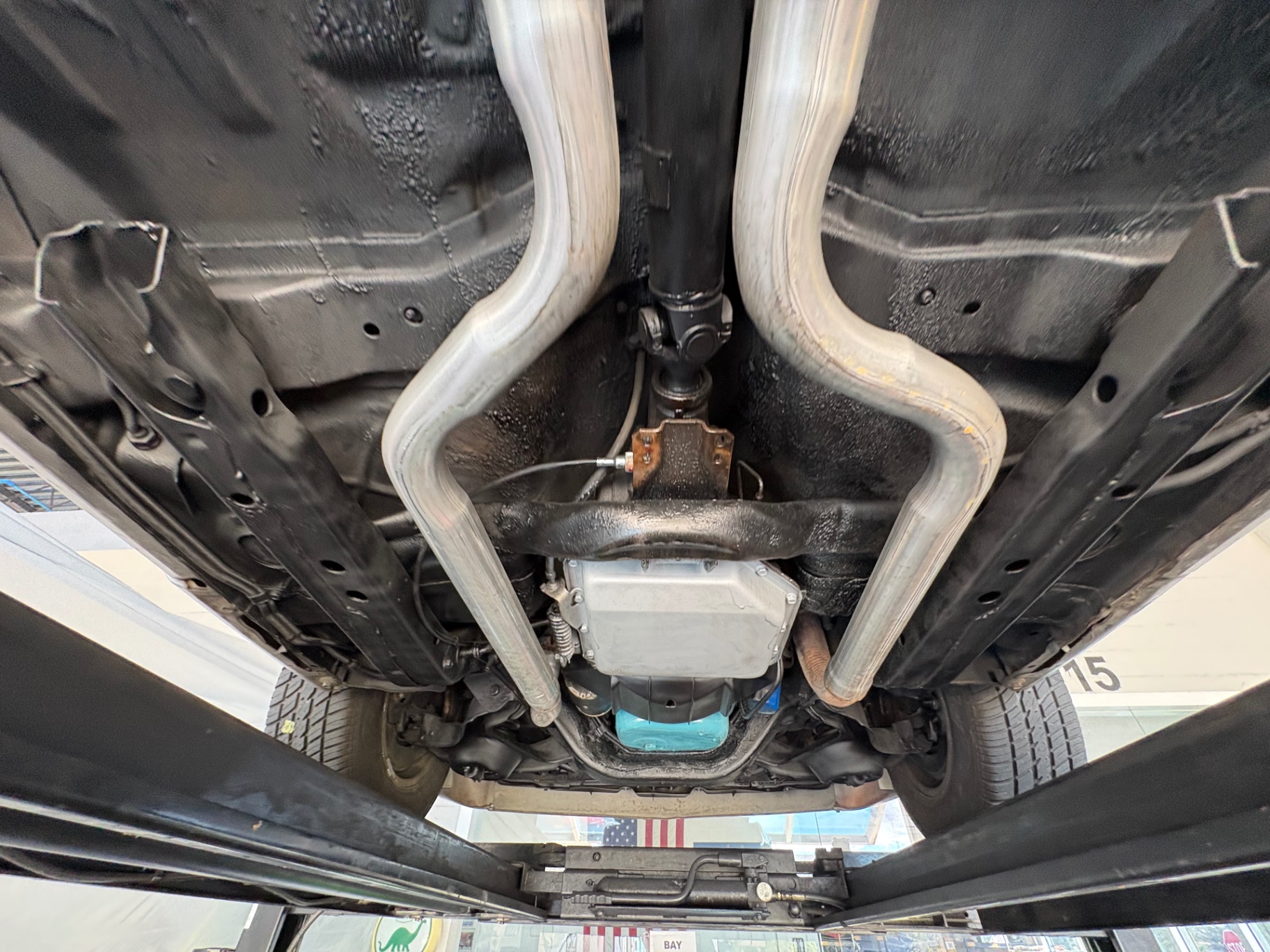
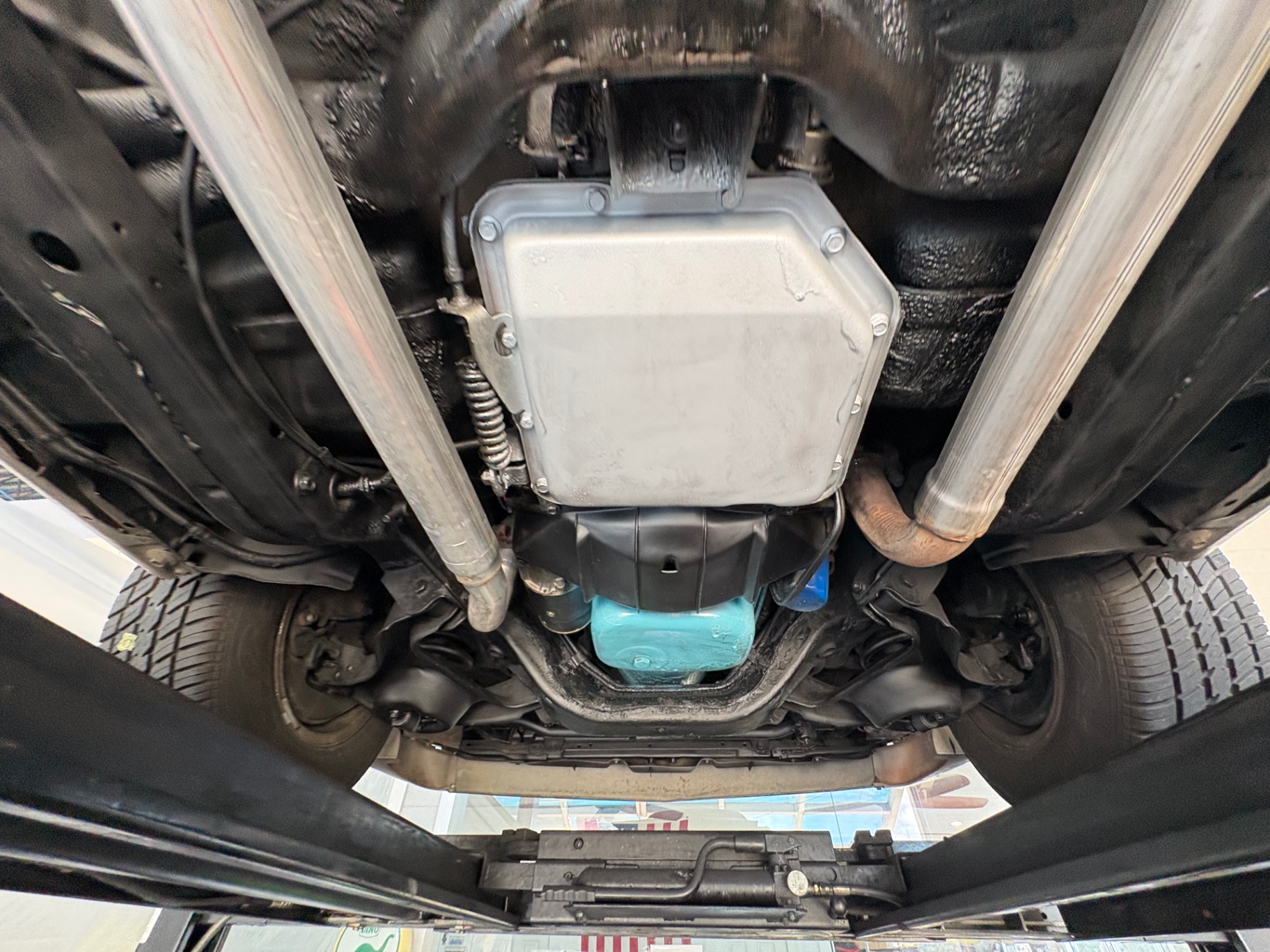
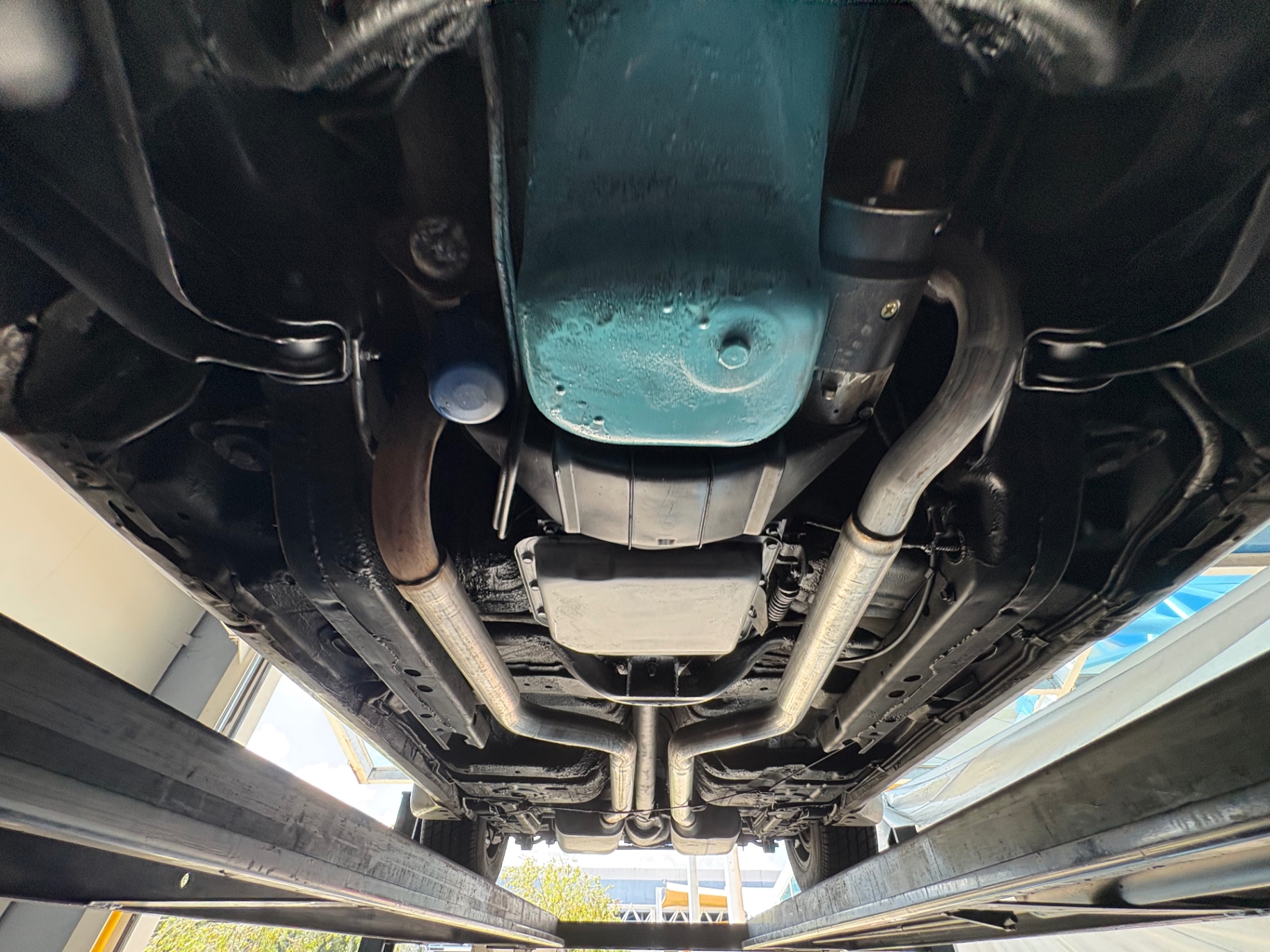
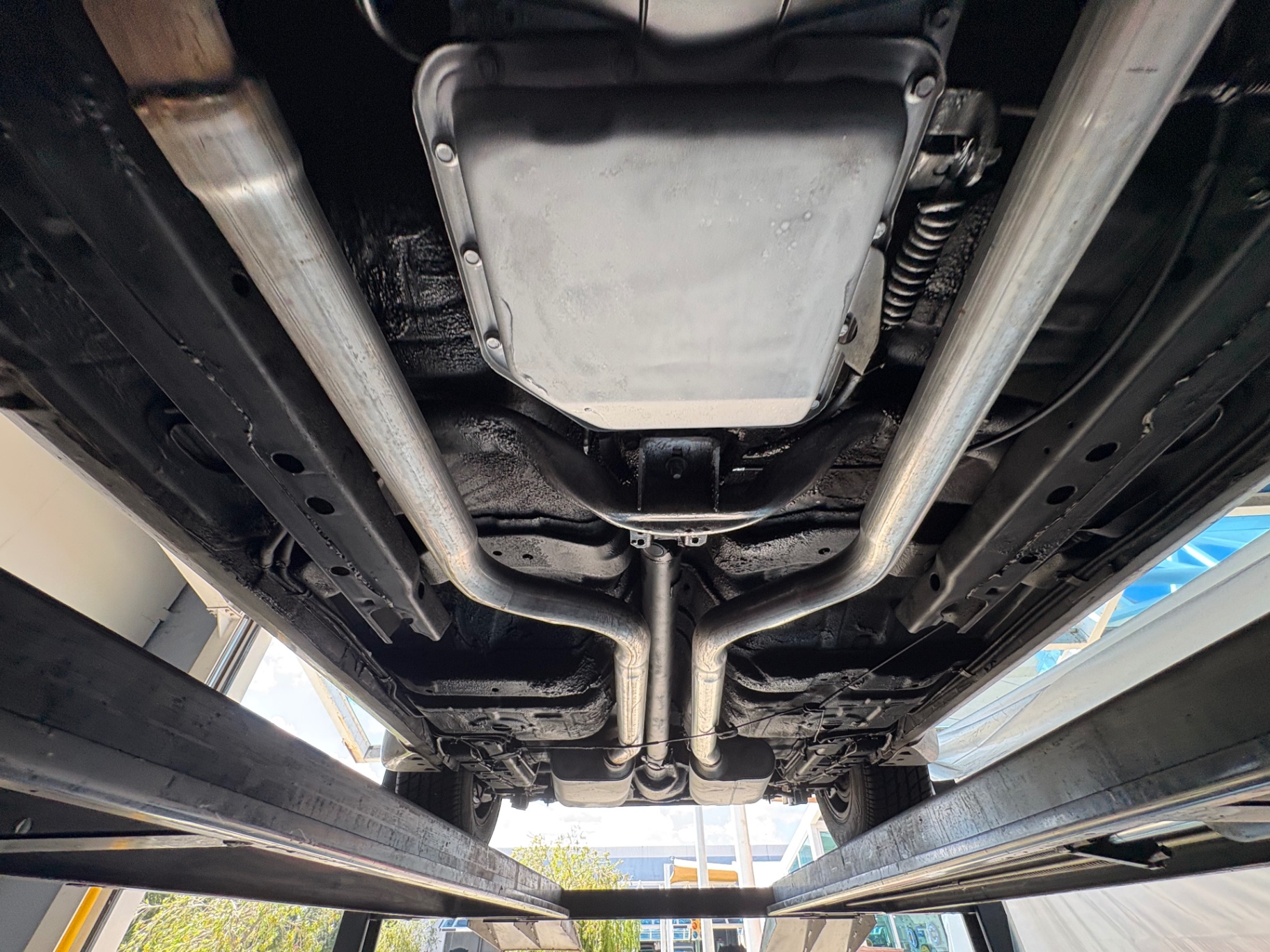
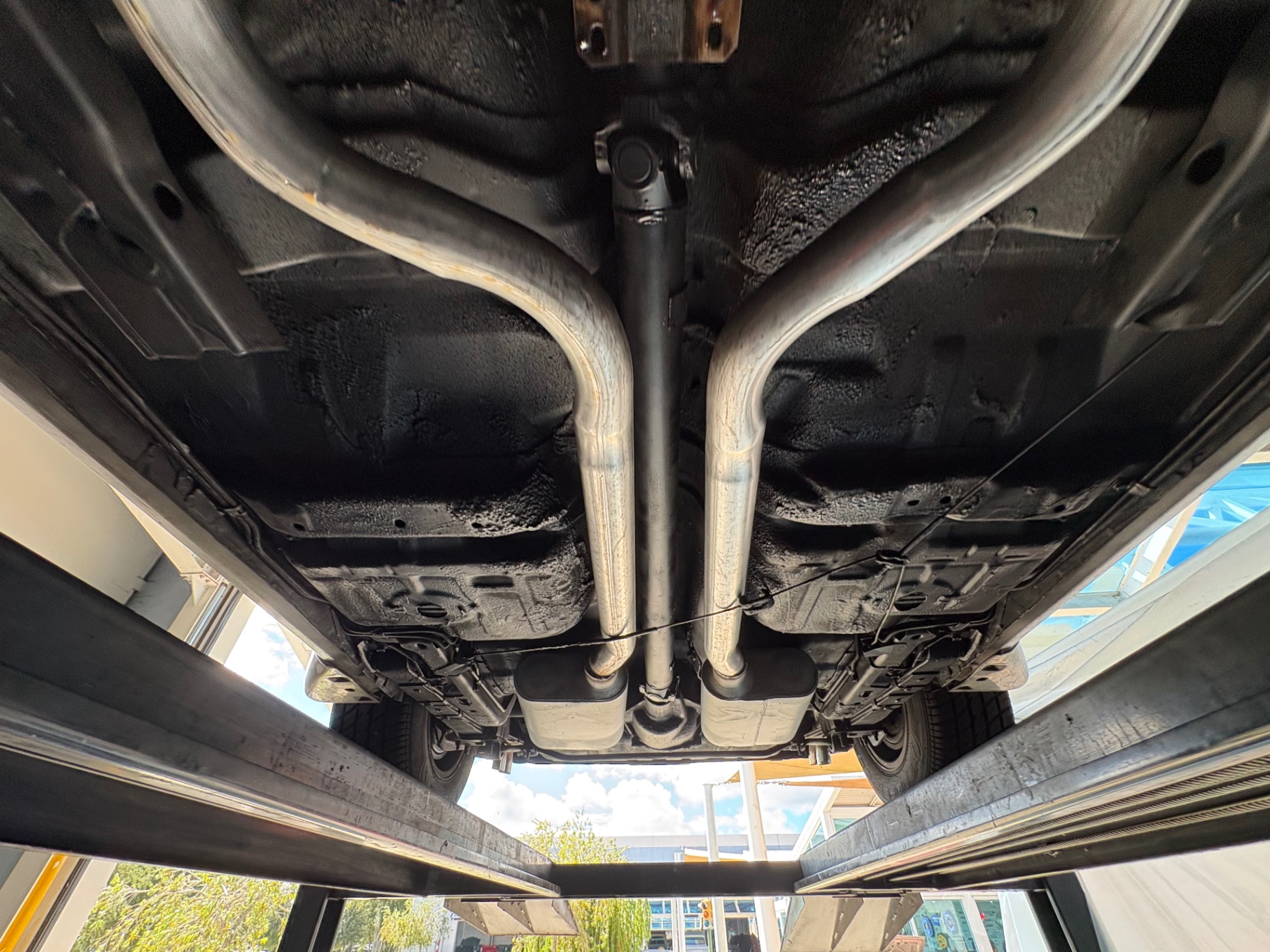
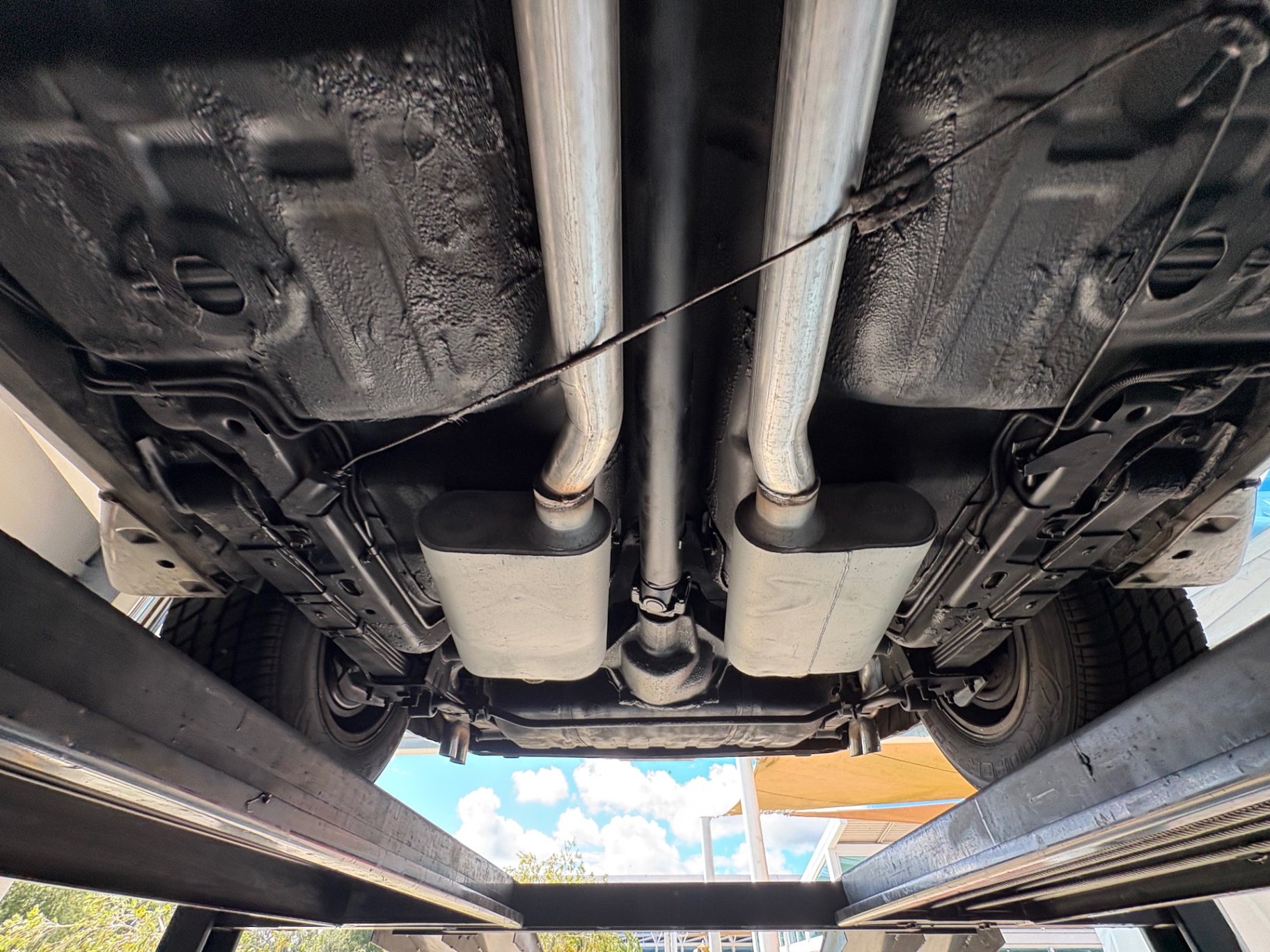
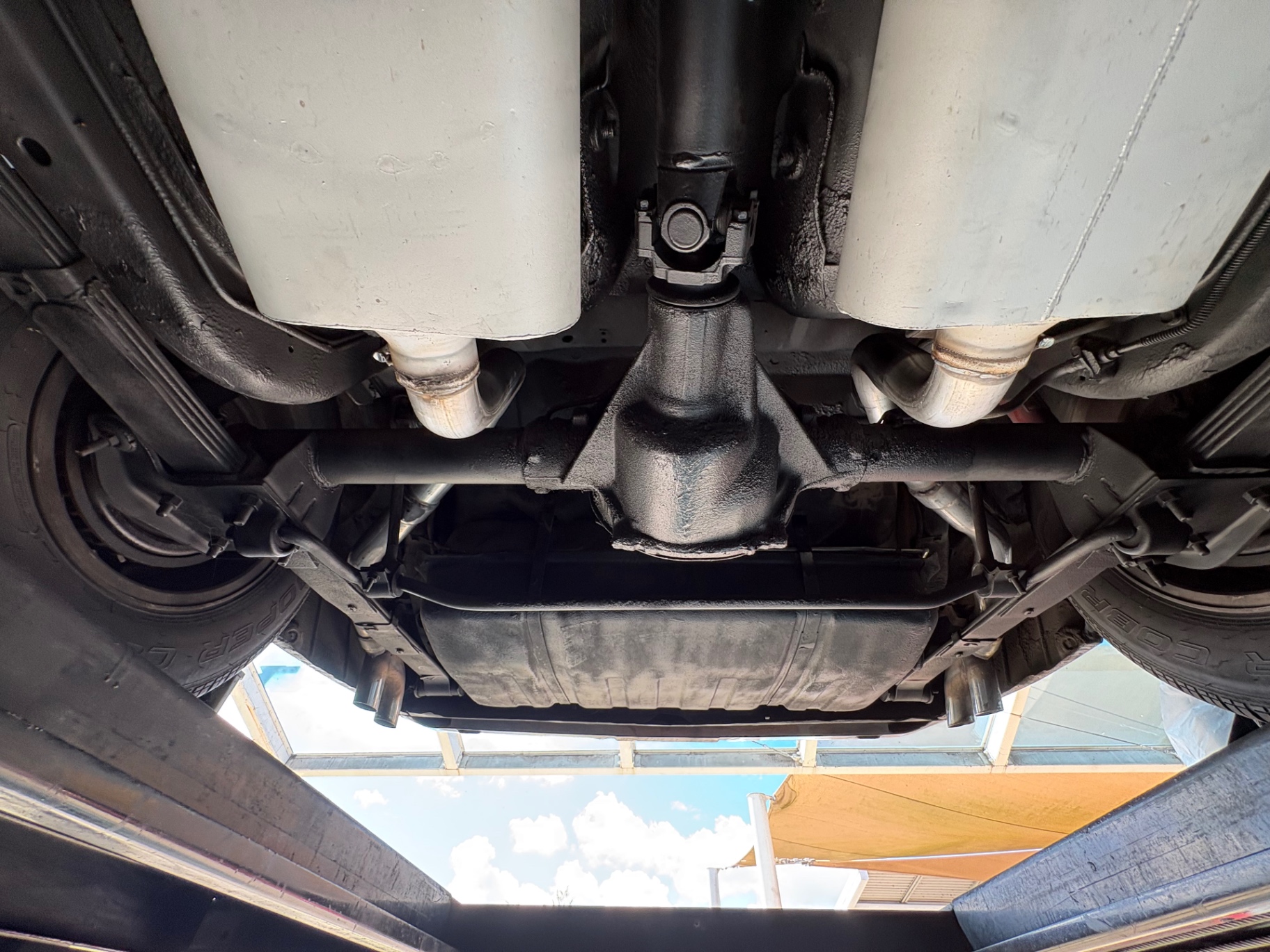
The 3-speed Turbo Hydra-Matic automatic is the correct transmission pairing for the 403 engine in this application. It shifts smoothly and is one of the more robust automatics GM produced in this era. Backing it up is the factory dual exhaust, visible and intact in the undercarriage photographs. The exhaust system shows clean pipe work running the length of the car, which is consistent with the rust-free Florida history this car presents.
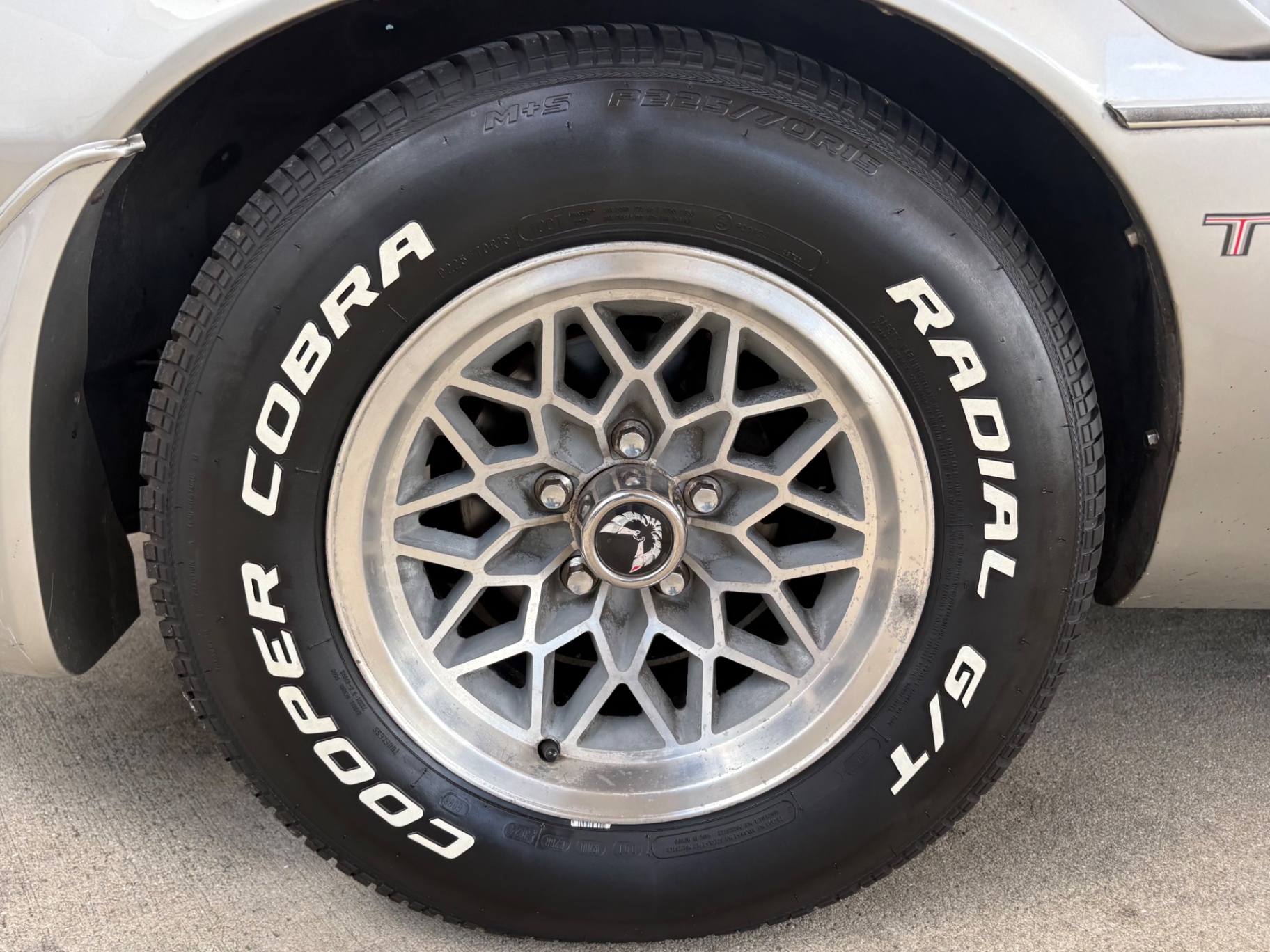
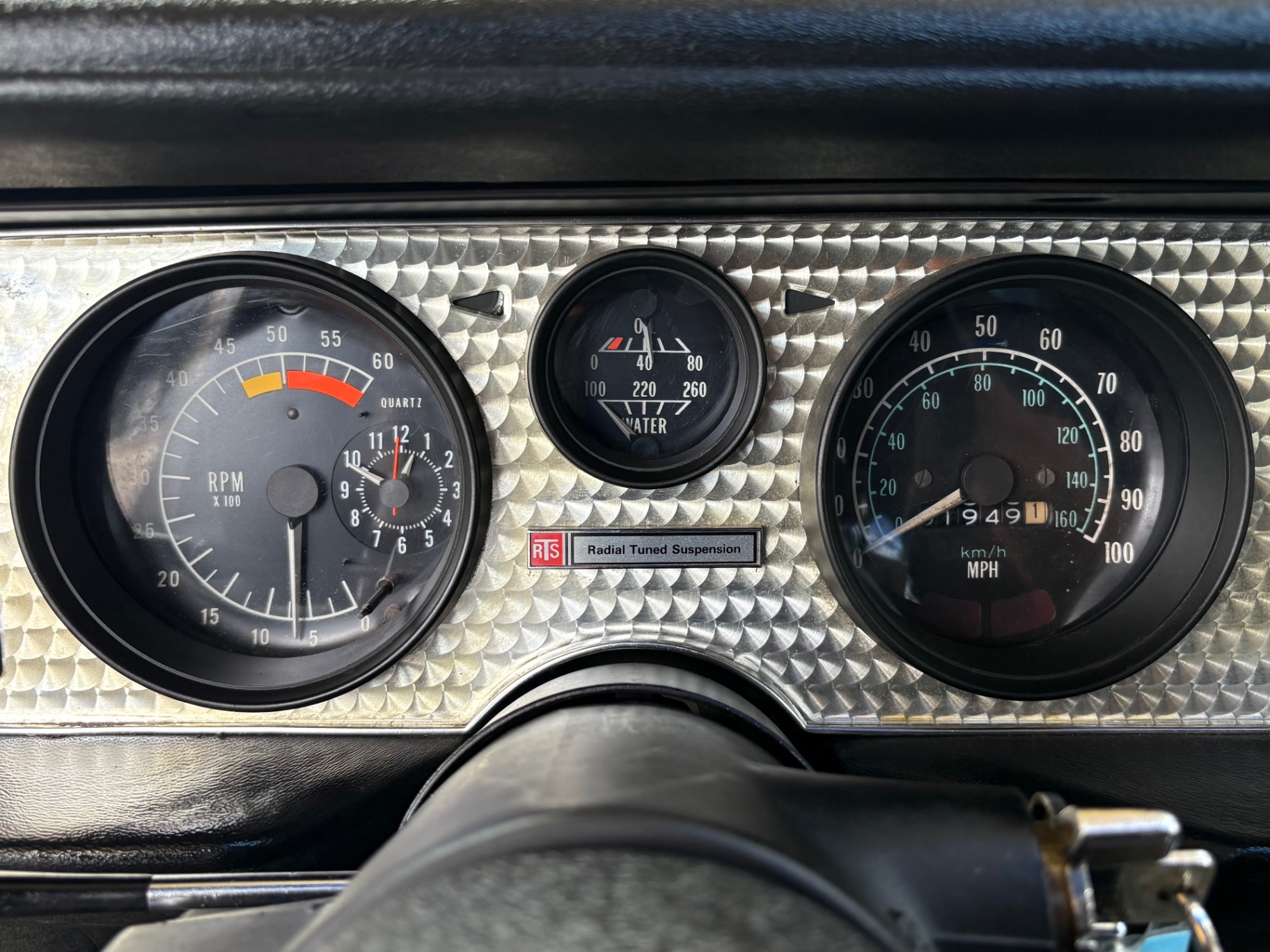
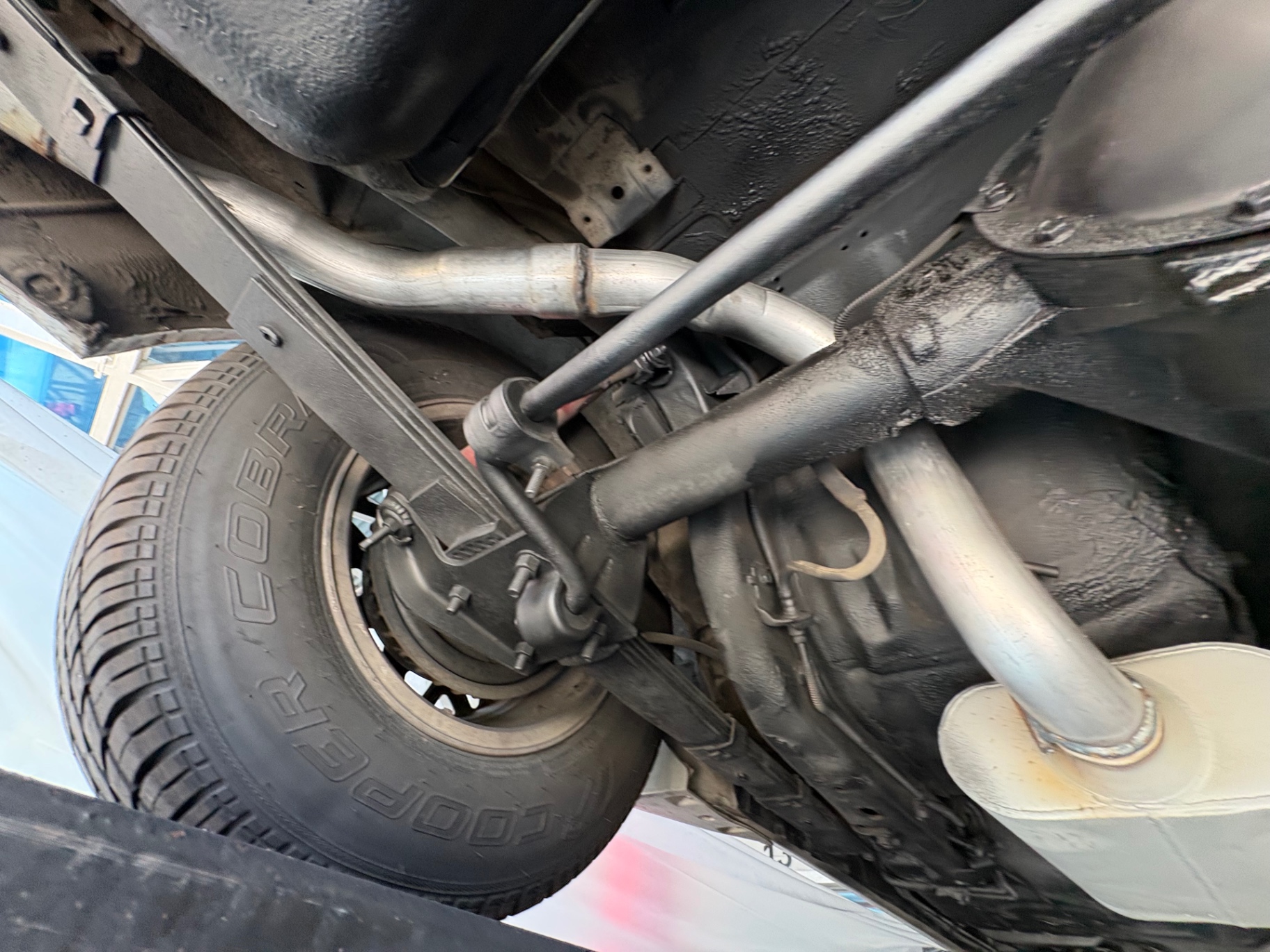
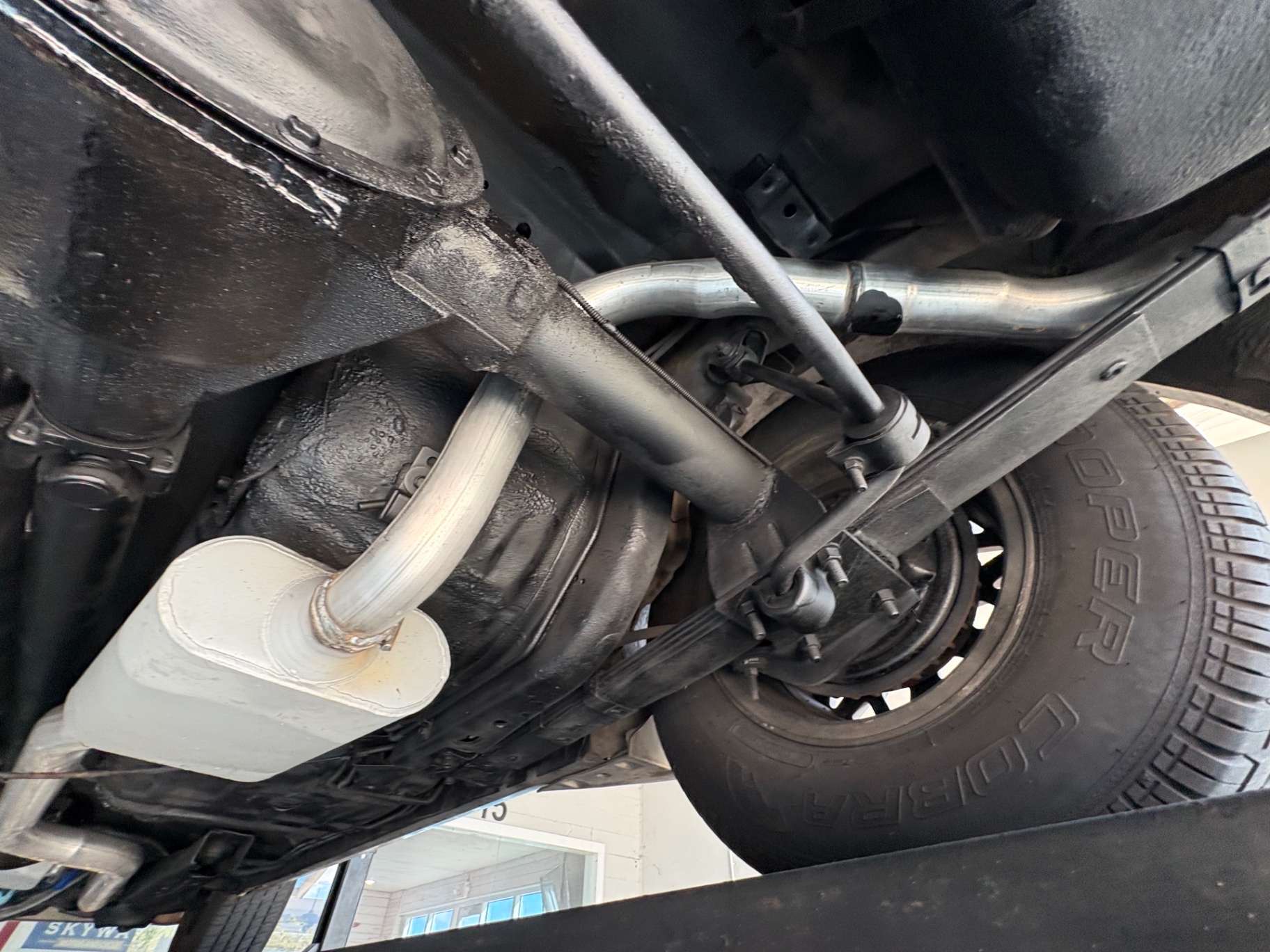
The Radial Tuned Suspension — called out right on the dashboard cluster with its own RTS badge — was Pontiac's factory suspension calibration for radial tires, which were becoming standard equipment in this era. It used specific spring rates, shock valving, and front and rear stabilizer bars tuned to work with radial tire characteristics rather than the bias-ply tires American cars had traditionally used. For a car of this period, the RTS setup gives the Trans Am competent handling and a stable highway ride. Cooper Cobra Radial white-letter tires are mounted on the factory Snowflake wheels, an appropriate period-correct tire choice for the application.
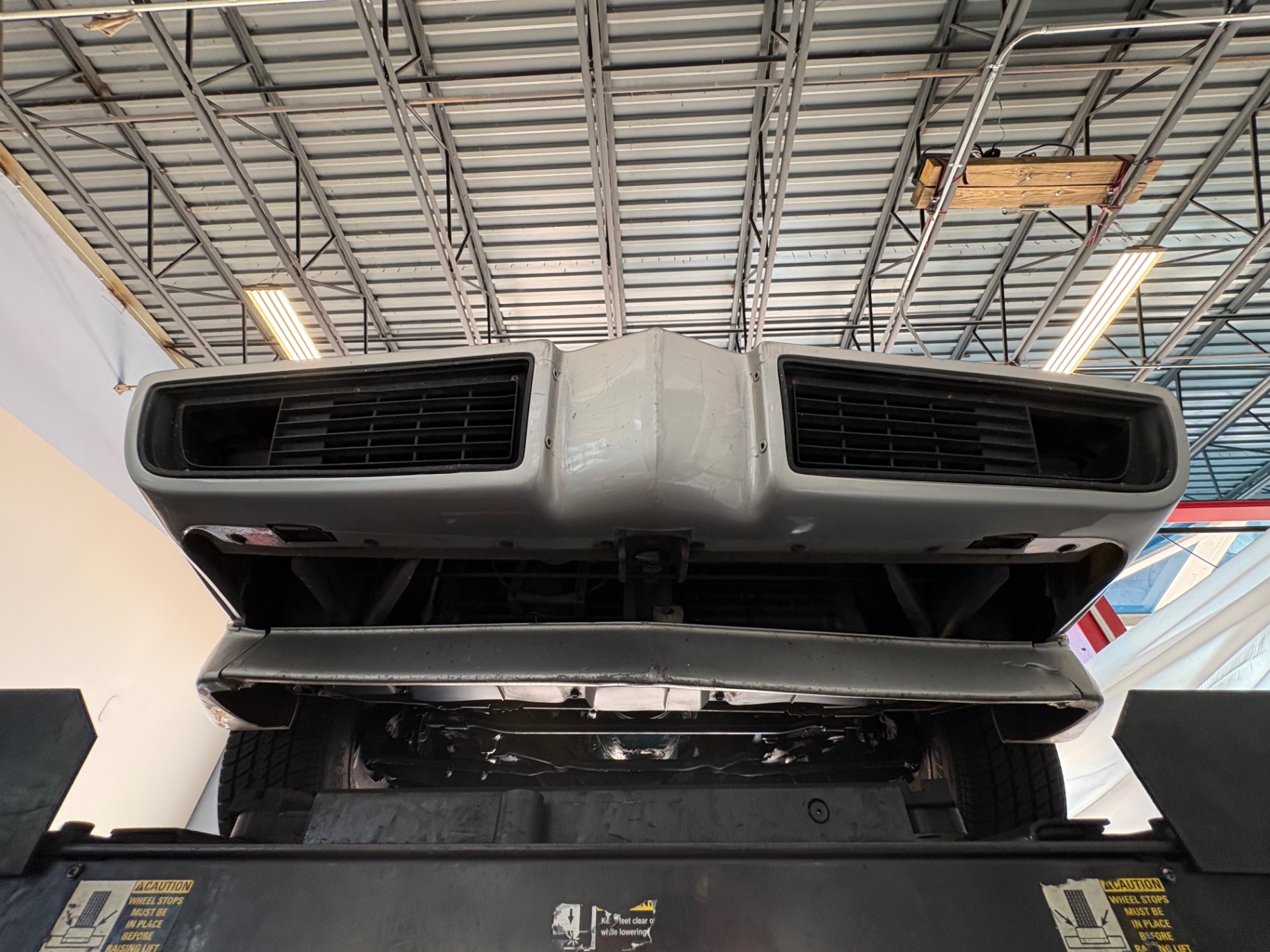
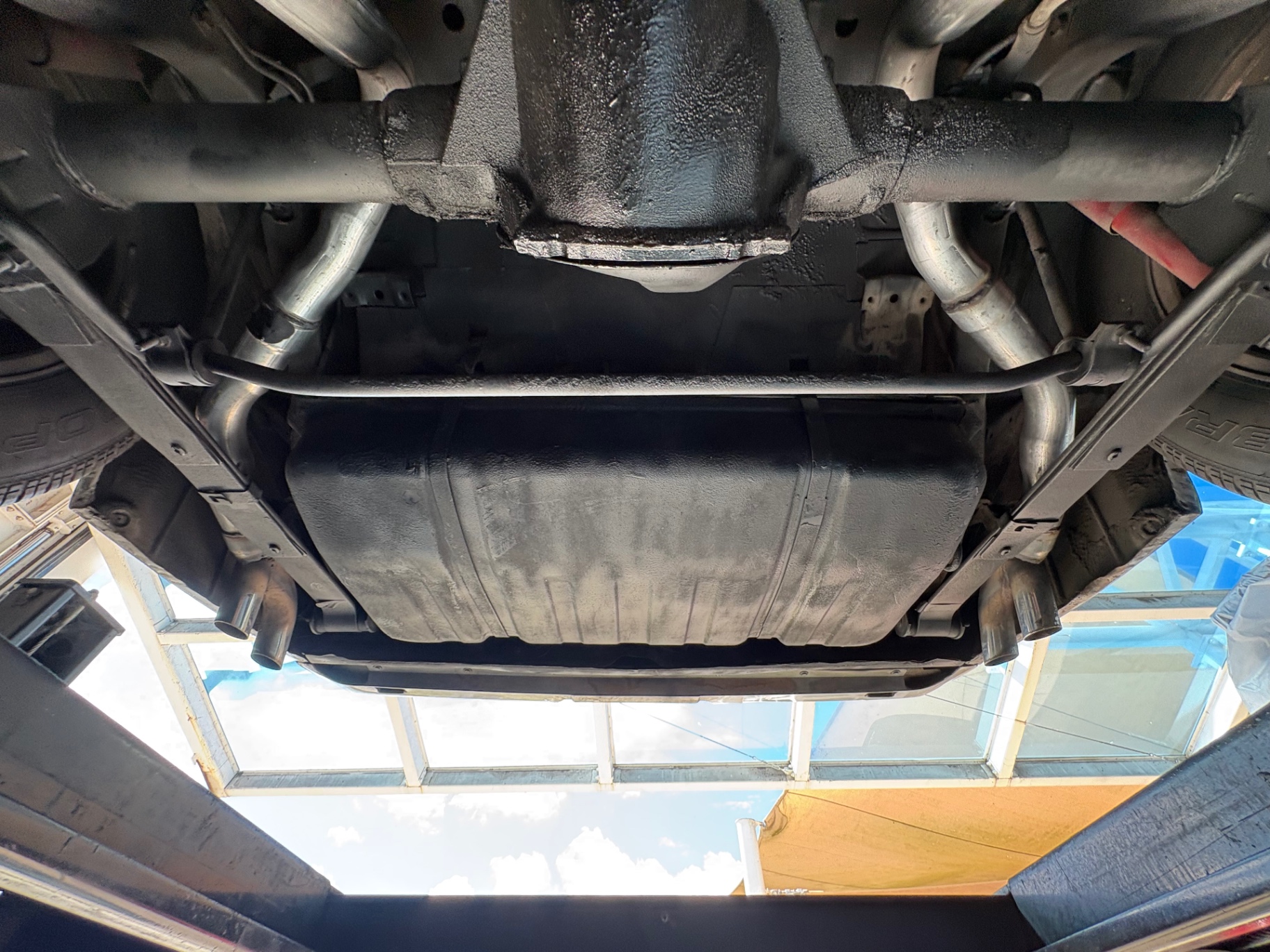
The undercarriage photographs taken on the lift tell the most important mechanical story of this car. The floor pans are solid, the frame rails are intact, the rear axle housing is coated and clean, and the exhaust runs are free from the pitting and rot common on cars with northern exposure. Florida's climate was, in this car's case, an asset.
Interior
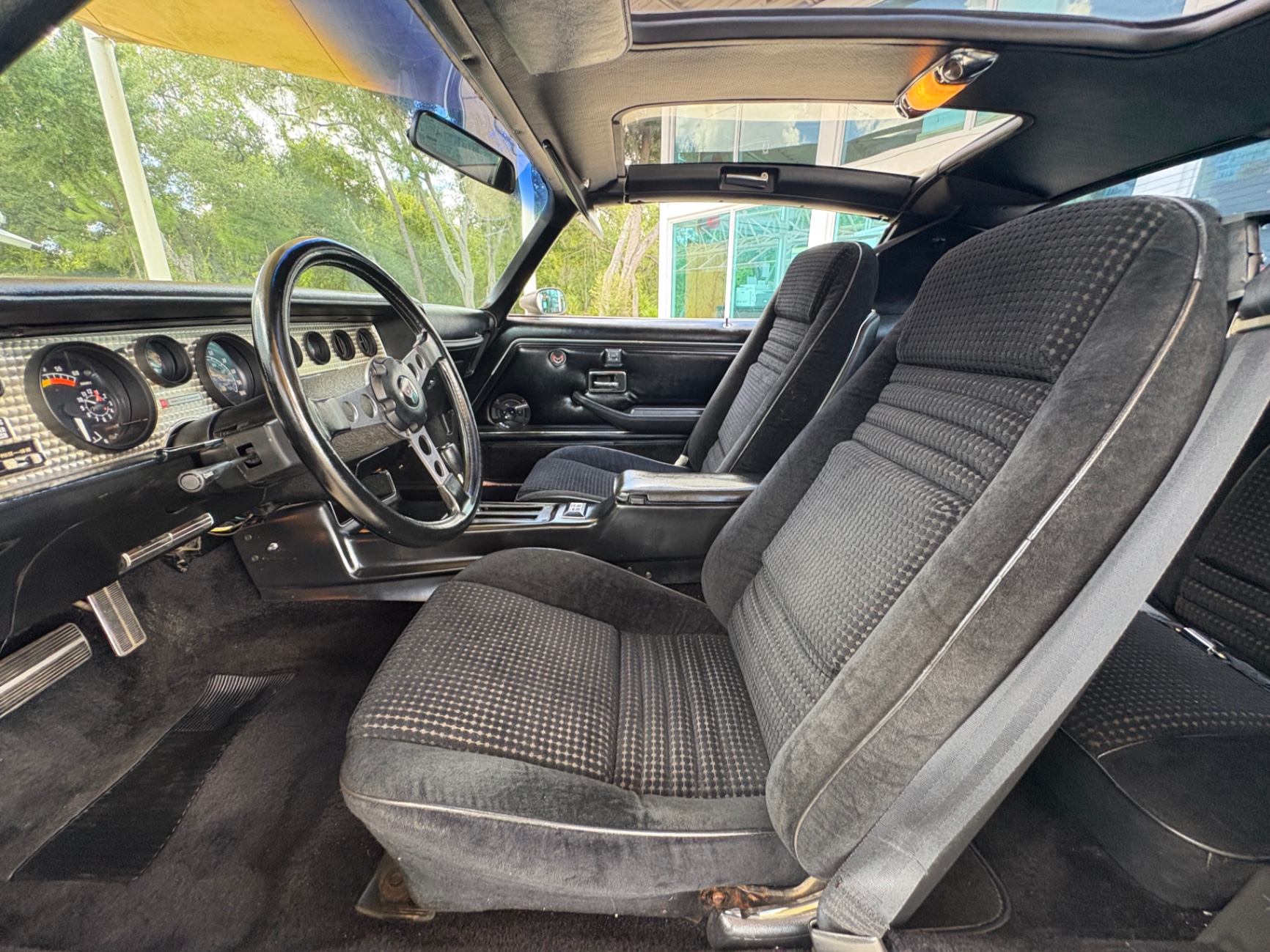
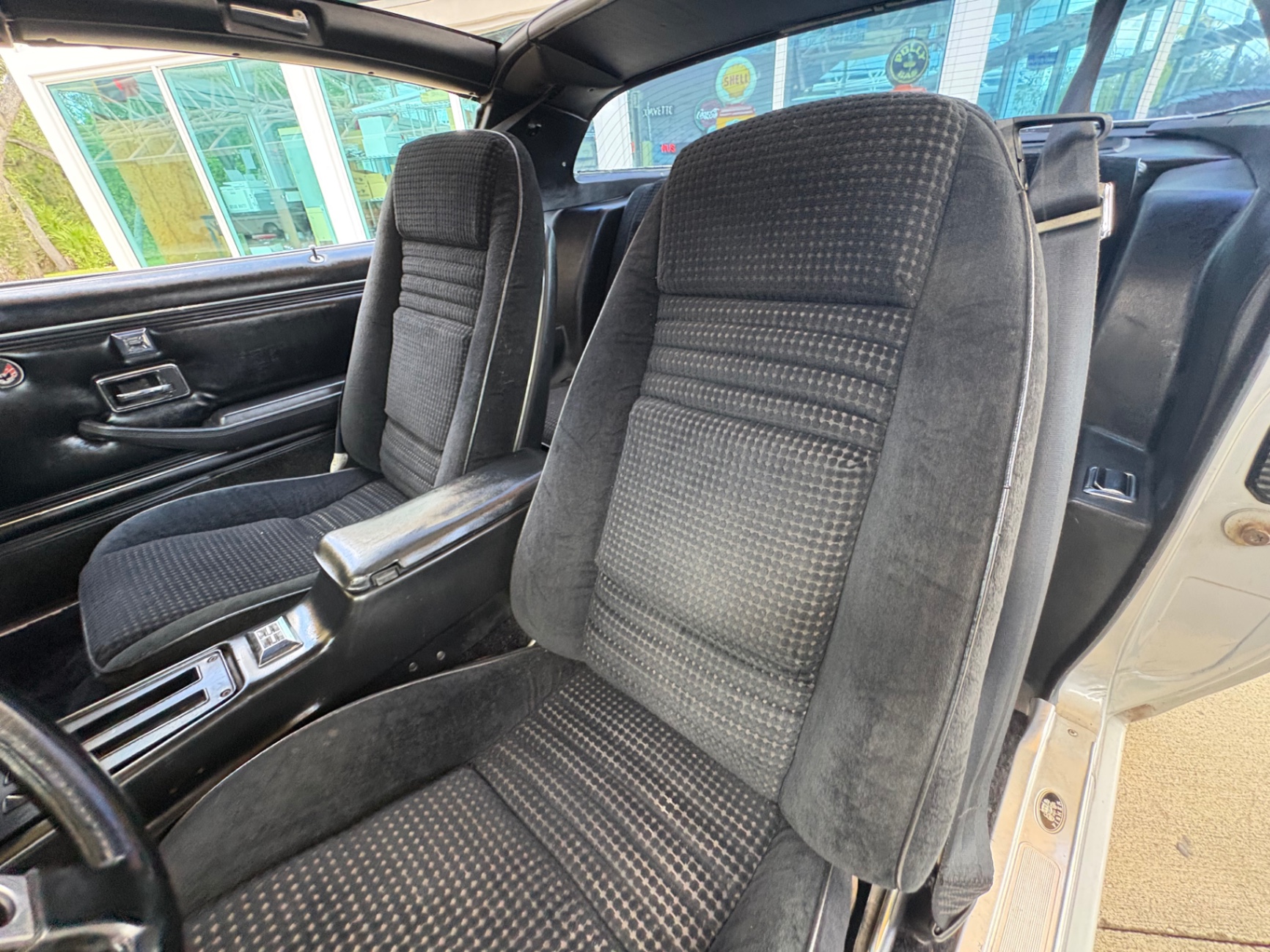
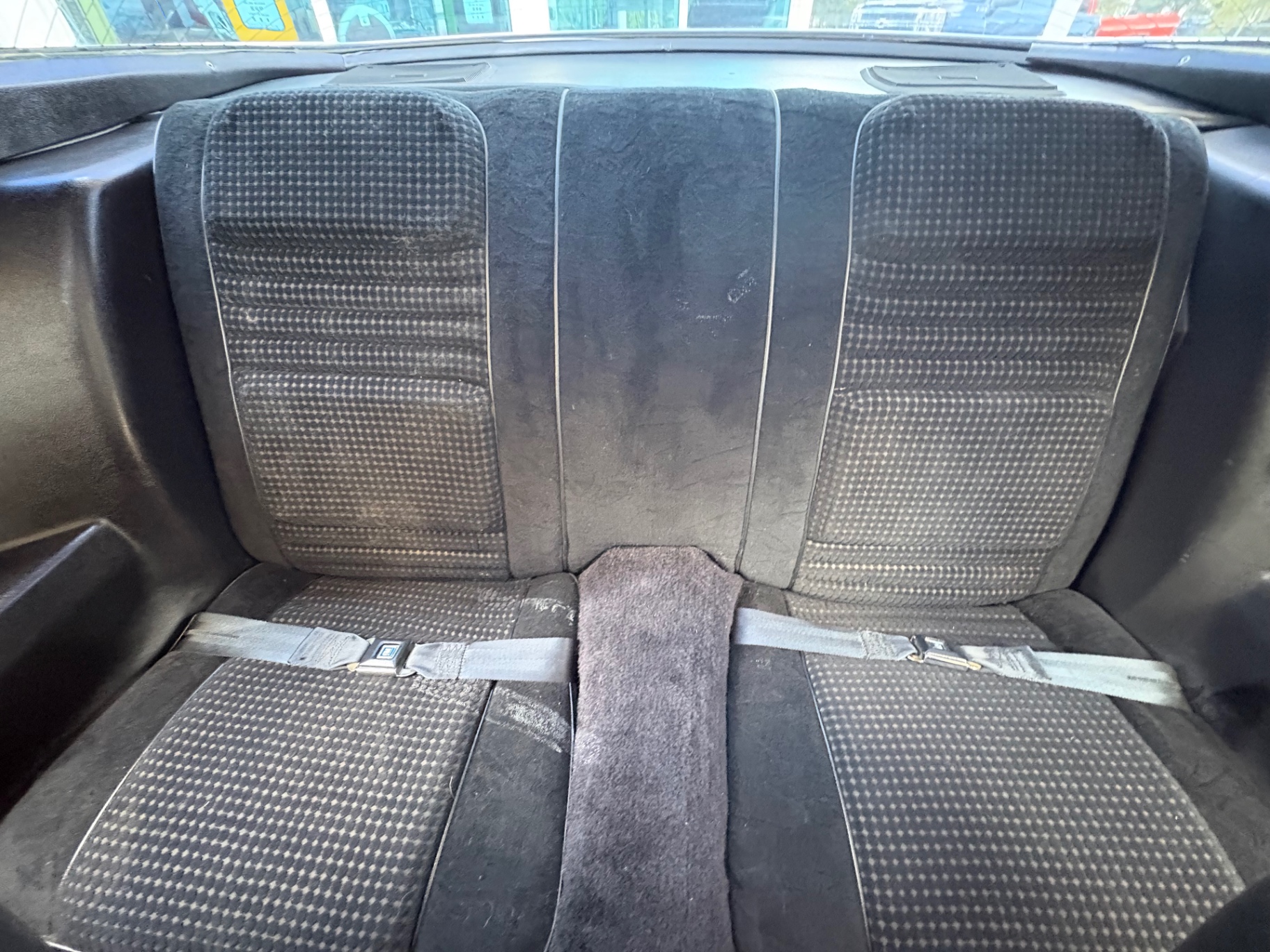
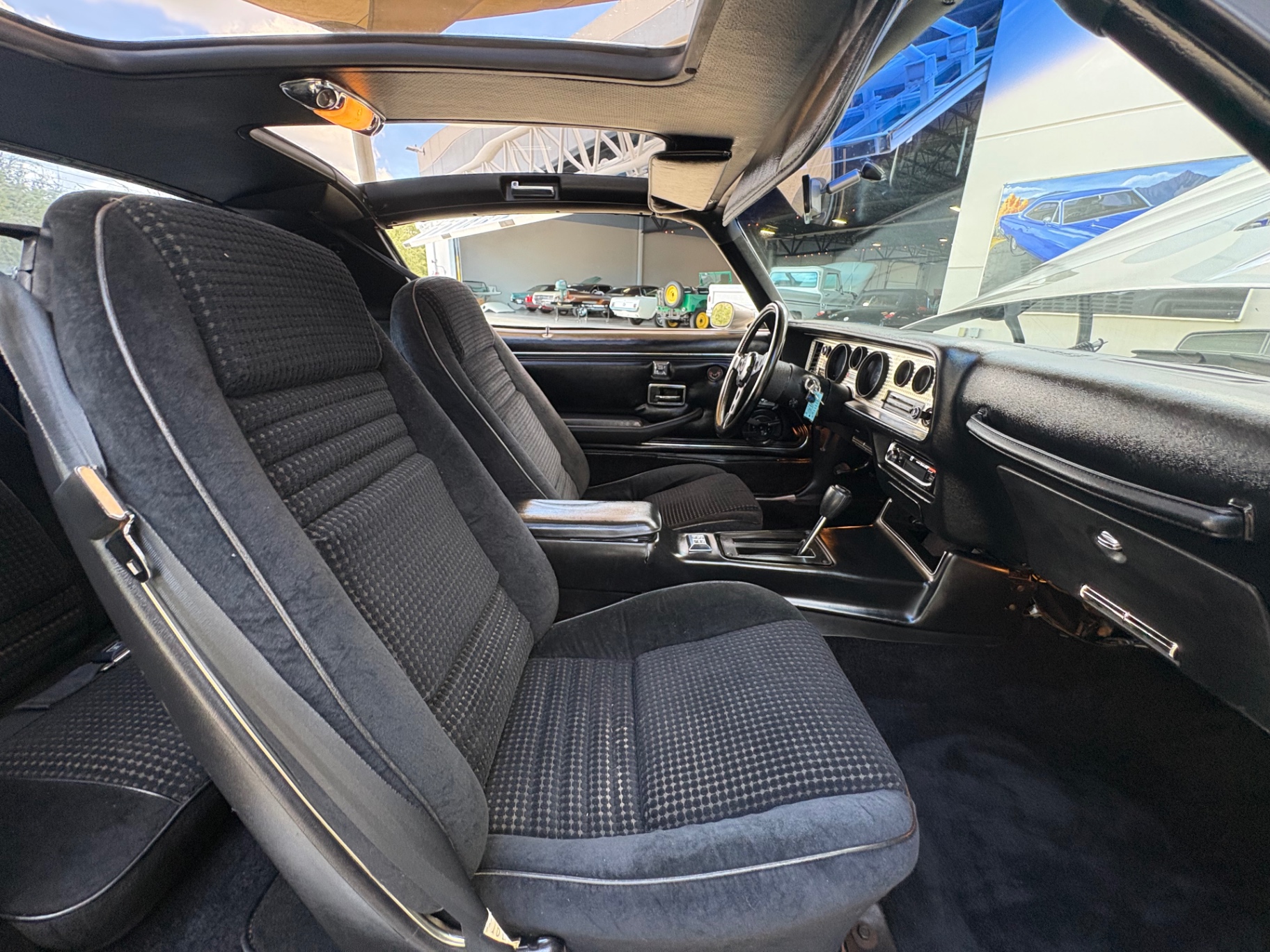
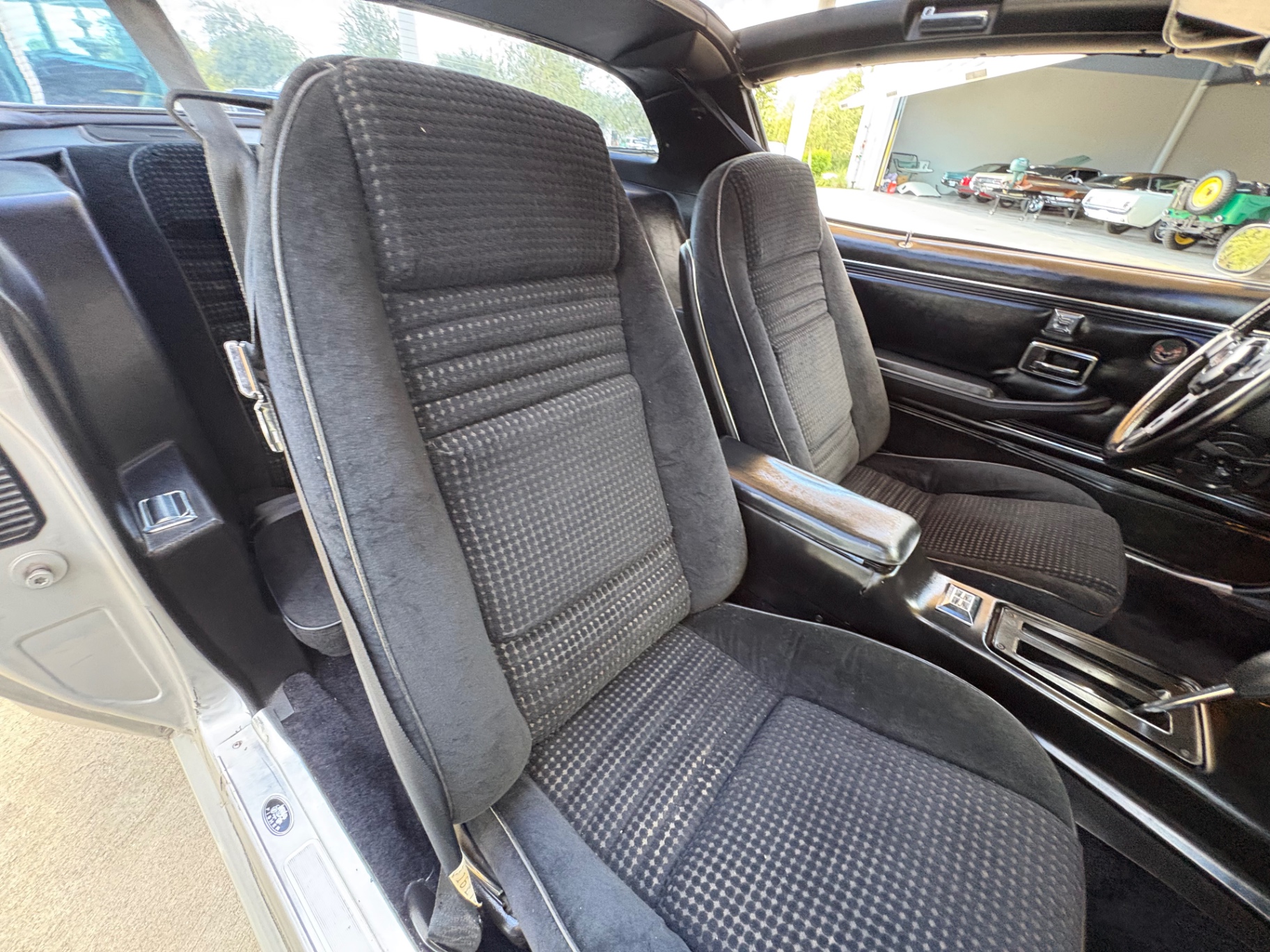
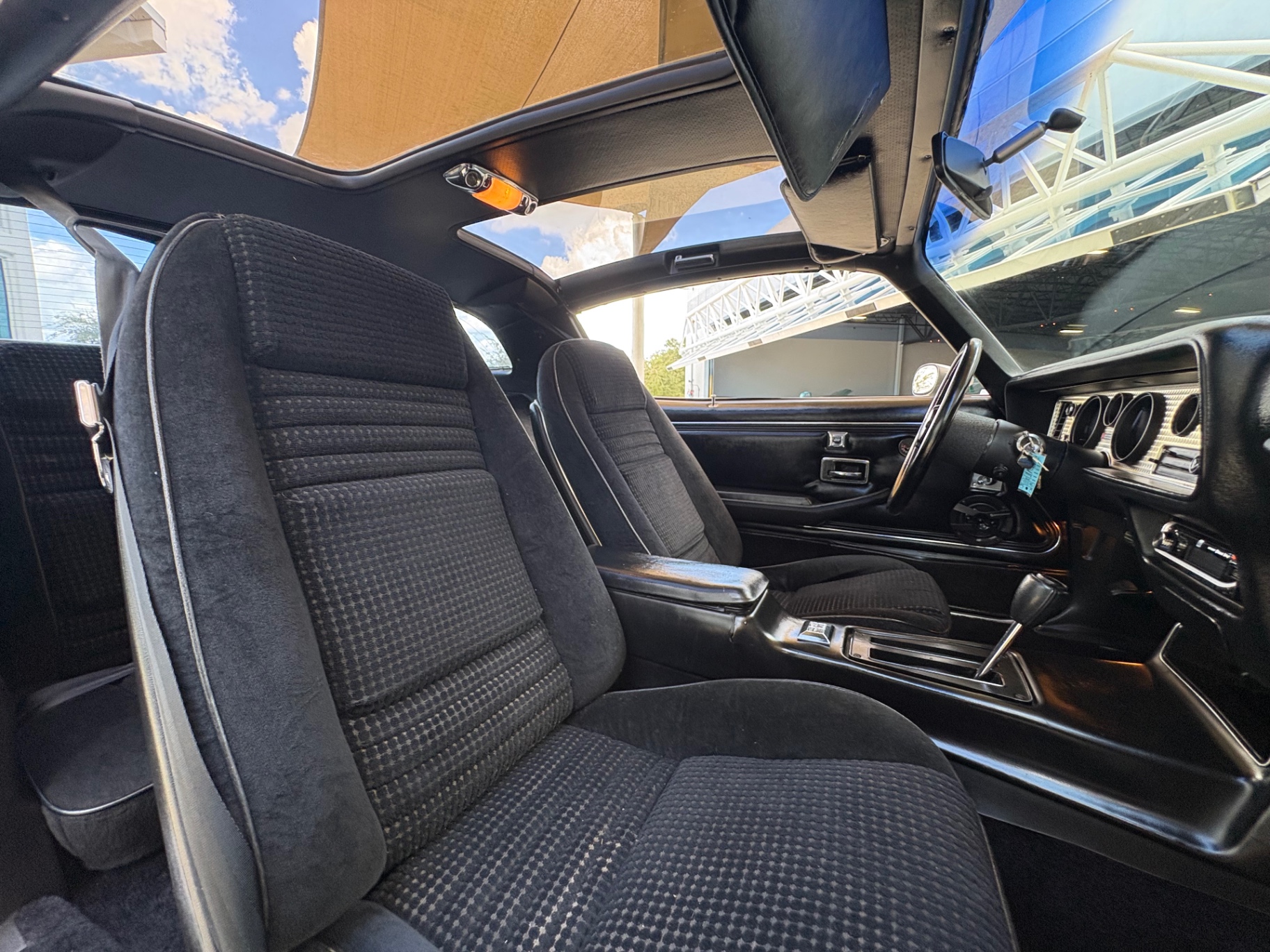
The 1979 Pontiac Firebird Trans Am interior is as close to a complete cockpit as any American car of the era offered at its price point. This example has the factory black cloth bucket seats, which show the correct waffled pattern fabric with ribbed inserts — the same texture visible in period Trans Am advertisements. The seats appear to be in solid condition with no visible tears or collapsed bolsters. The rear seat retains its original cloth as well.
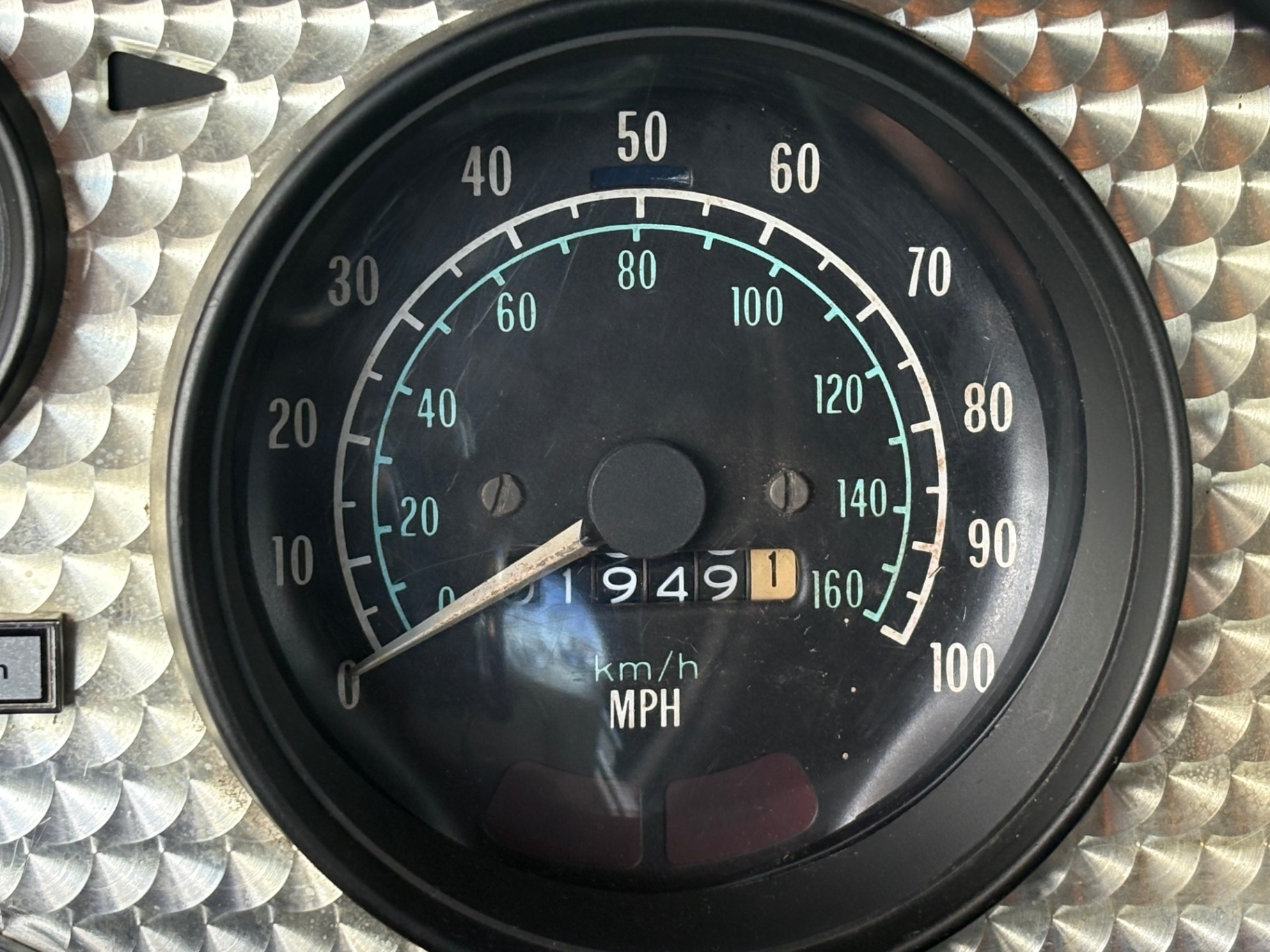
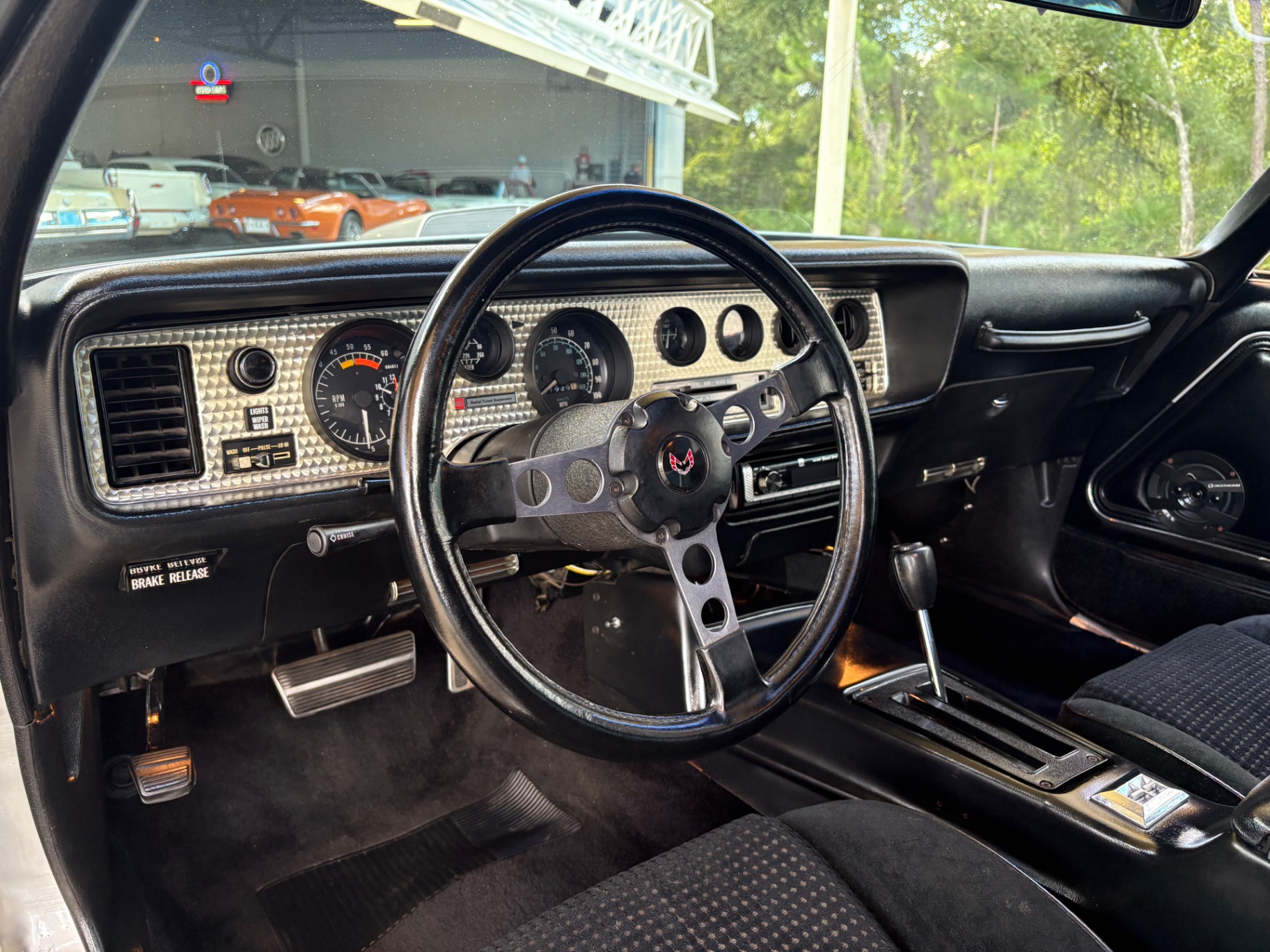
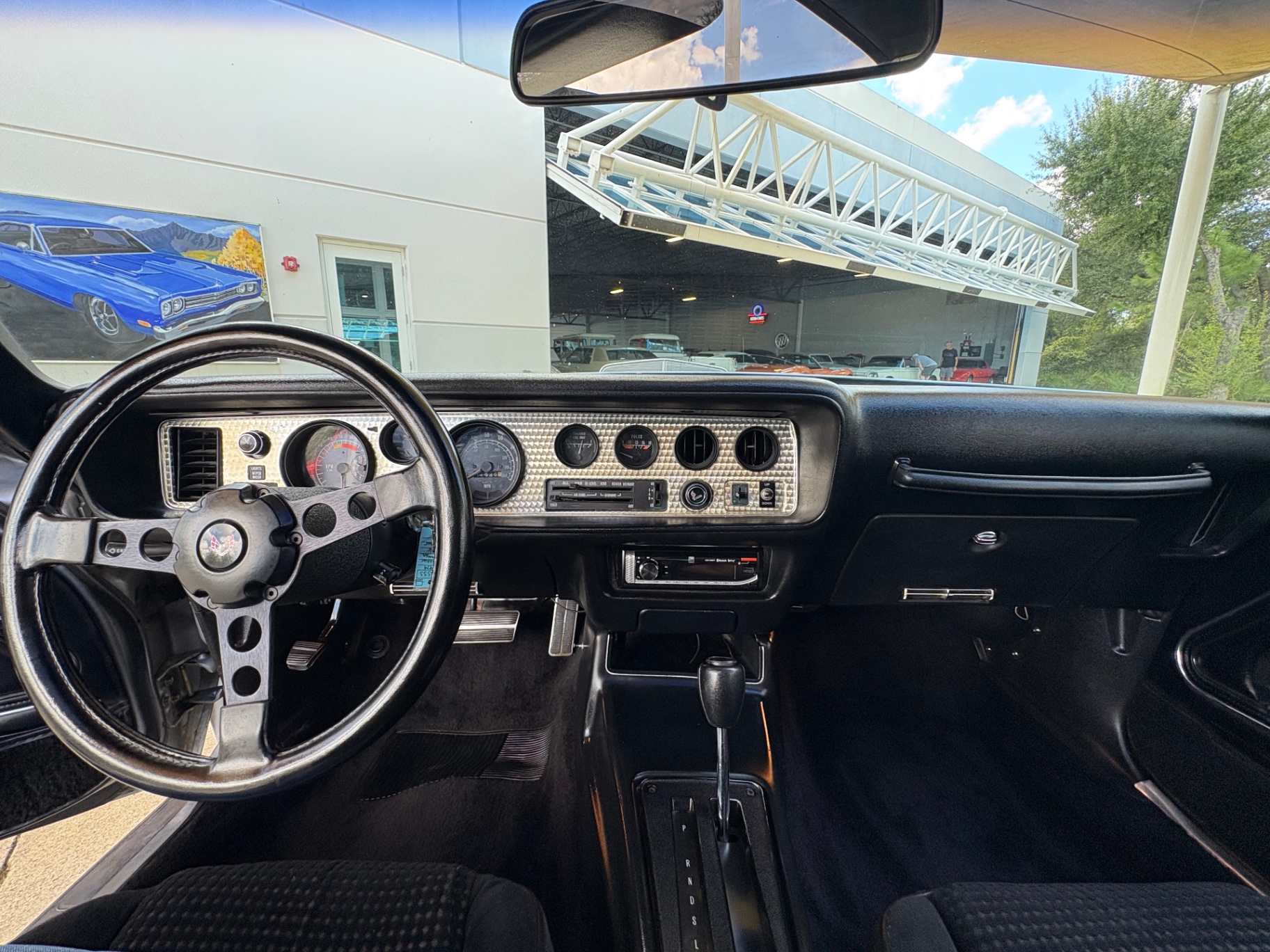
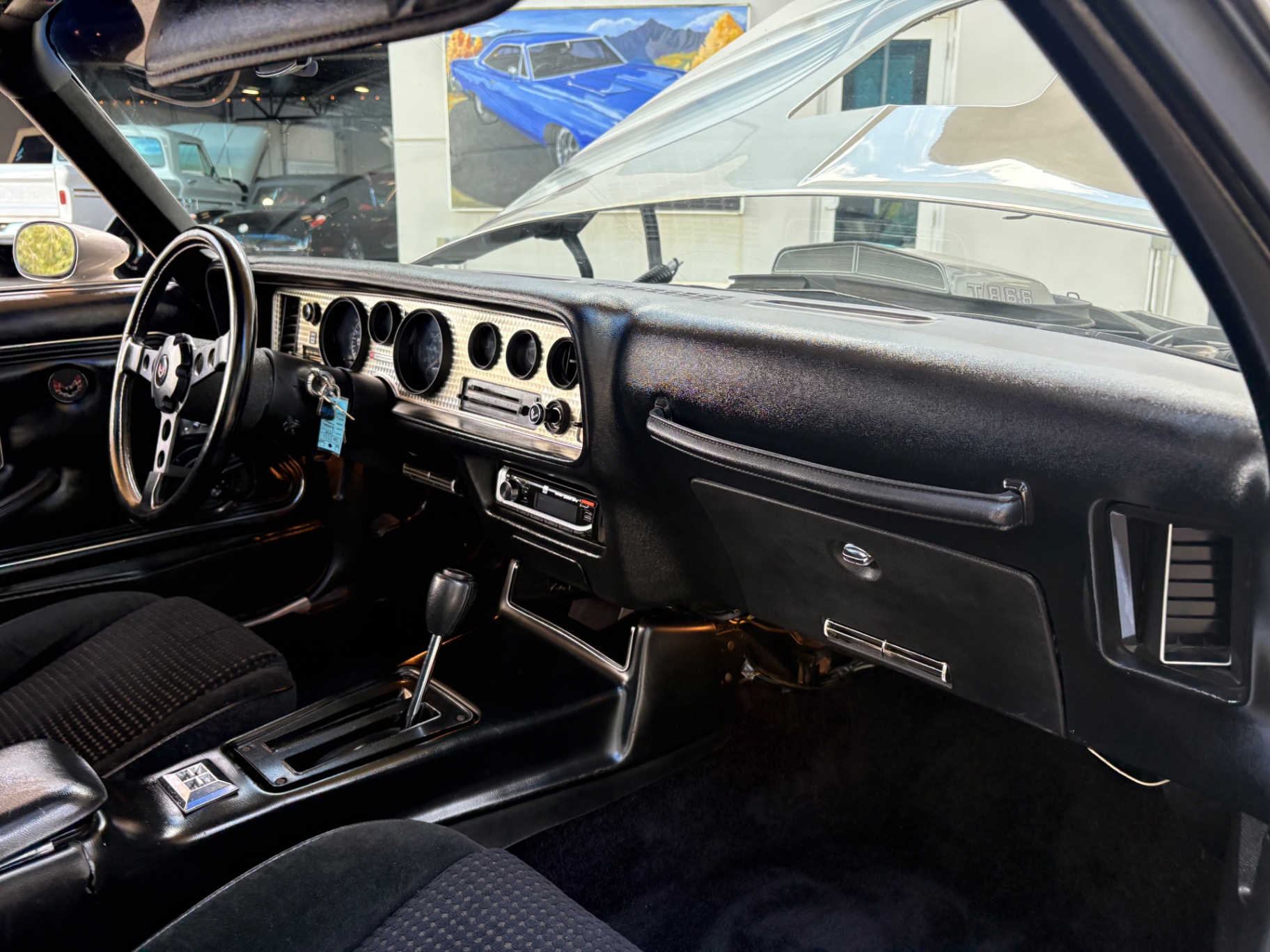
The factory gauge cluster is one of the Trans Am's most distinctive interior elements. It spans nearly the full width of the dashboard and mounts behind a hammered-aluminum-finish bezel that was unique to the Trans Am model. This car's cluster is complete and includes the tachometer, speedometer, water temperature, fuel, oil pressure, and voltmeter gauges — all of which are readable and intact based on the photographs. The RTS badge is correctly positioned between the tachometer and speedometer, indicating this car received the Radial Tuned Suspension package from the factory. The speedometer reads in both miles per hour and kilometers per hour, which was a federally mandated dual-scale format introduced in the late 1970s.
The factory 4-spoke Trans Am steering wheel is correct and present, wearing the red Firebird emblem at the center. This wheel was specific to the Trans Am and Formula Firebird — not used across the entire Firebird line — and its presence helps confirm the car's identity. The center console houses the floor shifter for the Turbo Hydra-Matic, with the PRND positions clearly marked. The cruise control stalk is present on the column.
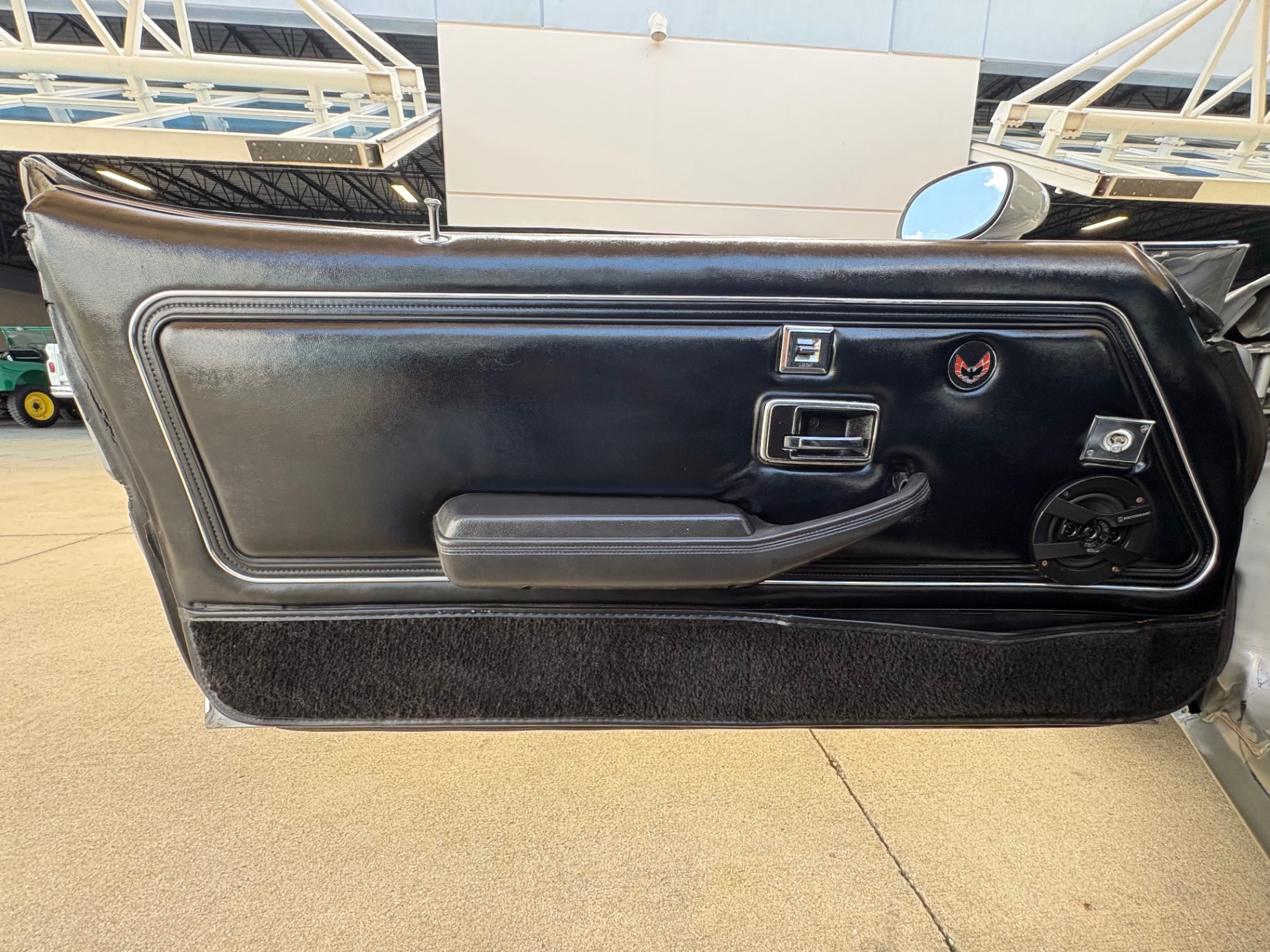
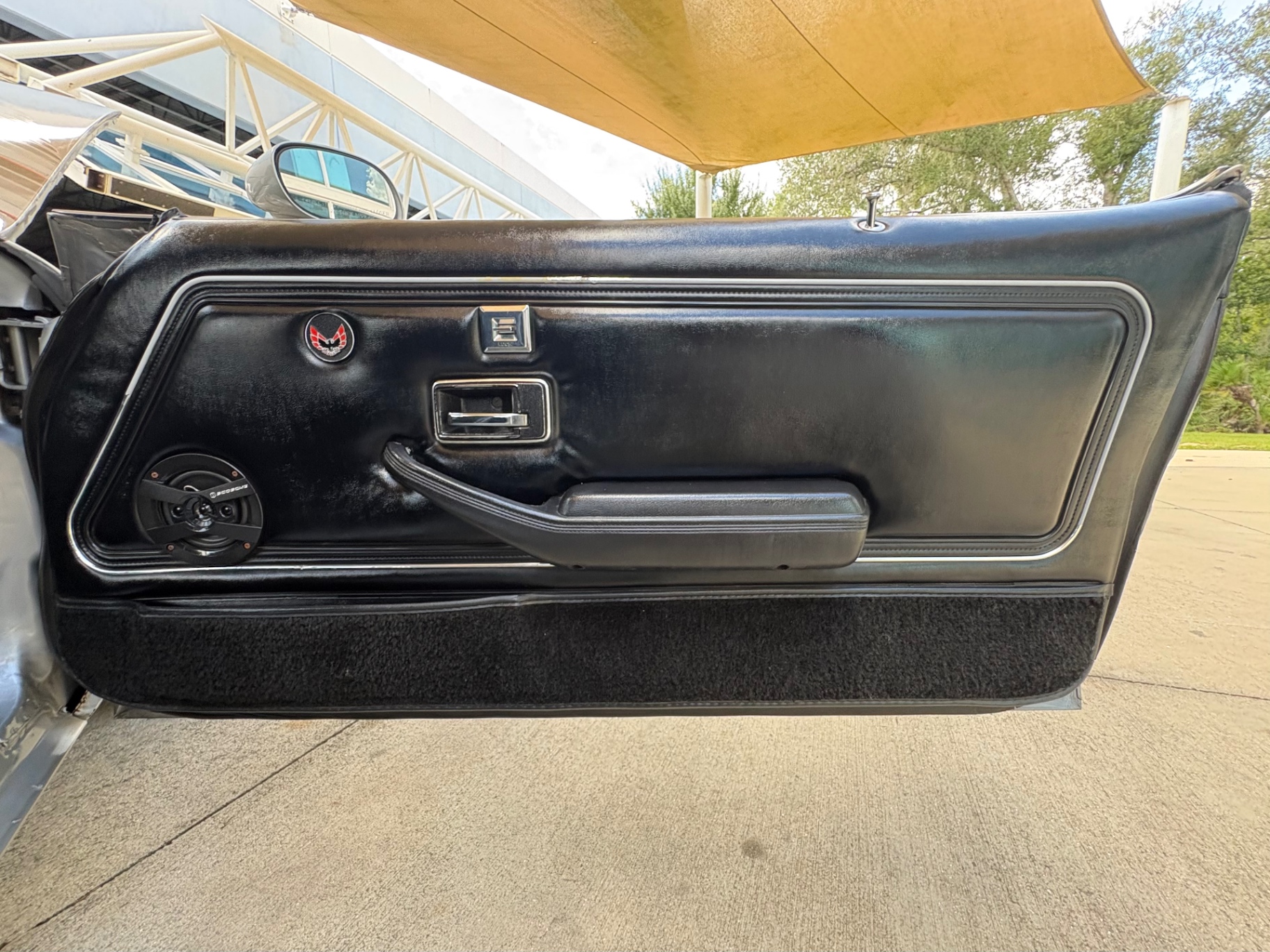
An aftermarket stereo has been installed in the factory radio location, and door-mounted speakers are visible in the door panel photographs. The power window switches are in place in the door panels alongside the Firebird emblems. The overall interior presents as a well-preserved, used original rather than a restored example — which for many buyers is preferable, as it means the car has not been disassembled and reassembled.
Exterior
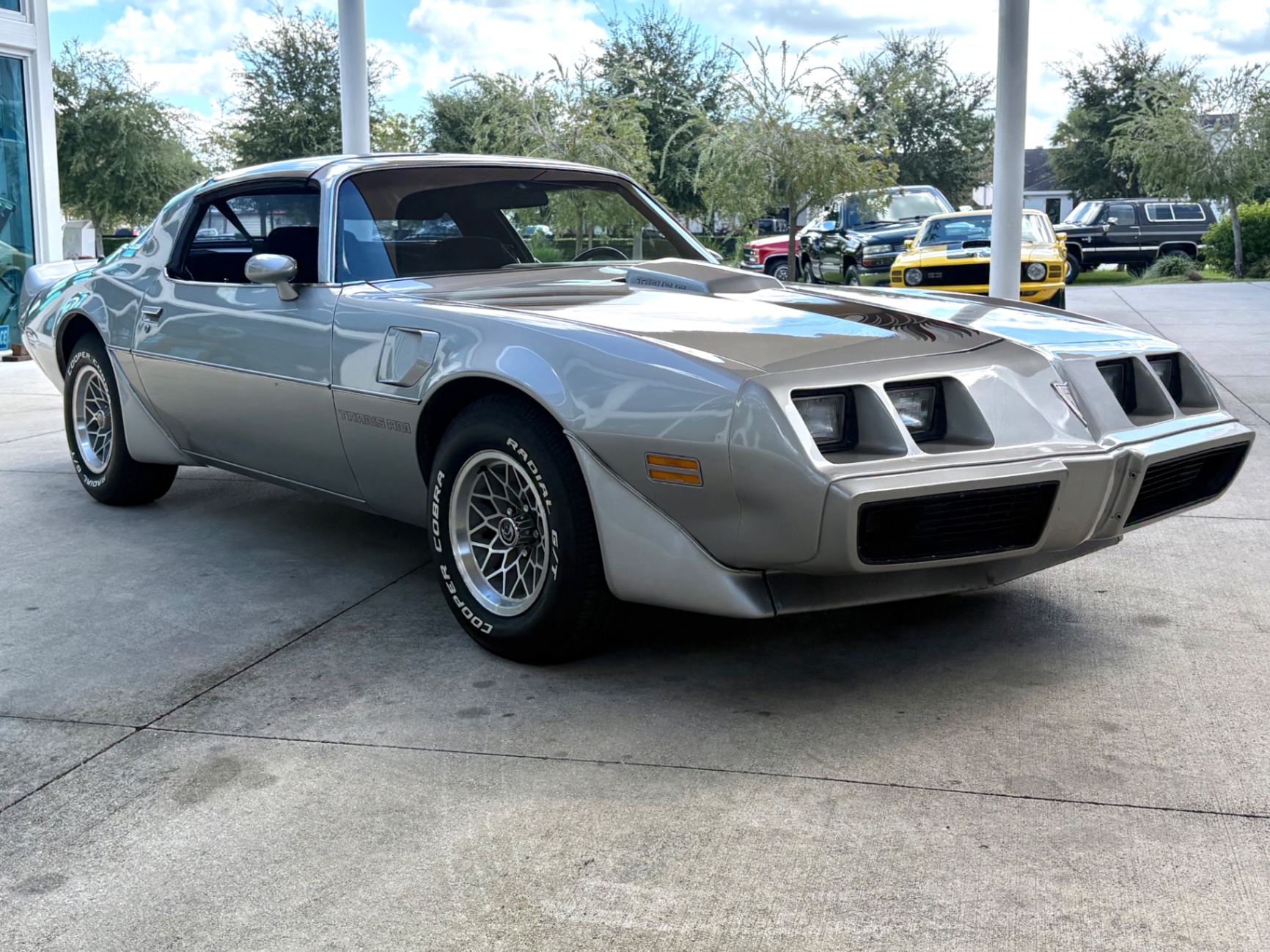
The 1979 Pontiac Firebird Trans Am wears Platinum — a cool silver with slight metallic content that reads as a medium gray depending on the light. It is one of the more reserved color choices available for this model year, which means the graphics and the bodywork geometry do the visual work without the paint competing for attention. The body panels are consistent in color, with gaps that appear even around the doors, hood, and rear hatch.
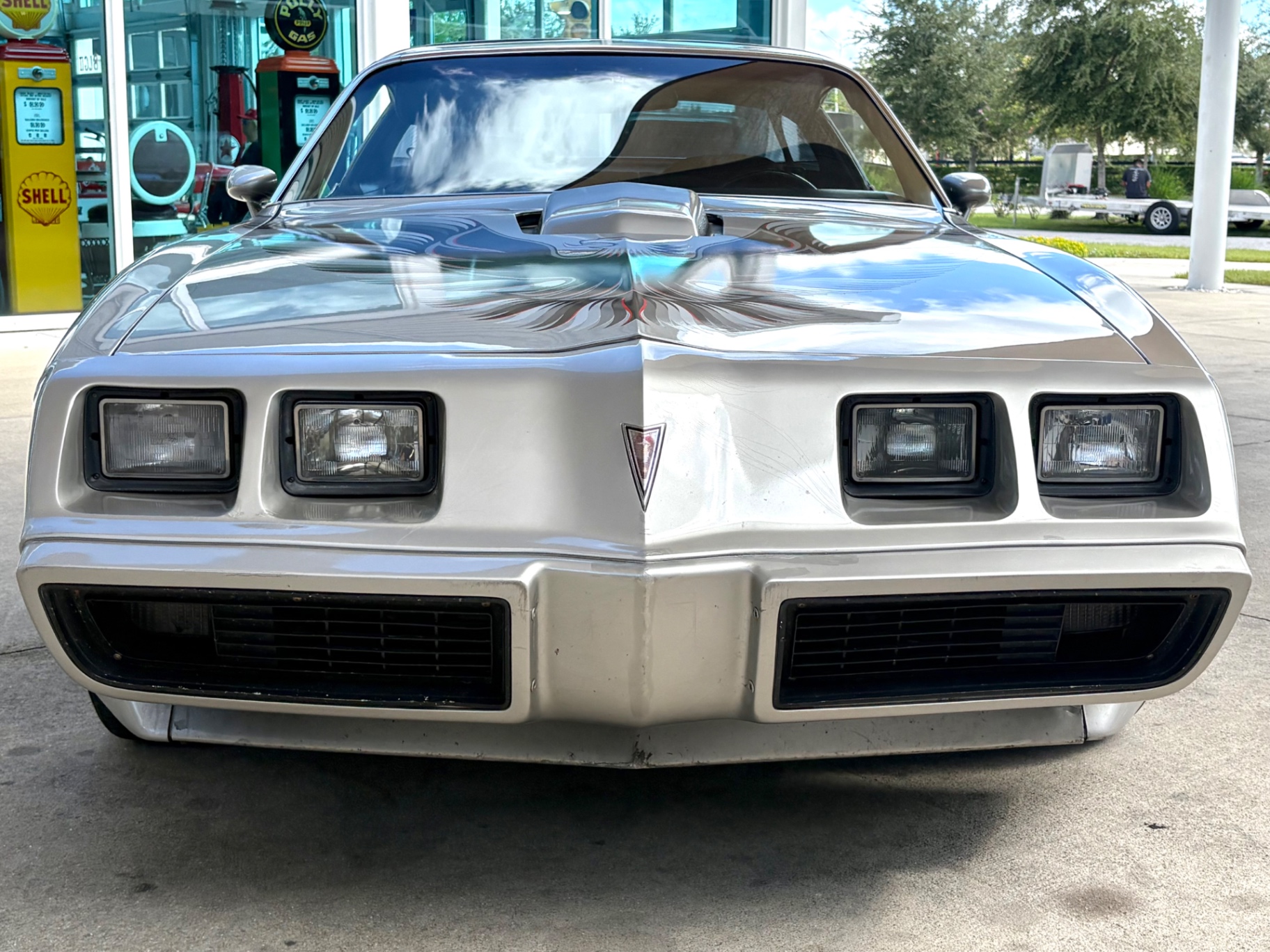
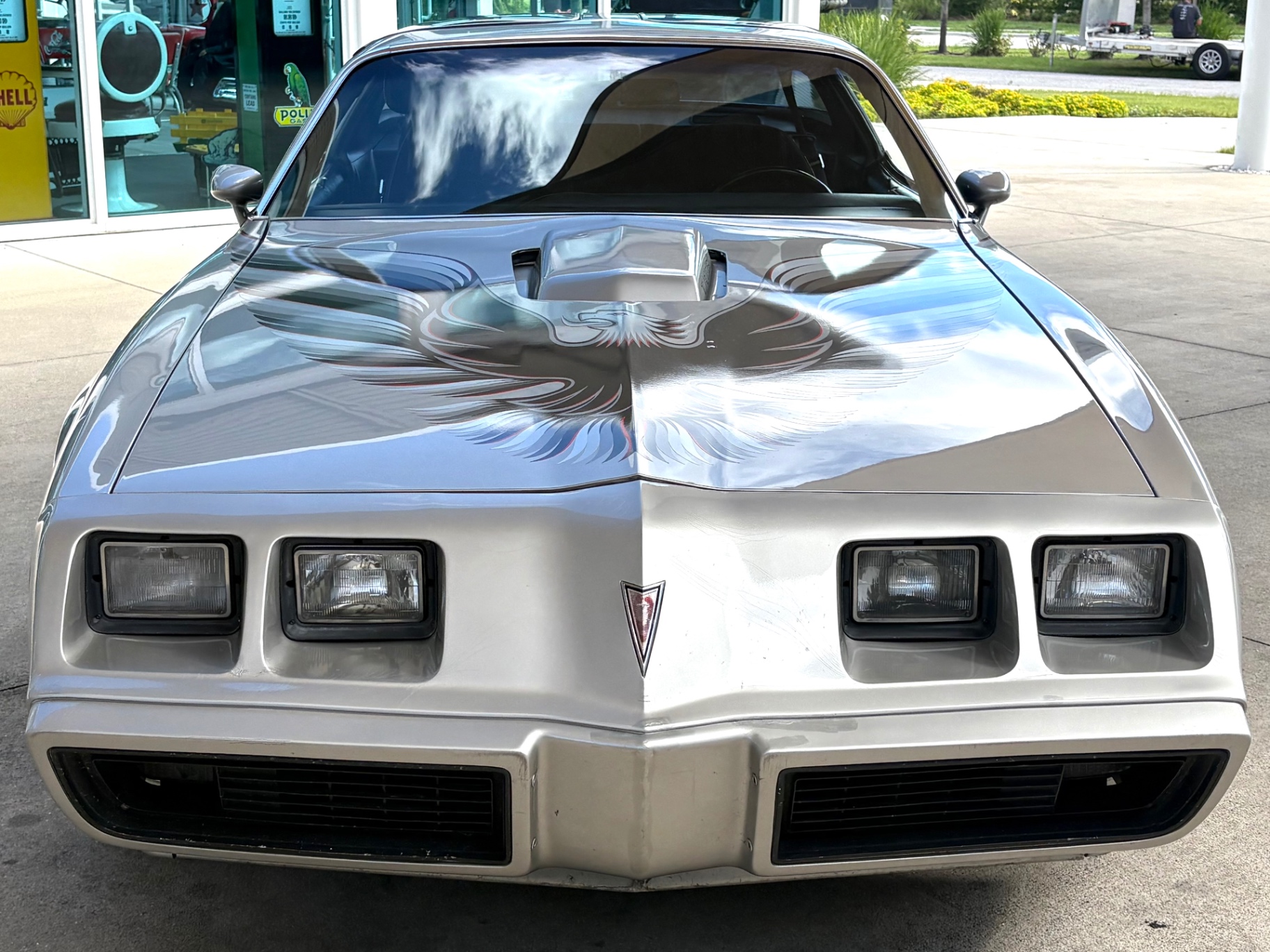
The full-size Firebird hood decal — the large stylized bird graphic informally called the Screaming Chicken — is present and intact. Pontiac offered buyers the option to delete this decal in 1979, and many buyers took that option. A car with the bird still on the hood is the correct, fully equipped presentation, and this one has it. The factory rear spoiler is also in place, a body-colored unit integrated into the rear hatch area that was standard equipment on the Trans Am.
The Pontiac Snowflake wheels — officially known as the honeycomb or turbine-style aluminum wheels — are correct for this application and are one of the most recognizable design elements on any late-1970s Trans Am. They were a factory-fitted aluminum wheel, not a trim piece, and their multi-spoke pattern remains visually distinctive forty-five years later. White-letter Cooper Cobra Radial tires are mounted all around, an appropriate period-style tire for this car.
The hidden headlights, which flip up from the front fascia electrically, are a design signature of the second-generation Firebird that ran from 1970 through 1981. The front air dam, body-colored bumper fascia, and dual driving lights in the nose are all present and correct. The factory rear valance and exhaust tips exit cleanly at the rear. Based on the lift photos, the undercarriage shows a solid, uncompromised body structure with no indication of patch panels, prior accident repair, or rust through in any of the major structural areas.
Conclusion
The 1979 Pontiac Firebird Trans Am has crossed firmly into collectible territory, and clean southern-state cars are the ones driving that market. This example checks the boxes that matter most to a knowledgeable buyer: the correct 403 V8 with its T/A 6.6 air cleaner, T-tops, Snowflake wheels, the full Screaming Chicken hood graphic, factory gauges, factory Trans Am steering wheel, and a Florida undercarriage that shows no rust or structural compromise. The interior is original, the exterior is complete, and the car presents honestly as an unrestored survivor rather than a freshened-up approximation. If you are looking for a 1979 Trans Am that you can drive today and collect with confidence, this is a well-documented starting point.
To schedule a viewing or ask questions about this 1979 Pontiac Firebird Trans Am, call Skyway Classics in Sarasota, Florida at 941-254-6608.
Disclaimer
Information found on the website is presented as given to us by the owner of the car, whether on consignment or from the owner we bought it from. Some Photos, materials for videos, descriptions and other information are provided by the consignor/seller and is deemed reliable, but Skyway Classics does not warranty or guarantee this information. Skyway Classics is not responsible for information that may incorrect or a publishing error. The decision to purchase should be based solely on the buyers personal inspection of the vehicle or by a professional inspection service prior to offer or purchase being made.
1979 Pontiac Firebird Trans Am — 403 V8, T-Tops, Platinum, Florida Car with Solid Undercarriage
Why This Car Is Special
The 1979 Pontiac Firebird Trans Am sits at the peak of the second-generation Firebird's popularity. By 1979, Trans Am sales had exploded thanks in large part to the Smokey and the Bandit film franchise — Pontiac sold over 117,000 Trans Ams that model year, a record for the nameplate. That cultural moment is now four decades in the rearview mirror, and clean, honest examples like this one have become increasingly difficult to find. What separates this car from the pack is not just its factory-correct Trans Am equipment, but where it spent its life. Florida cars avoid the salt, the rust, and the rot that end the stories of most late-1970s muscle cars. The undercarriage on this one bears that out in photographs, and you can confirm it in person.
The VIN decodes this car as a Norwood, Ohio-assembled 1979 Pontiac Firebird Trans Am, body style 87 — the standard coupe. The engine code in the VIN confirms the 403 cubic inch Oldsmobile V8, which was the automatic transmission engine option for the Trans Am in 1979. Buyers in states with stricter emissions requirements, including California, received this engine rather than the Pontiac 400. The 403 was built by Oldsmobile and is a well-regarded unit with good torque characteristics and a strong parts supply today.
This is a complete, honest, driver-quality 1979 Pontiac Firebird Trans Am with all the right factory features — T-tops, the Screaming Chicken hood decal, Snowflake wheels, the T/A 6.6 air cleaner, and a black interior. It wears Platinum exterior paint, a color that photographs as a cool silver-gray and suits the Trans Am's long hood and aggressive body lines particularly well. If you were a teenager in 1979, this is exactly the car that was on your bedroom wall.
Features List
- 6.6L 403ci Oldsmobile V8 engine
- 3-Speed Turbo Hydra-Matic automatic transmission
- T/A 6.6 stamped aluminum air cleaner
- Factory T-tops with removable roof panels
- Pontiac Snowflake cast aluminum wheels
- Firebird hood decal (Screaming Chicken)
- Factory rear spoiler
- Dual exhaust
- Radial Tuned Suspension (RTS)
- Factory gauge cluster with tachometer and water temperature gauge
- Factory 4-spoke Trans Am steering wheel with Firebird emblem
- Black cloth bucket seats
- Center console with floor shifter
- Air conditioning
- Power steering
- Power windows
- Cruise control
- Upgraded aftermarket stereo
- White-letter Cooper Cobra Radial tires
- Clean Florida undercarriage — solid floor pans, no rust
Mechanical
The 403 cubic inch Oldsmobile V8 under this car's hood is one of the more interesting footnotes in GM's late-1970s engine sourcing story. By 1979, Pontiac's own 400 cubic inch V8 was being phased out to meet tightening emissions standards. For Trans Am buyers who ordered the Turbo Hydra-Matic automatic — as this car's original buyer did — the engine that came from the factory was Oldsmobile's 403, dressed up with a Trans Am-specific T/A 6.6 stamped aluminum air cleaner lid to keep the engine identity somewhat ambiguous at a glance. It was a marketing decision that upset some purists at the time, but the 403 is a torquey, durable engine that has proven itself over decades of use. The stamped T/A 6.6 air cleaner is correct and present on this car, which matters for anyone building toward a show-quality example.
The 3-speed Turbo Hydra-Matic automatic is the correct transmission pairing for the 403 engine in this application. It shifts smoothly and is one of the more robust automatics GM produced in this era. Backing it up is the factory dual exhaust, visible and intact in the undercarriage photographs. The exhaust system shows clean pipe work running the length of the car, which is consistent with the rust-free Florida history this car presents.
The Radial Tuned Suspension — called out right on the dashboard cluster with its own RTS badge — was Pontiac's factory suspension calibration for radial tires, which were becoming standard equipment in this era. It used specific spring rates, shock valving, and front and rear stabilizer bars tuned to work with radial tire characteristics rather than the bias-ply tires American cars had traditionally used. For a car of this period, the RTS setup gives the Trans Am competent handling and a stable highway ride. Cooper Cobra Radial white-letter tires are mounted on the factory Snowflake wheels, an appropriate period-correct tire choice for the application.
The undercarriage photographs taken on the lift tell the most important mechanical story of this car. The floor pans are solid, the frame rails are intact, the rear axle housing is coated and clean, and the exhaust runs are free from the pitting and rot common on cars with northern exposure. Florida's climate was, in this car's case, an asset.
Interior
The 1979 Pontiac Firebird Trans Am interior is as close to a complete cockpit as any American car of the era offered at its price point. This example has the factory black cloth bucket seats, which show the correct waffled pattern fabric with ribbed inserts — the same texture visible in period Trans Am advertisements. The seats appear to be in solid condition with no visible tears or collapsed bolsters. The rear seat retains its original cloth as well.
The factory gauge cluster is one of the Trans Am's most distinctive interior elements. It spans nearly the full width of the dashboard and mounts behind a hammered-aluminum-finish bezel that was unique to the Trans Am model. This car's cluster is complete and includes the tachometer, speedometer, water temperature, fuel, oil pressure, and voltmeter gauges — all of which are readable and intact based on the photographs. The RTS badge is correctly positioned between the tachometer and speedometer, indicating this car received the Radial Tuned Suspension package from the factory. The speedometer reads in both miles per hour and kilometers per hour, which was a federally mandated dual-scale format introduced in the late 1970s.
The factory 4-spoke Trans Am steering wheel is correct and present, wearing the red Firebird emblem at the center. This wheel was specific to the Trans Am and Formula Firebird — not used across the entire Firebird line — and its presence helps confirm the car's identity. The center console houses the floor shifter for the Turbo Hydra-Matic, with the PRND positions clearly marked. The cruise control stalk is present on the column.
An aftermarket stereo has been installed in the factory radio location, and door-mounted speakers are visible in the door panel photographs. The power window switches are in place in the door panels alongside the Firebird emblems. The overall interior presents as a well-preserved, used original rather than a restored example — which for many buyers is preferable, as it means the car has not been disassembled and reassembled.
Exterior
The 1979 Pontiac Firebird Trans Am wears Platinum — a cool silver with slight metallic content that reads as a medium gray depending on the light. It is one of the more reserved color choices available for this model year, which means the graphics and the bodywork geometry do the visual work without the paint competing for attention. The body panels are consistent in color, with gaps that appear even around the doors, hood, and rear hatch.
The full-size Firebird hood decal — the large stylized bird graphic informally called the Screaming Chicken — is present and intact. Pontiac offered buyers the option to delete this decal in 1979, and many buyers took that option. A car with the bird still on the hood is the correct, fully equipped presentation, and this one has it. The factory rear spoiler is also in place, a body-colored unit integrated into the rear hatch area that was standard equipment on the Trans Am.
The Pontiac Snowflake wheels — officially known as the honeycomb or turbine-style aluminum wheels — are correct for this application and are one of the most recognizable design elements on any late-1970s Trans Am. They were a factory-fitted aluminum wheel, not a trim piece, and their multi-spoke pattern remains visually distinctive forty-five years later. White-letter Cooper Cobra Radial tires are mounted all around, an appropriate period-style tire for this car.
The hidden headlights, which flip up from the front fascia electrically, are a design signature of the second-generation Firebird that ran from 1970 through 1981. The front air dam, body-colored bumper fascia, and dual driving lights in the nose are all present and correct. The factory rear valance and exhaust tips exit cleanly at the rear. Based on the lift photos, the undercarriage shows a solid, uncompromised body structure with no indication of patch panels, prior accident repair, or rust through in any of the major structural areas.
Conclusion
The 1979 Pontiac Firebird Trans Am has crossed firmly into collectible territory, and clean southern-state cars are the ones driving that market. This example checks the boxes that matter most to a knowledgeable buyer: the correct 403 V8 with its T/A 6.6 air cleaner, T-tops, Snowflake wheels, the full Screaming Chicken hood graphic, factory gauges, factory Trans Am steering wheel, and a Florida undercarriage that shows no rust or structural compromise. The interior is original, the exterior is complete, and the car presents honestly as an unrestored survivor rather than a freshened-up approximation. If you are looking for a 1979 Trans Am that you can drive today and collect with confidence, this is a well-documented starting point.
To schedule a viewing or ask questions about this 1979 Pontiac Firebird Trans Am, call Skyway Classics in Sarasota, Florida at 941-254-6608.
Disclaimer
Information found on the website is presented as given to us by the owner of the car, whether on consignment or from the owner we bought it from. Some Photos, materials for videos, descriptions and other information are provided by the consignor/seller and is deemed reliable, but Skyway Classics does not warranty or guarantee this information. Skyway Classics is not responsible for information that may incorrect or a publishing error. The decision to purchase should be based solely on the buyers personal inspection of the vehicle or by a professional inspection service prior to offer or purchase being made.
1979 Pontiac
Firebird Trans Am
Why Choose Skyway Classics?
Explore our curated inventory of classic and collector cars—thoughtfully selected, ready to drive, and supported by experts who make ownership simple.
Expert Curation
Every vehicle is hand-selected by our experts for quality, authenticity, and investment potential.
Fast Transactions
Streamlined buying and selling process with quick financing and immediate delivery options.
Only National Dealer With Classic Service & Repair
We’re the only national dealership that services and repairs the classics we sell—before and after the sale.
Nationwide Network
Access to our extensive network of collectors, restorers, and classic car enthusiasts nationwide.
Concierge Ownership Support
From financing and insurance to paperwork, shipping, and titling—we handle the details so you can enjoy the drive.
Passion-Driven Service
We're classic car enthusiasts first, providing personalized service with genuine passion for the hobby.