
1930 Ford
Model A Custom

1930 Ford Model A Truck — Custom Hot Rod Build with Goodwrench 350 V8
Why This Car Is Special
The 1930 Ford Model A Truck occupies a unique place in hot rod history. Ford introduced the Model A in 1927 as the direct successor to the legendary Model T, and by 1930 the platform had matured into one of the most capable and recognizable vehicles on American roads. The Model A truck variant — built on the same 103.5-inch wheelbase chassis as the passenger cars — was a working-class workhorse during the Great Depression, and its simple, sturdy construction made it a natural candidate for modification. Decades later, these trucks became cornerstones of the American hot rod movement precisely because of that simplicity. The body lines are clean and purposeful, the proportions are right, and the cab sits low enough over a modern chassis to look factory-built when the work is done well.
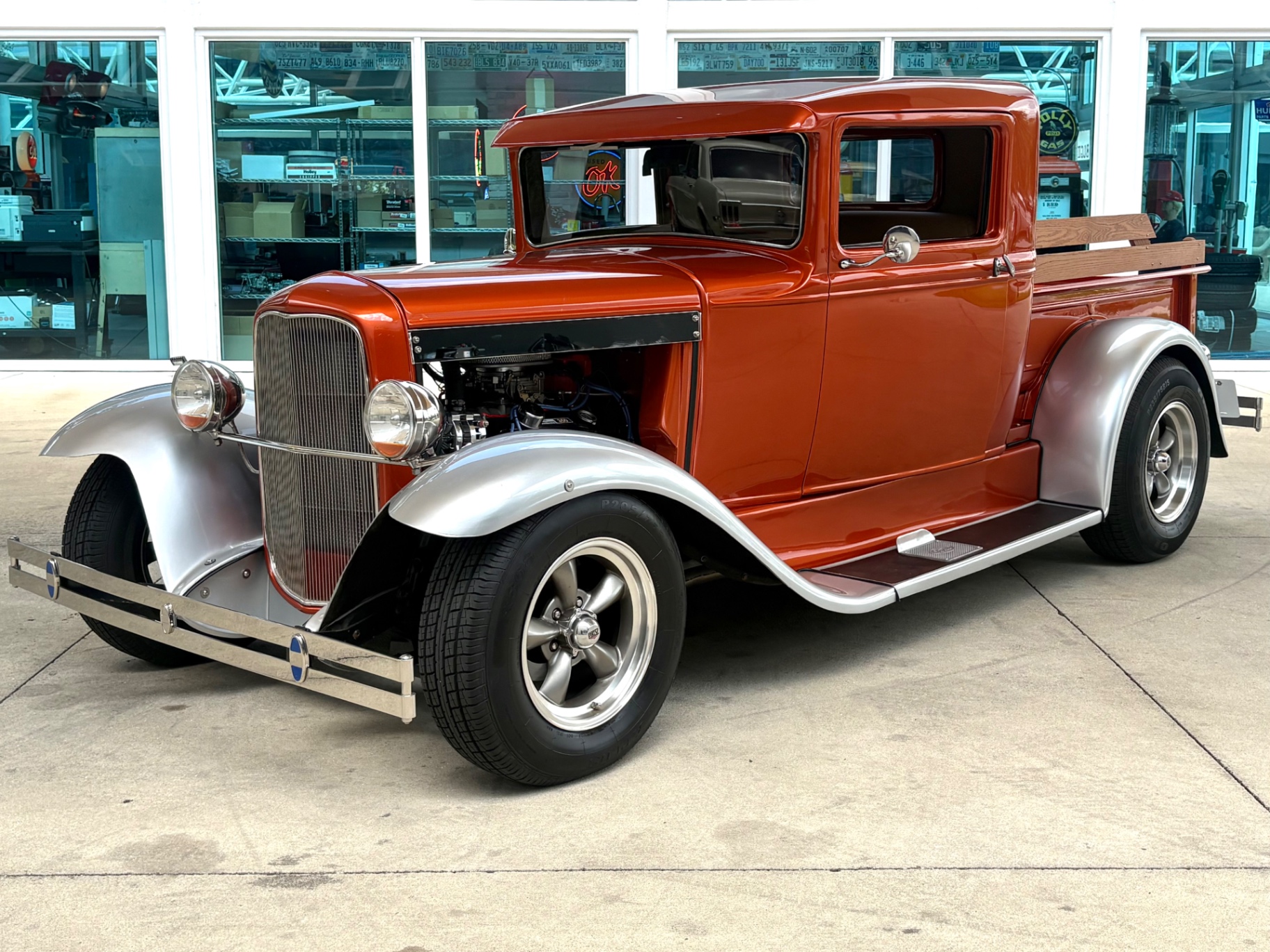
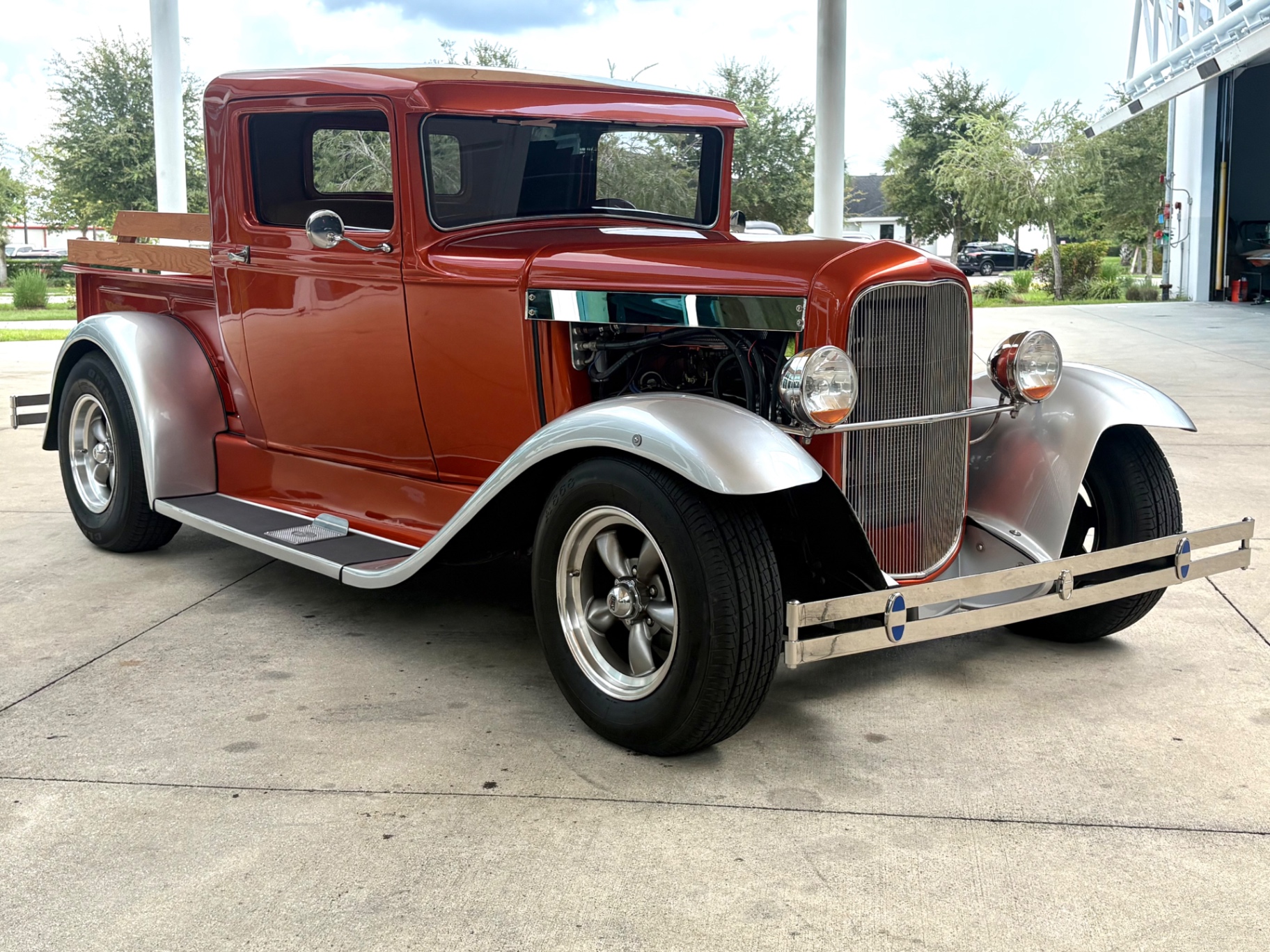
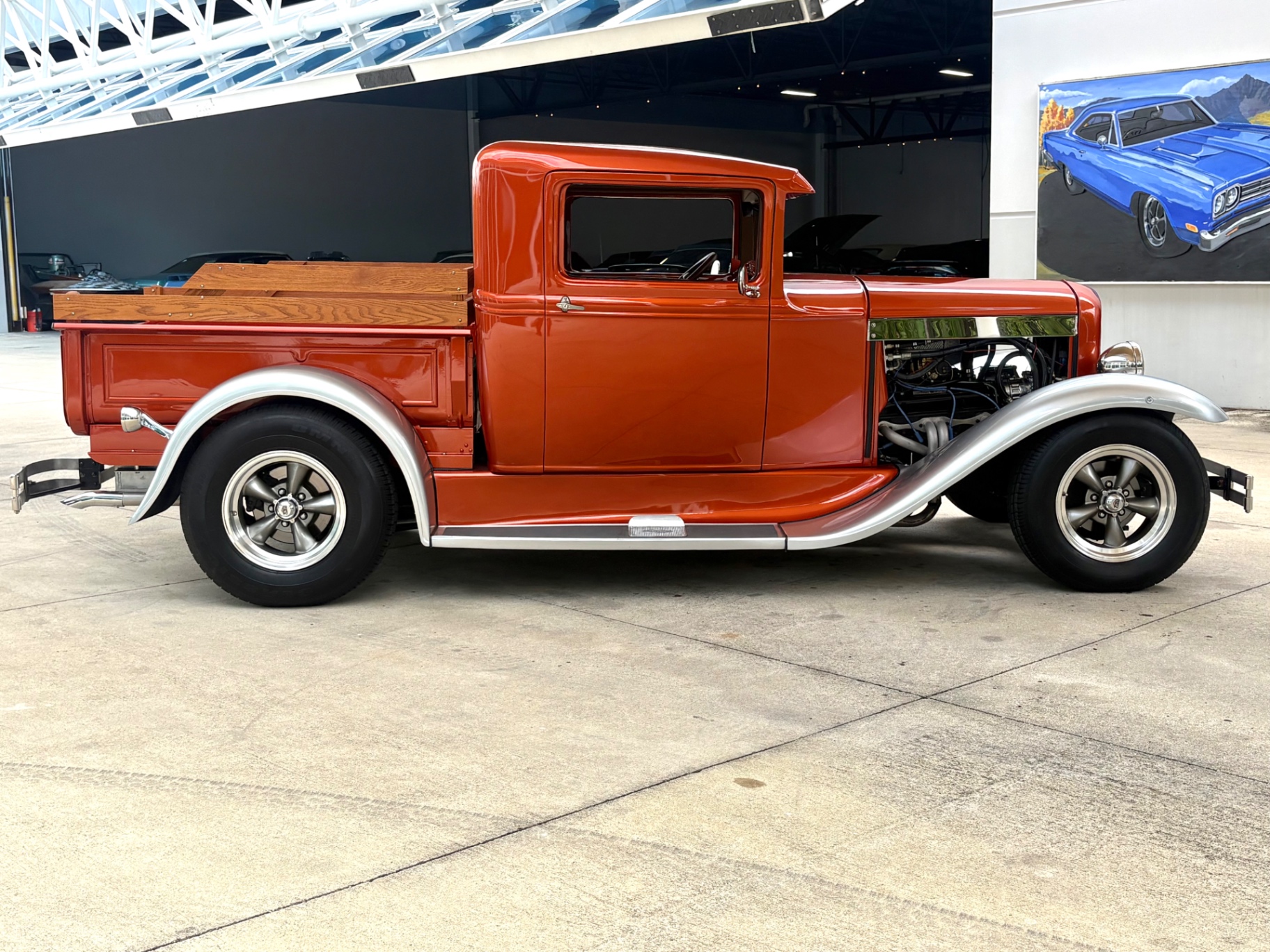
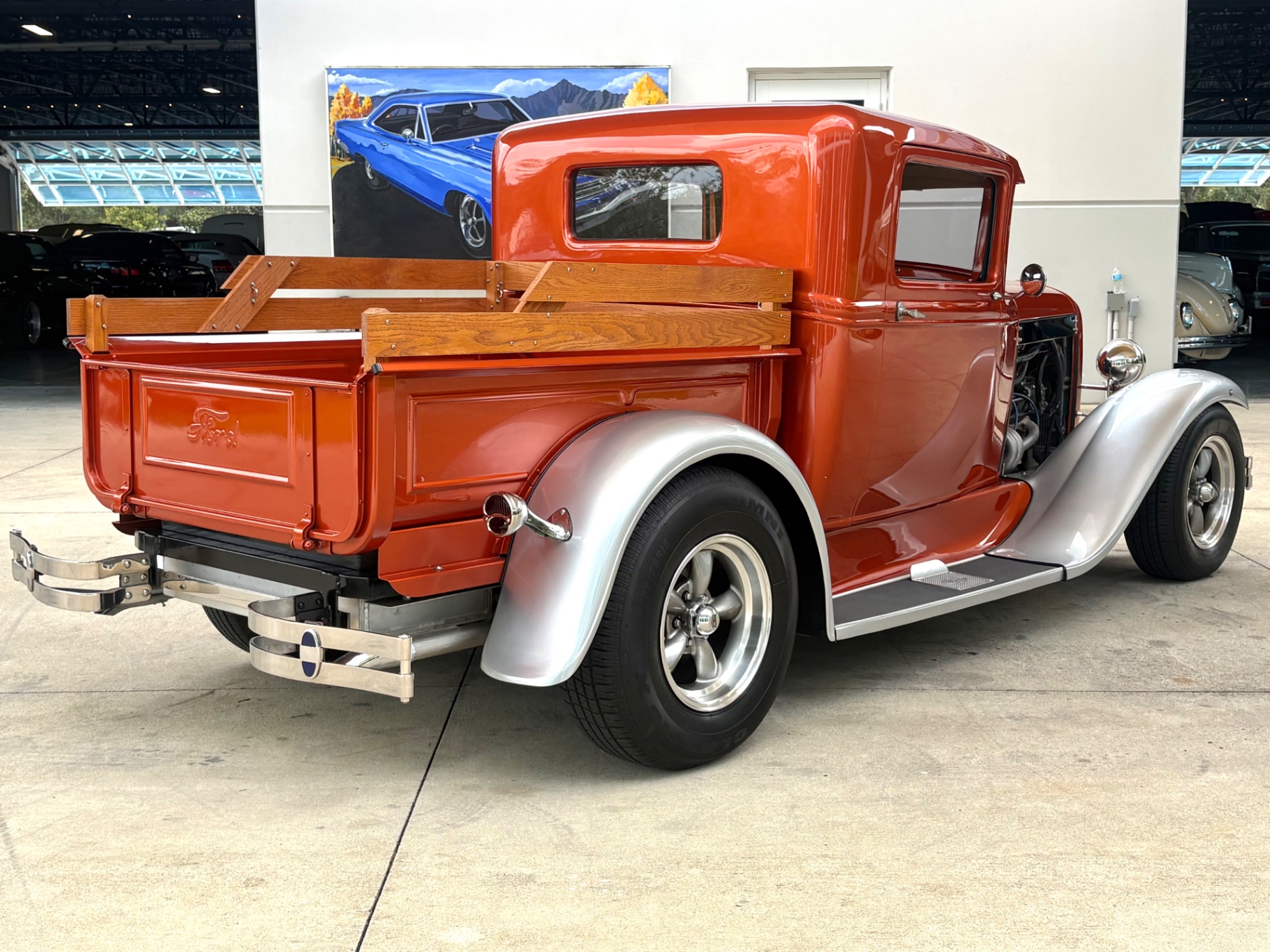
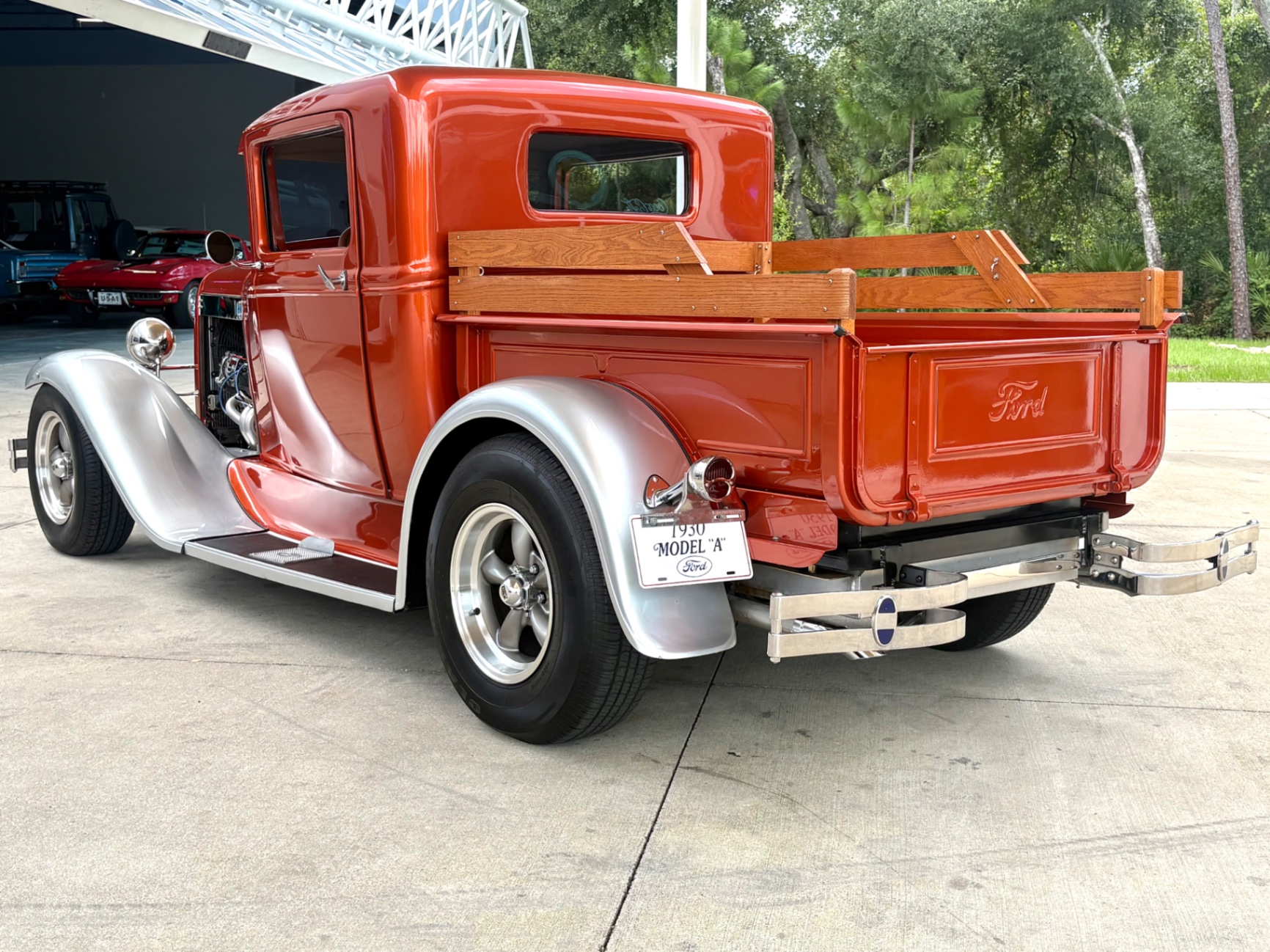
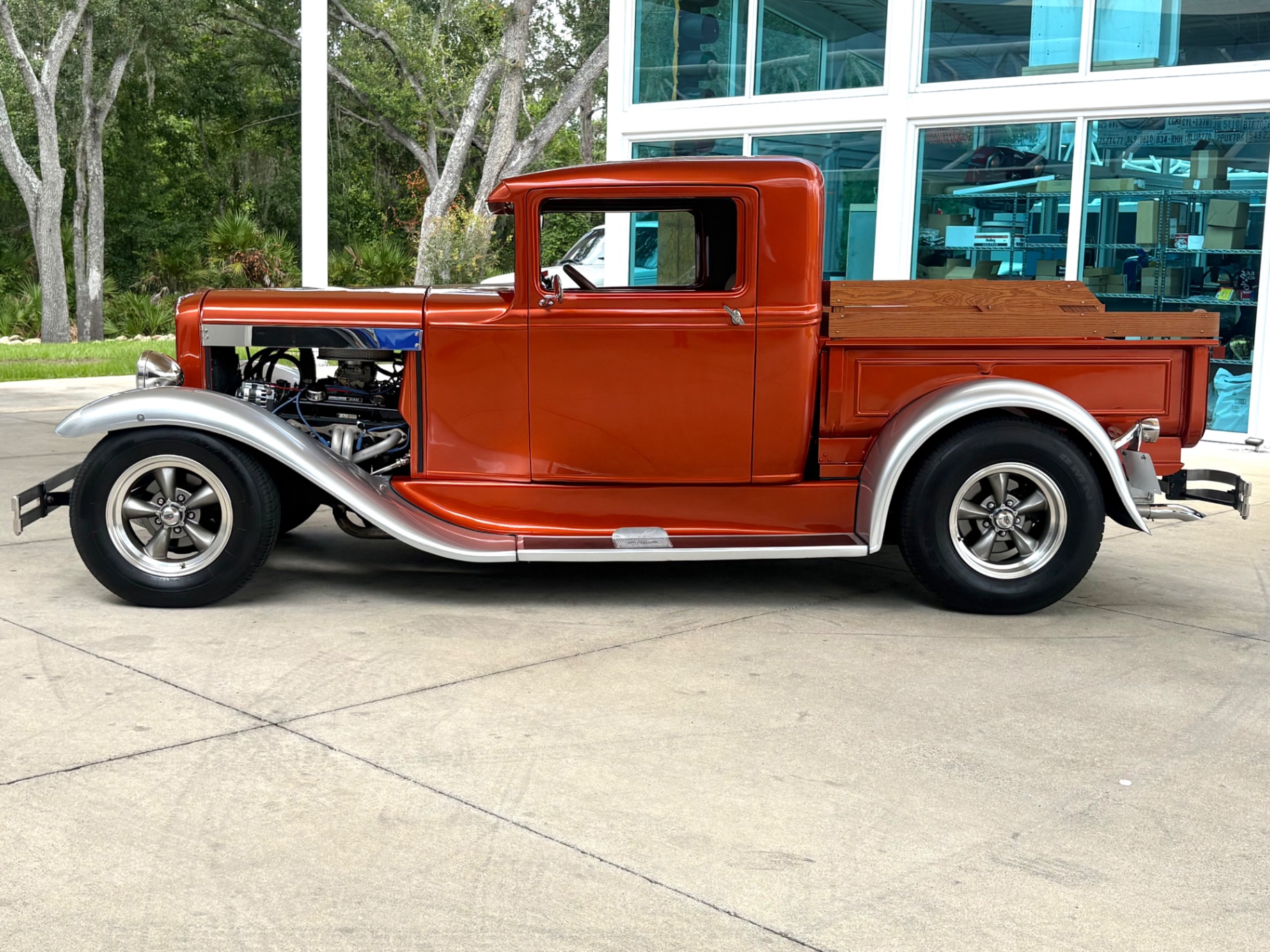
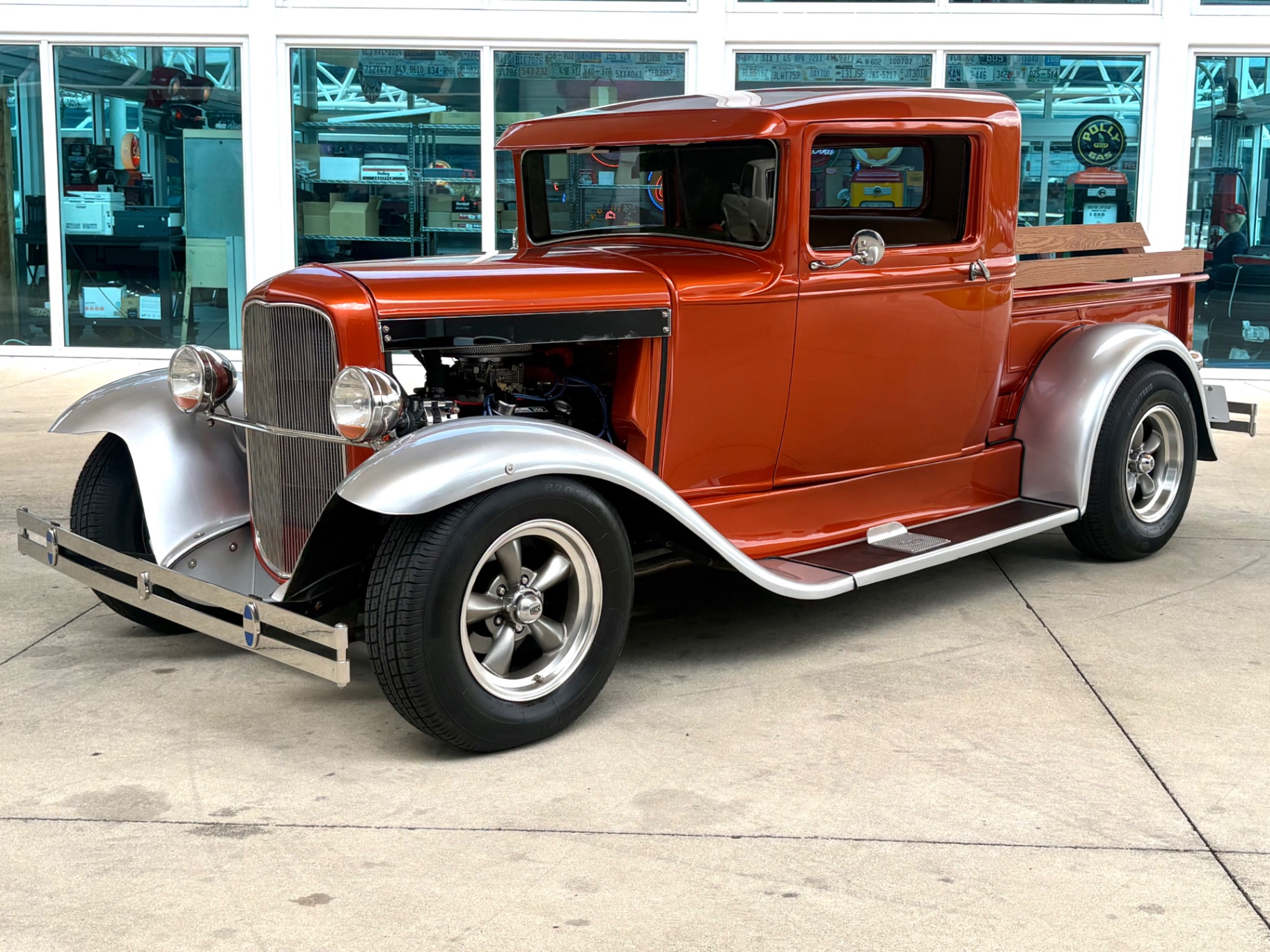
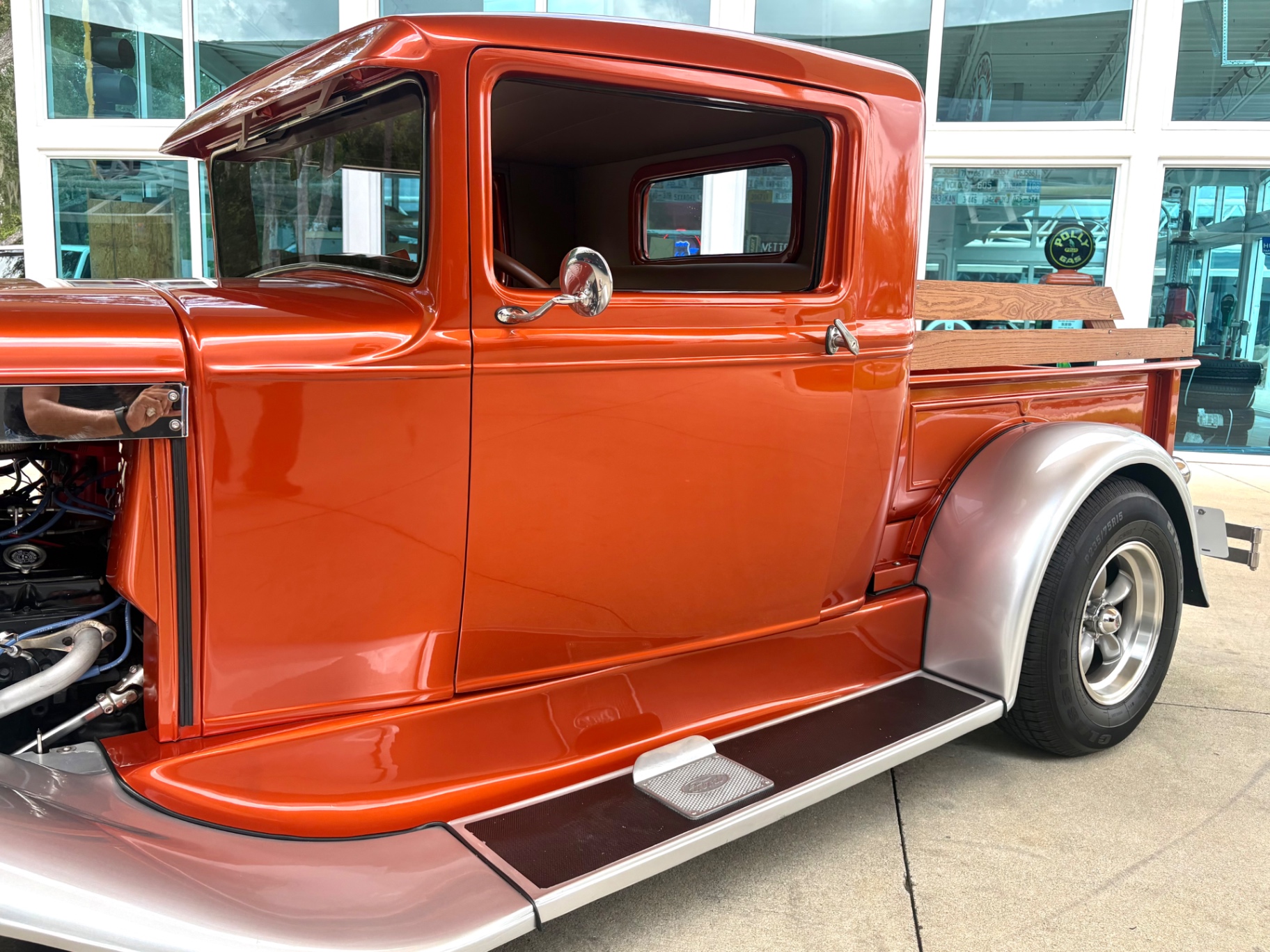
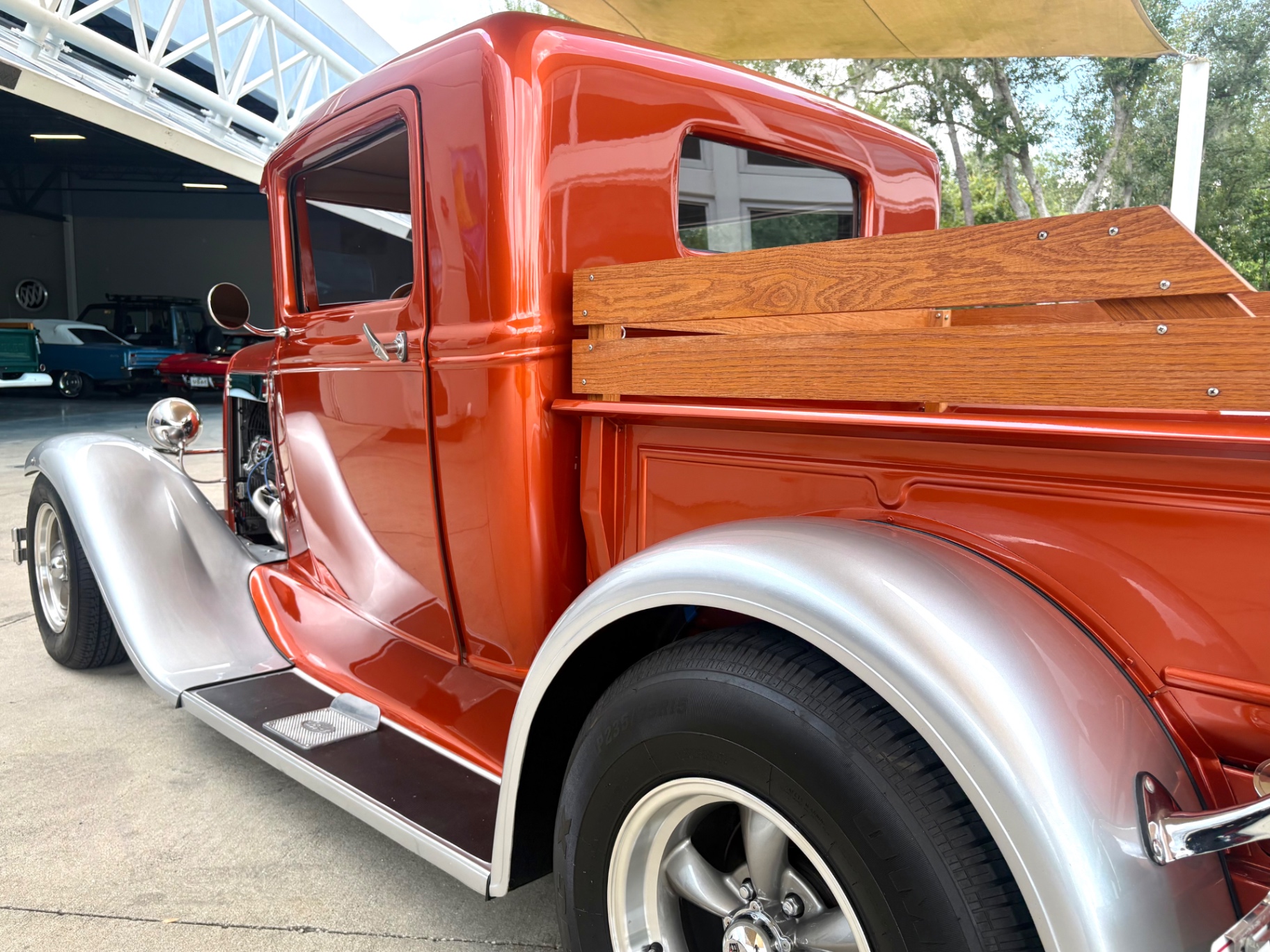
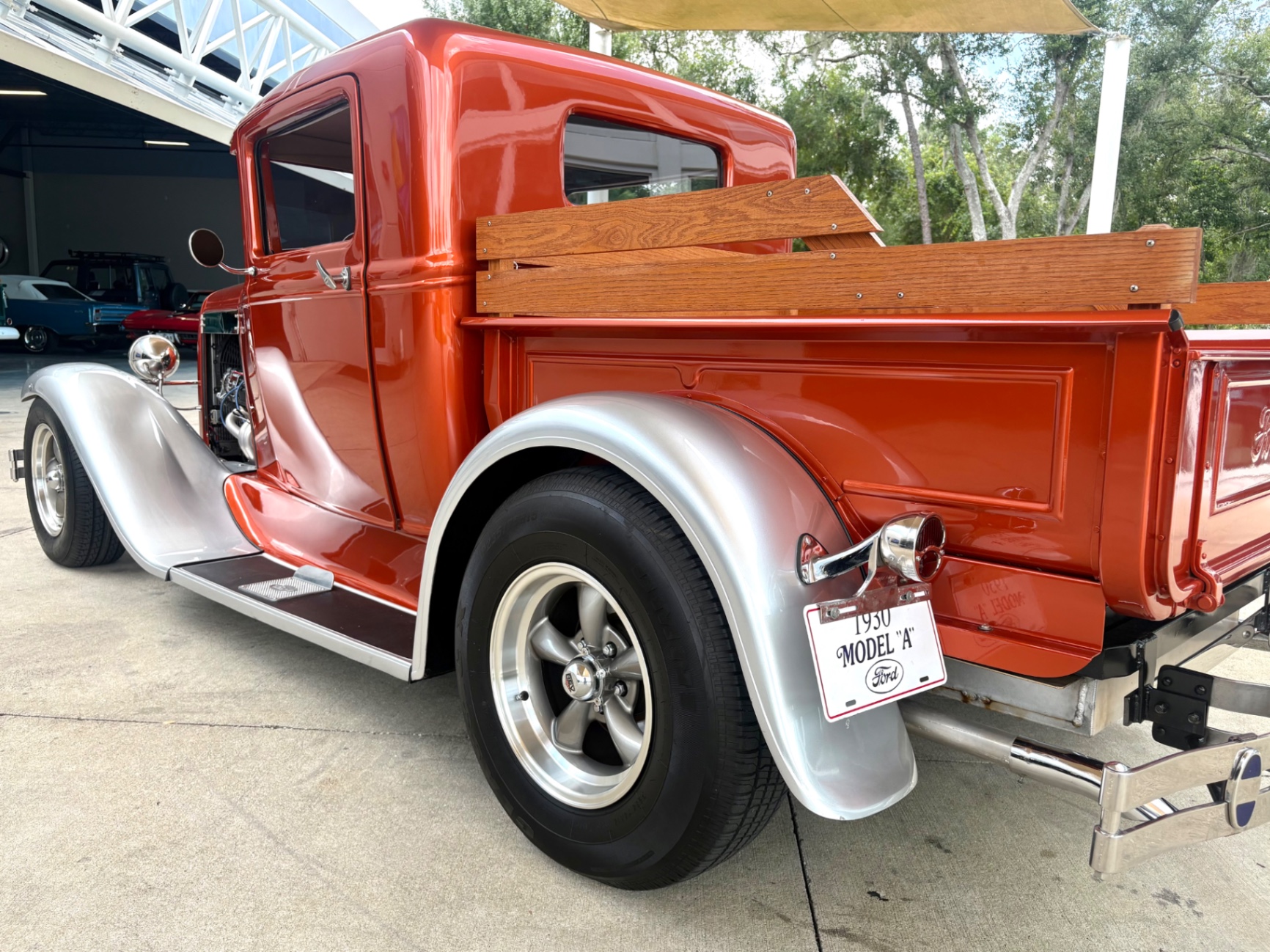
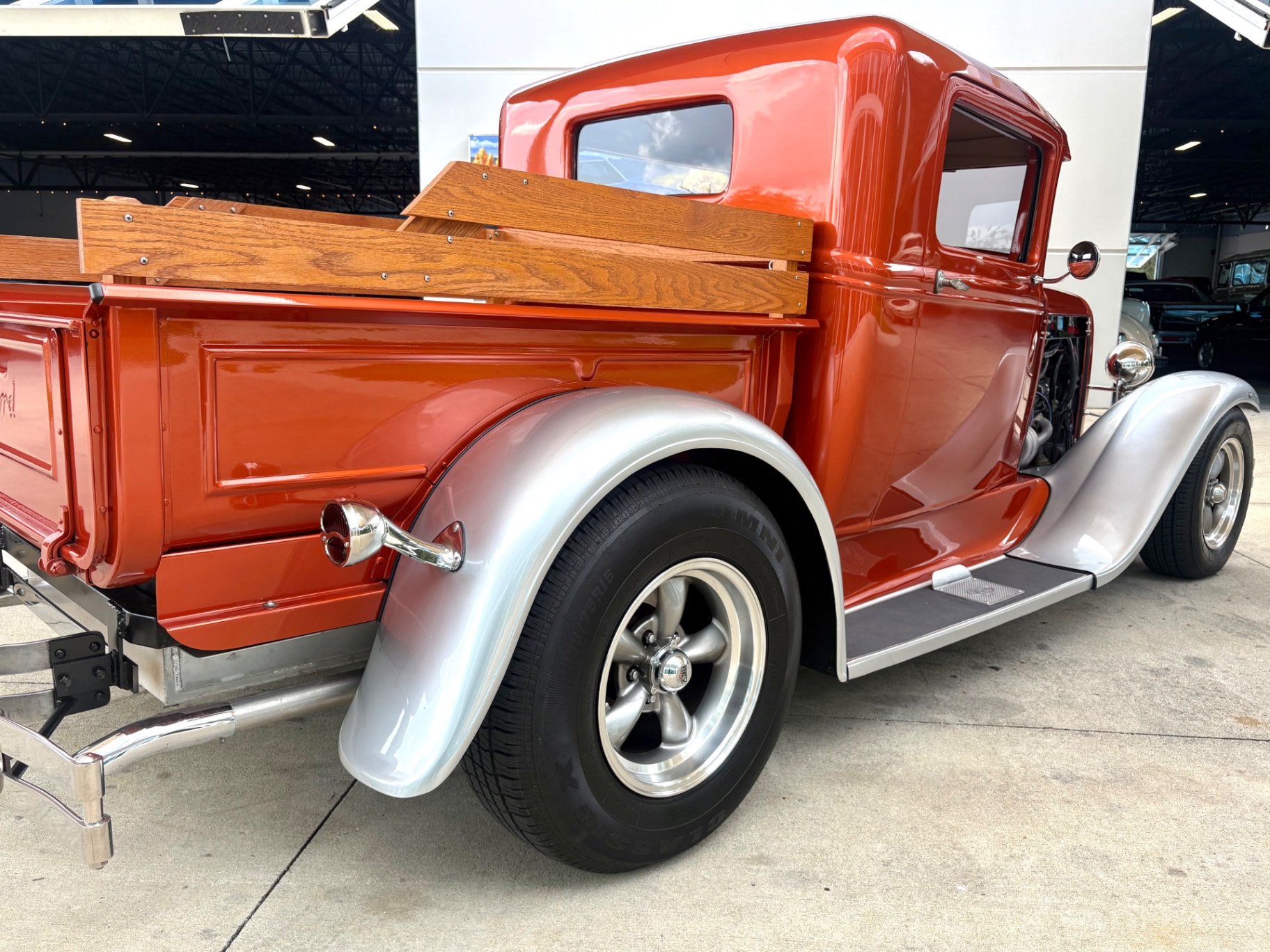
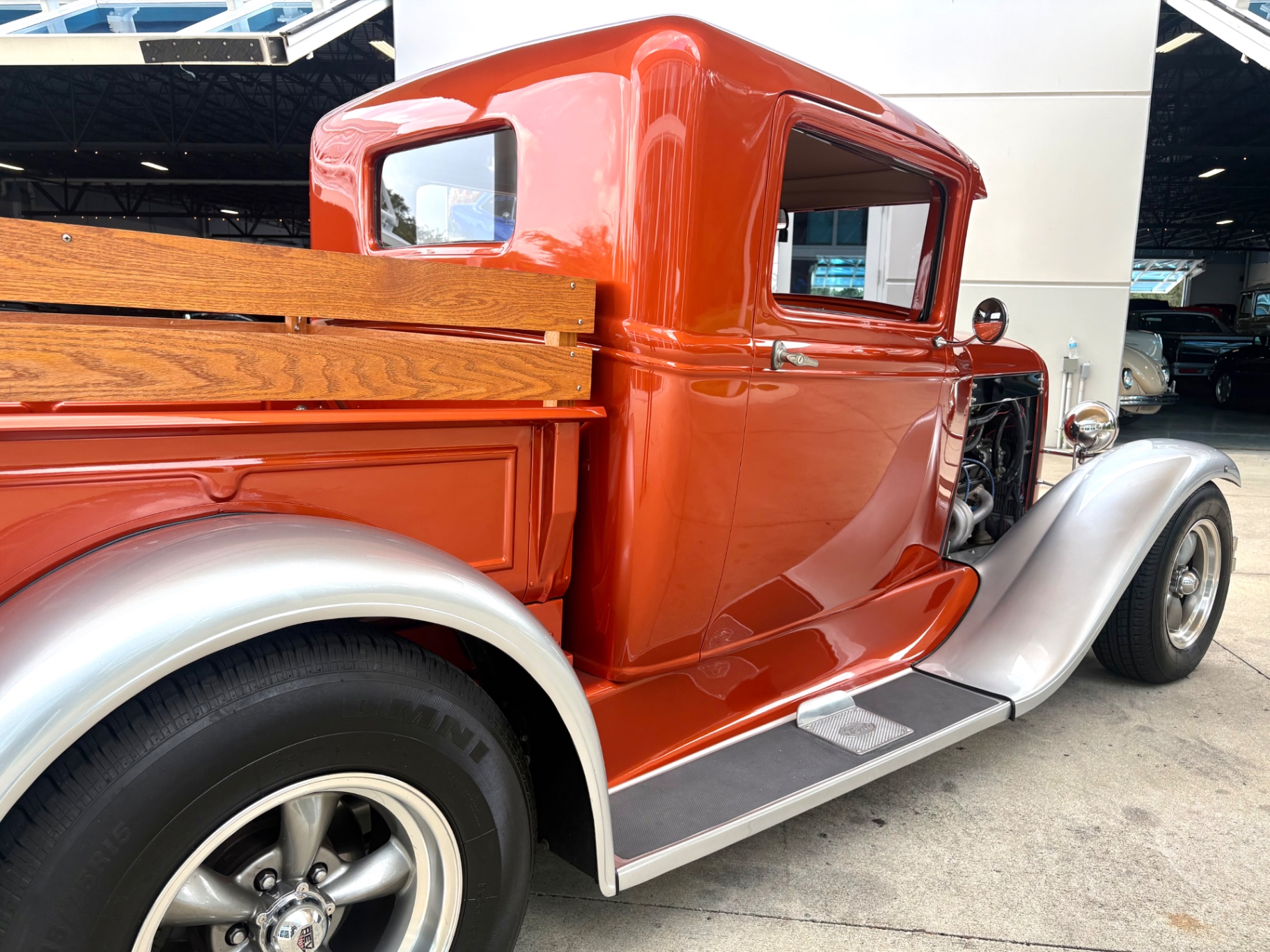
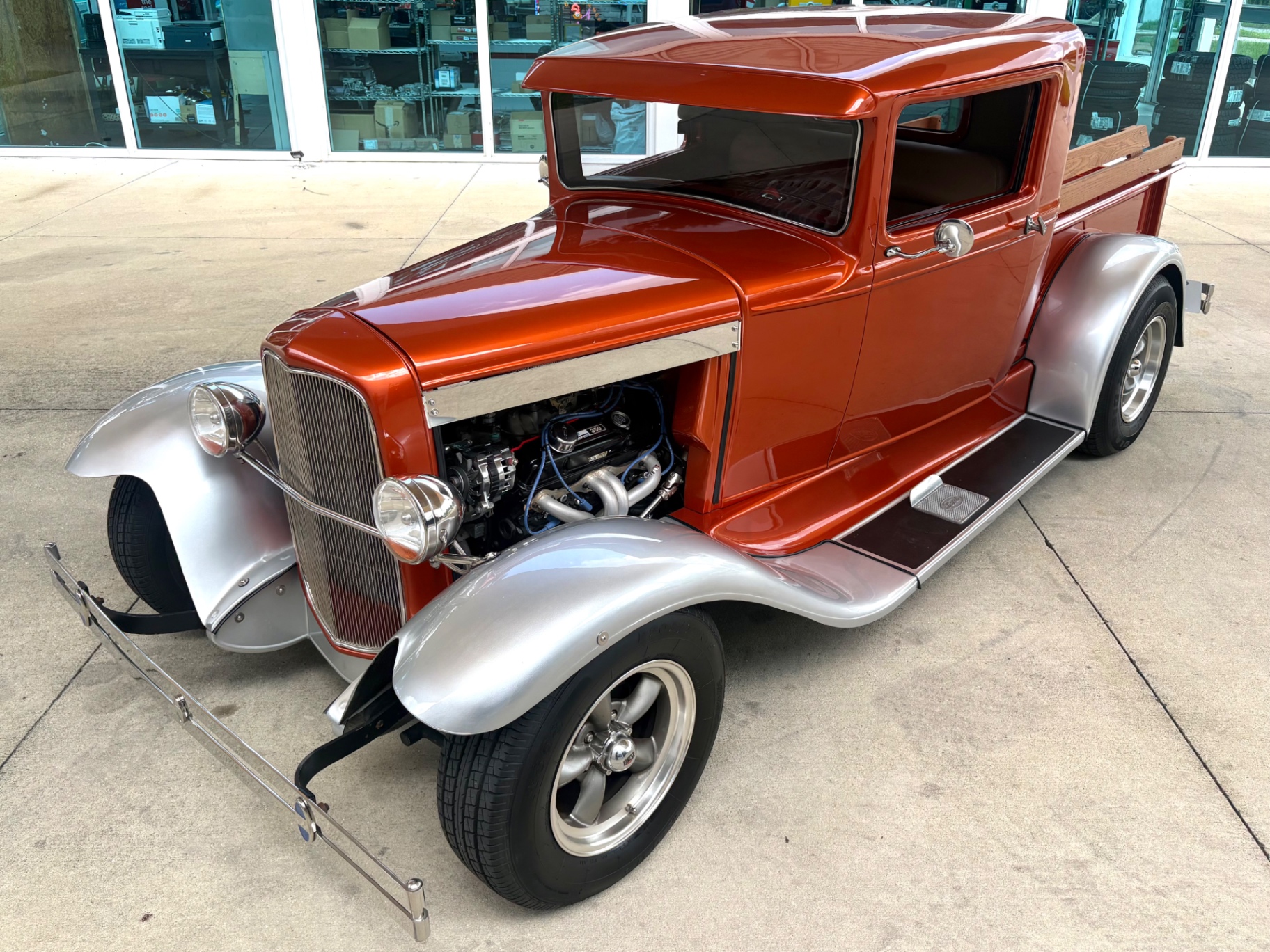
This particular 1930 Ford Model A Truck is a full custom hot rod build that takes the right approach: period-correct aesthetics on the outside, thoroughly modern mechanicals underneath. The burnt orange exterior paint works with the polished aluminum fenders and chrome brightwork to give the truck a look that reads as both vintage and intentional. This is not a trailer queen built for show points. It is a built and driven truck with real upgrades throughout — suspension, drivetrain, brakes, interior, and body — that make it comfortable and reliable to drive on modern roads.
Ford produced over 1.3 million Model A vehicles in 1930, but the percentage that survived into the 21st century in any form is a small fraction of that number. Survivors built to this level of quality are considerably rarer still.
Features List
- Goodwrench 350 5.7L V8 engine swap
- Four-barrel carburetor
- Headers installed
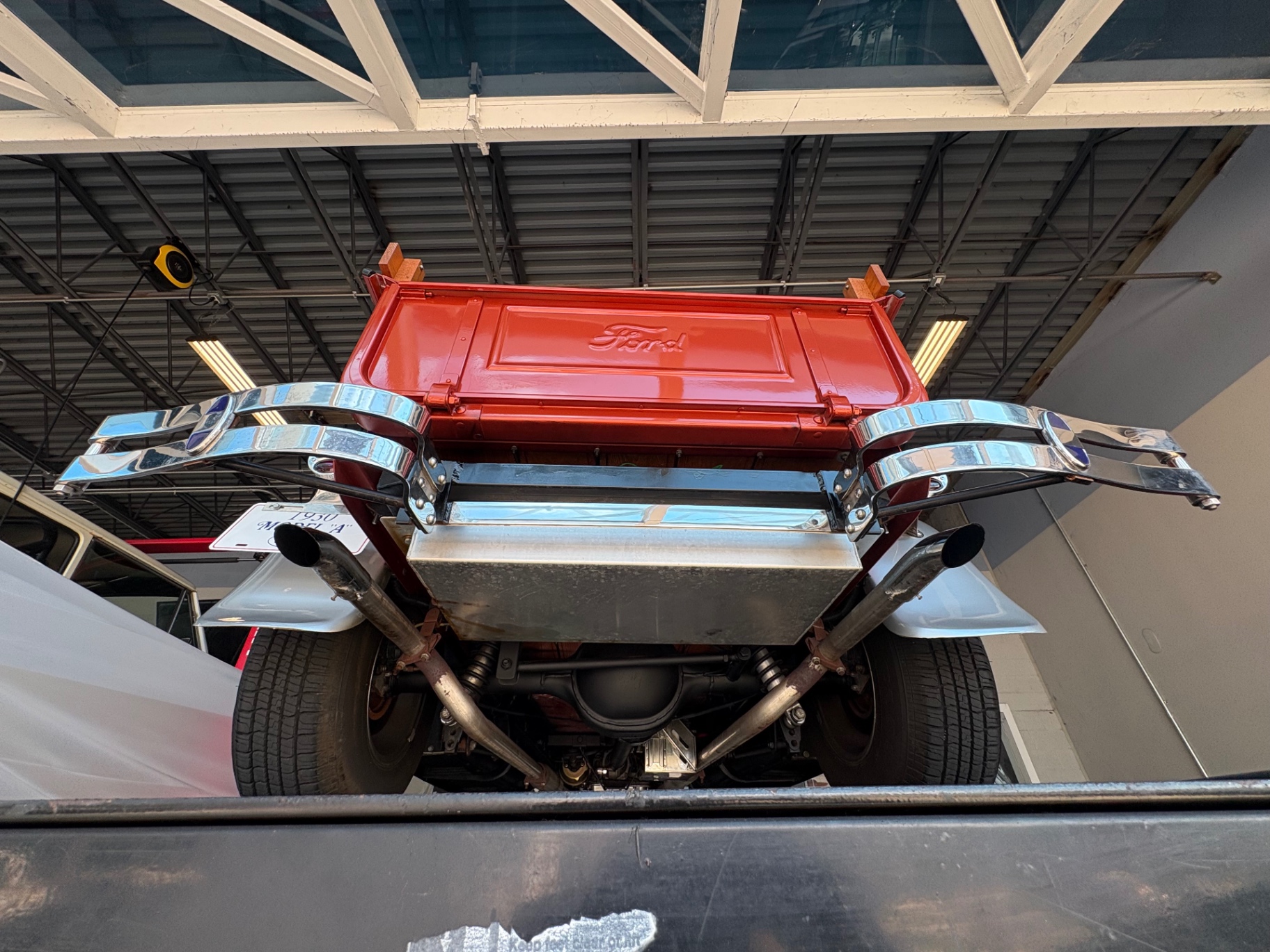
- Dual exhaust with dual rear exits
- Automatic transmission
- Floor-mounted shifter
- Independent front suspension with coilovers
- Rack and pinion steering
- Front disc brakes
- Rear drum brakes
- Solid rear axle
- Rev 15-inch 5-spoke alloy wheels
- P205/75R15 tires
- Taylor Hi-Energy spark plug wires
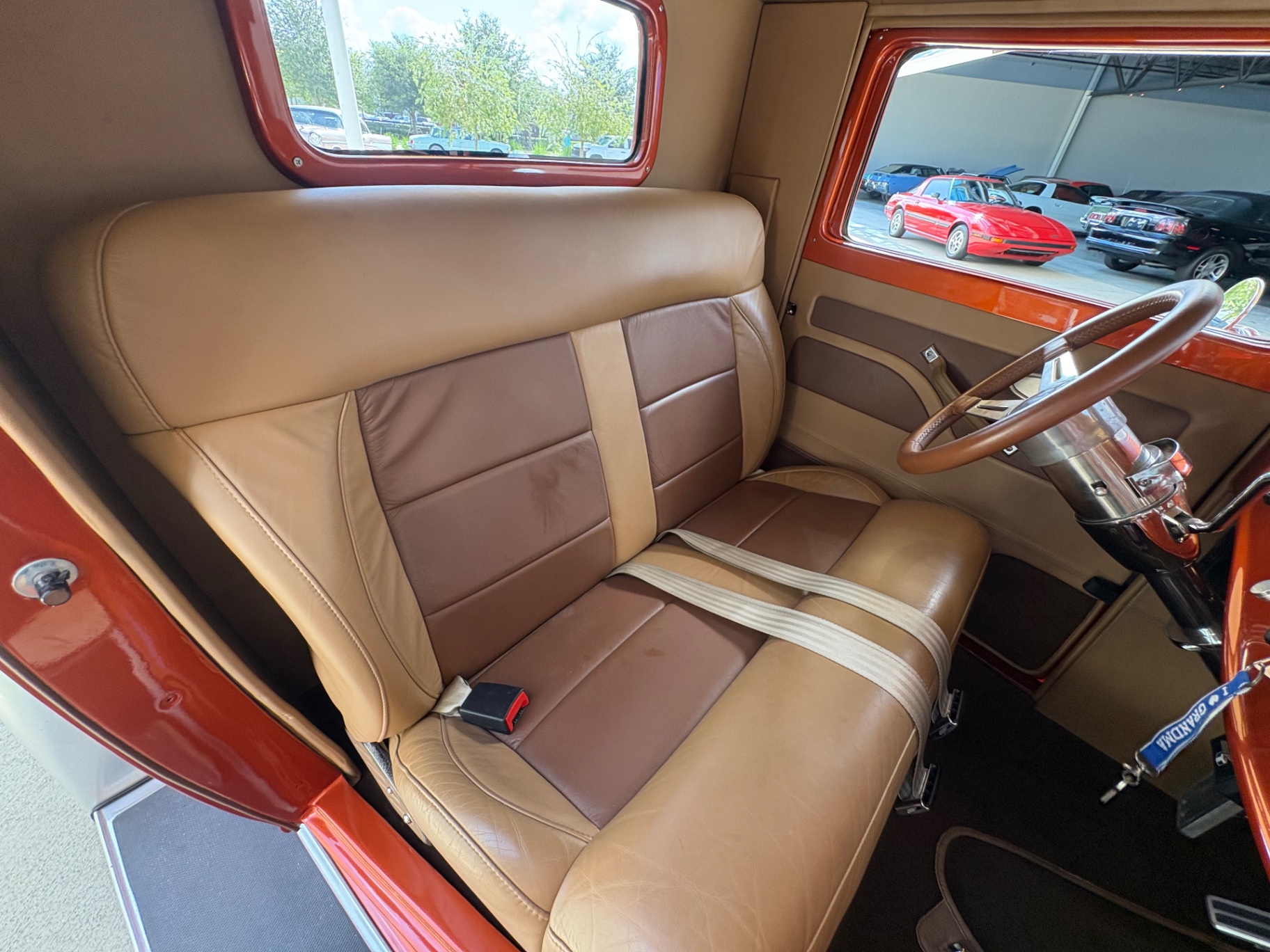
- Custom tan and brown leather interior
- Custom leather door panels
- Padded custom headliner
- Multi-gauge instrument cluster with tachometer
- Ford script dash badge
- Custom leather-wrapped steering wheel
- Seat belts installed
- Wood bed floor
- Wood bed side rails
- Running boards with Ford step plates
- Chrome cowl mirrors
- Chrome headlights
- Chrome front and rear bumpers
- Polished aluminum fenders
- Burnt orange exterior paint
Mechanical
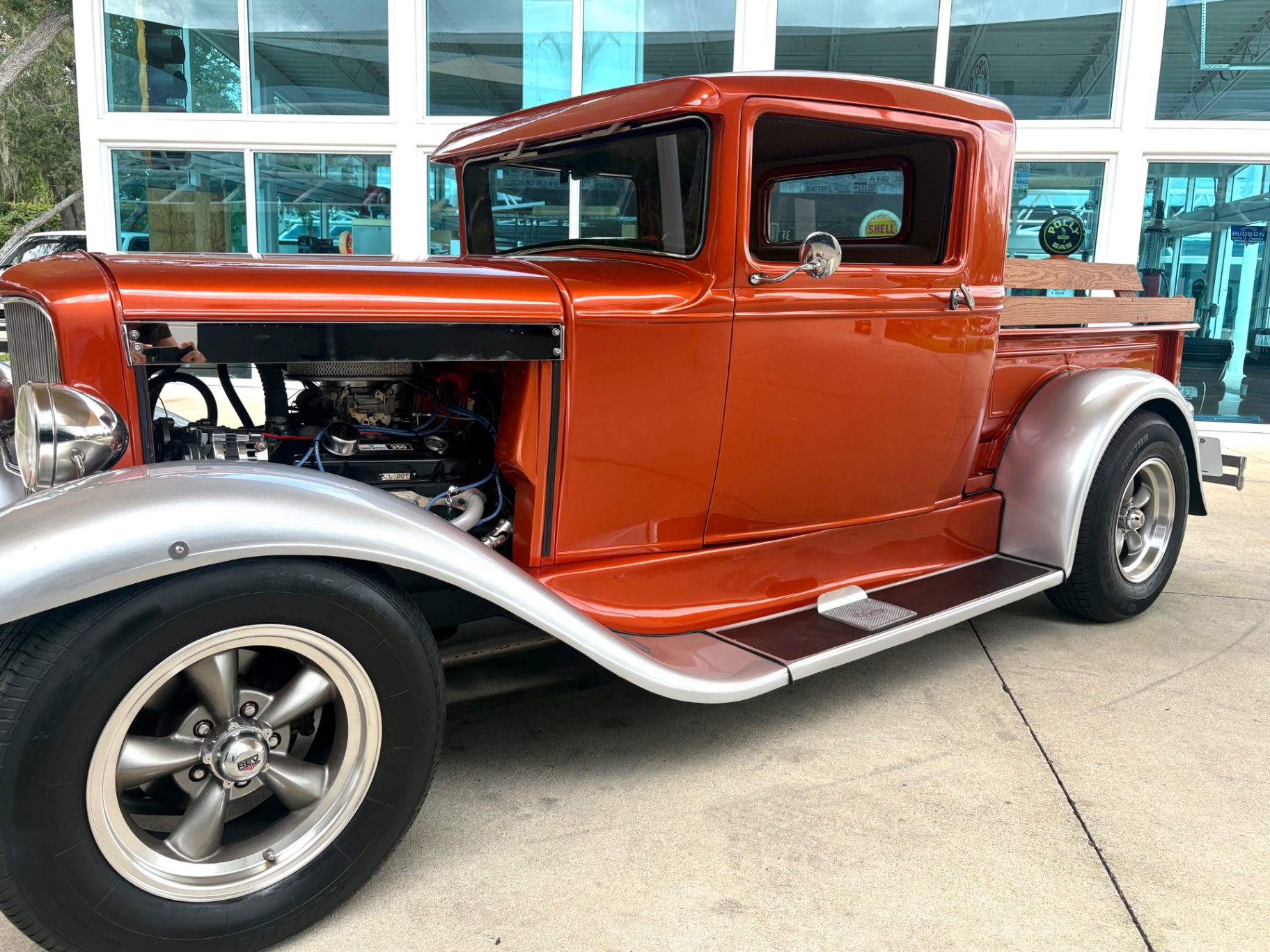
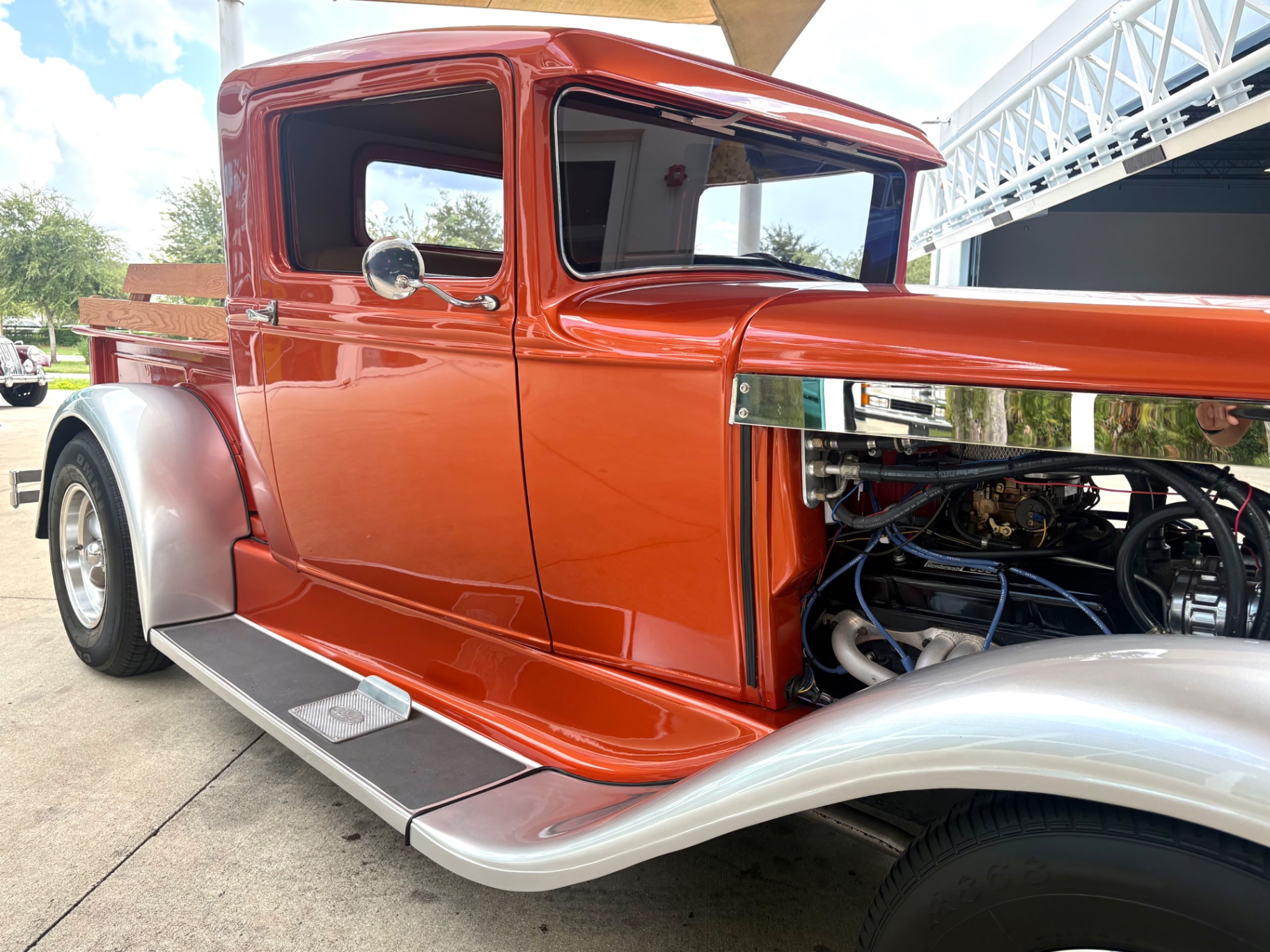
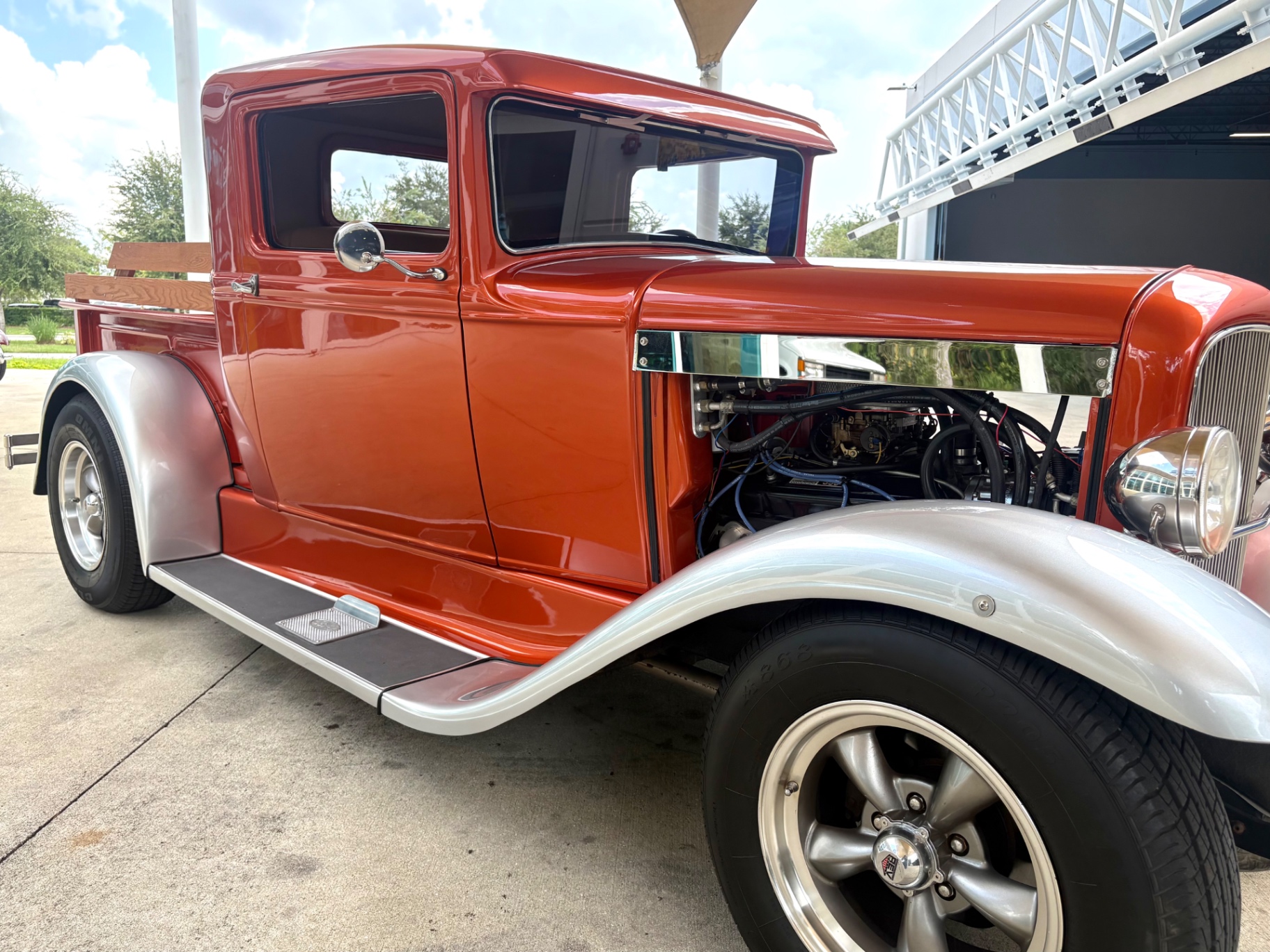
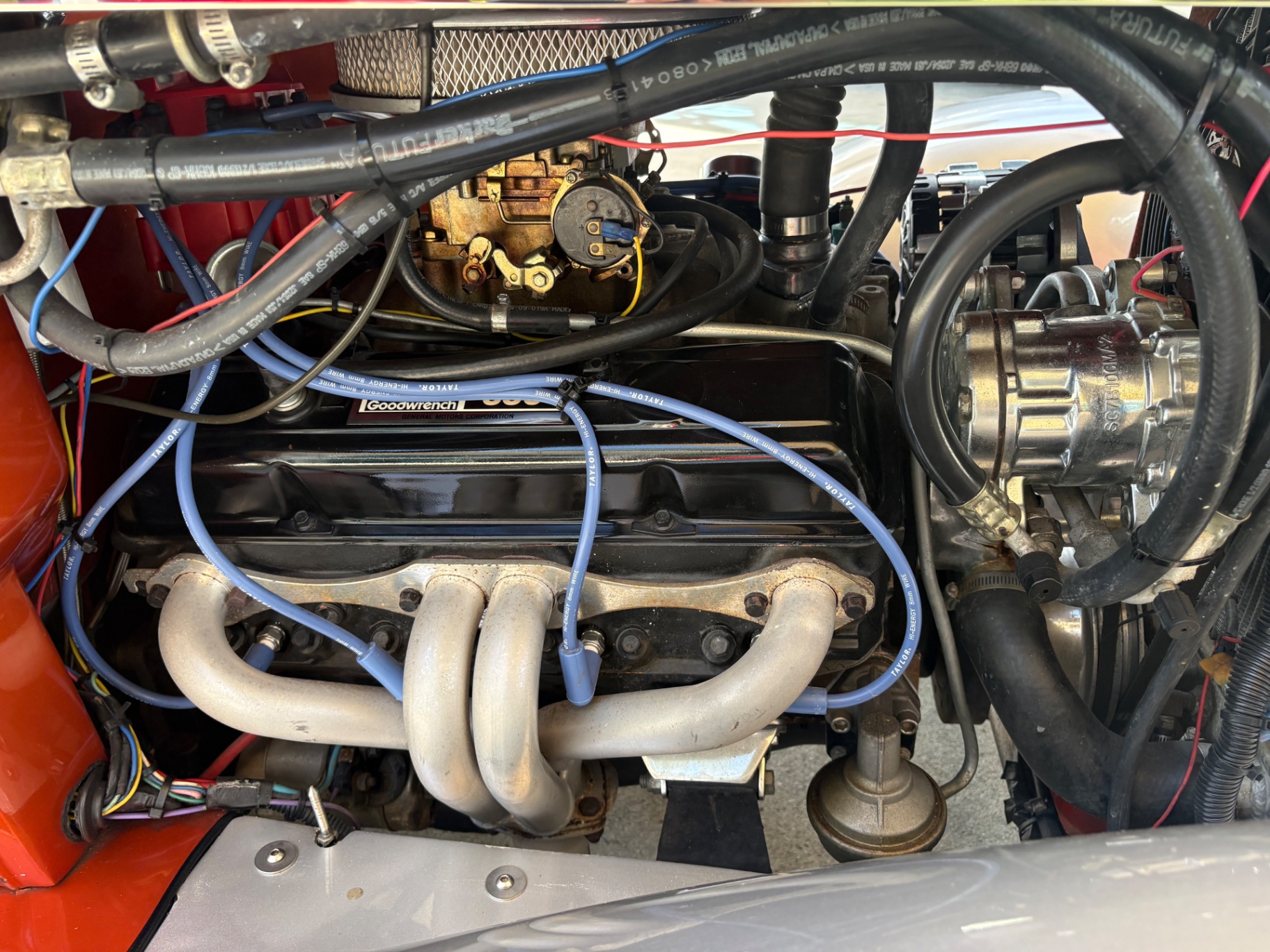
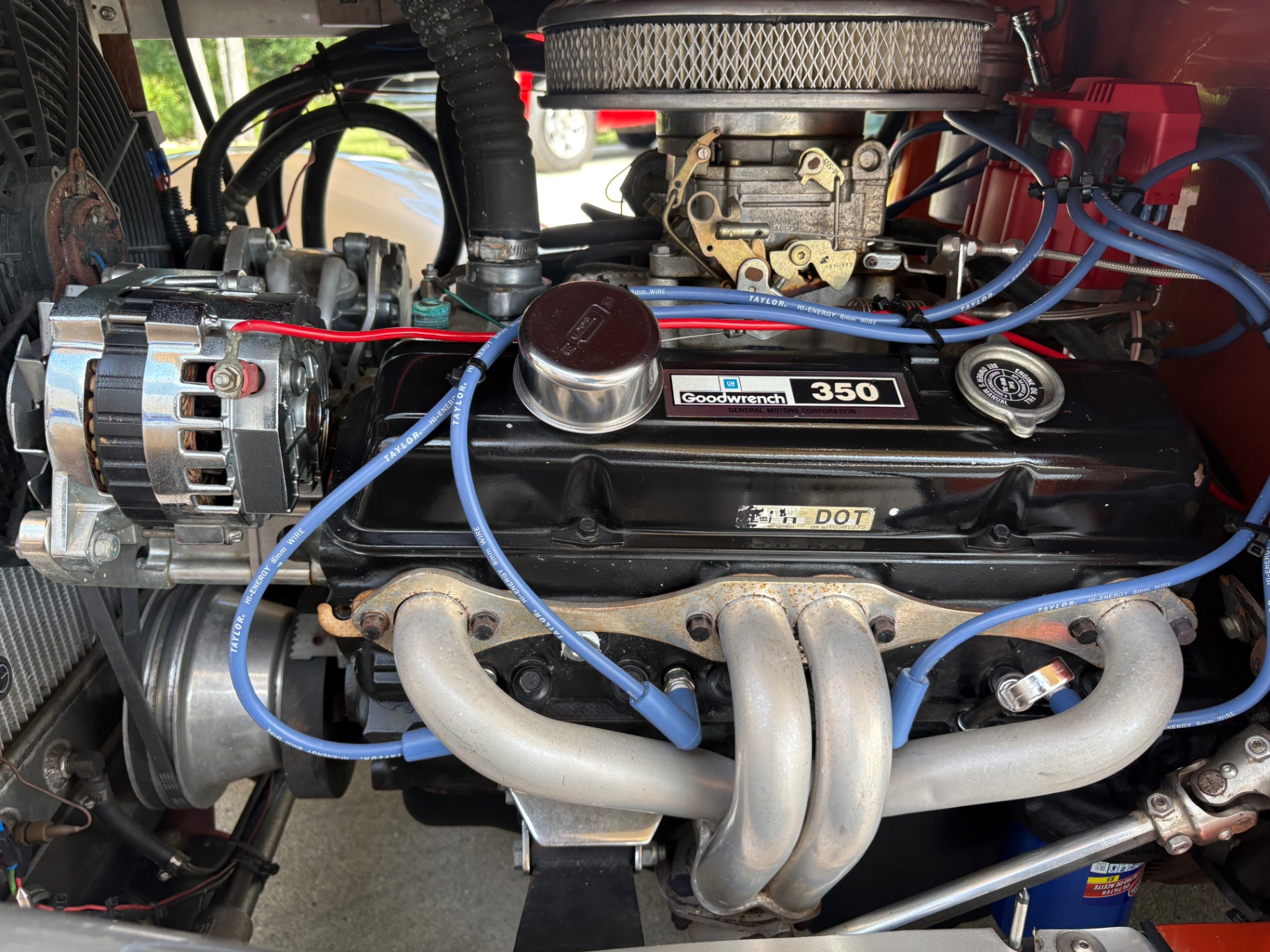
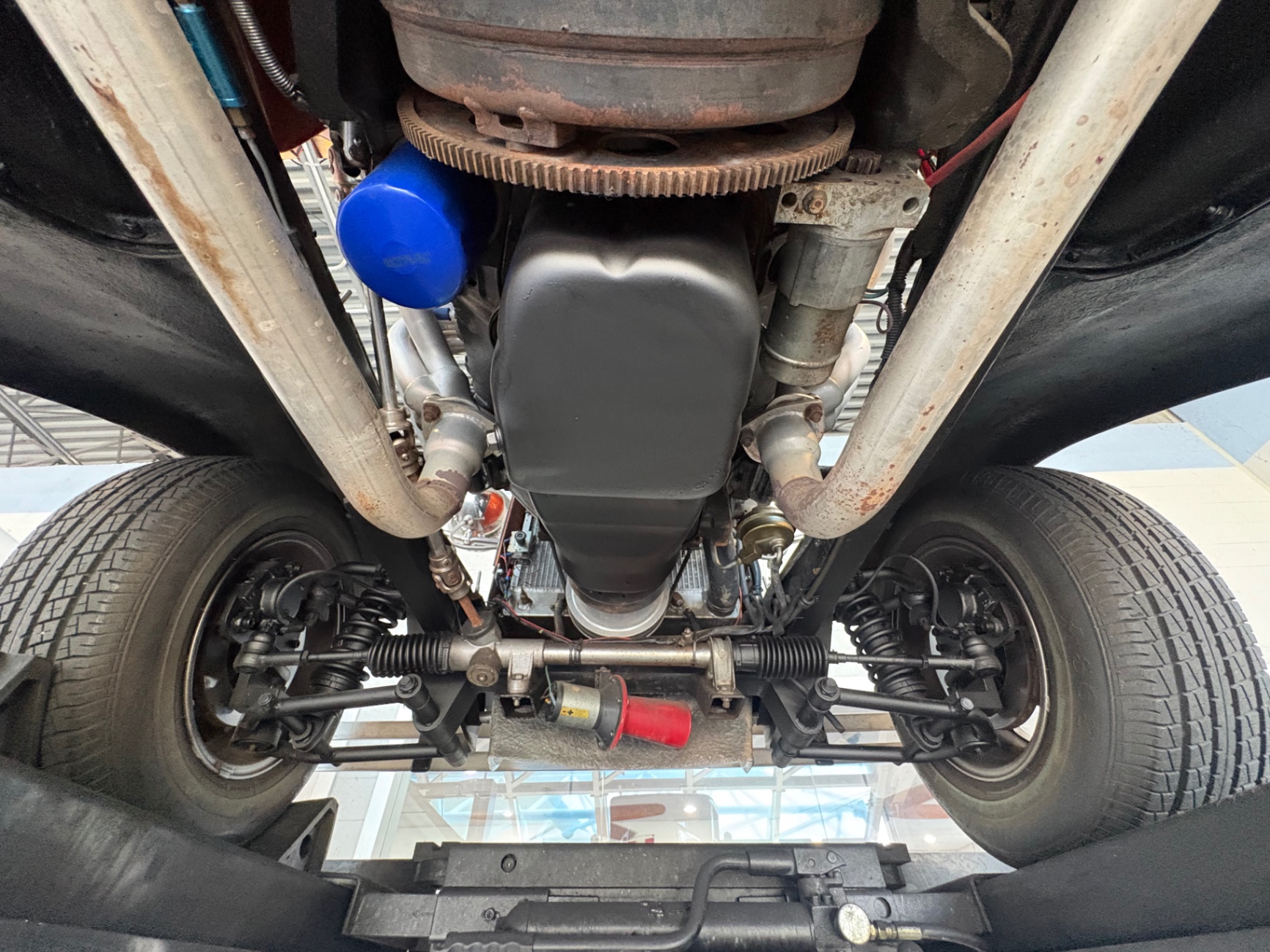
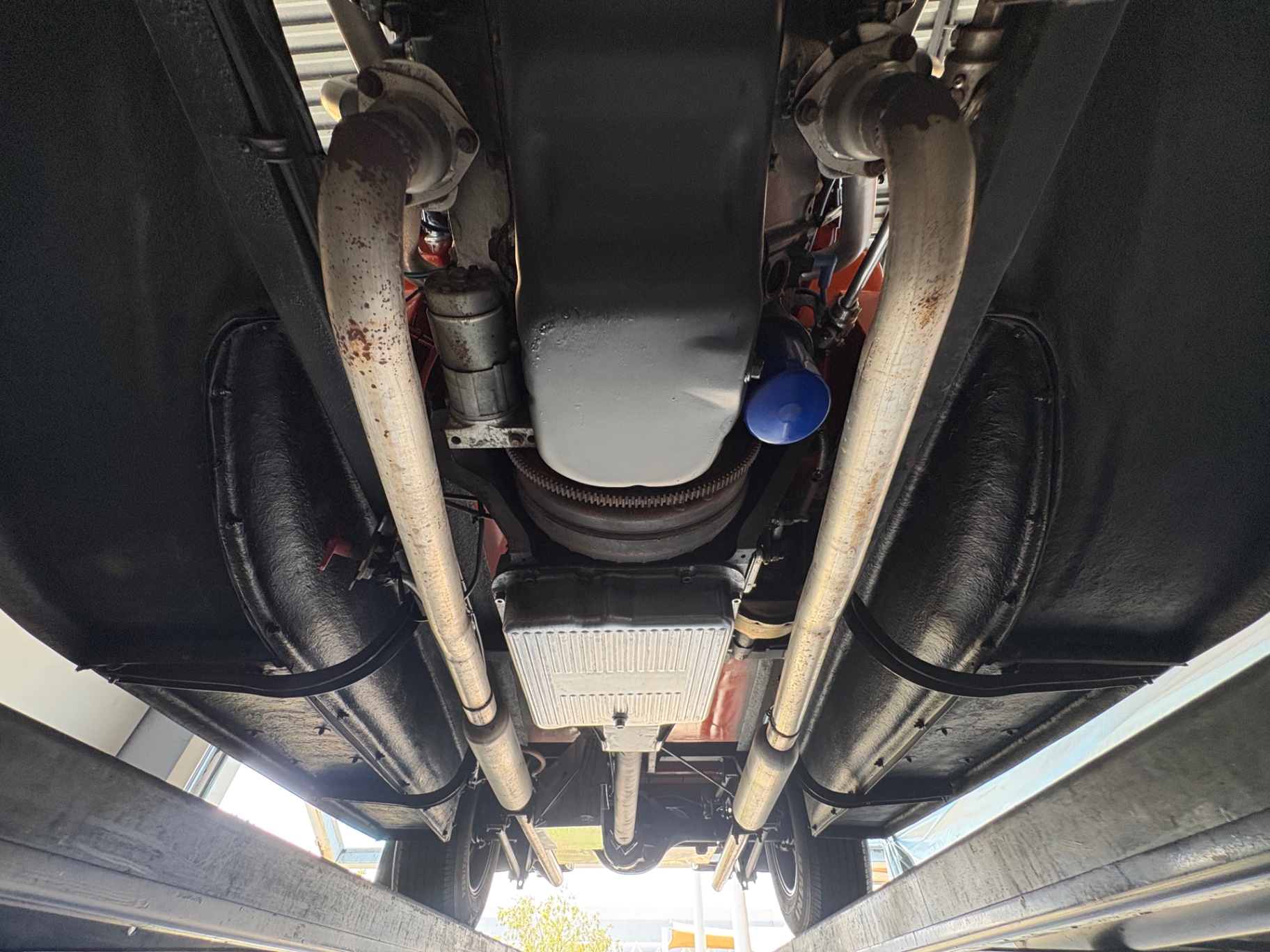
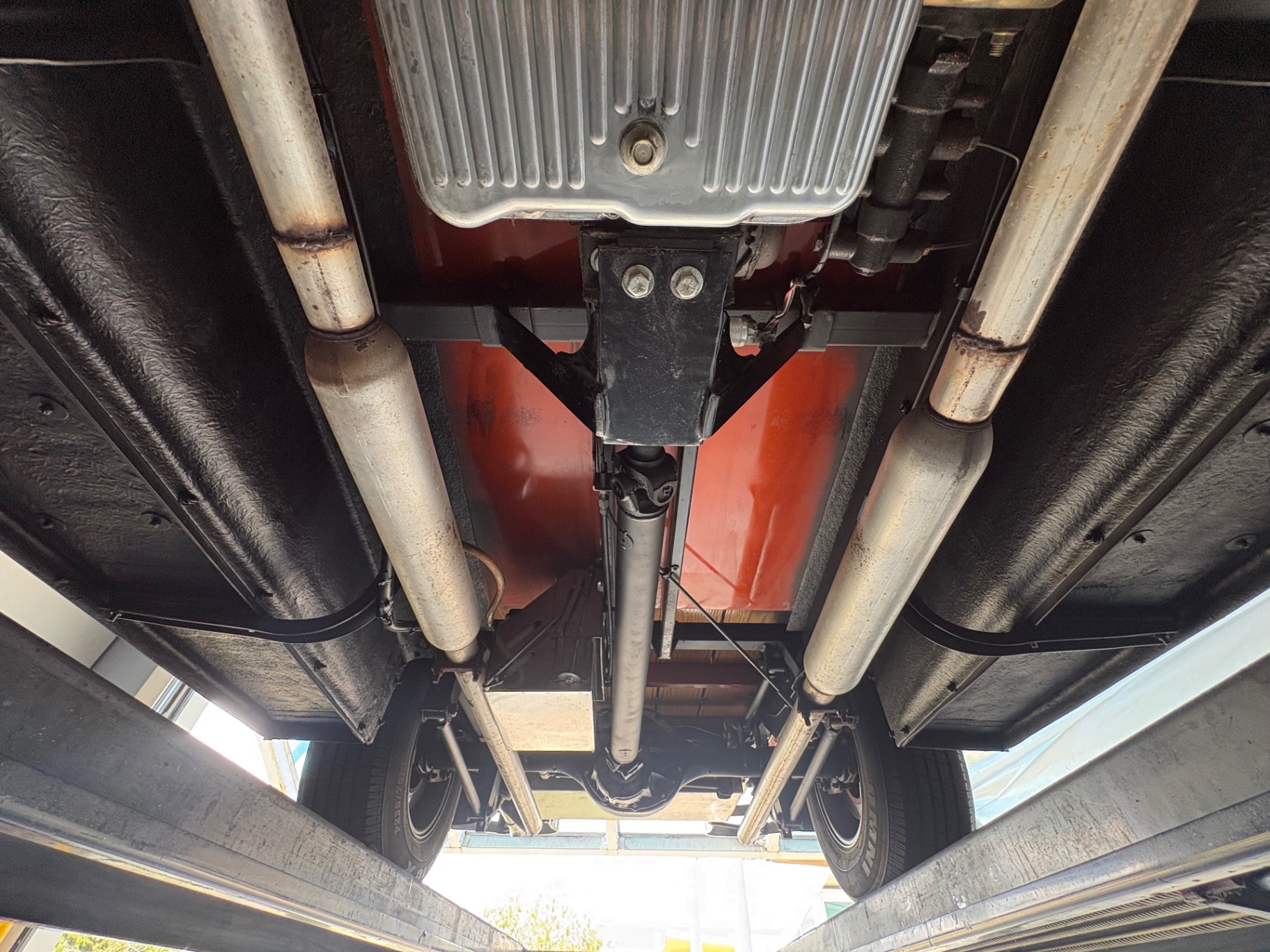
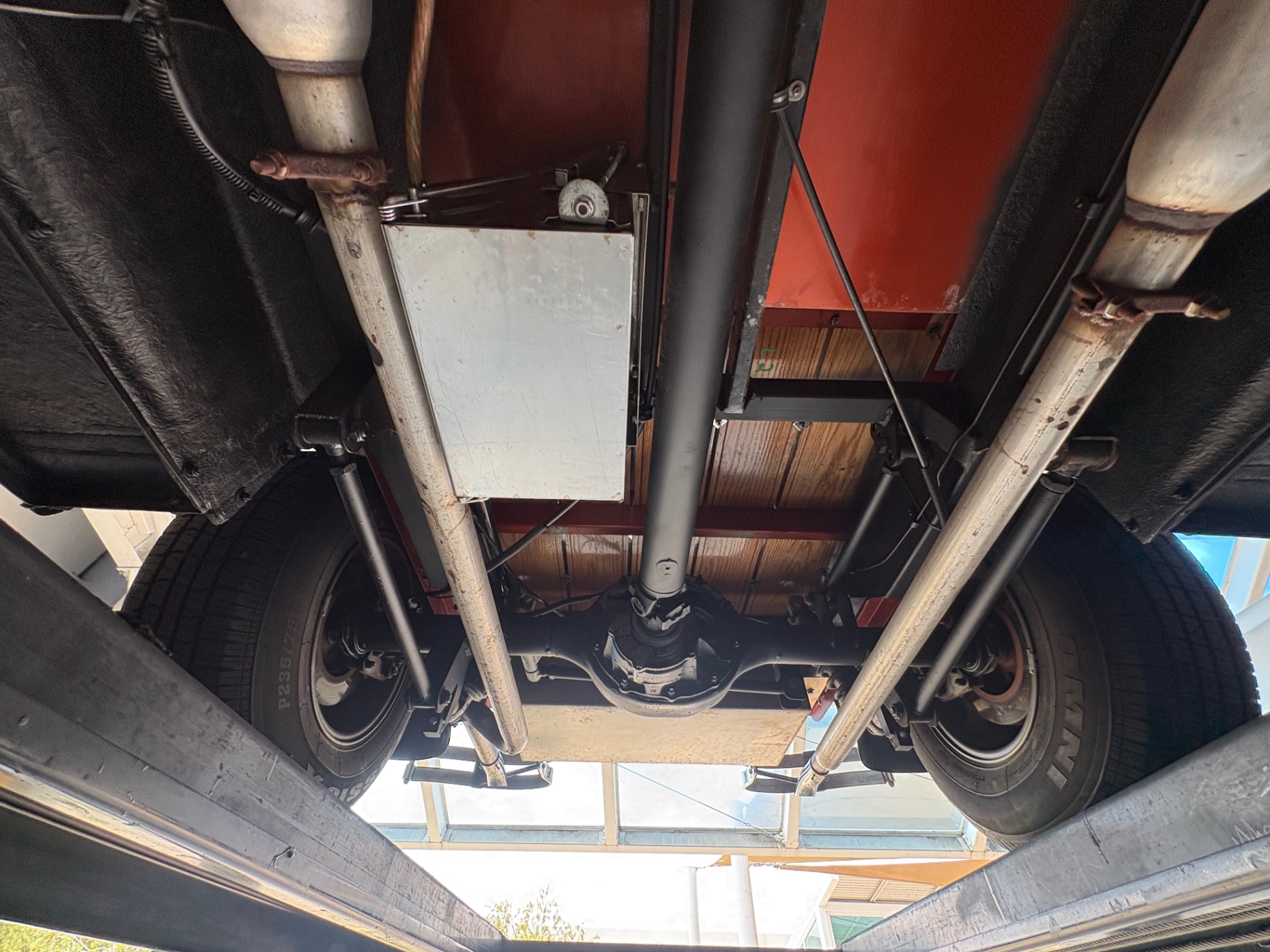
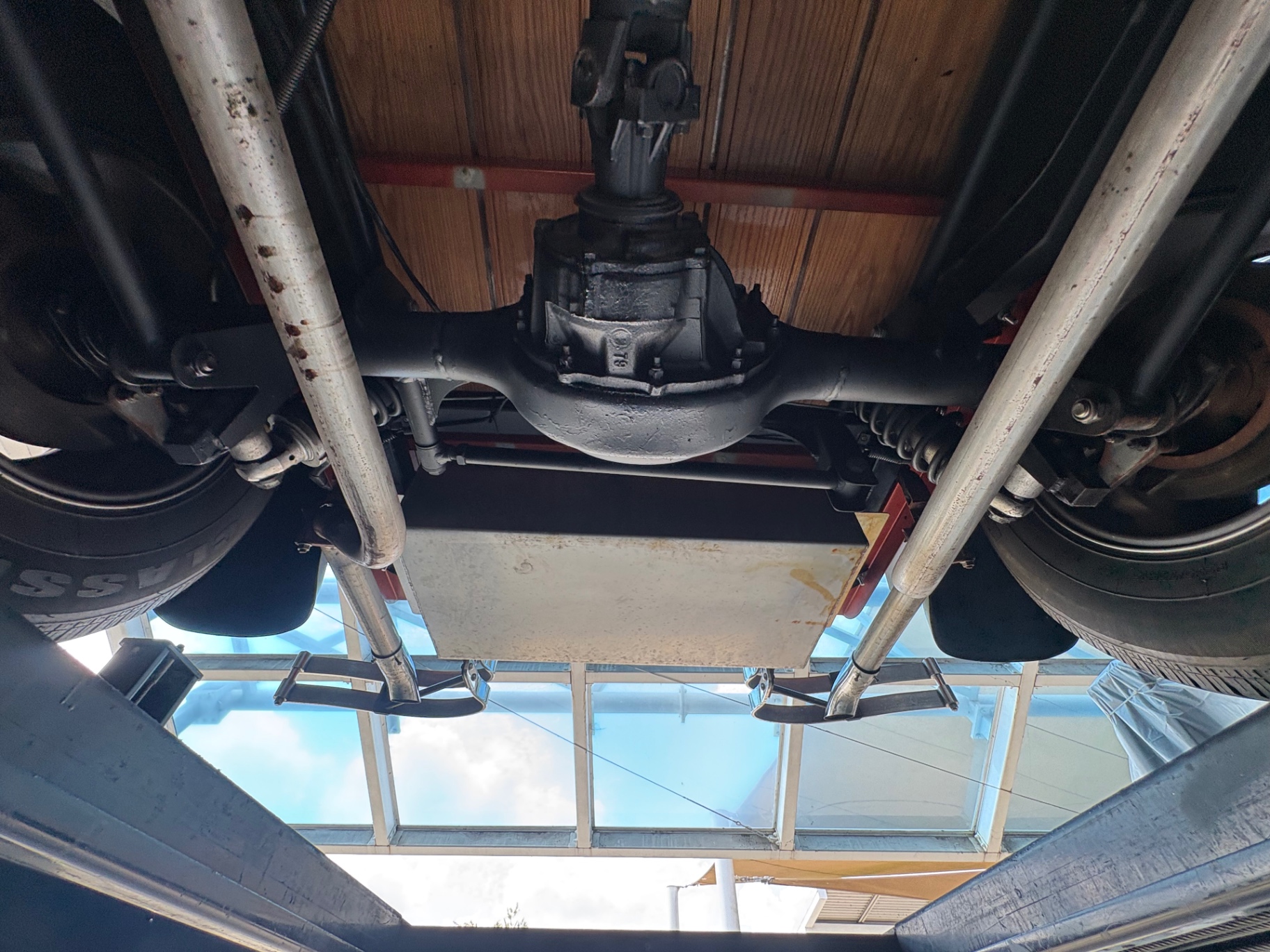
The engine under the hood is a GM Goodwrench 350 — a 5.7-liter small-block V8 that GM sold as a factory replacement crate engine through its Goodwrench service program. These engines were built to OEM tolerances on GM production equipment, making them a known quantity: consistent, well-documented, and supported by decades of aftermarket parts availability. The Goodwrench 350 was a popular choice for hot rod builds throughout the 1980s and 1990s for exactly those reasons. It is fed through a four-barrel carburetor and breathes through a set of headers that feed into a dual exhaust system with tips exiting at each rear corner — a clean, symmetrical setup that gives the truck an exhaust note appropriate to the displacement. Taylor Hi-Energy spark plug wires keep the ignition side dialed in.
Behind the engine sits an automatic transmission controlled by a floor-mounted shifter, which keeps the interior layout clean and makes the truck accessible to a wider range of drivers.
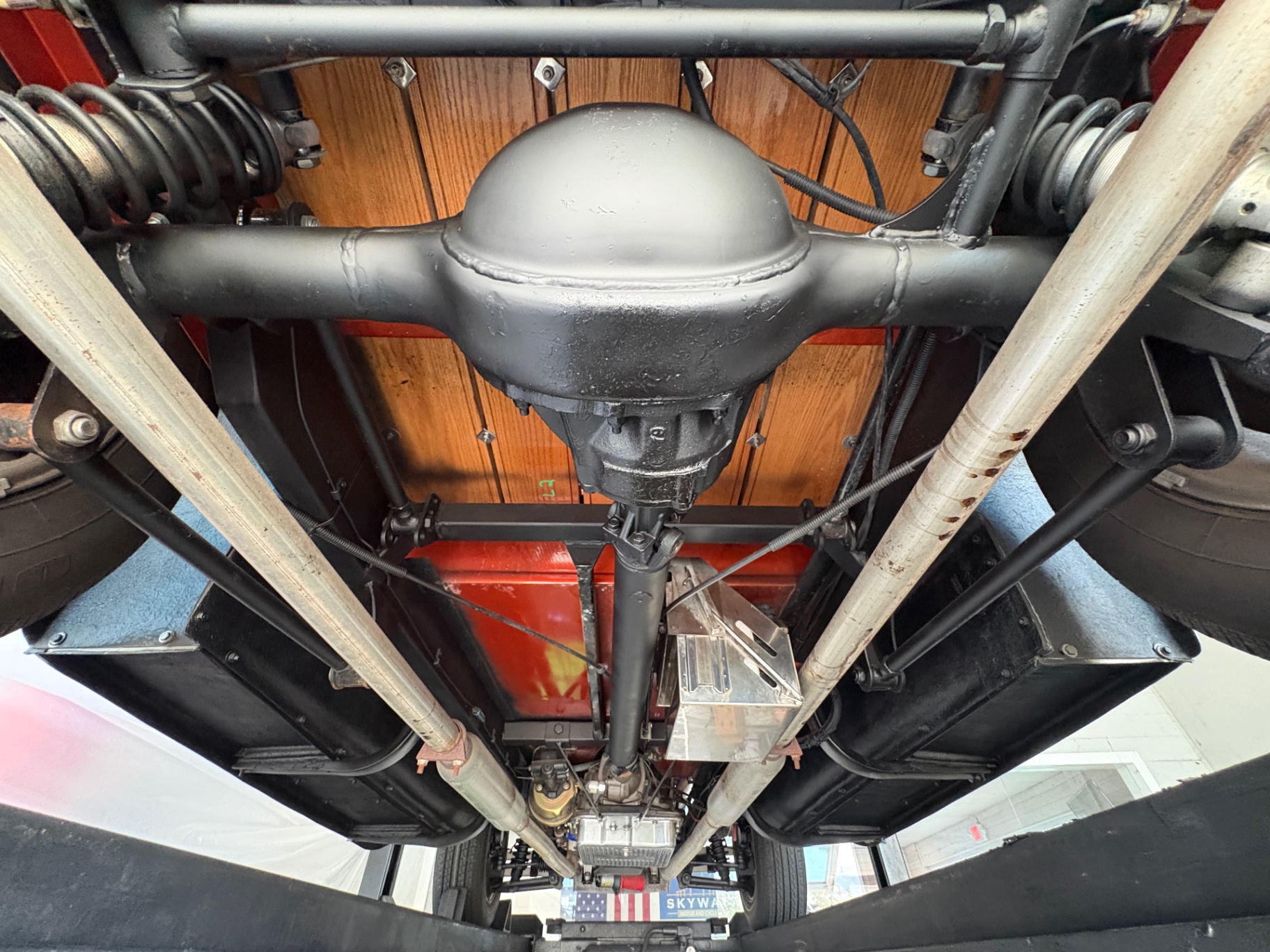
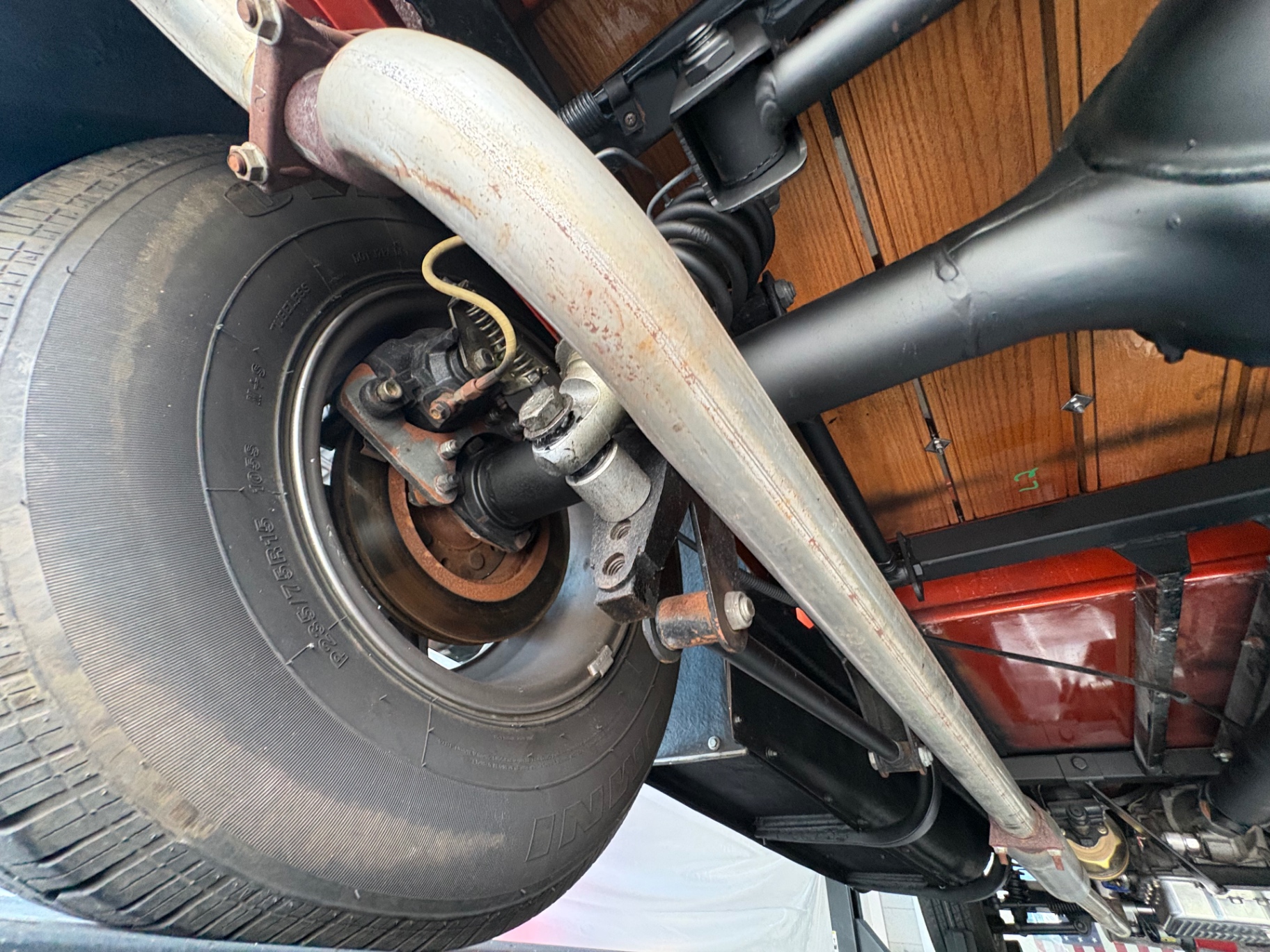
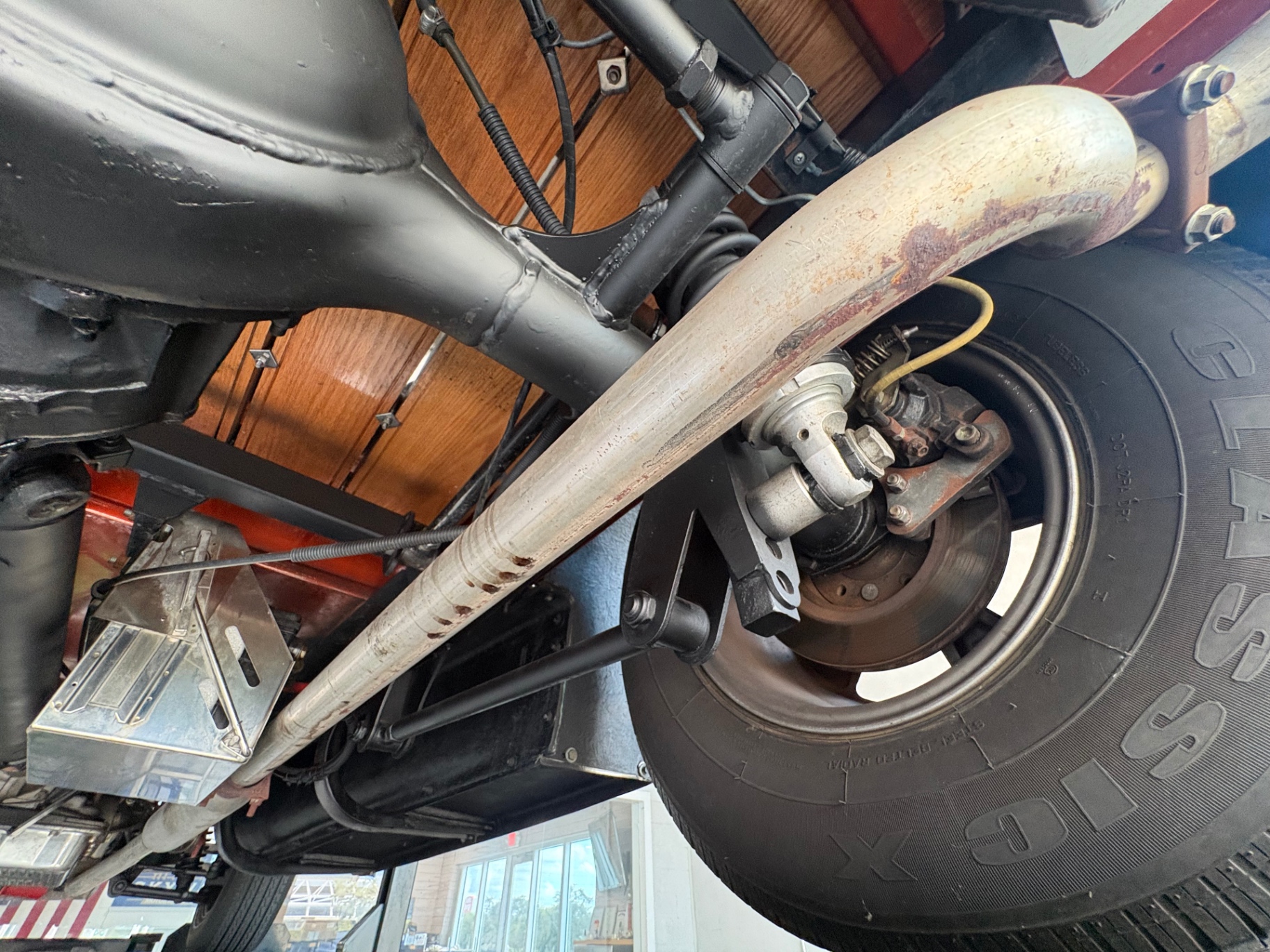
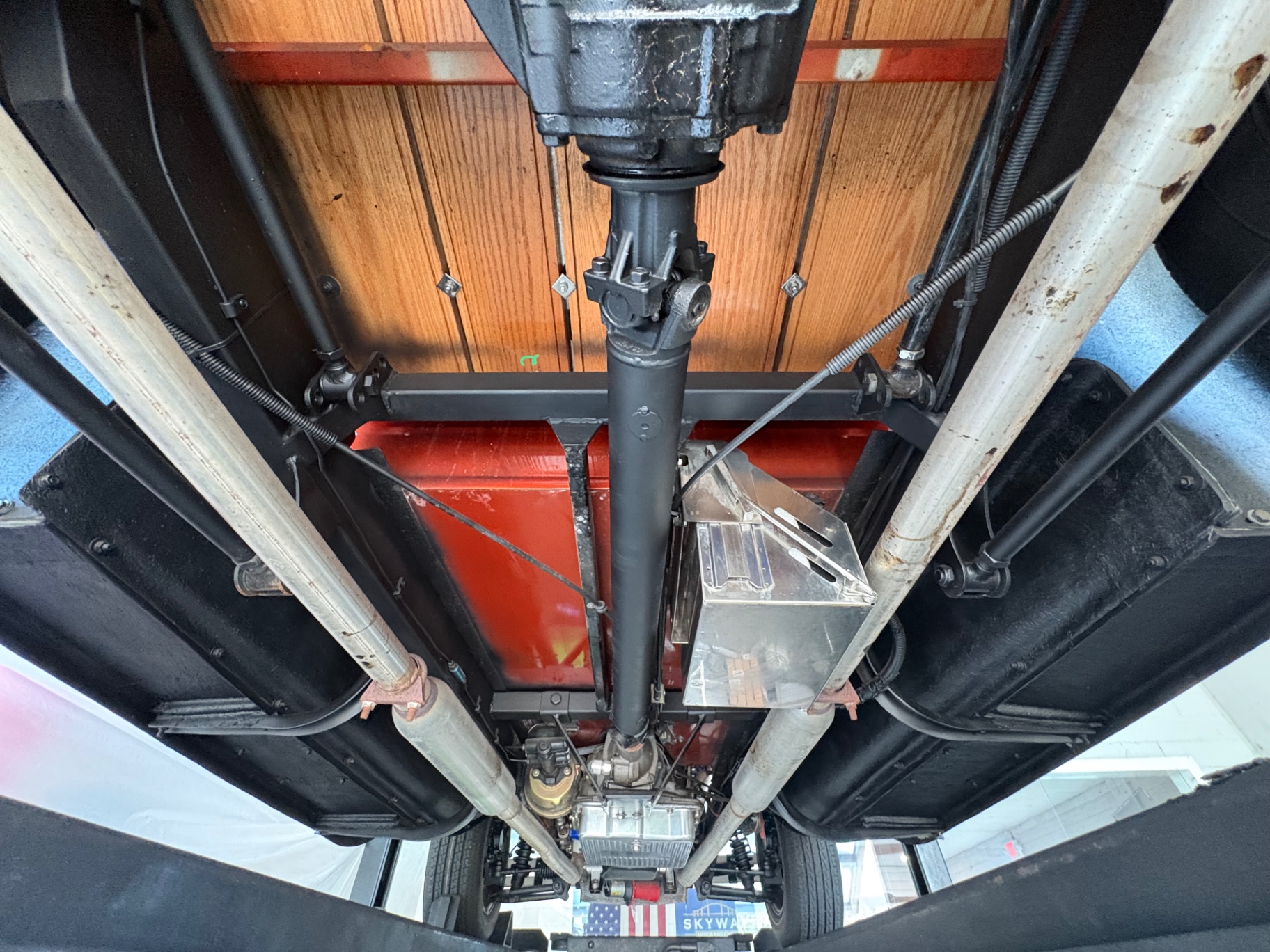
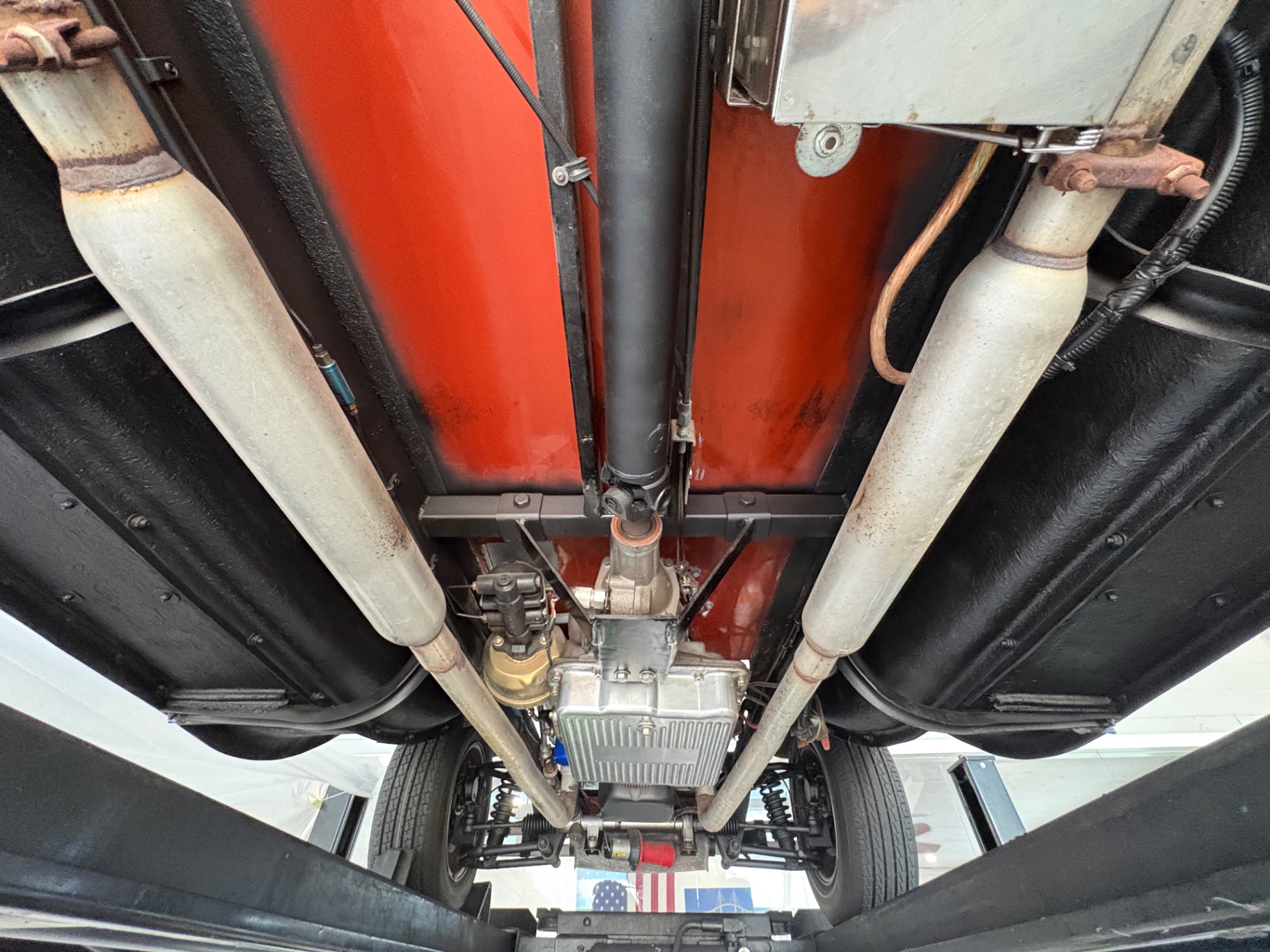
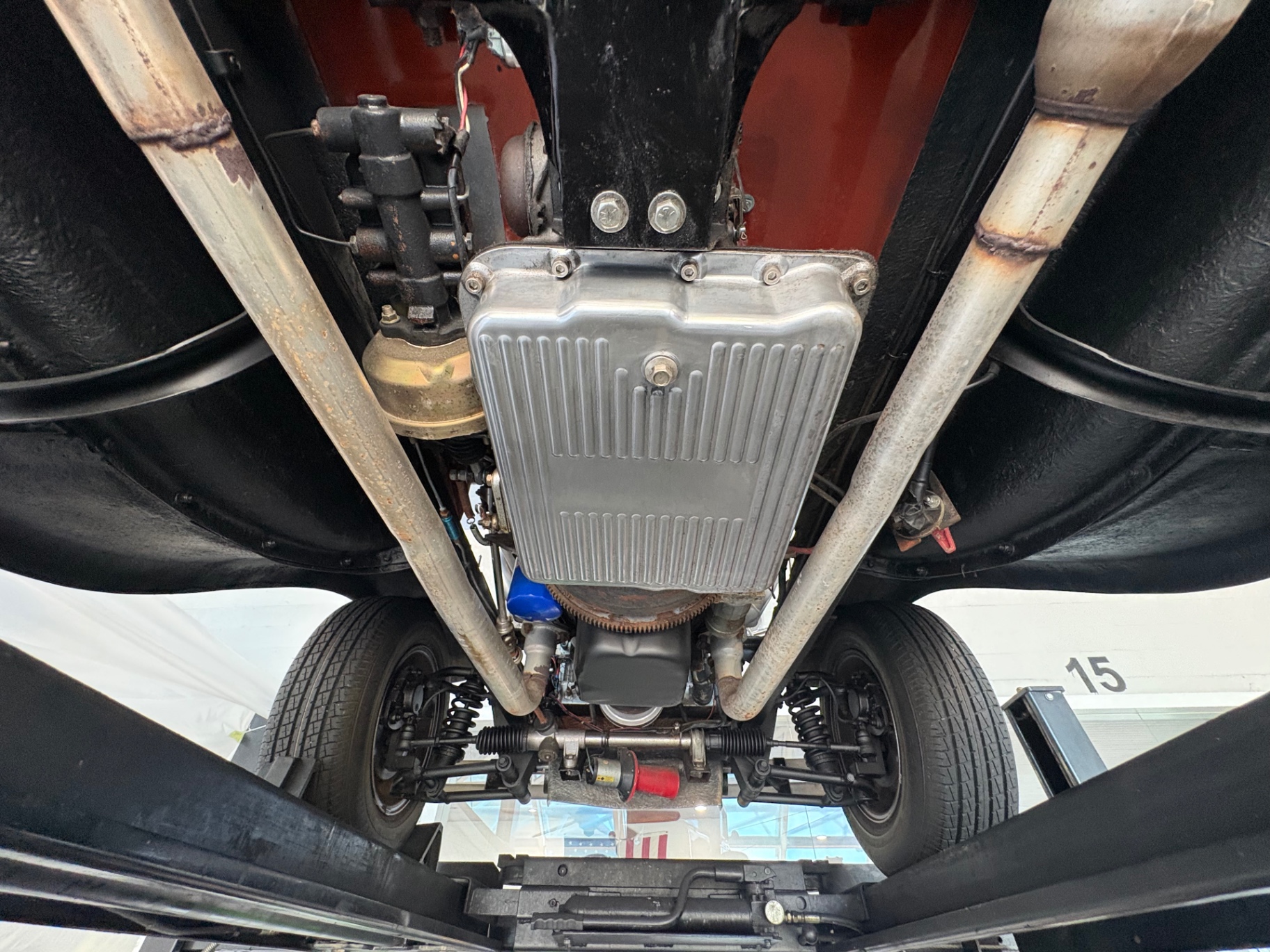
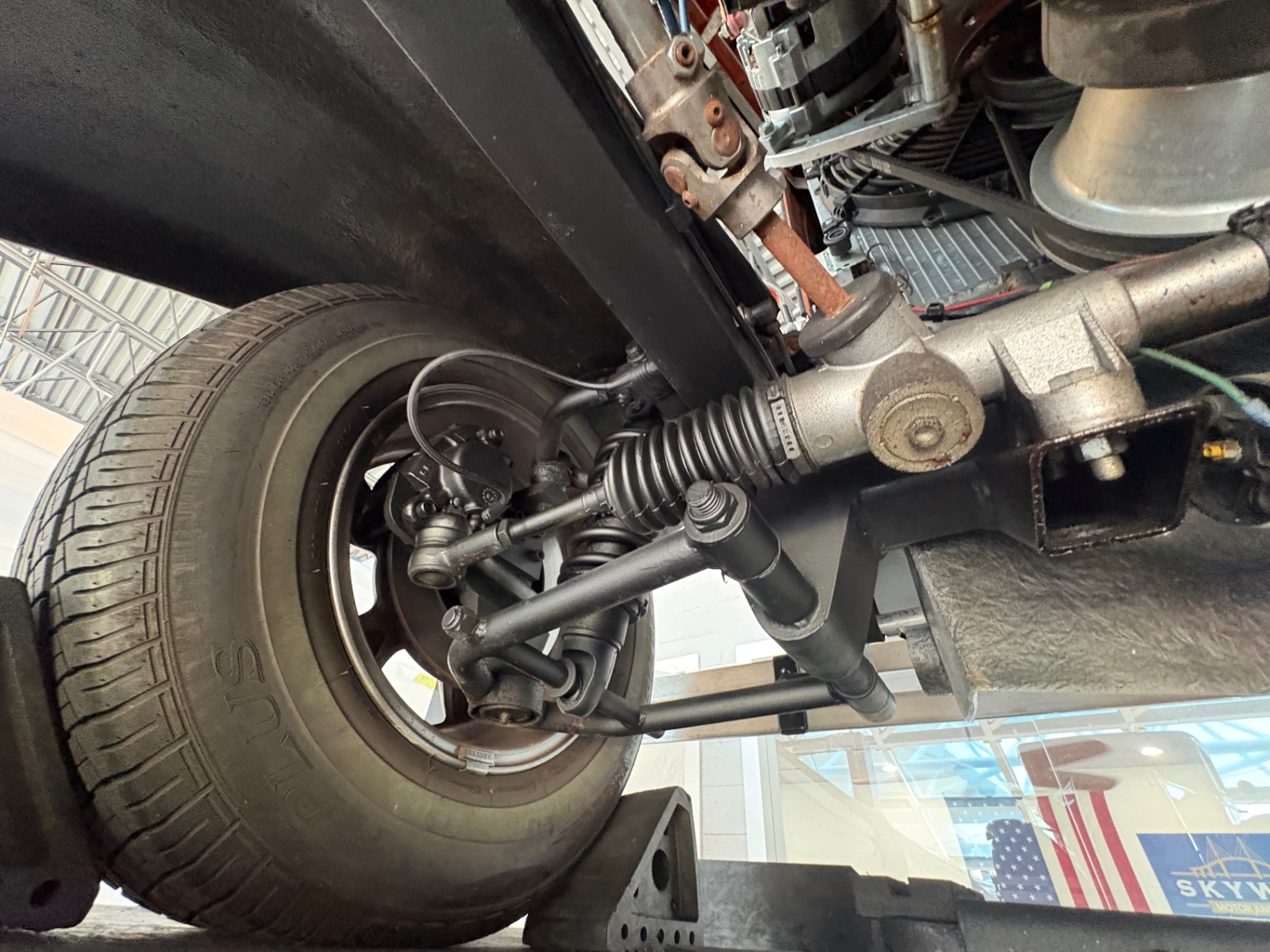
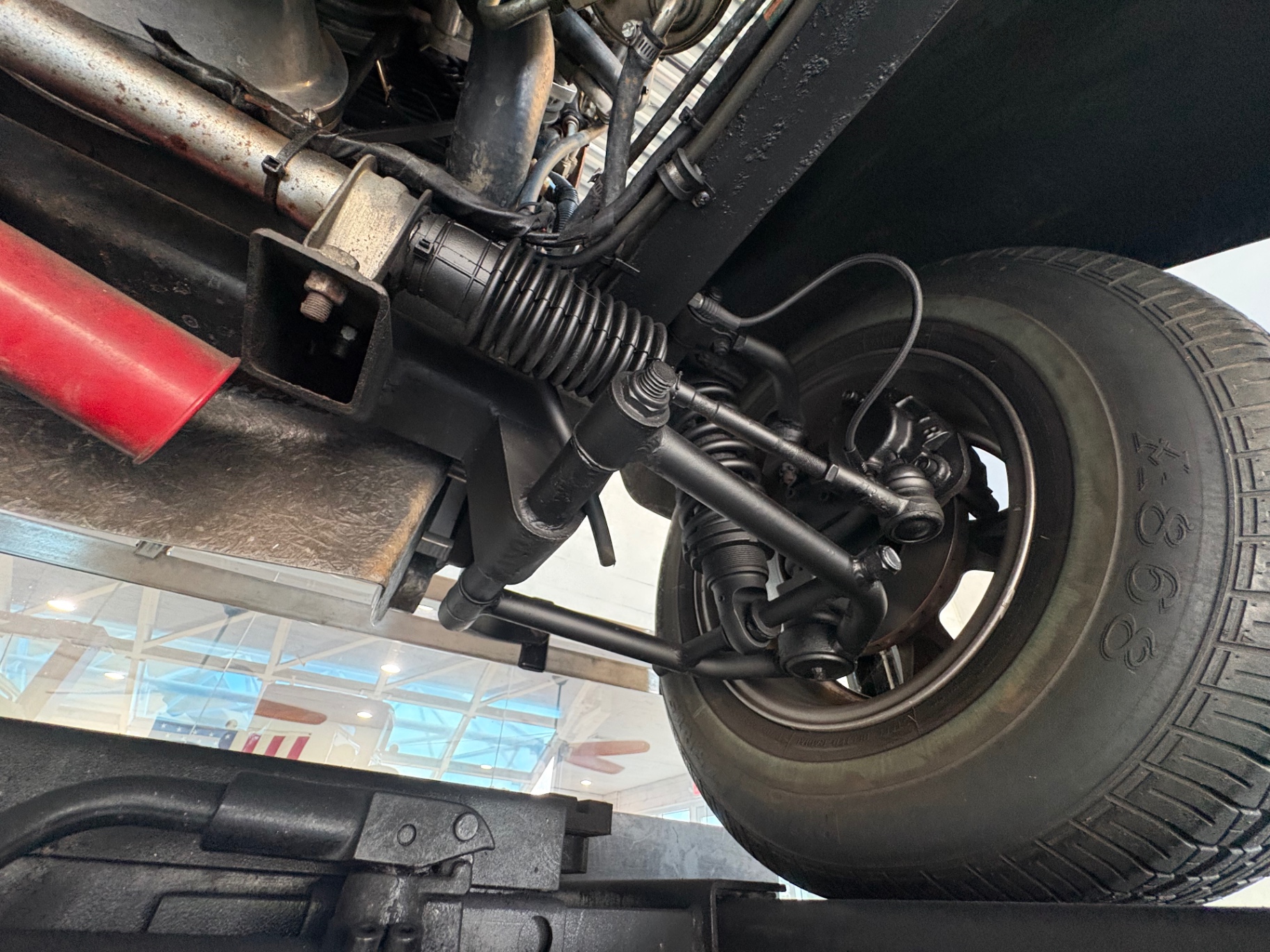
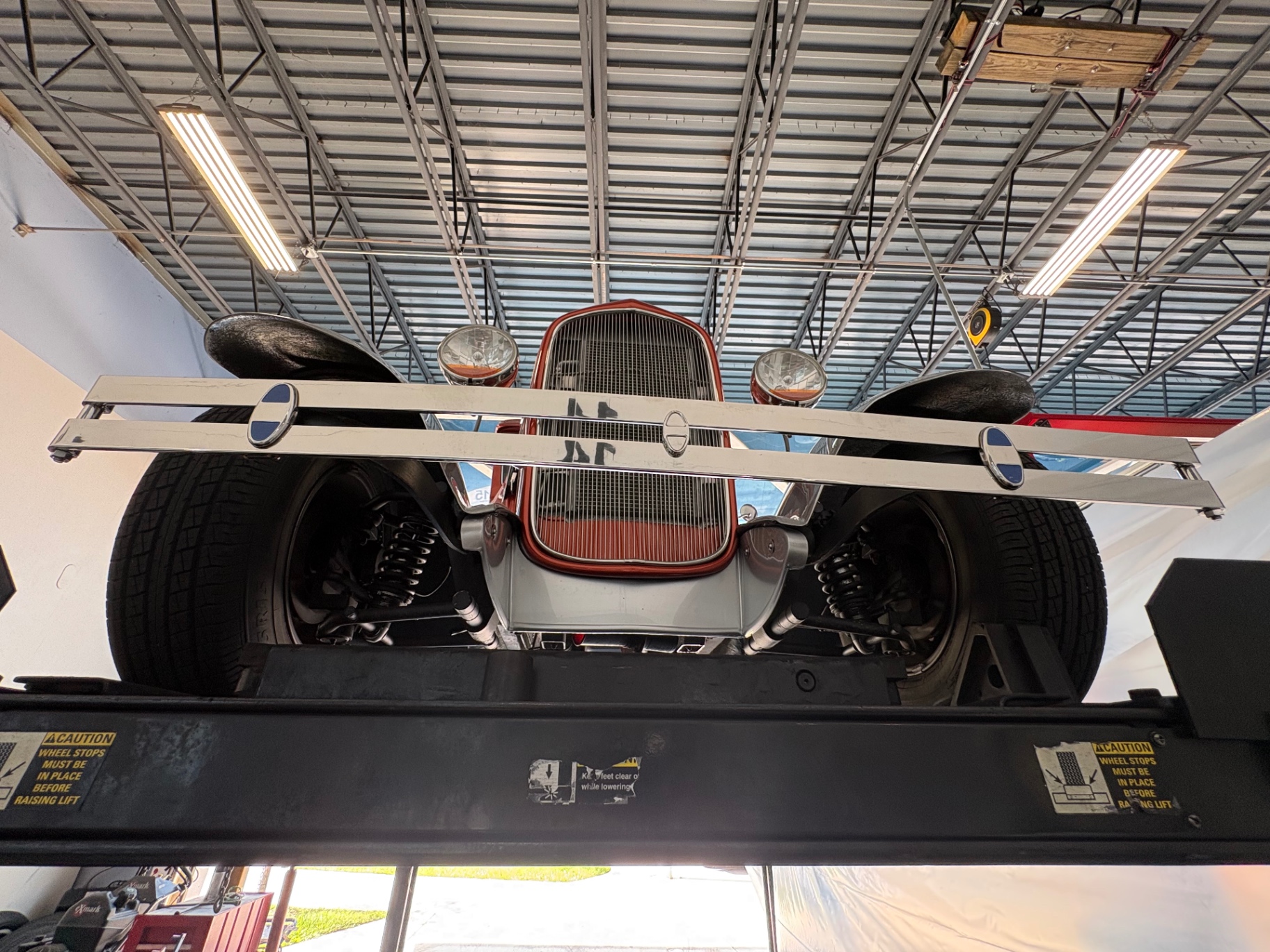
The chassis work is where this build earns real respect. The front suspension has been converted to an independent setup with coilover shocks, replacing the original solid axle arrangement. Steering is handled by a rack and pinion unit, which is a significant improvement over the original worm-and-sector box — the difference in road feel and precision is immediately noticeable. Front brakes are disc, rear are drum. These are the correct choices for a street-driven hot rod of this weight class: discs up front for the majority of braking force, drums in the rear to maintain bias balance. The rear axle is a solid unit, which is conventional and correct for this application. The underside of this truck has been photographed extensively on a lift, and what you see is a well-executed chassis build with no visible shortcuts.
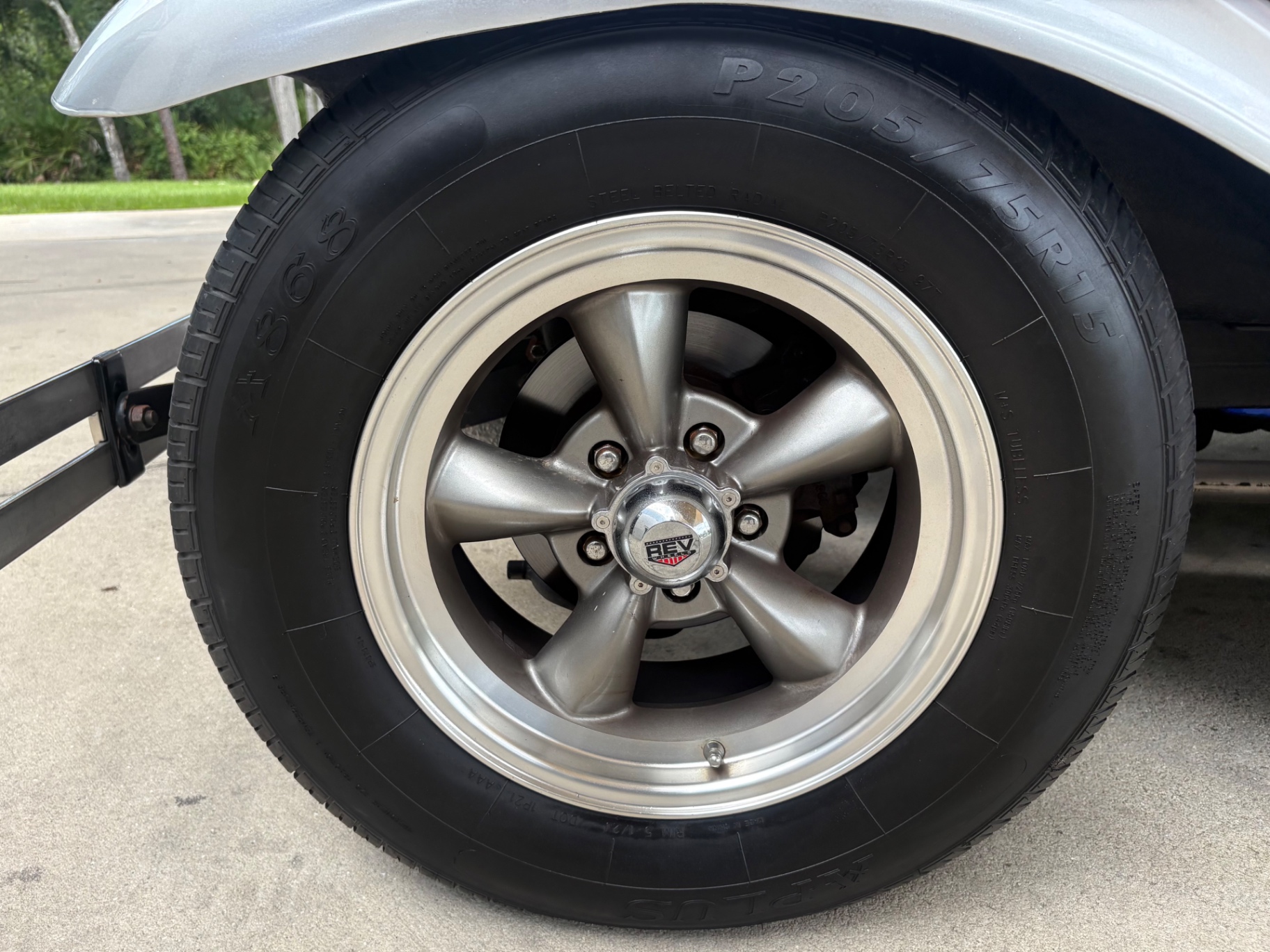
Wheels are Rev 15-inch 5-spoke alloys — a classic street rod wheel design that sits proportionally well under the early Ford body. Tires are P205/75R15, which gives the truck a traditional tall-sidewall profile that suits the era of the bodywork.
Interior
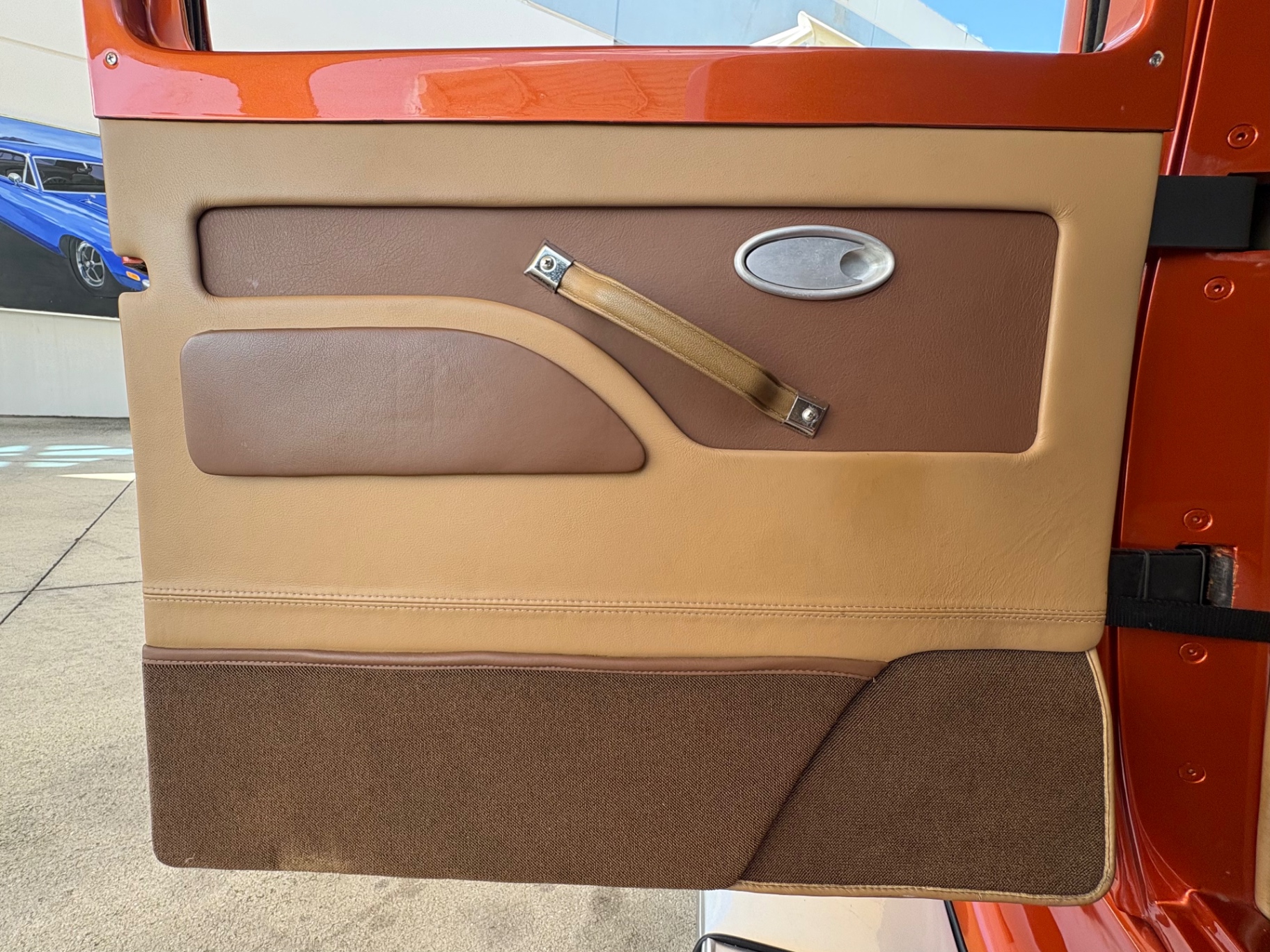
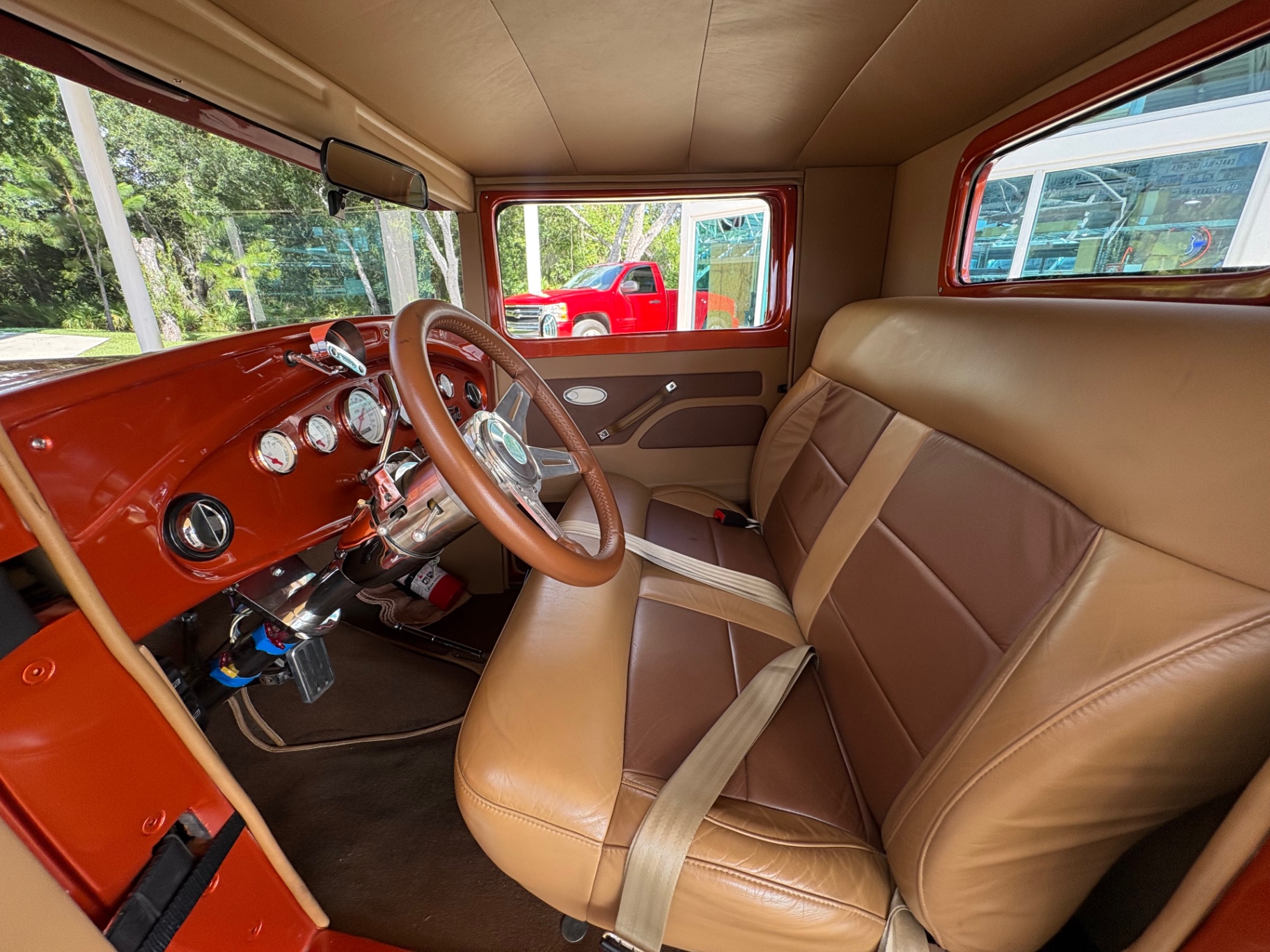
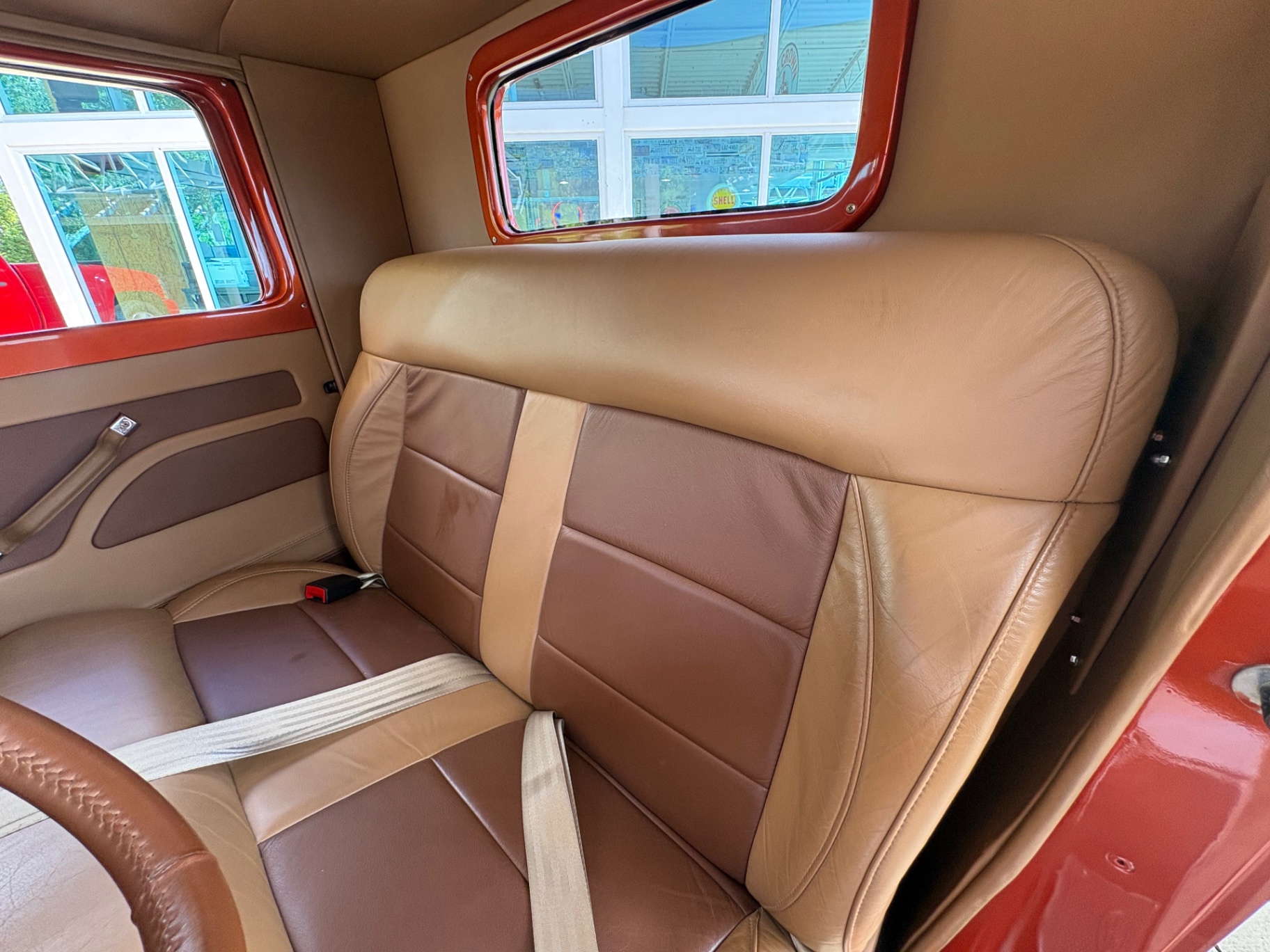
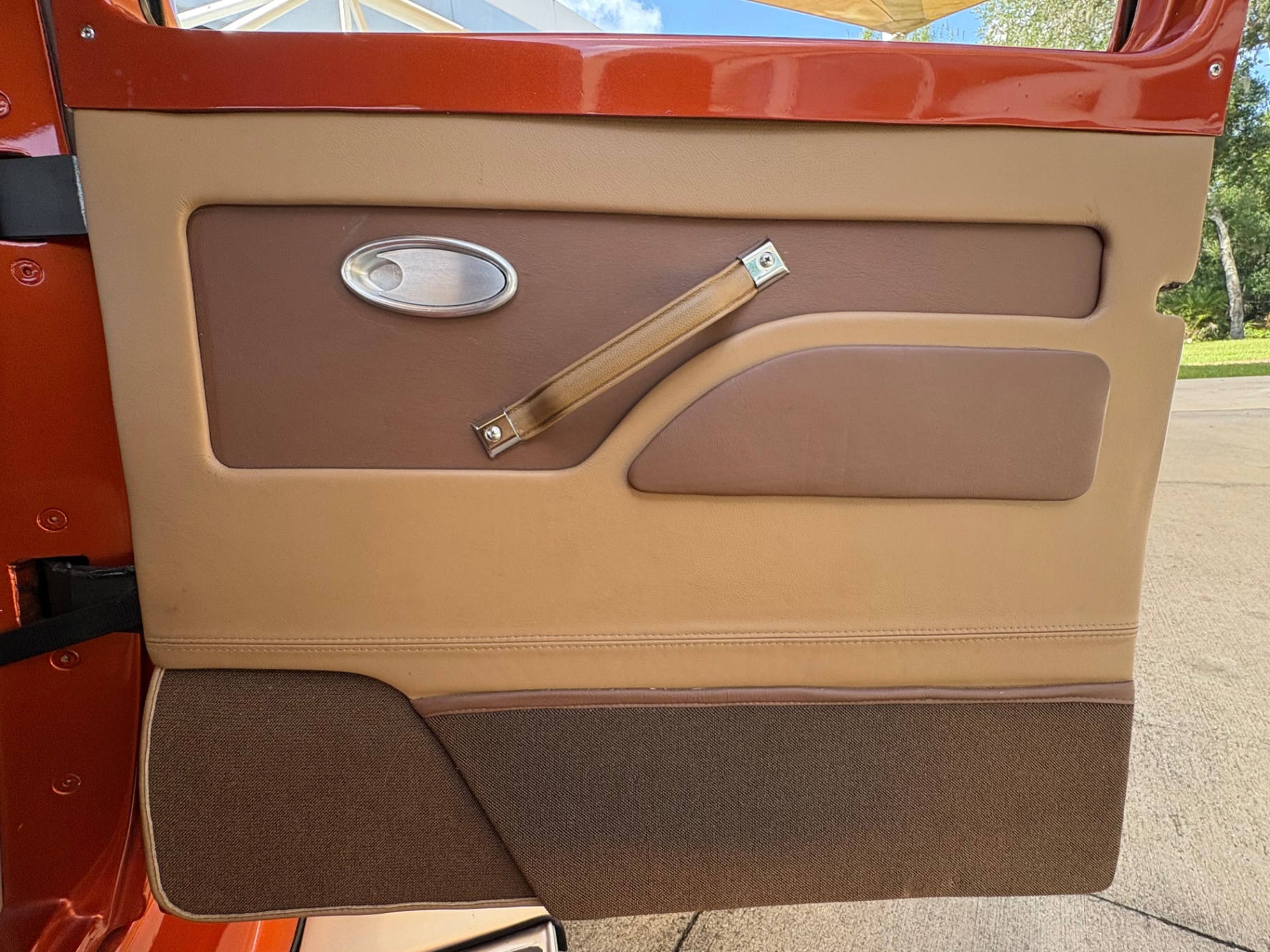
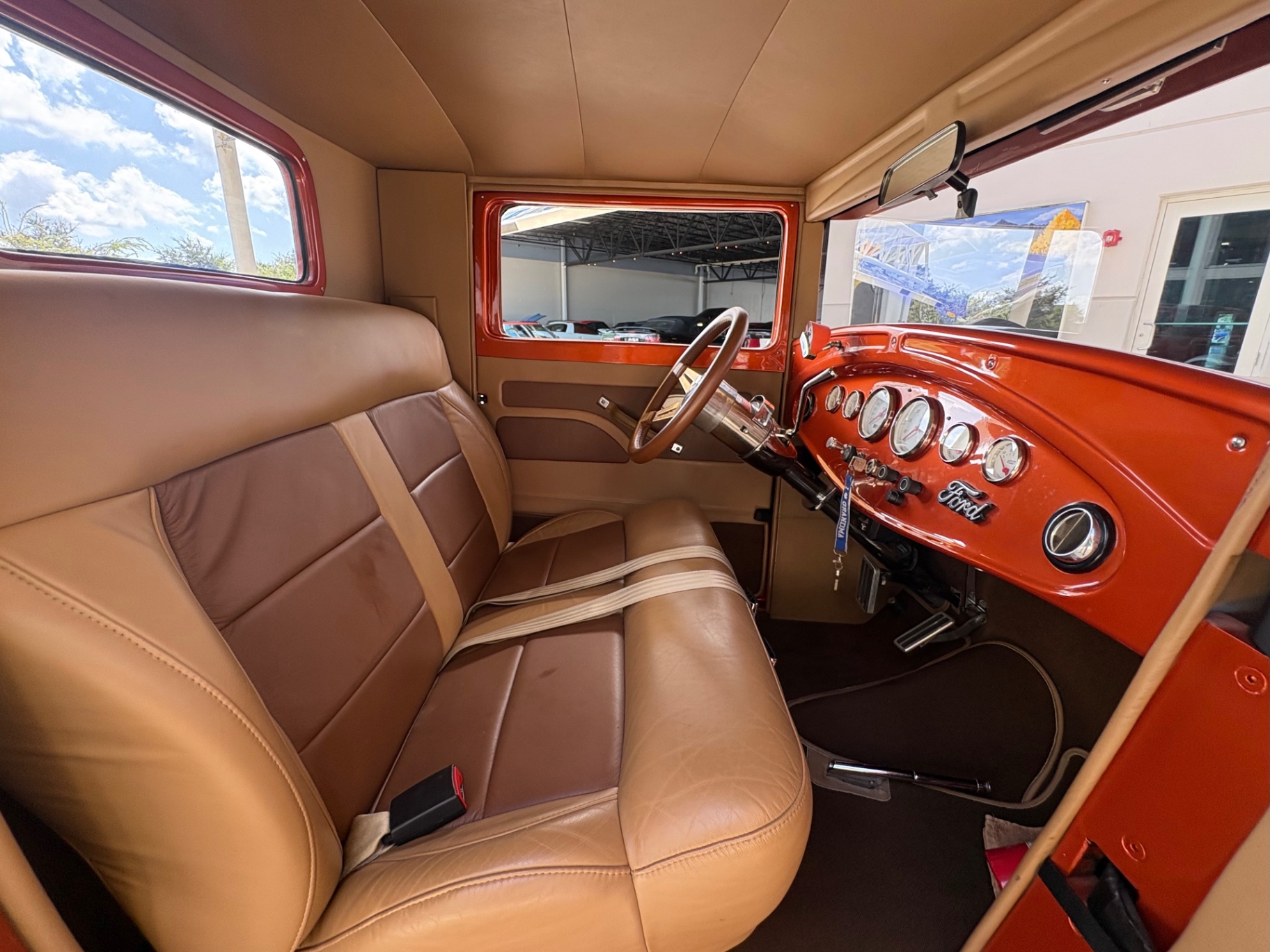
The interior of this 1930 Ford Model A Truck was built from scratch. The original Model A cab offered minimal comfort — a flat bench seat, a simple dashboard with a single gauge cluster, and no insulation to speak of. This build addresses all of that. The bench seat is upholstered in custom two-tone leather using tan and brown, with panel-stitched cushions front and back. The same tan and brown leather theme carries through to the door panels, which are custom fabricated with integrated pull handles and oval chrome door releases. The headliner is a padded unit finished in tan that matches the seat upholstery and quiets the cab considerably compared to a bare metal ceiling.
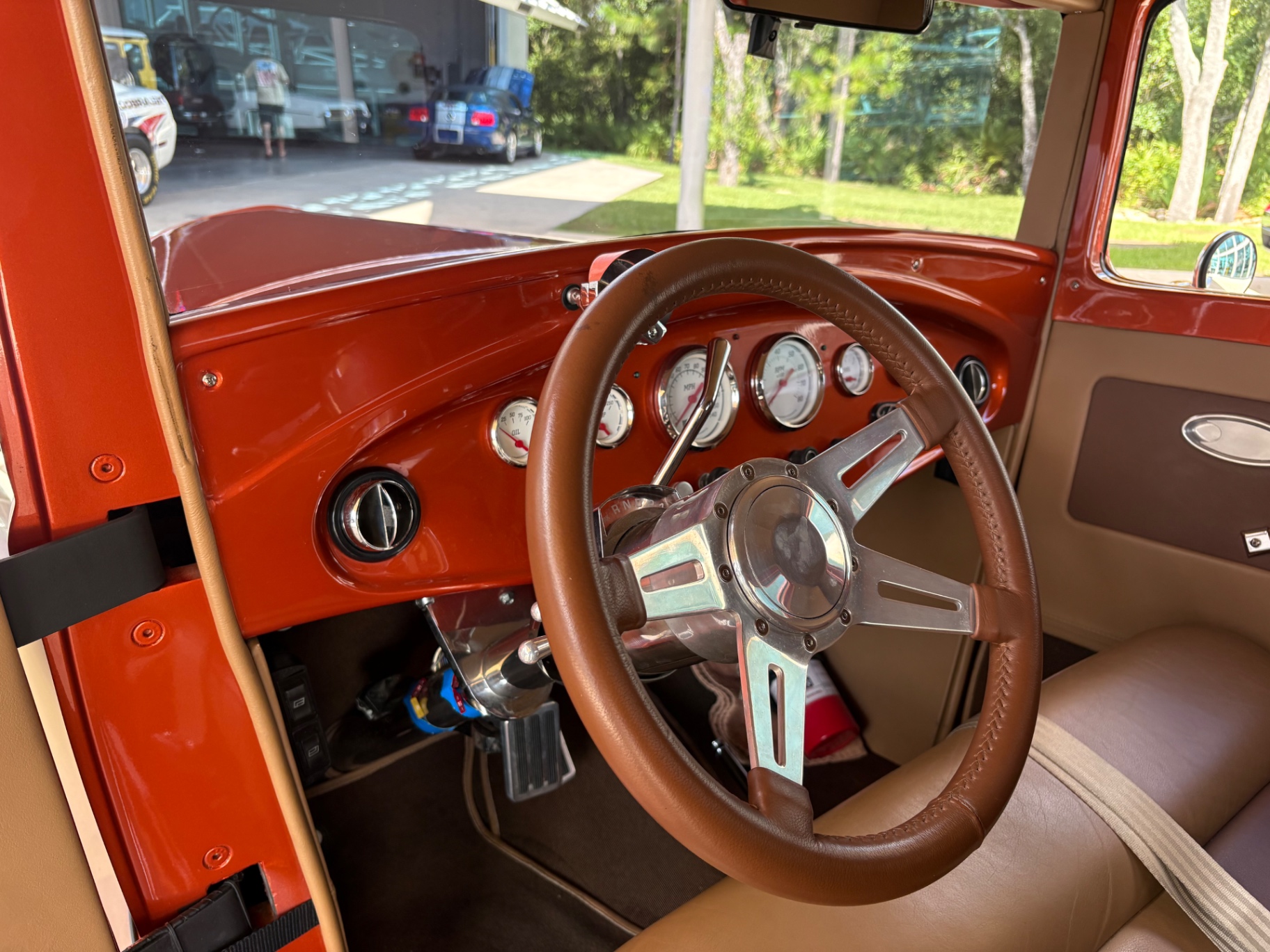
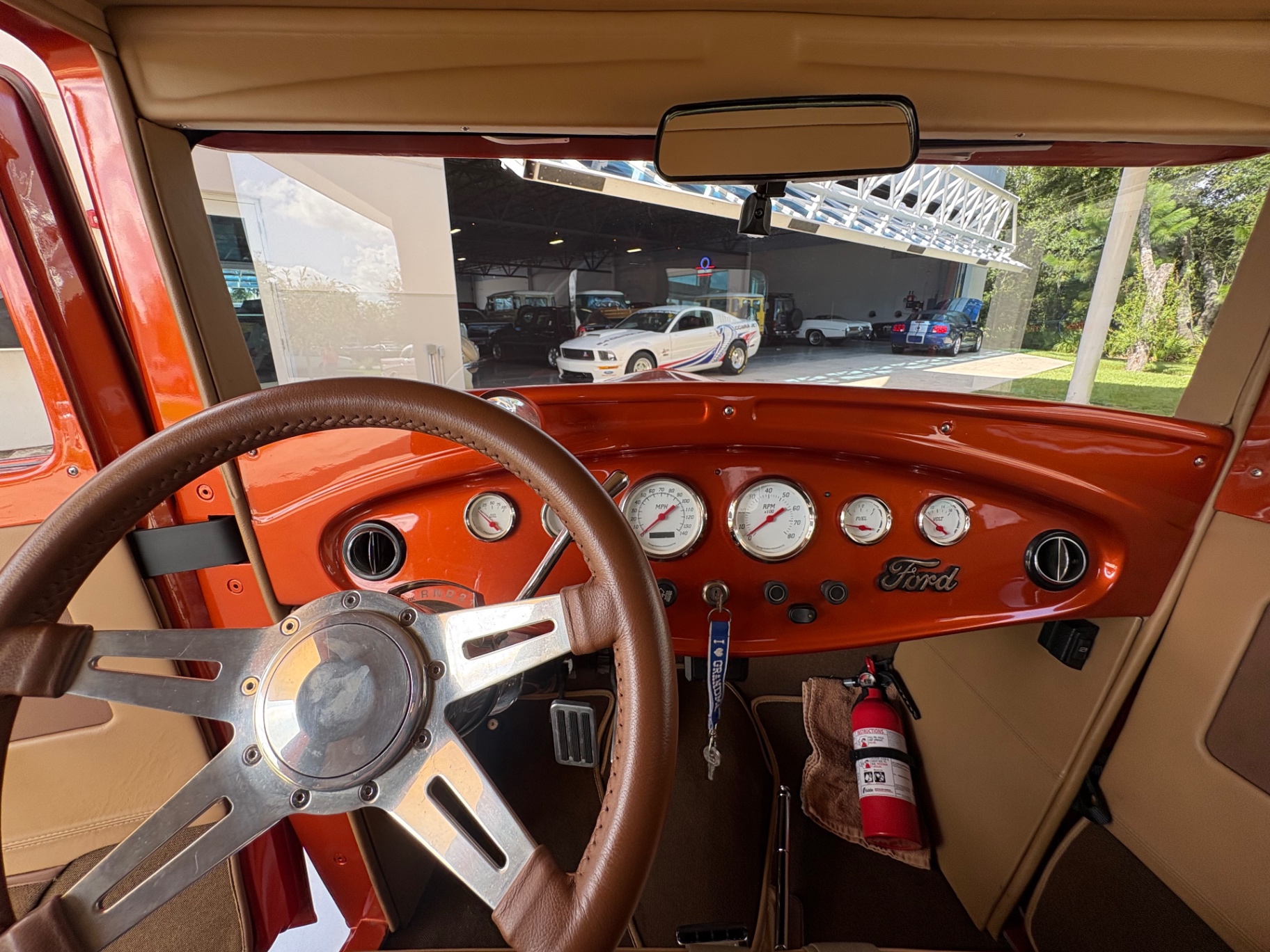
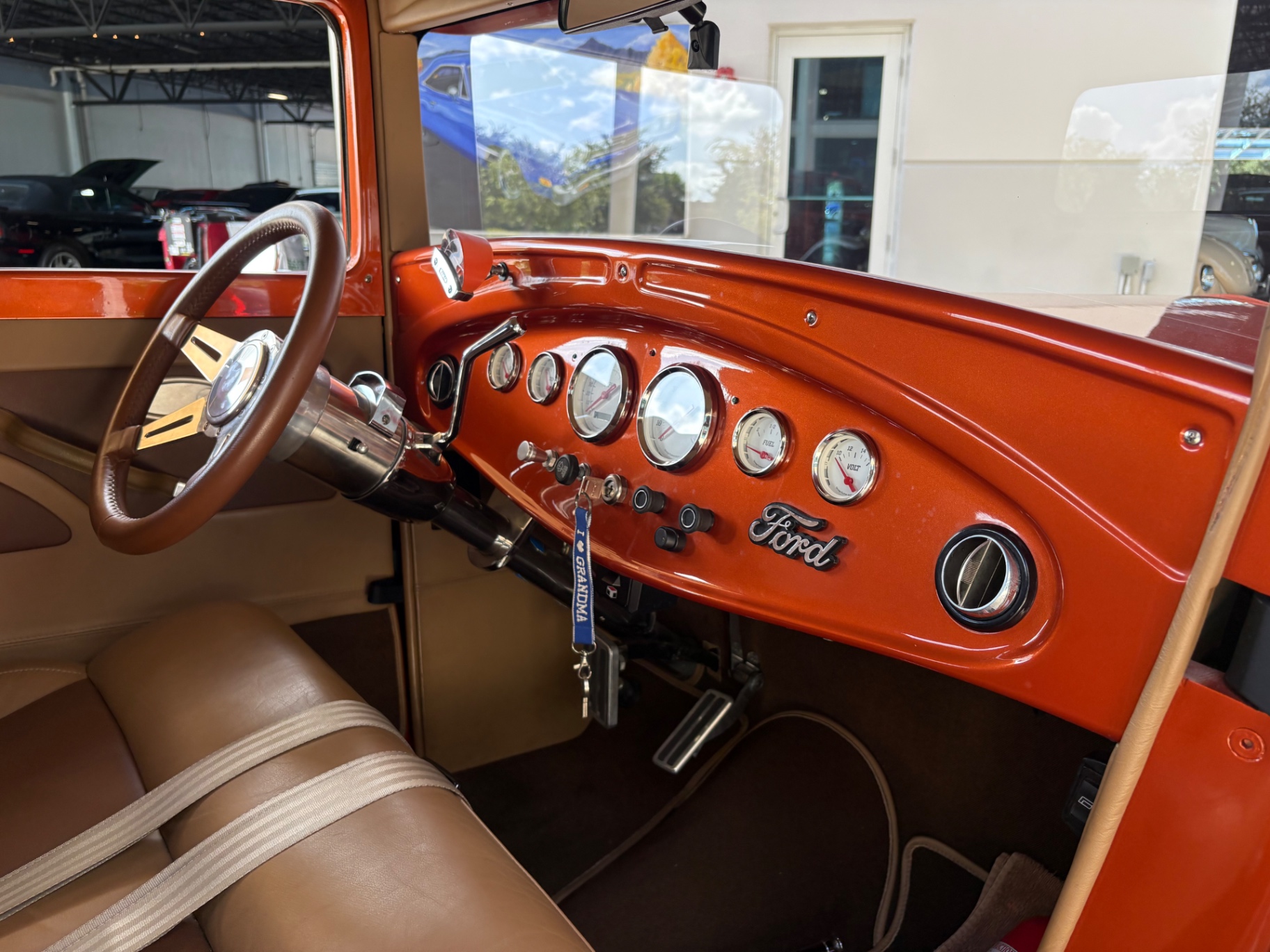
The dashboard retains its original 1930 Ford shape and is finished in the same burnt orange as the exterior, which gives it a cohesive, intentional look. A Ford script badge is mounted at the center of the dash — a correct and appreciated detail. Instrumentation has been upgraded to a multi-gauge cluster with a tachometer visible through the leather-wrapped steering wheel. The steering wheel itself is a custom piece with billet aluminum spokes and a leather rim that matches the brown used throughout the interior. The floor-mounted automatic shifter is positioned where a column shifter or stick would have originally been, keeping the floor clear. Seat belts are installed at both seating positions — a practical addition that matters when you are actually driving the truck.
The cab is small by modern standards — that is simply the reality of a 1930 Ford — but the execution of this interior makes it a genuinely pleasant place to spend time.
Exterior
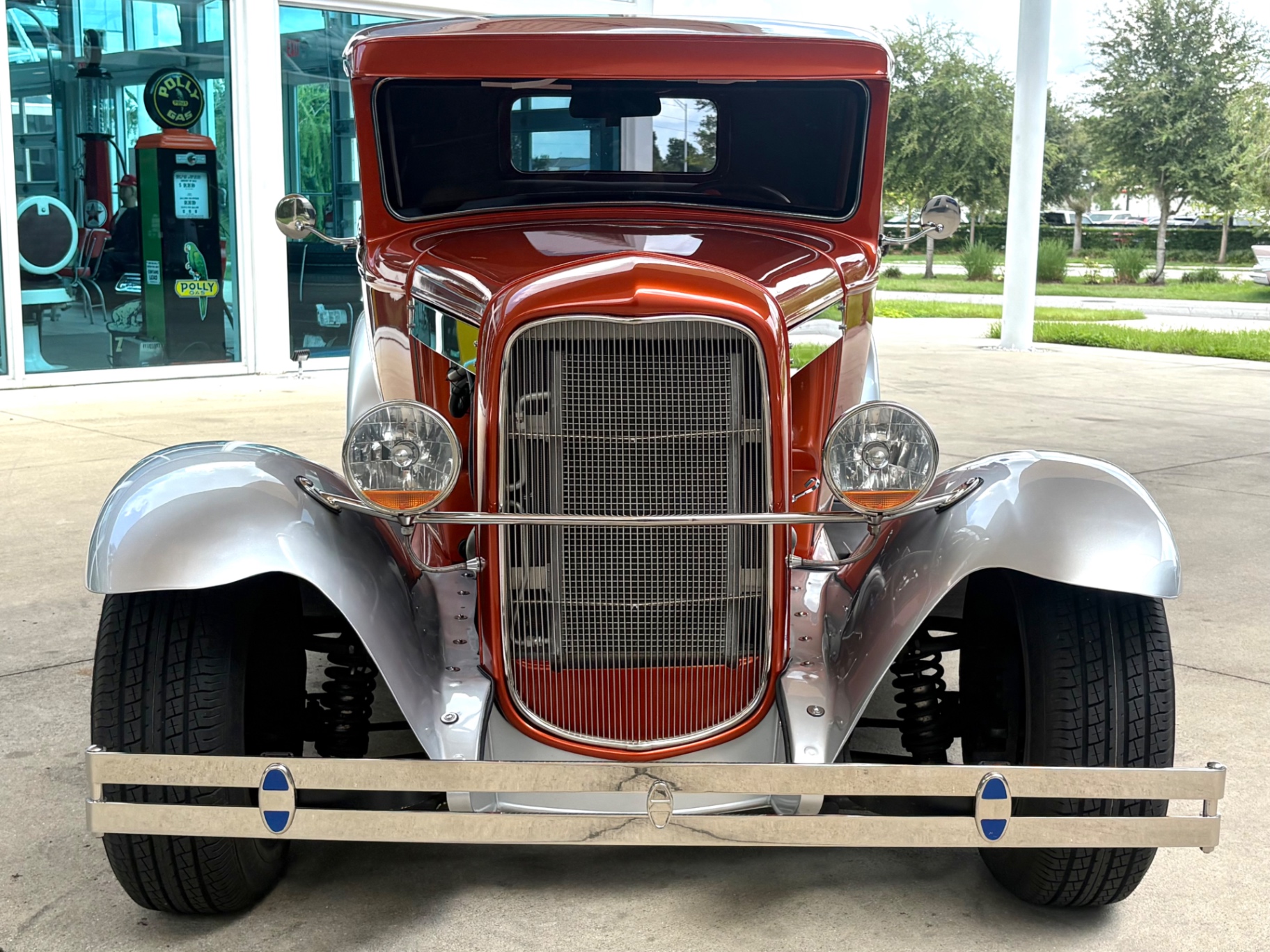
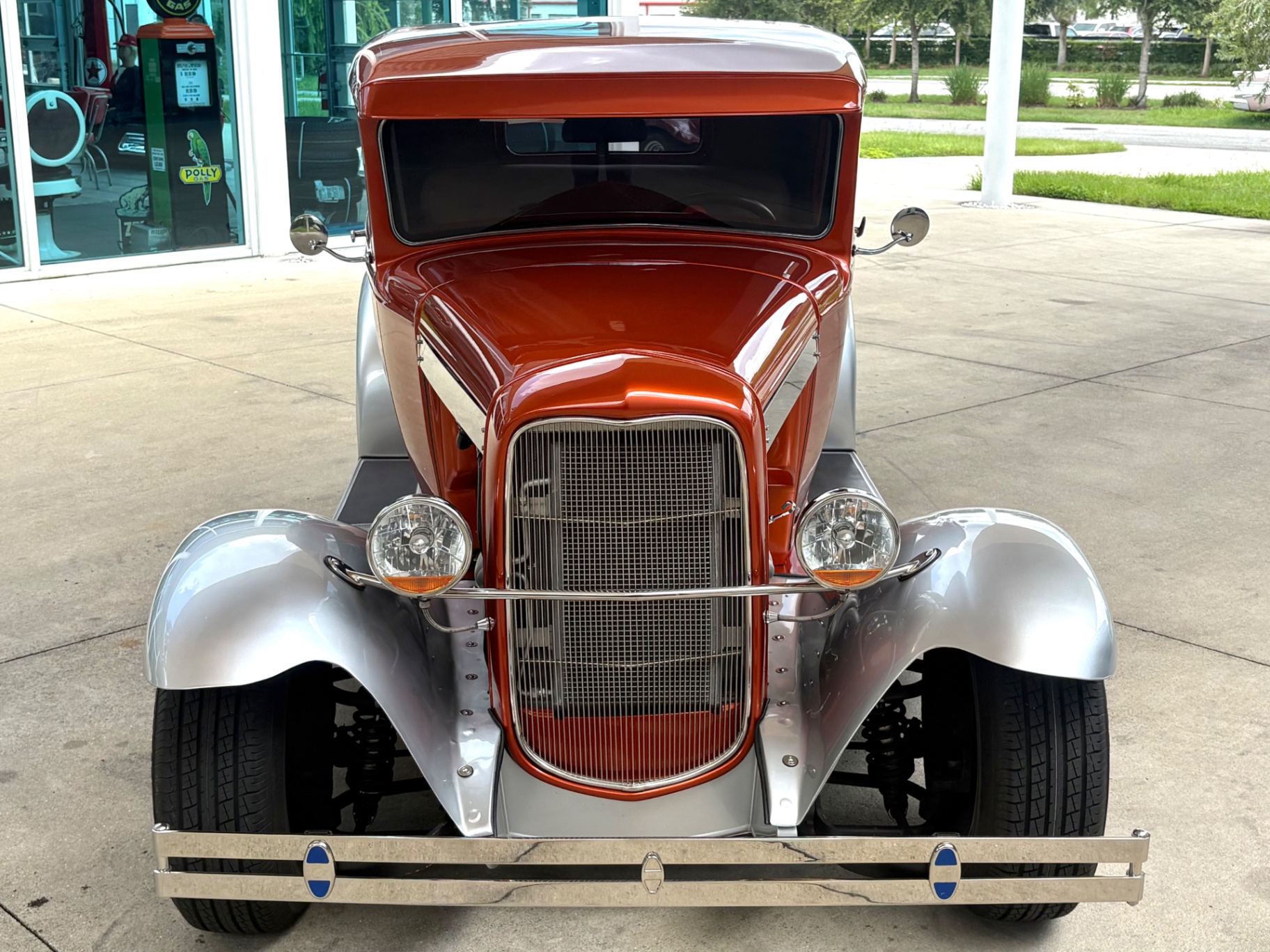
The body of this 1930 Ford Model A Truck is finished in burnt orange, a color that works with the proportions of the Model A cab and bed without trying too hard. The paint shows good depth and coverage throughout. The design decision to use polished aluminum fenders rather than painted fenders is one of the defining choices of this build. Aluminum fenders were not a factory option in 1930 — this is a hot rod interpretation — but the contrast between the polished silver fenders and the orange body is visually coherent and gives the truck a custom identity that is immediately recognizable. The fenders appear to be smooth and straight, consistent with the overall quality of the build.
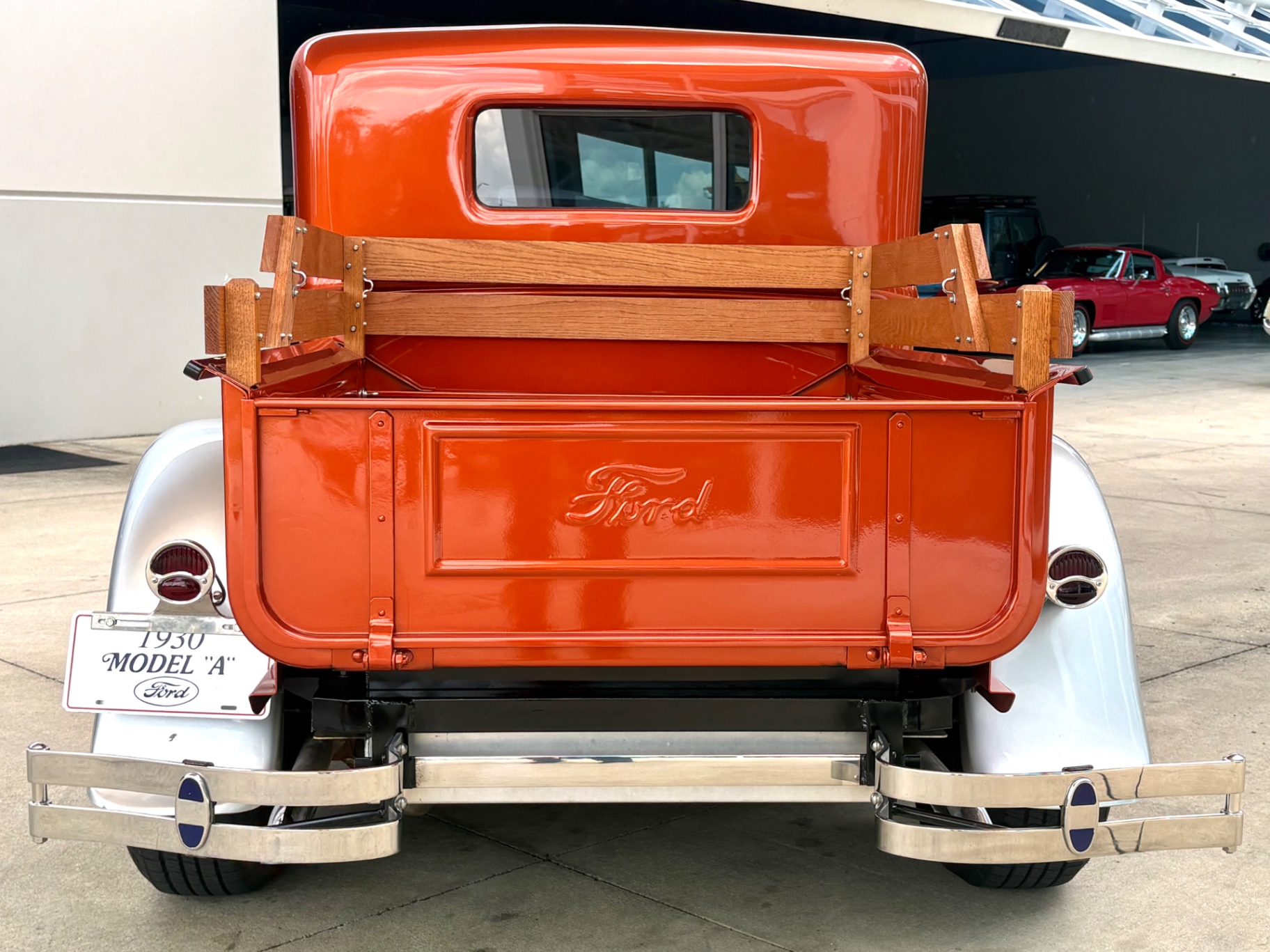
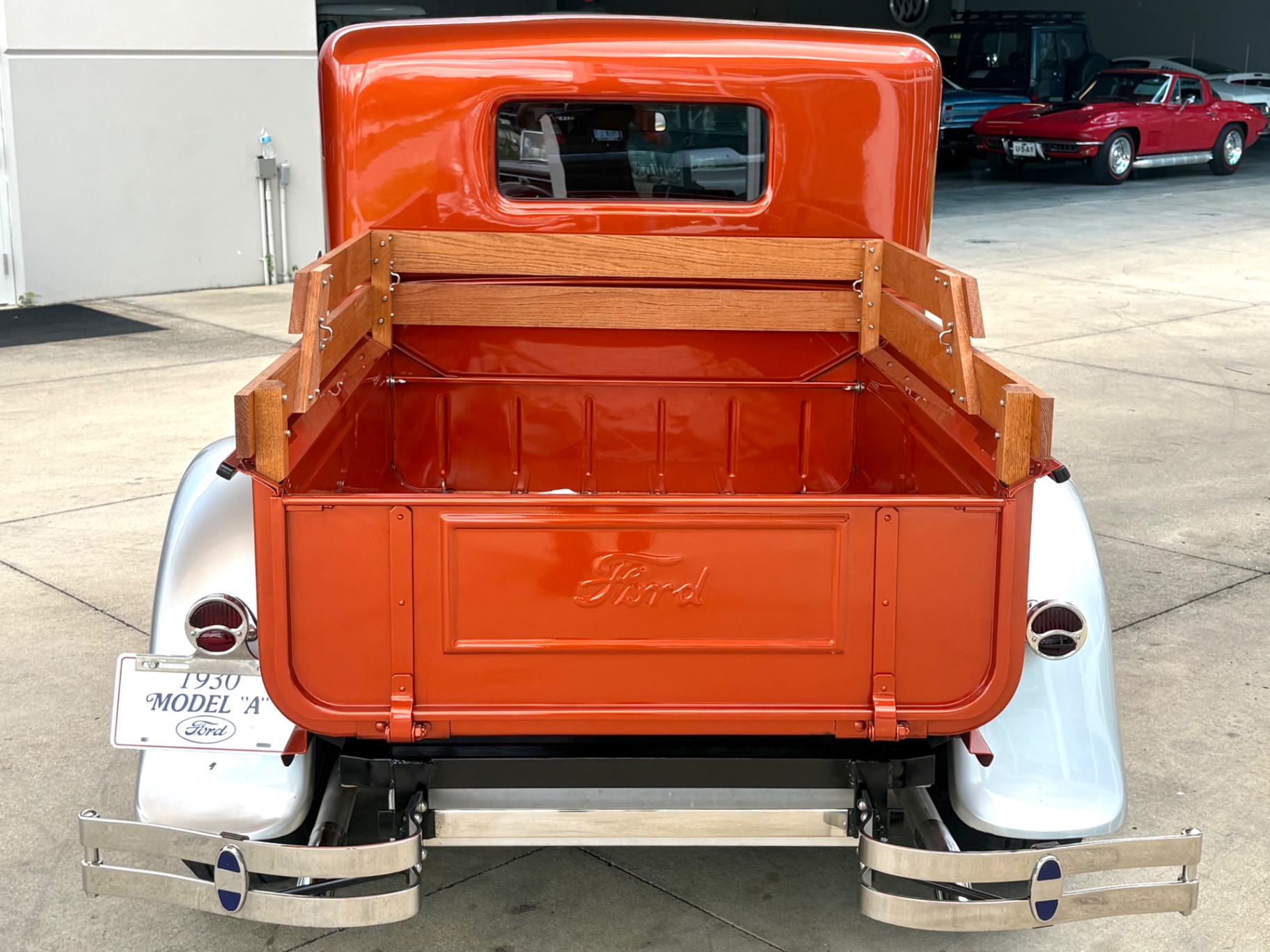
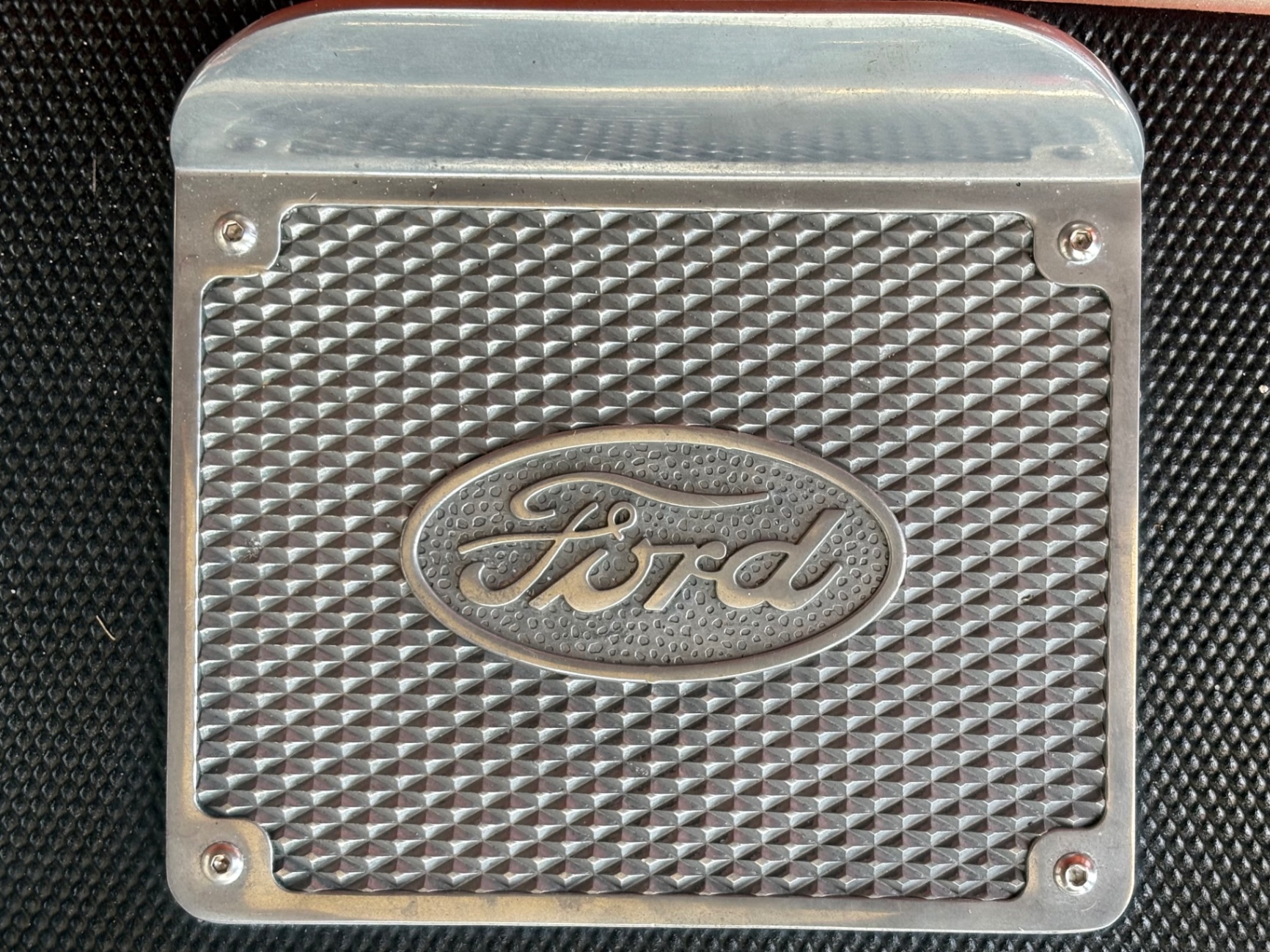
Chrome has been used selectively and effectively. The headlights are chrome-housed round units that fit the original mounting positions. Chrome cowl mirrors are mounted at the A-pillars in the correct location for a Model A truck. The front and rear bumpers are chrome, with the rear bumper flanking a painted tailgate that carries an embossed Ford script in relief — a period-correct detail that was original to the Model A commercial body. Running boards are in place with Ford step plates providing grip for entry, which is functionally important given the cab height. The wood bed floor and wood side rails are finished boards that maintain the traditional truck aesthetic while being practical and replaceable.
Viewed from underneath, the framerails have been finished and painted to match the body color — another indicator that attention was paid at every level of this build, not just the parts that are visible from the outside.
Conclusion
The 1930 Ford Model A Truck was built nearly a century ago as a practical vehicle for practical people. This custom hot rod build respects that heritage while making the truck genuinely usable on today's roads. The combination of a Goodwrench 350 V8, modern independent front suspension, coilover shocks, rack and pinion steering, and front disc brakes transforms the driving experience while keeping the exterior presentation authentic to the era. The interior craftsmanship is above average for a build of this type, and the exterior details — polished aluminum fenders, chrome brightwork, embossed Ford tailgate — reflect a consistent vision rather than a collection of parts. If you have been looking for a 1930 Ford Model A hot rod truck that drives as well as it looks, this is a serious candidate.
To ask questions or schedule a time to see this 1930 Ford Model A Truck in person, call Skyway Classics at 941-254-6608.
Disclaimer
Information found on the website is presented as given to us by the owner of the car, whether on consignment or from the owner we bought it from. Some Photos, materials for videos, descriptions and other information are provided by the consignor/seller and is deemed reliable, but Skyway Classics does not warranty or guarantee this information. Skyway Classics is not responsible for information that may incorrect or a publishing error. The decision to purchase should be based solely on the buyers personal inspection of the vehicle or by a professional inspection service prior to offer or purchase being made.
1930 Ford Model A Truck — Custom Hot Rod Build with Goodwrench 350 V8
Why This Car Is Special
The 1930 Ford Model A Truck occupies a unique place in hot rod history. Ford introduced the Model A in 1927 as the direct successor to the legendary Model T, and by 1930 the platform had matured into one of the most capable and recognizable vehicles on American roads. The Model A truck variant — built on the same 103.5-inch wheelbase chassis as the passenger cars — was a working-class workhorse during the Great Depression, and its simple, sturdy construction made it a natural candidate for modification. Decades later, these trucks became cornerstones of the American hot rod movement precisely because of that simplicity. The body lines are clean and purposeful, the proportions are right, and the cab sits low enough over a modern chassis to look factory-built when the work is done well.
This particular 1930 Ford Model A Truck is a full custom hot rod build that takes the right approach: period-correct aesthetics on the outside, thoroughly modern mechanicals underneath. The burnt orange exterior paint works with the polished aluminum fenders and chrome brightwork to give the truck a look that reads as both vintage and intentional. This is not a trailer queen built for show points. It is a built and driven truck with real upgrades throughout — suspension, drivetrain, brakes, interior, and body — that make it comfortable and reliable to drive on modern roads.
Ford produced over 1.3 million Model A vehicles in 1930, but the percentage that survived into the 21st century in any form is a small fraction of that number. Survivors built to this level of quality are considerably rarer still.
Features List
- Goodwrench 350 5.7L V8 engine swap
- Four-barrel carburetor
- Headers installed
- Dual exhaust with dual rear exits
- Automatic transmission
- Floor-mounted shifter
- Independent front suspension with coilovers
- Rack and pinion steering
- Front disc brakes
- Rear drum brakes
- Solid rear axle
- Rev 15-inch 5-spoke alloy wheels
- P205/75R15 tires
- Taylor Hi-Energy spark plug wires
- Custom tan and brown leather interior
- Custom leather door panels
- Padded custom headliner
- Multi-gauge instrument cluster with tachometer
- Ford script dash badge
- Custom leather-wrapped steering wheel
- Seat belts installed
- Wood bed floor
- Wood bed side rails
- Running boards with Ford step plates
- Chrome cowl mirrors
- Chrome headlights
- Chrome front and rear bumpers
- Polished aluminum fenders
- Burnt orange exterior paint
Mechanical
The engine under the hood is a GM Goodwrench 350 — a 5.7-liter small-block V8 that GM sold as a factory replacement crate engine through its Goodwrench service program. These engines were built to OEM tolerances on GM production equipment, making them a known quantity: consistent, well-documented, and supported by decades of aftermarket parts availability. The Goodwrench 350 was a popular choice for hot rod builds throughout the 1980s and 1990s for exactly those reasons. It is fed through a four-barrel carburetor and breathes through a set of headers that feed into a dual exhaust system with tips exiting at each rear corner — a clean, symmetrical setup that gives the truck an exhaust note appropriate to the displacement. Taylor Hi-Energy spark plug wires keep the ignition side dialed in.
Behind the engine sits an automatic transmission controlled by a floor-mounted shifter, which keeps the interior layout clean and makes the truck accessible to a wider range of drivers.
The chassis work is where this build earns real respect. The front suspension has been converted to an independent setup with coilover shocks, replacing the original solid axle arrangement. Steering is handled by a rack and pinion unit, which is a significant improvement over the original worm-and-sector box — the difference in road feel and precision is immediately noticeable. Front brakes are disc, rear are drum. These are the correct choices for a street-driven hot rod of this weight class: discs up front for the majority of braking force, drums in the rear to maintain bias balance. The rear axle is a solid unit, which is conventional and correct for this application. The underside of this truck has been photographed extensively on a lift, and what you see is a well-executed chassis build with no visible shortcuts.
Wheels are Rev 15-inch 5-spoke alloys — a classic street rod wheel design that sits proportionally well under the early Ford body. Tires are P205/75R15, which gives the truck a traditional tall-sidewall profile that suits the era of the bodywork.
Interior
The interior of this 1930 Ford Model A Truck was built from scratch. The original Model A cab offered minimal comfort — a flat bench seat, a simple dashboard with a single gauge cluster, and no insulation to speak of. This build addresses all of that. The bench seat is upholstered in custom two-tone leather using tan and brown, with panel-stitched cushions front and back. The same tan and brown leather theme carries through to the door panels, which are custom fabricated with integrated pull handles and oval chrome door releases. The headliner is a padded unit finished in tan that matches the seat upholstery and quiets the cab considerably compared to a bare metal ceiling.
The dashboard retains its original 1930 Ford shape and is finished in the same burnt orange as the exterior, which gives it a cohesive, intentional look. A Ford script badge is mounted at the center of the dash — a correct and appreciated detail. Instrumentation has been upgraded to a multi-gauge cluster with a tachometer visible through the leather-wrapped steering wheel. The steering wheel itself is a custom piece with billet aluminum spokes and a leather rim that matches the brown used throughout the interior. The floor-mounted automatic shifter is positioned where a column shifter or stick would have originally been, keeping the floor clear. Seat belts are installed at both seating positions — a practical addition that matters when you are actually driving the truck.
The cab is small by modern standards — that is simply the reality of a 1930 Ford — but the execution of this interior makes it a genuinely pleasant place to spend time.
Exterior
The body of this 1930 Ford Model A Truck is finished in burnt orange, a color that works with the proportions of the Model A cab and bed without trying too hard. The paint shows good depth and coverage throughout. The design decision to use polished aluminum fenders rather than painted fenders is one of the defining choices of this build. Aluminum fenders were not a factory option in 1930 — this is a hot rod interpretation — but the contrast between the polished silver fenders and the orange body is visually coherent and gives the truck a custom identity that is immediately recognizable. The fenders appear to be smooth and straight, consistent with the overall quality of the build.
Chrome has been used selectively and effectively. The headlights are chrome-housed round units that fit the original mounting positions. Chrome cowl mirrors are mounted at the A-pillars in the correct location for a Model A truck. The front and rear bumpers are chrome, with the rear bumper flanking a painted tailgate that carries an embossed Ford script in relief — a period-correct detail that was original to the Model A commercial body. Running boards are in place with Ford step plates providing grip for entry, which is functionally important given the cab height. The wood bed floor and wood side rails are finished boards that maintain the traditional truck aesthetic while being practical and replaceable.
Viewed from underneath, the framerails have been finished and painted to match the body color — another indicator that attention was paid at every level of this build, not just the parts that are visible from the outside.
Conclusion
The 1930 Ford Model A Truck was built nearly a century ago as a practical vehicle for practical people. This custom hot rod build respects that heritage while making the truck genuinely usable on today's roads. The combination of a Goodwrench 350 V8, modern independent front suspension, coilover shocks, rack and pinion steering, and front disc brakes transforms the driving experience while keeping the exterior presentation authentic to the era. The interior craftsmanship is above average for a build of this type, and the exterior details — polished aluminum fenders, chrome brightwork, embossed Ford tailgate — reflect a consistent vision rather than a collection of parts. If you have been looking for a 1930 Ford Model A hot rod truck that drives as well as it looks, this is a serious candidate.
To ask questions or schedule a time to see this 1930 Ford Model A Truck in person, call Skyway Classics at 941-254-6608.
Disclaimer
Information found on the website is presented as given to us by the owner of the car, whether on consignment or from the owner we bought it from. Some Photos, materials for videos, descriptions and other information are provided by the consignor/seller and is deemed reliable, but Skyway Classics does not warranty or guarantee this information. Skyway Classics is not responsible for information that may incorrect or a publishing error. The decision to purchase should be based solely on the buyers personal inspection of the vehicle or by a professional inspection service prior to offer or purchase being made.
1930 Ford
Model A Custom
Why Choose Skyway Classics?
Explore our curated inventory of classic and collector cars—thoughtfully selected, ready to drive, and supported by experts who make ownership simple.
Expert Curation
Every vehicle is hand-selected by our experts for quality, authenticity, and investment potential.
Fast Transactions
Streamlined buying and selling process with quick financing and immediate delivery options.
Only National Dealer With Classic Service & Repair
We’re the only national dealership that services and repairs the classics we sell—before and after the sale.
Nationwide Network
Access to our extensive network of collectors, restorers, and classic car enthusiasts nationwide.
Concierge Ownership Support
From financing and insurance to paperwork, shipping, and titling—we handle the details so you can enjoy the drive.
Passion-Driven Service
We're classic car enthusiasts first, providing personalized service with genuine passion for the hobby.