
1938 Chevrolet
Master Business Coupe
1938 Chevrolet Master Business Coupe — Rust-Free Survivor with Factory-Correct Restoration and Period Accessories
Why This Car Is Special
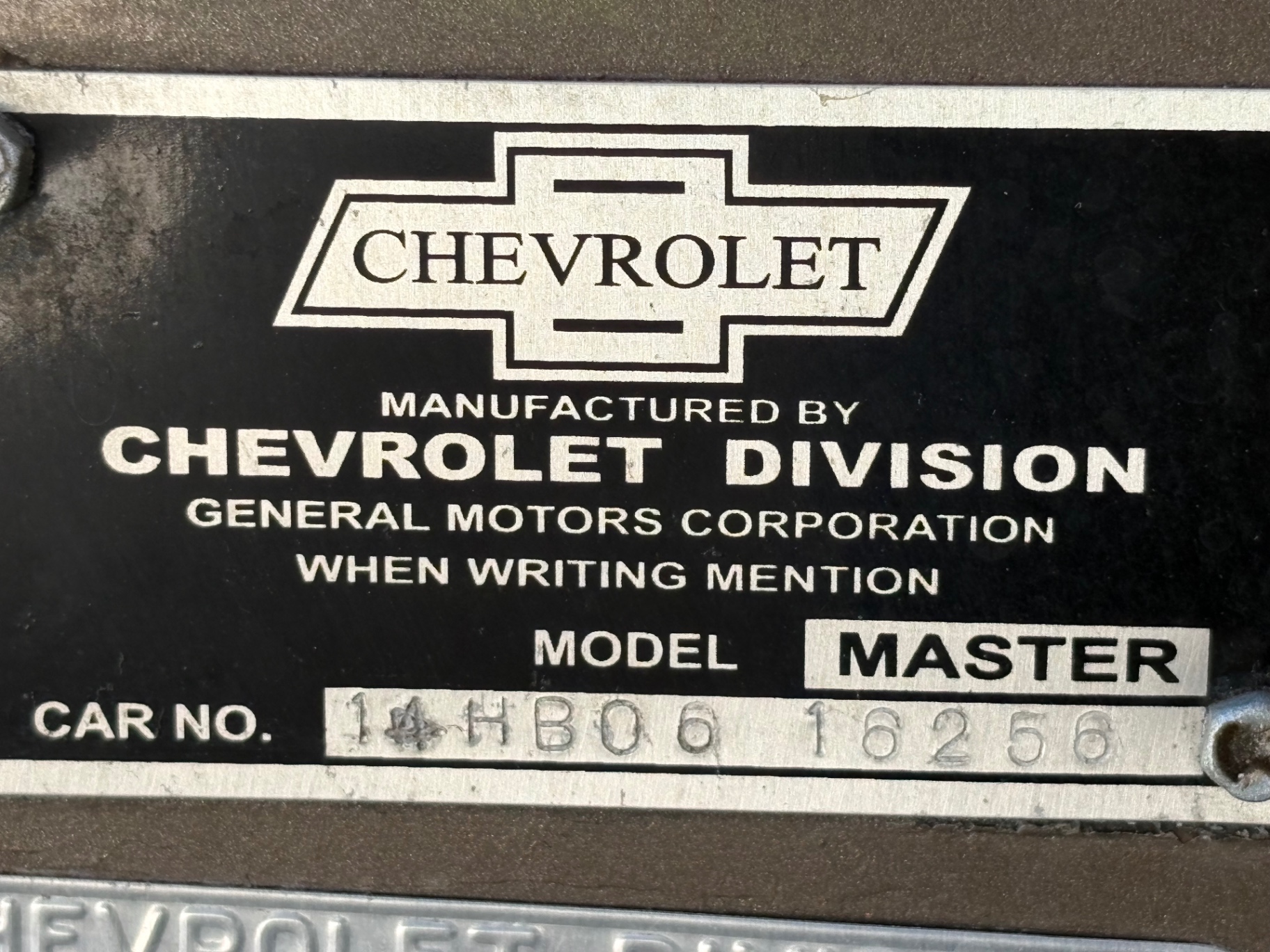
The 1938 Chevrolet Master Business Coupe is not a car you see at every show. It was the no-frills workhorse of the Master series lineup — no rear seat in the standard configuration, more trunk space, and a price point that made it accessible to small business owners and tradesmen during the tail end of the Great Depression. Chevrolet built the 1938 Master series on a longer 112.3-inch wheelbase than its cheaper Master 85 sibling, and the body was penned under the direction of GM's Art and Colour Section with input from Harley Earl's team. The result was some of the most cohesive pre-war American styling ever put into production — a fully integrated pontoon fender design, a waterfall grille with vertical chrome bars, and a roofline that flowed rearward in a single smooth arc.
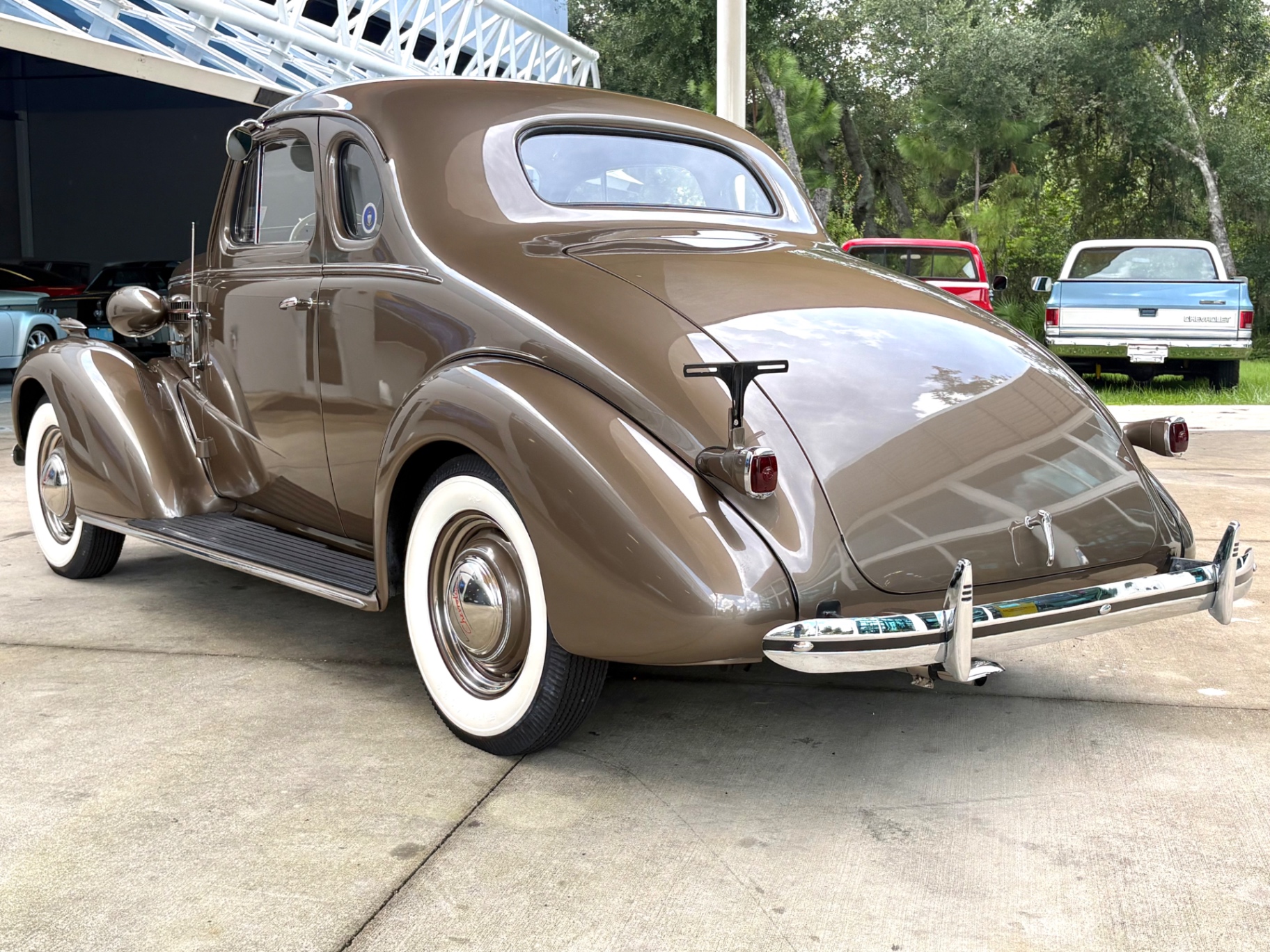
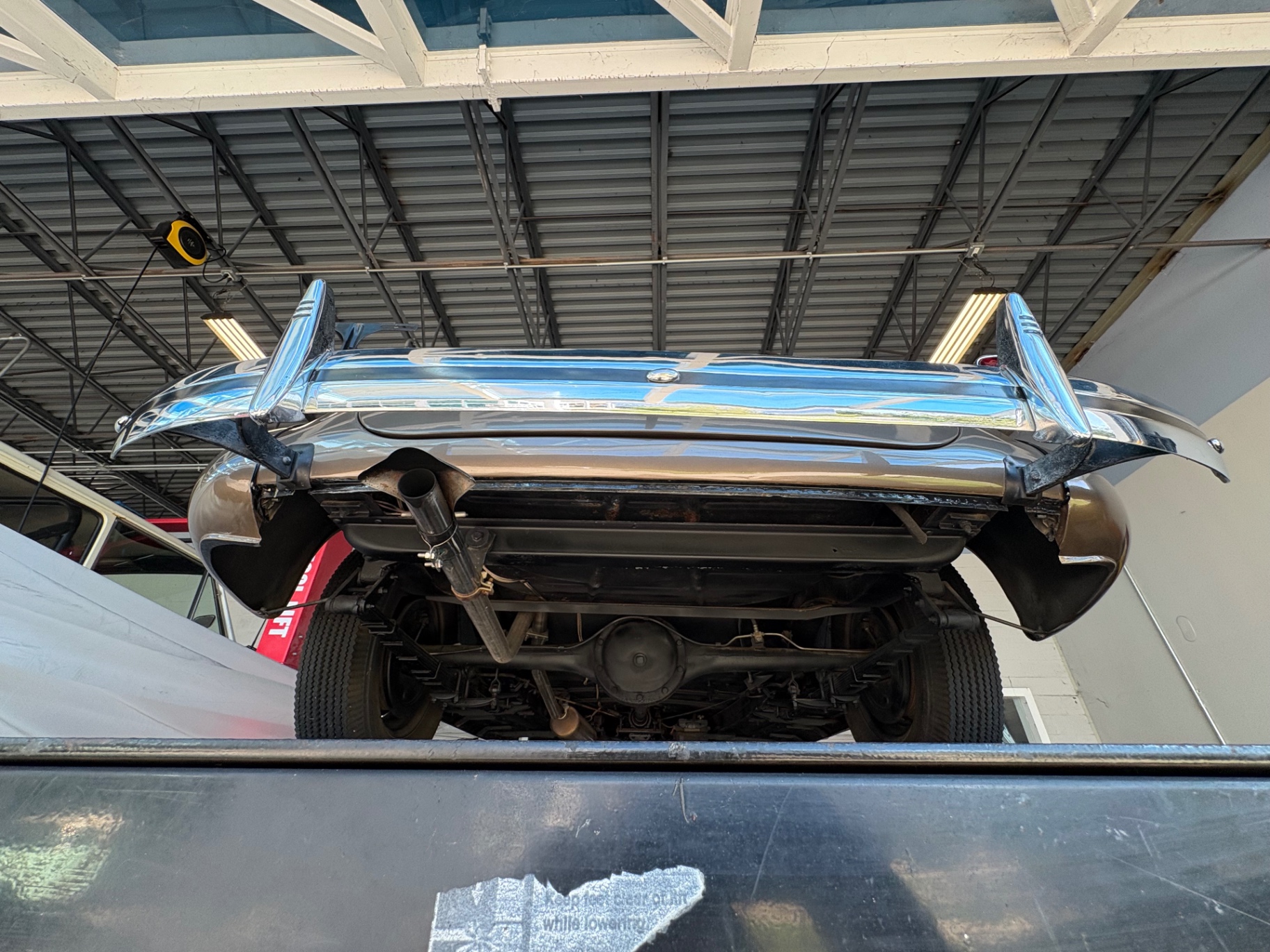
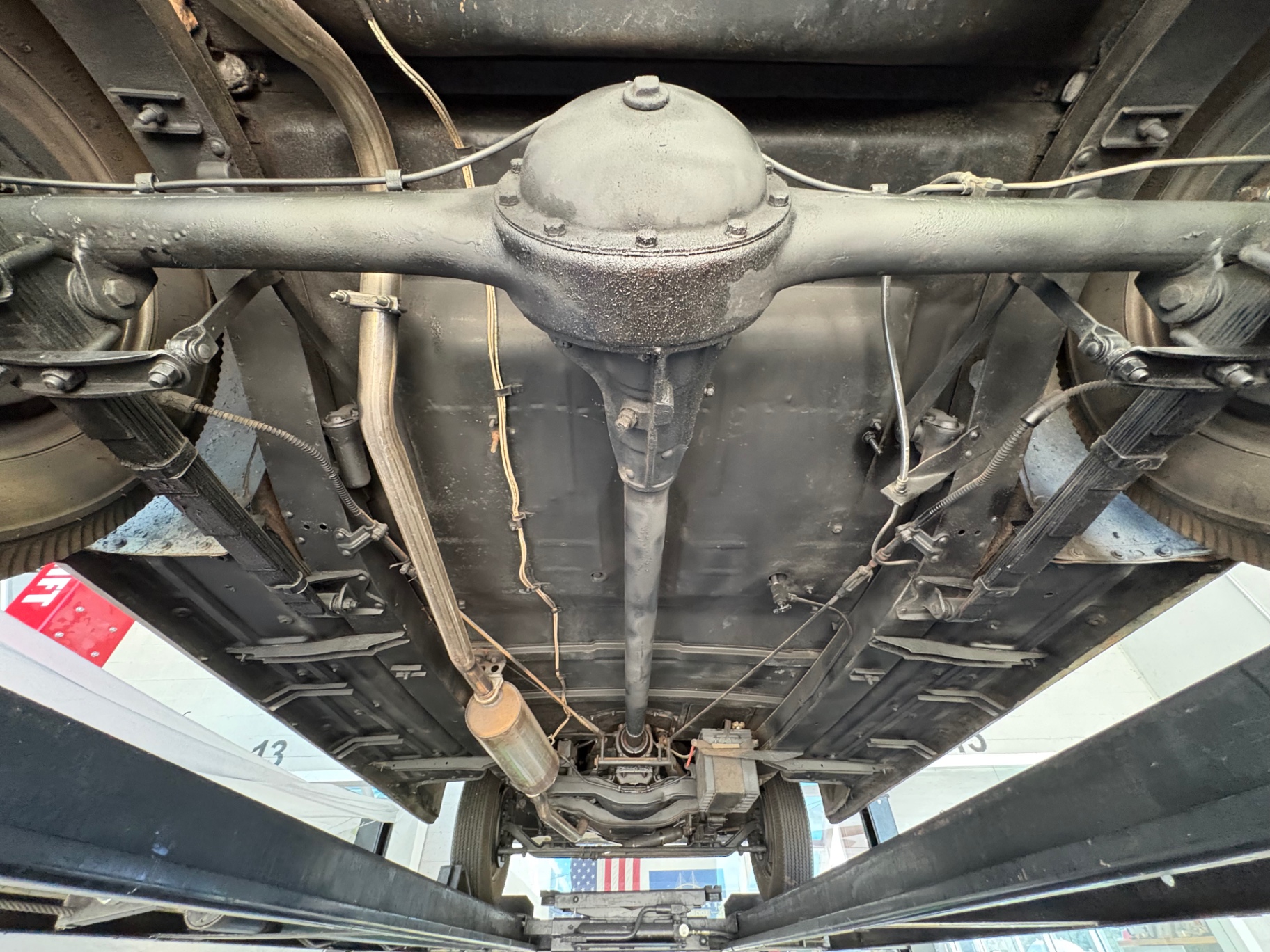
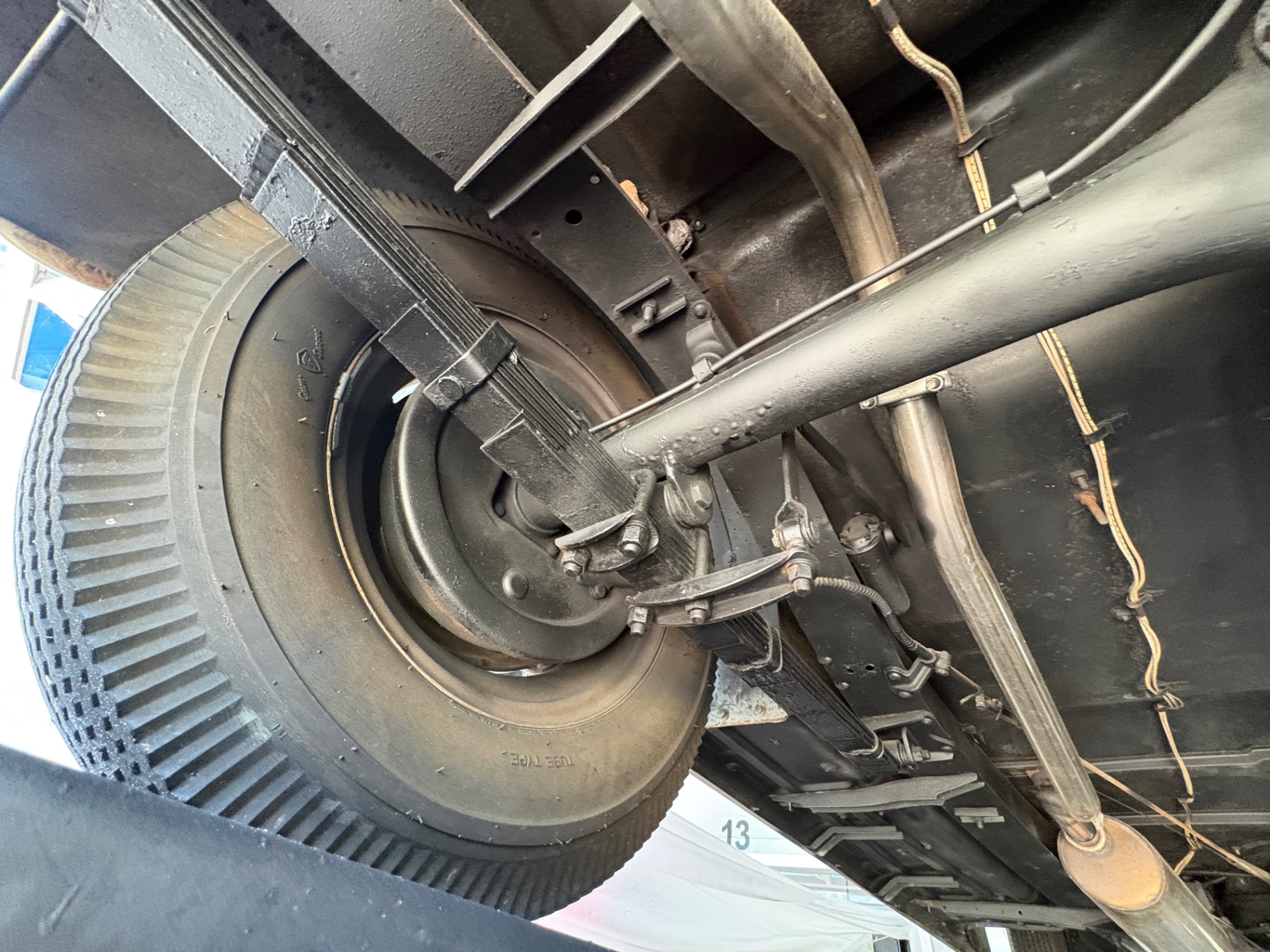
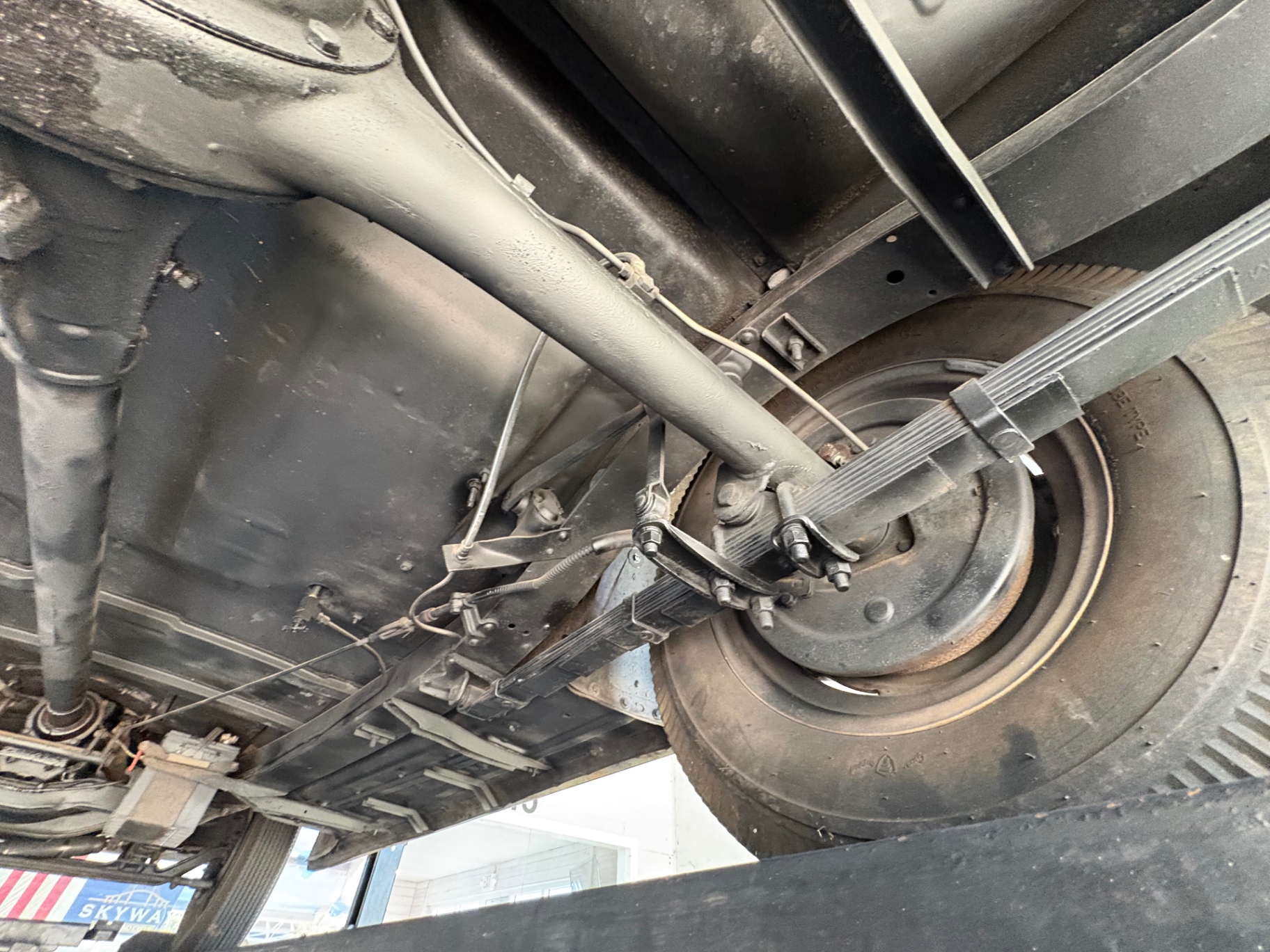
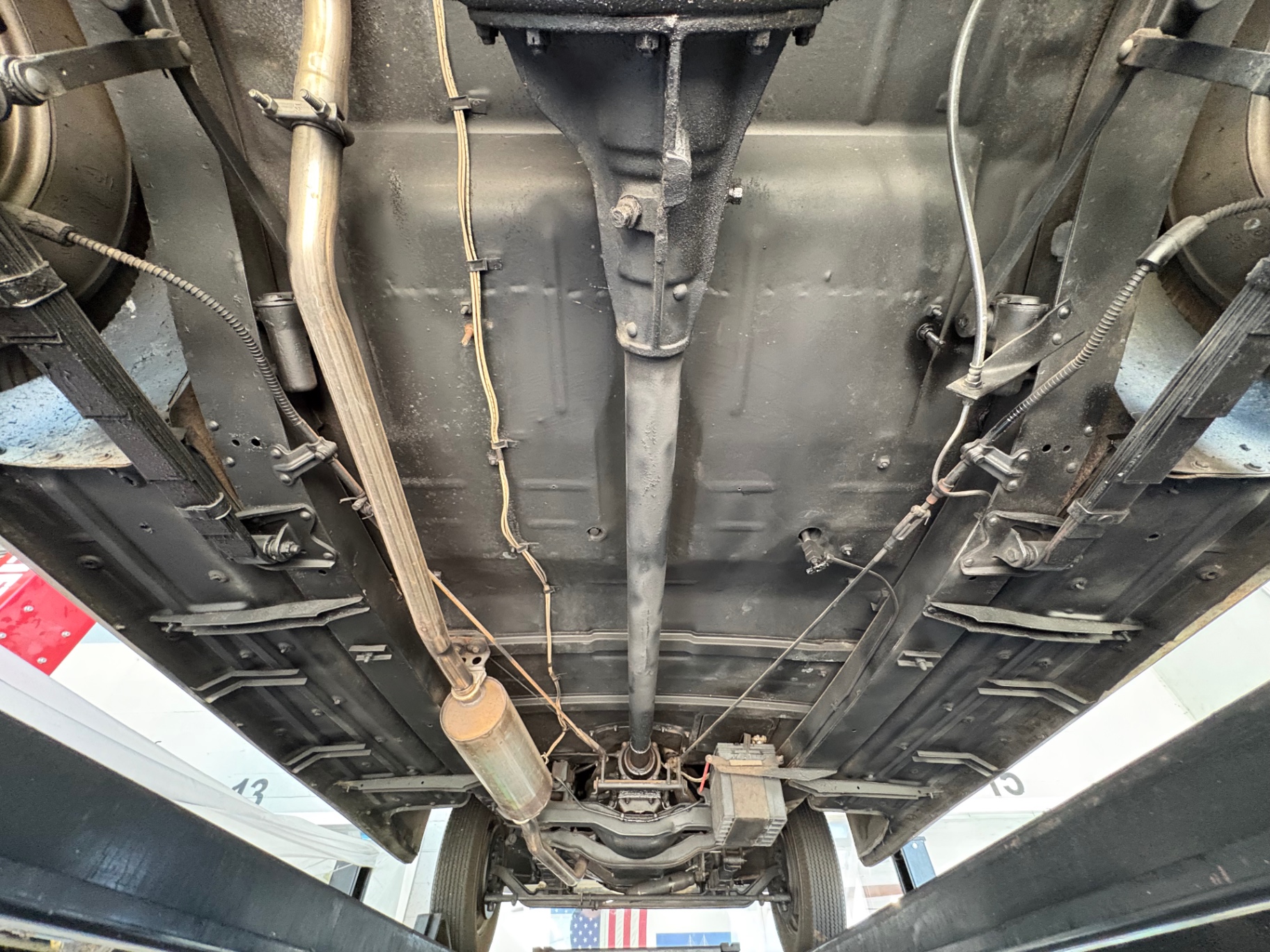
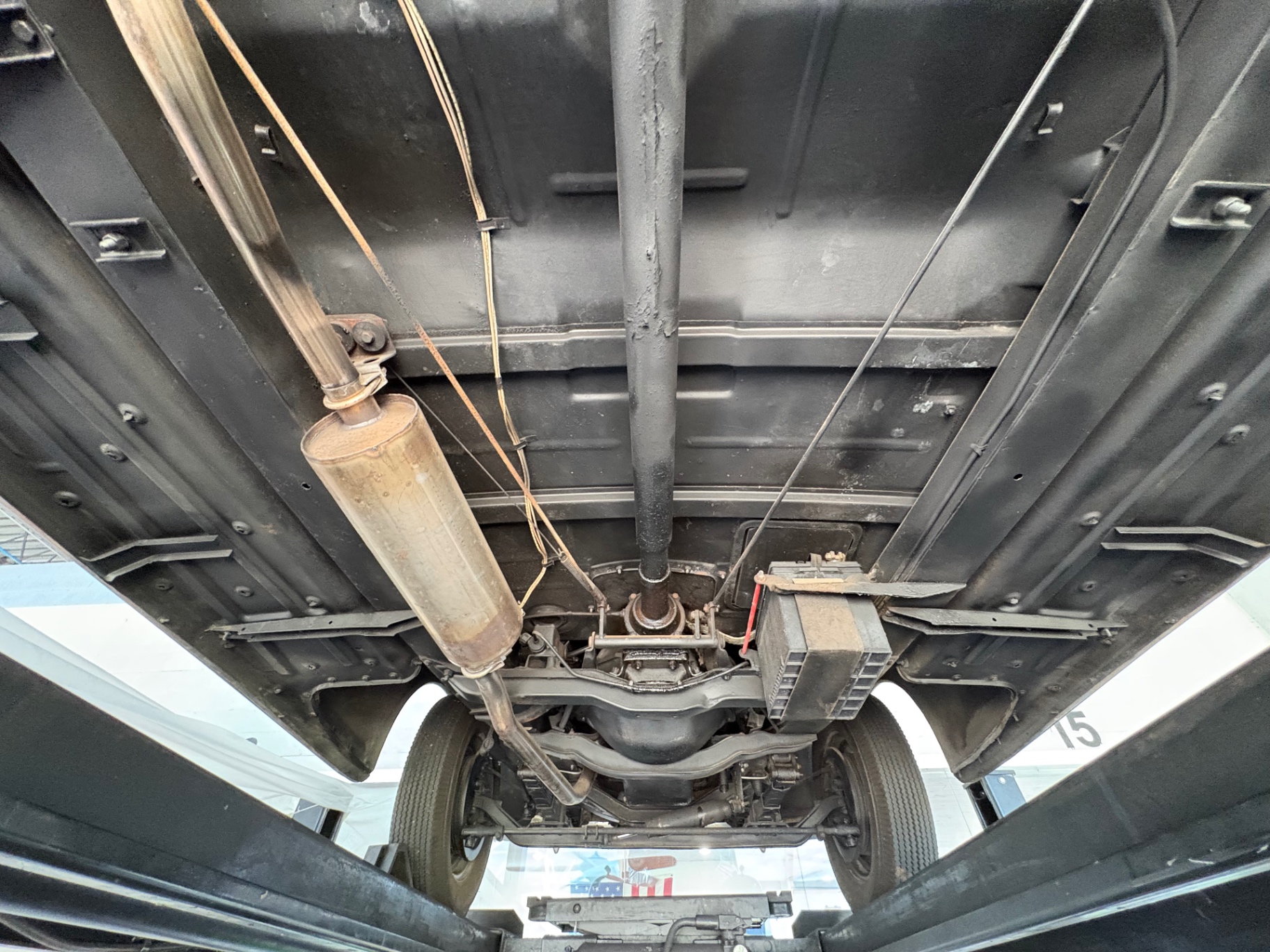
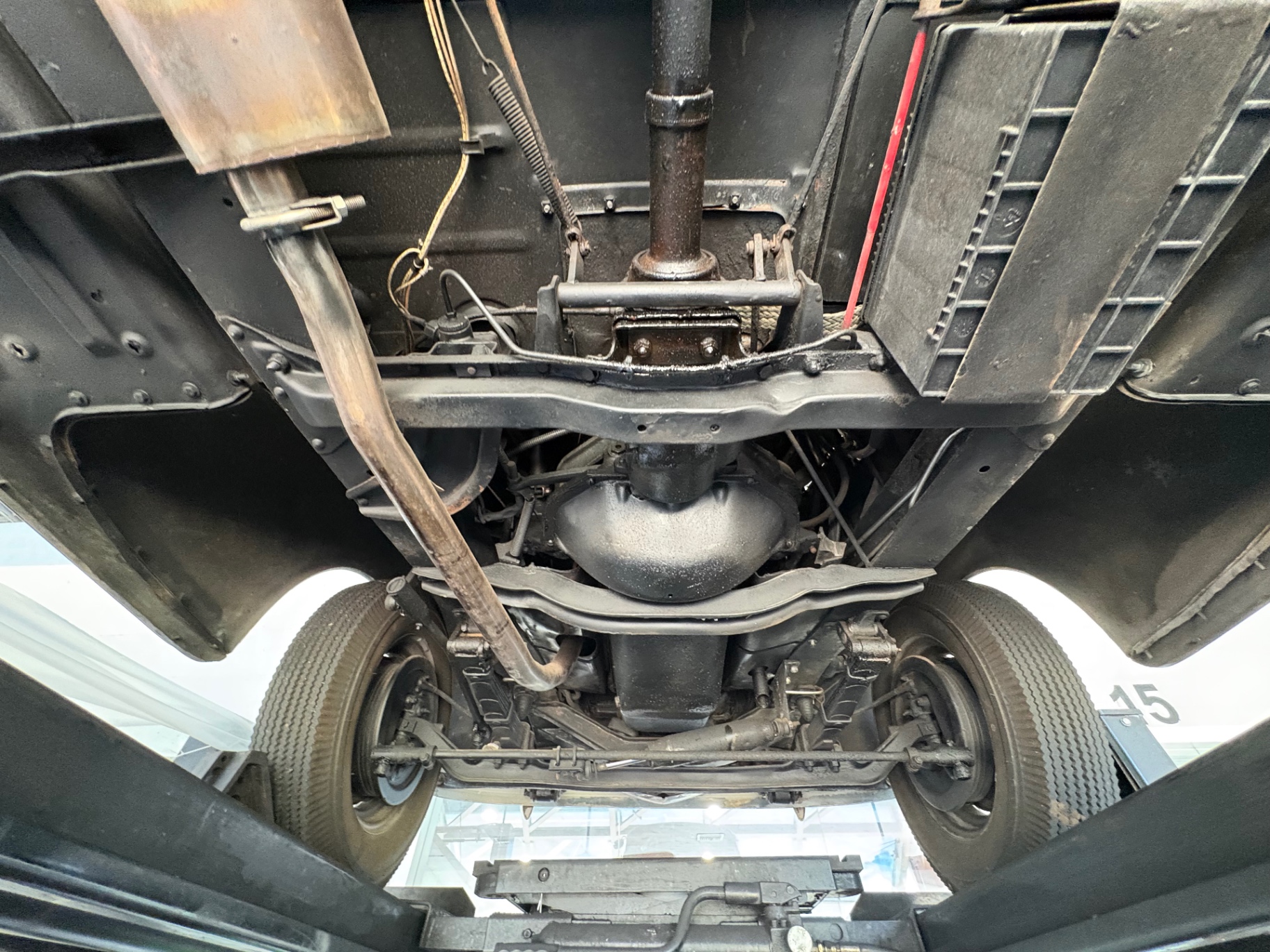
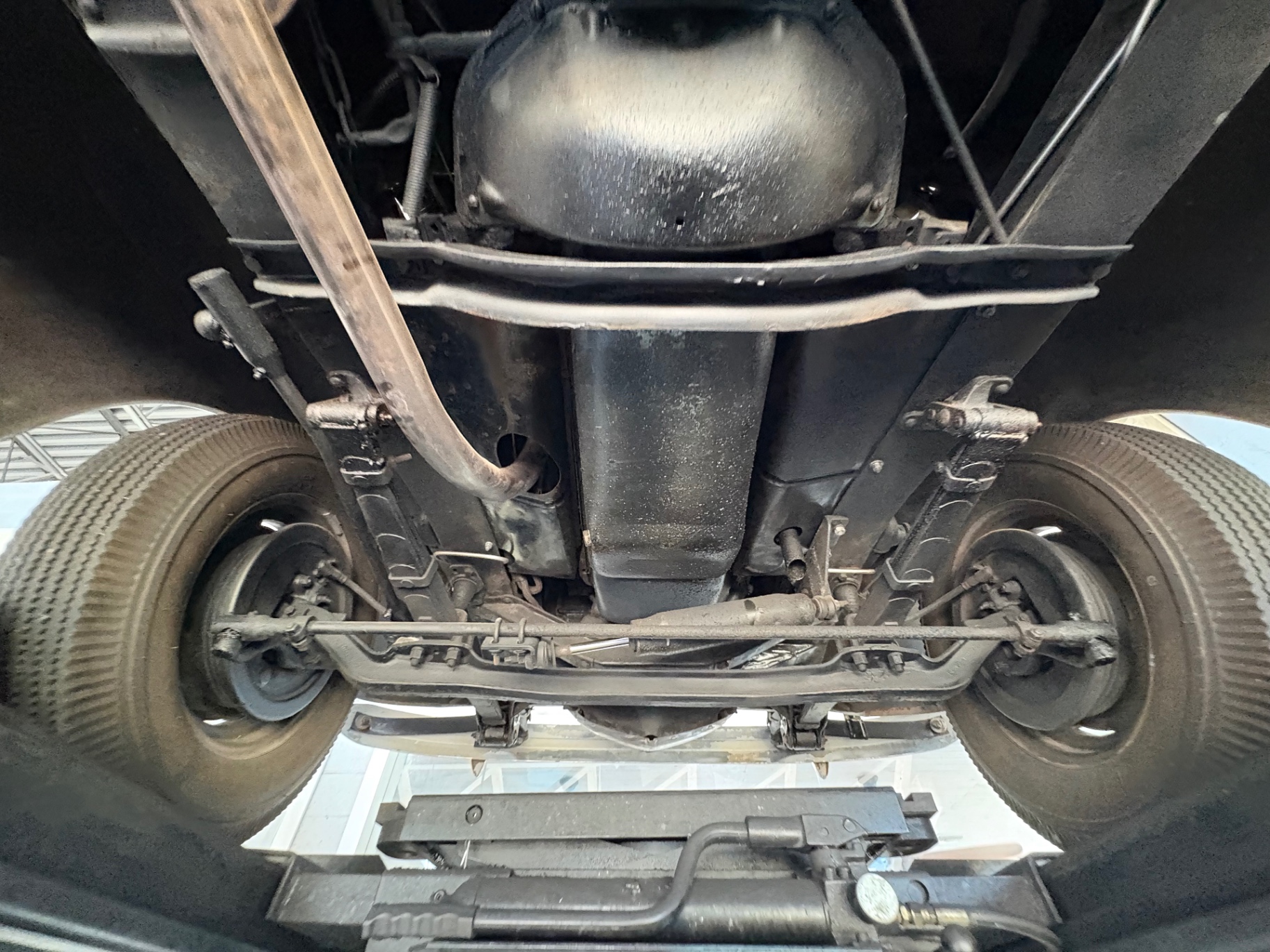
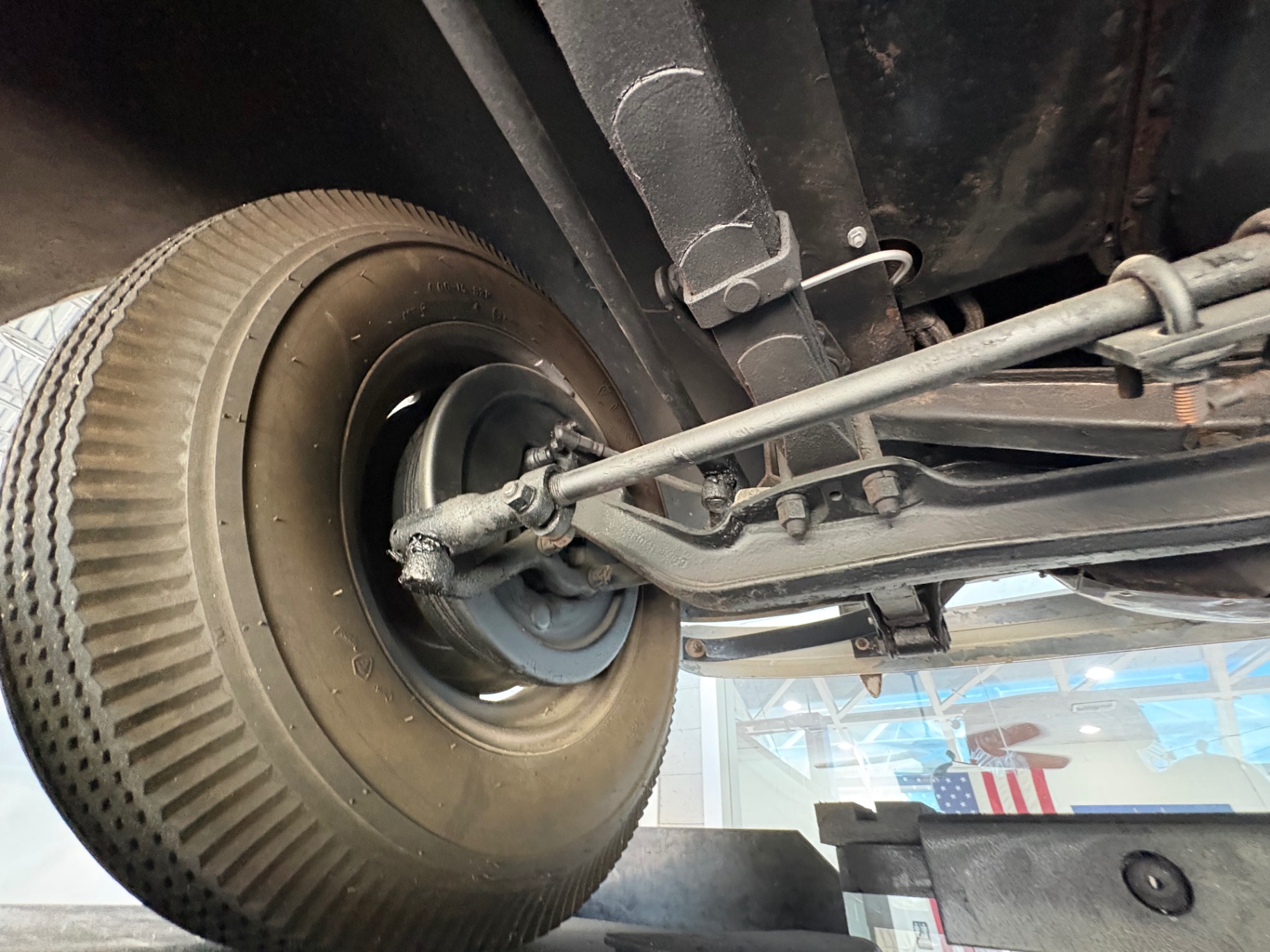
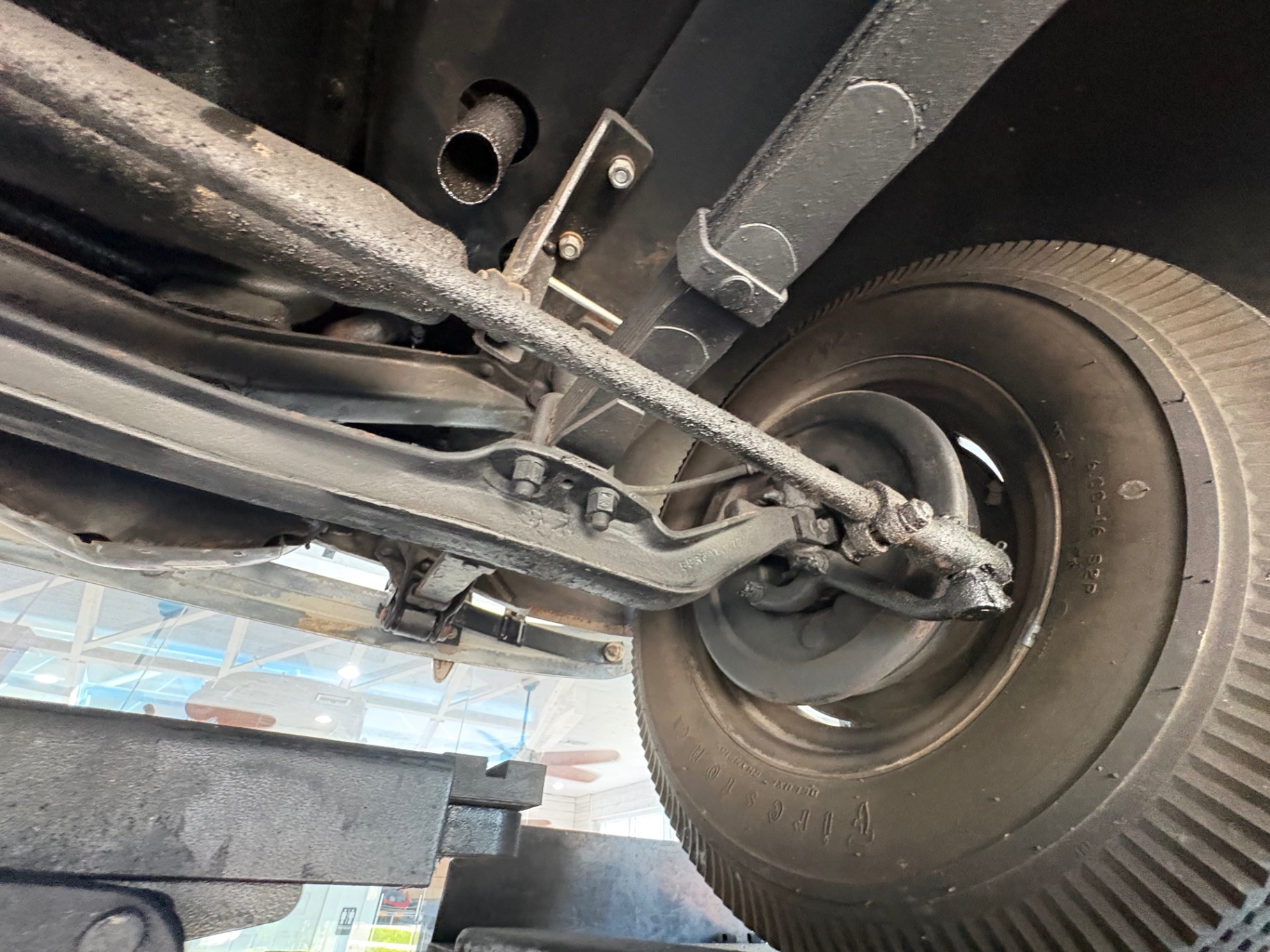
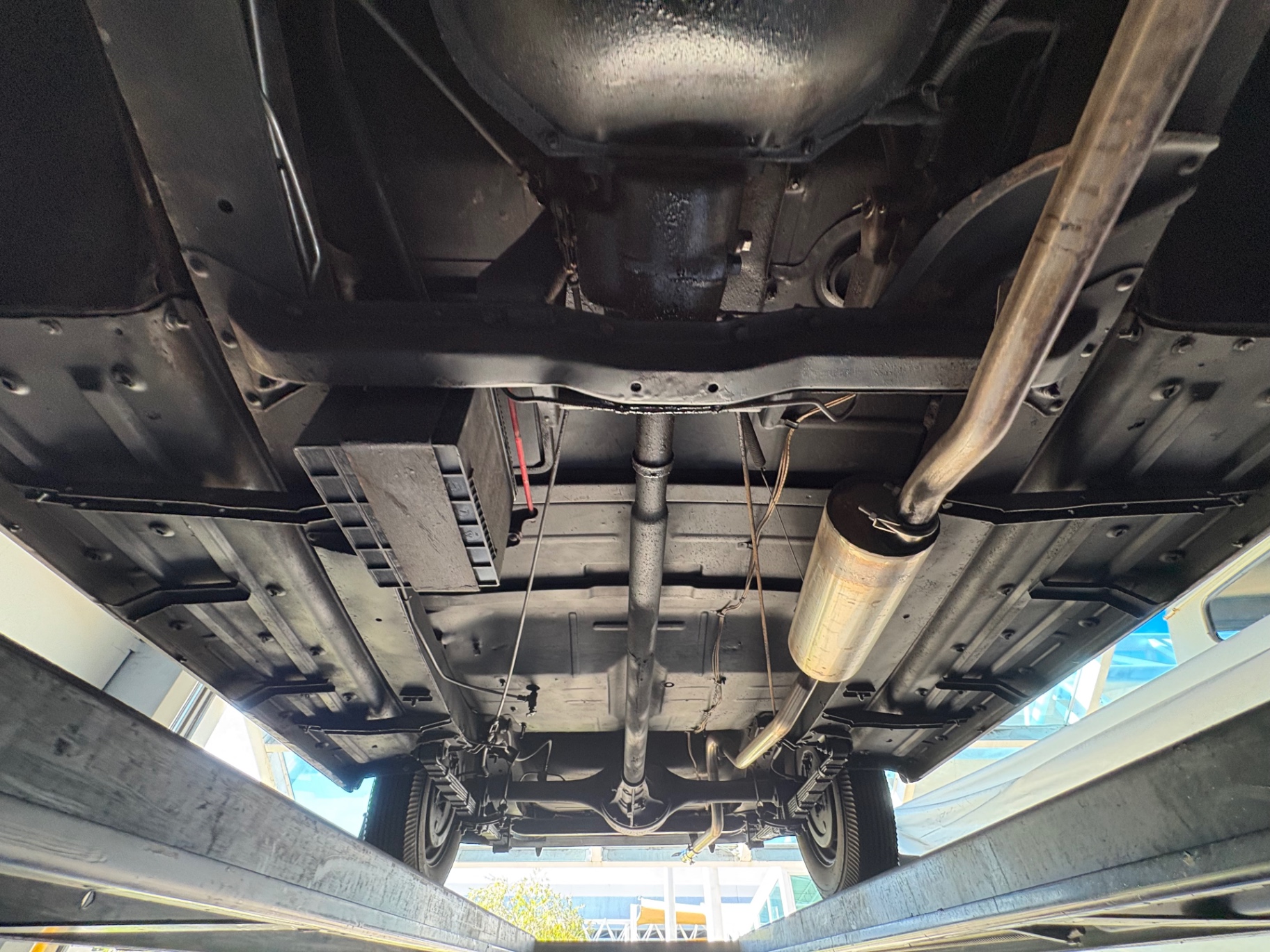
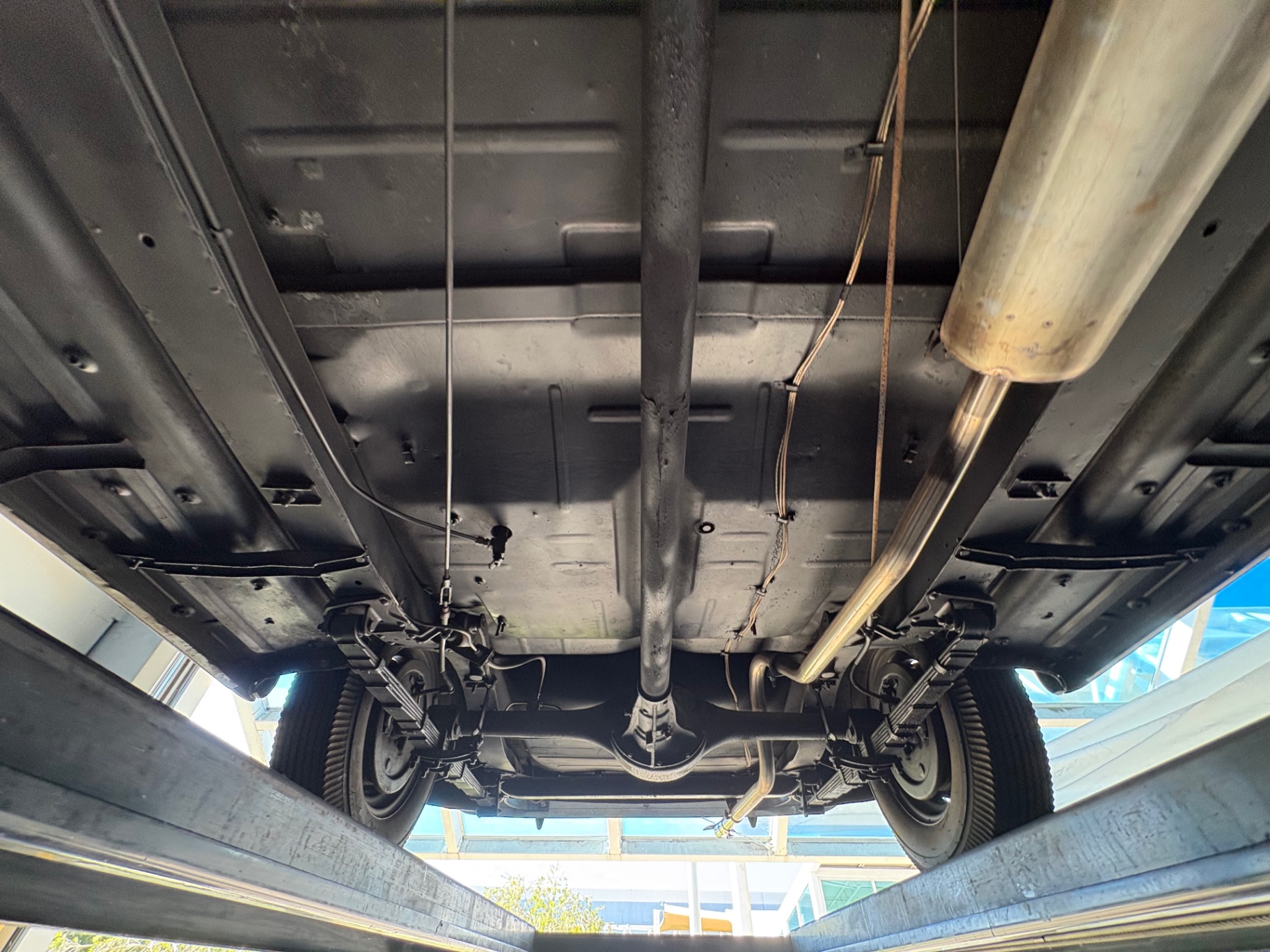
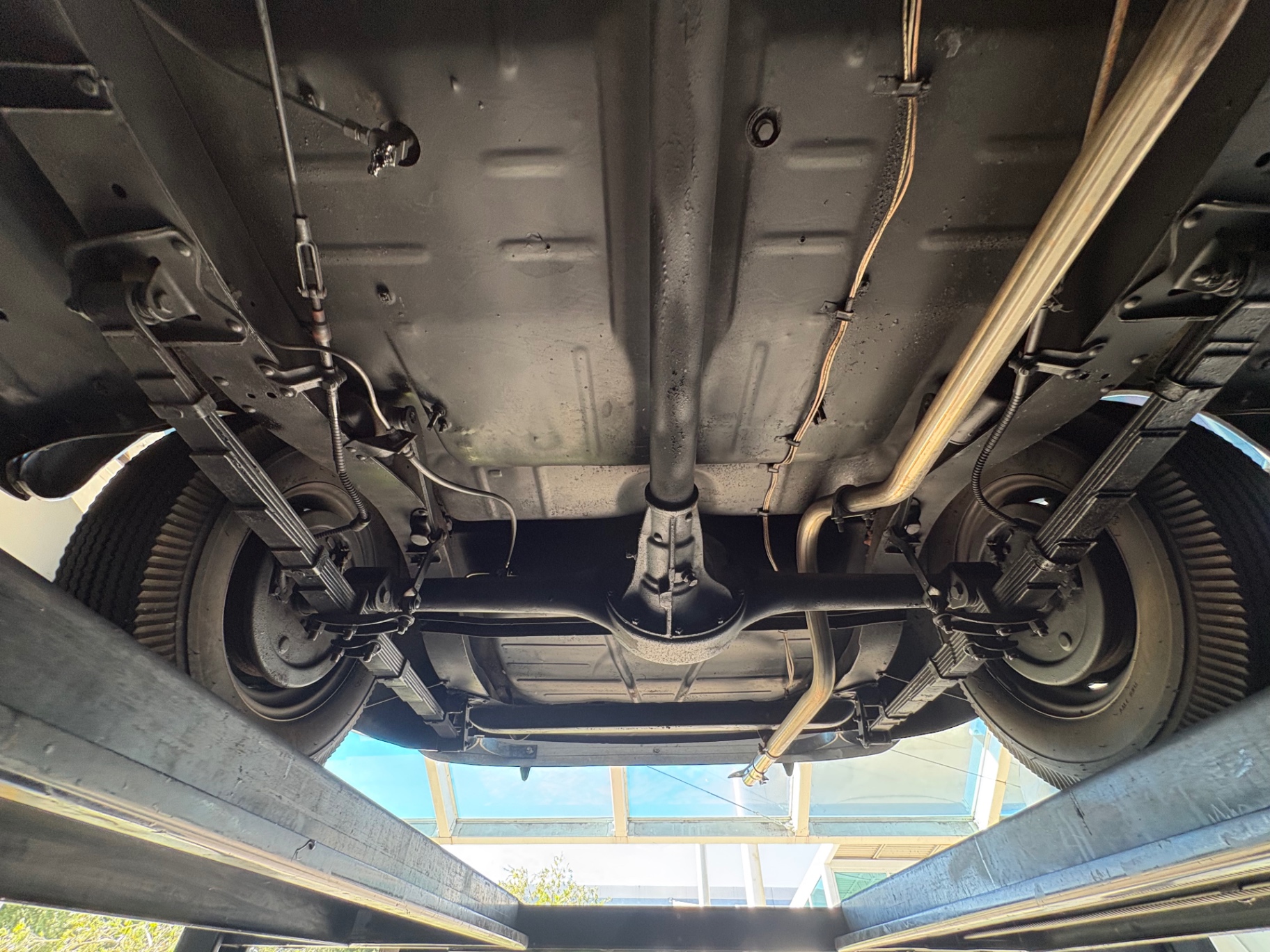
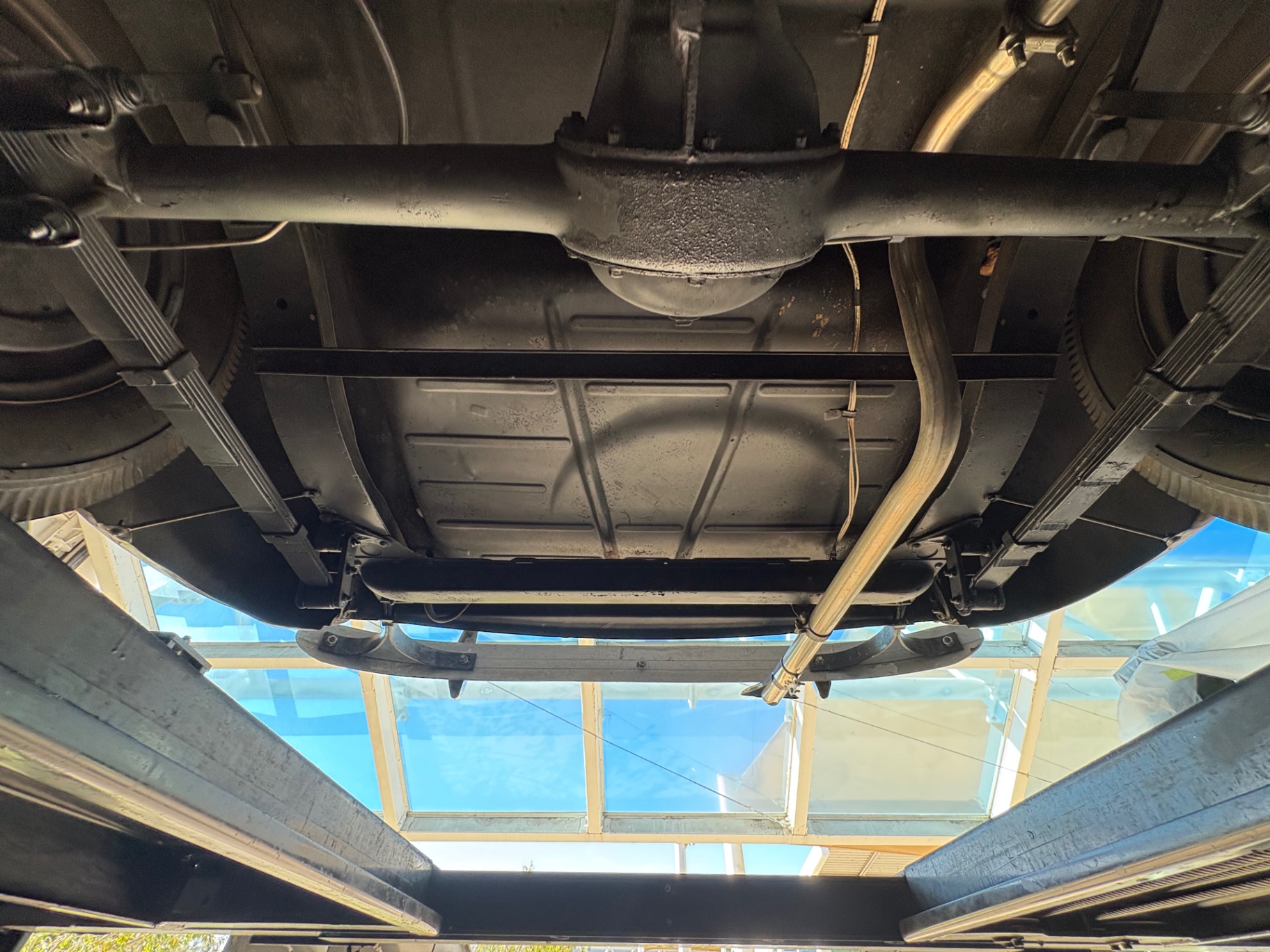
What separates this particular 1938 Chevrolet Master Business Coupe from the ones you occasionally see at shows is simple: the metal is real. There is no filler anywhere on this car. The body panels are straight because they were never seriously damaged and because someone cared enough to restore this car correctly around 2010 rather than skim over problems with plastic filler and a spray gun. The undercarriage photographs confirm this — the floor pans, frame rails, and body seams are clean, tight, and show no evidence of patch panels or hidden damage. For a pre-war car that has spent time in the southeastern United States, that is genuinely significant.
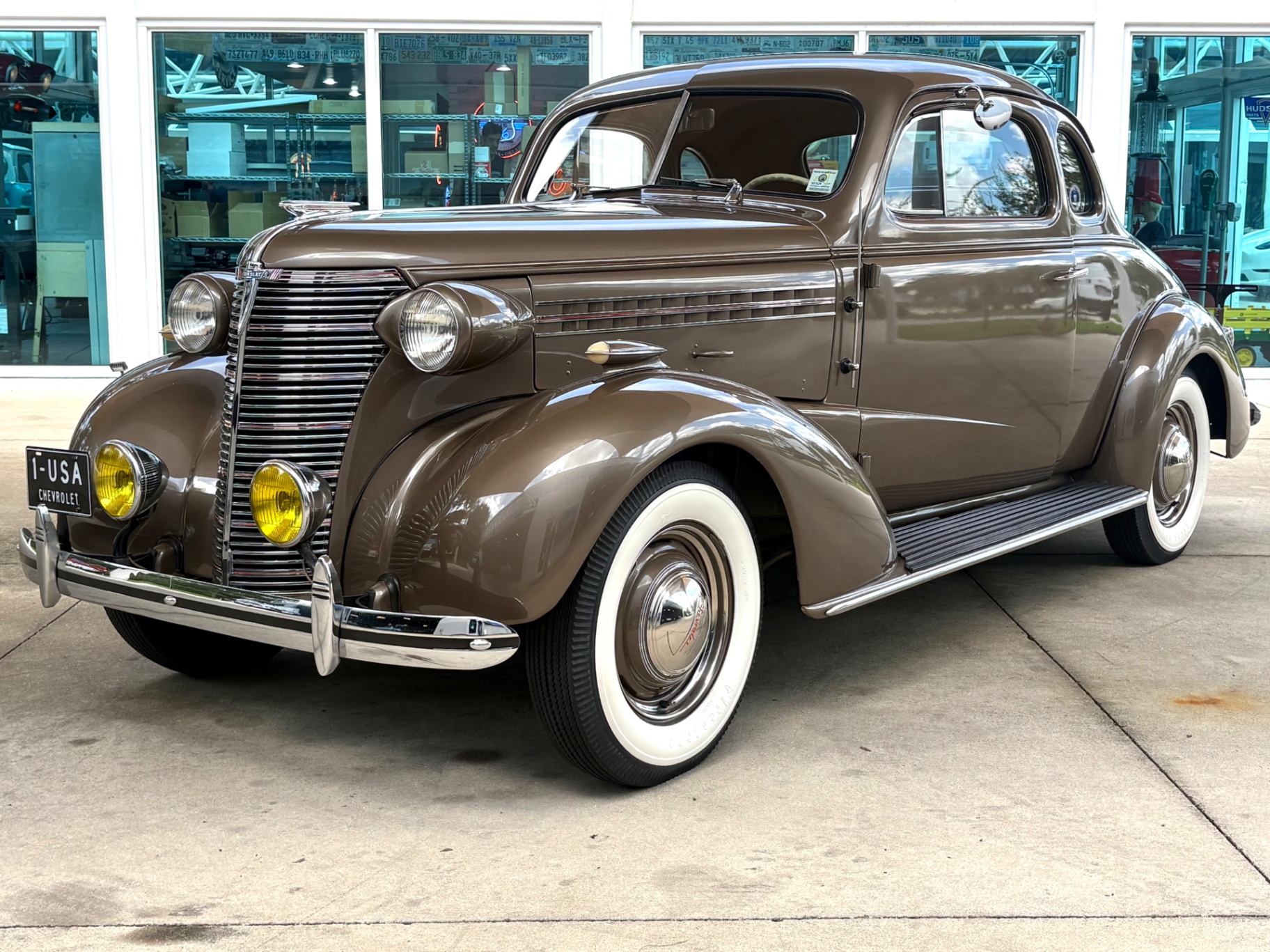
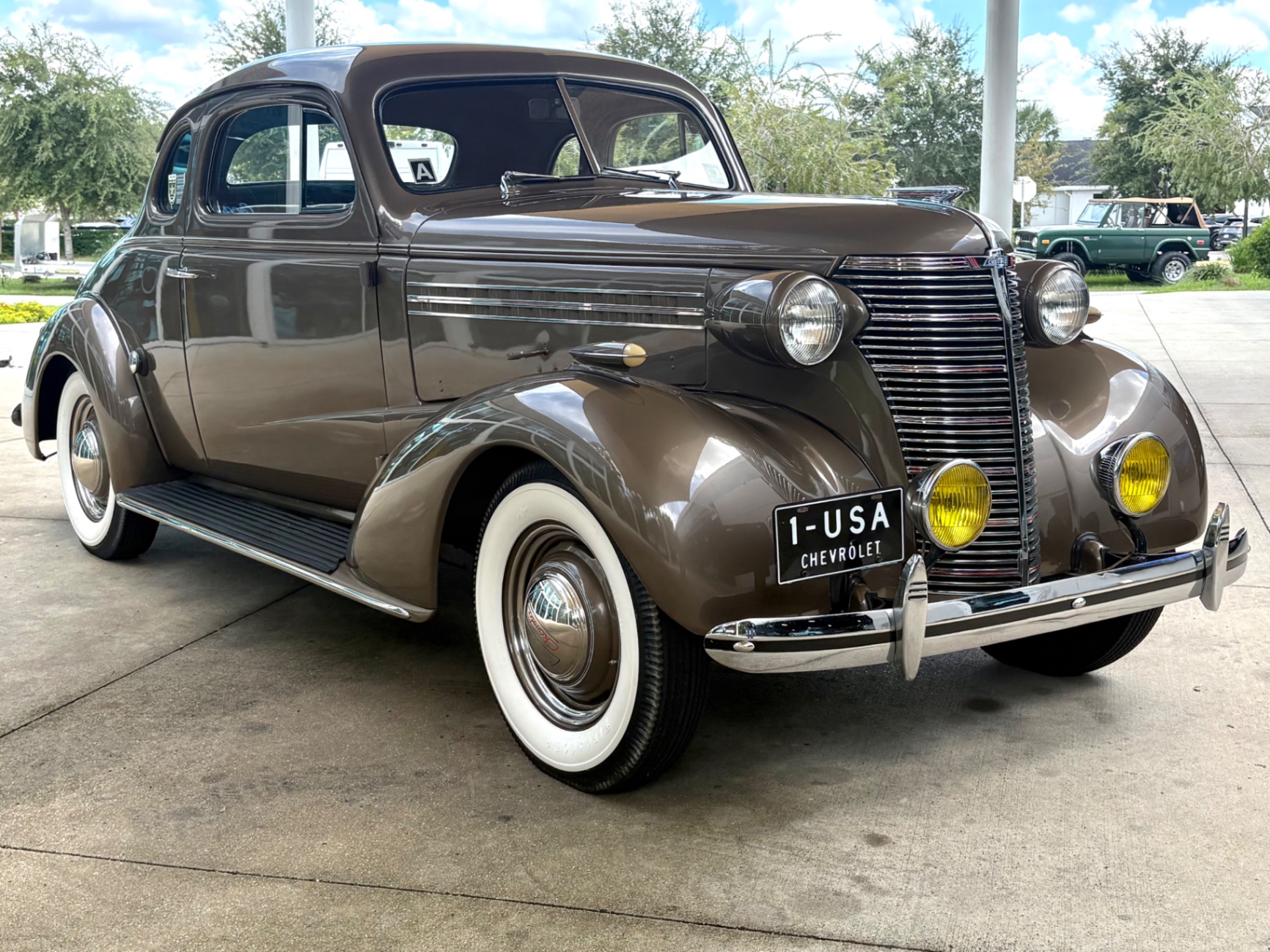
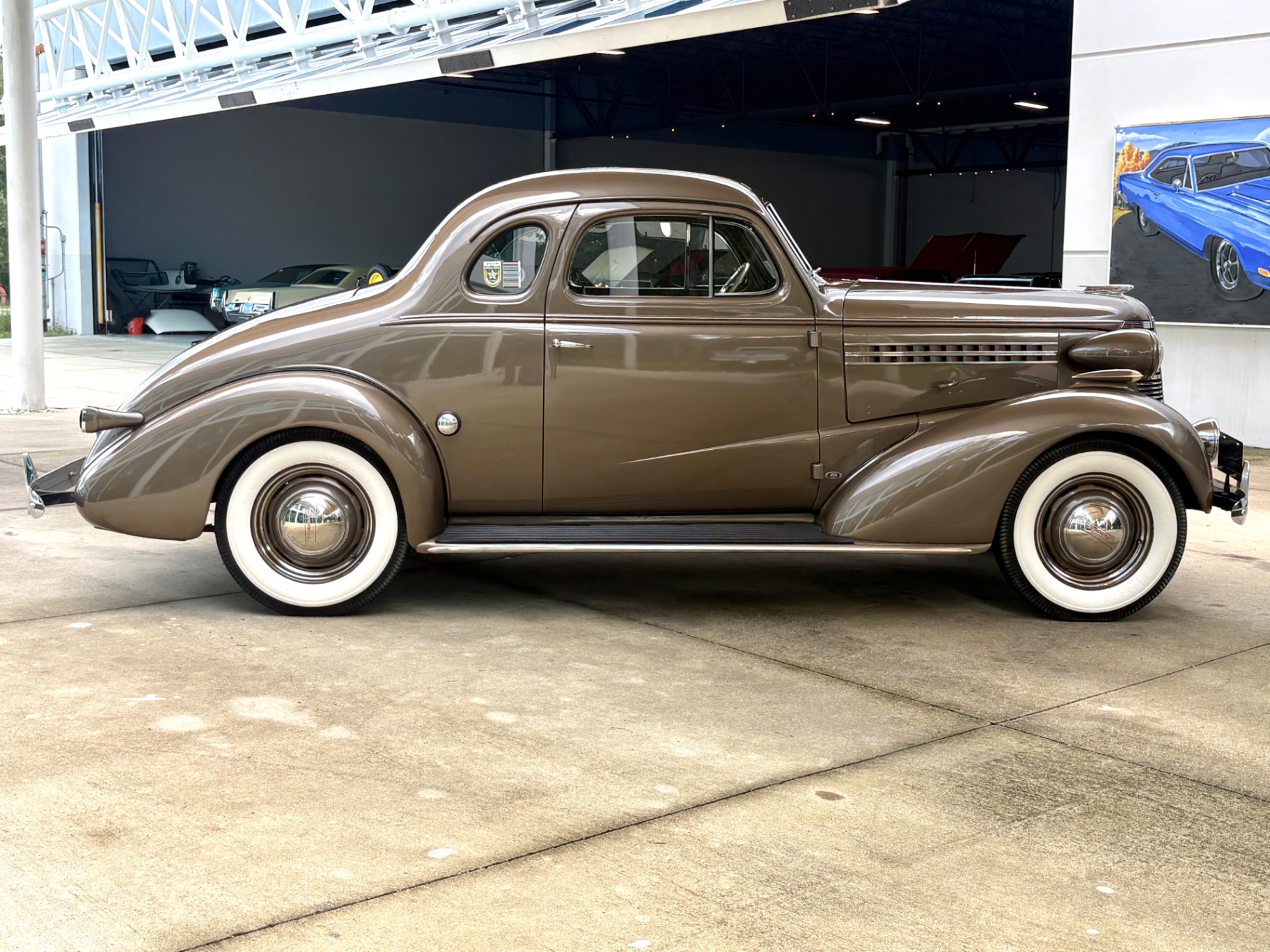
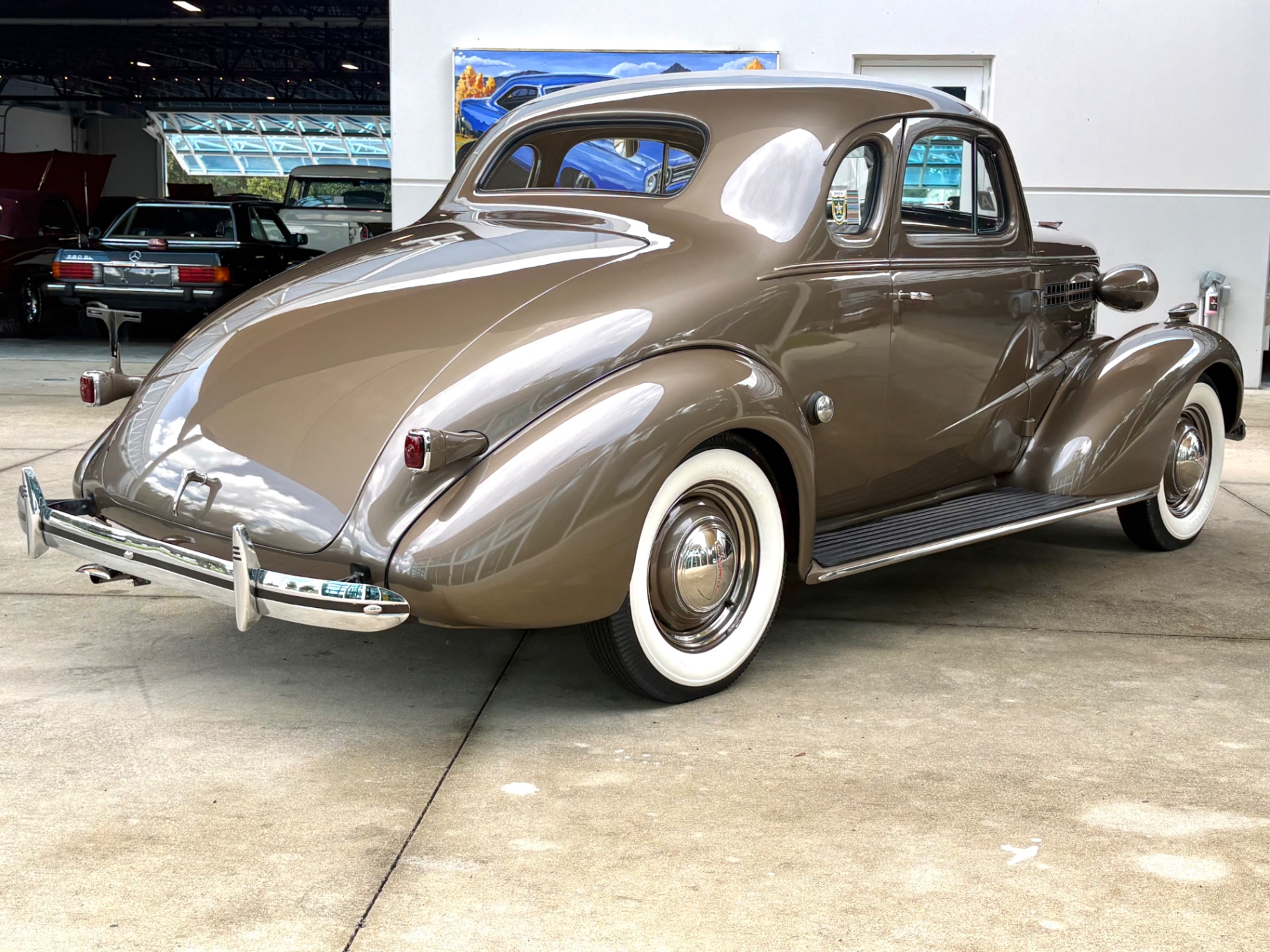
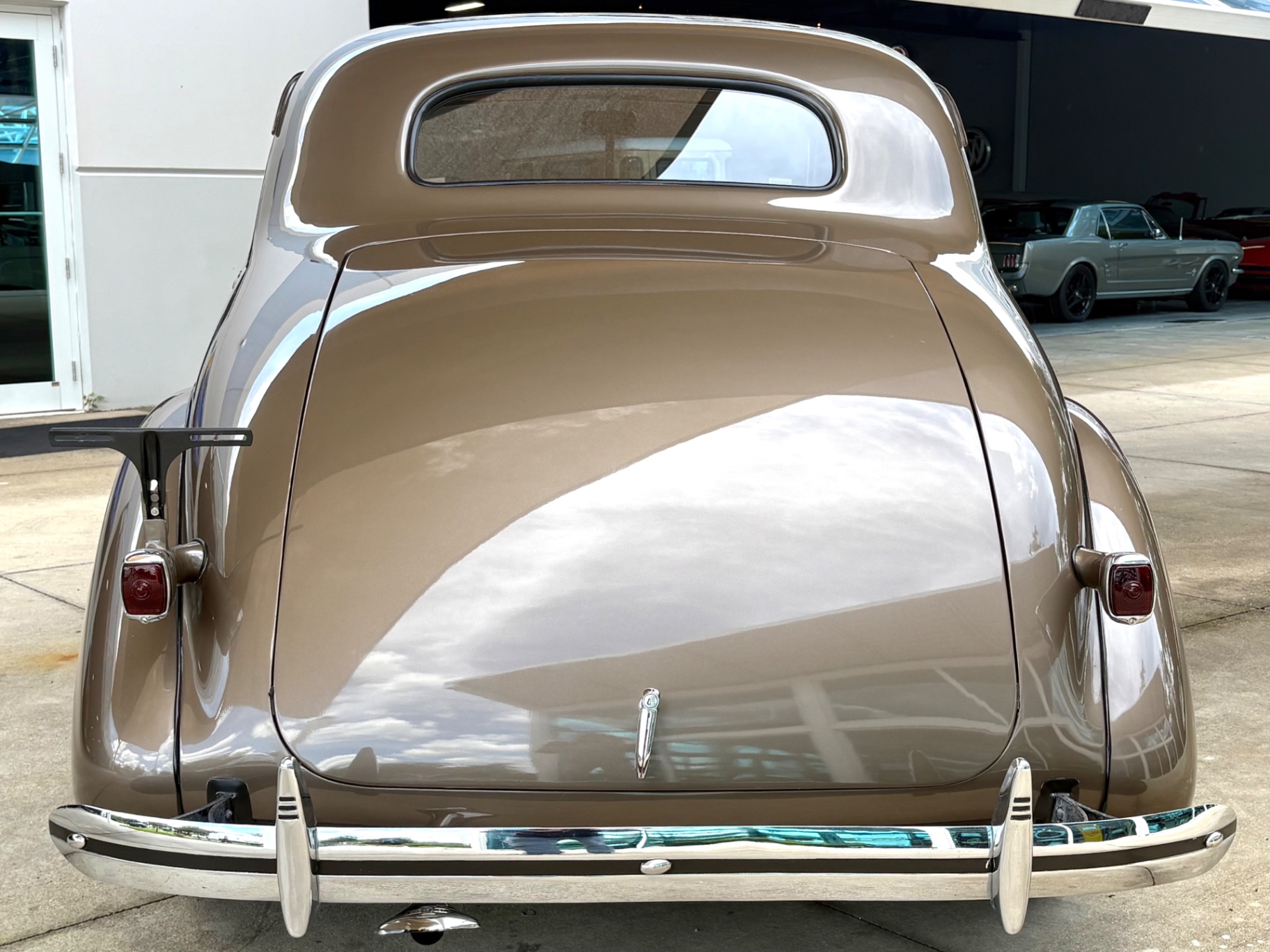
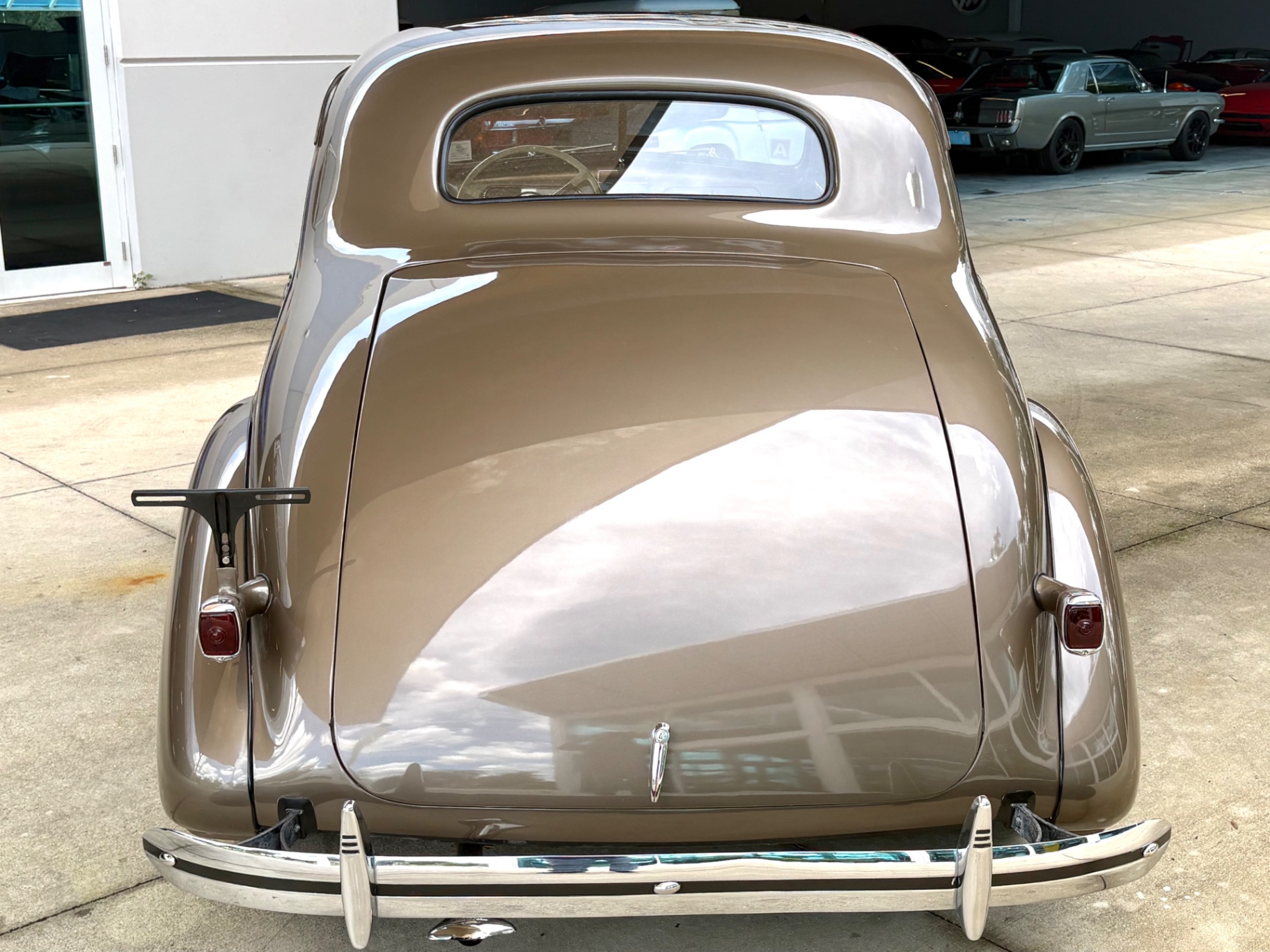
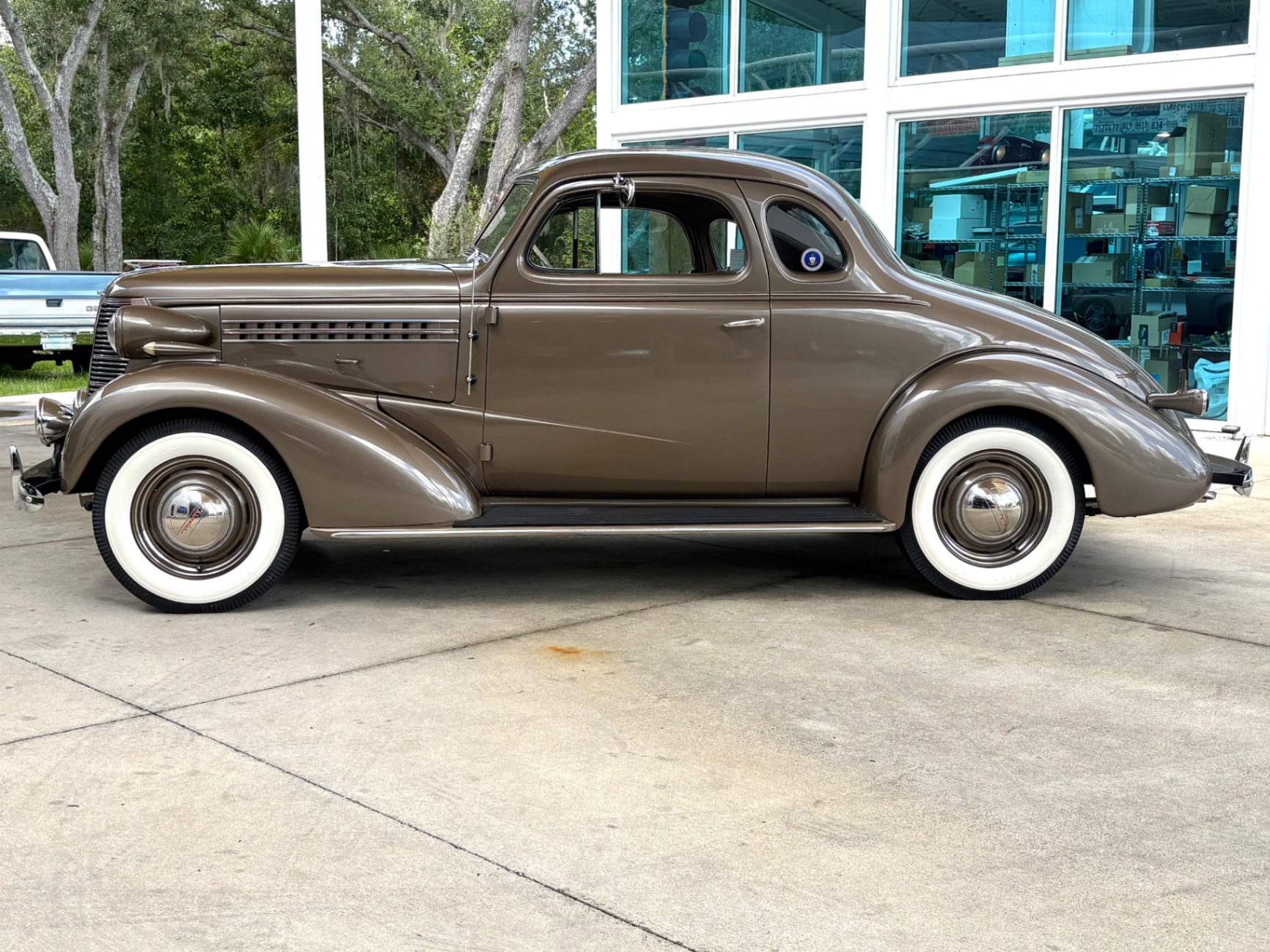
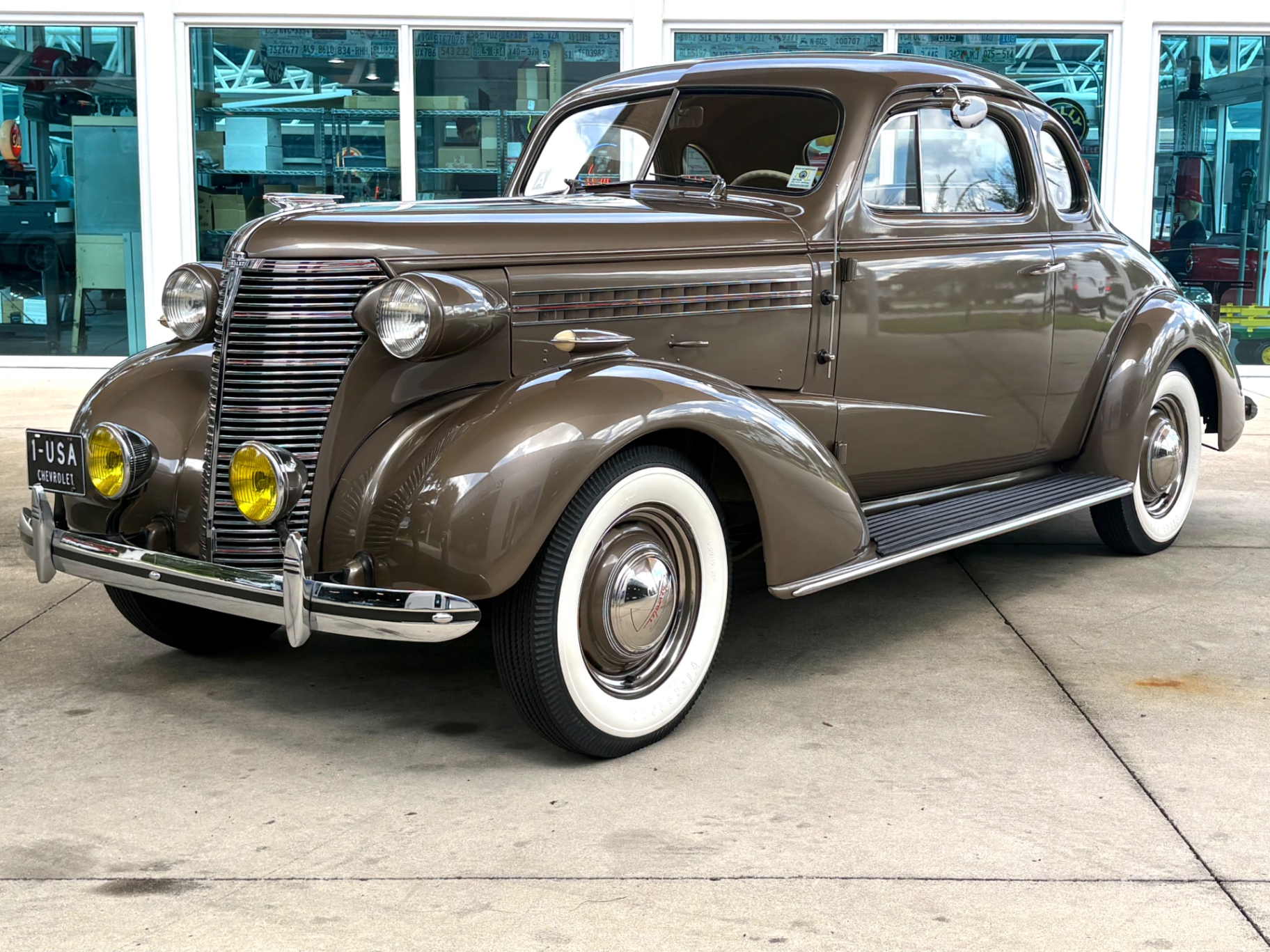
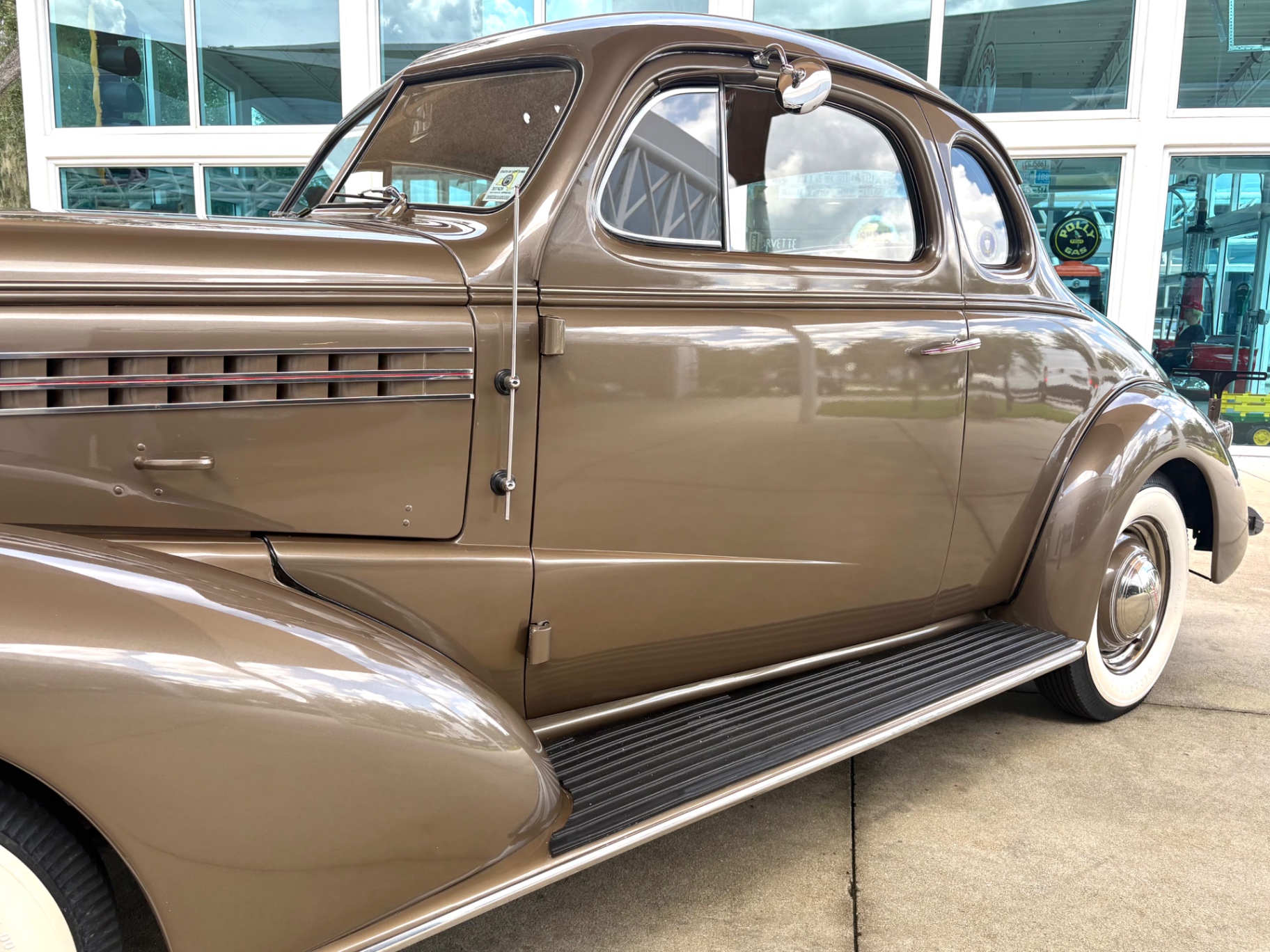
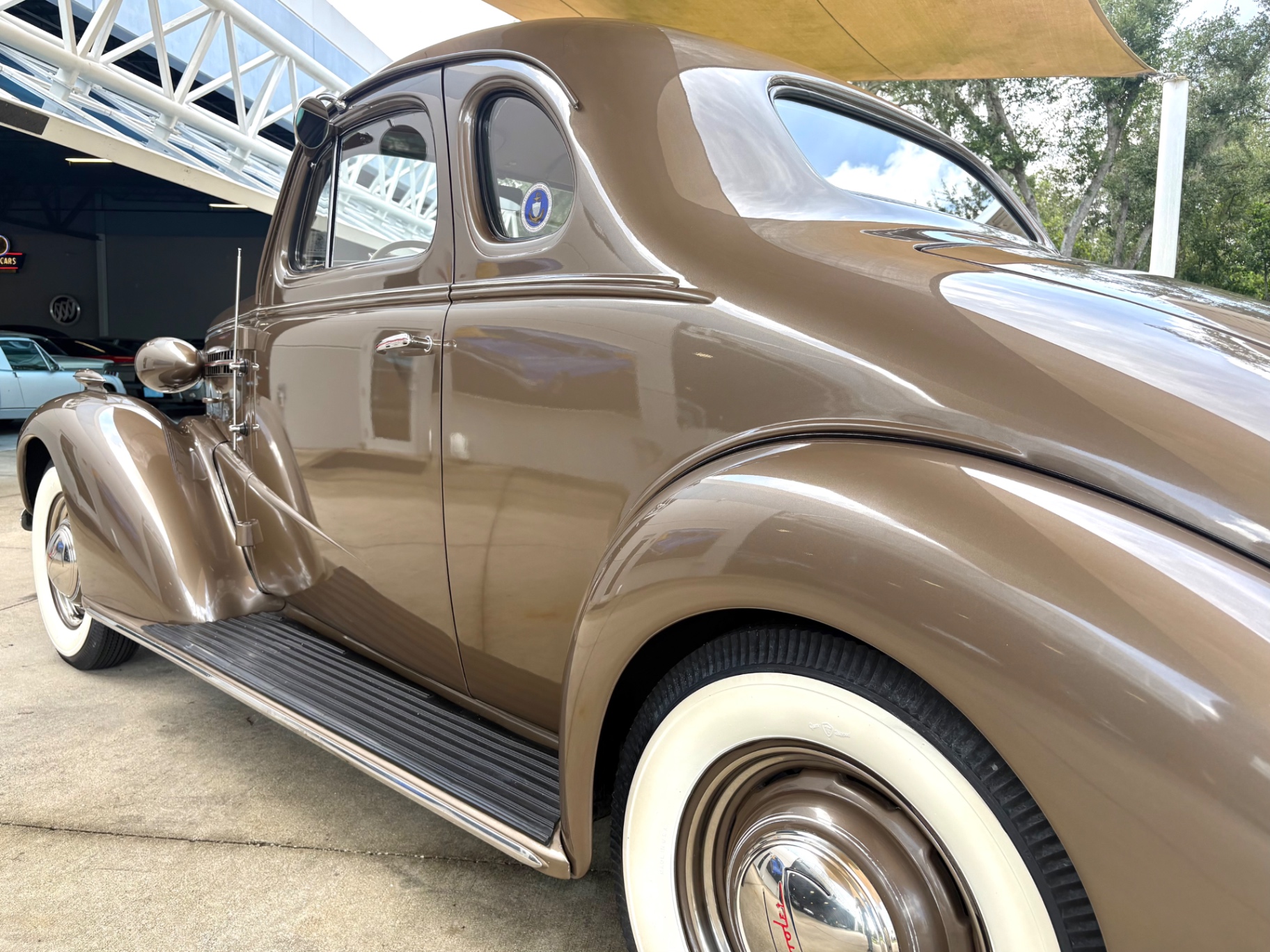
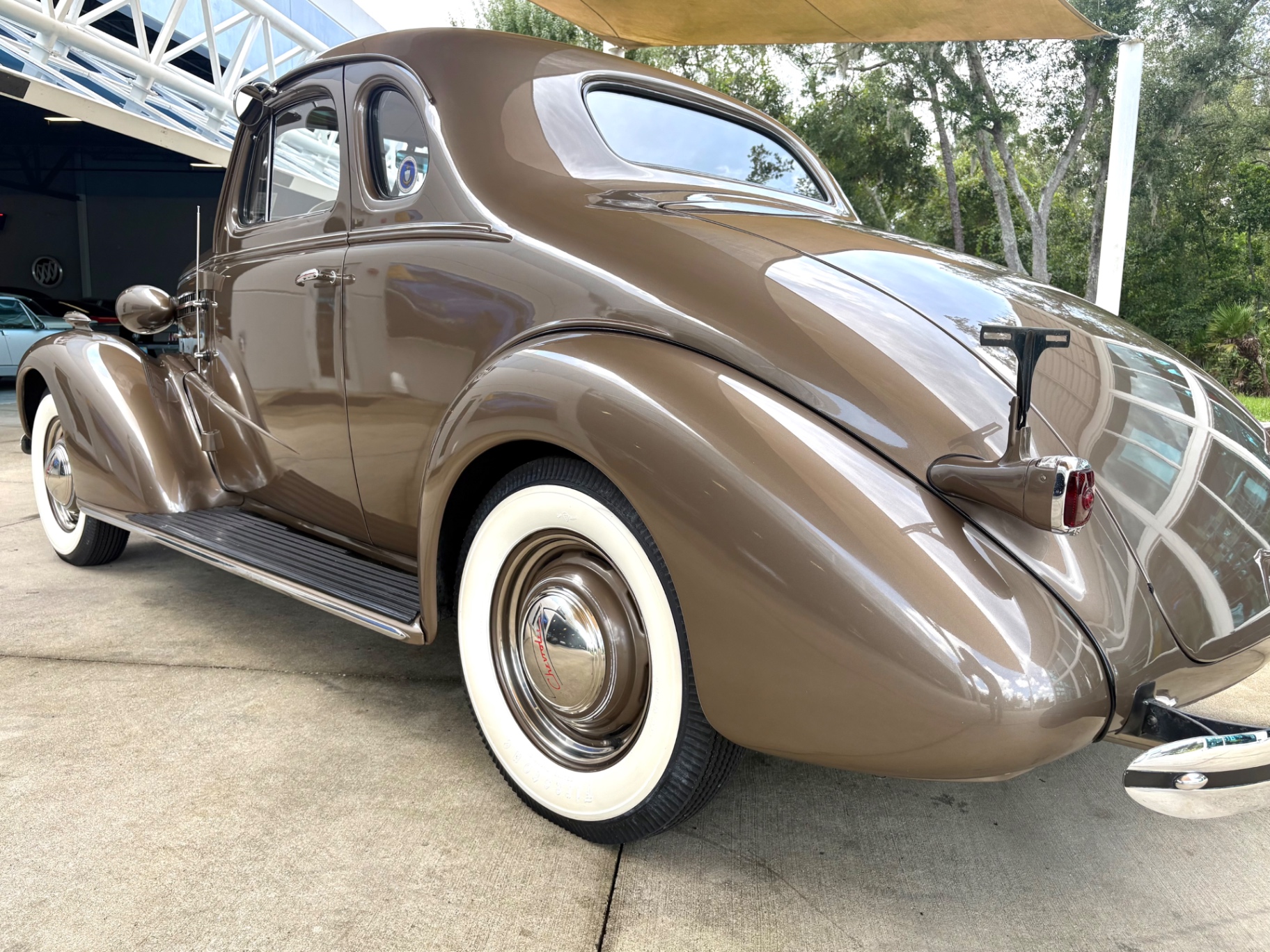
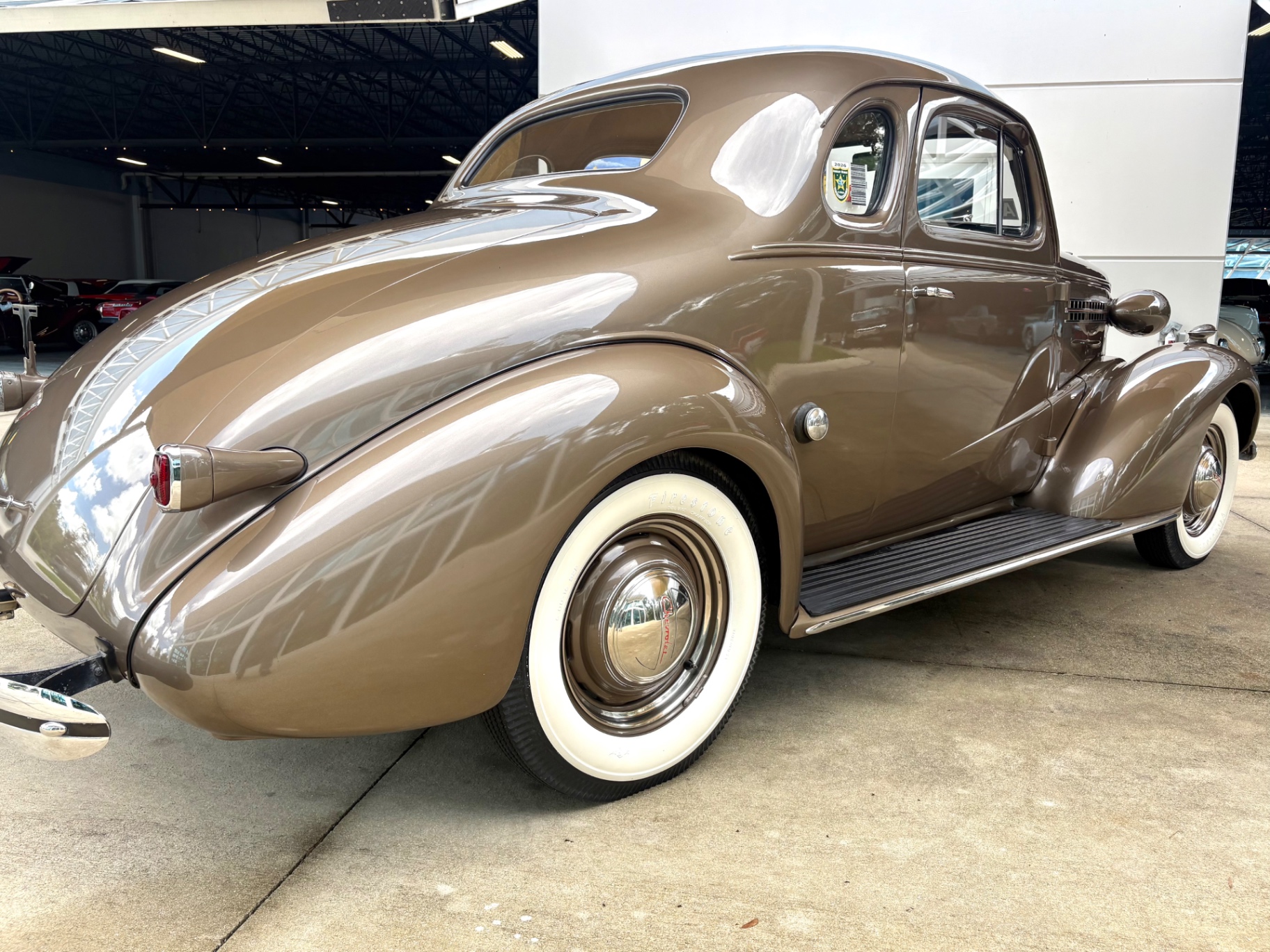
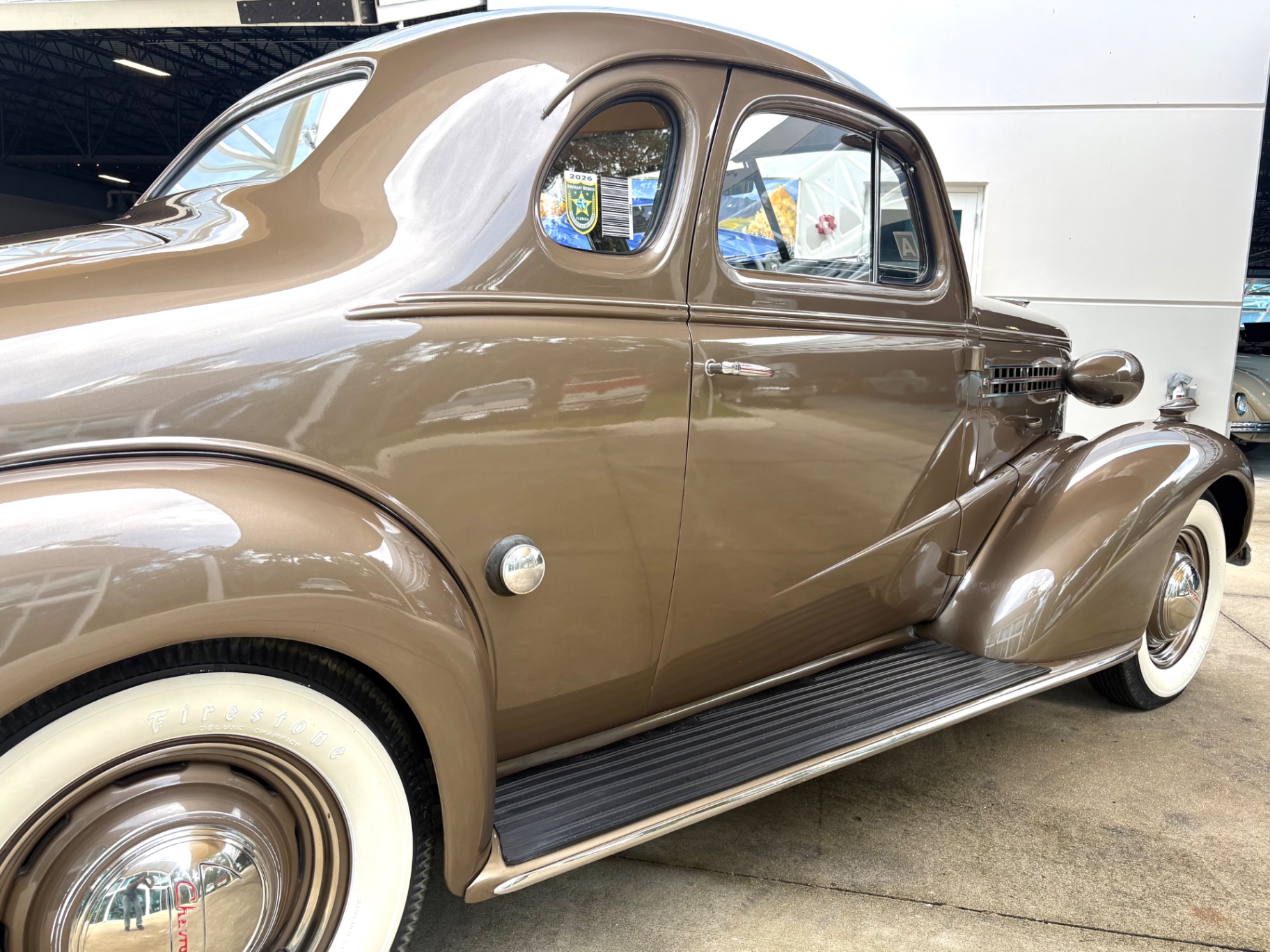
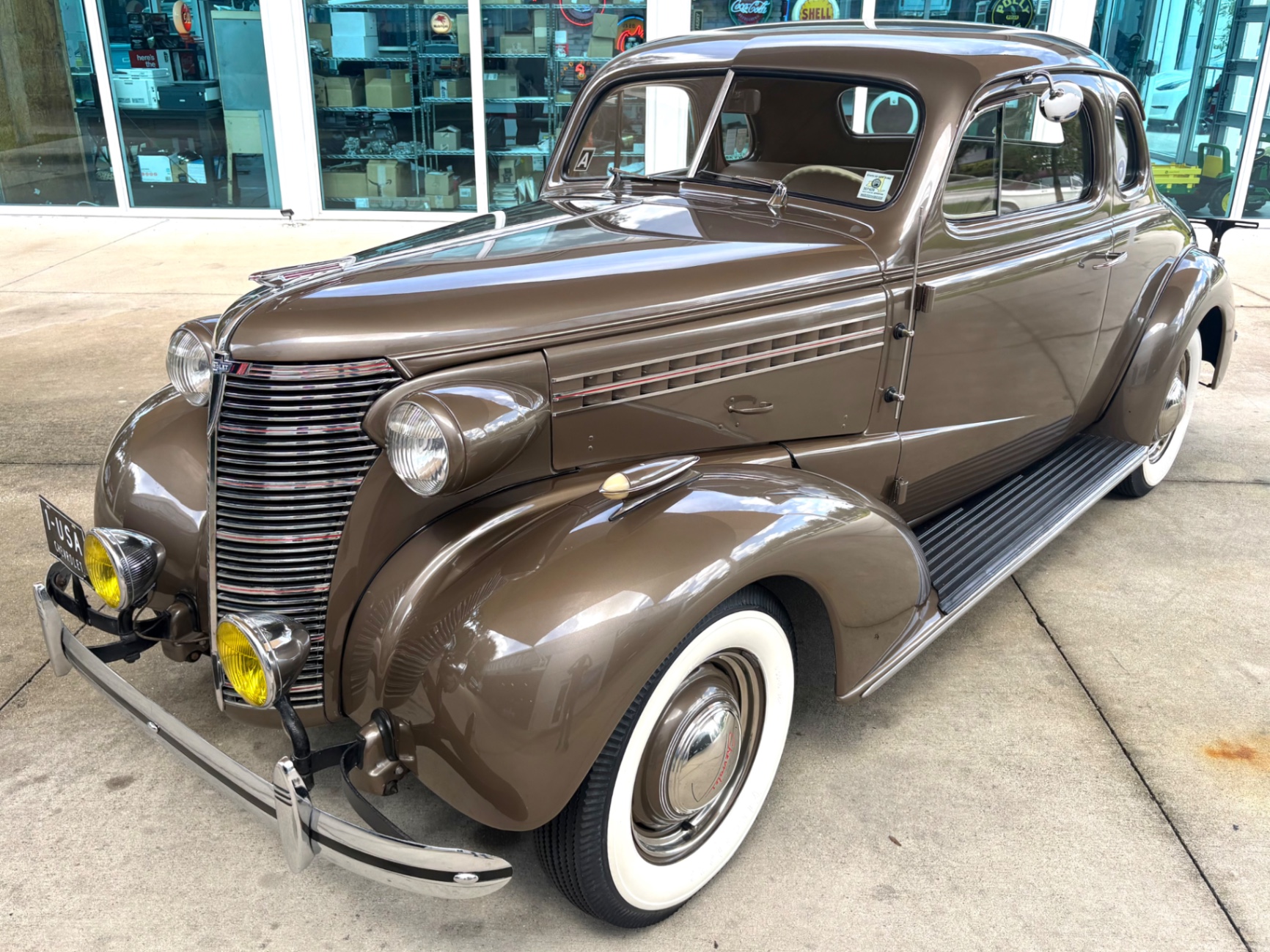
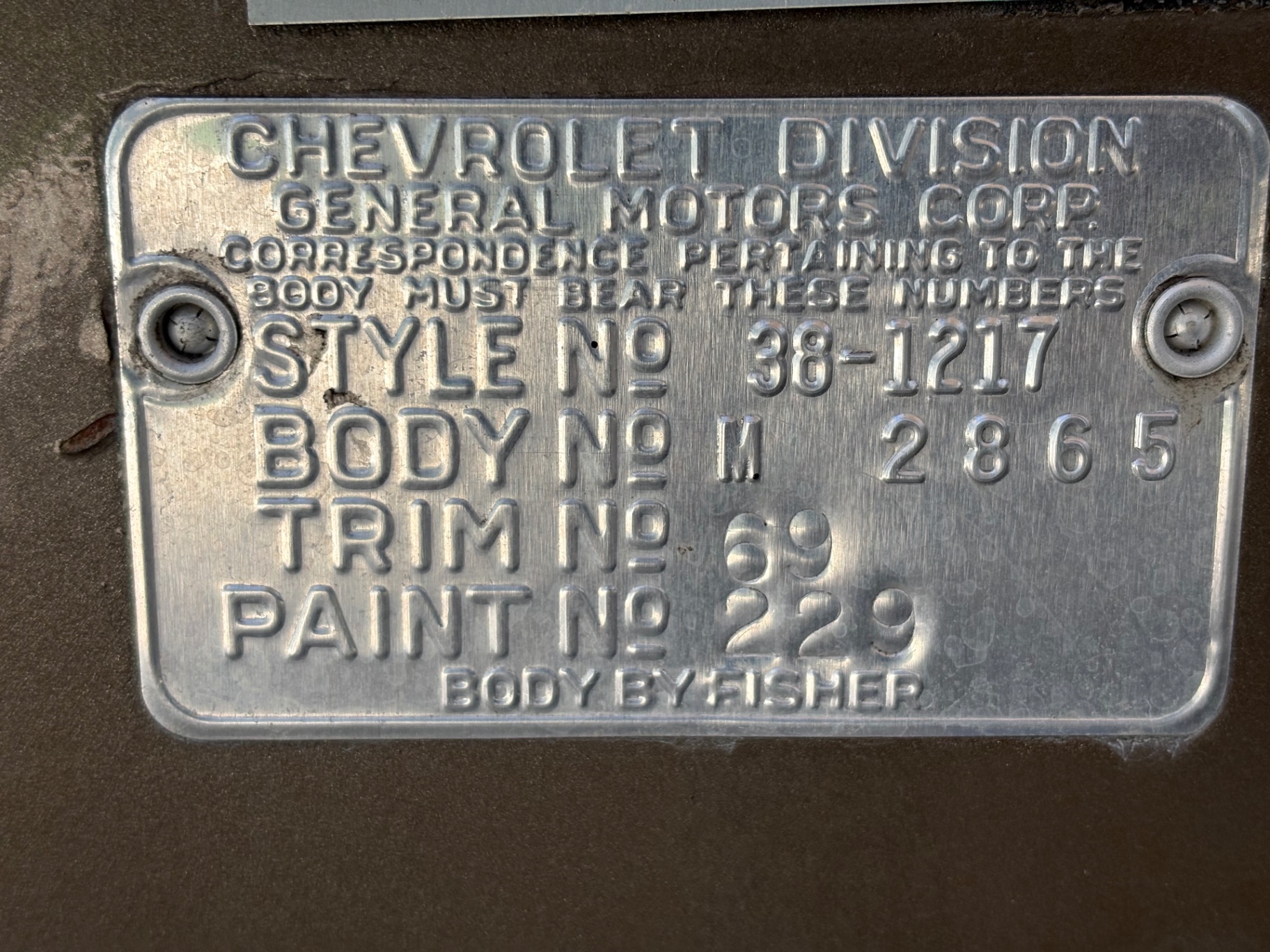
The exterior is finished in factory-correct Woodleaf Brown, Paint Code 229 — a warm, medium-depth brown with subtle bronze undertones that was available on 1938 Chevrolet models and pairs naturally with the tan interior. This is not a common color choice on restored pre-war Chevrolets, which makes this car stand out at shows where black and two-tone combinations dominate the field.
Features
- Body by Fisher, as factory-correct
- Rust-free body — no filler anywhere on the car
- Restored approximately 2010 in factory-correct Woodleaf Brown (Paint Code 229)
- 85hp 216.5ci Stovebolt Six inline OHV engine
- Floor-shift 3-speed manual transmission
- Converted to 12-volt electrical system
- Accessory banjo steering wheel
- Factory AM radio
- Dual amber accessory fog lights
- Driver's side accessory spotlight
- Dual accessory trumpet horns
- Firestone whitewall tires
- Chrome Chevrolet hubcaps
- Running boards
- 4-wheel hydraulic drum brakes
- Leaf spring suspension front and rear
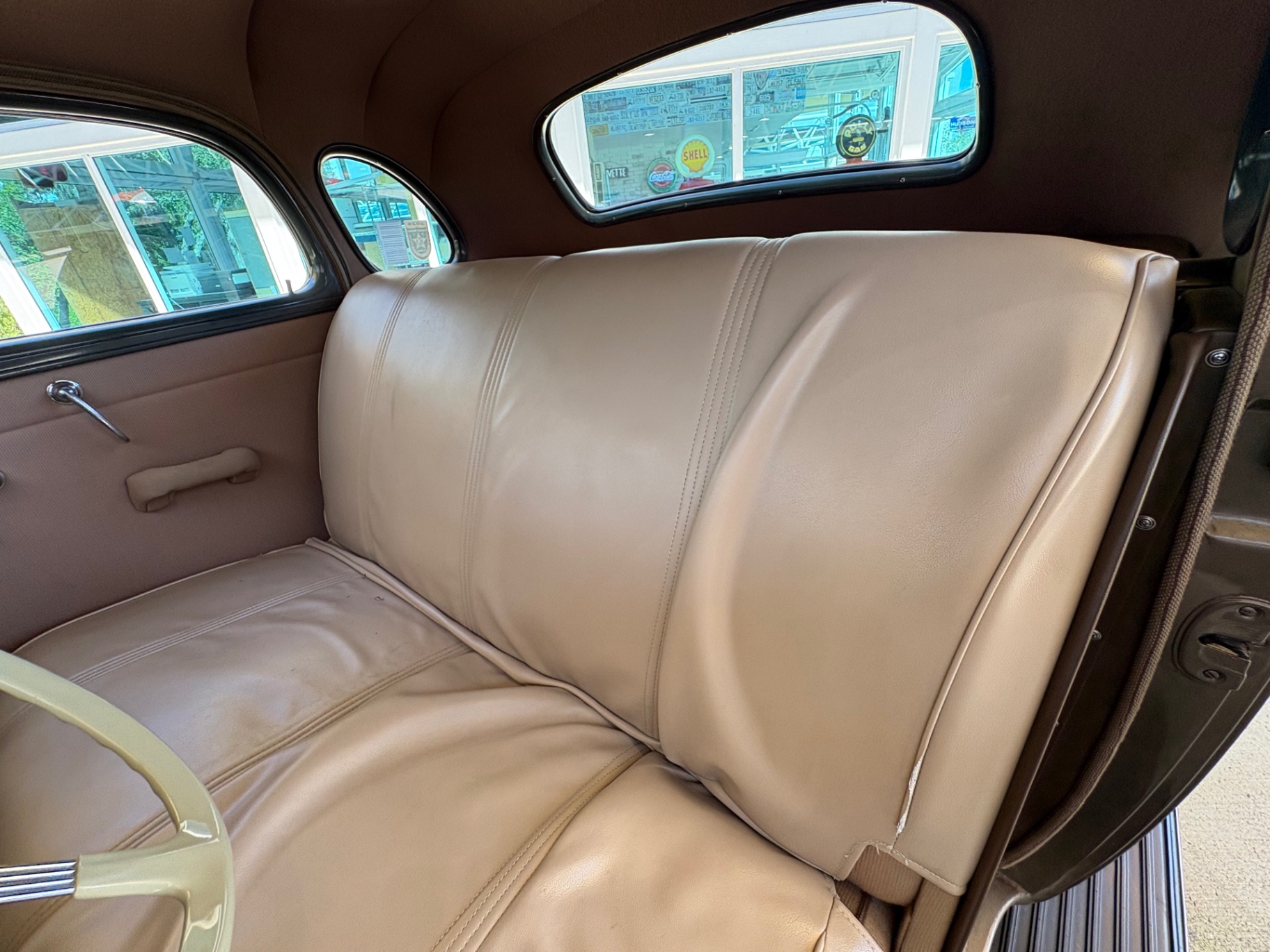
- Tan leather interior
- Suitable as both a driver and a show car
Mechanical
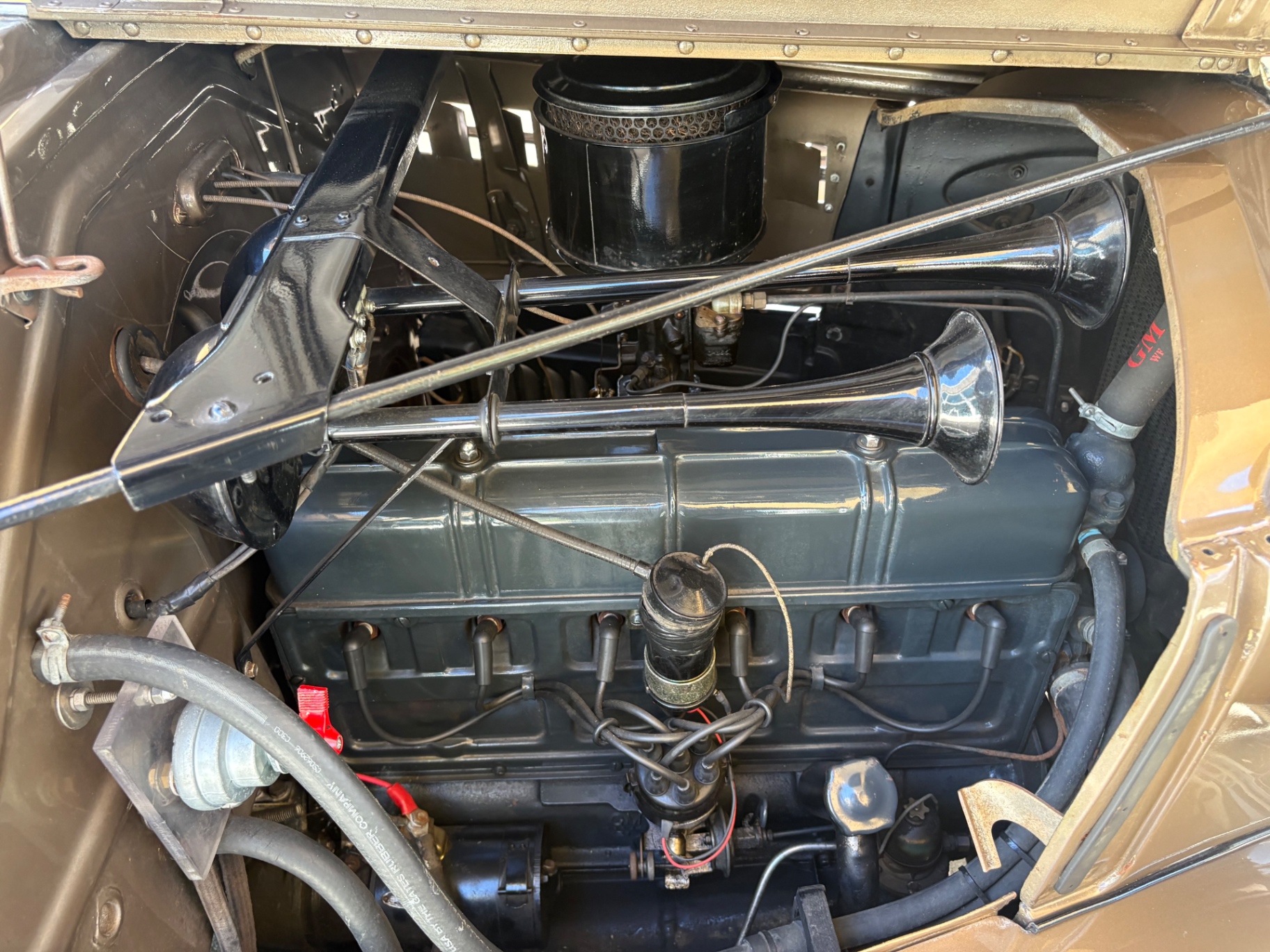
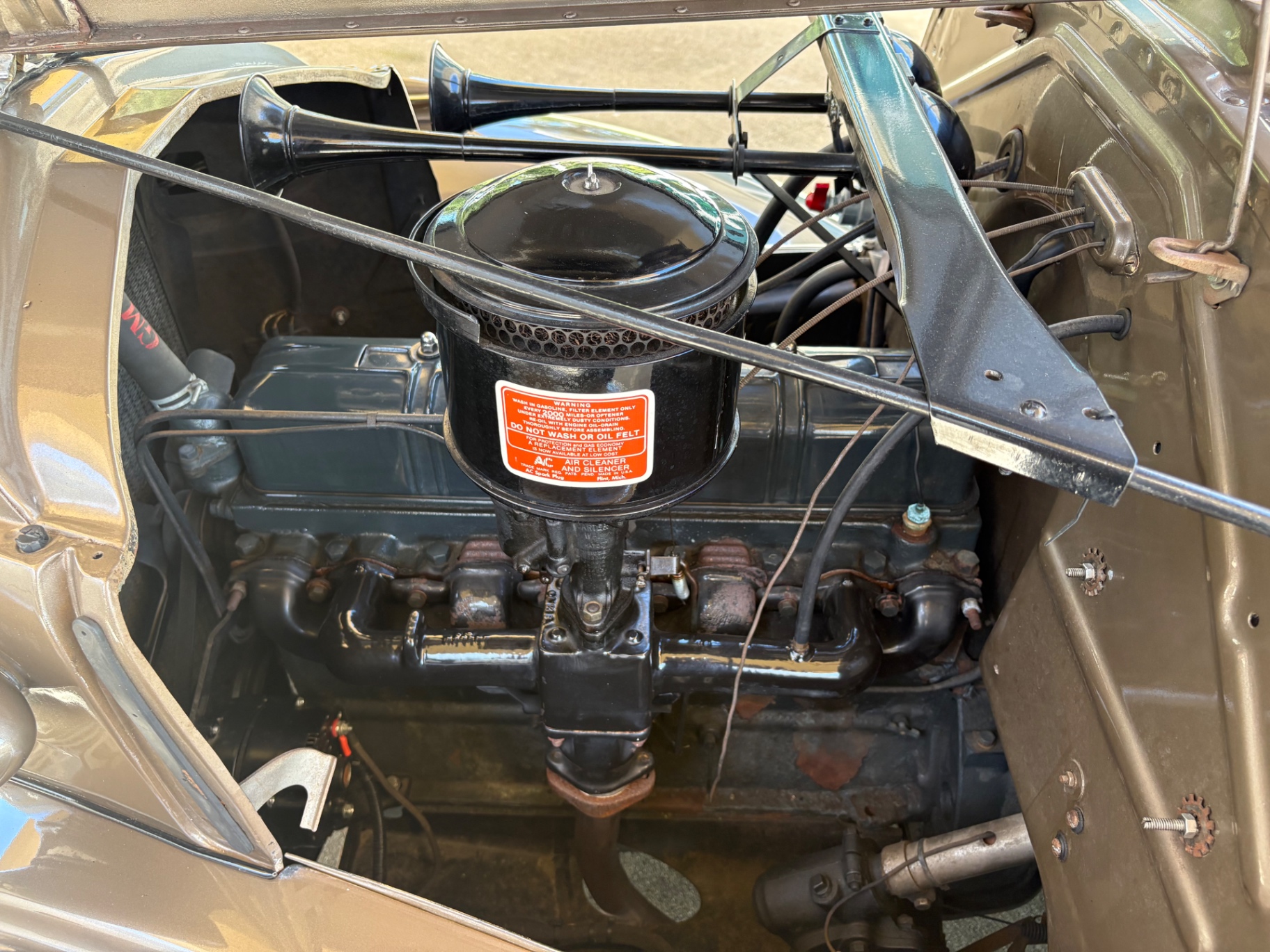
Power comes from Chevrolet's 216.5 cubic inch inline six-cylinder engine — the engine enthusiasts have always called the Stovebolt Six, a nickname earned from the slotted bolts used on the valve cover. This OHV engine displaced 216.5 cubic inches and produced 85 horsepower in 1938 trim, which was a meaningful number for a car of this size and weight in that era. The Stovebolt had already earned a reputation for reliability long before 1938, and Chevrolet continued refining it through the late 1940s and into the 1950s. Parts availability remains good, and the engine's mechanical simplicity means a competent shop can work on it without specialized equipment.
The 3-speed manual transmission is operated through a floor-mounted shifter, which is correct for the Business Coupe configuration. The electrical system has been converted from the original 6-volt setup to a modern 12-volt system — a practical upgrade that eliminates the chronic voltage drop issues that plague 6-volt cars when running accessories, particularly the radio and the multiple period accessory lights on this car. The conversion allows this 1938 Chevrolet Master Business Coupe to be driven regularly without the electrical frustrations that come with original 6-volt wiring on an 87-year-old car.
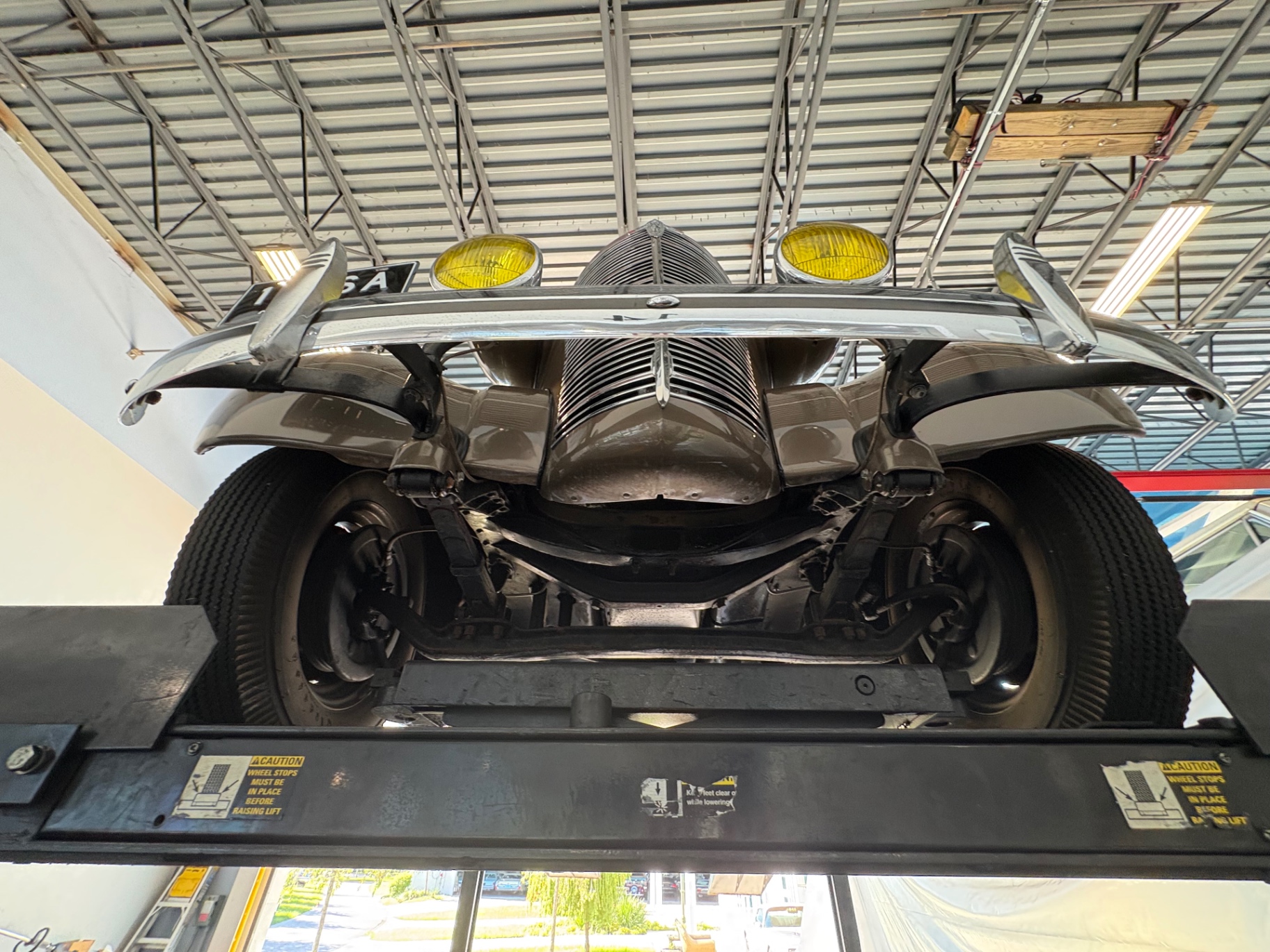
Underneath, the car uses leaf spring suspension at both axles and 4-wheel hydraulic drum brakes — Chevrolet was an early adopter of 4-wheel hydraulic brakes, having introduced them in 1936. The underside of this car has been photographed from every angle and shows clean, solid structure. The frame rails, floor pan, and suspension components are all in the condition you would expect from a rust-free survivor that received a proper restoration rather than a cosmetic one.
Interior
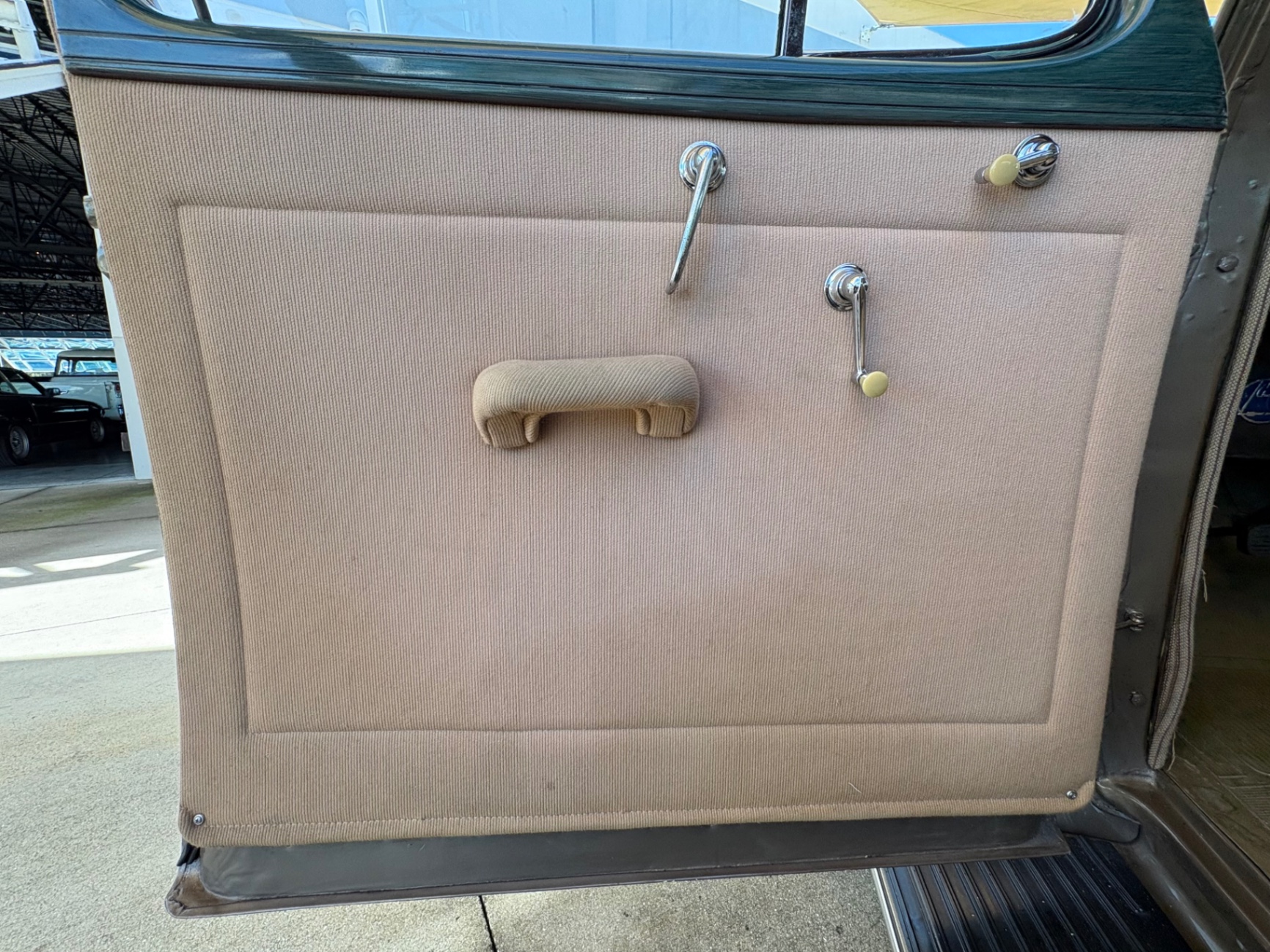
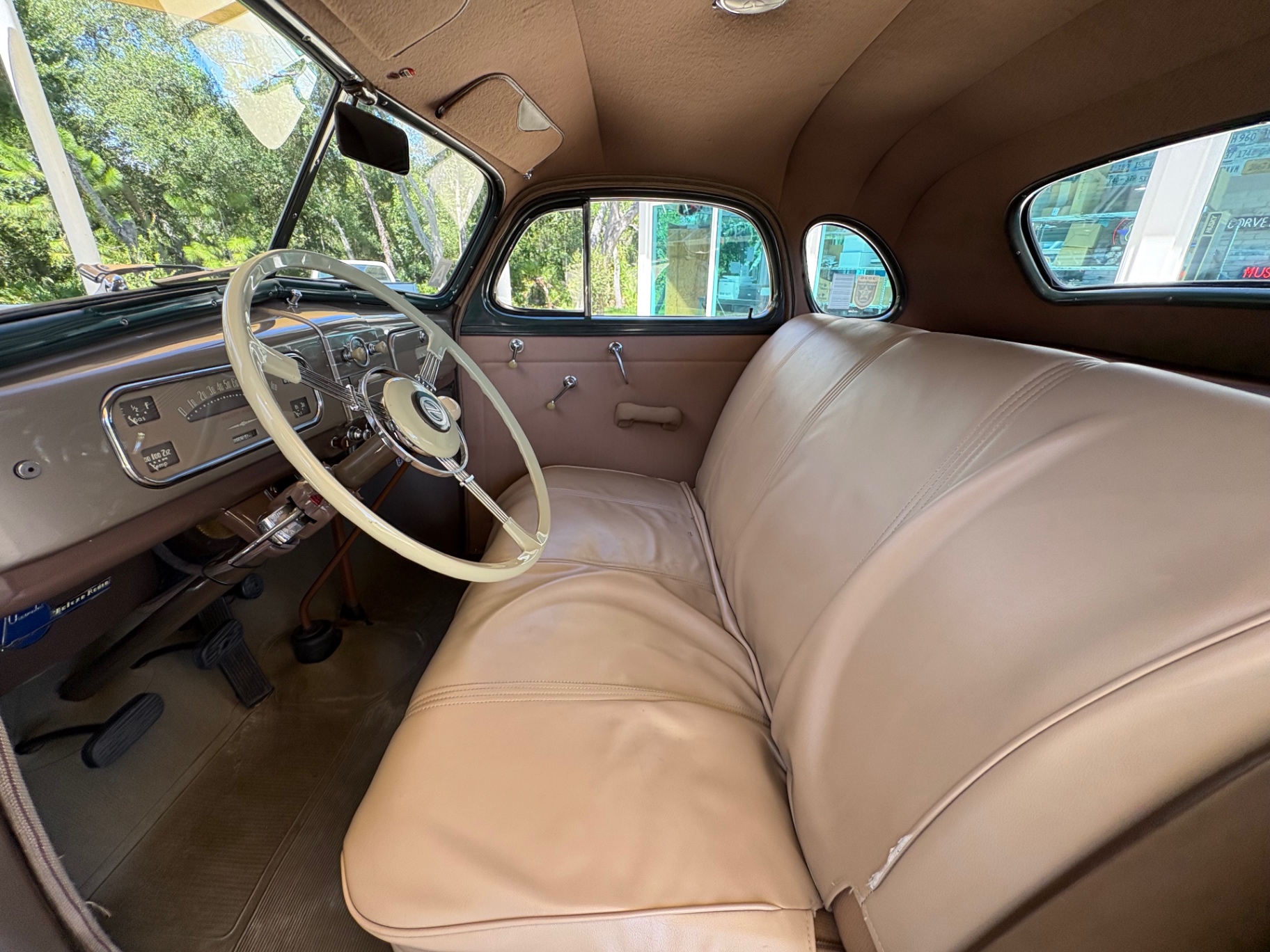
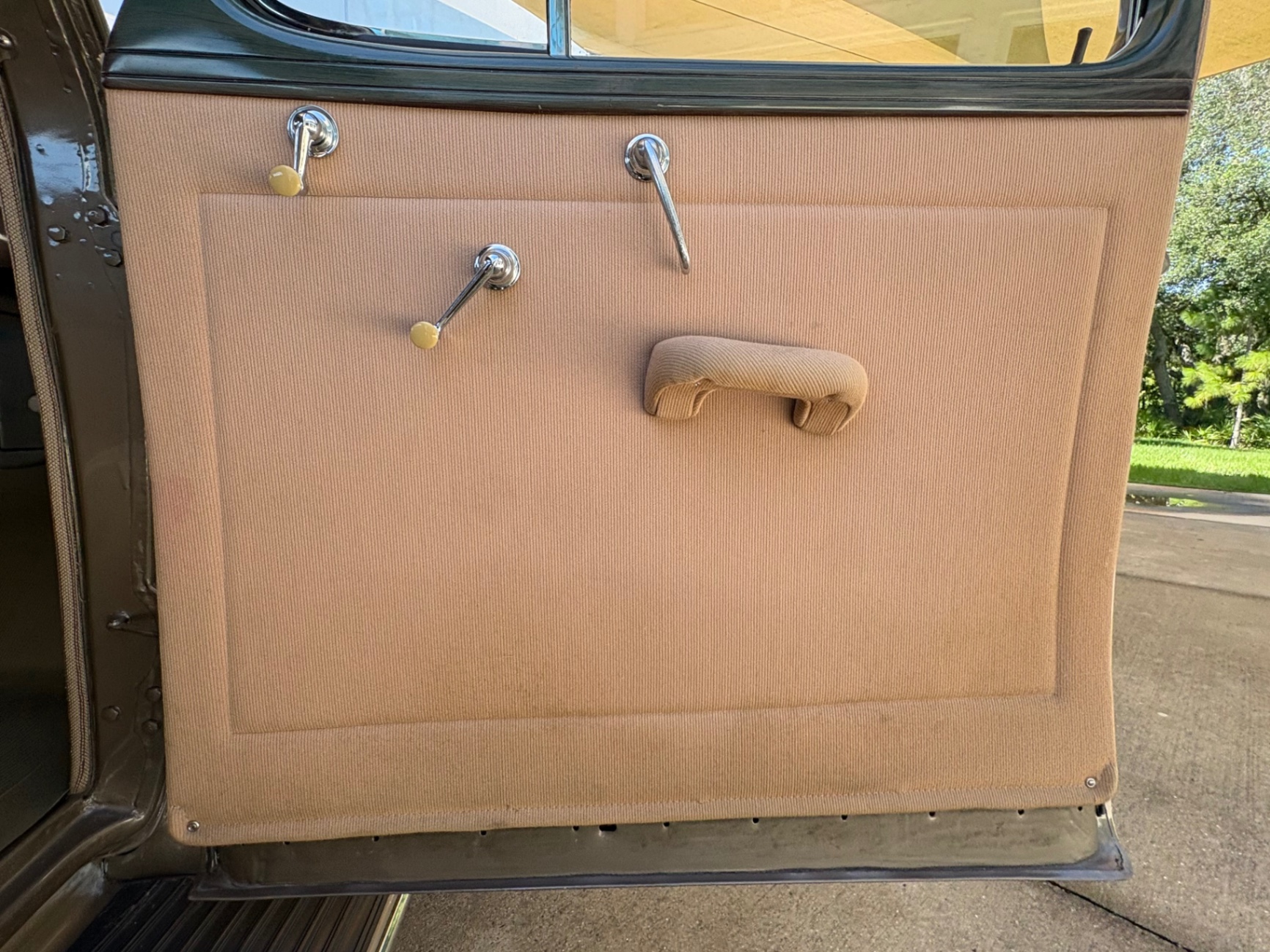
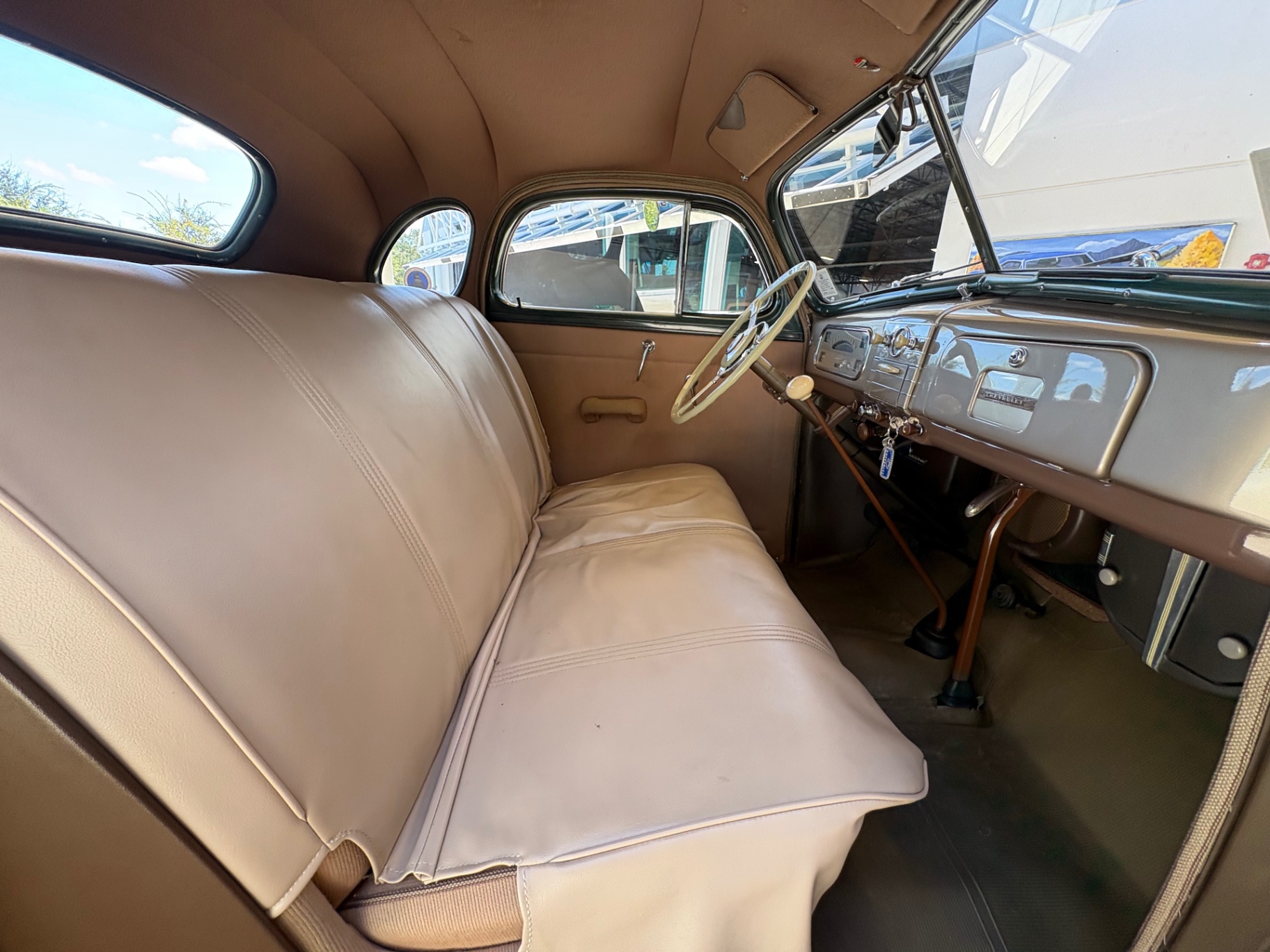
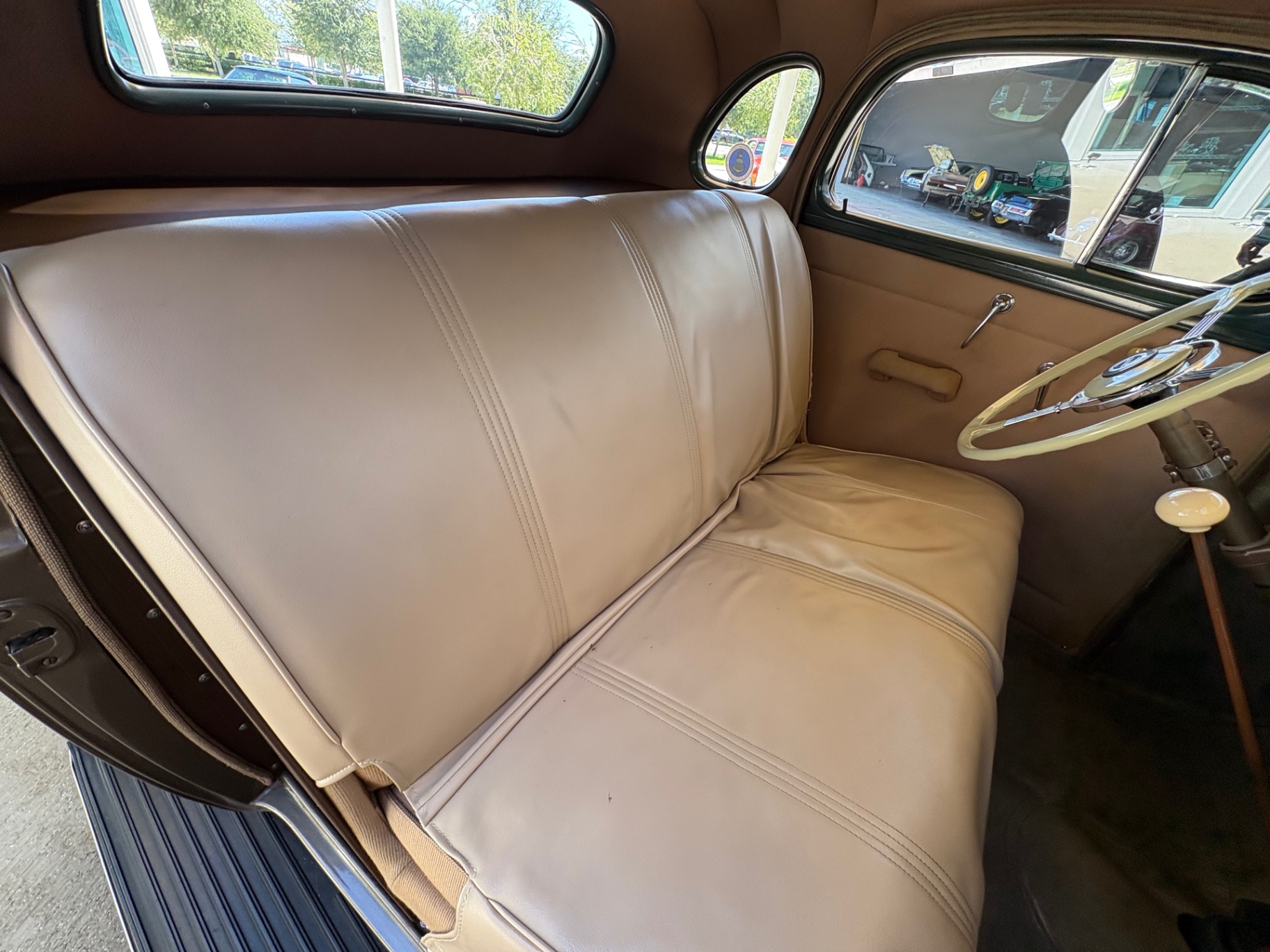
The interior is finished in tan leather and presents in very good condition consistent with a restoration done roughly fifteen years ago. The front bench seat is wide and flat in the pre-war tradition, with clean stitching and no visible cracking or separation in the leather. The rear bench is equally clean. The door panels are trimmed in a period-correct tan woven material with chrome hardware — window cranks and interior handles that match the correct style for a 1938 Chevrolet.
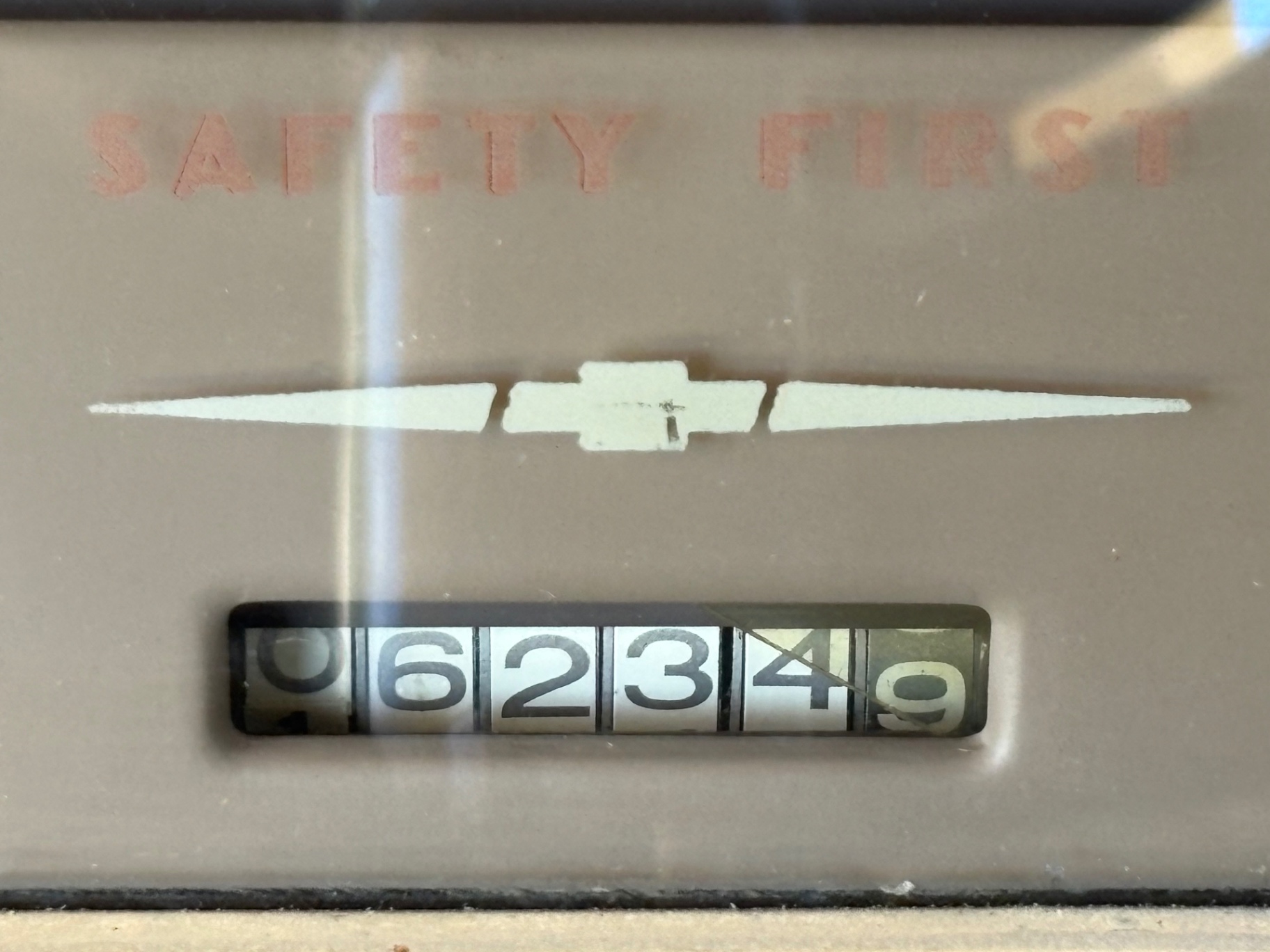
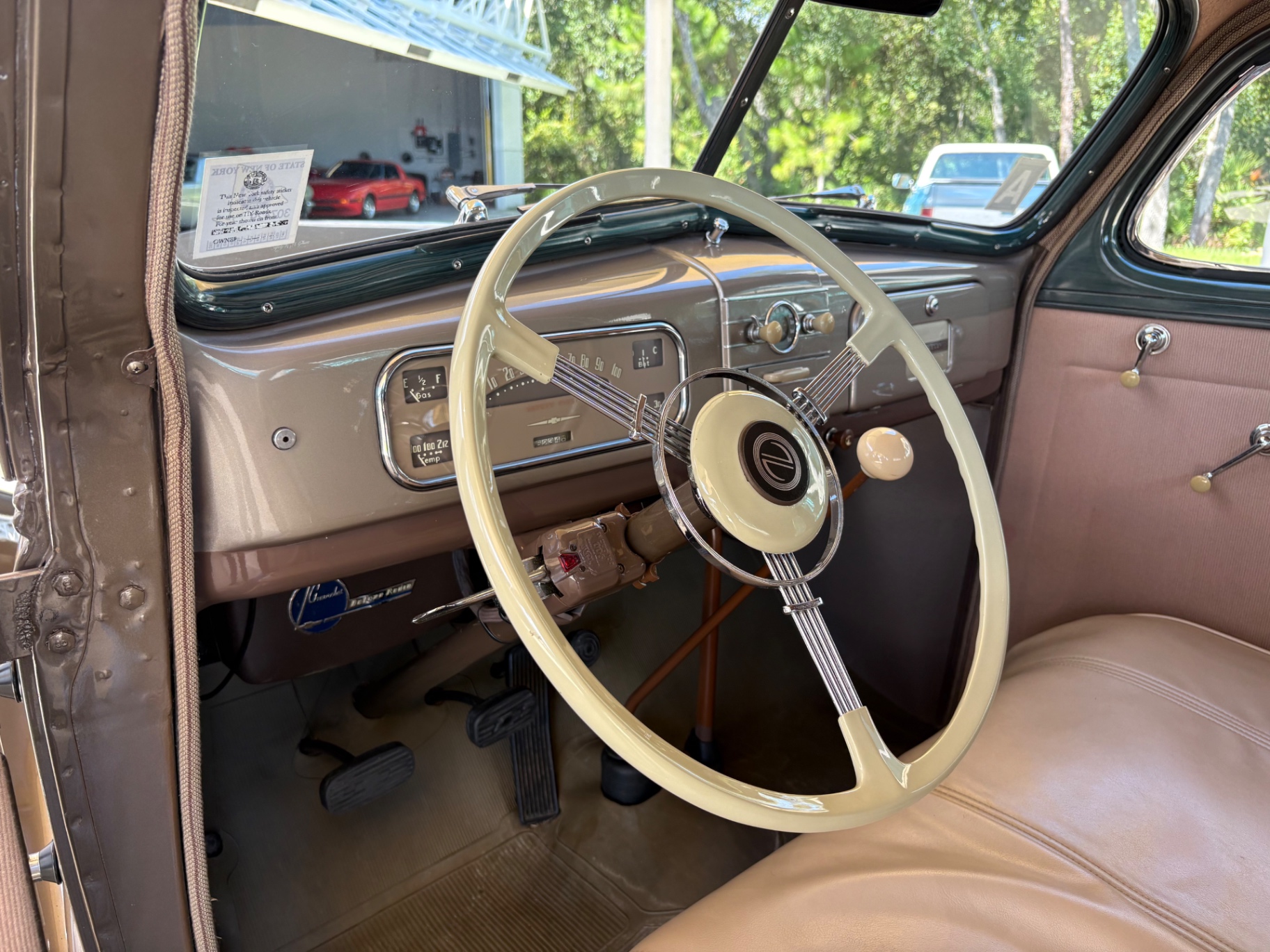
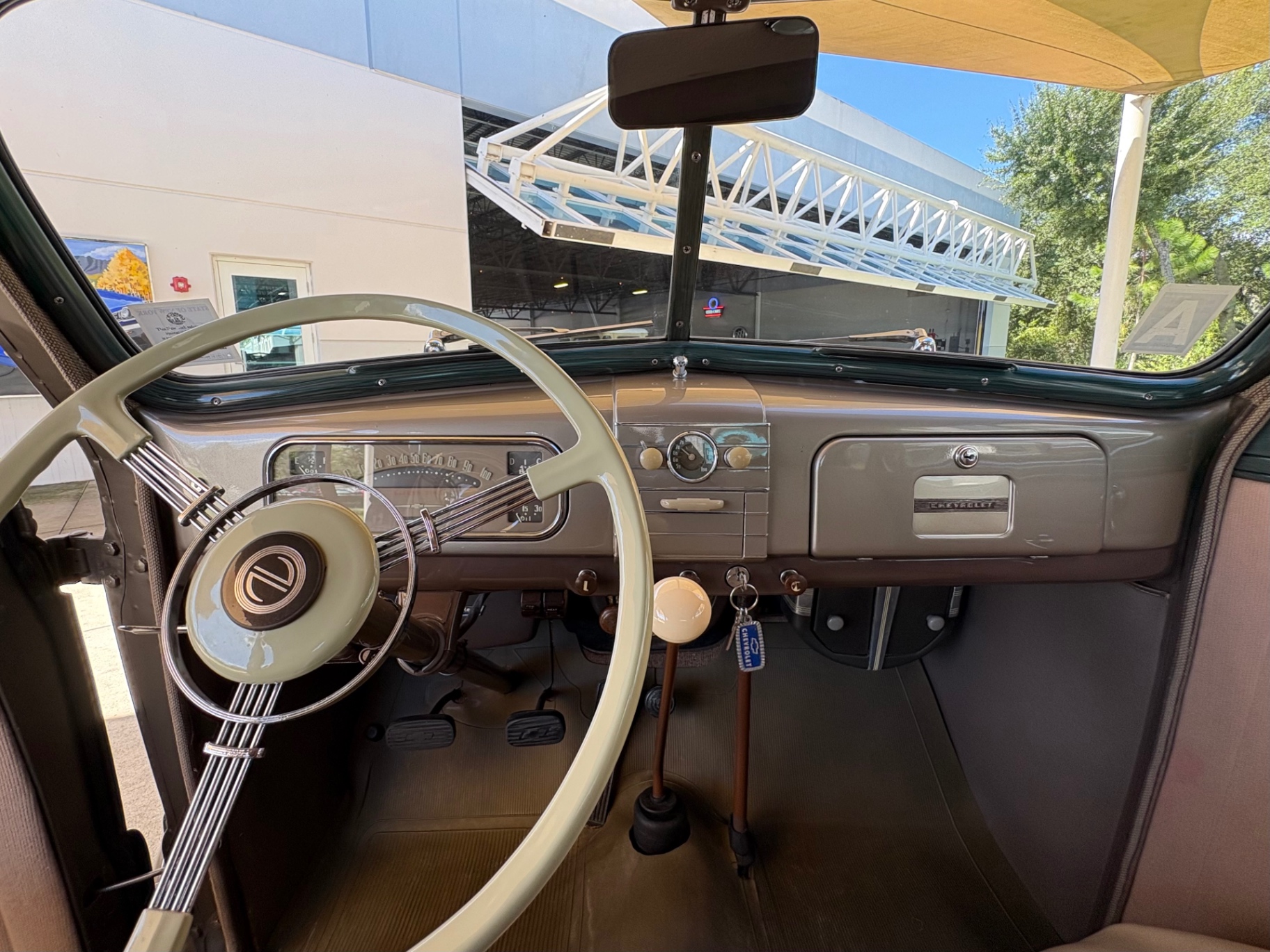
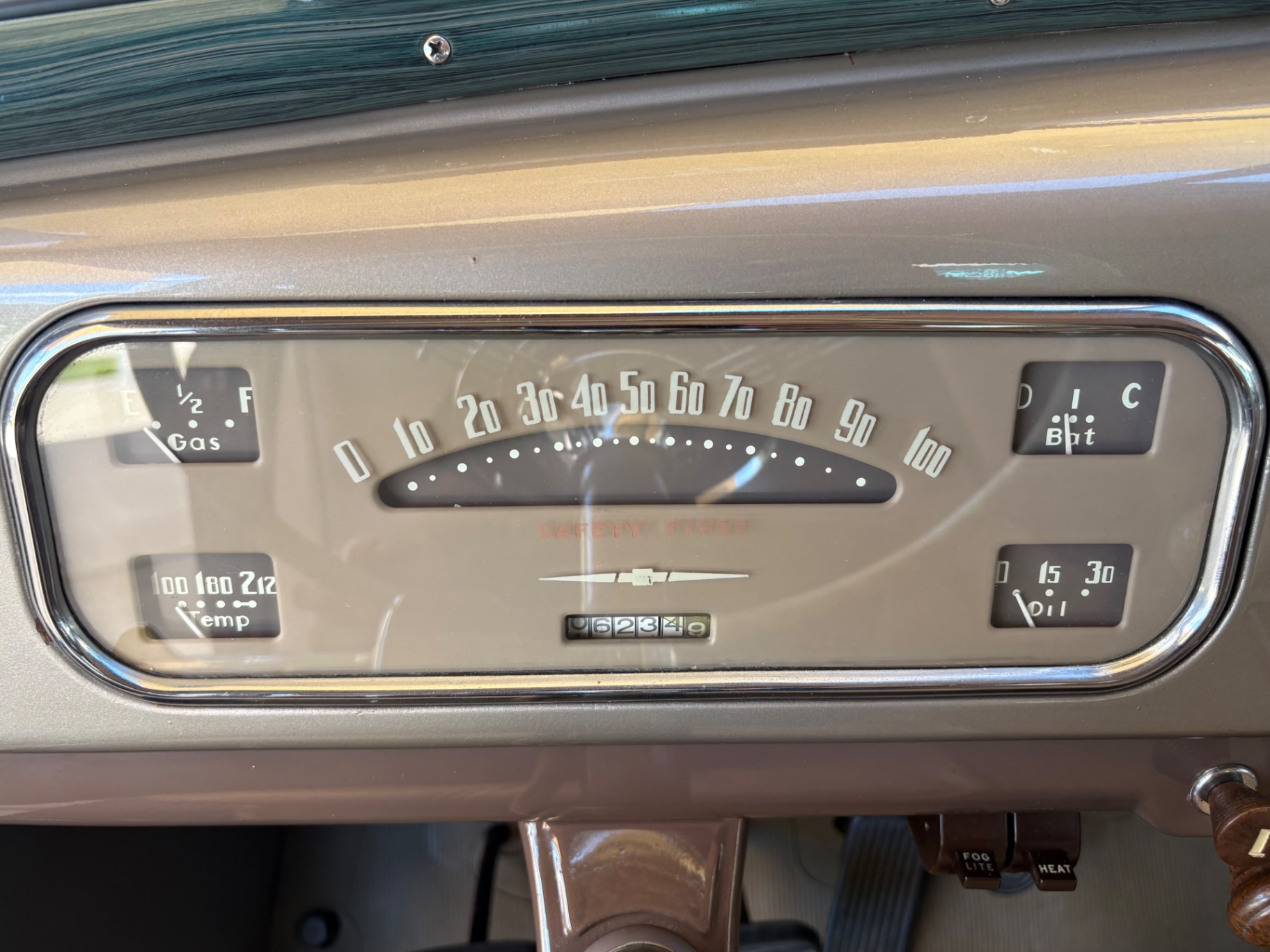
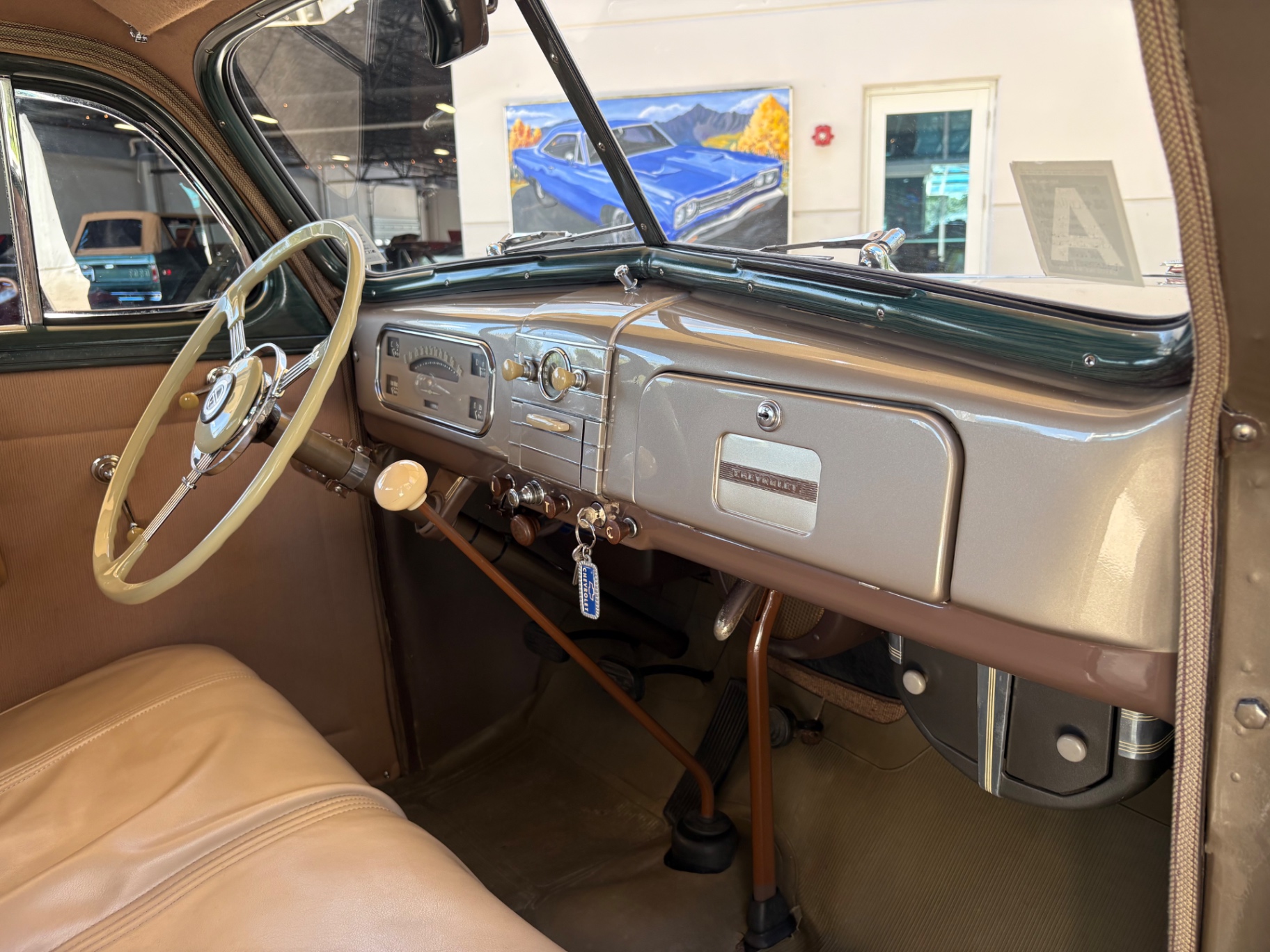
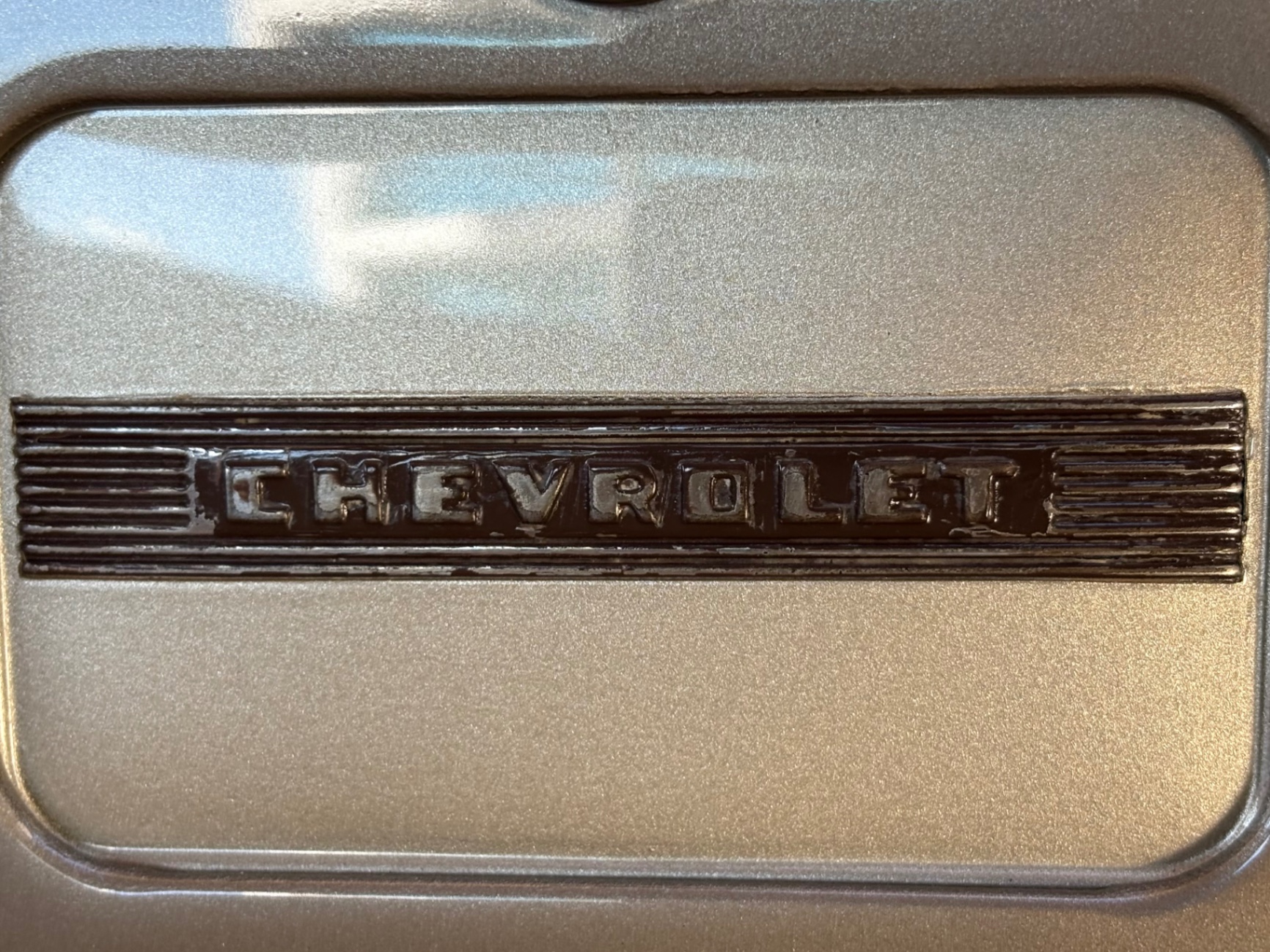
The dashboard layout is classic late-1930s Chevrolet: a single large instrument cluster with a speedometer reading to 100 mph, flanked by smaller gauges for fuel, temperature, oil pressure, and battery condition. The dash is finished in a gray-brown tone that complements the Woodleaf Brown exterior without competing with it. The factory AM radio is present and mounted in the correct location in the center of the dash — period-correct radios were a meaningful accessory in 1938, as they added measurable cost to the purchase price of the car.
One of the most distinctive elements inside this 1938 Chevrolet Master Business Coupe is the accessory banjo steering wheel. These wheels, with their open-spoke design resembling the instrument after which they were named, were a period aftermarket accessory popular in the late 1930s and 1940s. They are significantly harder to find today than standard factory wheels, and their presence here adds a layer of authenticity and period character that a restored factory wheel cannot replicate. The ivory-colored rim and chrome spokes contrast well against the brown and tan interior.
The floor shifter rises from the transmission tunnel in the correct position for this body style, and the pedals — clutch, brake, and throttle — are positioned correctly and show normal use wear. Toggle switches along the lower dash control the fog lights and accessory equipment. The overall impression inside this car is of a thoughtful restoration that prioritized correctness over flash.
Exterior
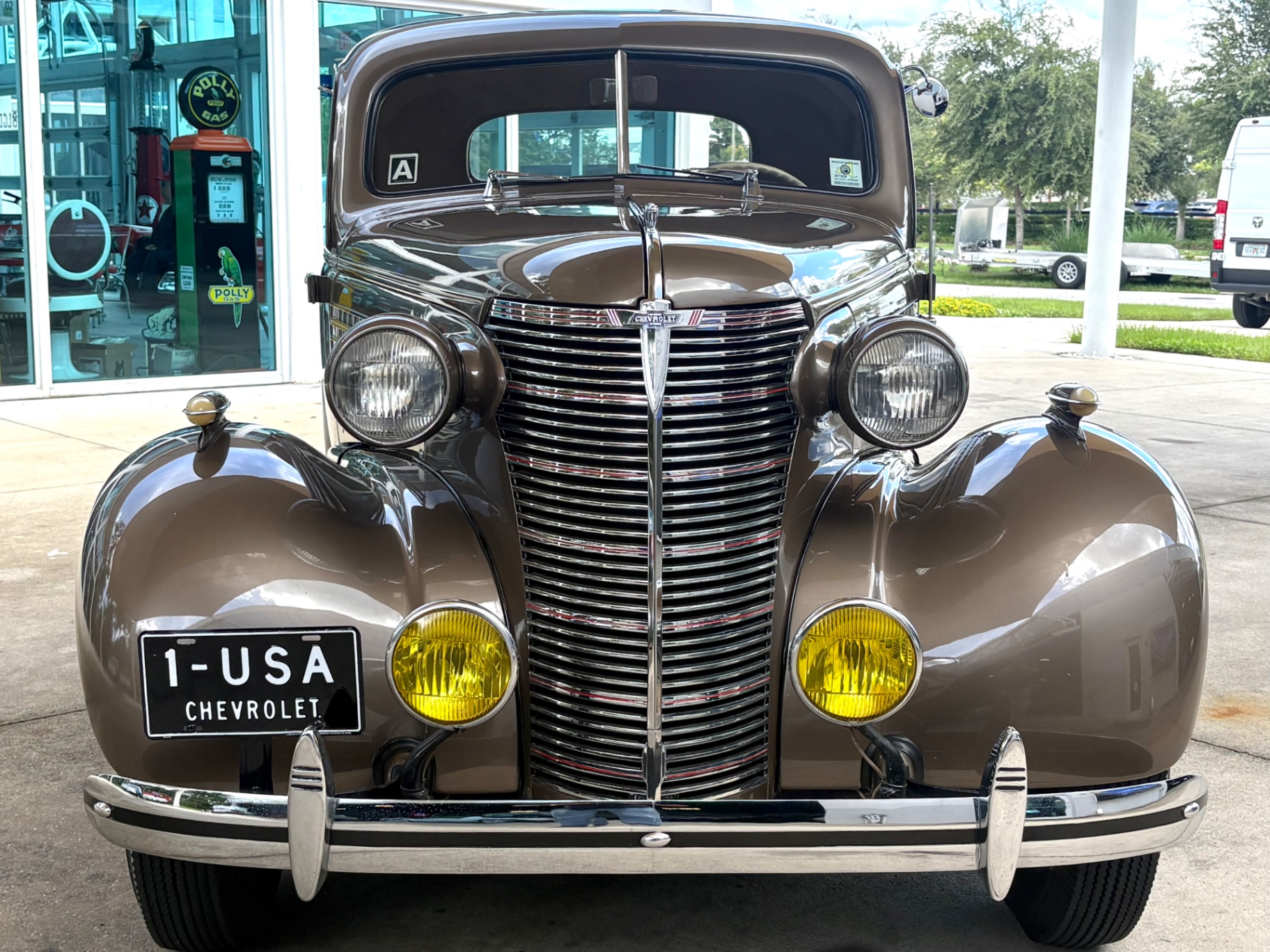
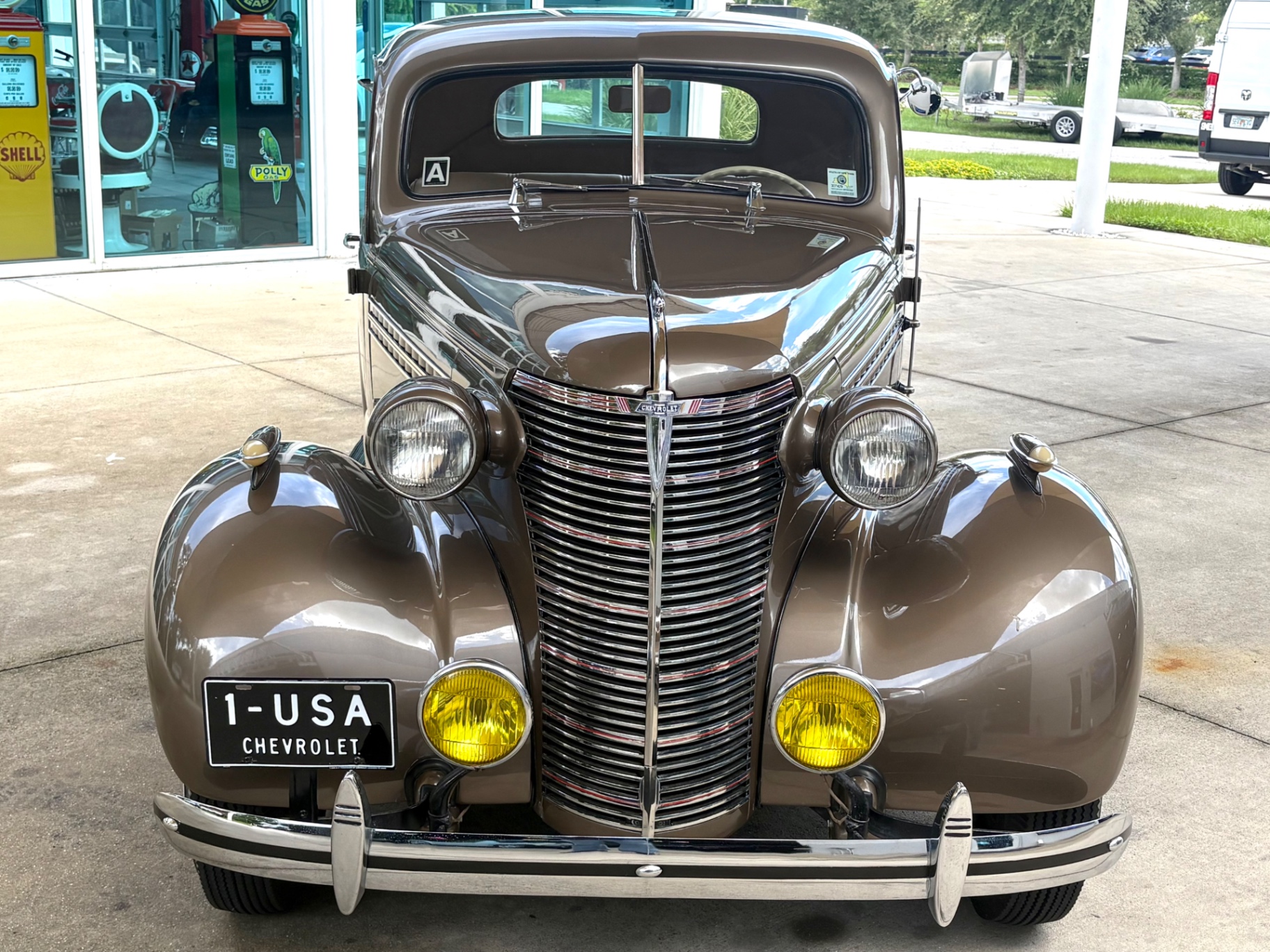
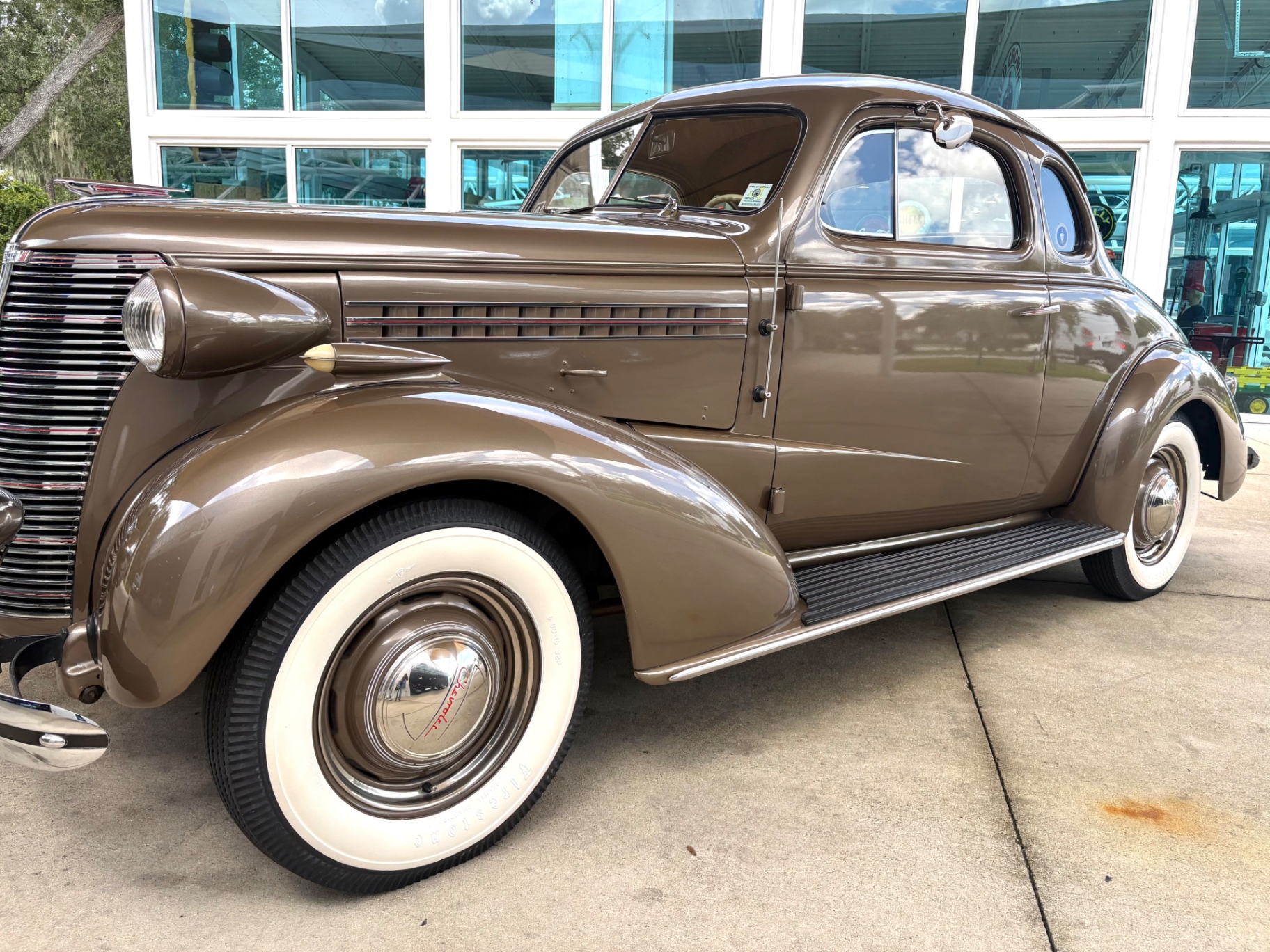
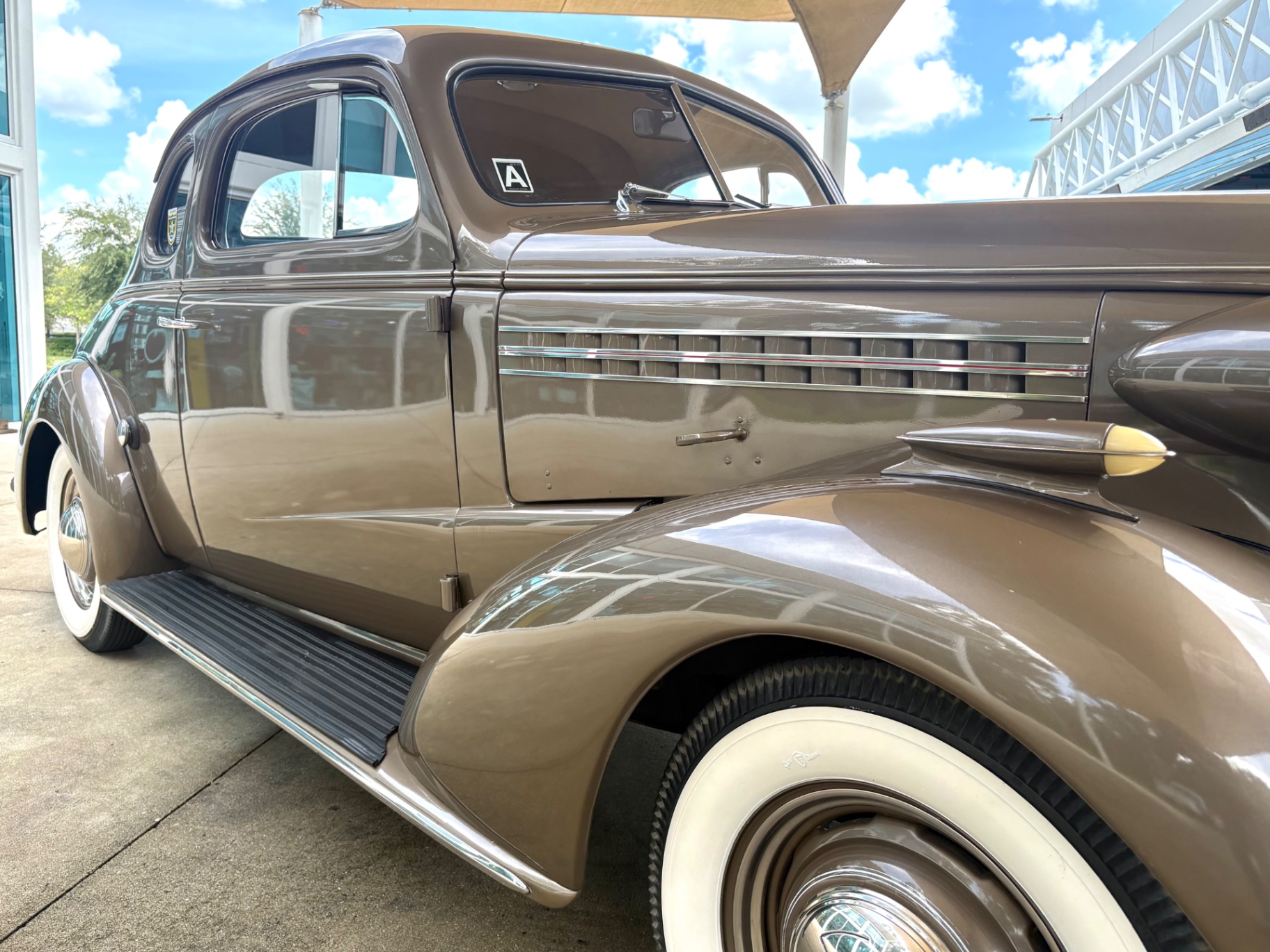
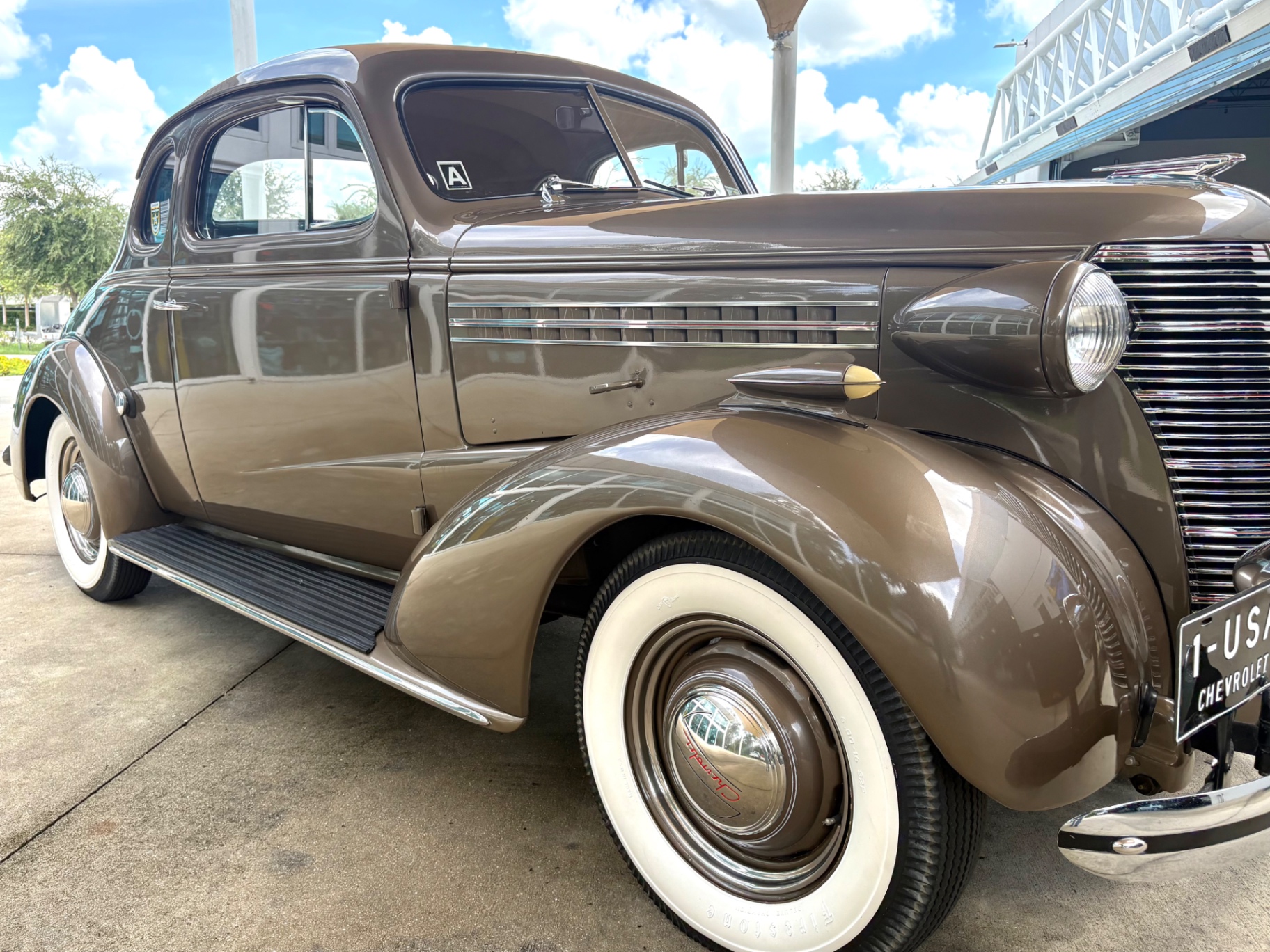
The 1938 Chevrolet Master Business Coupe wears its Woodleaf Brown paint evenly across all panels, with no obvious color-match inconsistencies between the doors, fenders, and body. The pontoon fenders — a defining design element of the 1938 Chevrolet — sweep from the front of the car in a long, unbroken arc that integrates with the body sides and creates the smooth, flowing look that set these cars apart from the more upright designs of just a few years earlier. The front fenders carry the dual amber accessory fog lights, which are a correct period addition and add both function and visual character to the front end.
The vertical-bar chrome grille is intact and presents well. The front bumper, rear bumper, and surrounding chrome trim are in good condition. Chrome Chevrolet hubcaps cover the wheel centers, and the car rides on Firestone whitewall tires that suit the period and the color combination correctly. Running boards run along both sides of the car in the original position, correct for the body style and still fully functional.
The driver's side is equipped with an accessory spotlight mounted at the A-pillar — a common and desirable period addition that was used extensively on service vehicles and luxury-minded personal cars of the era. The dual accessory trumpet horns are mounted in the engine bay and visible through the grille opening, exactly as they would have been fitted by a dealer or owner in the late 1930s.
The underside of this car is worth discussing in the context of the exterior because the two tell the same story. The body seams are intact, the floor pans are solid, and there is no evidence of the patch-and-paint approach that makes so many restored pre-war cars unreliable investments. This is a car that has been preserved from the bottom up, not just from the beltline up.
Conclusion
The 1938 Chevrolet Master Business Coupe is a pre-war American classic that has largely escaped the attention of the mainstream collector market, which means correct, rust-free examples like this one are genuinely difficult to locate. This particular car checks every box that matters to a serious buyer: correct factory color, no filler, solid undercarriage, a practical 12-volt electrical conversion, and a collection of period accessories — the banjo steering wheel, trumpet horns, fog lights, and spotlight — that would have taken years to assemble correctly. It is comfortable to drive, correct enough to show, and honest enough to own without worrying about what is hiding underneath the paint.
If you have questions about this 1938 Chevrolet Master Business Coupe or would like to arrange an inspection, call Skyway Classics in Sarasota, Florida at 941-254-6608.
Disclaimer
Information found on the website is presented as given to us by the owner of the car, whether on consignment or from the owner we bought it from. Some Photos, materials for videos, descriptions and other information are provided by the consignor/seller and is deemed reliable, but Skyway Classics does not warranty or guarantee this information. Skyway Classics is not responsible for information that may incorrect or a publishing error. The decision to purchase should be based solely on the buyers personal inspection of the vehicle or by a professional inspection service prior to offer or purchase being made.
1938 Chevrolet Master Business Coupe — Rust-Free Survivor with Factory-Correct Restoration and Period Accessories
Why This Car Is Special
The 1938 Chevrolet Master Business Coupe is not a car you see at every show. It was the no-frills workhorse of the Master series lineup — no rear seat in the standard configuration, more trunk space, and a price point that made it accessible to small business owners and tradesmen during the tail end of the Great Depression. Chevrolet built the 1938 Master series on a longer 112.3-inch wheelbase than its cheaper Master 85 sibling, and the body was penned under the direction of GM's Art and Colour Section with input from Harley Earl's team. The result was some of the most cohesive pre-war American styling ever put into production — a fully integrated pontoon fender design, a waterfall grille with vertical chrome bars, and a roofline that flowed rearward in a single smooth arc.
What separates this particular 1938 Chevrolet Master Business Coupe from the ones you occasionally see at shows is simple: the metal is real. There is no filler anywhere on this car. The body panels are straight because they were never seriously damaged and because someone cared enough to restore this car correctly around 2010 rather than skim over problems with plastic filler and a spray gun. The undercarriage photographs confirm this — the floor pans, frame rails, and body seams are clean, tight, and show no evidence of patch panels or hidden damage. For a pre-war car that has spent time in the southeastern United States, that is genuinely significant.
The exterior is finished in factory-correct Woodleaf Brown, Paint Code 229 — a warm, medium-depth brown with subtle bronze undertones that was available on 1938 Chevrolet models and pairs naturally with the tan interior. This is not a common color choice on restored pre-war Chevrolets, which makes this car stand out at shows where black and two-tone combinations dominate the field.
Features
- Body by Fisher, as factory-correct
- Rust-free body — no filler anywhere on the car
- Restored approximately 2010 in factory-correct Woodleaf Brown (Paint Code 229)
- 85hp 216.5ci Stovebolt Six inline OHV engine
- Floor-shift 3-speed manual transmission
- Converted to 12-volt electrical system
- Accessory banjo steering wheel
- Factory AM radio
- Dual amber accessory fog lights
- Driver's side accessory spotlight
- Dual accessory trumpet horns
- Firestone whitewall tires
- Chrome Chevrolet hubcaps
- Running boards
- 4-wheel hydraulic drum brakes
- Leaf spring suspension front and rear
- Tan leather interior
- Suitable as both a driver and a show car
Mechanical
Power comes from Chevrolet's 216.5 cubic inch inline six-cylinder engine — the engine enthusiasts have always called the Stovebolt Six, a nickname earned from the slotted bolts used on the valve cover. This OHV engine displaced 216.5 cubic inches and produced 85 horsepower in 1938 trim, which was a meaningful number for a car of this size and weight in that era. The Stovebolt had already earned a reputation for reliability long before 1938, and Chevrolet continued refining it through the late 1940s and into the 1950s. Parts availability remains good, and the engine's mechanical simplicity means a competent shop can work on it without specialized equipment.
The 3-speed manual transmission is operated through a floor-mounted shifter, which is correct for the Business Coupe configuration. The electrical system has been converted from the original 6-volt setup to a modern 12-volt system — a practical upgrade that eliminates the chronic voltage drop issues that plague 6-volt cars when running accessories, particularly the radio and the multiple period accessory lights on this car. The conversion allows this 1938 Chevrolet Master Business Coupe to be driven regularly without the electrical frustrations that come with original 6-volt wiring on an 87-year-old car.
Underneath, the car uses leaf spring suspension at both axles and 4-wheel hydraulic drum brakes — Chevrolet was an early adopter of 4-wheel hydraulic brakes, having introduced them in 1936. The underside of this car has been photographed from every angle and shows clean, solid structure. The frame rails, floor pan, and suspension components are all in the condition you would expect from a rust-free survivor that received a proper restoration rather than a cosmetic one.
Interior
The interior is finished in tan leather and presents in very good condition consistent with a restoration done roughly fifteen years ago. The front bench seat is wide and flat in the pre-war tradition, with clean stitching and no visible cracking or separation in the leather. The rear bench is equally clean. The door panels are trimmed in a period-correct tan woven material with chrome hardware — window cranks and interior handles that match the correct style for a 1938 Chevrolet.
The dashboard layout is classic late-1930s Chevrolet: a single large instrument cluster with a speedometer reading to 100 mph, flanked by smaller gauges for fuel, temperature, oil pressure, and battery condition. The dash is finished in a gray-brown tone that complements the Woodleaf Brown exterior without competing with it. The factory AM radio is present and mounted in the correct location in the center of the dash — period-correct radios were a meaningful accessory in 1938, as they added measurable cost to the purchase price of the car.
One of the most distinctive elements inside this 1938 Chevrolet Master Business Coupe is the accessory banjo steering wheel. These wheels, with their open-spoke design resembling the instrument after which they were named, were a period aftermarket accessory popular in the late 1930s and 1940s. They are significantly harder to find today than standard factory wheels, and their presence here adds a layer of authenticity and period character that a restored factory wheel cannot replicate. The ivory-colored rim and chrome spokes contrast well against the brown and tan interior.
The floor shifter rises from the transmission tunnel in the correct position for this body style, and the pedals — clutch, brake, and throttle — are positioned correctly and show normal use wear. Toggle switches along the lower dash control the fog lights and accessory equipment. The overall impression inside this car is of a thoughtful restoration that prioritized correctness over flash.
Exterior
The 1938 Chevrolet Master Business Coupe wears its Woodleaf Brown paint evenly across all panels, with no obvious color-match inconsistencies between the doors, fenders, and body. The pontoon fenders — a defining design element of the 1938 Chevrolet — sweep from the front of the car in a long, unbroken arc that integrates with the body sides and creates the smooth, flowing look that set these cars apart from the more upright designs of just a few years earlier. The front fenders carry the dual amber accessory fog lights, which are a correct period addition and add both function and visual character to the front end.
The vertical-bar chrome grille is intact and presents well. The front bumper, rear bumper, and surrounding chrome trim are in good condition. Chrome Chevrolet hubcaps cover the wheel centers, and the car rides on Firestone whitewall tires that suit the period and the color combination correctly. Running boards run along both sides of the car in the original position, correct for the body style and still fully functional.
The driver's side is equipped with an accessory spotlight mounted at the A-pillar — a common and desirable period addition that was used extensively on service vehicles and luxury-minded personal cars of the era. The dual accessory trumpet horns are mounted in the engine bay and visible through the grille opening, exactly as they would have been fitted by a dealer or owner in the late 1930s.
The underside of this car is worth discussing in the context of the exterior because the two tell the same story. The body seams are intact, the floor pans are solid, and there is no evidence of the patch-and-paint approach that makes so many restored pre-war cars unreliable investments. This is a car that has been preserved from the bottom up, not just from the beltline up.
Conclusion
The 1938 Chevrolet Master Business Coupe is a pre-war American classic that has largely escaped the attention of the mainstream collector market, which means correct, rust-free examples like this one are genuinely difficult to locate. This particular car checks every box that matters to a serious buyer: correct factory color, no filler, solid undercarriage, a practical 12-volt electrical conversion, and a collection of period accessories — the banjo steering wheel, trumpet horns, fog lights, and spotlight — that would have taken years to assemble correctly. It is comfortable to drive, correct enough to show, and honest enough to own without worrying about what is hiding underneath the paint.
If you have questions about this 1938 Chevrolet Master Business Coupe or would like to arrange an inspection, call Skyway Classics in Sarasota, Florida at 941-254-6608.
Disclaimer
Information found on the website is presented as given to us by the owner of the car, whether on consignment or from the owner we bought it from. Some Photos, materials for videos, descriptions and other information are provided by the consignor/seller and is deemed reliable, but Skyway Classics does not warranty or guarantee this information. Skyway Classics is not responsible for information that may incorrect or a publishing error. The decision to purchase should be based solely on the buyers personal inspection of the vehicle or by a professional inspection service prior to offer or purchase being made.
1938 Chevrolet
Master Business Coupe
Why Choose Skyway Classics?
Explore our curated inventory of classic and collector cars—thoughtfully selected, ready to drive, and supported by experts who make ownership simple.
Expert Curation
Every vehicle is hand-selected by our experts for quality, authenticity, and investment potential.
Fast Transactions
Streamlined buying and selling process with quick financing and immediate delivery options.
Only National Dealer With Classic Service & Repair
We’re the only national dealership that services and repairs the classics we sell—before and after the sale.
Nationwide Network
Access to our extensive network of collectors, restorers, and classic car enthusiasts nationwide.
Concierge Ownership Support
From financing and insurance to paperwork, shipping, and titling—we handle the details so you can enjoy the drive.
Passion-Driven Service
We're classic car enthusiasts first, providing personalized service with genuine passion for the hobby.