
1946 Willys
Jeep CJ2A
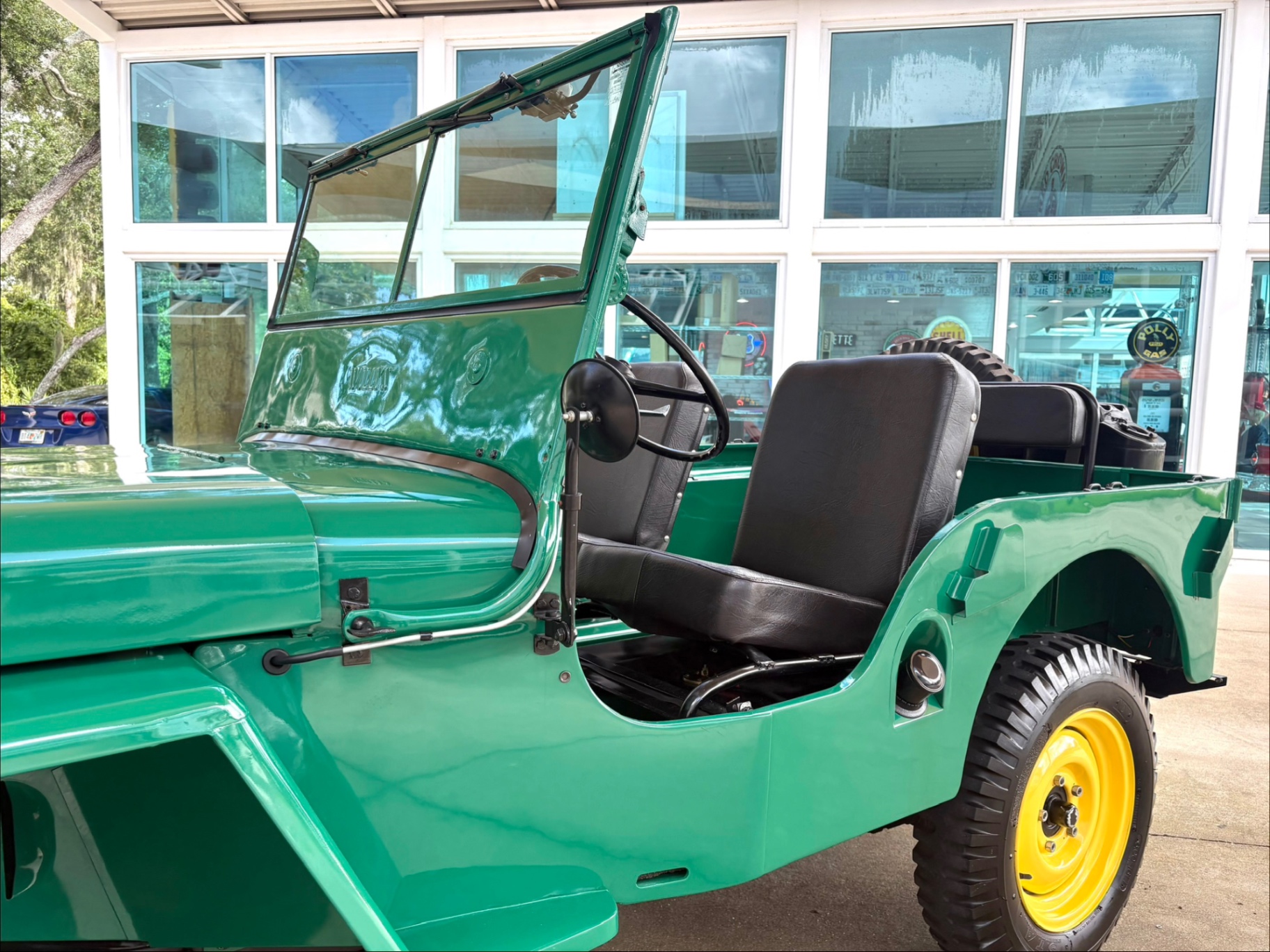
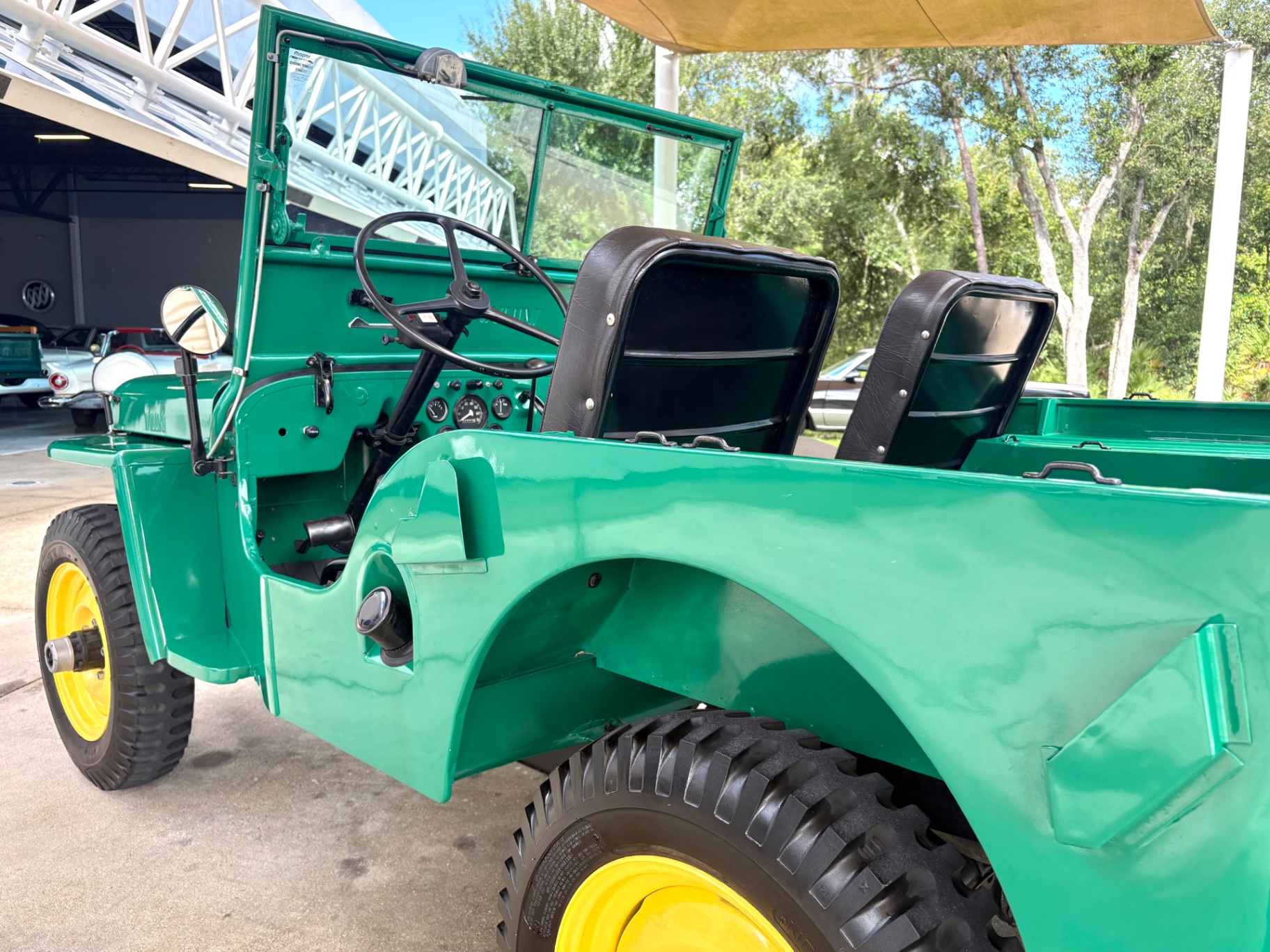
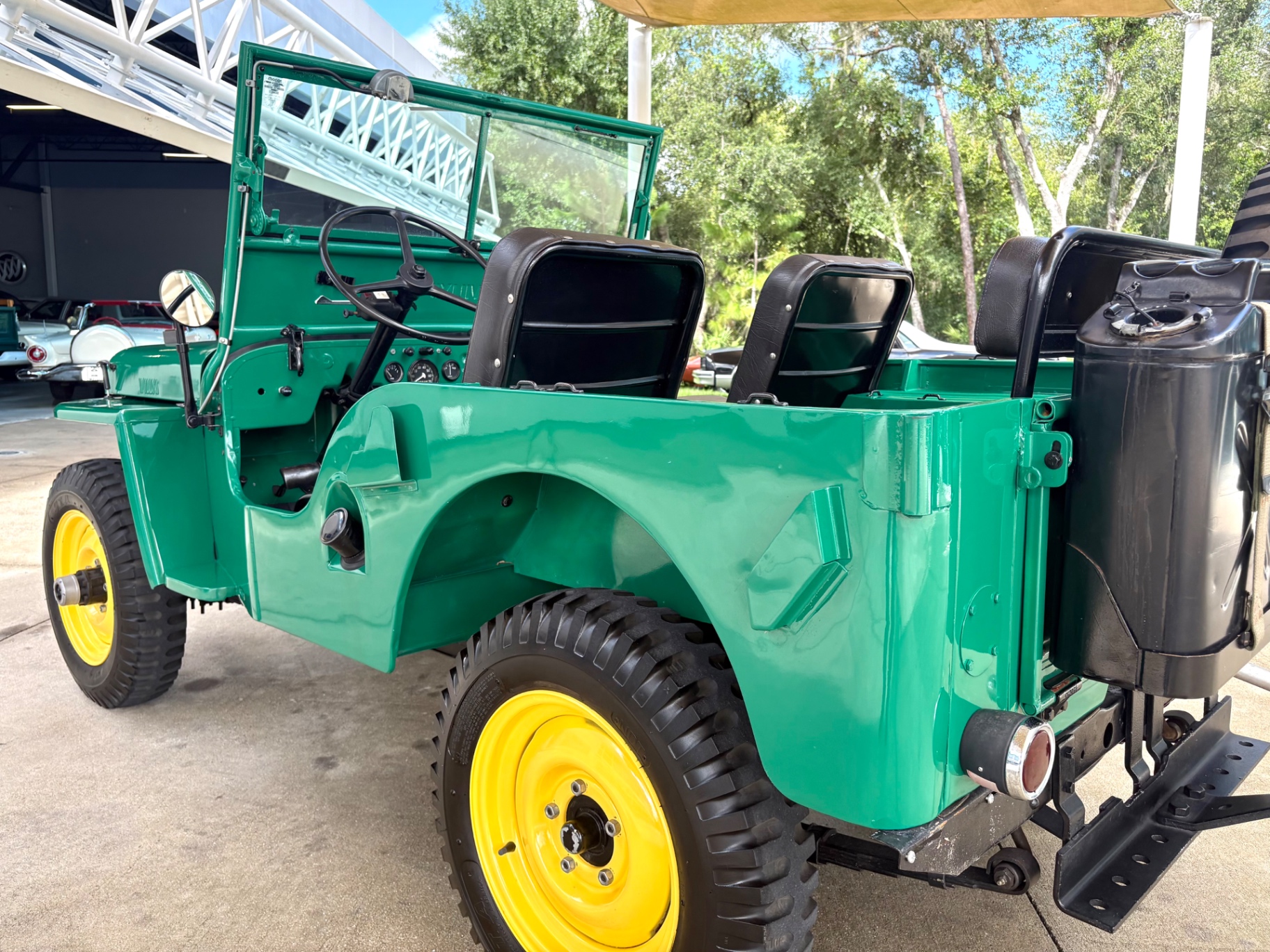
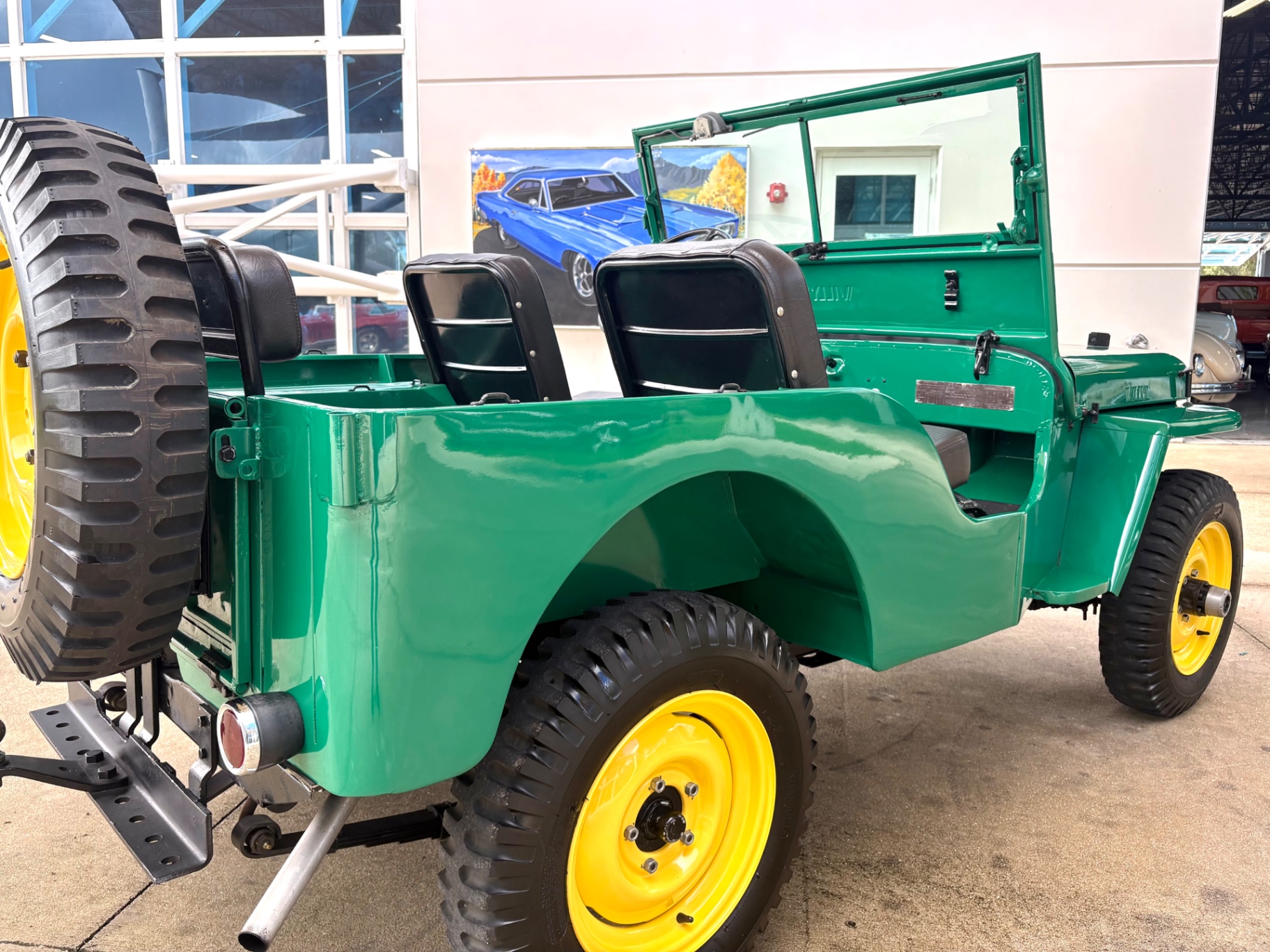
1946 Willys Jeep CJ2A — Restored Body & Paint, Go-Devil Four-Cylinder, Dana 18 Transfer Case
Why This Car Is Special
The 1946 Willys CJ2A represents the very beginning of the civilian Jeep as we know it. When World War II ended, Willys-Overland had a problem: a factory tooled up to build military vehicles and no war left to fight. Their solution was to take the proven MB military Jeep, make it more practical for farm and civilian use, and sell it directly to the American public. The result was the CJ2A, introduced in 1945 and built through 1949. Over 214,000 units were produced during that run, making it the foundation of an entire industry segment that still exists today.
The CJ2A was different from its military predecessor in several meaningful ways. It got an external fuel cap on the driver's side, a tailgate, a side-mounted spare tire, a larger 7-inch headlight, and a repositioned fuel tank. Willys also added a power take-off port so farmers could run equipment directly off the engine — a feature that made the CJ2A genuinely useful as a farm tool, not just a surplus novelty. The civilian market responded. These vehicles pulled plows, hauled lumber, fought fires, and ran fence lines across rural America for decades.
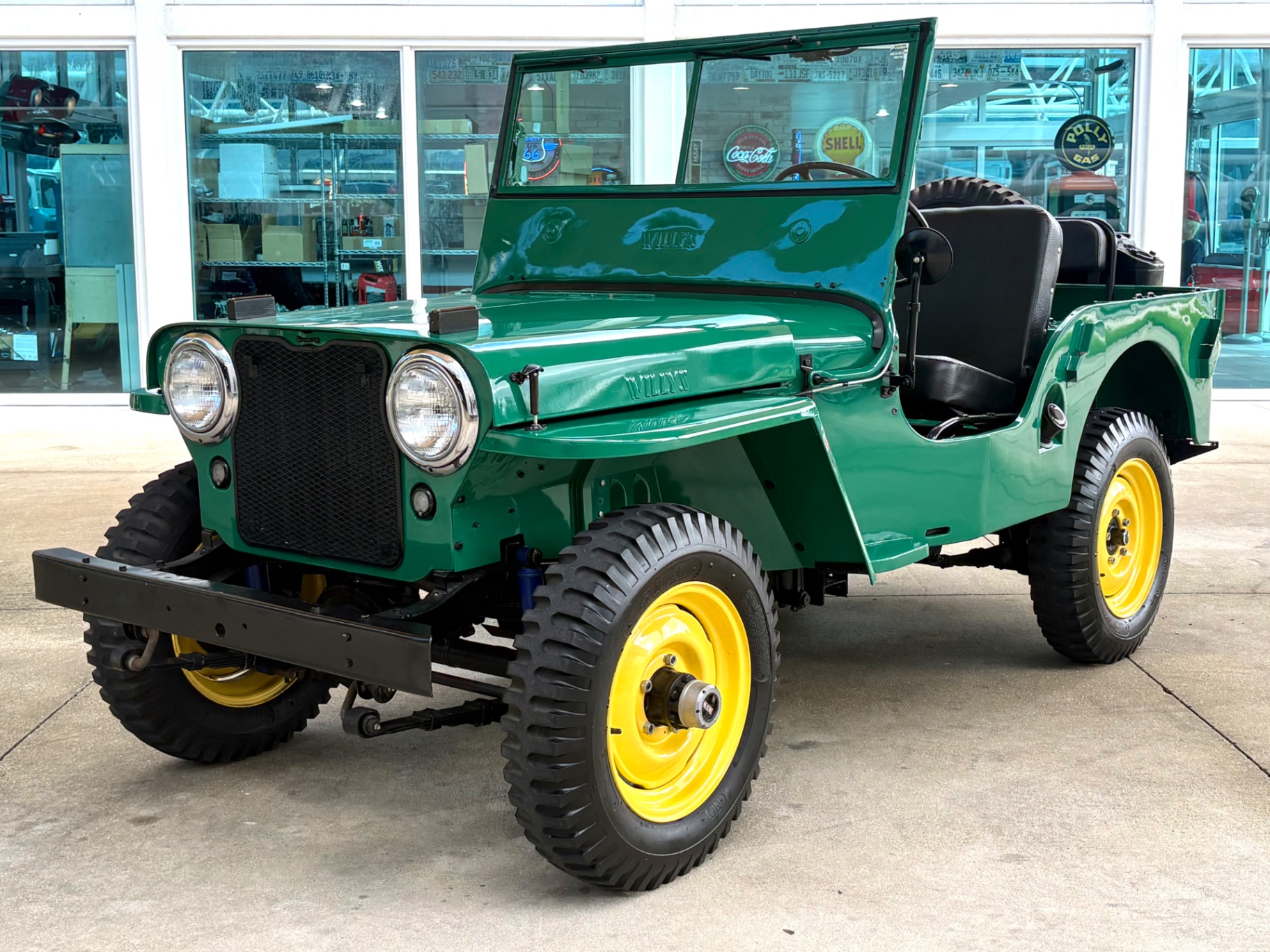
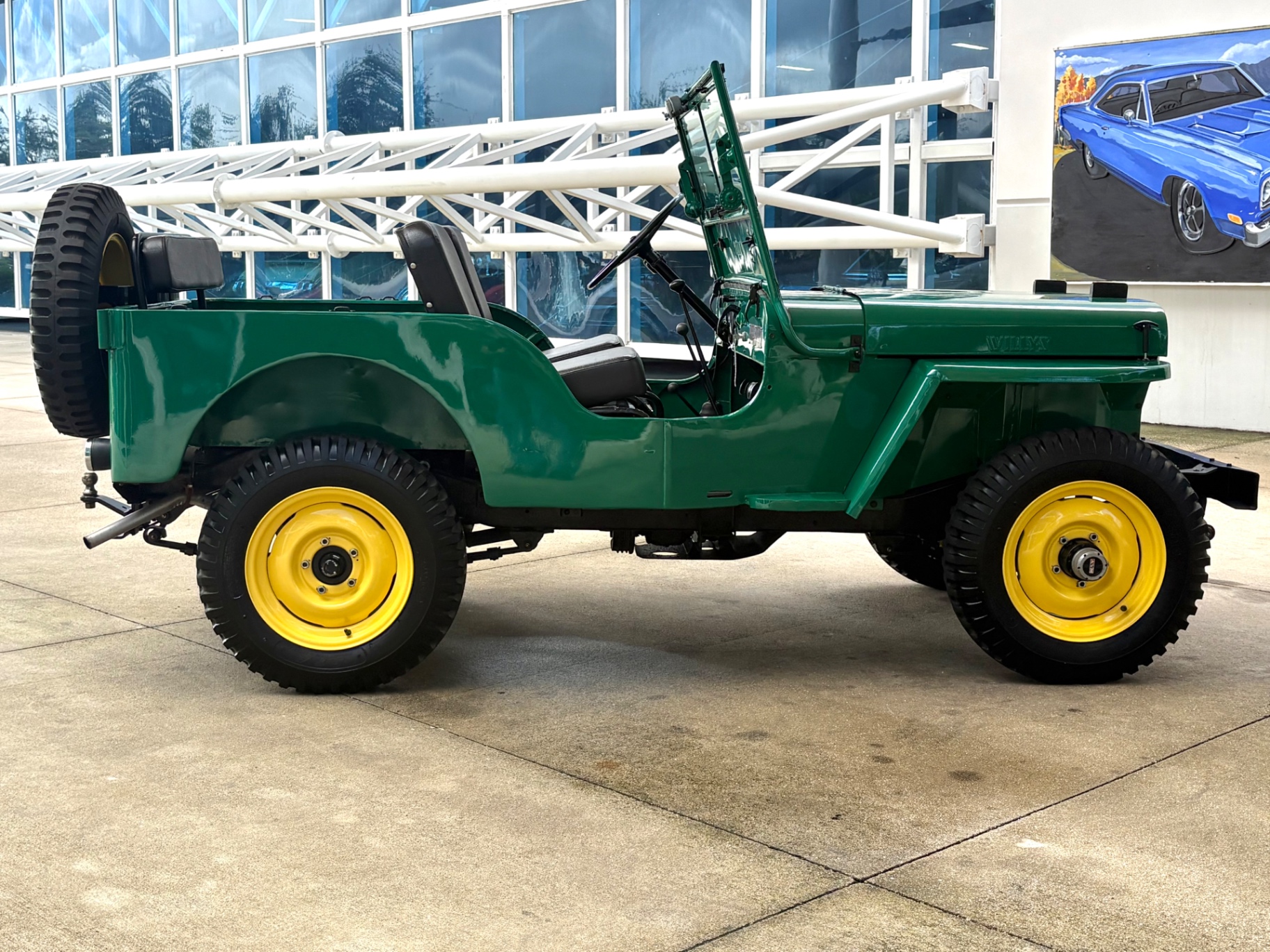
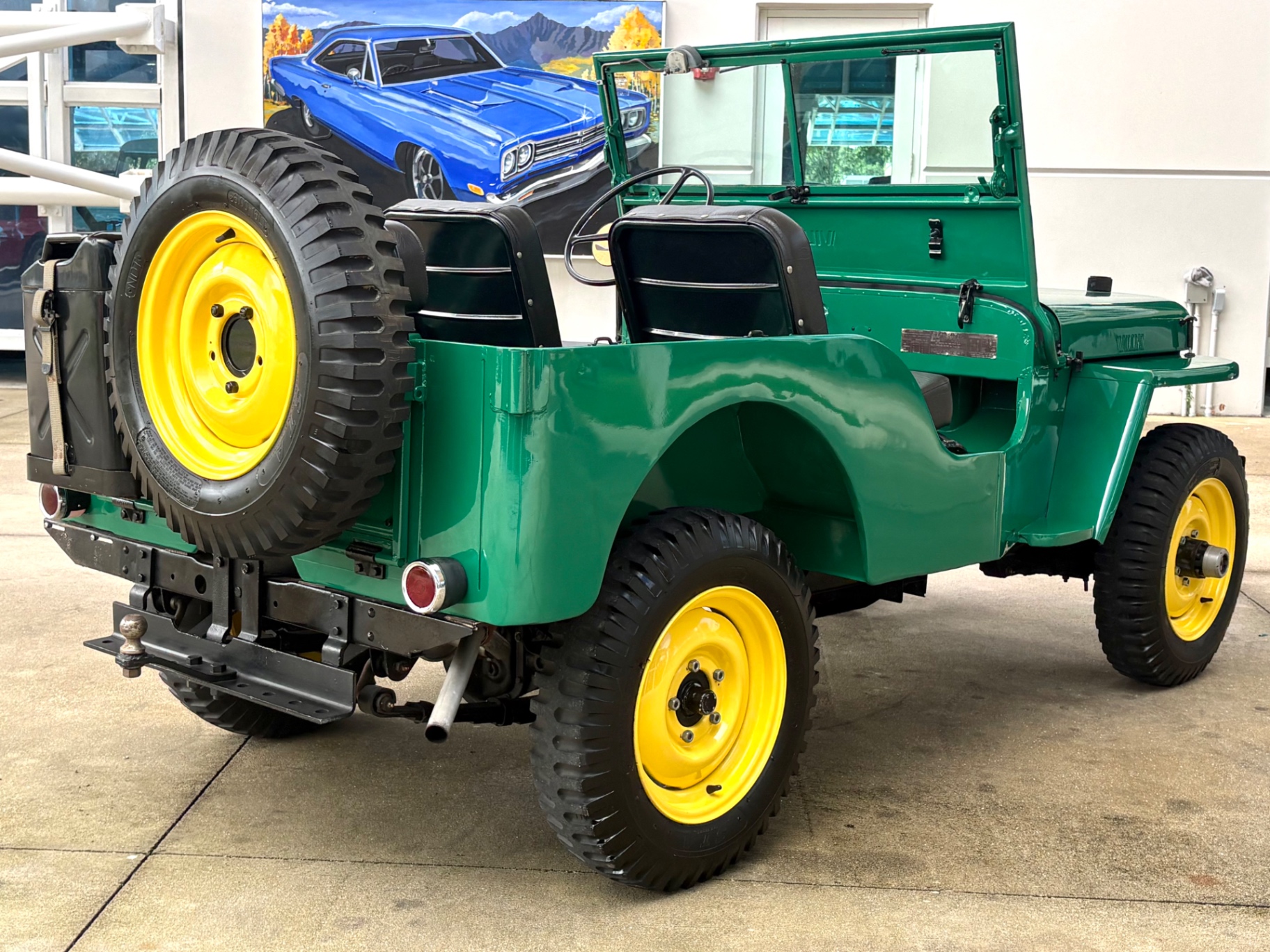
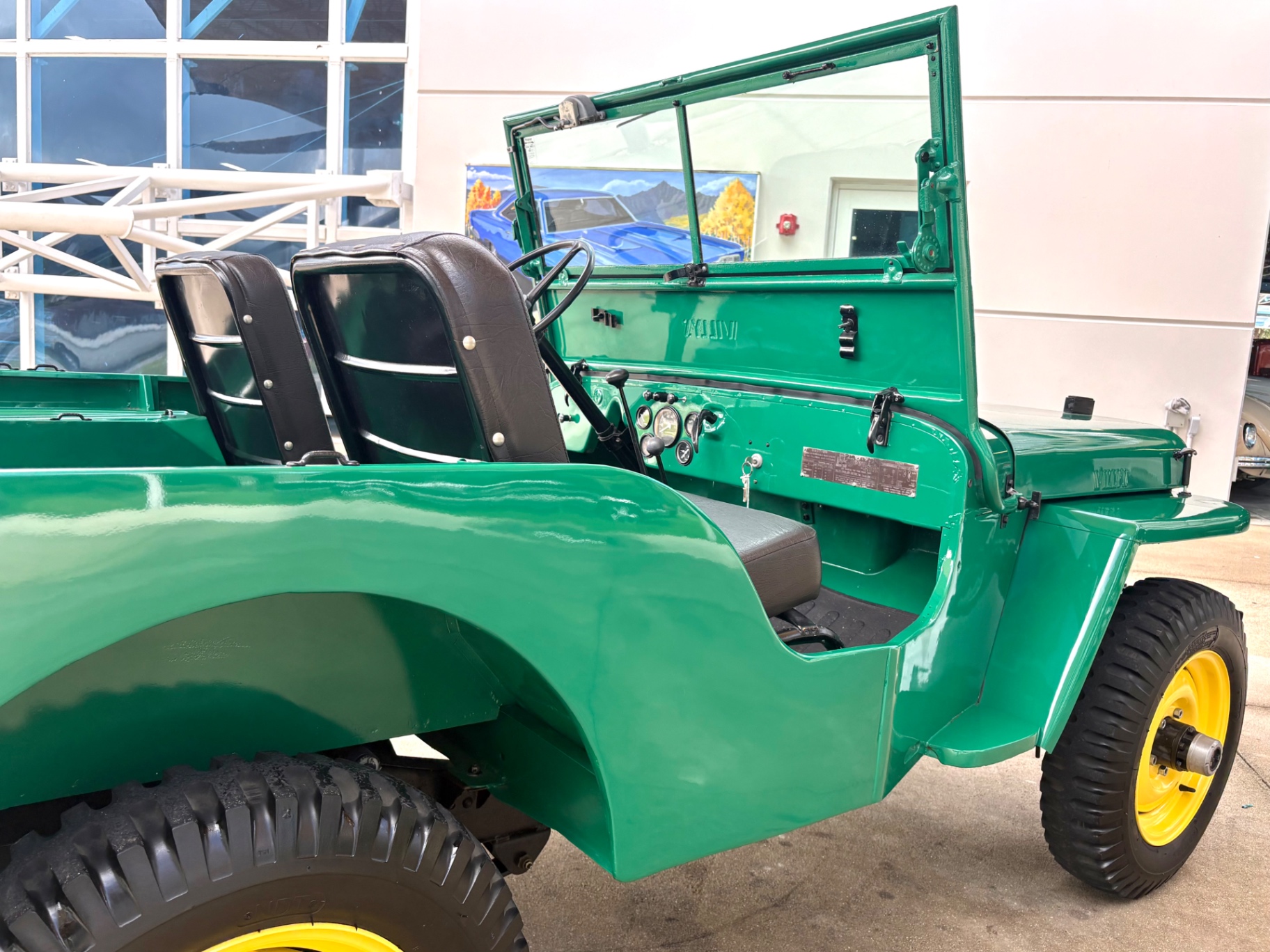
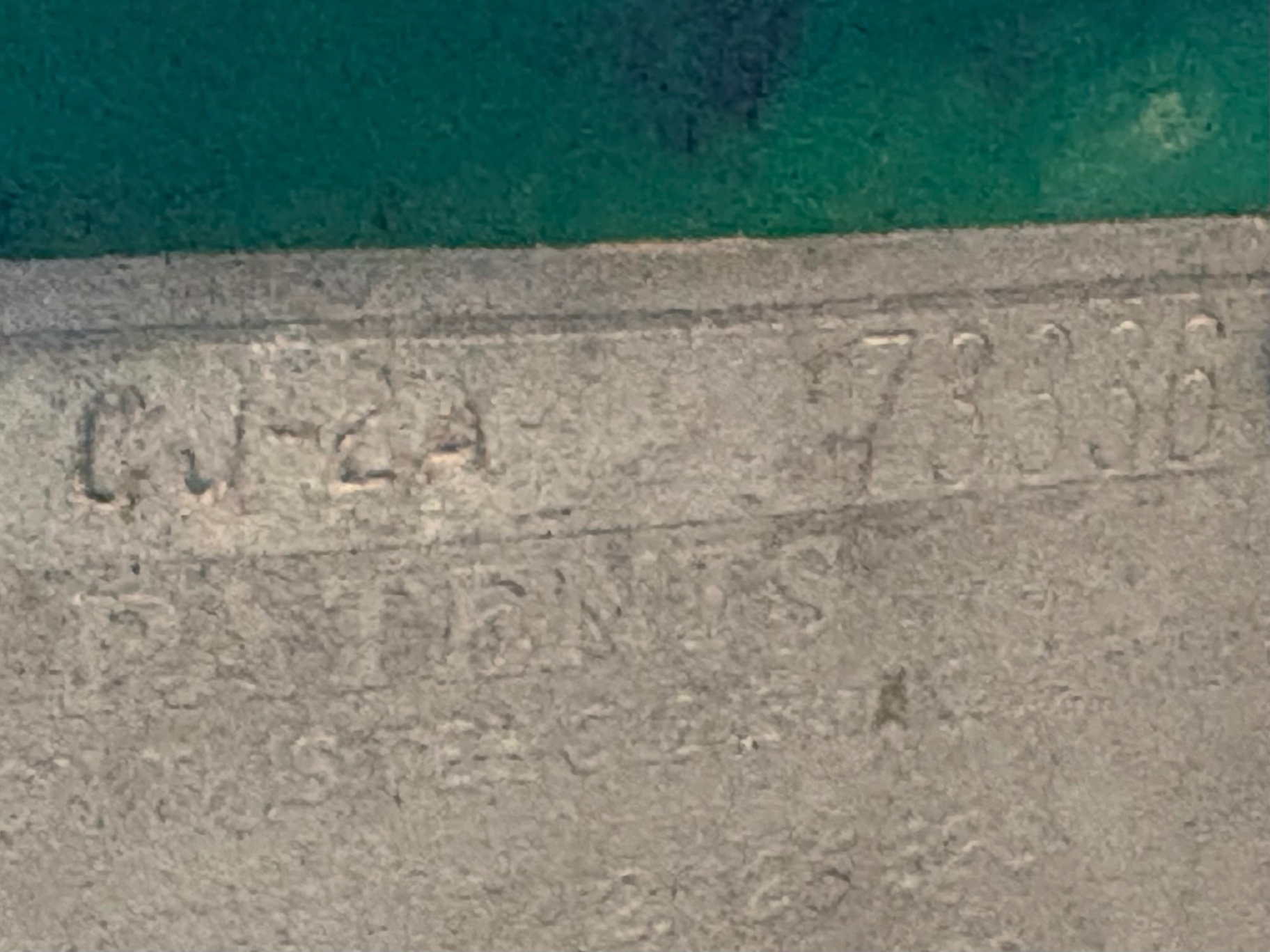
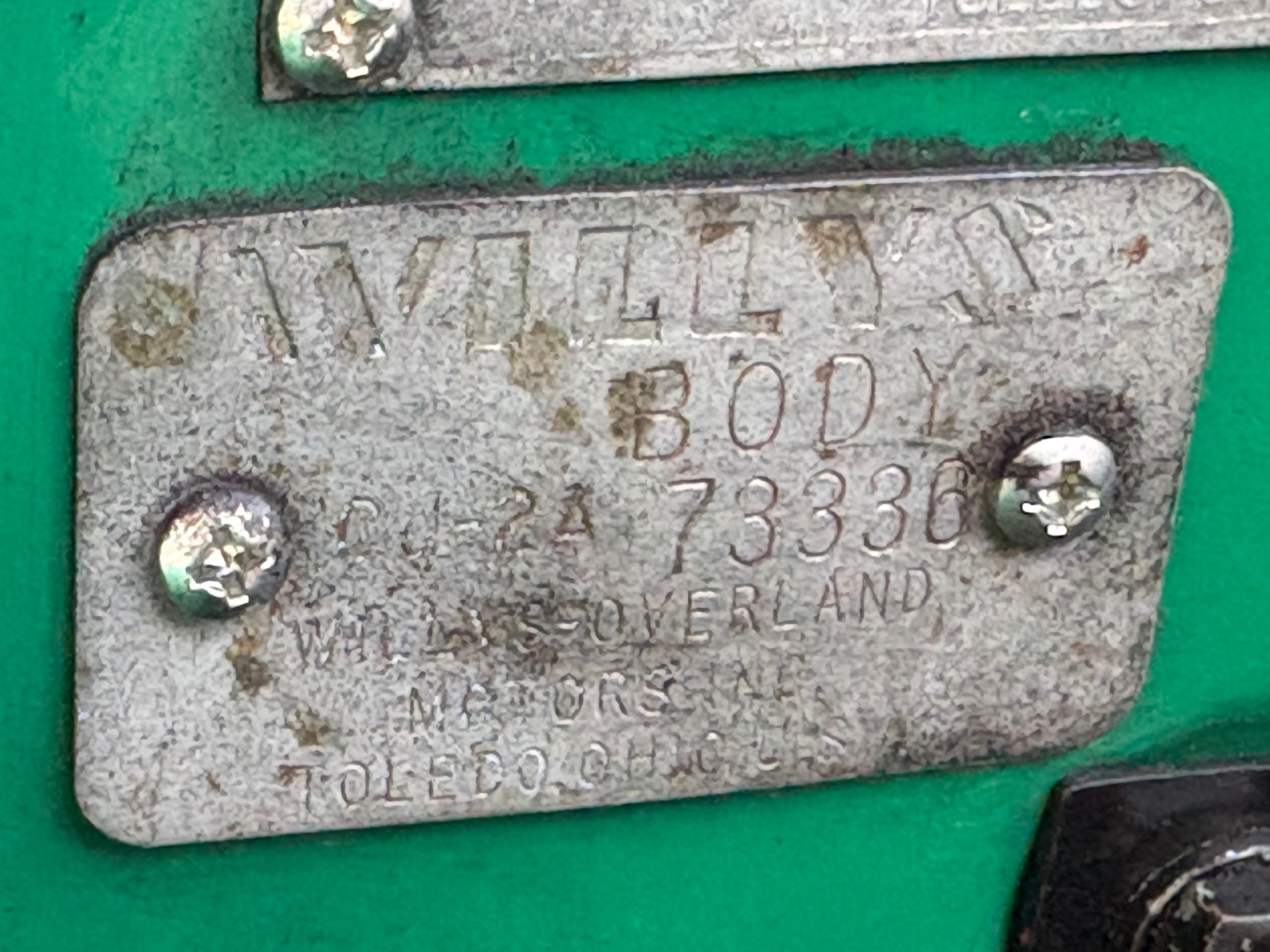
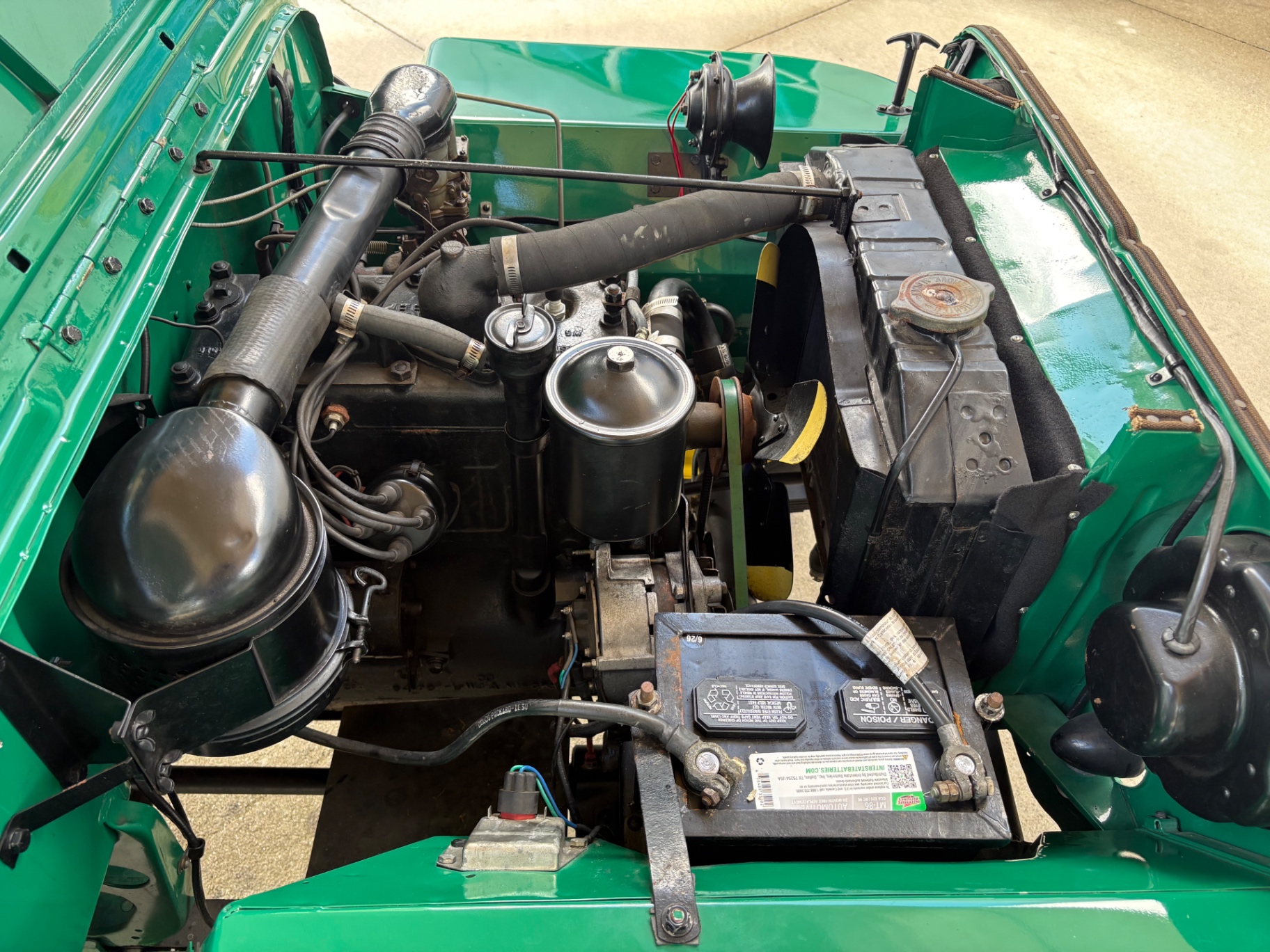
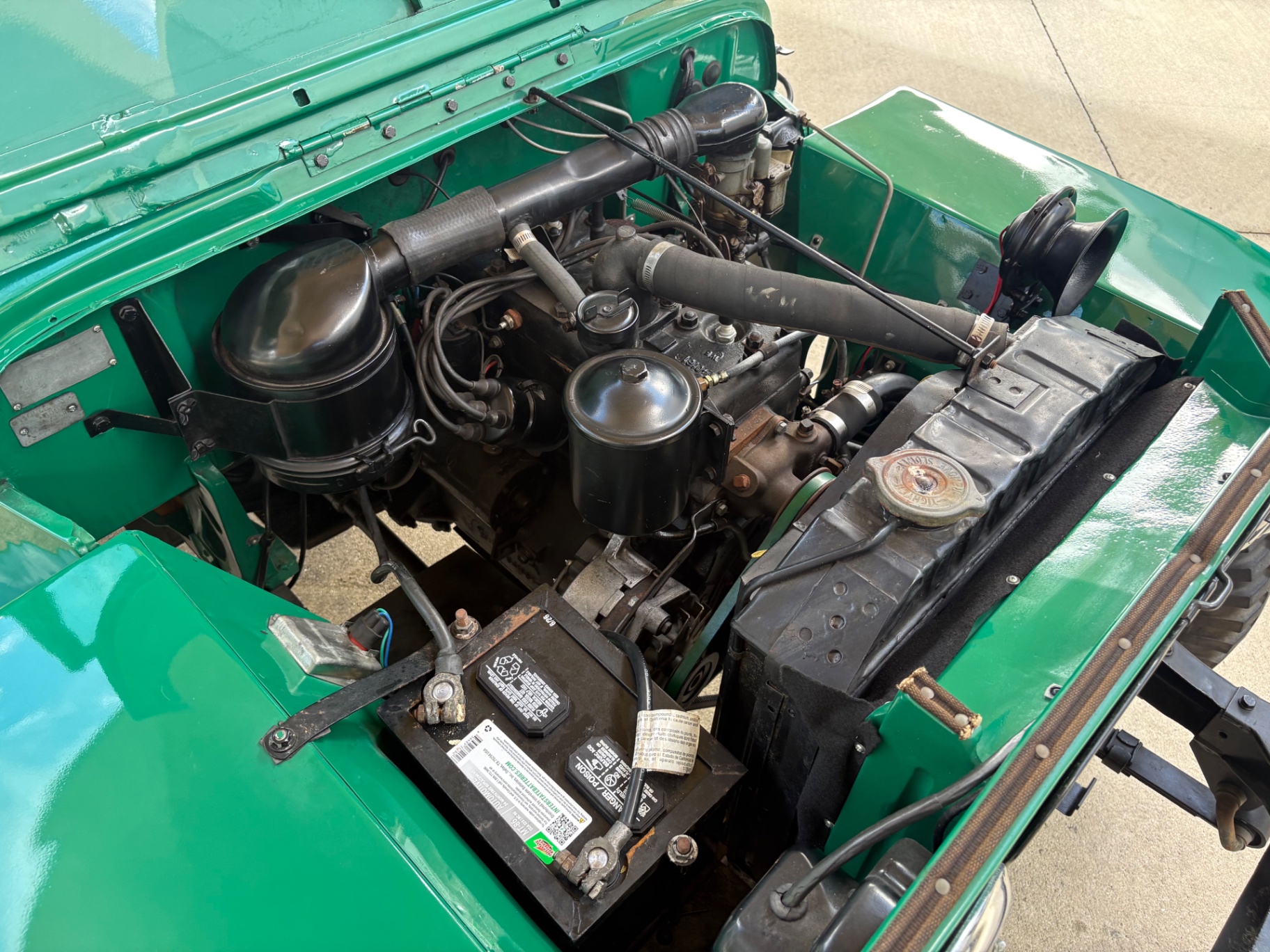
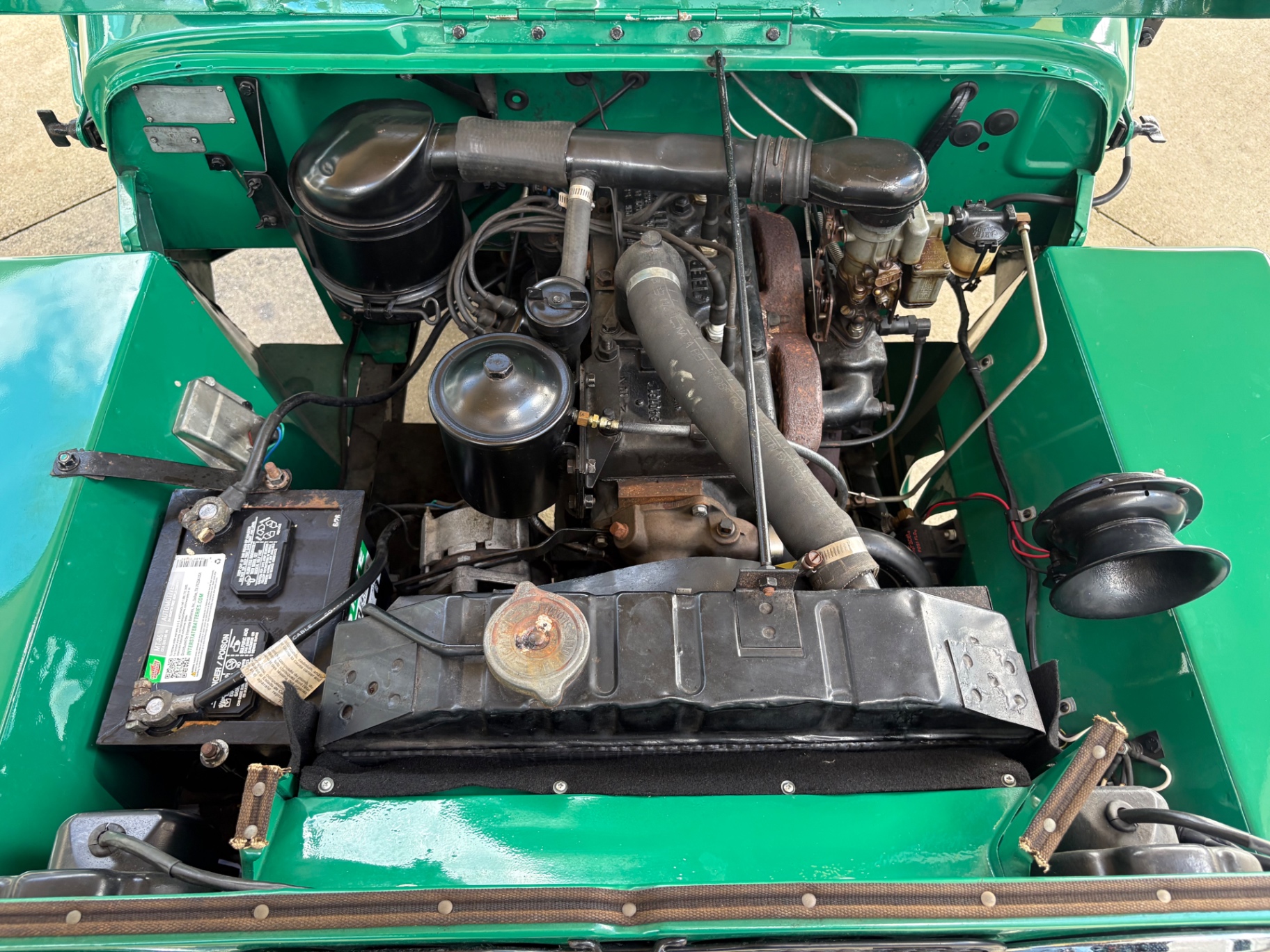
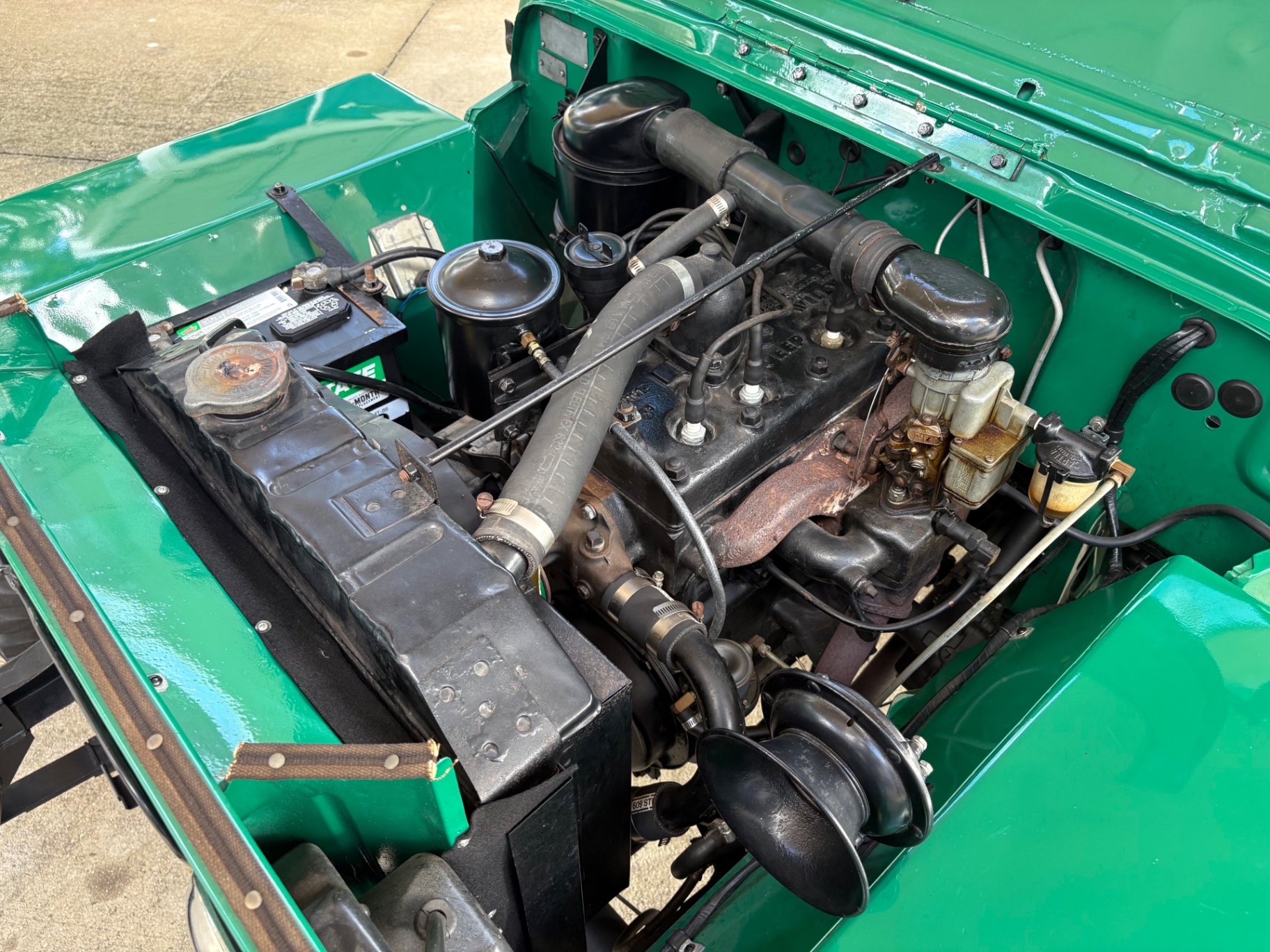
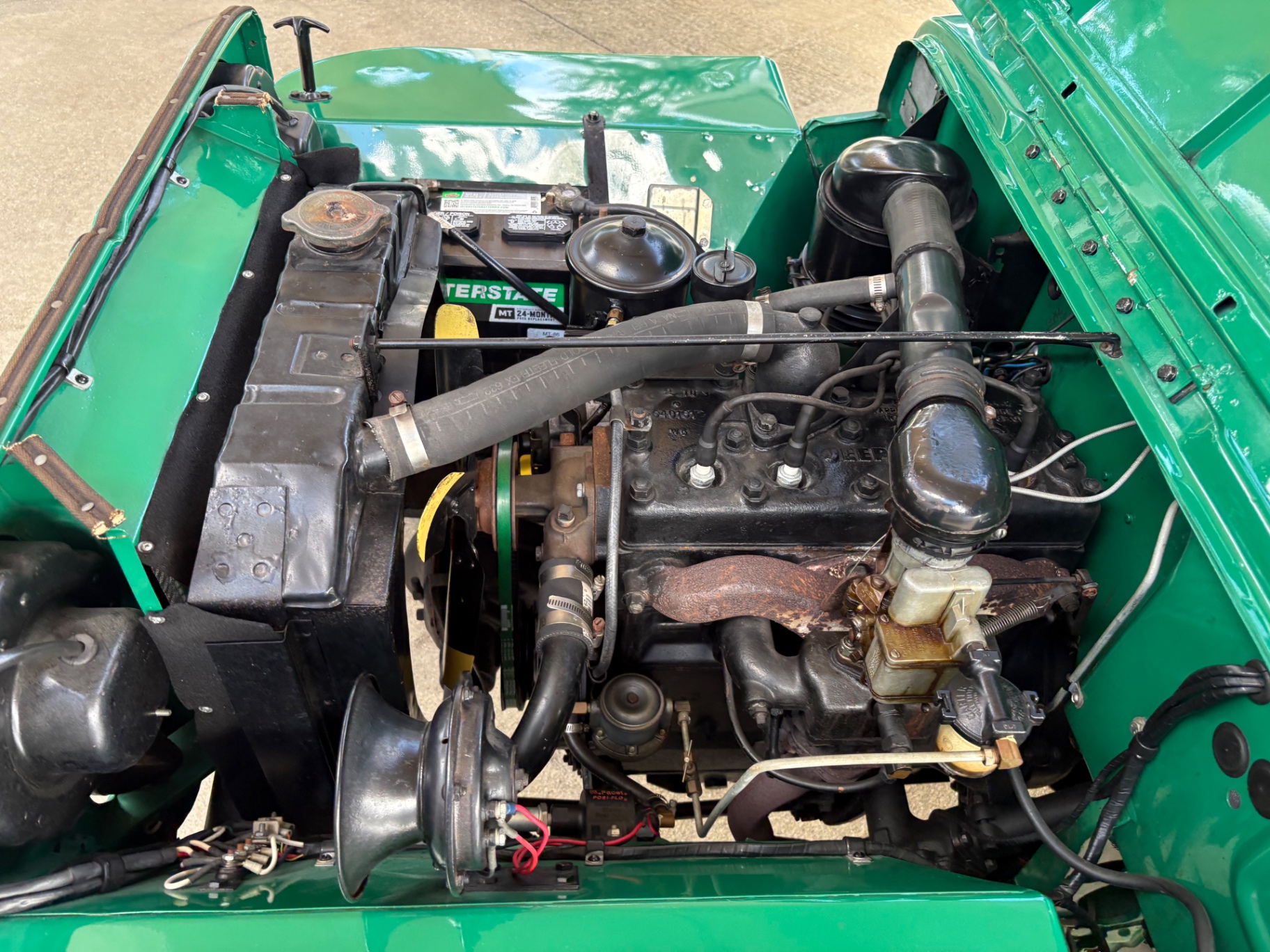
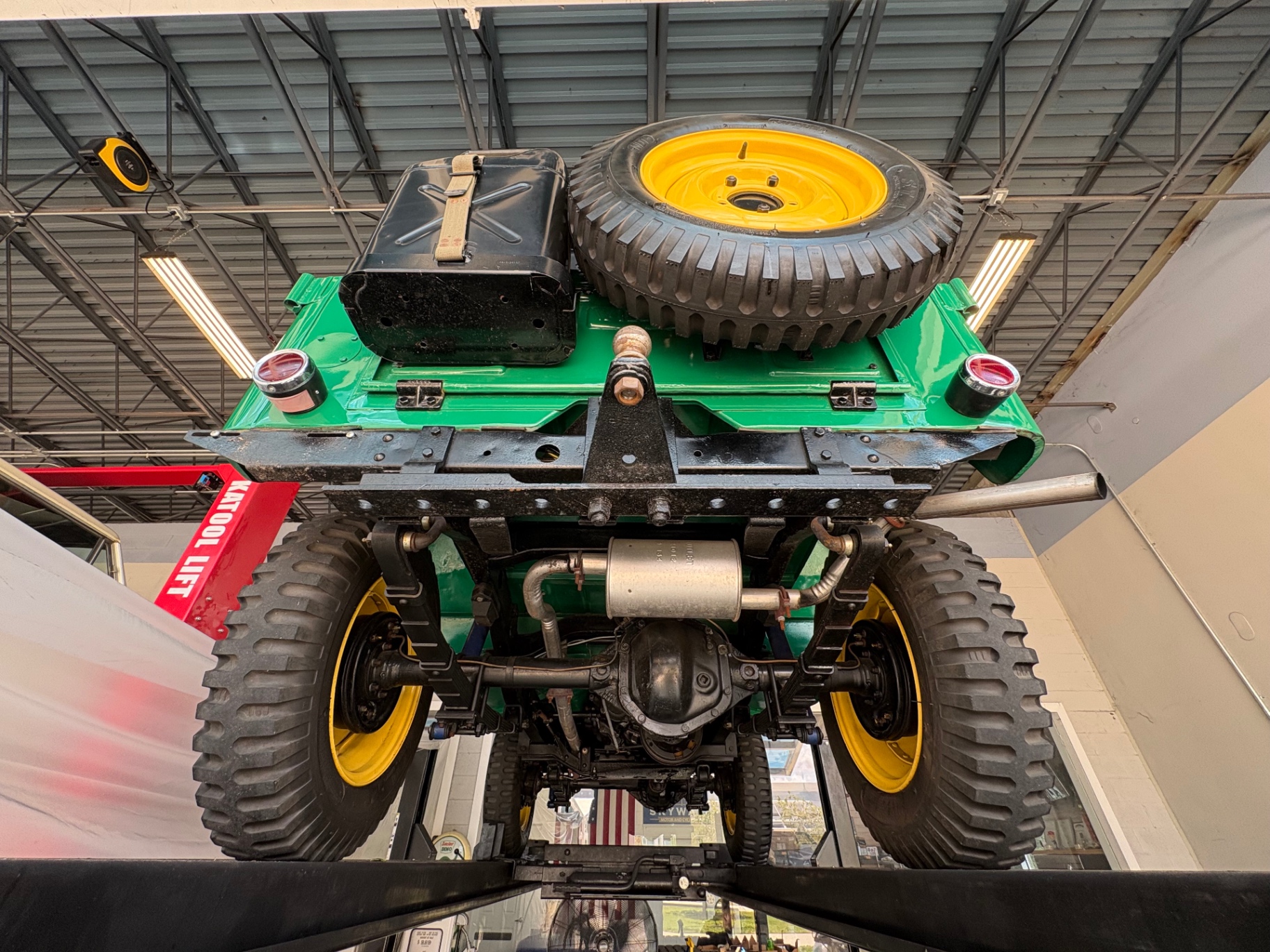
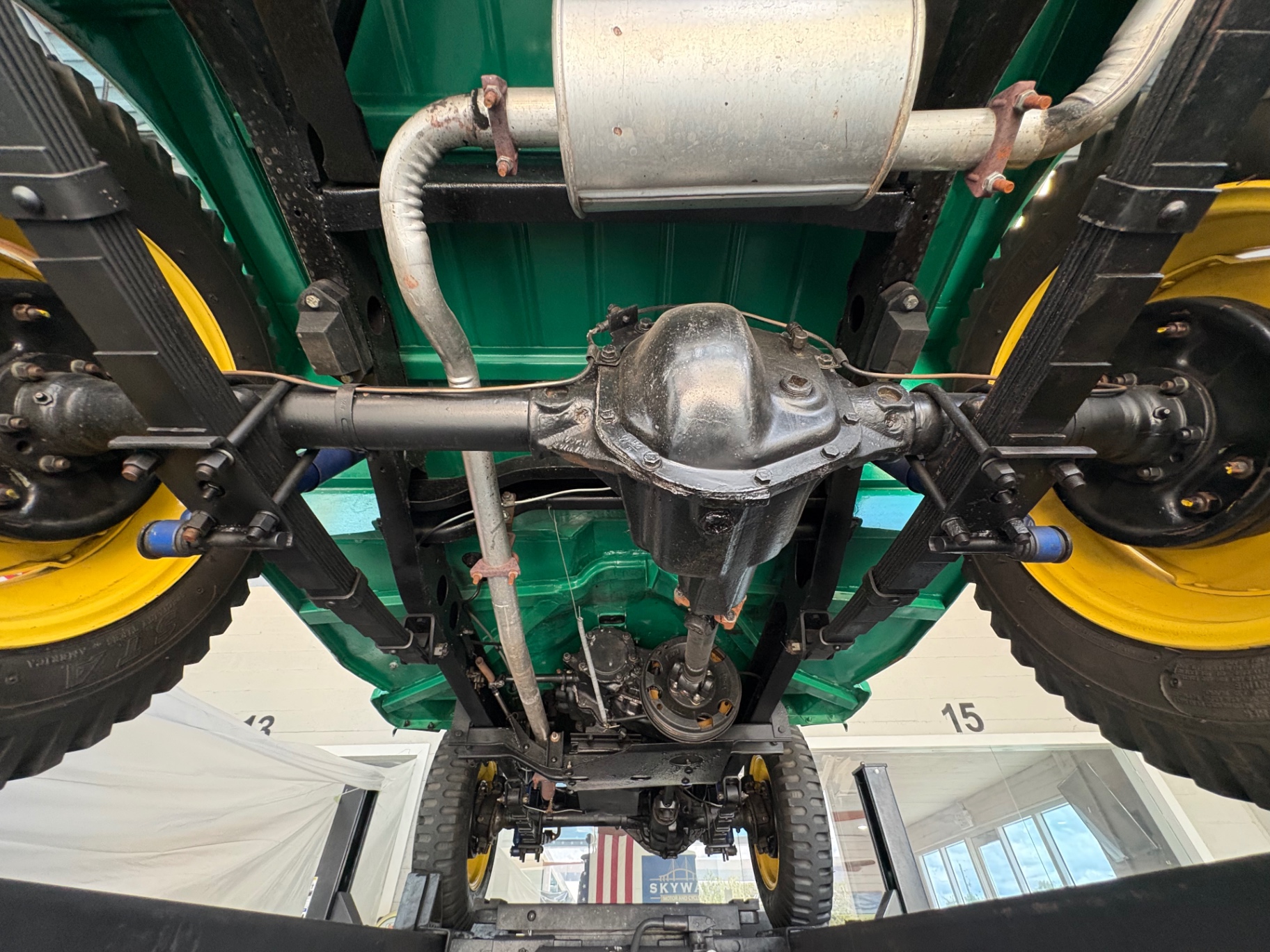
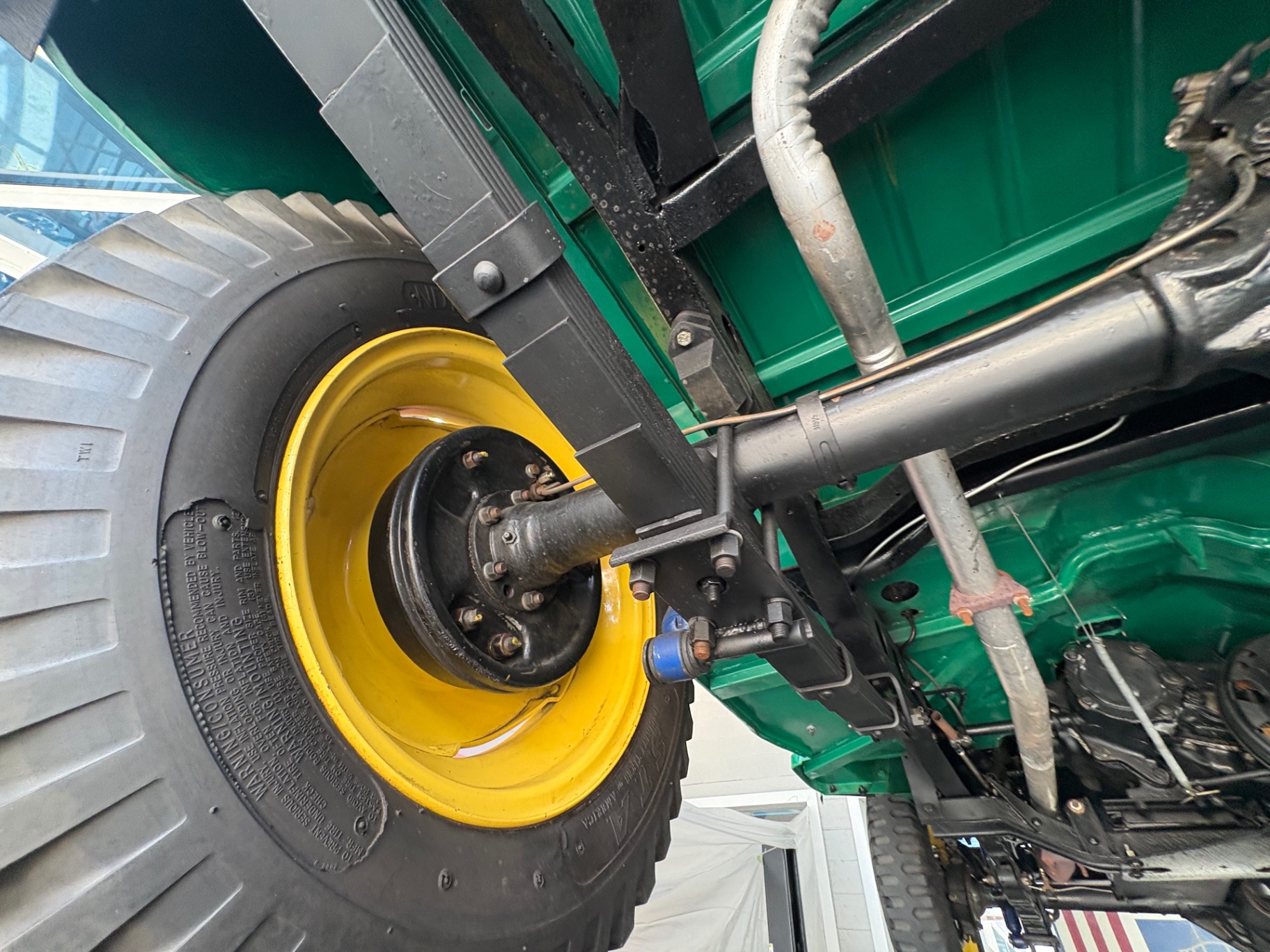
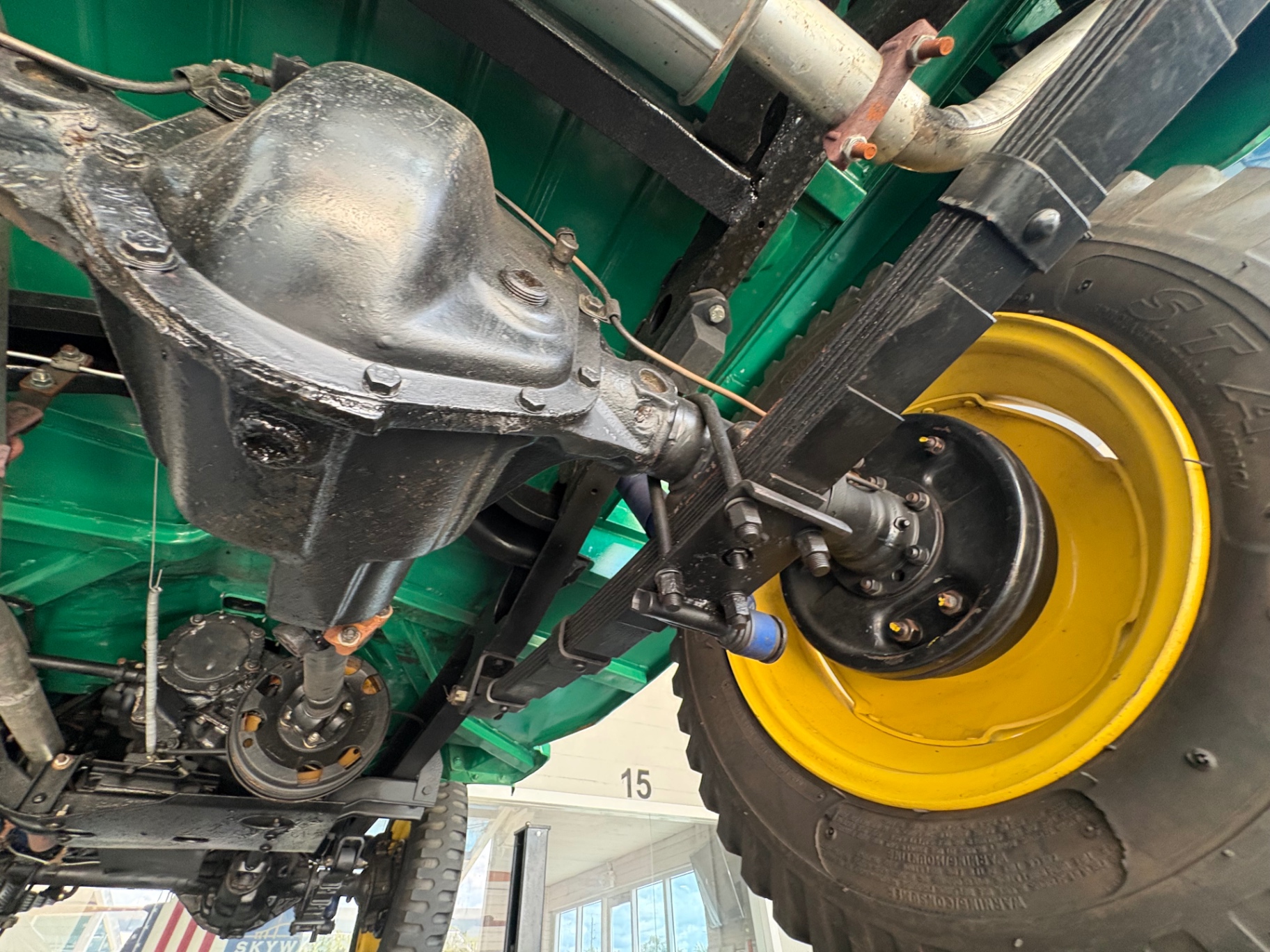
This particular 1946 Willys CJ2A has been treated to a restored body and paint and presents well from every angle, including underneath. It carries the original data plate, which confirms model and build information and adds a layer of documentation that is increasingly hard to find on vehicles of this age. The Go-Devil inline-four is running, the drivetrain is intact and correct, and the undercarriage photos tell a story of a Jeep that has been gone through rather than simply cleaned up for sale.
If you are looking for a first-year civilian Jeep that is complete, correct, and ready to enjoy rather than a project that requires months of sorting, this 1946 Willys CJ2A deserves a serious look.
Features List
- Go-Devil 134ci Inline-4 engine
- 3-Speed manual transmission with Dana 18 transfer case
- Selectable 4-wheel drive
- Manual locking front hubs
- Leaf spring suspension front and rear
- Drum brakes all four corners
- NDT tractor-style tires on yellow steel wheels
- Fold-down windshield with canvas soft top and bows
- Front bucket seats and rear bench seat
- 5-gauge instrument cluster including speedometer, fuel, oil pressure, temperature, and ammeter
- Driver-side mirror
- Spare tire mounted rear
- Military jerry can included
- Trailer hitch equipped
- Restored body and paint in green
- Black vinyl interior
- Original data plate present
- Clean undercarriage
Mechanical
The Go-Devil engine is the heart of the CJ2A story. Willys developed this 134 cubic inch inline four-cylinder during the war years, and it proved durable enough that the basic architecture remained in production through 1971 in various Jeep models. It produces modest output by modern standards — rated at 60 horsepower and 105 lb-ft of torque from the factory — but its strength is low-end pulling power and mechanical simplicity. There is very little on this engine that cannot be understood and serviced with basic tools. Parts remain available, rebuilds are straightforward, and the engine is known to run reliably for high mileage when properly maintained.
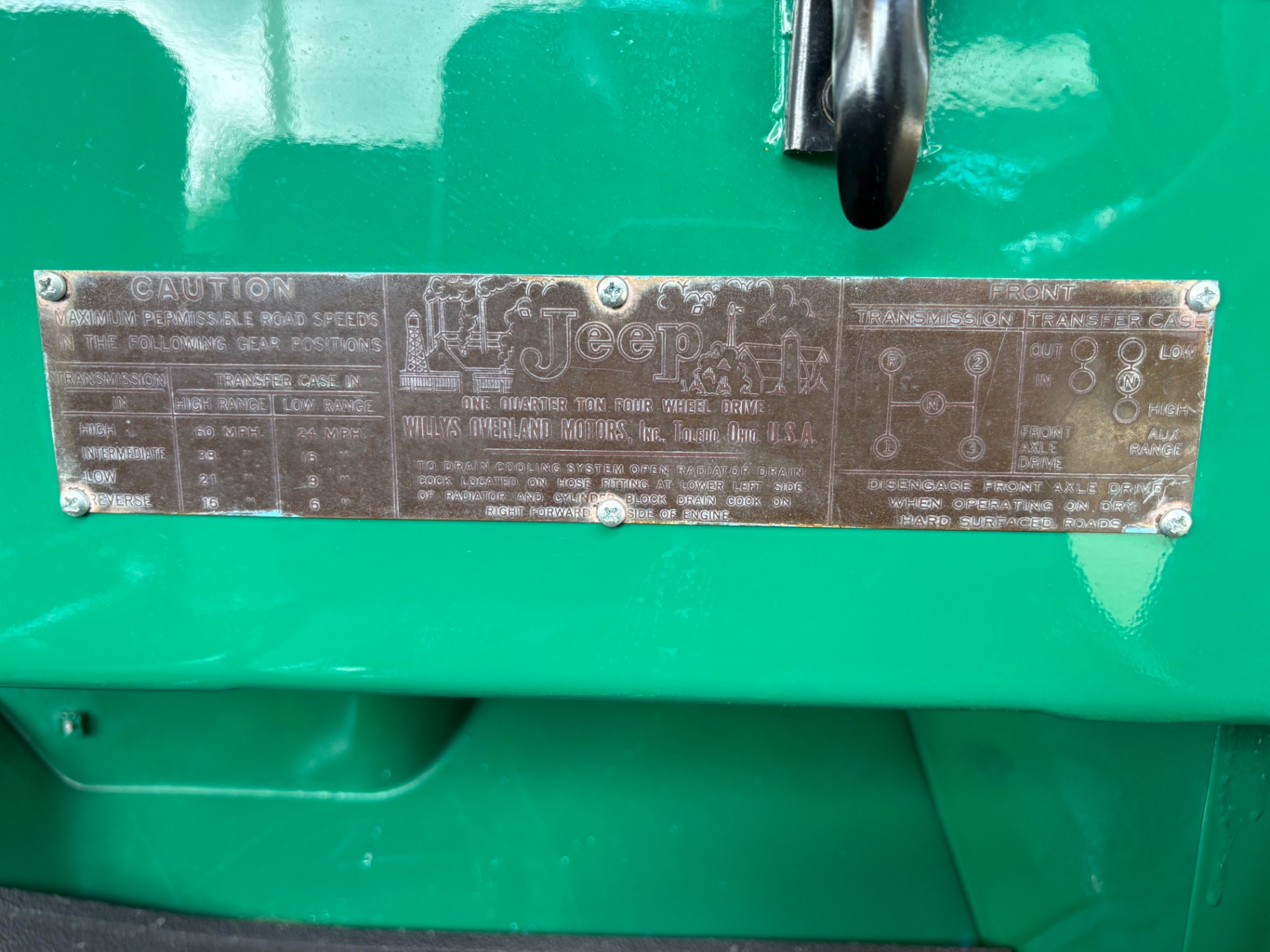
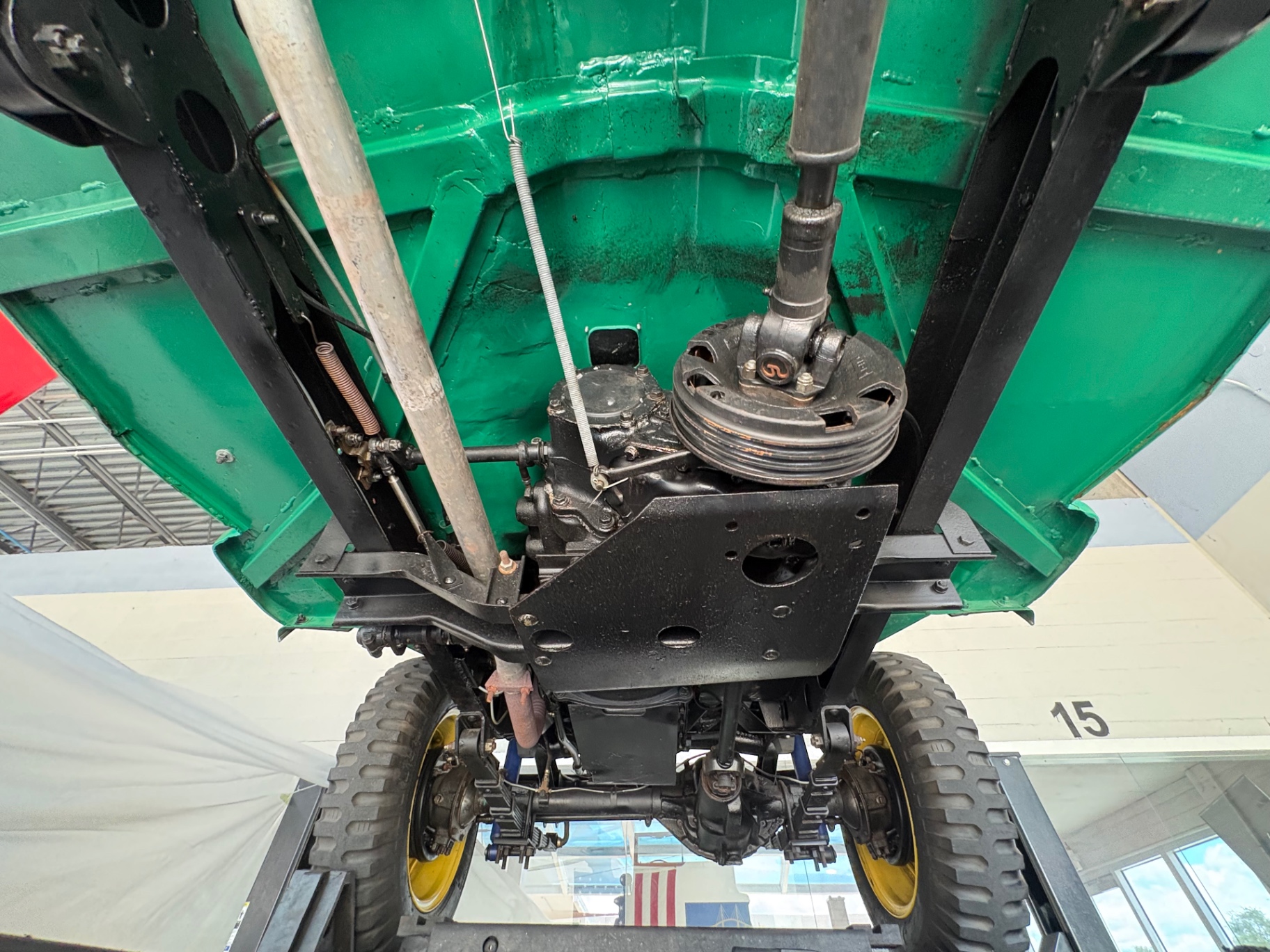
Behind the Go-Devil sits a 3-speed manual transmission feeding into the Dana 18 transfer case. The Dana 18 was a workhorse unit used across Willys Jeeps and later in early Jeep CJ models through 1971. It provides a two-speed range — high and low — along with the ability to engage the front axle for four-wheel drive. The original data plate mounted to the cowl spells out the gear speed limits in detail, which is a nice touch of period documentation. Manual locking front hubs are fitted, which allows the front axle to be disconnected when four-wheel drive is not needed, reducing drivetrain wear on-road.
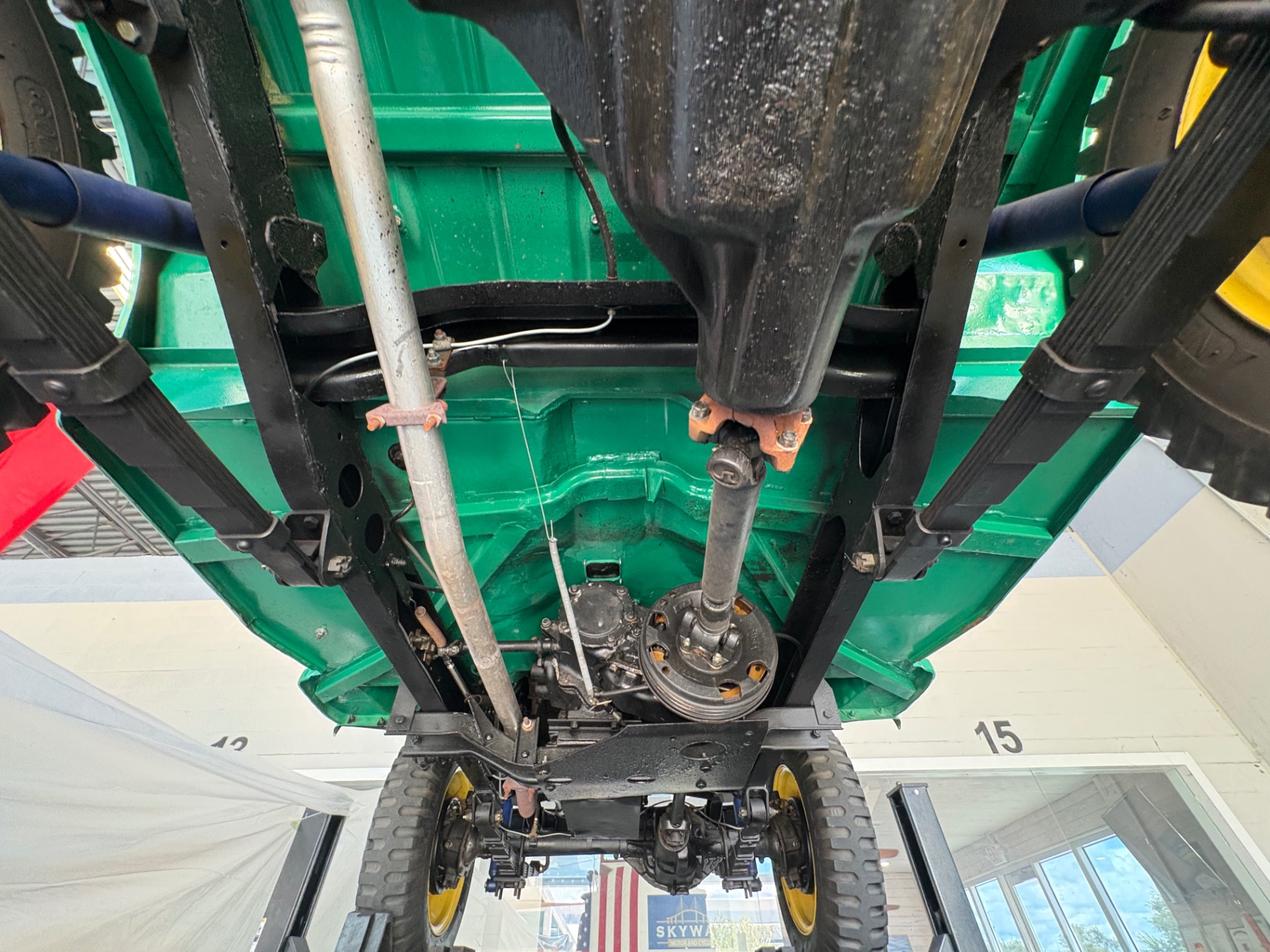
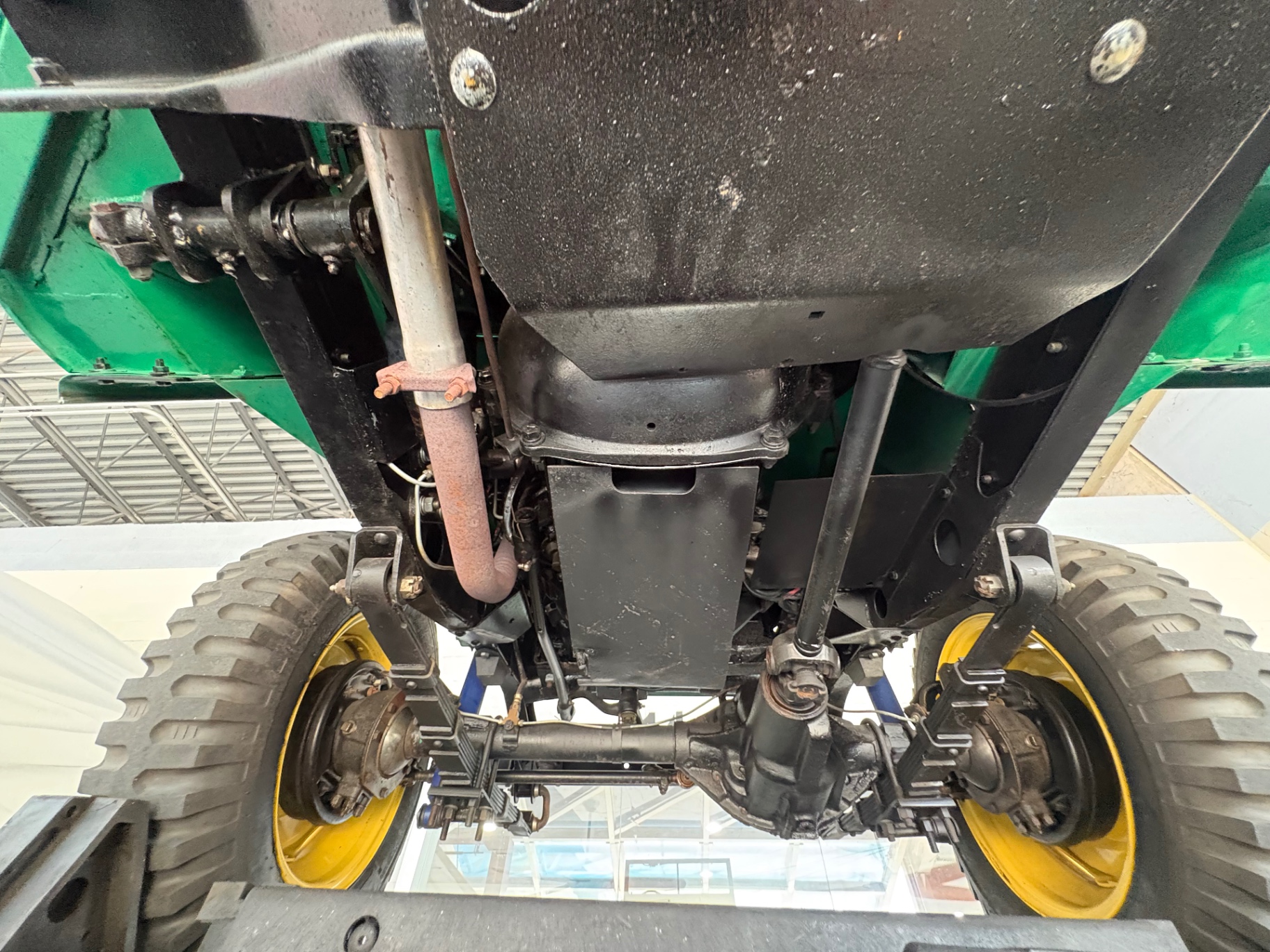
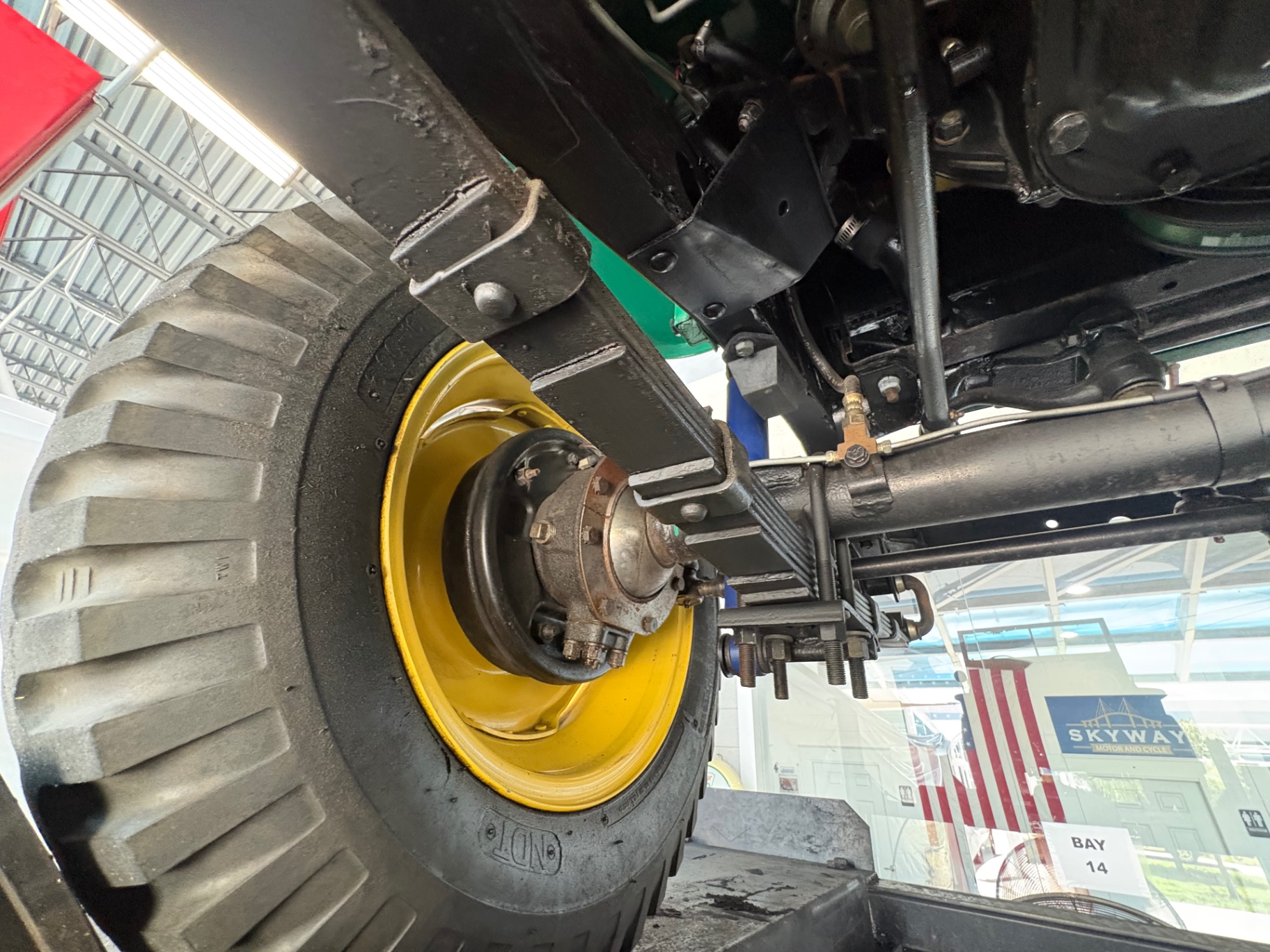
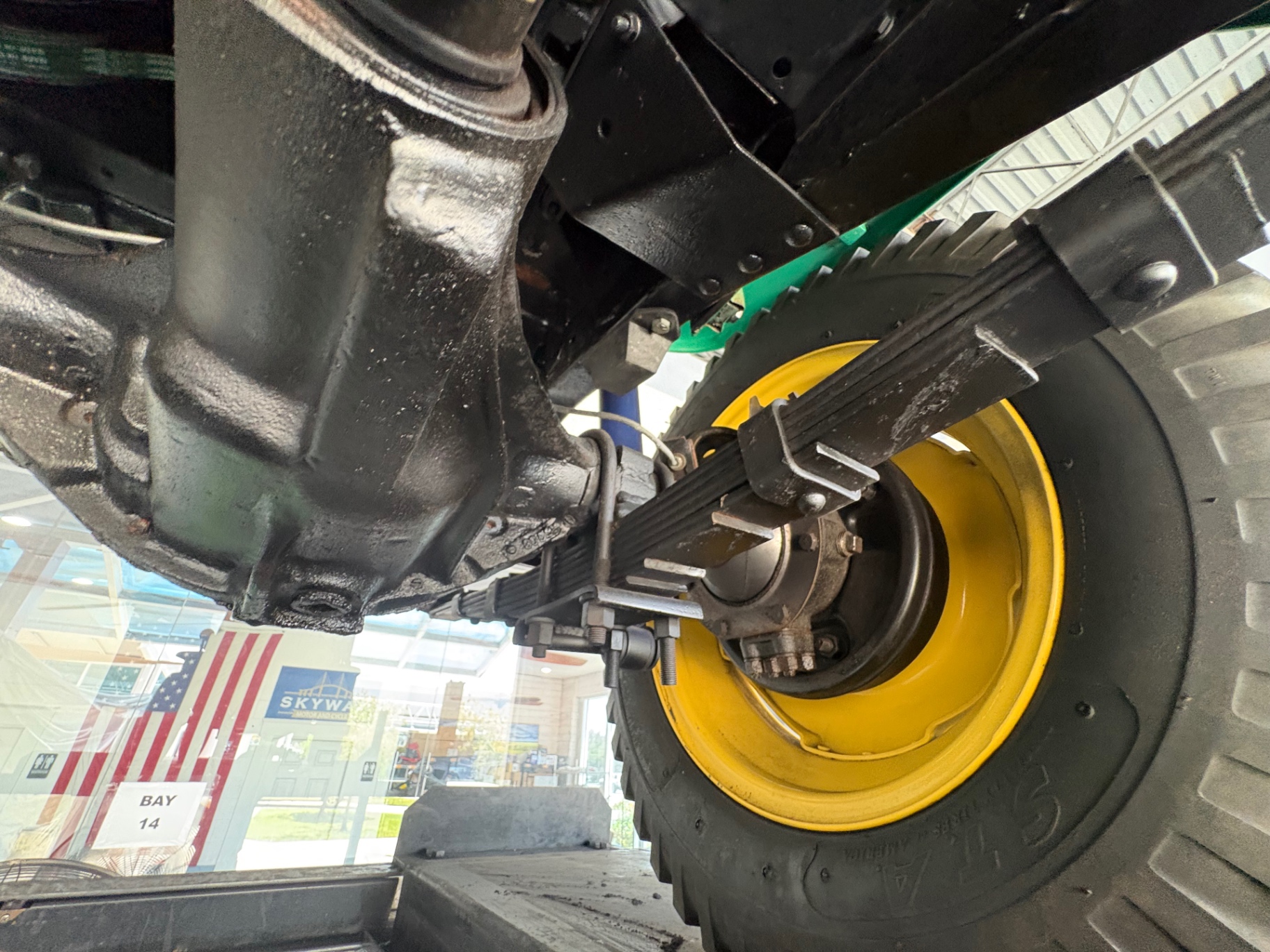
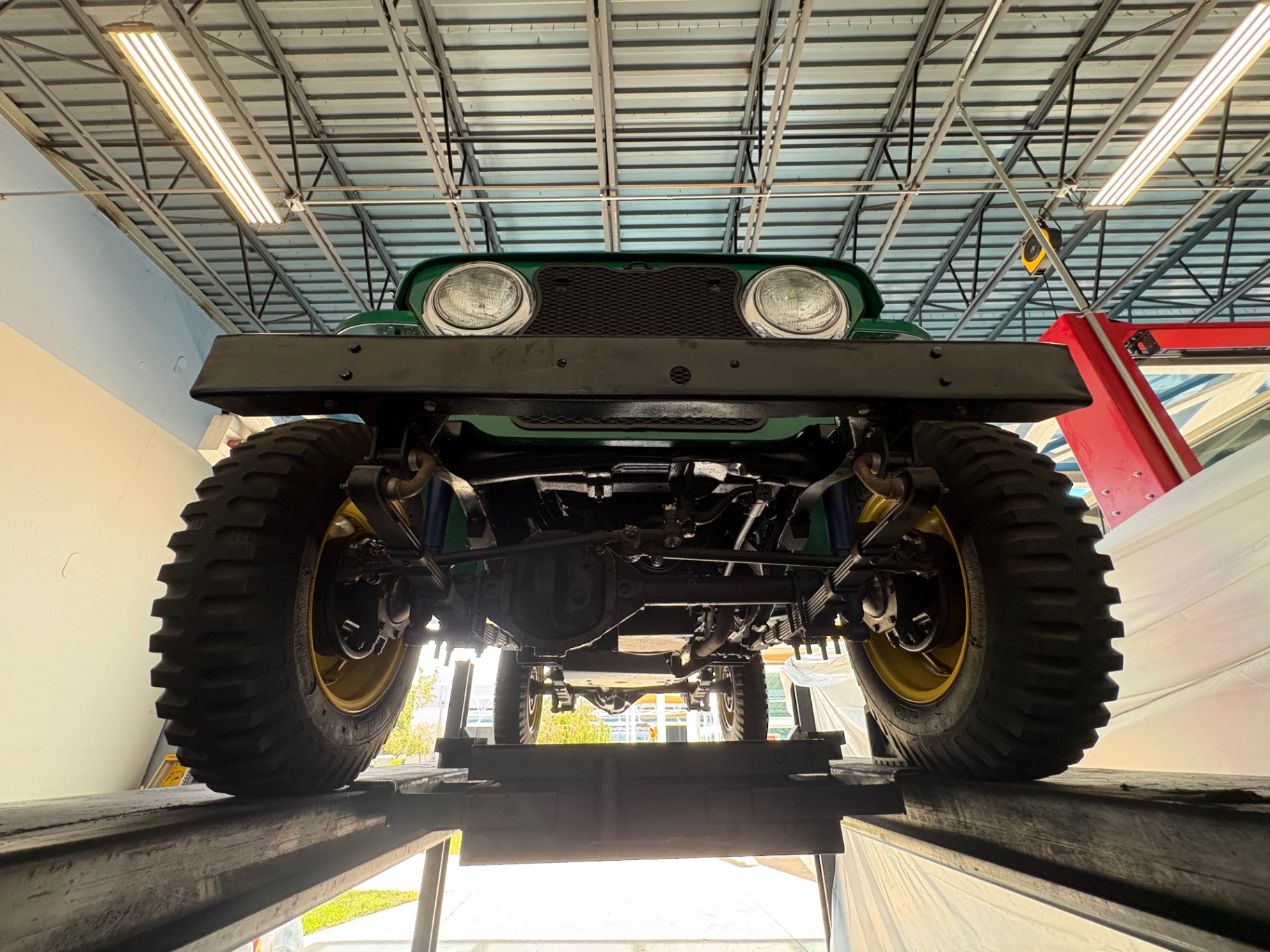
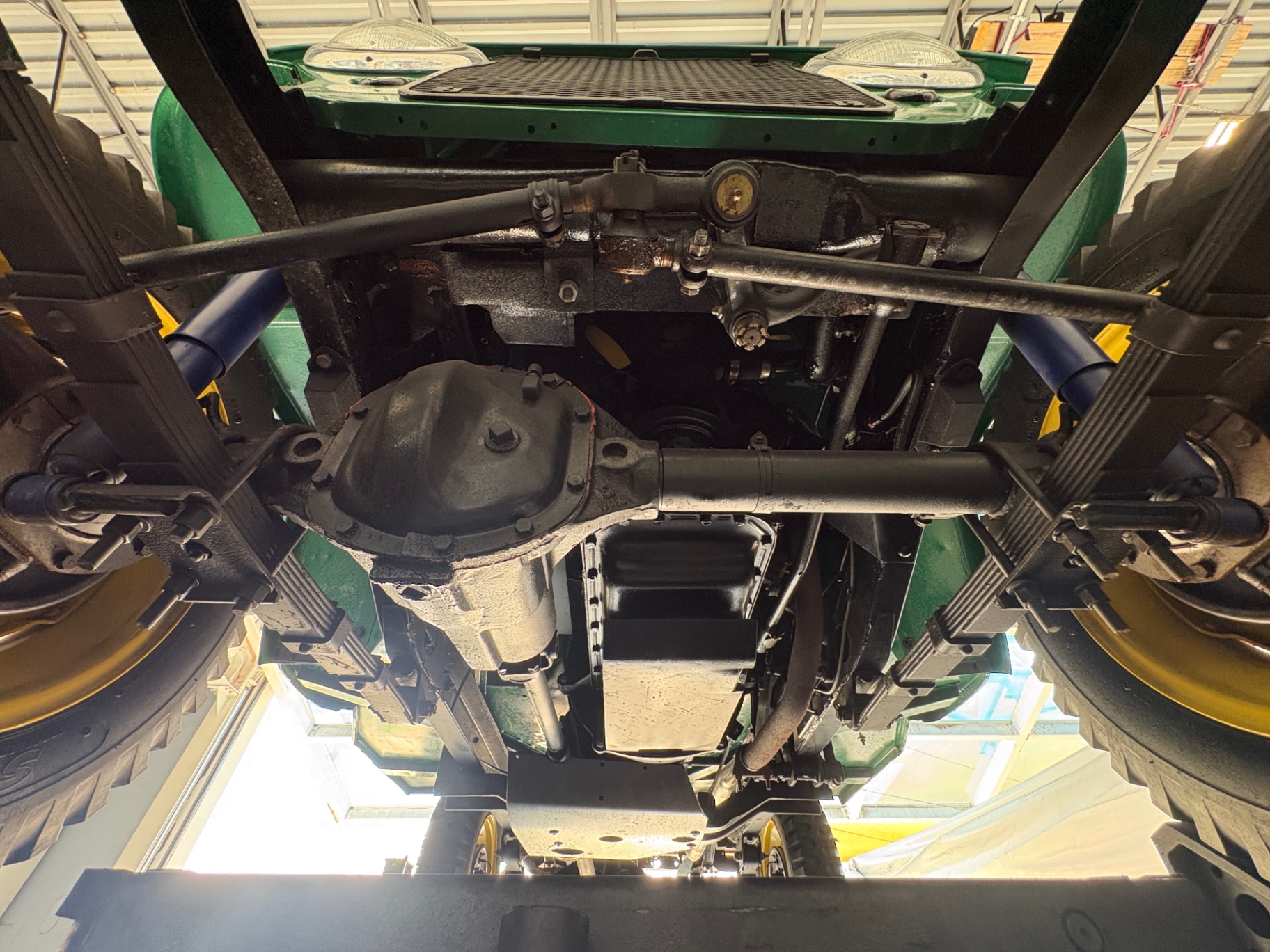
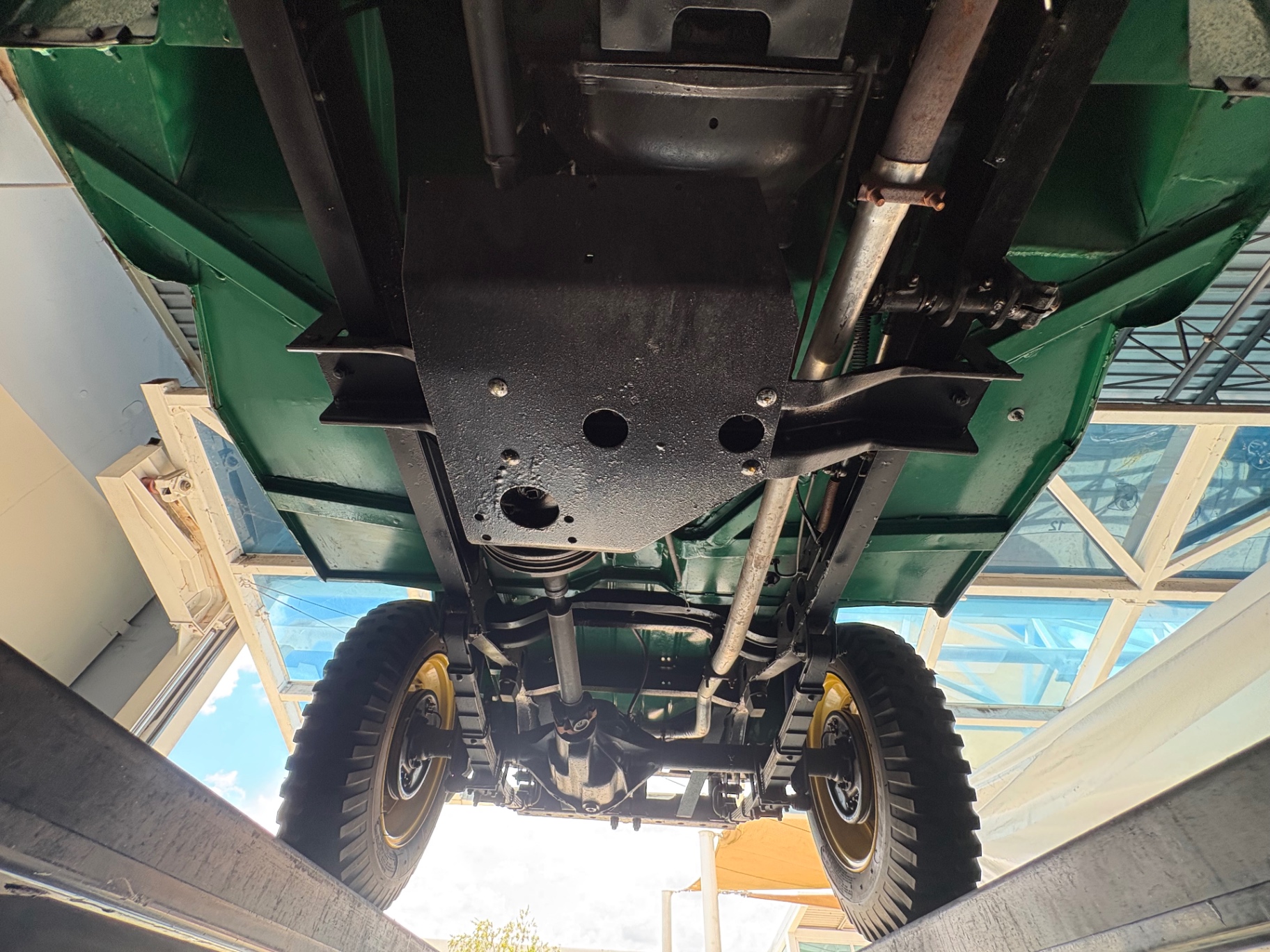
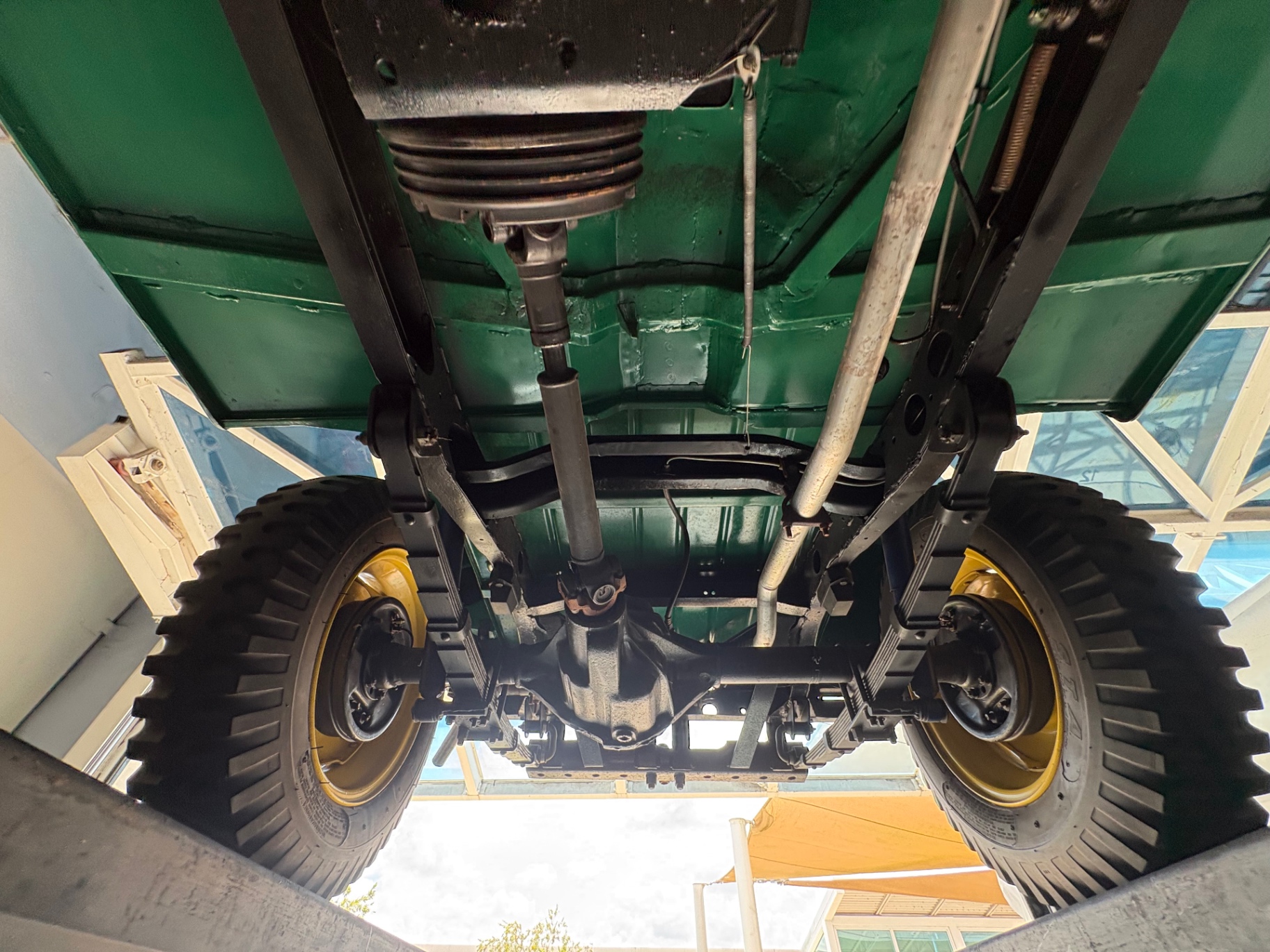
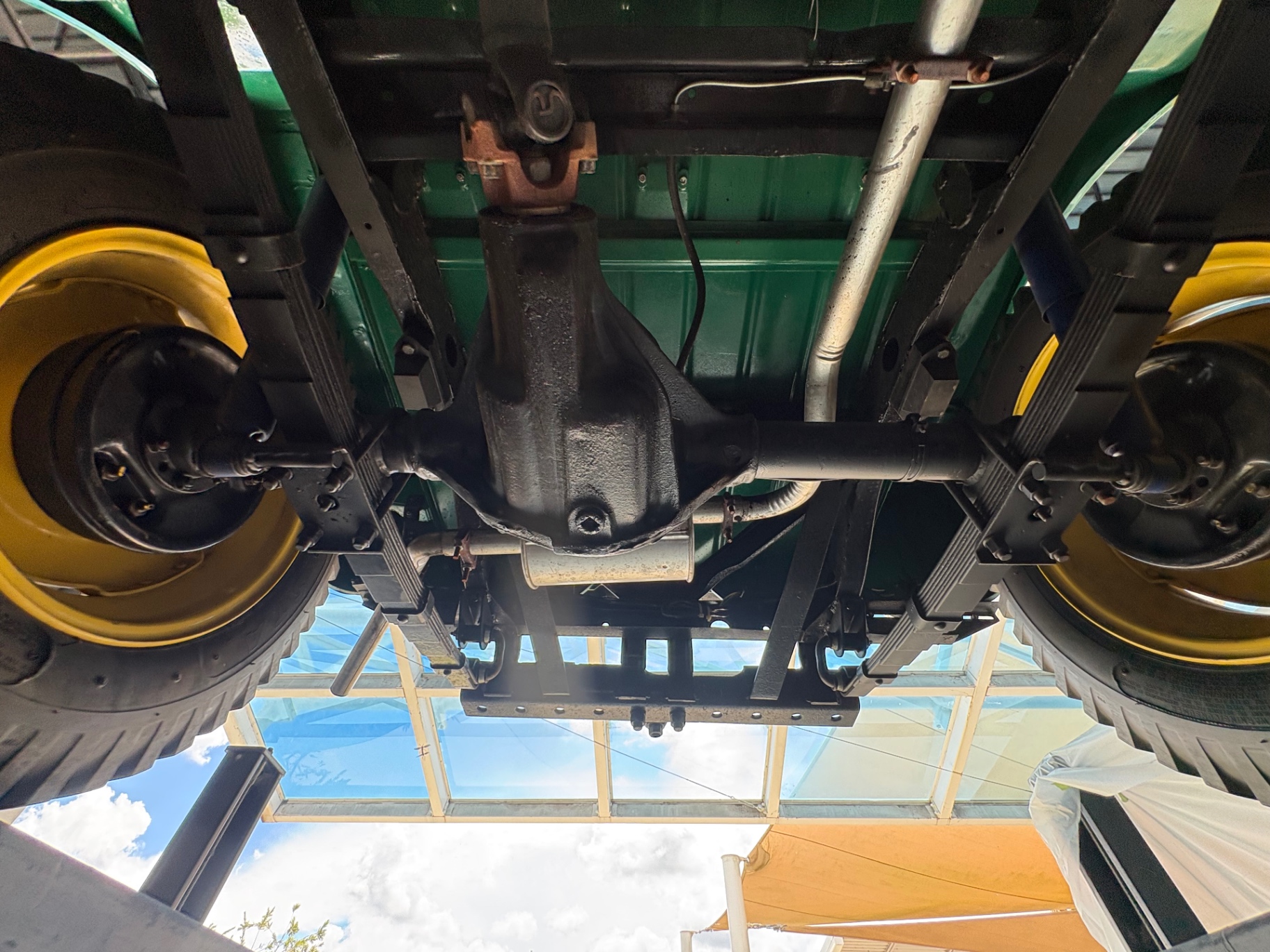
The undercarriage photographs show a clean, well-presented chassis. The frame, axles, and suspension components have been painted and are free of the heavy surface rust and debris accumulation that plagues most vehicles of this age. Leaf springs are fitted front and rear, consistent with CJ2A production. Drum brakes are present at all four corners. The overall impression under the vehicle matches what you see on top of it — this is a Jeep that has been through a proper restoration, not a quick cosmetic spruce-up before listing.
Interior
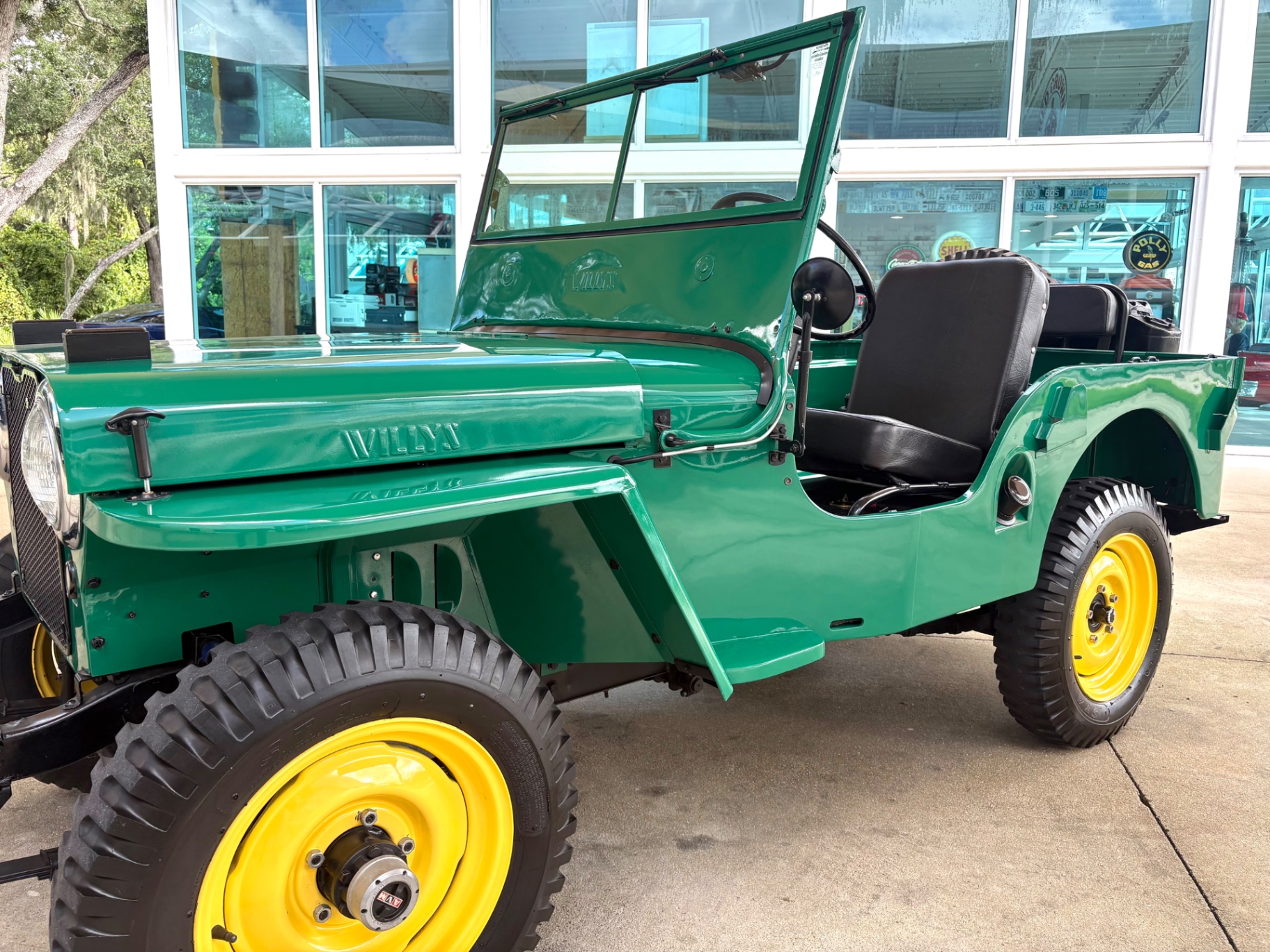
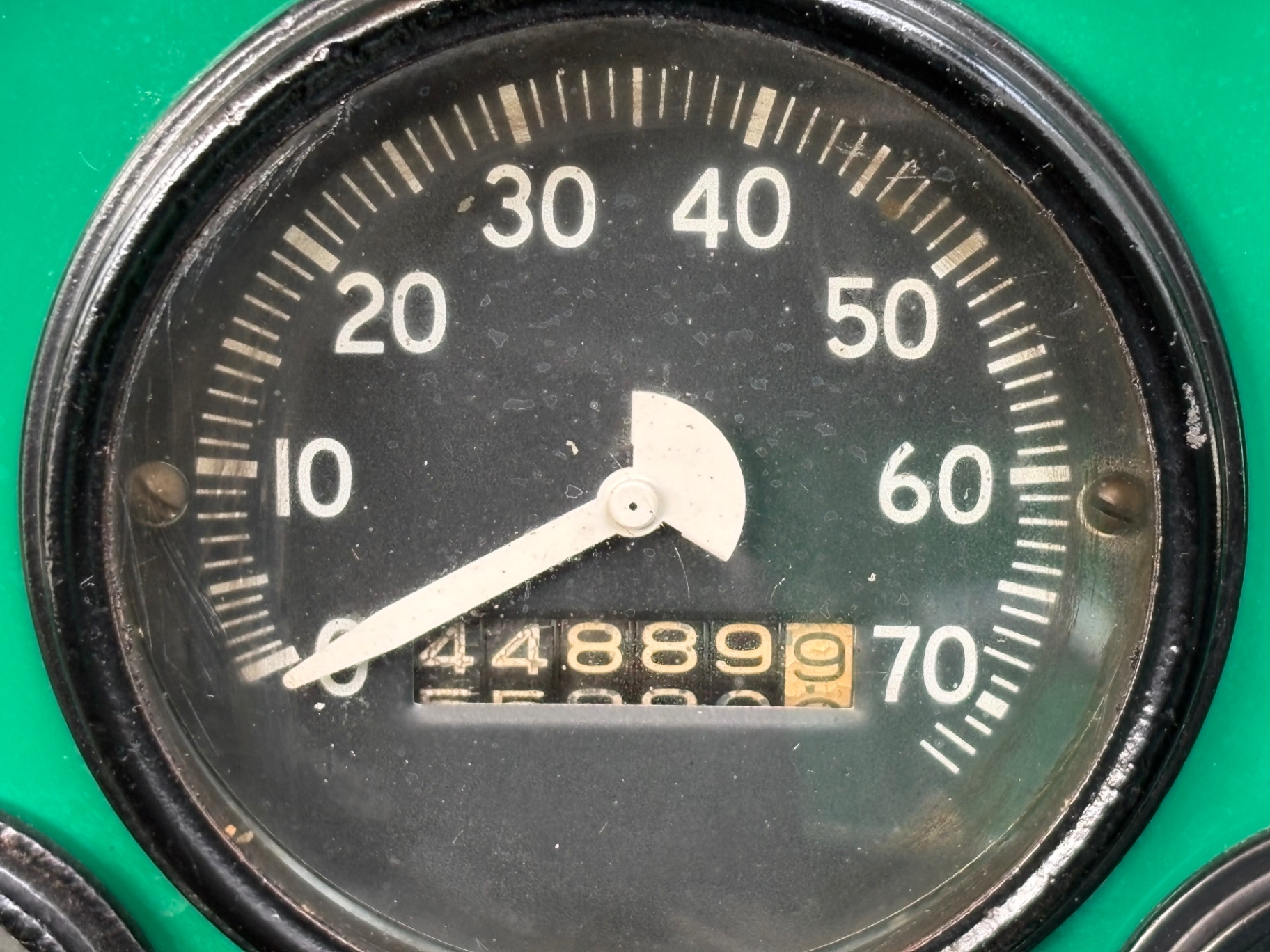
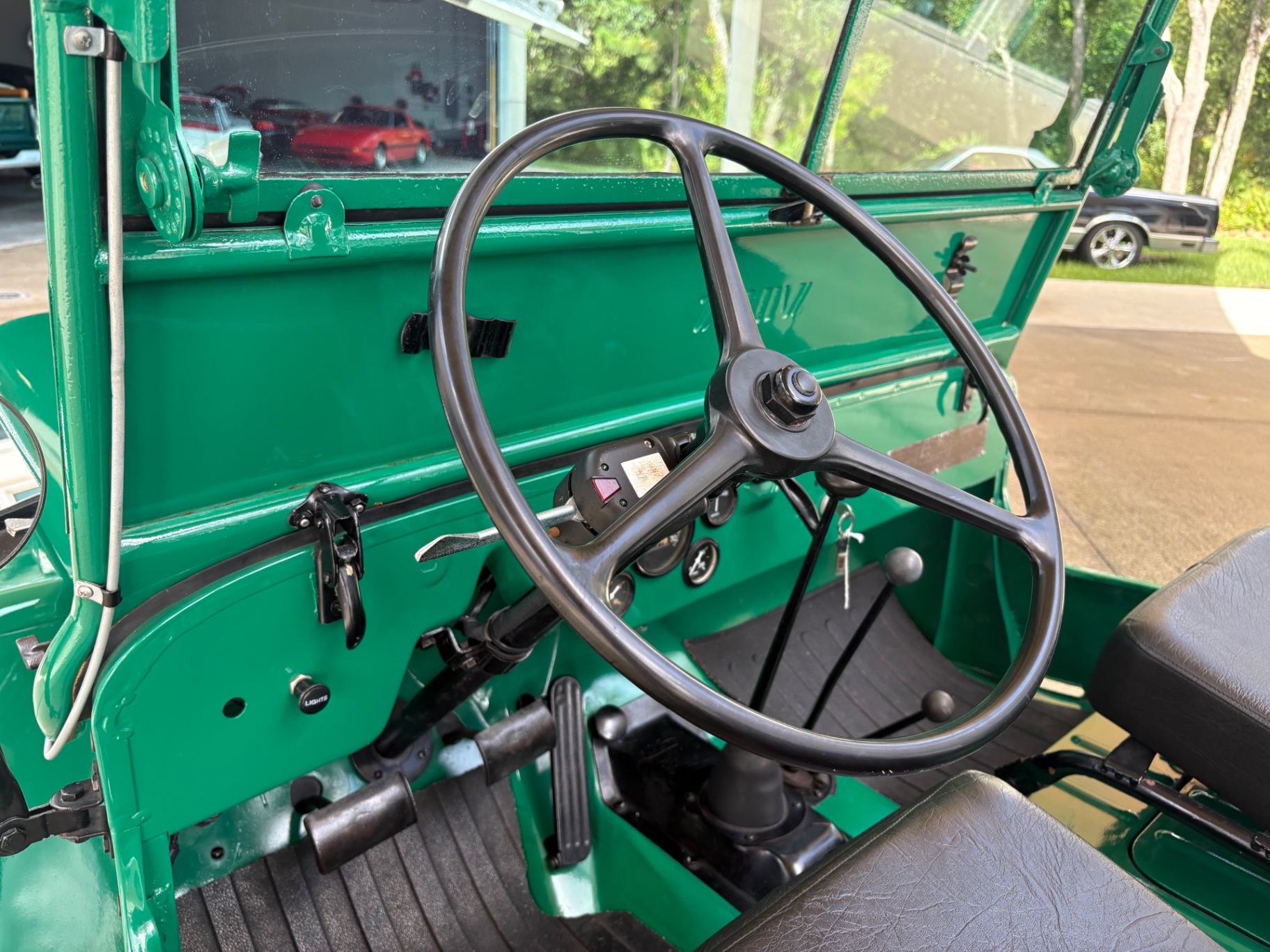
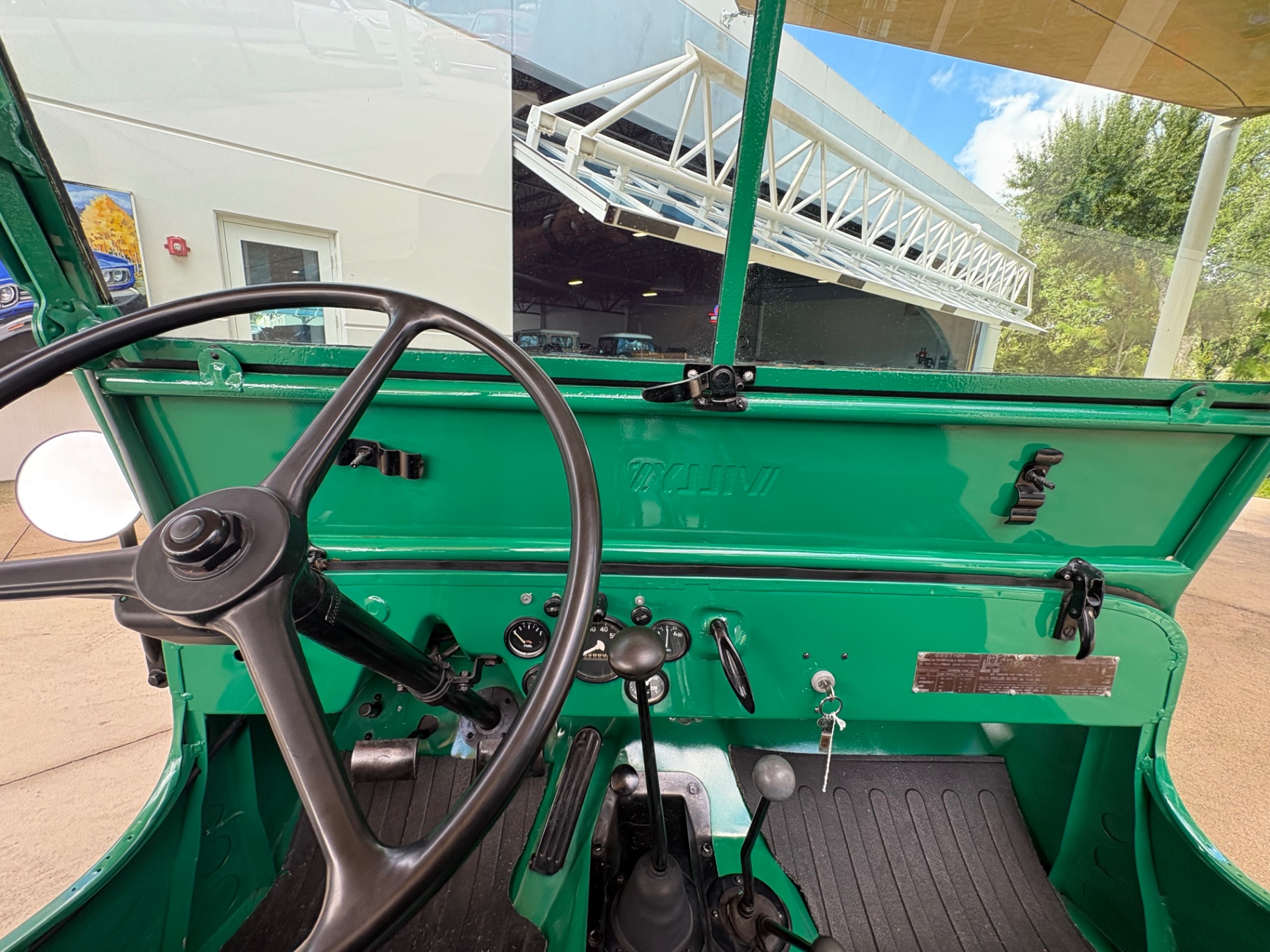
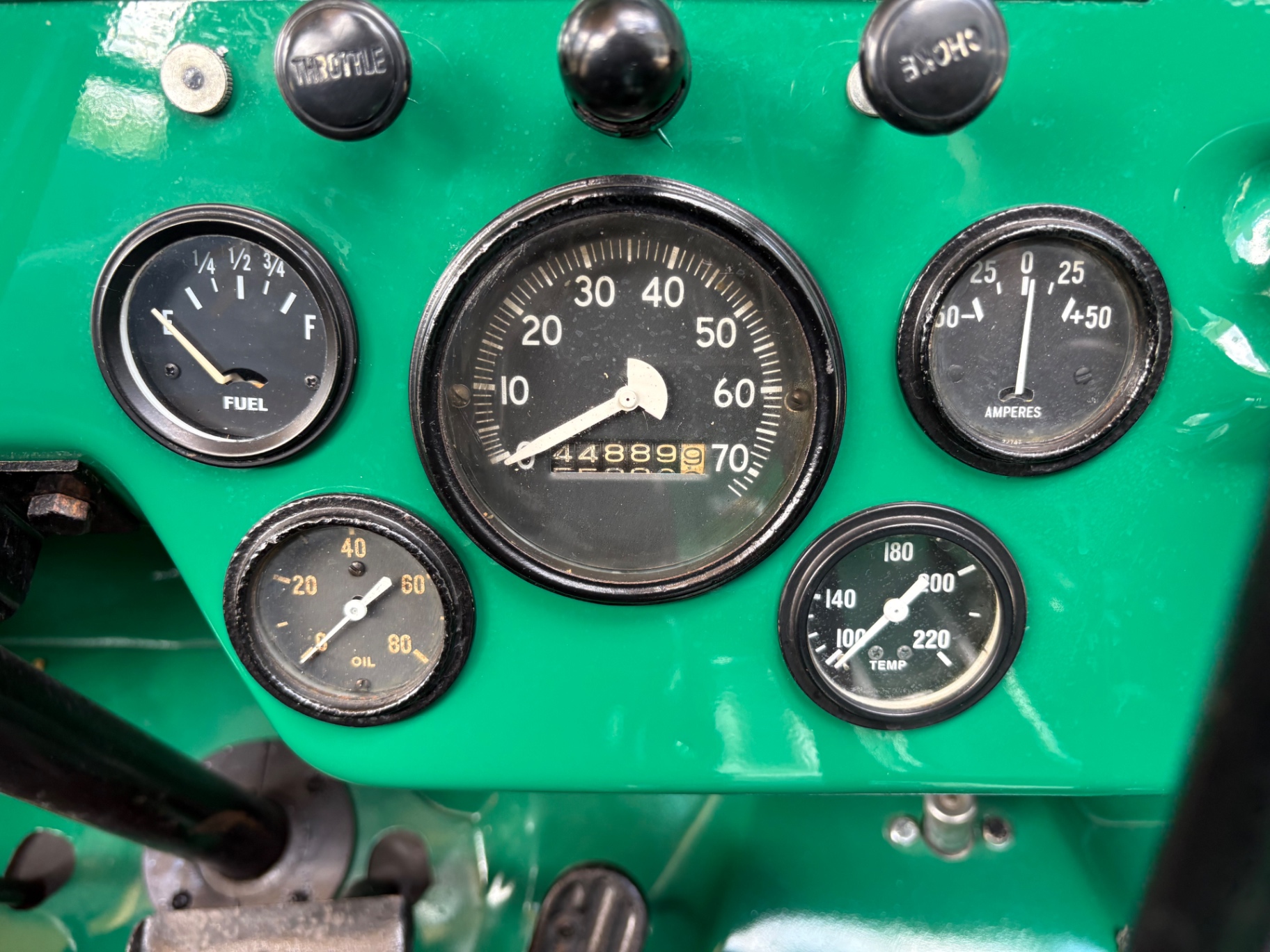
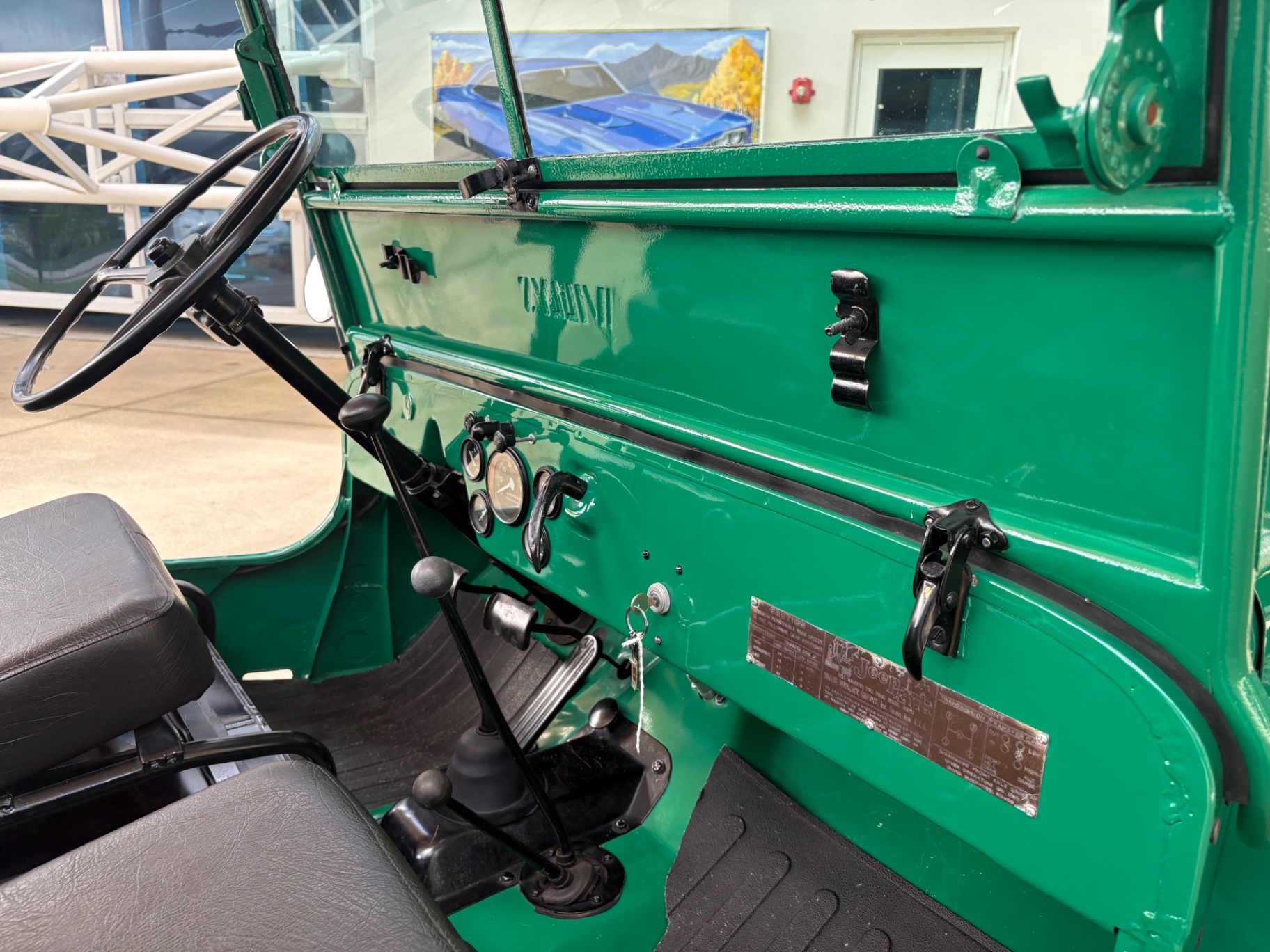
The interior of the 1946 Willys CJ2A is exactly what it should be: functional, open, and honest about what the vehicle was designed to do. The dashboard is painted in body-color green and carries the 5-gauge instrument cluster — fuel, oil pressure, water temperature, ammeter, and a central speedometer that reads to 70 mph. The throttle and choke knobs are still in place on the upper dash. The ignition and light switches are present and positioned where Willys put them in 1946.
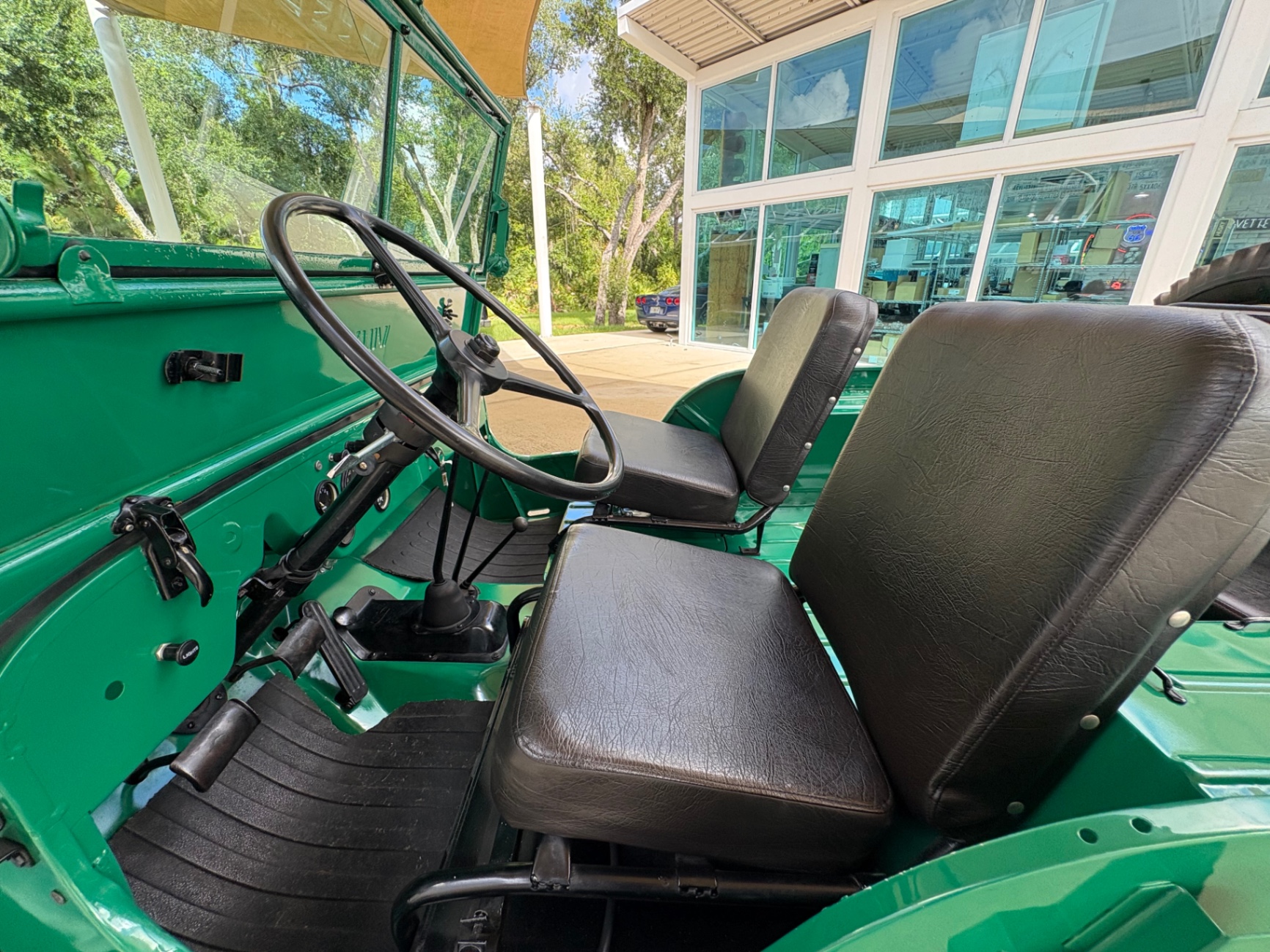
The steering wheel is the correct large-diameter design appropriate to the era. The transfer case and transmission shifters rise from the floor side by side, which is one of the most recognizable visual signatures of an early civilian Jeep. The original data plate is mounted to the cowl on the passenger side, still legible, confirming this as a Willys Overland Motors product built in Toledo, Ohio.
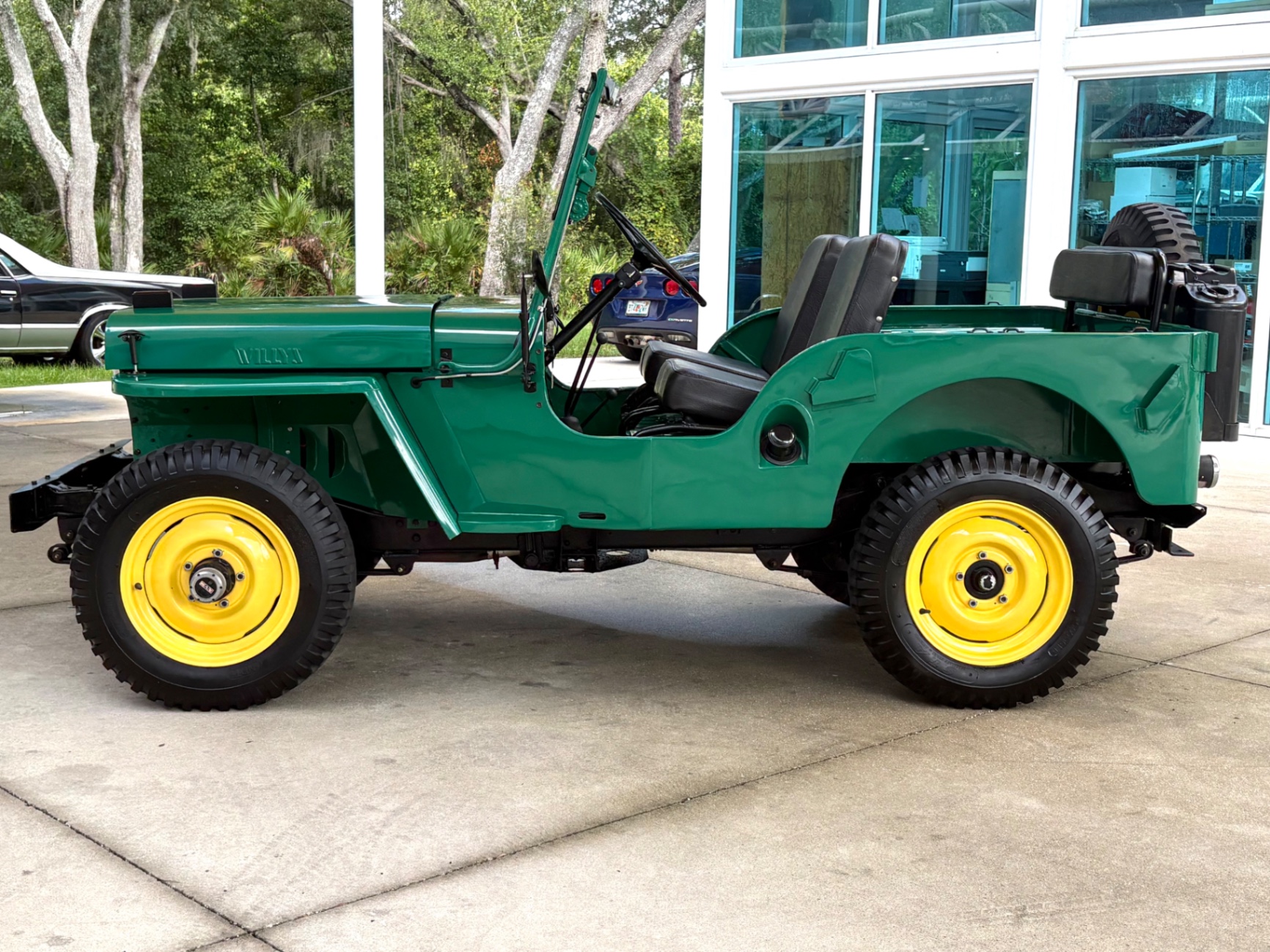
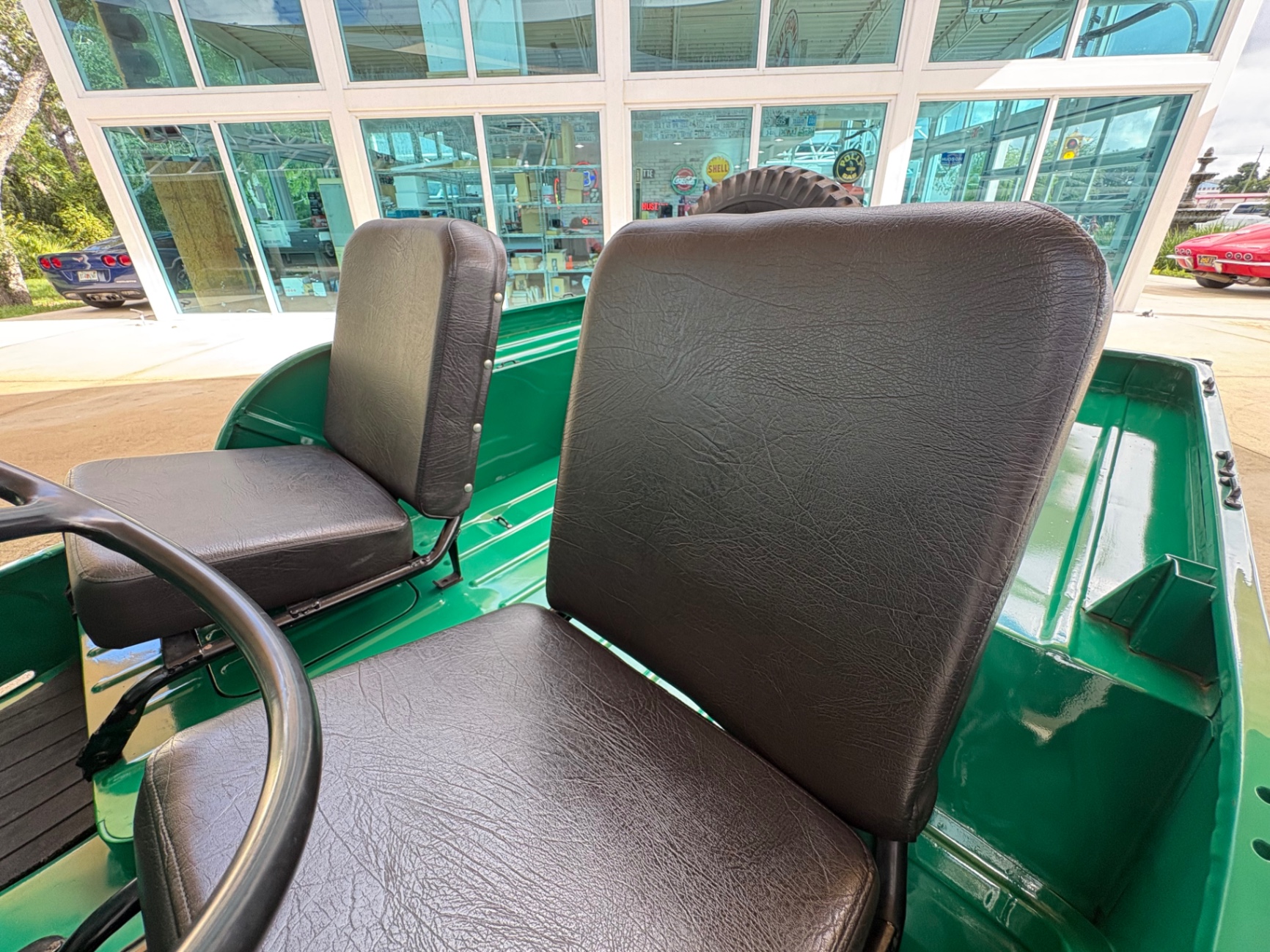
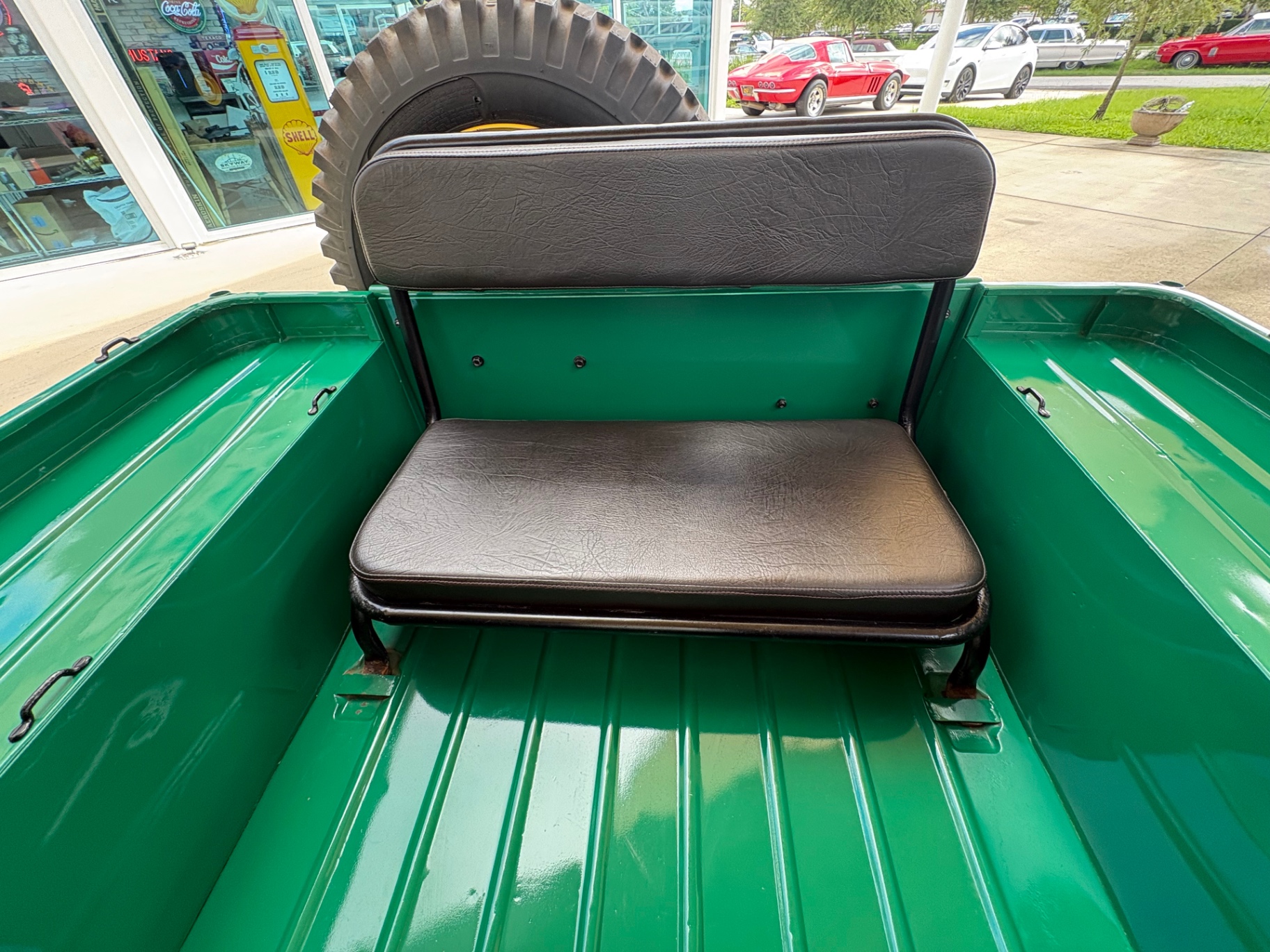
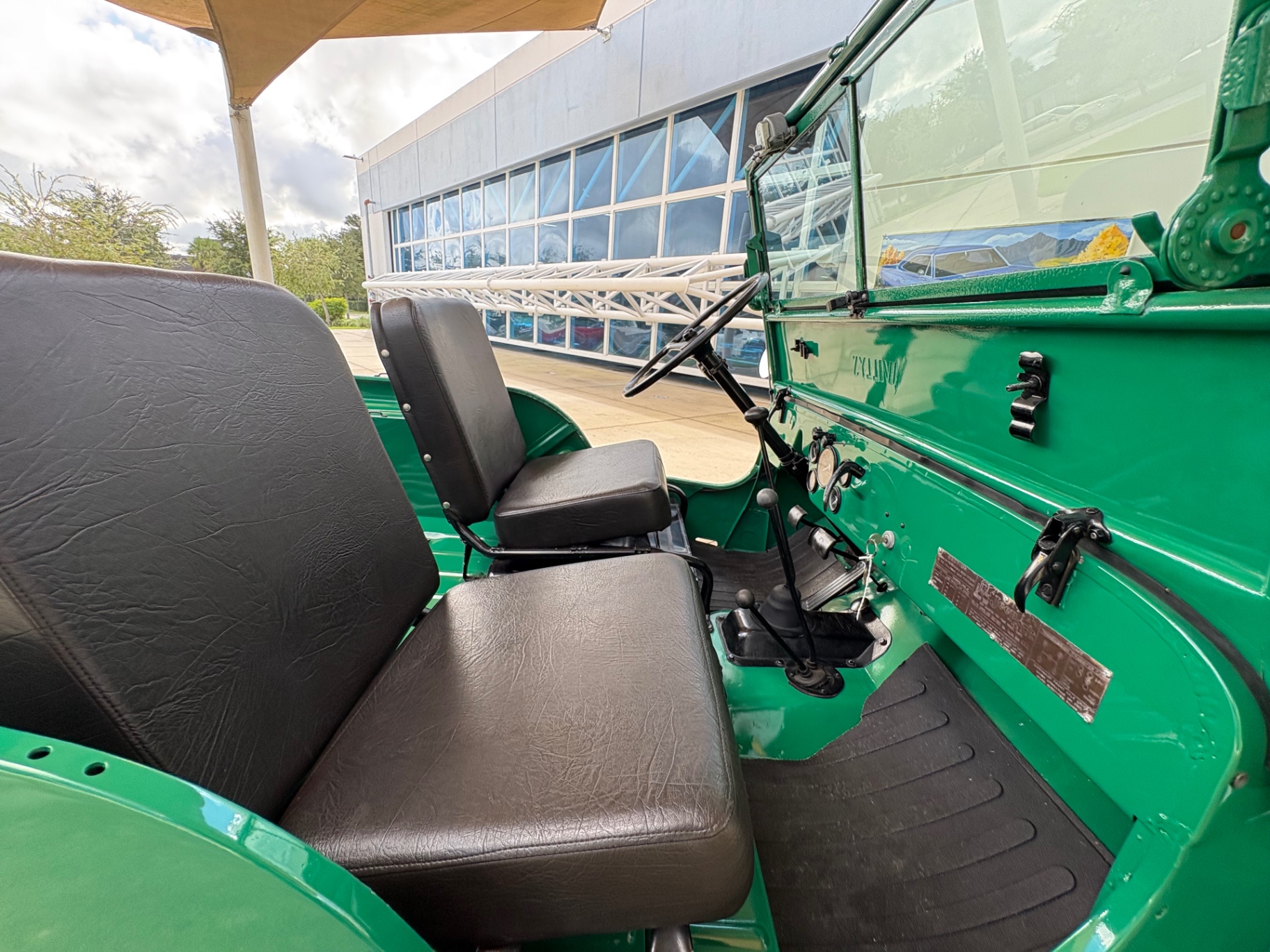
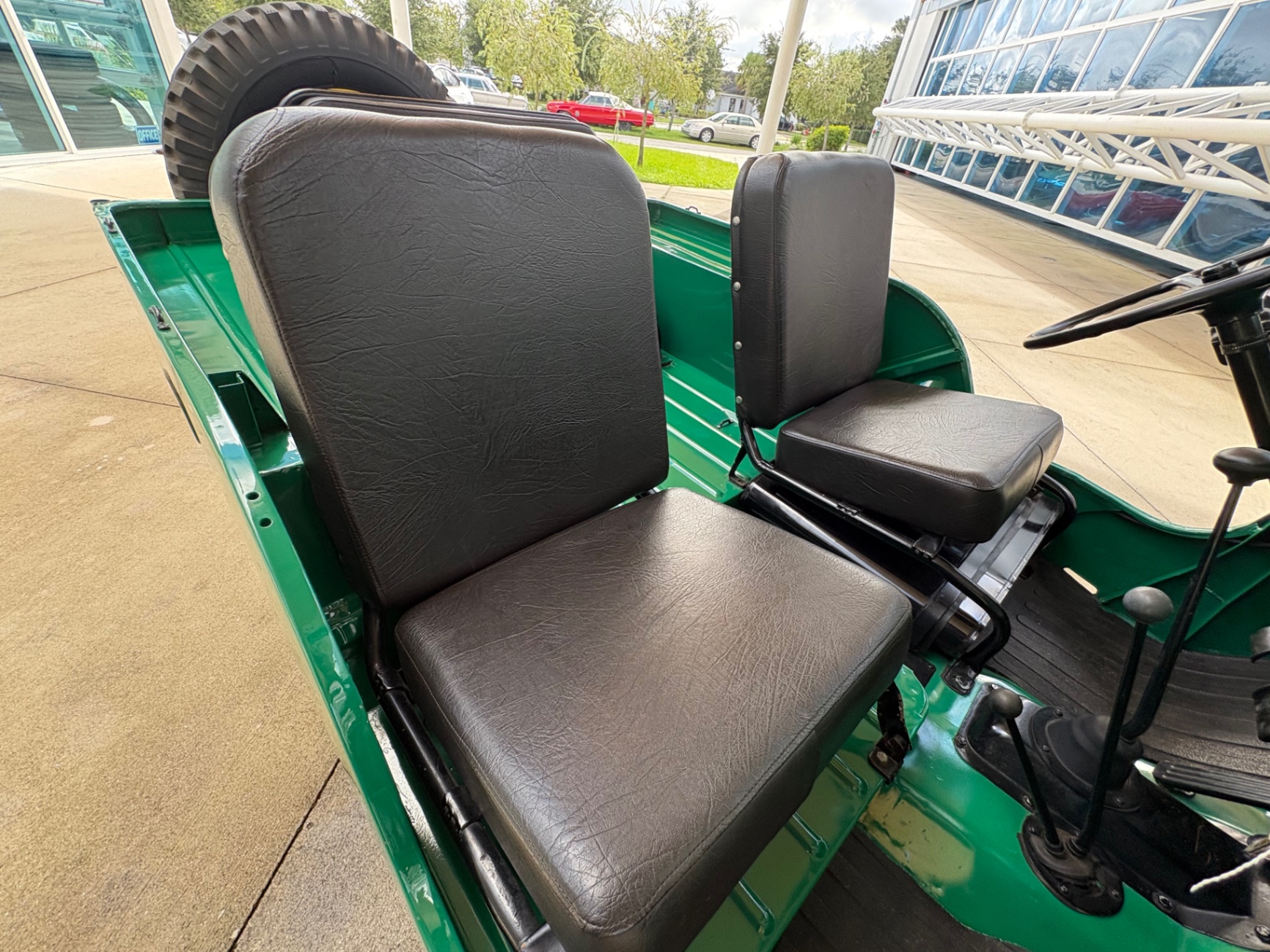
Front bucket seats are trimmed in black vinyl and offer a reasonable amount of support for a vehicle without any sound deadening or weather sealing. The rear bench seat is also black vinyl and mounts in the cargo area in the traditional CJ fashion, with the spare tire positioned above it at the tailgate. The floor shows rubber matting consistent with the restoration. There are no doors on this Jeep — that is correct for the model — and the windshield folds flat onto the hood when not needed.
Exterior
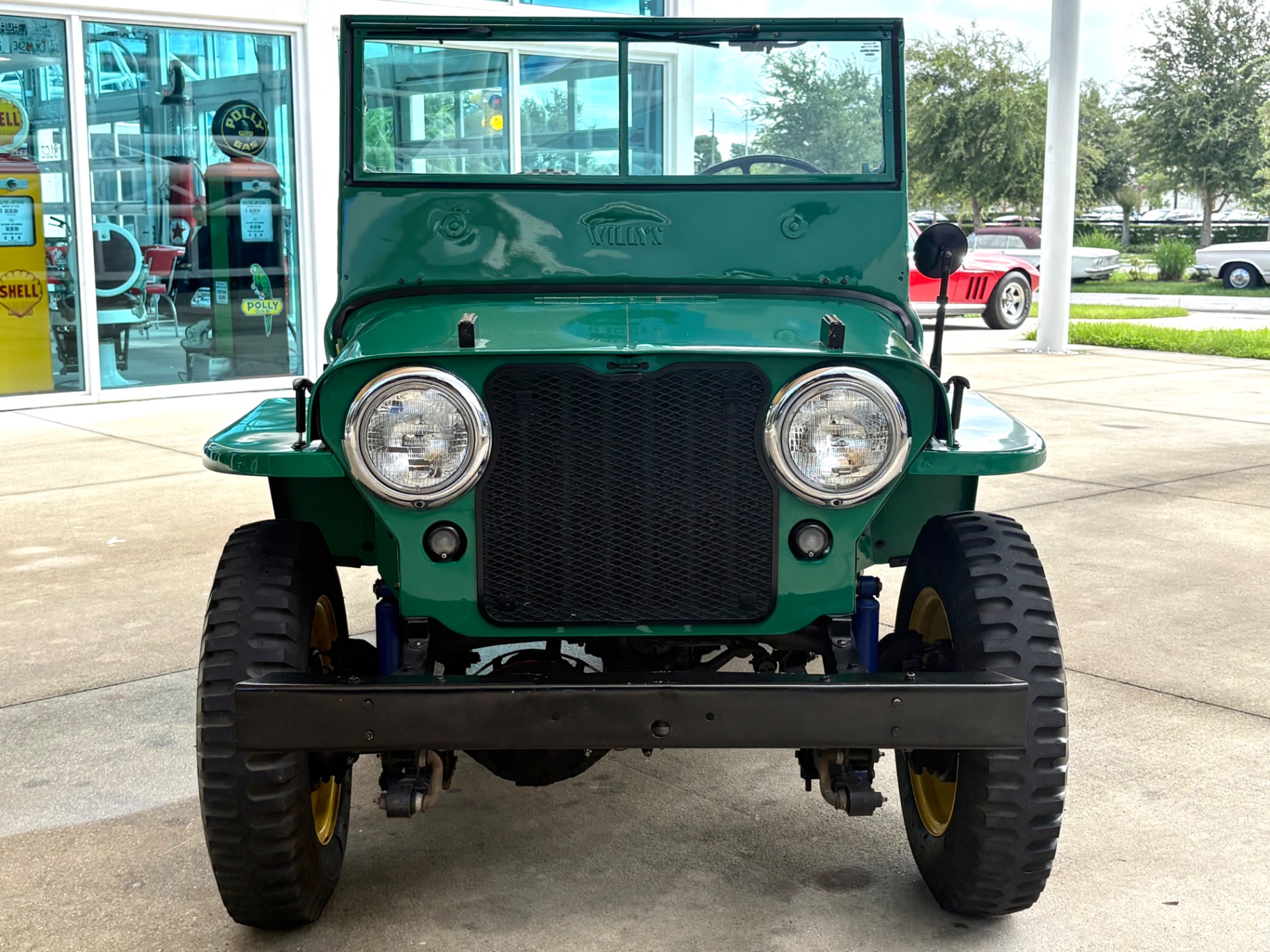
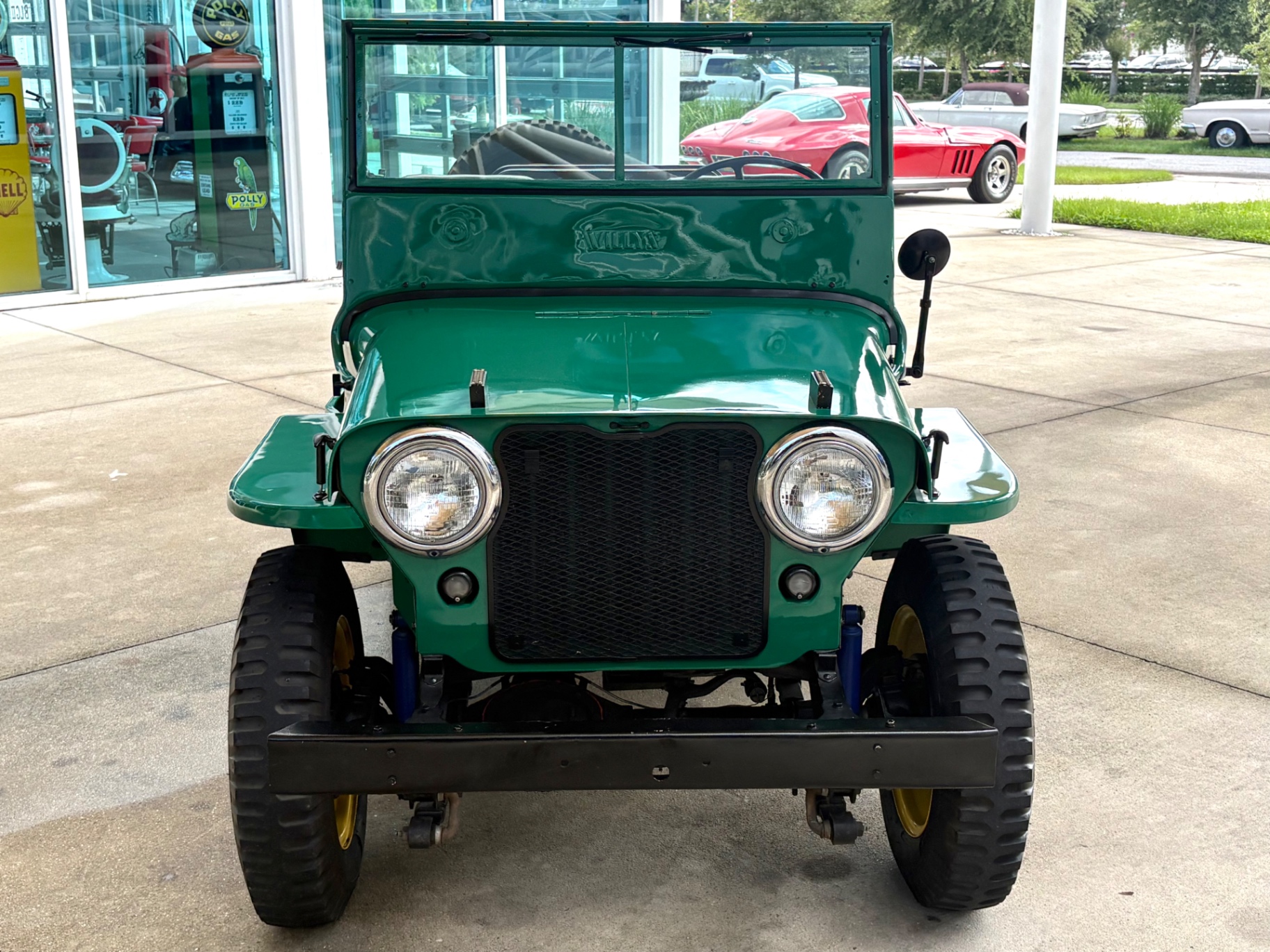
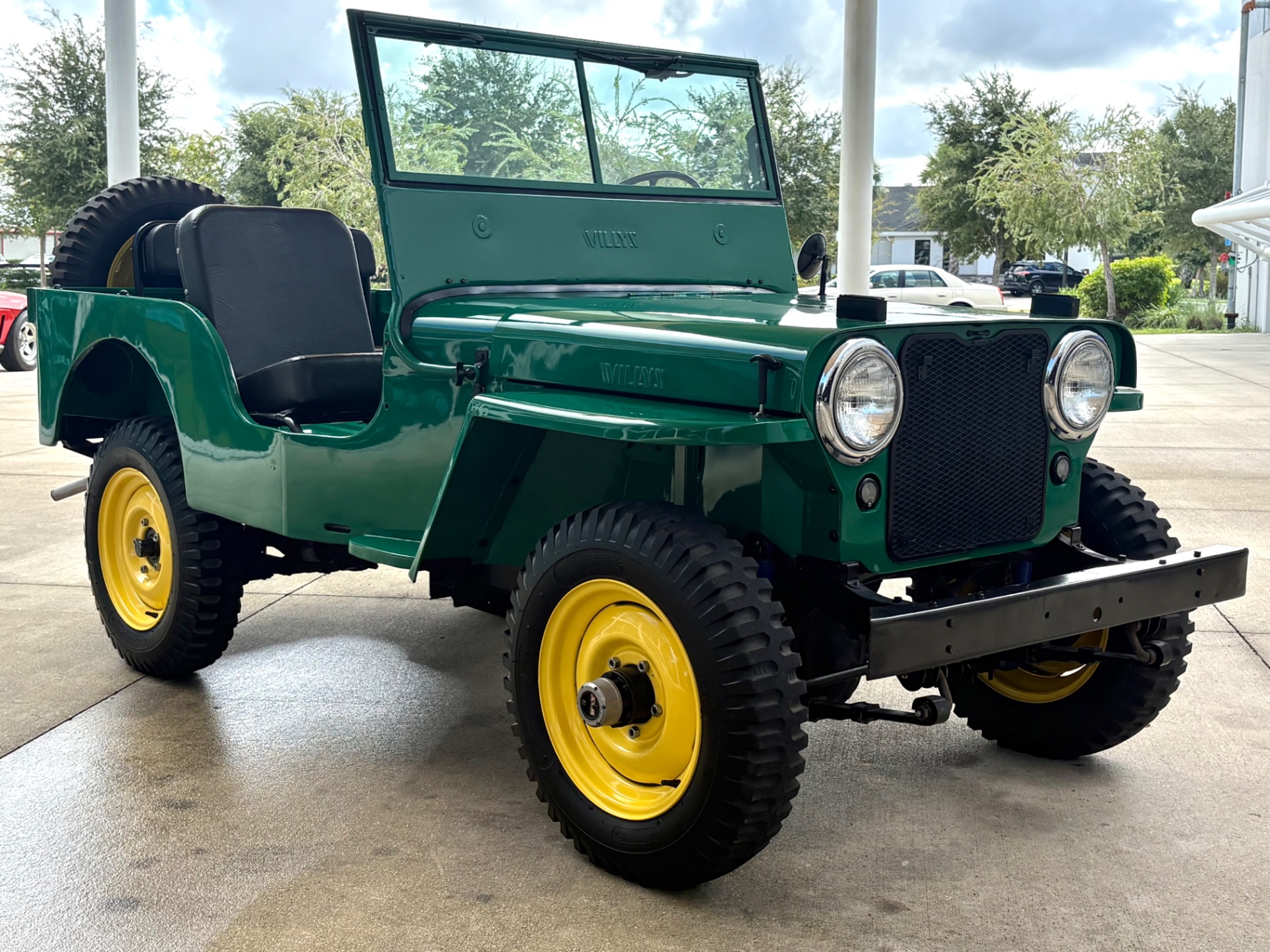
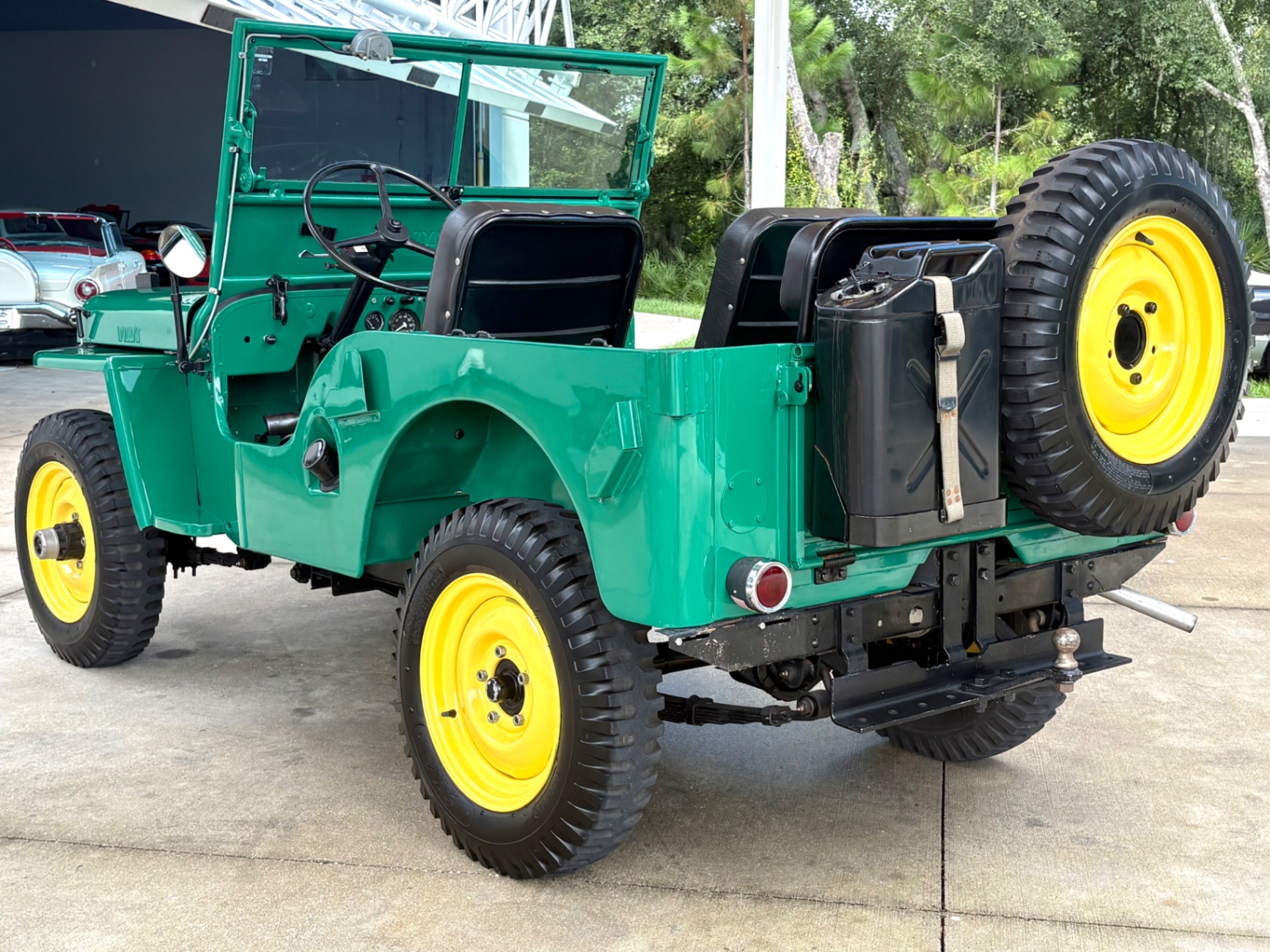
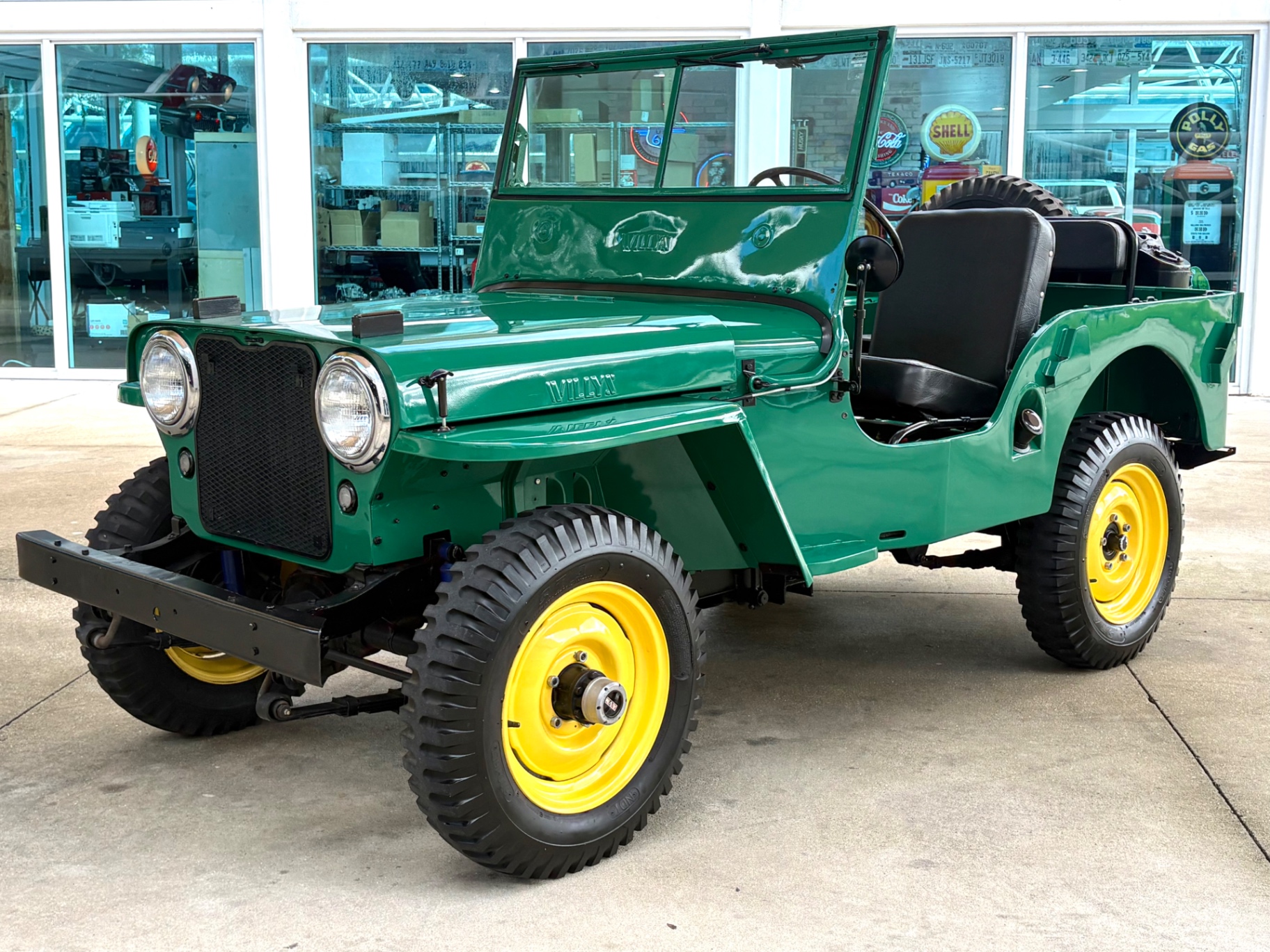
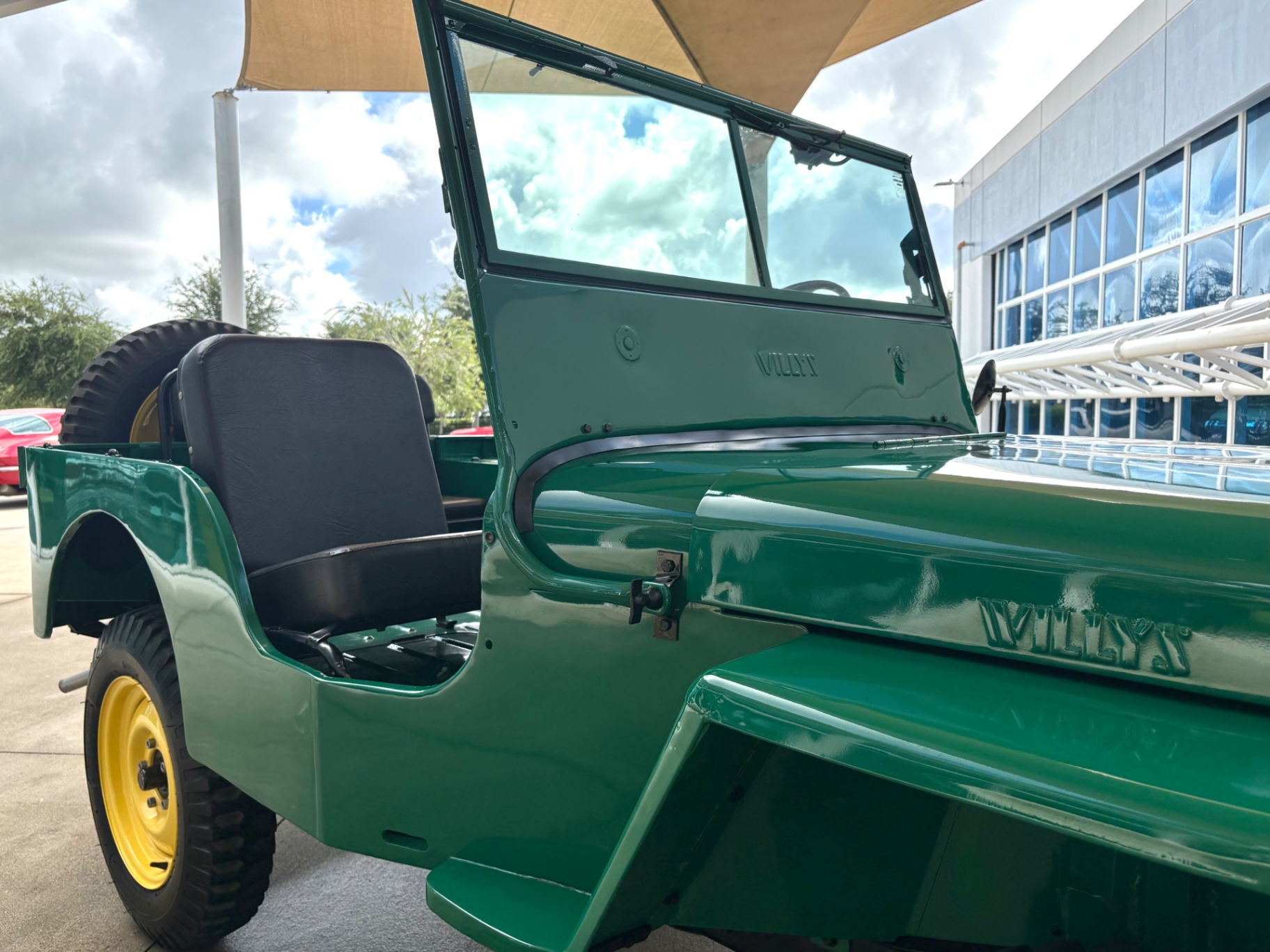
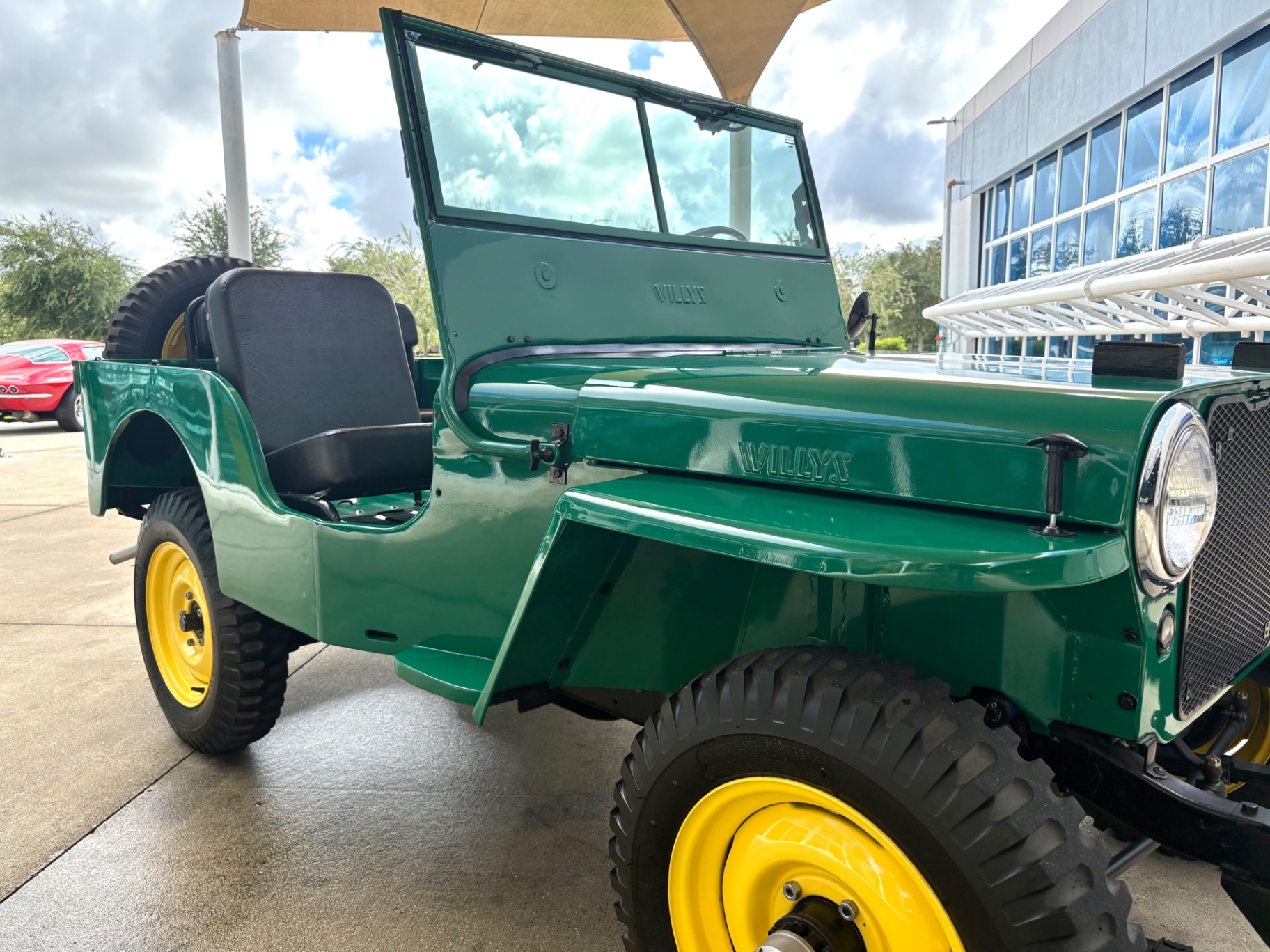
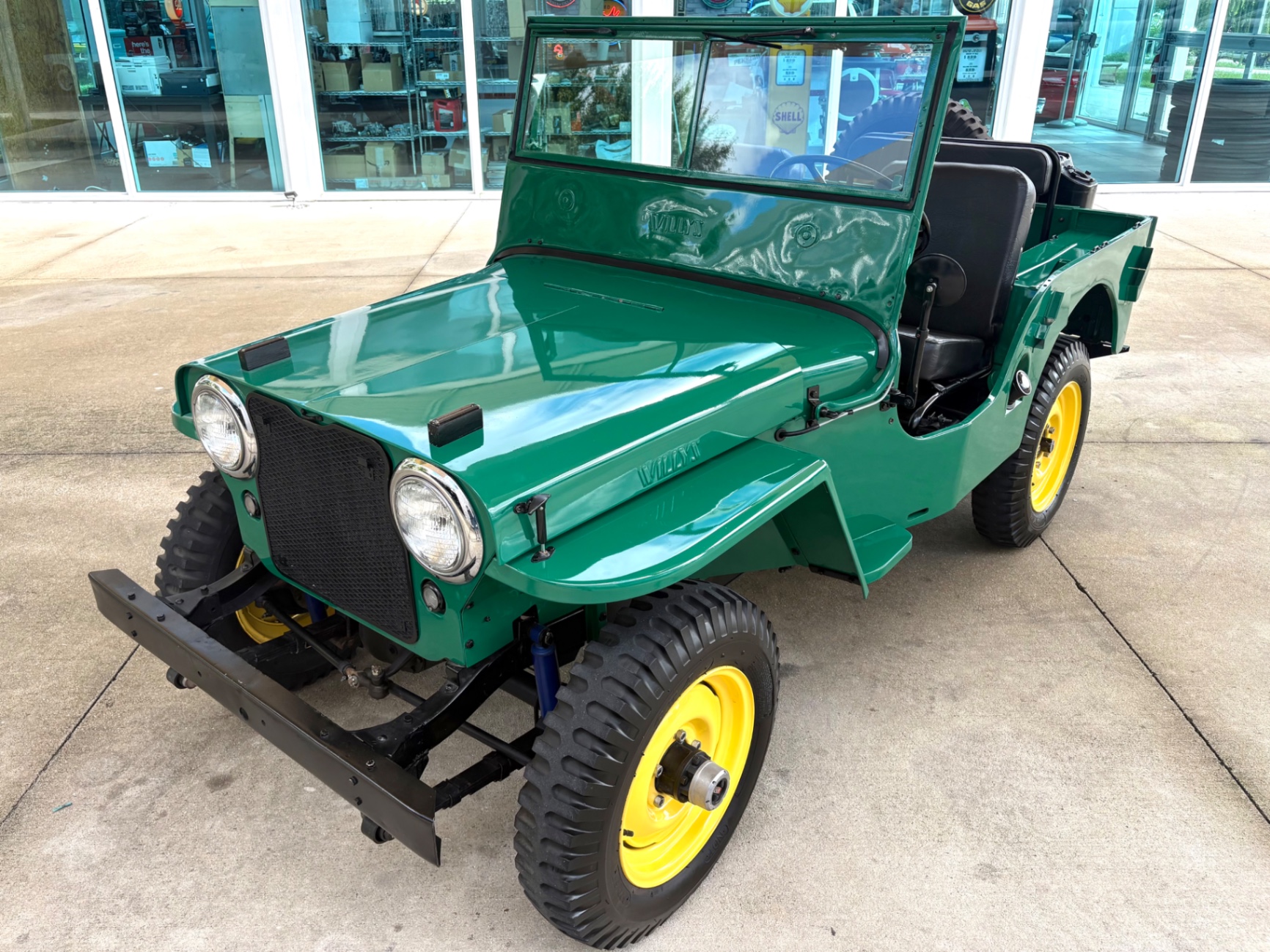
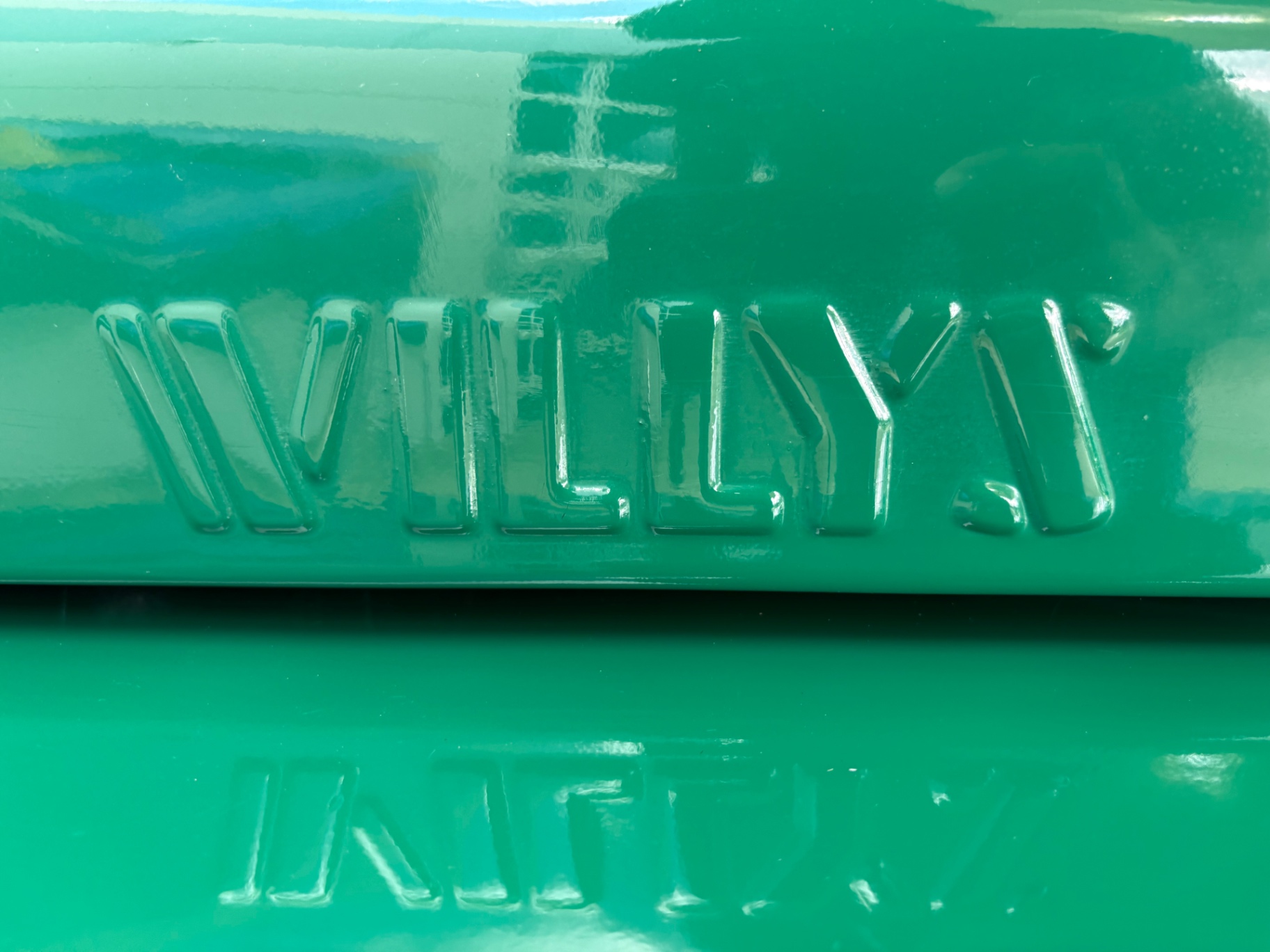
The body has been restored and painted in green, a color that suits the CJ2A's agricultural and utilitarian character well. The panel fit is consistent across the hood, cowl, and rear tub. The seven-slot grille — a design that became one of the most recognized shapes in automotive history — looks solid and straight. Chrome headlight bezels are fitted, giving the front end a slightly dressed-up appearance compared to a purely utilitarian presentation.
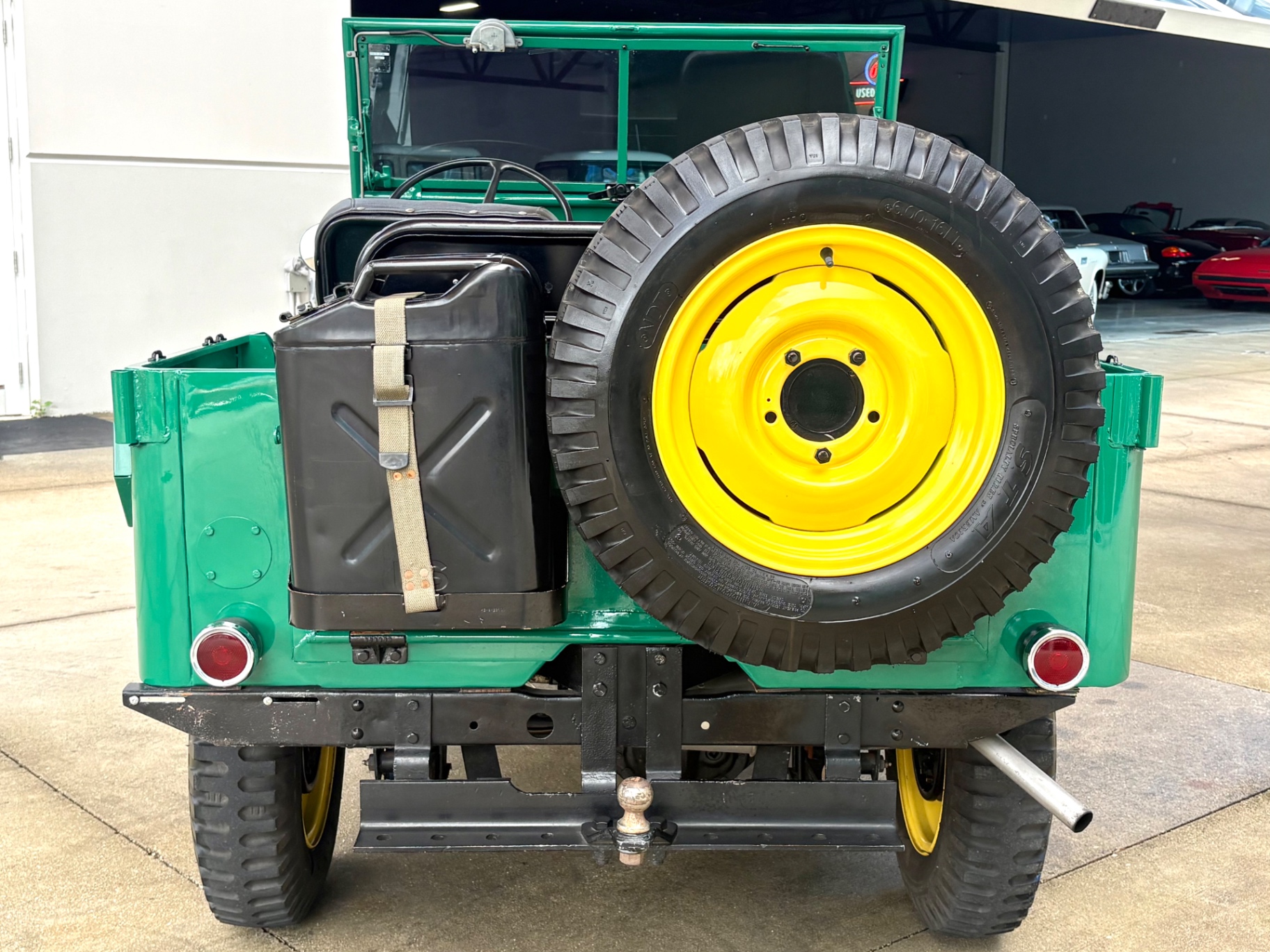
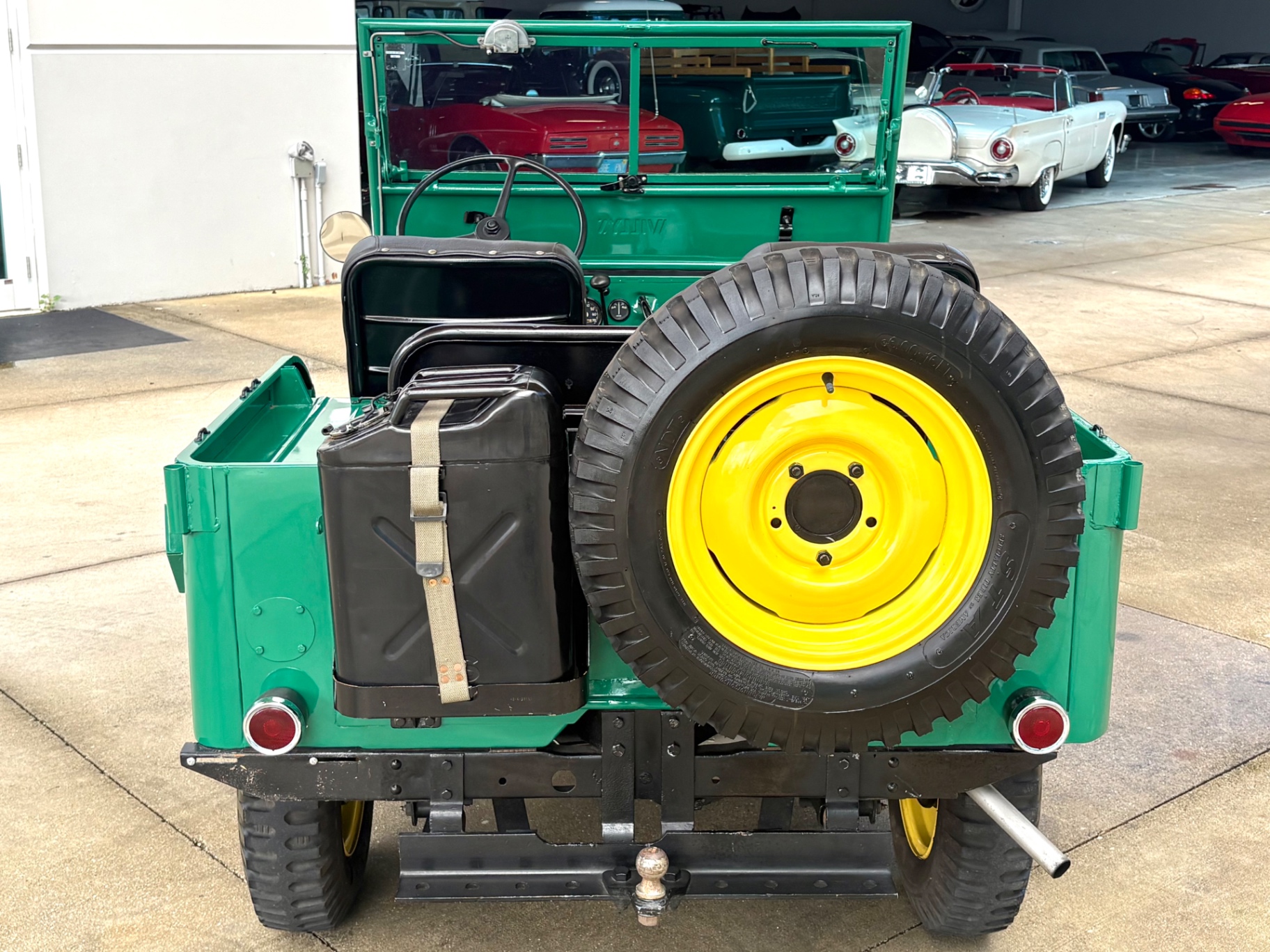
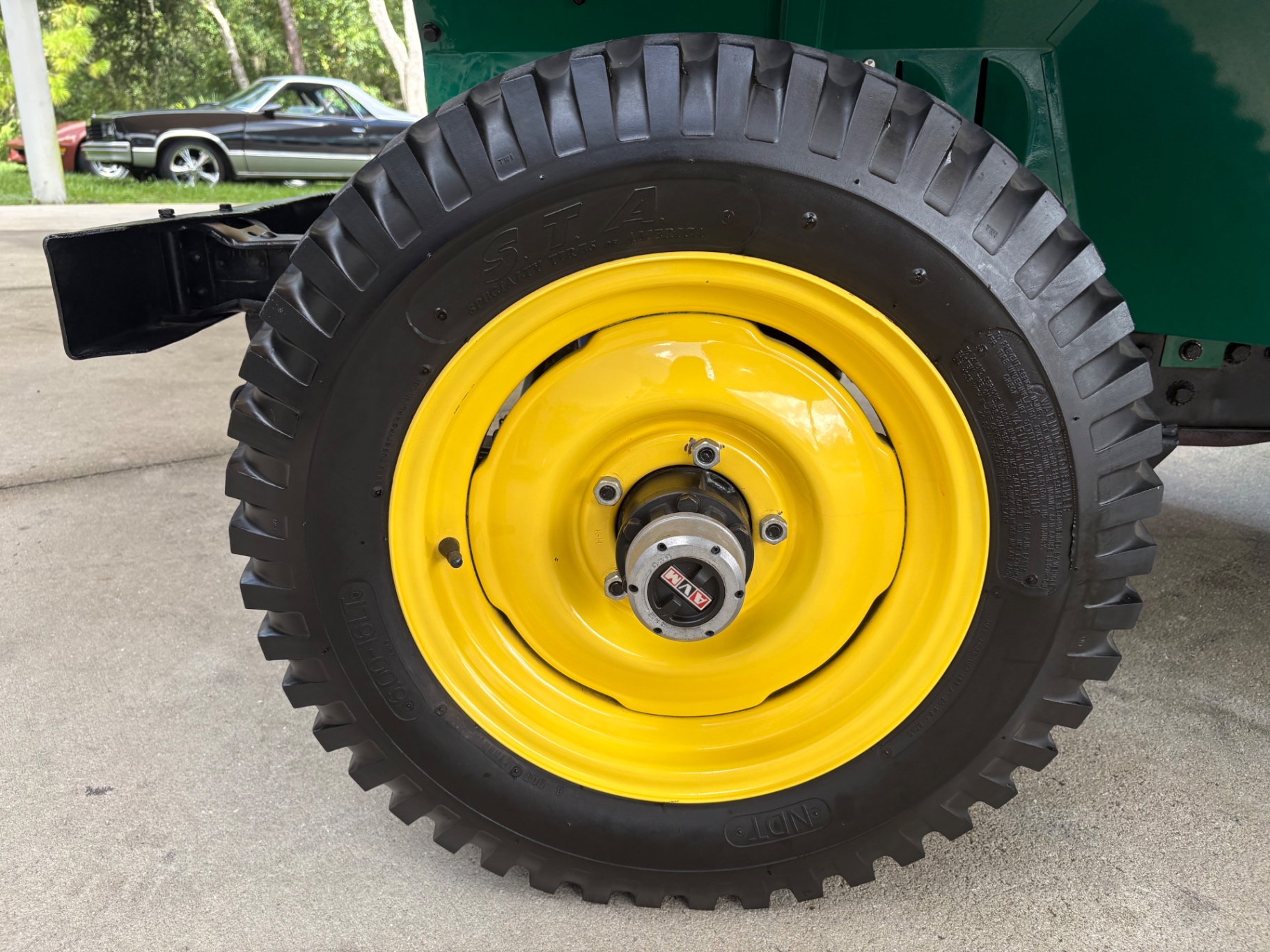
The NDT tractor-style tires are mounted on yellow steel wheels at all four corners, plus the spare at the rear. NDT stands for Non-Directional Tread, and this style of tire was standard equipment on CJ2As used in agricultural settings. They provide excellent traction in soft ground and mud and are entirely appropriate to the vehicle. The yellow wheel color creates a visual contrast against the green body that many CJ2A collectors favor and that has become closely associated with the model's farm Jeep identity.
A military-style jerry can is mounted at the rear alongside the spare tire, and a trailer hitch is fitted at the tail. The fold-down windshield hardware is present and functional. The canvas soft top with bows provides weather protection while remaining removable when conditions allow. The overall presentation is that of a Jeep that has been restored to a high standard while retaining the correct details that CJ2A collectors and enthusiasts look for.
Conclusion
The 1946 Willys CJ2A is one of the most historically significant vehicles in American automotive history. It established the template for every civilian Jeep that followed and created the market category that eventually produced the Wrangler, the Bronco, the Land Cruiser FJ series, and every other purpose-built off-road vehicle aimed at civilian buyers. Finding one in this condition — restored body and paint, correct drivetrain, clean undercarriage, original data plate, and a complete list of period-correct details — is not an everyday occurrence. Most CJ2As that survived this long did so by working hard, and the survivors reflect that history in their condition. This one has clearly been given the attention it deserves.
Whether your interest is in collecting early Jeeps, using it at a farm or ranch, showing it at Willys and early Jeep events, or simply owning a vehicle with a direct connection to postwar American history, this 1946 Willys CJ2A covers all of those bases in a single package.
To learn more or arrange a time to see it in person, call Skyway Classics at 941-254-6608. We are located in Sarasota, Florida, and welcome out-of-state buyers. We are happy to assist with transportation arrangements.
Disclaimer
Information found on the website is presented as given to us by the owner of the car, whether on consignment or from the owner we bought it from. Some Photos, materials for videos, descriptions and other information are provided by the consignor/seller and is deemed reliable, but Skyway Classics does not warranty or guarantee this information. Skyway Classics is not responsible for information that may incorrect or a publishing error. The decision to purchase should be based solely on the buyers personal inspection of the vehicle or by a professional inspection service prior to offer or purchase being made.
1946 Willys Jeep CJ2A — Restored Body & Paint, Go-Devil Four-Cylinder, Dana 18 Transfer Case
Why This Car Is Special
The 1946 Willys CJ2A represents the very beginning of the civilian Jeep as we know it. When World War II ended, Willys-Overland had a problem: a factory tooled up to build military vehicles and no war left to fight. Their solution was to take the proven MB military Jeep, make it more practical for farm and civilian use, and sell it directly to the American public. The result was the CJ2A, introduced in 1945 and built through 1949. Over 214,000 units were produced during that run, making it the foundation of an entire industry segment that still exists today.
The CJ2A was different from its military predecessor in several meaningful ways. It got an external fuel cap on the driver's side, a tailgate, a side-mounted spare tire, a larger 7-inch headlight, and a repositioned fuel tank. Willys also added a power take-off port so farmers could run equipment directly off the engine — a feature that made the CJ2A genuinely useful as a farm tool, not just a surplus novelty. The civilian market responded. These vehicles pulled plows, hauled lumber, fought fires, and ran fence lines across rural America for decades.
This particular 1946 Willys CJ2A has been treated to a restored body and paint and presents well from every angle, including underneath. It carries the original data plate, which confirms model and build information and adds a layer of documentation that is increasingly hard to find on vehicles of this age. The Go-Devil inline-four is running, the drivetrain is intact and correct, and the undercarriage photos tell a story of a Jeep that has been gone through rather than simply cleaned up for sale.
If you are looking for a first-year civilian Jeep that is complete, correct, and ready to enjoy rather than a project that requires months of sorting, this 1946 Willys CJ2A deserves a serious look.
Features List
- Go-Devil 134ci Inline-4 engine
- 3-Speed manual transmission with Dana 18 transfer case
- Selectable 4-wheel drive
- Manual locking front hubs
- Leaf spring suspension front and rear
- Drum brakes all four corners
- NDT tractor-style tires on yellow steel wheels
- Fold-down windshield with canvas soft top and bows
- Front bucket seats and rear bench seat
- 5-gauge instrument cluster including speedometer, fuel, oil pressure, temperature, and ammeter
- Driver-side mirror
- Spare tire mounted rear
- Military jerry can included
- Trailer hitch equipped
- Restored body and paint in green
- Black vinyl interior
- Original data plate present
- Clean undercarriage
Mechanical
The Go-Devil engine is the heart of the CJ2A story. Willys developed this 134 cubic inch inline four-cylinder during the war years, and it proved durable enough that the basic architecture remained in production through 1971 in various Jeep models. It produces modest output by modern standards — rated at 60 horsepower and 105 lb-ft of torque from the factory — but its strength is low-end pulling power and mechanical simplicity. There is very little on this engine that cannot be understood and serviced with basic tools. Parts remain available, rebuilds are straightforward, and the engine is known to run reliably for high mileage when properly maintained.
Behind the Go-Devil sits a 3-speed manual transmission feeding into the Dana 18 transfer case. The Dana 18 was a workhorse unit used across Willys Jeeps and later in early Jeep CJ models through 1971. It provides a two-speed range — high and low — along with the ability to engage the front axle for four-wheel drive. The original data plate mounted to the cowl spells out the gear speed limits in detail, which is a nice touch of period documentation. Manual locking front hubs are fitted, which allows the front axle to be disconnected when four-wheel drive is not needed, reducing drivetrain wear on-road.
The undercarriage photographs show a clean, well-presented chassis. The frame, axles, and suspension components have been painted and are free of the heavy surface rust and debris accumulation that plagues most vehicles of this age. Leaf springs are fitted front and rear, consistent with CJ2A production. Drum brakes are present at all four corners. The overall impression under the vehicle matches what you see on top of it — this is a Jeep that has been through a proper restoration, not a quick cosmetic spruce-up before listing.
Interior
The interior of the 1946 Willys CJ2A is exactly what it should be: functional, open, and honest about what the vehicle was designed to do. The dashboard is painted in body-color green and carries the 5-gauge instrument cluster — fuel, oil pressure, water temperature, ammeter, and a central speedometer that reads to 70 mph. The throttle and choke knobs are still in place on the upper dash. The ignition and light switches are present and positioned where Willys put them in 1946.
The steering wheel is the correct large-diameter design appropriate to the era. The transfer case and transmission shifters rise from the floor side by side, which is one of the most recognizable visual signatures of an early civilian Jeep. The original data plate is mounted to the cowl on the passenger side, still legible, confirming this as a Willys Overland Motors product built in Toledo, Ohio.
Front bucket seats are trimmed in black vinyl and offer a reasonable amount of support for a vehicle without any sound deadening or weather sealing. The rear bench seat is also black vinyl and mounts in the cargo area in the traditional CJ fashion, with the spare tire positioned above it at the tailgate. The floor shows rubber matting consistent with the restoration. There are no doors on this Jeep — that is correct for the model — and the windshield folds flat onto the hood when not needed.
Exterior
The body has been restored and painted in green, a color that suits the CJ2A's agricultural and utilitarian character well. The panel fit is consistent across the hood, cowl, and rear tub. The seven-slot grille — a design that became one of the most recognized shapes in automotive history — looks solid and straight. Chrome headlight bezels are fitted, giving the front end a slightly dressed-up appearance compared to a purely utilitarian presentation.
The NDT tractor-style tires are mounted on yellow steel wheels at all four corners, plus the spare at the rear. NDT stands for Non-Directional Tread, and this style of tire was standard equipment on CJ2As used in agricultural settings. They provide excellent traction in soft ground and mud and are entirely appropriate to the vehicle. The yellow wheel color creates a visual contrast against the green body that many CJ2A collectors favor and that has become closely associated with the model's farm Jeep identity.
A military-style jerry can is mounted at the rear alongside the spare tire, and a trailer hitch is fitted at the tail. The fold-down windshield hardware is present and functional. The canvas soft top with bows provides weather protection while remaining removable when conditions allow. The overall presentation is that of a Jeep that has been restored to a high standard while retaining the correct details that CJ2A collectors and enthusiasts look for.
Conclusion
The 1946 Willys CJ2A is one of the most historically significant vehicles in American automotive history. It established the template for every civilian Jeep that followed and created the market category that eventually produced the Wrangler, the Bronco, the Land Cruiser FJ series, and every other purpose-built off-road vehicle aimed at civilian buyers. Finding one in this condition — restored body and paint, correct drivetrain, clean undercarriage, original data plate, and a complete list of period-correct details — is not an everyday occurrence. Most CJ2As that survived this long did so by working hard, and the survivors reflect that history in their condition. This one has clearly been given the attention it deserves.
Whether your interest is in collecting early Jeeps, using it at a farm or ranch, showing it at Willys and early Jeep events, or simply owning a vehicle with a direct connection to postwar American history, this 1946 Willys CJ2A covers all of those bases in a single package.
To learn more or arrange a time to see it in person, call Skyway Classics at 941-254-6608. We are located in Sarasota, Florida, and welcome out-of-state buyers. We are happy to assist with transportation arrangements.
Disclaimer
Information found on the website is presented as given to us by the owner of the car, whether on consignment or from the owner we bought it from. Some Photos, materials for videos, descriptions and other information are provided by the consignor/seller and is deemed reliable, but Skyway Classics does not warranty or guarantee this information. Skyway Classics is not responsible for information that may incorrect or a publishing error. The decision to purchase should be based solely on the buyers personal inspection of the vehicle or by a professional inspection service prior to offer or purchase being made.
1946 Willys
Jeep CJ2A
Why Choose Skyway Classics?
Explore our curated inventory of classic and collector cars—thoughtfully selected, ready to drive, and supported by experts who make ownership simple.
Expert Curation
Every vehicle is hand-selected by our experts for quality, authenticity, and investment potential.
Fast Transactions
Streamlined buying and selling process with quick financing and immediate delivery options.
Only National Dealer With Classic Service & Repair
We’re the only national dealership that services and repairs the classics we sell—before and after the sale.
Nationwide Network
Access to our extensive network of collectors, restorers, and classic car enthusiasts nationwide.
Concierge Ownership Support
From financing and insurance to paperwork, shipping, and titling—we handle the details so you can enjoy the drive.
Passion-Driven Service
We're classic car enthusiasts first, providing personalized service with genuine passion for the hobby.