
1965 Chevrolet
Corvette Sting Ray
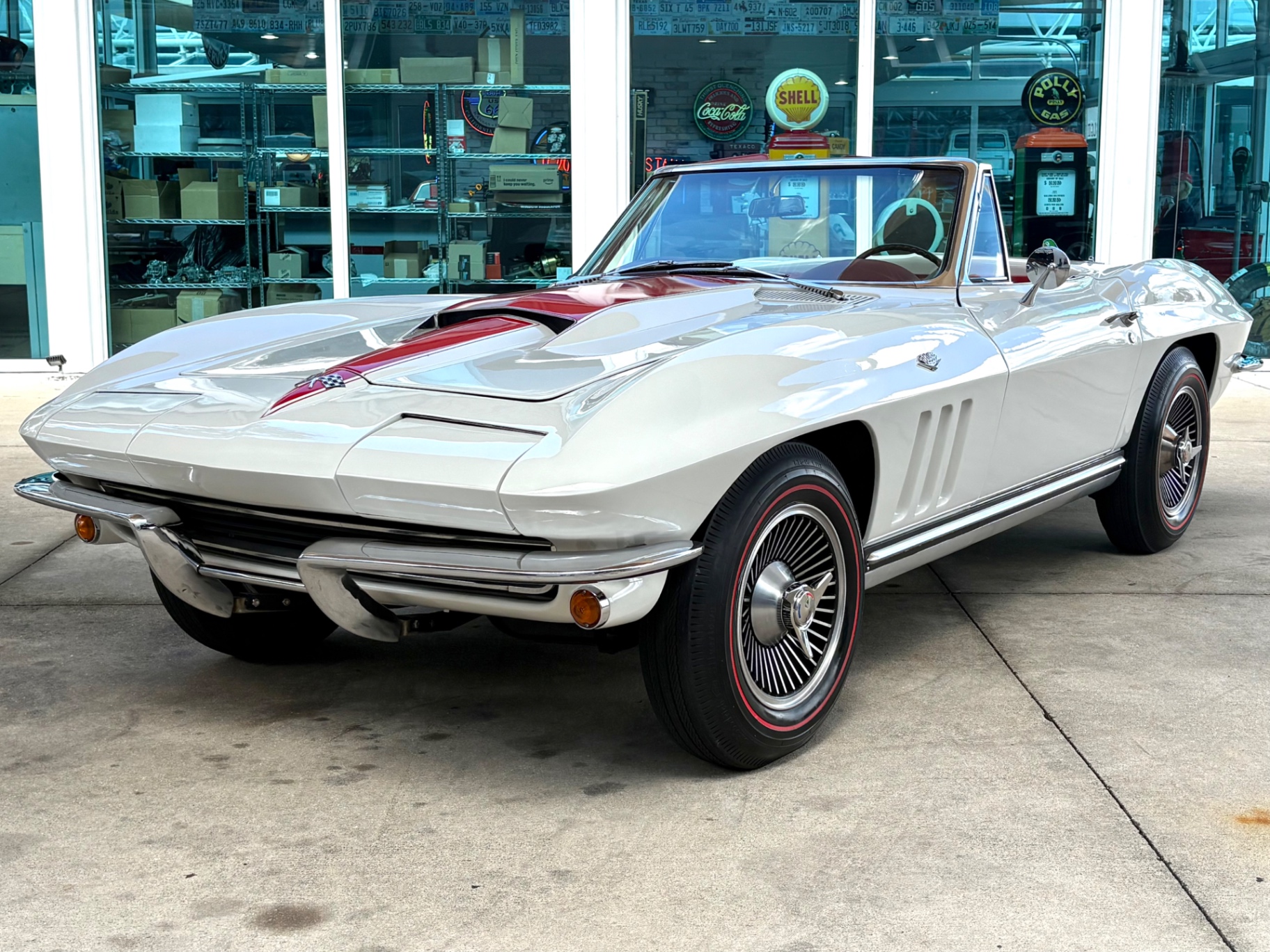
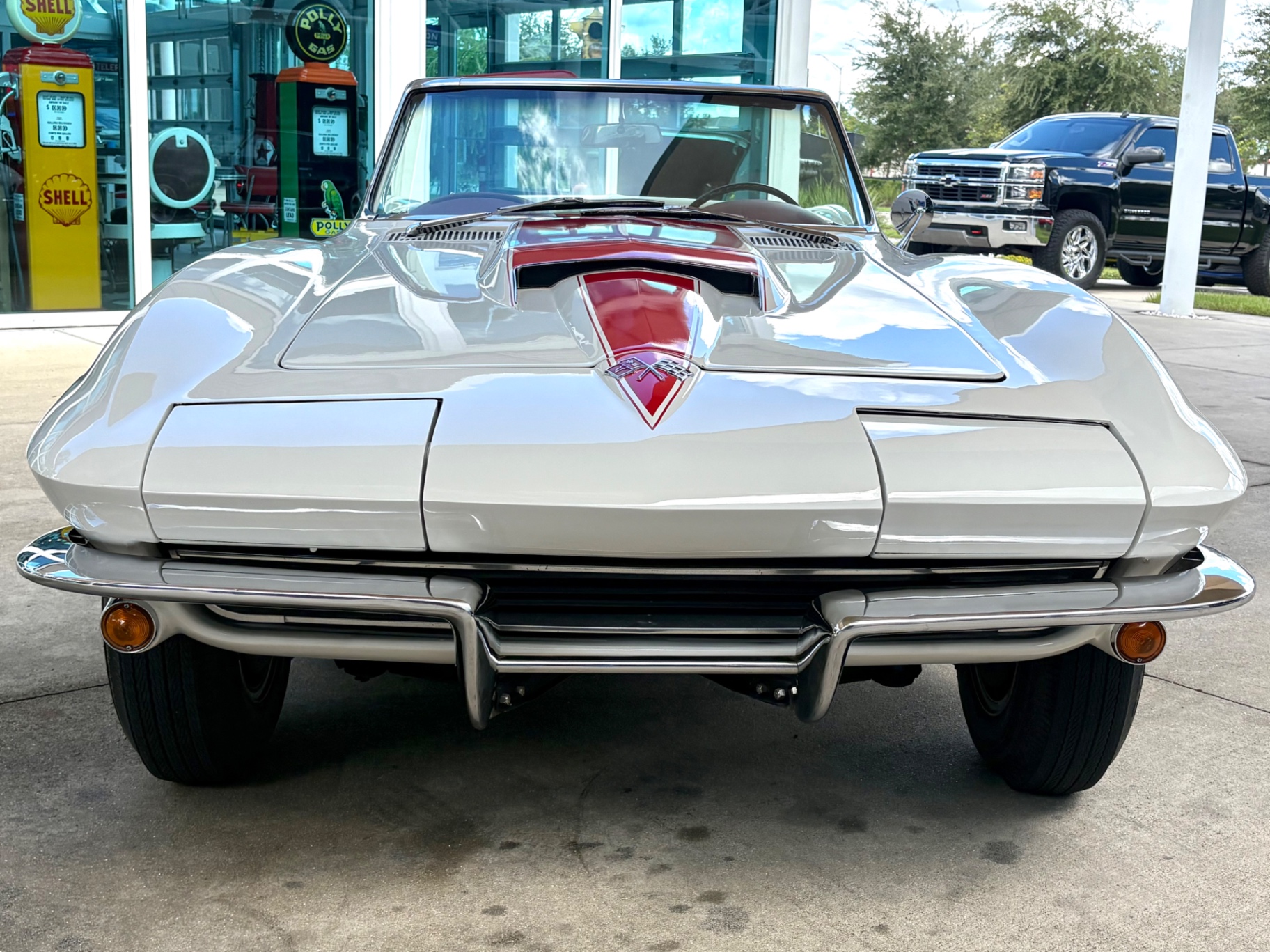
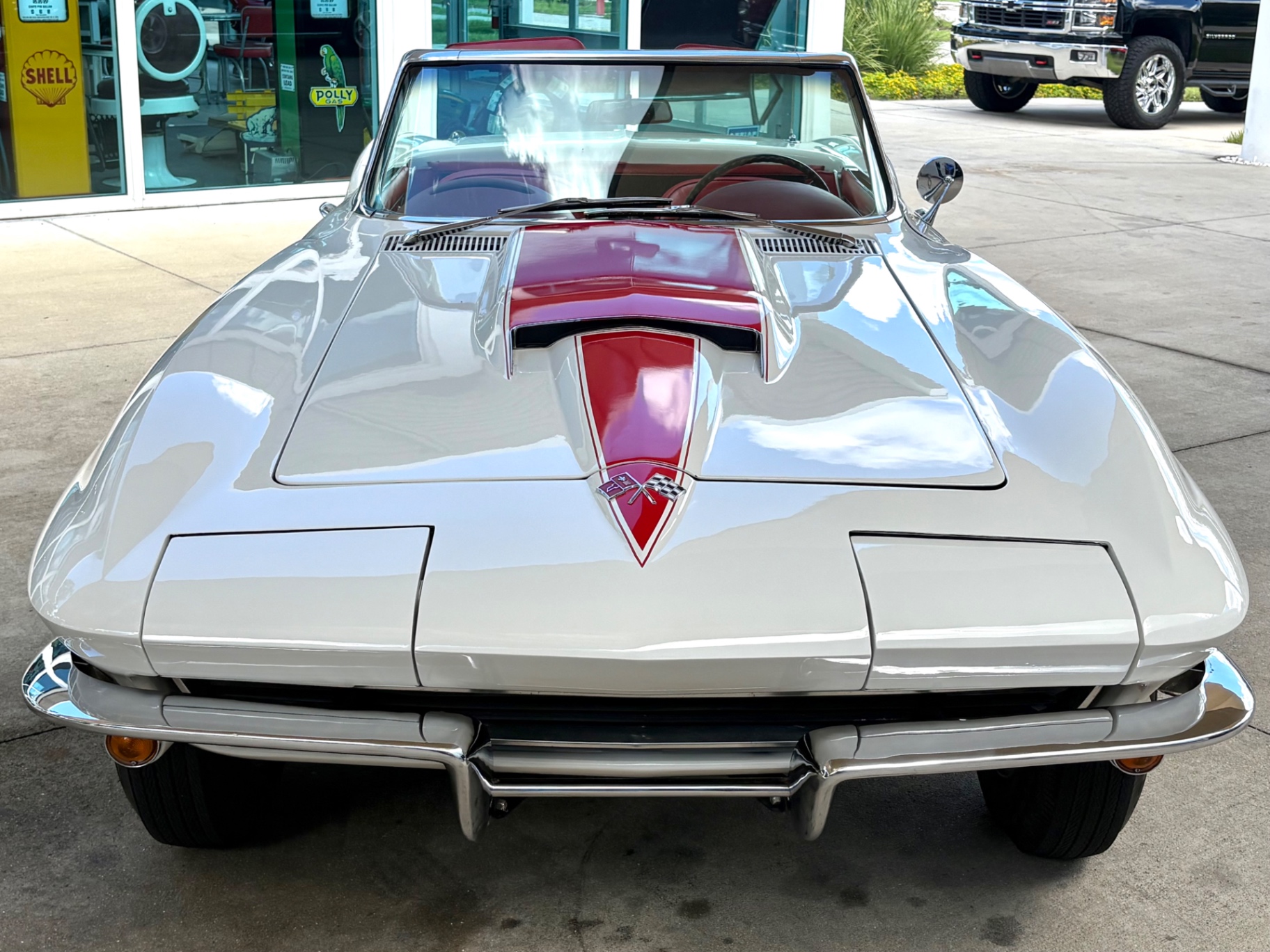
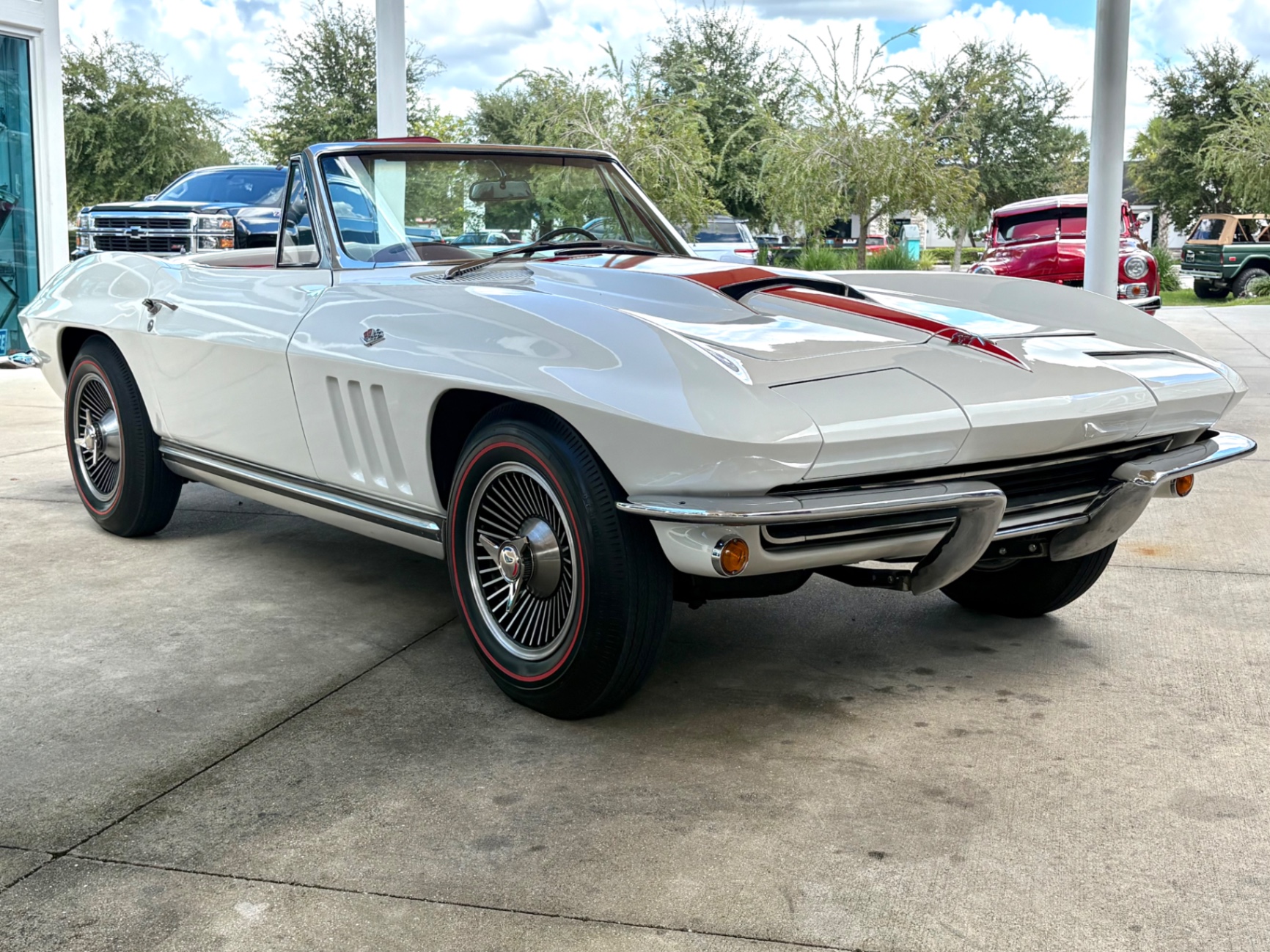
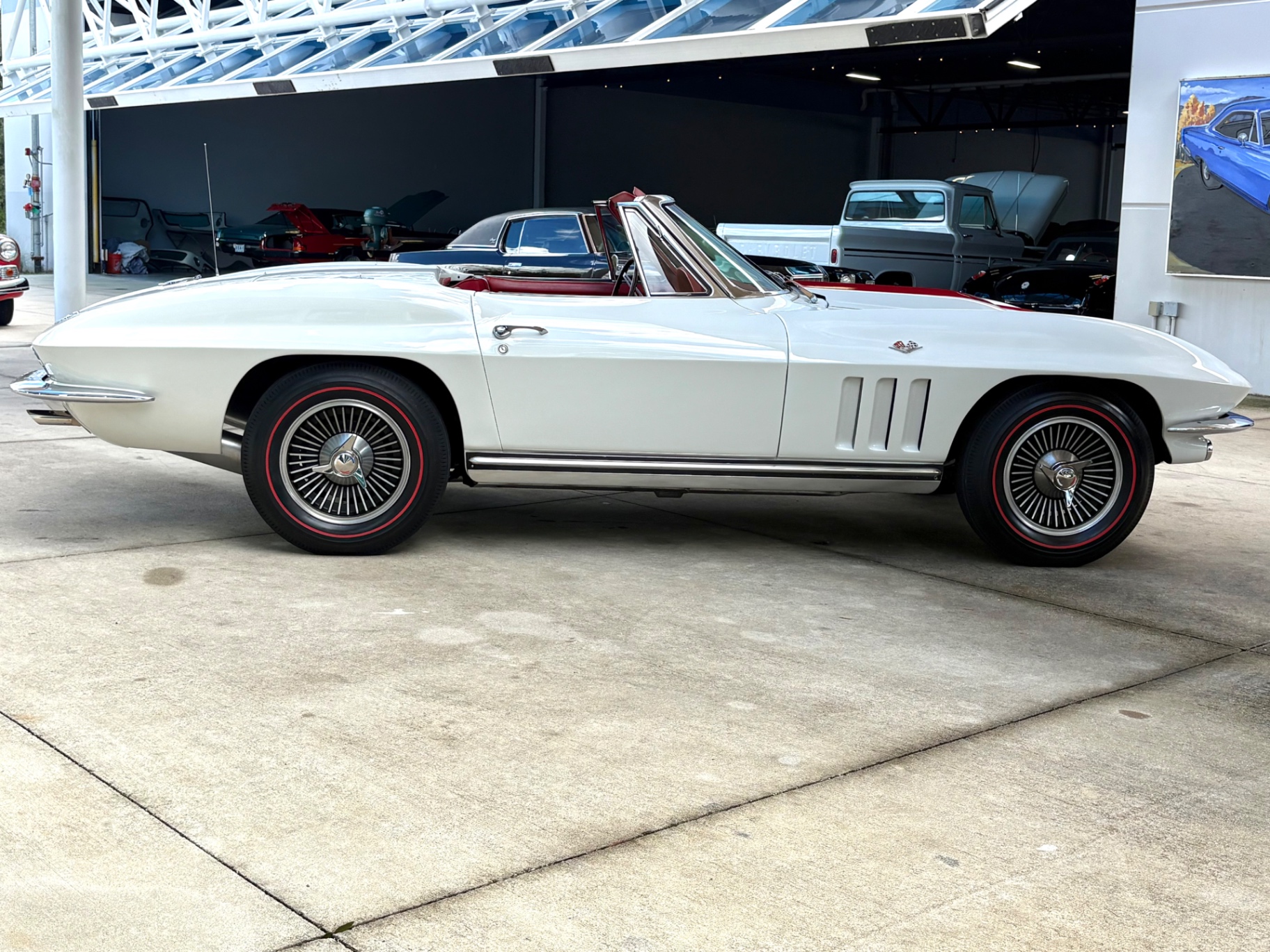
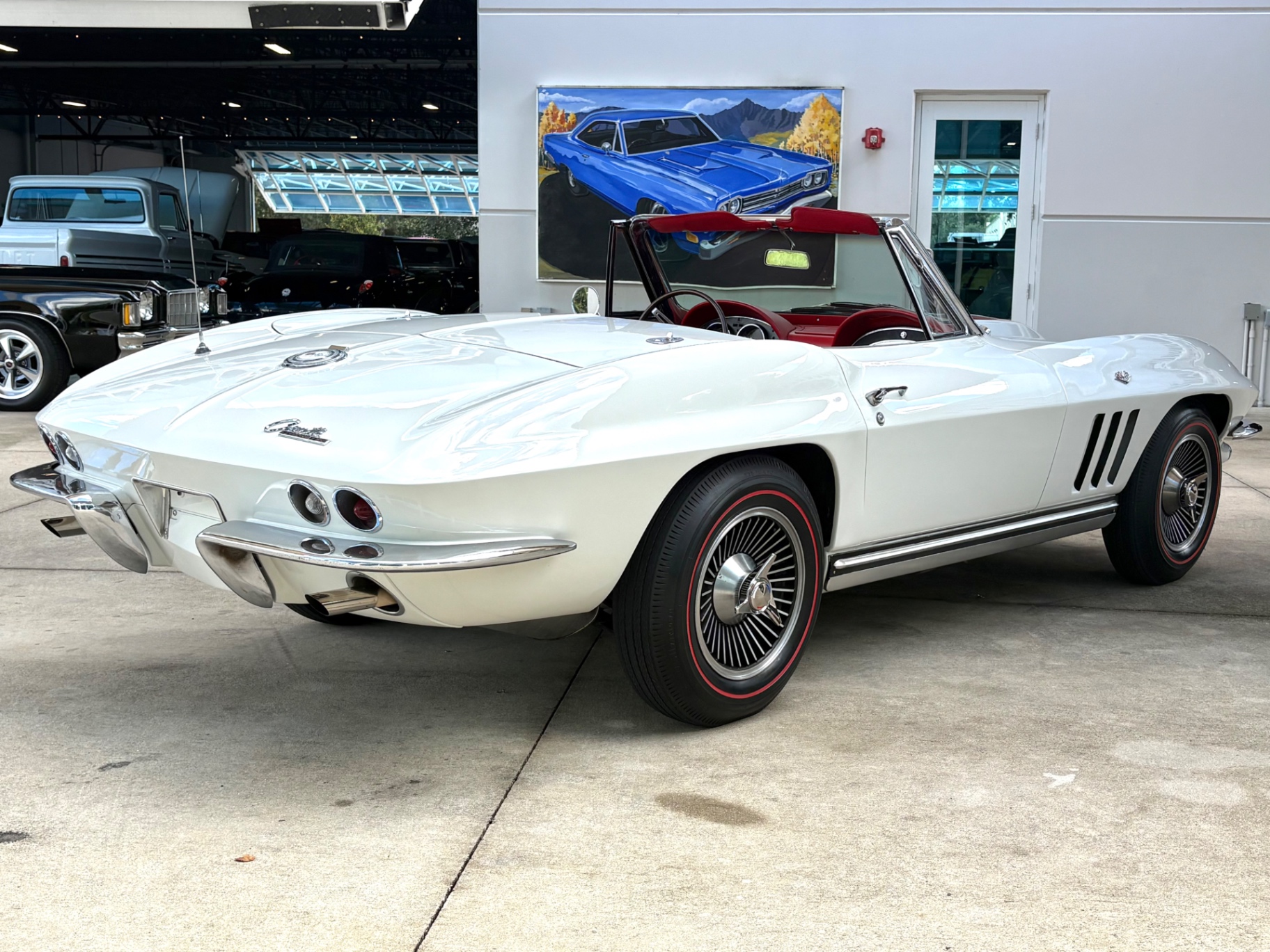
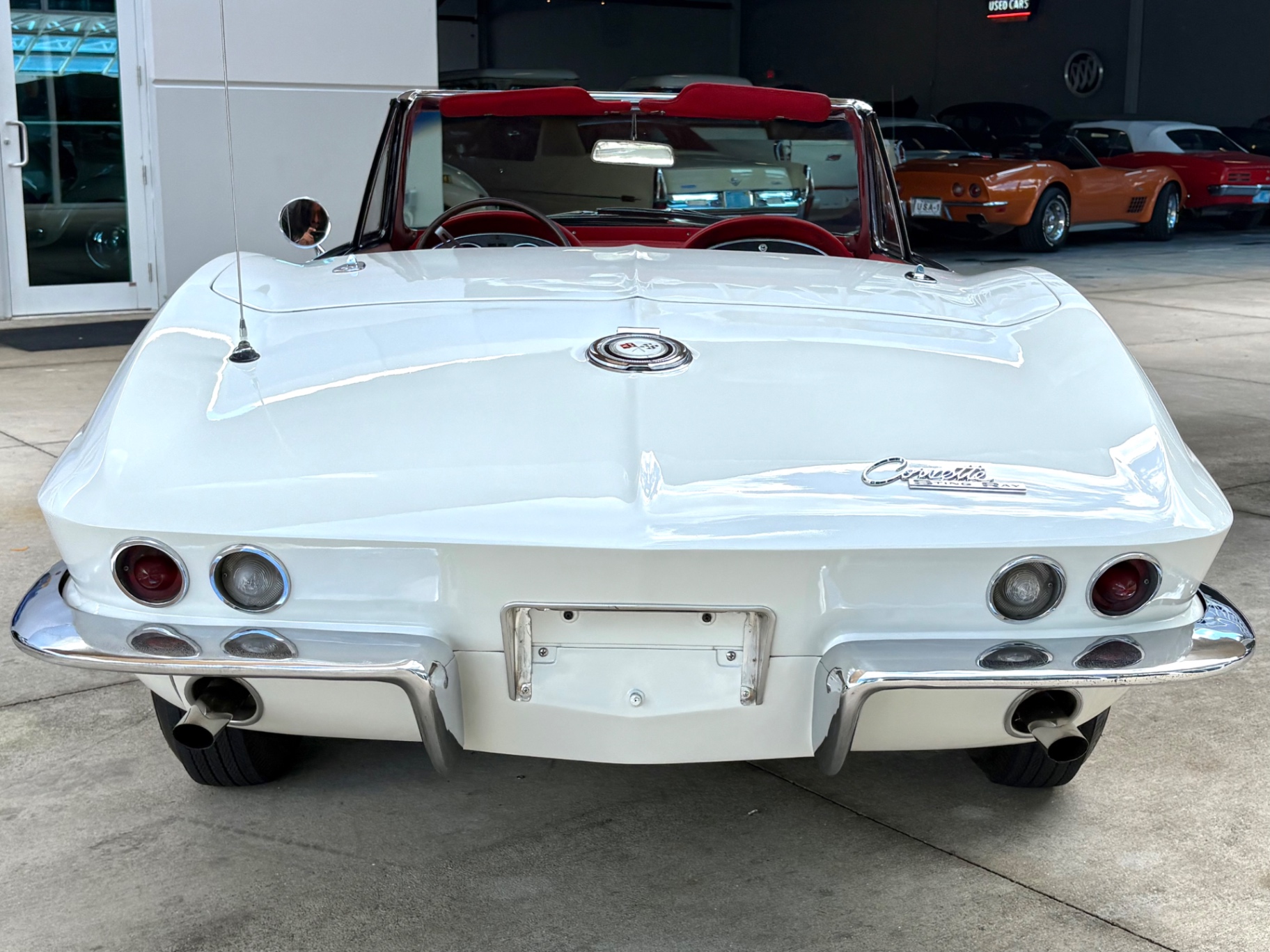
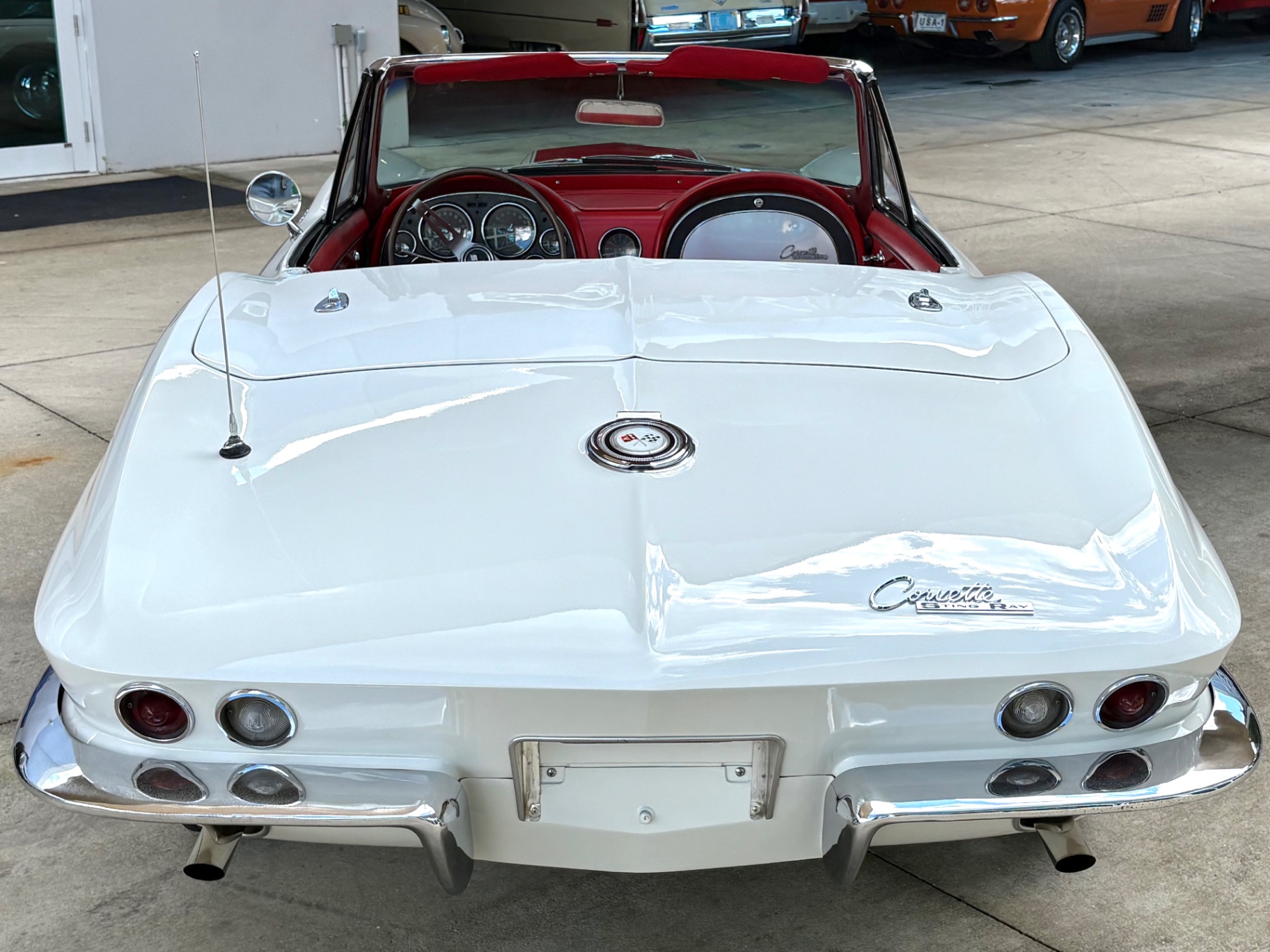
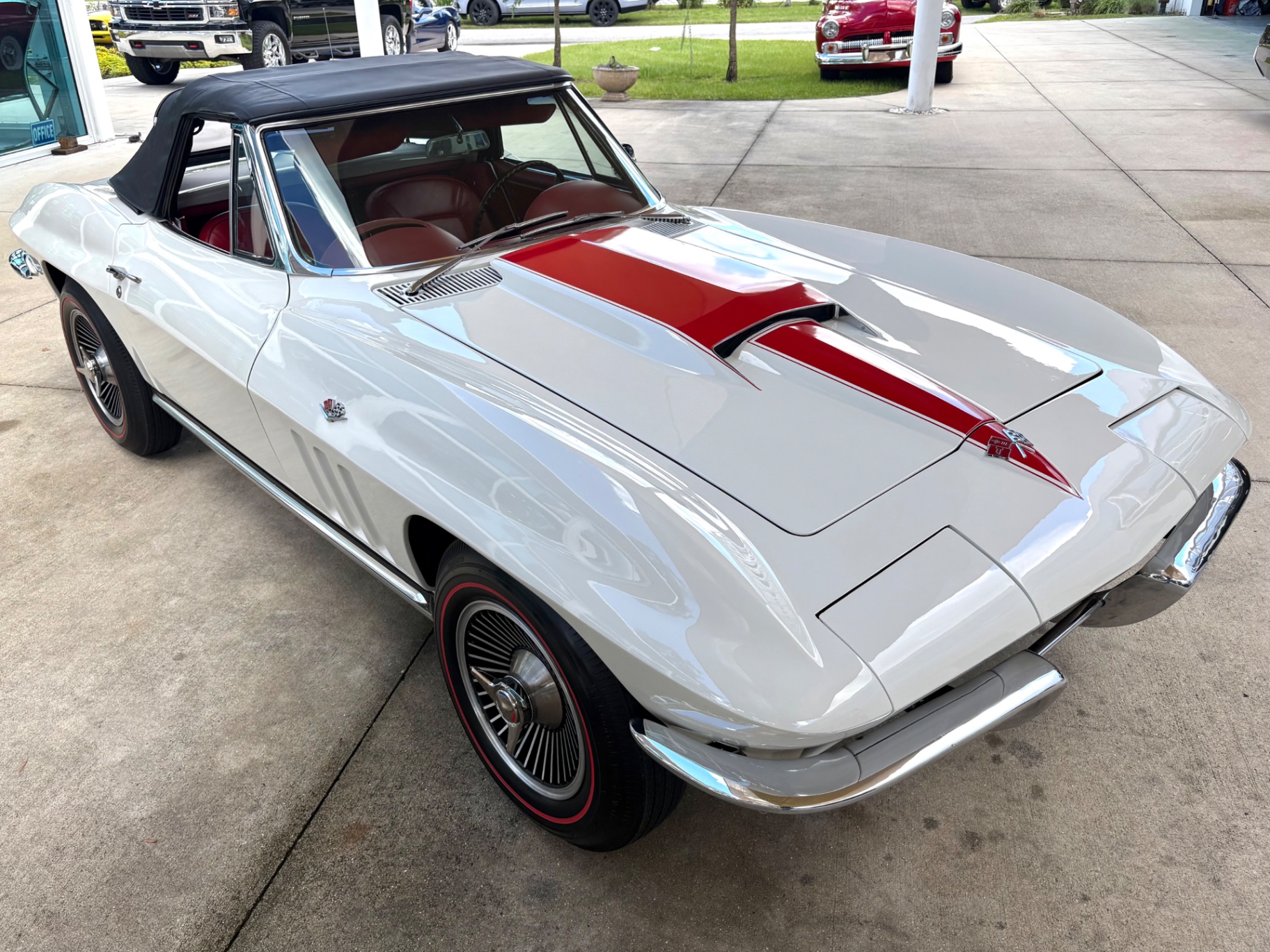
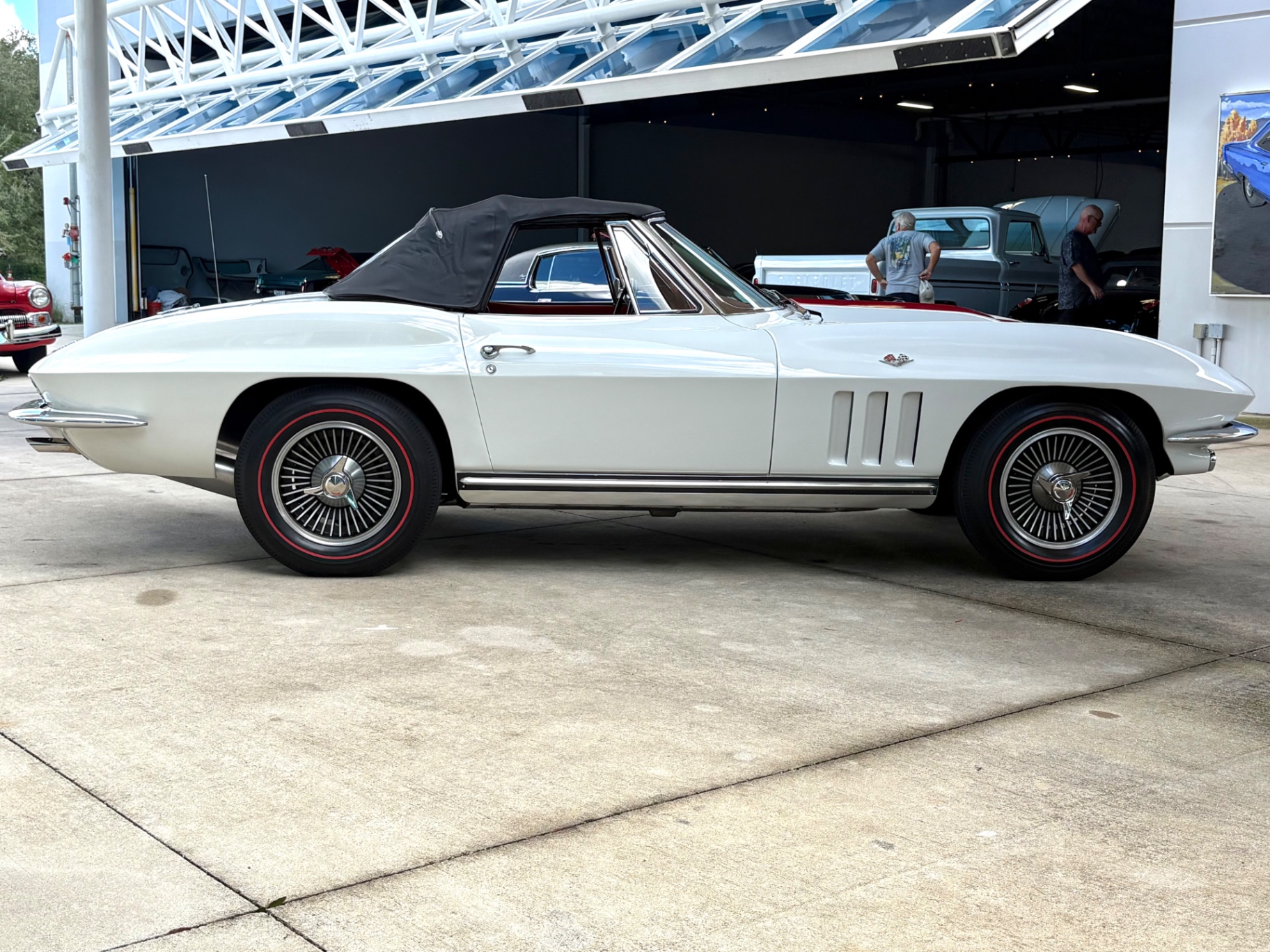
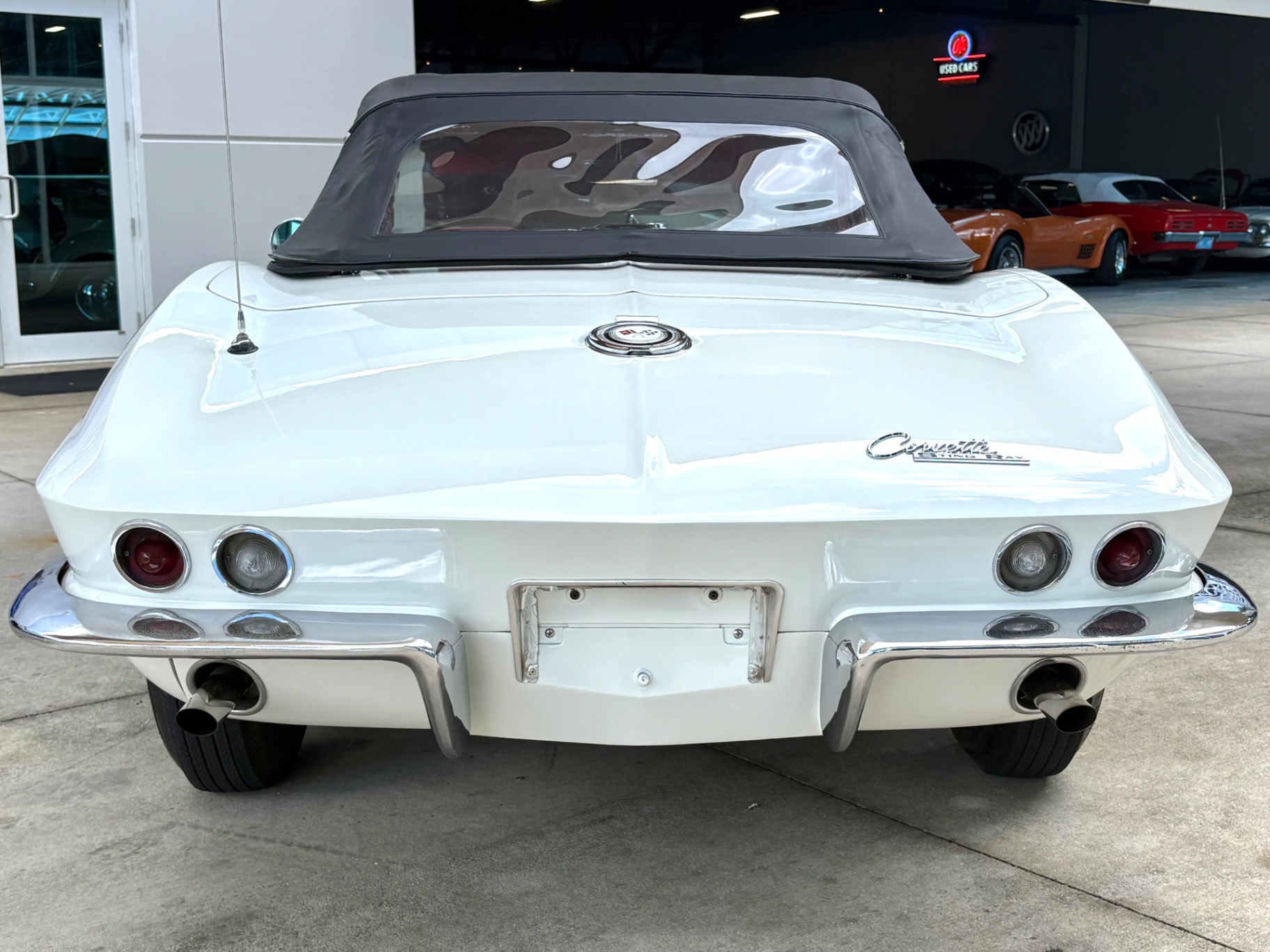
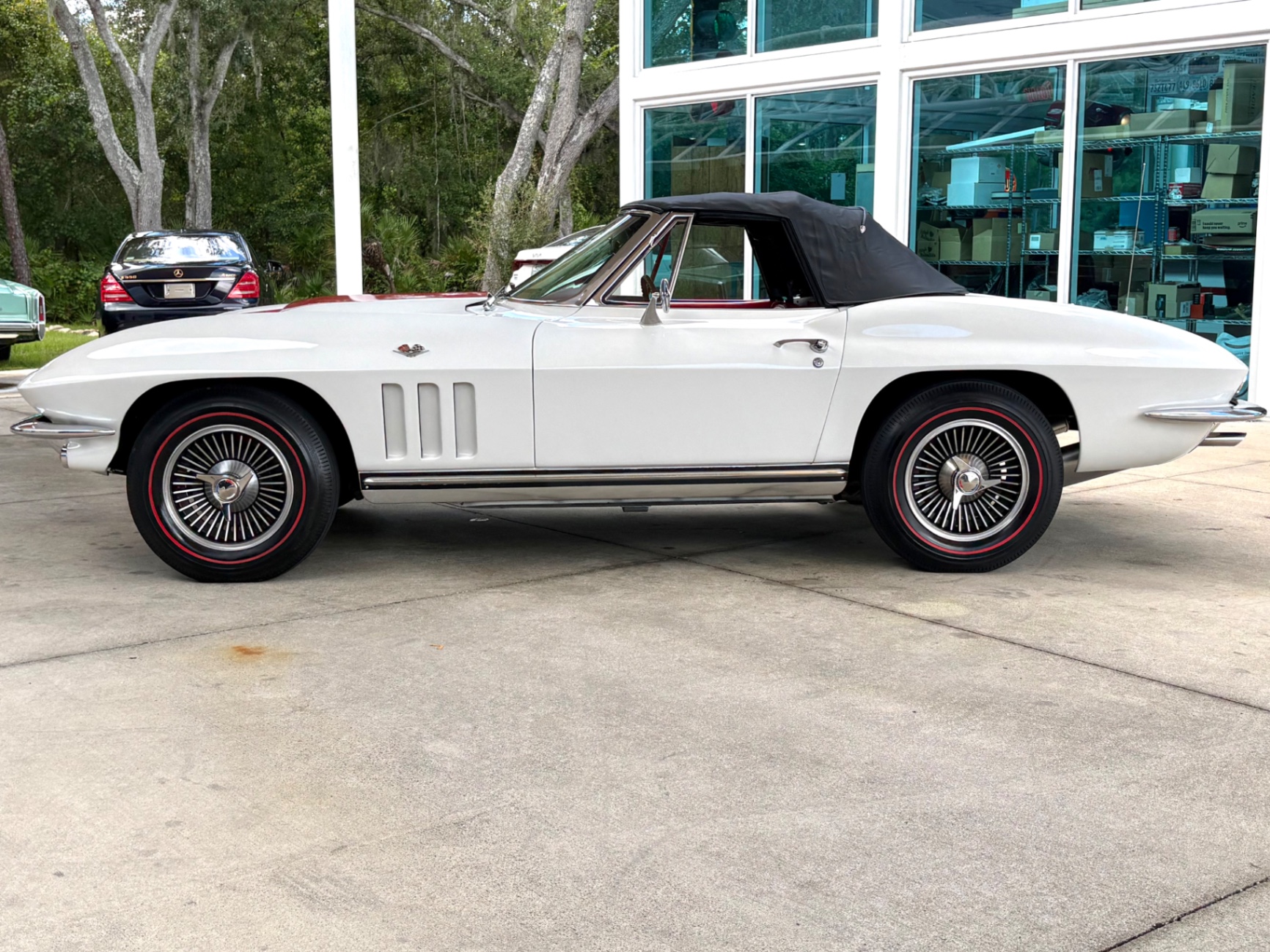
1965 Chevrolet Corvette Sting Ray Convertible — 327/300hp, 4-Speed, Ermine White over Red
Why This Car Is Special
The 1965 Chevrolet Corvette Sting Ray is widely regarded as the high-water mark of the C2 generation, and for good reason. It was the first model year to offer four-wheel disc brakes as a factory option, and it arrived with a revised hood and cleaner styling that eliminated the previous years' controversial hood vents. The chassis carried over the fully independent rear suspension that had made the 1963 introduction so significant, but by 1965 Chevrolet had refined the package into something that felt more finished and capable. Total production for the 1965 model year was 23,562 units, split between coupes and convertibles. Of those, 15,376 were convertibles — making the roadster the more common body style, though well-optioned examples in strong color combinations have consistently attracted serious collector interest.
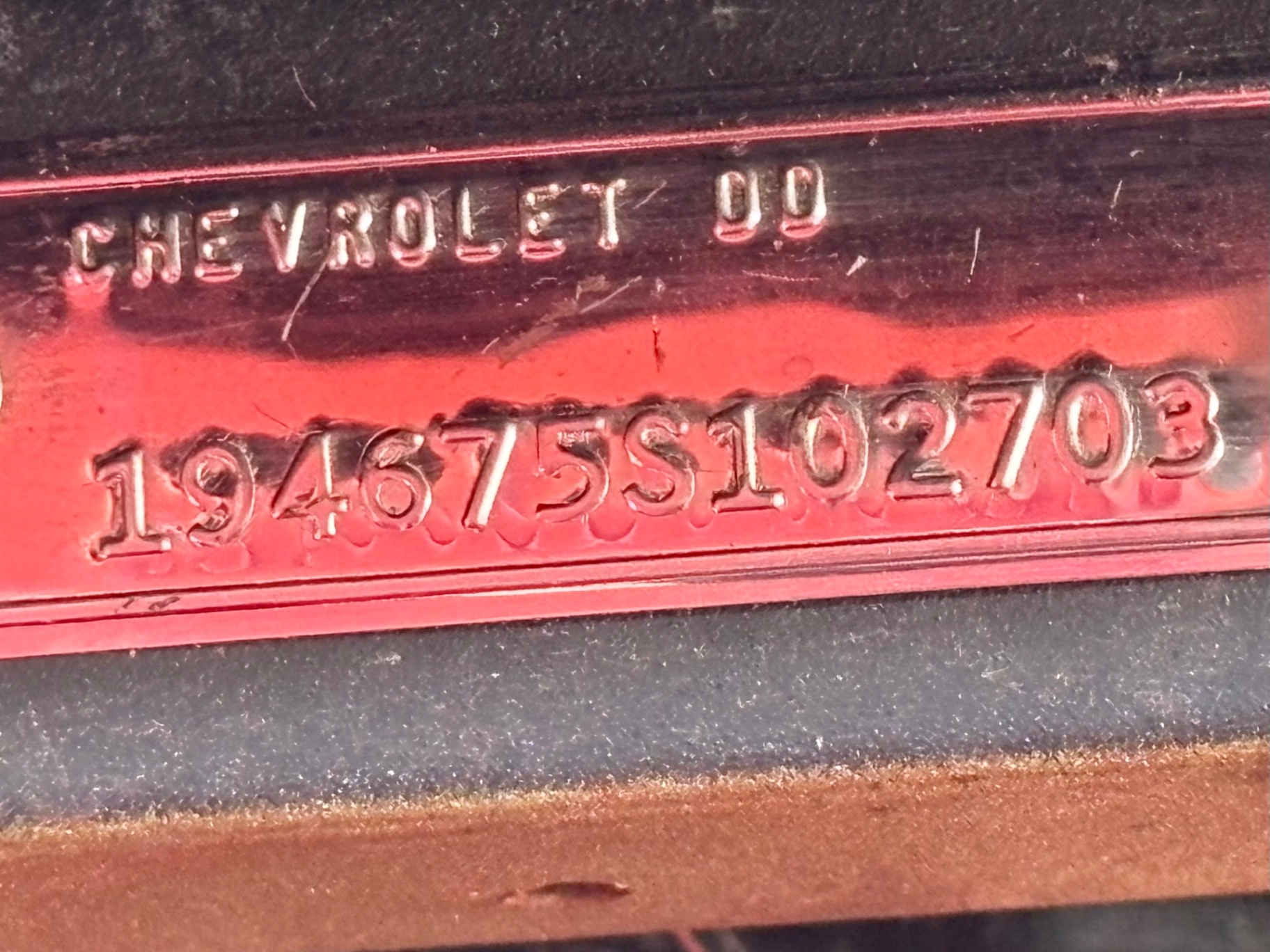
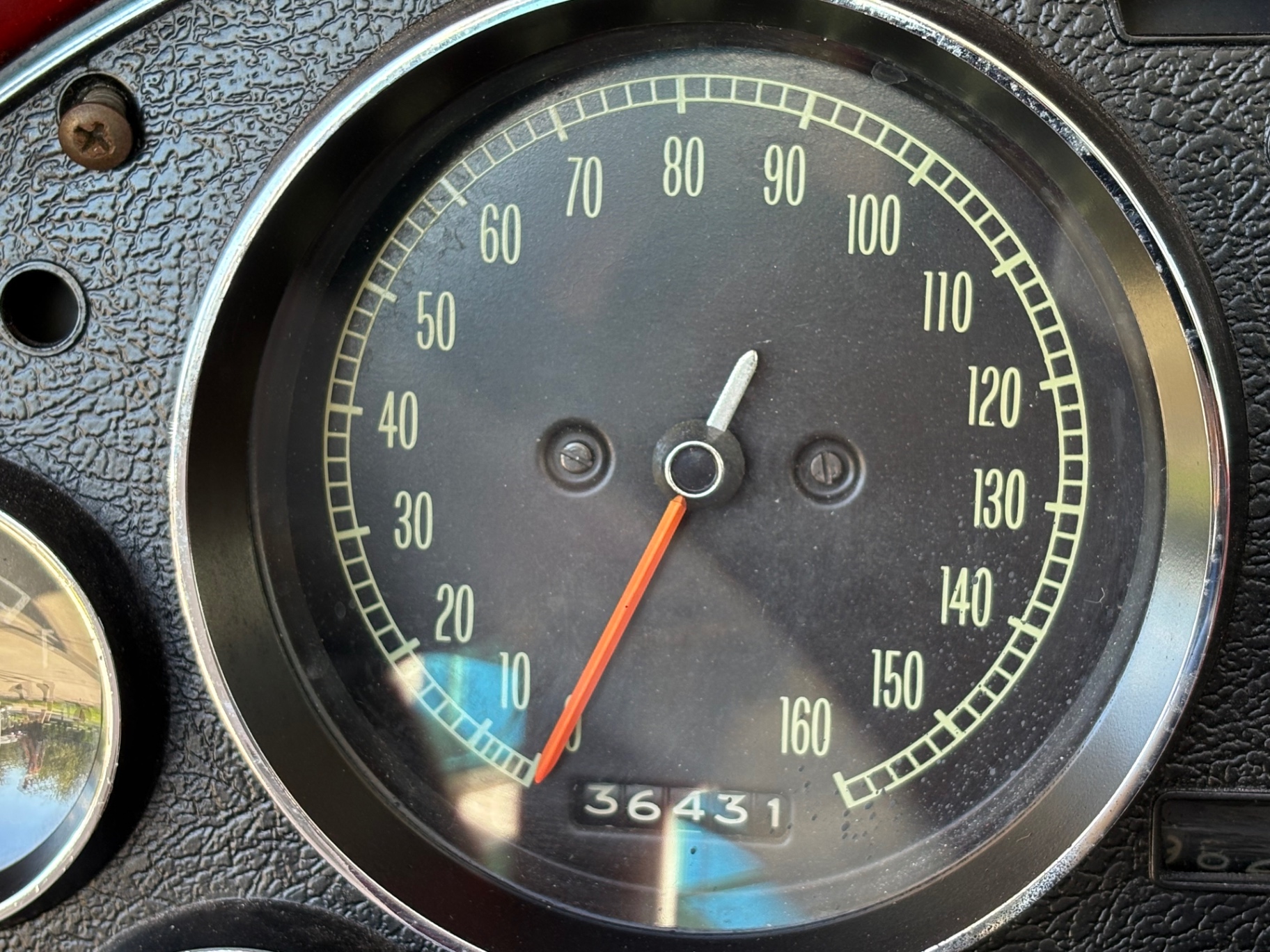
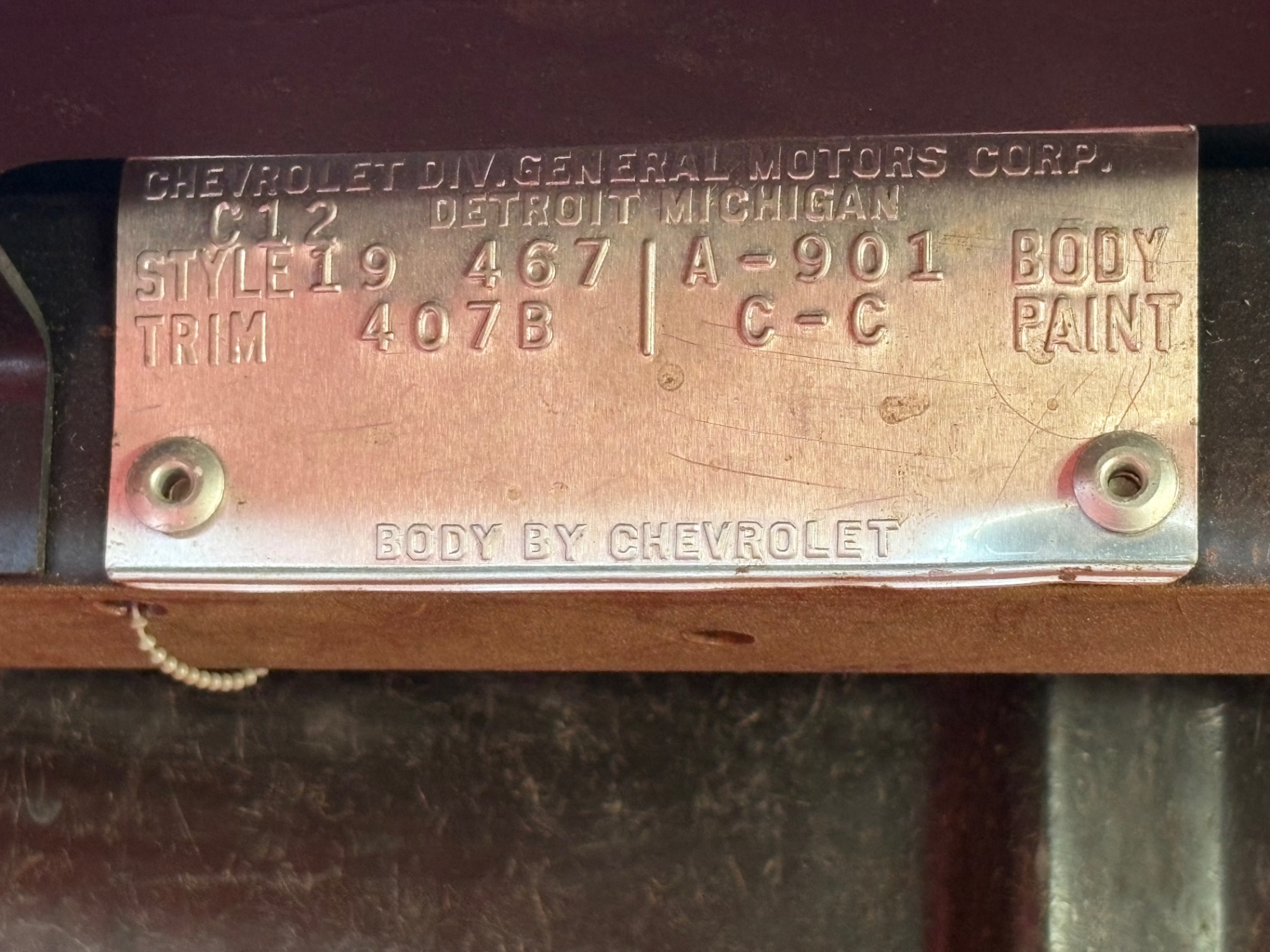
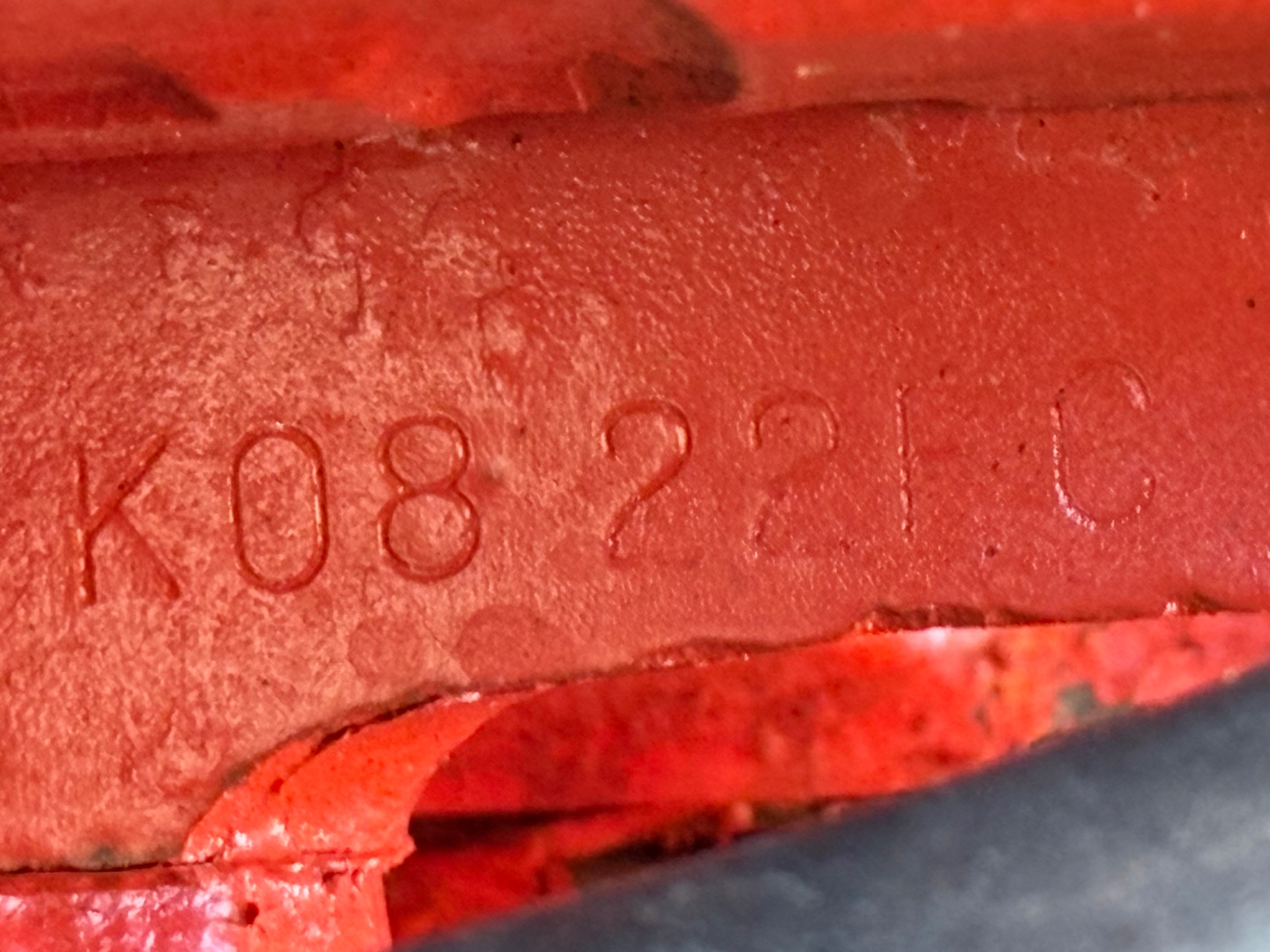
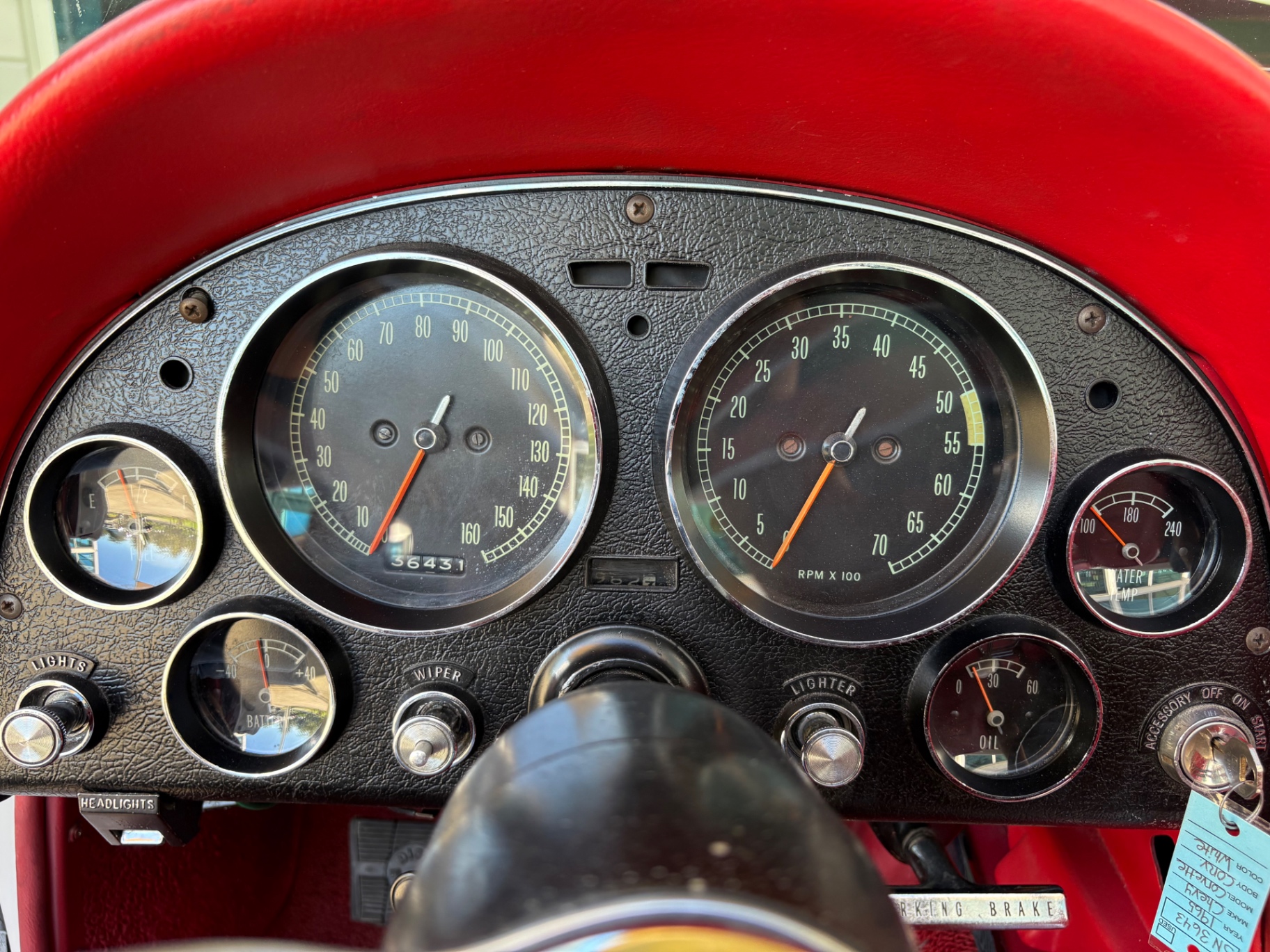
The VIN on this car decodes to a 1965 Corvette convertible built at the St. Louis assembly plant, carrying the 327 cubic inch small block. The engine suffix code designation L75 identifies this as the 300-horsepower four-barrel version of the 327 — a strong, streetable engine that was among the most popular configurations Chevrolet offered that year. It is not the base 250-horsepower engine, and it is not one of the high-compression racing variants that require premium fuel and careful tuning to enjoy on the street. The L75 hits a practical sweet spot: enough power to be genuinely entertaining, with the kind of temperament that makes everyday driving straightforward. The odometer shows 36,431 indicated miles, which is consistent with a car that has been cared for and used selectively rather than stored indefinitely.
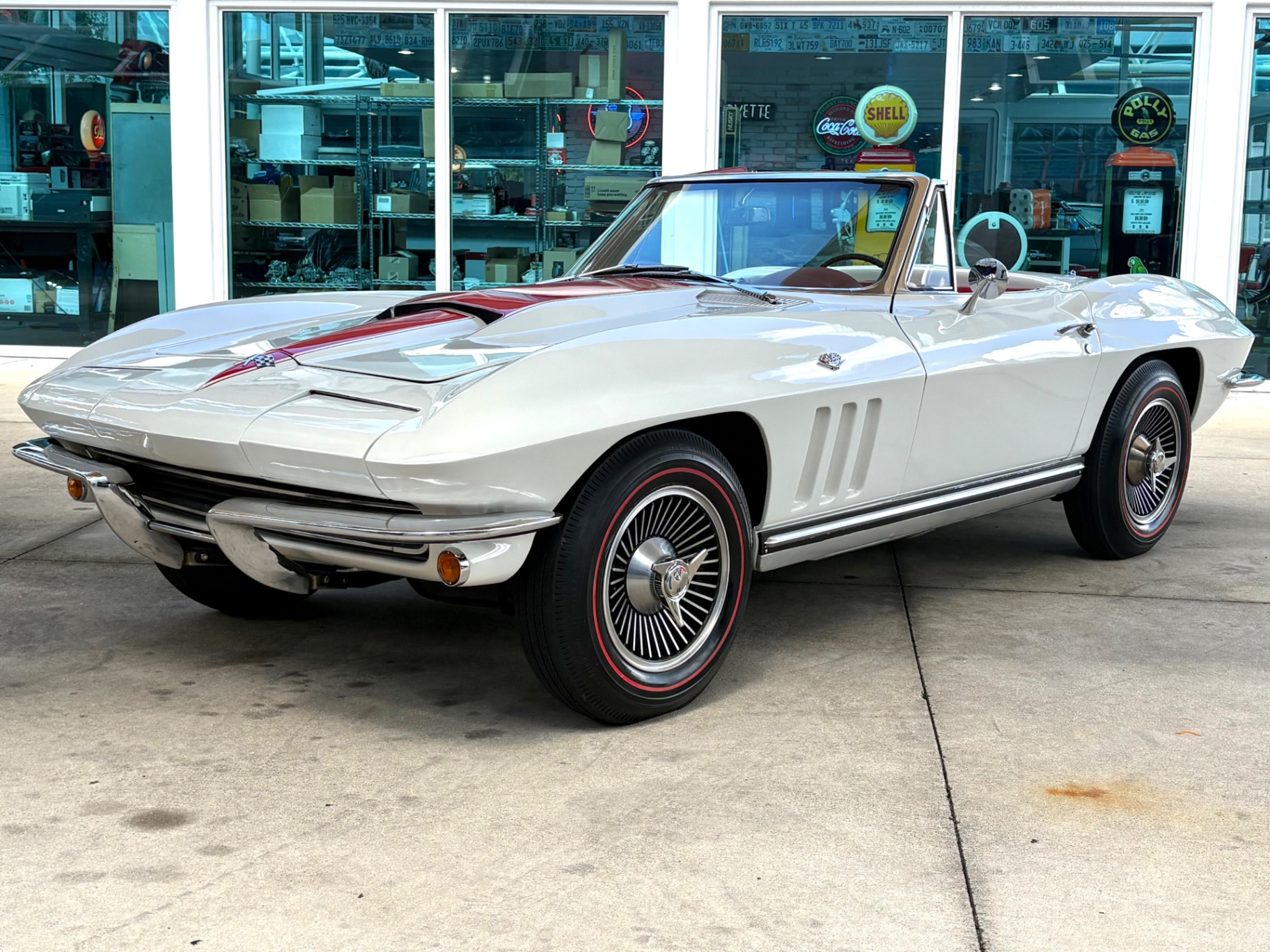
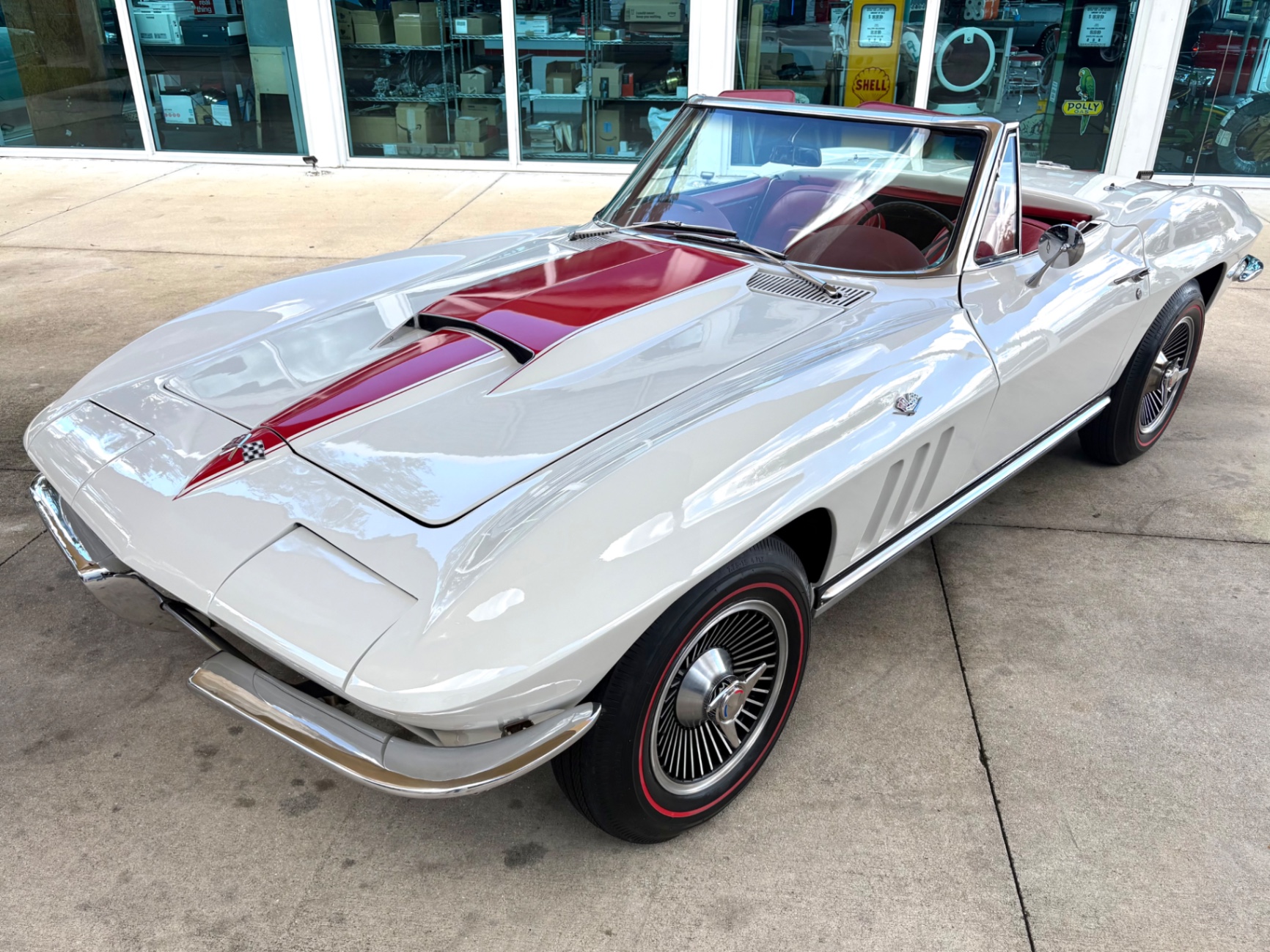
The color combination here — Ermine White over a full red interior. White and red on a Sting Ray is a combination that photographs well and presents with a confidence that subtler combinations do not. A red hood stinger stripe adds the final punctuation mark up front.
Features List
- 327ci/300hp L75 Small Block V8
- 4-Speed Manual Transmission
- Stinger Hood
- Knockoff Wheels
- Corvette Aluminum Valve Covers
- Four-Barrel Carburetor
- Independent Rear Suspension
- Wire Spoke Wheels
- Red Line Tires
- Red Hood Stinger Stripe
- Concealed Headlights
- Fiberglass Body
- Black Soft Top Included
- Wood-Rimmed Steering Wheel
- Red Vinyl Interior
- Red Carpeting
- Bucket Seats
- Center Console
- Clock
- Tachometer
- Dual Exhaust
- Drum Brakes
- Chrome Bumpers
- AM Radio
Mechanical
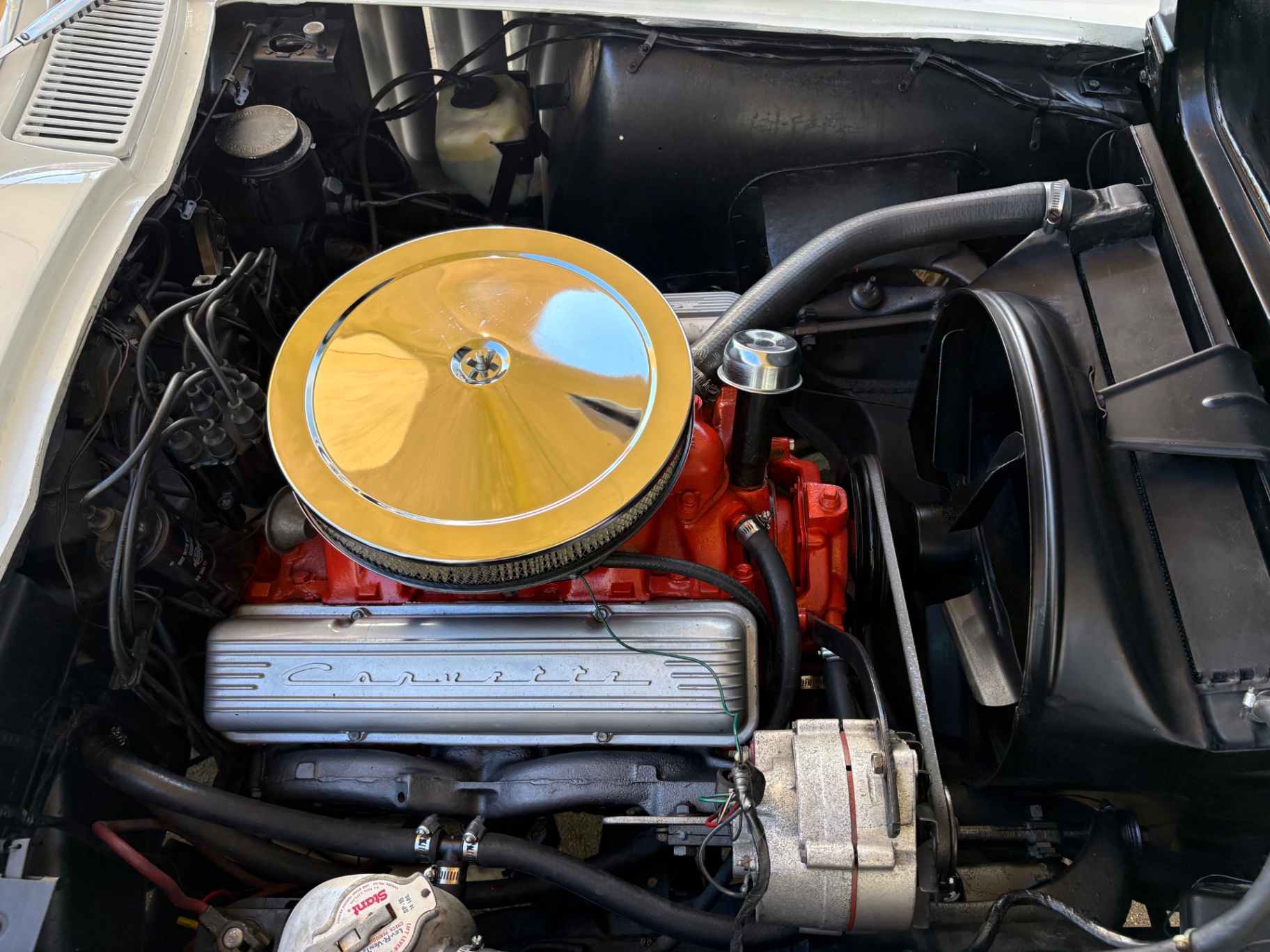
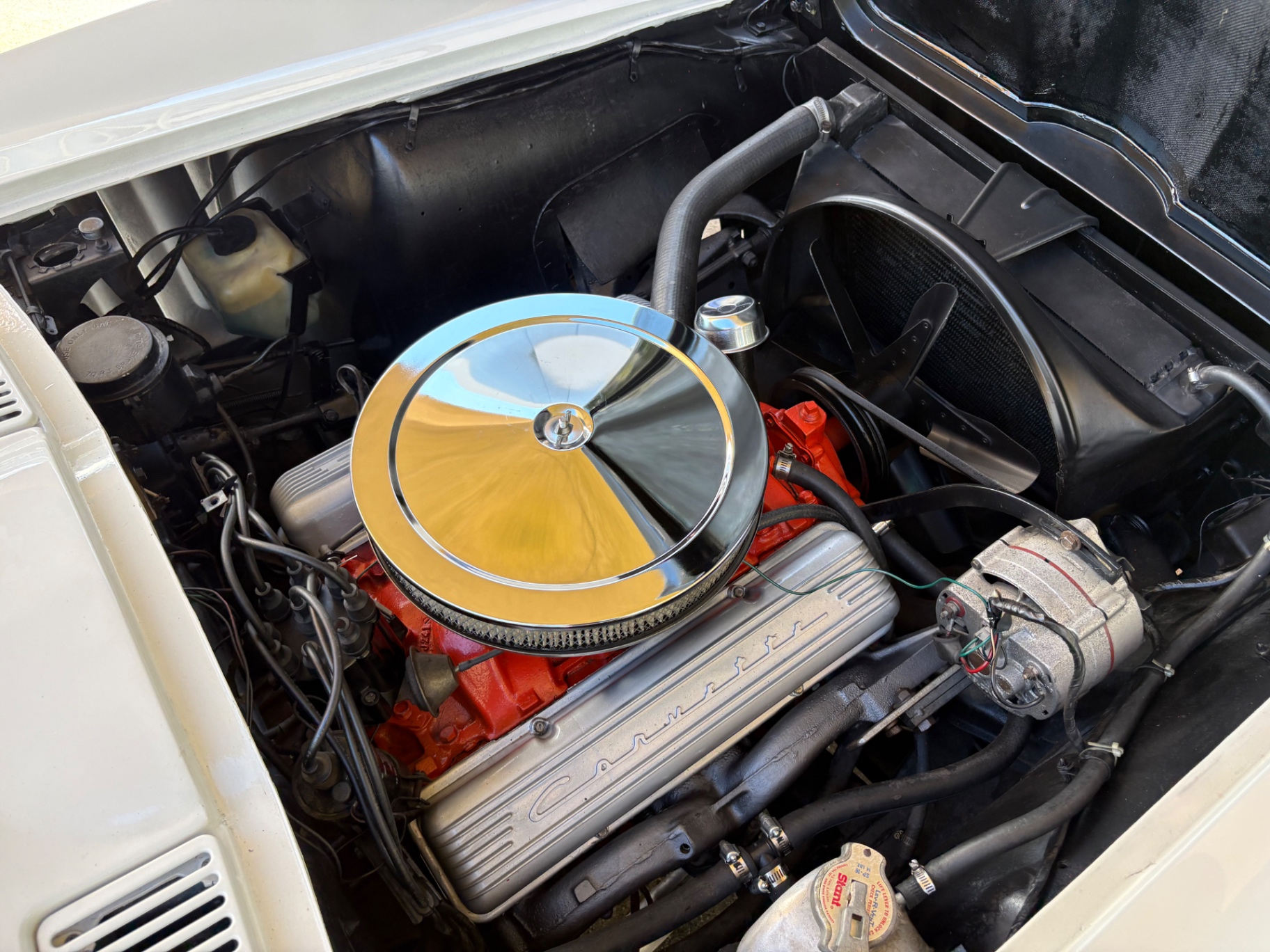
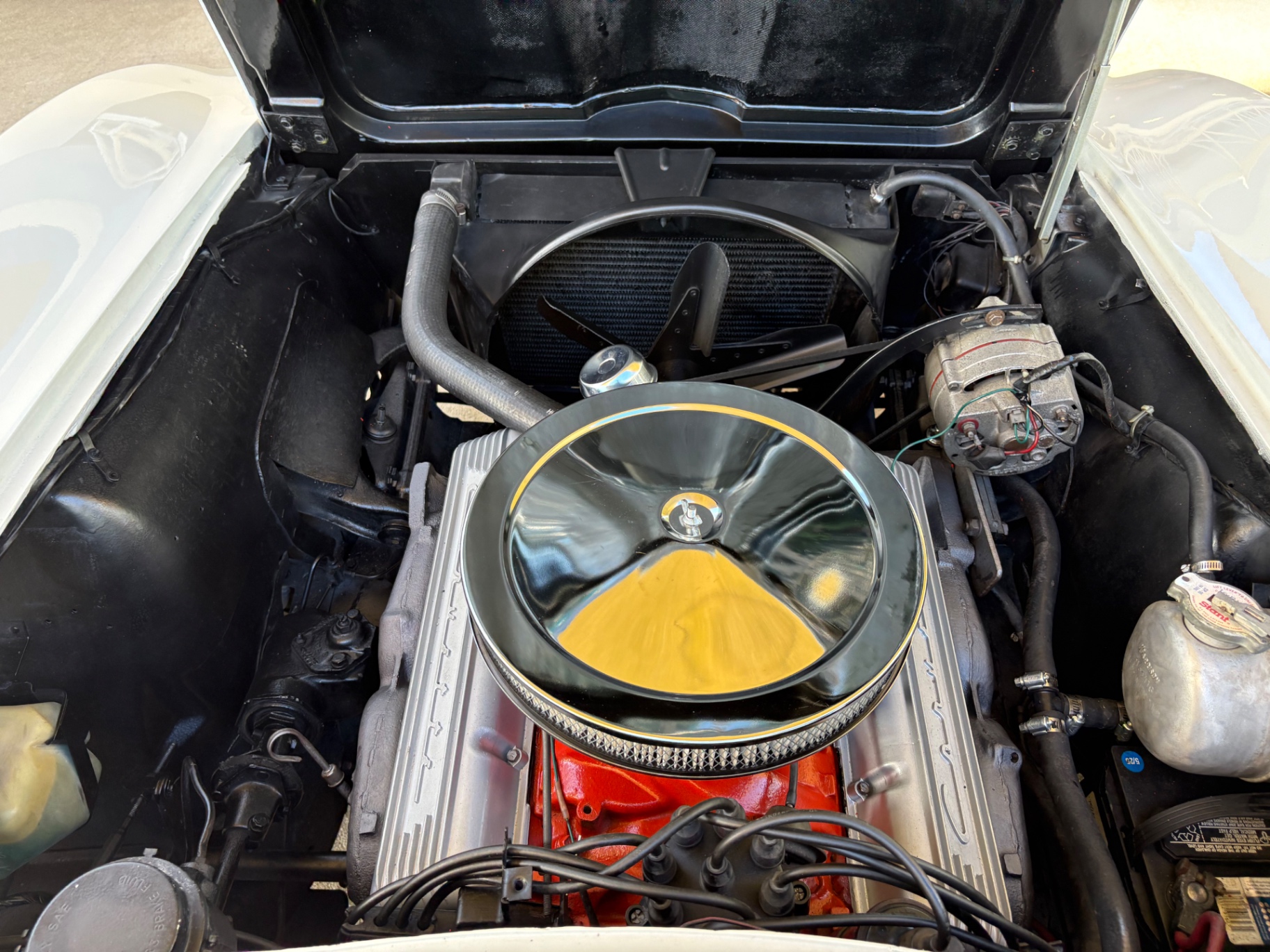
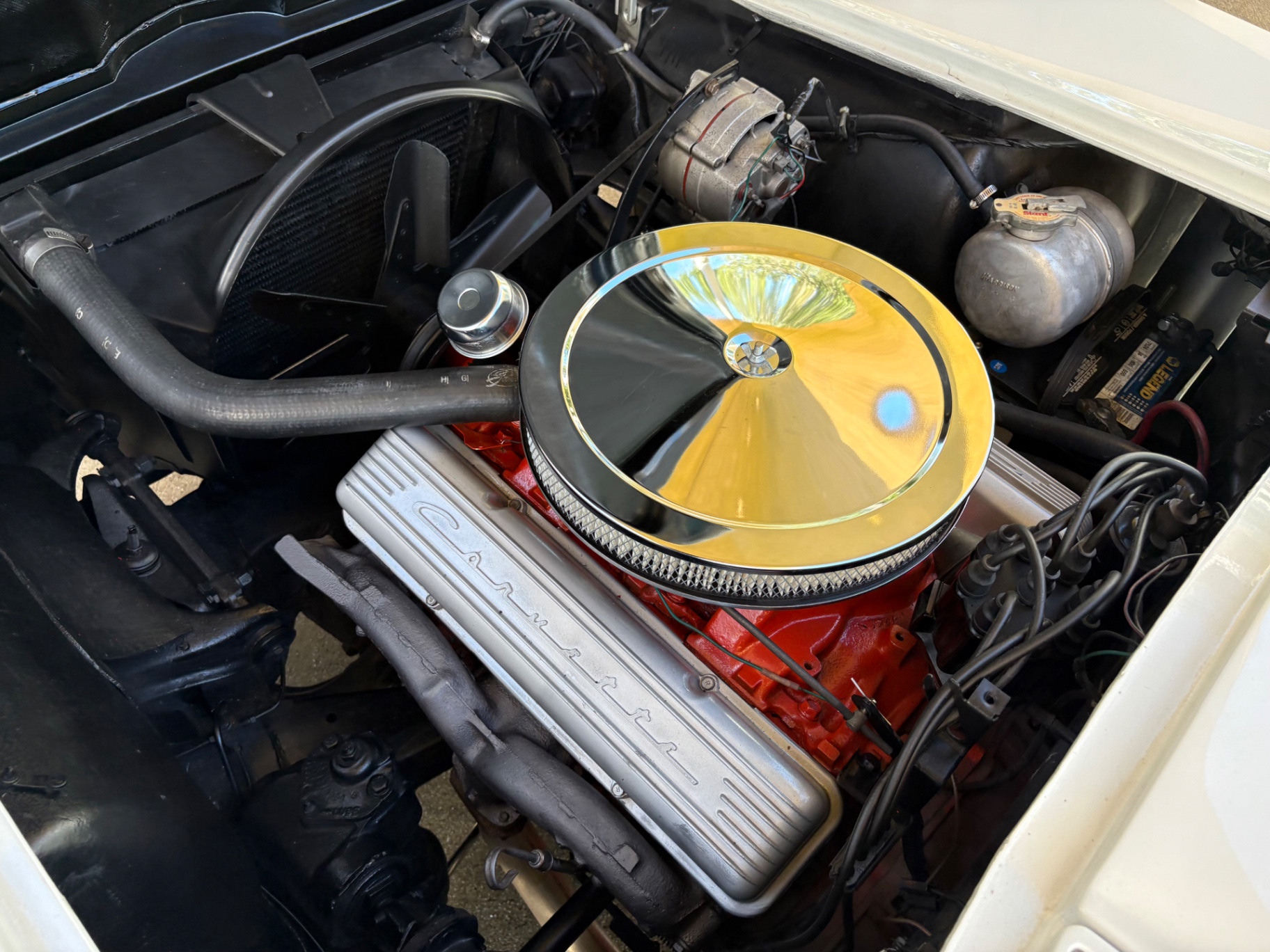
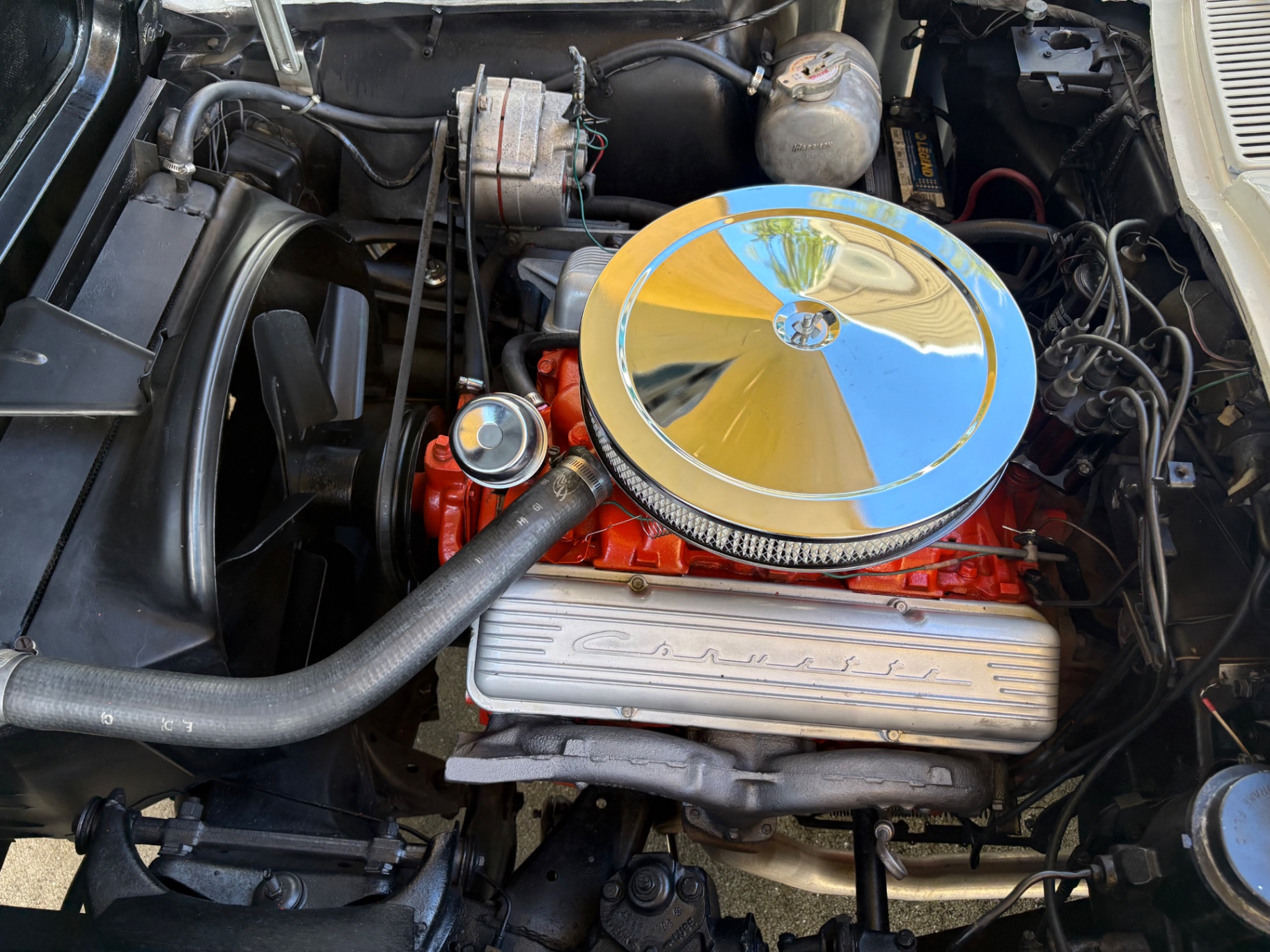
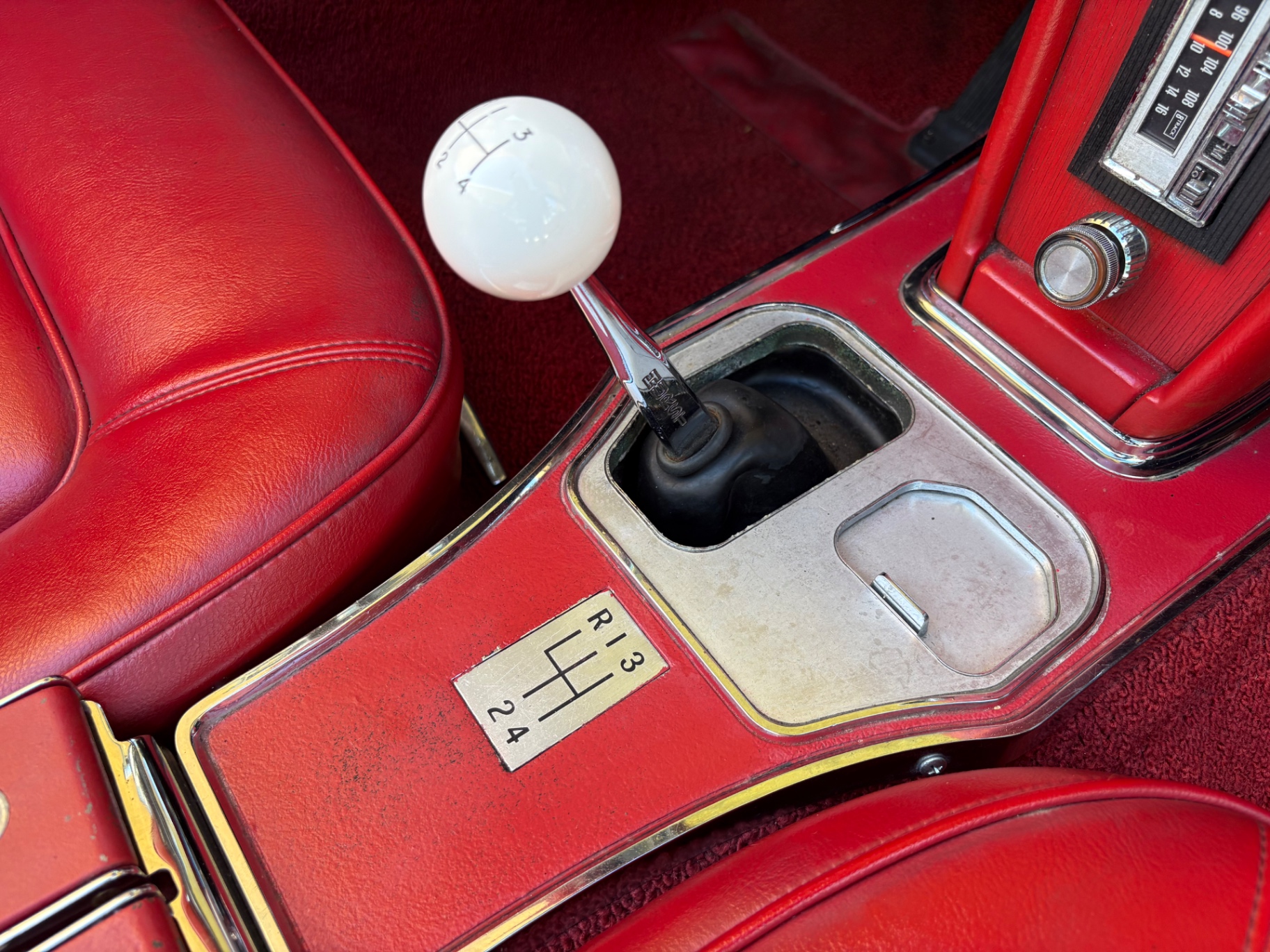
Under the hood sits the L75 327 cubic inch small block V8, rated at 300 horsepower from the factory. This engine is topped with a four-barrel carburetor and finished with the period-correct Corvette aluminum valve covers that are clearly visible in the engine bay photos — finned aluminum castings with the Corvette script, painted in the correct silver finish against the red block. The engine bay presents cleanly and the overall appearance is consistent with a well-maintained example rather than a freshly detailed show car. Power goes through a 4-speed manual transmission, which is the correct and desirable setup for this application. The shift pattern plate on the console shows the standard H-pattern layout.
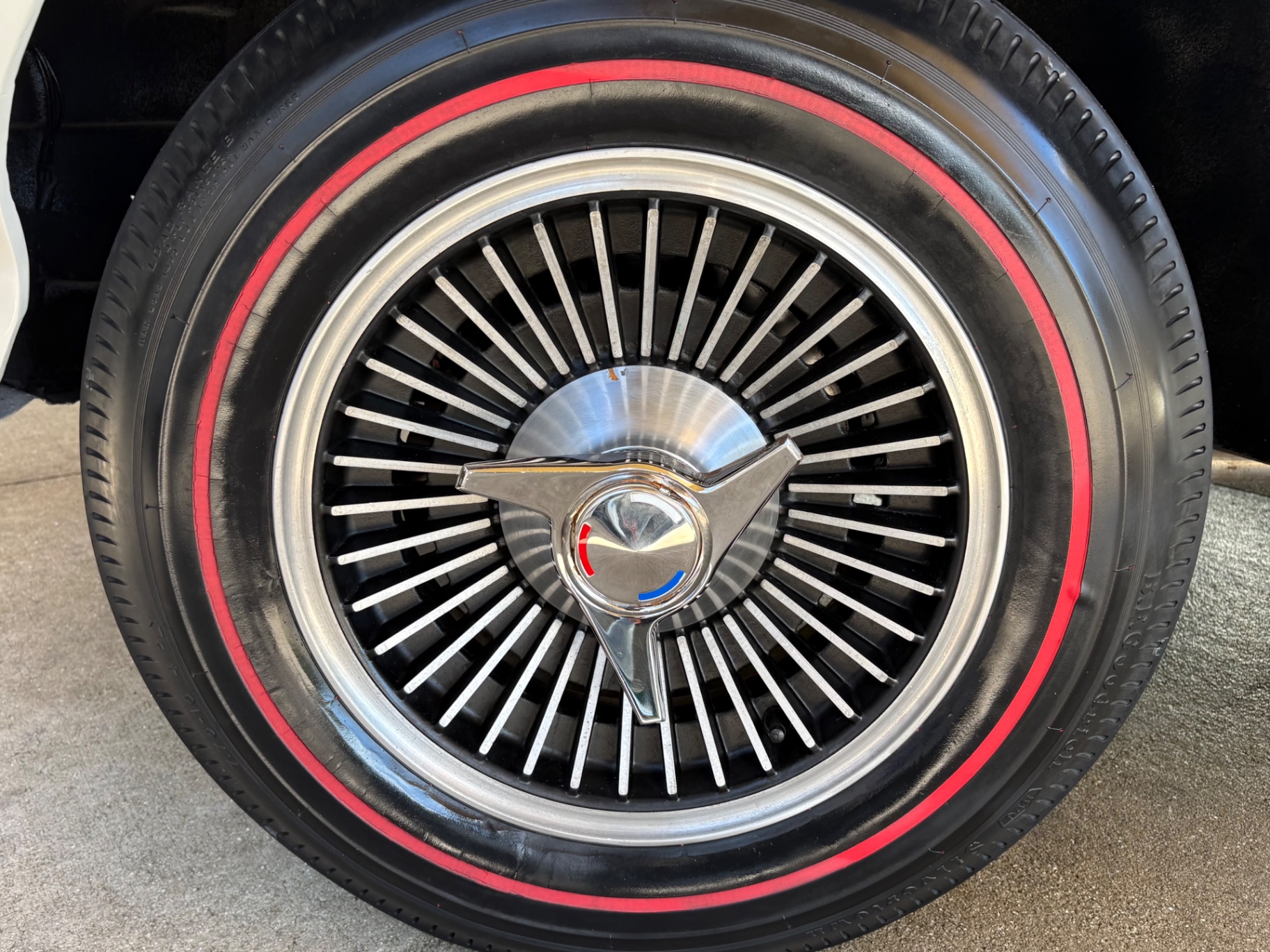
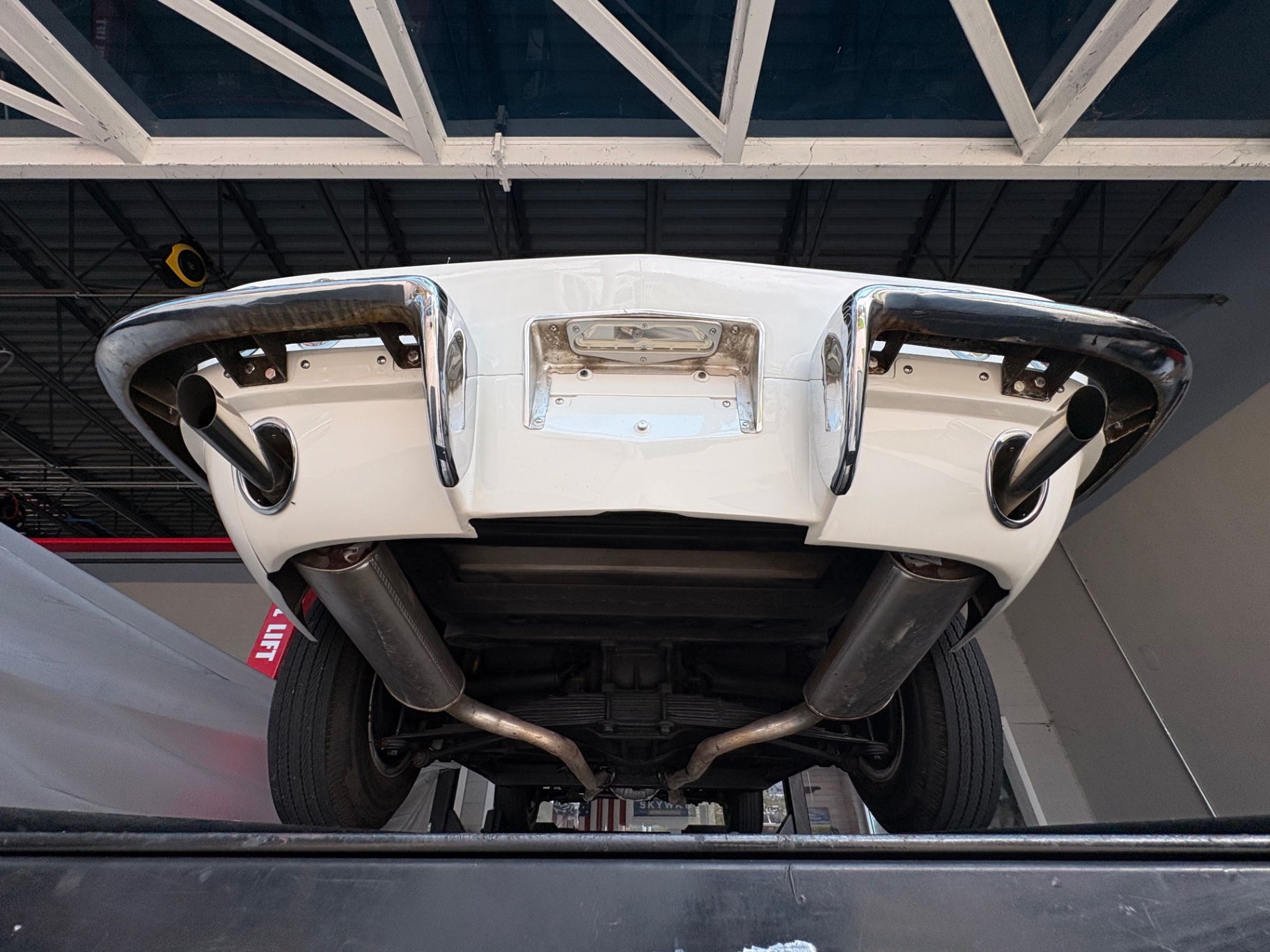
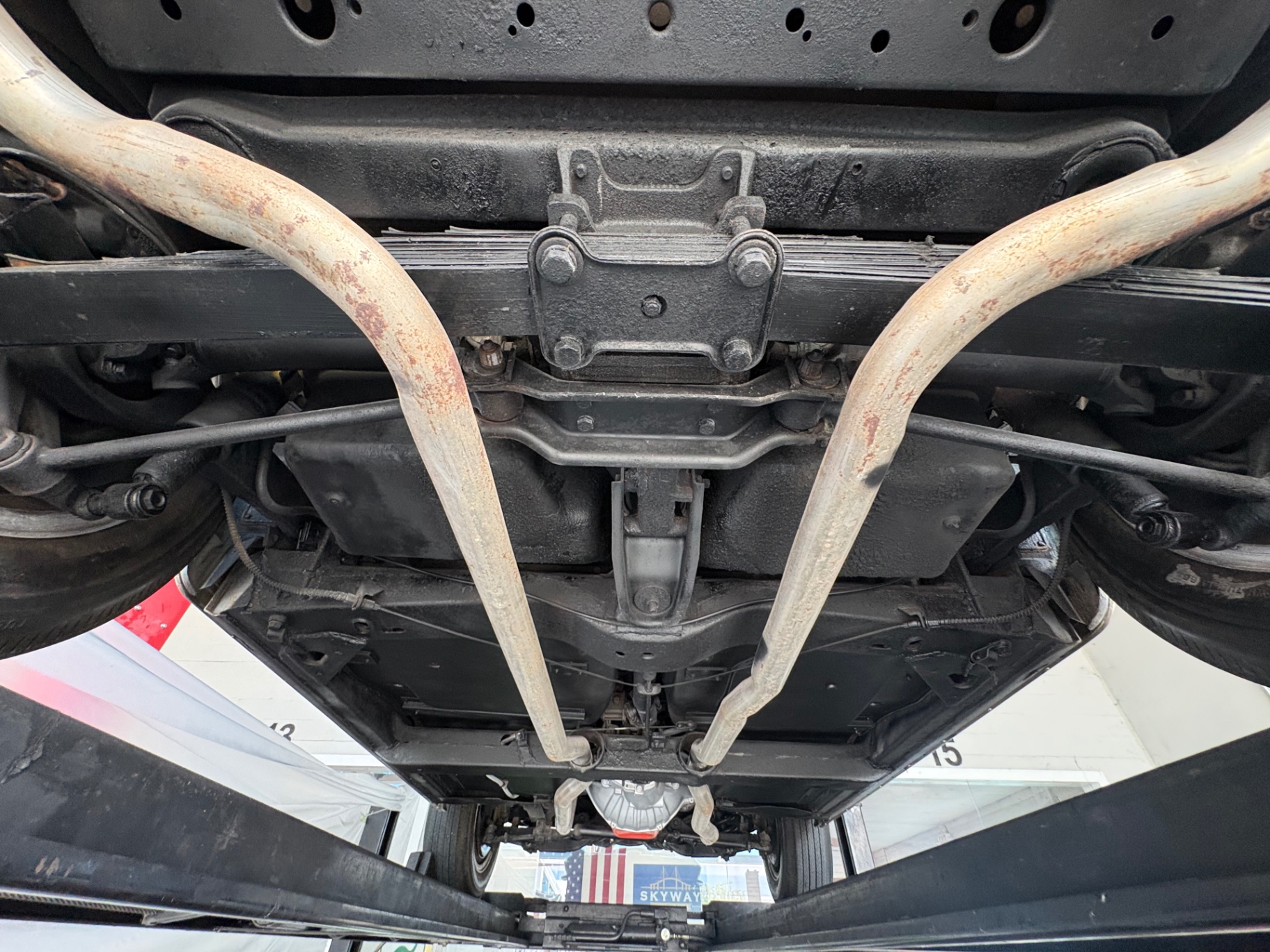
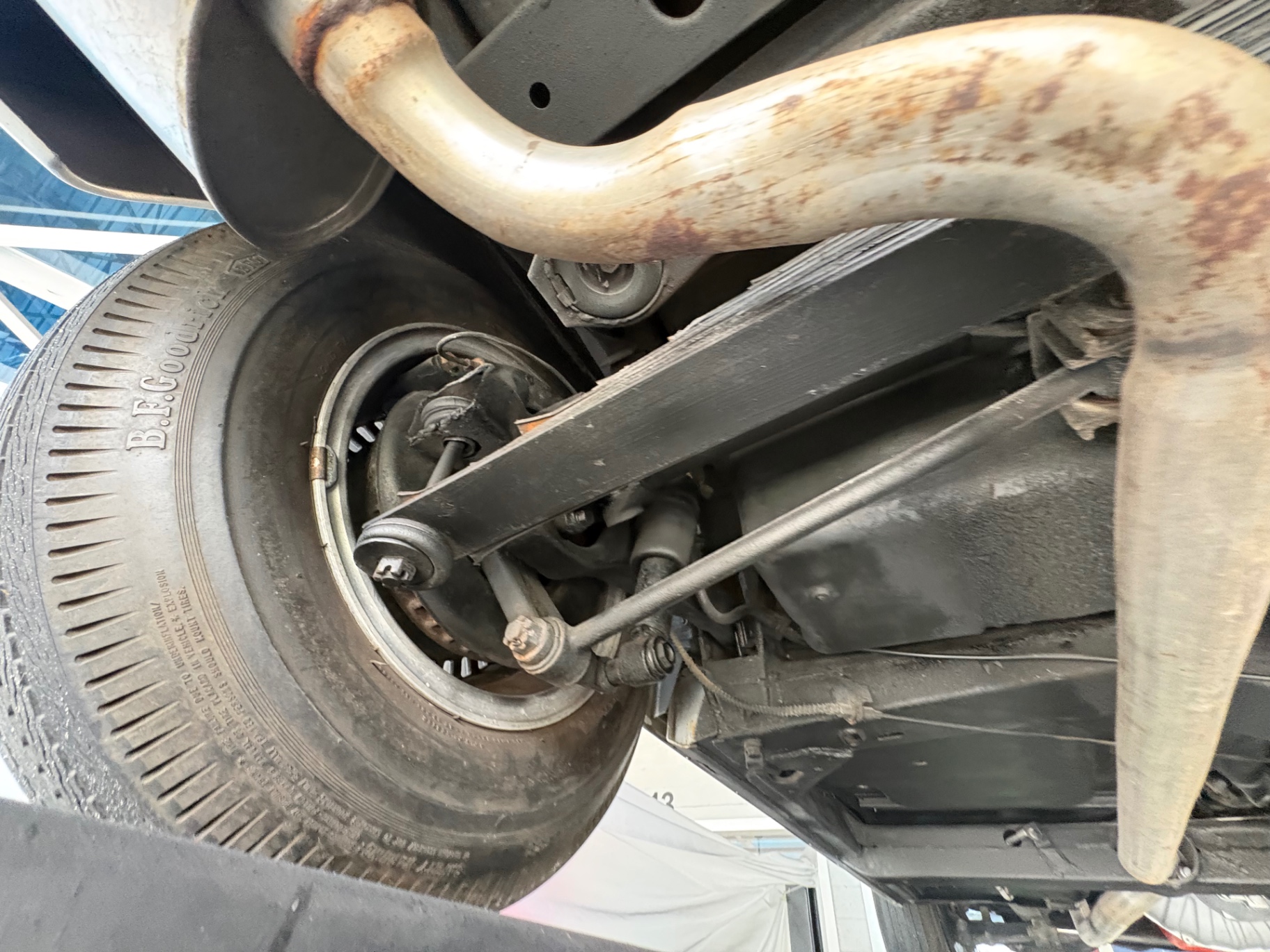
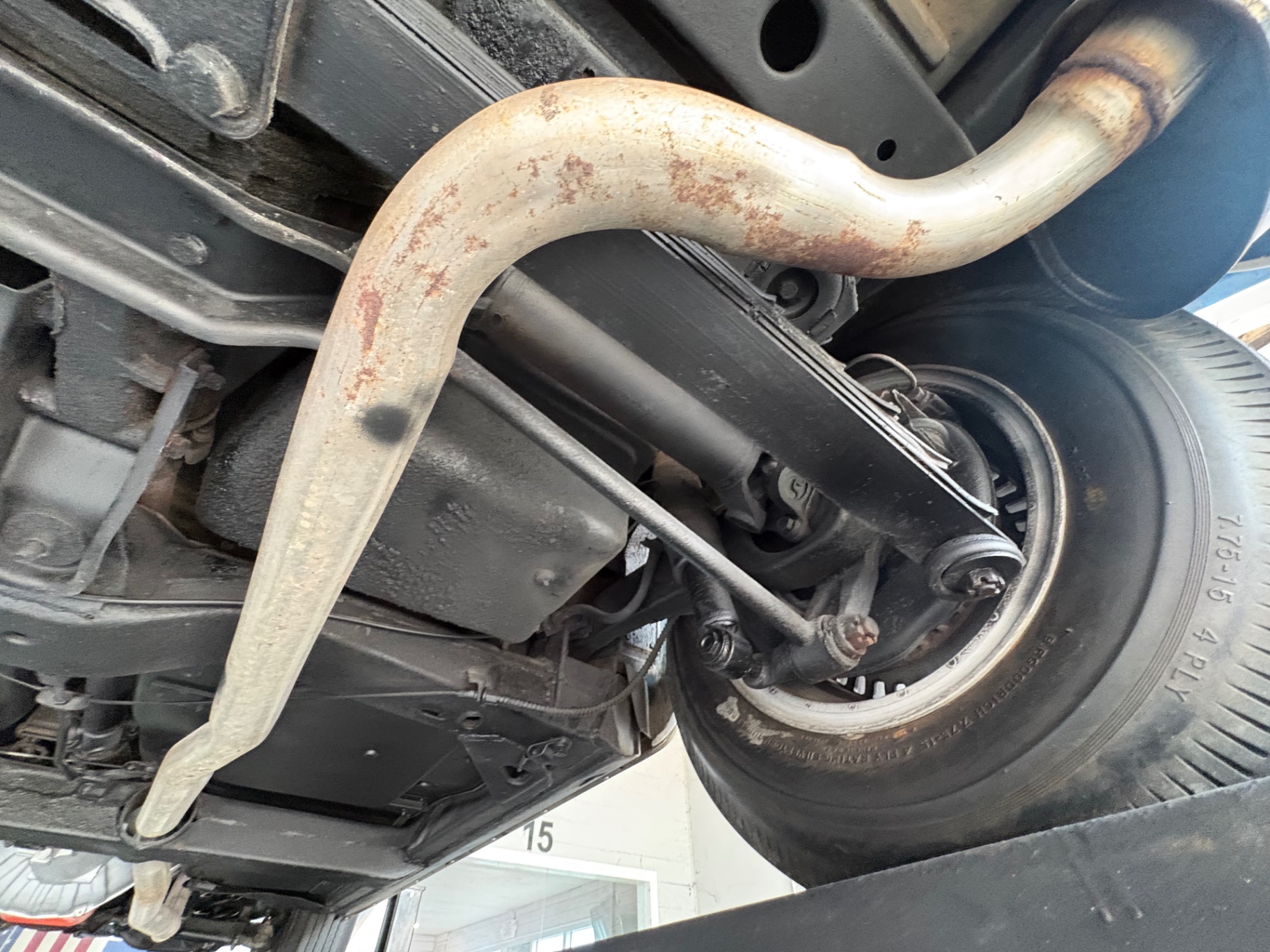
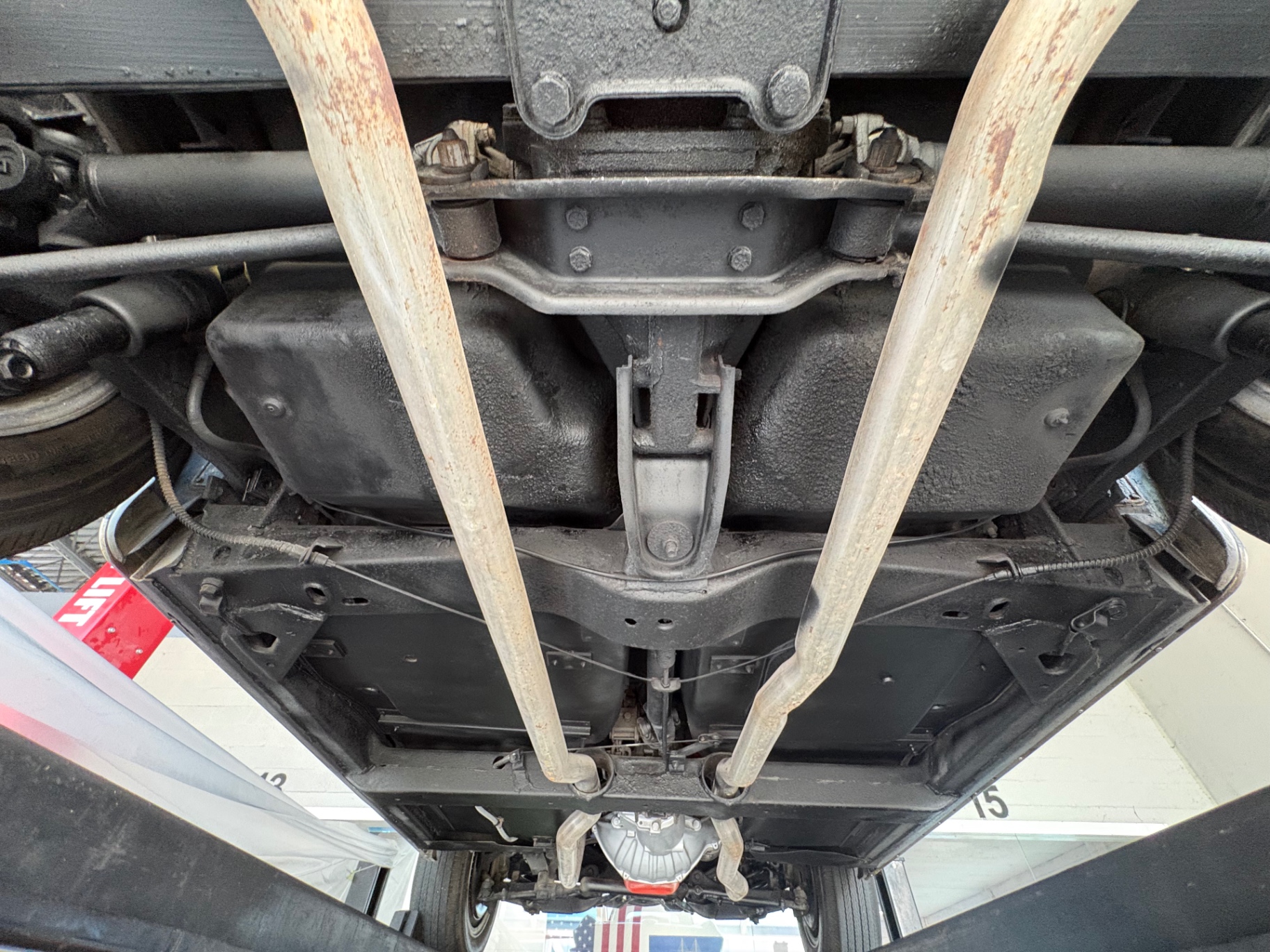
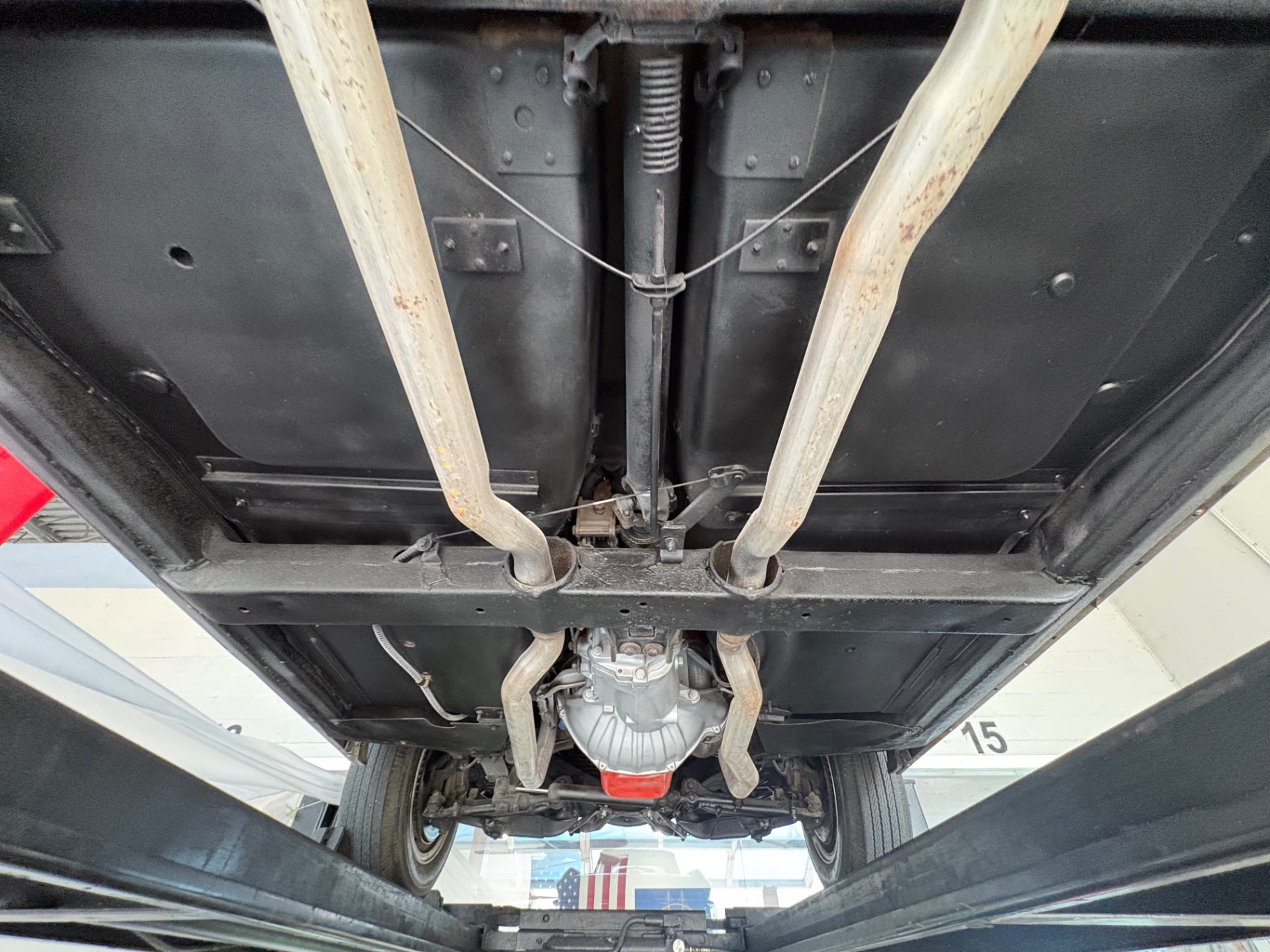
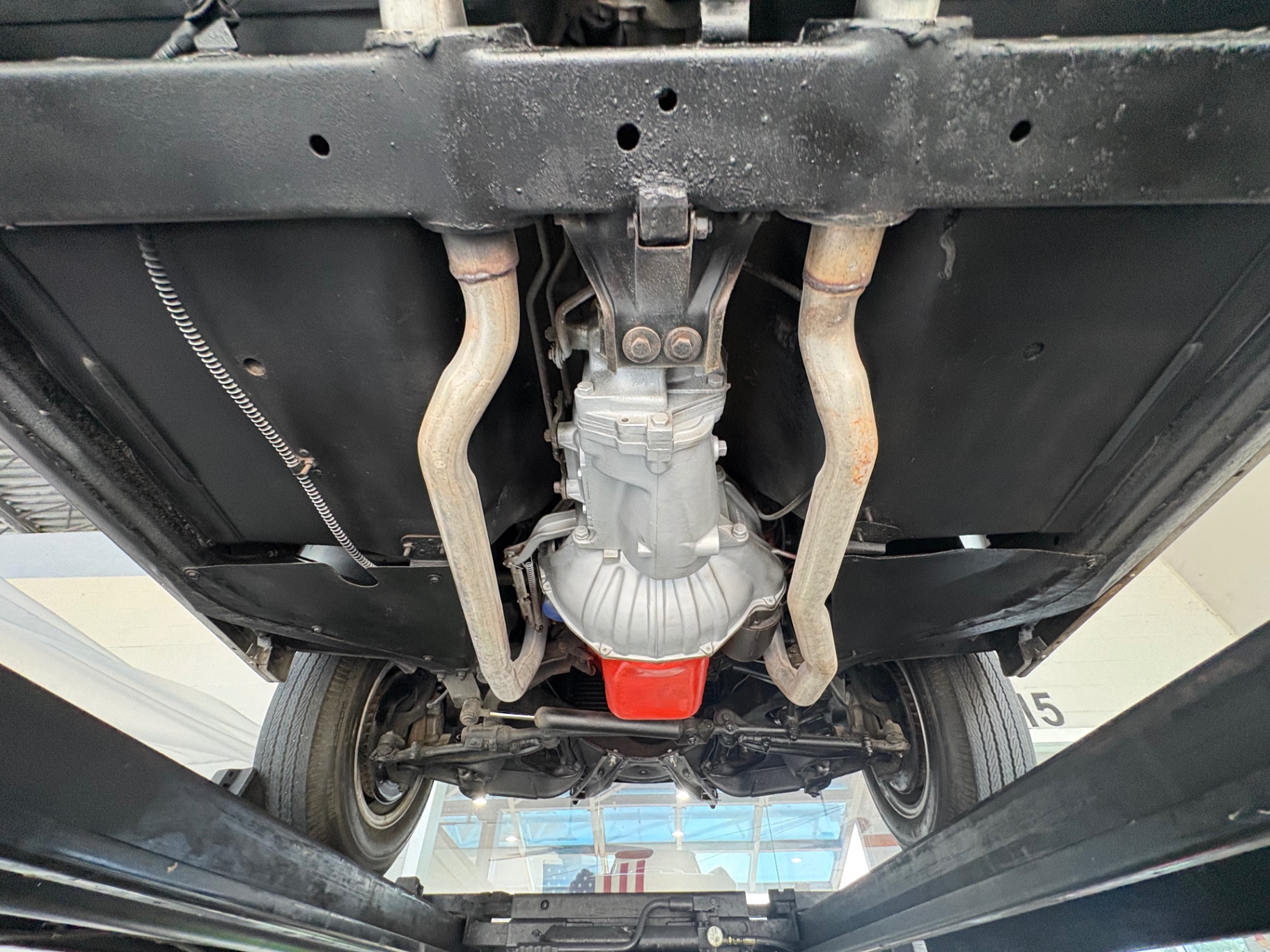
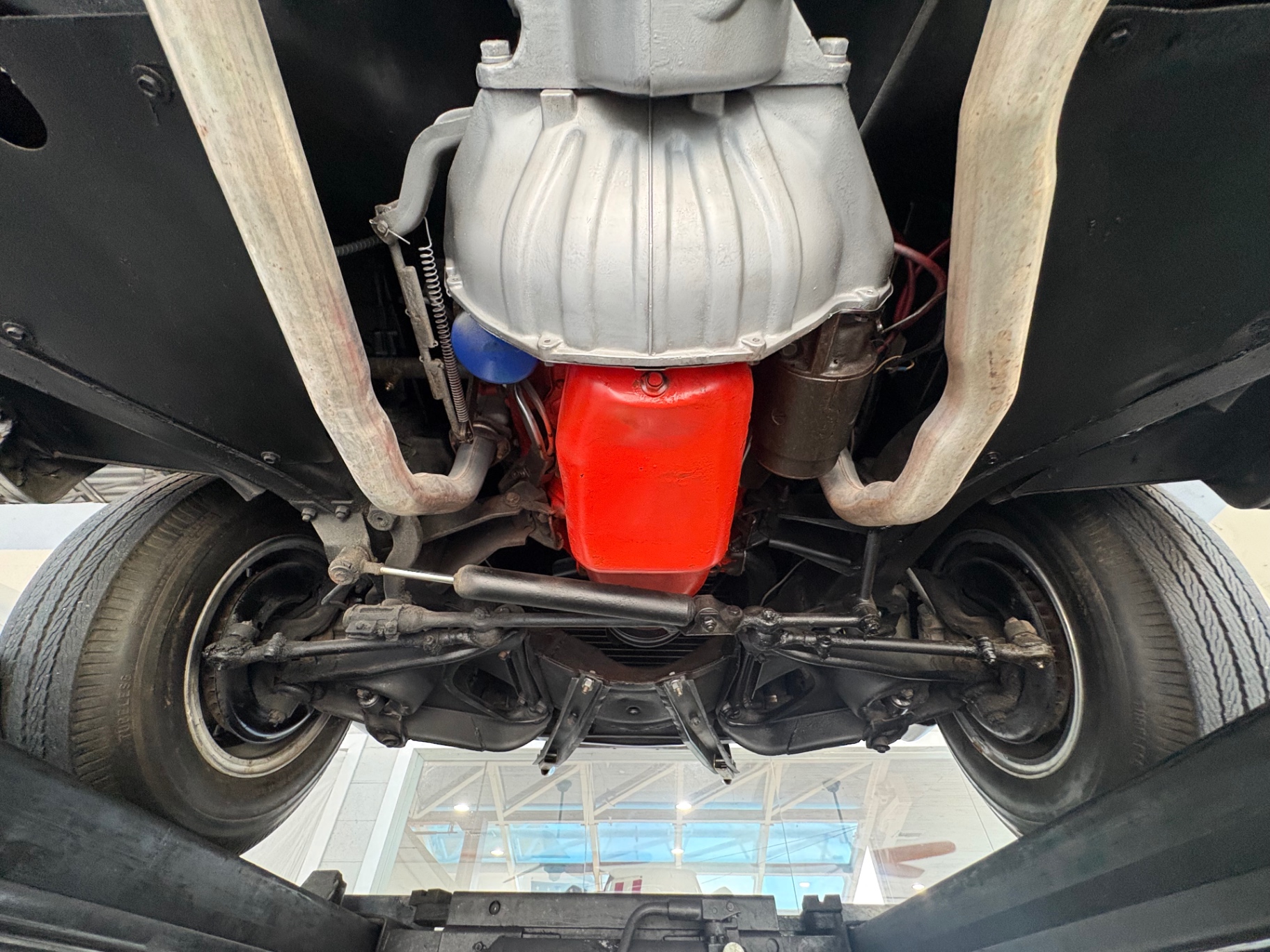
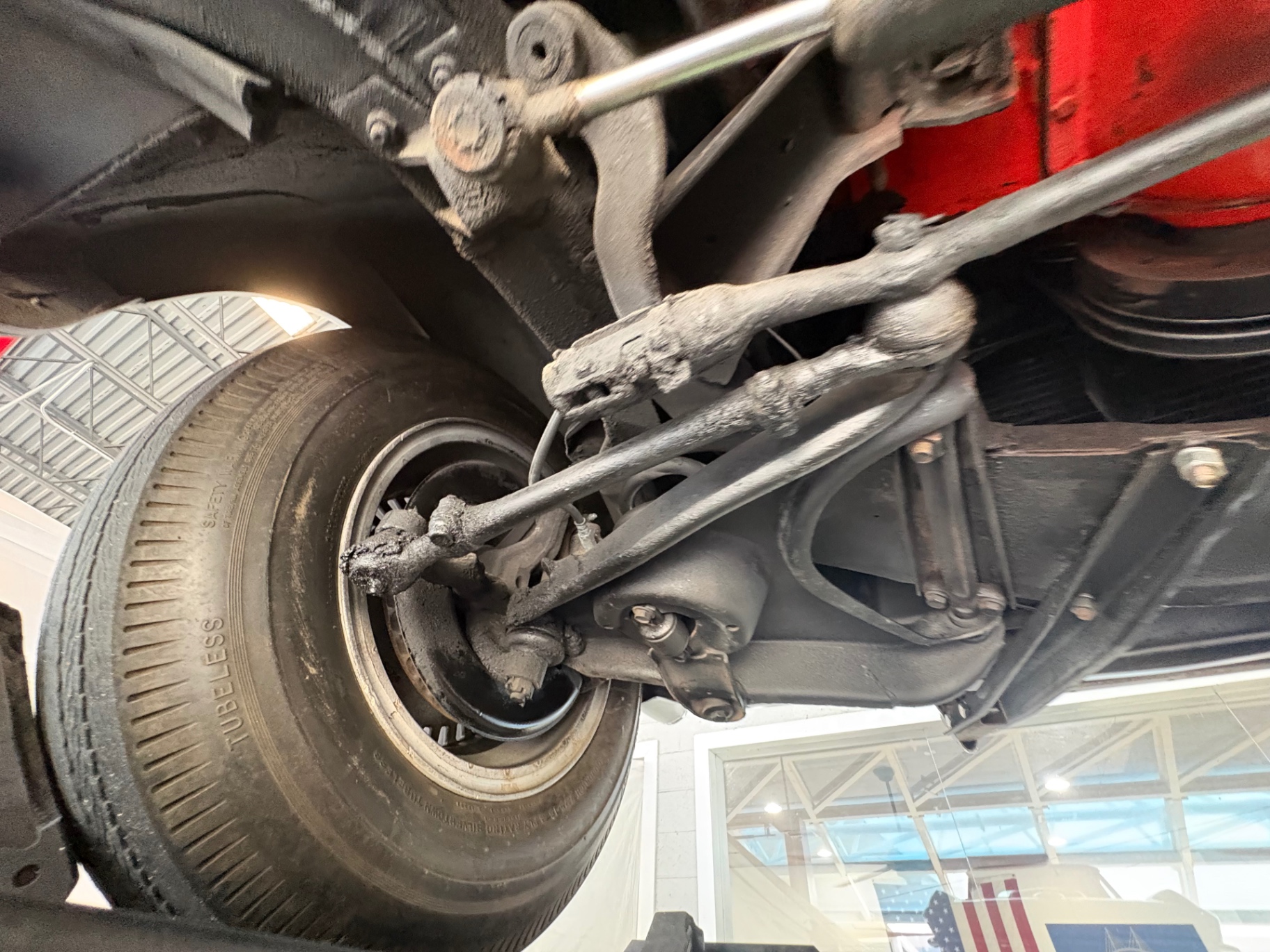
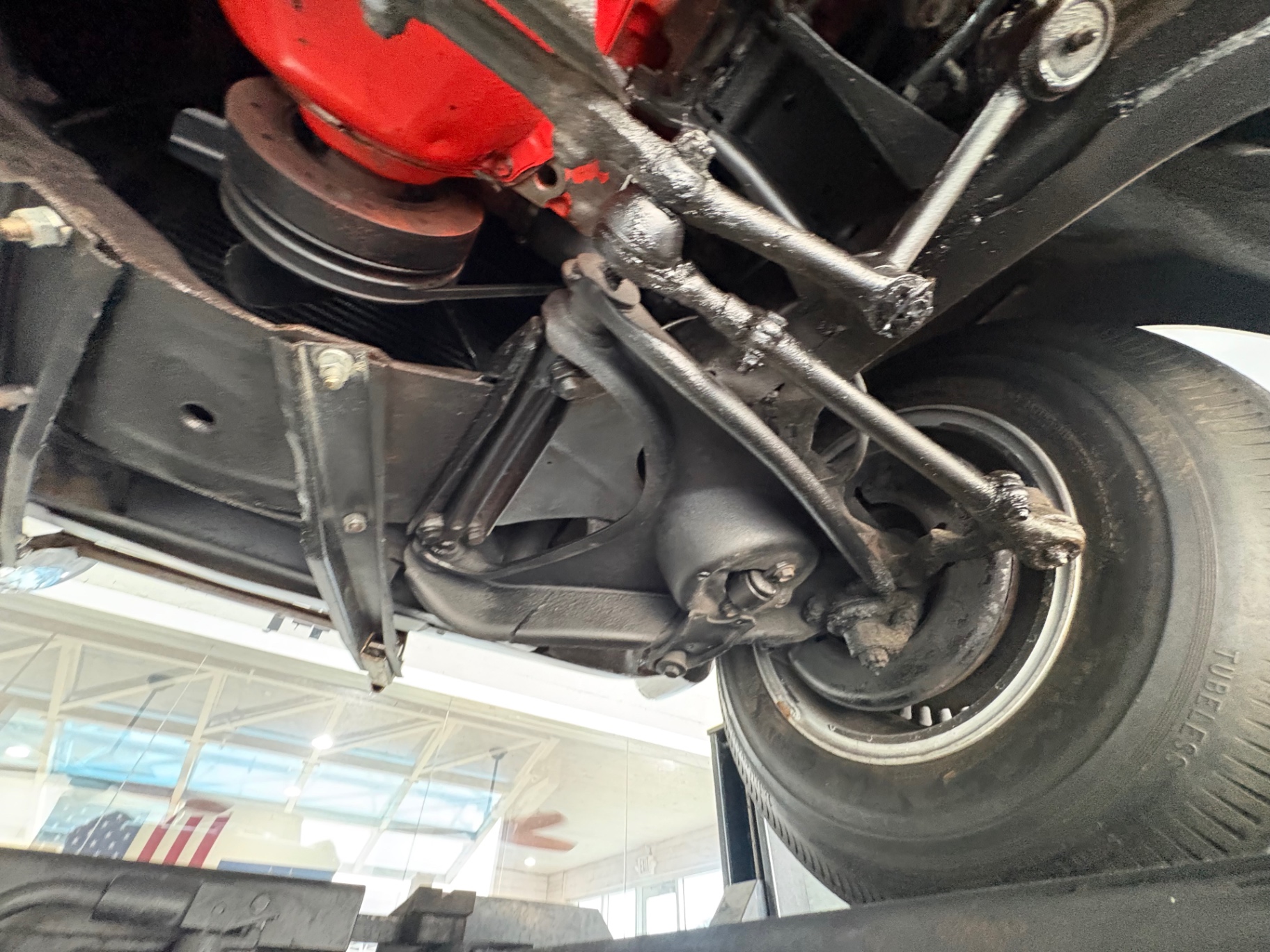
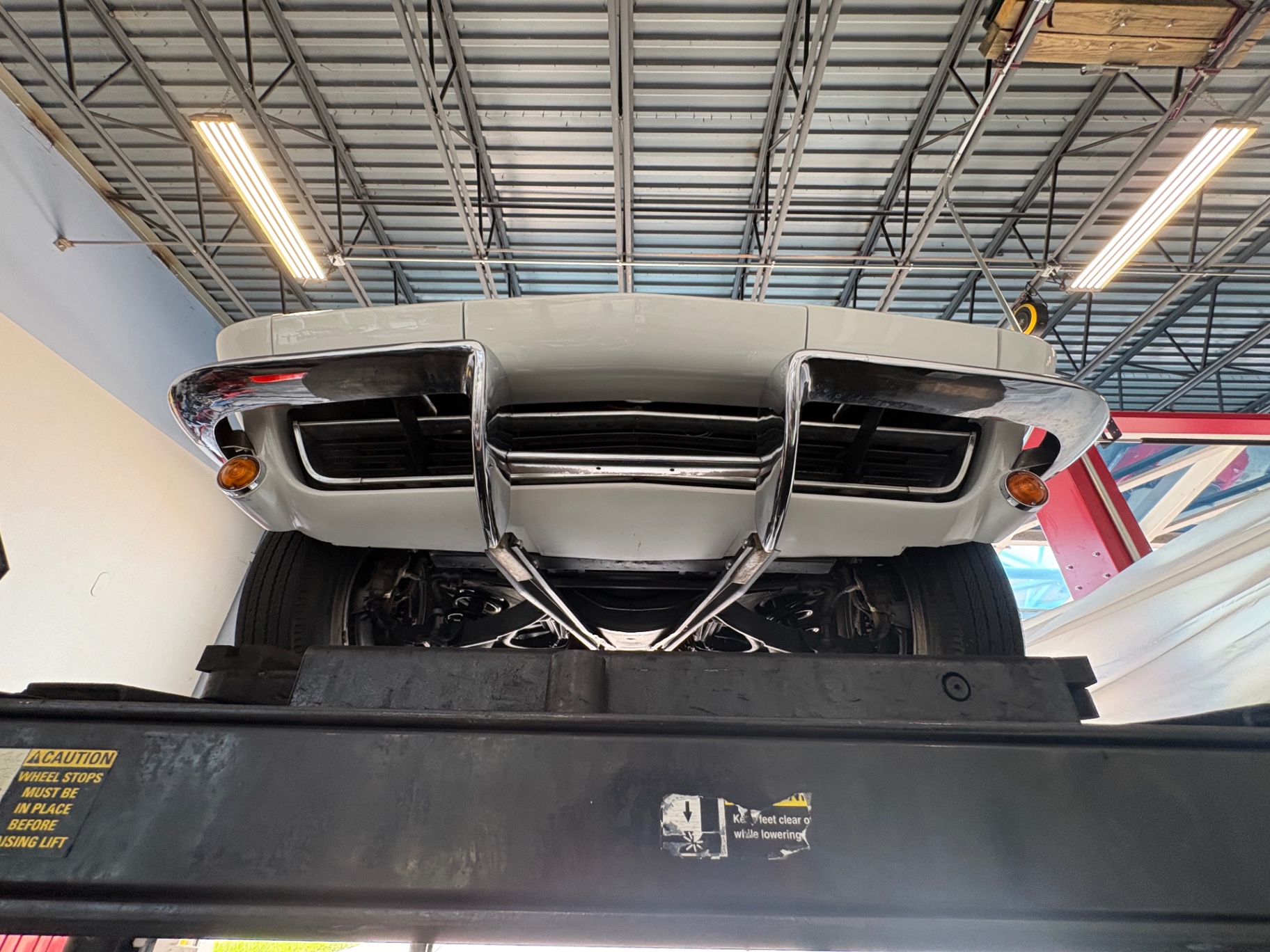
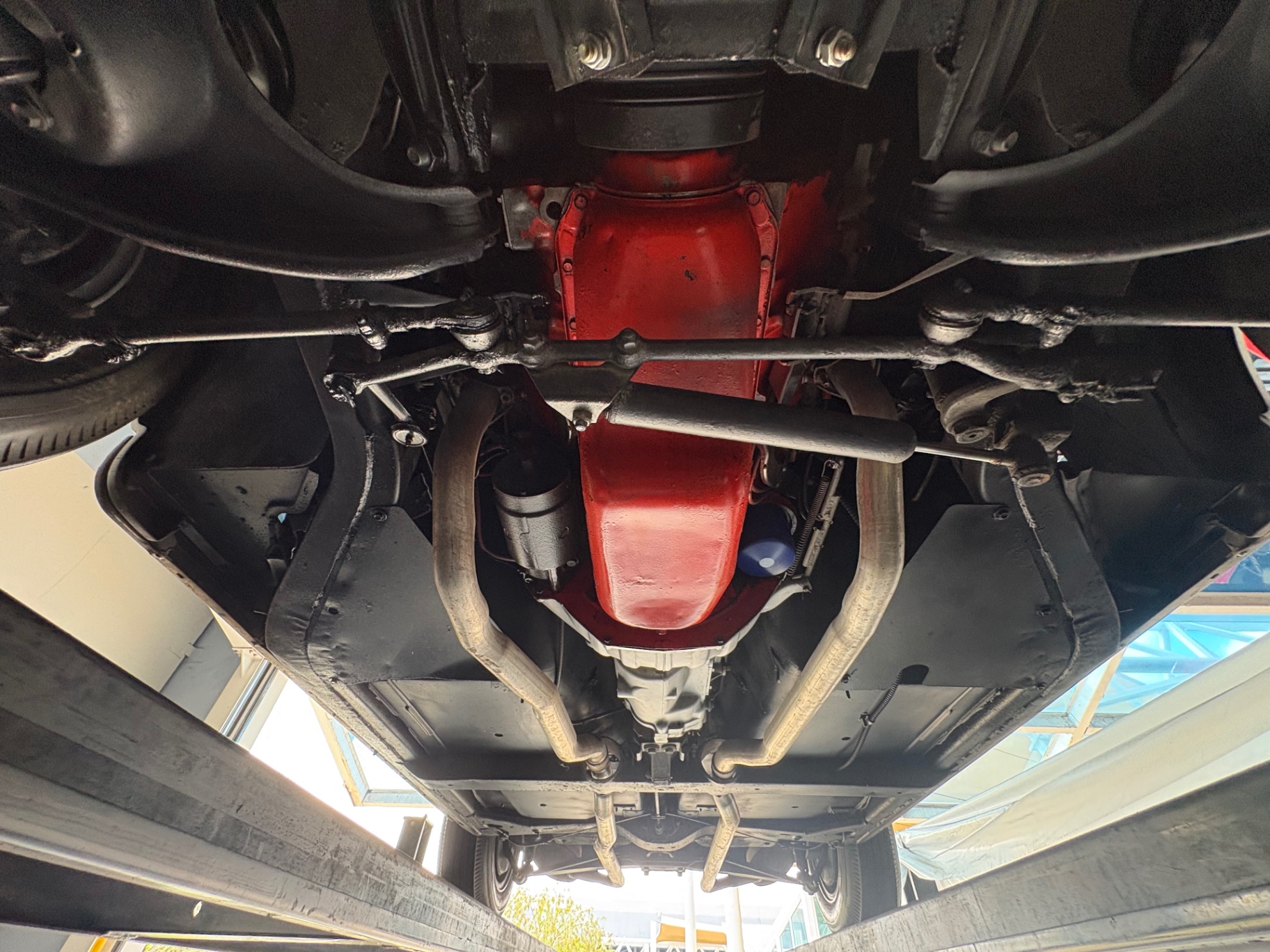
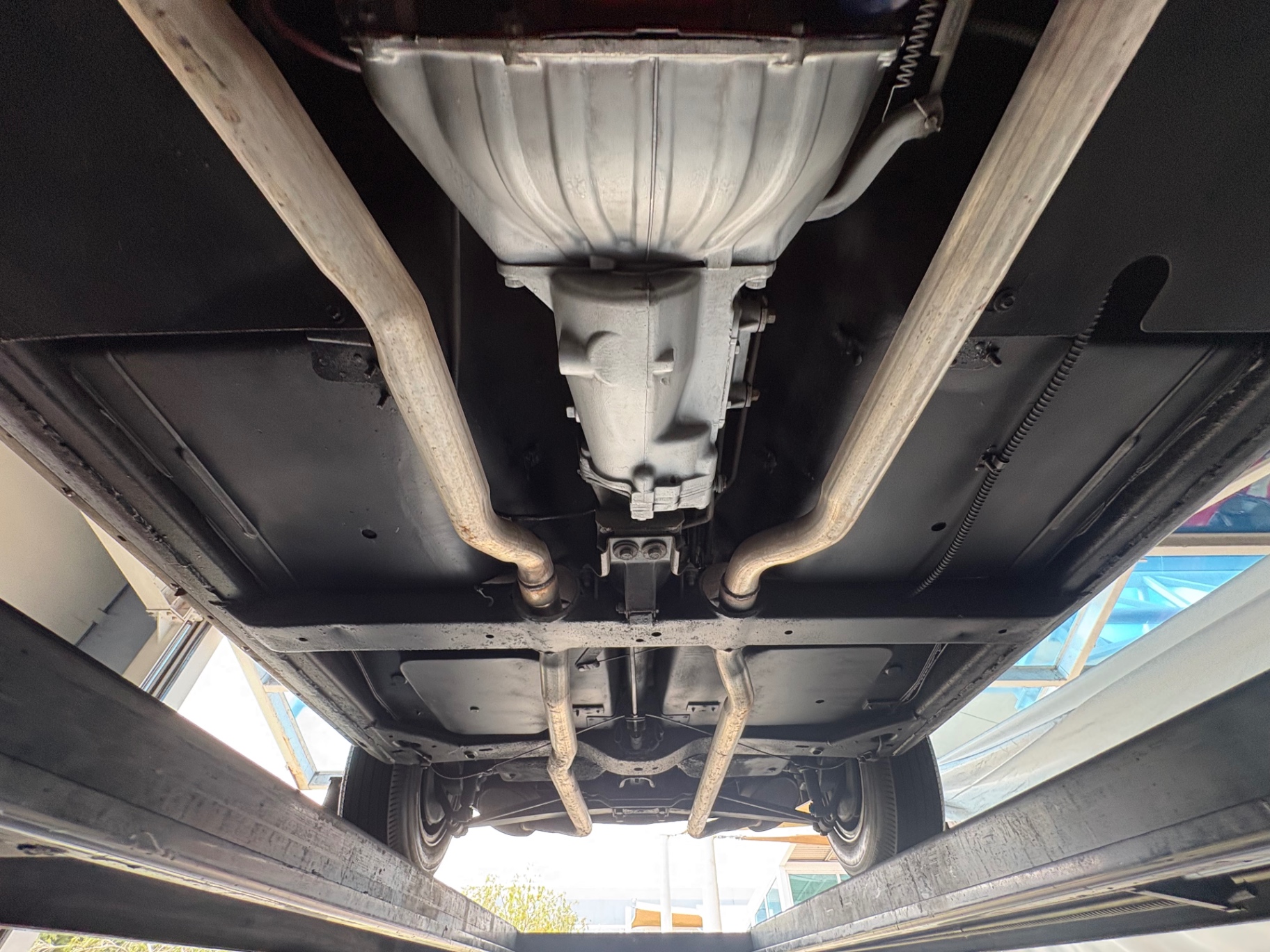
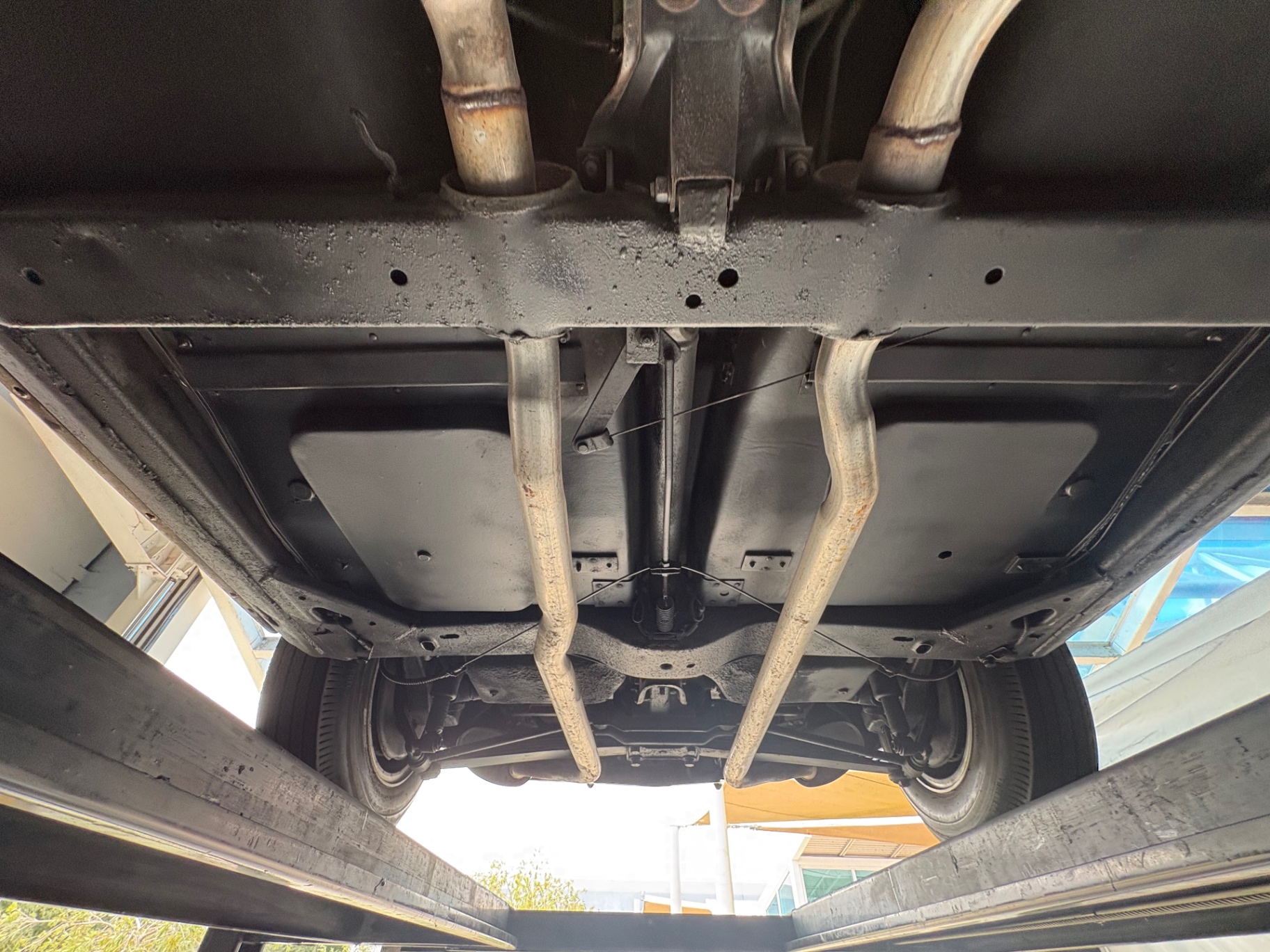
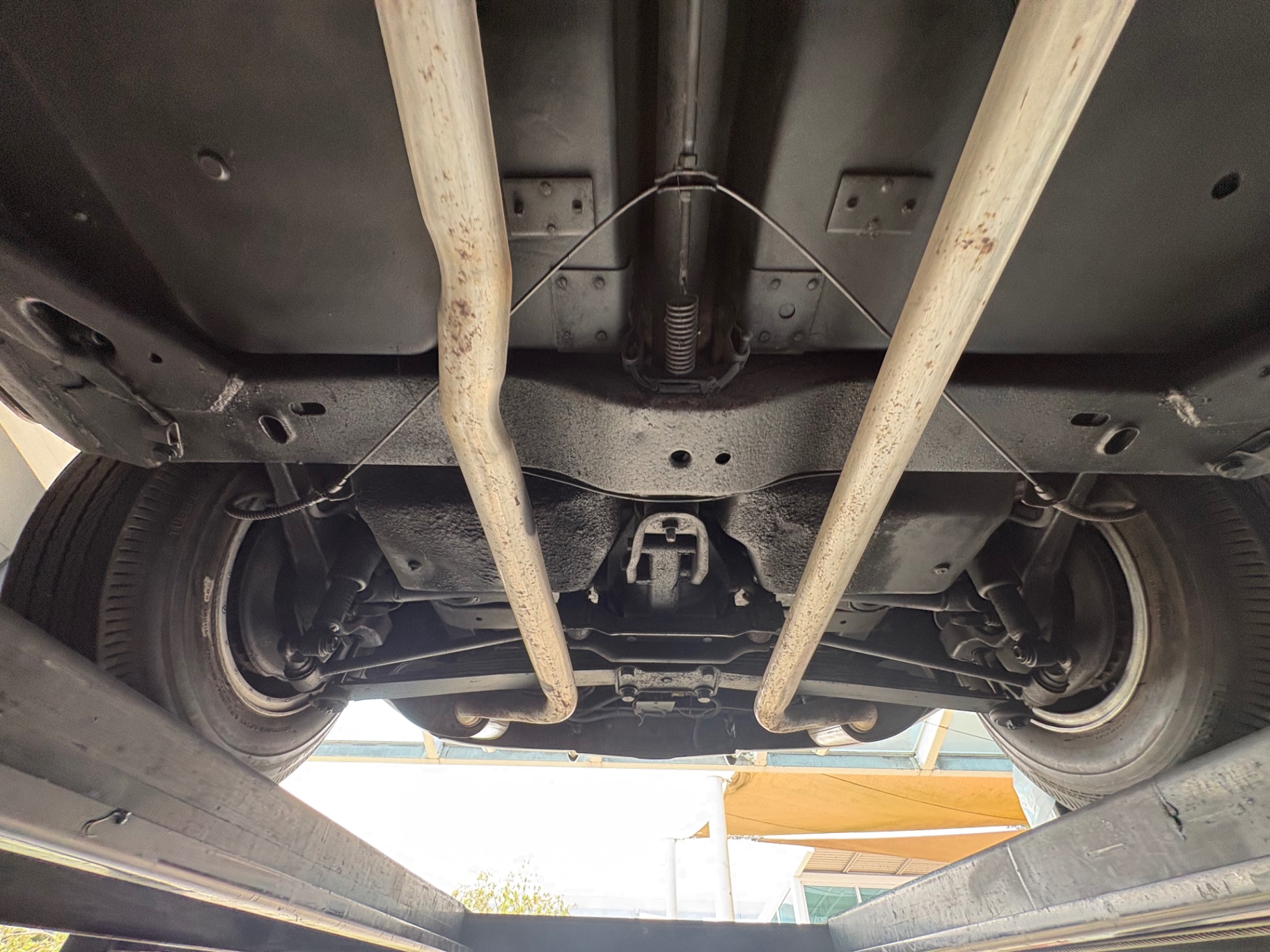
The 1965 Corvette Sting Ray came standard with independent rear suspension front and rear — a setup that was genuinely advanced for an American production car of the era. The rear uses a three-link arrangement with a U-jointed halfshaft on each side acting as the upper locating member, a lateral strut rod, and a trailing arm. This is visible in the undercarriage photos, which also show a clean, painted underside consistent with the car's overall condition. The dual exhaust exits through the characteristic Sting Ray rear treatment, with the pipes tucked up and exiting beneath the rear bumper. Braking is handled by drums at all four corners, which was still the standard configuration in 1965 — the optional four-wheel disc system was available that year for the first time but was not installed on every car. The wire spoke wheels are fitted with red line tires, a combination that was period-correct and remains one of the most visually appropriate wheel and tire pairings for a mid-1960s Corvette.
Interior
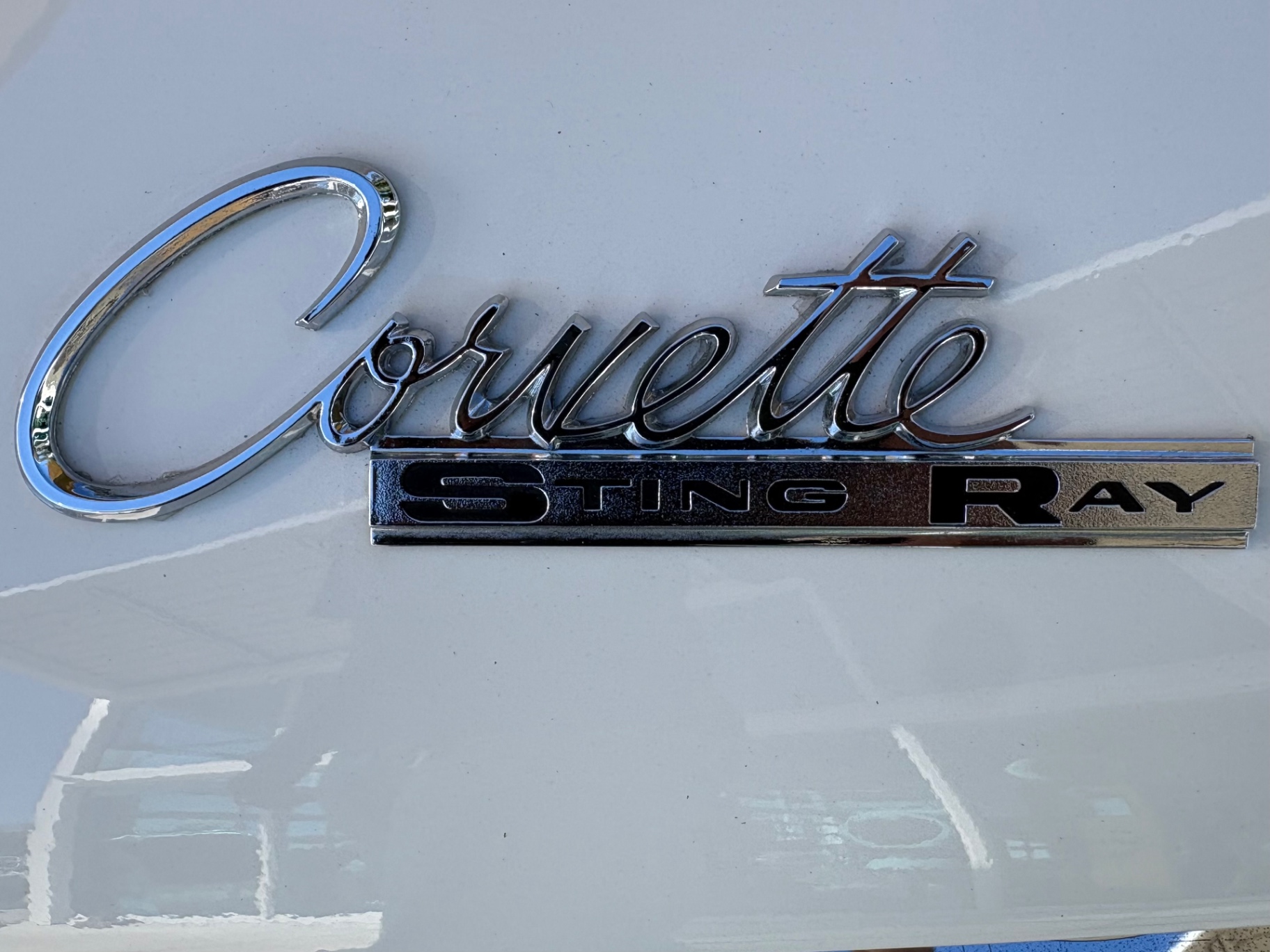
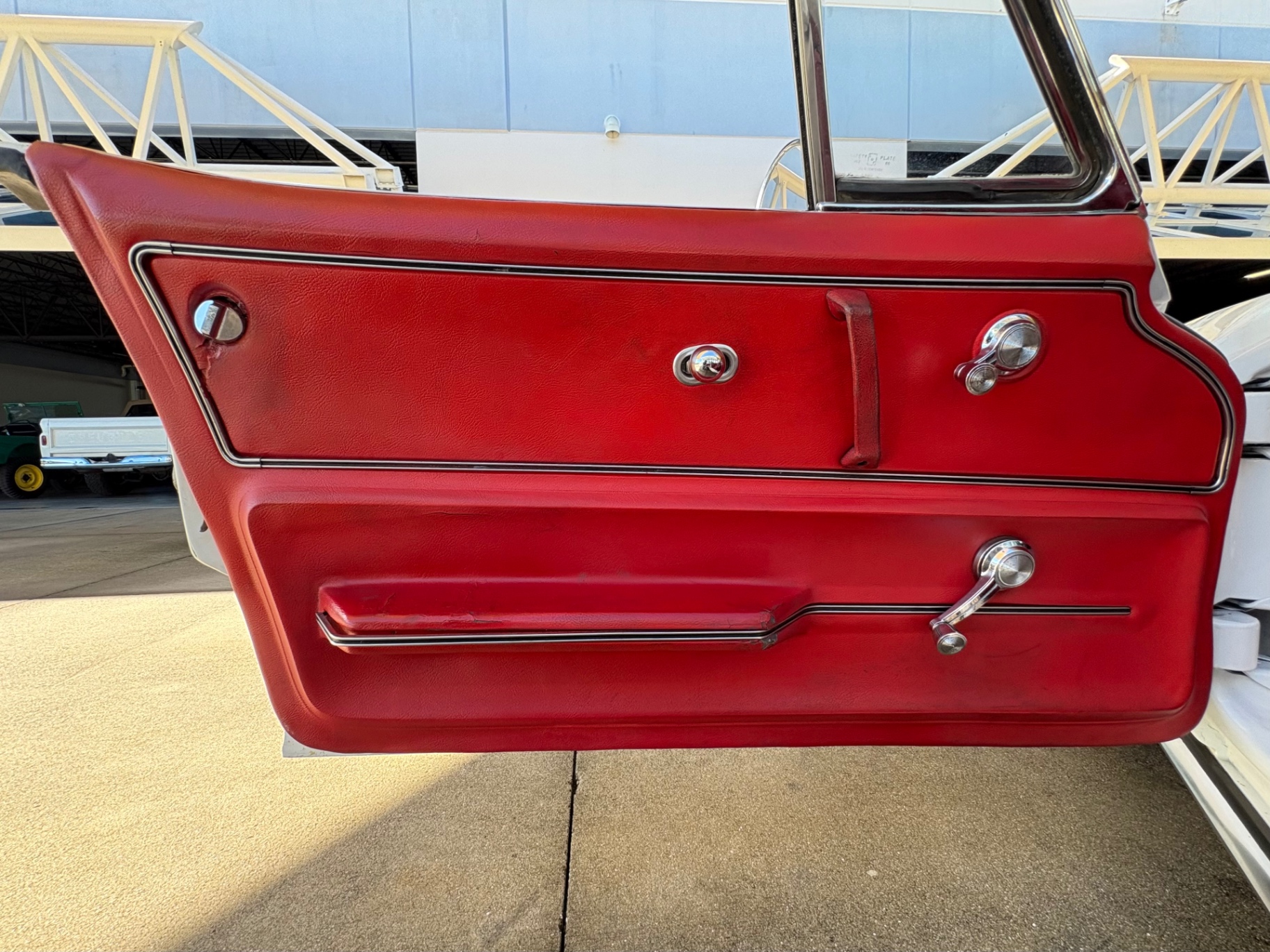
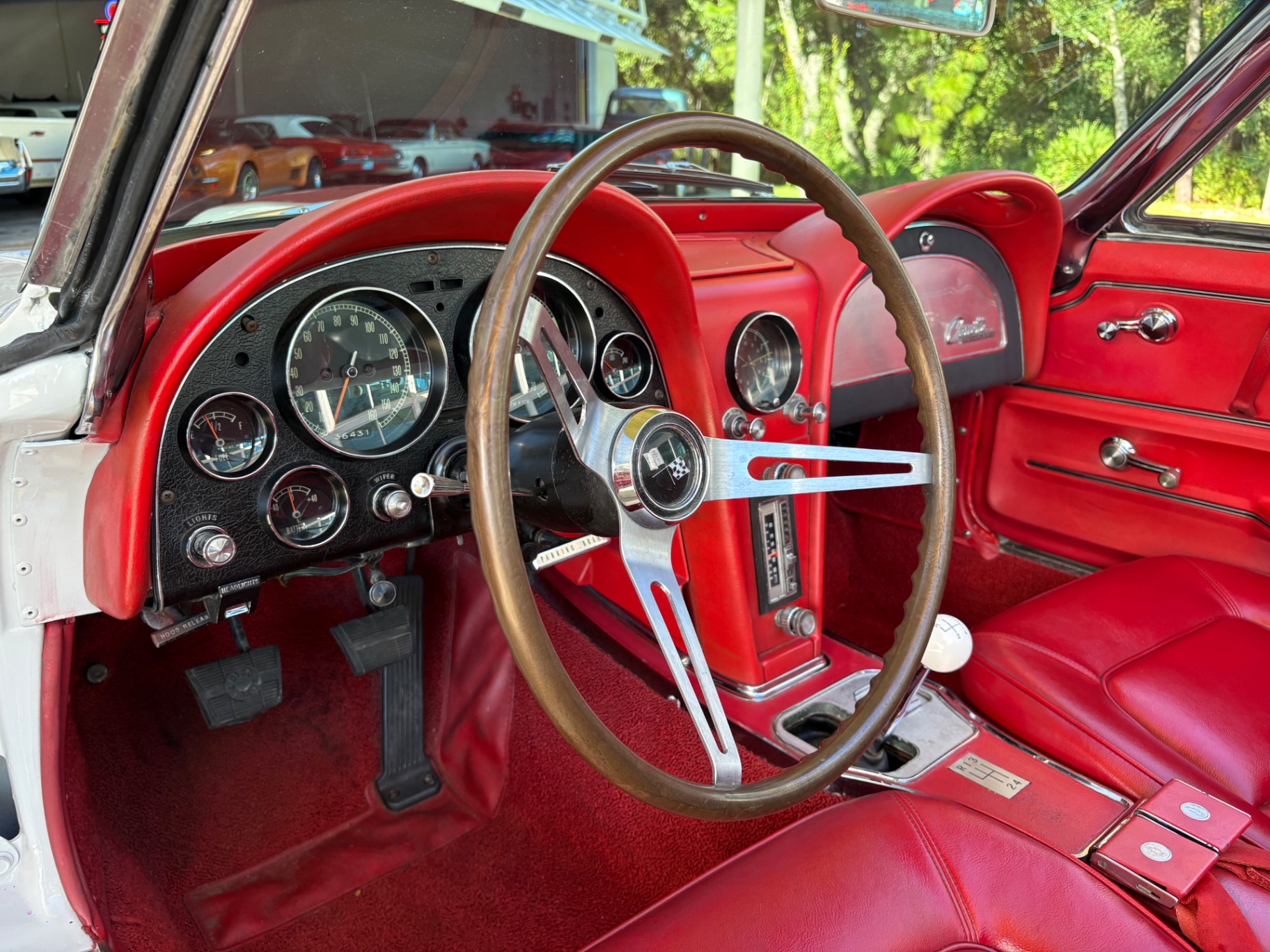
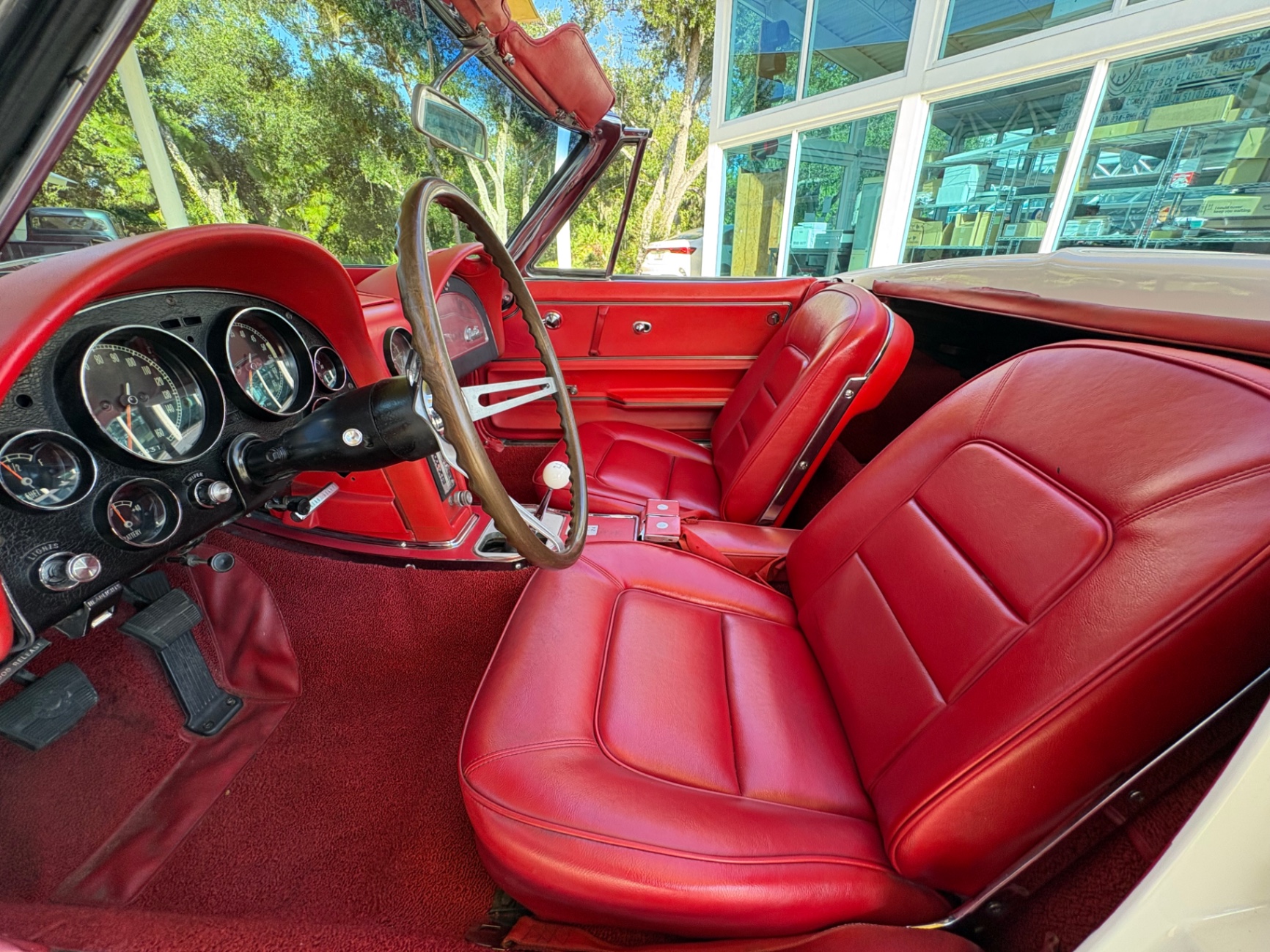
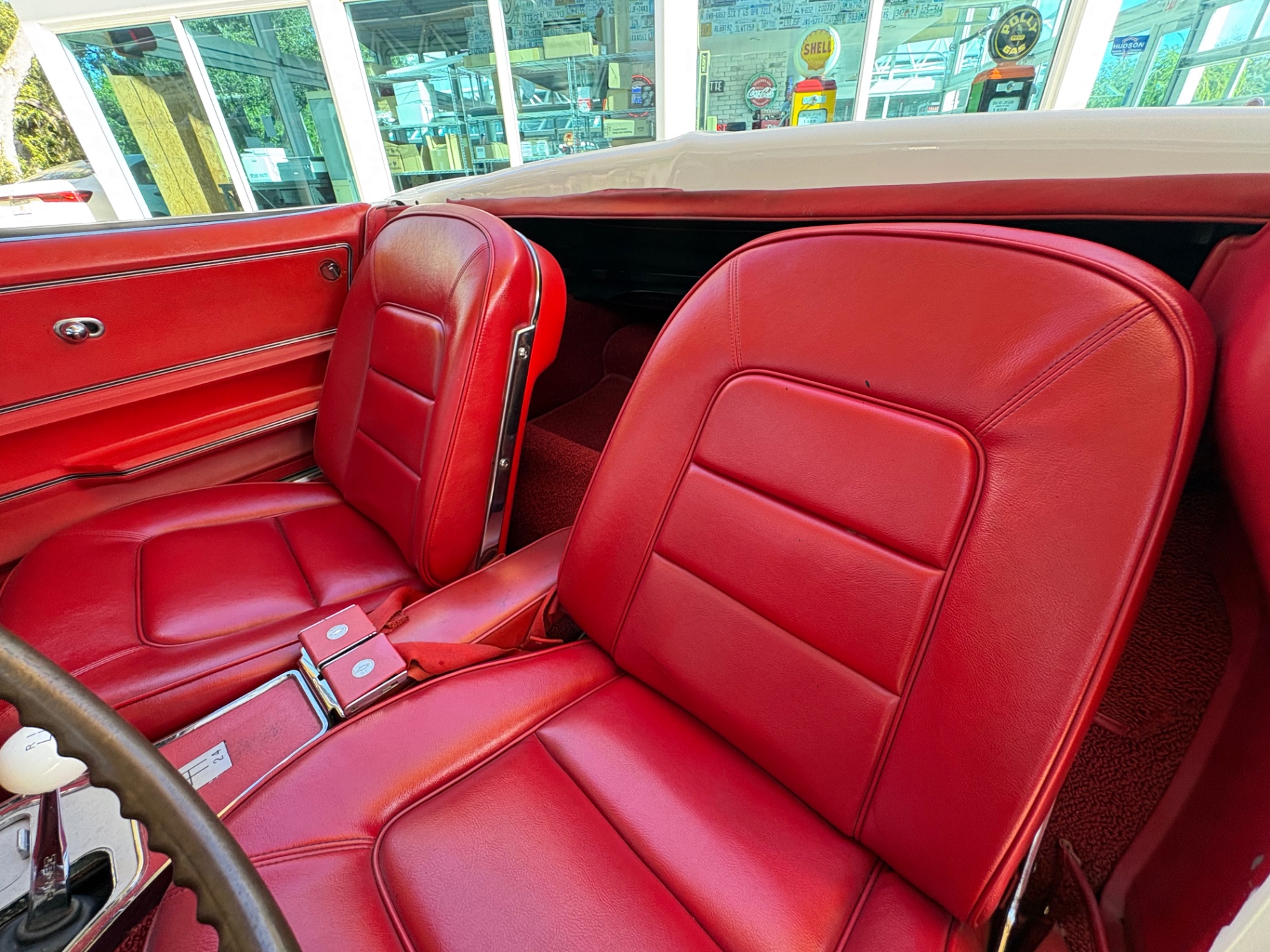
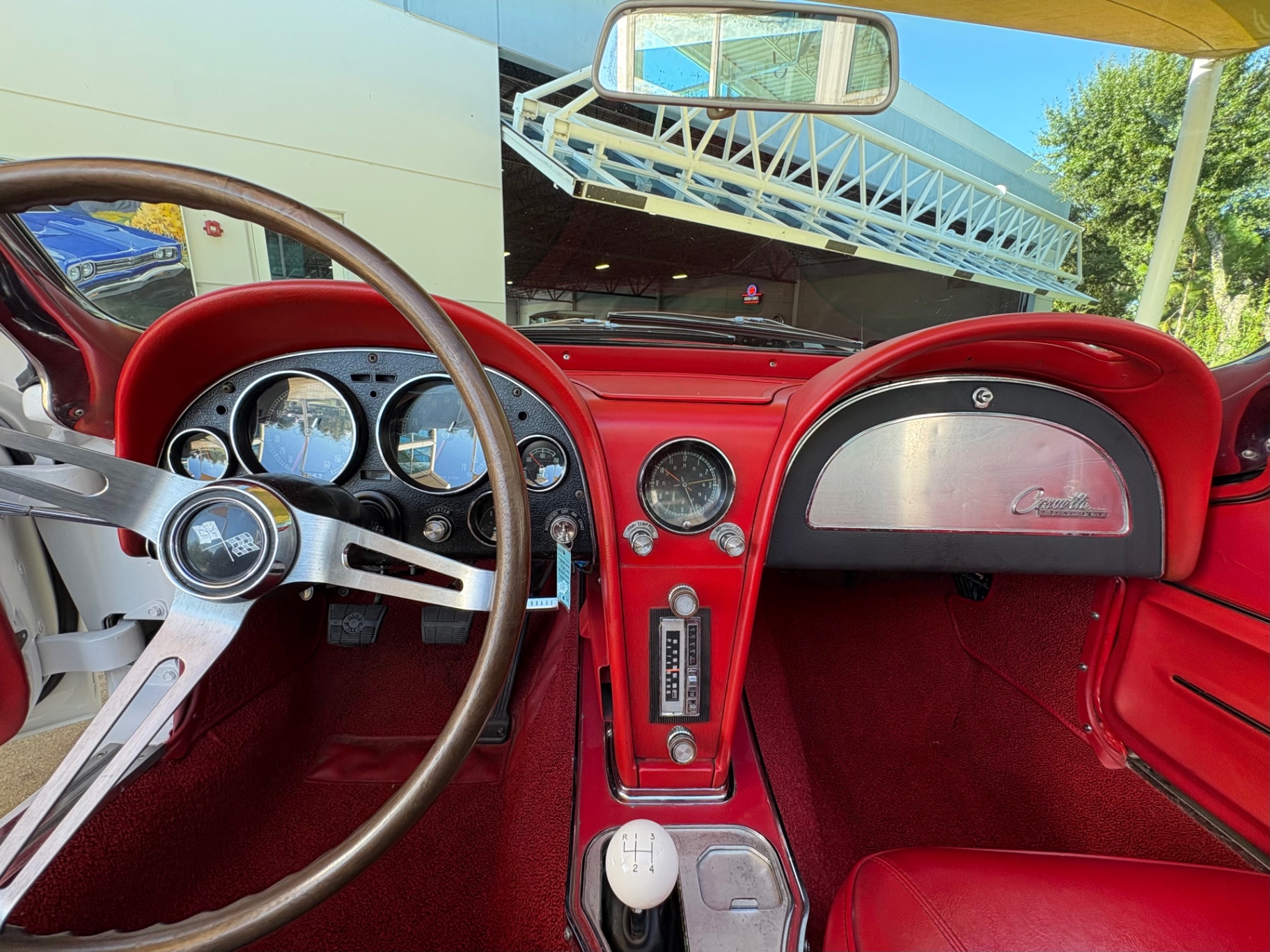
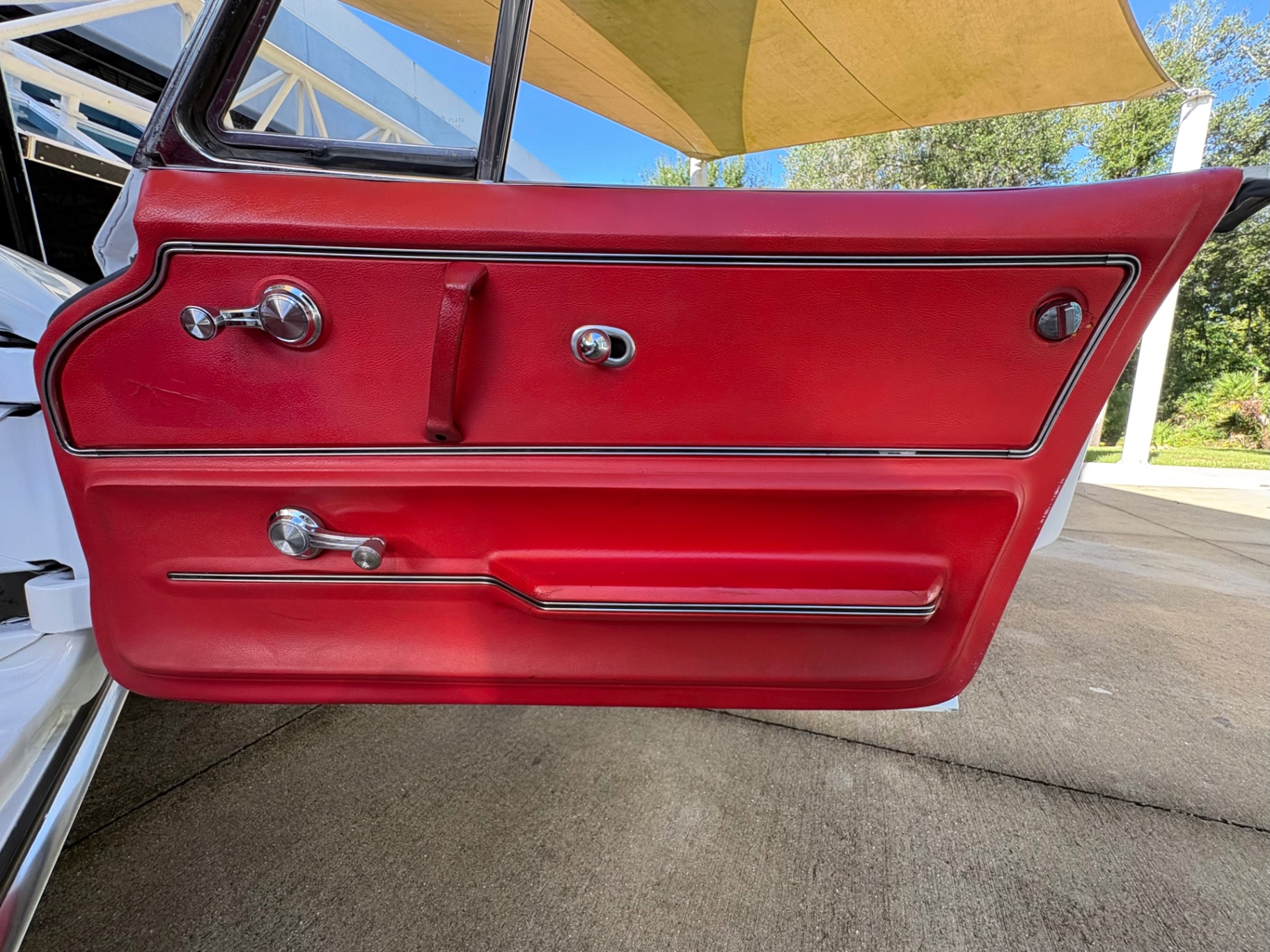
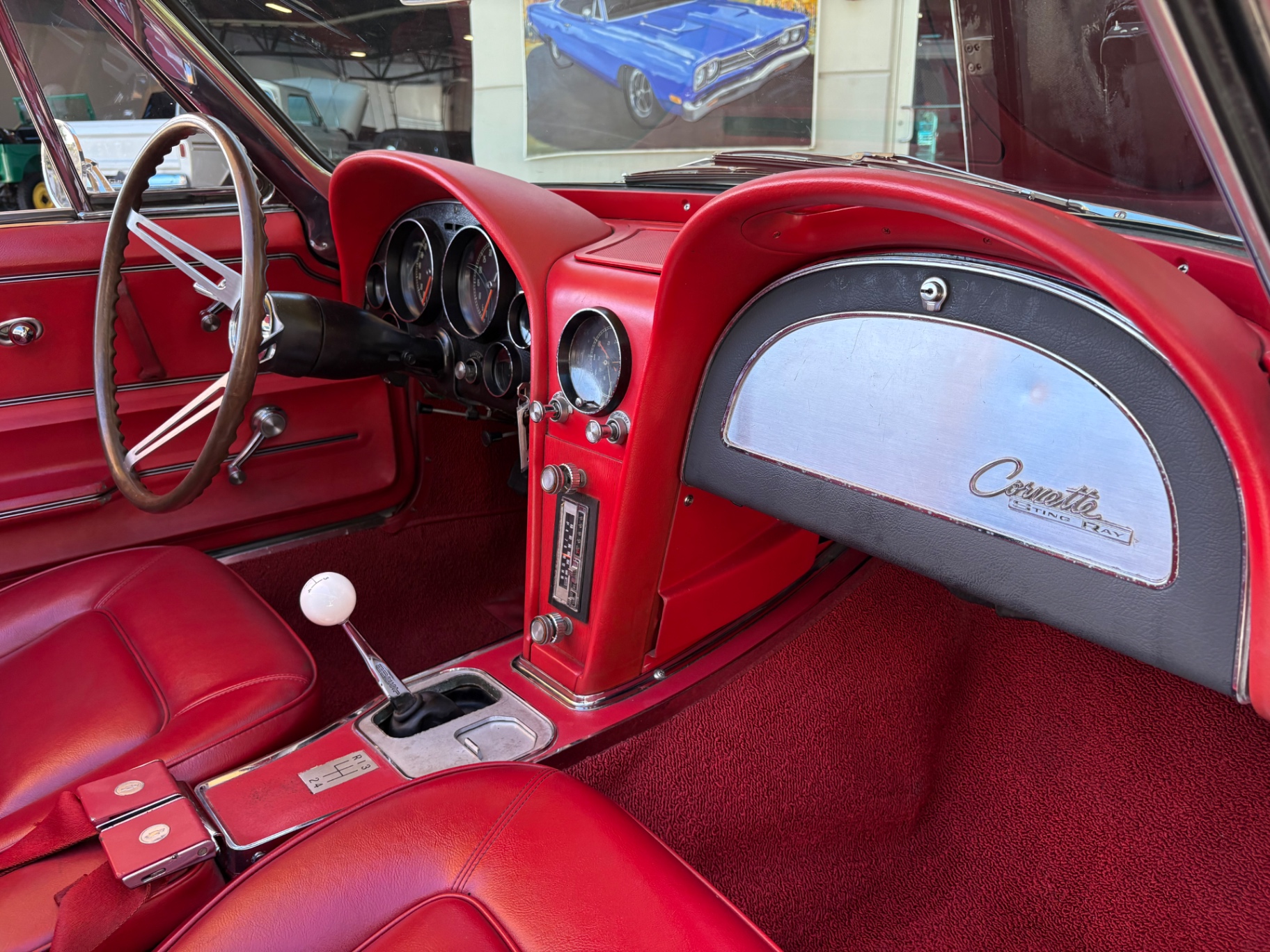
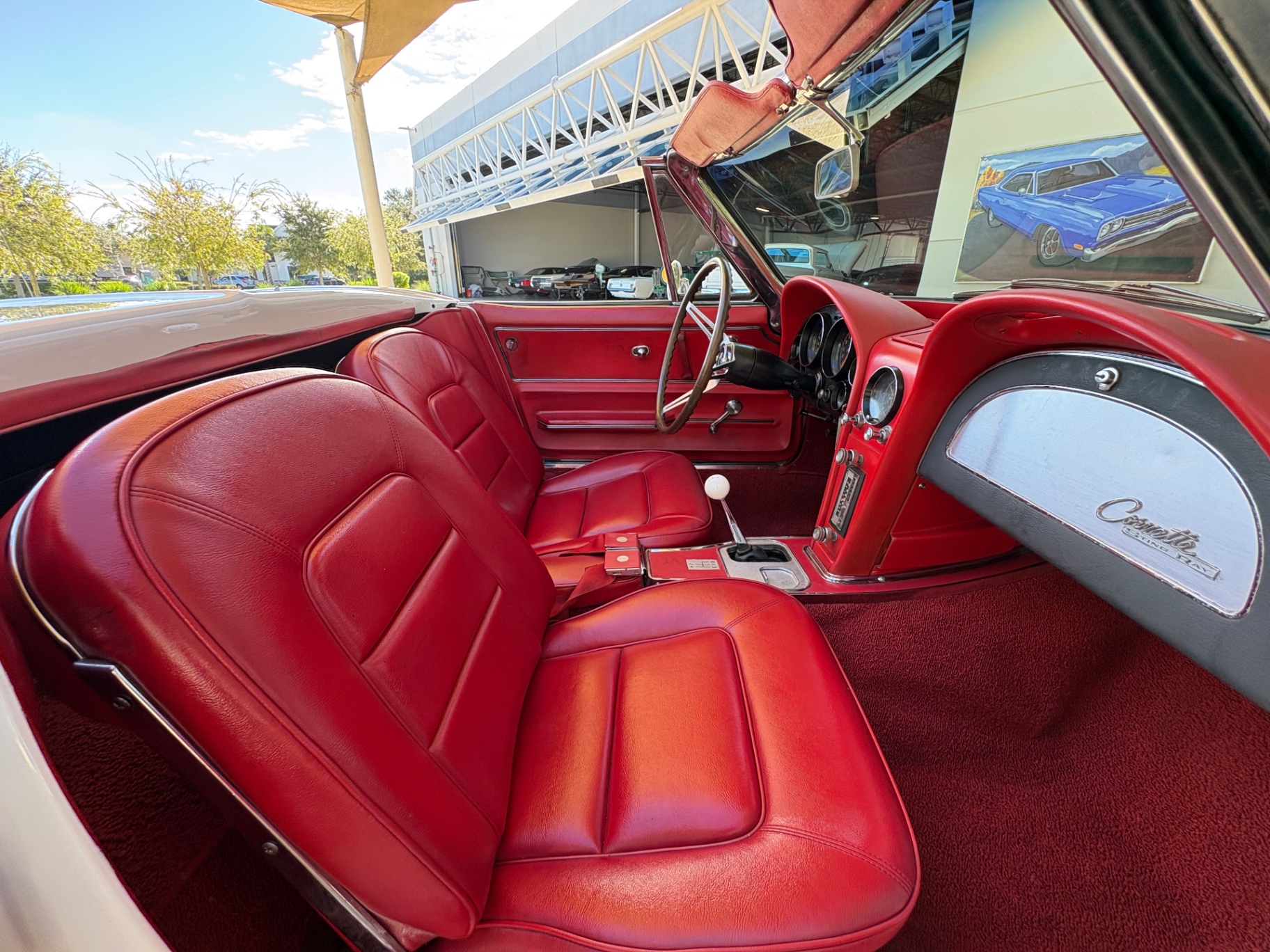
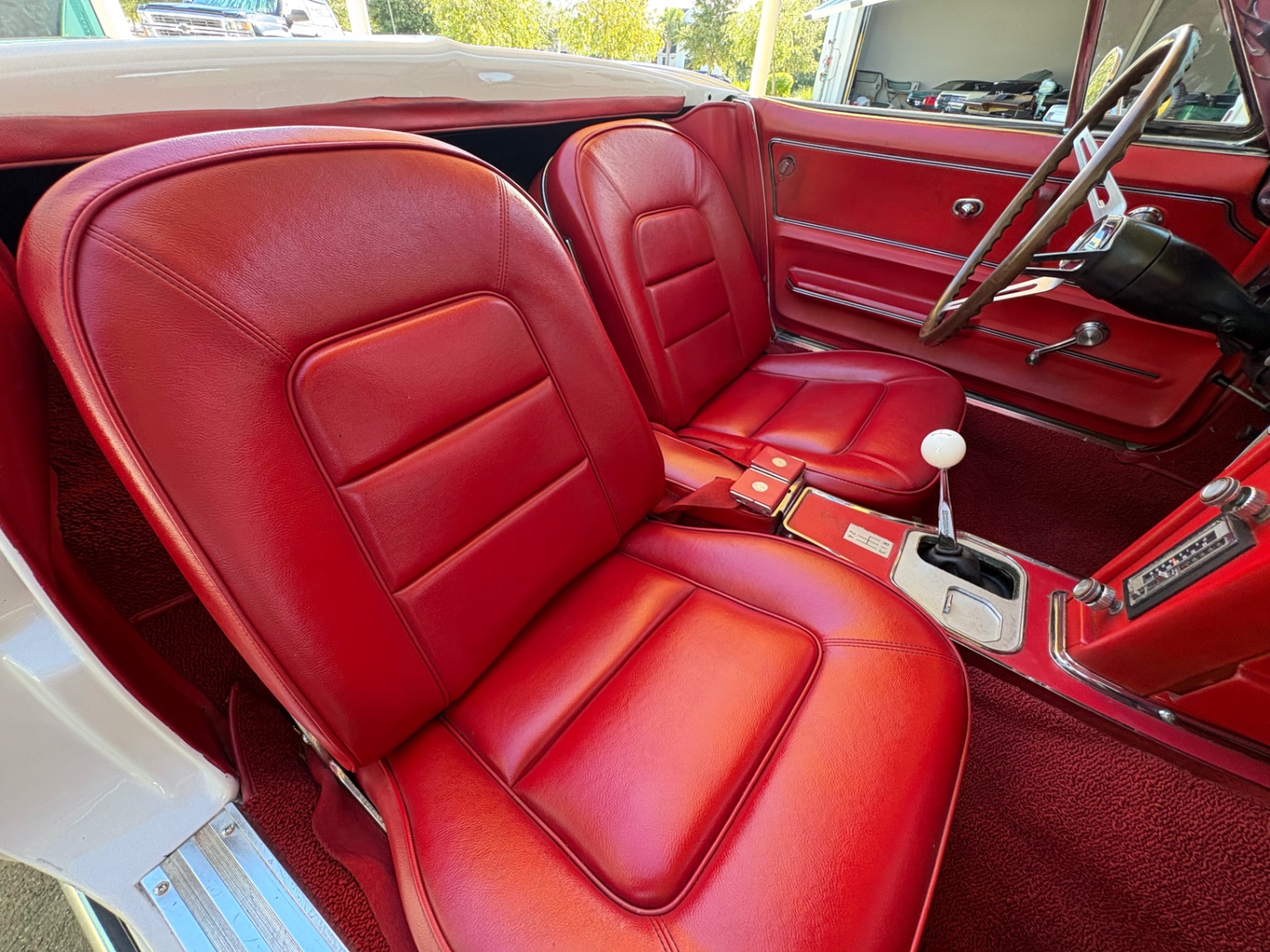
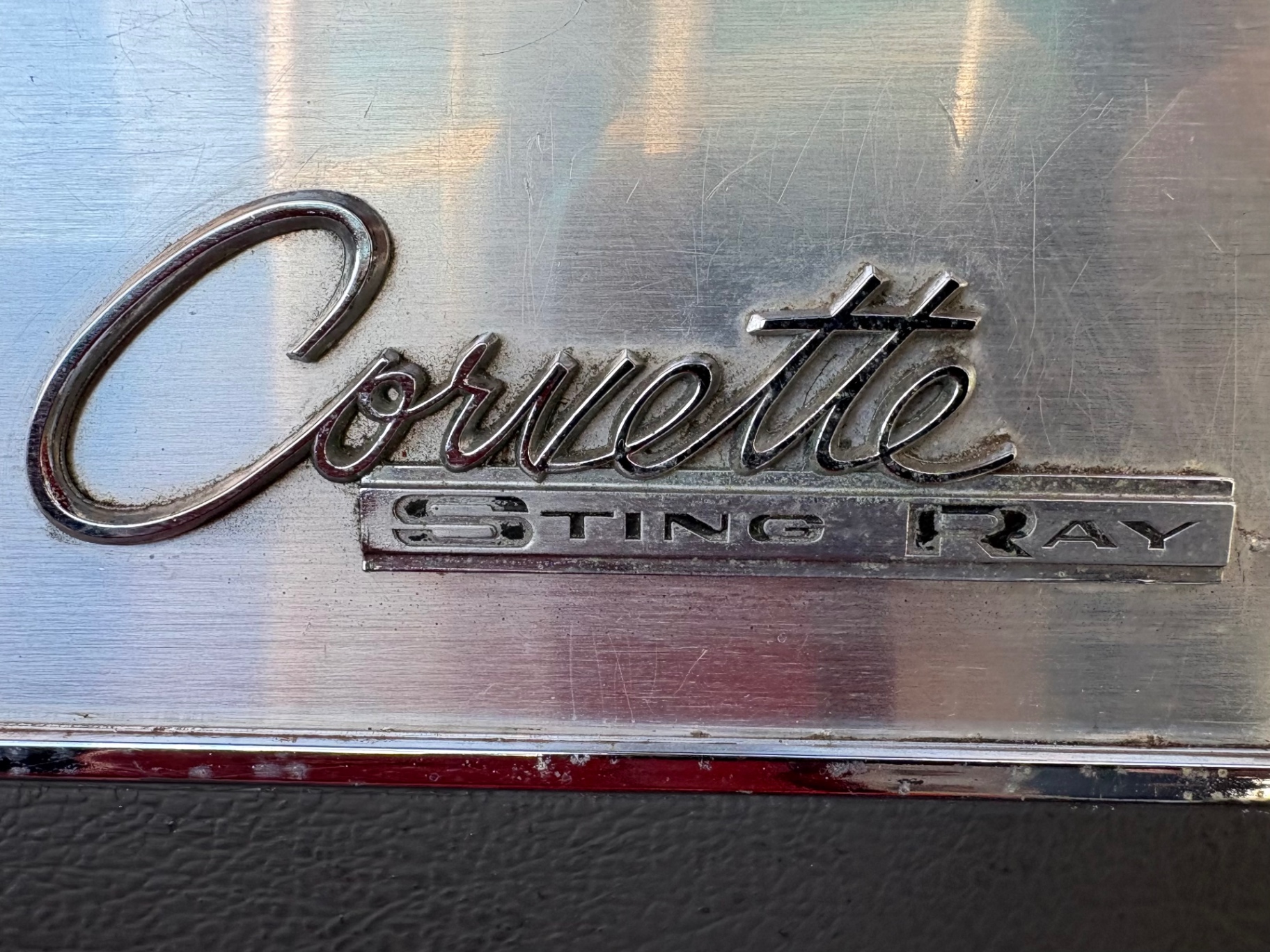
The interior of this 1965 Chevrolet Corvette Sting Ray is finished entirely in red — red vinyl bucket seats, red door panels, red carpeting, and a red dashboard surround. The Corvette Sting Ray script badge on the passenger-side dash pad is present and legible. The wood-rimmed steering wheel with its aluminum three-spoke hub is the correct style for this era and is in good presentable condition based on the photos. The odometer reads 36,431 miles, which is visible in the gauge cluster photo.
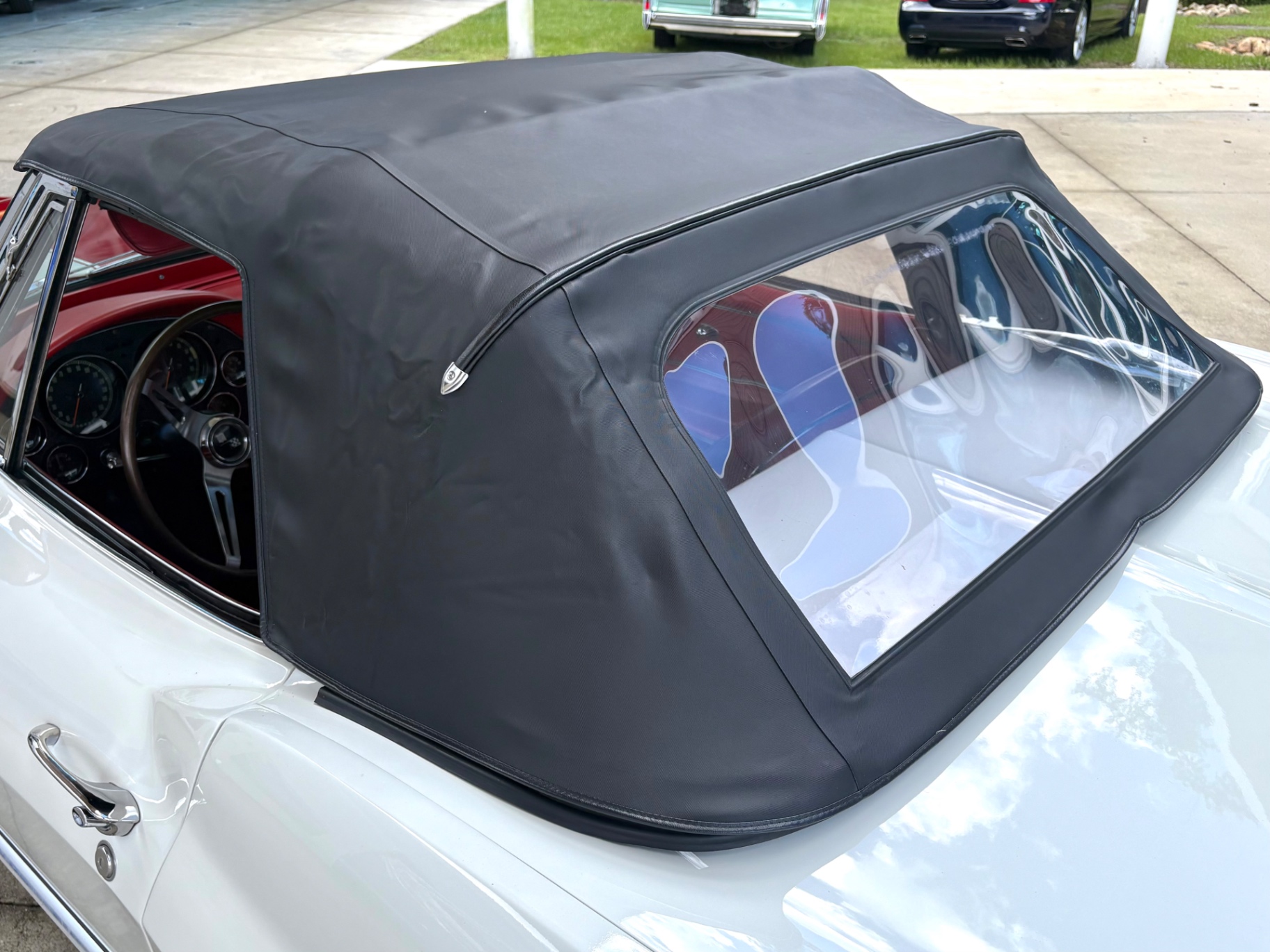
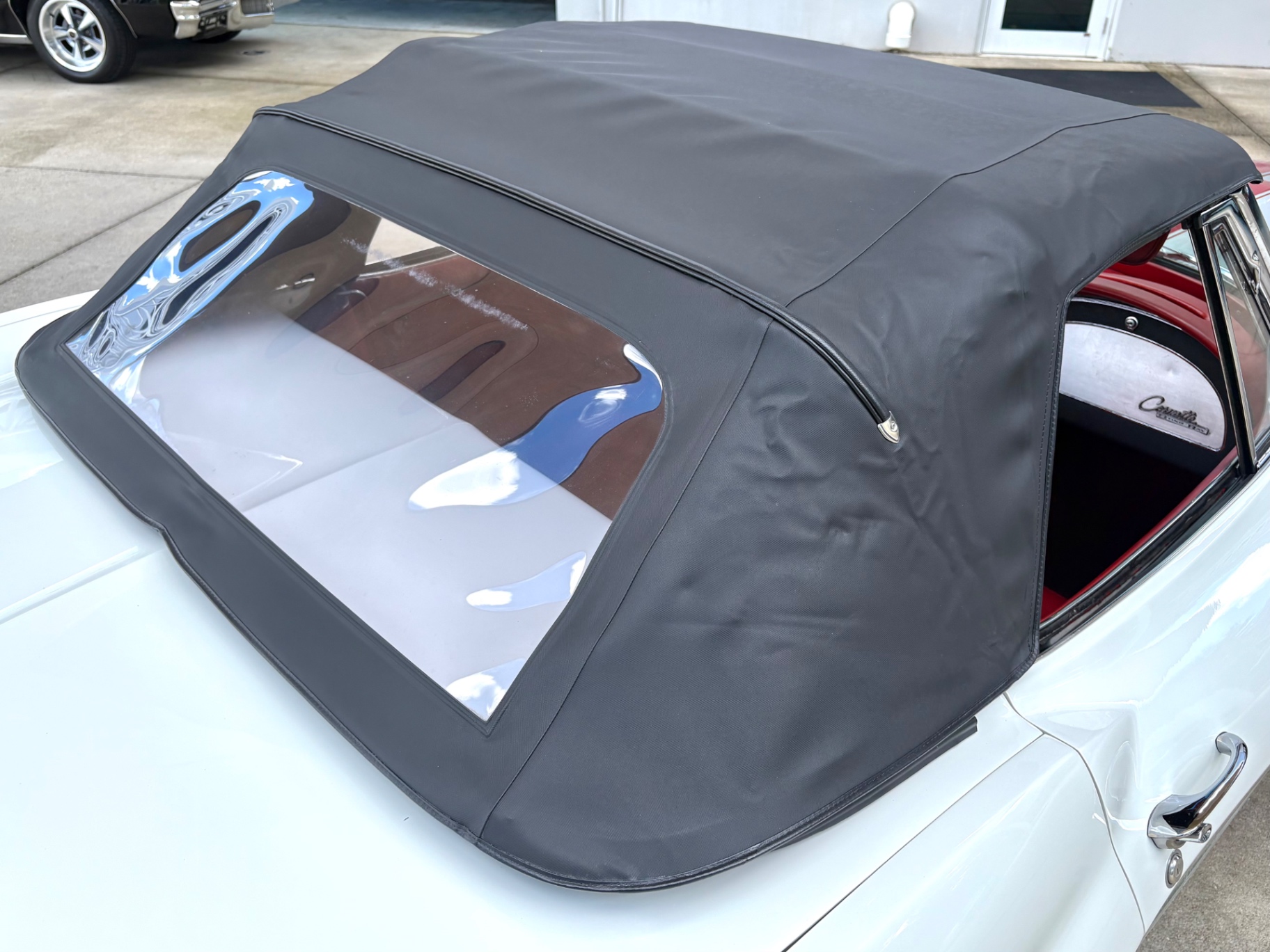
The instrument cluster is well-populated for 1965. The large speedometer and tachometer dominate the main binnacle, with a full complement of auxiliary gauges including fuel, temperature, battery, and oil pressure. A clock is mounted in the center of the dash, flanked by the heater controls and the AM radio below. The center console houses the 4-speed shifter with its white ball shift knob, and the gear diagram plate on the console face is intact. Both soft tops are present — the red convertible top that is currently fitted and a black soft top included with the car, giving the next owner flexibility in how they present the vehicle. The overall interior condition reads as honest and well-kept, not a freshly redone car, but a solid original or correctly restored interior that has aged appropriately.
Exterior
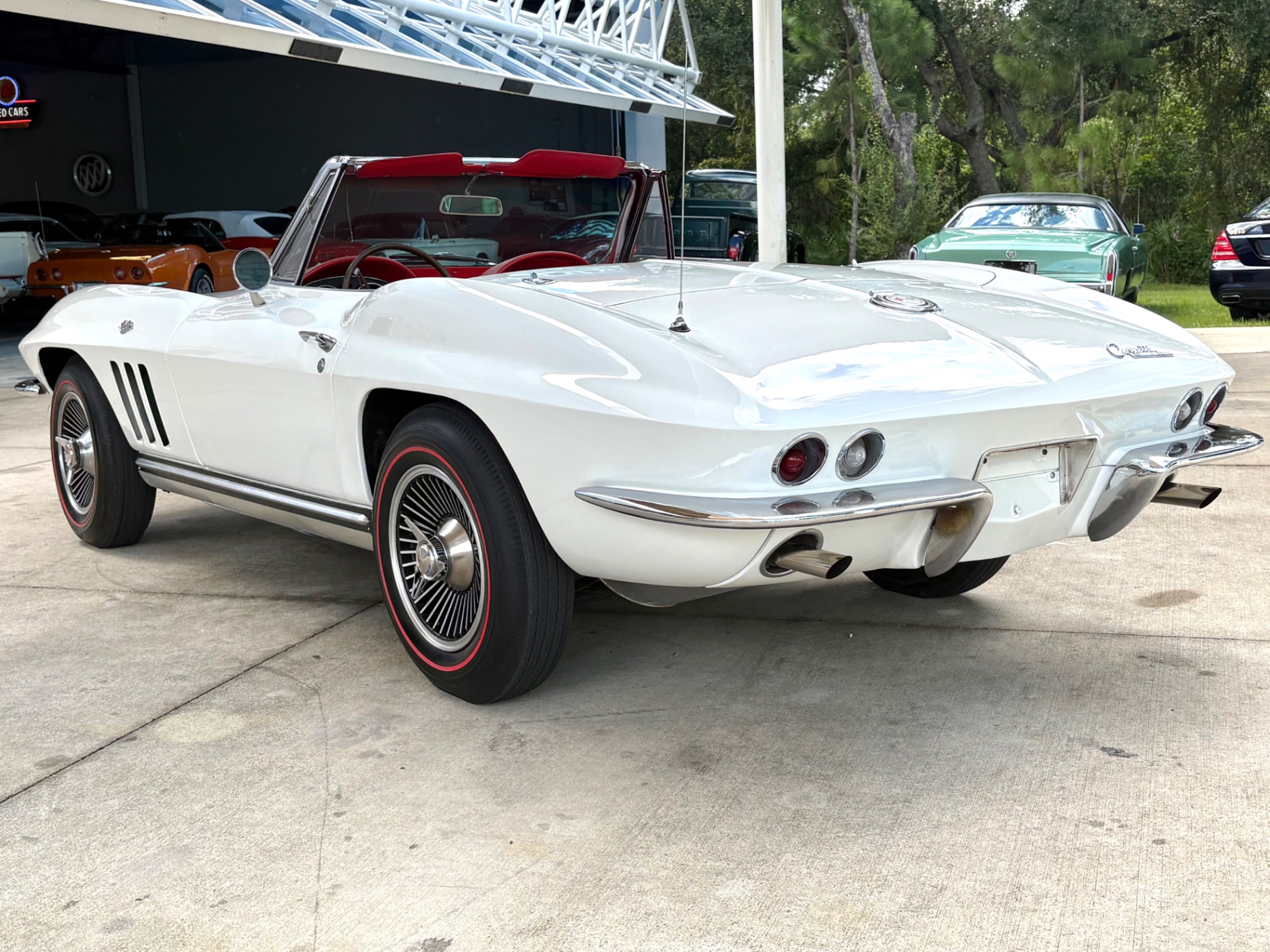
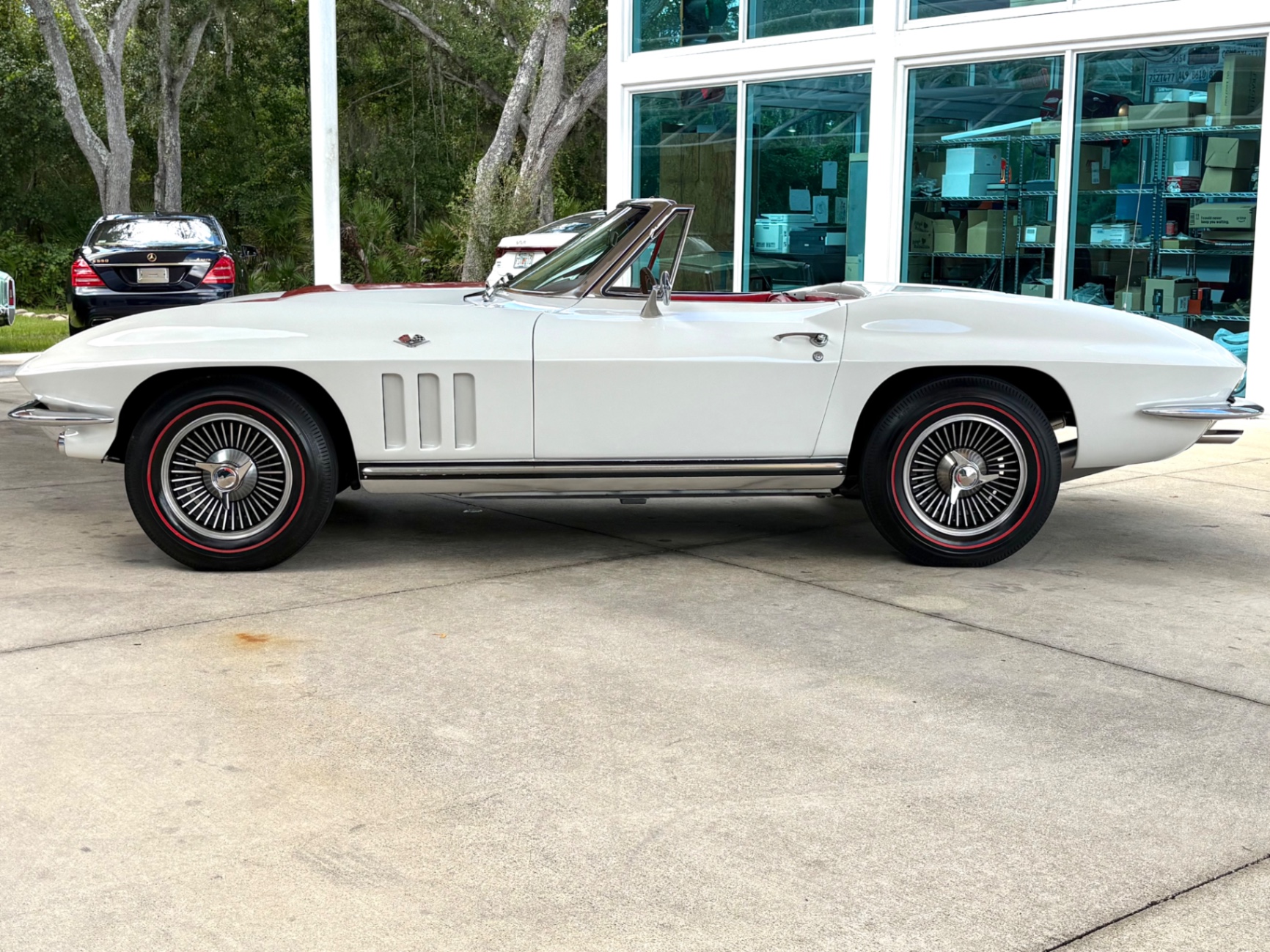
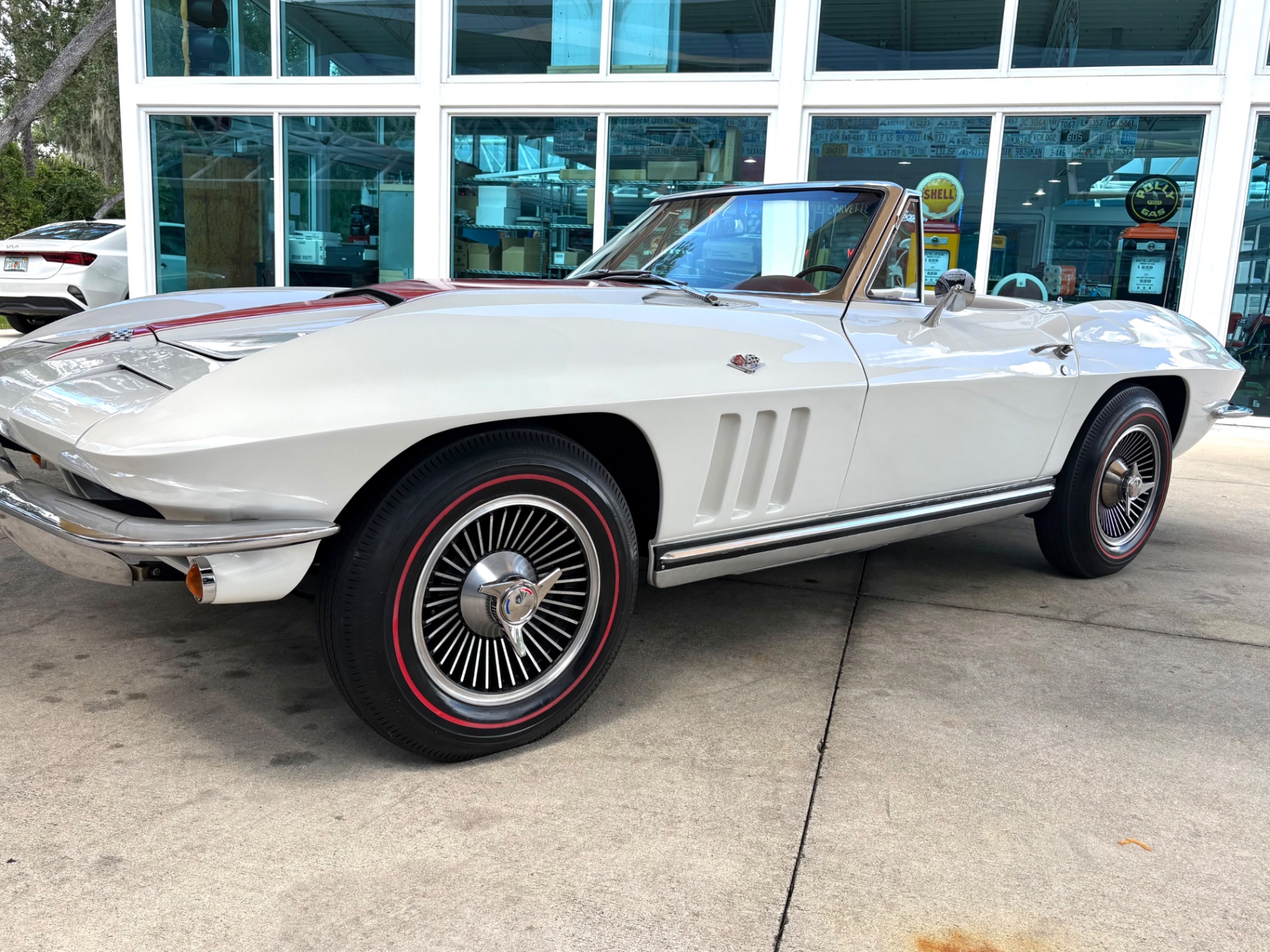
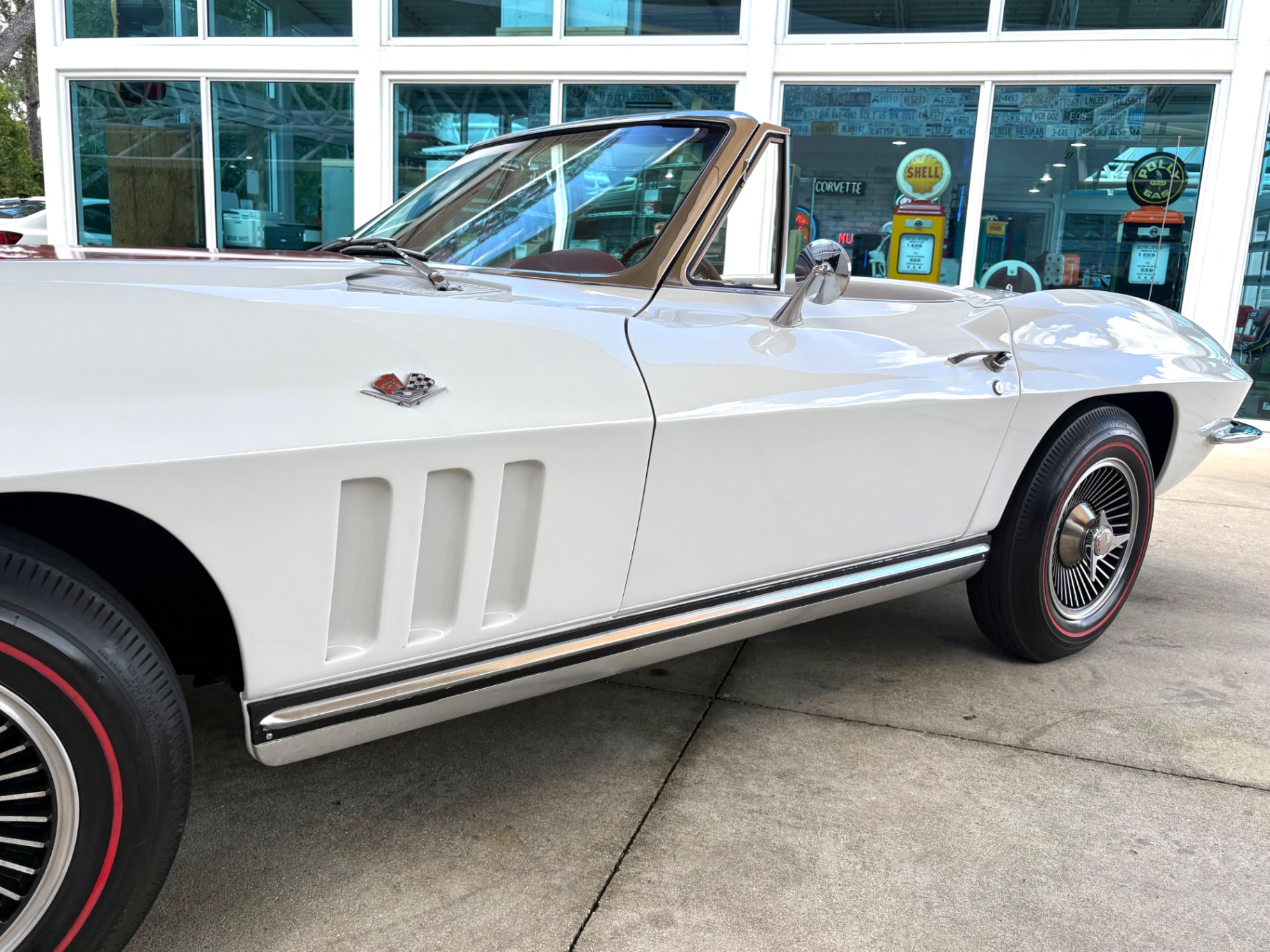
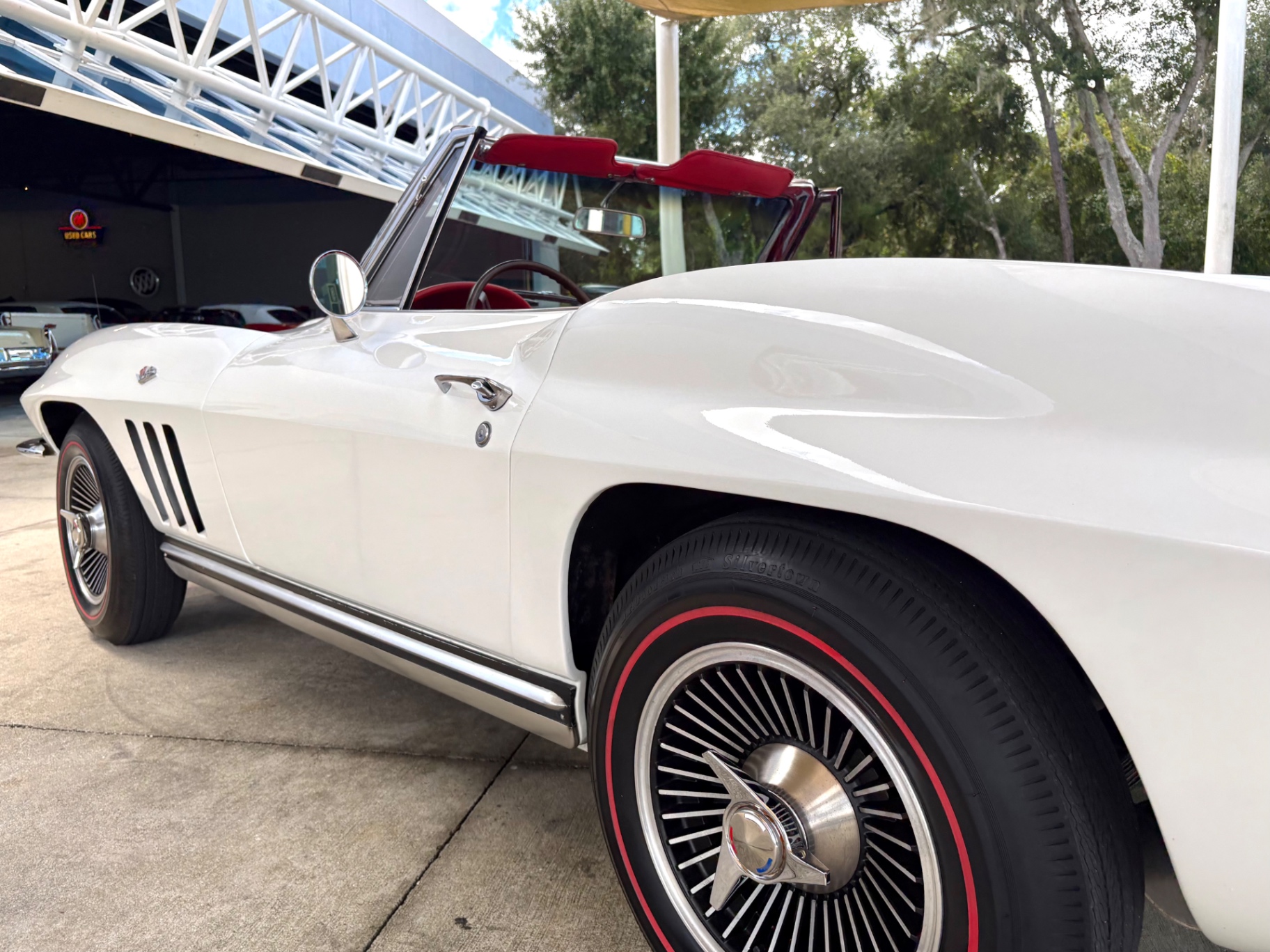
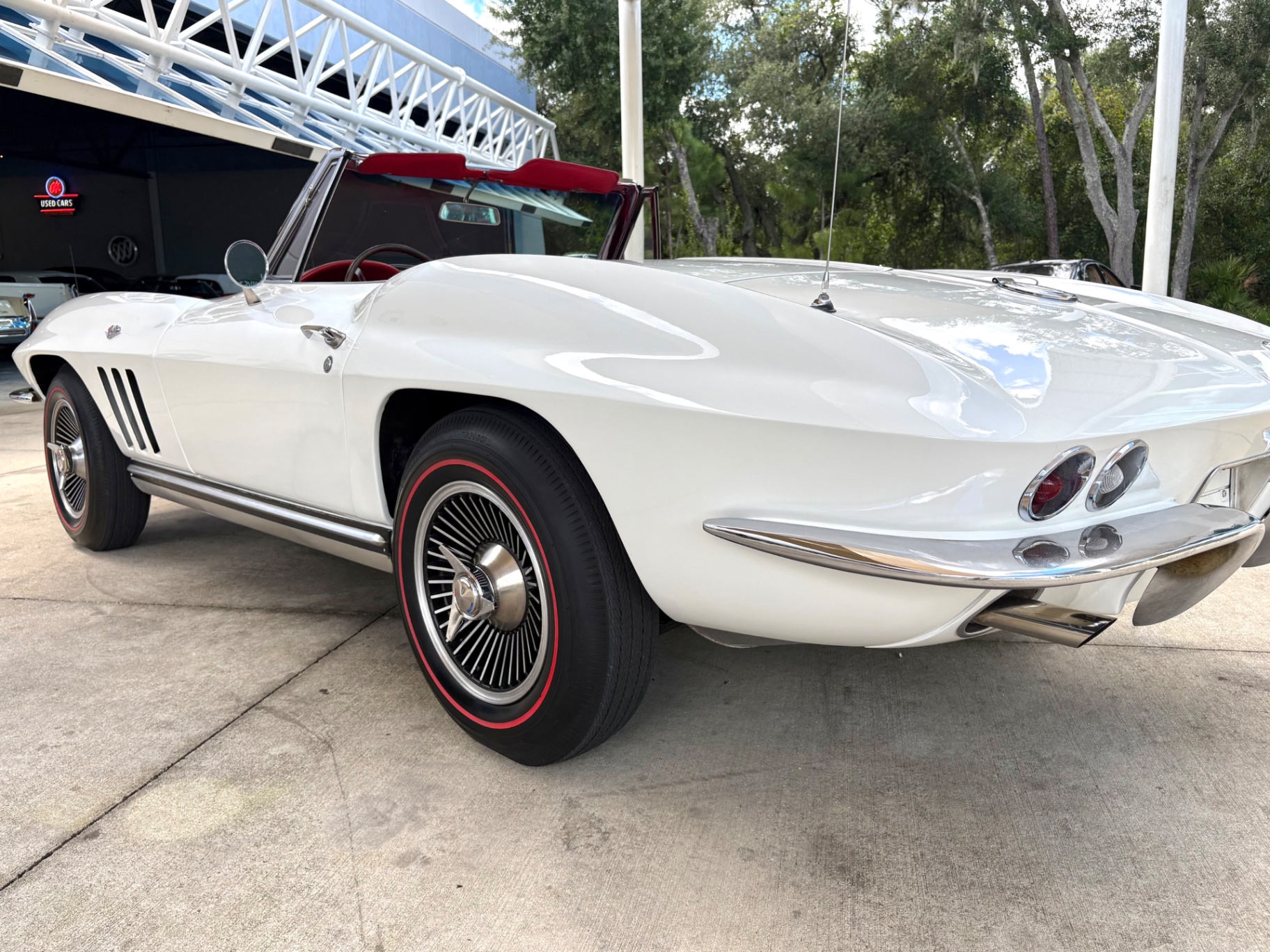
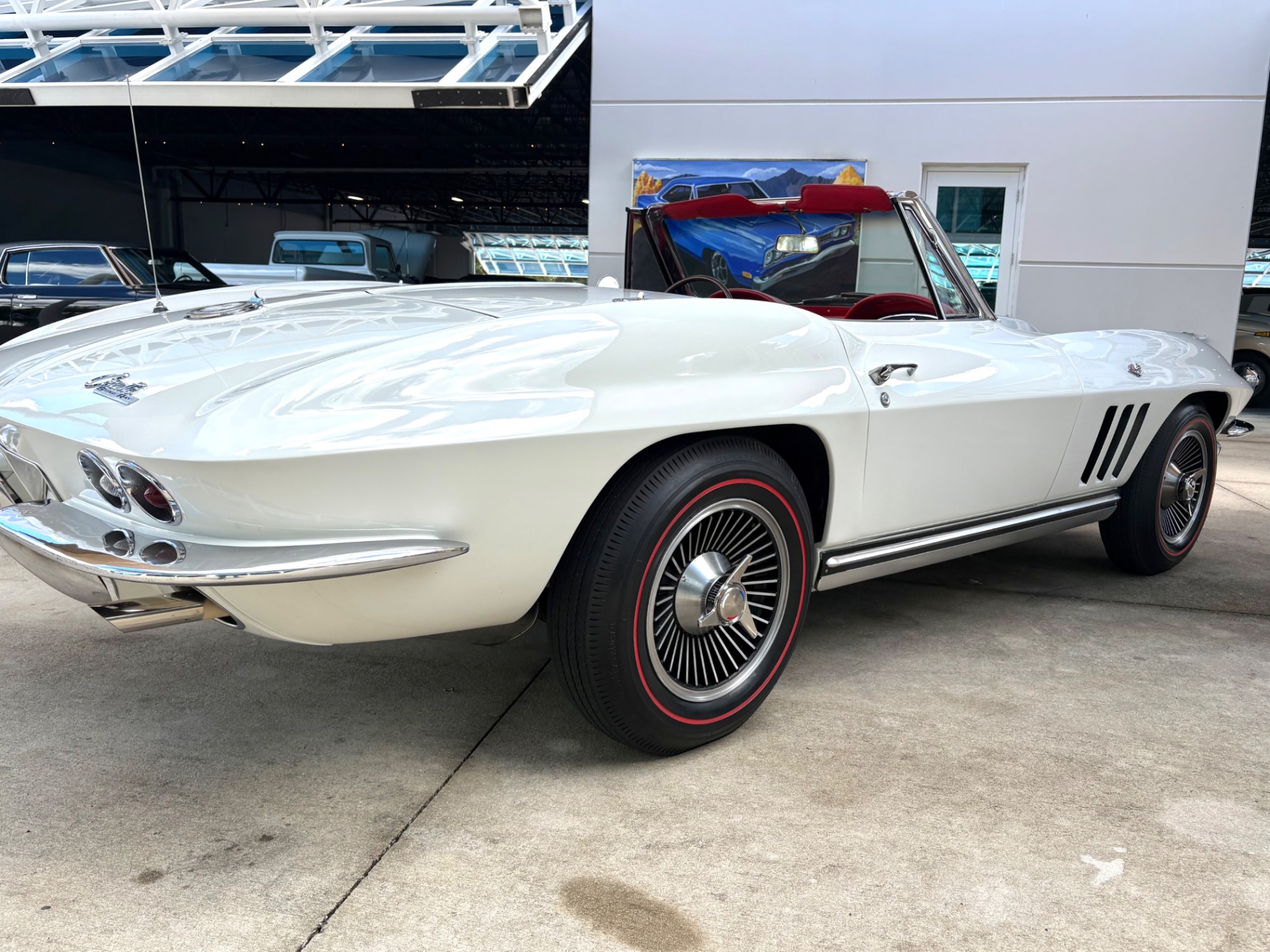
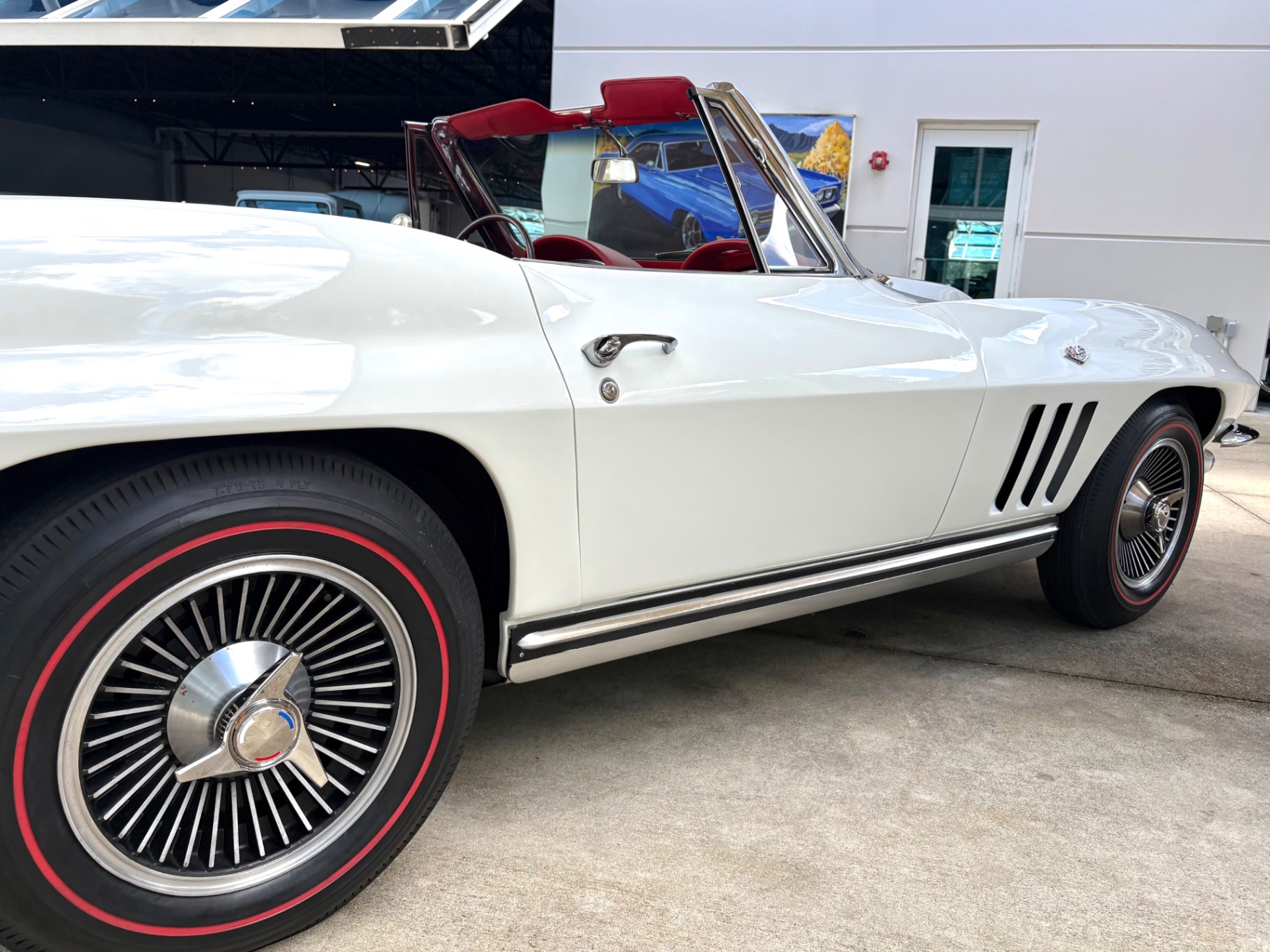
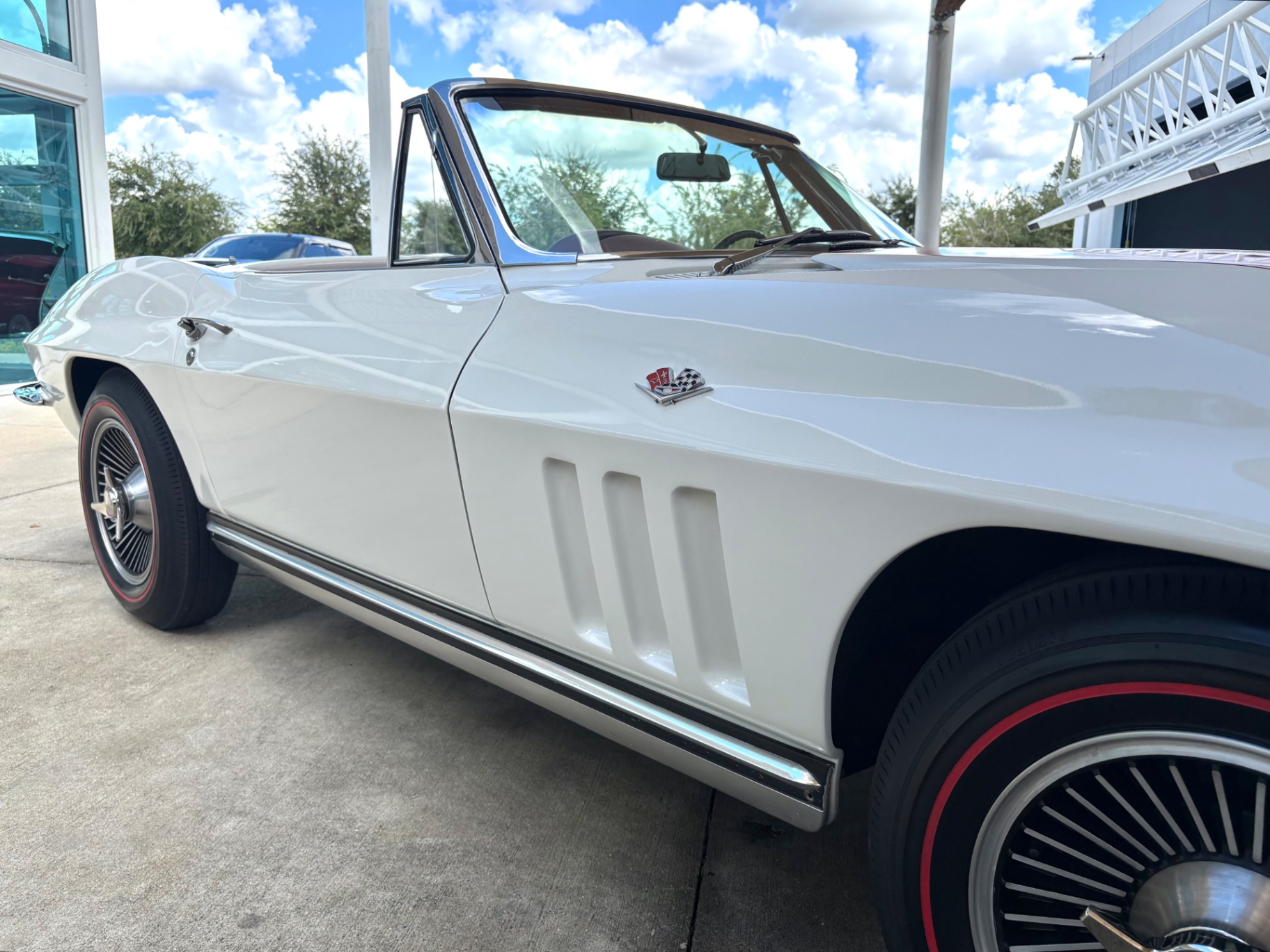
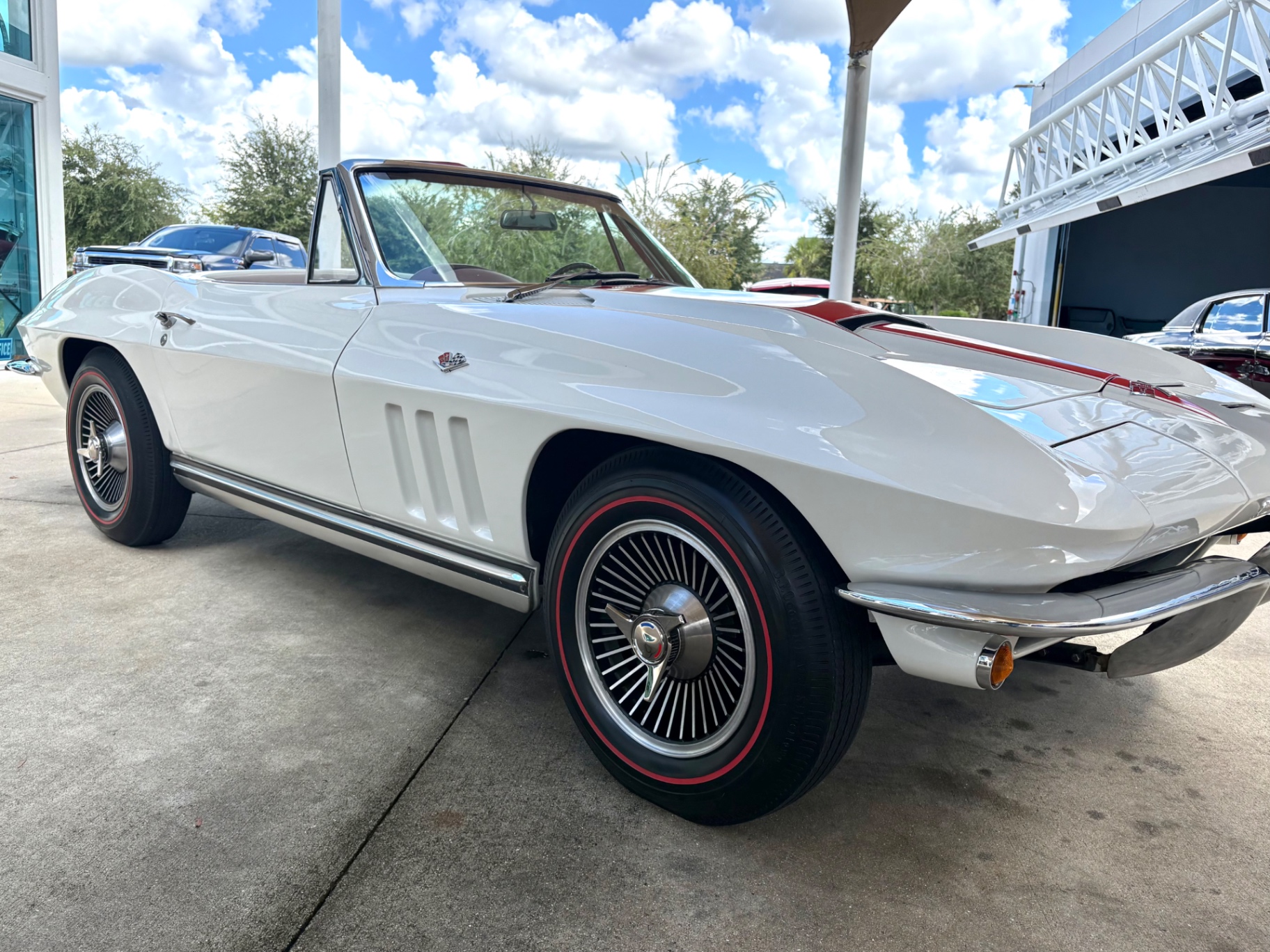
The 1965 Chevrolet Corvette Sting Ray wears Ermine White on its fiberglass body, one of the factory color options for that model year. The red stinger stripe on the hood is a factory-style option that was available in 1965 and works particularly well against the white body. Chrome bumpers front and rear are present and show well in the photos. The concealed headlight doors are a signature design element of the C2 Corvette, introduced with the body style in 1963 and carried through the generation's run. When closed, they give the nose a clean, uninterrupted appearance that was quite unlike anything else on American roads at the time.
The wire spoke wheels are a correct and desirable option for this generation of Corvette, fitted here with red line tires that reinforce the period-correct appearance. The three simulated air vents on the front fenders are another C2 styling detail, as are the side exhaust outlets visible at the rocker panel area of the rear quarter. The rear of the car carries the Corvette's characteristic twin-element taillights flanked by chrome bumper guards, with the dual exhaust tips just visible below. The overall exterior presentation is consistent with the rest of the car — a well-kept, driver-quality 1965 Corvette Sting Ray rather than a concours trailer queen.
Conclusion
The 1965 Chevrolet Corvette Sting Ray convertible occupies a specific and well-understood place in the collector market. It is the most refined year of the C2 body style's early period, the first year of available four-wheel discs, and a car that remains genuinely usable on today's roads thanks to its independent rear suspension, competent small block power, and relatively straightforward mechanicals. This particular example — L75 327, 4-speed, Ermine White over red, with 36,431 indicated miles — is a well-configured, honest driver that checks the most important boxes without demanding the premium of a numbers-matching, documentation-heavy show car. The color combination is strong, the engine bay is correct and presentable, and the undercarriage photos show a car that has been looked after. If you have been searching for a 1965 Corvette Sting Ray convertible that you can enjoy without reservation, this one deserves a close look.
To schedule an inspection or ask specific questions about this 1965 Chevrolet Corvette Sting Ray, call Skyway Classics in Sarasota, Florida at 941-254-6608.
Disclaimer
Information found on the website is presented as given to us by the owner of the car, whether on consignment or from the owner we bought it from. Some Photos, materials for videos, descriptions and other information are provided by the consignor/seller and is deemed reliable, but Skyway Classics does not warranty or guarantee this information. Skyway Classics is not responsible for information that may incorrect or a publishing error. The decision to purchase should be based solely on the buyers personal inspection of the vehicle or by a professional inspection service prior to offer or purchase being made.
1965 Chevrolet Corvette Sting Ray Convertible — 327/300hp, 4-Speed, Ermine White over Red
Why This Car Is Special
The 1965 Chevrolet Corvette Sting Ray is widely regarded as the high-water mark of the C2 generation, and for good reason. It was the first model year to offer four-wheel disc brakes as a factory option, and it arrived with a revised hood and cleaner styling that eliminated the previous years' controversial hood vents. The chassis carried over the fully independent rear suspension that had made the 1963 introduction so significant, but by 1965 Chevrolet had refined the package into something that felt more finished and capable. Total production for the 1965 model year was 23,562 units, split between coupes and convertibles. Of those, 15,376 were convertibles — making the roadster the more common body style, though well-optioned examples in strong color combinations have consistently attracted serious collector interest.
The VIN on this car decodes to a 1965 Corvette convertible built at the St. Louis assembly plant, carrying the 327 cubic inch small block. The engine suffix code designation L75 identifies this as the 300-horsepower four-barrel version of the 327 — a strong, streetable engine that was among the most popular configurations Chevrolet offered that year. It is not the base 250-horsepower engine, and it is not one of the high-compression racing variants that require premium fuel and careful tuning to enjoy on the street. The L75 hits a practical sweet spot: enough power to be genuinely entertaining, with the kind of temperament that makes everyday driving straightforward. The odometer shows 36,431 indicated miles, which is consistent with a car that has been cared for and used selectively rather than stored indefinitely.
The color combination here — Ermine White over a full red interior. White and red on a Sting Ray is a combination that photographs well and presents with a confidence that subtler combinations do not. A red hood stinger stripe adds the final punctuation mark up front.
Features List
- 327ci/300hp L75 Small Block V8
- 4-Speed Manual Transmission
- Stinger Hood
- Knockoff Wheels
- Corvette Aluminum Valve Covers
- Four-Barrel Carburetor
- Independent Rear Suspension
- Wire Spoke Wheels
- Red Line Tires
- Red Hood Stinger Stripe
- Concealed Headlights
- Fiberglass Body
- Black Soft Top Included
- Wood-Rimmed Steering Wheel
- Red Vinyl Interior
- Red Carpeting
- Bucket Seats
- Center Console
- Clock
- Tachometer
- Dual Exhaust
- Drum Brakes
- Chrome Bumpers
- AM Radio
Mechanical
Under the hood sits the L75 327 cubic inch small block V8, rated at 300 horsepower from the factory. This engine is topped with a four-barrel carburetor and finished with the period-correct Corvette aluminum valve covers that are clearly visible in the engine bay photos — finned aluminum castings with the Corvette script, painted in the correct silver finish against the red block. The engine bay presents cleanly and the overall appearance is consistent with a well-maintained example rather than a freshly detailed show car. Power goes through a 4-speed manual transmission, which is the correct and desirable setup for this application. The shift pattern plate on the console shows the standard H-pattern layout.
The 1965 Corvette Sting Ray came standard with independent rear suspension front and rear — a setup that was genuinely advanced for an American production car of the era. The rear uses a three-link arrangement with a U-jointed halfshaft on each side acting as the upper locating member, a lateral strut rod, and a trailing arm. This is visible in the undercarriage photos, which also show a clean, painted underside consistent with the car's overall condition. The dual exhaust exits through the characteristic Sting Ray rear treatment, with the pipes tucked up and exiting beneath the rear bumper. Braking is handled by drums at all four corners, which was still the standard configuration in 1965 — the optional four-wheel disc system was available that year for the first time but was not installed on every car. The wire spoke wheels are fitted with red line tires, a combination that was period-correct and remains one of the most visually appropriate wheel and tire pairings for a mid-1960s Corvette.
Interior
The interior of this 1965 Chevrolet Corvette Sting Ray is finished entirely in red — red vinyl bucket seats, red door panels, red carpeting, and a red dashboard surround. The Corvette Sting Ray script badge on the passenger-side dash pad is present and legible. The wood-rimmed steering wheel with its aluminum three-spoke hub is the correct style for this era and is in good presentable condition based on the photos. The odometer reads 36,431 miles, which is visible in the gauge cluster photo.
The instrument cluster is well-populated for 1965. The large speedometer and tachometer dominate the main binnacle, with a full complement of auxiliary gauges including fuel, temperature, battery, and oil pressure. A clock is mounted in the center of the dash, flanked by the heater controls and the AM radio below. The center console houses the 4-speed shifter with its white ball shift knob, and the gear diagram plate on the console face is intact. Both soft tops are present — the red convertible top that is currently fitted and a black soft top included with the car, giving the next owner flexibility in how they present the vehicle. The overall interior condition reads as honest and well-kept, not a freshly redone car, but a solid original or correctly restored interior that has aged appropriately.
Exterior
The 1965 Chevrolet Corvette Sting Ray wears Ermine White on its fiberglass body, one of the factory color options for that model year. The red stinger stripe on the hood is a factory-style option that was available in 1965 and works particularly well against the white body. Chrome bumpers front and rear are present and show well in the photos. The concealed headlight doors are a signature design element of the C2 Corvette, introduced with the body style in 1963 and carried through the generation's run. When closed, they give the nose a clean, uninterrupted appearance that was quite unlike anything else on American roads at the time.
The wire spoke wheels are a correct and desirable option for this generation of Corvette, fitted here with red line tires that reinforce the period-correct appearance. The three simulated air vents on the front fenders are another C2 styling detail, as are the side exhaust outlets visible at the rocker panel area of the rear quarter. The rear of the car carries the Corvette's characteristic twin-element taillights flanked by chrome bumper guards, with the dual exhaust tips just visible below. The overall exterior presentation is consistent with the rest of the car — a well-kept, driver-quality 1965 Corvette Sting Ray rather than a concours trailer queen.
Conclusion
The 1965 Chevrolet Corvette Sting Ray convertible occupies a specific and well-understood place in the collector market. It is the most refined year of the C2 body style's early period, the first year of available four-wheel discs, and a car that remains genuinely usable on today's roads thanks to its independent rear suspension, competent small block power, and relatively straightforward mechanicals. This particular example — L75 327, 4-speed, Ermine White over red, with 36,431 indicated miles — is a well-configured, honest driver that checks the most important boxes without demanding the premium of a numbers-matching, documentation-heavy show car. The color combination is strong, the engine bay is correct and presentable, and the undercarriage photos show a car that has been looked after. If you have been searching for a 1965 Corvette Sting Ray convertible that you can enjoy without reservation, this one deserves a close look.
To schedule an inspection or ask specific questions about this 1965 Chevrolet Corvette Sting Ray, call Skyway Classics in Sarasota, Florida at 941-254-6608.
Disclaimer
Information found on the website is presented as given to us by the owner of the car, whether on consignment or from the owner we bought it from. Some Photos, materials for videos, descriptions and other information are provided by the consignor/seller and is deemed reliable, but Skyway Classics does not warranty or guarantee this information. Skyway Classics is not responsible for information that may incorrect or a publishing error. The decision to purchase should be based solely on the buyers personal inspection of the vehicle or by a professional inspection service prior to offer or purchase being made.
1965 Chevrolet
Corvette Sting Ray
Why Choose Skyway Classics?
Explore our curated inventory of classic and collector cars—thoughtfully selected, ready to drive, and supported by experts who make ownership simple.
Expert Curation
Every vehicle is hand-selected by our experts for quality, authenticity, and investment potential.
Fast Transactions
Streamlined buying and selling process with quick financing and immediate delivery options.
Only National Dealer With Classic Service & Repair
We’re the only national dealership that services and repairs the classics we sell—before and after the sale.
Nationwide Network
Access to our extensive network of collectors, restorers, and classic car enthusiasts nationwide.
Concierge Ownership Support
From financing and insurance to paperwork, shipping, and titling—we handle the details so you can enjoy the drive.
Passion-Driven Service
We're classic car enthusiasts first, providing personalized service with genuine passion for the hobby.