
1964 Chevrolet
Corvette Sting Ray
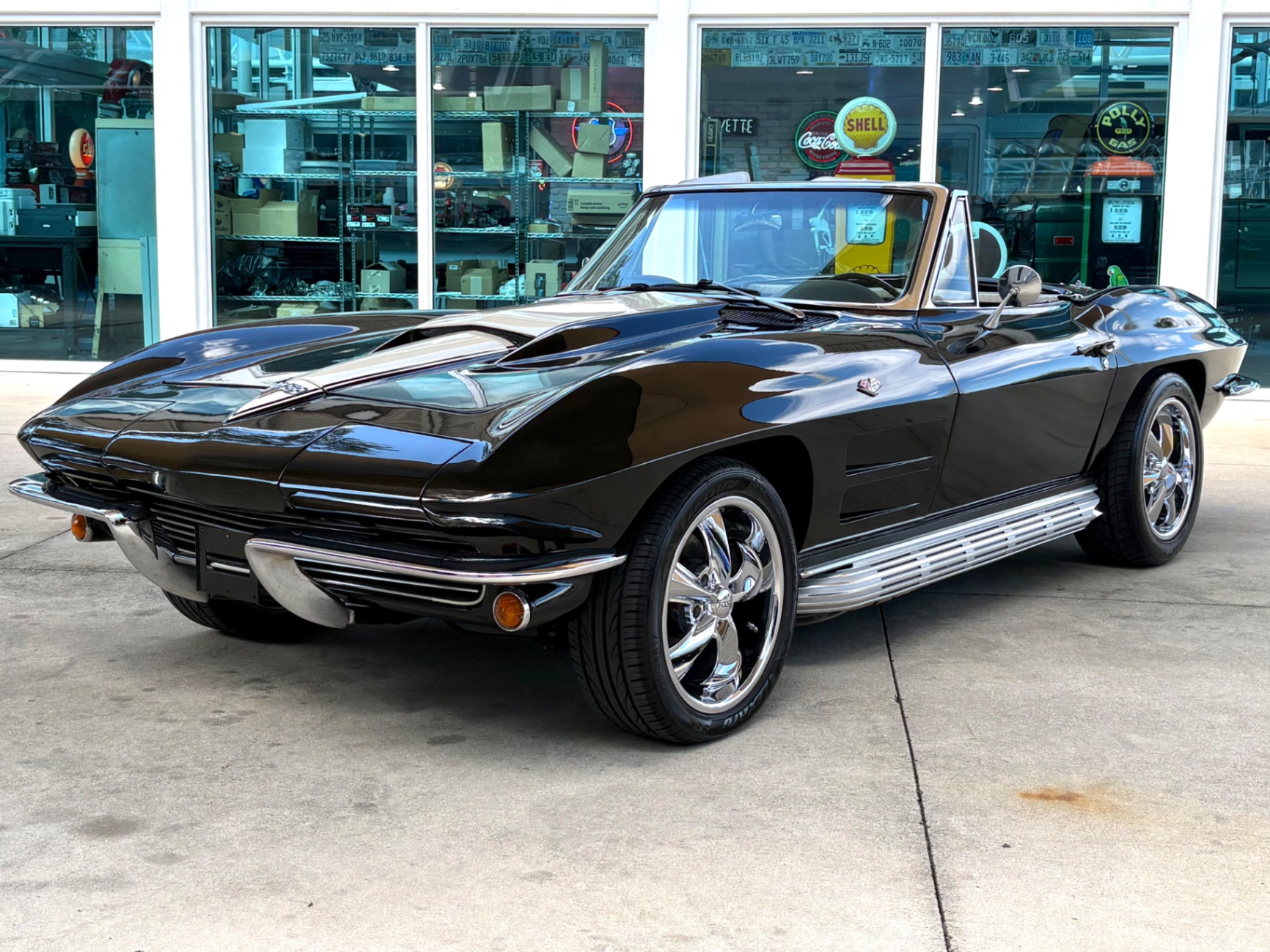
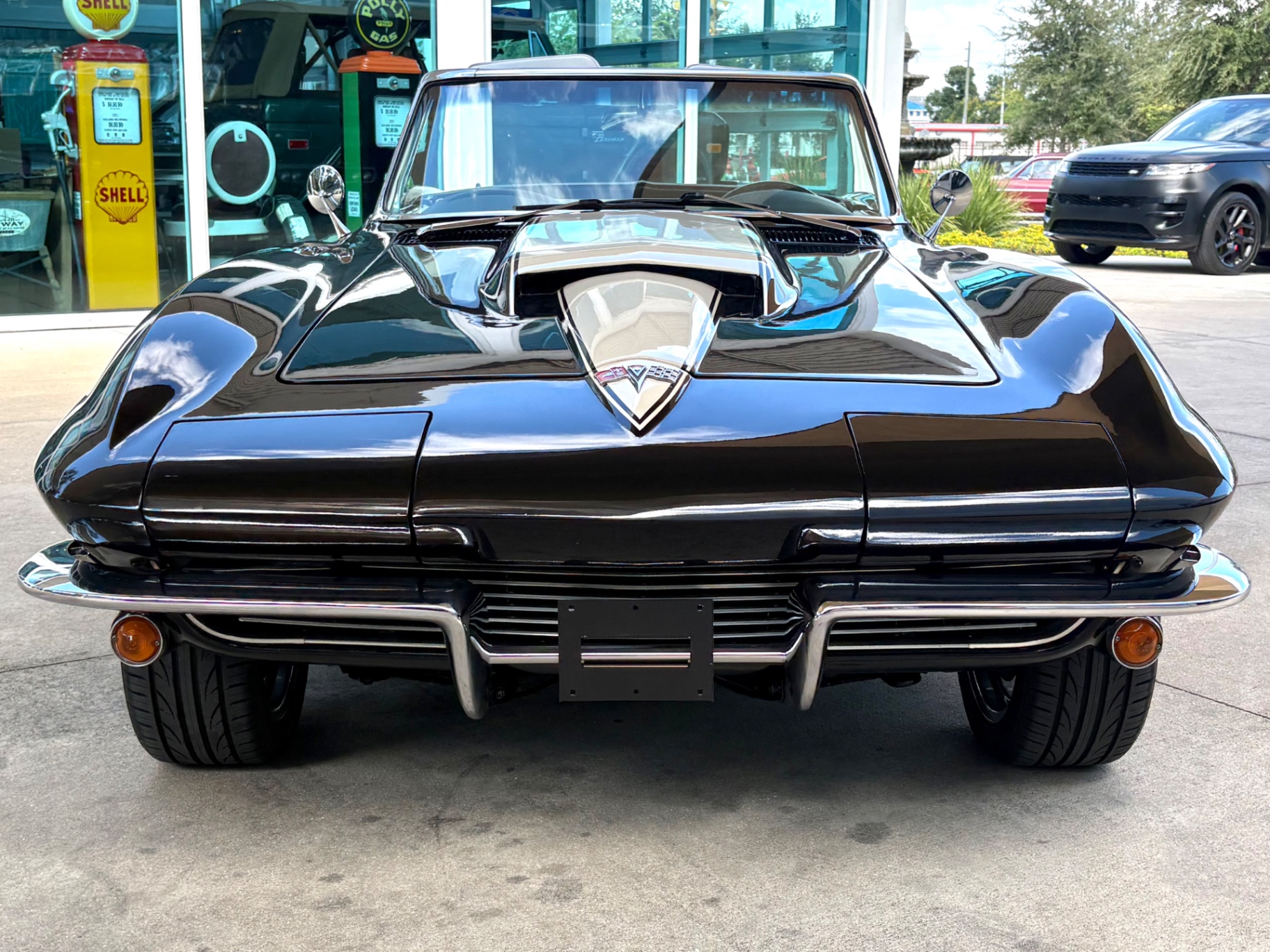
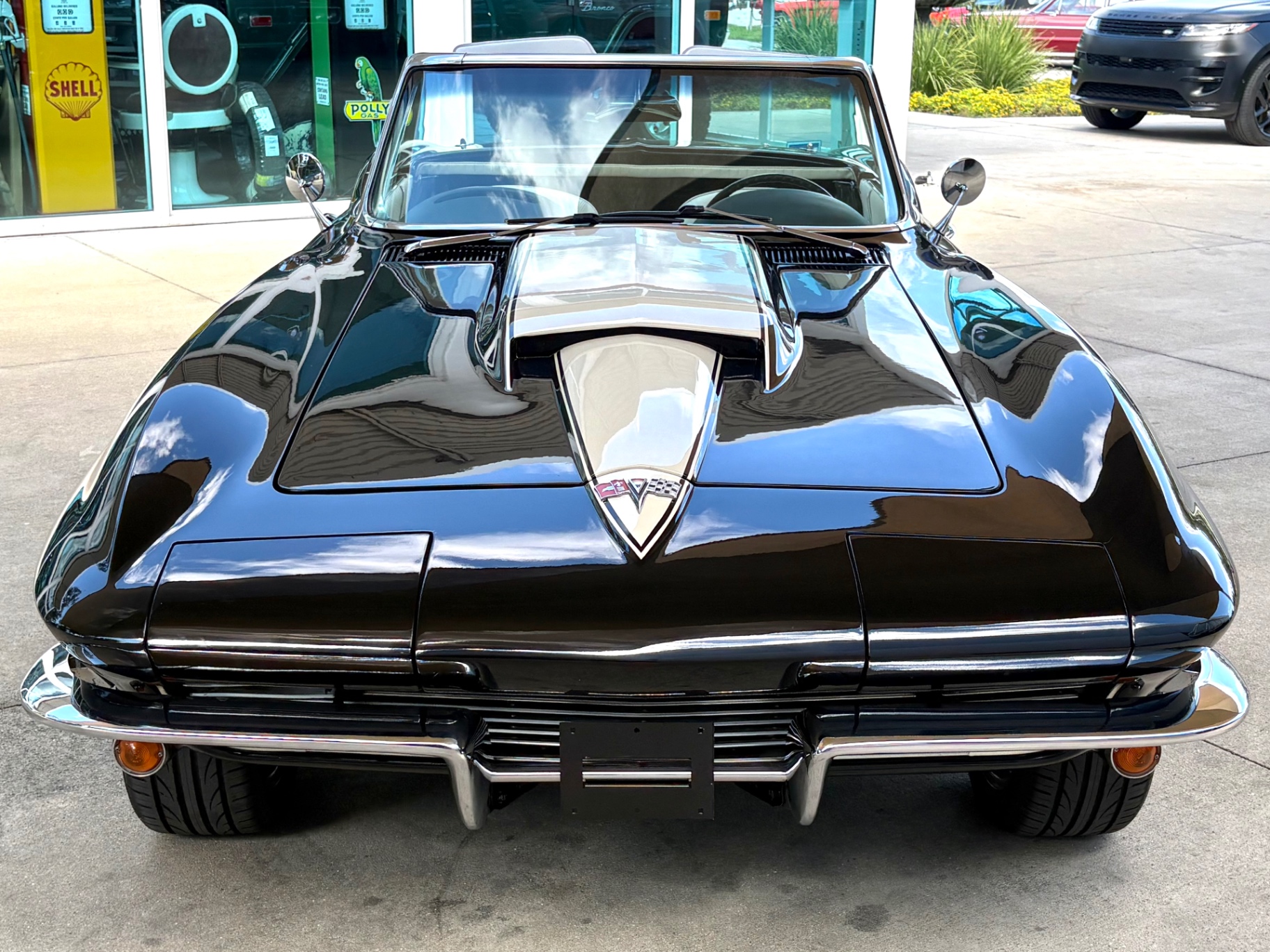
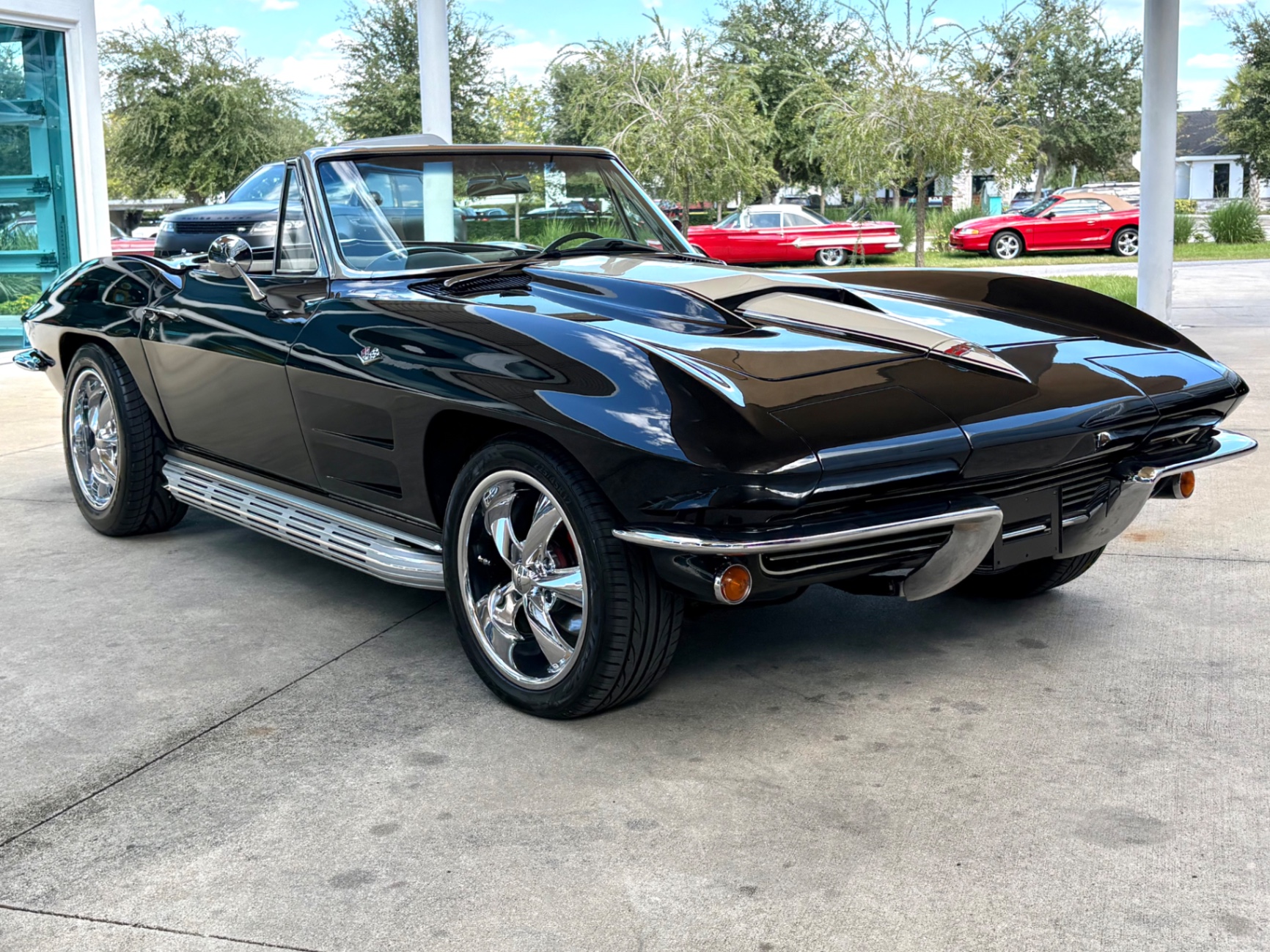
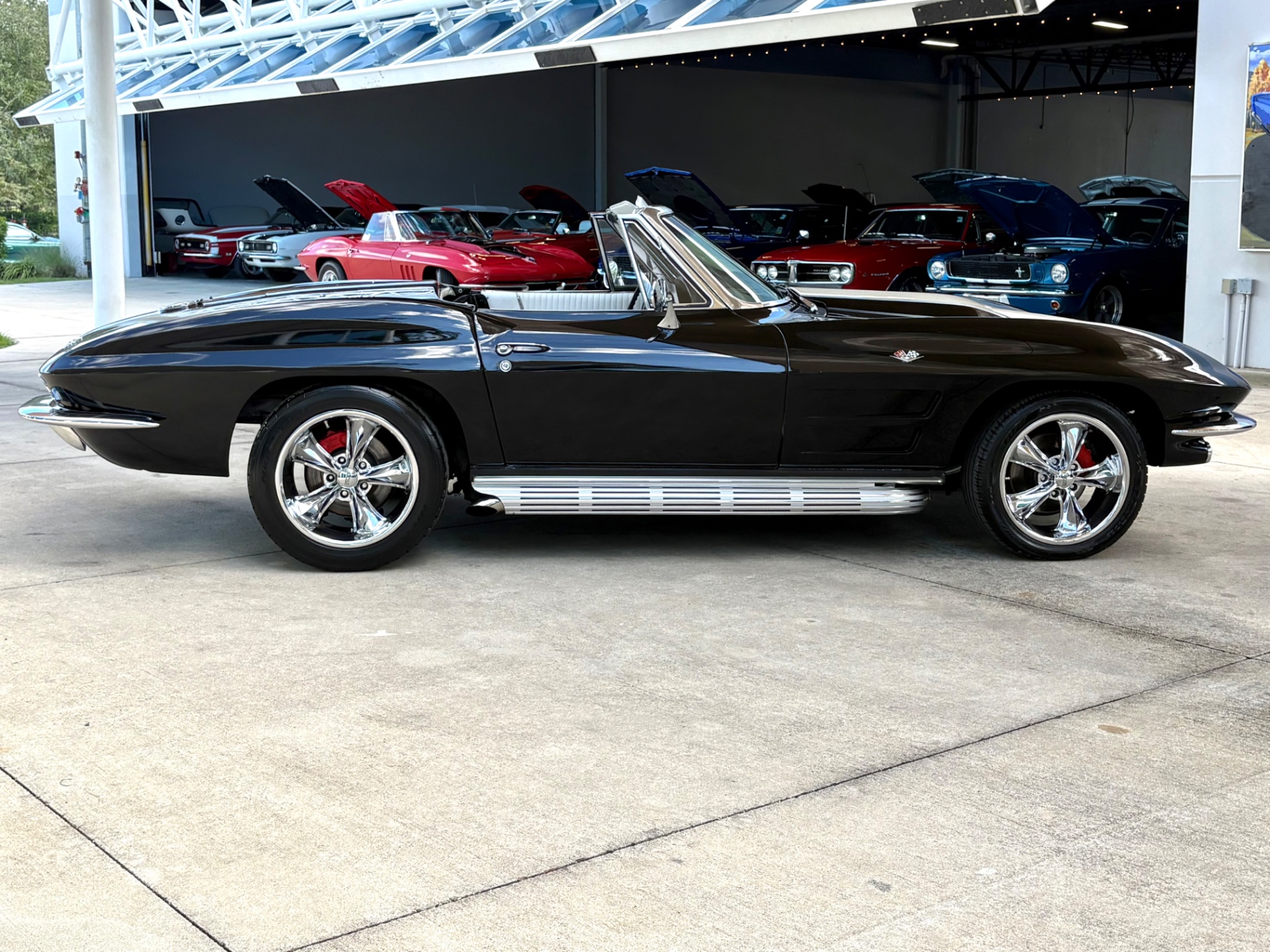
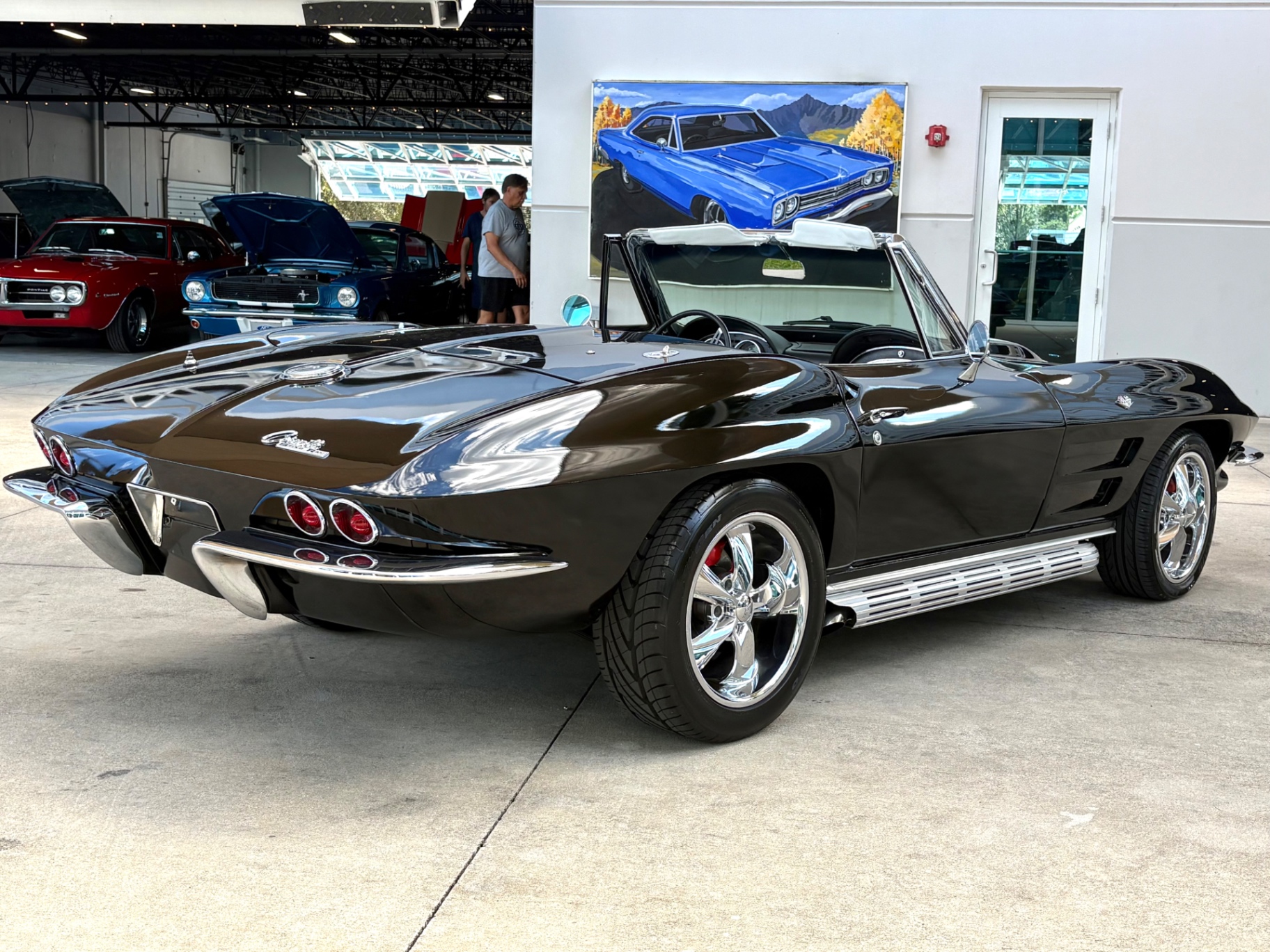
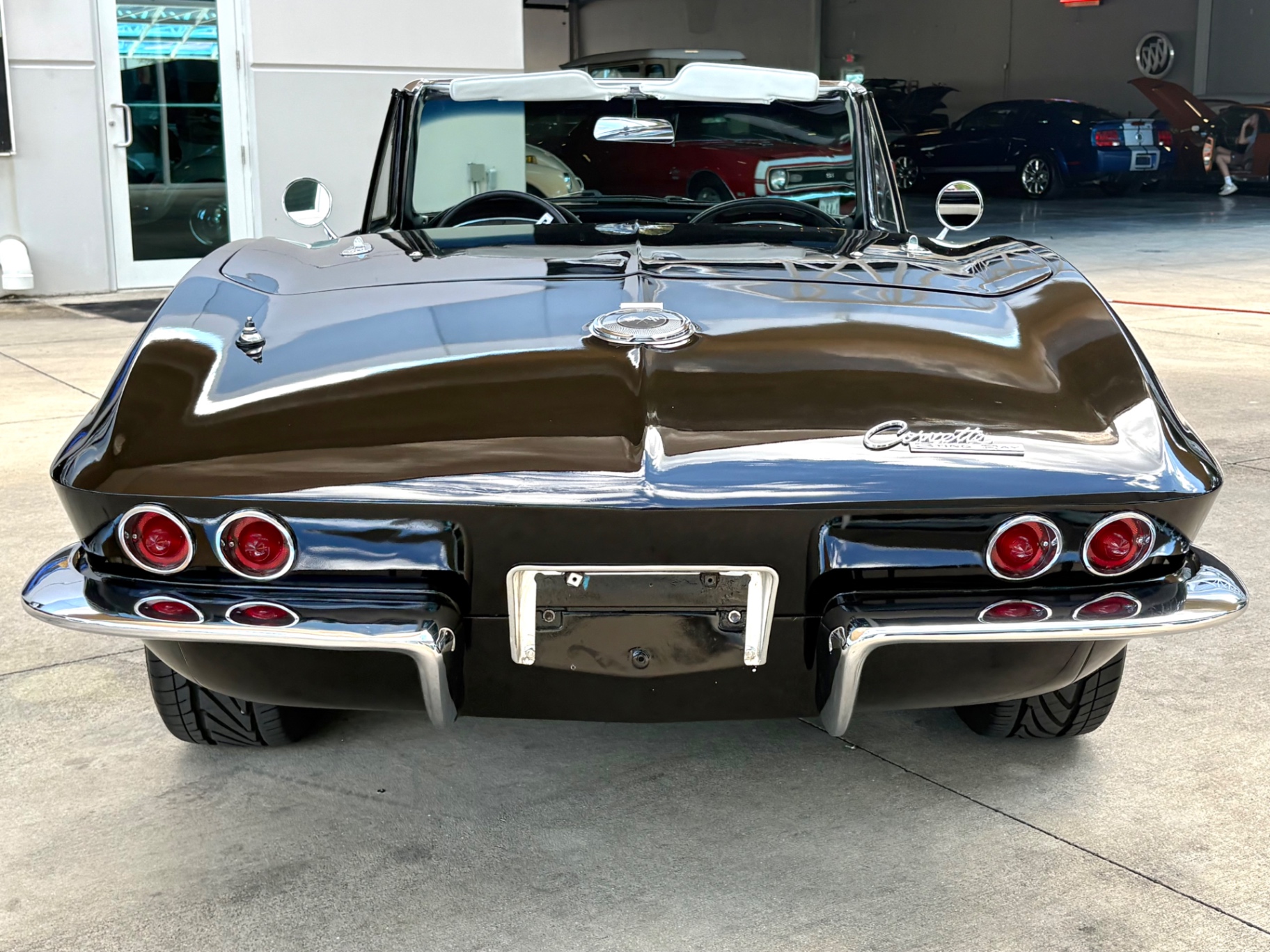
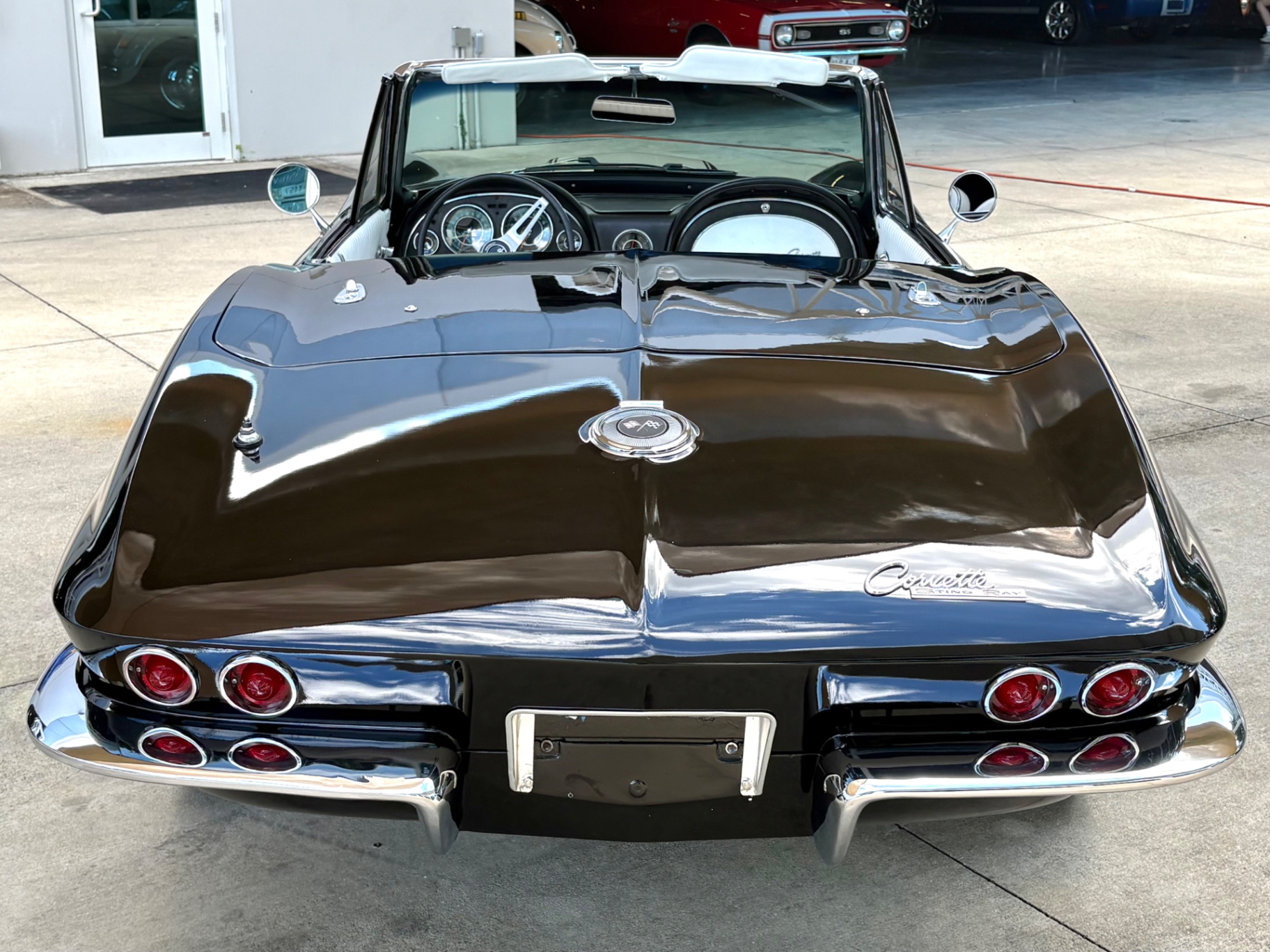
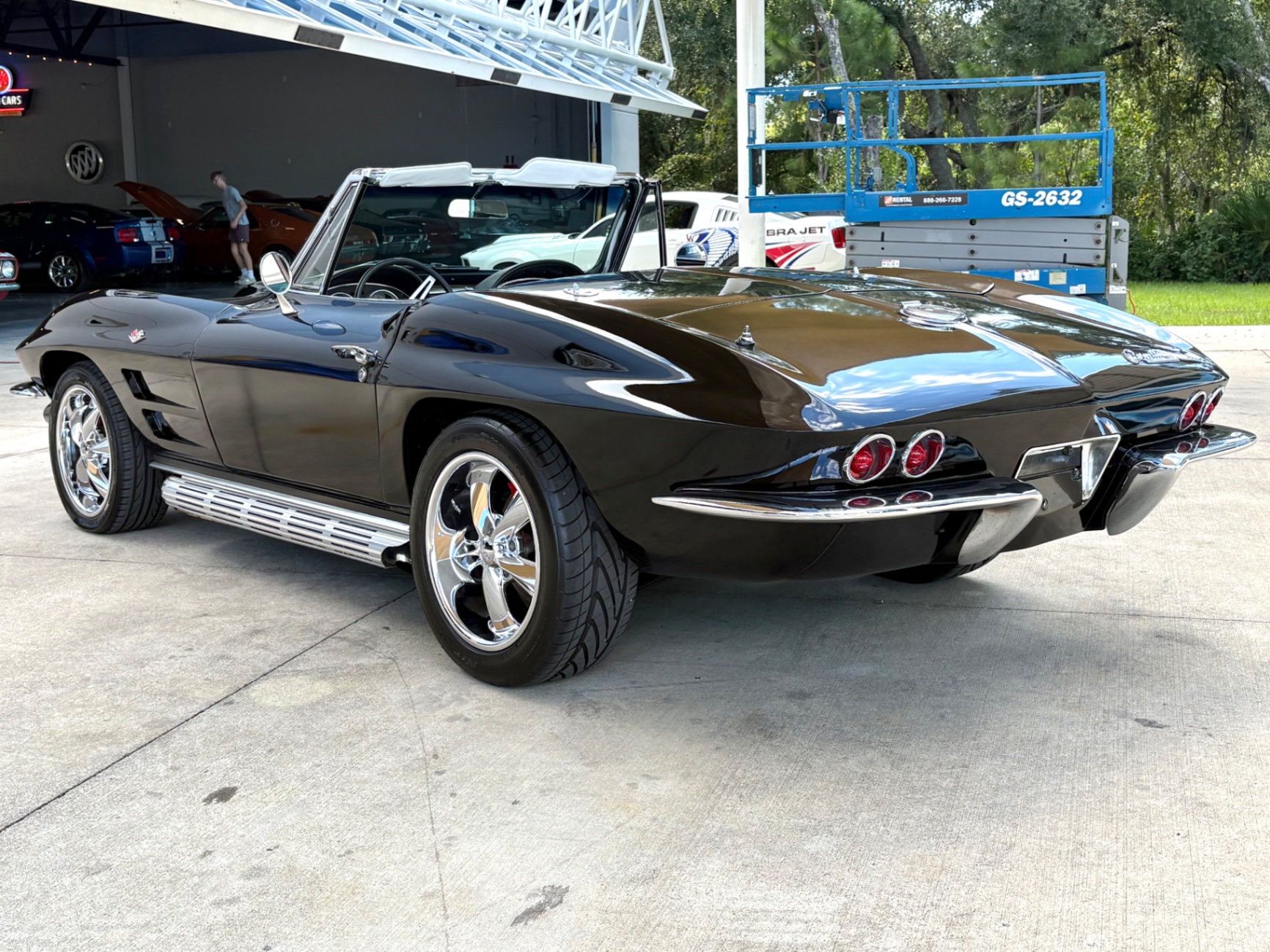
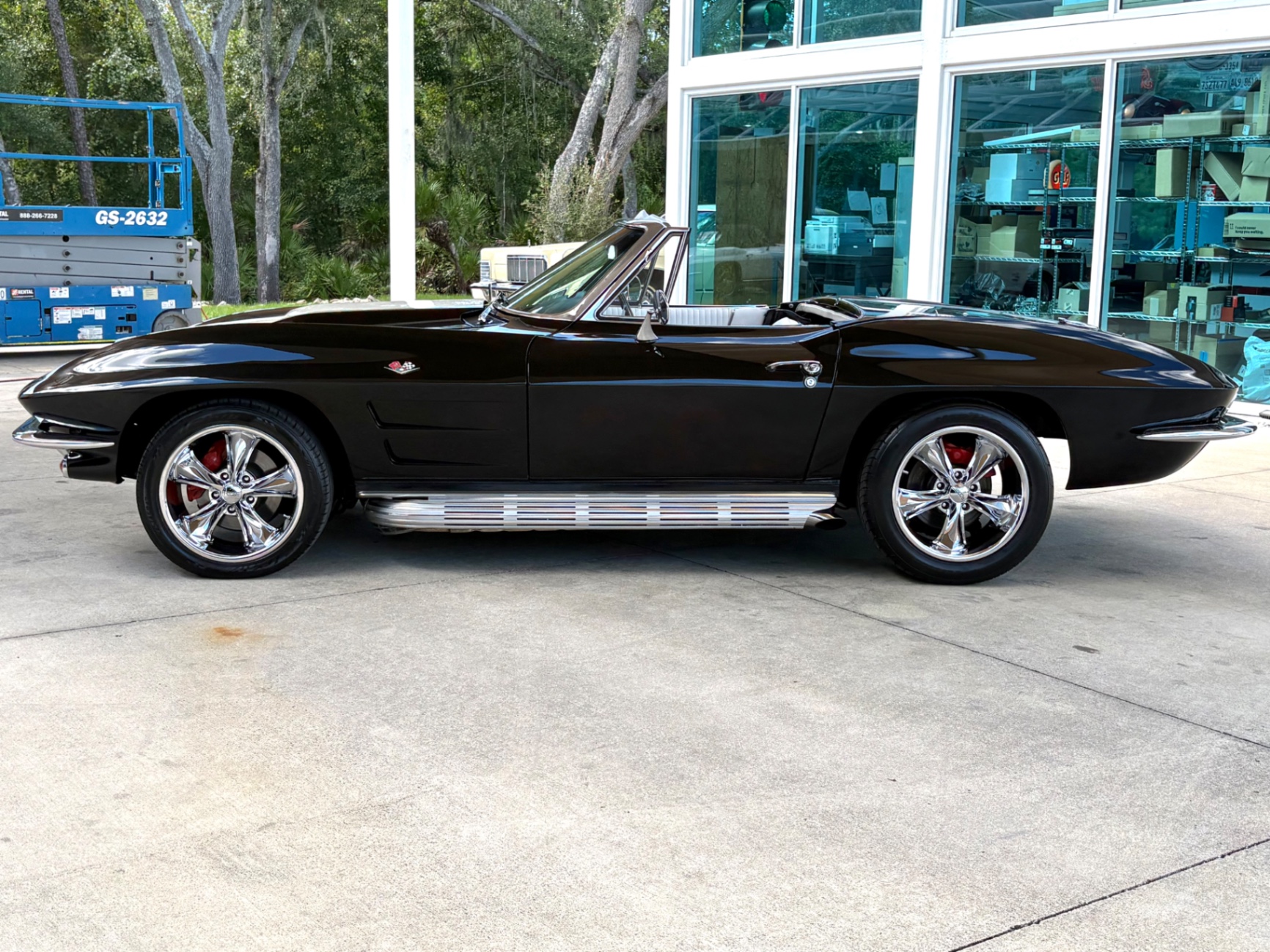
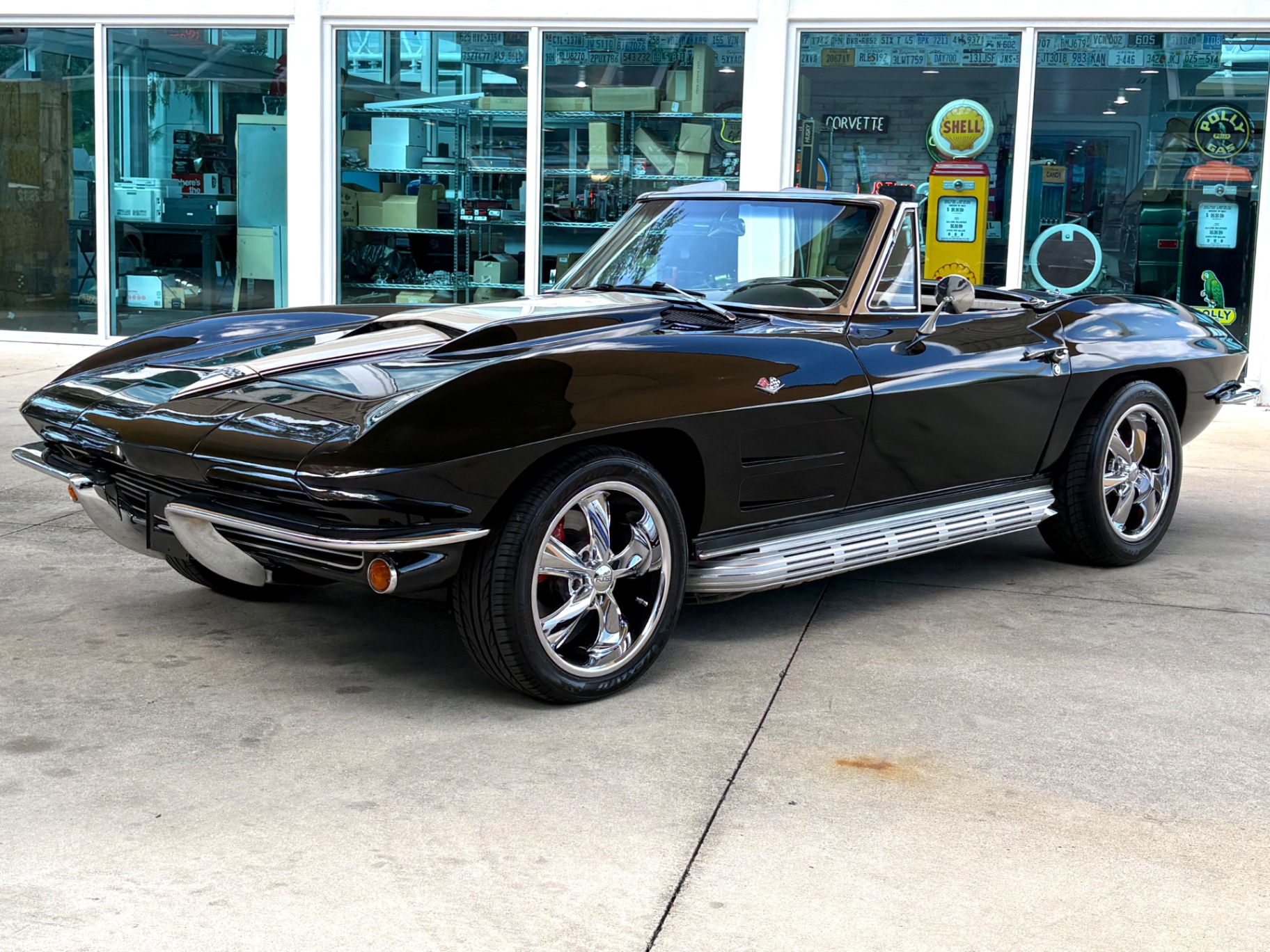
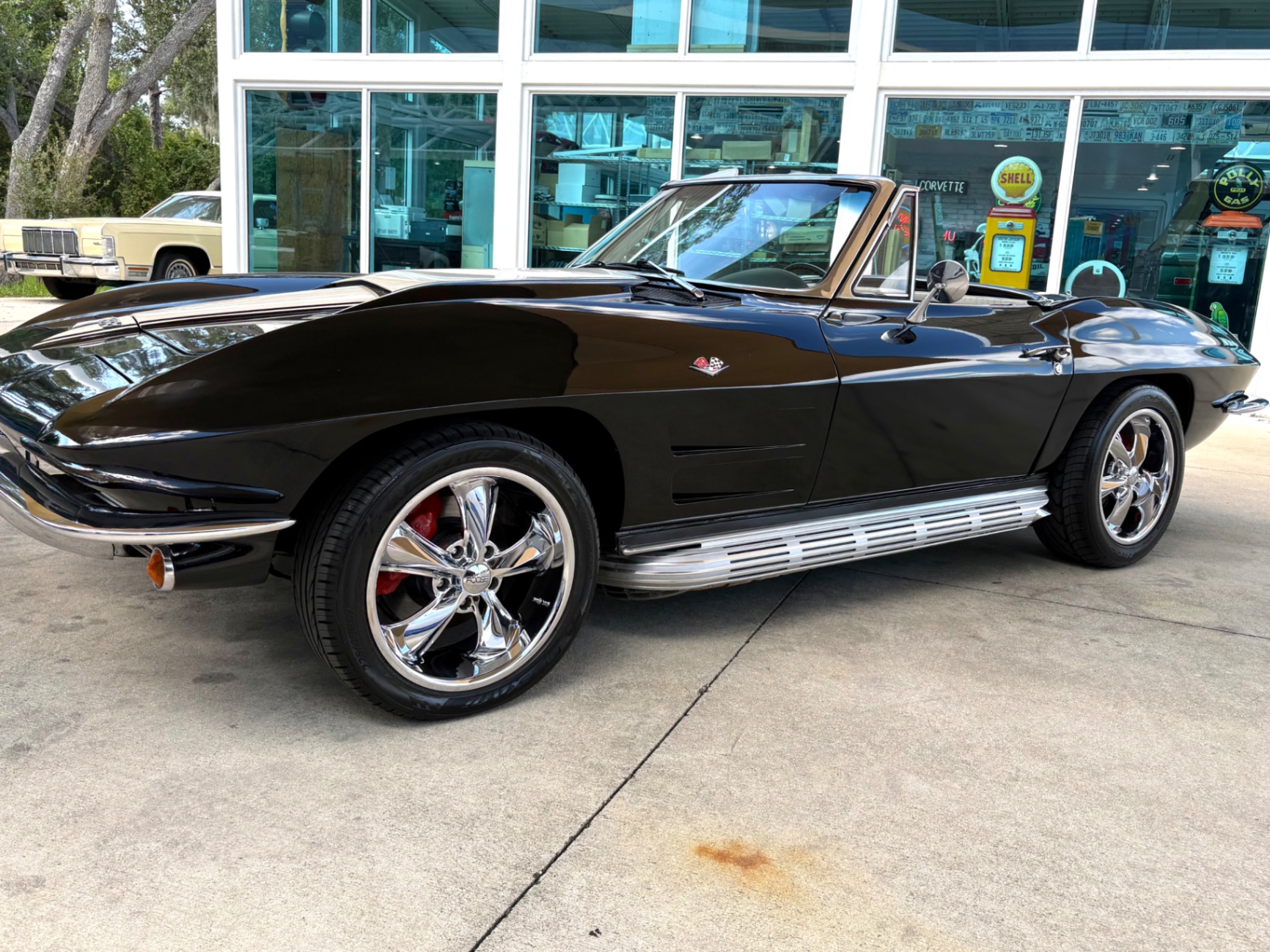
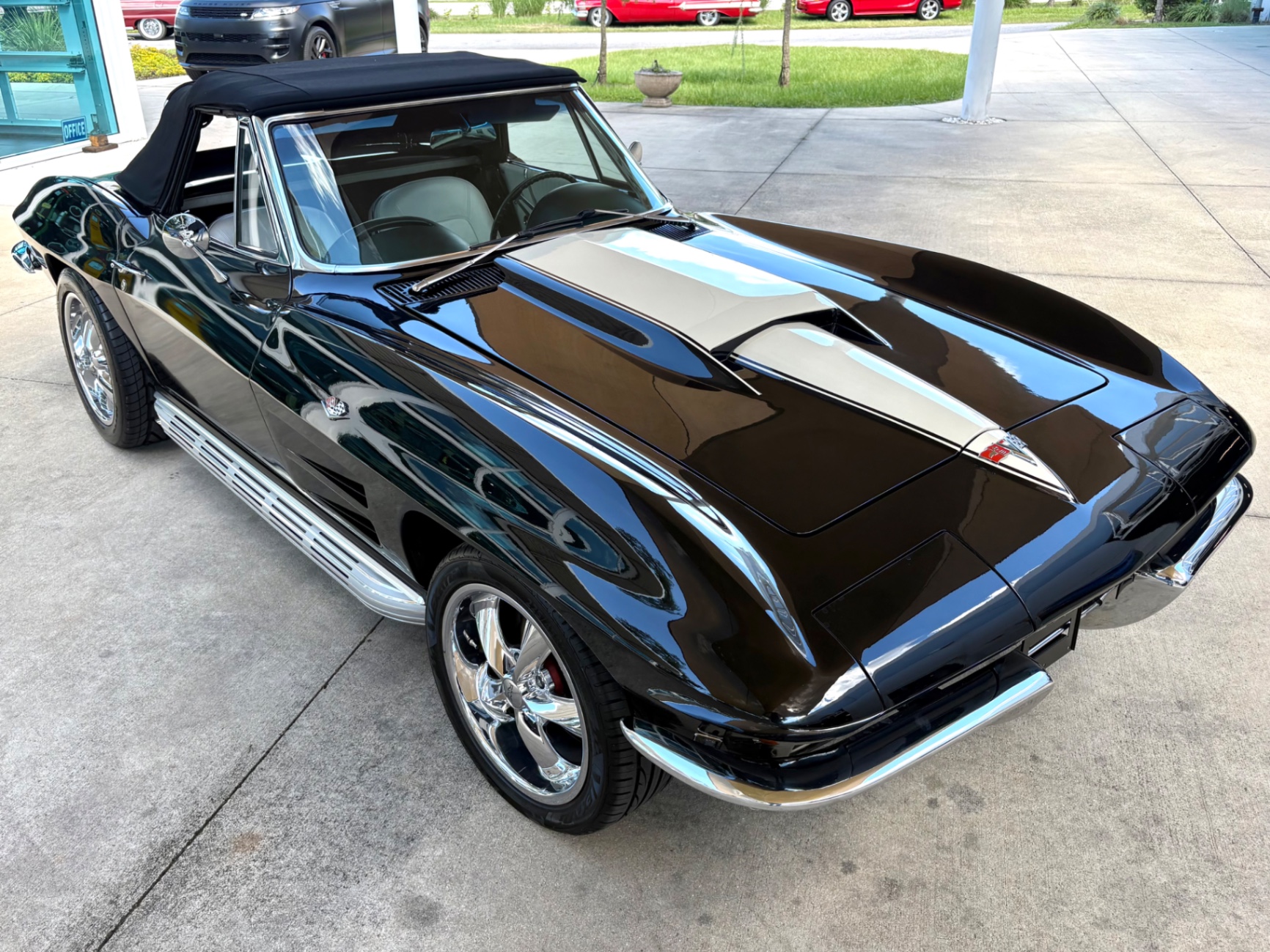
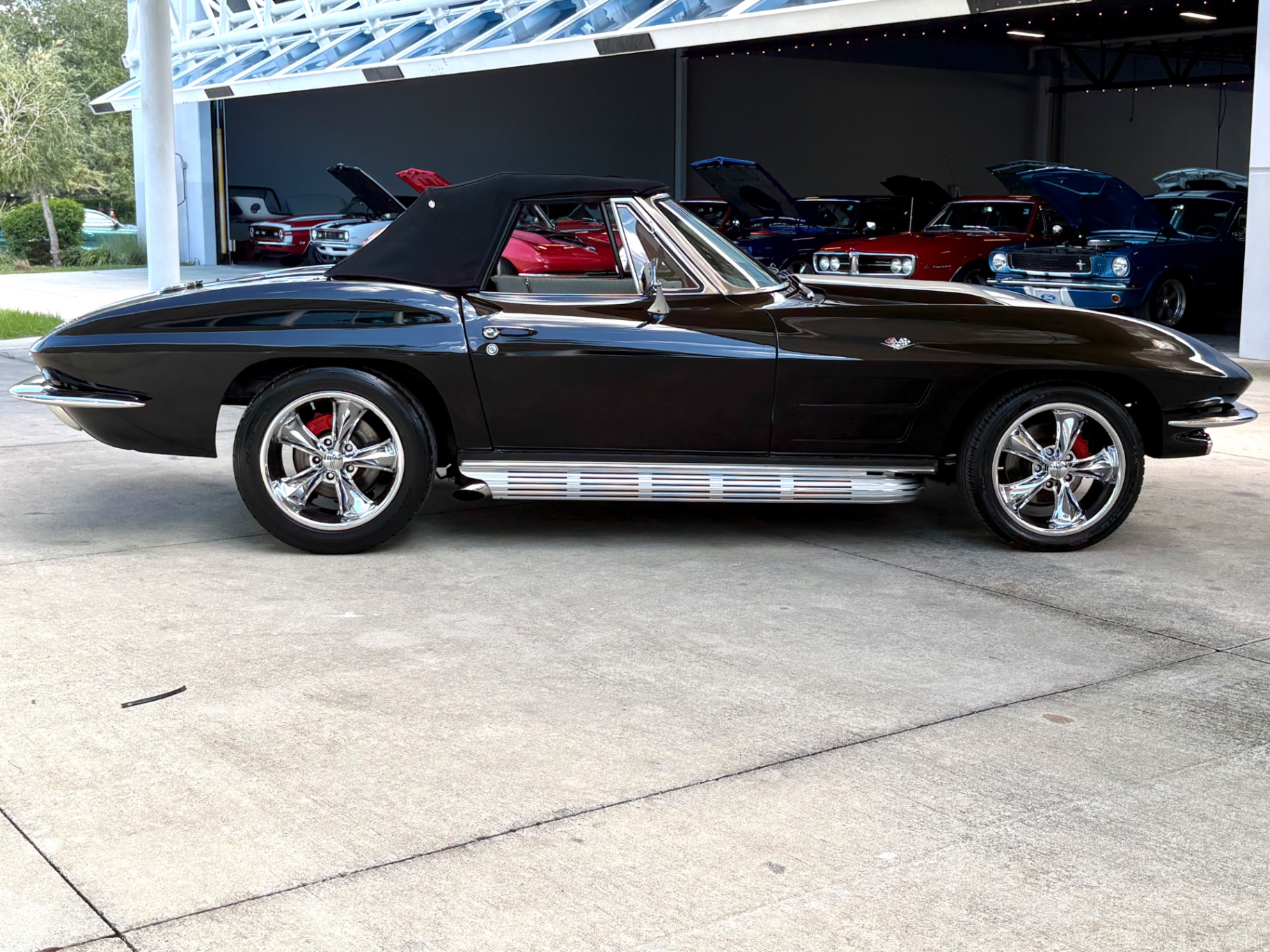
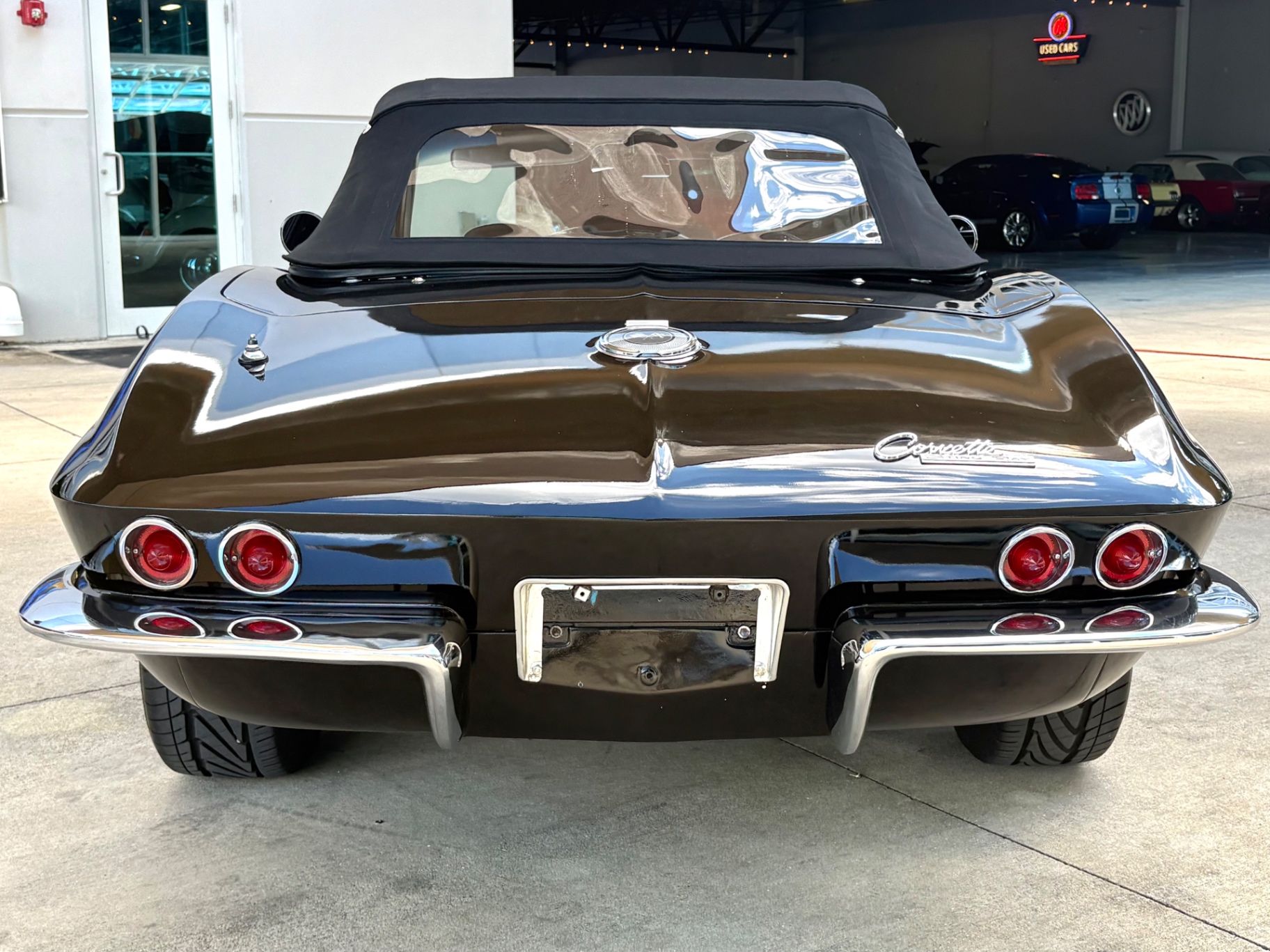
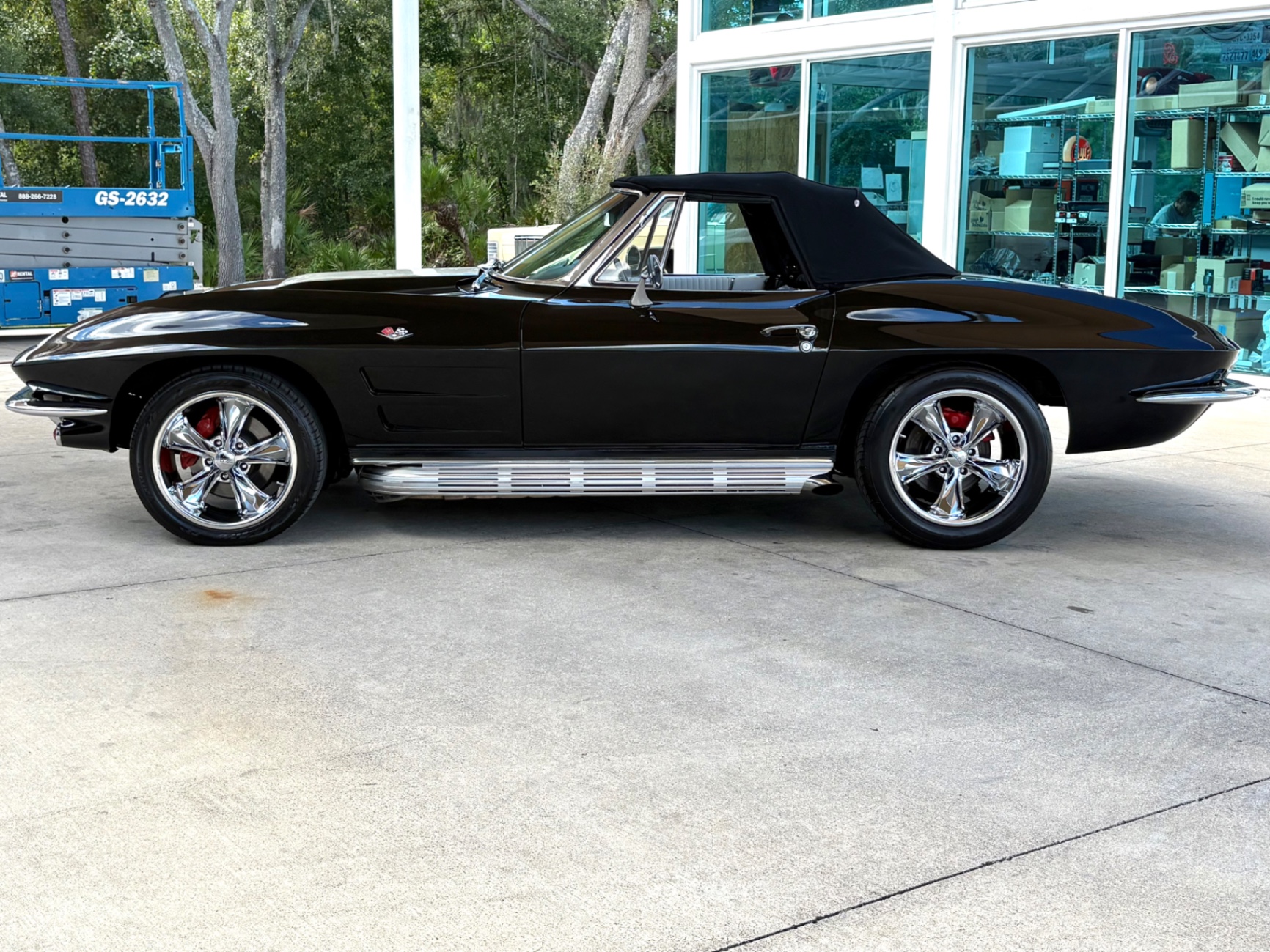
1964 Chevrolet Corvette Sting Ray Convertible — Restomod in Tuxedo Black with White Leather Interior
Why This Car Is Special
The 1964 Chevrolet Corvette Sting Ray is the second year of what many Corvette historians consider the finest body generation the model ever produced. The C2 Sting Ray debuted in 1963 with a design led by Bill Mitchell and Larry Shinoda, and by 1964 Chevrolet had already refined several of the first-year details — most notably, the controversial split rear window of the 1963 coupe was gone, and the Sting Ray convertible emerged as a cleaner, better-sorted automobile. In 1964, Chevrolet built 13,925 Corvette convertibles, making this body style the more common of the two C2 configurations, though that number is modest by any modern standard.
What sets the C2 apart historically is how completely it transformed the Corvette's identity. The outgoing C1 was a handsome roadster, but it carried styling cues that looked almost timid by comparison. The 1963 and 1964 Sting Rays introduced an all-new ladder-type frame, independent rear suspension for the first time on any American production car, and a tighter, more purpose-built cockpit. The 1964 model also introduced a quieter cabin, revised suspension tuning, and additional engine options compared to the debut year. It was, in short, the C2 at its most polished without yet being overshadowed by the big-block era that would arrive in 1965.
This particular 1964 Chevrolet Corvette Sting Ray convertible has been built as a driver-quality restomod — meaning it preserves the visual integrity of the original car while upgrading the mechanical systems that actually affect how it performs and behaves on the road. The color combination of Tuxedo Black over white leather is as correct and period-appropriate as it gets for a mid-1960s American sports car. The modifications chosen here are practical and well-considered: more gear ratios, stronger ignition, upgraded brakes, and modern cooling efficiency. This is not a show trailer queen — it's a car built to be used.
Features List
- 350ci V8 engine with MSD Blaster ignition upgrade
- Tremec TKO 5-speed manual transmission
- 4-wheel disc brake upgrade with red calipers
- 4-wheel independent suspension
- Power steering
- Aluminum radiator
- Chrome side exhaust
- 427 Stinger hood
- 17-inch Foose chrome wheels
- Dual chrome side mirrors
- White leather bucket seats
- Custom sport steering wheel with Corvette center cap
- Center console with cup holder
- Tachometer and full analog gauge cluster
- Analog clock (passenger side dash)
- Heater
- Seat belts
- Black HARTZ cloth convertible top
- Battery disconnects
- Clean undercarriage
Mechanical
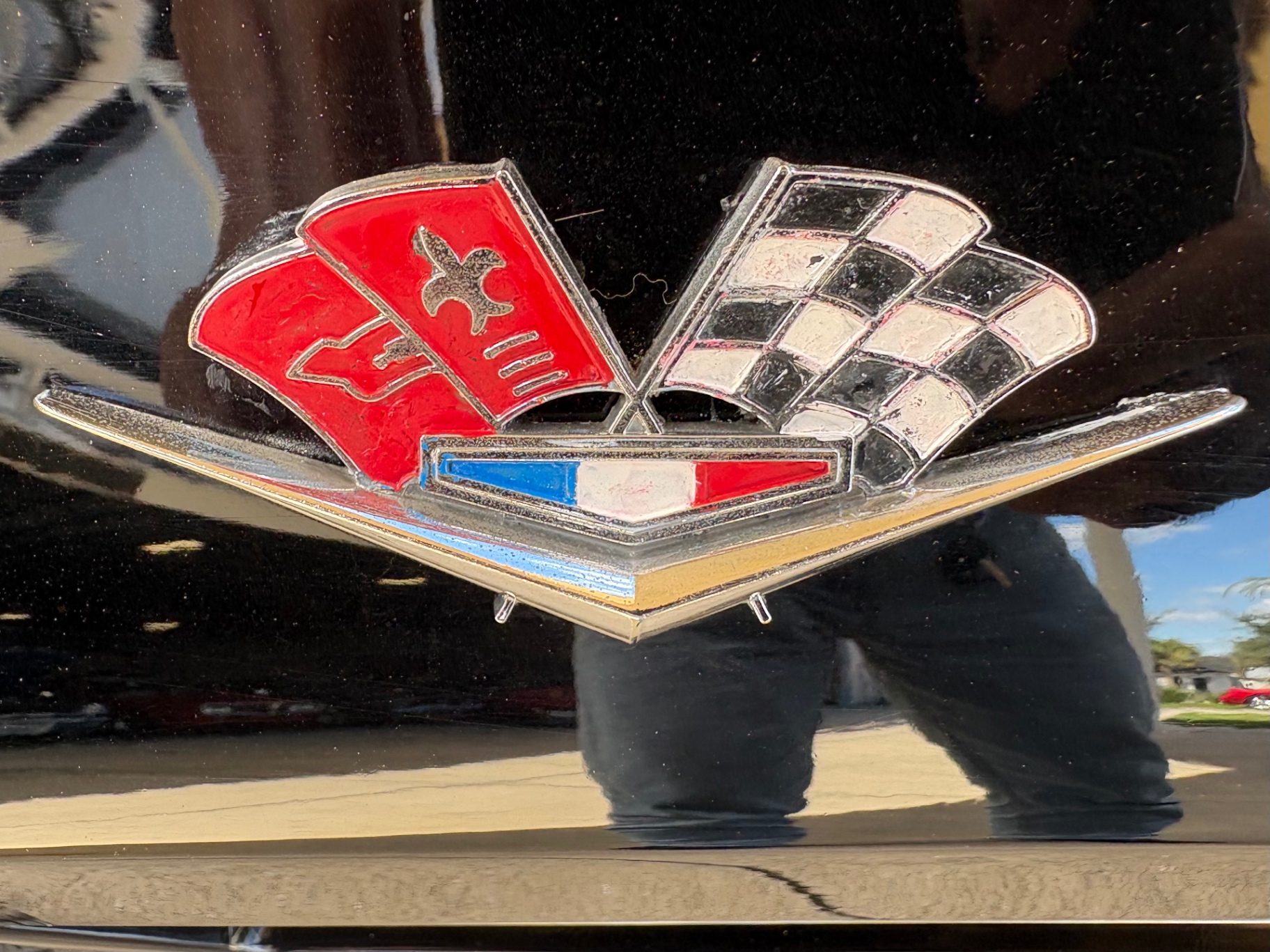
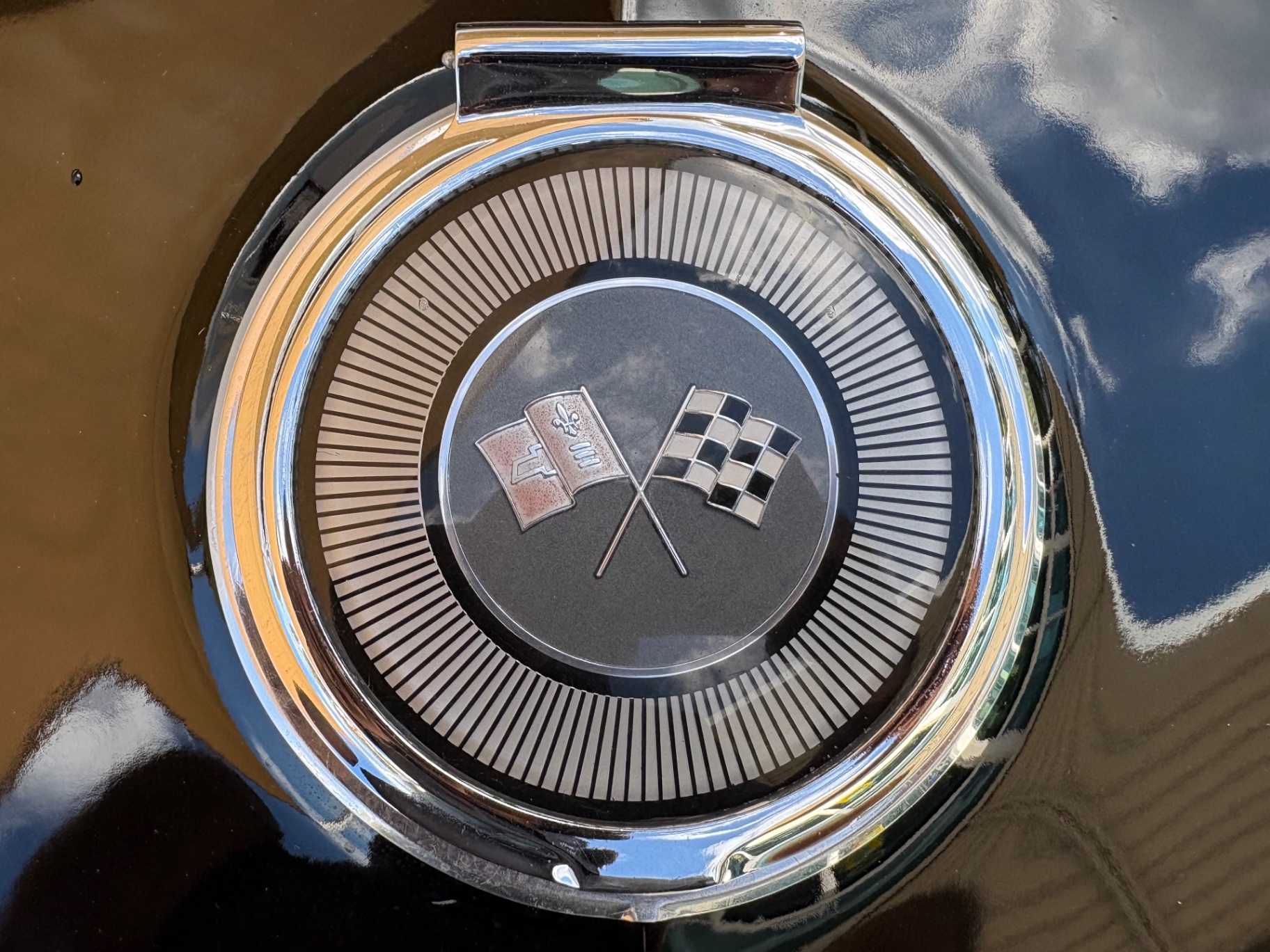
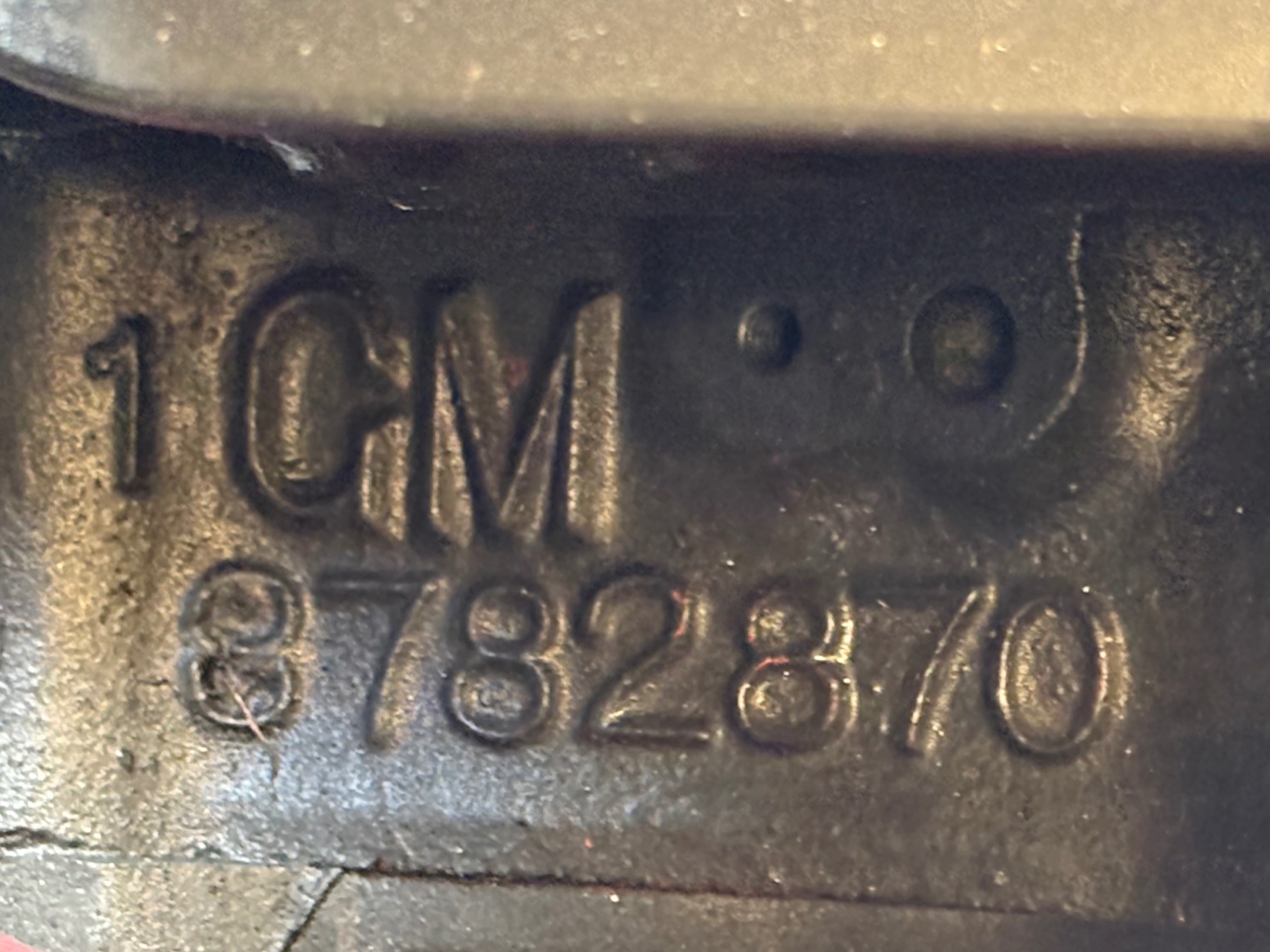
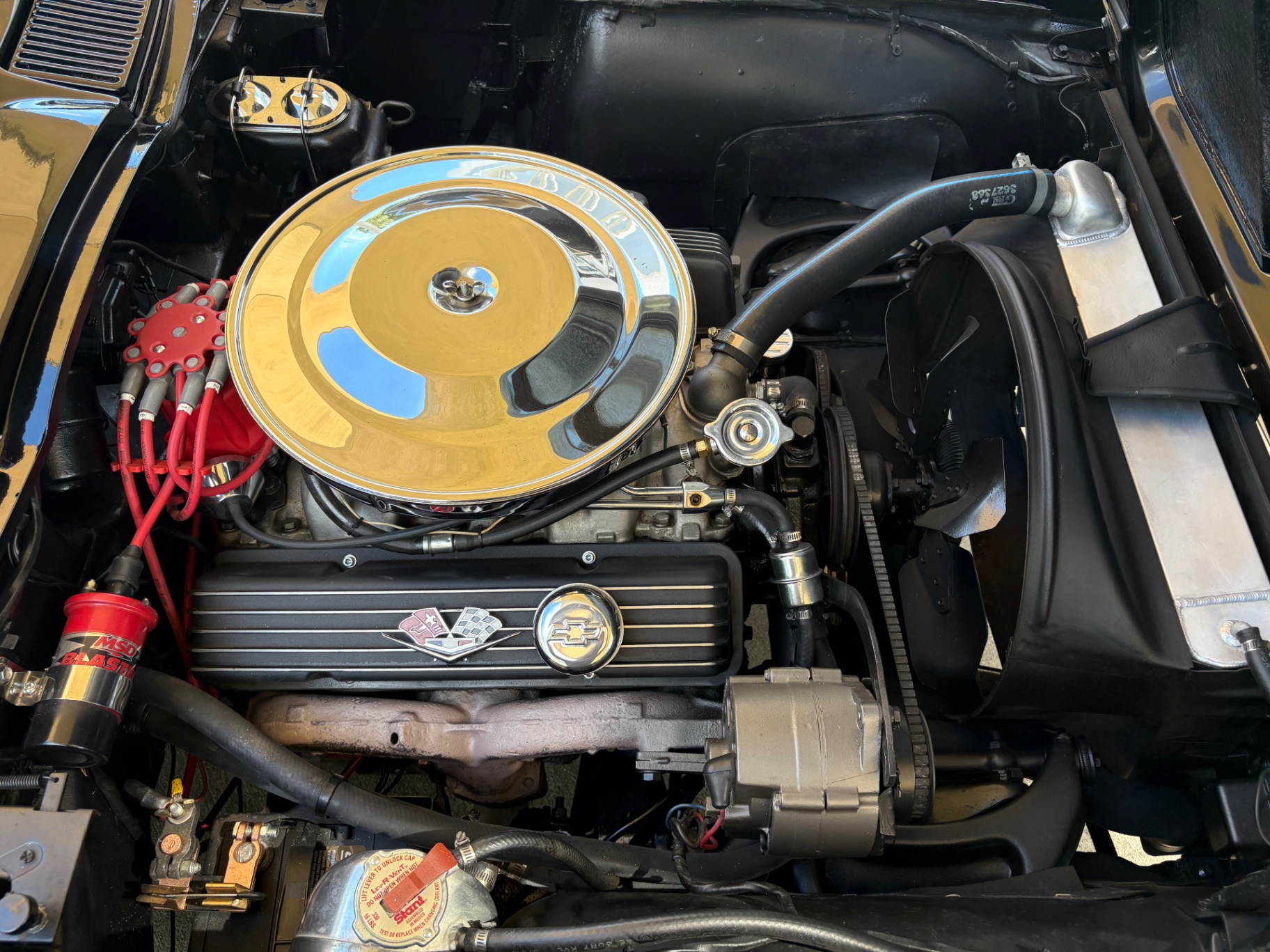
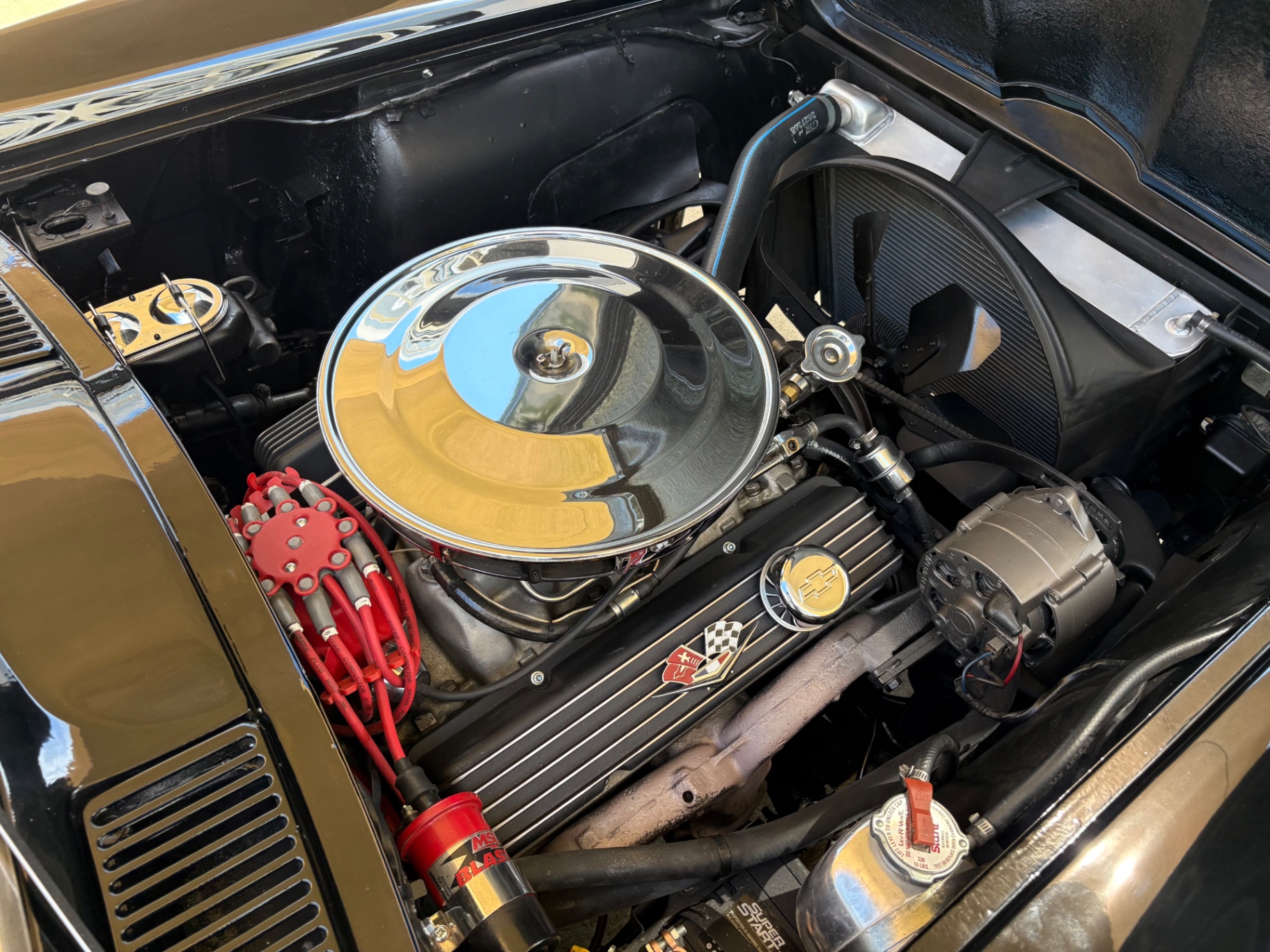
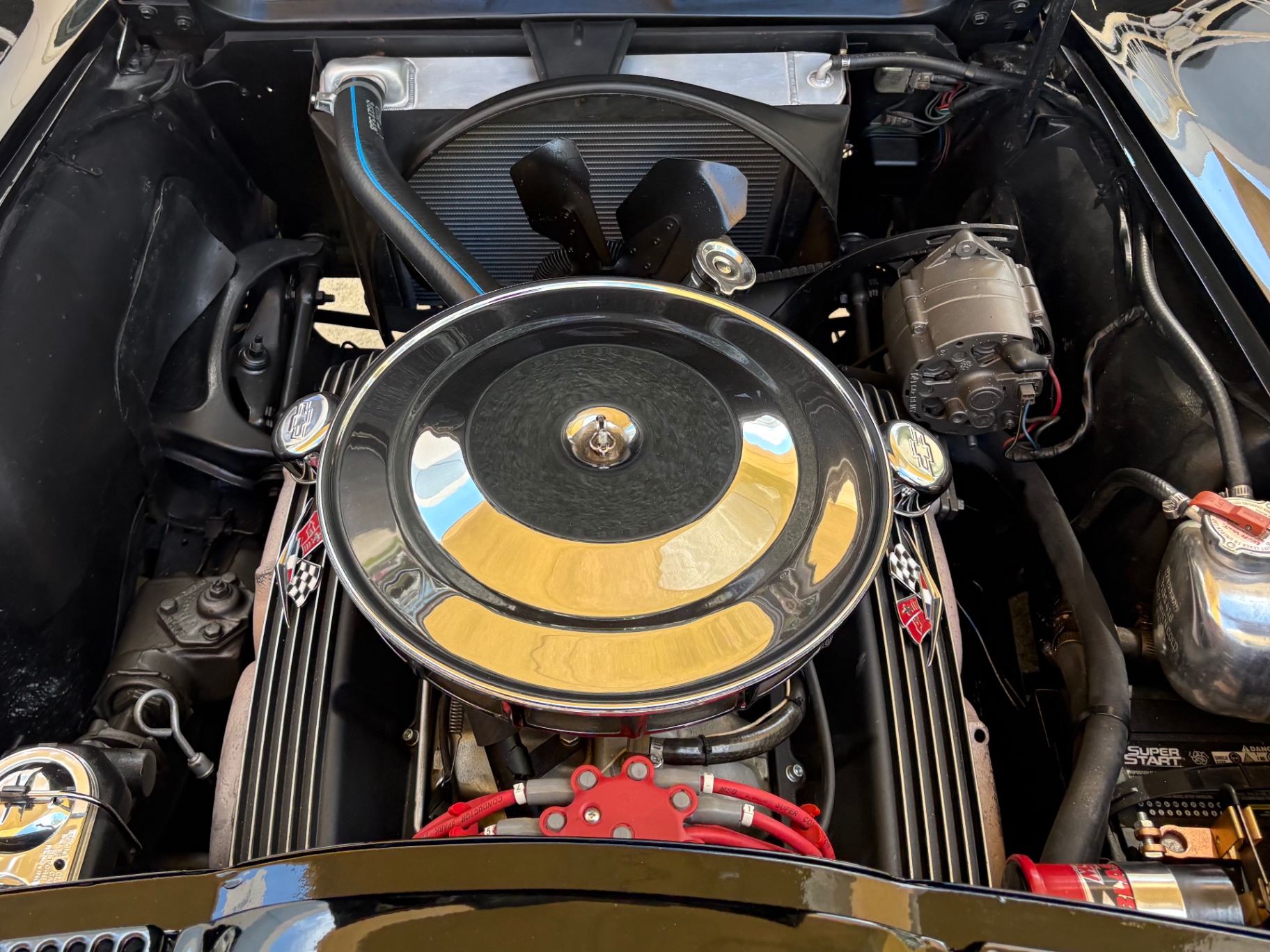
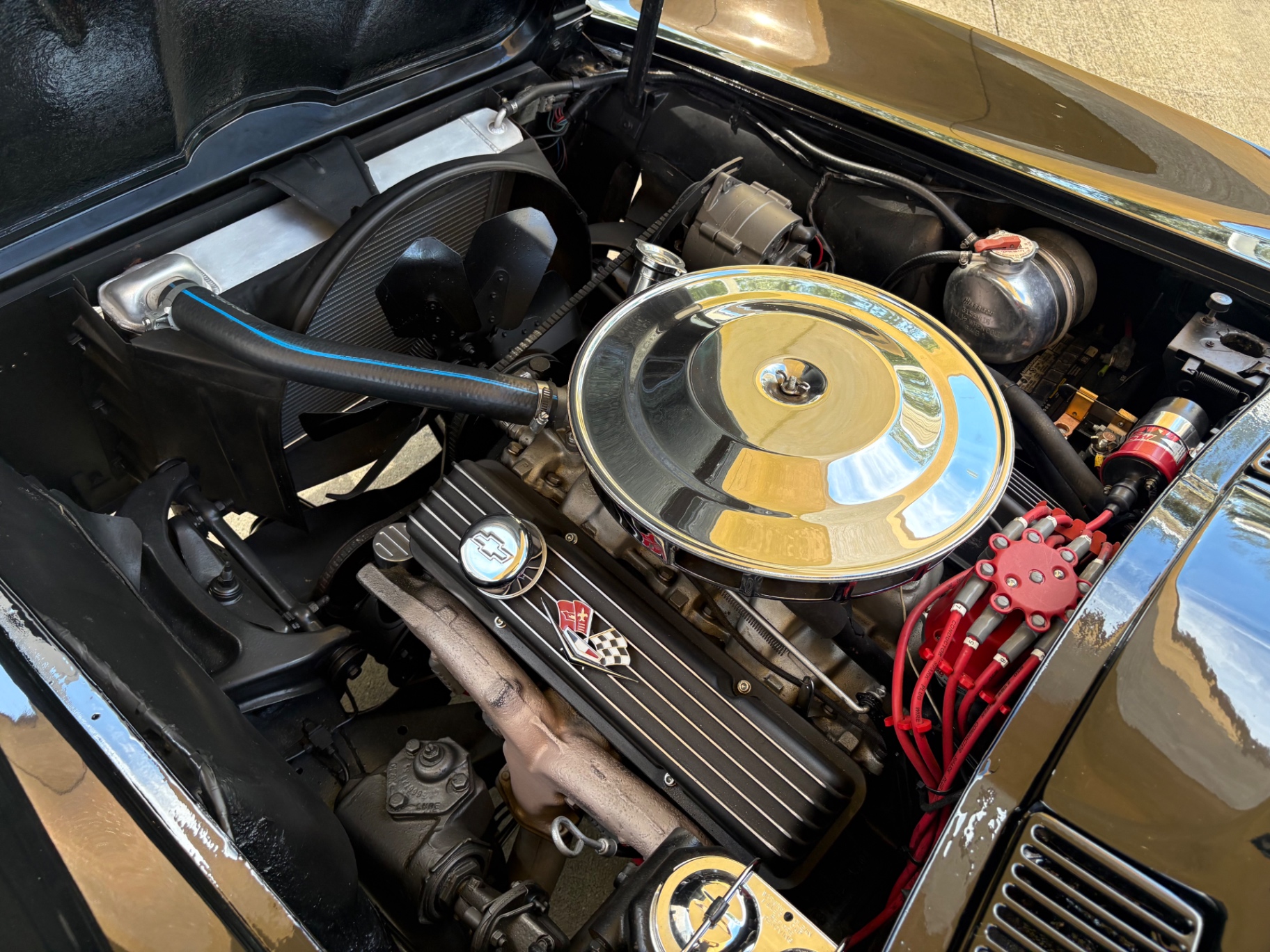
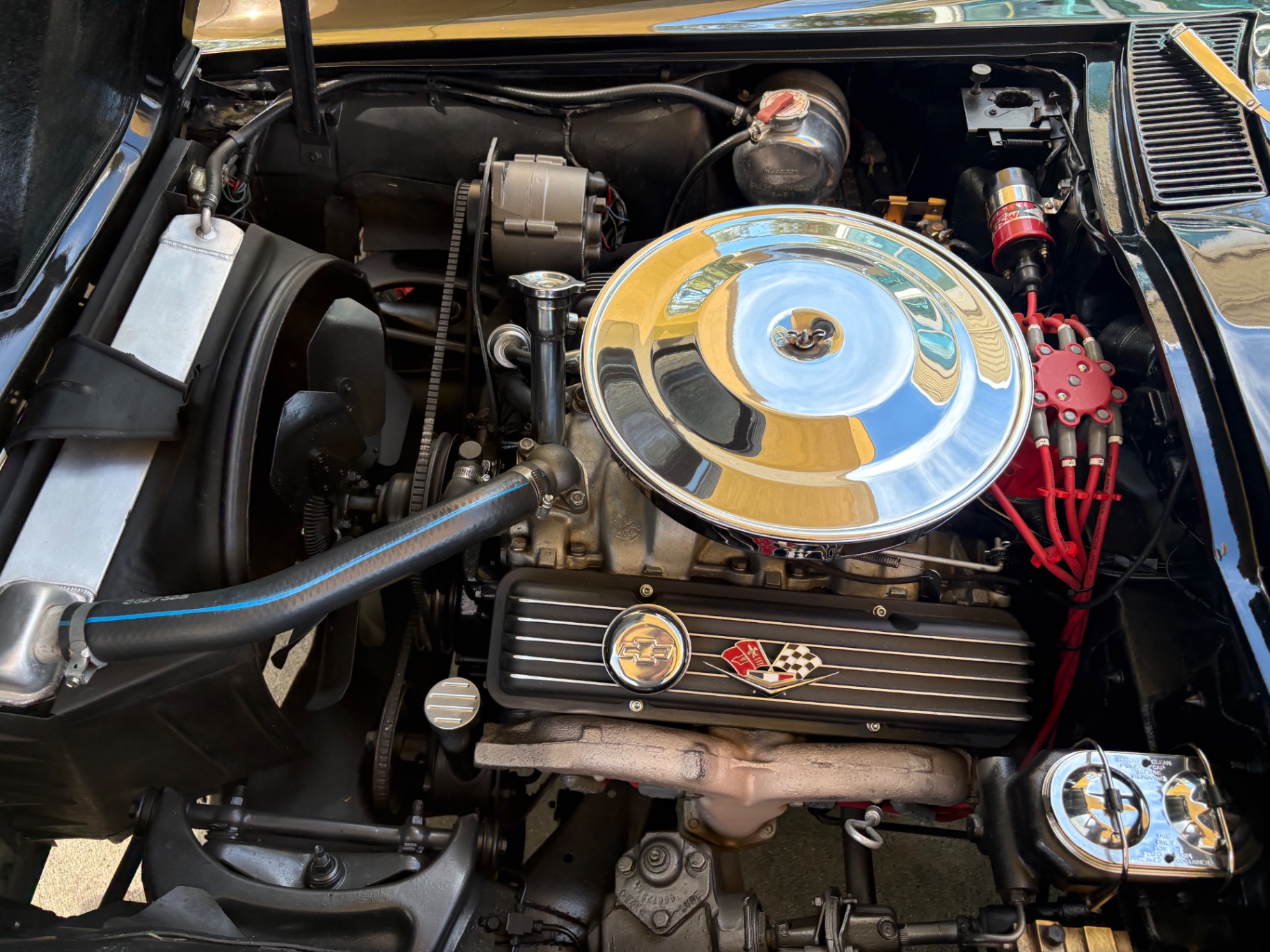
Under the hood of this 1964 Chevrolet Corvette Sting Ray sits a GM V8 paired with an MSD Blaster ignition system. The MSD upgrade replaces the factory points-style ignition with a capacitive discharge unit that delivers a stronger, more consistent spark — a meaningful improvement for a carburetor-fed engine that will see varied driving conditions. The distributor and red plug wires are clearly visible in the engine bay photos, and the install is tidy. Topping the engine is a period-correct finned valve cover setup with Corvette crossed-flags emblems and a chrome air cleaner that suits the aesthetic of the car without looking out of place.
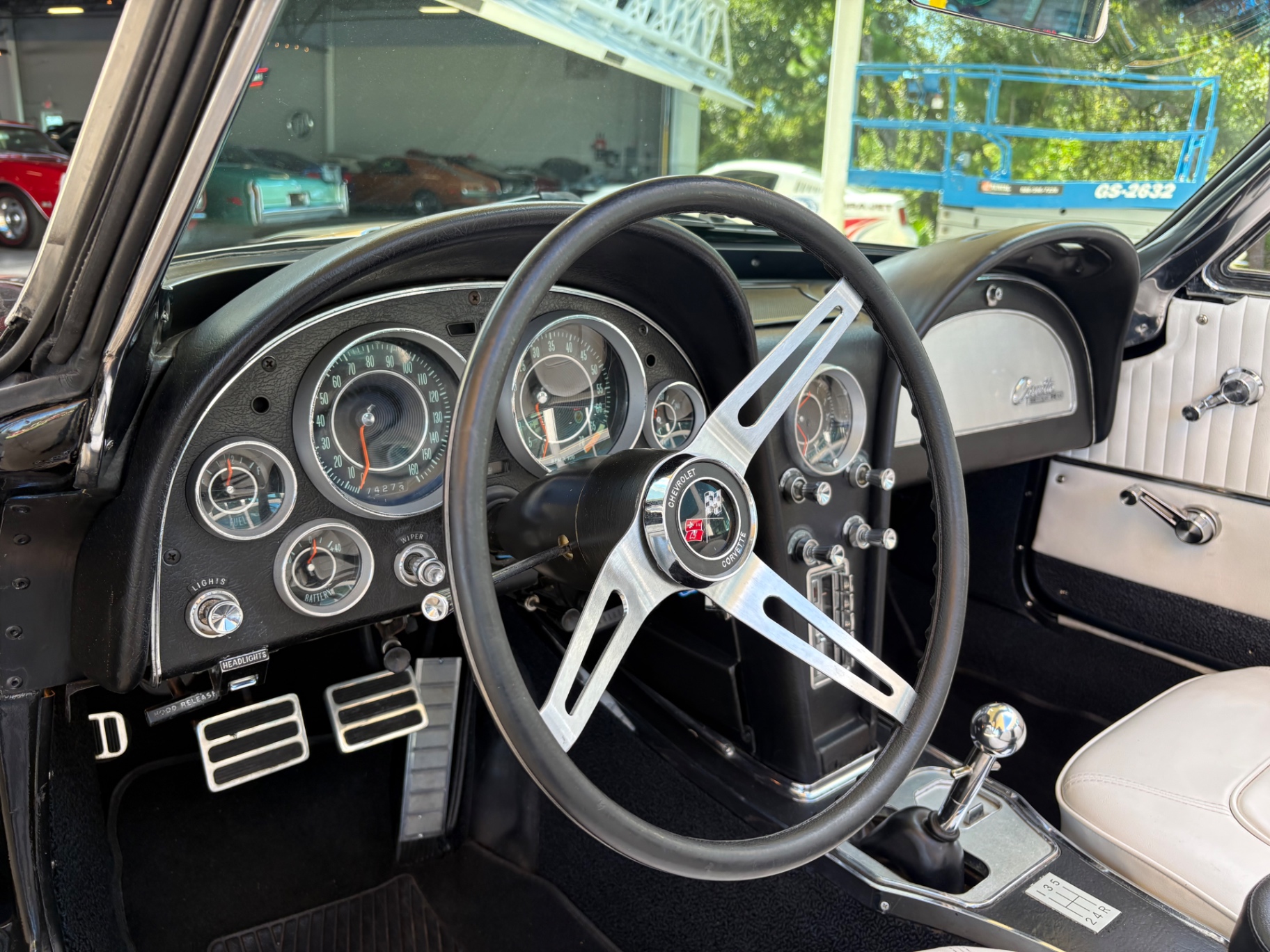
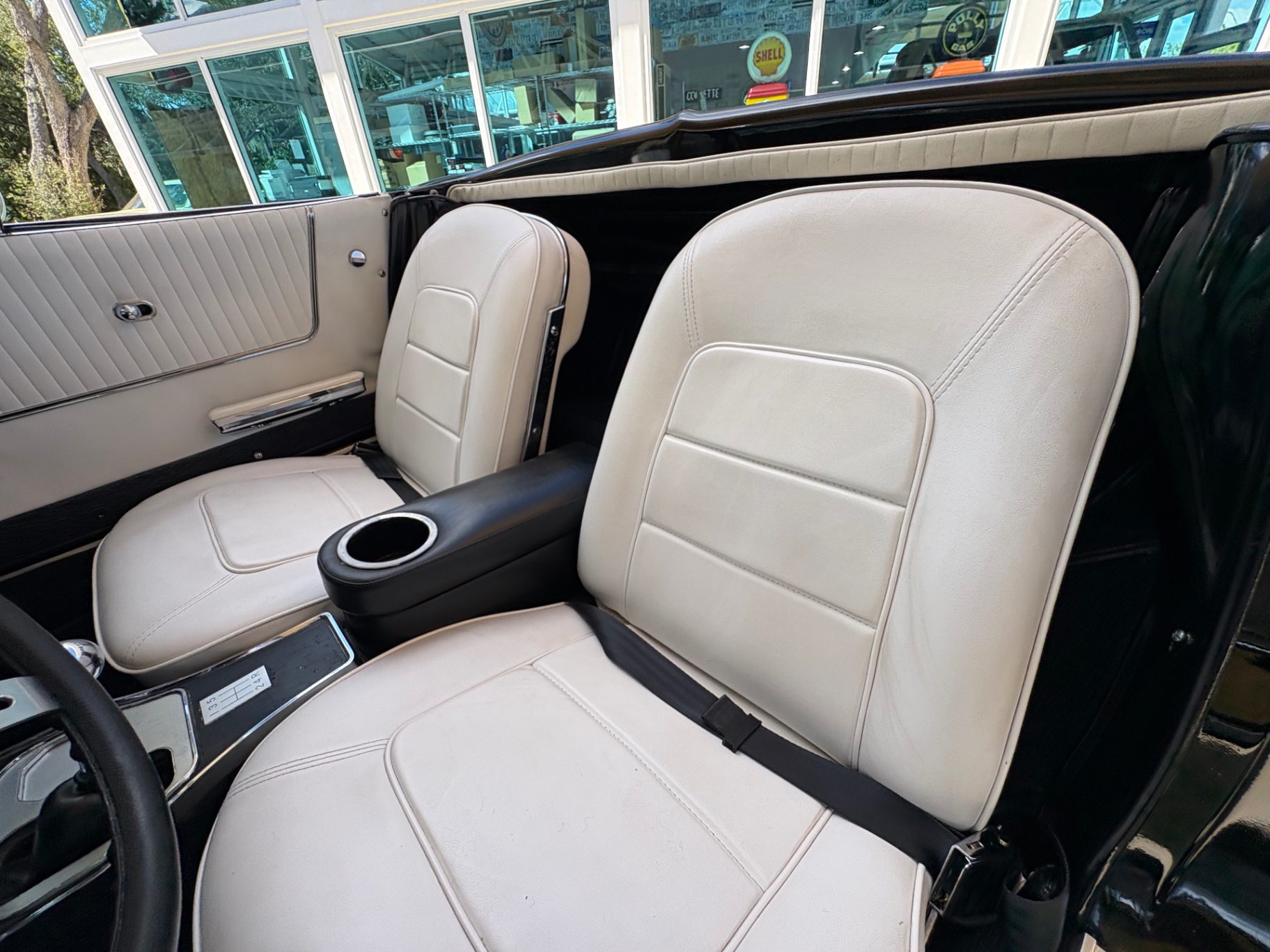
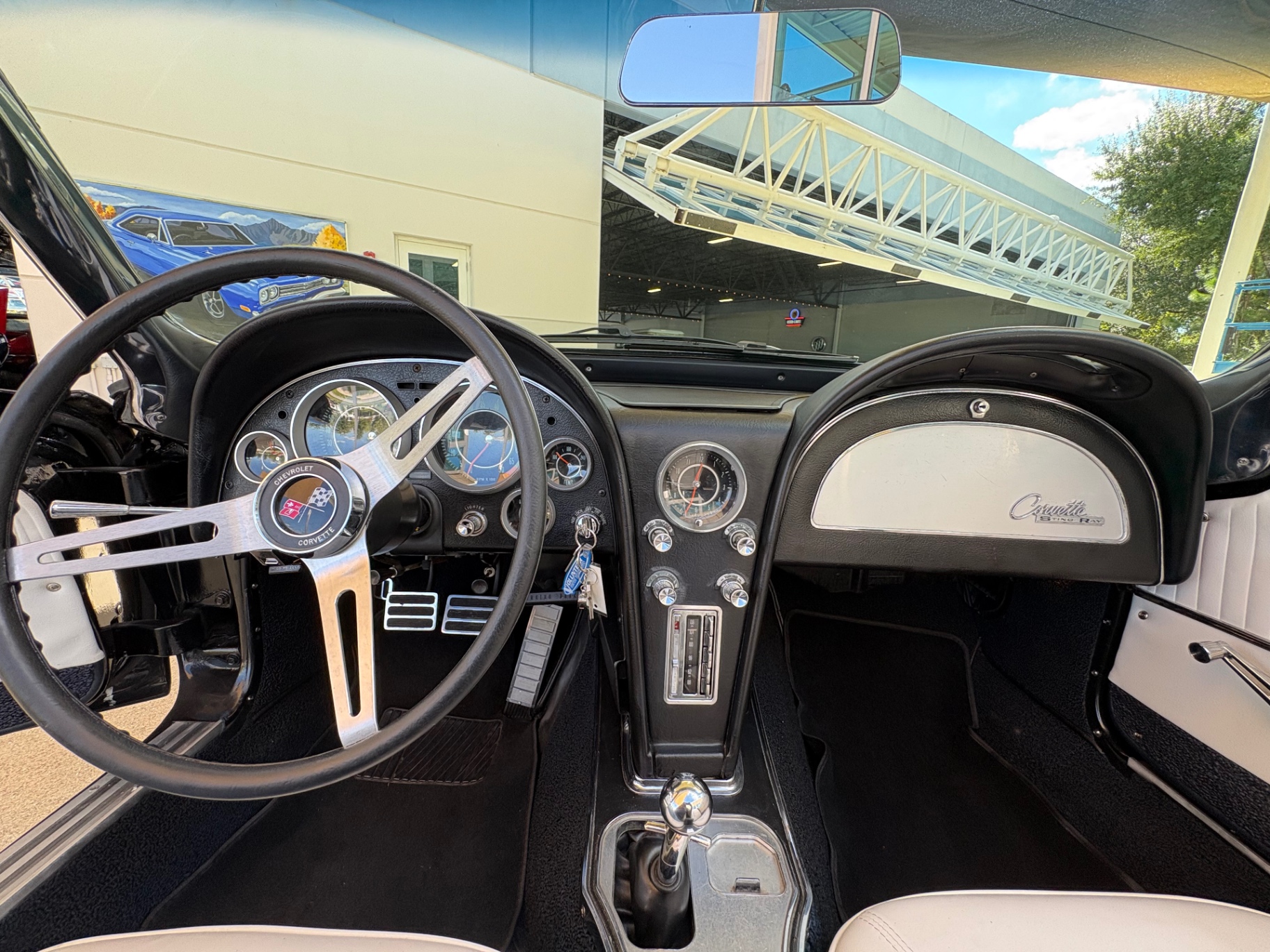
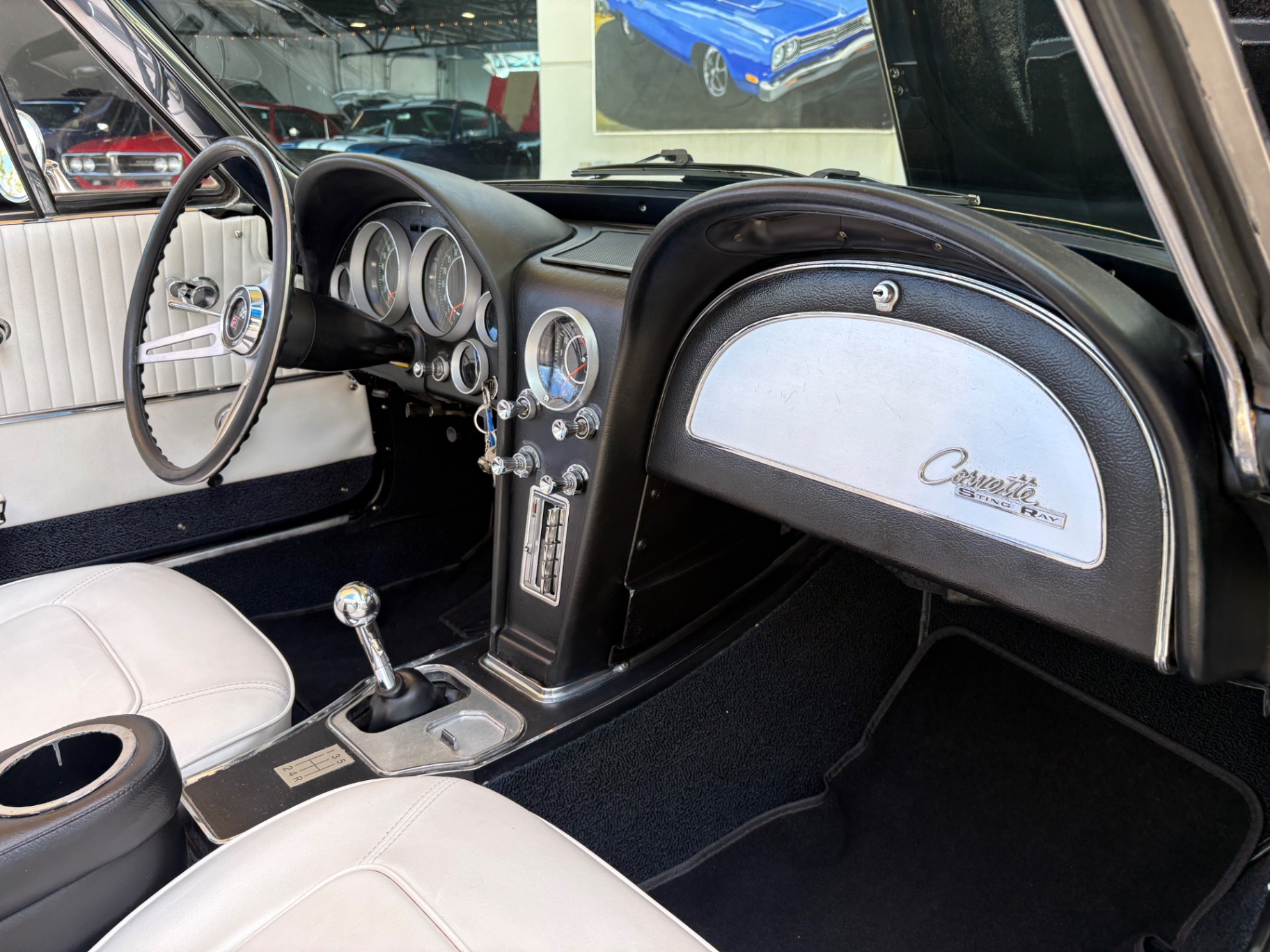
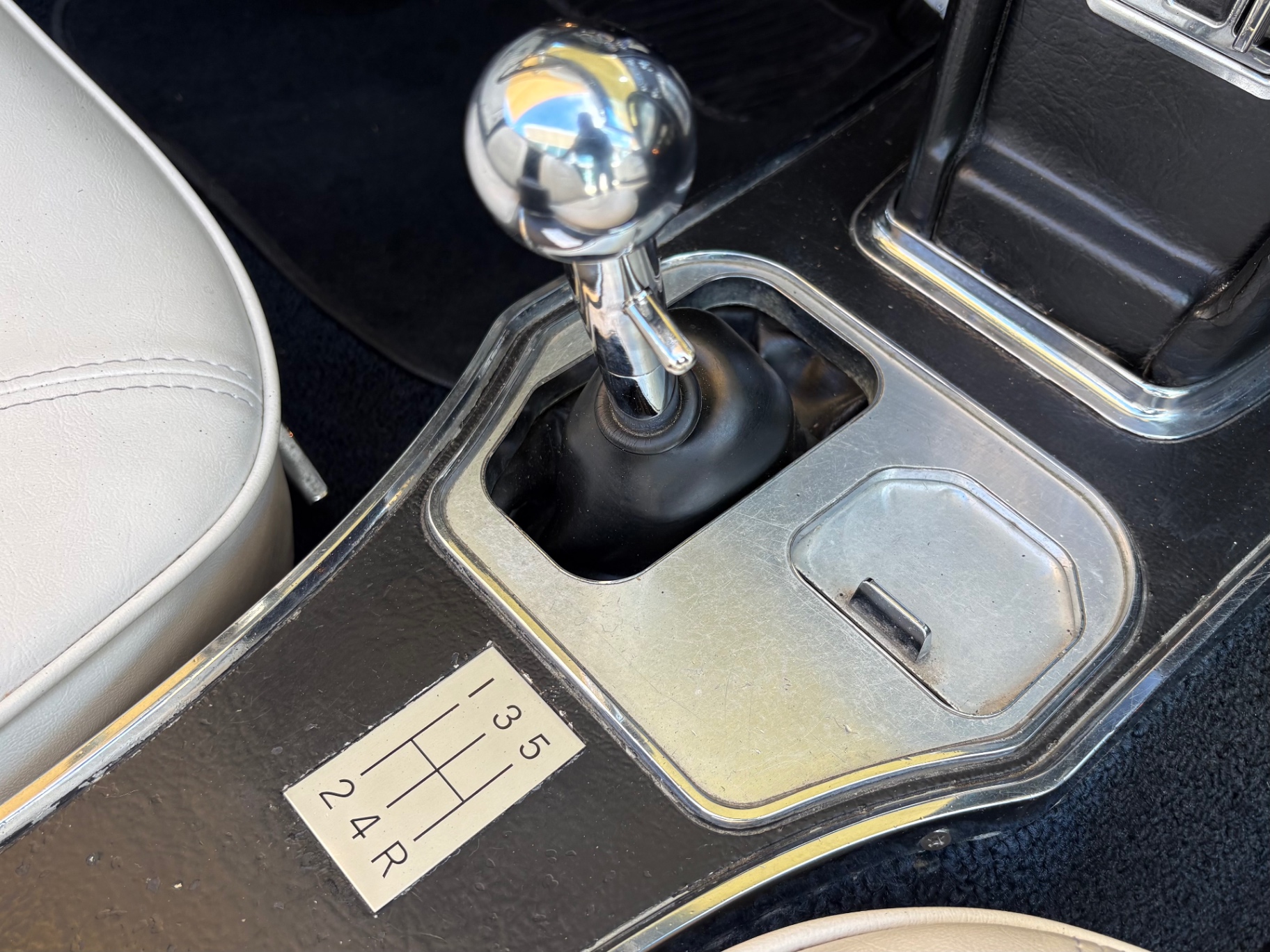
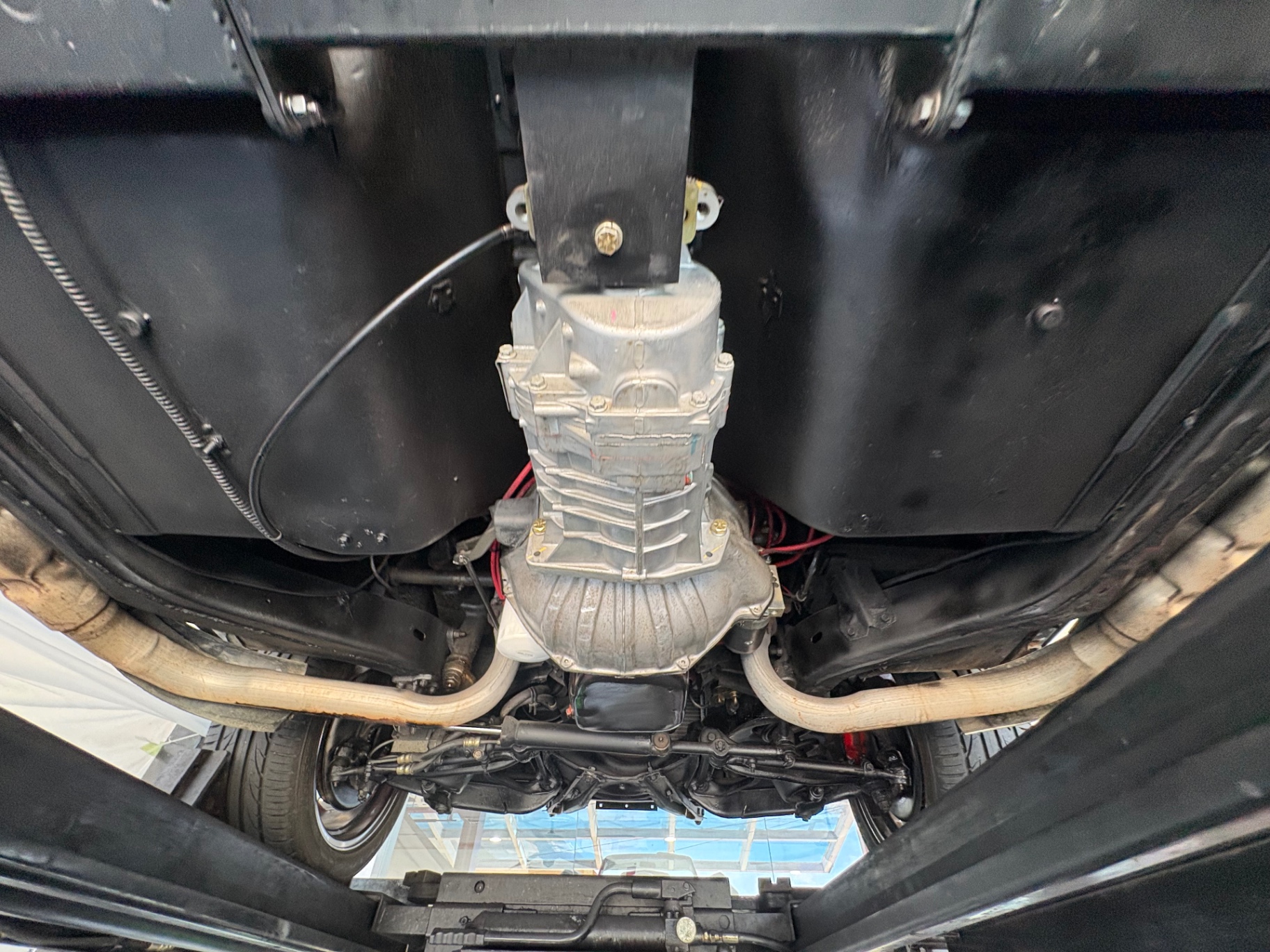
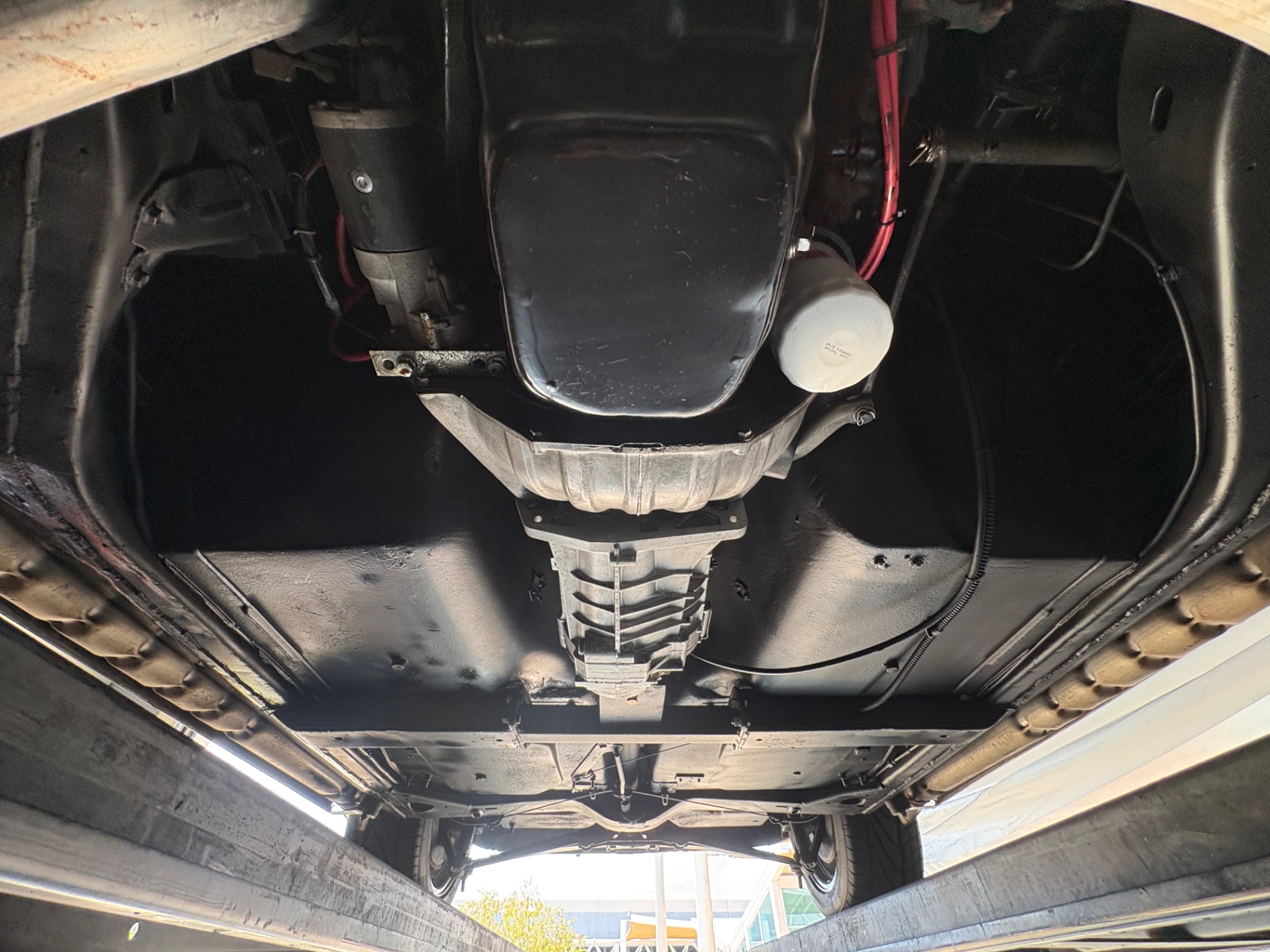
The transmission is a Tremec TKO 5-speed manual, which is one of the most respected overdrive conversions available for classic American V8 applications. The original 1964 Corvette came with either a 3-speed or 4-speed manual, or an optional 2-speed Powerglide automatic. The Tremec TKO adds a true fifth-gear overdrive ratio, which brings highway cruising rpm down substantially and makes this car far more comfortable on a long drive than any period-correct 4-speed would be. The shifter gate on the console is labeled with the 5-speed pattern, and it is visible in the photos. This is a modification that adds real-world usability without affecting the car's outward appearance at all.
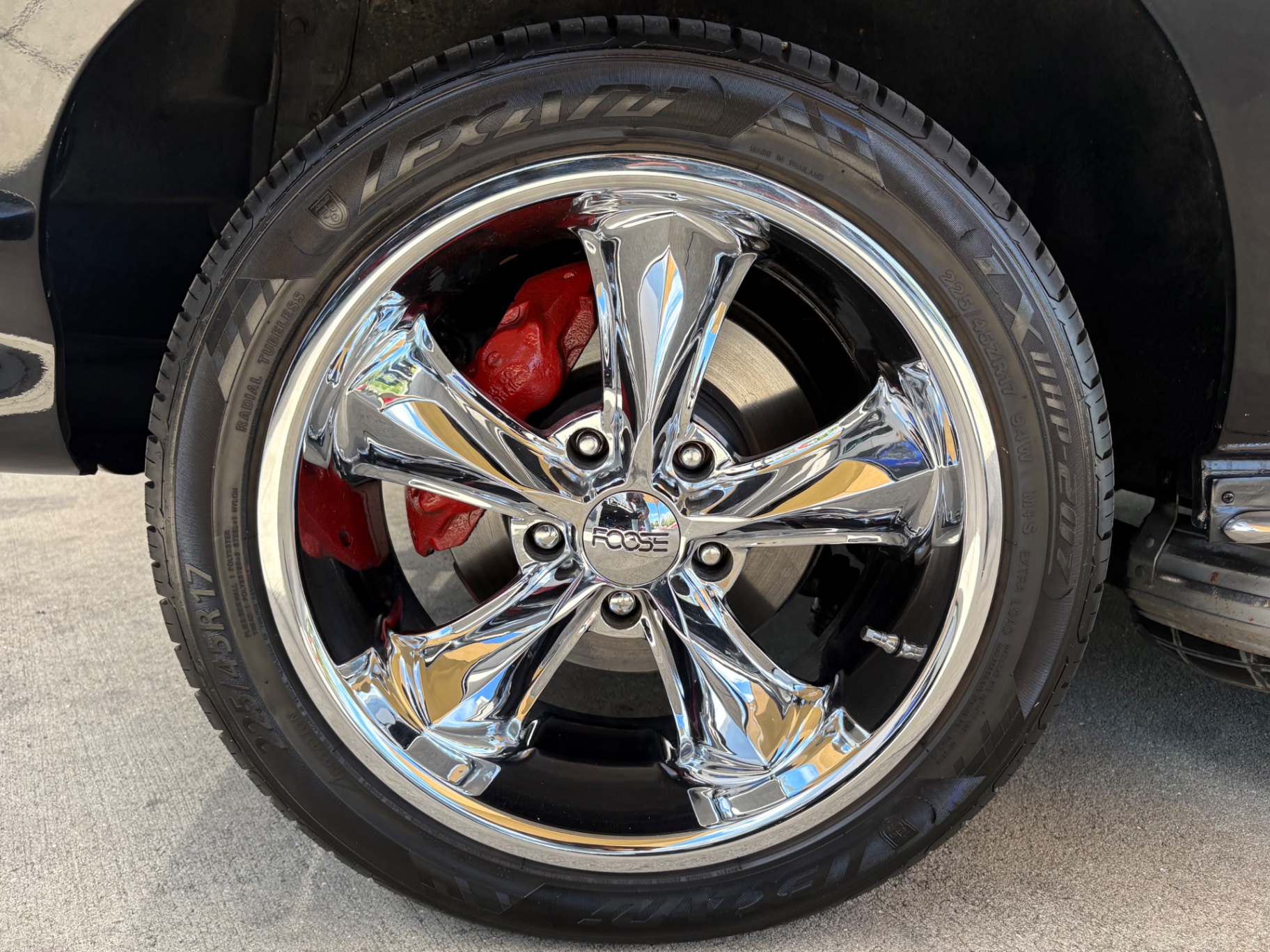
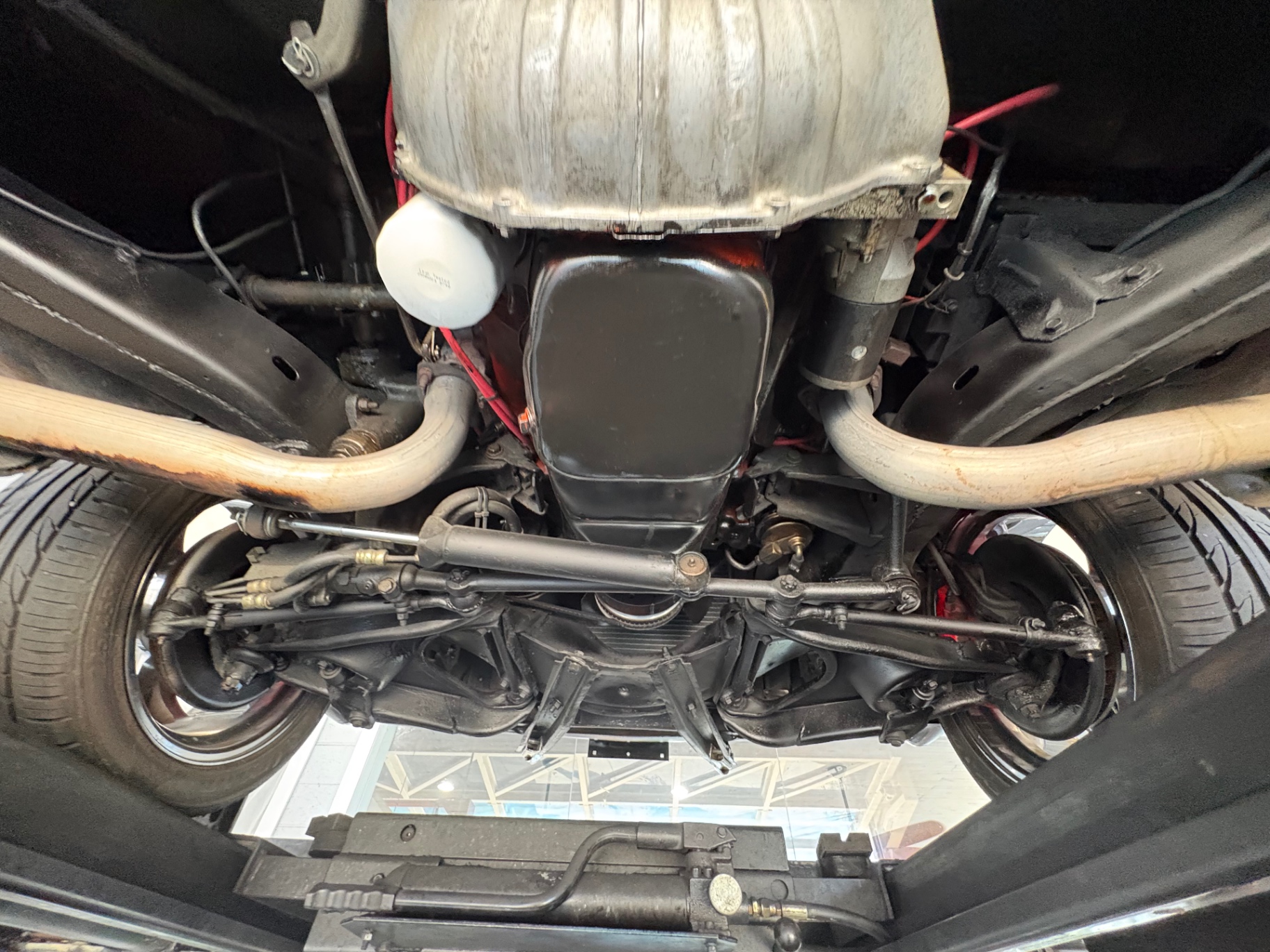
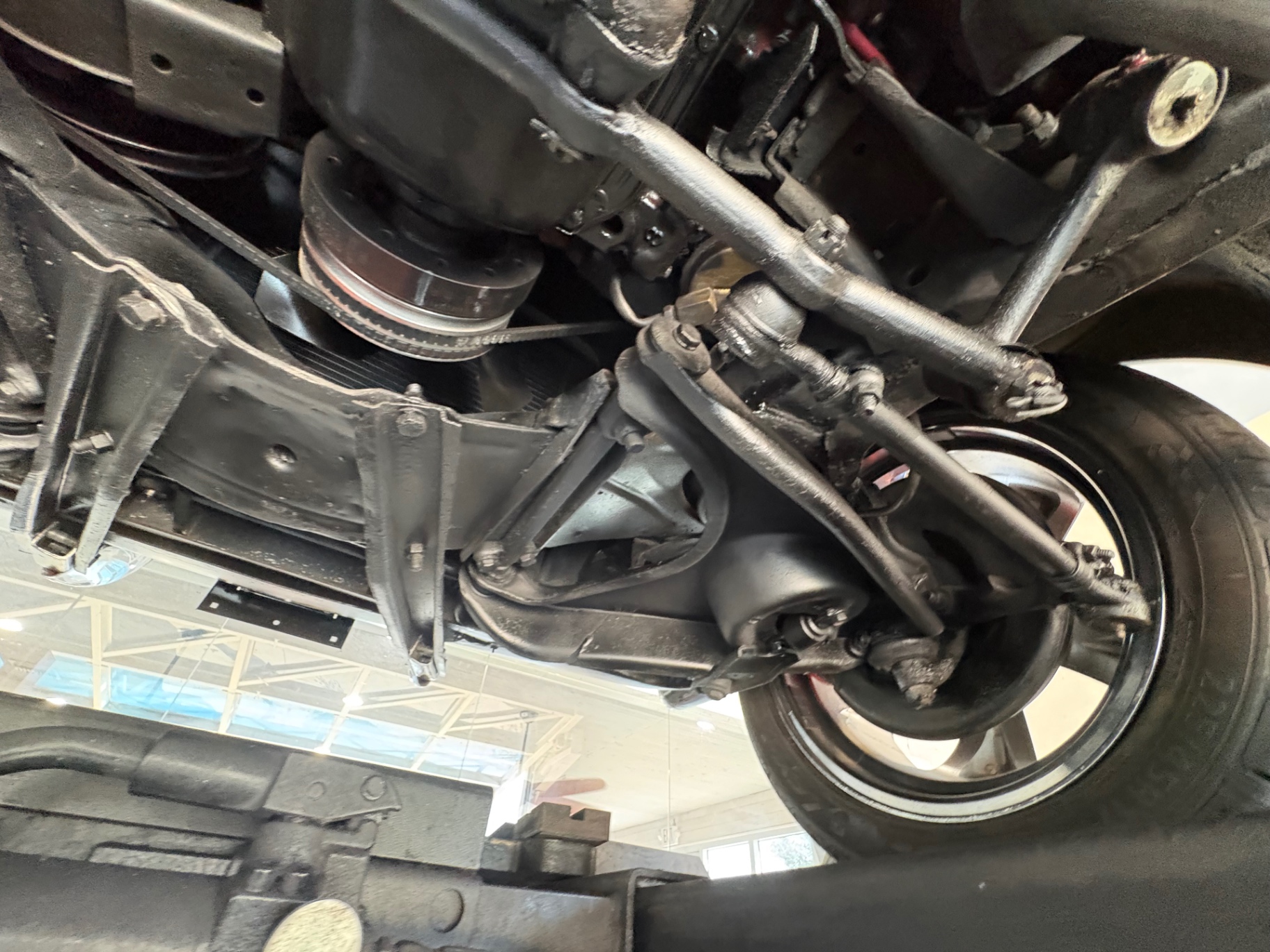
Braking is handled by a 4-wheel disc brake conversion with red calipers. The factory 1964 Corvette used 4-wheel drum brakes as standard equipment — four-wheel disc brakes didn't arrive on the Corvette until 1965 as an option. Converting to discs on a C2 is one of the most logical upgrades any owner can make, as the stopping power improvement is significant and the red calipers are visible through the Foose wheels for a finished look. Power steering is also fitted, which takes the effort out of maneuvering the car at low speeds while preserving road feel.
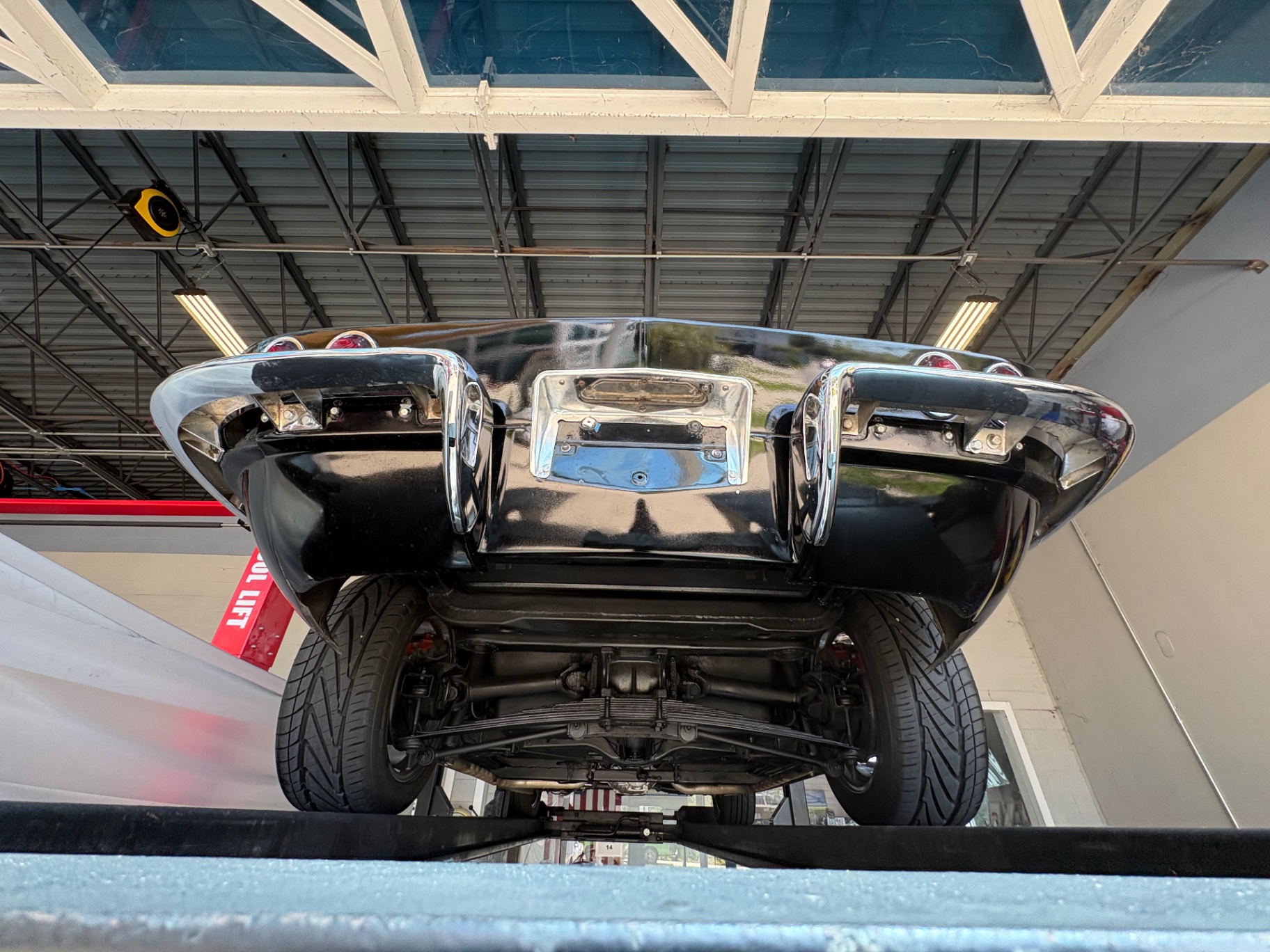
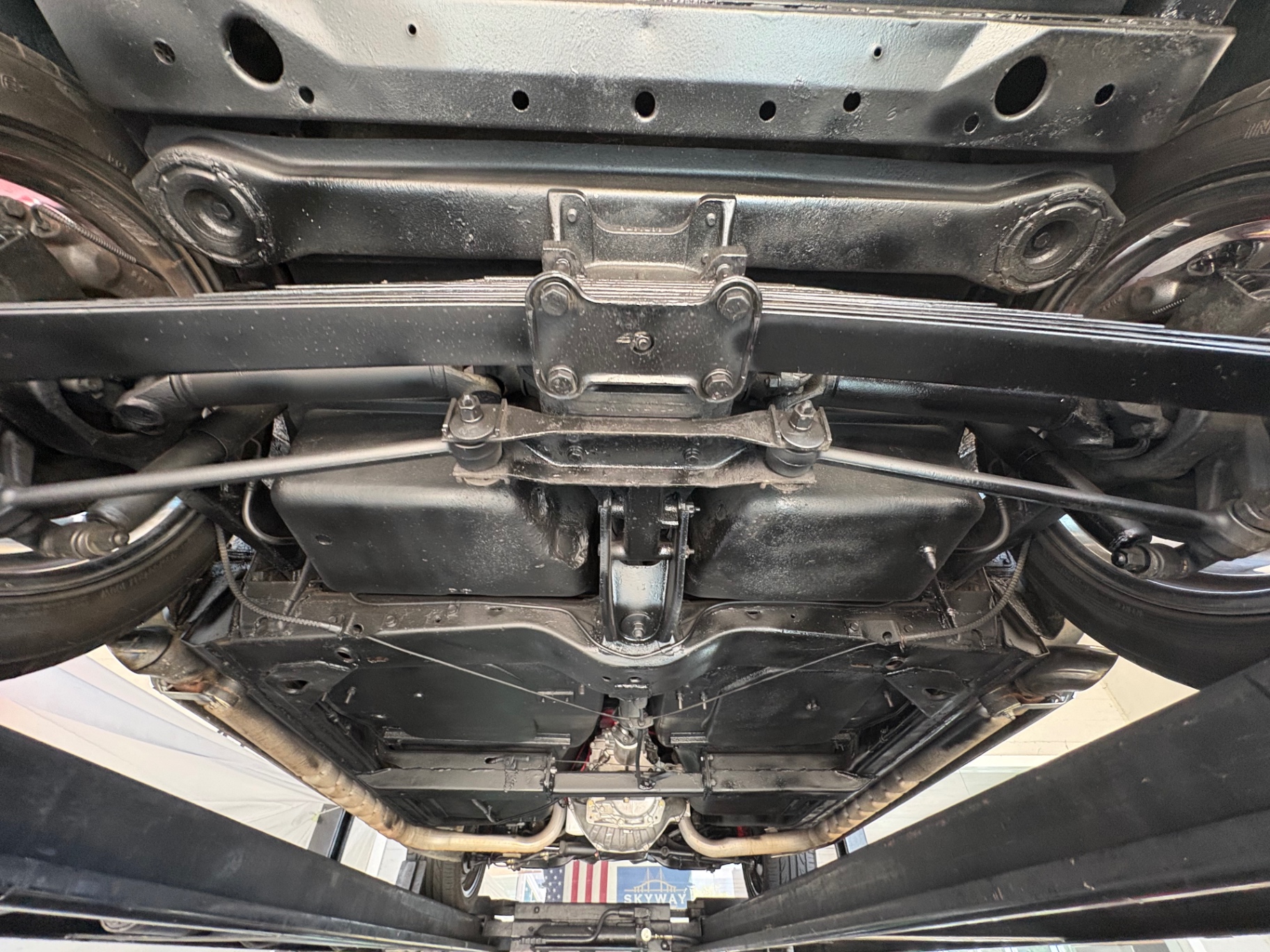
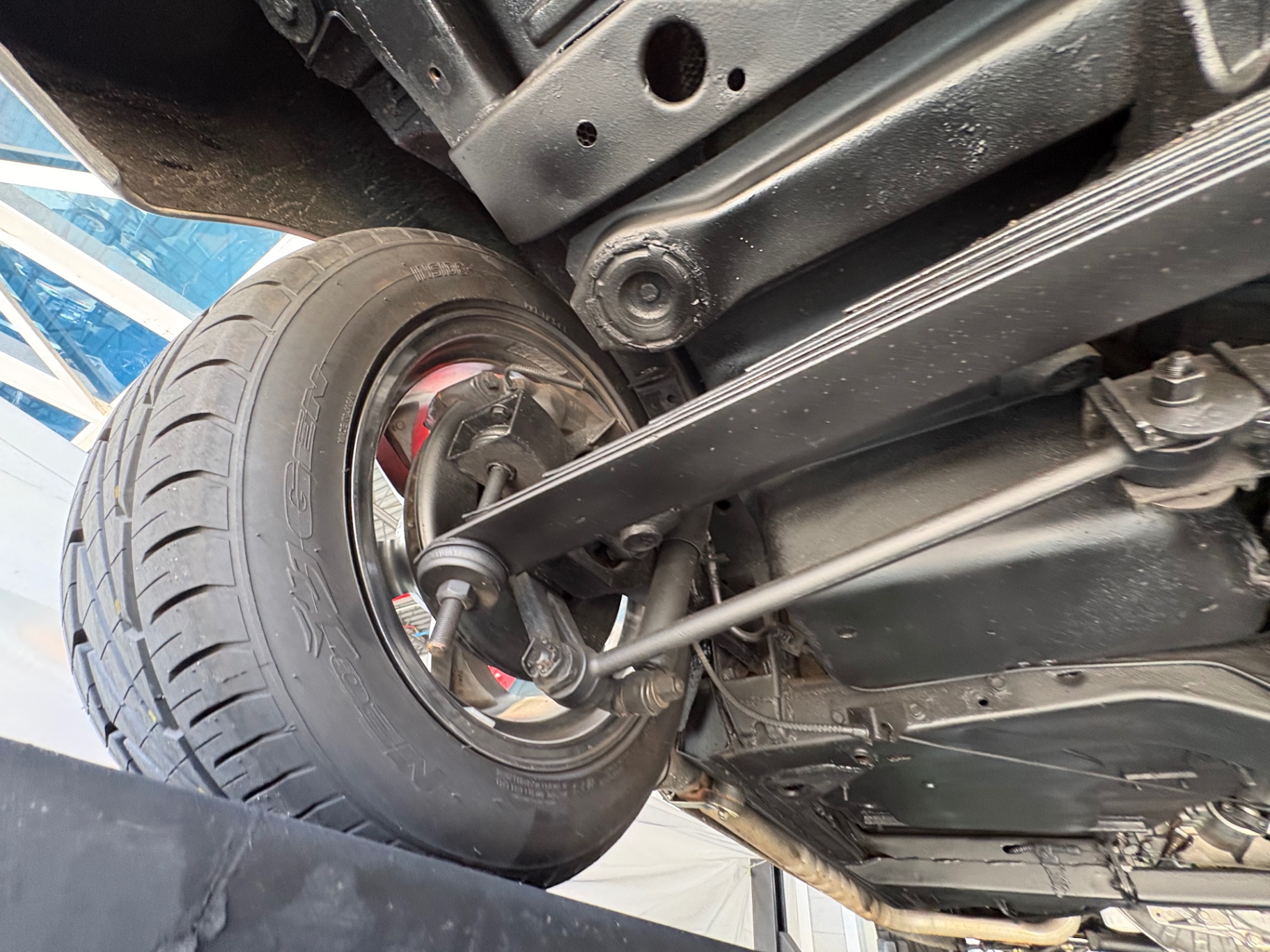
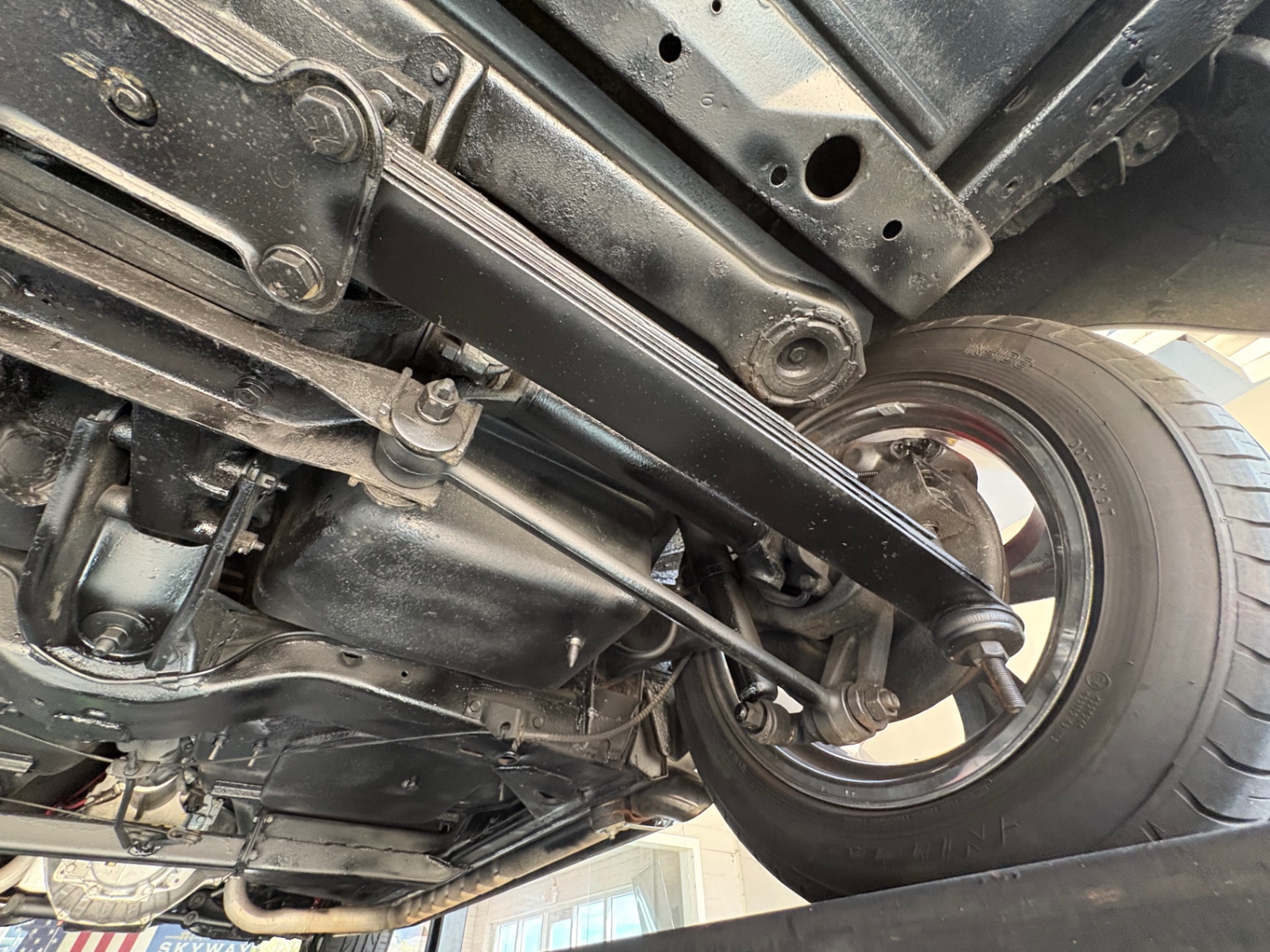
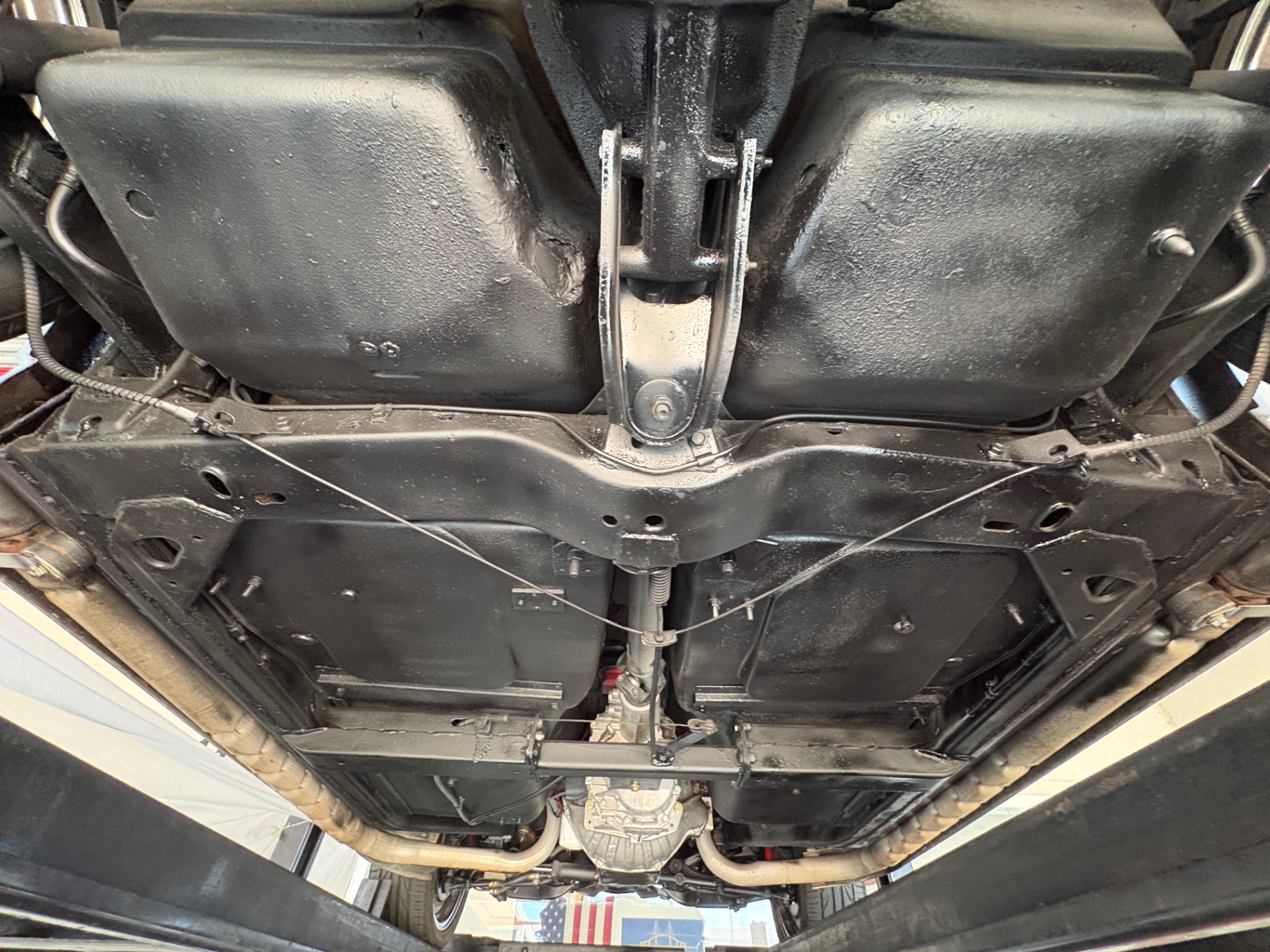
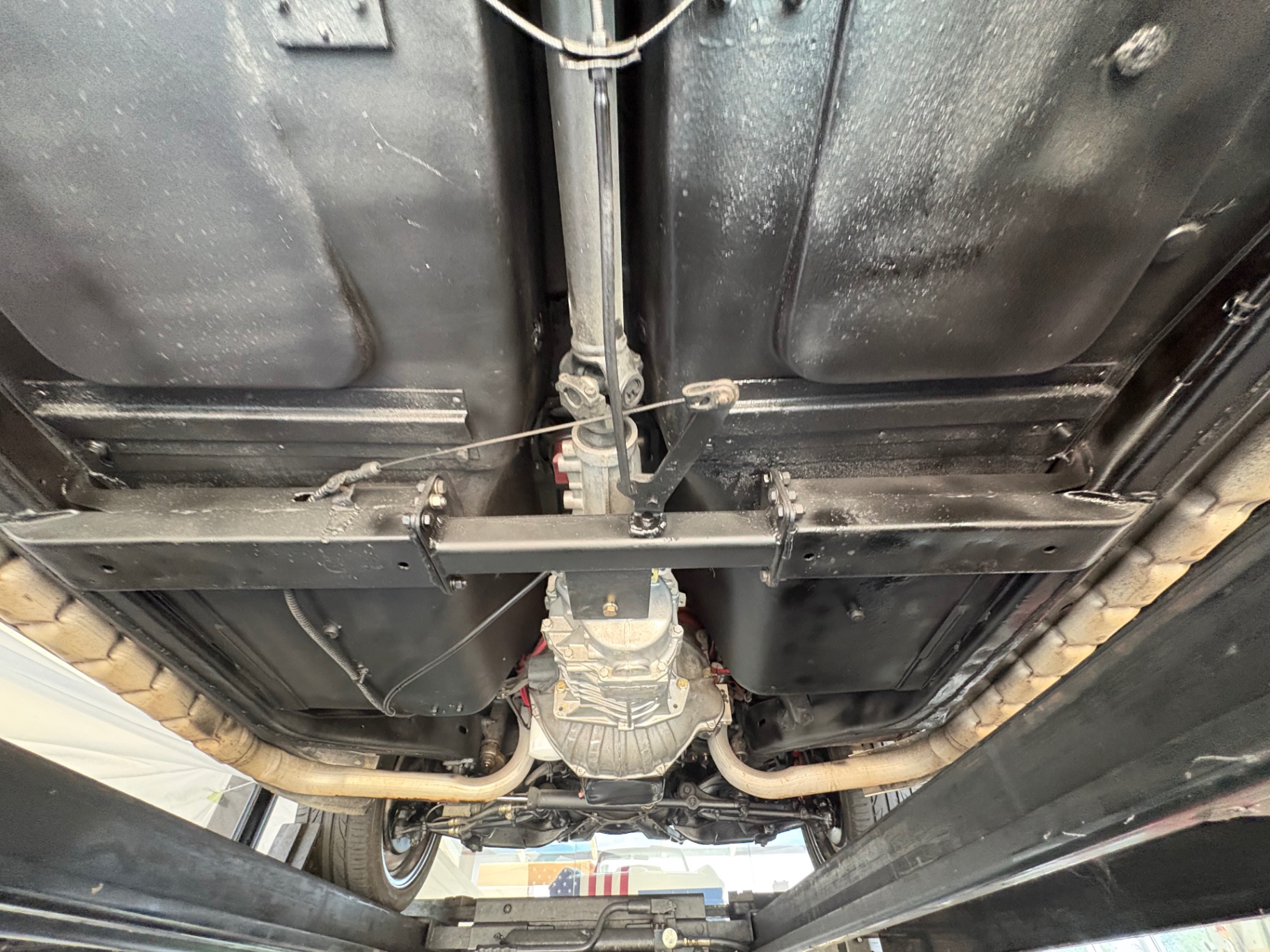
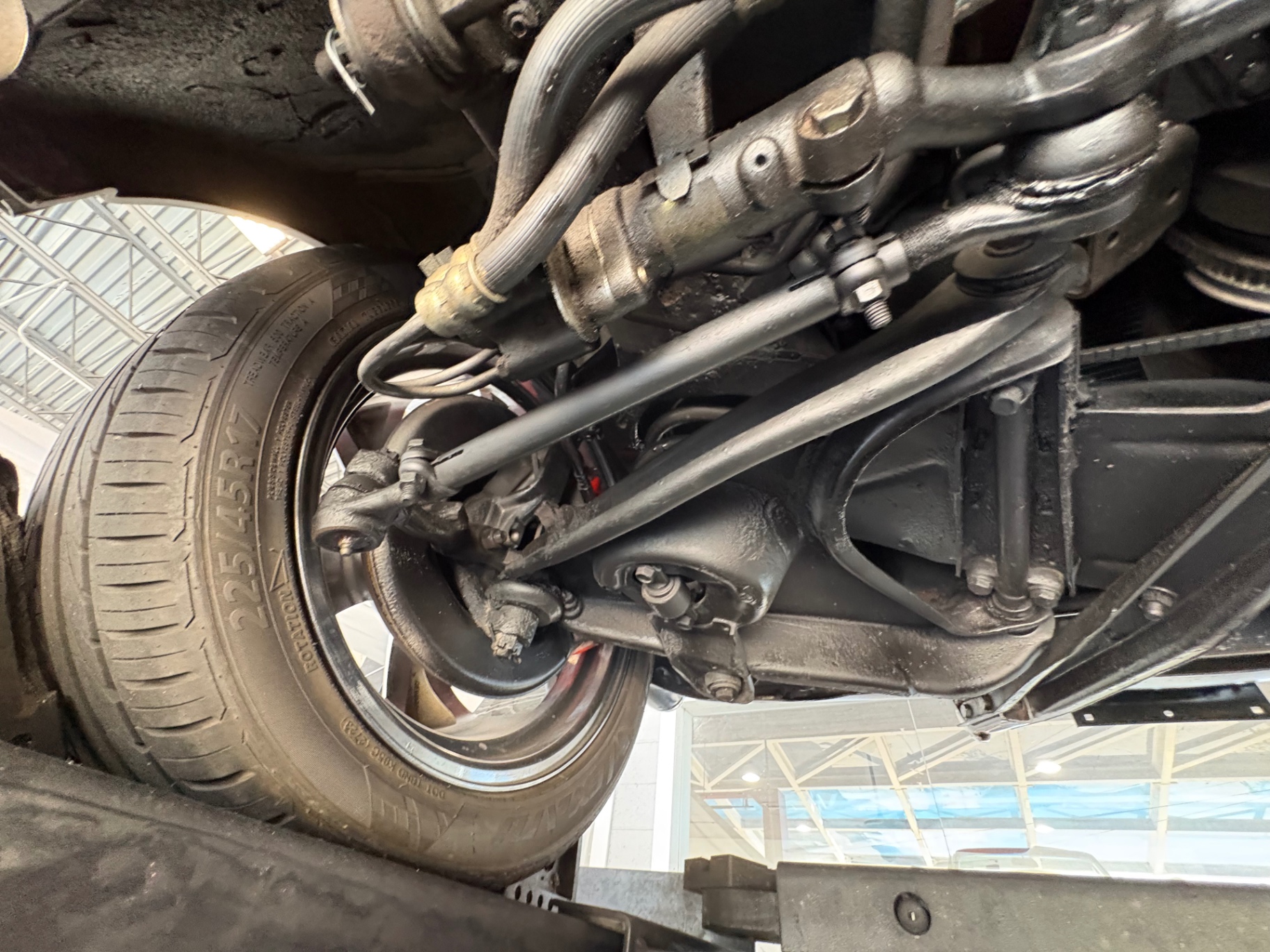
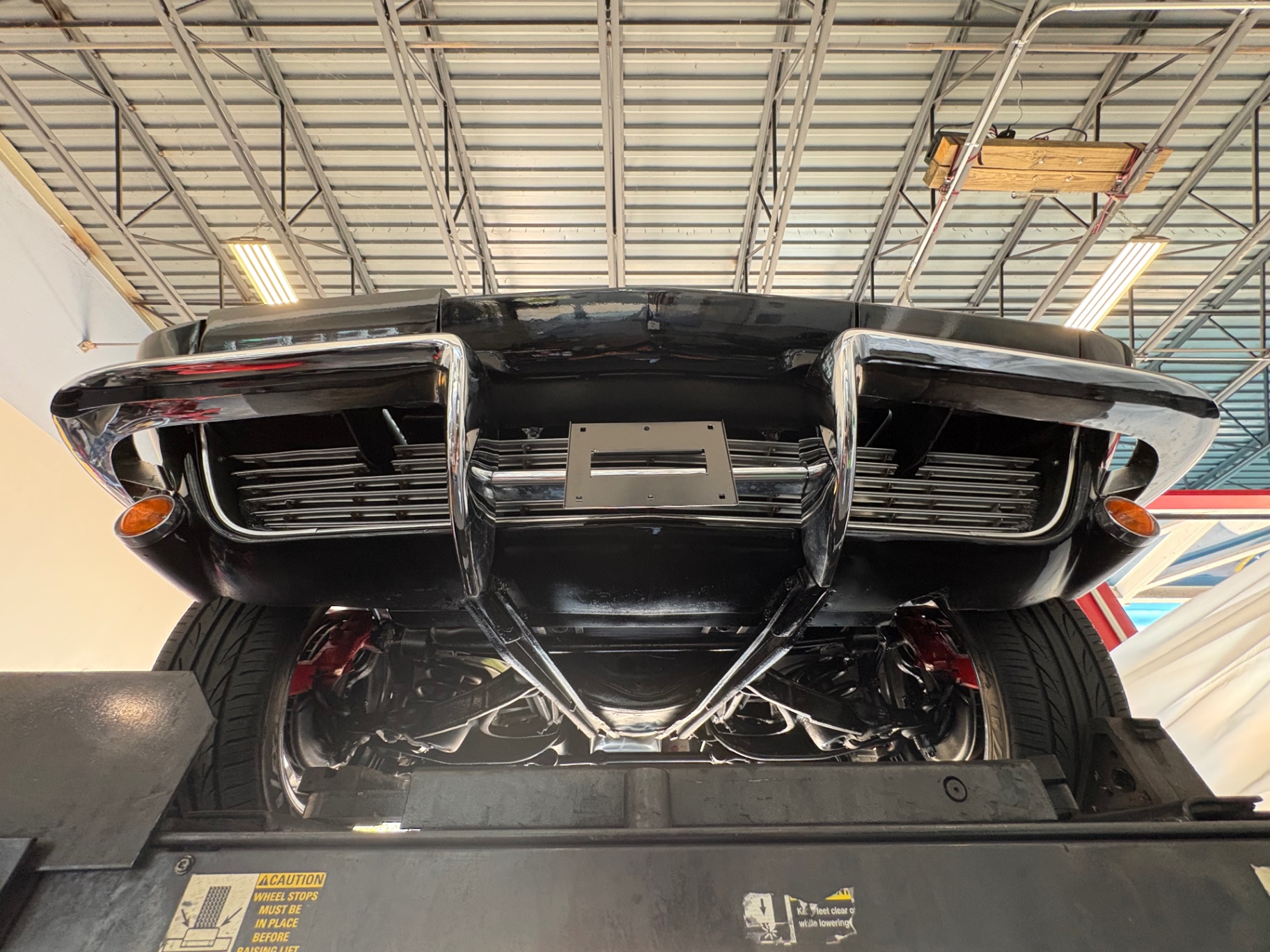
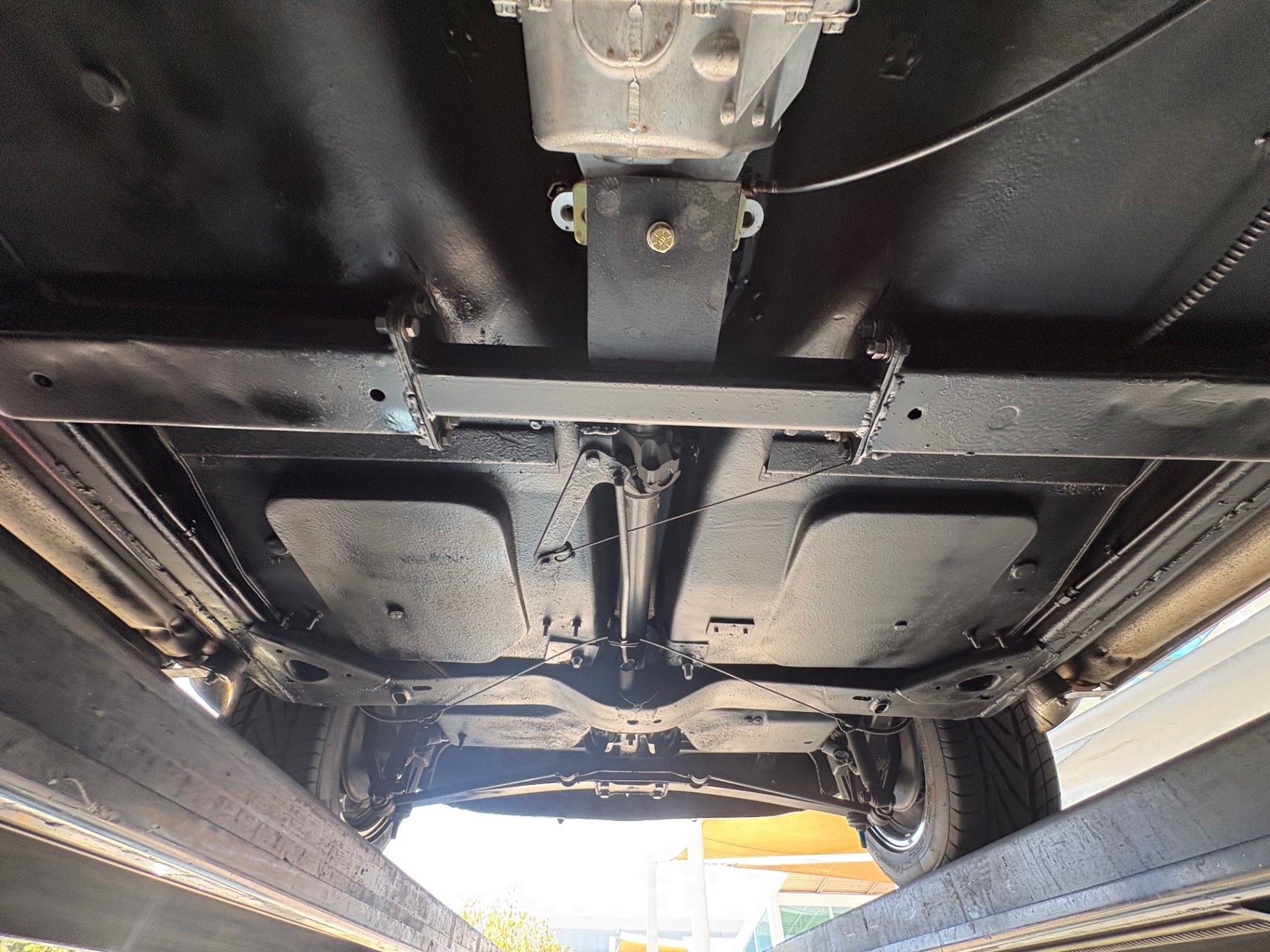
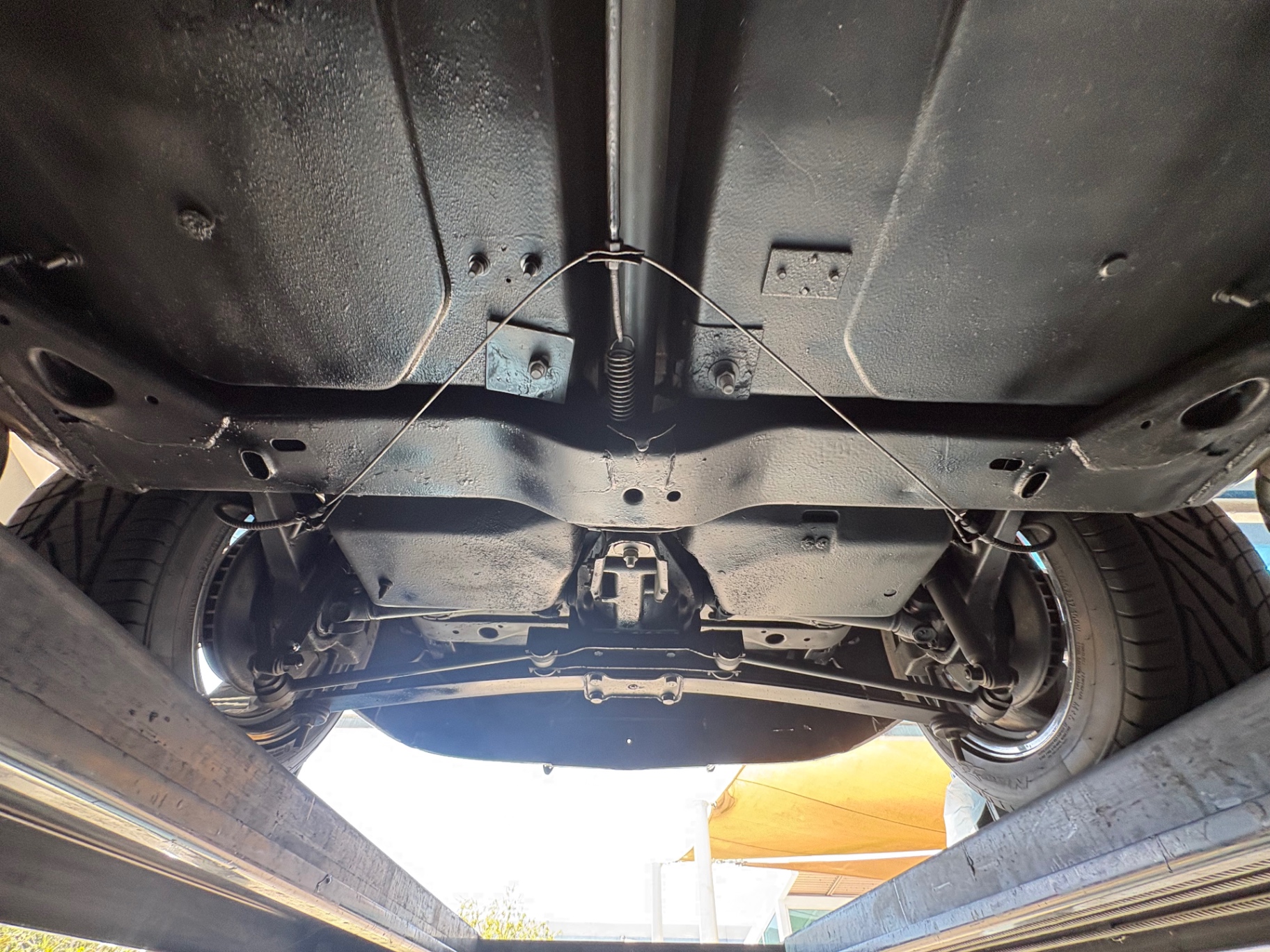
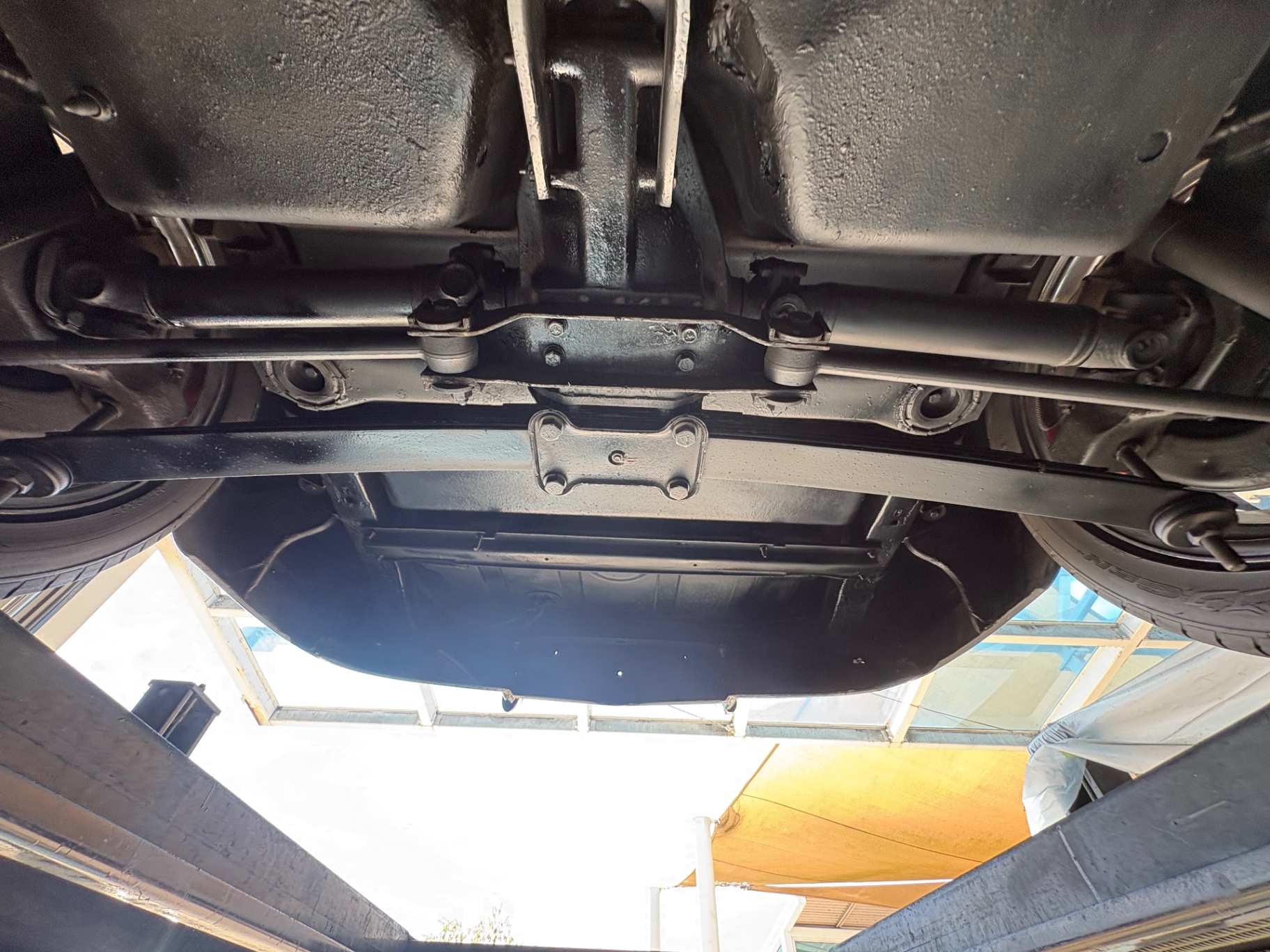
Cooling is handled by an aluminum radiator, which transfers heat more efficiently than the original copper-brass unit and is a standard upgrade on any serious C2 build. Battery disconnects are also installed — a practical touch that protects the electrical system during storage. The undercarriage photos show a thoroughly detailed chassis with no visible rust, clean suspension components, and well-maintained brake and fuel lines. The independent rear suspension that made the 1964 Corvette Sting Ray so significant is fully visible and in good condition.
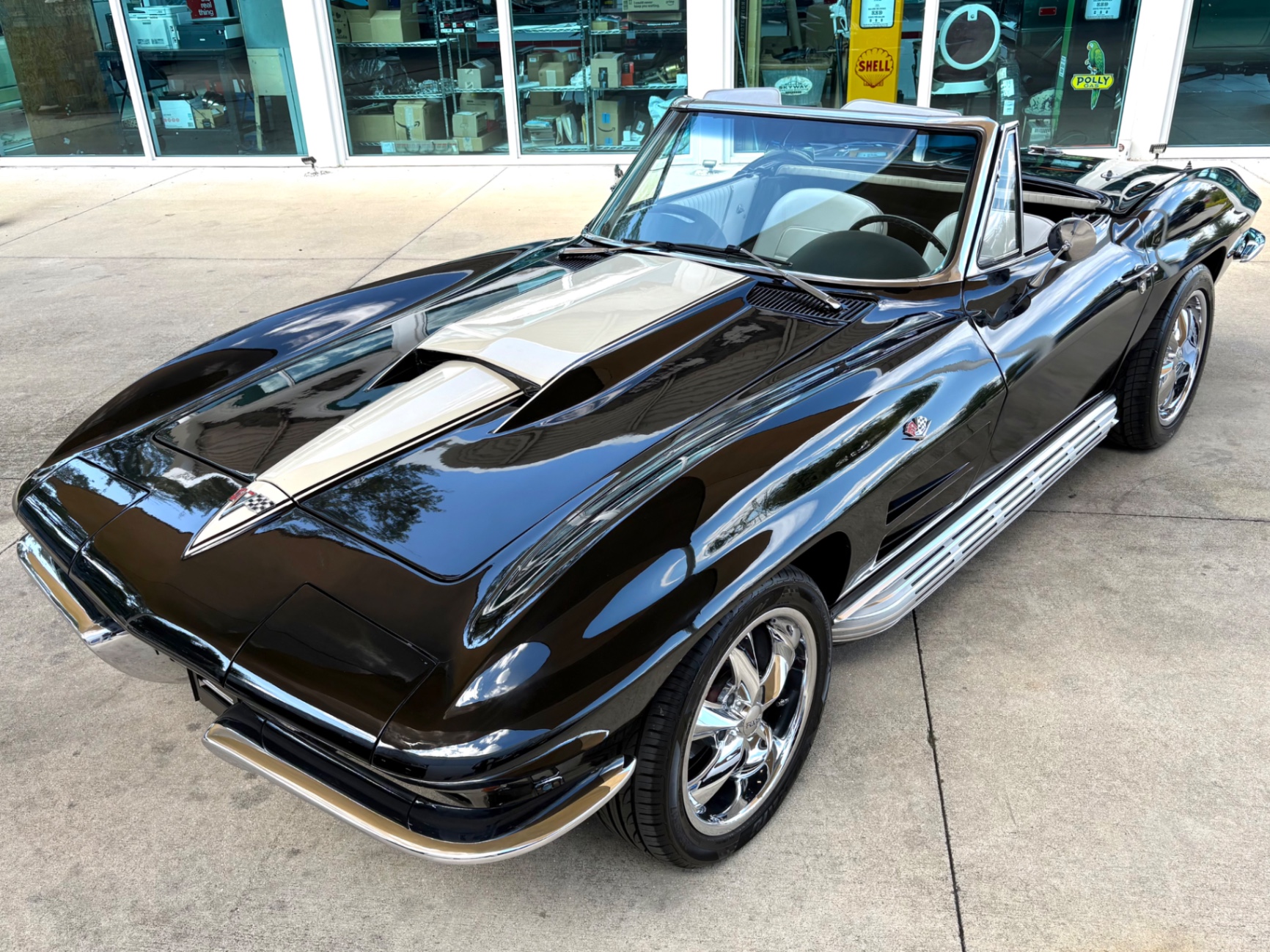
The 427 Stinger hood is a cosmetic addition worth noting. The Stinger hood was originally introduced on the 1967 Corvette L88 and became one of the most recognizable hood designs in Corvette history. On this 1964 body, it adds a visual note from the later C2 era and gives the car a slightly more aggressive profile.
Interior
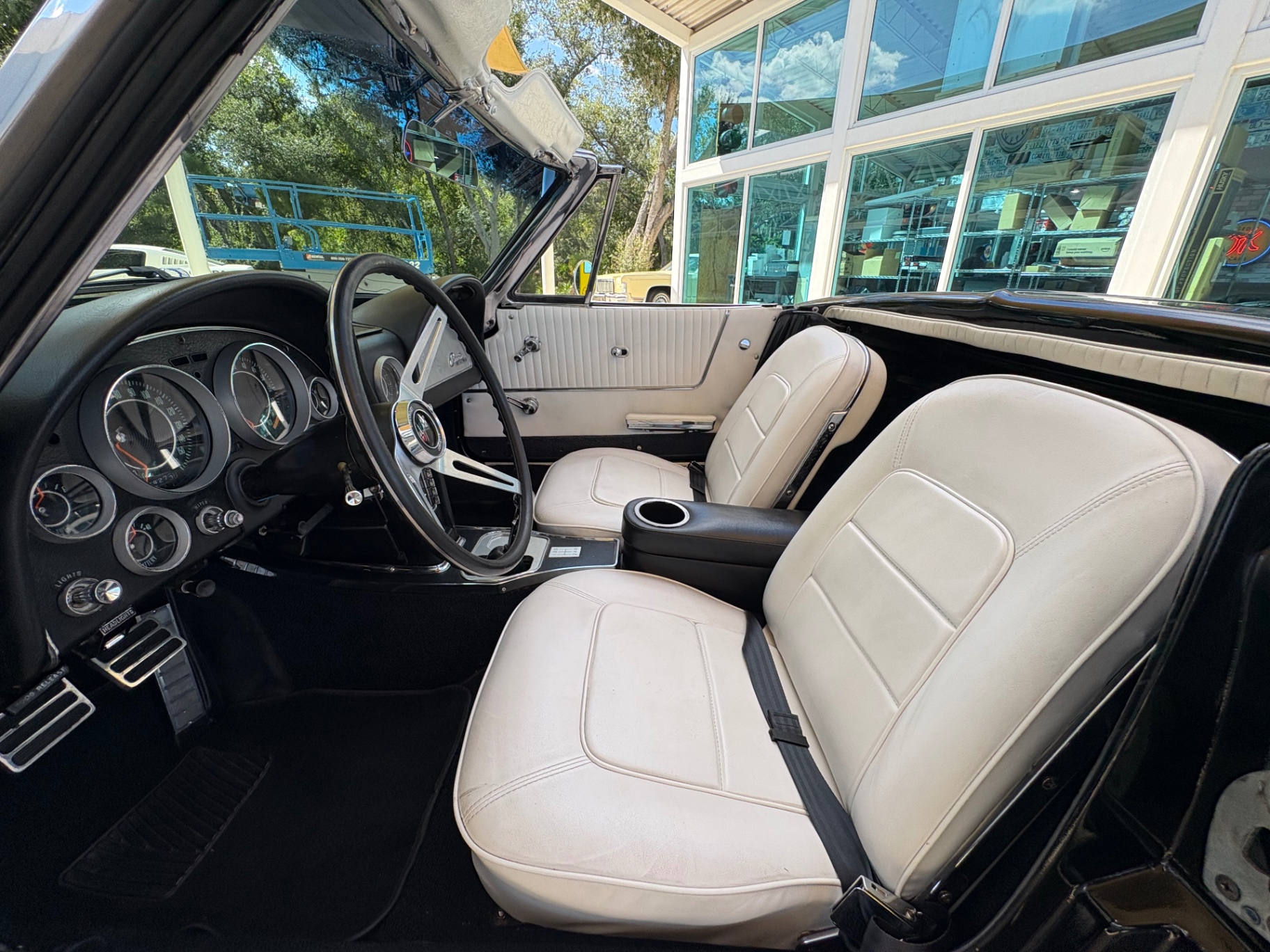
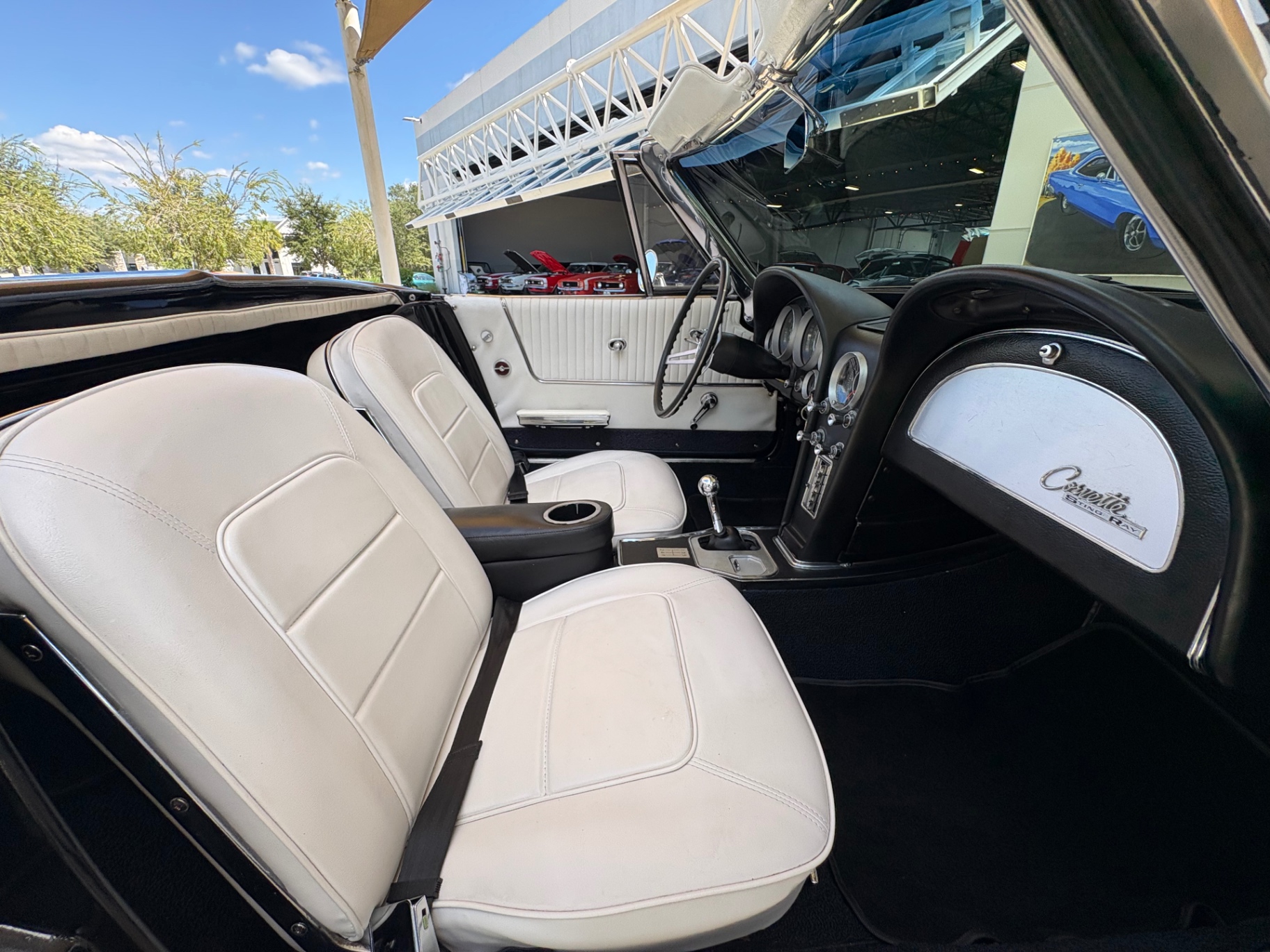
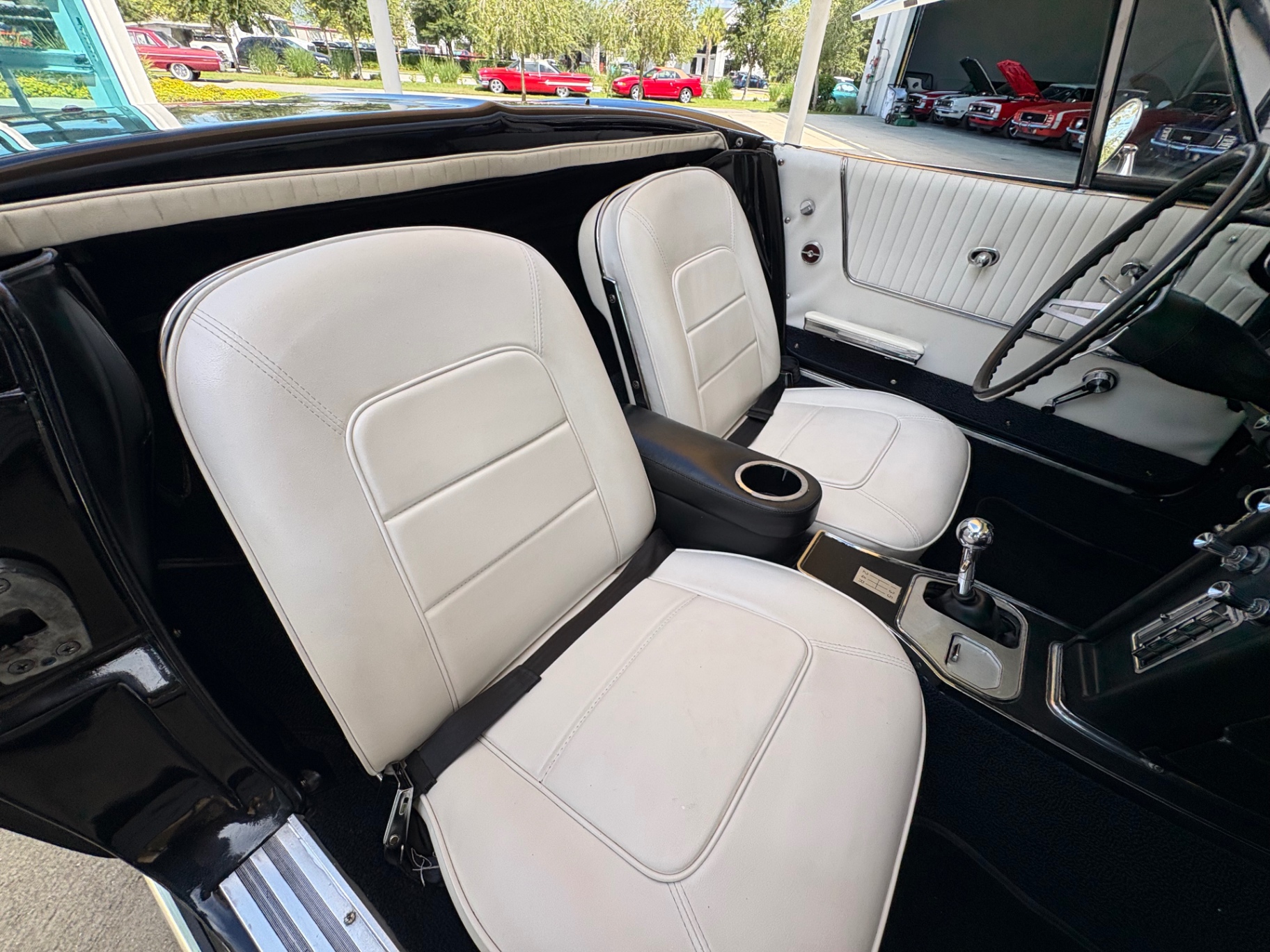
The cabin of this 1964 Chevrolet Corvette Sting Ray is finished in white leather throughout, and the contrast against the Tuxedo Black exterior and black carpet is sharp. The bucket seats have been reupholstered in white leather with clean stitching and are in excellent condition based on the photos. The center console runs the length of the cockpit in classic Sting Ray fashion and has been updated with a cup holder — a small concession to modern use that most drivers will appreciate.
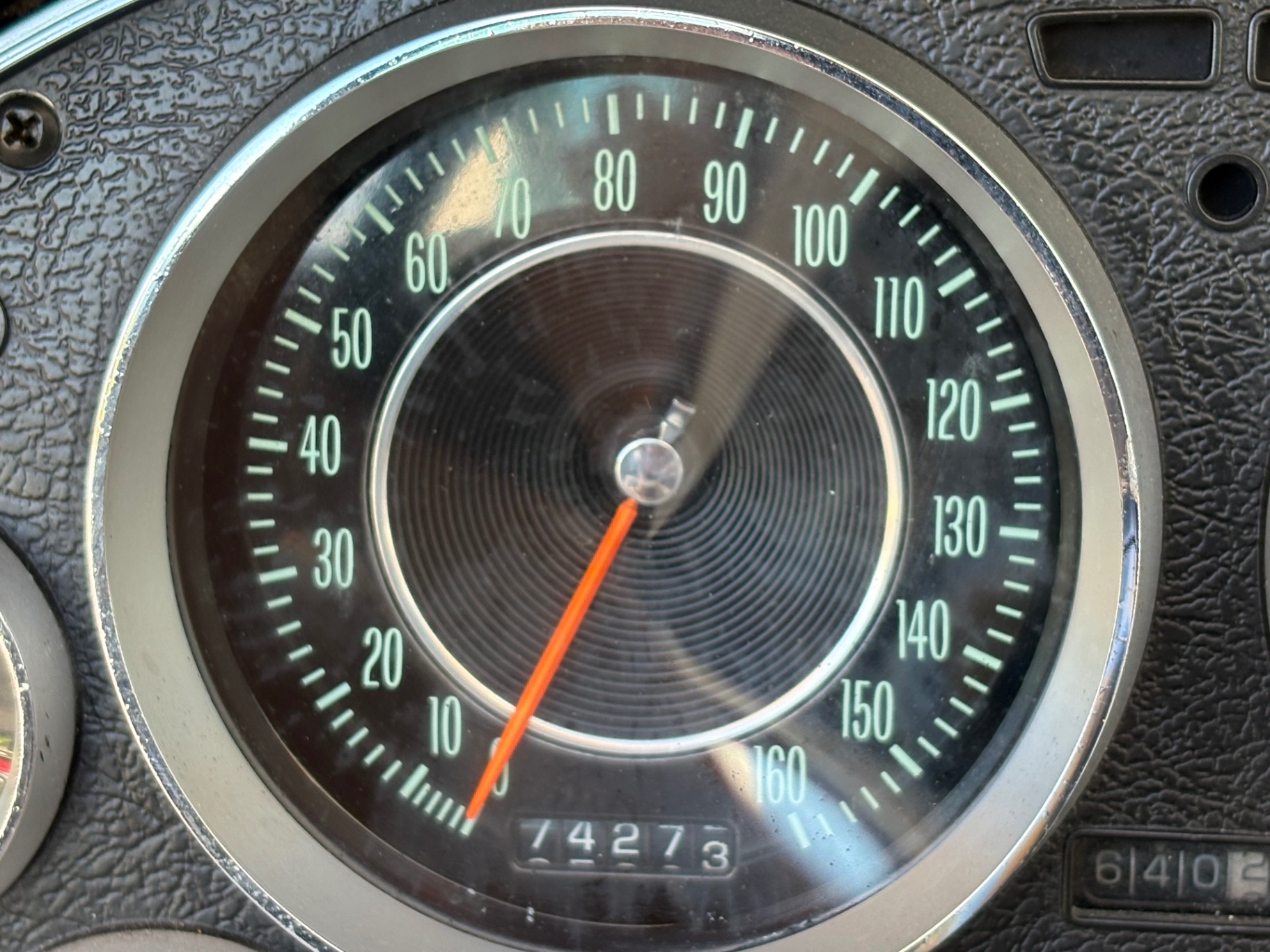
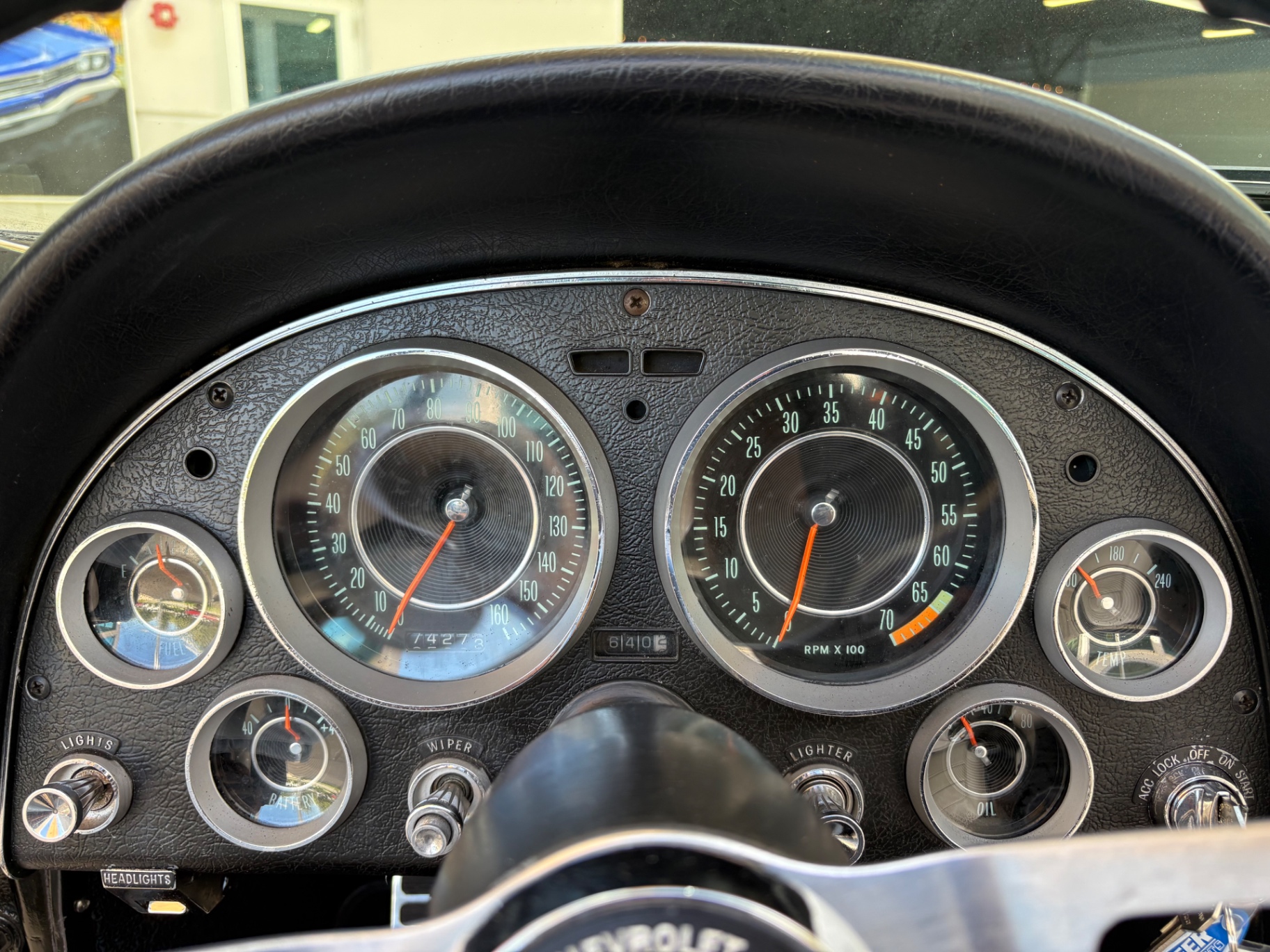
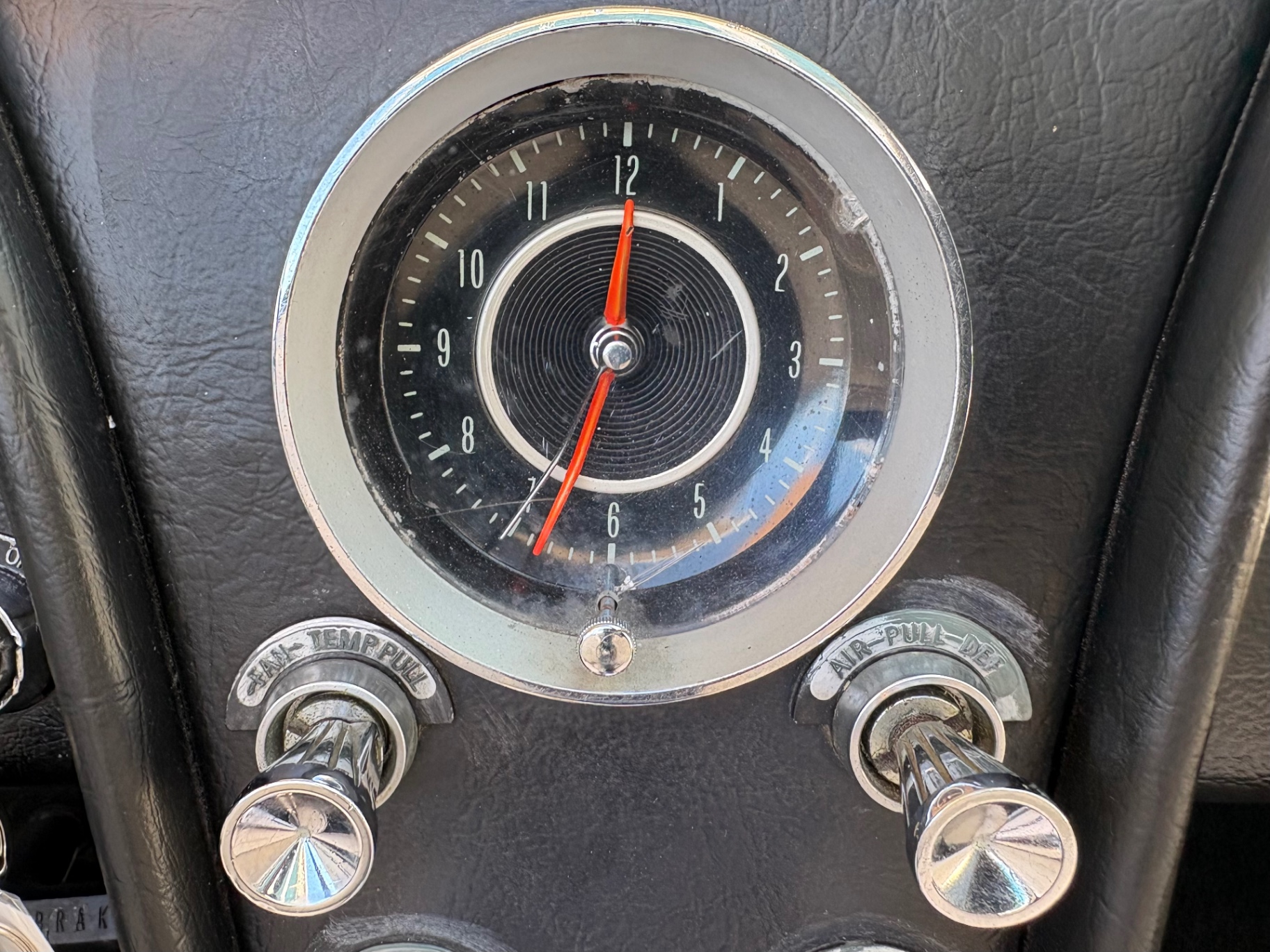
The custom sport steering wheel features a Chevrolet Corvette center cap and polished aluminum spokes, which complements the chrome details in the rest of the cabin while still looking period-correct at a glance. Behind it sits the original C2 gauge cluster, which is one of the more complete instrument setups of the era. The driver faces a large 160-mph speedometer and a tachometer marked to 7,000 rpm. Auxiliary gauges for fuel, oil pressure, battery, and temperature round out the cluster. A separate analog clock is mounted on the passenger-side dash in the traditional C2 location — it is visible and functioning in the photos. A radio is also fitted in the center stack.
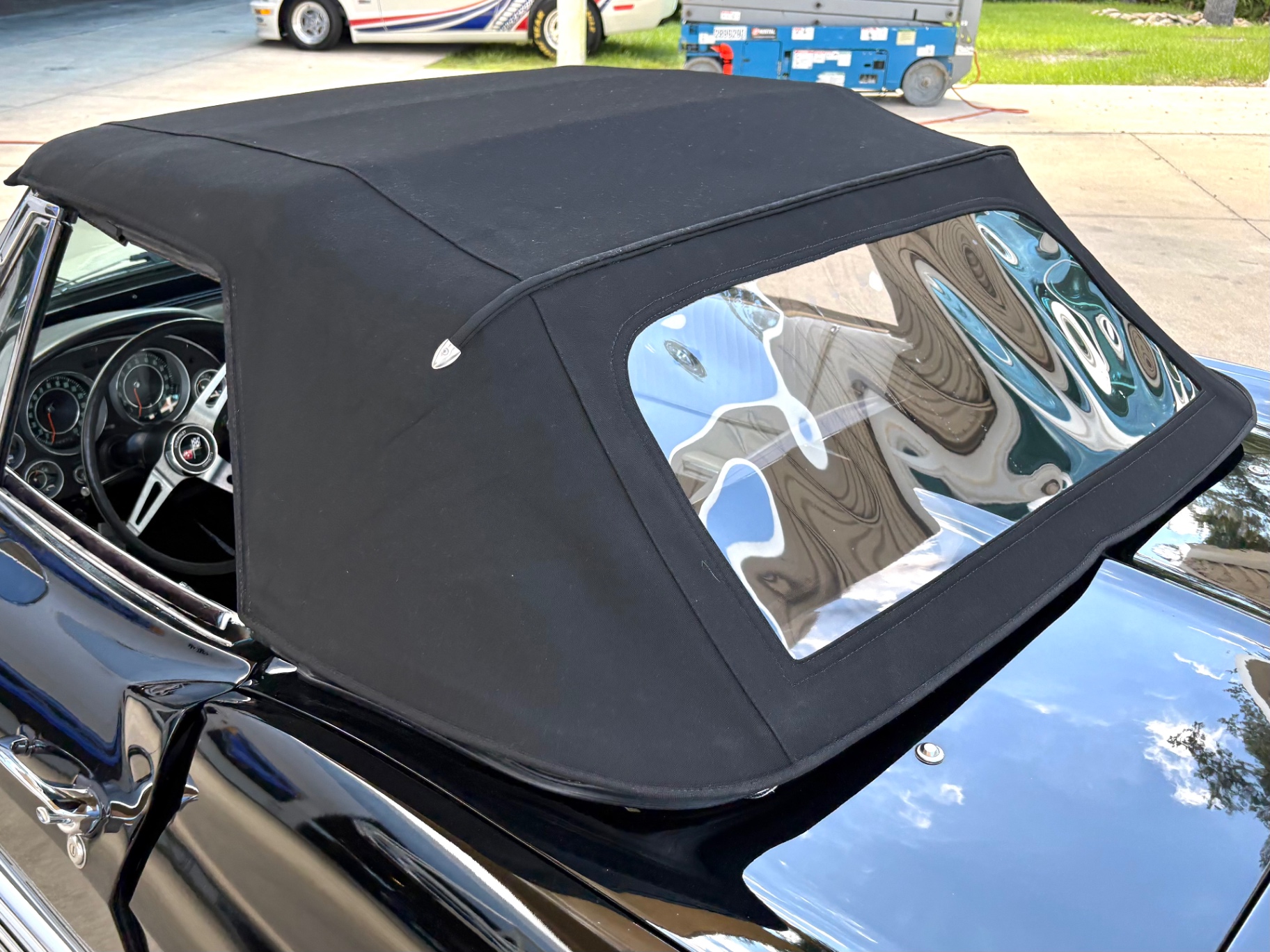
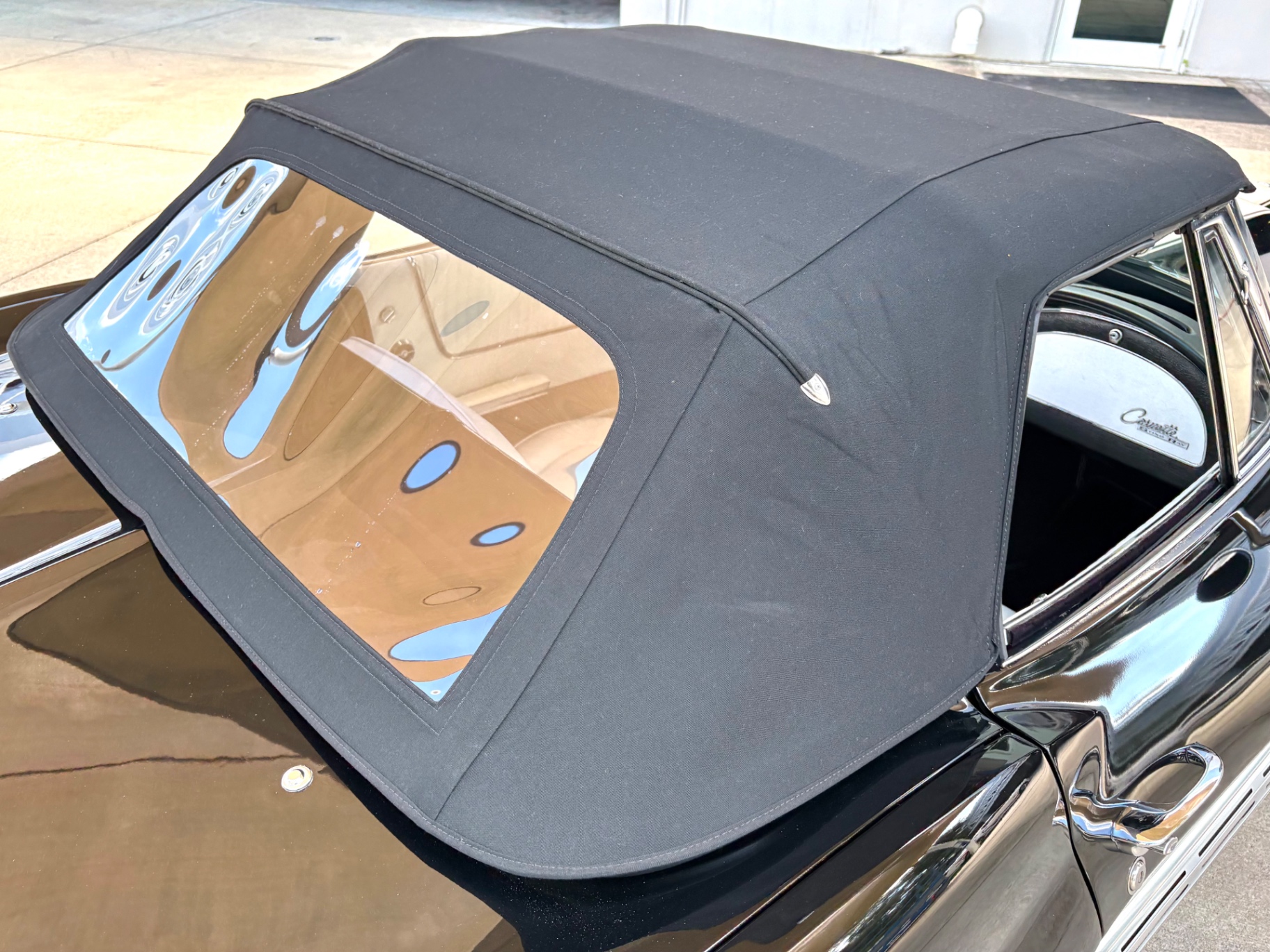
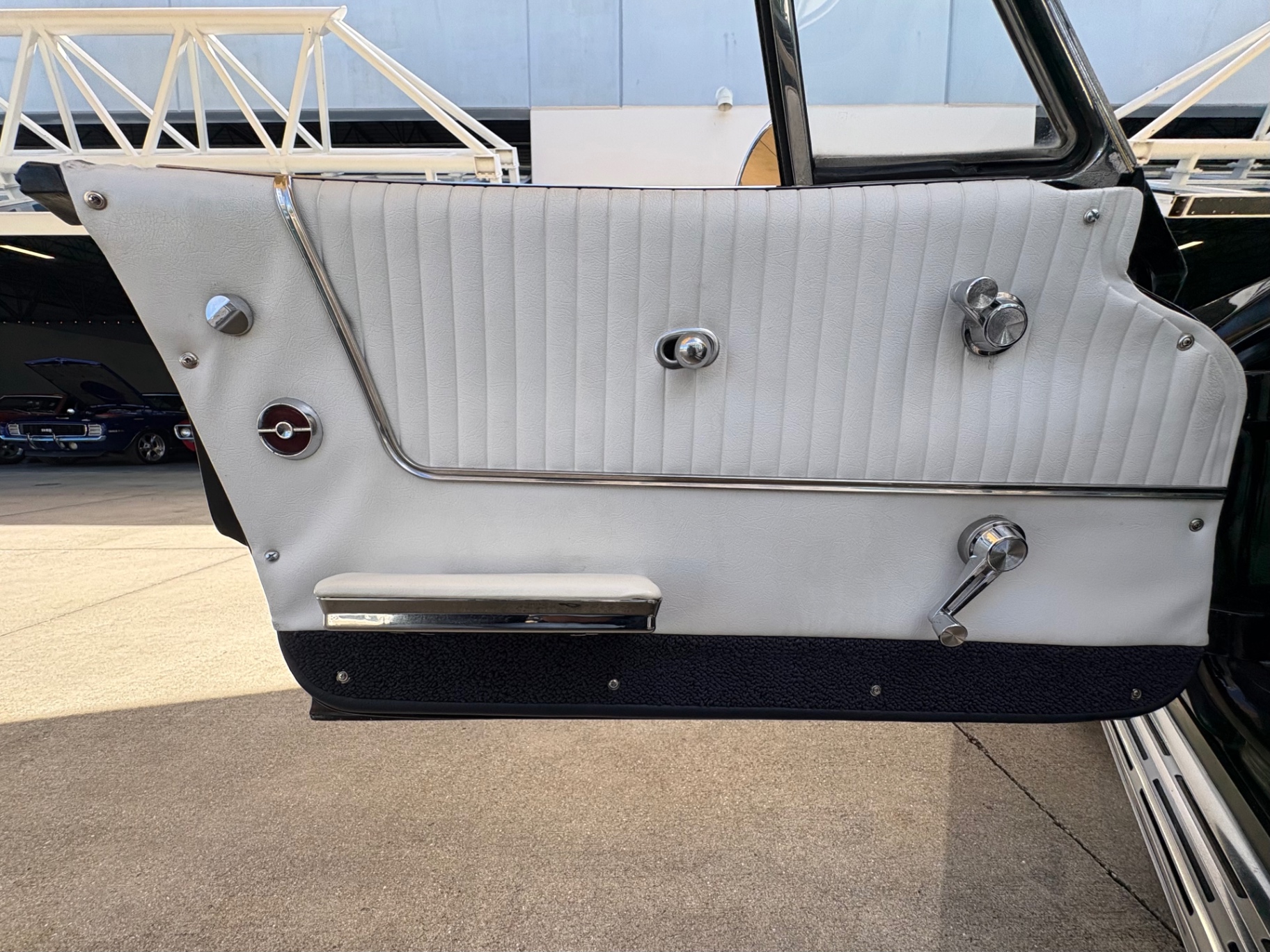
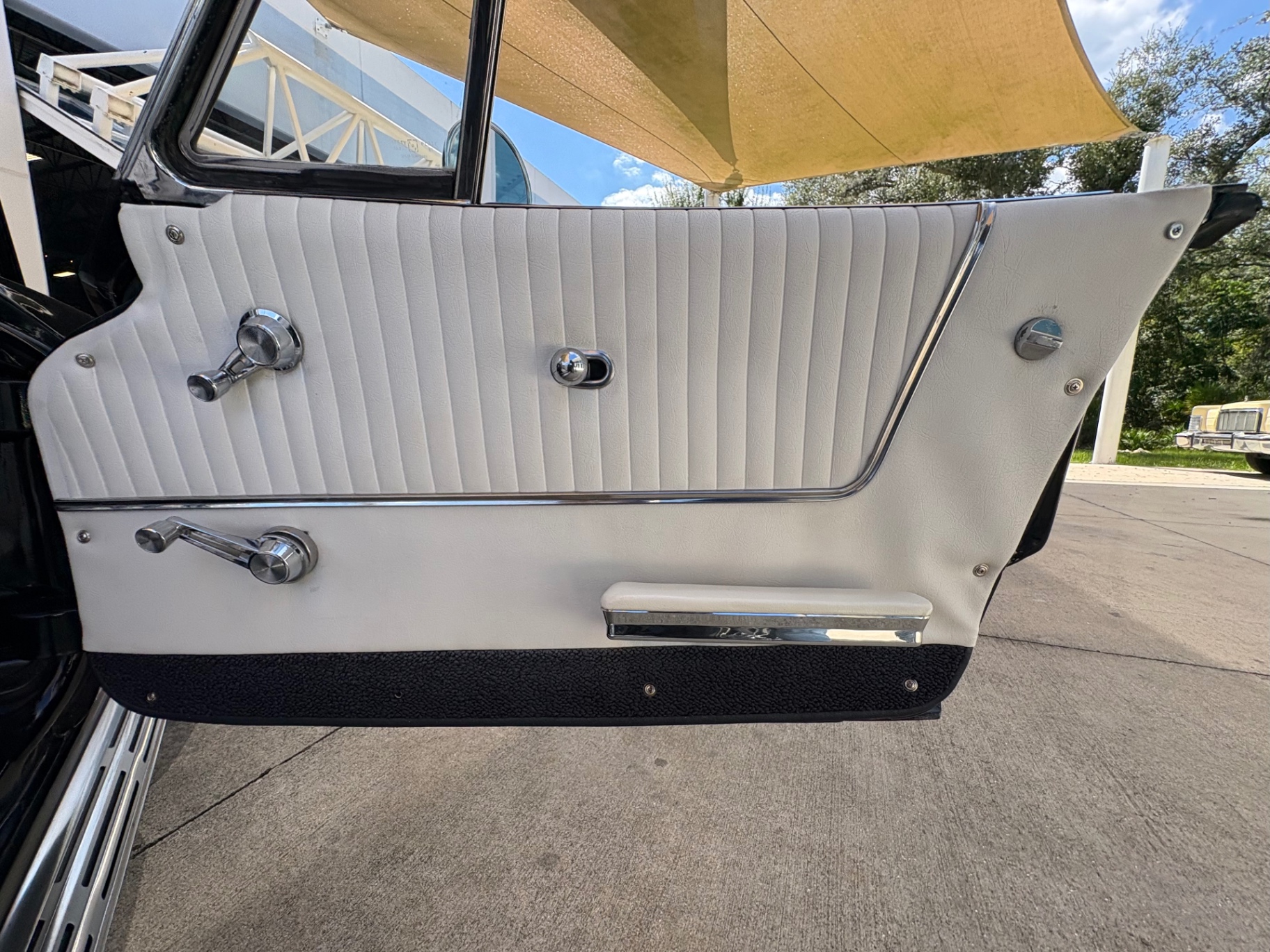
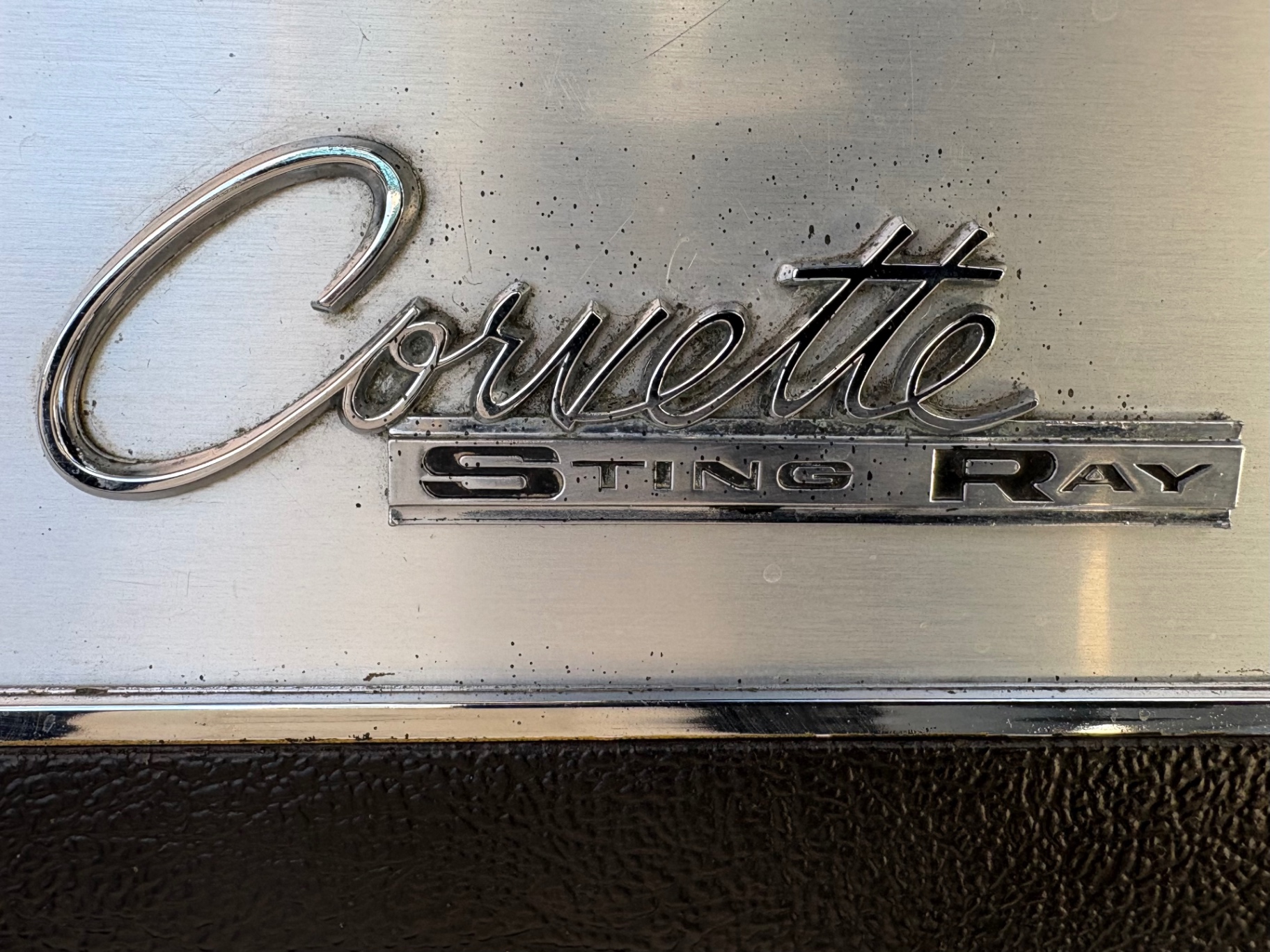
The door panels are finished in white with vertical ribbing that matches the factory C2 style. Chrome door pull handles, window cranks, and vent window hardware are all intact and in good condition. The black HARTZ cloth convertible top is up in several of the photos and appears to fit well with no obvious gaps or wear visible. Seat belts are installed front and rear, and the Corvette Sting Ray script badge on the passenger-side dash is original and intact. The shift pattern tag on the console clearly shows the 5-speed gate.
Exterior
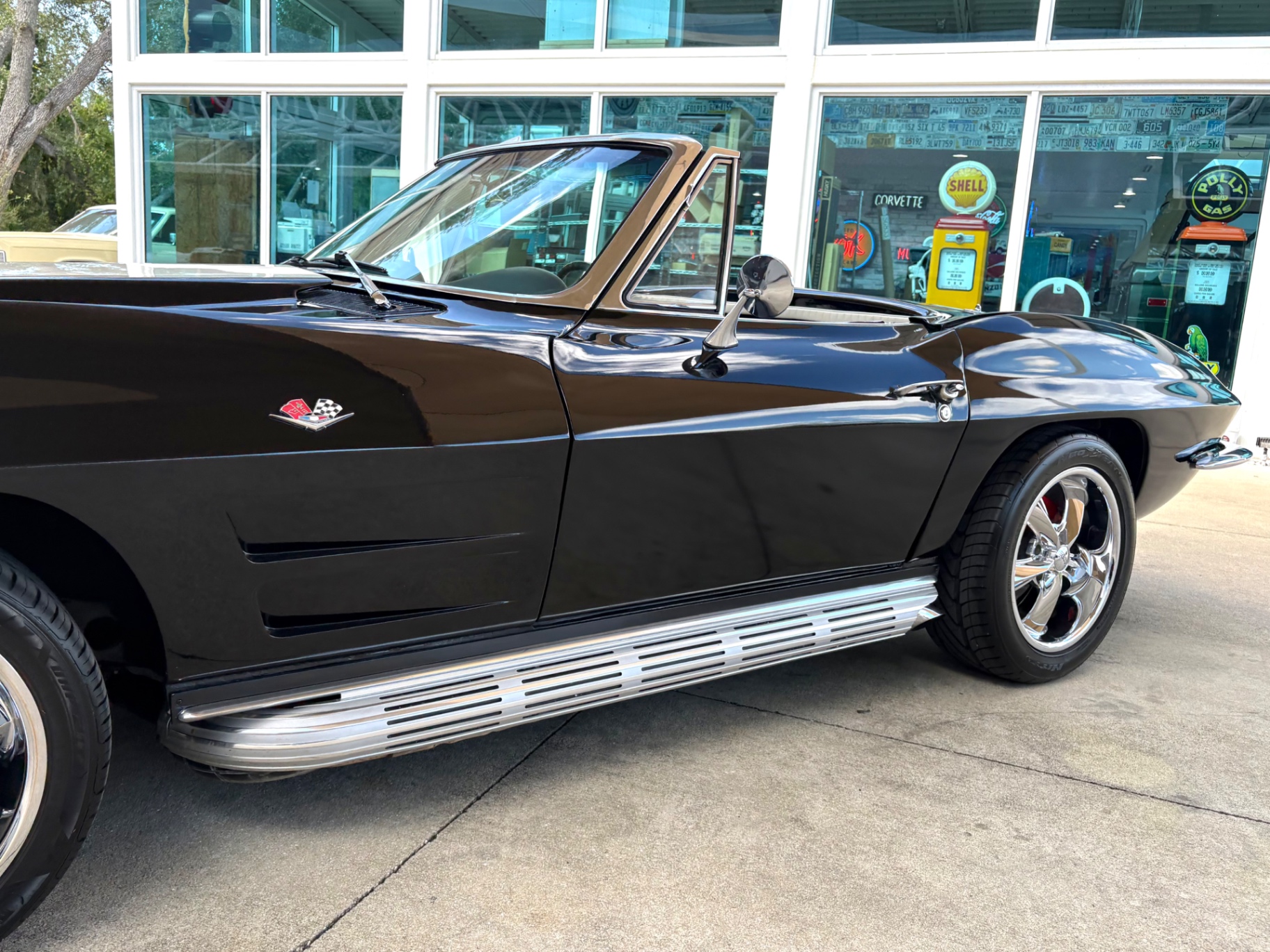
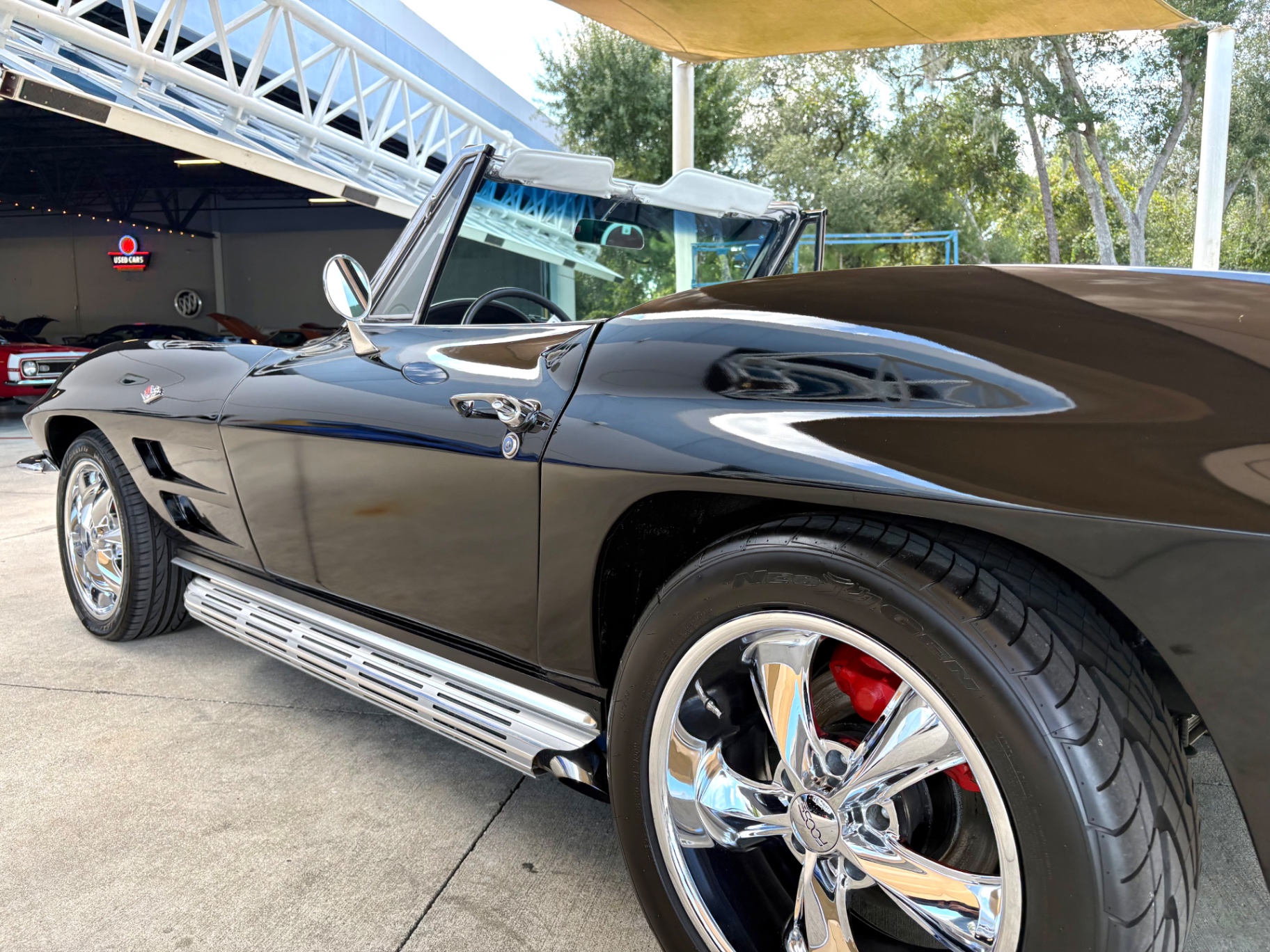
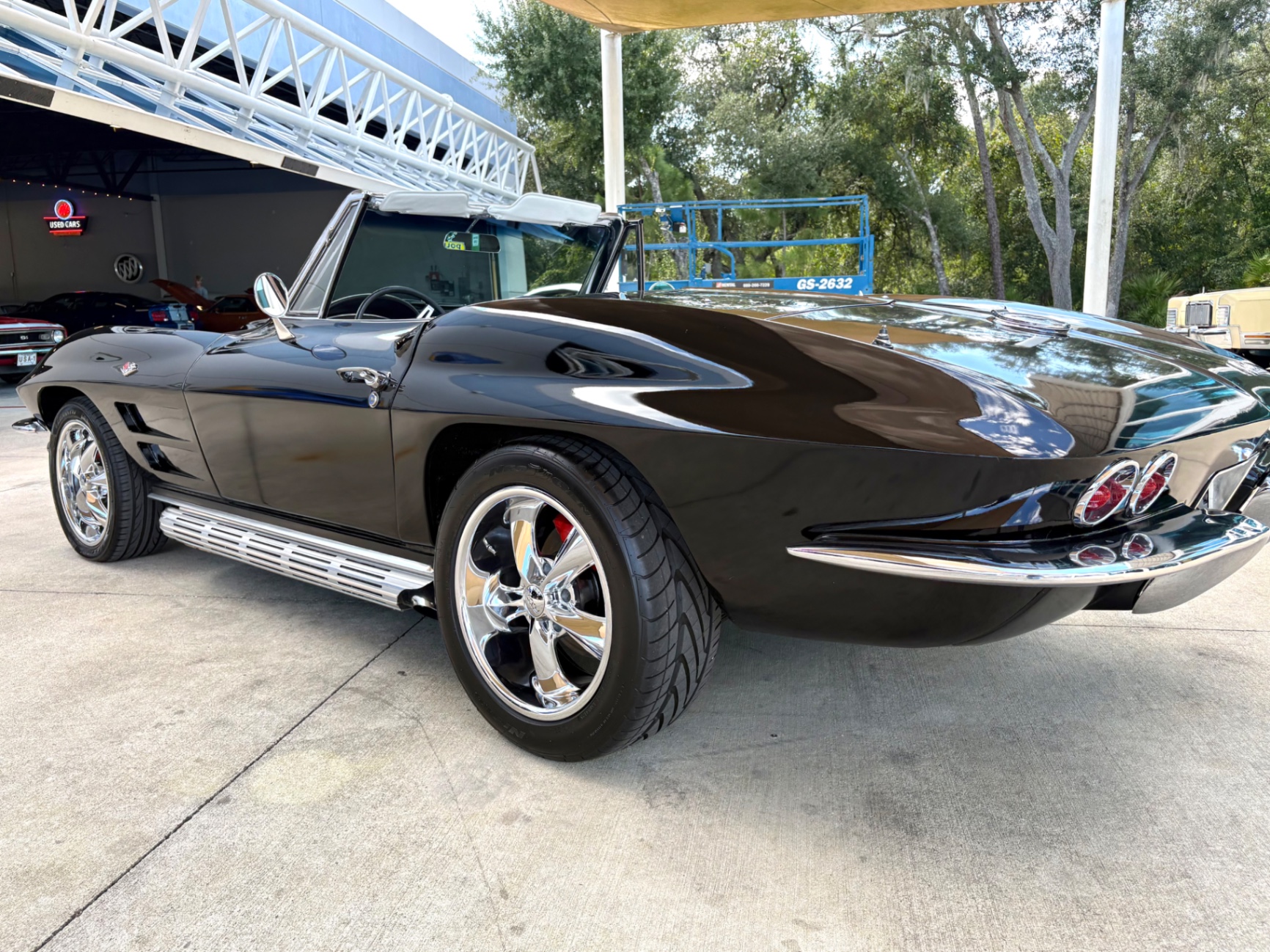
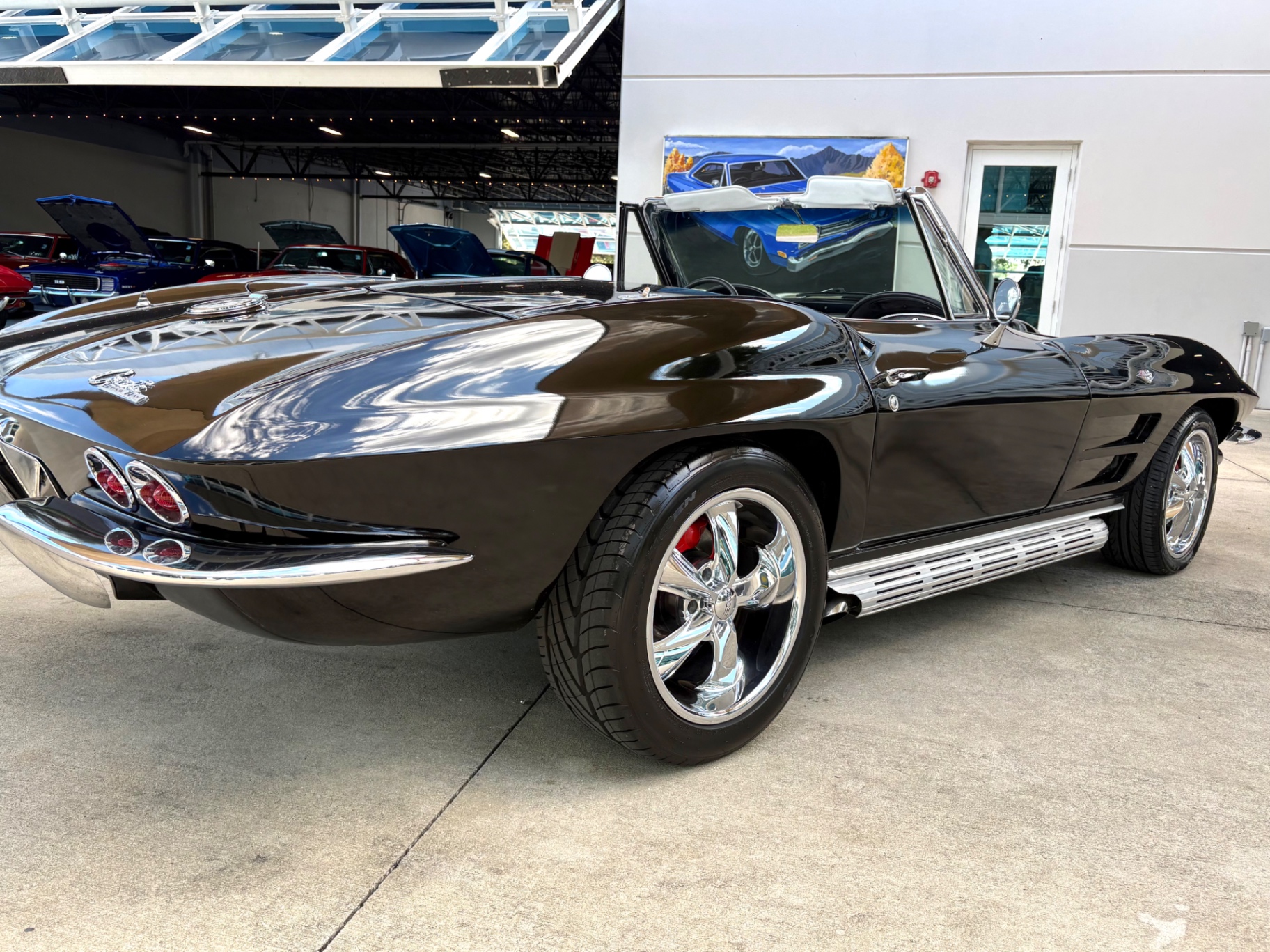
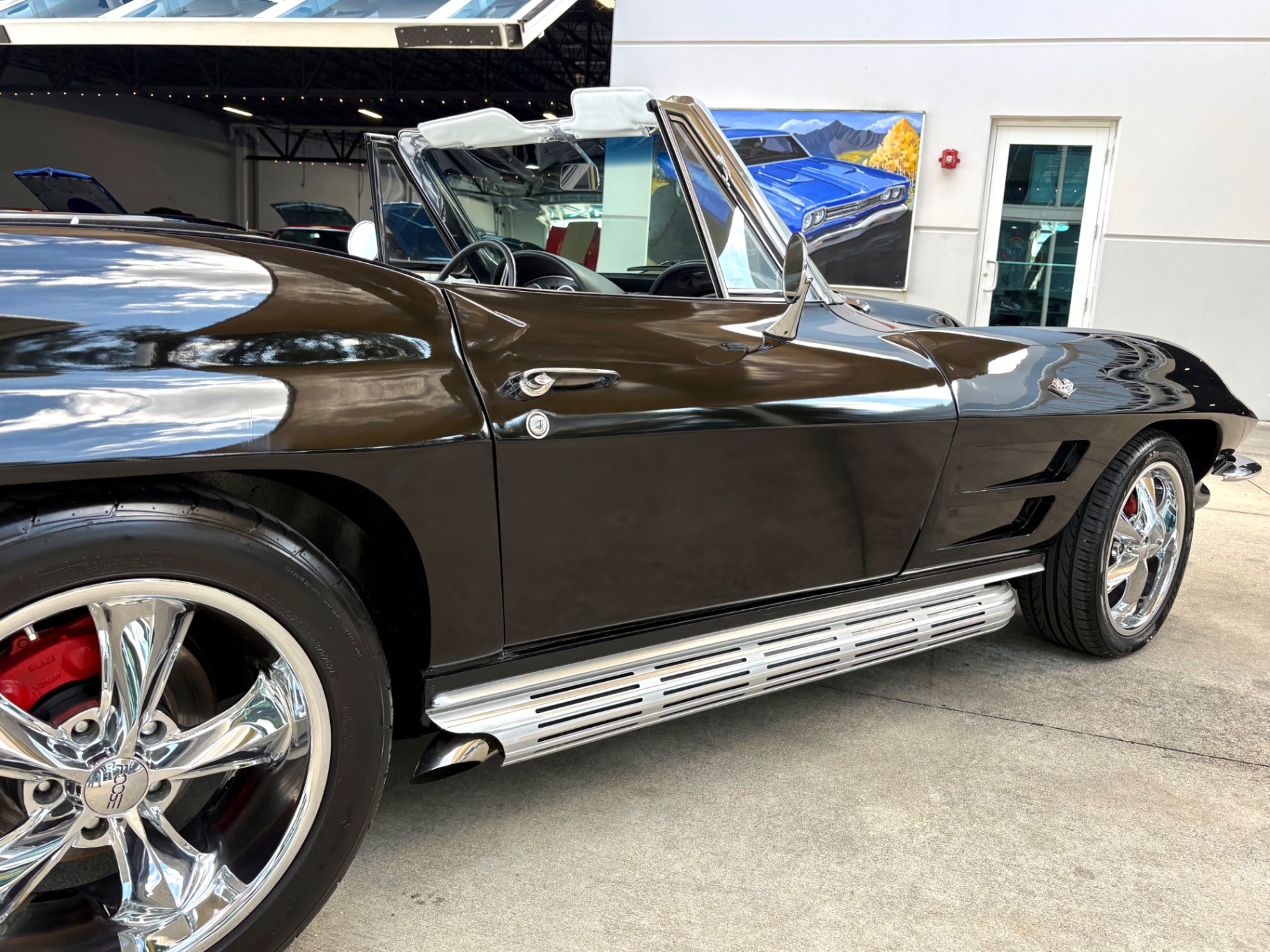
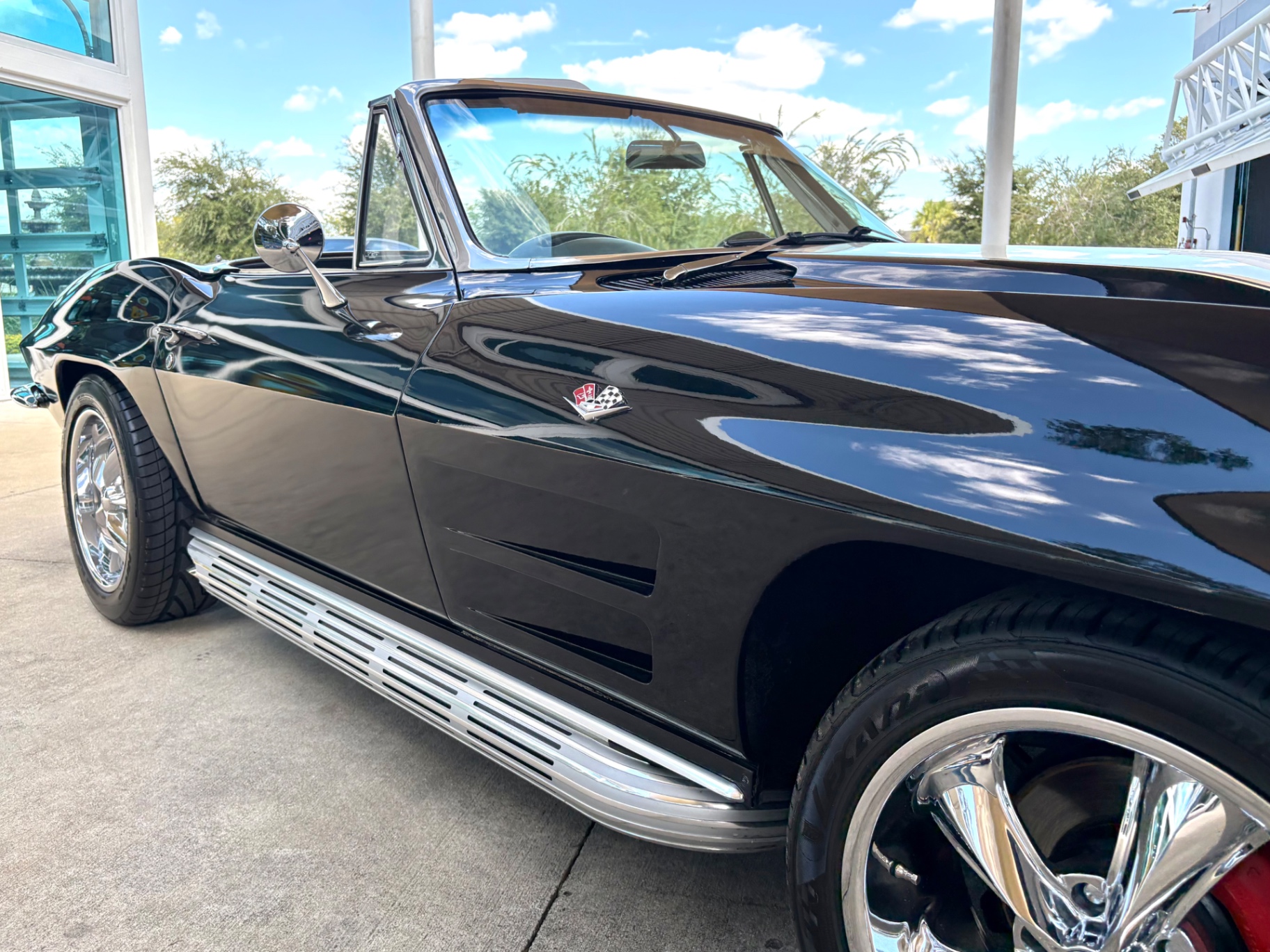
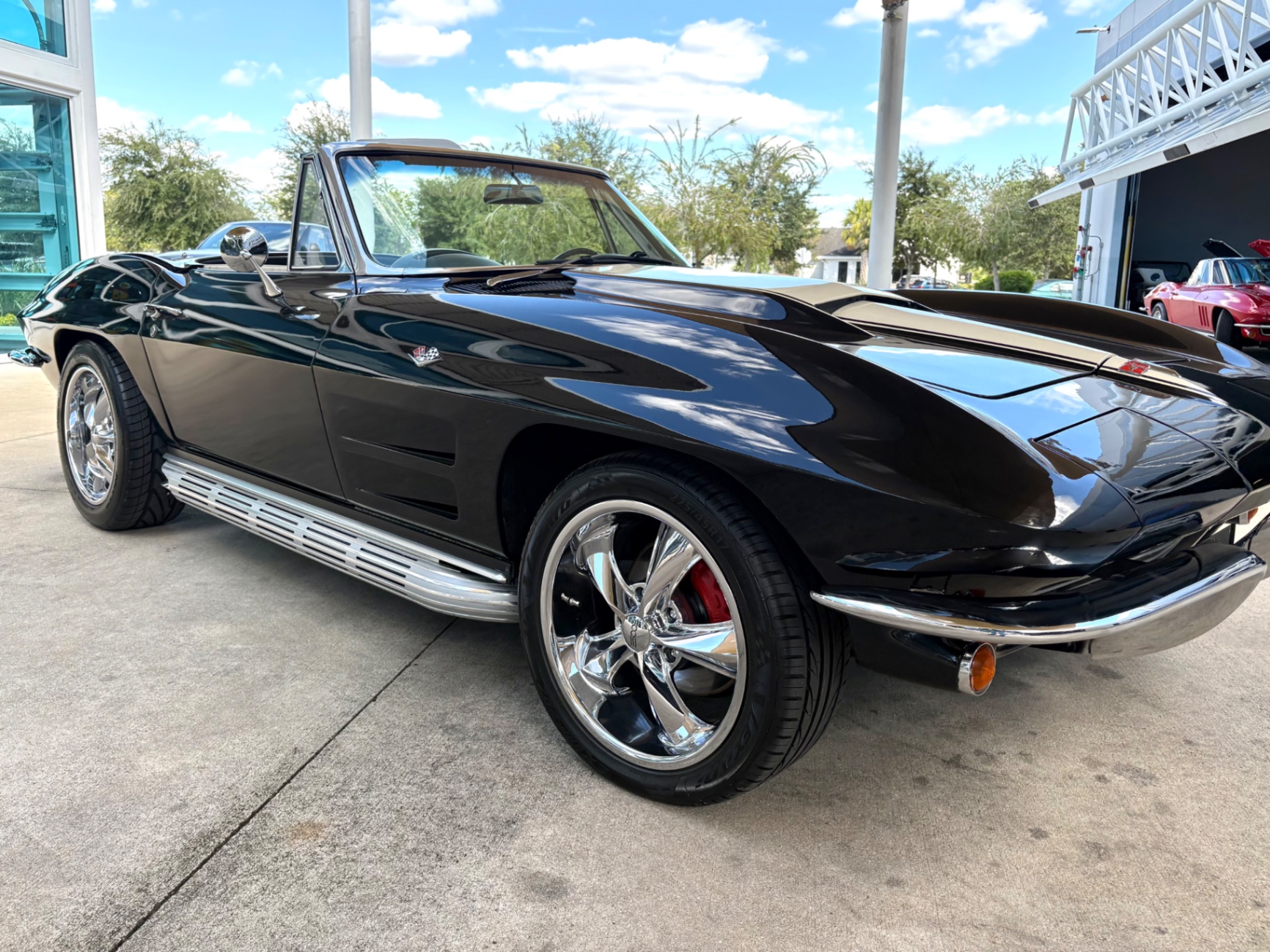
The 1964 Chevrolet Corvette Sting Ray convertible wears Tuxedo Black, and the finish in the photos is deep and consistent with no obvious signs of waves or mismatched panels. The C2 body has no external door handles — the doors are operated by interior pulls, and the smooth flanks of the convertible body are uninterrupted. The chrome side exhaust exits through the rocker sill area in the traditional Corvette side-pipe configuration, and the chrome is clean and bright in the photos.
The 17-inch Foose chrome wheels are a recognized aftermarket brand, and the five-spoke design suits the era of the car reasonably well while accommodating the wider tire footprint that comes with the disc brake conversion. Tires are 225/45R17 at the rear based on the sidewall markings visible in the undercarriage photos. The red brake calipers are visible through the wheel spokes at both front and rear corners, providing a functional visual cue that matches the chrome and black color scheme.
Dual chrome side mirrors are mounted on the door tops in correct C2 position. The rear of the car shows the quad round taillights and ribbed rear valance that are signature C2 design elements, all finished cleanly in black. The undercarriage shots show a thoroughly sorted bottom end — the frame rails, floor pans, suspension cradles, and differential housing are all coated in black with no rust or rot visible. For a 60-year-old fiberglass car, the structural condition shown here is what every buyer should be looking for before anything else.
Conclusion
The 1964 Chevrolet Corvette Sting Ray convertible occupies a specific and well-understood place in the collector car market. It offers the most refined version of the C2's first engine lineup, the independent rear suspension that set it apart from everything else wearing an American badge at the time, and a convertible body that remains one of the most recognizable silhouettes in automotive history. This particular example has been upgraded in the areas that matter most for regular driving — transmission, brakes, ignition, and cooling — while leaving the exterior and interior presentation true to the car's original character. Tuxedo Black over white leather is not a subtle combination, and this car does not pretend to be anything other than what it is: a well-sorted, driver-focused C2 built to be enjoyed, not trailered.
For more information or to arrange a closer look, contact Skyway Classics at 941-254-6608. We're located in Sarasota, Florida, and we welcome serious inquiries from buyers near and far.
Disclaimer
Information found on the website is presented as given to us by the owner of the car, whether on consignment or from the owner we bought it from. Some Photos, materials for videos, descriptions and other information are provided by the consignor/seller and is deemed reliable, but Skyway Classics does not warranty or guarantee this information. Skyway Classics is not responsible for information that may incorrect or a publishing error. The decision to purchase should be based solely on the buyers personal inspection of the vehicle or by a professional inspection service prior to offer or purchase being made.
1964 Chevrolet Corvette Sting Ray Convertible — Restomod in Tuxedo Black with White Leather Interior
Why This Car Is Special
The 1964 Chevrolet Corvette Sting Ray is the second year of what many Corvette historians consider the finest body generation the model ever produced. The C2 Sting Ray debuted in 1963 with a design led by Bill Mitchell and Larry Shinoda, and by 1964 Chevrolet had already refined several of the first-year details — most notably, the controversial split rear window of the 1963 coupe was gone, and the Sting Ray convertible emerged as a cleaner, better-sorted automobile. In 1964, Chevrolet built 13,925 Corvette convertibles, making this body style the more common of the two C2 configurations, though that number is modest by any modern standard.
What sets the C2 apart historically is how completely it transformed the Corvette's identity. The outgoing C1 was a handsome roadster, but it carried styling cues that looked almost timid by comparison. The 1963 and 1964 Sting Rays introduced an all-new ladder-type frame, independent rear suspension for the first time on any American production car, and a tighter, more purpose-built cockpit. The 1964 model also introduced a quieter cabin, revised suspension tuning, and additional engine options compared to the debut year. It was, in short, the C2 at its most polished without yet being overshadowed by the big-block era that would arrive in 1965.
This particular 1964 Chevrolet Corvette Sting Ray convertible has been built as a driver-quality restomod — meaning it preserves the visual integrity of the original car while upgrading the mechanical systems that actually affect how it performs and behaves on the road. The color combination of Tuxedo Black over white leather is as correct and period-appropriate as it gets for a mid-1960s American sports car. The modifications chosen here are practical and well-considered: more gear ratios, stronger ignition, upgraded brakes, and modern cooling efficiency. This is not a show trailer queen — it's a car built to be used.
Features List
- 350ci V8 engine with MSD Blaster ignition upgrade
- Tremec TKO 5-speed manual transmission
- 4-wheel disc brake upgrade with red calipers
- 4-wheel independent suspension
- Power steering
- Aluminum radiator
- Chrome side exhaust
- 427 Stinger hood
- 17-inch Foose chrome wheels
- Dual chrome side mirrors
- White leather bucket seats
- Custom sport steering wheel with Corvette center cap
- Center console with cup holder
- Tachometer and full analog gauge cluster
- Analog clock (passenger side dash)
- Heater
- Seat belts
- Black HARTZ cloth convertible top
- Battery disconnects
- Clean undercarriage
Mechanical
Under the hood of this 1964 Chevrolet Corvette Sting Ray sits a GM V8 paired with an MSD Blaster ignition system. The MSD upgrade replaces the factory points-style ignition with a capacitive discharge unit that delivers a stronger, more consistent spark — a meaningful improvement for a carburetor-fed engine that will see varied driving conditions. The distributor and red plug wires are clearly visible in the engine bay photos, and the install is tidy. Topping the engine is a period-correct finned valve cover setup with Corvette crossed-flags emblems and a chrome air cleaner that suits the aesthetic of the car without looking out of place.
The transmission is a Tremec TKO 5-speed manual, which is one of the most respected overdrive conversions available for classic American V8 applications. The original 1964 Corvette came with either a 3-speed or 4-speed manual, or an optional 2-speed Powerglide automatic. The Tremec TKO adds a true fifth-gear overdrive ratio, which brings highway cruising rpm down substantially and makes this car far more comfortable on a long drive than any period-correct 4-speed would be. The shifter gate on the console is labeled with the 5-speed pattern, and it is visible in the photos. This is a modification that adds real-world usability without affecting the car's outward appearance at all.
Braking is handled by a 4-wheel disc brake conversion with red calipers. The factory 1964 Corvette used 4-wheel drum brakes as standard equipment — four-wheel disc brakes didn't arrive on the Corvette until 1965 as an option. Converting to discs on a C2 is one of the most logical upgrades any owner can make, as the stopping power improvement is significant and the red calipers are visible through the Foose wheels for a finished look. Power steering is also fitted, which takes the effort out of maneuvering the car at low speeds while preserving road feel.
Cooling is handled by an aluminum radiator, which transfers heat more efficiently than the original copper-brass unit and is a standard upgrade on any serious C2 build. Battery disconnects are also installed — a practical touch that protects the electrical system during storage. The undercarriage photos show a thoroughly detailed chassis with no visible rust, clean suspension components, and well-maintained brake and fuel lines. The independent rear suspension that made the 1964 Corvette Sting Ray so significant is fully visible and in good condition.
The 427 Stinger hood is a cosmetic addition worth noting. The Stinger hood was originally introduced on the 1967 Corvette L88 and became one of the most recognizable hood designs in Corvette history. On this 1964 body, it adds a visual note from the later C2 era and gives the car a slightly more aggressive profile.
Interior
The cabin of this 1964 Chevrolet Corvette Sting Ray is finished in white leather throughout, and the contrast against the Tuxedo Black exterior and black carpet is sharp. The bucket seats have been reupholstered in white leather with clean stitching and are in excellent condition based on the photos. The center console runs the length of the cockpit in classic Sting Ray fashion and has been updated with a cup holder — a small concession to modern use that most drivers will appreciate.
The custom sport steering wheel features a Chevrolet Corvette center cap and polished aluminum spokes, which complements the chrome details in the rest of the cabin while still looking period-correct at a glance. Behind it sits the original C2 gauge cluster, which is one of the more complete instrument setups of the era. The driver faces a large 160-mph speedometer and a tachometer marked to 7,000 rpm. Auxiliary gauges for fuel, oil pressure, battery, and temperature round out the cluster. A separate analog clock is mounted on the passenger-side dash in the traditional C2 location — it is visible and functioning in the photos. A radio is also fitted in the center stack.
The door panels are finished in white with vertical ribbing that matches the factory C2 style. Chrome door pull handles, window cranks, and vent window hardware are all intact and in good condition. The black HARTZ cloth convertible top is up in several of the photos and appears to fit well with no obvious gaps or wear visible. Seat belts are installed front and rear, and the Corvette Sting Ray script badge on the passenger-side dash is original and intact. The shift pattern tag on the console clearly shows the 5-speed gate.
Exterior
The 1964 Chevrolet Corvette Sting Ray convertible wears Tuxedo Black, and the finish in the photos is deep and consistent with no obvious signs of waves or mismatched panels. The C2 body has no external door handles — the doors are operated by interior pulls, and the smooth flanks of the convertible body are uninterrupted. The chrome side exhaust exits through the rocker sill area in the traditional Corvette side-pipe configuration, and the chrome is clean and bright in the photos.
The 17-inch Foose chrome wheels are a recognized aftermarket brand, and the five-spoke design suits the era of the car reasonably well while accommodating the wider tire footprint that comes with the disc brake conversion. Tires are 225/45R17 at the rear based on the sidewall markings visible in the undercarriage photos. The red brake calipers are visible through the wheel spokes at both front and rear corners, providing a functional visual cue that matches the chrome and black color scheme.
Dual chrome side mirrors are mounted on the door tops in correct C2 position. The rear of the car shows the quad round taillights and ribbed rear valance that are signature C2 design elements, all finished cleanly in black. The undercarriage shots show a thoroughly sorted bottom end — the frame rails, floor pans, suspension cradles, and differential housing are all coated in black with no rust or rot visible. For a 60-year-old fiberglass car, the structural condition shown here is what every buyer should be looking for before anything else.
Conclusion
The 1964 Chevrolet Corvette Sting Ray convertible occupies a specific and well-understood place in the collector car market. It offers the most refined version of the C2's first engine lineup, the independent rear suspension that set it apart from everything else wearing an American badge at the time, and a convertible body that remains one of the most recognizable silhouettes in automotive history. This particular example has been upgraded in the areas that matter most for regular driving — transmission, brakes, ignition, and cooling — while leaving the exterior and interior presentation true to the car's original character. Tuxedo Black over white leather is not a subtle combination, and this car does not pretend to be anything other than what it is: a well-sorted, driver-focused C2 built to be enjoyed, not trailered.
For more information or to arrange a closer look, contact Skyway Classics at 941-254-6608. We're located in Sarasota, Florida, and we welcome serious inquiries from buyers near and far.
Disclaimer
Information found on the website is presented as given to us by the owner of the car, whether on consignment or from the owner we bought it from. Some Photos, materials for videos, descriptions and other information are provided by the consignor/seller and is deemed reliable, but Skyway Classics does not warranty or guarantee this information. Skyway Classics is not responsible for information that may incorrect or a publishing error. The decision to purchase should be based solely on the buyers personal inspection of the vehicle or by a professional inspection service prior to offer or purchase being made.
1964 Chevrolet
Corvette Sting Ray
Why Choose Skyway Classics?
Explore our curated inventory of classic and collector cars—thoughtfully selected, ready to drive, and supported by experts who make ownership simple.
Expert Curation
Every vehicle is hand-selected by our experts for quality, authenticity, and investment potential.
Fast Transactions
Streamlined buying and selling process with quick financing and immediate delivery options.
Only National Dealer With Classic Service & Repair
We’re the only national dealership that services and repairs the classics we sell—before and after the sale.
Nationwide Network
Access to our extensive network of collectors, restorers, and classic car enthusiasts nationwide.
Concierge Ownership Support
From financing and insurance to paperwork, shipping, and titling—we handle the details so you can enjoy the drive.
Passion-Driven Service
We're classic car enthusiasts first, providing personalized service with genuine passion for the hobby.