
1968 Chevrolet
Camaro SS
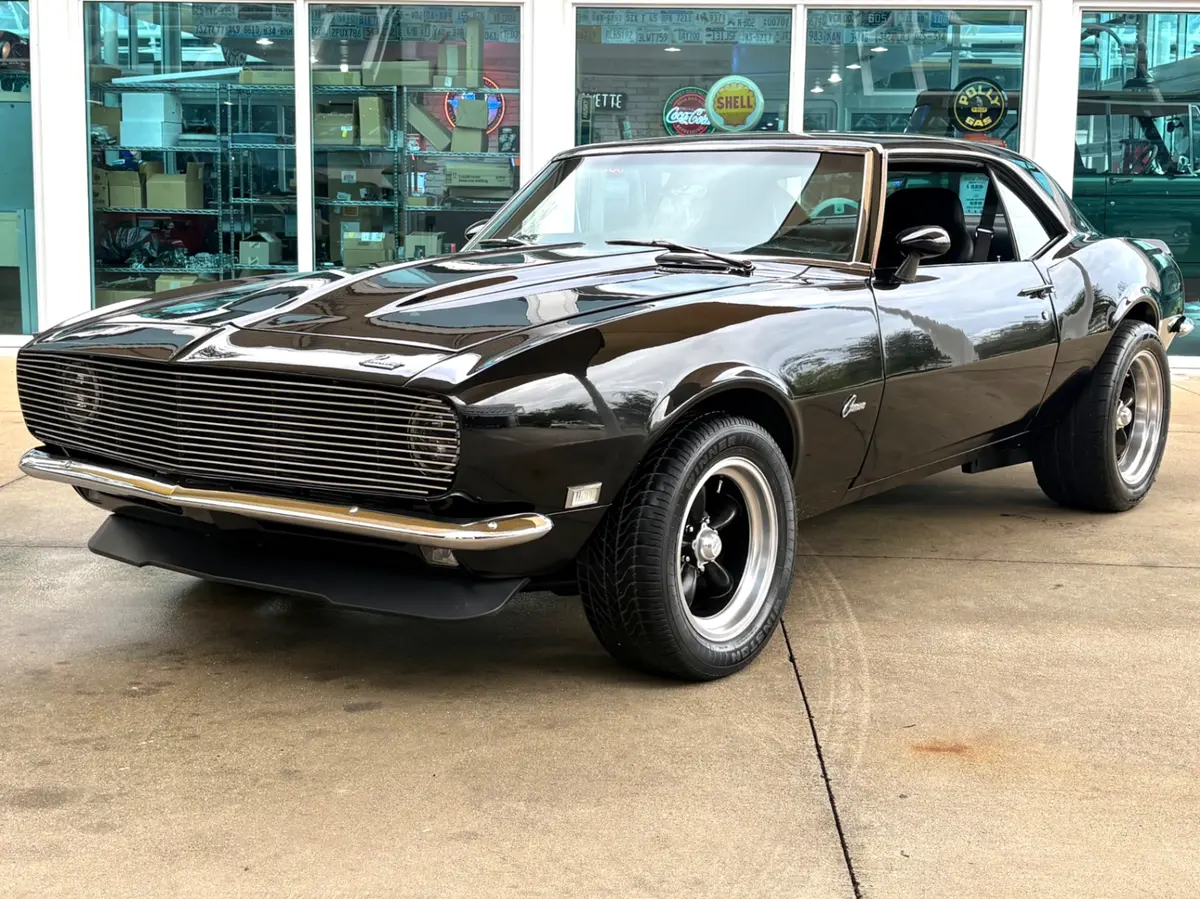
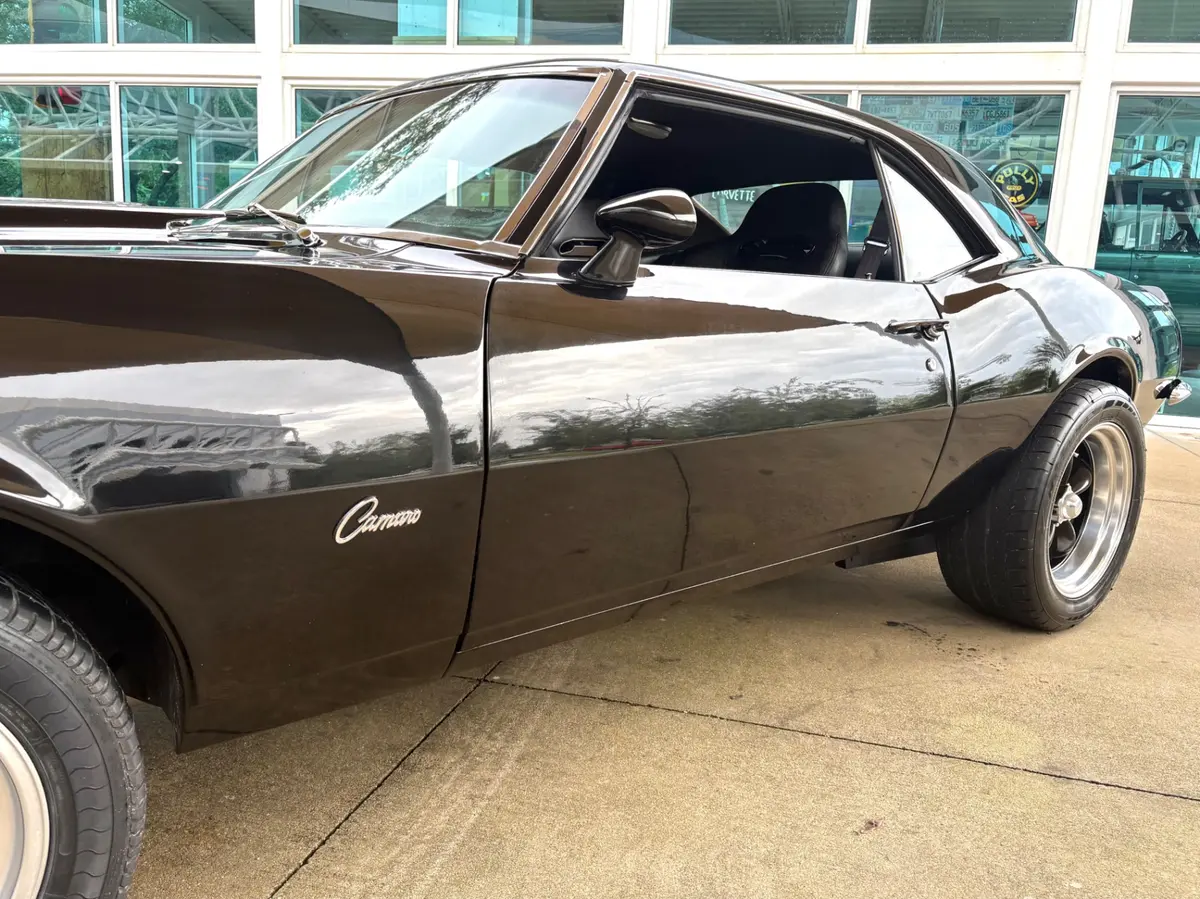
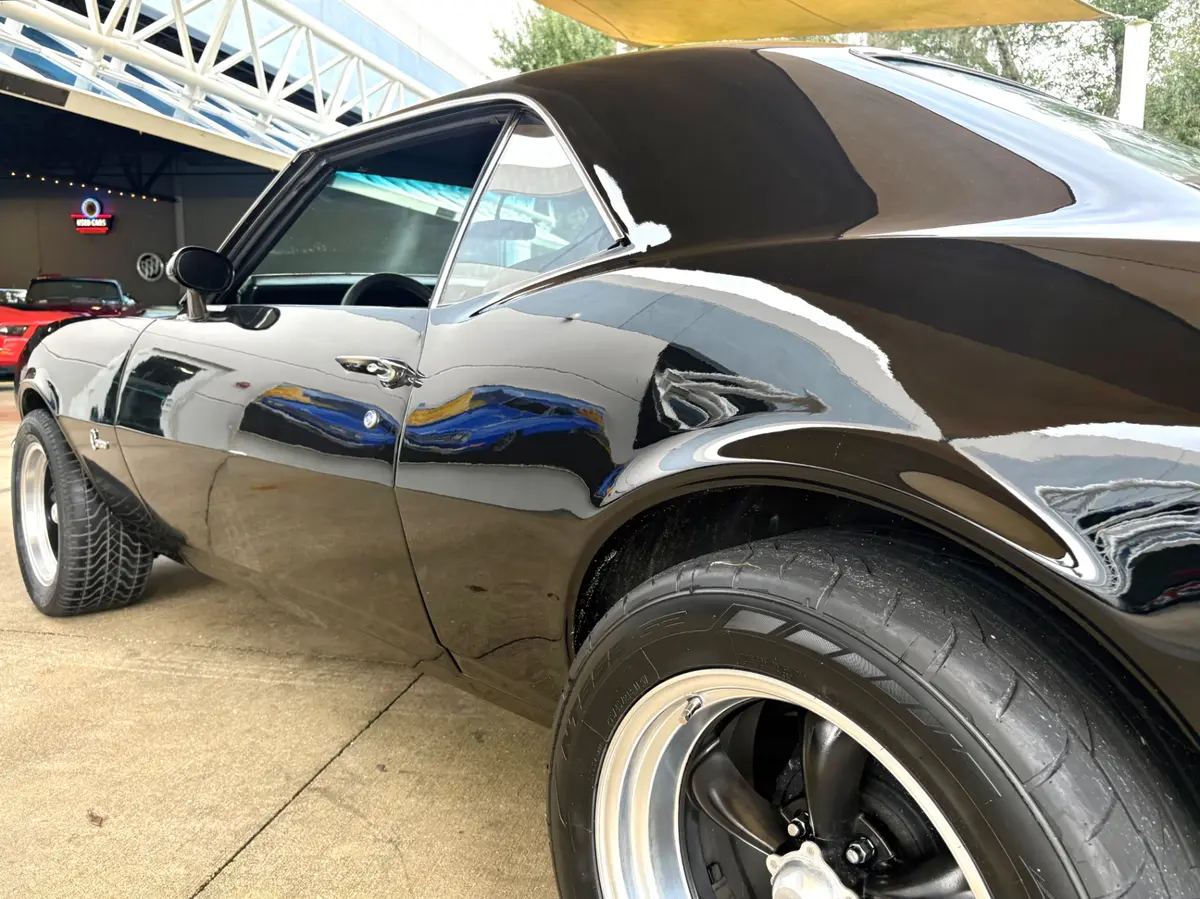
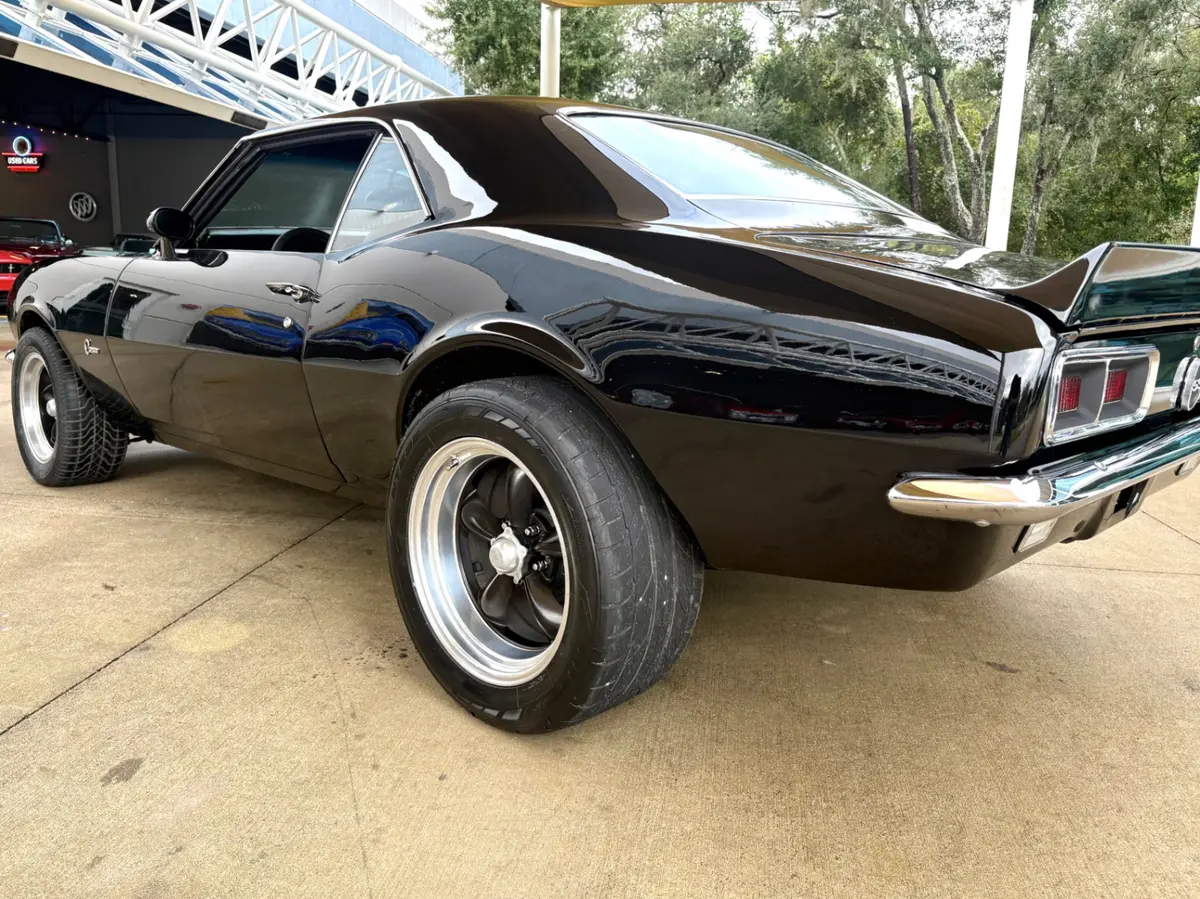
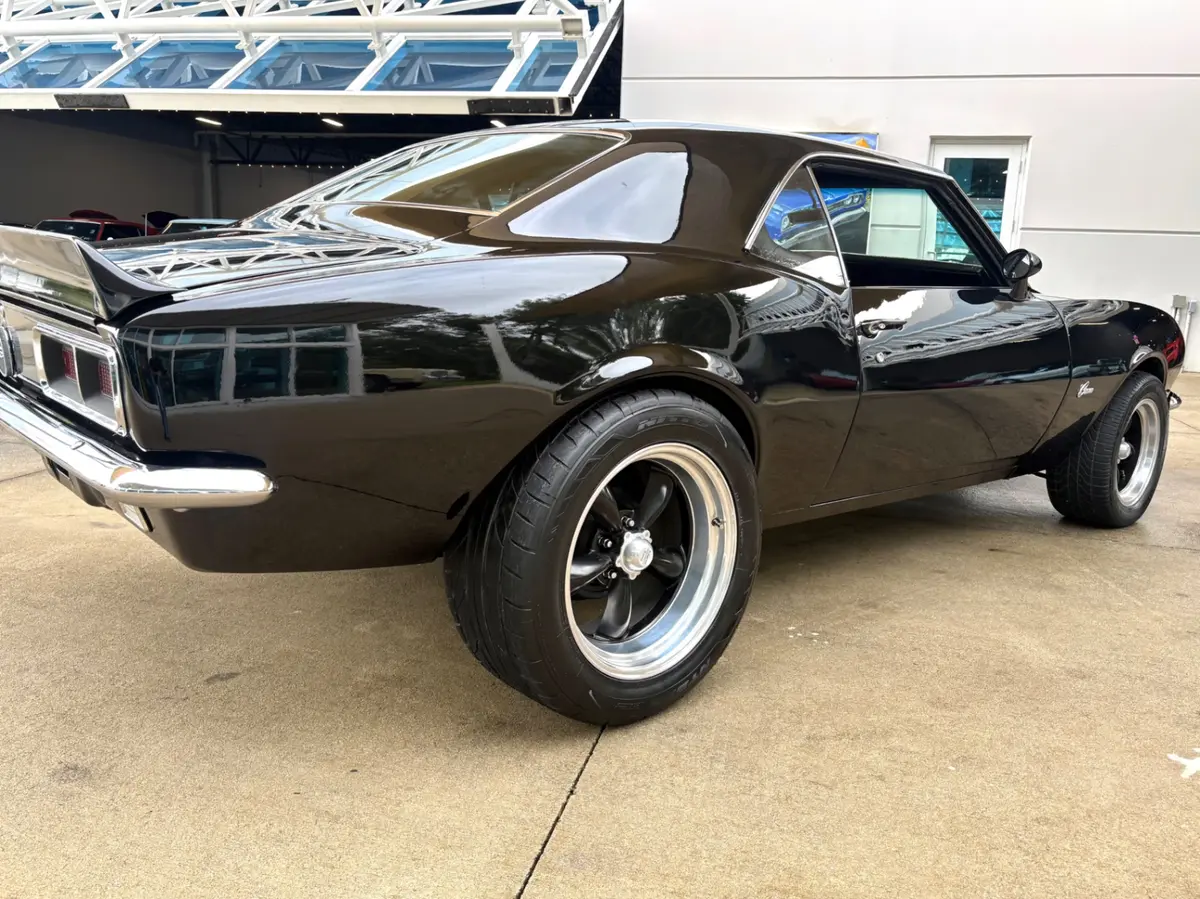
1968 Chevrolet Camaro SS — 383 Stroker, Turbo 400, Black on Black Custom Build
Why This Car Is Special
The 1968 Chevrolet Camaro is widely regarded as the high point of the first-generation body style. Chevrolet refined nearly everything that was rushed into production on the 1967 launch model — the dash layout was cleaner, the front suspension geometry was improved, and the overall fit and finish took a meaningful step forward. More than 235,000 Camaros were built for the 1968 model year, making it one of the most produced years of the first generation, yet well-sorted examples like this one are increasingly difficult to find.
The Super Sport package, which this car carries, was available on 1968 Camaros as RPO Z27. It included a blacked-out grille, special SS badging, a domed hood, and upgraded suspension components. In 1968, the SS package could be paired with engines ranging from a 350 small block all the way up to the legendary 396 cubic inch big block in L35 or L78 form. This car has moved beyond any of those factory configurations with a modern Blueprint Engines 383 cubic inch stroker V8 — a small block built on the proven 350 architecture but stroked to displace 383 cubic inches, extracting significantly more torque while maintaining the physical dimensions of the original engine bay.
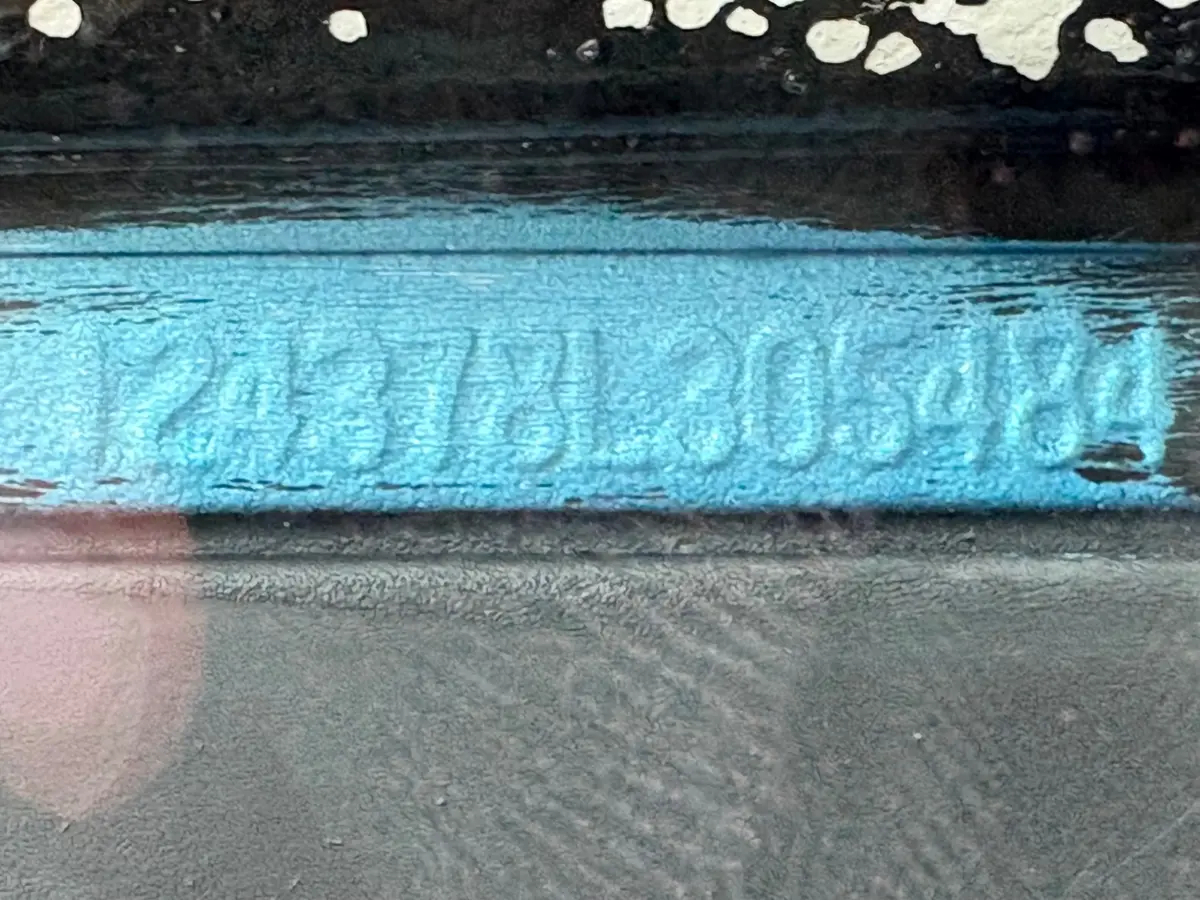
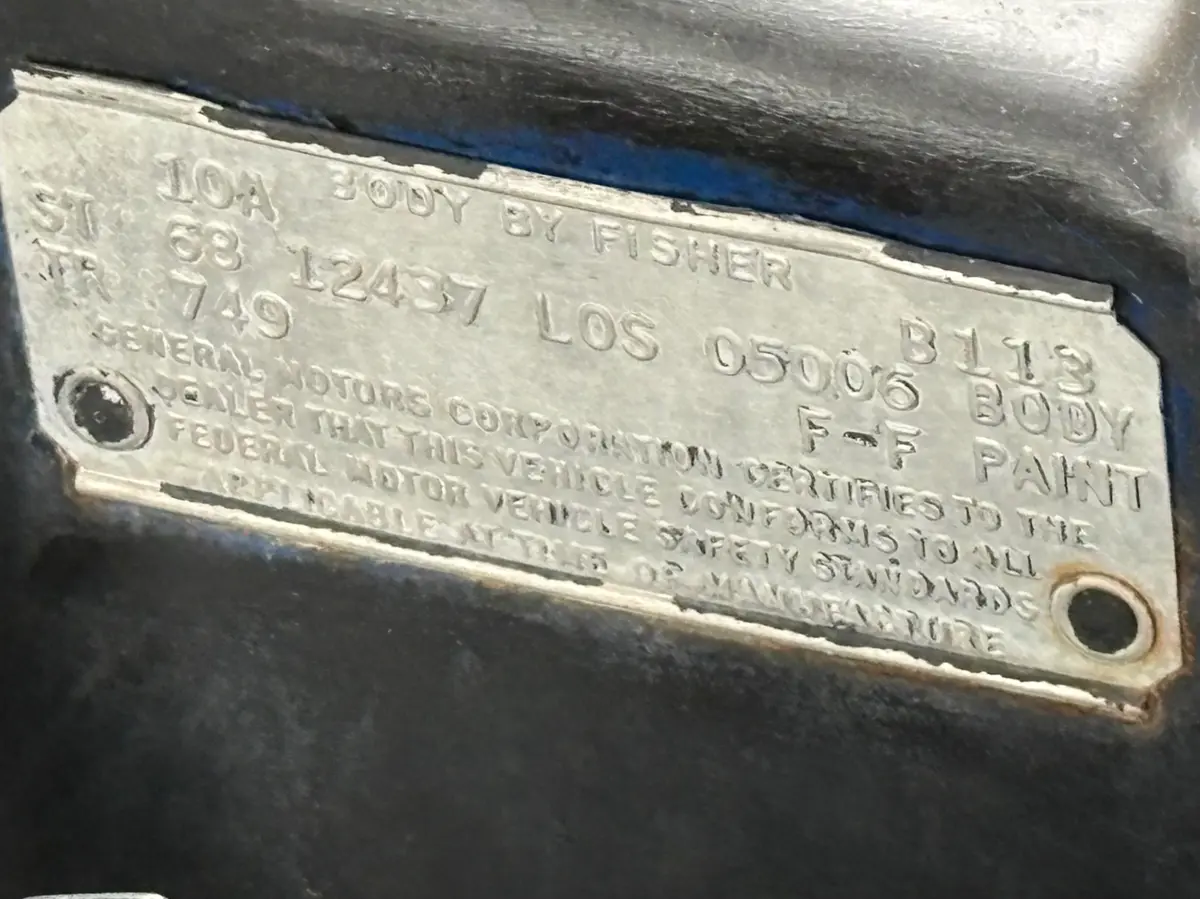
The VIN confirms this is a Norwood, Ohio-built sport coupe — the "N" plant code in the seventh position of the VIN identifies it as such. Norwood was one of two primary Camaro assembly plants in 1968 alongside Van Nuys, California, and Norwood-built cars are well documented in Camaro registry history.
This is a purpose-built street machine. The builder put real money into the drivetrain, exhaust, cooling, and braking systems. It is not a trailer queen and it is not a ground-up restoration — it is a driver-quality custom that has been assembled with attention to the mechanical details that actually matter when the car is moving.
Features List
- Engine: Blueprint Engines 383 Stroker V8
- Transmission: Turbo 400 Automatic with TCI Polished Pan
- Exhaust: Long-Tube Headers, X-Pipe Dual Exhaust
- Ignition: MSD Ignition System
- Air Induction: Cowl Induction Hood, Performance Air Cleaner
- Cooling: Aluminum Radiator, Electric Cooling Fan, Braided Stainless Plumbing
- Dress: Chrome Valve Covers, Chrome Alternator
- Steering: Power Steering
- Brakes: 4-Wheel Disc Brakes
- Wheels: Torq-Thrust Style Wheels with Nitto Performance Tires
- Exterior Additions: Custom Billet Grille, Front Air Dam Spoiler, SS Badge, Aftermarket Side Mirrors, Chrome Front and Rear Bumpers
- Interior: Tanaka Racing Bucket Seats, Aftermarket Gauge Cluster, Aftermarket Stereo, Sport Steering Wheel, Center Console, Black Carpet, Sun Visors, Rear Seat
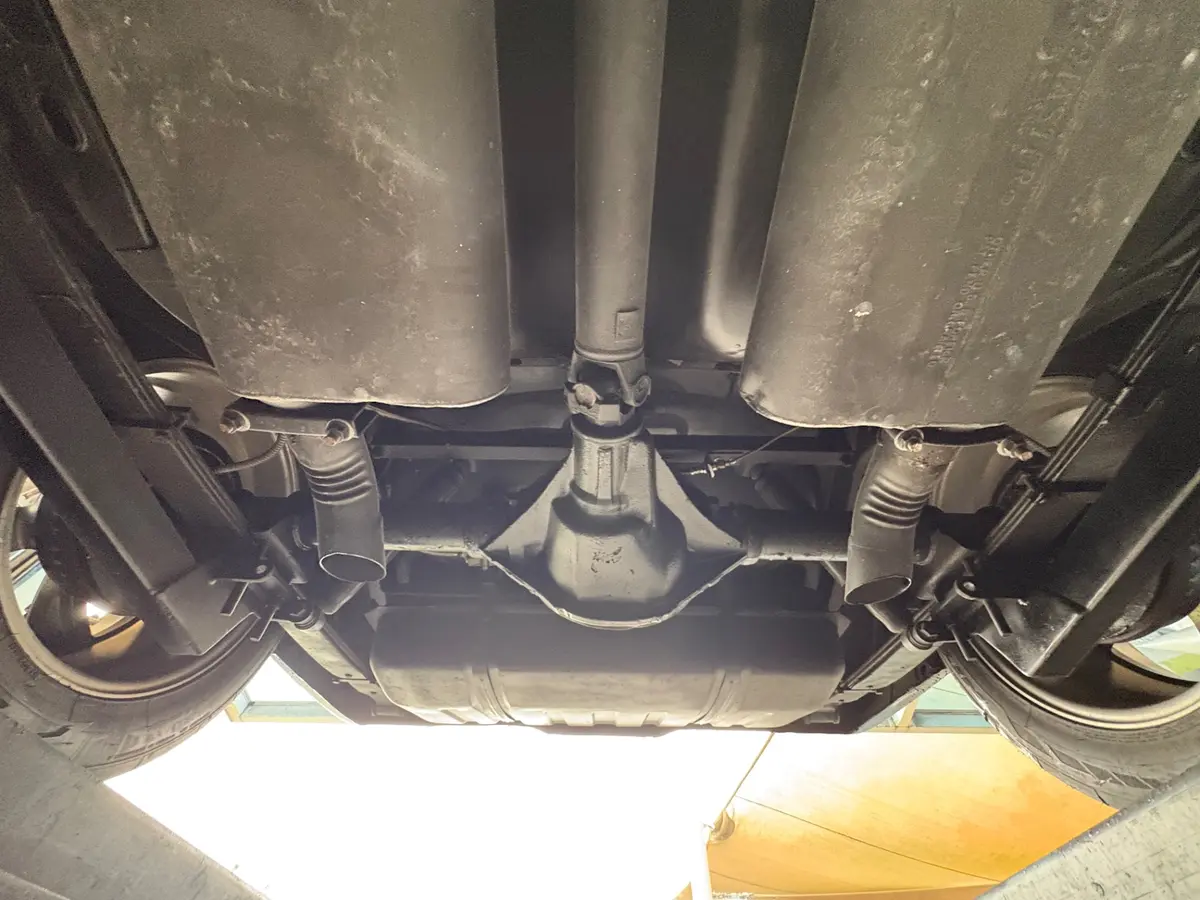
- Undercarriage: Clean
Mechanical
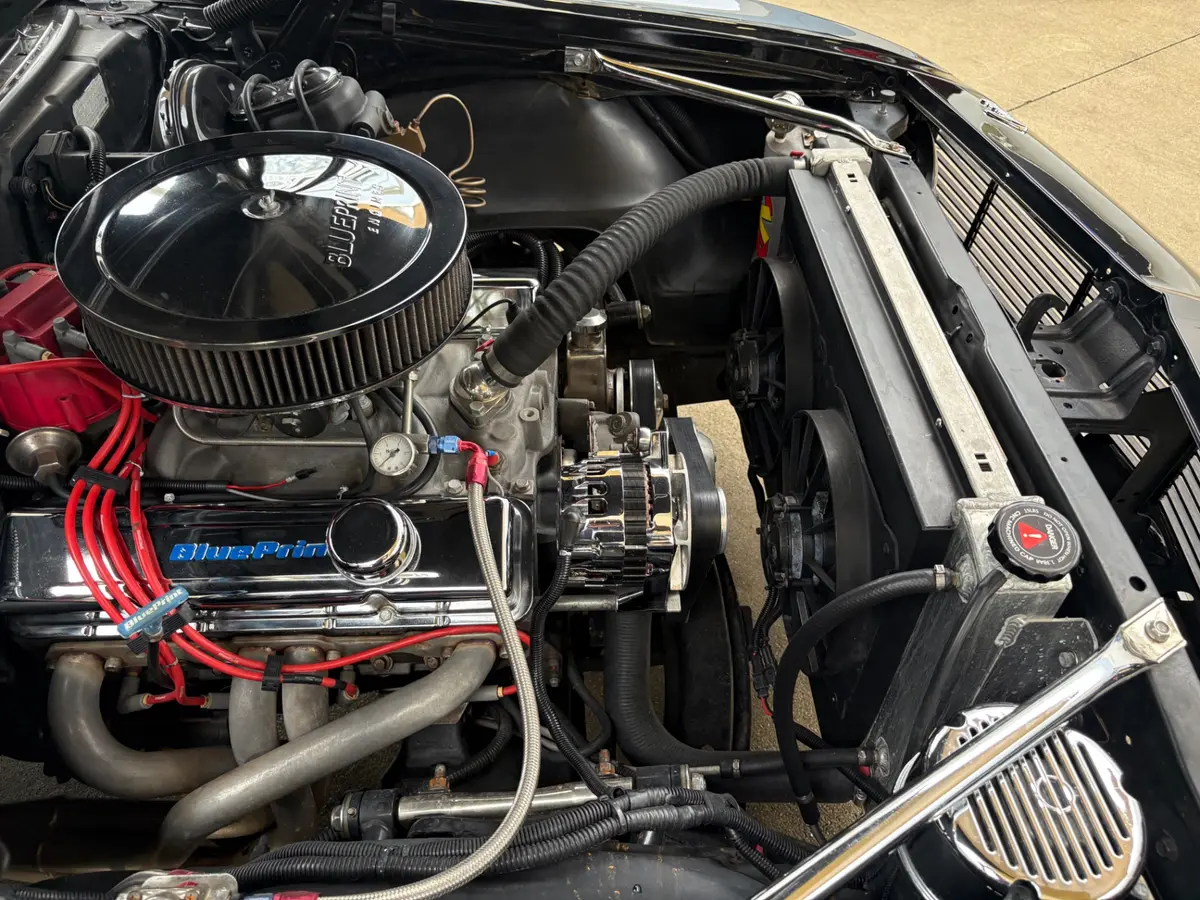
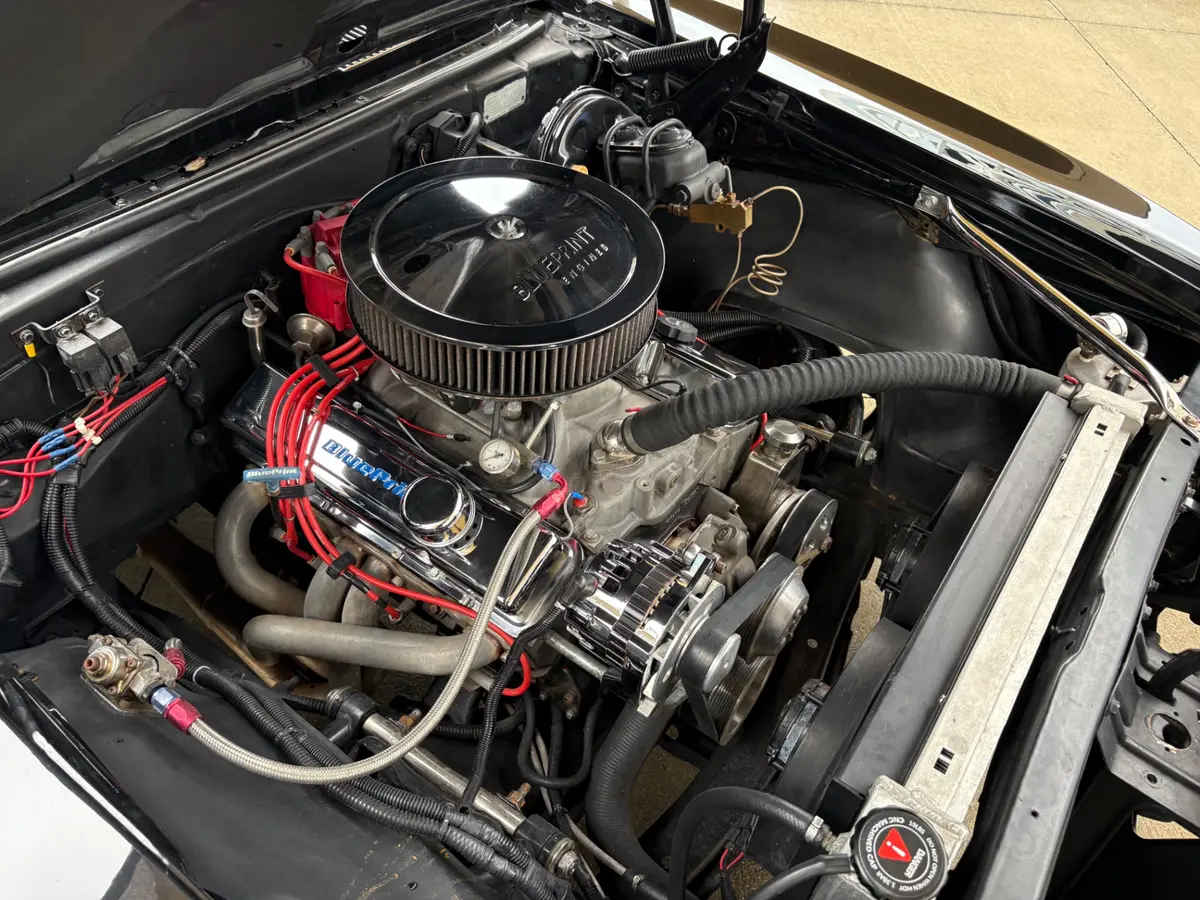
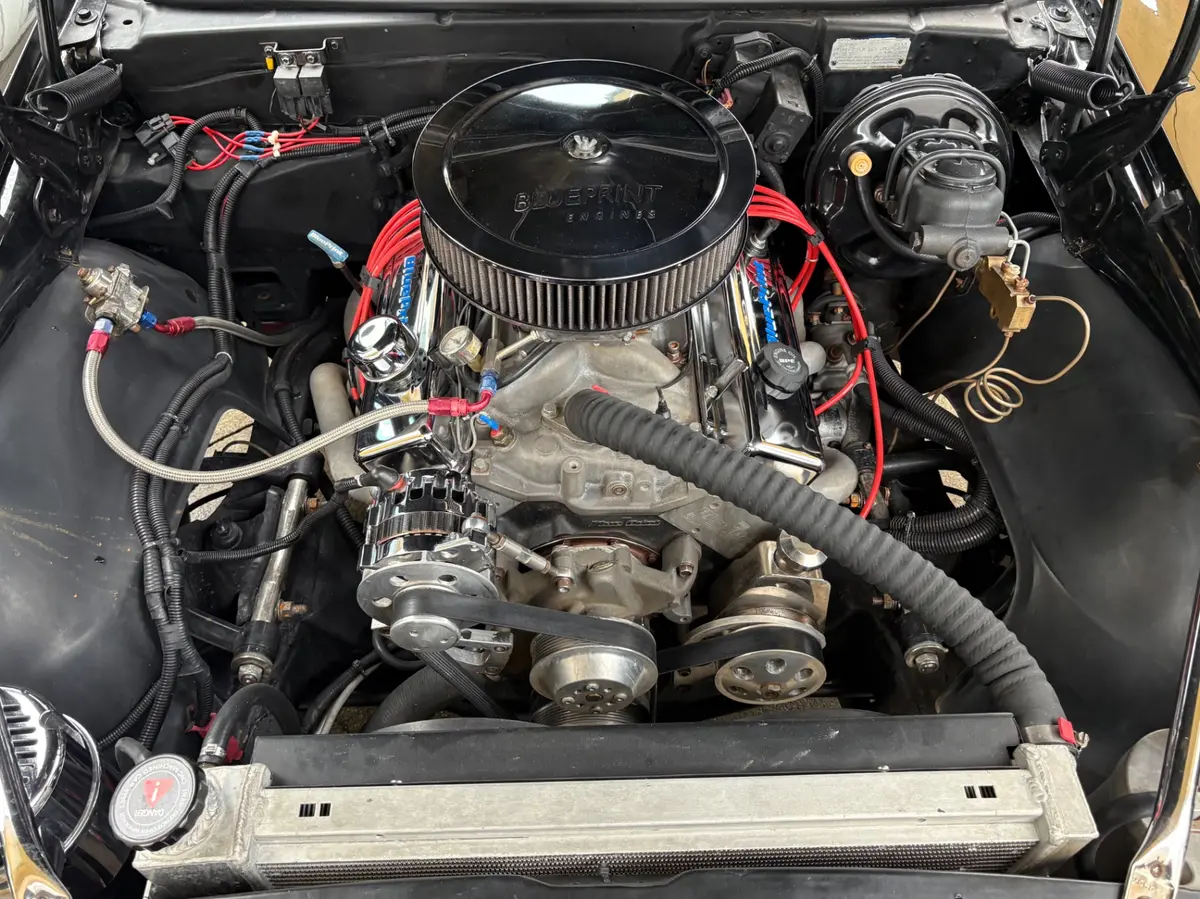
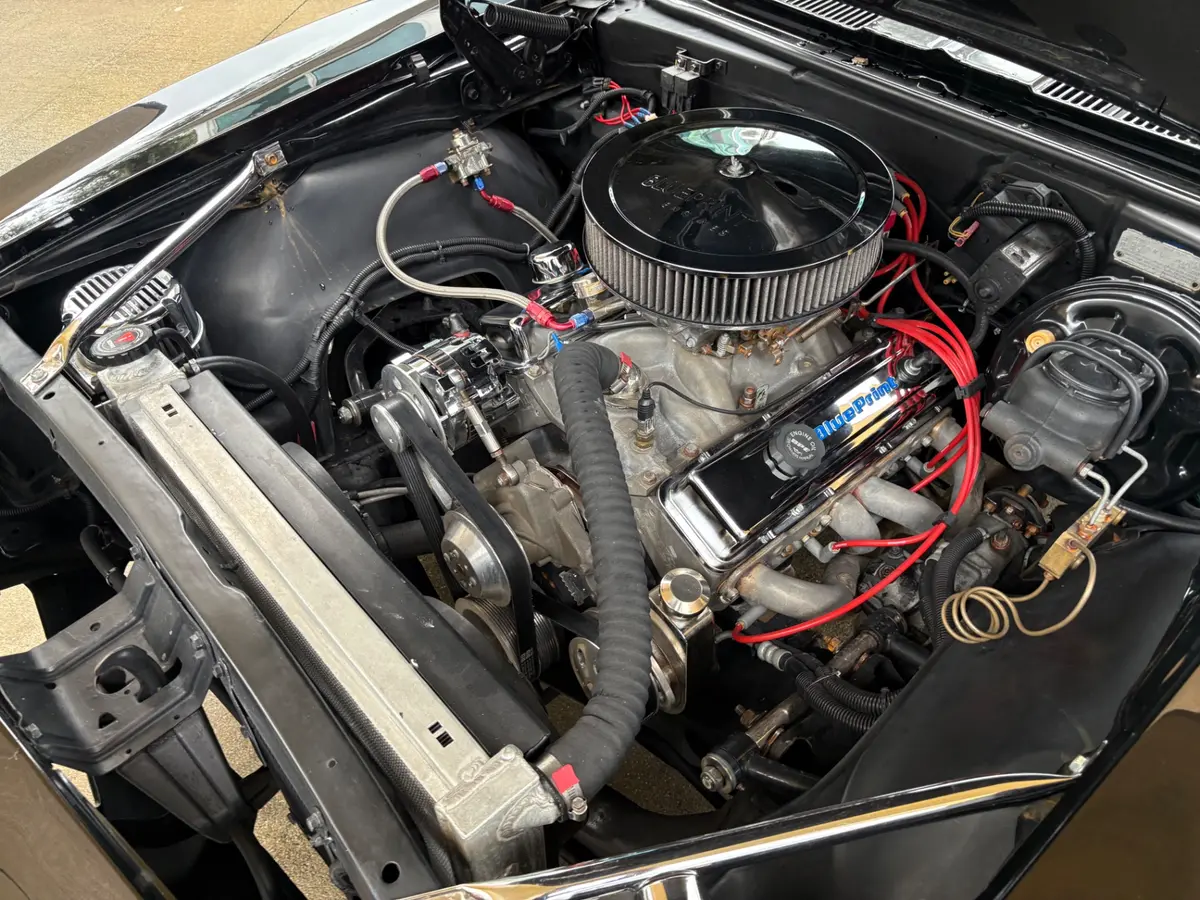
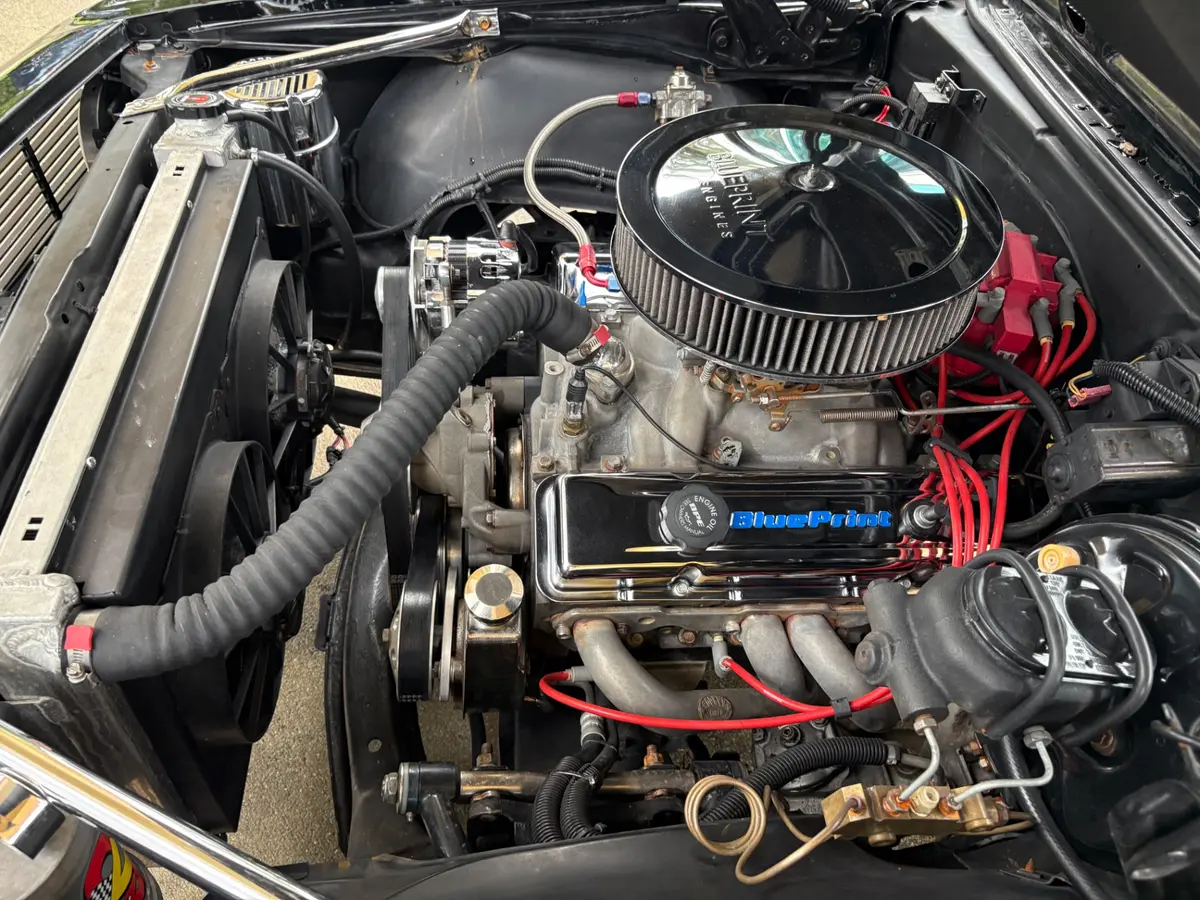
The heart of this 1968 Chevrolet Camaro is a Blueprint Engines 383 cubic inch stroker V8. Blueprint Engines is a well-known Nebraska-based engine manufacturer that builds crate engines to tight tolerances on CNC-machined components, then dyno-tests each unit before shipping. Their 383 stroker is based on the GM small block architecture — the same proven platform that powered millions of Chevrolets from the 1950s through the 1990s — but with a longer stroke crankshaft to push displacement from 350 to 383 cubic inches. The result is a engine that produces substantially more torque than a stock 350 while retaining the reliability and parts availability of the small block family. Chrome valve covers and a chrome alternator keep the engine compartment presentable, and the Blueprint branding on the valve covers tells anyone who opens the hood exactly what they are looking at.
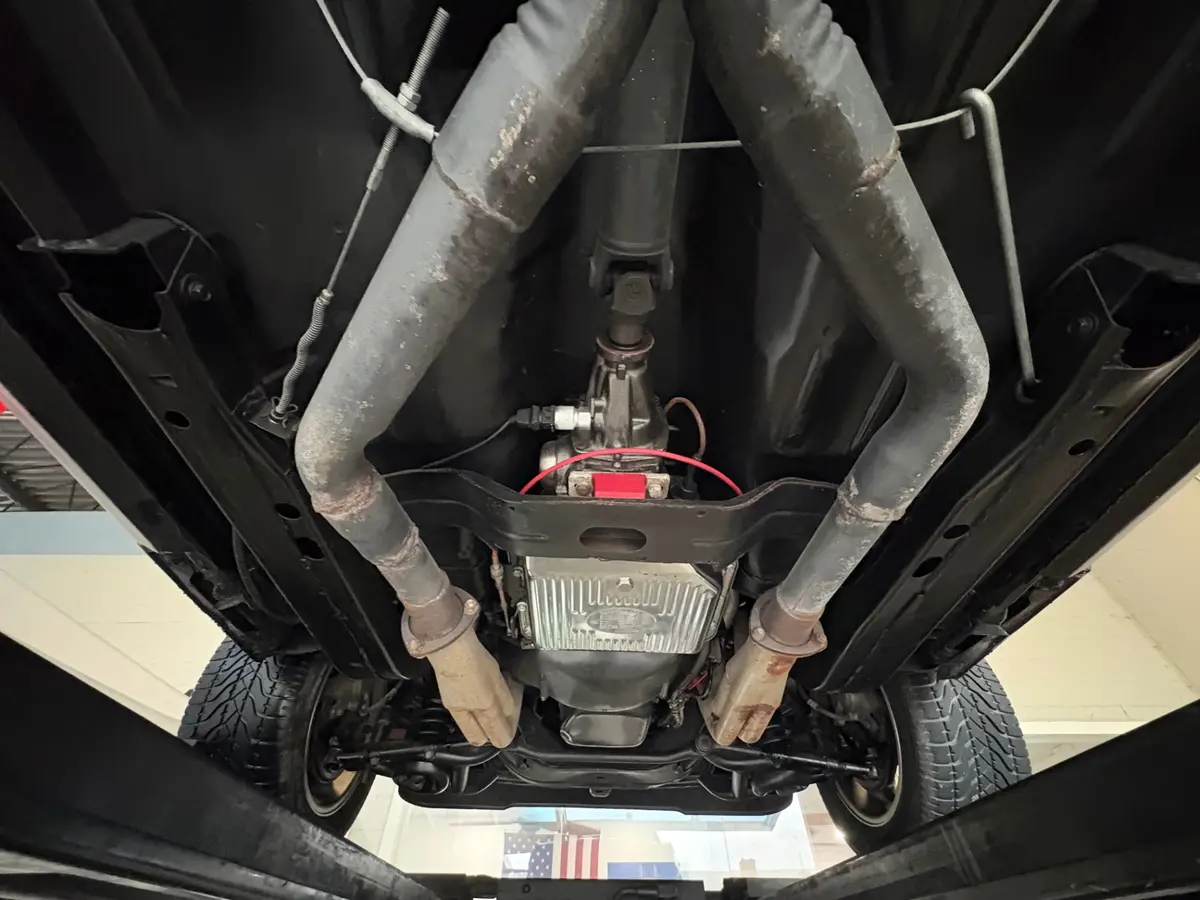
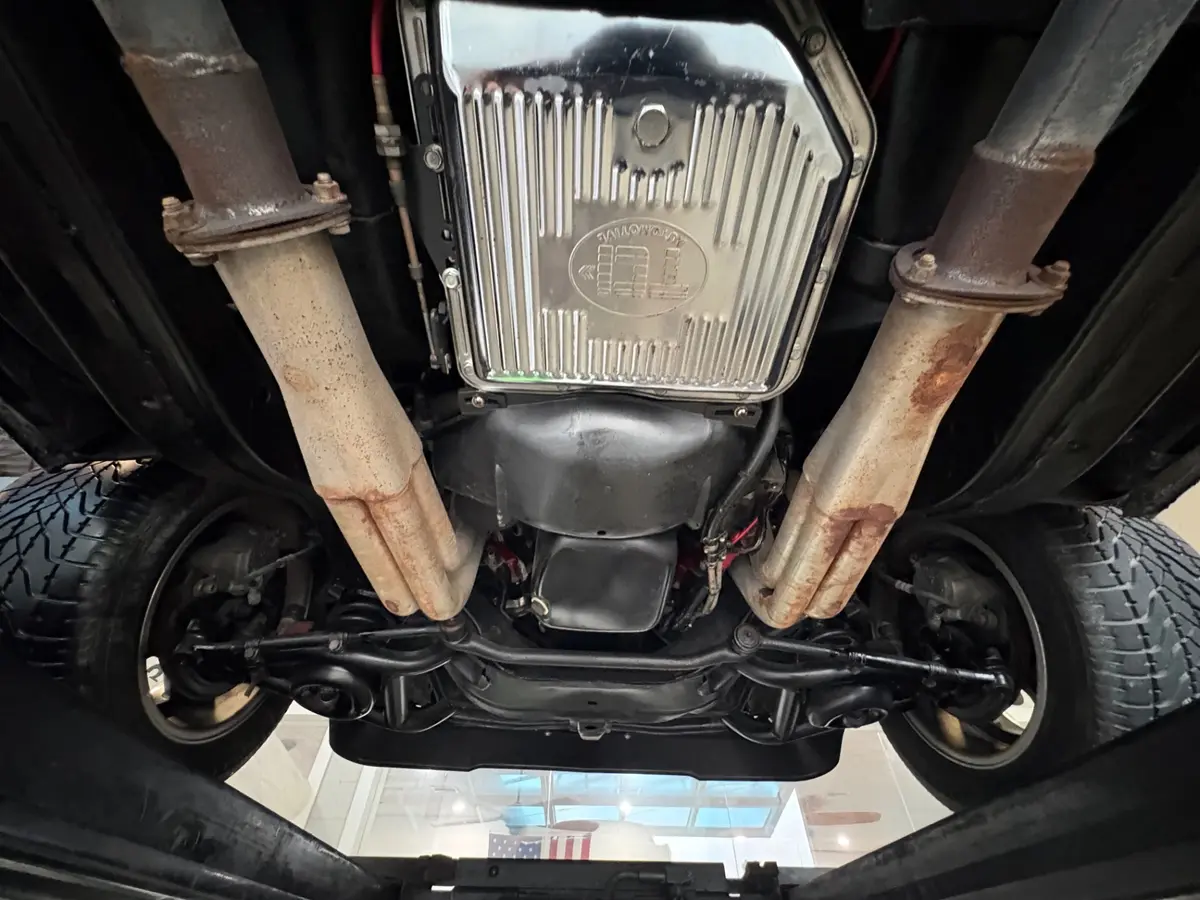
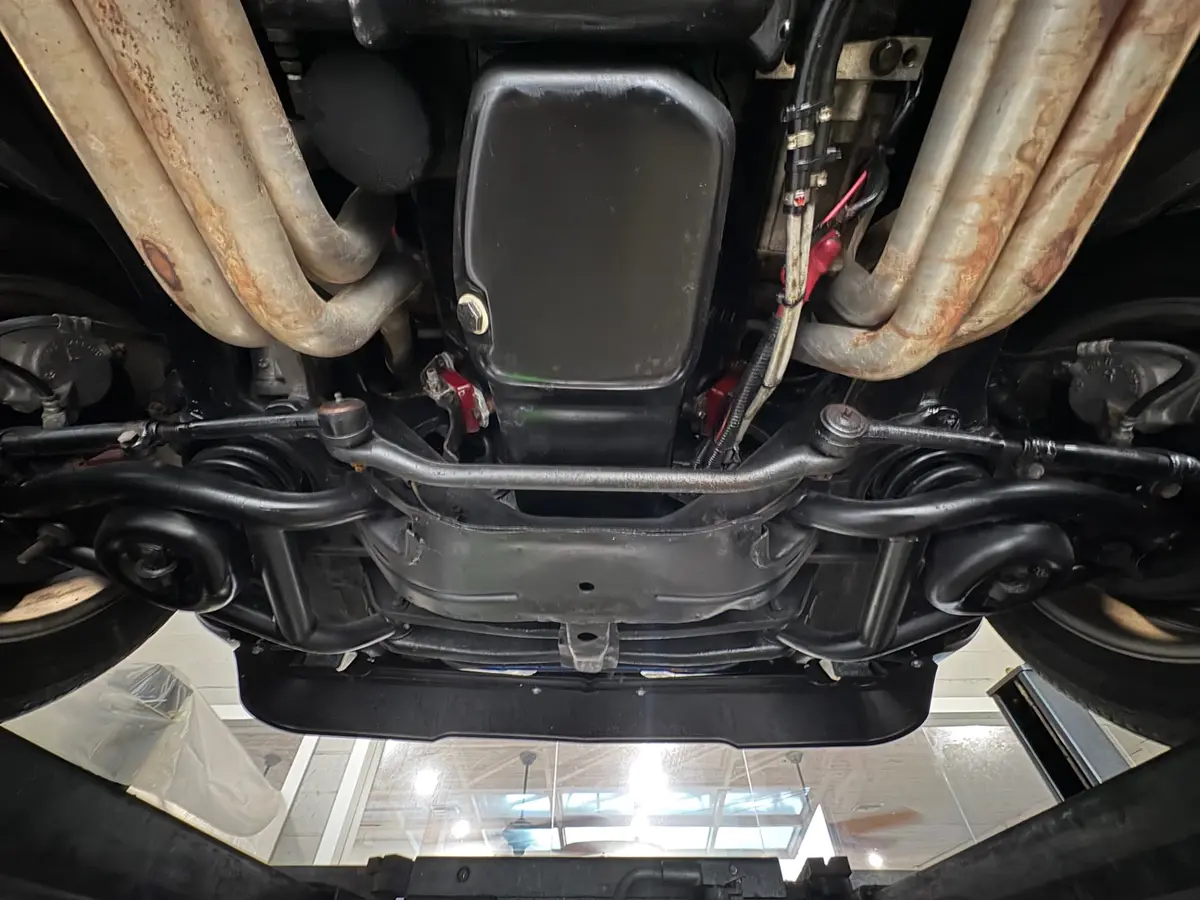
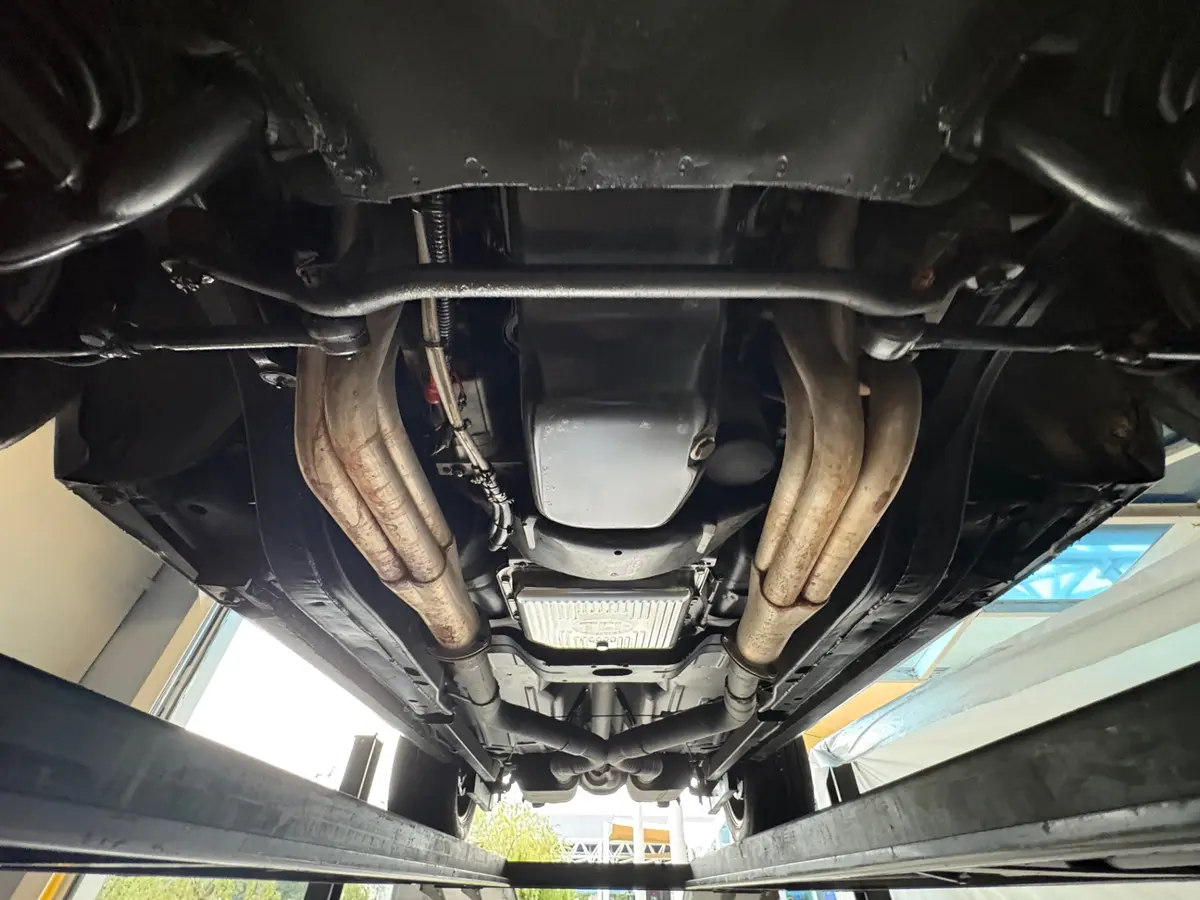
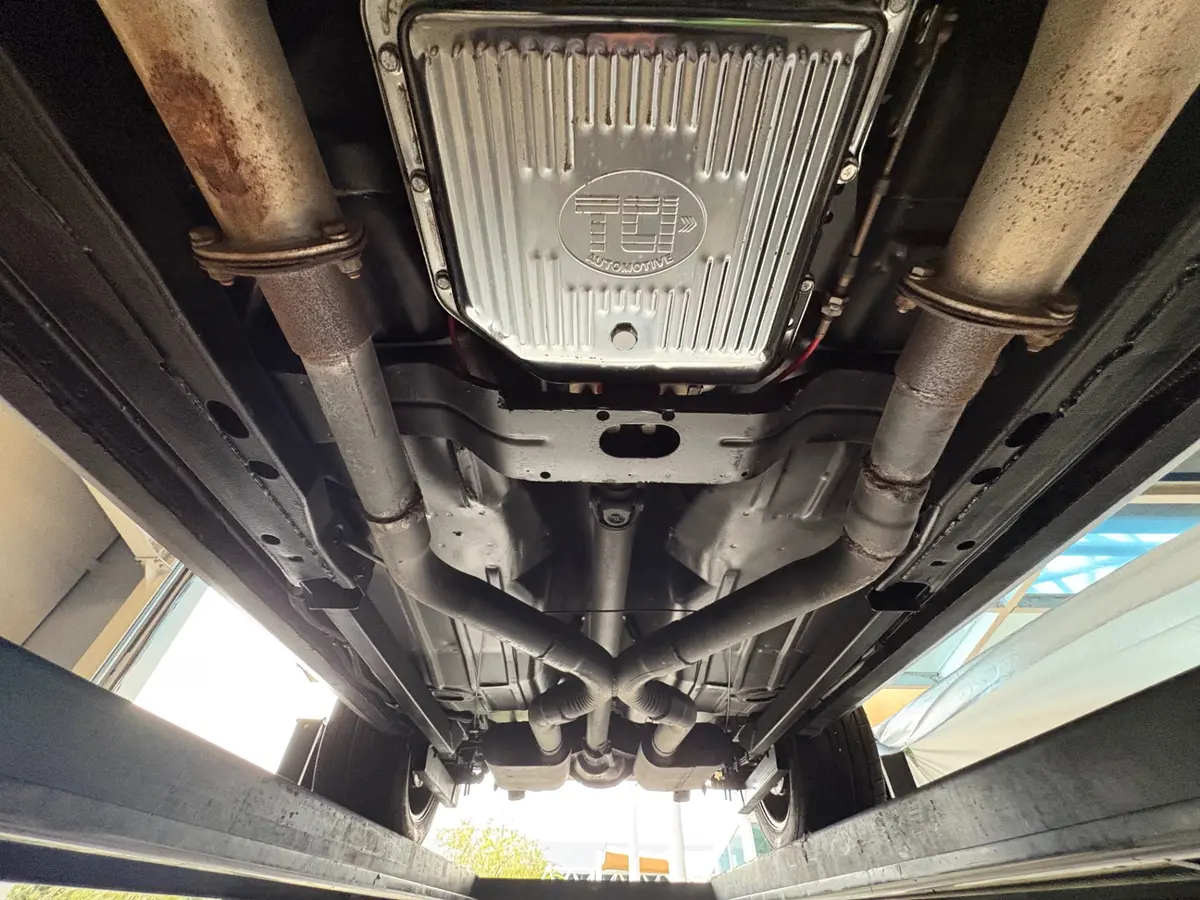
Behind the stroker sits a Turbo 400 automatic transmission. The TH400, as it is commonly known, is a three-speed automatic that General Motors introduced in 1964 and used across its full-size and performance lineup for decades. It is widely considered one of the strongest automatic transmissions ever built for a street car, with a case-hardened planetary gear set and a reputation for handling high-torque applications without complaint. The TCI polished transmission pan is visible from below and adds a clean, finished look to the underside. A TCI pan also increases fluid capacity slightly over the stock pan, which helps manage heat during hard driving.
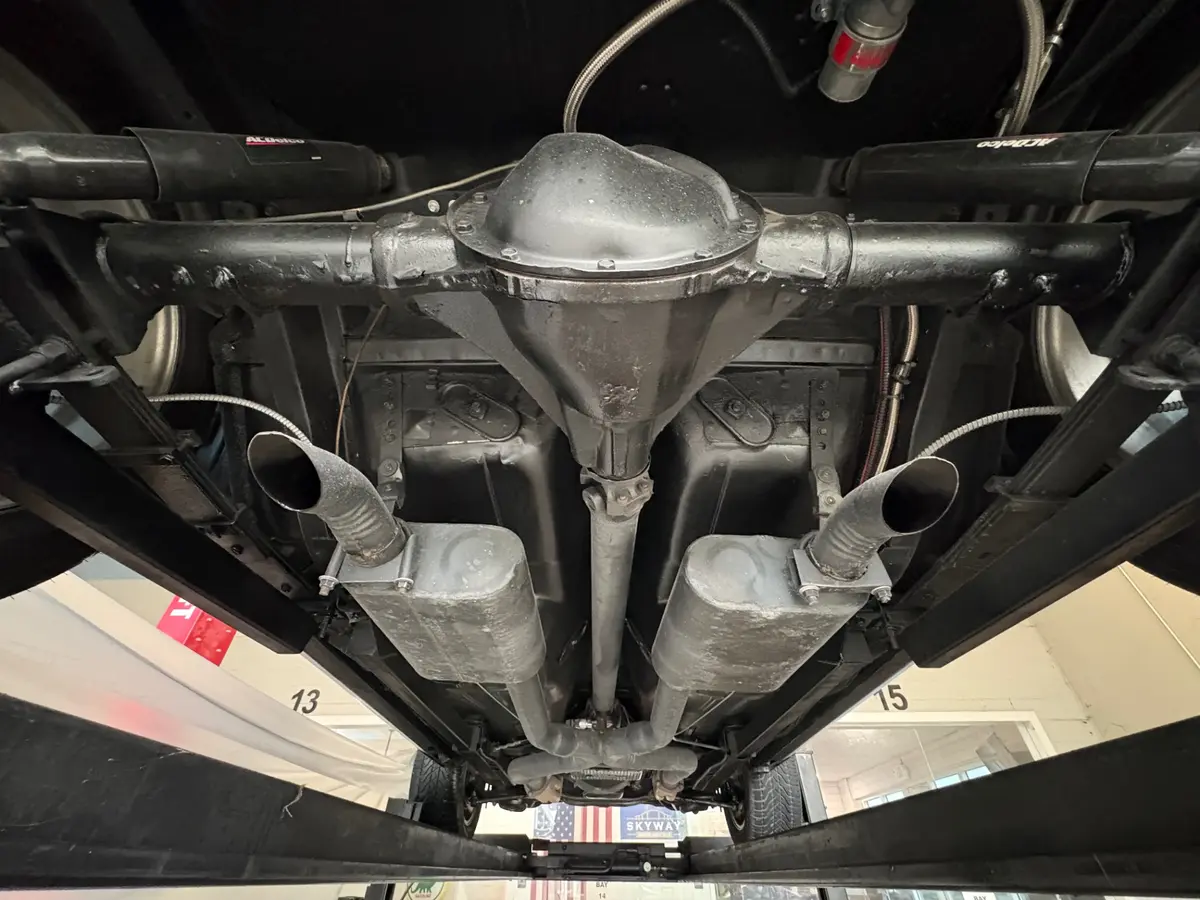
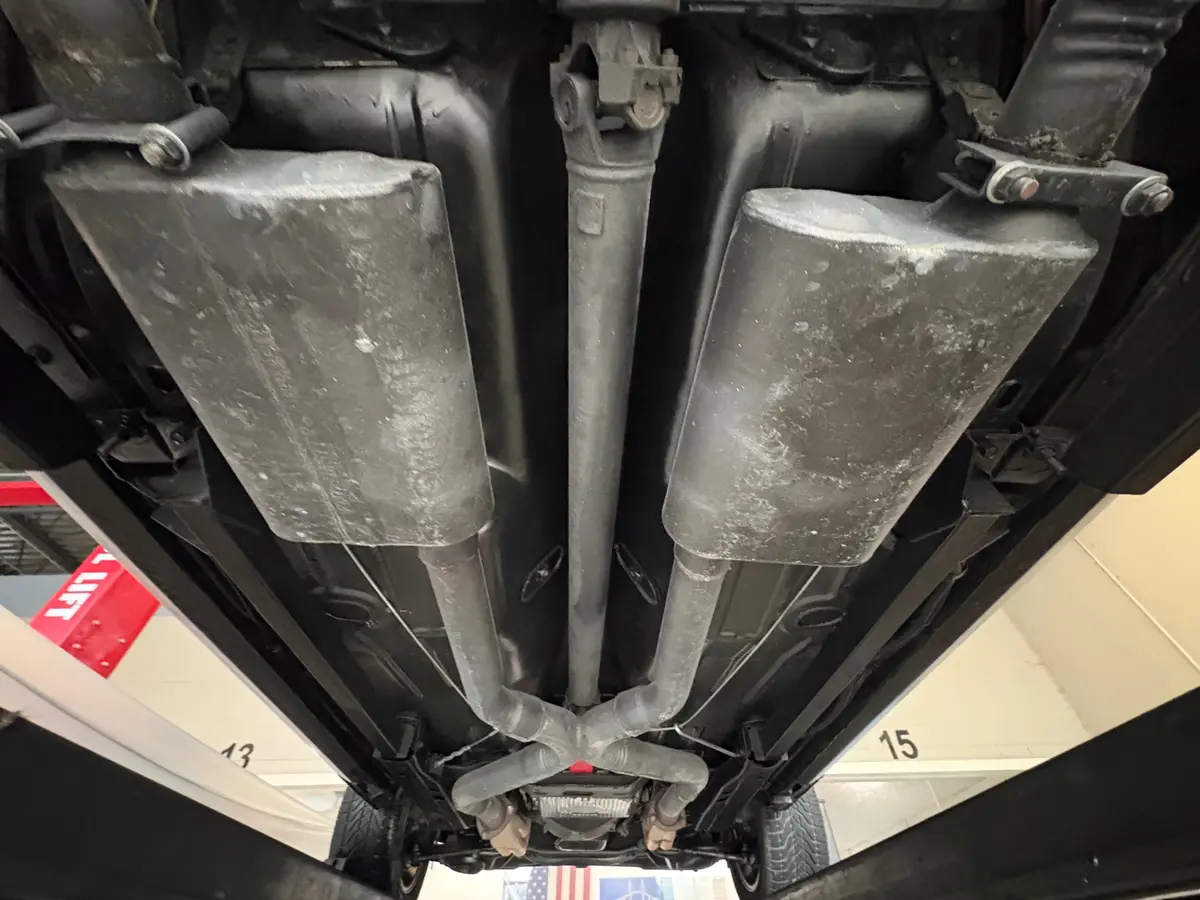
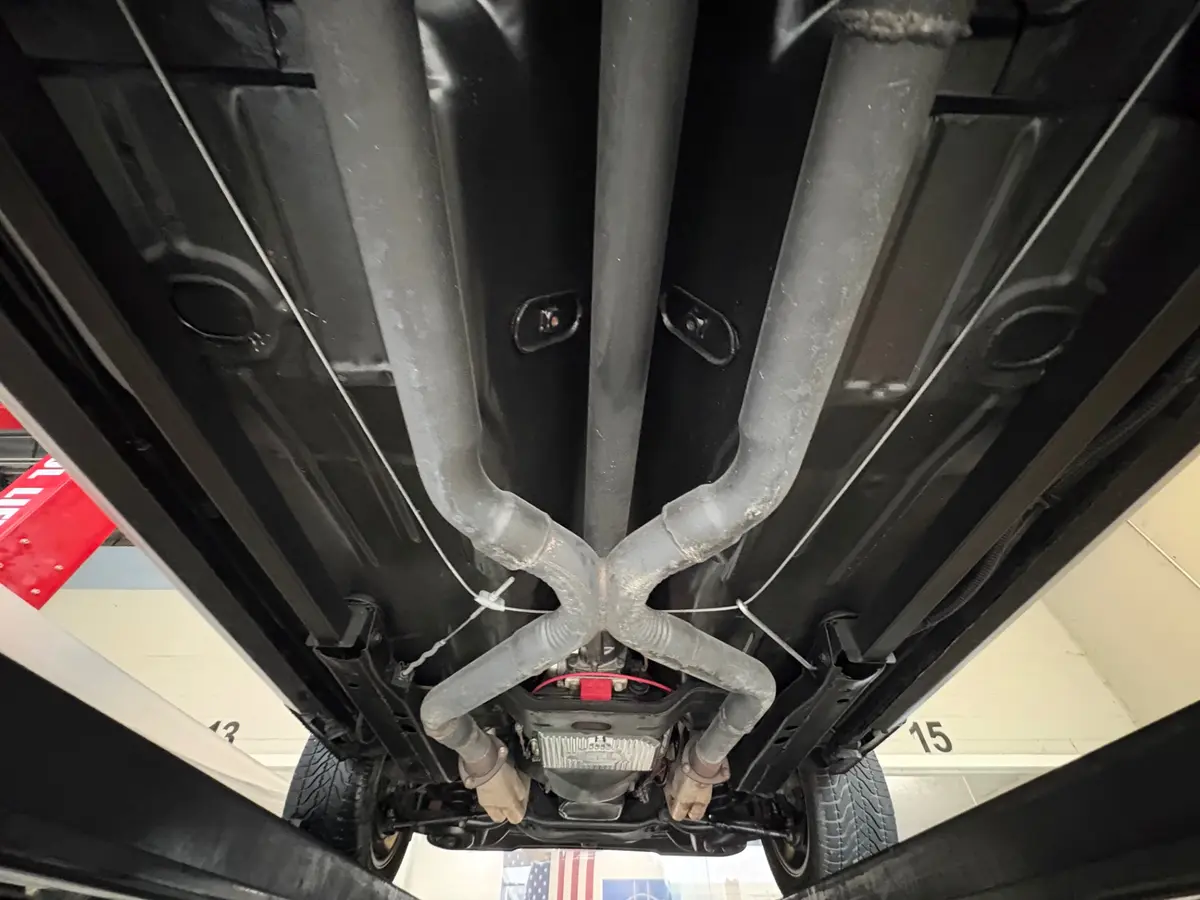
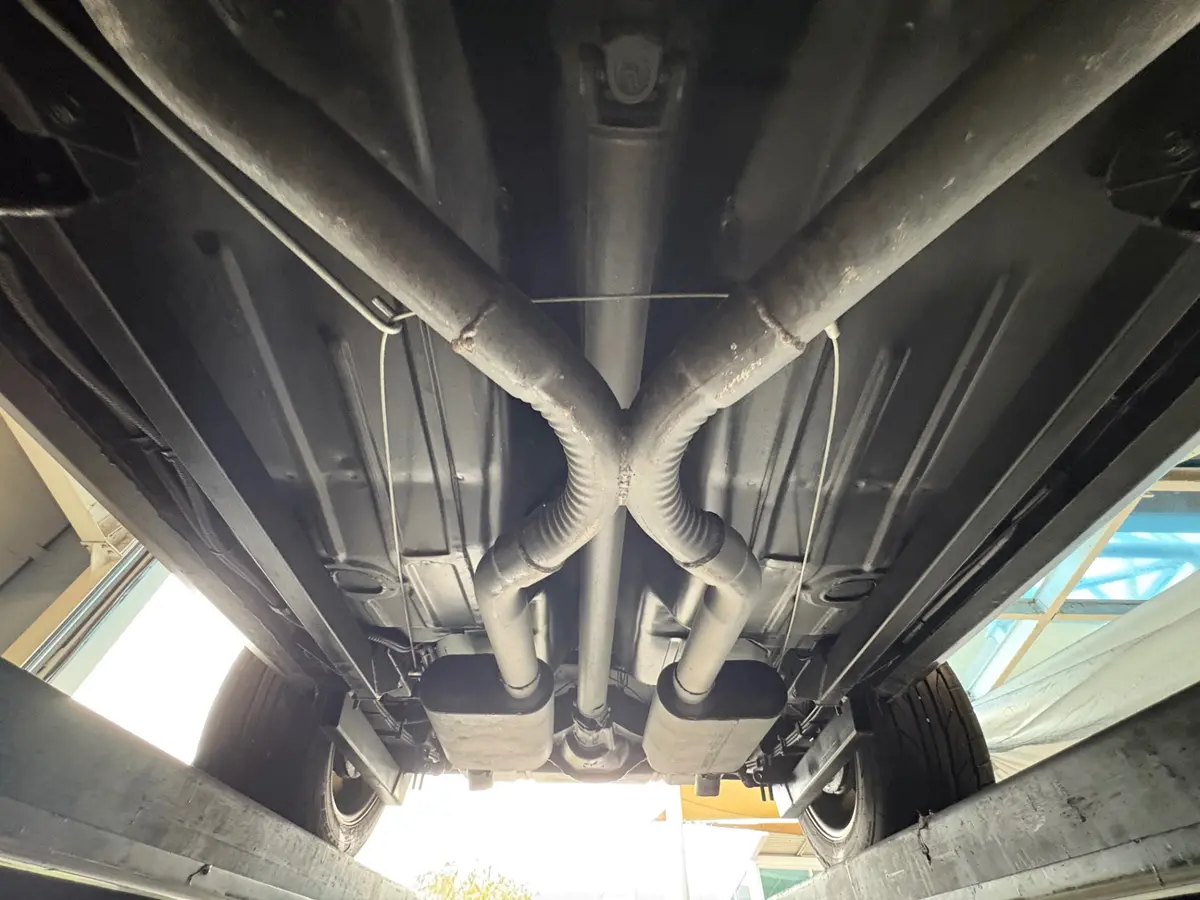
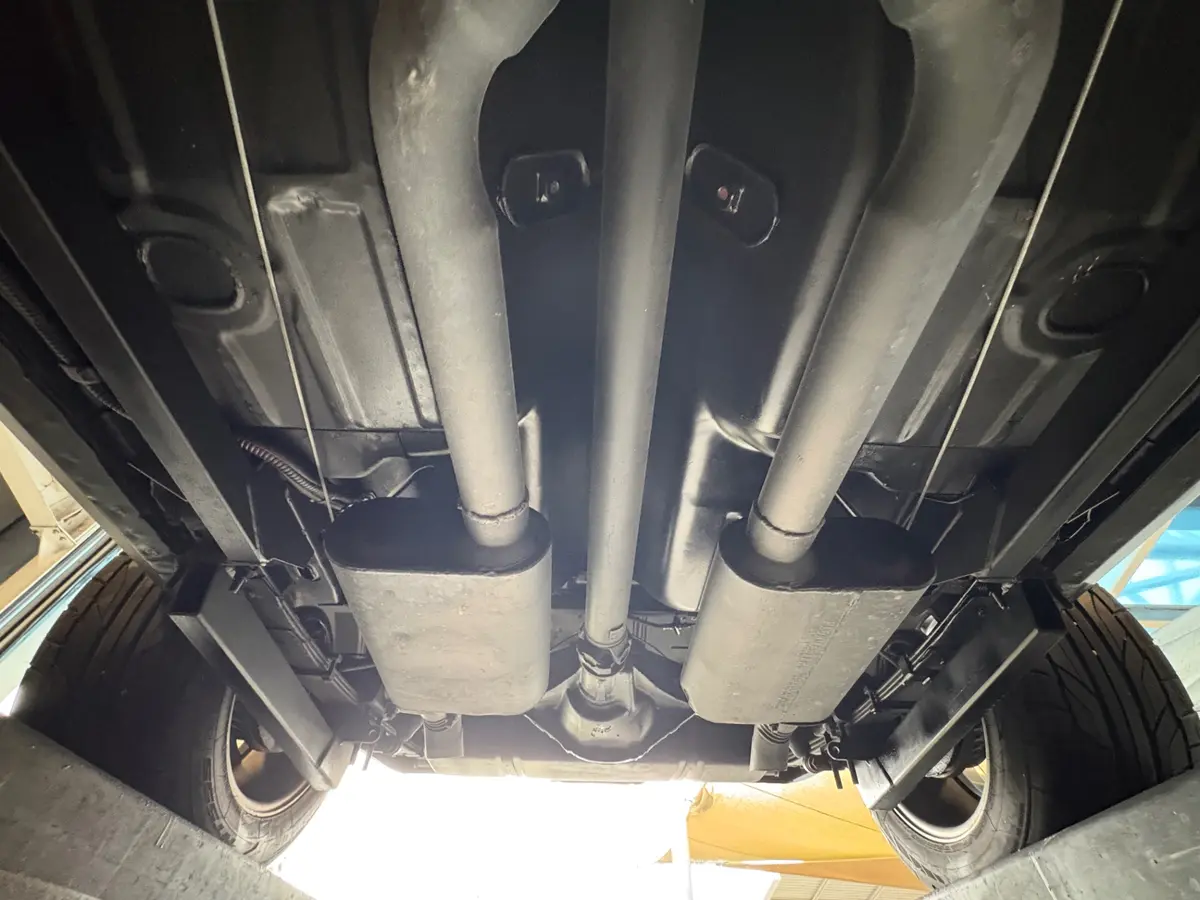
Exhaust starts with long-tube headers on both sides of the engine. Long-tube headers outperform the factory exhaust manifolds and short-tube headers by giving spent gases more time and distance to build exhaust scavenging — the effect where departing exhaust pulses help pull the next exhaust charge out of the cylinder, improving volumetric efficiency and adding power across the RPM range. From the headers, exhaust flows into an X-pipe configuration and then through dual mufflers exiting at the rear. An X-pipe cross-connects the two exhaust banks near the center of the car, which balances exhaust pressure between the cylinder banks and tends to produce a smoother, higher-pitched tone compared to an H-pipe. The result is a dual exhaust system that sounds right for a car of this displacement and configuration.
Ignition is handled by an MSD system. MSD, which stands for Multiple Spark Discharge, is an aftermarket ignition brand with a long history in both street performance and racing. Their systems fire the spark plug multiple times per ignition event at lower RPM, ensuring complete combustion even with a high-compression or larger-displacement engine. This matters on a street car because it supports reliable starts, cleaner idle, and full power delivery across the operating range.
Cooling is managed by an aluminum radiator paired with a high-flow electric cooling fan. The aluminum radiator transfers heat more efficiently than the original copper-brass unit and weighs less. The electric fan eliminates the parasitic drag of a mechanically driven engine fan and allows the cooling system to operate independently of engine speed — useful in slow traffic or at idle when a mechanical fan is least effective. Braided stainless plumbing connects the cooling system components and replaces the original rubber hoses with lines that are more resistant to heat, pressure, and age.
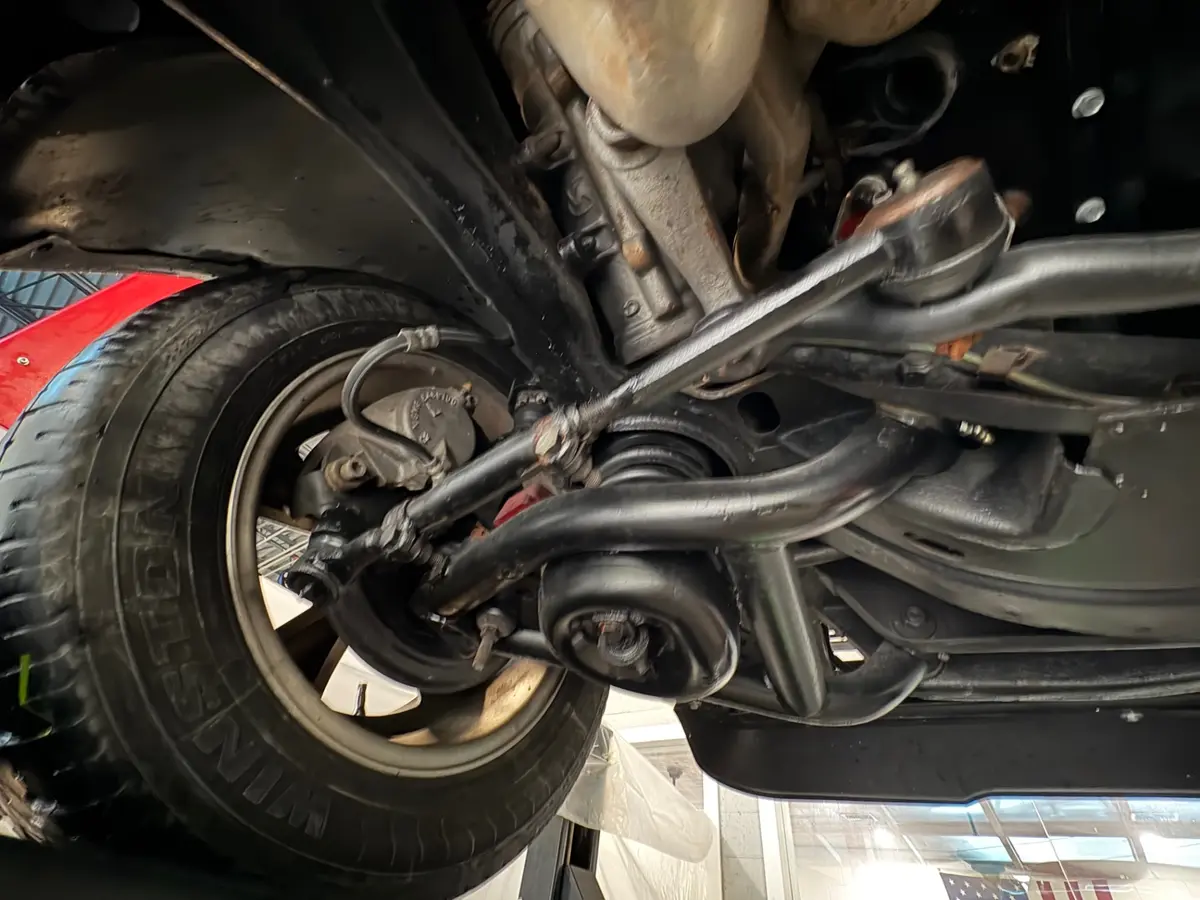
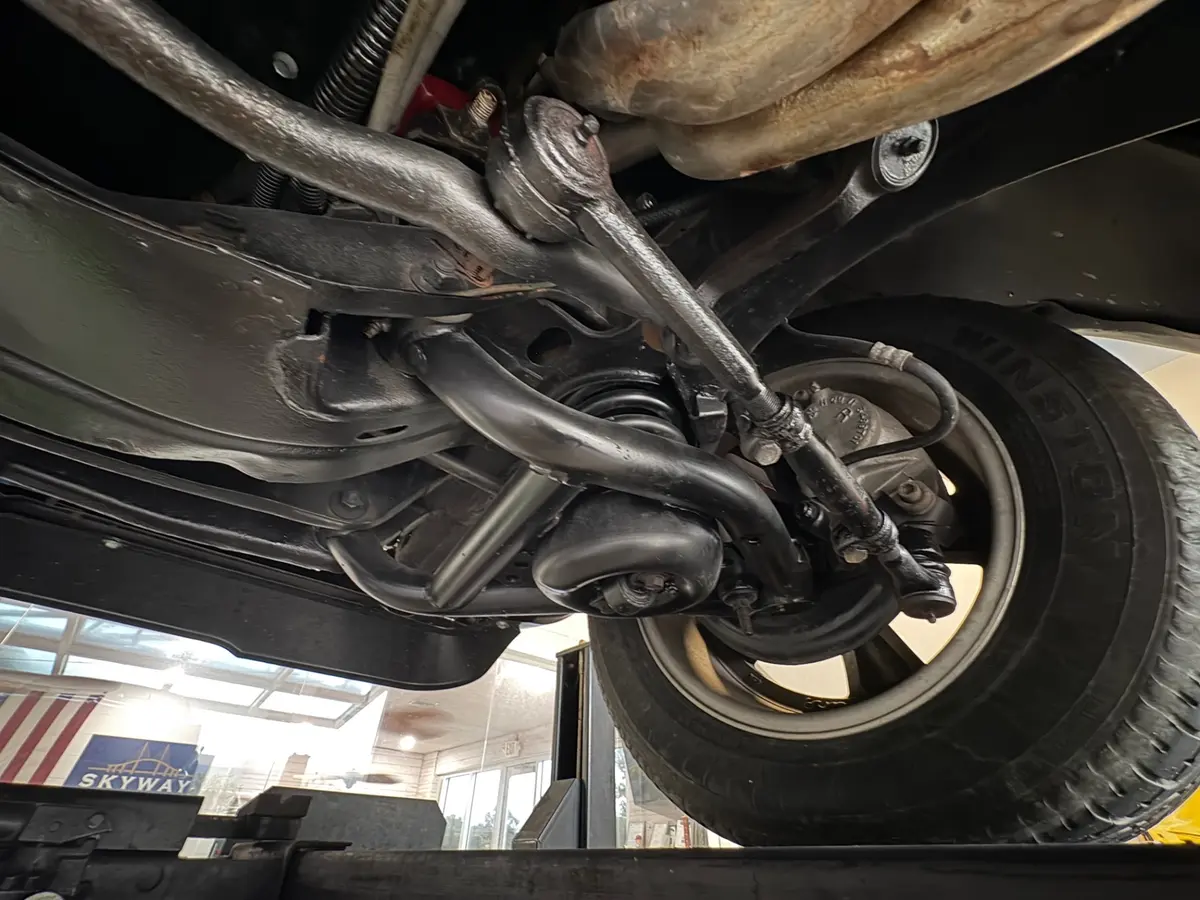
Stopping power comes from a 4-wheel disc brake conversion. The 1968 Camaro SS was available from the factory with front disc brakes as an option, but rear disc brakes were not a factory offering. Converting all four corners to discs is a meaningful upgrade on a car with this much engine — disc brakes resist fade better than drums under repeated hard use and provide more consistent pedal feel. Power steering is also fitted, which is worth noting given the weight of the 383 stroker over the front axle.
Interior
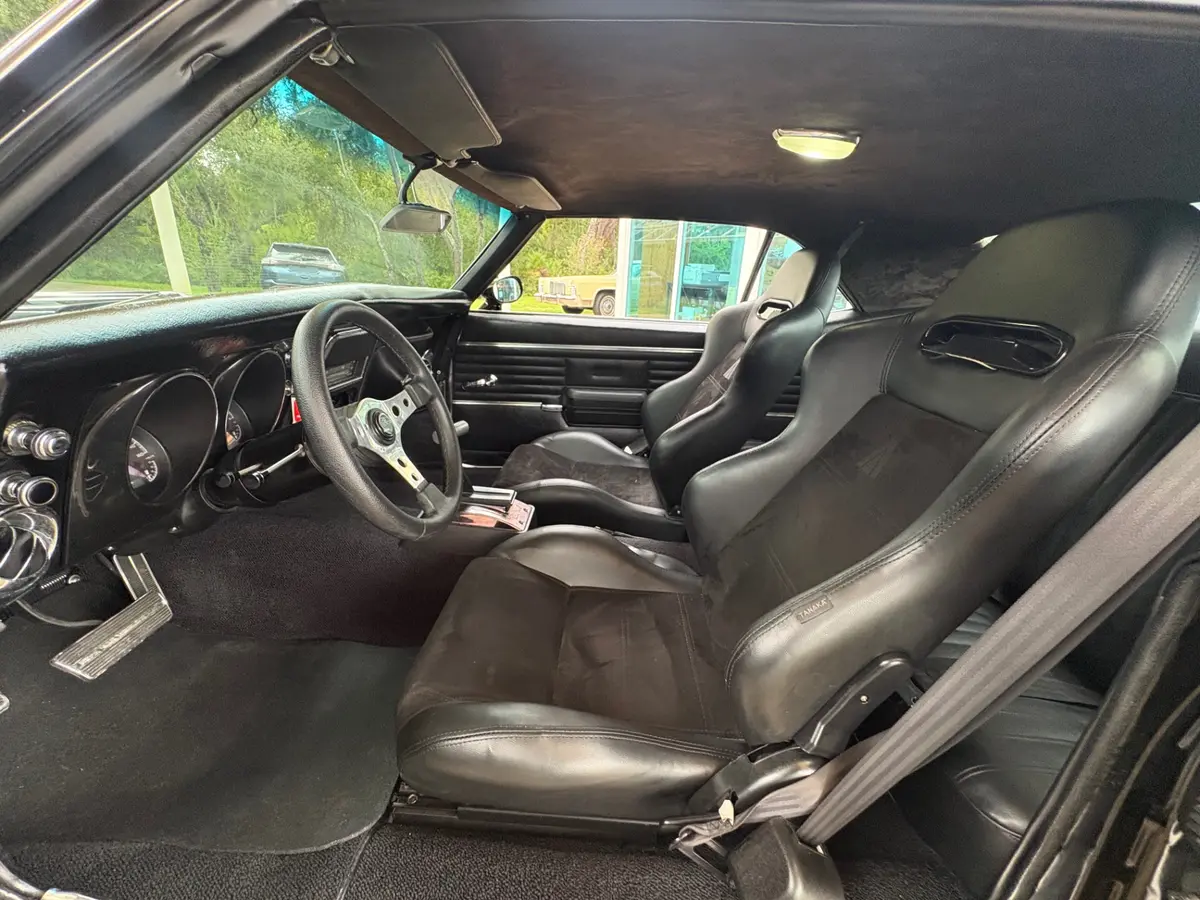
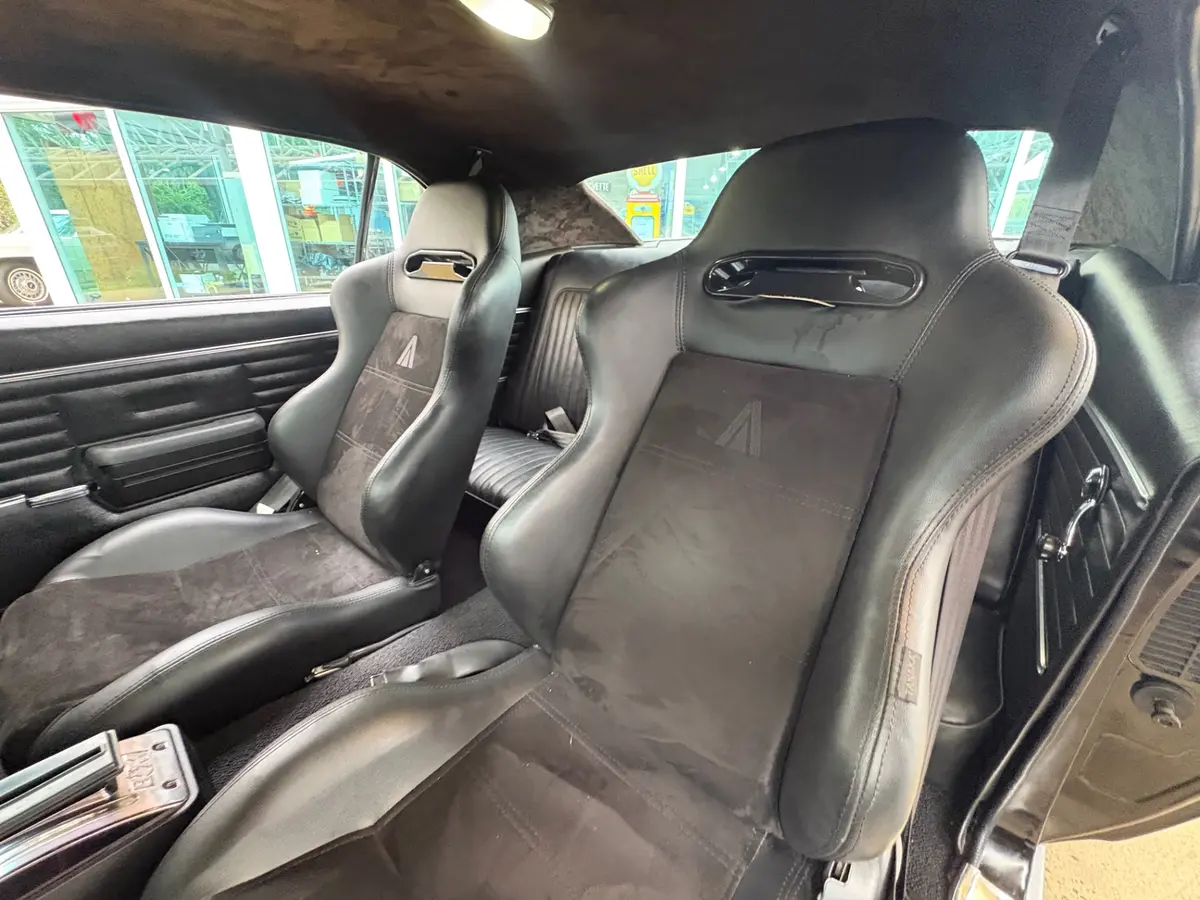
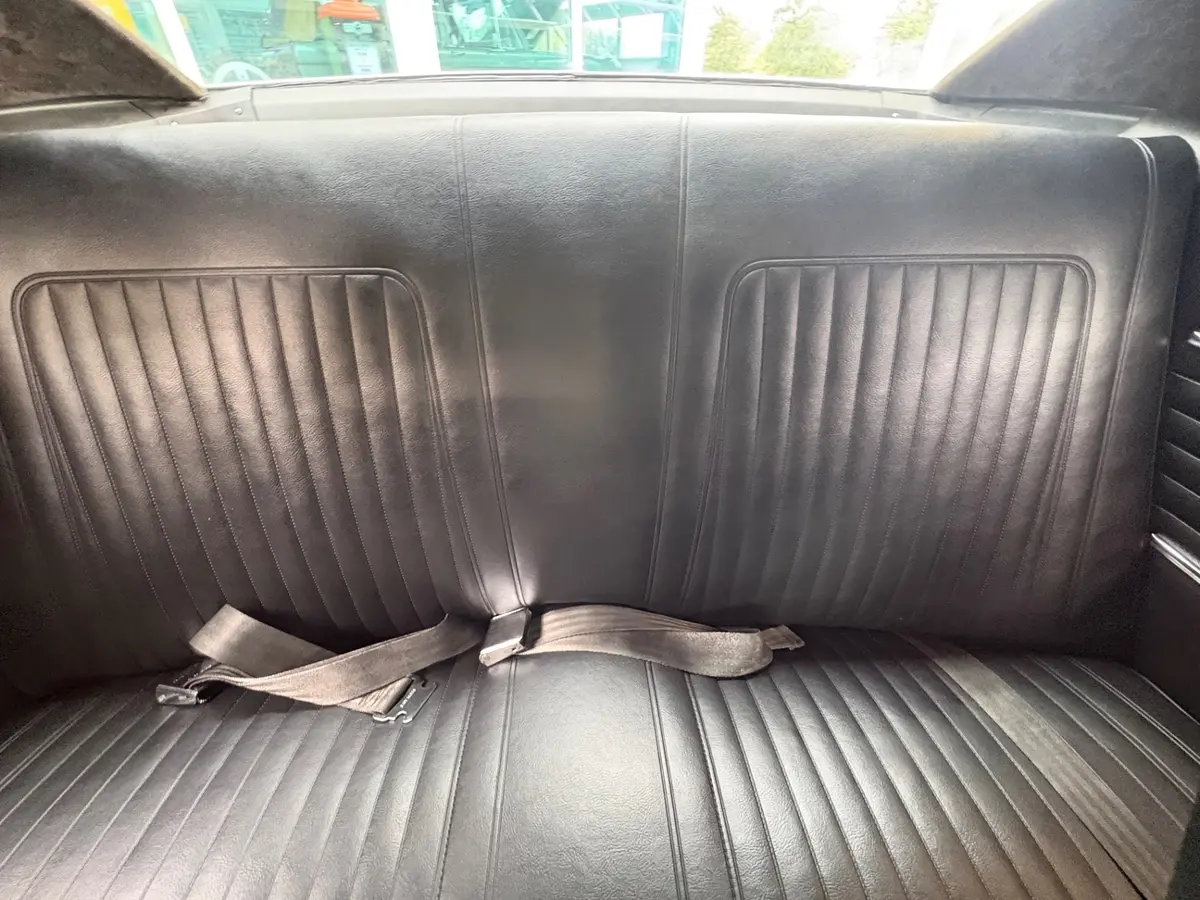
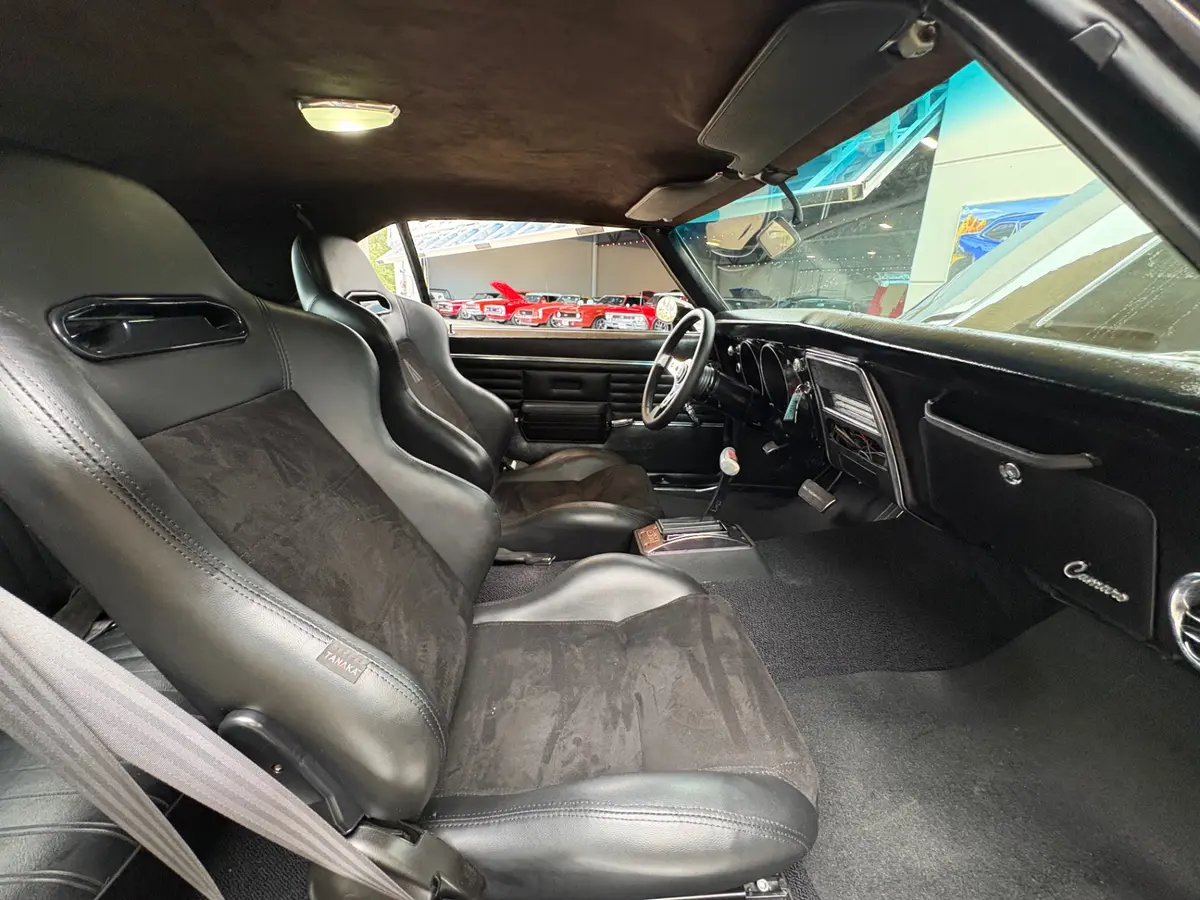
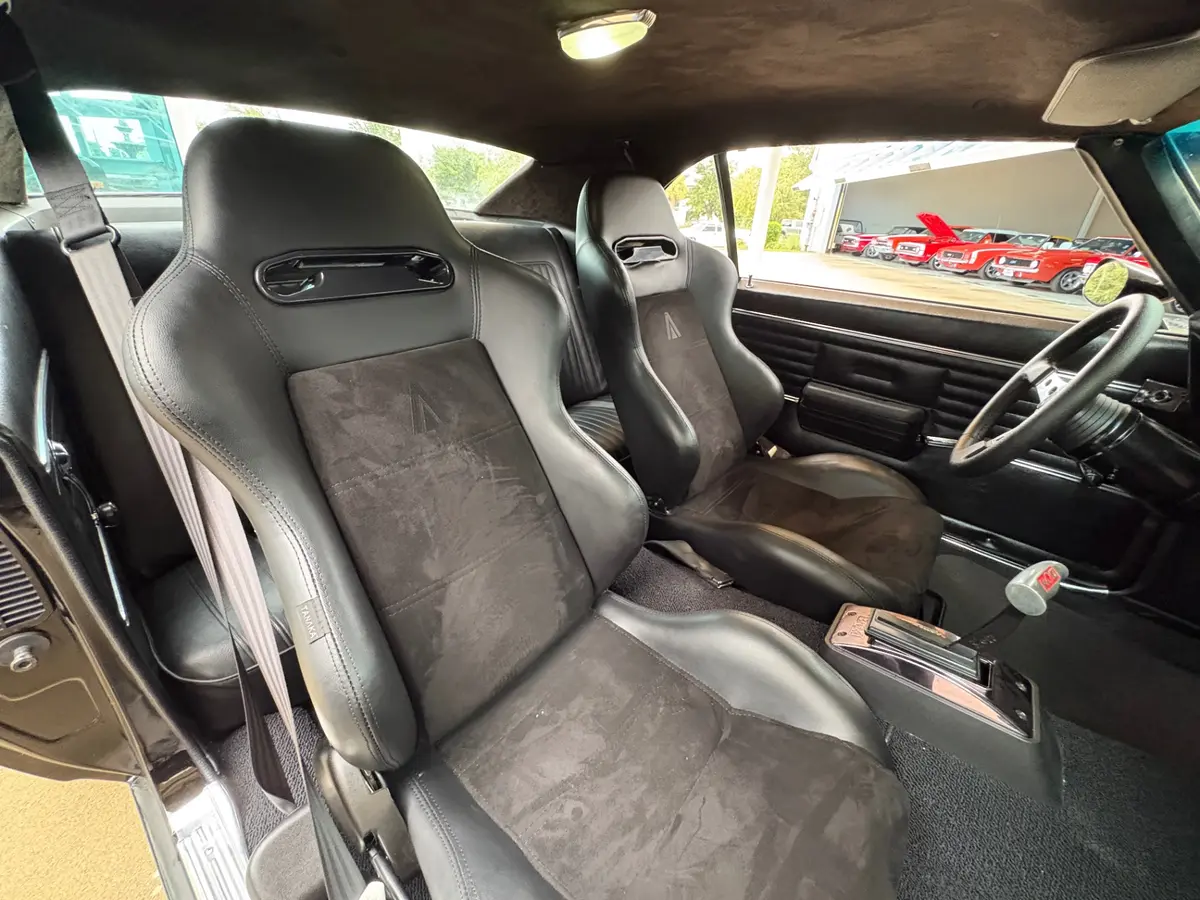
The interior of this 1968 Chevrolet Camaro has been updated throughout while keeping the basic structure of the first-generation body intact. The most significant change from stock is the pair of Tanaka Racing bucket seats in the front. These are bolstered sport seats with a leather and suede insert construction, designed to hold the driver and passenger in place under cornering loads without the sliding that can occur in the original flat-bottomed bench-style buckets. The Tanaka name is visible on the seat bolster in the photos. The rear seat is present and in good condition, which matters for anyone who wants to use this car as a daily driver or bring a passenger along regularly.
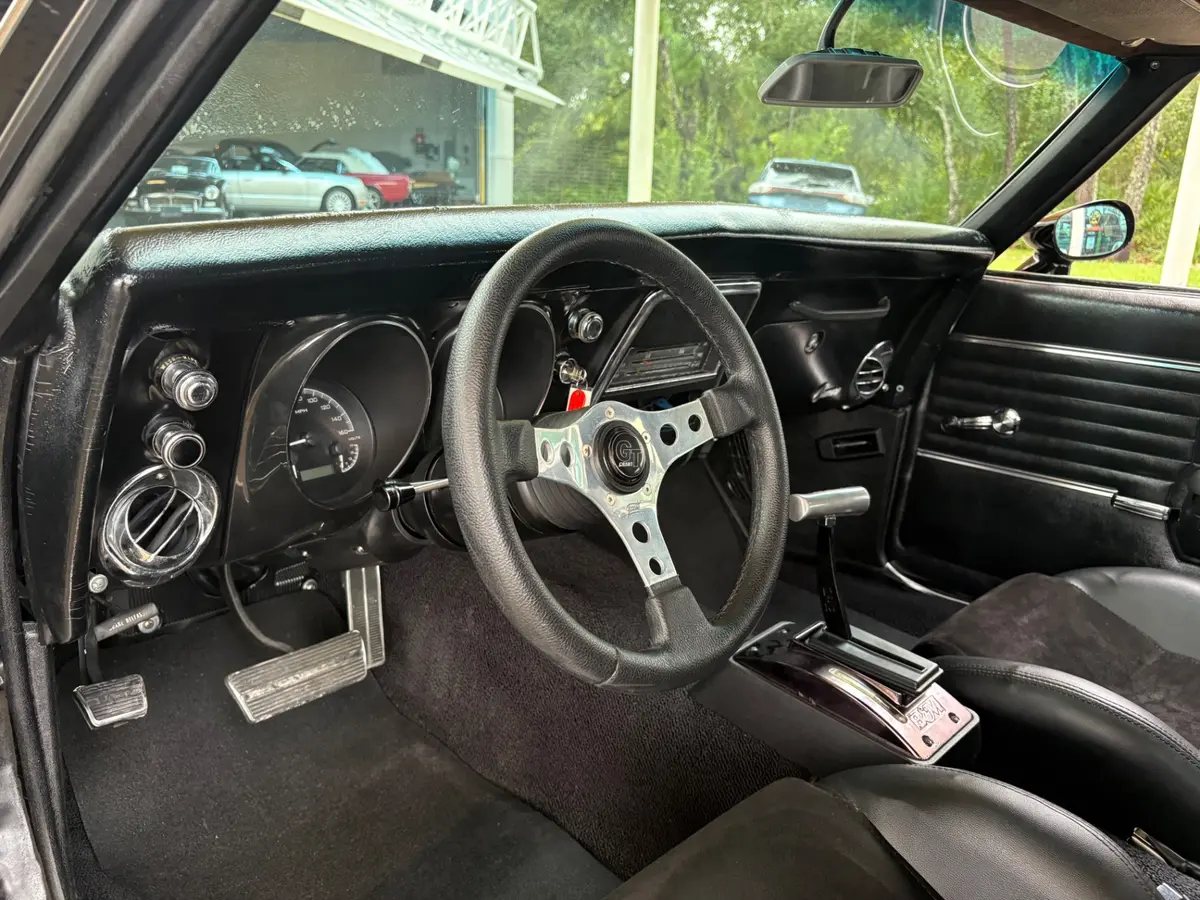
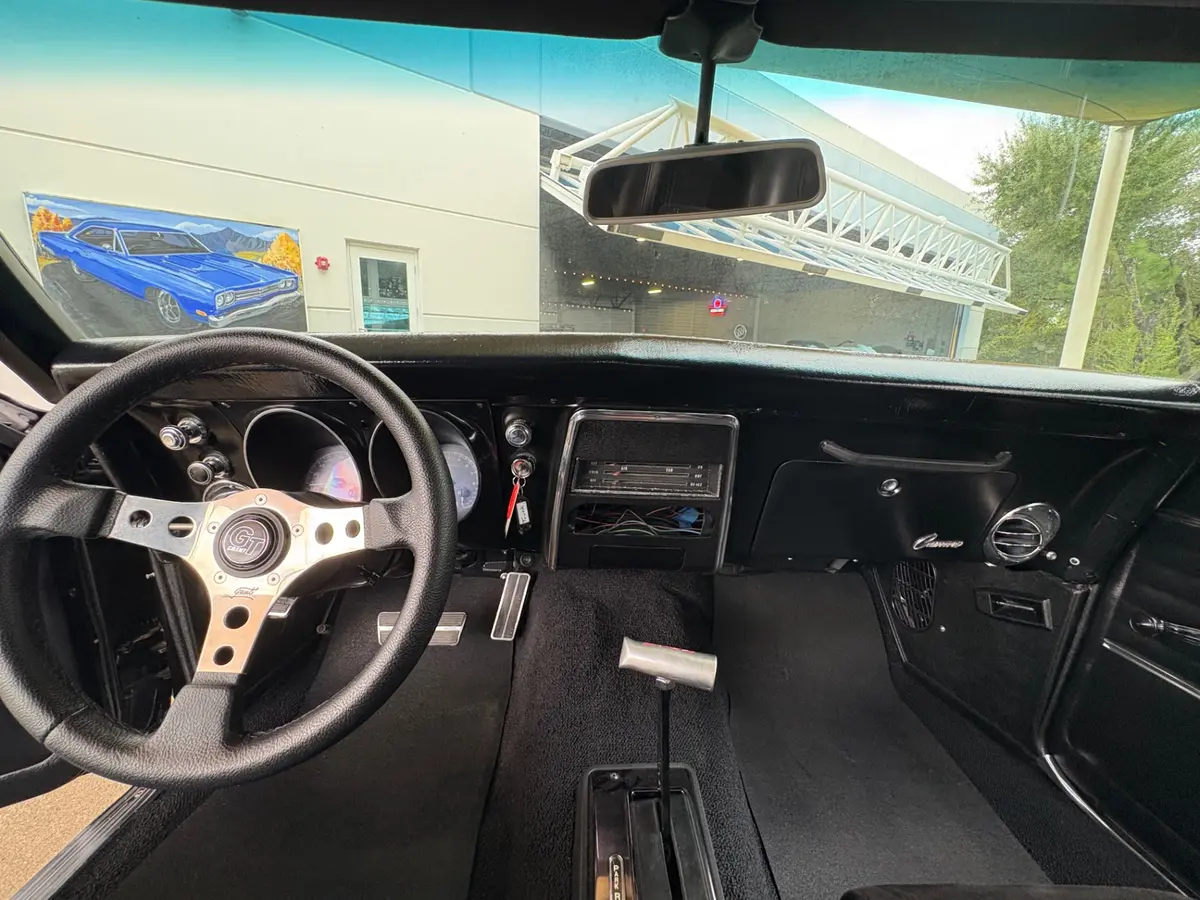
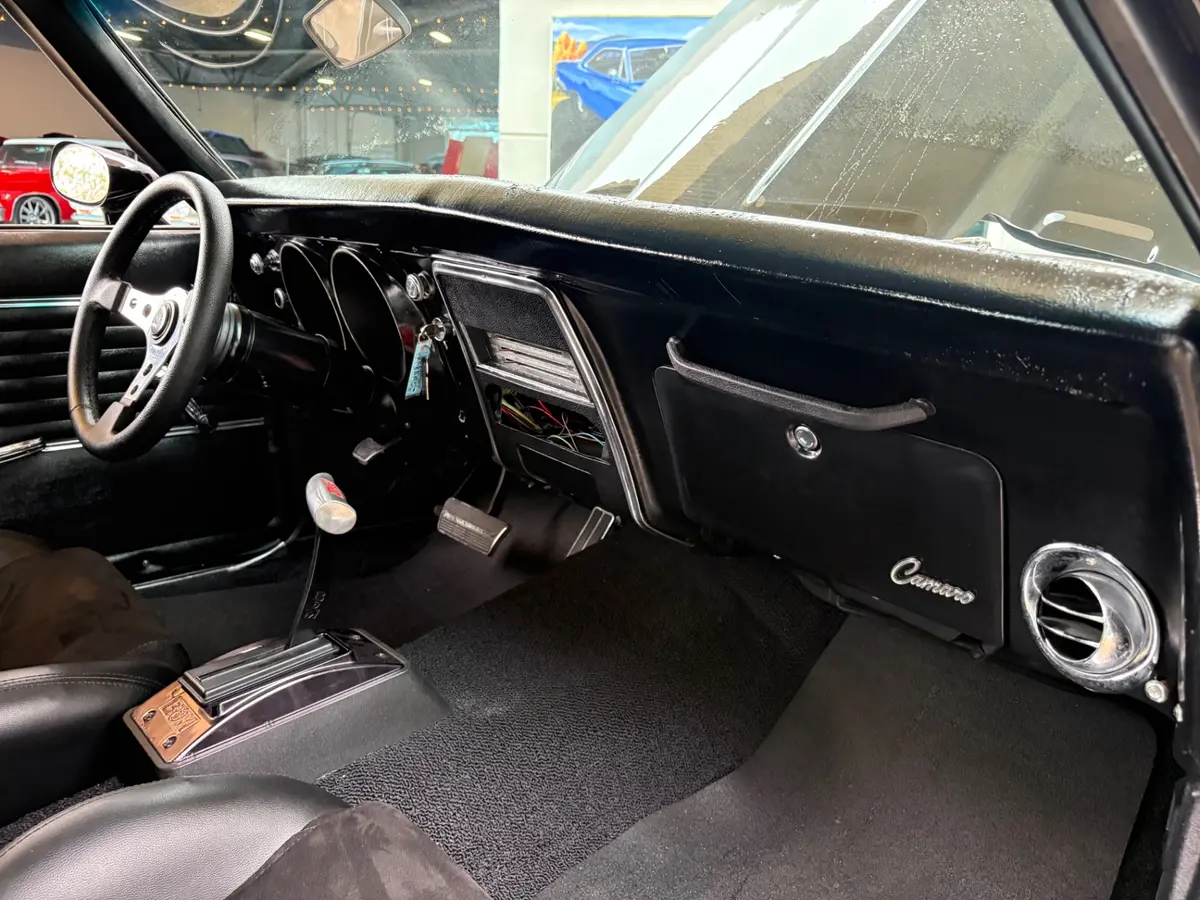
The gauge cluster has been replaced with an aftermarket unit that reads more information than the stock 1968 instrumentation. The original 1968 Camaro dash had a speedometer and a large circular cluster housing the fuel gauge and warning lights — a layout that looked purposeful but left out oil pressure, voltage, and temperature gauges for most trim levels unless you ordered the optional instrumentation package. The replacement cluster here addresses that shortcoming directly, giving the driver actual readings on the engine's vital signs rather than warning lights that only activate after something has already gone wrong.
A sport steering wheel replaces the original, sitting in front of the aftermarket gauge cluster. The wheel visible in the photos is a three-spoke unit with a polished center section, a style that fits the period of the car while providing a more positive grip than the thin original rim. The center console runs between the two front seats and houses the Turbo 400 shifter, which operates from the floor in keeping with the car's performance orientation. Black carpet covers the floor throughout, and sun visors are in place. An aftermarket stereo is installed in the factory radio location.
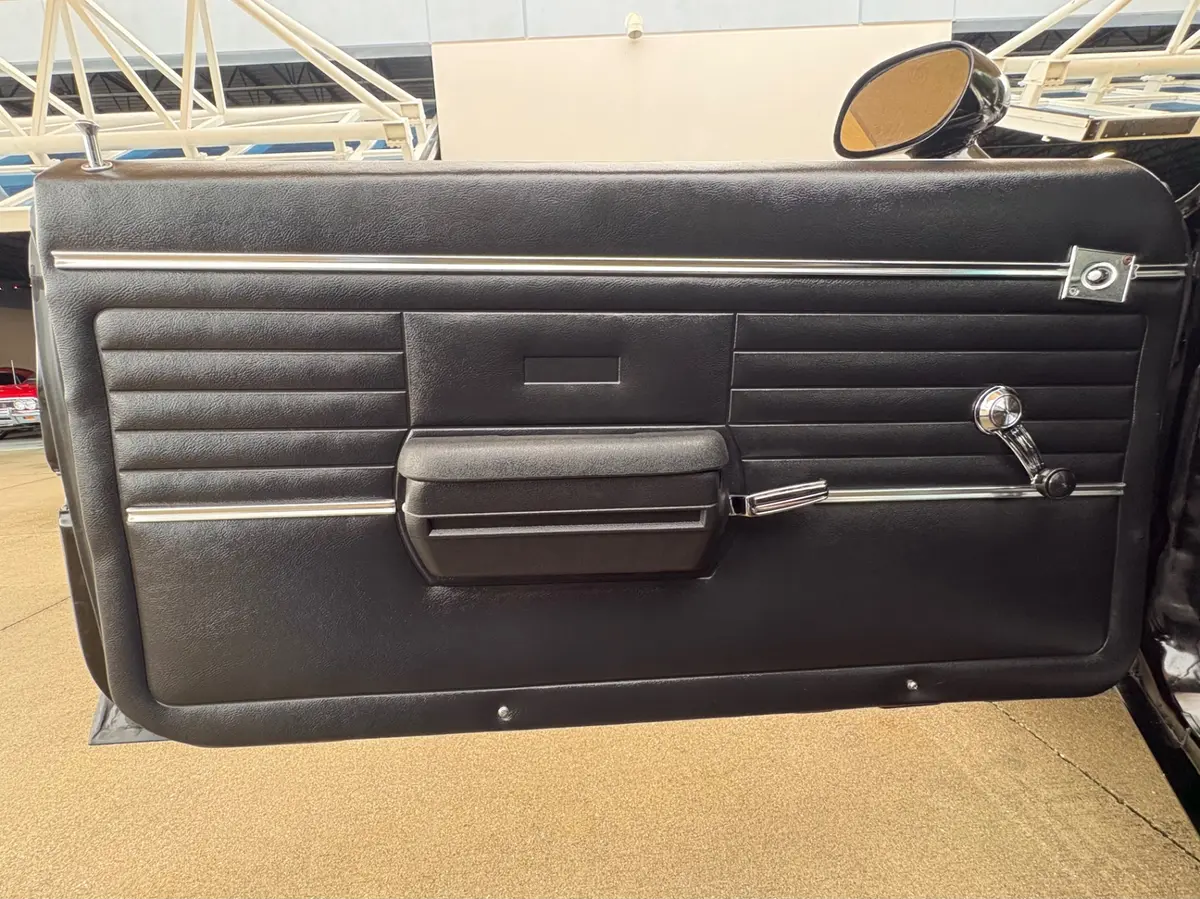
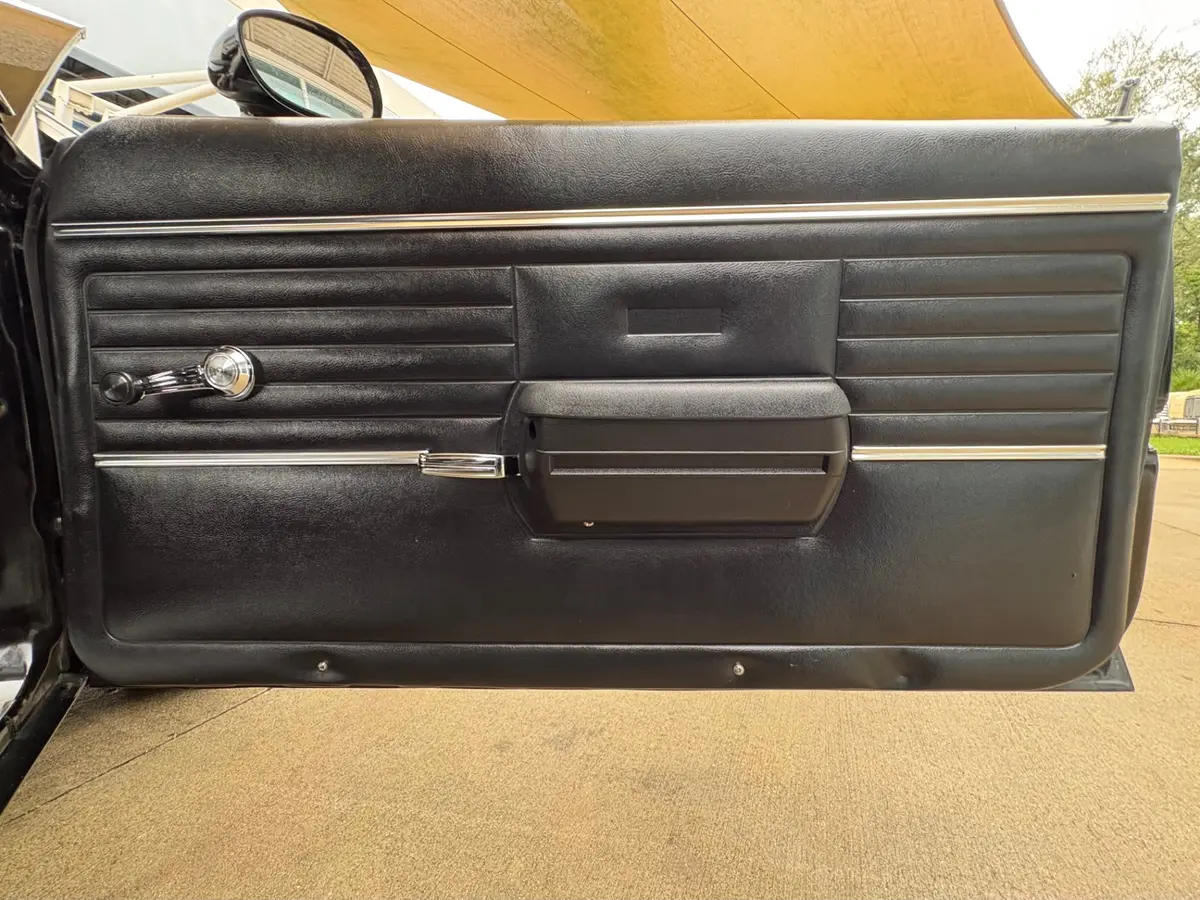
The door panels appear to be correct-style replacements for the 1968 Camaro, with the characteristic horizontal ribbing and chrome accent strip that the original panels used. The overall interior color scheme is consistent black throughout — seats, carpet, panels, and headliner — which matches the exterior and gives the car a deliberate, cohesive appearance.
Exterior
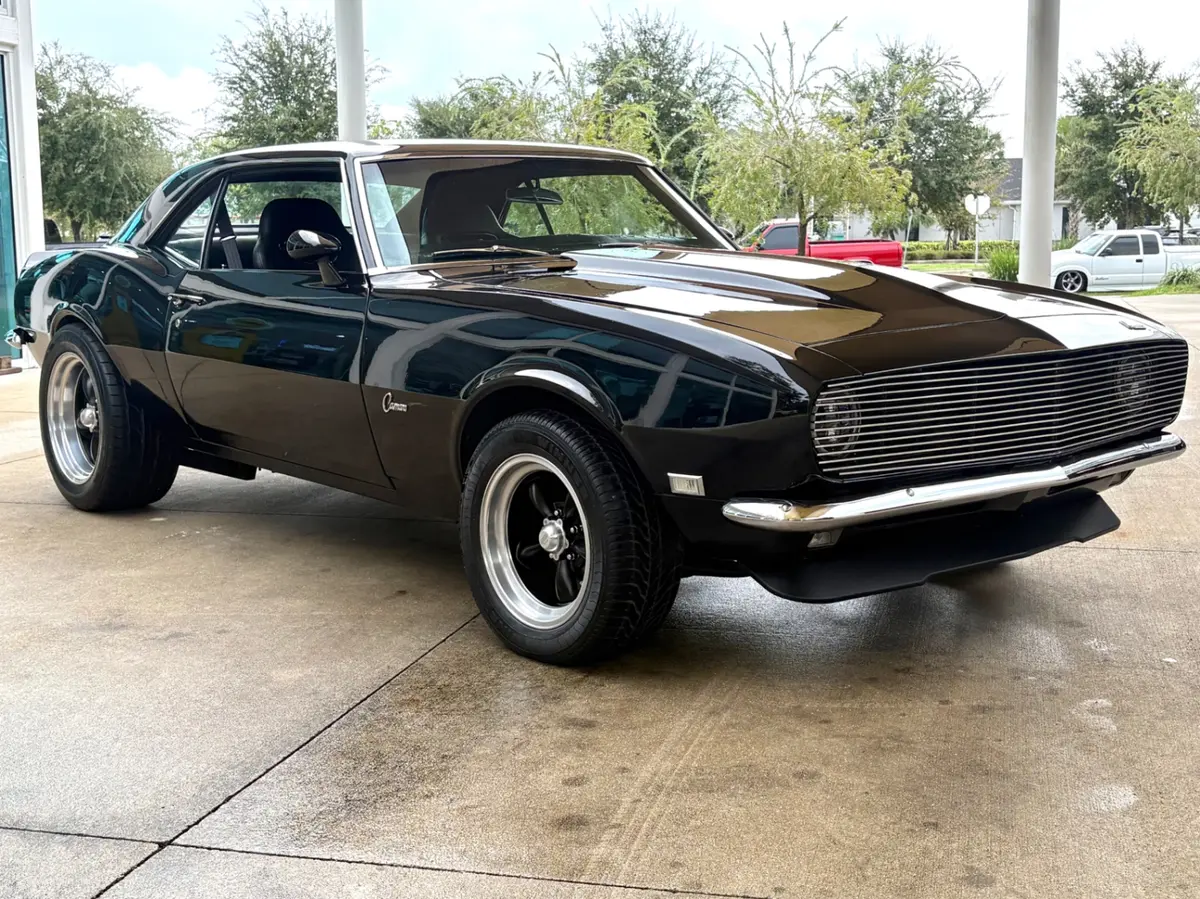
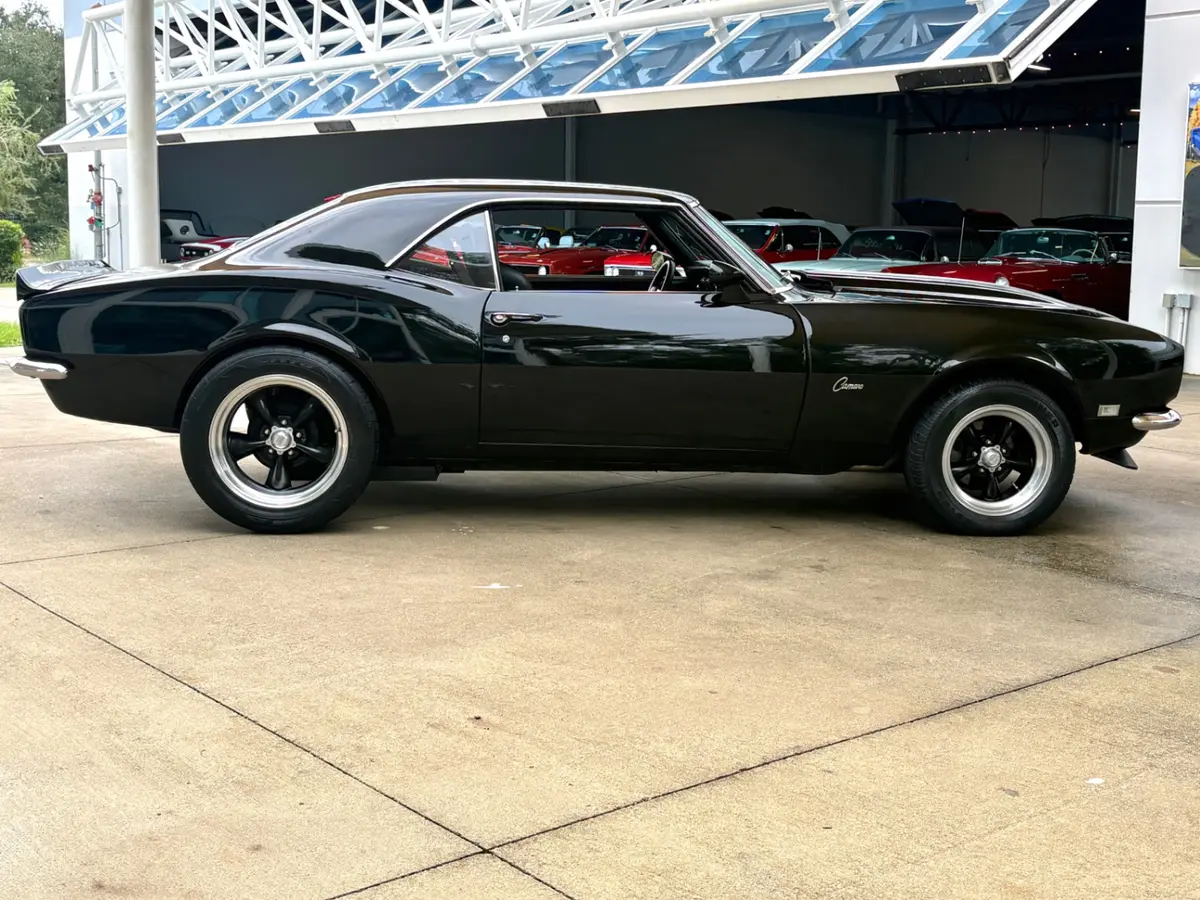
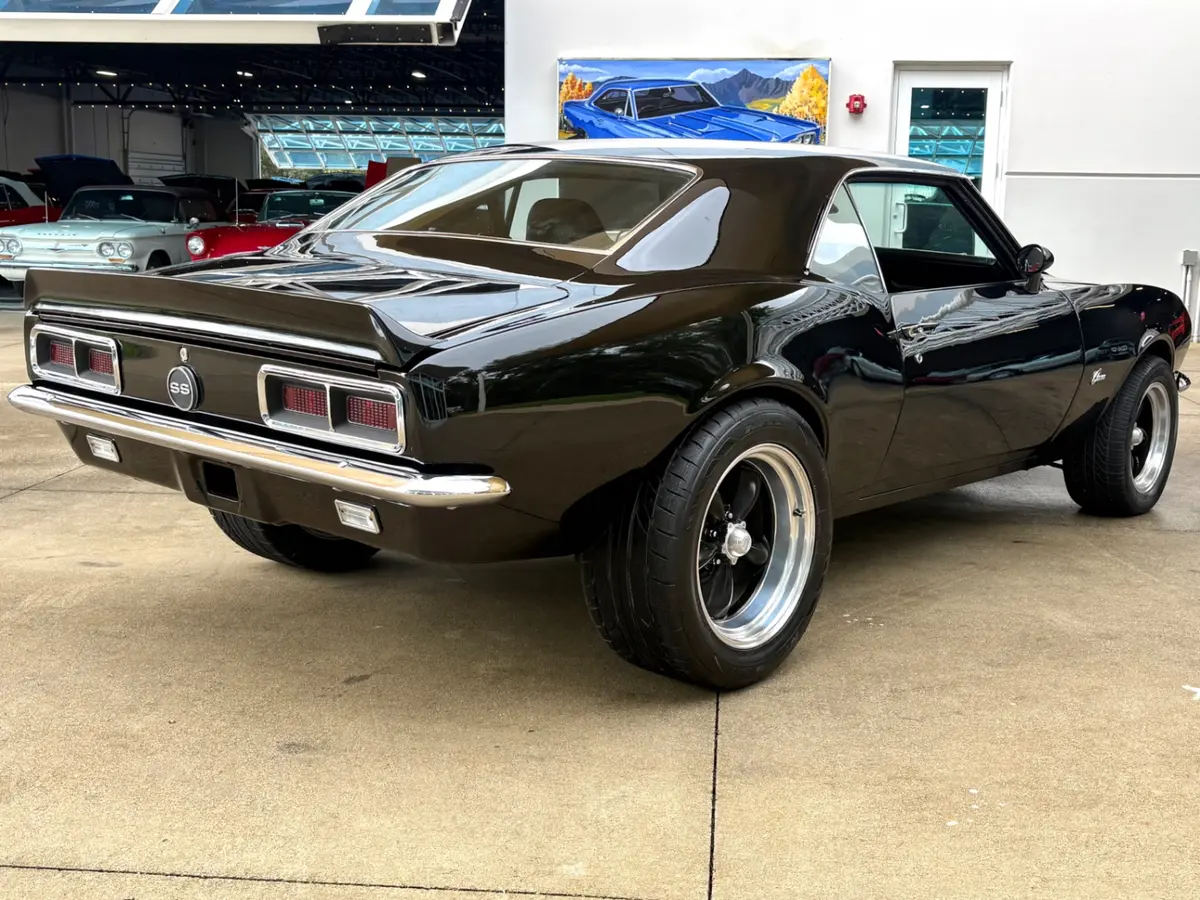
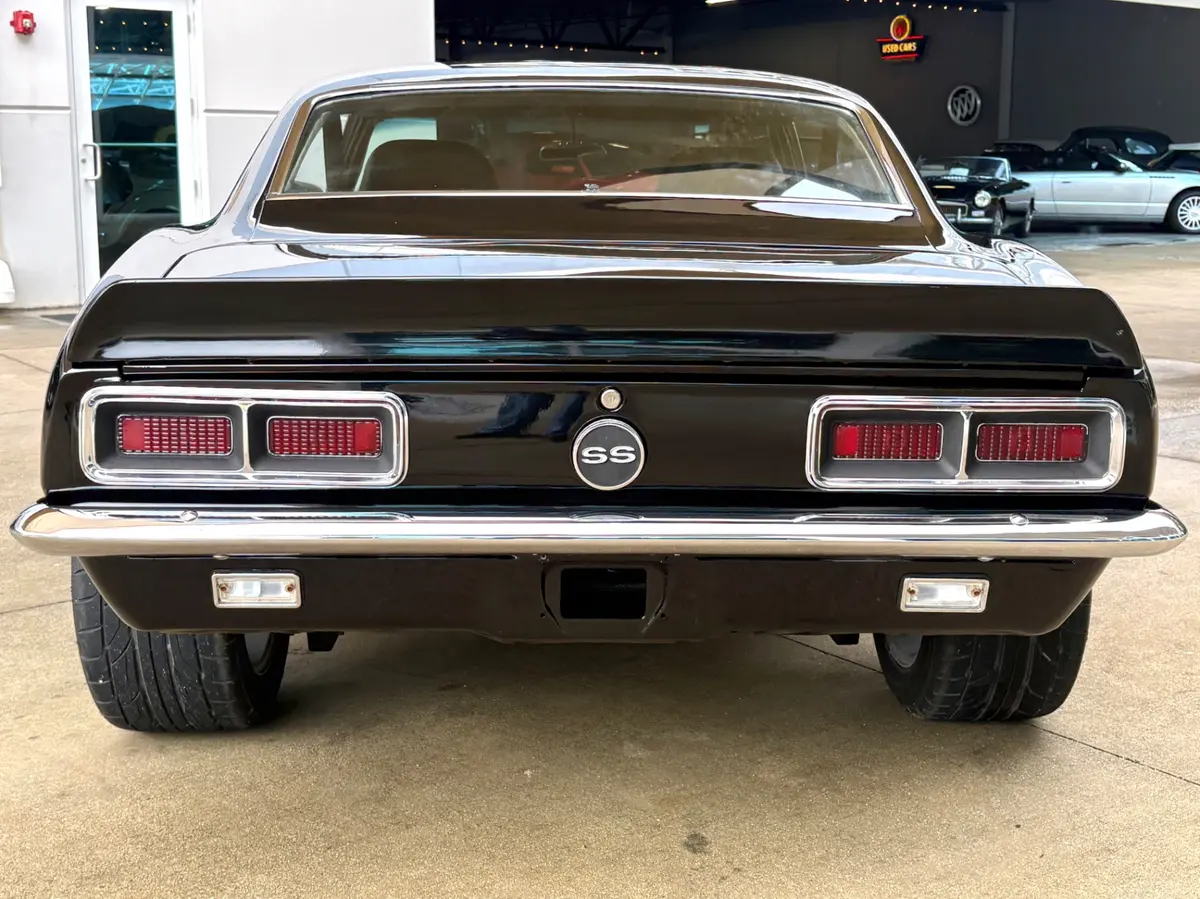
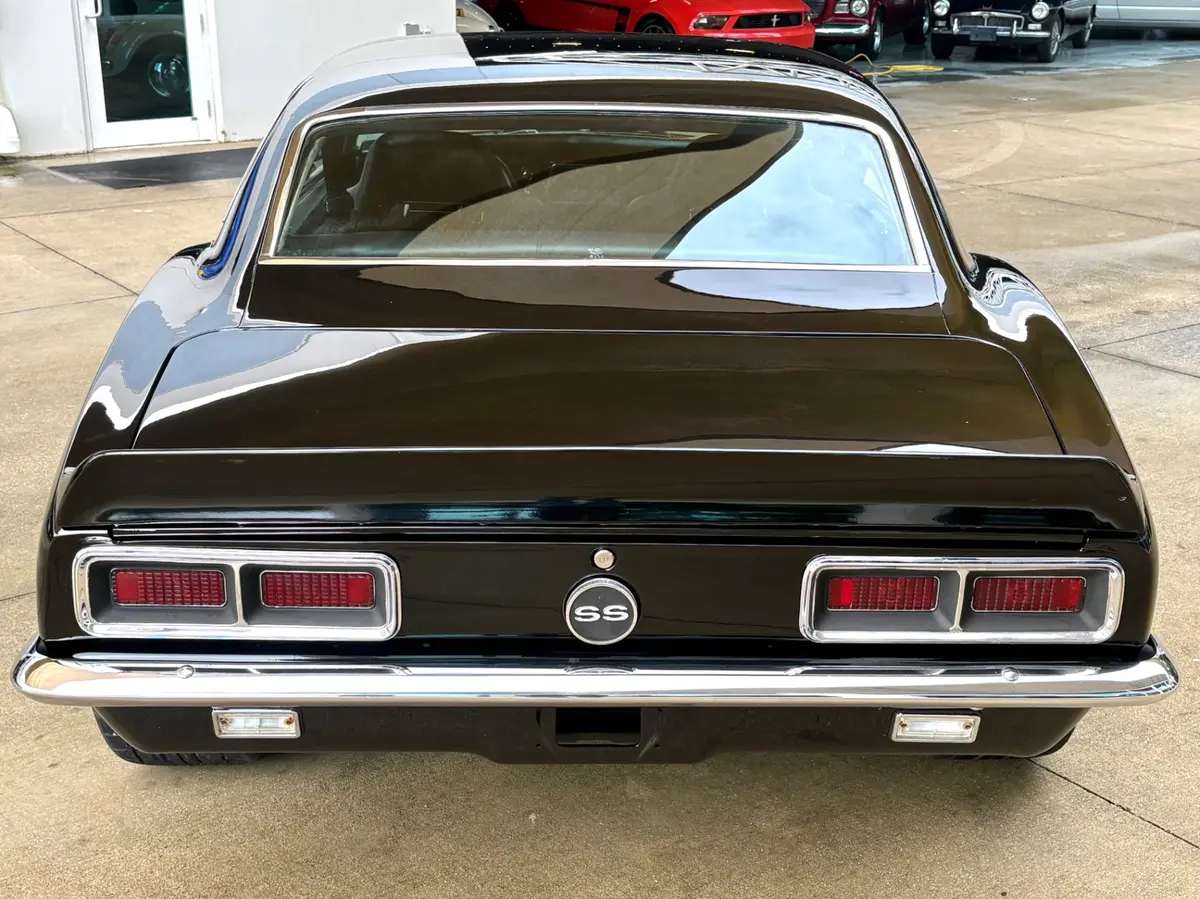
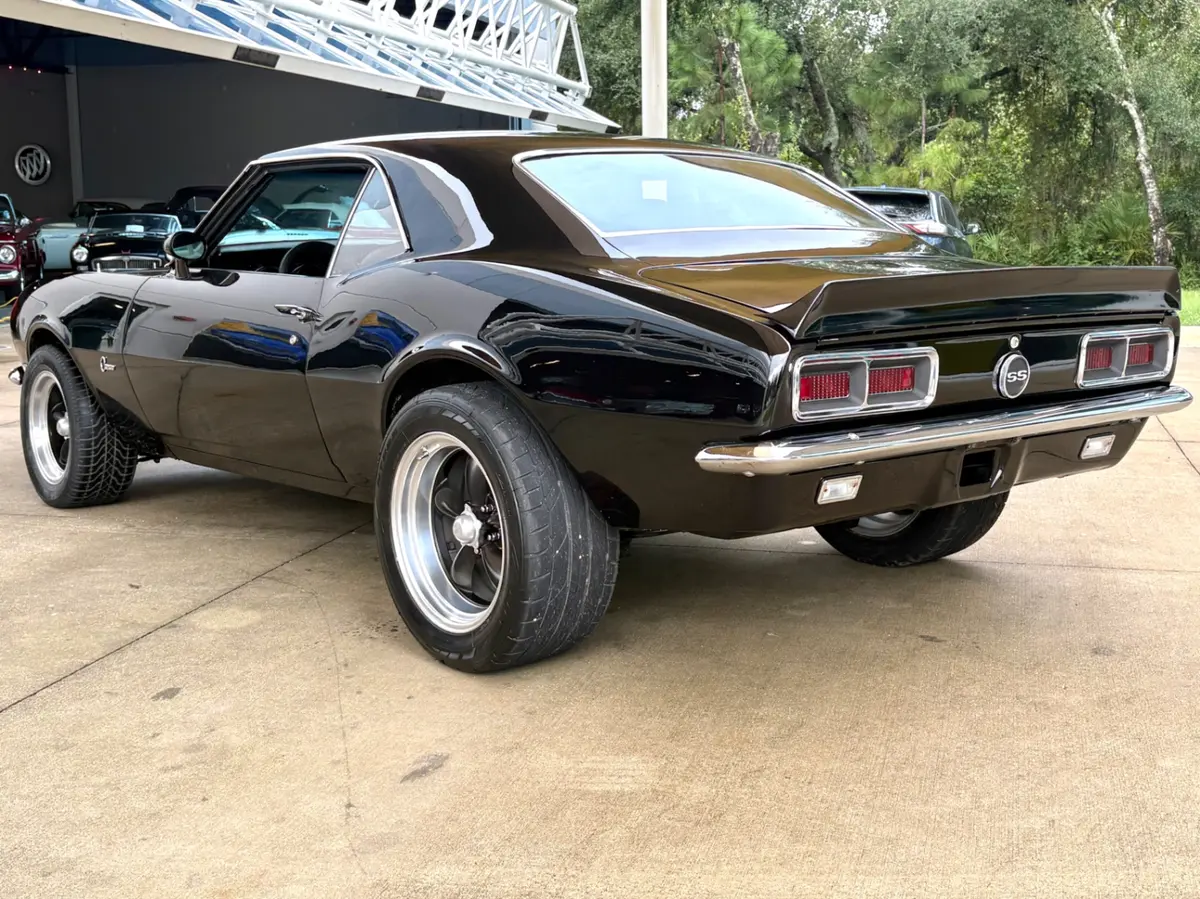
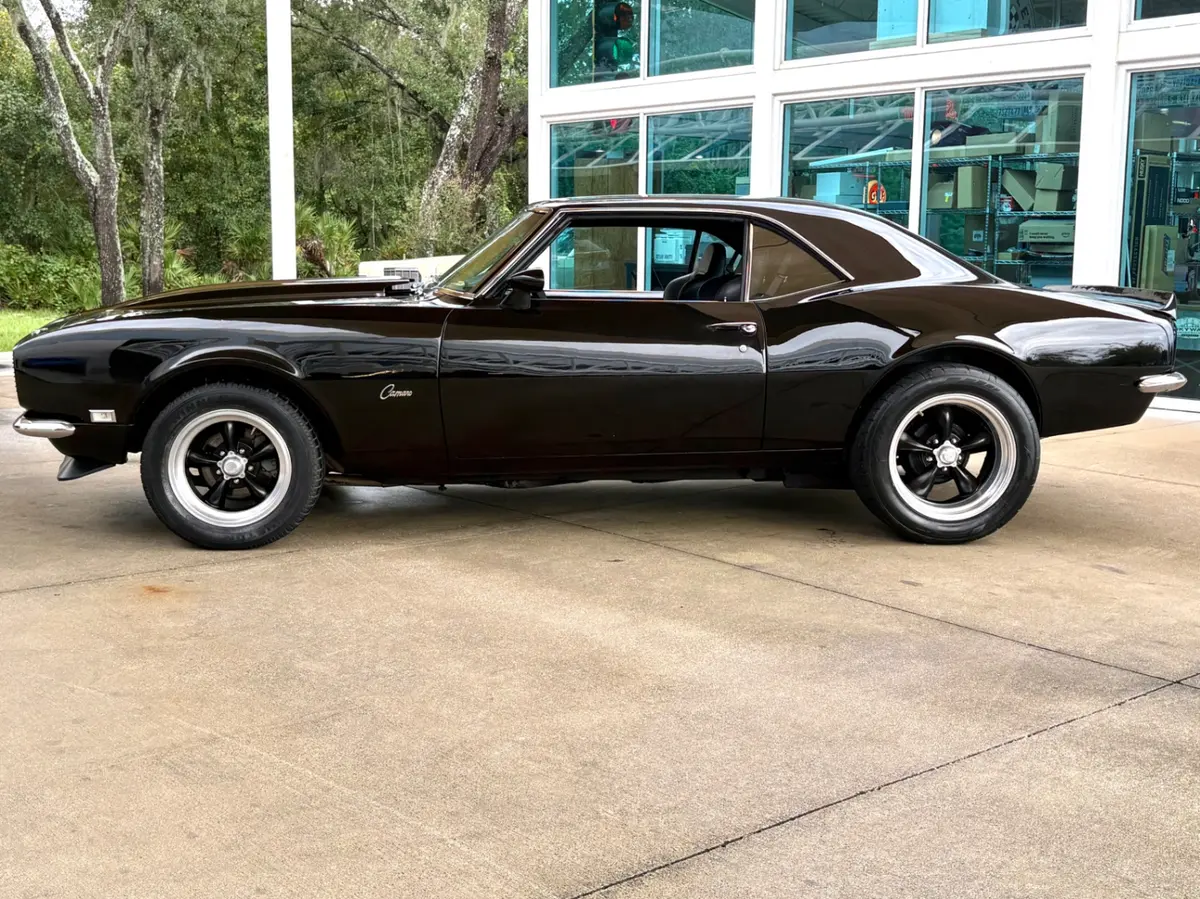
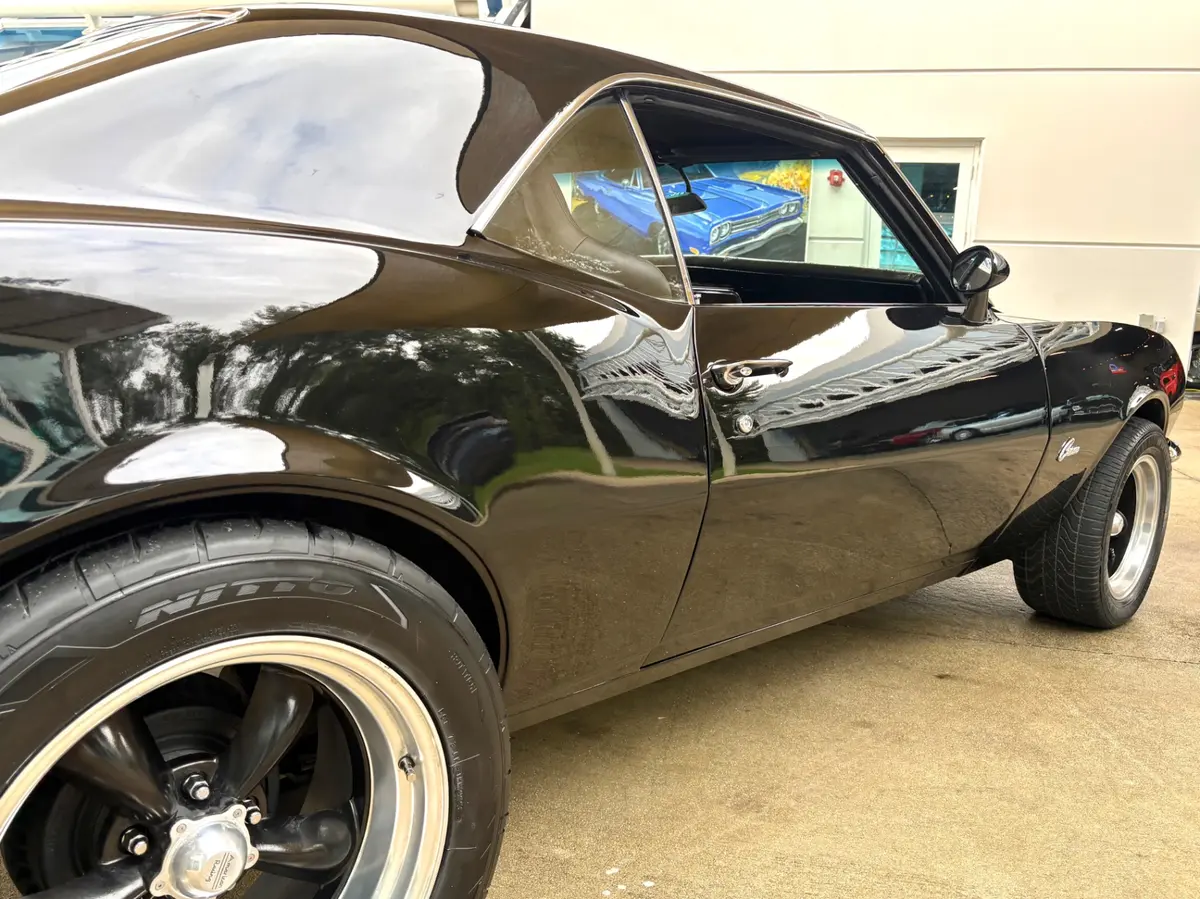
The 1968 Chevrolet Camaro wears black paint on a body that shows the clean, flowing lines that made the first-generation Camaro one of the most recognized American car shapes of the 20th century. The 1968 body was essentially the same as the 1967 but with several detail refinements, including the elimination of vent windows on the coupe body and revised taillamp lenses at the rear. The absence of vent windows gave the 1968 Camaro a cleaner, more modern greenhouse than its predecessor and is one of the details that Camaro enthusiasts use to immediately identify a first-generation car's year.
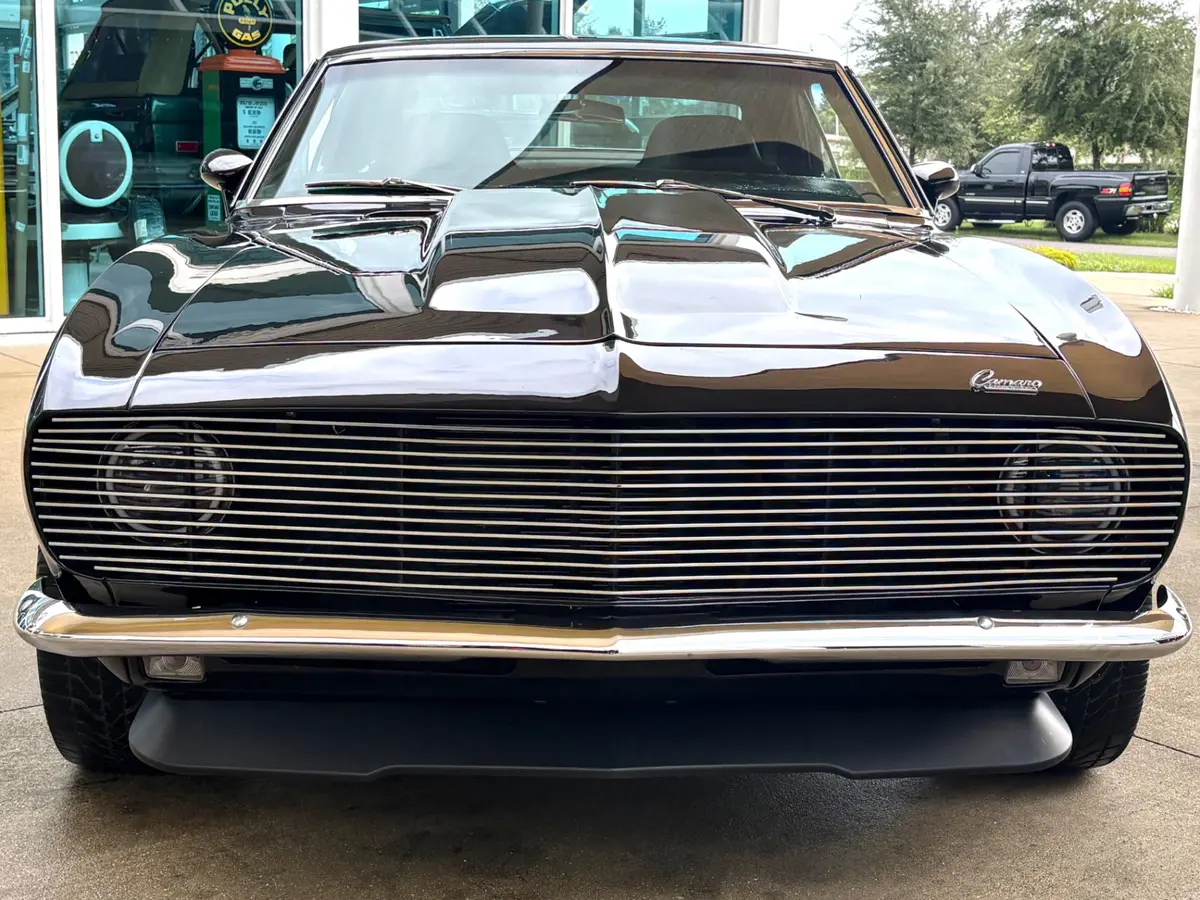
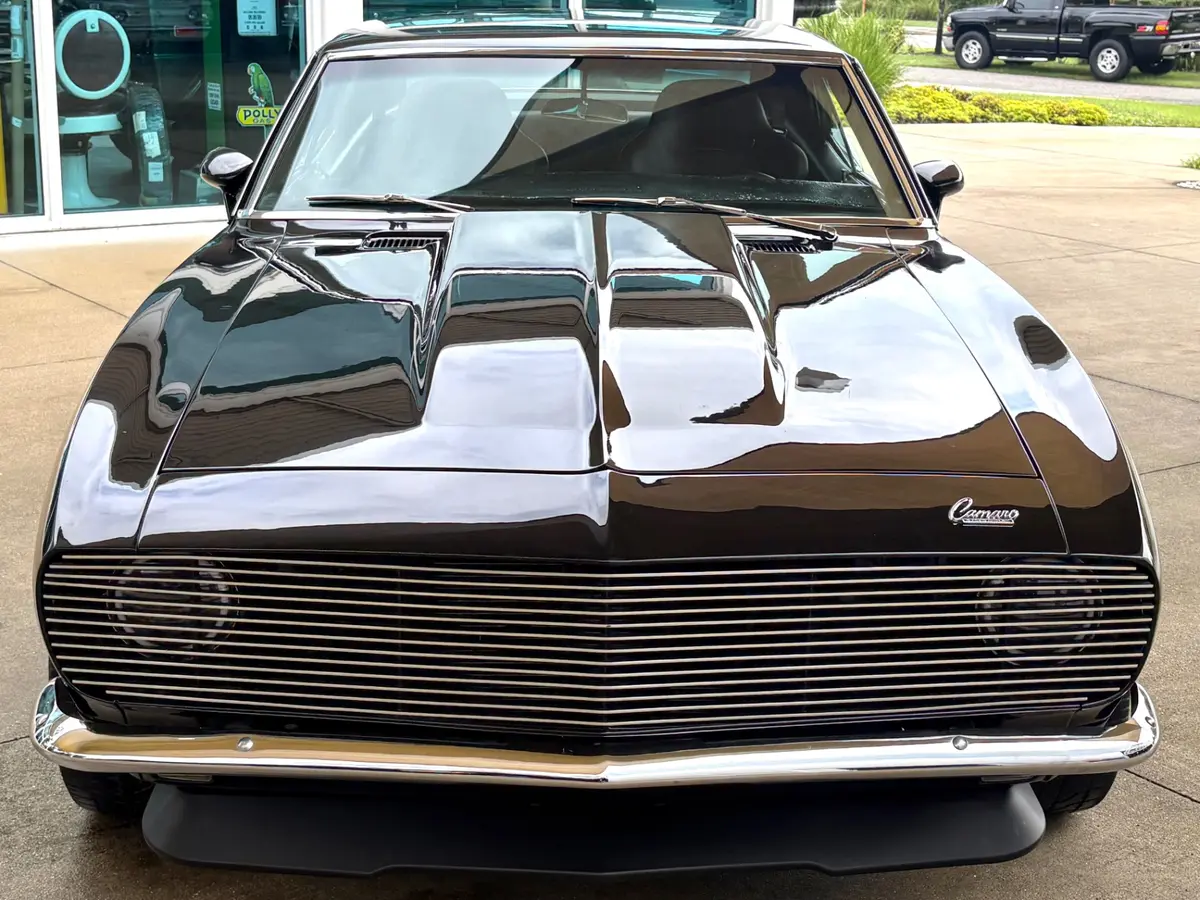
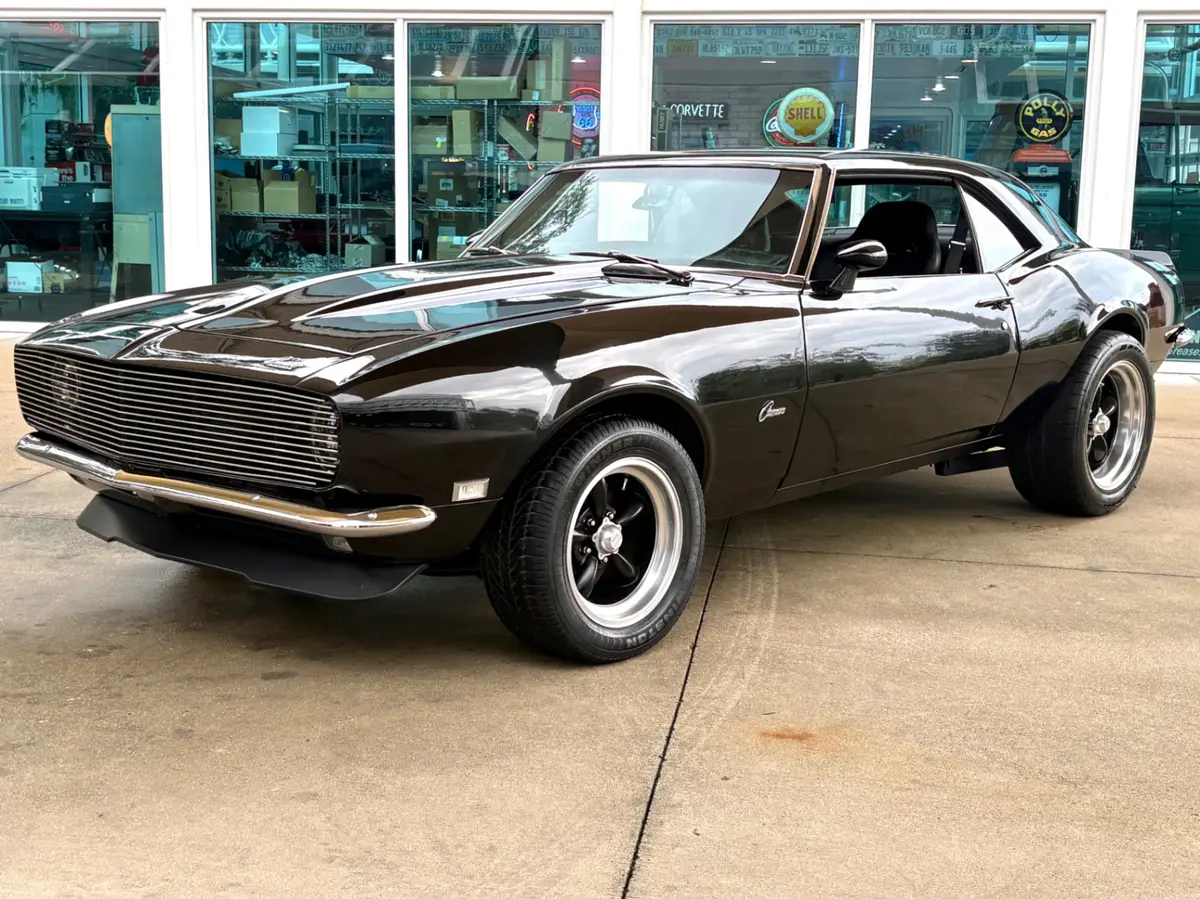
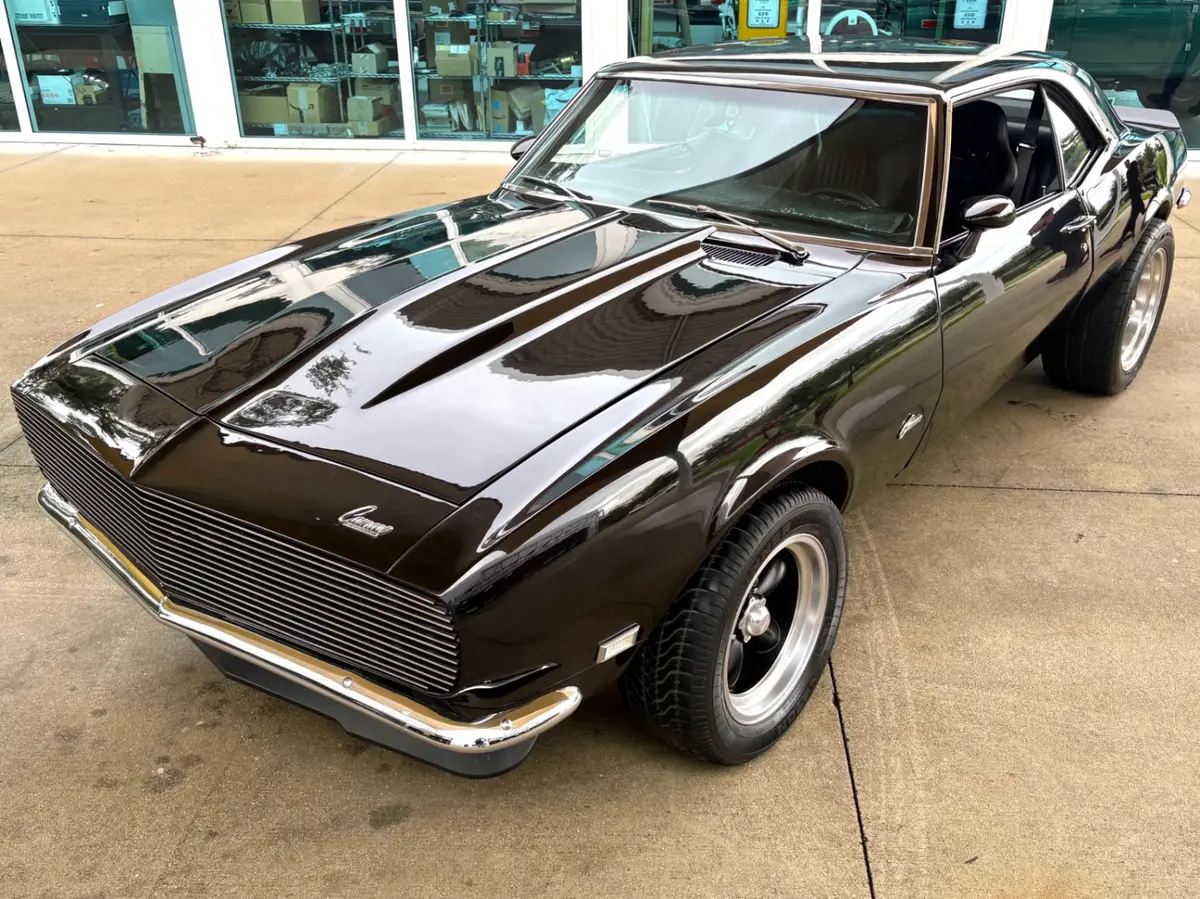
The cowl induction hood is a functional piece. Cowl induction hoods draw air from the high-pressure area at the base of the windshield — a zone where air naturally compresses as the car moves forward — and channel it directly into the air cleaner. This is a legitimate source of cooler, denser air compared to drawing from the hot engine bay. Chevrolet offered cowl induction on the 1969 Camaro ZL1 and Z28 from the factory, and the design has been widely used on first-gen Camaros as a performance hood upgrade ever since.
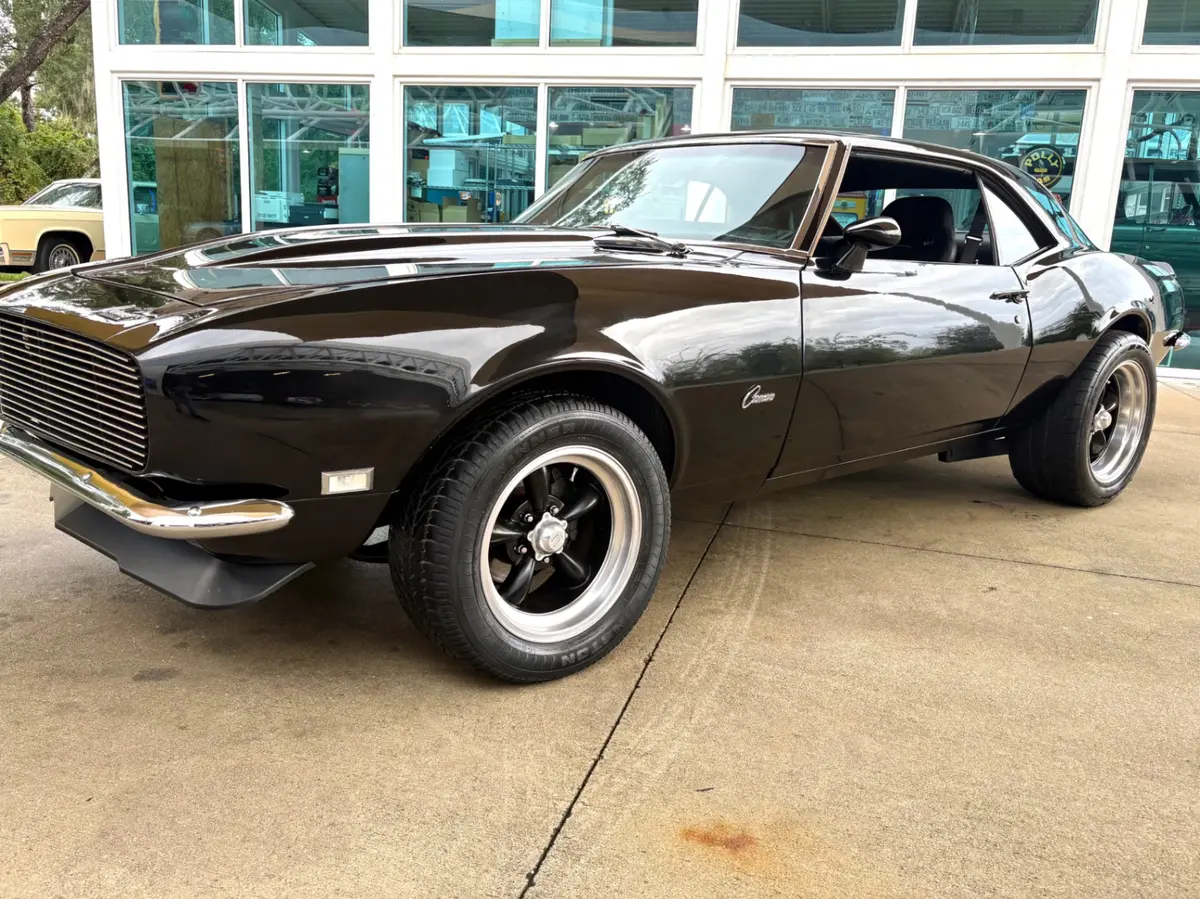
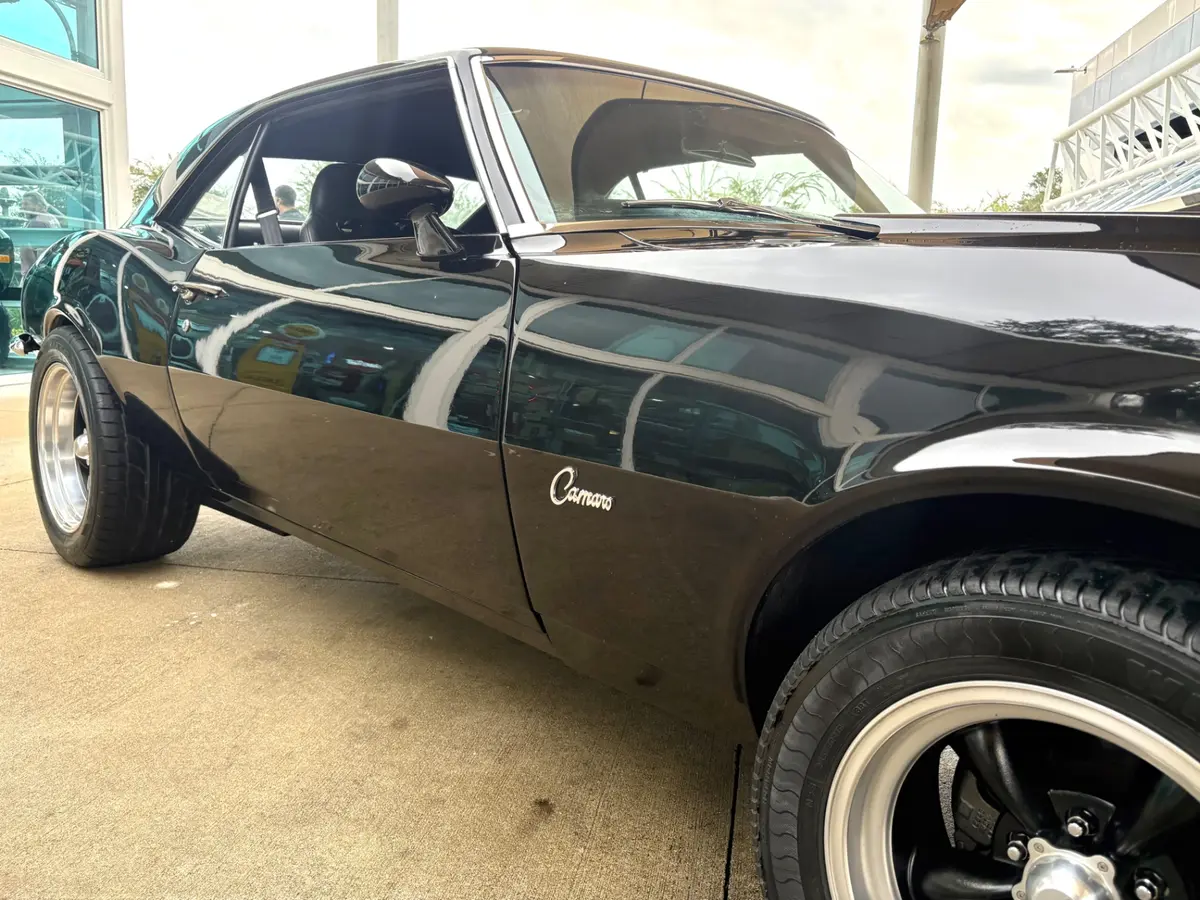
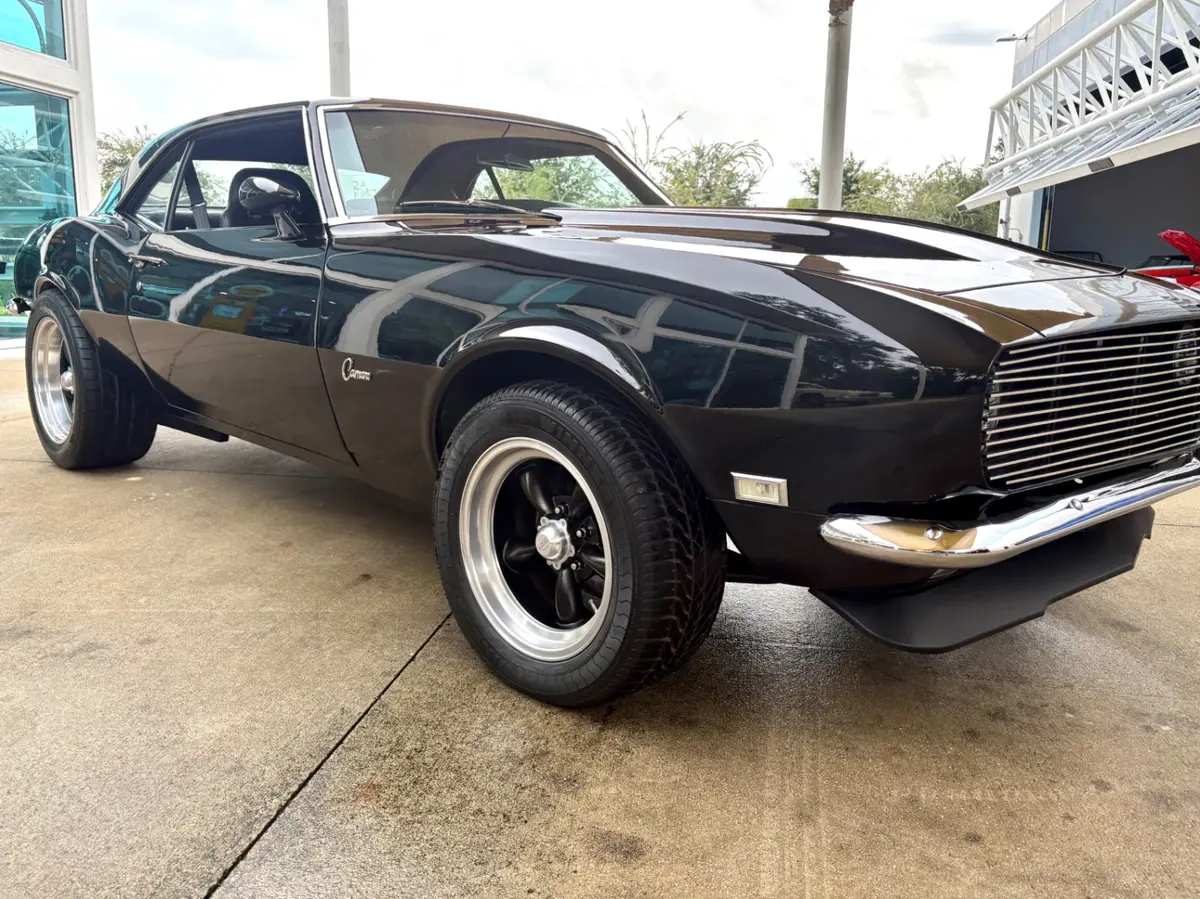
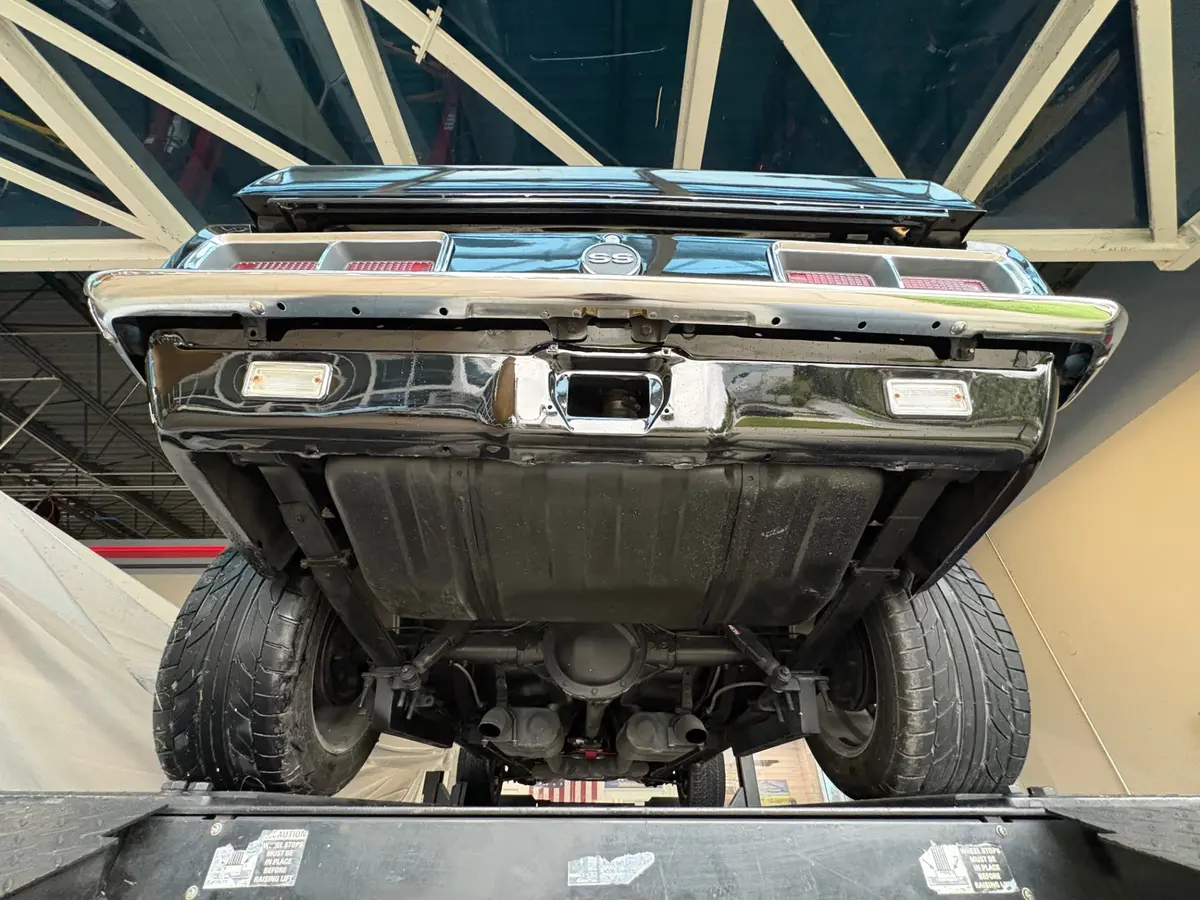
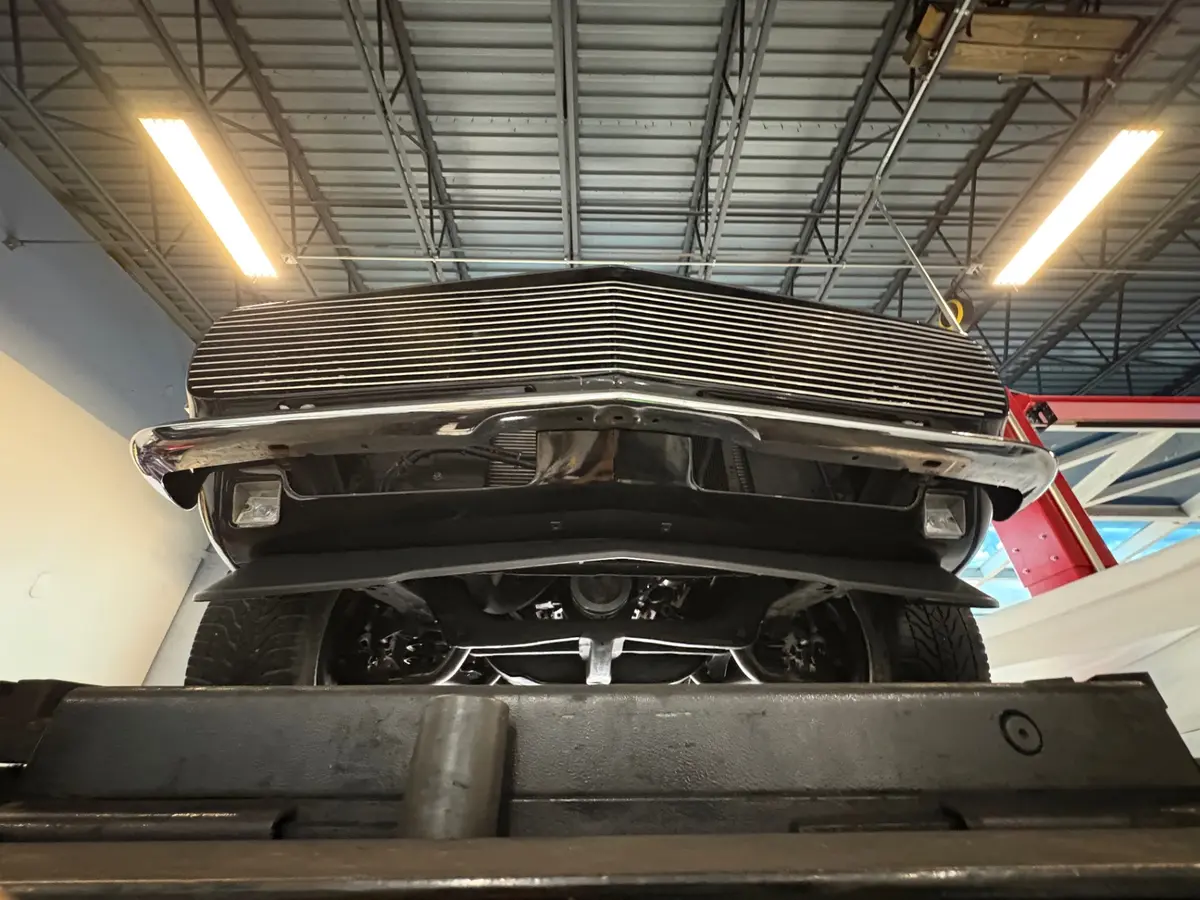
The custom billet grille replaces the original stamped steel unit with a horizontal-bar billet aluminum design. The front air dam spoiler adds a lower chin valance that redirects airflow and gives the front end a lower, more aggressive stance. SS badging is correctly placed at the rear, and a chrome front bumper and chrome rear bumper provide a finished look at both ends. Aftermarket side mirrors replace the original driver-side mirror with a matched pair that improves rear visibility on both sides — a practical update on a car with the limited sightlines of a fastback coupe.
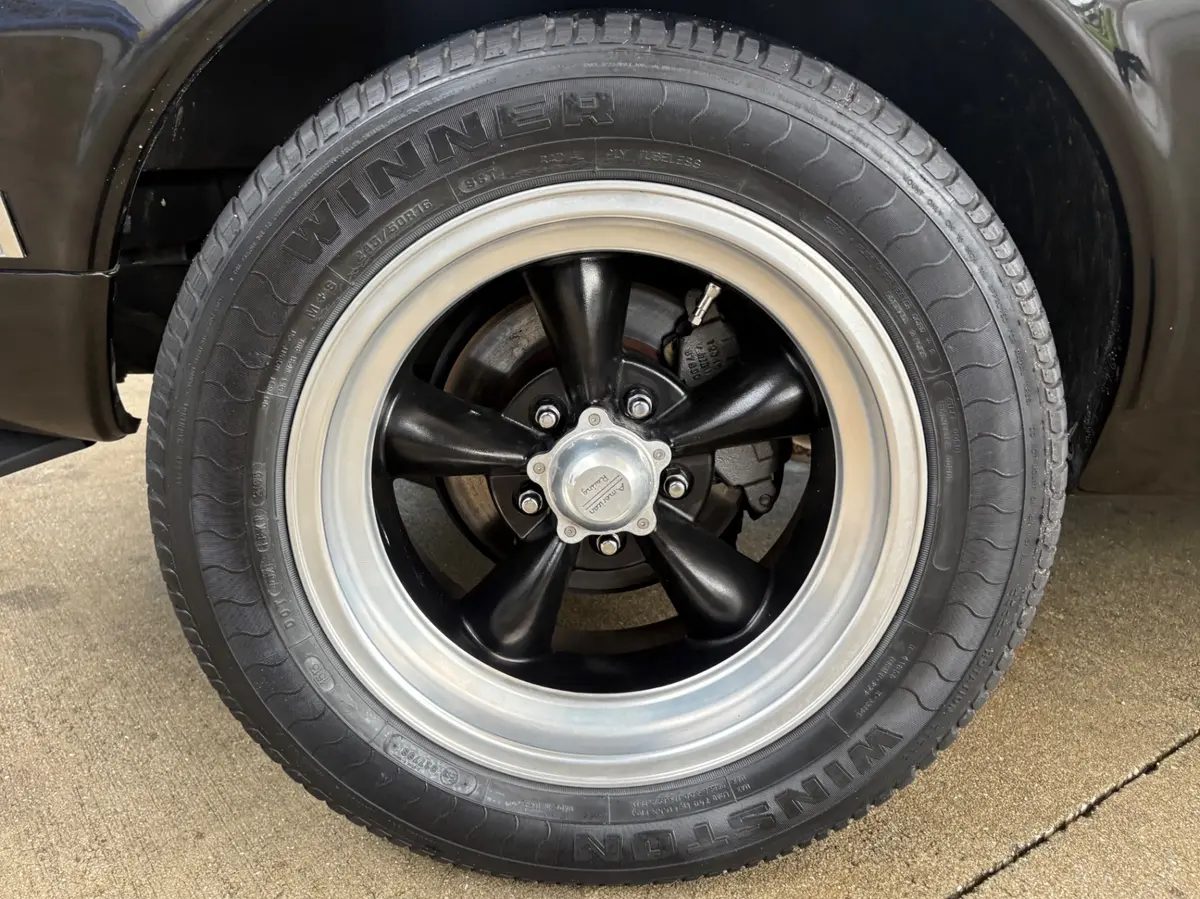
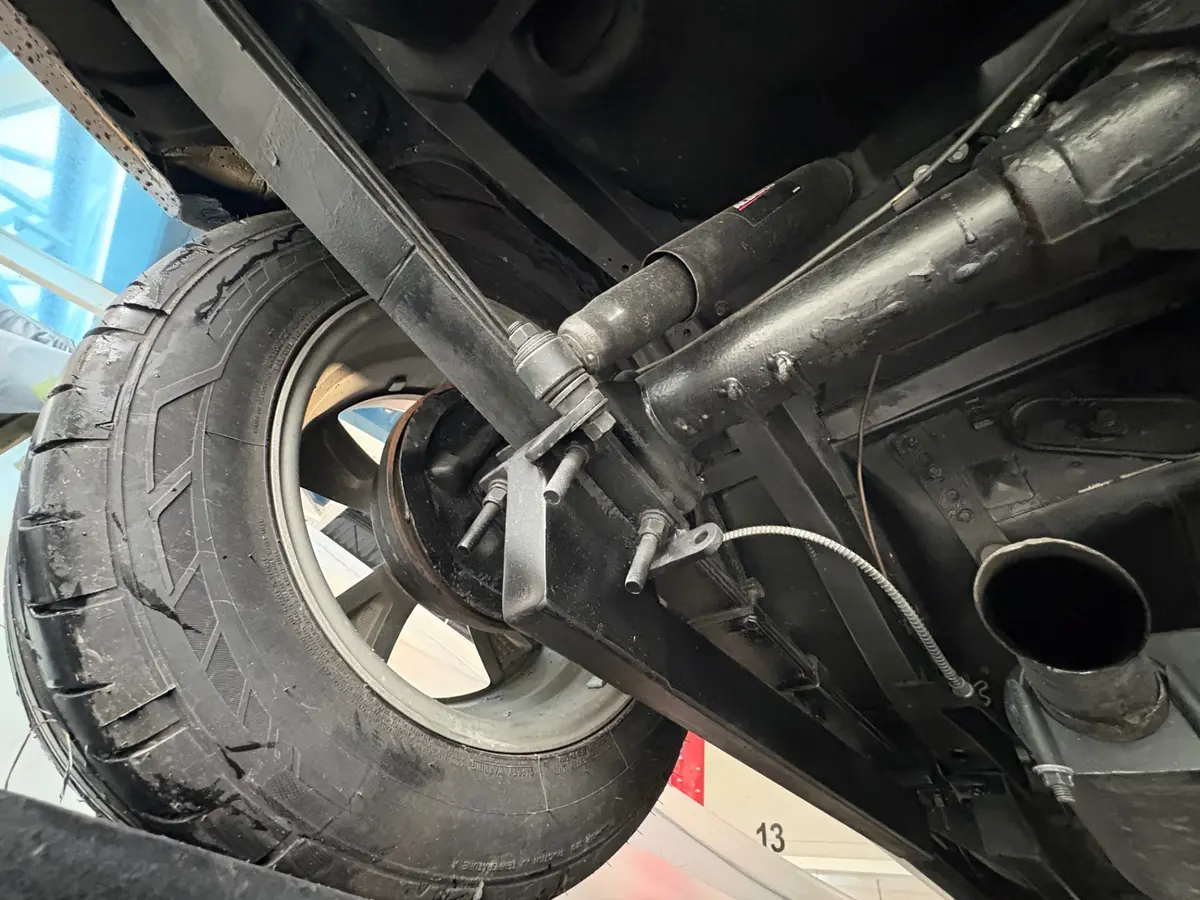
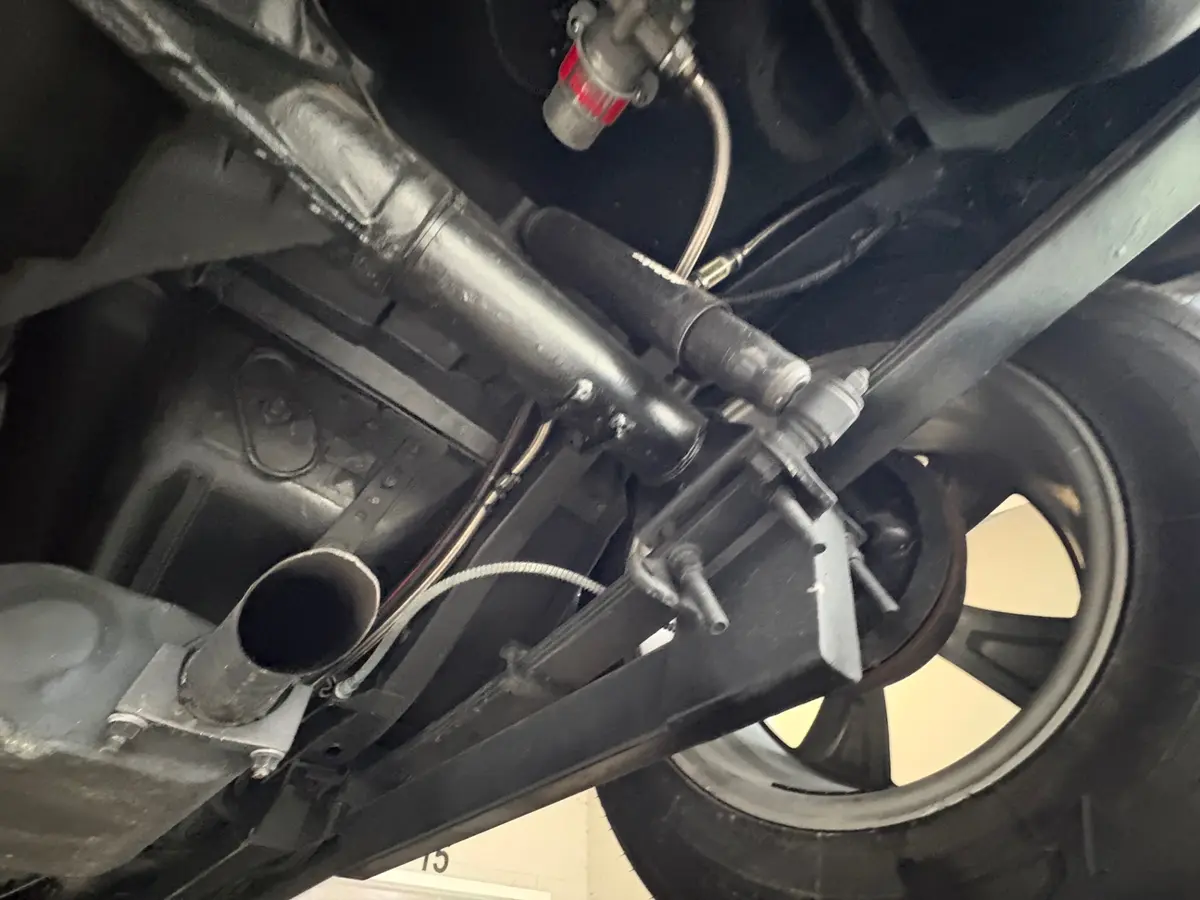
The wheel and tire combination uses a Torq-Thrust style wheel — a design that was original equipment on many factory muscle cars and race cars of the 1960s and remains one of the most historically appropriate aftermarket wheel choices for a 1968 Camaro. Nitto performance tires are mounted all around. The undercarriage photos show a clean floor pan and frame with no visible rot or structural damage — an important detail on any 55-plus-year-old car and one that speaks to how this particular 1968 Chevrolet Camaro has been stored and maintained.
Conclusion
This 1968 Chevrolet Camaro SS is a complete, running, and driving custom build centered around a professionally built Blueprint Engines 383 stroker, a Turbo 400 automatic transmission, and a full suite of supporting upgrades that make it a usable car rather than a static display piece. The 4-wheel disc brake upgrade and power steering make it manageable in modern traffic. The cowl induction hood, long-tube headers, and X-pipe dual exhaust system reflect the priorities of someone who built this car to actually drive it. The undercarriage is clean. The interior is complete, functional, and consistent. The body is straight and finished in black over a black interior that suits the first-generation Camaro's proportions well.
First-generation Camaros — particularly 1967 through 1969 models — have been among the most consistently sought-after American muscle cars for decades, and well-built examples like this one continue to hold value as the supply of clean, usable drivers tightens. If this 1968 Chevrolet Camaro fits what you have been looking for, reach out before someone else does.
Call Skyway Classics at 941-254-6608 to get more information or schedule a time to come see this car in person at our showroom in Sarasota, Florida.
Disclaimer
Information found on the website is presented as given to us by the owner of the car, whether on consignment or from the owner we bought it from. Some Photos, materials for videos, descriptions and other information are provided by the consignor/seller and is deemed reliable, but Skyway Classics does not warranty or guarantee this information. Skyway Classics is not responsible for information that may incorrect or a publishing error. The decision to purchase should be based solely on the buyers personal inspection of the vehicle or by a professional inspection service prior to offer or purchase being made.
1968 Chevrolet Camaro SS — 383 Stroker, Turbo 400, Black on Black Custom Build
Why This Car Is Special
The 1968 Chevrolet Camaro is widely regarded as the high point of the first-generation body style. Chevrolet refined nearly everything that was rushed into production on the 1967 launch model — the dash layout was cleaner, the front suspension geometry was improved, and the overall fit and finish took a meaningful step forward. More than 235,000 Camaros were built for the 1968 model year, making it one of the most produced years of the first generation, yet well-sorted examples like this one are increasingly difficult to find.
The Super Sport package, which this car carries, was available on 1968 Camaros as RPO Z27. It included a blacked-out grille, special SS badging, a domed hood, and upgraded suspension components. In 1968, the SS package could be paired with engines ranging from a 350 small block all the way up to the legendary 396 cubic inch big block in L35 or L78 form. This car has moved beyond any of those factory configurations with a modern Blueprint Engines 383 cubic inch stroker V8 — a small block built on the proven 350 architecture but stroked to displace 383 cubic inches, extracting significantly more torque while maintaining the physical dimensions of the original engine bay.
The VIN confirms this is a Norwood, Ohio-built sport coupe — the "N" plant code in the seventh position of the VIN identifies it as such. Norwood was one of two primary Camaro assembly plants in 1968 alongside Van Nuys, California, and Norwood-built cars are well documented in Camaro registry history.
This is a purpose-built street machine. The builder put real money into the drivetrain, exhaust, cooling, and braking systems. It is not a trailer queen and it is not a ground-up restoration — it is a driver-quality custom that has been assembled with attention to the mechanical details that actually matter when the car is moving.
Features List
- Engine: Blueprint Engines 383 Stroker V8
- Transmission: Turbo 400 Automatic with TCI Polished Pan
- Exhaust: Long-Tube Headers, X-Pipe Dual Exhaust
- Ignition: MSD Ignition System
- Air Induction: Cowl Induction Hood, Performance Air Cleaner
- Cooling: Aluminum Radiator, Electric Cooling Fan, Braided Stainless Plumbing
- Dress: Chrome Valve Covers, Chrome Alternator
- Steering: Power Steering
- Brakes: 4-Wheel Disc Brakes
- Wheels: Torq-Thrust Style Wheels with Nitto Performance Tires
- Exterior Additions: Custom Billet Grille, Front Air Dam Spoiler, SS Badge, Aftermarket Side Mirrors, Chrome Front and Rear Bumpers
- Interior: Tanaka Racing Bucket Seats, Aftermarket Gauge Cluster, Aftermarket Stereo, Sport Steering Wheel, Center Console, Black Carpet, Sun Visors, Rear Seat
- Undercarriage: Clean
Mechanical
The heart of this 1968 Chevrolet Camaro is a Blueprint Engines 383 cubic inch stroker V8. Blueprint Engines is a well-known Nebraska-based engine manufacturer that builds crate engines to tight tolerances on CNC-machined components, then dyno-tests each unit before shipping. Their 383 stroker is based on the GM small block architecture — the same proven platform that powered millions of Chevrolets from the 1950s through the 1990s — but with a longer stroke crankshaft to push displacement from 350 to 383 cubic inches. The result is a engine that produces substantially more torque than a stock 350 while retaining the reliability and parts availability of the small block family. Chrome valve covers and a chrome alternator keep the engine compartment presentable, and the Blueprint branding on the valve covers tells anyone who opens the hood exactly what they are looking at.
Behind the stroker sits a Turbo 400 automatic transmission. The TH400, as it is commonly known, is a three-speed automatic that General Motors introduced in 1964 and used across its full-size and performance lineup for decades. It is widely considered one of the strongest automatic transmissions ever built for a street car, with a case-hardened planetary gear set and a reputation for handling high-torque applications without complaint. The TCI polished transmission pan is visible from below and adds a clean, finished look to the underside. A TCI pan also increases fluid capacity slightly over the stock pan, which helps manage heat during hard driving.
Exhaust starts with long-tube headers on both sides of the engine. Long-tube headers outperform the factory exhaust manifolds and short-tube headers by giving spent gases more time and distance to build exhaust scavenging — the effect where departing exhaust pulses help pull the next exhaust charge out of the cylinder, improving volumetric efficiency and adding power across the RPM range. From the headers, exhaust flows into an X-pipe configuration and then through dual mufflers exiting at the rear. An X-pipe cross-connects the two exhaust banks near the center of the car, which balances exhaust pressure between the cylinder banks and tends to produce a smoother, higher-pitched tone compared to an H-pipe. The result is a dual exhaust system that sounds right for a car of this displacement and configuration.
Ignition is handled by an MSD system. MSD, which stands for Multiple Spark Discharge, is an aftermarket ignition brand with a long history in both street performance and racing. Their systems fire the spark plug multiple times per ignition event at lower RPM, ensuring complete combustion even with a high-compression or larger-displacement engine. This matters on a street car because it supports reliable starts, cleaner idle, and full power delivery across the operating range.
Cooling is managed by an aluminum radiator paired with a high-flow electric cooling fan. The aluminum radiator transfers heat more efficiently than the original copper-brass unit and weighs less. The electric fan eliminates the parasitic drag of a mechanically driven engine fan and allows the cooling system to operate independently of engine speed — useful in slow traffic or at idle when a mechanical fan is least effective. Braided stainless plumbing connects the cooling system components and replaces the original rubber hoses with lines that are more resistant to heat, pressure, and age.
Stopping power comes from a 4-wheel disc brake conversion. The 1968 Camaro SS was available from the factory with front disc brakes as an option, but rear disc brakes were not a factory offering. Converting all four corners to discs is a meaningful upgrade on a car with this much engine — disc brakes resist fade better than drums under repeated hard use and provide more consistent pedal feel. Power steering is also fitted, which is worth noting given the weight of the 383 stroker over the front axle.
Interior
The interior of this 1968 Chevrolet Camaro has been updated throughout while keeping the basic structure of the first-generation body intact. The most significant change from stock is the pair of Tanaka Racing bucket seats in the front. These are bolstered sport seats with a leather and suede insert construction, designed to hold the driver and passenger in place under cornering loads without the sliding that can occur in the original flat-bottomed bench-style buckets. The Tanaka name is visible on the seat bolster in the photos. The rear seat is present and in good condition, which matters for anyone who wants to use this car as a daily driver or bring a passenger along regularly.
The gauge cluster has been replaced with an aftermarket unit that reads more information than the stock 1968 instrumentation. The original 1968 Camaro dash had a speedometer and a large circular cluster housing the fuel gauge and warning lights — a layout that looked purposeful but left out oil pressure, voltage, and temperature gauges for most trim levels unless you ordered the optional instrumentation package. The replacement cluster here addresses that shortcoming directly, giving the driver actual readings on the engine's vital signs rather than warning lights that only activate after something has already gone wrong.
A sport steering wheel replaces the original, sitting in front of the aftermarket gauge cluster. The wheel visible in the photos is a three-spoke unit with a polished center section, a style that fits the period of the car while providing a more positive grip than the thin original rim. The center console runs between the two front seats and houses the Turbo 400 shifter, which operates from the floor in keeping with the car's performance orientation. Black carpet covers the floor throughout, and sun visors are in place. An aftermarket stereo is installed in the factory radio location.
The door panels appear to be correct-style replacements for the 1968 Camaro, with the characteristic horizontal ribbing and chrome accent strip that the original panels used. The overall interior color scheme is consistent black throughout — seats, carpet, panels, and headliner — which matches the exterior and gives the car a deliberate, cohesive appearance.
Exterior
The 1968 Chevrolet Camaro wears black paint on a body that shows the clean, flowing lines that made the first-generation Camaro one of the most recognized American car shapes of the 20th century. The 1968 body was essentially the same as the 1967 but with several detail refinements, including the elimination of vent windows on the coupe body and revised taillamp lenses at the rear. The absence of vent windows gave the 1968 Camaro a cleaner, more modern greenhouse than its predecessor and is one of the details that Camaro enthusiasts use to immediately identify a first-generation car's year.
The cowl induction hood is a functional piece. Cowl induction hoods draw air from the high-pressure area at the base of the windshield — a zone where air naturally compresses as the car moves forward — and channel it directly into the air cleaner. This is a legitimate source of cooler, denser air compared to drawing from the hot engine bay. Chevrolet offered cowl induction on the 1969 Camaro ZL1 and Z28 from the factory, and the design has been widely used on first-gen Camaros as a performance hood upgrade ever since.
The custom billet grille replaces the original stamped steel unit with a horizontal-bar billet aluminum design. The front air dam spoiler adds a lower chin valance that redirects airflow and gives the front end a lower, more aggressive stance. SS badging is correctly placed at the rear, and a chrome front bumper and chrome rear bumper provide a finished look at both ends. Aftermarket side mirrors replace the original driver-side mirror with a matched pair that improves rear visibility on both sides — a practical update on a car with the limited sightlines of a fastback coupe.
The wheel and tire combination uses a Torq-Thrust style wheel — a design that was original equipment on many factory muscle cars and race cars of the 1960s and remains one of the most historically appropriate aftermarket wheel choices for a 1968 Camaro. Nitto performance tires are mounted all around. The undercarriage photos show a clean floor pan and frame with no visible rot or structural damage — an important detail on any 55-plus-year-old car and one that speaks to how this particular 1968 Chevrolet Camaro has been stored and maintained.
Conclusion
This 1968 Chevrolet Camaro SS is a complete, running, and driving custom build centered around a professionally built Blueprint Engines 383 stroker, a Turbo 400 automatic transmission, and a full suite of supporting upgrades that make it a usable car rather than a static display piece. The 4-wheel disc brake upgrade and power steering make it manageable in modern traffic. The cowl induction hood, long-tube headers, and X-pipe dual exhaust system reflect the priorities of someone who built this car to actually drive it. The undercarriage is clean. The interior is complete, functional, and consistent. The body is straight and finished in black over a black interior that suits the first-generation Camaro's proportions well.
First-generation Camaros — particularly 1967 through 1969 models — have been among the most consistently sought-after American muscle cars for decades, and well-built examples like this one continue to hold value as the supply of clean, usable drivers tightens. If this 1968 Chevrolet Camaro fits what you have been looking for, reach out before someone else does.
Call Skyway Classics at 941-254-6608 to get more information or schedule a time to come see this car in person at our showroom in Sarasota, Florida.
Disclaimer
Information found on the website is presented as given to us by the owner of the car, whether on consignment or from the owner we bought it from. Some Photos, materials for videos, descriptions and other information are provided by the consignor/seller and is deemed reliable, but Skyway Classics does not warranty or guarantee this information. Skyway Classics is not responsible for information that may incorrect or a publishing error. The decision to purchase should be based solely on the buyers personal inspection of the vehicle or by a professional inspection service prior to offer or purchase being made.
1968 Chevrolet
Camaro SS
Why Choose Skyway Classics?
Explore our curated inventory of classic and collector cars—thoughtfully selected, ready to drive, and supported by experts who make ownership simple.
Expert Curation
Every vehicle is hand-selected by our experts for quality, authenticity, and investment potential.
Fast Transactions
Streamlined buying and selling process with quick financing and immediate delivery options.
Only National Dealer With Classic Service & Repair
We’re the only national dealership that services and repairs the classics we sell—before and after the sale.
Nationwide Network
Access to our extensive network of collectors, restorers, and classic car enthusiasts nationwide.
Concierge Ownership Support
From financing and insurance to paperwork, shipping, and titling—we handle the details so you can enjoy the drive.
Passion-Driven Service
We're classic car enthusiasts first, providing personalized service with genuine passion for the hobby.