
1986 Porsche
944 Turbo
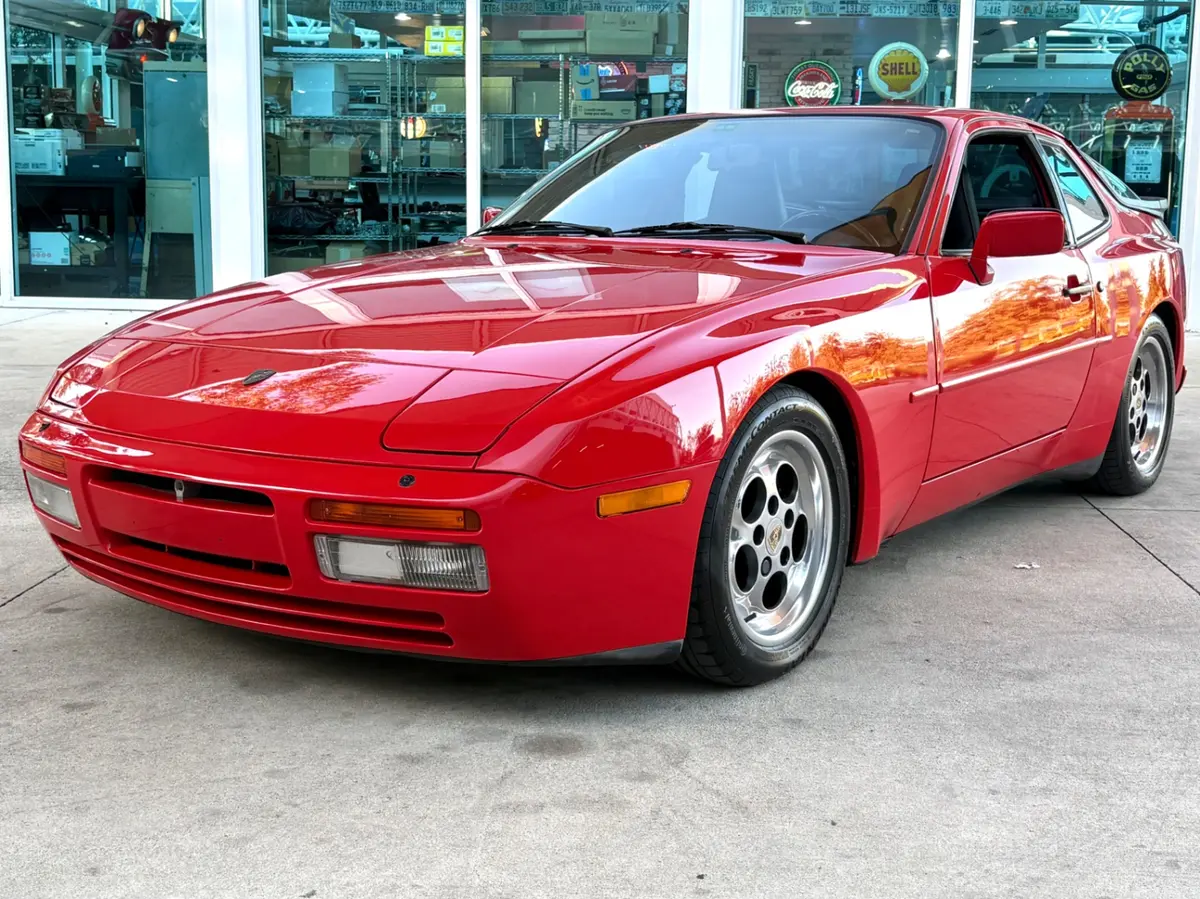
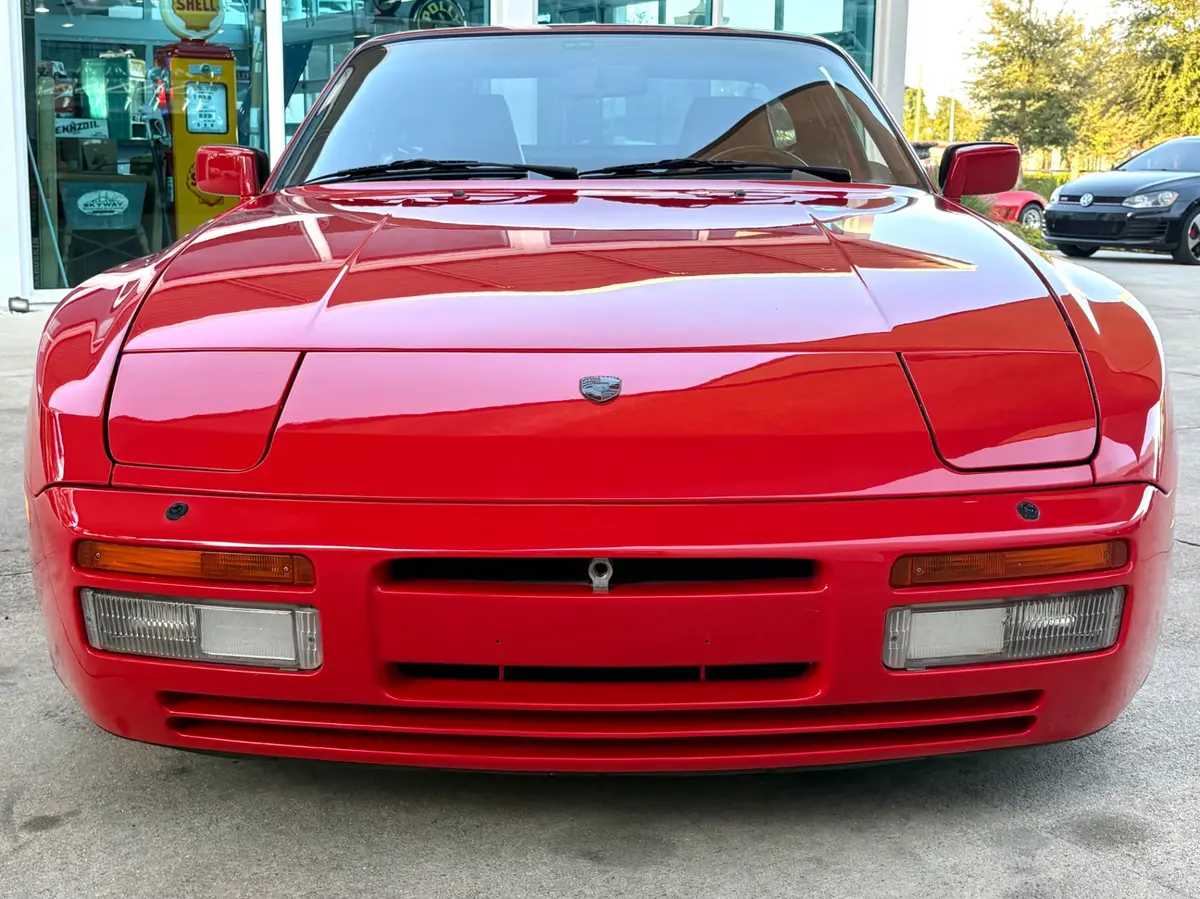
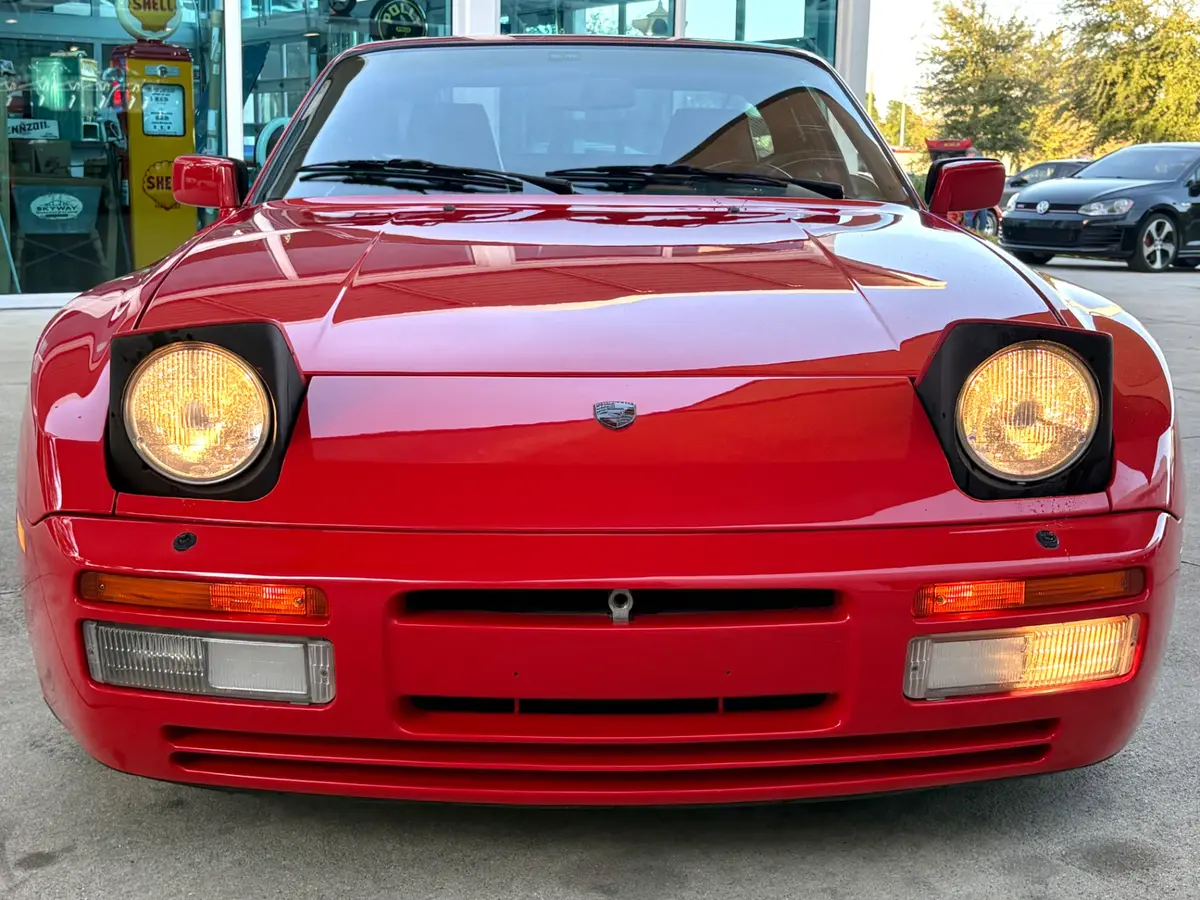
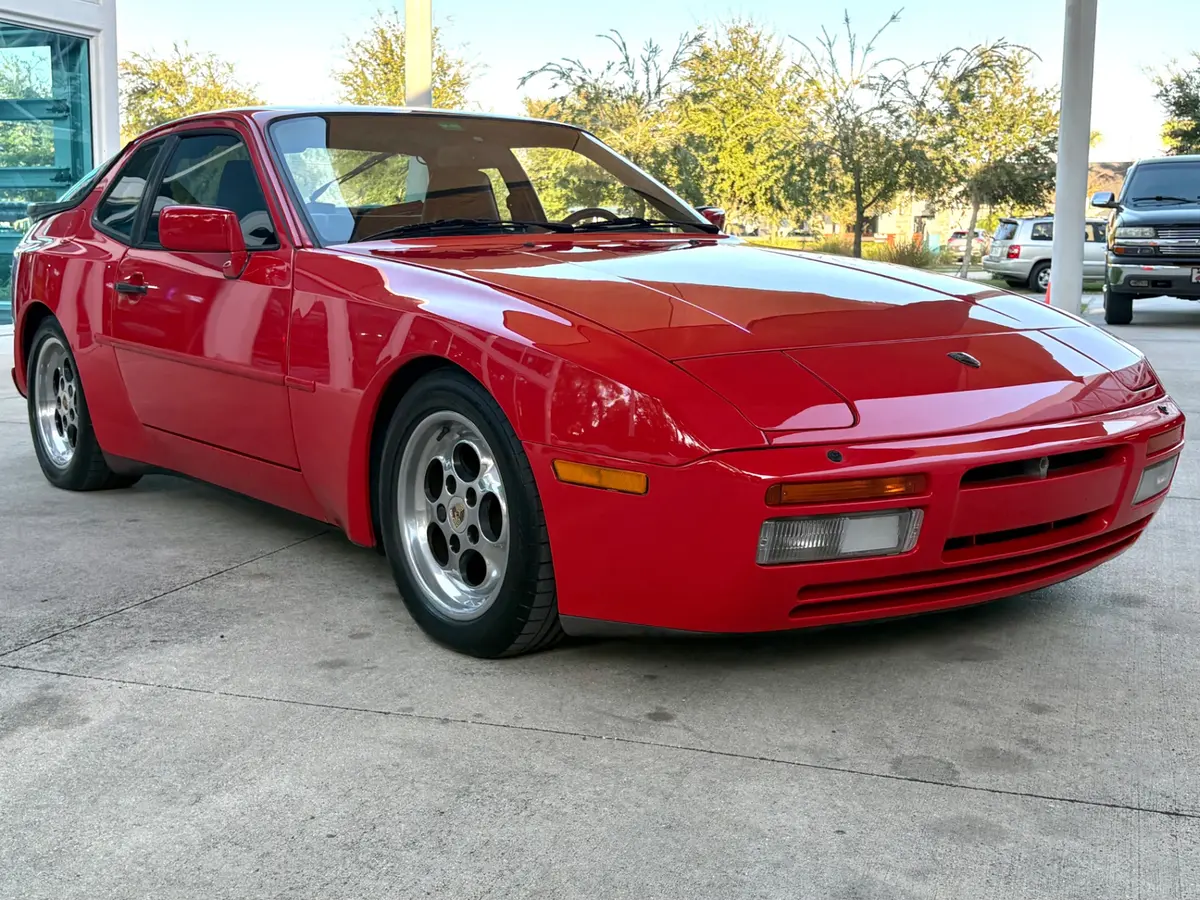
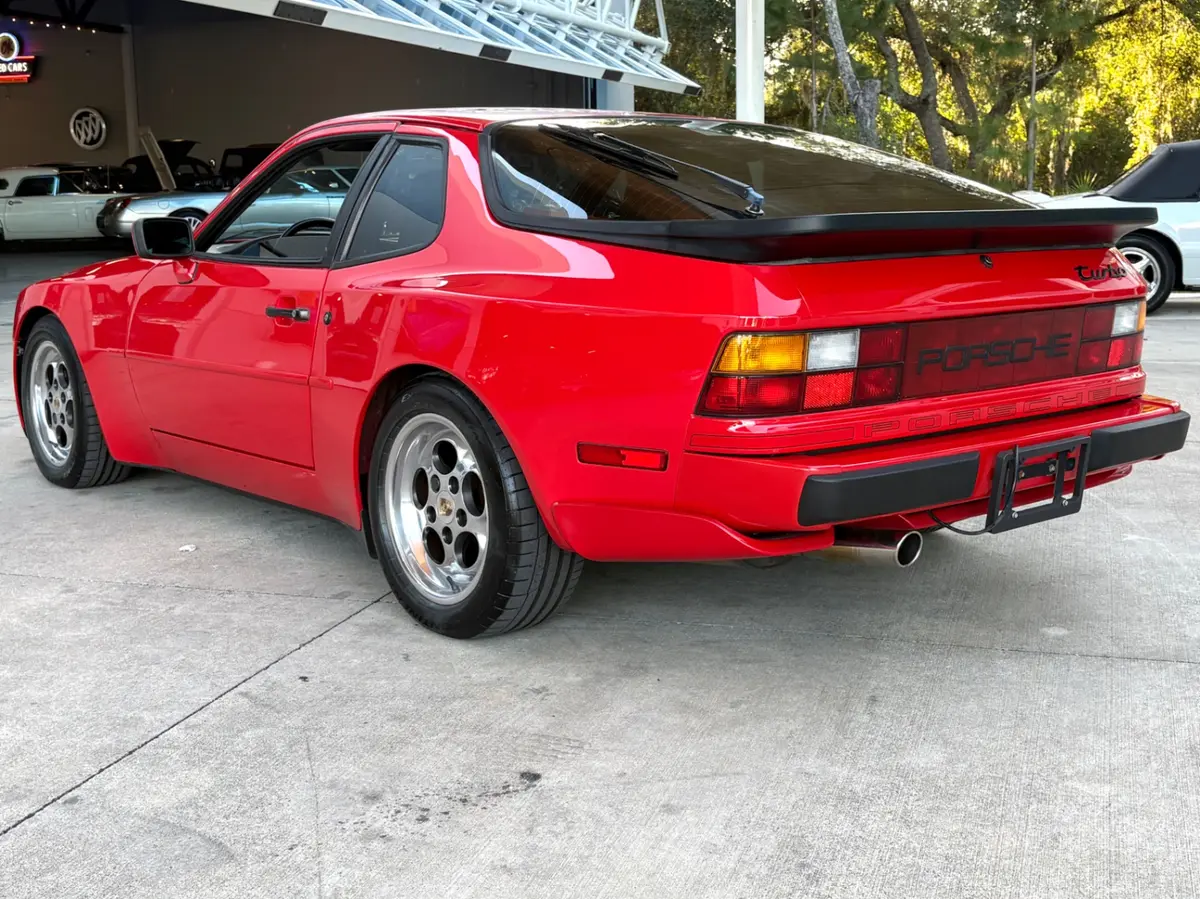
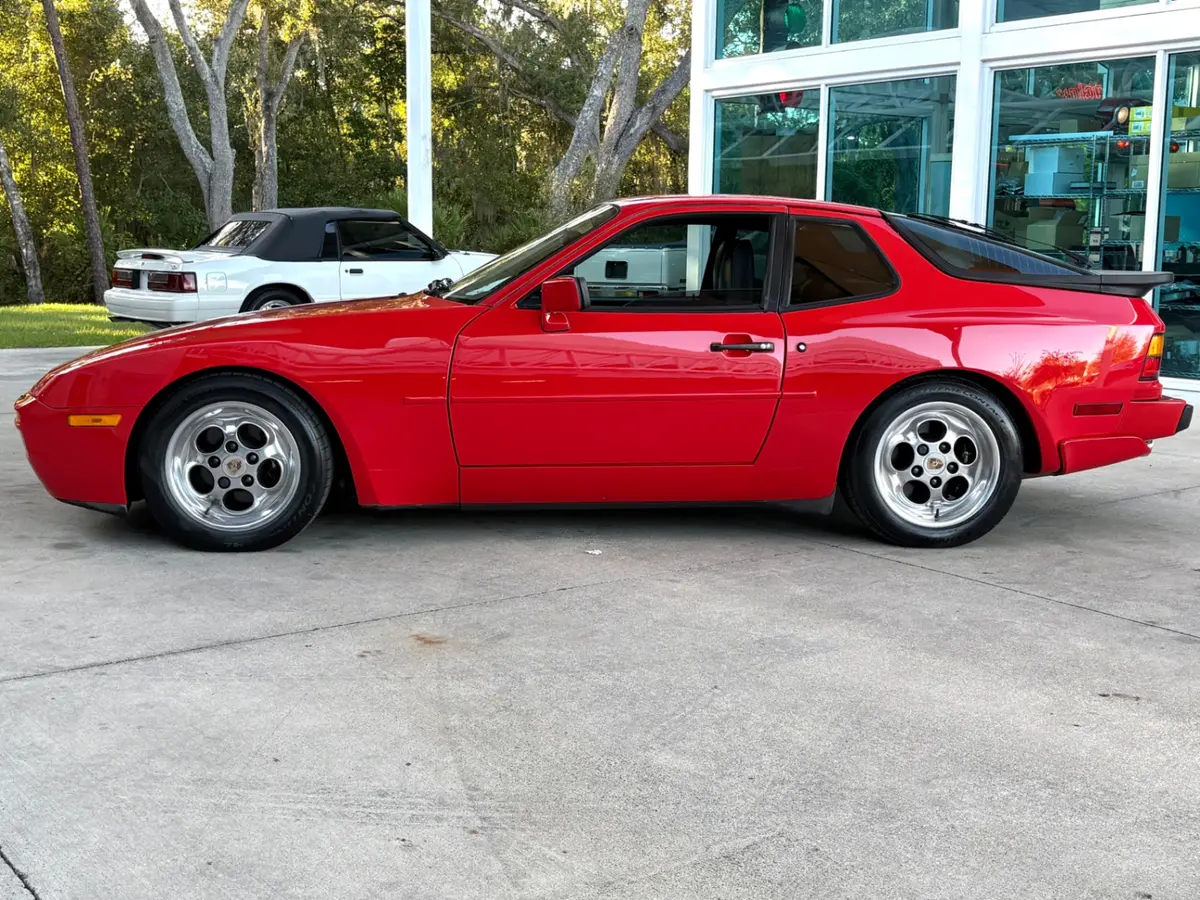
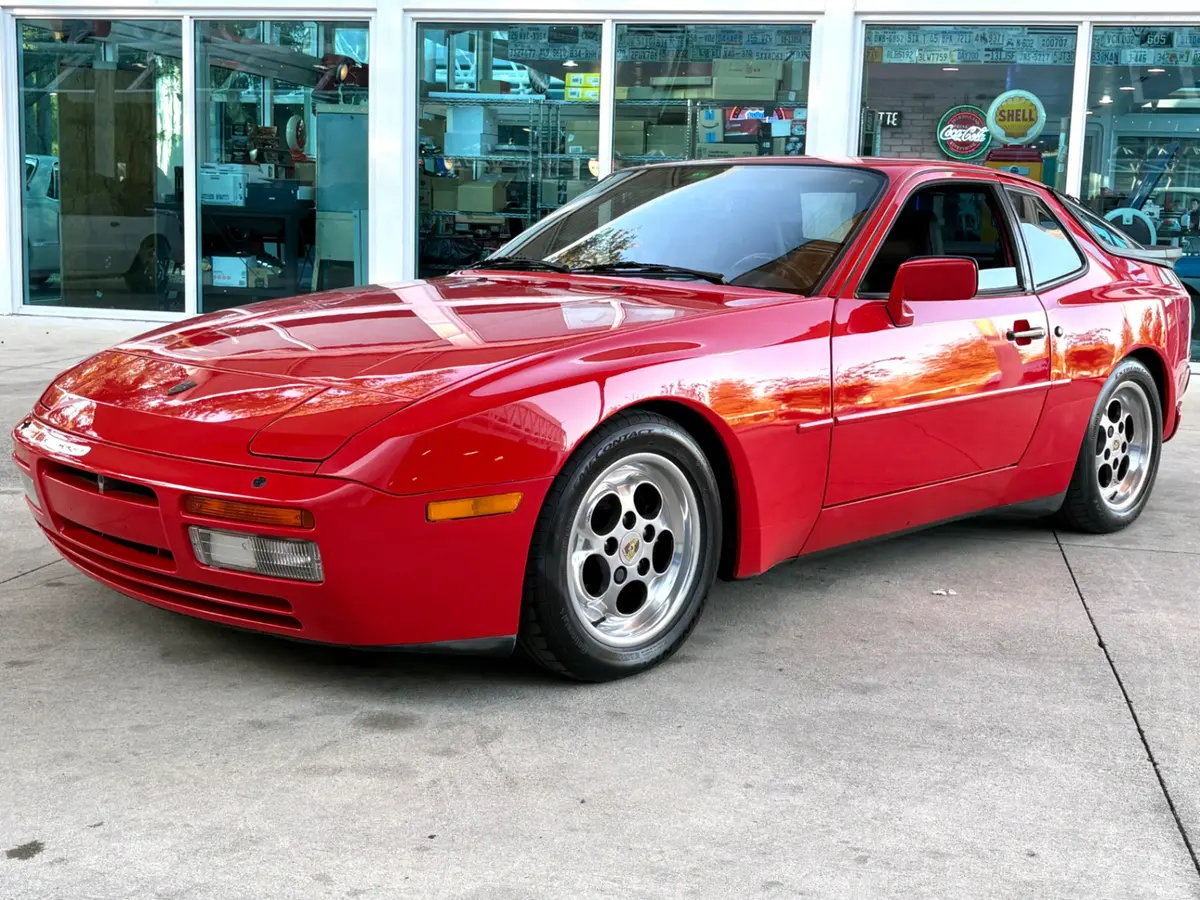
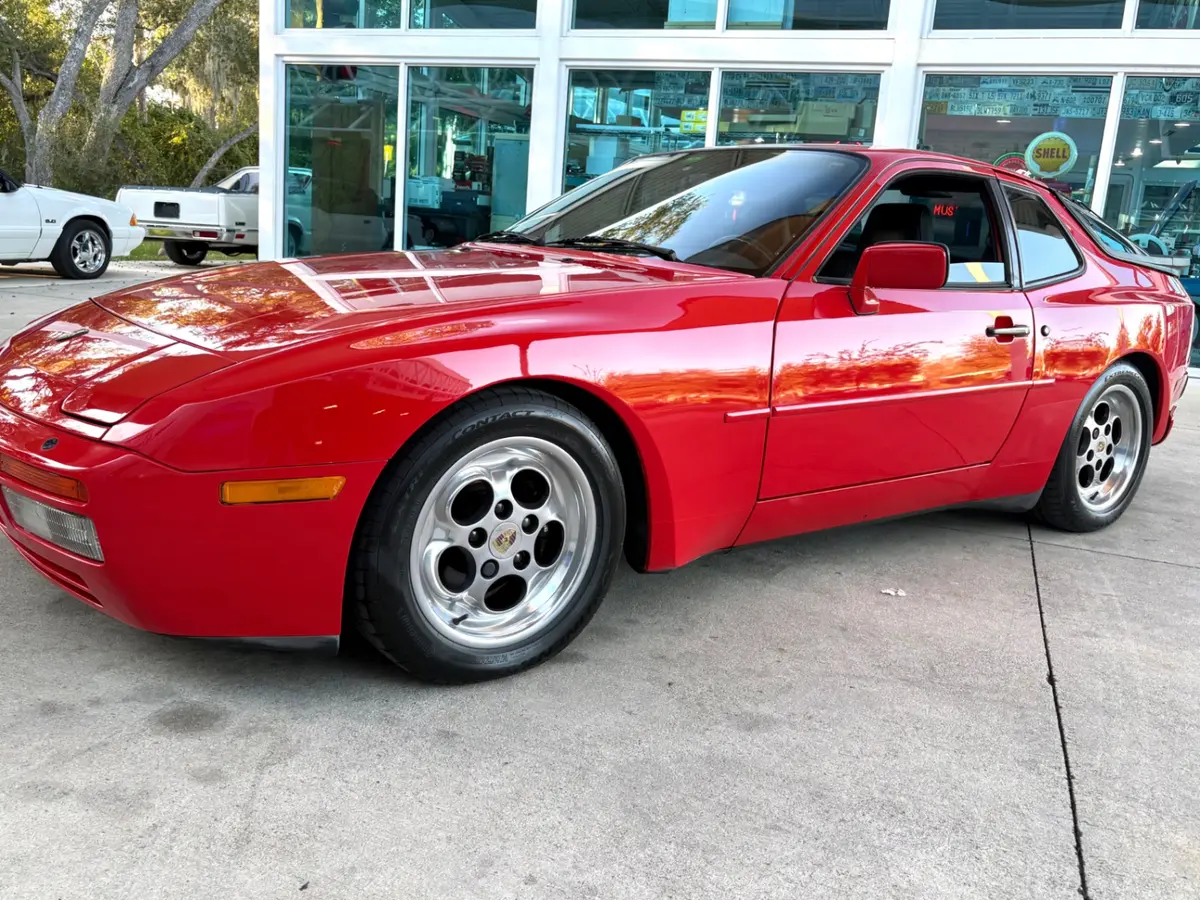
1986 Porsche 944 Turbo — Guards Red, 5-Speed, Factory Turbo with 116,161 Miles
Why This Car Is Special
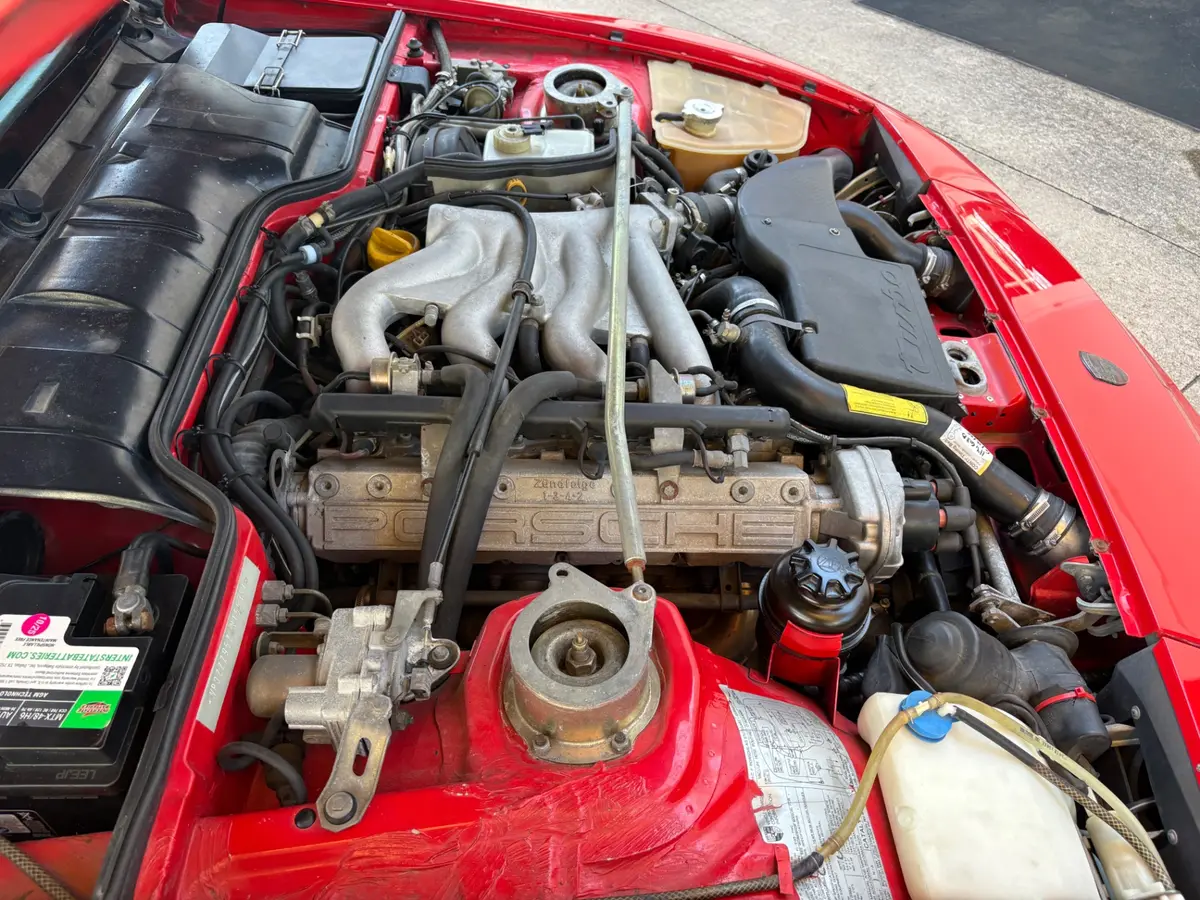
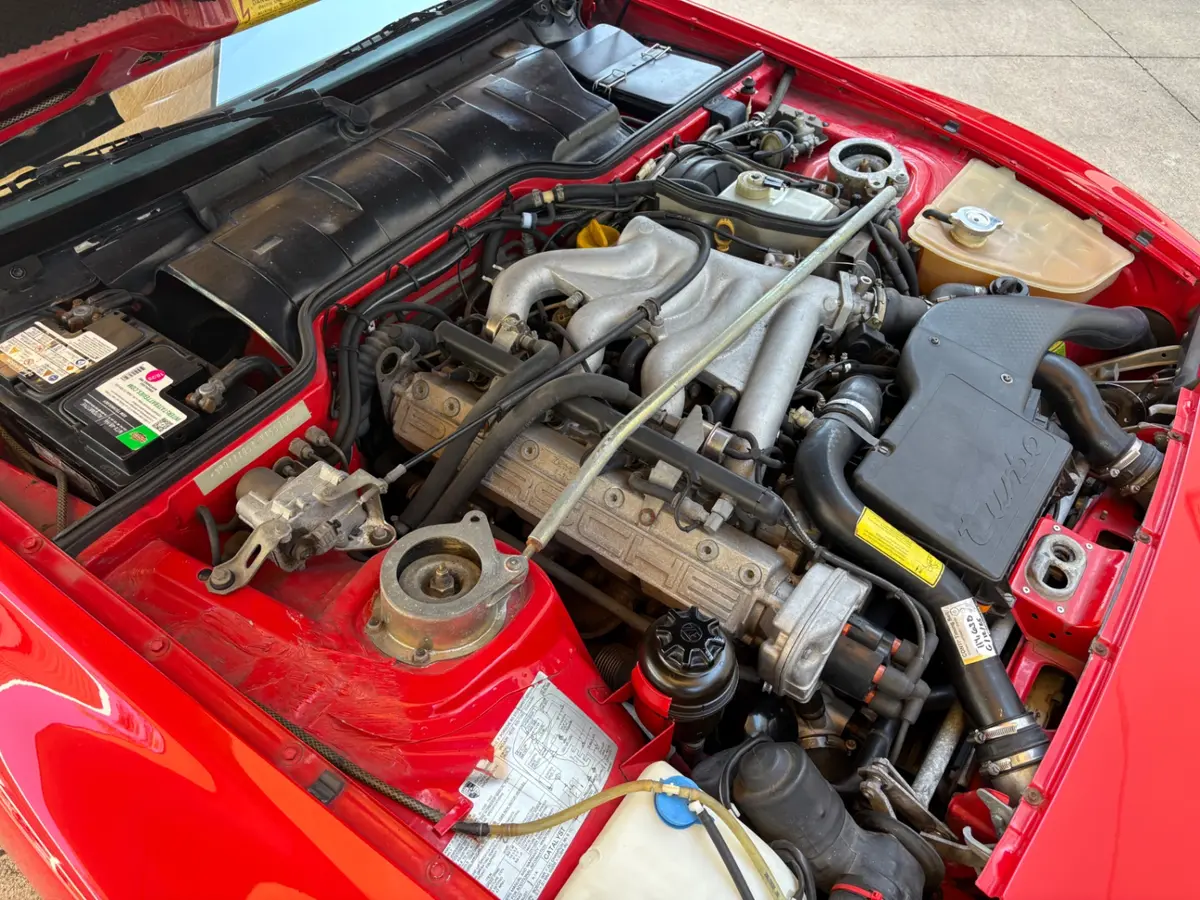
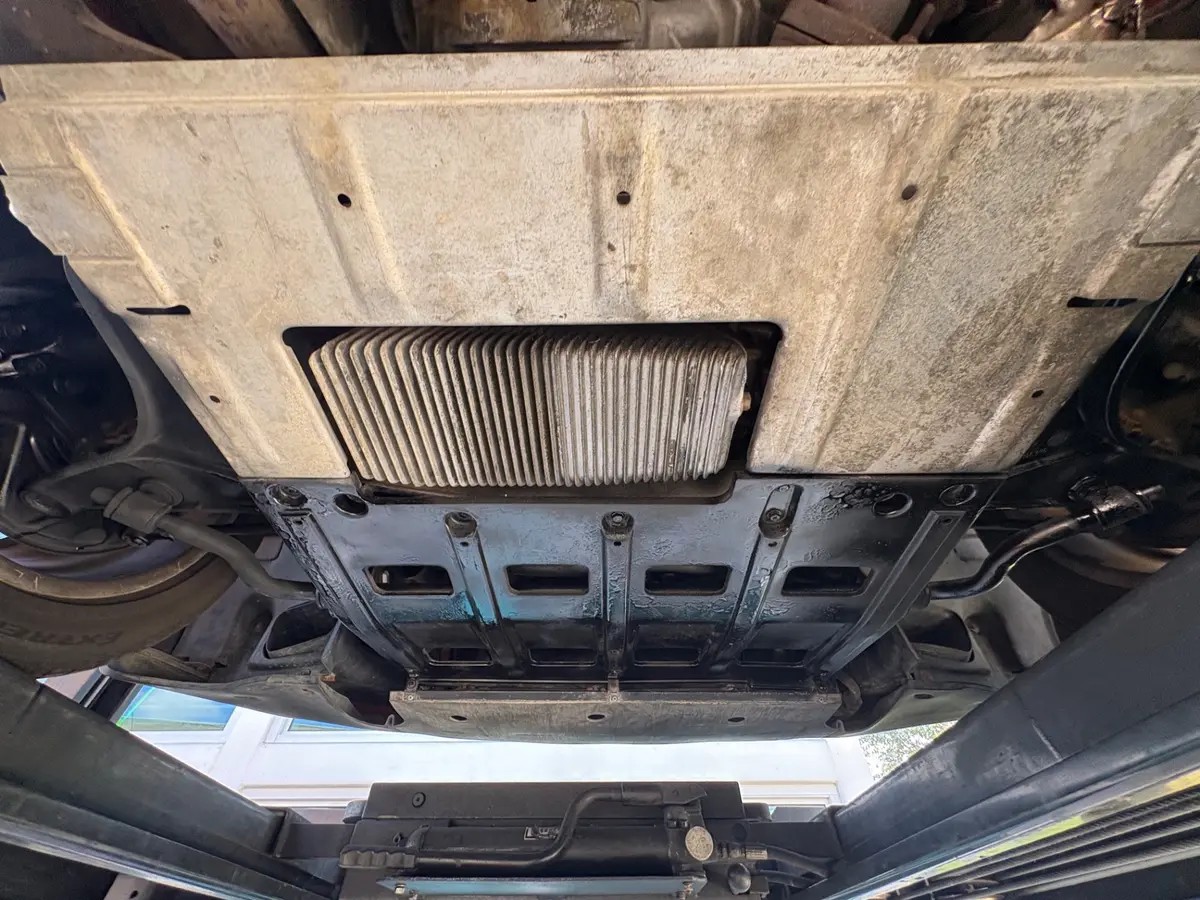
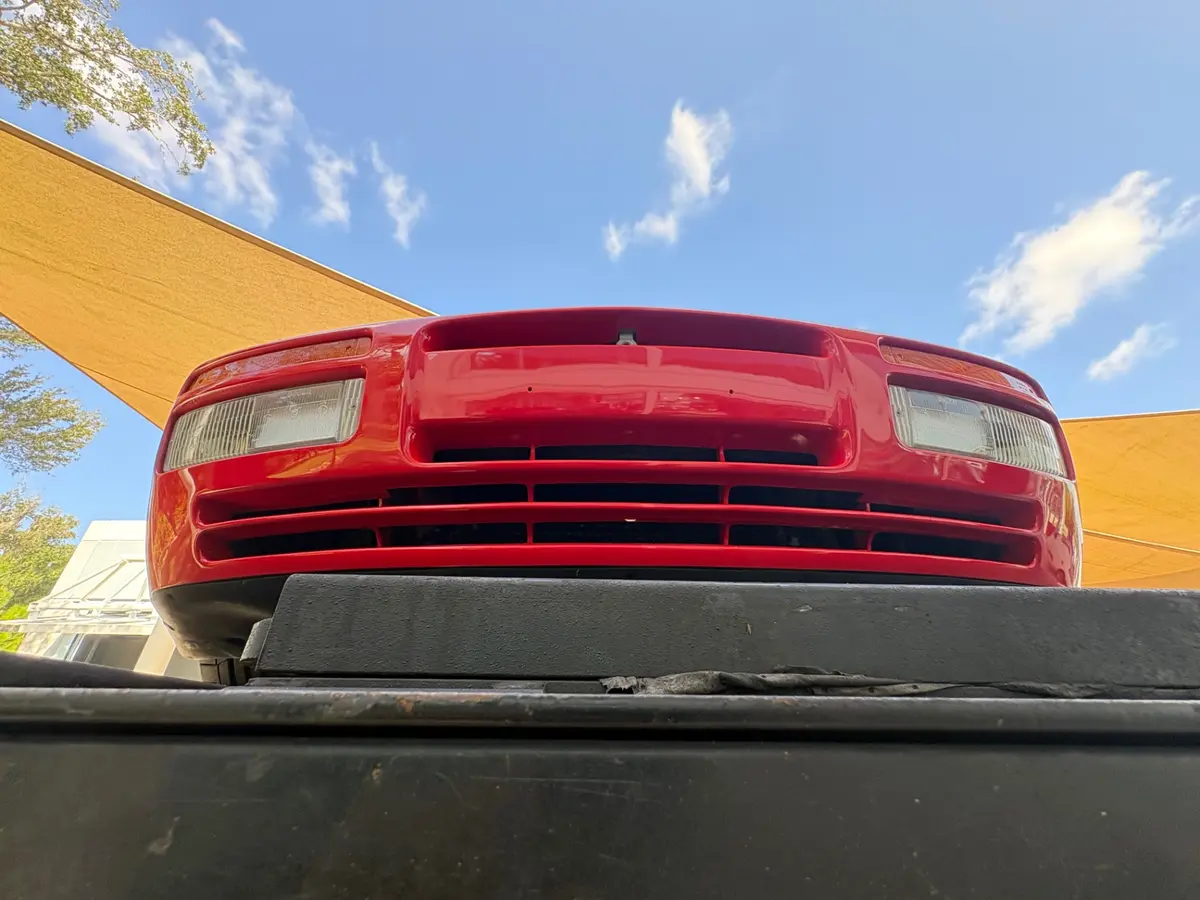
The 1986 Porsche 944 Turbo is not the same car as a standard 944. Porsche introduced the turbocharged version of the 944 for the 1986 model year, and it arrived as one of the fastest production cars available in America at the time. While the base 944 made 143 horsepower from its naturally aspirated 2.5-liter inline-four, the 944 Turbo pushed that same engine block to 220 horsepower using a KKK turbocharger and a front-mounted air-to-air intercooler — an intercooler you can still see mounted beneath this car's nose. The result was a 0-60 time in the mid-five-second range, which put the 944 Turbo squarely in supercar territory for its era and well ahead of many cars with twice the cylinders.
What made the 944 Turbo's engineering genuinely interesting was its layout. The engine sits in the front, but the transmission and final drive are mounted at the rear in a transaxle configuration. That placement gives the car a nearly perfect 50/50 front-to-rear weight balance — a figure that matters enormously when you are driving quickly through corners. The 944 platform was developed with input from Porsche's racing division, and the Turbo variant received upgraded brakes, wider fender flares, and suspension tuning specifically suited to the increased power.
The 944 Turbo was produced from 1986 through 1991. The first-year cars like this one — model year 1986 — are sometimes called the "951" by enthusiasts, referencing the internal Porsche project designation. They are increasingly sought after as the 944 Turbo market has strengthened steadily over the past decade, with well-documented, original examples becoming noticeably harder to find.
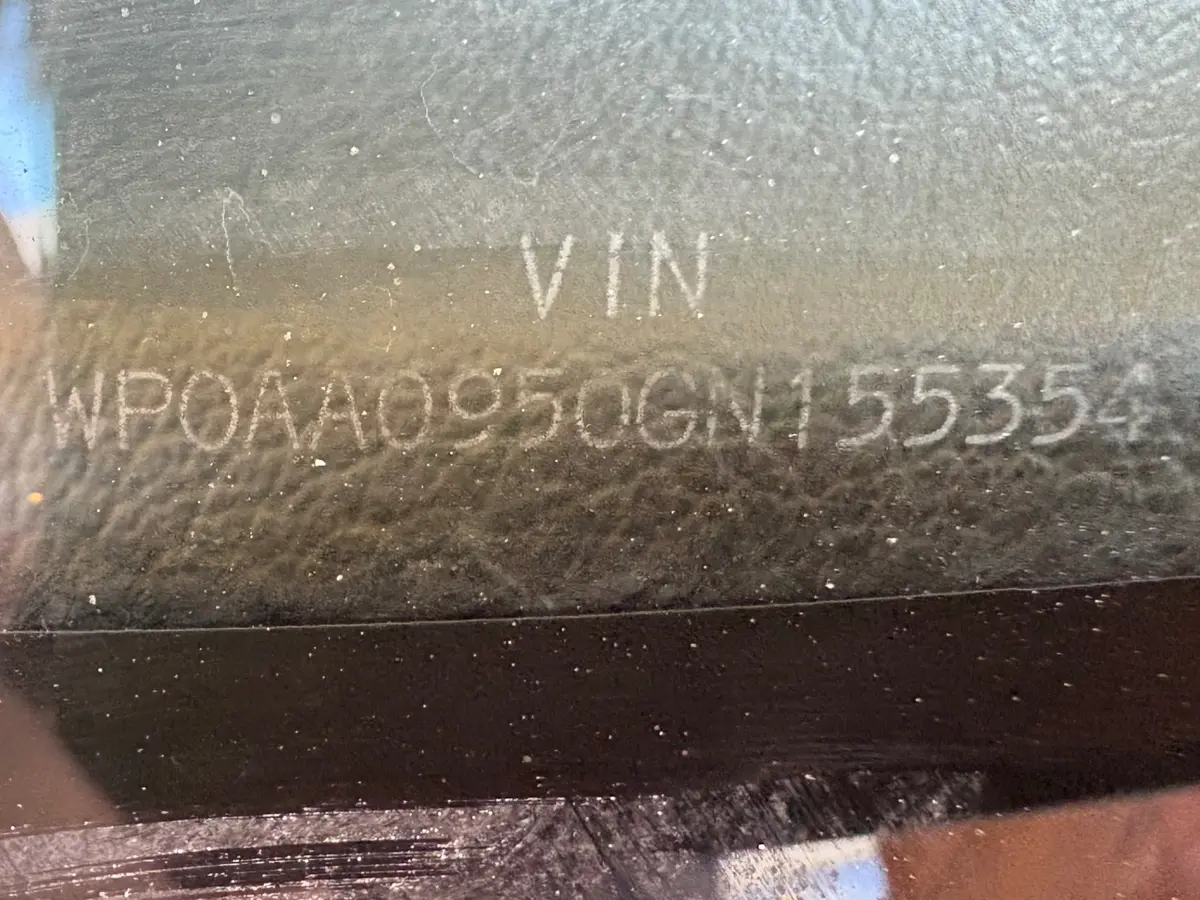
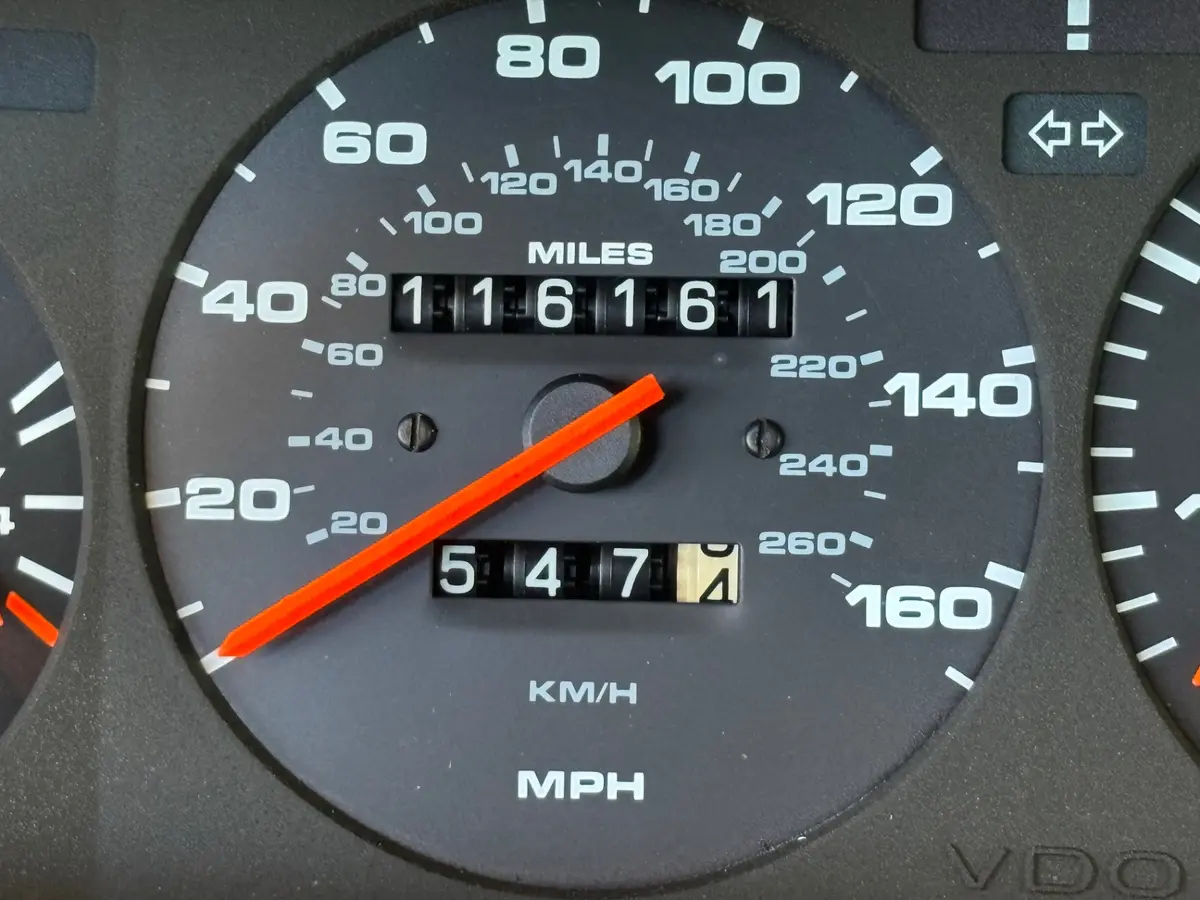
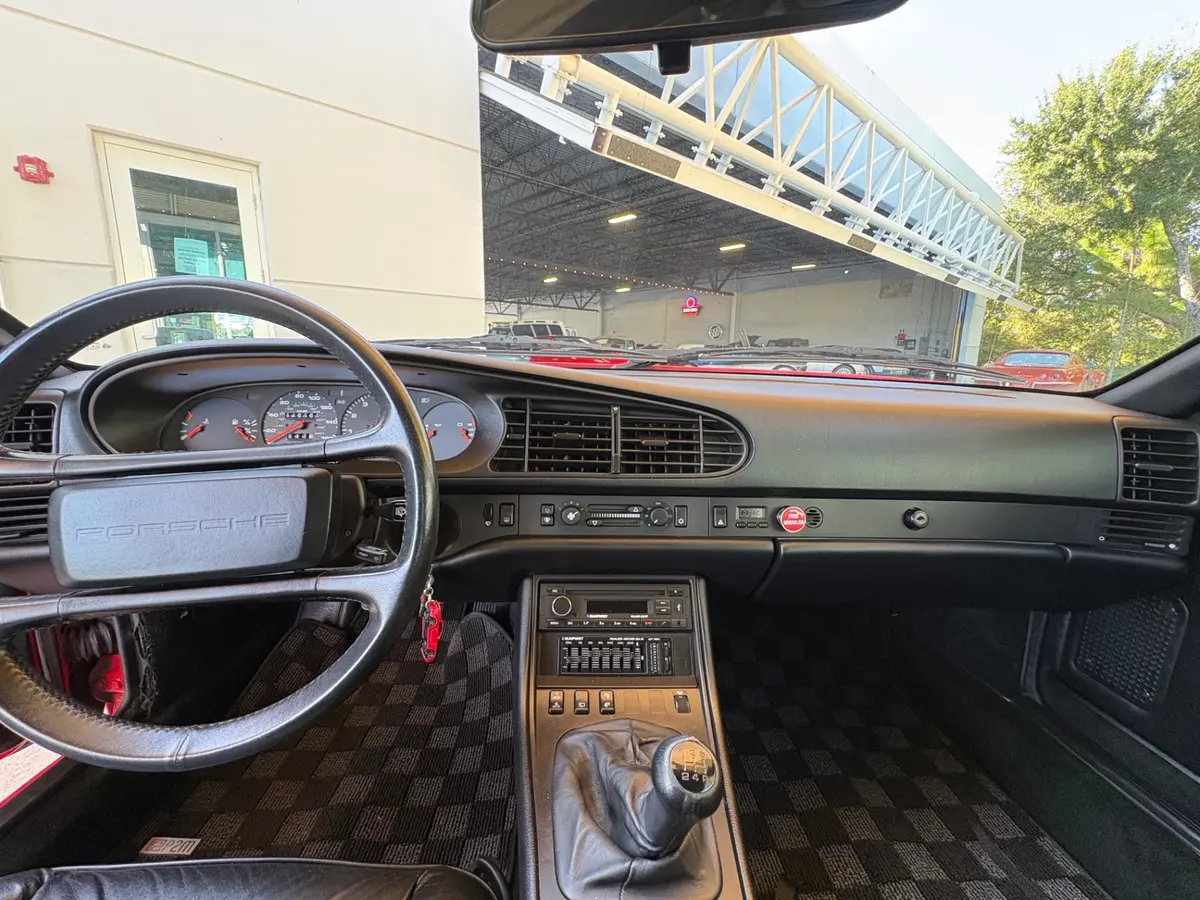
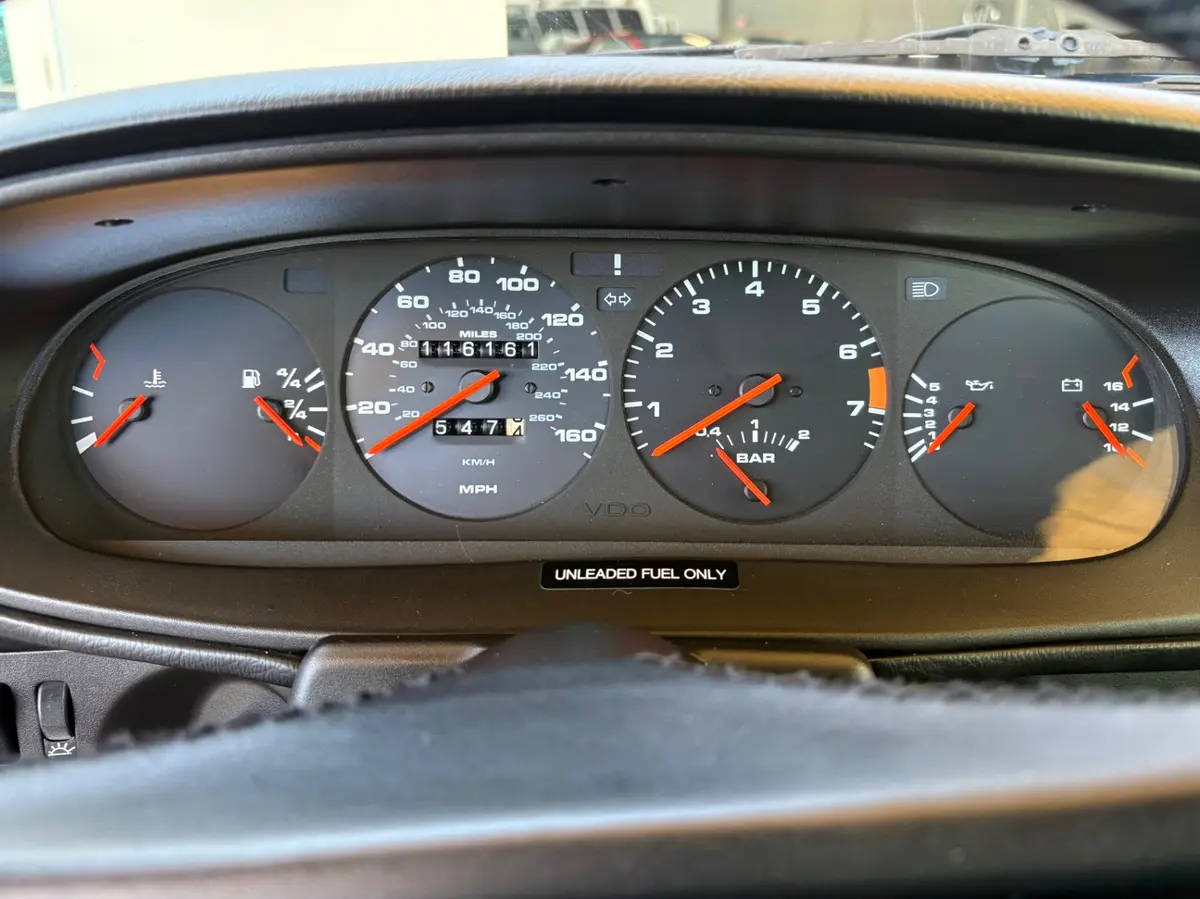
This particular car shows 116,161 miles on its VDO instrument cluster, wears Guards Red over a black leather interior, and retains its factory 5-speed manual gearbox. The "GN" sequence in the VIN places this car in the 1986 model year production run, confirming it as a first-year 944 Turbo. It presents as a used, honest driver — not a trailer queen — with the mechanicals, interior, and bodywork consistent with a car that has been used as Porsche intended.
Features List
- 2.5-liter turbocharged inline-four engine with KKK turbocharger
- Front-mounted air-to-air intercooler, visible from underside
- 5-speed manual transaxle
- Factory 944 Turbo badging
- Telephone dial alloy wheels
- Black leather bucket seats with rear jump seats
- Leather-wrapped steering wheel with Porsche-embossed hub
- Center console with leather shifter boot
- Power steering and power brakes
- Power windows
- Electric sunroof
- Front fog lights
- Retractable pop-up headlights
- Rear spoiler
- Rear window wiper and heated rear window defroster
- Tachometer and boost gauge (bar-scale, VDO instrumentation)
- Blaupunkt stereo with separate graphic equalizer
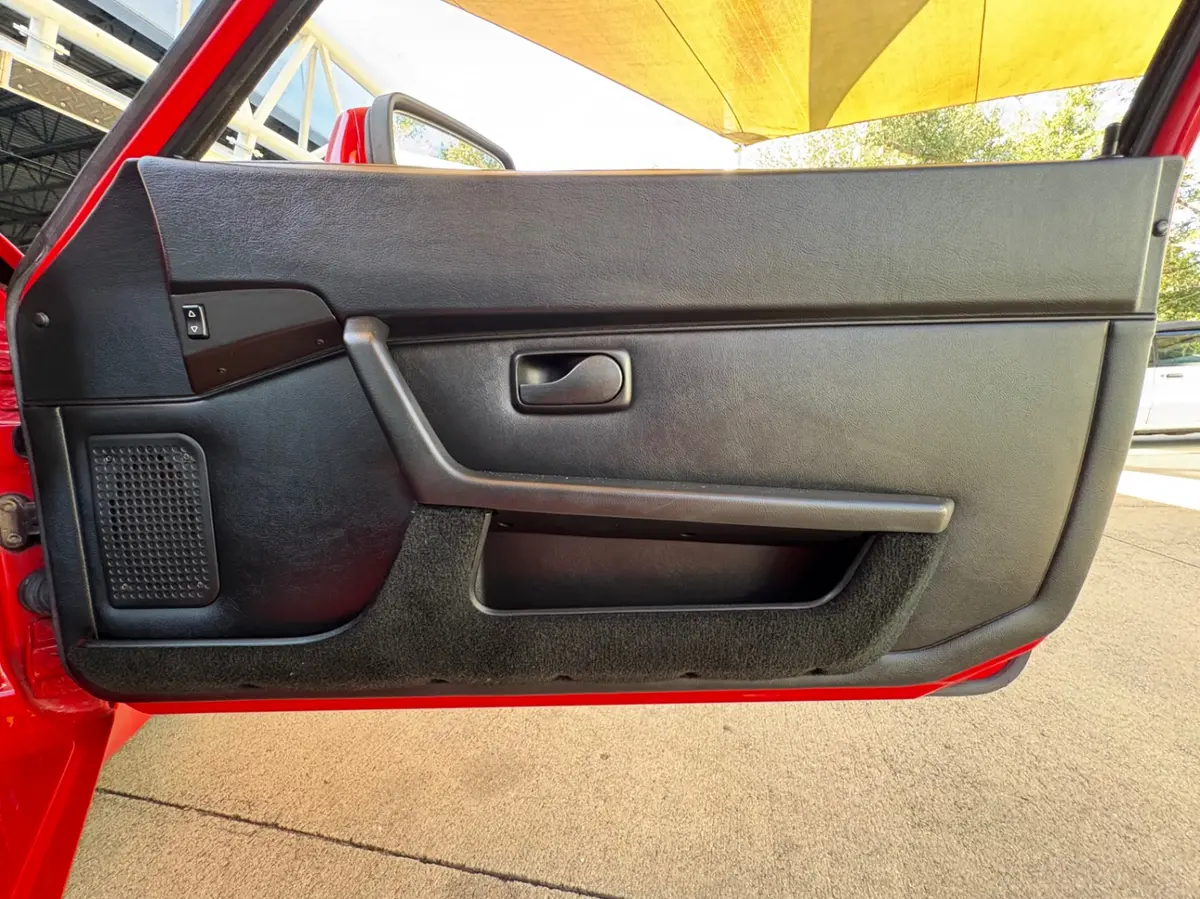
- Door panel speakers
- Continental tires
- Color-keyed side mirrors
- Four-wheel disc brakes
Mechanical
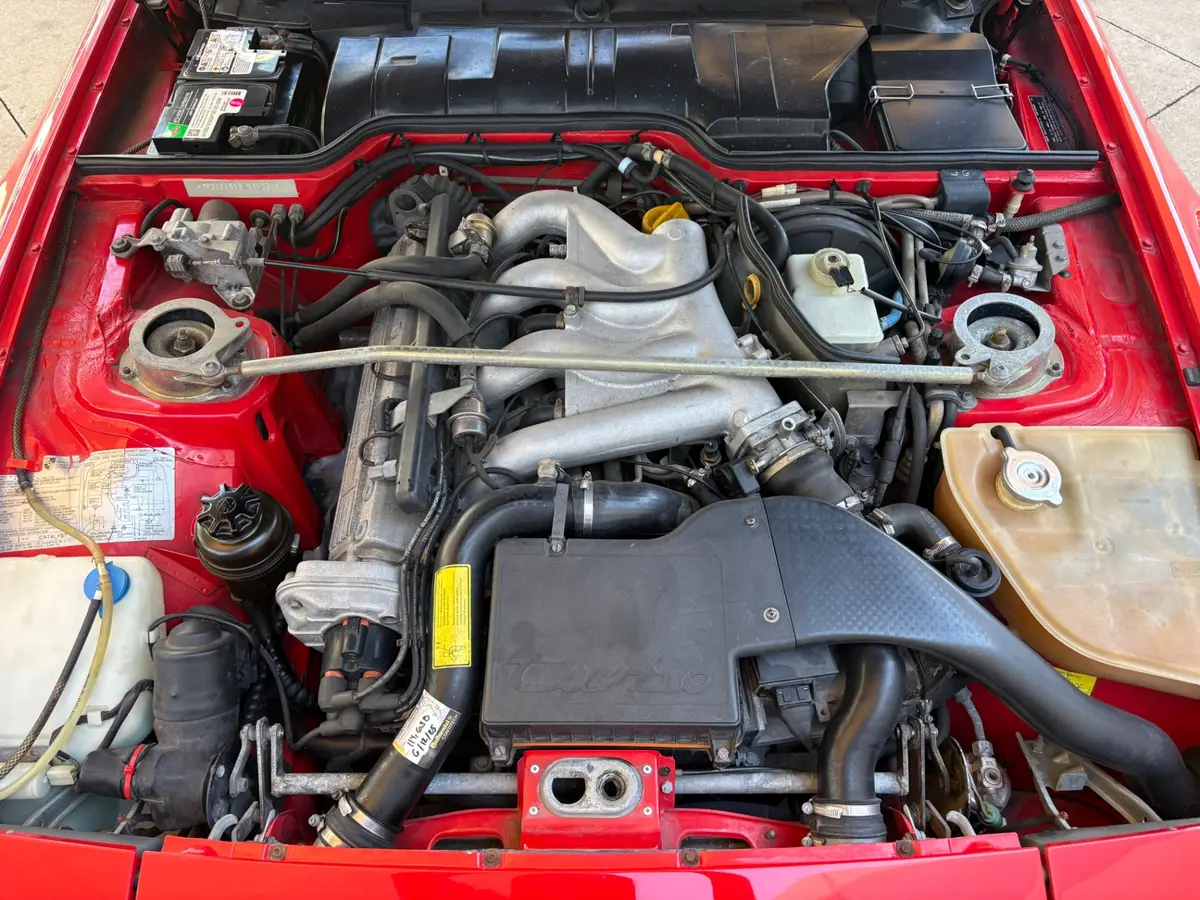
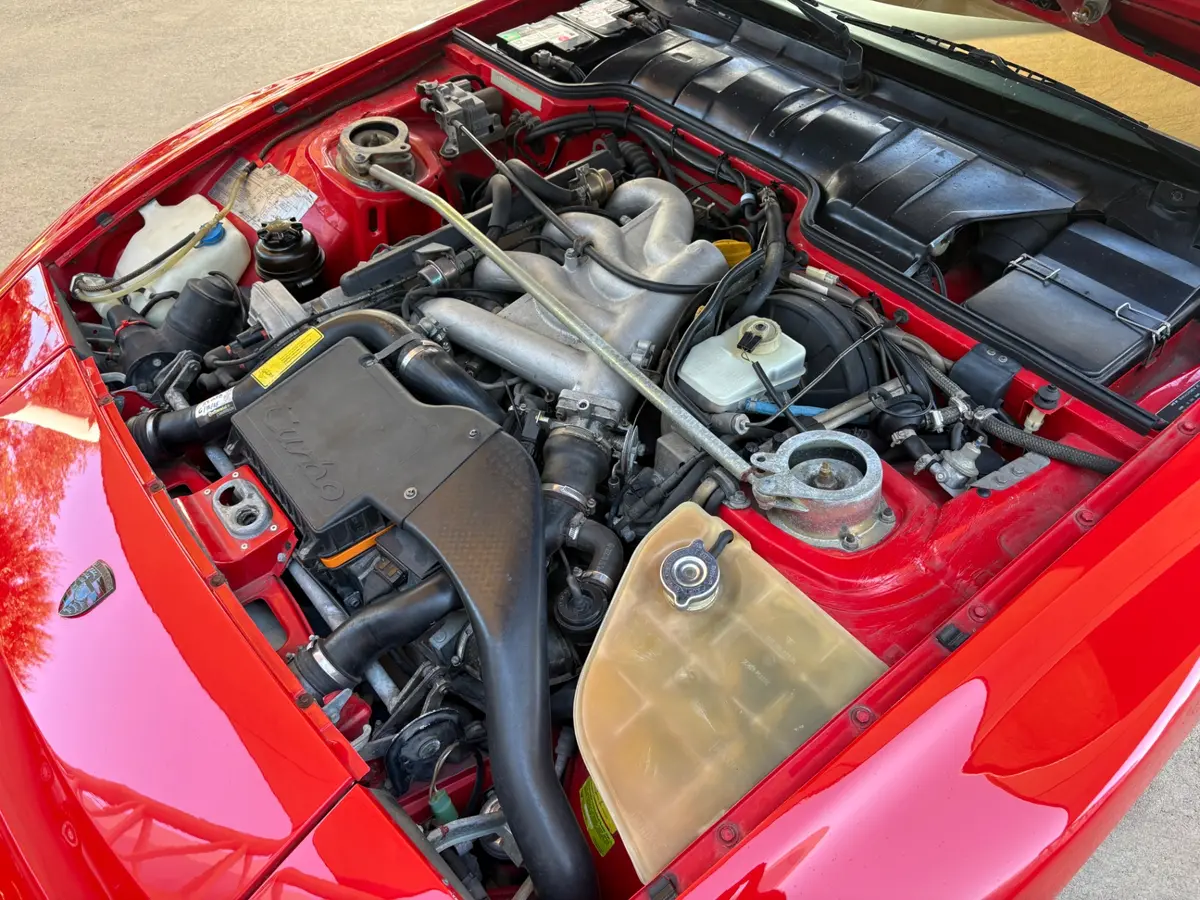
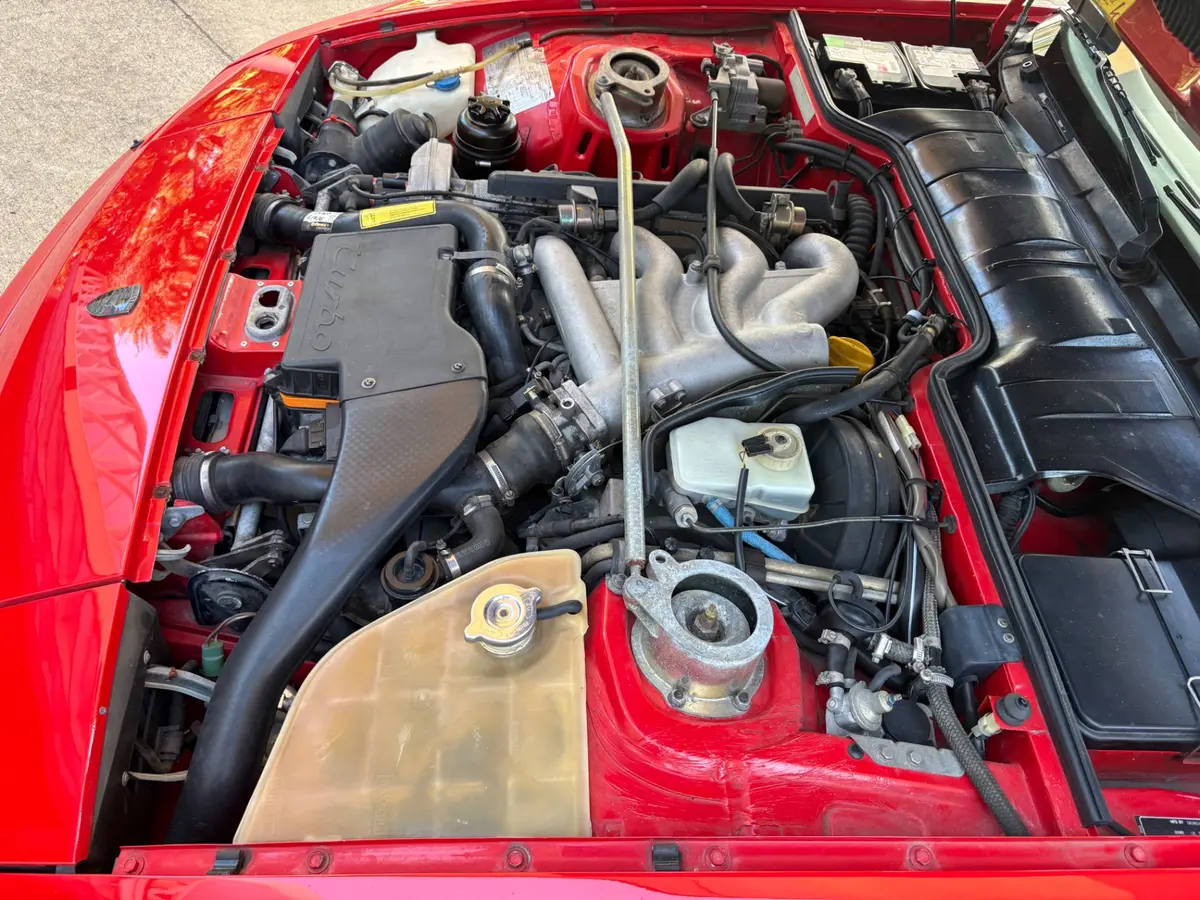
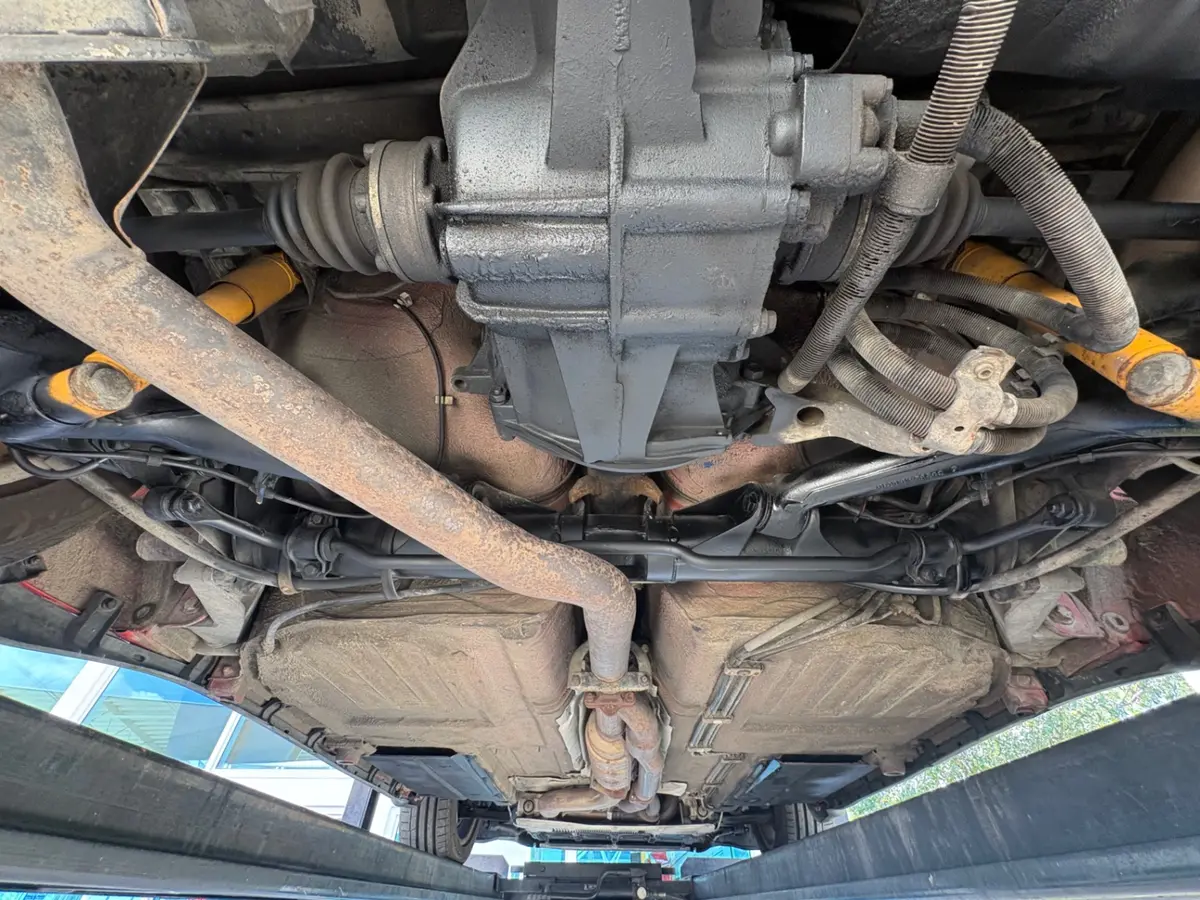
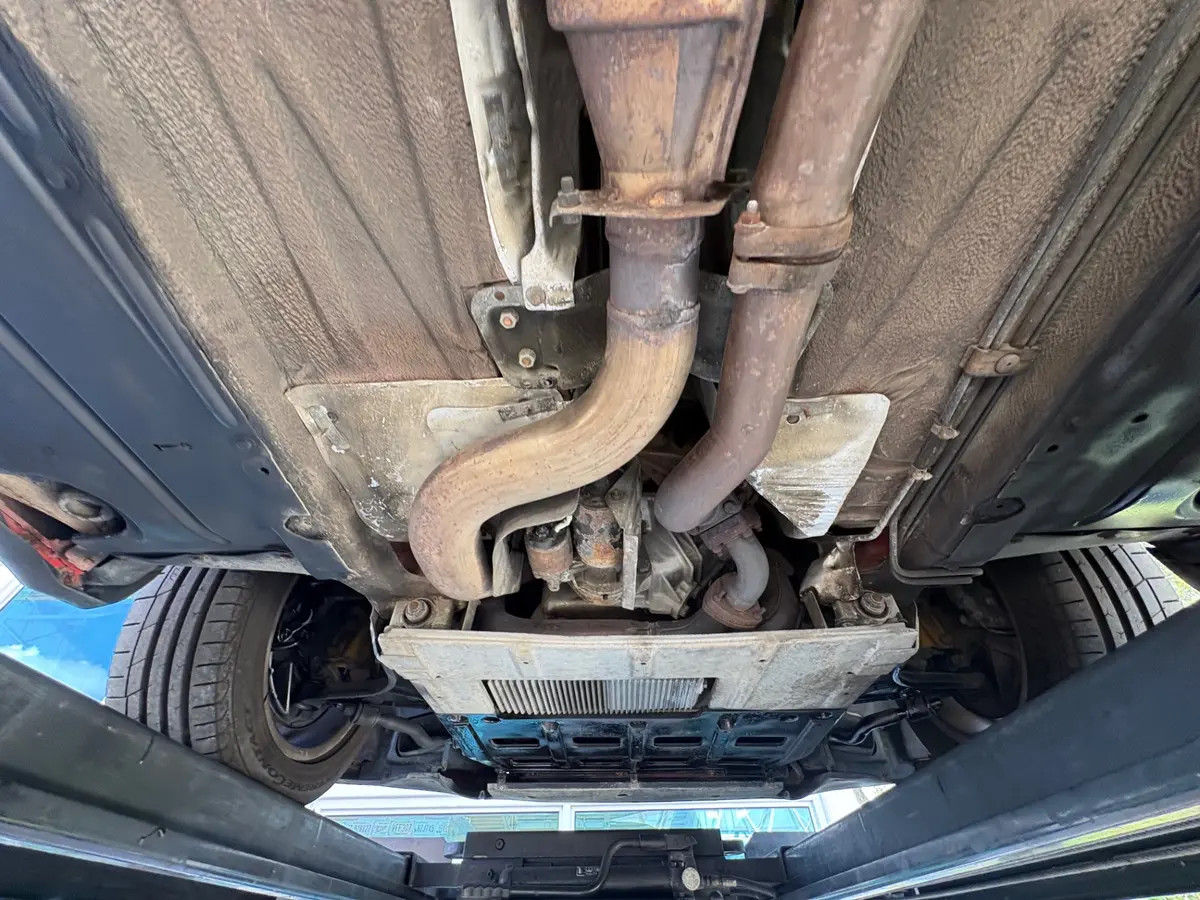
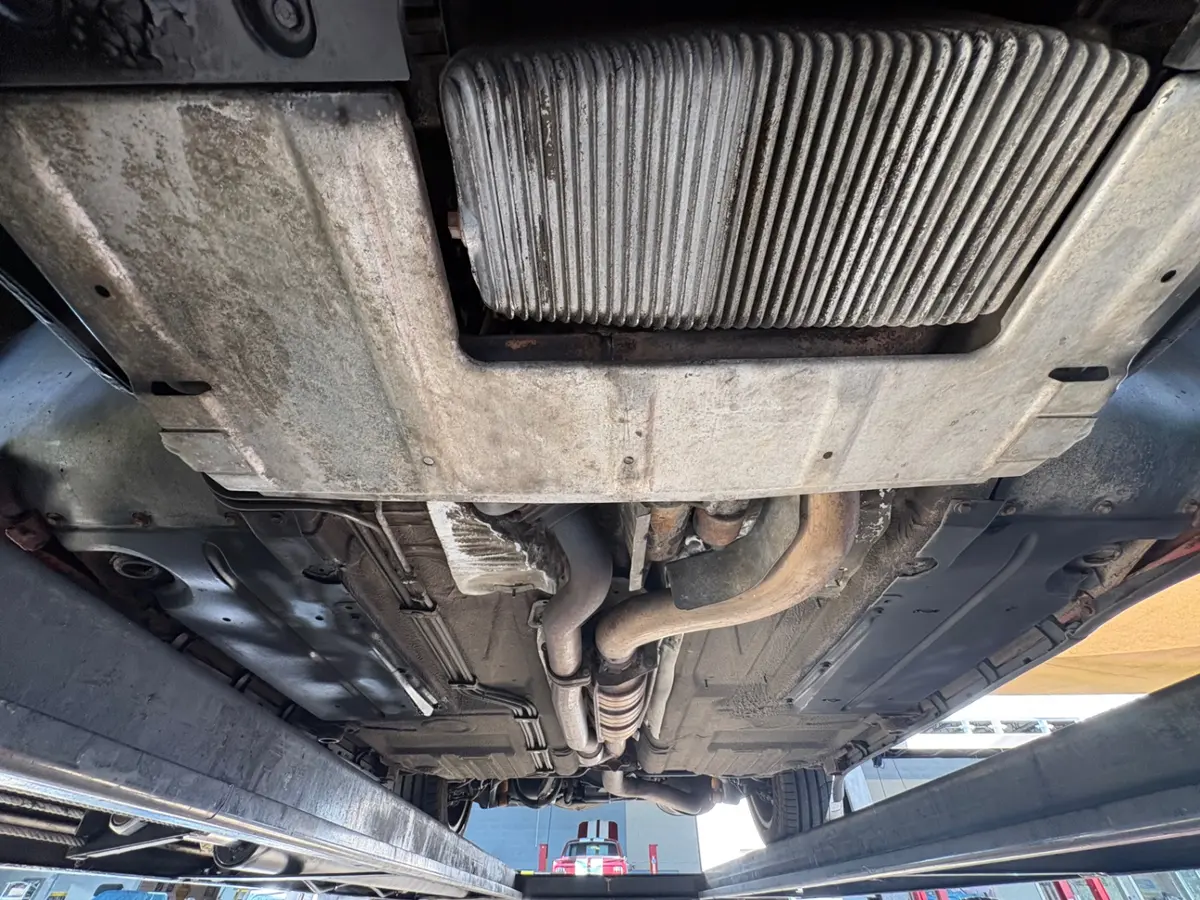
Under the hood of this 1986 Porsche 944 Turbo is the turbocharged 2.5-liter inline-four that defined the model. The engine uses a single KKK turbocharger feeding compressed air through a front-mounted intercooler before it enters the intake manifold. That intercooler — mounted in the nose behind a louvered lower fascia and clearly visible in the underside photos — is one of the more recognizable engineering details of the 944 Turbo and a meaningful distinction from the base car. Cooler, denser air entering the combustion chamber means more consistent power and better detonation resistance, which is part of why these engines respond well to basic maintenance and hold up over time when properly cared for.
The transaxle arrangement is worth understanding if you have not driven one of these before. The engine output travels through a torque tube running the length of the car to a rear-mounted 5-speed manual gearbox. This setup keeps mass centralized and low, and it gives the 944 Turbo a driving feel that is fundamentally different from a front-heavy front-wheel-drive sports car of the same period. The clutch pedal and shifter action are characteristic of the platform — deliberate and mechanical, with a gated feel that rewards smooth inputs.
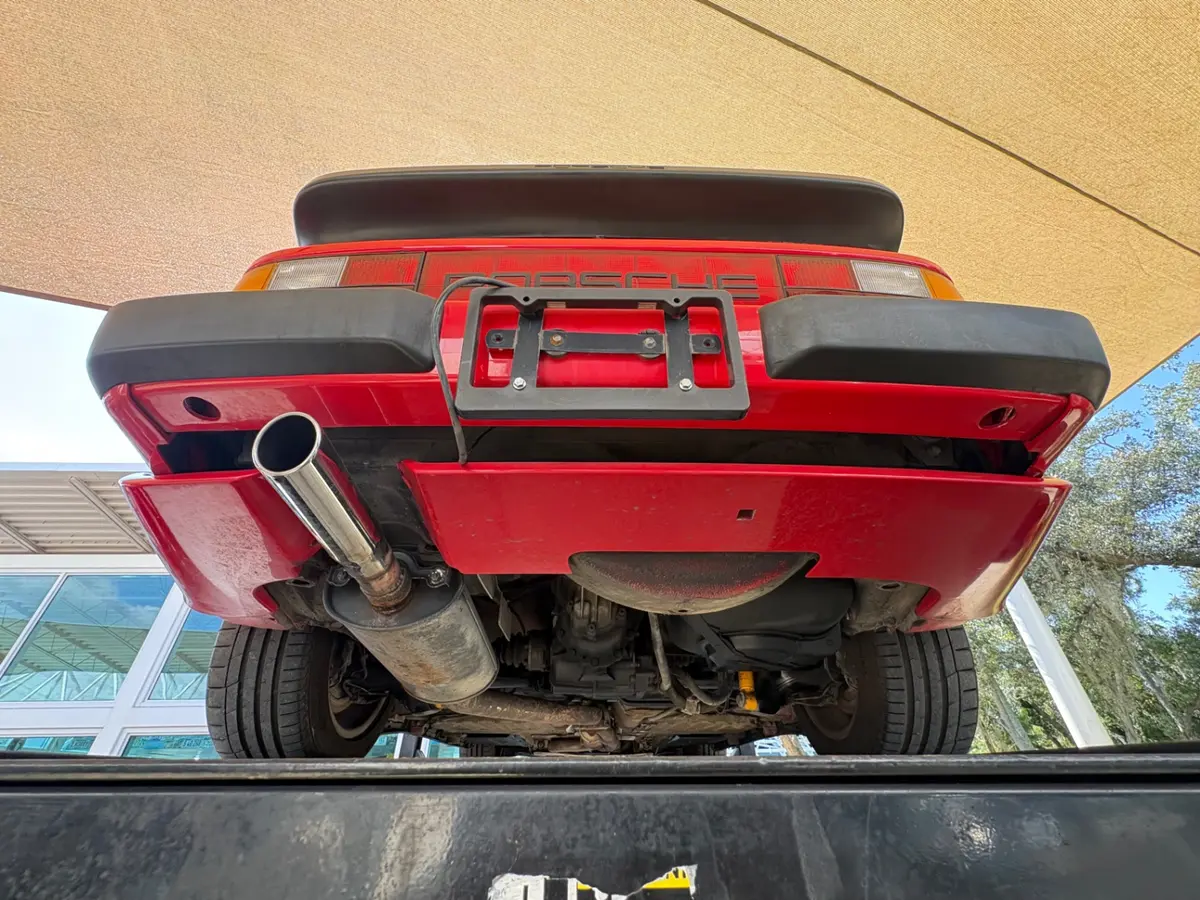
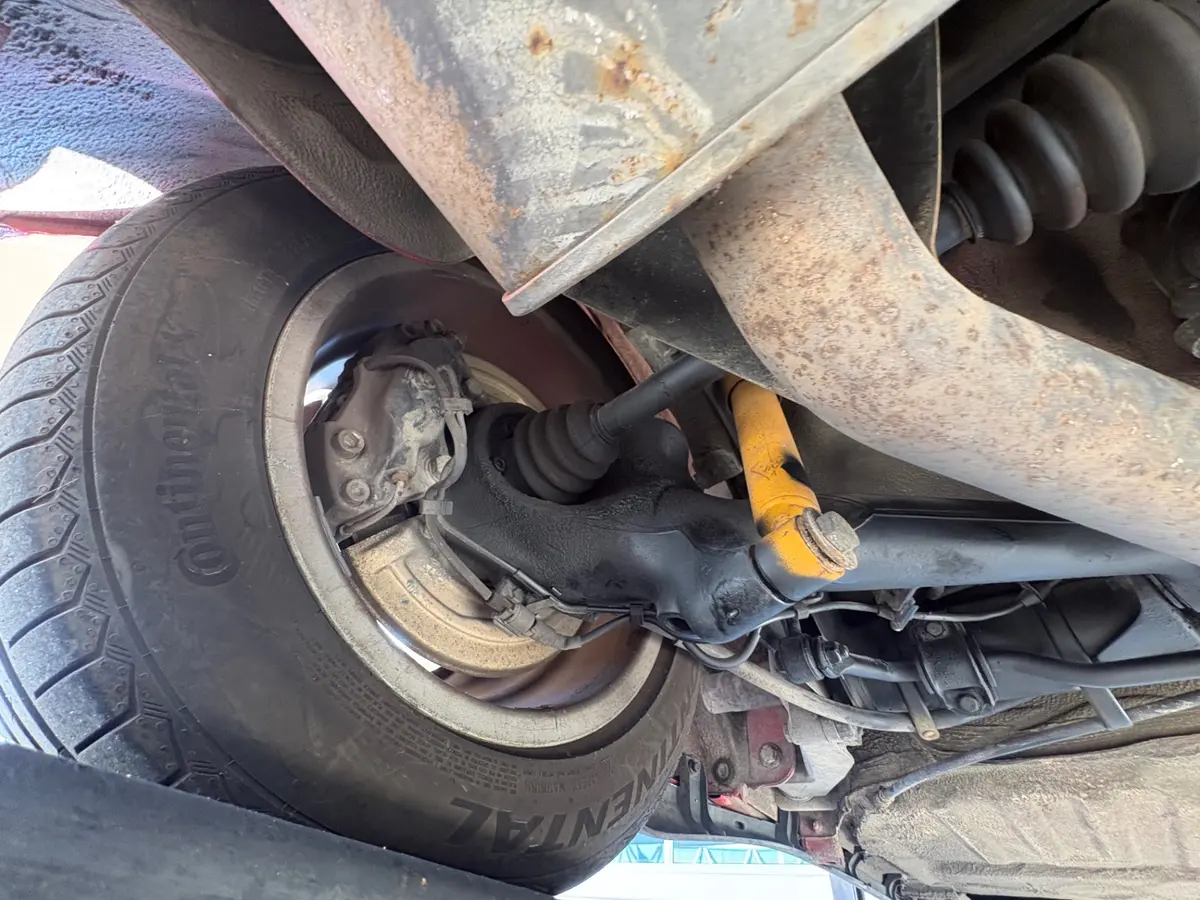
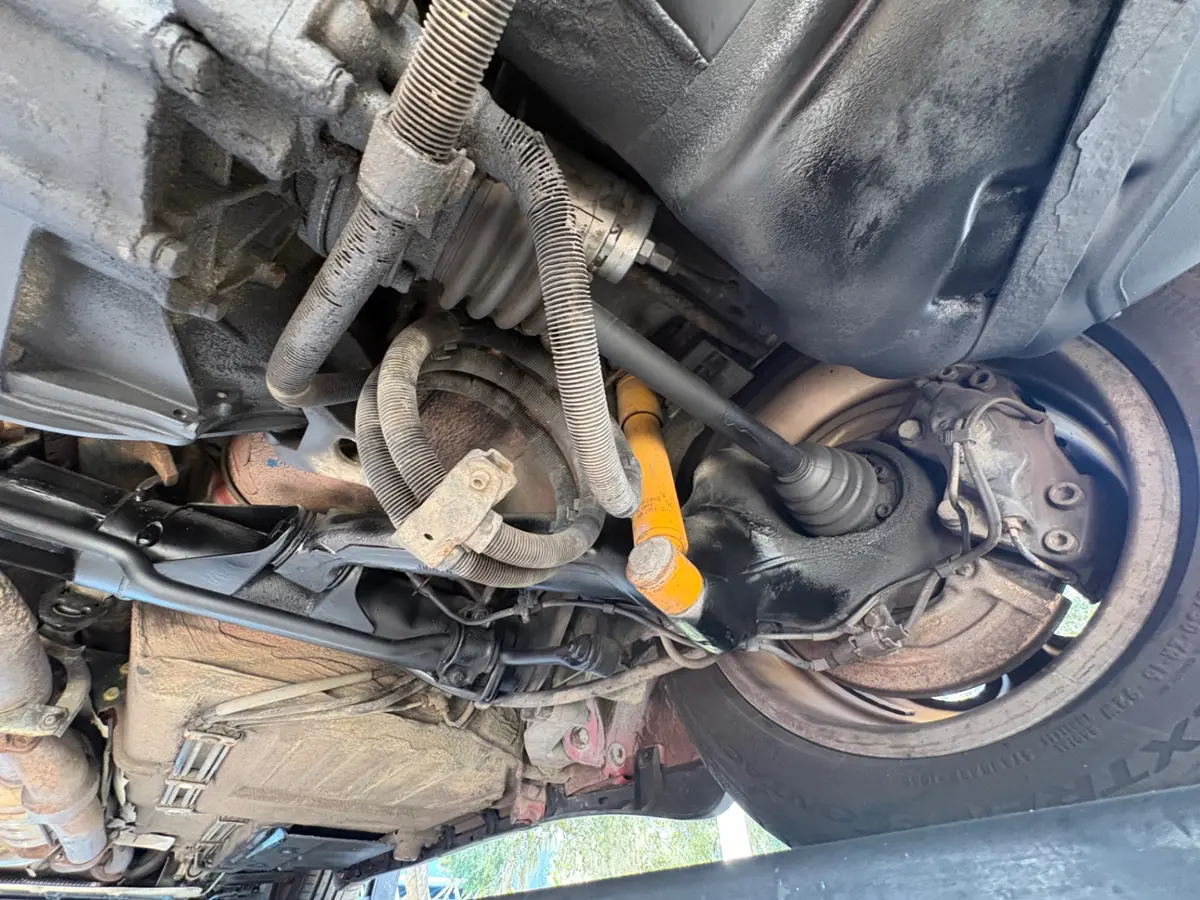
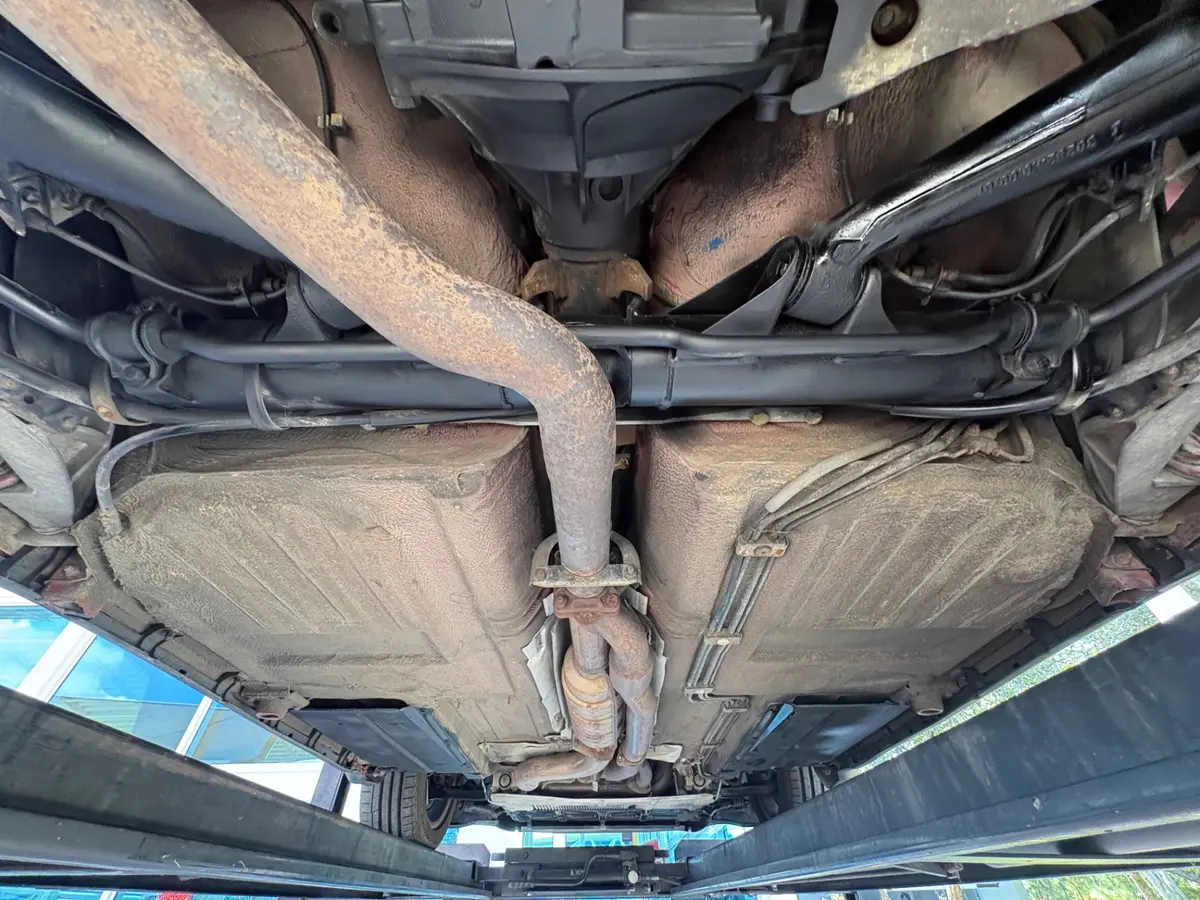
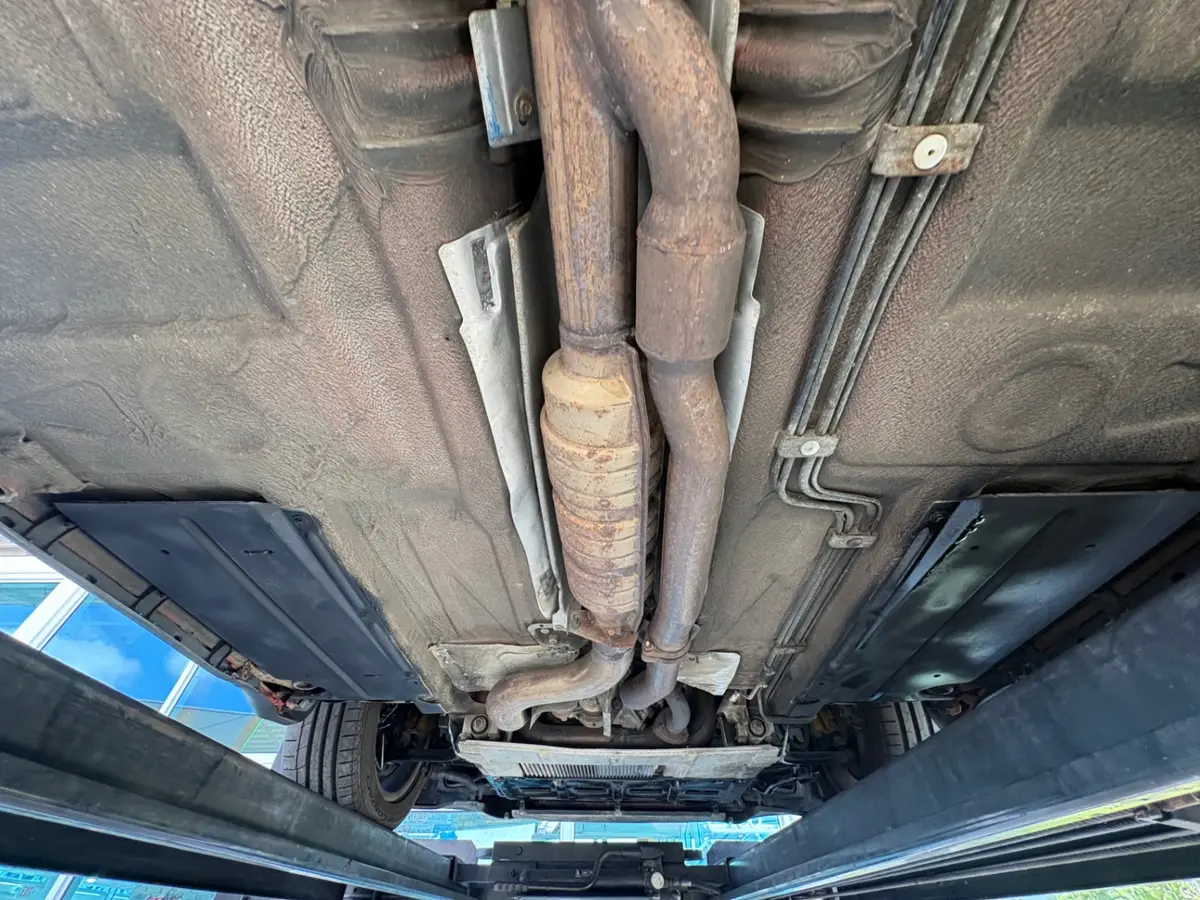
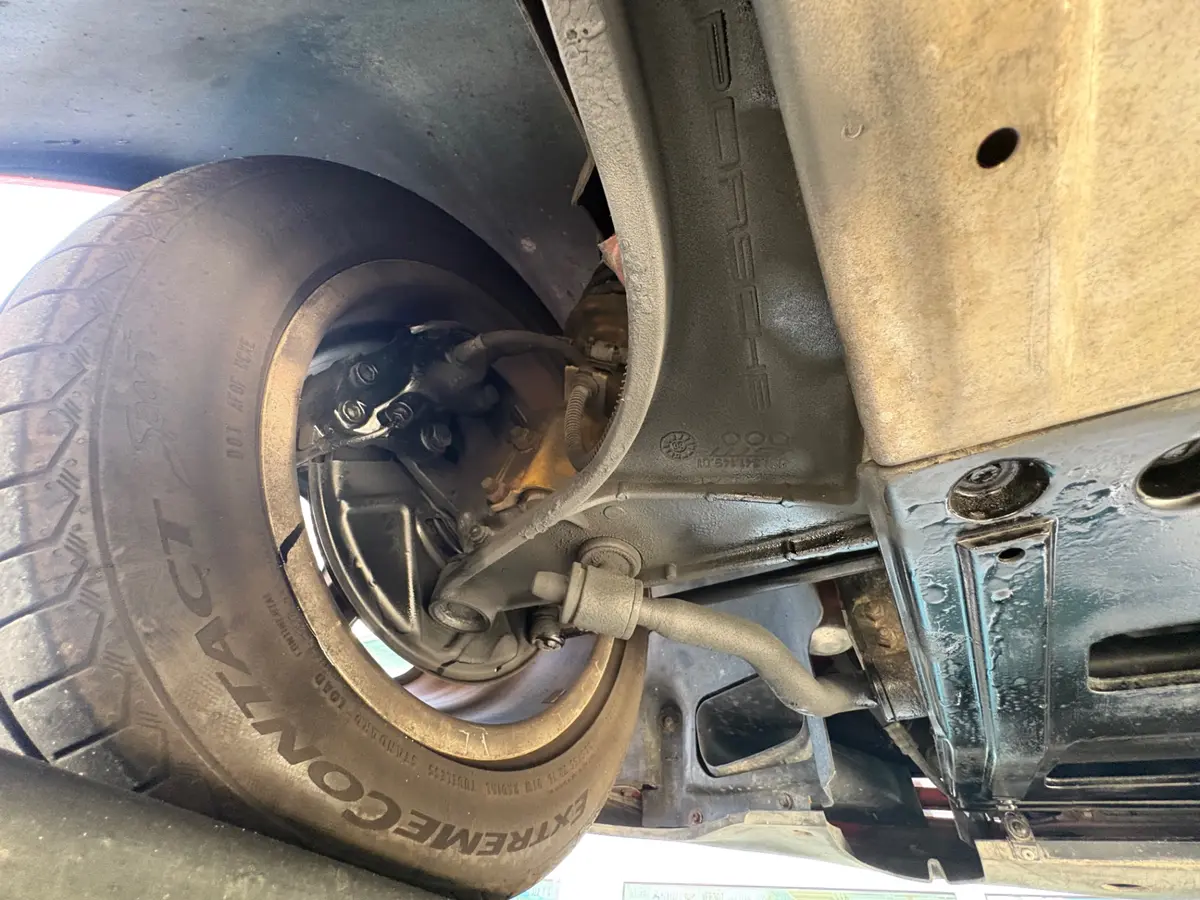
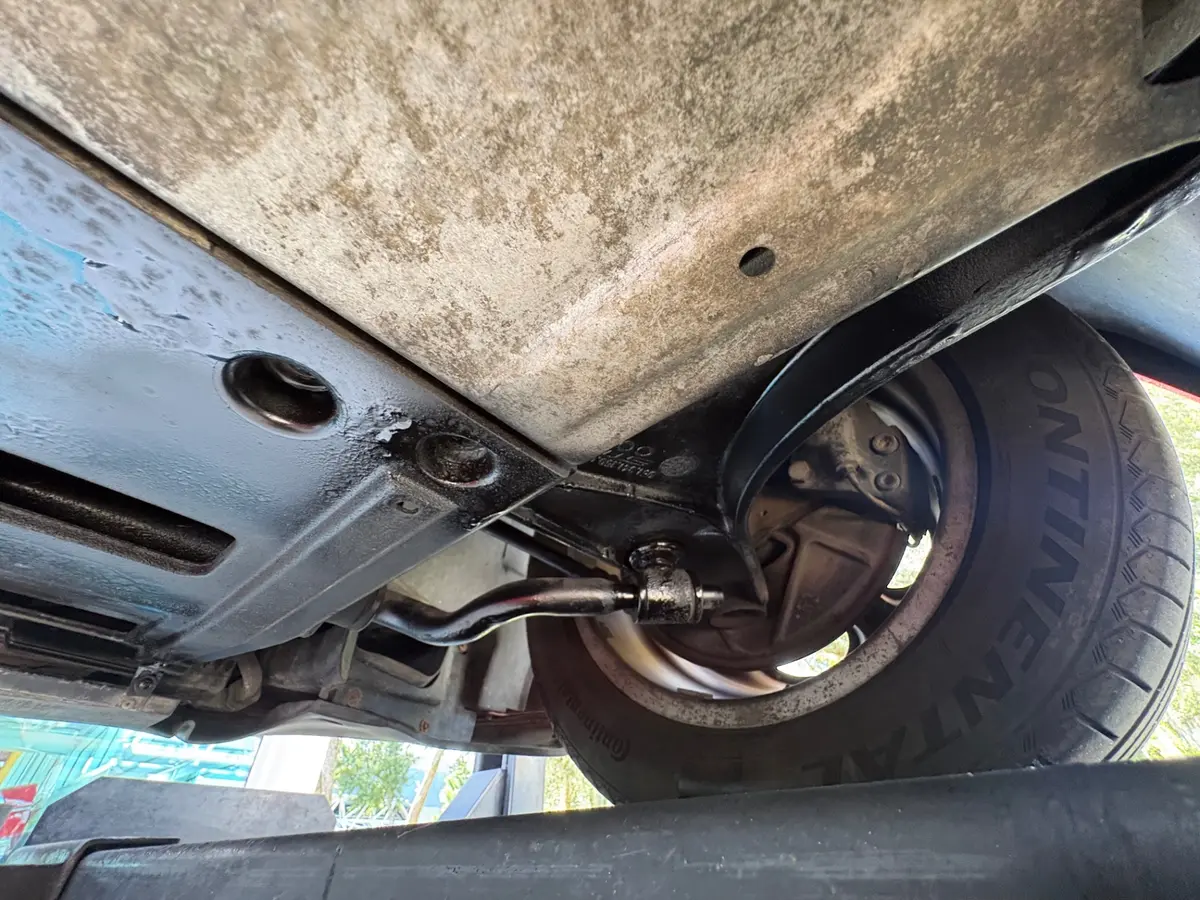
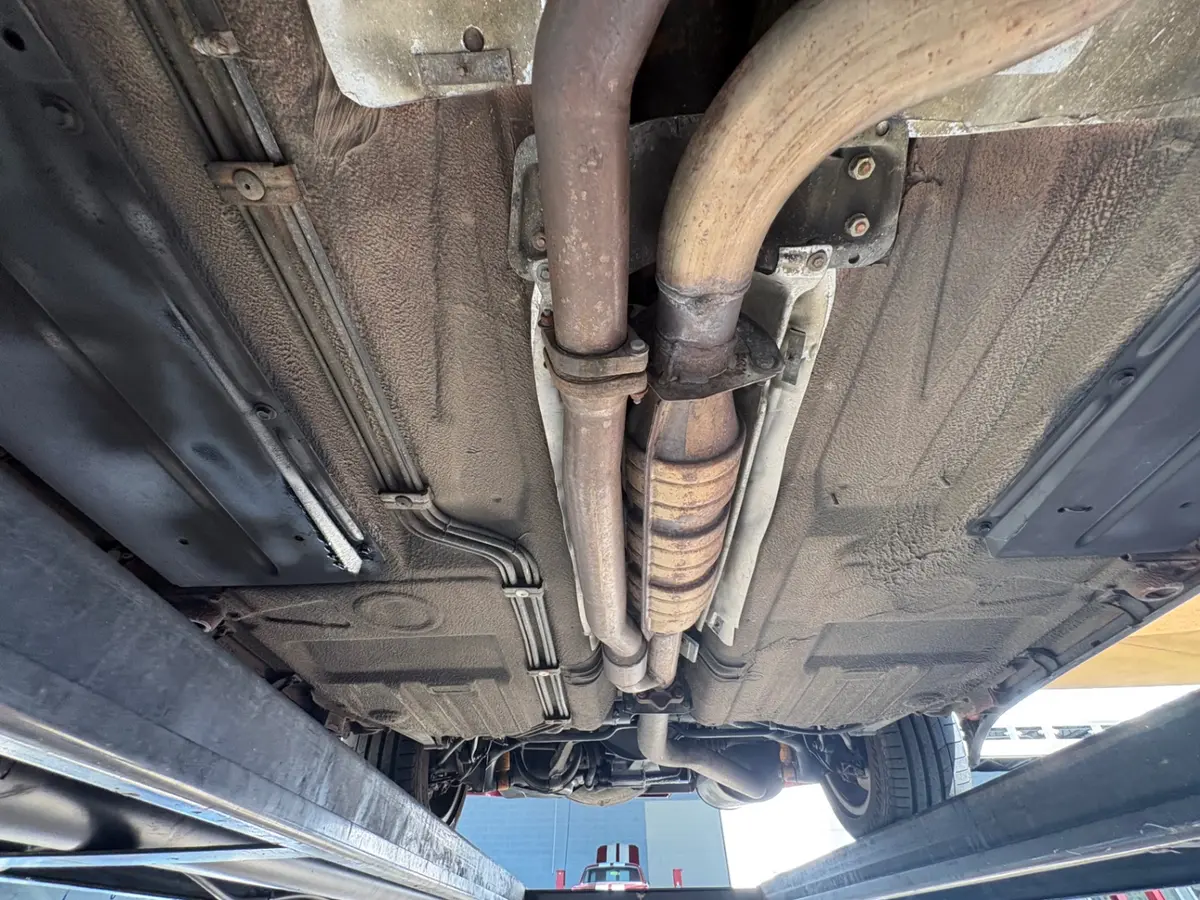
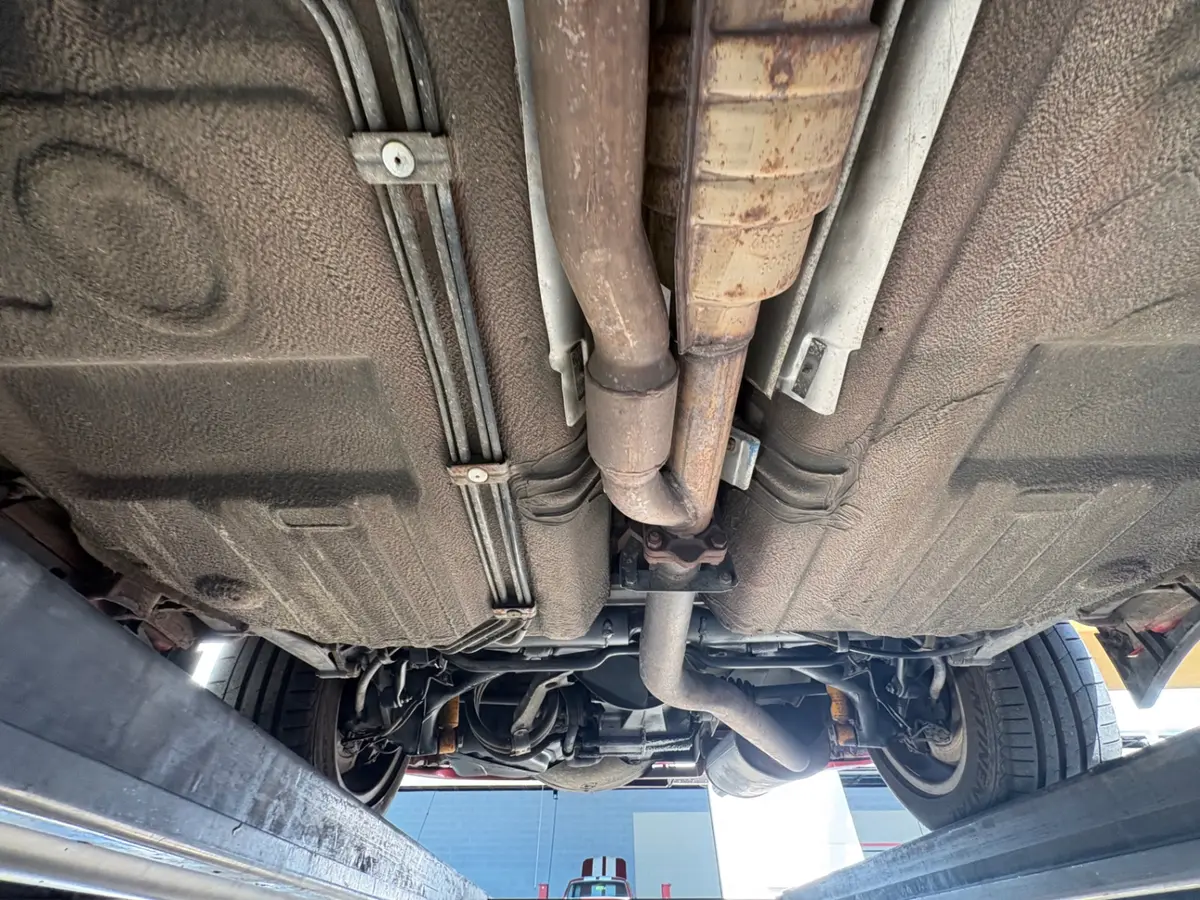
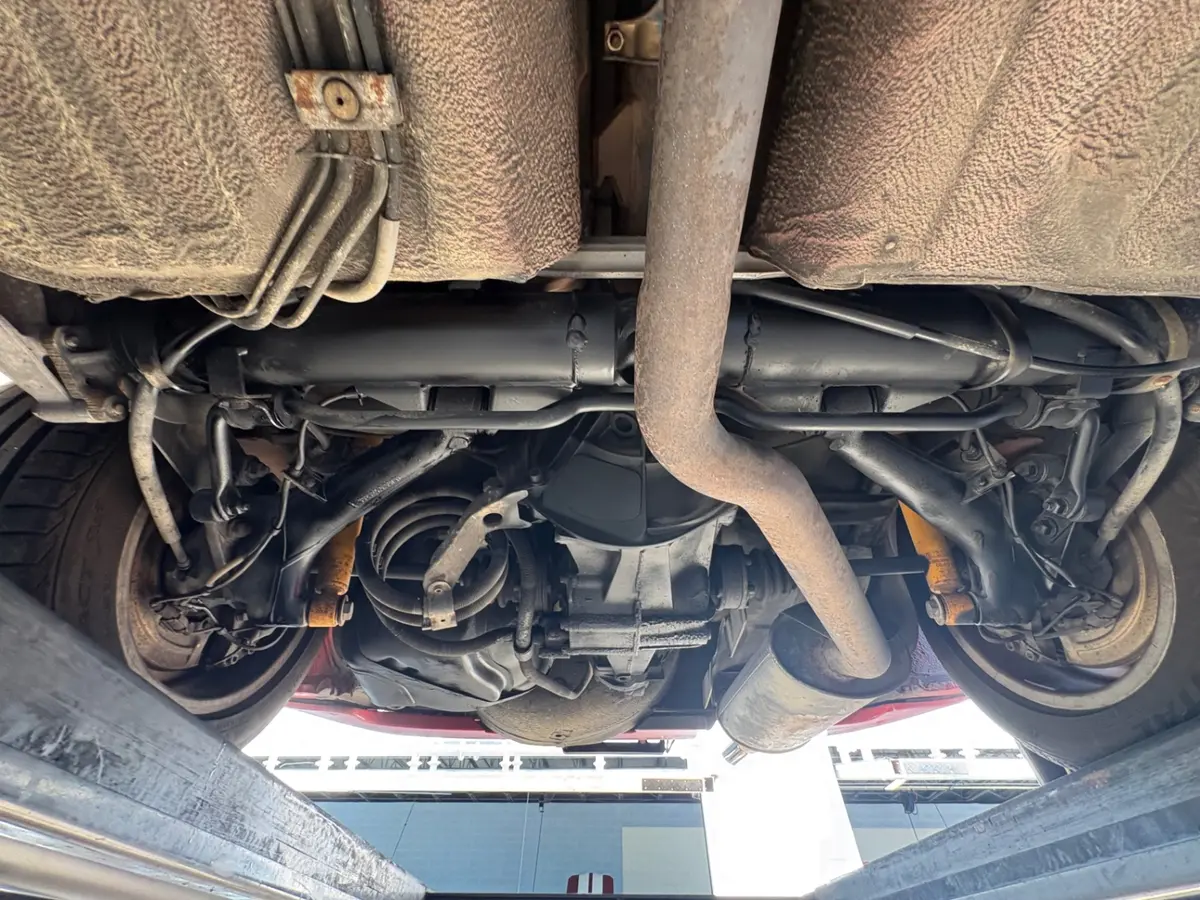
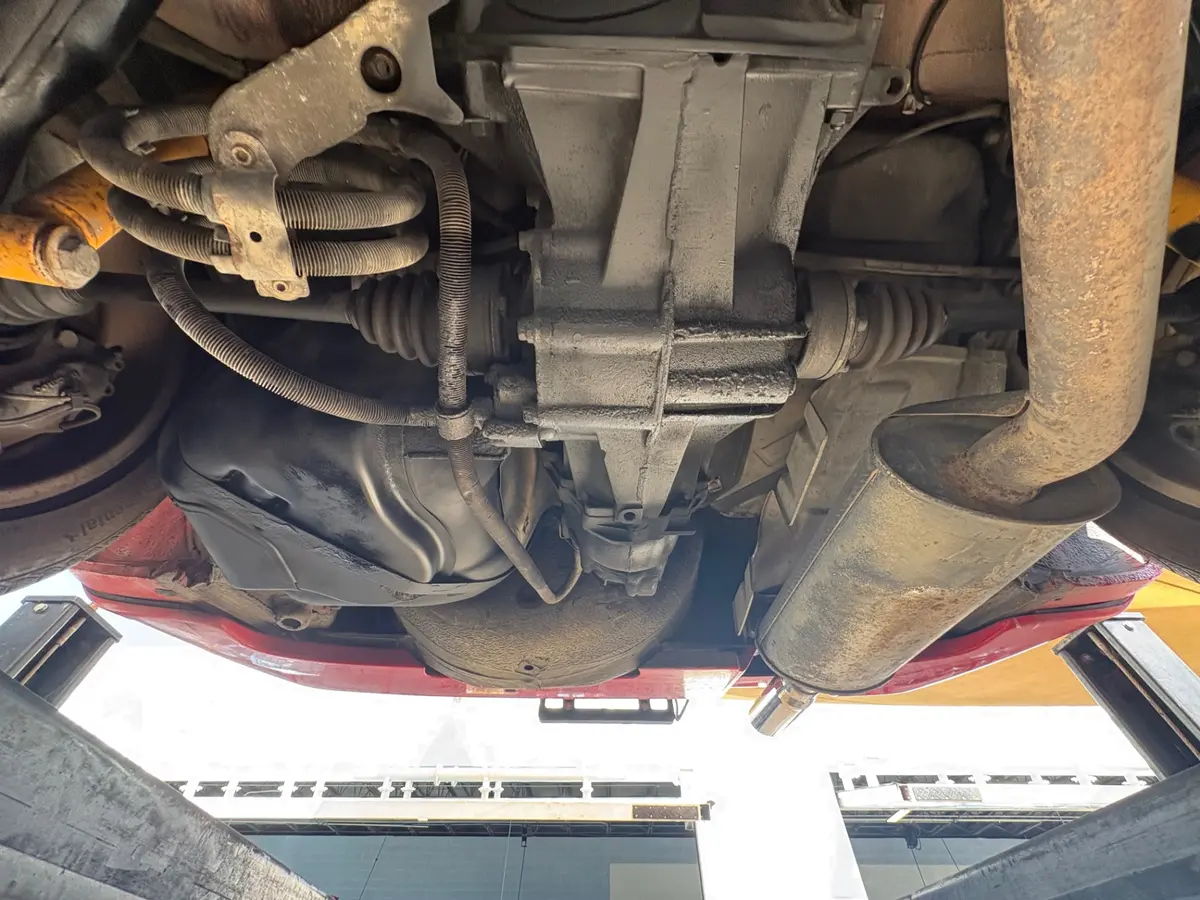
The underside photos show a car with surface oxidation on the exhaust system and suspension components consistent with age and use — nothing unusual for a 38-year-old car that has seen regular driving. The floorpan and structural sections visible in the lift photos appear intact without evidence of serious corrosion or damage. Four-wheel disc brakes are fitted from the factory, and the Continental tires mounted at all four corners appear in usable condition in the photos.
Interior
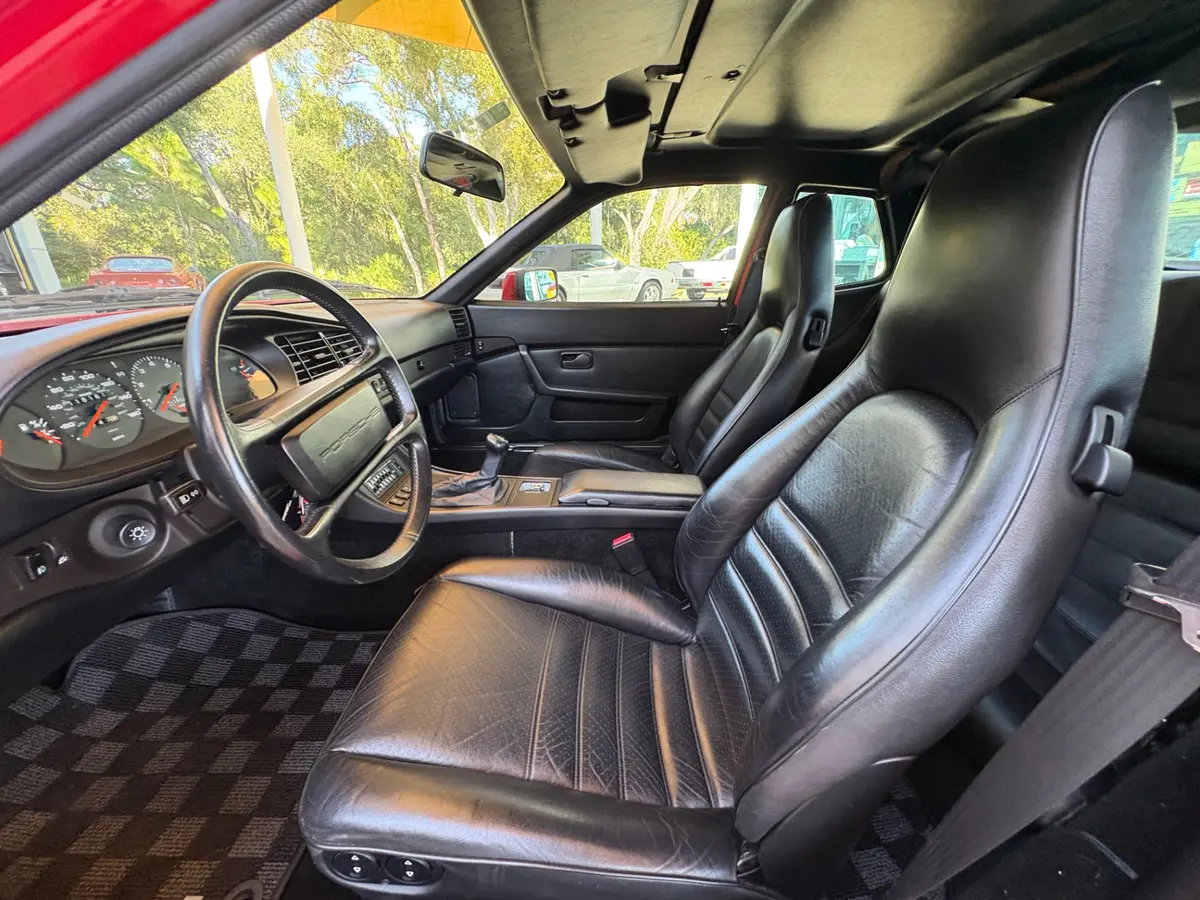
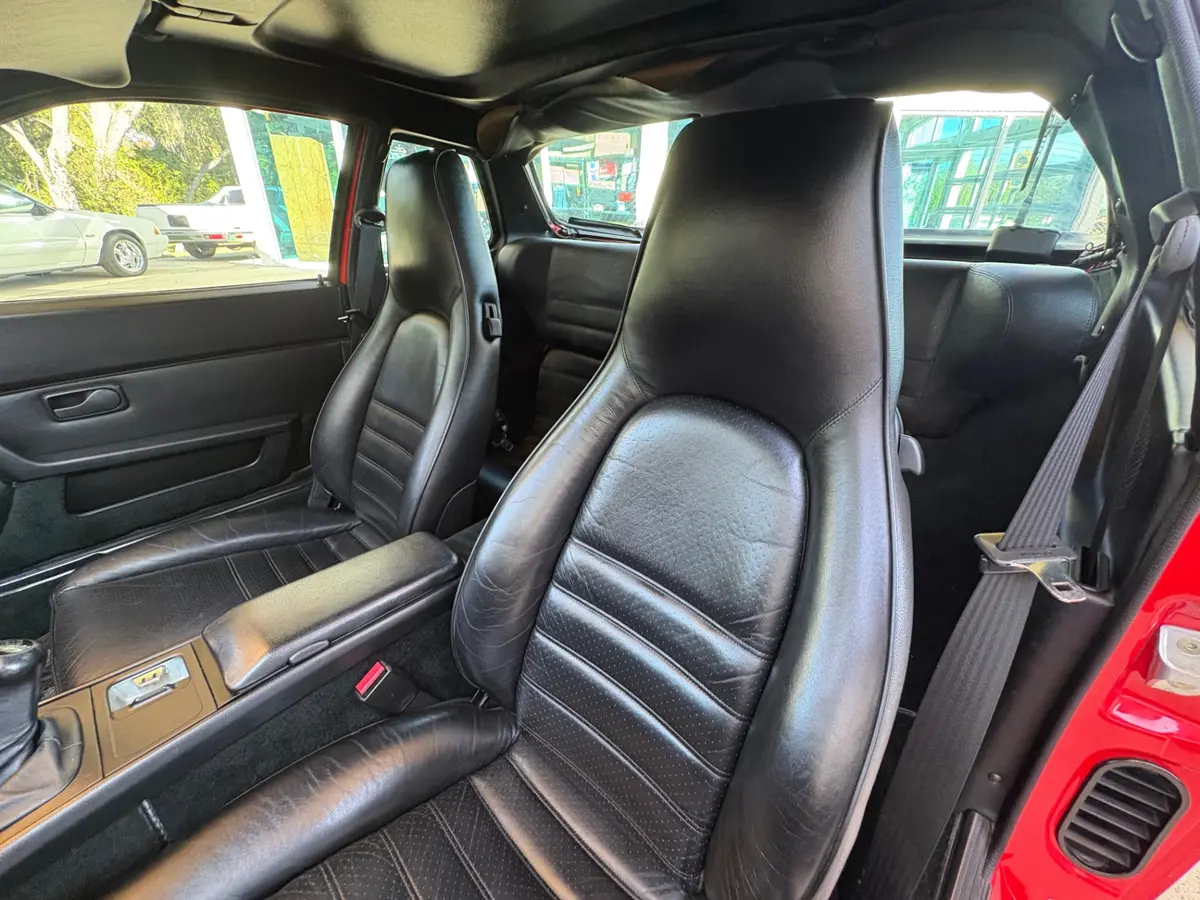
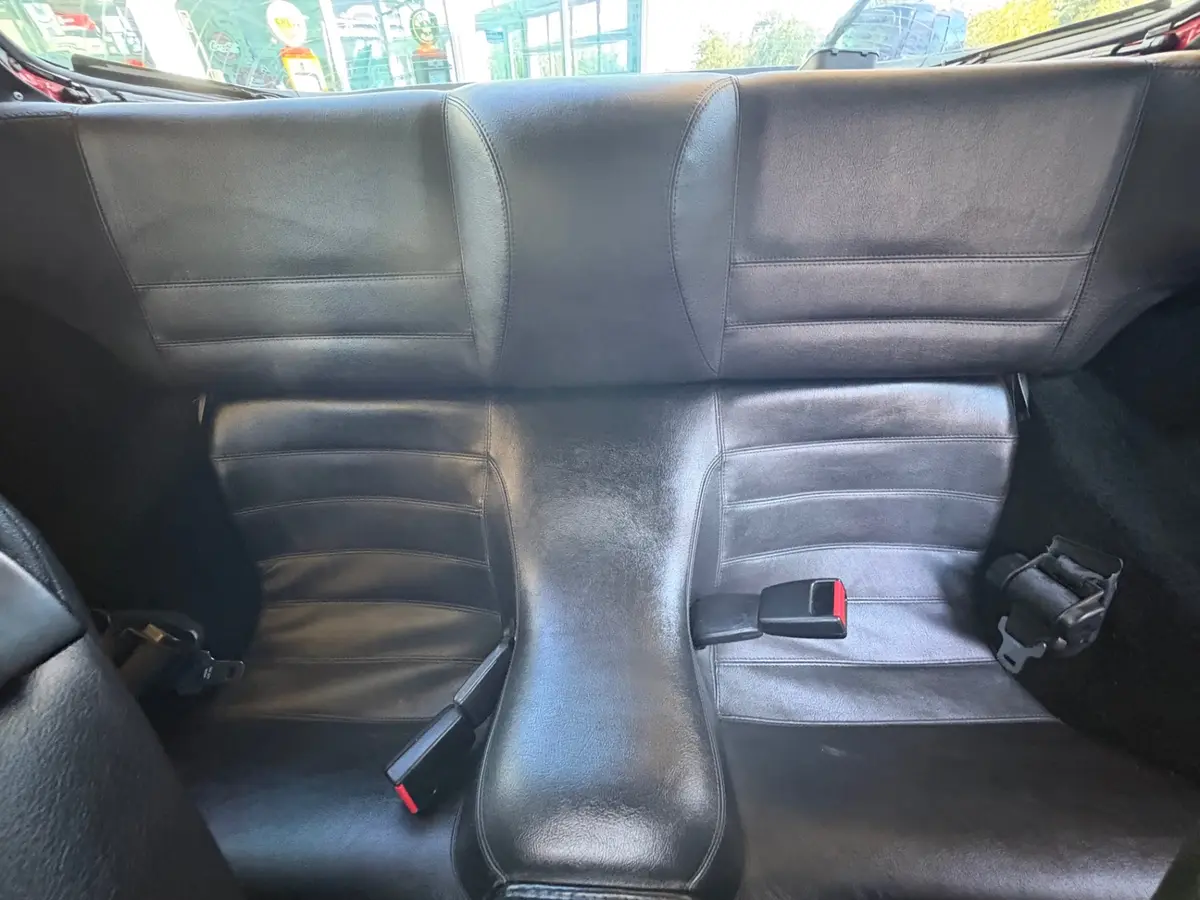
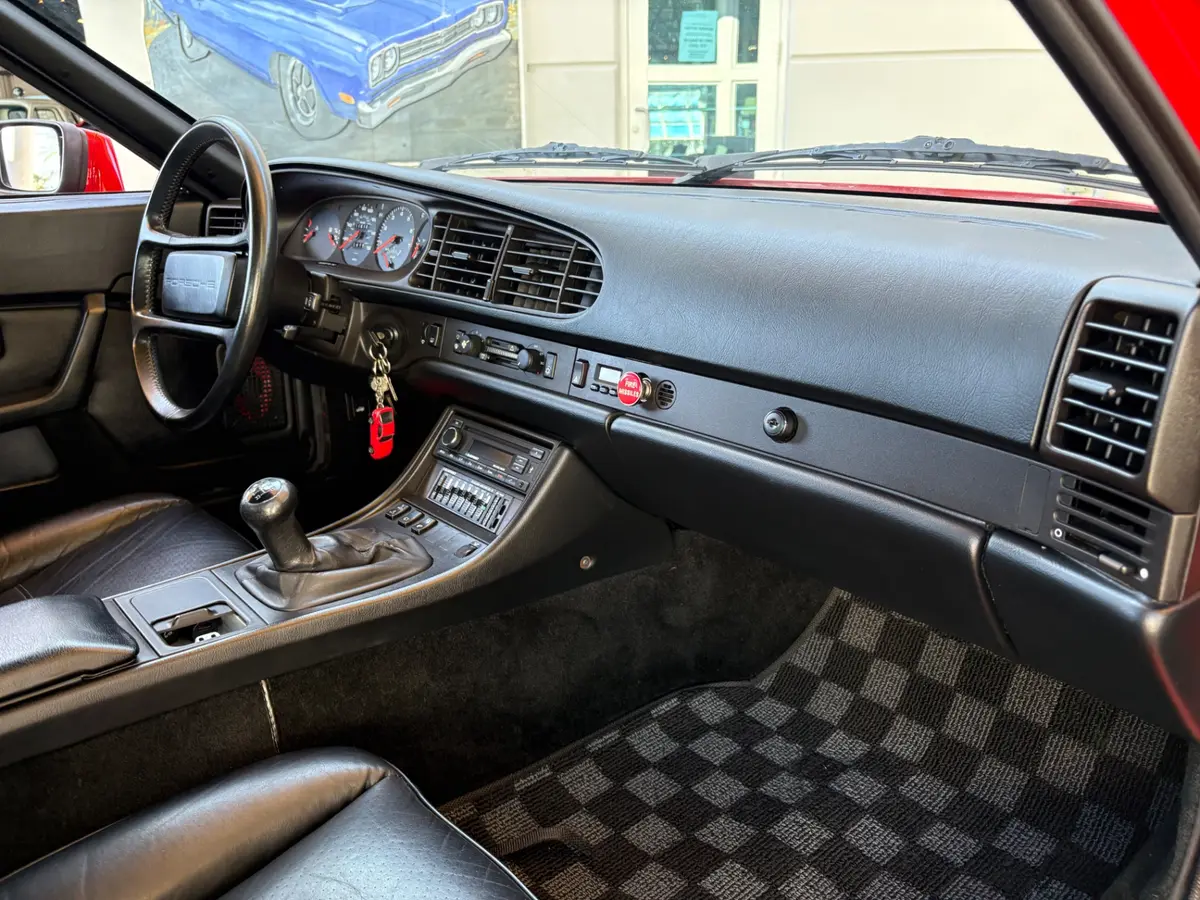
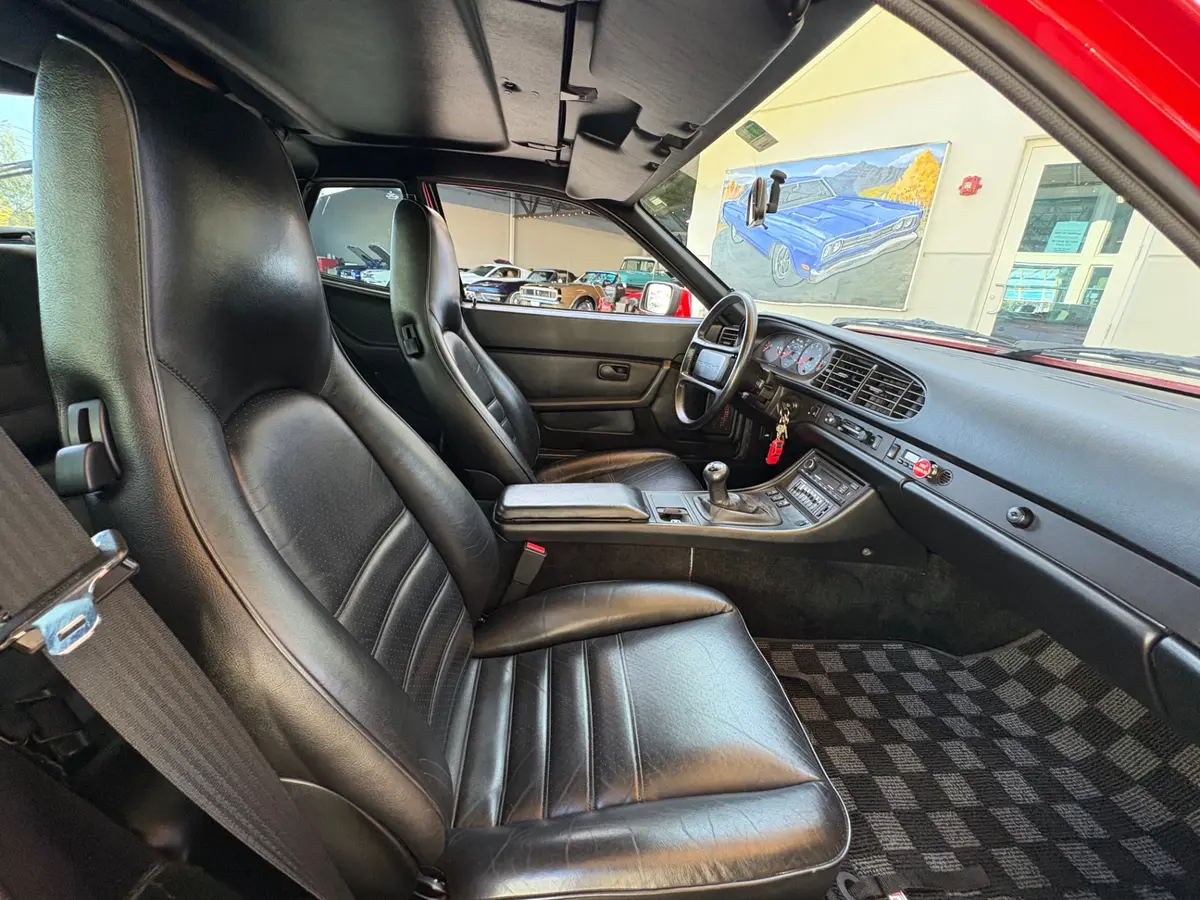
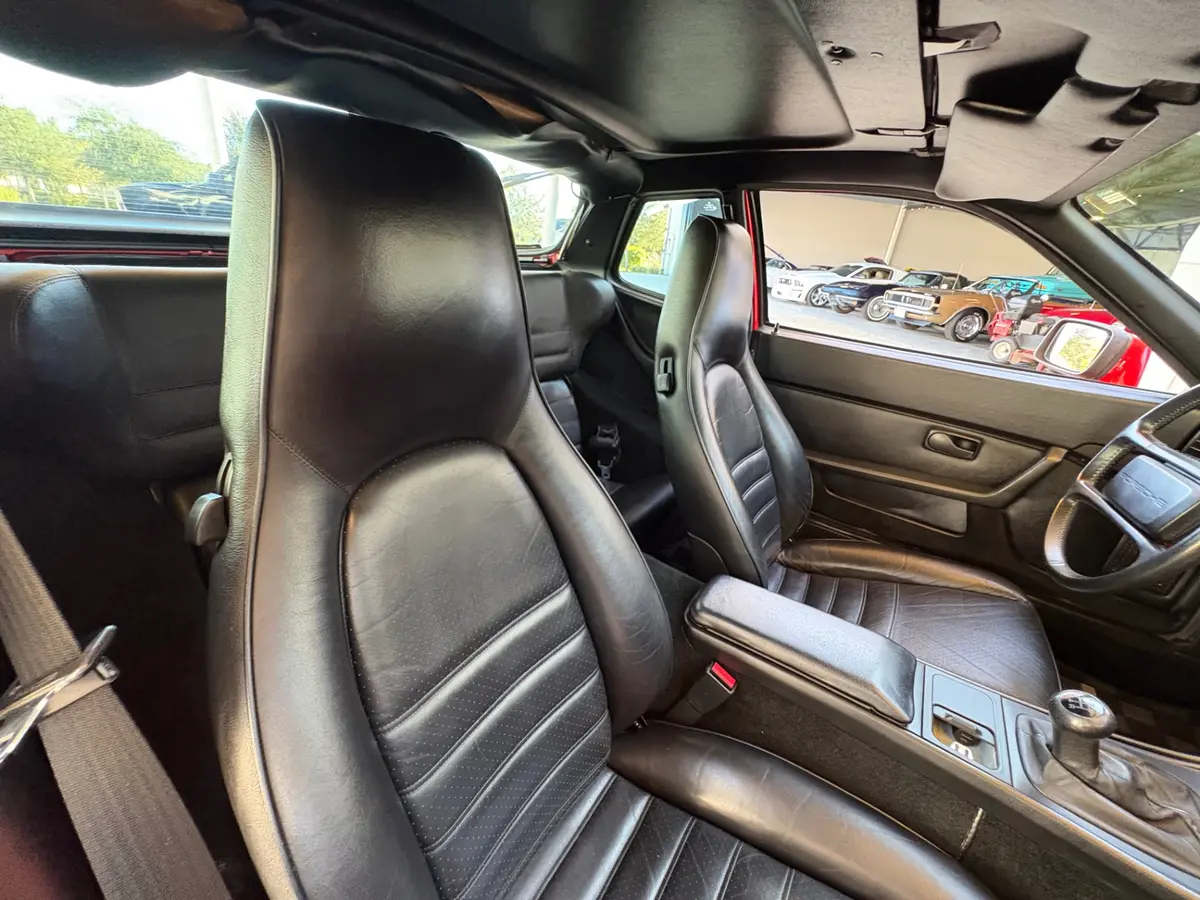
The cabin of the 1986 Porsche 944 Turbo is finished entirely in black leather, and it holds up well in the photographs. The bucket seats show the kind of natural wear leather develops over decades of use — the bolsters have softened and the surface shows some creasing, but there are no tears or significant damage visible. The rear jump seats are trimmed to match and retain their shape. These seats fold forward to expand cargo space when not in use, giving the 944 Turbo a practical element that many two-seat sports cars of the era could not offer.
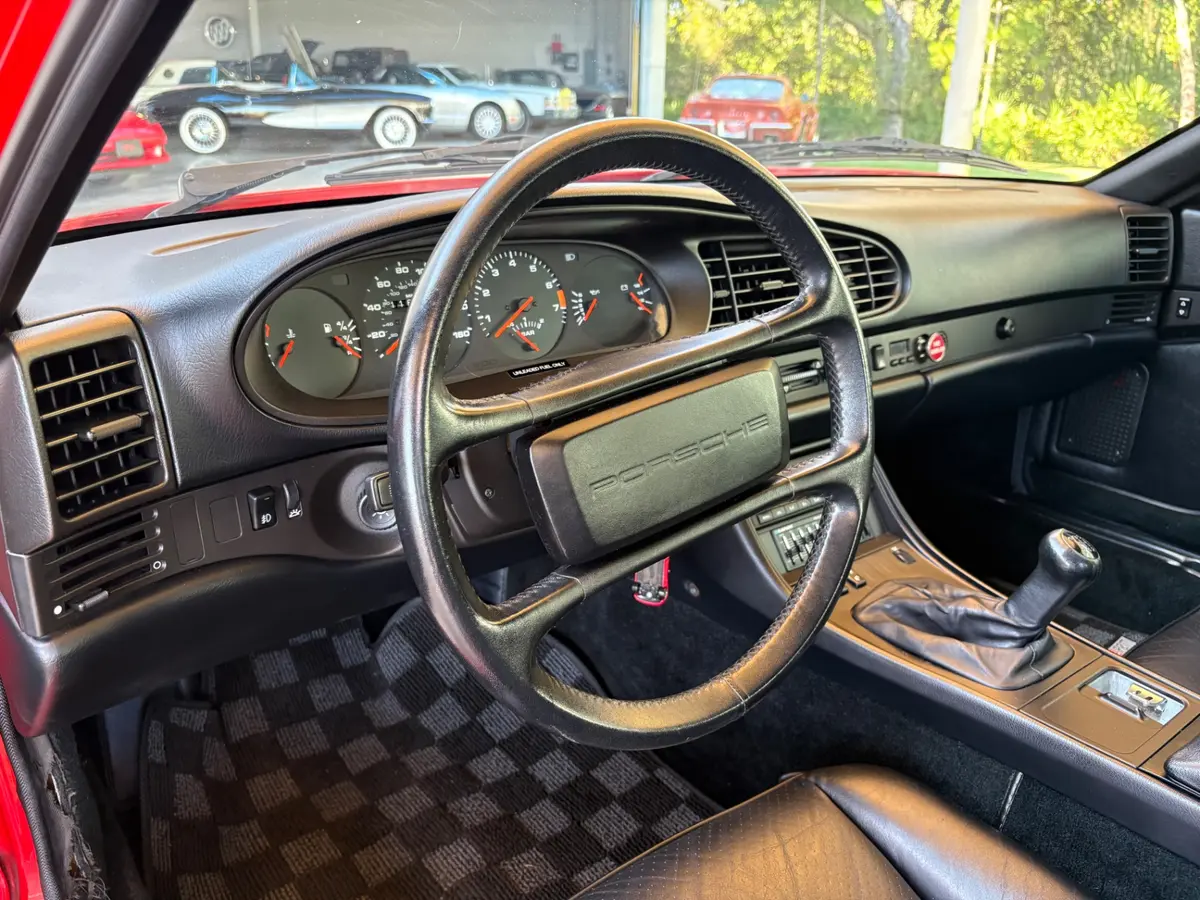
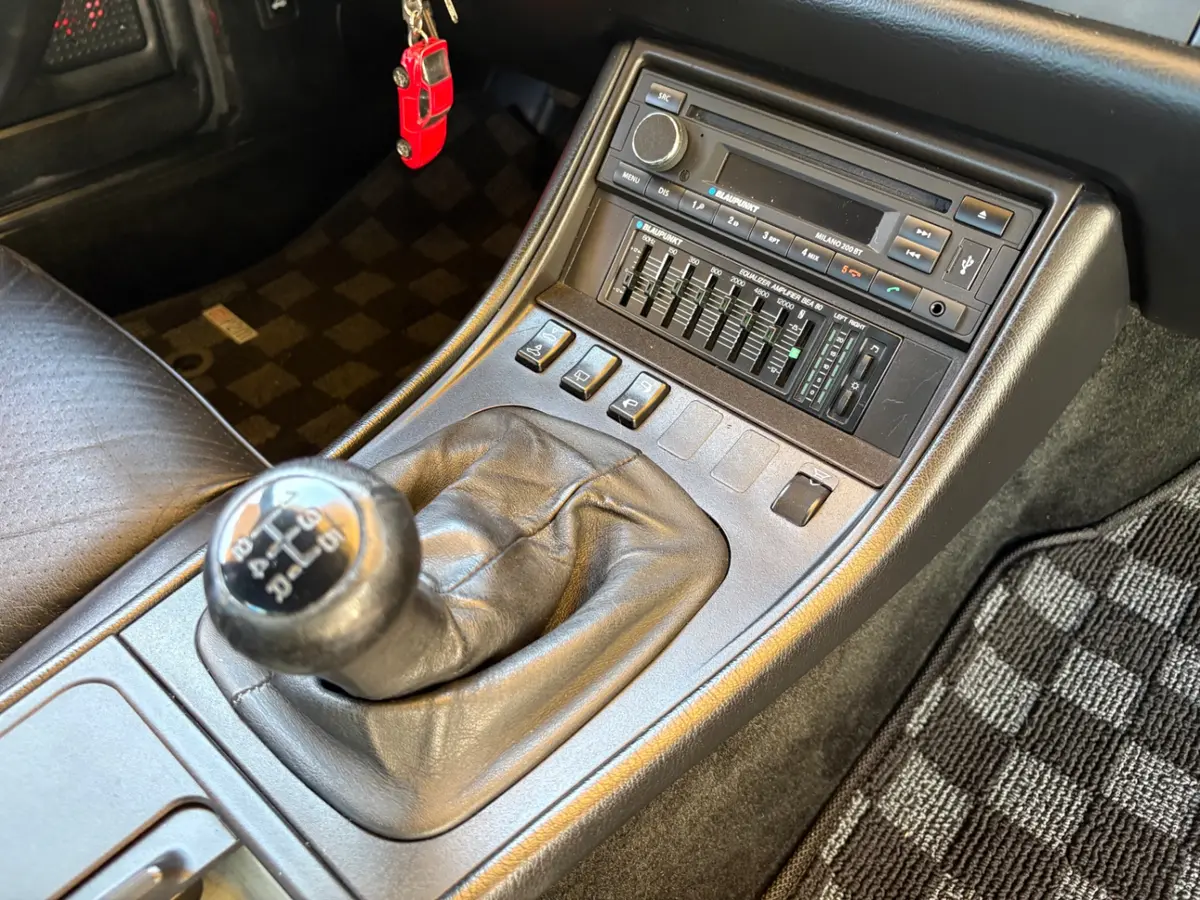
The dashboard layout is entirely driver-focused. The instrument cluster is a VDO unit featuring a large central speedometer, a tachometer, and a boost gauge reading in bar — the last of which is specific to the Turbo and not found in naturally aspirated 944s. The gauge faces are black with orange-red needles, legible and clean in the photos. The leather-wrapped steering wheel carries the Porsche name embossed on the hub pad. The center console houses the shift lever in a leather boot, with the Blaupunkt stereo head unit and a separate Blaupunkt graphic equalizer stacked below the HVAC controls. The equalizer is period-correct and appears to be original equipment. The checkered pattern carpet visible in multiple interior photos is consistent with the factory interior specification for this generation of the 944.
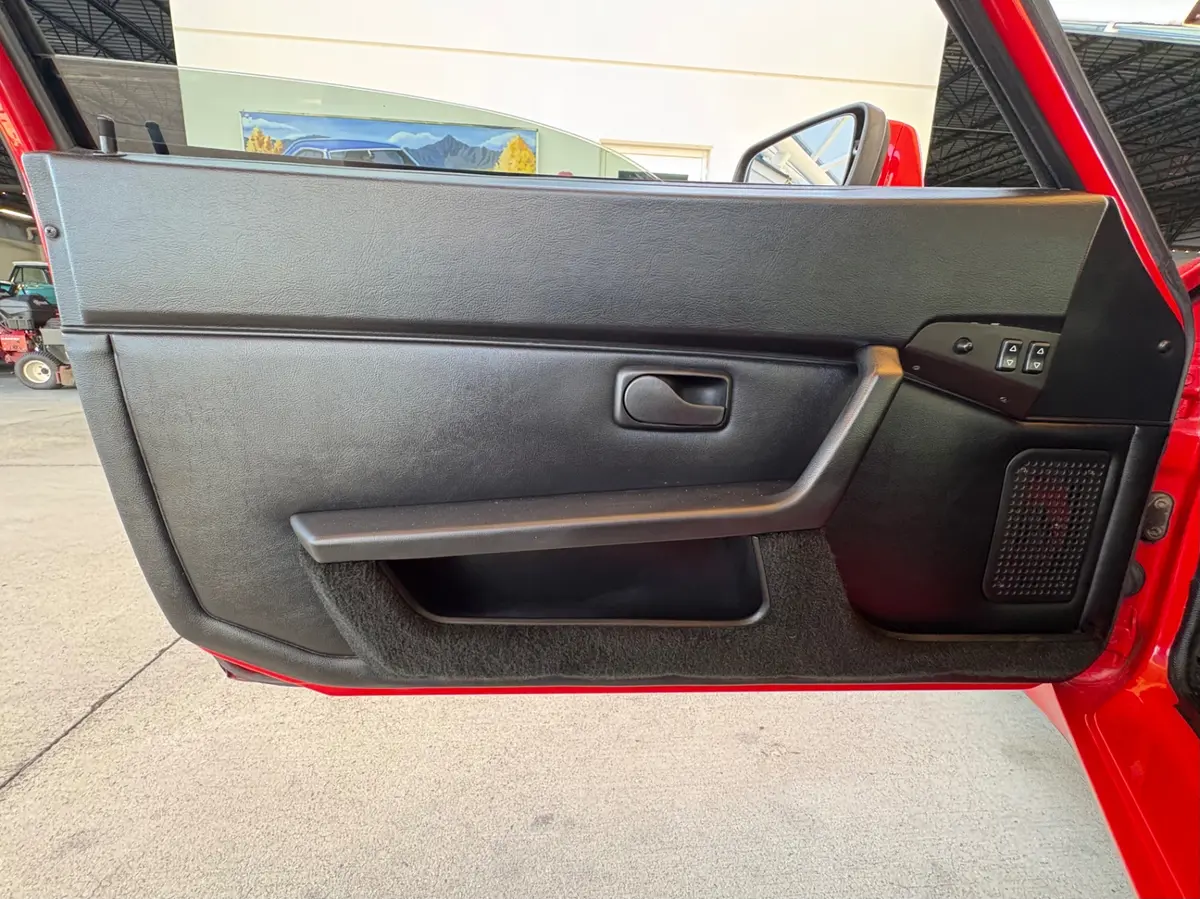
The electric sunroof operates from the headliner panel, and power windows are controlled from switches on each door. The door panels themselves appear clean with no visible damage to the leather or speaker grilles.
Exterior
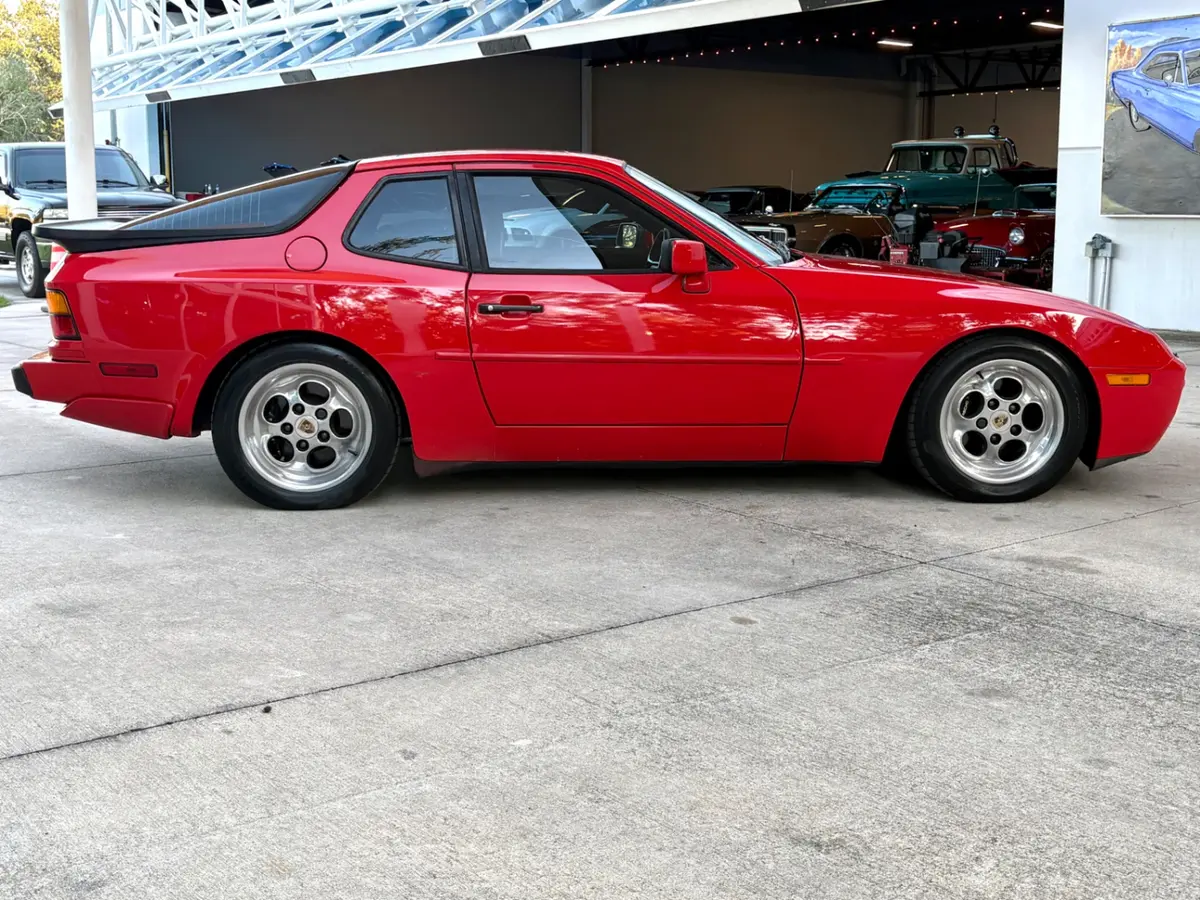
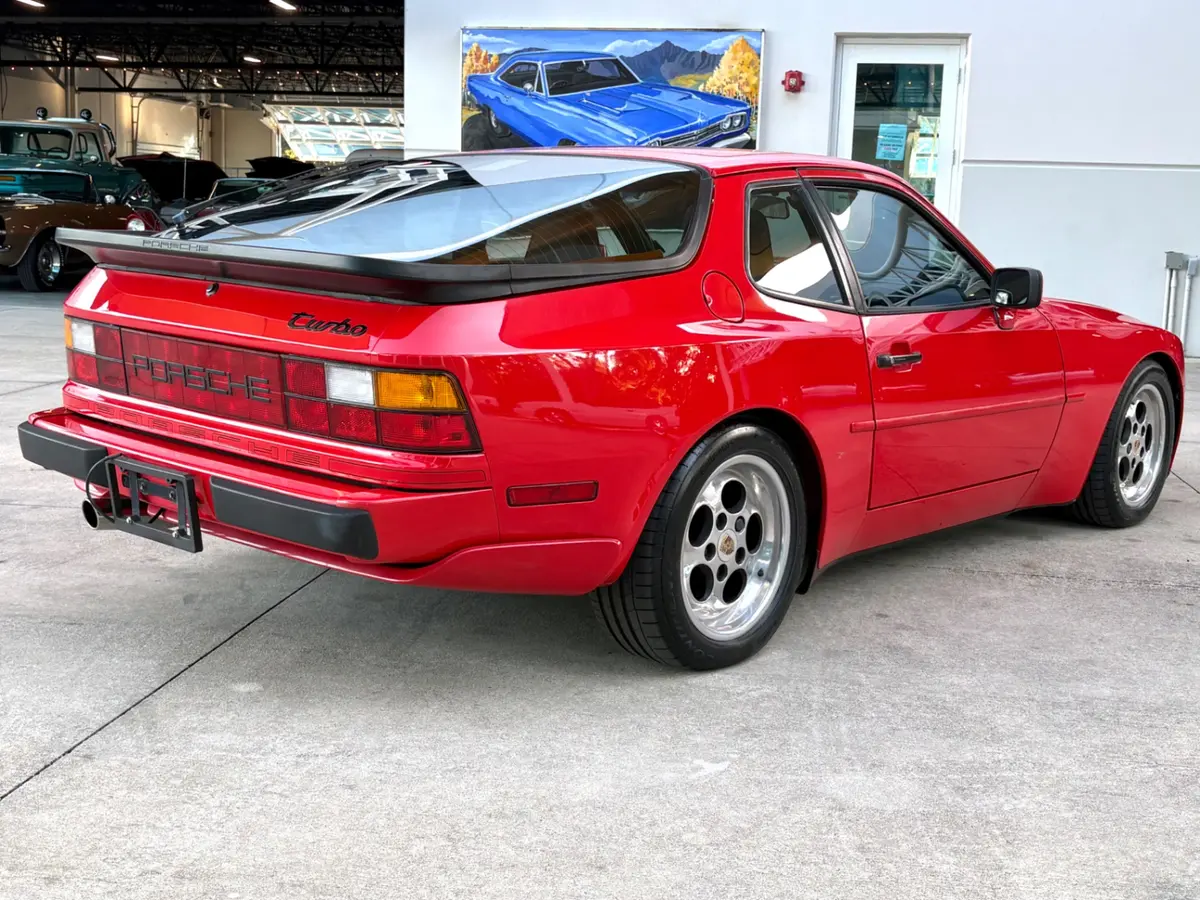
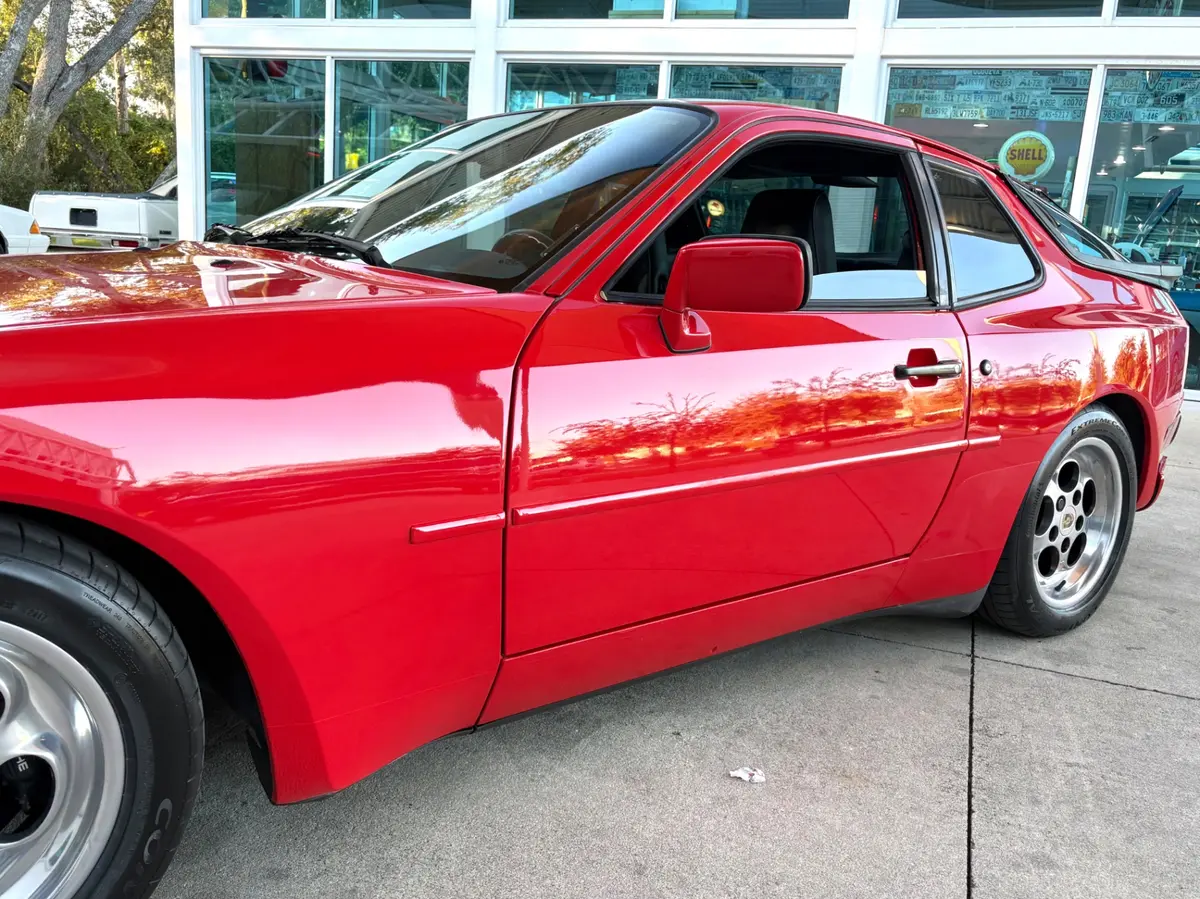
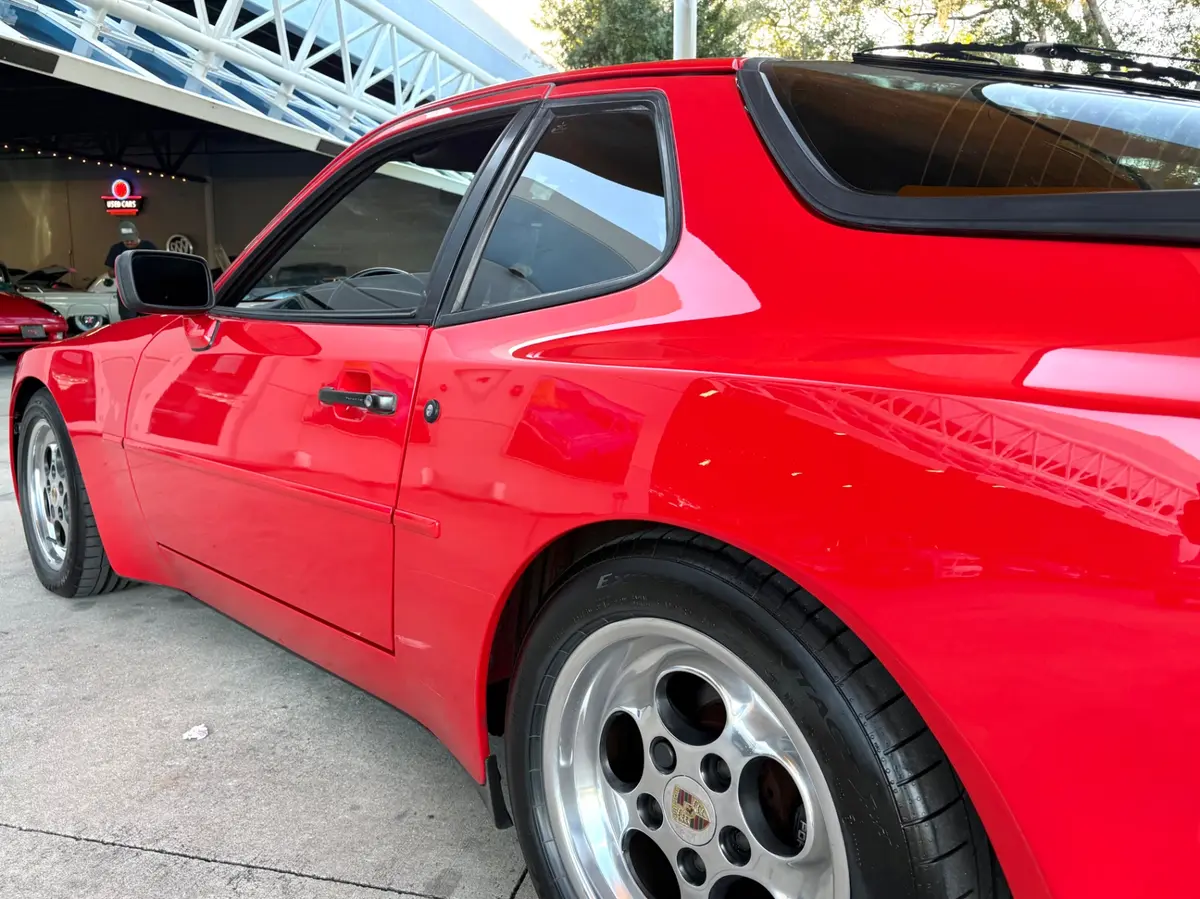
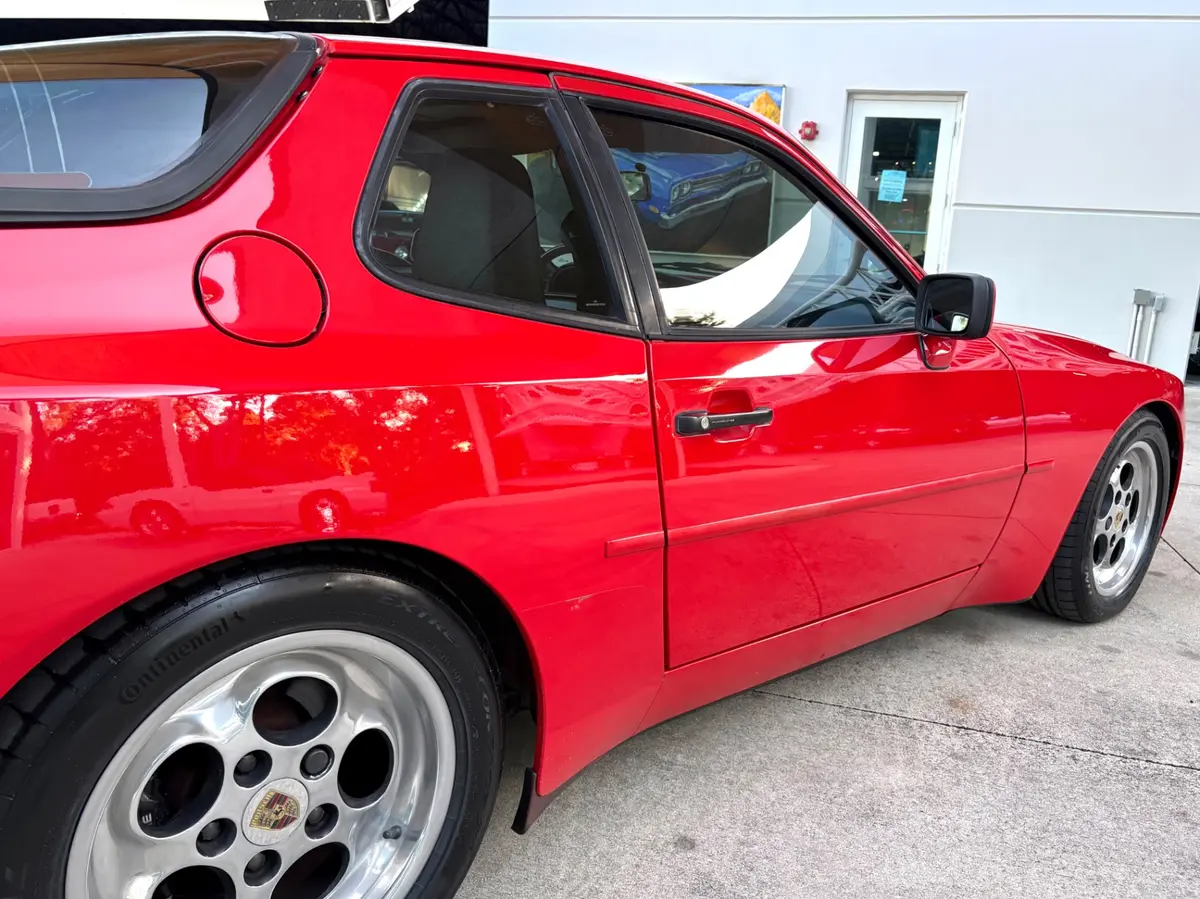
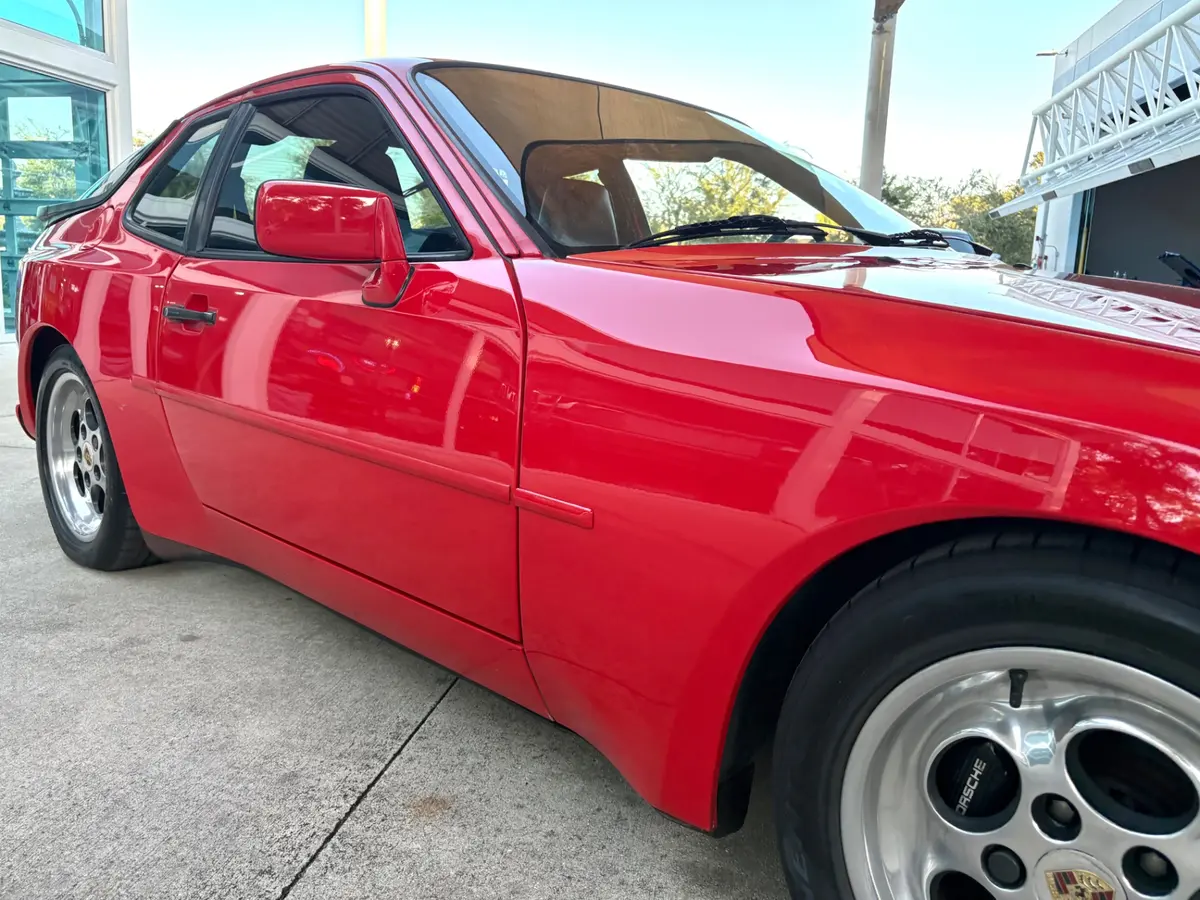
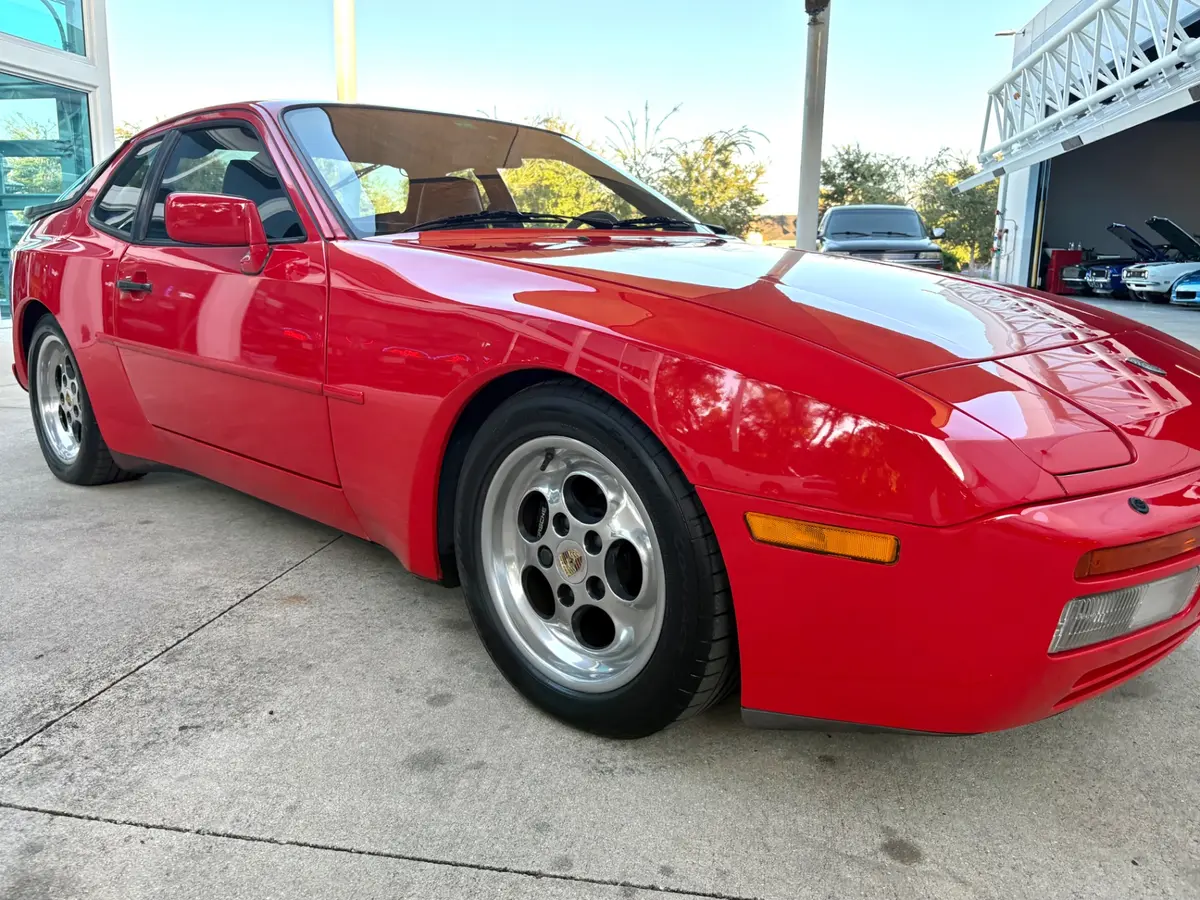
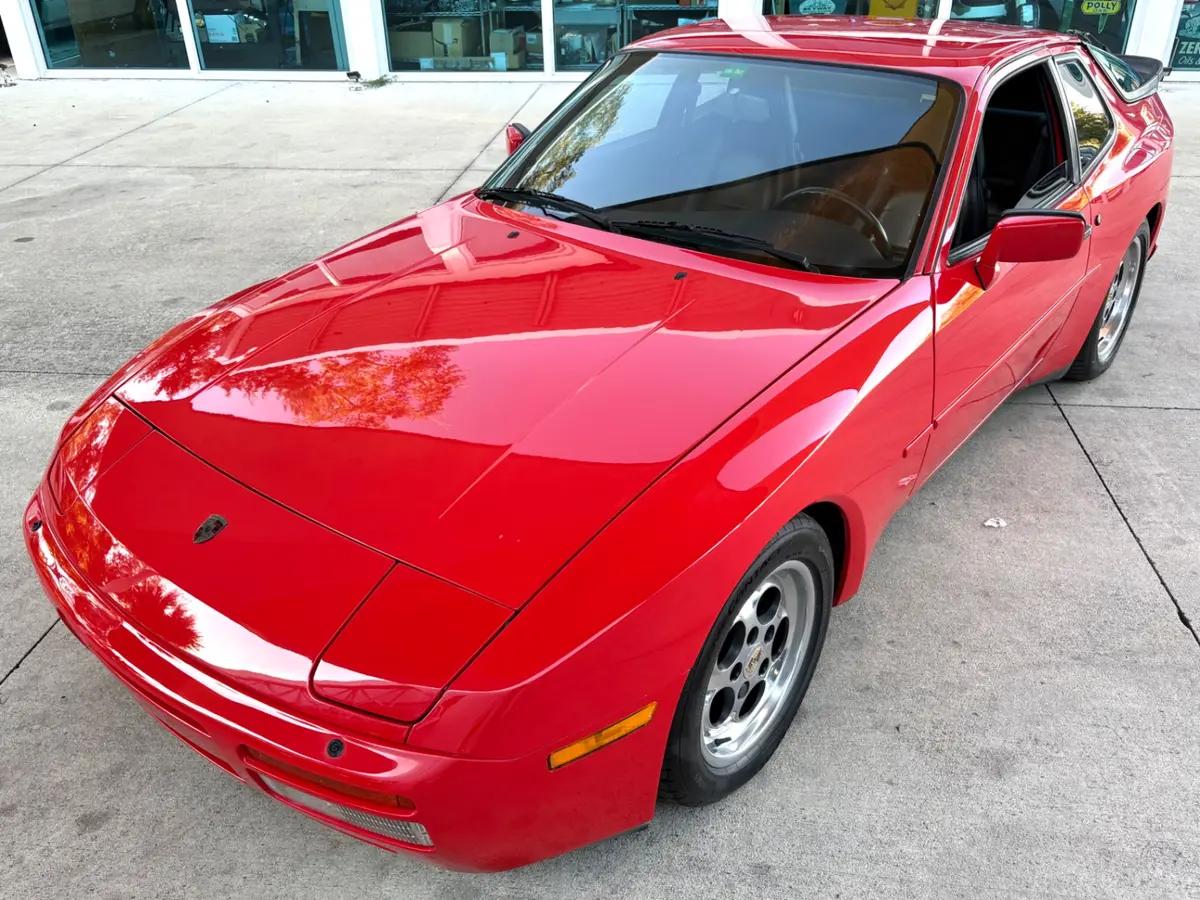
The red on this 1986 Porsche 944 Turbo is consistent in color and gloss across the panels in the photos, with no obvious signs of patchwork repainting or mismatched panel gaps. The 944 Turbo's body is visually wider than the base 944 — Porsche fitted flared fenders front and rear to accommodate the broader track and larger wheels — and those flares remain one of the clearest visual tells separating the Turbo from its naturally aspirated sibling.
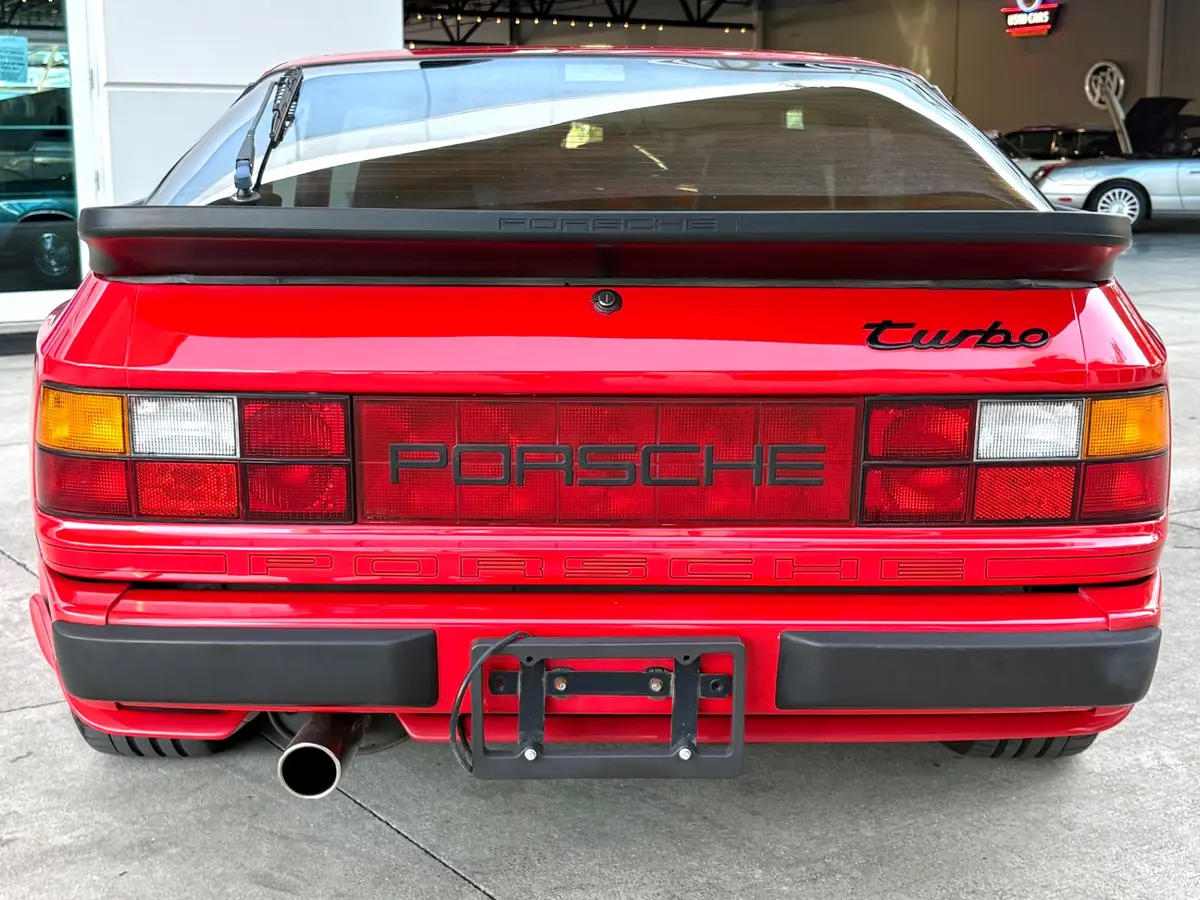
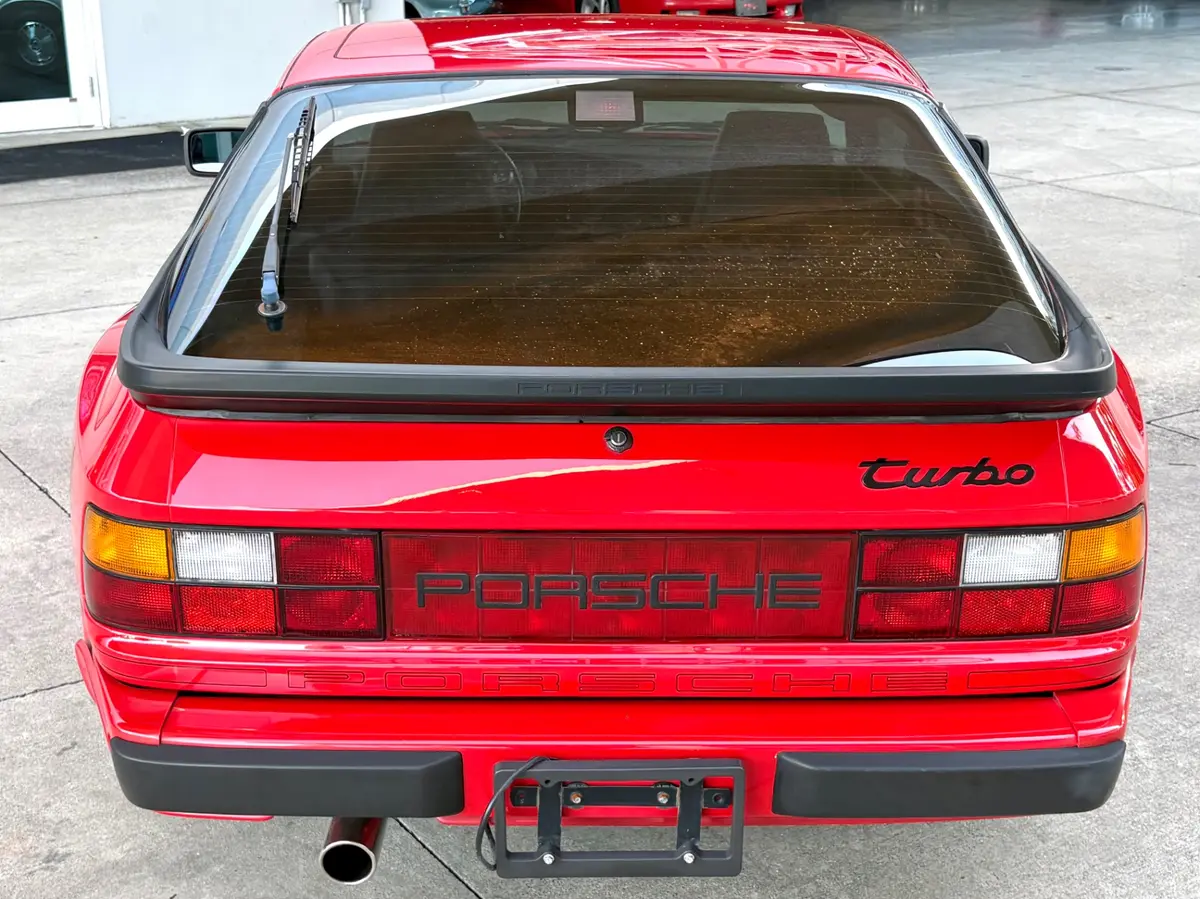
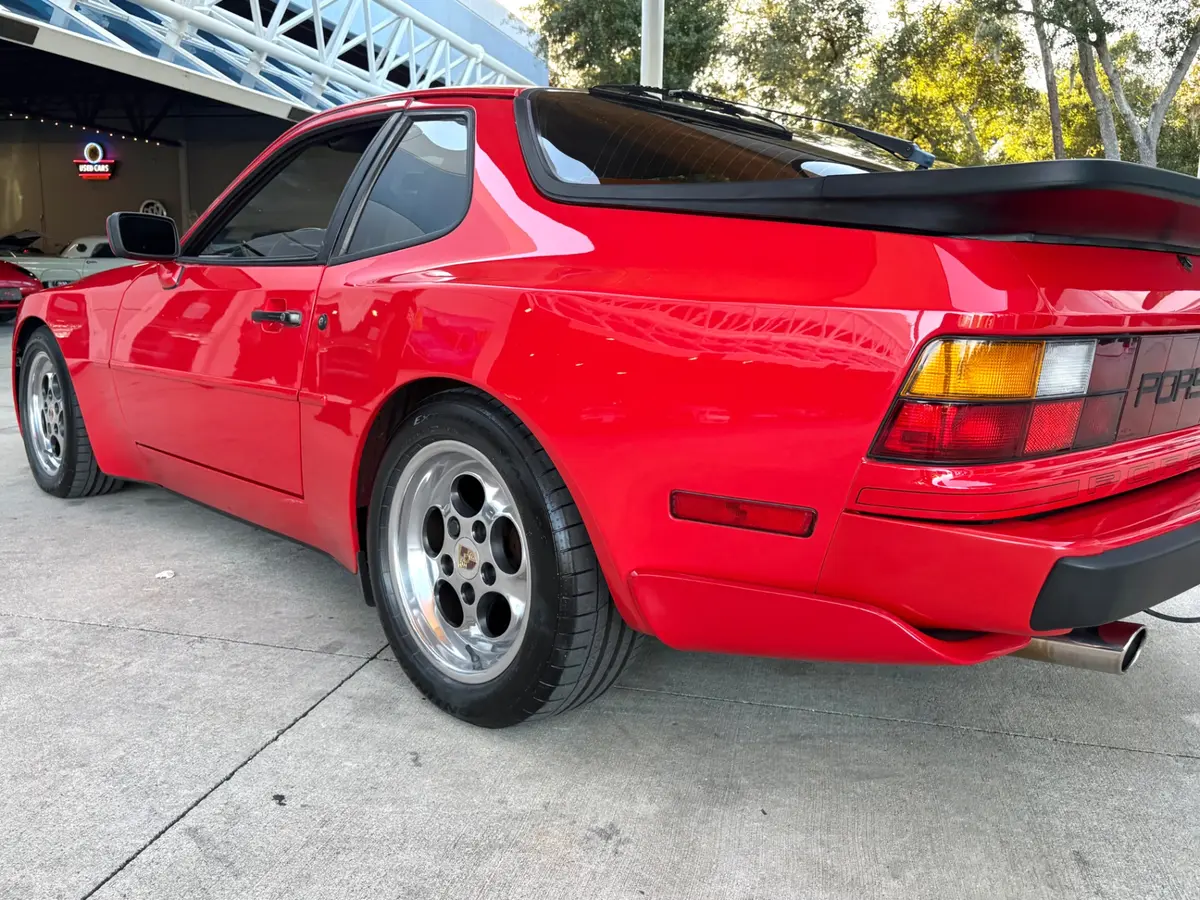
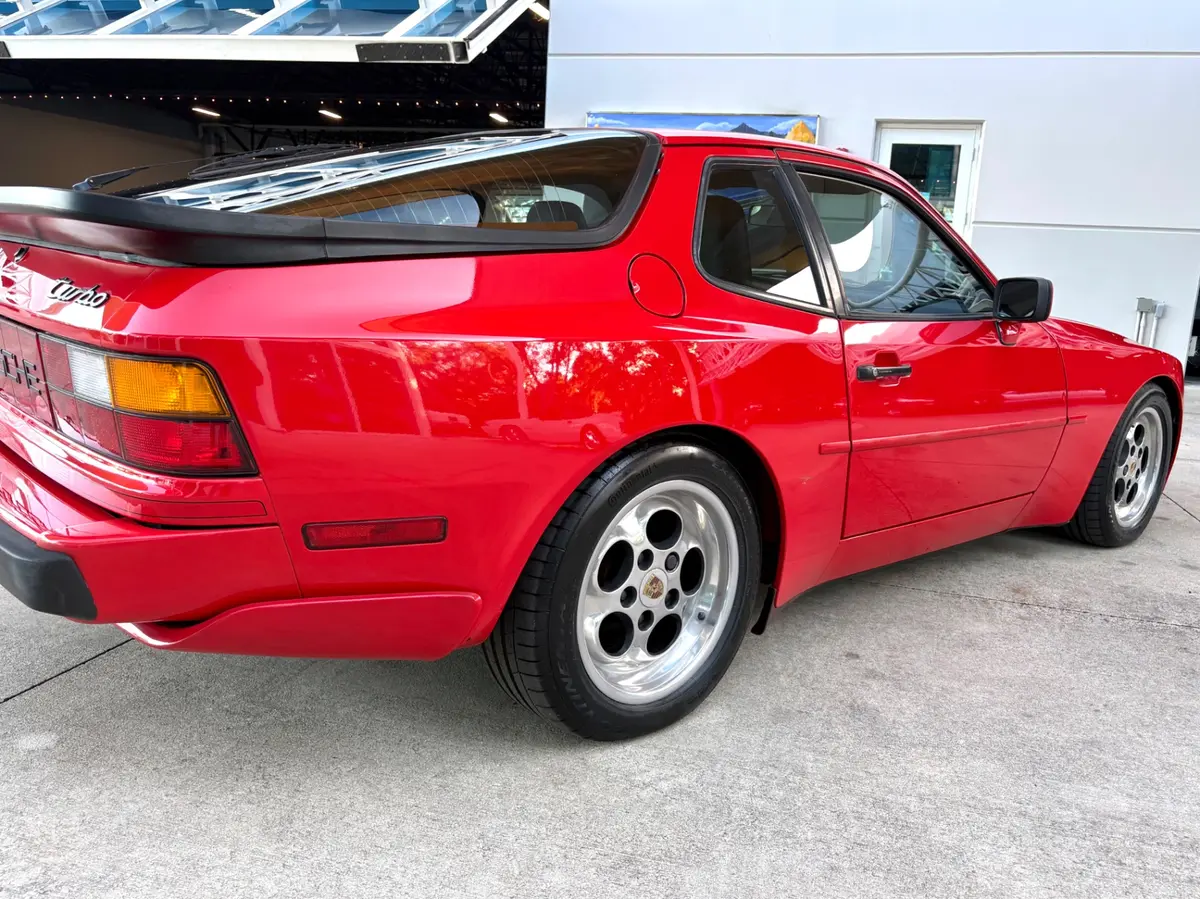
The front end is clean and uncracked, with the pop-up headlights, front fog lights integrated into the bumper, and the lower louvered intake all present and correctly fitted. The telephone dial alloy wheels — a design closely associated with the 944 Turbo — are mounted with Continental tires and show normal cosmetic wear. The rear of the car carries the factory integrated spoiler above the tailgate, which was designed specifically for the Turbo to provide downforce at speed. The Porsche name is spelled out in individual letters across the rear panel above the license plate mounting, and the single polished exhaust tip exits at center-left below the bumper.
Color-keyed side mirrors are fitted and appear straight. The rear window wiper is present and mounted on the tailgate glass. All exterior lighting bezels appear intact.
Conclusion
The 1986 Porsche 944 Turbo occupies a specific and well-regarded place in the air-cooled and water-cooled Porsche collector market. It was the car that proved a front-engined, four-cylinder Porsche could be taken seriously as a performance machine — not just by enthusiast writers at the time, but by lap times and physics. The transaxle layout, the intercooled turbo engine, the wide-body stance, and the balanced chassis were all deliberate engineering choices, not compromises. First-year 944 Turbos are increasingly difficult to find in this condition, and the market has responded accordingly.
This car runs the right drivetrain — the turbocharged 2.5, the 5-speed, the factory boost gauge — in one of the most visually correct color combinations the 944 Turbo could wear. It is a car for someone who wants to drive it, not store it.
To schedule a viewing or ask specific questions about this 1986 Porsche 944 Turbo, call Skyway Classics in Sarasota, Florida at 941-254-6608.
Disclaimer
Information found on the website is presented as given to us by the owner of the car, whether on consignment or from the owner we bought it from. Some Photos, materials for videos, descriptions and other information are provided by the consignor/seller and is deemed reliable, but Skyway Classics does not warranty or guarantee this information. Skyway Classics is not responsible for information that may incorrect or a publishing error. The decision to purchase should be based solely on the buyers personal inspection of the vehicle or by a professional inspection service prior to offer or purchase being made.
1986 Porsche
944 Turbo
Why Choose Skyway Classics?
Explore our curated inventory of classic and collector cars—thoughtfully selected, ready to drive, and supported by experts who make ownership simple.
Expert Curation
Every vehicle is hand-selected by our experts for quality, authenticity, and investment potential.
Fast Transactions
Streamlined buying and selling process with quick financing and immediate delivery options.
Only National Dealer With Classic Service & Repair
We’re the only national dealership that services and repairs the classics we sell—before and after the sale.
Nationwide Network
Access to our extensive network of collectors, restorers, and classic car enthusiasts nationwide.
Concierge Ownership Support
From financing and insurance to paperwork, shipping, and titling—we handle the details so you can enjoy the drive.
Passion-Driven Service
We're classic car enthusiasts first, providing personalized service with genuine passion for the hobby.