
1978 Chevrolet
Corvette Silver Anniversary Edition
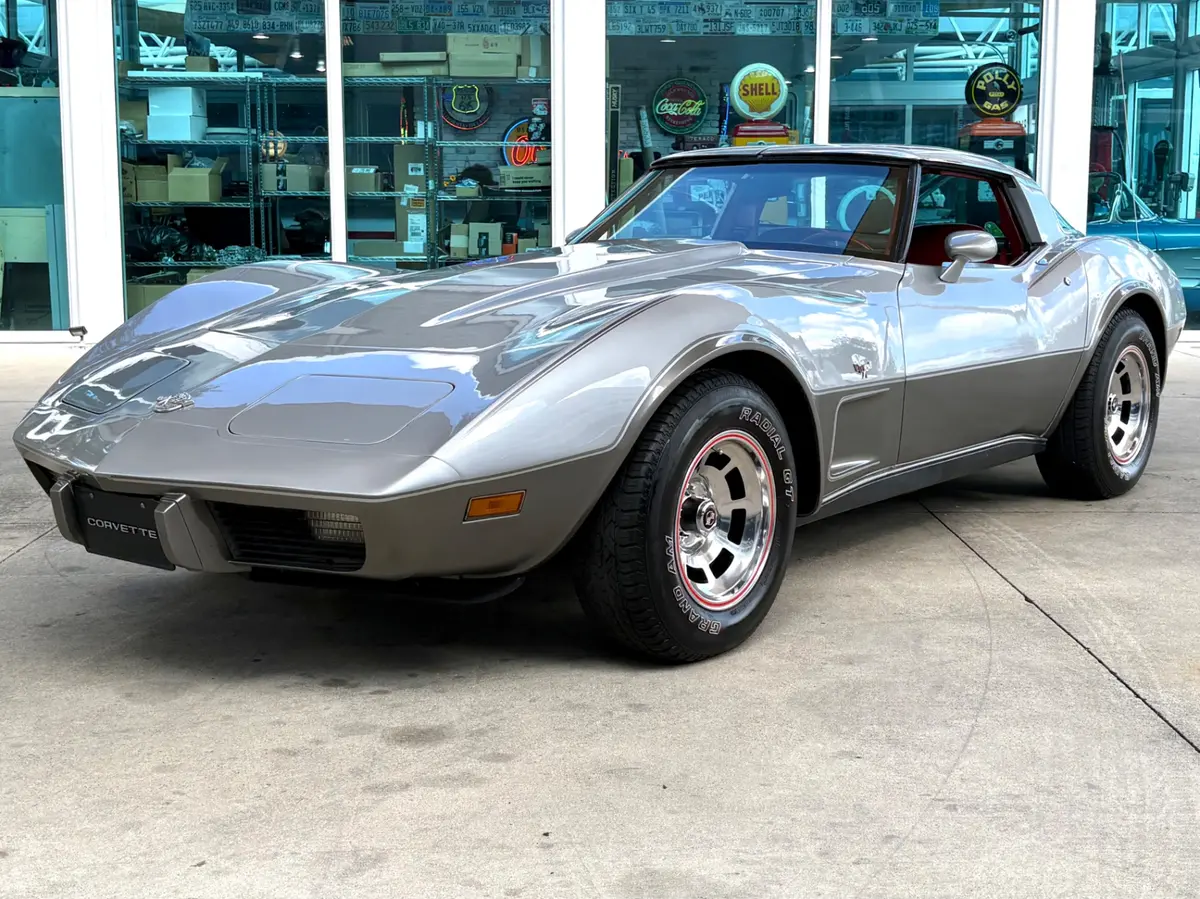
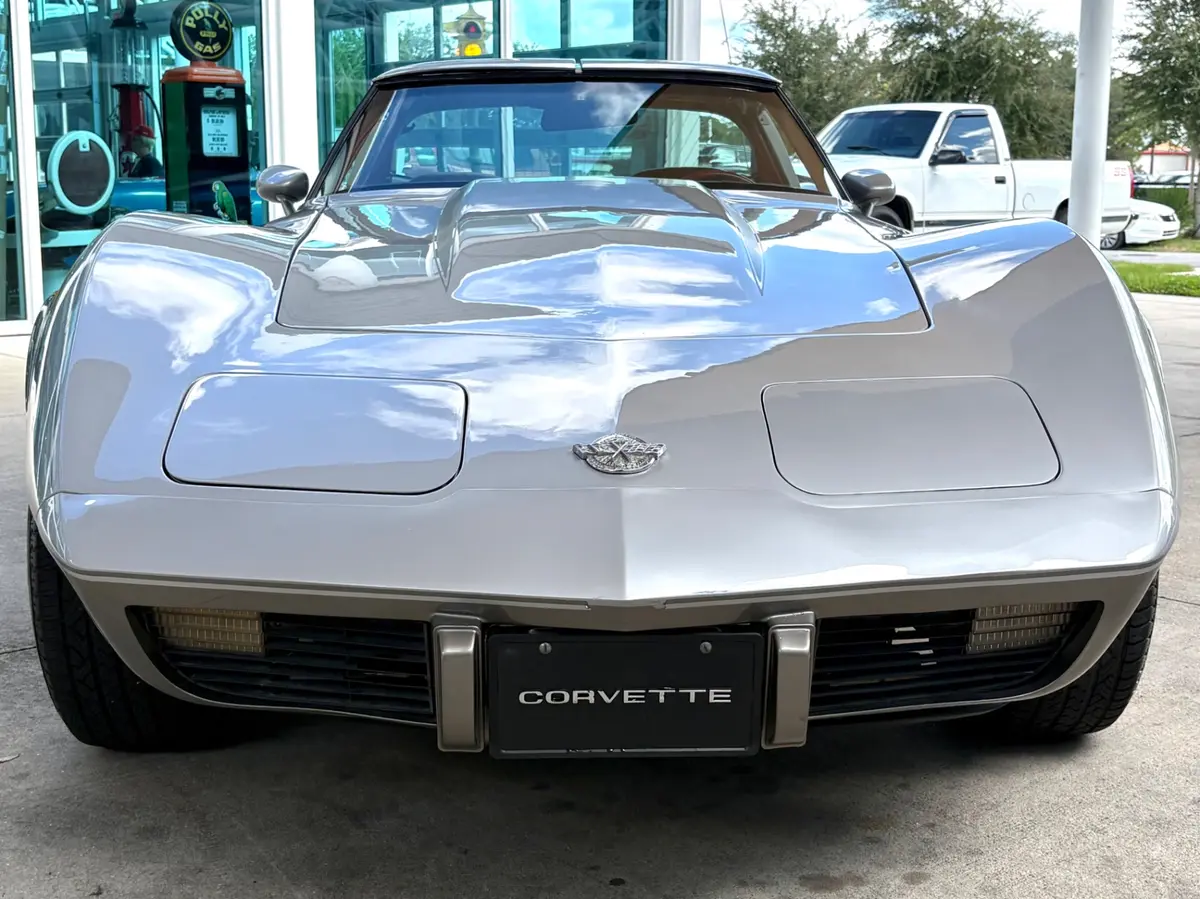
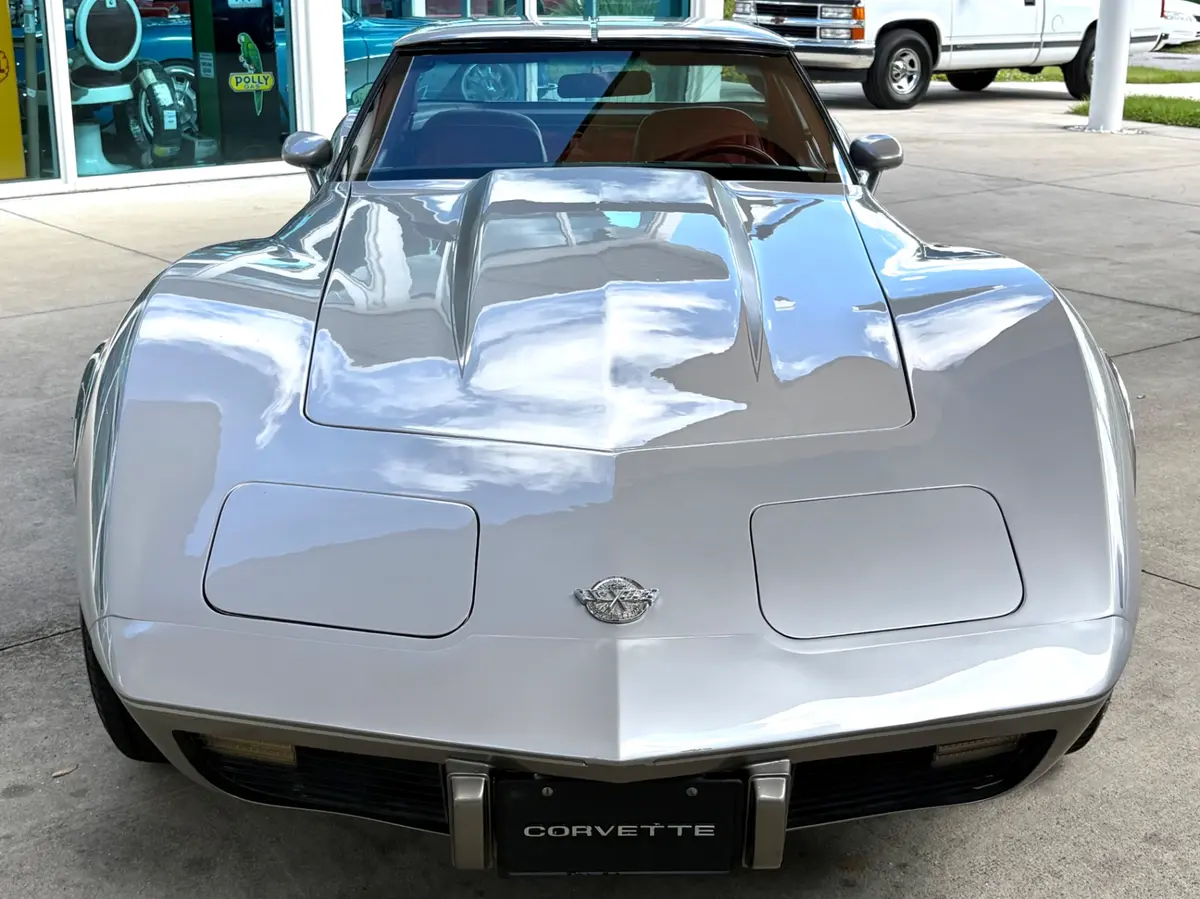
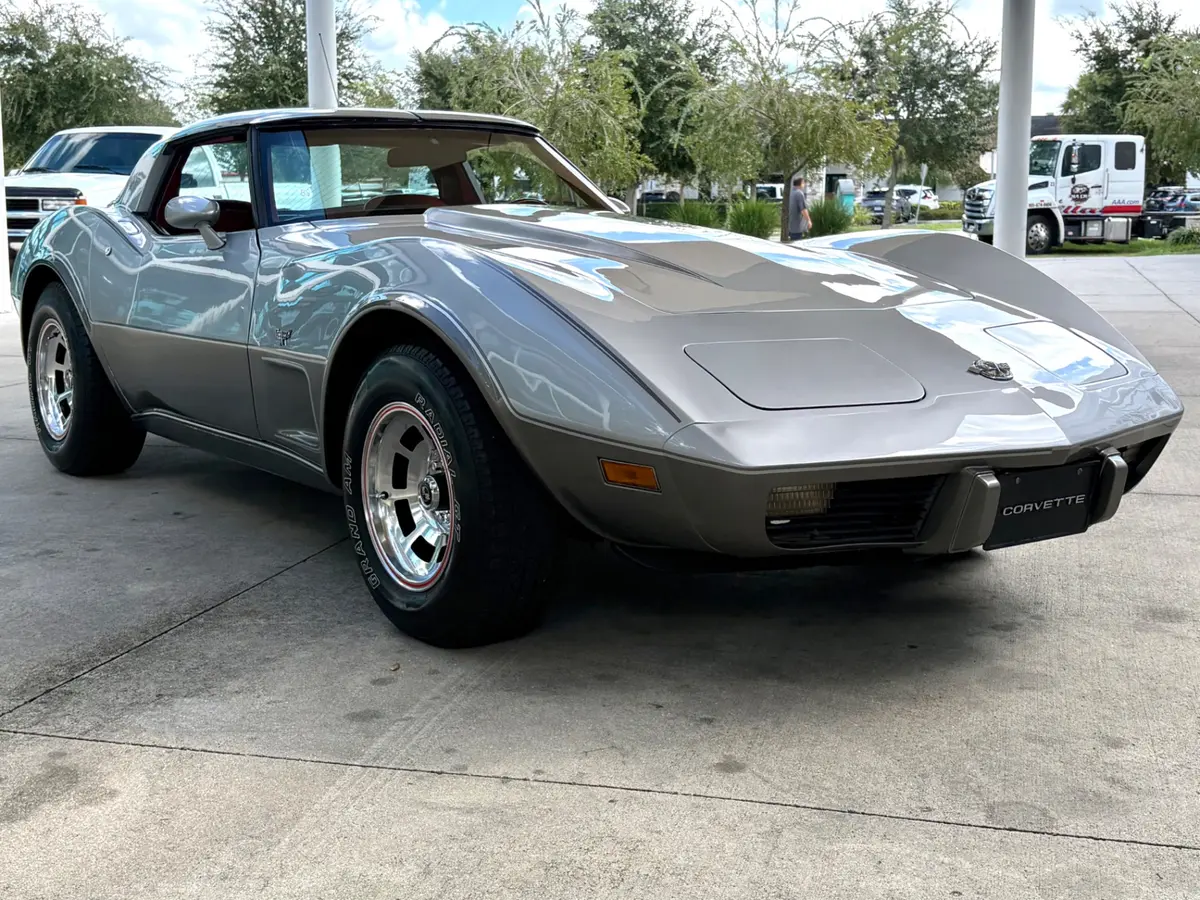
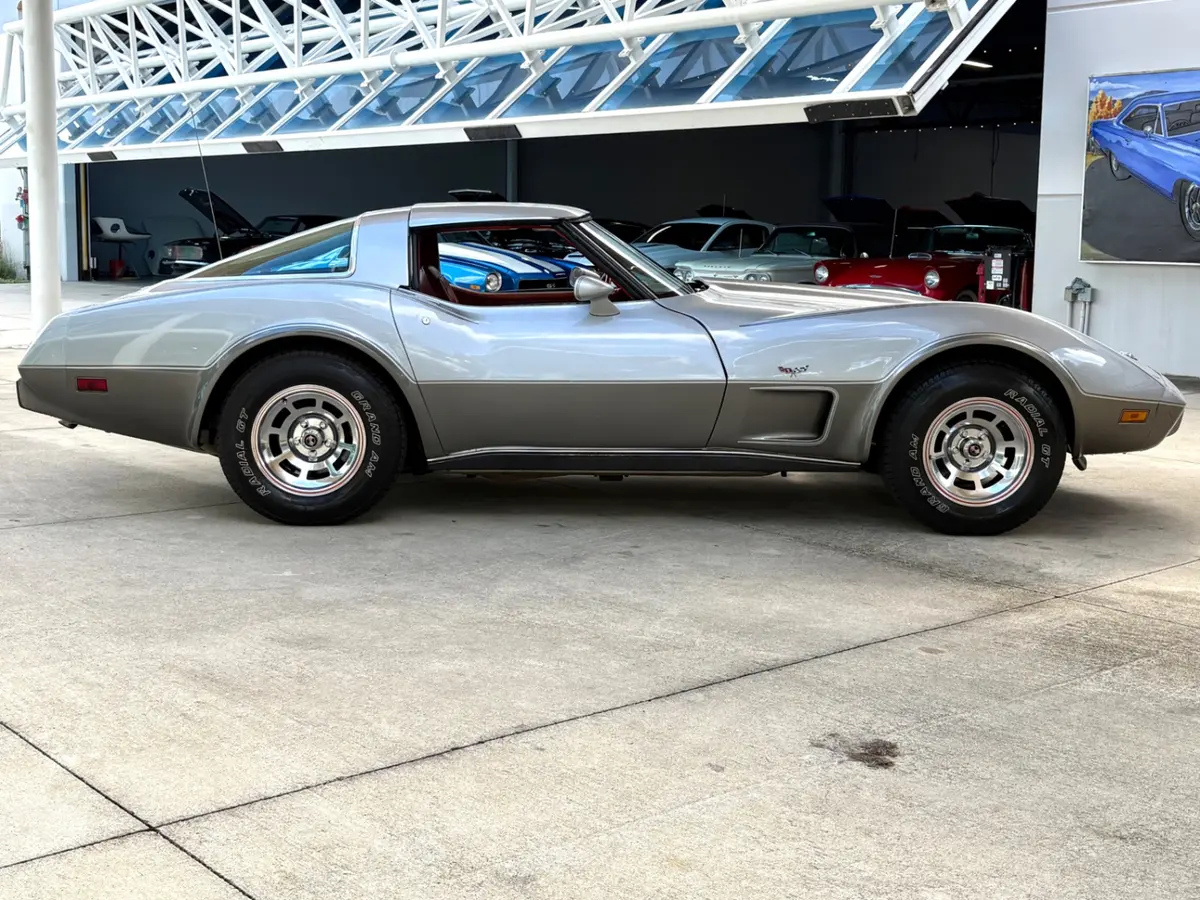
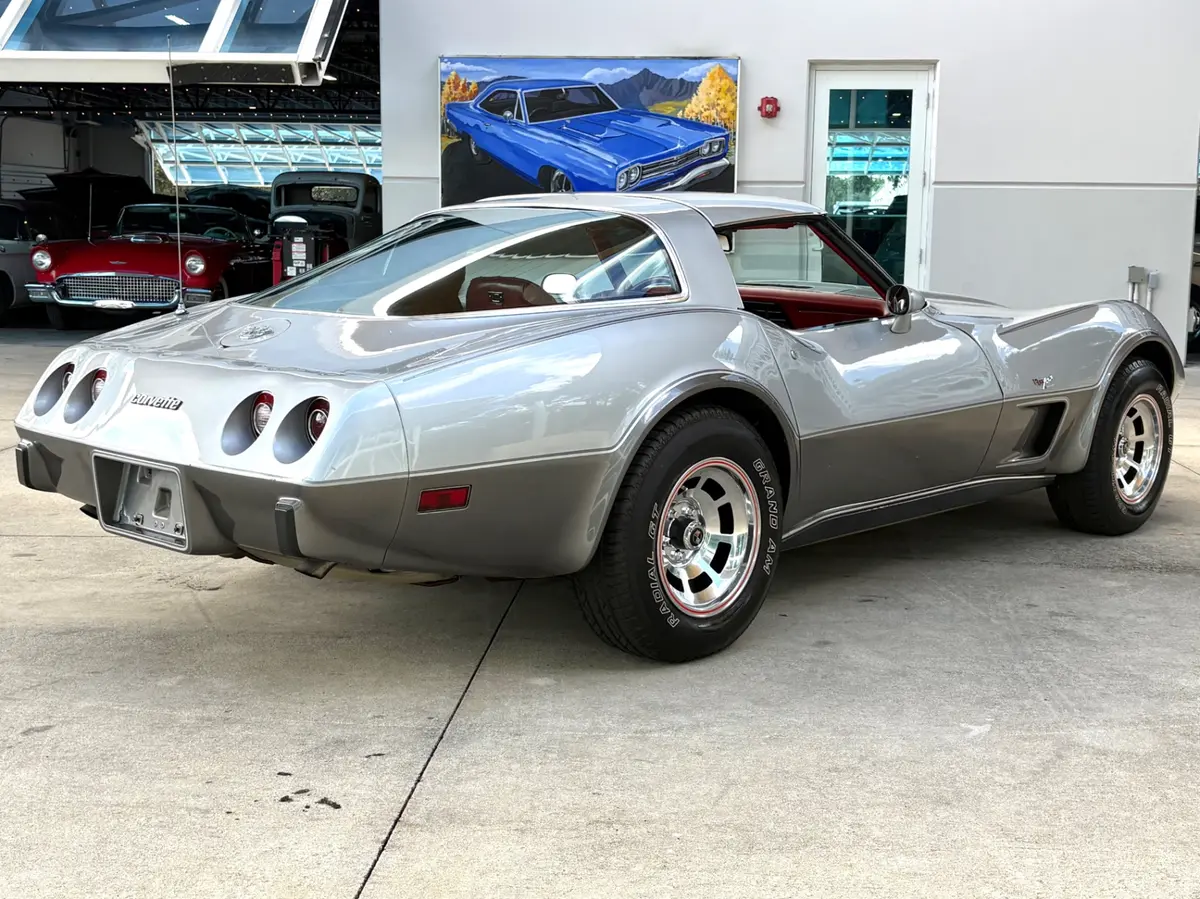
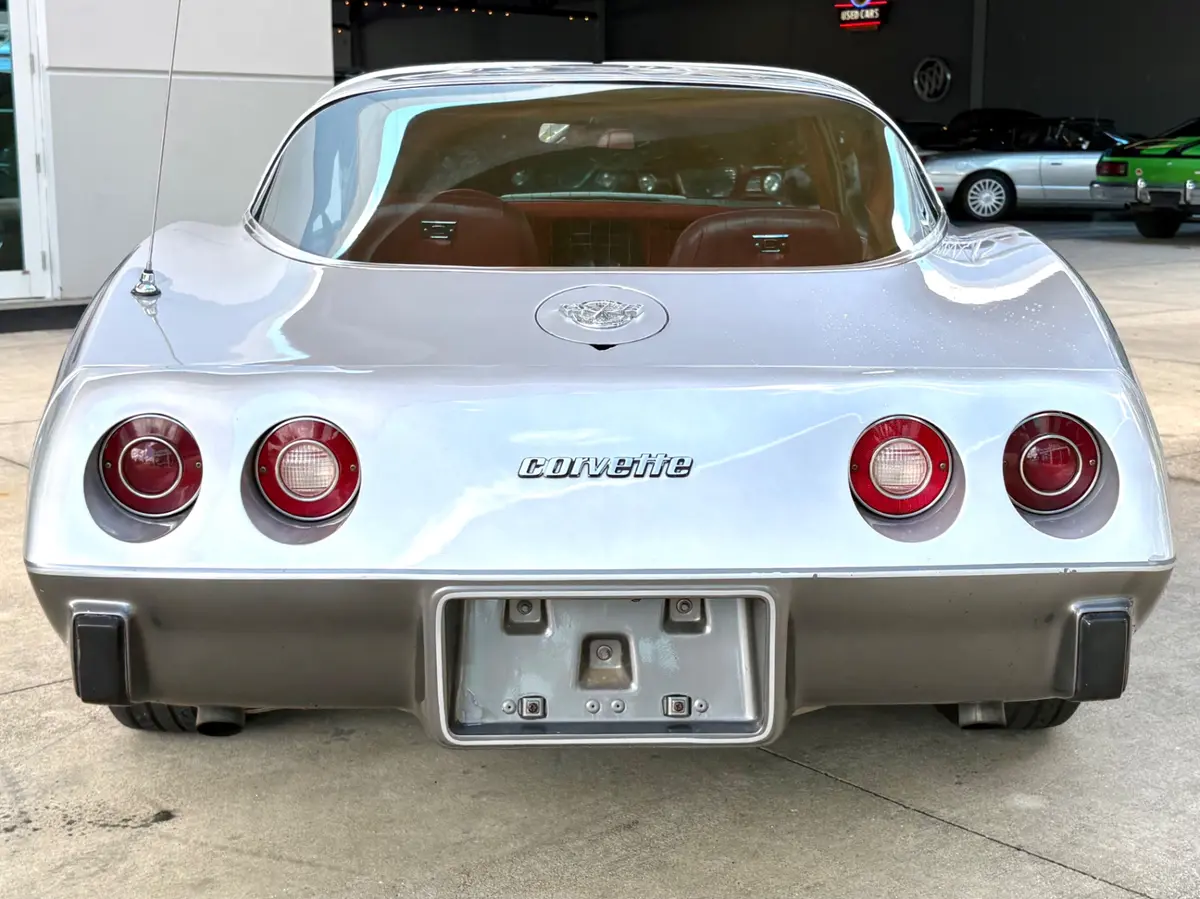
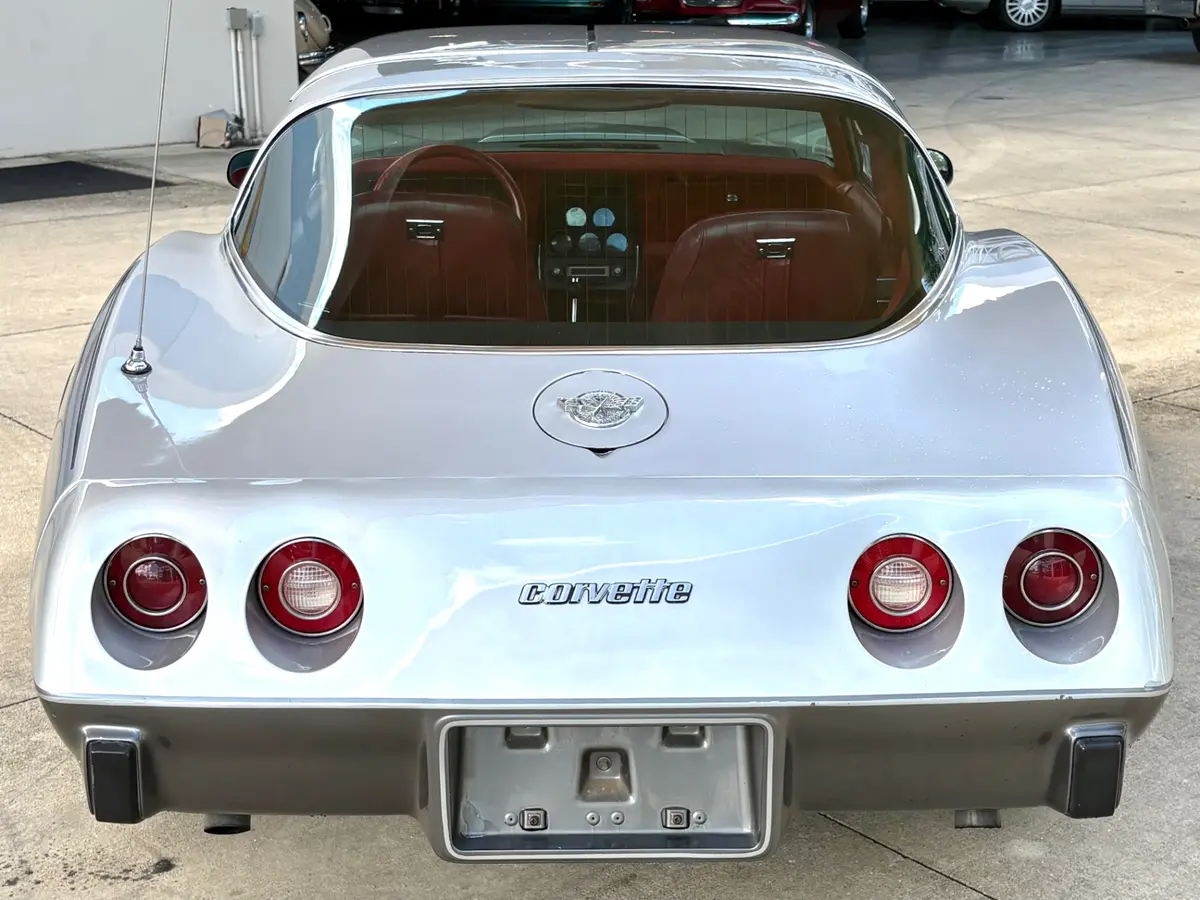
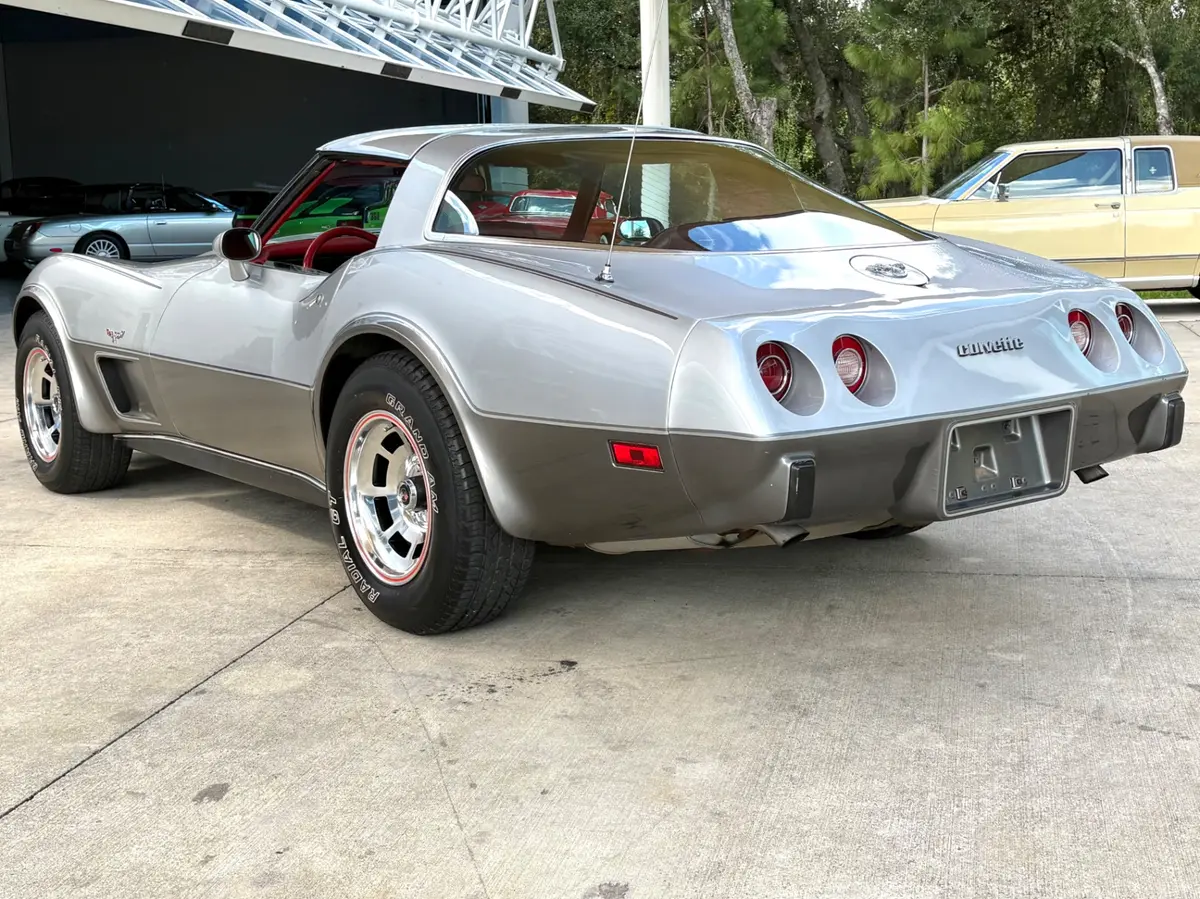
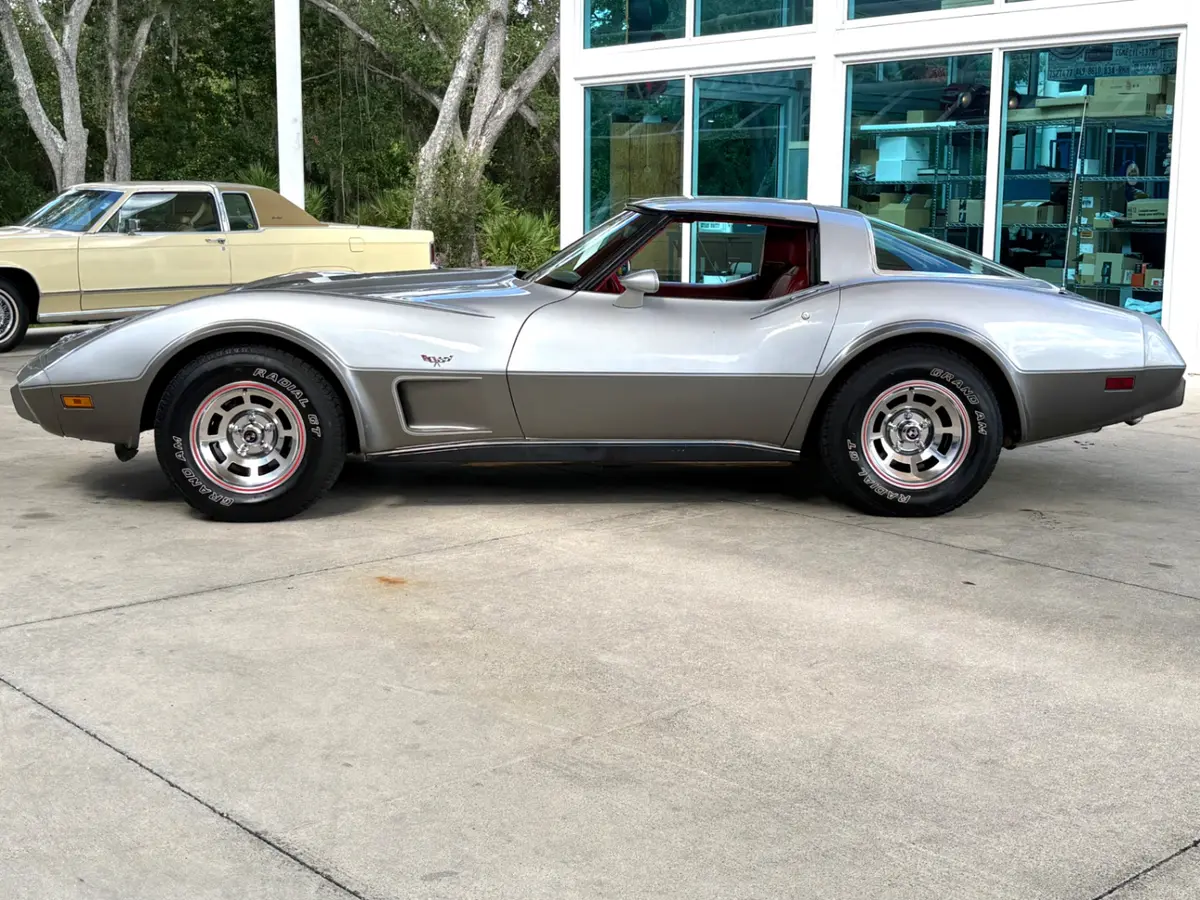
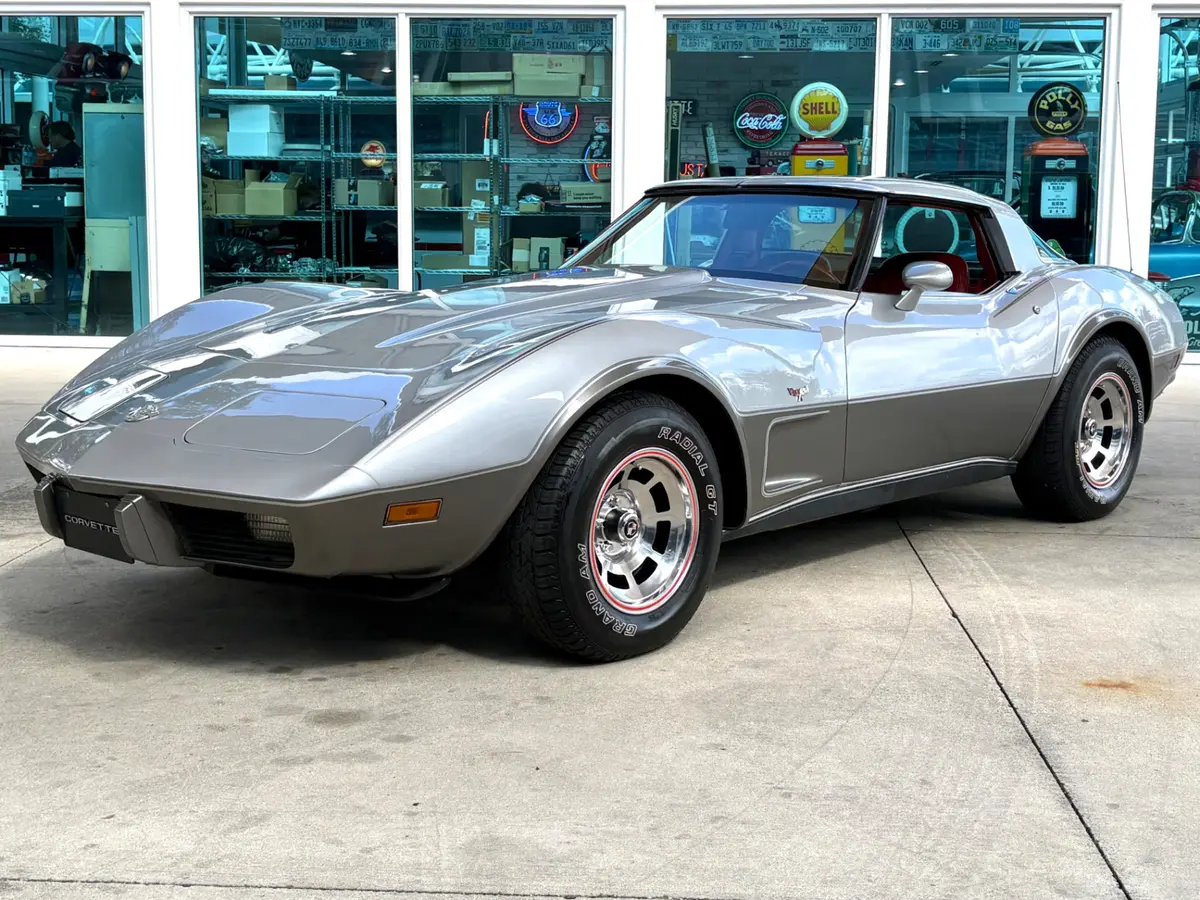
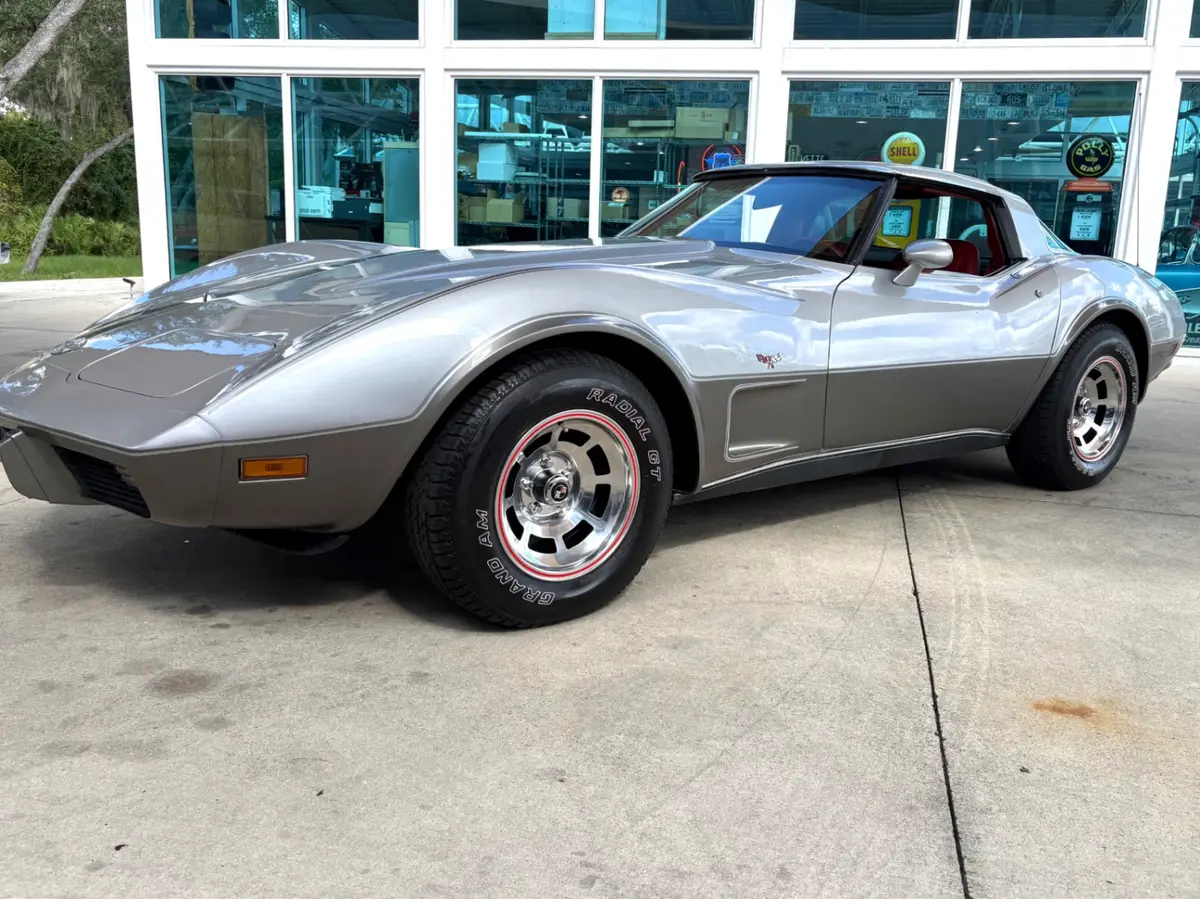
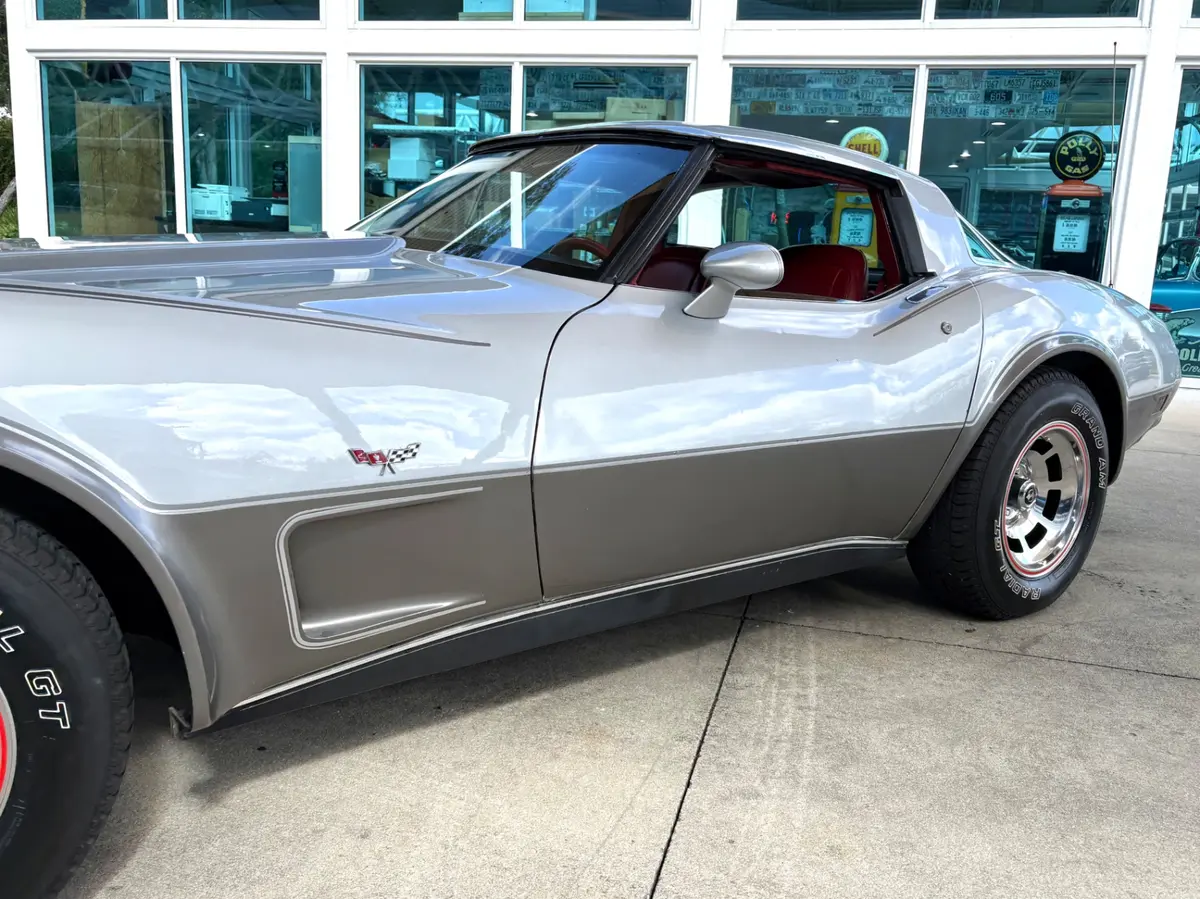
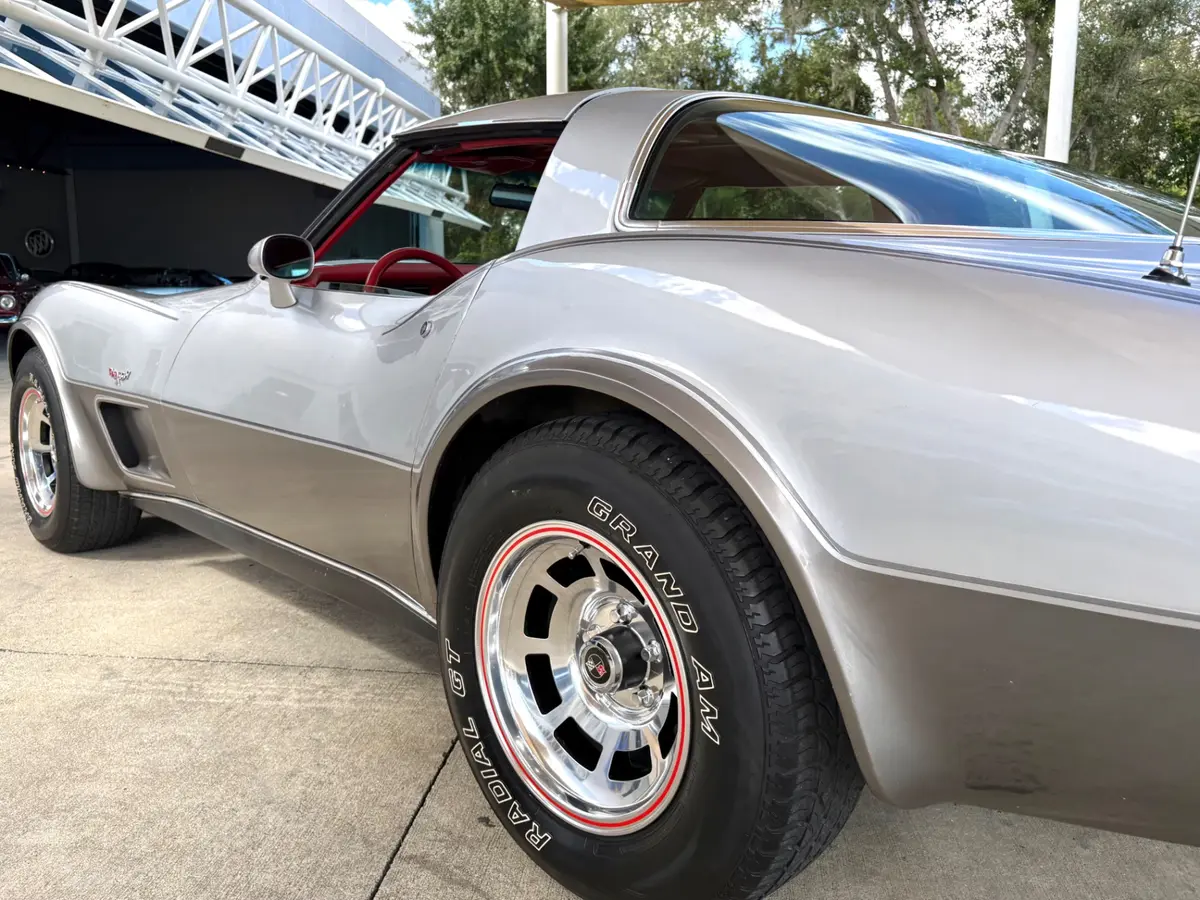
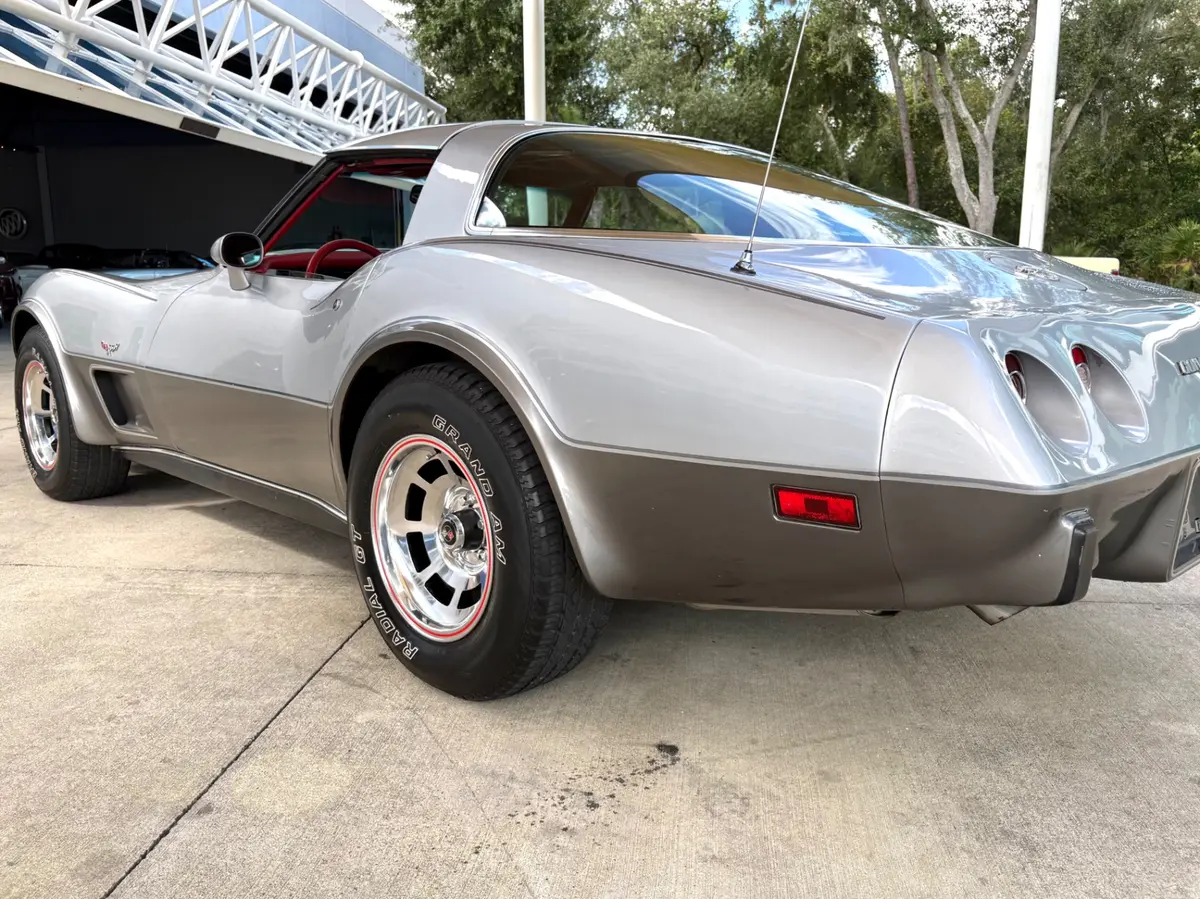
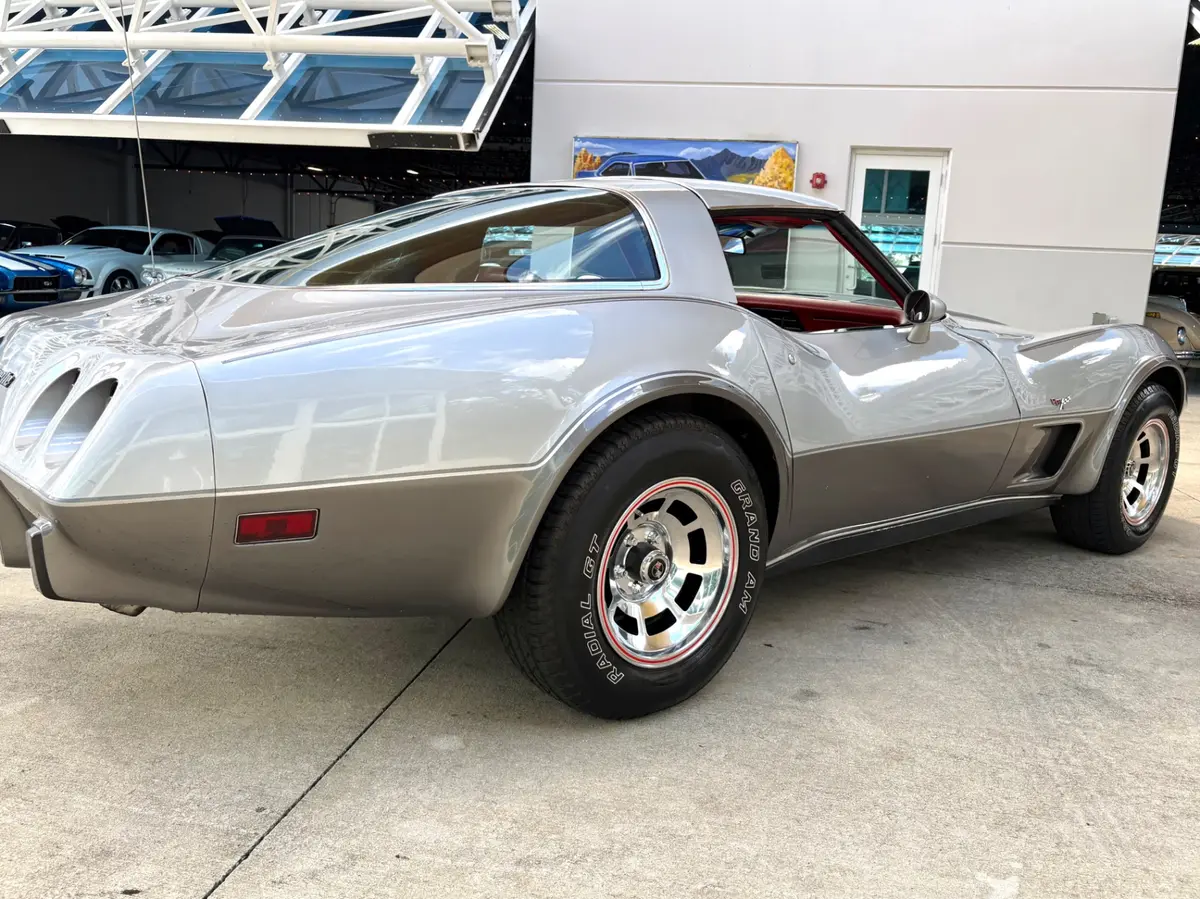
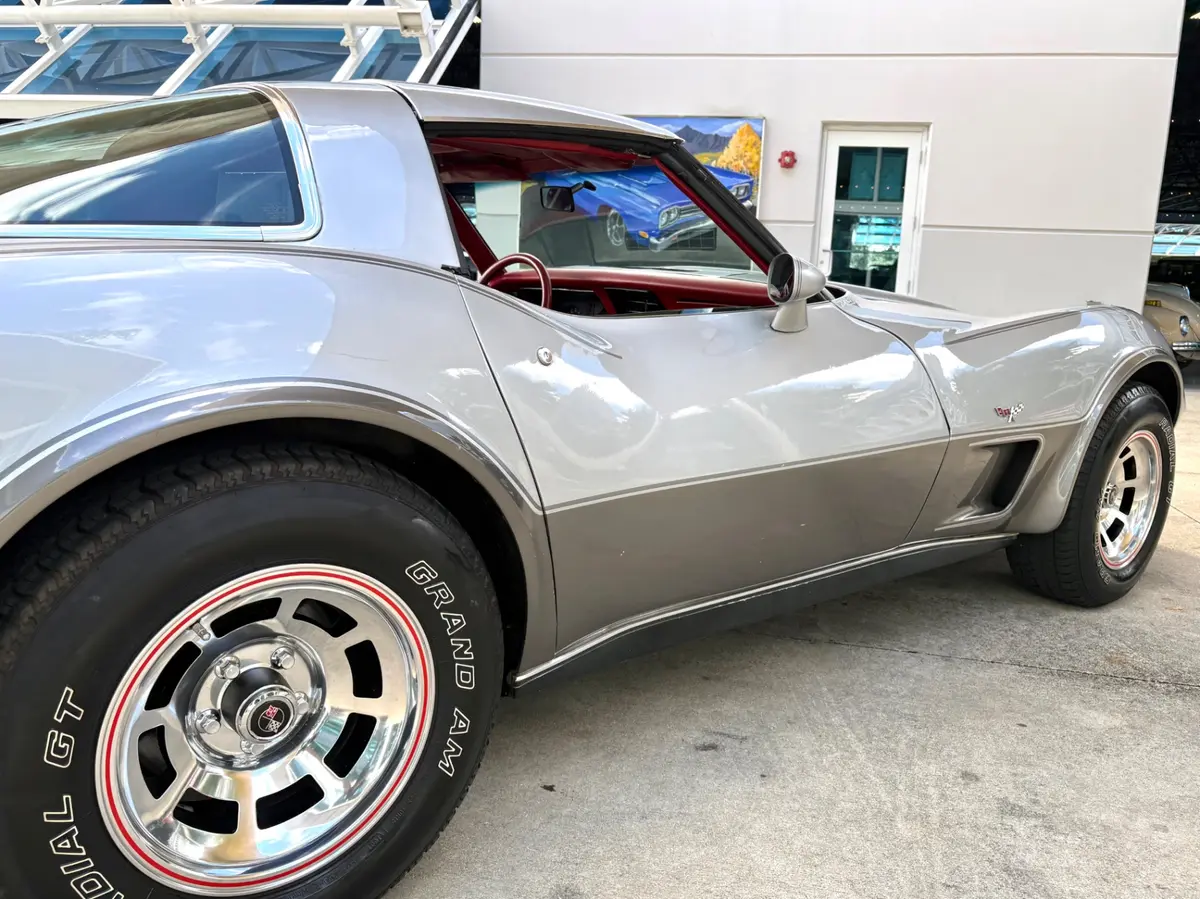
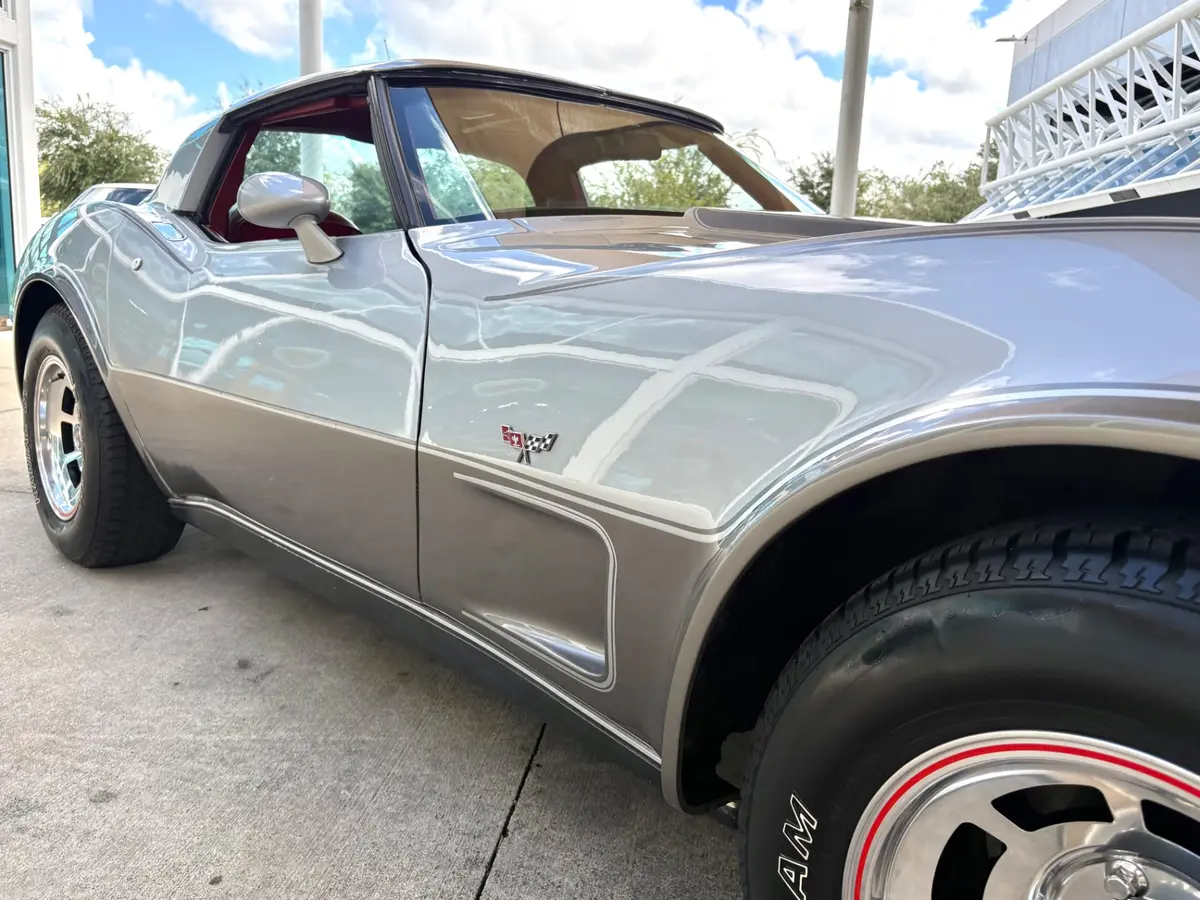
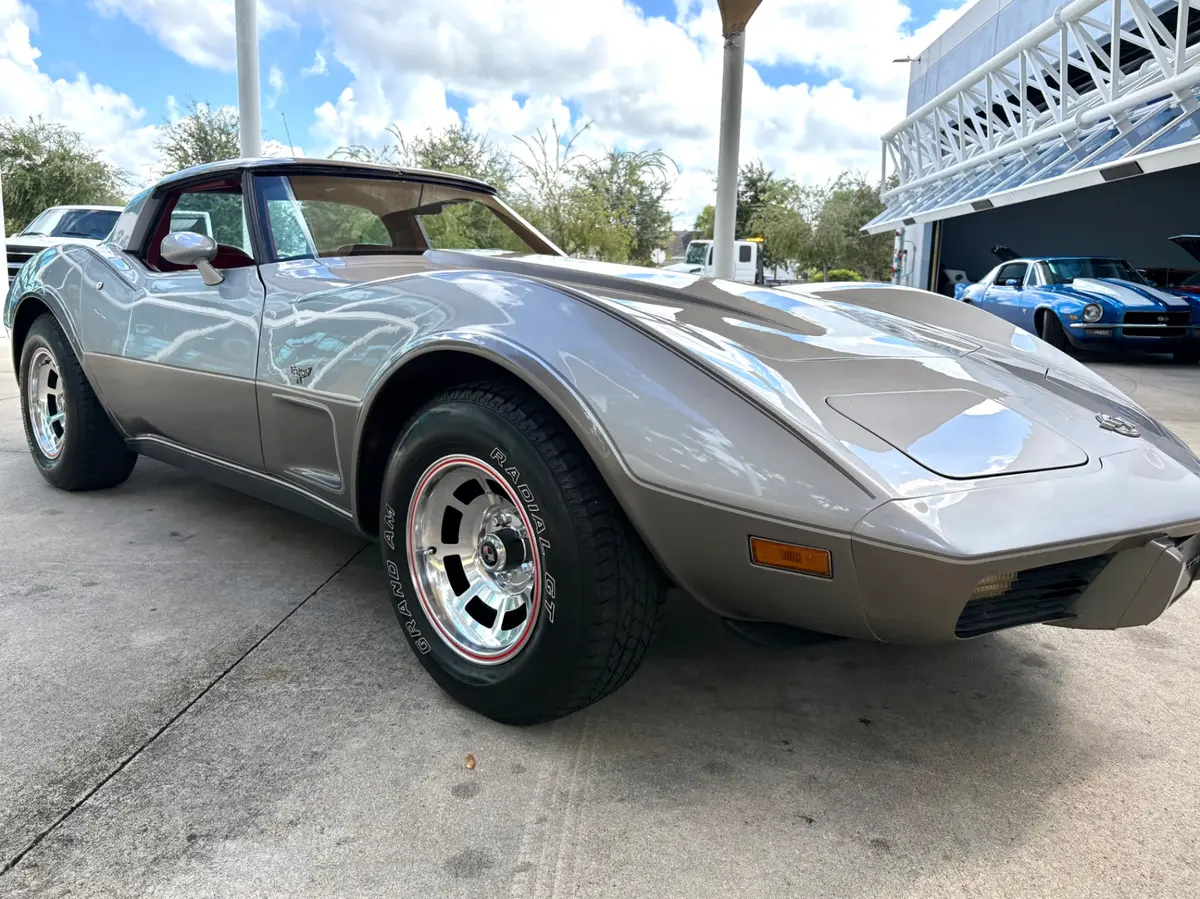
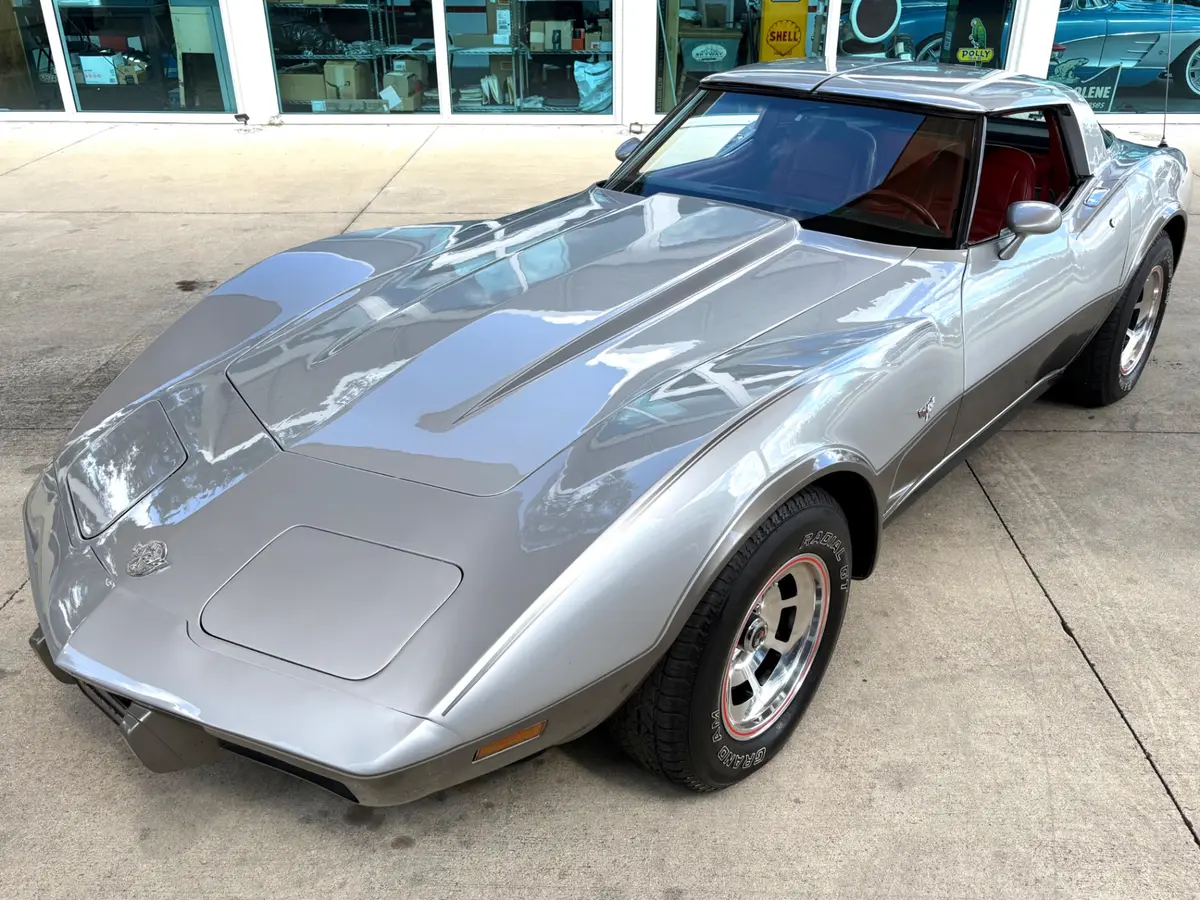
1978 Chevrolet Corvette — Two-Tone Silver/Charcoal, 4-Speed Manual, Red Leather Interior
Why This Car Is Special
The 1978 Chevrolet Corvette holds a specific and well-documented place in C3 history. This was the 25th anniversary year for the Corvette nameplate, and Chevrolet marked it with a significant redesign of the rear end — most notably the introduction of the large wraparound fastback rear window that replaced the previous flying buttress design. That change alone transformed the look of the car and dramatically improved rear visibility. The 1978 model also debuted a redesigned instrument panel and a larger interior storage area behind the seats. Chevrolet sold 46,776 Corvettes in 1978, the highest single-year total up to that point in the car's history, which tells you something about how well the public responded to what the factory did that year.
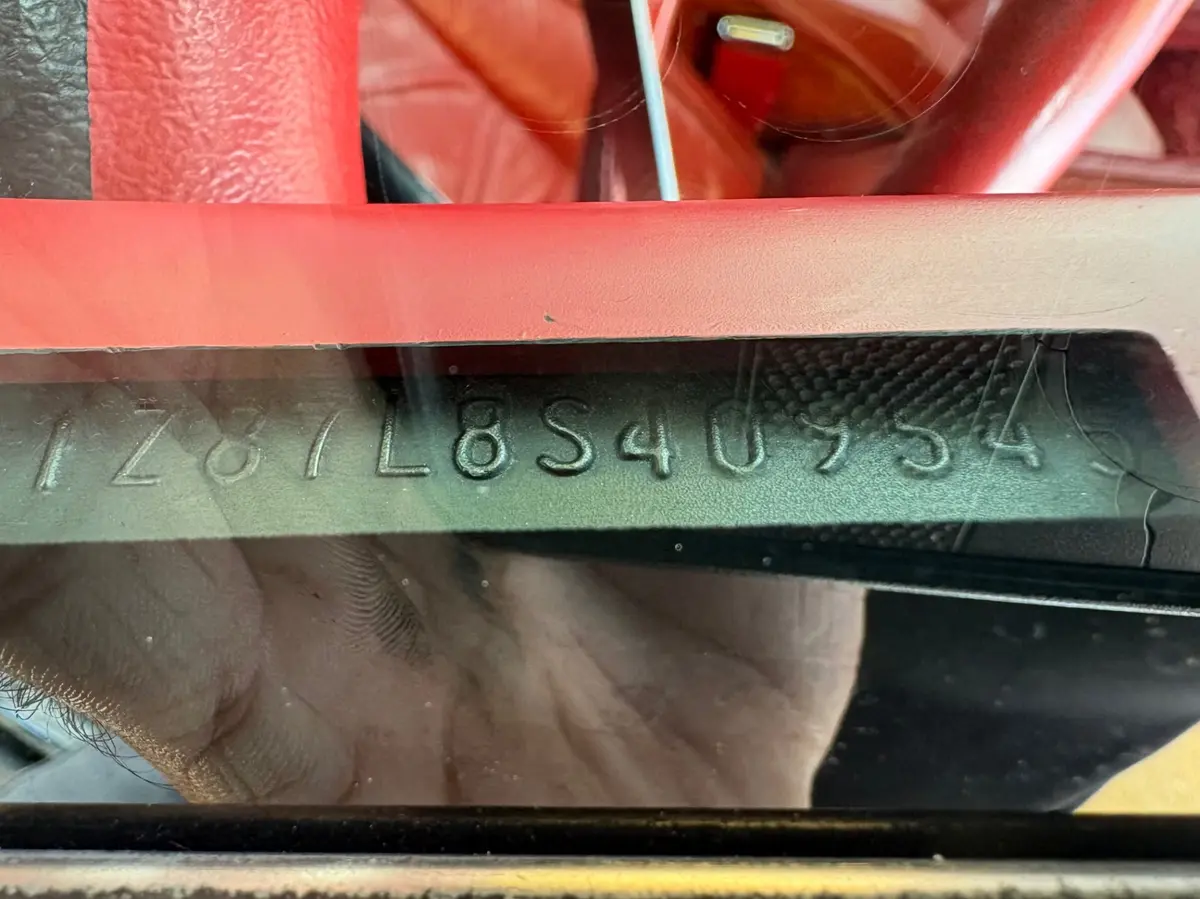
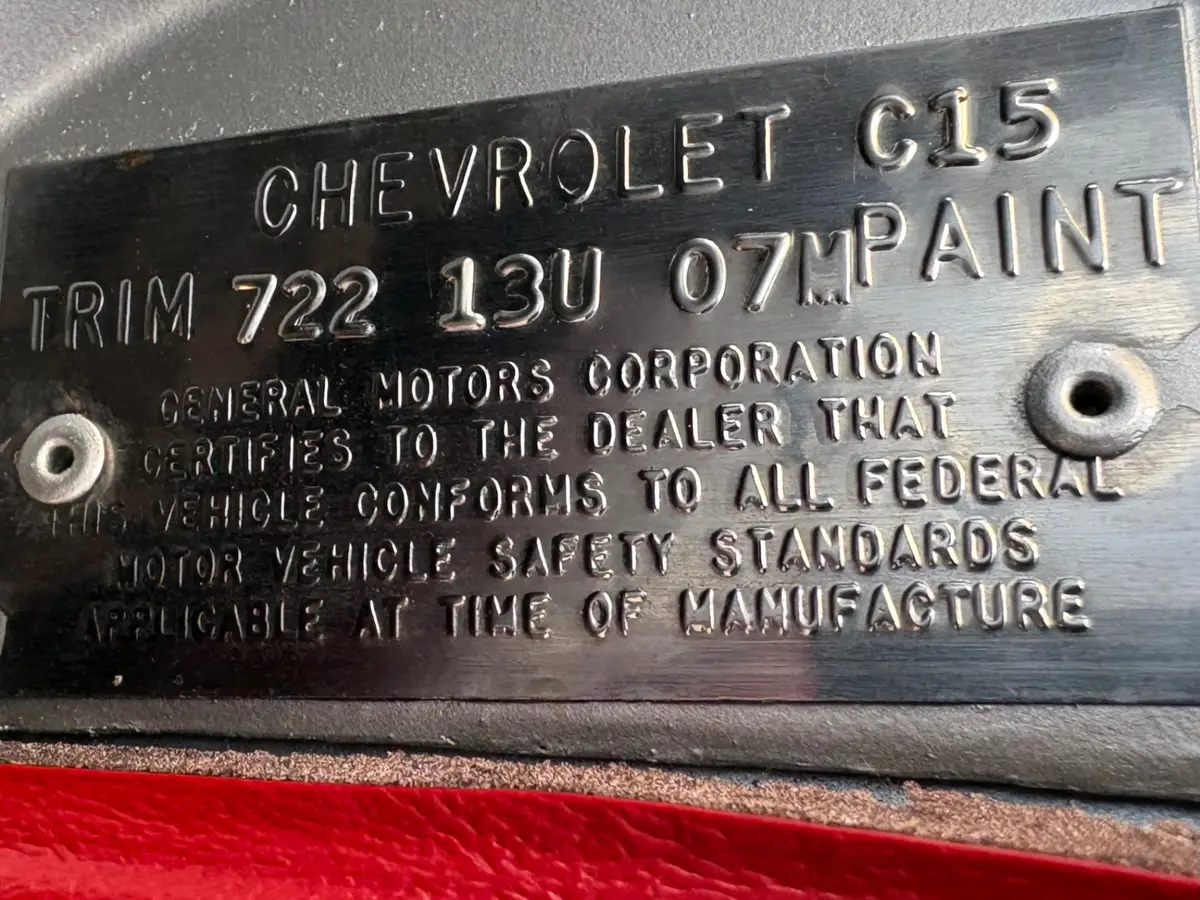
This particular 1978 Chevrolet Corvette is a well-equipped example wearing a two-tone Silver and Charcoal exterior — a color combination that was very much in step with the late-1970s design aesthetic and is period-correct for the C3 generation. The interior is finished in red leather, which makes for a high-contrast combination with the silver-over-charcoal body. It's a car that looks like it came out of the factory with intent rather than as a default spec. The VIN confirms this is a Corvette coupe (body style code 87) built in 1978 (model year code 8) at the St. Louis assembly plant (plant code S), which was the sole Corvette production facility until Bowling Green, Kentucky took over in 1981.
The four-speed manual transmission is a key detail here. By 1978, many Corvette buyers were opting for the three-speed automatic, and the manual car represents a more driver-focused configuration. The combination of the 350ci V8, the four-speed, and the Corvette's independent rear suspension makes this a car that rewards someone who actually wants to drive it rather than just look at it.
Features List
- 350ci 5.7L V8 engine
- 4-Speed Manual transmission
- T-Top removable roof panels
- Wraparound fastback rear window (introduced for 1978)
- Two-Tone Silver and Charcoal exterior
- Red leather bucket seats
- Center console with 4-speed shifter
- Power steering
- Power brakes with 4-wheel disc brakes
- Air conditioning
- Power windows
- Tachometer
- Full auxiliary gauge package (temperature, fuel, oil pressure, voltmeter, clock)
- AM/FM Stereo with 8-Track player
- Aluminum wheels
- Raised white letter tires
- Dual exhaust
- Independent rear suspension
Mechanical
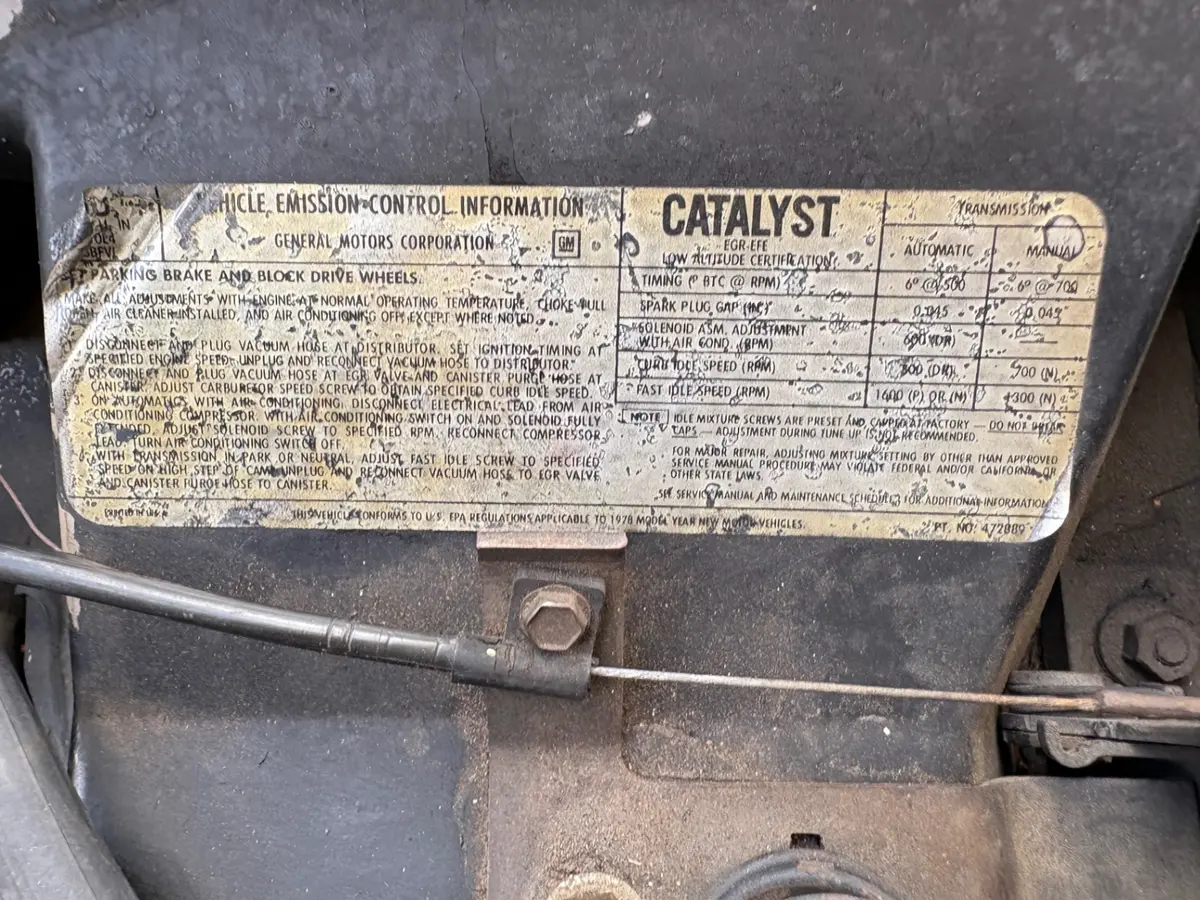
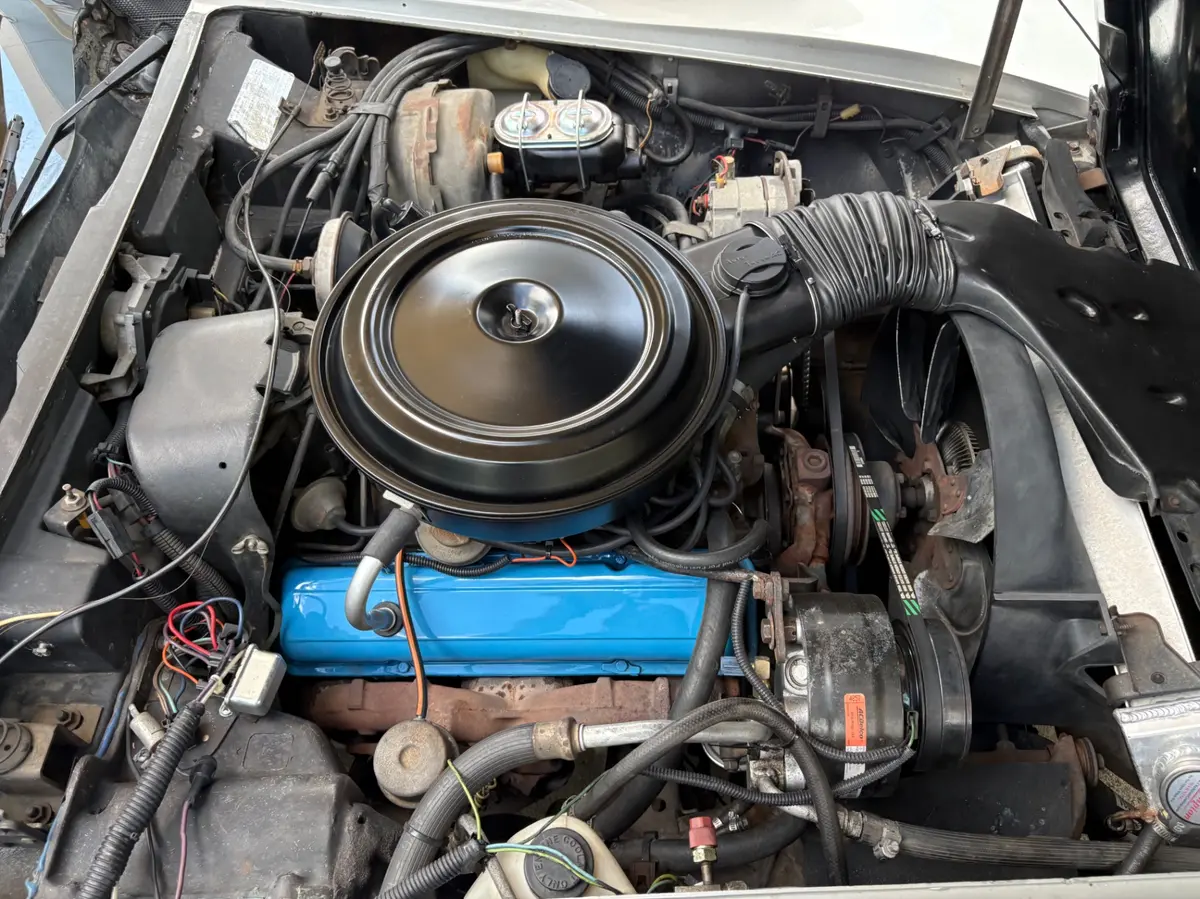
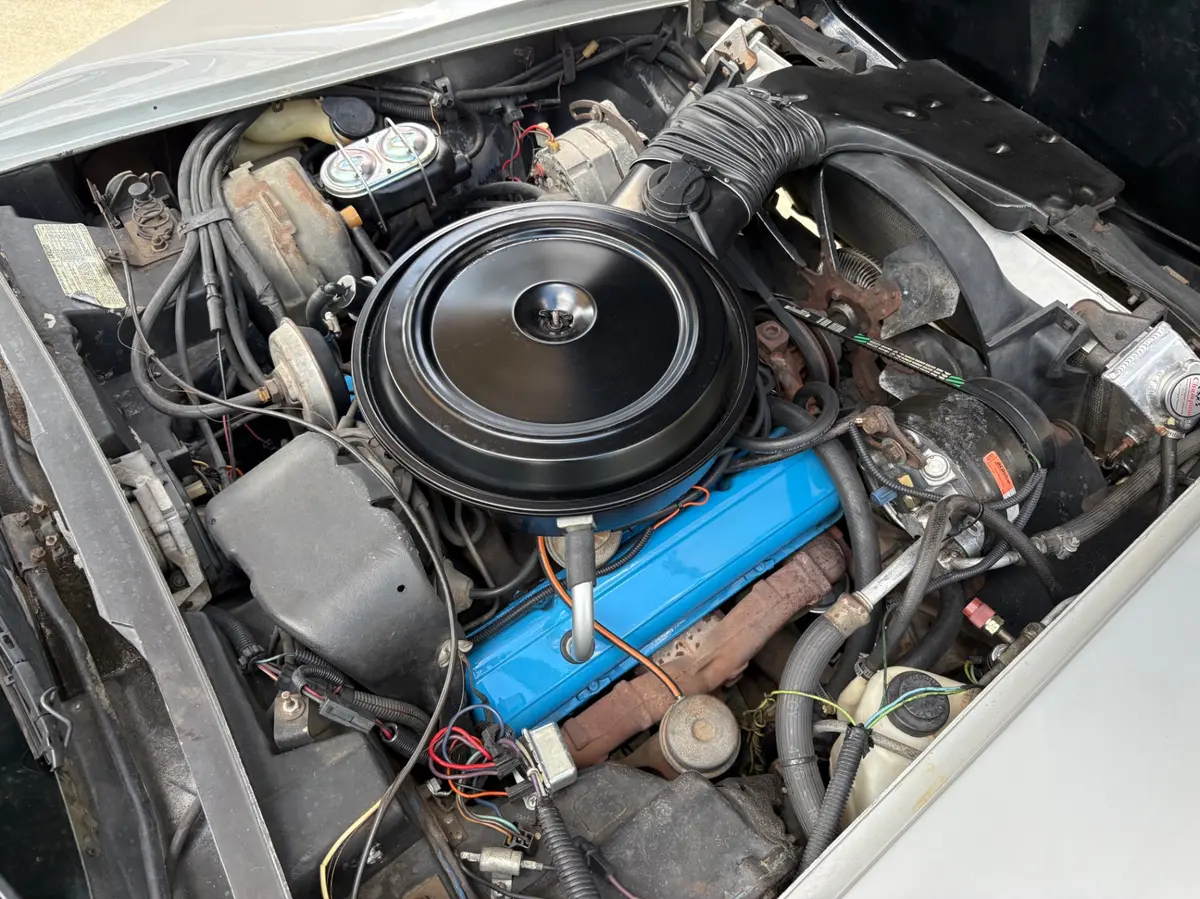
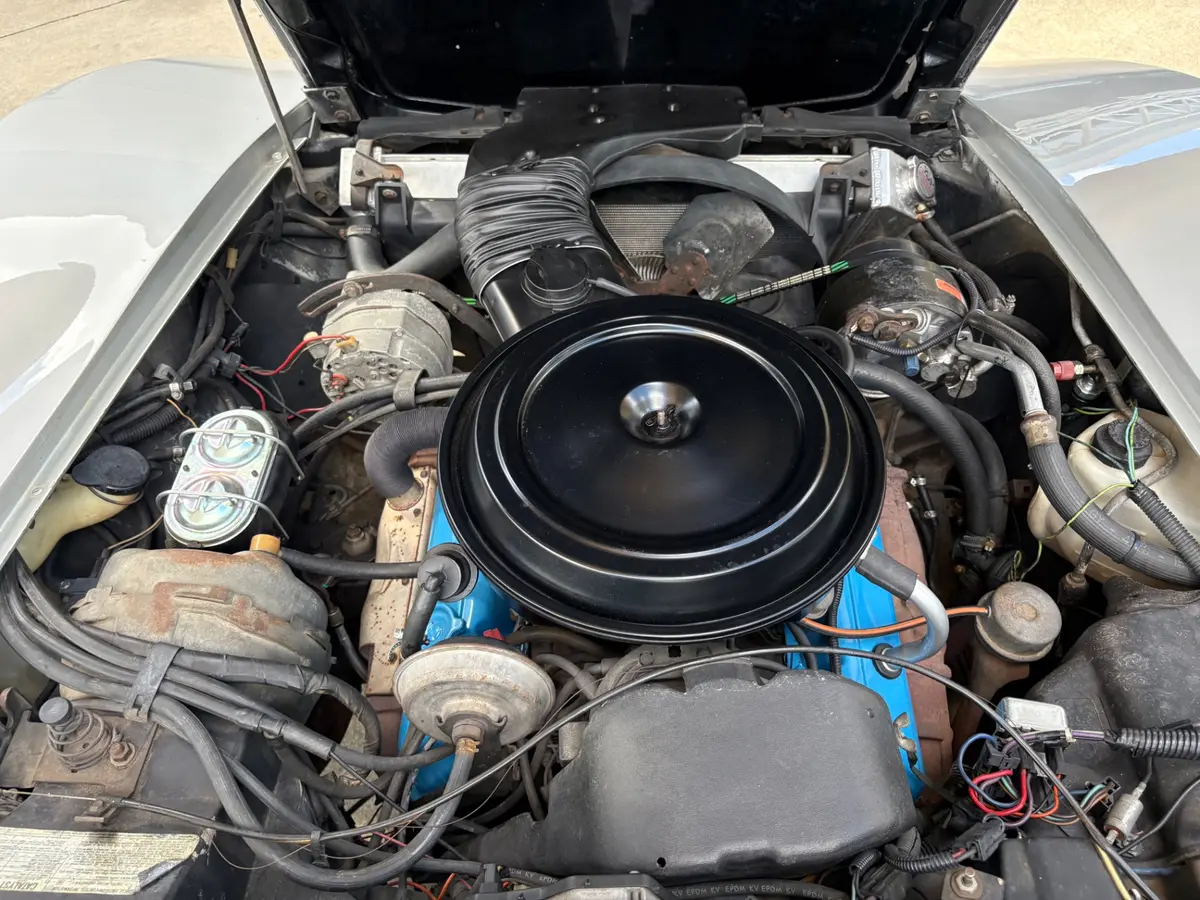
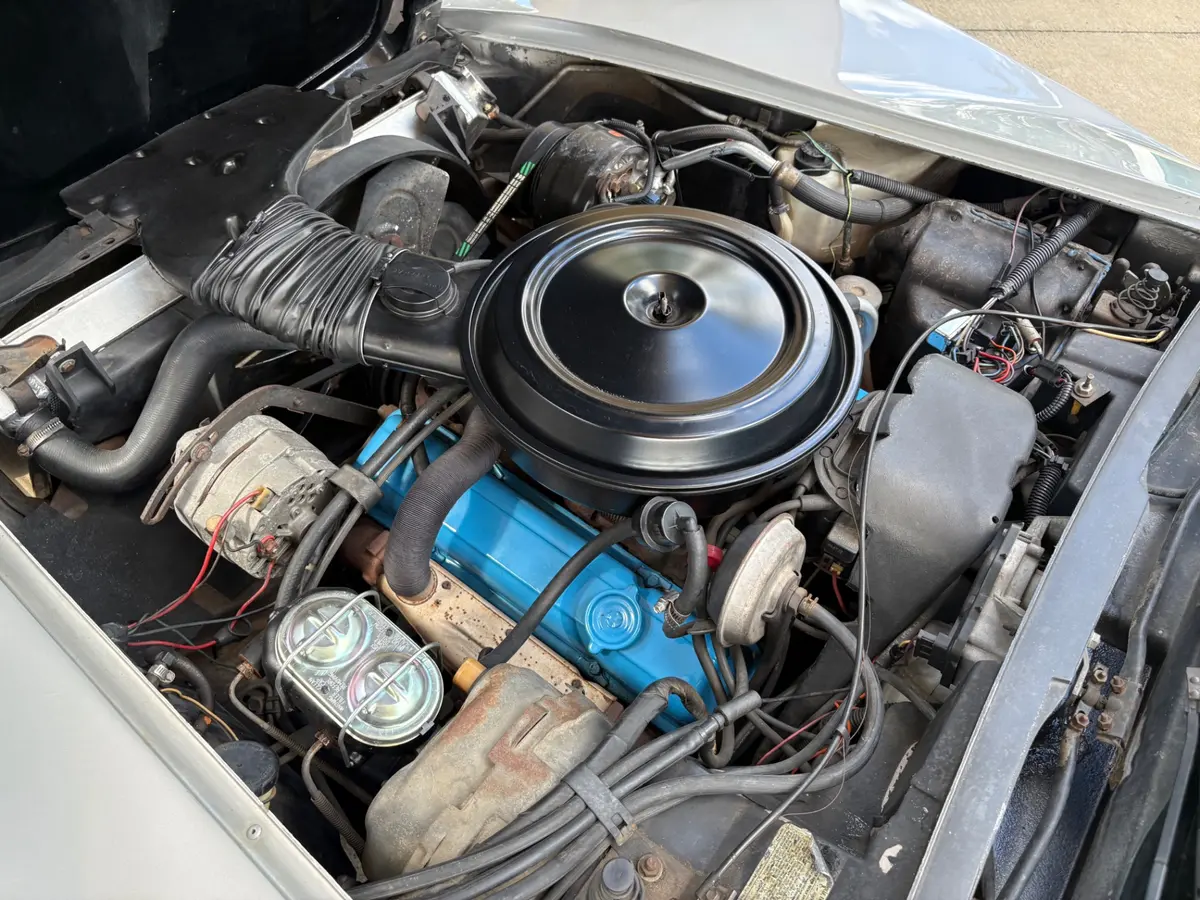
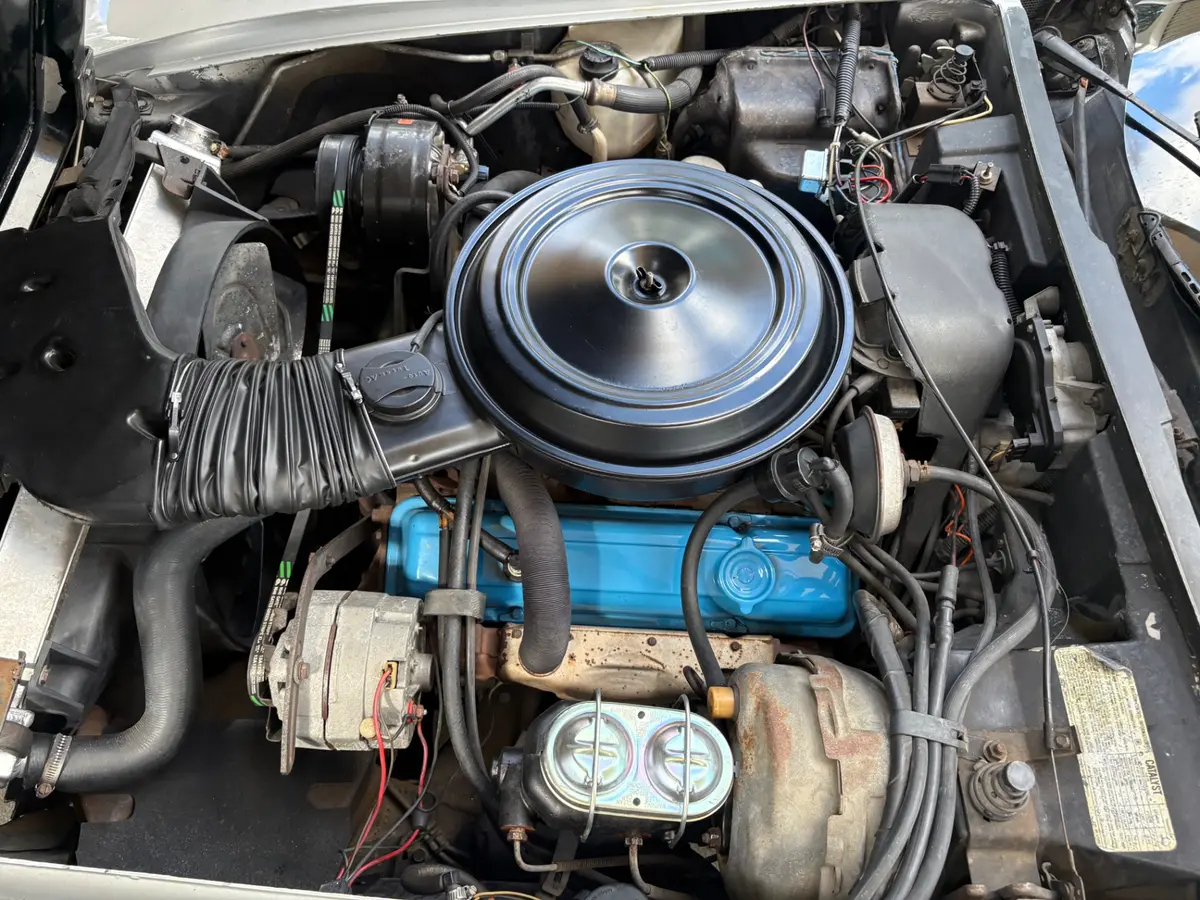
Under the hood sits the 350 cubic inch (5.7 liter) V8, which was the standard engine for the 1978 Corvette. The L48 version of this engine, which was the base offering that year, was rated at 185 horsepower — a figure that reflected the compression and emissions constraints of the era rather than the engine's fundamental character. The 350 small block is one of the most proven V8 architectures in automotive history, known for its durability, parts availability, and straightforward maintenance. Paired with the 4-speed manual transmission, this drivetrain delivers a connected driving experience that an automatic simply cannot replicate.
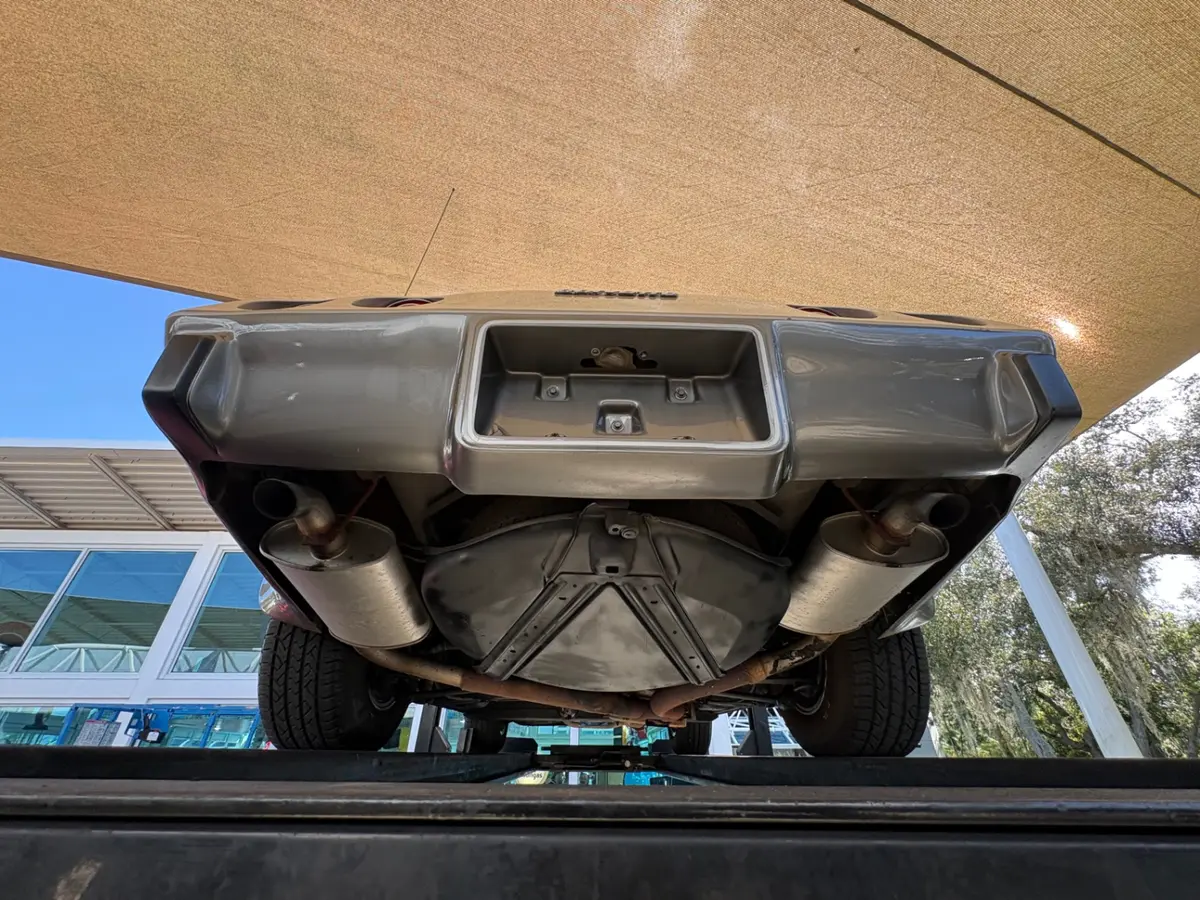
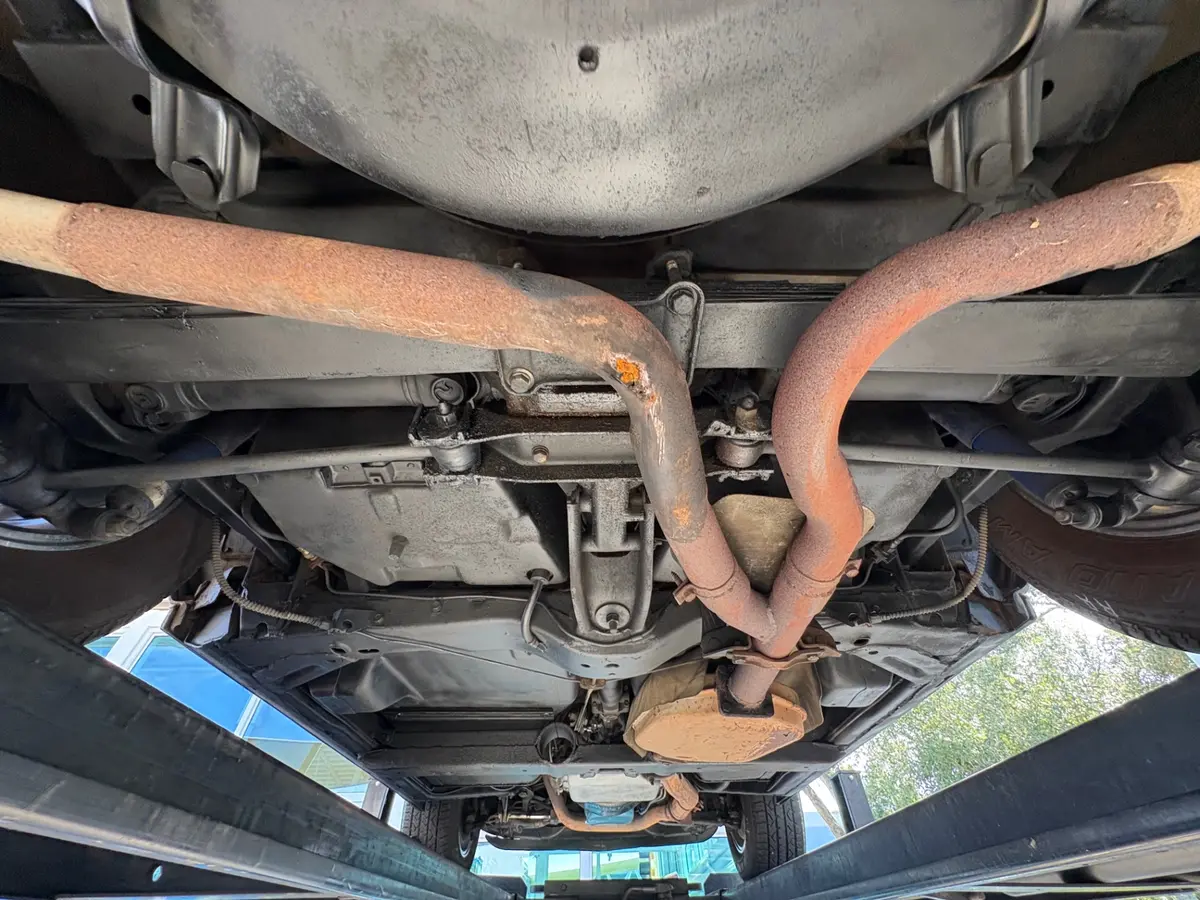
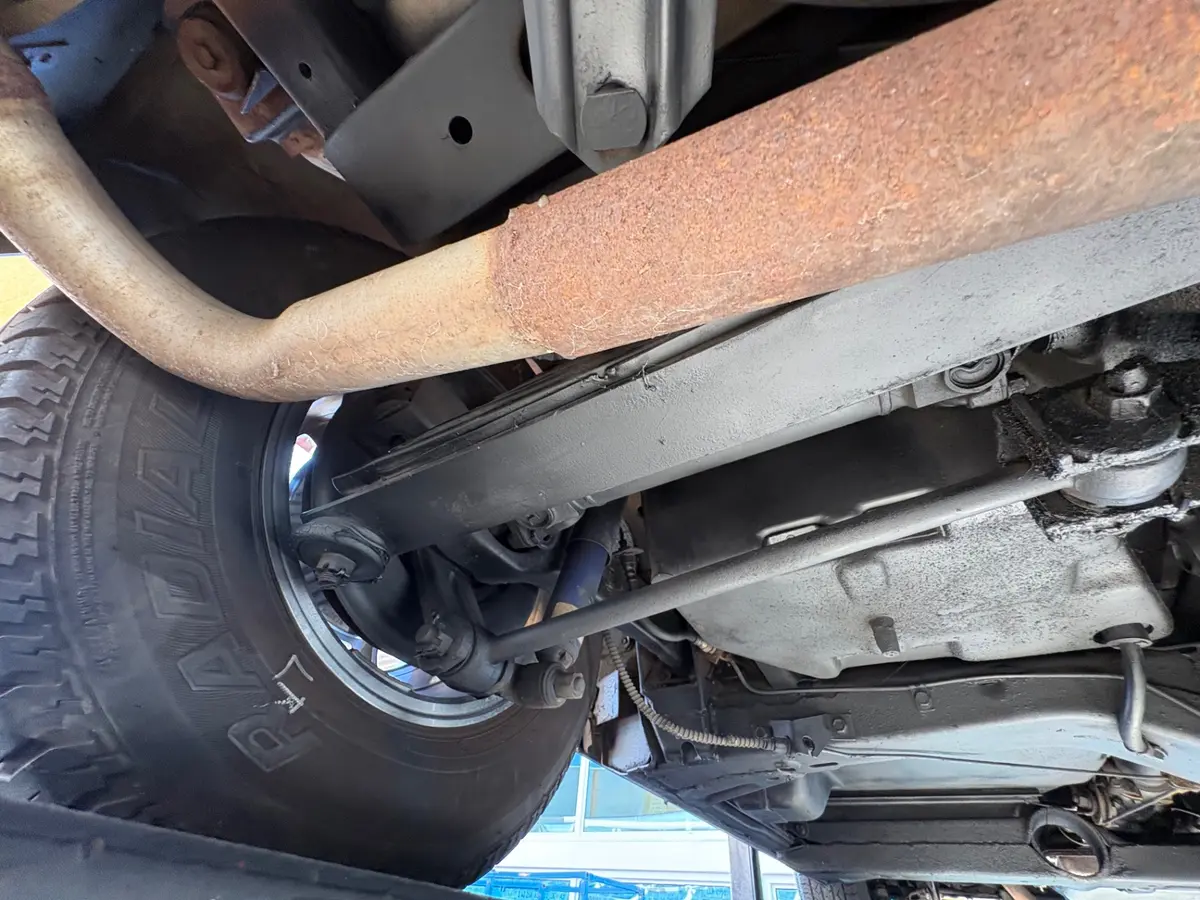
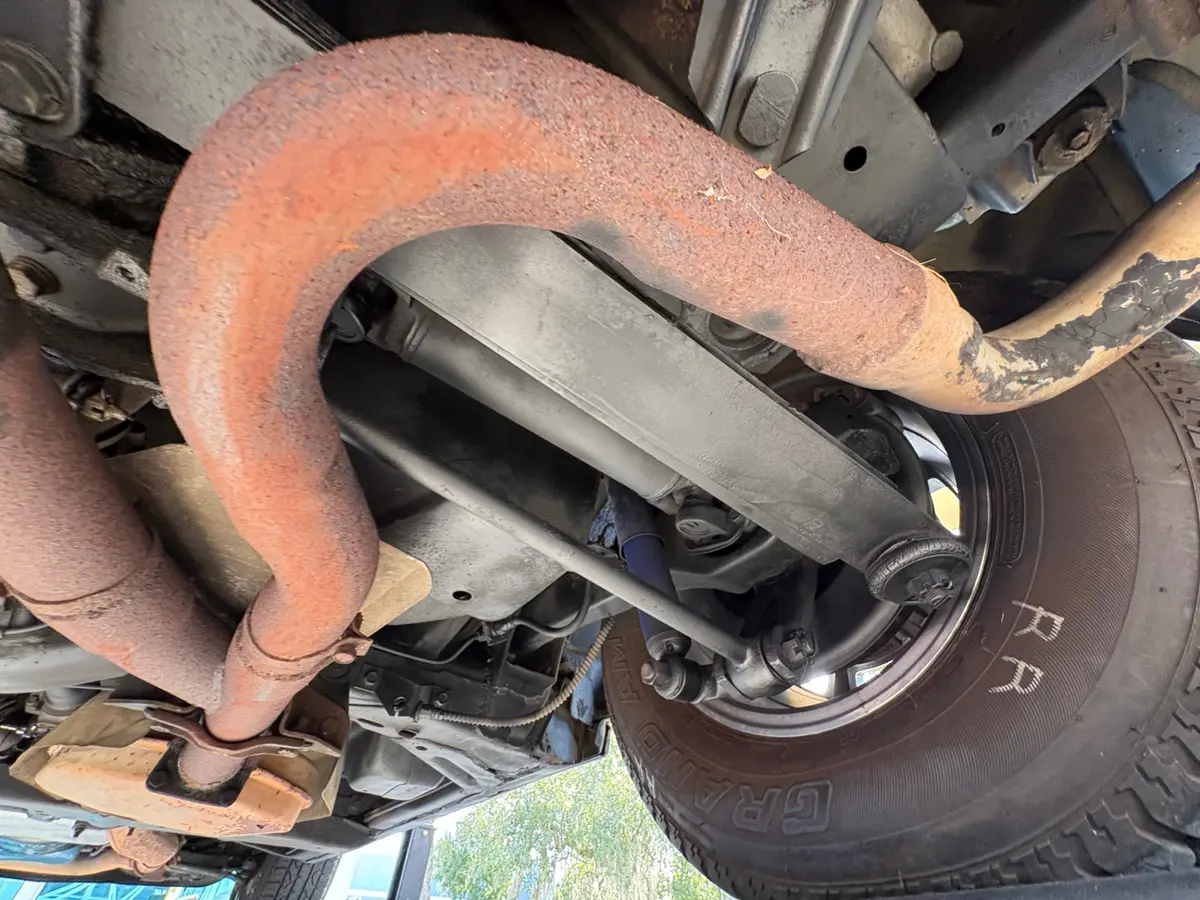
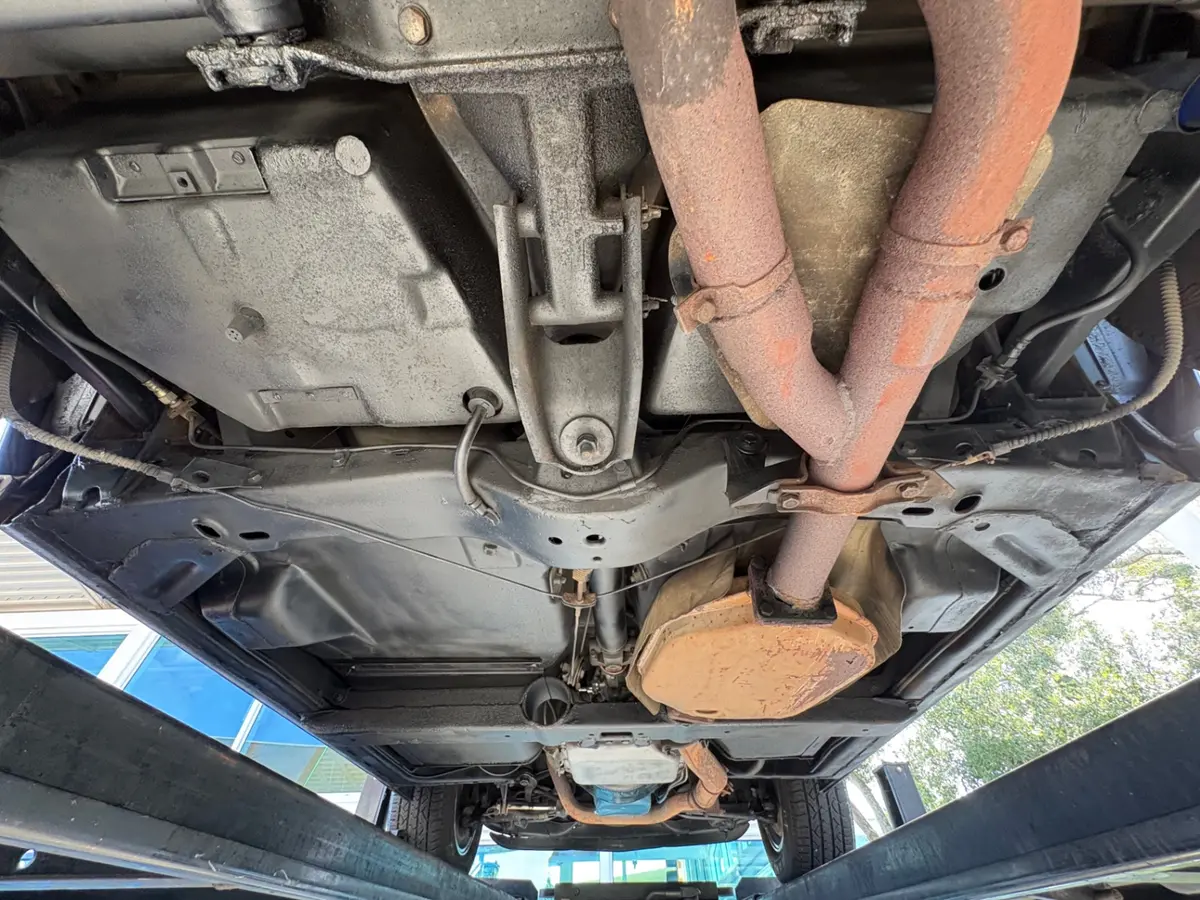
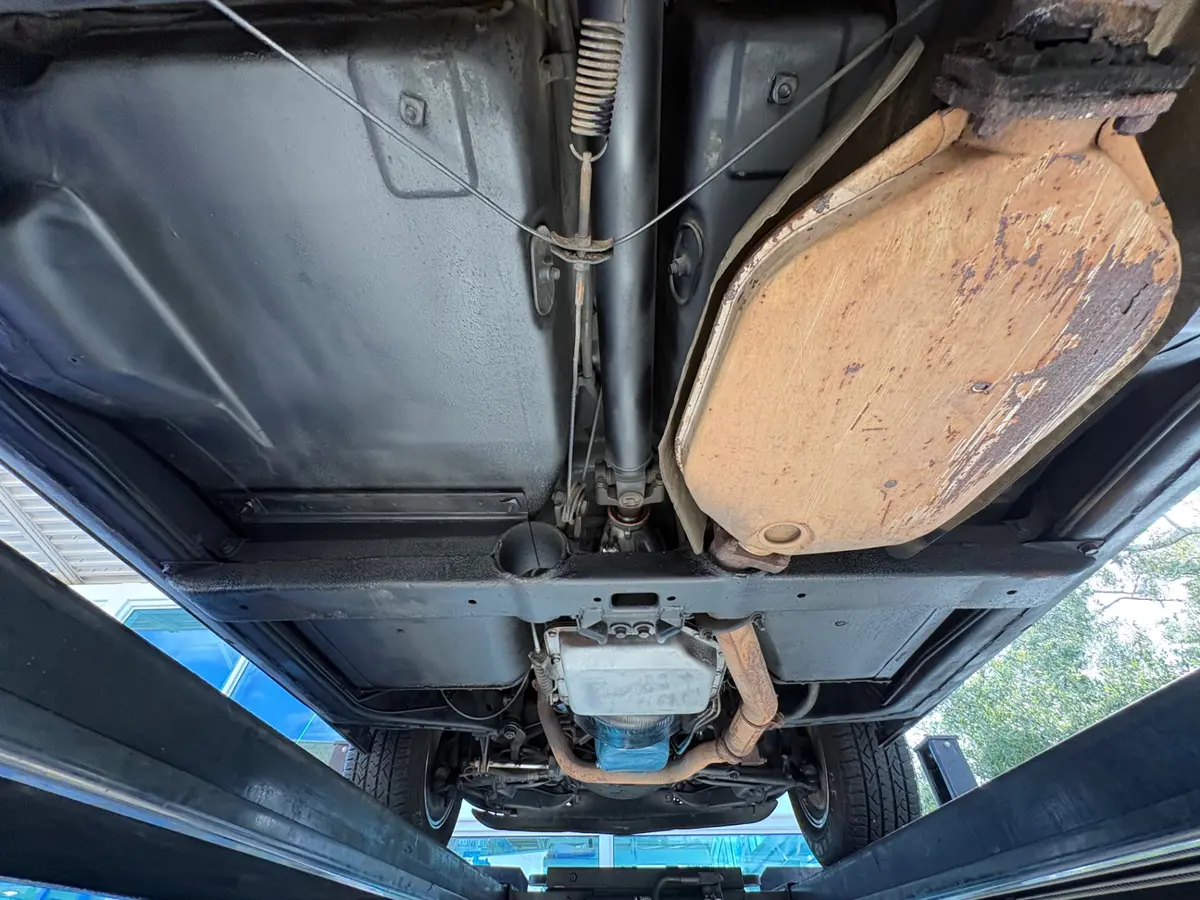
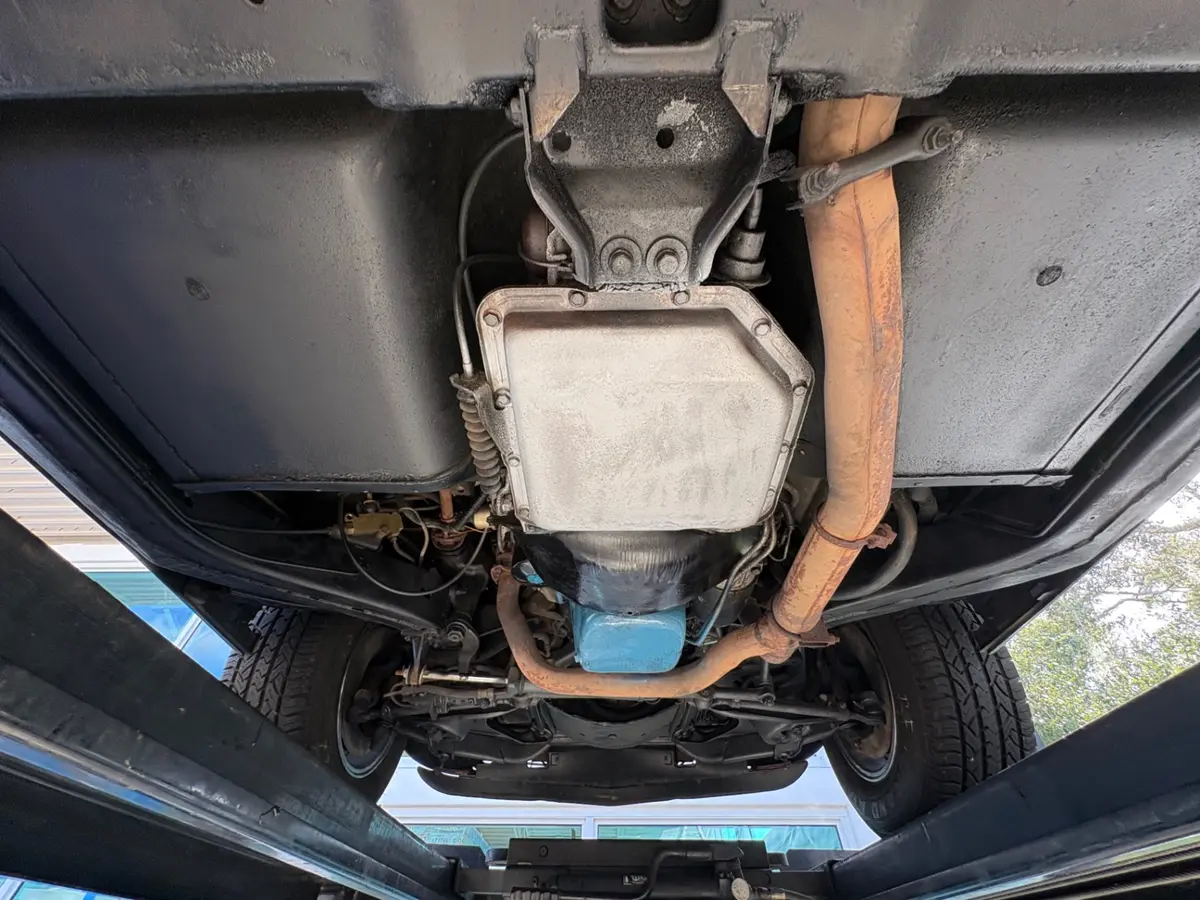
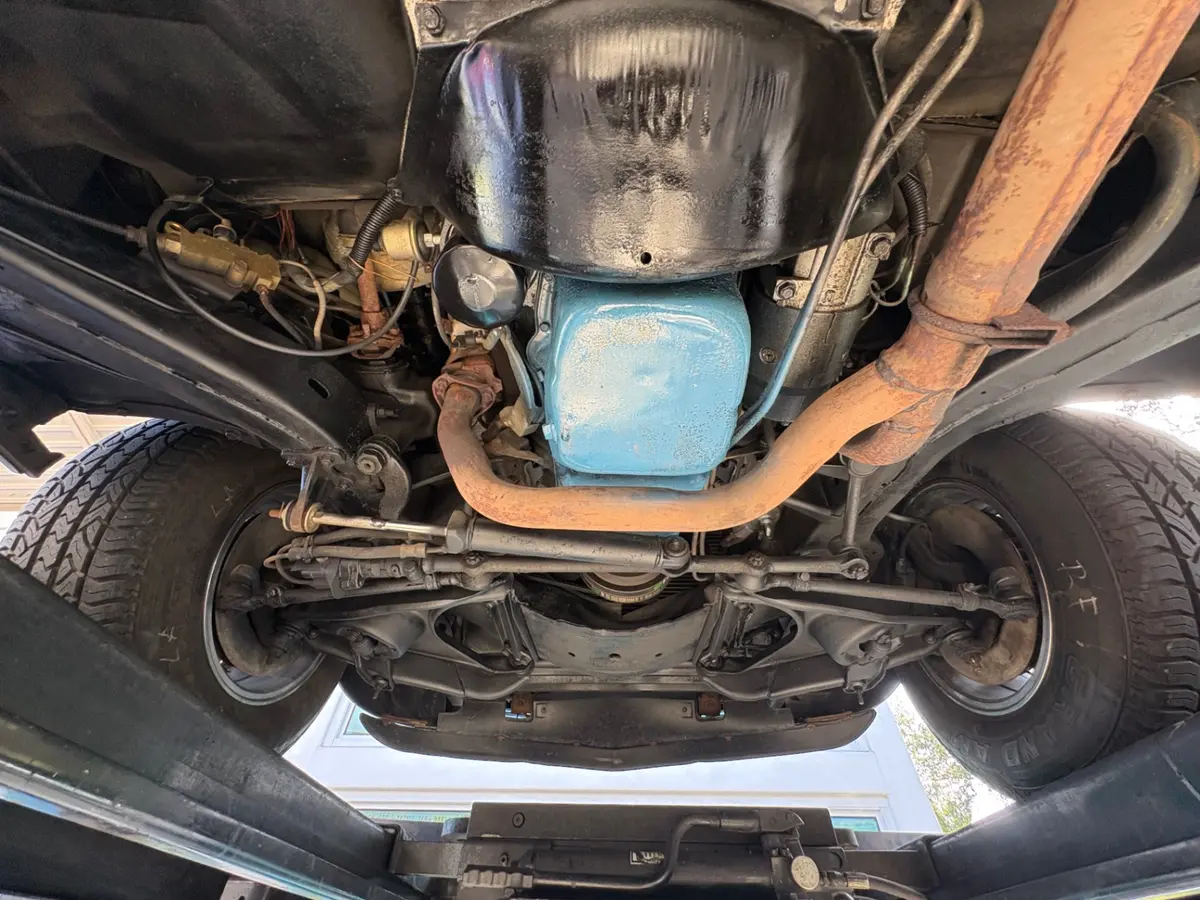
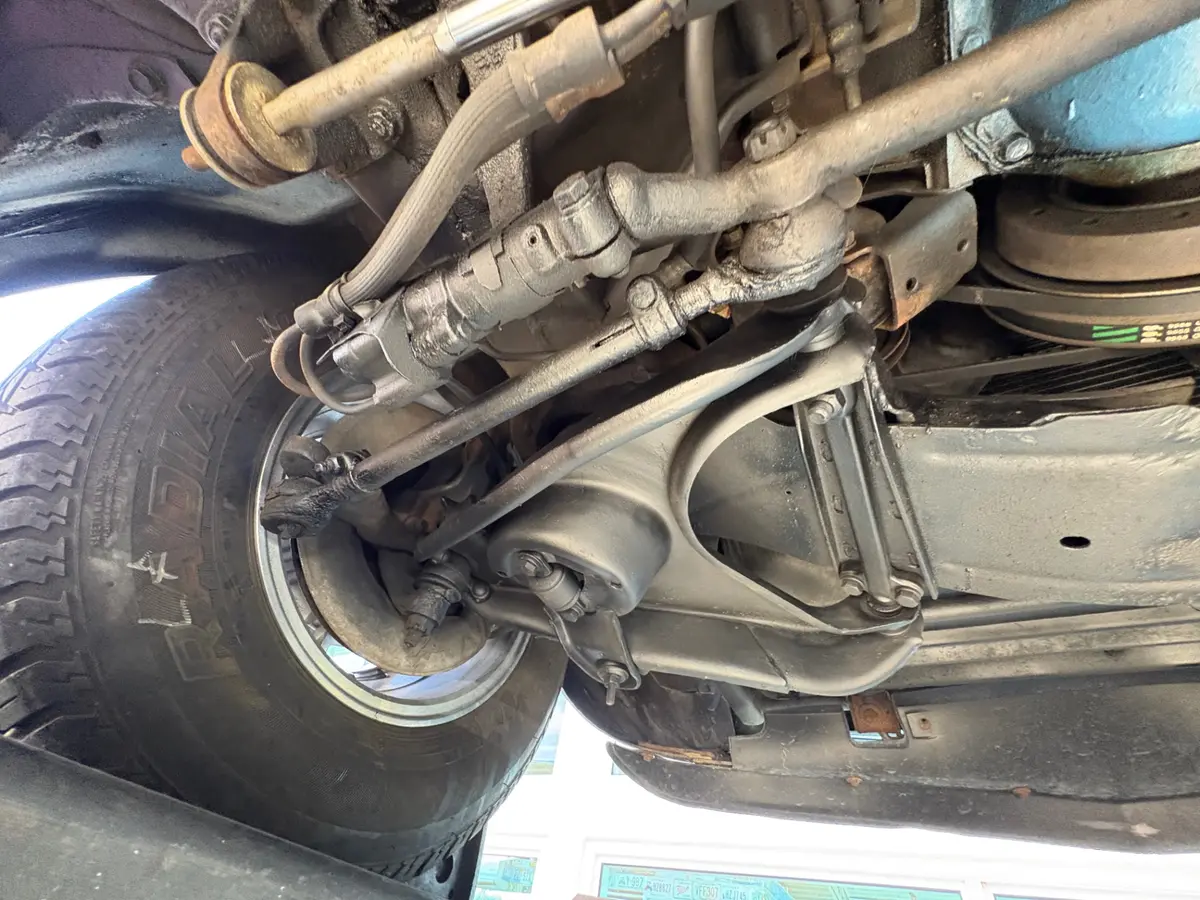
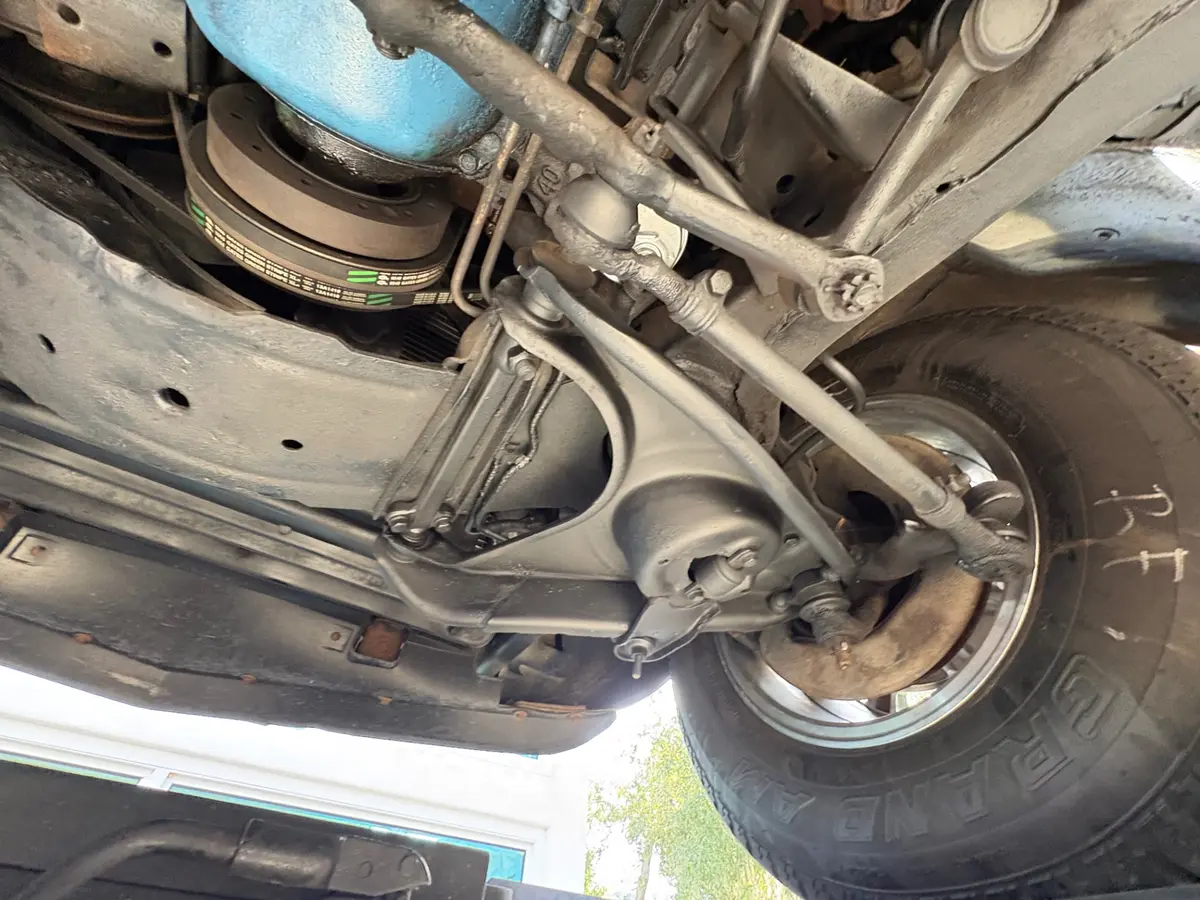
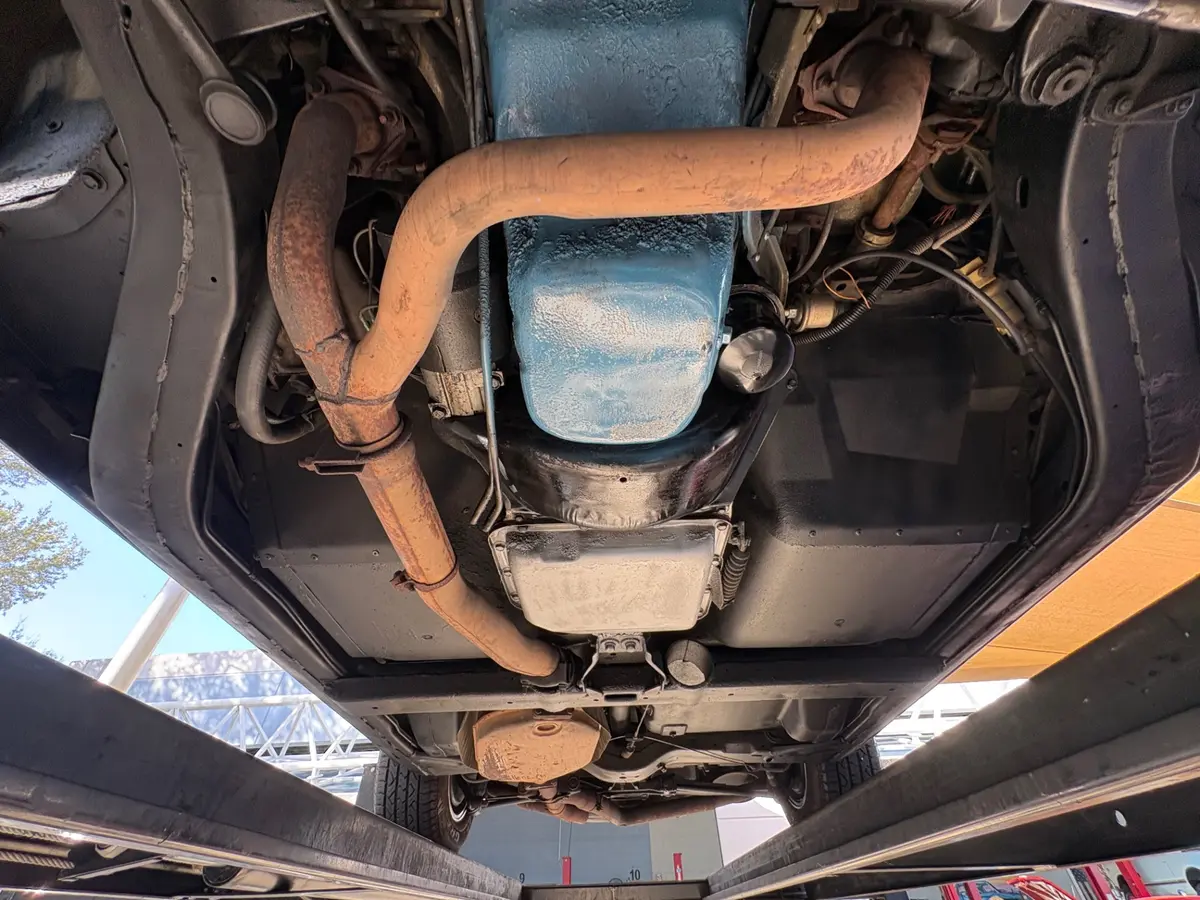
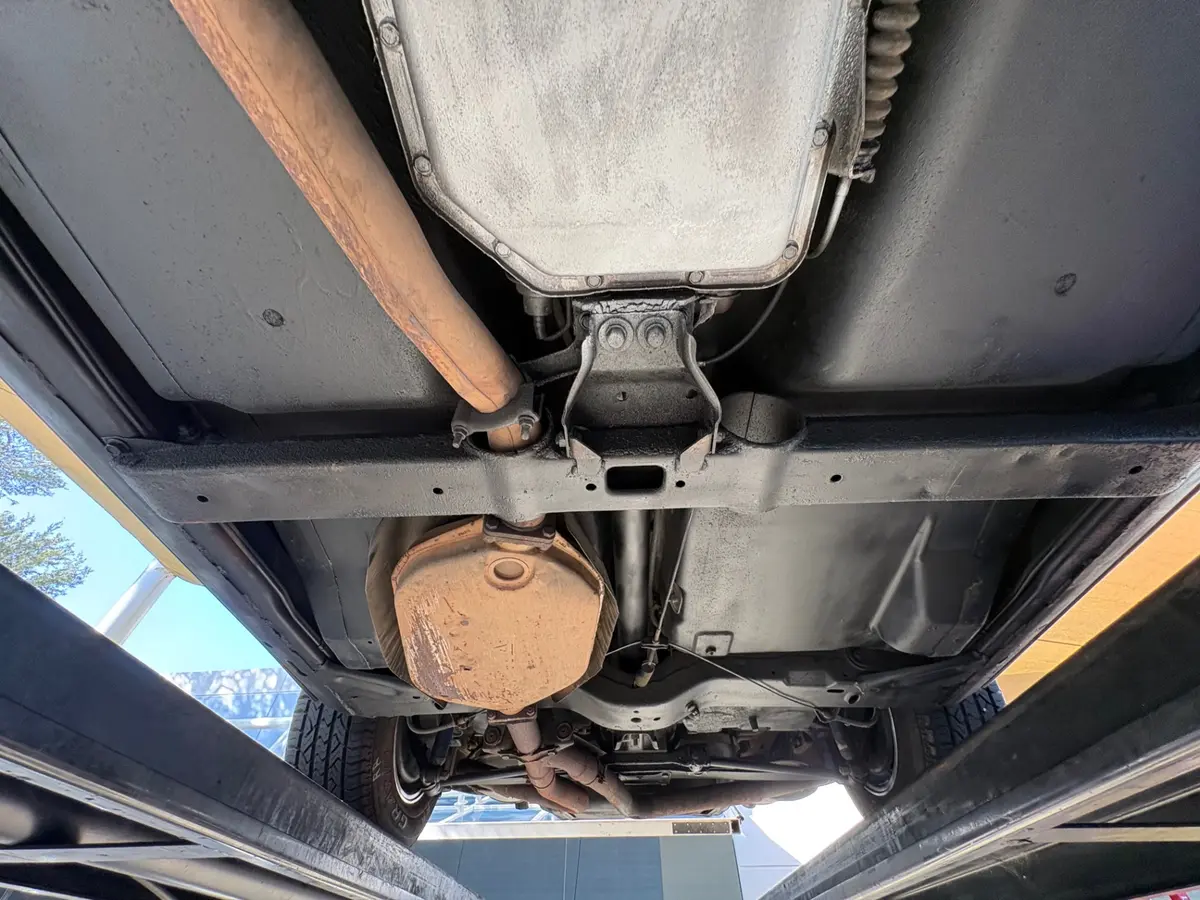
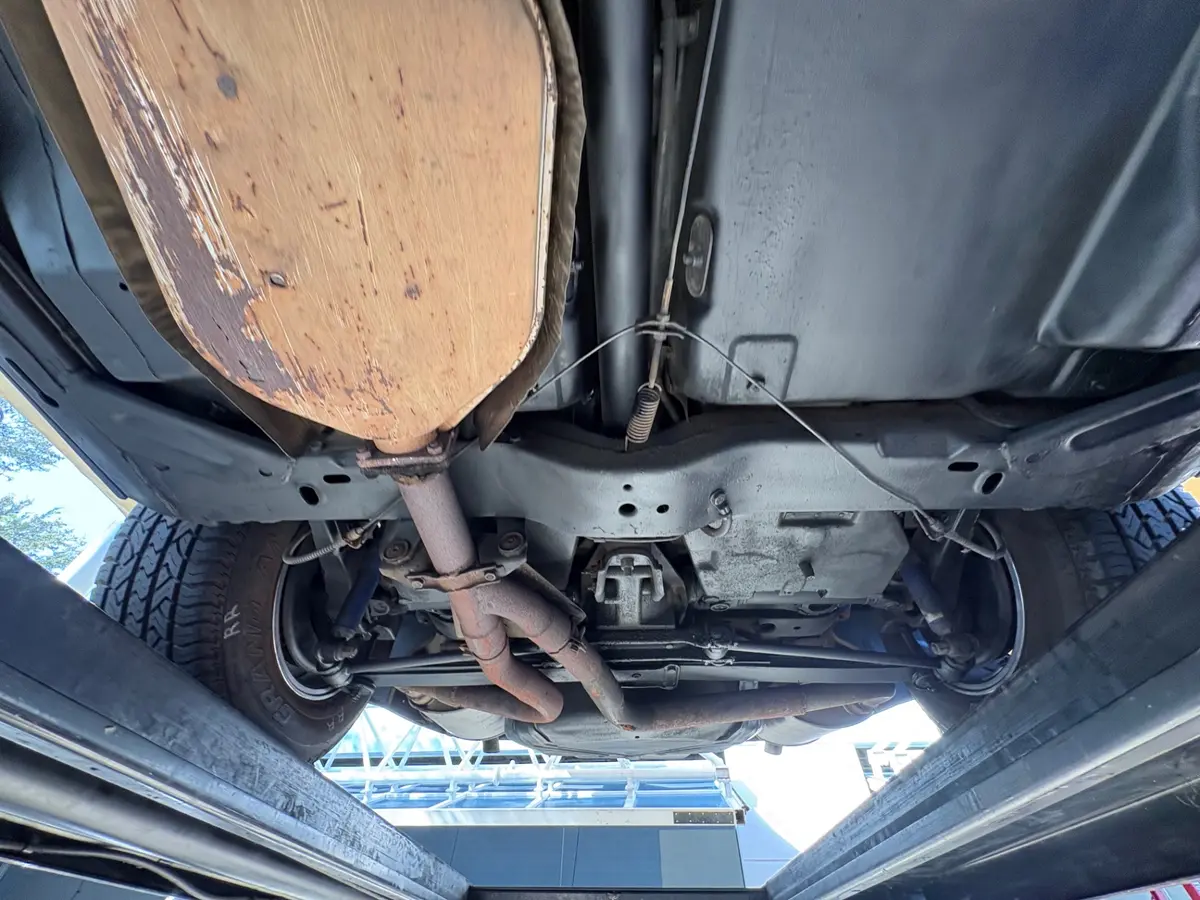
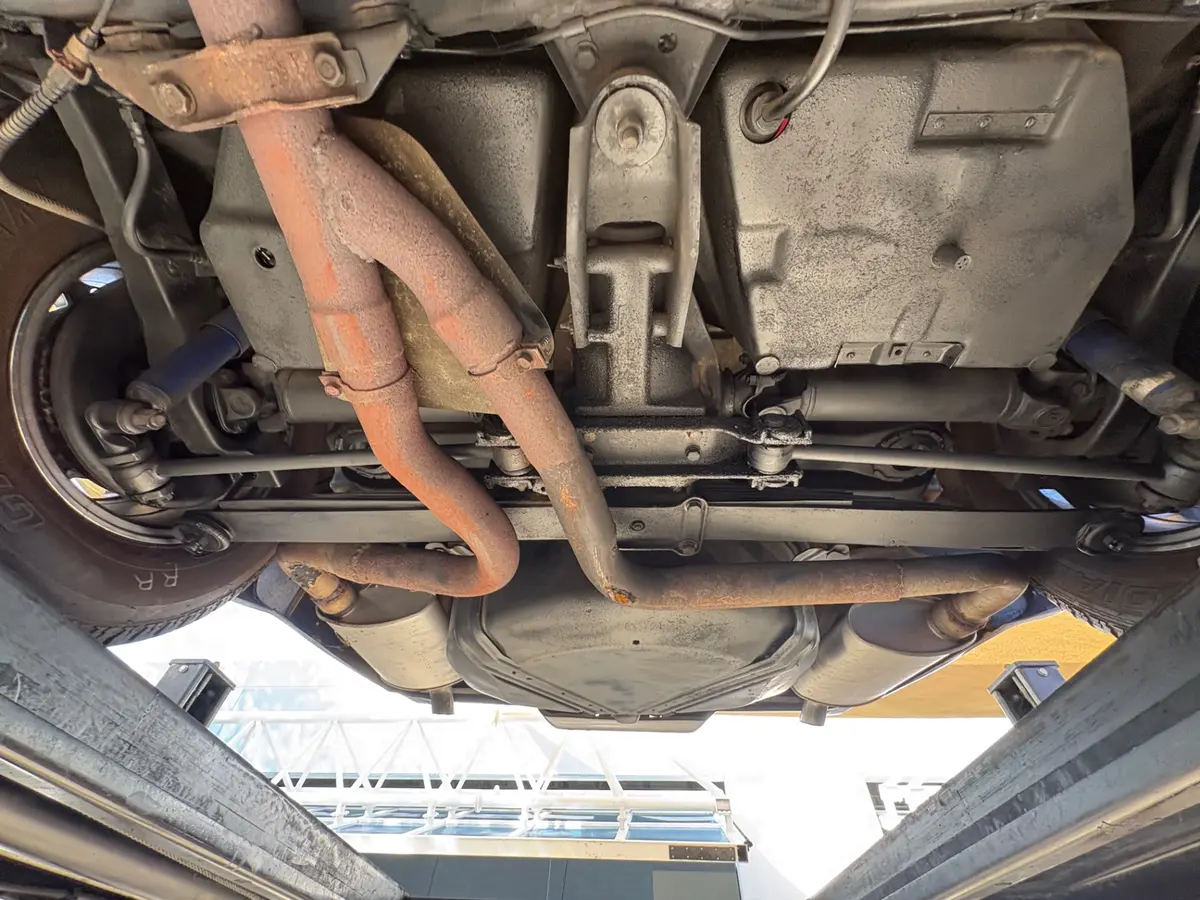
The underside photos show the car's frame and structure in honest, unrestored condition — surface oxidation on the exhaust system and related components is present, as you would expect on a vehicle of this age. The independent rear suspension, which Corvette has used since 1963, is visible and intact. This multi-link setup with a transverse leaf spring and half-shafts that double as upper lateral links was genuinely advanced for its time and gave the Corvette a significant handling advantage over most American performance cars of the 1970s. Four-wheel disc brakes were standard equipment on 1978 Corvettes, which was not common across the American automotive landscape at the time.
The exhaust exits through a dual system, which is correct for the 350 V8. The body, being fiberglass, shows no rust concerns — this is one of the practical advantages of the C3 Corvette's construction that benefits long-term ownership.
Interior
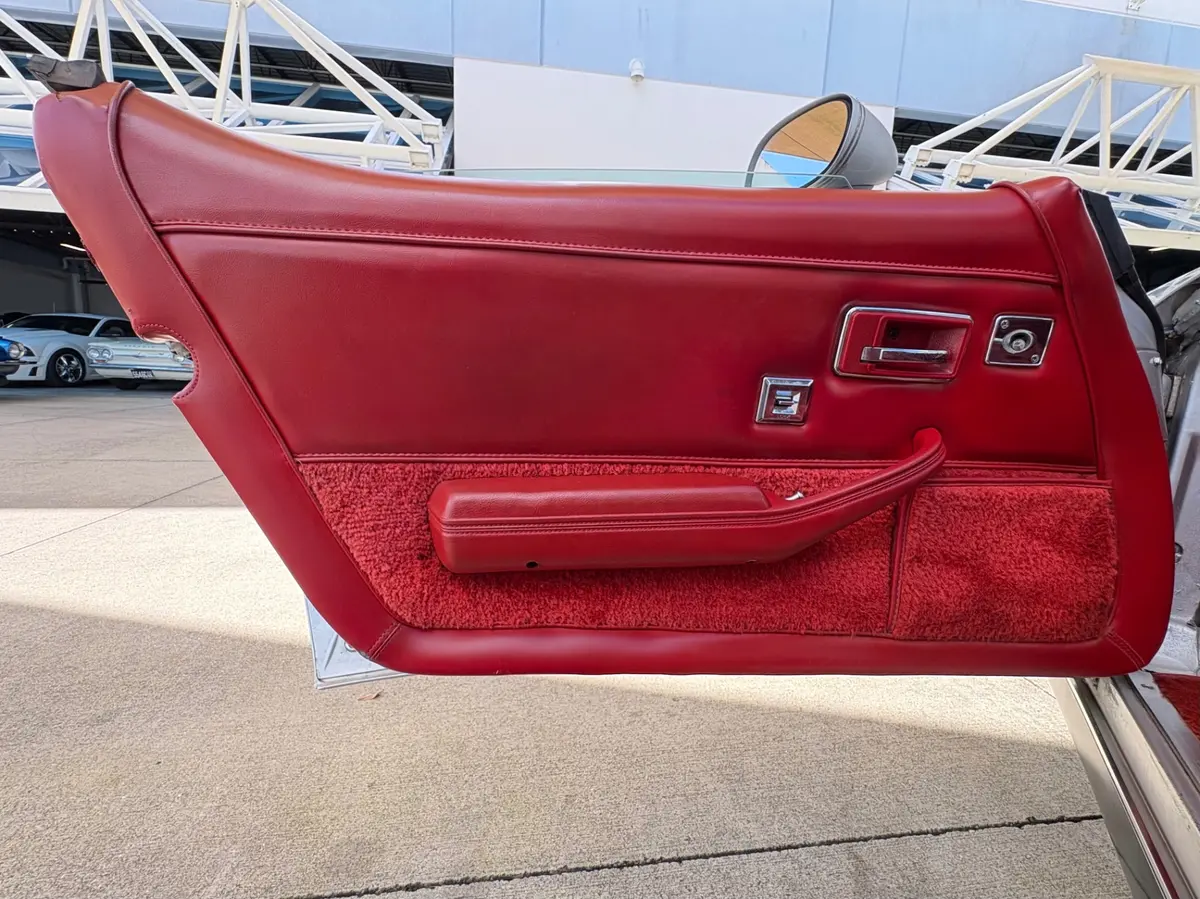
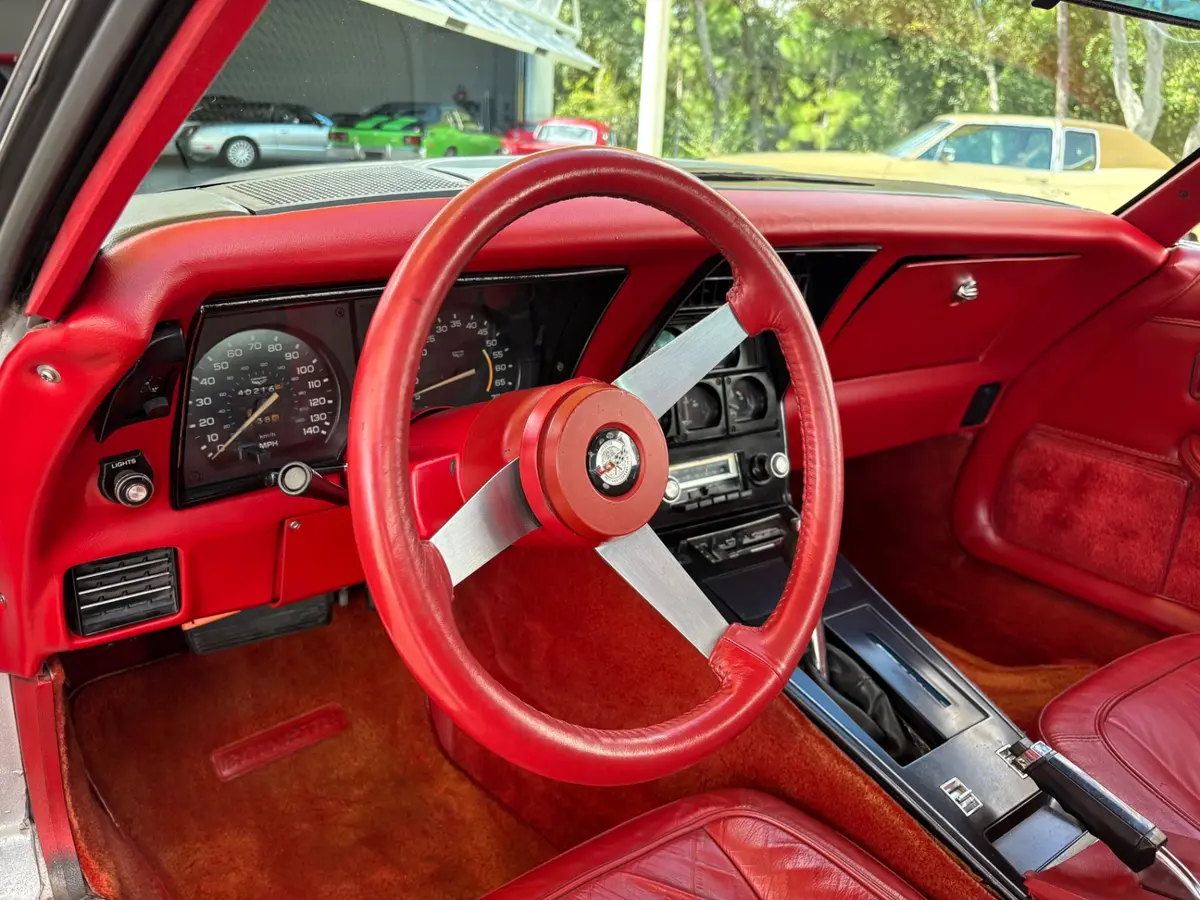
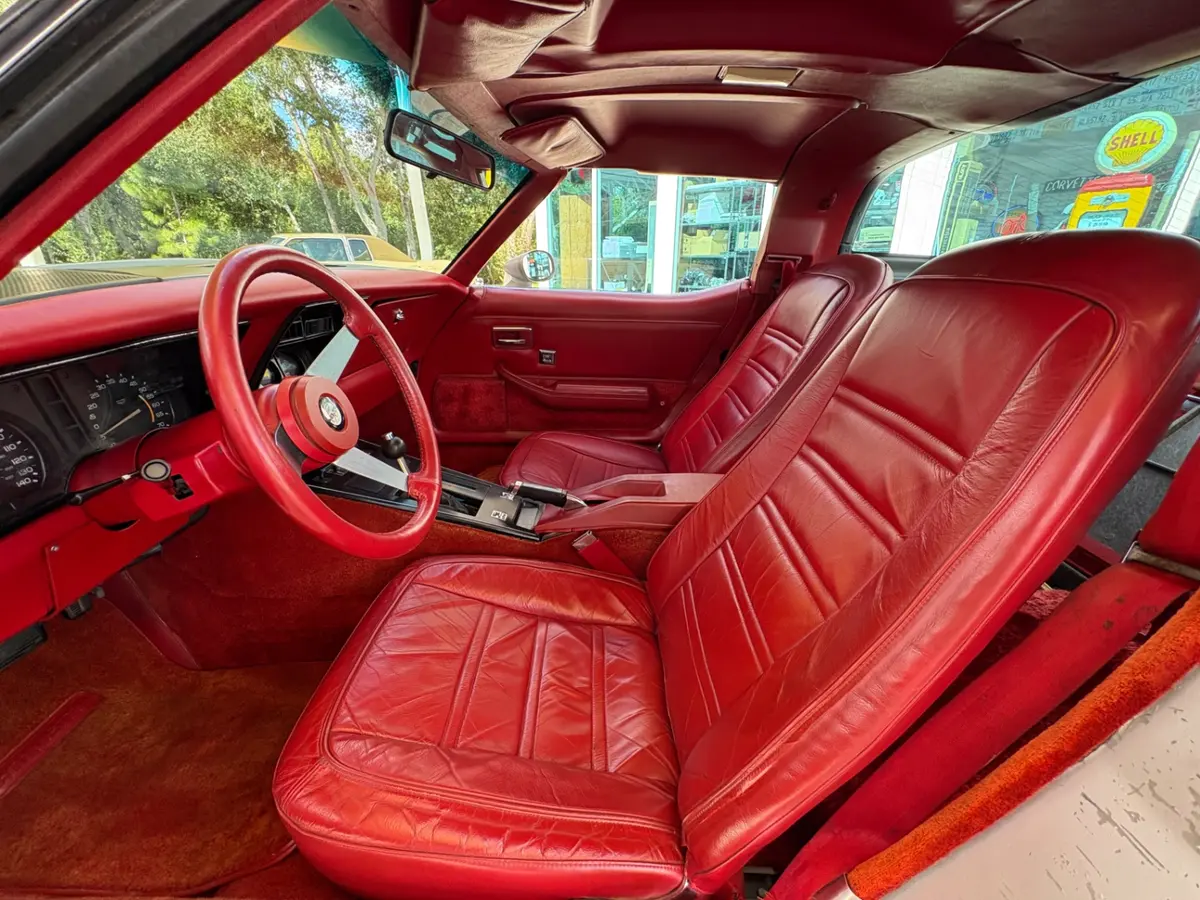
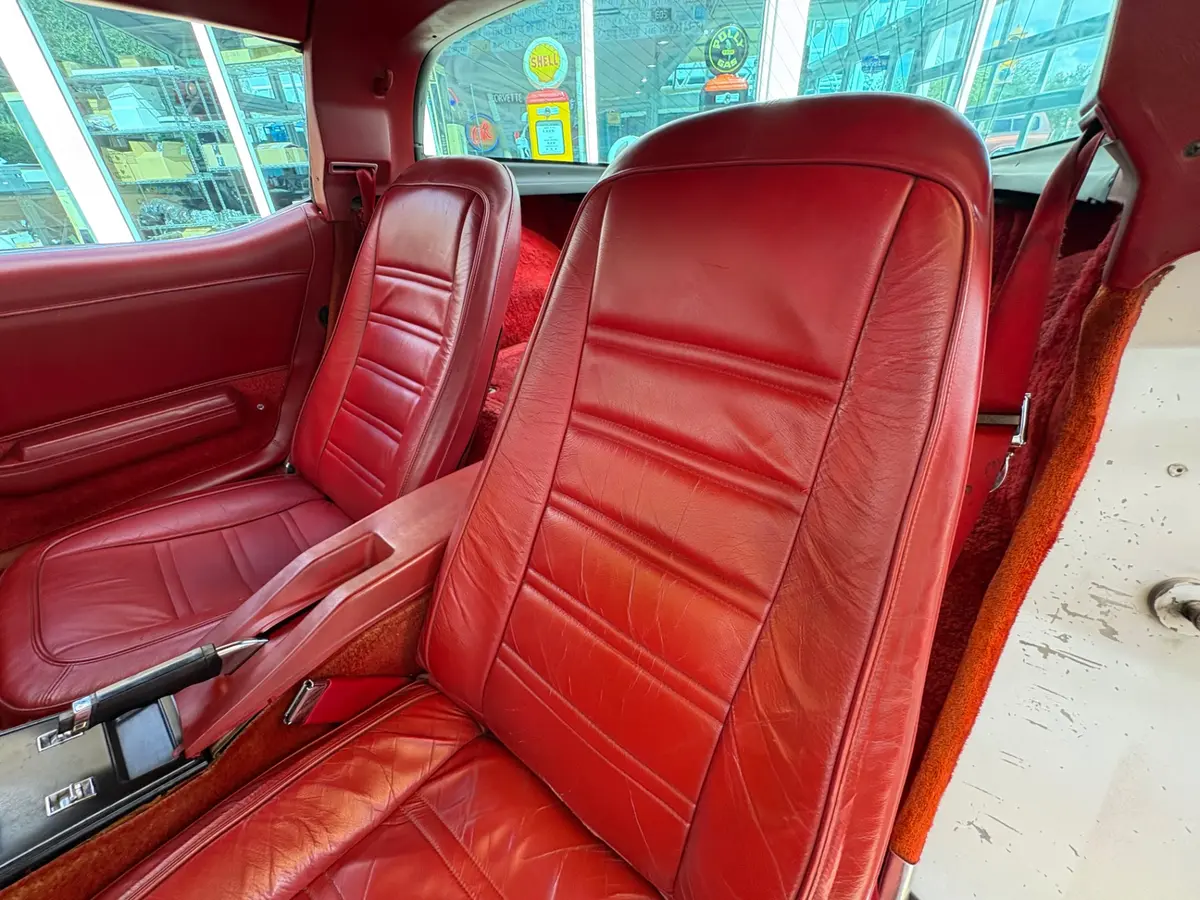
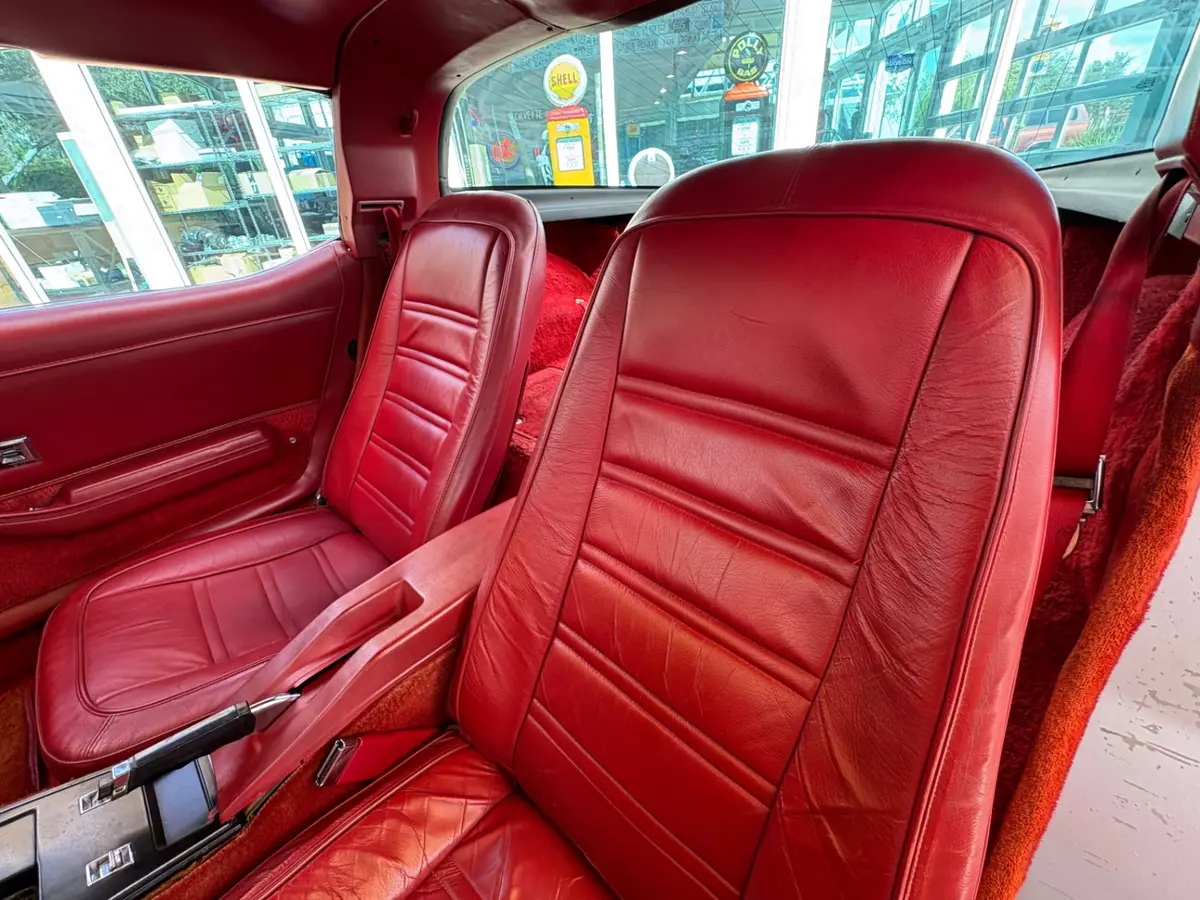
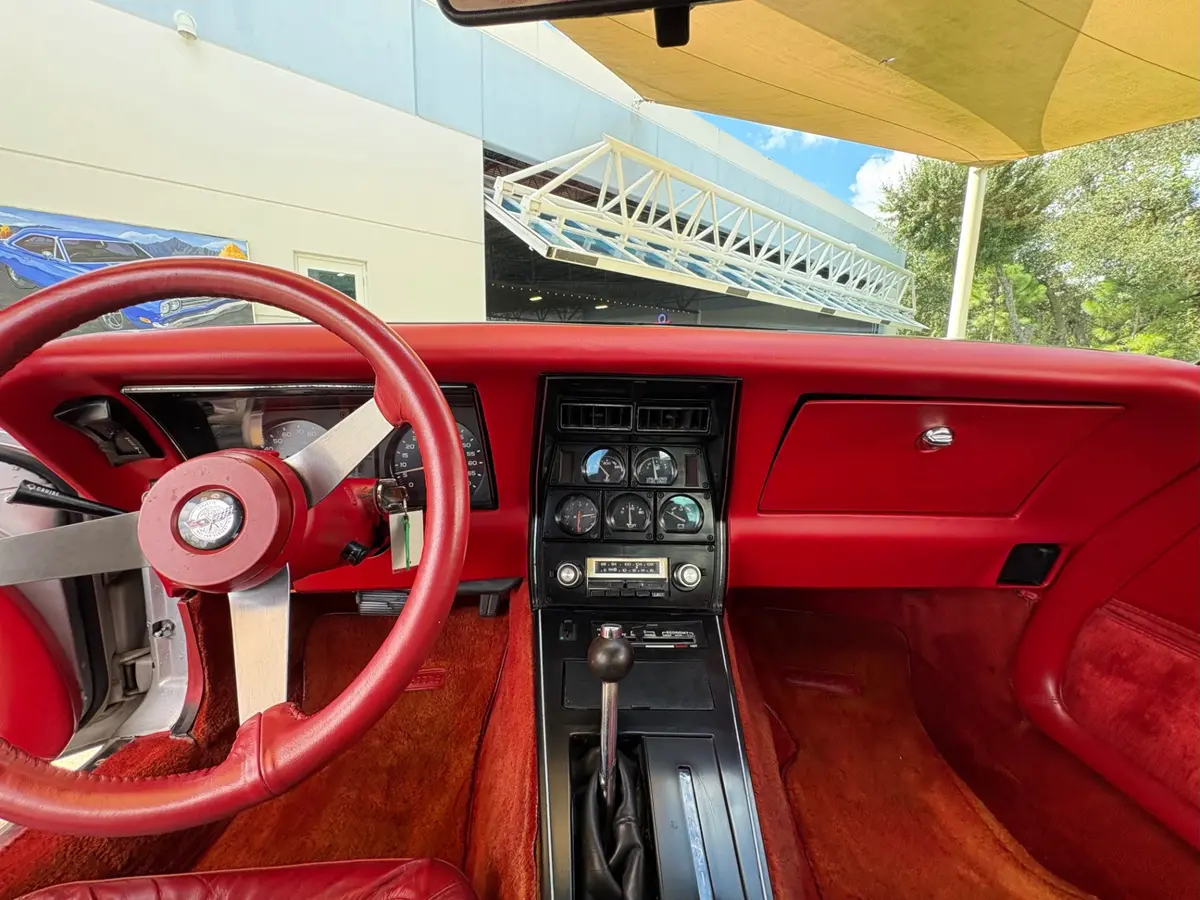
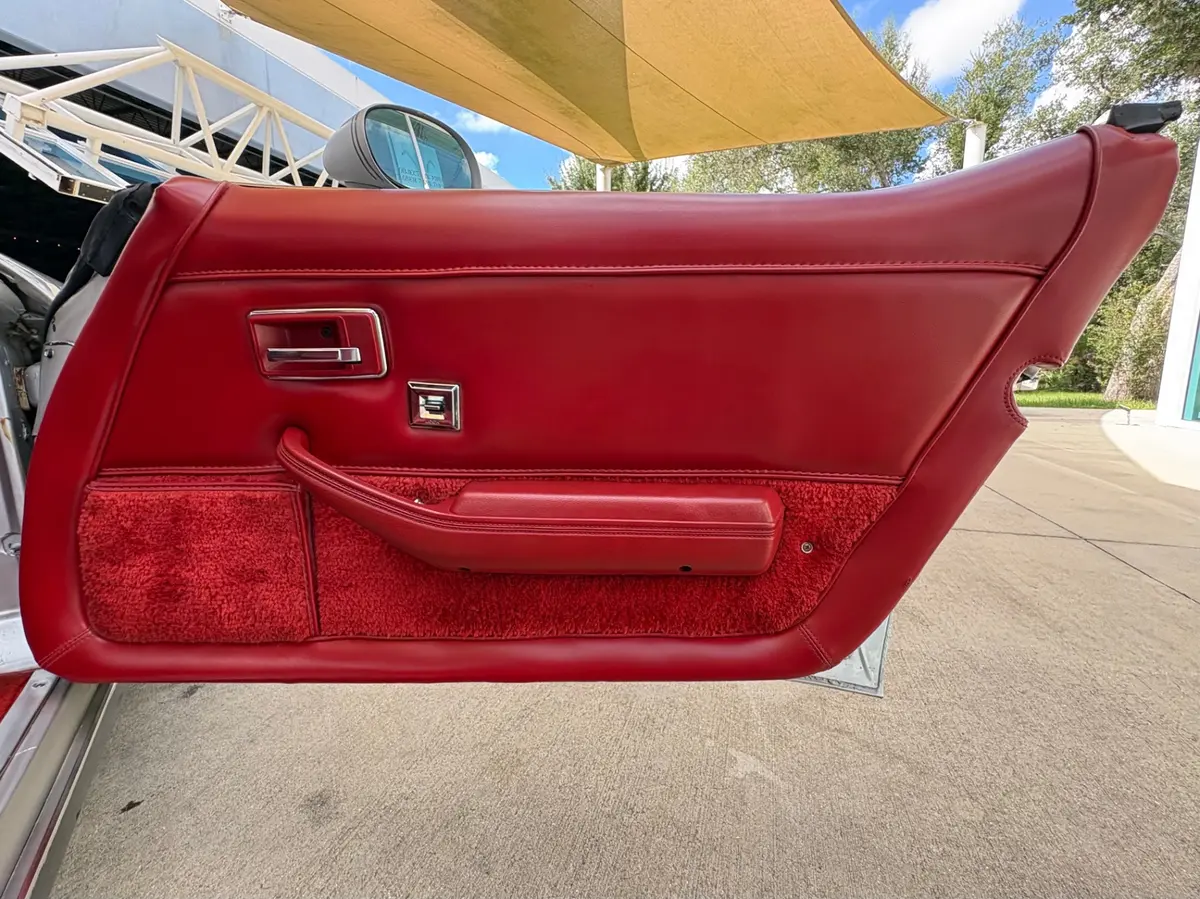
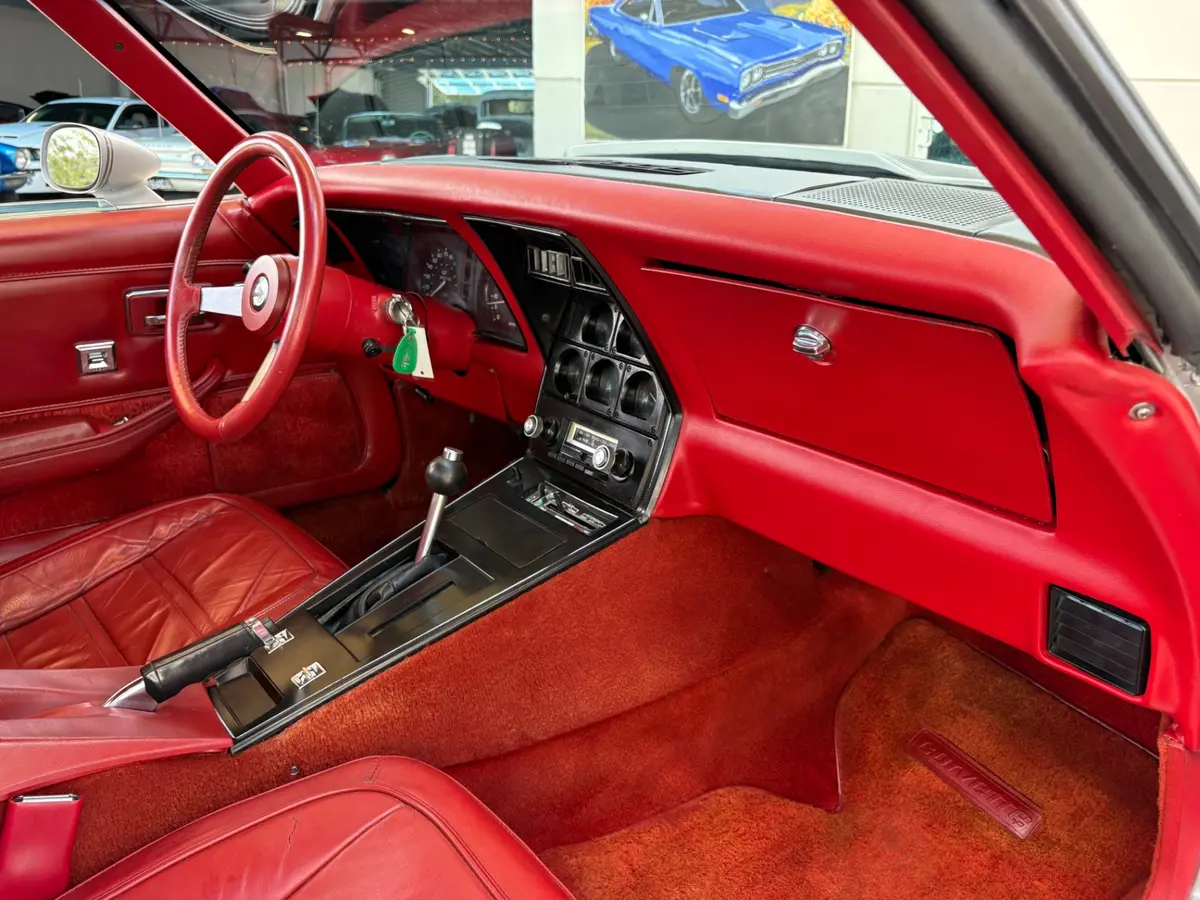
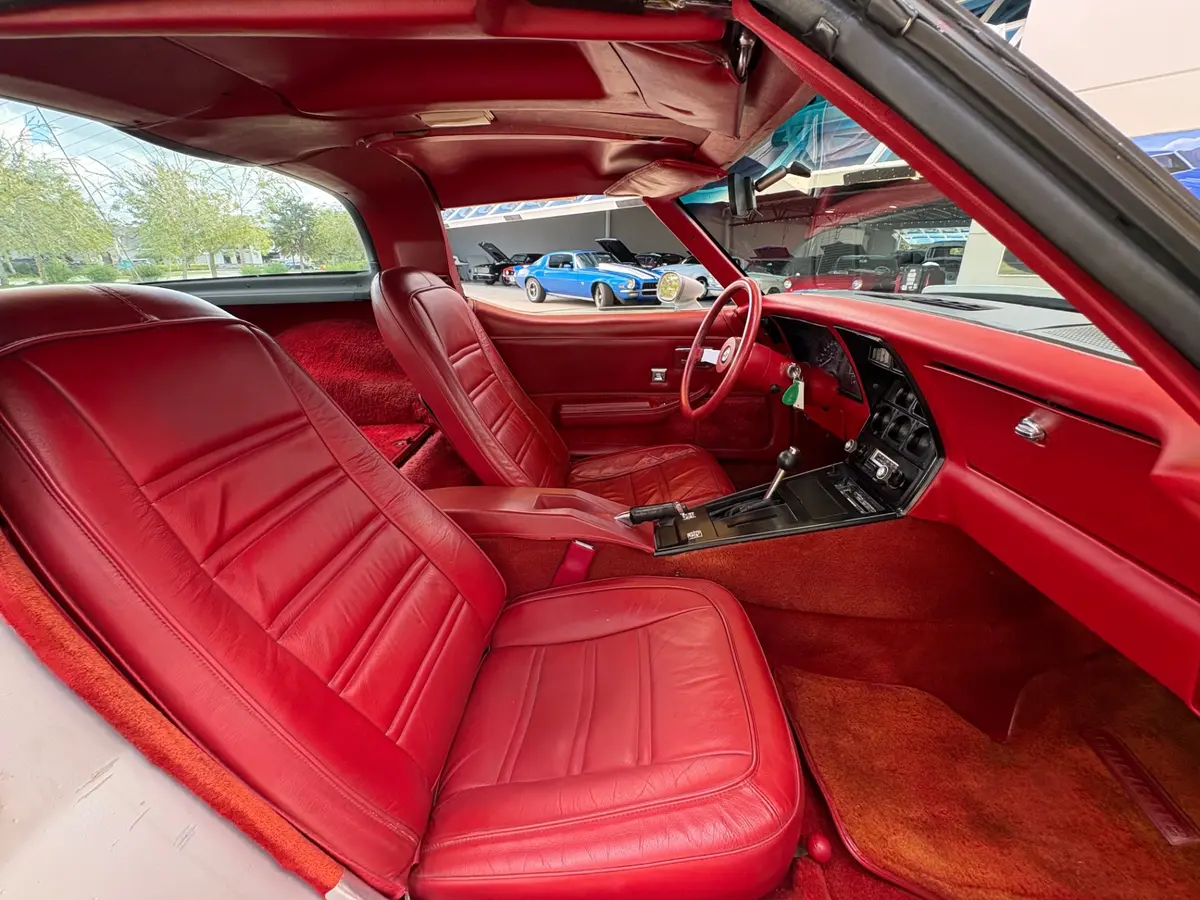
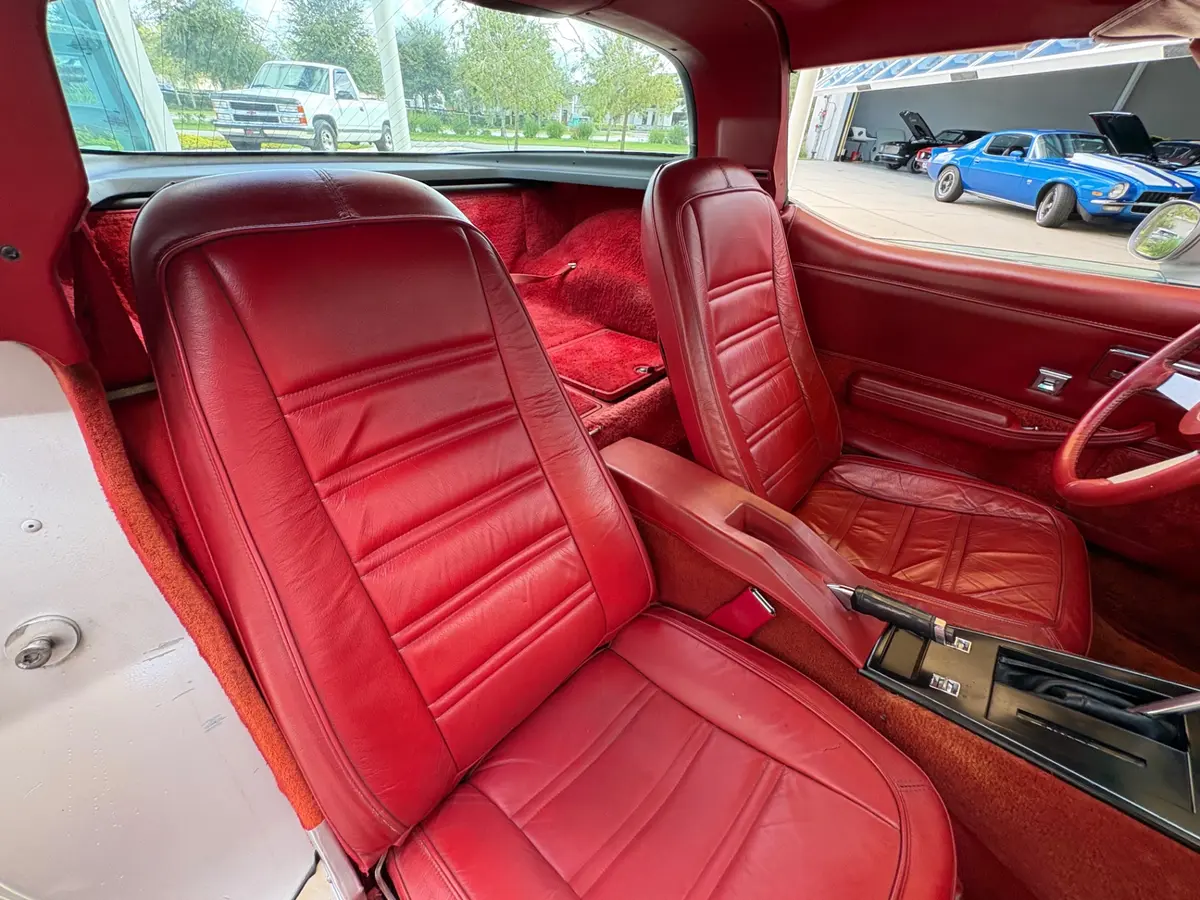
Step inside and the red leather environment is immediately apparent. The bucket seats, door panels, carpet, and upper interior surfaces are all done in red — a coordinated factory color scheme that Chevrolet executed across the full interior on cars ordered this way. The seats show wear consistent with a car that has been used, with creasing in the leather particularly visible in the seat bolsters and cushions. The door panels remain in good shape with their chrome hardware intact.
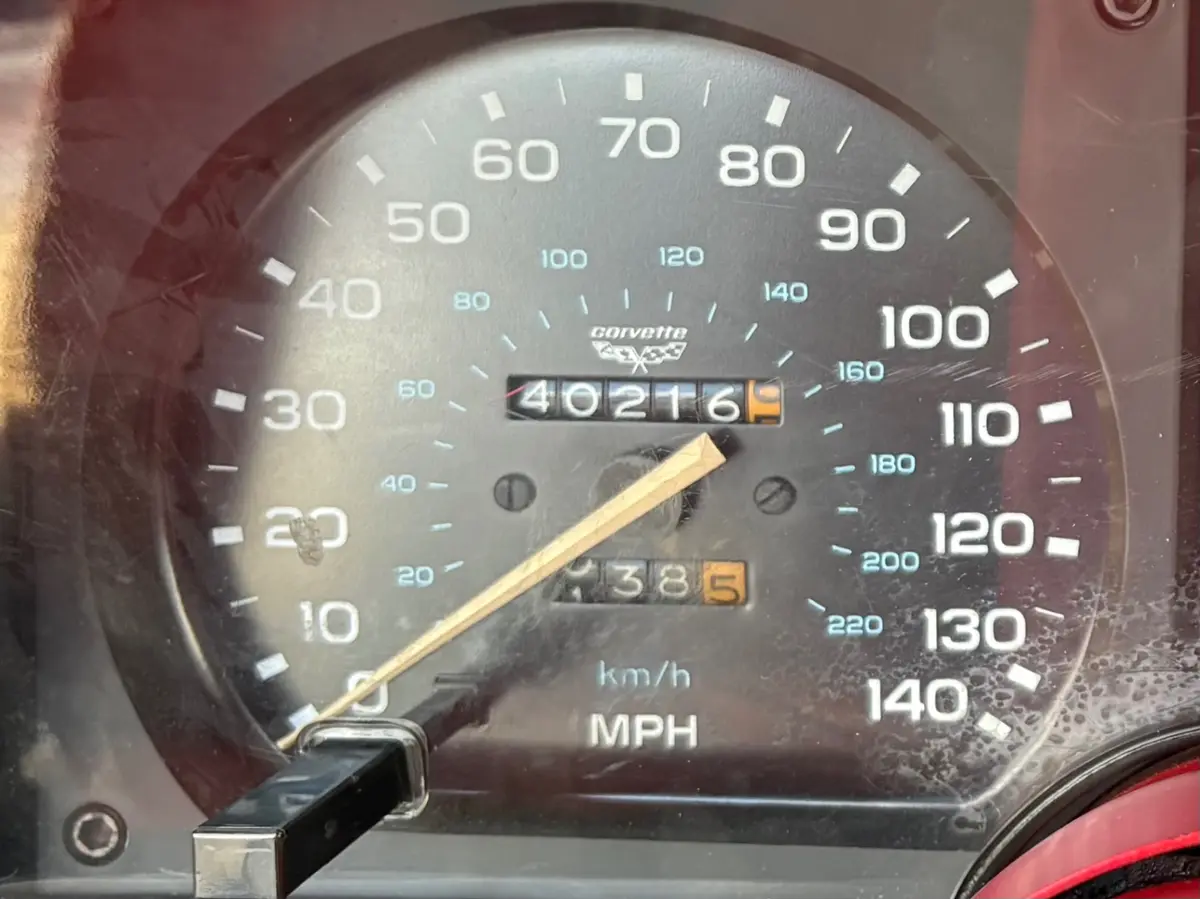
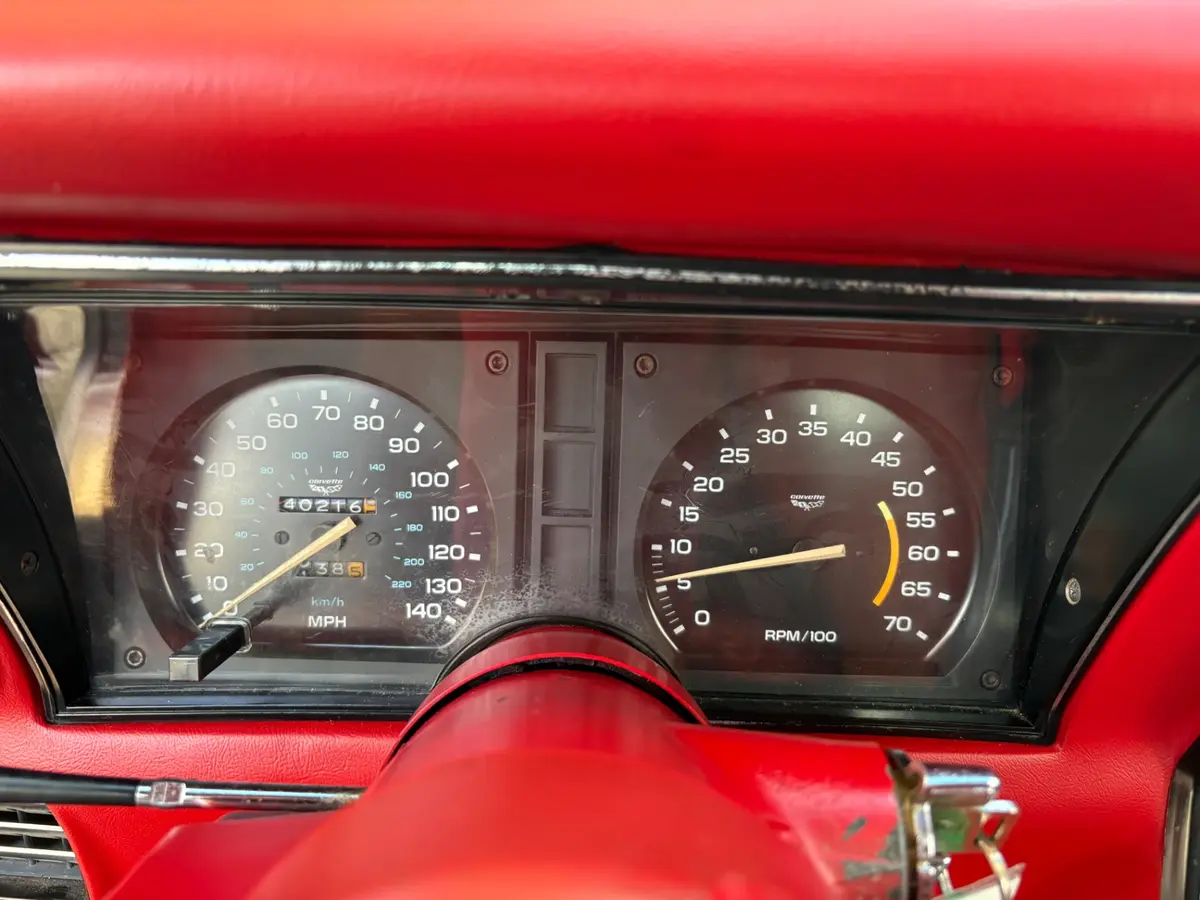
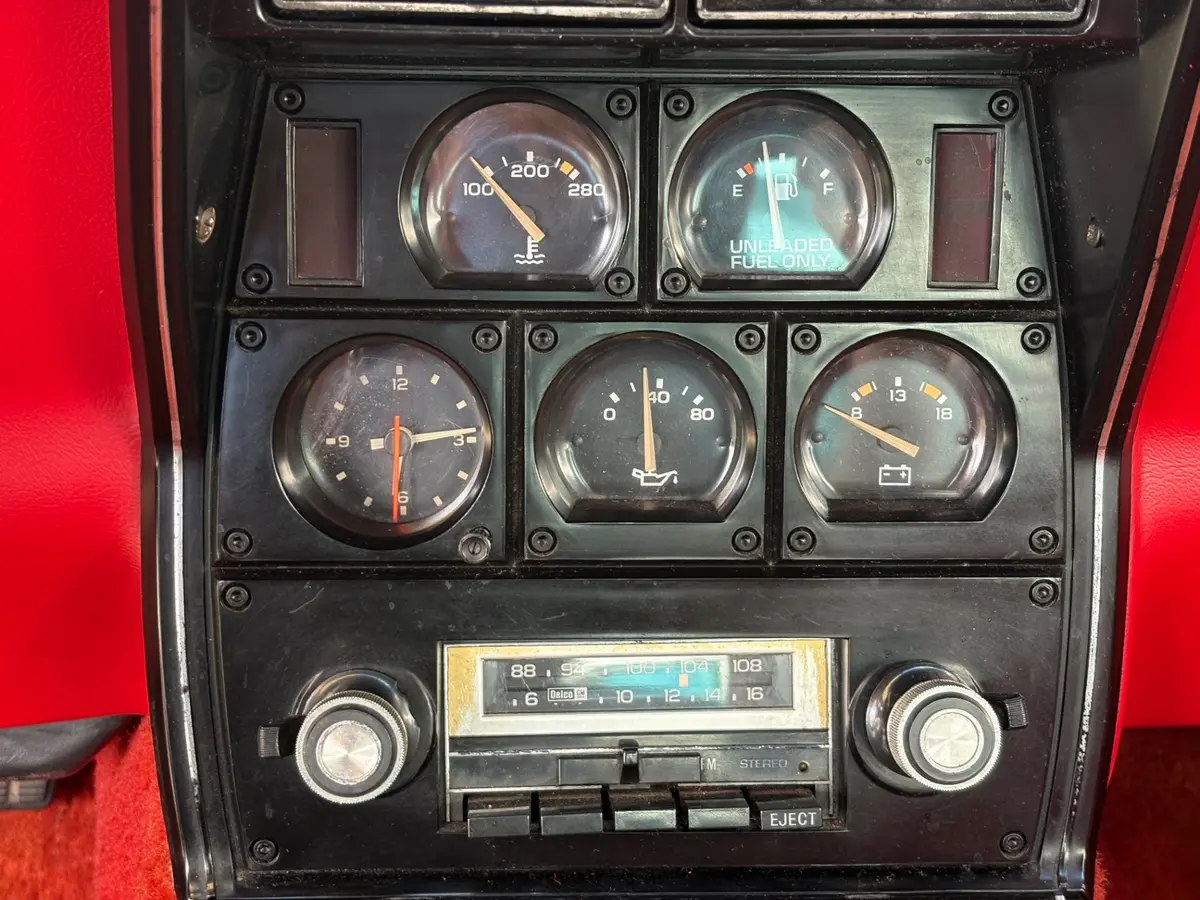
The dashboard layout is the revised 1978 design, which moved away from the round binnacle of earlier C3s in favor of a flat-topped instrument panel with a large speedometer and tachometer facing the driver. Auxiliary gauges — coolant temperature, fuel level, oil pressure, voltmeter, and clock — are clustered in the center of the dash in a black panel, easy to read and directly in the driver's sightline. The odometer photo shows 40,216 miles on the car.
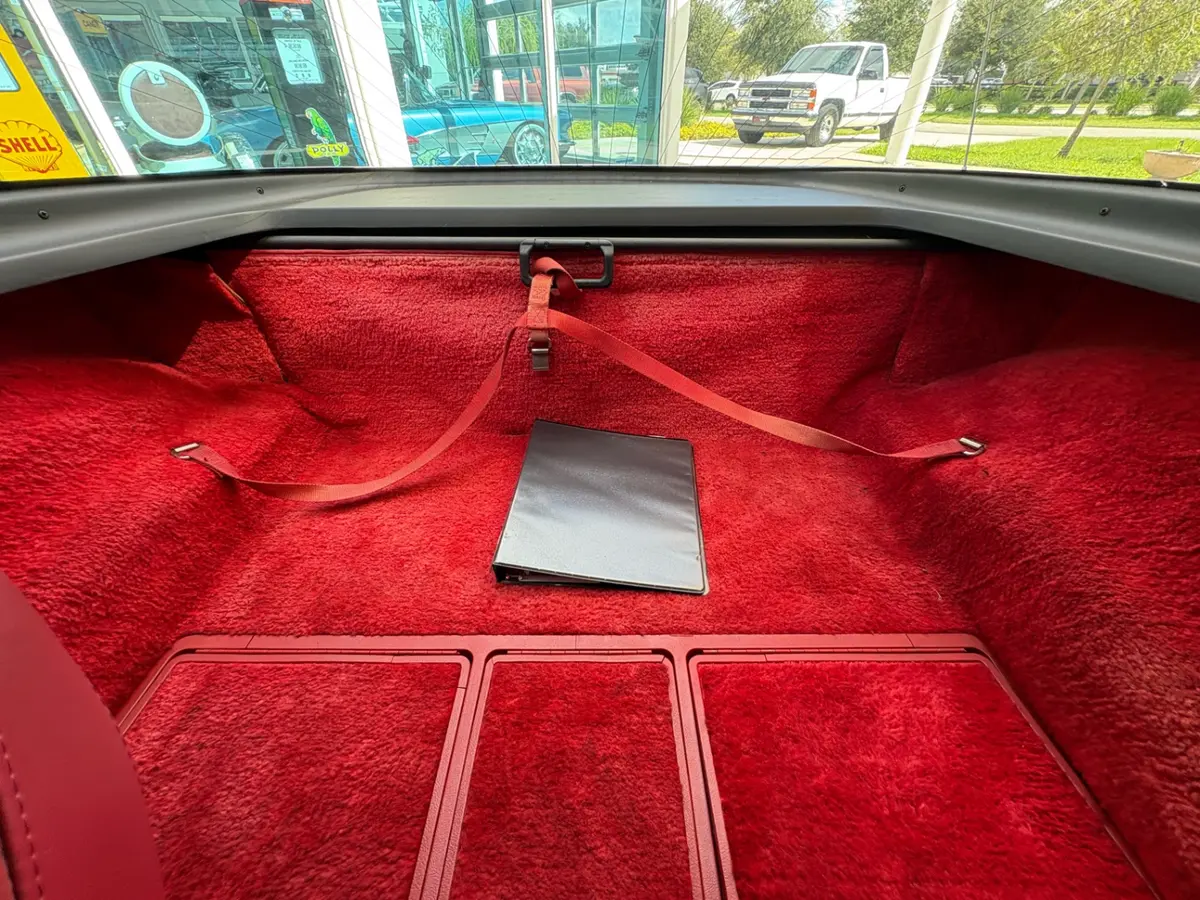
The center console runs between the two bucket seats and houses the 4-speed shifter with its black ball-topped shift lever. The AM/FM stereo with 8-track player is the factory Delco unit, still in place in the console face. Power window switches are mounted in the console as well. The cargo area behind the seats is covered in red carpet and benefits directly from the 1978 redesign — the new fastback roofline created a more usable storage shelf area than what was available in earlier C3 models. The T-top panels, when removed, store in bags in this area. The wraparound rear window that frames this cargo area is one of the defining visual changes of the 1978 model year.
Exterior
The two-tone Silver over Charcoal treatment divides the body at the mid-body crease line, with lighter silver on the upper body and a darker charcoal below. This combination was a popular choice in 1978 and works with the Corvette's body lines in a way that draws attention to the car's wide hips and low roofline. The fiberglass body panels show the expected character of a car that has been on the road — this is a driver-quality 1978 Corvette, not a trailer queen, and the photos represent it as such.
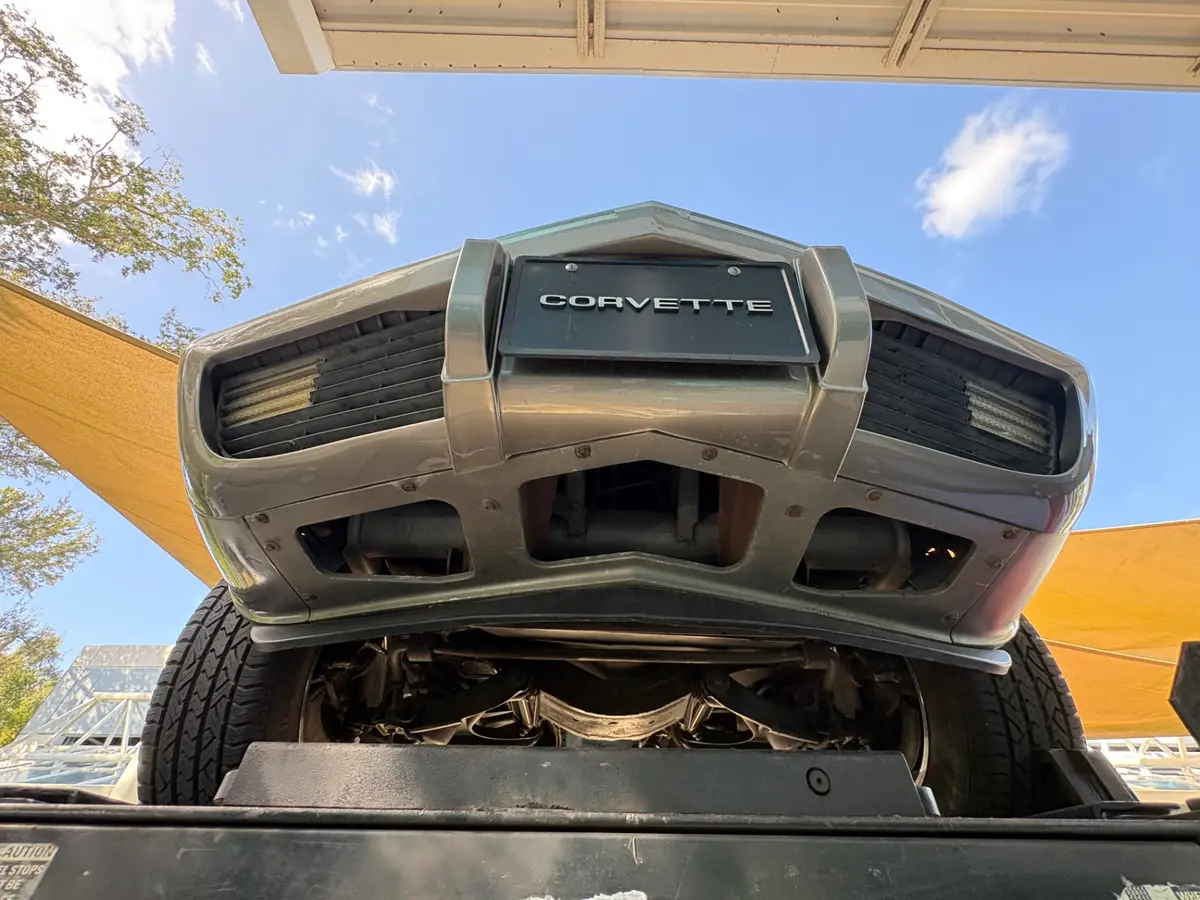
The front end carries the 1978 Corvette's integrated bumper cover with its louvered grille inserts, "CORVETTE" lettering on the nose, and concealed headlights. The rear is where the 1978 redesign is most dramatic — the new fastback glass eliminated the separate backlight of earlier cars and replaced it with a single sweeping pane that wraps around to meet the sail panels on each side. The effect is a much cleaner, more unified rear greenhouse. Tail lamps are integrated into the rear fascia in a horizontal strip arrangement.
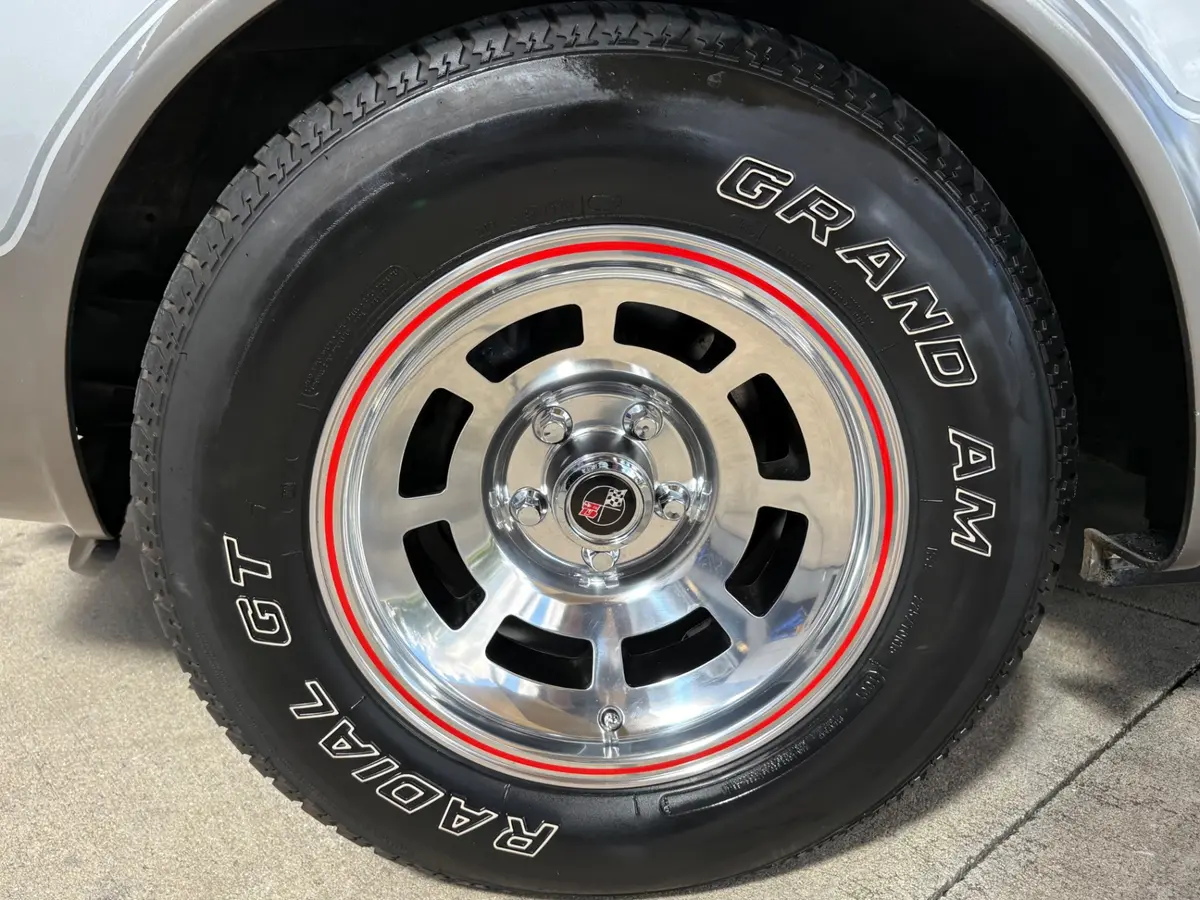
Aluminum wheels are fitted with raised white letter tires, which is the correct period look for a 1978 Corvette and suits the two-tone exterior well. The underside inspection photos show the car is structurally sound with no visible rust through on the frame rails or floor — a meaningful finding on a nearly 50-year-old vehicle and a direct benefit of the Corvette's fiberglass body keeping moisture away from the upper structure.
Conclusion
The 1978 Chevrolet Corvette represents the C3 at a genuine turning point. Chevrolet invested real design effort into the anniversary car, and the changes — particularly the wraparound rear window and the updated interior — make 1978 one of the more desirable years within the C3 run. This specific car combines those year-specific improvements with a four-speed manual transmission, a full complement of factory gauges, red leather interior, and a two-tone exterior finish that is era-correct and visually distinctive. The odometer shows just over 40,000 miles. The underside is clean enough to tell you this car has not been abused, and the fiberglass body keeps corrosion from being a meaningful concern.
If you are looking for a C3 Corvette to drive regularly rather than store, this 1978 Chevrolet Corvette with its manual gearbox and honest overall condition makes a strong case for itself. Parts support for the 350 small block and the broader C3 platform is excellent, and the 1978-specific components — particularly the rear window and updated dash — are well supported in the reproduction market as well.
To schedule a closer look or arrange a test drive, call Skyway Classics in Sarasota, Florida at 941-254-6608. We are happy to answer any questions and provide additional photos or documentation on request.
Disclaimer
Information found on the website is presented as given to us by the owner of the car, whether on consignment or from the owner we bought it from. Some Photos, materials for videos, descriptions and other information are provided by the consignor/seller and is deemed reliable, but Skyway Classics does not warranty or guarantee this information. Skyway Classics is not responsible for information that may incorrect or a publishing error. The decision to purchase should be based solely on the buyers personal inspection of the vehicle or by a professional inspection service prior to offer or purchase being made.
1978 Chevrolet
Corvette Silver Anniversary Edition
Why Choose Skyway Classics?
Explore our curated inventory of classic and collector cars—thoughtfully selected, ready to drive, and supported by experts who make ownership simple.
Expert Curation
Every vehicle is hand-selected by our experts for quality, authenticity, and investment potential.
Fast Transactions
Streamlined buying and selling process with quick financing and immediate delivery options.
Only National Dealer With Classic Service & Repair
We’re the only national dealership that services and repairs the classics we sell—before and after the sale.
Nationwide Network
Access to our extensive network of collectors, restorers, and classic car enthusiasts nationwide.
Concierge Ownership Support
From financing and insurance to paperwork, shipping, and titling—we handle the details so you can enjoy the drive.
Passion-Driven Service
We're classic car enthusiasts first, providing personalized service with genuine passion for the hobby.