
1972 Ford
Mustang Mach 1
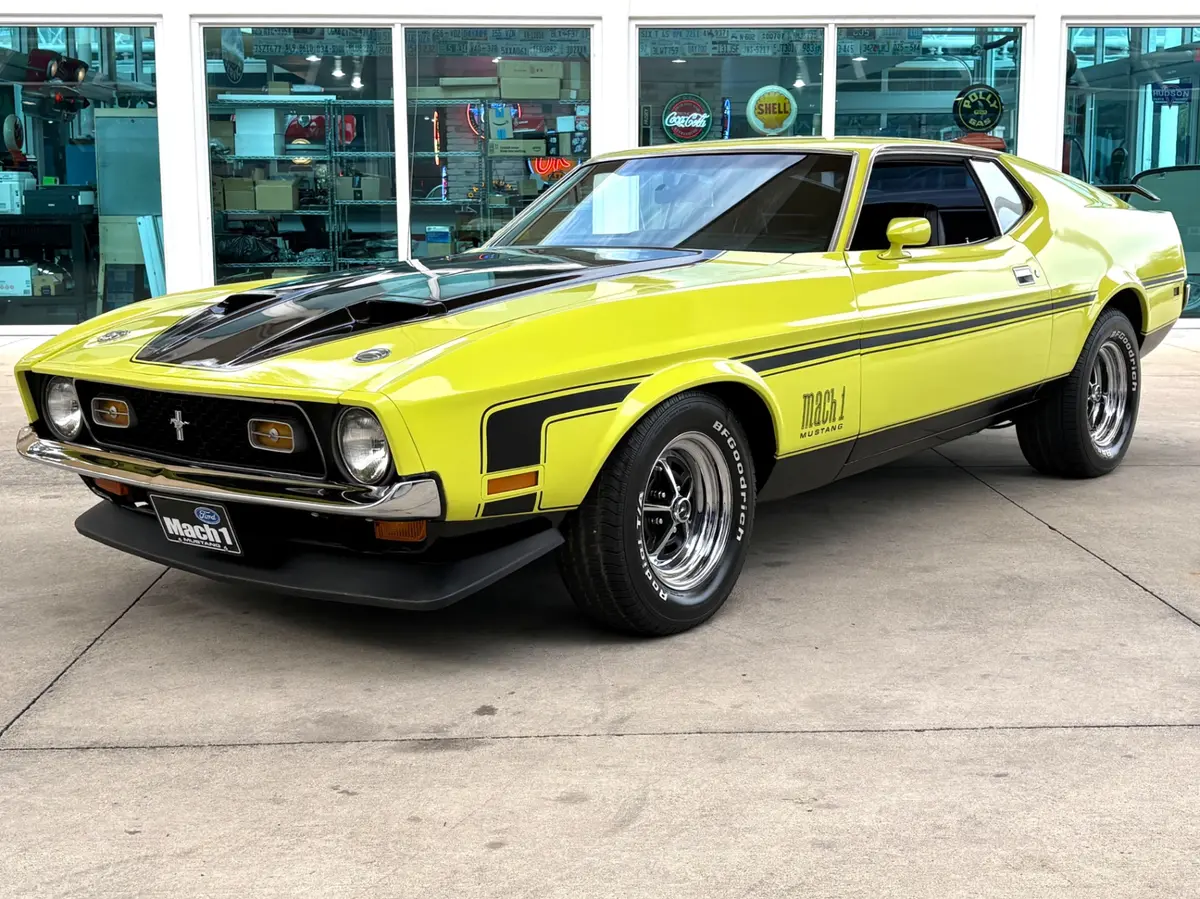
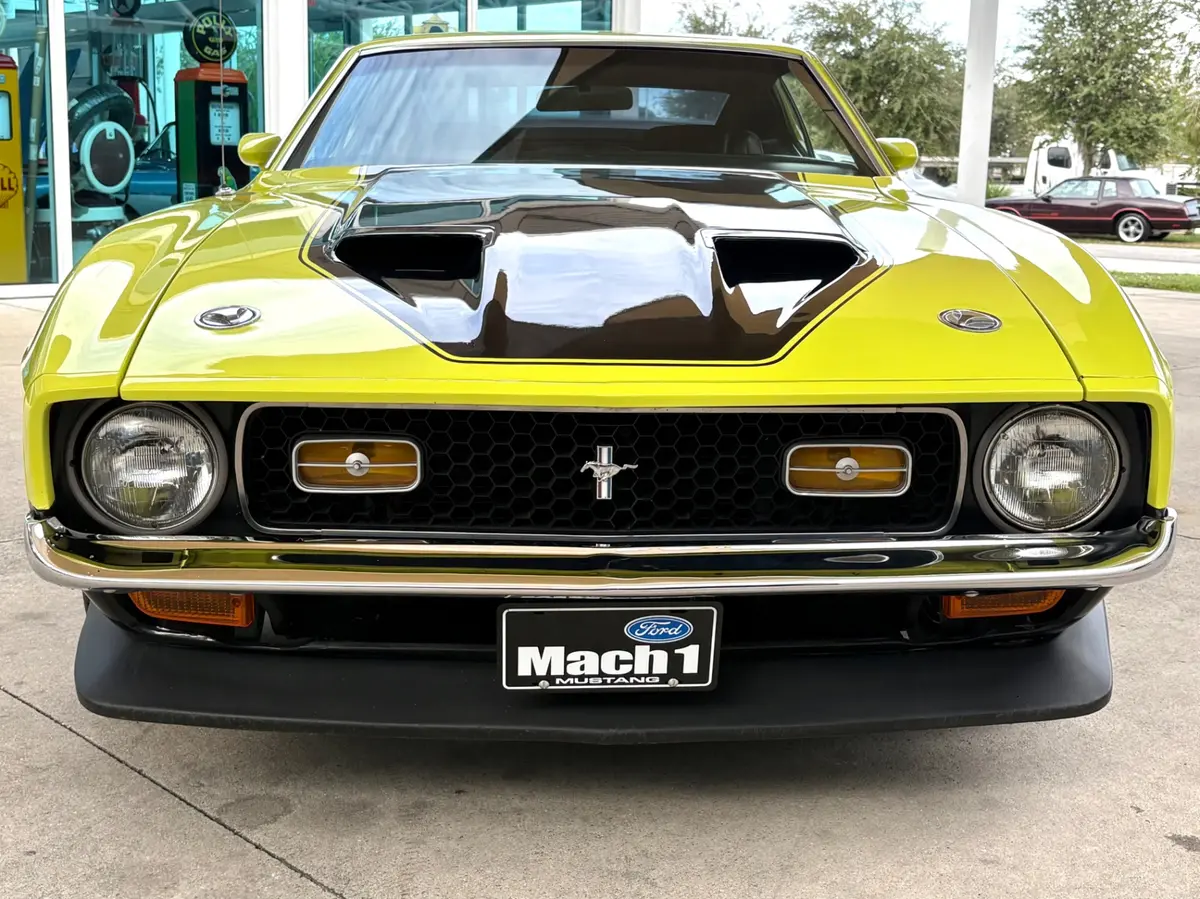
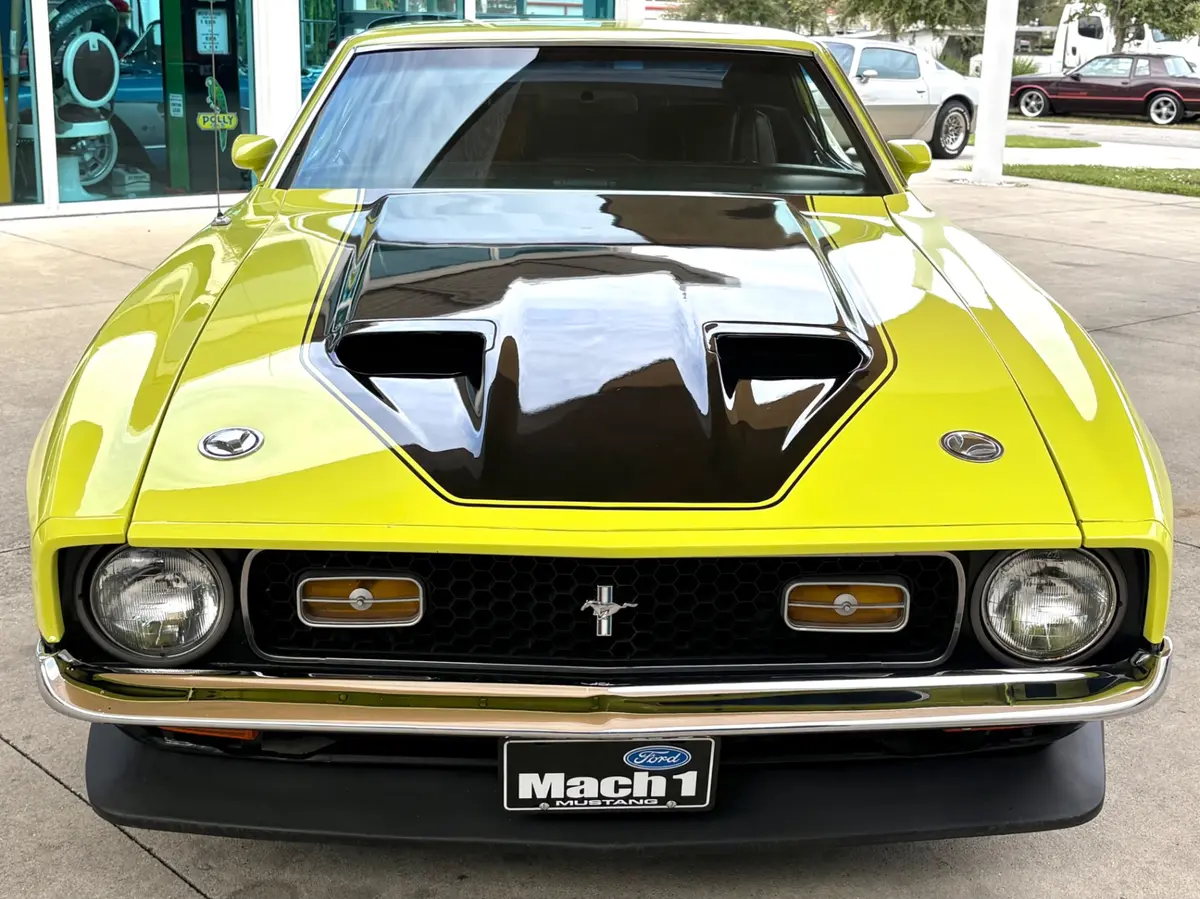
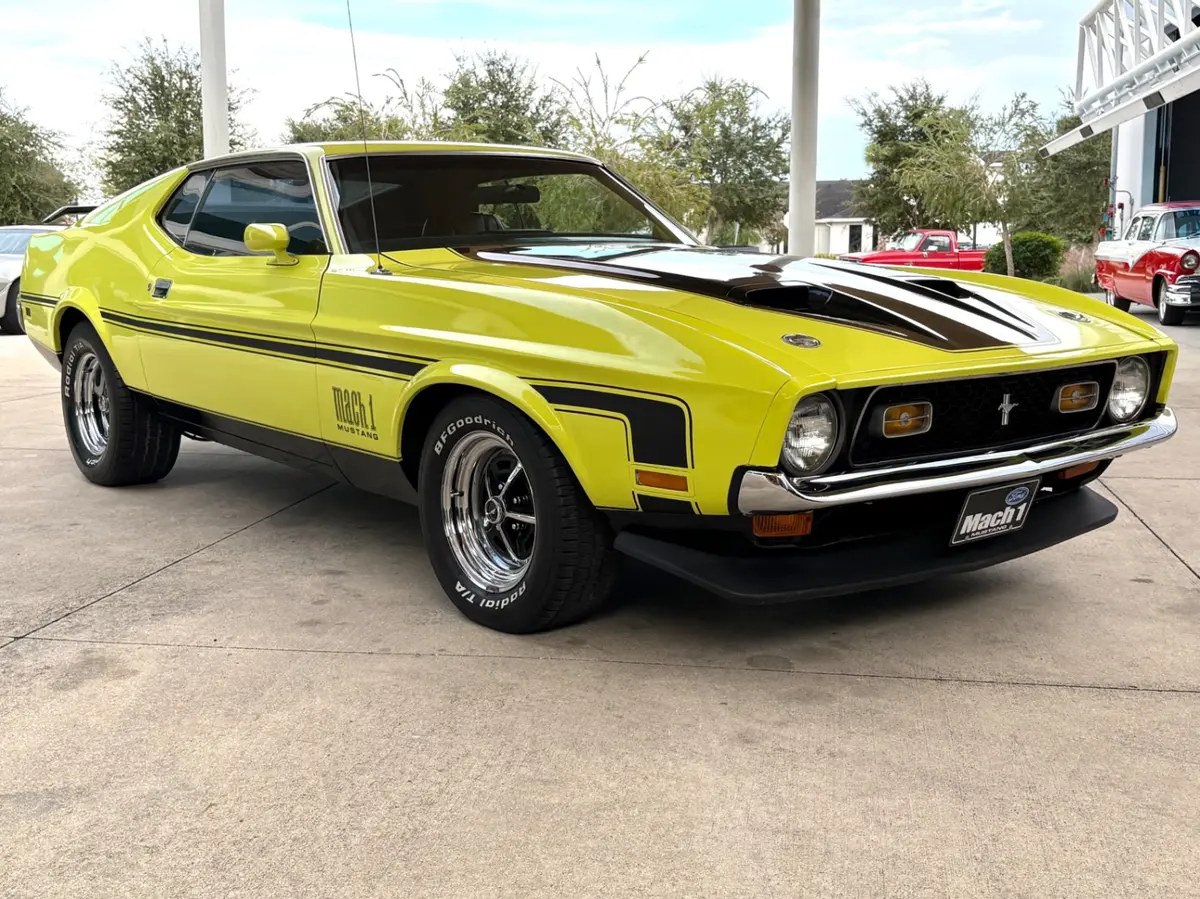
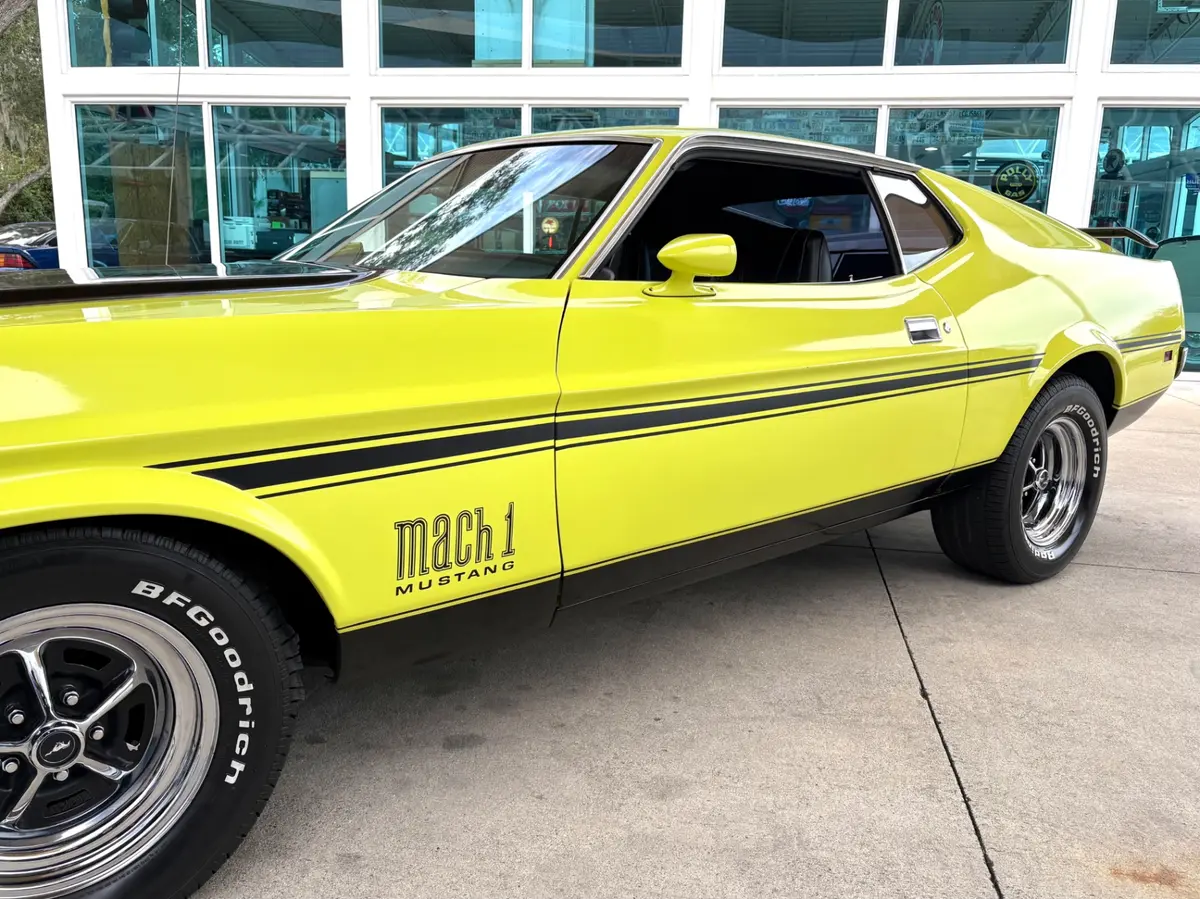
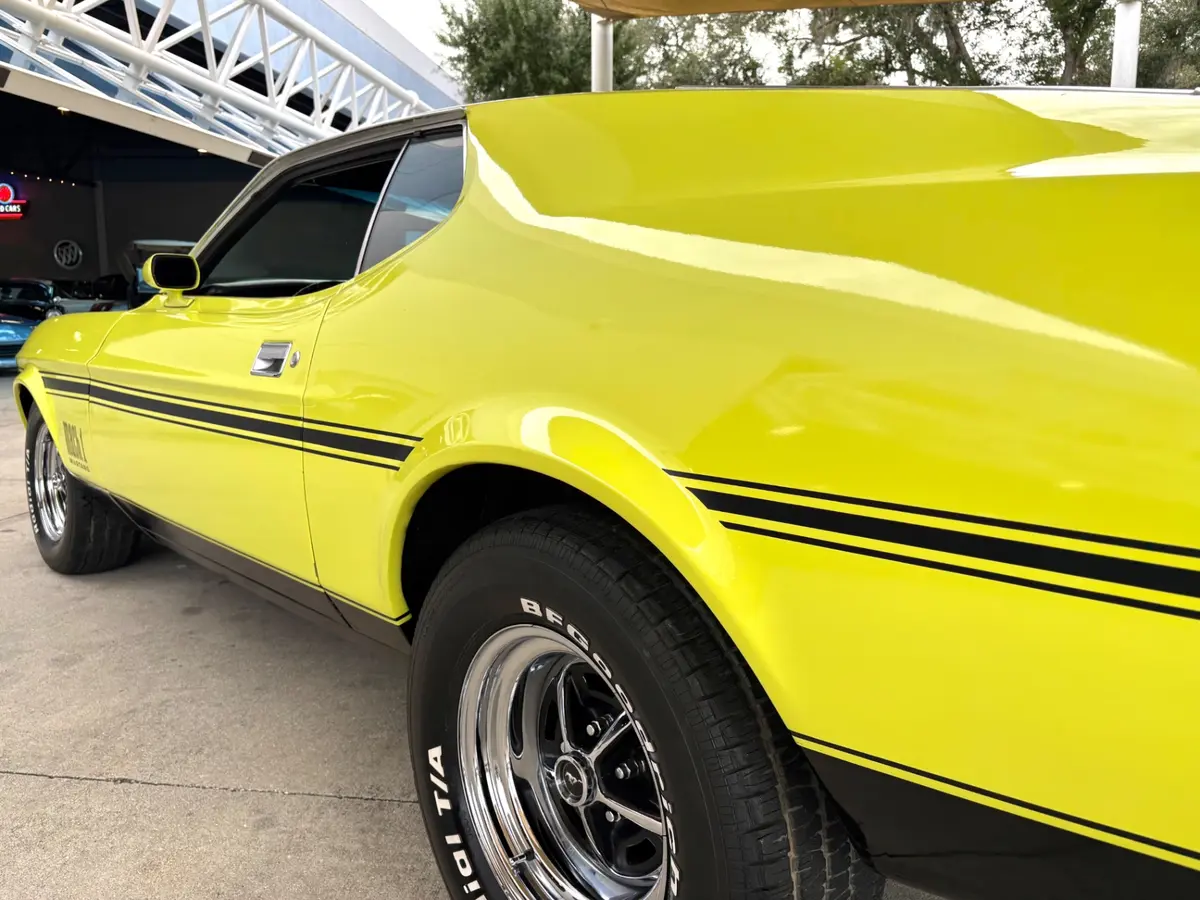
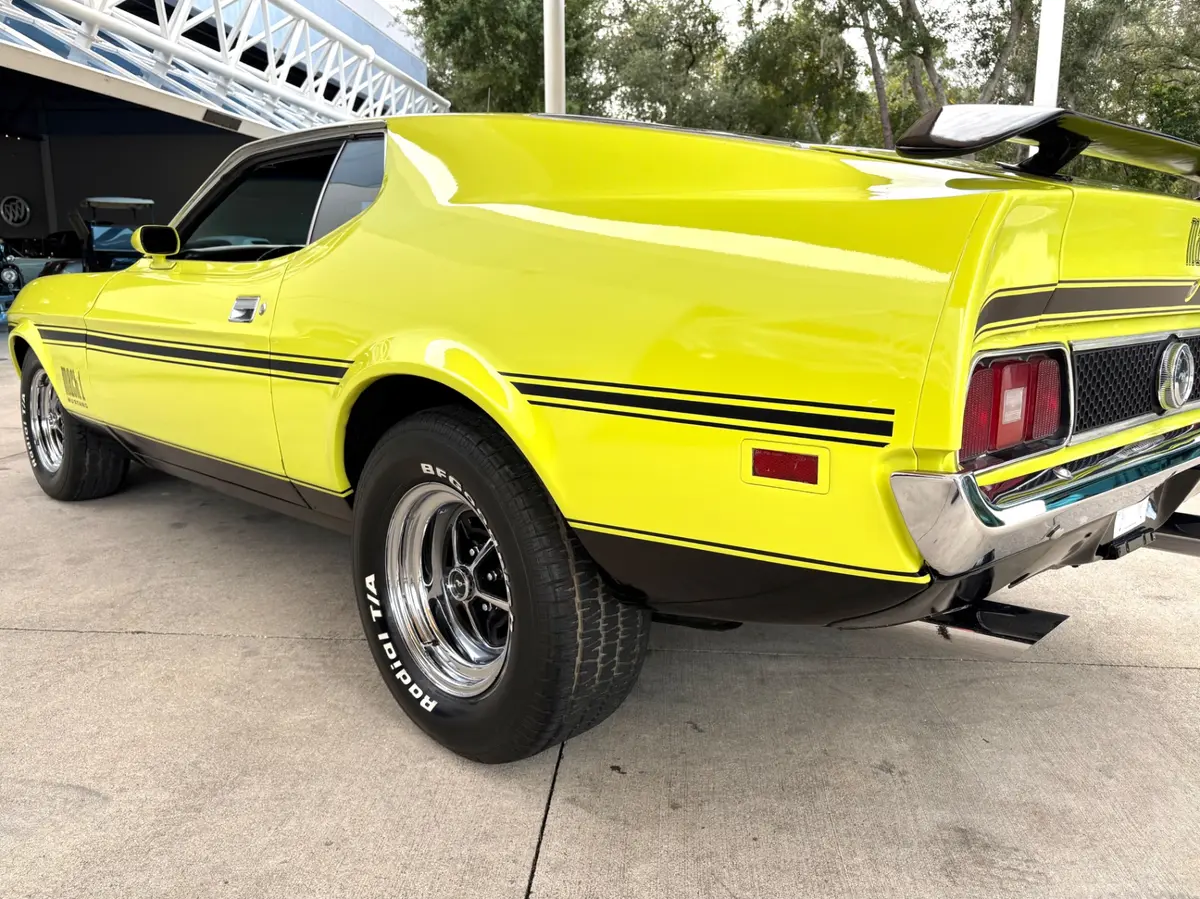
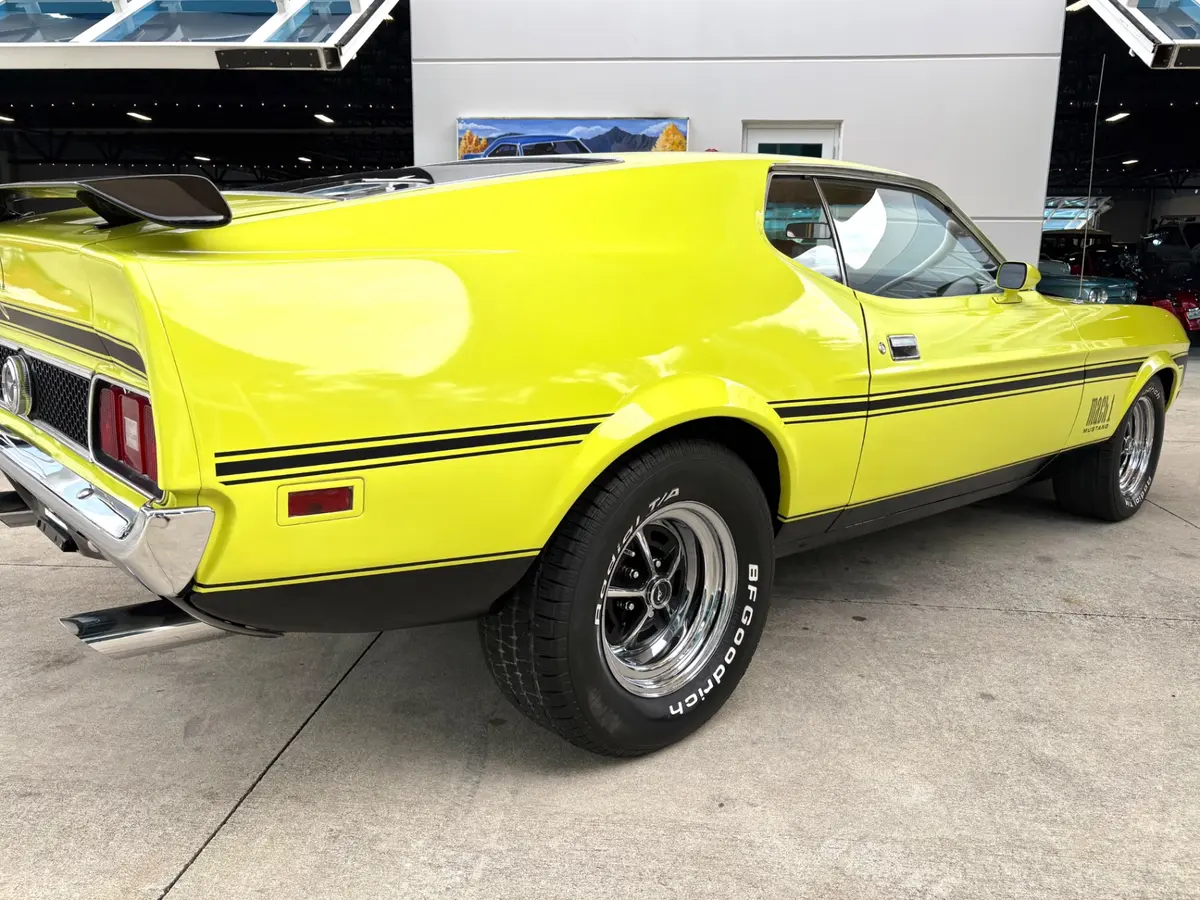
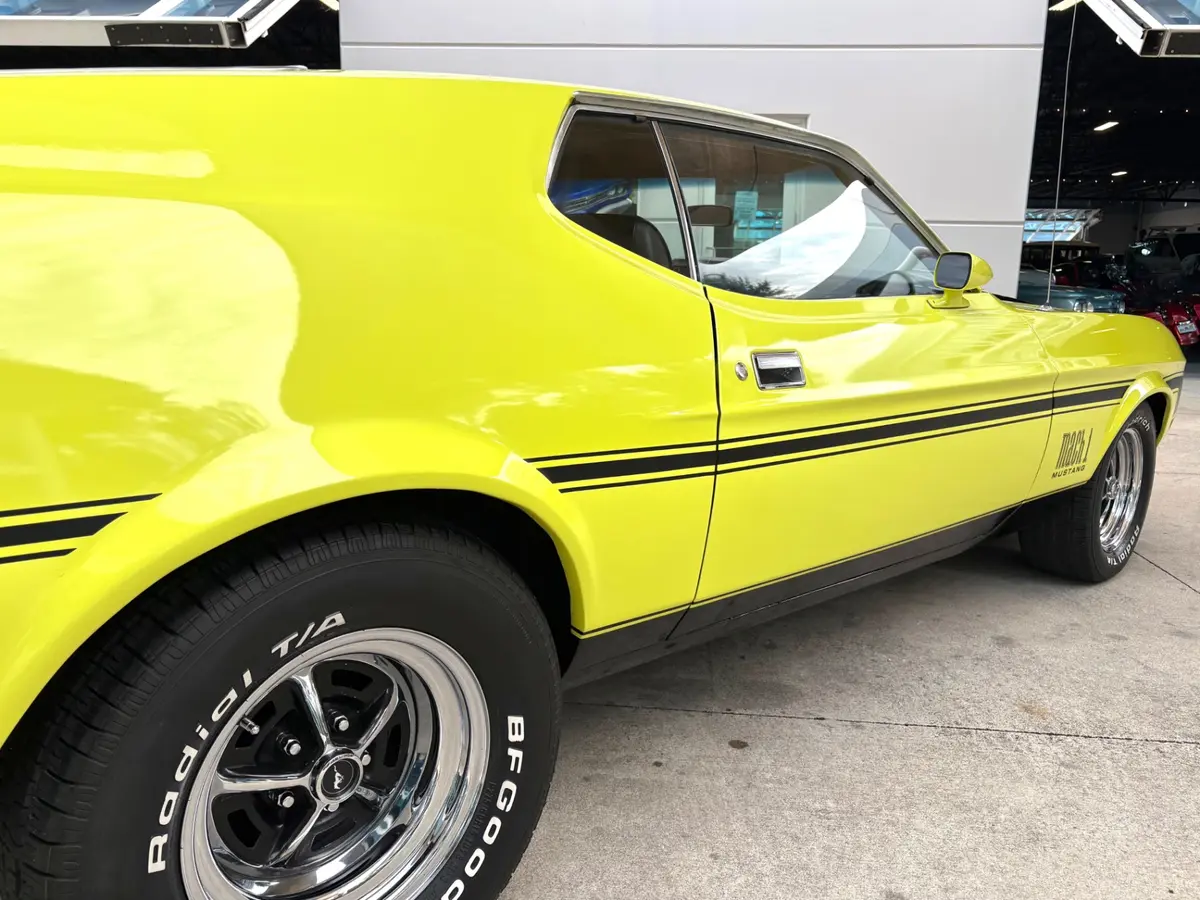
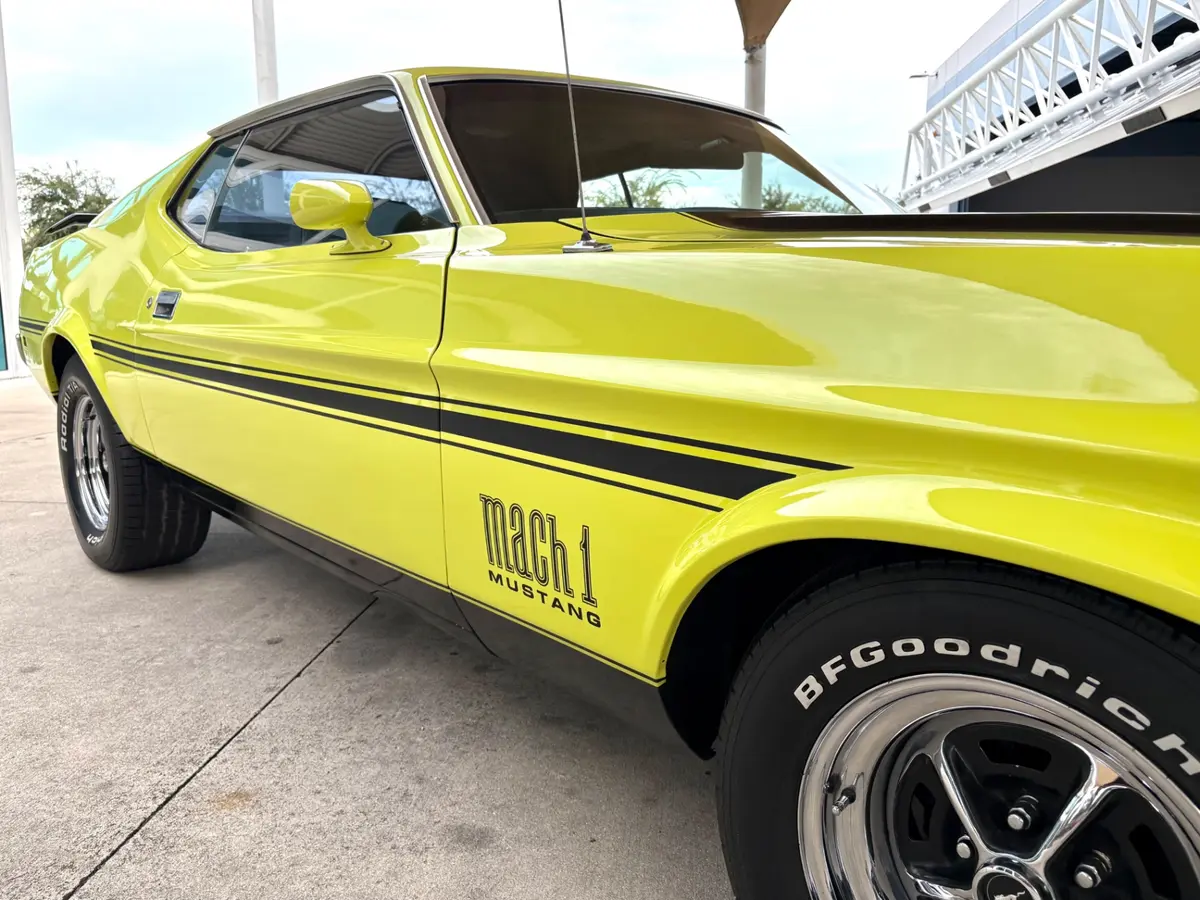
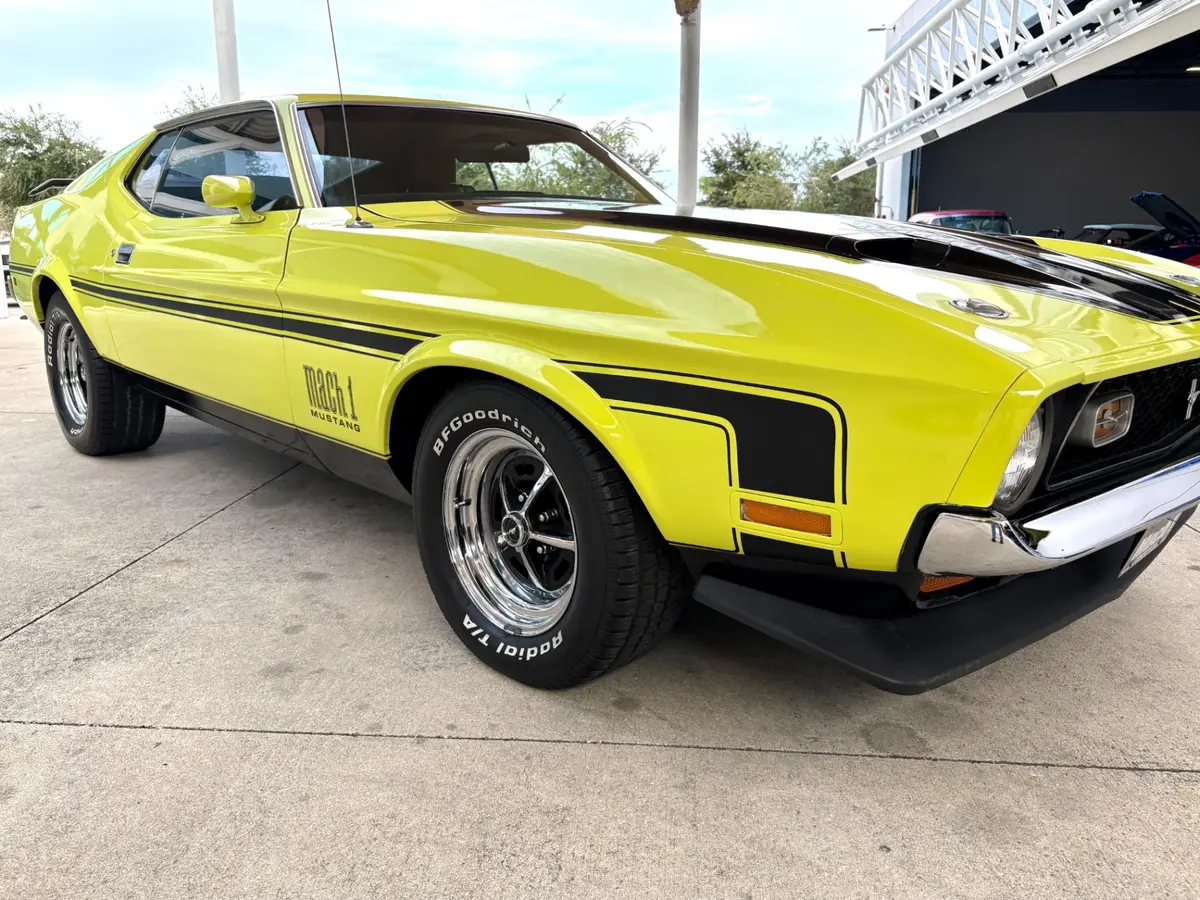
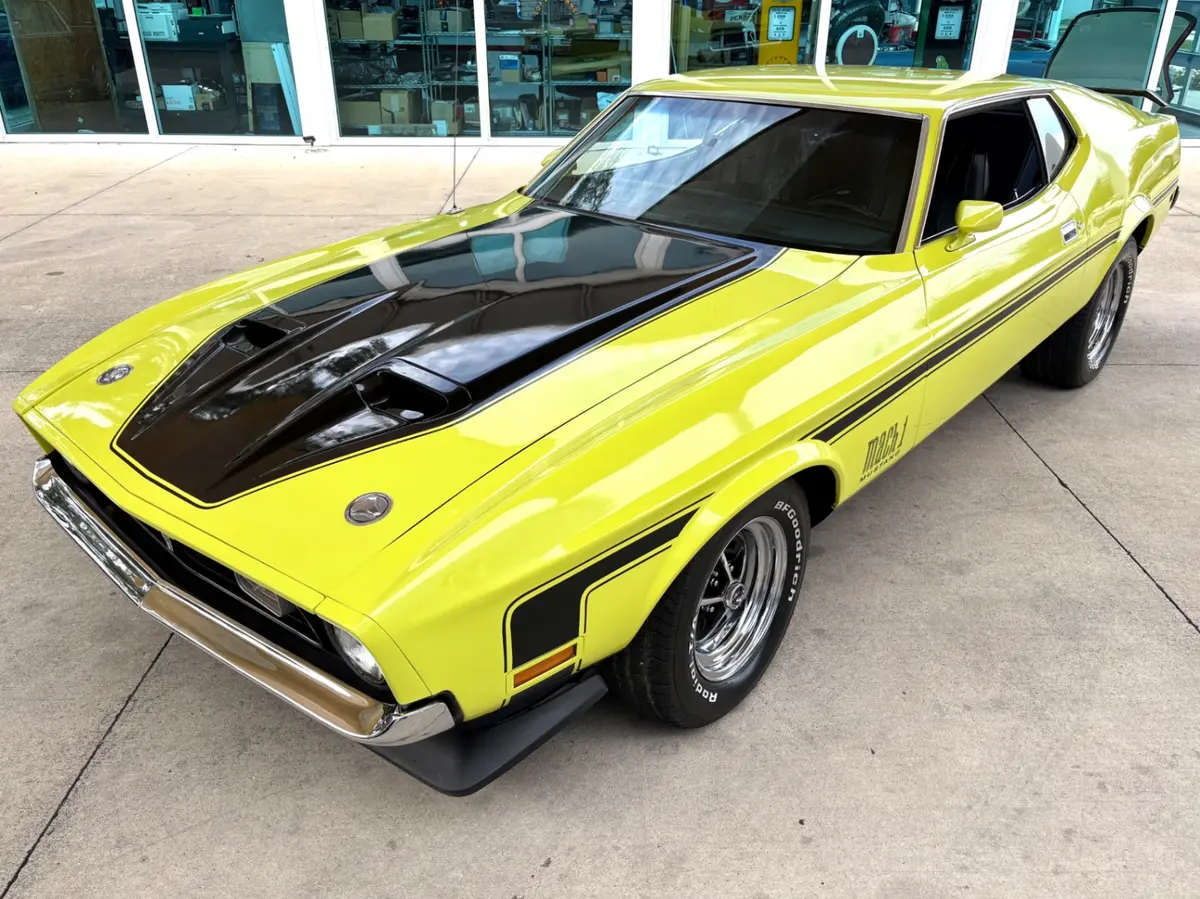
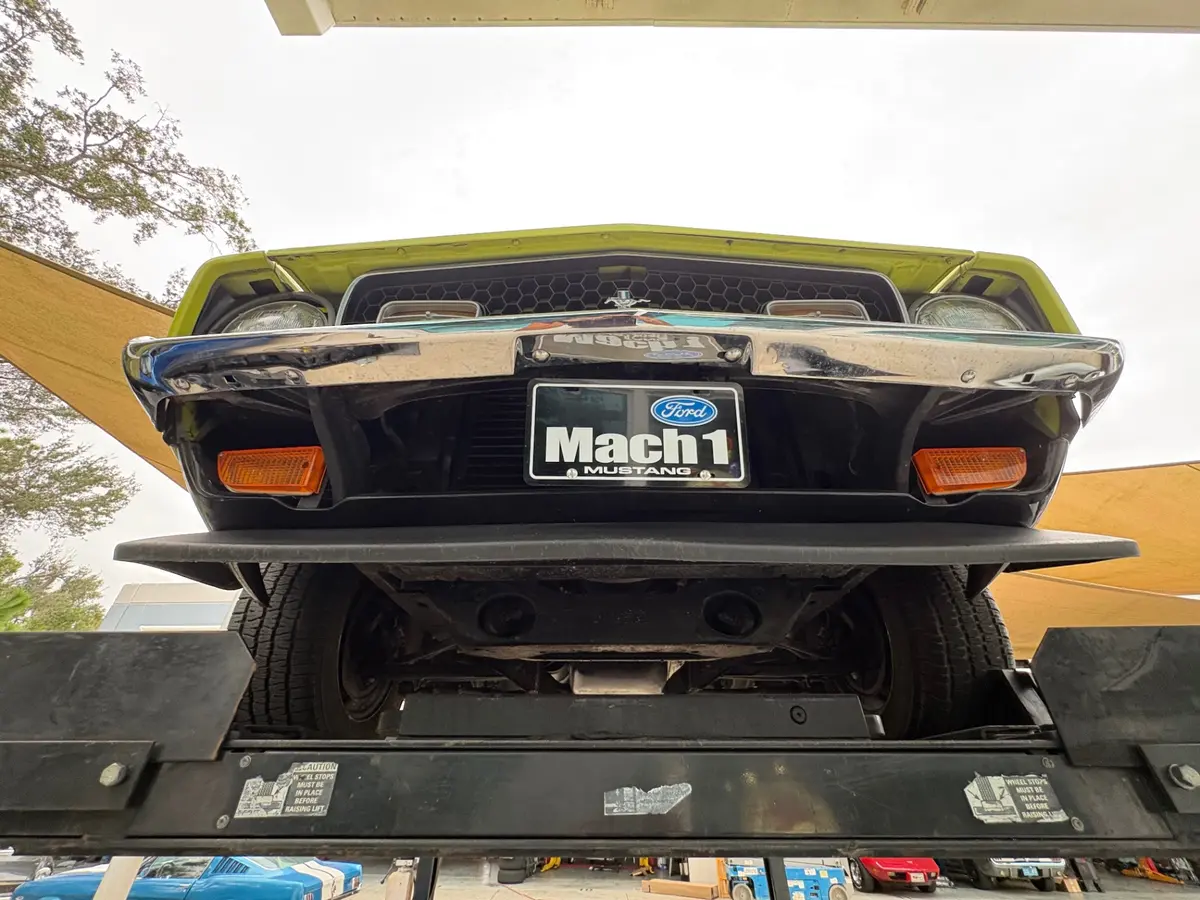
1972 Ford Mustang Mach 1 — 351 Cobra Jet, Lime Gold, Numbers-Matching Sport Roof Fastback
Why This Car Is Special
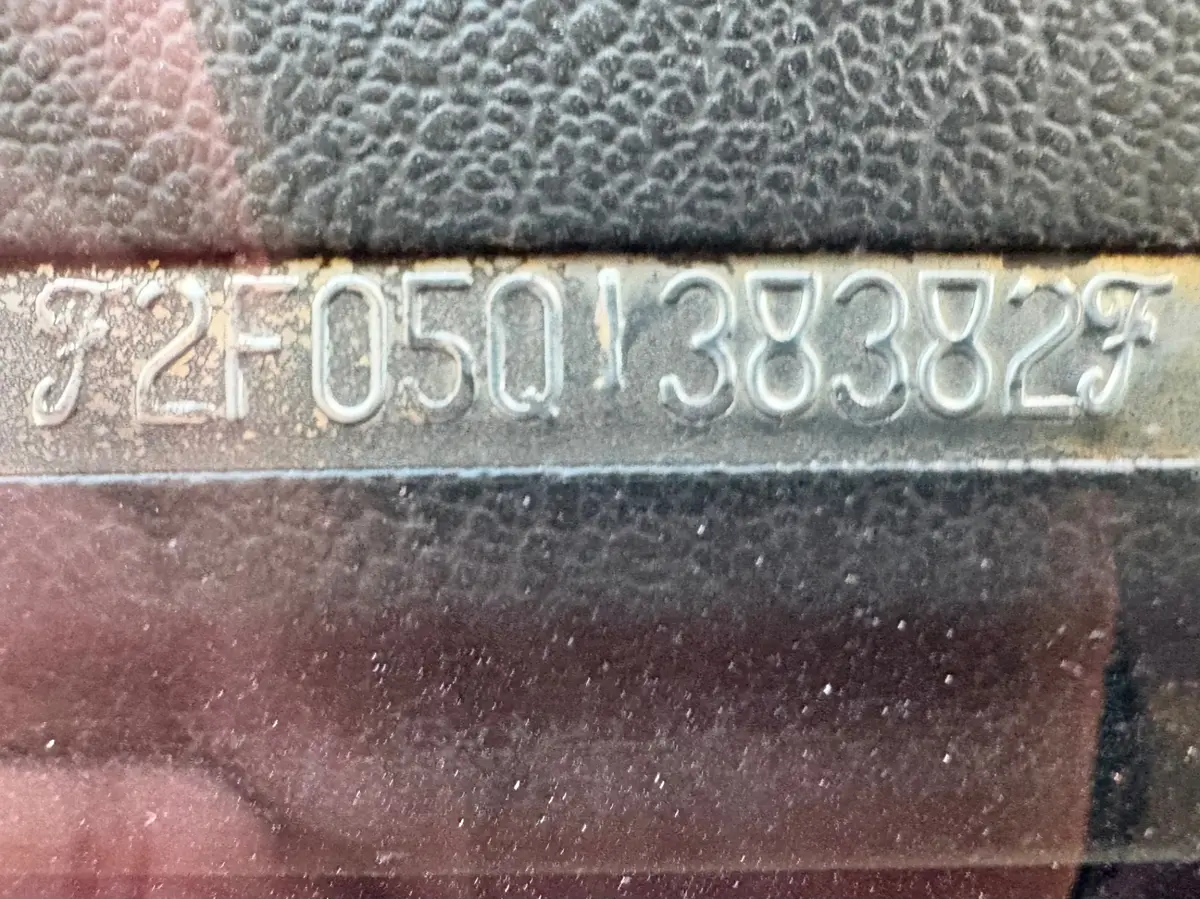
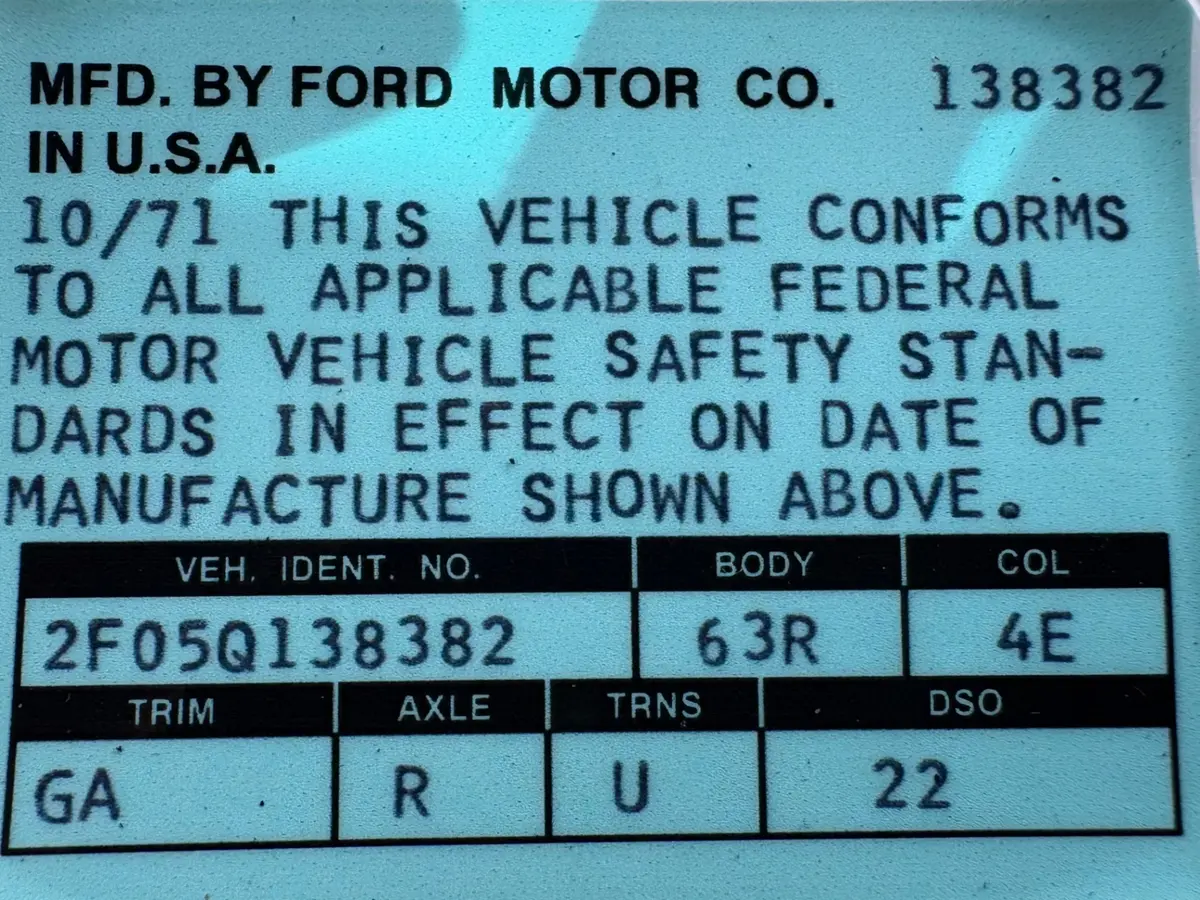
The 1972 Ford Mustang Mach 1 occupies a specific and increasingly respected place in muscle car history. By 1972, tightening emissions regulations and rising insurance rates had already begun stripping performance engines out of most pony cars. Ford responded by keeping the Mach 1 package relevant with genuine performance content, even as the horsepower race wound down. This particular car was built at the Dearborn, Michigan assembly plant — confirmed by the "2F" prefix in the VIN — which was the original home of Mustang production dating back to 1964. That detail matters to serious collectors.
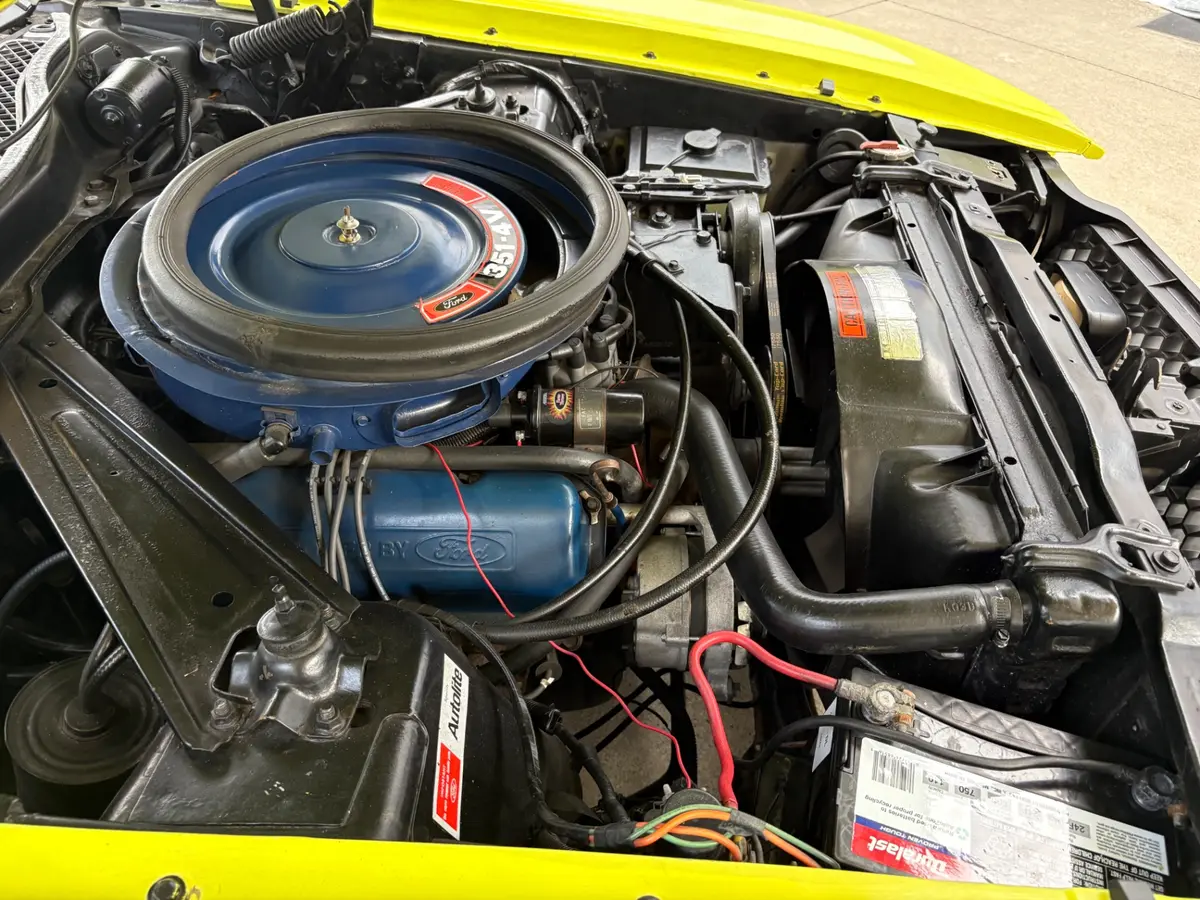
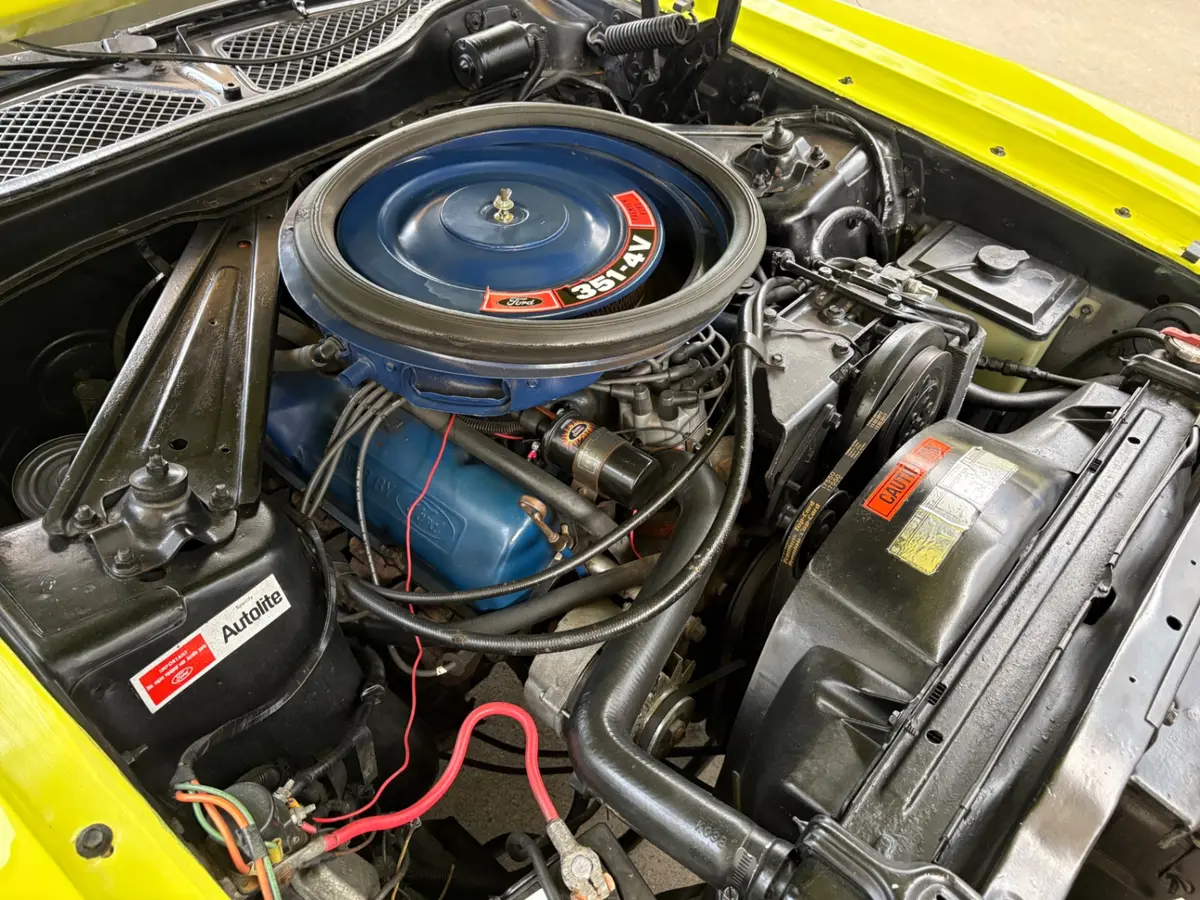
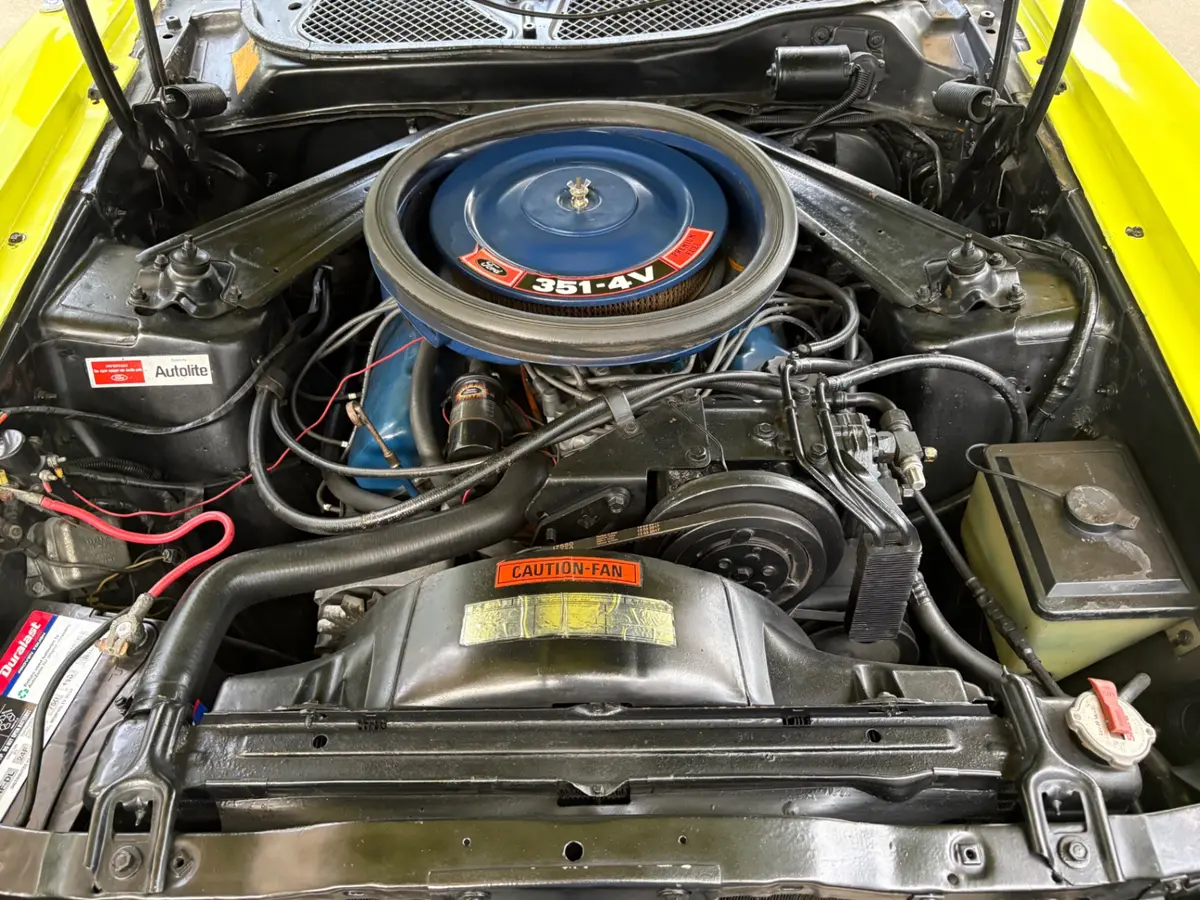
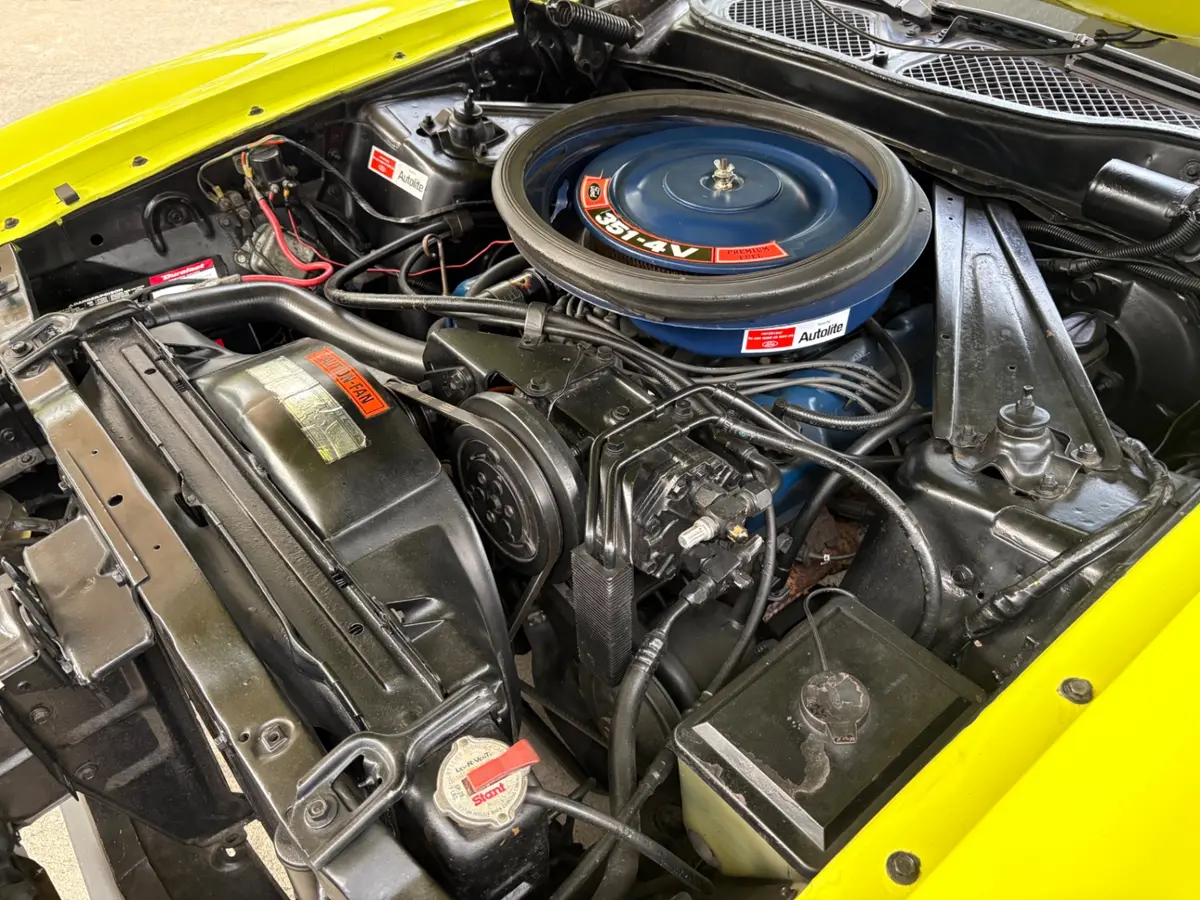
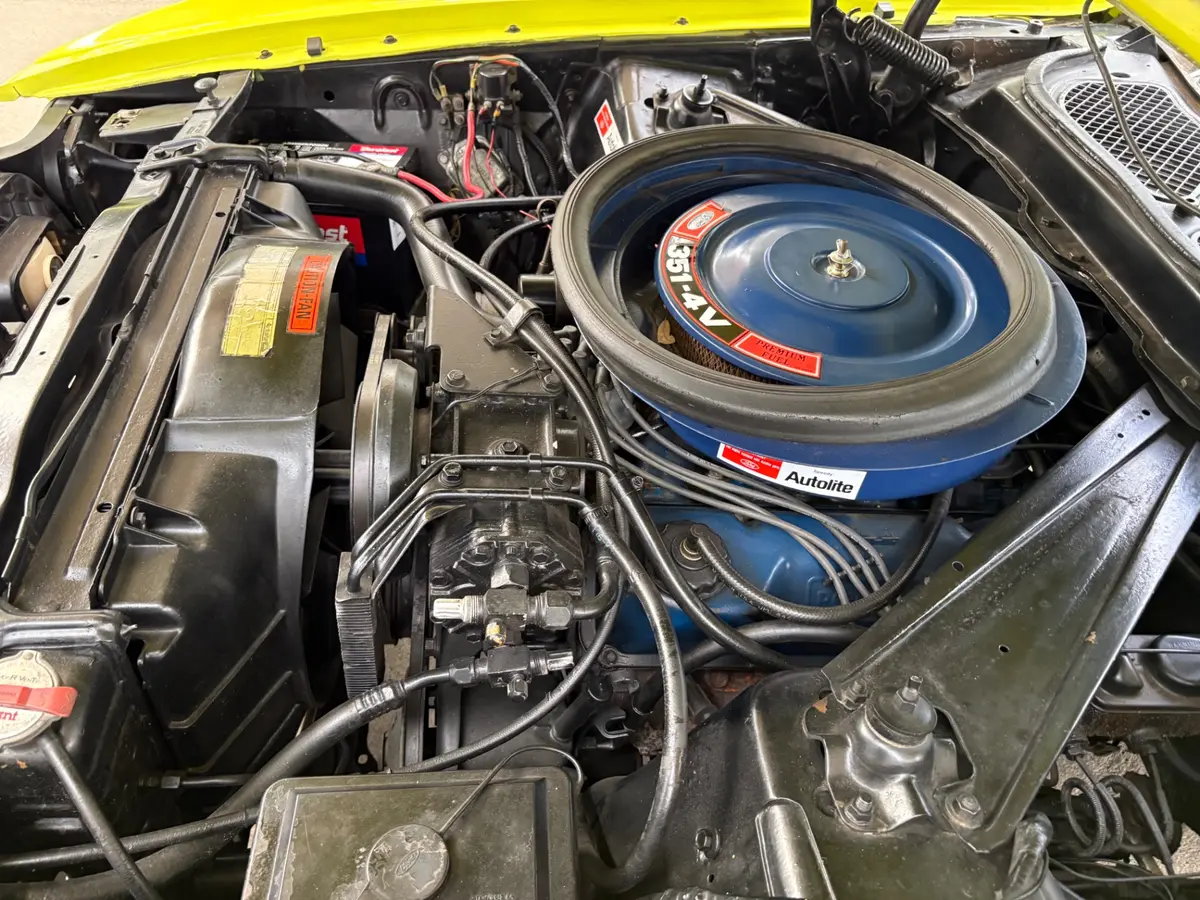
The engine in this car is the 351 Cobra Jet, the four-barrel version of Ford's 335-series V8 and the top performance option available for the 1972 Mustang Mach 1. Ford made a significant engineering decision this year by transitioning to net horsepower ratings in compliance with SAE standards, which made the numbers look smaller on paper without necessarily reflecting a real-world drop in performance. The 351 Cobra Jet remained a strong-running engine in a car that, by 1972, had grown into a wider, heavier body — but was still capable of serious performance when properly optioned. This one is properly optioned.
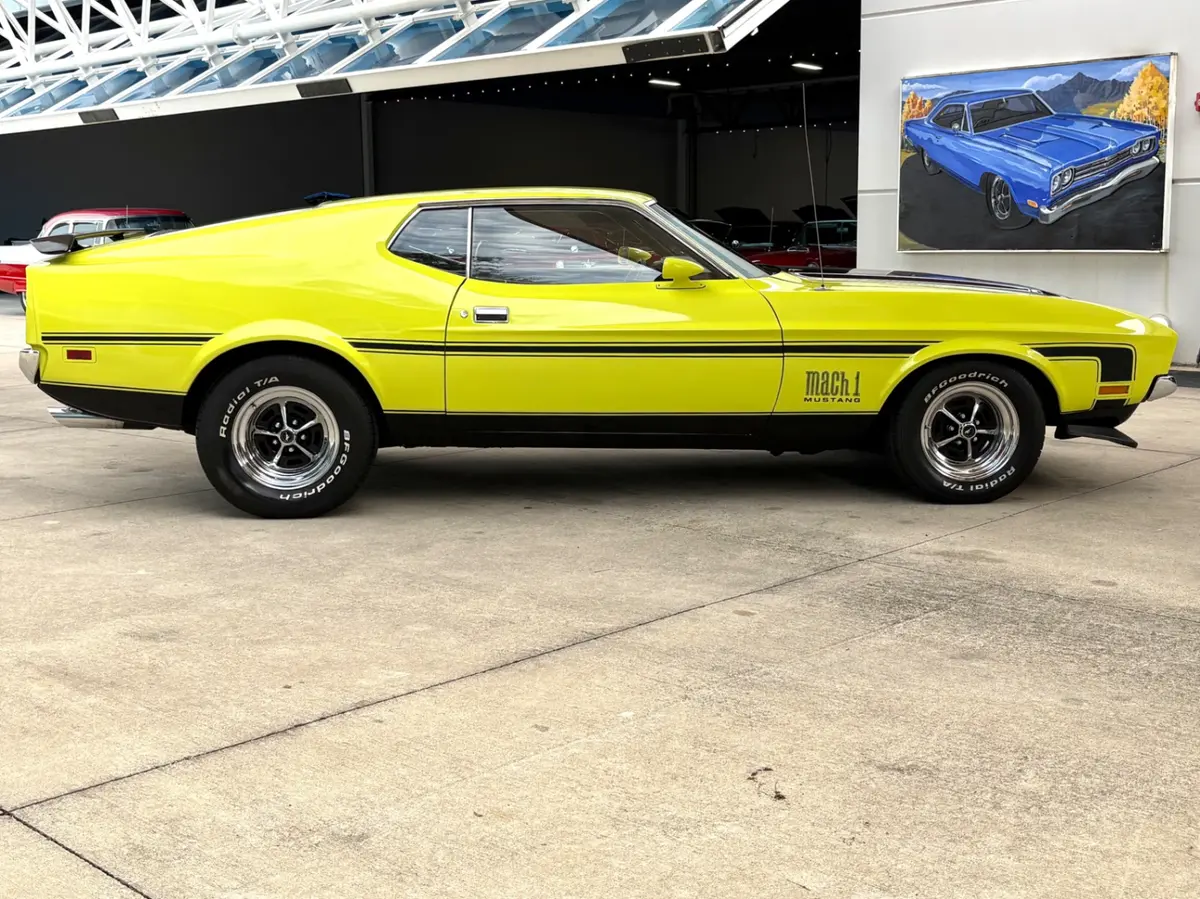
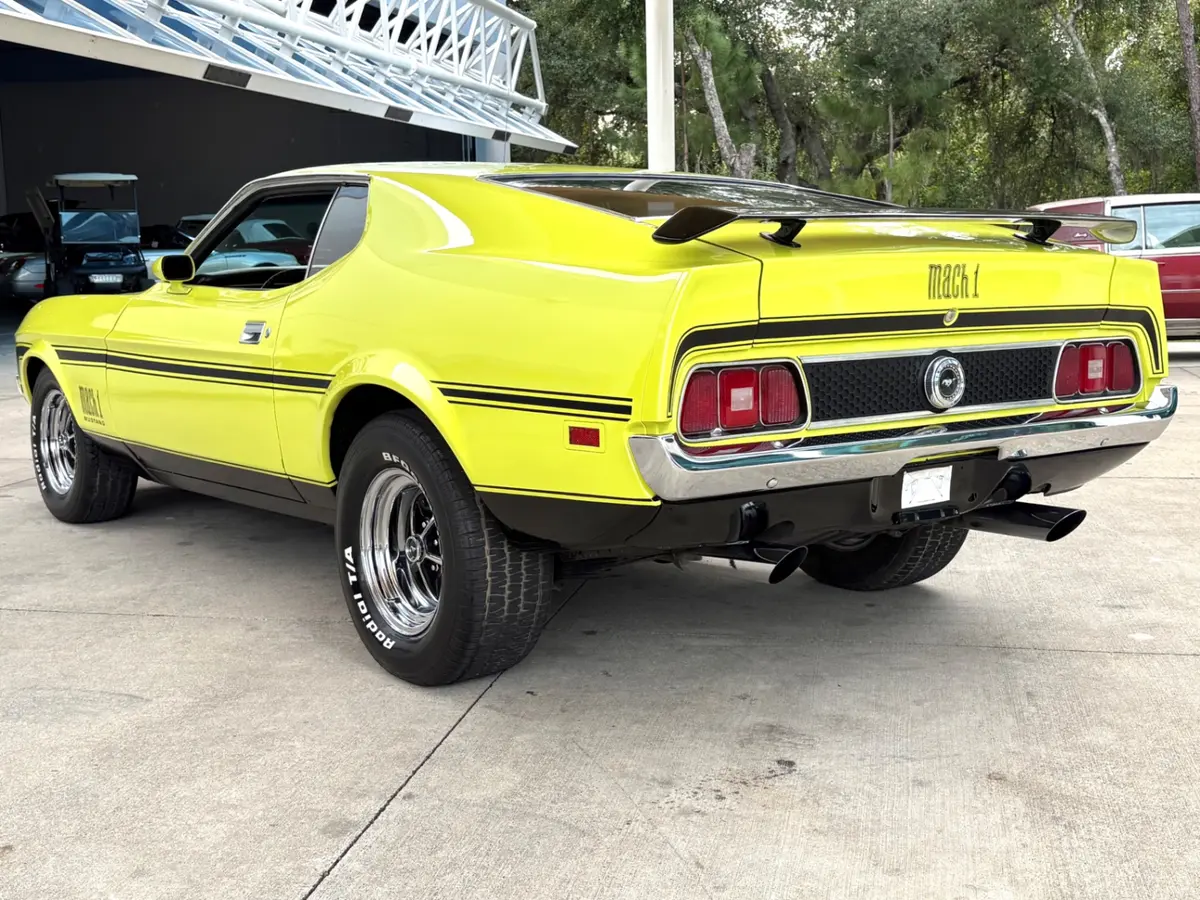
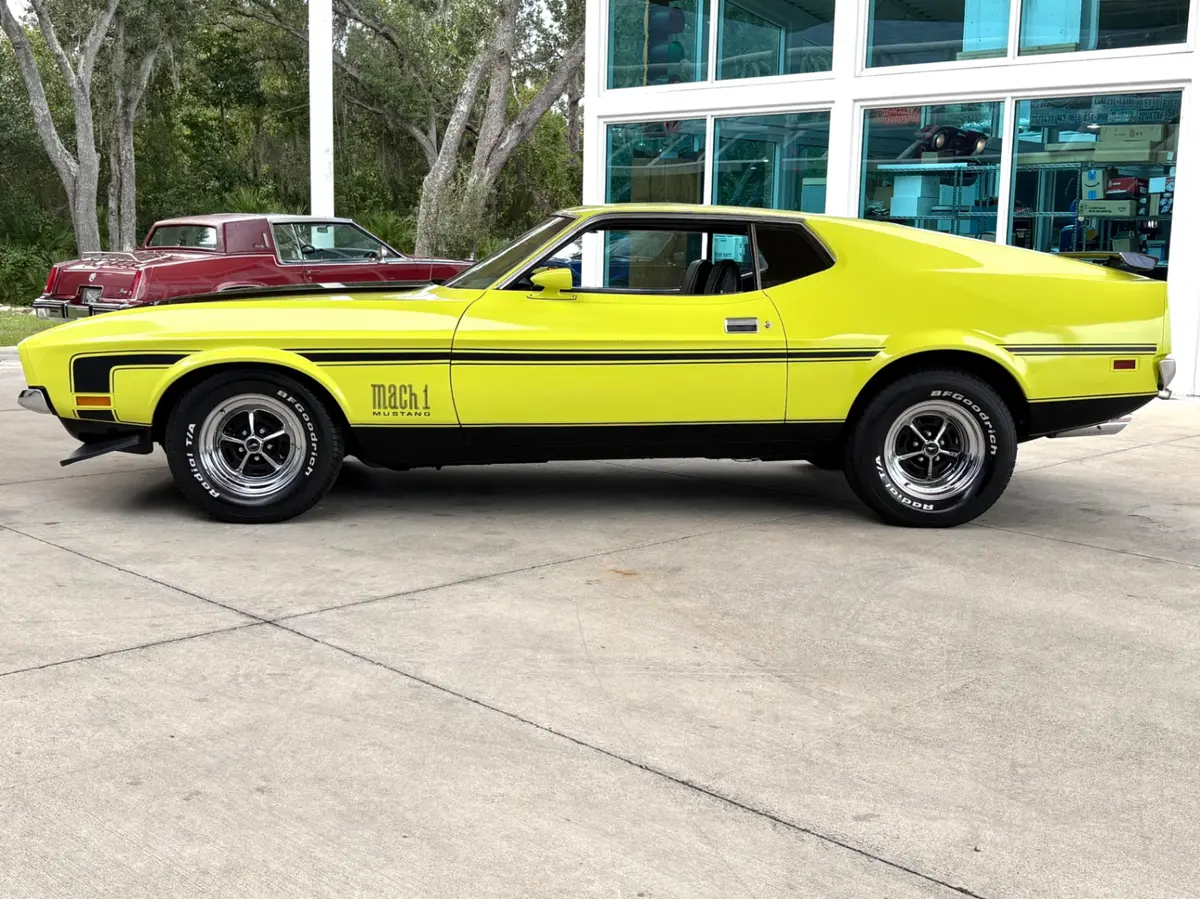
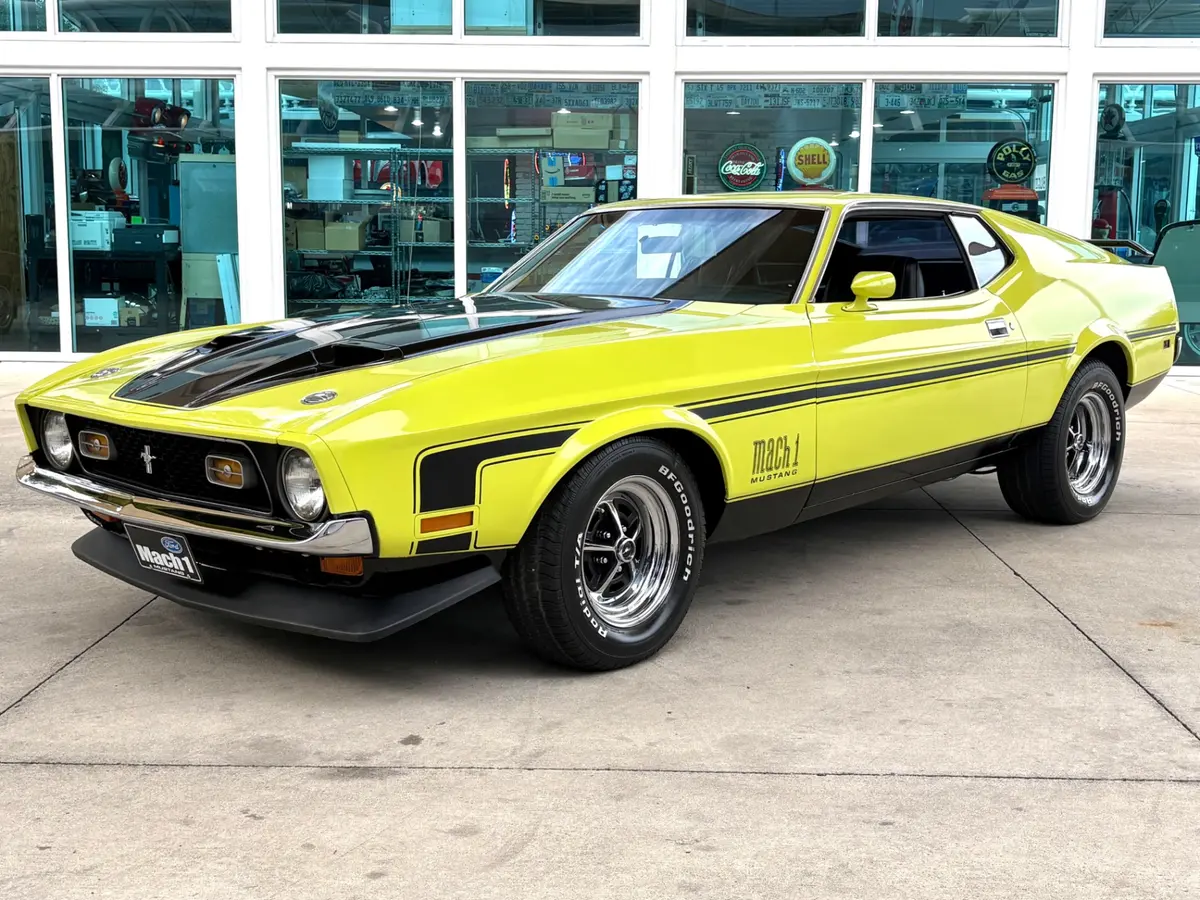
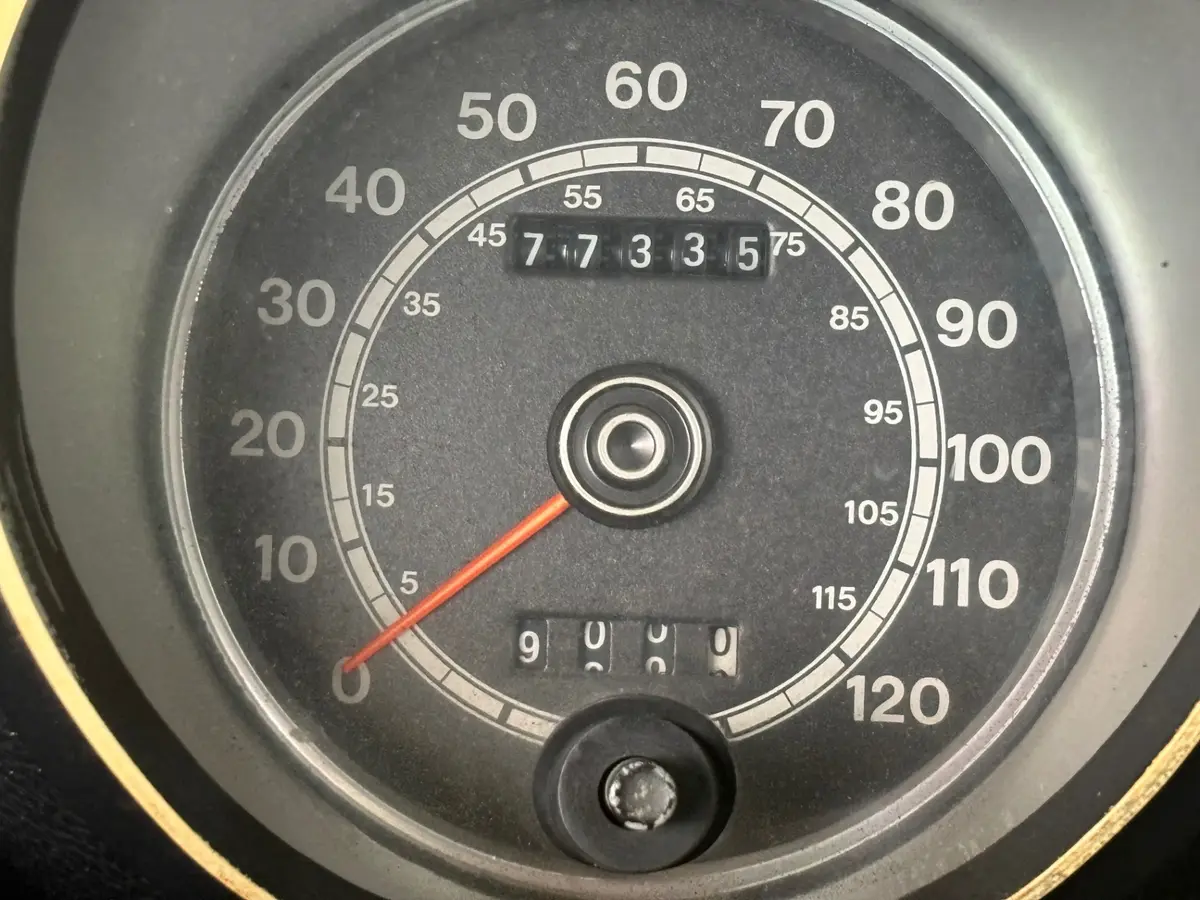
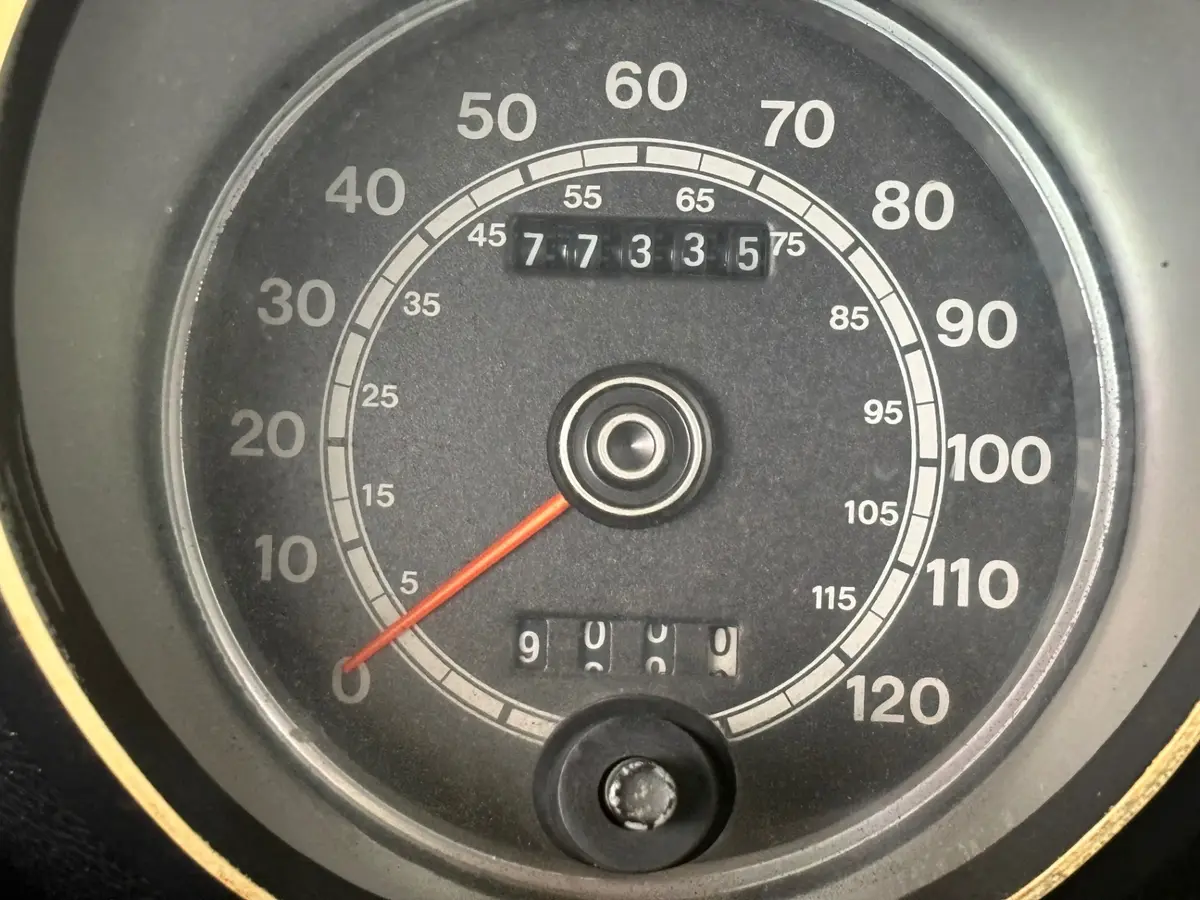
The color combination is Lime Gold over black vinyl, one of the more visually assertive choices Ford offered in 1972. The Mach 1 stripe treatment in black against that yellow-green body gives the car a sharp, era-correct appearance without any of the pastels or earth tones that were also popular that model year. The odometer reads 77,335 miles, which on a 50-year-old car with this level of interior and mechanical integrity is a credible and appealing number.
The 1972 Mach 1 was available only in the SportsRoof body style — no hardtop or convertible equivalent. Ford produced just under 28,000 Mach 1 units for the 1972 model year, down from prior years as the muscle car era began to close. Among those, the 351 Cobra Jet cars represent the performance-focused subset that collectors now seek out specifically. Finding one in Lime Gold, with air conditioning, the full gauge package, and a factory AM/FM stereo 8-track, is not common.
Features List
- 351 4V Cobra Jet V8 Engine
- SelectShift 3-Speed Automatic Transmission
- Factory Air Conditioning
- AM/FM Stereo with 8-Track Player
- Center Console with Console-Mounted Clock
- Tachometer
- Oil Pressure, Ammeter, and Temperature Gauges
- Power Steering
- Front Disc Brakes
- Dual Exhaust
- NASA Twin-Scoop Hood (non-functional, factory standard)
- Front Chin Spoiler
- Rear Spoiler
- Magnum 500 Style Wheels
- BFGoodrich Radial T/A Tires
- Mach 1 Side Stripes
- Sport Roof Fastback Body Style
- Fold-Down Rear Seat
- Woodgrain Interior Trim
- Black Vinyl Bucket Seats
Mechanical
The heart of this 1972 Ford Mustang Mach 1 is the 351 Cobra Jet, Ford's four-barrel variant of the 351 Cleveland-based 335-series engine. For 1972, Ford rated this engine at 266 net horsepower — a number that reflects the new SAE net measurement standard, not a reduction in actual engine output from prior years. The 351 Cobra Jet used a four-barrel carburetor, free-flowing cylinder heads, and a performance-tuned intake to deliver a broad, usable powerband. It was the strongest engine Ford offered in the Mustang for 1972 and remained competitive with anything else on the market that year.
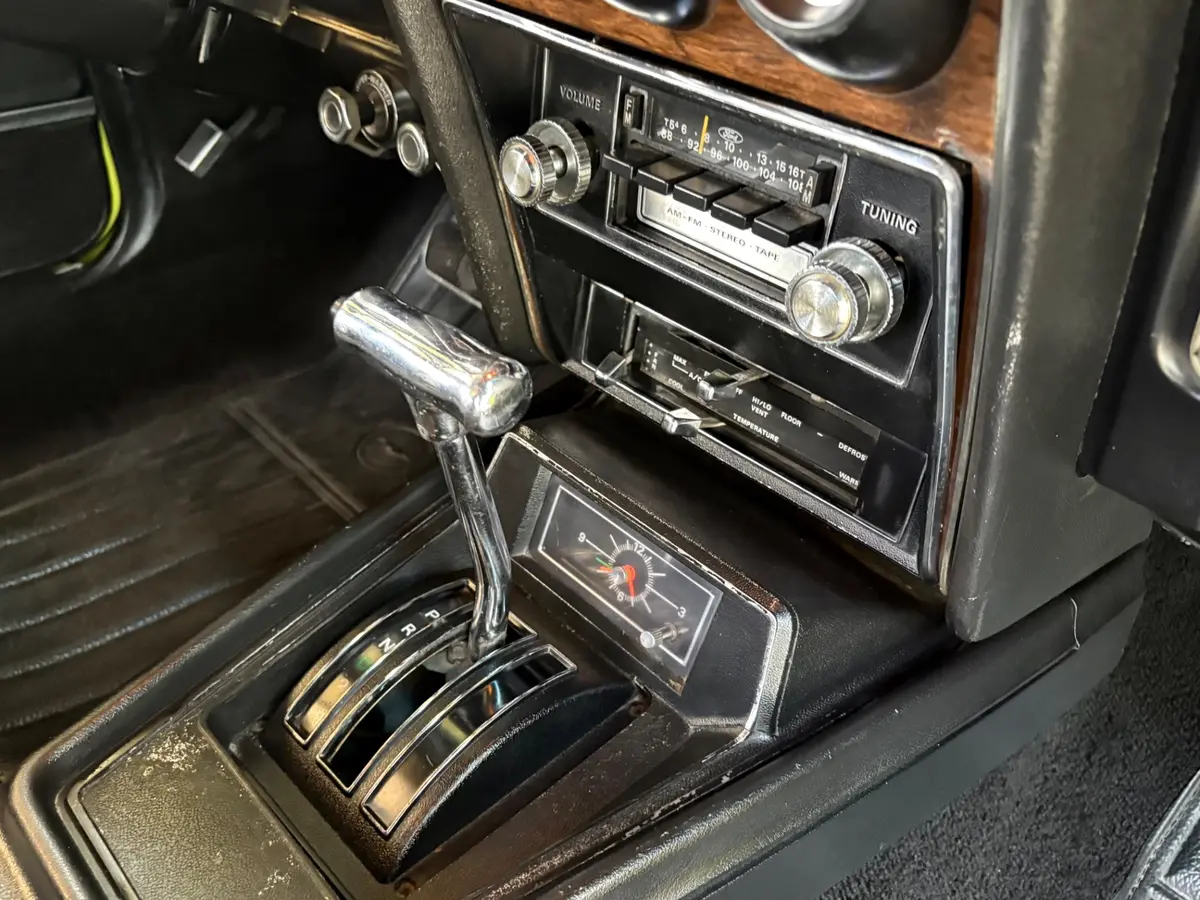
Backing the engine is Ford's SelectShift 3-speed automatic, which allowed the driver to hold gears manually or run in full automatic mode — a sensible pairing with the 351 CJ that lets the torque do its work without demanding constant driver input. The combination of the 351 Cobra Jet and automatic transmission was a popular factory configuration, well-suited to both street driving and occasional hard acceleration.
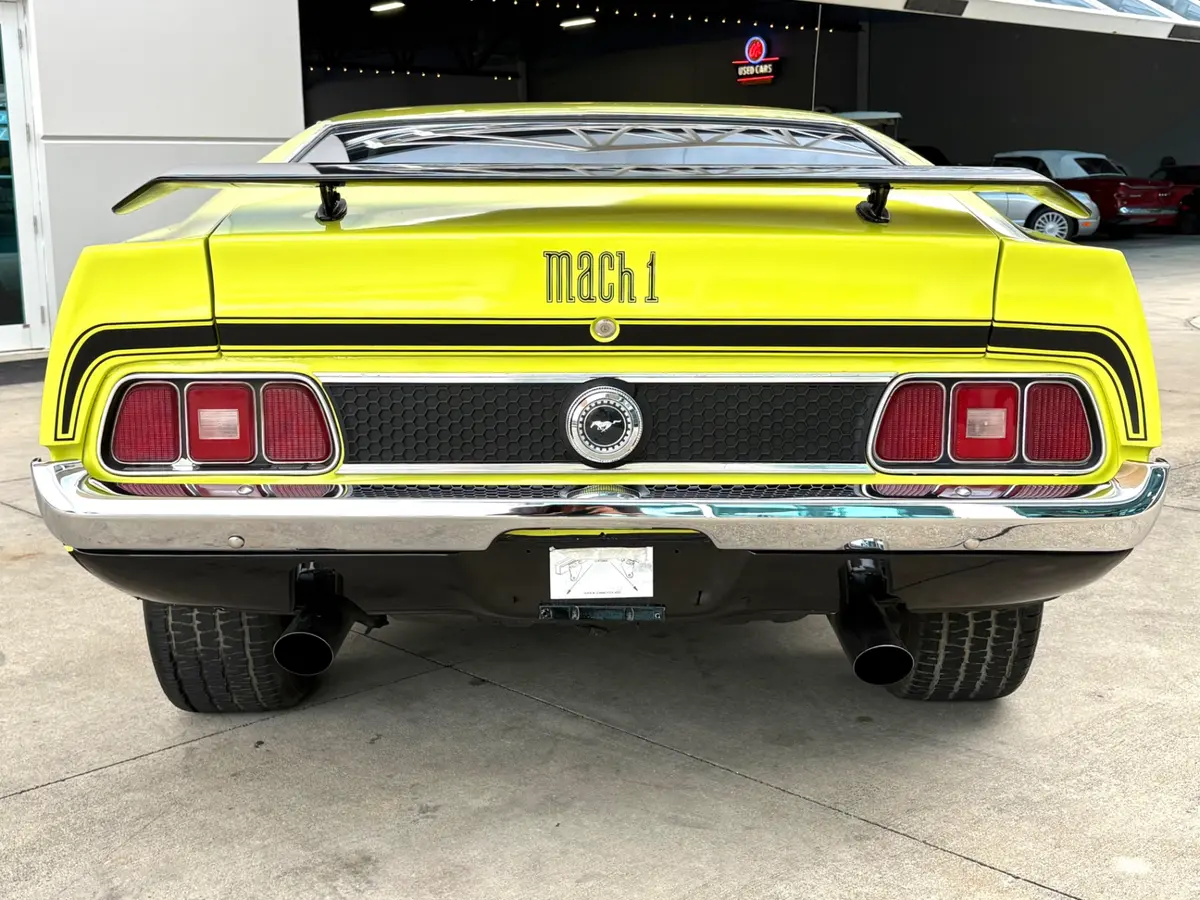
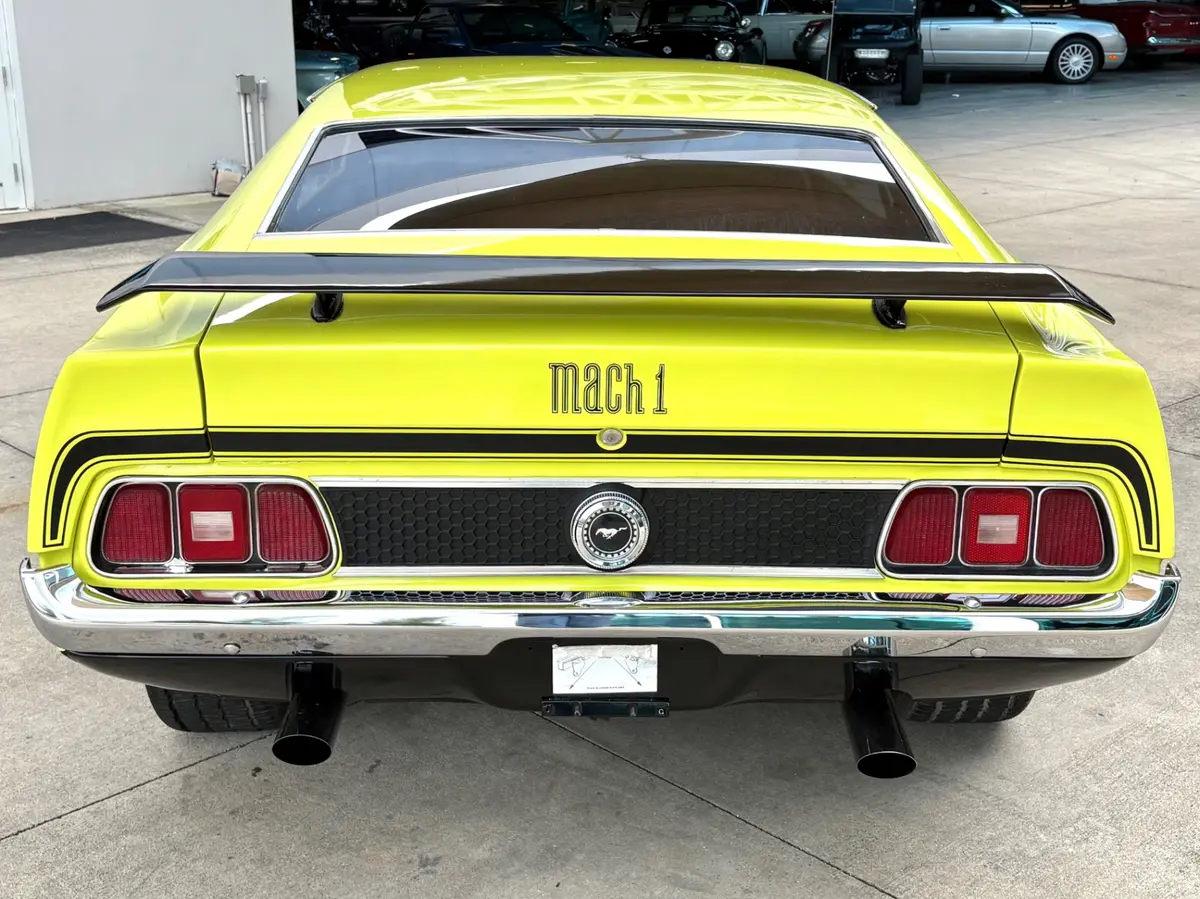
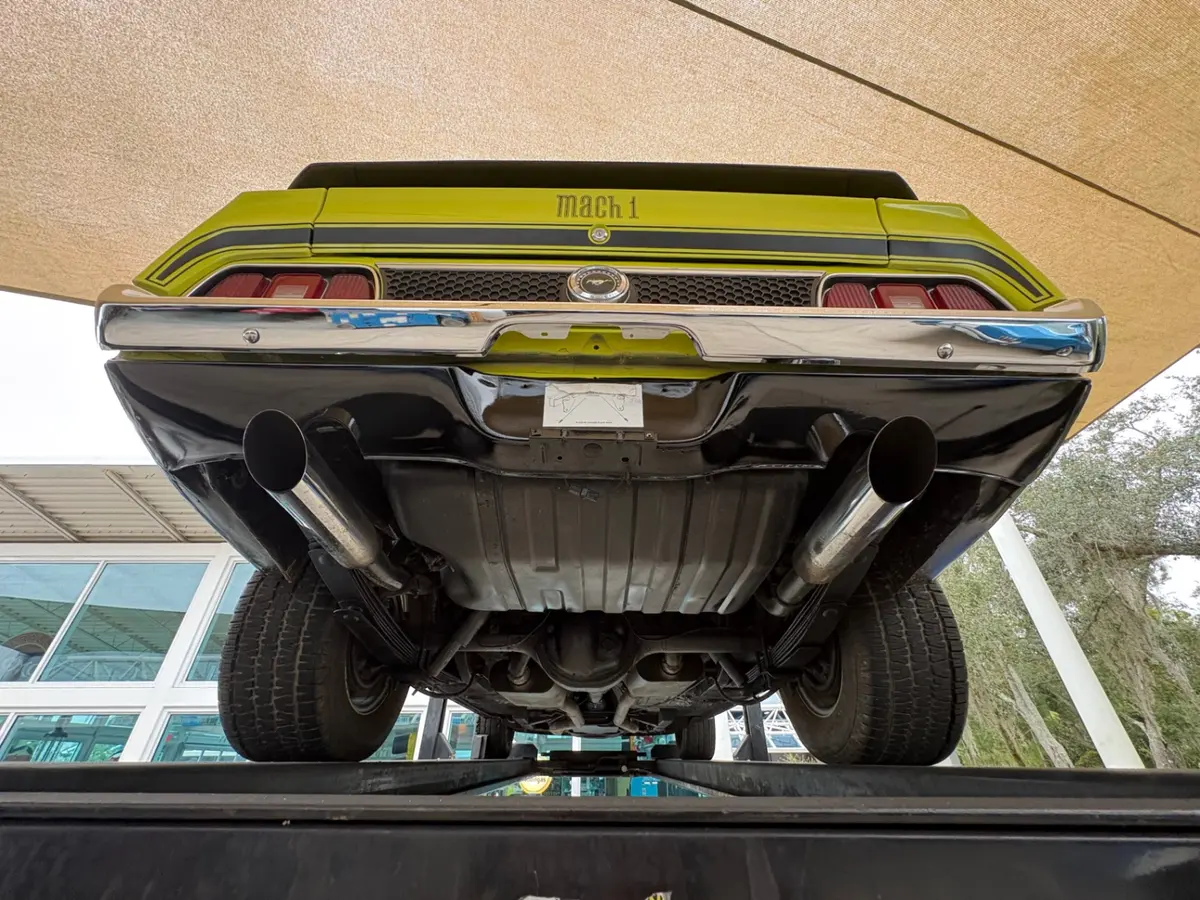
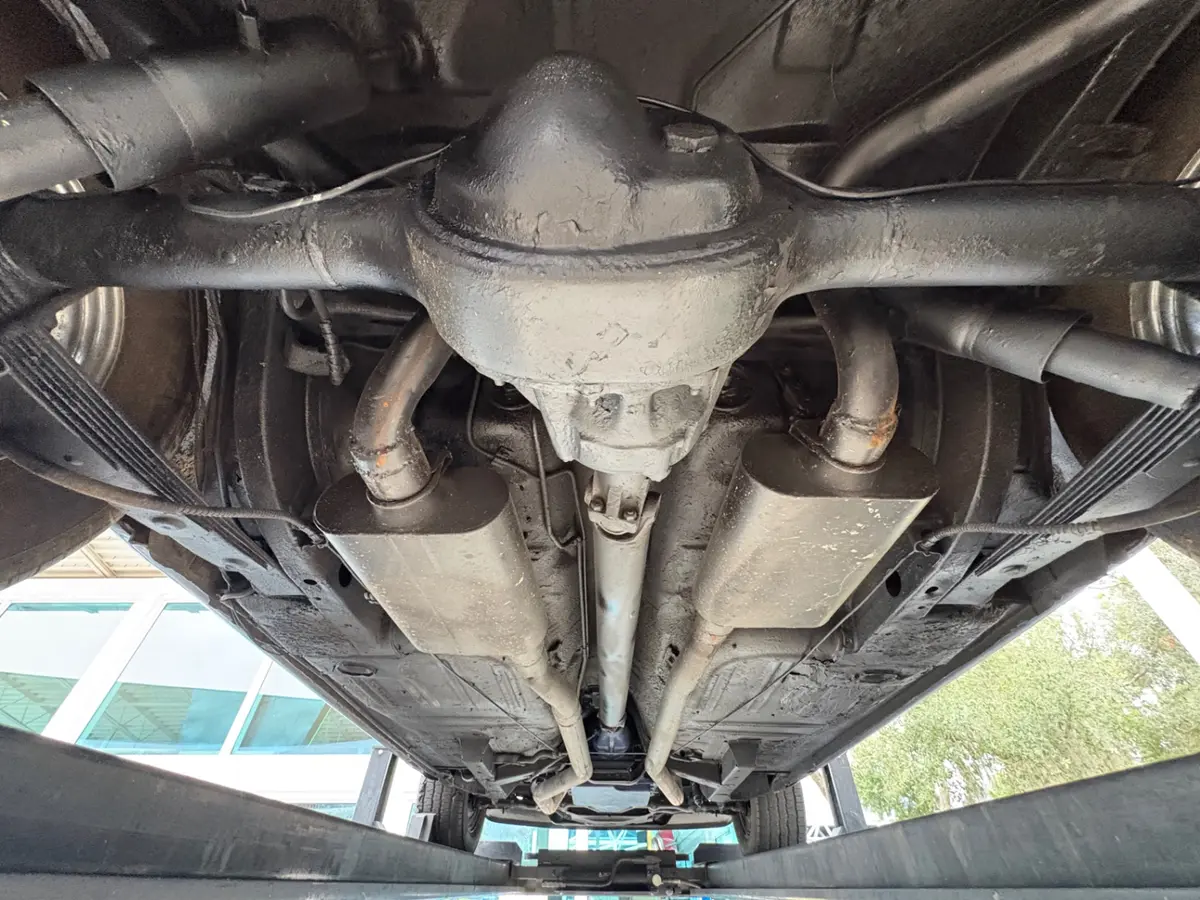
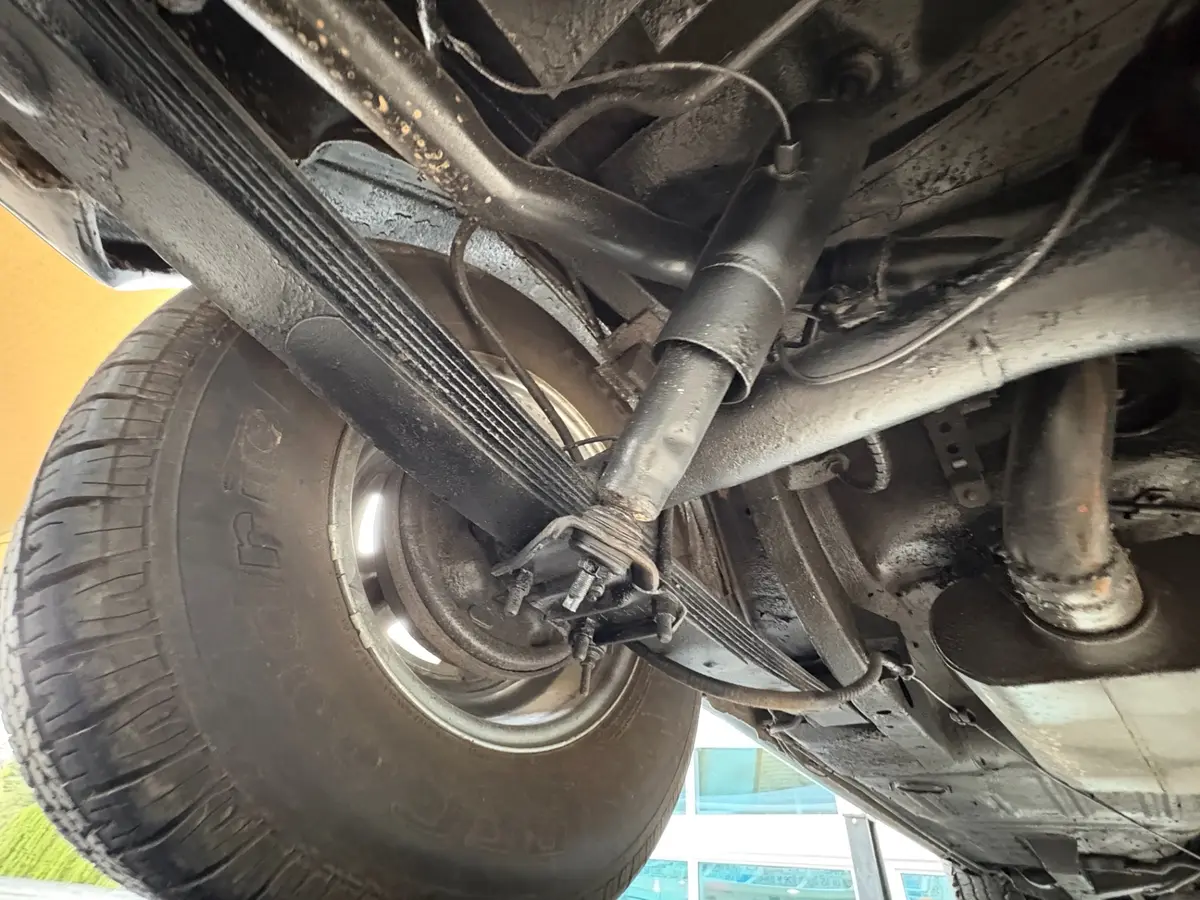
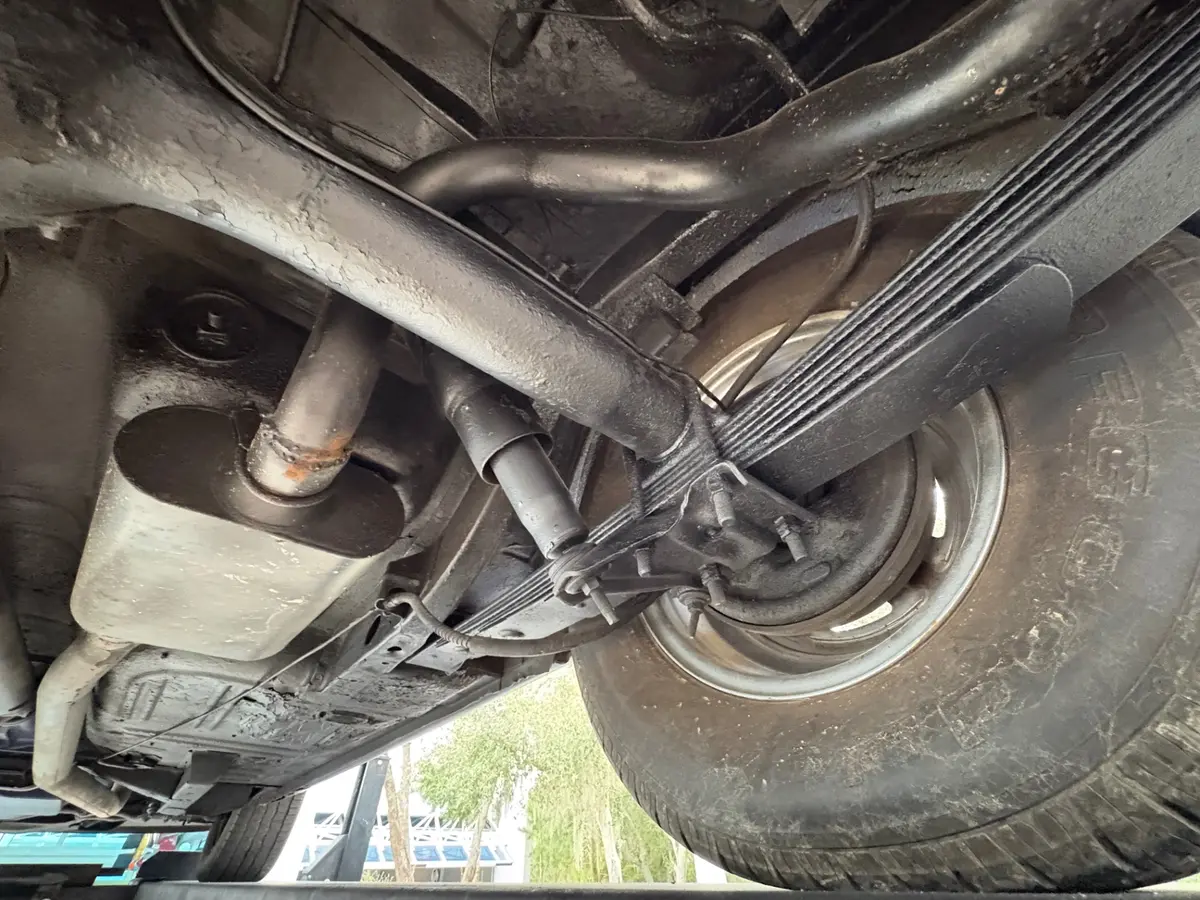
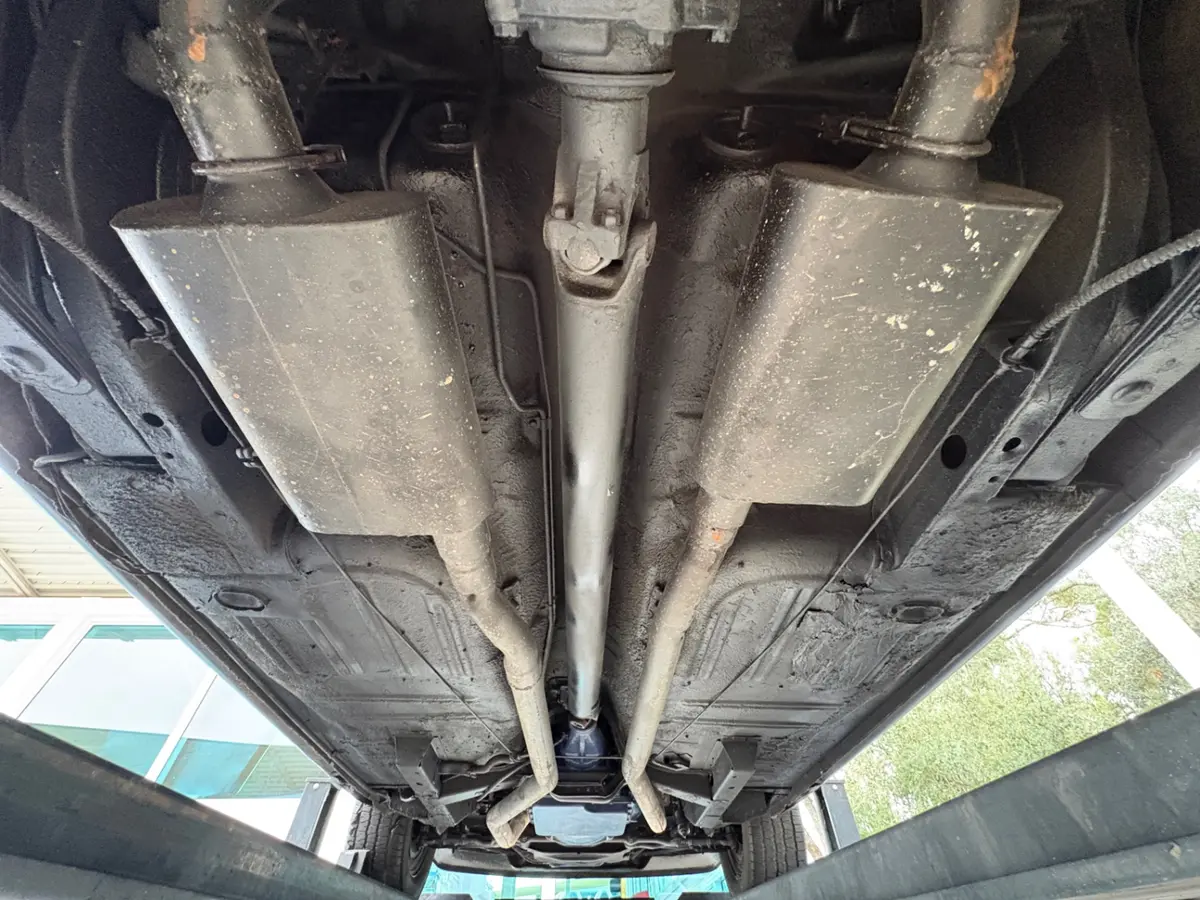
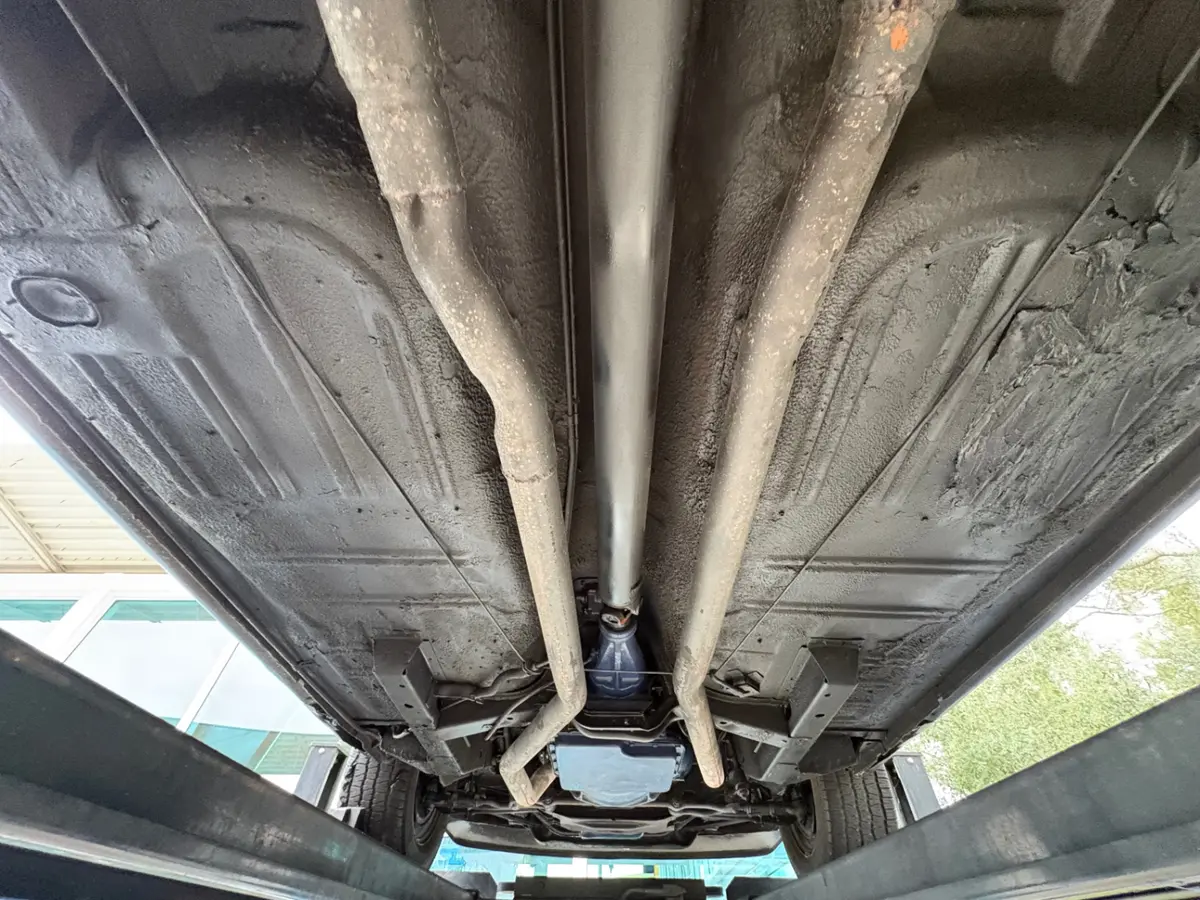
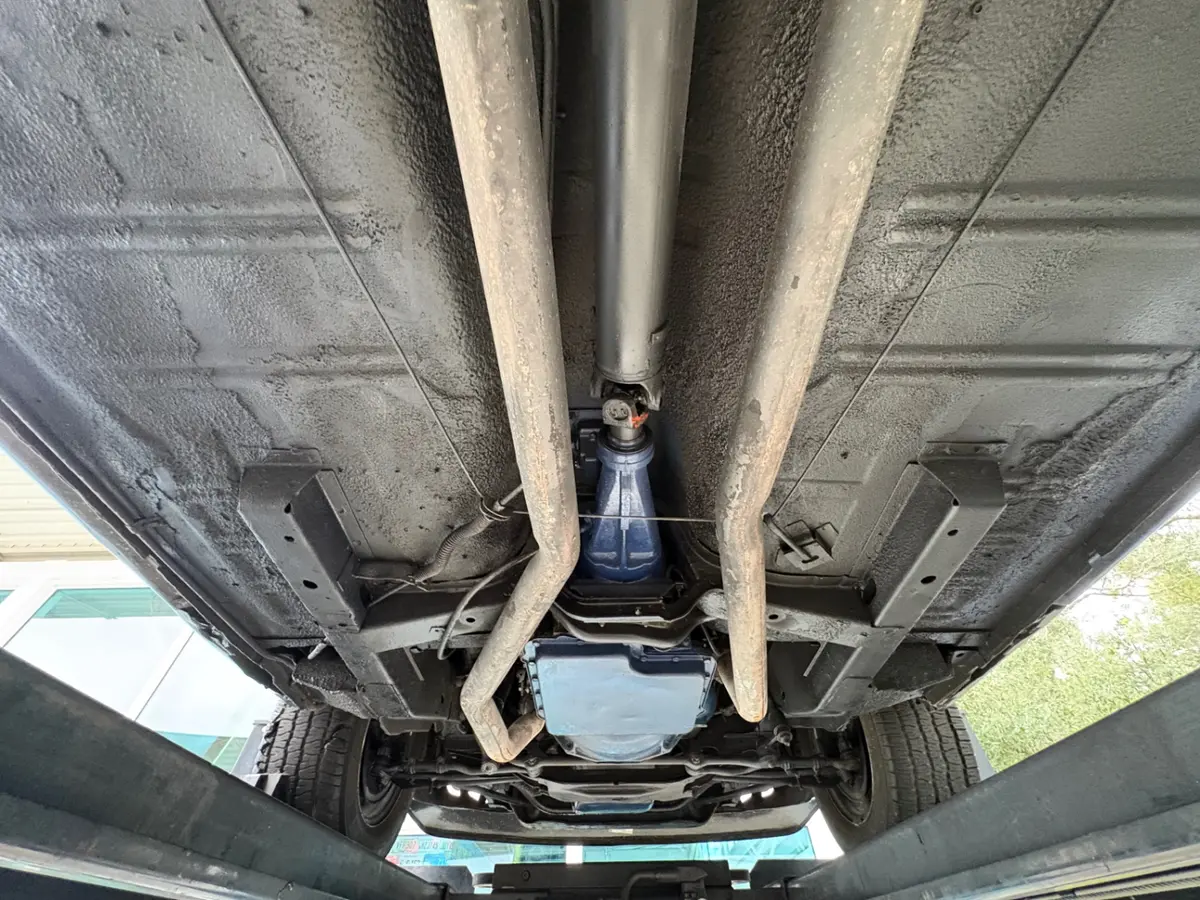
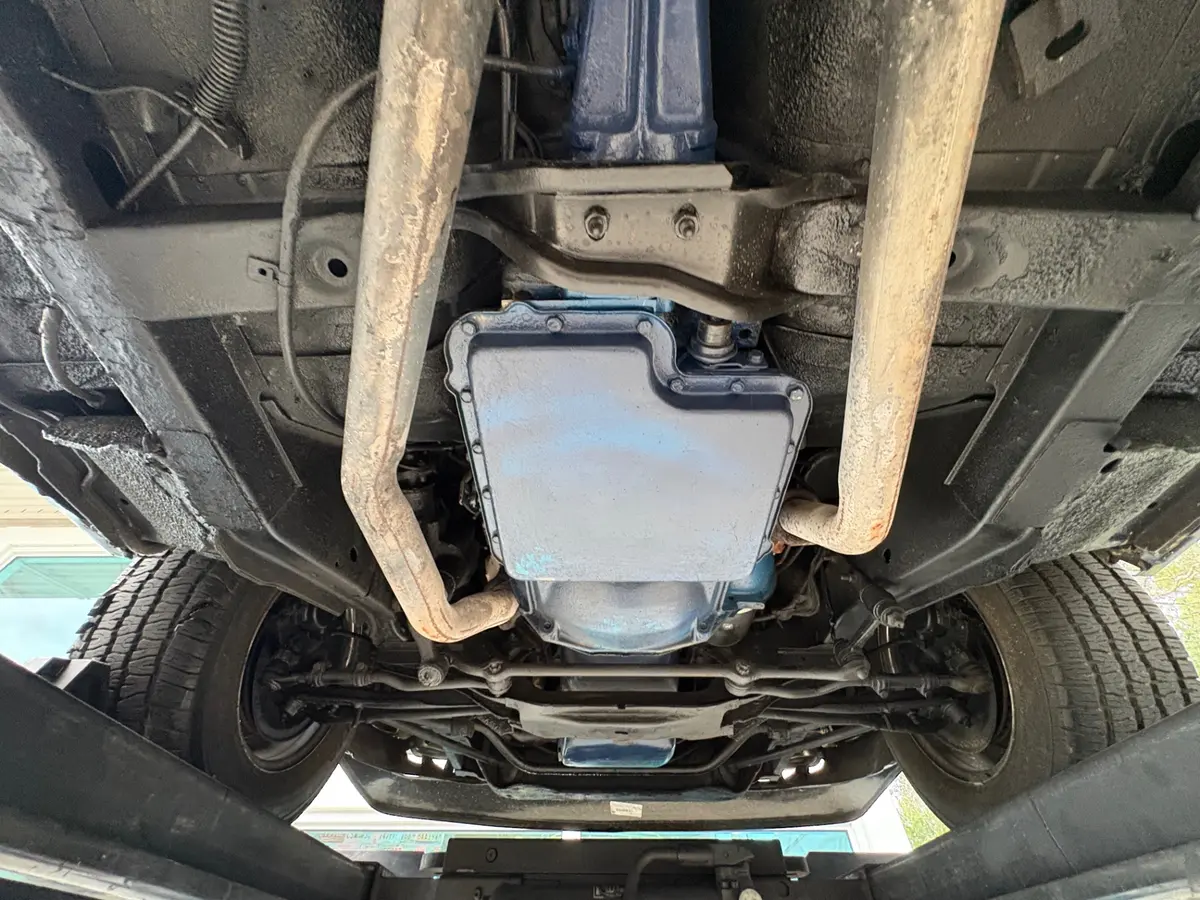
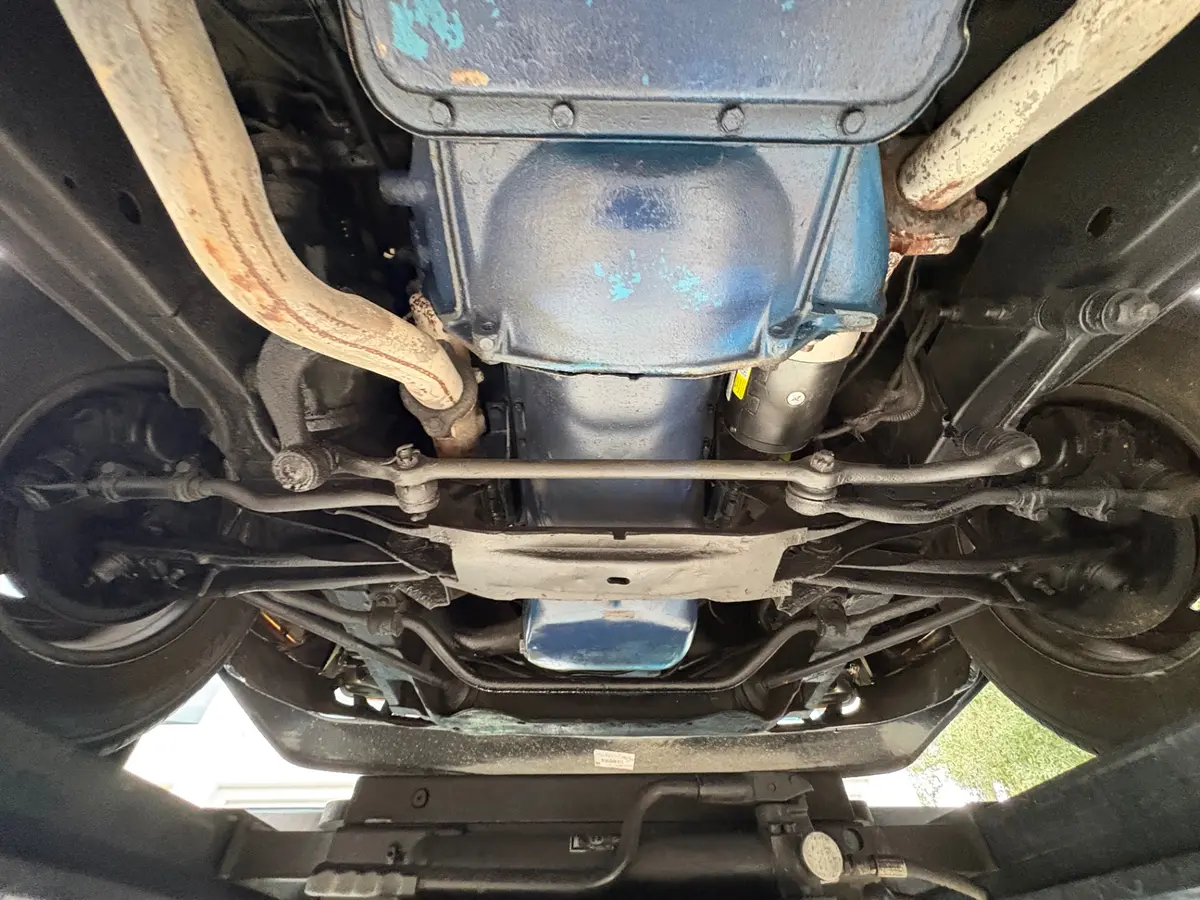
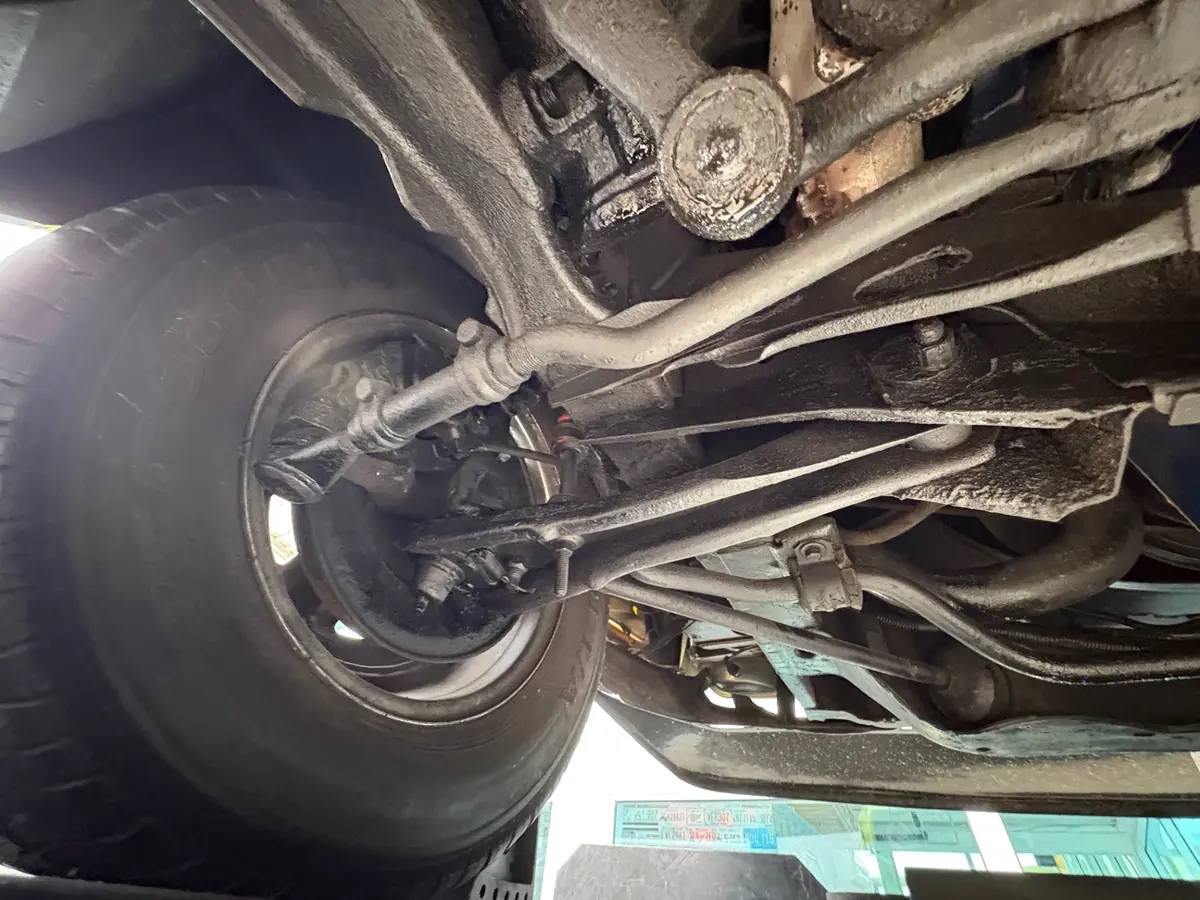
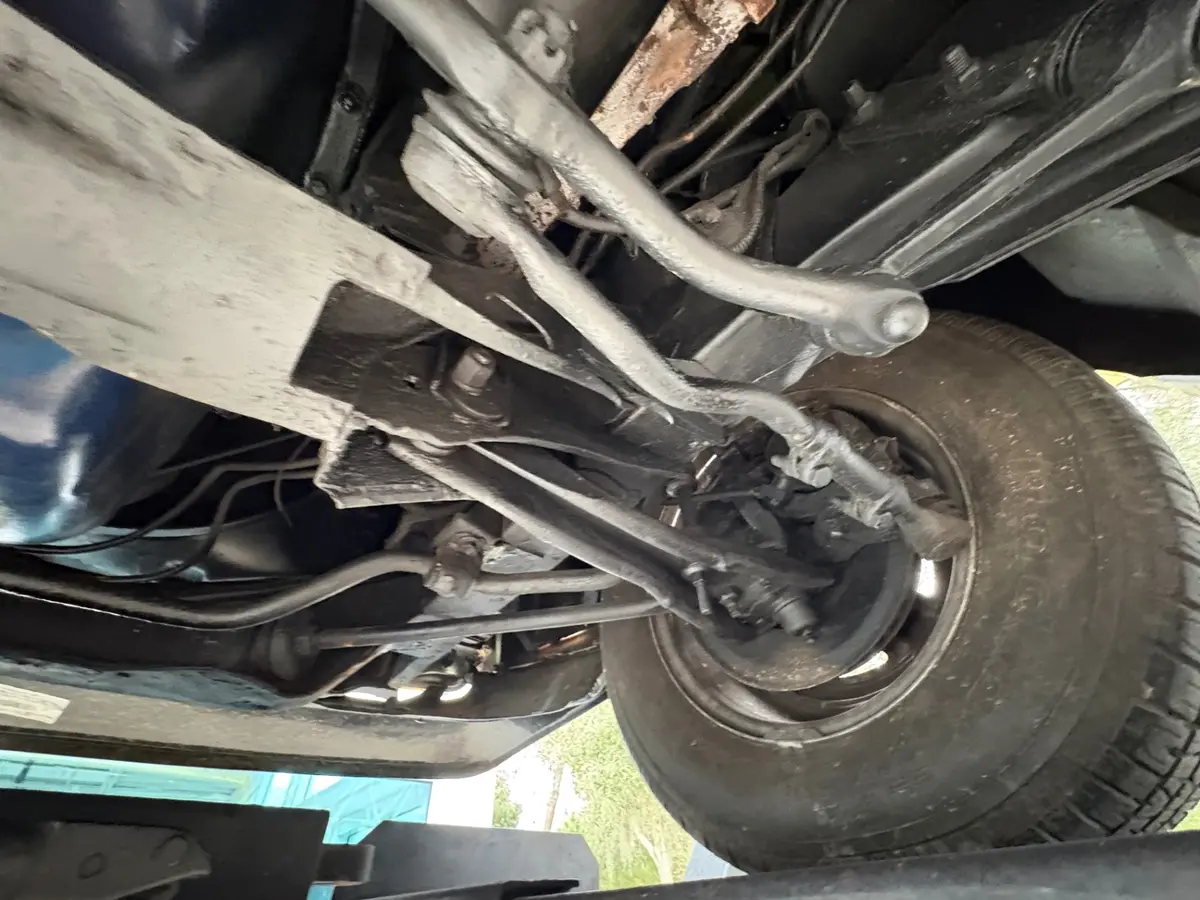
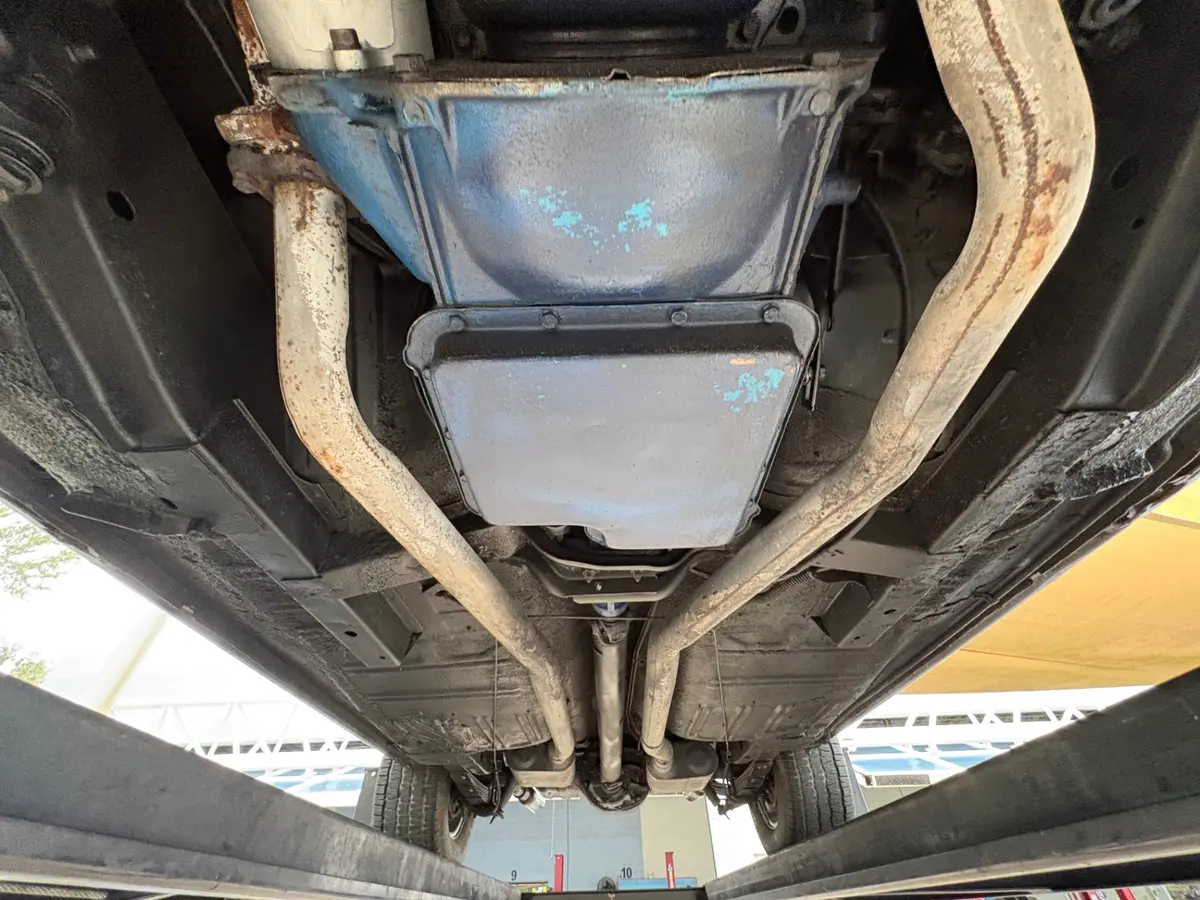
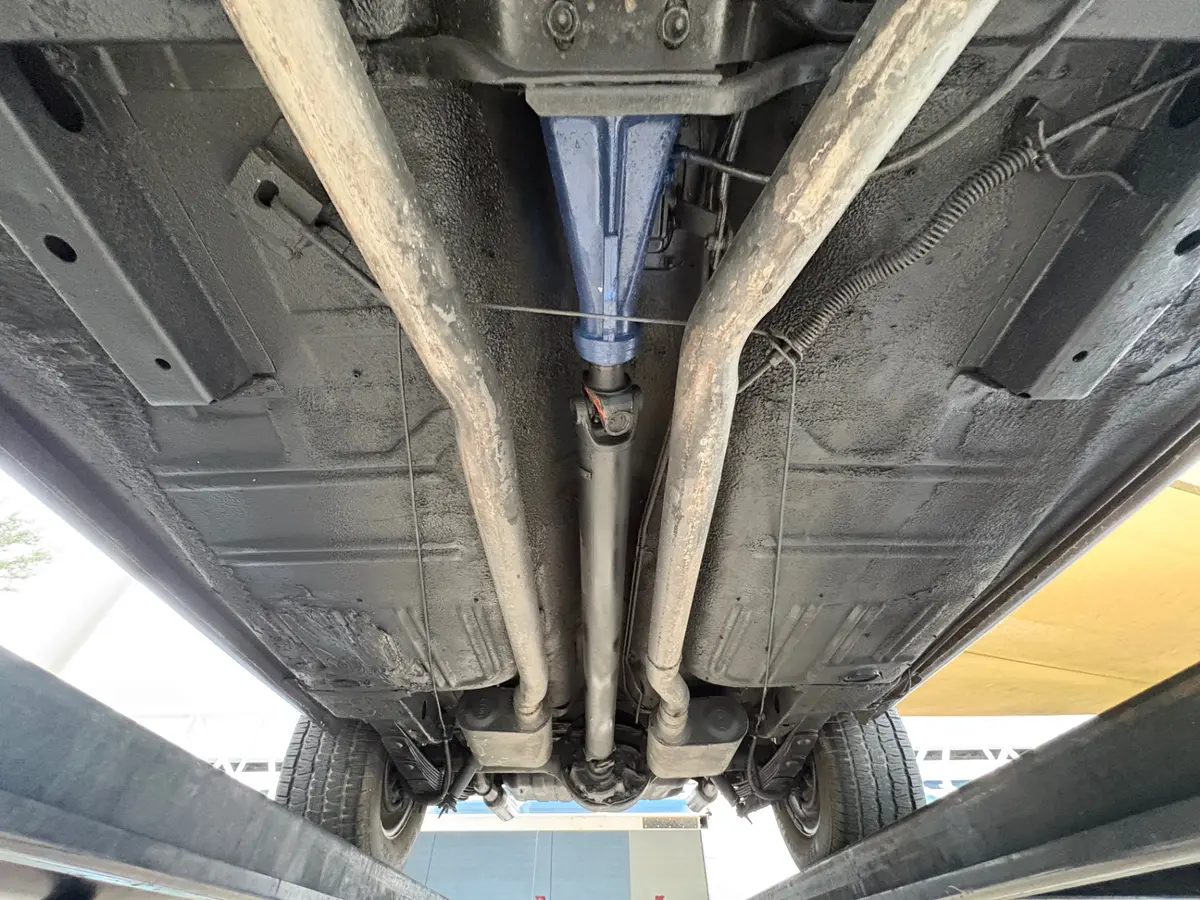
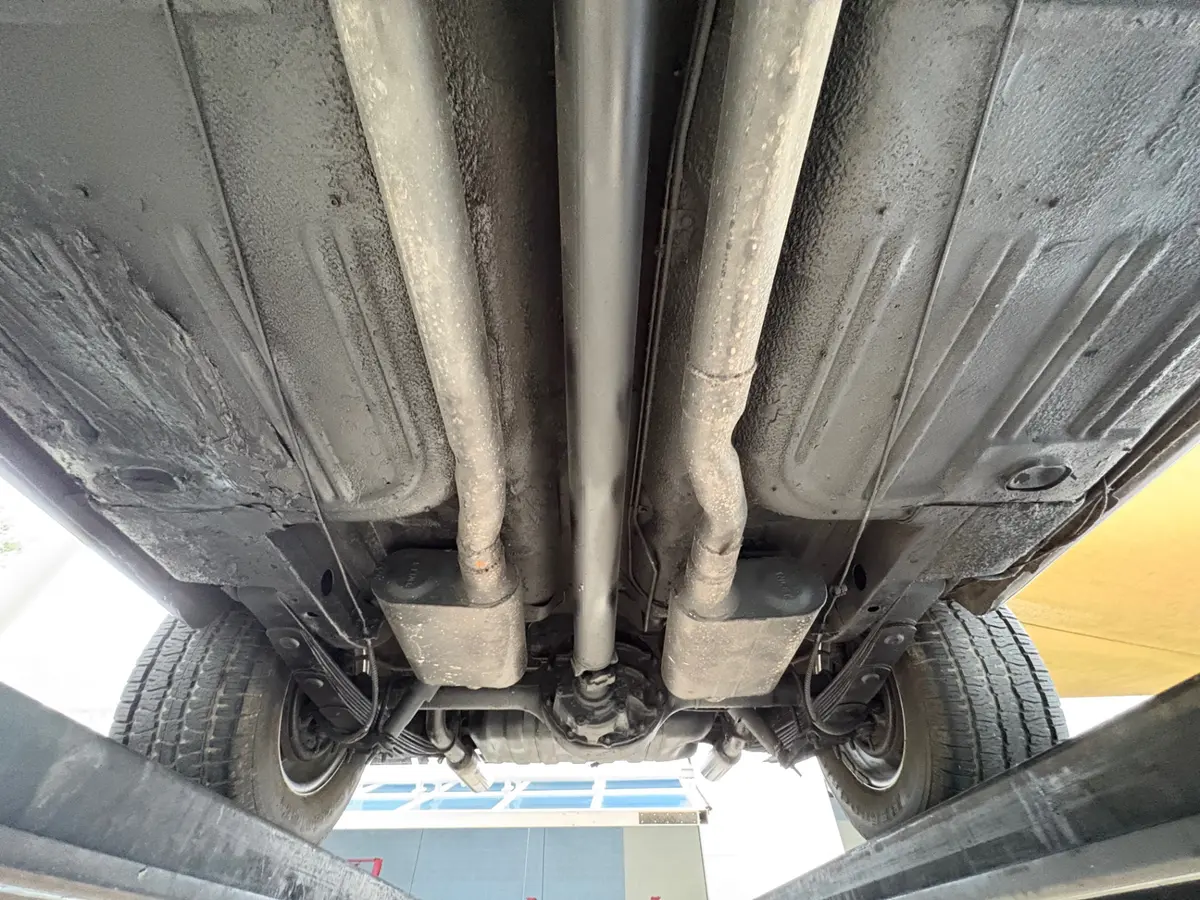
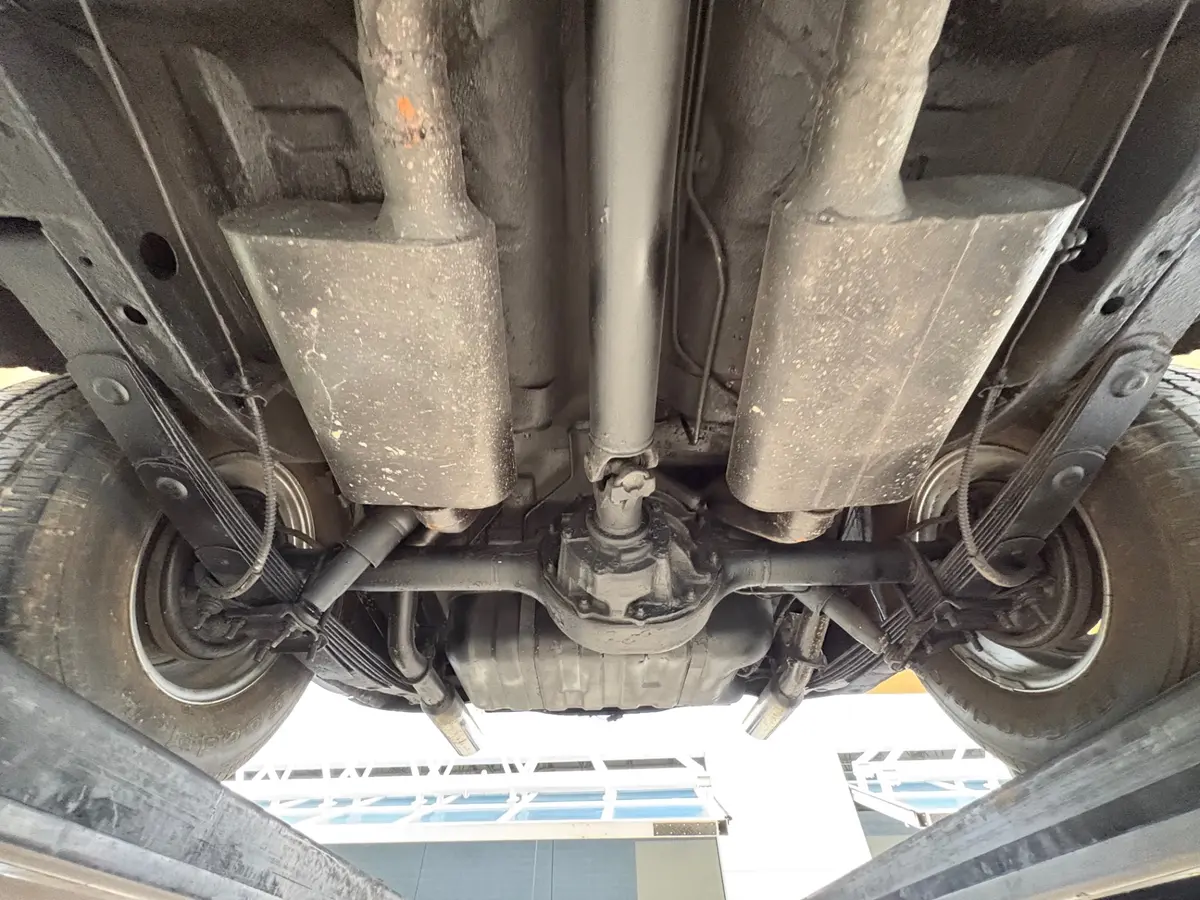
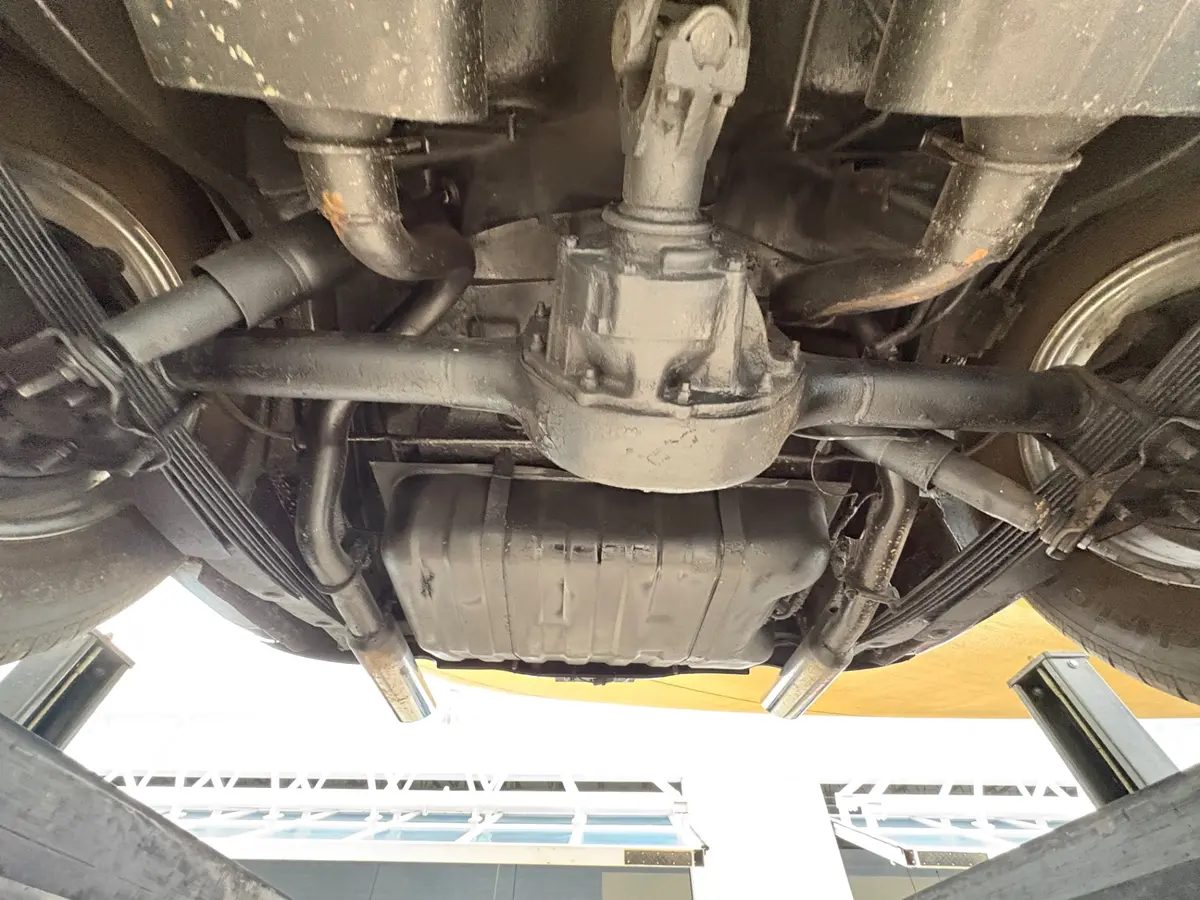
Braking is handled by front disc brakes with drums at the rear — the correct factory setup for a Mach 1 with the available disc brake option. Power steering is fitted, appropriate for the wider, heavier SportsRoof platform that the 1971-73 Mustang was built on. The dual exhaust exits cleanly out the back, and the undercarriage photos confirm a solid, uncompromised floor pan and frame — no evidence of rot or previous accident damage. The underside shows honest age and road grime, which tells you this car has been driven rather than trailered for decades, but has held up well for a Florida car.
Interior
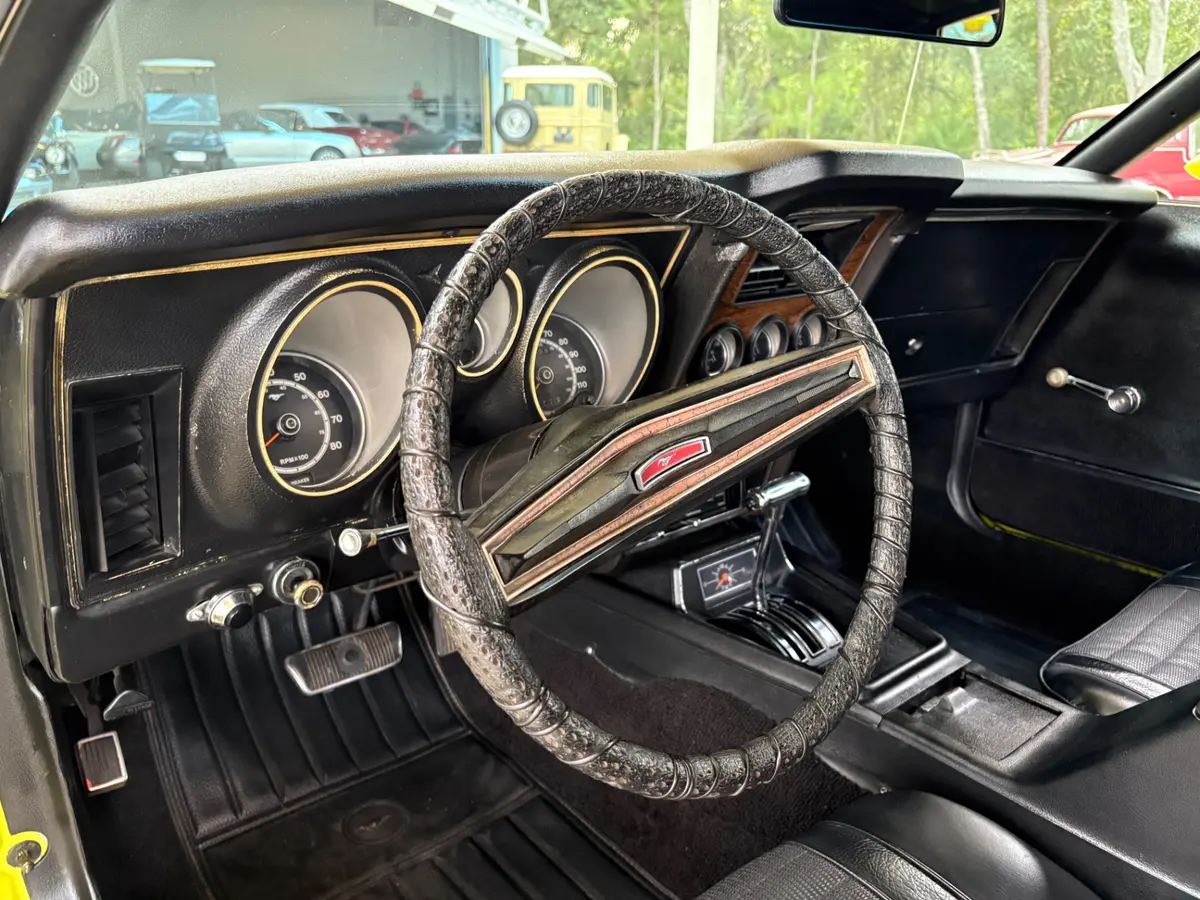
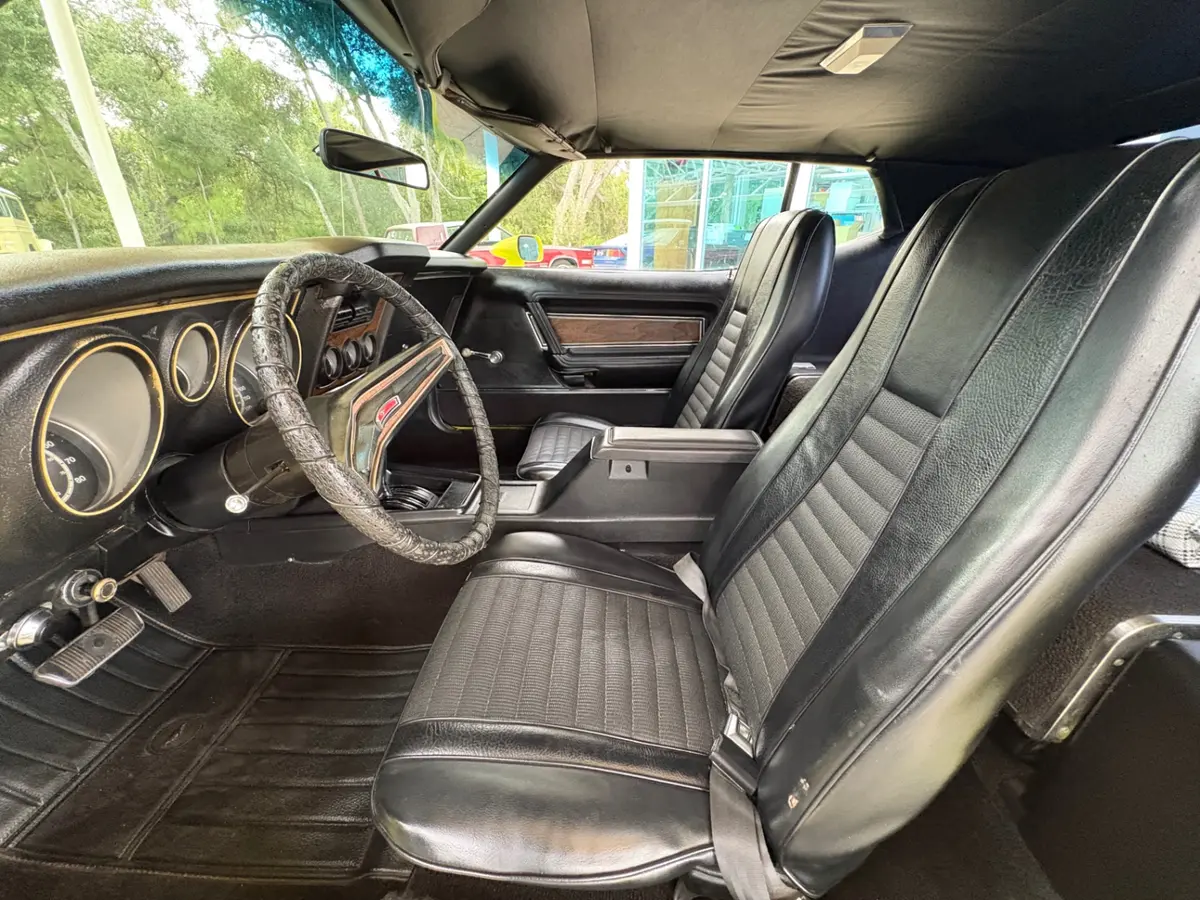
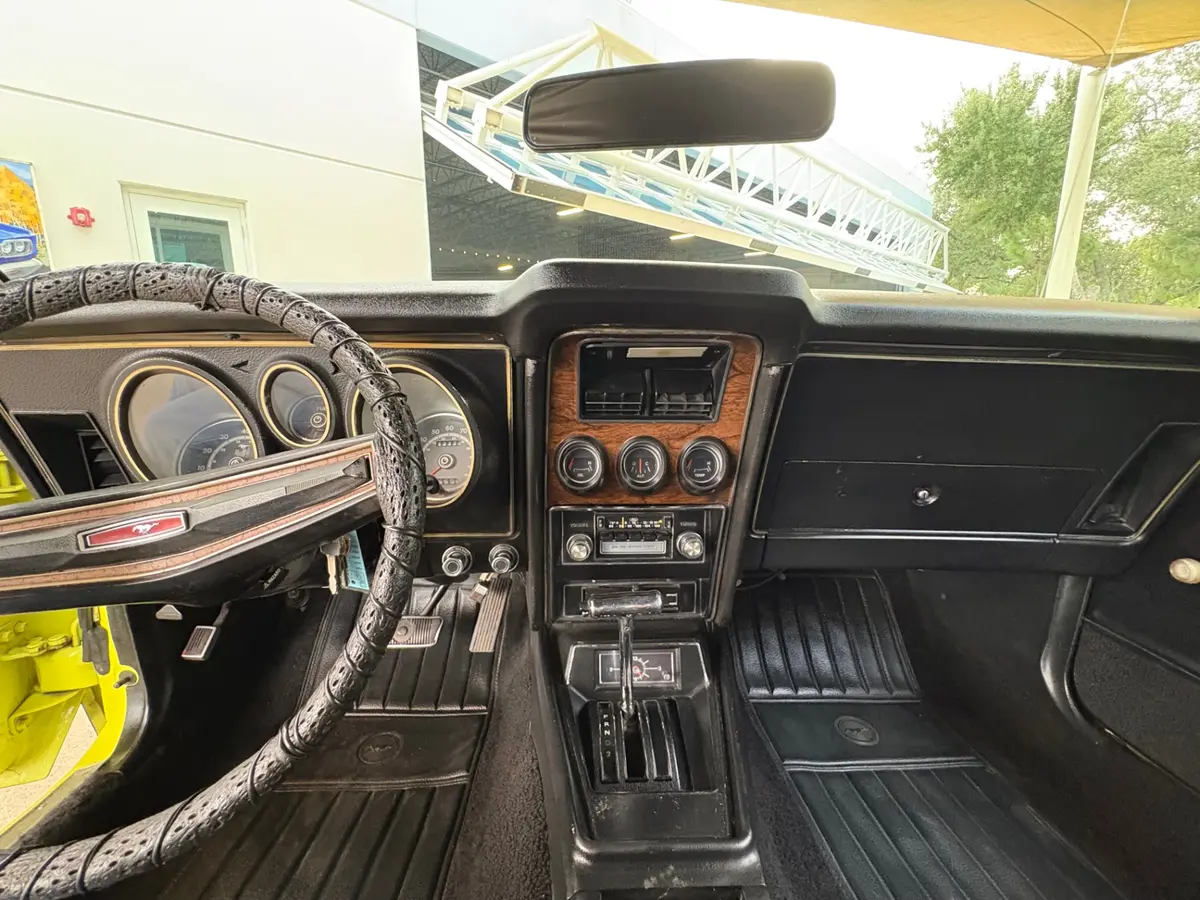
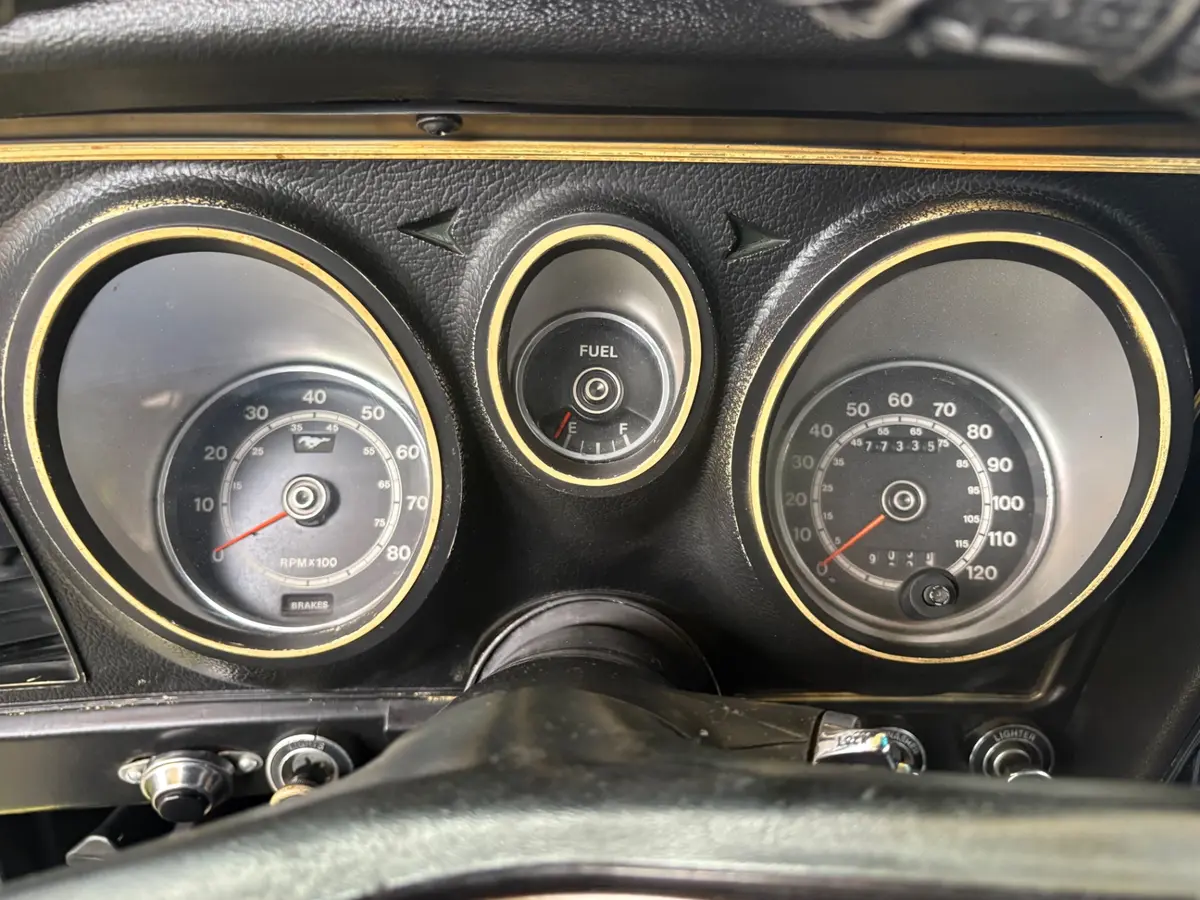
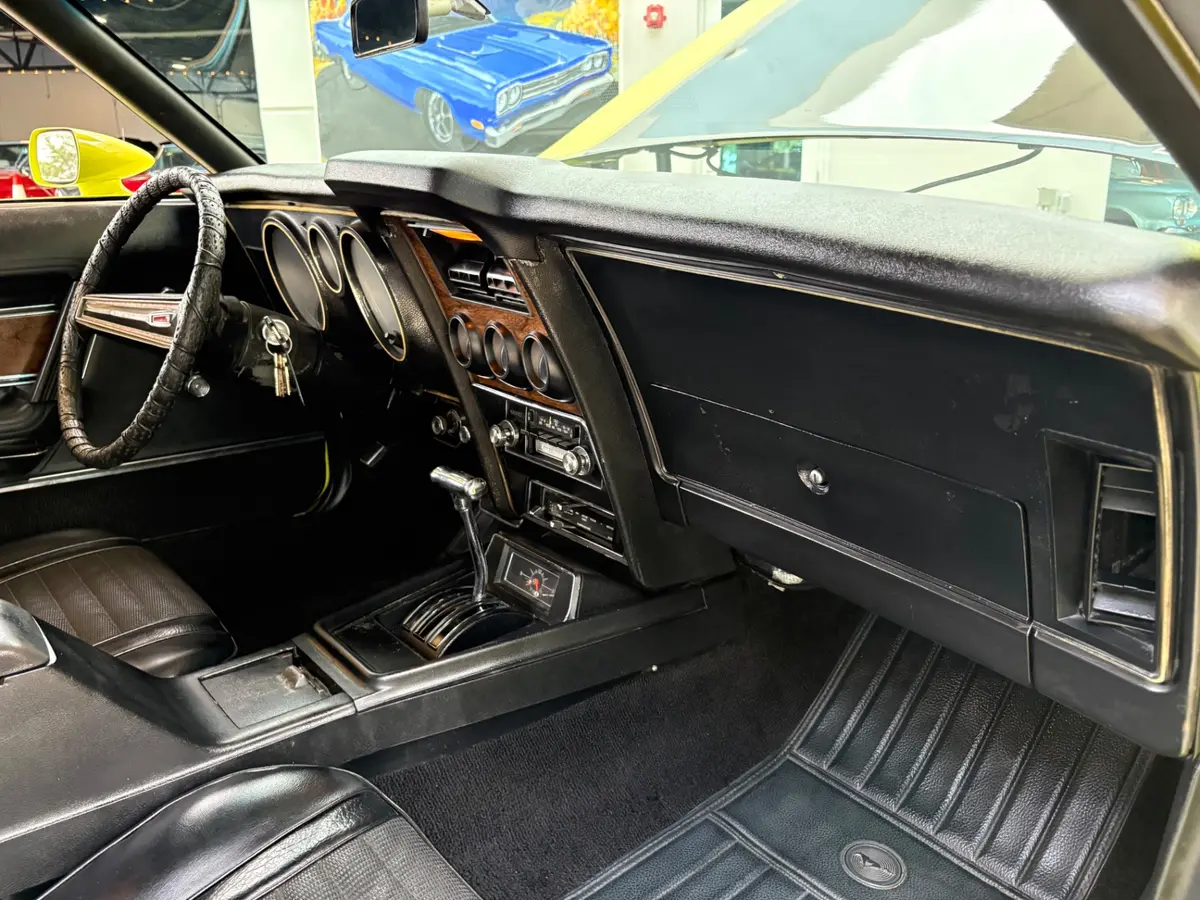
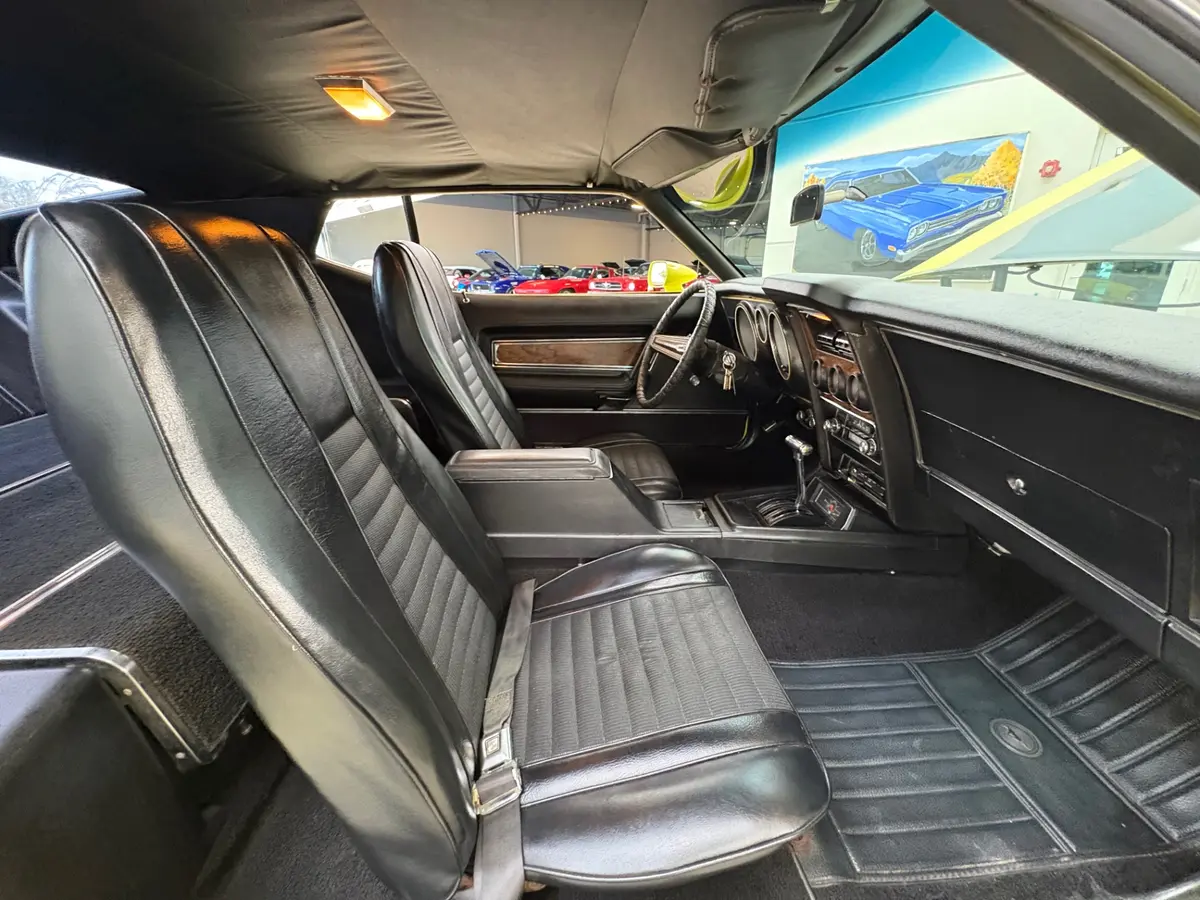
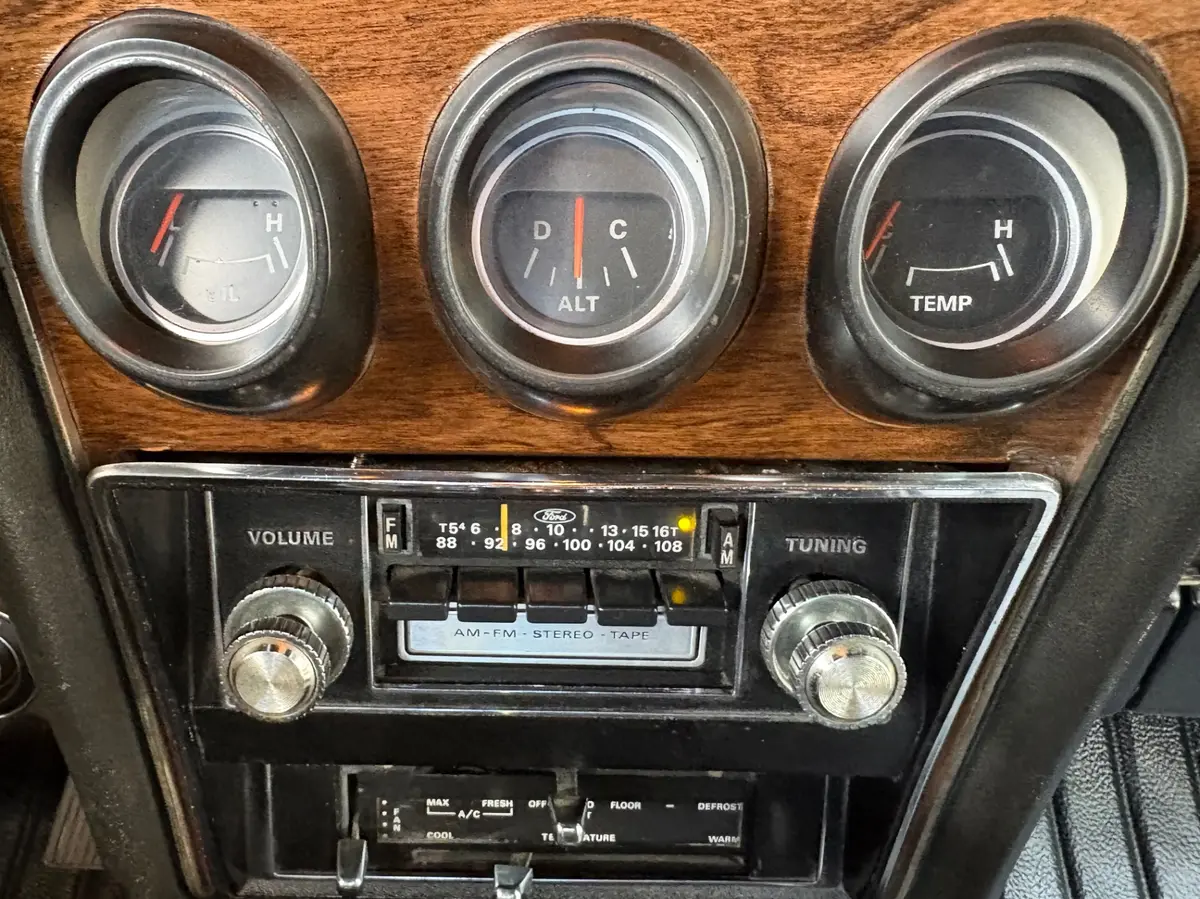
The black vinyl interior on this 1972 Ford Mustang Mach 1 is a correct and well-preserved example of what Ford's performance-oriented cabin looked like at its peak. The instrument panel features a large tachometer on the left and a speedometer on the right, with the gauge bezels finished in a gold accent ring that coordinates with the Lime Gold exterior. Between those two primary gauges sits a fuel gauge, while a secondary cluster set into the woodgrain-trimmed center stack houses the oil pressure, alternator, and temperature gauges. This is the full gauge package — not the warning light setup that many cars received — and it gives the driver real information about what the engine is doing.
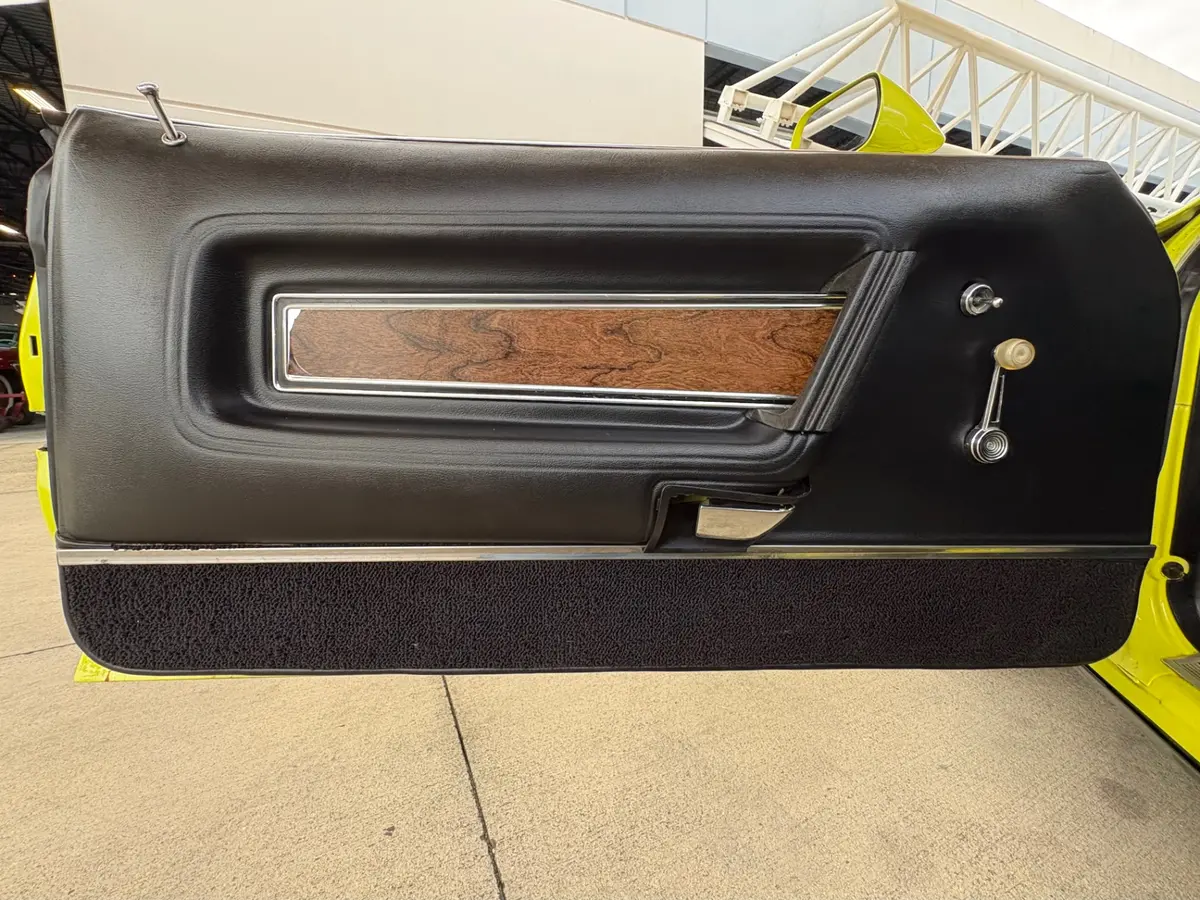
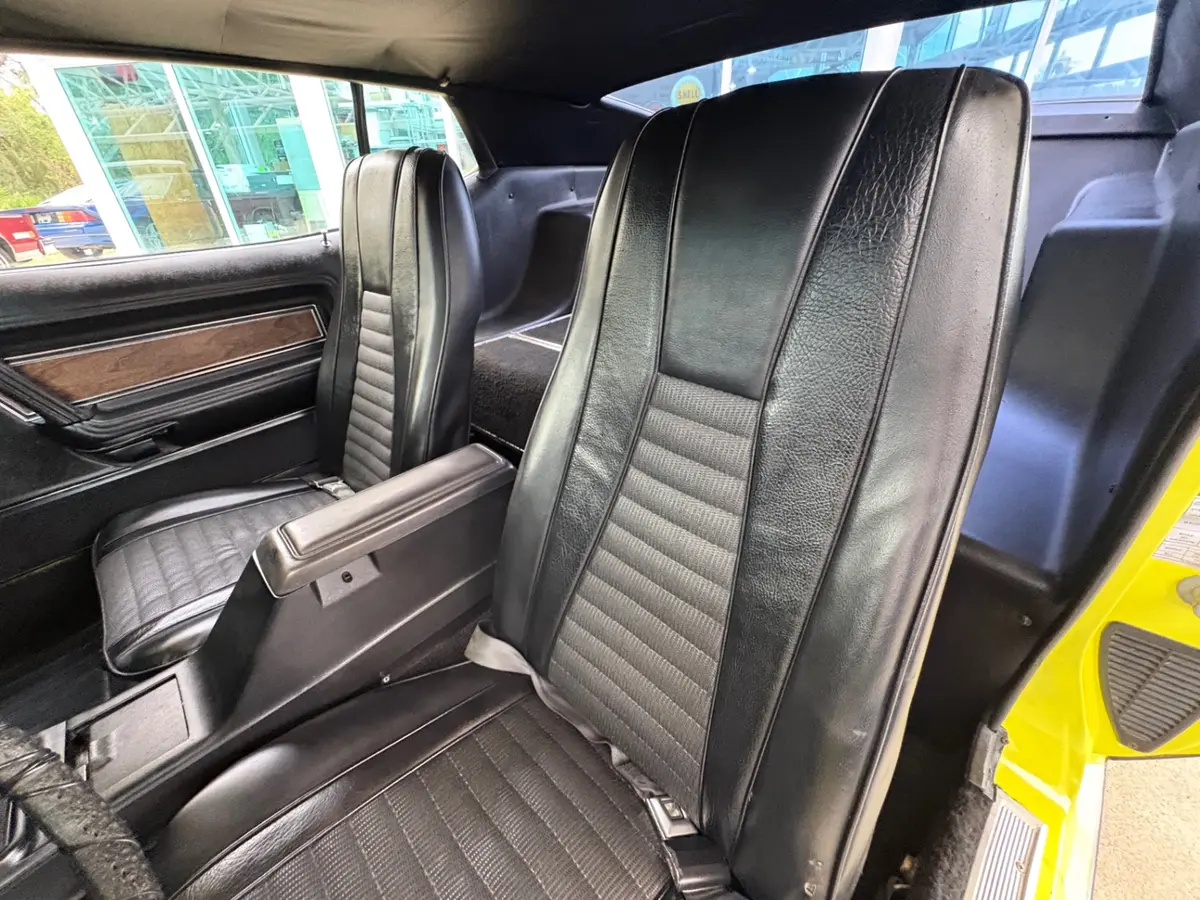
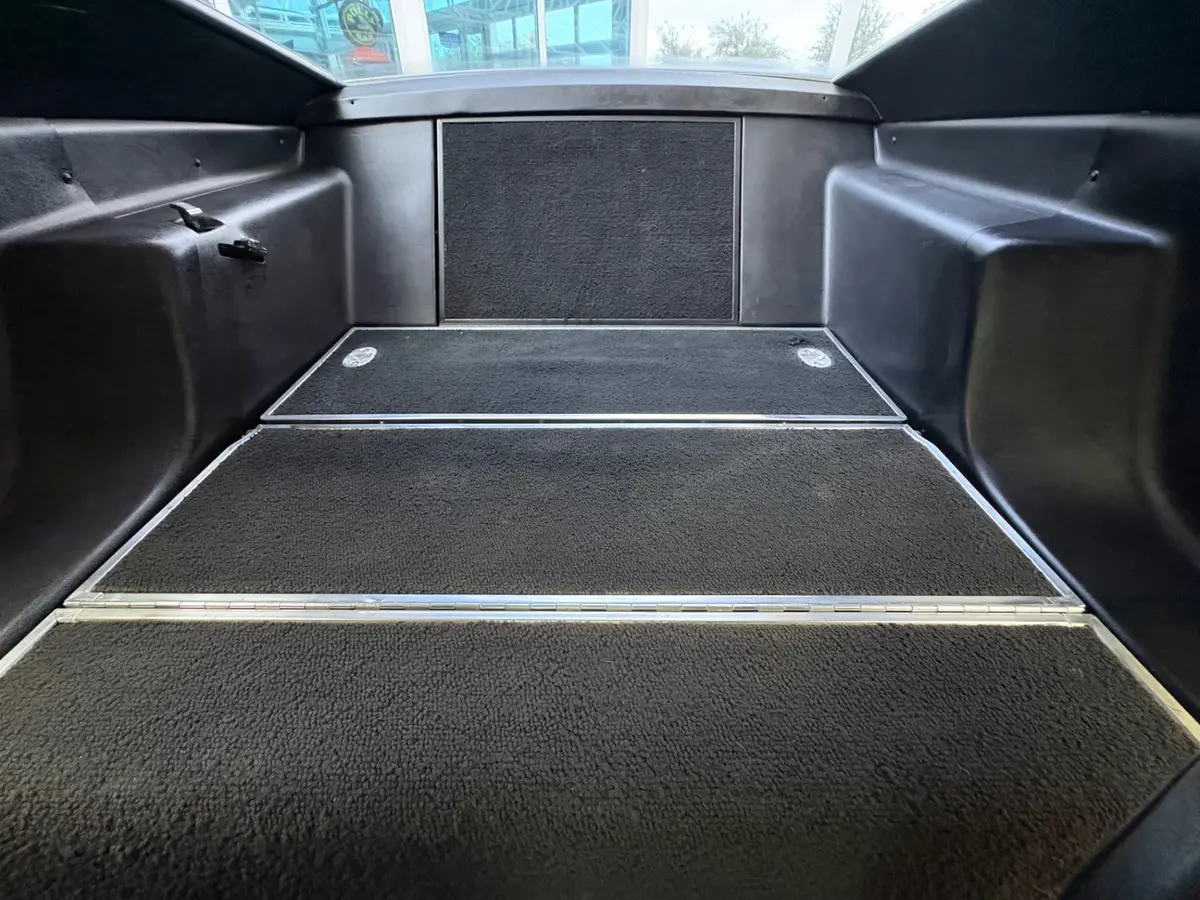
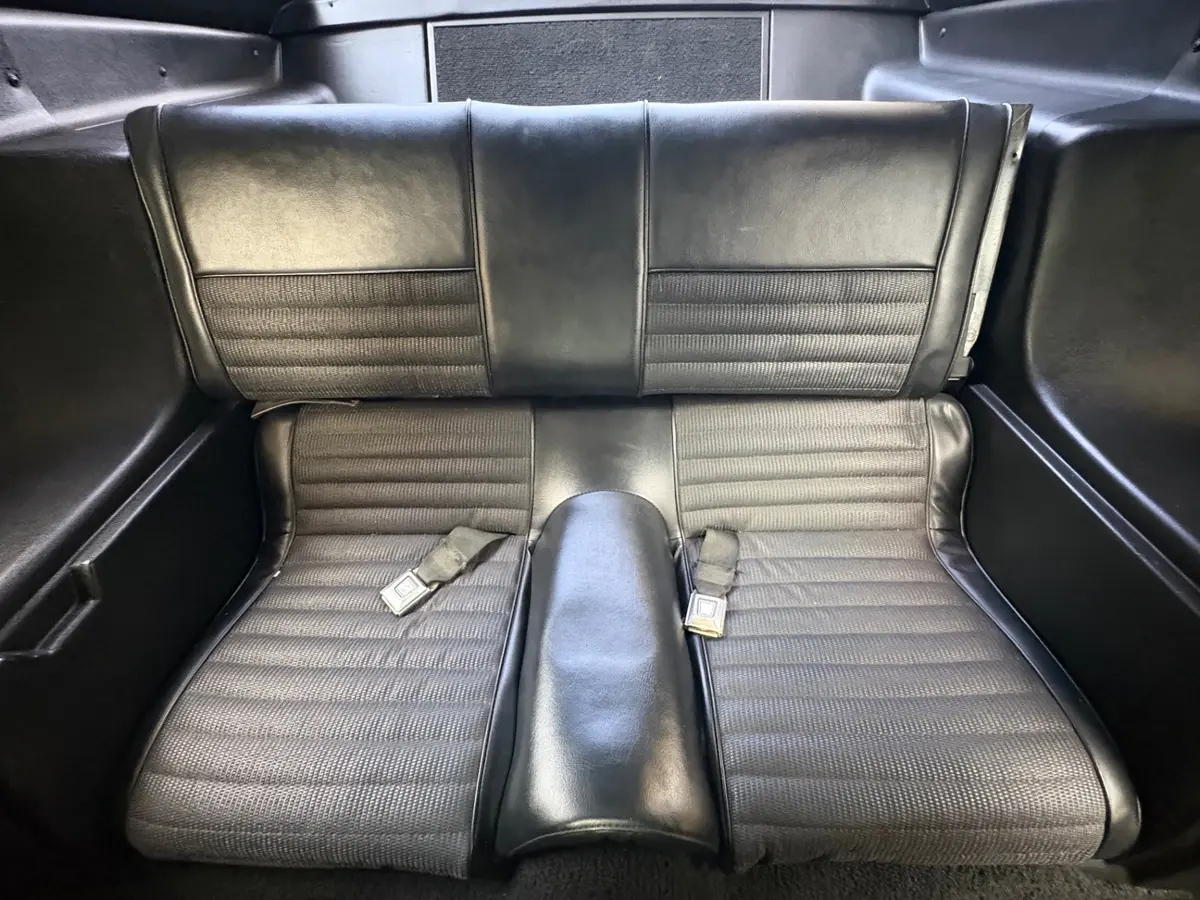
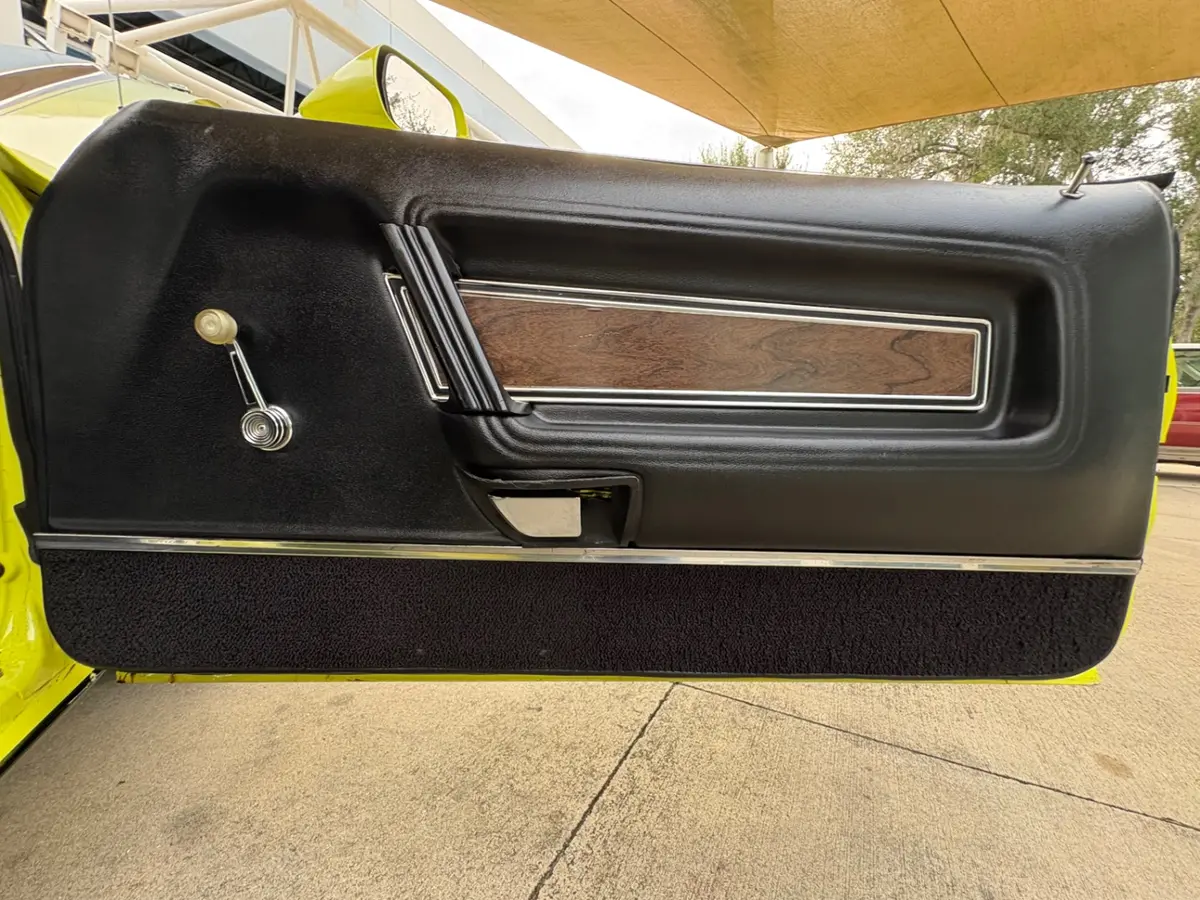
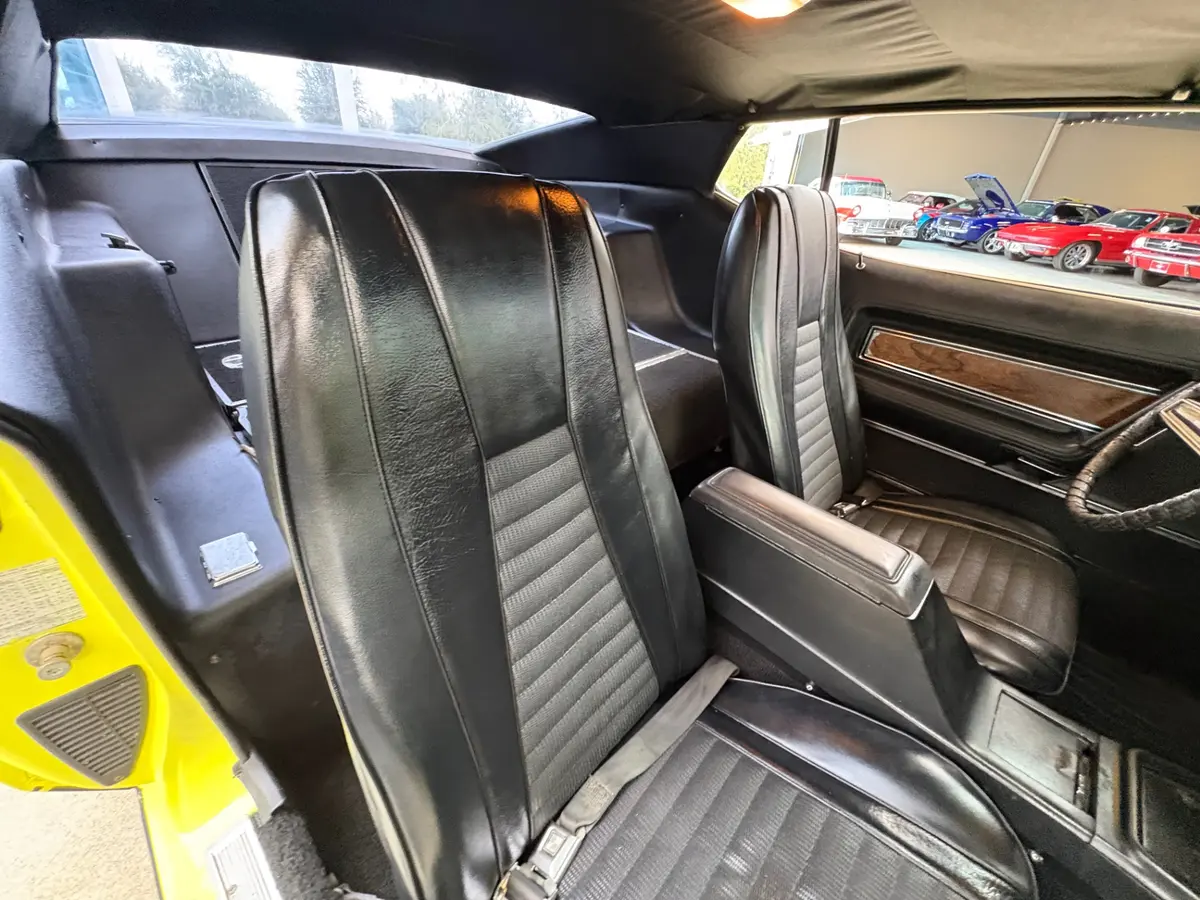
The woodgrain trim runs across the dashboard and continues onto the door panels, where it appears in an inlaid panel framed by chrome. The effect is period-correct and well-executed. Bucket seats are covered in black vinyl, with the ribbed center inserts that Ford used on the Mach 1. The rear seat wears a cloth-and-vinyl combination typical of the sport bench configuration, and the fold-down function is intact and working.
The center console is a key Mach 1 feature, running the full length of the cabin floor and housing the SelectShift shifter, the console clock, and providing a visual anchor for the entire cockpit. The factory AM/FM stereo with 8-track player is mounted in the dash and appears to be the original Ford-branded unit. Factory air conditioning controls are integrated into the center dash area beneath the radio. The overall condition of the interior is consistent with the mileage — used but solid, with no major cracks, tears, or failed trim pieces visible.
Exterior
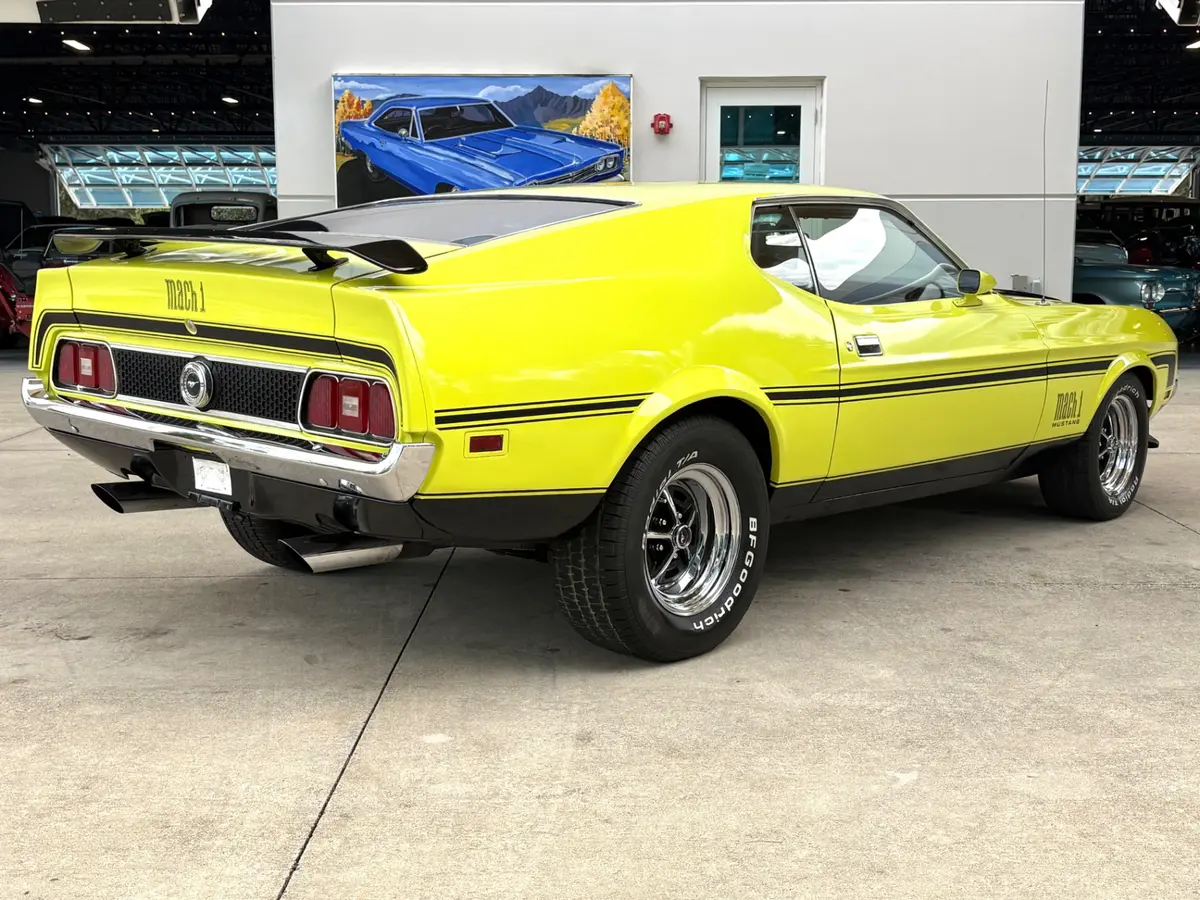
The 1972 Ford Mustang Mach 1 was built exclusively on the SportsRoof fastback body, and the long, sloping roofline that defined this generation carries forward from the 1971 redesign. That body was wider and longer than the original Mustang, with a lower hood line that gave the car a genuinely aggressive stance. This example wears Lime Gold, one of several vivid color options Ford offered in 1972 to appeal to performance buyers who wanted visibility to match performance content.
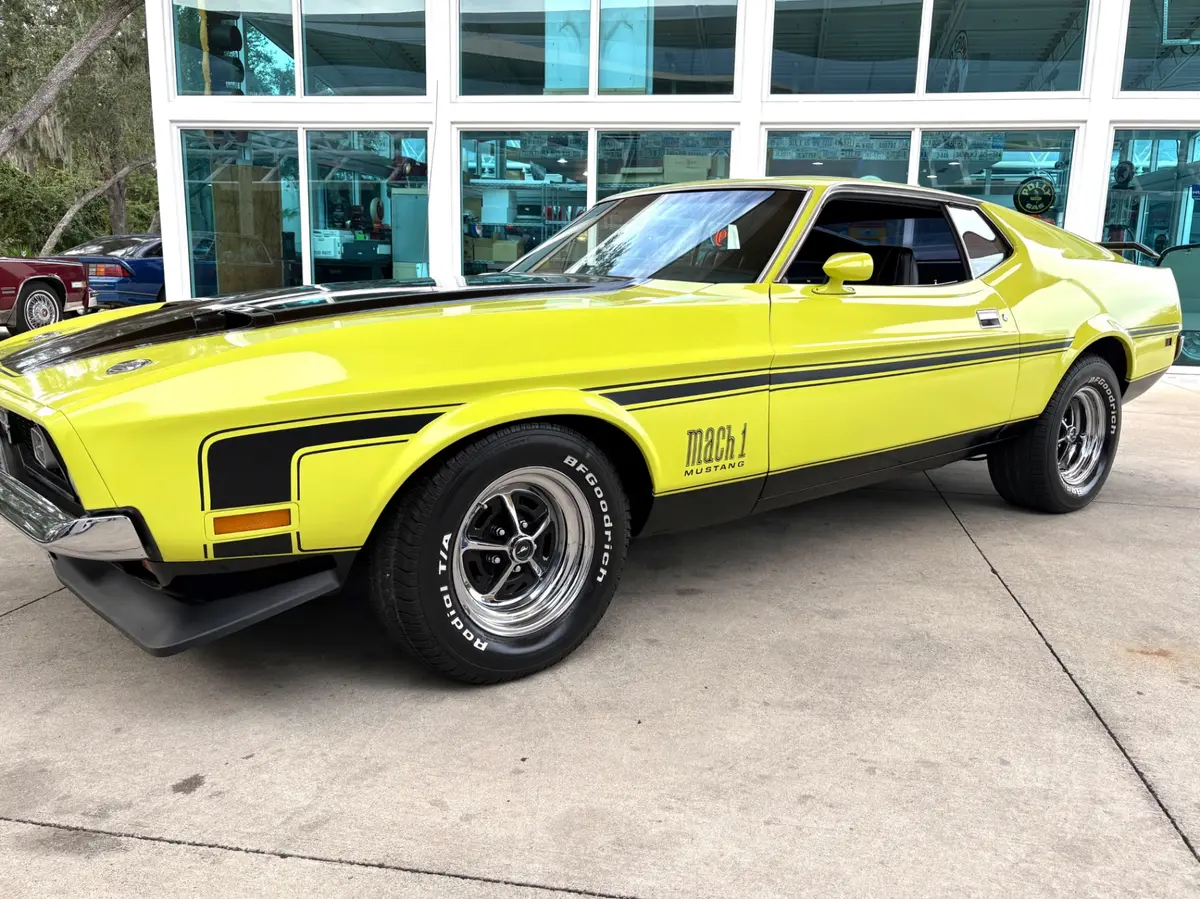
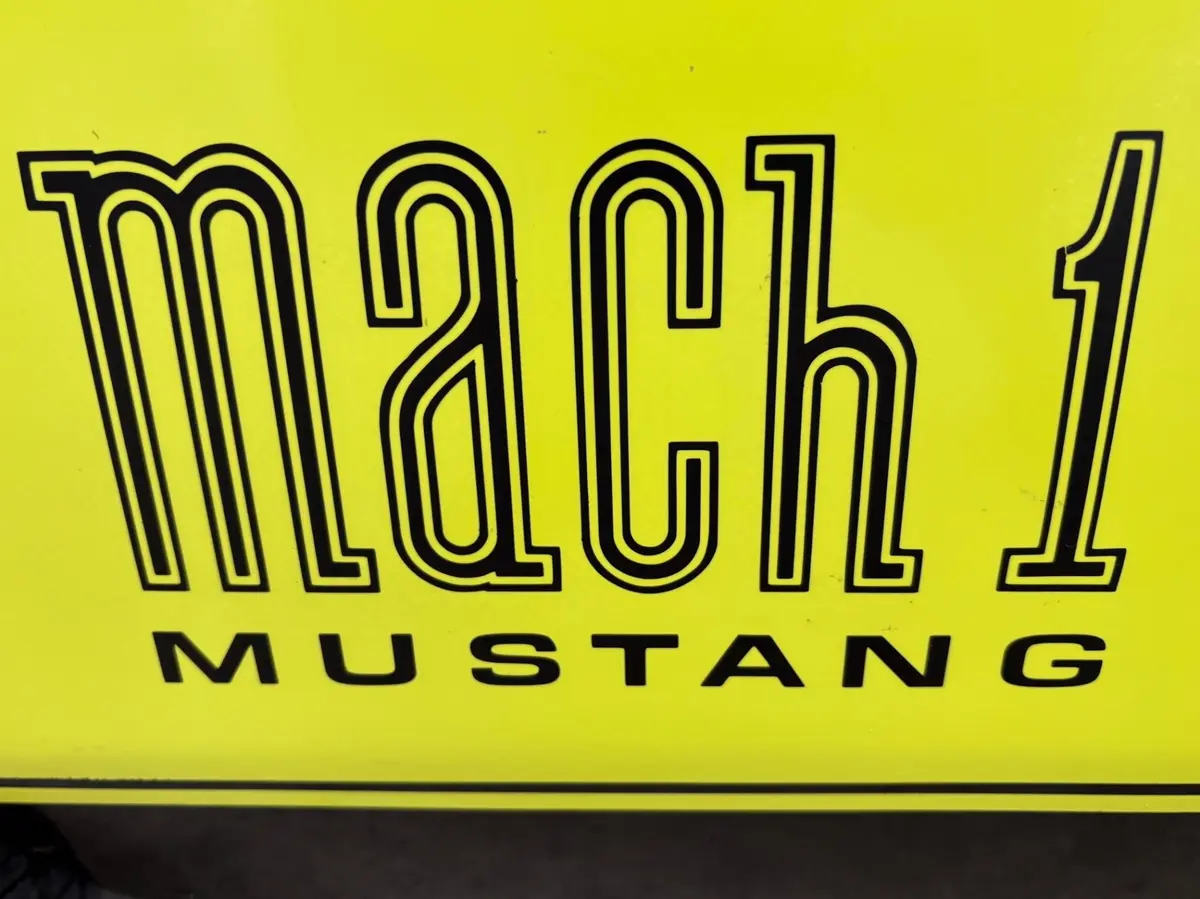
The NASA twin-scoop hood is functional in appearance and correct to the Mach 1 package, with a matte black treatment that also runs in a stripe along the hood centerline and transitions into the Mach 1 side stripe graphic along the lower body. The stripes are black with the "mach 1" lettering positioned just aft of the door opening — exactly as Ford applied them from the factory. The front chin spoiler and rear deck spoiler are both present and correctly fitted, and both were standard Mach 1 equipment in 1972.
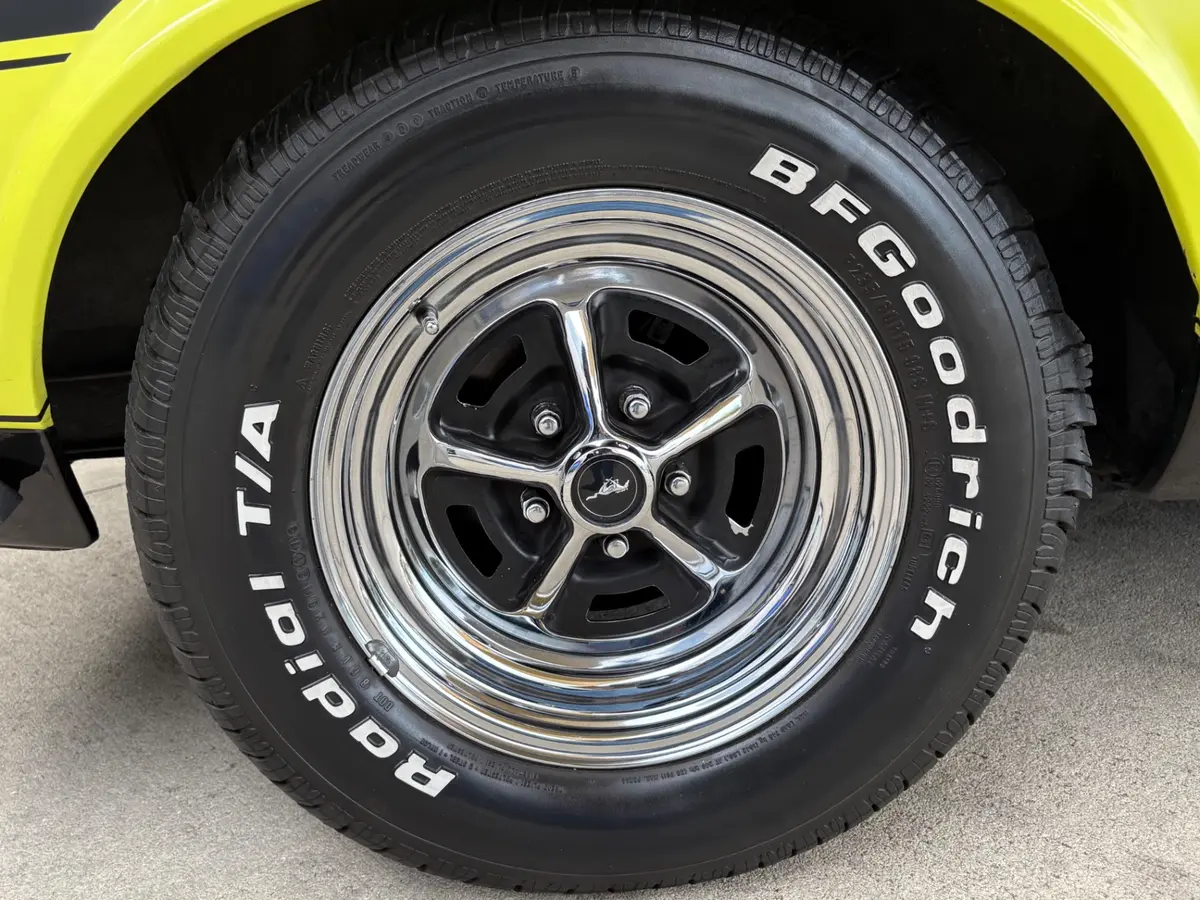
The wheels are Magnum 500-style units finished in chrome, a classic five-spoke design that works well against the yellow-green paint. BFGoodrich Radial T/A tires are mounted all around — a period-correct choice that many collectors select for cars like this one, as they provide modern radial performance while maintaining the visual character of late muscle car era rubber. The rear valance shows the dual exhaust tips exiting symmetrically through the rear apron cutouts, which is the correct Mach 1 configuration. Chrome bumpers front and rear are in solid condition.
Conclusion
The 1972 Ford Mustang Mach 1 with the 351 Cobra Jet engine represents the last of the genuine high-performance Mustangs before the fuel crisis and regulatory environment reshaped the entire industry. By 1973, real performance options were being reduced. By 1974, the Mustang had been downsized into the Mustang II. This 1972 Mach 1 was built in the final year that Ford could still offer something with serious performance credentials, a full gauge package, factory air, and a Sport Roof body — all in one car, all original from the Dearborn plant.
The combination of Lime Gold paint, 351 Cobra Jet power, an honest mileage reading, an original interior, and a clean undercarriage makes this a car worth serious attention. It presents as a solid, drivable, and collectable 1972 Ford Mustang Mach 1 without the inflated asking prices that restored examples carry.
To schedule a viewing or ask specific questions about this 1972 Ford Mustang Mach 1, contact Skyway Classics in Sarasota, Florida at 941-254-6608.
Disclaimer
Information found on the website is presented as given to us by the owner of the car, whether on consignment or from the owner we bought it from. Some Photos, materials for videos, descriptions and other information are provided by the consignor/seller and is deemed reliable, but Skyway Classics does not warranty or guarantee this information. Skyway Classics is not responsible for information that may incorrect or a publishing error. The decision to purchase should be based solely on the buyers personal inspection of the vehicle or by a professional inspection service prior to offer or purchase being made.
1972 Ford
Mustang Mach 1
Why Choose Skyway Classics?
Explore our curated inventory of classic and collector cars—thoughtfully selected, ready to drive, and supported by experts who make ownership simple.
Expert Curation
Every vehicle is hand-selected by our experts for quality, authenticity, and investment potential.
Fast Transactions
Streamlined buying and selling process with quick financing and immediate delivery options.
Only National Dealer With Classic Service & Repair
We’re the only national dealership that services and repairs the classics we sell—before and after the sale.
Nationwide Network
Access to our extensive network of collectors, restorers, and classic car enthusiasts nationwide.
Concierge Ownership Support
From financing and insurance to paperwork, shipping, and titling—we handle the details so you can enjoy the drive.
Passion-Driven Service
We're classic car enthusiasts first, providing personalized service with genuine passion for the hobby.